Article

A Comprehensive Genome-Wide Analysis of the StMORF Gene Family in Potato: Identification, Interaction Network, and Expression Profiling

College of Agriculture, Heilongjiang Bayi Agricultural University, Daqing 163319, China
*
Author to whom correspondence should be addressed.
Agronomy 2026, 16(4), 413; https://doi.org/10.3390/agronomy16040413
Submission received: 14 December 2025 / Revised: 2 February 2026 / Accepted: 5 February 2026 / Published: 9 February 2026

Abstract

Members of the multiple organellar RNA editing factor (MORF) gene family play indispensable roles in regulating chloroplast development, plant growth, and responses to abiotic stress. However, their functions in potato (Solanum tuberosum) remain unclear. In this study, a total of eight StMORF members were identified in potato, distributed across seven chromosomes. Following phylogenetic classification of the StMORF genes into five major clades, subsequent investigations included their exon–intron architecture, conserved protein motifs, collinearity across related species, and predicted interaction networks. Selected interactions among StMORF proteins were experimentally validated by Y2H, and their expression levels in different tissues were assessed. All StMORF members exhibited high expression in leaves. Additionally, analyses of promoter cis-acting elements and RNA-seq data from the Potato Genome Sequencing Consortium (PGSC) database indicated that the StMORF gene family may play important roles in potato’s responses to abiotic stress. Quantitative real-time PCR (qRT-PCR) validation results were largely consistent with transcriptomic data, confirming that several StMORF genes are involved in abiotic stress responses. This study provides a comprehensive analysis of the StMORF gene family and lays a foundation for further exploration of its physiological functions in potato.

1. Introduction

Potato (Solanum tuberosum) is an annual herbaceous plant classified under the Solanaceae family. This crop is distinguished by its substantial productivity, dense nutritional composition, and broad environmental adaptability. It serves as a staple food for 1.3 billion people, ranking as the world’s fourth largest staple crop [1], and is one of the primary sources of starch. Cultivated worldwide, potato plays a pivotal role in addressing hunger and alleviating poverty. However, abiotic stress is currently the most significant factor limiting potato yield [2]. Therefore, enhancing potato’s resistance to abiotic stresses is of great importance.
RNA editing is a post-transcriptional modification process that occurs primarily in plant mitochondria and chloroplasts, involving nucleotide insertion/deletion or conversion to alter amino acids, optimize protein structure, and correct gene mutations. This process plays a key role in plant growth and development, organellar signaling, and responses to abiotic stress [3,4]. The main types of RNA editing include A-to-I, U-to-C, and C-to-U, with U-to-C and A-to-I editing being less frequent than C-to-U editing [3,5]. In flowering plants, chloroplast and mitochondrial genomes contain approximately 20–40 and 400–600 conserved C-to-U editing sites, respectively [6]. In plants, RNA editing is mediated by the editosome complex, which primarily comprises several core protein types, including PPR (pentatricopeptide repeat) proteins [7], MORF (multiple organellar RNA editing factor) proteins, and trans-regulatory elements such as Organellar RNA Recognition Motif (ORRM) proteins, Organellar Zinc Finger (OZ) proteins, and Protoporphyrinogen Oxidase 1 (PPO1) [8]. Among these, PPR proteins represent one of the largest protein families and play a crucial role in RNA editing. These proteins bind directly to mRNA targets to govern the specificity of RNA editing, recognizing single or multiple distinct editing sites. In Arabidopsis (Arabidopsis thaliana), nearly 200 PPR proteins participate in modulating RNA editing within chloroplasts and mitochondria [9]. Research indicates that MORF proteins undergo both homomeric and heteromeric dimerization. These complexes selectively associate with PPR proteins, improving their specificity for target RNA and ultimately modulating the efficiency of RNA editing [10,11].
The MORF gene family was first identified in Arabidopsis in 2012 [12], with its members primarily localized to mitochondria and chloroplasts. Subsequently, homologous genes have been identified in various crops, including 7 in rice (Oryza sativa), 7 in poplar (Populus), 8 in celery (Apium graveolens), and 43 in Brassica napus, and others [13,14,15,16]. MORF proteins all possess a conserved MORF-box domain, characterized by a globular structure consisting of six antiparallel β-sheets, four α-helices, and two long loops [17]. However, due to the lack of sequence similarity with known domains, their precise molecular function remains unclear [18]. Research indicates that MORF proteins play a vital role in RNA editing. In Arabidopsis, the knockout of MORF1, MORF3, and MORF8 genes resulted in reduced editing efficiency at 19%, 26%, and 72% of mitochondrial editing sites, respectively, while knockout of MORF2 and MORF9 led to the loss of nearly all functionality at chloroplast RNA editing sites [12]. In tomato (Solanum lycopersicum), MORF genes participate in the C-to-U editing of cytochrome C-related genes, maintaining mitochondrial function and regulating fruit development [19]. Meanwhile, MORF proteins interact with each other to form complexes that regulate RNA editing efficiency. In Arabidopsis, MORF2 and MORF9 exhibit direct interaction and complex formation, which regulates the RNA editing of ndhD in chloroplasts. Separately, MORF8 is capable of interacting with both MORF1 and MORF2 [20]. These findings were subsequently validated in rice MORF homologs [14]. Furthermore, MORF proteins are crucial for plant growth and development. Previous studies have shown that knockout of MORF8 results in delayed seedling development in Arabidopsis [21], while knockout of MORF9 in rice leads to abnormal chloroplast development, resulting in an albino phenotype [22]. MORF proteins have also been identified as playing key roles in plant responses to abiotic stress. Studies indicate that the expression patterns of rice MORF gene family members are influenced by low temperature and salt stress [14]. In poplar, the expression patterns of MORF family members change under drought stress [15]. Experimental evidence from tobacco shows that NbMORF8 compromises immunity, thereby enhancing susceptibility to pathogenic attack [23].
The MORF genes in potato have not been fully characterized. In this study, we aimed to systematically identify and comprehensively analyze the StMORF gene family, including member identification and chromosomal localization, gene structure characterization, and expression pattern analysis. In addition, we predicted potential interactions among selected StMORF proteins and performed preliminary validation. This work provides a foundation and useful clues for future functional studies of StMORFs and their roles in abiotic stress responses, and may facilitate subsequent research related to stress-resilient improvement and yield enhancement in potato.

2. Materials and Methods

2.1. Comprehensive Characterization of StMORF Family Members in Potato: Genome-Wide Identification, Assessment of Physicochemical Properties, and Genomic Distribution

Genomic, nucleotide, and protein sequence data for potato were retrieved from the publicly accessible Potato Genome Sequencing Consortium (PGSC) database (http://spuddb.uga.edu/, accessed on 4 February 2026). To identify MORF domain-containing proteins, the corresponding HMM profile (PF21864) was retrieved from the Pfam database (http://pfam.xfam.org/, accessed on 4 February 2026) [24] to identify and search for potential protein sequences containing the MORF domain in potato. To detect putative MORF homologs in potato, an initial BLASTp search was conducted with a stringent e-value cut-off of 1 × 10⁻⁵. Subsequently, to verify the accuracy of these identified MORF proteins, the conserved domains of the retained sequences were checked and compared using the InterPro database (https://www.ebi.ac.uk/interpro/, accessed on 4 February 2026). A total of eight StMORF family members were identified. The ExPASy ProtParam tool (https://web.expasy.org/protparam/, accessed on 4 February 2026) was used to predict the molecular weight, theoretical isoelectric point (pI), and number of amino acids for each StMORF protein. To predict subcellular localization, we applied the publicly accessible WoLF PSORT tool (https://wolfpsort.hgc.jp, accessed on 4 February 2026). The ‘Visualize Gene Location from GTF/GFF’ function in TBtools v2.420 was employed to map the genomic positions of the identified MORF family members along the chromosomes [25].

2.2. Phylogenetic Analysis of StMORFs

Employing protein sequences derived from potato, Arabidopsis, tomato, and rice, a phylogenetic analysis was performed with MEGA 12 software [26]. Multiple sequence alignment was performed in MEGA 12, and an unrooted phylogenetic tree was inferred using the Maximum Likelihood (ML) method based on the Jones–Taylor–Thornton (JTT) matrix-based model with 1000 bootstrap replicates. The resulting tree was visualized and refined using iTOL (https://itol.embl.de/, accessed on 4 February 2026) [27].

2.3. Protein Motif and Gene Structure Analysis of the StMORF Gene Family

The online MEME suite [28] program (http://meme-suite.org/tools/meme, accessed on 4 February 2026) was used to identify conserved protein motifs in the StMORF proteins, with the maximum number of motifs set to 10. The gene structures (intron–exon organization) and conserved domains of the StMORF genes were then visualized using TBtools.

2.4. Interspecies and Intraspecies Collinearity Analysis

Subsequent collinearity analysis among the identified MORF genes was carried out using MCScanX v1.5.1 under default settings. The identified syntenic gene pairs were then graphically represented with the aid of TBtools. Subsequently, genome sequences and annotation files for Arabidopsis (TAIR10) and tomato (SL3.0) were downloaded from the EnsemblPlants website (https://plants.ensembl.org/index.html, accessed on 4 February 2026). The collinear relationships between potato and Arabidopsis, as well as between potato and tomato, were then investigated using MCScanX [29].

2.5. Prediction and Yeast Two-Hybrid (Y2H) Validation of StMORF Protein Interactions

The STRING database (https://string-db.org/, accessed on 4 February 2026) was utilized to predict the protein–protein interaction relationships among the StMORF proteins [30]. The interaction network was visualized using Cytoscape v3.9. The designated combinations of AD-StMORF and BD-StMORF constructs, along with control combinations of empty AD and BD vectors, were co-transformed into yeast AH109 competent cells. The transformed yeast strains were selected and grown on synthetic dropout medium lacking Leucine and Tryptophan (SD/-Trp/-Leu). Subsequently, the co-transformed yeast strains were spotted onto stricter synthetic dropout medium lacking Leucine, Tryptophan, Histidine, and Adenine (SD/-Trp/-Leu/-His/-Ade) for further interaction analysis and photographed. The primers used are listed in (Supplementary Table S2).

2.6. Analysis of Cis-Acting Elements in the Promoter Region

The upstream regulatory regions (2000 bp) of the StMORF gene sequences were extracted from the genome. The PlantCARE database [31] (https://bioinformatics.psb.ugent.be/webtools/plantcare/html/, accessed on 4 February 2026) was used to predict the distribution of cis-acting regulatory elements within these promoters. The results were visualized using TBtools.

2.7. Analysis of Transcriptome Data for the Potato StMORFs

Based on RNA-seq data obtained from the PGSC, we analyzed the expression of StMORF family genes in DM potato under different conditions. These included salt stress (150 mM NaCl for 24 h), mannitol treatment (260 mM mannitol for 24 h), heat stress (35 °C for 24 h), and hormone treatments. Normalized read counts extracted from PGSC underwent base-2 logarithmic transformation (log2) to standardize visualization and analysis. An expression heatmap was subsequently generated using TBtools software.

2.8. Gene Expression Analysis Under Abiotic Stress and in Different Tissues

To characterize the expression dynamics of StMORF genes, we analyzed their responses to abiotic stress and their distribution patterns in different plant tissues, two-week-old potato plantlets (cultivar B058) grown in test tubes were subjected to treatments. They were subjected separately to 150 mM NaCl (salt treatment) for 24 h and to 35 °C (heat treatment) for 24 h. Subsequently, leaves were sampled at different time points and immediately frozen in liquid nitrogen for storage. Additionally, diverse potato tissues—such as apical buds, axillary buds, leaves, petioles, stems, roots, stolons, and tubers—were collected during the seedling stage. All experiments were conducted with three biological replicates, each consisting of six potato plants. For gene expression analysis, total RNA was extracted using a Plant Total RNA Extraction Kit (Beijing Zoman Biotechnology Co., Ltd., Beijing, China), and cDNA was synthesized using the Hifair® III 1st Strand cDNA Synthesis SuperMix kit (Shanghai Yeasen Biotechnology Co., Ltd., Shanghai, China). A total of 1000 ng of total RNA was used for each reverse transcription reaction. The qRT-PCR assays were carried out in a final volume of 10 μL, which comprised 5 μL of 2× SYBR Green master mix, 3 μL of double-distilled water, 1 μL of cDNA template, and 0.5 μM of each forward and reverse oligonucleotide primer detailed in (Supplementary Table S2). The StEF-1α gene (Accession: AB061263) [32] served as the internal reference, and the relative expression levels of target genes were calculated using the 2−ΔΔCt method [33]. Statistical significance of differences between samples was determined by a paired t-test comparing each treatment time point (6, 12, and 24 h) with the 0 h control within the same biological replicate; with * p < 0.05 and ** p < 0.01 considered significant.

3. Results

3.1. Screening and Identification of MORF Genes in Potato

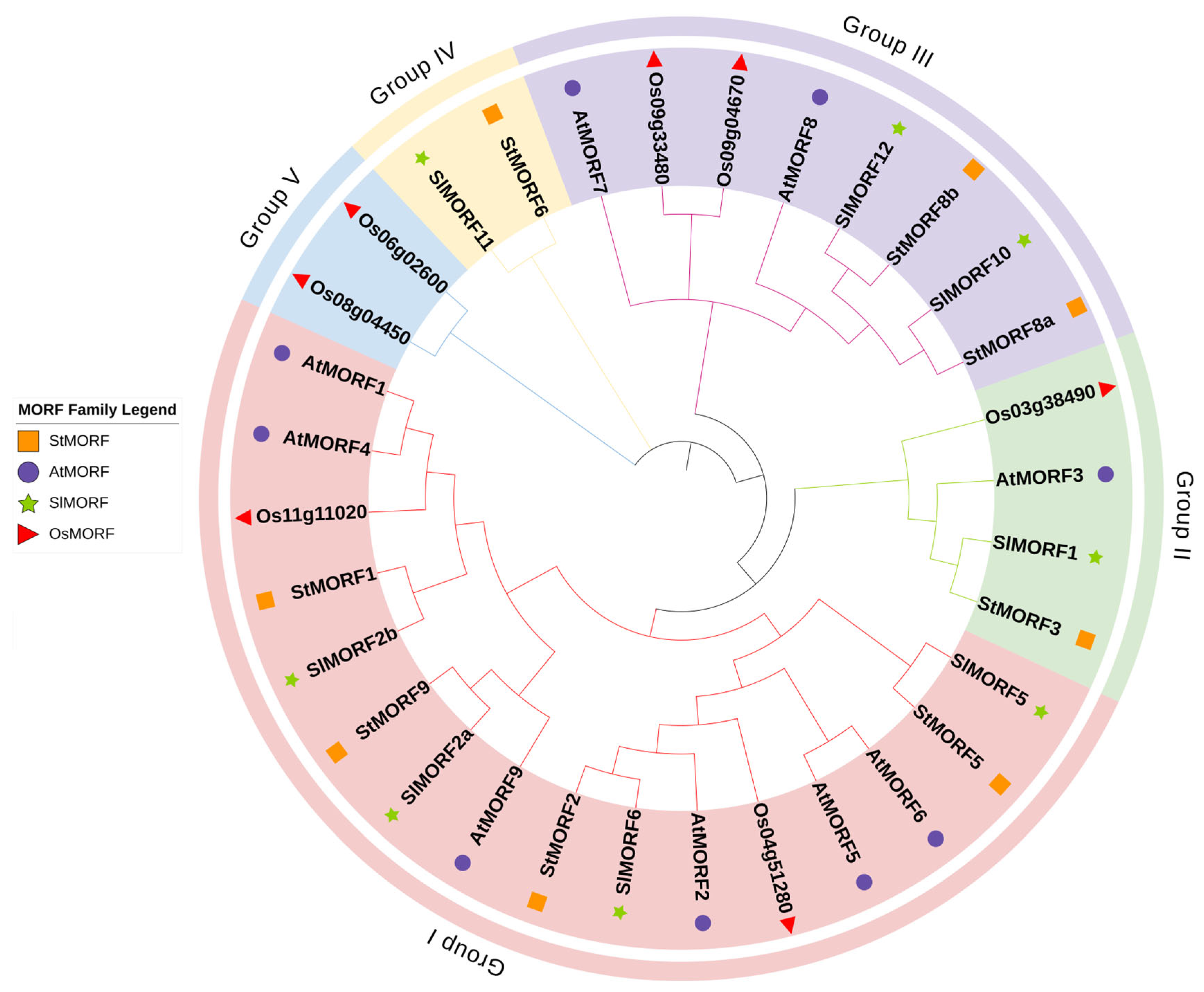
Using the analyzed HMM profile for the MORF domain within TBtools, potential members of the MORF gene family were systematically identified from the potato genome. Subsequent analysis via the InterPro database confirmed the presence of the MORF-box domain, leading to the identification of eight MORF gene family members. Each gene was named StMORF1 to StMORF9 (excluding StMORF4 and StMORF7 because no homologs in Arabidopsis thaliana were detected) based on homology to Arabidopsis MORF members (AtMORFs) (Figure S1). To explore the evolutionary relationships of the identified StMORF proteins, a phylogenetic tree was constructed in MEGA 12 using the ML method (JTT model; 1000 bootstrap replicates) based on full-length MORF proteins from potato, Arabidopsis, tomato, and rice. The resulting phylogenetic topology (Figure 1) classified the 32 MORF proteins from different crop species into five clades (Groups I–V). Here, At, St, Sl, and Os denote Arabidopsis thaliana, Solanum tuberosum, Solanum lycopersicum, and Oryza sativa, respectively. StMORF genes were distributed across four clades, with Group V being the sole exception devoid of potato representatives. It is noteworthy that Groups IV and V contained only two members each. Tomato MORF members consistently clustered with the corresponding StMORF members, suggesting a closer evolutionary relationship between potato and tomato MORFs than between those of Arabidopsis and rice, consistent with the conserved evolution of MORF genes within Solanaceae.

3.2. Analysis of Physicochemical Properties and Chromosomal Localization of the Potato MORF Gene Family

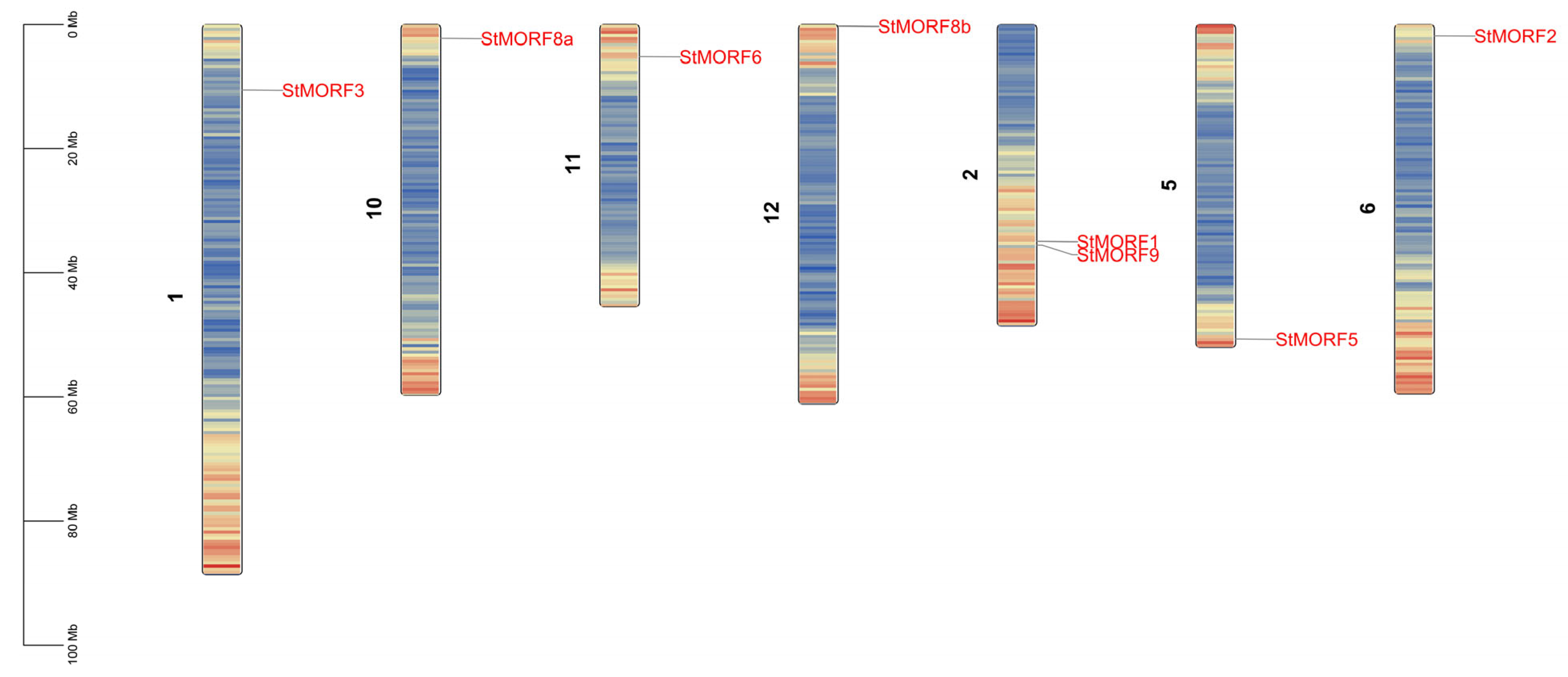
Subsequently, we investigated the physicochemical properties of the StMORF genes. As shown in (Table 1), the proteins of the potato MORF family are relatively short in length, ranging from 226 to 470 amino acids (aa). The predicted molecular masses of these proteins ranged between 25.39 and 52.47 kDa, while their theoretical pI values spanned from 5.25 to 9.42. Notably, only one member, StMORF6, was slightly acidic (pI < 7). All members were predicted to be hydrophilic and exhibited high instability indices. Subcellular localization predictions indicated that six MORF family members are localized to the chloroplasts, while two are localized to the mitochondria, which is largely consistent with studies of MORF members in other plant species. It should be noted that these subcellular localizations were inferred computationally (WoLF PSORT) and therefore require experimental validation in future studies. Furthermore, a study on the chromosomal localization of the MORF family showed that the eight StMORF members are distributed across seven chromosomes. Specifically, both StMORF1 and StMORF9 are located on chromosome 2, while chromosomes 1, 5, 6, 11, and 12 each contain only one gene. This uneven chromosomal distribution pattern suggests that the StMORF gene family may have undergone complex genomic reorganization and duplication events during evolution (Figure 2).

3.3. Structural and Motif Analysis of MORF Family Genes in Potato

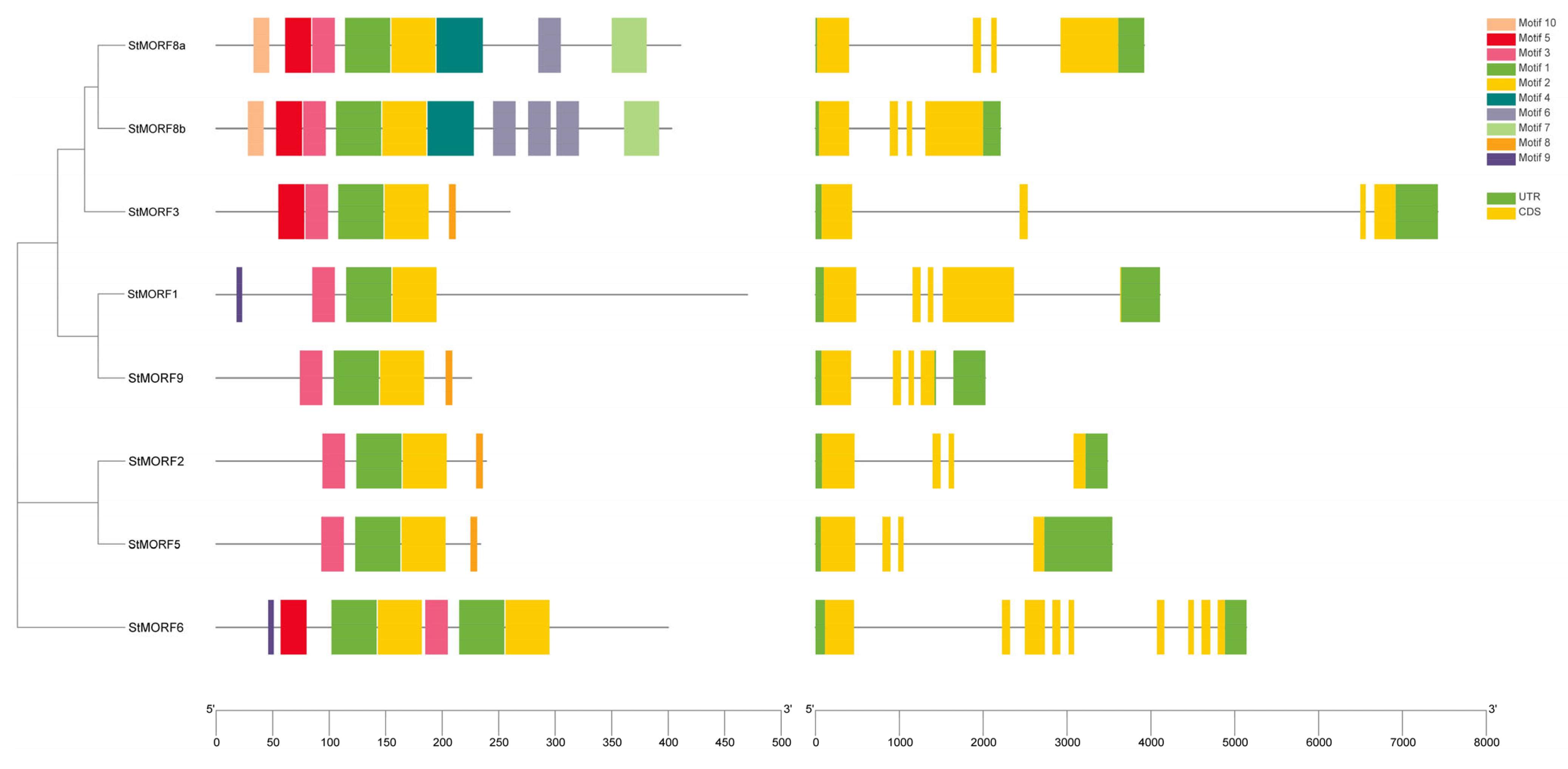
Next, to analyze the characteristics of the protein sequences within the MORF family, the MEME suite was employed to investigate the intron–exon distribution and conserved motif, followed by visualization using TBtools software. As shown in (Figure 3), detailed motif SeqLogos are presented in (Figure S2). The distribution of these motifs reflects the phylogenetic classification of the StMORF genes, with members of the same subfamily sharing similar motif compositions. Some differences in conserved motifs were observed among different subfamilies. While StMORF8a and StMORF8b contain the highest number of motifs, with eight each, followed by StMORF6 which contains seven. Motif 1, 2 are present in all StMORF proteins, indicating it is the most conserved motif. Therefore, we hypothesize that they are directly related to the MORF-box, the core domain of MORF proteins. This hypothesis was subsequently validated using the InterPro database, with results confirming that Motif 1, Motif 2 are integral components of the MORF-box domain. To further examine conservation within the MORF-box domain, we performed multiple sequence alignment (MSA) of the MORF domains from all eight StMORF proteins (Figure S3). The alignment revealed several highly conserved residues across StMORFs, supporting the functional conservation of the MORF domain.
As shown in (Figure 3), all StMORF family members contain both coding regions (CDS) and non-coding regions (UTRs). It is noteworthy that members of the same subfamily also exhibit relatively high similarity in their gene structures. With the exception of StMORF6, all members consist of four exons. StMORF6 contains nine exons. Among them, StMORF9 contains three introns, while the remaining StMORF family members contain two introns.

3.4. Collinearity Analysis of the Potato StMORF Family

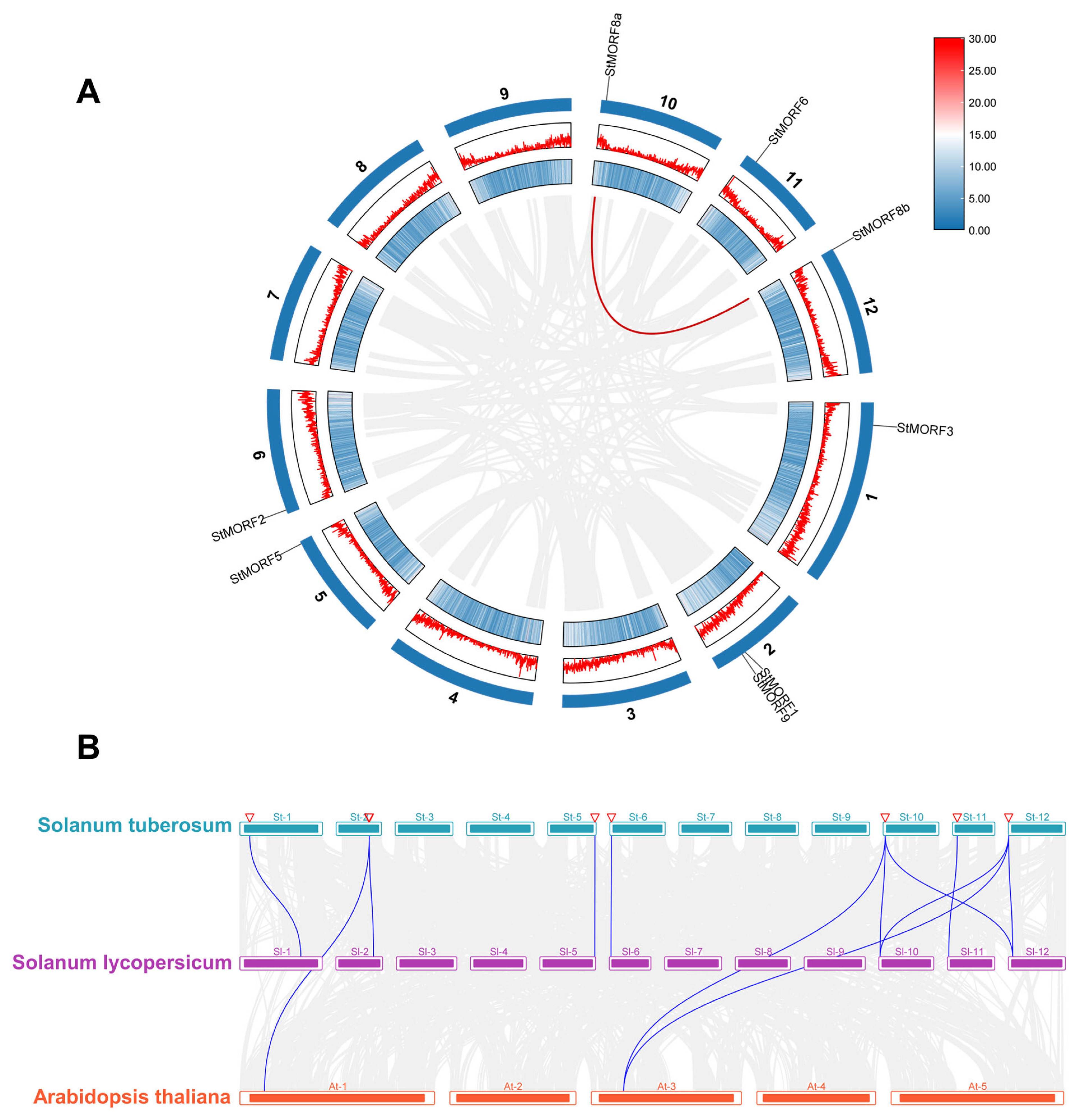
Intraspecies collinearity analysis revealed (Figure 4A) limited gene duplication events among the StMORF genes within the potato genome, indicating a high degree of conservation at the nucleotide sequence level. Phylogenetic analysis revealed that the StMORF gene family in potato is largely conserved, as evidenced by the identification of merely one collinear pair (StMORF8a/StMORF8b) among its eight members. Such minimal duplication supports the inference that the family has evolved mainly via vertical descent, not through large-scale genomic duplication.
Subsequently, to further investigate the expansion patterns of the StMORF gene family during evolution, we constructed synteny maps between potato and tomato, as well as between potato and Arabidopsis, using TBtools, analyzing the homology relationships among their genomes (Figure 4B). Comparative genomic analysis revealed a set of 12 orthologous pairs. As shown in the figure, nine orthologous gene pairs were detected between potato and tomato, whereas only three were found between potato and Arabidopsis. This implies a closer evolutionary relationship between potato StMORF genes and their tomato counterparts, since both potato and tomato belong to the Solanaceae family, indicating that the closer the phylogenetic relationship between species, the higher the degree of MORF gene homology. These findings also reflect the StMORFs evolutionary relationships between species and the conservation of their genomes.

3.5. Prediction and Analysis of the StMORF Protein Interaction Network

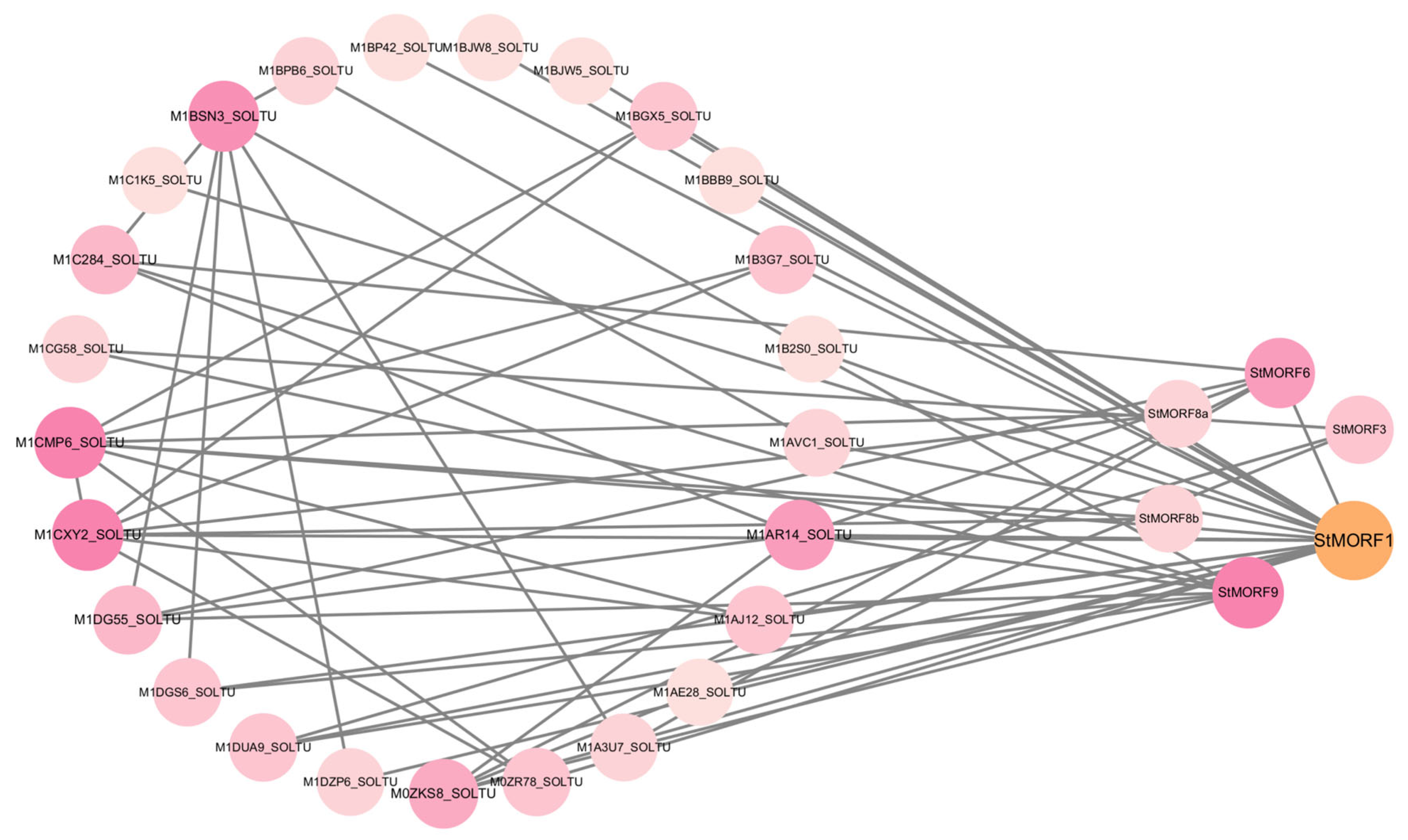
To understand the functions of the StMORF proteins in potato, we predicted their interacting proteins using the STRING database (Figure 5). The results indicated that, with the exception of StMORF2 and StMORF5, interacting proteins were identified for all other StMORF members. Among them, the StMORF1 and StMORF6 proteins are predicted to directly interact. Analysis of other proteins predicted to interact with StMORF members indicates that most of them possess pentatricopeptide repeat (PPR) domains or DYW domains, which play indispensable roles in facilitating C-to-U RNA editing [34]. Therefore, it can be concluded that StMORF proteins play crucial roles in RNA editing in potato.

3.6. Y2H Analysis of Interactions Among StMORF Proteins

Following the prediction of the StMORF protein interaction network, a direct interaction was predicted between StMORF1 and StMORF6. Previous studies have reported interactions among MORF family members; for instance, in Arabidopsis, it has been established that MORF2 and MORF9 form a direct physical interaction complex, which modulates a specific RNA editing event of the chloroplast ndhD transcript. Furthermore, MORF8 exhibits separate binding capabilities with both MORF1 and MORF2. This functional evidence was later experimentally confirmed in the rice model system. To investigate potential interactions between potato MORF proteins and their Arabidopsis orthologs, the coding sequences (CDS) of six selected StMORFs genes were amplified from potato cDNA. These fragments were subsequently inserted into the yeast two-hybrid vectors PGADT7 (AD) and PGBKT7 (BD), respectively, using primer sequences provided in (Supplementary Table S2).
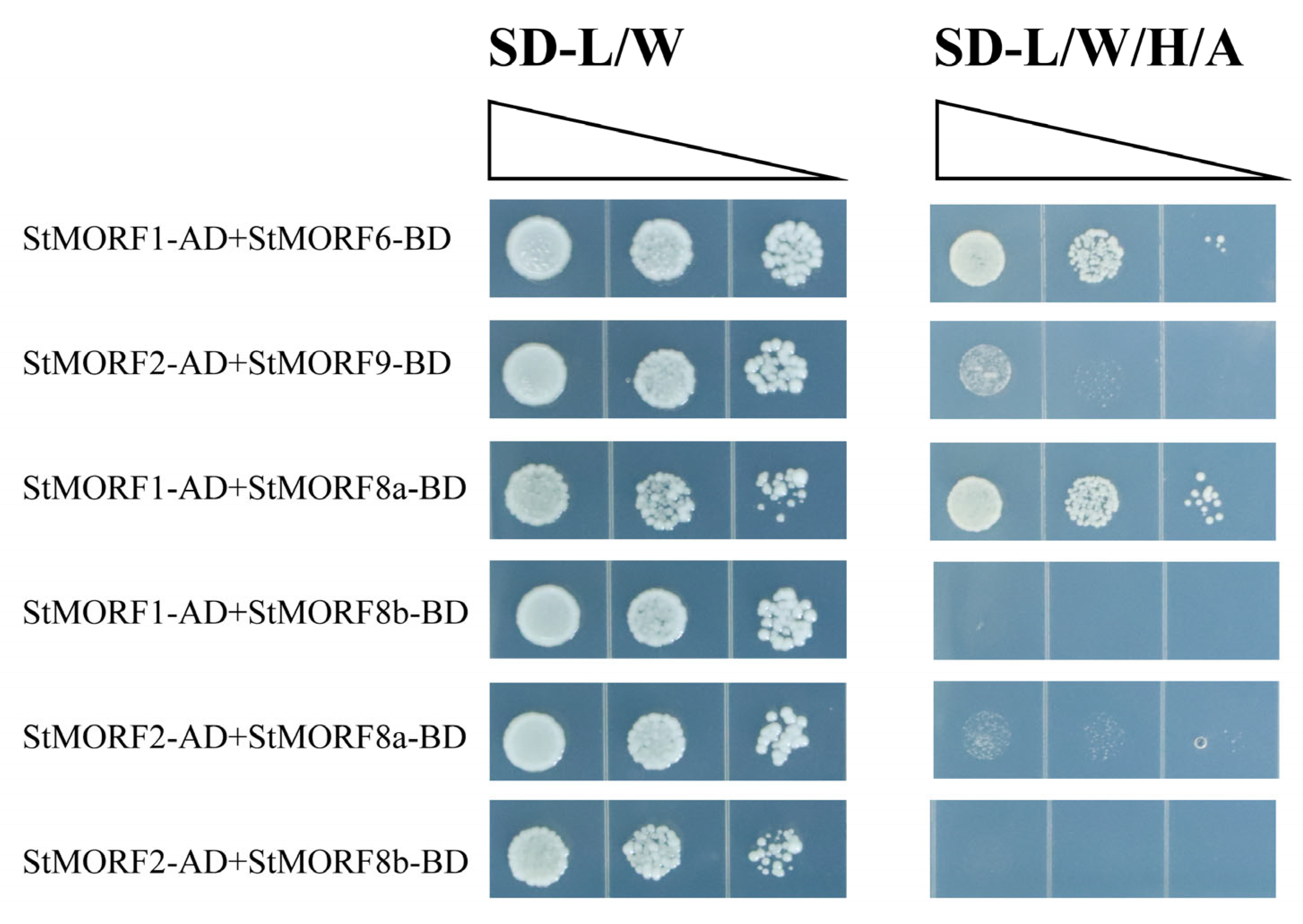
Autoactivation tests in the Y2H system revealed that AH109 strains carrying either BD-StMORF constructs paired with an empty AD vector, or AD-StMORF constructs with an empty BD vector, showed proficient growth on synthetic dropout medium lacking leucine and tryptophan (SD/-Leu/-Trp). In contrast, no colony formation was observed on stricter selection medium lacking leucine, tryptophan, histidine, and adenine (SD/-Leu/-Trp/-His/-Ade), as shown in (Figure S4). Evidence shows that these StMORF members do not display autoactivation. As shown in (Figure 6), we selected six representative StMORF pairs, constructed them into the StMORF-AD and StMORF-BD vectors, and then co-transformed the resulting plasmids into AH109 yeast competent cells, which were able to grow on both (SD/-Leu/-Trp) and (SD/-Leu/-Trp/-His/-Ade) media, indicating their potential interaction in yeast; the results indicate that StMORF1 interacts with StMORF6 and StMORF8a in vivo to form heterodimers, and this result is consistent with the interaction predictions obtained from STRING database. Similarly, StMORF2 and StMORF9 were found to interact and form heterodimers. These results demonstrate that certain StMORF proteins can interact with each other to form heterodimers, thereby potentially regulating the efficiency of RNA editing.

3.7. Characterization of Cis-Regulatory Elements Within Potato MORF Gene Promoters

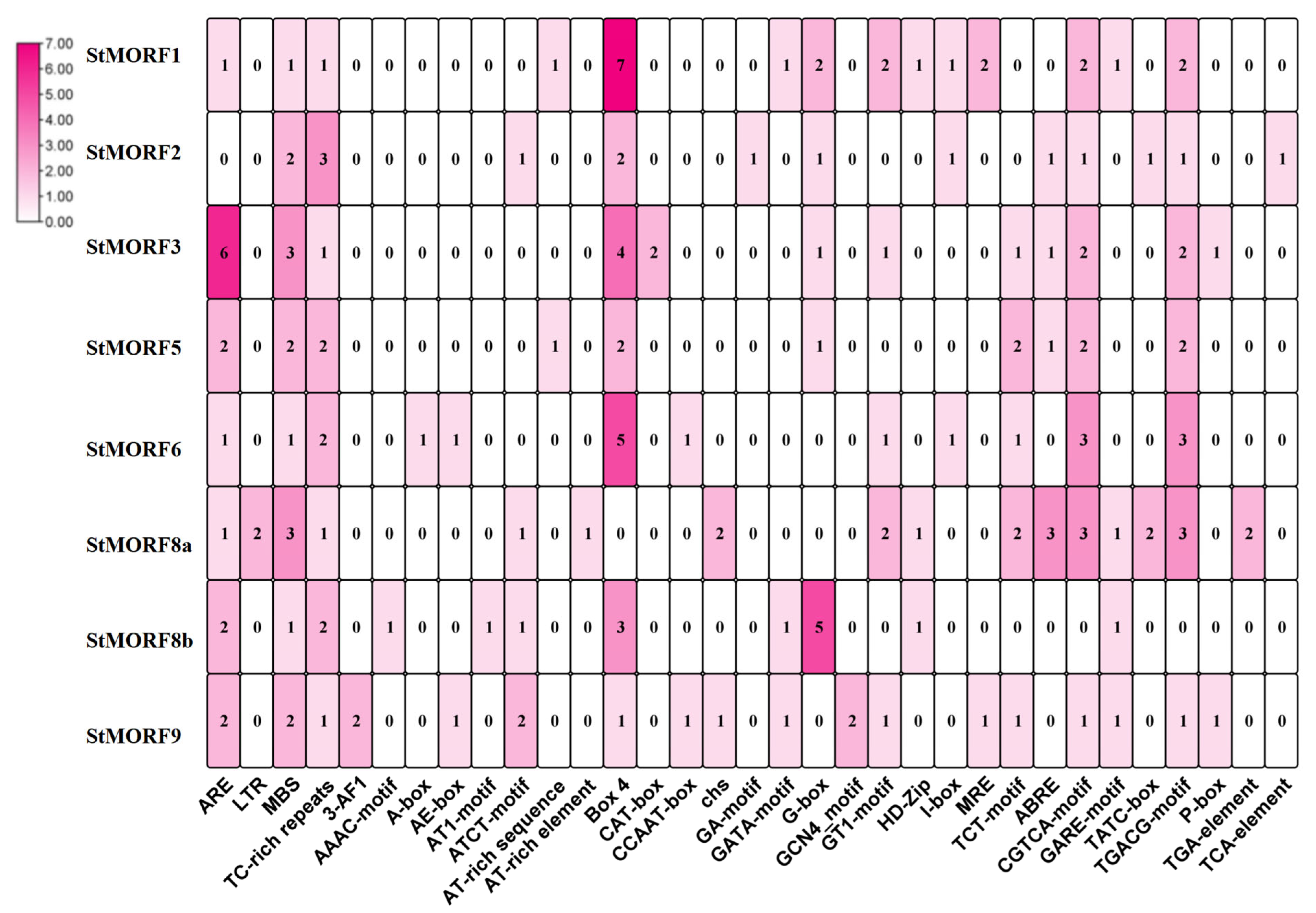
To investigate the transcriptional regulation of StMORF genes, a 2-kb genomic region upstream of each translation start site was retrieved and systematically scanned for the presence of putative cis-regulatory elements. During this analysis, signals from common promoter elements such as the CAAT-box and TATA-box were deliberately omitted to focus on other functionally relevant motifs. Analysis of the StMORF gene family revealed the presence of 33 distinct categories of associated cis-regulatory elements. Corresponding details for these elements are provided in (Supplementary Table S3). These elements are associated with key biological processes including developmental regulation, phytohormone signaling, and abiotic/biotic stress responses. As shown in (Figure 7), the results for the StMORF gene family indicated that elements related to growth and development were the most abundant compared to others. The BOX-4 element was present in seven StMORF family members. Furthermore, seven types of elements related to plant hormone response were identified, with the methyl jasmonate-responsive element (CGTCA-motif) being the most numerous. Notably, most StMORF family members also possessed stress-responsive cis-acting elements such as MBS, TC-rich repeats, and ARE. Considering the reported functions of MORF genes in other plant species, these findings suggest that the majority of StMORF family members are likely involved in regulating stress adaptation and developmental processes in potato.

3.8. Expression of StMORFs in Different Potato Tissues

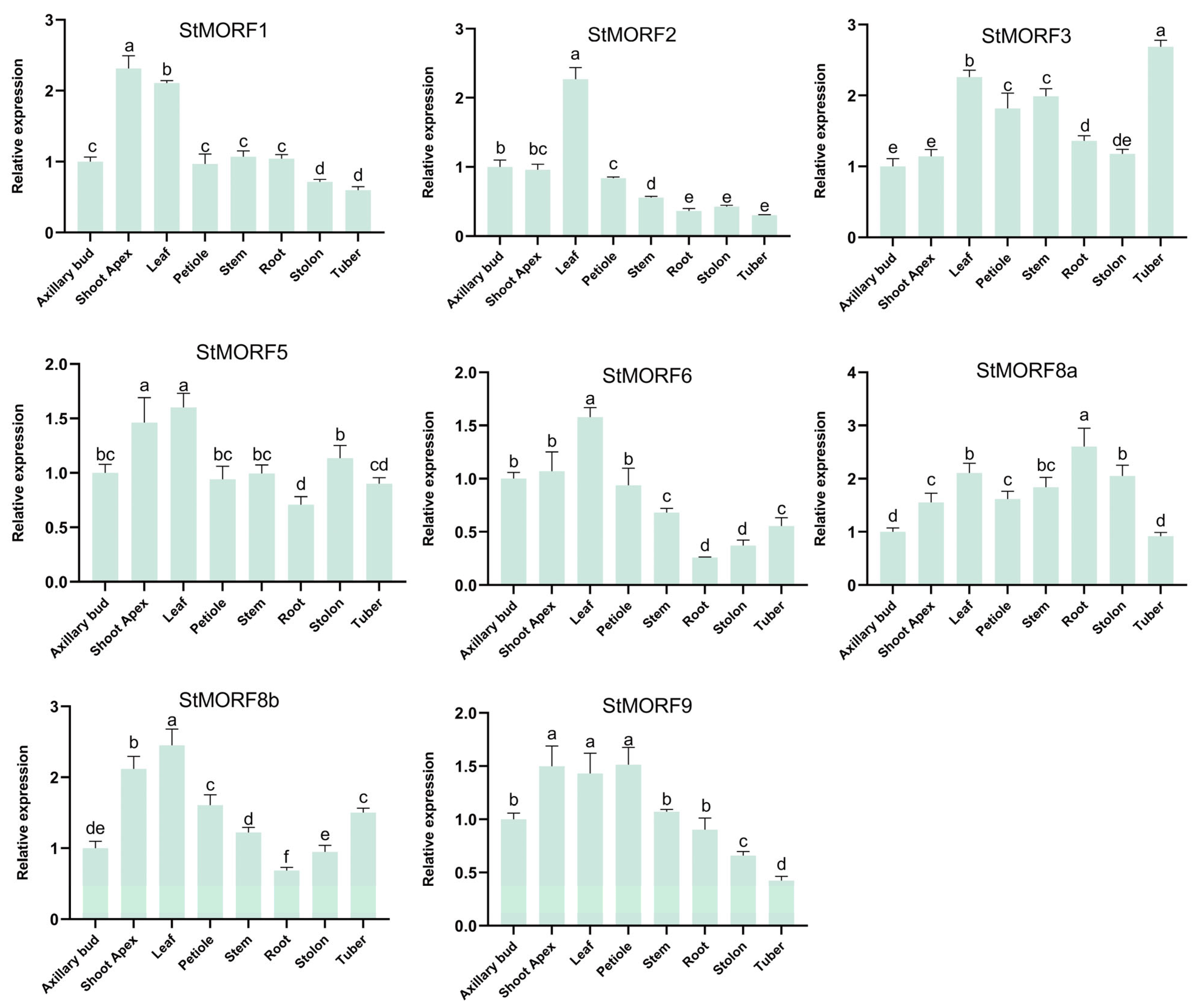
To identify the expression patterns of StMORF genes in various tissues of potato, we selected B058 potato plants at the seedling stage as the template. Tissues including roots, stems, leaves, apical buds, axillary buds, and stolons were collected for RNA extraction and subsequent qRT-PCR analysis primers listed in (Supplementary Table S4). The experimental results (Figure 8) showed that StMORF genes were expressed in all tested tissues, with significantly high expression levels primarily in leaves and apical buds, most notably in leaves. This finding aligns with the predictions from subcellular localization, suggesting their primary involvement in RNA editing within mitochondria and chloroplasts. Only StMORF3 and StMORF8b showed relatively high expression levels in tubers, while the other StMORF members exhibited low expression in tubers. Additionally, StMORF8a was highly expressed in roots, whereas the expression levels of other members were relatively low in roots.

3.9. Transcriptional Responses of StMORF Genes to Abiotic Stress and Exogenous Phytohormone Application

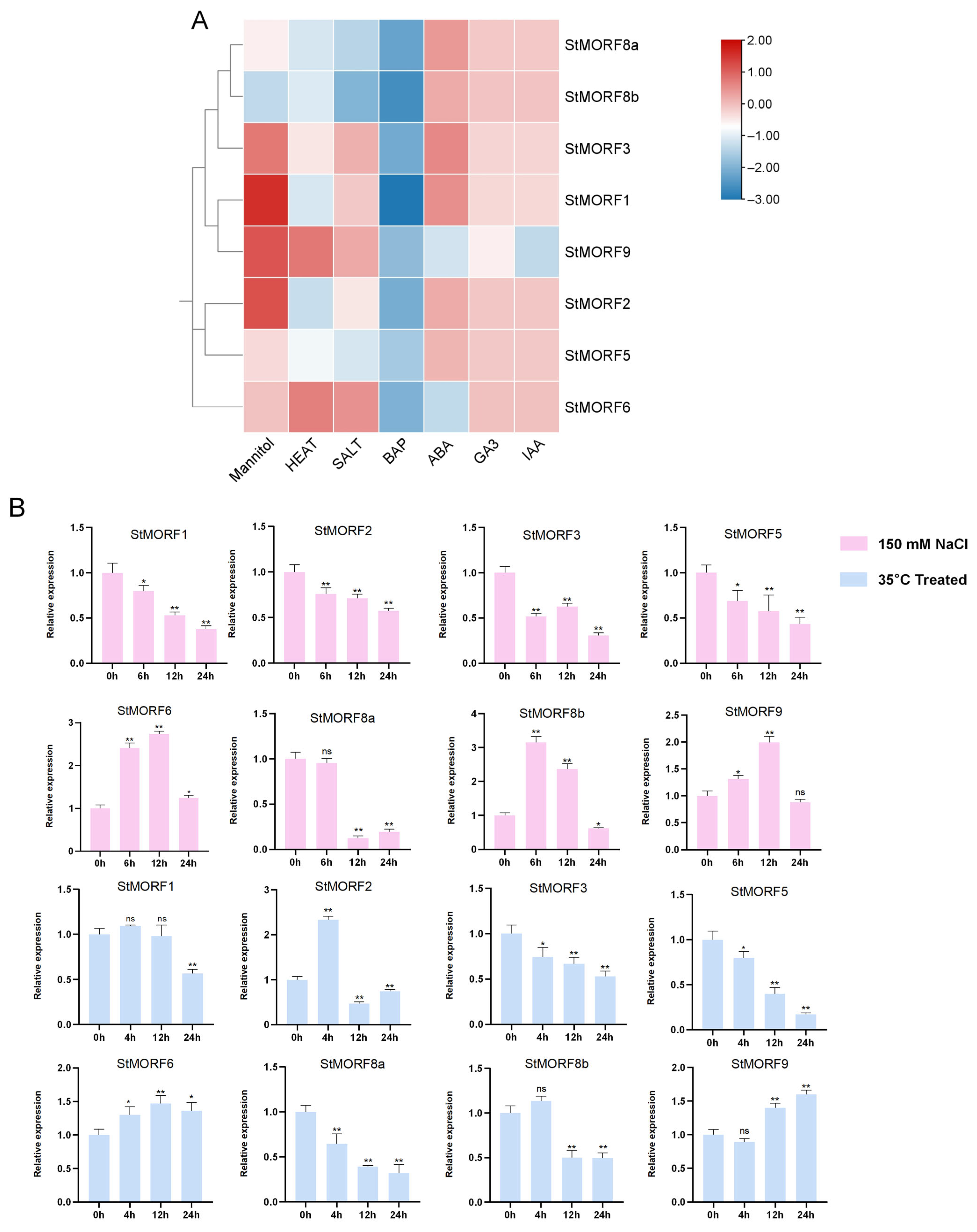
Given that MORF genes play important roles in many plants’ responses to abiotic stress and hormones, investigating the expression patterns of potato MORF genes under such conditions is crucial for elucidating their molecular mechanisms. We downloaded RNA-seq data from the PGSC database to analyze the expression patterns of StMORF genes in DM potato under 24 h abiotic stress (salt, drought, heat) and 24 h hormone treatments (ABA, IAA, GA, BAP). The results, as shown in (Figure 9A), indicated that under the three abiotic stress conditions, six StMORF family members showed specific expression patterns. Among them, StMORF8b was downregulated under all three abiotic stresses, suggesting its important role in abiotic stress response. StMORF8a was downregulated under both heat and salt stress. StMORF5 was downregulated under salt stress. StMORF1 and StMORF2 were downregulated under heat treatment but upregulated under mannitol-induced drought stress. StMORF9 was upregulated only under mannitol treatment. Under hormone treatments, all StMORF family members were specifically downregulated under BAP treatment, indicating that cytokinin negatively regulates the expression of the MORF family. Under the other three hormone treatments, a total of two StMORF family members showed specific expression: StMORF9 was differentially expressed under ABA and IAA regulation, respectively, and StMORF6 was differentially expressed under ABA.
Subsequently, we assessed the expression patterns of the StMORF gene family under salt and heat stress conditions and performed further qRT-PCR analyses of StMORF family members. We used B058 seedlings grown in a greenhouse; B058 is a cultivar that is moderately sensitive to both salt and heat stress. The seedlings were subjected separately to 150 mM NaCl (salt treatment) for 24 h and 35 °C (heat treatment) for 24 h. Samples were collected at 0 h, 6 h, 12 h, and 24 h. Total RNA was extracted from leaf tissue and subsequently reverse-transcribed. For qRT-PCR analysis, the 0 h sample (before treatment) was used as the calibrator (set to 1), and each subsequent time point was statistically compared with 0 h. The results are shown in the (Figure 9B). Under 150 mM salt stress, StMORF6, StMORF9, and StMORF8b showed a trend of initial decrease followed by an increase, while the other members showed downregulated expression levels at all time points. The expression level of StMORF8a reached its lowest point at 12 h, decreasing by 8.15-fold. It is also noteworthy that the expression level of StMORF8b showed an increasing trend at 6 and 12 h, peaking with a 3-fold increase, but was significantly downregulated at 24 h. These results are largely consistent with our transcriptome data. In summary, this evidence basically confirms that StMORF members play important roles when potato is subjected to salt stress. Under the 35 °C heat stress condition, we observed that, at the 24 h time point, expression levels of all StMORF genes except StMORF6 and StMORF9 showed a marked decrease. Analysis further indicated that the transcript abundance of StMORF2 increased initially before subsequently declining. These results indicate that the expression levels of StMORF genes are affected by heat and salt stress, and genes within this family exhibit different sensitivities to these stresses.

4. Discussion

RNA editing is a vital co-transcriptional or post-transcriptional alteration that predominantly takes place within the organelles of plants. It serves essential functions in regulating growth, development, and adaptation to environmental constraints [4]. The RNA editosome primarily involves several core protein types, namely PPR, MORF, ORRM, and OZ proteins [7,8]. MORF proteins can interact to create homodimeric and heterodimeric structures, interacting with other components to enhance RNA editing efficiency. Although MORF proteins have been reported in other plants to participate in abiotic stress responses and influence plant growth and development [12,14,21], their functions in potato remain unclear. Therefore, this study comprehensively investigated the functions of StMORF proteins, conducting systematic predictions and analyses including gene structure, physicochemical properties, tissue-specific expression patterns, responses to abiotic stress, and protein interactions. MORF proteins are crucial RNA editing factors widely present in various plants. In Arabidopsis, they are involved in the majority of mitochondrial and chloroplast RNA editing sites. Initially identified in Arabidopsis with nine members, subsequent studies identified 7, 7, 8, and 43 members in rice, poplar, celery, and Brassica napus, respectively [13,14,15,16].
We identified a total of eight StMORF family members, distributed across seven chromosomes. Phylogenetic analysis revealed that the StMORF family can be divided into five subfamilies and exhibits a closer phylogenetic relationship with tomato MORF genes, indicating a conserved evolutionary pattern for the MORF family within Solanaceae plants. This conserved pattern is consistent with previous findings in tomato, rice, poplar, and other species. Currently, most functionally characterized MORF genes are localized to chloroplasts and mitochondria. Based on subcellular localization analysis, six MORF genes in potato were predicted to be targeted at chloroplasts, while the remaining two were assigned to mitochondria. In future studies, transient expression assays in tobacco can be performed to further verify their subcellular localization, thereby strengthening the functional interpretation of their roles in organellar RNA editing and stress responses. Structure and conserved motif analyses showed that StMORF genes within the same subfamily share similar exon–intron structures and motif distributions. Conserved Motif 1, 2 is present in every member of StMORF; therefore, subsequent verification confirmed that these two motifs are associated with the core MORF-box domain. Collinearity analysis revealed few gene expansion events in potato MORF genes, with only one collinear gene pair (StMORF8a/StMORF8b) detected, contrasting with more extensive duplications in Brassica napus [13], suggesting this family is relatively stable in potato, maintained primarily through vertical descent rather than large-scale gene duplication and expansion. Tissue expression analysis results indicated that StMORF genes are expressed in all examined tissues but exhibit specific high expression in leaves; it is suggested that StMORF proteins could contribute significantly to the processes underlying chloroplast differentiation and organelle development, which aligns with the subcellular localization predictions and suggests their primary involvement in RNA editing within mitochondria and chloroplasts.
Studies have indicated that PPR proteins containing the DYW domain can affect RNA editing efficiency by interacting with OsMORF2b to form complexes [35]. Meanwhile, MORF proteins also interact with each other, thereby influencing the editing process. Therefore, through predicting protein–protein interactions of StMORFs, we found that most of the predicted interacting proteins contain DYW and PPR domains. This result suggests that their interaction partners are associated with RNA editing. Additionally, we detected a direct interaction between StMORF1 and StMORF6. Y2H results demonstrated that StMORF1 interacts with StMORF6 and StMORF8a, respectively, to form heterodimers, and StMORF2 and StMORF9 proteins interact to form heterodimers. These findings indicate that certain StMORF proteins can interact with each other to form heterodimers, paralleling Arabidopsis MORF2-MORF9 and MORF8-MORF1/2 complexes that modulate chloroplast RNA editing [20]. These interactions likely stabilize editosomes, enhancing site-specificity and efficiency thereby potentially regulating RNA editing efficiency.
As key genomic determinants, cis-acting elements orchestrate plant development and environmental adaptation by mediating sequence-specific interactions with transcription factors [36]. For instance, the light-responsive Box-4 element was detected in seven StMORF promoters, which is consistent with the relatively high transcript abundance observed in leaves. Analysis of promoter cis-elements revealed that most StMORF gene members contain stress-responsive cis-acting elements. RNA editing may affect the resistance of plants to abiotic stress, for example, studies have indicated that under salt stress, RNA editing of RPS14 and RPS16 in soybeans was found to be reduced [37]. MORF proteins, which play a critical role in regulating RNA editing efficiency, are essential components in plants. Previous studies have confirmed that some MORF genes participate in abiotic stress responses in various plants. Subsequently, RNA-seq data and qRT-PCR results further confirmed their responsive characteristics under abiotic stress in potato. Transcriptome analysis revealed that the expression of multiple StMORF genes was specifically downregulated under both abiotic and hormonal stress conditions. Subsequently, all StMORF members were examined by qRT-PCR under 150 mM NaCl salt stress and 35 °C heat stress, respectively. The results revealed that StMORF8a and StMORF8b were highly sensitive to both stresses, with StMORF8a showing the most significant downregulation at 12 h under salt stress. Additionally, the expression of StMORF1 and StMORF2 decreased specifically under heat stress, while StMORF5 expression was reduced under salt stress. Given that MORF proteins are key regulators of RNA editing, we hypothesize that these stress-induced alterations in StMORF gene expression may disrupt the RNA editing efficiency in chloroplasts and mitochondria, the organelles where these proteins are localized. As the primary sites of cellular energy conversion, mitochondria and chloroplasts play a critical role in plant stress responses [38]. This result is also consistent with the presence of abundant stress-related cis-acting elements in the promoters of StMORF members. Therefore, we propose that the impaired RNA editing, resulting from the differential expression of StMORF genes, could ultimately affect the proper development and growth of potato plants under abiotic stress.
In summary, this study not only reveals the systematic characteristics and evolutionary patterns of the StMORF gene family in potato but also lays a theoretical foundation for further elucidating its functions in RNA editing, growth and development, protein interactions, and abiotic stress responses in potato. Future functional studies, including gene knockout, overexpression, and site-specific editing analyses, will be necessary to elucidate the precise mechanisms by which individual StMORF members contribute to stress tolerance and to determine whether manipulating MORF expression or activity can improve potato performance under field conditions. Future work will directly quantify editing efficiency at specific organellar sites. This will provide new molecular targets and a theoretical basis for breeding new potato varieties with high stress resistance and yield potential.

5. Conclusions

We characterized eight members of the StMORF gene family in potato, with their genomic positions spanning seven chromosomes. The phylogenetic reconstruction resolved these members into five major groups. The similar conserved motif composition and exon–intron distribution among members within the same group further support this classification. Protein interaction predictions revealed that multiple StMORF members interact with RNA editing-related proteins containing the DYW domain, confirming the involvement of StMORF genes in regulating RNA editing in potato. Validation of representative StMORF protein interactions showed that some StMORF proteins can interact in vivo to form heterodimers, thereby potentially regulating RNA editing efficiency. Furthermore, numerous cis-acting elements associated with abiotic stress and hormone responses were identified in the promoters of StMORF genes. Analysis of transcriptome data suggested that StMORF genes are likely involved in abiotic stress and hormone responses. Subsequently, qRT-PCR analyses were performed for StMORF members under 150 mM NaCl salt stress and 35 °C heat stress, respectively. Multiple StMORF genes exhibited stress-responsive expression changes under both treatments, supporting their transcriptional involvement in potato responses to salinity and elevated temperature. Moreover, this stress-induced expression trend is consistent with the enrichment of stress- and hormone-related cis-acting elements in StMORF promoters. In summary, the results presented here establish groundwork for subsequent investigations aimed at elucidating the functional roles of the StMORF gene family in potato.

Supplementary Materials

The following supporting information can be downloaded at: https://www.mdpi.com/article/10.3390/agronomy16040413/s1, Figure S1: Evolutionary relationship of MORF proteins between potato and Arabidopsis; Figure S2: SeqLogo of the conserved motifs in potato StMORFs; Figure S3: Multiple sequence alignment (MSA) results of the MORF domains from 8 StMORF proteins; Figure S4: Yeast Two-Hybrid (Y2H) Assay for Autotransactivation of StMORF Proteins, grew on (SD/–Leu/–Trp) but showed no growth on (SD/–Leu/–Trp/–His/–Ade) under serial dilutions, indicating no autoactivation; Table S1: Amino acids of MORF members; Table S2: Primers sequences used in the Y2H experiment; Table S3: Distribution and Functional Annotation of Cis-Acting Elements in StMORFs Promoters; Table S4: Primers sequences used in the qRT-PCR experiment.

Author Contributions

J.X.: Writing—original draft, Formal analysis and Visualization; Y.J.: Writing—review & editing, Conceptualization and Project administration; Z.P.: Writing—review & editing and Resources; J.W.: Software and Visualization; G.J.: Methodology, Conceptualization and Project administration. All authors have read and agreed to the published version of the manuscript.

Funding

The research was conducted without external financial support.

Data Availability Statement

The transcriptomic data utilized in this analysis are accessible via the Potato Genomics Resource (PGSC) at (http://spuddb.uga.edu/, accessed on 4 February 2026). All newly generated datasets supporting the findings have been provided within this article and its accompanying supplementary files. For further details, interested researchers may contact the corresponding authors.

Acknowledgments

I extend my deep appreciation to my fellow contributors for their collective efforts in bringing this manuscript to fruition.

Conflicts of Interest

The authors declare no conflicts of interest.

References

  1. Stokstad, E. The new potato. Science 2019, 363, 574–577. [Google Scholar] [CrossRef] [PubMed]
  2. Zhu, J.; Chen, L.; Li, Z.; Wang, W.; Qi, Z.; Li, Y.; Liu, Y.; Liu, Z. Genome-Wide Identification of LOX Gene Family and Its Expression Analysis under Abiotic Stress in Potato (Solanum tuberosum L.). Int. J. Mol. Sci. 2024, 25, 3487. [Google Scholar] [CrossRef]
  3. Chateigner-Boutin, A.; Small, I. Plant RNA editing. RNA Biol. 2010, 7, 213–219. [Google Scholar] [CrossRef]
  4. Sun, T.; Bentolila, S.; Hanson, M.R. The Unexpected Diversity of Plant Organelle RNA Editosomes. Trends Plant Sci. 2016, 21, 962–973. [Google Scholar] [CrossRef]
  5. Freyer, R.; Kiefer-Meyer, M.C.; Kössel, H. Occurrence of plastid RNA editing in all major lineages of land plants. Proc. Natl. Acad. Sci. USA 1997, 94, 6285–6290. [Google Scholar] [CrossRef]
  6. Giegé, P.; Brennicke, A. RNA editing in Arabidopsis mitochondria effects 441 C to U changes in ORFs. Proc. Natl. Acad. Sci. USA 1999, 96, 15324–15329. [Google Scholar] [CrossRef] [PubMed]
  7. Wang, Y.; Tan, B. Pentatricopeptide repeat proteins in plants: Cellular functions, action mechanisms, and potential applications. Plant Commun. 2025, 6, 101203. [Google Scholar] [CrossRef]
  8. Shi, X.; Bentolila, S.; Hanson, M.R. Organelle RNA recognition motif-containing (ORRM) proteins are plastid and mitochondrial editing factors in Arabidopsis. Plant Signal. Behav. 2016, 11, e1167299. [Google Scholar] [CrossRef]
  9. Barkan, A.; Small, I. Pentatricopeptide repeat proteins in plants. Annu. Rev. Plant Biol. 2014, 65, 415–442. [Google Scholar] [CrossRef] [PubMed]
  10. Yuan, J.; Ma, T.; Ji, S.; Hedtke, B.; Grimm, B.; Lin, R. Two chloroplast-localized MORF proteins act as chaperones to maintain tetrapyrrole biosynthesis. New Phytol. 2022, 235, 1868–1883. [Google Scholar] [CrossRef] [PubMed]
  11. Yan, J.; Zhang, Q.; Yin, P. RNA editing machinery in plant organelles. Sci. China Life Sci. 2018, 61, 162–169. [Google Scholar] [CrossRef] [PubMed]
  12. Takenaka, M.; Zehrmann, A.; Verbitskiy, D.; Kugelmann, M.; Härtel, B.; Brennicke, A. Multiple organellar RNA editing factor (MORF) family proteins are required for RNA editing in mitochondria and plastids of plants. Proc. Natl. Acad. Sci. USA 2012, 109, 5104–5109. [Google Scholar] [CrossRef] [PubMed]
  13. Xing, J.; Zhang, Y.; Song, W.; Ali, N.A.; Su, K.; Sun, X.; Sun, Y.; Jiang, Y.; Zhao, X. Comprehensive identification, characterization, and expression analysis of the MORF gene family in Brassica napus. BMC Plant Biol. 2024, 24, 475. [Google Scholar] [CrossRef]
  14. Zhang, Q.; Shen, L.; Ren, D.; Hu, J.; Chen, G.; Zhu, L.; Gao, Z.; Zhang, G.; Guo, L.; Zeng, D.; et al. Characterization, Expression, and Interaction Analyses of OsMORF Gene Family in Rice. Genes 2019, 10, 694. [Google Scholar] [CrossRef] [PubMed]
  15. Wang, D.; Meng, S.; Su, W.; Bao, Y.; Lu, Y.; Yin, W.; Liu, C.; Xia, X. Genome-Wide Analysis of Multiple Organellar RNA Editing Factor Family in Poplar Reveals Evolution and Roles in Drought Stress. Int. J. Mol. Sci. 2019, 20, 1425. [Google Scholar] [CrossRef]
  16. Liu, P.; Wang, Y.; Sun, Y.; Wei, Y.; Sun, X.; Li, M.; Tan, G.; Xiong, A. Genome-wide identification and expression analysis of the MORF gene family in celery reveals their potential role in chloroplast development. J. Genet. Eng. Biotechnol. 2024, 22, 100443. [Google Scholar] [CrossRef]
  17. Haag, S.; Schindler, M.; Berndt, L.; Brennicke, A.; Takenaka, M.; Weber, G. Crystal structures of the Arabidopsis thaliana organellar RNA editing factors MORF1 and MORF9. Nucleic Acids Res. 2017, 45, 4915–4928. [Google Scholar] [CrossRef]
  18. Yang, J.; Zhang, M.; Wang, X. Crystal structure of the chloroplast RNA editing factor MORF2. Biochem. Biophys. Res. Commun. 2018, 495, 2038–2043. [Google Scholar] [CrossRef]
  19. Li, J.; Wang, K.; Yang, Y.; Lu, Y.; Cui, K.; Ji, Y.; Ma, L.; Cheng, K.; Ostersetzer-Biran, O.; Li, F.; et al. SlRIP1b is a global organellar RNA editing factor, required for normal fruit development in tomato plants. New Phytol. 2023, 237, 1188–1203. [Google Scholar] [CrossRef]
  20. Huang, C.; Li, Z.; Yu, Q.; Ye, L.; Cui, Y.; Molloy, D.P.; Yang, Z. MORF2 tightly associates with MORF9 to regulate chloroplast RNA editing in Arabidopsis. Plant Sci. 2019, 278, 64–69. [Google Scholar] [CrossRef]
  21. Bentolila, S.; Heller, W.P.; Sun, T.; Babina, A.M.; Friso, G.; van Wijk, K.J.; Hanson, M.R. RIP1, a member of an Arabidopsis protein family, interacts with the protein RARE1 and broadly affects RNA editing. Proc. Natl. Acad. Sci. USA 2012, 109, E1453–E1461. [Google Scholar] [CrossRef]
  22. Zhang, Q.; Wang, Y.; Xie, W.; Chen, C.; Ren, D.; Hu, J.; Zhu, L.; Zhang, G.; Gao, Z.; Guo, L.; et al. OsMORF9 is necessary for chloroplast development and seedling survival in rice. Plant Sci. 2021, 307, 110907. [Google Scholar] [CrossRef]
  23. Yang, Y.; Fan, G.; Zhao, Y.; Wen, Q.; Wu, P.; Meng, Y.; Shan, W. Cytidine-to-Uridine RNA Editing Factor NbMORF8 Negatively Regulates Plant Immunity to Phytophthora Pathogens. Plant Physiol. 2020, 184, 2182–2198. [Google Scholar] [CrossRef]
  24. Chen, C.; Wu, Y.; Li, J.; Wang, X.; Zeng, Z.; Xu, J.; Liu, Y.; Feng, J.; Chen, H.; He, Y.; et al. TBtools-II: A “one for all, all for one” bioinformatics platform for biological big-data mining. Mol. Plant 2023, 16, 1733–1742. [Google Scholar] [CrossRef]
  25. Chen, C.; Chen, H.; Zhang, Y.; Thomas, H.R.; Frank, M.H.; He, Y.H.; Xia, R. TBtools: An Integrative Toolkit Developed for Interactive Analyses of Big Biological Data. Mol. Plant 2020, 13, 1194–1202. [Google Scholar] [CrossRef]
  26. Kumar, S.; Stecher, G.; Li, M.; Knyaz, C.; Tamura, K. MEGA X: Molecular Evolutionary Genetics Analysis across Computing Platforms. Mol. Biol. Evol. 2018, 35, 1547–1549. [Google Scholar] [CrossRef]
  27. Letunic, I.; Bork, P. Interactive Tree of Life (iTOL): An online tool for phylogenetic tree display and annotation. Bioinformatics 2007, 23, 127–128. [Google Scholar] [CrossRef] [PubMed]
  28. Bailey, T.L.; Boden, M.; Buske, F.A.; Frith, M.; Grant, C.E.; Clementi, L.; Ren, J.; Li, W.W.; Noble, W.S. MEME SUITE: Tools for motif discovery and searching. Nucleic Acids Res. 2009, 37, W202–W208. [Google Scholar] [CrossRef] [PubMed]
  29. Wang, Y.; Tang, H.; DeBarry, J.D.; Tan, X.; Li, J.; Wang, X.; Lee, T.; Jin, H.; Marler, B.; Guo, H.; et al. MCScanX: A toolkit for detection and evolutionary analysis of gene synteny and collinearity. Nucleic Acids Res. 2012, 40, e49. [Google Scholar] [CrossRef] [PubMed]
  30. Szklarczyk, D.; Gable, A.L.; Lyon, D.; Junge, A.; Wyder, S.; Huerta-Cepas, J.; Simonovic, M.; Doncheva, N.T.; Morris, J.H.; Bork, P.; et al. STRING v11: Protein-protein association networks with increased coverage, supporting functional discovery in genome-wide experimental datasets. Nucleic Acids Res. 2019, 47, D607–D613. [Google Scholar] [CrossRef]
  31. Lescot, M.; Déhais, P.; Thijs, G.; Marchal, K.; Moreau, Y.; Van de Peer, Y.; Rouzé, P.; Rombauts, S. PlantCARE, a database of plant cis-acting regulatory elements and a portal to tools for in silico analysis of promoter sequences. Nucleic Acids Res. 2002, 30, 325–327. [Google Scholar] [CrossRef]
  32. Tang, X.; Zhang, N.; Si, H.; Calderón-Urrea, A. Selection and validation of reference genes for RT-qPCR analysis in potato under abiotic stress. Plant Methods 2017, 13, 85. [Google Scholar] [CrossRef] [PubMed]
  33. Livak, K.J.; Schmittgen, T.D. Analysis of relative gene expression data using real-time quantitative PCR and the 2−ΔΔCT Method. Methods 2001, 25, 402–408. [Google Scholar] [CrossRef]
  34. Schallenberg-Rüdinger, M.; Kindgren, P.; Zehrmann, A.; Small, I.; Knoop, V. A DYW-protein knockout in Physcomitrella affects two closely spaced mitochondrial editing sites and causes a severe developmental phenotype. Plant J. 2013, 76, 420–432. [Google Scholar] [CrossRef]
  35. Cui, X.; Wang, Y.; Wu, J.; Han, X.; Gu, X.; Lu, T.; Zhang, Z. The RNA editing factor DUA1 is crucial to chloroplast development at low temperature in rice. New Phytol. 2019, 221, 834–849. [Google Scholar] [CrossRef]
  36. Schmitz, R.J.; Grotewold, E.; Stam, M. Cis-regulatory sequences in plants: Their importance, discovery, and future challenges. Plant Cell 2022, 34, 718–741. [Google Scholar] [CrossRef]
  37. Rodrigues, N.F.; da Fonseca, G.C.; Kulcheski, F.R.; Margis, R. Salt stress affects mRNA editing in soybean chloroplasts. Genet. Mol. Biol. 2017, 40, 200–208. [Google Scholar] [CrossRef] [PubMed]
  38. Liberatore, K.L.; Dukowic-Schulze, S.; Miller, M.E.; Chen, C.; Kianian, S.F. The role of mitochondria in plant development and stress tolerance. Free Radic. Biol. Med. 2016, 100, 238–256. [Google Scholar] [CrossRef] [PubMed]
Figure 1. Maximum-likelihood phylogenetic tree of MORF proteins from potato (St), tomato (Sl), rice (Os), and Arabidopsis (At) based on full-length protein sequences. The tree was inferred in MEGA 12 using the JTT model with 1000 bootstrap replicates and refined using iTOL. Colored background ranges indicate clades/groups I–V. Symbols denote species: orange squares, StMORFs; purple circles, AtMORFs; green stars, SlMORFs; red triangles, OsMORFs. All protein sequences used in this analysis are provided in (Supplementary Table S1).
Agronomy 16 00413 g001
Figure 2. The positions of each StMORF gene are indicated in the figure. The identifiers on the left side of the bar corresponding to each chromosome represent the chromosome numbers, and the scale on the left indicates the physical distance in megabases (Mb). The different colors in each chromosome indicate the gene density. For clarity, the names of the individual StMORF genes are displayed in red font.
Agronomy 16 00413 g002
Figure 3. An integrated analysis of phylogeny, conserved motifs, and exon–intron organization in the potato MORF family.
Agronomy 16 00413 g003
Figure 4. (A) The syntenic relationships among the identified StMORF members, where the three circular rings represent gene density and chromosomal positions respectively, with red lines indicating the syntenic relationships within it and gray lines representing all syntenic pairs in potato. In the gene-density ring, color intensity increases with gene density (see color scale bar in the panel). (B) A genomic synteny comparison was performed between potato StMORF genes and their orthologs in tomato and Arabidopsis. In the resulting synteny map, evolutionarily conserved orthologous gene pairs are indicated in blue.
Agronomy 16 00413 g004
Figure 5. Prediction of protein–protein interactions for StMORFs, a deeper color indicates a greater number of interacting genes, with StMORF1 having the most (indicated by the deepest color).
Agronomy 16 00413 g005
Figure 6. Yeast two-hybrid (Y2H) assays were used to validate selected interactions among StMORF proteins. The indicated StMORF pairs were co-transformed into yeast as AD and BD fusion constructs. Growth on (SD/-Leu/-Trp) confirms successful co-transformation, whereas growth on (SD/-Leu/-Trp/-His/-Ade) indicates a positive protein–protein interaction, and auto-activation has been excluded.
Agronomy 16 00413 g006
Figure 7. Examination of cis-regulatory elements was performed within the 2-kb promoter sequences upstream of the StMORF genes. Darker shades denote a higher number of cis-acting elements.
Agronomy 16 00413 g007
Figure 8. The transcript abundance of eight selected StMORF genes was profiled across multiple tissue types via quantitative real-time PCR (qRT-PCR). Sampled tissues comprised axillary buds, shoot apices, roots, stems, petioles, mature leaves, apical buds, and stolons, with expression levels normalized relative to the axillary bud sample (set to 1). Results are shown as mean ± standard error (SE) from three biological replicates. Different letters above the bar chart indicate significant differences at p < 0.05.
Agronomy 16 00413 g008
Figure 9. (A) Expression profiles of StMORFs based on FPKM data, after various hormonal applications, and heat, salt, and drought stress. In the top right corner of the panel, the color bar represents the magnitude of transcript-level changes, expressed as log2 fold change. (B) Changes in the expression levels of StMORF genes under 150 mM NaCl salt stress and 35 °C heat treatment; pink indicates salt stress, and blue indicates heat treatment. The results display mean values with standard errors derived from three independent experimental replicates. Statistical significance is indicated by asterisks relative to 0 h (* p < 0.05, ** p < 0.01; ns, not significant; n = 3 biological replicates).
Agronomy 16 00413 g009
Table 1. Analysis of physicochemical properties of StMORFs.
Gene
Name
Sequence IDNumber of Amino
Acid
Molecular
Weight
(kDa)
Theoretical
pI
Instability
Index
Aliphatic
Index
HydropathicitySubcellular
Localization
StMORF1PGSC0003DMT40005756147052.477.771.6238−1.215chloroplast
StMORF2PGSC0003DMT40003811723926.518.7851.2870.17−0.596chloroplast
StMORF3PGSC0003DMT40004331426029.298.9760.1761.08−0.712mitochondrion
StMORF5PGSC0003DMT40006042923426.37956.8766.2−0.655chloroplast
StMORF6PGSC0003DMT40005013440043.945.2537.4475.75−0.267chloroplast
StMORF8aPGSC0003DMT40005480941145.469.4261.6145.84−1.02chloroplast
StMORF8bPGSC0003DMT40003980540344.039.3362.2741.89−1.026mitochondrion
StMORF9PGSC0003DMT40005588322625.398.6354.2662.17−0.638chloroplast
Disclaimer/Publisher’s Note: The statements, opinions and data contained in all publications are solely those of the individual author(s) and contributor(s) and not of MDPI and/or the editor(s). MDPI and/or the editor(s) disclaim responsibility for any injury to people or property resulting from any ideas, methods, instructions or products referred to in the content.