Article

Enhancing Carbon–Nitrogen Metabolism and Productivity of Smooth Bromegrass Through Alfalfa Incorporation and Nitrogen Application

College of Grassland, Inner Mongolia Minzu University, Tongliao 028000, China
*
Authors to whom correspondence should be addressed.
Agronomy 2026, 16(3), 395; https://doi.org/10.3390/agronomy16030395
Submission received: 30 December 2025 / Revised: 29 January 2026 / Accepted: 4 February 2026 / Published: 6 February 2026
(This article belongs to the Section Grassland and Pasture Science)

Abstract

The incorporation of alfalfa into grass systems reduces reliance on nitrogen fertilizer application. Over two consecutive years, we investigated the regulation of carbon and nitrogen metabolism in grasses and productivity enhancement under four nitrogen application rates (0, 105, 210, and 315 kg·ha−1) and five alfalfa incorporation levels (0%, 10%, 20%, 30%, and 40%); incorporation (%) refers strictly to seeding proportion (% of the monoculture seeding rate). Within the range of 20–30% alfalfa incorporation and 105–210 kg·ha−1 nitrogen application, key physiological and biochemical parameters, except the net photosynthetic rate (Pn), reached their peak values compared to the N0A0 (no nitrogen and no alfalfa) treatment. Transpiration rate (Tr), intercellular CO2 concentration (Ci), and stomatal conductance (Gs) increased by 43.64%, 40%, and 48.09%, respectively. Pn peaked under the N2A0 treatment (210 kg·ha−1 nitrogen application and no alfalfa), increased by 65.63%. Nitrate reductase (NR), glutamine synthetase (GS), and ribulose-1,5-bisphosphate carboxylase (RuBisCO) activity increased by 154.60%, 112.39%, and 199.19%, respectively. Total sugar (TS) and protein production (YCP) increased by 122.22% and 145.17%, respectively. The entropy-weighted TOPSIS evaluation based on multi-objective assessment showed that the combination of 20% alfalfa incorporation with 105 kg N·ha−1 application is an efficient model for enhancing forage productivity in the Horqin Sandy Land.

1. Introduction

China is the world’s largest consumer and producer of nitrogen fertilizers. To date, research has focused on optimizing cultivation management practices to control nitrogen application rates, improve nitrogen use efficiency (NUE), mitigate environmental pollution, and achieve sustainable agricultural development [1]. Situated in the eastern Inner Mongolia Autonomous Region, China, the Horqin Sandy Land evolved from the historic Horqin Grassland ecosystem. Land degradation through desertification occurred primarily due to the mismanagement of agro-pastoral systems and unsustainable water allocation. Since 2000, the ecological environment of the sandy land has improved through management measures such as vegetation restoration, agricultural restructuring, and sustainable grazing. It is a vital component of the agro-pastoral ecotone, with grassland animal husbandry as a key local industry [2]. Therefore, the establishment of artificial grasslands is particularly crucial here—both for promoting livestock development and facilitating ecological restoration.
The nitrogen (N) cycle in China’s terrestrial ecosystems exhibits significant regional disparities. As a typical representative of northern sandy lands, the Horqin Sandy Land features low soil nitrogen content and inefficient nitrogen cycling, making nitrogen fertilizer application crucial for forage growth and development. The incorporation of leguminous forage could partially substitute synthetic N fertilizer application to achieve high yield and superior forage quality, while alleviating environmental issues caused by excessive fertilizer use. This can accomplish the dual objectives of reducing fertilizer input while increasing efficiency [3]. Therefore, it is imperative to quantify the synergistic effects between nitrogen fertilization and legume incorporation on forage productivity enhancement.
After N uptake, plants assimilate ammonium and synthesize nitrogenous compounds such as proteins, followed by their breakdown and transformation [4]. Protein synthesis, the product of nitrogen assimilation, is catalyzed by enzymes including nitrate reductase (NR) and glutamine synthetase (GS) [5]. Nitrogen absorption and conversion are energy-intensive processes, requiring carbon metabolism to supply energy and carbon skeletons for nitrogenous compound synthesis [6]. Carbon metabolism sustains both photosynthetic CO2 fixation and carbohydrate metabolism. Most energy and intermediates for carbon metabolism are derived from photosynthesis [7]. A light-regulated enzyme, ribulose-1,5-bisphosphate carboxylase (RuBisCO), governs the direction and efficiency of photosynthetic carbon metabolism. Its activity and abundance correlate with photosynthetic rates in crops [8]. NR and GS enzyme activities directly affect N assimilation efficiency, which in turn promotes carbon assimilation by enhancing photosynthesis, ultimately driving biomass accumulation and leading to higher feed yield. Under optimal N application levels, the coordinated regulation of key C–N metabolic enzymes, such as RuBisCO, NR, and GS, can enhance plant C–N assimilation capacity, leading to concurrent improvements in yield and NUE [9,10]. However, excessive N fertilization inhibits these enzymatic activities, producing effects counterproductive to proper nutrient management [11].
Previous studies have mainly focused on single-factor impacts, such as nitrogen, phosphorus, water availability, and light intensity, on plant C–N metabolism. Cultivation systems substantially alter N accumulation and translocation patterns among plant organs. Particularly in intercropping systems, differential water and nutrient uptake dynamics between component crops modulate C–N metabolic processes, influencing NUE [12,13]. It remains to be determined how the interaction between N application rates and intercropping configurations regulates yield formation through grass–legume C-N metabolic coordination. Resolution of this question will enable optimized planting strategies to simultaneously enhance both crop productivity and NUE.
In forage production systems, legume–grass intercropping is an effective strategy to alleviate forage supply shortages. This approach holds considerable potential for addressing current feed deficits in livestock industries while promoting safe and efficient agro-pastoral development [14]. Smooth bromegrass (Bromus inermis Leyss.), a perennial forage grass of the Poaceae family, is a crucial winter–spring supplemental feed for livestock in arid regions of northeast China [15]. Alfalfa (Medicago sativa), a perennial leguminous forage, is a premium plant-based protein source for livestock due to its nitrogen-fixation capacity that enhances NUE [16]. Intercropping alfalfa with smooth bromegrass can reduce synthetic N inputs through the legume’s nitrogen-fixation capacity. However, suboptimal N application rates combined with suboptimal intercropping arrangements may either suppress rhizobial N fixation through excessive N fertilization [17] or exacerbate interspecific competition for spatial resources, compromising yield potential [18]. While extensive research exists on grain crop intercrops such as maize–soybean [19], maize–peanut [20], and maize–alfalfa [21], the specific physiological mechanisms governing C–N coordination in forage-only intercropping systems—particularly under varying N regimes and planting densities—remain poorly understood. Therefore, in this study, we investigated the effects of five alfalfa planting densities combined with four N application rates on C–N metabolism and production performance of smooth bromegrass during its high-yield years (the 2nd and 3rd years after establishment) over two consecutive growing seasons. The objectives were to: determine the optimal alfalfa–nitrogen combination for artificial pasture establishment and provide a scientific basis for achieving high-yield, high-quality, and sustainable forage production in the Horqin Sandy Land.

2. Materials and Methods

2.1. Study Site

The experiment was conducted from 2021 to 2023 at the Science and Technology Park of Inner Mongolia Minzu University (43°36′ N, 122°02′ E). The region features a warm-temperate continental monsoon climate with an average annual temperature of 6.4 °C, a frost-free period of 150 days, and a mean annual precipitation of approximately 400 mm. The soil properties included an organic matter content of 4.86 g·kg−1, available potassium of 68.7 mg·kg−1, available phosphorus of 20.5 mg·kg−1, alkali-hydrolyzable N of 17.2 mg·kg−1, and a pH of 8.2. An irrigation system was installed in the experimental area to provide supplemental water during drought periods. The annual total irrigation volume was 170 m3·ha−1.

2.2. Experimental Design

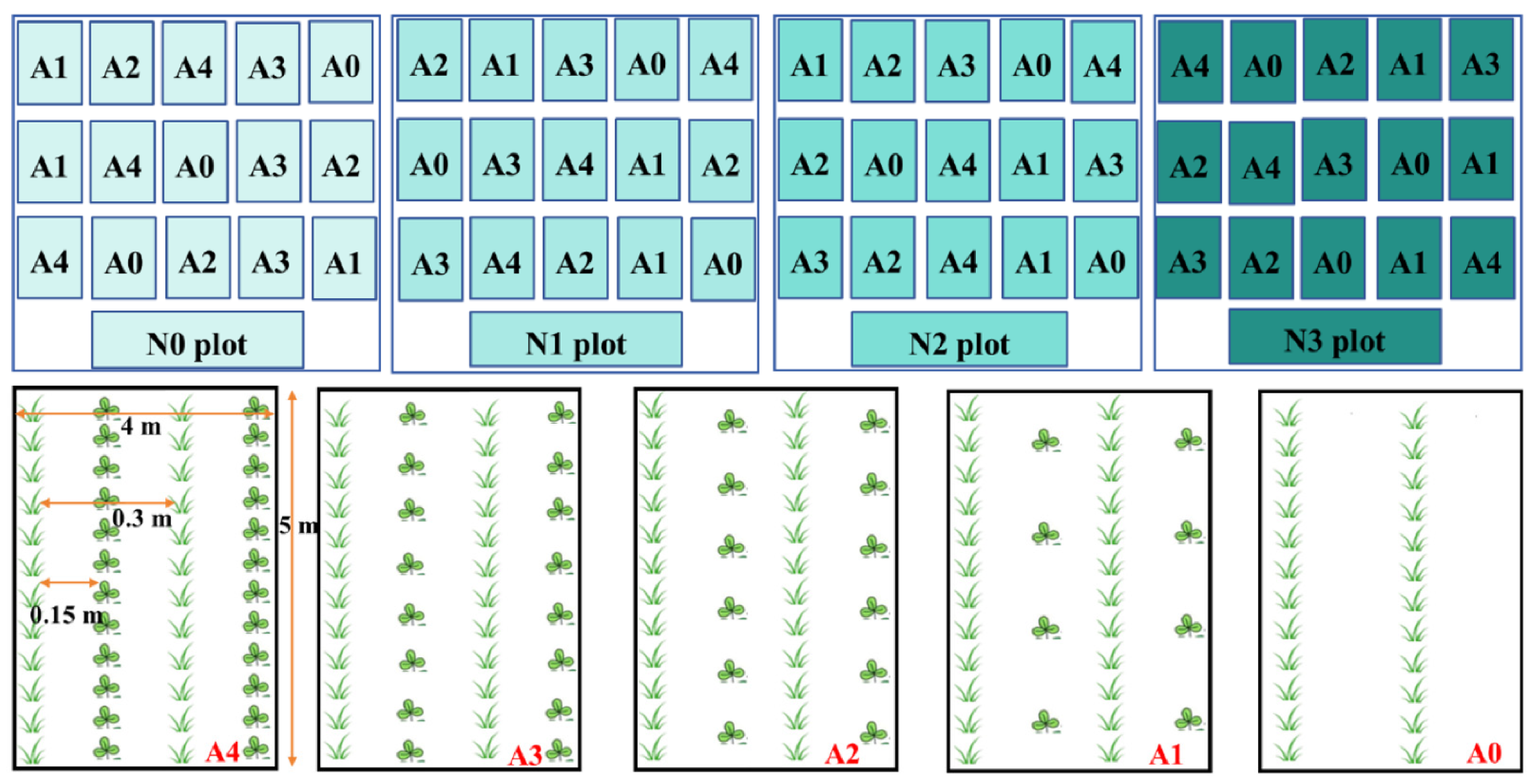
In the experiment, we used a split-plot design with N application rates as main plots and alfalfa incorporation levels as sub-plots (Figure 1). Each treatment was replicated three times in 20 m2 plots (4 m × 5 m). Four N levels were applied: 0 (N0), 105 (N1), 210 (N2), and 315 kg·ha−1 (N3) using urea [CO(NH2)2, ≥46% N]. Additionally, five alfalfa incorporation levels were established: 0% (A0), 10% (A1), 20% (A2), 30% (A3), and 40% (A4) of the monoculture rate (15 kg·ha−1). N was applied in three split applications annually: 40% at the green-up stage (6 April 2022, and 10 April 2023), 30% after the first harvest (3 June 2022, and 7 June 2023) and 30% after the second harvest (8 July 2022, and 12 July 2023), with basal fertilizers of 100 kg·ha−1 P2O5 and 120 kg·ha−1 K2O applied once at green-up (6 April 2022 and 10 April 2023). Smooth bromegrass was drill-seeded at 30 kg·ha−1 on 20 May 2021. This was followed by inter-row furrow seeding of alfalfa on 18 July 2021. No harvest occurred in the establishment year. From the second year onward, three annual harvests were conducted at alfalfa’s initial flowering stage, with uniform field management maintained across all plots.

2.3. Sampling and Measurement

Since the initial harvest data can quickly reflect the early growth performance of smooth bromegrass in the mixed sowing environment, we used the data collected during the first-cut harvest for the analysis. The results of this study were obtained from the first-cut harvest data during the high-yield period, that is, the second and third year after establishment, of the alfalfa/smooth bromegrass system (3 June 2022, and 7 June 2023). After harvesting, the samples were oven-dried at 70 °C for approximately 48 h until a constant dry weight was achieved, and dry matter yield (DMY) was then calculated on a per-hectare basis.
On clear mornings between 09:00 and 11:30 before harvest, functional leaves of smooth bromegrass, that is, the third fully expanded healthy leaf from the top were collected; five functional leaves were randomly selected in each plot, and their average was taken, with data analysis subsequently conducted at the plot level. A LI-6400XT portable photosynthesis system was used to determine net photosynthetic rate (Pn), transpiration rate (Tr), stomatal conductance (Gs), and intercellular CO2 concentration (Ci) [22]. Three replicates were sampled per plot, with three technical replicates for each sample. RuBisCO activity was assayed spectrophotometrically by homogenizing leaf samples in ice-cold Tris-HCl buffer (pH 8.0), followed by centrifugation at 20,000× g for 15 min at 4 °C to obtain the supernatant. The enzymatic reaction was initiated by adding the reaction mixture containing 2 mM NADH, 5 mM ATP, and 0.5 mM RuBP, with absorbance changes monitored at 340 nm for 3 min using a UV-Vis spectrophotometer [23]. NR activity was determined in vitro by homogenizing fresh tissues in phosphate buffer (pH 7.5) containing 1 mM EDTA and 5 mM cysteine, followed by centrifugation at 10,000× g for 15 min at 4 °C. The supernatant was incubated with reaction buffer containing 0.1 mM NADH and 10 mM KNO3 at 25 °C for 30 min. The reaction was terminated by adding sulfanilamide solution, and the absorbance was measured at 540 nm [24]. GS activity was determined spectrophotometrically by adding a reaction mixture containing sodium glutamate (50 mM), MgCl2 (10 mM), and hydroxylamine hydrochloride (20 mM) to the NR assay supernatant. The enzymatic reaction was conducted at 37 °C for 30 min, terminated by adding FeCl3 solution (0.2 M), and the absorbance was measured at 540 nm using a spectrophotometer [24]. Total sugar (TS) content was determined by the anthrone colorimetric method. Filtered and volume-adjusted samples were mixed with anthrone reagent, boiled for exactly 10 min, cooled to 25 °C, and absorbance was measured at 620 nm using a spectrophotometer [24]. Protein content was determined using the Kjeldahl method. Samples were digested with concentrated sulfuric acid (H2SO4, 98%) and catalyst (K2SO4:CuSO4·5H2O = 10:1, w·w−1) at 420 °C for 60 min. The digested solution was then distilled in a Kjeldahl apparatus after adding excess NaOH (40%, w·v−1). The liberated ammonia was trapped in boric acid solution (2%, w·v−1) and titrated with standardized HCl (0.1 mol/L) using methyl red–bromocresol green as a mixed indicator [24].
Aboveground plant N content (kg N·ha−1), yield of crude protein (YCP, kg·ha−1), N partial factor productivity (PFPN, kg·kg−1), and N absorption efficiency (NAE, kg·kg−1) were calculated using Equations (1)–(3), respectively [25,26].
YCP = Yield × Crude protein content
PFPN = Yield/N application rate
NAE = Aboveground plant N content/N application rate

2.4. Entropy Weight-Technique for Order of Preference by Similarity to Ideal Solution (TOPSIS) Comprehensive Evaluation Method

The data for each indicator were averaged, and dimensionless processing was performed using normalization (range standardization) under the “Generate Variables” function within the data processing module. Each index is regarded as the income index for positive processing. The weights of each indicator were determined using the entropy weight method. The standardized evaluation matrix was then multiplied by the weight vector to calculate the weighted standardized matrix. Analysis was conducted using the Statistical Product and Service Software Automatically (SPSSAU) online data analysis software (https://spssau.com/About_spssau.html, Beijing Qingsi Technology Co., Ltd, Beijing, China. accessed on 27 June 2025.) The closeness degree (C-value) of each evaluation object to the optimal solution was calculated; a higher C-value indicates a better evaluation result [15].

2.5. Statistical Analysis

Statistical analyses were performed using SPSS 21.0 software (SPSS Inc., Chicago, IL, USA). Data normality and homogeneity of variance were assessed using the Shapiro–Wilk test and Levene’s test, respectively. Variance analysis was performed using the general linear model univariate module. N addition and alfalfa addition ratio were set as fixed factors, and the block was set as a random factor. Pearson correlation analysis was used to determine the relationships between different indicators. An entropy-weighted TOPSIS model ranked the yield and N uptake traits of each treatment. The graphs were generated using Origin 2023 software (OriginLab Corporation, Northampton, MA, USA).

3. Results

3.1. Dry Matter Yield

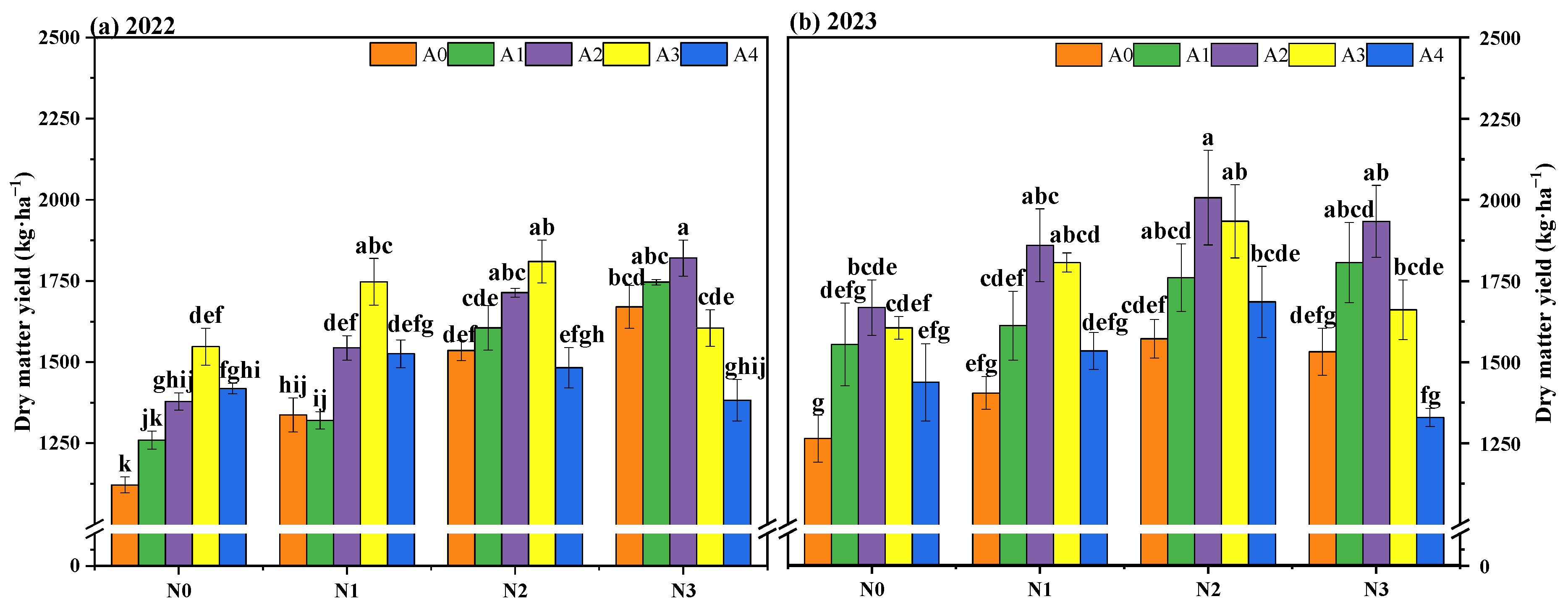
The main effect analysis showed that N application rates and alfalfa incorporation levels had a significant effect on DMY across both years (p < 0.001). Additionally, the interaction between N application rates and alfalfa incorporation levels significantly affected DMY in 2022 (Table 1).
In 2022, the N3A2 treatment achieved the highest DMY, showing a 62.36% increase over N0A0 (Figure 2). At the N3 level, N3A2 surpassed the monoculture N3A0 by 8.99%, and with matched alfalfa addition (A2), exceeded the no-N treatment N0A2 by 32%. In 2023, the N2A2 treatment produced the peak DMY, showing a 58.70% improvement over N0A0. Under identical N rates, it outperformed the N2A0 monoculture by 27.68%, and with comparable alfalfa supplementation (A2), surpassed N0A2 by 20.30%. At alfalfa addition levels A1–A2, smooth bromegrass DMY were generally higher in 2023 than in 2022 under equivalent N inputs. However, at higher alfalfa levels (A3–A4), interannual DMY differences diminished. The A4 treatment DMY was significantly lower than A3 (p < 0.05).

3.2. Carbon Metabolism

Analysis of variance (Table 1) revealed that N rate, alfalfa level, and their interaction significantly influenced Pn and Tr in both years (p < 0.05). N application rates and alfalfa incorporation levels had significant effects on 2-year stomatal conductance, and the interaction between the two had no significant effect (p > 0.05).
Pn and Tr showed a unimodal response to N application rates, initially increasing, then decreasing (Table 2). Meanwhile, Ci showed no consistent pattern. In 2022, the N2A1 treatment achieved maximum Pn, 51.27% higher than N0A0. Under the N0–N2 levels, Tr showed a quadratic response to alfalfa addition, peaking at N1A2 with 43.64% increase over N0A0. The highest Ci occurred in N3A2, though without significant differences among A3-level treatments (p > 0.05). Gs followed a similar quadratic trend with alfalfa addition, reaching its maximum in N2A3, significantly surpassing N0A0, N1A0, N0A1, N0A4, N2A4, and N3A4 treatments (p < 0.05). In 2023, under the N2A0 treatment, smooth bromegrass exhibited the highest Pn, which was 65.63% higher than that of the N0A0 treatment. When N application rates were equal, the Tr of smooth bromegrass initially increased and then decreased with increasing alfalfa addition. The highest Tr value was observed under the N1A2 treatment. The Ci was highest under the N0A1 treatment, but the difference was not statistically significant compared to other treatments (p > 0.05). The Gs of smooth bromegrass also showed a peak-then-decline trend with increasing alfalfa addition. The N2A2 treatment resulted in the highest Gs value, which was significantly greater than those of the N0A0, N1A0, and N0A1 treatments (p < 0.05).
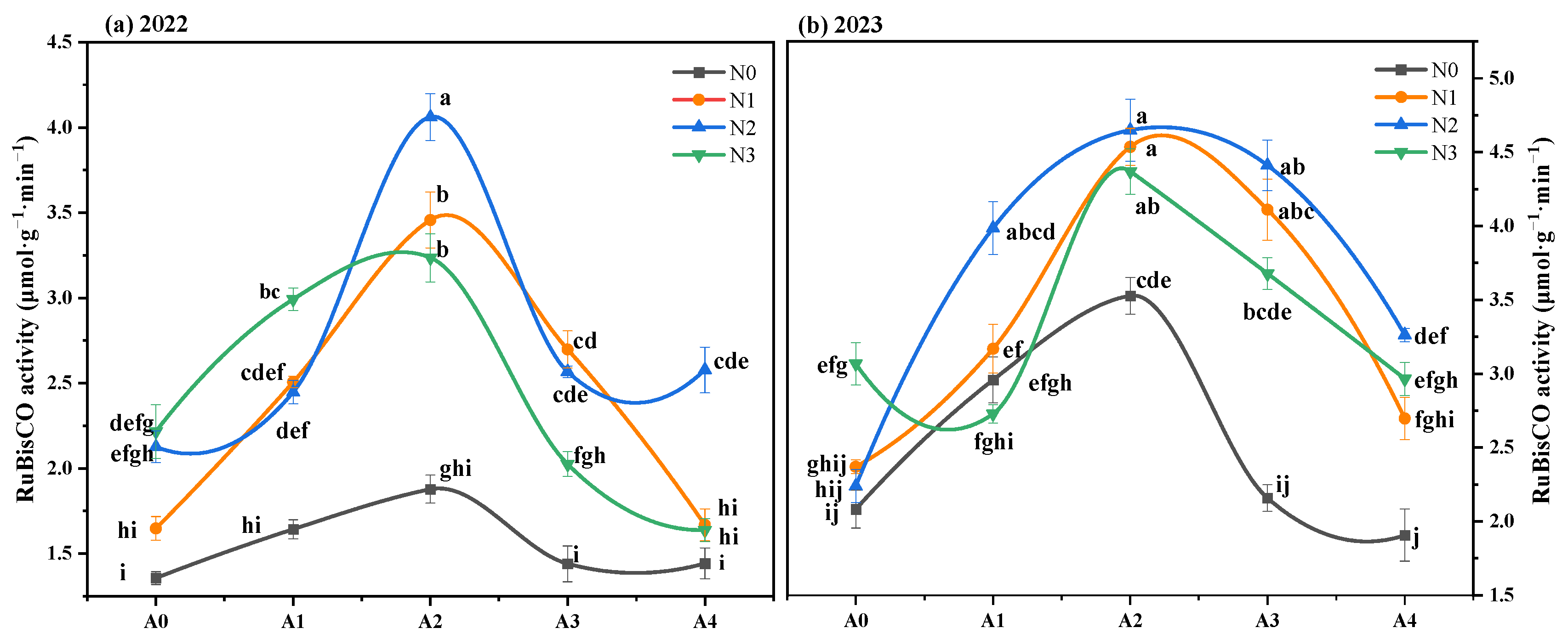
The main effect analysis showed (Table 1) that N application rates, alfalfa incorporation levels, and their interaction had significant effects on RuBisCO (p < 0.001). Excluding the A0 and A1 treatments, RuBisCO activity in smooth bromegrass initially increased and then decreased with rising N application and alfalfa addition levels (Figure 3). Under the same N levels, the highest RuBisCO activity consistently occurred at the A2 level. In 2022, the N2A2 treatment achieved the peak RuBisCO activity. In 2023, the trend in RuBisCO activity mirrored that of 2022.
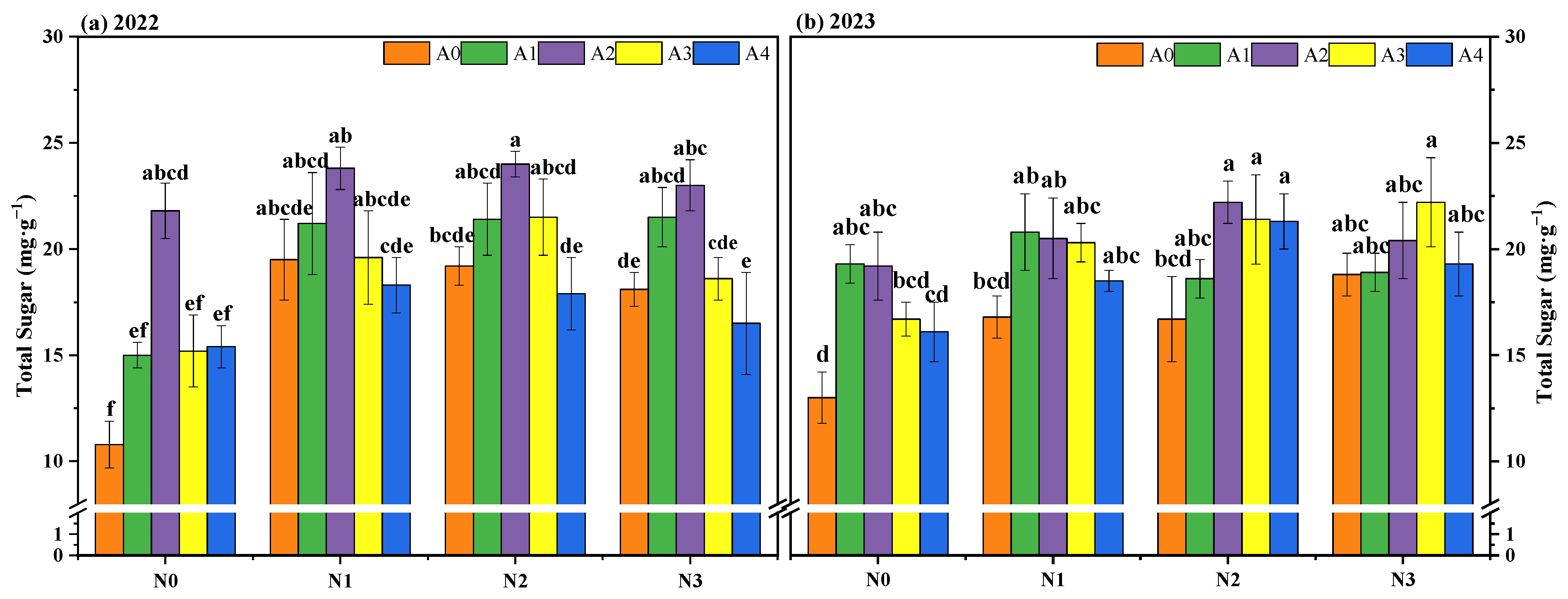
The main effect analysis showed (Table 1) that N application rates, alfalfa incorporation levels, and their interaction had significant effects on total sugar (p < 0.05). The effects of N application rates and alfalfa incorporation levels on total sugar in 2 years were extremely significant (p < 0.001). The TS content initially increased and then decreased with rising N application rates and alfalfa addition levels (Figure 4).

3.3. Nitrogen Metabolism

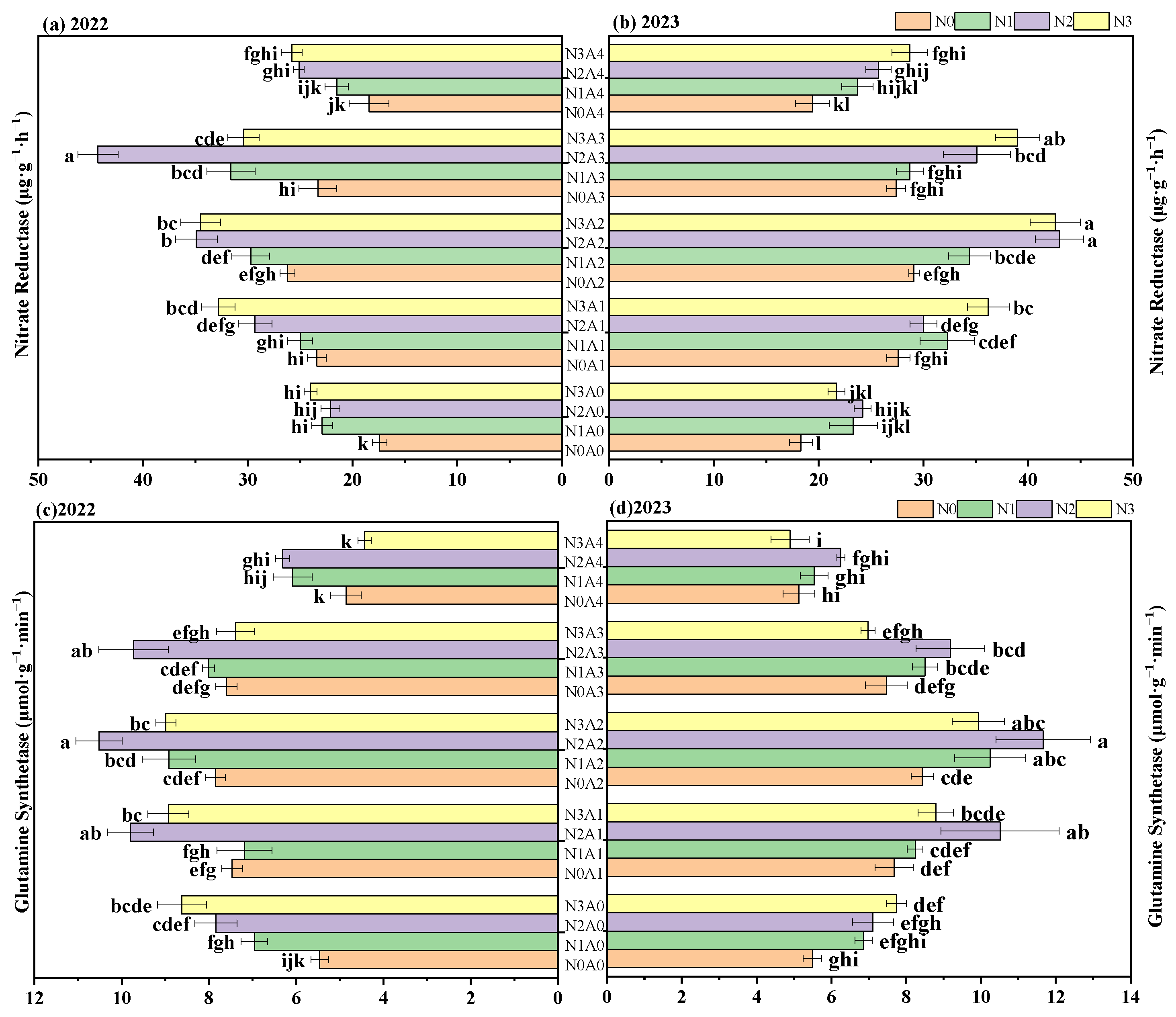
The main effect analysis showed (Table 1) that N application rates, alfalfa incorporation levels, and their interaction had significant effects on NR (p < 0.001) and GS (p < 0.05). Both NR and GS activities exhibited a unimodal trend with increasing alfalfa addition levels (Figure 5).
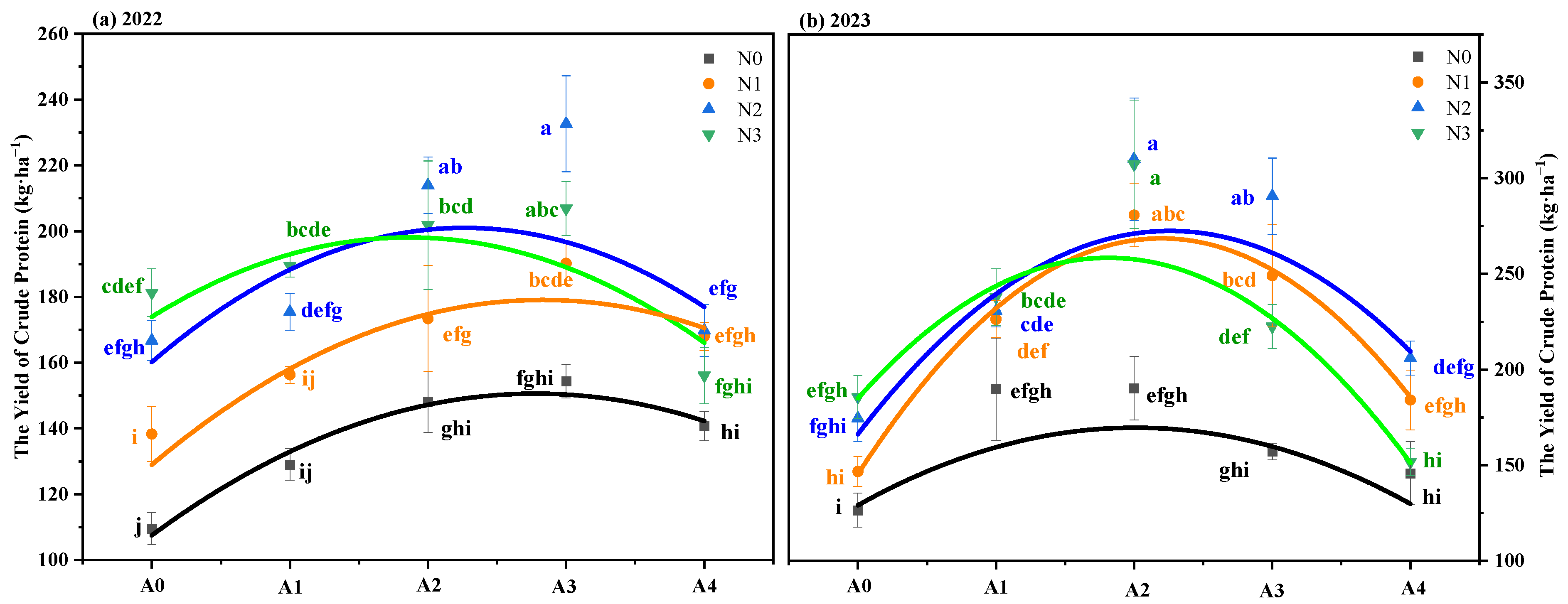
The main effect analysis showed (Table 1) that N application rates, alfalfa incorporation levels, and their interaction had significant effects on the yield of crude protein (p < 0.001). Under A0 and A1 addition levels, YCP increased with higher N application, peaking at the N3 level (Figure 6). In contrast, at A2, A3, and A4 alfalfa levels, YCP showed a quadratic response, reaching its maximum at N2 before declining. For identical N rates, YCP initially rose and then fell with increasing alfalfa addition. In 2022, the A3 alfalfa level achieved the highest YCP, with the N2A3 treatment outperforming most other treatments (p < 0.05), except for statistically comparable results with N2A2 and N3A3. In 2023, the A2 alfalfa level was optimal, and the N2A2 treatment showed peak YCP, significantly surpassing other combinations (p < 0.05) except N1A2, N3A2, and N2A3.

3.4. Nitrogen Partial Factor Productivity and Nitrogen Absorption Efficiency

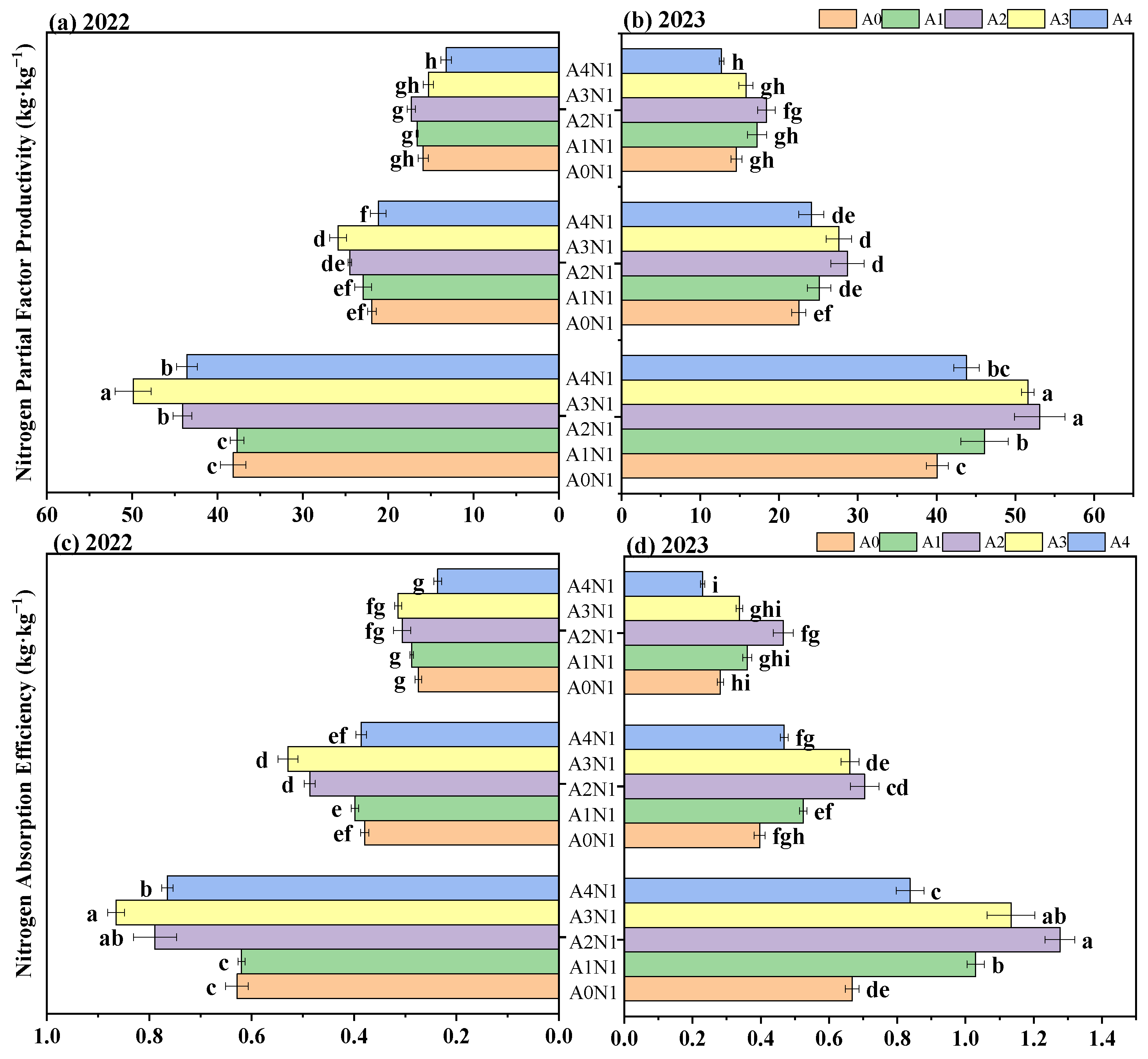
The main effect analysis showed (Table 1) that N application rates, alfalfa incorporation levels, and their interaction had significant effects on N partial factor productivity (p < 0.001) and NAE (p < 0.05). With increasing N application rates, PFPN and NAE of smooth bromegrass gradually decreased (Figure 7). In contrast, as alfalfa addition levels increased, PFPN and NAE initially rose and then declined. In 2022, the N1A3 treatment achieved the highest PFPN and NAE, significantly outperforming all other treatments (p < 0.05). At the same N level, PFPN increased by 32.36% and 13.15% compared to the A1 and A2 alfalfa addition treatments, respectively, while NAE improved by 15.03% and 12.63%. In 2023, the N1A2 treatment yielded the highest PFPN and NAE. Under equivalent N application, PFPN and NAE were 15.18% and 26.09% higher, respectively, than those in the A1 alfalfa treatment.

3.5. Correlations Among Carbon–Nitrogen Metabolism, Dry Matter Yield, and Nitrogen Absorption Efficiency Key Relationships

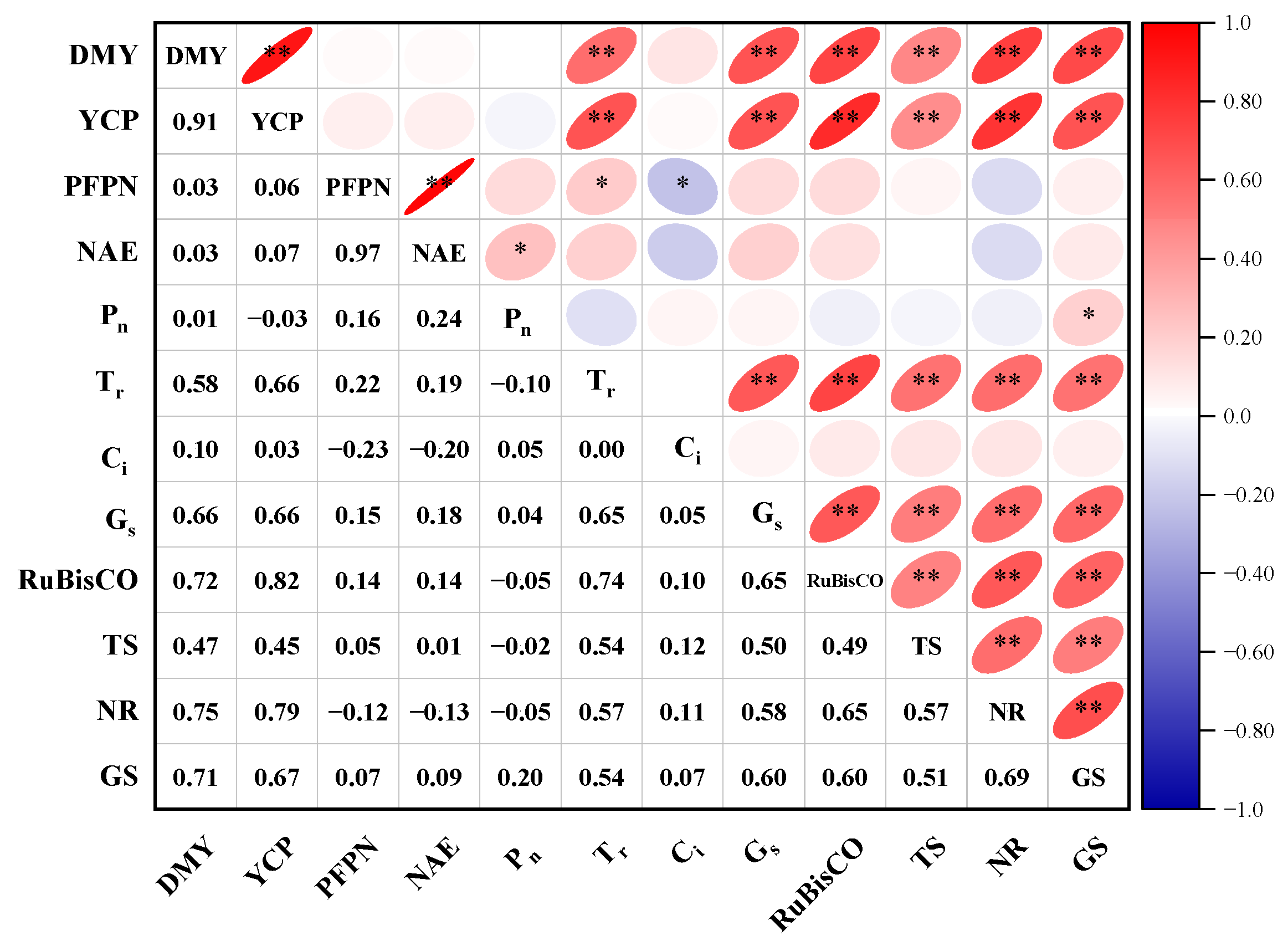
Figure 8 shows that all the measured parameters, Tr, Gs, RuBisCO activity, TS, NR, GS, and YCP, showed highly significant positive correlations with DMY (p < 0.01). Tr, Gs, RuBisCO, TS, NR, and GS all showed highly significant positive relationships with YCP (p < 0.01). For NUE indicators, Tr, Gs, TS, and NAE were strongly positively correlated with PFPN (p < 0.01). Meanwhile, Tr, Gs, and TS also showed highly significant positive associations with NAE (p < 0.01). Pn, RuBisCO activity, YCP, and DMY displayed significant positive correlations with NAE (p < 0.05). The key carbon metabolism enzyme RuBisCO had a highly significant positive correlation (p < 0.01) with both N metabolism enzymes (NR and GS), reflecting the tight coupling between carbon and N metabolic pathways.

3.6. Entropy-Weighted TOPSIS Comprehensive Evaluation

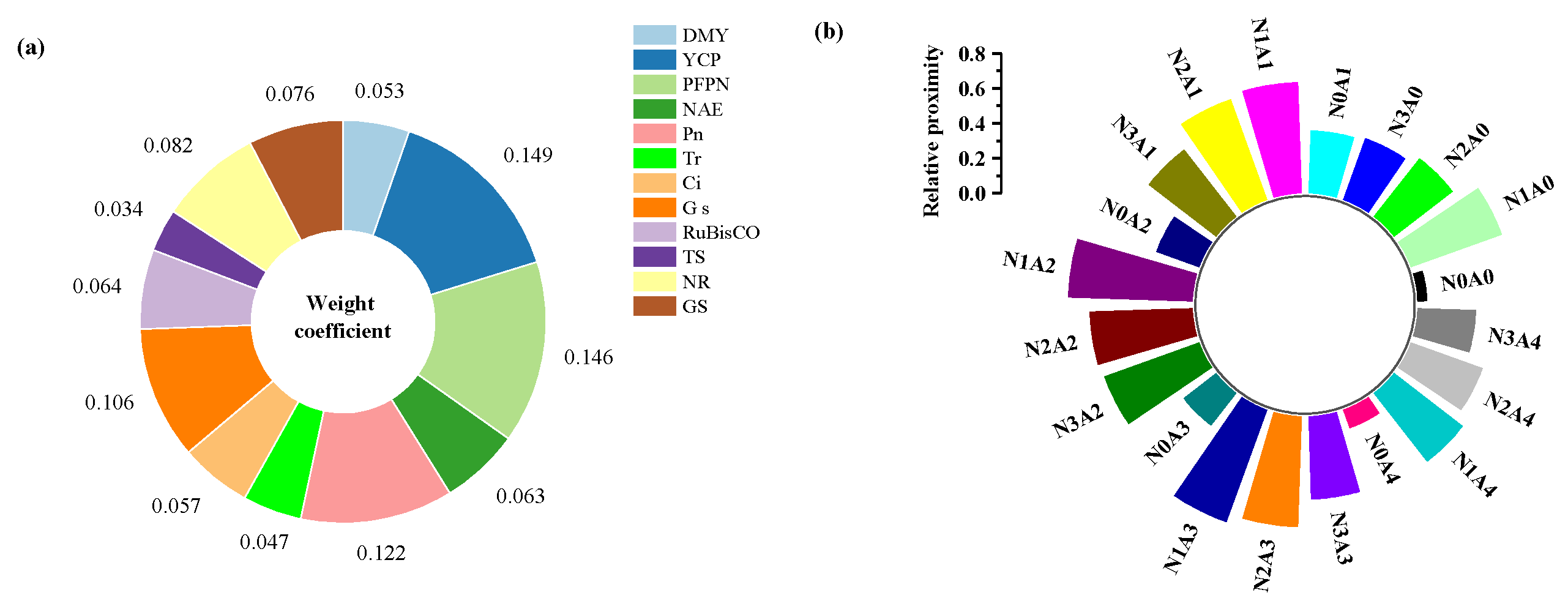
The entropy-weighted TOPSIS analysis revealed that PFPN (0.13), NAE (0.13), Pn (0.09), Ci (0.11), RuBisCO (0.09), and NR (0.07) carried the highest weights in the evaluation. The relative closeness values of 20 treatments were calculated (Figure 9), where higher values indicated superior synergistic effects between N fertilization and alfalfa intercropping. The ranking of values was: N1A2 > N1A3 > N2A3 > N1A1 > N2A1 > N2A2 > N3A2 > N1A0 > N1A4 > N3A1 > N3A3 > N2A0 > N2A4 > N3A0 > N0A1 > N3A4 > N0A2 > N0A3 > N0A4 > N0A0. The N1A2 treatment had the best performance, followed by N1A3 and N2A3, which optimally enhanced grass DMY and N uptake efficiency.

4. Discussion

4.1. Effects of Alfalfa Intercropping and Nitrogen Application on Grass Dry Matter Yield

In the Horqin Sandy Land, high first-cutting yield of forage and rapid regrowth lead to increased annual total yield; conversely, this may reduce yield in subsequent cuts [27]. However, this characteristic is influenced by soil texture, climate variability, and variety characteristics. In this study, the magnitude of smooth bromegrass DMY enhancement indicated that N fertilization had a greater effect on grass productivity than legume (alfalfa) addition. This contrasts with maize production systems, where intercropping typically outperforms monoculture fertilization [28]. The discrepancy likely stems from inherent growth habit differences. As a tall-statured crop, maize dominates the canopy in intercropping systems, efficiently capturing light to increase photosynthetic efficiency [28]. Meanwhile, smooth bromegrass becomes competitively disadvantaged for light resources. Being a perennial forage grass subjected to frequent cutting, smooth bromegrass experiences continuous nutrient export, necessitating rapid replenishment through fertilization to maintain productivity. Alfalfa incorporation exceeding 30% significantly reduced DMY, likely due to intensified interspecific competition for water, nutrients, and light resources under high legume density [29]. The impact on interspecific relationships still needs to be verified through direct measurement. Subsequent studies should prioritize designing targeted experiments to examine bidirectional plant–plant interactions to better understand the ecological mechanisms governing productivity stability in this mixed cropping system.

4.2. Effects of Alfalfa and Nitrogen Addition on Carbon Metabolism in Grasses

Moderate N application (N1 and N2 levels) combined with alfalfa intercropping (A1, A2, and A3 levels) significantly enhanced Pn, Tr, Gs, RuBisCO activity, and TS content in smooth bromegrass. Meanwhile, these indices declined when alfalfa incorporation levels increased further (A4). Similar patterns have been consistently reported in soybean/tea intercropping [30], soybean/sugarcane [31], and peanut/cotton systems [32]. At lower alfalfa densities, smooth bromegrass likely functions as the dominant species in legume–grass systems, where intercropping facilitates the formation of an optimal umbrella-shaped canopy structure [33]. This architectural advantage promotes more efficient light interception and use, increasing RuBisCO activity and photosynthetic rates. Enhanced RuBisCO activity further accelerates carbohydrate synthesis, resulting in significantly greater carbohydrate accumulation in intercropped bromegrass compared to monocultures. Belowground root interactions in intercropping systems may also improve iron nutrition and chlorophyll content, increasing photosynthesis [34]. However, at high alfalfa densities (A4), intensified interspecific competition for light resources outweighs intraspecific competition, reducing photosynthetic capacity and assimilate accumulation in the grass component [35].
Increasing N application within an appropriate range can effectively enhance soybean net photosynthetic rate [36]. Our study further identified that when alfalfa incorporation reached 20–30% (A2–A3) combined with N application rates of 105 kg·ha−1 (N1) or 210 kg·ha−1 (N2), Tr, Gs, RuBisCO activity, and TS content reached their peak values, showing statistically significant differences (p < 0.05) compared to the control (N0A0). This optimal response likely stems from the formation of an efficient canopy architecture under appropriate planting density and N levels, which improved field ventilation and light penetration conditions, enhancing Gs and Tr. Increased Gs facilitates greater CO2 uptake [37], while enhanced transpiration promotes both water absorption and the diffusion of dissolved CO2 molecules, improving light energy conversion efficiency and coordinating C–N metabolic balance for better yield formation [38]. Although this study primarily focused on aboveground C–N metabolism in grasses, future work should investigate root system interactions in intercropping systems and their impacts on shoot physiology, particularly the relationships between root dynamics and C–N metabolic processes.

4.3. Effects of Alfalfa and Nitrogen Addition on Nitrogen Metabolism in Grasses

N metabolism is the primary pathway for amino acid and protein synthesis in plants. NR and GS, two key enzymes in this process, play distinct but complementary roles. NR activity directly reflects a plant’s N assimilation capacity. Meanwhile, GS couples with glutamate synthase (GOGAT) to accelerate N metabolic flux and facilitate amino acid synthesis and conversion [5]. In this study, N application and alfalfa intercropping significantly enhanced NR and GS activities and total protein content in smooth bromegrass (Bromus inermis). Under N2 fertilization level with A2 or A3 alfalfa incorporation (20–30%), NR and GS activities reached their peak values, while excessive N or alfalfa inputs showed inhibitory effects. Similar patterns have been observed in maize/peanut intercropping systems [20] and rice–mung bean intercropping [39], consistent with Lü Lihua et al.’s findings on fertilization effects on maize C–N metabolism [40]. This occurs at lower alfalfa incorporation levels, the photosynthetic rate of smooth bromegrass may be enhanced, which, in turn, accelerates NR transcription/translation and GS expression in leaves [41], elevating the grass’s N metabolism efficiency. The improved N metabolism in the grass may stimulate root uptake of N nutrients from the alfalfa root zone while promoting nodulation and N fixation in alfalfa [42]. This creates a synergistic N complementarity within the system that enhances protein synthesis in the grass, leading to improved DMY and forage quality. With extended cultivation years, the N metabolism level of grasses under the A2 treatment became significantly higher than under A3. Under identical treatments, grass N metabolic activity in 2023 was more vigorous than in 2022. These findings suggest that the stimulatory effect of legume–grass intercropping on grass N metabolism becomes progressively more pronounced with continuous multi-year implementation. However, the proportion of legume forage in the system should be maintained within an optimal range.
In this study, we further analyzed PFPN and NAE, revealing that PFPN and NAE of smooth bromegrass gradually decreased with increasing N application rates, peaking at the N1 level, while showing a unimodal response to alfalfa incorporation—initially increasing then decreasing with maximum values at A2 or A3 alfalfa levels. These patterns align with reported N uptake enhancement in alfalfa–maize [34] and soybean–sorghum intercropping systems [43]. The observed responses may stem from N-induced repression of rhizobial N fixation in alfalfa at higher fertilization rates [44] and intensified interspecific competition for soil N when alfalfa density exceeds optimal levels, ultimately impairing grass NUE [45]. In 2022, the N1A3 treatment achieved the highest PFPN and NAE values. Meanwhile, in 2023, the N1A2 treatment showed peak efficiency. This temporal shift aligns with observed interannual variations in NR, GS activities, and YCP content. Sustained legume–grass intercropping with optimal alfalfa incorporation (20–30%) can enhance grass nitrogen uptake efficiency, enabling significant N input reduction—potentially decreasing production while mitigating environmental risks associated with excessive fertilization. Although this study revealed important year-to-year dynamics, the two-year dataset remains insufficient for long-term predictions. Future research will focus on establishing long-term monitoring protocols to develop sustainable management mechanisms for this intercropping system.

4.4. Relationship Between Carbon Metabolism Parameters and Nitrogen Uptake Efficiency

Tr, Gs, and TS showed highly significant positive correlations with NAE (p < 0.01). Both Pn and RuBisCO activity showed significant positive correlations with NAE (p < 0.05). RuBisCO exhibited highly significant positive correlations (p < 0.01) with NR and GS, consistent with findings in the sorghum study [46]. These results demonstrate synergistic interactions between N and carbon metabolic enzymes. This indicates that the DMY improvement in grasses through N application and intercropping results from coordinated enhancement of both C–N metabolic enzyme activities and their end products. The entropy-weighted TOPSIS evaluation identified the top five treatments as N1A2 > N1A3 > N2A3 > N1A1 > N2A1; the weights of PFPN, NAE, Pn, Ci, RuBisCO, and NR are relatively high. Moreover, RuBisCO, NR, and NAE show significantly positive correlations with both DMY and protein yield. Additionally, PFPN, Pn, and RuBisCO are significantly positively correlated with NAE. Demonstrating that in smooth bromegrass grasslands with 20–30% alfalfa incorporation under 105–210 kg·ha−1 N application, the system maintains high productivity and significantly enhances PFPN and NAE through improved photosynthesis and coordinated C–N metabolic enzyme activities, with the optimal N1A2 treatment proving most effective for sustainable artificial grassland establishment in Horqin Sandy Land’s agro-pastoral ecotone by achieving N reduction while increasing efficiency. Our study provides a scientific basis for optimizing planting systems in this region. However, the current findings derived from two-year smooth bromegrass trials in Horqin Sandy Land require further validation, as perennial legume–grass intercropping system stability is significantly influenced by climatic variability, management practices, and interspecies dynamics—necessitating multi-year, multi-location trials integrating N management strategies to fully demonstrate the system’s agronomic and ecological advantages.

5. Conclusions

Our results provide empirical evidence that alfalfa intercropping and N fertilization significantly enhance forage productivity by regulating C–N metabolic processes. Incorporating 20–30% alfalfa with N application of 105–210 kg·ha−1 achieves dual benefits. It establishes N complementarity with grasses, reducing chemical fertilizer requirements while improving system NUE. Meanwhile, it enhances photosynthesis by activating key C–N metabolic enzymes, promoting the conversion of photosynthetic assimilates into proteins. Therefore, the relationship between alfalfa incorporation, N application, and forage C–N metabolism provides a theoretical foundation for establishing optimized artificial grassland cultivation systems. The combination of 20% alfalfa and a N application rate of 105 kg N ha−1 demonstrated optimal grassland productivity in this study, suggesting its potential as an optimized management strategy. However, this conclusion is constrained by experimental limitations, including a two-year duration, a single geographic site, and an assessment limited to the first harvest cycle. Future long-term field trials should explore root-zone dynamics and long-term ecosystem stability to confirm these findings.

Author Contributions

Methodology, J.Y. and T.Y.; formal analysis, F.H.; investigation, F.H. and H.A.; data curation, J.Y. and T.Y.; writing—original draft preparation, F.H.; writing—review and editing, F.H., T.Y., H.A. and K.G.; supervision, K.G.; funding acquisition, T.Y. All authors have read and agreed to the published version of the manuscript.

Funding

This research was funded by the Natural Science Foundation of Inner Mongolia Autonomous Region (No. 2025LHMS03049; No. 2021BS03017; and No. 2023QN03036).

Data Availability Statement

The original contributions presented in this study are included in the article. Further inquiries can be directed to the corresponding authors.

Conflicts of Interest

The authors declare no conflicts of interest. The funders had no role in the design of the study; in the collection, analyses, or interpretation of data; in the writing of the manuscript; or in the decision to publish the results.

Abbreviations

The following abbreviations are used in this manuscript:
PnNet Photosynthetic Rate
TrTranspiration Rate
GsStomatal Conductance
RuBisCORibulose-1,5-bisphosphate carboxylase
CiIntercellular CO2 Concentration
NRNitrate Reductase
GSGlutamine Synthetase
TSTotal Sugar
YCPYield of Crude Protein
PFPNNitrogen Partial Factor Productivity
NAENitrogen Absorption Efficiency
DMYDry Matter Yield

References

  1. Da Silva, J.M.; Fontes, P.C.R.; Milagres, C.C.; de Abreu, J.A.A. Yield and nitrogen use efficiency of bell pepper grown in SLAB fertigated with different nitrogen rates. J. Plant Nutr. 2020, 43, 2833–2843. [Google Scholar] [CrossRef]
  2. Kang, X.; Liu, T.; Hao, L.; Duan, L.; Wang, G.; Singh, V.P.; Zhang, M.; Wu, R.; Ma, K. Carbon dynamics of the plant–soil system during vegetation succession in dune-meadow cascade ecosystems in Horqin Sandy Land, China. Ecol. Indic. 2023, 155, 110916. [Google Scholar] [CrossRef]
  3. Francis, B.; Aravindakumar, C.T.; Brewer, P.B.; Simon, S. Plant nutrient stress adaptation: A prospect for fertilizer limited agriculture. Environ. Exp. Bot. 2023, 213, 105431. [Google Scholar] [CrossRef]
  4. Gai, Z.; Liu, J.; Cai, L.; Zhang, J.; Liu, L. Foliar application of alpha-ketoglutarate plus nitrogen improves drought resistance in soybean (Glycine max L. Merr.). Sci. Rep. 2022, 12, 14421. [Google Scholar] [CrossRef] [PubMed]
  5. Liu, X.J.; Hu, B.; Chu, C.C. Nitrogen assimilation in plants: Current status and future prospects. J. Genet. Genom. 2022, 49, 394–404. [Google Scholar] [CrossRef]
  6. Baslam, M.; Mitsui, T.; Sueyoshi, K.; Ohyama, T. Recent advances in carbon and nitrogen metabolism in C3 plants. Int. J. Mol. Sci. 2020, 22, 318. [Google Scholar] [CrossRef]
  7. Yu, J.; Zhang, Y.; Wang, Y.; Luo, X.; Liang, X.; Huang, X.; Zhao, Y.; Zhou, X.; Li, J. Ecosystem photosynthesis depends on increased water availability to enhance carbon assimilation in semiarid desert steppe in northern China. Glob. Ecol. Conserv. 2022, 38, e02202. [Google Scholar] [CrossRef]
  8. Carmo-Silva, E.; Scales, J.C.; Madgwick, P.J.; Parry, M.A.J. Optimizing RuBisCO and its regulation for greater resource use efficiency. Plant Cell Environ. 2015, 38, 1817–1832. [Google Scholar] [CrossRef]
  9. Hong, Y.; Liu, R.; Xiang, W.; Lei, P.; Fang, X. Emergent plants improve nitrogen uptake rates by regulating the activity of nitrogen assimilation enzymes. Plants 2025, 14, 1484. [Google Scholar] [CrossRef]
  10. Han, F.; Guo, S.; Wei, S.; Guo, R.; Cai, T.; Zhang, P.; Jia, Z.; Hussain, S.; Javed, T.; Chen, X.; et al. Photosynthetic and yield responses of rotating planting strips and reducing nitrogen fertilizer application in maize–peanut intercropping in dry farming areas. Front. Plant Sci. 2022, 13, 1014631. [Google Scholar] [CrossRef]
  11. Shah, J.M.; Bukhari, S.A.H.; Zeng, J.B.; Quan, X.Y.; Ali, E.; Muhammad, N.; Zhang, G.P. Nitrogen (N) metabolism related enzyme activities, cell ultrastructure and nutrient contents as affected by N level and barley genotype. J. Integr. Agric. 2017, 16, 190–198. [Google Scholar] [CrossRef]
  12. Zhang, Y.T.; Liu, J.; Zhang, J.Z.; Liu, H.B.; Liu, S.; Zhai, L.M.; Wang, H.Y.; Lei, Q.L.; Ren, T.Z.; Yin, C.B. Row ratios of intercropping maize and soybean can affect agronomic efficiency of the system and subsequent wheat. PLoS ONE 2015, 10, e0129245. [Google Scholar] [CrossRef] [PubMed]
  13. Zhao, Y.; Fan, Z.; Hu, F.; Yin, W.; Zhao, C.; Yu, A.; Chai, Q. Source-to-sink translocation of carbon and nitrogen is regulated by fertilization and plant population in maize-pea intercropping. Front. Plant Sci. 2019, 10, 891. [Google Scholar] [CrossRef]
  14. Hao, F.; Yu, T.F.; Gao, K.; Xiong, M.; An, H.B. Production performance and stability of mixed forage grasslands improved by planting proportion and mode in Horqin sandy land, China. Sci. Rep. 2025, 15, 14683. [Google Scholar] [CrossRef] [PubMed]
  15. Yu, T.F.; Hao, F.; Gao, K.; Xiong, M.; An, H.B. Productivity, soil fertility and enzyme activity of mixed forage grasslands improved by alfalfa and nitrogen addition in Horqin Sandy Land, China. Sci. Rep. 2025, 15, 10748. [Google Scholar] [CrossRef]
  16. Bhandari, K.B.; West, C.P.; Acosta-Martinez, V. Assessing the role of interseeding alfalfa into grass on improving pasture soil health in semi-arid Texas High Plains. Appl. Soil Ecol. 2020, 147, 103399. [Google Scholar] [CrossRef]
  17. Lyu, X.C.; Wang, X.L.; Xu, C.; Ma, C.M.; Cao, L.; Gong, Z.P. Effects of the concentrations of nitrogen supplied from both or one-half of the dual-root system on the nitrogen fixation of soybean nodules and the distribution of absorbed nitrogen from roots. J. Soil Sci. Plant Nutr. 2024, 24, 4786–4795. [Google Scholar] [CrossRef]
  18. Li, L.K.; Zou, Y.; Wang, Y.H.; Chen, F.J.; Xing, G.N. Effects of corn intercropping with soybean/peanut/millet on the biomass and yield of corn under fertilizer reduction. Agriculture 2022, 12, 151. [Google Scholar] [CrossRef]
  19. Liu, S.; Wang, L.; Chang, L.; Khan, I.; Nadeem, F.; Rehman, A.; Suo, R. Evaluating the influence of straw mulching and intercropping on nitrogen uptake, crop growth, and yield performance in maize and soybean. Front. Plant Sci. 2023, 14, 1280382. [Google Scholar] [CrossRef]
  20. Li, Y.; Wang, L.; Zhao, B.; Liu, P.; Zhang, J.; Dong, S.; Shi, D. Crop productivity, economic advantage, and photosynthetic characteristics in a corn-peanut intercropping system. Agronomy 2023, 13, 509. [Google Scholar] [CrossRef]
  21. Berti, M.T.; Cecchin, A.; Samarappuli, D.P.; Patel, S.; Lenssen, A.W.; Moore, K.J.; Wells, S.S.; Kazula, M.J. Alfalfa established successfully in intercropping with corn in the Midwest US. Agronomy 2021, 11, 1676. [Google Scholar] [CrossRef]
  22. Long, S.P.; Zhu, X.G.; Naidu, S.L.; Ort, D.R. Can improvement in photosynthesis increase crop yields. Plant Cell Environ. 2006, 29, 315–330. [Google Scholar] [CrossRef] [PubMed]
  23. Zhang, Z.A.; Zhang, M.S.; Wei, R.H. Experimental Guidance for Plant Physiology, 1st ed.; China Agricultural Science and Technology Press: Beijing, China, 2004; pp. 56–57.
  24. Zou, Q. Experimental Guidance for Plant Physiology, 1st ed.; China Agriculture Press: Beijing, China, 2000; pp. 56–125.
  25. Thompson, R. Editorial note on terms for soil analyses, nutrient content of fertilizers and Nitrogen Use Efficiency. Agric. Water Manag. 2023, 289, 108547. [Google Scholar] [CrossRef]
  26. Li, X.; Long, A.; Ji, X.; Wang, X.; Wang, Z.; Gong, X.; Zhang, W.; Qi, H.; Jiang, Y.; Sun, Z.; et al. Straw return and nitrogen fertilizer application regulate the efficient use of radiation, water, nitrogen and maize productivity in Northeast China. Agric. Water Manag. 2024, 301, 108973. [Google Scholar] [CrossRef]
  27. Zhang, Y.L.; Luo, X.M.; Wu, M.H.; Pan, D. Effect of alfalfa-grass mix combinations on the forage productivity during the sowing year in the Horqin Sandy Land. Prat. Sci. 2018, 35, 882–890. [Google Scholar] [CrossRef]
  28. Xu, R.; Zhao, H.; Liu, G.; You, Y.; Ma, L.; Liu, N.; Zhang, Y. Effects of nitrogen and maize plant density on forage yield and nitrogen uptake in an alfalfa–silage maize relay intercropping system in the North China Plain. Field Crops Res. 2021, 263, 108068. [Google Scholar] [CrossRef]
  29. Feng, L.; Yang, W.; Zhou, Q.; Tang, H.; Ma, Q.; Huang, G.; Wang, S. Effects of interspecific competition on crop yield and nitrogen utilisation in maize-soybean intercropping system. Plant Soil Environ. 2021, 67, 460–467. [Google Scholar] [CrossRef]
  30. Li, X.; Xu, Y.; Mao, Y.; Wang, S.; Sun, L.; Shen, J.; Xu, X.; Wang, Y.; Ding, Z. The effects of soybean–tea intercropping on the photosynthesis activity of tea seedlings based on canopy spectral, transcriptome and metabolome analyses. Agronomy 2024, 14, 850. [Google Scholar] [CrossRef]
  31. Zeng, W.; Li, R.; Li, Z.; Wei, B.; Zhu, S.; Chu, H.; Lan, C.; Li, R.; Han, S.; Li, S. Effects of intercropping with Fenlong tillage “145” mode on ratoon sugarcane photosynthesis, growth, and yield. Crop Sci. 2024, 64, 3552–3571. [Google Scholar] [CrossRef]
  32. Chi, B.; Liu, J.; Dai, J.; Li, Z.; Zhang, D.; Xu, S.; Nie, J.; Wan, S.; Li, C.; Dong, H. Alternate intercropping of cotton and peanut increases productivity by increasing canopy photosynthesis and nutrient uptake under the influence of rhizobacteria. Field Crops Res. 2023, 302, 109059. [Google Scholar] [CrossRef]
  33. Awal, M.A.; Koshi, H.; Ikeda, T. Radiation interception and use by maize/peanut intercrop canopy. Agric. Forest Meteorol. 2006, 139, 74–83. [Google Scholar] [CrossRef]
  34. Nasar, J.; Shao, Z.; Arshad, A.; Jones, F.G.; Liu, S.; Li, C.; Khan, M.Z.; Khan, T.; Banda, J.S.K.; Zhou, X.; et al. The effect of maize-alfalfa intercropping on the physiological characteristics, nitrogen uptake and yield of maize. Plant Biol. 2020, 22, 1140–1149. [Google Scholar] [CrossRef] [PubMed]
  35. Zhang, G.G.; Yang, Z.B.; Dong, S.T. Interspecific competitiveness affects the total biomass yield in an alfalfa and corn intercropping system. Field Crops Res. 2011, 124, 66–73. [Google Scholar] [CrossRef]
  36. Qiang, B.B.; Zhou, W.X.; Zhong, X.J.; Fu, C.Y.; Cao, L.; Zhang, Y.X.; Jin, X.J. Effect of nitrogen application levels on photosynthetic nitrogen distribution and use efficiency in soybean seedling leaves. J. Plant Physiol. 2023, 287, 154051. [Google Scholar] [CrossRef]
  37. Wang, D.; Yu, Z.W.; Li, Y.Q.; Shi, G.P. Effects of nitrogen fertilizer rate on photosynthetic character, sucrose synthesis in flag leaves and grain yield of strong gluten wheat Jimai 20. Acta Agron. Sin. 2007, 33, 903–908. [Google Scholar]
  38. Guo, P.; Ren, J.Y.; Shi, X.L.; Xu, A.; Zhang, P.; Guo, F.; Feng, Y.Y.; Zhao, X.H.; Yu, H.Q.; Jiang, C.J. Optimized nitrogen application ameliorates the photosynthetic performance and yield potential in peanuts as revealed by OJIP chlorophyll fluorescence kinetics. BMC Plant Biol. 2024, 24, 774. [Google Scholar] [CrossRef]
  39. Li, Y.F.; Ran, W.; Zhang, R.P.; Sun, S.B.; Xu, G.H. Facilitated legume nodulation, phosphate uptake and nitrogen transfer by arbuscular inoculation in an upland rice and mung bean intercropping system. Plant Soil 2009, 315, 285–296. [Google Scholar] [CrossRef]
  40. Lü, L.H.; Tao, H.B.; Wang, P.; Zhao, M.; Zhao, J.R.; Lu, L.Q. The effect of nitrogen application rate on carbon and nitrogen metabolism and nitrogen use efficiency of summer maize. J. Plant Nutr. Fertil. 2008, 14, 630–637. [Google Scholar]
  41. Jiao, N.; Ning, T.; Yang, M.; Fu, G.; Yin, F.; Xu, G.; Li, Z. Effects of maize ‖ peanut intercropping on photosynthetic characters and yield forming of intercropped maize. Acta Ecol. Sin. 2013, 33, 4324–4330. [Google Scholar] [CrossRef]
  42. Peng, X.Y.; Bai, Q.X.; Chen, G.H.; Yu, X.J.; Zhang, X.H. Mechanism of Bacillus cooperating with silicon to re-balance chlorophyll metabolism and restore carbon metabolism of Glycyrrhiza uralensis Fisch. seedlings exposed to salt-drought stress. Plant Physiol. Biochem. 2025, 219, 109337. [Google Scholar] [CrossRef]
  43. Wang, C.; Peng, F.; Chen, S.; Zhao, Q.; Gao, J.; Zhang, G.; Zhou, L.; Shao, M. Nitrogen fertilizer fate and plant nitrogen uptake characteristics in waxy sorghum-soybean intercropping system. Field Crops Res. 2025, 326, 109862. [Google Scholar] [CrossRef]
  44. Gan, Y.B.; Stulen, I.; van Keulen, H.; Kuiper, P.J.C. Low concentrations of nitrate and ammonium stimulate nodulation and N2 fixation while inhibiting specific nodulation (nodule DW g−1 root dry weight) and specific N2 fixation (N2 fixed g−1 root dry weight) in soybean. Plant Soil 2004, 258, 281–292. [Google Scholar] [CrossRef]
  45. Xiao, Y.B.; Duan, Z.Y.; Jin, H.; Hu, W.L.; Chen, S.H.; Wei, C.F. Spared N response and yields advantage of intercropped wheat and faba bean. J. Plant Nutr. Fertil. 2007, 13, 267–271. [Google Scholar]
  46. Ben Mrid, R.; El Omari, R.; Bouargalne, Y.; El Mourabit, N.; Nhiri, M. Activities of carbon and nitrogen metabolism enzymes during germinating sorghum seeds and early seedlings growth. Cereal Res. Commun. 2017, 45, 587–597. [Google Scholar] [CrossRef]
Figure 1. Plot layout diagram. N0, N1, N2, and N3 represent nitrogen application rates of 0, 105, 210, and 315 kg·ha−1, respectively. A0, A1, A2, A3, and A4 denote alfalfa incorporation levels of 0%, 10%, 20%, 30%, and 40% of the monoculture rate, respectively.
Agronomy 16 00395 g001
Figure 2. Smooth bromegrass dry matter yield in (a) 2022 and (b) 2023. Different lowercase letters indicate significant differences among different treatments. Treatment names are defined in Figure 1.
Agronomy 16 00395 g002
Figure 3. Effects of alfalfa and nitrogen addition on ribulose-1,5-bisphosphate carboxylase (RuBisCO) activity in smooth bromegrass during (a) 2022 and (b) 2023. Different lowercase letters indicate significant differences among different treatments. Treatment names are defined in Figure 1.
Agronomy 16 00395 g003
Figure 4. Effects of alfalfa intercropping and nitrogen addition on Total Sugar (TS) content in smooth bromegrass during (a) 2022 and (b) 2023. Different lowercase letters indicate significant differences among different treatments. Treatment names are defined in Figure 1.
Agronomy 16 00395 g004
Figure 5. Effects of alfalfa intercropping and nitrogen addition on nitrogen metabolism enzymes. (a,b) Nitrate Reductase (NR) activity in 2022 and 2023; (c,d) Glutamine Synthetase (GS) activity in 2022 and 2023. Different lowercase letters indicate significant differences among different treatments. Treatment names are defined in Figure 1.
Agronomy 16 00395 g005
Figure 6. Effects of alfalfa intercropping and nitrogen addition on the Yield of Crude Protein (YCP) in smooth bromegrass during (a) 2022 and (b) 2023. Different lowercase letters indicate significant differences among different treatments. Treatment names are defined in Figure 1.
Agronomy 16 00395 g006
Figure 7. Effects of alfalfa intercropping and nitrogen addition on nitrogen efficiency indices. (a,b) Nitrogen Partial Factor Productivity (PFPN) in 2022 and 2023; (c,d) Nitrogen Absorption Efficiency (NAE) in 2022 and 2023. Different lowercase letters indicate significant differences among different treatments. Treatment names are defined in Figure 1.
Agronomy 16 00395 g007
Figure 8. Correlation analysis of carbon–nitrogen metabolism with dry matter yield (DMY) and Nitrogen Absorption Efficiency (NAE) in smooth bromegrass. DMY, YCP yield of crude protein, PFPN nitrogen partial factor productivity, Pn net photosynthetic rate, Tr transpiration rate, Gs stomatal conductance, Ci intercellular CO2 concentration, RuBisCO ribulose-1,5-bisphosphate carboxylase, TS total sugar, NR nitrate reductase, GS glutamine synthetase. * p < 0.05; ** p < 0.01. Red represents a positive correlation, and blue represents a negative correlation. Color intensity indicates the strength of the correlation. Numerals in the lower left triangle of the diagram represent pairwise correlation coefficients between indicators.
Agronomy 16 00395 g008
Figure 9. Entropy-weighted Technique for Order of Preference by Similarity to Ideal Solution (TOPSIS) comprehensive evaluation. (a) Index weight coefficients; (b) Evaluation value (relative proximity) of the treatments. Treatment names follow the definitions in Figure 1.
Agronomy 16 00395 g009
Table 1. Analysis of variance F-value.
Item20222023
NAN*ANAN*A
DMY85.96 ***67.13 ***23.47 ***42.38 ***44.08 ***2.78 *
RuBisCO103.41 ***122.08 ***15.31 ***88.69 ***97.19 ***9.4 ***
TS43.11 ***33.19 ***2.72 *50.50 ***14.43 ***2.51 *
NR122.28 ***129.44 ***15.36 ***62.74 ***150.28 ***6.89 ***
GS59.37 ***132.80 ***10.11 ***92.74 ***78.43 ***2.70 *
YCP75.85 ***65.97 ***7.41 ***69.01 ***101.62 ***7.1 ***
PFPN70.63 ***15.74 ***789.33 ***31.84 ***16.23 ***397.26 ***
NAE15.09 **4.865 *264.59 ***15.55 **27.05 ***203.00 ***
Pn11.95 **46.04 ***9.32 ***82.84 ***59.79 ***14.19 ***
Tr10.95 **17.48 ***5.00 ***45.24 ***21.65 ***3.65 **
Ci5.16 **10.10 ***2.22 **1.45 ns5.29 **2.17 **
Gs10.34 **11.98 ***1.285 ns41.22 ***7.35 **0.91 ns
N, nitrogen application rates; A, alfalfa incorporation; N*A, interaction effects; *, 0.01 < p < 0.05; **, 0.001 < p < 0.01; ***, p < 0.001; ns, not significant (p > 0.05).
Table 2. Photosynthetic gas exchange parameters of smooth bromegrass under different treatments.
ItemPn/[μmol·(m2·s)−1]Tr/[mmol·(m2·s)−1]Ci/(μmol·mol−1)Gs/[mmol·(m2·s)−1]
20222023202220232022202320222023
N0A03.14 e3.20 ef2.91 f3.08 g220.5 c297.1 a0.131 e0.148 c
N0A14.75 a5.10 a3.16 def3.25 fg273.1 ab285.5 a0.14 de0.157 bc
N0A24.57 a5.30 a3.26 cdef3.58 ef250.4 bc289.5 a0.157 abcde0.174 abc
N0A33.63 bcde4.01 bc3.51 cde3.74 bcdef265.1 abc267.4 a0.161 abcde0.181 abc
N0A44.15 abc3.33 def3.13 def3.26 fg284.0 ab310.7 a0.148 cde0.158 bc
N1A04.19 ab3.5 cdef3.60 bcde3.85 abcde282.7 ab271.9 a0.174 abcd0.178 abc
N1A14.81 a3.24 ef3.71 abcd4.18 ab281.9 ab307.8 a0.183 abc0.186 abc
N1A23.81 bcd3.48 cdef3.30 cdef3.67 cdef293.7 ab264.4 a0.176 abcd0.179 abc
N1A33.36 de3.53 cdef3.35 cdef3.47 efg257.7 bc252.0 a0.162 abcde0.183 abc
N1A43.58 bcde4.38 b4.18 a4.30 a271.3 ab256.5 a0.179 abcd0.195 ab
N2A03.25 de3.53 cdef4.13 ab4.20 ab252.5 bc261.0 a0.190 ab0.209 a
N2A13.39 de4.03 bc3.32 cdef3.91 abcde308.0 a268.1 a0.159 abcde0.201 ab
N2A23.52 cde3.93 bcd3.46 cdef3.47 efg276.9 ab252.3 a0.167 abcde0.174 abc
N2A33.88 bcd3.77 bcde3.72 abc3.82 abcde277.9 ab253.5 a0.182 abc0.194 abc
N2A43.75 bcde3.43 cdef3.56 cde4.16 abc282.9 ab269.7 a0.194 a0.192 abc
N3A03.58 bcde3.27 def3.42 cdef4.13 abcd282.9 ab288.0 a0.171 abcde0.167 abc
N3A13.45 de3.08 f3.05 ef3.32 fg253.4 bc263.5 a0.144 cde0.165 abc
N3A23.42 de2.88 f3.49 cde3.92 abcde250.6 bc260.1 a0.158 abcde0.176 abc
N3A33.33 de3.21 ef3.43 cdef3.88 abcde256.1 bc287.0 a0.15 bcde0.171 abc
N3A43.09 e2.94 f3.4 cdef3.63 def276.7 ab285.0 a0.151 bcde0.168 abc
Pn: Net photosynthetic rate; Tr: Transpiration rate; Ci: Intercellular CO2 concentration; Gs: Stomatal conductance. Different lowercase letters indicate significant differences among different treatments. Treatment names are defined in Figure 1.
Disclaimer/Publisher’s Note: The statements, opinions and data contained in all publications are solely those of the individual author(s) and contributor(s) and not of MDPI and/or the editor(s). MDPI and/or the editor(s) disclaim responsibility for any injury to people or property resulting from any ideas, methods, instructions or products referred to in the content.