Article

Research on an Automatic Seeding Performance Detection and Intelligent Reseeding Device for Leafy Vegetable Plug Seedlings

1
College of Artificial Intelligence and Low-Altitude Technology, South China Agricultural University, Guangzhou 510642, China
2
School of Intelligent Manufacturing and Electrical Engineering, Guangzhou Institute of Science and Technology, Guangzhou 510540, China
3
College of Mechanical and Electrical Engineering, Xinjiang Agricultural University, Urumqi 830001, China
4
College of Engineering, South China Agricultural University, Guangzhou 510642, China
*
Author to whom correspondence should be addressed.
Agronomy 2026, 16(3), 387; https://doi.org/10.3390/agronomy16030387
Submission received: 8 January 2026 / Revised: 30 January 2026 / Accepted: 3 February 2026 / Published: 5 February 2026
(This article belongs to the Section Precision and Digital Agriculture)

Abstract

To address the issues of a low single-seed qualification index and a high missed-seeding index in the process of leafy vegetable plug seedling sowing, this study proposes a lightweight seeding performance detection model named VS-YOLO based on YOLO11n. The model is then deployed on the edge device, the NVIDIA Jetson Xavier NX. A concise and intuitive graphical user interface (GUI) was developed and an automated detection system for vegetable seeding performance was constructed. Based on the empty cells identified by the system, a real-time data transmission mechanism between the Jetson device and a PLC-based control unit is established, enabling the intelligent reseeding device to perform precise reseeding at the designated cell location, achieving row-wise and cell-specific intelligent planting. VS-YOLO incorporates several innovative improvements, including the introduction of a Context Anchor Attention (CAA) module to form the C2PSA_CAA module, the adoption of the Wise Intersection over Union version 3 (WIoU v3) loss function, and the addition of an extra-small object detection head. These enhancements significantly improve the classification and recognition capability for small-sized vegetable seeds while notably reducing the number of model parameters. Experimental results show that VS-YOLO achieves a mAP@0.5 of 96.5% and an F1 Score of 93.45% in detecting the seeding performance of three types of vegetable seeds, outperforming YOLO11n’s 91.5% and 85.19% by 5.0% and 8.26%. The parameter count of VS-YOLO is only 1.61 M, which is 37.6% lower than YOLO11n’s 2.58 M, making it lightweight. Operating at a productivity rate of 120 trays per hour, the system achieved an accuracy of 99.03%, 89.83%, and 92.26% for single-seed prediction, multiple-seeding prediction, and missed-seeding prediction. The single-seed qualification index and missed-seeding index were 93.43% and 4.68%. After reseeding, these indices improved to 97.61% and 0.32%, representing an increase of 4.18% in the single-seed qualification index and a decrease of 4.36% in the missed-seeding index. The significant enhancement offers new ideas and technical approaches for the advancement of seeding performance detection and reseeding systems for vegetable plug seedling production.

1. Introduction

Globally, China leads in both vegetable production and consumption, with the vegetable industry ranking as the nation’s second-largest agriculture sector, surpassed only by grain production [1]. Among vegetable categories, leafy vegetables hold critical importance [2]. To meet substantial market demand, enhancing the seedling cultivation efficiency for leafy vegetables is imperative. Plug seedling technology, an efficient method for raising leafy vegetable seedlings, facilitates large-scale production of robust plants, thereby boosting cultivation efficiency [3].
Currently, China’s mechanized precision seeding for plug trays primarily utilizes pneumatic technology. However, seeding performance faces challenges, including a low single-seed qualification rate, coupled with high multiple-seeding and missed-seeding indices. These issues stem from factors such as small seed size and shape variation, air hole blockages, and uneven air pressure distribution in suction needles. Consequently, these problems directly compromise plug tray seeding efficiency and quality. Real-time detection of seeding performance and timely reseeding in missed cells offer an effective solution to enhance plug seeding outcomes. Simultaneously, seeding performance detection directly determines accuracy and efficacy for intelligent reseeding devices. Therefore, developing an efficient, accurate seeding performance detection system and an intelligent reseeding device for plug tray seedlings is essential for improving leafy vegetable seedling quality.
Traditional seeding performance detection methods, such as photoelectric, piezoelectric, and capacitive detection [4,5,6], though effective in early applications, have limitations that have become prominent with agricultural automation. These methods struggle with environmental interference, repeated counting, and poor accuracy for small seeds [7], failing to adapt to the requirements of modern precision seeding operations. Machine vision technology has emerged as a more viable alternative, effectively addressing the limitations of traditional methods through its high efficiency and environmental robustness [8,9,10]. However, conventional machine vision approaches rely on extracting specific features, which limits effectiveness in dynamic operational scenarios and consequently compromises their reliability in practical agricultural applications. The advancement of deep learning has brought new breakthroughs to crop seeding detection [11,12,13]. Existing studies have verified that deep learning models can effectively address the recognition difficulties of traditional machine vision in complex environments. Nevertheless, most improved models either involve complex frameworks with long inference latency or sacrifice lightweight performance for accuracy, leading to insufficient adaptability for edge deployment and limited progress in small-target detection. Among YOLO-based lightweight object detection models, YOLOv7-tiny [14] relies on ELAN networks with dense standard convolutions, leading to excessive parameters and computational complexity that hinder small-target feature extraction. YOLOv8n [15] optimizes backbone and neck structures for efficiency, but its pursuit of extreme lightweight compromises small-object detection precision. YOLOv10n [16] reduces computational overhead via anchor-free design, yet its inherent parameter redundancy and complex feature extraction modules limit adaptability to small-seed images. In this study, YOLO11n [17] is adopted as the baseline model for vegetable seeding performance detection, owing to its finer-grained feature fusion and optimized anchor-free architecture.
Edge computing integration has become a critical pathway to bridge the gap between deep learning performance and practical agricultural deployment [18]. NVIDIA Jetson series embedded boards, with their powerful CPU and GPU capabilities, have demonstrated feasibility in real-time crop detection tasks [19,20,21].
In large-scale plant factories, precise seeding in every cell is essential but cannot be reliably achieved in a single sowing operation [22,23,24,25]. Furthermore, the small size of vegetable seeds poses significant challenges for accurate detection. To overcome these issues, a specialized model called VS-YOLO has been developed, which enables precise detection of small seeds while maintaining the computational efficiency required for edge-device deployment. By utilizing the detected positions of empty cells, a PLC-based control system intelligently directs the reseeding device to accurately refill empty cells within plug trays.

2. Materials and Methods

2.1. Overall System Design

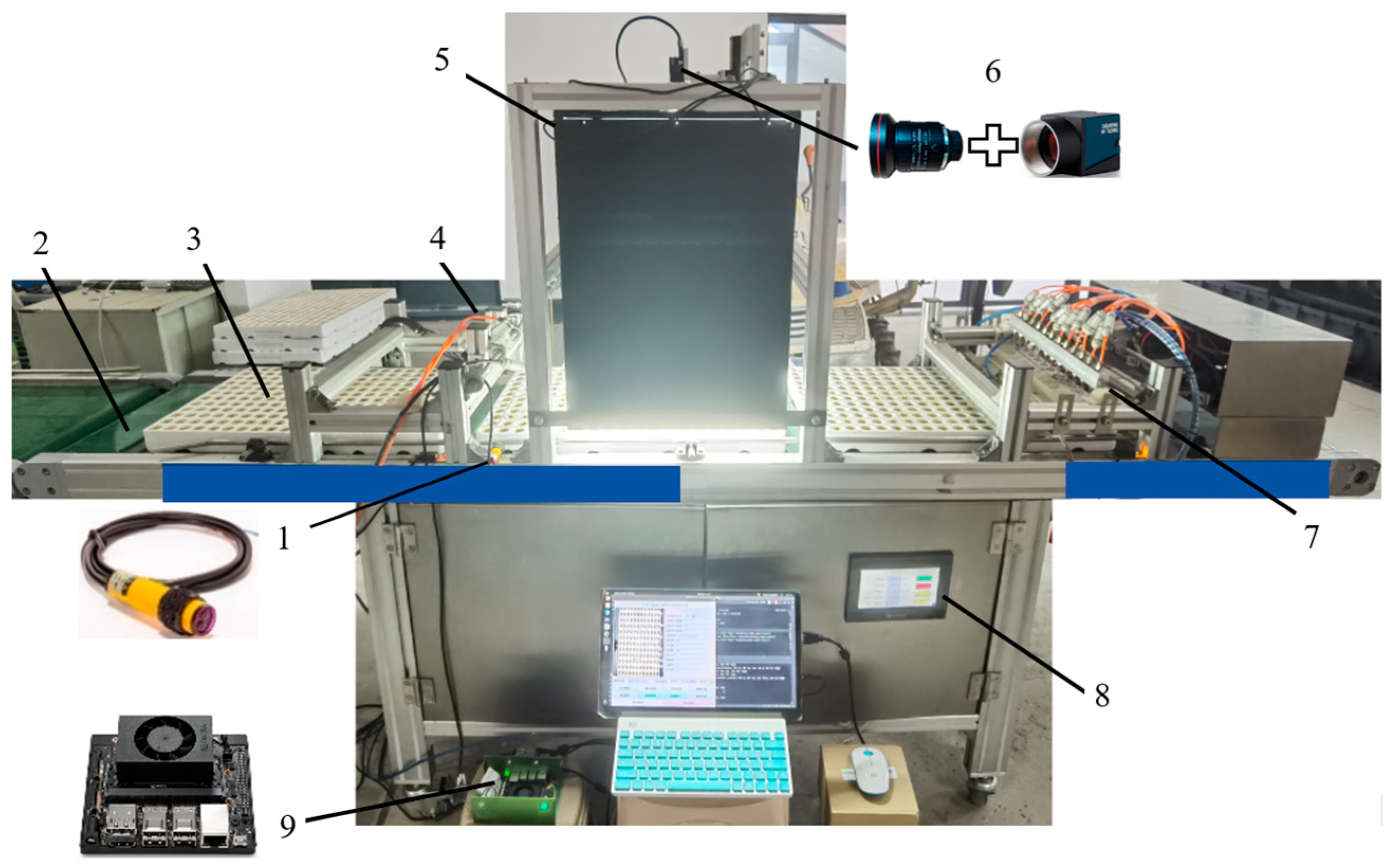
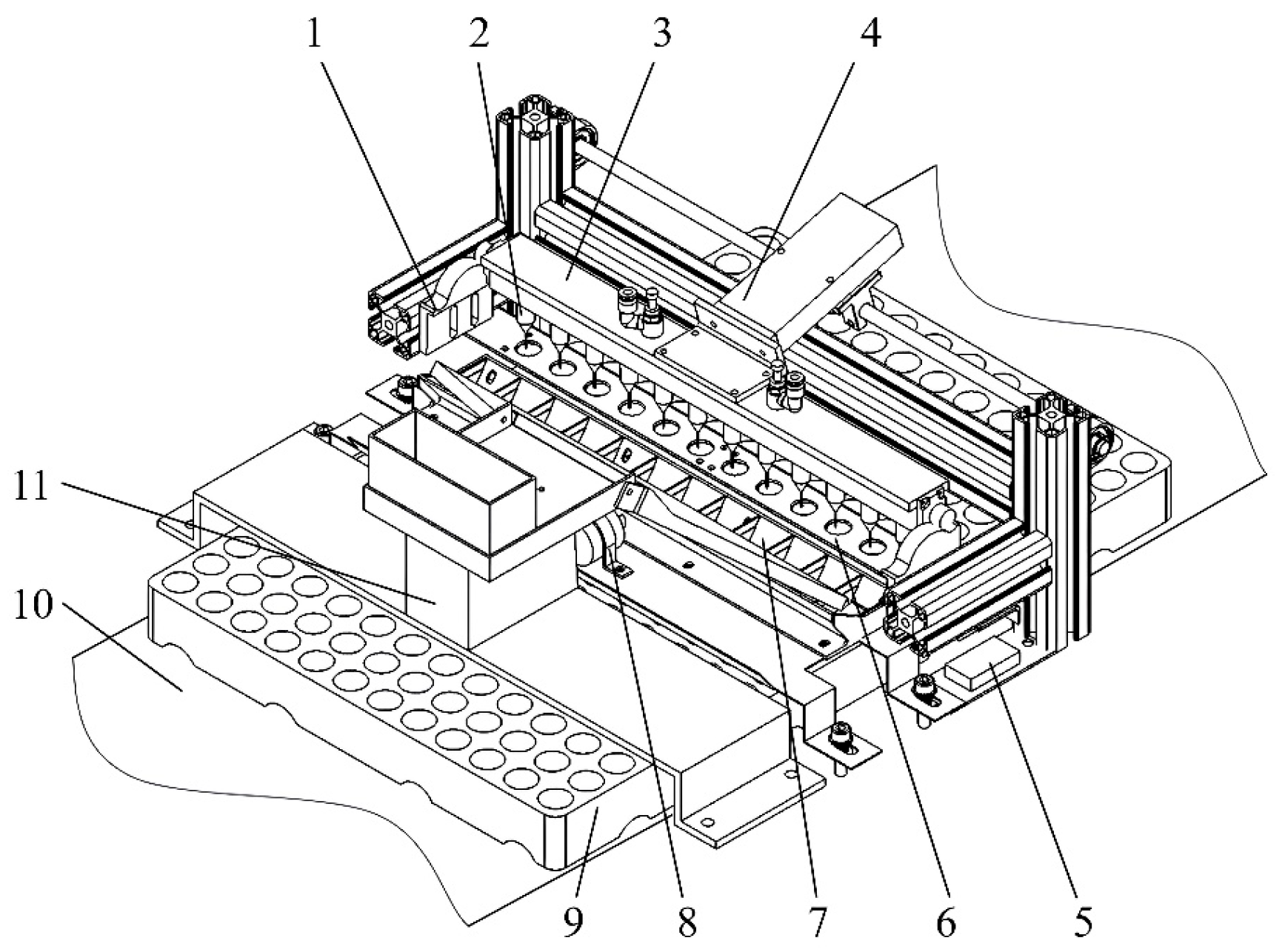
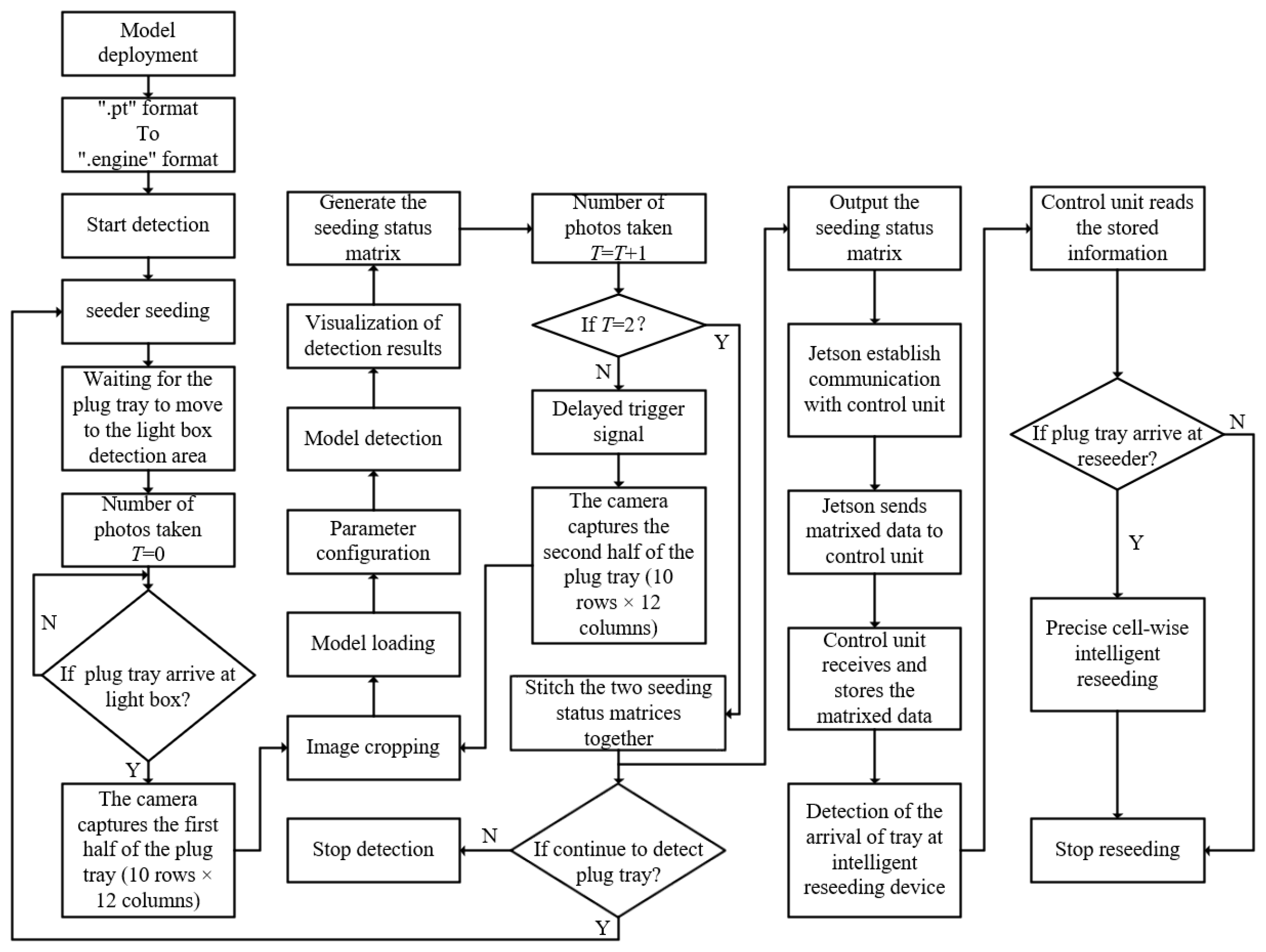
The overall design of the system consists of three core components: the seeding performance detection module, the control unit, and the intelligent reseeding device. The physical diagram of the seeding performance detection and intelligent reseeding device for leafy vegetable plug trays is shown in Figure 1. The detailed flowchart of seeding performance detection and the intelligent reseeding device is provided in Appendix A.
The image acquisition system is designed to be integrated into the 2QSB-2 pneumatic precision seeding machine for vegetable plug seedlings developed by South China Agricultural University. Industry-standard plug trays are designed to carry leafy vegetable seeds and seedlings, and cylindrical rockwool plugs with unilateral concave surfaces are designed to fix seeds at the central position and prevent seed displacement caused by bouncing. Industrial cameras are designed to capture high-quality images of plug trays and seeds. The light box is designed with a white LED installed centrally on each of its four inner walls, ensuring consistent and adequate illumination.
The proposed VS-YOLO model, based on YOLO11n and deployed on the NVIDIA Jetson Xavier NX (NVIDIA Corporation, Santa Clara, CA, USA) edge computing device, is designed to achieve real-time inference through a cross-platform deployment strategy. A graphical user interface (GUI) is designed to implement model management and detection result visualization.
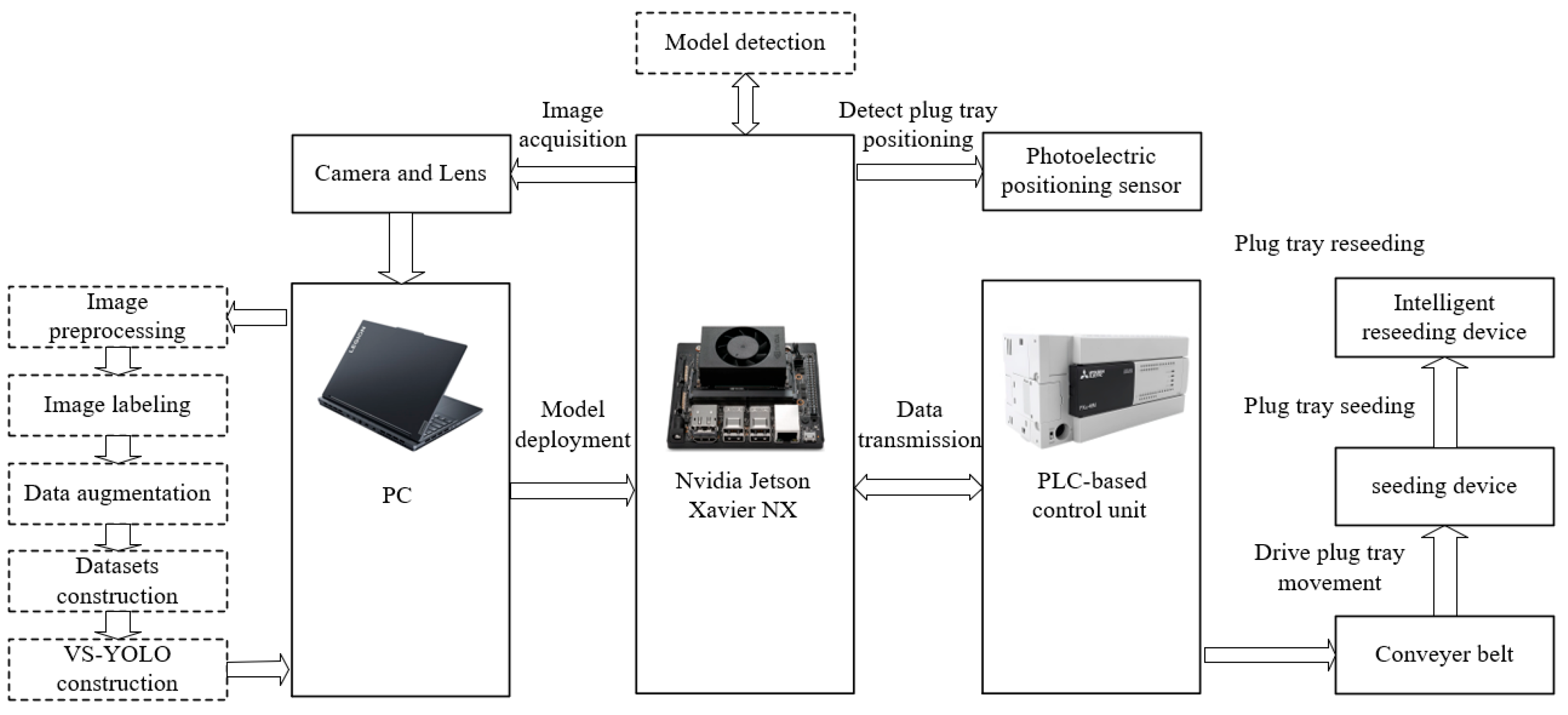
Conveyor belts are designed to drive seeded plug trays to move in an orderly manner, another set of photoelectric position sensors is designed to detect whether plug trays reach the working area of the intelligent reseeding device, and a PLC-based control unit is designed to retrieve the stored seeding matrix and instruct the reseeding device to execute precise cell-wise reseeding operations. The flowchart of our proposed reseeding system is illustrated in Figure 2. Solid-line boxes represent hardware equipment, and dot-line boxes represent software operations.

2.2. Image Acquisition

To ensure the reproducibility of image acquisition, all experimental conditions were strictly standardized as follows: The conveyor belt speed was stabilized at a constant 100 trays per hour. The camera height was calibrated to cover a field of view of 10 rows × 12 columns of tray cells (120 cells per frame). Upon detecting the arrival of a plug tray via the photoelectric positioning sensor, the Jetson control board triggers the camera to capture two sequential images with a preset time delay. These two images cover non-cell regions that are overlapping but fully encompass all 240 cells of a complete plug tray. The light box was pre-calibrated to a fixed luminous intensity (rather than being dynamically adjusted) to acquire high-contrast, sharp seeding images, eliminating interference from light fluctuation on image quality.
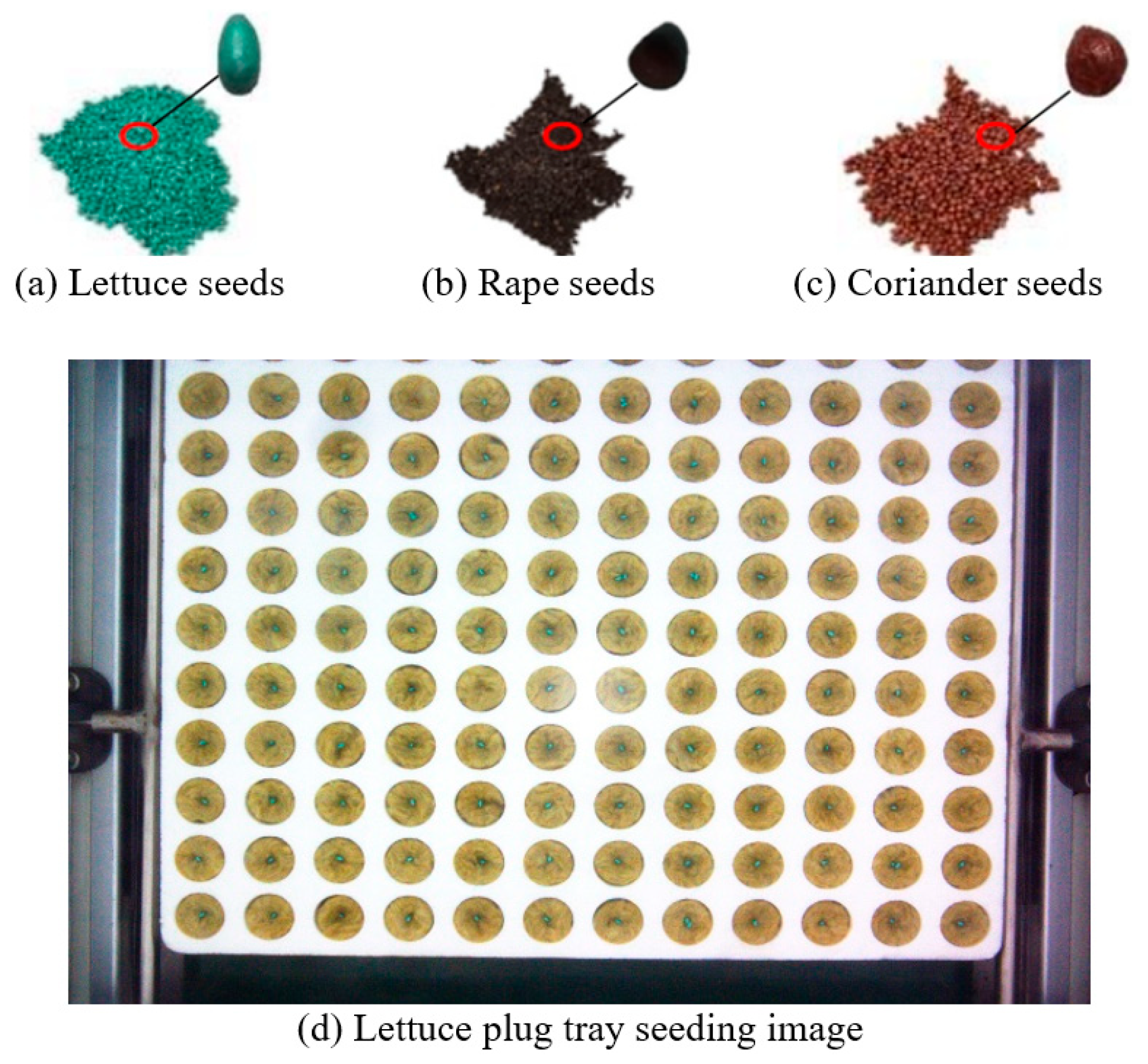
This study employed three different types of leafy vegetable seeds, including lettuce seeds (“Luosha Lv”), rape seeds (“Zimeiyu”), and coriander seeds (“Ansemi”), as shown in Figure 3a–c. Luosha Lv lettuce seeds had an average length of 3.53 mm and a width of 1.99 mm, with a 1000-seed weight of 5.88 g. The Zimeiyu rape seeds, with a length of 2.15 mm, a width of 1.97 mm, and a 1000-seed weight of 4.65 g. For the Ansemi coriander seeds, with an average length of 3.41 mm, a width of 3.26 mm, and a 1000-seed weight of 5.63 g. Image acquisition was conducted from June to July in 2024. Figure 3d shows a plug tray seeding image of lettuce seeds. In the seeding holes, there are cases of missed seeding, single seeding, and multiple seeding. Therefore, the seeding performance of the entire plug can be evaluated by detecting the number of seeds sown in each hole of the plug.

2.3. Image Preprocessing and Dataset Construction

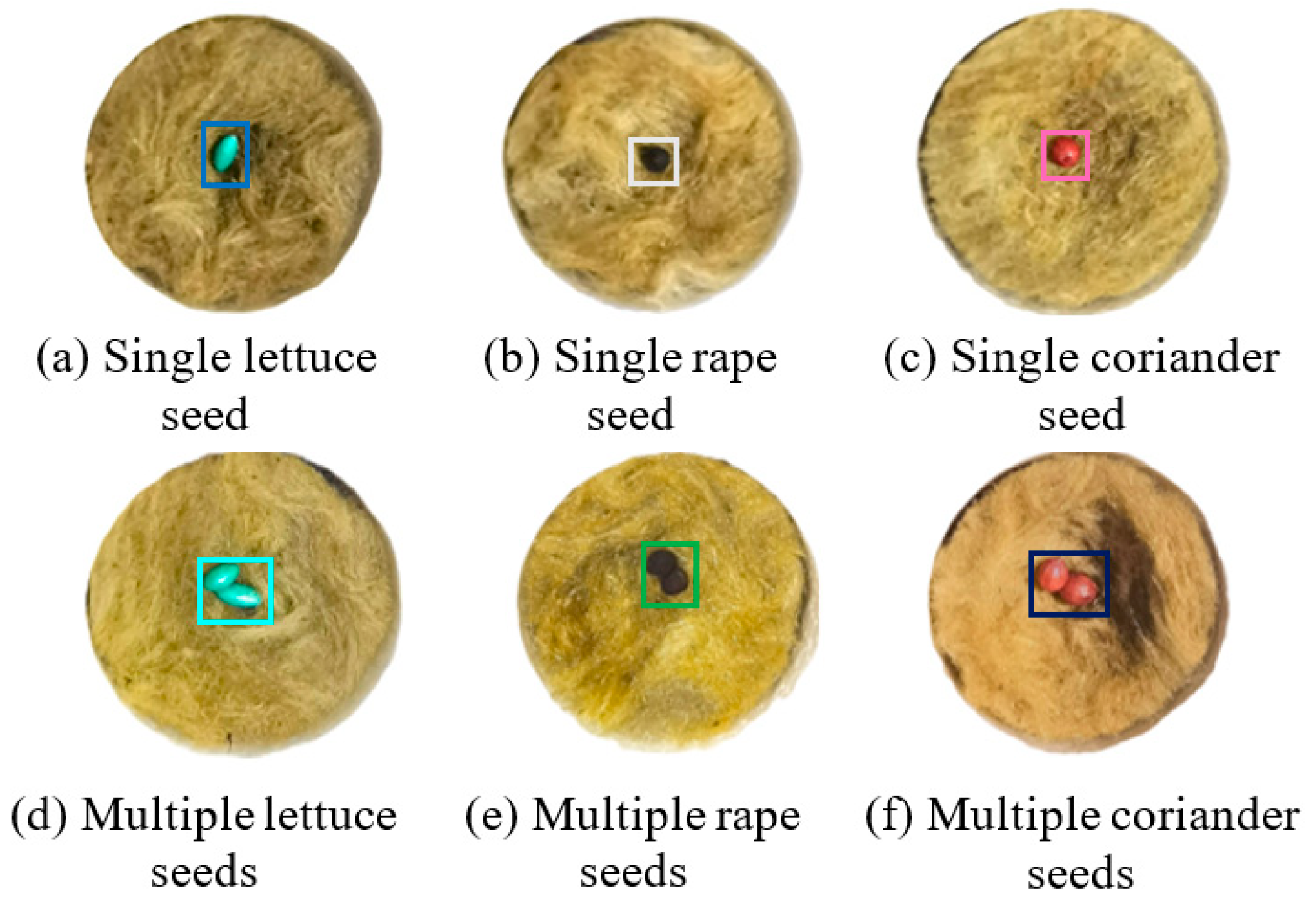
During the plug image acquisition process, the camera’s shooting angle limitations resulted in the left and right edge regions of the original images frequently containing redundant non-target area information. Therefore, this study first conducted image cropping to eliminate the invalid areas on both sides of the original images. Then, image segmentation was performed on the cropped images, splitting them into 4 sub-images. Each sub-image corresponded to 5 rows × 6 columns of cells and had a size of 1920 × 1374 pixels. Next, the open-source annotation tool LabelImg 1.8.6 was used for detailed annotation of the effective areas in the images, ensuring high-quality data for subsequent model training. Specifically, annotations were made for single-seed and multiple-seed cases of the three types of seeds. Single lettuce, rape, and coriander seeds were annotated with blue, white, and pink bounding boxes, respectively. Multiple adherent lettuce, rape, and coriander seeds were annotated with cyan, green, and dark blue bounding boxes, respectively. The annotated images are presented in Figure 4a–f.
Considering the high repeatability of samples during data annotation, to enhance the generalization ability and robustness of the model, this study implemented multiple data augmentation techniques on the original image data, including random variations in exposure within the range of ±20%, contrast within ±20%, saturation within ±20%, and the addition of Gaussian noise and salt-and-pepper noise. Such operations simulated varying shooting conditions, expanded sample diversity, and enhanced the model’s recognition ability.
In this study, after image segmentation of the original plug seeding images, 407 lettuce images, 295 rape images, and 306 coriander images were obtained for the three types of seeds. After data augmentation, the number of lettuce, rape, and coriander images increased to 1011, 935, and 900, respectively. The augmentation ratio for lettuce images was approximately 2.48 times (1011/407), for rape images approximately 3.17 times (935/295), and for coriander images approximately 2.94 times (900/306). In total, the three types of seed images reached 2846, forming the leafy vegetable seed dataset. This dataset was divided into an 8:1:1 ratio, resulting in a training set of 2275 images, a validation set of 280 images, and a test set of 291 images. The LabelImg tool was used again to annotate the dataset. After annotation, the training set, validation set, and test set contained 179,487, 22,133, and 23,110 bounding boxes, respectively. Detailed information on the leafy vegetable seed dataset is shown in Table 1.

2.4. VS-YOLO Construction

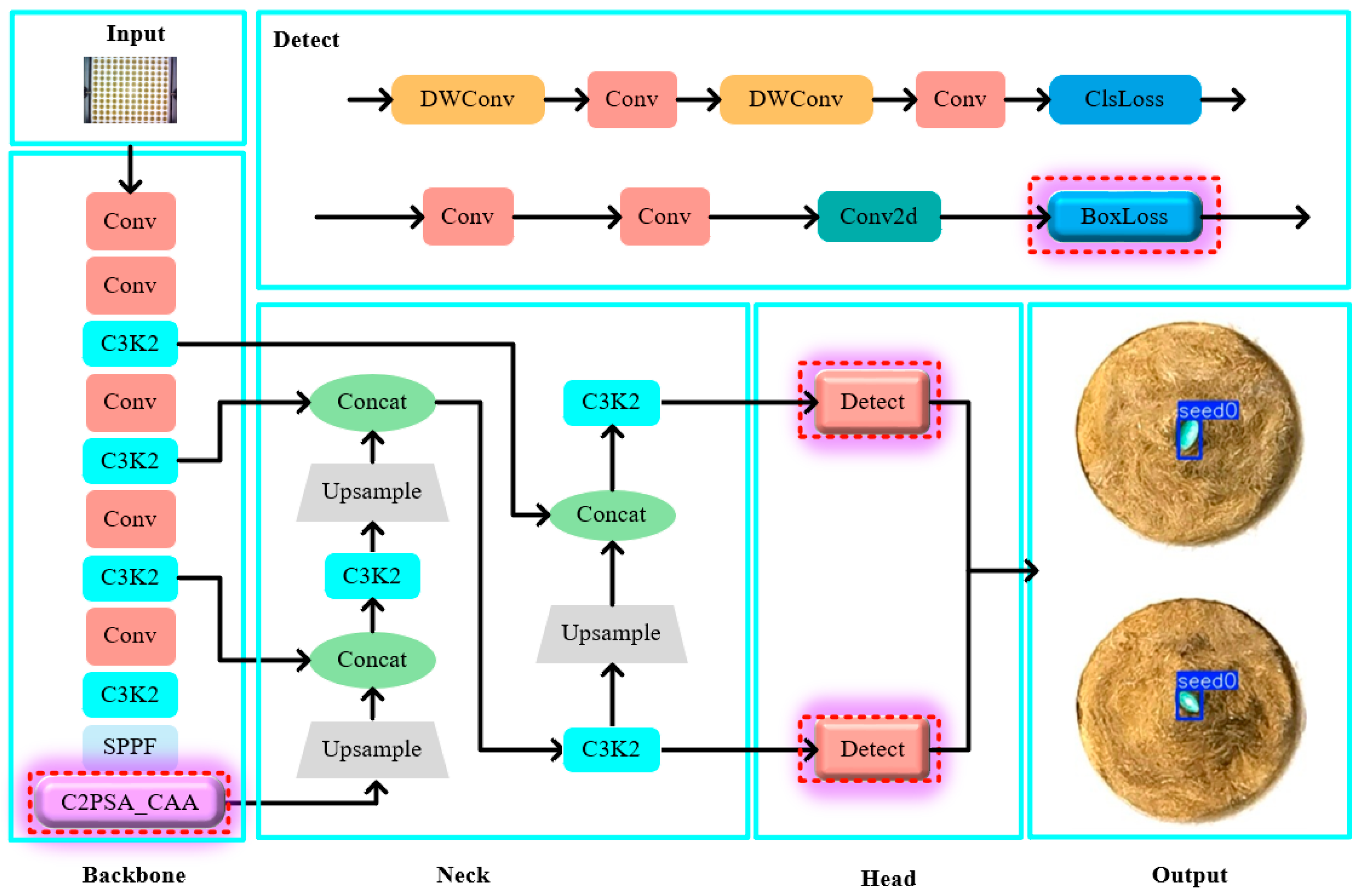
During practical seeding of leafy vegetable seeds, key challenges include recognition difficulties due to small seed sizes, reduced detection accuracy during high-speed operation and misdetection of non-seed materials. To address these limitations, this study proposes a lightweight model, VS-YOLO, derived from YOLO11n to enhance recognition efficiency and accuracy for small-sized seeds. In the construction of VS-YOLO, first, the proposed C2PSA_CAA module integrates the CAA module with the original C2PSA module in the backbone network. This greatly strengthens the feature representation in the seed center region, significantly improving the capability to capture features. Second, the WIoU v3 loss function is introduced, with its unique dynamic non-monotonic focusing mechanism to effectively prioritize detection of normally distributed seed anchor boxes, thereby boosting overall performance. Finally, structural optimization replaces the original medium and large detection heads with a dedicated XSmall detection head. The improved VS-YOLO model is illustrated in Figure 5. Red dot-line boxes indicate the improved parts.

2.4.1. C2PSA_CAA Module

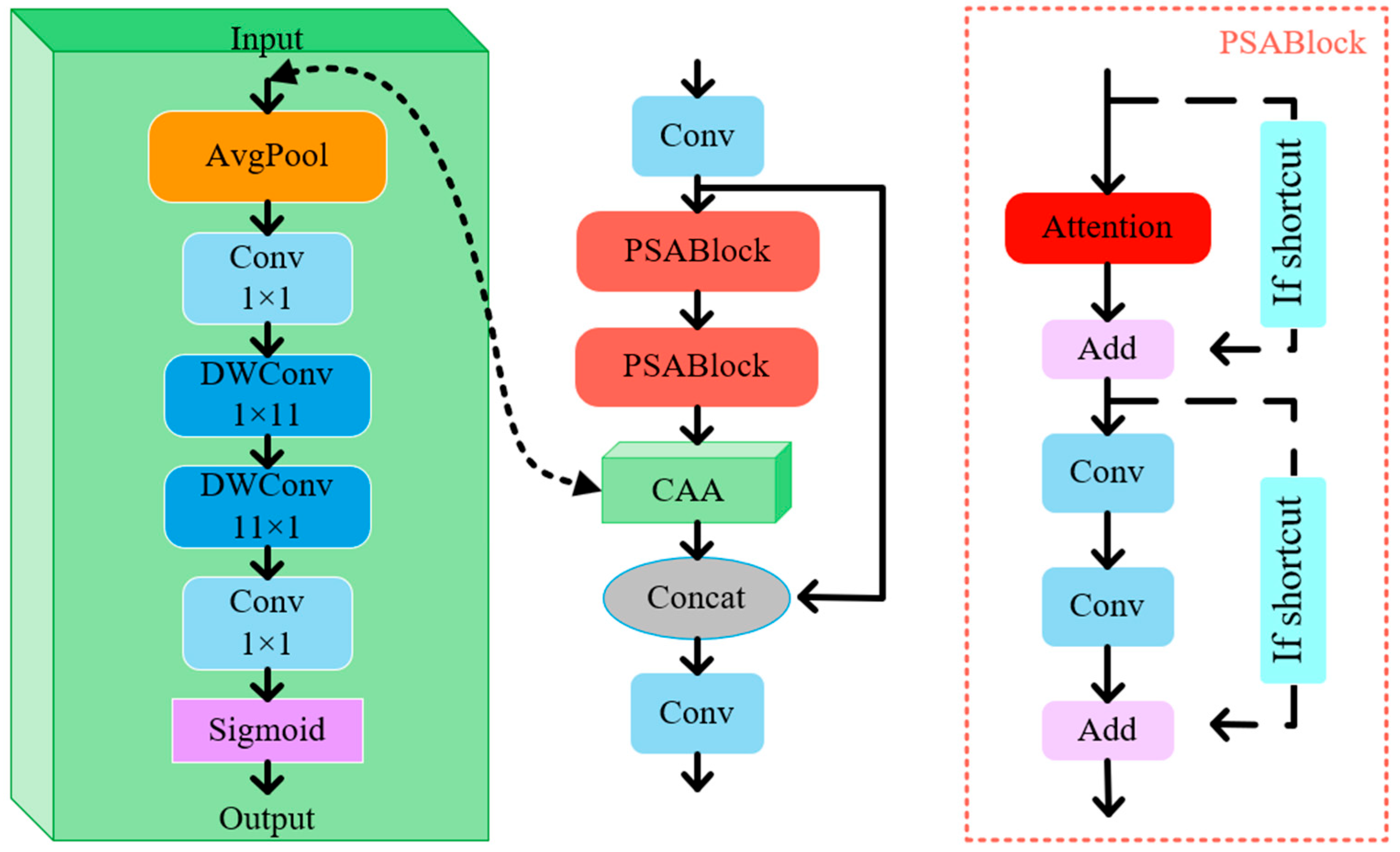
The CAA module [26] is a network structure designed to capture long-range contextual information. The C2PSA module enhances feature extraction through cross-stage processing and integrates a pyramid squeeze attention (PSA) mechanism for dynamic attention adjustment. This boosts the model’s ability to detect targets in complex scenarios. The C2PSA_CAA module, an improvement on the C2PSA module, adds a CAA module after the PSABlock. When original features pass through the PSABlock, key regions receive effective attention. The CAA module then further strengthens feature extraction in these regions. This modification preserves the cross-stage processing efficiency while amplifying key region features, making them more prominent in important information like details and textures. Consequently, the model’s detection performance is enhanced. Figure 6 illustrates the detailed structure of the improved C2PSA_CAA module.

2.4.2. WIoU Loss Function

YOLO11n adopts CIoU [27] as the bounding box loss function. Although CIoU considers the overlapping area, center point distance, and aspect ratio of bounding boxes, enabling more accurate measurement of similarity between two bounding boxes, it inevitably exacerbates the model’s penalty on low-quality samples due to the presence of such samples in training data, thereby weakening the model’s detection performance.
This study adopts WIoU v3 [28] as the bounding box loss function to address the problem. This loss function employs a dynamic non-monotonic focusing mechanism, which dynamically adjusts the gradient gains of samples with different qualities through weight factors. It reduces attention to high-quality samples while minimizing the negative gradients generated by low-quality samples, thereby improving the overall performance of the model. WIoU v1 consists of RWIoU and LIoU, where RWIoU is responsible for reducing the excessive focus of high-quality anchor boxes on center point distance, and LIoU focuses on enhancing attention to anchor boxes of average quality. To better prevent harmful gradients from low-quality samples, a dynamic non-monotonic focusing coefficient is introduced on the basis of WIoU v1 to construct WIoU v3.

2.4.3. XSmall Detection Head

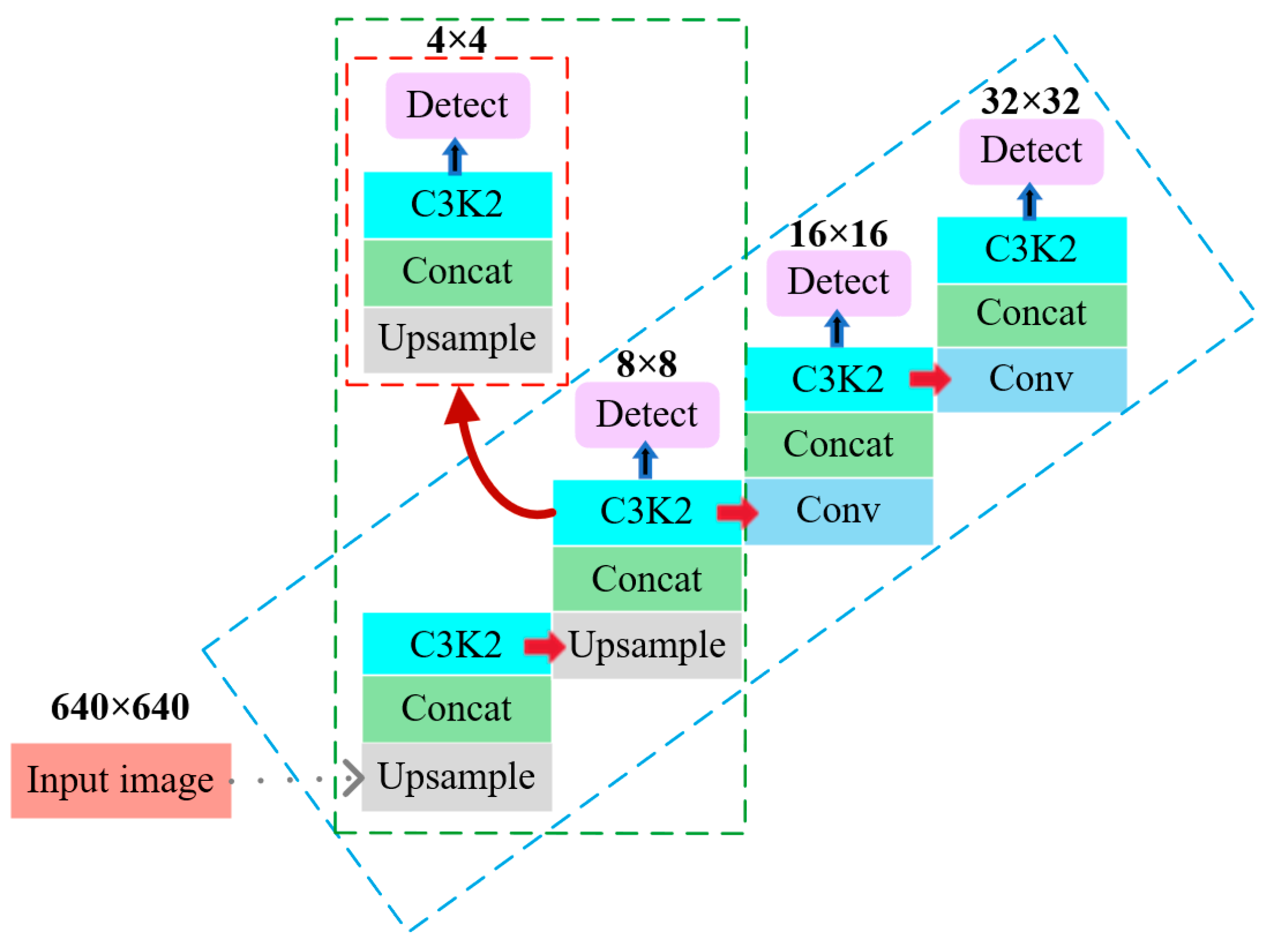
For small-sized seeds such as lettuce and rape seeds, the original three detection heads of YOLO11n perform poorly in detection accuracy, resulting in a high missed detection rate. To address this issue, this study introduces a new XSmall detection head [29] specifically designed to detect extra-small targets larger than 4 × 4. This significantly improves the detection accuracy of such small-sized seeds and greatly reduces the missed detection rate. Its structure is shown in Figure 7, where the blue dot-line box represent the original small, medium, and large detection heads of the YOLO11n framework; the red dot-line box represents the newly introduced XSmall detection head; and the green dot-line box shows the overall structure of the VS-YOLO detection heads.

2.5. PLC-Based Control Unit

A Mitsubishi FX3U-48MT PLC (Mitsubishi Electric Corporation, Tokyo, Japan) acted as the core control unit, communicating with the seeding performance detection system via an FX3U-ENET-ADP Ethernet module (Mitsubishi Electric Corporation, Tokyo, Japan) to obtain reseeding matrix data. Its output points controlled 12-channel suction needle solenoid valves (Y10–Y17/Y20–Y23) and a Mitsubishi MR-E-40A-KH003 servo motor (Mitsubishi Electric Corporation, Tokyo, Japan) (Y0 for belt direction, Y1 for speed). A pair of Omron E3Z-T sensors (Omron Corporation, Kyoto, Japan) provided tray positioning signals.
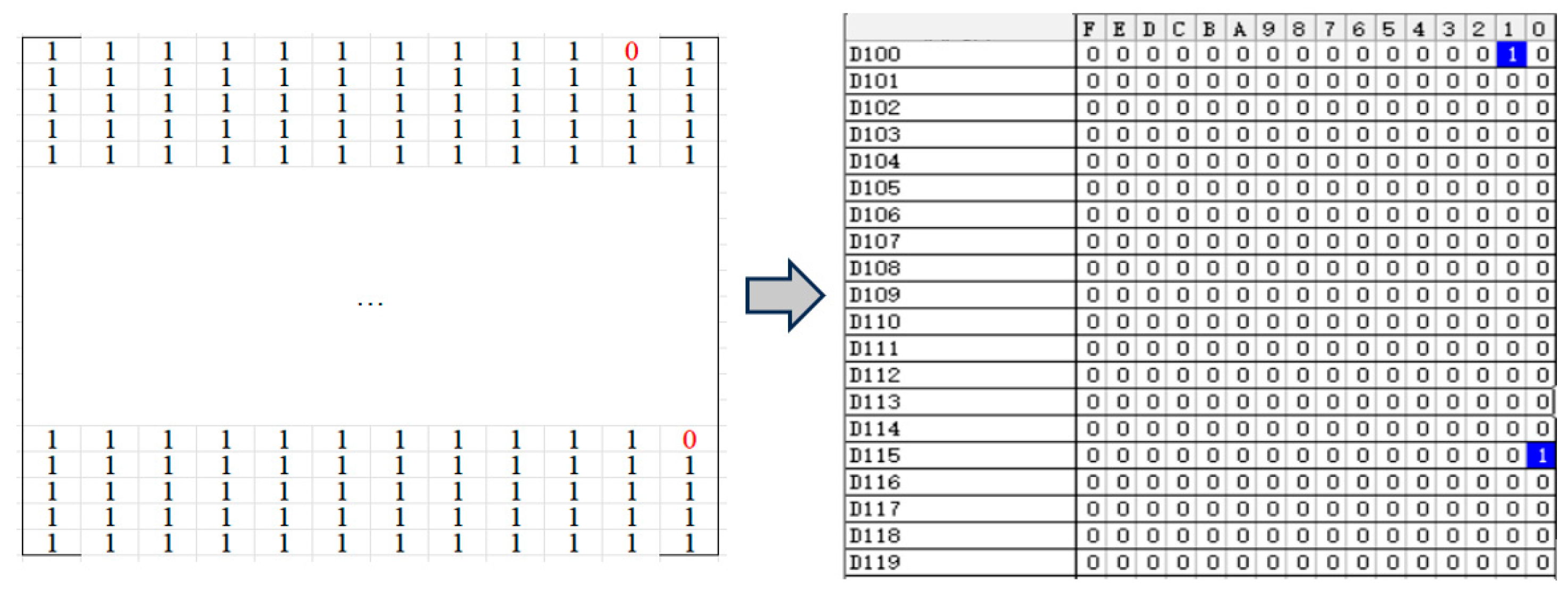
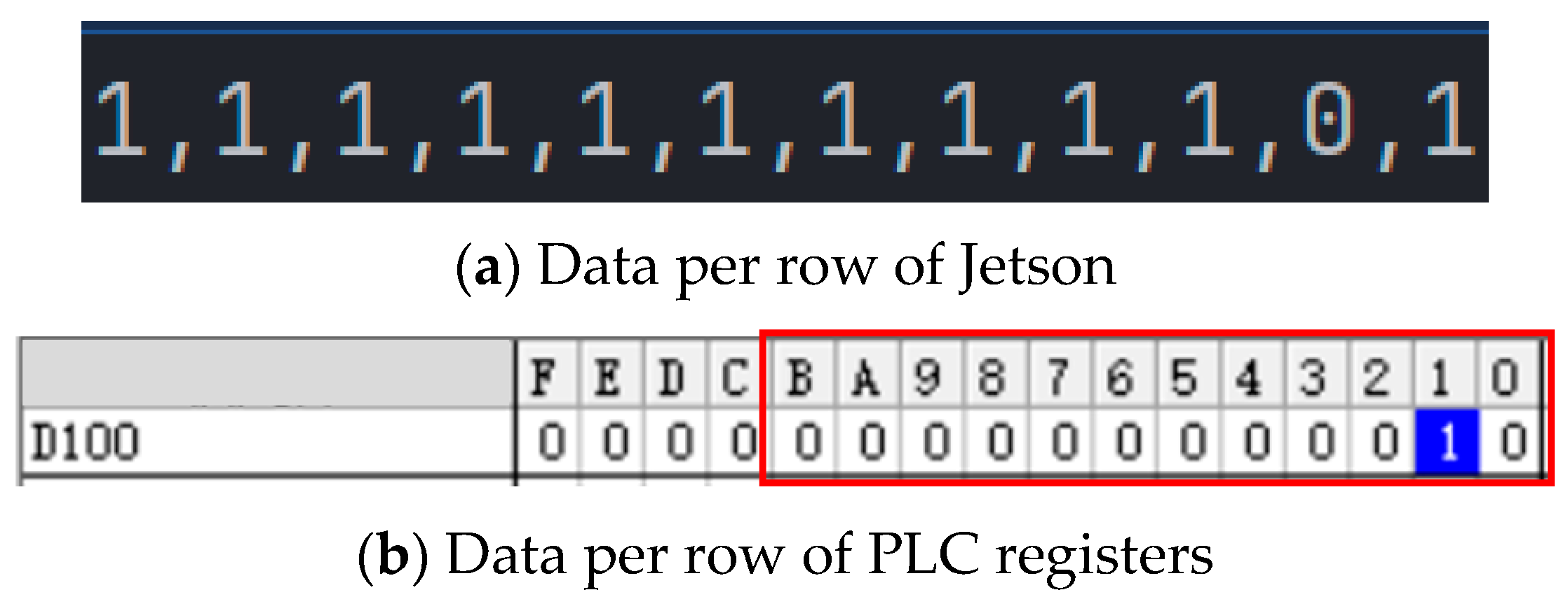
The control program, developed in Mitsubishi GX Works2 with structured ladder logic, adopted binary encoding: the Jetson converted 12-cell row detection results into a 1D array (1 = reseed required, 0 = no action), mapped to the lower 12 bits of PLC register D100. Registers D100–D119 store the complete 20 × 12 tray matrix, as illustrated in Figure 8. Upon tray arrival, the PLC decoded the data to trigger targeted solenoid valves for precision reseeding.

2.6. Reseeding Device

The intelligent reseeding device comprises four primary components: plug tray conveying belt, reseeding unit, vibrating seed tray and seed feeding unit. The reseeding unit integrates a 1 × 12 suction needle array, an integrated air chamber, a guide rail, a pneumatic cylinder, and seed tubes. The vibrating seed tray is composed of a seed box and a vibration motor. The 12 suction needles align with the 12 cells per row of the plug tray, enabling row-wise intelligent reseeding operation. The intelligent reseeding device is shown in Figure 9.
The reseeding workflow is as follows. First, pre-loaded seeds were stored in the seed box, with the pneumatic cylinder connected to an air compressor and the air chamber to a vacuum pump. Upon tray arrival by the photoelectric sensor, the PLC retrieved the matrix, activated the vibration motor, and triggered vacuum adsorption for needles corresponding to “1” values. Then, the belt was indexed to align cells with seed tubes, and releasing negative pressure dropped seeds into target cells to complete single-row reseeding. After 20 cycles (full tray), the seed feeder replenished the box, and the system was reset for the next tray. The detailed register relationships and reseeding process are provided in Appendix B.

3. Results

3.1. Experiment Setup and Evaluation Metrics

In this experiment, the specific hardware and software configuration environment is shown in Table 2. To prevent overfitting, which could compromise the model’s detection performance, the hyperparameters were configured as follows: epoch = 150, imgsz = 640, cos_lr = True, and weight_decay = 0.0006.
Evaluation metrics included Precision, Recall, F1 Score, mean average precision (mAP@0.5), model parameters, model size, and GFLOPs.
For assessing plug seeding performance, this study adopted evaluation indicators such as single-seed prediction accuracy (P1), multiple-seeding prediction accuracy (P2), and missed-seeding prediction accuracy (P0). The corresponding calculation formulas are presented as follows:
P 1 = n 1 N 1 × 100 %
P 2 = n 2 N 2 × 100 %
P 0 = n 0 N 0 × 100 %
In the above formulas, n1 represents the number of accurately predicted single-seed cases by the model; n2 is the number of accurately predicted multiple-seeding cases by the model; n0 denotes the number of accurately predicted missed-seeding cases by the model; N1 is the manually detected number of single-seed cases; N2 is the manually detected number of multiple-seeding cases; and N0 is the manually detected number of missed-seeding cases.
For the evaluation of seeding performance after plug reseeding, this study selects single-seed qualification index (Y1), multiple-seeding index (Y2), and missed-seeding index (Y0) as evaluation indicators. The calculation formulas for each indicator are as follows:
Y 1 = m 1 M × 100 %
Y 2 = m 2 M × 100 %
Y 0 = m 0 M × 100 %
where M is the total number of seeding holes, m1 is the number of holes containing exactly one seed, m2 is the number of holes containing more than one seed, and m0 is the number of holes containing no seeds.

3.2. Comparative Performance Evaluation of VS-YOLO

3.2.1. Performance Evaluation of Different Loss Functions

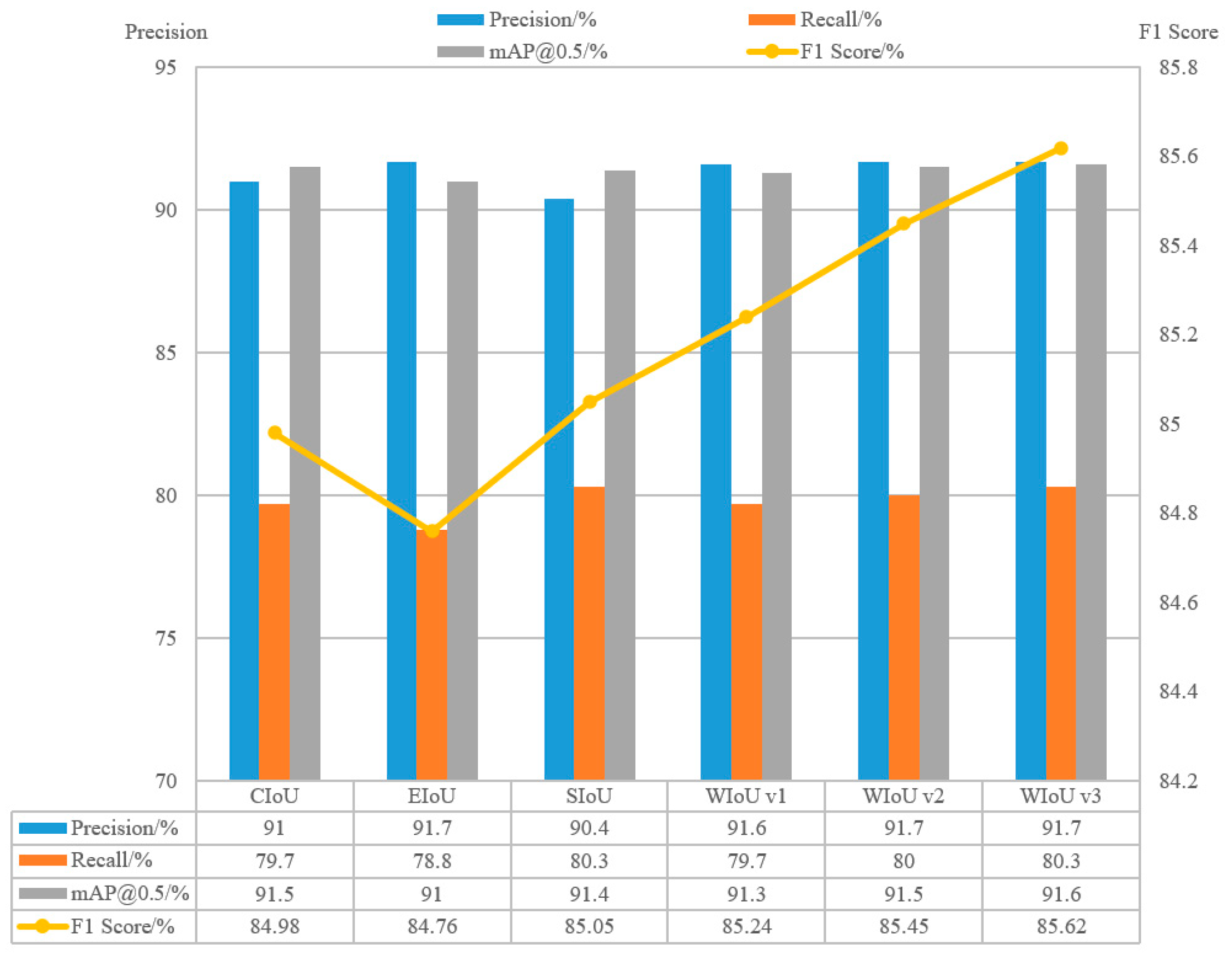
The selection of a loss function considerably influences the model’s detection accuracy. In this experiment, we compared the application effects of various loss functions in leafy vegetable seed detection. A systematic comparison was made between the CIoU, EIoU, SIoU, and WIoU (including versions v1, v2, and v3) loss functions. Figure 10 presents the experimental results.
As evidenced by Figure 10, the WIoU series of loss functions demonstrate a substantial superiority over CIoU, EIoU, and SIoU in detection accuracy. Among these, WIoU v3 achieves the best performance, its mAP@0.5 is 0.1% higher than CIoU, and 0.3 and 0.1% higher than WIoU v1 and v2, respectively. In terms of Recall, it surpasses CIoU by 0.6%, and WIoU v1 and v2 by 0.6 and 0.3%, respectively. The WIoU v3 loss function adjusts the gradients of seed samples with varying quality through weight factors.

3.2.2. Comparison Experiment of Detection Head Combination

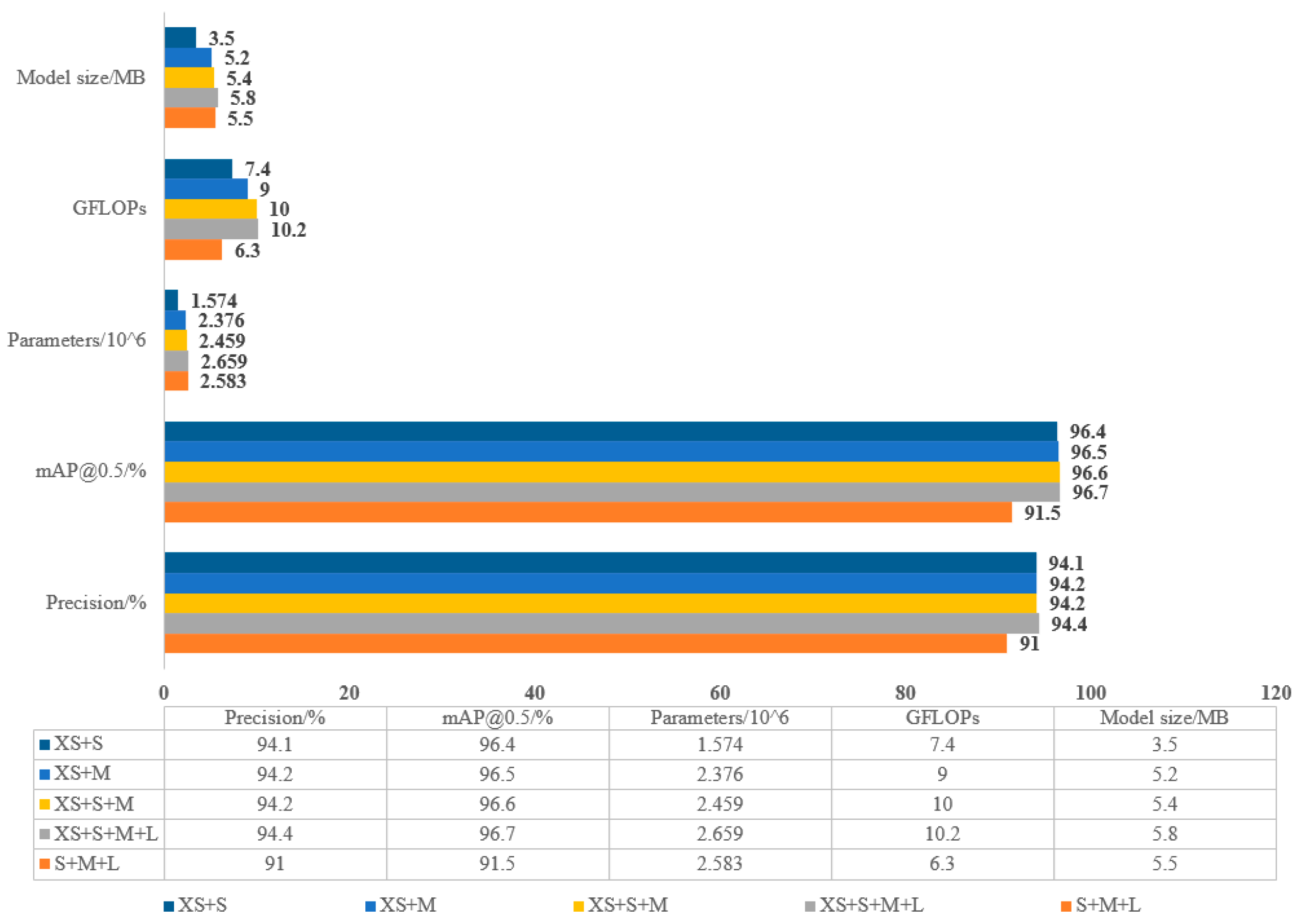
To further explore the impact of combination strategies integrating the XSmall (XS) detection head with conventional small (s), medium (m), and large (l) detection heads on small target seed detection performance, this experiment analyzes the comprehensive effects of different detection head configurations on key performance indicators including detection accuracy, model parameters, and computational resource consumption, thereby enabling holistic evaluation of each combination strategy. The results are presented in Figure 11.
According to the analysis of experimental results in Figure 11, after introducing the XS detection head into the YOLO11n model with three original detection heads (S, M, L), the model’s detection accuracy significantly improved, with the mAP@0.5 value increasing by 5.2%, ranking the highest among all combination modes. However, this improvement is accompanied by an increase in the number of parameters and a significant rise in GFLOPs. For the XS + S detection head configuration, after removing the M and L detection heads, the lightweight effect is notably enhanced, with the mAP@0.5 value decreasing by only 0.3%. Specifically, the number of parameters, GFLOPs, and model size are reduced by 35.9%, 26.0%, and 35.2%, respectively. The combination of the XS detection head and the S detection head exhibits the best comprehensive performance in terms of detection accuracy and speed, so this study adopts this combination mode.

3.2.3. Ablation Experiment

To verify the performance of the improved modules on the YOLO11n model, this experiment conducted a series of ablation experiments and evaluated the effectiveness of each improved strategy through comparative analysis. The evaluation metrics used include Recall, mAP@0.5, and Parameters. The comparative results of the ablation experiments are shown in Table 3, √ represents using the improved strategy, and / represents not using the improved strategy.
Table 3 shows that compared to the baseline YOLO11n model, introducing the C2PSA_CAA module in this experiment enhanced Recall and mAP@0.5 by 0.4 and 0.2%, respectively. It also improved the model’s ability to extract features from seed centers, boosting seed detection performance. Replacing the original CIoU loss function with WIoU v3 raised Recall and mAP@0.5 by 0.6 and 0.1%, respectively. This indicates WIoU v3 effectively suppressed gradient interference from low-quality seed samples and focused more on normal-quality seed anchor boxes. After adding the XSmall detection head, Recall and mAP@0.5 rose sharply by 12.6 and 4.8%, respectively. This optimized design greatly strengthened the model’s capacity to detect small leafy vegetable seeds, proving superior in small target detection. The VS-YOLO model built on these improvement strategies showed remarkable comprehensive performance. It achieved a Recall of 92.9%, an mAP@0.5 of 96.5%, and only 1.61 M parameters. Compared to YOLO11n, Recall and mAP@0.5 increased by 13.3 and 5.2%, respectively, with a 37.6% reduction in model parameters.

3.2.4. Comparative Experiments of Different Models

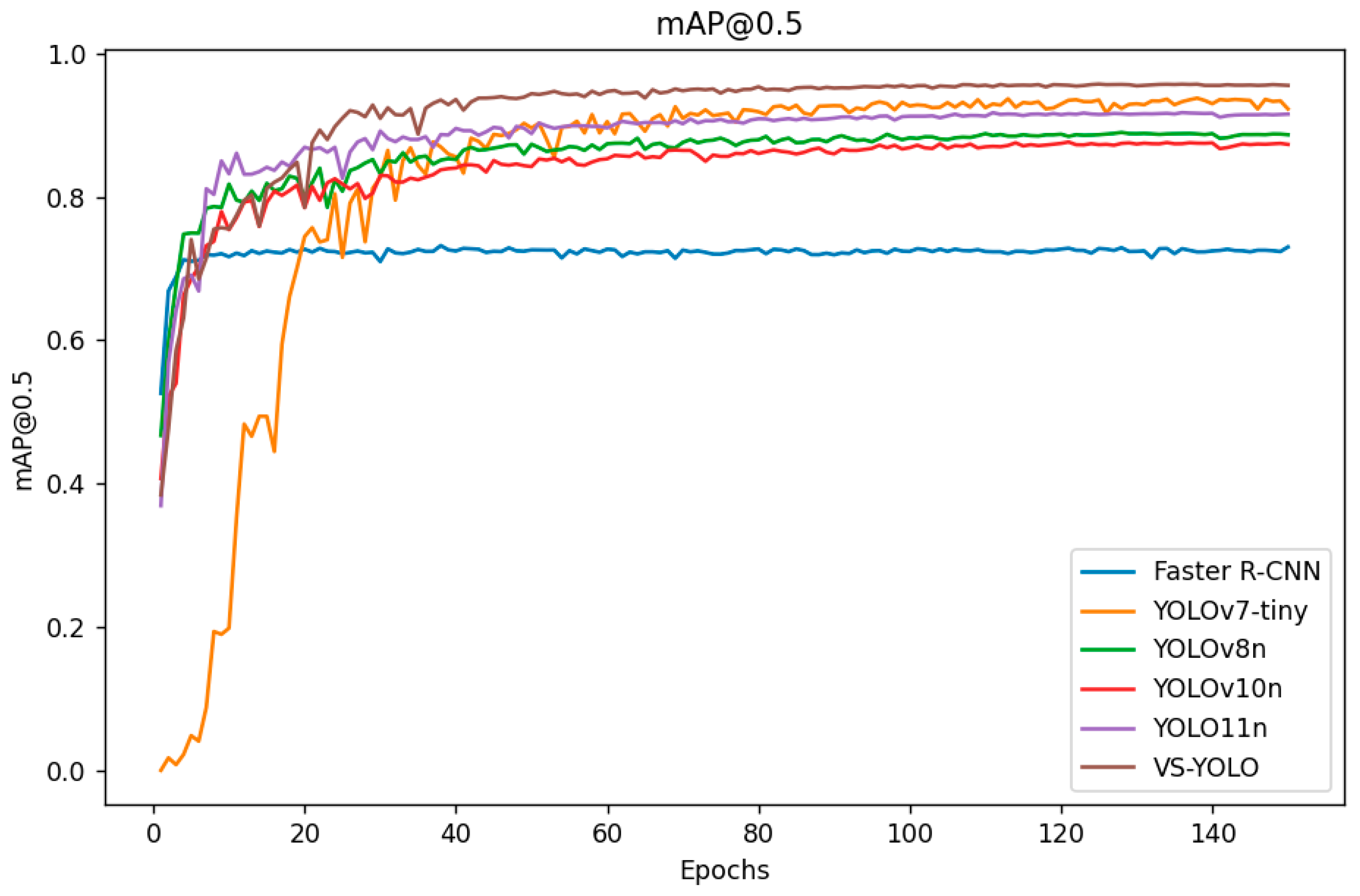
To validate the effectiveness of the proposed VS-YOLO model, we compared its seed detection performance with that of the two-stage Faster R-CNN and four lightweight single-stage detectors (YOLOv7-tiny, YOLOv8n, YOLOv10n, YOLO11n) under identical hyperparameter configurations and experimental environments with 150 training epochs, and the mAP@0.5 curves in Figure 12 demonstrate that VS-YOLO achieves superior performance with faster convergence and higher mAP@0.5 values than these benchmark models.
To comprehensively evaluate the performance of different types of deep learning models, this experiment conducted a detailed analysis covering multiple key indicators such as detection accuracy, computational resource consumption, and model lightweight degree. The analysis results are summarized in Table 4.
As evidenced by Table 4, compared to the traditional multi-stage detection model Faster R-CNN [30], the YOLO series of single-stage detection models demonstrate remarkable performance advantages. The improved VS-YOLO model proposed in this study stands out, achieving an F1 Score of 93.45%, 8.26% higher than the original YOLO11n model. In comparison to YOLOv10n, YOLOv8n, and YOLOv7-tiny, the F1 Score of VS-YOLO is 14.70, 11.89, and 2.18% higher, respectively. Meanwhile, another key indicator, mAP@0.5, is 9.3, 7.4, and 3.6% higher, respectively. These results clearly highlight VS-YOLO’s outstanding performance in detecting small-sized leafy vegetable seeds. Although YOLOv7-tiny achieves an F1 Score of 91.27 and an mAP@0.5 of 92.9%, indicating strong small-target detection capabilities, its large computational resource consumption poses significant challenges for lightweight deployment. With a model size of 12.3 MB and 6.03 M parameters, it is less suitable for resource-constrained environments. In contrast, VS-YOLO excels in model size and resource consumption, featuring only 1.61 M parameters and a 3.6 MB model size, which are 37.6% and 34.5% lower than YOLO11n, respectively. VS-YOLO maintains a high F1 Score and mAP@0.5 accuracy while achieving the lowest parameter count and memory footprint.

3.3. Jetson-Based Intelligent Reseeding Experiment

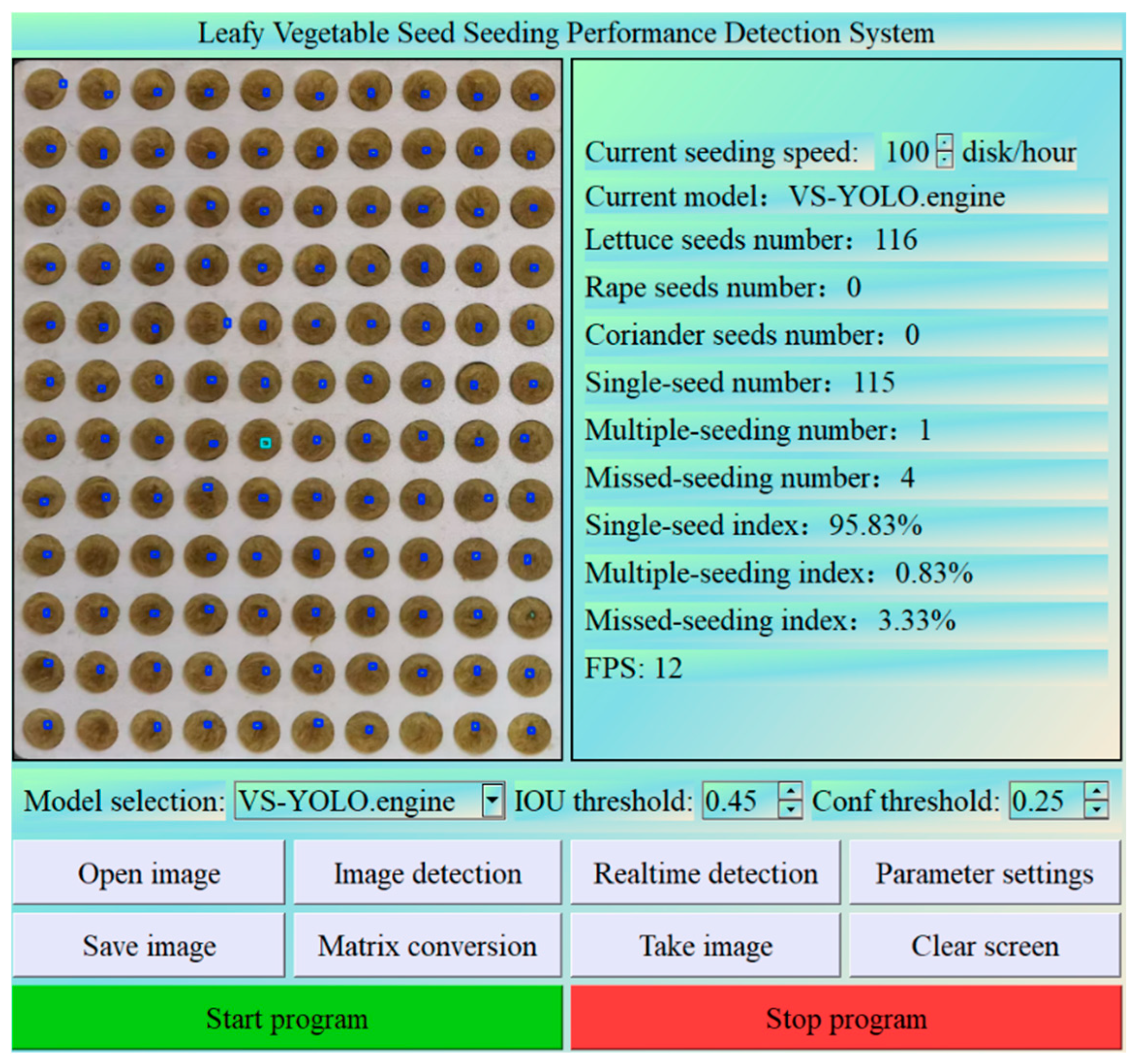
To comprehensively evaluate the performance of the intelligent reseeding device, the air pressure value in the integrated air chamber connected to seeding suction needles was fine-tuned to alter the seeder’s operation parameters. This adjustment achieved a missed-seeding rate of the plug tray of approximately 2 ± 2%, 4 ± 2% and 6 ± 2% during sowing. For each of these missed-seeding rate scenarios, 15 seeding trays (comprising 5 trays of lettuce seeds, 5 trays of rapeseeds and 5 trays of coriander seeds) underwent seeding performance detection, and then automatic reseeding was executed based on the performance detection results, with both pre-reseeding and post-reseeding performance indices recorded, including single-seed qualification index, multiple-seeding index and missed-seeding index. The reseeding performance evaluation was conducted at a productivity rate of 100 trays per hour. The interface of the seeding performance detection system is shown in Figure 13, and the experimental results are shown in Table 5.
As indicated in Table 5, when the initial whole-tray missed seeding rate was 2–6%, the intelligent reseeding device demonstrated a remarkable improvement effect. The single-seed qualification index rose significantly from 91.88–95.53% to 96.22–96.73%. Notably, the missed-seeding index was effectively curbed at a low level of 0.41–1.14%, marking a substantial 77–80% decrease from the initial 1.83–5.67%. Although the multiple-seeding index slightly increased from 2.45–2.64% to 2.64–2.86% after reseeding, this increase was minimal and did not negatively affect the integrated machine’s seeding performance.

4. Discussion

4.1. Performance Analysis of VS-YOLO Model

Figure 10 indicates that the weight factor mechanism of WIoU v3 enables dynamic adjustment of gradients for seed samples of varying quality, which is the key reason for its superior detection performance compared to CIoU, EIoU, SIoU, and other WIoU variants. Figure 11 shows that the introduction of the XSmall detection head significantly strengthens the model’s small-target detection capability, which is crucial for improving the detection accuracy of small leafy vegetable seeds. Table 3 indicates that the C2PSA_CAA module enhances the model’s ability to extract features from seed centers, thereby improving detection performance. Table 4 indicates that these combined optimizations (feature extraction, loss function, and detection head structure) enable VS-YOLO to achieve both high accuracy and a lightweight design, making it suitable for edge device deployment. Additionally, Table 5 indicates that the minimal increase in the multiple-seeding index after reseeding confirms the reliability of the intelligent reseeding device, which effectively enhances the single-seed qualification rate and reduces the missed-seeding rate, supporting high-quality seeding operations.
Notably, WIoU v3 and the XSmall detection head may not yield significant performance improvements under specific conditions. For WIoU v3, when seed samples exhibit extreme quality imbalance (e.g., >80% of seeds are severely blurred or overlapping), the weight factor mechanism may overemphasize a small subset of high-quality samples, leading to gradient bias and limited gains in Recall. For the XSmall detection head, its effectiveness diminishes when seed size approaches the lower limit of the sensor’s spatial resolution (e.g., seeds < 4 × 4 pixels) or when seeds are embedded in high-noise backgrounds (e.g., substrate with uneven color distribution mimicking seed texture). In such scenarios, the XSmall detection head’s shallow feature extraction capability cannot compensate for the lack of discriminative information, resulting in negligible improvements in mAP.
The detection performance of VS-YOLO is closely associated with external environmental factors: theoretically, illumination conditions significantly affect image quality and seed–background contrast, overexposure under strong direct sunlight washes out texture details of small-sized leafy vegetable seeds, and low-light environments increase image noise and lead to false detections of substrate particles as seeds. Thus, this study employed a specific controlled illumination environment for image acquisition and detection. Rock wool substrates with inconsistent density or moisture content may exhibit irregular surface textures or color variations, interfering with seed feature extraction. Future research can be expanded in the following directions: for illumination conditions, develop adaptive illumination regulation modules to dynamically adjust light intensity and supplement the dataset with simulated extreme illumination samples for model fine-tuning; for substrate variability, expand the dataset to cover diverse substrate types and states (e.g., dry/wet, loose/compact) to enhance model generalization.
Practical plug seeding production involves multiple non-ideal factors that challenge system robustness, and the integrated detection–reseeding system exhibits varying adaptability to these scenarios. Dust accumulation on the sensor lens or substrate surface is a common issue, which can obscure seed contours or form pseudo-targets. Unevenly filled cells disrupt uniform lighting and sensor readings, altering seed shadow features and image contrast. This variability challenges feature consistency and segmentation, potentially leading to missed or false detections. Mechanical vibrations from the seeding line can induce image motion blur, diminishing the sharpness of seed edges.

4.2. Performance Evaluation of the Different Seeds

To further verify the impact of YOLO series single-stage detection models on the detection performance of three different types of leafy vegetable seeds, the experiment chose F1 Score as the evaluation metric. Table 6 details the comparative results. The test objects in tray cells were single and multiple lettuce seeds (L_s and L_m), single and multiple rape seeds (R_s and R_m), and single and multiple coriander seeds (C_s and C_m).
As shown in Table 6, the YOLOv8n, YOLOv10n, and YOLO11n models exhibit inadequate performance in detecting six kinds of leafy vegetable seeds. YOLOv8n and YOLO11n only attain F1 Scores over 90% for single coriander seeds (C_s). YOLOv10n underperforms even more, with none of its seed detection F1 Scores reaching 90%. Conversely, YOLOv7-tiny displays relatively strong overall performance, achieving over 90% F1 Scores for single lettuce (L_s), multiple lettuce (L_m), single rape (R_s), single coriander (C_s), and multiple coriander seeds (C_m). Yet its overall performance still slightly trails that of the VS-YOLO model. VS-YOLO delivers the best detection performance across all seed types, with F1 Scores of 97.88%, 94.69%, 92.49%, 86.25%, 96.44%, and 92.08% for L_s, L_m, R_s, R_m, C_s, and C_m, respectively. These results surpass those of YOLOv7-tiny by 3.03, 4.62, 1.40, 4.92, 0.46, and 1.76%, respectively. These data clearly indicate that the VS-YOLO model achieves greater accuracy in detecting the six types of leafy vegetable seeds, enabling more precise identification and classification of different leafy vegetable seed types.
The data in Table 6 shows that VS-YOLO is particularly effective in detecting lettuce seeds. This can be attributed to the good match between the physical properties of lettuce seeds (with an average size of 3.53 mm × 1.99 mm × 1.72 mm) and the model’s detection capabilities. As small targets, lettuce seeds benefit from the model’s XSmall detection head, which extracts features via P2 shallow convolution in the Backbone network. This process preserves small target details like edge contours and surface textures, avoiding feature loss from downsampling deep networks and boosting detection performance. Single coriander seeds are also detected well, likely due to their reddish color, which stands out in the RGB spectrum’s R channel. Their high brightness and saturation contrast with the background, enhancing edge contrast and improving target contour recognition. The WIoU v3 loss function further enhances detection accuracy by focusing on normal-quality coriander seed anchor boxes. However, multiple rape seeds are more challenging to detect. Their dark brown color is similar to the light-yellow rock wool background, increasing feature extraction difficulty. When multiple rape seeds overlap or are occluded, the model struggles to distinguish individual boundaries using geometric features, leading to potential misdetections. The C2PSA_CAA module helps improve detection by enhancing the model’s ability to extract key features like details and textures in critical regions of rape seeds.

4.3. Performance Evaluation Under Different Productivity Rates

To comprehensively evaluate the performance of the seeding performance detection and intelligent reseeding device across varying productivity efficiencies, the productivity rates gradually increased from 100 trays/h to 150 trays/h. Seeding performance detection and automated reseeding were conducted on 15 consecutive leafy vegetable seedling trays, with 5 trays of lettuce seeds, 5 trays of rape seeds, and 5 trays of coriander seeds. A comparative analysis was performed using three types of recorded data, such as manual recording of seeding performance, seeding performance detection via Jetson Xavier NX platform and VS-YOLO, and the manual recording of seeding performance after automated intelligent reseeding. The test results are shown in Table 7.
As shown in Table 7, the VS-YOLO model achieved high detection accuracy on the NVIDIA Jetson platform. As the productivity rate increased from 100 trays/h to 150 trays/h, the single-seed prediction accuracy decreased from 99.27% to 98.76%. This decline was attributed to motion blur in the images at higher speeds, which impaired the model’s ability to recognize features and led to an increase in missed single-seed detections. Despite the decrease, the accuracy loss remained within 2%, demonstrating good stability. Similarly, multiple-seed prediction accuracy fell from 92.19% to 87.76% and missed-seeding prediction accuracy decreased from 92.97% to 91.21%, with both drops kept within 5% and no significant fluctuations observed. After activating the reseeding function, the seeder’s single-seed qualification index rose markedly by 3.34 to 6.06%, from 94.12–91.48% to 97.46–97.54%. Meanwhile, the missed-seeding index dropped remarkably from 3.66–7.04% to 0.27–0.42%. These experimental results confirm that the VS-YOLO model combined with the reseeding device exhibits reliable stability in actual seedling production line operations.
Owing to the design constraints of the intelligent reseeding device, the current model testing for seeder performance detection is limited to a maximum of 150 trays/h, which has not yet encompassed the high-efficiency operating range of the seeder in actual use. Future work will involve systematic detection and evaluation of seeding performance under higher-efficiency conditions to further enhance the model’s practical application value.

4.4. Comparative Analysis in the Relevant Studies of the Reseeding System

Previous studies have conducted extensive explorations on reseeding systems for different crops and seeding scenarios, focusing on detection technologies, compensation strategies, and equipment adaptation. These studies were compared with our results, as shown in Table 8.
Bai et al. [22] achieved 99% seed detection accuracy and 102 trays/h reseeding efficiency for sweet corn using a voting-based vision system, demonstrating the effectiveness of traditional machine vision in large-seed scenarios. Gao et al. [23] attained 98.48% precision for green onion pellet detection, reducing miss-seeding from 5.37% to 0.89%. Zhang et al. [24] reported more than 96% detection accuracy and a 95% compensation rate for maize using fiber optic sensors, though accuracy degraded significantly at seeding disk speeds faster than 27.78 r/min due to sensor response latency. Wang et al. [31] maintained more than 94% accuracy for potato seed detection with spatial capacitance sensors, but non-visual detection failed to capture seed morphology, causing compensation accuracy to plummet to 75% at 0.4 m/s.
A common limitation of these prior studies is their focus on single-crop sowing scenarios, with limited adaptability to diverse species. Most rely on traditional machine vision or sensor-based detection technologies, failing to leverage deep learning’s advantages in complex feature extraction, and lack a targeted design for small-sized seed recognition and edge computing deployment. By contrast, this study constructed an integrated technical route encompassing a lightweight detection model and PLC-coordinated reseeding. Despite the advancements, this research has several limitations that warrant critical assessment. First, the VS-YOLO model, while lightweight, exhibits low detection precision for rape seeds. Second, the reseeding system’s adaptability to high-throughput scenarios is constrained by the coordination latency between the Jetson edge device and PLC, leading to a slight increase in the miss-compensation rate. Third, the dataset, though covering three leafy vegetable species, lacks samples with severe seed overlap or broken seeds, both of which may compromise the model’s generalization ability.
Future research will focus on three directions to enhance the system’s practicality and scalability: (1) expanding the dataset to include diverse leafy vegetable seeds and complex backgrounds; (2) improving inference speed and accuracy for high-productivity scenarios of 150–300 trays/h; (3) conducting long-term field trials to validate system stability under varying environmental conditions and integrating the Internet of Things (IoT) technology for remote monitoring and maintenance.

5. Conclusions

To address key technical bottlenecks in leafy vegetable plug seeding, including low recognition accuracy for small seeds, detection performance degradation in dynamic sowing processes, and high missed-seeding rates, this study develops an integrated solution combining the lightweight VS-YOLO detection model and a PLC-based intelligent reseeding system, with the model deployed on the NVIDIA Jetson Xavier NX edge device. Systematic experiments and validation were conducted to verify the feasibility and effectiveness of the proposed solution, and the core contributions and implications of this work are summarized as follows:
(1)
Dataset Construction. Images of three leafy vegetable seed species (lettuce, rape, and coriander) were collected, covering both single and multiple seed states. All images were acquired under standard plug seeding conditions, consistent with actual production environments using rock wool substrates. A comprehensive leafy vegetable seed dataset was then established, incorporating variations in seed size, color, and background contrast to simulate real-world seeding scenarios.
(2)
VS-YOLO Network Construction. By optimizing the YOLO11n architecture with the C2PSA_CAA feature enhancement module, WIoU v3 loss function, and XSmall detection head, the proposed VS-YOLO model achieves a balanced performance between high detection accuracy for small seeds and lightweight deployment. The model’s edge-compatible design enables real-time inference, breaking through the constraints of traditional detection methods that are either low-precision or computationally intensive.
(3)
Detection–reseeding system validation. The seamless integration of VS-YOLO with the PLC-controlled reseeding device forms a closed-loop solution for seeding quality control. Comparative and ablation experiments confirm that the integrated system effectively improves seeding qualification rates and reduces missed-seeding events, while stability tests under varying productivity scenarios verify its adaptability to dynamic production lines. This integration realizes the transition from standalone detection to intelligent compensation, addressing a critical pain point in automated plug seedling production. From an industrial perspective, this study provides a scalable technical paradigm for leafy vegetable plug seeding automation. The edge-deployable detection system reduces the reliance on high-performance computing equipment, lowering the threshold for small and medium-sized plant factories to adopt intelligent technologies. Meanwhile, the closed-loop detection–reseeding workflow improves seeding quality and reduces labor costs associated with manual reseeding, promoting the sustainable development of precision agriculture. Notably, the automated framework proposed in this study lays a foundation for the future of seedling production by enabling standardized and resource-efficient cultivation. Moreover, the core technology—including the VS-YOLO detection model and the PLC-based reseeding control system—demonstrates transferability. It can be adapted to plug-seeding systems for other horticultural crops, such as solanaceous vegetables, through model fine-tuning with crop-specific datasets and corresponding adjustments to the reseeding device’s mechanical parameters.
(4)
Limitations and future research. Despite the advancements, this research has several limitations that warrant critical assessment: the lightweight VS-YOLO model exhibits low detection precision for rape seeds; the reseeding system’s adaptability to high-throughput scenarios is constrained by coordination latency between the Jetson edge device and PLC, leading to a slight increase in the miss-compensation rate; and the dataset, though covering three leafy vegetable species, lacks samples with severe seed overlap or broken seeds, which may compromise the model’s generalization ability. To address these limitations and enhance the system’s practicality and scalability, future research will focus on three key directions: expanding the dataset to include diverse leafy vegetable seeds and complex backgrounds, improving inference speed and accuracy for high-productivity scenarios of 150–300 trays/h, and conducting long-term field trials to validate system stability under varying environmental conditions while integrating Internet of Things (IoT) technology for remote monitoring and maintenance.

Author Contributions

Conceptualization, methodology, formal analysis, investigation, writing—review and editing, S.T. and L.Z.; software, validation and data curation, J.H.; validation and resources, Y.Q., J.W. and S.H.; methodology and investigation, Y.L. and X.M.; investigation, supervision, X.C.; project administration and funding acquisition, S.T. All authors have read and agreed to the published version of the manuscript.

Funding

This research was supported by the National Key Research and Development Program of China (No. 2024KTSCX099) and the National Key Research and Development Program of China (2021YFD2000702).

Data Availability Statement

The data presented in this study are available on request from the corresponding author, due to institutional policies.

Conflicts of Interest

The authors declare no conflicts of interest.

Appendix A

Following VS-YOLO deployment on NVIDIA Jetson, seeded plug trays advance along a conveyor belt equipped with positioning stops. When the photoelectric position sensor detects the plug tray arrival at the light box, the Jetson control board triggers the industrial camera to capture two consecutive seeding images of the plug tray after a preset time delay, with each image covering the 10-row × 12-column seedling cell array. After that, the redundant background in the acquired image is removed. Configured with optimal IoU and confidence thresholds, VS-YOLO performs real-time seeding performance detection and displays results on the GUI. Each tray image is segmented into 10 × 12 sub-regions corresponding to individual seedling cells, where actual seeding counts are calculated automatically. Detection results are then encoded into a binary matrix. After repeating this detection process for the second plug tray image, two plug tray matrices are row-wise concatenated to generate a complete 20 × 12 seeding performance matrix. Via the Ethernet protocol, Jetson transmits this matrix to the PLC-based control unit for storage. When another photoelectric position sensor detects the tray reaching the intelligent reseeding device, the control unit retrieves the stored matrix and controls the reseeder to perform precise cell-wise intelligent reseeding operations. Figure A1 illustrates the workflow of the leafy vegetable plug seeding performance detection and intelligent reseeding device.
Figure A1. Flowchart of seeding performance detection and intelligent reseeding device.
Agronomy 16 00387 g0a1

Appendix B

The software of the reseeding control program was developed using Mitsubishi GX Works2 under the Windows 11 environment, employing structured ladder logic as the programming language. To ensure the reliable transmission of reseeding matrix data, Jetson stores the detection results of 12 cells in each row of the plug tray in the form of a one-dimensional binary array (where 1 and 0 indicate the seed present and absent, respectively), as illustrated in Figure A2a. Then, this array populates the lower 12 bits of the PLC register D100, and the PLC interprets values as follows, as shown in Figure A2b: 1: reseed required; 0: no action needed. Twenty consecutive registers, D100 to D119, store the 20-row matrix information of the complete tray, and Figure 8 demonstrates this structured data transmission framework.
Figure A2. Detection results of single-row seeding information.
Agronomy 16 00387 g0a2
The reseeding workflow comprises four steps: seed loading, arrival tray detection, reseeding data retrieval and reseeding execution. Prior to reseeding, vegetable seeds are loaded into a seed box and a seed feeding unit. A pneumatic cylinder actuator is connected to the air compressor and an integrated air chamber is plumbed to vacuum pumps. Each suction needle is controlled by an independent solenoid valve and plumbed to the integrated air chamber. Upon activating the reseeding procedure, the PLC-based control unit drives the pneumatic cylinder actuator to reposition suction needles above the seed box, arriving at the initial position. Then, when the photoelectric positioning sensor detects the arrival of the seeding tray, the PLC-based control unit sequentially reads the 12 × 20 reseeding matrix row-by-row and activates the vibration motors to vibrate seeds in the seed box. Seed vibration improves vacuum needle pickup efficiency. Based on the binary matrix row data (where 1 represents reseed required), needles corresponding to the tray cells requiring reseeding activate vacuum seed pickup. Simultaneously, the control unit advances the conveyor belt by a calibrated distance, aligning the center of tray cells directly beneath the holes of seed tube. Then, the control unit drives the pneumatic cylinder to move the suction needles above the seed tubes along the guide rail. The control unit then disconnects the negative pressure of the integrated air chamber, causing the seeds to fall into the seed tube and slide down to the center of cells in the tray, thereby completing the supplementary seeding for one row. Afterward, the pneumatic cylinder retracts the suction needles to their initial position. Upon completing 20 row cycles, the supplementary seeding operation for one tray is completed. The control unit activates the seed feeding unit to deliver seeds to the seed box. Once the photoelectric positioning sensor detects the arrival of a new seeding tray, the reseeding process begins.

References

  1. Tang, Y.; Dong, J.; Gruda, N.; Jiang, H. China Requires a Sustainable Transition of Vegetable Supply from Area-Dependent to Yield-Dependent and Decreased Vegetable Loss and Waste. Int. J. Environ. Res. Public Health 2023, 20, 1223. [Google Scholar] [CrossRef]
  2. Zha, L.; Wang, Z.; Huang, C.; Duan, Y.; Tian, Y.; Wang, H.; Zhang, J. Comparative Analysis of Leaf Vegetable Productivity, Quality, and Profitability among Different Cultivation Modes: A Case Study. Agronomy 2024, 14, 76. [Google Scholar] [CrossRef]
  3. Du, X.; Si, L.; Jin, X.; Li, P.; Yun, Z.; Gao, K. Classification of Plug Seedling Quality by Improved Convolutional Neural Network with an Attention Mechanism. Front. Plant Sci. 2022, 13, 967706. [Google Scholar] [CrossRef]
  4. Xia, H.; Zhen, W.; Liu, Y.; Zhao, K. Optoelectronic Measurement System for a Pneumatic Roller-Type Seeder Used to Sow Vegetable Plug-Trays. Measurement 2021, 170, 108741. [Google Scholar] [CrossRef]
  5. Rossi, S.; Rubio Scola, I.; Bourges, G.; Šarauskis, E.; Karayel, D. Improving the Seed Detection Accuracy of Piezoelectric Impact Sensors for Precision Seeders. Part II: Evaluation of Different Plate Materials. Comput. Electron. Agric. 2023, 215, 108448. [Google Scholar] [CrossRef]
  6. Ren, L.; Wang, S.; Hu, B.; Li, T.; Zhao, M.; Zhang, Y.; Yang, M. Seed State-Detection Sensor for a Cotton Precision Dibble. Agriculture 2023, 13, 1515. [Google Scholar] [CrossRef]
  7. Liu, W.; Hu, J.; Zhao, X.; Pan, H.; Lakhiar, I.A.; Wang, W.; Zhao, J. Development and Experimental Analysis of a Seeding Quantity Sensor for the Precision Seeding of Small Seeds. Sensors 2019, 19, 5191. [Google Scholar] [CrossRef] [PubMed]
  8. Zhang, W.; Zhao, B.; Gao, S.; Ji, Y.; Zhou, L.; Niu, K.; Qiu, Z.; Jin, X. Online Recognition of Small Vegetable Seed Sowing Based on Machine Vision. IEEE Access 2023, 11, 134331–134339. [Google Scholar] [CrossRef]
  9. Chen, Z.; Fan, W.; Luo, Z.; Guo, B. Soybean Seed Counting and Broken Seed Recognition Based on Image Sequence of Falling Seeds. Comput. Electron. Agric. 2022, 196, 106870. [Google Scholar] [CrossRef]
  10. Kurtulmuş, F.; Alibaş, İ.; Kavdır, I. Classification of Pepper Seeds Using Machine Vision Based on Neural Network. Int. J. Agric. Biol. Eng. 2016, 9, 51–62. [Google Scholar] [CrossRef]
  11. Sabanci, K. Benchmarking of CNN Models and MobileNet-BiLSTM Approach to Classification of Tomato Seed Cultivars. Sustainability 2023, 15, 4443. [Google Scholar] [CrossRef]
  12. Zhao, J.; Ma, Y.; Yong, K.; Zhu, M.; Wang, Y.; Wang, X.; Li, W.; Wei, X.; Huang, X. Rice Seed Size Measurement Using a Rotational Perception Deep Learning Model. Comput. Electron. Agric. 2023, 205, 107583. [Google Scholar] [CrossRef]
  13. Yao, Q.; Zheng, X.; Zhou, G.; Zhang, J. SGR-YOLO: A Method for Detecting Seed Germination Rate in Wild Rice. Front. Plant Sci. 2024, 14, 1305081. [Google Scholar] [CrossRef] [PubMed]
  14. Zhang, G.; Liu, S.; Nie, S.; Yun, L. YOLO-RDP: Lightweight Steel Defect Detection through Improved YOLOv7-Tiny and Model Pruning. Symmetry 2024, 16, 458. [Google Scholar] [CrossRef]
  15. Yue, M.; Zhang, L.; Huang, J.; Zhang, H. Lightweight and Efficient Tiny-Object Detection Based on Improved YOLOv8n for UAV Aerial Images. Drones 2024, 8, 276. [Google Scholar] [CrossRef]
  16. Bellout, A.; Zarboubi, M.; Elhoseny, M.; Dliou, A.; Latif, R.; Saddik, A. LT-YOLOv10n: A Lightweight IoT-Integrated Deep Learning Model for Real-Time Tomato Leaf Disease Detection and Management. Internet Things 2025, 33, 101663. [Google Scholar] [CrossRef]
  17. Wu, Y.; Luo, Y.; Chen, H.; Chen, F.; Ye, H.; Chen, X.; Li, X. YOLO11-SPE: A Lightweight Object Detection Model for Corn Seedling Counting. J. Real-Time Image Process. 2025, 23, 29. [Google Scholar] [CrossRef]
  18. Kang, P.; Somtham, A. An Evaluation of Modern Accelerator-Based Edge Devices for Object Detection Applications. Mathematics 2022, 10, 4299. [Google Scholar] [CrossRef]
  19. Jeon, J.; Jung, S.; Lee, E.; Choi, D.; Myung, H. Run Your Visual-Inertial Odometry on NVIDIA Jetson: Benchmark Tests on a Micro Aerial Vehicle. IEEE Robot. Autom. Lett. 2021, 6, 5332–5339. [Google Scholar] [CrossRef]
  20. Wu, T.; Zhang, Q.; Wu, J.; Liu, Q.; Su, J.; Li, H. An Improved YOLOv5s Model for Effectively Predict Sugarcane Seed Replenishment Positions Verified by a Field Re-Seeding Robot. Comput. Electron. Agric. 2023, 214, 108280. [Google Scholar] [CrossRef]
  21. Zhao, G.; Quan, L.; Li, H.; Feng, H.; Li, S.; Zhang, S.; Liu, R. Real-Time Recognition System of Soybean Seed Full-Surface Defects Based on Deep Learning. Comput. Electron. Agric. 2021, 187, 106230. [Google Scholar] [CrossRef]
  22. Bai, J.; Hao, F.; Cheng, G.; Li, C. Machine Vision-Based Supplemental Seeding Device for Plug Seedling of Sweet Corn. Comput. Electron. Agric. 2021, 188, 106345. [Google Scholar] [CrossRef]
  23. Gao, J.; Li, Y.; Zhou, K.; Wu, Y.; Hou, J. Design and Optimization of a Machine-Vision-Based Complementary Seeding Device for Tray-Type Green Onion Seedling Machines. Agronomy 2022, 12, 2180. [Google Scholar] [CrossRef]
  24. Zhang, C.; Xie, X.; Zheng, Z.; Wu, X.; Wang, W.; Chen, L. A Plant Unit Relates to Missing Seeding Detection and Reseeding for Maize Precision Seeding. Agriculture 2022, 12, 1634. [Google Scholar] [CrossRef]
  25. Qiu, Z.; Ma, T.; Jin, X.; Xing, F.; Ji, J.; Shi, G. Design and Experiment of a Situ Compensation System for Miss-Seeding of Spoon-Chain Potato Seeders. Appl. Eng. Agric. 2023, 39, 69–79. [Google Scholar] [CrossRef]
  26. Chai, Z.; Zheng, T.; Lu, F. StarCAN-PFD: An Efficient and Simplified Multi-Scale Feature Detection Network for Small Objects in Complex Scenarios. Electronics 2024, 13, 3076. [Google Scholar] [CrossRef]
  27. Zheng, Z.; Wang, P.; Ren, D.; Liu, W.; Ye, R.; Hu, Q.; Zuo, W. Enhancing Geometric Factors in Model Learning and Inference for Object Detection and Instance Segmentation. IEEE Trans. Cybern. 2022, 52, 8574–8586. [Google Scholar] [CrossRef]
  28. Wu, J.; Dai, G.; Zhou, W.; Zhu, X.; Wang, Z. Multi-Scale Feature Fusion with Attention Mechanism for Crowded Road Object Detection. J. Real-Time Image Process. 2024, 21, 29. [Google Scholar] [CrossRef]
  29. Zhu, G.; Peng, J.; Sheng, L.; Chen, T.; He, Z.; Lu, X. Optimized YOLOv8 Based on SGW for Surface Defect Detection of Silicon Wafer. Phys. Scr. 2024, 99, 126006. [Google Scholar] [CrossRef]
  30. Ren, S.; He, K.; Girshick, R.; Sun, J. Faster R-CNN: Towards Real-Time Object Detection with Region Proposal Networks. IEEE Trans. Pattern Anal. Mach. Intell. 2017, 39, 1137–1149. [Google Scholar] [CrossRef]
  31. Wang, G.; Yang, X.; Sun, W.; Liu, Y.; Wang, C.; Zhang, H.; Liu, X.; Feng, B.; Li, H. Potato Seed-Metering Monitoring and Improved Miss-Seeding Catching-up Compensation Control System Using Spatial Capacitance Sensor. Int. J. Agric. Biol. Eng. 2024, 17, 255–264. [Google Scholar] [CrossRef]
Figure 1. Seeding detection and intelligent reseeding device for leafy vegetable plug trays: (1) Photoelectric positioning sensor; (2) conveyer belt; (3) plug tray; (4) seeding device; (5) light box; (6) camera and lens; (7) intelligent reseeding device; (8) PLC-based control unit; (9) NVIDIA Jetson Xavier NX.
Agronomy 16 00387 g001
Figure 2. Flowchart of our proposed reseeding system.
Agronomy 16 00387 g002
Figure 3. Images of different categories of leafy vegetable seeds.
Agronomy 16 00387 g003
Figure 4. Annotated images of leafy vegetable seeds.
Agronomy 16 00387 g004
Figure 5. Structure of the VS-YOLO model.
Agronomy 16 00387 g005
Figure 6. Structure of the C2PSA_CAA module.
Agronomy 16 00387 g006
Figure 7. Structure of the XSmall detection head.
Agronomy 16 00387 g007
Figure 8. Transmission Process of Matrix Information for the Entire Plug Tray.
Agronomy 16 00387 g008
Figure 9. Schematic diagram of the needle-type precision seeding device: (1) guide rail; (2) 1 × 12 suction needle array; (3) integrated air chamber; (4) pneumatic cylinder actuator; (5) photoelectric positioning sensor; (6) seed tube; (7) seed box; (8) vibration motor; (9) rockwool plug tray; (10) conveying belt; (11) seed feeding unit.
Agronomy 16 00387 g009
Figure 10. Comparative experiment of different loss functions.
Agronomy 16 00387 g010
Figure 11. Comparison experiment of the detection head combination.
Agronomy 16 00387 g011
Figure 12. mAP@0.5 value of different models.
Agronomy 16 00387 g012
Figure 13. Interface of the seeding performance detection system.
Agronomy 16 00387 g013
Table 1. Construction of leafy vegetable seed dataset.
Seed CategoryTraining SetValidation SetTest Set
Image
Number
Number of InstancesImage
Number
Number of InstancesImage
Number
Number of Instances
Lettucesingle80754,5939968211057031
Multiple3485436448
Rapesingle74849,789916157966496
Multiple11,67913521459
Coriandersingle72047,354905819906064
Multiple12,58715481612
Total2275179,48728022,13329123,110
Table 2. Hardware and software configuration environment.
DeviceDetailed Introduction
Computer
(. pt)
HardwareIntel(R) Core(TM) i7-14650HX
NVIDIA GeForce RTX 4060 Laptop GPU
DDR5 16 GB
SoftwareWindows 11 + Python 3.11 + Torch 2.2.2 + CUDA 11.8
NVIDIA Jetson Xavier NX
(. engine)
Hardware6-core NVIDIA Carmel ARM® V8.2 64-bit CPU 6 MB L2
384 core NVIDIA Volta with 48 Tensor Cores™ GPU
8 GB 128-bit LPDDR4x
SoftwareLinux Ubuntu 20.04 + Python 3.8 + TensorRT 8.5.2 + CUDA 11.4
PLCHardwareMitsubishi FX3U-48MT
SoftwareWindows 11 + GX Works2
Table 3. Comparison results of ablation experiments.
C2PSA_CAAWIoU v3XSmallRecall/%mAP@0.5/%Parameters/M
///79.791.52.583
//80.1 (+0.4)91.7 (+0.2)2.619 (+1.39%)
//80.3 (+0.6)91.6 (+0.1)2.583
//92.3 (+12.6)96.3 (+4.8)1.574 (−39.06%)
/92.6 (+12.9)96.4 (+4.9)1.574 (−39.06%)
92.9 (+13.2)96.5 (+5.0)1.610 (−37.67%)
Table 4. Comparative experiments of different models.
ModelRecall/%mAP@0.5/%Parameters/MModel Size/MBF1 Score/%
Faster R-CNN44.571.441.32315.255.52
YOLOv7-tiny89.792.96.0312.391.27
YOLOv8n75.289.13.016.381.56
YOLOv10n71.887.22.695.878.75
YOLO11n79.791.52.585.585.19
VS-YOLO92.996.51.613.693.45
Table 5. Performance evaluation of the intelligent reseeding device.
Preset Missed-Seeding Rate/%Seeding Performance Before ReseedingSeeding Performance After Reseeding
Single-Seed Qualification Index Y1/%Multiple-Seeding Index Y2/%Missed-Seeding Index Y0/%Single-Seed Qualification Index Y1/%Multiple-Seeding Index Y2/%Missed -Seeding Index Y0/%The Number of Errors Caused by False Positives
2% ± 2%95.532.641.8396.732.860.4112
4% ± 2%93.862.533.6196.392.720.8917
6% ± 2%91.882.455.6796.222.641.1415
Table 6. Seeding performance detection across six types of leafy vegetable seeds.
ModelF1 Score/%
L_sL_mR_sR_mC_sC_m
YOLOv7-tiny94.8590.0791.0981.3395.9890.32
YOLOv8n66.7384.1971.8982.2890.5689.29
YOLOv10n65.4281.9168.8579.8487.2687.55
YOLO11n73.4686.3277.4984.7492.9589.56
VS-YOLO97.8894.6992.4986.2596.4492.08
Table 7. Performance evaluation under different productivity rates.
Productivity Rate (Trays·h−1)Seeding Performance Detection via Jetson Xavier NX Platform and VS-YOLOManual Recording Performance of Jetson Xavier NX Platform and VS-YOLOManual Recording of Seeding Performance After Reseeding
Single-Seed Qualification Index Y1/%Multiple-Seeding Index Y2/%Missed-Seeding Index Y0/%The Accuracy of Single-Seed Prediction P1/%The Accuracy of Multiple-Seeding Prediction
P2/%
The Accuracy of Miss-
Seeding Prediction
P0/%
Single-Seed Qualification Index Y1/%Multiple-Seeding Index Y2/%Missed-Seeding Index Y0/%
10094.122.223.6699.2792.1992.9797.462.270.27
11093.802.084.1299.1591.9492.8197.582.130.29
12093.431.904.6899.0389.8392.2697.612.070.32
13092.921.765.3298.9389.2991.9597.472.180.35
14092.221.716.0698.8688.8991.4697.322.310.37
15091.481.487.0498.7687.7691.2197.542.040.42
Table 8. Comparison analysis of our reseeding system and existing relevant studies.
Previous StudiesThe Accuracy of Seeding
Detection/%
Post-Reseeding
Miss-Seeding
Rate/%
Target Crop
Seed
Deep
Learning
Edge
Deployment
Productivity
Bai et al. [22]990.38Sweet cornNoNVIDIA Jetson Nano102 trays/h
Gao et al. [23]98.480.89Green onionNoArduino600 trays/h
Zhang et al. [24]96<5MaizeNoSTM32F407Tractor speed:
3–8 km/h
Wang et al. [31]94.32<3PotatoNoSTM32F103Seed-metering chain speed:
0.2 m/s
Ours99.030.32Multi-leafy
vegetables
Yes
(Improved YOLO11n)
NVIDIA Jetson
Xavier NX
120 trays/h
Disclaimer/Publisher’s Note: The statements, opinions and data contained in all publications are solely those of the individual author(s) and contributor(s) and not of MDPI and/or the editor(s). MDPI and/or the editor(s) disclaim responsibility for any injury to people or property resulting from any ideas, methods, instructions or products referred to in the content.