Article

Different Driving Mechanisms for Spatial Variations in Soil Autotrophic and Heterotrophic Respiration: A Global Synthesis for Forest and Grassland Ecosystems

1
Guangdong Provincial Observation and Research Station for Coupled Human and Natural Systems in Land-Ocean Interaction Zone, Faculty of Arts and Sciences, Beijing Normal University, Zhuhai 519087, China
2
Faculty of Geographical Science, Beijing Normal University, Beijing 100875, China
3
School of Ecology, Sun Yat-sen University, Shenzhen 518107, China
4
Department of Health and Environmental Science, School of Science, Xi’an Jiaotong-Liverpool University, Suzhou 215123, China
*
Author to whom correspondence should be addressed.
Agronomy 2026, 16(3), 372; https://doi.org/10.3390/agronomy16030372
Submission received: 2 December 2025 / Revised: 28 December 2025 / Accepted: 31 December 2025 / Published: 3 February 2026
(This article belongs to the Special Issue Soil Carbon Sequestration and Greenhouse Gas Emissions)

Abstract

As a pivotal component of the global carbon cycle, the spatial variation in soil respiration (Rs) is crucial for forecasting climate change trajectories. Despite extensive research on the spatial patterns of total Rs, the distinct drivers of its two components, heterotrophic respiration (Rh) and autotrophic respiration (Ra), are still not well defined. We compiled a global dataset from studies published between 2007 and 2023 to investigate the drivers of spatial variations in Rs, Ra, and Rh. This dataset comprises 308 annual flux measurements from 172 sites. The results showed that Rh contributed 63% and 60% to Rs in forest and grassland ecosystems, respectively. Further analyses using structural equation modelling (SEM) showed that the spatial variation in Rh and Ra exhibited divergent responses to climatic factors and plant community structure (mostly driven by gross primary production, GPP). Rh was more affected by mean annual temperature (MAT) than by mean annual precipitation (MAP), with standardized total effects of 0.17 (forests) and 0.57 (grasslands) for MAT versus 0.10 and 0.07 for MAP, respectively. In contrast, Ra exhibited greater sensitivity to MAP (0.08 and 0.18) than to MAT (−0.01 and 0.04). GPP exerted biome-specific effects: in forests, high GPP enhanced Rh (0.18) more substantially than Ra (0.08), while in grasslands, elevated GPP significantly increased Ra (0.34) but suppressed Rh (−0.30). Moreover, these variables incorporated into the SEMs accounted for a greater proportion of the variation in Rh and Ra in grasslands (R2 = 0.73 for Rh, 0.48 for Ra) as compared to forests (R2 = 0.21 for Rh, 0.22 for Ra), suggesting the greater complexity in forest soil C dynamics. By using the whole yearly measured soil respiration data around the world, this study highlights the differential environmental regulation of Rh and Ra, providing critical insights into the mechanisms governing Rs variations under climate change.

1. Introduction

Soil respiration (Rs), the largest carbon dioxide (CO2) flux from terrestrial to the atmosphere [1,2], releases approximately ten times more CO2 than that from fossil fuels combustion [3]. Even minor fluctuations in Rs could significantly alter atmospheric CO2 concentrations and potentially amplify global climate change [3,4]. Studies across regional [5,6,7,8] and global scales [9,10,11] have consistently shown high spatial variability in Rs. This variability is influenced by geographic location (e.g., latitude and elevation) [1,12], climatic factors (e.g., temperature and precipitation) [13,14,15], plant community structure (e.g., plant diversity and productivity) [16,17], and soil properties [18,19]. This pronounced spatial heterogeneity makes accurately predicting Rs dynamics challenging, particularly because the differential responses of its two components—autotrophic respiration (Ra) and heterotrophic respiration (Rh)—to environmental drivers [20].
Indeed, Ra and Rh originate from fundamentally distinct biological processes. Rh results primarily from microbial decomposition of soil organic matter, whereas Ra is mainly driven by root activity and is closely coupled with photosynthetic carbon assimilation in plants [11,21,22,23]. These differences in underlying mechanisms lead to divergent responses to environmental factors, allowing Ra and Rh to contribute differently to carbon cycling and climate feedbacks [23,24,25].
Despite this mechanistic understanding, research explicitly comparing the spatial patterns and drivers of Ra and Rh remains limited and fragmented. The interactive effects and relative importance of environmental controls on their global-scale variations are still poorly quantified [1,26,27]. This knowledge gap stems from several methodological challenges: First, many studies investigating soil respiration components have relied on limited spatial coverage [11,28] or focused on specific ecosystem types [2,29]. Second, inconsistencies in partitioning methodologies across studies have resulted in divergent estimates of Ra and Rh, complicating cross-study comparisons and robust synthesis [30,31]. Third, and most importantly, many global meta-analyses have combined growing-season measurements with annual integrals, despite pronounced seasonal variability in respiration dynamics, introducing substantial uncertainties into the data. Furthermore, the inherent co-variation among climatic conditions, vegetation characteristics, and soil properties at large scales [1,26,32] obscures their individual and synergistic effects on respiration components. Therefore, distinguishing the drivers of Ra and Rh—rather than treating Rs as a bulk flux—is critical for accurately predicting soil carbon dynamics. This necessitates a systems-level approach based on standardized, full-year datasets to support robust global-scale analyses and ultimately improve our projections of the soil carbon-cycle feedback to climate change [24].
To address these needs, we focused on forest and grassland ecosystems, which constitute the world’s dominant terrestrial carbon sinks and play a critical role in climate regulation. We compiled a comprehensive global dataset from 172 sites, based on studies published between 2007 and 2023. The dataset comprises annual fluxes of Rs, Ra, and Rh, together with detailed environmental metadata. We aimed to (1) quantify the abiotic and biotic drivers governing global spatial patterns of Rs and its components, and (2) uncover the mechanistic differences in environmental responses between Ra and Rh.

2. Methods and Materials

2.1. Data Sources and Inclusion Criteria

We systematically searched all available studies reporting Rs, Rh, and Ra measured between 2007 and 2023 using the Web of Science and the China National Knowledge Infrastructure Databases. The search terms used were: TS = (“soil respiration” OR “soil CO2 efflux” OR “soil CO2 emission” OR “soil carbon emission”) AND TS = (“components” OR “autotrophic respiration” OR “root respiration” OR “heterotrophic respiration” OR “microbial respiration”). After reviewing the titles and abstracts of the 56,276 studies returned by our search, we assessed their relevance for data extraction, ultimately including 3374 studies for further analysis.
The inclusion criteria for studies were as follows: (1) the study was conducted in the field without any experimental manipulation, or included an ambient control treatment; (2) the study was conducted in forest or grassland ecosystems; (3) the study included all measurements of Rs, Rh, and Ra; and (4) soil respiration measurements were conducted for at least one full year to enable estimation of annual Rs and its components, studies that only measured growing season Rs components were not included. Based on these criteria, we collected a total of 185 relevant studies (Table S1).

2.2. Data Compilation

For each selected study, we compiled annual mean values for Rs, Ra, Rh, and the Rh/Rs ratio (indicating the contribution of Rh to total Rs). Data from published studies were extracted from text, tables, or figures using WebPlotDigitizer version 4.2 [33] Due to the distinguished unit of annual soil respiration in different studies, such as μmol CO2/m2/s, mg CO2/m2/h, g CO2/m2/d, g CO2/m2/year, etc., we first unified them into g CO2/m2/year. We categorized ancillary information related to site and experimental conditions into four groups: geographical location (latitude, longitude, and elevation); climatic factors (mean annual temperature, MAT; mean annual precipitation, MAP); plant community structure (plant diversity; annual gross primary productivity, GPP); and soil properties (soil pH; total carbon content, soil C; total nitrogen content, soil N; and the carbon-to-nitrogen ratio, soil C:N). Additionally, we compiled data on ecosystem type, experimental duration, and the methods used for partitioning Rs into Ra and Rh.
We sourced missing plant diversity and GPP data for each study site using their geographic coordinates. Species diversity was derived from Pausas and Ribeiro [34] as the logarithm of the species number per ecoregion area (1 km resolution). GPP data were acquired from the 500 m resolution global product of Zhang, et al. [35]. We additionally retrieved and supplemented missing MAP and MAT data from the high-resolution (30 s) WorldClim database.
Our dataset comprises 308 pieces of data from 172 sites worldwide (Figure 1). Since most of the field soil respiration measurements were conducted during the growing seasons but not in non-growing season especially in most temperate grassland, this dataset, including only measurements throughout the whole year, was much smaller than that in several recent studies [2,22]. The geographic extent ranges from 41°32′ S to 67°29′ N in latitude and 125°19′ W to 144°05′ E in longitude, with sites mostly located in East Asia, Europe and North America. The sites encompassed diverse climates (MAT: −8.6 to 27 °C; MAP: 42.2 to 3090 mm) and two ecosystem types (forests: 273 measurements; grasslands: 35 measurements).

2.3. Statistical Analysis

We used the Wilcoxon rank-sum test to evaluate whether significant differences existed in Rs, Rh, Ra, and the Rh/Rs ratio between forest and grassland ecosystems (Table S2). In order to eliminate the influence from temporal variation across years, for studies with measurements spanning more than one year, we calculated a multiple year average value to represent the site’s Rs, Rh, Ra, and the Rh/Rs ratio. To quantitatively distinguish the direct and indirect effects of biotic factors (such as plant community structure) and abiotic factors (including geographical location, climatic factors, and soil properties) on the spatial variation in Rs and its components, we constructed a structural equation model (SEM) for Rs, Rh, Ra, and the Rh/Rs ratio in grasslands and forests, respectively [36]. To avoid overfitting due to high collinearity among variables, we first examined the correlation coefficients (Pearson’s r) of potential predictors (Figure S1). Based on the correlation results, latitude, elevation, diversity, GPP, MAT, MAP, soil C, soil C:N, and pH were incorporated into the initial SEM. The adequacy of the SEM fit was evaluated using a combination of the chi-squared (χ2) statistic (with 0 ≤ χ2/df ≤ 2; p > 0.05 indicating good fit) and the root mean square error of approximation (RMSEA) (where RMSEA < 0.05 indicates a well-fitting model) [36,37]. SEM analyses were performed using IBM SPSS Amos 26 (Amos Development Corporation, Crawfordville, FL, USA). All other statistical analyses, were conducted using R version 4.2.2.

3. Results

3.1. Characteristics of Rs, Ra, Rh, and the Rh/Rs Ratio

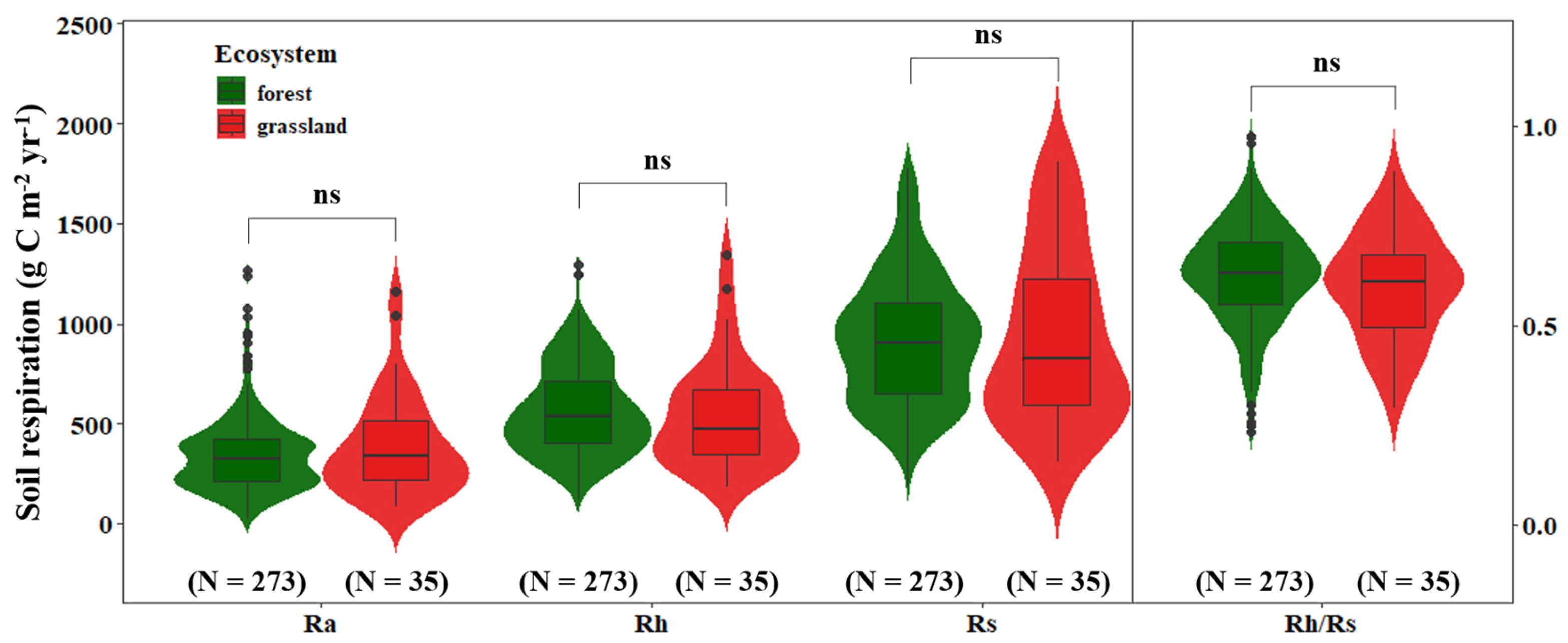
In forests, the mean annual Rs rate was 917.29 ± 19.40 g C m2 yr−1, ranging from 187.00 to 1771.06 g C m2 yr−1, with a coefficient of variation (CV) of 34.94%. Rs consisted of 63% Rh and 37% Ra. The annual Rh rate ranged from 118.00 to 1292.10 g C m2 yr−1, averaging 568.65 ± 13.50 g C m2 yr−1, with a CV of 39.22%. The Rh/Rs ratio ranged from 0.23 to 0.97, with an average of 0.63 and a CV of 20.80%. The annual Ra rate exhibited a range of 22.00 to 1263.96 g C m2 yr−1, with an average value of 351.01 ± 12.00 g C m2 yr−1, which was lower than Rh. The CV of Ra, at 56.51%, was higher than that of Rh (Figure 2).
In grasslands, the annual Rs rate averaged 937.41 ± 73.53 g C m2 yr−1, ranging from 313.19 to 1808.94 g C m2 yr−1, with a CV of 46.41%. The annual Rh rate averaged 546.63 ± 45.73 g C m2 yr−1, ranging from 181.97 to 1345.21 g C m2 yr−1, with a spatial CV of 49.49%. The corresponding Rh/Rs ratio ranged from 0.29 to 0.87, with an average of 0.60 and a spatial CV of 22.92%. The annual Ra rate averaged 388.44 ± 43.52 g C m2 yr−1, varying from 88.26 to 1155.99 g C m2 yr−1, and displayed a notably high spatial CV of 66.28% (Figure 2). Results from the Wilcoxon rank-sum test indicated no statistically significant differences in the annual Rs, Ra, Rh, and the Rh/Rs ratio between grasslands and forests (all p > 0.05, Figure 2).

3.2. Biotic and Abiotic Effects on Rs, Ra, Rh, and the Rh/Rs

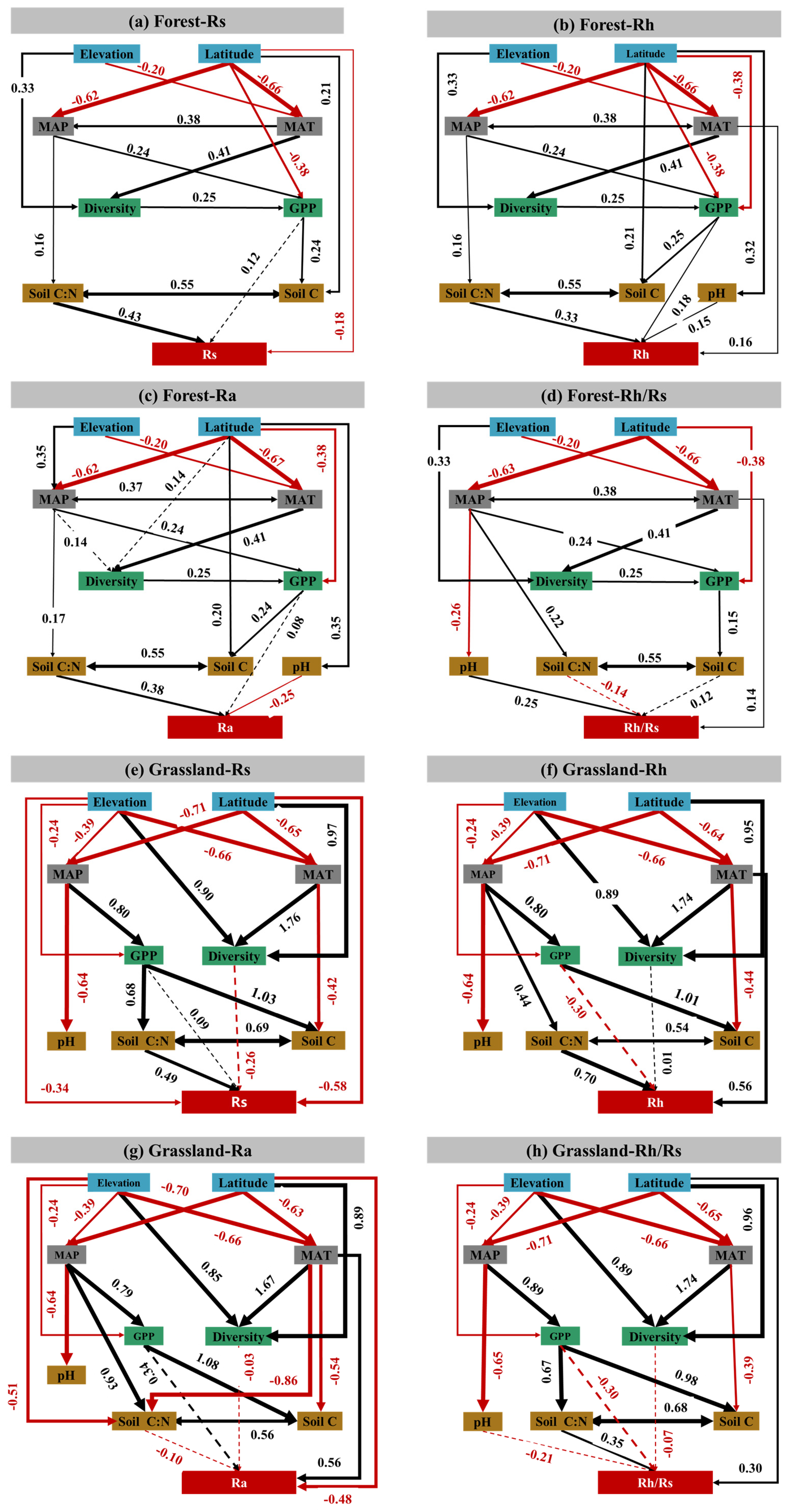
SEM analysis showed that geographical location (latitude and elevation) primarily influenced spatial variations in Rs, Rh, and Ra via climatic factors (MAT and MAP), plant community structure (diversity and GPP), and soil properties (soil pH, soil C, and soil C:N). The direct and indirect pathways, identified by the SEMs, differed among different Rs components and ecosystem types (Figure 3).
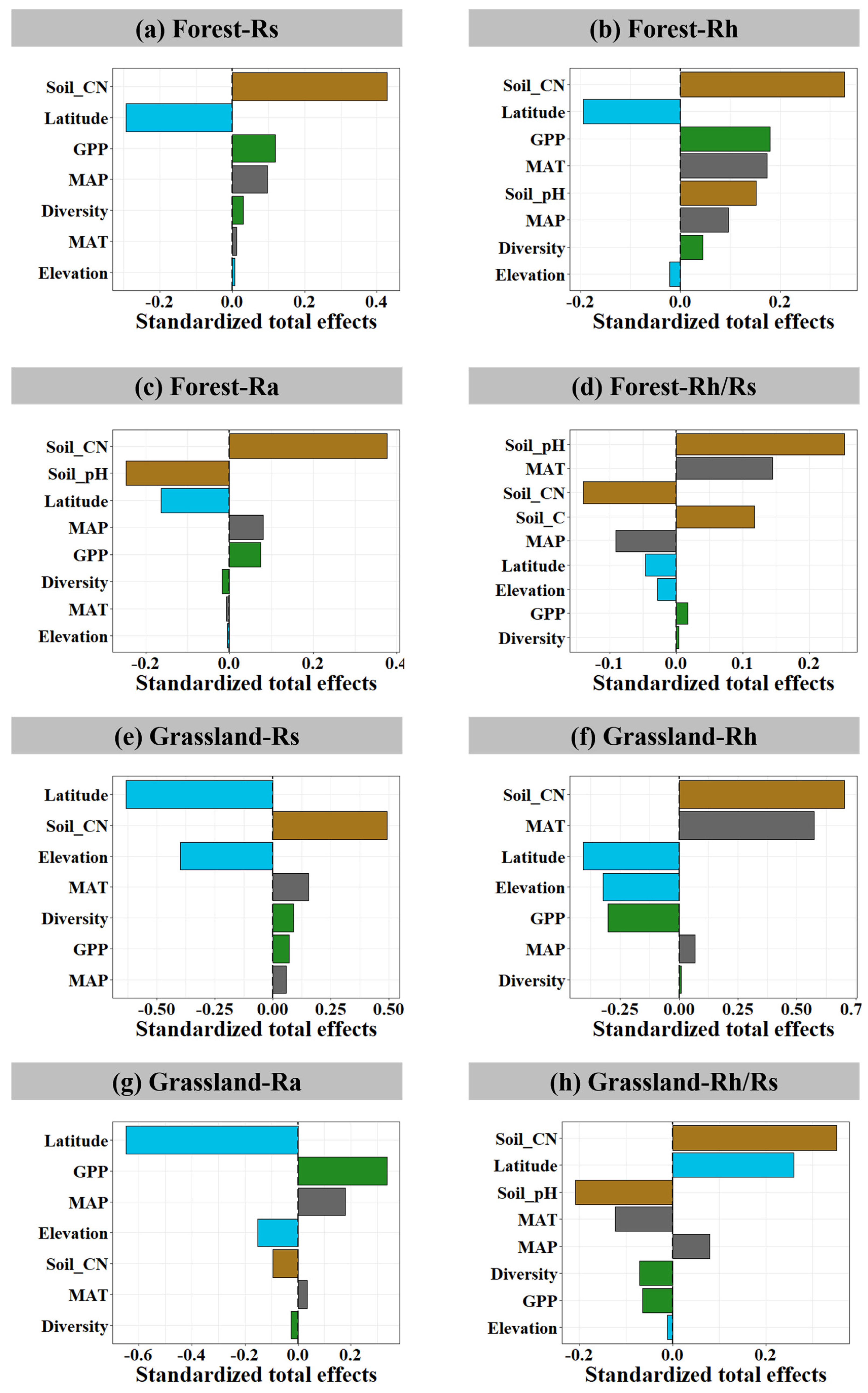
In forests, SEM explained 28%, 21%, 22%, and 9% of the spatial variation in Rs, Rh, Ra, and the Rh/Rs ratio, respectively (Figure 3a–d). Specifically, soil C:N, (standardized total effect: 0.43) was the most significant factor influencing Rs, followed by latitude (−0.29), GPP (0.12), and MAP (0.10) (Figure 3a and Figure 4a). Soil C:N (0.33) was also the dominant factor influencing Rh, followed by latitude (−0.20), GPP (0.18), MAT (0.17), pH (0.15) and MAP (0.10) (Figure 3b and Figure 4b). For Ra, soil C:N (0.38) and pH (−0.25) had the strongest effects, followed by latitude (−0.16), MAP (0.08) and GPP (0.08) (Figure 3c and Figure 4c). The Rh/Rs ratio was mainly influenced by pH (0.25), followed by MAT (0.14), soil C:N (−0.14), soil C (0.12) and MAP (−0.10) (Figure 3d and Figure 4d).
In grasslands, the spatial variability of Rs, Rh, Ra, and the Rh/Rs ratio was largely explained by the factors analyzed, accounting for 70%, 73%, 48%, and 17%, respectively (Figure 3e–h). Latitude (−0.63) was the most influential factor for Rs, followed by soil C:N (0.49), elevation (−0.40), and MAT (0.16) (Figure 3e and Figure 4e). Rh variation was primarily explained by soil C:N (0.70), MAT (0.57), latitude (−0.41), elevation (−0.32), and GPP (−0.30) (Figure 3f and Figure 4f). For Ra, latitude (−0.65) had the strongest influence, followed by GPP (0.34), MAP (0.18), elevation (−0.15), and soil C:N (−0.10) (Figure 3g and Figure 4g). Finally, the Rh/Rs ratio was mainly influenced by soil C:N (0.35), followed by latitude (0.26), pH (−0.21) and MAT (−0.12) (Figure 3h and Figure 4h).

4. Discussion

4.1. Drivers of Spatial Variation in Global Rs

In the study, Rs showed substantial spatial variation (Figure 2), which were consistent with the existing view that soil respiration exhibited a high spatial heterogeneity at the large scale [26,38]. Based on the SEM, soil C:N and latitude contributed to the largest proportion of spatial variation in global Rs. Specifically, soil C:N positively influences Rs in both forests (standardized total effect: 0.43) and grasslands (0.49). This aligns with Heděnec, Jílková, Lin, Cajthaml, Filipová, Baldrian, Větrovský, Krištůfek, Chroňáková, Setälä, Tsiafouli, Mortimer, Kukla and Frouz [12], who suggested that soil C quality primarily shapes microbial communities, ultimately dominating changes in Rs. Latitude had pronounced negative effects on Rs (−0.29 in forests; −0.63 in grasslands), consistent with evidence from prior studies [1,2,12,39] indicating substantial declines in Rs with increasing latitude.
In addition to latitude, elevation also influenced Rs. In grasslands, elevation had a strong negative impact on Rs (−0.40), whereas in forests, its effect was minimal and slightly positive (0.01). This discrepancy may be explained by the different impacts on GPP and diversity. In grasslands, higher elevations decreased GPP and diversity, primarily through their adverse effects on MAP and MAT (Figure 3e). This reduction subsequently decreased soil C and the soil C:N ratio, which in turn suppress microbial activity and biomass [40,41], ultimately exerting a negative effect on Rs. Conversely, forests possess complex topography. High-elevation areas in forests are often located near ridge tops, where enhanced solar radiation [42], supports greater GPP and diversity (Figure 3a), resulting in a positive effect of elevation on Rs. This finding aligns with reports from Jiang, et al. [43] in a subtropical forest.

4.2. Distinct Responses of Rh and Ra to Biotic and Abiotic Factors

Latitude and elevation. Rh and Ra showed distinct responses to latitude and elevation (Figure 3). Latitude had indirect effects on the spatial variation in Rh and Ra by mediating various abiotic and biotic factors in both forests and grasslands. As latitude increased, MAP, MAT, GPP, and diversity generally diminished (Figure 4), leading to significant negative effects on both Rh and Ra. The latitudinal patterns of Rh and Ra were more pronounced in grasslands (−0.41 and −0.65, respectively) than in forests (−0.20 and −0.16, respectively) (Figure 4). This discrepancy is likely due to differences in plant community structure; grasslands, characterized by relatively simple vegetation, are more sensitive to environmental changes, whereas forests, with more complex and diverse biogeochemical interactions, may buffer the individual effects of latitude on Rh and Ra [44,45].
Additionally, our findings revealed that elevation primarily affects Rh (−0.02 in forests; −0.32 in grasslands) rather than Ra (−0.01 in forests; −0.15 in grasslands) (Figure 4). This pattern is consistent with the well-documented decline in soil temperature with increasing elevation [46,47]. Rh, mediated by soil microbes sensitive to temperature changes [48,49], showed a pronounced response to elevation. In contrast, Ra, which depends on plant photosynthesis, can adjust its metabolic processes to temperature variations [27,50], making it less affected by elevation changes.
MAT and MAP. Our results affirmed that MAT and MAP significantly influence Ra and Rh (Figure 3), in line with previous studies that consider MAT and MAP as pivotal factors shaping the spatial variation in soil respiration [8,51,52]. However, Rh and Ra exhibited different responses to changes in MAT and MAP (Figure 4), with Rh showing greater sensitivity to MAT changes (0.17 in forests; 0.57 in grasslands) than to MAP (0.10 in forests; 0.07 in grasslands). In contrast, Ra was more significantly influenced by MAP (0.08 in forests; 0.18 in grasslands) than by MAT (−0.01 in forests; 0.04 in grasslands) (Figure 4). Similar conclusions were reached by Hartley, et al. [53] and Ali, Poll and Kandeler [52], who indicated that Rh was more temperature-sensitive than Ra. This contrasted with Schindlbacher, Zechmeister-Boltenstern, Kitzler and Jandl [20], who noted no differences in the temperature relationship between Ra and Rh in mature coniferous forests. The differing responses can be explained by the direct effect of MAT on Rh and its indirect influence through diversity (Figure 3). Consistent with previous studies [41,54], high MAT boosted diversity, which subsequently enhanced soil C (Figure 3). Since Rh is typically stimulated by an increase in soil C availability [55,56], a higher MAT indirectly strengthens its influence on Rh. Conversely, Ra’s dependence on root activity, which is closely linked to photosynthesis [27,50], may be overshadowed by the effects of MAP [57] when high MAT coincides with high MAP due to their covariation under climate change scenarios [58]. Thus, the varying responses of Rh and Ra to climatic factors can be attributed to their distinct underlying ecosystem processes [24,25,59,60].
GPP. GPP played distinct roles in shaping Rh and Ra (Figure 3 and Figure 4). In forests, GPP had a stronger positive effect on Rh (0.18) than on Ra (0.08), indicating that plant photosynthesis is a more significant contributor to Rh. This can be attributed to the larger litterfall and higher soil C content associated with higher GPP in forests [61,62], which alleviates nutrient limitations for soil microbes [47,63], thereby enhancing Rh. Conversely, in grasslands, GPP positively influenced Ra (0.34) while negatively affecting Rh (−0.30). This complexity may arise from several factors. First, grasslands, dominated by herbaceous plants, often have extensive root systems that facilitate rapid plant biomass turnover [64,65], significantly contributing to Ra. Second, soil C formation in grasslands primarily occurs through rhizodeposits (forming mineral-associated organic C), whereas in forests it largely happens through the physical transfer of persistent plant residues (forming particulate organic C) [66,67]. Consequently, soil C in grasslands may be more recalcitrant, and increased GPP may enhance the input of such substrates, which can suppress Rh due to low soil microbial C-use efficiency [40,68]. Third, soil microbes in grasslands generally have a lower capacity to respire C-based substrates compared to those in forests [69], resulting in lower Rh despite increased GPP.
Notably, in our dataset, we observed that Rh contributed more significantly to total Rs (R2 = 0.64 in forests; 0.68 in grasslands, p < 0.001) than Ra did (R2 = 0.53 in forests; 0.65 in grasslands, p < 0.001) (Figure S2), indicating that changes in Rs were highly likely attributable to variations in Rh. This finding is consistent with the observations of Bond-Lamberty, et al. [70] and Jian, Frissell, Hao, Tang, Berryman and Bond-Lamberty [23], who reported stronger relationships between Rs and Rh relative to those between Rs and Ra, allowing for the estimation of Rh from annual Rs measurements [71]. This study also suggested different regulation mechanisms for soil respiration components between forest and grassland. Rh is more sensitive to temperature and changes in soil C content, showing stronger reactions to MAT and GPP in forests, while being more influenced by elevation in grasslands. In contrast, Ra is more significantly affected by MAP and GPP in grasslands, with a weaker response to temperature. These distinct patterns reflect differences in plant community structures, soil microbial activity, and carbon cycling processes between ecosystems.
We acknowledge that our study contains certain uncertainties, such as the lack of in situ observations from tropical and arctic regions (as our collected sites primarily represented boreal and temperate areas, Figure 1), the omission of potentially important factors (all examined variables accounted for only 28% of global Rs in forests), and uncertainties related to sampling methods (e.g., without appropriate corrections for the effects of spatial sampling) [72]. Future efforts should address these uncertainties, prioritizing research in tropical and arctic regions to ensure comprehensive global coverage. Additionally, further exploration of unexplored factors influencing crucial direct or indirect ecological processes in forests is essential for future studies.

5. Conclusions

While global drivers of total Rs have been extensively studied, our understanding of the factors influencing its components, namely Rh and Ra, remains limited. In this study, by collecting the annual continuous measurements of Rs and its components around the world, we found that the variation in Rh and Ra were differently regulated by climatic factors (MAT and MAP) and plant community structure (primarily GPP). Rh and Ra were explained more in grassland (R2 = 0.73 and 0.48) than in forest (R2 = 0.21 and 0.22) ecosystems by these variables in SEM, suggesting the greater complexity in forest soil C dynamics. These insights contribute to a better understanding of how terrestrial carbon balance responds to environmental changes and provide a foundation for predicting its feedback to ongoing global change.

Supplementary Materials

The following supporting information can be downloaded at: https://www.mdpi.com/article/10.3390/agronomy16030372/s1, Table S1: List of various individual studies contained in the database; Table S2: Results of Wilcoxon rank-sum test reveal whether geographic location, climatic conditions, plant community structure, and soil properties significantly differed between forest and grassland ecosystems; Figure S1: Pearson correlation plot of the potential predictors in forest and grassland; Figure S2: The relationships between Rh, Ra, and Rh/Rs with Rs.

Author Contributions

Y.J. and B.Z. conceived the idea and collected the data; Y.J. analyzed the data and wrote the first draft, with substantial input from J.X., B.Z., X.W. and C.C. All authors have read and agreed to the published version of the manuscript.

Funding

This research was funded by Forest Science and Technology Innovation Program of Guangdong Province (2023KJCX017), Guangdong Basic and Applied Basic Research Foundation of Guangdong Province (2022A1515110163) and Guangdong Provincial Observation and Research Station for Coupled Human and Natural Systems in Land-ocean Interaction Zone (2024B1212040003).

Data Availability Statement

All data have been uploaded as the supplementary information (Supplementary Material S2: Dataset used in this study).

Conflicts of Interest

The authors have no relevant financial or non-financial interests to disclose.

References

  1. Huang, N.; Wang, L.; Song, X.P.; Black, T.A.; Jassal, R.S.; Myneni, R.B.; Wu, C.; Wang, L.; Song, W.; Ji, D.; et al. Spatial and temporal variations in global soil respiration and their relationships with climate and land cover. Sci. Adv. 2020, 6, eabb8508. [Google Scholar] [CrossRef]
  2. Zhao, W.; Yang, M.; Yu, G.R.; Chen, Z.; Wang, Q.F. The temporal response of soil respiration to environment differed from that on spatial scale. Agric. For. Meteorol. 2023, 342, 109752. [Google Scholar] [CrossRef]
  3. Yang, Y.; Li, T.; Pokharel, P.; Liu, L.; Qiao, J.; Wang, Y.; An, S.; Chang, S.X. Global effects on soil respiration and its temperature sensitivity depend on nitrogen addition rate. Soil Biol. Biochem. 2022, 174, 108814. [Google Scholar] [CrossRef]
  4. Bond-Lamberty, B.; Thomson, A. Temperature-associated increases in the global soil respiration record. Nature 2010, 464, 579–582. [Google Scholar] [CrossRef] [PubMed]
  5. Rubio, V.E.; Detto, M. Spatiotemporal variability of soil respiration in a seasonal tropical forest. Ecol. Evol. 2017, 7, 7104–7116. [Google Scholar] [CrossRef]
  6. Luan, J.W.; Liu, S.R.; Zhu, X.L.; Wang, J.X.; Liu, K. Roles of biotic and abiotic variables in determining spatial variation of soil respiration in secondary oak and planted pine forests. Soil Biol. Biochem. 2012, 44, 143–150. [Google Scholar] [CrossRef]
  7. Shi, B.K.; Xu, W.L.; Zhu, Y.; Wang, C.L.; Loik, M.E.; Sun, W. Heterogeneity of grassland soil respiration: Antagonistic effects of grazing and nitrogen addition. Agric. For. Meteorol. 2019, 268, 215–223. [Google Scholar] [CrossRef]
  8. Tian, Q.X.; Wang, D.Y.; Tang, Y.N.; Li, Y.; Wang, M.; Liao, C.; Liu, F. Topographic controls on the variability of soil respiration in a humid subtropical forest. Biogeochemistry 2019, 145, 177–192. [Google Scholar] [CrossRef]
  9. Chen, S.T.; Huang, Y.; Zou, J.W.; Shen, Q.R.; Hu, Z.H.; Qin, Y.M.; Chen, H.S.; Pan, G.X. Modeling interannual variability of global soil respiration from climate and soil properties. Agric. For. Meteorol. 2010, 150, 590–605. [Google Scholar] [CrossRef]
  10. Wang, N.; Quesada, B.; Xia, L.; Butterbach-Bahl, K.; Goodale, C.L.; Kiese, R. Effects of climate warming on carbon fluxes in grasslands- A global meta-analysis. Glob. Change Biol. 2019, 25, 1839–1851. [Google Scholar] [CrossRef]
  11. Wang, X.; Liu, L.; Piao, S.; Janssens, I.A.; Tang, J.; Liu, W.; Chi, Y.; Wang, J.; Xu, S. Soil respiration under climate warming: Differential response of heterotrophic and autotrophic respiration. Glob. Change. Biol. 2014, 20, 3229–3237. [Google Scholar] [CrossRef] [PubMed]
  12. Heděnec, P.; Jílková, V.; Lin, Q.; Cajthaml, T.; Filipová, A.; Baldrian, P.; Větrovský, T.; Krištůfek, V.; Chroňáková, A.; Setälä, H.; et al. Microbial communities in local and transplanted soils along a latitudinal gradient. Catena 2019, 173, 456–464. [Google Scholar] [CrossRef]
  13. Hashimoto, S.; Carvalhais, N.; Ito, A.; Migliavacca, M.; Nishina, K.; Reichstein, M. Global spatiotemporal distribution of soil respiration modeled using a global database. Biogeosciences 2015, 12, 4121–4132. [Google Scholar] [CrossRef]
  14. Zhao, Z.Y.; Peng, C.H.; Yang, Q.; Meng, F.R.; Song, X.Z.; Chen, S.T.; Epule, T.E.; Li, P.; Zhu, Q. Model prediction of biome-specific global soil respiration from 1960 to 2012. Earths Future 2017, 5, 715–729. [Google Scholar] [CrossRef]
  15. Adachi, M.; Ito, A.; Yonemura, S.; Takeuchi, W. Estimation of global soil respiration by accounting for land-use changes derived from remote sensing data. J. Environ. Manag. 2017, 200, 97–104. [Google Scholar] [CrossRef]
  16. Alekseev, A.; Alekseeva, T.; Kalinin, P.; Hajnos, M. Soils response to the land use and soil climatic gradients at ecosystem scale: Mineralogical and geochemical data. Soil Tillage Res. 2018, 180, 38–47. [Google Scholar] [CrossRef]
  17. Thomas, A.D.; Elliott, D.R.; Dougill, A.J.; Stringer, L.C.; Hoon, S.R.; Sen, R. The influence of trees, shrubs, and grasses on microclimate, soil carbon, nitrogen, and CO2 efflux: Potential implications of shrub encroachment for Kalahari rangelands. Land Degrad. Dev. 2018, 29, 1306–1316. [Google Scholar] [CrossRef]
  18. Chen, J.M.; Ju, W.; Ciais, P.; Viovy, N.; Liu, R.; Liu, Y.; Lu, X. Vegetation structural change since 1981 significantly enhanced the terrestrial carbon sink. Nat. Commun. 2019, 10, 4259. [Google Scholar] [CrossRef]
  19. Piao, S.; Wang, X.; Park, T.; Chen, C.; Lian, X.; He, Y.; Bjerke, J.W.; Chen, A.; Ciais, P.; Tømmervik, H.; et al. Characteristics, drivers and feedbacks of global greening. Nat. Rev. Earth Environ. 2019, 1, 14–27. [Google Scholar] [CrossRef]
  20. Schindlbacher, A.; Zechmeister-Boltenstern, S.; Kitzler, B.; Jandl, R. Experimental forest soil warming: Response of autotrophic and heterotrophic soil respiration to a short-term 10 °C temperature rise. Plant Soil 2008, 303, 323–330. [Google Scholar] [CrossRef]
  21. Diao, H.; Wang, A.; Yuan, F.; Guan, D.; Wu, J. Autotrophic respiration modulates the carbon isotope composition of soil respiration in a mixed forest. Sci. Total Environ. 2022, 807, 150834. [Google Scholar] [CrossRef] [PubMed]
  22. Wang, G.; Chen, L.; Zhang, D.; Qin, S.; Peng, Y.; Yang, G.; Wang, J.; Yu, J.; Wei, B.; Liu, Y.; et al. Divergent Trajectory of Soil Autotrophic and Heterotrophic Respiration upon Permafrost Thaw. Environ. Sci. Technol. 2022, 56, 10483–10493. [Google Scholar] [CrossRef] [PubMed]
  23. Jian, J.S.; Frissell, M.; Hao, D.L.; Tang, X.L.; Berryman, E.; Bond-Lamberty, B. The global contribution of roots to total soil respiration. Glob. Ecol. Biogeogr. 2022, 31, 685–699. [Google Scholar] [CrossRef]
  24. Rankin, T.E.; Roulet, N.T.; Moore, T.R. Controls on autotrophic and heterotrophic respiration in an ombrotrophic bog. Biogeosciences 2022, 19, 3285–3303. [Google Scholar] [CrossRef]
  25. Zhang, J.L.; Liu, S.R.; Liu, C.J.; Wang, H.; Luan, J.W.; Liu, X.J.; Guo, X.W.; Niu, B.L. Different mechanisms underlying divergent responses of autotrophic and heterotrophic respiration to long-term throughfall reduction in a warm-temperate oak forest. For. Ecosyst. 2021, 8, 41. [Google Scholar] [CrossRef]
  26. Cai, Y.; Sawada, K.; Hirota, M. Spatial variation in forest soil respiration: A systematic review of field observations at the global scale. Sci. Total Environ. 2023, 874, 162348. [Google Scholar] [CrossRef]
  27. Hopkins, F.; Gonzalez-Meler, M.A.; Flower, C.E.; Lynch, D.J.; Czimczik, C.; Tang, J.; Subke, J.A. Ecosystem-level controls on root-rhizosphere respiration. New Phytol. 2013, 199, 339–351. [Google Scholar] [CrossRef]
  28. Guo, Z.; Zheng, J.; Jia, X.; Bourque, C.P.A.; Zha, T.; Jin, C.; Xu, M.; Li, X. Biogeographic variations in soil respiration and its basal rate across China suggest thermal adaptation, substrate limitation, and soil moisture constraint. Catena 2025, 254, 108992. [Google Scholar] [CrossRef]
  29. Zhang, J.; Li, Y.; Wang, J.; Chen, W.; Tian, D.; Niu, S. Different responses of soil respiration and its components to nitrogen and phosphorus addition in a subtropical secondary forest. For. Ecosyst. 2021, 8, 37. [Google Scholar] [CrossRef]
  30. Kim, H.; Kim, S.; Woo, S.; Min, K. Soil heterotrophic and autotrophic respiration respond differently to seasonal variations in temperature and water content under monsoon continental climate. Sci. Rep. 2025, 15, 20554. [Google Scholar] [CrossRef]
  31. Jian, J.; Bailey, V.; Dorheim, K.; Konings, A.G.; Hao, D.; Shiklomanov, A.N.; Snyder, A.; Steele, M.; Teramoto, M.; Vargas, R.; et al. Historically inconsistent productivity and respiration fluxes in the global terrestrial carbon cycle. Nat. Commun. 2022, 13, 1733. [Google Scholar] [CrossRef]
  32. Li, J.Q.; Pei, J.M.; Pendall, E.; Fang, C.M.; Nie, M. Spatial heterogeneity of temperature sensitivity of soil respiration: A global analysis of field observations. Soil Biol. Biochem. 2020, 141, 107675. [Google Scholar] [CrossRef]
  33. Rohatgi, A. WebPlotDigitizer Version 4.2. 2019. Available online: https://automeris.io (accessed on 30 December 2025).
  34. Pausas, J.G.; Ribeiro, E. Fire and plant diversity at the global scale. Glob. Ecol. Biogeogr. 2017, 26, 889–897. [Google Scholar] [CrossRef]
  35. Zhang, Y.; Xiao, X.; Wu, X.; Zhou, S.; Zhang, G.; Qin, Y.; Dong, J. A global moderate resolution dataset of gross primary production of vegetation for 2000–2016. Sci. Data 2017, 4, 170165. [Google Scholar] [CrossRef] [PubMed]
  36. Grace, J.B. Structural Equation Modeling and Natural Systems; Cambridge University Press: Cambridge, UK, 2009. [Google Scholar]
  37. Cui, H.Y.; Sun, W.; Delgado-Baquerizo, M.; Song, W.Z.; Ma, J.Y.; Wang, K.Y.; Ling, X.L. Cascading effects of N fertilization activate biologically driven mechanisms promoting P availability in a semi-arid grassland ecosystem. Funct. Ecol. 2021, 35, 1001–1011. [Google Scholar] [CrossRef]
  38. Wagg, C.; Bender, S.F.; Widmer, F.; van der Heijden, M.G. Soil biodiversity and soil community composition determine ecosystem multifunctionality. Proc. Natl. Acad. Sci. USA 2014, 111, 5266–5270. [Google Scholar] [CrossRef]
  39. Liu, J.; Hu, J.; Liu, H.; Han, K. Global soil respiration estimation based on ecological big data and machine learning model. Sci. Rep. 2024, 14, 13231. [Google Scholar] [CrossRef]
  40. Liu, W.X.; Qiao, C.L.; Yang, S.; Bai, W.M.; Liu, L.L. Microbial carbon use efficiency and priming effect regulate soil carbon storage under nitrogen deposition by slowing soil organic matter decomposition. Geoderma 2018, 332, 37–44. [Google Scholar] [CrossRef]
  41. Mitra, B.; Miao, G.F.; Minick, K.; McNulty, S.G.; Sun, G.; Gavazzi, M.; King, J.S.; Noormets, A. Disentangling the effects of temperature, moisture, and substrate availability on soil CO2 efflux. J. Geophys. Res.-Biogeosci. 2019, 124, 2060–2075. [Google Scholar] [CrossRef]
  42. Liptzin, D.; Silver, W.L.; Detto, M. Temporal Dynamics in Soil Oxygen and Greenhouse Gases in Two Humid Tropical Forests. Ecosystems 2010, 14, 171–182. [Google Scholar] [CrossRef]
  43. Jiang, Y.; Zhang, B.; Wang, W.; Li, B.; Wu, Z.; Chu, C. Topography and plant community structure contribute to spatial heterogeneity of soil respiration in a subtropical forest. Sci. Total Environ. 2020, 733, 139287. [Google Scholar] [CrossRef] [PubMed]
  44. Ye, C.L.; Wang, Y.; Yan, X.B.; Guo, H. Predominant role of air warming in regulating litter decomposition in a Tibetan alpine meadow: A multi-factor global change experiment. Soil Biol. Biochem. 2022, 167, 108588. [Google Scholar] [CrossRef]
  45. Li, Z.; Wang, F.W.; Su, F.L.; Wang, P.; Li, S.J.; Bai, T.S.; Wei, Y.A.; Liu, M.Q.; Chen, D.M.; Zhu, W.X.; et al. Climate change drivers alter root controls over litter decomposition in a semi-arid grassland. Soil Biol. Biochem. 2021, 158, 108278. [Google Scholar] [CrossRef]
  46. Mayor, J.R.; Sanders, N.J.; Classen, A.T.; Bardgett, R.D.; Clement, J.C.; Fajardo, A.; Lavorel, S.; Sundqvist, M.K.; Bahn, M.; Chisholm, C.; et al. Elevation alters ecosystem properties across temperate treelines globally. Nature 2017, 542, 91–95. [Google Scholar] [CrossRef]
  47. Nimalka Sanjeewani, H.K.; Samarasinghe, D.P.; De Costa, W.A.J.M. Influence of elevation and the associated variation of climate and vegetation on selected soil properties of tropical rainforests across a wide elevational gradient. Catena 2024, 237, 107823. [Google Scholar] [CrossRef]
  48. Schnecker, J.; Baldaszti, L.; Gündler, P.; Pleitner, M.; Sandén, T.; Simon, E.; Spiegel, F.; Spiegel, H.; Malo, C.U.; Zechmeister-Boltenstern, S.; et al. Seasonal dynamics of soil microbial growth, respiration, biomass, and carbon use efficiency in temperate soils. Geoderma 2023, 440, 116693. [Google Scholar] [CrossRef]
  49. Cruz-Paredes, C.; Tájmel, D.; Rousk, J. Can moisture affect temperature dependences of microbial growth and respiration? Soil Biol. Biochem. 2021, 156, 108223. [Google Scholar] [CrossRef]
  50. Liu, Y.; Li, P.; Wang, T.; Liu, Q.; Wang, W. Root respiration and belowground carbon allocation respond to drought stress in a perennial grass (Bothriochloa ischaemum). Catena 2020, 188, 104449. [Google Scholar] [CrossRef]
  51. Yu, G.R.; Zhu, X.J.; Fu, Y.L.; He, H.L.; Wang, Q.F.; Wen, X.F.; Li, X.R.; Zhang, L.M.; Zhang, L.; Su, W.; et al. Spatial patterns and climate drivers of carbon fluxes in terrestrial ecosystems of China. Glob. Chang. Biol. 2013, 19, 798–810. [Google Scholar] [CrossRef]
  52. Ali, R.S.; Poll, C.; Kandeler, E. Dynamics of soil respiration and microbial communities: Interactive controls of temperature and substrate quality. Soil Biol. Biochem. 2018, 127, 60–70. [Google Scholar] [CrossRef]
  53. Hartley, I.P.; Heinemeyer, A.; Ineson, P. Effects of three years of soil warming and shading on the rate of soil respiration: Substrate availability and not thermal acclimation mediates observed response. Glob. Change. Biol. 2007, 13, 1761–1770. [Google Scholar] [CrossRef]
  54. Xing, A.; Du, E.; Shen, H.; Xu, L.; de Vries, W.; Zhao, M.; Liu, X.; Fang, J. Nonlinear responses of ecosystem carbon fluxes to nitrogen deposition in an old-growth boreal forest. Ecol. Lett. 2022, 25, 77–88. [Google Scholar] [CrossRef] [PubMed]
  55. Du, E.; Terrer, C.; Pellegrini, A.F.A.; Ahlström, A.; van Lissa, C.J.; Zhao, X.; Xia, N.; Wu, X.; Jackson, R.B. Global patterns of terrestrial nitrogen and phosphorus limitation. Nat. Geosci. 2020, 13, 221–226. [Google Scholar] [CrossRef]
  56. Chang, R.Y.; Zhou, W.J.; Fang, Y.T.; Bing, H.J.; Sun, X.Y.; Wang, G.X. Anthropogenic nitrogen deposition increases soil carbon by enhancing new carbon of the soil aggregate formation. J. Geophys. Res.-Biogeosci. 2019, 124, 572–584. [Google Scholar] [CrossRef]
  57. Hursh, A.; Ballantyne, A.; Cooper, L.; Maneta, M.; Kimball, J.; Watts, J. The sensitivity of soil respiration to soil temperature, moisture, and carbon supply at the global scale. Glob. Change Biol. 2017, 23, 2090–2103. [Google Scholar] [CrossRef] [PubMed]
  58. Zhang, W.; Furtado, K.; Wu, P.; Zhou, T.; Chadwick, R.; Marzin, C.; Rostron, J.; Sexton, D. Increasing precipitation variability on daily-to-multiyear time scales in a warmer world. Sci. Adv. 2021, 7, eabf8021. [Google Scholar] [CrossRef]
  59. Wangdi, N.; Mayer, M.; Nirola, M.P.; Zangmo, N.; Orong, K.; Ahmed, I.U.; Darabant, A.; Jandl, R.; Gratzer, G.; Schindlbacher, A. Soil CO2 efflux from two mountain forests in the eastern Himalayas, Bhutan: Components and controls. Biogeosciences 2017, 14, 99–110. [Google Scholar] [CrossRef]
  60. Liang, N.; Hirano, T.; Zheng, Z.M.; Tang, J.; Fujinuma, Y. Soil CO2 efflux of a larch forest in northern Japan. Biogeosciences 2010, 7, 3447–3457. [Google Scholar] [CrossRef]
  61. Hiiesalu, I.; Bahram, M.; Tedersoo, L. Plant species richness and productivity determine the diversity of soil fungal guilds in temperate coniferous forest and bog habitats. Mol. Ecol. 2017, 26, 4846–4858. [Google Scholar] [CrossRef]
  62. Chen, C.; Chen, H.Y.H.; Chen, X.; Huang, Z. Meta-analysis shows positive effects of plant diversity on microbial biomass and respiration. Nat. Commun. 2019, 10, 1332. [Google Scholar] [CrossRef]
  63. Jewell, M.D.; Shipley, B.; Low-Décarie, E.; Tobner, C.M.; Paquette, A.; Messier, C.; Reich, P.B. Partitioning the effect of composition and diversity of tree communities on leaf litter decomposition and soil respiration. Oikos 2016, 126, 959–971. [Google Scholar] [CrossRef]
  64. Amato, M.T.; Gimenez, D. Quantifying root turnover in grasslands from biomass dynamics: Application of the growth-maintenance respiration paradigm and re-analysis of historical data. Ecol. Model. 2022, 467, 109940. [Google Scholar] [CrossRef]
  65. Rojas-Botero, S.; Teixeira, L.H.; Prucker, P.; Kloska, V.; Kollmann, J.; Le Stradic, S. Root traits of grasslands rapidly respond to climate change, while community biomass mainly depends on functional composition. Funct. Ecol. 2023, 37, 1841–1855. [Google Scholar] [CrossRef]
  66. Wang, B.; An, S.; Liang, C.; Liu, Y.; Kuzyakov, Y. Microbial necromass as the source of soil organic carbon in global ecosystems. Soil Biol. Biochem. 2021, 162, 108422. [Google Scholar] [CrossRef]
  67. Villarino, S.H.; Pinto, P.; Jackson, R.B.; Piñeiro, G. Plant rhizodeposition: A key factor for soil organic matter formation in stable fractions. Sci. Adv. 2021, 7, eabd3176. [Google Scholar] [CrossRef]
  68. Huang, Q.; Wang, B.; Shen, J.; Xu, F.; Li, N.; Jia, P.; Jia, Y.; An, S.; Amoah, I.D.; Huang, Y. Shifts in C-degradation genes and microbial metabolic activity with vegetation types affected the surface soil organic carbon pool. Soil Biol. Biochem. 2024, 192, 109371. [Google Scholar] [CrossRef]
  69. Ochoa-Hueso, R.; Delgado-Baquerizo, M.; King, P.T.A.; Benham, M.; Arca, V.; Power, S.A. Ecosystem type and resource quality are more important than global change drivers in regulating early stages of litter decomposition. Soil Biol. Biochem. 2019, 129, 144–152. [Google Scholar] [CrossRef]
  70. Bond-Lamberty, B.; Bailey, V.L.; Chen, M.; Gough, C.M.; Vargas, R. Globally rising soil heterotrophic respiration over recent decades. Nature 2018, 560, 80–83. [Google Scholar] [CrossRef]
  71. Stell, E.; Warner, D.; Jian, J.; Bond-Lamberty, B.; Vargas, R. Spatial biases of information influence global estimates of soil respiration: How can we improve global predictions? Glob. Change Biol. 2021, 27, 3923–3938. [Google Scholar] [CrossRef]
  72. Warner, D.L.; Bond-Lamberty, B.; Jian, J.; Stell, E.; Vargas, R. Spatial Predictions and Associated Uncertainty of Annual Soil Respiration at the Global Scale. Glob. Biogeochem. Cycles 2019, 33, 1733–1745. [Google Scholar] [CrossRef]
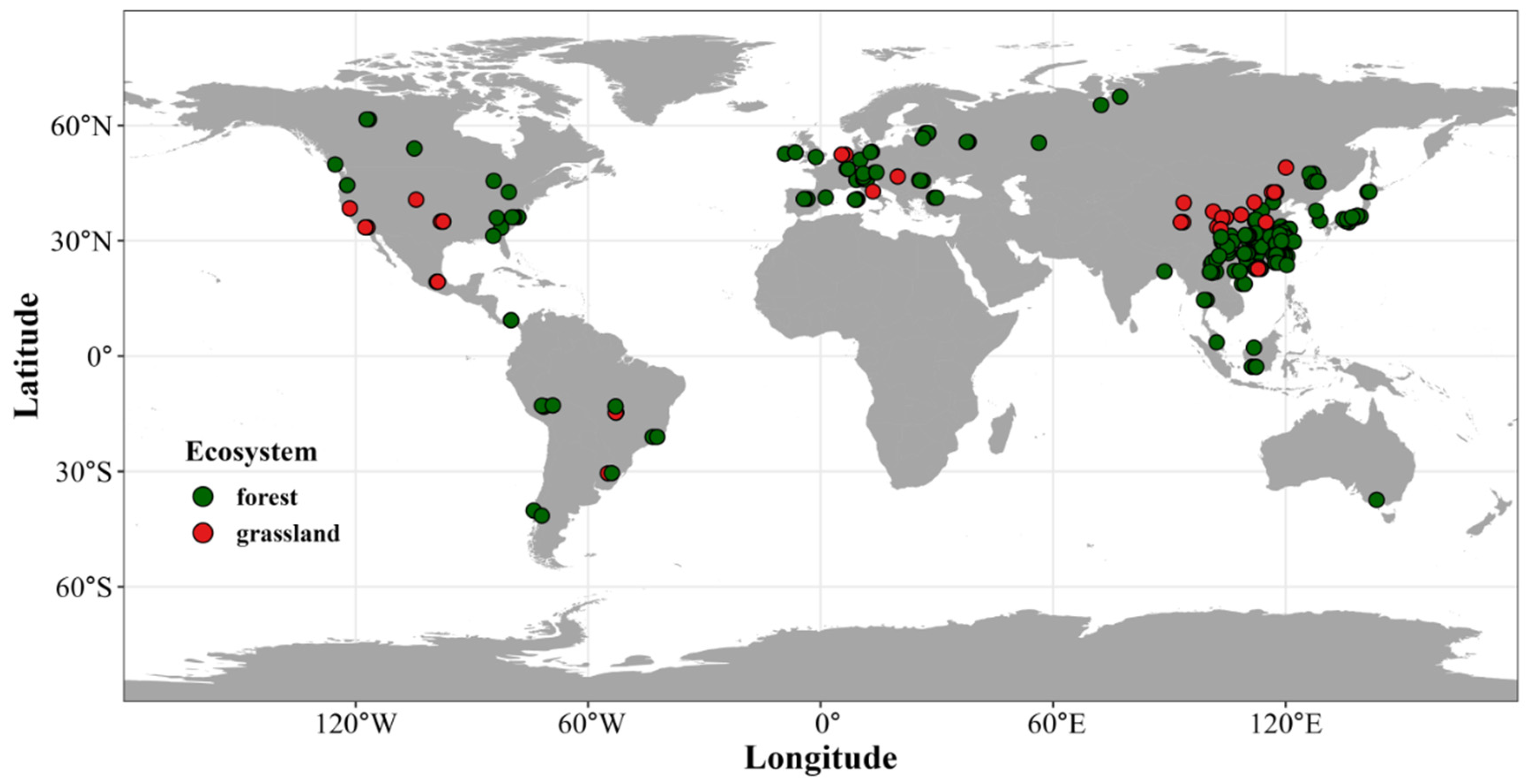
Figure 1. Global distribution of the soil respiration measurement sites collected in this study.
Agronomy 16 00372 g001
Figure 2. Violin plots displaying annual total soil respiration (Rs), heterotrophic respiration (Rh), autotrophic respiration (Ra), and the proportion of heterotrophic respiration to total soil respiration (Rh/Rs), in forest and grassland ecosystems.
Agronomy 16 00372 g002
Figure 3. Structural equation models (SEMs) analyzing the direct and indirect pathways of the identified factors affecting Rs (a), Rh (b), Ra (c), and Rh/Rs (d) in forest ecosystems, as well as Rs (e), Rh (f), Ra (g), and Rh/Rs (h) in grassland ecosystems. All these models predicted well for the variation in soil respiration and its components, followed by the parameters of these models: (a), R2 = 0.28, χ2/df = 1.334, p = 0.145, CFI = 0.989, RMSEA < 0.05; (b), R2 = 0.21, χ2/df = 1.199, p = 0.218, CFI = 0.991, RMSEA < 0.05; (c), R2 = 0.22, χ2/df = 1.509, p = 0.05, CFI = 0.980, RMSEA < 0.05; (d), R2 = 0.09, χ2/df = 1.360, p = 0.097, CFI = 0.983, RMSEA < 0.05; (e), R2 = 0.70, χ2/df = 0.990, p = 0.477, CFI = 1.000, RMSEA < 0.001; (f), R2 = 0.73, χ2/df = 0.931, p = 0.566, CFI = 1.000, RMSEA < 0.001; (g), R2 = 0.48, χ2/df = 1.054, p = 0.390, CFI = 0.994, RMSEA < 0.05; and (h), R2 = 0.17, χ2/df = 1.055, p = 0.386, CFI = 0.993, RMSEA < 0.05. Solid and dotted arrows denote significant (p < 0.05) and non-significant relationships, respectively. Black and red arrows represent positive and negative pathways, respectively. The width of the arrows corresponds to the strength of the relationships. Bold numbers along the arrows indicate the standardized path coefficients, which represent both the direction and strength of the direct effects between two variables. Rs, global total soil respiration; Rh, heterotrophic respiration; Ra, autotrophic respiration, Rh/Rs, the heterotrophic contribution to total soil respiration; GPP, gross primary production; MAT, mean annual temperature; MAP, mean annual precipitation; soil C, soil total C content; soil C:N, the ratio of soil total C to N contents.
Agronomy 16 00372 g003
Figure 4. Standardized total effects derived from structural equation modelling (SEM) for the influences of abiotic and biotic factors on soil respiration components: Rs (a), Rh (b), Ra (c), and Rh/Rs (d) in forest ecosystems, as well as Rs (e), Rh (f), Ra (g), and Rh/Rs (h) in grassland ecosystems. Rs, total soil respiration; Rh, heterotrophic respiration; Ra, autotrophic respiration, Rh/Rs, the heterotrophic contribution to total soil respiration; GPP, gross primary production; MAT, mean annual temperature; MAP, mean annual precipitation. The standardized total effects comprise the sum of both direct and indirect effects from each predictor on the specific response.
Agronomy 16 00372 g004
Disclaimer/Publisher’s Note: The statements, opinions and data contained in all publications are solely those of the individual author(s) and contributor(s) and not of MDPI and/or the editor(s). MDPI and/or the editor(s) disclaim responsibility for any injury to people or property resulting from any ideas, methods, instructions or products referred to in the content.