Article

Exploration of Acid-Tolerant Peanut Varieties Associated with Key Beneficial Rhizosphere Microbiome and Their Plant Growth-Promoting Effects in Acidic Soil

1
Jiangsu Provincial Key Lab of Solid Organic Waste Utilization, Jiangsu Collaborative Innovation Center of Solid Organic Wastes, Educational Ministry Engineering Center of Resource-Saving Fertilizers, College of Resources and Environmental Sciences, Nanjing Agricultural University, Nanjing 210095, China
2
State Key Laboratory of Soil and Sustainable Agriculture, Institute of Soil Science, Chinese Academy of Sciences, Nanjing 211135, China
*
Authors to whom correspondence should be addressed.
Agronomy 2026, 16(3), 371; https://doi.org/10.3390/agronomy16030371
Submission received: 27 November 2025 / Revised: 24 January 2026 / Accepted: 30 January 2026 / Published: 3 February 2026
(This article belongs to the Section Agricultural Biosystem and Biological Engineering)

Abstract

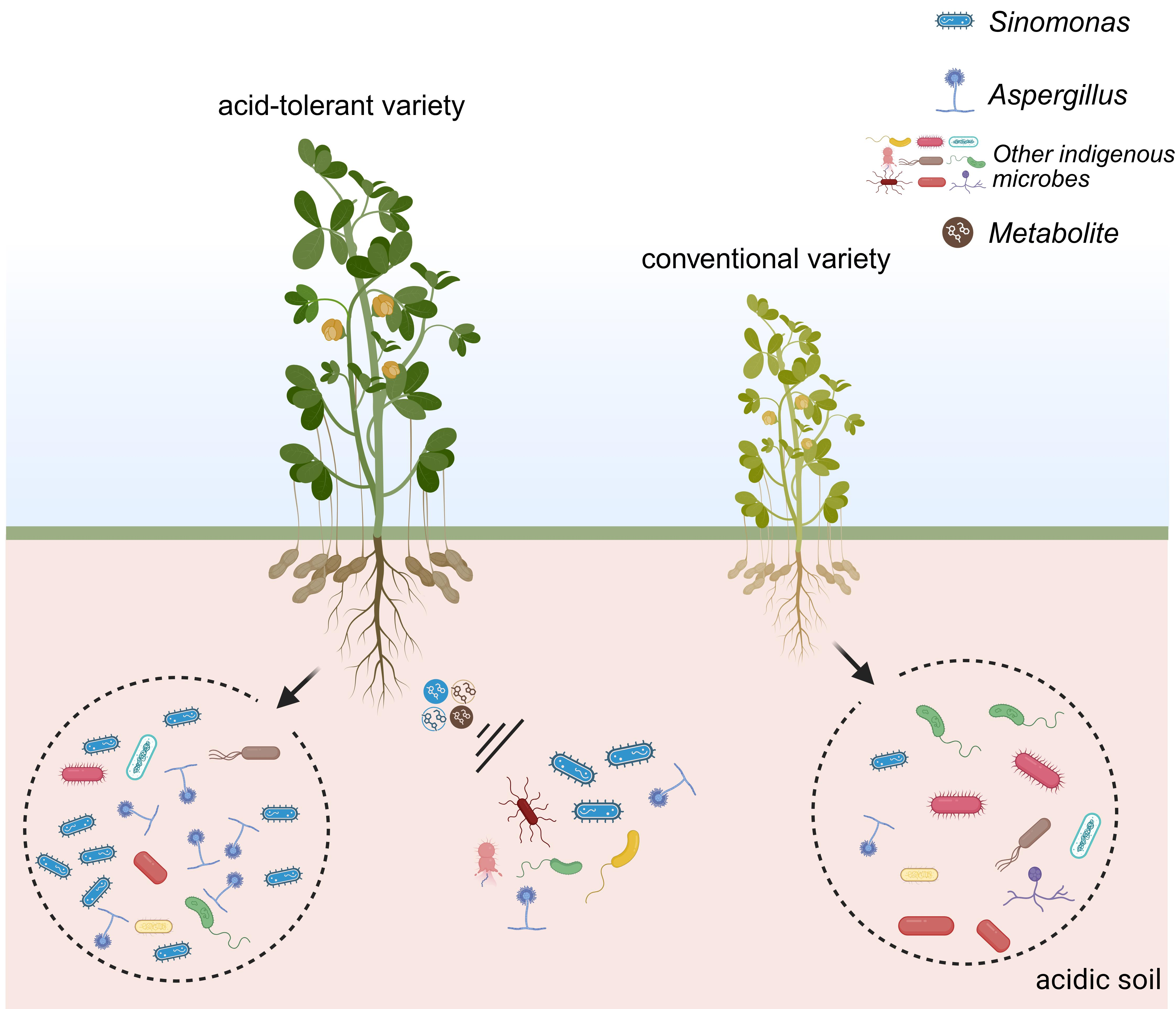
Soil acidification is among the primary abiotic stress factors that constrain plant growth. The adoption of acid-tolerant plant varieties and the inoculation of plant growth-promoting rhizobacteria have the distinct advantages of simultaneously increasing soil fertility and ensuring crop growth in acidic soil. However, how acid-tolerant plant varieties interact with the associated rhizosphere microbiota still needs to be explored. In this study, acid-tolerant peanut varieties were screened and planted in natural and sterile environments. The results revealed significant differences in growth performance among the varieties in acidic soil and between natural and sterile environments, revealing that the rhizosphere microbiota is dependent on acid tolerance. Through high-throughput sequencing analysis, the key taxa Sinomonas and Aspergillus were identified, and subsequent greenhouse verification experiments demonstrated their function in promoting peanut plant growth in acidic soil. In total, our findings suggest that the holobiont of tolerant plants and the rhizosphere microbiota is important for stress resistance. This perspective opens up new avenues for improving crop cultivation in soils with different stresses, in which both plant and associated microbial properties are considered.

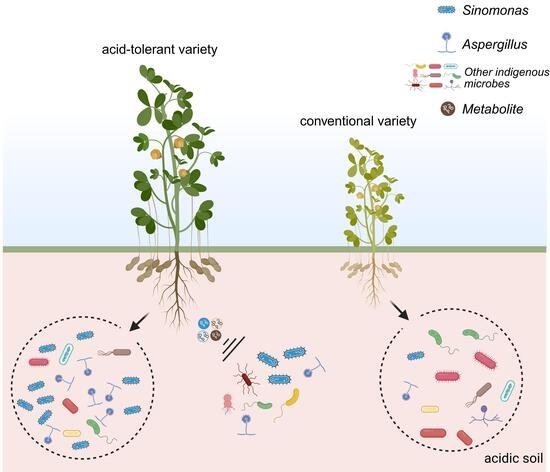
Graphical Abstract

1. Introduction

Acidic soils account for approximately 40–50% of the world’s potentially arable land area and are distributed mainly in tropical and subtropical humid climatic regions (with an annual average temperature of >18 °C and annual precipitation of >1200 mm). Southern China, Southeast Asia, the Congo Basin in Africa, and the fringes of the Amazon in South America are the four main areas of acidic soil [1]. The total area of acidic red soils in southern China is approximately 1.13 × 10⁶ km2, accounting for 76% of China’s red soil resources [2]. Red soils typically exhibit a pH range of 4.5 to 5.5, and strongly acidic conditions result in severe damage to plant root systems; they not only inhibit root elongation but also result in stunted and underdeveloped root architectures [3,4].
Peanut (Arachis hypogaea L.) is an important economic and oil crop and is a major upland crop in the acidic red soil regions of southern China [5]. Southern red soil regions, characterized by sufficient sunlight and mild and humid climates, are conducive to peanut production [6]. However, due to aluminum toxicity in strongly acidic environments, the absorption of nutrients such as nitrogen (N), phosphorus (P), and calcium (Ca) by peanuts is restricted, thereby limiting their growth [7]. Although measures such as lime application can ameliorate soil acidification and increase peanut growth and yield, these practices are costly, unfavorable for long-term agricultural activities, and harmful to the environment [8,9]. Accordingly, selecting acid-tolerant peanut varieties and improving peanut yields in acidic soils represent pressing issues that require urgent resolution.
Plant growth-promoting rhizobacteria (PGPR), which inhabit the plant rhizosphere, can promote plant growth and increase crop yields by increasing plant nutrient uptake and boosting stress resistance [10,11]. PGPR can alleviate the damage of acidic soil to peanut roots and enhance the nutrient absorption capacity and growth vigor of peanuts by regulating rhizosphere pH, passivating toxic ions, activating soil nutrients and secreting plant hormones [12,13]. Meanwhile, PGPR can improve the stress and disease resistance of plant through ecological niche competition and the induction of plant systemic resistance [14,15]. In addition, compared to chemical amendments such as lime application, PGPR is environmentally friendly and sustainable, which meets the needs of green agriculture and serves as an efficient solution to address the limitation of acidic soil on plant cultivation [16,17]. Currently, there is limited research on the screening of acid-tolerant PGPR and the interaction mechanisms between them and peanut crops under soil acid stress. The discovery of acid-tolerant PGPR such as Paenibacillus yonginensis DCY84 and Rhodotorula mucilaginosa CAM4 inspired us to explore potential approaches to improve peanut yields by investigating microbe–plant interactions under acidic conditions [18,19].
In this paper, given that acidic red soils cause severe damage to peanut roots, thereby reducing peanut yields [20,21], we hypothesize that acid-tolerant peanut varieties can form holobionts with stable structures and synergistic functions together with key microbial taxa in the rhizosphere, especially plant growth-promoting rhizobacteria (PGPR) to increase plant growth, especially to resist acid stress in red soils. The research objectives of this study are as follows: (1) to screen acid-resistant peanut varieties and their associated PGPR and (2) to evaluate the effectiveness of these PGPR and their synthetic communities in promoting the growth of local peanuts. By exploring the interactions among plants, soil, and microbiomes in acidic red soils, this study provides a solution for acid tolerance based on such interactions, laying a foundation for improving peanut yields and realizing sustainable agricultural development.

2. Materials and Methods

2.1. Field Site Description and Sampling

The field trial was performed at the Red Soil Ecological Experiment Station, Chinese Academy of Sciences, located in Yingtan city, Jiangxi Province, China (116°55′42″ E, 28°12′21″ N), which has a subtropical monsoon climate with an average annual temperature and precipitation of 18 °C and 1881 mm, respectively. The trial started in May 2019, at which time the soil pH was 4.6. The CF treatments of the field experiment selected for this study (120 kg ha−1 nitrogen (N), 180 kg ha−1 phosphorus (P), and 120 kg ha−1 potassium (K) mineral fertilizers applied to the soil) included 18 distinct peanut varieties. For each peanut variety, 10 plants were planted in individual 0.5 m × 3 m experimental plots, with an inter-plant spacing of 20 cm. The identity and other information regarding the peanut varieties used are detailed in Table S1.
Plants and rhizosphere soil samples were collected during the peanut maturation period in August 2023. Specifically, 3 plants per variety were randomly selected. The entire plants were carefully excavated to a depth of 20 cm from the soil matrix using a shovel. The shoot weights of three random plants from each variety were recorded. The underground root systems were subsequently gently shaken to remove loosely adhering soil aggregates, after which fine roots were gently brushed to collect the rhizosphere soil. The samples were immediately stored at −80 °C in an ultralow-temperature freezer for subsequent analyses.

2.2. DNA Extraction, 16S rRNA Gene and ITS Amplicon Sequencing, and Data Processing

Soil (0.5 g) from each rhizosphere sample was used for DNA extraction with a PowerSoil DNA Isolation Kit (Mobio Laboratories, Carlsbad, CA, USA) following the manufacturer’s instructions. The concentration and quality of the extracted DNA were determined using a NanoDrop 2000 spectrophotometer (Thermo Scientific, Waltham, MA, USA).
Bacterial and fungal sequencing libraries were amplified using the V4–V5 region of the bacterial 16S rRNA gene (515F/907R) and the fungal ITS region (ITS5-1737F/ITS2-2043R). The PCR utilized the following thermocycling program: 5 min at 94 °C for initialization, 30 cycles of 30 s denaturation at 94 °C, 30 s annealing at 52 °C, and 30 s extension at 72 °C. The constructed libraries were subsequently sequenced using an Illumina Nova6000 platform (Guangdong Magigene Biotechnology Co., Ltd., Guangzhou, China).
Raw sequences were processed according to the procedure of USEARCH v. 9.1.1354, using a UNOISE2 algorithm to obtain an OTU table. The taxonomy predictions were made using the “sintax” command with a bootstrap confidence threshold of 0.6, which is based on the silva_16s_v123 and UNITE 8.2 databases.

2.3. Isolation and Identification of Culturable Rhizosphere Microbial Isolates

High-throughput isolation and identification of the isolates were performed according to a previously described protocol with modifications [22]. In brief, peanut roots from Huayu No. 20 (peanut40), Ganhua No. 5 (peanut62), and Jihua No. 28 (peanut8) were washed in PBS (Phosphate-Buffered Saline) on a shaking platform for 30 min at 170 rpm. To limit dilution, the homogenized rhizosphere soils were sedimented for 15 min, and the supernatant was empirically diluted, distributed and cultivated in 96-well microliter plates that contained 200 mL of tryptic soy broth (TSB) medium in each well. After 7 days of incubation, 3205 wells were turbid, and the isolates were subsequently stored in 30% glycerol at −80 °C. Afterwards, a two-step barcoded PCR protocol in combination with Illumina HiSeq was adopted to define the sequences of the bacterial 16S rRNA genes of the rhizosphere bacteria. After the sequences of the last step were annotated, the cultivated bacteria were clustered into OTUs with >99% 16S rRNA gene similarity. Representative isolates of each unique OTU identified from cultivated bacteria were purified with tryptic soy agar (TSA) before individual colonies were used for validation by Sanger sequencing with 27F and 1492R primers and stored in 30% glycerol at −80 °C. Afterwards, the sequences were clustered into OTUs with >99% 16S rRNA gene similarity and submitted to the RDP database for taxonomic identification. Finally, 124 isolates were obtained in this step.

2.4. Determination of IAA-Producing Capacity of Strains

The LB (Luria–Bertani) liquid medium was adjusted to pH 5.0 with 0.04 mol/L dilute hydrochloric acid, supplemented with L-tryptophan (0.1 mg/mL), and then dispensed into culture tubes (3 mL per tube). Screened strains were inoculated into the prepared medium separately and cultured at 30 °C and 170 rpm for 2 days with shaking to obtain bacterial suspensions.
Each 1 mL of bacterial suspension was centrifuged at 1000 rpm for 10 min. The resulting supernatant was mixed with an equal volume of colorimetric solution (prepared by dissolving 1 g of FeCl3·6H2O in 21.485 mL of concentrated H2SO4, slowly diluting the mixture with distilled water, and making up the volume to 50 mL). The mixture was incubated in the dark for 30 min. With three replicates per strain, the OD530 value was measured. A standard curve was plotted using gradient dilutions of analytical-grade IAA, and the IAA content per unit volume of bacterial suspension was calculated against this curve.

2.5. Pot Experiments

A microcosm pot experiment was carried out to evaluate the role of the microbiome in promoting plant growth under acidic conditions. We assumed that the seed endophytic community was negligible compared with the soil community, as previously shown [23,24]. All 18 peanut varieties were used in these pot experiments. The artificial acidic soil in this study was well mixed with wild soil (pH = 4.5) and quartz sand (v/v, 9:1). Afterwards, a single disinfected germinated seed was transferred to a sterilized 800 mL pot containing 600 mL of the growth substrates, and for each peanut variety, 4 pots were allotted to gamma-ray irradiated sterilized artificial soil, and 4 pots were allotted to artificial soil. The seedlings were subsequently grown in a growth room under 16 h:8 h light:dark conditions at 28 °C for 30 d. The pots were watered with deionized water every 3 d.
A second pot experiment was carried out to evaluate the growth-promoting ability of the three screened Sinomonas strains and three Aspergillus strains under acidic conditions. The peanut variety used in this and all subsequent pot experiments was a local cultivar, Ganhua No. 5’. Bacterial isolates and fungal isolates were separately prepared as suspensions according to a previously described protocol [25]. Bacterial isolates were grown in 100 mL of TSB for 2 d at 28 °C on a rotary shaker at 170 rpm. The liquid culture of each isolate was centrifuged, washed and suspended in sterile 60 mM water. Fungal isolates were first fermented in 100 mL of PDB liquid medium. The liquid fermentation conditions were as follows: the temperature was 28 °C, and the rotation speed was 160 rpm; fermentation was conducted in the dark for 2–3 days first, followed by fermentation under light conditions for another 2–3 days. After the mycelia were filtered, a fungal spore suspension was obtained. In each treatment, the fungal spore suspension of Aspergillus was inoculated at a ratio of 1 × 10⁶ spores g−1 of soil, and the bacterial suspension of Sinomonas was added at a ratio of 1 × 10⁶ colony-forming units (CFU) g−1 of soil. Six pots were artificially inoculated per strain, and 60 mm sterile water-inoculated pots were used as controls. Finally, the plant height, stem diameter, shoot fresh weight, shoot dry weight, and chlorophyll content of the seedlings were recorded.
A third pot experiment was carried out to evaluate the growth-promoting ability of the combination of one Sinomonas strain and one Aspergillus strain under acidic conditions. Briefly, four treatments were designed as follows: A + S, artificial soil with strain Aspergillus sp. A1 + strain Sinomonas sp. S1; A, artificial soil with strain Aspergillus sp. A1; S, artificial soil with strain Sinomonas sp. S1; and CK, artificial soil. For the microbial consortia suspension, all the isolates at a cell density of 106 cells ml−1 were mixed at a 1:1 ratio. Approximately 60 mL of the suspension was inoculated in the soil in each pot. All other experimental procedures were performed with reference to the second pot experiment.

2.6. Statistical Analyses and Visualization

The richness and diversity of rarefied OTUs were calculated using the VEGAN (function: diversity) package, and the phylogenetic diversity was calculated with the PICANTE (function: pd) package in R (v.3.5.1 for Windows). The weighted and unweighted UniFrac distances among treatments were calculated using the R package GUNIFRAC (Version 4.0.2) and presented based on a principal coordinate analysis (PCoA) through the GGPLOT2 package to visualize the differences in microbial community composition. Differences in community structure between treatments were tested using permutational multivariate analysis of variance (PERMANOVA, Mölndal, Sweden), which was performed using the R package VEGAN (function: adonis) with 9999 permutations. A random forest model was constructed using the R package RANDOMFOREST to select important bacteria that correlated with the peanut shoot fresh weight. For other statistical analyses, two-sample Mann–Whitney U tests, Spearman correlations, and Pearson correlations were performed in IBM SPSS 23.0 (Armonk, NY, USA).

3. Results

3.1. Screening of Acid-Tolerant and Aluminum-Resistant Peanut Cultivars

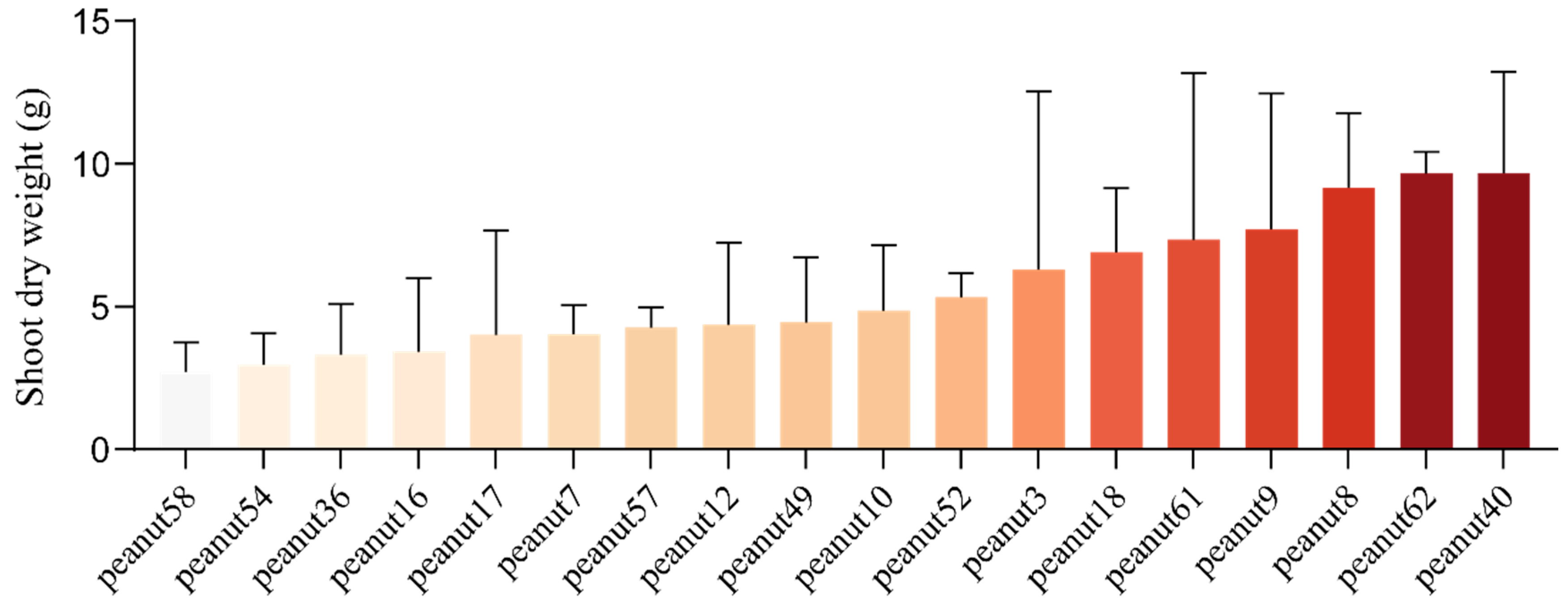
The shoot dry weight of different cultivars revealed that the growth performance of the different cultivars varied (Figure 1). For example, the dry weight of peanut40 and peanut62 was 3.71 and 3.70 times of peanut58. Among these cultivars, peanut40, peanut62, and peanut8 exhibited better growth than the other cultivars in acidic red soil.

3.2. Effect of Rhizosphere Microbes in Promoting Peanut Growth

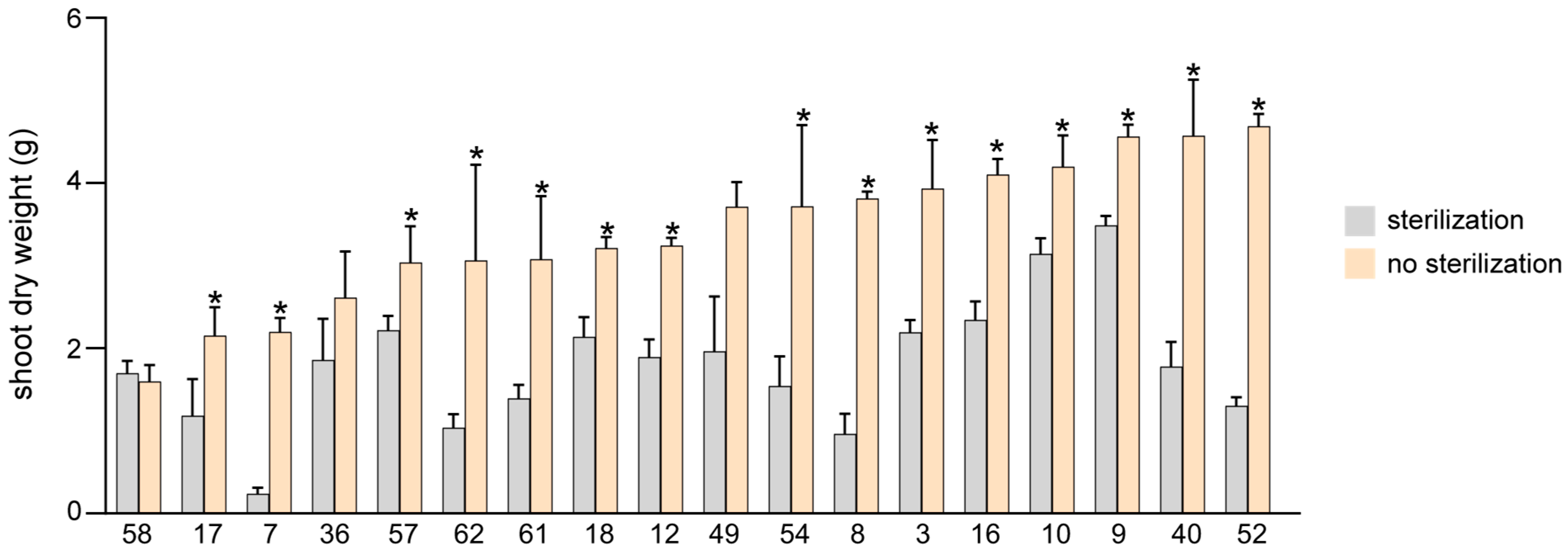
To investigate whether the differences in growth among different peanut varieties in acidic soil are caused by rhizosphere microbes, we conducted a pot experiment with natural and sterile soils. The results revealed significant differences in the basic biomass of most of these varieties when they were grown in acidic red soil with a pH of 4.5 (p < 0.05). Shoot dry weight was significantly higher in the nonsterile soil than sterile soil for 16 of the 18 peanut varieties (Figure 2). Plant height was significantly higher in the nonsterile soil than sterile soil for 15 of the 18 peanut varieties. Stem diameter was significantly higher in the nonsterile soil than sterile soil for 17 of the 18 peanut varieties. Chlorophyll content was significantly higher in the nonsterile soil than sterile soil for 15 of the 18 peanut varieties. Shoot fresh weight was significantly higher in the nonsterile soil than sterile soil for 15 of the 18 peanut varieties. The rest of the data can be found in the Figures S1–S4.

3.3. Potential Microbial Predictors of Plant Acid Tolerance and Growth

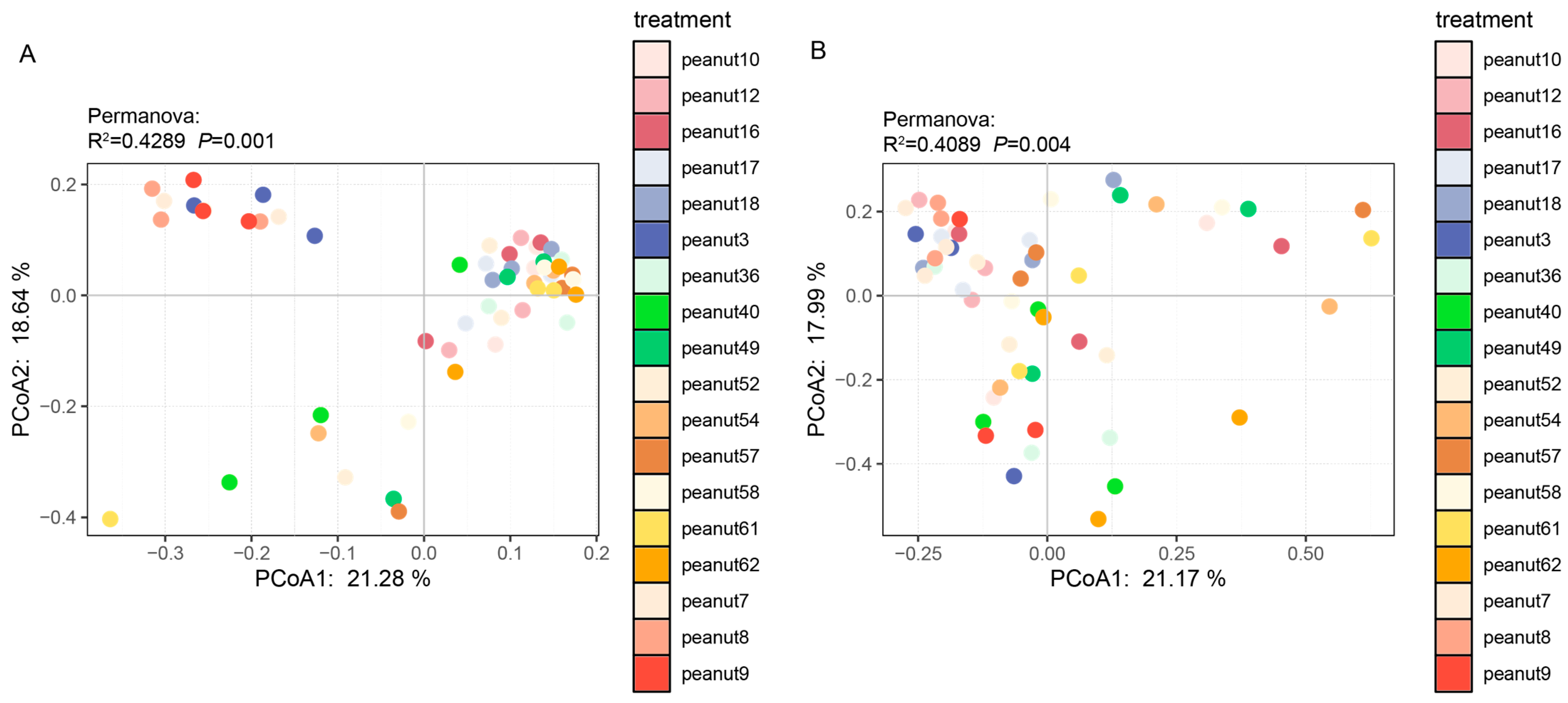
Principal coordinate analysis (PCoA) based on the Bray–Curtis distance revealed significant differences in bacterial and fungal community compositions across peanut varieties (PERMANOVA, permutation = 999, p < 0.005; Figure 3A,B).
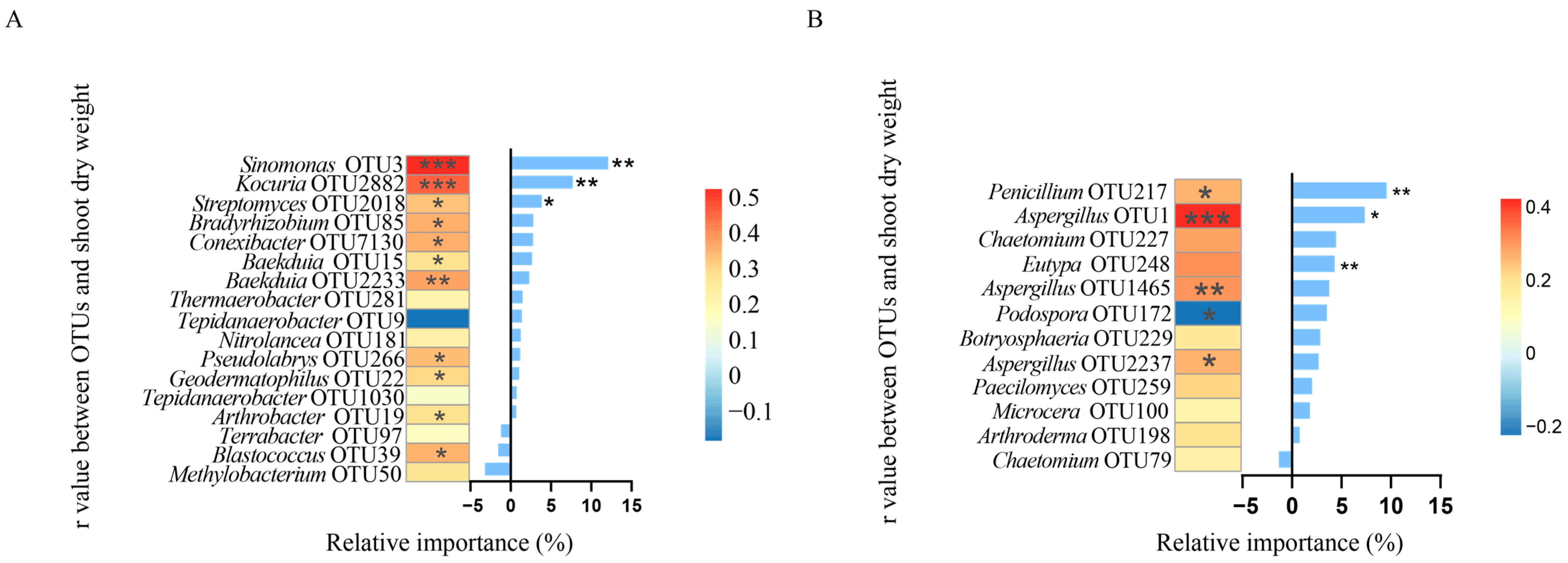
Analysis at the key bacterial taxa associated with the aboveground biomass of peanut varieties revealed that OTU3 (Sinomonas), OTU2882 (Kocuria), and OTU2018 (Streptomyces) were selected as initial microbial indicators in the linear model and significantly explained the relative abundance of aboveground biomass (p < 0.05). In addition, based on Spearman’s correlation analyses between shoot dry weight and these OTUs, we found that OTU3 and OTU2882 were significantly positively related to aboveground biomass (p < 0.001), with a high level of relative importance in determining the aboveground biomass of peanut (OTU3: 12.1%, OTU2882: 7.7%; Figure 4A).
Analysis at the key fungal taxa associated with the aboveground biomass of peanut varieties revealed that OTU1 (Aspergillus), OTU217 (Penicillium), and OTU248 (Eutypa) were selected as microbial indicators in the linear model and significantly explained the relative abundance of aboveground biomass (p < 0.05). In addition, based on Spearman’s correlation analyses between the shoot dry weight and these OTUs, we found that OTU1 was significantly positively related (p < 0.001), with a high level of relative importance in determining the aboveground biomass of peanut (OTU1: 7.4%; Figure 4B). Based on these results, OTU3 and OTU2882, assigned as Sinomonas sp. and Kocuria sp., respectively, were selected as potential key bacterial taxa for high-yielding peanut. OTU1 and OTU217, assigned as Aspergillus sp. and Penicillium sp., respectively, were selected as potential key fungal taxa for high-yielding peanut.

3.4. Key Microbe Isolates and Their Plant Growth-Promoting Abilities

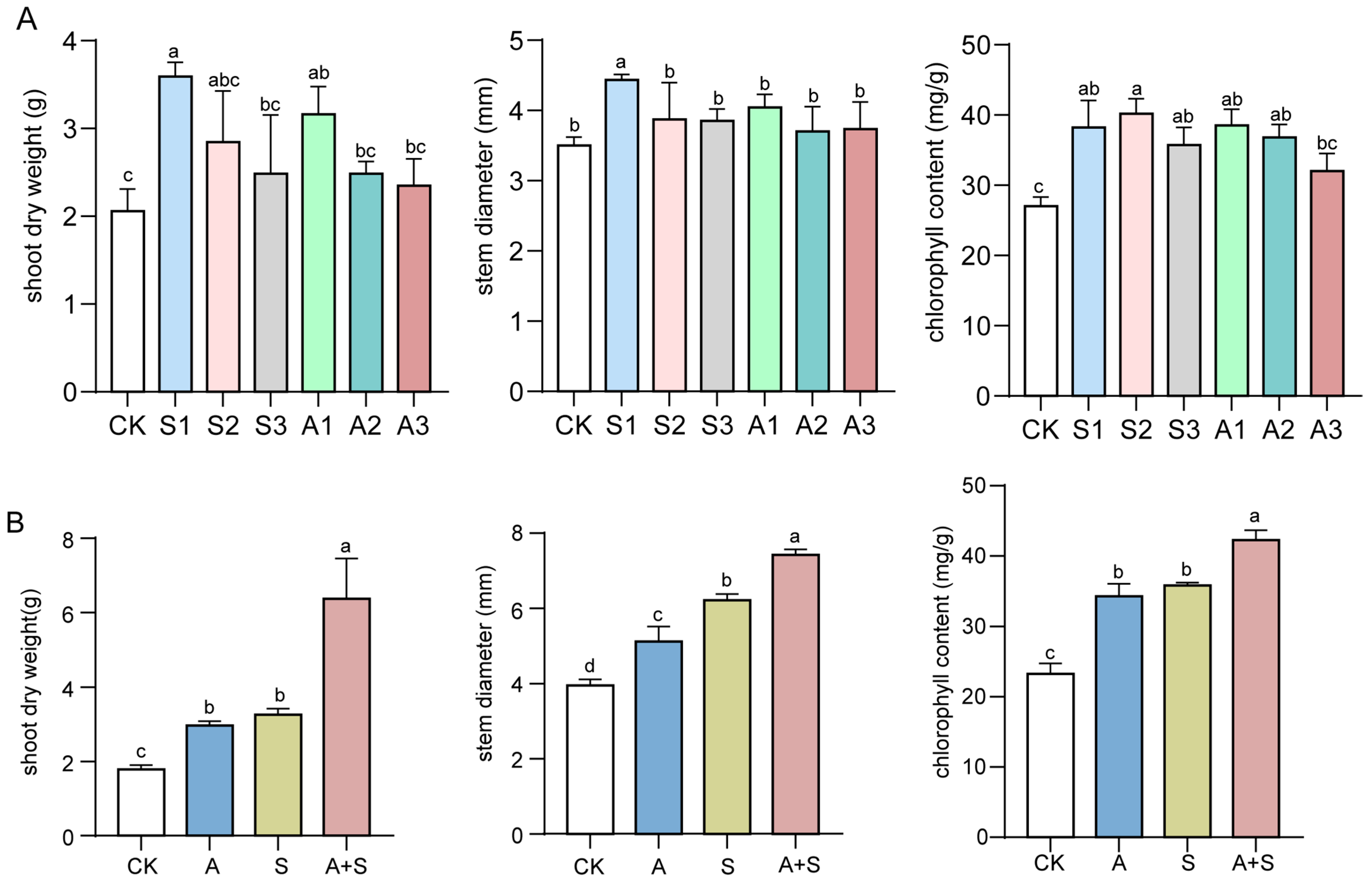
A total of 206 bacterial isolates were recovered from the rhizosphere soil of the peanut 40, peanut 62, and peanut 8 varieties. The determination of IAA-producing capacity of the screened strains showed a wide range of production, and with strains S1 and A1 possessing excellent IAA-producing ability. And based upon 16 RNA sequence analyses, this collection included 3 Sinomonas isolates (S1, S2, and S3). In addition, we selected three Aspergillus strains that had been screened in the laboratory (A1, A2, and A3). We carried out a pot experiment to evaluate the plant growth-promoting effect of the selected Sinomonas and Aspergillus strains. The results revealed that, for the peanut 62 variety, all the selected Sinomonas strains promoted peanut growth. Among them, S1 had the most significant promotion effect (t test: p < 0.05; Figure 5A). All the selected Aspergillus strains promoted peanut growth. Among them, A1 resulted in the most significant promotion effect (t test: p < 0.05; Figure 5A). To explore the synergistic growth-promoting effects among key microorganisms, we carried out another pot experiment. The selected strains included S1 and A1, and the results revealed that, for the peanut 62 variety, both the selected strains and the multi-isolate treatments significantly promoted peanut growth, with the combination of S1 with A1 yielding the greatest growth-promoting effect (t test: p < 0.05; Figure 5B).

4. Discussion

In this study, we investigated which specific microbial taxa are recruited by acid-tolerant peanut cultivars to facilitate their growth under acidic conditions, thereby contributing to their acid tolerance. In recent years, studies have shown that microorganisms can promote crop growth under acidic conditions and that compared with single strains, synthetic microbial consortia exhibit better plant growth-promoting effects [26,27,28]. Here, 18 distinct peanut cultivars, sourced from diverse regions across China, were planted in acidic soil, and significant phenotypic differences among different peanut cultivars were observed. For example, the dry weight of peanut 40 and peanut 62 was 3.71 and 3.70 times of peanut 58. Among these 18 cultivars, some experienced severe growth inhibition due to acid stress under acidic conditions. This could be attributed to the microorganisms which might play a role in facilitating plant growth. These findings are consistent with previous research findings. In greenhouse or field experiments, the application of Pseudomonas significantly improved the iron nutrition and biomass of peanut plants grown in both monocropping and intercropping systems; moreover, the inoculation of P. liquidambaris in continuous peanut cropping soil significantly increased peanut plant height, biomass, and yield [29,30]. But all these cultivars were grown in the same plot of land and subjected to the same treatment. Therefore, we hypothesize that this might be because some peanut cultivars can recruit certain beneficial rhizosphere microorganisms to facilitate their growth, while other cultivars lack this ability. This hypothesis is verified in stress resistance and growth promotion of crops including rice, wheat and poplar [31,32,33,34].
Therefore, we conducted a sterilization control experiment in which part of the acidic red soil with a pH of 4.5 was subjected to gamma irradiation for sterilization to obtain sterile acidic red soil. We found that, compared to those in sterile acidic soil, the growth of peanut cultivars in acidic soil with microorganisms was significantly better; for example, the shoot dry weight of 16 cultivars, chlorophyll content of 15 cultivars, and stem diameter of 17 cultivars significantly differed between the nonsterilized soil (with microbes) and sterilized soil (without microbes). This phenomenon was also observed in the pot experiment with oil palm seedlings [35]. These findings indicate that most peanut cultivars can utilize microorganisms to aid their growth and resist acid stress in acidic soil. These findings are consistent with previous research findings: the acid tolerance of peanut varieties is closely related to their ability to regulate the rhizosphere microbial community—peanut varieties can promote peanut growth by actively recruiting functionally beneficial microbial groups and optimizing the microbial interaction network [36,37].
We observed that the structure of the rhizosphere microbial communities differed markedly among these 18 peanut cultivars. Additionally, compared with those with poor growth, peanut cultivars with better growth performance in acidic soil presented significantly greater abundances of certain rhizosphere microorganisms. This may explain the differences in acid tolerance among different cultivars. This conclusion is consistent with the findings of previous related study that in the rhizosphere of strongly acidic soil, acid-tolerant and acid-sensitive peanut cultivars differ significantly in bacterial community structure [38]. The former’s microbial network is dominated by cooperation, reducing resource competition-induced internal consumption and better maintaining rhizosphere microecological stability [36].
We further analyzed the rhizosphere microbial community and reported that bacteria belonging to the genera Sinomonas, Kocuria, and Streptomyces in the rhizosphere bacterial community significantly contributed to the aboveground dry weight of peanut plants. In the rhizosphere fungal community, fungi belonging to the genera Aspergillus, Eutypa and Penicillium significantly contribute to the aboveground dry weight of peanut plants. We selected the strains of the genera Sinomonas and Aspergillus on account of their high relative abundance in the rhizosphere soil of peanut cultivars with superior growth performance; these two genera also exhibited high contribution (Sinomonas with 12.1%, Aspergillus with 7.4%) to the dry weight of peanuts in the random forest model. Other strains that also exhibited significant contribution to the dry weight of peanuts were not unfortunately screened from the soil, may during to their low relative abundance. In addition, we assayed the indole-3-acetic acid (IAA) production capabilities of the 206 isolated strains. The results demonstrated that both strain A1 and strain S1 possessed excellent IAA-producing abilities. Studies have shown that under the same field conditions, different peanut cultivars can recruit distinct rhizosphere fungal taxa due to differences in their own genotypes. This variation in “cultivar–fungal community” interactions significantly affects peanut growth [39]. Arbuscular mycorrhizal fungi (AMF) are beneficial soil microorganisms that form symbiotic relationships with plants, and combinations of multiple arbuscular mycorrhizal fungi can significantly increase peanut growth in stressful environments [40]. These results indicate that the recruitment of rhizosphere microorganisms may constitute an important component of plant acid tolerance and that specific microbial taxa, such as the genera Sinomonas and Aspergillus, are key determinants of the ability of peanuts to tolerate acidity and promote their growth.
The genus Sinomonas belongs to the family Micrococcaceae in the phylum Actinobacteria, and its members are widely distributed in soils or plant rhizospheres across diverse ecological habitats [40,41,42,43,44]. Previous studies have confirmed that several Sinomonas species possess typical plant growth-promoting (PGP) traits, including phosphate solubilization and indole-3-acetic acid (IAA) biosynthesis [45]. They can also synergize with mycorrhizal fungi to improve aluminum tolerance and biomass accumulation in crops, thereby strengthening crop stress resistance [46]. Additionally, Sinomonas can facilitate crop nutrient uptake, promote overall growth, and induce lateral root development [47,48]. Previous studies have shown that the genus Aspergillus, a member of the family Aspergillaceae in the phylum Ascomycota, exhibits remarkable PGP capabilities: its metabolites can stably and significantly promote the growth of both aboveground plant parts and roots while increasing the number of lateral roots and root hairs, regardless of inoculation methods and spore concentration gradients [49,50,51]. Our experimental data, combined with findings from other studies, collectively indicate that superior plant growth-promoting effects are often driven by the combined action of bacterial and fungal populations [52,53].

5. Conclusions

We demonstrate that a key aspect of the observed growth promotion of peanut can be attributed to the plant’s ability to recruit growth-promoting rhizosphere microbial communities in acidic soil. These recruited microorganisms can help peanut plants resist acid stress and promote their growth. Specific beneficial microorganisms present in acidic soils, such as Sinomonas, Kocuria, Streptomyces, Aspergillus, Eutypa, and Penicillium are potential key taxa for increasing plant growth and stress resistance, and the promotion effects of Sinomonas and Aspergillus isolates have been confirmed through pot experiments, thereby offering a novel strategy for improving peanut yields in acidic soil regions.

Supplementary Materials

The following supporting information can be downloaded at: https://www.mdpi.com/article/10.3390/agronomy16030371/s1, Figure S1: Stem diameter of different peanut seedling varieties under sterilized and nonsterilized soil conditions; Figure S2: Shoot fresh weight of different peanut seedling varieties under sterilized and nonsterilized soil conditions; Figure S3: Chlorophyll content of different peanut seedling varieties under sterilized and nonsterilized soil conditions; Figure S4: Plant height of different peanut seedling varieties under sterilized and nonsterilized soil conditions; Table S1: Information on Different Peanut Varieties; Table S2: Information on the IAA-producing capacity of the strains.

Author Contributions

Z.W.: Conceptualization, methodology, software, formal analysis, data curation, writing—original draft preparation. H.C.: Conceptualization, methodology, software, investigation, data curation, visualization. C.W.: Software, visualization, Validation. H.L.: Formal analysis, writing—review and editing, supervision, project administration, funding acquisition. R.L.: Writing—review and editing, supervision, funding acquisition. Q.S.: Writing—review and editing, supervision. All authors have read and agreed to the published version of the manuscript.

Funding

This research was funded by the National Key Research and Development Program of China (2022YFD1900602), the Fundamental Research Funds for the Central Universities (KTTQ2025018), and the Priority Academic Program Development of the Jiangsu Higher Education Institutions (PAPD).

Data Availability Statement

The raw sequence data supporting these findings will be submitted to the NCBI Sequence Read Archive (SRA) database (http://www.ncbi.nlm.nih.gov/ (accessed on 15 October 2024)).

Conflicts of Interest

The authors declare that they have no known conflicts of interests.

References

  1. Rao, I.M.; Zeigler, R.S.; Vera, R.; Sarkarung, S. Selection and Breeding for Acid-Soil Tolerance in Crops. Bioscience 1993, 43, 454–465. [Google Scholar] [CrossRef]
  2. Dong, Y.; Yang, J.L.; Zhao, X.R.; Yang, S.H.; Zhang, G.L. Contribution of different proton sources to the acidification of red soil with maize cropping in subtropical China. Geoderma 2021, 392, 114995. [Google Scholar] [CrossRef]
  3. Xu, R.K.; Zhao, A.Z.; Li, Q.M.; Kong, X.L.; Ji, G.L. Acidity regime of the Red Soils in a subtropical region of southern China under field conditions. Geoderma 2003, 115, 75–84. [Google Scholar] [CrossRef]
  4. Koevoets, I.T.; Venema, J.H.; Elzenga, J.T.; Testerink, C. Roots Withstanding their Environment: Exploiting Root System Architecture Responses to Abiotic Stress to Improve Crop Tolerance. Front. Plant Sci. 2016, 7, 1335. [Google Scholar] [CrossRef] [PubMed]
  5. Guan, X.; Chen, X.; Qiu, C.; Qian, Y.; Chen, J.; Shao, C.; Xie, J.; Deng, G.; Peng, C. Effects of long-term herbicide application on the crops in soybean-peanut rotations in the red soil upland of Southern China. Field Crops Res. 2020, 248, 107723. [Google Scholar] [CrossRef]
  6. Akram, N.A.; Shafiq, F.; Ashraf, M. Peanut (Arachis hypogaea L.): A Prospective Legume Crop to Offer Multiple Health Benefits Under Changing Climate. Compr. Rev. Food Sci. Food Saf. 2018, 17, 1325–1338. [Google Scholar] [CrossRef] [PubMed]
  7. Rahman, M.A.; Lee, S.H.; Ji, H.C.; Kabir, A.H.; Jones, C.S.; Lee, K.W. Importance of Mineral Nutrition for Mitigating Aluminum Toxicity in Plants on Acidic Soils: Current Status and Opportunities. Int. J. Mol. Sci. 2018, 19, 3073. [Google Scholar] [CrossRef]
  8. Kalkhoran, S.S.; Pannell, D.J.; Thamo, T.; White, B.; Polyakov, M. Soil acidity, lime application, nitrogen fertility, and greenhouse gas emissions: Optimizing their joint economic management. Agric. Syst. 2019, 176, 102684. [Google Scholar] [CrossRef]
  9. Gurmessa, B. Soil acidity challenges and the significance of liming and organic amendments in tropical agricultural lands with reference to Ethiopia. Environ. Dev. Sustain. 2021, 23, 77–99. [Google Scholar] [CrossRef]
  10. Nadeem, S.M.; Ahmad, M.; Zahir, Z.A.; Javaid, A.; Ashraf, M. The role of mycorrhizae and plant growth promoting rhizobacteria (PGPR) in improving crop productivity under stressful environments. Biotechnol. Adv. 2014, 32, 429–448. [Google Scholar] [CrossRef]
  11. Khan, N.; Ali, S.; Shahid, M.A.; Mustafa, A.; Sayyed, R.Z.; Curá, J.A. Insights into the Interactions among Roots, Rhizosphere, and Rhizobacteria for Improving Plant Growth and Tolerance to Abiotic Stresses: A Review. Cells 2021, 10, 1551. [Google Scholar] [CrossRef]
  12. Gupta, V.; Kumar, G.N.; Buch, A. Colonization by multi-potential Pseudomonas aeruginosa P4 stimulates peanut (Arachis hypogaea L.) growth, defence physiology and root system functioning to benefit the root-rhizobacterial interface. J. Plant Physiol. 2020, 248, 153144. [Google Scholar] [CrossRef]
  13. Pal, K.K.; Dey, R.; Sherathia, D.N.; Devidayal; Mangalassery, S.; Kumar, A.; Rupapara, R.B.; Mandaliya, M.; Rawal, P.; Bhadania, R.A.; et al. Alleviation of Salinity Stress in Peanut by Application of Endophytic Bacteria. Front. Microbiol. 2021, 12, 650771. [Google Scholar] [CrossRef]
  14. Wang, H.; Liu, R.; You, M.P.; Barbetti, M.J.; Chen, Y. Pathogen Biocontrol Using Plant Growth-Promoting Bacteria (PGPR): Role of Bacterial Diversity. Microorganisms 2021, 9, 1988. [Google Scholar] [CrossRef] [PubMed]
  15. Zhu, L.; Huang, J.; Lu, X.; Zhou, C. Development of plant systemic resistance by beneficial rhizobacteria: Recognition, initiation, elicitation and regulation. Front. Plant Sci. 2022, 13, 952397. [Google Scholar] [CrossRef] [PubMed]
  16. Hasan, A.; Tabassum, B.; Hashim, M.; Khan, N. Role of Plant Growth Promoting Rhizobacteria (PGPR) as a Plant Growth Enhancer for Sustainable Agriculture: A Review. Bacteria 2024, 3, 59–75. [Google Scholar] [CrossRef]
  17. Basu, A.; Prasad, P.; Das, S.N.; Kalam, S.; Sayyed, R.Z.; Reddy, M.S.; El Enshasy, H. Plant Growth Promoting Rhizobacteria (PGPR) as Green Bioinoculants: Recent Developments, Constraints, and Prospects. Sustainability 2021, 13, 1140. [Google Scholar] [CrossRef]
  18. Sukweenadhi, J.; Kim, Y.J.; Choi, E.S.; Koh, S.C.; Lee, S.W.; Kim, Y.J.; Yang, D.C. DCY84 induces changes in gene expression against aluminum, drought, and salt stress. Microbiol. Res. 2015, 172, 7–15. [Google Scholar] [CrossRef]
  19. Silambarasan, S.; Logeswari, P.; Cornejo, P.; Abraham, J.; Valentine, A. Simultaneous mitigation of aluminum, salinity and drought stress in Lactuca sativa growth via formulated plant growth promoting Rhodotorula mucilaginosa CAM4. Ecotoxicol. Environ. Saf. 2019, 180, 63–72. [Google Scholar] [CrossRef]
  20. Li, X.G.; Zhang, T.L.; Wang, X.X.; Hua, K.; Zhao, L.; Han, Z.M. The Composition of Root Exudates from Two Different Resistant Peanut Cultivars and Their Effects on the Growth of Soil-Borne Pathogen. Int. J. Biol. Sci. 2013, 9, 164–173. [Google Scholar] [CrossRef]
  21. Rui, M.M.; Ma, C.X.; Tang, X.L.; Yang, J.; Jiang, F.P.; Pan, Y.; Xiang, Z.Q.; Hao, Y.; Rui, Y.K.; Cao, W.D.; et al. Phytotoxicity of Silver Nanoparticles to Peanut (L.): Physiological Responses and Food Safety. ACS Sustain. Chem. Eng. 2017, 5, 6557–6567. [Google Scholar] [CrossRef]
  22. Bai, Y.; Müller, D.B.; Srinivas, G.; Garrido-Oter, R.; Potthoff, E.; Rott, M.; Dombrowski, N.; Münch, P.C.; Spaepen, S.; Remus-Emsermann, M.; et al. Functional overlap of the leaf and root microbiota. Nature 2015, 528, 364–369. [Google Scholar] [CrossRef]
  23. Zhang, C.F.; van der Heijden, M.G.A.; Dodds, B.K.; Nguyen, T.B.; Spooren, J.; Valzano-Held, A.; Cosme, M.; Berendsen, R.L. A tripartite bacterial-fungal-plant symbiosis in the mycorrhiza-shaped microbiome drives plant growth and mycorrhization. Microbiome 2024, 12, 13, Correction in Microbiome 2024, 12, 30. https://doi.org/10.1186/s40168-024-01776-2. [Google Scholar] [CrossRef] [PubMed]
  24. Lundberg, D.S.; Lebeis, S.L.; Paredes, S.H.; Yourstone, S.; Gehring, J.; Malfatti, S.; Tremblay, J.; Engelbrektson, A.; Kunin, V.; del Rio, T.G.; et al. Defining the core thaliana root microbiome. Nature 2012, 488, 86–90. [Google Scholar] [CrossRef]
  25. Deng, X.; Zhang, N.; Li, Y.; Zhu, C.; Qu, B.; Liu, H.; Li, R.; Bai, Y.; Shen, Q.; Falcao Salles, J. Bio-organic soil amendment promotes the suppression of Ralstonia solanacearum by inducing changes in the functionality and composition of rhizosphere bacterial communities. New Phytol. 2022, 235, 1558–1574. [Google Scholar] [CrossRef]
  26. Liu, C.Y.; Jiang, M.T.; Yuan, M.M.; Wang, E.R.; Bai, Y.; Crowther, T.W.; Zhou, J.Z.; Ma, Z.Y.; Zhang, L.; Wang, Y.; et al. Root microbiota confers rice resistance to aluminium toxicity and phosphorus deficiency in acidic soils. Nat. Food 2023, 4, 912–924. [Google Scholar] [CrossRef]
  27. Liu, B.; Li, X.; Yang, J.; Lu, W.; Tang, G.; Shi, Y.; Li, J.; Ding, A.; Wang, H.; Song, X.; et al. Synthetic microbial community in pristine environment promotes the growth of the endangered plant Lilium tsingtauense. Microbiome 2026, 14, 36. [Google Scholar] [CrossRef]
  28. Sarma, B.K.; Yadav, S.K.; Singh, S.; Singh, H.B. Microbial consortium-mediated plant defense against phytopathogens: Readdressing for enhancing efficacy. Soil. Biol. Biochem. 2015, 87, 25–33. [Google Scholar] [CrossRef]
  29. Wang, N.Q.; Wang, T.Q.; Chen, Y.; Wang, M.; Lu, Q.F.; Wang, K.G.; Dou, Z.C.; Chi, Z.G.; Qiu, W.; Dai, J.; et al. Microbiome convergence enables siderophore-secreting-rhizobacteria to improve iron nutrition and yield of peanut intercropped with maize. Nat. Commun. 2024, 15, 839. [Google Scholar] [CrossRef] [PubMed]
  30. Ma, C.Y.; Zhang, W.; Luo, D.L.; Jiang, H.J.; Wu, X.H.; Sun, K.; Dai, C.C. Fungal endophyte promotes plant growth and disease resistance of L. by reshaping the core root microbiome under monocropping conditions. Microbiol. Res. 2023, 277, 127491. [Google Scholar] [CrossRef]
  31. Su, P.; Kang, H.; Peng, Q.; Wicaksono, W.A.; Berg, G.; Liu, Z.; Ma, J.; Zhang, D.; Cernava, T.; Liu, Y. Microbiome homeostasis on rice leaves is regulated by a precursor molecule of lignin biosynthesis. Nat. Commun. 2024, 15, 23. [Google Scholar] [CrossRef]
  32. Chang, J.J.; Costa, O.Y.A.; Sun, Y.; Wang, J.L.; Tian, L.; Shi, S.H.; Wang, E.Z.; Ji, L.; Wang, C.J.; Pang, Y.N.; et al. Domesticated rice alters the rhizosphere microbiome, reducing nitrogen fixation and increasing nitrous oxide emissions. Nat. Commun. 2025, 16, 2038. [Google Scholar] [CrossRef]
  33. Yue, H.; Sun, X.M.; Wang, T.T.; Zhang, A.L.; Han, D.J.; Wei, G.H.; Song, W.N.; Shu, D.T. Host genotype-specific rhizosphere fungus enhances drought resistance in wheat. Microbiome 2024, 12, 44. [Google Scholar] [CrossRef]
  34. Wu, J.D.; Liu, S.J.; Zhang, H.Y.; Chen, S.S.; Si, J.N.; Liu, L.; Wang, Y.; Tan, S.X.; Du, Y.X.; Jin, Z.L.; et al. Flavones enrich rhizosphere to enhance nitrogen utilization and secondary root growth in. Nat. Commun. 2025, 16, 1461. [Google Scholar] [CrossRef] [PubMed]
  35. Ding, J.Y.M.; Ho, L.S.; Ibrahim, J.; Teh, C.K.; Goh, K.M. Impact of sterilization and chemical fertilizer on the microbiota of oil palm seedlings. Front. Microbiol. 2023, 14, 1091755. [Google Scholar] [CrossRef] [PubMed]
  36. Xiao, X.; Liu, K.L.; Shen, Y.; Dai, W.T.; Liu, S.H.; Shen, R.F.; Zhao, X.Q. Peanut genotypic stress tolerance imprints the rhizobacterial community patterns in acidic soil: Evidence from two years of field trials. Field Crops Res. 2025, 322, 109771. [Google Scholar] [CrossRef]
  37. Chen, P.; He, W.; Shen, Y.; Zhu, L.Y.; Yao, X.Z.; Sun, R.B.; Dai, C.C.; Sun, B.; Chen, Y. Interspecific Neighbor Stimulates Peanut Growth Through Modulating Root Endophytic Microbial Community Construction. Front. Plant Sci. 2022, 13, 830666. [Google Scholar] [CrossRef]
  38. de la Peña, T.C.; Pueyo, J.J. Legumes in the reclamation of marginal soils, from cultivar and inoculant selection to transgenic approaches. Agron. Sustain. Dev. 2012, 32, 65–91. [Google Scholar] [CrossRef]
  39. Liu, Y.; Lu, J.; Cui, L.; Tang, Z.; Ci, D.; Zou, X.; Zhang, X.; Yu, X.; Wang, Y.; Si, T. The multifaceted roles of Arbuscular Mycorrhizal Fungi in peanut responses to salt, drought, and cold stress. BMC Plant Biol. 2023, 23, 36. [Google Scholar] [CrossRef]
  40. Wang, M.A.; Chen, M.N.; Yang, Z.; Chen, N.; Chi, X.Y.; Pan, L.J.; Wang, T.; Yu, S.L.; Guo, X.Q. Influence of Peanut Cultivars and Environmental Conditions on the Diversity and Community Composition of Pod Rot Soil Fungi in China. Mycobiology 2017, 45, 392–400. [Google Scholar] [CrossRef]
  41. Zhou, Y.; Wei, W.; Wang, X.; Lai, R. Proposal of Sinomonas flava gen. nov., sp nov., and description of comb. nov to accommodate. Int. J. Syst. Evol. Microbiol. 2009, 59, 259–263. [Google Scholar] [CrossRef] [PubMed]
  42. Zhang, M.Y.; Xie, J.; Zhang, T.Y.; Xu, H.; Cheng, J.; Li, S.H.; Li, W.J.; Zhang, Y.X. Sinomonas notoginsengisoli sp. nov., isolated from the rhizosphere of Panax notoginseng. Antonie Van Leeuwenhoek 2014, 106, 827–835. [Google Scholar] [CrossRef] [PubMed]
  43. Guo, Q.Q.; Ming, H.; Meng, X.L.; Huang, J.R.; Duan, Y.Y.; Li, S.H.; Li, S.; Zhang, J.X.; Li, W.J.; Nie, G.X. Sinomonas halotolerans sp. nov., an actinobacterium isolated from a soil sample. Antonie Van Leeuwenhoek 2015, 108, 887–895. [Google Scholar] [CrossRef] [PubMed]
  44. Lee, H.; Han, J.Y.; Kim, D.U. Sinomonas terrae sp. nov., Isolated from an Agricultural Soil. J. Microbiol. Biotechnol. 2023, 33, 909–914. [Google Scholar] [CrossRef]
  45. Tchakounté, G.V.T.; Berger, B.; Patz, S.; Fankem, H.; Ruppel, S. Community structure and plant growth-promoting potential of cultivable bacteria isolated from Cameroon soil. Microbiol. Res. 2018, 214, 47–59. [Google Scholar] [CrossRef]
  46. Wen, Z.L.; Yang, M.K.; Han, H.W.; Fazal, A.; Liao, Y.H.; Ren, R.; Yin, T.M.; Qi, J.L.; Sun, S.C.; Lu, G.H.; et al. Mycorrhizae Enhance Soybean Plant Growth and Aluminum Stress Tolerance by Shaping the Microbiome Assembly in an Acidic Soil. Microbiol. Spectr. 2023, 11, e0331022. [Google Scholar] [CrossRef]
  47. Wu, Q.H.; Zhou, W.L.; Lu, Y.L.; Li, S.; Shen, D.C.; Ling, Q.P.; Chen, D.W.; Ao, J.H. Combined Chemical Fertilizers with Molasses Increase Soil Stable Organic Phosphorus Mineralization in Sugarcane Seedling Stage. Sugar Technol. 2023, 25, 552–561. [Google Scholar] [CrossRef]
  48. Fu, Y.; Wang, J.; Su, Z.; Chen, Q.; Li, J.; Zhao, J.; Xuan, W.; Miao, Y.; Zhang, J.; Zhang, R. Sinomonas gamaensis NEAU-HV1 remodels the IAA14-ARF7/19 interaction to promote plant growth. New Phytol. 2025, 245, 2016–2037. [Google Scholar] [CrossRef]
  49. Salas-Marina, M.A.; Silva-Flores, M.A.; Cervantes-Badillo, M.G.; Rosales-Saavedra, M.T.; Islas-Osuna, M.A.; Casas-Flores, S. The Plant Growth-Promoting Fungus Promotes Growth and Induces Resistance Against Different Lifestyle Pathogens in Arabidopsis thaliana. J. Microbiol. Biotechnol. 2011, 21, 686–696. [Google Scholar] [CrossRef]
  50. Ma, S.Q.; Zhao, D.L.; Han, X.B.; Peng, Y.L.; Ren, T.T.; Wang, M.; Wan, J.; Ding, J.L.; Du, X.C.; Zhao, F.B.; et al. New application of in promoting plant growth after suppressing sterigmatocystin production via genome mining and engineering. Microb. Biotechnol. 2023, 16, 139–147. [Google Scholar] [CrossRef]
  51. Mundim, G.D.M.; Maciel, G.M.; Mendes, G.D. Aspergillus niger as a Biological Input for Improving Vegetable Seedling Production. Microorganisms 2022, 10, 674. [Google Scholar] [CrossRef] [PubMed]
  52. Li, T.; Shi, X.T.; Wang, J.G.; Zhou, Y.H.; Wang, T.K.; Xu, Y.; Xu, Z.H.; Raza, W.; Liu, D.Y.; Shen, Q.R. Turning Antagonists into Allies: Bacterial-Fungal Interactions Enhance the Efficacy of Controlling Fusarium Wilt Disease. Sci. Adv. 2025, 11, eads5089. [Google Scholar] [CrossRef] [PubMed]
  53. Tkacz, A.; Cheema, J.; Chandra, G.; Grant, A.; Poole, P.S. Stability and succession of the rhizosphere microbiota depends upon plant type and soil composition. ISME J. 2015, 9, 2349–2359. [Google Scholar] [CrossRef] [PubMed]
Figure 1. Dry weight of aboveground parts of different peanut varieties. The specific variety names of the 18 peanut accessions shown in the figure are provided in the Table S1.
Agronomy 16 00371 g001
Figure 2. Dry shoot weights of different peanut seedling varieties under sterilized and nonsterilized soil conditions. The specific variety names of the 18 peanut accessions shown in the figure are provided in the Table S1. Tukey’s HSD test; *, p ≤ 0.05. The error bars represent the mean ± SD.
Agronomy 16 00371 g002
Figure 3. Principal coordinate analysis of bacterial (A) and fungal (B) communities in the rhizosphere soil of different peanut varieties.
Agronomy 16 00371 g003
Figure 4. Relative importance of rhizosphere microbial communities for growth performance of different peanut varieties. (A) The rhizosphere bacterial communities. (B) The rhizosphere fungal communities. Linear models (LMs) describing the relationships of microbial indicators with the shoot fresh weight of peanuts. The relative importance refers to the contributory importance of selected microbial indicators for the shoot dry weight of peanuts in linear models. The p value represents the significance of the predictor in the linear model, as determined by ANOVA (* p < 0.05, ** p < 0.01, and *** p < 0.001).
Agronomy 16 00371 g004
Figure 5. Growth-promoting effects of key microbes (alone or in combination) on peanut seedlings. (A) Effects of different Sinomonas strains and different Aspergillus strains on the growth of peanut seedlings. (B) Effects of key microbes (alone or in combination) on the growth of peanut seedlings. The indicators include stem diameter, shoot dry weight, and chlorophyll content. Different lowercase letters indicate significant differences (ANOVA; Tukey’s HSD test. The error bars represent the means ± SDs.
Agronomy 16 00371 g005
Disclaimer/Publisher’s Note: The statements, opinions and data contained in all publications are solely those of the individual author(s) and contributor(s) and not of MDPI and/or the editor(s). MDPI and/or the editor(s) disclaim responsibility for any injury to people or property resulting from any ideas, methods, instructions or products referred to in the content.