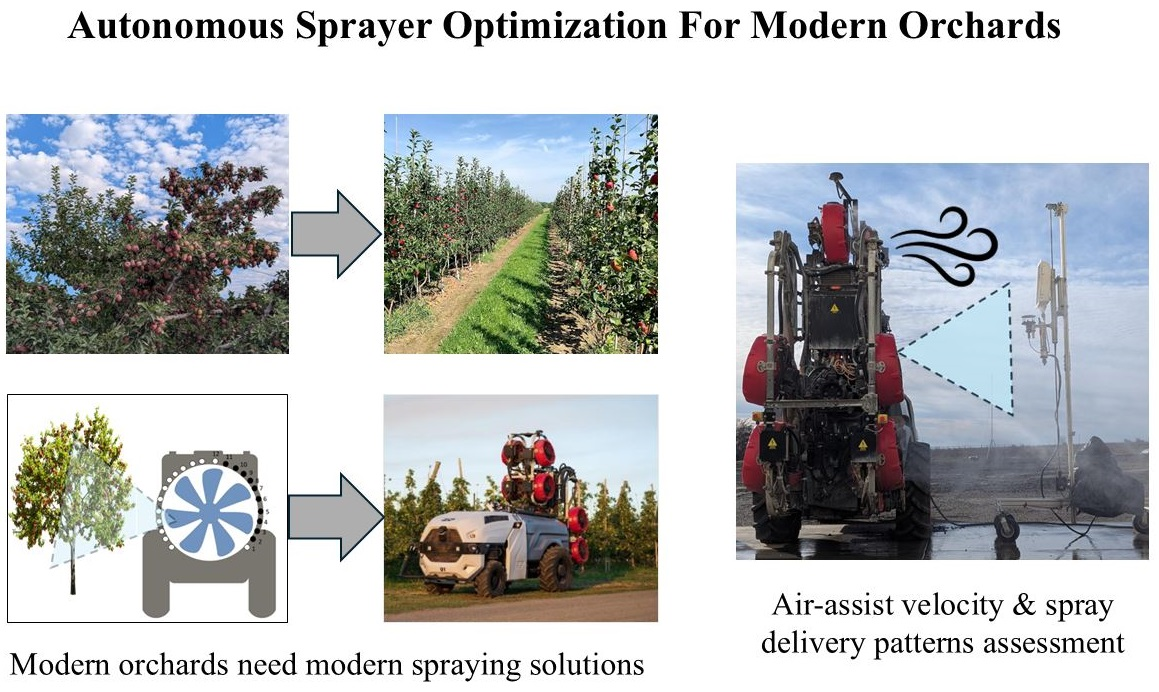
Article

Air and Spray Pattern Characterization of Multi-Fan Autonomous Unmanned Ground Vehicle Sprayer Adapted for Modern Orchard Systems


1
Center for Precision and Automated Agricultural Systems, Department of Biological Systems Engineering, Washington State University, Prosser, WA 99350, USA
2
Agriculture and Natural Resources, Extension, Washington State University, Prosser, WA 99350, USA
*
Authors to whom correspondence should be addressed.
Agronomy 2026, 16(3), 344; https://doi.org/10.3390/agronomy16030344
Submission received: 19 December 2025 / Revised: 19 January 2026 / Accepted: 27 January 2026 / Published: 30 January 2026

Abstract

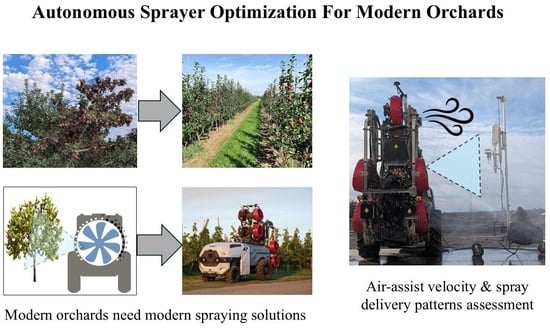
A newly commercialized single-row multi-fan autonomous unmanned ground vehicle (UGV) sprayer, for use in trellised tree fruit crops, was tested to better understand air and spray patterns prior to wide-scale adoption in the modern apple orchard systems typical to Washington State. This sprayer was equipped with five brown and yellow Albuz ATR80 nozzles per fan (QM-420, Croplands Quantum). The fans were installed in a Q8 configuration, with eight fans (four on each side) staggered near the front and back as a stack to increase vertical span. Air velocity and spray delivery patterns of the commercialized sprayer unit were assessed in laboratory using a customized smart spray analytical system. Previous field trails of this sprayer unit revealed a hardware issue with electric proportional valve controls in fan-nozzle assembly, resulting in uneven spray deposition across V-trellised canopy. Post issue resolution, the sprayer characterization data showed an average Symmetry of 91%, and 84% for air velocity and spray volume delivery on either side. An average Uniformity of 57% and 48%, respectively was recorded for pertinent sprayer attributes across the spray height. Overall, after optimization, the UGV sprayer is suitable for efficient agrochemical application in modern orchard systems. Further evaluation of labor savings, biological efficacy gains from autonomous operation, and a full economic analysis would better inform grower adoption. Commercial viability of this UGV sprayer could also be improved by added features such as variable-rate application enabled by real-time crop sensing or task-map integration.

1. Introduction

Washington State is a leading producer of fresh market apples in the United States [1], and crop protection application efficacy is critically important in modern apple orchard systems. Washington apple growers typically use conventional tractor-operated airblast sprayers for agrochemical applications [2]. Some of these sprayers were originally designed and optimized for conventional orchard systems. However, many of the tree fruit orchards within the state have or are transitioning to modern high-density systems [3]. Thus, there is a need for innovative sprayer designs for efficient crop protection. Recent advancements in agricultural mechanization have enhanced precision in spray applications through variable-rate technologies [4,5]. A wide range of sensors are being used to optimize agrochemical output based on target demand [6,7]. However, these semi-automated sprayers still require a human operator, which incurs labor costs [8], poses chemical exposure risks [9], and may limit extended application hours. To address these limitations, an alternative spray technology—specifically a fixed spray system—has been optimized for specialty crops [10,11]. However, its adoption remains constrained by substantial capital investments.
In recent years, the application of unmanned aerial vehicles (UAVs) for agrochemical applications have been growing rapidly in specialty crop production [12]. Several studies evaluated the UAV sprayers for flight pattern optimization, spray efficacy, and losses in apple orchards [13,14]. Remotely operated UAV sprayers have the potential to reduce operator exposure and increase application efficiency. However, Wang et al. [15] reported substantially reduced coverage in the UAV sprayer on the underside of leaf surfaces. Similarly, Li et al. [14] reported non-uniform deposition across the apple tree canopy height and considerably higher aerial chemical losses with the UAV sprayer than with ground sprayers. Some of the challenges with existing spray technologies can be addressed using unmanned ground vehicle (UGV) sprayers in tree fruit production [16].
With artificial intelligence (AI), navigation systems, robotics, and automation technological advances, several research efforts have focused on developing autonomous ground spray systems for tree fruit orchards [17]. Autonomous driving technology is being explored in complex, high-density modern orchard environments. Wang et al. [18] designed and developed an autonomous spray system for orchards with substantially reduced navigation error and improved spray coverage. Yue et al. [19] developed a Global Navigation Satellite System-based autonomous driving system for tracked-type orchard sprayers. Various operational parameters for sprayers, such as travel path and speed, air assistance direction, air velocity, and spray delivery output, can be controlled by integrating onboard sensors fusion, navigation system, and advanced AI algorithms [20].
A single-row multi-fan sprayer (Model: Prospr, Robotics Plus Co., Tauranga, New Zealand) is a commercially available UGV sprayer recently developed for autonomous spraying in orchards [21]. This sprayer unit can be operated using a remote control. Multiple sprayers can be operated simultaneously from a single remote control via a fixed or mobile console, potentially saving labor and improving operator safety. However, before adopting any newly developed pesticide application equipment, it is necessary to evaluate the spray performance and environmental risks associated with its adoption.
Hoheisel et al. [21] assessed this UGV sprayer for canopy deposition in the targeted row as well as loss from drift on the ground or adjacent rows across four different treatments (T1–T4). The trial was designed using two application rates (748 and 935 L ha−1) and travel speeds (1.3 and 2.2 m s−1) in a V-trellised Washington apple orchard. To determine the optimal operating speed for top and bottom fans, a customized sonic anemometer setup was installed on an electric all-terrain vehicle to measure air velocity passing through the canopy. The highest overall spray deposition with the least aerial drift was observed in T1 with a 935 L ha−1 application rate at a travel speed of 2.2 m s−1. However, a contradictory pattern in air velocity and spray deposition was observed in the middle canopy zone. Air velocity increased from bottom to top, with deposition being lowest in the middle zone, followed by the bottom and top canopy zones. These findings led the manufacturer to conduct a thorough inspection of the machine hardware. In this UGV sprayer unit, the nozzle output per fan is typically adjusted using two different electric proportional valve controls for different nozzle types. During inspection, the manufacturer found that the electrical connections for these control valves were reversed, resulting in incorrect application rates and leading to non-uniform deposition across the canopy zones. This hardware issue was subsequently resolved; however, it required further assessment of nozzle flow rates, air velocity, and spray delivery patterns to ensure the operational feasibility of the sprayer. Uniformity and Symmetry in air and spray distribution are critical determinants of pesticide application efficiency, as they directly influence spray coverage, pest control effectiveness, and off-target drift. Achieving consistent spray distribution across the canopy is essential for uniform active ingredient deposition, thereby reducing the risks of under- or over-application that can lead to crop loss or environmental contamination. Accurate characterization of air and spray patterns is fundamental to maintaining application precision, operational efficiency, and environmental safety in agricultural spraying systems [22]. To date, no studies have systematically characterized the air velocity and spray distribution patterns of this innovative UGV sprayer design with a unique nozzle fan configuration. Therefore, the objective of this study was to assess the air velocity and spray delivery patterns of a previously field-tested fan configuration in the UGV sprayer unit to align it with a V-trellised canopy.

2. Materials and Methods

2.1. Sprayer Unit

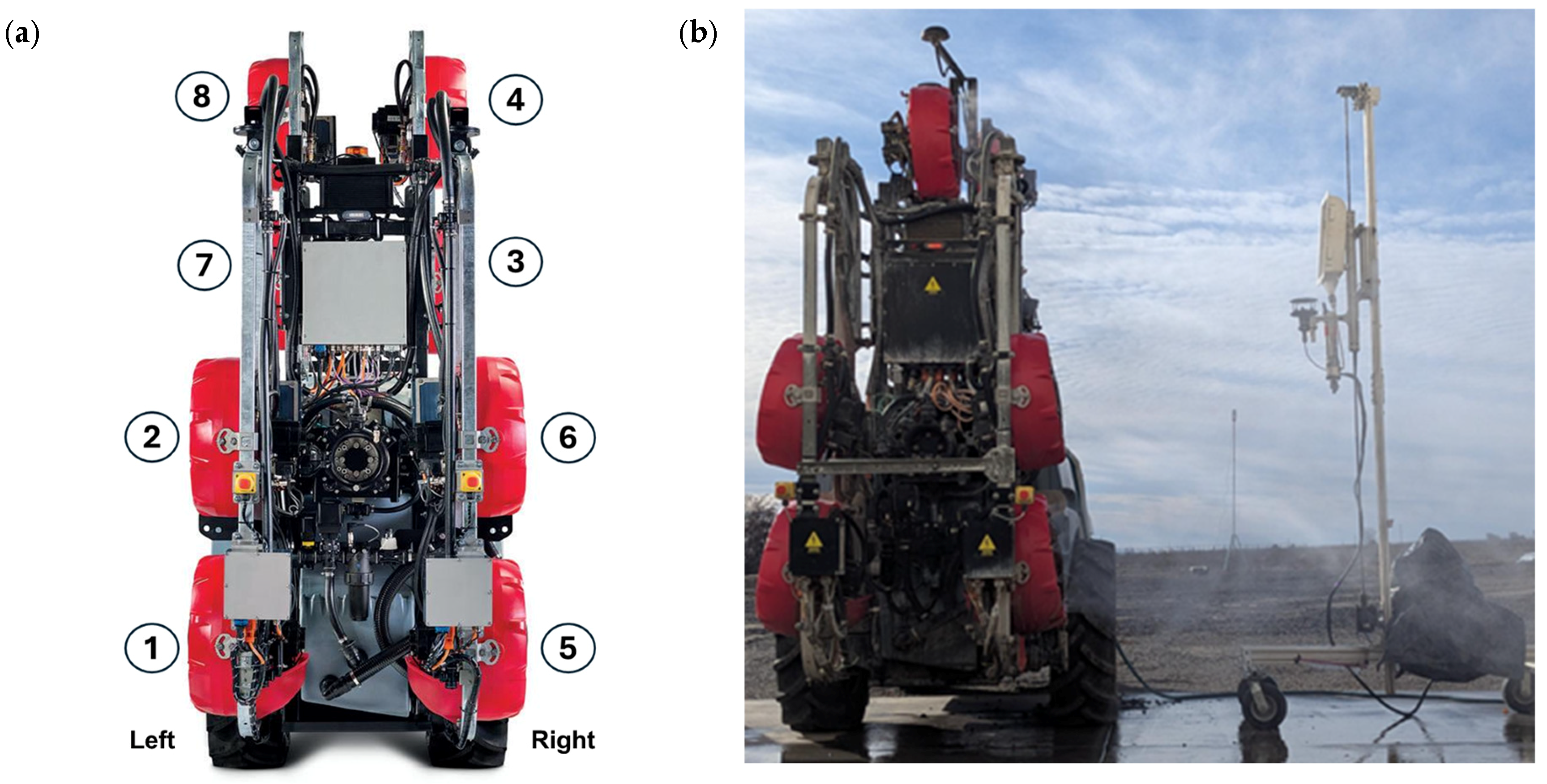
An UGV sprayer unit (Model: Prospr, Robotics Plus Co., Tauranga, New Zealand) was tested for nozzle flow rates, air velocity, and spray delivery patterns under laboratory conditions at the Center for Precision and Automated Agricultural Systems, Washington State University, Prosser, WA, USA (46°15′8.39″ N, 119°44′24.47″ W). This sprayer followed the Q8 fan configuration to match air and spray delivery to the apple canopy. The sprayer consists of four pairs of fans (diameter: 420 mm) installed on the front top and the rear bottom section, as shown in Figure 1. This fan orientation is designed to achieve uniform air and spray delivery within the canopy on either side of the sprayer. Each fan consists of up to ten nozzles, and each fan pair has the ability to operate independently using an electric motor.

2.2. Flow Rate Measurements

Each fan was installed with alternate ATR80 brown and ATR80 yellow nozzles (Albuz, TeeJet Technologies, Wheaton, IL, USA), with five units of each nozzle type per fan. Three replicates of flow rate for each nozzle were measured using a standard flowmeter (S001, Nozzle tester, AAMS BV, Maldegem, Belgium) by operating the sprayer at 414 kPa pressure in compliance with ISO 5682-1:2017 [23].
Based on the highest overall deposition obtained in field trials [20], similar sprayer attributes such as application rate (935 L ha−1) and top (2300 rpm) and bottom (2000 rpm) fan pair speeds were selected for pattern evaluations. The selection of differential fan speeds for the top and bottom fans was based on the preliminary air velocity optimization field trials reported in Hoheisel et al. [21] and accounts for the varying distance between the sprayer fans and target in a V-trellis, where spray needs to penetrate farther at the top of the ‘V’.

2.3. Sprayer Air Velocity and Spray Delivery Patterns Assessment

Air velocity and spray delivery patterns for the selected UGV sprayer unit were assessed using a customized smart spray analytical system (SSAS). Please see Bahlol et al. [24] for more details on the SSAS design. The SSAS setup in the current study was customized by installing a newer anemometer model (WindSonic1 2-D, Campbell Scientific, Inc., Logan, UT, USA) for air velocity measurements. This anemometer has a resolution of 0.01 m s−1 and 98% wind speed measurement accuracy [25]. SSAS was also equipped with a spray capturing unit that collects the liquid in a reservoir for measurement using a liquid level sensor (eTape, Milone Technologies, Inc., Sewell, NJ, USA). The anemometer and spray-capturing unit assembly automatically rises in 0.22 m increments to collect data for a specified time at each location using a stepper motor (HW34-696, Applied Motion Products, Inc., Watsonville, CA, USA). Due to the unique fan configurations of the UGV sprayer, both air and spray patterns for each fan were quantified separately, unlike in conventional airblast sprayers [2,22]. The SSAS was set on the ground to capture air and spray patterns from 1.30 to 2.84 m above ground level (AGL) for the bottom pair of fans (1 and 2; 5 and 6) (Figure 2). For the top fan pairs (3 and 4; 7 and 8), SSAS was initially set on a 0.84 m AGL platform to extend the pattern captures up to 3.68 m AGL. These sampling heights correspond to spray delivery using a UGV sprayer in the bottom (0.6–1.55 m AGL), middle (1.55–2.48 m AGL), and top (2.48–3.42 m AGL) canopy zones [21].
Preliminary analysis showed consistency in the collected data in two replicate trials per fan. Thus, additional replicates were not pursued. These trials were conducted by maintaining a 1.25 m distance between the fan head and the collection unit on SSAS. This distance was selected based on the typical distance between the sprayer and mid canopy plane followed during orchard spraying. The SSAS setup was programmed using a microcontroller (Arduino ATMEGA 2560, Sparkfun Electronics Inc., Boulder, CO, USA) to sample air velocity and spray liquid volume at 1 Hz and 0.5 Hz, respectively, at each sampling location. Before sampling, sprayer fans were operated for 90 s without actuating the nozzles to stabilize airflow. The sprayer nozzles were then turned on for 60 s using the remote control. Next, the collected liquid was allowed to settle for 20 s, and volume sampling was performed for 20 s. The logged data was transmitted wirelessly via Bluetooth to a smartphone for real-time monitoring and was also stored on an onboard memory card for further processing.

2.4. Weather Parameters

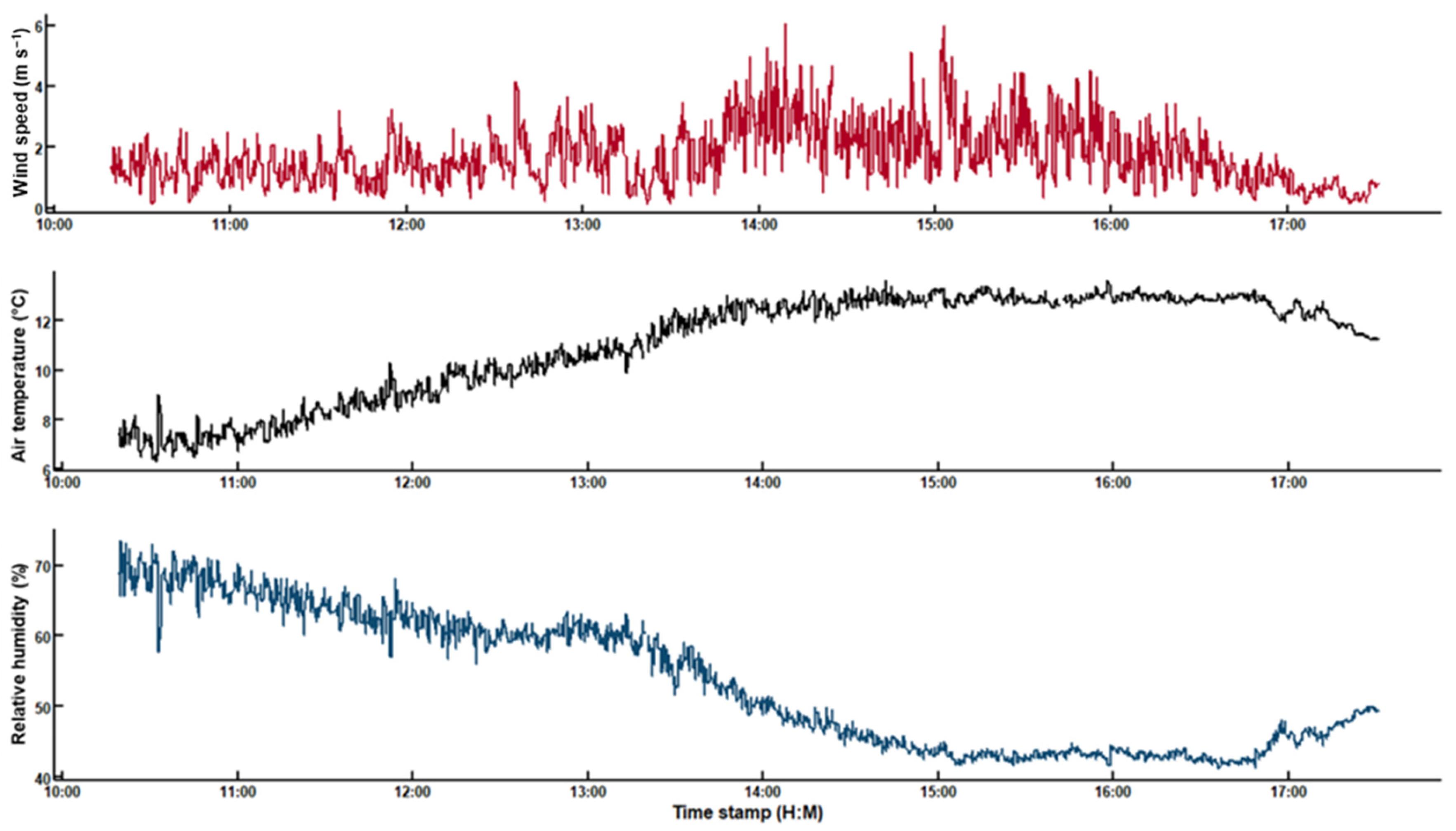
Metrological data collected during the trials was obtained using an all–in–one weather station (ATMOS 41, METER Inc., Pullman, WA, USA) installed near the experimental setup in accordance with ISO 24253-1:2015 [26]. The weather sensor was programmed to collect wind speed, air temperature, and relative humidity at 1 min intervals using a datalogger (model: CR1000X, Campbell Scientific Inc., Logan, UT, USA). This data was collected throughout the experimental trial period. Variations in weather attributes during the experimental trial are shown in Figure 3. Overall, mean (±SD) wind speed, air temperature, and relative humidity collected during the trial were 1.70 ± 0.96 m s−1, 11.04 ± 2.23 °C, and 54 ± 10%, respectively. This indicates acceptable meteorological conditions for pesticide application equipment testing [26].

2.5. Data Analysis

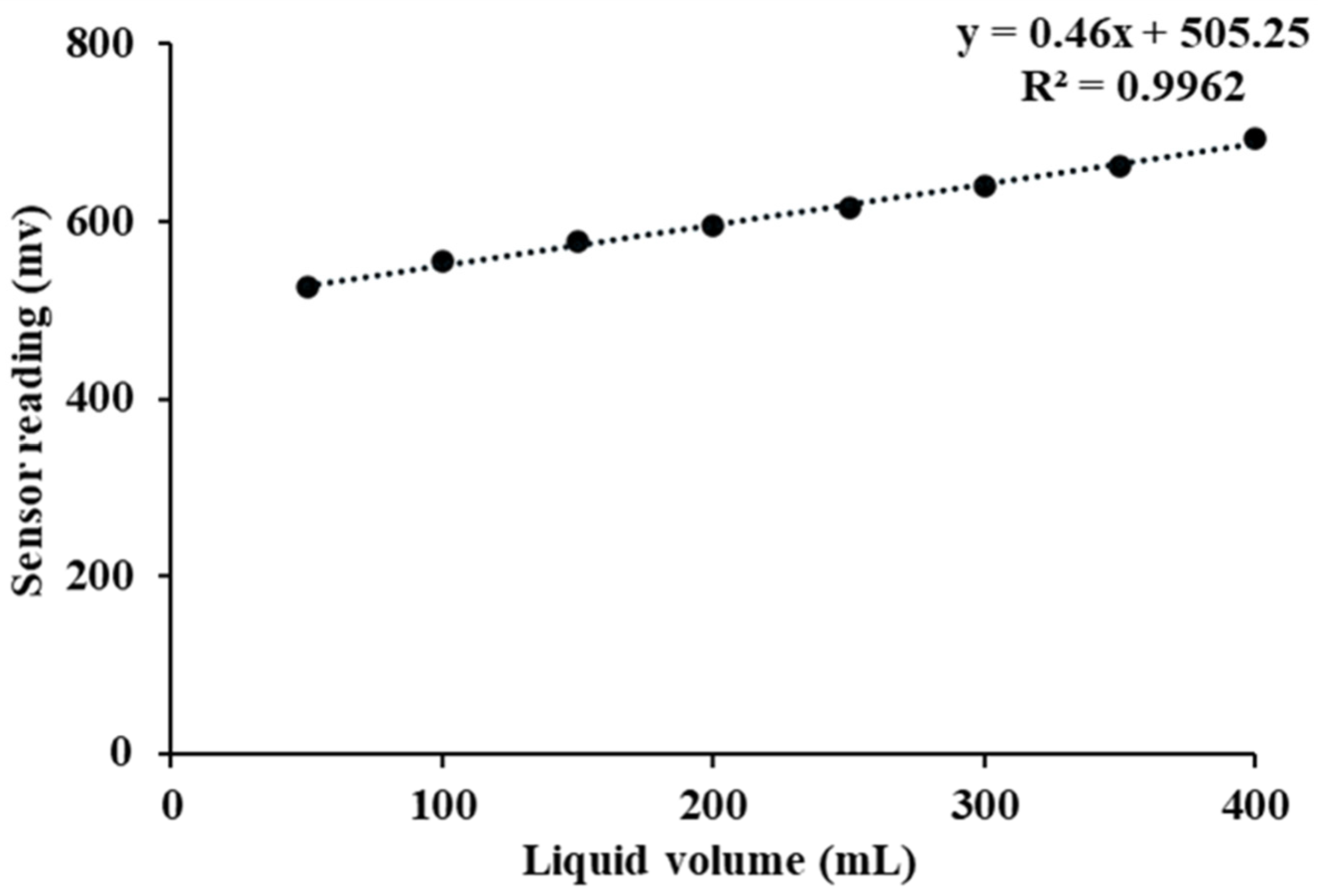
The nozzle flow rates for each nozzle type were averaged (mean ± SD) across the fans. The coefficient of variation was estimated for each nozzle type. The anemometer sensor used in this study was factory-calibrated by the manufacturer and can be used reliably for air velocity measurements. Whereas the liquid level sensor voltage readings were calibrated using the equation (y = 0.46x + 505.25, where y is the spray volume and x is sensor voltage reading) to quantify spray volume. A known volume of spray liquid (50–400 mL) was discharged in the collection unit under the stationary SSAS setup condition. A linear relationship between relative sensor voltage readings (mV) and liquid volume (mL) was established with a coefficient of determination (R2) of 0.99 (Figure 4). The generated calibration equation was used to transform raw signal readings recorded for spray volume collection per height AGL [24].
For each side of the sprayer unit, the air velocity and spray delivery patterns were evaluated to determine the Symmetry (SYM, %) and Uniformity (U, %) (Equations (1)–(3), [27]). The Symmetry is the degree of similarity in the air velocity or spray distribution patterns between the two sprayer sides. The Symmetry in delivered spray or air velocity throughout a range of heights on the same side of the sprayer is known as Uniformity.
Symmetry   ( % ) = 100 i = 1 n A B S   ( p il p ir )
UI = i = 1 n q i q m n
Uniformity   ( % ) = ( U I 1 n ) 1 1 n × 100
where ABS (pilpir) is the absolute difference in the percentage contribution of quantities (p) at height i, for the left (l) and right (r) sides of the sprayer. UI is the uniformity index. qm is the maximum air velocity or spray volume (mL) across all heights, whereas qi is the amount of air velocity or spray volume (mL) measured at height i. The Symmetry and Uniformity values for air velocity and spray volume patterns for a given sprayer range from 0 to 100 and have been categorized as low (0–25%), medium (25–50%), high (50–75%), and very high (75–100%) [2].
The amount of spray liquid collected at each height depends on the cross-sectional area of the spray capturing unit [28]. Therefore, the spray volume (mL) collected at each height was normalized to mL cm−2 by the cross-sectional area of the spray capturing unit (631.12 cm2) of the SSAS. The air velocity and normalized spray delivery patterns were plotted using RStudio software (version: 2025.05.0+496) [29].

3. Results

3.1. Nozzle Flowrate Measurements

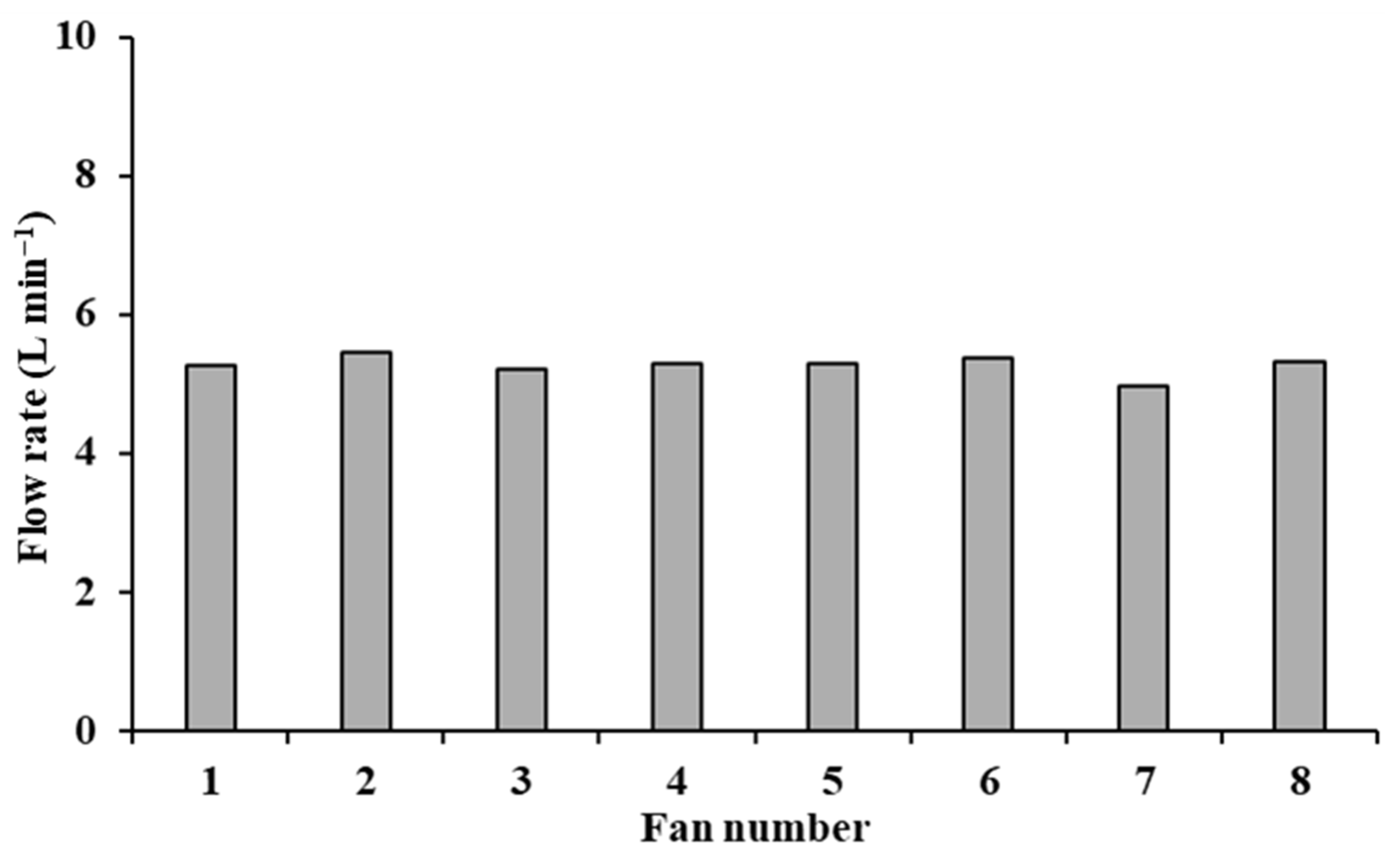
The average flowrate measurements for brown and yellow nozzle types were 0.38 L min−1 and 0.67 L min−1, respectively (Table 1). The estimated coefficient variations for pertinent nozzle types were 10.4% and 5.2%, brown and yellow, respectively. However, with this autonomous sprayer, the nozzle output was not regulated per nozzle but rather by the combined output of the outer ring (5 nozzles) and the inner ring (5 nozzles). Meaning any single nozzle may have more variation in output, but overall output per fan should be consistent (Figure 5) and regulated with pressure fluctuations and an inline pulse width modulation valve. The average flow rate per fan with ten nozzles was 5.25 L min−1, accounting for the overall output of the total eight fans on the sprayer as 42 L min−1.

3.2. Air Velocity Patterns

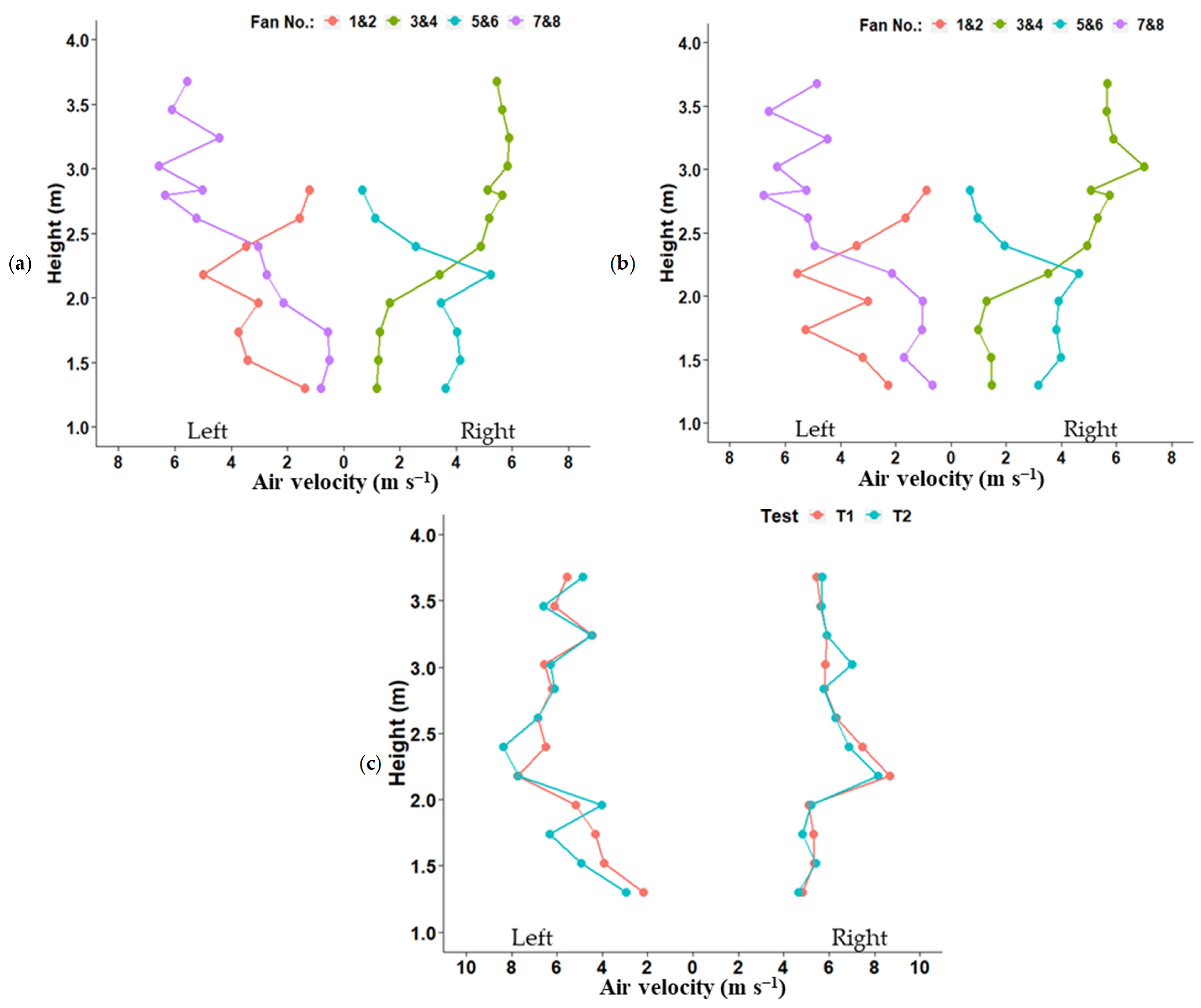
Unique patterns were observed for top and bottom pairs of fans throughout the sampling height (Figure 6). The average air velocity for bottom fan pairs 1 and 2 and 5 and 6 (Figure 2a) was in the ranges of 1.03–5.27 m s−1 and 0.67–4.93 m s−1, respectively. Whereas the ranges for the top pair of fans (i.e., 3 and 4 and 7 and 8) were 1.13–6.42 m s−1 and 0.73–6.56 m s−1, respectively. But this was consistent with the varying fan speeds for top (2300 rpm) and bottom (2000 rpm) fans. In addition, the sprayer design places the top and bottom fans adjacent to each other, not stacked vertically (Figure 2a), so the pattern of the maximum air being offset between the top and bottom is expected. The average cumulative air velocity on the left and right side of the sprayer unit ranged between 2.56–7.72 m s−1 and 4.72–8.39 m s−1, respectively.
A highly symmetric air pattern was observed on both sides of the sprayer, with an average Symmetry of 90.97% (Figure 6c). Moreover, the average Uniformity in air velocity across the sampled height calculated for left and right side of the sprayer was 56.83% and 57.84%, respectively.

3.3. Spray Delivery Patterns

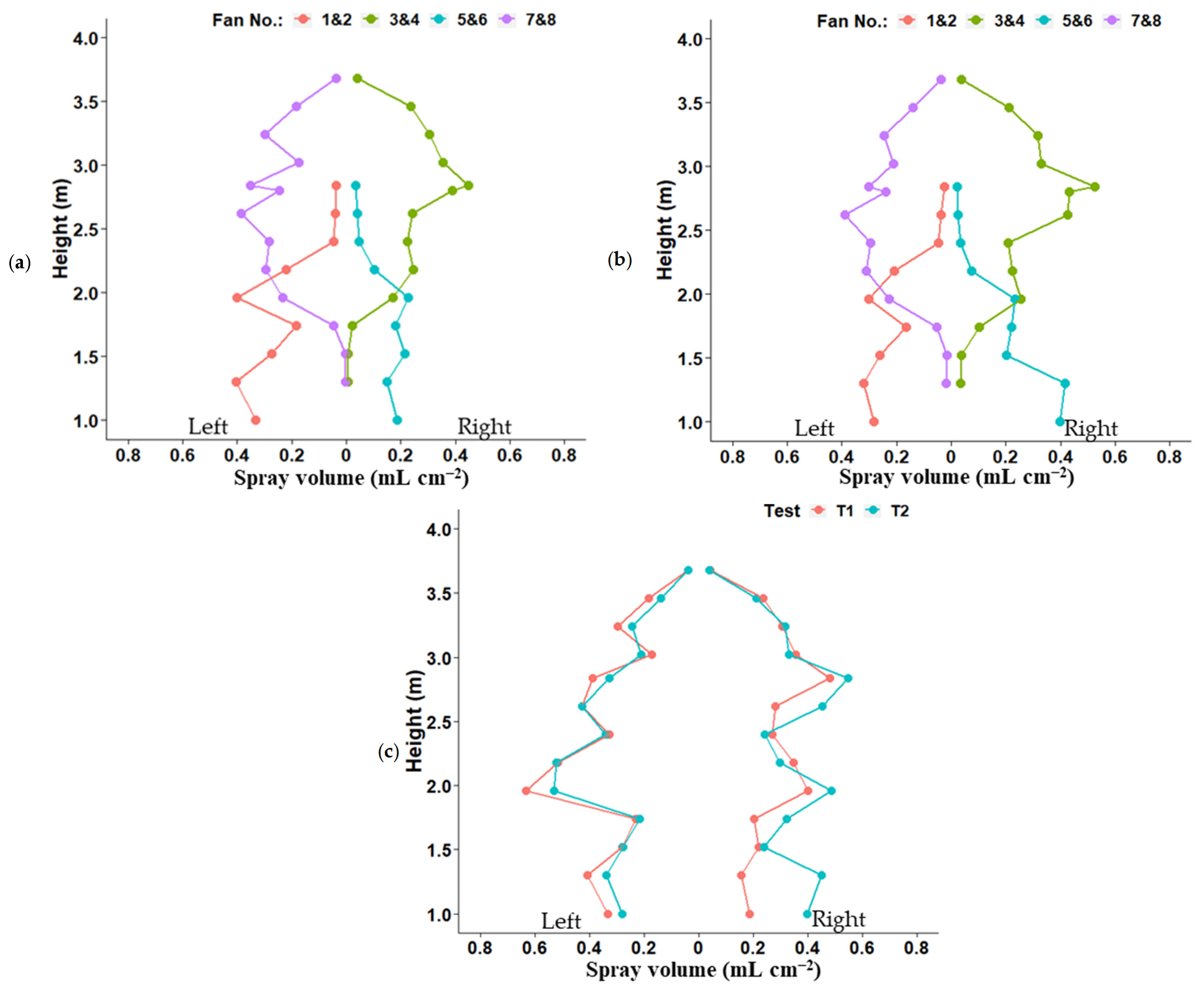
The average normalized spray delivery obtained from bottom fan pairs 1 and 2 and 5 and 6 was in the ranges of 0.03–0.36 mL cm−2 and 0.01–0.38 mL cm−2. While the spray delivery captured from the top pair of fans (i.e., 3 and 4 and 7 and 8) was in the ranges of 0.02–0.48 mL cm−2 and 0.03–0.28 mL cm−2. The average cumulative normalized spray delivery obtained in a vertical plane at a distance of 1.25 m on the left and right side of the sprayer unit was in the ranges of 0.04–0.58 mL cm−2 and 0.04–0.51 mL cm−2, respectively (Figure 7c). Similar to the air velocity patterns, the maximum cumulative spray delivery was quantified for the height range 1.52–2.62 m AGL, on the left sides of the sprayer. However, the height range for maximum spray delivery differed to 1.96–3.02 m AGL.
Highly symmetric spray delivery pattern was observed on either side of the sprayer with average Symmetry values of 84.39% (Figure 7). Moreover, the average Uniformity in spray volume across the sampled height calculated for the left and right side of the sprayer was 46.25% and 50.61%, respectively.

4. Discussion

The spray volume rate per fan assembly was within the recommended deviation range [23], indicating that the nozzle fan assembly was functioning as intended from an operational standpoint. While this consistency alone does not establish overall spray application suitability, it supports the potential of such a nozzle fan assembly to deliver uniform spray distribution at optimal fan speeds. In the current study, the maximum cumulative air velocity was recorded on both sides at heights of 1.52–2.62 m AGL, which corresponds to the middle canopy zone in typical V-trellised orchards. This is possibly due to an overlap in the air flow from the two most middle fans (2 and 7 or 3 and 6).
The average Uniformity for air across the heights, evaluated at 1.25 m away from fan-heads, was in the high range and aligned with Uniformity obtained for commercial axial fan airblast sprayers [30]. Bahlol et al. [30] reported that Uniformity in sprayer air patterns increases with increasing distance from the air outlets. Based on this, air-assist in tested UGV sprayer could provide adequate spray penetration and uniform deposition on the inside as well as opposite sides of the sprayed V-trellised canopy. Moreover, unlike conventional axial-fan airblast sprayers, the air velocity on the tested UGV sprayer can be easily adjusted by setting different fan speeds on the controller and the angles of each fan. Thus, air volume and direction can be adjusted according to canopy vigor and training systems in the tested UGV sprayer by adjusting the fan speed and orientation angles. Overall, from an operational standpoint, the level of Uniformity achieved for the tested sprayer could effectively achieve consistent spray delivery in V-trellised canopies. Additionally, very high Symmetry in air velocity was observed between both sides for the tested sprayer unit. Symmetrical airflow patterns may deliver targeted spraying on pertinent sides, whereas asymmetry could result in uneven coverage. This indicates the importance of innovative air-assistance system designs in efficient agrochemical applications in orchards.
Similar to air velocity, the slightly higher spray volume was recovered in the middle heights, followed by the top and bottom canopy zones. Spraying in a consistent, top-to-bottom deposition pattern is important on a trellised canopy system. While earlier field-based trials showed uneven spray deposition with less in the middle canopy zone compared to other zones, the current study shows a more even air and spray delivery across all heights. This confirms the importance of fixing the hardware issues related to nozzle outputs on fan pair 7 and 8 and the impact on prior field deposition.
In this study, a more consistent average Uniformity (in medium to high range) in spray delivery across height was observed compared to conventional sprayers. The Uniformity difference between sprayer sides was less than 5%, which is low compared to several commercial axial-fan airblast sprayers and falls within the typically accepted tolerance limits [27,30]. These side-to-side differences likely resulted from small variations in fan alignment, airflow interaction with the fan structure, or inherent nozzle flow variability in multi-nozzle, fan-assembly systems. Similar to air velocity, the Symmetry quantified for spray delivery was also in a very high range. This level of Symmetry and Uniformity indicates an even spray application potential across the row sides and canopy height, which is critically important from a crop protection standpoint. The laboratory assessments, supplemented with prior work by Hoheisel et al. [21], suggest that the sprayer can deliver more uniform airflow and spray output to match the selected canopy architecture. To verify this, post-tuneup field trials on spray performance and biological efficacy to control key diseases and pests in apple orchards are warranted. Directing airflow toward the target canopy is expected to enhance spray deposition while further reducing off-target chemical losses. However, variations in localized weather conditions, particularly wind speed, may contribute to non-uniform spray deposition. Wind speeds above 1.8–4.5 m s−1 may create atmospheric instability leading to increased off-target chemical losses [31,32]. Thus, although the existing fan configuration provides adequate airflow for uniform spray applications, further design improvements are needed to implement localized weather-sensing-driven fan speed adjustments.
Despite several benefits, the widespread adoption of the tested autonomous UGV sprayer is still limited by high capital investments. An economic analysis should be performed considering labor savings, increased ground speed, more timely applications, and possible improvements in biological efficacy. The commercial viability of such sprayers can also be increased by incorporating additional features such as crop variability sensing driven variable rate chemical applications. With advances in digital crop load monitoring technologies, several aerial and ground-based commercial mapping platforms are being commercially used in apple orchards to map blossom, canopy vigor, fruitlets, and fruit load variability [33]. These variability maps can be converted into task maps and integrated into precision sprayers for effective crop load management [34]. Similarly, these mapping technologies can also generate disease-variability maps which can be used for site-specific and variable-rate agrochemical applications. Although the existing UGV sprayer is equipped with sensors (LiDAR) that could be used for real-time crop sensing, it has not been utilized for precision spraying yet. Exploring these capabilities in a tested UGV sprayer may offer additional agrochemical savings and large-scale commercial adoption potential.

5. Conclusions

The UGV sprayer design with multiple smaller fans in a tower configuration provided medium to high Uniformity across air (57–58%) and spray delivery (46–51%). Very high Symmetry (84–91%) in these patterns ensures even spray delivery on both sides of the rows. The fans were operated at independent speeds to adjust as per the shape of a V-trellis. However, this can also be adjusted for alternate canopy shapes and sizes, offering wide-scale adoption potential for such spray technology. Return-on-investment assessments to understand the UGV sprayer economic feasibility as well as added features such as variable rate precision spraying, integrated wind speed and direction sensing for airflow adjustments could further enhance application efficiency and commercial viability.

Author Contributions

Conceptualization, D.G.B., G.-A.H. and L.R.K.; methodology, D.G.B., K.U. and S.G.; formal analysis, D.G.B.; investigation, G.-A.H. and L.R.K.; data curation, D.G.B., K.U. and S.G.; writing—original draft preparation, D.G.B.; writing—review and editing, G.-A.H. and L.R.K.; visualization, D.G.B. and K.U.; supervision, G.-A.H. and L.R.K. All authors have read and agreed to the published version of the manuscript.

Funding

This project was funded in part by Washington Tree Fruit Research Commission and USDA NIFA 0745 projects.

Data Availability Statement

The original contributions presented in this study are included in the article. Further inquiries can be directed to the corresponding authors.

Acknowledgments

We would like to thank the Starr Ranch Growers and Prosper Robotics Plus team for providing and operating the sprayer unit during the spray trials. We also appreciate the help from WSU Precision Ag lab members for their support during experimental trials.

Conflicts of Interest

The authors declare no conflicts of interest.

References

  1. USDA-NAAS. Apple Utilized Production in Oregon and Washington. Press Release-National Agricultural Statistics Service. 5 May 2025. Available online: https://www.nass.usda.gov/Statistics_by_State/Idaho/Publications/Census_Press_Releases/2025/FRUIT.pdf (accessed on 10 December 2025).
  2. Rathnayake, A.P.; Chandel, A.K.; Schrader, M.J.; Hoheisel, G.A.; Khot, L.R. Spray Patterns and Perceptive Canopy Interaction Assessment of Commercial Airblast Sprayers Used in Pacific Northwest Perennial Specialty Crop Production. Comput. Electron. Agric. 2021, 184, 106097. [Google Scholar] [CrossRef]
  3. Noble, A. The History and Application of the High-Density Orchard System. Master’s Thesis, California State University, Chico, CA, USA, May 2021. [Google Scholar]
  4. Ahmad, L.; Mahdi, S.S. Variable Rate Technology and Variable Rate Application. In Satellite Farming: An Information and Technology Based Agriculture; Springer: Berlin/Heidelberg, Germany, 2018; pp. 67–80. [Google Scholar]
  5. Saleem, S.R.; Zaman, Q.U.; Schumann, A.W.; Naqvi, S.M.Z.A. Variable Rate Technologies: Development, Adaptation, and Opportunities in Agriculture. In Precision Agriculture; Academic Press: Cambridge, MA, USA, 2023; pp. 103–122. [Google Scholar]
  6. Bhalekar, D.G.; Parray, R.A.; Mani, I.; Kushwaha, H.; Khura, T.K.; Sarkar, S.K.; Lande, S.D.; Verma, M.K. Ultrasonic Sensor-Based Automatic Control Volume Sprayer for Pesticides and Growth Regulators Application in Vineyards. Smart Agric. Technol. 2023, 4, 100232. [Google Scholar] [CrossRef]
  7. Taseer, A.; Han, X. Advancements in Variable Rate Spraying for Precise Spray Requirements in Precision Agriculture Using Unmanned Aerial Spraying Systems: A Review. Comput. Electron. Agric. 2024, 219, 108841. [Google Scholar] [CrossRef]
  8. Paunović, G.; Veljkovic, B.; Ilić, R.; Bošković-Rakočević, L. Economic Analysis of Pear Orchard Establishment. Acta Agric. Serbica 2018, 23, 157–165. [Google Scholar] [CrossRef]
  9. Roettele, M.; Laabs, V.; Rutherford, S. The Importance of Sprayer Inspections in the EU from a Chemical Industry Perspective. SPISE 2018, 7, 37. [Google Scholar]
  10. Sahni, R.K.; Ranjan, R.; Hoheisel, G.A.; Khot, L.R.; Beers, E.H.; Grieshop, M.J. Pneumatic Spray Delivery-Based Solid Set Canopy Delivery System for Oblique Banded Leaf Roller and Codling Moth Control in a High-Density Modern Apple Orchard. Pest Manag. Sci. 2022, 78, 4793–4801. [Google Scholar] [CrossRef]
  11. Bhalekar, D.G.; Sahni, R.K.; Schrader, M.J.; Khot, L.R. Pneumatic Spray Delivery-Based Fixed Spray System Configuration Optimization for Efficient Agrochemical Application in Modern Vineyards. Pest Manag. Sci. 2024, 80, 4044–4054. [Google Scholar] [CrossRef]
  12. Schrader, M.J.; Bhalekar, D.G.; Sahni, R.K.; Khot, L.R. Unmanned Aerial Sprayers: Evaluating Platform Configurations and Flight Patterns for Effective Chemical Applications in Modern Vineyards. Smart Agric. Technol. 2025, 11, 101033. [Google Scholar] [CrossRef]
  13. Shan, C.; Xue, C.; Zhang, L.; Song, C.; Kaousar, R.; Wang, G.; Lan, Y. Effects of Different Spray Parameters of Plant Protection UAV on the Deposition Characteristics of Droplets in Apple Trees. Crop Prot. 2024, 184, 106835. [Google Scholar] [CrossRef]
  14. Li, L.; Liu, Y.; He, X.; Song, J.; Zeng, A.; Wu, Z.; Tian, L. Assessment of Spray Deposition and Losses in the Apple Orchard from Agricultural Unmanned Aerial Vehicle in China. In Proceedings of the 2018 ASABE Annual International Meeting, Detroit, MI, USA, 29 July–1 August 2018; ASABE: St. Joseph, MI, USA, 2018. [Google Scholar]
  15. Wang, C.; Liu, Y.; Zhang, Z.; Han, L.; Li, Y.; Zhang, H.; Wongsuk, S.; Li, Y.; Wu, X.; He, X. Spray Performance Evaluation of a Six-Rotor Unmanned Aerial Vehicle Sprayer for Pesticide Application Using an Orchard Operation Mode in Apple Orchards. Pest Manag. Sci. 2022, 78, 2449–2466. [Google Scholar] [CrossRef]
  16. Kumar, V.; Dolma, S.; Fatima, N. An Autonomous Unmanned Ground Vehicle: A Technology-Driven Approach for Spraying Agro-Chemicals in Agricultural Crops. Environ. Ecol. 2024, 42, 1069–1078. [Google Scholar] [CrossRef]
  17. Wei, Z.; Xue, X.; Salcedo, R.; Zhang, Z.; Gil, E.; Sun, Y.; Li, Q.; Shen, J.; He, Q.; Dou, Q.; et al. Key Technologies for an Orchard Variable-Rate Sprayer: Current Status and Future Prospects. Agronomy 2022, 13, 59. [Google Scholar] [CrossRef]
  18. Wang, S.; Song, J.; Qi, P.; Yuan, C.; Wu, H.; Zhang, L.; Liu, W.; Liu, Y.; He, X. Design and Development of Orchard Autonomous Navigation Spray System. Front. Plant Sci. 2022, 13, 960686. [Google Scholar] [CrossRef] [PubMed]
  19. Yue, B.; Zhang, Z.; Zhang, W.; Luo, X.; Zhang, G.; Huang, H.; Wu, X.; Bao, K.; Peng, M. Design of an Automatic Navigation and Operation System for a Crawler-Based Orchard Sprayer Using GNSS Positioning. Agronomy 2024, 14, 271. [Google Scholar] [CrossRef]
  20. Lochan, K.; Khan, A.; Elsayed, I.; Suthar, B.; Seneviratne, L.; Hussain, I. Advancements in Precision Spraying of Agricultural Robots: A Comprehensive Review. IEEE Access 2024, 12, 129447–129483. [Google Scholar] [CrossRef]
  21. Hoheisel, G.A.; Bhalekar, D.G.; Gorthi, S.; Khot, L.R. Automated Single-Row Multi-Fan Sprayer Optimization for Efficient Spray Application in Modern Apple Orchards. In Precision Agriculture ′25; Wageningen Academic: Wageningen, The Netherlands, 2025; p. 292. [Google Scholar] [CrossRef]
  22. Çomaklı, M.; Sayıncı, B. A Novel Image-Based Method for Measuring Spray Pattern Distribution in a Mechanical Patternator. Agriculture 2025, 15, 2337. [Google Scholar] [CrossRef]
  23. ISO 5682-1:2017; Equipment for Crop Protection—Spraying Equipment Part 1: Test Methods for Sprayer Nozzles. ISO: Geneva, Switzerland, 2017. Available online: https://www.iso.org/standard/60053.html (accessed on 15 December 2025).
  24. Bahlol, H.Y.; Chandel, A.K.; Hoheisel, G.A.; Khot, L.R. Smart Spray Analytical System for Orchard Sprayer Calibration: A Proof-of-Concept and Preliminary Results. Trans. ASABE 2020, 63, 29–35. [Google Scholar] [CrossRef]
  25. WindSonic1 2-D Sonic Wind Sensor with RS-232 Output; Product Manual-Campbell Scientific Inc.: Logan, UT, USA, 2025; Available online: https://www.campbellsci.com/windsonic1 (accessed on 22 November 2025).
  26. ISO 24253-1:2015; Crop Protection Equipment—Spray Deposition Test for Field Crop Part 1: Measurement in a Horizontal Plane. ISO: Geneva, Switzerland, 2015. Available online: https://www.iso.org/standard/60051.html (accessed on 19 December 2025).
  27. Farooq, M.; Landers, A.J. Interactive Effects of Air, Liquid and Canopies on Spray Patterns of Axial-Flow Sprayers. In Proceedings of the 2004 ASAE Annual Meeting, St. Joseph, MI, USA, 1–4 August 2004; ASABE: St. Joseph, MI, USA, 2004. [Google Scholar]
  28. Gil Moya, E.; Landers, A.; Gallart González-Palacio, M.; Llorens Calveras, J. Development of Two Portable Patternators to Improve Drift Control and Operator Training in the Operation of Vineyard Sprayers. Span. J. Agric. Res. 2013, 11, 615–625. [Google Scholar] [CrossRef]
  29. R Core Team. R: A Language and Environment for Statistical Computing; R Foundation for Statistical Computing: Vienna, Austria, 2025. [Google Scholar]
  30. Bahlol, H.Y.; Chandel, A.K.; Hoheisel, G.A.; Khot, L.R. The Smart Spray Analytical System: Developing Understanding of Output Air-Assist and Spray Patterns from Orchard Sprayers. Crop Prot. 2020, 127, 104977. [Google Scholar] [CrossRef]
  31. Felsot, A.S.; Unsworth, J.B.; Linders, J.B.; Roberts, G.; Rautman, D.; Harris, C.; Carazo, E. Agrochemical Spray Drift: Assessment and Mitigation—A Review. J. Environ. Sci. Health Part B 2010, 46, 1–23. [Google Scholar] [CrossRef]
  32. Amogi, B.R.; Khot, L.R.; Patel, J.V.; Hill, S. Localized Weather Forecast Guided Spray Application Advisory Web Tool for the US Pacific Northwest. In Precision Agriculture ′25; Wageningen Academic: Wageningen, The Netherlands, 2025; pp. 792–798. [Google Scholar] [CrossRef]
  33. Wallis, A.; Clements, J.; Sazo, M.M.; Kahlke, C.; Lewis, K.; Kon, T.; Gonzalez, L.; Jiang, Y.; Robinson, T. Digital Technologies for Precision Apple Crop Load Management (PACMAN) Part I. N. Y. Fruit Q. 2023, 31, 8–13. [Google Scholar]
  34. Kang, C.; Kumar, S.K.; He, L. Integrating Computer Vision and Precision Sprayers for Targeted Green Fruit Chemical Thinning. Precis. Agric. 2025, 26, 86. [Google Scholar] [CrossRef]
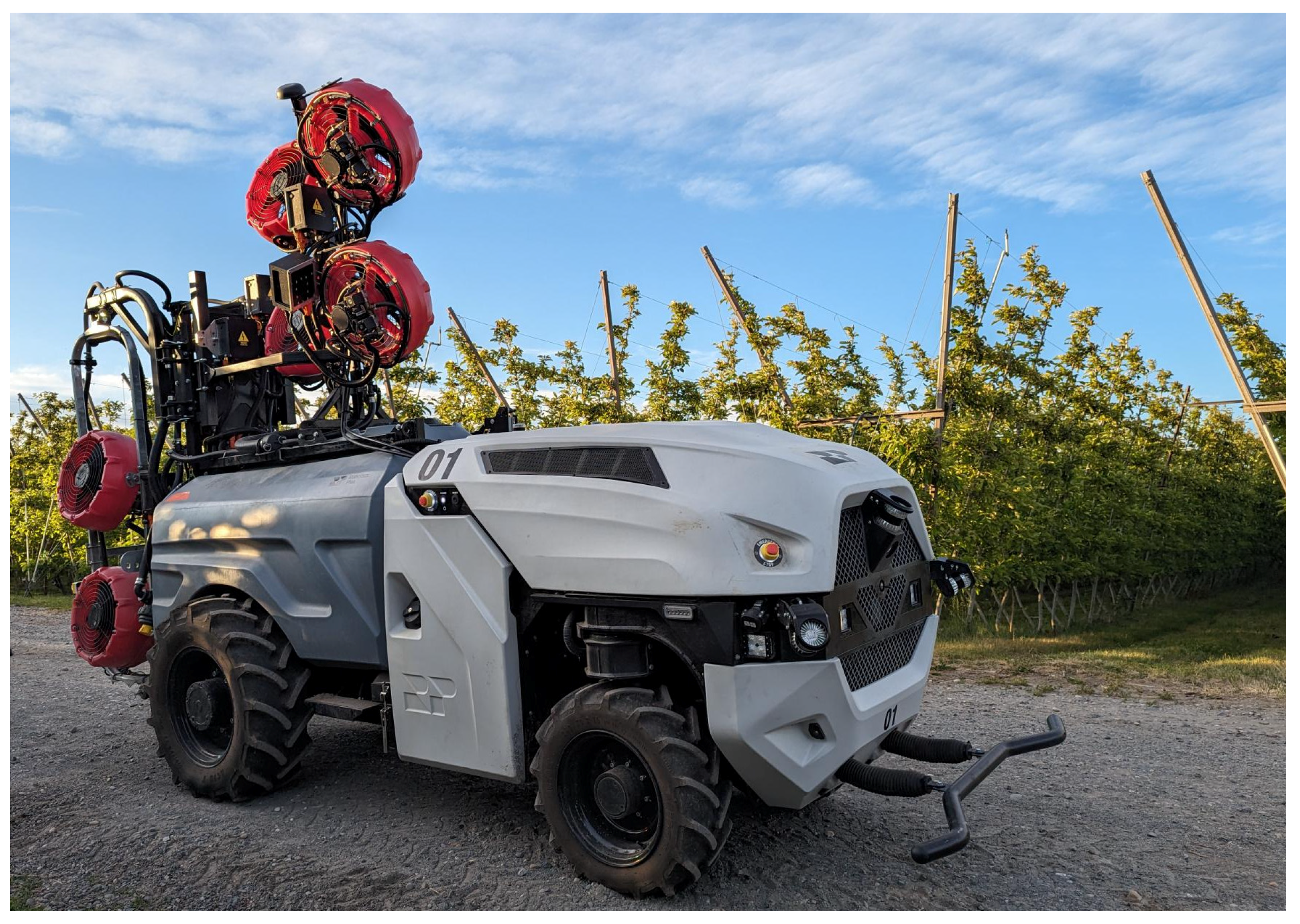
Figure 1. Side view of the tested autonomous unmanned ground vehicle sprayer with eight fans configured in the top and bottom sprayer sections.
Agronomy 16 00344 g001
Figure 2. Schematics of (a) rear view of sprayer unit with nozzle fan assembly (1–8) and (b) smart spray analytical system setup for measuring air velocity and spray delivery patterns.
Agronomy 16 00344 g002
Figure 3. Weather conditions monitored during air and spray delivery pattern assessment trials.
Agronomy 16 00344 g003
Figure 4. Liquid level sensor calibration for integrating the regression fit to correct measured spray volumes in the smart spray analytical system embedded algorithm.
Agronomy 16 00344 g004
Figure 5. Variation in fan-specific cumulative flow rates on the tested sprayer unit.
Agronomy 16 00344 g005
Figure 6. Air velocity patterns obtained across the sampling heights for, (a) test 1, (b) test 2, and (c) cumulatively on the left and right side of the sprayer.
Agronomy 16 00344 g006
Figure 7. Spray patterns obtained across the sampling heights for, (a) test 1, (b) test 2, and (c) cumulatively on left and right side of the sprayer for both tests.
Agronomy 16 00344 g007
Table 1. The sprayer fan-specific nozzle flow rates quantified at 414 kPa operating pressure (mean ± SD, L min−1).
FanPositionOrientationNozzle Flow Rate (L min−1)
BrownYellow
1BottomLeft0.39 ± 0.040.67 ± 0.04
2BottomLeft0.41 ± 0.030.69 ± 0.02
3TopRight0.38 ± 0.030.67 ± 0.03
4TopRight0.41 ± 0.040.66 ± 0.04
5BottomRight0.38 ± 0.010.68 ± 0.03
6BottomRight0.38 ± 0.040.70 ± 0.02
7TopLeft0.33 ± 0.030.67 ± 0.02
8TopLeft0.41 ± 0.030.66 ± 0.05
Disclaimer/Publisher’s Note: The statements, opinions and data contained in all publications are solely those of the individual author(s) and contributor(s) and not of MDPI and/or the editor(s). MDPI and/or the editor(s) disclaim responsibility for any injury to people or property resulting from any ideas, methods, instructions or products referred to in the content.