Article

Effects of Formulation on Spray Nozzle Performance for Applications from Unmanned Aerial Spraying Systems (UASSs)

1
School of Mechanical and Electrical Engineering, Huainan Normal University, Huainan 232038, China
2
Human-Computer Collaborative Robot Joint Laboratory of Anhui Province, Huainan 232038, China
3
College of Agricultural Engineering and Food Science, Shandong University of Technology, Zibo 255022, China
4
National Center for International Collaboration Research on Precision Agricultural Aviation Pesticide Spraying Technology, Guangzhou 510642, China
*
Author to whom correspondence should be addressed.
Agronomy 2026, 16(1), 76; https://doi.org/10.3390/agronomy16010076
Submission received: 25 November 2025 / Revised: 20 December 2025 / Accepted: 24 December 2025 / Published: 26 December 2025

Abstract

The atomization performance of the nozzle is a critical factor influencing the pesticide application efficiency and drift behavior of agricultural unmanned aerial spraying systems (UASSs). However, the underlying atomization mechanisms of such nozzles have not yet been fully elucidated. In this study, a Particle Image Velocimetry (PIV) system was employed to evaluate the liquid sheet breakup mode, breakup length, droplet size distribution, and velocity distribution of a fan-shaped nozzle used in UASSs. Experiments were conducted under a series of spray pressures (ranging from 0.10 to 0.50 MPa, with an increment of 0.05 MPa) using sodium dodecylbenzenesulfonate (SDS) surfactant solutions at four concentrations (0%, 0.2%, 0.5%, and 1.0%). The results demonstrated that both the SDS surfactant and spray pressure significantly influenced the liquid sheet breakup process and atomization behavior. High concentrations of surfactant solution had a pronounced effect on the surface tension of the spraying liquid, delaying the onset of liquid sheet breakup, enlarging the overall droplet size distribution, and reducing the droplet velocity components along the X-axis and Y-axis. Conversely, higher spray pressures facilitated liquid sheet breakup, decreased the overall droplet size, and increased the droplet velocity distribution. This study provides fundamental experimental data for quantifying the effects of solution surface tension and spray pressure on the atomization performance of fan-shaped nozzles. These data provide systematic support for the evaluation of nozzle atomization performance.

1. Introduction

Chemical pesticides are an important means employed in crop management for the control of diseases, pests, and weeds. However, the improper use of chemical pesticides can reduce their efficacy and pose significant threats to the surrounding environment and public safety [1,2,3], especially when pesticides move beyond the target area during their application process.
The pesticide is atomized into fine droplets by the nozzle component of the spraying device, forming a droplet cluster. Each individual droplet within the cluster has its own initial droplet size and velocity attributes, and droplets with different properties together form a droplet cluster with a specific size and velocity distribution. The initial distribution of droplets within a droplet cluster significantly influences their trajectories from the nozzle to the target [4]. Droplets with diameters less than 200 μm, when released from a height of 2 m, exhibit substantial drift under ambient wind conditions of 5 km/h [5]. The initial droplet size and velocity distributions serve as essential input parameters for constructing models of droplet trajectories [6,7,8]. Using computational fluid dynamics (CFD), Tang [9] simulated the downwash flow field generated by a single-rotor unmanned aerial vehicle (UAV) and analyzed the trajectories of droplets influenced by this flow field. At 3.8 bar spray pressure, they experimentally measured the initial distribution of droplet characteristics and used these as the principal characterizing droplet dispersion in the trajectory model. In addition to numerical simulation approaches, researchers have also validated the influence of nozzle atomization patterns on both the deposition quality of pesticide droplets within target areas and the drift risk in non-target zones through extensive experimental investigations [10]. Liu [11] conducted experiments using PIV systems and wind tunnel laboratories to investigate the atomization characteristics and drift behavior of various hydraulic nozzles spraying different pesticide adjuvants. By analyzing the correlation between droplet size distribution and drift potential, the study revealed a strong and statistically significant relationship between the proportion of droplets smaller than 150 μm in the initial atomized droplet group and the drift potential. Current research on the influence of atomization characteristics on droplet deposition predominantly focuses on droplet size [12,13]. Correspondingly, existing nozzle classification criteria are primarily based on the measurement of droplet diameter, with little consideration given to droplet velocity. This is largely due to the inherent difficulty in accurately measuring droplet velocity and the associated challenges in interpreting such measurements. For hydraulic nozzles, increasing the spray pressure not only results in smaller droplet sizes but also leads to higher initial droplet velocities. While smaller droplets tend to increase the risk of drift due to their lower inertia, the higher initial velocities reduce the airborne residence time of the droplets, thereby mitigating the overall drift potential. Therefore, the trajectory of droplet movement is determined by the combined effect of droplet size and velocity. Therefore, assessing the influence of atomization performance on droplet trajectories solely from the perspective of droplet size is incomplete. Droplet velocity is likewise critical. In particular, the downwash flow generated by agricultural UAVs assists droplet transport toward the target [14], and the initial ejection velocity can substantially affect in-flight trajectories. This contrasts with conventional ground-based sprayers, for which droplet speeds may rapidly decay to minimal levels due to aerodynamic drag. Accordingly, this study focuses on investigating the distribution of droplet size and velocity under different spraying conditions.
The atomization characteristics of nozzles are influenced by a variety of factors, among which liquid spray pressure is a critical parameter. In the study conducted by Ferguson [15], the liquid pressure was adjusted to achieve different spray volumes, thereby altering the initial droplet size distribution. The results demonstrated that, compared to a spray volume of 50 L/ha, a spray volume of 100 L/ha resulted in a finer droplet spectrum, with a higher proportion of smaller droplets. In addition to droplet size, the velocity of droplets plays a critical role in determining their residence time in the air. Higher droplet velocities confer greater momentum, enhancing the droplets’ ability to penetrate through air resistance and thereby reducing the risk of drift. Dorr et al. [16] investigated the droplet size and velocity distributions produced by various types of hydraulic nozzles under different spray pressures. Based on these experimental observations, a regression model was established to describe the relationship between droplet velocity, spray pressure, and droplet size. The physical properties of the solution, namely surface tension, viscosity, and density, also influence the initial distribution characteristics of the generated droplets. Among these properties, surface tension and viscosity play critical roles during the formation of the liquid sheet as the solution passes through the nozzle. Furthermore, these two parameters significantly affect the subsequent atomization process, during which the liquid sheet interacts with the surrounding airflow to form droplets. These interactions ultimately govern the resulting droplet size distribution. To reduce droplet drift, Hoffmann et al. [17] conducted experiments in a high-speed wind tunnel to simulate aerial spraying conditions. They investigated the effects of eight different spray adjuvants—each characterized by distinct surface tension and viscosity properties—on the droplet size distribution of spray mixtures. The airflow environment surrounding the nozzle plays a critical role in influencing the atomization process of the liquid sheet. This environment encompasses both the natural airflow present in the ambient field conditions and the artificial airflow disturbances induced by the operation of spraying equipment. During aerial spraying with fixed-wing aircraft, the high-speed flight significantly increases the relative velocity between the nozzle and the surrounding air, thereby intensifying the breakup of the liquid sheet. In the case of rotor-based UAVs, the downward airflow generated by rotor rotation exerts a pronounced effect on droplet atomization. By contrast, under natural field conditions, the ambient airflow is relatively weak and predominantly influences the transport of atomized droplets toward the target [18]. Extensive research has been conducted on the structural design of nozzles by scholars aiming to mitigate droplet drift [19,20,21]. To this end, drift-reducing nozzles have been developed based on the Venturi principle [22]. These nozzles introduce high-speed airflow into the liquid pesticide stream, facilitating gas–liquid mixing during both the liquid sheet formation and the subsequent atomization into droplets. This incorporation of air leads to the generation of gas-filled droplets, which exhibit increased droplet sizes and thereby reduce the likelihood of drift.
Based on the foregoing analysis of the factors influencing initial atomization, it is clear that, for flat-fan nozzles commonly used on crop-protection UAVs, spray pressure, the physicochemical properties of the spray liquid, and the geometric parameters of the nozzle are the key determinants. Prior studies have largely compared atomization performance across multiple nozzle types or among several spray adjuvants. However, systematic investigations focused on a specific nozzle–adjuvant combination are scarce. Such work is necessary because, in practice, frequently changing nozzles and adjuvants to accommodate operating conditions is cumbersome for operators. Therefore, this study, using a nozzle and adjuvant commonly employed on UAVs, investigates in depth the effects of adjuvant concentration and spray pressure on the liquid sheet breakup process and the initial atomization characteristics of a representative flat-fan nozzle, with the aim of providing a scientific basis for improving the deposition performance of pesticide droplets and mitigating their drift during field application.

2. Materials and Methods

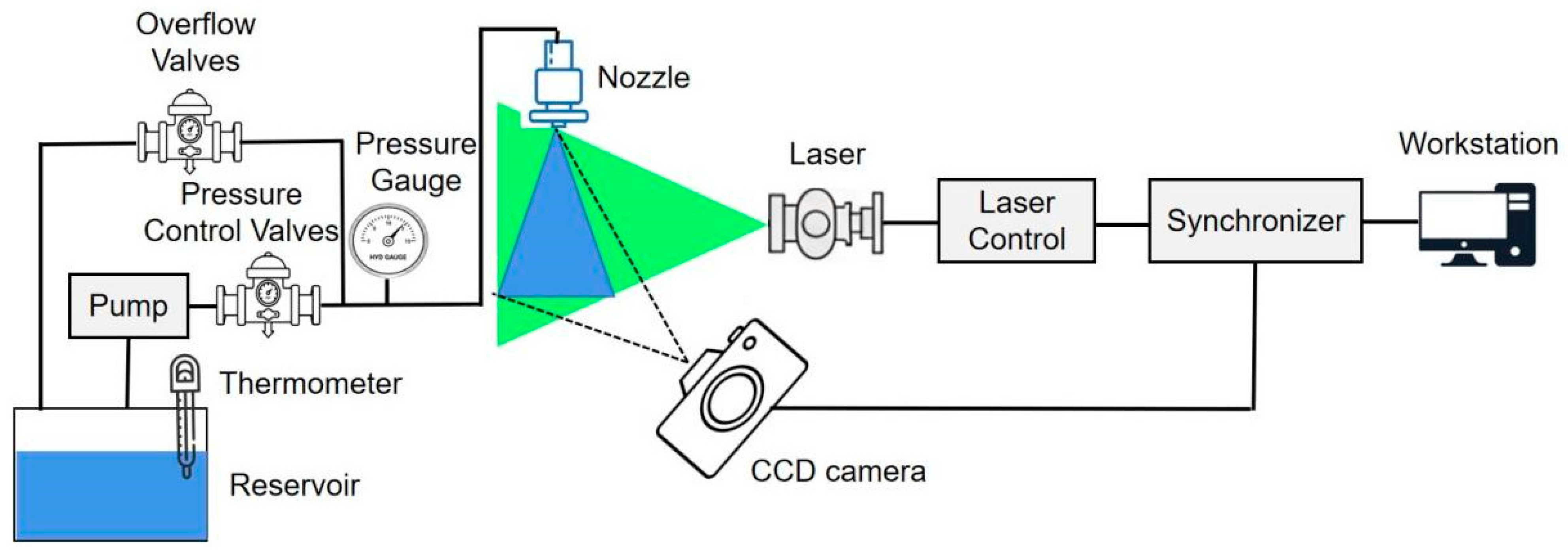
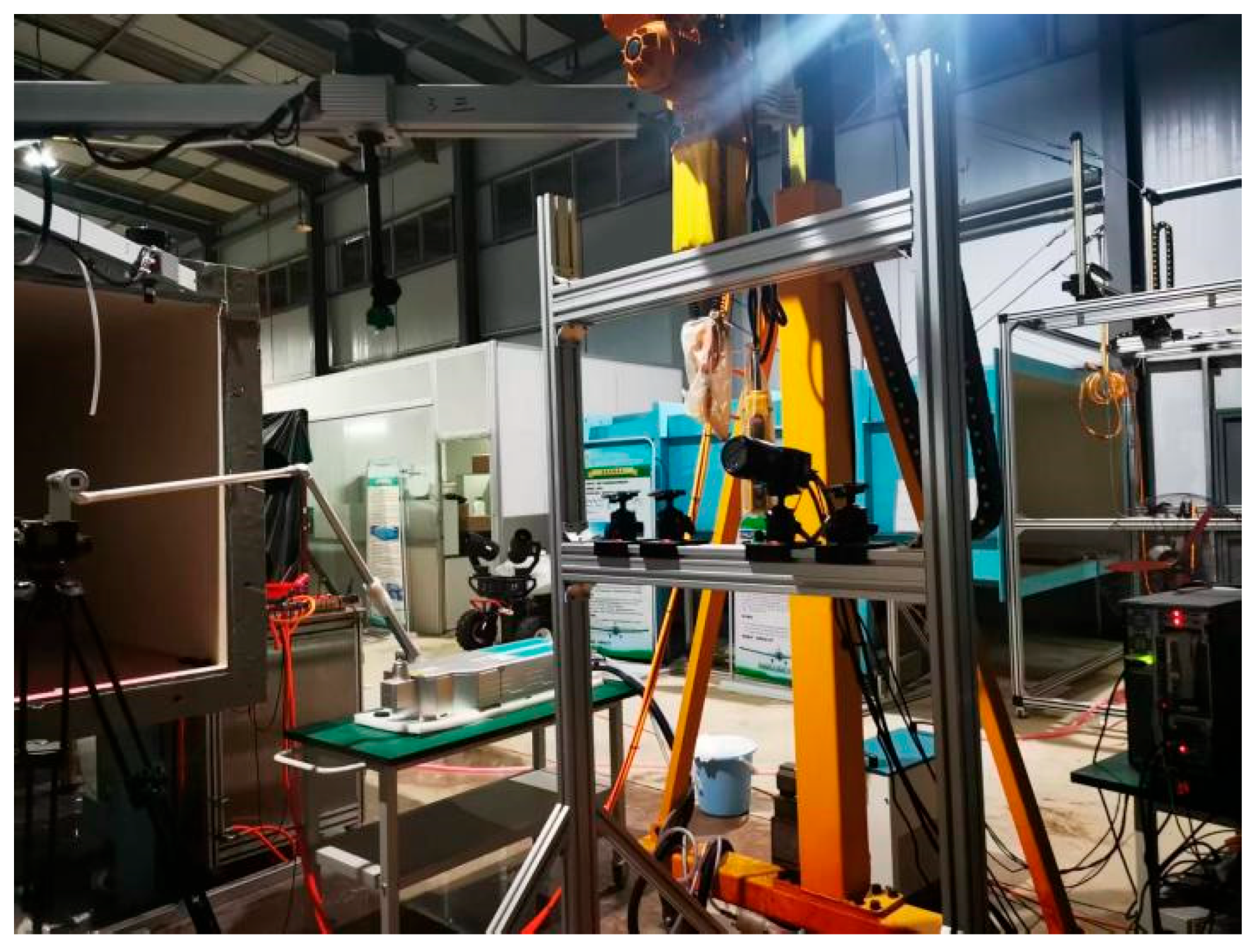
The experimental setup used in this study is shown in Figure 1, and it concludes a PIV system and a spraying system. The test site is shown in Figure 2.

2.1. Spraying Systems

In the spraying system, water and SDS solutions of different concentrations stored in a tank were pressurized by a hydraulic pump, adjusted to the required experimental hydraulic pressures through a pressure control valve, and then transported through pipes to the nozzle, where they were atomized into droplets. An overflow valve was installed in the pipeline to serve as a safety mechanism, protecting the hydraulic system. A thermometer (TJ36-CAXL, Omega, Manchester Township, NJ, USA) was placed inside the tank to monitor the temperature of the solution, ensuring that the temperature variation of the solution remained within ±1 °C throughout the entire experimental period. The nozzle utilized in this study was a hydraulic nozzle (Teejet 110015, Spraying Systems Co., Ltd., Wheaton, IL, USA) commonly used on commercial plant protection drones. According to the manufacturer’s specifications, the spray angle of this nozzle model is 110° at a spray pressure of 0.28 MPa.

2.2. PIV-Based Flow Visualization Technique

The PIV system produced by TSI Incorporated was used to capture the dynamic evolution of liquid sheet and atomization information. The acquired data were subsequently extracted and analyzed for further insights. The PIV system consists of a CCD camera, a laser device, a synchronizer, an image analysis software, and a macro lens. The Litron laser device, consisting of a dual-pulse laser, a laser source and two laser arms, is capable of emitting two independent laser beams with a maximum emission frequency of 15 Hz. In this experiment, the emission frequency was set to 7.5 Hz. The time interval between the emissions of the two laser beams is dependent on the velocity of the liquid sheet. The laser source employed to empower the dynamic flow field includes a cylindrical lens and a spherical lens. The cylindrical lens expands the field angular of view of the light, while the spherical lens is used to control the thickness of the light sheet in the measurement area. The laser source is adjusted to achieve a laser sheet thickness of approximately 1 mm in the measurement region, where the laser intensity is relatively high at this thickness. The lens plane of the CCD camera (model 630091) with a resolution of 2048 × 2048 pixels is parallel to the liquid sheet plane during atomization in order to capture the plane information of the liquid sheet. The CCD camera, laser, and workstation are all connected through a synchronizer (model 610036), enabling coordinated operation of the system components. Upon receiving a command from the workstation, the synchronizer triggers the camera and laser to operate synchronously, positioning itself as the central component within the entire system. In addition to the hardware components used for data acquisition, the Tecplot software 11.1.0 is employed to analyze the motion parameters of particles, thereby obtaining the velocity field and size field of the droplet within the images.
The laser emitted by the laser source is co-planar with the spray plane, and the plane of the CCD camera lens is parallel to both the spray plane and laser plane. In this experiment, the distance between the nozzle and the laser source is 1 m, while the distance between the nozzle and the camera is 0.5 m.
Before the experiment, the camera position was adjusted to ensure that the entire liquid sheet and the initial droplets formed are within the field of view. A steel ruler was placed vertically in the same plane as the liquid sheet beneath the nozzle to calibrate the relationship between image pixels and actual dimensions. The calibration value for this experiment is that one pixel represents 39.92 µm. Each experimental group was repeated 100 times for image capture. Due to the laser emitting dual pulses during each exposure time of the camera, the frame capture system takes two snapshots per exposure. Therefore, each treatment resulted in a total of 200 frames of images.

2.3. Spray Mixtures

In this experiment, the SDS adjuvant (neoFroxx GmbH, Einhausen, Germany) was chosen to determine the surface tension of the solution. To investigate the effects of solution surface tension on liquid sheet breakup and atomization, different concentrations of SDS solutions were prepared. According to the study of Song [23], when the concentration of SDS exceeds 0.5%, the reduction in surface tension becomes slower and less significant. Therefore, the SDS solutions were configured with the concentrations of 0, 0.2%, 0.5%, and 1.0%, respectively. By analyzing the data from these concentrations, the interplay how the surface tension impacts liquid sheet breakup and ultimately the effectiveness of atomization in agricultural spraying systems was understood. For the preparation of spray solution, ultrapure water was used as the solvent, which was produced by an ultrapure water system (Milli-Q, Millipore Corporation, Billerica, MA, USA). The ultrapure water produced by filtering regular water through the two-stage purification columns of the ultrapure water system contains very few impurities and has a high purity, meeting the water quality requirements for the spraying experiment.
The physical properties of the solution mainly include surface tension, viscosity, and density. The surface tension, viscosity, and density parameters of SDS solutions at different concentrations were measured using a surface tensiometer (EZ-Piplus, Kibron, Helsinki, Finland), a viscometer (NDJ-5S, Bangxi Instrument Technology Co., Ltd., Shanghai, China), and a densimeter (XF-120YT, Lichen Technology, Shanghai, China). The indoor temperature and relative humidity during the measurement of the solution’s physical properties were maintained at 25 ± 1 °C and 55% ± 2%, respectively. In this experiment, each spraying solution to be tested was atomized using a series of spray pressures ranging from 0.10 to 0.50 MPa, with an interval gradient of 0.05 MPa (0.10, 0.15, 0.20, 0.25, 0.30, 0.35, 0.40, 0.45, and 0.50 MPa). The pressure levels were selected based on the pressure range attainable from the agricultural UAV’s pump.

2.4. Data Processing and Analysis

The Tecplot software in the PIV system was used for data extraction and analysis of the captured atomization flow field images. This process includes image calibration, image preprocessing, selection of the computational domain, image processing methods, and data post-processing. Image calibration is used to establish the relationship between image pixels and the actual size of the scene. Through preprocessing, the color image can be converted into a grayscale image, which facilitates subsequent droplet recognition and vector calculation. The Super-resolution Particle Velocimetry module was used to calculate the size and velocity vectors of droplet within the computational domain. Droplets in the image were identified when their grayscale value exceeds 40 and the droplet size was calculated through the calibration relationship. When calculating velocity vectors, the computational grid size was adjusted so that the displacement of droplet between a pair of images does not exceed one-quarter of the grid. Image post-processing involved repairing particles with calculation errors during the image processing, mainly by averaging the velocity vectors of the 5 × 5 surrounding droplets to provide the corrected value.
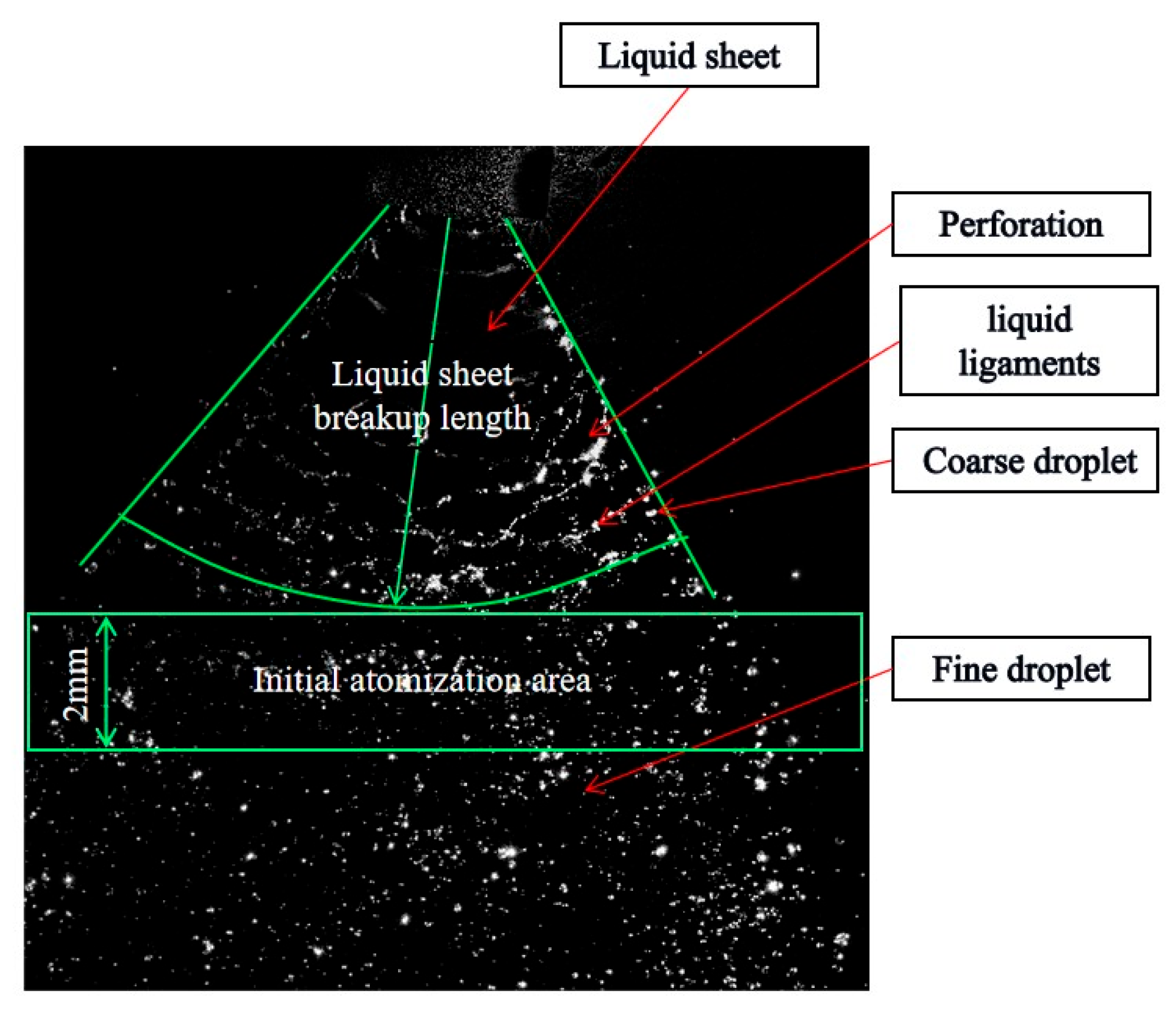
The breakup point refers to the position where the liquid sheet initial breaks and forms a liquid ribbon, and the breakup distance is the distance between the breakup point and the center of the nozzle exit. In actual spraying, the breakup distance is not constant, as the breakup point of the liquid sheet is primarily influenced by unstable waves, exhibiting periodicity. To ensure sufficient breakup of droplets and to detect their initial distribution, a 2 mm wide atomization zone was selected 60 mm below the nozzle to observe the breakup length of the liquid sheet, as shown in Figure 3.
Data within the target regions of the acquired images were processed and extracted. Examination of the raw data revealed several outlier droplets, likely caused by PIV system noise, the projection of multiple droplets onto a two-dimensional plane being misidentified as a single large droplet, or secondary fragmentation of individual droplets. This led to mismatches between consecutive frames and abnormal velocities. To reduce the impact of these outliers, anomalous values were identified and removed using the interquartile range (IQR) method.
The droplets formed by the breakup of the liquid ribbon exhibited irregular shapes and quickly shrank into approximately spherical shapes under the action of surface tension. Due to the high speed of the droplets after initial atomization and the influence of air resistance, coarser droplets underwent deformation. Equation (1) is used to calculate the diameter of irregular spheres. In the formula, d1 represents the short axis length (µm) of the irregular sphere, and d2 represents the long axis length (µm) of the irregular sphere.
d = d 1 d 2
According to the ASABE S641 standard [24] published by the American Society of Agricultural and Biological Engineers (ASABE), the median droplet volume diameter (DV0.5) was used as an indicator of the overall droplet size distribution in a droplet group. Therefore, this experiment also used the DV0.5 parameter to measure the initial droplet size distribution. Additionally, based on the research by Ferguson et al. [15], droplets smaller than 150 µm had a higher potential for drift. Therefore, this experiment adopted the V<150(%vol) parameter to assess the degree of drift susceptibility in the droplet group. Specifically, the DV0.5 refers to the droplet size corresponding to the point where the cumulative volume of droplets, arranged from smallest to largest, reaches 50% of the total detected volume during a spray. V<150(%vol) refers to the percentage of the total detected droplet volume made up of droplets smaller than 150 µm.

3. Results

3.1. Physical Properties of the Spraying Solution

As shown in Table 1, the physical property parameters of the spraying solution used in this experiment are presented, including surface tension, dynamic viscosity, and density. From the table, it can be observed that the SDS surfactant primarily determines the surface tension of the spraying solution. As the concentration of the SDS surfactant increases, the surface tension gradually decreases, with values of 72.8, 49.7, 43.3, and 36.1 mN·m−1, respectively. The SDS surfactant has a minimal impact on the dynamic viscosity and density of the solution.

3.2. Breakup Mode

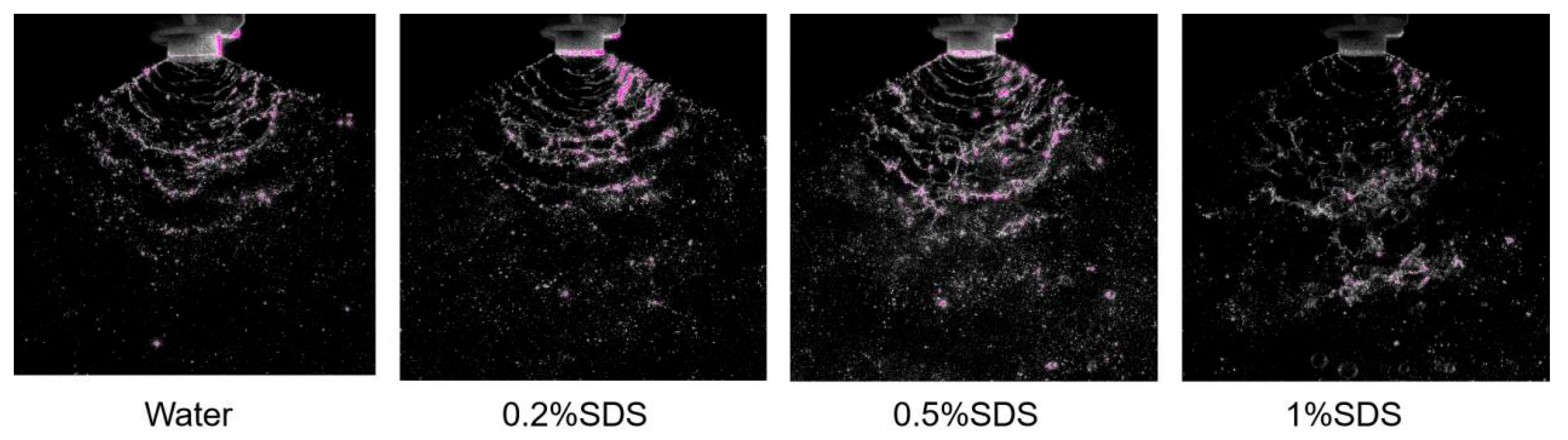
This study investigated the effects of solution surface tension and the spray pressure on the dynamic evolution of the liquid sheet and the resulting atomization behavior. Figure 4 shows the evolution of the liquid sheet morphology for SDS solutions at concentrations of 0%, 0.2%, 0.5%, and 1.0% under a spraying pressure of 0.3 MPa. As the solution exits the nozzle, it initially extends into a liquid sheet, which subsequently undergoes atomization into liquid ligaments and droplets. From Figure 4, it can be observed that disturbance waves were present on the surface of the liquid sheet. As the solution concentration increased, these disturbance waves became more pronounced. At a concentration of 0.5%, small bubbles appeared in the atomization region. When the concentration increased to 1.0%, bubbles formed upon the rupture of the liquid sheet. These bubbles, retaining a portion of their kinetic energy, interacted with the surrounding air and underwent further atomization, resulting in the formation of fine droplets. It can also be observed from the figure that the liquid sheet formed by the high-concentration SDS solution exhibited a relatively larger surface area, and its spatial evolution tended to be more unstable.
A comprehensive analysis shows that, at higher concentrations, the lower surface tension weakens the restoring force of liquid sheet. As a result, ambient-flow perturbations drive the liquid sheet to expand outward more easily, leading to a larger exposed area. This manifests as stronger surface fluctuations and enhanced spreading, which promote bubble formation via air entrainment.
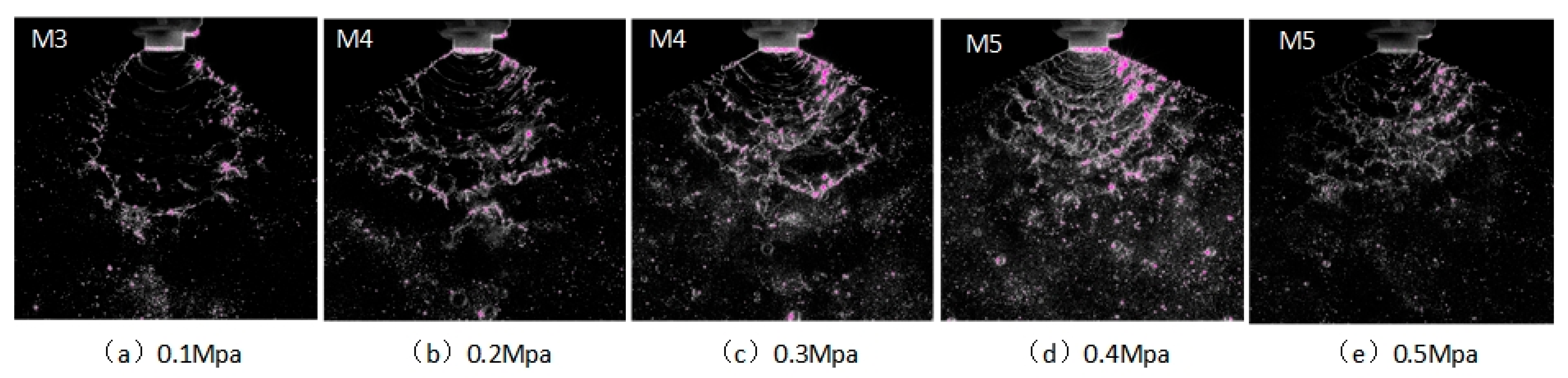
Figure 5 shows the morphological characteristics of the liquid sheet formed under spray pressures of 0.1, 0.2, 0.3, 0.4, and 0.5 MPa, respectively, when the concentration of the SDS adjuvant in the solution was 1.0%. According to the classification of liquid sheet breakup modes proposed by Kampen and Ma [25,26], five modes can be identified: closed-rim (mode 1), open-rim (mode 2), rimless mode (mode 3), wave or ligament mode (mode 4), and fully developed mode (mode 5). The image clearly shows that when the spray pressure was 0.1 MPa, the breakup mode was characterized by rimless mode. There was no distinct liquid sheet boundary at the downstream edge of the liquid sheet, resulting in irregular fragmentation. In the spray pressure range of 0.2–0.3 MPa, the breakup mode was characterized by wave or ligament mode. Instabilities on the liquid sheet surface were significantly amplified by wave disturbances. At unstable points, ligaments detached from the sheet edge and extended outward. These liquid threads interacted with the surrounding air and underwent secondary breakup, eventually forming fine droplets. When the spray pressure was in the range of 0.4–0.5 MPa, the atomization occurred in a fully developed mode. Under this condition, the downstream edge of the liquid sheet experienced significant inertial forces, leading to direct disintegration of the sheet into droplets.
As the spray pressure increased, the angle formed by the edges of the liquid sheet during ejection became larger, thereby expanding the surface area of the liquid sheet. To further investigate the influence of spray pressure on the breakup behavior of the liquid sheet, the concept of breakup length was defined and analyzed in the following sections.

3.3. Liquid Sheet Breakup Length

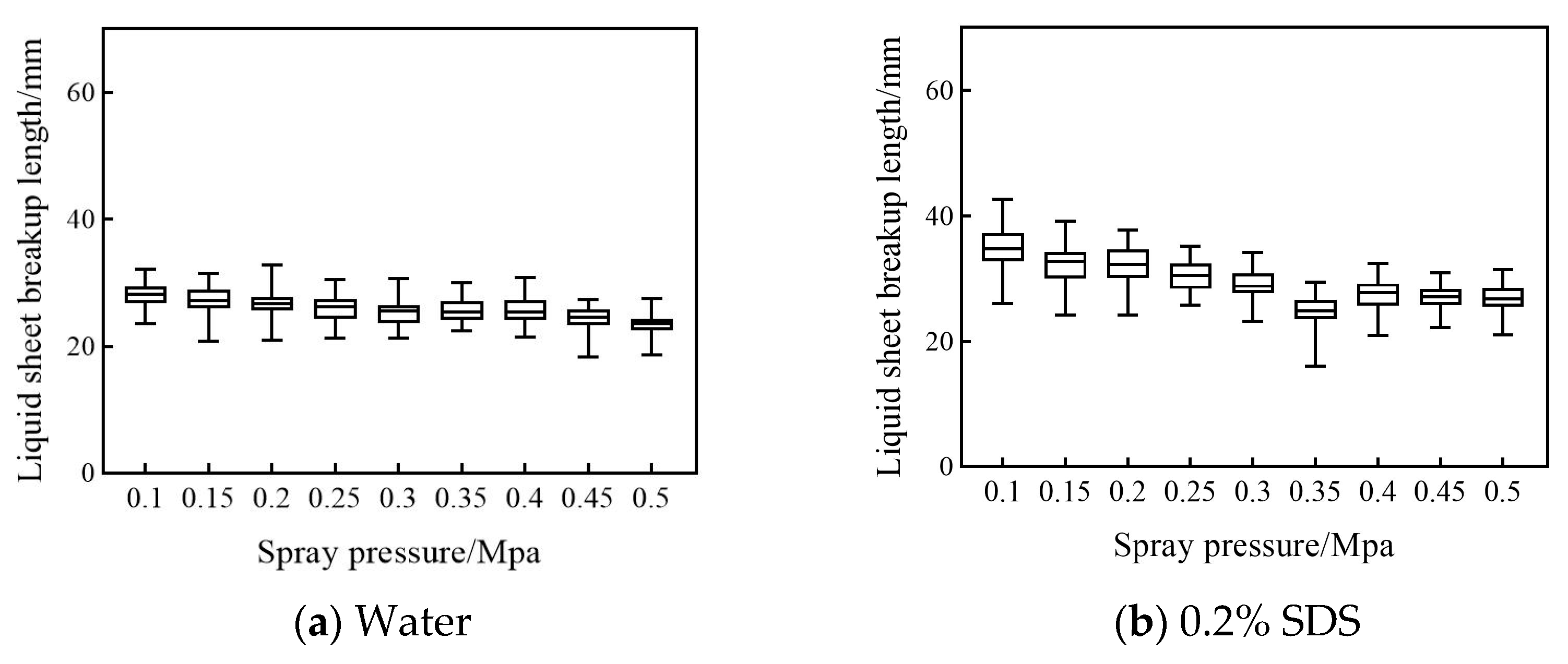
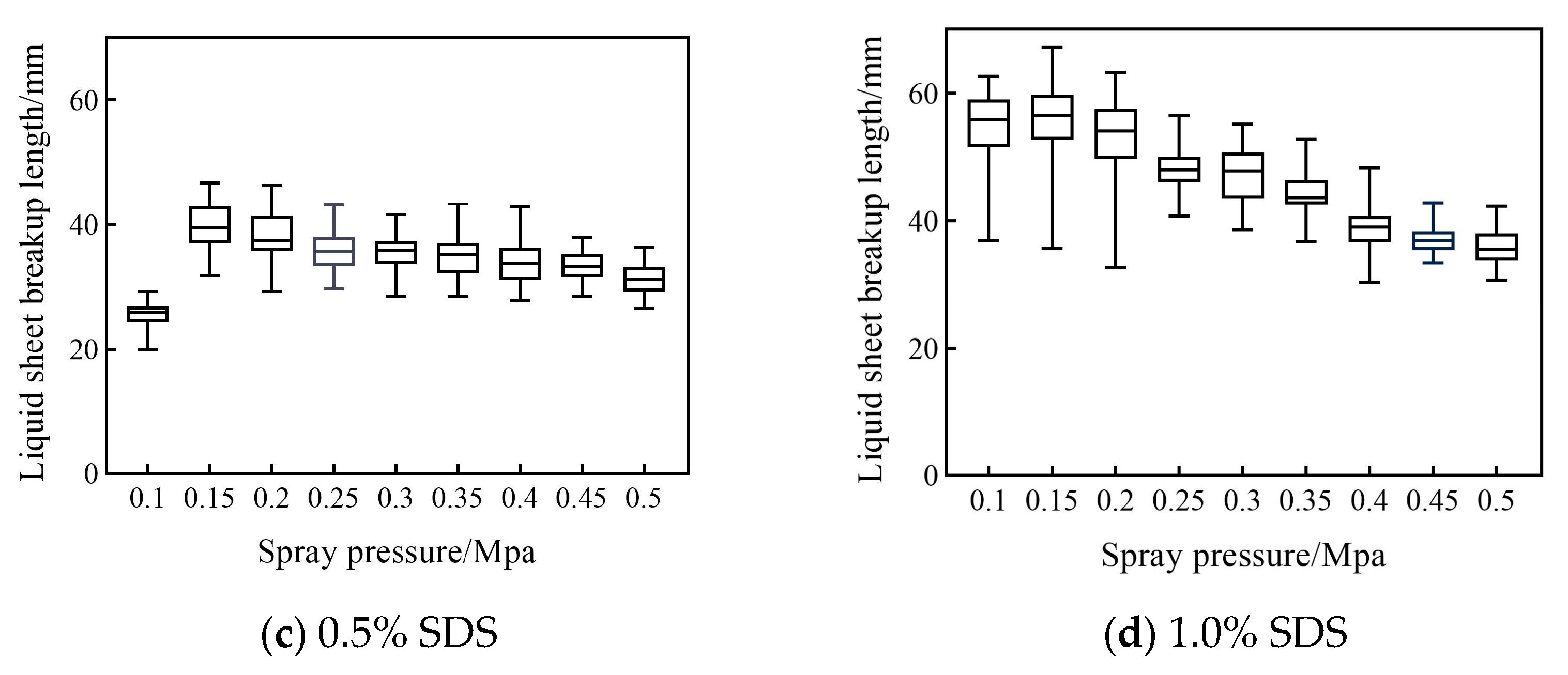
As shown in Figure 6, the distributions of liquid sheet length are presented for water and SDS solutions at concentrations of 0.2%, 0.5%, and 1.0%, under spray pressures of 0.10, 0.15, 0.20, 0.25, 0.30, 0.35, 0.40, 0.45, and 0.50 MPa, respectively. Due to the transient and periodically dynamic behavior of the liquid sheet, a statistical analysis of the sheet breakup length was conducted using box plots based on 100 pairs of images. During the experiment, when attempting to capture atomization images of the 0.5% SDS solution under a spray pressure of 0.10 MPa, the pressure gauge displayed unstable readings. As a result, the measured liquid sheet breakup length derived from the atomization images showed abnormal values. From the figure, it can be observed that, in general, the liquid sheet breakup length of water was shorter compared to the SDS solutions at the other three concentrations. Additionally, as the solution concentration increased, the liquid sheet breakup length gradually increased. In terms of the sequence of increasing solution concentrations, the average breakup length ranges were as follows: 23.45–28.20, 24.84–34.80, 31.21–39.60, and 35.93–55.31 mm, respectively. Furthermore, the experiments also revealed that the liquid sheet breakup length decreased progressively with increasing spray pressure across all SDS solution concentrations. Specifically, under a spray pressure of 0.50 MPa, the liquid sheet breakup lengths were reduced by 20.26%, 40.10%, 26.88%, and 53.94%, respectively, compared to those measured at 0.10 MPa. The liquid sheet breakup length exhibited a strong dependence on solution concentration and spray pressure, as it is dictated by the mechanical equilibrium conditions on the sheet. At the point of breakup, a balance was achieved among surface tension, inertial forces, viscous forces, and externally applied forces. Based on the physical properties of the solution, an increase in the concentration of adjuvant led to a decrease in the surface tension of the solution. Correspondingly, the inertial force (F = ma, where m was the mass of the liquid and a was the acceleration) required to reach a new equilibrium was reduced. As a result, the thickness of the liquid sheet fragments detaching from the main sheet during rupture became smaller, leading to a reduction in their mass.

3.4. Droplet Diameter

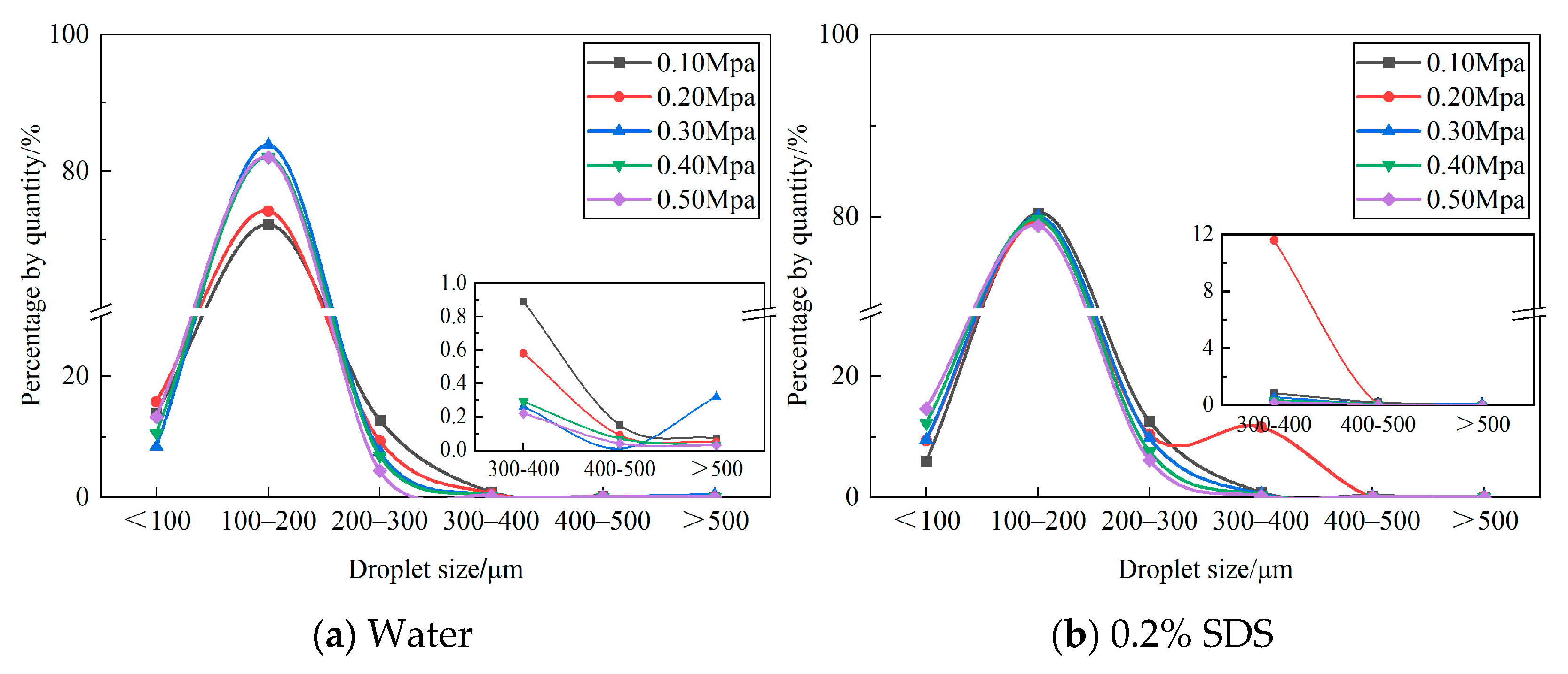
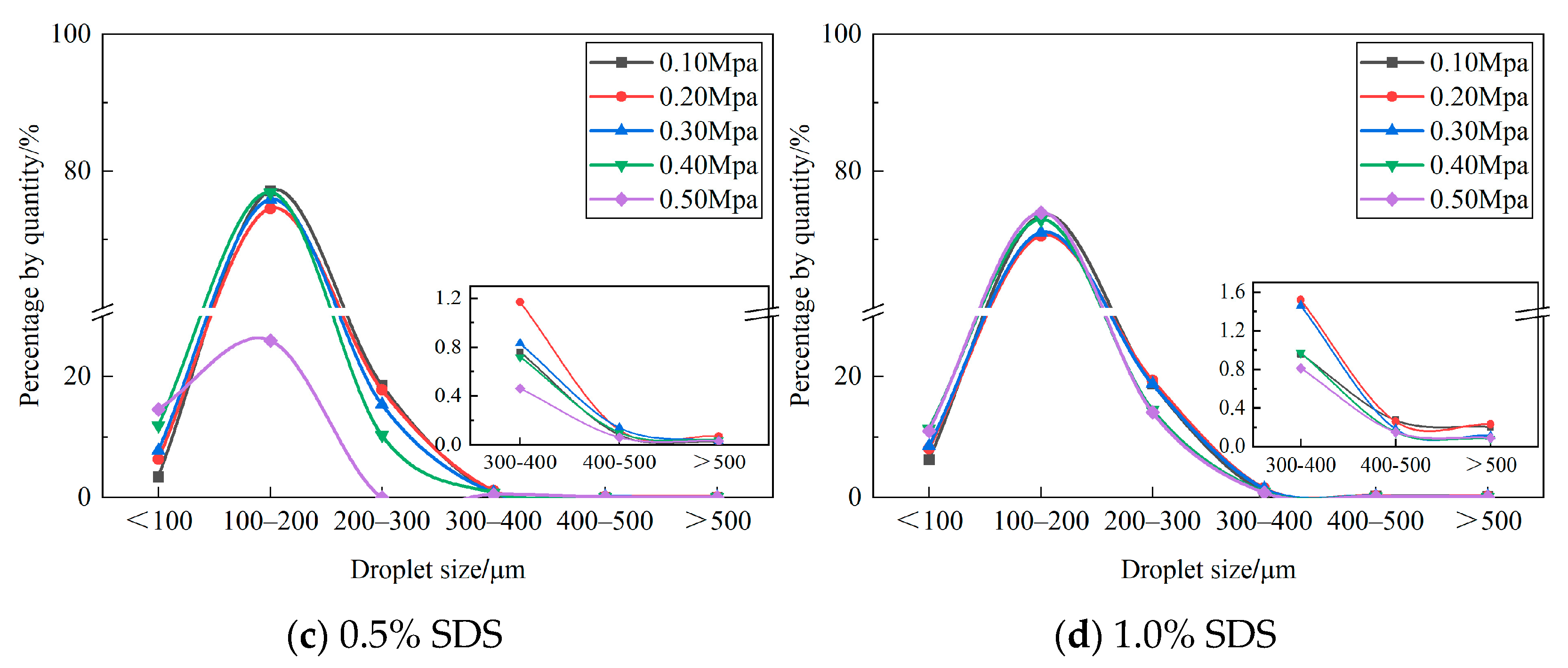
For clarity in data interpretation, statistical analysis was limited to the droplet size distributions under spray pressures of 0.10, 0.20, 0.30, 0.40, and 0.50 MPa. As shown in Figure 7, the droplet sizes generated by the four concentrations of SDS solution under five spraying pressure conditions were predominantly distributed within the 100–200 µm diameter range. With the exception of the 0.5% SDS solution at a spray pressure of 0.50 MPa—which had less than 30% of droplets (by number) within this size range—all other treatments had more than 70% of droplets in this interval. The percentage distribution of droplet numbers across different size intervals changed with increasing spray pressure for all four solutions. Specifically, in the predominant size range of 100–200 µm, the percentage by quantity of droplets increased with spray pressure for both water and the 1% SDS solution. In contrast, for the 0.2% and 0.5% SDS solutions, the percentage by quantity of droplets smaller than 100 µm exhibited a gradually increasing trend as spray pressure increased. For the larger-droplet-size range (>200 µm), the percentage by quantity of droplets generated by all four solution concentrations exhibited a decreasing trend with increasing spray pressure. Therefore, in the case of fan-shaped nozzle atomization, an increase in spray pressure facilitated the formation of finer droplets. Nevertheless, the evolution of the droplet size distribution showed noticeable variations for solutions with different surface tensions.
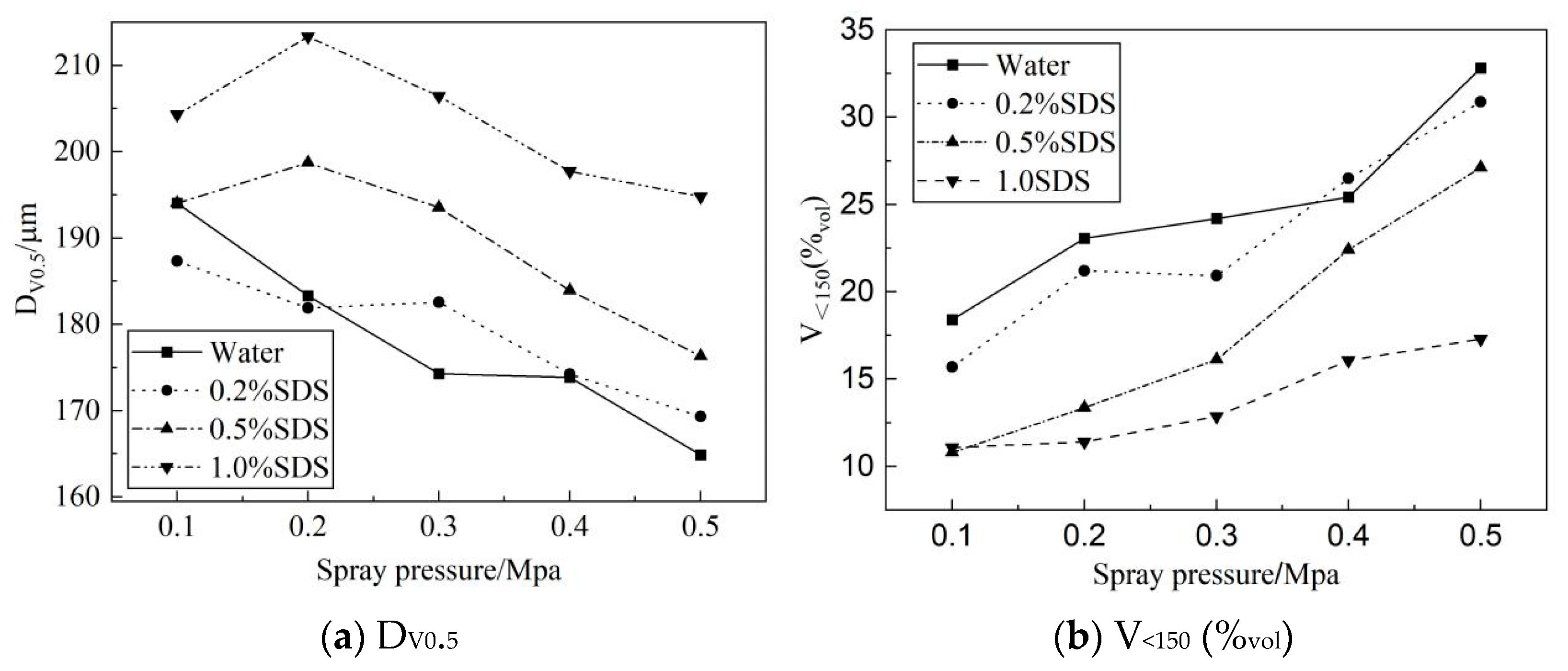
To further characterize the initial droplet size distribution under various spraying conditions, statistical analyses were conducted on the aforementioned data. The volume median diameter (DV0.5) and the volume percentage of droplets smaller than 150 µm (V<150(%vol)) were selected as indicators to, respectively, represent the overall size of the initial droplet population and the proportion of drift-prone fine droplets. The results are presented in Figure 8. As shown in Figure 8a, the DV0.5 values of SDS solutions at four different concentrations exhibited a decreasing trend with increasing spray pressure. The DV0.5 ranges, arranged in ascending order of SDS concentration, were 164.87–194.07 µm, 169.34–187.32 µm, 176.32–198.72 µm, and 194.80–213.36 µm, respectively, with corresponding ranges values (extreme differences) of 29.20, 17.98, 17.73, and 18.56 µm. Meanwhile, at a given spray pressure, the DV0.5 values increased with increasing SDS concentration. These results indicate that higher SDS concentrations increase DV0.5 (i.e., the median droplet size). Notably, the pure aqueous solution yielded the lowest DV0.5 across all cases, suggesting that even small additions of SDS effectively increase the spray’s median droplet size.
Figure 8b shows the dependence of V<150(%vol) on spray pressure for SDS solutions at different concentrations. It can be observed from the figure that the volume percentage of droplets smaller than 150 µm in the spray increased progressively with the rise in spray pressure. This trend was inverse of that observed for DV0.5, but it was consistent with the analysis of the number percentage within the <200 µm size range presented in Figure 7. Furthermore, at a given spray pressure, SDS-containing formulations significantly reduced V<150(%vol) relative to pure water, except at 0.40 MPa, where pure water exhibited a lower V<150(%vol) than the 0.2% SDS solution. Moreover, as the SDS concentration increased, the V<150(%vol) value exhibited a progressive decline. Specifically, under varying spray pressure conditions, the observed V<150(%vol) ranges for the four tested solutions were as follows: 18.39–32.8%, 15.69–30.89%, 10.80–27.12%, and 11.07–17.29%, respectively.

3.5. Droplet Velocity

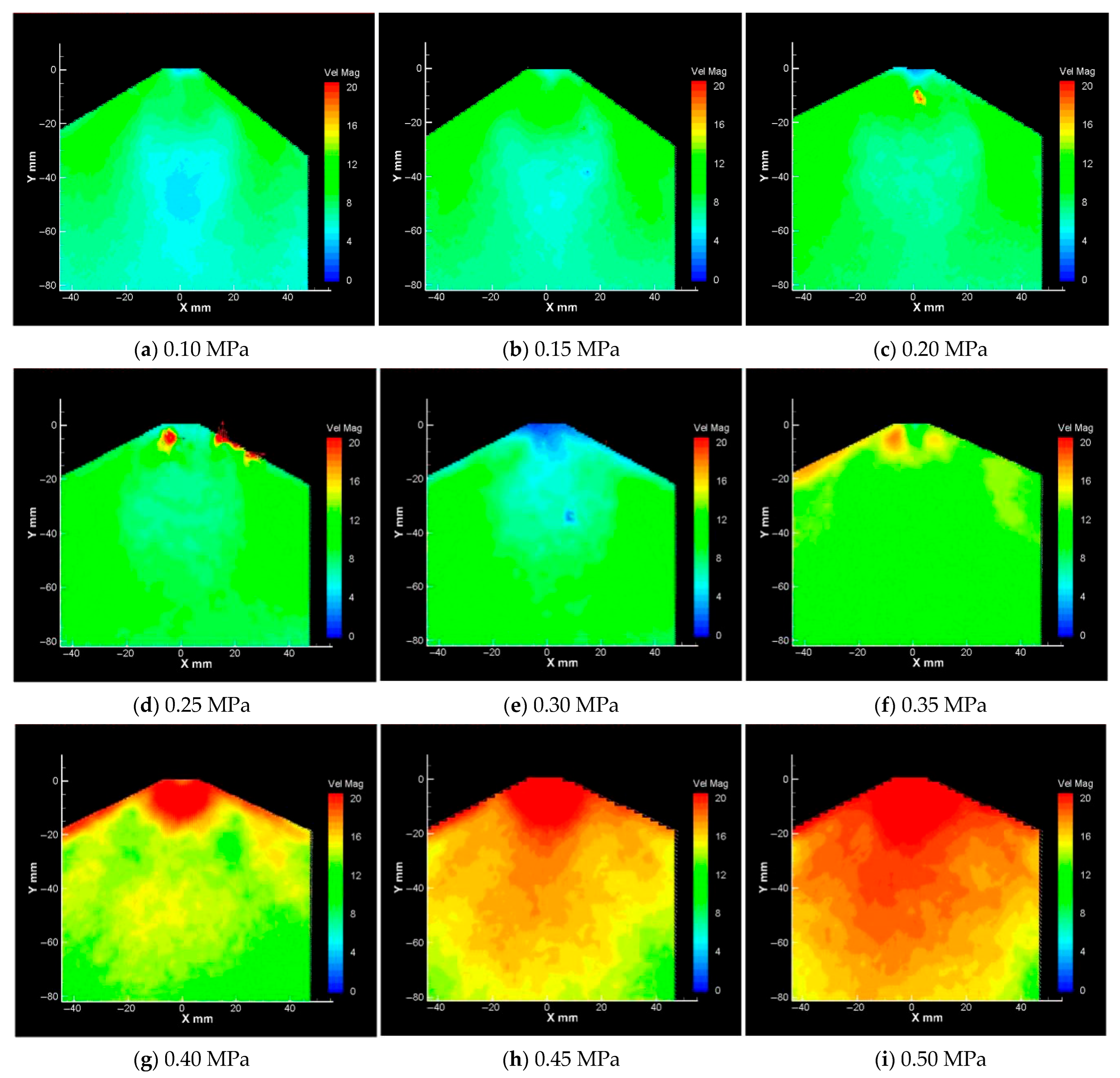
Figure 9 presents the velocity distribution across the entire spray field for a 1% SDS solution at experimental spray pressures, as processed using the Tecplot visualization software. In Figure 9, different colors represent various magnitudes of velocity within the spray field. The color scale progresses from blue, green, and yellow to red, corresponding to increasing droplet velocities from low to high.
As shown in Figure 10, the variation in the velocity field remained relatively minor within the spray pressure range of 0.10–0.30 MPa. However, when the spray pressure exceeded 0.30 MPa, a significant increase in velocity was first observed near the liquid sheet. With further increases in spray pressure, the high-velocity region progressively extended from the liquid sheet toward the jet direction. Ultimately, at a distance of 80 mm below the nozzle, the droplet velocity increased from the 8–12 m/s range to the 16–20 m/s range. The experimental results also revealed that the velocity field of the spray droplets exhibited an arc-shaped isovelocity distribution centered around the nozzle, which was attributed to the fan-shaped structural design of the nozzle. Moreover, the droplet velocity field decreased gradually both laterally—from the centerline to edges—and longitudinally—from the nozzle downstream alone the spray. This trend was primarily attributable to the injection into quiescent air, in which ambient aerodynamic drag leads to a progressive reduction in droplet velocity. Near the nozzle, the apparent velocity was markedly lower than that of the surrounding droplets. Two factors likely account for this: (1) the analysis domain included the nozzle boundary, which distorted the near-exit velocity field; and (2) the liquid sheet surface was relatively smooth, and the PIV images did not resolve fine surface-wave structures with sufficient contrast. Because Insight 4G computes velocity from tracer-particle displacements, the limited particle information on the liquid sheet led to misidentification and underestimation of its motion.
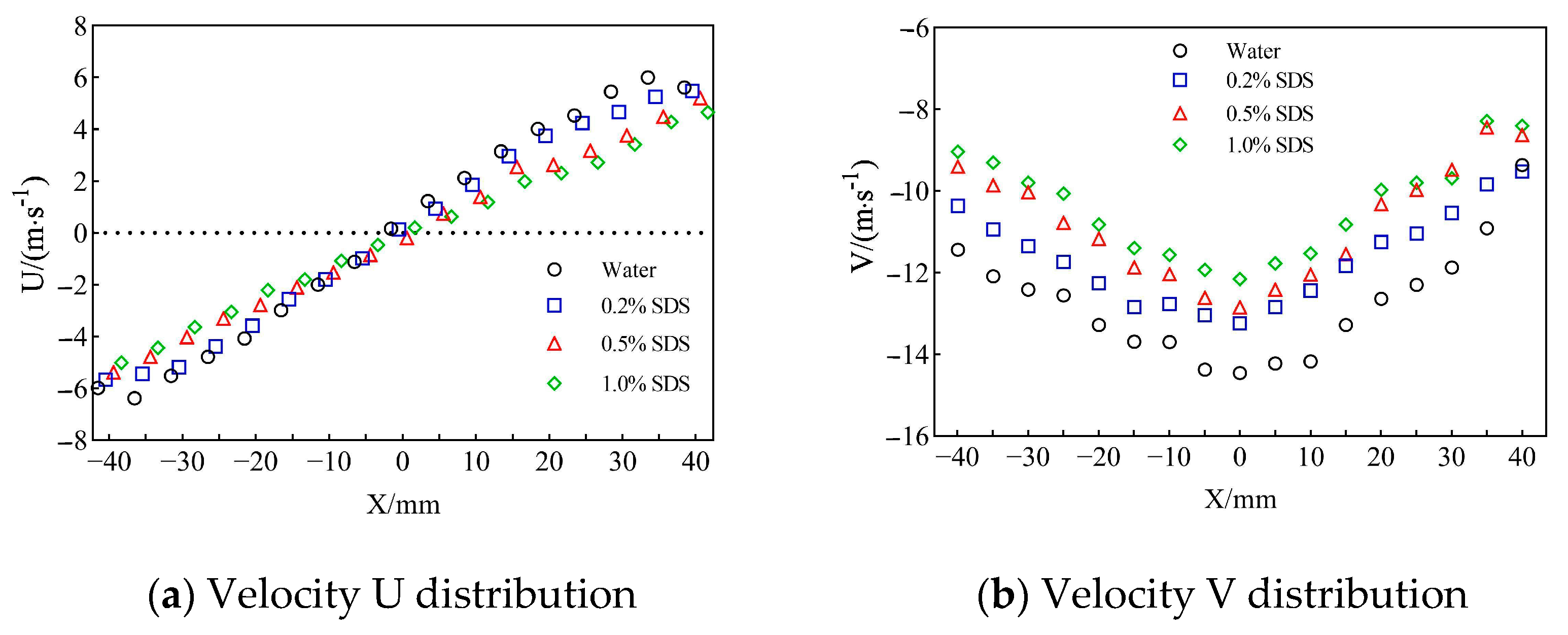
Figure 10 compares the profiles of the droplet X- and Y-velocity component (U and V) along the X-axis 60 mm below the nozzle at a spray pressure of 0.30 MPa for SDS solutions of different concentrations. As shown in Figure 10, velocity components U and V were approximately symmetric with respect to the Y-axis. The absolute value of the V component reached its maximum at x = 0 and gradually decreased toward both sides along the X-axis within the spray flow field. In contrast, the U component displayed the opposite behavior, attaining its minimum value—approaching zero—near the centerline of the spray fan. Furthermore, the experimental results indicated that the absolute values of both U and V along the X-axis decreased with increasing solution concentration. Combined with the droplet size results, which showed that droplet size increased at higher SDS solution concentrations, this suggests that sprays formed from higher-concentration SDS solutions consisted of larger droplet with correspondingly lower velocities.

4. Discussion

This study investigated the effects of surfactant solution concentrations and spray pressures on atomization characteristics, including liquid sheet breakup length, initial droplet size, and droplet velocity distribution. The results showed that the concentration of the surfactant solution, which governs the surface tension of the solution, significantly influenced atomization metrics. Higher concentrations facilitated the expansion of the liquid sheet surface, thereby increasing the breakup length and prolonging the breakup process. Spray pressure also influenced droplet performance. It changed the liquid sheet breakup mode. As spray pressure increased, the breakup length gradually decreased, leading to a smaller overall droplet size distribution and a broader velocity distribution. The concentration of surfactant in the solution had a significant effect on the droplet distribution, mainly due to the lower surface tension of high-concentration surfactant solutions, which enhanced the liquid sheet’s expansion capability. To seek a new mechanical equilibrium, the breakup point of the liquid sheet moved from its original position to a location with lower inertial forces, corresponding to a lower velocity direction. As the liquid sheet moves through the air, the velocity decreases with distance from the nozzle due to air resistance, causing the breakup point to move farther from the nozzle, consistent with the findings of Miller’s research [27]. However, it should be noted that although surfactant concentration can modify the liquid sheet breakup length and the median droplet diameter (DV0.5), its influence on the shape of the initial droplet-size distribution is limited, which remained a normal distribution with a peak in the 100–200 µm range. Notably, the surfactant concentration not only altered the liquid sheet breakup length but also modified the shape of the initial droplet-size spectrum. Therefore, in practical applications, the optimal droplet size for pest control should first be determined, followed by selecting the appropriate nozzle type and model. Distinct from prior studies [28,29,30], we collected the atomized droplets as comprehensively as possible and performed statistical analyses. Characterizing the spray with the droplet-size spectrum provides a more complete description of the population. Accordingly, the volume median diameter (DV0.5) computed from the collected droplet statistics is more reliable than that obtained using a laser diffraction particle-size analyzer.
The experiments also revealed that the concentration of surfactant affects droplet velocity. Prior studies have mainly examined the effect of surfactants on droplet size [31,32], with limited attention to droplet velocity. However, high surfactant concentrations reduce droplet velocity. This finding indicates that researchers developing droplet deposition models should comprehensively account for the properties of the initial droplet population—not only the size distribution but also velocity—to improve model accuracy.
This study also has certain limitations. Although the adjuvant selected in the experiments is commonly used in crop-protection UAV applications, differences in molecular structure among adjuvants lead to variations in their dynamic response behavior. Therefore, future research should place greater emphasis on the dynamic surface tension of adjuvants and further explore the response mechanisms of adjuvants tailored for crop-protection UAV spraying applications.


5. Conclusions

This study employed Particle Image Velocimetry (PIV) to systematically measure the liquid sheet breakup and the initial atomization distribution of droplets from a fan nozzle used in agricultural drones, applying surfactant solutions of different concentrations under varying spray pressures. The experiments showed that high concentrations of surfactant solutions delayed the occurrence of liquid sheet breakup, increasing the liquid sheet surface area, while higher spray pressures promoted sheet breakup, resulting in a shorter breakup length. Although there was a positive correlation between surfactant concentration and the droplet volume median diameter (DV0.5), and a negative correlation between spray pressure and the droplet volume median diameter (DV0.5), these two factors did not influence the distribution shape of the droplet size spectrum. Additionally, higher surfactant concentrations reduced the droplet velocity components along the X-axis (U) and Y-axis (V) in the spray fan.

Author Contributions

Conceptualization, Q.L. and Y.L.; methodology, L.Z. and Y.W.; software, D.M. and L.L.; validation, D.M. and Y.L.; formal analysis, H.Z., L.L. and Q.L.; investigation, Y.W., L.Z. and L.L.; resources, Y.L.; data curation, L.L. and Y.W.; writing—original draft preparation, Q.L. and D.M.; writing—review and editing, Q.L. and Y.L.; visualization, D.M. and L.L.; supervision, Y.L. and Q.L.; project administration, Y.L.; funding acquisition, Y.L. All authors have read and agreed to the published version of the manuscript.

Funding

This research was funded by the Key Research Project of Higher Education Institutions in Anhui Provincial Department of Education, grant number 2024AH051737; The Open Fund of Anhui Undergrowth Crop Intelligent Equipment Engineering Research Center, grant number AUCIEERC-2024-03; The Leading Talents of Top Talents Program for One Case One Discussion of Shandong Province.

Data Availability Statement

The original contributions presented in this study are included in the article. Further inquiries can be directed to the corresponding author.

Conflicts of Interest

The authors declare no conflicts of interest.

References

  1. Liu, Q.; Ding, M.; Zhang, H.; Wu, L.; Zhang, L.; Bao, H.; Lan, Y. Optimization of Flight Mode and Coupling Analysis of Operational Parameters on Droplet Deposition and Drift of Unmanned Aerial Spraying Systems (UASS). Agronomy 2025, 15, 367. [Google Scholar] [CrossRef]
  2. Cao, L.; Cao, C.; Wang, Y.; Li, X.; Zhou, Z.; Li, F.; Yan, X.; Huang, Q. Visual determination of potential dermal and inhalation exposure using allura red as an environmentally friendly pesticide surrogate. ACS Sustain. Chem. Eng. 2017, 5, 3882–3889. [Google Scholar] [CrossRef]
  3. Hewitt, A.J. Adjuvant use for the management of pesticide drift, leaching and runoff. Pest Manag. Sci. 2024, 80, 4819–4827. [Google Scholar] [CrossRef]
  4. Craft, J.M.; Godara, N.; Gonçalves, C.G.; Askew, S.D. Factors Influencing Subcanopy Leaf and Stolon Exposure and Associated Absorption and Translocation of Herbicides in Semidormant Zoysiagrass. Weed Sci. 2023, 72, 59–67. [Google Scholar] [CrossRef]
  5. Bergeron, V. Designing intelligent fluids for controlling spray applications. Comptes Rendus Phys. 2003, 4, 211–219. [Google Scholar] [CrossRef]
  6. Tang, Q.; Zhang, R.; Chen, L.; Zhang, P.; Li, L.; Xu, G.; Yi, T.; Hewitt, A.J. Improving UASS pesticide application: Optimizing and validating drift and deposition simulations. Pest Manag. Sci. 2024, 81, 127–140. [Google Scholar] [CrossRef]
  7. Guo, Q.; Zhu, Y.; Tang, Y.; Hou, C.; Fang, M.; Chen, X. Numerical simulation of the effects of downwash airflow and crosswinds on the spray performance of quad-rotor agricultural UAVs. Smart Agric. Technol. 2025, 11, 100940. [Google Scholar] [CrossRef]
  8. Zhang, H.; Qi, L.; Wan, J.; Musiu, E.M.; Zhou, J.; Lu, Z.A.; Wang, P. Numerical simulation of downwash airflow distribution inside tree canopies of an apple orchard from a multirotor unmanned aerial vehicle (UAV) sprayer. Comput. Electron. Agric. 2022, 195, 106817. [Google Scholar] [CrossRef]
  9. Tang, Q.; Zhang, R.; Chen, L.; Deng, W.; Xu, M.; Xu, G.; Li, L.; Hewitt, A. Numerical simulation of the downwash flow field and droplet movement from an unmanned helicopter for crop spraying. Comput. Electron. Agric. 2020, 174, 105468. [Google Scholar] [CrossRef]
  10. Wang, G.; Han, Y.; Li, X.; Andaloro, J.T.; Chen, P.; Hoffmann, W.C.; Han, X.; Chen, S.; Lan, Y. Field evaluation of spray drift and environmental impact using an agricultural unmanned aerial vehicle (UAV) sprayer. Sci. Total Environ. 2020, 737, 139793. [Google Scholar] [CrossRef]
  11. Liu, Q.; Shan, C.; Zhang, H.; Song, C.; Lan, Y. Evaluation of liquid atomization and spray drift reduction of hydraulic nozzles with four spray adjuvant solutions. Agriculture 2023, 13, 236. [Google Scholar] [CrossRef]
  12. Wongsuk, S.; Zhu, Z.; Zheng, A.; Qi, P.-X.; Li, Y.; Huang, Z.; Han, H.; Wang, C.; He, X. Assessing the potential spray drift of a six-rotor unmanned aerial vehicle sprayer using a test bench and airborne drift collectors under low wind velocities: Impact of atomization characteristics and application parameters. Pest Manag. Sci. 2024, 80, 6053–6067. [Google Scholar] [CrossRef]
  13. Xue, S.; Han, J.; Xi, X.; Lan, Z.; Wen, R.; Ma, X. Coordination of distinctive pesticide adjuvants and atomization nozzles on droplet spectrum evolution for spatial drift reduction. Chin. J. Chem. Eng. 2024, 66, 250–262. [Google Scholar] [CrossRef]
  14. Tang, Q.; Chen, L.; Zhang, R.; Deng, W.; Xu, M.; Xu, G.; Li, L.; Hewitt, A. Effects of application height and crosswind on the crop spraying performance of unmanned helicopters. Comput. Electron. Agric. 2021, 181, 105961. [Google Scholar] [CrossRef]
  15. Ferguson, J.C.; Chechetto, R.G.; O’Donnell, C.C.; Dorr, G.J.; Moore, J.H.; Baker, G.J.; Powis, K.J.; Hewitt, A.J. Determining the drift potential of Venturi nozzles compared with standard nozzles across three insecticide spray solutions in a wind tunnel. Pest Manag. Sci. 2016, 72, 1460–1466. [Google Scholar] [CrossRef]
  16. Dorr, G.J.; Hewitt, A.J.; Adkins, S.W.; Hanan, J.; Zhang, H.; Noller, B. A comparison of initial spray characteristics produced by agricultural nozzles. Crop Prot. 2013, 53, 109–117. [Google Scholar] [CrossRef]
  17. Hoffmann, W.; Hewitt, A.; Ross, J.; Bagley, W.; Martin, D.; Fritz, B. Spray adjuvant effects on droplet size spectra measured by three laser-based systems in a high-speed wind tunnel. In Pesticide Formulations & Delivery Systems, 26th Volume: Reassessing Pesticide Technologies; ASTM International: West Conshohocken, PA, USA, 2008. [Google Scholar]
  18. Gil, E.; Gallart, M.; Balsari, P.; Marucco, P.; Almajano, M.P.; Llop, J. Influence of wind velocity and wind direction on measurements of spray drift potential of boom sprayers using drift test bench. Agric. For. Meteorol. 2015, 202, 94–101. [Google Scholar] [CrossRef]
  19. He, Y.; Xiao, S.; Fang, H.; Dong, T.; Tang, Y.; Nie, P.; Wu, J.; Luo, S. Development situation and spraying decision of spray nozzle for plant protection UAV. Trans. Chin. Soc. Agric. Eng. (Trans. CSAE) 2018, 34, 113–124. [Google Scholar]
  20. Yuan, X.; Xiao, H.; Xu, X.; Zhang, J.; Song, J.; Liu, C. Flow Field Analysis and Structural Optimization of Pressure SwirlAtomizing Nozzle. J. Mech. Eng. 2025, 61, 1–15. [Google Scholar]
  21. Nuyttens, D.; De Schampheleire, M.; Verboven, P.; Sonck, B. Comparison between indirect and direct spray drift assessment methods. Biosyst. Eng. 2010, 105, 2–12. [Google Scholar] [CrossRef]
  22. Tang, Q.; Chen, L.; Zhang, R.; Zhang, B.; Yi, T.; Xu, M.; Xu, G. Atomization characteristics of normal flat fan nozzle and air induction nozzle under high speed airflow condition. Trans. Chin. Soc. Agric. Eng. (Trans. CSAE) 2016, 32, 121–128. [Google Scholar]
  23. Song, M.; Ju, J.; Luo, S.; Han, Y.; Dong, Z.; Wang, Y.; Gu, Z.; Zhang, L.; Hao, R.; Jiang, L. Controlling liquid splash on superhydrophobic surfaces by a vesicle surfactant. Sci. Adv. 2017, 3, e1602188. [Google Scholar] [CrossRef]
  24. ANSI/ASABE S641 MAY2018; Droplet Size Classification of Aerial Application Nozzles. ASABE: St. Joseph, MI, USA, 2018.
  25. Bai, F.; Diao, H.; Zhang, M.; Chang, Q.; Wang, E.; Du, Q. Breakup characteristics of power-law liquid sheets formed by two impinging jets. Fluid Dyn. Res. 2014, 46, 055506. [Google Scholar] [CrossRef]
  26. Villermaux, E.; Clanet, C. Life of a flapping liquid sheet. J. Fluid Mech. 2002, 462, 341–363. [Google Scholar] [CrossRef]
  27. Miller, P.; Ellis, M.B. Effects of formulation on spray nozzle performance for applications from ground-based boom sprayers. Crop Prot. 2000, 19, 609–615. [Google Scholar] [CrossRef]
  28. Fritz, B.; Hoffmann, W.; Bagley, W. Effects of spray mixtures on droplet size under aerial application conditions and implications on drift. Appl. Eng. Agric. 2009, 26, 21–29. [Google Scholar] [CrossRef]
  29. Fritz, B.K.; Hoffmann, W.C.; Birchfield, N.B.; Ellenberger, J.; Khan, F.; Bagley, W.; Thornburg, J.W.; Hewitt, A. Evaluation of spray drift using low-speed wind tunnel measurements and dispersion modeling. J. ASTM Int. 2010, 7, 1–14. [Google Scholar] [CrossRef]
  30. Yao, W.; Lan, Y.; Hoffmann, W.C.; Guo, S.; Chen, S.; Wen, S.; Zeng, W.; Li, Z.-h.; Liang, X. Atomization characteristics of multi-type aerial nozzles in wind tunnel and low airflow velocity condition in manned agricultural helicopter. Int. J. Precis. Agric. Aviat. 2019, 2, 9–17. [Google Scholar] [CrossRef]
  31. Hoffmann, W.C.; Fritz, B.K.; Yang, C. Effects of spray adjuvants on spray droplet size from a rotary atomizer. In Proceedings of the 35th Symposium on Pesticide Formulation and Delivery Systems: Pesticides and Adjuvant Formulations in 2014, New Orleans, LA, USA, 7–9 October 2014; ASTM International: West Conshohocken, PA, USA, 2016. [Google Scholar]
  32. Wang, C.; Zeng, A.-J.; He, X.; Song, J.; Andreas, H.; Gao, W. Spray drift characteristics test of unmanned aerial vehicle spray unit under wind tunnel conditions. Int. J. Agric. Biol. Eng. 2020, 13, 13–21. [Google Scholar] [CrossRef]
Figure 1. Schematic diagram of the test device structure.
Agronomy 16 00076 g001
Figure 2. Test site diagram.
Agronomy 16 00076 g002
Figure 3. Schematic diagram of liquid sheet image structure division.
Agronomy 16 00076 g003
Figure 4. Liquid sheet rupture patterns under varying concentrations of SDS surfactant solutions.
Agronomy 16 00076 g004
Figure 5. Liquid sheet breakup patterns under different spray pressures.
Agronomy 16 00076 g005
Figure 6. Breakup length distribution of liquid sheet formed from SDS solutions at varying concentrations.
Agronomy 16 00076 g006aAgronomy 16 00076 g006b
Figure 7. The droplet size distribution spectra of SDS solutions prepared at varying concentrations.
Agronomy 16 00076 g007aAgronomy 16 00076 g007b
Figure 8. Distribution plot of droplet size parameters.
Agronomy 16 00076 g008
Figure 9. Flow field distribution of 1% SDS solution. The unit of velocity is m/s.
Agronomy 16 00076 g009
Figure 10. Velocity distribution of flow field of SDS solutions with different concentrations.
Agronomy 16 00076 g010
Table 1. Physical properties parameters of spray solutions.
SolutionSurface Tension/(mN·m−1)Dynamic Viscosity/(cP)Density (kg·m−3)
Water72.80.960.998 × 103
0.2% SDS49.71.071.003 × 103
0.5% SDS43.31.041.005 × 103
1% SDS36.11.121.006 × 103
Disclaimer/Publisher’s Note: The statements, opinions and data contained in all publications are solely those of the individual author(s) and contributor(s) and not of MDPI and/or the editor(s). MDPI and/or the editor(s) disclaim responsibility for any injury to people or property resulting from any ideas, methods, instructions or products referred to in the content.