Article

Field Cultivation of Medicinal Earthworms Increases Soil Large Macroaggregates and Subsurface Organic Carbon Storage


1
College of Natural Resources and Environment, South China Agricultural University, Guangzhou 510642, China
2
Guangzhou Institute of Forestry and Landscape Architecture, Guangzhou 510405, China
*
Author to whom correspondence should be addressed.
These authors contributed equally to this work.
Agronomy 2026, 16(2), 264; https://doi.org/10.3390/agronomy16020264
Submission received: 23 December 2025 / Revised: 17 January 2026 / Accepted: 18 January 2026 / Published: 22 January 2026

Abstract

Field cultivation of medicinal earthworms is a distinctive agricultural practice in South China, characterized by large-scale rearing of the anecic earthworm species through substantial organic matter input. However, the effects of varying cultivation durations on soil organic carbon (SOC) distribution across aggregates and soil layers remain unclear. This study compared commercial cultivation plots with adjacent controls at two sites with different cultivation histories: Yangshan (6 months) and Yingde (12 months). Soil samples from three layers (0–20, 20–40, 40–60 cm) were wet-sieved into aggregate fractions for SOC and labile organic carbon (LOC) analysis. Results indicated that earthworm cultivation significantly enhanced the proportion of water-stable large macroaggregates, increased the organic carbon content within them, and elevated the overall SOC storage, particularly in subsurface layers (20–60 cm). The responses of LOC exhibited temporal variation, with a significant reduction observed only at the sites with longer cultivation duration. Overall, cultivation duration modulates the responses of labile carbon pools, whereas field cultivation of medicinal earthworms consistently promotes large macroaggregate formation and their carbon enrichment, increases total SOC stocks, drives subsurface carbon sequestration, and improves aggregate stability. These findings offer a practical strategy for enhancing soil carbon sinks in subtropical red soil ecosystems.

1. Introduction

As the largest carbon pool in terrestrial ecosystems, soil organic carbon (SOC) plays an irreplaceable role in regulating global climatic processes and maintaining ecosystem stability [1]. Previous studies have shown that a 0.4% increase in carbon content in the top 1 m of soil globally could effectively offset current net carbon dioxide emissions [2]. Moreover, as the core carrier of soil fertility, SOC profoundly mediates the improvement of soil physicochemical property, the restoration of degraded soil, and the enhancement of crop productivity. By optimizing the soil aggregate structure, improving water and nutrient retention capacities, and boosting microbial activity, SOC serves as the fundamental guarantee for sustaining agricultural ecosystem stability [3].
The dynamic flux of soil carbon pools depends on the synergistic effects of carbon input, transformation, and output, with biological factors acting as the core driving force [4]. Earthworms, widely recognized as “ecosystem engineers”, have attracted substantial research interest for their ability to regulate soil carbon cycling [5]. Through feeding, excretion, and burrowing activities, earthworms modify carbon pool characteristics [6]. For instance, gut-derived cellulases and proteases accelerate litter decomposition, while the selective ingestion of organic-rich materials can alter carbon mineralization rates [7]. Regarding carbon sequestration, earthworms incorporate and translocate exogenous organic matter into the soil matrix, thereby promoting SOC stabilization. Recent evidence confirms that earthworms significantly enhance SOC accumulation in no-till agricultural soils [8].
Beyond altering carbon content, earthworms also influence carbon fractionation and distribution. Organic matter ingested by earthworms is bound to mineral particles during digestion, promoting macroaggregates formation and increasing the proportion of SOC associated with these aggregates [9,10]. Earthworms can also accelerate the conversion of labile organic carbon (LOC) into more stable forms by modulating the microbial community structure, thereby reducing the proportion of readily mineralizable carbon [11]—a process quantifiable through indices such as carbon pool activity and the carbon pool management index (CPMI) [12]. Additionally, the vertical movement of earthworms, especially in anecic species, facilitates the translocation of surface-derived carbon to deeper soil layers, resulting in the vertical redistribution of SOC [13].
Amynthas aspergillum (commonly known as “Guangdilong”) is a dominant anecic earthworm species in South China, valued for both its ecological and economic benefits. It can efficiently transport surface organic matter to deeper soil layers [14]. Listed in the Chinese Pharmacopoeia as a medicinal resource, A. aspergillum supports substantial income through captive cultivation [15]. In recent years, wild populations of A. aspergillum have declined sharply due to illegal electro-harvesting. Coupled with increasingly stringent conservation policies, the cultivation of A. aspergillum has emerged as a progressively significant agricultural practice in South China [16]. However, the impacts of this practice on SOC distribution and carbon pool quality remain unclear, limiting the understanding of its ecological value and potential for broader application.
Therefore, this study investigated commercial A. aspergillum cultivation farms and adjacent control plots in Yangshan County and Yingde City, Guangdong Province, with soil samples collected from three soil layers (0–20 cm, 20–40 cm, 60 cm) and compared their aggregate properties and organic carbon (SOC/LOC) characteristics. The main objectives were as follows: (1) to clarify how field medicinal earthworm cultivation regulates SOC and LOC storage across soil layers; (2) to evaluate its impacts on soil aggregate stability and the distribution of SOC and LOC among aggregates of different particle sizes; (3) to examine the response of CPMI to this cultivation practice. Ultimately, this study aims to elucidate the effects of A. aspergillum cultivation on soil carbon pools and providing a scientific basis for ecologically sound carbon-optimized management of this agricultural practice in South China.

2. Materials and Methods

2.1. Study Area

The study areas were located in Dalang Town, Yangshan County (24°27′ N, 112°31′ E), and Lianjiangkou Town, Yingde City (23°58′ N, 113°16′ E), Guangdong Province. Dalang Town has an average altitude of 440 m, an annual average temperature of 18 °C, and an annual average rainfall of 1850 mm, characteristic of a subtropical monsoon climate. The soil type is mountain red soil derived from limestone. Lianjiangkou Town has an annual average temperature of 25 °C and annual rainfall of 1420 mm, also under a subtropical monsoon climate, with similar limestone-derived mountain red soil.

2.2. Sampling Design and Sample Collection

This study employed a large-scale field comparison design, which is suitable for evaluating real-world agricultural management practices where small-plot replicated trials are impractical due to the spatial requirements of high-density earthworm cultivation. In August 2024, commercial A. aspergillum farms in Yangshan and Yingde were selected as the treatment plots, with adjacent abandoned farmlands serving as the control plots (Figure S1). The Yangshan farm covered 1.0 ha with 6 months of earthworm cultivation; the soil properties were pH 6.64 ± 0.02, organic matter content 27.21 ± 0.51 g·kg−1, total nitrogen content 1.26 ± 0.02 g·kg−1, C:N 12.53 ± 0.19, and clay content 22.67 ± 4.62%. The Yingde farm spanned 2.33 ha with 12 months of cultivation; the soil properties were pH 5.23 ± 0.07, organic matter 20.22 ± 0.64 g·kg−1, total nitrogen 1.77 ± 0.02 g·kg−1, C:N 6.63 ± 0.25, and clay content 22.67 ± 10.07%. Prior to earthworm inoculation, both sites were abandoned farmland with a three-year fallow period. The cultivation areas were enclosed with 60-mesh polyethylene nets buried 1 m deep to prevent earthworm escape.
The management entities and measures for earthworm cultivation in Yangshan County and Yingde City were consistent. Earthworms were introduced at a density of 500 g·m−2, the standard stocking rate for medicinal earthworm cultivation in South China. Cow dung was applied monthly as a food source at a rate of 4.5 kg·m−2 in surface strips, representing the common feed application practice in this region [17]. The cow dung had the following properties: pH 8.17, organic carbon 250.11 g·kg−1, total nitrogen 12.51 g·kg−1, C/N ratio 19.99, total phosphorus 8.81 g·kg−1, and total potassium 8.97 g·kg−1.
The sampling sites were designated as follows: Yangshan earthworm cultivation plots (YSE), Yangshan control plots (YSCK), Yingde earthworm cultivation plots (YDE), and Yingde control plots (YDCK). For each site, three 10 m × 10 m replicate plots were established randomly. Within each plot, undisturbed soil blocks for aggregate structure analysis were collected from the 0~20, 20~40, and 40~60 cm soil layers at multiple points along an S-shaped sampling pattern. A non-stick stainless-steel shovel was used to carefully excavate soil blocks, with meticulous effort to minimize compression and preserve the in situ architecture of aggregates. To eliminate any compaction artifacts caused by the sampling tool, the outer layer of soil that had been in direct contact with the shovel was meticulously pared away. Only the undisturbed inner core of the soil block was retained as the analytical sample. Soil from several such sampling points per layer per plot was placed into rigid plastic boxes to prevent structural damage and then gently homogenized by hand to form a composite sample. A total composite sample of approximately 2 kg was obtained per layer per plot. Meanwhile, for the determination of bulk density, separate undisturbed soil cores were taken adjacent to the aggregate sampling point, within the same S-shaped pattern using a metal core sampler, and the values were averaged. The composite soil samples for aggregate analysis were then carefully broken apart along natural planes of weakness, passed through an 8 mm mesh sieve to remove visible animal and plant residues, roots, stones, and other impurities, and finally air-dried at room temperature for subsequent analysis [18].

2.3. Determination Methods

Soil aggregates were separated into large macroaggregate (>2 mm), small macroaggregate (0.25 mm–2 mm), and microaggregate (<0.25 mm) through dry and wet sieving methods [19]. First, incompletely decomposed rice straw was removed from the soil samples. Subsequently, 100 g of each soil sample was sequentially sieved through a stack of sieves with mesh sizes of 2 mm and 0.25 mm to obtain dry-sieved aggregates. The weight of the soil retained in each sieve was recorded, and the percentage of each aggregate size fraction was calculated. Based on the proportional distribution of the dry-sieved aggregates, 50 g of soil was weighed for wet sieving. Sieves with mesh sizes of 2 mm and 0.25 mm were fixed vertically (top to bottom) on a soil aggregate analyzer (TPF-100, TOPU, Hangzhou, China) and then submerged in a corresponding water bucket. The 50 g pre-weighed soil sample was placed on the 2 mm sieve and soaked in distilled water for 5 min. Subsequently, the sieve stack was moved up and down at a frequency of 30 cycles per minute for 5 min, yielding three size fractions of wet-sieved aggregates. The collected aggregates of different sizes were oven-dried at 40 °C to a constant weight for the subsequent analyses [20].
The percentage of aggregate destruction (PAD) was calculated as follows: PAD = (DR0.25 − WR0.25)/DR0.25 × 100%. DR0.25 represents the content of dry sieve aggregate with particle size > 0.25 mm, and WR0.25 represents the content of wet sieve aggregate with particle size > 0.25 mm [21].
The soil bulk density was determined using the core method. Organic carbon in wet-sieved soil aggregates was determined using the potassium dichromate external heating method. Soil labile organic carbon was measured via the KMnO4 oxidation method combined with spectrophotometric colorimetry [19].
SOC and LOC storage were calculated using the following formulas, where “storage” refers to the total amount of the target carbon fractions in specific soil layers of the study area [22]. SOC storage = A × DSOC, DSOC = c × d × r(1 − D); LOC storage = A × DLOC, DLOC = c × d × r(1 − D). A (m2) is the area of different landscape types; DSOC (kg·m−2) is the SOC density; DLOC (kg·m−2) is the LOC density; c (%) is the soil organic carbon content; d (m) is the soil layer thickness; r (kg·m−3) is the soil bulk density; D is the content of gravel with diameter > 2 mm (volume ratio).
The soil carbon pool management index (CPMI) was calculated following the protocol used in previous studies [23]. C pool activity (CPA) = LOC/(SOC − LOC); C pool activity index (CPAI) = CPA in the treatment/CPA in the control; C pool index (CPI) = SOC in the treatment/SOC in the control; C pool management (CPMI) = CPI × CPAI × 100%; where the control samples were from the undisturbed plot soil.

2.4. Data Statistics

One-way analysis of variance (One-way ANOVA) was conducted using SPSS 19 to test the significant differences between different treatments. Correlation analysis between soil aggregate distribution characteristics, PAD values, soil organic carbon, and aggregate-associated organic carbon were also evaluated with SPSS19. Graphical visualization was carried out using Origin software (v2021). Principal component analysis (PCA) of the aggregate distribution characteristics, organic carbon and labile organic carbon distribution, and carbon pool management characteristics of different soil samples was performed by importing the ADE-4 package in R4.5.0.

3. Results

3.1. Soil Aggregate and Bulk Density

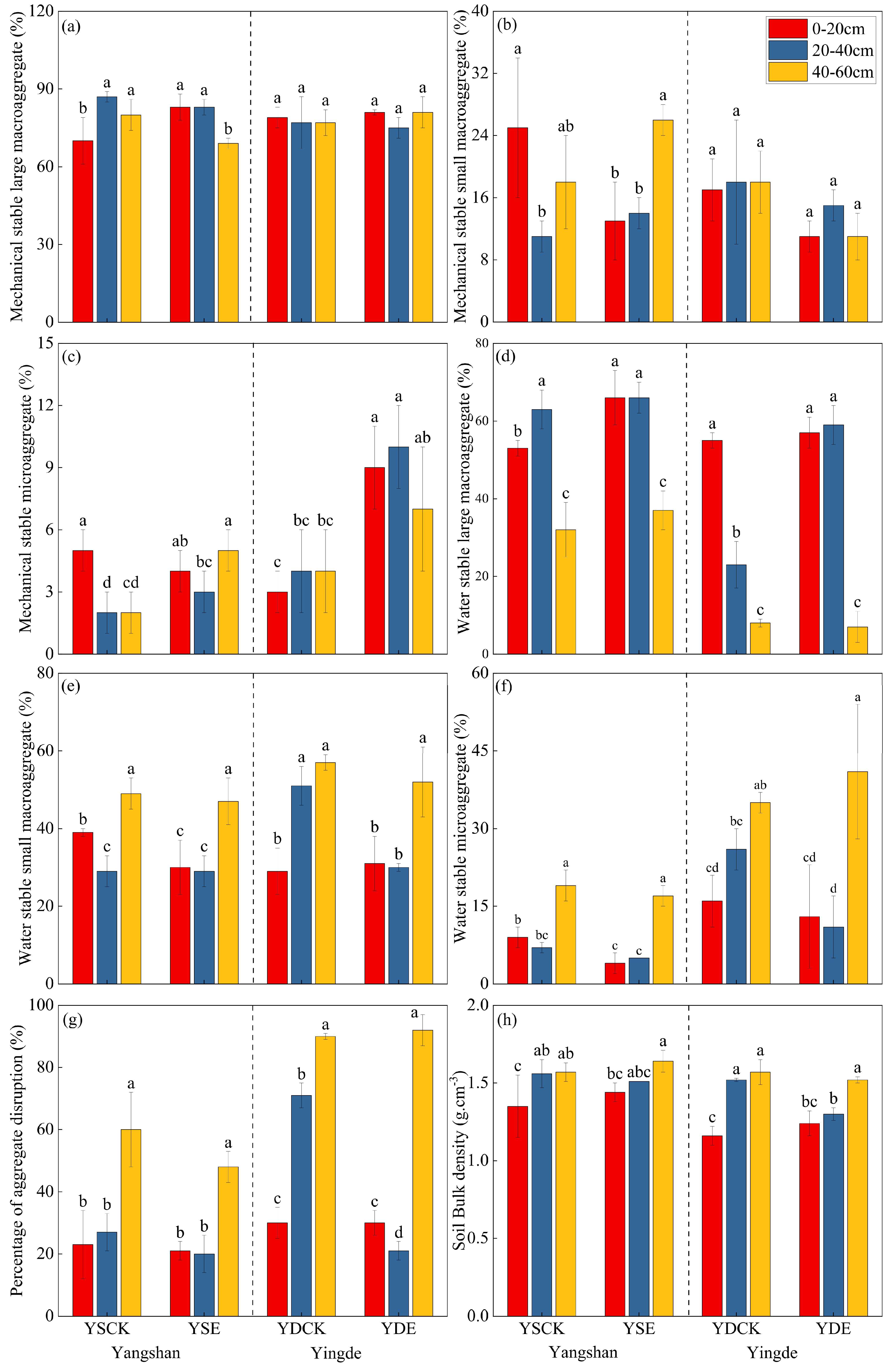
In Yangshan, compared with the control plots, earthworm cultivation significantly increased the mechanical large macroaggregates by 18.57% and decreased that of mechanical microaggregates by 47.30% in the 0~20 cm layer (p < 0.05). In the 20~40 cm layer, the mechanical microaggregates increased by 99.40% (p < 0.05), while in the 40~60 cm soil layer, the mechanical large macroaggregates decreased by 13.00% and the mechanical microaggregates increased by 100.43% (p < 0.05). Additionally, earthworm cultivation significantly increased the water-stable large macroaggregates by 24.53% and decreased the water-stable microaggregates and small macroaggregates by 23.27% and 50.06%, respectively, in the 0~20 cm layer (p < 0.05) (Figure 1).
In Yingde, compared with the control plots, earthworm cultivation increased the mechanical microaggregates by 170.27% and 141.78% in the 0~20 cm and 20~40 cm layers, respectively (p < 0.05). Water-stable large macroaggregates increased by 156.52% in the 20–40 cm layer, while water-stable small macroaggregates and microaggregates decreased by 41.55% and 57.69% (p < 0.05). The PAD and bulk density were significantly lower in the 20–40 cm layer under cultivation (p < 0.05).

3.2. Soil Organic Carbon and Oxidizable Organic Carbon

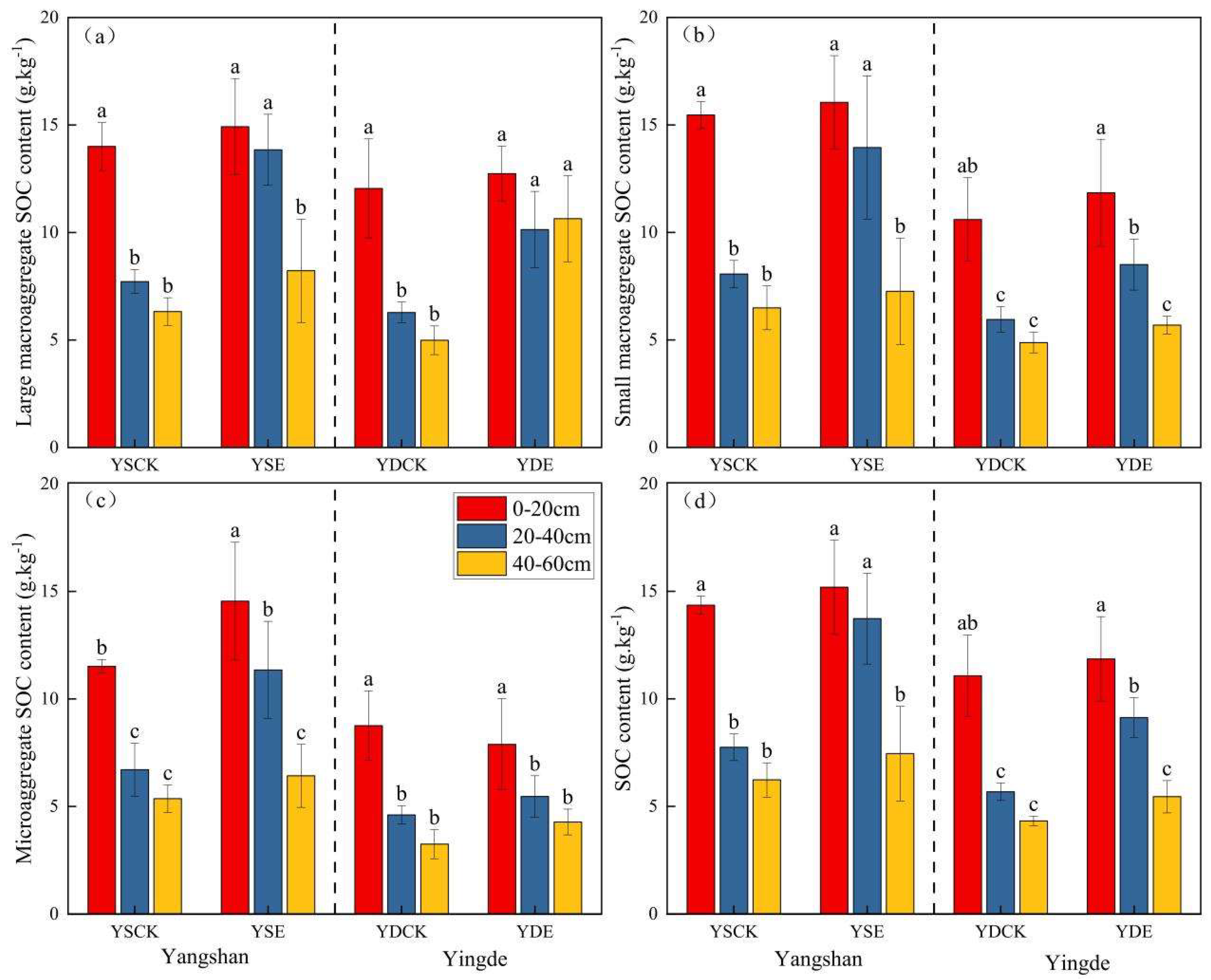
In Yangshan, earthworm cultivation significantly increased the organic carbon content of microaggregates by 26.31% in the 0~20 cm soil layer. In the 20~40 cm layer, the SOC content in large macroaggregates, small macroaggregates, and microaggregates increased by 79.48%, 72.97%, and 69.12%, respectively (Figure 2; p < 0.05). In Yingde, earthworm cultivation significantly increased the SOC content in large macroaggregates and small macroaggregates by 61.52% and 43.10% in the 20~40 cm soil layer and significantly increased the SOC content in large macroaggregates by 113.09% in the 40~60 cm layer (p < 0.05). Overall, earthworm cultivation significantly increased the SOC content by 77.28% in the 20~40 cm layer of Yangshan County and by 60.83% in the same layer of Yingde City (p < 0.05).
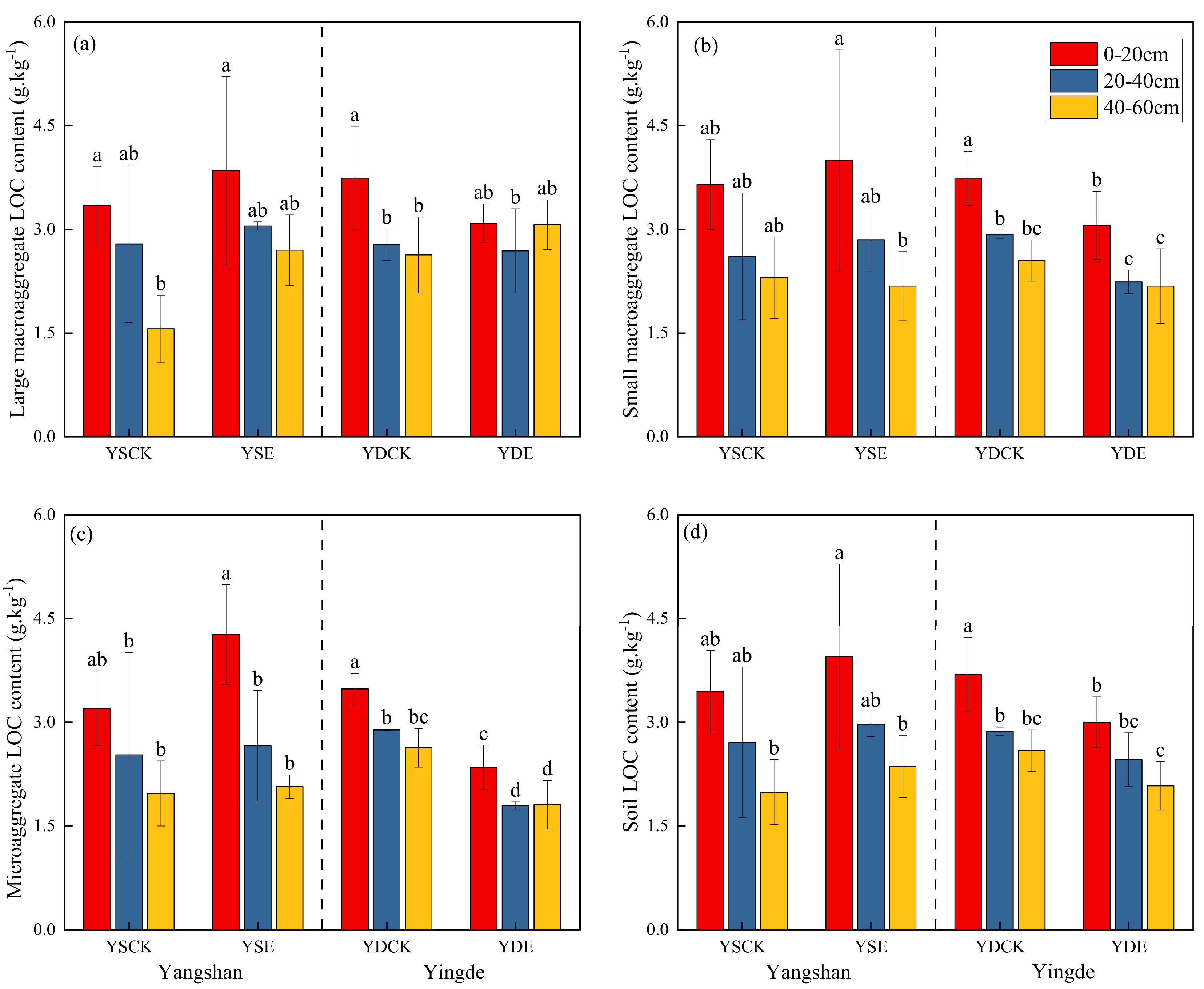
The LOC content in soil and different aggregates is shown in Figure 3. In Yingde, earthworm cultivation significantly reduced the LOC content of small macroaggregates by 18.20% and 23.46% in the 0~20 cm and 20~40 cm soil layers, respectively. It also decreased the LOC content of microaggregates by 32.41% and 37.88% in these two layers, as well as by 31.05% in the 40~60 cm layer (p < 0.05).

3.3. Soil Carbon Pool Management Index

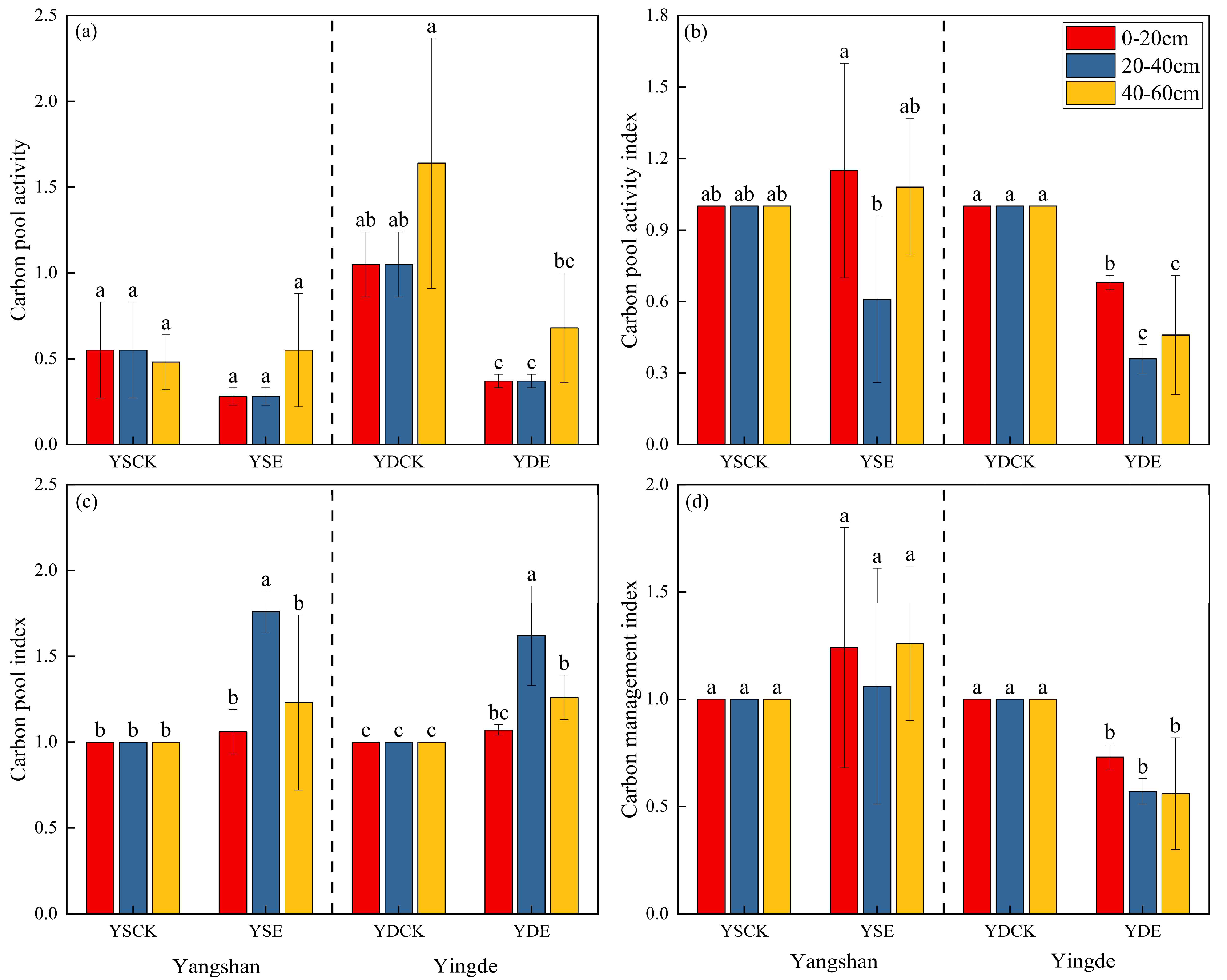
Earthworm cultivation in Yangshan significantly increased the CPI in the 20~40 cm soil layer (p < 0.05). In Yingde, earthworm cultivation significantly decreased the CA and CAI throughout the profile (0~20, 20~40, and 40~60 cm), significantly increased the CPI in the 20~40 and 40~60 cm soil layers, and reduced the CPMI in all layers (p < 0.05; Figure 4).

3.4. Soil Organic Carbon and Labile Organic Carbon Storage

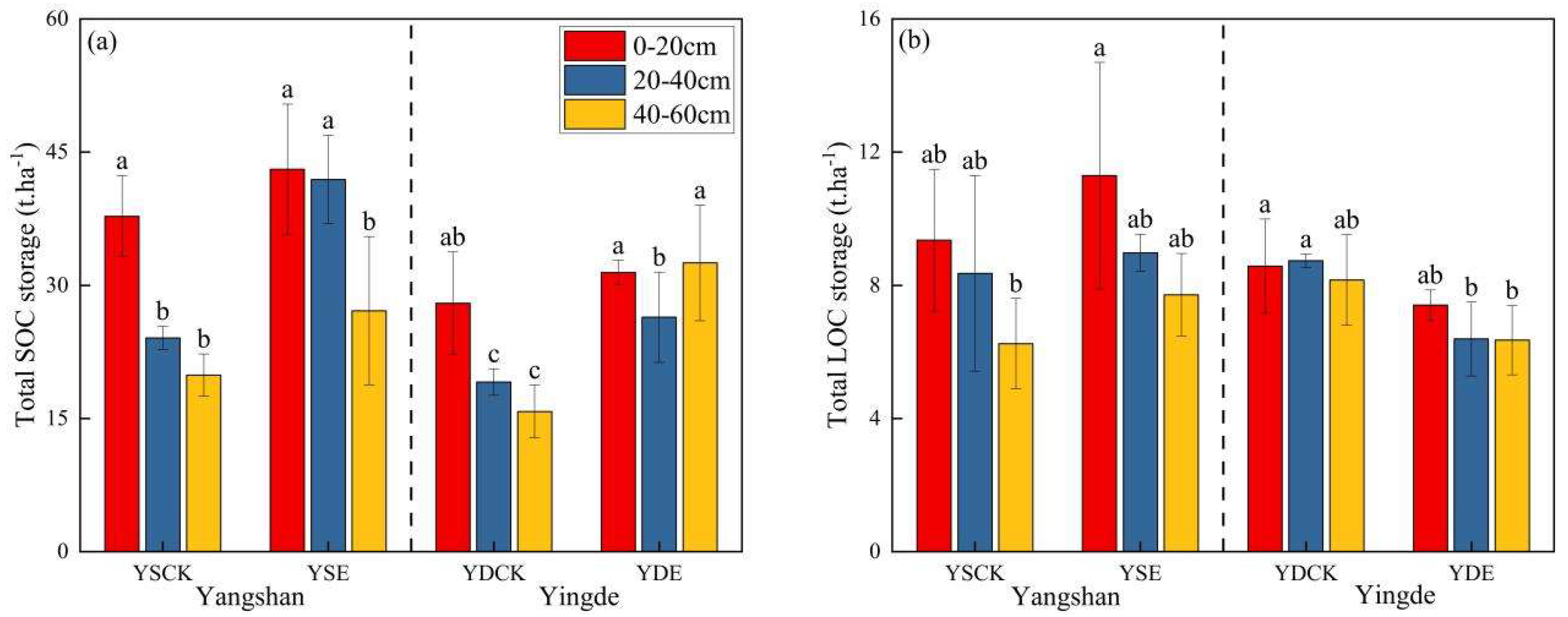
In Yangshan, earthworm cultivation significantly increased the SOC storage by 74.14% in the 20~40 cm layer (p < 0.05). In Yingde City, the SOC storage increased by 38.26% and 105.99% in the 20~40 and 40~60 cm layers, respectively (Figure 5a, p < 0.05), while the LOC storage decreased by 26.88% in the 20~40 cm layer (Figure 5b, p < 0.05).
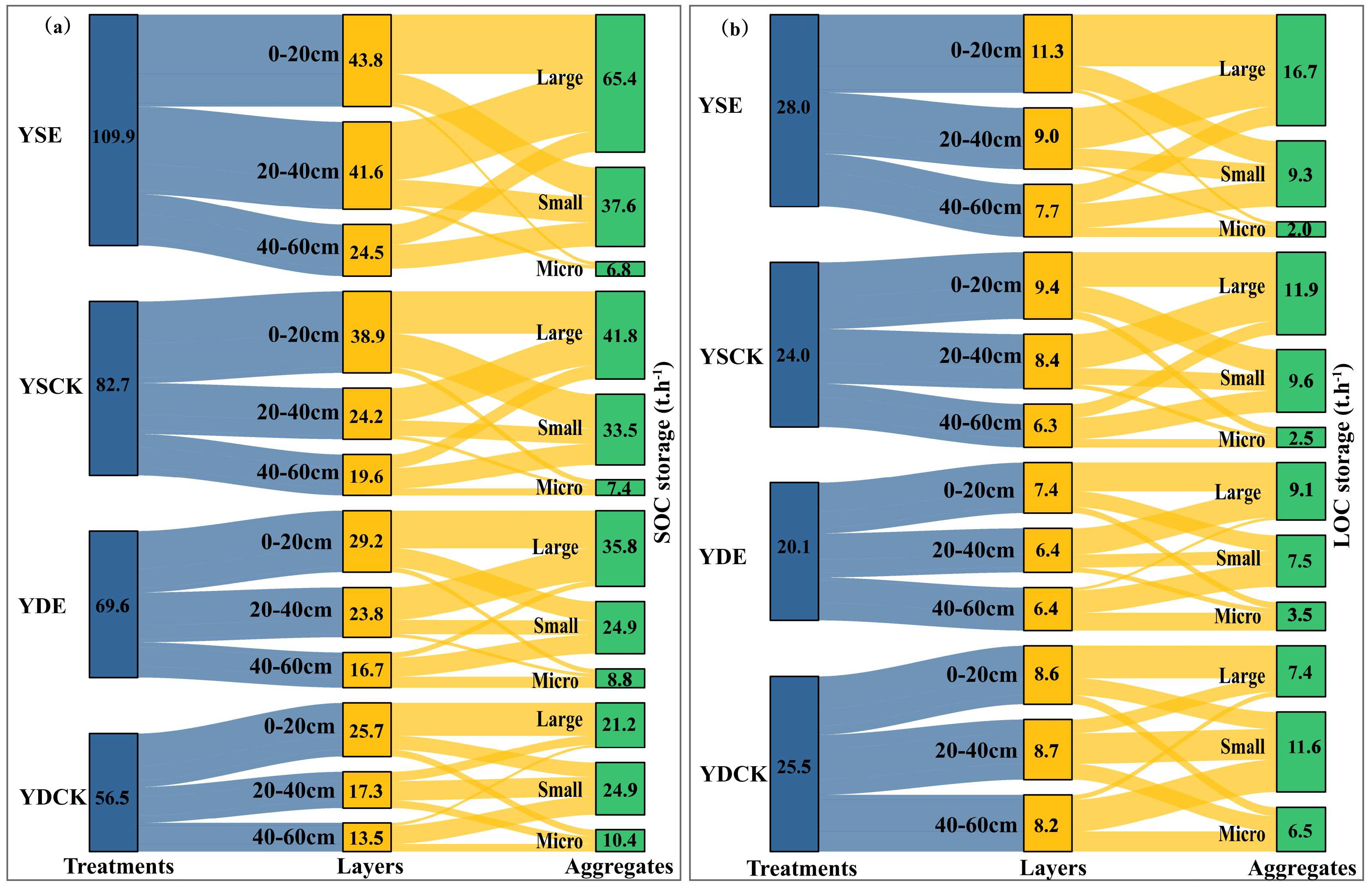
The distribution of SOC and LOC across different soil layers and aggregates is visualized in Figure 6. Earthworm cultivation increased the SOC storage in all layers, with increases of 12.60~14.06%, 38.37~71.90%, and 22.79~25.00% in the 0~20, 20~40, and 40~60 cm layers, respectively; the largest increase occurred in the 20~40 cm layer. Earthworm cultivation in Yangshan increased the LOC storage, whereas that in Yingde decreased the LOC storage.
In Yangshan and Yingde, earthworm cultivation increased the distribution of organic carbon in large macroaggregates by 56.46% and 69.34%, respectively (Figure 6). In contrast, the increase in organic carbon distribution with small macroaggregates was not pronounced, while a decrease was observed in microaggregates. Regarding the LOC in large macroaggregates, Yangshan and Yingde showed increases of 35.0% and 13.51%, respectively. Conversely, the LOC distribution in both small macroaggregates and microaggregates decreased.

3.5. Comprehensive Analysis of Soil Indicators Under Medicinal Earthworm Cultivation

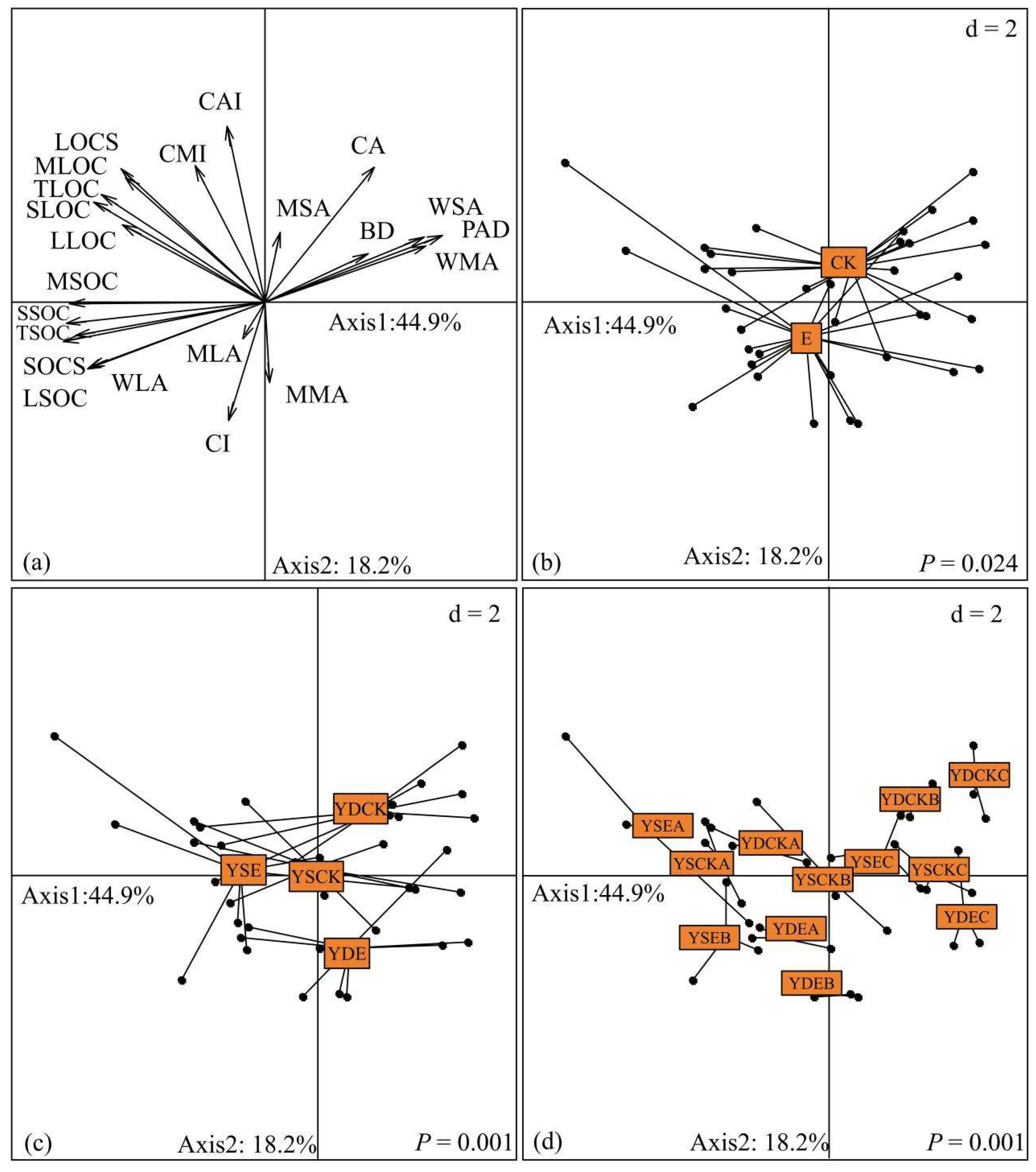
The principal component analysis of the soil aggregates, bulk density, SOC, LOC content, and storage under different treatments is shown in Figure 7. The cumulative variance contribution rate of Axis 1 and Axis 2 reached 63.1%, reflecting most of the information on different soil parameters. Axis 1 was primarily associated with changes in indicators such as WLA, WSA, WMA, PAD, LSOC, SSOC, MSOC, TSOC, SOCS, LLOC, SLOC, MLOC, TLOC, and LOCS. Axis 2 was mainly related to changes in indicators including SLOC, MLOC, LOCS, CPI, CA, CAI, and CPMI (Figure 7a). Significant differences were observed between the earthworm cultivation plots and the control plots (Figure 7b, p = 0.024), with the earthworm cultivation plots primarily associated with higher SSOC, LSOC, TSOC, and SOCS and the control plots associated with higher WSA, WMA, PAD, and BD. Significant differences were also found between the earthworm cultivation and control plots in both Yangshan and Yingde (Figure 7c, p = 0.001), and the differences in Yangshan were mainly reflected in Axis 1, i.e., differences in SOC and LOC contents in soil and aggregates; whereas the differences in Yingde were primarily reflected in Axis 2, i.e., differences in CPMI. Significant differences were observed between the earthworm cultivation and control plots across different soil layers (Figure 7d, p = 0.001), mainly attributed to differences in the SOC and LOC contents in soil and aggregates.

4. Discussion

In South China, the field cultivation of medicinal earthworms is not only an agricultural practice that achieves high economic returns through the rearing of soil macrofauna- anecic earthworm species but also has profound and multifaceted ecological impacts on soil structure formation and carbon sequestration processes. Our findings clearly demonstrate that this field practice significantly enhances the proportion of large macroaggregates, reduces the soil bulk density, and promotes the storage and redistribution of SOC in subsoil. Furthermore, the contrasting responses of the labile carbon pools between sites underscore the time-dependent nature of these earthworm-mediated processes.

4.1. Earthworm Cultivation as a Driver of Aggregate Formation and Stability

The observed increase in water-stable large macroaggregates and decreases in the PAD under cultivation directly indicate improved soil structural stability (Figure 7). This finding is consistent with the well-established role of earthworms as ecosystem engineers that physically remodel the soil environment [24]. The most direct explanation for these physical changes is the mechanical action of burrowing and the deposition of casts, which rearrange soil particles and create new stable pore spaces [25]. The reduction in bulk density, particularly evident in the subsurface at Yingde (Figure 1h), provides strong supporting evidence for this physical restructuring process. Beyond these direct physical effects, our data are consistent with a potential biological feedback mechanism involving the soil microbiome, though this remains a hypothesis to be tested. Earthworm casts are known hotspots for microbial activity [26]. Therefore, we speculate that the enhanced aggregate stability we measured could be further reinforced by an earthworm-stimulated microbial community. For instance, an increase in fungal abundance, whose hyphae are recognized for enmeshing soil particles [27], might contribute to the stabilization of the newly formed macroaggregates. This specific biological mechanism, however, was not quantified in our study and requires targeted investigation in future research.

4.2. Regulation of Carbon Sequestration and Redistribution by Earthworm Cultivation

The most striking finding of this study is the disproportionate increase in SOC storage in the subsurface (20–40 cm) layer (Figure 6a). This vertical shift in carbon storage highlights a key ecological function of the anecic A. aspergillum: the active translocation of surface-derived organic matter to deeper soil horizons. Unlike conventional tillage that mechanically incorporates residues into shallow layers, earthworms continuously and selectively transport processed organic materials along their permanent vertical burrows [25]. This biological tillage creates a direct conduit for carbon input into the subsoil, where conditions (lower temperature, reduced microbial activity, and larger mineral surface area) are often more conducive to the long-term stabilization of organic carbon through organo-mineral associations [27]. We posit that this process transforms the subsoil from a relatively passive carbon repository to an active sequestration zone, offering a novel pathway for enhancing the depth and stability of agricultural carbon sinks [28,29].
Furthermore, our results reveal a redistribution of SOC from microaggregates to large macroaggregates (Figure 6a). A plausible explanation for this shift involves the physical–biological processing of organic inputs (e.g., cow dung) by earthworms. It is likely that during ingestion and casting, earthworms fragment and intimately mix organic matter with mineral particles, cementing them into macroaggregates with a higher SOC density [30]. An alternative or complementary hypothesis is that earthworms selectively feed on organic-rich microaggregates, breaking them apart and re-incorporating the material into newly formed macroaggregates within their casts. This selective feeding mechanism [31], while consistent with our observed data, was not directly measured and presents an avenue for future research.

4.3. Carbon Lability and Management Implications of Earthworm Cultivation

The contrasting responses of LOC and the CPMI between Yangshan (6-month) and Yingde (12-month) sites highlight a clear time-dependent effect of earthworm cultivation on the pool carbon quality (Figure 3d and Figure 4). In the shorter-term (Yangshan), significant SOC accumulation occurred without a major shift in lability. In contrast, the longer-term system (Yingde) exhibited a significant decline in LOC storage despite a concurrent increase in overall SOC storage (Figure 6). This inverse pattern suggests a progressive shift of the carbon pool toward more processed and stabilized forms. To explain this temporal pattern, we propose a conceptual model. The initial phase may be dominated by the net input and physical incorporation of fresh organic matter. With prolonged cultivation, we hypothesize that continued earthworm activity fosters a microbial community increasingly efficient at processing labile compounds [32]. The significant LOC decline at Yingde could therefore indicate an accelerated conversion of labile carbon into either microbial biomass or more stabilized forms. Furthermore, the inherently lower soil C:N ratio in Yingde might have induced a state of microbial carbon limitation, which could have further intensified the mineralization of LOC [33]. Consequently, the reduced CPMI in the longer-term system may not signify poorer soil quality but rather a shift toward a more mature and stabilized soil carbon pool with slower turnover—a key goal for carbon sequestration.
From a practical perspective, our findings confirm that medicinal earthworm cultivation can concurrently improve the soil’s physical structure and enhance subsoil carbon storage in South China’s red soil regions: it enhances soil physical structure while promoting carbon sequestration, particularly in the subsurface, aligning with climate-smart agriculture goals. However, our study primarily establishes robust correlations. To move toward mechanistic understanding and effective management, future research must prioritize direct measurements of the processes hypothesized here. This includes quantifying earthworm burrowing and casting dynamics, profiling the associated microbial community composition, and tracing the fate of organic inputs within different aggregate fractions. Long-term monitoring is also essential to determine the saturation potential of SOC sequestration and to evaluate the full life-cycle carbon budget of this cultivation system.

5. Conclusions

Field cultivation of medicinal earthworms in South China promotes the formation of soil macroaggregates, enhances aggregate stability, increases SOC storage, and facilitates the translocation of organic carbon into large macroaggregates and the subsurface (20–40 cm) layer. The responses of LOC and CPMI exhibited clear time-dependent variation: LOC storage showed no significant change in Yangshan but decreased significantly in Yingde, reflecting differences in the cultivation duration and carbon-transformation stages. This practice effectively balances economic returns with ecological benefits, improving the soil structure while augmenting carbon sequestration. It represents a promising agro-ecological model for enhancing soil quality and carbon sinks in the red soil regions of South China. Further long-term monitoring is needed to clarify the temporal dynamics of LOC and CPMI under sustained earthworm cultivation and to elucidate the underlying mechanisms.

Supplementary Materials

The following supporting information can be downloaded at https://www.mdpi.com/article/10.3390/agronomy16020264/s1, Figure S1: The sampling points and medicinal earthworms used in this experiment. Table S1. Distribution of soil organic carbon and labile organic carbon storage in different soil layers and aggregates under different treatments in different regions.

Author Contributions

Conceptualization, M.Z.; methodology, L.Z. and M.Z.; formal analysis, L.Z. and Y.W.; investigation, L.Z., M.Z., Y.X., H.Z., W.X., and C.Z.; data curation, L.Z. and M.Z.; writing—original draft preparation, L.Z. and M.Z.; writing—review and editing, C.Z., Y.W., Q.C., and J.W.; supervision, C.Z.; project administration, M.Z.; funding acquisition, C.Z. All authors have read and agreed to the published version of the manuscript.

Funding

This research was funded by the Guangdong Natural Science Foundation (Grant No. 2021A1515011543), the 2025 Sino-French Cai Yuanpei Programme, and the Guangdong Province Agricultural Science and Technology Development and Resource and Environmental Protection Management Project (2022KJ161).

Data Availability Statement

The original contributions presented in this study are included in the article/Supplementary Materials. Further inquiries can be directed to the corresponding author.

Conflicts of Interest

The authors declare no conflicts of interest.

References

  1. Zhang, Z.; Ding, J.; Li, L.; Cao, J.; Wang, K.; Zhu, C.; Ge, X.; Wang, J.; Yang, C.; Li, F.; et al. The impact of extreme climate on soil organic carbon in China. Geogr. Sustain. 2025, 6, 100356. [Google Scholar] [CrossRef]
  2. Jiang, W.; Lin, Z.; Qin, Z.; Lu, X.; Zhang, W.; Zhang, Q.; Lu, X.; Zhang, W.; Zhang, Q.; Ye, S.; et al. Climate-management interactions drive soil organic carbon sequestration potential in China’s croplands over 2020–2060. Soil Environ. Health 2025, 3, 100159. [Google Scholar] [CrossRef]
  3. Ma, Y.; Woolf, D.; Fan, M.; Qiao, L.; Li, R.; Lehmann, J. Global crop production increase by soil organic carbon. Nat. Geosci. 2023, 16, 1159–1165. [Google Scholar] [CrossRef]
  4. Jackson, B.R.; Lajtha, K.; Crow, E.S.; Hugelius, G.; Kramer, M.G.; Piñeiro, G. The Ecology of Soil Carbon: Pools, Vulnerabilities, and Biotic and Abiotic Controls. Annu. Rev. Ecol. Evol. Syst. 2017, 48, 419–445. [Google Scholar] [CrossRef]
  5. Zhang, W.; Hendrix, P.F.; Dame, L.E.; Burke, R.A.; Wu, J.; Neher, D.A.; Li, J.; Shao, Y.; Fu, S. Earthworms facilitate carbon sequestration through unequal amplification of carbon stabilization compared with mineralization. Nat. Commun. 2013, 4, 2576. [Google Scholar] [CrossRef]
  6. Wu, D.; Du, E.; Eisenhauer, C.; Mathieu, J.; Chu, C. Global engineering effects of soil invertebrates on ecosystem functions. Nature 2025, 640, 120–129. [Google Scholar] [CrossRef] [PubMed]
  7. Schmidt, R.; Mitchell, J.; Scow, K. Cover cropping and no-till increase diversity and symbiotroph: Saprotroph ratios of soil fungal communities. Soil Biol. Biochem. 2019, 129, 99–109. [Google Scholar] [CrossRef]
  8. Zhu, X.; Hu, Y.; He, Z.; Wu, D.; Zaitsev, A.S. Long-term regulation of maize crop residue carbon accumulation in soil and aggregates by epigeic and endogeic earthworms is tillage regime-specific. Geoderma 2025, 455, 117231. [Google Scholar] [CrossRef]
  9. Zhu, X.; Hu, Y.; Li, Z.; Wu, D. Earthworms promote the accumulation of rhizodeposit carbon to soil macroaggregate in a Mollisol of Northeast China, primarily in long-term no-till soil. Soil Ecol. Lett. 2021, 3, 84–93. [Google Scholar] [CrossRef]
  10. Angst, G.; Mueller, C.W.; Prater, I.; Angst, Š.; Frouz, J.; Jílková, V.; Peterse, F.; Nierop, K.G.J. Earthworms act as biochemical reactors to convert labile plant compounds into stabilized soil microbial necromass. Commun. Biol. 2019, 2, 441. [Google Scholar] [CrossRef]
  11. Yang, J.; Tian, K.; Lu, J.; Kong, X.; Li, Q.; Ye, R.; Zeng, X.; Cao, T.; Hu, H.; Ji, Y.; et al. Earthworms increase forest litter mass loss irrespective of deposited compounds–A field manipulation experiment in subtropical forests. Ecol. Evol. 2023, 13, e10047. [Google Scholar] [CrossRef]
  12. Wang, N.; Qiao, Y.; Zhang, Q.; Leng, P.; Li, Z.; Chen, G.; Li, F. Interactive effects of tillage and straw return on crop productivity and soil carbon sequestration in a wheat–maize rotation. Eur. J. Agron. 2026, 172, 127879. [Google Scholar] [CrossRef]
  13. Li, X.; Mao, N.; Liu, T.; Cheng, J.; Wei, X.; Shao, M. Effects of anecic Amynthas aspergillum on the proportion and depth of straw-derived carbon input into soil. Geoderma 2024, 452, 117114. [Google Scholar] [CrossRef]
  14. Zhang, C.; Zhou, B.; Wu, J.; Lv, M.; Chen, X.; Yuan, Z.; Dai, J. Application of earthworms on soil remediation in southern China. Biodivers. Sci. 2018, 26, 1091–1102. [Google Scholar] [CrossRef]
  15. Xing, Z.; Gao, H.; Wang, D.; Shang, Y.; Tuliebieke, T.; Jiang, J.; Li, C.; Wang, H.; Li, Z.; Jia, L.; et al. A novel biological sources consistency evaluation method reveals high level of biodiversity within wild natural medicine: A case study of Amynthas earthworms as “Guang Dilong”. Acta Pharm. Sin. B 2023, 13, 1755–1770. [Google Scholar] [CrossRef]
  16. Zhao, J.; Jia, H.; Lee, T.M. Market status and the sustainable utilization strategy of wild earthworm (earth dragon) for medicinal use. Biodivers. Sci. 2023, 31, 22478. [Google Scholar] [CrossRef]
  17. Zhang, M.; Zhang, C.; Li, X.; Zhong, H.; Cevin, T.; Cai, K.; Sun, D.; Pang, Y.; Liu, K. Intensive culture of anecic earthworms (Amynthas aspergillum) under monoculture and coculture: Impacts on vertical soil organic carbon accumulation via regulating microbial biomass and community structure in south China. Geoderma 2025, 464, 117612. [Google Scholar] [CrossRef]
  18. Jiang, W.; Li, T.; Ma, J.; Wang, X.; Cheng, Y.; Gong, L.; Zhang, J.; Chen, G. Organic materials input promotes the soil aggregate sequestration through changing soil aggregates structure and stability. J. Environ. Manag. 2025, 393, 127027. [Google Scholar] [CrossRef]
  19. Sparks, D.L. Methods of Soil Analysis, Part 3, Chemical Methods; Soil Science Society of America, Inc.; American Society of Agronomy, Inc.: Madison, WI, USA, 1996. [Google Scholar]
  20. Zhao, X.; Hao, C.; Zhang, R.; Jiao, R.; Tian, J.; Lambers, H.; Liang, C.; Cong, W.; Zhang, F. Intercropping increases soil macroaggregate carbon through root traits induced microbial necromass accumulation. Soil Biol. Biochem. 2023, 185, 109146. [Google Scholar] [CrossRef]
  21. Bai, L.; Duan, J.; Shi, P.; Xiao, J.; Li, Z.; Li, P. Erosion-deposition processes drive soil organic carbon mineralization through aggregate breakdown and buildup. CATENA 2025, 260, 109432. [Google Scholar] [CrossRef]
  22. Peng, X.; Huang, Y.; Duan, X.; Yang, H.; Liu, J. Particulate and mineral-associated organic carbon fractions reveal the roles of soil aggregates under different land-use types in a karst faulted basin of China. CATENA 2023, 220, 106721. [Google Scholar] [CrossRef]
  23. Blair, G.J.; Lefroy, R.D.B.; Lisle, L. Soil carbon fractions based on their degree of oxidation, and the development of a carbon management index for agricultural systems. Aust. J. Agric. Res. 1995, 46, 1459–1466. [Google Scholar] [CrossRef]
  24. Józefowska, A.; Woźnica, K.; Sokołowska, J.; Sochan, A.; Zaleski, T.; Ryżak, M.; Bieganowski, A. Stability of Aggregates Made by Earthworms in Soils with Organic Additives. Agronomy 2021, 11, 421. [Google Scholar] [CrossRef]
  25. Chen, X.; Liang, A.; Wu, D.; McLaughlin, N.B.; Jia, S.; Zhang, S.; Zhang, Y.; Huang, D. Tillage-induced effects on organic carbon in earthworm casts through changes in their physical and structural stability parameters. Ecol. Indic. 2021, 125, 107521. [Google Scholar] [CrossRef]
  26. Yand, J.; Schrader, S.; Tebbe, C.C. Legacy effects of earthworms on soil microbial abundance, diversity, and community dynamics. Soil Biol. Biochem. 2024, 190, 109294. [Google Scholar]
  27. Arai, M.; Miura, T.; Tsuzura, H.; Minamiya, Y.; Kaneko, N. Two-year responses of earthworm abundance, soil aggregates, and soil carbon to no-tillage and fertilization. Geoderma 2018, 332, 135–141. [Google Scholar] [CrossRef]
  28. Guo, M.; Yang, L.; Zhang, L.; Shen, F.; Meadows, M.E.; Zhou, C. Hydrology, vegetation, and soil properties as key drivers of soil organic carbon in coastal wetlands: A high-resolution study. Environ. Sci. Ecotechnol. 2025, 23, 100482. [Google Scholar] [CrossRef]
  29. Li, J.; Zhu, Y.; Li, N.; Fang, Y.; Dou, X.; Lu, Y.; Zhang, X.; Fu, B.; Liu, C.; Liu, S.; et al. Unraveling the distribution and stability of deep soil organic carbon after long-term conservation tillage practices. Soil Tillage Res. 2026, 257, 106978. [Google Scholar] [CrossRef]
  30. Angst, G.; Frouz, J.; Groenigen, J.W.V.; Scheu, S.; Kögel-Knabner, I.; Eisenhauer, N. Earthworms as catalysts in the formation and stabilization of soil microbial necromass. Glob. Change Biol. 2022, 28, 4775–4782. [Google Scholar] [CrossRef]
  31. Six, J.; Bossuyt, H.; Degryze, S.; Denef, K. A history of research on the link between (micro)aggregates, soil biota, and soil organic matter dynamics. Soil Tillage Res. 2004, 79, 7–31. [Google Scholar] [CrossRef]
  32. Wang, C.; Kuzyakov, Y. Soil organic matter priming: The pH effects. Glob. Change Biol. 2024, 30, e17349. [Google Scholar] [CrossRef] [PubMed]
  33. Luo, L.; Sun, T.; Pan, Z.; Lv, J.; Peňuelas, J.; Sardans, J.; Sardans, J.; Xiao, K.Q.; Liu, Z.; Zhu, Y.G. Rethinking organic carbon sequestration in agricultural soils from the elemental stoichiometry perspective. Glob. Change Biol. 2025, 31, e70319. [Google Scholar] [CrossRef] [PubMed]
Figure 1. Soil aggregates, bulk density and percentage of aggregate destruction under different treatments: (ac) mechanical large macroaggregates, small macroaggregates, and microaggregates; (df) water-stable large macroaggregates, small macroaggregates, and microaggregates; (g) percentage of aggregate destruction; (h) soil bulk density. YSCK: control plot in Yangshan; YSE: earthworm cultivation plot in Yangshan; YDCK: control plot in Yingde; YDE: earthworm cultivation plot in Yingde. Different lowercase letters above the columns indicate significant differences between different treatments and soil layers within the same region (p < 0.05, Duncan’s test, n = 3).
Agronomy 16 00264 g001
Figure 2. SOC content of aggregates across treatments and layers. (ac) SOC content in large macroaggregates, small macroaggregates, and microaggregates; (d) total SOC content. Different lowercase letters above the columns indicate significant differences between different treatments and soil layers within the same region (p < 0.05, Duncan’s test, n = 3).
Agronomy 16 00264 g002
Figure 3. LOC content of aggregates across treatments and layers. (ac) LOC content in large macroaggregates, small macroaggregates, and microaggregates; (d) total LOC content. Different lowercase letters above the columns indicate significant differences between different treatments and soil layers within the same region (p < 0.05, Duncan’s test, n = 3).
Agronomy 16 00264 g003
Figure 4. Carbon pool management index of different treatments on different soil layers. (a) Carbon pool activity; (b) carbon pool activity index; (c) carbon pool index; (d) carbon pool management index. Different lowercase letters above the columns indicate significant differences between different treatments and soil layers within the same region (p < 0.05, Duncan’s test, n = 3).
Agronomy 16 00264 g004
Figure 5. Soil organic carbon (a) and labile organic carbon (b) storage under different treatments in different soil layers. Different lowercase letters above the columns indicate significant differences between different treatments and soil layers within the same region (p < 0.05, Duncan’s test, n = 3).
Agronomy 16 00264 g005
Figure 6. Distribution of soil organic carbon and labile organic carbon storage in different soil layers and aggregates under different treatments in different regions. (a) Storage of soil organic carbon in different soil layers and aggregates: the height of each grid represents the storage magnitude, i.e., the value within the grid; (b) storage of soil labile organic carbon in different soil layers and aggregates: the height of each grid represents the storage magnitude, i.e., the value within the grid.
Agronomy 16 00264 g006
Figure 7. Principal component analysis of soil properties under different treatments. (a) Principal component loading plot; (b) principal component score plot of earthworm cultivation plots and control plots; (c) principal component score plot of earthworm cultivation plots and control plots in different regions; (d) principal component score plot of earthworm cultivation plots and control plots in different soil layers across different regions. MLA: mechanical large macroaggregates; MSA: mechanical small macroaggregates; MMA: mechanical microaggregates; WLA: water-stable large macroaggregates; WSA: water-stable small macroaggregates; WMA: water-stable microaggregates; PAD: destruction rate; BD: bulk density; LSOC: large macroaggregates’ SOC content; SSOC: small macroaggregates’ SOC content; MSOC: microaggregates’ SOC content; LLOC: large macroaggregates’ LOC content; SLOC: small macroaggregates’ LOC content; MLOC: microaggregates’ LOC content; TSOC: total soil SOC content; TLOC: total soil LOC content; SOCS: SOC storage; LOCS: LOC storage; CI: carbon pool index; CA: carbon pool activity; CMI: carbon pool management index; CAI: carbon pool activity index; CK: control plots; E: earthworm cultivation plots; YSCK: Yangshan control plots; YSE: Yangshan earthworm cultivation plots; YDCK: Yingde control plots; YDE: Yingde earthworm cultivation plots; YSCKA: 0~20 cm soil layer of Yangshan control plots; YSCKB: 20~40 cm soil layer of Yangshan control plots; YSCKC: 40~60 cm soil layer of Yangshan control plots; YSEA: 0~20 cm soil layer of Yangshan earthworm cultivation plots; YSEB: 20~40 cm soil layer of Yangshan earthworm cultivation plots; YSEC: 40~60 cm soil layer of Yangshan earthworm cultivation plots; YDCKA: 0~20 cm soil layer of Yingde control plots; YDCKB: 20~40 cm soil layer of Yingde control plots; YDCKC: 40~60 cm soil layer of Yingde control plots; YDEA: 0~20 cm soil layer of Yingde earthworm cultivation plots; YDEB: 20~40 cm soil layer of Yingde earthworm cultivation plots; YDEC: 40~60 cm soil layer of Yingde earthworm cultivation plots.
Agronomy 16 00264 g007
Disclaimer/Publisher’s Note: The statements, opinions and data contained in all publications are solely those of the individual author(s) and contributor(s) and not of MDPI and/or the editor(s). MDPI and/or the editor(s) disclaim responsibility for any injury to people or property resulting from any ideas, methods, instructions or products referred to in the content.