Article

Research and Application of Pre-Emergence Flame Control of Direct-Seeding Rice

1
School of Mechanical Engineering, Yangzhou University, Yangzhou 225000, China
2
Jiangsu Engineering Center for Modern Agricultural Machinery and Agronomy Technology, Yangzhou 225000, China
*
Author to whom correspondence should be addressed.
Agronomy 2026, 16(2), 259; https://doi.org/10.3390/agronomy16020259
Submission received: 5 December 2025 / Revised: 19 January 2026 / Accepted: 19 January 2026 / Published: 21 January 2026

Abstract

Pre-emergence control is one of the critical steps in the agricultural production of direct-seeding rice. To investigate the mechanism of pre-emergence flame control, a flame control test bench and a flame control and sowing integrated operation machine were designed and made. The experimental results demonstrate that tall fescue seeds achieved complete inactivation (100% rate) when exposed to a target temperature of 140 °C for 1 min. A temperature distribution analysis revealed that the 1 mm soil layer exhibited a lower temperature rise compared with the surface layer, while the 2 mm layer recorded the minimum temperature elevation. Among the tested nozzle–soil distances, 150 mm significantly improved the soil-heating efficacy over 200 mm, with 100 mm yielding the optimal performance. Statistical analysis confirmed that the nozzle–soil distance, seed burial depth, and operating speed exerted highly significant (p < 0.01) effects on the tall fescue seed inactivation rate. The seed burial depth emerged as the most influential factor, followed by the operating speed and nozzle–soil distance. Data from the field experiment further revealed a speed-dependent decline in the inactivation rates: 80.27% at 3 km·h−1, 66.30% at 4 km·h−1, and 46.10% at 5 km·h−1, and SPSS analysis indicated that there were extremely significant differences between every pair of groups of data (p < 0.01). This study verified that pre-emergence flame control technology can effectively eliminate grass seeds on the soil surface and has a certain inhibitory effect on shallow-buried seeds, which contributes to the advancement of pre-emergence control technology.

1. Introduction

Weeds interfere with agricultural production activities, and they are regarded as one of the main pests in agricultural ecosystems [1]. As the key link in agricultural production management, the effectiveness of field weeding directly affects crop yield and quality [2]. Currently, chemical weeding is widely used in agricultural production in China. Although this method is extremely efficient within the short term, long-term reliance on chemical herbicides will cause continuous damage to soil ecosystems, and the weed populations can cause herbicide resistance to increase weeding difficulties and create a vicious cycle [3]. With the promotion of organic agriculture and the in-depth implementation of sustainable development strategies, agricultural producers increasingly demand green, safe, and environmentally friendly weed control technologies [4,5]. Reducing or even replacing the use of chemical agents will not only help improve the safety and organic certification levels of agricultural products but also contribute to the restoration of the agricultural ecological environment degraded by pesticide abuse to some extent [6,7]. Based on this, non-chemical weeding technologies have gradually attracted people’s attention [8]. Among them, flame weeding technology has been preliminarily applied and validated in many countries due to its advantages of simple operation and absence of chemical residues [9,10].
Over the past 20 years, scholars have conducted extensive research on flame weeding technology and achieved certain results. Yan et al. [11] pointed out that the composition of understory vegetation could be changed by flame disturbance, and it promoted the increase in seedlings of woody heliophilous plants. Rahkonen et al. [12] reported that flame weeding affects only microorganisms within 5 mm of the soil surface and has little impact on deeper layers. Sivesind et al. [13] found that with an increased propane dose and the number of flame treatments, weed density was reduced by 50%, with no significant effect on onion yield. Also, they showed that flame weeding alone could not fully control weeds, and its effect on the onion flavonoid concentration was limited. Stepanovic et al. [14] confirmed that the weed control effect in organic corn increased to over 90% by using flame strip burning to clear the surface before planting, and the corn yield was 7.8 t. If only two flame weeding treatments were applied, the weed control effect was 88% and the yield was 7.5 t. Zhao [15] pointed out that fire treatment in winter in grassland vegetation on the Loess Plateau reduced the number of perennial grass species and the proportion of annual and biennial herb species, thereby affecting the species composition and community structure. Compared with unburned areas, the organic carbon and total nitrogen contents in the surface soil of burned areas were significantly increased. Martelloni et al. [16] tested five burning doses (0 kg, 61 kg, 91 kg, 157 kg, and 237 kg) and found that 157 kg was the most economical and effective for weed control. Pergher et al. [17] found that flame weeding was superior to mechanical weeding in vineyards, and it benefited the growth of small plants but potentially promoted the asexual reproduction of certain species, which negatively affected the competition for living space between weeds and grapes. Guo et al. [18] described that the control effect of flame weeding decreased with the increase in weed leaf age, and the control effect of LPG on weeds was 80.6–96.1% under a dose of 52.5–87.5 kg/ha before the six-leaf stage. Zhou et al. [19] confirmed that flame treatment at the three-leaf stage of weeds could effectively inhibit their growth, and the control effect after three treatments was comparable with that of herbicides. Peng et al. [20] found that fire treatment altered plant species and dominant populations in subalpine meadows, reduced the importance value of “E. jolkinii”, and increased the number of grassland organisms. He et al. [21] used high-temperature flame on weeds in young tea gardens for varying durations. The results show that this technology had an excellent control effect on broadleaf weeds, with a control effect of 82.18–95.07% after 30 days. However, the control effect on gramineous weeds was poor, with only 19.24–29.97% during the same period. Therefore, it must be applied at the seedling stage of gramineous weeds to achieve effective control.
In terms of the design of flame weeding devices and the optimization of operating parameters, Chen et al. [22] advanced the flame micro-cultivator based on a self-propelled fine-rotary soil flame insecticidal machine. By optimizing the parameters of the weeding rotary blade and the size parameters of the flame nozzle, the experimental weeding rate and insecticidal rate reached 95% and 97.7%, respectively. To address the problem of excessive weeds in the cultivation of Chinese herbal medicines, Guan [23] improved a mechanical weeding machine and designed a weeding machine that combined flame and steam action with physical weeding technology. The simulation verified that the flame jet diameter was the largest when the nozzle diameter was 5 cm, and the temperature effect was optimal when the actual processing time was 25 s and the distance from the weeds was 20 cm. Rajković et al. [24] quantified the flame temperature for different burner azimuths and canopy heights in the soybean canopies and found that reverse combustion required the lowest propane dose (27 kg/ha), while cross combustion was more suitable for inter-row weed control. Rajković et al. [25] used two different flame weeding machines to test weeding methods in organic maize production to determine the most economical weeding scheme. Among them, the prototype flame weeding machine was mainly designed for smaller fields, while the commercial flame weeder was designed for larger areas. The analysis showed that manual weeding resulted in higher yields (8.3 t/ha) but incurred higher production costs. The cost of using a prototype flame weeder (489.39 EUR/ha) was higher than that of using a commercial flame weeder (456.47 EUR/ha), indicating that the economic advantages of large-scale flame weeding would be significant. Previous studies clarified that the weed control effect of flame was effectively compared with chemical weeding and other physical weeding methods [26,27]. However, there is no relevant research on the practical application of flame control technology to the pre-emergence stage of direct-seeding rice.
The thermal mortality of biological organisms is fundamentally a temperature–time response, where lower temperatures require longer exposure durations to achieve a lethal effect. This kinetic relationship is well-documented in the thermal weeding literature, suggesting that weed control efficacy depends on the cumulative “thermal dose” [28]. In our study of pre-emergence flame control, this concept is crucial: by optimizing the flame temperature and exposure time, we ensure sufficient heat to denature weed seedlings while keeping the soil-protected crop seeds below their critical thermal damage threshold. Despite the advancements in thermal weed control, its application in dry direct-seeded rice (DDSR) systems remains insufficiently investigated. Unlike transplanted rice or other row crops, DDSR in regions like Jiangsu Province, China, faces a critical “synchronous growth” challenge: weed seeds and rice seeds emerge simultaneously, with weed seeds typically exhibiting faster growth rates and superior nutrient competition. Traditional pre-emergence chemical control often struggles with environmental runoff and herbicide resistance. Therefore, the specificity of this study lies in exploring pre-emergence flame control as a precise physical intervention. By leveraging the narrow temporal window between rice sowing and germination, this research investigates the thermal dose required to inactivate surface-level weed seeds without compromising the subterranean rice seeds, a strategy that has not been systematically optimized for the high-density mechanical sowing systems prevalent in the region.
Therefore, based on previous experience, a flame control and sowing integrated operation machine was designed and made, and we analyzed the soil-heating characteristics and the inactivation law in the trough through a bench experiment to determine the parameters of the machine. After that, we conducted field experiments to analyze the weeding effect at different operating speeds [29,30] to verify our performance of the machine. The results of this study will provide a theoretical basis and data support for the practical application of flame control technology in the direct seeding of rice.

2. Materials and Methods

2.1. Design of the Flame Control and Sowing Integrated Operation Machine

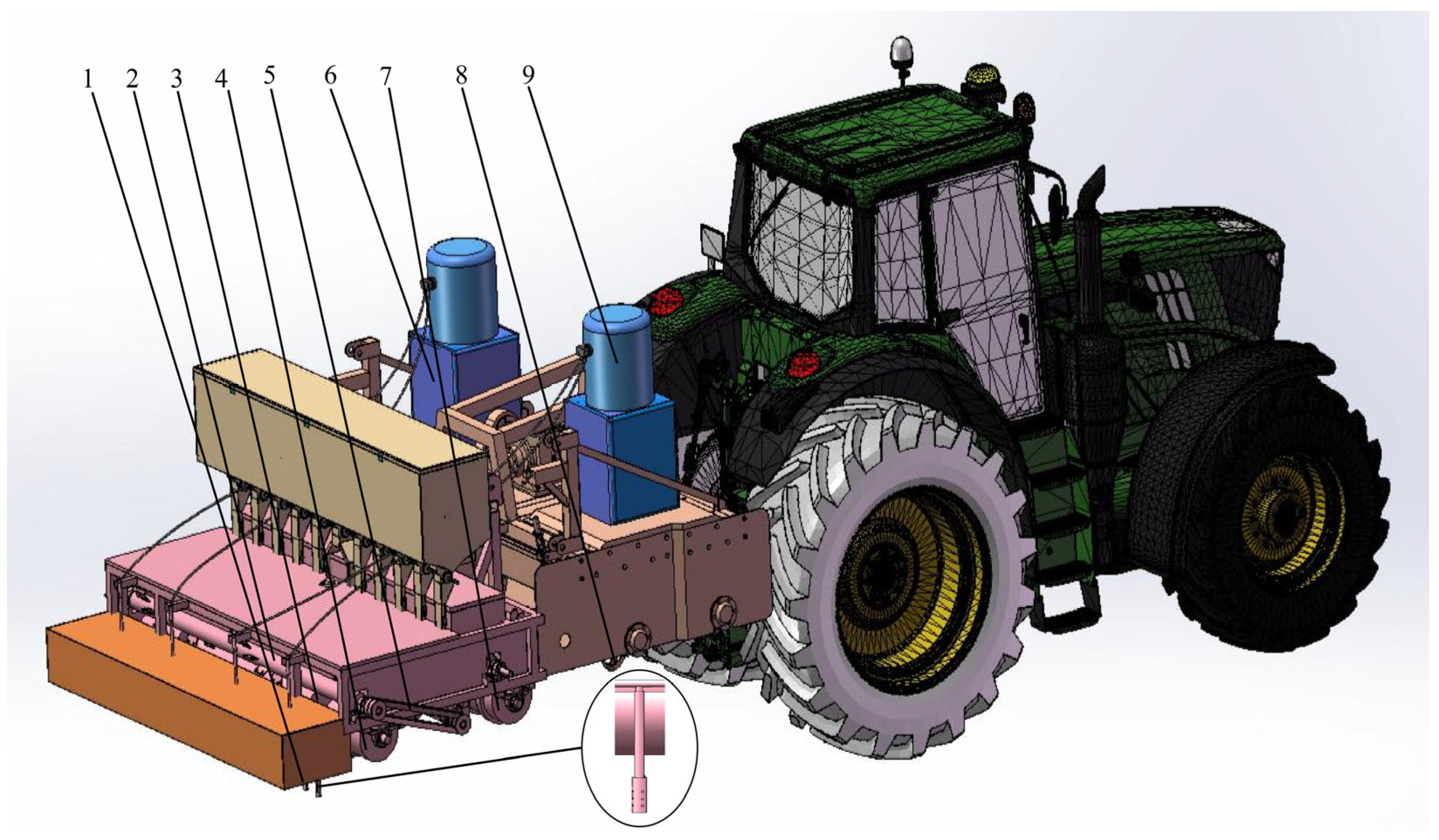
The structure of the flame control and sowing integrated operation machine is shown in Figure 1. It is composed of a double-axis rotary tillage mechanism, a soil-covering mechanism, and a flame control mechanism. The double-axis rotary tillage mechanism is composed of two sets of staggered rotary blades: the front cutter shaft rotates in the forward direction and the rear cutter shaft rotates in the reverse direction, while the tillage depth reaches to 220 mm, enabling the direct return of previous crop straw to the field. The parallel four-bar mechanism provided follow-up profiling, ensuring a consistent seeding height above the ground and adapting to different terrains. The soil-covering mechanism for suppression seeding mainly includes a suppression slotting wheel, a soil-covering blade, a post-pressing roller, and an opener. The suppression slotting wheel flattens the soil after rotary tillage, and a boss with a width of 50 mm and a height of 30 mm on the wheel surface formed the sowing groove, strictly controlling the sowing depth at 30 mm. After sowing, the soil-covering blade performs shallow tillage to cover the seeds, and the post-pressing roller compacts the surface soil to enhance the seed–soil contact and create favorable conditions for seed germination. The opener is used to form drainage ditches that meet agronomic planting requirements. The flame control mechanism consists of a flame nozzle, a nozzle mounting frame, a fuel tank, a tank mounting device, and piping components. The device primarily performs high-temperature flame spraying on the soil after mechanical rotary tillage weeding and compaction. Its working principle is that the high temperature is used to cause the deterioration and death of weed cell structures in surface soil and shallow weed seeds after rotary tillage. The effective temperature reaches at least 300 °C, which is most effective on the soil surface for controlling weed seed germination [31].
The relevant parameters of the flame nozzle are shown in Table 1.
The key parameters of the tractor are shown in Table 2.

2.2. Bench Experiment

2.2.1. Flame Control Test Bench

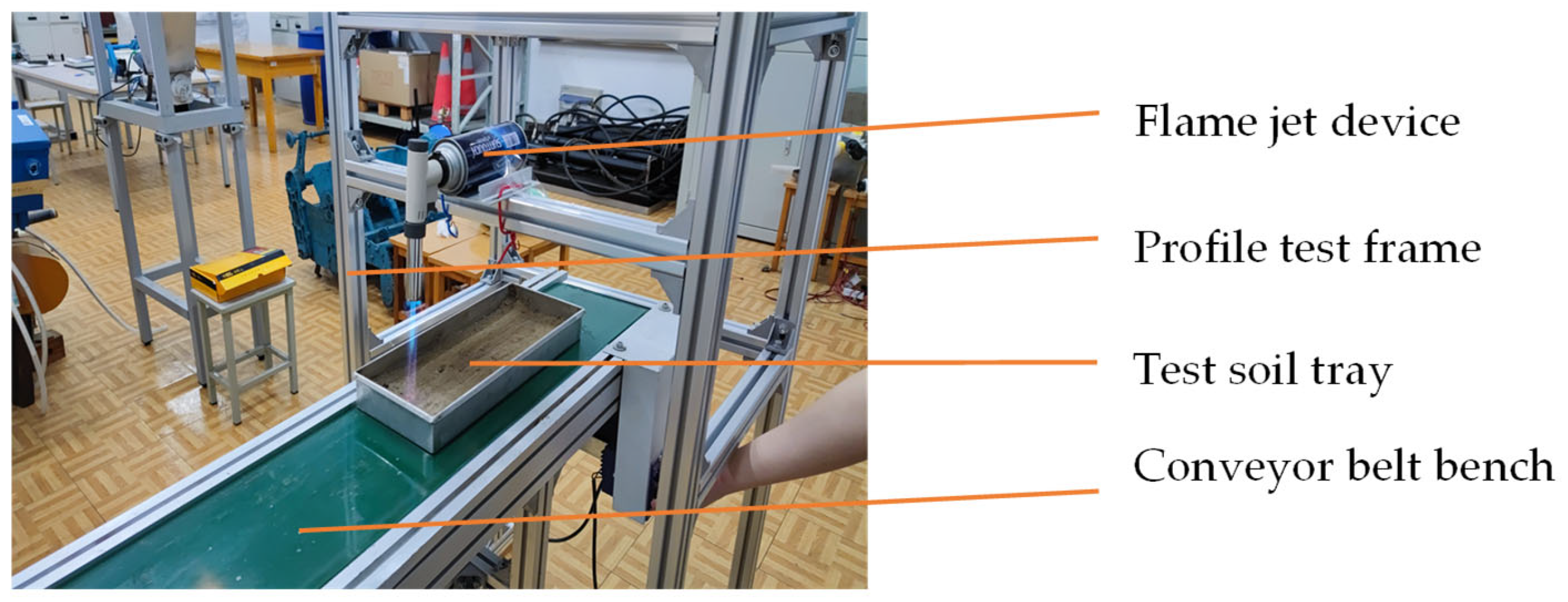
The experiment was conducted in the laboratory of the School of Mechanical Engineering at Yangzhou University, situated in Hanjiang District, Yangzhou City, Jiangsu Province. The designed flame control test bench is shown in Figure 2. The test bench mainly includes a conveyor belt bench, a profile test frame, a flame jet device, and test soil tray. The conveyor belt bench is composed of a conveyor belt, a belt support, a 12 V power supply, a conveyor belt speed control motor, and a DC stepless speed regulator. The profile test frame is built with several aluminum profiles of different sizes, allowing adjustment of the flame device height. The flame jet device is composed of a flame nozzle, a fuel tank, and a mounting plate. The test soil tray is made of stainless steel and placed on the conveyor belt for testing. Specific parameters of the test bench are shown in Table 3.
Other instruments and equipment used in this study include a flamethrower (Shenteqi Electrical Appliance Co., Ltd., Seoul, butane gas card, Republic of Korea), a moisture meter (Ohaus Instruments, MB27, Parsippany, NJ, USA), and a digital thermometer (Unilever Technology Co., Ltd., UT325, Shenzhen, China).
The relevant parameters of the flame equipment are shown in Table 4.

2.2.2. Test Methods

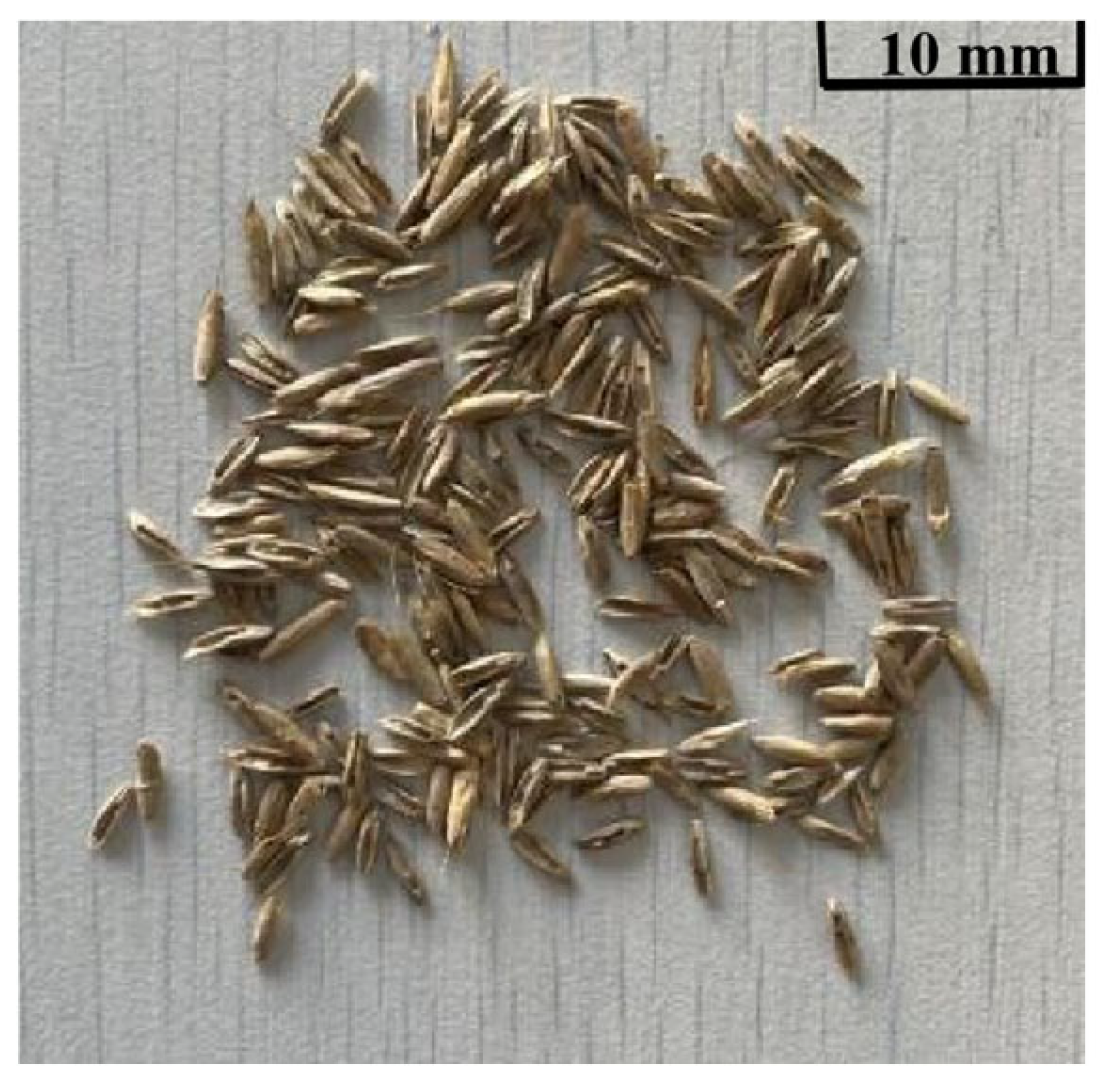
To obtain universal flame control operation parameters for weed seed control in paddy fields, tall fescue seeds with strong high-temperature tolerance were selected as test objects (Figure 3). Given that this species is renowned for its high resilience and survival thresholds, it is reasonable to infer that if the applied thermal dose is sufficient to eliminate these highly heat-resistant seeds, the majority of local weed species with lower thermal tolerances will also be effectively controlled.
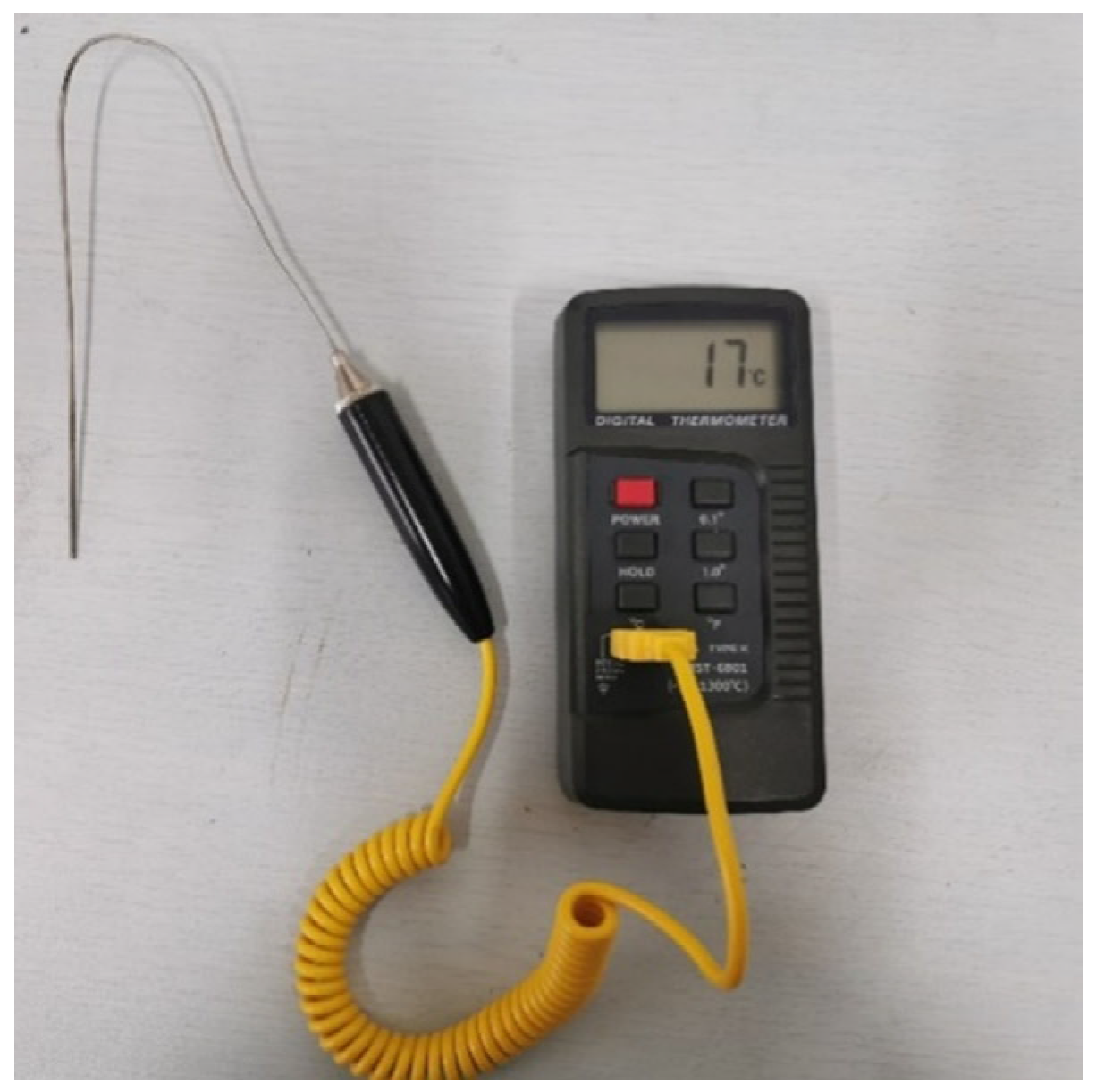
When conducting the surface soil or single-depth temperature test, a digital thermometer was used, as shown in Figure 4. The digital thermometer consists of a temperature sensor probe and a temperature display unit. The probe is connected to the positive and negative terminals of the display unit, and the measured temperature is displayed in real time via the display unit. The measuring probe can be bent arbitrarily according to the temperature measurement requirements. The specific parameters of the temperature measurement instrument are shown in Table 5.
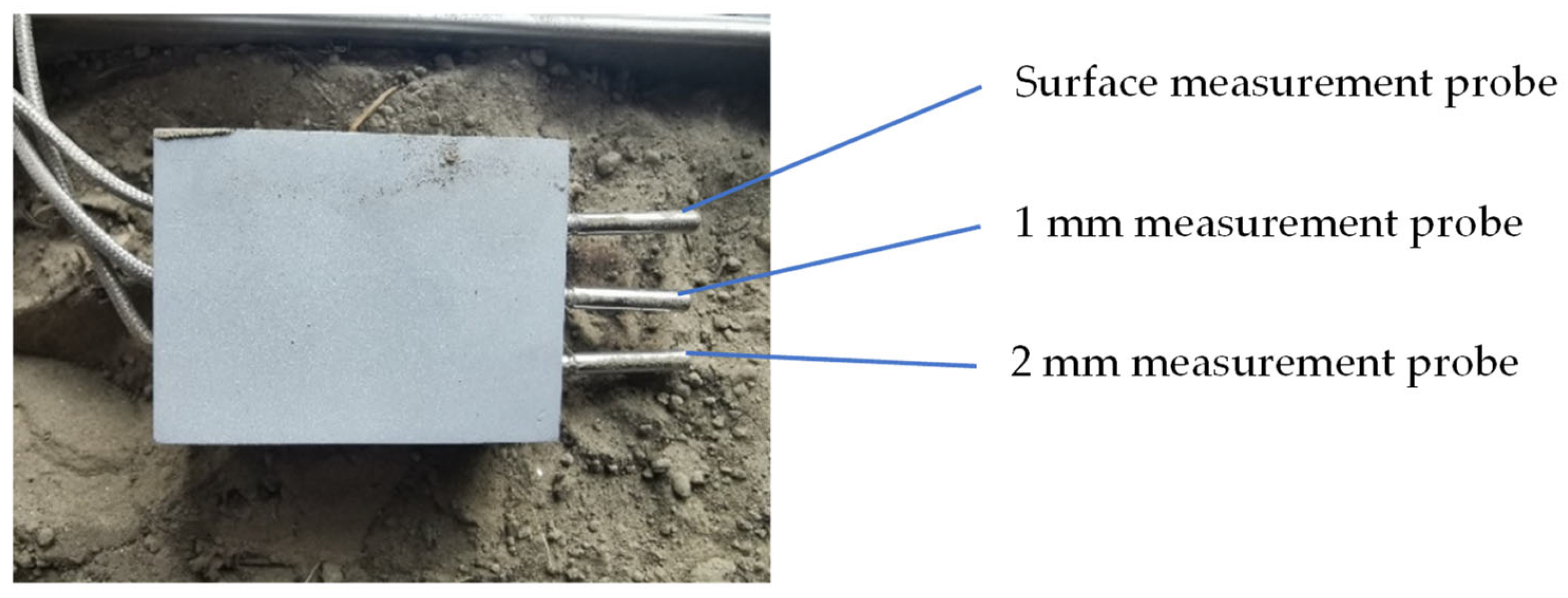
When measuring the temperature of multiple depth points at the same time, we designed a probe mounting block, as shown in Figure 5. It can fix three probes from different digital thermometers with an interval of 5 mm between each mounting hole, and through reasonable placement, the temperature at the soil surface, 1 mm depth, and 2 mm depth can be measured in real time.
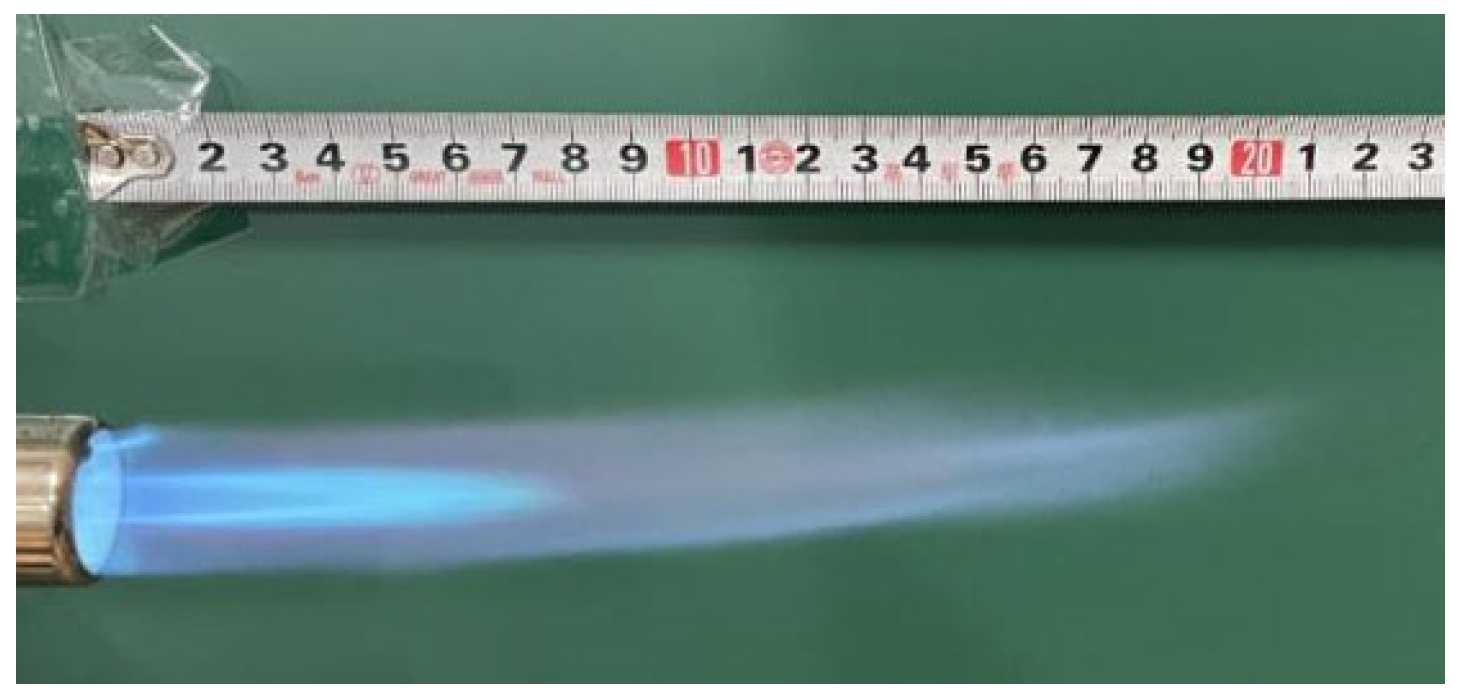
The bench experiment set the flame length to 200 mm, as shown in Figure 6.
The grass seed inactivation rate E was set as the indicator [32], and it can be described as
E = c 2 c 1 c 2 × 100 %
where c 2 is the total number of grass seeds and c 1 is the number of seeds germinating normally after testing.
(1)
Heat Inactivation Experiment on Grass Seeds
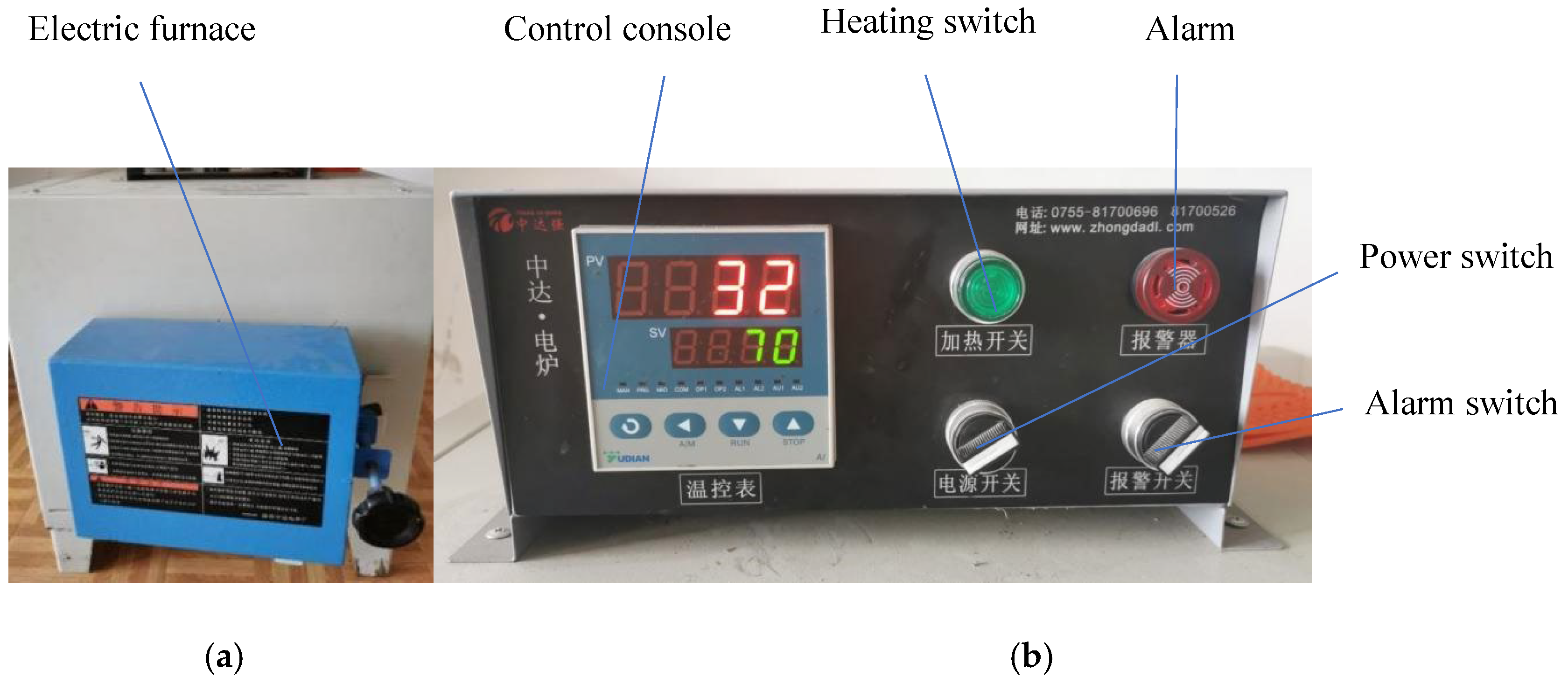
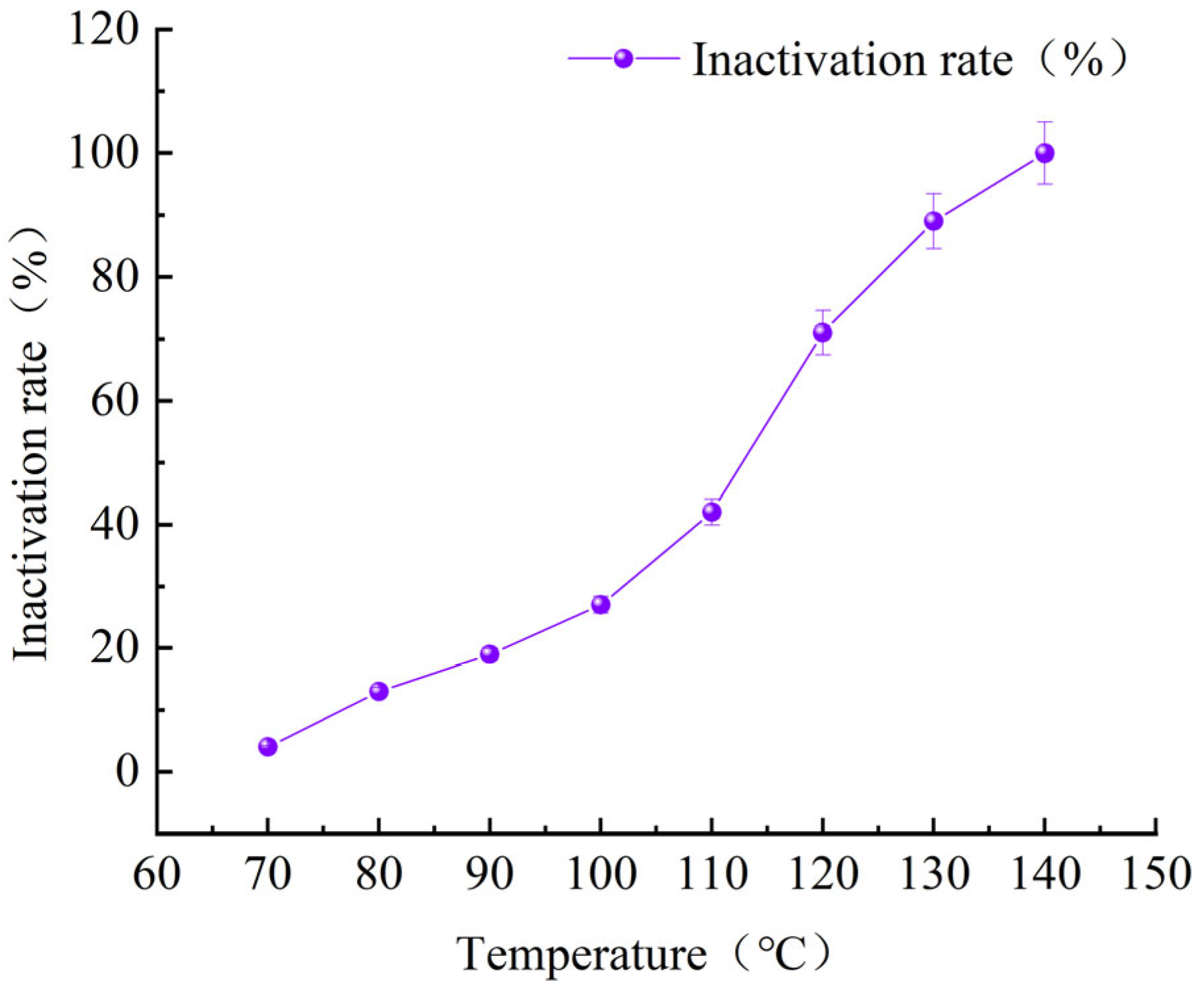
To clarify the temperature conditions required for inactivating grass seed, a heat inactivation experiment was conducted simultaneously. Tall fescue seeds were selected and divided into eight groups of 100 seeds for each ground. They were heated from room temperature to 70 °C, 80 °C, 90 °C, 100 °C, 110 °C, 120 °C, 130 °C, or 140 °C. An electric furnace (Figure 7) (Shenzhen Zhongdaqiang Electric Furnace Co., Ltd., ZDXS2-5-1000, Shenzhen, China) was used as the temperature control equipment. When the temperature of the weed reached the set value, the temperature was held for 1 min to ensure the uniform heating of the grass seeds, and then the weeds were cooled to room temperature before removal for planting. During the subsequent cultivation, an appropriate amount of water was promptly added, and grass seed germination and growth were observed daily to identify the critical temperature conditions for inactivating grass seed.
(2)
Soil-Heating Experiment
A single-factor test method was used to study the effect of the flame treatment on the soil temperature. The temperature change trend at the soil surface was measured by continuously using a heating device. Subsequently, with the nozzle placed vertically and burning for 3 s, temperature changes at the soil surface and in the shallow layer were studied at nozzle heights of 100 mm, 150 mm, and 200 mm above the soil surface. Between tests at different heights, the soil was allowed to cool naturally to room temperature before proceeding to the next test set. Temperature data at each single-factor level were averaged from multiple tests to obtain the soil temperature variation pattern under the specified flame scale. The flame length was set to 200 mm, and the effects of nozzle height above the soil and operating speed on the surface soil temperature were investigated. Temperature changes in the soil layers at different depths were monitored in real time using digital thermometers.
(3)
Germination Experiment of Heated Grass Seeds
A full-factorial experimental method was employed to systematically investigate the effects of various test factors on evaluation indicators under different level conditions. The experimental factors included the nozzle–soil distance, the grass seed burial depth, and the operating speed. The levels for each factor are shown in Table 6. Each experimental group was repeated three times, with 100 grass seeds per trial, to evaluate the effects of different treatment combinations on the grass seed inactivation. Tall fescue seeds were buried at different soil depths. Seeds were initially evenly spread on the soil surface, and then progressively covered with 1 mm or 2 mm of soil to test the germination rates at different depths after the flame treatment. Soil-heating characteristics were explored by recording the emergence results of grass seeds under different conditions. The experimental observations are shown in Table 7 below.

2.3. Field Experiment

The experiment was conducted in Shaobo Town, Jiangdu District, Yangzhou City, Jiangsu Province on 9 June 2024 after the wheat harvest. In the region, the terrain was flat, which was suitable for field crop cultivation. No pre-tillage straw treatment was performed after the harvest. However, the flame control and sowing integrated operation machine executed a sequential operation: rotary tillage, seeding, soil covering, and compaction. Consequently, the wheat residues (stubble and straw) were thoroughly incorporated into the soil during the rotary tillage phase before the flame treatment process began. This ensured that the soil surface was relatively clean and free of large amounts of flammable dry matter when the torches were active. The experimental field employs a rice–wheat rotation system, and the soil type is clay. The proportions of gravel, sand, and silt in the soil are 16.3%, 76.9%, and 6.8%, respectively. Basic physical parameters, such as the soil moisture content and bulk density, are shown in Table 8. The soil environment is suitable for tests, and the test area was marked before the experiment. In this study, four interrelated parameters were used to characterize the physical state of the soil: moisture content, representing the mass ratio of water to dry soil; bulk density, indicating the mass of soil per unit volume as a measure of structural packing; compactness, defined here as the penetration resistance reflecting the soil’s mechanical strength and ease of deformation; and total porosity, which quantifies the volume of void spaces within the soil matrix. These metrics provide a comprehensive overview of the soil’s hydro-physical condition and its resistance to external mechanical loads.
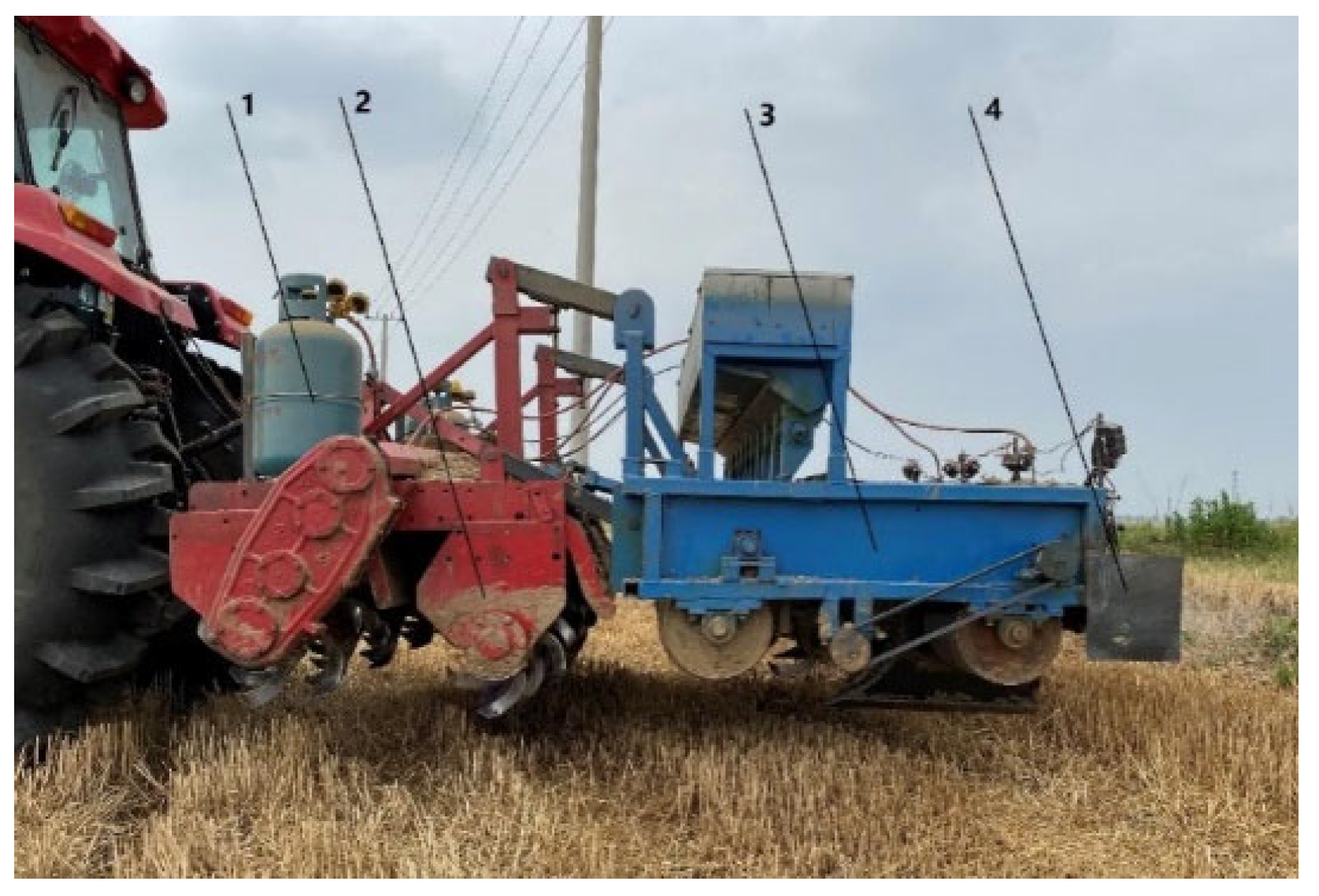
The field experiment that investigated the flame control and sowing integrated operation machine is shown in Figure 8. The flame control mechanism was located at the rear of the soil-covering machine, and the fuel tank was mounted on the two-axis rotary tiller. The field experiment was conducted based on the premise of stable connections between the machine components.
The field experiment was conducted to compare the weeding effect: Three different field operating speeds (3 km·h−1, 4 km·h−1, and 5 km·h−1) were used to form the corresponding work areas under conditions where the vertical distance was 150 mm between the flame nozzle and the ground. The number of weeds was compared between flame-treated plots and non-flame-treated control plots after crop emergence. To evaluate the effect and feasibility of the flame control machinery, six sample areas of 2 m × 4 m were selected under each speed’s treatment area and its adjacent untreated area for weed count statistics.
Specifically, the number of weeds in the early crop emergence stage was compared between the flame-treated area and the adjacent control area at different speeds. Six groups of data showing significant differences were selected as analysis objects. The numbers were set as follows: No. 1 to No. 6 represented the treatment area at the 3 km·h−1 operating speed, while No. 7 to No. 12 represented its adjacent control area; No. 13 to No. 18 represented the treatment area at the 4 km·h−1 operating speed, while No. 19 to No. 24 represented its adjacent control area; and No. 25 to No. 30 represented the treatment area at the 5 km·h−1 operating speed, while No. 31 to No. 36 represented its adjacent control area.
The experimental machine can complete sowing and flame control in turn. Fertilizer was applied across the entire experimental area prior to seeding to ensure a uniform nutrient supply. Most importantly, no herbicides were used before or after the experiment, ensuring that the observed weed inactivation results were solely attributable to thermal treatment and natural competition mechanisms in the field.

2.4. Statistical Analysis

2.4.1. Heat Inactivation Experiment

The heat inactivation experiment consisted of 8 groups, with 5 trays per group. Each tray was placed flat with 100 grass seeds. After the experiment, the inactivation rates of grass seeds in the 5 trays were recorded. The maximum and minimum values were removed, and the remaining 3 experimental values were considered valid. The mean and standard deviation of the experimental results for each group were calculated.

2.4.2. Experiment of Bench

(1)
Soil-Heating Experiment in Different Soil Layers
The soil-heating experiment was divided into 3 groups based on the distance between the flame nozzle and the soil, with 3 repetitions each. The temperature increase data of 3 different soil layers (0/1/2/10) were recorded.
(2)
Germination Experiment of Heated Grass Seeds
When grass seeds in different soil layers were subjected to flame treatment, the flame was applied as uniformly as possible across each section of the soil. Every germination experiment contained 5 trays, and the inactivation rates of grass seeds in the 5 trays were recorded. The maximum and minimum values were removed, and the remaining 3 experimental values were considered valid. The mean and standard deviation of the experimental results for each group were calculated. SPSS software (IBM SPSS Statistics 22) was used to calculate the significance of the effects of each experimental factor on the indicators.

2.4.3. Experiment of Field

The field experiment was divided into 6 groups according to the operating speed, of which 3 groups were used as controls (no flame control). The test plot was 150 m long, and 6 measurement areas of 2 m in length and 4 m in width were selected at the 50 m, 60 m, 70 m, 80 m, 90 m, and 100 m positions of each planting row. The number of weeds in each area was counted. The mean and standard deviation of the experimental results for each group were calculated. SPSS software was used to calculate the significance of the effect of the operating speed on the indicators.

3. Results and Discussion

3.1. Results of Heat Inactivation Experiment

When the target temperature was set to 70 °C, the inactivation rate of the tall fescue seeds was only 4%. For 80 °C, the rate increased to 13%. For 90 °C, the rate increased to 19%. For 100 °C, the rate increased to 27%. For 110 °C, the rate increased to 42%. For 120 °C, the rate increased to 71%, indicating good inactivation efficacy, with most seeds unable to germinate. When the temperature was further increased to 130 °C, the rate increased to 89%, proving this temperature delivers ideal inactivation results. Considering both the heat transfer characteristics of the electric furnace and the uniformity of seed heating, 130 °C is sufficient to achieve near-complete inactivation of tall fescue seeds. For 140 °C, the inactivation rate reached 100%, with seeds ceasing all growth, confirming full inactivation. The thermal inactivation experiment data for the grass seeds is shown in Figure 9.

3.2. Results of Soil-Heating Experiment

(1)
Soil-heating experiment with distance of 100 mm between the flame nozzle and the soil
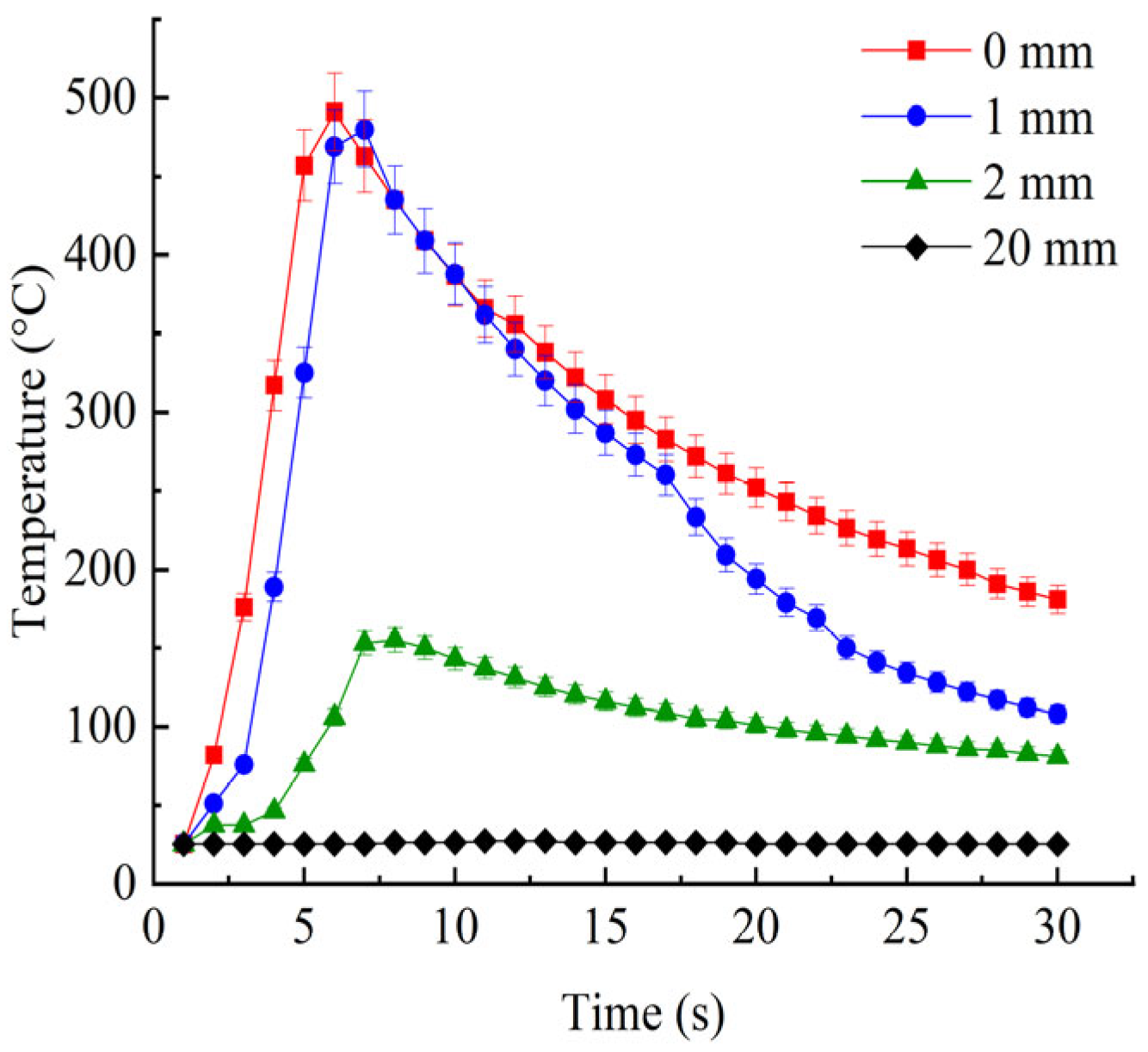
A single-factor test was conducted with the flame nozzle positioned 100 mm vertically (90°) relative to the soil surface. Temperature change data for the soil surface, 1 mm depth, and 2 mm depth were collected and statistically analyzed (Figure 10).
In Figure 10, the soil surface temperature began to rise from room temperature when the burning duration was 3 s. The temperature increased rapidly during the 3 s of flame contact with the soil and then decreased after the flame was extinguished, and the cooling rate varied from rapid to slow. At 1 s, the temperature was set as the initial ignition temperature. From 2 to 6 s, the soil temperature rose to a maximum of 491 °C, where this was set as the heating period. After the burning stopped, the soil temperature decreased significantly by approximately 30 °C, 15 °C, 10 °C, and 5 °C during 7–10 s, 11–17 s, 18–23 s, and 24–30 s, respectively. After 30 s, the temperature decrease slowed as the heat gradually dissipated.
The temperature change at the 1 mm depth lagged behind that of the surface. The soil temperature was 35 °C at 1 s; increased to 480 °C during 2–7 s; and decreased by about 25 °C, 15 °C, 10 °C, and 5 °C during 8–13 s, 14–21 s, 22–25 s, and 26–30 s, respectively. After 30 s, the rate of change decreased and the heat gradually dissipated.
The soil temperature at the 2 mm depth started at 37 °C at 1 s; increased to 155 °C during 2–8 s; and then decreased by about 7 °C, 5 °C, 3 °C, and 2 °C between 9 and 13 s, 14 and 18 s, 19 and 21 s, and 22 and 30 s, respectively. Thus, with a burning time of 3 s, the flame had little effect on soil depths below 2 mm.
(2)
Soil-heating experiment with distance of 150 mm between the flame nozzle and the soil
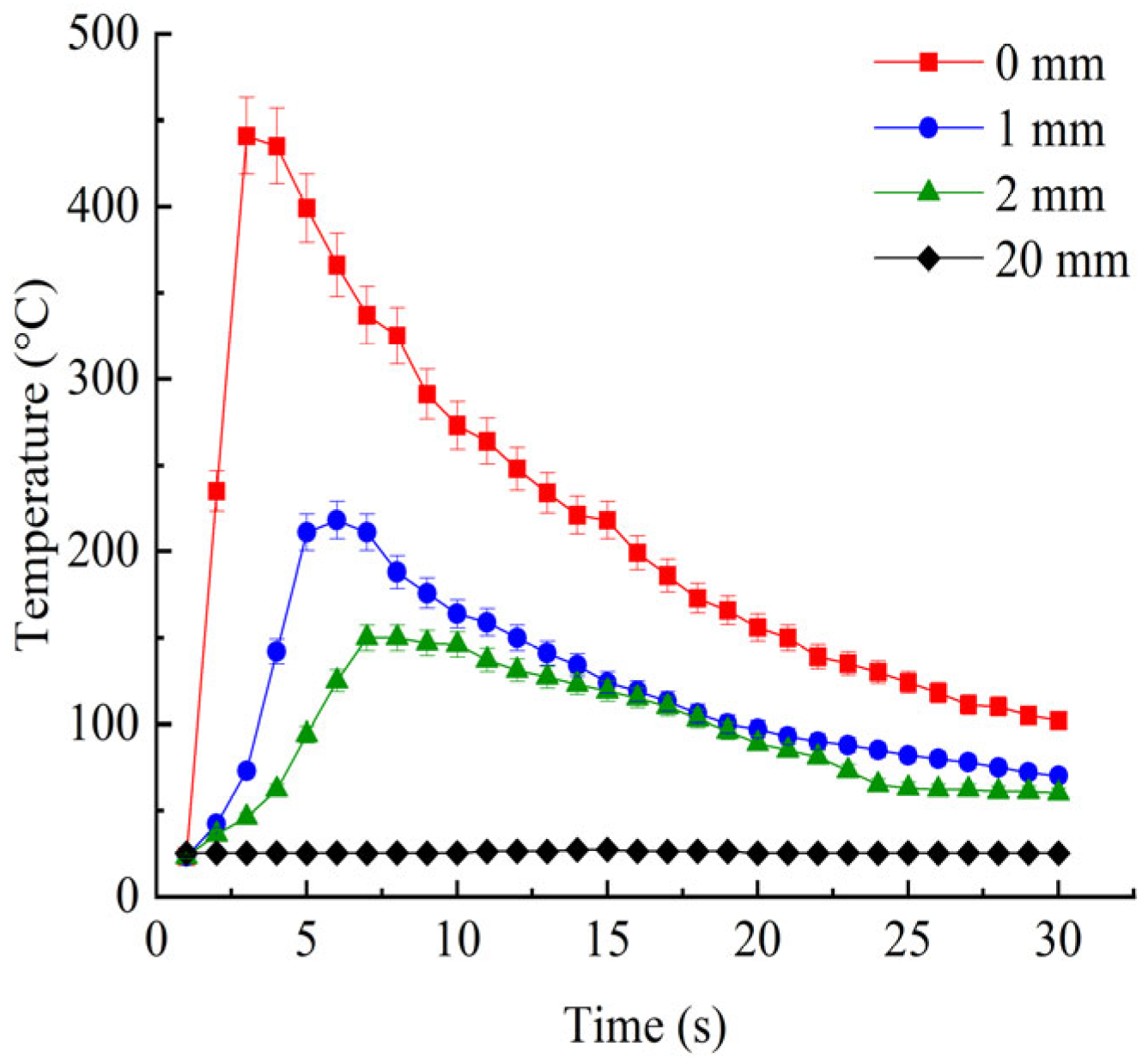
A single-factor test was performed with the flame nozzle positioned 150 mm vertically relative to the soil surface. The temperature changes at the soil surface, 1 mm depth, and 2 mm depth were statistically analyzed (Figure 11).
In Figure 11, when the burning duration was 3 s, the soil surface temperature began to rise from room temperature. The temperature increased rapidly during the initial 2 s of flame contact and decreased after the flame was turned off, with the cooling rate transitioning from fast to slow. The soil temperature reached 441 °C during 2–4 s. After the burning ceased, the temperature decreased by about 30 °C between 5 and 9 s, by about 15 °C between 10 and 22 s, and by about 5 °C between 23 and 30 s. After 30 s, the range of the temperature decreased slowly.
The temperature change at the 1 mm depth lagged that at the surface, reached 218 °C after the heat transfer, and then decreased by about 10 °C between 9 and 18 s and by about 3 °C after 19 s.
At the 2 mm depth, the soil temperature started at 36 °C at 2 s, rose to 150 °C during 3–6 s, and then decreased slowly with a gradually declining rate. This indicates that the soil provided certain thermal insulation, and the flame had little effect below 2 mm.
(3)
Soil-heating experiment with distance of 200 mm between the flame nozzle and the soil
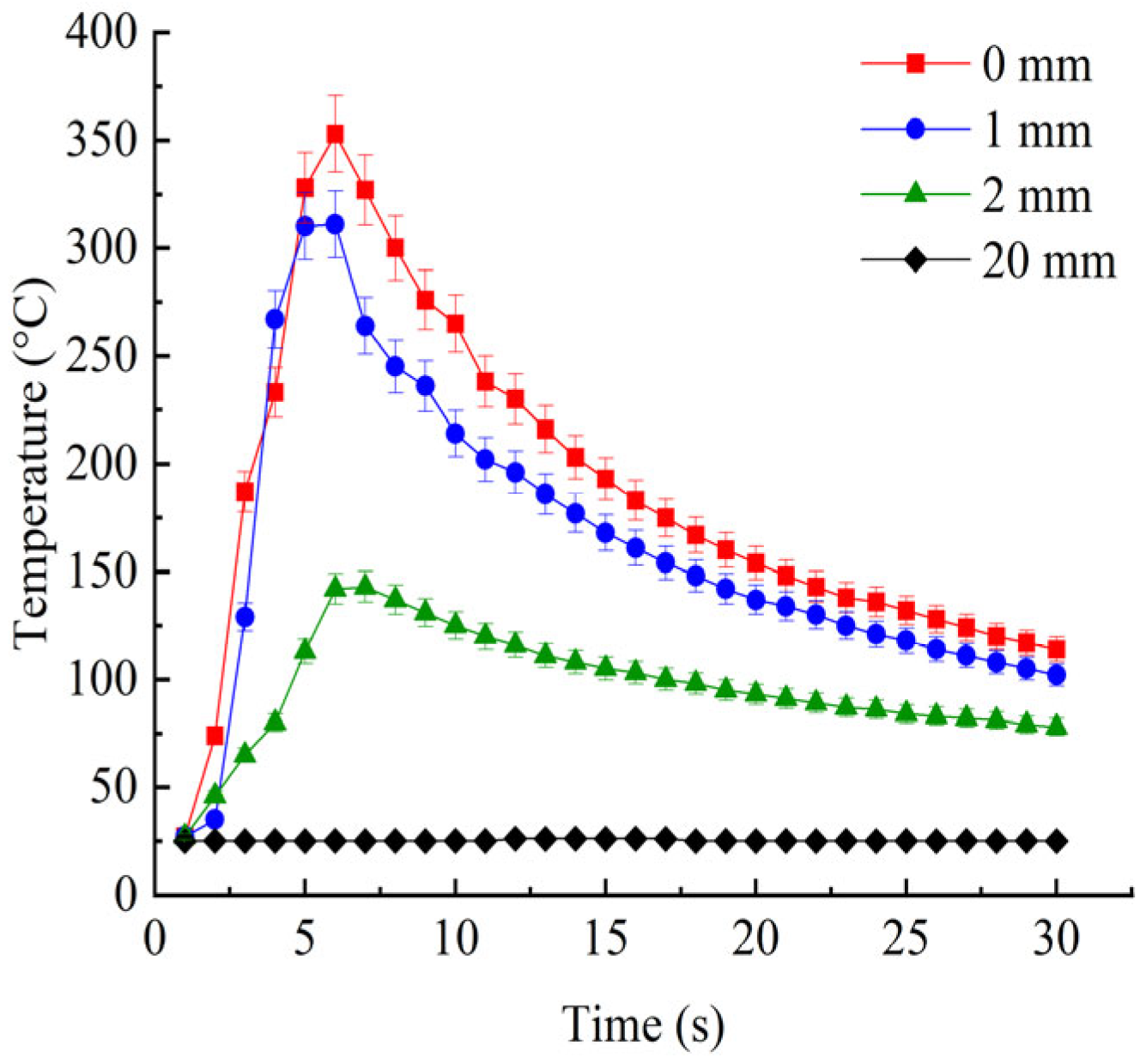
A single-factor test was conducted with the flame nozzle positioned 200 mm vertically relative to the soil surface. Temperature changes at the soil surface, 1 mm depth, and 2 mm depth were statistically analyzed (Figure 12).
With a flame length of 200 mm and the nozzle 200 mm from the soil surface, the soil surface temperature began to rise from room temperature during the 3 s of the burning period. The temperature increased rapidly during the 3 s of flame contact and decreased after the flame was extinguished, with the cooling rate changing from fast to slow. The soil temperature reached 353 °C during 2–6 s. Then it decreased by about 30 °C between 7 and 11 s, by about 15 °C between 12 and 14 s, by about 10 °C between 15 and 17 s, by about 7 °C between 18 and 22 s, and then decreased by about 4 °C.
The temperature change at the 1 mm depth lagged behind that at the surface and reached 311 °C during 2–6 s. After the burning stopped, the temperature decreased by about 20 °C between 7 and 10 s, by about 10 °C between 11 and 15 s, and by about 5 °C between 16 and 23 s. After 24 s, it decreased slowly and the heat dissipated.
At the 2 mm depth, the soil temperature started at 35 °C at 1 s, rose to 143 °C during 2–7 s, decreased by about 6 °C between 8 and 12 s, by about 3 °C between 13 and 25 s, and then by about 1 °C. Thus, with a burning time of 3 s, the flame had little effect on soil depths below 2 mm.
The observed temperature variations at the 1 mm depth across Figure 10, Figure 11 and Figure 12 are attributed to the distinct thermal structures of the flame at different standoff distances. At 100 mm (Figure 10), the close proximity resulted in a high radiant heat flux. The drop at 150 mm (Figure 11) indicates a transitional zone where the heat density was dispersed. However, at 200 mm (Figure 12), the soil surface likely interacted with the outer flame zone (oxidizing zone), which characterized the highest temperature region of the torch, leading to higher heat penetration than that observed at the 150 mm distance.

3.3. Results of Germination Experiment

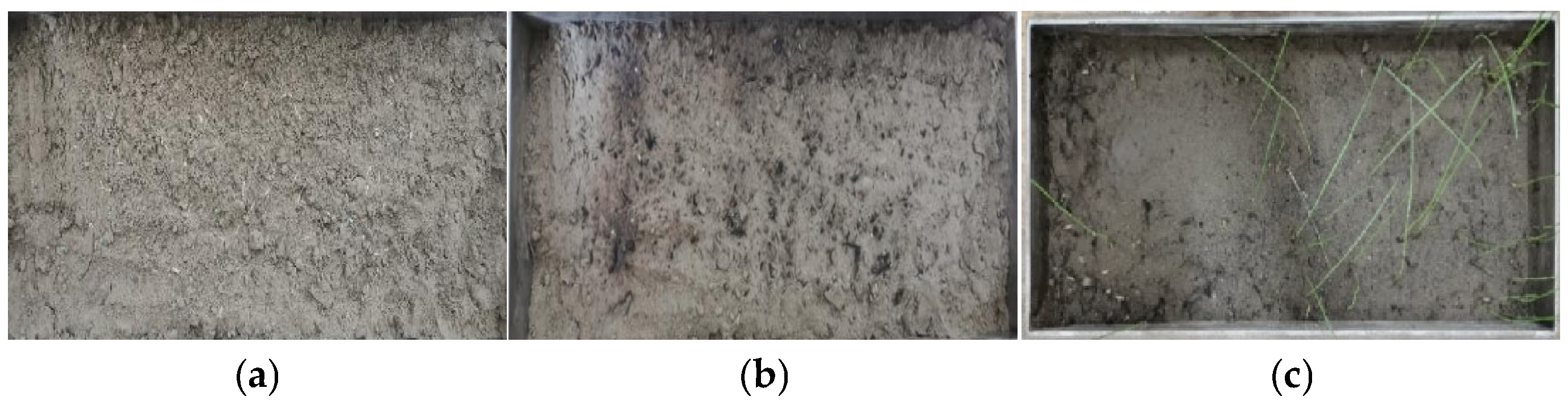
The germination experiment of tall fescue grass seeds is shown in Figure 13, and the results are shown in Table 9.
Linear regression analysis of the experiment results is shown in Table 10. Statistical analysis confirms that all three factors exerted a highly significant (p < 0.01) influence on the evaluation index, where factor B demonstrated the most substantial effect, followed by factor C and factor A.

3.4. Results of Field Experiment

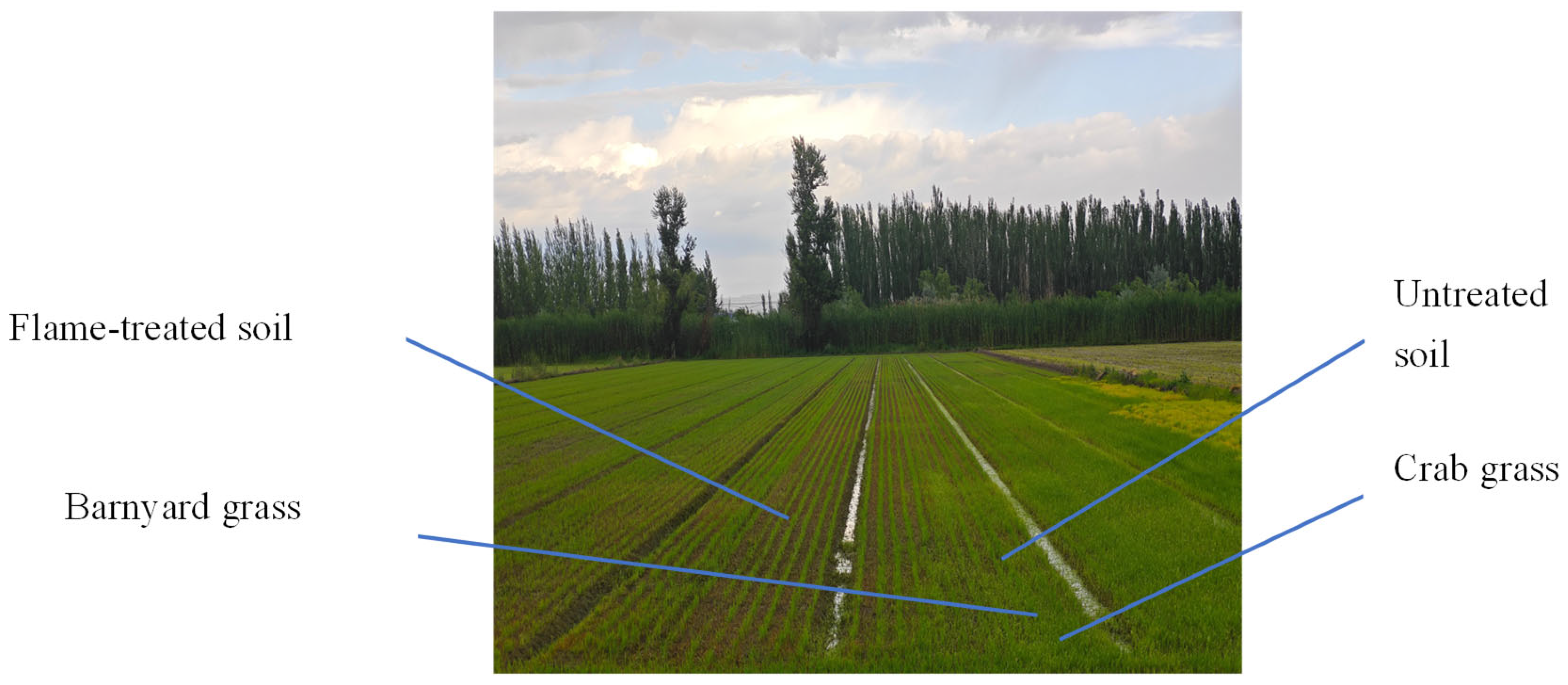
A photo of the rice seedling stage after the field experiment is shown in Figure 14. The primary field weeds were barnyardgrass (Echinochloa crus-galli), monochoria (Monochoria vaginalis), and crabgrass (Digitaria sanguinalis) at the seedling stage (height > 2 cm). Mechanical rotary tillage left significant crop residue after the harvest on the soil surface, and it is evident that flames could reduce the small amount of crop residue to ashes. Since the quantity of straw burned was minimal, this method avoided the environmental issues associated with excessive straw burning. In contrast, the flame control technology removed some of the residue, which promoted its reabsorption and utilization by the soil.
The number of weeds in the flame-treated areas and the adjacent control areas under different speed conditions was counted. The data are shown in Table 11.
The data shows that the average inactivation rate was calculated to be 80.27% at a field operating speed of 3 km·h−1. At a field operating speed of 4 km·h−1, the average inactivation rate was 66.30%. At a field operating speed of 5 km·h−1, the average inactivation rate was 46.10%. The SPSS analysis indicated that there were extremely significant differences between every pair of groups of data (p < 0.01).

4. Discussion

In this study, a flame control test bench and flame control and sowing integrated operation machine were designed. The heat inactivation experiment, soil-heating experiment, germination experiment of heated grass seeds, and field experiment were carried out in turn.
(1)
The efficacy of pre-emergence flame control for grass seeds in fields is influenced by a complex interplay of operational parameters and environmental constraints. While our results demonstrated high suppression rates under controlled conditions, several factors limited its field performance.
(2)
A primary limitation observed in field trials is soil surface unevenness. Even minor topographical variations can attenuate the thermal dose delivered to weed seeds. As noted by Martelloni et al. [33], surface heterogeneity and the physical shielding provided by soil aggregates significantly affect the uniformity of the thermal control. Furthermore, the seed burial depth is a critical determinant of survival. Soil acts as an efficient thermal insulator, and the lethal temperature gradient drops sharply within the top layers. According to Ulloa et al. [34], soil parameters such as the moisture content can act as a heat sink, where energy is consumed by water evaporation, thereby protecting deeply buried seeds from reaching lethal thresholds.
(3)
The operating speed directly governs the residence time of the flame over a specific area. Our results show that lower speeds provide a more robust “universal” control but at the cost of reduced work efficiency and potential soil carbonization. Conversely, high speeds may fail to break the dormancy of highly resilient species like tall fescue. The trade-off between speed and efficacy is a central theme in thermal weeding engineering. By selecting highly tolerant seeds as indicators, we ensured that the established parameters provide a “safety margin” for controlling less resistant local weed species.
(4)
Despite its efficacy, flame control entails several limitations that must be addressed for broader adoption. First, the temperature thresholds for weed inactivation are highly species-specific and sensitive to plant growth stages; a slight insufficiency in the thermal dose may lead to incomplete control or rapid re-growth, while an excess can jeopardize crop safety. Second, environmental risks such as the ignition of dry crop residues and the transient impact on surface-level soil organic matter cannot be entirely ignored, especially in sensitive ecosystems. Finally, energy consumption remains a primary concern; the heavy reliance on liquefied petroleum gas (LPG) or propane leads to higher operational costs and carbon emissions compared with some biological or mechanical alternatives. Future research should focus on optimizing the burner efficiency and integrating infrared sensors to enable site-specific flaming, thereby reducing fuel consumption and minimizing the ecological footprint.

5. Conclusions

The experimental results show that when the target temperature was set to 140 °C and lasted 1 min, the inactivation rate of tall fescue seeds reached 100%. The data show that when the flame length was 200 mm, the temperature rise of the 1 mm-deep soil layer was lower than that of the surface soil, and the temperature rise of the 2 mm-deep soil layer was the lowest. When the nozzle–soil distance was 150 mm, the soil temperature effect was better than that of 200 mm, and 100 mm was the best. Therefore, reducing the nozzle–soil distance is recommended to enhance the flame control effectiveness. Statistical analysis confirmed that the nozzle–soil distance, the grass seed burial depth, and the operating speed exerted highly significant (p < 0.01) influences on the inactivation rate of tall fescue seeds, with the grass seed burial depth demonstrating the most substantial effect, followed by the operating speed and nozzle–soil distance. The field experiment results revealed that the average inactivation rate exhibited a speed-dependent decline: 80.27% at 3 km·h−1, 66.30% at 4 km·h−1, and 46.10% at 5 km·h−1, and the SPSS analysis indicated that there were extremely significant differences between every pair of groups of data (p < 0.01).
However, compared with existing research, several issues remain that require further investigation, as summarized below:
(1)
While systematic weed community surveys had been conducted in various farming systems and planting patterns, the test subjects in this study were relatively singular. Only tall fescue seeds were tested for heat inactivation, and the research has not yet been extended to the heat resistance of other common farmland weed seeds.
(2)
The data of the field experiment reveal that the flame treatment had limited effects on weed communities with high density and complex species composition, suggesting that spatial distribution and flame coverage uniformity should be considered in flame control. This study examined the lethal effect of a single flame on seeds directly beneath it, and did not address the germination risk caused by insufficient heating of seeds in gaps between multiple flames. Future work should strengthen research on the distribution of the temperature field under multi-flame coupling.
(3)
The effectiveness of flame control was significantly influenced by environmental conditions, leading to considerable discrepancies between field and indoor experiments. Therefore, subsequent research will adopt the principle of “adapting flame control to local conditions and timing” to conduct systematic experiments with multi-flame parameters across different soil types and weed species, thereby facilitating the transition of flame control from theoretical models to practical field applications.

Author Contributions

Conceptualization, Z.Z.; Software, X.S.; Validation, F.B.; Writing—Original Draft, X.S.; Writing—Review and Editing, X.X.; Resources, F.B.; Funding Acquisition, Z.Z. All authors have read and agreed to the published version of the manuscript.

Funding

National Natural Science Foundation of China (NSFC) (52005309). Jiangsu Postdoctoral Research Funding Program (2021K134B).

Data Availability Statement

The original contributions presented in this study are included in the article. Further inquiries can be directed to the corresponding author.

Conflicts of Interest

The authors declare no conflicts of interest.

References

  1. Zhu, A.; Shen, Q.; Chen, L.; Gu, J.; Li, J.; Zhang, H. Occurrence characteristics and control strategies of weeds in paddy fields of Jiangsu Province in 2022. China Plant Prot. 2024, 44, 32–38. [Google Scholar]
  2. Yang, Y.; Tang, W.; Zhu, X.; Shen, Q.; Zhu, A. “Transplanting-spraying synchronization” technology for pre-emergence weed control in mechanically transplanted rice and comparative efficacy of supporting herbicides. China Rice 2022, 28, 109–113. [Google Scholar] [CrossRef]
  3. Li, D.; Hu, W.; Lan, Y.; Fan, M.; Li, C.; Zhu, J. Research status and prospect of deep learning in weed recognition. J. Chin. Agric. Mech. 2022, 43, 137–144. [Google Scholar] [CrossRef]
  4. Van der Weide, R.Y.; Bleeker, P.O.; Achten, V.T.J.M.; Lotz, L.A.P.; Fogelberg, F.; Melander, B. Innovation in mechanical weed control in crop rows. Weed Res. 2008, 48, 215–224. [Google Scholar] [CrossRef]
  5. Zheng, H.; Li, Z.; Shan, Y.; Zhu, Y.; Xiao, M. Current status and development trends of agricultural mechanical weeding technologies and equipment. J. Nanjing Agric. Univ. 2025, 48, 285–295. [Google Scholar] [CrossRef]
  6. Zhang, S. Weed control techniques for major crop fields in China. Weed Sci. Bull. 2020, 38, 50–55. [Google Scholar] [CrossRef]
  7. Zhou, Z.; Hamamoto, S.; Kashiwagi, J.; Zhu, Y.; Ishiguro, M.; Araki, H. Rice yield and nutrient dynamics in a fertilizer-free and agrochemical-free paddy field with inter-tillage weeding. Soil Tillage Res. 2025, 251, 106531. [Google Scholar] [CrossRef]
  8. Tang, Z.; Xi, X.; Zhang, B.; Du, J.; Shi, Y.; Zhang, Y.; Qin, K.; Zhang, R. Research status and development trend of mechanized weeding equipment and technology. J. Weed Sci. 2023, 41, 14–29. [Google Scholar] [CrossRef]
  9. Upadhyay, A.; Singh, K.P.; Jhala, K.B.; Kumar, M.; Salem, A. Non-chemical weed management: Harnessing flame weeding for effective weed control. Heliyon 2024, 10, e32776. [Google Scholar] [CrossRef]
  10. Bauer, M.V.; Marx, C.; Bauer, F.V.; Flury, D.M.; Ripken, T.; Streit, B. Thermal weed control technologies for conservation agriculture—A review. Weed Res. 2020, 60, 241–250. [Google Scholar] [CrossRef]
  11. Yan, C.; Tao, J.; Tang, A.; Liang, Q.; Liu, X. Early vegetation recovery characteristics of burned forest land in Mao’an Forest Farm, Chongqing. J. Southwest Univ. Nat. Sci. Ed. 2008, 30, 140–145. [Google Scholar] [CrossRef]
  12. Rahkonen, J.; Pietikäinen, J.; Jokela, H. The effects of flame weeding on soil microbial biomass. Biol. Agric. Hortic. 1999, 16, 363–368. [Google Scholar] [CrossRef]
  13. Sivesind, E.C.; Leblanc, M.L.; Cloutier, D.C.; Seguin, P.; Stewart, K.A. Impact of selective flame weeding on onion yield, pungency, flavonoid concentration, and weeds. Crop Prot. 2012, 39, 45–51. [Google Scholar] [CrossRef]
  14. Stepanovic, S.; Datta, A.; Neilson, B.; Bruening, C.; Shapiro, C.A.; Gogos, G.; Knezevic, S.Z. Effectiveness of flame weeding and cultivation for weed control in organic maize. Biol. Agric. Hortic. 2016, 32, 47–62. [Google Scholar] [CrossRef]
  15. Zhao, L.; Wei, N.; Tan, S.; He, Q.; Wang, Z.; Fan, W.; Sun, P. Effects of winter burning on community characteristics and soil properties in typical steppe of the Loess Plateau. Acta Agrestia Sin. 2018, 26, 576–583. [Google Scholar] [CrossRef]
  16. Martelloni, L.; Fontanelli, M.; Caturegli, L.; Gaetani, M.; Grossi, N.; Magni, S.; Peruzzi, A.; Pirchio, M.; Raffaelli, M.; Volterrani, M.; et al. Flaming to control weeds in seashore paspalum turfgrass. J. Agric. Eng. 2019, 50, 904. [Google Scholar] [CrossRef]
  17. Pergher, G.; Gubiani, R.; Mainardis, M. Field testing of a biomass-fueled flamer for in-row weed control in the vineyard. Agriculture 2019, 9, 210. [Google Scholar] [CrossRef]
  18. Guo, W.; Feng, L.; Tian, X. Effect of flame weeding in orchards. J. Weed Sci. 2019, 37, 35–39. [Google Scholar] [CrossRef]
  19. Zhou, L. Effects of Flame Weeding on Community Characteristics of Major Farmland Weeds. Master’s Thesis, Northwest A&F University, Xianyang, China, 2019. [Google Scholar]
  20. Peng, K.; Ma, X.; Li, Y.; Yin, J.; Ren, J.; Dai, W. Effects of burning and fertilization on plant diversity and biomass in subalpine meadow. J. Yunnan Agric. Univ. (Nat. Sci.) 2019, 35, 94–101. [Google Scholar] [CrossRef]
  21. He, X.; Ran, H.; Lan, X.; Chen, S.; Ye, Z. Control efficacy of high-temperature flame on weeds in young tea plantations. Weed Sci. 2022, 40, 60–65. [Google Scholar] [CrossRef]
  22. Chen, Y. Design of Flame Micro-Tiller. Master’s Thesis, Anhui Agricultural University, Hefei, China, 2018. [Google Scholar]
  23. Guan, P. Research and Implementation of Key Technologies for Chinese Herbal Medicine Flame Weeding Machine. Master’s Thesis, Shanxi Agricultural University, Jinzhong, China, 2019. [Google Scholar]
  24. Rajković, M.; Malidža, G.; Stepanović, S.; Kostić, M.; Petrović, K.; Urošević, M.; Vrbničanin, S. Influence of burner position on temperature distribution in soybean flaming. Agronomy 2020, 10, 391. [Google Scholar] [CrossRef]
  25. Rajković, M.; Malidža, G.; Tanasković-Stojilković, M.; Bakal, R.; Kovačević, D.; Brdar-Jokanović, M. Sustainable organic corn production with the use of flame weeding as the most sustainable economical solution. Sustainability 2021, 13, 572. [Google Scholar] [CrossRef]
  26. Chen, H.; Yang, Y. Research on non-chemical weed control technologies under conservation tillage mode. J. Agric. Mech. Res. 2011, 33, 241–244. [Google Scholar] [CrossRef]
  27. Lu, Y.; Liu, Q.; Chen, J.; Lei, R.; Wang, W. Design and experimental analysis of a flame-targeted weeding machine. Jiangsu Agric. Mech. 2025, 2, 1–13. [Google Scholar] [CrossRef]
  28. Ascard, J. Dose–response models for flame weeding in relation to plant size and density. Weed Res. 1994, 34, 377–385. [Google Scholar] [CrossRef]
  29. Jantra, C.; Sukcharoenvipharat, W.; Usaborisut, P.; Thanpattranon, P.; Abdullakasim, W. Development and performance test of a mechanical rice weeder attached to a narrow steel-wheeled tractor. Int. J. Agric. Biol. Eng. 2025, 18, 165–168. [Google Scholar] [CrossRef]
  30. Liu, C.; Yang, K.; Chen, Y.; Gong, H.; Feng, X.; Tang, Z.; Fu, D.; Qi, L. Benefits of mechanical weeding for weed control, rice growth characteristics and yield in paddy fields. Field Crops Res. 2023, 293, 108852. [Google Scholar] [CrossRef]
  31. Melander, B.; Kristensen, J.K. Soil steaming effects on weed seedling emergence under the influence of soil type, soil moisture, soil structure and heat duration. Ann. Appl. Biol. 2011, 158, 194–203. [Google Scholar] [CrossRef]
  32. Wang, Z.J. Design and Testing of a Crawler-Type Dual-Axis Weeder. Master’s Thesis, Central South University of Forestry and Technology, Changsha, China, 2018. [Google Scholar]
  33. Martelloni, L.; Frasconi, C.; Fontanelli, M.; Pirchio, M.; Raffaelli, M.; Peruzzi, A. Flaming and flaming plus rolling on broadleaf and grassy weeds. Agriculture 2020, 10, 626. [Google Scholar] [CrossRef]
  34. Ulloa, S.M.; Knezevic, S.Z.; Datta, A.; Neilson, B. Soil temperature and weed seedling emergence as affected by propane flaming. Weed Technol. 2012, 26, 219–227. [Google Scholar] [CrossRef]
Figure 1. Schematic diagram of the flame control and sowing integrated operation machine. (1) Flame control mechanism, (2) weeding machine frame, (3) opener, (4) press wheel, (5) belt pulley, (6) tank mounting device, (7) suppression slotting wheel, (8) rotary blade shaft, and (9) fuel tank.
Agronomy 16 00259 g001
Figure 2. Composition diagram of the flame control test bench.
Agronomy 16 00259 g002
Figure 3. Tall fescue grass seeds.
Agronomy 16 00259 g003
Figure 4. Digital thermometer.
Agronomy 16 00259 g004
Figure 5. Probe mounting block.
Agronomy 16 00259 g005
Figure 6. Flame length.
Agronomy 16 00259 g006
Figure 7. Electric furnace and control console: (a) electric furnace; (b) control console.
Agronomy 16 00259 g007
Figure 8. Field experiment of flame control and sowing integrated operation machine. (1) Fuel tank, (2) biaxial rotary tiller, (3) soil covering machine, and (4) flame nozzle mechanism.
Agronomy 16 00259 g008
Figure 9. Data diagram of heat inactivation experiment.
Agronomy 16 00259 g009
Figure 10. Temperature trend diagram of soil-heating experiment with nozzle–soil distance of 100 mm.
Agronomy 16 00259 g010
Figure 11. Temperature trend diagram of soil-heating experiment with nozzle–soil distance of 150 mm.
Agronomy 16 00259 g011
Figure 12. Temperature trend diagram of soil-heating experiment with nozzle–soil distance of 200 mm.
Agronomy 16 00259 g012
Figure 13. Germination experiment of tall fescue grass seeds: (a) before flame treatment; (b) after flame treatment; (c) survived and emerged tall fescue seeds.
Agronomy 16 00259 g013
Figure 14. Photo of rice seedling stage after field experiment.
Agronomy 16 00259 g014
Table 1. Dimensional parameters of the flame nozzle.
Dimension ParameterSpecific Value/mm
Nozzle Length100
Nozzle Diameter30
Length of Upper Fuel Pipe250
Diameter of Upper Fuel Pipe20
Nozzle Wall Thickness2
Air Vent Diameter6
Table 2. Key tractor parameters.
CategoryValue
TypeDongfanghong LF2204
Engine Power (kW)162
Working Width (mm)2500
Field Capacity (kg)500
Table 3. Parameters of the flame control test bench.
ItemParameter
Conveyor Belt Length (m)3
Operating Speed (m·s−1)0~10
Soil Container Size (mm)150 × 400 × 50
Table 4. Parameters of the flame jet device.
ItemParameter
Gun Barrel Diameter (mm)20
Barrel Length (mm)180
Gas Tank Capacity (g)220
Gas Consumption Rate (g·h−1)150
Table 5. Key technical parameters of digital thermometer.
ItemParameter
Measurement Range (°C)−50~1300
Resolution (°C)0.1
Probe Diameter (mm)1.5
Probe Length (mm)300
Table 6. Factor level table.
LevelNozzle–Soil Distance
A/mm
Grass Seed Burial Depth
B/mm
Operating Speed
C/km·h−1
110003
215014
320025
Table 7. Observation items of grass seeds after treatment.
Observation OrderObservation TimeObservation Items
1stDay of TreatmentWhether Evenly Buried
2nd3 Days After TestSeedling Emergence Status
3rd5 Days After TestNumber of Grass Sprouts
Table 8. Basic physical parameters of the soil in the test plot.
Soil Physical ParameterValue
Moisture Content (%)26.4
Bulk Density (kg·m−3)1630
Compactness (kPa)926.69
Total Porosity (%)41.72
Table 9. Experimental results of germination experiment.
No.Nozzle–Soil Distance
A/(mm)
Grass Seed Burial Depth
B/(mm)
Operating Speed
C/(km·h−1)
Inactivation Rate
E/(%)
11000397.67
21001455
31002531.33
41000478
51001540.33
61002348.67
71000561
81001371.33
91002440
101500391
111501454
121502525.67
131500472
141501536.33
151502345.33
161500553
171501362.67
181502436.67
192000383
202001448.33
212002532
222000460.67
232001532.67
242002341.33
252000548
262001357.33
Table 10. Linear regression analysis of the experimental results.
Unstandardized CoefficientsStandardized Coefficientstp
BStd. ErrorBeta
Constant122.4944.480-27.3430.000 **
A−4.4441.259−0.196−3.5310.002 **
B−16.8521.259−0.743−13.3880.000 **
C−13.2221.259−0.583−10.5040.000 **
R 20.929
FF (3, 23) = 100.685, p = 0.000
D-W value1.807
Note: ** indicates extremely significant.
Table 11. Statistics of weed control effects at different speed conditions.
No.Operating Speed
(km·h−1)
Quantity of Weeds
(Flame-Treated Group)
Quantity of Weeds
(Control Group)
Inactivation Rate
E/(%)
13126481.25
2116883.82
396586.15
4136178.69
5156777.61
6228574.12
74215158.82
8256762.69
9287060.00
10166173.77
11195666.07
12125176.47
135132955.17
14274540.00
15396136.07
16345841.37
17437444.29
18297259.72
Disclaimer/Publisher’s Note: The statements, opinions and data contained in all publications are solely those of the individual author(s) and contributor(s) and not of MDPI and/or the editor(s). MDPI and/or the editor(s) disclaim responsibility for any injury to people or property resulting from any ideas, methods, instructions or products referred to in the content.