Article

New Type of Superabsorbent Polymer Reinforced with Vermicompost and Biochar to Enhance Salt Tolerance of Sesbania cannabina in Severely Saline-Alkali Soils

1
College of Resources and Environmental Sciences, China Agricultural University, Beijing 100193, China
2
State Key Laboratory of Nutrient Use and Management, College of Resources and Environmental Sciences, China Agricultural University, Beijing 100193, China
3
Beijing Key Laboratory of Biodiversity and Organic Farming, China Agricultural University, Beijing 100193, China
4
National Center of Technology Innovation for Comprehensive Utilization of Saline-Alkali Land, Dongying 257029, China
*
Author to whom correspondence should be addressed.
Agronomy 2026, 16(2), 252; https://doi.org/10.3390/agronomy16020252
Submission received: 12 December 2025 / Revised: 14 January 2026 / Accepted: 16 January 2026 / Published: 21 January 2026
(This article belongs to the Section Agricultural Biosystem and Biological Engineering)

Abstract

In severely saline-alkali soils, surface salt accumulation caused by intense water evaporation results in elevated salinity, low organic matter content, and suppressed microbial activity, collectively impairing plant physiological metabolism and growth. Superabsorbent polymers hold significant potential for ameliorating saline-alkali soils by regulating soil water–salt dynamics. Biochar, a carbon-rich organic material, plays a pivotal role in enhancing soil organic matter storage, whereas vermicompost, a microbiologically active organic amendment, contributes substantially to improving soil microbial functions. Therefore, this study developed a novel superabsorbent polymer reinforced with vermicompost and biochar (VB-SAP) and further investigated its effects on metabolic pathways associated with enhanced S. cannabina stress resistance in severely saline-alkali soils. The results showed that VB-SAPs significantly increased soil water and organic matter contents by 10.9% and 38.7% (p < 0.05), respectively, and decreased topsoil salinity of saline soils by 44.9% (p < 0.05). The application of VB-SAP altered the soil bacterial community structure and increased the complexity of the bacterial co-occurrence network, specifically enriching members of the phylum Pseudomonadota, which are widely recognized as common plant growth-promoting rhizobacteria. Moreover, VB-SAPs significantly upregulated root-associated salt tolerance genes involved in phenylpropanoid biosynthesis, tryptophan metabolism, and arginine–proline pathways, thereby enhancing root biomass accumulation, nutrient uptake, and shoot growth of S. cannabina. Collectively, these findings reveal that the new type of superabsorbent polymer reinforced with vermicompost and biochar may enhance the salt tolerance and growth of S. cannabina by reshaping the rhizosphere microenvironment, including reducing soil salinity, increasing soil water and organic matter contents, and promoting beneficial bacteria in severely saline-alkali soil, thereby providing novel strategies for the integrated improvement of saline soils.

1. Introduction

High salinity, organic matter deficiency, and poor microbial activity are the main limiting factors in saline-alkali soils [1,2], which constitute a major threat to global agricultural production, food security, and sustainable development, particularly in arid and semi-arid regions [3]. As saline-alkali soils serve as an important reserve resource for arable land, the improvement of these soils and the enhancement of crop productivity are critically important to ensure global food security and contribute to achieving the “Zero Hunger” goal [3]. Current strategies for ameliorating saline-alkali soils include physical measures (e.g., deep plowing, sand layer covering), chemical amendments (e.g., gypsum, bioacids, ferric sulfate) [4,5,6], and biological approaches (e.g., planting salt-tolerant species, applying biochar and organic fertilizers) [7,8,9]. However, these ameliorative measures are often limited to regulating individual soil functional processes and thus fail to achieve comprehensive improvement, particularly in severely saline-alkali areas. Specifically, physical measures are often constrained by substantial resource consumption and high engineering costs. Chemical amendments can rapidly exchange salt ions and adjust soil pH; however, they carry a risk of secondary pollution, potentially disrupting the soil microecological balance [4,5,6]. Furthermore, biological approaches typically involve long remediation cycles and require high environmental adaptability [7,8,9]. Therefore, there is an urgent need to develop a novel soil conditioner that comprehensively improves the microenvironment of severely saline-alkali soils by mitigating soil salinity, enriching organic carbon, and promoting microbial activity, which is essential for safeguarding food production while maintaining optimal ecosystem functions.
Superabsorbent polymers (SAPs), which are capable of absorbing and retaining large quantities of water [10], show considerable potential for improving saline-alkali soils. Their principal functions include enhancing soil water-holding capacity, reducing water evaporation and leaching, and thereby ameliorating soil water–salt conditions [11,12]. Biochar, a porous and carbon-rich material, is considered a potential substitute for soil organic matter [13,14]. It can also help stabilize soil organic carbon, thereby enhancing carbon sequestration in saline soils, and has been extensively applied for the amelioration of saline-alkali soils [15,16]. Vermicompost, a nutrient-rich and microbiologically active organic fertilizer produced as a byproduct of the biodegradation of organic waste by earthworms [17], is rich in microbial taxa such as bacteria, actinomycetes, and fungi [18,19]. Upon application, the beneficial microorganisms introduced through vermicompost can regulate soil microbial activity and functions [20]. Collectively, these findings indicate that incorporating biochar and vermicompost into SAPs may exert a synergistic effect by not only improving water retention performance through enhanced mechanical strength of the composite materials, but also providing effective nutrient supply and regulating microbial activity, thereby holding substantial potential for the comprehensive improvement of saline-alkali soils. However, whether biochar and vermicompost can be incorporated into SAPs to develop a novel formulation capable of simultaneously regulating soil salinity, enhancing organic matter content, and modulating microbial activity in saline-alkali soils remains to be investigated.
In saline-alkali soils, plants have evolved physiological mechanisms to cope with salt stress by regulating osmotic balance, maintaining ion homeostasis, modulating hormone levels, optimizing photosynthetic activity, and activating antioxidant defense mechanisms [21,22]. Sesbania cannabina (S. cannabina), a halophytic annual herb in the legume family, is renowned for its strong survival ability in severely saline-alkali environments, owing to its extensive salt-tolerant gene combinations [23,24,25]. Studies have shown that S. cannabina not only possesses inherent salt tolerance but also enhances its adaptability to saline stress through interactions with microorganisms [26]. However, whether and how the salt-tolerance adaptation mechanisms of S. cannabina are affected following the remediation of severely saline-alkali soils remains unclear.
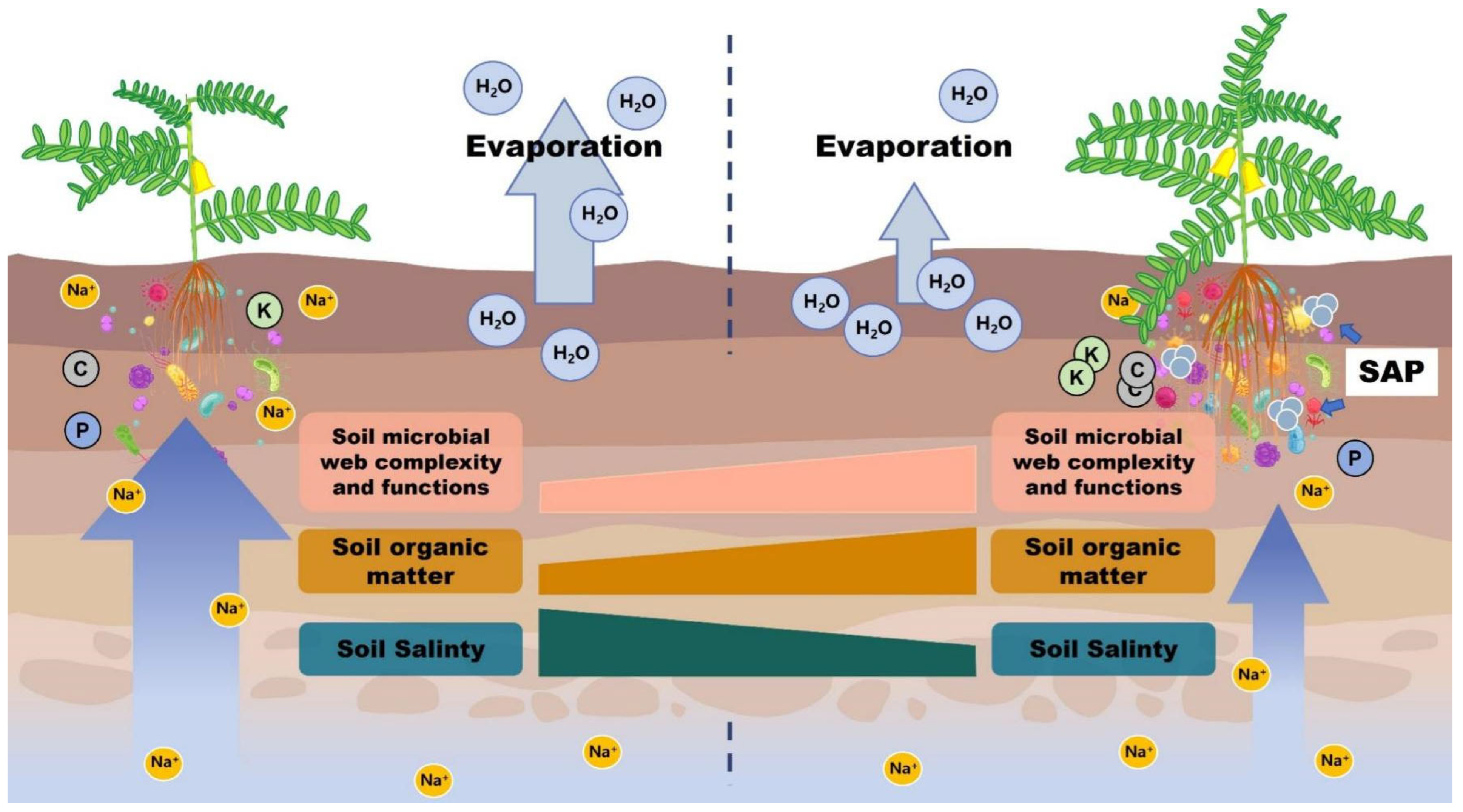
Therefore, this study aimed to investigate the effects of a new type of superabsorbent polymer (i.e., vermicompost-biochar-based superabsorbent polymer, abbreviated as VB-SAP)) on improving severely saline-alkali soils and enhancing the salt tolerance of S. cannabina. We hypothesized the following (Figure 1): (1) VB-SAP would inhibit resalinization in severely saline-alkali soil by increasing soil water retention capacity; (2) VB-SAP would affect the soil microbial community by regulating soil water and salt contents and replenishing organic matter; (3) VB-SAP would enhance the salt tolerance and growth of S. cannabina by simultaneously regulating soil water and salt contents, enhancing organic matter content, and modulating microbial activity in severely saline-alkali soils.

2. Materials and Methods

2.1. Experimental Materials

Soil samples were collected from the 0–20 cm topsoil layer in Dongying City, Shandong Province, China (37°41′ N, 118°47′ E). The site is an uncultivated wasteland dominated by Suaeda salsa, which had not been used for agricultural purposes for at least five years. Prior to experimentation, the soil was air-dried and passed through a 2 mm sieve. The background soil properties were as follows: sand 48%, silt 46%, clay 6%, bulk density 1.27 g·cm−3, pH 8.37, water-soluble salt concentration 6.99 g·kg−1.
Vermicompost was obtained from the ZhongXiang Earthworm Breeding Cooperative (Shenzhou City, Hebei Province, China). It was produced from cow manure digested by earthworms. The vermicompost contained 121 g·kg−1 organic carbon, 11.7 g·kg−1 total nitrogen, 12.0 g·kg−1 total phosphorus, and 8.5 g·kg−1 total potassium. For the experiment, vermicompost was thoroughly mixed into the soil before use. The biochar used in this study was sourced from Henan Lize Environmental Protection Technology Co., Ltd., Zhengzhou City, Henan Province, China. The biochar was produced by high-temperature pyrolysis using maize straw as the primary feedstock, with a carbonization temperature of 500 °C. The resulting biochar exhibited a pH of approximately 9 and a specific surface area of 124 m2 g−1.
The modified superabsorbent polymer (VB-SAP) used in this study was developed based on the traditional preparation of polyacrylamide water-retaining agents [27]. The potassium hydroxide (KOH), acrylic acid (AA), acrylamide (AM), N,N’-methylene diacrylamide (MBA), dodecyltrimethylammonium bromide (DTAB), and potassium persulfate (KPS) used in the preparation process were purchased from Sinopharm Chemical Reagent Co., Ltd. (Shanghai, China), and all reagents were of high-purity grade.

2.2. Preparation of VB-SAP

During the preparation process, first, a 40% KOH solution was prepared to neutralize a 50% mass-percentage AA solution with a neutralization degree of 75%. Then, vermicompost and biochar, which had been sieved through a 100-mesh screen, were added as the substrates to be crosslinked. The crosslinking agent MBA was added, allowing it to dissolve fully while stirring evenly to obtain a mixture of AA and the crosslinked substrates. The surfactant DTAB was added, and stirring was maintained while nitrogen was introduced to remove oxygen for 15 min. Finally, the initiator KPS was added to carry out the crosslinking and graft copolymerization reaction, maintaining it for 1–3 h to obtain a gel-like polymeric product [28]. The final mass ratio of the three main components in the VB-SAP formulation was approximately 1:1:5.5 (vermicompost: biochar: potassium polyacrylate polymer). The obtained product was granulated, dried, ground, and sieved through a 100-mesh screen.

2.3. Experimental Design

This experiment employed soil columns to simulate groundwater salinization. The soil columns were constructed using polyvinyl chloride (PVC) cylinders with a diameter of 10 cm and a height of 65 cm. Each column was filled with 3 kg of soil sieved through a 2 mm sieve (approximately 60 cm in height), and 4 g of VB-SAP was evenly mixed into the top 0–10 cm of soil. To facilitate irrigation, the upper 5 cm of each column remained unfilled. A PVC water tray containing a salt solution (4 g L−1 sodium chloride) was placed beneath each column to simulate saline groundwater.
Three pre-germinated S. cannabina seeds were sown per soil column. After five days, seedlings were thinned to retain one healthy plant per column. The experiment began in September 2024 and lasted for 60 days in a greenhouse at China Agricultural University. The containers were weighed and watered every day to maintain 20% soil moisture throughout the incubation period.

2.4. Soil Sampling and Property Analysis

After 60 days of cultivation, the aboveground parts and roots of Sesbania cannabina, together with bulk and rhizosphere soil, were harvested. Collected soil samples were homogenized and passed through a 2 mm sieve. A portion of the fresh soil samples was stored at −80 °C for metagenomic sequencing to analyze microbial community composition, abundance, and function. Another portion was stored at 4 °C for the determination of soil moisture content and related physicochemical properties. Air-dried soil samples were used to measure the following properties. Soil moisture content was determined by gravimetric drying. The total salt concentration, as indicated by the water-soluble total salt content, was determined by the gravimetric method. Soil organic matter (SOM) content was determined using the potassium dichromate (K2Cr2O7) oxidation method [29].

2.5. Plant Biomass and Elemental Composition

Aboveground biomass of S. cannabina was determined by oven-drying fresh samples at 105 °C for 30 min, followed by drying at 75 °C until a constant weight was achieved. Dry biomass was calculated from the fresh weight and drying rate. Elemental concentrations in plant tissues were measured using ICP-OES.

2.6. Soil Metagenomic Analysis

Genomic DNA was extracted from rhizosphere soil samples, and DNA quality was verified by 1% agarose gel electrophoresis. DNA was fragmented into ~350 bp segments using a Covaris M220 instrument (Covaris, LLC., Woburn, MA, USA). Libraries were prepared using the NEXTFLEX Rapid DNA-Seq kit (Bioo Scientific, Austin, TX, USA) and sequenced on the DNBSEQ-T7 platform with the DNBSEQ-T7RS Reagent Kit (FCL PE150, v3.0) (Shenzhen Huada Intelligent Manufacturing Technology Co., Ltd., Shenzhen, China). Sequencing was performed by Shanghai Meiji Biomedical Technology Co., Ltd. (Shanghai, China). The co-occurrence network was constructed for the soil bacterial community based on the Spearman correlation method (r ≥ 0.85 and FDR-adjusted p < 0.01), implemented with the ‘igraph’ R package (RStudio 2025.05.1+513). Only genera occurring in ≥50% of all samples were selected for correlation calculation to minimize potential spurious correlations. Gephi software (version 0.9.2) was used to visualize the networks. The linear discriminant analysis effect size (LEfSe) was used to identify the differential taxa across different treatments [30,31,32].

2.7. Plant Root Transcriptome Analysis

High-throughput dual-end sequencing was performed using the Illumina HiSeq xten/NovaSeq 6000 platform (Illumina, Inc., San Diego, CA, USA), with a sequencing read length of PE150 [33]. The raw sequencing data underwent quality control to obtain high-quality, clean data. The clean data for each sample reached over 6.04 Gb, with a Q30 base percentage exceeding 95.5%. After quality control, each sample’s data was aligned with the Sesbania cannabina reference genome (SC.T2T, https://figshare.com/articles/dataset/_b_Telomere-to-telomere_genome_of_the_allotetraploid_legume_b_b_b_b_i_Sesbania_cannabina_i_b_b_i_i_b_b_reveals_transposon-driven_subgenome_divergence_and_mechanisms_of_alkaline_stress_tolerance_b_/24420706/1, accessed on 11 November 2024) using TopHat2 (http://ccb.jhu.edu/software/tophat/index.shtml, accessed on 11 November 2024), resulting in aligned data. Based on the selected reference genome sequence, StringTie software (stringtie-1.3.4d) was used to perform transcriptome assembly and expression level calculation on the aligned reads. The R (RStudio 2025.05.1+513) package edgeR was utilized to analyze differential gene expression among different treatments, with fold change (FC) > 1.5 and p-adjust (false discovery rate, FDR) < 0.05 as the criteria for identifying significantly differentially expressed genes. KEGG pathway enrichment analysis of differentially expressed genes was carried out by using the online tool of Majorbio Cloud Platform (https://www.majorbio.com/tools, accessed on 11 November 2024). Transcriptome sequencing and data preprocessing were completed by Shanghai Meiji Biotechnology Co., Ltd. (Shanghai, China) [34,35].

2.8. Statistical Analysis

Statistical analyses were performed in the R platform (3.3.1). Independent-samples t-tests were used to assess differences between treatments. Differences were considered statistically significant at p < 0.05. To explore potential direct and indirect relationships between SAPs, water content, salinity, organic matter, microorganism, plant salt tolerance, and growth, a partial least squares path model (PLS-PM) was employed. Path coefficient estimates and coefficients of determination (R2) were calculated using the plspm package [29]. The PLS-PM model was evaluated using the goodness of fit (GoF), with values greater than 0.36 considered acceptable [36,37].

3. Results

3.1. Soil Physicochemical Properties

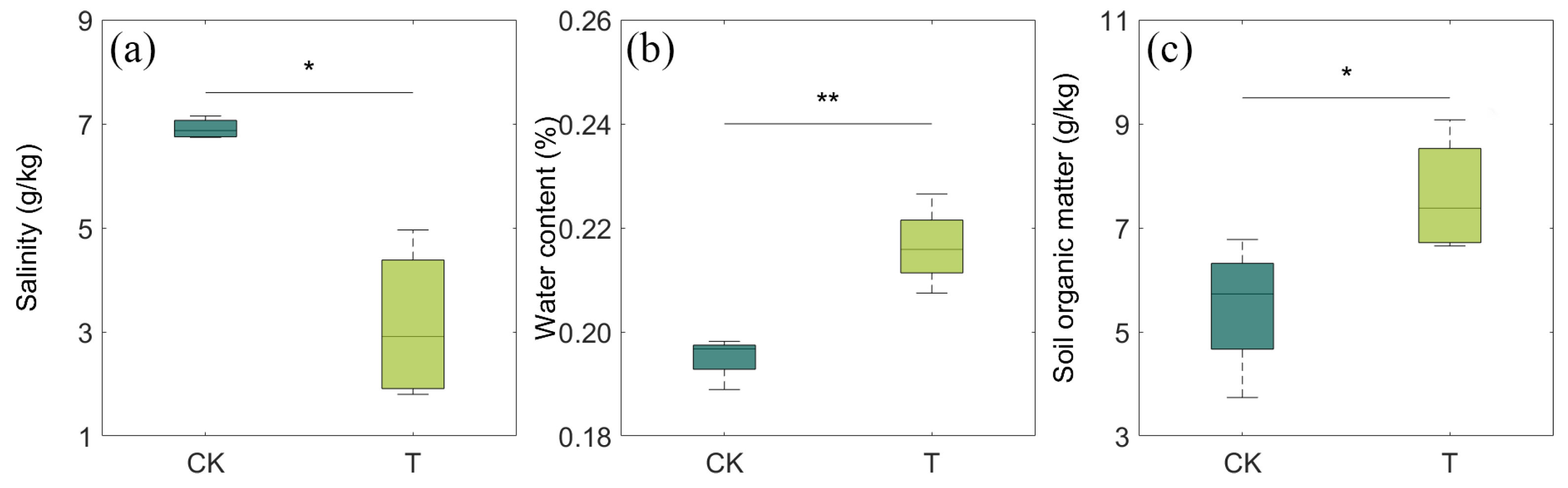
Compared with the control group (CK), the soil salt content in the treatment group with VB-SAP (T) was significantly reduced by 44.9% (p < 0.05, Figure 2a). Soil water-holding capacity and organic matter content in the VB-SAP treatment were significantly increased by 10.9% and 38.7%, respectively (p < 0.05, Figure 2b,c).

3.2. Plants Growth and Nutrient Uptake

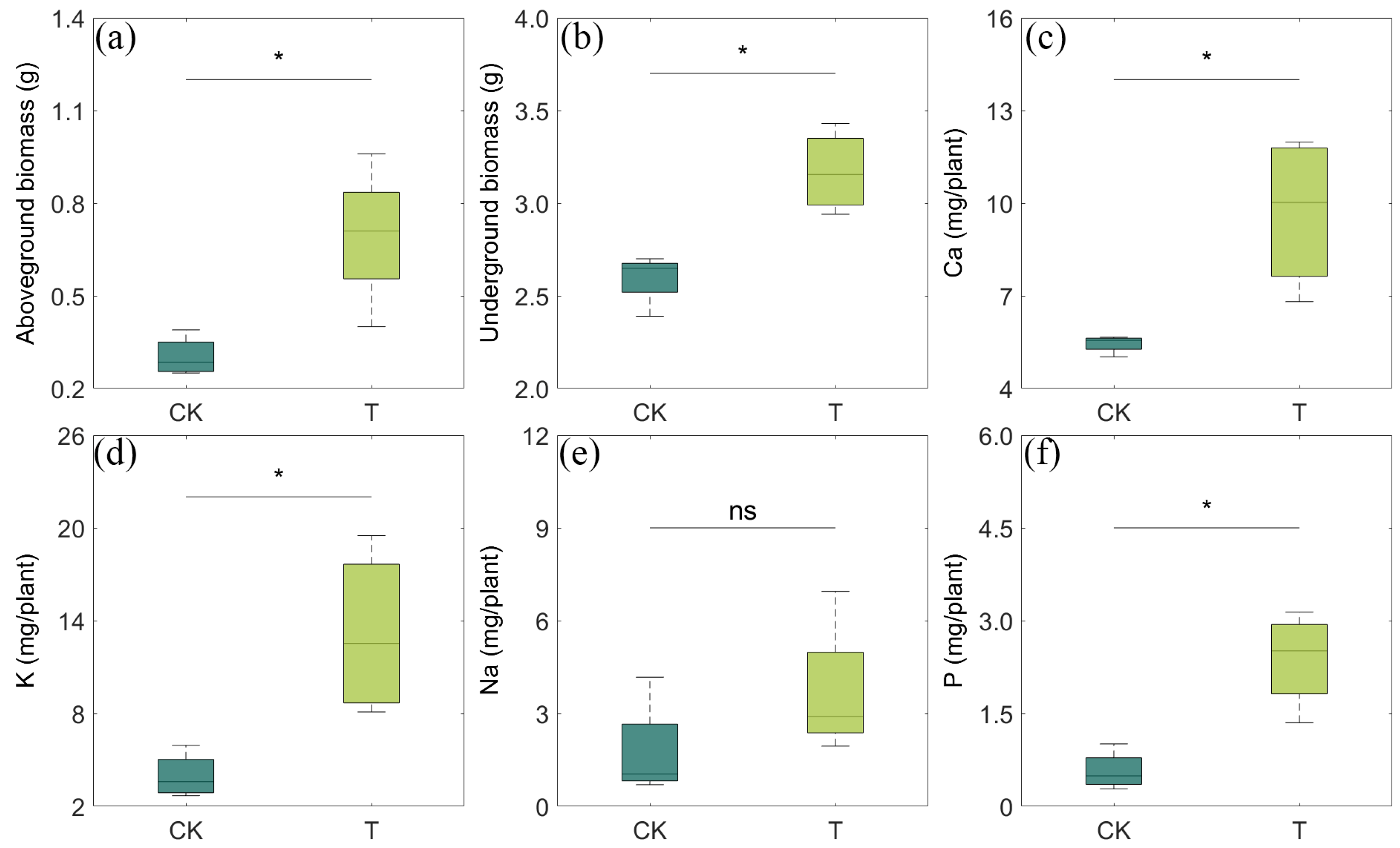
Compared to the control group (CK), the test group (T) with VB-SAP supplementation exhibited a significant increase in both the aboveground and underground biomass of S. cannabina, by 129.7% and 24.54%, respectively (p < 0.05, Figure 3a,b). The trace elements Ca, K, and p in the plants determined by ICP also increased significantly, by 78.1%, 232.6%, and 318.1%, respectively (p < 0.05, Figure 3c–f), which indicated that the application of VB-SAP enhanced the nutrient uptake of S. cannabina in severely saline-alkali soil.

3.3. Changes in Soil Microbial Structure and Function

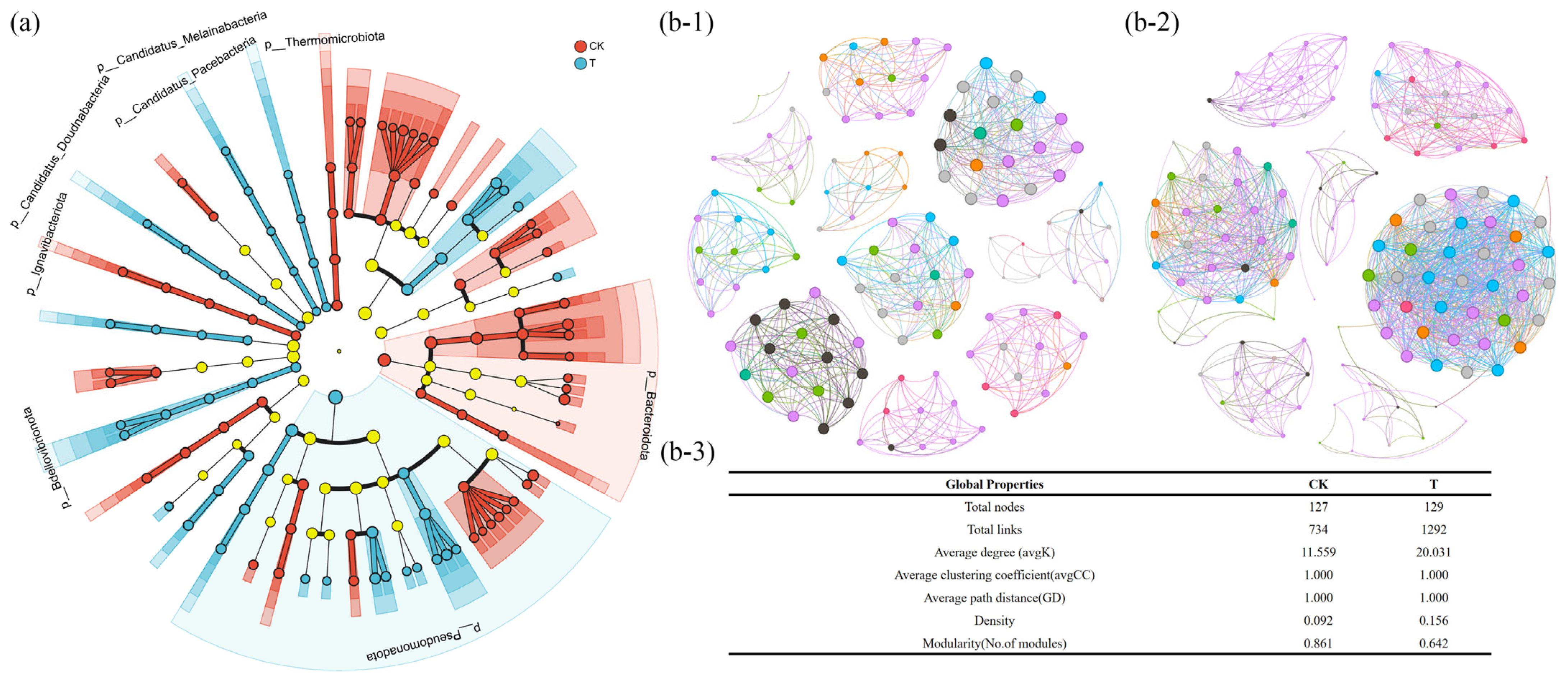
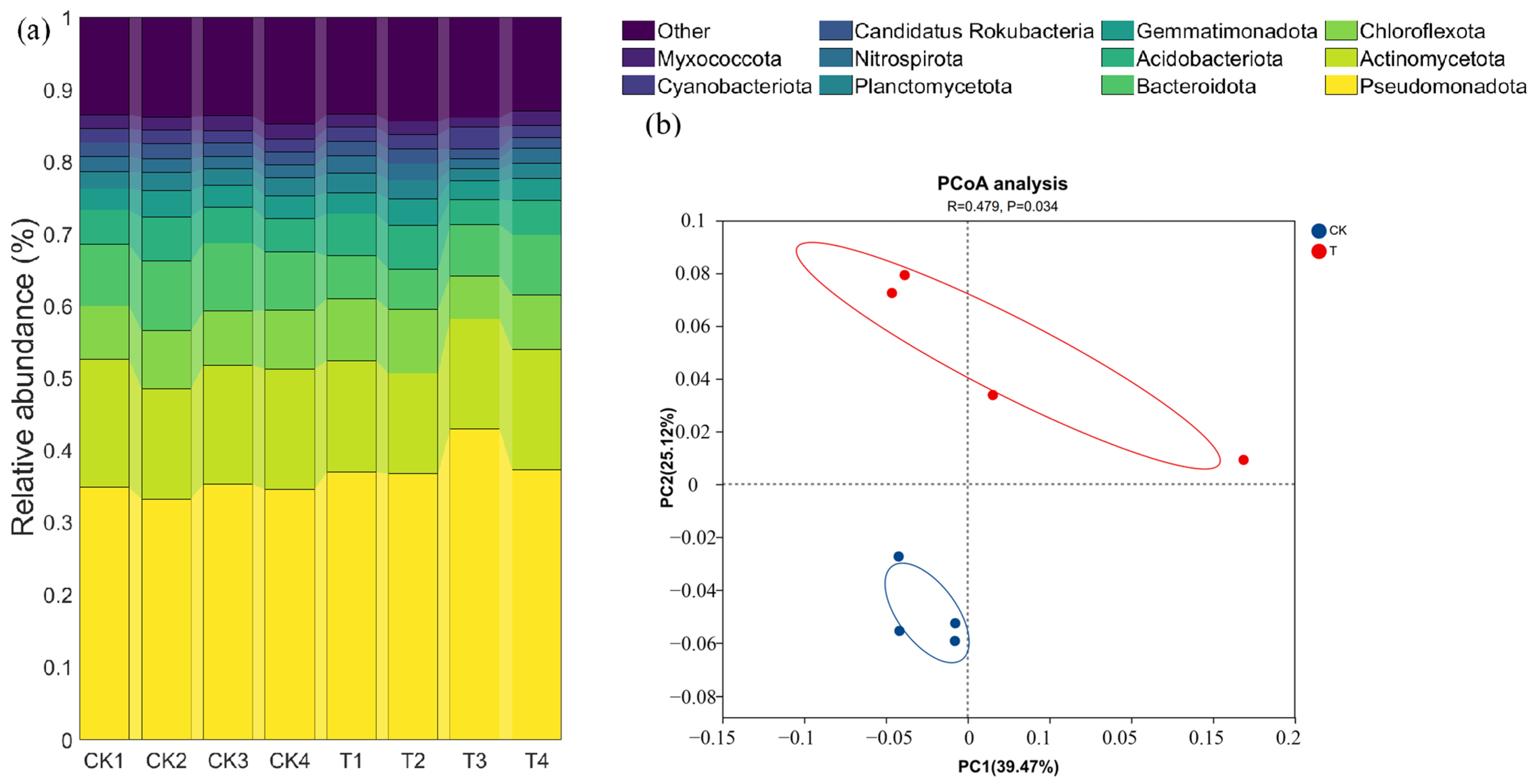
Soil microbial community dissimilarities (bacterial, fungal, and archaeal) among different treatments were assessed using principal coordinate analysis (PCoA) at the species level. The results indicated that VB-SAP exerted no significant effects on soil fungal or archaeal community composition (Figure S1). Accordingly, subsequent analyses focused primarily on bacterial communities. The bacterial community in the incubated soil was dominated by Pseudomonadota, Actinomycetota, Chloroflexota, Bacteroidota, and Acidobacteriota (Figure 4a). The significant differences (p < 0.05) were observed in the community structure of soil bacteria between the control group CK and the experimental group T under the influence of VB-SAP, with an explanatory power close to 65% (Figure 4b). The results of LEfSe analysis suggested that the test group (T) treated with VB-SAP was significantly enriched with Pseudomonas and Bdellovibrio (Figure 5a). The dominant genera affiliated with Pseudomonadales, including Phenylobacterium, Rhizobium, Methylobacillus, Brevundimonas, and Fererhizobium, as well as those affiliated with Vibrionales, such as Vibrio, Bdellovibrio, and Pseudobdellovibrio, were significantly enriched in the VB-SAP treatment (Figure S2). In addition, we conducted a co-occurrence network analysis, revealing that the experimental group T subnet exhibited higher network density, a higher average clustering coefficient, and lower modularity (Figure 5b). These characteristics indicate that the interaction structure of the T subnet is more compact compared to the control group CK. The addition of VB-SAP tightened the synergistic interactions among soil bacterial communities.

3.4. The Salt Stress Resistant Physiological Metabolism of S. cannabina Roots

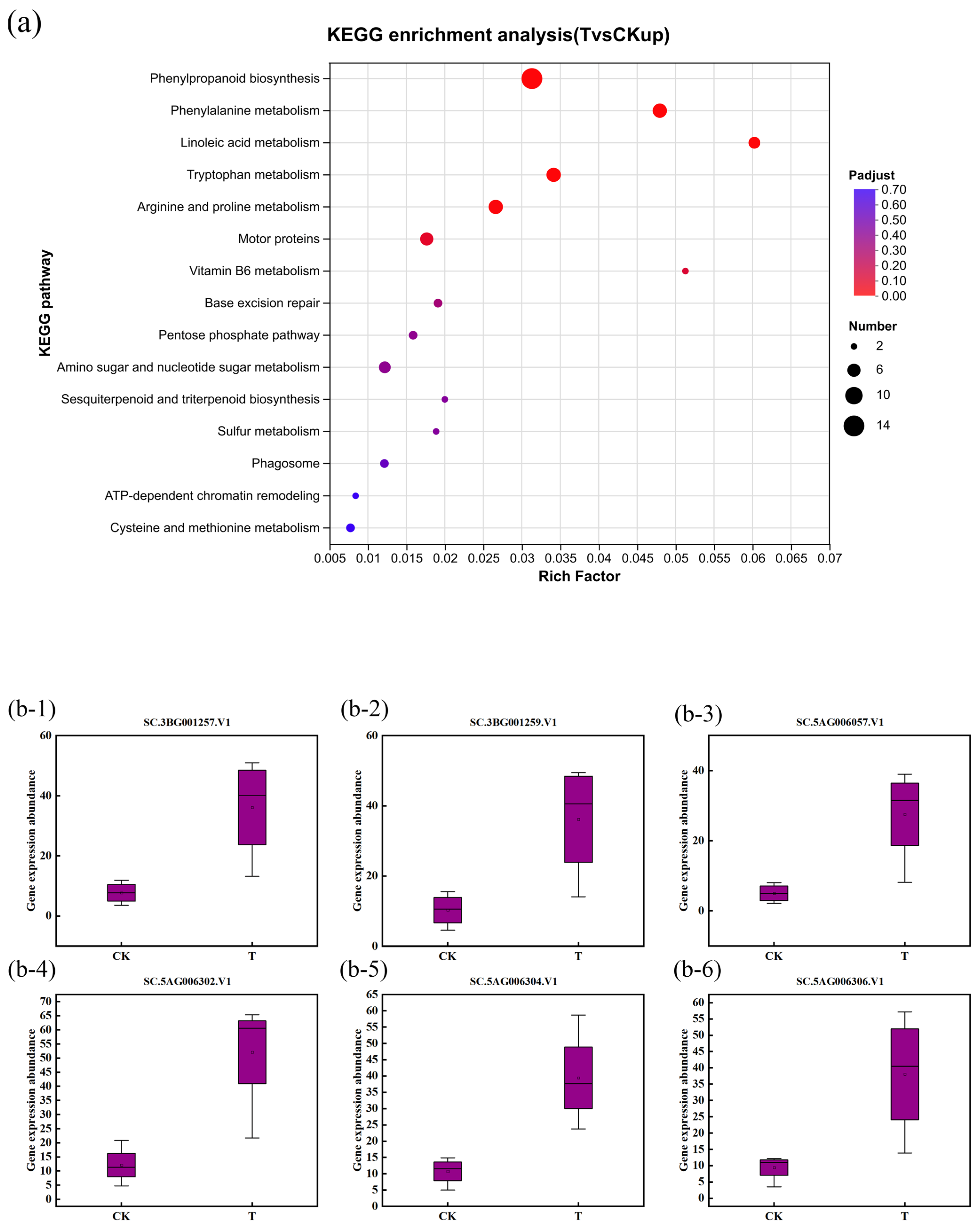
There were 272 downregulated DEGs and 473 upregulated DEGs in the roots compared with those in the control. The top 20 pathways identified in the KEGG pathway enrichment analysis for the DEGs in the roots are shown in Figure 6. In transcriptome data, the phenylpropane biosynthesis, phenylalanine metabolism, linoleic acid metabolism, tryptophan metabolism, and arginine and proline metabolism pathways in the experimental group (T) were significantly upregulated compared to the control group (CK) (Figure 6). The expression of genes encoding antioxidant and aquaporin was significantly upregulated with VB-SAP application (Figure S3).

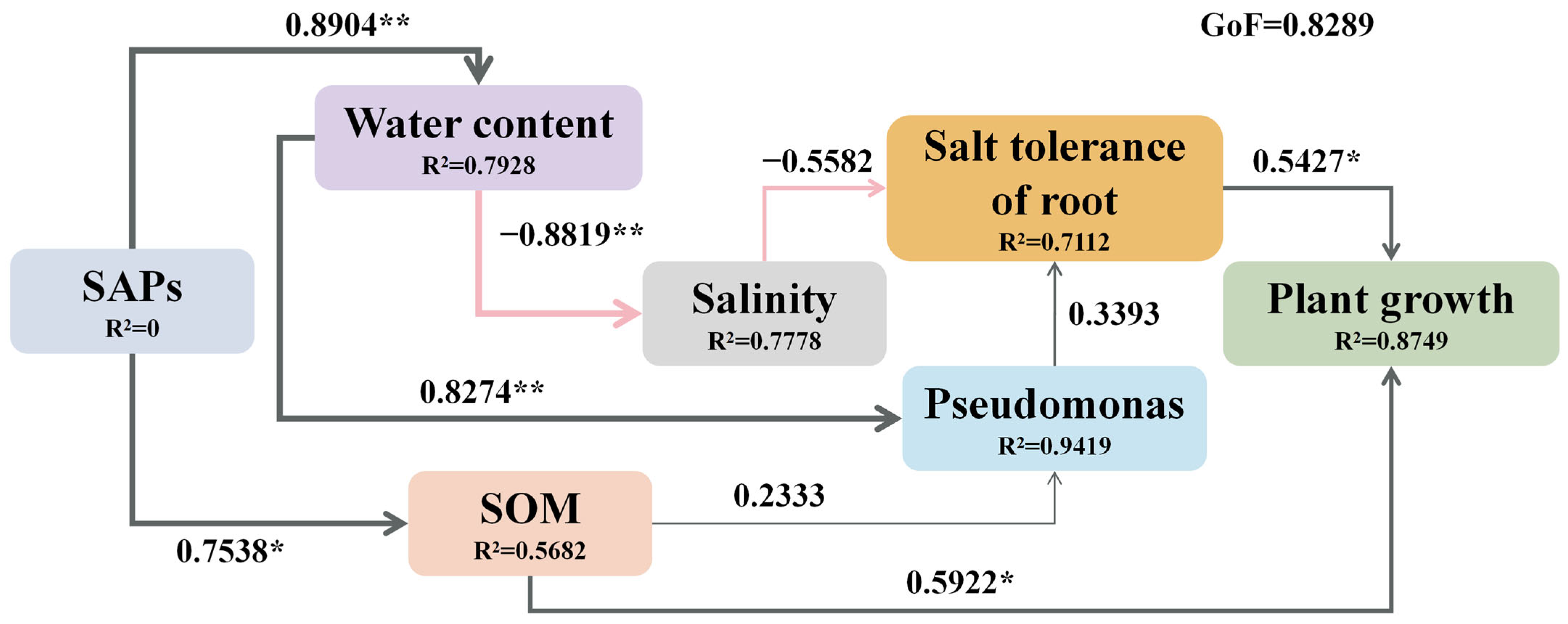
3.5. Partial Least Squares Path Model (PLS-PM) Analysis

The PLS-PM analysis was used to identify key factors influencing plant growth. The model explained 78% of the variance in soil water content, 77% in soil salinity, 56% in soil organic matter, 94% in the relative abundance of Pseudomonas, 71% in root salt tolerance, and 87% in plant growth. SAPs had a significant positive effect on water content and SOM. Water content directly and positively influenced the relative abundance of Pseudomonas, while negatively affecting salinity. SOM positively impacted the relative abundance of Pseudomonas and plant growth. Salt tolerance of the root affected plant growth and was affected by the synergy of salinity and the relative abundance of Pseudomonas (Figure 7).

4. Discussion

4.1. VB-SAPs Inhibit Resalinization by Increasing Soil Water Retention Capacity

In the present study, we found that the application of VB-SAPs significantly increased soil water content while decreasing soil salinity of the topsoil (Figure 2). In addition, the results of the PLS-PM analysis indicated that soil water content negatively affects salinity (Figure 7). These results indicate that the decrease in soil salinity of the topsoil may be attributed to the improvement of soil water retention capacity by functionally reinforced superabsorbent polymers. Superabsorbent polymers can increase soil water-holding capacity and reduce water evaporation by rapidly absorbing and retaining large quantities of water [10,11], which may help inhibit salt accumulation in surface soils and thereby decrease soil salinity of the topsoil in the present study. Overall, we infer that functionally reinforced superabsorbent polymers can inhibit resalinization by increasing soil water retention capacity, implying their considerable potential for severely saline-alkali soil reclamation, particularly in coastal areas (Figure 7).

4.2. VB-SAPs Promote the Proliferation of Plant Growth-Promoting Rhizobacteria Pseudomonadota Members

Soil microbial community plays a vital role in numerous ecosystem functions and services, including primary production, carbon sequestration, and nutrient mineralization [38]. Our results indicate that VB-SAPs significantly altered the soil bacterial community structure and enhanced soil bacterial network complexity (Figure 4 and Figure 5). It has been extensively demonstrated that complex networks facilitate a broader diversity of interactions and enhance functional complementarity [39]. In contrast, simplified networks may promote functional homogenization among species, thereby weakening microbial resistance to environmental stresses [40]. Thus, these results indicate that the functionally reinforced superabsorbent polymer may enhance soil microbial functions and resistance to salt stress, thereby contributing to improved soil functionality in saline environments.
Interestingly, VB-SAPs application significantly enriched members of the phylum Pseudomonadota (Figure 4 and Figure 5). Moreover, soil water content was found to directly and positively influence the relative abundance of Pseudomonas (Figure 7), suggesting that the functionally reinforced superabsorbent polymer may promote the proliferation of Pseudomonadota members by enhancing the water-holding capacity of severely saline-alkali soils. Furthermore, members of the phylum Pseudomonadota are characterized by copiotrophic lifestyles [41]. This enrichment may be attributed to the incorporation of vermicompost and biochar, which increased the organic carbon content of the superabsorbent polymer. This was further supported by the results showing that the application of VB-SAPs significantly increased soil organic matter content in the present study (Figure 2 and Figure 7). Notably, members of Pseudomonadota are widely recognized as common plant growth-promoting rhizobacteria due to their diverse ecological functions, such as organic matter mineralization, nitrogen fixation, phytohormone production, and other beneficial processes that enhance plant development [42,43]. Additionally, the results showed that VB-SAPs application significantly enriched members of the phylum Bdellovibrio (Figure 5). Members of the phylum Bdellovibrio have been reported to function as unique bacterial predators capable of selectively lysing a wide range of common plant pathogens, particularly Gram-negative bacteria [44,45,46]. More importantly, this predatory behavior not only directly reduces pathogen abundance but may also indirectly release ecological niches and resources for beneficial microorganisms (e.g., rhizosphere-promoting bacteria) by altering competitive dynamics within microbial communities. Ultimately, this process drives the succession of microbial community structure toward configurations that promote plant health [47,48,49]. Taken together, these findings demonstrate that the functionally reinforced superabsorbent polymer may regulate the structure of the soil bacterial community and enhance its plant growth-promoting functions by creating a water- and nutrient-rich environment in severely saline-alkali soil, particularly with respect to carbon sources (Figure 7).

4.3. VB-SAPs Enhance S. cannabina Roots Salt Tolerance

The results demonstrated that the application of VB-SAPs not only significantly promoted the growth of S. cannabina (Figure 3) but also markedly upregulated root genes associated with phenylpropanoid biosynthesis, tryptophan metabolism, and arginine and proline metabolism pathways, as revealed by transcriptomic analysis (Figure 6). Numerous studies have demonstrated that phenylpropanoid biosynthesis constitutes one of the most important secondary metabolic pathways, responsible for the production of lignin, flavonoids, and other phenolic compounds that play a crucial role in enhancing plant resistance [50,51]. The tryptophan metabolism pathway plays a crucial role in plant growth, development, and stress responses. It functions not only as a precursor for auxin synthesis but also as a key component in plant stress resistance and antioxidant defense mechanisms [52,53]. While proline is recognized as a multifunctional amino acid with osmoprotective functions, its metabolism is crucial for maintaining cellular homeostasis, regulating plant development, and enhancing stress acclimation [54]. Furthermore, the results showed that the expression of the genes encoding antioxidant and aquaporin proteins was significantly upregulated with VB-SAPs application (Figure S3). Antioxidants primarily function to protect plants against oxidative damage and maintain cellular homeostasis under stress [55]. Aquaporins, a class of channel proteins located in plasma and intracellular membranes, play an important role in facilitating the efficient and selective transport of water molecules, thereby helping plants mitigate drought stress [55]. These findings provide molecular-level evidence for the mechanisms by which VB-SAPs regulate plant salt tolerance. Overall, these results provide preliminary evidence that functionally reinforced superabsorbent polymer enhances plant growth by modulating physiological processes associated with salt tolerance in severely saline-alkali soil.
The rhizosphere, the narrow zone of soil surrounding plant roots, plays a pivotal role in supporting plant growth [56,57]. As the first organs directly exposed to saline soils, plant roots experience osmotic stress, restricted elongation, and impaired nutrient uptake, all of which substantially affect salt tolerance and inhibit root growth [58,59]. We speculate that the above phenomenon may be linked to two possible mechanistic pathways. First, VB-SAPs may directly enhance the salt tolerance of S. cannabina by reducing rhizospheric salinity (Figure 2 and Figure 7). Excessive accumulation of salt in the rhizosphere puts osmotic pressure on plant roots, which also causes secondary effects, including water deficiency/depletion [60]. Second, VB-SAPs may indirectly enhance the salt tolerance of S. cannabina by regulating the structure and function of the soil bacterial community (Figure 4, Figure 5 and Figure 7). This hypothesis is partly supported by the observed enrichment of common plant growth-promoting rhizobacteria, particularly Pseudomonadota [35,36], in the VB-SAPs-treated rhizosphere (Figure 4 and Figure 5). The path coefficients of the PLS-PM model indicated that the direct effect of VB-SAP on enhancing the salt tolerance of S. cannabina through reductions in rhizospheric salinity (−0.5582) was stronger than its indirect effect mediated by changes in rhizobacterial communities (0.3393, Figure 7). Collectively, the PLS-PM model suggested that functionally reinforced superabsorbent polymer may enhance the salt tolerance of S. cannabina roots by reshaping the rhizosphere microenvironment, including reducing soil salinity, increasing water and SOM contents, and promoting beneficial bacteria in severely saline-alkali soil (Figure 7).

4.4. VB-SAPs Improve the Growth of S. cannabina in Severely Saline-Alkali Soils

Plant root systems can transmit salt tolerance to shoots through a series of signal transduction pathways, which affect physiological processes such as photosynthesis, respiration, and the translocation of nutrients, ultimately regulating plant growth and crop production [54,61]. Therefore, the physiological regulation of salt tolerance in S. cannabina roots, facilitated by VB-SAPs, may further enhance the growth of the aboveground parts of the plant (Figure 7). Furthermore, the results indicated that the application of VB-SAPs significantly enhanced the nutrient uptake of S. cannabina shoots, specifically phosphorus (P), potassium (K), and calcium (Ca) (Figure 3). This phenomenon can be attributed to the enhanced salt tolerance of plant roots, which, coupled with increased growth, promotes the roots’ ability to absorb nutrients and transfer them to the above-ground parts of the plant [62]. It is noteworthy that these essential nutrient elements (P, K, and Ca) play a crucial role in regulating physiological processes related to plant growth, not limited to signal transduction, photosynthesis, and carbohydrate synthesis [63]. Consequently, we infer that another significant way in which VB-SAPs facilitate the aboveground growth of S. cannabina might be through the enhancement of soil nutrient absorption and transport. Taken together, these findings suggest that functionally reinforced superabsorbent polymer may enhance the salt tolerance and growth of S. cannabina in severely saline-alkali soil, which may be attributed to the improvement of the rhizosphere microenvironment (Figure 7).

4.5. Limitations, Implications, and Future Study

This study elucidated the effects and underlying mechanisms of a novel superabsorbent polymer in improving severely saline–alkali soils and enhancing the salt tolerance of S. cannabina. However, the results presented here may still have some uncertainties and limitations that need to be addressed in future studies. We found that the effects of VB-SAP on soil fungal and archaeal communities were not significant (Figure S2). This phenomenon may be attributed to the distinct characteristics of different biological groups, as soil bacteria are generally more sensitive to environmental changes than fungi and archaea [64,65,66]. Furthermore, this outcome may also be related to the relatively short cultivation duration in the present study, which may have prevented the effects of VB-SAPs on soil fungal and archaeal communities from becoming apparent. Consequently, future studies should extend the experimental cultivation period to further investigate the impacts and underlying mechanisms of VB-SAP on soil fungal and archaeal communities. Additionally, for broader applicability, potential limitations and concerns regarding the use of this polyacrylamide-based VB-SAP (e.g., long-term stability, potential microplastic generation, and cost-effectiveness relative to simpler amendments) should be noted and investigated in future studies. First, the stability of this novel superabsorbent polymer remains to be fully explored. Under practical application conditions—particularly in arid, high-salinity, or intensively cultivated environments—the polymer molecular chains may undergo degradation, resulting in diminished water retention capacity. Second, the ultimate environmental fate of these materials warrants close scrutiny. Should VB-SAPs degrade incompletely, their residues may pose a potential risk of microplastic formation, with unforeseen impacts on soil ecosystems. Third, compared with traditional SAPs, the cost-effectiveness of this material requires rigorous assessment, encompassing both production costs and labor costs associated with large-scale field application.

5. Conclusions

In this study, we demonstrated that the new type of superabsorbent polymer reinforced with vermicompost and biochar reshaped the rhizosphere microenvironment of S. cannabina by increasing soil water retention, inhibiting resalinization, and modulating the soil bacterial community in severely saline-alkali soil. Improvements in the rhizosphere microenvironment further enhanced the salt tolerance and growth of S. cannabina by modulating stress-related physiological processes, including phenylpropanoid biosynthesis, tryptophan metabolism, and arginine and proline metabolism. Within the broader context of soil salinity research, our findings provide new insights into the mechanisms by which functionally reinforced superabsorbent polymers regulate plant salt tolerance, highlighting their potential significance for global food security.

Supplementary Materials

The following supporting information can be downloaded at: https://www.mdpi.com/article/10.3390/agronomy16020252/s1, Figure S1: The effects of vermicompost- and biochar-reinforced superabsorbent polymer (VB-SAP) on soil bacterial, fungal and archaeal communities in severe saline-alkali soil. Figure S2: Through metagenomic data, a LEfSe differential discriminant analysis was conducted to analyze the enrichment of different bacteria in different treatment conditions at the phylum to genus level. Figure S3: The effects of vermicompost- and biochar-reinforced superabsorbent polymer (VB-SAP) on the expression of antioxidant- and aquaporin-encoding genes in S. cannabina roots.

Author Contributions

Conceptualization, C.W.; methodology, H.D.; formal analysis, H.D. and H.Q.; resources, C.W.; writing—original draft preparation, H.D.; writing—review and editing, C.W. and M.L.; funding acquisition, C.W. All authors have read and agreed to the published version of the manuscript.

Funding

We acknowledge funding from the Key Research and Development Program of Shandong Province (2024SFGC0405), the National Key Research and Development Program of China (2021YFD1900901), and the National Natural Science Foundation of China (32271711).

Data Availability Statement

The raw data supporting the conclusions of this article will be made available by the authors on request.

Conflicts of Interest

The authors declare that there are no conflicts of interest.

Abbreviations

The following abbreviations are used in this manuscript:
S. cannabinaSesbania cannabina
SAPSuperabsorbent polymer
VB-SAPSuperabsorbent polymer reinforced with vermicompost and biochar
KOHPotassium hydroxide
AAAcrylic acid
AMAcrylamide
MBAN,N’-methylene diacrylamide
DTABDodecyltrimethylammonium bromide
KPSPotassium persulfate
PVCPolyvinyl chloride
ECElectrical conductivity
SOMSoil organic matter
LEfSeLinear discriminant analysis effect size
ICP-OESInductively Coupled Plasma Optical Emission Spectrometry
DNADeoxyriboNucleic Acid
PLS-PMPartial least squares path model
GoFGoodness of fit
DEGsDifferential Expressed Genes
KEGGKyoto Encyclopedia of Genes and Genomes

References

  1. Wang, Y.J.; Qi, G.X.; Wang, N.N.; Dong, H.Y.; Zhang, Y.; Lu, H.; Li, Y.; Wang, H.C.; Li, X.H.; Liu, H.Y. The Improvement Effects of Intercropping Systems on Saline-Alkali Soils and Their Impact on Microbial Communities. Microorganisms 2025, 13, 1436. [Google Scholar] [CrossRef]
  2. Dong, X.L.; Wang, J.T.; Tian, L.; Lou, B.Y.; Zhang, X.J.; Liu, T.; Liu, X.J.; Sun, H.Y. Review of Relationships Between Soil Aggregates, microorganisms and Soil Organic Matter in Salt-Affected Soil. Chin. J. Eco-Agric. 2023, 31, 364–372. [Google Scholar]
  3. Chen, W.; Liu, Z. Research Progress on Improvement of Saline Alkali Soil. Front. Sci. Eng. 2023, 3, 36–42. [Google Scholar] [CrossRef]
  4. Wang, J.; Muhammad, R.; Babar, S.; El-Desouki, Z.; Li, Y.; Wang, X.; Xia, X.; Jiang, C. Insight into amelioration effect of iron-modified biochar on saline-alkali soil chemical properties and bacterial communities along a depth gradient. Pedosphere 2024, 35, 879–892. [Google Scholar] [CrossRef]
  5. Zhang, C.; Qiao, Y.; Song, Q. Practice of Improving Saline–Alkali Soil with Bio-Humic Acid. Processes 2024, 12, 1250. [Google Scholar] [CrossRef]
  6. Zhang, Y.; Chen, S.; Li, F.; Xu, H.; Long, Z. Research on Effects of Desulfurization Gypsum, Humic Acid and Biochar on Chinese Coastal Saline-Alkali Soil Improvement. Fresenius Environ. Bull. 2017, 26, 6958–6965. [Google Scholar]
  7. Du, X. Improving Saline-Alkali Soil with Agricultural Waste in China: A Review. Commun. Soil Sci. Plant Anal. 2024, 55, 2651–2665. [Google Scholar] [CrossRef]
  8. Gamage, A.; Gangahagedara, R.; Gamage, J.; Jayasinghe, N.; Kodikara, N.; Suraweera, P.; Merah, O. Role of organic farming for achieving sustainability in agriculture. Farming Syst. 2023, 1, 100005. [Google Scholar] [CrossRef]
  9. He, K.; He, G.; Wang, C.; Zhang, H.; Xu, Y.; Wang, S.; Kong, Y.; Zhou, G.; Hu, R. Biochar amendment ameliorates soil properties and promotes Miscanthus growth in a coastal saline-alkali soil. Appl. Soil Ecol. 2020, 155, 103674. [Google Scholar] [CrossRef]
  10. Ai, F.; Yin, X.; Hu, R.; Ma, H.; Liu, W. Research into the super-absorbent polymers on agricultural water. Agric. Water Manag. 2021, 245, 106513. [Google Scholar] [CrossRef]
  11. Kang, M.W.; Yibeltal, M.; Kim, Y.H.; Oh, S.J.; Lee, J.C.; Kwon, E.E.; Lee, S.S. Enhancement of soil physical properties and soil water retention with biochar-based soil amendments. Sci. Total Environ. 2022, 836, 155746. [Google Scholar] [CrossRef] [PubMed]
  12. Xu, Z.; Qu, Z. Saline Soil Management and Improvement Protection Strategies Based on Sustainable Agricultural Development Goals. Sustainability 2025, 17, 3581. [Google Scholar] [CrossRef]
  13. Acharya, B.S.; Dodla, S.; Wang, J.J.; Pavuluri, K.; Darapuneni, M.; Dattamudi, S.; Maharjan, B.; Kharel, G. Biochar impacts on soil water dynamics: Knowns, unknowns, and research directions. Biochar 2024, 6, 34. [Google Scholar] [CrossRef]
  14. Yuan, Y.; Liu, Q.; Zheng, H.; Li, M.; Liu, Y.; Wang, X.; Peng, Y.; Luo, X.; Li, F.; Li, X.; et al. Biochar as a sustainable tool for improving the health of salt-affected soils. Soil Environ. Health 2023, 1, 100033. [Google Scholar]
  15. Hafez, S.H.M.; Mohamed, H.F.M.; Abdel-Hady, E.E. Catalyzing innovation of exploring the vast potential of low-cost alternative adsorbents in diverse applications: A review. Microchem. J. 2024, 196, 109683. [Google Scholar] [CrossRef]
  16. Lin, Y.; Yu, C.; Zhang, Y.; Lu, L.; Xu, D.; Peng, X. Biochar modification methods and mechanisms for salt-affected soil and saline-alkali soil improvement: A review. Soil Use Manag. 2023, 40, 12992. [Google Scholar] [CrossRef]
  17. Raza, S.T.; Rong, L.; Rene, E.R.; Ali, Z.; Iqbal, H.; Sahito, Z.A.; Chen, Z. Effects of vermicompost preparation and application on waste recycling, NH3, and N2O emissions: A systematic review on vermicomposting. Environ. Technol. Innov. 2024, 35, 103722. [Google Scholar] [CrossRef]
  18. Deng, P.B.; Guo, L.P.; Yang, H.T.; Leng, X.Y.; Wang, Y.M.; Bi, J.; Shi, C.F. Effect of an Organic Fertilizer of Ganoderma lucidum Residue on the Physical and Chemical Properties and Microbial Communities of Saline Alkaline Soil. Water 2023, 15, 962. [Google Scholar] [CrossRef]
  19. Rao, D.L.N.; Pathak, H. Ameliorative influence of organic matter on biological activity of salt-affected soils. Arid Soil Res. Rehabil. 1996, 10, 311–319. [Google Scholar] [CrossRef]
  20. Przemieniecki, S.W.; Skwiercz, A.; Damszel, M.; Telesinski, A.; Zapalowska, A.; Sierota, Z.; Gorczyca, A. Ecology, biology and enzymatic activity of the rhizosphere planted with Larix decidua seedlings after addition of vermicompost. Appl. Soil Ecol. 2021, 168, 104101. [Google Scholar] [CrossRef]
  21. Liang, K.; Chen, Y.; Hou, J.; Liu, F. Elevated CO2-conferred sodium homeostasis is linked to abscisic acid-mediated stomatal closure and signalling pathway in tomato. Hortic. Plant J. 2025, 11, 1218–1230. [Google Scholar] [CrossRef]
  22. Verma, O.; Sharma, S.; Kumar, V.; Singh, T.; Kumar, R.; Auji, R. Salinity stress effect on staple food crops and novel mitigation strategies. Biologia 2024, 79, 2359–2374. [Google Scholar] [CrossRef]
  23. An, X.C.; Li, Y.; Cao, Y.H.; Wang, Z.F.; Xu, M.; Lian, B. The molecular mechanism for improvement of coastal silt soil by the intercropping model of Suaeda glauca (Bunge) Bunge and Sesbania cannabina (Retz.) Pers. Plant Soil 2025, 513, 1521–1540. [Google Scholar] [CrossRef]
  24. Chen, Y.C.; Huang, R.Z.; Xu, Z.Q.; Li, X.; Ma, C.H.; Zhang, F.F. Responses of the physiological characteristics and endophytic bacteria of Urtica cannabina to simulated drought stress. Sci. Rep. 2025, 15, 12080. [Google Scholar] [CrossRef] [PubMed]
  25. Huang, G.; Wang, X.F.; Liu, C.L.; He, K.X.; Hou, X.L.; Luo, H.F.; Zhang, S.B.; You, C.Q.; Jia, Y.J.; Wang, F.Q.; et al. Genomic Variation Underpins Genetic Divergence and Differing Salt Resilience in Sesbania bispinosa. Adv. Sci. 2025, 12, 32. [Google Scholar] [CrossRef]
  26. Luo, H.F.; Wang, X.F.; You, C.Q.; Wu, X.D.; Pan, D.F.; Lv, Z.Y.; Li, T.; Zhang, D.M.; Shen, Z.B.; Zhang, X.D.; et al. Telomere-to-telomere genome of the allotetraploid legume Sesbania cannabina reveals transposon-driven subgenome divergence and mechanisms of alkaline stress tolerance. Sci. China Life Sci. 2024, 67, 149–160. [Google Scholar] [CrossRef]
  27. Sonker, E.; Tiwari, R.; Adhikary, P.; Kumar, K.; Krishnamoorthi, S. Preparation of ultra-high-molecular-weight polyacrylamide by vertical solution polymerization technique. Polym. Eng. Sci. 2019, 59, 1175–1181. [Google Scholar] [CrossRef]
  28. Wang, C.; Zhang, Z.H.; Huang, H.Y. Preparation and Application of a Slow-Release Agricultural Water Retaining Agent Based on Earthworm Castings. CN202210483675.0, 11 April 2023. [Google Scholar]
  29. Walkley, A. A Critical Examination of a Rapid Method for Determining Organic Carbon in Soils—Effect of Variations in Digestion Conditions and of Inorganic Soil Constituents. Soil Sci. 1947, 63, 251–264. [Google Scholar] [CrossRef]
  30. Jia, X.; Shang, H.; Chen, Y.; Lin, M.; Wei, Y.; Li, Y.; Li, R.; Dong, P.; Chen, Y.; Zhang, Y.; et al. Improved bacterial composition and co-occurrence patterns of rhizosphere increased nutrient uptake and grain yield through cultivars mixtures in maize. Sci. Total Environ. 2024, 926, 172102. [Google Scholar] [CrossRef] [PubMed]
  31. Qian, F.; Su, X.; Zhang, Y.; Bao, Y. Variance of soil bacterial community and metabolic profile in the rhizosphere vs. non-rhizosphere of native plant Rumex acetosa L. from a Sb/As co-contaminated area in China. J. Hazard. Mater. 2023, 456, 131681. [Google Scholar] [CrossRef]
  32. Li, Q.; Yang, R.; Xu, L.; Peng, Y.; Duan, Q.; Wu, X.; Luo, Y.; Xu, Y.; Wu, X.; Xu, M. Rhizosphere microbial community assembly as influenced by reductive soil disinfestation to resist successive cropping obstacle. J. Sci. Food Agric. 2024, 105, 1760–1770. [Google Scholar] [CrossRef]
  33. Ott, O.; Tolppi, S.; Figueroa-Cruz, J.; Myagmar, K.; Unurbuyan, K.; Tripathi, A. Leveraging the fundamentals of heat transfer and fluid mechanics in microscale geometries for automated next-generation sequencing library preparation. Sci. Rep. 2024, 14, 12564. [Google Scholar] [CrossRef]
  34. Sharma, A.; Lee, S.; Park, Y.-S. Molecular typing tools for identifying and characterizing lactic acid bacteria: A review. Food Sci. Biotechnol. 2020, 29, 1301–1318. [Google Scholar] [CrossRef]
  35. Liu, C.; Li, B.; Chen, X.; Dong, Y.; Lin, H. Insight into soilless revegetation of oligotrophic and heavy metal contaminated gold tailing pond by metagenomic analysis. J. Hazard. Mater. 2022, 435, 128881. [Google Scholar] [CrossRef] [PubMed]
  36. Sanchez, G.; Trinchera, L.; Russolillo, G.; Bertrand, F. Partial Least Squares Path Modeling (PLS-PM). 2025. Available online: https://cran.r-project.org/package=plspm (accessed on 11 December 2025).
  37. Wetzels, M.; Odekerken-Schröder, G.; van Oppen, C. Using PLS Path Modeling for Assessing Hierarchical Construct Models: Guidelines and Empirical Illustration. MIS Q. 2009, 33, 177–195. [Google Scholar] [CrossRef]
  38. Prakash, O.; Chauhan, A.; Green, S.J. The Study of Microbial Physiology Under Microoxic Conditions Is Critical but Neglected. Environ. Microbiol. Rep. 2025, 17, e70108. [Google Scholar] [CrossRef]
  39. Chen, W.Q.; Wang, J.Y.; Chen, X.; Meng, Z.X.; Xu, R.; Duoji, D.; Zhang, J.H.; He, J.; Wang, Z.A.; Chen, J.; et al. Soil microbial network complexity predicts ecosystem function along elevation gradients on the Tibetan Plateau. Soil Biol. Biochem. 2022, 172, 108766. [Google Scholar] [CrossRef]
  40. Luo, S.; Png, G.K.; Ostle, N.J.; Zhou, H.K.; Hou, X.Y.; Luo, C.L.; Quinton, J.N.; Schaffner, U.; Sweeney, C.; Wang, D.J.; et al. Grassland degradation-induced declines in soil fungal complexity reduce fungal community stability and ecosystem multifunctionality. Soil Biol. Biochem. 2023, 176, 108865. [Google Scholar] [CrossRef]
  41. Yao, F.; Yang, S.; Wang, Z.R.; Wang, X.; Ye, J.; Wang, X.G.; DeBruyn, J.M.; Feng, X.; Jiang, Y.; Li, H. Microbial Taxa Distribution Is Associated with Ecological Trophic Cascades along an Elevation Gradient. Front. Microbiol. 2017, 8, 2071. [Google Scholar] [CrossRef]
  42. Liu, S.; Meng, Q.X.; Li, Y.J.; Wang, Z.G.; Xu, W.H.; Sun, Y.N.; Yu, Z.D.; Hu, Y.L. Differences in succession of bacterial communities during co-cultivation of corn straw with different soils. Eur. J. Soil Biol. 2024, 123, 103683. [Google Scholar] [CrossRef]
  43. Panchami, P.S.; Thanuja, K.G.; Karthikeyan, S. Isolation and Characterization of Indigenous Plant Growth-Promoting Rhizobacteria (PGPR) from Cardamom Rhizosphere. Curr. Microbiol. 2020, 77, 2963–2981. [Google Scholar] [CrossRef] [PubMed]
  44. Waso, M.; Reyneke, B.; Havenga, B.; Khan, S.; Khan, W. Insights into Bdellovibrio spp. mechanisms of action and potential applications. World J. Microbiol. Biotechnol. 2021, 37, 85. [Google Scholar] [CrossRef] [PubMed]
  45. Sockett, R.E.; Lambert, C. Bdellovibrio as therapeutic agents: A predatory renaissance? Nat. Rev. Microbiol. 2004, 2, 669–675. [Google Scholar] [CrossRef]
  46. Zaffran, V.D.; Kirshteyn, G.; Singh, P. Applications of Bdellovibrio Bacteria as Biocontrol Agents: Food Safety and Mitigating Clinical Pathogens. In Novel Strategies to Improve Shelf-Life and Quality of Foods; Apple Academic Press: Palm Bay, FL, USA, 2020; pp. 143–160. [Google Scholar]
  47. Markelova, N.Y. Predacious bacteria, Bdellovibrio with potential for biocontrol. Int. J. Hyg. Environ. Health 2010, 213, 428–431. [Google Scholar] [CrossRef]
  48. Odooli, S.; Roghanian, R.; Ghasemi, Y.; Mohkam, M.; Emtiazi, G. Predatory and biocontrol potency of Bdellovibrio bacteriovorus toward phytopathogenic strains of Pantoea sp. and Xanthomonas campestris in the presence of exo-biopolymers: In vitro and in vivo assessments. Int. Microbiol. 2021, 24, 399–413. [Google Scholar] [CrossRef]
  49. Herencias, C.; Rivero-Buceta, V.; Salgado, S.; Hernández-Herreros, N.; Baquero, F.; Del Campo, R.; Nogales, J.; Prieto, M.A. Bdellovibrio’s prey-independent lifestyle is fueled by amino acids as a carbon source. Appl. Microbiol. Biotechnol. 2024, 108, 422. [Google Scholar] [CrossRef]
  50. Deng, Y.X.; Lu, S.F. Biosynthesis and Regulation of Phenylpropanoids in Plants. Crit. Rev. Plant Sci. 2017, 36, 257–290. [Google Scholar] [CrossRef]
  51. Wang, M.L.; Wang, Y.D.; Li, X.Z.; Zhang, Y.; Chen, X.L.; Liu, J.Y.; Qiua, Y.; Wang, A.X. Integration of metabolomics and transcriptomics reveals the regulation mechanism of the phenylpropanoid biosynthesis pathway in insect resistance traits in Solanum habrochaites. Hortic. Res. 2024, 11, uhad277. [Google Scholar] [CrossRef]
  52. Ayyanath, M.M.; Shukla, M.R.; Sriskantharajah, K.; Hezema, Y.S.; Saxena, P.K. Stable indoleamines attenuate stress—A novel paradigm in tryptophan metabolism in plants. J. Pineal Res. 2024, 76, e12938. [Google Scholar] [CrossRef]
  53. Wang, Z.X.; Yang, L.Y.; Jander, G.; Bhawal, R.; Zhang, S.; Liu, Z.H.; Oakley, A.; Hua, J. AIG2A and AIG2B limit the activation of salicylic acid-regulated defenses by tryptophan-derived secondary metabolism in Arabidopsis. Plant Cell 2022, 34, 4641–4660. [Google Scholar] [CrossRef] [PubMed]
  54. Alvarez, M.E.; Savouré, A.; Szabados, L. Proline metabolism as regulatory hub. Trends Plant Sci. 2022, 27, 39–55. [Google Scholar] [CrossRef]
  55. Wang, Y.; Yang, Y.; Zhao, D.; Li, Z.; Sui, X.; Zhang, H.; Liu, J.; Li, Y.; Zhang, C.-S.; Zheng, Y. Ensifer sp. GMS14 enhances soybean salt tolerance for potential application in saline soil reclamation. J. Environ. Manag. 2024, 349, 119488. [Google Scholar] [CrossRef]
  56. Kuppe, C.W.; Kirk, G.J.D.; Wissuwa, M.; Postma, J.A. Rice increases phosphorus uptake in strongly sorbing soils by intra-root facilitation. Plant Cell Environ. 2022, 45, 884–899. [Google Scholar] [CrossRef] [PubMed]
  57. Philippot, L.; Raaijmakers, J.M.; Lemanceau, P.; van der Putten, W.H. Going back to the roots: The microbial ecology of the rhizosphere. Nat. Rev. Microbiol. 2013, 11, 789–799. [Google Scholar] [CrossRef] [PubMed]
  58. Apostolakis, A.; Wagner, K.; Daliakopoulos, I.N.; Kourgialas, N.N.; Tsanis, I.K. Greenhouse Soil Moisture Deficit under Saline Irrigation and Climate Change. Procedia Eng. 2016, 162, 537–544. [Google Scholar] [CrossRef]
  59. Zhang, T.; Zheng, Q.F.; Yi, X.; An, H.; Zhao, Y.L.; Ma, S.Q.; Zhou, G.H. Establishing RNA virus resistance in plants by harnessing CRISPR immune system. Plant Biotechnol. J. 2018, 16, 1415–1423. [Google Scholar] [CrossRef]
  60. Belgaroui, N.; Berthomieu, P.; Rouached, H.; Hanin, M. The secretion of the bacterial phytase PHY-US417 by Arabidopsis roots reveals its potential for increasing phosphate acquisition and biomass production during co-growth. Plant Biotechnol. J. 2016, 14, 1914–1924. [Google Scholar] [CrossRef]
  61. Javed, S.A.; Shahzad, S.M.; Ashraf, M.; Kausar, R.; Arif, M.S.; Albasher, G.; Rizwana, H.; Shakoor, A. Interactive effect of different salinity sources and their formulations on plant growth, ionic homeostasis and seed quality of maize. Chemosphere 2022, 291, 132678. [Google Scholar] [CrossRef] [PubMed]
  62. Yang, L.; Wu, P.P.; Zuo, Z.K.; Long, L.; Shi, J.L.; Liu, Y.T. ERoots: A three-dimensional dynamic growth model of rice roots coupled with soil. Biosyst. Eng. 2024, 244, 122–133. [Google Scholar] [CrossRef]
  63. Xu, L.; Coleman-Derr, D. Causes and consequences of a conserved bacterial root microbiome response to drought stress. Curr. Opin. Microbiol. 2019, 49, 1–6. [Google Scholar] [CrossRef]
  64. Huang, B.; Lv, X.; Zheng, H.; Yu, H.; Zhang, Y.; Zhang, C.; Wang, J. Microbial organic fertilizer prepared by co-composting of Trichoderma dregs mitigates dissemination of resistance, virulence genes, and bacterial pathogens in soil and rhizosphere. Environ. Res. 2024, 241, 117718. [Google Scholar] [CrossRef] [PubMed]
  65. Xing, W.; Gai, X.; Xue, L.; Chen, G. Evaluating the role of rhizosphere microbial home-field advantage in Betula luminifera adaptation to antimony mining areas. Sci. Total Environ. 2024, 912, 169009. [Google Scholar] [CrossRef]
  66. Shi, A.; Hu, Y.; Zhang, X.; Zhou, D.; Xu, J.; Rensing, C.; Zhang, L.; Xing, S.; Ni, W.; Yang, W. Biochar loaded with bacteria enhanced Cd/Zn phytoextraction by facilitating plant growth and shaping rhizospheric microbial community. Environ. Pollut. 2023, 327, 121559. [Google Scholar] [CrossRef] [PubMed]
Figure 1. Conceptual overview of how a vermicompost- and biochar-reinforced superabsorbent polymer (VB-SAP) enhances salt tolerance in Sesbania cannabina by reshaping the rhizosphere microenvironment in severely saline-alkali soil.
Agronomy 16 00252 g001
Figure 2. Effects of vermicompost- and biochar-reinforced superabsorbent polymer (VB-SAP) on soil salt content (a), moisture content of the topsoil (0–10 cm) (b), soil organic matter (SOM) (c). CK represents saline-alkali soil; T represents saline-alkali soil with VB-SAP added. The independent samples t-test method (n = 4) was used to compare mean differences, with error bars indicating standard deviations. Significance levels of the correlations are indicated by an asterisk: * (p < 0.05), ** (p < 0.01).
Agronomy 16 00252 g002
Figure 3. Effects of vermicompost- and biochar-reinforced superabsorbent polymer (VB-SAP) on aboveground (a) and underground (b) biomass of Sesbania cannabina and the trace elements in the plants, including Ca (c), K (d), Na (e), and P (f). CK represents saline-alkali soil; T refers to saline-alkali soil added with VB-SAP. The independent samples t-test (n = 4) was used to compare the mean difference, and error bars represent the standard deviation. Significant correlation levels are indicated by asterisks: ns (p > 0.05), * (p < 0.05).
Agronomy 16 00252 g003
Figure 4. Effects of vermicompost- and biochar-reinforced superabsorbent polymer (VB-SAP) on soil bacterial community composition at the phylum level (a), and β diversity of soil bacterial community by principal coordinate analysis (PCoA) (b). CK represents saline-alkali soil; T represents saline-alkali soil with VB-SAP added.
Agronomy 16 00252 g004
Figure 5. Through metagenomic data, a LEfSe differential discriminant analysis was conducted to analyze the enrichment of different bacteria under different treatment conditions at the phylum to genus level (a). Co-occurrence network analysis of the soil bacterial community in saline-alkali soils (b-1b-3). CK represents saline-alkali soil; T represents saline-alkali soil with VB-SAP added.
Agronomy 16 00252 g005
Figure 6. KEGG analysis of DEGs in Sesbania cannabina roots in response to vermicompost- and biochar-reinforced superabsorbent polymer (VB-SAP) application in saline-alkali soil (a). The gene expression differences in significantly upregulated pathway-related genes between the different treatment conditions (b-1b-6). CK represents saline-alkali soil; T represents saline-alkali soil with VB-SAP added.
Agronomy 16 00252 g006
Figure 7. Partial least squares path model showing the direct and indirect effects of vermicompost- and biochar-reinforced superabsorbent polymer (VB-SAP) on plant growth: Grey and pink lines represent positive and negative effects, respectively. Values adjacent to arrows indicate standardized path coefficients (* p < 0.05, ** p < 0.01), with arrow width proportional to the magnitude of the coefficients. R2 values represent the proportion of variance explained. GoF denotes the goodness of fit of the model.
Agronomy 16 00252 g007
Disclaimer/Publisher’s Note: The statements, opinions and data contained in all publications are solely those of the individual author(s) and contributor(s) and not of MDPI and/or the editor(s). MDPI and/or the editor(s) disclaim responsibility for any injury to people or property resulting from any ideas, methods, instructions or products referred to in the content.