New Type of Superabsorbent Polymer Reinforced with Vermicompost and Biochar to Enhance Salt Tolerance of Sesbania cannabina in Severely Saline-Alkali Soils

Abstract
1. Introduction
2. Materials and Methods
2.1. Experimental Materials
2.2. Preparation of VB-SAP
2.3. Experimental Design
2.4. Soil Sampling and Property Analysis
2.5. Plant Biomass and Elemental Composition
2.6. Soil Metagenomic Analysis
2.7. Plant Root Transcriptome Analysis
2.8. Statistical Analysis
3. Results
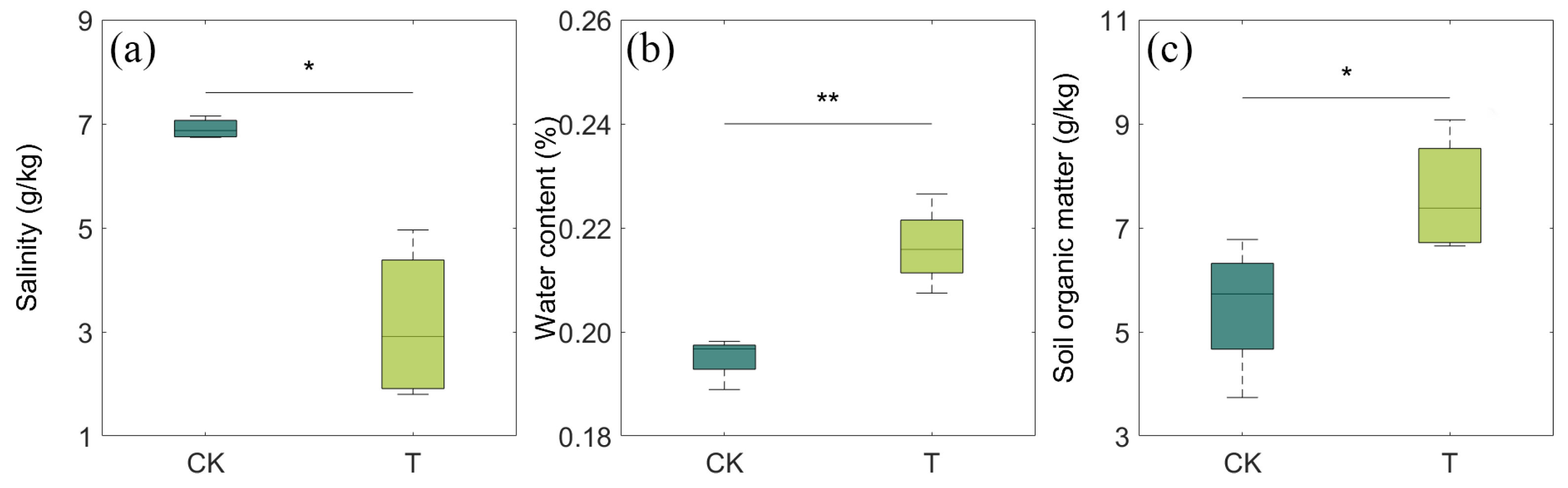
3.1. Soil Physicochemical Properties
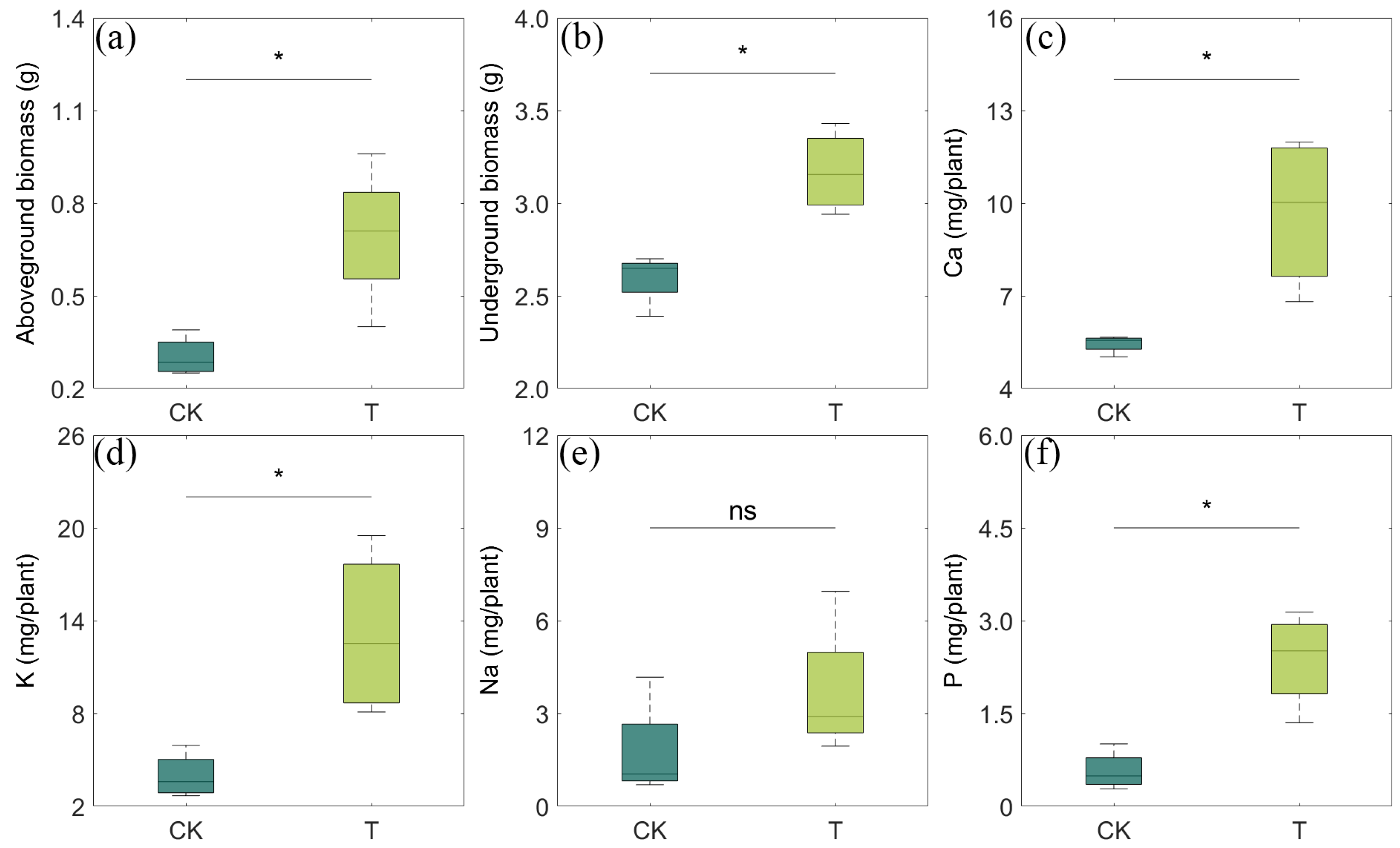
3.2. Plants Growth and Nutrient Uptake
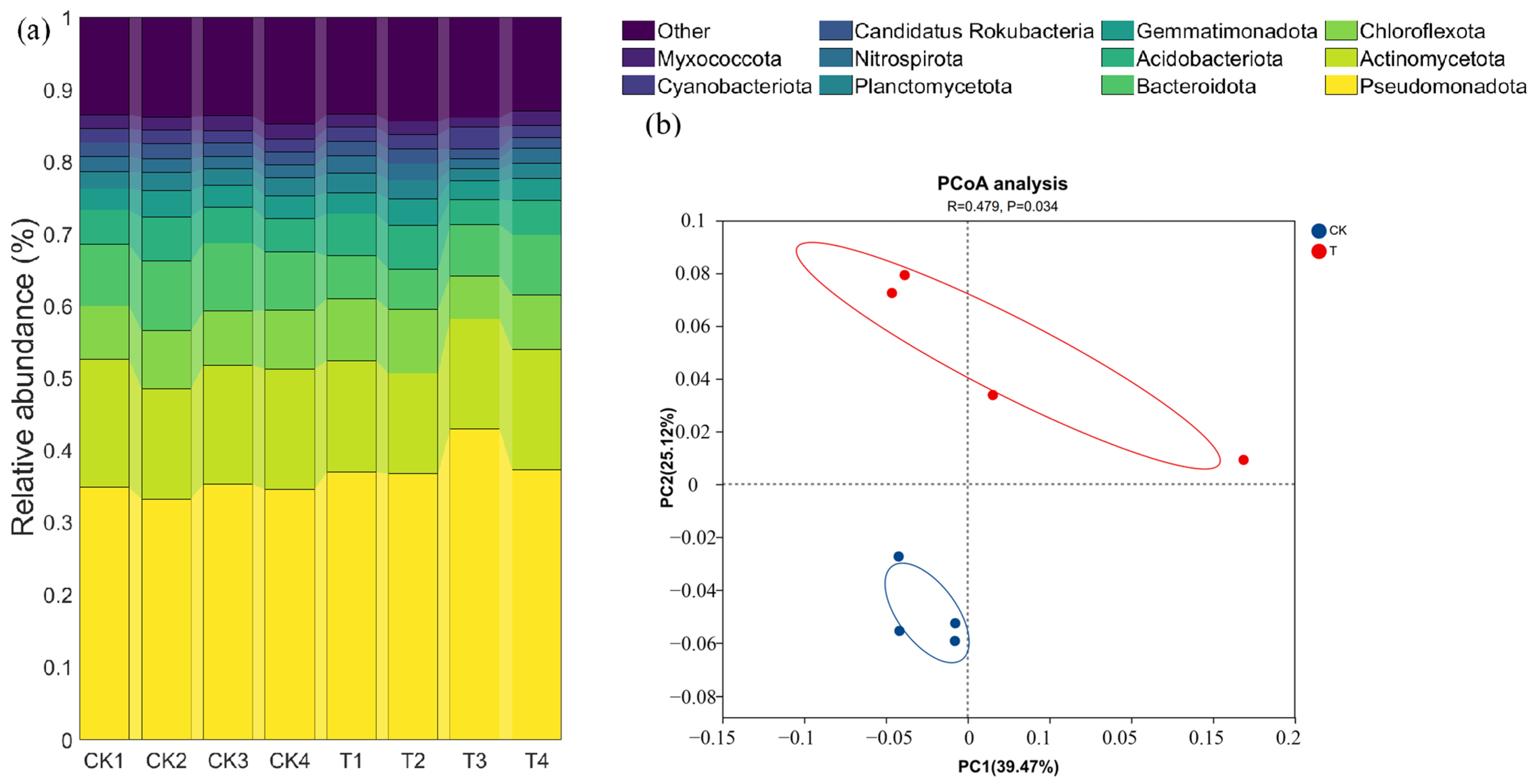
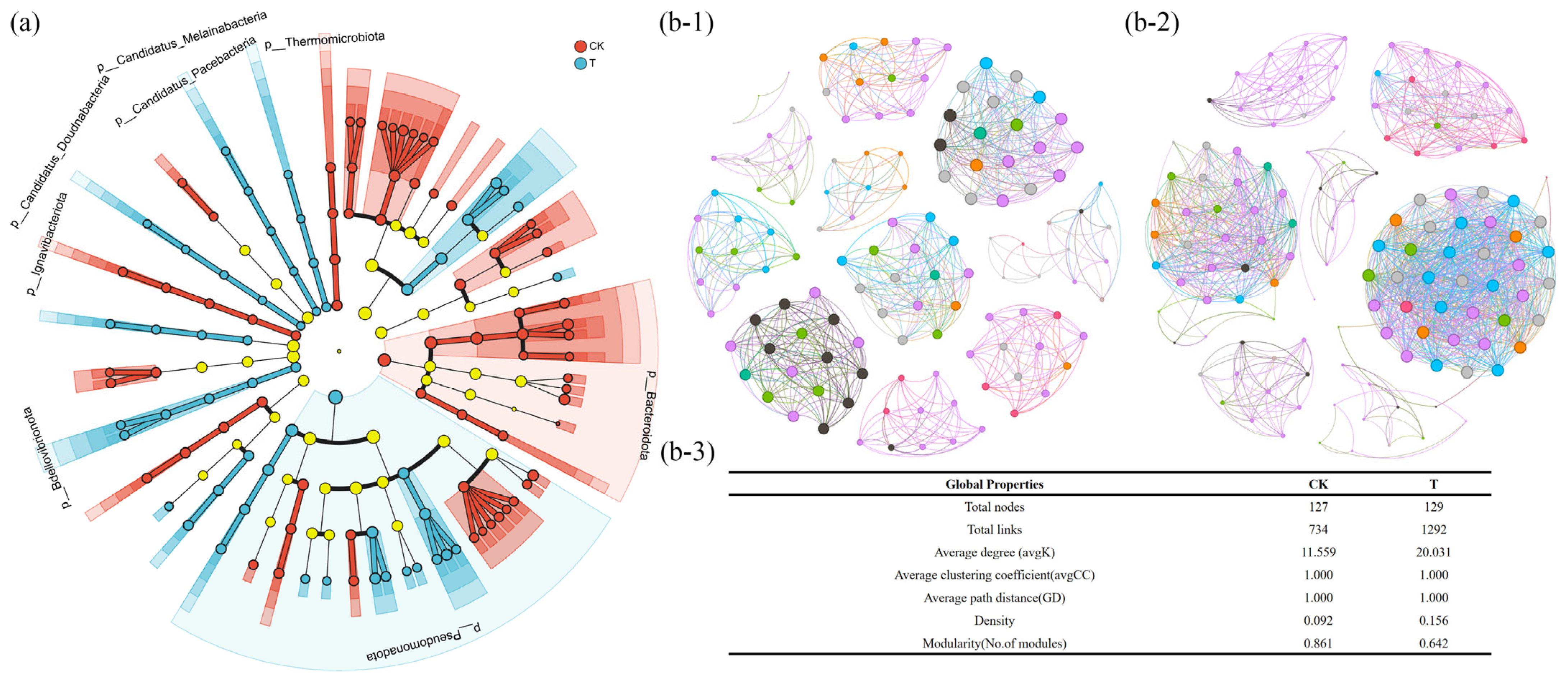
3.3. Changes in Soil Microbial Structure and Function
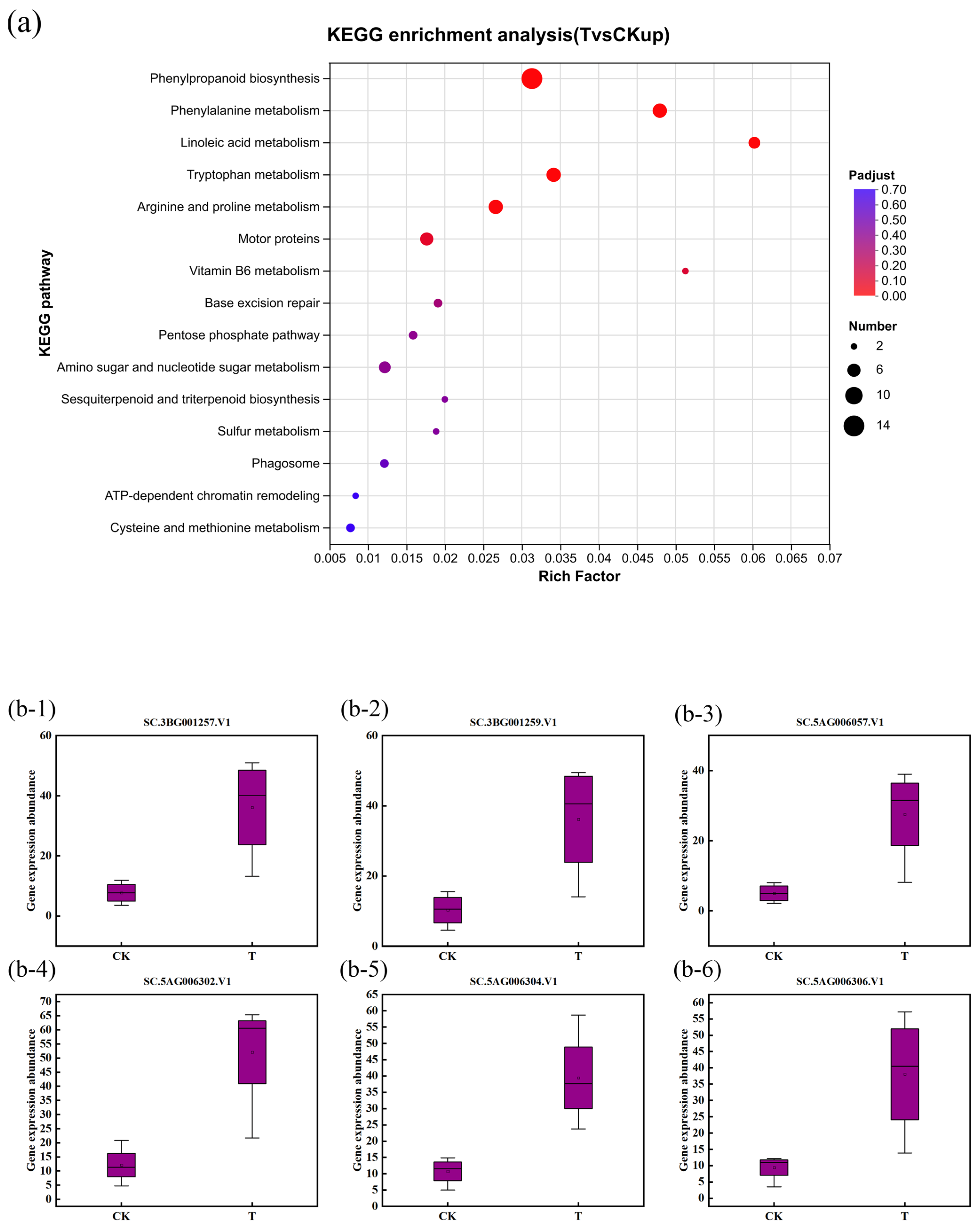
3.4. The Salt Stress Resistant Physiological Metabolism of S. cannabina Roots
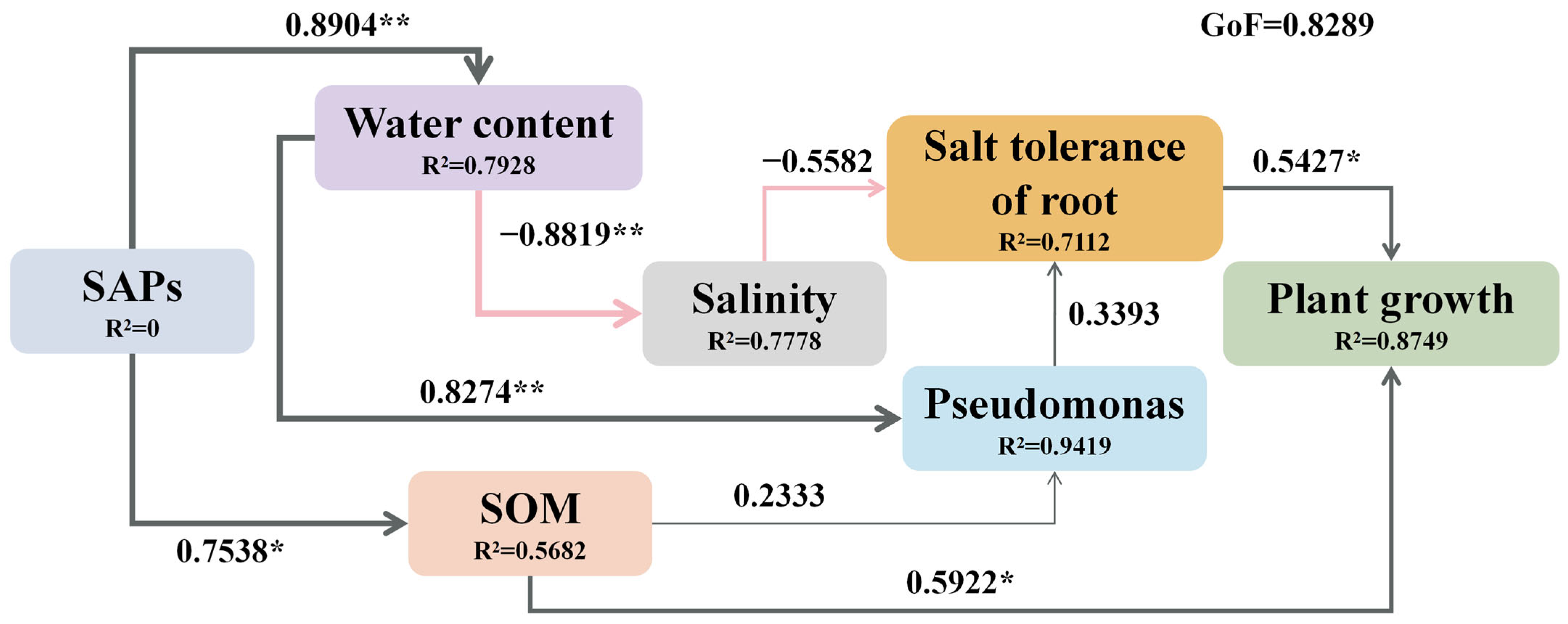
3.5. Partial Least Squares Path Model (PLS-PM) Analysis
4. Discussion
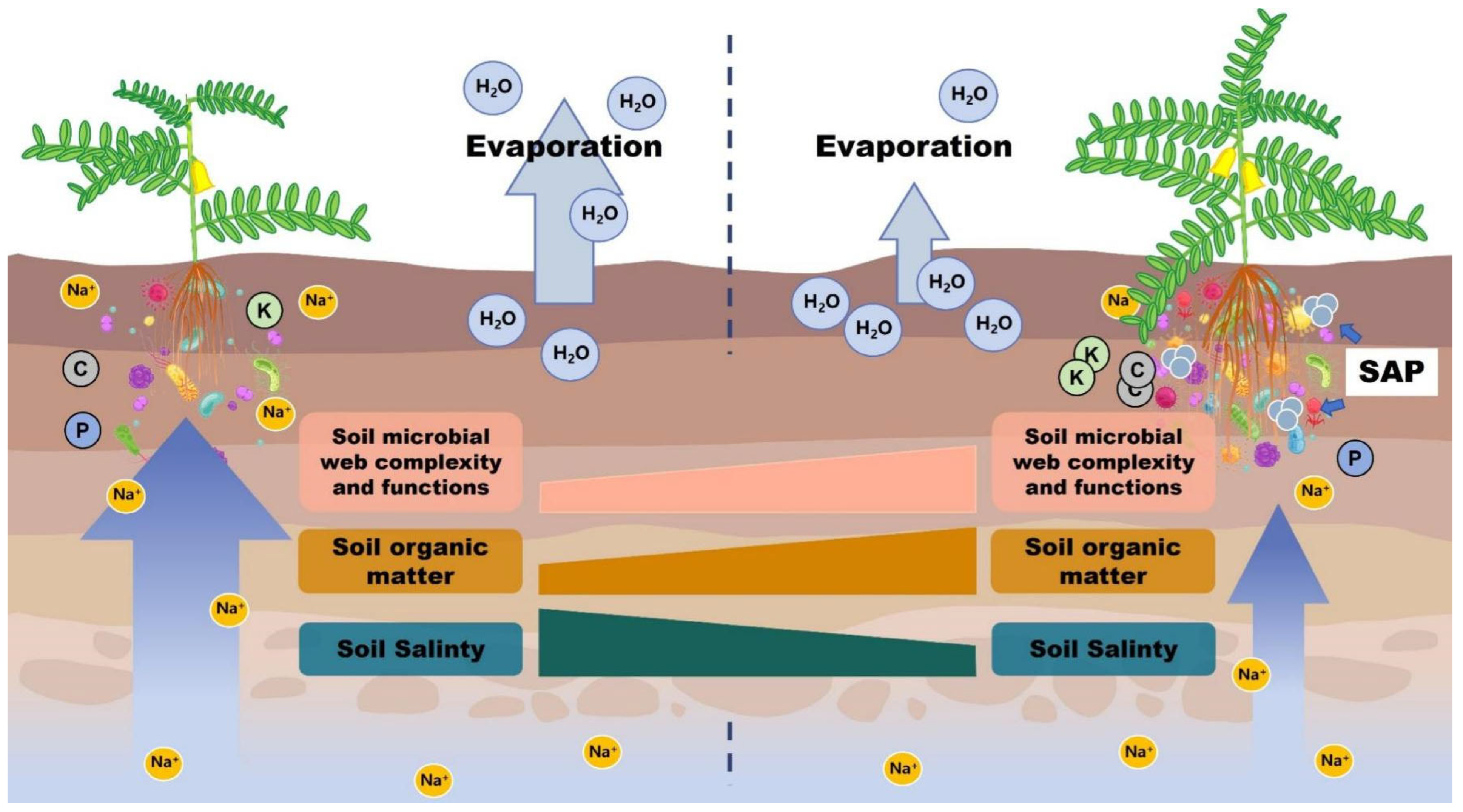
4.1. VB-SAPs Inhibit Resalinization by Increasing Soil Water Retention Capacity
4.2. VB-SAPs Promote the Proliferation of Plant Growth-Promoting Rhizobacteria Pseudomonadota Members
4.3. VB-SAPs Enhance S. cannabina Roots Salt Tolerance
4.4. VB-SAPs Improve the Growth of S. cannabina in Severely Saline-Alkali Soils
4.5. Limitations, Implications, and Future Study
5. Conclusions
Supplementary Materials
Author Contributions
Funding
Data Availability Statement
Conflicts of Interest
Abbreviations
| S. cannabina | Sesbania cannabina |
| SAP | Superabsorbent polymer |
| VB-SAP | Superabsorbent polymer reinforced with vermicompost and biochar |
| KOH | Potassium hydroxide |
| AA | Acrylic acid |
| AM | Acrylamide |
| MBA | N,N’-methylene diacrylamide |
| DTAB | Dodecyltrimethylammonium bromide |
| KPS | Potassium persulfate |
| PVC | Polyvinyl chloride |
| EC | Electrical conductivity |
| SOM | Soil organic matter |
| LEfSe | Linear discriminant analysis effect size |
| ICP-OES | Inductively Coupled Plasma Optical Emission Spectrometry |
| DNA | DeoxyriboNucleic Acid |
| PLS-PM | Partial least squares path model |
| GoF | Goodness of fit |
| DEGs | Differential Expressed Genes |
| KEGG | Kyoto Encyclopedia of Genes and Genomes |
References
- Wang, Y.J.; Qi, G.X.; Wang, N.N.; Dong, H.Y.; Zhang, Y.; Lu, H.; Li, Y.; Wang, H.C.; Li, X.H.; Liu, H.Y. The Improvement Effects of Intercropping Systems on Saline-Alkali Soils and Their Impact on Microbial Communities. Microorganisms 2025, 13, 1436. [Google Scholar] [CrossRef]
- Dong, X.L.; Wang, J.T.; Tian, L.; Lou, B.Y.; Zhang, X.J.; Liu, T.; Liu, X.J.; Sun, H.Y. Review of Relationships Between Soil Aggregates, microorganisms and Soil Organic Matter in Salt-Affected Soil. Chin. J. Eco-Agric. 2023, 31, 364–372. [Google Scholar]
- Chen, W.; Liu, Z. Research Progress on Improvement of Saline Alkali Soil. Front. Sci. Eng. 2023, 3, 36–42. [Google Scholar] [CrossRef]
- Wang, J.; Muhammad, R.; Babar, S.; El-Desouki, Z.; Li, Y.; Wang, X.; Xia, X.; Jiang, C. Insight into amelioration effect of iron-modified biochar on saline-alkali soil chemical properties and bacterial communities along a depth gradient. Pedosphere 2024, 35, 879–892. [Google Scholar] [CrossRef]
- Zhang, C.; Qiao, Y.; Song, Q. Practice of Improving Saline–Alkali Soil with Bio-Humic Acid. Processes 2024, 12, 1250. [Google Scholar] [CrossRef]
- Zhang, Y.; Chen, S.; Li, F.; Xu, H.; Long, Z. Research on Effects of Desulfurization Gypsum, Humic Acid and Biochar on Chinese Coastal Saline-Alkali Soil Improvement. Fresenius Environ. Bull. 2017, 26, 6958–6965. [Google Scholar]
- Du, X. Improving Saline-Alkali Soil with Agricultural Waste in China: A Review. Commun. Soil Sci. Plant Anal. 2024, 55, 2651–2665. [Google Scholar] [CrossRef]
- Gamage, A.; Gangahagedara, R.; Gamage, J.; Jayasinghe, N.; Kodikara, N.; Suraweera, P.; Merah, O. Role of organic farming for achieving sustainability in agriculture. Farming Syst. 2023, 1, 100005. [Google Scholar] [CrossRef]
- He, K.; He, G.; Wang, C.; Zhang, H.; Xu, Y.; Wang, S.; Kong, Y.; Zhou, G.; Hu, R. Biochar amendment ameliorates soil properties and promotes Miscanthus growth in a coastal saline-alkali soil. Appl. Soil Ecol. 2020, 155, 103674. [Google Scholar] [CrossRef]
- Ai, F.; Yin, X.; Hu, R.; Ma, H.; Liu, W. Research into the super-absorbent polymers on agricultural water. Agric. Water Manag. 2021, 245, 106513. [Google Scholar] [CrossRef]
- Kang, M.W.; Yibeltal, M.; Kim, Y.H.; Oh, S.J.; Lee, J.C.; Kwon, E.E.; Lee, S.S. Enhancement of soil physical properties and soil water retention with biochar-based soil amendments. Sci. Total Environ. 2022, 836, 155746. [Google Scholar] [CrossRef] [PubMed]
- Xu, Z.; Qu, Z. Saline Soil Management and Improvement Protection Strategies Based on Sustainable Agricultural Development Goals. Sustainability 2025, 17, 3581. [Google Scholar] [CrossRef]
- Acharya, B.S.; Dodla, S.; Wang, J.J.; Pavuluri, K.; Darapuneni, M.; Dattamudi, S.; Maharjan, B.; Kharel, G. Biochar impacts on soil water dynamics: Knowns, unknowns, and research directions. Biochar 2024, 6, 34. [Google Scholar] [CrossRef]
- Yuan, Y.; Liu, Q.; Zheng, H.; Li, M.; Liu, Y.; Wang, X.; Peng, Y.; Luo, X.; Li, F.; Li, X.; et al. Biochar as a sustainable tool for improving the health of salt-affected soils. Soil Environ. Health 2023, 1, 100033. [Google Scholar]
- Hafez, S.H.M.; Mohamed, H.F.M.; Abdel-Hady, E.E. Catalyzing innovation of exploring the vast potential of low-cost alternative adsorbents in diverse applications: A review. Microchem. J. 2024, 196, 109683. [Google Scholar] [CrossRef]
- Lin, Y.; Yu, C.; Zhang, Y.; Lu, L.; Xu, D.; Peng, X. Biochar modification methods and mechanisms for salt-affected soil and saline-alkali soil improvement: A review. Soil Use Manag. 2023, 40, 12992. [Google Scholar] [CrossRef]
- Raza, S.T.; Rong, L.; Rene, E.R.; Ali, Z.; Iqbal, H.; Sahito, Z.A.; Chen, Z. Effects of vermicompost preparation and application on waste recycling, NH3, and N2O emissions: A systematic review on vermicomposting. Environ. Technol. Innov. 2024, 35, 103722. [Google Scholar] [CrossRef]
- Deng, P.B.; Guo, L.P.; Yang, H.T.; Leng, X.Y.; Wang, Y.M.; Bi, J.; Shi, C.F. Effect of an Organic Fertilizer of Ganoderma lucidum Residue on the Physical and Chemical Properties and Microbial Communities of Saline Alkaline Soil. Water 2023, 15, 962. [Google Scholar] [CrossRef]
- Rao, D.L.N.; Pathak, H. Ameliorative influence of organic matter on biological activity of salt-affected soils. Arid Soil Res. Rehabil. 1996, 10, 311–319. [Google Scholar] [CrossRef]
- Przemieniecki, S.W.; Skwiercz, A.; Damszel, M.; Telesinski, A.; Zapalowska, A.; Sierota, Z.; Gorczyca, A. Ecology, biology and enzymatic activity of the rhizosphere planted with Larix decidua seedlings after addition of vermicompost. Appl. Soil Ecol. 2021, 168, 104101. [Google Scholar] [CrossRef]
- Liang, K.; Chen, Y.; Hou, J.; Liu, F. Elevated CO2-conferred sodium homeostasis is linked to abscisic acid-mediated stomatal closure and signalling pathway in tomato. Hortic. Plant J. 2025, 11, 1218–1230. [Google Scholar] [CrossRef]
- Verma, O.; Sharma, S.; Kumar, V.; Singh, T.; Kumar, R.; Auji, R. Salinity stress effect on staple food crops and novel mitigation strategies. Biologia 2024, 79, 2359–2374. [Google Scholar] [CrossRef]
- An, X.C.; Li, Y.; Cao, Y.H.; Wang, Z.F.; Xu, M.; Lian, B. The molecular mechanism for improvement of coastal silt soil by the intercropping model of Suaeda glauca (Bunge) Bunge and Sesbania cannabina (Retz.) Pers. Plant Soil 2025, 513, 1521–1540. [Google Scholar] [CrossRef]
- Chen, Y.C.; Huang, R.Z.; Xu, Z.Q.; Li, X.; Ma, C.H.; Zhang, F.F. Responses of the physiological characteristics and endophytic bacteria of Urtica cannabina to simulated drought stress. Sci. Rep. 2025, 15, 12080. [Google Scholar] [CrossRef] [PubMed]
- Huang, G.; Wang, X.F.; Liu, C.L.; He, K.X.; Hou, X.L.; Luo, H.F.; Zhang, S.B.; You, C.Q.; Jia, Y.J.; Wang, F.Q.; et al. Genomic Variation Underpins Genetic Divergence and Differing Salt Resilience in Sesbania bispinosa. Adv. Sci. 2025, 12, 32. [Google Scholar] [CrossRef]
- Luo, H.F.; Wang, X.F.; You, C.Q.; Wu, X.D.; Pan, D.F.; Lv, Z.Y.; Li, T.; Zhang, D.M.; Shen, Z.B.; Zhang, X.D.; et al. Telomere-to-telomere genome of the allotetraploid legume Sesbania cannabina reveals transposon-driven subgenome divergence and mechanisms of alkaline stress tolerance. Sci. China Life Sci. 2024, 67, 149–160. [Google Scholar] [CrossRef]
- Sonker, E.; Tiwari, R.; Adhikary, P.; Kumar, K.; Krishnamoorthi, S. Preparation of ultra-high-molecular-weight polyacrylamide by vertical solution polymerization technique. Polym. Eng. Sci. 2019, 59, 1175–1181. [Google Scholar] [CrossRef]
- Wang, C.; Zhang, Z.H.; Huang, H.Y. Preparation and Application of a Slow-Release Agricultural Water Retaining Agent Based on Earthworm Castings. CN202210483675.0, 11 April 2023. [Google Scholar]
- Walkley, A. A Critical Examination of a Rapid Method for Determining Organic Carbon in Soils—Effect of Variations in Digestion Conditions and of Inorganic Soil Constituents. Soil Sci. 1947, 63, 251–264. [Google Scholar] [CrossRef]
- Jia, X.; Shang, H.; Chen, Y.; Lin, M.; Wei, Y.; Li, Y.; Li, R.; Dong, P.; Chen, Y.; Zhang, Y.; et al. Improved bacterial composition and co-occurrence patterns of rhizosphere increased nutrient uptake and grain yield through cultivars mixtures in maize. Sci. Total Environ. 2024, 926, 172102. [Google Scholar] [CrossRef] [PubMed]
- Qian, F.; Su, X.; Zhang, Y.; Bao, Y. Variance of soil bacterial community and metabolic profile in the rhizosphere vs. non-rhizosphere of native plant Rumex acetosa L. from a Sb/As co-contaminated area in China. J. Hazard. Mater. 2023, 456, 131681. [Google Scholar] [CrossRef]
- Li, Q.; Yang, R.; Xu, L.; Peng, Y.; Duan, Q.; Wu, X.; Luo, Y.; Xu, Y.; Wu, X.; Xu, M. Rhizosphere microbial community assembly as influenced by reductive soil disinfestation to resist successive cropping obstacle. J. Sci. Food Agric. 2024, 105, 1760–1770. [Google Scholar] [CrossRef]
- Ott, O.; Tolppi, S.; Figueroa-Cruz, J.; Myagmar, K.; Unurbuyan, K.; Tripathi, A. Leveraging the fundamentals of heat transfer and fluid mechanics in microscale geometries for automated next-generation sequencing library preparation. Sci. Rep. 2024, 14, 12564. [Google Scholar] [CrossRef]
- Sharma, A.; Lee, S.; Park, Y.-S. Molecular typing tools for identifying and characterizing lactic acid bacteria: A review. Food Sci. Biotechnol. 2020, 29, 1301–1318. [Google Scholar] [CrossRef]
- Liu, C.; Li, B.; Chen, X.; Dong, Y.; Lin, H. Insight into soilless revegetation of oligotrophic and heavy metal contaminated gold tailing pond by metagenomic analysis. J. Hazard. Mater. 2022, 435, 128881. [Google Scholar] [CrossRef] [PubMed]
- Sanchez, G.; Trinchera, L.; Russolillo, G.; Bertrand, F. Partial Least Squares Path Modeling (PLS-PM). 2025. Available online: https://cran.r-project.org/package=plspm (accessed on 11 December 2025).
- Wetzels, M.; Odekerken-Schröder, G.; van Oppen, C. Using PLS Path Modeling for Assessing Hierarchical Construct Models: Guidelines and Empirical Illustration. MIS Q. 2009, 33, 177–195. [Google Scholar] [CrossRef]
- Prakash, O.; Chauhan, A.; Green, S.J. The Study of Microbial Physiology Under Microoxic Conditions Is Critical but Neglected. Environ. Microbiol. Rep. 2025, 17, e70108. [Google Scholar] [CrossRef]
- Chen, W.Q.; Wang, J.Y.; Chen, X.; Meng, Z.X.; Xu, R.; Duoji, D.; Zhang, J.H.; He, J.; Wang, Z.A.; Chen, J.; et al. Soil microbial network complexity predicts ecosystem function along elevation gradients on the Tibetan Plateau. Soil Biol. Biochem. 2022, 172, 108766. [Google Scholar] [CrossRef]
- Luo, S.; Png, G.K.; Ostle, N.J.; Zhou, H.K.; Hou, X.Y.; Luo, C.L.; Quinton, J.N.; Schaffner, U.; Sweeney, C.; Wang, D.J.; et al. Grassland degradation-induced declines in soil fungal complexity reduce fungal community stability and ecosystem multifunctionality. Soil Biol. Biochem. 2023, 176, 108865. [Google Scholar] [CrossRef]
- Yao, F.; Yang, S.; Wang, Z.R.; Wang, X.; Ye, J.; Wang, X.G.; DeBruyn, J.M.; Feng, X.; Jiang, Y.; Li, H. Microbial Taxa Distribution Is Associated with Ecological Trophic Cascades along an Elevation Gradient. Front. Microbiol. 2017, 8, 2071. [Google Scholar] [CrossRef]
- Liu, S.; Meng, Q.X.; Li, Y.J.; Wang, Z.G.; Xu, W.H.; Sun, Y.N.; Yu, Z.D.; Hu, Y.L. Differences in succession of bacterial communities during co-cultivation of corn straw with different soils. Eur. J. Soil Biol. 2024, 123, 103683. [Google Scholar] [CrossRef]
- Panchami, P.S.; Thanuja, K.G.; Karthikeyan, S. Isolation and Characterization of Indigenous Plant Growth-Promoting Rhizobacteria (PGPR) from Cardamom Rhizosphere. Curr. Microbiol. 2020, 77, 2963–2981. [Google Scholar] [CrossRef] [PubMed]
- Waso, M.; Reyneke, B.; Havenga, B.; Khan, S.; Khan, W. Insights into Bdellovibrio spp. mechanisms of action and potential applications. World J. Microbiol. Biotechnol. 2021, 37, 85. [Google Scholar] [CrossRef] [PubMed]
- Sockett, R.E.; Lambert, C. Bdellovibrio as therapeutic agents: A predatory renaissance? Nat. Rev. Microbiol. 2004, 2, 669–675. [Google Scholar] [CrossRef]
- Zaffran, V.D.; Kirshteyn, G.; Singh, P. Applications of Bdellovibrio Bacteria as Biocontrol Agents: Food Safety and Mitigating Clinical Pathogens. In Novel Strategies to Improve Shelf-Life and Quality of Foods; Apple Academic Press: Palm Bay, FL, USA, 2020; pp. 143–160. [Google Scholar]
- Markelova, N.Y. Predacious bacteria, Bdellovibrio with potential for biocontrol. Int. J. Hyg. Environ. Health 2010, 213, 428–431. [Google Scholar] [CrossRef]
- Odooli, S.; Roghanian, R.; Ghasemi, Y.; Mohkam, M.; Emtiazi, G. Predatory and biocontrol potency of Bdellovibrio bacteriovorus toward phytopathogenic strains of Pantoea sp. and Xanthomonas campestris in the presence of exo-biopolymers: In vitro and in vivo assessments. Int. Microbiol. 2021, 24, 399–413. [Google Scholar] [CrossRef]
- Herencias, C.; Rivero-Buceta, V.; Salgado, S.; Hernández-Herreros, N.; Baquero, F.; Del Campo, R.; Nogales, J.; Prieto, M.A. Bdellovibrio’s prey-independent lifestyle is fueled by amino acids as a carbon source. Appl. Microbiol. Biotechnol. 2024, 108, 422. [Google Scholar] [CrossRef]
- Deng, Y.X.; Lu, S.F. Biosynthesis and Regulation of Phenylpropanoids in Plants. Crit. Rev. Plant Sci. 2017, 36, 257–290. [Google Scholar] [CrossRef]
- Wang, M.L.; Wang, Y.D.; Li, X.Z.; Zhang, Y.; Chen, X.L.; Liu, J.Y.; Qiua, Y.; Wang, A.X. Integration of metabolomics and transcriptomics reveals the regulation mechanism of the phenylpropanoid biosynthesis pathway in insect resistance traits in Solanum habrochaites. Hortic. Res. 2024, 11, uhad277. [Google Scholar] [CrossRef]
- Ayyanath, M.M.; Shukla, M.R.; Sriskantharajah, K.; Hezema, Y.S.; Saxena, P.K. Stable indoleamines attenuate stress—A novel paradigm in tryptophan metabolism in plants. J. Pineal Res. 2024, 76, e12938. [Google Scholar] [CrossRef]
- Wang, Z.X.; Yang, L.Y.; Jander, G.; Bhawal, R.; Zhang, S.; Liu, Z.H.; Oakley, A.; Hua, J. AIG2A and AIG2B limit the activation of salicylic acid-regulated defenses by tryptophan-derived secondary metabolism in Arabidopsis. Plant Cell 2022, 34, 4641–4660. [Google Scholar] [CrossRef] [PubMed]
- Alvarez, M.E.; Savouré, A.; Szabados, L. Proline metabolism as regulatory hub. Trends Plant Sci. 2022, 27, 39–55. [Google Scholar] [CrossRef]
- Wang, Y.; Yang, Y.; Zhao, D.; Li, Z.; Sui, X.; Zhang, H.; Liu, J.; Li, Y.; Zhang, C.-S.; Zheng, Y. Ensifer sp. GMS14 enhances soybean salt tolerance for potential application in saline soil reclamation. J. Environ. Manag. 2024, 349, 119488. [Google Scholar] [CrossRef]
- Kuppe, C.W.; Kirk, G.J.D.; Wissuwa, M.; Postma, J.A. Rice increases phosphorus uptake in strongly sorbing soils by intra-root facilitation. Plant Cell Environ. 2022, 45, 884–899. [Google Scholar] [CrossRef] [PubMed]
- Philippot, L.; Raaijmakers, J.M.; Lemanceau, P.; van der Putten, W.H. Going back to the roots: The microbial ecology of the rhizosphere. Nat. Rev. Microbiol. 2013, 11, 789–799. [Google Scholar] [CrossRef] [PubMed]
- Apostolakis, A.; Wagner, K.; Daliakopoulos, I.N.; Kourgialas, N.N.; Tsanis, I.K. Greenhouse Soil Moisture Deficit under Saline Irrigation and Climate Change. Procedia Eng. 2016, 162, 537–544. [Google Scholar] [CrossRef]
- Zhang, T.; Zheng, Q.F.; Yi, X.; An, H.; Zhao, Y.L.; Ma, S.Q.; Zhou, G.H. Establishing RNA virus resistance in plants by harnessing CRISPR immune system. Plant Biotechnol. J. 2018, 16, 1415–1423. [Google Scholar] [CrossRef]
- Belgaroui, N.; Berthomieu, P.; Rouached, H.; Hanin, M. The secretion of the bacterial phytase PHY-US417 by Arabidopsis roots reveals its potential for increasing phosphate acquisition and biomass production during co-growth. Plant Biotechnol. J. 2016, 14, 1914–1924. [Google Scholar] [CrossRef]
- Javed, S.A.; Shahzad, S.M.; Ashraf, M.; Kausar, R.; Arif, M.S.; Albasher, G.; Rizwana, H.; Shakoor, A. Interactive effect of different salinity sources and their formulations on plant growth, ionic homeostasis and seed quality of maize. Chemosphere 2022, 291, 132678. [Google Scholar] [CrossRef] [PubMed]
- Yang, L.; Wu, P.P.; Zuo, Z.K.; Long, L.; Shi, J.L.; Liu, Y.T. ERoots: A three-dimensional dynamic growth model of rice roots coupled with soil. Biosyst. Eng. 2024, 244, 122–133. [Google Scholar] [CrossRef]
- Xu, L.; Coleman-Derr, D. Causes and consequences of a conserved bacterial root microbiome response to drought stress. Curr. Opin. Microbiol. 2019, 49, 1–6. [Google Scholar] [CrossRef]
- Huang, B.; Lv, X.; Zheng, H.; Yu, H.; Zhang, Y.; Zhang, C.; Wang, J. Microbial organic fertilizer prepared by co-composting of Trichoderma dregs mitigates dissemination of resistance, virulence genes, and bacterial pathogens in soil and rhizosphere. Environ. Res. 2024, 241, 117718. [Google Scholar] [CrossRef] [PubMed]
- Xing, W.; Gai, X.; Xue, L.; Chen, G. Evaluating the role of rhizosphere microbial home-field advantage in Betula luminifera adaptation to antimony mining areas. Sci. Total Environ. 2024, 912, 169009. [Google Scholar] [CrossRef]
- Shi, A.; Hu, Y.; Zhang, X.; Zhou, D.; Xu, J.; Rensing, C.; Zhang, L.; Xing, S.; Ni, W.; Yang, W. Biochar loaded with bacteria enhanced Cd/Zn phytoextraction by facilitating plant growth and shaping rhizospheric microbial community. Environ. Pollut. 2023, 327, 121559. [Google Scholar] [CrossRef] [PubMed]




Disclaimer/Publisher’s Note: The statements, opinions and data contained in all publications are solely those of the individual author(s) and contributor(s) and not of MDPI and/or the editor(s). MDPI and/or the editor(s) disclaim responsibility for any injury to people or property resulting from any ideas, methods, instructions or products referred to in the content. |
© 2026 by the authors. Licensee MDPI, Basel, Switzerland. This article is an open access article distributed under the terms and conditions of the Creative Commons Attribution (CC BY) license.
Share and Cite
Ding, H.; Qin, H.; Liu, M.; Wang, C. New Type of Superabsorbent Polymer Reinforced with Vermicompost and Biochar to Enhance Salt Tolerance of Sesbania cannabina in Severely Saline-Alkali Soils. Agronomy 2026, 16, 252. https://doi.org/10.3390/agronomy16020252
Ding H, Qin H, Liu M, Wang C. New Type of Superabsorbent Polymer Reinforced with Vermicompost and Biochar to Enhance Salt Tolerance of Sesbania cannabina in Severely Saline-Alkali Soils. Agronomy. 2026; 16(2):252. https://doi.org/10.3390/agronomy16020252
Chicago/Turabian StyleDing, Hongji, Haoyue Qin, Mengli Liu, and Chong Wang. 2026. "New Type of Superabsorbent Polymer Reinforced with Vermicompost and Biochar to Enhance Salt Tolerance of Sesbania cannabina in Severely Saline-Alkali Soils" Agronomy 16, no. 2: 252. https://doi.org/10.3390/agronomy16020252
APA StyleDing, H., Qin, H., Liu, M., & Wang, C. (2026). New Type of Superabsorbent Polymer Reinforced with Vermicompost and Biochar to Enhance Salt Tolerance of Sesbania cannabina in Severely Saline-Alkali Soils. Agronomy, 16(2), 252. https://doi.org/10.3390/agronomy16020252