Article

Effects of Ethephon and Gibberellic Acid Treatments on Post-Harvest Flavor Quality of Green Lemon


1
National Key Laboratory of Tropical Crop Biological Breeding, Institute of Tropical and Subtropical Cash Crops, Yunnan Academy of Agricultural Sciences, Baoshan 678000, China
2
National Key Laboratory for Germplasm Innovation & Utilization of Horticultural Crops, National Center of Citrus Preservation Technology Research and Development, Huazhong Agricultural University, Wuhan 430070, China
*
Authors to whom correspondence should be addressed.
Agronomy 2026, 16(2), 203; https://doi.org/10.3390/agronomy16020203
Submission received: 9 December 2025 / Revised: 2 January 2026 / Accepted: 12 January 2026 / Published: 14 January 2026
(This article belongs to the Section Horticultural and Floricultural Crops)

Abstract

This study investigated the effects of Ethephon (CEPA) and Gibberellic acid (GA3) treatments on the post-harvest flavor quality of ‘Yunning No. 1’ green lemon. A comprehensive analysis was conducted on the changes in primary metabolites (sugars, organic acids, amino acids, alcohols) in the pulp and peel, as well as those in major volatile compounds in the peel during fruit storage. The results showed that CEPA treatment initially increased volatile compounds like monoterpenes and sesquiterpenes in the fruit peel during early storage, but later decreased these compounds along with total sugar and amino acid content in the pulp. Conversely, GA3 treatment markedly delayed the decline in sugars and organic acids in the fruit peel, preserved the amino acid content in the pulp and the alcohol content in the peel, and delayed the decrease in volatile compound content in the peel. In conclusion, GA3 treatment effectively delayed the decline in primary metabolites and volatile compounds to maintain the storage quality of green lemon; therefore, GA3 represents a suitable strategy for the preservation of green lemons. CEPA temporarily improved aroma but accelerated quality deterioration, making it better suited for short-term degreening. This study offers a theoretical foundation for optimizing post-harvest degreening and preservation techniques of green lemons.

1. Introduction

Lemon is an economically important fruit tree in tropical and subtropical areas, and its fruits are distinguished by a tart, refreshing taste and a unique, pleasant aroma, which are distinct from the characteristics of other citrus fruits [1]. The flavor quality indicators of lemons are mainly determined by the primary metabolites and volatile compounds, and are critical factors determining their commercial value for both fresh consumption and processing. These indicators also serve as essential benchmarks for evaluating the overall quality of lemon fruits [2,3]. Under intensified economic globalization and industrial competition, both the producers and consumers are laying increasing emphasis on the quality of fruit flavor [4,5]. Specifically, the aroma and acidity of lemon fruits have been identified as key flavor attributes prioritized by the consumers [6]. Simulation of the environment for lemon market sales has revealed that lemon quality is deteriorated over the sales period, which is characterized by gradual decreases in flavor compounds such as peel aroma components [7]. Green lemons are particularly prone to postharvest color change. They rapidly undergo an uneven transition from green to yellow-green, significantly diminishing their market value. Therefore, various methods have been employed in production to preserve and maintain the green coloration of lemons.
Ethylene is a potent plant growth regulator, and ethylene treatment is a popular and effective strategy to facilitate the degreening of fruit peels, thereby playing a pivotal role in controlling the post-harvest quality of horticultural products [8]. The effects of ethylene treatment are highly variable from beneficial to detrimental on the fruit depending on the conditions [9,10]. Moreover, ethylene is an important plant hormone and is integral to the ripening process and associated color change in fruits. Its application under certain conditions has been shown to enhance the visual appeal and coloration of fruits. However, it may also lead to the degradation of certain flavor components and accumulation of specific odor substances. Moreover, different horticultural varieties exhibit varying responses to ethylene treatment depending on their genetic and physiological characteristics. Ethylene as a critical regulator in the ripening of both climacteric and non-climacteric fruits, modulating key physiological and biochemical pathways. It promotes color development, accumulation of sugars, acids, and aroma compounds, thereby enhancing overall flavor [11]. In citrus fruits, ethylene not only accelerates peel degreening but also affects respiration, organic acid and sugar metabolism, and aroma synthesis—factors vital for long-term storage and transport [12,13,14]. For instance, ethylene can reduce the titratable acid level in Eureka lemon and Mosambi sweet orange during storage, while simultaneously enhancing the antioxidant capacity of Eureka lemon [14,15,16]. Additionally, ethylene is involved in regulating sugar metabolism, thereby promoting sugar accumulation and increasing the sweetness of fruits [17]. Ethylene is also intricately associated with the synthesis of aromatic compounds. It can enhance the accumulation of aromatic compounds in green lemons, mitigate the loss of active volatile compounds in blood oranges during cold storage, and preserve the aromatic characteristics of the fruit, thereby augmenting its market appeal [18,19,20]. However, some studies have suggested that ethylene has no effect on the internal quality of citrus fruits. During the ethylene-induced degreening process, ethylene facilitates various ripening-related processes within the peel, including reduction in chlorophyll accumulation, enhancement of carotenoid and xanthophyll content, and promotion of de-greening and color change in citrus fruits [21]. Notably, ethylene treatment does not increase the off-flavors or odors in citrus varieties such as ‘Navel’ oranges, ‘Star Ruby’ grapefruit, and ‘Satsuma’ mandarins, and also does not affect the vitamin C (VC) content, total phenolic content, flavonoid content, or antioxidant activity of citrus juice [22]. Overall, while ethylene treatment has been shown to enhance fruit appearance, its complex impacts on fruit flavor and aroma should not be overlooked.
Gibberellic acid (GA3) is also a plant growth regulator, and is frequently applied in conjunction with other hormones at pivotal stages such as the pre-harvest flowering stage and early fruiting stage of fruit trees [23,24]. This combination has been shown to markedly regulate the quality of post-harvest fruits. It has been demonstrated that the application of GA3 can enhance fruit stress resistance, extend fruit shelf life, and improve fruit disease resistance [25]. In terms of post-harvest treatment, previous studies have demonstrated the use of GA3 to regulate fruit flavor quality. For example, pre-harvest treatment of mangoes with GA3 at appropriate concentrations can effectively slow down the loss of soluble sugars, titratable acids, and vitamin C during storage [26]. It also delays yellowing and aging in green lemons, softens the peel, and reduces wrinkling [27]. Combined with chitosan, GA3 maintains dragon fruit quality, boosts antioxidant capacity, and prolongs shelf life [28]. Additionally, GA3 treatment helps maintain peach firmness, slow ripening, and enhance cold resistance [29]. On ‘Zhongqiu’ crispy jujubes, it boosts soluble solids, protein, and vitamins [30]. For sweet cherries, GA3 reduces rot and stem desiccation, preserving soluble solids, acidity, and VC [31]. In oil peaches, it minimizes weight loss, rot, and nutrient decline while maintaining firmness [32].
Currently, ethylene and GA3 treatments are widely used for post-harvest degreening and green retention in citrus fruits, respectively [27]. Typically, ethylene and GA3 are used in green lemons to regulate the peel color and enhance the appearance quality, so as to promote their commercial value. Our team’s previous studies also obtained consistent results that treatments with ethylene and GA3 effectively regulate postharvest color changes in green lemons. Ethylene accelerates peel degreening by promoting the expression of genes associated with chlorophyll degradation, carotenoid synthesis, and abscisic acid (ABA) synthesis, whereas GA3 delays degreening by inhibiting these processes [33]. Additionally, both ethylene and GA3 significantly influence the metabolism of pericarp cuticle waxes; ethylene enhances wax accumulation and alters its crystal morphology, while GA3 inhibits these effects [34]. These findings elucidate the critical roles of ethylene and GA3 in modulating the appearance quality, specifically color and gloss, of green lemons. However, there has been no systematic research the compares the effects of ethylene degreening and GA3 green retention on the flavor quality of post-harvest citrus fruits. In this study, we treated green lemons with ethylene and GA3, and measured the changes in primary metabolites (sugars, organic acids and amino acids) in the pulp and peel and volatile compounds in the peel during storage. The results revealed the impacts of these treatments on the flavor quality of green lemons during storage, and demonstrated how the treatments help maintain the flavor quality of post-harvest lemons.

2. Materials and Methods

2.1. Experimental Materials

Green lemon ‘Yunning No. 1’ (Citrus limon Burm. f. Eureka) fruit samples were harvested in August 2018 from the Institute of Tropical and Subtropical Crops, Yunnan Academy of Agricultural Sciences, Ruili City. All fruits met the harvesting standards of Geographical Indication Product Ruili Lemon, with uniform size, smooth, and flat surface, and no evident damage from pests or diseases.

2.2. Sample Collection and Processing

Fruits were washed of surface dust, divided into three treatment groups of 200 fruits each, and treated by soaking in water (control, CK), 1000 mg/L of ethephon (CEPA, 40% active ingredient, Sichuan Guoguang Agrochemical Co., Ltd., Sichuan, China), and 50 mg/L of GA3 (75% active Ingredient, Shanghai Tongrui Biotech Co., Ltd., Shanghai, China) solution for 2 min. After drying, single fruits were packaged in unperforated polyethylene bags and stored in ventilated warehouses at room temperature (25 ± 1 °C). After 0, 4, 10, 20, 30, 40, 50 and 60 d of storage, fruits from each treatment (three biological replicates, six fruits as one replicate) were sampled. During sampling, the fruit peel (yellow peel layer and white peel layer) was separated from the pulp. The yellow peel layer and fruit pulp were immediately frozen with liquid nitrogen and stored at −80 °C for subsequent determination of primary metabolites and volatile compounds.

2.3. Extraction and Determination of Primary Metabolites

Extraction of primary metabolites was conducted according to the method of Liu et al. [35]. About 300 mg of sample was weighed and ground into powder with liquid nitrogen, and then placed in a 10 mL centrifuge tube. Then, 2.7 mL of methanol pre-cooled at −20 °C and 300 μL of ribitol (0.2 mg/mL) were added as an internal standard for quantification. After thorough shaking to form a homogeneous suspension, the sample was placed in an ultrasonic cleaner (FS60, Fisher Scientific, Pittsburgh, PA, USA) at 4 °C for 15 min, and then incubated in a water bath at 70 °C for 15 min before cooling in a −20 °C refrigerator. Centrifugation was performed at 5000× g in a 4 °C freezing centrifuge (Eppendorf 5424R, Hamburg, Germany) for 15 min. Then, 100 μL of the supernatant was transferred into a 2 mL centrifuge tube, vacuum-concentrated and dried at 30 °C, followed by addition of 80 μL methoxyamine-pyridine solution (20 mg/mL) and incubation at 37 °C for 60 min, and then addition of 80 μL N-Methyl-N-(trimethylsilyl)trifluoroacetamide (MSTFA, derivatization grade, ≥98.5%, Sigma-Aldrich, St. Louis, MO, USA) and incubation at 37 °C in an oven for 30 min. Finally, the cooled sample was filtered through a 0.22-μm organic-based filter membrane and analyzed by Gas Chromatography–Mass Spectrometry (GC-MS).
The analytical method followed the method described by Sheng Ling with appropriate modifications [36]. The detection of primary metabolites was based on a combination of a GC-MS (TRACE GC Ultra GC) with a DSQII mass spectrometer (Thermo Fisher Scientific, Waltham, MA, USA). The TRACE TR-5 column (30 m × 0.25 mm × 0.25 μm, Thermo Scientific, Bellefonte, PA, USA) was employed with an ion source (70 eV) and a scan range of m/z 45–700 amu. The injector port temperature was 230 °C, the transfer line temperature was 250 °C, and the ion source temperature was 250 °C. The carrier gas was high-purity helium (99.999%) at a flow rate of 1 mL/min. The split ratio was 10:1, and the injection volume was 1 μL. The temperature program started at 100 °C, held for 1 min, then increased at 3 °C/min to 184 °C. It rose at 0.5 °C/min to 190 °C, held for 1 min, and increased at 15 °C/min to 280 °C, held for 5 min.

2.4. Extraction and Determination of Volatile Compounds

35 reference standards (Table 1) were purchased from Sigma-Aldrich (St. Louis, MO, USA) and Alfa (Lancashire, UK). C7–C30 n-alkanes for determining retention indices were purchased from Supelco (Bellefonte, PA, USA). The reference standards were dissolved in methyl tert-butyl ether (MTBE, HPLC grade, Sigma-Aldrich, St. Louis, MO, USA) for GC–MS analysis.
Extraction of volatile compounds was performed in accordance with the methodology established by Zhang Haipeng [37]. About 0.30 g of the yellow peel layer was weighed and transferred into a 2 mL centrifuge tube. Subsequently, 500 μL of ultrapure water was added and mixed thoroughly. Thereafter, 500 μL of MTBE containing methyl nonanoate (87.50 μg/mL) was added and mixed again. The tube was then placed in a 4 °C ultrasonic cleaner for 45 min. Then, the sample was centrifugated at 12,000× g and 4 °C for 10 min. Finally, the sample was filtered through a 0.22-μm organic-based filter before GC-MS analysis.
The detection of volatile compounds was based on a combination of a GC-MS (TRACE GC Ultra GC) with a DSQII mass spectrometer (Thermo Fisher Scientific, Waltham, MA, USA). The carrier gas utilized was high-purity helium gas (99.999%) with a split ratio of 50:1. The TRACE TR-5 column (30 m × 0.25 mm × 0.25 μm, Thermo Scientific, Bellefonte, PA, USA) was employed, with an injection volume of 1 μL, a flow rate of 1 mL/min, and an injection port temperature of 250 °C. The temperatures of the transfer line and ion source were 280 °C and 260 °C, respectively. The ion source employed was of the electron impact (EI) variety, with an electron impact energy of 70 eV, a positive ion scanning mode, and a mass scanning range of m/z 45–400 amu.
The temperature program was as follows: Maintaining at 40 °C for 3 min, then increasing at a rate of 2 °C/min to 160 °C, maintaining for 1 min, then increasing at a rate of 5 °C/min to 200 °C, maintaining for 1 min, then increasing at a rate of 8 °C/min to 240 °C, and maintaining for 3 min.

2.5. Qualitative and Quantitative Analyses of Volatile Compounds

The GC-MS data were analyzed and exported using Xcalibur (v 3.0.63) and AMDIS (http://www.amdis.net). Volatile compounds were identified based on standard samples, NIST/EPA/NIH, and Wiley Registry mass spectrometry databases. Retention indices were calculated based on C7–C30 n-alkanes on TR-5 and HP-Innowax columns. A total of 35 volatile compounds were identified using existing standard samples [37], while the remaining volatile compounds were identified using databases. Standard curves for the 35 standard samples were referenced from Zhang Haipeng [37]. Volatile compounds without standard curves were quantified using the internal standard method, with methyl nonanoate serving as the internal standard for quantification.

3. Results

3.1. Effects of CEPA and GA3 Treatment on Primary Metabolites in Fruit Pulp

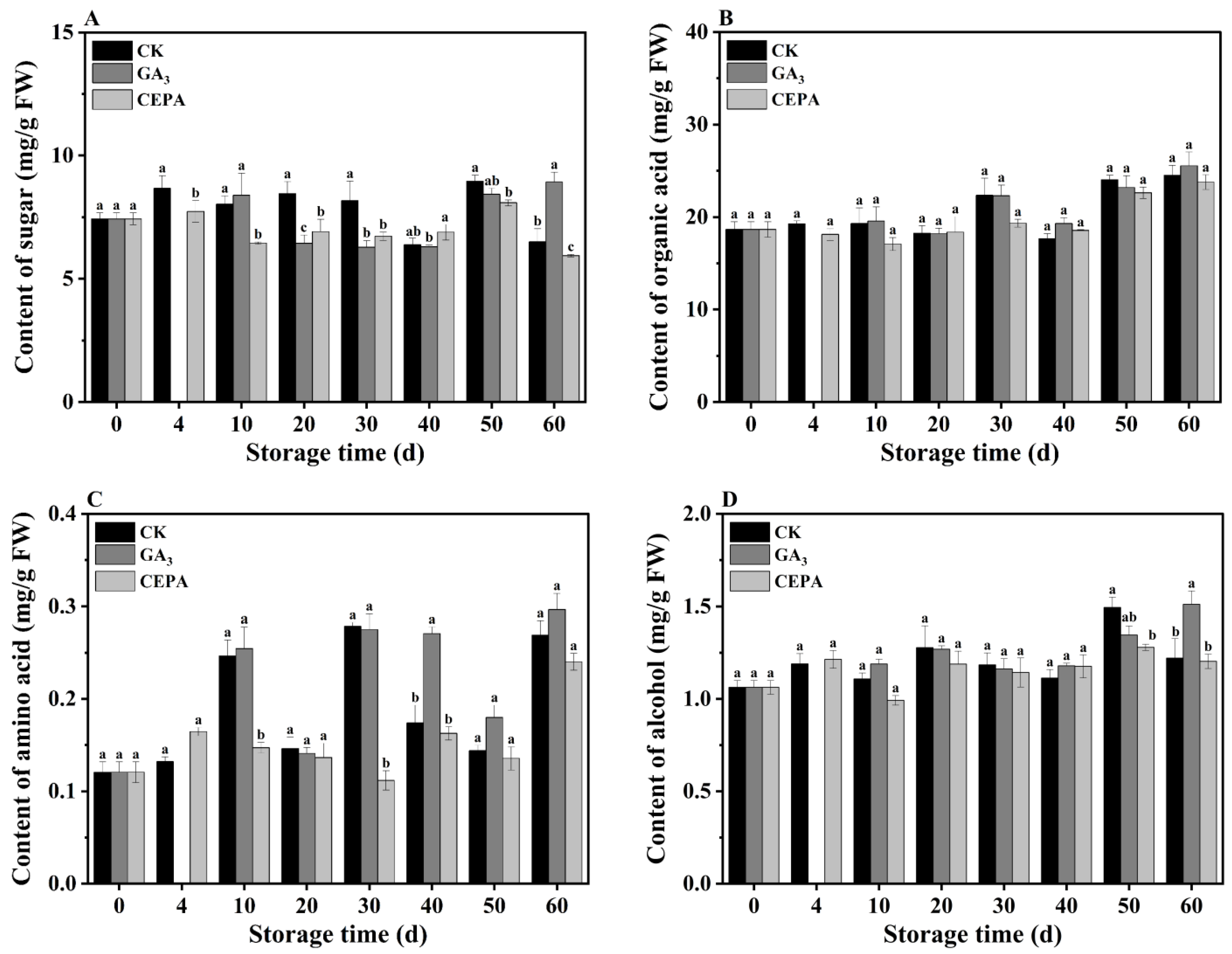
Primary metabolites are fundamental to the maintenance of basic physiological metabolism in fruits. Therefore, we analyzed the content of primary metabolites in the pulp of stored green lemon fruit under GA3 and CEPA treatments. The results demonstrated that among the various treatment groups, organic acids were the most abundant primary metabolites in fruit pulp, followed by sugars, alcohols, and amino acids. These metabolites exhibited certain fluctuating changes during storage (Figure 1).
Figure 1A shows the fluctuating changes in total sugar content of the fruit pulp under each treatment during storage. The sugar content in the fruit pulp of the control, GA3, and CEPA groups was 6.38–8.96, 6.28–8.92, and 5.94–8.08 mg/g, respectively. The total sugar content of the GA3 group was significantly lower between 20 and 30 days after storage (DAS), but significantly higher than at 60 DAS compared with that of the control group. The total sugar content in the CEPA group was significantly lower than that of the control group during 4–30 DAS and 50–60 DAS.
Figure 1B presents the changes in organic acid content in the fruit pulp under each treatment during storage. The organic acid content in the fruit pulp of the control, GA3, and CEPA groups was 17.70–24.50, 18.20–25.54, and 17.08–23.78 mg/g, respectively. At later stages of storage, all three groups showed significant increases in organic acid content in fruit pulp compared with those at earlier stages. Interestingly, compared with the control, GA3 and CEPA treatments did not significantly affect the organic acid content at any stage of storage.
Figure 1C shows the fluctuating changes in amino acid content in the fruit pulp under each treatment during storage. The fluctuations were more pronounced in the control and GA3 group. Compared with the control, GA3 treatment significantly increased the amino acid content in fruit pulp at 40 DAS, while CEPA treatment significantly decreased the amino acid content at 10 and 30 DAS.
Figure 1D presents the changes in alcohol content in the fruit pulp under each treatment during storage. The significant differences were only observed at the late storage stage (50–60 DAS).
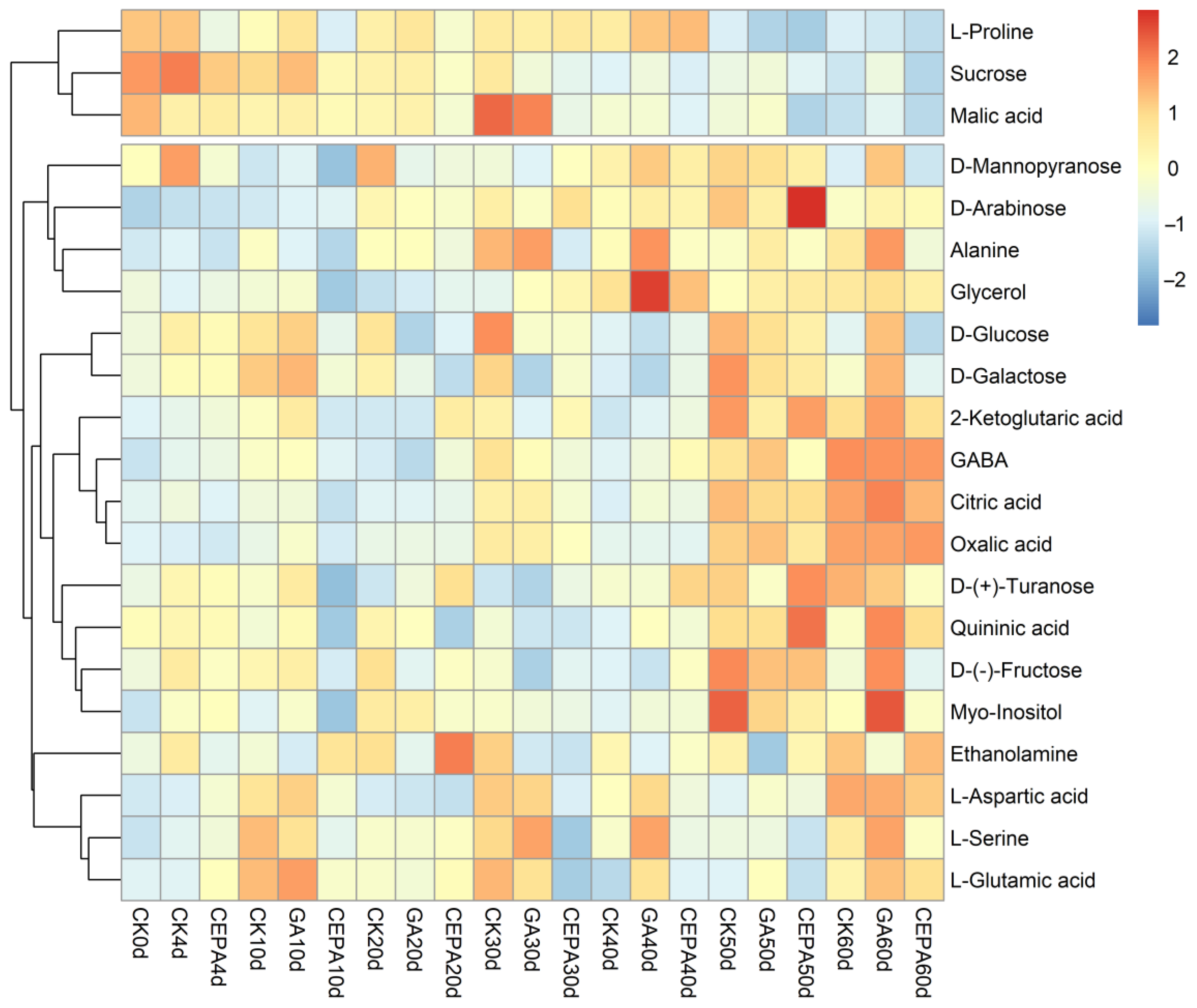
Hierarchical clustering analysis showed significant differences in the content of primary metabolites among different groups at various storage stages (Figure 2). Seven types of sugars were detected in the fruit pulp, with monosaccharides as the primary sugar components. Before the storage (0 DAS), fructose was the most abundant sugar (3171.69 µg/g), followed by glucose (2280.43 µg/g), sucrose (1181.21 µg/g), mannose (588.78 µg/g), and galactose (200.01 µg/g), along with small amounts of arabinose and turanose. During the storage, the glucose content gradually decreased. GA3 and CEPA treatments, respectively, delayed and accelerated the loss of sucrose during storage. Fructose, glucose, mannose, and galactose showed fluctuating changes and generally exhibited an upward trend at the later stages of storage.
Five organic acids were detected in the fruit pulp, including four organic acids from the tricarboxylic acid cycle (TCA cycle), namely citric acid, oxalic acid, malic acid, and 2-ketoglutaric acid. Citric acid was the most abundant organic acid, with a content of 16,968.65 µg/g at 0 DAS, which far exceeded the levels of other organic acids, followed by malic acid with a content of 1397.28 µg/g, while quinic acid and 2-ketoglutaric acid had similar contents. Additionally, a small amount of oxalic acid was also detected. During storage, only the content of malic acid showed a decreasing trend, while that of all other four organic acids increased. At 20 DAS, CEPA treatment promoted the reduction in malic acid content, while GA3 treatment delayed the decrease in malic acid. Compared with the control group, the CEPA group had slightly lower contents of citric acid, oxalic acid, quinic acid, and 2-ketoglutaric acid at the same storage stage, and the GA3 treatment slightly delayed the decrease in the content of these four organic acids.
Seven amino acids were detected in the fruit pulp. At 0 DAS, proline was the most abundant amino acid (30.44 µg/g), followed by aspartic acid (27.64 µg/g), and GABA was the least abundant (7.68 µg/g). CEPA treatment reduced the proline content during early storage, while GA3 treatment inhibited this reduction. The remaining amino acids showed fluctuating changes during storage.
Two types of alcohols were detected in the fruit pulp, with inositol being more dominant in abundance. The inositol content in the fruit pulp was 1040.28 µg/g at 0 DAS, and was increased in the control and GA3 group while decreased in the CEPA group with storage.

3.2. Effects of CEPA and GA3 Treatment on Primary Metabolites in Fruit Peel

Different treatments not only directly affected the appearance and color of the fruit but also influenced the metabolic activity of fruit peel metabolites. Therefore, we measured the primary metabolites in the peel to further understand the effects of GA3 and CEPA treatments. The results showed that sugars were the most abundant primary metabolites in the peel, followed by organic acids and alcohols, while amino acids were the least abundant (Figure 3).
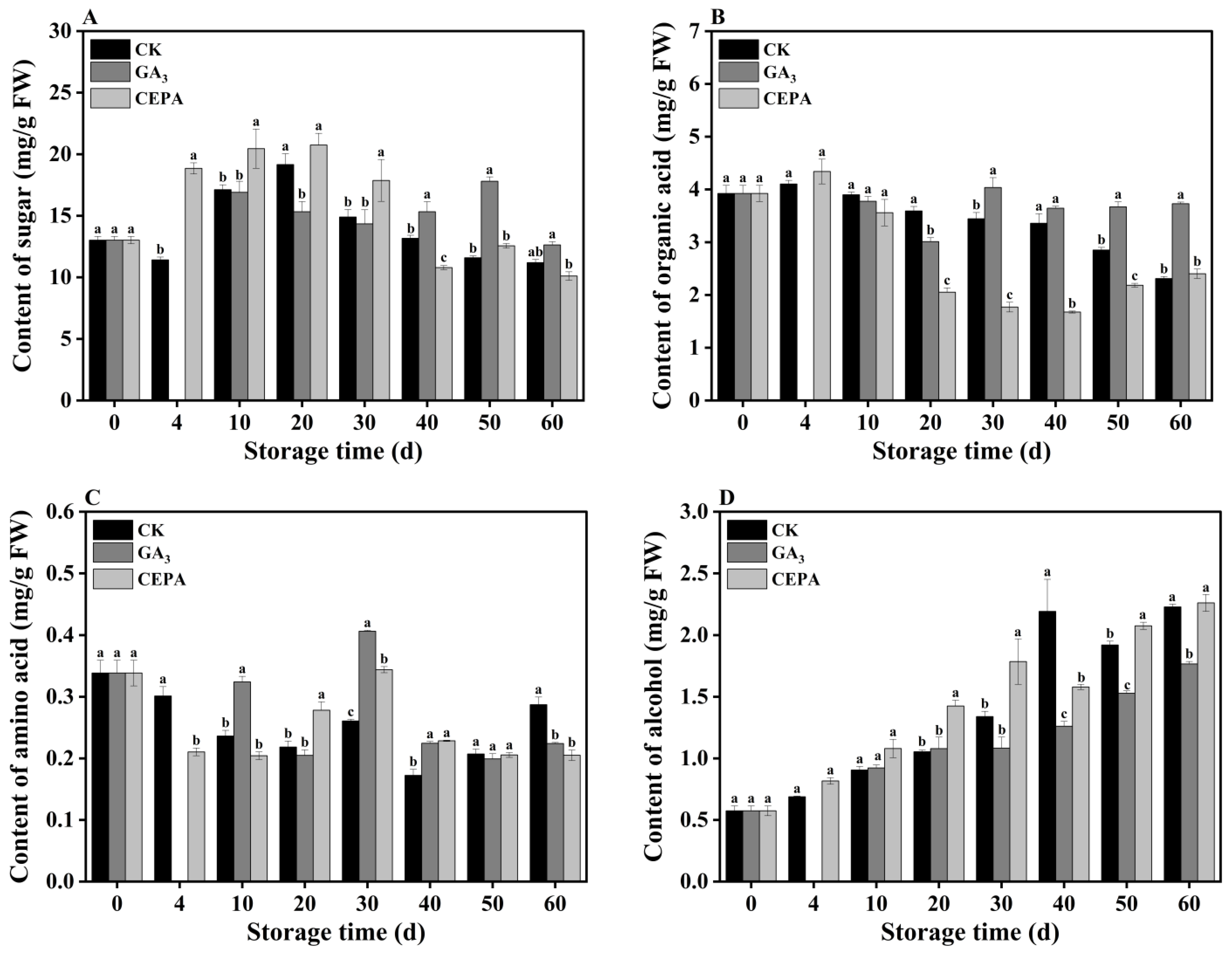
Figure 3A shows the changes in total sugar content in the fruit peel under each treatment. The total sugar content in the fruit peel of the three groups showed great fluctuations during storage. In the control group, the total sugar content of the fruit peel ranged from 11.19 to 19.16 mg/g, reaching a peak around 20 DAS, followed by continuous decreases. In the GA3 group, the total sugar content ranged from 12.63 to 17.80 mg/g, and was significantly higher than that of the other two groups between 40 and 60 DAS. In the CEPA group, the total sugar content ranged from 10.10 to 20.74 mg/g, and was significantly higher than that of the control group prior to 30 DAS, but significantly decreased at 40 DAS to a level lower than that of the control and GA3 group.
Figure 3B shows the changes in organic acid content in the peel under each treatment during storage. The organic acid content of the control group ranged from 2.31 to 4.10 mg/g, showing an overall decreasing trend with storage time. In the GA3 group, the organic acid content ranged from 3.01 to 4.04 mg/g, and decreased significantly to a level lower than that of the control group at 20 DAS, but became relatively stable and significantly higher than that of the control group during 30–60 DAS. The organic acid content of the CEPA group ranged from 1.67 to 4.34 mg/g, and decreased sharply from 20 DAS to a level significantly lower than that of the control and GA3 groups till 50 DAS.
Figure 3C shows the changes in amino acid content in the fruit peel under each treatment during storage. The amino acid content in the three groups showed significant fluctuations during storage. The fruit peel amino acid content in the control, GA3, and CEPA groups ranged from 0.17 to 0.34 mg/g, 0.20 to 0.41 mg/g, and 0.20 to 0.44 mg/g, respectively. At 10 and 30 DAS, the GA3 group showed significantly higher amino acid contents than the control and CEPA groups. From 20 to 40 DAS, the CEPA group had a significantly higher amino acid content than the control group. At 60 DAS, the two treatment groups exhibited significantly lower amino acid contents than the control group.
Figure 3D displays the changes in alcohol content of the fruit peel under each treatment during storage. The alcohol content of all three groups showed an overall upward trend during storage. The control and CEPA groups showed faster increases in alcohol content than the GA3 group, with significant changes being observed in the middle to late stages of storage. At 4 DAS, the alcohol content in the CEPA group began to increase and became significantly higher than that in the control and GA3 groups at 20 and 30 DAS. Between 40 and 60 DAS, the alcohol content in the control fruit peel increased significantly, while that in the GA3 group remained significantly lower than that in the control and CEPA groups.
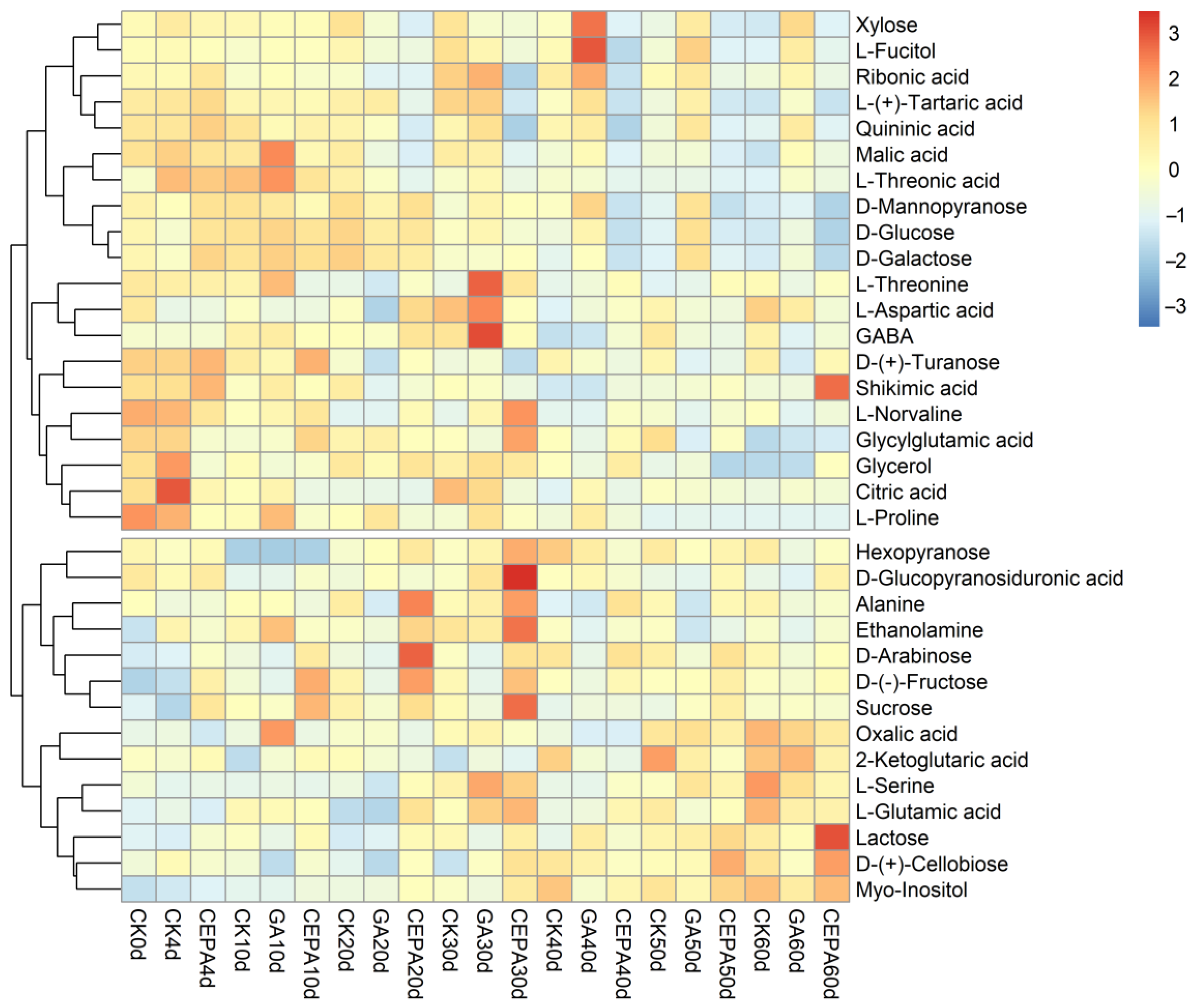
Hierarchical clustering analysis was carried out to analyze the changes in the content of various primary metabolites of the fruit peel (Figure 4). A total of 11 types of sugars were detected in the fruit peel, with monosaccharides being the primary sugars. At 0 DAS, glucose was the most abundant sugar in the peel (7008.87 µg/g), followed by sucrose (3000.12 µg/g), mannose (1726.93 µg/g), galactose (735.70 µg/g), and fructose (368.03 µg/g). Trace amounts of xylose, arabinose, turanose, and cellobiose were detected in the peel. CEPA treatment increased the glucose content after 4 DAS, GA3 treatment led to the highest glucose content after 10 DAS, and all groups showed slight decreases in glucose content after 20 DAS. After 30 days, the levels of glucose in the control and CEPA groups dropped. In the GA3 group, glucose levels stayed the same until 50 days, and then dropped at 60 days. The CEPA treatment promoted sucrose accumulation during the early and mid-storage periods. Before 50 DAS, the sucrose content of the CEPA group was higher than that of the control group, while the GA3 treatment showed no significant effect on peel sucrose content. Additionally, the monosaccharides such as mannose, fructose, and galactose showed similar trends to those of glucose. CEPA treatment increased the monosaccharide content during early storage but decreased it during late storage, while GA3 treatment significantly delayed the decrease in monosaccharide content during the whole storage period.
Ten types of organic acids were detected in the fruit peel. At 0 DAS, quinic acid was the most abundant organic acid in the fruit peel (3040.74 µg/g), followed by malic acid (423.19 µg/g), glucuronic acid (110.25 µg/g), and 2-ketoglutaric acid (104.59 µg/g). Additionally, oxalic acid, tartaric acid, ribonic acid, sorbic acid, shikimic acid, and citric acid were also detected. These detected organic acids included four organic acids (citric acid, oxalic acid, malic acid, and 2-ketoglutaric acid) from the TCA cycle. After 4 DAS, CEPA treatment slightly increased the content of quinic acid, glucuronic acid, 2-ketoglutaric acid, and tartaric acid. In general, the organic acid content in the peel of the three groups showed a fluctuating trend. The CEPA group had faster decreases in organic acid content than the other two groups during storage, particularly in the initially abundant quinic acid, malic acid, and 2-ketoglutaric acid.
Ten amino acids were detected in the fruit peel. At 0 DAS, proline was the most abundant amino acid (174.88 µg/g), followed by serine (54.79 µg/g), alanine (24.83 µg/g), aspartic acid (19.36 µg/g), and ethanolamine (21.42 µg/g). Threonine (11.43 µg/g), glutamic acid (10.83 µg/g), and pyroglutamic acid (9.57 µg/g) had similar contents, while ornithine (6.33 µg/g) and GABA (5.03 µg/g) were the least abundant. CEPA treatment reduced proline content during early storage, while GA3 treatment inhibited this reduction. The remaining amino acids exhibited fluctuations during storage.
Three types of alcohols were detected in the fruit peel. Inositol was the most abundant alcohol with a content of 554.81 µg/g at 0 DAS, accounting for 89.0% of the total alcohol content. During storage, the inositol content showed an increasing trend across all groups. After 60 DAS, its accounted for over 97% of the total alcohol content. Compared with the control, CEPA treatment increased its content, while GA3 treatment reduced its content.

3.3. Effects of CEPA and GA3 Treatment on Volatile Compounds in Fruit Peel

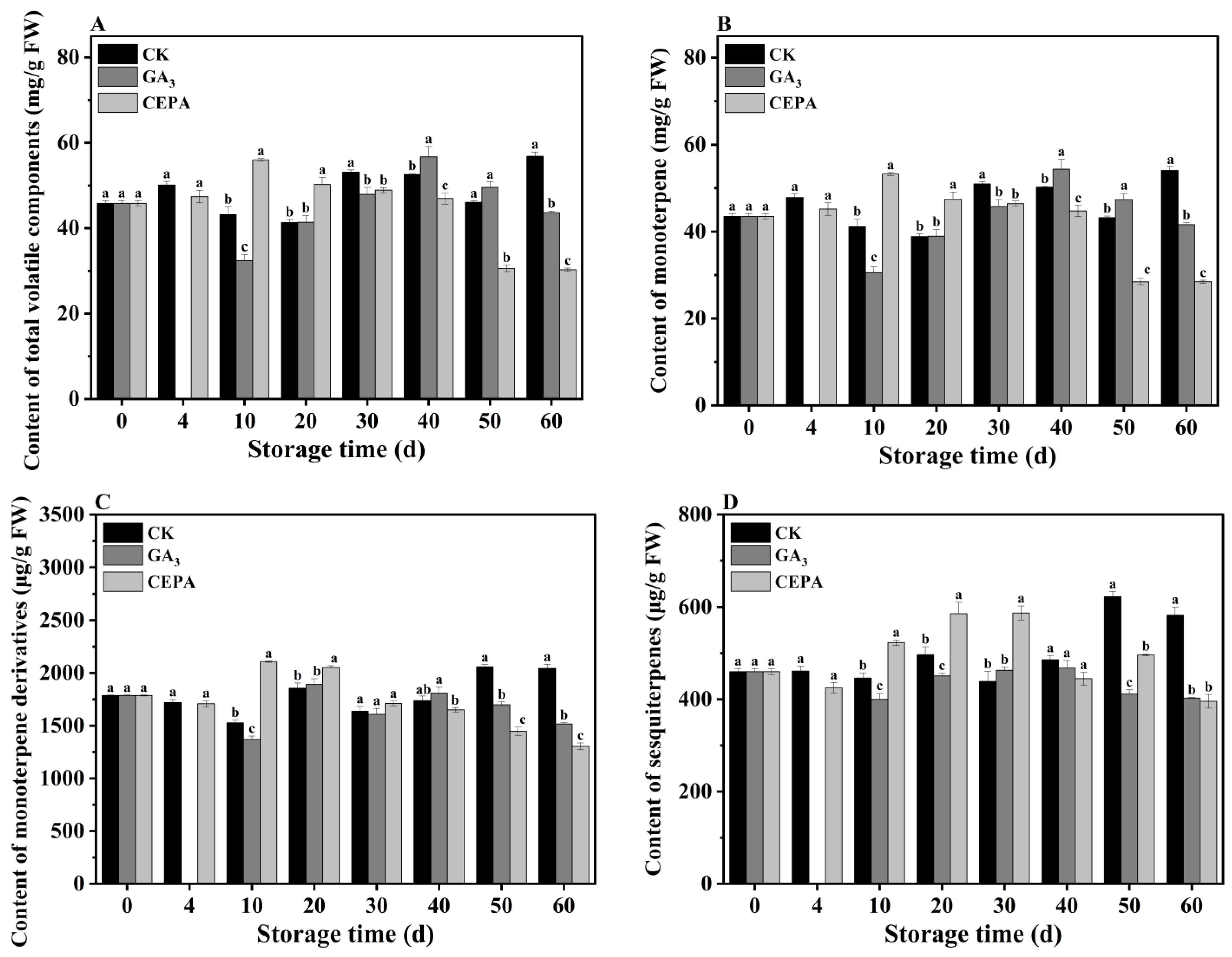
The total volatile compounds, monoterpenes, sesquiterpenes and their derivatives, and other derivatives were determined during storage. The total volatile compound content in the fruit peel during storage for the three groups is shown in Figure 5A. At 10 DAS, the total volatile compound content significantly decreased in the GA3 group but significantly increased in the CEPA group compared to the control. At 20 DAS, there was no significant difference between the control and GA3 group. The total volatile compound content in the CEPA group slightly decreased at 20 DAS, but remained significantly higher than that in other two groups. With the extension of storage time, the control group showed an fluctuating trend; the GA3 group displayed a first increasing and then decreasing trend; while the CEPA group showed a continuously decreasing trend. After 40 DAS, the CEPA group had a significantly lower total volatile compound content than the other two groups.
The volatile compounds in the three groups included monoterpenes, monoterpene derivatives (monoterpene alcohols, aldehydes, esters, and ketones), sesquiterpenes, sesquiterpene derivatives (sesquiterpene alcohols and aldehydes), and others (such as aldehydes, alcohols, esters, and alkanes). Among them, monoterpenes were the most abundant compounds, accounting for 94.88% of the total volatile compounds in the peel at 0 DAS. The monoterpene content in the peel during storage showed a consistent trend with the total volatile compounds in all three groups (Figure 5B).
At 0 DAS, monoterpene derivatives accounted for 3.90% of the total volatile compounds in the fruit peel, and showed a similar changing trend to monoterpenes (Figure 5C). Compared with the control, the CEPA treatment significantly increased while the GA3 treatment significantly decreased monoterpenoid derivatives after 10 DAS. During 50–60 DAS, both the CEPA and GA3 groups had significantly lower contents of monoterpenoid derivatives than the control group.
At 0 DAS, sesquiterpenes accounted for 1.00% of the total volatile compounds in the fruit peel. Figure 5D shows the changes in sesquiterpene content in the fruit peel during storage for all groups. The control group showed fluctuations, with the highest sesquiterpene content detected at 50 DAS. The CEPA group showed a fluctuating pattern in sesquiterpene content, and the content was significantly higher than that of the other two groups at 10–30 DAS. The GA3 group exhibited relatively stable fluctuations in sesquiterpene content throughout the storage period, and the level was significantly lower than that of the control group after 50 DAS.
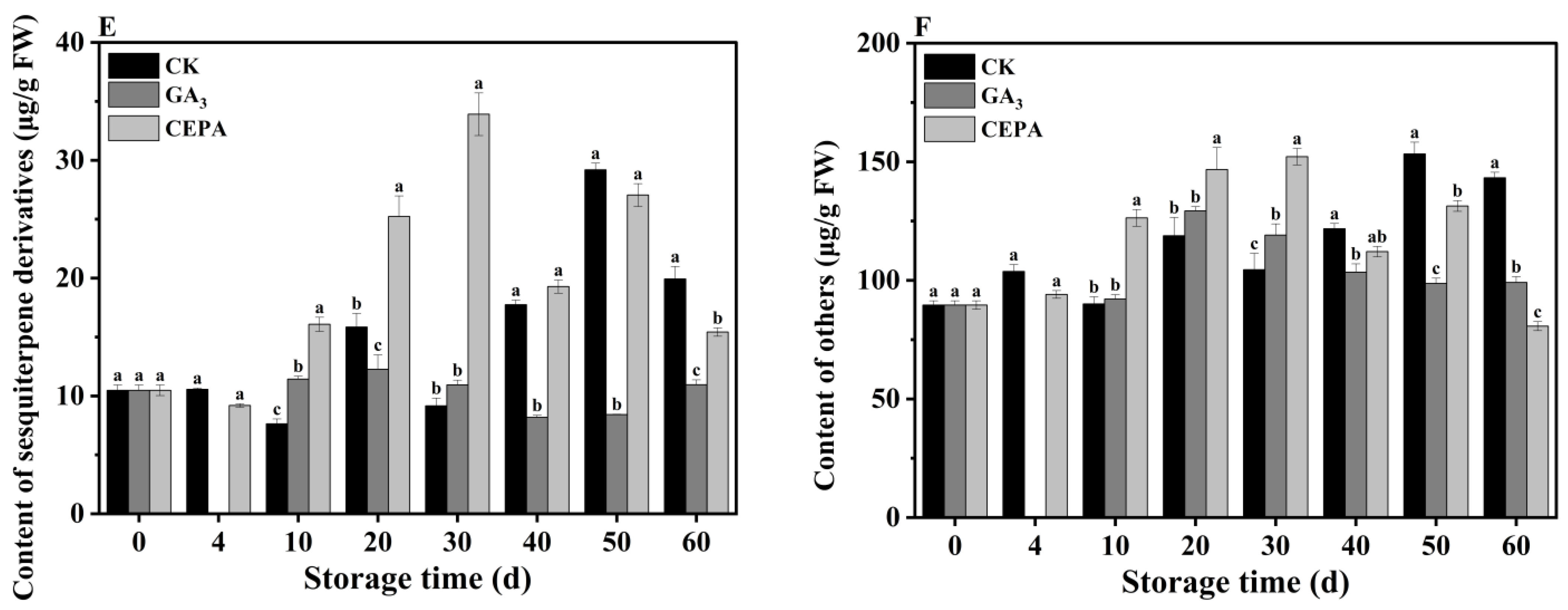
The sesquiterpene derivatives in the peel of the three groups showed fluctuating changes (Figure 5E). The CEPA group showed a significant increase in sesquiterpene derivatives before 30 DAS, while the control group exhibited more pronounced changes during later storage, with significantly higher levels than those at 0 DAS. The level of sesquiterpene derivatives in GA3 group showed a gradual fluctuating change throughout the storage process and was significantly lower than that in other two groups after 40 DAS.
Other volatile compounds showed similar trends to sesquiterpenes (Figure 5F). Compared with the control, the CEPA treatment significantly increased the content of other volatile compounds during storage from 10 to 30 DAS, but significantly decreased these compounds during storage from 50 to 60 DAS. The GA3 group had significantly lower contents of other volatile compounds than the control group after 40 DAS.
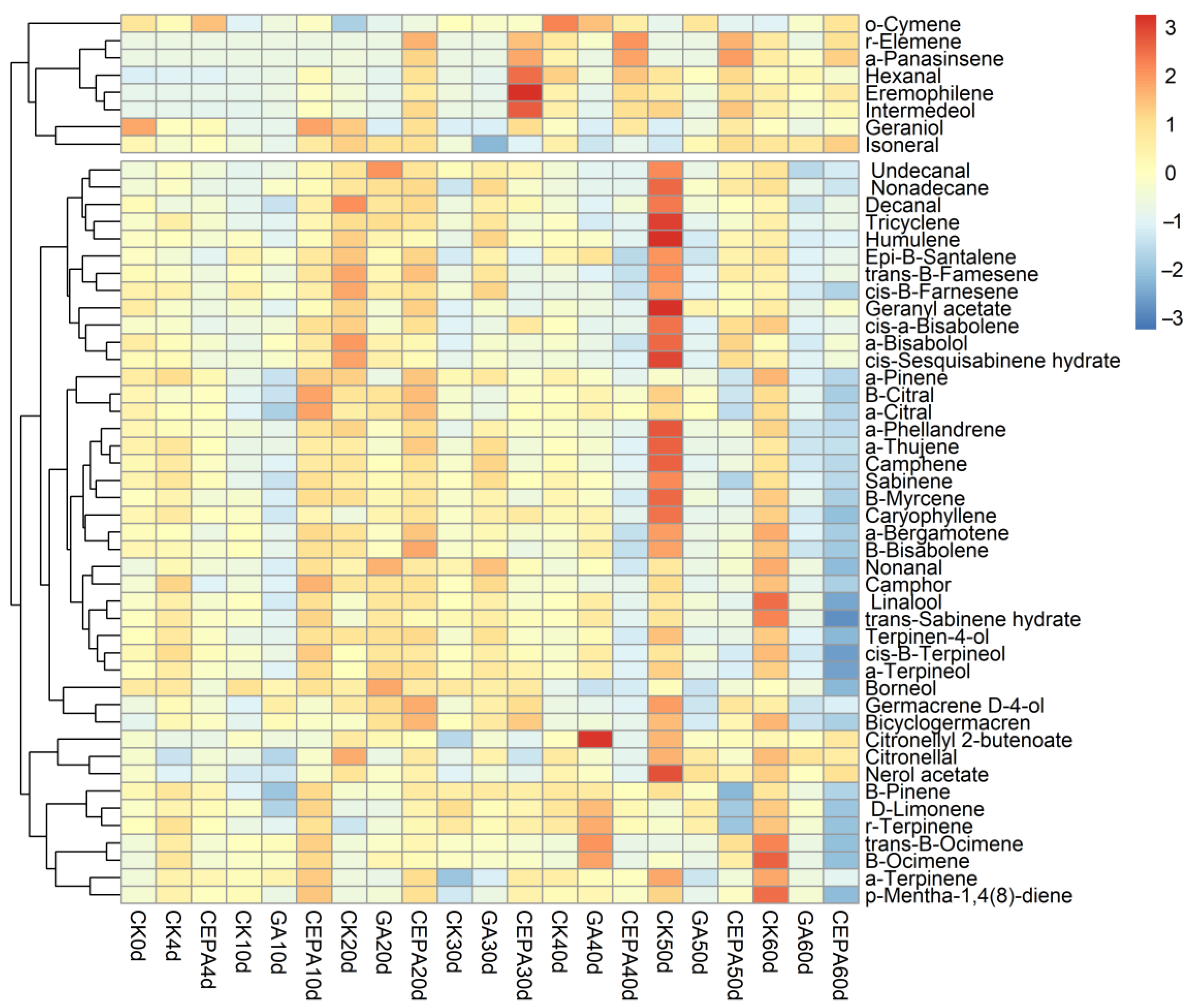
Hierarchical clustering analysis was performed to analyze the changes in the content of various volatile compounds of fruit peel. A total of 51 volatile compounds were detected (Figure 6), including 14 monoterpenes, 6 monoterpenols, 3 monoterpenaldehydes, 1 monoterpenone, 3 monoterpenic esters, 11 sesquiterpenes, 3 sesquiterpenol, 5 aldehydes, 1 ester, 1 alkane, 1 ketone, and 2 other compounds. Hierarchical clustering analysis identified two modules of compounds. The first module, consisting of eight compounds, decreased during early storage but increased later, with CEPA treatment enhancing their content throughout. The second module included 43 compounds, where CEPA treatment raised most levels during early storage but lowered them later. GA3 treatment increased most volatile compounds during mid-storage but caused a less significant decrease in late storage compared to CEPA.
The main volatile compounds in monoterpenes are D-limonene, β-pinene, γ-terpinene, and α-pinene. At 0 DAS, D-limonene was the most abundant monoterpene (30,745.58 µg/g), accounting for over 50% of the total volatile compounds, followed by β-pinene (5769.35 µg/g), γ-terpinene (3500.39 µg/g), α-pinene (1147.59 µg/g), and cedrene (1123.96 µg/g).
During early storage (10 DAS), the D-limonene content in the control group slightly increased before decreasing. In the GA3 group, the D-limonene content increased from 10 to 40 DAS and remained higher than that in the control and CEPA groups from 40 to 50 DAS. In the CEPA group, the D-limonene content first increased and then decreased during storage, and was higher than that in other two groups during storage from 10 to 20 DAS, followed by a continuously decreasing trend. After 40 DAS, CEPA treatment had less D-limonene than both the control and GA3 treatment.
Compared with the control group, the GA3 and CEPA groups had more pronounced changes in β-pinene content. The β-pinene content in the control group decreased at 10 DAS, and began to increase thereafter to reach the highest level at 40–60 DAS. In the CEPA group, the β-pinene content was the highest from 10 to 20 DAS, while the lowest from 40 to 60 DAS. In the GA3 group, the β-pinene content increased from 10 to 30 DAS and then decreased thereafter.
The content of γ-terpinene in the three groups showed wave-like changes during storage. The control group had the highest γ-terpinene content at 4 and 60 DAS and the lowest content at 20 DAS. The CEPA group showed the highest γ-terpinene content from 10 to 20 DAS and the lowest content from 40 to 60 DAS. The γ-terpinene content in the GA3 group was the lowest at 10 DAS, and then continuously increased to reaceh the highest level at 40 DAS, followed by gradual decreases thereafter.
The changing trend in α-pinene content also differed among the three groups. In the control group, the changes in α-pinene content were similar to those in β-pinene content. In the CEPA group, the α-pinene content increased from 4 to 20 DAS and then decreased, with the highest content observed between 10 and 20 DAS and the lowest content between 30 and 60 DAS. In the GA3 group, the α-pinene content increased continuously from 10 to 30 DAS, followed by gradual decreases.

4. Discussion

4.1. Effects of CEPA and GA3 Treatment on Primary Metabolites in the Pulp and Peel of Green Lemons

In this study, CEPA and GA3 treatments exhibited significant differences in their effects on the primary metabolites in green lemon pulp and peel. Significant differences were observed in the changes in total sugar content of green lemon pulp among different groups. The GA3 group had a lower total sugar content than the control group during the mid-storage period (20 to 40 DAS). The CEPA group generally had a lower total sugar content than the control group throughout the storage period, particularly during the mid- and late-storage periods. These results indicated that both GA3 and CEPA treatments reduce the total sugar content in the pulp to varying degrees, particularly CEPA treatment. Ethylene-induced degreening can promote peel color change while also affects sugar accumulation in the pulp. Previous studies have shown that exogenous ethylene treatment alters the soluble solid content in papaya fruit [38]. Compared with that of the control, the soluble solid content of papaya pulp rapidly reached the peak within 1 day after exogenous ethylene treatment but then rapidly declined and remained lower than that the control group throughout storage, which is similar to the results of this study. In addition, in ‘Feizixiao’ litchi, the “sugar depletion” phenomenon in the fruit pulp during the ripening period was mainly ascribed to the decrease in sucrose content, which is consistent with the decrease in sucrose content in the CEPA group with green lemon ripening in this study [39]. The above results indicate that exogenous ethylene treatment has an important impact on fruit sugar metabolism. This impact might be due to changes in hormone balance. In non-climacteric fruits like citrus, maturation involves a decrease in active gibberellins and an increase in ABA, which controls sugar accumulation and peel color. External ethylene treatment could speed up this process, shifting away from a GA-dominated state and reducing sugar retention capacity [33,40]. GA3 treatment delays fruit peel yellowing and pulp sugar reduction during storage, aligning with past research on lemons [41]. It inhibits ripening by delaying anthocyanin synthesis, reducing respiration, and decreasing enzyme activity related to chlorophyll metabolism, thus postponing degreening [40]. In this study, there were no significant differences in organic acid content of the fruit pulp among the three groups during storage. However, as the storage time increased, the organic acid content rose in all groups, indicating that CEPA and GA3 treatments have no significant effect on the organic acid content of green lemons during storage, while storage time is the key influencing factor. Different treatment methods had varying effects on the amino acid content in fruit pulp. Among these, GA3 treatment promoted amino acid accumulation during the mid-to-late storage, but this effect was not significant compared with the control group, possibly because GA3 promotes metabolic pathways or delays the aging. In contrast, CEPA treatment showed a certain inhibitory effect, significantly reducing amino acid content at 10 and 30 DAS, which suggests that it inhibits amino acid synthesis or promotes its degradation and conversion. The changing trend in alcohol content in the pulp was generally consistent among the three groups. There were no significant differences among the three groups during the early to mid-storage period (0–50 DAS), indicating that during this stage, different treatment methods have little effect on alcohol content in the pulp, and have similar performance. During the late storage period (50–60 DAS), there were significant differences in alcohol content in the pulp, which may be related to storage conditions or changes in internal metabolic activity of the fruit.
Fruit peel is the first line of defense against biotic and abiotic stresses during fruit storage, and the changes in primary metabolites in fruit peel can directly reflect the effects of external treatments on the storage performance of green lemons. However, there have been few reports on the effects of ethylene and GA3 treatments on primary metabolites in the fruit peel. This study found that during storage, the total sugar content of the fruit peel in all groups underwent an increasing, peaking, and then decreasing process. The GA3 treatment resulted in a significantly higher total sugar content than the control and CEPA treatment between 40 and 60 DAS, indicating that GA3 has a more pronounced effect on the total sugar content during later storage and can significantly inhibit the reduction in total sugar content in the peel of green lemons. Different treatments showed significantly different effects on the organic acid content in fruit peel. The control treatment led to an overall downward trend in organic acid content, while the GA3 treatment resulted in a first decreasing and then increasing trend in organic acid content, and effectively maintained a high organic acid content during later storage. This is consistent with the research finding that GA3 treatment of tomato during the color change period can maintain high hardness and sugar, acid, and VC content [42]. The organic acid content in the CEPA group decreased sharply after 20 DAS and thereby remained at low levels. This may be due to the fact that CEPA treatment accelerated the maturation of green lemons, thereby promoting the decomposition or conversion of organic acids in the peel, leading to a rapid decrease in their content. The amino acid content showed no obvious pattern of changes in the peel of the three groups. Compared with the control group, both the CEPA and GA3 groups showed significant increases or decreases at different time points. During storage, the alcohol content in the peel of the three groups generally showed an upward trend, but there were significant variations in the rate and extent of increase. During early storage, the CEPA group had a significantly faster rate of increase in alcohol content in the peel than the GA3 group. GA3 treatment partially inhibited the accumulation of alcohols during later storage, suggesting that GA3 treatment may delay fruit senescence by inhibiting the accumulation of alcohols in the peel, thereby exhibiting better preservation effects for green lemon peel.
Sugar metabolism is more active in the pulp among different tissues of citrus fruits, while organic acid metabolism is more active in the peel and has a stronger influence on the entire metabolic network [43]. In this study, the effects of CEPA and GA3 treatments on the flavor quality of green lemon pulp were primarily related to sugar and amino acid content, while they had relatively minor impacts on organic acid and alcohol contents. For the primary metabolites in green lemon peel, the contents of sugars, organic acids, amino acids, and alcohols were significantly affected, with the most notable changes being observed in organic acid content. These results suggest that future research should focus on the specific effects of other storage conditions (such as temperature and humidity) on fruit primary metabolites, particularly sugars and organic acids, and further investigate the specific mechanisms by which these treatments influence the flavor quality of green lemons, so as to improve the fruit quality and extend the shelf life.

4.2. Effects of CEPA and GA3 Treatment on the Volatile Compound Composition of Green Lemon Peel

Aroma is an important component of flavor in horticultural products with significant influence on the consumer acceptance. Previous studies have found that exogenous ethylene treatment can significantly enhance the formation of aroma in Red Fuji apples and kiwifruit [44,45,46]. In this study, CEPA treatment significantly promoted the production of volatile compounds during early storage (10–20 DAS) of green lemons, but it also significantly accelerated the loss of volatile compounds from the peel during late storage (40–60 DAS). This may be because CEPA induced the synthesis of volatiles in the rind of green lemons during the pre-storage period, but CEPA treatment accelerated the senescence process of the fruits with the extension of storage time. This inference is consistent with the results of our team’s previous study, which showed that CEPA treatment increased the ABA content and the activity of antioxidant enzyme POD in the pericarp, and promoted the accumulation of membrane lipid peroxidation product MDA, which are the signs of accelerated fruit senescence [34]. The accelerated aging process of green lemon fruits may result in significantly lower levels of volatile compounds detected during the later stages of storage compared to the control group. Therefore, CEPA treatment can promote the formation of volatile compounds in green lemon peel in the short term but cannot effectively maintain the flavor quality of green lemons during long-term storage. This may be because ethylene does not participate in the regulation of citrus fruit ripening. This phenomenon has also been reported in non-respiratory jump cut roses [47].
Although GA3 treatment demonstrated a significant effect in maintaining the levels of primary metabolites in the peel of green lemons during later storage, it showed a relatively limited impact on the content of volatile compounds in the peel. GA3 treatment significantly inhibited the content of sesquiterpene derivatives at 40–60 DAS; however, its inhibitory effect on total volatile compounds, monoterpenes, and their derivatives was far less pronounced than that of ethylene treatment. In volatile compound analysis, GA3 treatment also reduced the content of most volatile compounds during later storage, but the extent of reduction was not as pronounced as that under ethylene treatment. Studies of kiwifruit have shown that after GA3 treatment, the main ester compounds (such as methyl butyrate, ethyl butyrate, methyl benzoate, and ethyl hexanoate) and aldehyde compounds (such as (E)-2-hexenal and hexanal) in fruit volatile compounds were significantly reduced during the early to mid-storage period, but maintained levels similar to those of the control group during late storage [48]. This is consistent with the results of this study, where GA3 treatment was found to inhibit the accumulation of volatile compounds during the early and mid-storage periods of green lemons and maintain their contents during the late storage period. Additionally, previous studies have shown that GA3 can delay the ripening process of various fruits, such as tomato, apples, mango, banana, and jujubes [48]. These findings further validate the important role of GA3 in regulating post-harvest flavor quality in fruits. Therefore, we speculate that GA3 may delay the aging process of fruits by maintaining the contents of primary metabolites in the peel of green lemons and delaying the accumulation of volatile compounds, thereby preserving superior flavor quality. This is of significant importance for maintaining the commercial value of green lemons and extending their shelf life.

5. Conclusions

This study investigated the effects of ethephon (CEPA) and gibberellic acid (GA3) treatments on the sugars, organic acids, amino acids, and alcohols in the peel and pulp of green lemons, as well as the content of volatile compounds in the peel. Based on the results, it can be concluded that ethylene treatment is ineffective in maintaining the post-harvest flavor quality of green lemons during late storage, whereas gibberellic acid treatment significantly preserves flavor quality and extends shelf life. However, this research primarily characterized the effects of CEPA and GA3 on green lemon in terms of primary metabolites and volatile compounds, without exploring the molecular mechanisms underlying these effects. Nevertheless, the findings provide a solid foundation for further research into the application of CEPA and GA3 in maintaining the flavor quality of horticultural products after harvest, and highlight the need for future studies to uncover the regulatory pathways at the molecular level.

Author Contributions

B.Z.: Methodology, Software, Validation, Data curation, Writing—original draft, and Visualization. S.Y.: Writing—original draft. W.S.: Data curation, Formal analysis. M.D.: Resources. W.L.: Software, Visualization. R.X.: Supervision. J.Y.: Software, Validation, Formal analysis. C.L.: Data curation. Y.C.: Writing—review and editing. X.Z.: Writing—review and editing. All authors have read and agreed to the published version of the manuscript.

Funding

This work was supported by the Basic Research Program of Yunnan Province (202501AS070030); the National Natural Science Foundation of China (32360601); the Earmarked Fund for China Agriculture Research System (No. CARS-Citrus-26); the Technical Innovation Talents Project of Yunnan Province (No. 202105AD160049).

Data Availability Statement

The original contributions presented in this study are included in the article. Further inquiries can be directed to the corresponding author.

Acknowledgments

We thank Zuoxiong Liu (Huazhong Agricultural University) for his advice on this manuscript.

Conflicts of Interest

We declare that none of the work contained in this manuscript is published in any language or currently under consideration at any other journal, and there are no conflicts of interest to declare. All authors have read and approved this submitted manuscript in its current form.

Abbreviations

The following abbreviations are used in this manuscript:
CKControl
CEPAEthephon
GA3Gibberellic acid
DASdays after storage
ABAAbscisic acid
MTBEMethyl tert-butyl ether
MSTFAN-Methyl-N-(trimethylsilyl)trifluoroacetamide
HPLCHigh Performance Liquid Chromatography
GC-MSGas Chromatography–Mass Spectrometry
PODPeroxidase
MDAMalondialdehyde
VCVitamin C
TCA cycleTricarboxylic Acid Cycle

References

  1. Peng, S. Effects of Cultivar, Ripening Stages and Storage Methods on Volatile Components of Lemon. Master’s Thesis, Huazhong Agricultural University, Wuhan, China, 2016. Available online: https://kns.cnki.net/kcms2/article/abstract?v=yMPH0GTGyFDgrgqthYkM3CyvITjuM6Bb3-e0C0oGzHxAZVNVfdSLHpWeK2gGXJKg_VqKjhGrxZnLKgdmylj3Zyi5sxn9nufydq0nyHZ2x7B7xbRMMgu9FiwQRt3x5bz2s57C6XKWZyTQ5AllsxrR1f9F4LuZntfDY57zO6-kC9fPW2pc2qY_8ptLYip7KQtcPgCon55veyuZcXjQjGgphw==&uniplatform=NZKPT&language=CHS (accessed on 24 May 2025).
  2. Lado, J.; Gambetta, G.; Zacarias, L. Key Determinants of Citrus Fruit Quality: Metabolites and Main Changes During Maturation. Sci. Hortic. J. 2018, 233, 238–248. [Google Scholar] [CrossRef] [Scilit]
  3. Pott, D.M.; Vallarino, J.G.; Osorio, S. Metabolite Changes During Postharvest Storage: Effects on Fruit Quality Traits. Metabolites 2020, 10, 187. [Google Scholar] [CrossRef] [Scilit]
  4. Kader, A.A. Flavor Quality of Fruits and Vegetables. J. Sci. Food Agric. 2008, 88, 1863–1868. [Google Scholar] [CrossRef] [Scilit]
  5. Patil, B.S.; Jayaprakasha, G.K.; Chidambara Murthy, K.N.; Vikram, A. Bioactive Compounds: Historical Perspectives, Opportunities, and Challenges. J. Agric. Food Chem. 2009, 57, 8142–8160. [Google Scholar] [CrossRef] [Scilit]
  6. Zhang, H.; Peng, Z.X.; Shi, M.Y.; Wen, H.; Zhang, H.Y.; Xu, J. Advances on Citrus Flavoromics. J. Huazhong Agric. Univ. 2021, 40, 32–39. [Google Scholar] [CrossRef]
  7. Liu, L.; Fu, F.C.C.; Jiang, C.; Liu, X.; Li, J.; Zhao, J.; Zhang, X.; Chen, A. Changes of volatile flavor substances and morphology of lemon peel under simulated market sales conditions. Genom. Appl. Biol. 2019, 38, 5581–5586. [Google Scholar]
  8. Zhou, L. Effects of Ethephon Treatment on Ripening and Quality of Pepino Melon. Master’s Thesis, South China Agricultural University, Guangzhou, China, 2019. [Google Scholar]
  9. Deng, L.; Yin, B.; Zeng, K. Effects of chitosan oligosaccharide and chitosan treatment on fruit quality and disease resistance of ‘ethylene chlorotic tangerine’. Mod. Food Sci. Technol. 2017, 33, 167–175. [Google Scholar] [CrossRef]
  10. Yin, B.; Zeng, K.F.; Zhang, Z.Q.; Deng, L.L. Advances in Ethylene Degreening Treatment of Citrus Fruits. Food Sci. 2015, 36, 245–249. [Google Scholar] [CrossRef]
  11. Liu, M.; Wang, C.; Ji, H.; Sun, M.; Liu, T.; Wang, J.; Cao, H.; Zhu, Q. Ethylene biosynthesis and signal transduction during ripening and softening in non-climacteric fruits: An overview. Front. Plant Sci. 2024, 15, 1368692. [Google Scholar] [CrossRef] [Scilit] [PubMed]
  12. Moing, A.; Pétriacq, P.; Osorio, S. Special Issue on “fruit Metabolism and Metabolomics”. Metabolites 2020, 10, 230. [Google Scholar] [CrossRef] [Scilit]
  13. Rodrigo, M.J.; Zacarias, L. Effect of Postharvest Ethylene Treatment on Carotenoid Accumulation and the Expression of Carotenoid Biosynthetic Genes in the Flavedo of Orange (Citrus sinensis L. Osbeck) Fruit. Postharvest Biol. Technol. 2007, 43, 14–22. [Google Scholar] [CrossRef] [Scilit]
  14. Multari, S.; Licciardello, C.; Caruso, M.; Martens, S. Monitoring the Changes Phenolic Compounds and Carotenoids Occurring During Fruit Development in the Tissues of Four Citrus Fruits. Food Res. Int. 2020, 134, 109228. [Google Scholar] [CrossRef] [Scilit]
  15. Zhang, P.; Zhou, Z. Postharvest Ethephon Degreening Improves Fruit Color, Flavor Quality and Increases Antioxidant Capacity in ‘eureka’ Lemon (Citrus limon (L.) Burm. F.). Sci. Hortic. J. 2019, 248, 70–80. [Google Scholar] [CrossRef] [Scilit]
  16. Ladaniya, M.; Singh, S. Use of Ethylene Gas for Degreening of Sweet Orange (Citrus sinensis Osbeck) Cv. Mosambi. J. Sci. Ind. Res. 2001, 60, 662–667. [Google Scholar]
  17. Hu, W.J. Effects of Four Potassium-containing Fertilizers on Nutrient Uptake and Fruit Sugar and Acid Metabolism in ‘Shine Muscat’ Grapes. Ph.D. Thesis, Sichuan Agricultural University, Ya’an, China, 2023. [Google Scholar] [CrossRef]
  18. Norman, S.; Craft, C.C. Effect of Ethylene on Production of Volatiles By Lemons. J. Am. Soc. Hortic. Sci. 1968, 3, 66–68. [Google Scholar] [CrossRef] [Scilit]
  19. Chen, J.; Liu, F.; Ismail, B.B.; Wang, W.; Xu, E.; Pan, H.; Ye, X.; Liu, D.; Cheng, H. Effects of Ethephon and Low-temperature Treatments on Blood Oranges (Citrus sinensis L. Osbeck): Anthocyanin Accumulation and Volatile Profile Changes During Storage. Food Chem. 2022, 393, 133381. [Google Scholar] [CrossRef] [Scilit] [PubMed]
  20. Mahato, N.; Sharma, K.; Koteswararao, R.; Sinha, M.; Baral, E.; Cho, M.H. Citrus Essential Oils: Extraction, Authentication and Application in Food Preservation. Crit. Rev. Food Sci. 2019, 59, 611–625. [Google Scholar] [CrossRef] [Scilit]
  21. Hu, Y.; Wang, G.; Pan, S.; Wang, L. Influence of Ethylene and Ethephon Treatments on the Peel Color and Carotenoids of Gannan Newhall Navel Orange During Postharvest Storage. J. Food Biochem. 2018, 42, e12534. [Google Scholar] [CrossRef] [Scilit]
  22. Mayuoni, L.; Tietel, Z.; Patil, B.S.; Porat, R. Does Ethylene Degreening Affect Internal Quality of Citrus Fruit? Postharvest Biol. Technol. 2011, 62, 50–58. [Google Scholar] [CrossRef] [Scilit]
  23. Pan, J. Effects of Several Cultivation Measures on the Changes of Components and Contents of Sugar Acid and Tannin in Persimmon Fruits. Master’s Thesis, Yangzhou University, Yangzhou, China, 2019. (In Chinese) [Google Scholar] [CrossRef]
  24. Dong, Z.Z.; Zeng, F.; Xu, X.L.; Li, W. Effect of Pre-harvest Spraying with Gibberellic Acid on Coloration and Related Enzyme Activities of ‘Hongguifei’ Mango Fruits. J. Trop. Biol. 2017, 8, 178–184. [Google Scholar] [CrossRef]
  25. Mohammadi, M.; Aelaei, M.; Saidi, M. Pre-harvest spray of GABA and spermine delays senescence and inhibits chilling injury of gerbera cut flowers during cold storage. Sci. Rep. 2021, 11, 14166. [Google Scholar] [CrossRef] [Scilit]
  26. Zeng, F. Effects of Pre-harvest Gibberellin (GA3) Treatment on Storage Quality, Color Change and Expression of Related Gene in Post-harvest Mango Fruits. Master’s Thesis, Hainan University, Haikou, China, 2017. Available online: https://kns.cnki.net/kcms2/article/abstract?v=yMPH0GTGyFChDa1QEOIyiZgmxdLYOKwpZizZDUYltu1EwPGpIvVYnyRvAvUNiRE3naedYNXn5B4by4dc3X958Lp38NT-Fy1fZ2LoMser6W9XnjxZeAZ1oquP3IiXzrp0ABSg9fo-5Nzb3mPfyFrUtZKm2hgw4FkT7l8TpZp5wOe4hPSyMVKMiQ==&uniplatform=NZKPT&language=CHS (accessed on 20 April 2025).
  27. Garmendia, A.; Beltrán, R.; Zornoza, C.; García-breijo, F.J.; Reig, J.; Merle, H. Gibberellic Acid in Citrus Spp. Flowering and Fruiting: A Systematic Review. PLoS ONE 2019, 14, e0223147. [Google Scholar] [CrossRef] [Scilit]
  28. Chen, L.; Chen, L.; Gu, H.; Yang, Y.; Yao, Q.S.; Du, L.Q. Effect of Gibberellin Composite Chitosan Treatment on the Postharvest Quality and Antioxidant Capacity of Pitaya. J. Trop. Crops 2024, 45, 1926–1935. [Google Scholar] [CrossRef]
  29. Dai, Q. Research on the Mechanism of Gibberellin Combined with 2,4 Epibrassinolide Treatment on Alleviating Cold Damage of Chilling Peach Fruits. Master’s Thesis, Shenyang Agricultural University, Shenyang, China, 2023. [Google Scholar] [CrossRef]
  30. Li, X.H.; Zhang, X.; Wang, S.; Chen, J. Effects of exogenous GA3 on endogenous hormones and fruit quality of Mid-Autumn Crispy Jujube. Non-Wood For. Res. 2021, 39, 155–163+170. [Google Scholar] [CrossRef]
  31. Li, F.Q.; Zhang, Z.D.; Li, S.L.; Jie, M.L.; Zhao, C.Z.; Wang, Y. Effects of gibberellin (GA3) treatment on fruit quality and postharvest physiology of sweet cherries. Sci. Technol. Food Ind. 2009, 30, 301–304. [Google Scholar] [CrossRef]
  32. Ren, B.L.; Zhang, L. Effects of different concentrations of gibberellin treatment on the preservation of nectarines. China Food Nutr. 2013, 19, 29–32. Available online: https://kns.cnki.net/kcms2/article/abstract?v=yMPH0GTGyFBHY80a5JSYgV_PwZlV_bkjIvr2e_wQrN3r3tw2x6xRu1l_zh2GZ-5R3O3v-3r4n3Yly8QmDrDLumYHOpdPEw7J1Uj9FN5q1VEhTA4V5aj618_dwlxZhZ2kReZFZJy7eYRtqRmNww1mLvWDwNyS2eGtzAhaFCGZrl8=&uniplatform=NZKPT&language=CHS (accessed on 3 April 2025).
  33. Zhou, X.; Zhang, B.; Duan, M.; Yan, S.; Shi, W.; Zhu, Z.; Zhang, H.; Yue, J.; Xu, R.; Guo, L.; et al. Integrated transcriptomics and metabolomics reveal the mechanisms of unsaturated degree of green lemon. Postharvest Biol. Technol. 2024, 216, 113072. [Google Scholar] [CrossRef] [Scilit]
  34. Zhou, X.; Miao, J.; Zhang, B.; Duan, M.; Li, J.; Yue, J.; Yang, F.; Liu, H.G.; Xu, R.; Zhou, D.; et al. Cuticular Wax Metabolism of Lemon (Citrus limon Burm. F. Eureka) Fruit in Response to Ethylene and Gibberellic Acid Treatment. Postharvest Biol. Technol. 2022, 194, 112062. [Google Scholar] [CrossRef] [Scilit]
  35. Liu, S.; Han, J.; Yun, Z.; Wang, J.; Xu, J.; Zhang, H.; Deng, X.; Cheng, Y. Changes of polar metabolites during fruit ripening of Guoqing No.1 Satsuma mandarin. Sci. Agric. Sin. 2012, 45, 4437–4446. [Google Scholar]
  36. Sheng, L. Mechanism of Gamma-Aminobutyric Acid Shunt Regulating Citrate Metabolism in Citrus Fruit. Ph.D. Thesis, Huazhong Agricultural University, Wuhan, China, 2017. Available online: https://kns.cnki.net/kcms2/article/abstract?v=yMPH0GTGyFCpod24IOtQG_OYDbhnKsKM_zC7F5plT8R4ikDmj2x2jHXvITd1RPuQNHeG4iPjVqhdHkUdh7bpge26wn6dji1FcEx-Kd6vudVNHIyoMu81R7pDCGVQYIzElq6NfSpGFrgTrWHSJhV0iNKEuDBMUWxV81Z3WHVsWihF54tQrwAD8eRV2uWZVTAJ&uniplatform=NZKPT&language=CHS (accessed on 21 March 2025).
  37. Zhang, H.P. Volatile Profiling of Various Citrus Germplasms in Combination with Mining and Characterization of Volatile Biosynthetic Genes. Ph.D. Thesis, Huazhong Agricultural University, Wuhan, China, 2019. [Google Scholar] [CrossRef]
  38. Shen, Y.H.; Lu, B.G.; Feng, L.; Yang, F.Y.; Geng, J.J.; Ming, R.; Chen, X.J. Isolation of Ripening-related Genes From Ethylene/1-mcp Treated Papaya Through Rna-seq. BMC Genom. 2017, 18, 671. [Google Scholar] [CrossRef] [Scilit]
  39. Peng, J.; Du, J.; Wuqiang, M.; Chen, T.; Shui, X.; Liao, H.; Lin, X.; Zhou, K. Transcriptomics-based Analysis of the Causes of Sugar Receding in Feizixiao Litchi (Litchi chinensis Sonn.) Pulp. Front. Plant Sci. 2022, 13, 1083753. [Google Scholar] [CrossRef] [Scilit]
  40. Alferez, F.; de Carvalho, D.U.; Boakye, D. Interplay between Abscisic Acid and Gibberellins, as Related to Ethylene and Sugars, in Regulating Maturation of Non-Climacteric Fruit. Int. J. Mol. Sci. 2021, 22, 669. [Google Scholar] [CrossRef] [Scilit]
  41. Li, D.; Li, X.; Miao, Z.; Du, J.; Cheng, J.; Hu, S.; Li, Y.; Zhang, Y.; Liu, L.; Farouk, A.; et al. Gibberellins Pre-treatment and Storage at High Relative Humidity Improved the Quality of ‘eureka’ Lemon (Citrus limon (L.) Burm. F.). Food Innov. Adv. 2024, 3, 416–425. [Google Scholar] [CrossRef] [Scilit]
  42. Suwandi, T.; Dewi, K.; Cahyono, P. Pineapple Harvest Index and Fruit Quality Improvement By Application of Gibberellin and Cytokinin. Fruits 2016, 71, 209–214. [Google Scholar] [CrossRef] [Scilit]
  43. Ding, Y.; Chang, J.; Ma, Q.; Chen, L.; Liu, S.; Jin, S.; Han, J.; Xu, R.; Zhu, A.; Guo, J.; et al. Network Analysis of Postharvest Senescence Process in Citrus Fruits Revealed By Transcriptomic and Metabolomic Profiling. Plant Physiol. 2015, 168, 357–376. [Google Scholar] [CrossRef] [Scilit] [PubMed]
  44. Zhang, Y. Effects of Temperature and Ethylene Treatment on Fruit Quality of ‘Fuji’ Apples. Master’s Thesis, Shandong Agricultural University, Tai’an, China, 2020. [Google Scholar] [CrossRef]
  45. Shu, P.; Min, D.; Zhou, J.; Ai, W.; Li, J.; Li, Z.; Zhang, X.; Shi, Z.; Sun, Y.; Li, F.; et al. The Synergism of 1-methylcyclopropene and Ethephon Preserves Quality of “laiyang” Pears with Recovery of Aroma Formation After Long-term Cold Storage. Front. Plant Sci. 2020, 11, 490. [Google Scholar] [CrossRef] [Scilit]
  46. Günther, C.S.; Marsh, K.B.; Winz, R.A.; Harker, R.F.; Wohlers, M.W.; White, A.; Goddard, M.R. The Impact of Cold Storage and Ethylene on Volatile Ester Production and Aroma Perception in ‘hort16a’ Kiwifruit. Food Chem. 2015, 169, 5–12. [Google Scholar] [CrossRef] [Scilit] [PubMed]
  47. Borda, A.M.; Clark, D.G.; Huber, D.J.; Welt, B.A.; Nell, T.A. Effects of Ethylene on Volatile Emission and Fragrance in Cut Roses: The Relationship Between Fragrance and Vase Life. Postharvest Biol. Technol. 2011, 59, 245–252. [Google Scholar] [CrossRef] [Scilit]
  48. Yang, H. Studies on Regulation and Molecular Mechanism of Gibberellin Treatment on Ripening of Postharvest Kiwifruit. Master’s Thesis, Ludong University, Yantai, China, 2023. Available online: https://kns.cnki.net/kcms2/article/abstract?v=cpyCR_1GzmA27YLTX8Z5xkjuxPaqgyz7wl6y-5UBfbdaOtfm0tvvvVlTUY4CDF_vTXVxNnS8oFWuNE1w5J-ZaRBY7pMz23AwjRbi4-ur0kbUzu3dgUBfcAR2zwOej-ZZAhC6ExS-Xo5B5fN1ym8zpm2mozDkzWThT3hN89V60S-HgW5fN_XZ4l7mNE-EaHl5&uniplatform=NZK (accessed on 1 June 2025). (In Chinese)
Figure 1. Effects of CEPA and GA3 treatments on primary metabolites in the pulp of green lemons during storage. (AD): Changes in sugar, organic acid, amino acid, and alcohol contents in fruit pulp, respectively. Each sample in the experiment had three biological replicates, and the error bars represent the standard deviation. The significant differences were analyzed using Duncan’s multiple range test. Different lowercase letters indicate significant differences between different groups at the same time point (p < 0.05). The same applies below.
Agronomy 16 00203 g001
Figure 2. Clustering analysis of primary metabolites in the pulp of green lemons treated with CEPA and GA3 during storage. CK0d–CK60d, GA0d–GA60d, and CEPA0d–CEPA60d: fruits treated with distilled water (control), GA3, and CEPA from 0 to 60 DAS, respectively. The same applies below.
Agronomy 16 00203 g002
Figure 3. Effects of CEPA and GA3 treatments on primary metabolites in the peel of green lemons during storage. (AD): Changes in sugar content, organic acid content, amino acid content, and alcohol content in the peel, respectively. The significant differences were analyzed using Duncan’s multiple range test. Different lowercase letters indicate significant differences between different groups at the same time point (p < 0.05).
Agronomy 16 00203 g003
Figure 4. Clustering analysis of primary metabolites in the peel of green lemons during storage under CEPA and GA3 treatments.
Agronomy 16 00203 g004
Figure 5. Effects of CEPA and GA3 treatments on volatile compounds in the peel of green lemons during storage. (AF): Changes in total volatile compounds, monoterpenes, monoterpene derivative, sesquiterpenes, sesquiterpene derivatives, and other volatile compounds, respectively. The significant differences were analyzed using Duncan’s multiple range test. Different lowercase letters indicate significant differences between different groups at the same time point (p < 0.05).
Agronomy 16 00203 g005aAgronomy 16 00203 g005b
Figure 6. Clustering analysis of volatile compounds in the peel of green lemons during storage.
Agronomy 16 00203 g006
Table 1. 35 standard compounds used in the GC–MS analysis.
No.1StandardsSourceNo.1StandardsSource
1hexanalSigma19borneolSigma
2(E)-2-hexenalSigma20terpinen-4-olSigma
3α-pineneSigma21α-terpineolAlfa
4sabineneSigma22decanalSigma
5β-pineneAlfa23nerolSigma
6β-myrceneSigma24β-citralSigma
7octanalSigma25trans-geraniolAlfa
8α-terpineneSigma26(E)-α-citralSigma
9p-cymeneSigma27thymolSigma
10d-limoneneAlfa28citronellyl acetateAlfa
11β-cis-ocimeneSigma29nerol acetateAlfa
12trans-β-ocimeneSigma30geranyl acetateSigma
13γ-terpineneSigma31caryophylleneSigma
14cis-sabinene hydrateSigma32dodecanalSigma
15terpinoleneSigma33(Z)-β-FarneseneSigma
16β-linaloolAlfa34α-farneseneSigma
17nonanalSigma35decyl acetateSigma
18citronellalSigma
Disclaimer/Publisher’s Note: The statements, opinions and data contained in all publications are solely those of the individual author(s) and contributor(s) and not of MDPI and/or the editor(s). MDPI and/or the editor(s) disclaim responsibility for any injury to people or property resulting from any ideas, methods, instructions or products referred to in the content.