Article

Effects of Integrated Tillage-Surface-Cover Systems on Soil Hydrothermal Conditions, Cotton Growth, and Yield in Arid Xinjiang, China

1
College of Mechanical and Electrical Engineering, Xinjiang Agricultural University, Urumqi 830052, China
2
School of Mechanical and Electrical Engineering, Xinjiang Institute of Engineering, Urumqi 830063, China
3
Mechanical Equipment Research Institute, Xinjiang Academy of Agricultural and Reclamation Science, Shihezi 832000, China
4
Xinjiang Uygur Autonomous Region Agriculture and Animal Husbandry Mechanization Technology Promotion Station, Urumqi 830063, China
*
Author to whom correspondence should be addressed.
Agronomy 2026, 16(18), 1794; https://doi.org/10.3390/agronomy16181794 (registering DOI)
Submission received: 11 August 2026 / Revised: 31 August 2026 / Accepted: 8 September 2026 / Published: 13 September 2026
(This article belongs to the Section Innovative Cropping Systems)

Abstract

Early spring low temperatures and plastic film use constrain sustainable cotton production in Xinjiang. This study compared five integrated cultivation systems: conventional tillage with plastic mulch (CK), no-tillage with non-woven fabric arch shed (NTN), no-tillage with blue plastic film arch shed (NTB), conventional tillage with plastic film mulching and non-woven fabric arch shed (CTPN), and conventional tillage with plastic film mulching and blue plastic film arch shed (CTPB). Soil hydrothermal conditions, plant growth, root traits, yield components, and seed cotton yield were evaluated. CTPN and CTPB improved seedling-stage hydrothermal conditions and early growth relative to CK. Across the monitored 0–450 mm soil profile, mean soil temperature under CTPN and CTPB was 21.13% and 17.75% higher than under CK, respectively, while mean soil water content was 17.12% and 10.68% higher, respectively. However, these advantages did not result in the highest yield. NTN achieved the highest seed cotton yield, 15.19% higher than CK, followed by NTB with a 9.02% increase. NTN’s yield advantage was mainly associated with higher seed cotton weight per boll. Correlation analysis showed that boll number per plant was negatively associated with yield, whereas seed cotton weight per boll was positively associated with yield. Overall, favorable seedling-stage conditions alone did not determine final productivity, and NTN showed potential for practical application under comparable arid Xinjiang conditions while reducing reliance on conventional surface plastic mulch.

1. Introduction

Cotton, one of the world’s most important economic fiber crops [1], serves as a vital link between agricultural production and the textile industry, significantly driving the development of both sectors [2,3]. China ranks among the leading cotton producers and consumers globally, with Xinjiang being its primary cotton-producing region [4,5,6]. As of 2022, the region’s cotton cultivation area reached 2.60 million hectares, accounting for 87.7% of the national total [7]. This has driven rural revitalization and economic stability, playing a foundational role in ensuring the steady development of the global textile industry.
Xinjiang exhibits a temperate arid climate with large diurnal temperature fluctuations and limited water resources [8,9]. Cotton cultivation here faces multiple constraints, including early season low temperatures, seasonal water shortages, and saline–alkali stress, which can limit germination and early growth [10]. To mitigate these challenges, facility agriculture techniques, such as plastic film mulching combined with drip irrigation, are widely applied to conserve soil moisture, regulate temperature, and suppress weeds. In recent years, with continuous advancements in cotton cultivation techniques, cotton yields have also been steadily increasing. Currently, cotton cultivation in Xinjiang primarily employs an integrated practice of mulching with drip irrigation under the film, which has established an intensive farming model centered on mulching. This mulched drip irrigation system reduces evaporation and water loss, thereby improving water use efficiency and crop yield [11,12]. Research indicates that mulching cultivation provides benefits such as warming and water retention effects, suppression of salt through reduced capillary rise and upward salt movement, and promotion of early sowing [13,14]. These combined benefits effectively alleviate the constraints of early spring low temperatures, drought, and saline–alkali stress on cotton growth. However, long-term plastic film mulching also poses challenges, including severe white pollution. Furthermore, the accumulation of residual film in the plow layer can obstruct soil permeability and impair root access to water and nutrients, and due to its difficulty in removal, negatively impacts subsequent crops [15]. Bio-based mulch films have also been explored as potential alternatives to conventional non-degradable plastic films [16]. Mai and Tian [17] further suggested that mulching cultivation may induce premature senescence in cotton, leading to losses in both yield and quality. To mitigate these issues, conservation agricultural techniques including no-till, reduced tillage, and straw mulching have been widely adopted in recent years. These practices minimize soil disturbance and reduce erosion. Research indicates that no-till increased maize yield in Northeast China [18]. However, other studies suggest that no-till may increase soil bulk density, thereby restricting root growth and consequently affecting crop yield [19]. It may even elevate the risk of pests and diseases, impacting crop quality [20]. While conservation agriculture practices such as no-tillage can reduce soil disturbance, their effectiveness in early season temperature regulation remains limited in arid regions [21].
Therefore, integrating small arched shed mulching may further improve the microclimate conditions for crop growth. Small arched sheds are simplified facility structures widely adopted in the production of vegetables, fruits, and seedlings. They are associated with reduced weed and pest infestation while providing warmth and water retention, thereby extending the harvest period [22]. Despite extensive studies on individual cultivation techniques, most research has focused on single-factor effects, and the responses of cotton growth and yield components to integrated cultivation systems combining tillage practices, surface-cover measures, and temporary small arched sheds across the whole growing season remain poorly understood in the arid cotton-producing regions of Xinjiang. This study aimed to address the following question: How do different integrated cultivation systems affect cotton growth and yield formation through differences in seedling growth, root development, and yield components?
Accordingly, this study set two core research objectives: (1) to evaluate the responses of soil hydrothermal characteristics, plant growth, root development, and seed cotton yield to the five integrated cultivation systems; (2) to compare yield-component responses among the five integrated cultivation systems, and to explore the relationships among seedling-stage soil hydrothermal conditions, plant growth, root traits, and yield components. We hypothesized that the five integrated cultivation systems would differ in seedling-stage soil hydrothermal conditions and that these differences would be associated with subsequent variations in plant growth, root traits, yield components, and seed cotton yield. The findings provide a theoretical and practical basis for sustainable cotton cultivation in water-limited agroecosystems, particularly for cotton fields where early spring low temperatures and plastic film residue are major concerns.

2. Materials and Methods

2.1. Description of Test Fields and Seeds

A pilot experiment was conducted during the 2024 cotton-growing season in Yuli County (86°15′ E, 41°20′ N), Southern Xinjiang, for optimization of the experimental procedures, followed by the formal field experiment in 2025. Only data obtained from the 2025 formal experiment were used for the statistical analyses and results reported in this study. The soil at the experimental site was a sandy loam Fluvisol. The initial physicochemical properties of the soil layer are presented in Table 1. The selected cotton variety was Xinlu Zhong 54, a representative mid–early maturing upland cotton cultivar in the Xinjiang cotton region.
Yuli County has a warm temperate desert climate characterized by scarce precipitation, high evapotranspiration, and a long frost-free period, making it a typical representative region for cotton cultivation in Xinjiang. The annual average temperature is 10.5–11.5 °C, annual precipitation is 43–50.7 mm, annual evapotranspiration is 2700–2856.8 mm, and annual solar radiation is 5508.0–6341.8 MJ m−2 yr−1. Cotton sowing typically occurs in April. The use of small arched sheds is particularly important in this region, as they help conserve soil moisture, maintain soil temperature, and protect emerging seedlings from early spring frost, which frequently occurs in this area. These practices are essential to ensure uniform emergence, promote healthy seedling growth, and support subsequent boll development under the challenging arid conditions.

2.2. Experiment Design and Procedure

Polypropylene (PP) non-woven fabric and polyethylene (PE) blue film were selected as covering materials in this study, as they are two commonly used materials in protected cultivation systems in Xinjiang. These materials represent different structural characteristics and microclimate regulation patterns. PP non-woven fabric is characterized by good air permeability and flexibility, while PE film is widely applied due to its durability and effective covering performance. The differences in their structural and physical properties may lead to distinct effects on soil hydrothermal conditions and crop growth. Therefore, selecting these two materials enables a comparative evaluation of their performance under small arched shed cultivation systems.
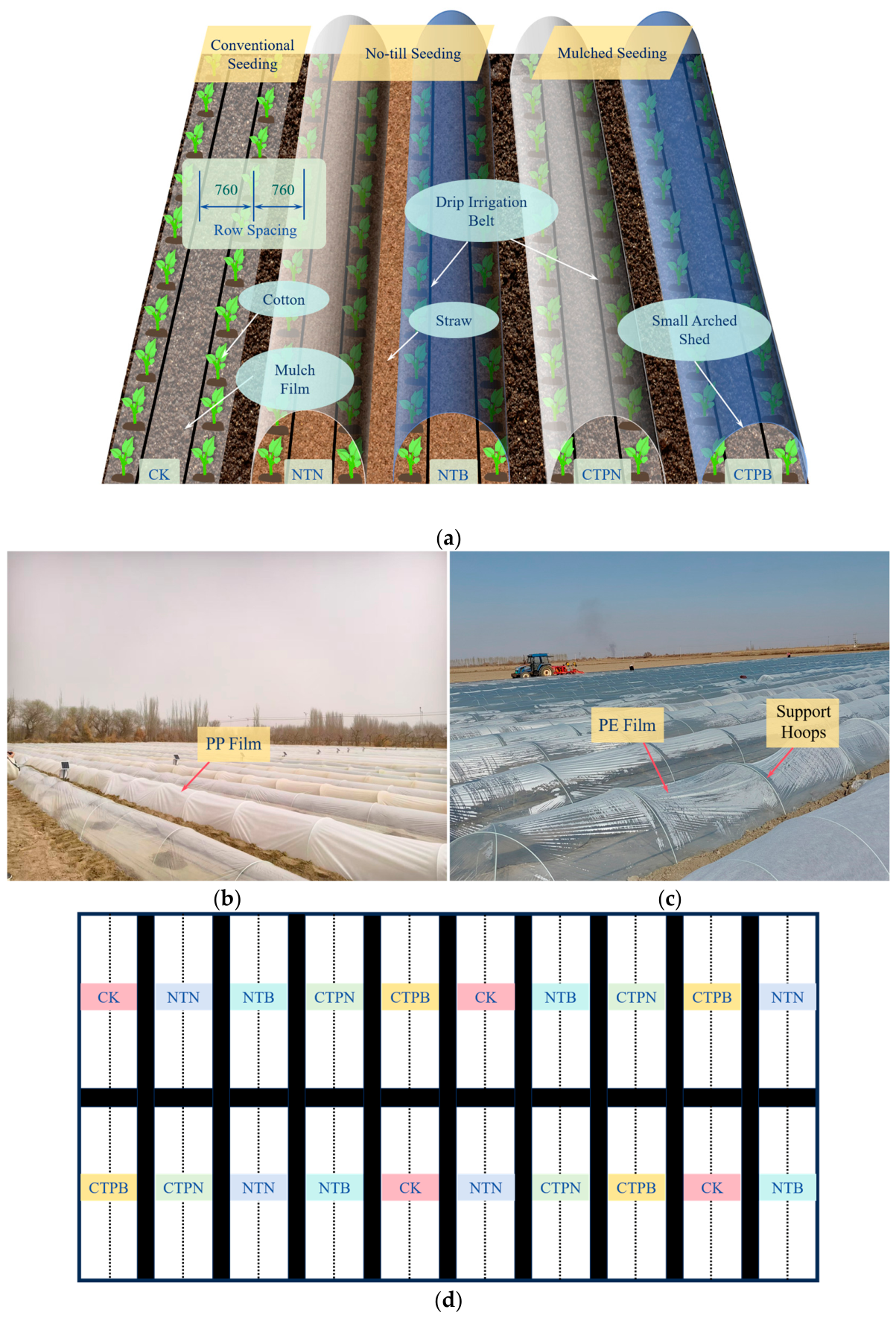
This experiment included five different treatments: conventional tillage with plastic mulch (control) (CK), no-tillage with non-woven fabric arch shed (NTN), no-tillage with blue plastic film arch shed (NTB), conventional tillage with plastic film mulching and non-woven fabric arch shed (CTPN), and conventional tillage with plastic film mulching and blue plastic film arch shed (CTPB). The formal field experiment described in this study was conducted in 2025. Cotton was planted following a typical mechanized cultivation pattern in Xinjiang. A uniform row spacing of 760 mm was adopted across all treatments, with a two-row configuration per plot. For mulched treatments, a “one film–two rows” pattern combined with dual drip irrigation lines was used, while unmulched treatments maintained the same row spacing with two adjacent rows to ensure consistency. The planting density was approximately 20.25 × 10⁴ plants ha−1, consistent with local agronomic practices. All treatments were managed under the same drip irrigation and fertilization regime. The total seasonal irrigation amount was approximately 5250 m3 ha−1, with irrigation conducted from mid-June to late August at intervals of approximately 7–8 d. Fertilizers were applied at rates of 300 kg N ha−1, 90 kg P2O5 ha−1, and 45 kg K2O ha−1. Urea, diammonium phosphate, and potassium sulfate were used as the N, P, and K sources, respectively. Fertilizers were applied through the drip irrigation system from late June to mid-August at intervals of approximately 8 d. The same irrigation and fertilization management was applied to all treatments. Figure 1a illustrates the planting patterns. Field layout diagrams for Yuli County are shown in Figure 1b,c. Each treatment was replicated four times, resulting in a total of 20 plots. Each plot measured 1520 mm × 55,000 mm and was arranged in a strip configuration. The plot width of 1520 mm corresponded to two planting rows with a row spacing of 760 mm, representing one complete cultivation unit under field conditions. It should be noted that the small arched shed should remain in place only during the seedling establishment stage (approximately 4–5 weeks after emergence) and should be removed once the plants have become well established. This short-term covering promotes early growth without affecting the crop’s later development. The five treatments were designed as integrated cultivation system combinations rather than a full factorial arrangement, because tillage practice and surface mulching material were applied as coupled management packages consistent with local practice. A randomized complete block design was employed, with four blocks and all five treatments included within each block, as shown in Figure 1d. To minimize potential edge effects, soil temperature and moisture monitoring, as well as yield sampling, were conducted in the central area of the plots. Field management practices were consistent across all plots except for the experimental treatments.
The treatment plots were prepared sequentially as elaborated in the following descriptions. For the CK treatment: (1) the previous season’s cotton stalks and stubble were cleared; (2) the plots were tilled, levelled, and finely harrowed; (3) full-width coverage with standard polyethylene (PE) mulch film (0.010 mm thick, 1250 mm wide) was applied; (4) the edges were secured by compacting the soil on it. For the NTN treatment: (1) Previous season’s cotton stubble and residual stalks were left on the soil surface without tillage (no soil disturbance). (2) Based on no-till practices, the small arched sheds were constructed using non-woven polypropylene (PP) fabric. The constructed shed frameworks had dimensional specifications as follows: 6 mm diameter, 1800 mm long fiber rod length, 500 mm arch height, 1200 mm arc span, and 1200 mm arch spacing. (3) The shed frameworks were covered with 50 g/m2 agricultural non-woven polypropylene (PP) fabric with a width of 2000 mm. (4) It was secured around the perimeter with soil pressure exceeding 35 mm at the edges. For the NTB treatment: (1) The small blue plastic arched sheds were constructed after no-till seeding. Its frame specification matched that of the NTN. (2) It was covered with standard blue polyethylene (PE) film (0.015 mm thick, 2000 mm wide), with edges firmly secured around the perimeter. For the CTPN treatment: (1) small non-woven fabric arch sheds with similar specifications to the NTN’s shed were constructed based on the CK control treatment; (2) the edges were secured using soil compaction. For the CTPB treatment: The small blue arch sheds with specifications identical to the NTB’s arch sheds were constructed based on the CK control treatment; (2) its edges were secured with soil compaction.

2.3. Measurements

2.3.1. Soil Temperature and Water Content at the Cotton Seedling Stage

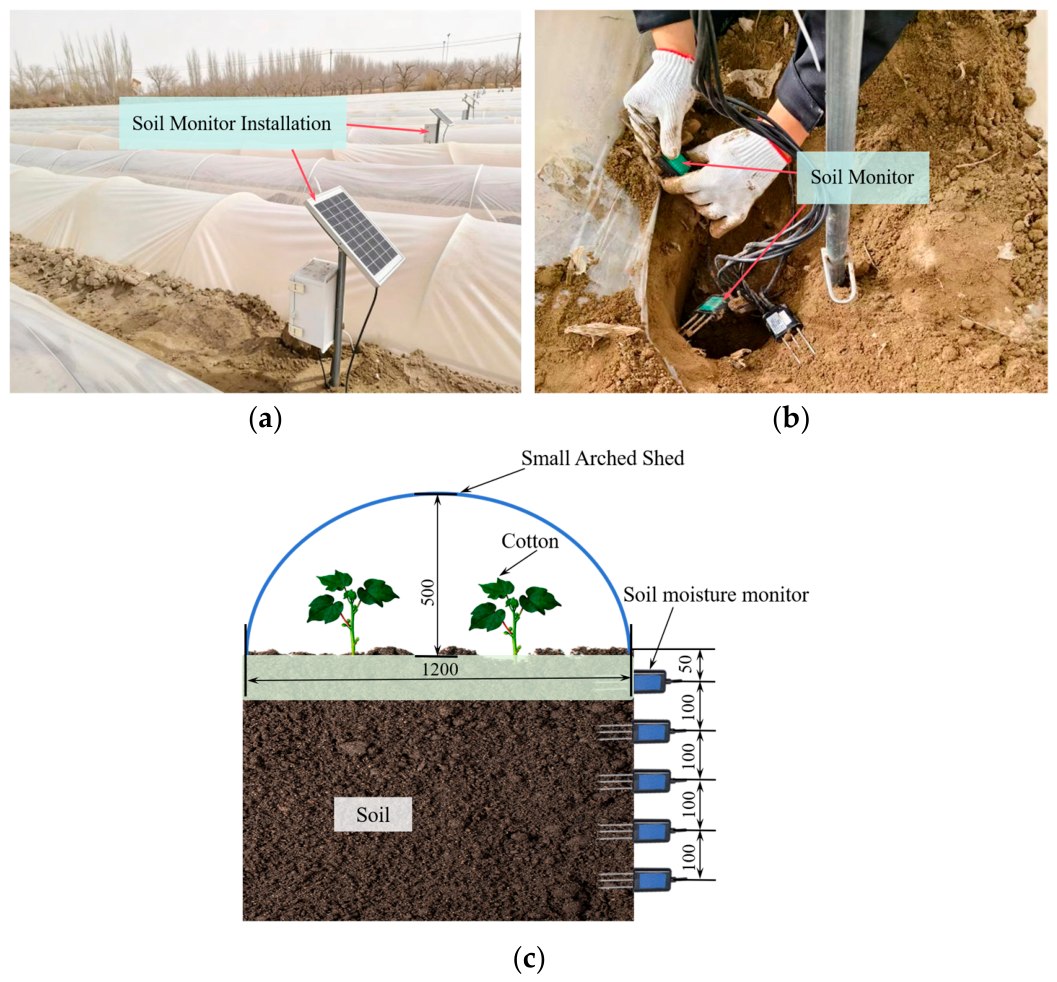
This study employed a self-developed field soil hydrothermal monitoring system to continuously monitor soil temperature and volumetric water content during the cotton seedling stage. Field installation diagrams are shown in Figure 2a,b. The monitoring system employed a distributed node configuration, with each system comprising one relay node and five soil sensor units installed at depths of 50, 150, 250, 350, and 450 mm below the soil surface, respectively (Figure 2c). Each sensor unit consisted of three probes positioned at the same horizontal level. Measurements were automatically recorded at 1 h intervals throughout the seedling stage. All soil temperature and moisture sensors were field calibrated. The monitoring system used LoRa wireless communication technology for field data transmission. The soil temperature sensors had a measurement range of −40 to 80 °C with an accuracy of ±0.5 °C, while the soil moisture sensors had a measurement range of 0–100% volumetric water content (VWC) with an accuracy of ±3%. For subsequent analysis, hourly records were retained for diurnal variation analysis, while soil water-content profiles were extracted from the continuous monitoring dataset at 7-day intervals over five representative dates during the 35-day seedling stage. No missing data occurred within the selected monitoring periods used for analysis. The selected monitoring dates were characterized by clear weather and no irrigation events.

2.3.2. Cotton Seedling Growth Parameters

The number of leaves was counted based on the criterion of “fully expanded true leaves” (i.e. leaves with fully extended margins and fully developed mesophyll tissue) using marker cards to avoid errors. Unfurled terminal leaflets and yellowed or withered lower leaves were excluded. After marking each plant, two individuals counted the leaves separately to minimize subjective error. All measurements were performed three times on the same plant. Leaf count was based on the consistent result from two counts; if discrepancies arose, a third verification was conducted to ensure data reliability. Leaf counting was conducted on 10 May, corresponding to the seedling stage when plants are in the rapid early growth phase. This timing ensures physiological comparability across treatments and accurately reflects the effects of treatments on early leaf development.
For seedling height, 20 uniformly growing cotton plants were randomly selected from each plot. At the seedling stage (10 May), plant height was measured using a tape measure to ensure data representativeness and accuracy. It was measured from the soil surface as the reference point, extending vertically upward along the main stem’s growth axis to the leaf axil of the most recently fully expanded true leaf, thereby avoiding measurement errors caused by tender terminal buds. The sampling date was chosen to capture the plants at a consistent seedling stage, corresponding to the rapid early growth phase when differences among treatments are most pronounced. This timing ensures that all plants are physiologically comparable and that treatment effects on early growth, including plant height and leaf development, are accurately reflected. Measurements were averaged and recorded to two decimal places.

2.3.3. Cotton Growth Parameters at Harvest

Thirty cotton plants were randomly selected from each plot. Plant height and lowest boll height were measured using a tape measure, while stem diameter was measured using a vernier caliper. Plant height was measured from the base of the cotton stem (near ground level) to the highest growing point (topmost growing bud). Stem diameter was measured at the base of the cotton stem, selecting a section with uniform circumference for measurement. The lowest boll height was measured as the vertical distance from the ground to the node bearing the lowest viable boll (diameter ≥ 2 cm, free of pests, diseases, or damage). To minimize human error, each measurement was repeated three times, and the average value was recorded.

2.3.4. Cotton Root Morphology at Harvest

Root sampling was conducted using a soil monolith excavation method. Six matured cotton plants were randomly selected from the central area of each plot to minimize potential edge effects within the plot. For each selected plant, the root system was carefully excavated in a soil block measuring approximately 300 mm × 300 mm × 300 mm. The large soil clumps were gently removed by hand, and residual fine soil particles adhering to the roots were rinsed with deionized water. After allowing the roots to drain naturally, the taproot lengths and diameters were measured using a steel ruler and an electronic vernier caliper to obtain the plant’s morphological indicators. This destructive sampling approach is consistent with recent advances in field-based root phenotyping techniques and has been widely applied in cotton root system studies [23].

2.3.5. Cotton Yield Components at Harvest

Cotton bolls are a critical component of the final yield. They are ovoid and, upon maturity, split open into 3–5 locules, each containing 7–10 seeds covered with attached cotton fibers (lint). Cotton yield formation results from the synergistic effects of boll number per plant, seed cotton weight per boll, and seed cotton yield.
Since cotton harvested by mechanical pickers contains impurities such as stalks and leaves, manual picking was performed to minimize interference from both impurities and plot edge effects. The basic sampling unit was a 1520 mm × 27,000 mm area within the central part of each plot. All cotton bolls within the sampling area were harvested in a single batch after reaching full maturity, ensuring that only fully mature bolls were included in the measurements.
For boll number assessment, a systematic sampling method was applied within the designated area, surveying 30 plants per plot. Subsequently, 6 uniformly growing plants were randomly selected from the 30 plants, and after manual removal of bracts and impurities, the seed cotton weight per boll was measured using an electronic balance. The total seed cotton yield for each plot was obtained from the harvested area.

2.4. Data Analysis

Treatment effects were evaluated by analysis of variance (ANOVA) according to the randomized complete block design, followed by the least significant difference (LSD) test at p < 0.05. Pearson correlation analysis was used to examine relationships among the measured variables. Statistical analyses were performed using IBM SPSS Statistics 26.0 (IBM Corp., Armonk, NY, USA), and figures were generated using Origin 2024 (OriginLab Corporation, Northampton, MA, USA).

3. Results and Discussion

3.1. Soil Temperature Variations at the Cotton Seedling Stage

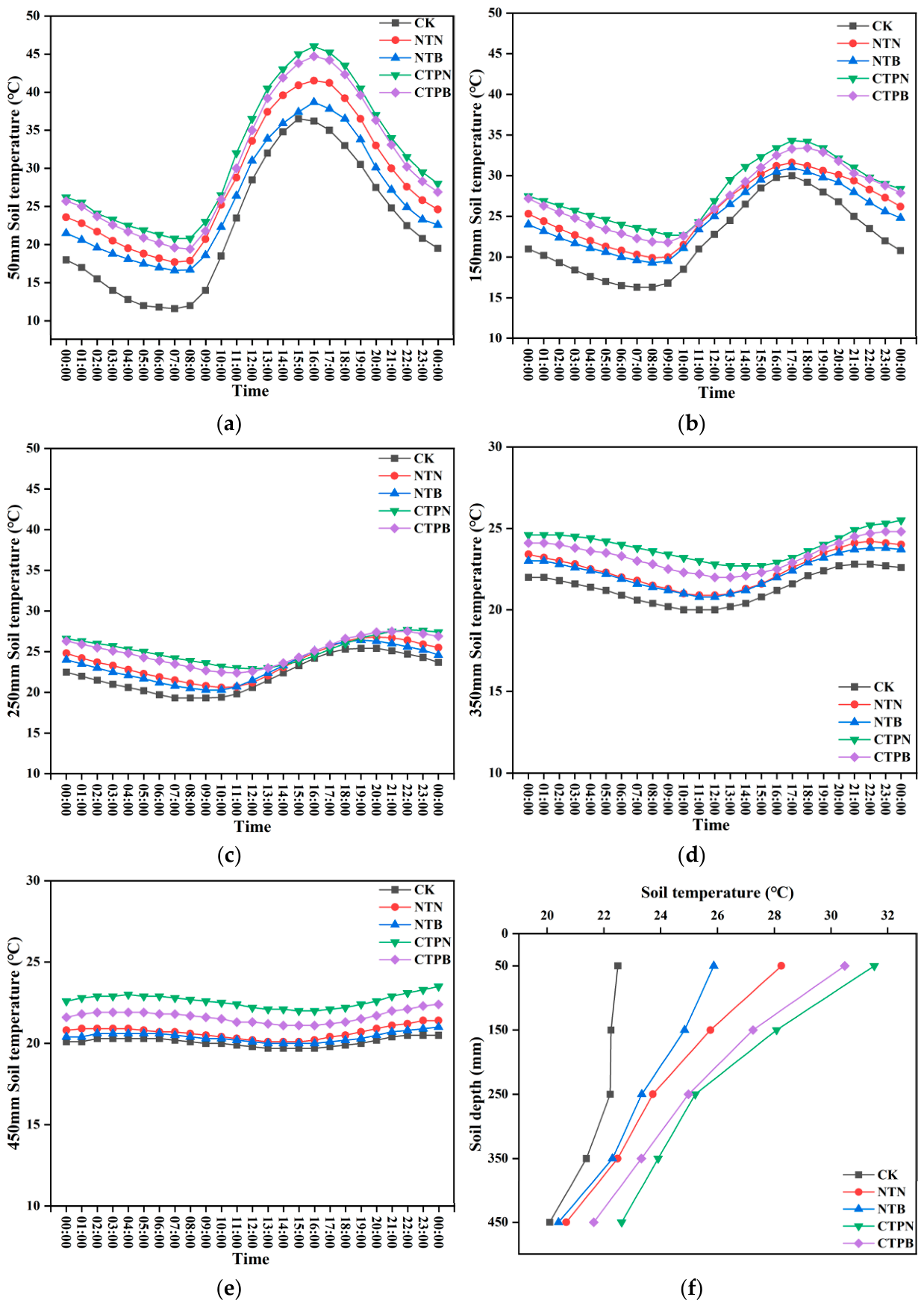
The early growth and development of cotton are primarily influenced by the soil environment within the plow layer, with lesser effects from deeper soil layers. Simultaneously, the treatments exerted impacts on soil temperature and water content within the plow layer, while their effects on deeper soil layers were relatively limited. Figure 3 shows soil temperature variations at different soil depths under various treatments on 10 May. The figure indicates that seedbed temperatures are influenced by atmospheric temperatures. At the same seedbed depth, the trends in soil temperature changes were largely consistent across all treatments. The soil warming and heat retention effects of each treatment followed the order CTPN > CTPB > NTN > NTB > CK (Figure 3a–e). As shown in Figure 3a, temperature fluctuations were most pronounced at the 50 mm soil depth compared with other depths. Among the treatments, CK exhibited the greatest temperature amplitude. At 50 mm, the lowest and highest temperatures occurred around 08:00 am and 17:00 pm, respectively. Soil temperature decreased from 00:00 am to 08:00 am as atmospheric temperature dropped. It then rose with atmospheric temperature changes to a peak of 46 °C between 08:00 am and 17:00 pm, before declining after 17:00 pm. At 50 mm depth, the 24 h mean soil temperatures on 10 May under NTN, NTB, CTPN, and CTPB were 25.61%, 15.03%, 40.15%, and 35.53% higher than under CK, respectively. With increasing soil depth, the maximum and minimum soil temperatures across treatments were successively delayed (Figure 3a–e), indicating that the surface soil layer was more sensitive to environmental temperature. The average soil temperature gradually decreased with increasing depth across treatments (Figure 3f). The amplitude of temperature fluctuations diminished, and the overall temperature remained lower than that of the surface layer.
Mulching can mitigate fluctuations in soil temperature caused by atmospheric temperature changes, particularly during the seed development and seedling growth stages [24,25]. The five integrated cultivation systems showed different soil temperature patterns during the seedling stage. In this study, the amplitude of soil temperature fluctuations exhibited a negative correlation with soil depth. Within the surface layer, daily temperature variations consistently exceeded 10 °C, reflecting the heat exchange between shallow soil and the atmosphere. In contrast, the daily temperature range in the deeper plow layer remained below 2 °C. Mulching affects surface soil temperature [26]. Soil temperatures under the CTPN, CTPB, NTN, and NTB treatments were higher than under the CK treatment. The small arched shed prevented direct sunlight from reaching the soil surface, which partially enhanced the warming effect of the plastic mulch. This effect was due to the “greenhouse effect” of the covering [27,28], thereby increasing soil temperature. Simultaneously, the microclimate formed between the film of the small arched shed and either the plastic mulch or the surface-covered cotton stalks strengthened the temperature-stabilizing effect on the surface soil. Research indicates that straw mulching reduces thermal conductivity, resulting in a slower rise in soil temperature under solar radiation [29]. This effect provides a buffering mechanism for seedbed temperature regulation, mitigating to some extent the adverse impacts of occasional harsh early spring climatic conditions in Xinjiang on cotton growth and development. Polypropylene (PP) non-woven fabric for small arched sheds offers superior heat retention and insulation compared with polyethylene (PE) films. Under conditions of strong sunlight and low wind speeds, PP non-woven fabric creates localized thermal environments by trapping heat through its breathable structure. In contrast, PE films may experience diurnal temperature fluctuations, leading to condensation within the film and subsequent heat loss. The CK treatment exhibited the lowest overall temperature and the greatest fluctuation. This was because it had only a single-layer plastic mulch without the heat retention of a small arched shed. Its loose plow layer with larger pores facilitated rapid heat transfer, amplifying the variations. In contrast, other treatments used small arched sheds to buffer surface thermal fluctuations. The film of the small arched shed with no-till practices reduced heat loss from the soil to the air [30,31,32]. Consequently, their surface temperatures were higher than those of CK. The temperature differences described above directly influenced seedling-stage soil moisture and aboveground growth, as presented in Section 3.2 and Section 3.3.

3.2. Soil Water Data at the Cotton Seedling Stage

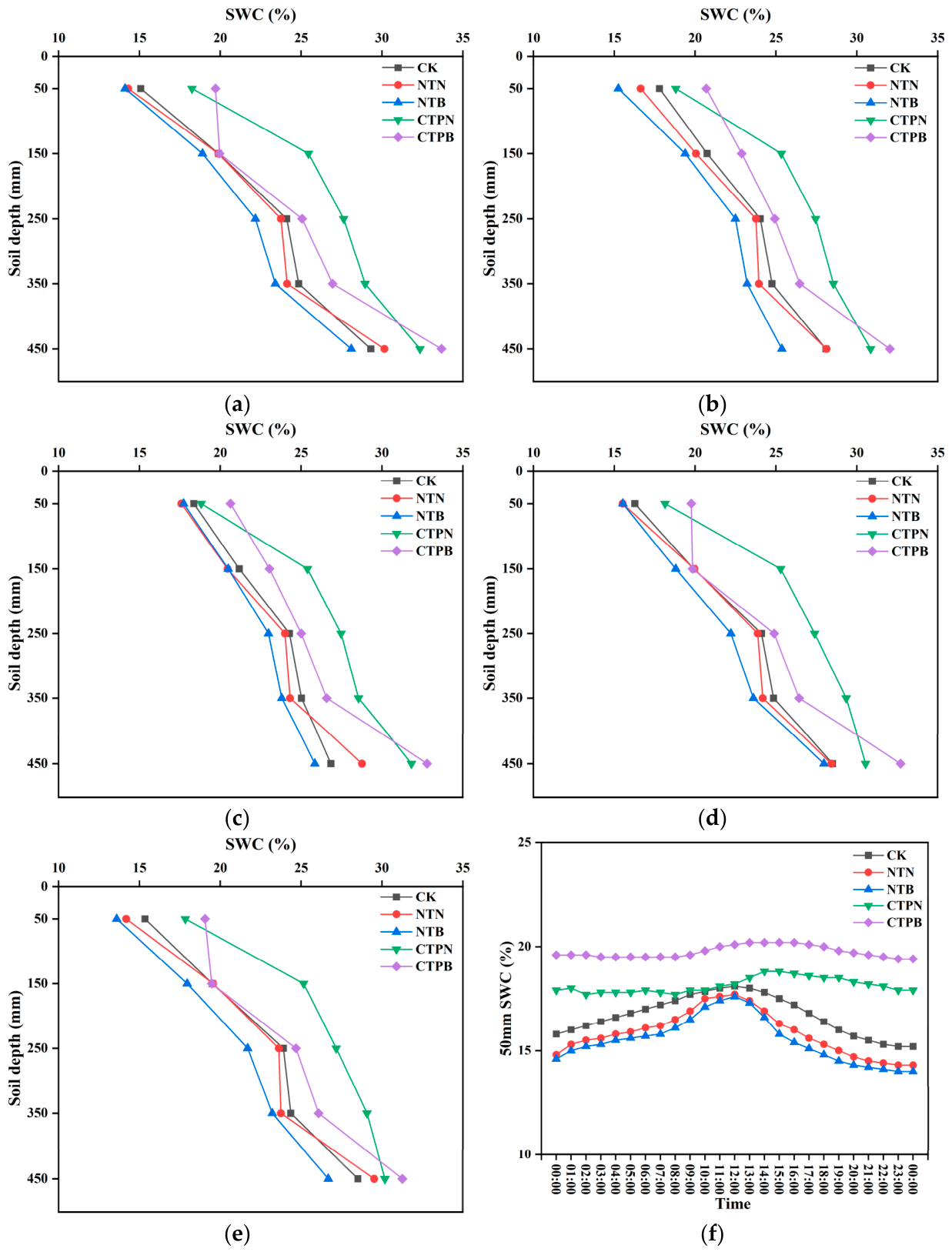
Figure 4a–e presents the vertical soil water content distribution across different soil depths (0–450 mm) under various treatments at selected sampling times. Soil water data were obtained based on 7-day interval sampling over five representative dates during the 35-day seedling-stage period, which were derived from continuously recorded observations. These measurements primarily reflect the vertical (depth-wise) soil moisture distribution characteristics at selected temporal snapshots during the seedling stage. All treatments exhibited a vertical distribution pattern characterized by lower water content near the surface and higher water content at greater depths. The primary reason is that the surface soil layer served as the primary growth zone for cotton roots. Water in this layer was rapidly consumed through evaporation and root absorption, resulting in a decrease in water content within the 0–150 mm soil layer. Below the 150 mm depth, the rate of decrease slowed as water consumption gradually diminished with increasing soil depth. Deeper soil layers experienced less disturbance from external environmental factors and possessed greater water retention capacity. Soil water content across treatments ranked as follows: CTPN > CTPB > CK > NTN > NTB. Within the 0–450 mm layer, water levels under CTPN and CTPB were higher than under CK, with a notable 3–5% difference in the 0–150 mm surface layer. This demonstrated that combining plastic mulching with the small arched shed effectively reduced evaporation and enhanced topsoil water retention. Soil water content was higher under tillage than under no-till conditions. Furthermore, the combination of the small arched shed and plastic mulch was more effective in retaining water than standalone plastic mulch or no-till practice. The mulch slowed direct evaporation, while the shed reduced soil–air vapor exchange by enclosing the space, suppressing surface evaporation and promoting condensed water recycling. The consistency of the soil moisture profile indicates that no obvious abrupt temporal changes occurred during the seedling stage. Differences among treatments remained broadly consistent across all sampling dates, suggesting that the differences in soil moisture among the integrated cultivation systems were persistent rather than transient within the observed period.
Figure 4f shows the diurnal variation of soil water content at 50 mm depth under different treatments. The measurements were conducted on a single representative clear day during the cotton seedling stage (mid-seedling stage, approximately 18–22 days after sowing, DAS), which was selected to represent typical short-term diurnal fluctuations rather than a continuous multi-day monitoring dataset. Overall, water content is low in the early morning, rises in the afternoon to a peak, and then declines at night. At 50 mm depth, CTPB has the highest water content, followed by CTPN, then CK, NTN, and NTB. This indicates that small arched shed coverage helps retain water in the shallow soil, with PE blue film CTPB maintaining the highest moisture. CTPN is slightly lower, while CK is higher than NTN and NTB, showing that a single-layer plastic film retains shallow soil water better than small arched sheds. The peak water content occurs around 15:00 for CTPB and CTPN, 13:00 for CK, and 12:00 for NTN and NTB. Small arched shed coverage slows shallow soil evaporation, making daytime fluctuations more moderate, while CK shows larger day–night variation. The PE blue film is dense with poor air permeability, reducing shallow water loss, and its high light transmittance supports early photosynthesis. The PP non-woven fabric is more permeable, allowing some water vapor to escape, so the shallow water content is slightly lower. Across the 0–450 mm soil profile, CTPN showed slightly higher mean soil water content than CTPB, which may be attributed to enhanced vapor diffusion and condensation under PP non-woven fabric, whereas PE film limited downward vapor movement and water redistribution.
Overall, the spatial and temporal variations in soil moisture observed during the seedling stage are the result of the combined effects of soil surface cover, tillage disturbance, and soil–atmosphere water vapor exchange. The application of plastic mulch and small arched sheds effectively reduced direct evaporation and weakened soil–atmosphere coupling, leading to higher soil water retention in the upper soil layers. In contrast, no-tillage and non-covered treatments experienced stronger evaporative losses due to greater exposure to atmospheric conditions. In addition, differences between PE film and PP non-woven fabric further influenced soil moisture redistribution through variations in permeability, vapor diffusion, and condensation processes within the soil profile. These integrated processes jointly controlled the observed differences in soil water dynamics across treatments.
Research indicates that mulching is crucial for alleviating water loss in rain-fed farming systems [33]. While soil texture directly determines soil water retention capacity, mulching effectively mitigates its negative impact on soil water [34]. In arid and semi-arid regions, such as Northwest China and especially Xinjiang, plastic mulching technology is a critical agricultural management practice [35,36]. Plastic mulch can increase soil water content by reducing unproductive evaporation and promoting crop growth and water uptake. In China, conventional tillage and no-till farming are the two primary cultivation practices. Numerous studies indicate that conservation agriculture reduces soil disturbance, effectively conserves water and soil, and that straw mulching protects water resources, suppresses soil water evaporation, and alleviates drought [37]. Surface cotton stalks and cotton stubble provided less coverage, resulting in inferior water retention in the topsoil compared with plastic film mulching. No-till farming without plastic mulch reduced white pollution [38,39]. Both the support poles and plastic film of the small arched sheds can be recycled and reused, which can reduce costs while promoting environmental friendliness and sustainable development. The combined effects of seedling-stage soil moisture and temperature drove the differences in seedling growth among treatments, as discussed in Section 3.3.

3.3. Seedling Growth Parameters

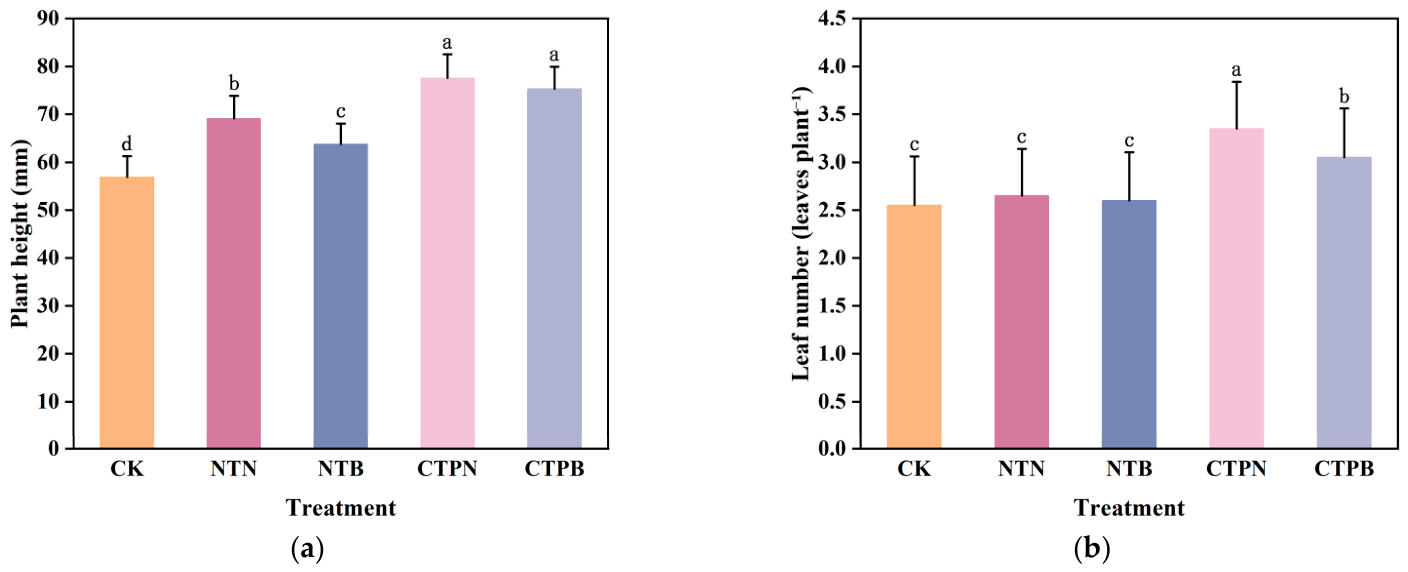
Figure 5 presents the growth data for cotton seedlings under the applied treatments, measured on 10 May. The figure demonstrates that the treatments significantly influenced seedling plant height and leaf number per plant. Seedlings under the CTPN treatment exhibited the greatest height, significantly exceeding the CK control, followed by the CTPB treatment. Compared with CK, plant height under CTPN and CTPB increased by 36.41% and 32.45%, respectively. This indicates that the combined use of plastic mulching and a small arched shed significantly enhanced vegetative growth during the seedling stage. The NTN and NTB treatments increased plant height by 21.55% and 12.14%, respectively, compared with CK, suggesting that no-till plus a small arched shed promoted seedling height more effectively than conventional tillage with plastic mulch alone. Furthermore, leaf number per plant under CTPN and CTPB treatments was significantly higher than under CK, indicating that this dual covering promotes leaf development. Leaf number per plant remained comparable across the NTN, NTB, and CK treatments, showing a similar overall trend.
The CTPN and CTPB treatments significantly improved cotton seedling growth characteristics. Previous studies have shown that improved crop growth may enhance photosynthesis and other metabolic activities [40]. Leaf number per plant under both CTPN and CTPB treatments was significantly higher than that under CK. The seedling advantage under the CTPN treatment was directly correlated with the synergistic “warming and water retention” effect of the non-woven fabric small arched shed. This microenvironment promoted hypocotyl cell elongation, photosynthetic rate, and coordinated growth of plant height and leaf number.
The small arched shed treatment significantly increased plant height. The small arched sheds compensated for the temperature deficit of no-till by increasing soil temperature, narrowing the growth gap between no-till and conventional tillage systems, and mitigating the potential growth lag associated with no-till alone. The no-till practice involved higher soil bulk density and restricted root growth [41]. However, the small arched shed coverage enhanced soil temperature and water retention, partially offsetting these disadvantages. In this study, no-till did not result in weak seedlings during the early growth stage. The small arched shed coverage achieved “no-till without growth penalty”, demonstrating practical value for cotton cultivation in arid regions of Xinjiang. However, its effectiveness may vary across different ecological zones. For instance, the early spring cold in northern Xinjiang’s cotton-growing areas is more pronounced, where the windbreak advantage of non-woven (PP) fabric small arched sheds may be more significant. Further regionalized validation studies are needed. The higher seedling plant height and leaf number in CTPN and CTPB indicated that early vegetative growth was markedly promoted. Whether this early advantage translated into final yield required comprehensive evaluation in combination with harvest-stage plant morphology (Section 3.4), root architecture (Section 3.5), and yield components (Section 3.6).

3.4. Plant Growth Parameters at Maturity

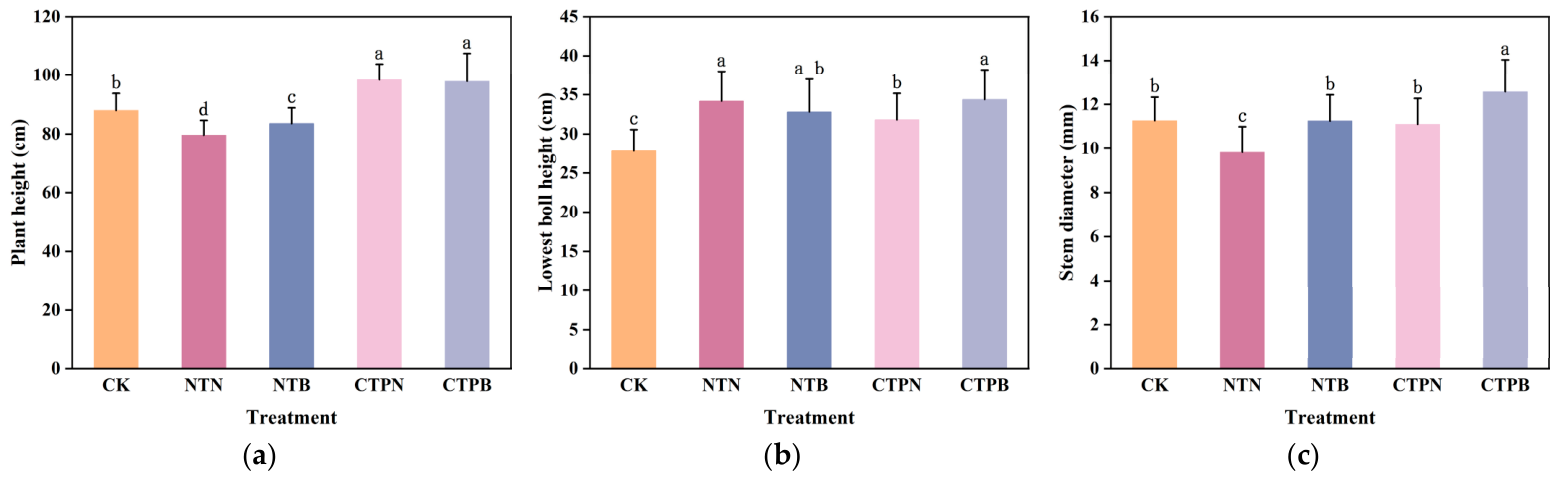
Figure 6 presents the key growth data of cotton at the harvest stage under different treatments. Significant differences among treatments were observed for plant height, lowest boll height, and stem diameter. Significant differences in plant height were observed among the integrated cultivation systems. CTPN treatment resulted in the greatest plant height, which was 11.79% higher than that of the CK treatment, followed by CTPB with an 11.18% increase over CK. NTN treatment showed the significantly lowest plant height, being 9.51% lower than CK, while NTB was 5.04% lower than CK (Figure 6a). This indicates that no-till practices enhanced mechanical harvesting efficiency. Integrating the earlier analysis of soil temperature and water content, CTPN treatment likely provided a more suitable environmental condition for plant height growth by optimizing soil structure and water status. Studies suggest that shorter plants are more suitable for mechanical harvesting, whereas taller plants are often associated with excessive vegetative growth [42]. The lowest boll height, as a key indicator affecting the efficiency of mechanical cotton harvesting, differed significantly among the integrated cultivation systems. All four experimental groups recorded significantly higher lowest boll height compared with CK (Figure 6b). CK had bolls positioned closer to the ground and potentially more susceptible to environmental stresses. CTPB significantly exceeded CK, achieving an approximately 23.62% increase. This pattern promoted upward displacement of boll growth positions, reducing boll exposure to ground-level pests and diseases. CTPN achieved a plant architecture featuring tall plant height and a low lowest boll height. This ensured sufficient effective fruiting branches while maintaining suitability for mechanical harvesting.
Stem diameter is a key indicator reflecting cotton’s nutrient transport efficiency. As shown in Figure 6c, CTPB exhibited a significantly greater stem diameter than the other treatments, with an 11.54% increase over CK. This indicates that this treatment effectively promoted stem development and overall stress tolerance. In contrast, NTN had the lowest stem diameter, 12.84% lower than CK, suggesting restricted stalk development.
The integrated cultivation systems resulted in different cotton plant architecture characteristics, as reflected by plant height, lowest boll height, and stem diameter. Among these, CTPN treatment demonstrated relatively superior performance. It significantly increased plant height and stem diameter, enhancing growth vigor while simultaneously lowering the lowest boll height to optimize harvesting efficiency. This superior performance may be attributed to improved soil water and thermal conditions. In contrast, NTN treatment showed limited promotion of morphological indicators in cotton. Further investigation is warranted, incorporating a comprehensive analysis of other relevant growth indicators under this treatment. The differences in plant morphology at harvest reflected the final outcome of vegetative growth throughout the growing season. Their relationships with root traits and yield are further examined in Section 3.5 and Section 3.6.

3.5. Root Data of Cotton at Harvest

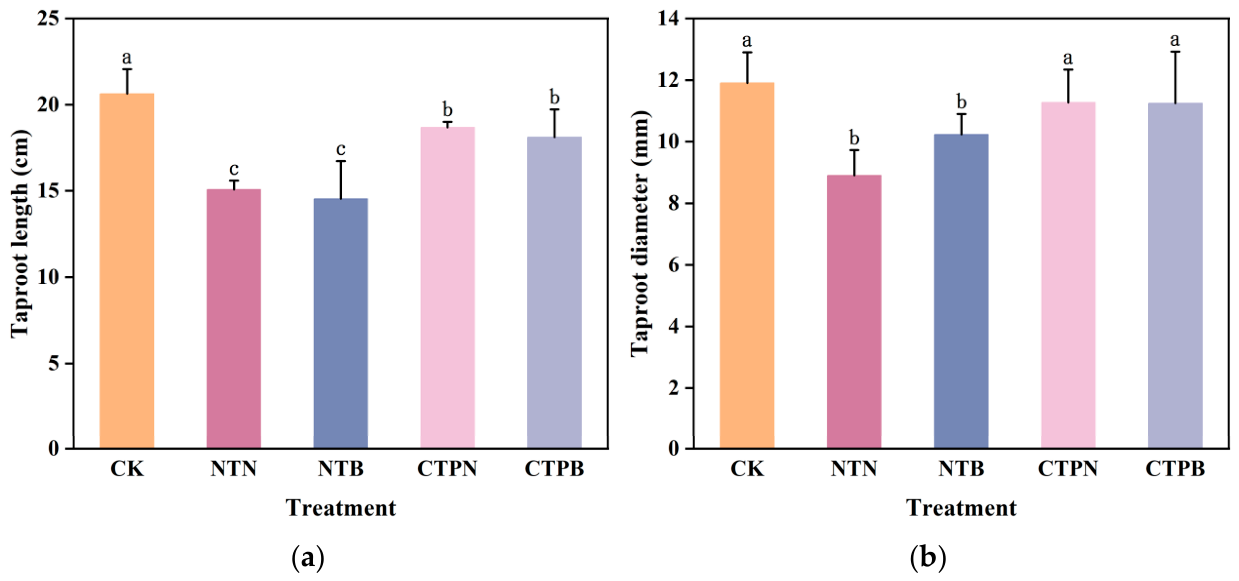
Figure 7 shows root morphological parameters at cotton harvest under different treatments, revealing significant differences in their effects on cotton root growth and development. The taproot length under CK was significantly higher than other treatments, reaching 20.63 cm (Figure 7a). There was no significant difference in taproot length between CTPN and CTPB, with lengths reduced by 9.45% and 12.21%, respectively, compared with CK. Its value fell between CK and NTN. Under no-till conditions, NTN and NTB exhibited the shortest taproot lengths at 15.08 cm and 14.53 cm, respectively, a 26.90% and 29.56% reduction compared with CK.
Under CK, taproot diameter reached its maximum level, as shown in Figure 7b, with a diameter of 11.90 mm. Taproot diameter remained consistent across CK, CTPN, and CTPB, following the same overall pattern. NTN and NTB exhibited the lowest taproot diameters, with reductions of 25.21% and 14.03%, respectively, compared with CK.
The taproot lengths of NTN and NTB were significantly shorter than those of the CTPN, CTPB, and CK treatments. This aligned with the findings of Wang et al. [43] on maize root systems, where taproot elongation rate showed a significantly negative correlation with soil bulk density. In this study, conventional tillage involved pre-sowing soil plowing and leveling, which may have provided more favorable physical conditions for root penetration, as reduced soil bulk density and increased soil porosity under tillage have been reported in previous studies [44]. The NTN and NTB treatments showed shorter taproots than CK, CTPN, and CTPB. Simultaneously, physical root images clearly revealed that lateral roots in the no-till NTN and NTB groups dispersed toward the shallow soil layer and exhibited thicker lateral roots. Zhang et al. [45] previously demonstrated that mulching practices enabled crops to absorb water from the upper soil layer, thereby promoting the growth and development of surface roots. No-till straw mulching promoted surface root development. Under tillage, CK, CTPN, and CTPB exhibited longer taproots with thinner lateral roots extending downward and outward than NTN and NTB. CK exhibited the longest taproots, likely due to improved soil aeration under tillage combined with plastic mulching, which promoted cotton root development [46].
It should be noted that although the present study quantified root growth responses under different treatments, detailed sectional imaging or profile mapping of root spatial distribution was not systematically performed. Therefore, the current analysis of root system architecture is primarily based on measured root parameters rather than on direct visualization of root distribution patterns within the soil profile. Future studies integrating root profile imaging or stratified root mapping techniques would further improve understanding of how integrated small arched shed mulching and conservation agriculture regulate cotton root spatial configuration under arid conditions. The differences in root architecture among treatments were closely related to aboveground growth and yield components, with correlation analysis presented in Section 3.7.

3.6. Cotton Yield Components

Yield components are shown in Table 2. Significant differences were observed among treatments in terms of the number of bolls per plant, seed cotton weight per boll, and seed cotton yield. The number of bolls per plant directly reflects the reproductive growth capacity of individual cotton plants and serves as the foundation for constructing high-yielding cotton. CTPB exhibited the highest boll number per plant, significantly exceeding CTPN, NTN, CK, and NTB. Compared with CK, CTPB increased boll number per plant by 14.61%. Boll number per plant was higher under PE film than under PP non-woven fabric. Notably, NTN had the lowest boll number per plant, significantly lower than all other treatments. In this experiment, CTPN and CTPB exhibited taller plant heights and significantly more bolls per plant than other treatments. Previous research indicates that taller plants possess more fruiting branches and fruiting sites, consistent with the findings of this study [47].
Seed cotton weight per boll reflects the allocation efficiency of photosynthetic products to bolls and indicates boll plumpness, serving as a key determinant of yield. The data indicate an inverse trend between this trait and boll number per plant. NTN yielded the highest weight per boll, being 20.08% higher than CK, p < 0.05, significantly higher than CK. This may be associated with its lower boll number and higher boll weight. This aligns with the “size-number trade-off”, where fewer bolls can be partially offset by heavier bolls. Zhang et al. [48] showed that reducing fruit load improved individual fruit mass. CTPN’s weight was between NTN and CK, significantly higher than CK but lower than NTN, while NTN did not differ significantly from NTB and CTPB, suggesting a balanced pattern. CK showed the lowest weight, possibly due to uneven nutrient supply under conventional tillage. Liu et al. [49] noted that tillage can cause uneven plant-available nutrient distribution, affecting late-season nutrient uptake and yield. One-way ANOVA confirmed significant treatment effects on single boll weight, p < 0.05.
Seed cotton yield per unit area is the combined result of boll number per plant and seed cotton weight per boll, reflecting the production performance of the different integrated cultivation systems. Compared with CK, NTN, NTB, and CTPN increased yield by 15.19%, 9.02%, and 8.27%, respectively. The yield varied clearly among treatments. NTN resulted in the highest seed cotton yield, significantly surpassing CK. Its yield advantage was associated with the combination of low boll number and high boll weight. CTPB and CK resulted in the lowest yields. This indicates that while the CTPB pattern increased bolls per plant, it did not translate into a final yield advantage. The seedling-stage hydrothermal conditions under CTPN/CTPB were favorable; however, yield was determined by the combination of boll number per plant and boll weight, and post-seedling stage growth conditions likely influenced the final yield. Yield differences observed among treatments are inferred from growth patterns and yield components, but direct measurements of photosynthates or nutrient allocation were not conducted.
This study showed that different treatments resulted in significant variations in yield. CTPB primarily increased boll number per plant, while NTN mainly enhanced the seed cotton weight per boll. Ultimately, the final yield depended on the synergistic balance between these two components. These patterns are further supported by the correlation analysis presented in Section 3.7, which revealed consistent directional relationships among boll number, boll weight, and seed cotton yield.

3.7. Correlation Analysis of Growth Indicators, Root Traits, and Yield Components

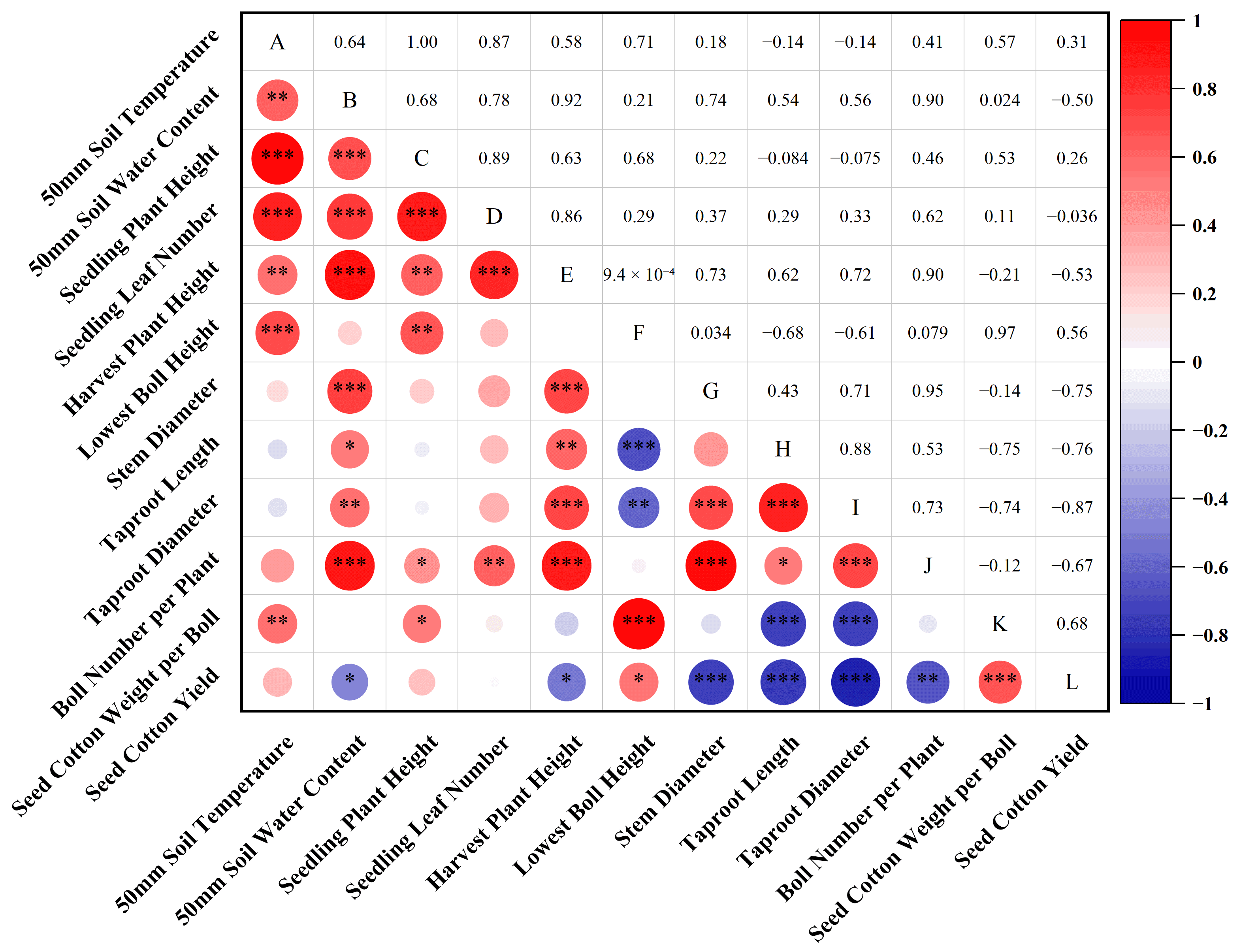
As described in previous sections, the five cultivation systems differed in seedling growth, root architecture, and yield components. To quantify the relationships among these variables, correlation analysis was conducted, with the results presented in Figure 8.
(1) Seedling-stage soil hydrothermal conditions and early growth
Soil temperature at 50 mm depth during the seedling stage was significantly and positively correlated with seedling plant height and leaf number per plant. Soil water content at the same depth was also significantly and positively correlated with seedling plant height and leaf number. CTPN and CTPB created more favorable hydrothermal conditions at the seedling stage, and their seedling plant height and leaf number were higher than those of other treatments. The correlation analysis was consistent with this pattern.
(2) Early growth and yield components
Seedling-stage soil water content was significantly and positively correlated with boll number per plant, and seedling plant height also showed a significant positive correlation with boll number. This indicates that treatments with better seedling moisture conditions and more vigorous aboveground growth tended to set more bolls. However, boll number per plant was significantly and negatively correlated with seed cotton yield, whereas seed cotton weight per boll was significantly and positively correlated with yield. CTPB had the highest boll number but relatively low yield, while NTN had the lowest boll number but the highest yield, which was consistent with these relationships.
(3) Vegetative growth and yield
Plant height at harvest was significantly and negatively correlated with seed cotton yield, and stem diameter also showed a significant negative correlation with yield. Plant height at harvest showed a weak negative correlation with boll weight, but this relationship was not statistically significant. Plant height at harvest was significantly and positively correlated with boll number per plant, and stem diameter was also significantly and positively correlated with boll number. This suggests that treatments with larger vegetative organs produced more bolls, but yield did not increase accordingly. CTPN and CTPB had higher plant height and stem diameter at harvest than NTN and NTB, consistent with the above relationships.
(4) Root traits and yield
Taproot length was significantly and negatively correlated with seed cotton yield, and taproot diameter also showed a significant negative correlation with yield. Taproot length was also significantly and negatively correlated with boll weight. CK had the longest taproot but the lowest yield, whereas NTN and NTB had shorter taproots but relatively higher yields. Taproot length was significantly and positively correlated with plant height at harvest, and showed a positive but not significant correlation with stem diameter. This indicates that aboveground vegetative organs and belowground root growth were coordinated to some extent.
Overall, the above relationships suggest a general trend: favorable seedling-stage hydrothermal conditions were associated with greater aboveground growth and higher boll number [50], whereas boll number was negatively correlated with seed cotton yield, and seed cotton weight per boll was positively correlated with yield. Some harvest-stage vegetative growth traits and the measured taproot traits were also negatively correlated with seed cotton yield. These relationships indicate that, under the conditions of this study, early vigorous growth was associated with greater boll setting, whereas final yield was more closely associated with seed cotton weight per boll. Taken together, the soil microclimate data, seedling growth, plant morphology at harvest, root characteristics, and yield components suggest that seedling-stage soil hydrothermal conditions and subsequent plant growth responses were associated with differences in final yield formation.
It should be noted that in this study, the small arched sheds were removed 4–5 weeks after seedling emergence, and the soil environment and plant growth dynamics of each treatment were not continuously monitored thereafter. Therefore, direct observations of the processes responsible for the persistent differences among treatments after shelter removal are lacking. The discussion regarding canopy structure and assimilate partitioning in this study was inferred from seedling-stage and harvest-stage data, and further verification through mid- to late-season monitoring of canopy development and assimilate allocation is needed in future studies.

4. Conclusions

This study compared five integrated cultivation systems in terms of soil hydrothermal characteristics, plant growth, root development, yield components, and seed cotton yield in arid Xinjiang cotton fields. Favorable seedling-stage soil hydrothermal conditions did not fully translate into higher final seed cotton yield. Across the monitored 0–450 mm soil profile, mean soil temperature under CTPN and CTPB was 21.13% and 17.75% higher than under CK, respectively, while mean soil water content was 17.12% and 10.68% higher, respectively. CTPN and CTPB also promoted early vegetative growth. However, NTN achieved the highest seed cotton yield, 15.19% higher than CK. The yield advantage of NTN was mainly associated with higher seed cotton weight per boll. Across the five integrated cultivation systems, boll number per plant was negatively associated with seed cotton yield, whereas seed cotton weight per boll was positively associated with seed cotton yield. Some harvest-stage plant growth traits and the measured root traits were also negatively correlated with seed cotton yield. Overall, these relationships indicated that final yield was more closely associated with seed cotton weight per boll under the conditions tested.
Among the integrated cultivation systems tested, no-tillage with non-woven fabric arch shed (NTN) achieved the highest seed cotton yield while reducing reliance on conventional surface plastic mulch, suggesting its potential as a practical option for cotton production under comparable arid Xinjiang conditions. Further studies incorporating continuous mid-season monitoring are needed to clarify whether and how early stage differences persist after the removal of the small arched sheds.

Author Contributions

Conceptualization, P.Y., J.Y., and X.Z.; methodology, P.Y., H.P., M.W., and C.J.; software, P.Y. and X.Z.; validation, J.Y., Y.S., Z.W., and P.W.; formal analysis, P.Y., S.Z., and Y.S.; investigation, P.Y., H.P., M.W., C.J., S.A., M.Z., Z.W., and P.W.; resources, J.Y., X.Z., and C.J.; data curation, P.Y., H.P., M.W., S.Z., and S.A.; writing—original draft preparation, H.P.; writing—review and editing, P.Y., M.W., C.J., J.Y., X.Z., S.Z., S.A., Y.S., Z.W., M.Z., and P.W.; visualization, P.Y., H.P., and M.Z.; supervision, J.Y.; project administration, J.Y.; funding acquisition, J.Y. All authors have read and agreed to the published version of the manuscript.

Funding

This work was supported by the National Natural Science Foundation of China (32460450), Xinjiang Uygur Autonomous Region Major Science and Technology Special Projects (2022A02003-3), and Xinjiang Uygur Autonomous Region Key Research and Development Plan (2022B02025-1).

Data Availability Statement

The original contributions presented in this study are included in the article. Further inquiries can be directed to the corresponding author.

Conflicts of Interest

The authors declare no conflicts of interest.

References

  1. Jiang, H.; Zeng, W.; Hu, X.; Tan, Y.; Liu, G.; Zhang, W.; Li, B. Innovative Biobased Cationic Blue Dye for Covalently Bonding with Oxidized Cotton: A Sustainable Strategy for Durable, Coloristic, and Multifunctional Cotton Fabric. Ind. Crops Prod. 2025, 224, 120288. [Google Scholar] [CrossRef] [Scilit]
  2. Bakhsh, A.; Anayol, E.; Özcan, S.F.; Hussain, T.; Aasim, M.; Khawar, K.M.; Özcan, S. An Insight into Cotton Genetic Engineering (Gossypium hirsutum L.): Current Endeavors and Prospects. Acta Physiol. Plant 2015, 37, 171. [Google Scholar] [CrossRef] [Scilit]
  3. Elsamman, E.Y.; Ge, Q.; Wang, X.; Lamlom, S.F.; Gong, J.; Li, J.; Yan, H.; Zhong, Y.; Bai, B.; Qiao, D.; et al. Elucidating the Phenotypic Basis of Multi-Environment Stability for Fiber Yield and Quality Traits of Cotton (Gossypium hirsutum L.) Using 498 Recombinant Inbred Lines. Ind. Crops Prod. 2024, 215, 118593. [Google Scholar] [CrossRef] [Scilit]
  4. Bai, Z.; Li, Z.; Li, L.; Li, P.; Gong, P.; Wang, T.; Fan, J.; Liu, H. Deep Vertical Rotary Tillage Reduced Soil Salinity and Improved Seed Cotton Yield and Water Productivity under Limited Irrigation in Saline-Alkaline Fields. Ind. Crops Prod. 2024, 218, 118943. [Google Scholar] [CrossRef] [Scilit]
  5. Wang, X.; Shen, L.; Liu, T.; Wei, W.; Zhang, S.; Li, L.; Zhang, W. Microclimate, Yield, and Income of a Jujube–Cotton Agroforestry System in Xinjiang, China. Ind. Crops Prod. 2022, 182, 114941. [Google Scholar] [CrossRef] [Scilit]
  6. Wang, Y.; Lv, Q.; Tian, J.; Zhang, Y.; Jiang, C.; Zhang, W. The High Genetic Yield of Xinjiang Cotton Is Associated with Improvements in Boll-Leaf System Photosynthesis. Field Crops Res. 2023, 304, 109176. [Google Scholar] [CrossRef] [Scilit]
  7. Dai, J.; Cui, Z.; Zhang, Y.; Zhan, L.; Nie, J.; Cui, J.; Zhang, D.; Xu, S.; Sun, L.; Chen, B.; et al. Enhancing Stand Establishment and Yield Formation of Cotton with Multiple Drip Irrigation during Emergence in Saline Fields of Southern Xinjiang. Field Crops Res. 2024, 315, 109482. [Google Scholar] [CrossRef] [Scilit]
  8. Ma, J.; Ding, Y.; Zhang, J.; Bai, Y.; Cui, B.; Hao, X.; Zheng, M.; Ding, B.; Yang, S. Impact of “Dry Sowing and Wet Emergence” Water Regulation on Physiological Growth Characteristics and Water Productivity of Cotton Fields in Southern Xinjiang Province. Agronomy 2024, 14, 734. [Google Scholar] [CrossRef] [Scilit]
  9. Zhang, N.; Yang, Y.; Xu, W.; Zhong, P.; Wang, L.; Guo, R.; Lin, T.; Tian, L.; Cui, J. Canopy-Level Regulation of Within-Boll Cotton Yield and Fiber Quality Under Staged Saline Water Supplemental Irrigation in Xinjiang. Agronomy 2025, 15, 2662. [Google Scholar] [CrossRef] [Scilit]
  10. Zhang, Y.; Zhang, P.; Gu, X.; Long, A. Projections of Temperature and Precipitation Changes in Xinjiang from 2021 to 2050 Based on the CMIP6 Model. PLoS ONE 2024, 19, e0307911. [Google Scholar] [CrossRef] [Scilit]
  11. Li, W.; Zhang, C.; Zou, M.; Lai, H.; Javed, T.; Wang, Z. Optimizing Irrigation Salinity for Cotton Production through Cotton Yield and Fiber Quality and Water Use Efficiency in Arid Regions. Ind. Crops Prod. 2025, 233, 121375. [Google Scholar] [CrossRef] [Scilit]
  12. Shi, X.; Hao, X.; Shi, F.; Li, N.; Tian, Y.; Han, P.; Wang, J.; Liu, P.; Luo, H. Improving Cotton Productivity and Nutrient Use Efficiency by Partially Replacing Chemical Fertilizers with Organic Liquid Fertilizer under Mulched Drip Irrigation. Ind. Crops Prod. 2024, 216, 118731. [Google Scholar] [CrossRef] [Scilit]
  13. Kasirajan, S.; Ngouajio, M. Polyethylene and Biodegradable Mulches for Agricultural Applications: A Review. Agron. Sustain. Dev. 2012, 32, 501–529. [Google Scholar] [CrossRef] [Scilit]
  14. Ma, Z.; Liu, J.; Zhang, J.; Yin, F.; Guo, L.; Wen, Y.; Song, L.; Zhu, Y.; Liang, Y.; Wang, Z. Ultra-Wide Film Mulching with Moderate Irrigation Water Salinity Enhances Cotton Growth under Drip Irrigation in Xinjiang, China. Field Crops Res. 2024, 315, 109485. [Google Scholar] [CrossRef] [Scilit]
  15. Cirujeda, A.; Aibar, J.; Anzalone, Á.; Martín-Closas, L.; Meco, R.; Moreno, M.M.; Pardo, A.; Pelacho, A.M.; Rojo, F.; Royo-Esnal, A.; et al. Biodegradable Mulch Instead of Polyethylene for Weed Control of Processing Tomato Production. Agron. Sustain. Dev. 2012, 32, 889–897. [Google Scholar] [CrossRef] [Scilit]
  16. Ciaramitaro, V.; Piacenza, E.; Paliaga, S.; Cavallaro, G.; Badalucco, L.; Laudicina, V.A.; Chillura Martino, D.F. Exploring the Feasibility of Polysaccharide-Based Mulch Films with Controlled Ammonium and Phosphate Ions Release for Sustainable Agriculture. Polymers 2024, 16, 2298. [Google Scholar] [CrossRef] [Scilit]
  17. Mai, W.; Tian, C. The Possible Mechanism of Cotton Premature Senescence under Drip Irrigation below Mulch Film—From the Perspective of Growth and Nutrient. J. Plant Nutr. Fertil. 2012, 18, 132–138. [Google Scholar]
  18. Liu, S.; Wu, B.; Niu, B.; Xu, F.; Yin, L.; Wang, S. Regional Suitability Assessment for Different Tillage Practices in Northeast China: A Machine Learning Aided Meta-Analysis. Soil Tillage Res. 2024, 240, 106094. [Google Scholar] [CrossRef] [Scilit]
  19. Yan, L.; La, Y.; Dong, T. Soil Physical Properties and Vertical Distribution of Root Systems Affected by Tillage Methods in Black Soil Slope Farmlands in Northeast China. Trans. Chin. Soc. Agric. Eng. 2021, 37, 125–132. [Google Scholar] [CrossRef]
  20. Derpsch, R.; Franzluebbers, A.J.; Duiker, S.W.; Reicosky, D.C.; Koeller, K.; Friedrich, T.; Sturny, W.G.; Sá, J.C.M.; Weiss, K. Why Do We Need to Standardize No-Tillage Research? Soil Tillage Res. 2014, 137, 16–22. [Google Scholar] [CrossRef] [Scilit]
  21. Dong, Z.; Yang, S.; Li, S.; Fan, P.; Wu, J.; Liu, Y.; Wang, X.; Zhang, J.; Zhai, C. Effects of No-Tillage on Field Microclimate and Yield of Winter Wheat. Agronomy 2024, 14, 3075. [Google Scholar] [CrossRef] [Scilit]
  22. Janke, R.R.; Altamimi, M.E.; Khan, M. The Use of High Tunnels to Produce Fruit and Vegetable Crops in North America. Agric. Sci. 2017, 08, 692–715. [Google Scholar] [CrossRef]
  23. Li, A.; Zhu, L.; Xu, W.; Liu, L.; Teng, G. Recent Advances in Methods for in Situ Root Phenotyping. PeerJ 2022, 10, e13638. [Google Scholar] [CrossRef] [Scilit]
  24. Li, Y.; Chai, S.; Chai, Y.; Li, R.; Lan, X.; Ma, J.; Cheng, H.; Chang, L. Effects of Mulching on Soil Temperature and Yield of Winter Wheat in the Semiarid Rainfed Area. Field Crops Res. 2021, 271, 108244. [Google Scholar] [CrossRef] [Scilit]
  25. Yin, W.; Chai, Q.; Guo, Y.; Fan, Z.; Hu, F.; Fan, H.; Zhao, C.; Yu, A.; Coulter, J.A. Straw and Plastic Management Regulate Air-Soil Temperature Amplitude and Wetting-Drying Alternation in Soil to Promote Intercrop Productivity in Arid Regions. Field Crops Res. 2020, 249, 107758. [Google Scholar] [CrossRef] [Scilit]
  26. Yang, C.; Liu, H.; Gong, P.; Li, P.; Qiao, X. Optimizing Mulching Strategies in Cotton Fields: Balancing Soil Environmental Impact and Productivity. Field Crops Res. 2025, 333, 110052. [Google Scholar] [CrossRef] [Scilit]
  27. Li, Q.; Li, H.; Zhang, L.; Zhang, S.; Chen, Y. Mulching Improves Yield and Water-Use Efficiency of Potato Cropping in China: A Meta-Analysis. Field Crops Res. 2018, 221, 50–60. [Google Scholar] [CrossRef] [Scilit]
  28. Zhang, S.; Zhang, G.; Xia, Z.; Wu, M.; Bai, J.; Lu, H. Optimizing Plastic Mulching Improves the Growth and Increases Grain Yield and Water Use Efficiency of Spring Maize in Dryland of the Loess Plateau in China. Agric. Water Manag. 2022, 271, 107769. [Google Scholar] [CrossRef] [Scilit]
  29. Kader, M.A.; Senge, M.; Mojid, M.A.; Ito, K. Recent Advances in Mulching Materials and Methods for Modifying Soil Environment. Soil Tillage Res. 2017, 168, 155–166. [Google Scholar] [CrossRef] [Scilit]
  30. Guo, Y.; Fan, H.; Li, P.; Wei, J.; Qiu, H. Photosynthetic Physiological Basis of No Tillage with Wheat Straw Returning to Improve Maize Yield with Plastic Film Mulching in Arid Irrigated Areas. Plants 2023, 12, 1358. [Google Scholar] [CrossRef] [Scilit]
  31. López, F.J.; Pastrana, P.; Casquero, P.A. Soil Physical Properties and Crop Response in Direct Seeding of Spring Barley as Affected by Wheat Straw Level. J. Soil Water Conserv. 2019, 74, 51–58. [Google Scholar] [CrossRef] [Scilit]
  32. Yan, F.; Sun, Y.; Xu, H.; Yin, Y.; Wang, H.; Wang, C.; Guo, C.; Yang, Z.; Sun, Y.; Ma, J. Effects of Wheat Straw Mulch Application and Nitrogen Management on Rice Root Growth, Dry Matter Accumulation and Rice Quality in Soils of Different Fertility. Paddy Water Env. 2018, 16, 507–518. [Google Scholar] [CrossRef] [Scilit]
  33. Zhang, B.; Hu, H.; Guo, Z.; Gong, S.; Shen, S.; Liao, S.; Wang, X.; Zhou, S.; Zhang, Z. Plastic-Film-Side Seeding, as an Alternative to Traditional Film Mulching, Improves Yield Stability and Income in Maize Production in Semi-Arid Regions. J. Integr. Agric. 2023, 22, 1021–1034. [Google Scholar] [CrossRef] [Scilit]
  34. Chen, W.; Jin, M.; Ferré, T.P.A.; Liu, Y.; Huang, J.; Xian, Y. Soil Conditions Affect Cotton Root Distribution and Cotton Yield under Mulched Drip Irrigation. Field Crops Res. 2020, 249, 107743. [Google Scholar] [CrossRef] [Scilit]
  35. Yang, H.; Hu, Z.; Wu, F.; Guo, K.; Gu, F.; Cao, M. The Use and Recycling of Agricultural Plastic Mulch in China: A Review. Sustainability 2023, 15, 15096. [Google Scholar] [CrossRef] [Scilit]
  36. Zhao, Y.; Mao, X.; Li, S.; Huang, X.; Che, J.; Ma, C. A Review of Plastic Film Mulching on Water, Heat, Nitrogen Balance, and Crop Growth in Farmland in China. Agronomy 2023, 13, 2515. [Google Scholar] [CrossRef] [Scilit]
  37. Zhang, Y.; Xie, D.; Ni, J.; Zeng, X. Conservation Tillage Practices Reduce Nitrogen Losses in the Sloping Upland of the Three Gorges Reservoir Area: No-till Is Better than Mulch-Till. Agric. Ecosyst. Environ. 2020, 300, 107003. [Google Scholar] [CrossRef] [Scilit]
  38. De Souza Machado, A.A.; Lau, C.W.; Kloas, W.; Bergmann, J.; Bachelier, J.B.; Faltin, E.; Becker, R.; Görlich, A.S.; Rillig, M.C. Microplastics Can Change Soil Properties and Affect Plant Performance. Environ. Sci. Technol. 2019, 53, 6044–6052. [Google Scholar] [CrossRef] [Scilit]
  39. Zhao, Z.-Y.; Wang, P.-Y.; Xiong, X.-B.; Zhou, R.; Zhu, Y.; Wang, Y.-B.; Wang, N.; Wesly, K.; Xue, W.; Cao, J.; et al. Can Shallow-Incorporated Organic Mulching Replace Plastic Film Mulching for Irrigated Maize Production Systems in Arid Environments? Field Crops Res. 2023, 297, 108931. [Google Scholar] [CrossRef] [Scilit]
  40. Parmar, H.N.; Polara, N.D.; Viradiya, R.R. Effect of Mulching Material on Growth, Yield and Quality of Watermelon (Citrullus lanatus Thunb) Cv. Kiran. Univers. J. Agric. Res. 2013, 1, 30–37. [Google Scholar] [CrossRef] [Scilit]
  41. Kan, Z.-R.; Liu, Q.-Y.; He, C.; Jing, Z.-H.; Virk, A.L.; Qi, J.-Y.; Zhao, X.; Zhang, H.-L. Responses of Grain Yield and Water Use Efficiency of Winter Wheat to Tillage in the North China Plain. Field Crops Res. 2020, 249, 107760. [Google Scholar] [CrossRef] [Scilit]
  42. Ma, J.; Pei, W.; Ma, Q.; Geng, Y.; Liu, G.; Liu, J.; Cui, Y.; Zhang, X.; Wu, M.; Li, X.; et al. QTL Analysis and Candidate Gene Identification for Plant Height in Cotton Based on an Interspecific Backcross Inbred Line Population of Gossypium hirsutum × Gossypium barbadense. Theor. Appl. Genet. 2019, 132, 2663–2676. [Google Scholar] [CrossRef] [Scilit]
  43. Wang, J.; Fan, J.; Wang, H.; Wang, X.; Xing, Y.; Gao, Y.; Hao, M. Dual-Mulching under No-Tillage Promotes Maize Root Growth and Improves Yield by Optimizing Soil Hydrothermal Conditions in Semi-Arid Regions. Agric. Water Manag. 2025, 312, 109428. [Google Scholar] [CrossRef] [Scilit]
  44. Li, Z.; Liu, H.; Wang, T.; Gong, P.; Li, P.; Li, L.; Bai, Z. Deep Vertical Rotary Tillage Depths Improved Soil Conditions and Cotton Yield for Saline Farmland in South Xinjiang. Eur. J. Agron. 2024, 156, 127166. [Google Scholar] [CrossRef] [Scilit]
  45. Zhang, Q.; Wang, S.; Sun, Y.; Zhang, Y.; Li, H.; Liu, P.; Wang, X.; Wang, R.; Li, J. Conservation Tillage Improves Soil Water Storage, Spring Maize (Zea mays L.) Yield and WUE in Two Types of Seasonal Rainfall Distributions. Soil. Tillage Res. 2022, 215, 105237. [Google Scholar] [CrossRef] [Scilit]
  46. Wu, Z.; Zhu, Y.; Li, Q.; Li, R.; Willcock, S.; Vona, V.; Dunn, R.; Vér, A.; Xu, Y.; Hua, J.; et al. Straw Mulching Optimized the Root and Canopy Structure of Soybean by Reducing the Topsoil Temperature before Blooming Period. Field Crops Res. 2025, 333, 110067. [Google Scholar] [CrossRef] [Scilit]
  47. Yan, W.; Du, M.; Zhao, W.; Li, F.; Wang, X.; Eneji, A.E.; Yang, F.; Huang, J.; Meng, L.; Qi, H.; et al. Relationships between Plant Architecture Traits and Cotton Yield within the Plant Height Range of 80–120 Cm Desired for Mechanical Harvesting in the Yellow River Valley of China. Agronomy 2019, 9, 587. [Google Scholar] [CrossRef] [Scilit]
  48. Zhang, Z.; Li, K.; Liao, Q.; Shi, Z.; Yu, K.; Zhu, J.; Jia, X.; Chen, G.; Wan, S.; Lou, S.; et al. Sink Strength Governs Yield Ceiling in High-Yield Cotton: Compensation Effects of Source–Sink Damage and Reproductive Stage Regulation. Agronomy 2025, 15, 2099. [Google Scholar] [CrossRef] [Scilit]
  49. Hongguang, L.I.U.; Zhijie, L.I.; Ling, L.I.; Qiang, X.U.; Zhentao, B.A.I.; Tangang, W. Effects of Deep Vertical Rotary Tillage Depth on the Improvement of Soil Physicochemical Properties and Cotton Yield in the Current Year and the Following Year in Severe Saline Land in Southern Xinjiang of China. Trans. Chin. Soc. Agric. Eng. 2024, 40, 45–57. [Google Scholar] [CrossRef]
  50. He, P.; Yu, S.; Zhang, F.; Ma, T.; Ding, J.; Chen, K.; Chen, X.; Dai, Y. Effects of Soil Water Regulation on the Cotton Yield, Fiber Quality and Soil Salt Accumulation under Mulched Drip Irrigation in Southern Xinjiang, China. Agronomy 2022, 12, 1246. [Google Scholar] [CrossRef] [Scilit]
Figure 1. Experimental design: (a) schematic diagram of planting patterns under different treatments; (b,c) planting pattern diagrams in Yuli County; (d) schematic diagram of the block design. Different colors in (d) are used only to distinguish the five treatments.
Agronomy 16 01794 g001
Figure 2. Field deployment and sensor configuration of the soil hydrothermal monitoring system: (a) field installation layout; (b) overall view of the monitoring system; (c) schematic diagram of sensor distribution. Five sensor units were installed at depths of 50, 150, 250, 350, and 450 mm below the soil surface, respectively. The three probes of each sensor unit were positioned at the same horizontal level during field monitoring.
Agronomy 16 01794 g002
Figure 3. Daily soil temperature variations at different soil layers under various treatments: (ae) daily soil temperature variations at 50 mm, 150 mm, 250 mm, 350 mm, and 450 mm depths; (f) daily average soil temperature variations at different soil layer depths.
Agronomy 16 01794 g003
Figure 4. Changes in soil water content under different treatments; data collected every 7 days, totaling five measurements: (a) 25 April; (b) 2 May; (c) 9 May; (d) 16 May; (e) 23 May; (f) daily variations in soil water content at 50 mm depth under different treatments.
Agronomy 16 01794 g004
Figure 5. Cotton plant height and leaf number per plant at the seedling stage: (a) plant height under different treatments; (b) leaf number per plant under different treatments. Mean values within the same panel labeled with different letters differ significantly at p < 0.05. Error bars represent standard deviation (SD).
Agronomy 16 01794 g005
Figure 6. Key growth metrics of cotton at the harvest stage under different treatments: (a) plant height at harvest; (b) lowest boll height at harvest; (c) stem diameter at harvest. Within the same subplot, means labeled with different letters are significantly different at p < 0.05. Error bars represent standard deviation (SD).
Agronomy 16 01794 g006
Figure 7. Root morphological parameters of cotton at the harvest stage under different treatments: (a) taproot length at harvest; (b) taproot diameter at harvest. Within the same subplot, means labeled with different letters are significantly different at p < 0.05. Error bars represent standard deviation (SD).
Agronomy 16 01794 g007
Figure 8. Correlation analysis of cotton growth indicators, root traits, and yield components. Values in the matrix represent Pearson correlation coefficients (r). Circle size is proportional to the absolute value of the Pearson correlation coefficient (|r|), with larger circles indicating stronger correlations. * p < 0.05, ** p < 0.01, and *** p < 0.001.
Agronomy 16 01794 g008
Table 1. Initial physicochemical properties of the soil layer at the experimental site.
PropertyValue
Soil textureSandy loam
pH8.03
Electrical conductivity (EC, dS m−1)3.35
Organic carbon (g kg−1)4.4
Bulk density (g cm−3)1.52
Nitrate N (NO3-N, mg kg−1)17.54
Ammonium N (NH4+-N, mg kg−1)17.96
Available P (mg kg−1)7.09
Available K (mg kg−1)658.39
Table 2. Yield components under different treatments. Values are presented as mean ± standard deviation (SD). Means with different letters within a column differ significantly at p < 0.05.
TreatmentBoll Number per PlantSeed Cotton Weight per Boll (g)Seed Cotton Yield (kg·ha−1)
CK7.53 ± 1.14 b4.73 ± 0.78 c8178.00 ± 107.79 c
NTN6.63 ± 1.25 c5.68 ± 0.89 a9420.00 ± 125.28 a
NTB7.33 ± 1.12 b5.38 ± 0.84 ab8916.00 ± 98.73 b
CTPN7.87 ± 1.07 b5.15 ± 0.89 b8853.99 ± 109.42 b
CTPB8.63 ± 1.25 a5.49 ± 0.72 ab8310.00 ± 102.66 c
Disclaimer/Publisher’s Note: The statements, opinions and data contained in all publications are solely those of the individual author(s) and contributor(s) and not of MDPI and/or the editor(s). MDPI and/or the editor(s) disclaim responsibility for any injury to people or property resulting from any ideas, methods, instructions or products referred to in the content.