Article

Species and Richness of Understory Vegetation Regulate Soil Phosphorus Availability via Shifts in Microbial Communities and P-Cycling Functional Genes in Poplar Plantations


1
State Key Laboratory of Tree Genetics and Breeding, Co-Innovation Center for Sustainable Forestry in Southern China, College of Forestry and Grassland, Nanjing Forestry University, Nanjing 210037, China
2
College of Mechanical and Electronic Engineering, Nanjing Forestry University, Nanjing 210037, China
3
Third Construction Co., Ltd. of China Construction First Bureau Group, Beijing 100161, China
*
Author to whom correspondence should be addressed.
Agronomy 2026, 16(15), 1464; https://doi.org/10.3390/agronomy16151464
Submission received: 7 June 2026 / Revised: 26 July 2026 / Accepted: 30 July 2026 / Published: 1 August 2026
(This article belongs to the Section Soil and Plant Nutrition)

Abstract

Continuous monoculture in poplar plantations often leads to declining soil nutrient availability and productivity. Phosphorus (P), in particular, frequently becomes a key limiting factor due to its high fixability and low chemical availability in the soil. Understory vegetation, however, may promote soil P cycling and enhance P availability by regulating the community structure and decomposition activity of soil microorganisms. In this study, a seven-year field experiment was conducted in degraded poplar plantations using a randomized complete block design to investigate the effects of four understory vegetation treatments—understory removal (UR), planting of a nitrogen-fixing species Sesbania cannabina in understory (PN), retention of a single dominant understory species Echinochloa crus-galli (RS), and retention of diverse understory vegetation (RD)—on soil P fractions and availability, and to elucidate the microbial mechanisms driving P cycling using a metagenomic approach. The results showed that, compared with UR, all understory retention treatments significantly increased soil labile P fractions, improved microbial community structure, and enhanced the abundance of P cycling-related functional genes and associated enzyme activities. Specifically, PN enriched the bacterial phylum Chloroflexi, thereby strengthening its role in P cycling, and increased the abundance of key functional genes such as ppa and phnH. These changes led to higher activities of acid phosphatase, phosphodiesterase, and phytase, ultimately improving soil P availability. In contrast, through the input of litter with greater diversity and higher biomass, RD enriched microbial communities dominated by Proteobacteria. This treatment increased the abundance of P cycling-related genes (e.g., phnW, purK, phnP, ugpQ) and associated enzyme activities, thereby enhancing soil P mobilization. Both the introduction of nitrogen-fixing species and the increase in understory species richness promoted soil P cycling and enhanced P availability, albeit through distinct mechanisms. Planting of nitrogen-fixing species enriched specific microbial taxa and functional genes, whereas increasing understory species richness boosts P cycling by increasing bacterial species richness and functional gene abundance. Both enhancing species richness and planting nitrogen-fixing species in the understory effectively improved soil P availability and supported the sustainable management of degraded poplar plantations. Among these approaches, retaining diverse understory vegetation is more cost-effective and contributes to biodiversity conservation, making it a recommended management strategy.

1. Introduction

Phosphorus (P) is an essential nutrient for photosynthesis and respiration [1] and serves as a primary limiting factor for forest productivity. Although total soil P is generally abundant, the vast majority exists in stable forms, resulting in extremely low bioavailability [2]. This issue is particularly pronounced in fast-growing industrial-use plantations under intensive management practices such as continuous short-rotation monoculture, which have led to severe decline in soil P availability and tree growth [3,4,5,6]. Although fertilizer application can mitigate P limitation to some extent, it suffers from low use efficiency, high cost, and a high risk of environmental pollution [7]. Therefore, exploring sustainable management strategies to enhance soil P availability is critical for improving both the productivity and sustainability of plantations [8].
Soil microorganisms play key roles in regulating P mobilization, a process primarily governed by functional genes involved in P cycling [9]. On one hand, soil microorganisms synthesize and release various enzymes—including acid phosphatases (encoded by genes such as phoA), alkaline phosphatases (encoded by phoD), phosphodiesterases (encoded by glpQ), and phytases (encoded by appA) —that mineralize organic P (Po) into plant-available inorganic P (Pi) [10]. On the other hand, microorganisms secrete organic acids that dissolve sparingly soluble Pi compounds [11,12,13]. Therefore, modulating microbial community structure to enhance the abundance of P-transformation functional genes represents an important approach to improving soil P availability. Recently, a comprehensive database of soil P cycling gene families (PCycDB), covering 11 categories of P cycling and metabolic processes, has been developed, providing a highly effective tool for studying the role of microbial functional genes in soil P cycling [14].
In forest ecosystems, litter is a major source of soil organic matter [15]. Microorganisms decompose litter and mineralize Po into inorganic forms available for plant uptake [16,17,18]. The quality and quantity of litter vary among plant communities. Inputs of organic matter with different properties can alter the composition and structure of the soil microbial community, thereby influencing its functions [19]. A study on litter and root removal in a Mongolian pine plantation showed that removing both significantly reduced soil phosphatase activity and microbial biomass, thereby decreasing soil labile P content [20]. Changes in litter input quality can also regulate the abundance, species composition, and activity of soil microorganisms by influencing their living environment and carbon source supply, thereby altering soil P mineralization. Nitrogen (N)-fixing plants typically produce high-quality litter, which alters the community structure of soil microorganisms, particularly by increasing the abundance of arbuscular mycorrhizal fungi [21]. This promotes the solubilization of occluded soil P, which is then mineralized by phosphatases, thereby increasing soil labile P [22]. However, some studies have pointed out that N-fixing plants require substantial amounts of P to maintain nodule symbiosis and may therefore reduce soil P availability [23]. Litter with a high carbon-to-phosphorus (C:P) ratio typically leads to soil P immobilization during the early stage of decomposition, whereas litter with a low C:P ratio tends to decompose rapidly and release P quickly [24]. Furthermore, litter diversity is also closely associated with soil P cycling and availability [25]. Litter from different species may exhibit complementary chemical compositions—such as in C:N:P ratios and lignin content—which can alleviate the nutrient limitations associated with the decomposition of single-species litter, thereby promoting decomposition and P mineralization [26]. Moreover, diverse litter inputs provide a variety of decomposition substrates, which can promote soil microbial community diversity, thereby enhancing soil enzyme activity and Po mineralization [27,28]. Compared with monoculture plantations, natural forests or mixed plantations provide more diverse litter, which supports greater soil microbial richness and functional diversity, ultimately enhancing P cycling and availability [28,29]. Consequently, the establishment of mixed-species plantations has often been recommended to address the nutrient issues associated with pure plantations. However, mixed-species plantations also face challenges in establishment and management and may reduce the yield of target timber species, which to some extent limits their practical application [30].
Species-rich and diverse understory vegetation is commonly present in plantations. However, traditional forest management practices often clear this understory vegetation to reduce its potential competition for resources such as nutrients. Nevertheless, recent research has suggested that clearing understory vegetation can hinder nutrient cycling and lead to soil P loss [31]. Like mixed forests, the presence of understory vegetation in pure plantations might also influence soil microbial abundance, community structure, and decomposition activity by mixing its litter with tree litter. This, in turn, regulates soil P cycling, ultimately affecting P availability [32,33,34]. However, most studies have primarily focused on the effects of the presence or removal of understory vegetation on soil nutrient dynamics, while research on the effects of understory vegetation species or diversity—particularly their influence on soil P cycling and availability—remains lacking, and the underlying mechanisms remain poorly understood.
Poplar (Populus spp.) is the most widely cultivated fast-growing industrial timber plantation tree species on mid-latitude alluvial plains [35]. However, continuous monoculture with short rotations and whole-tree harvest has led to a serious decline in site productivity, with reduced P availability as a major contributing factor [36]. Poplar plantations are typically established with wide spacing, and the ample understory space provides favorable conditions for vegetation growth [37]. Given the potential role of understory vegetation in soil nutrient cycling and in enhancing nutrient availability, investigating the effects of understory species type or diversity on soil P cycling and availability in degraded poplar plantations can provide a scientific basis for their sustainable management. Therefore, this study established treatments with different understory species and richness in a degraded poplar plantation after continuous pure poplar cultivation for three successive rotations and employed metagenomic approaches to explore their effects on soil P availability and the underlying microbial mechanisms. We proposed the following hypotheses: (1) Planting N-fixing species and retaining understory vegetation with high species richness can enhance P availability by altering the community structure and functional gene abundance of soil P-transforming microorganisms. (2) The mechanisms by which planting N-fixing species and retaining understory vegetation with high species richness enhance soil P availability differ.

2. Materials and Methods

2.1. Study Site and Experimental Design

The study site is located at the Bancheng Malanhu Forest Farm in Sihong County, Suqian City, Jiangsu Province, China (33°32′ N, 118°36′ E). The region has a mid-latitude, warm, sub-humid climate, with a mean annual temperature of 14.4 °C and mean annual precipitation of 910 mm, most of which falls between June and August. A soil survey indicates that the soil type is Albic Udic Luvisol, developed from lacustrine deposits, with a predominantly clay loam texture. The soil has a pH of 6.65, a bulk density of 1.13 g·cm−3, an organic carbon content of 25.66 g·kg−1, and a total nitrogen content of 2.49 g·kg−1 in the 0–10 cm soil layer [38].
The experimental plantation was established in March 2016 using the Populus deltoides clone ‘Nanlin-3804’, planted at a spacing of 6 m × 6 m. Prior to this, this site had been under continuous pure poplar plantation management for three successive rotations (more than 35 years), and soil fertility as well as site productivity had already declined severely. Preliminary surveys conducted in August 2017 revealed that the understory vegetation was dominated by Echinochloa crus-galli, which accounted for approximately 60% of the total understory biomass. Other major understory species included Setcreasea purpurea (20% of biomass), Cyperus rotundus (10%), and Ammannia coccinea (10%) [38].
The experiment employed a randomized complete block design with three blocks and four understory vegetation treatments: (1) understory removal (UR); (2) planting a N-fixing species, Sesbania cannabina, in the understory (PN); (3) retention of a single dominant understory species, E. crus-galli (RS); and (4) retention of diverse understory vegetation (RD). In the UR treatment, all understory vegetation was completely removed, and the soil surface was covered with a permeable black weed barrier fabric. In the PN treatment, all native understory vegetation was removed, after which S. cannabina was sown and maintained to achieve approximately 90% cover. The RS treatment retained only the dominant understory species E. crus-galli, while all other understory plants were removed; periodic reseeding ensured that E. crus-galli cover remained at approximately 90%. The RD treatment involved no intervention in the original understory vegetation, thereby maintaining its naturally high species richness.
Each block contained four experimental plots, each measuring 36 m × 12 m and containing 18 poplar trees arranged in three rows. The four treatments were randomly assigned to the four plots within each block. Treatment implementation began in August 2017, and annual understory vegetation management was conducted thereafter in accordance with the experimental design. No other stand management measures were implemented.
The litter properties of each treatment were derived from the average of seven consecutive years of surveys (Table 1).

2.2. Soil Sample Collection and Processing

Soil samples were collected in August 2024, seven years after the initiation of the experimental treatments. In each experimental plot, three randomly selected soil profiles were excavated to collect samples from the 0–10 cm layer. The samples were promptly transported to the laboratory at 5 °C. After passing through a 2 mm sieve and homogenization, each sample was divided into three portions: one portion was passed through a 2 mm sieve and stored at 4 °C for the determination of enzyme activities related to P transformation; another portion was air-dried at room temperature, further passed through a 1 mm sieve, and used to determine soil total P content and P fractionation; and the remaining portion was stored at −80 °C for subsequent metagenomic sequencing analysis.

2.3. Phosphorus Fractionation and Enzymatic Activity Assays

Soil total P content (TP) was determined by H2SO4-HClO4 digestion followed by molybdenum-antimony colorimetric analysis.
Soil P fractionation was conducted following the modified Hedley sequential extraction method, as described by Tiessen et al. [39]. Soil samples were sequentially extracted with deionized water containing anion-exchange resin membranes, 0.5 mol·L−1 NaHCO3, 0.1 mol·L−1 NaOH, 1.0 mol·L−1 HCl, and concentrated HCl. Inorganic P (Pi) in each extract was measured colorimetrically using the molybdenum blue method. Total P in the extracts (except those extracted with deionized water and 1.0 mol·L−1 HCl) was determined also using the molybdenum blue method after persulfate oxidation. Organic P (Po) was calculated as the difference between total P and Pi. For the deionized water and 1.0 mol·L−1 HCl extracts, only Pi was measured. This procedure yielded the following fractions: resin-extractable P (Water soluble-P), NaHCO3-extractable Pi and Po (NaHCO3-Pi, NaHCO3-Po), dilute HCl-extractable Pi (Di-HCl-Pi), and concentrated HCl-extractable Pi and Po (Conc-HCl-Pi, Conc-HCl-Po). Residual-P was calculated as the difference between TP and the sum of all extracted fractions.
Soil phosphomonoesterase activity (PME) was determined using the p-nitrophenyl phosphate method [40]. Fresh soil (1.00 g) was placed into a 50 mL conical flask, to which 0.2 mL of toluene, 4 mL of buffer (THAM buffer at pH 6.5 for acid phosphatase (ACP) or pH 11 for alkaline phosphatase (ALP)), and 1 mL of 5 mmol/L disodium p-nitrophenyl phosphate were added. The mixture was incubated at 37 °C for 1 h. After incubation, 1 mL of 0.5 mol·L−1 CaCl2 and 4 mL of 0.5 mol·L−1 NaOH were added, shaken, and filtered. The absorbance of the filtrate was measured at 405 nm. Enzyme activity was expressed as mg p-nitrophenol·kg−1·h−1. PME was calculated as the sum of ACP and ALP.
Soil phosphodiesterase activity (PDE) was determined using the bis-p-nitrophenyl phosphate method, with bis-p-nitrophenyl phosphate as the substrate; the analytical steps were the same as those for phosphomonoesterase [40].
Phytase activity (PA) was determined using the vanadate-molybdate colorimetric method with sodium phytate as the substrate [40,41]. Fresh soil (1.00 g) was placed into a 50 mL conical flask, to which 0.2 mL of toluene was added for a 10-min pre-treatment. Subsequently, 3.8 mL of acetate buffer (0.2 mol·L−1, pH 5.2) and 2 mL of 0.00761 mol/L sodium phytate were added, mixed, and incubated at 37 °C for 30 min. After incubation, the reaction was terminated, and the mixture was filtered. The filtrate was mixed with vanadate-molybdate chromogenic reagent and allowed to develop color at room temperature for 10 min. Using distilled water as a blank, the absorbance was measured at 415 nm. PA was expressed as mg P·kg−1·min−1.

2.4. Soil Metagenomic Analysis

Total soil DNA was extracted using the Omega Mag-Bind Soil DNA Extraction Kit (Omega Bio-tek, Inc., Norcross, GA, USA). Metagenomic sequencing was performed on the Illumina NovaSeq sequencing platform (Illumina Inc., San Diego, CA, USA). DNA quality was verified by concentration (≥2 ng·µL−1) and purity (A260/A280 ratio). Libraries were constructed and sequenced on the Illumina NovaSeq 6000 platform (PE150, insert size approximately 400 bp), generating approximately 20 million paired-end reads per sample. Raw reads were quality-filtered using fastp (v0.23.2) under the following conditions: Q ≥ 20, read length ≥ 50 bp, and proportion of ambiguous bases (N) < 30%. Functional gene annotation was conducted using MMseqs2 (similarity ≥ 95%) against the PCycDB (v2.0) database, and gene abundances were calculated based on the number of mapped reads. The analysis focused on genes involved in P cycling, including those related to organic phosphoester hydrolysis, pyrimidine metabolism, and phosphonate and phosphinate metabolism. To identify microbial hosts carrying P-cycling genes, contigs harboring target genes were subjected to taxonomic classification. Contigs were annotated using Kaiju (v1.9.0) against the NCBI nr database (2022 release), and taxonomies were assigned at the phylum levels. Only contigs with confident taxonomic assignments (confidence score ≥ 0.5) were retained for diversity analyses.

2.5. Statistical Analyses

Preliminary analyses showed that the block effect was not significant for any of the measured variables (p > 0.05). Therefore, one-way analysis of variance (ANOVA) was used to test the effects of understory vegetation treatment on soil P fractions, enzyme activities, and microbial parameters related to P cycling without block effect analysis. After verifying the assumptions of normality and homogeneity of variance, ANOVA was performed using SPSS software (version 22.0). When treatment effects were significant (p < 0.05), means were compared using Fisher’s least significant difference (LSD) test. Linear regression analysis was used to evaluate the relationships between the enzyme activities and the contents of different P fractions.
Pearson correlation analysis was performed using the ChiPlot online platform (https://www.chiplot.online/ (accessed on 15 June 2025)) to assess relationships among soil P fractions and between P fractions and functional genes related to P cycling. Correlation matrices were visualized as heatmaps.
The abundance table of P-cycling microorganisms (i.e., taxa carrying at least one target functional gene) was used to calculate alpha diversity indices, including Chao1, ACE, Shannon and Simpson diversity index. Beta diversity was assessed using Bray–Curtis dissimilarity and visualized via principal coordinate analysis (PCoA). Permutational multivariate analysis of variance (PERMANOVA, with 999 permutations) was applied to test for significant differences in community composition.
Partial least squares path modeling (PLS-PM) was constructed using R software (v4.5.1) to evaluate the direct and indirect effects linking litter properties, microbial community structure, and functional gene abundance to soil P availability under the different understory vegetation treatments.

3. Results

3.1. Soil P Fractions Under Different Understory Vegetation Treatments

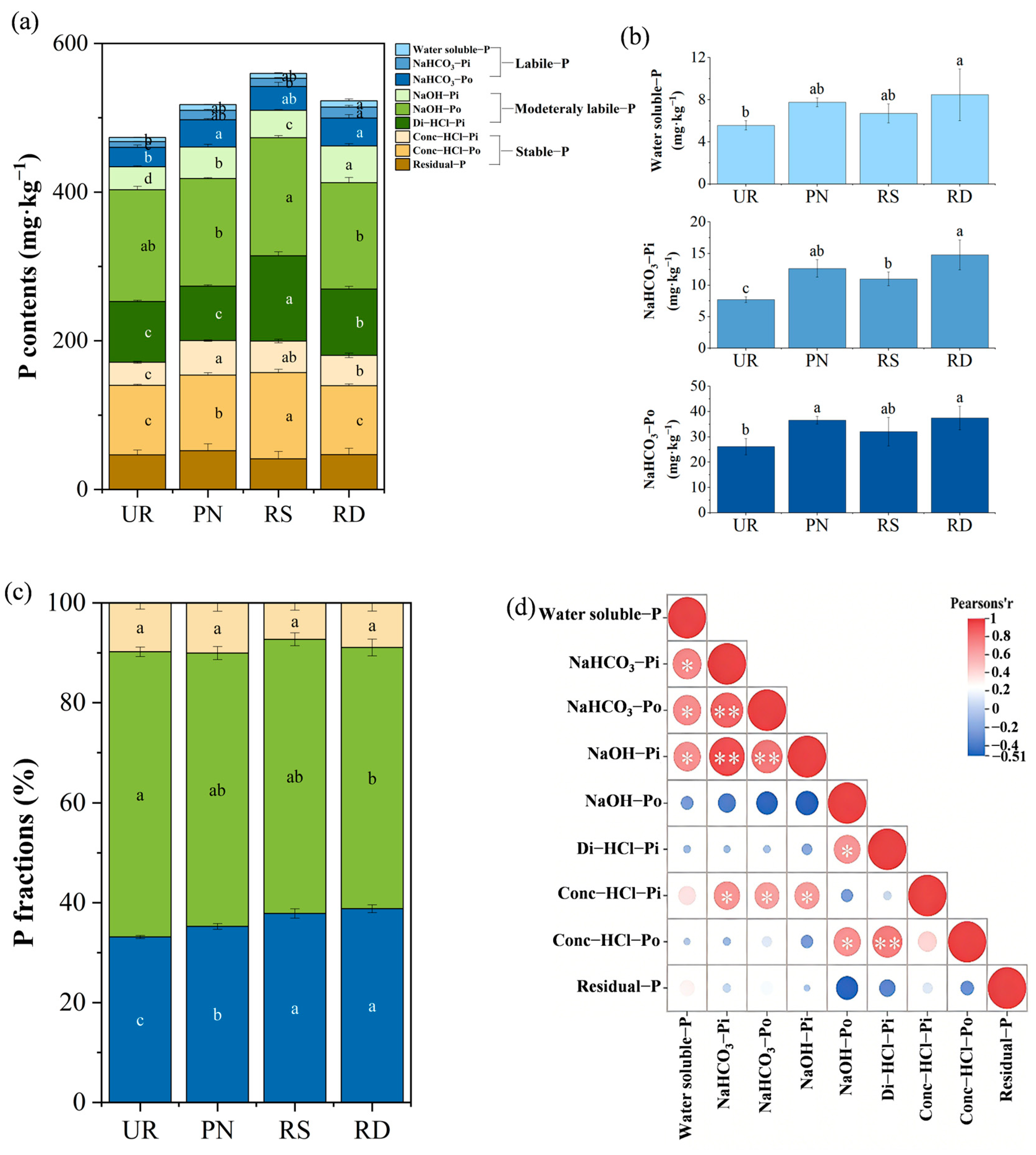
Across all treatments, soil P was predominantly present in the moderately labile pool, whereas the labile P fractions accounted for the smallest proportion (Figure 1a). Compared with the understory removal (UR) treatment, the contents of the three labile P fractions (Water soluble-P, NaHCO3-Pi, and NaHCO3-Po) increased in all understory retention treatments, with the retention of diverse understory (RD) treatment exhibiting the highest values—significantly increased by 52.1%, 91.6%, and 43.3%, respectively. The planting of a N-fixing species (PN) treatment ranked second, with NaHCO3-Pi and NaHCO3-Po contents significantly higher than those in UR but not differing significantly from those in the retention of a single dominant understory species (RS) treatment (Figure 1a,b). The three labile P fractions were significantly positively correlated with each other (Figure 1d).
NaOH-Pi content was highest in RD (49.54 mg·kg−1), followed by PN (42.45 mg·kg−1), representing significant increases of 60.5% and 37.5% over UR, respectively (Figure 1a), and was significantly positively correlated with all three labile P fractions (Figure 1d). Conversely, NaOH-Po was highest in RS and lowest in PN and RD, which were 8.9% and 9.9% lower than RS, respectively (Figure 1a). NaOH-Pi was significantly positively correlated with Conc-HCl-Pi, and NaOH-Po with Di-HCl-Pi and Conc-HCl-Po (Figure 1d).
Organic P (Po) was the dominant form across all treatments. Inorganic P (Pi) content was significantly increased in RS, whereas Po content was significantly increased in UR (Figure 1c). The increase in Po was mainly attributable to NaOH-Po and Conc-HCl-Po, while the increase in Pi was mainly attributable to Di-HCl-Pi (Figure 1a), with both groups belonging to the moderately labile or stable P pools.

3.2. Enzyme Activities Related to P Cycling

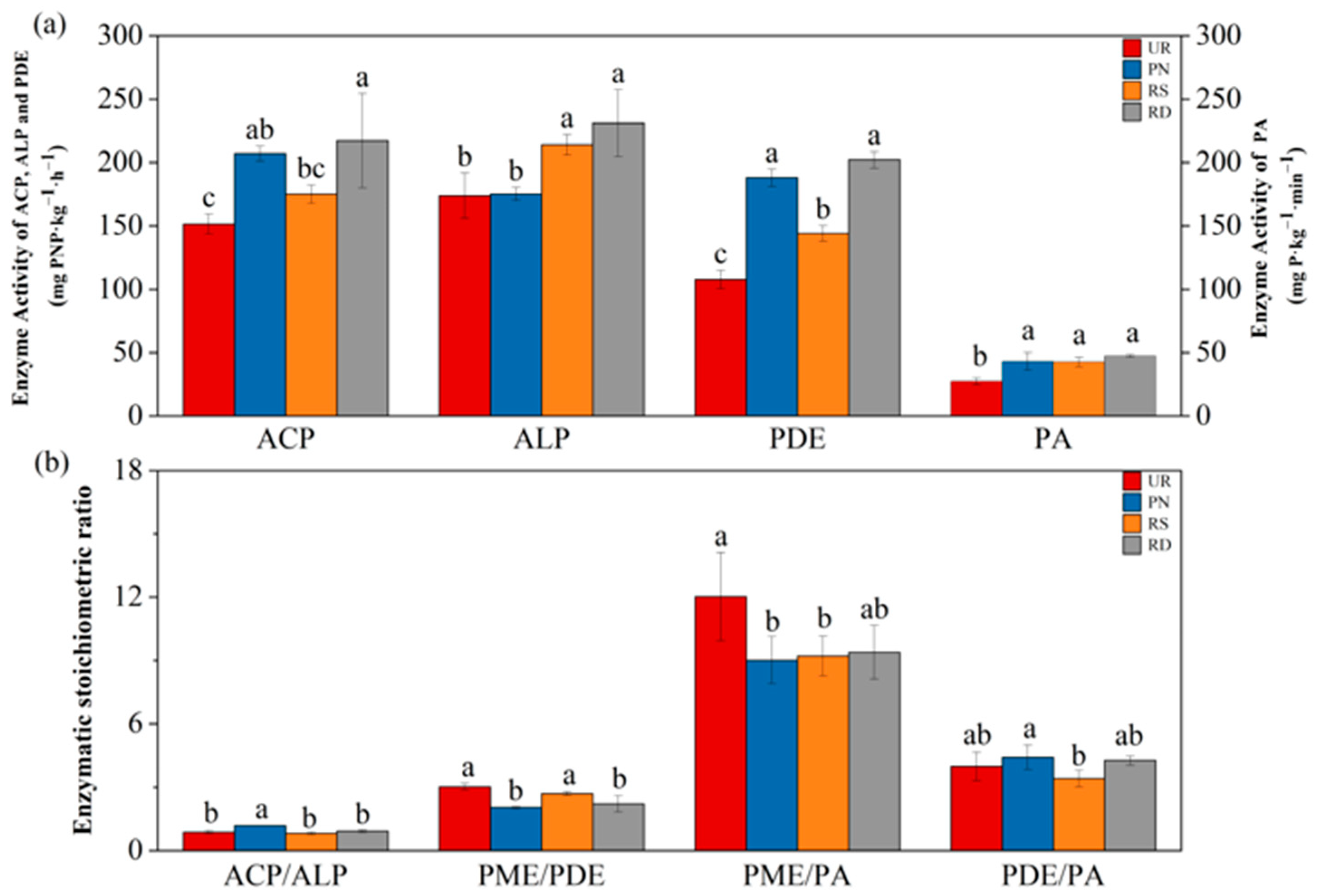
Compared with UR, the activities of P-cycling enzymes significantly increased in all three understory retention treatments, with RD consistently showing the highest values. Specifically, the activities of acid phosphatase (ACP), alkaline phosphatase (ALP), phosphomonoesterase (PME), phosphodiesterase (PDE), and phytase (PA) in RD increased by 41.4%, 32.9%, 36.8%, 87.5%, and 73.3%, respectively, relative to UR (Figure 2a). Compared with RS, the activities of ACP, PDE, and PA increased in PN, with ACP and PDE reaching statistical significance (increases of 18.4% and 30.4%, respectively), whereas ALP activity was significantly higher in RS (p < 0.05, Figure 2a).
The ACP/ALP ratio was significantly higher in PN than in all other treatments (Figure 2b). The PME/PDE ratio was significantly lower in PN and RD compared with UR. The PME/PA ratio decreased in all understory retention treatments relative to UR, with a significant reduction in RS and PN. Furthermore, the PDE/PA ratio was significantly increased in PN, indicating a more important role of PDE in Po mineralization under this treatment (Figure 2b).
Linear regression analysis revealed significant relationships between P fractions and enzyme activities (Table 2). Water-soluble P was significantly positively correlated with PDE activity, while NaHCO3-Pi and NaHCO3-Po were strongly significantly positively correlated with ACP activity (p < 0.01). NaOH-Pi was strongly positively significantly correlated with both PDE and PME activities (p < 0.01), whereas NaOH-Po was significantly negatively correlated with PDE activity. Conc-HCl-Pi exhibited a significant positive correlation with PA activity.

3.3. Microbial Community Structure and Functional Gene Abundance Involved in P Cycling

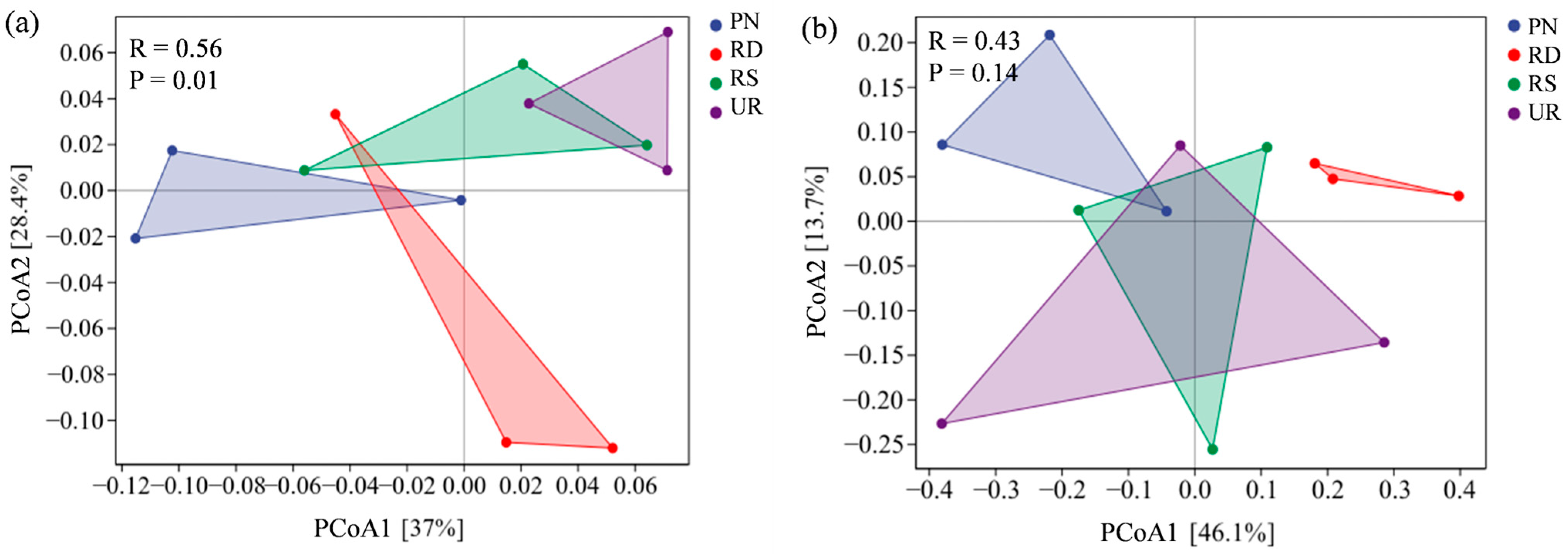
The Chao1 index of bacterial community involved in P cycling significantly increased in RD, indicating greater richness of bacterial species potentially associated with P cycling (Table 3). PCoA based on Bray–Curtis distances showed the cumulative variances explained by the first two principal components are 65.4% and 59.8% for bacterial and fungal community, respectively (Figure 3), which indicates that the PCoA captures the main gradient of community variation, while the remaining variance comes from a large number of low-abundance rare taxa. However, it revealed that understory vegetation treatments significantly influenced soil bacterial community structure (Figure 3a) but not fungal community structure (p = 0.14, Figure 3b). Samples from RD and PN were clearly separated from those of UR along the primary axis, with RD exhibiting greater within-treatment variability in bacterial community structure (Figure 3a).
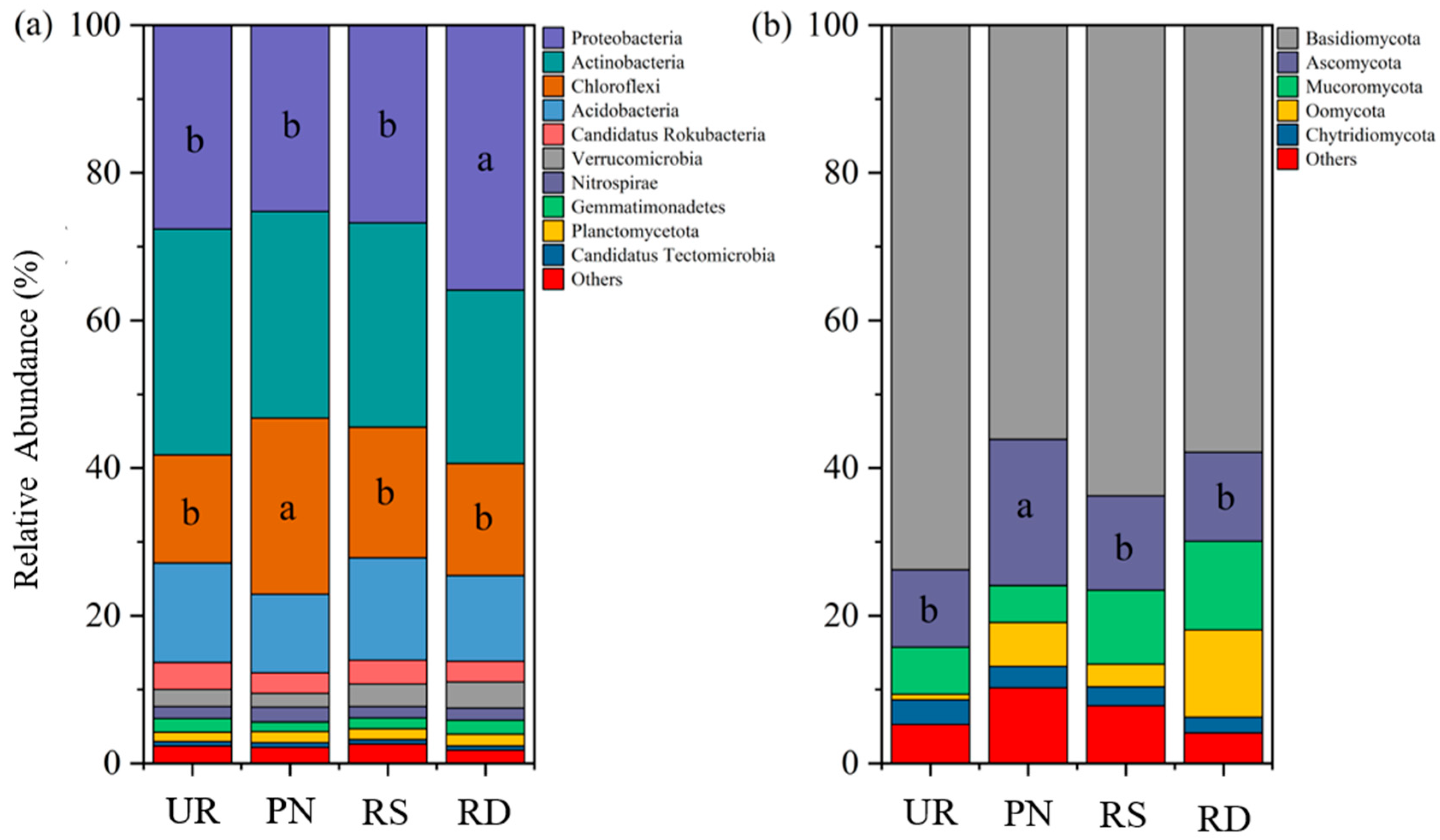
At the phylum level, the dominant bacterial phyla across all treatments were Proteobacteria, Actinobacteria, and Chloroflexi, while fungal communities were dominated by Basidiomycota and Ascomycota (Figure 4). The relative abundance of Chloroflexi was significantly higher in PN, whereas Proteobacteria was significantly higher in RD. Within the fungal community, Ascomycota was significantly enriched in PN.
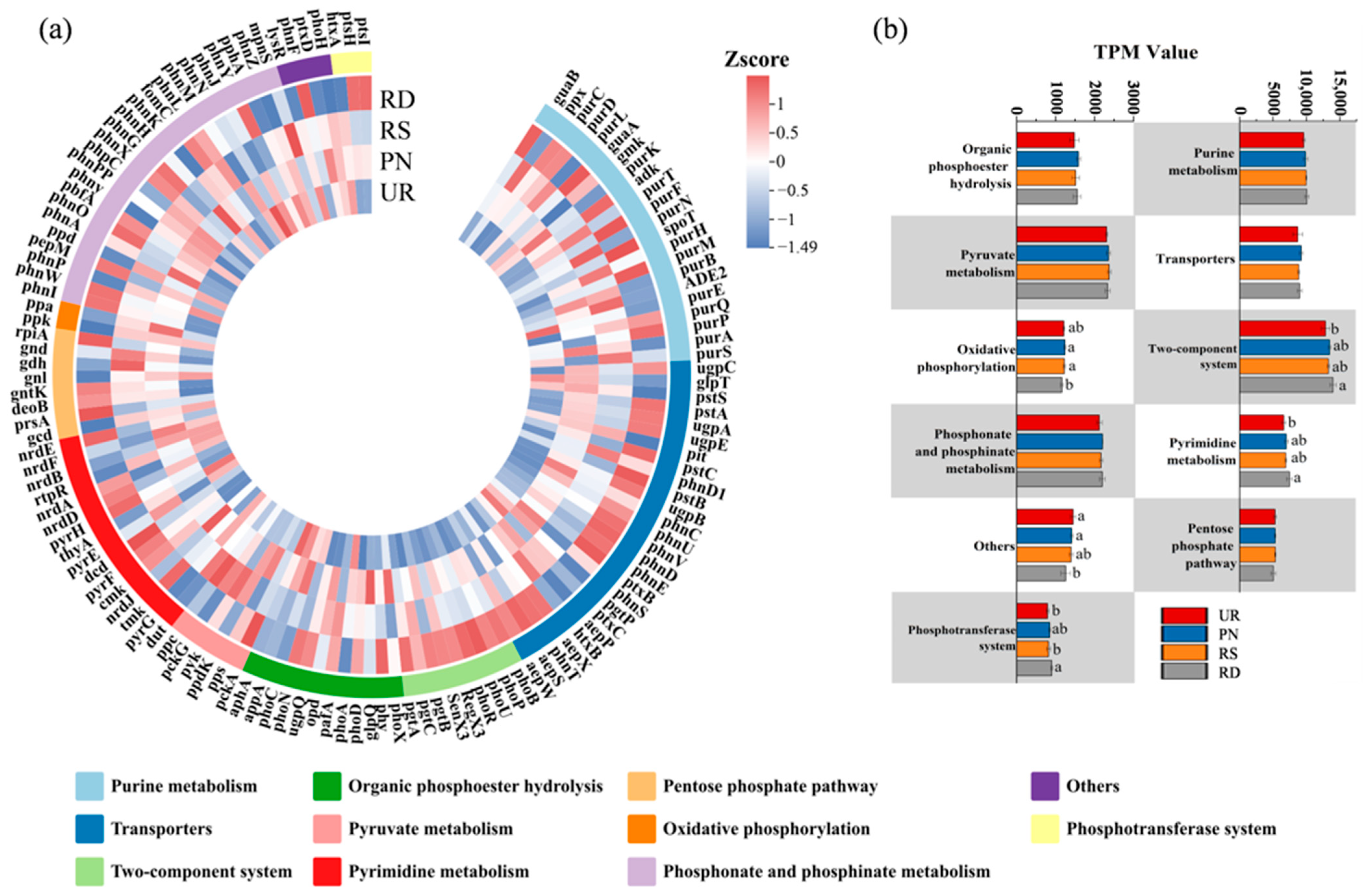
Metagenomic analysis identified 132 functional genes associated with soil P transformation. RD exhibited the highest gene abundance overall, with PN ranking second (Figure 5a). Genes encoding the two-component system, purine metabolism, and transport processes accounted for the largest proportions (25%, 18%, and 17%, respectively). The abundances of genes involved in the two-component system, pyrimidine metabolism, and the phosphotransferase system were significantly higher in RD. RD also showed higher gene abundances in organic phosphoester hydrolysis and phosphonate/phosphinate metabolism, although the differences were not significant. Specifically, RD exhibited significant enrichment of 28 P-cycling functional genes, including phnI and phnW (involved in phosphonate/phosphinate metabolism); pstA, ugpA, ugpE, pstC, ugpB, phnV, phnD, phnE, ptxB, and aeps (microbial transport processes); tmk and pyrF (pyrimidine metabolism); and purC, purD, adk, purF, and purM (purine metabolism) (Figure 5a). In contrast, PN exhibited significantly higher abundances of genes related to oxidative phosphorylation and the ‘others’ category, both associated with inorganic P solubilization (Figure 5b), including opd (organic phosphoester hydrolysis), phnH (phosphonate and phosphinate metabolism), and ppa (oxidative phosphorylation).

3.4. Gene–Enzyme–P Fraction Relationships

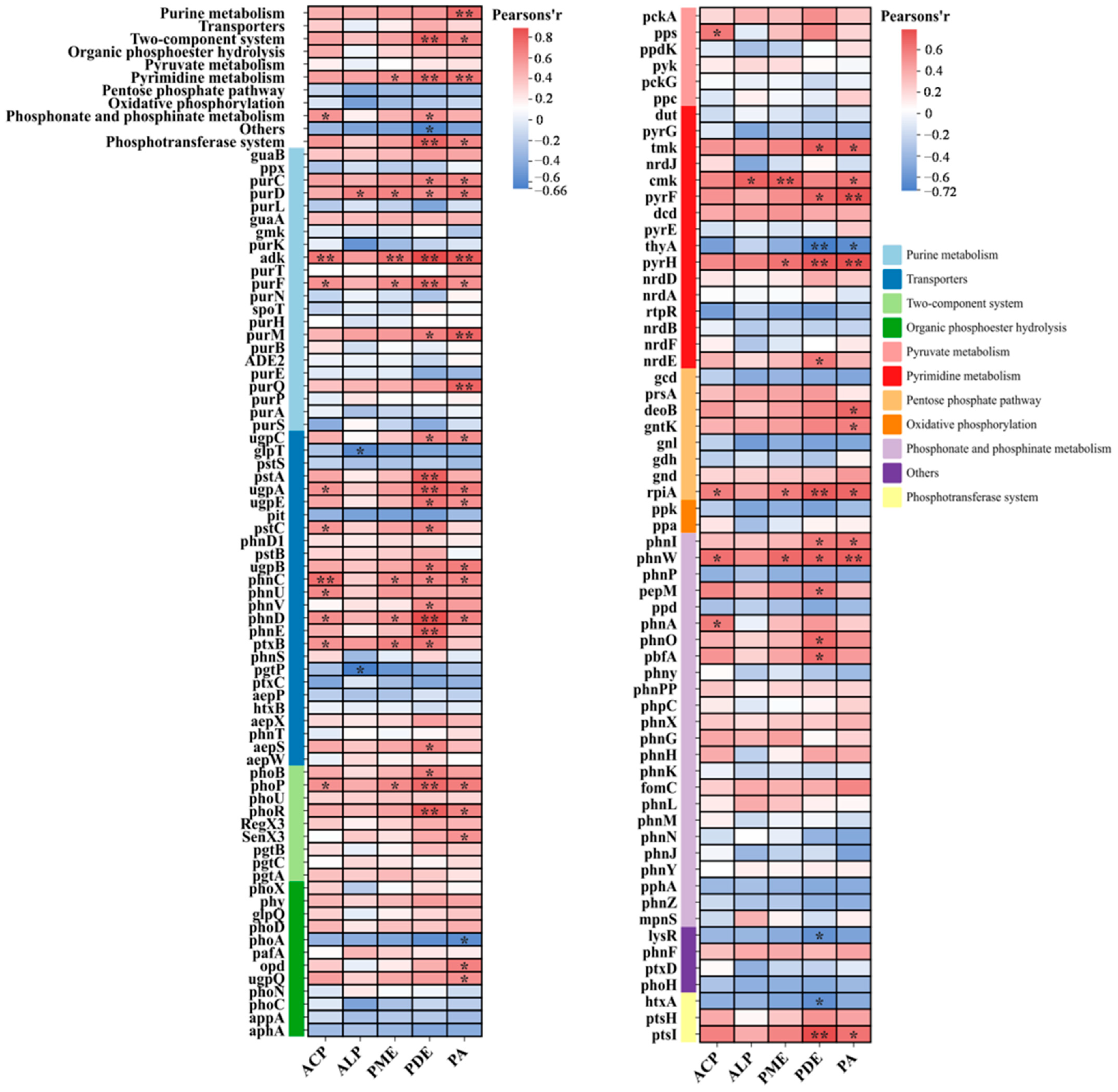
Numerous functional genes were significantly correlated with P-cycling enzyme activities (Figure 6), providing molecular-level evidence that understory treatments influenced soil phosphatase activities by modulating functional gene abundance. ACP activity was primarily associated with phosphonate/phosphinate metabolism, showing significant positive correlations with 13 functional genes (adk, purF, ugpA, pstC, phnC, phnU, phnD, ptxB, phoP, pps, rpiA, phnW, and phnA). ALP was significantly positively correlated with purD and cmk and negatively correlated with glpT and pgtP. PME was primarily influenced by pyrimidine metabolism, with significant positive correlations with 11 functional genes (purD, adk, purF, phnC, phnD, ptxB, phoP, cmk, pyrH, rpiA, and phnW). PDE showed the closest associations with functional genes, being significantly positively correlated with 31 functional genes from the two-component systems, pyrimidine metabolism, phosphonate/phosphinate metabolism, and phosphotransferase systems, while showing significant negative correlations with genes from other processes. PA was significantly positively correlated with purine metabolism, pyrimidine metabolism, two-component systems, and others, as well as with 27 P-cycling genes (ugpA, phnV, opd, phnW, etc.; Figure 6).
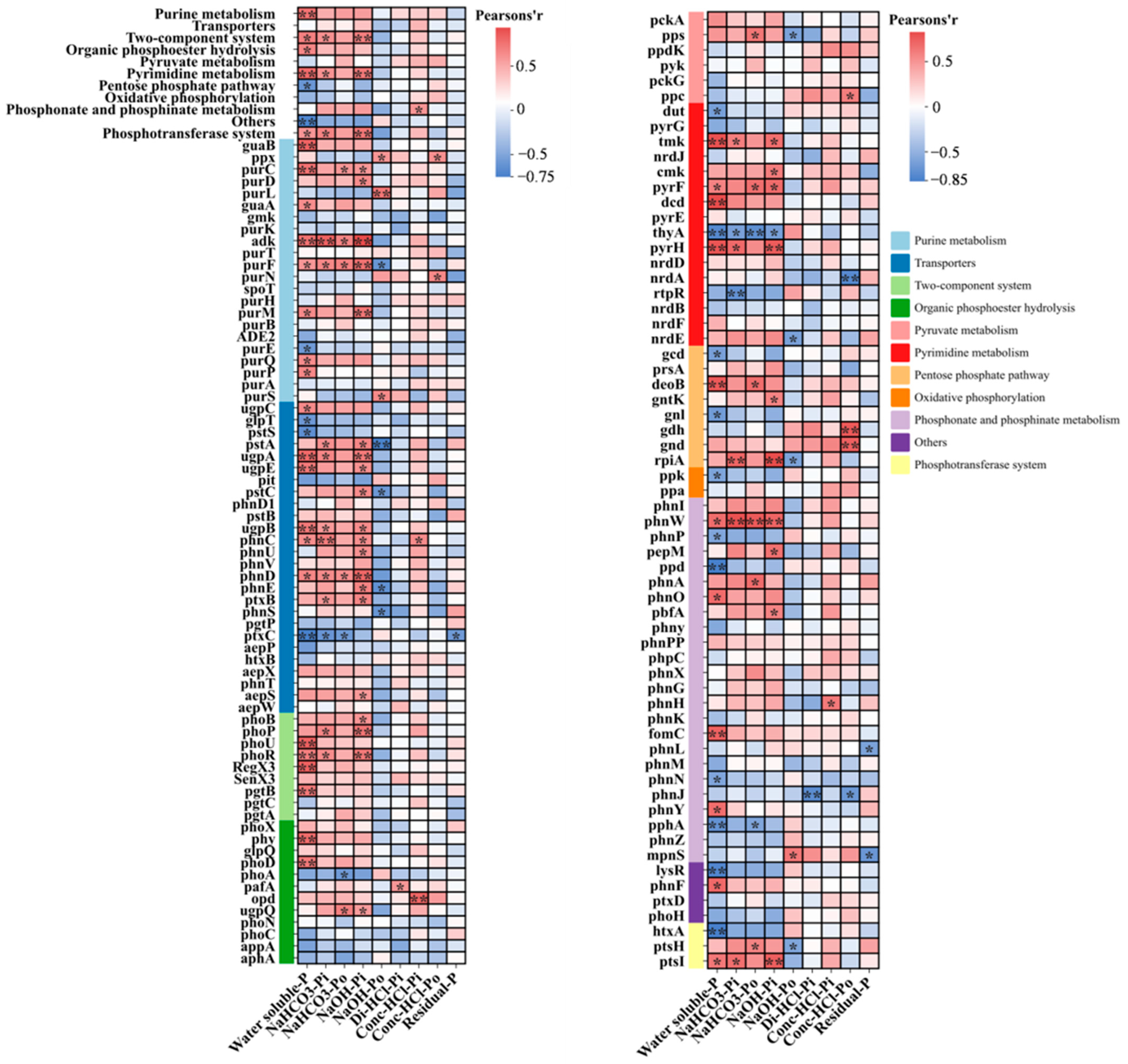
Of the 132 P-transformation genes, 77 were significantly correlated with at least one P fraction (Figure 7) in P cycling. Genes from purine metabolism, pyrimidine metabolism, two-component systems, organic phosphate hydrolysis, and the phosphotransferase system showed significant correlations with labile P fractions, identifying these as key processes for enhancing soil P availability (Figure 7). Specifically, 38 functional genes (guaB, purC, adk, ugpA, phnD, phoR, phy, phoD, tmk, phnW, and pstI, etc.) were significantly positively correlated with one or more labile P fractions. Notably, the majority of the functional genes were negatively correlated with NaOH-Po, with purF, pstA, pstC, phnE, phnS, rpiA, ptsH, pps, and nrdE showing significant negative correlations (Figure 7).

3.5. Contribution of Microbial Phyla to P Cycling

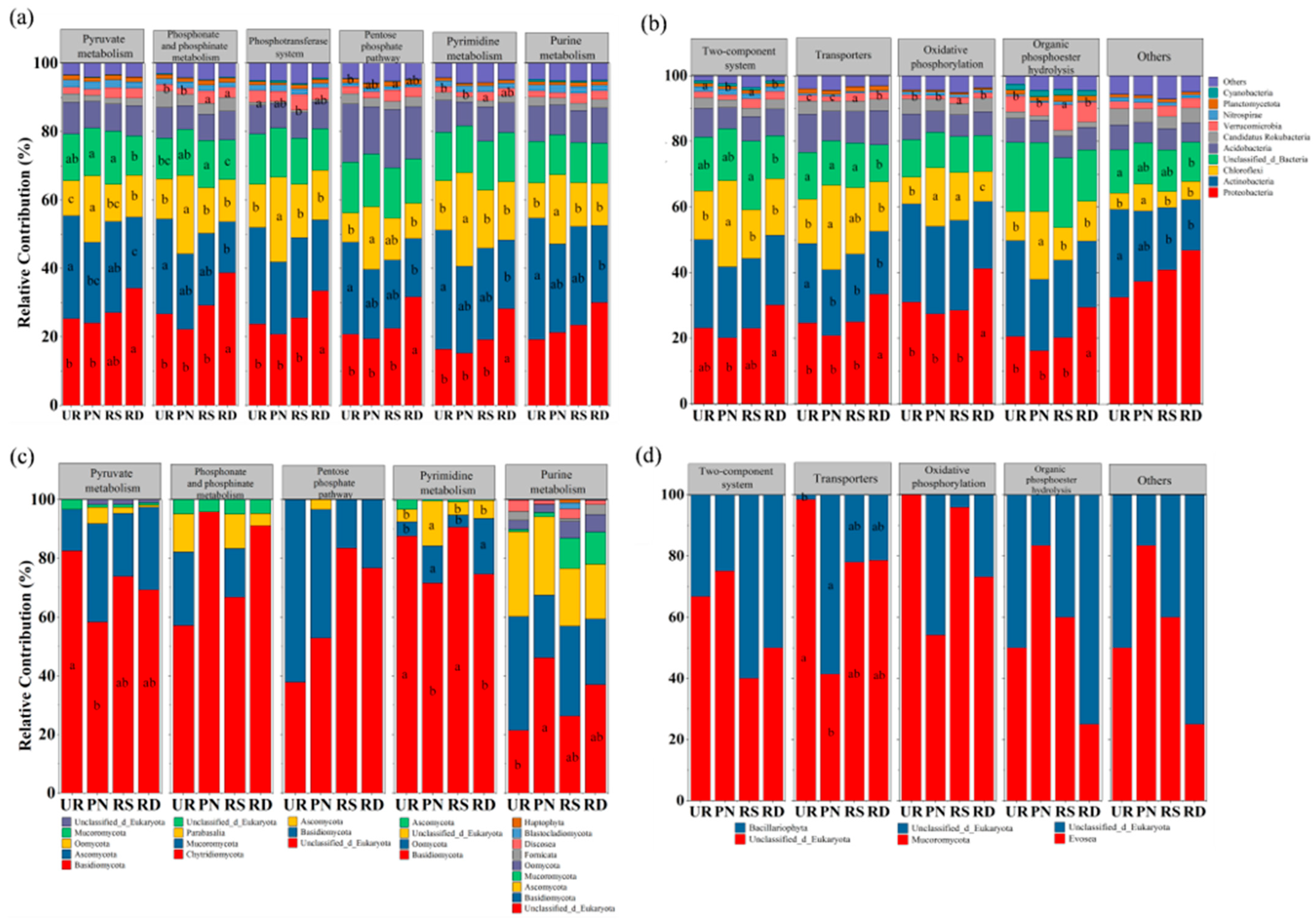
Different understory vegetation treatments significantly influenced the functional contributions of specific microbial phyla to P-cycling genes within each functional category (Figure 8). Within the bacterial community, Proteobacteria contributed significantly more to most P-cycling processes in RD, whereas Chloroflexi contributed significantly more in PN (Figure 8a,b). Within the fungal community, PN significantly enhanced the contributions of Bacillariophyta to transport processes, unclassified Eukaryota to pyrimidine/purine metabolism, and Oomycota to pyrimidine metabolism; Oomycota’s contribution to pyrimidine metabolism was also significantly enhanced in RD (Figure 8c,d). Overall, understory vegetation treatments not only altered the overall diversity and abundance of P-transforming microbial communities but also significantly affected the relative contributions of key functional microbial taxa to specific P-cycling processes.

3.6. Pls-Pm Analysis of Regulatory Pathways

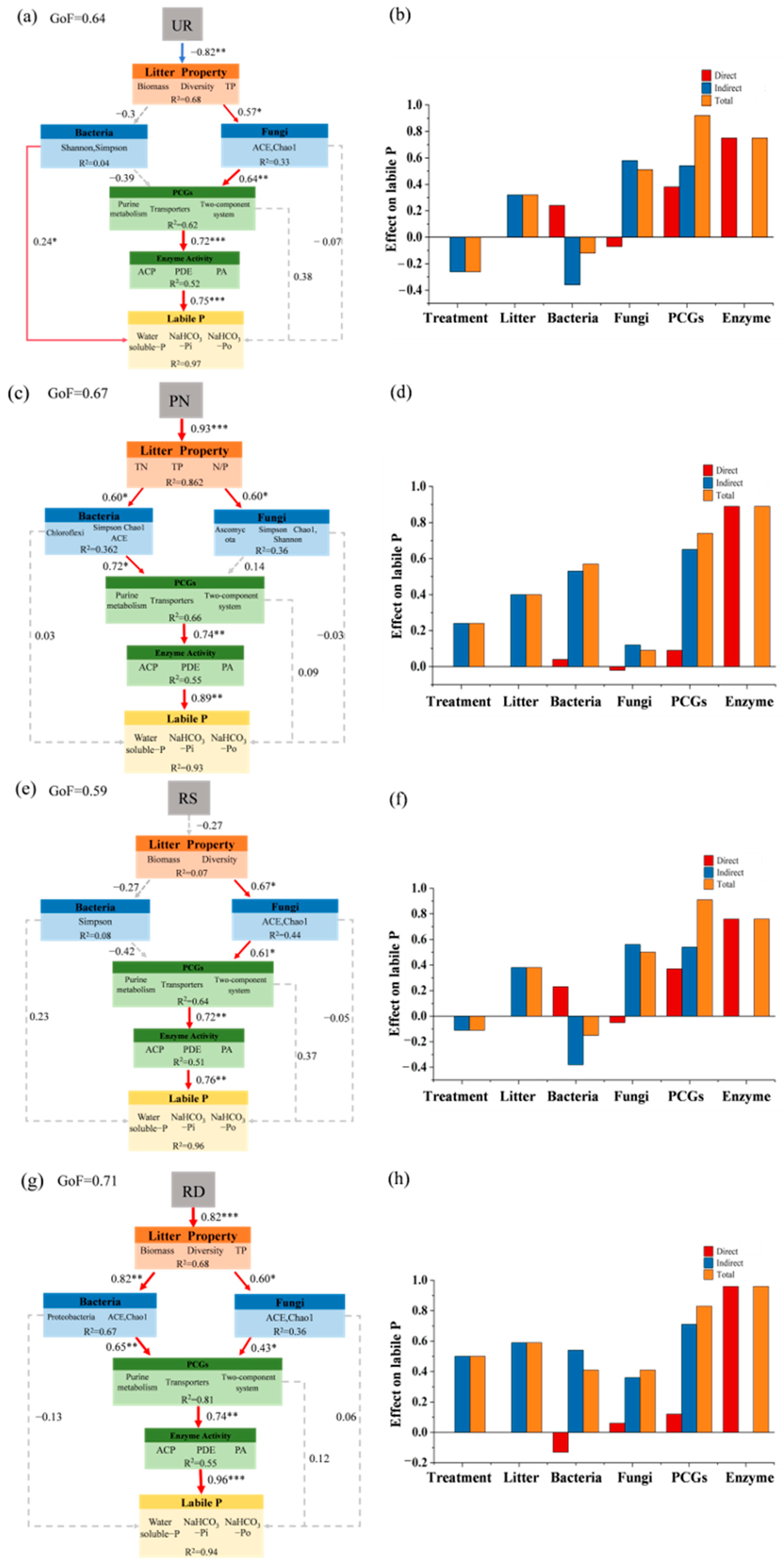
Partial least squares path modeling (PLS-PM) was employed to quantify the pathways through which different understory vegetation treatments regulated soil P availability by altering litter properties, microbial communities, and functional genes. The models under the four understory vegetation treatments exhibited satisfactory overall fit (GoF = 0.64, 0.67, 0.59, and 0.71 for UR, PN, RS, and RD, respectively), revealing significant differences in their driving mechanisms (Figure 9).
Understory removal strongly significantly reduced litter quantity, diversity, and P content (β = −0.82, p < 0.01; Figure 9a) in UR. Litter properties indirectly influenced P-cycling functional genes abundance by altering fungal species diversity (Chao1 and ACE indices) (β = 0.57), which in turn strongly positively affected enzyme activities (β = 0.72, p < 0.001), ultimately resulting in a modest increase in labile P content (β = 0.75, p < 0.001).
N-fixing plants strongly significantly improved litter properties in PN—increased litter total N and P content and N/P ratio (β = 0.93, p < 0.001; Figure 9c)—which subsequently exerted significant positive effects on both soil bacterial (Chloroflexi relative abundance, ACE, Chao1, and Simpson indices) and fungal community structure (Ascomycota relative abundance, Chao1, Shannon, and Simpson indices) (both β = 0.60). The altered bacterial community structure further enhanced the abundance of functional genes involved in purine metabolism, transport, and the two-component system (β = 0.72), which in turn strongly significantly increased P-transforming enzyme ACP, PDE and PA activities (β = 0.74, p < 0.01), ultimately significantly enhancing soil labile P content (β = 0.89, p < 0.01).
No significant effect on litter properties was observed (β = −0.27, p = 0.03) in RS, resulting in limited changes in microbial community structure, with only a significant positive effect on fungal ACE and Chao1 indices (β = 0.67, p < 0.05; Figure 9e). This change positively affected P-cycling functional gene abundance (β = 0.61), which strongly enhanced enzyme activities (β = 0.72, p < 0.01) and led to an increase in labile P content (β = 0.76, p < 0.01).
RD exhibited the highest model fit and the most complex regulatory mechanism (Figure 9g). It strongly significantly increased litter biomass, diversity, and total P content (β = 0.82, p < 0.001). Litter properties influenced P-cycling functional gene abundance through dual pathways: by affecting bacterial community structure (Proteobacteria relative abundance, ACE, Chao1, Shannon, and Simpson indices) (β = 0.82, p < 0.01; effect on genes: β = 0.65, p < 0.01) and by altering fungal community structure (ACE and Chao1 indices) (β = 0.60; effect on genes: β = 0.43, p < 0.05). The increased functional gene abundance further significantly enhanced P-transforming enzyme activities (ACP, PDE, PA) (β = 0.74, p < 0.01), promoting a substantial increase in labile P content (β = 0.96, p < 0.001).
Overall effect analysis indicated that P-transformation enzymes had direct effects on P fractions, whereas understory vegetation treatments and litter properties exerted indirect effects (Figure 9b,d,f,h). Microbial community structure and P-transformation functional genes affected P fractions through both direct and indirect pathways.

4. Discussion

Litter decomposition is a fundamental driver of nutrient cycling in terrestrial ecosystems, and P input via litterfall is essential for sustaining soil P cycling in forests [42]. After seven years of understory removal, soil total P and the labile P fractions were significantly decreased in the 0–10 cm soil layer in UR (Figure 1a,b). Understory removal directly reduced plant litter input, thereby diminishing the substrate available for microbial decomposition [43]. The absence of understory vegetation can also alter soil physical properties, such as increasing evaporation and reducing soil moisture content [44], which may limit inorganic P diffusion and release, ultimately compromising P availability for soil microbes and plants [45]. Additionally, removing understory vegetation reduces the input of root litter and root exudates (e.g., organic acids) and may impede the upward transport of P from deeper soil by plant roots [46]. Soil organic P content, particularly the NaOH-Po fraction, was higher in UR than in other treatments, while inorganic P content was significantly lower (Figure 1a,c). This likely stems from reduced microbial access to nutrients, which suppresses soil microbial activity and P transformation enzyme activities, thereby weakening Po mineralization [47,48]. Consequently, moderately labile Po (NaOH-Po) accumulated while Pi declined. Consistent with this, understory removal has been shown to reduce bacterial biomass in other ecosystems, partly through altered soil N availability [49], and to generally suppress soil hydrolytic enzyme production [50].
Compared with retaining E. crusgalli (RS), planting N-fixing S. cannabina (PN) led to higher soil labile P contents (Figure 1a,b). indicating significant improvement of P supply in the degraded poplar plantation. Litter of the N-fixing species S. cannabina exhibited greater biomass and higher quality than that of E. crusgallii (Table 1), which effectively increased soil N content—as confirmed in our previous studies [51]—and supplied ample and readily decomposable substrates for microbial growth and activity, thereby enhancing P cycling and increasing soil labile P content [52,53,54]. Similarly, mixing N-fixing tree species with eucalyptus has been shown to promote the transformation of soil P fractions and enhance P availability through microbial mediation [21]. Among P fractions, moderately labile P, particularly NaOH-Po, constituted the largest proportion of the total P pool and played a key role in sustaining P availability. Compared with the RS treatment, the PN treatment exhibited a significant increase in NaOH-Pi content and a simultaneous decrease in NaOH-Po content (Figure 1a). Moreover, NaOH-Pi was significantly positively correlated with all three labile P fractions (Figure 1d), suggesting that the PN treatment stimulated microbial mineralization of NaOH-Po into NaOH-Pi, and that this NaOH-Pi pool subsequently served as a key source replenishing more labile P fraction. Nitrogen is a key component of phosphatase synthesis; thus, increased N availability may enhance phosphatase synthesis and accelerate soil Po mineralization [55]. This finding aligns with studies in karst natural forests [56] and larch plantations [57], both of which reported that N addition decreased the soil NaOH-Po fraction. However, some studies have reported that N-fixing plants promoted soil Po accumulation [58]. These contrasting results may reflect differences in the functional traits of the microorganisms recruited by different N-fixing plant species; some microbial communities might possess greater capacities to solubilize recalcitrant Pi, leading to distinct P fraction dynamics such as NaOH-Po accumulation. The decrease in Di-HCl-Pi content indicates that the PN treatment promoted the activation and release of inorganic P from stable Pi pools. Roots and microbes can release CO2 through respiration and exude organic acids directly, while the N-fixation process itself releases H+; these processes promote the dissolution of calcium phosphates by reducing local pH and chelating metal cations (e.g., Ca2+) that bind P [59]. The released inorganic P can be partially adsorbed by iron and aluminum oxides, contributing to the observed increase in the NaOH-Pi fraction.
Retention of diverse understory vegetation (RD) resulted in the highest labile P compared with both RS and PN (Figure 1a,b), indicating a substantial improvement in P supply in the degraded poplar plantation. This result aligns with the meta-analysis of Wang et al. [60], which concluded that plant diversity enhances soil P availability and sustains productivity in terrestrial ecosystems. Diverse understory vegetation produces litter and root exudates of varying quality, creating diverse niches and resources for a broader range of soil microbial functional groups [28,29]. Deng et al. [61] found that mixed forests improved the microbial habitat and enhanced phosphatase activity and organic acid-mediated cycling processes, resulting in significantly higher litter P and bioavailable P fractions compared with monocultures. However, RD had significantly lower soil total P content than RS (Figure 1a), which may be attributed to the conversion of stable P into bioavailable forms that are subsequently taken up by plants and temporarily stored in biomass [62]. Both moderately labile P and stable P were higher in RD than in PN, corresponding to significantly lower Conc-HCl-Pi and Conc-HCl-Po in RD (Figure 1a,b). Correlation analysis revealed significant positive correlations of Conc-HCl-Pi with NaHCO3-Pi, NaHCO3-Po, and NaOH-Pi (Figure 1d), suggesting that these are interconnected pools and that RD facilitated the transfer of stable P from to more available forms. This further indicates that preserving diverse understory vegetation enhances microbial community and functional diversity by creating heterogeneous habitats, thereby more comprehensively driving soil P activation processes [63]. Similarly, Wang et al. [64] reported that litter diversity enhanced the release of P bound to amorphous iron oxides by increasing microbial biomass P and phosphatase activity, explaining 86.3% of the variance in this process. Previous studies have shown that increased soil available P can enhance photosynthetic properties (e.g., electron transport rate), chlorophyll content, and biomass accumulation [65]. Adequate P supply also allows plants to optimize root system architecture by promoting fine root growth to enhance P uptake, while allocating more resources to aboveground growth [65]. Therefore, the improvements in soil labile P in RD treatment create favorable soil nutrient conditions for the growth potential and productivity recovery of poplar plantations. Future research should integrate tree growth parameters—including diameter at breast height (DBH), tree height, volume increment, and biomass accumulation—and establish long-term permanent monitoring plots to comprehensively evaluate the true effectiveness of understory vegetation management strategies in sustaining the long-term productivity of poplar plantations.
The understory vegetation treatments significantly influenced the activity of multiple phosphatases. Understory removal markedly reduced the activity of P cycling-related enzymes (Figure 2a), likely due to reduced organic matter input and diminished microbial activity, which inhibited phosphatase synthesis. When N-fixing species were planted in the understory (PN), the activities of soil ACP, PDE and PA increased compared with RS, with significant increases observed for ACP and PDE (Figure 2a), consistent with Li et al. [66]. The input of high-quality litter provides ample substrates for microbial growth [53], and N-fixing plants may increase soil N availability, making P the primary limiting factor and thereby prompting microbes to invest more resources in producing P-acquiring enzymes [67]. Furthermore, the ACP/ALP ratio significantly increased in PN (Figure 2b). Given that ALP is primarily of microbial origin while ACP originates from both roots and microbes, this increased ratio suggests a significant contribution from the roots of the N-fixing understory species in secreting acid phosphatases, which play key roles in P mobilization [68]. Compared with RS, the activities of all P-transforming enzymes further increased in RD (Figure 2a). This may be attributed to diverse understory litter providing heterogeneous resources for soil microorganisms, thereby enhancing soil microbial biomass and community metabolism and leading to the comprehensive production of various extracellular enzymes [69].
Soil Po constitutes a major part of the total P pool but must be hydrolyzed by enzymes into labile inorganic forms before plant uptake; consequently, P-transformation enzymes play a pivotal role in P mobilization. Significant positive correlations among ACP, PDE, and labile P fractions (Table 2) suggest that P mineralization in PN and RD was enhanced primarily through increased ACP and PDE activities. This is consistent with the significant negative correlation between phosphatase activity and NaOH-Po, reflecting the mineralization and depletion of Po with increased phosphatase activity [70].
The relative abundance of the bacterial phylum Chloroflexi was significantly higher in PN than in RS (Figure 4a). Chloroflexi are oligotrophic bacteria characterized by slow growth and the ability to degrade complex organic compounds [71]. Although enhanced soil N supply generally suppresses oligotrophic groups such as Chloroflexi while increasing eutrophic groups such as Proteobacteria and Actinobacteria [33,72,73,74], several studies have observed increased Chloroflexi abundance when N-fixing plants were intercropped under forest canopies [75,76]. While fungal community composition—as revealed by PERMANOVA—did not differ significantly among treatments, we did observe a higher relative abundance of Ascomycota in the PN treatment at the phylum level (Figure 4b). This phylum-level shift suggests that certain fungal taxa may respond to high-quality litter inputs, even though the overall community structure remains largely unchanged. Ascomycota predominantly comprise eutrophic fungi that rely on abundant C and N substrates for rapid proliferation; the high-quality litter of N-fixing understory plants meets their growth requirements, thereby promoting their abundance [77,78]. Ascomycota can also contribute to P cycling through their own metabolic activities and interactions within the soil microbial community, playing significant roles in determining soil P availability [21,56]. In contrast, the contribution of bacterial phylum Verrucomicrobiota to most P cycling processes was enhanced in RS (Figure 8a,b), suggesting that this treatment may influence soil P cycling by regulating Verrucomicrobiota activity.
Significantly altered bacterial species richness and community composition were observed in RD compared with both RS and PN (Table 3, Figure 3). This finding aligns with the biodiversity-ecosystem function theory, which posits that higher plant diversity supports more diverse soil microbial communities through resource complementarity [79,80]. In pine-oak mixed forests, soil microbial community diversity has been reported to be altered by enhanced species richness and understory vegetation composition [1]. The relative abundance of the bacterial phylum Proteobacteria and its contribution to most P-cycling processes significantly increased in RD (Figure 4a and Figure 8a,b). Proteobacteria are widely recognized as a dominant phylum in P solubilization and mineralization [9]. This phylum possesses broad C utilization capabilities, making it more likely to dominate in resource-rich and diverse environments [81]. Within this phylum, genera such as Pseudomonas and Rhizobium can secrete phosphatases that mineralize Po, while genera such as Burkholderia can produce organic acids to solubilize Pi [12]. These functions reinforce the critical role of this phylum in driving soil P cycling.
The abundance of several genes related to Po mineralization, including opd (involved in organic phosphate hydrolysis) and phnH (involved in phosphonate metabolism), was significantly increased in PN compared with RS (Figure 5). This is supported by Qin et al. [82], who reported that N-fixing plants can influence microbial metabolism and community structure through labile organic matter inputs, thereby modulating functional gene expression. Notably, opd abundance was significantly positively correlated with soil phytase activity (Figure 6), suggesting that soil phytase synthesis may be encoded by the opd gene and that PN can promote the transformation of NaOH-Po into inorganic P by enhancing phosphatase-mediated organic P mineralization [83]. In addition, the abundance of ppa, which encodes polyphosphatase crucial for degrading inorganic polyphosphates into phosphate [84], was also significantly increased in PN (Figure 5b). Thus, enzymes and genes involved in both soil organic P mineralization and inorganic P dissolution were simultaneously enhanced in PN, effectively promoting soil P cycling and increasing P availability.
Compared with RS and PN, which retained a single understory vegetation species, the abundance of functional genes associated with three soil P cycling processes: pyrimidine metabolism, the two-component system, and the phosphotransferase system, significantly increased in RD (Figure 5). The total abundance of these genes was significantly positively correlated with both phosphodiesterase and phytase activity (Figure 6) and with soil labile P fractions (Figure 7), indicating their crucial roles in enhancing soil P cycling and availability. Pyrimidine metabolism can improve cellular P use efficiency by prioritizing P allocation toward essential processes such as nucleotide synthesis [85]. Specifically, 28 P-cycling functional genes, including phnI and phnW that involved in microbial intracellular organic P mineralization and encode 2-aminoethylphosphonic acid pyruvate transaminase, were significantly increased in RD; notably, phnW abundance was significantly positively correlated with ACP activity and all three labile P forms [86]. The abundance of P transport system genes (pstA, ugpA, ugpE, pstC, ugpB, phnV, phnD, phnE, ptxB, and aeps) were significantly increased in RD, which regulate microbial utilization efficiency of various P forms through a “threshold-sensing-active transport” mechanism [87]. These phosphate transport-related genes enable effective P acquisition in both P-deficient and P-rich environments [12]. Furthermore, the abundance of genes central to intracellular P metabolism, including those involved in pyrimidine (tmk, pyrF) and purine (purC, purD, adk, purF, purM) metabolism, was increased in RD; purine metabolism provides energy and enables certain microorganisms to hydrolyze organic P into available inorganic P, thereby enhancing plant P uptake [88].
PLS-PM analysis revealed that all four understory vegetation treatments influenced soil P availability, yet their regulatory pathways and core driving mechanisms differed substantially. UR exhibited the simplest regulatory mechanism (Figure 9a), primarily by significantly reducing litter biomass, diversity, and total P content, which indirectly affected P-transformation functional gene abundance through altered fungal species diversity, ultimately driving P mobilization via enhanced enzyme activities (ACP, PDE, PA). This finding is consistent with the conclusion that UR provided insufficient organic matter input and suppressed microbial activity, with fungal communities particularly sensitive to litter scarcity and emerging as key mediators of P-cycling, as also observed by Chen et al. [89]. RS exerted relatively weak effects (Figure 9c), with no significant impact on litter biomass, quality, or diversity, resulting in limited alterations in microbial community structure and functional gene abundance and a smaller increase in P availability compared with PN and RD. In contrast, high-quality litter rich in N and P but low in C/N was introduced in PN, altering soil microbial community structure by specifically enriching the bacterial phylum Chloroflexi and the fungal phylum Ascomycota, which subsequently enriched P-transformation functional genes and significantly enhanced ACP, PDE, and PA activities to promote P mobilization (Figure 9b). This aligns with previous findings that N-fixing plants enhance P availability through high-quality litter-mediated microbial effects, although the earlier study identified ALP rather than ACP or PDE as the key enzyme [53]. The most complex and comprehensive regulatory mechanism exhibited in RD: retaining diverse understory vegetation not only increased litter total P content but also significantly enhanced litter diversity and biomass, creating diverse microbial ecological niches that promoted a Proteobacteria- dominated bacterial community and suggested a potential increase in fungal community diversity. (Figure 9d). These dual pathways jointly increased P-transformation functional gene abundance and achieved efficient P mobilization through comprehensive enzyme activity enhancement, consistent with the “biodiversity-resource complementarity” theory [90]. However, this study focused solely on aboveground litter input and overlooked belowground root litter and root exudates, which are critical mediators of rhizosphere plant-microbe interactions [30]. Future studies should integrate root exudate analyses to fully elucidate the “understory vegetation-microorganism-P-transformation” continuum and examine P-cycling processes and enzymes beyond P mineralization, such as stable inorganic P dissolution. Finally, the identified key microbial groups (e.g., Chloroflexi, Proteobacteria) and functional genes (e.g., phnH, phnW, ppa) provide important targets for screening efficient P-solubilizing strains and developing microbial inoculants, offering a novel approach for efficient P utilization in poplar plantations.

5. Conclusions

This study demonstrates that understory vegetation treatments influence microbial communities and functional genes by altering litter quality, diversity, and biomass, thereby enhancing soil P availability in degraded poplar plantations. Understory removal reduced litter input, decreased microbial activity and functional gene abundance, and lowered enzyme activity, thereby limiting P mobilization. Planting an N-fixing species in the understory introduced high-quality litter, which enriched Chloroflexi and Ascomycota, enhanced the contribution of Chloroflexi to P-transformation, and increased the abundance of specific genes (ppa, opd, phnH), leading to higher enzyme activities and greater soil P availability. Retaining diverse understory vegetation provided litter with higher biomass, diversity, and P content, which supported a species-rich microbial community dominated by Proteobacteria. This treatment increased the abundance of a broad suite of P-cycling genes (e.g., phnI, phnW, pstA, ugpA, ugpE) and stimulated enzyme activities, therefore driving the most effective overall P mobilization.
In conclusion, both planting N-fixing species and retaining diverse understory vegetation are effective strategies for enhancing soil P availability and promoting the productivity and sustainability of degraded poplar plantations. However, retaining naturally diverse understory vegetation offers the additional advantages of being more cost-effective and enhancing overall biodiversity. Therefore, it is recommended as the preferred approach for understory management in poplar plantations.

Author Contributions

Y.T. and R.Y. were mainly responsible for the conceptualization, methodology used, data evaluation, data validation, and formal analysis. Investigations and data curation were conducted by all authors. The original draft of this article was prepared by Y.T. and R.Y., who were also responsible for the review and editing process of this article. All authors have read and agreed to the published version of the manuscript.

Funding

This research was funded by the National Key Research and Development Program of China (grant number 2021YFD2201202) and the Research and Development Program of the Third Construction Co., Ltd. of China Construction First Bureau Group.

Informed Consent Statement

Not applicable.

Data Availability Statement

The original contributions presented in this study are included in the article. Further inquiries can be directed to the corresponding author.

Conflicts of Interest

Author Ruoning Zhu was employed by the company Third Construction Co., Ltd. of China Construction First Bureau Group. The remaining authors declare that the research was conducted in the absence of any commercial or financial relationships that could be construed as a potential conflict of interest.

References

  1. Huo, X.Y.; Ren, C.J.; Wang, D.X.; Wu, R.Q.; Wang, Y.S.; Li, Z.F.; Li, D.C.; Qi, H.Y. Microbial community assembly and its influencing factors of secondary forests in Qinling Mountains. Soil Biol. Biochem. 2023, 184, 109075. [Google Scholar] [CrossRef]
  2. Elser, J.J. Phosphorus: A limiting nutrient for humanity? Curr. Opin. Biotechnol. 2012, 23, 833–838. [Google Scholar] [CrossRef] [PubMed]
  3. Xu, Y.X.; Li, C.; Wang, Z.C.; Huang, R.X.; Du, A.; Zhu, W.K. Rational eucalypt logging site management patterns enhance soil phosphorus bioavailability and reshape phoD-harboring bacterial community structure. For. Ecol. Manag. 2025, 578, 122434. [Google Scholar] [CrossRef]
  4. Wang, J.N.; Wang, J.Y.; Wang, L.; Zhang, H.; Guo, Z.W.; Wang, G.G.; Smith, W.K.; Wu, T.G. Does stoichiometric homeostasis differ among tree organs and with tree age? For. Ecol. Manag. 2019, 453, 117637. [Google Scholar] [CrossRef]
  5. Zhang, H.; Sun, M.; Wen, Y.X.; Tong, R.; Wang, G.; Wu, Q.Q.; Li, Y.; Wu, T.G. The effects of stand age on leaf N:P cannot be neglected: A global synthesis. For. Ecol. Manag. 2022, 518, 120294. [Google Scholar] [CrossRef]
  6. Zhang, H.; Wang, J.N.; Wang, J.Y.; Guo, Z.W.; Wang, G.G.; Zeng, D.H.; Wu, T.G. Tree stoichiometry and nutrient resorption along a chronosequence of Metasequoia glyptostroboides forests in coastal China. For. Ecol. Manag. 2018, 430, 445–450. [Google Scholar] [CrossRef]
  7. Zhu, J.; Li, M.; Whelan, M. Phosphorus activators contribute to legacy phosphorus availability in agricultural soils: A review. Sci. Total Environ. 2018, 612, 522–537. [Google Scholar] [CrossRef] [PubMed]
  8. Wang, C.Q.; Xue, L.; Jiao, R.Z. Soil phosphorus fractions, phosphatase activity, and the abundance of phoC and phoD genes vary with planting density in subtropical Chinese fir plantations. Soil Tillage Res. 2021, 209, 104946. [Google Scholar] [CrossRef]
  9. Liang, J.L.; Liu, J.; Jia, P.; Yang, T.T.; Zeng, Q.W.; Zhang, S.C.; Liao, B.; Shu, W.S.; Li, J.T. Novel phosphate-solubilizing bacteria enhance soil phosphorus cycling following ecological restoration of land degraded by mining. ISME J. 2020, 14, 1600–1613. [Google Scholar] [CrossRef] [PubMed]
  10. Omaka, N.O.; Offor, I.F.; Nwabue, F.I.; Onyekezini, K.; Mba, C.C. Analyses of species of phosphorus in four selected streams within Abakaliki, Metropolis, Nigeria. Br. J. Appl. Sci. Technol. 2014, 4, 1285–1295. [Google Scholar] [CrossRef]
  11. Alori, E.T.; Alori, B.R.; Babalola, O.O. Microbial phosphorus solubilization and its potential for use in sustainable agriculture. Front. Microbiol. 2017, 8, 971. [Google Scholar] [CrossRef] [PubMed]
  12. Richardson, A.E.; Simpson, R.J. Soil microorganisms mediating phosphorus availability. Plant Physiol. 2011, 156, 989–996. [Google Scholar] [CrossRef] [PubMed]
  13. Rodríguez, H.; Fraga, R.; Gonzalez, T.; Bashan, Y. Genetics of phosphate solubilization and its potential applications for improving plant growth-promoting bacteria. Plant Soil 2006, 287, 15–21. [Google Scholar] [CrossRef]
  14. Zeng, J.X.; Tu, Q.C.; Yu, X.L.; Qian, L.; Wang, C.; Shu, L.F.; Liu, F.; Liu, S.W.; Huang, Z.J.; He, J.G.; et al. PCycDB: A comprehensive and accurate database for fast analysis of phosphorus cycling genes. Microbiome 2022, 10, 101. [Google Scholar] [CrossRef] [PubMed]
  15. Lindsay, E.A.; Colloff, M.J.; Gibb, N.L.; Wakelin, S.A. The abundance of microbial functional genes in grassy woodlands is influenced more by soil nutrient enrichment than by recent weed invasion or livestock exclusion. Appl. Environ. Microbiol. 2010, 76, 5547–5555. [Google Scholar] [CrossRef] [PubMed]
  16. Bolan, N.S. A critical review on the role of mycorrhizal fungi in the uptake of phosphorus by plants. Plant Soil 1991, 134, 189–207. [Google Scholar] [CrossRef]
  17. Faucon, M.P.; Houben, D.; Reynoird, J.P.; Mercadal-Dulaurent, A.M.; Armand, R.; Lambers, H. Advances and perspectives to improve the phosphorus availability in cropping systems for agroecological phosphorus management. Adv. Agron. 2015, 134, 51–79. [Google Scholar] [CrossRef]
  18. Tang, X.Y.; Bernard, L.; Brauman, A.; Daufresne, T.; Deleporte, P.; Desclaux, D.; Souche, G.; Placella, S.A.; Hinsinger, P. Increase in microbial biomass and phosphorus availability in the rhizosphere of intercropped cereal and legumes under field conditions. Soil Biol. Biochem. 2014, 75, 86–93. [Google Scholar] [CrossRef]
  19. Smith, A.P.; Marín-Spiotta, E.; Balser, T. Successional and seasonal variations in soil and litter microbial community structure and function during tropical postagricultural forest regeneration: A multiyear study. Glob. Change Biol. 2015, 21, 3532–3547. [Google Scholar] [CrossRef] [PubMed]
  20. Zhang, X.; Zhao, Q.; Wei, L.M.; Sun, Q.Y.; Zeng, D.H. Tree roots exert greater impacts on phosphorus fractions than aboveground litter in mineral soils under a Pinus sylvestris var. mongolica plantation. For. Ecol. Manag. 2023, 545, 121242. [Google Scholar] [CrossRef]
  21. Yao, X.Y.; Hui, D.F.; Hou, E.Q.; Xiong, J.F.; Xing, S.; Deng, Q. Differential responses and mechanistic controls of soil phosphorus transformation in Eucalyptus plantations with N fertilization and introduced N2-fixing tree species. New Phytol. 2022, 237, 2039–2053. [Google Scholar] [CrossRef] [PubMed]
  22. Liu, L.Y.; Cui, D.; Liu, S.Q.; Jiang, Z.C.; Wu, Y.H.; Liu, Z.Z.; Han, Y.X.; Guo, J.F.; Lü, G.H. Effects of nitrogen and phosphorus addition on the community structure and diversity of mesofaunal soil arthropods in degraded sophora alopecuroides grassland. Agronomy 2026, 16, 1025. [Google Scholar] [CrossRef]
  23. Kaye, J.P.; Resh, S.C.; Kaye, M.W.; Chimner, R.A. Nutrient and carbon dynamics in a replacement series of Eucalyptus and albizia trees. Ecology 2000, 81, 3267. [Google Scholar] [CrossRef] [PubMed]
  24. Spohn, M.; Berg, B. Import and release of nutrients during the first five years of plant litter decomposition. Soil Biol. Biochem. 2023, 176, 108878. [Google Scholar] [CrossRef]
  25. Chen, X.L.; Chen, H.Y.H.; Chang, S.X. Meta-analysis shows that plant mixtures increase soil phosphorus availability and plant productivity in diverse ecosystems. Nat. Ecol. Evol. 2022, 6, 1112–1121. [Google Scholar] [CrossRef] [PubMed]
  26. Kou, L.; Jiang, L.; Hättenschwiler, S.; Zhang, M.M.; Niu, S.; Fu, X.L.; Dai, X.Q.; Yan, H.; Li, S.G.; Wang, H.M. Diversity-decomposition relationships in forests worldwide. eLife 2020, 9, e55813. [Google Scholar] [CrossRef] [PubMed]
  27. Hacker, N.; Ebeling, A.; Gessler, A.; Gleixner, G.; González Macé, O.; de Kroon, H.; Lange, M.; Mommer, L.; Eisenhauer, N.; Ravenek, J.; et al. Plant diversity shapes microbe-rhizosphere effects on P mobilisation from organic matter in soil. Ecol. Lett. 2015, 18, 1356–1365. [Google Scholar] [CrossRef] [PubMed]
  28. Wu, H.L.; Xiang, W.H.; Ouyang, S.; Forrester, D.I.; Zhou, B.; Chen, L.X.; Ge, T.; Lei, P.F.; Chen, L.; Zeng, Y.; et al. Linkage between tree species richness and soil microbial diversity improves phosphorus bioavailability. Funct. Ecol. 2019, 33, 1549–1560. [Google Scholar] [CrossRef]
  29. Qu, X.J.; Peñuelas, J.; Baquerizo, M.D.; Kuzyakov, Y.; Liao, Y.W.; Guo, J.H.; Zi, H.Y.; Pan, C.; Cao, F.L.; Li, X.G. Forest conversion in subtropical ecosystems reduces soil microbial phosphorus potential. Commun. Earth Environ. 2025, 6, 734. [Google Scholar] [CrossRef]
  30. Willis, J.L.; Blazier, M.A. Competition intensity varies with hardwood species identity and constrains stand-level productivity in southeastern pine–hardwood mixtures compared to loblolly pine monocultures. Can. J. For. Res. 2022, 52, 1439–1458. [Google Scholar] [CrossRef]
  31. Jensen, K.S.; Jørgensen, H.; Larsen, J.R. Long-term influence of hay-cutting on plant species richness, biodiversity and soil fertility in a Danish fen. Ecol. Eng. 2018, 134, 93–100. [Google Scholar] [CrossRef]
  32. Landuyt, D.; Lombaerde, E.D.; Perring, M.P.; Hertzog, L.R.; Ampoorter, E.; Maes, S.L.; Frenne, P.D.; Ma, S.; Proesmans, W.; Blondeel, H.; et al. The functional role of temperate forest understory vegetation in a changing world. Glob. Change Biol. 2019, 25, 3625–3641. [Google Scholar] [CrossRef] [PubMed]
  33. Wang, B.; Verheyen, K.; Baeten, L.; De Smedt, P. Herb litter mediates tree litter decomposition and soil fauna composition. Soil Biol. Biochem. 2021, 152, 108063. [Google Scholar] [CrossRef]
  34. Zederer, D.P.; Talkner, U.; Spohn, M.; Joergensen, R.G. Microbial biomass phosphorus and C/N/P stoichiometry in forest floor and A horizons as affected by tree species. Soil Biol. Biochem. 2017, 111, 166–175. [Google Scholar] [CrossRef]
  35. Fang, S.Z. Silviculture of poplar plantation in China: A review. Chin. J. Appl. Ecol. 2008, 19, 2308–2316. [Google Scholar] [CrossRef]
  36. Ge, X.M.; Tian, Y.; Tang, L.Z. Nutrient distribution indicated whole-tree harvesting as a possible factor restricting the sustainable productivity of a poplar plantation system in China. PLoS ONE 2017, 10, e0125303. [Google Scholar] [CrossRef] [PubMed]
  37. Yan, Y.F.; Fang, S.Z.; Tian, Y.; Song, H.; Tun, X.J. The response of understory plant diversity and nutrient accumulation to stand structure of poplar plantation. Chin. J. Ecol. 2014, 33, 1170–1177. [Google Scholar] [CrossRef]
  38. Zhang, J.Y.; Qin, G.Z.; Zhai, Z.; Zhou, S.C.; Tang, L.Z.; Tian, Y. Diverse understory vegetation alleviates nitrogen competition with crop trees in poplar plantations. Forests 2021, 12, 705. [Google Scholar] [CrossRef]
  39. Tiessen, H.; Stewart, J.W.B.; Cole, C.V. Pathways of phosphorus transformations in soils of differing pedogenesis. Soil Sci. Soc. Am. J. 1984, 48, 853–858. [Google Scholar] [CrossRef]
  40. Jing, Z.; Bo, Q.; Min, L. Phosphorus mobilization in the Yeyahu Wetland: Phosphatase enzyme activities and organic phosphorus fractions in the rhizosphere soils. Int. Biodeterior. Biodegrad. 2017, 124, 304–313. [Google Scholar] [CrossRef]
  41. Bünemann, E.K.; Oberson, A.; Frossard, E. Phosphorus in Action: Biological Processes in Soil Phosphorus Cycling; Springer Science & Business Media: Heidelberg, Berlin, 2010. [Google Scholar]
  42. Schaap, K.J.; Fuchslueger, L.; Hoosbeek, M.R.; Hofhansl, F.; Martins, N.P.; Barrantes, O.J.V.; Hartley, I.P.; Lugli, L.F.; Quesada, C.A. Litter inputs and phosphatase activity affect the temporal variability of organic phosphorus in a tropical forest soil in the Central Amazon. Plant Soil 2021, 469, 423–441. [Google Scholar] [CrossRef]
  43. Pourhassan, N.; Bruno, S.; Jewell, M.D.; Shipley, B.; Roy, S.; Bellenger, J.-P. Phosphorus and micronutrient dynamics during gymnosperm and angiosperm litters decomposition in temperate cold forest from Eastern Canada. Geoderma 2016, 273, 25–31. [Google Scholar] [CrossRef]
  44. Zhang, Z.Y.; Miao, R.H.; Rasmann, S. Enhanced plant litter impacts nematode communities and carbon use efficiency in a mixed forest. Funct. Ecol. 2024, 38, 1902–1914. [Google Scholar] [CrossRef]
  45. Maranguit, D.; Guillaume, T.; Kuzyakov, Y. Effects of flooding on phosphorus and iron mobilization in highly weathered soils under different land-use types: Short-term effects and mechanisms. Catena 2017, 158, 161–170. [Google Scholar] [CrossRef]
  46. Spohn, M.; Ermak, A.; Kuzyakov, Y. Microbial gross organic phosphorus mineralization can be stimulated by root exudates–a 33P isotopic dilution study. Soil Biol. Biochem. 2013, 65, 254–263. [Google Scholar] [CrossRef]
  47. Liu, Q.; Wang, F.C.; Liu, R.; Hu, X.F.; Wang, H.M.; Chen, F.S. Aboveground litter input alters the effects of understory vegetation removal on soil microbial communities and enzyme activities along a 60-cm profile in a subtropical plantation forest. Appl. Soil Ecol. 2022, 176, 104489. [Google Scholar] [CrossRef]
  48. Yang, Y.; Zhang, X.Y.; Zhang, C.; Wang, H.M.; Fu, X.L.; Chen, F.S.; Wan, S.Z.; Sun, X.M.; Wen, X.F.; Wang, J.F. Understory vegetation plays the key role in sustaining soil microbial biomass and extracellular enzyme activities. Biogeosciences 2018, 15, 4481–4494. [Google Scholar] [CrossRef]
  49. Feng, J.Y.; Li, Z.; Hao, Y.F.; Wang, J.; Ru, J.Y.; Song, J.; Wan, S.Q. Litter removal exerts greater effects on soil microbial community than understory removal in a subtropical-warm temperate climate transitional forest. For. Ecol. Manag. 2021, 505, 119867. [Google Scholar] [CrossRef]
  50. Wu, J.P.; Liu, Z.F.; Huang, G.M.; Chen, D.M.; Zhang, W.X.; Shao, Y.H.; Wan, S.Z.; Fu, S.L. Response of soil respiration and ecosystem carbon budget to vegetation removal in Eucalyptus plantations with contrasting ages. Sci. Rep. 2014, 4, 6262. [Google Scholar] [CrossRef] [PubMed]
  51. Jia, W.Y.; Li, T.; Ye, P.L.; Chen, Y.X.; Zhu, R.N.; Yan, R.X.; Yue, H.R.; Tian, Y. Metagenomic insights into how understory vegetation enhances soil nitrogen availability via microbial nitrogen transformation in poplar plantations. Agronomy 2025, 15, 1537. [Google Scholar] [CrossRef]
  52. Chen, Q.; Fang, S.Z.; Tian, Y. Effects of the decomposition of poplar and alder mixed leaf litters on soil microbial biomass. Chin. J. Appl. Ecol. 2012, 23, 2121–2128. [Google Scholar] [CrossRef]
  53. Feng, Y. Decomposition Characteristics of Litter in Poplar Pure Forest and Poplar-Alder Mixed Forest and Their Effects on Soil Nitrogen Transformation. Master’s Thesis, Nanjing Forestry University, Nanjing, China, 2019. [Google Scholar]
  54. Zhu, Y.; Gao, Z.Z.; Liu, L.J.; Li, J.; Zhu, T.B.; Ma, J.M.; DeLuca, T.H.; Duan, M. Nitrogen-fixing plants enhance soil phosphorus availability by promoting transformations among phosphorus fractions in a subtropical karst forest. Forests 2025, 16, 360. [Google Scholar] [CrossRef]
  55. Zhou, K.J.; Lu, X.K.; Mori, T.; Mao, Q.G.; Wang, C.; Zheng, M.H.; Mo, H.; Hou, E.Q.; Mo, J.M. Effects of long-term nitrogen deposition on phosphorus leaching dynamics in a mature tropical forest. Biogeochemistry 2018, 138, 215–224. [Google Scholar] [CrossRef]
  56. Fan, Y.X.; Lin, F.; Yang, L.M.; Zhong, X.J.; Wang, M.H.; Zhou, J.C.; Chen, Y.M.; Yang, Y.S. Decreased soil organic P fraction associated with ectomycorrhizal fungal activity to meet increased P demand under N application in a subtropical forest ecosystem. Biol. Fertil. Soils 2018, 54, 149–161. [Google Scholar] [CrossRef]
  57. Yang, K.; Zhu, J.J.; Gu, J.C.; Yu, L.Z.; Wang, Z.Q. Changes in soil phosphorus fractions after 9 years of continuous nitrogen addition in a Larix gmelinii plantation. Ann. For. Sci. 2015, 72, 435–442. [Google Scholar] [CrossRef]
  58. Cabreira, W.V.; Pereira, M.G.; Balieiro, F.d.C.; Matos, E.d.S.; Rodrigues, R.d.A.R.; Santos, R.N.d. Mixed-species plantations of Eucalyptus and Acacia mangium increase labile carbon and phosphorus levels in Ferralsol soils in the Cerrado biome, Brazil. South. For. J. For. Sci. 2020, 82, 342–351. [Google Scholar] [CrossRef]
  59. Li, L.; Li, S.M.; Sun, J.H.; Zhou, L.L.; Bao, X.G.; Zhang, H.G.; Zhang, F.S. Diversity enhances agricultural productivity via rhizosphere phosphorus facilitation on phosphorus-deficient soils. Proc. Natl. Acad. Sci. USA 2007, 104, 11192–11196. [Google Scholar] [CrossRef] [PubMed]
  60. Wang, Z.X.; He, Y.K.; Li, J.Y.; Liu, K.L.; Zhang, Q.; Chen, Y.; Peng, X.H. Crop diversification enhances peanut productivity through soil fertility improvement and key taxa enrichment in red soil. Agronomy 2026, 16, 783. [Google Scholar] [CrossRef]
  61. Deng, P.Y.; Zhou, Y.C.; Chen, W.S.; Tang, F.H.; Wang, Y.X. Microbial mechanisms for improved soil phosphorus mobilization in monoculture conifer plantations by mixing with broadleaved trees. J. Environ. Manag. 2024, 359, 120955. [Google Scholar] [CrossRef] [PubMed]
  62. Gan, S.; Si, A.; Yang, X.X.; Liu, M.D.; Liu, D.Y. Effects of cultivation Polygonatum cyrtonema and Sarcandra glabra under Cunninghamia lanceolata plantation on soil physical and chemical properties. J. Sichuan For. Sci. Technol. 2025, 46, 111–118. [Google Scholar]
  63. Oelmann, Y.; Lange, M.; Leimer, S.; Roscher, C.; Aburto, F.; Alt, F.; Bange, N.; Berner, D.; Boch, S.; Boeddinghaus, R.S.; et al. Above- and belowground biodiversity jointly tighten the P cycle in agricultural grasslands. Nat. Commun. 2021, 12, 4431. [Google Scholar] [CrossRef] [PubMed]
  64. Wang, C.; Yang, Q.N.; Zhang, C.; Liu, T.X.; Zhang, X.L.; Chen, J.; Liu, K.X. The characteristics of soil phosphorus fractions and their availability under different land use types in Danxia Mountain. Ecol. Environ. Sci. 2023, 32, 889–897. [Google Scholar] [CrossRef]
  65. Tang, X.; Zhang, Y.; Li, C.; Zhi, X.; Wang, C. Concentration-dependent N-P interactions cause organ-specific responses and nutrient allocation in poplar seedlings. Plants 2025, 14, 3037. [Google Scholar] [CrossRef] [PubMed]
  66. Li, J.N.; Niu, X.M.; Wang, P.; Yang, J.J.; Liu, J.W.; Wu, D.H.; Guan, P.T. Soil degradation regulates the effects of litter decomposition on soil microbial nutrient limitation: Evidence from soil enzymatic activity and stoichiometry. Front. Plant Sci. 2023, 13, 1090954. [Google Scholar] [CrossRef] [PubMed]
  67. Sun, X.B.; Chang, S.X.; Petrie, M.D.; Hong, Y.X.; Li, M.M.; Ma, Z.L.; Huang, H.; Wang, Z.C.; Chu, C.J.; Luan, F.C.; et al. Soil nitrogen availability increases the abundance of nitrogen-fixing plants in subtropical forests. Soil Biol. Biochem. 2025, 209, 109894. [Google Scholar] [CrossRef]
  68. Azeem, M.; Riaz, A.; Chaudhary, A.N.; Hayat, R.; Hussain, Q.; Tahir, M.I.; Imran, M. Microbial phytase activity and their role in organic P mineralization. Arch. Agron. Soil Sci. 2015, 61, 751–766. [Google Scholar] [CrossRef]
  69. Liao, X.H.; Zhao, J.; Magura, T.; Zhang, W.; Pan, F.J.; Hu, P.L.; Xiao, D.; Li, J.N.; Wang, K.L. Multitrophic biodiversity drives soil phosphorus mobilization in subtropical ecosystems. J. Adv. Res. 2025; in press. [CrossRef] [PubMed]
  70. Li, C.Y.; He, M.Z.; Xin, C.M.; Qin, H.J.; Zhang, Z.H.; Shen, J.C. Microorganisms mediate multiple phosphorus fractions to respond to the precipitation patterns in arid deserts. Commun. Earth Environ. 2025, 6, 925. [Google Scholar] [CrossRef]
  71. Vuillemin, A.; Ruiz Blas, F.; Yang, S.; Bartholomäus, A.; Henny, C.; Kallmeyer, J. Taxonomic and functional partitioning of Chloroflexota populations under ferruginous conditions at and below the sediment-water interface. FEMS Microbiol. Ecol. 2024, 100, fiae140. [Google Scholar] [CrossRef] [PubMed]
  72. Li, Q.; Song, X.Z.; Gu, H.H.; Gao, F. Nitrogen deposition and management practices increase soil microbial biomass carbon but decrease diversity in Moso bamboo plantations. Sci. Rep. 2016, 6, 28235. [Google Scholar] [CrossRef] [PubMed]
  73. Zeng, J.; Liu, X.J.; Song, L.; Lin, X.G.; Zhang, H.Y.; Shen, C.C.; Chu, H.Y. Nitrogen fertilization directly affects soil bacterial diversity and indirectly affects bacterial community composition. Soil Biol. Biochem. 2016, 92, 41–49. [Google Scholar] [CrossRef]
  74. Cao, S.; Ouyang, M.Y.; Yang, S.Z.; Yang, C.; Zhao, M.M.; Mou, J.L.; Zeng, B. Soybean intercropping improves bacterial community and nutrient status in soil of citrus orchards. Agronomy 2026, 16, 1024. [Google Scholar] [CrossRef]
  75. Huang, T.W.; Liu, W.G.; Long, X.E.; Jia, Y.Y.; Wang, X.Y.; Chen, Y.G. Different responses of soil bacterial communities to nitrogen addition in moss crust. Front. Microbiol. 2021, 12, 665975. [Google Scholar] [CrossRef] [PubMed]
  76. Zhu, K.X.; Zhuang, S.Y.; Qian, Z.Z.; Wang, H.L.; Wang, G.M. Effects of green manure intercropping on soil bacterial community of Eucalyptus urophylla × Eucalyptus grandis plantation. Soils 2023, 55, 313–320. [Google Scholar] [CrossRef]
  77. Zheng, Y.F.; Cao, X.W.; Zhou, Y.N.; Li, Z.; Yang, Y.Z.; Zhao, D.L.; Li, Y.Q.; Xu, Z.C.; Zhang, C.S. Effect of planting salt-tolerant legumes on coastal saline soil nutrient availability and microbial communities. J. Environ. Manag. 2023, 345, 118574. [Google Scholar] [CrossRef] [PubMed]
  78. Mi, Z.X.; Zheng, Z.Y.; Liu, B.T.; Han, W.T.; Shan, X.H.; Pu, Z.F.; Rouzi, N.; Tan, X.; Wei, J.N.; Hao, S.R.; et al. Effects of gramineous and leguminous crops on soil microbial community structure and diversity. Agronomy 2026, 16, 380. [Google Scholar] [CrossRef]
  79. Zhu, D.H.; Wang, P.; Zhang, W.Z.; Yuan, Y.; Li, B.; Wang, J. Sampling and complementarity effects of plant diversity on resource use increase the invasion resistance of communities. PLoS ONE 2015, 10, e0141559. [Google Scholar] [CrossRef] [PubMed]
  80. Zhou, T.; Liang, G.P.; Reich, P.B.; Baquerizo, M.D.; Wang, C.K.; Zhou, Z.H. Promoting effect of plant diversity on soil microbial functionality is amplified over time. One Earth 2024, 7, 2139–2148. [Google Scholar] [CrossRef]
  81. Yang, Y.; Gunina, A.; Chen, J.; Wang, B.R.; Cheng, H.; Wang, Y.Q.; Liang, C.; An, S.S.; Chang, S.X. Unfolding the potential of soil microbial community diversity for accumulation of necromass carbon at large scale. Glob. Change Biol. 2025, 31, e70292. [Google Scholar] [CrossRef] [PubMed]
  82. Qin, F.C.; Yang, F.C.; Ming, A.G.; Jia, H.Y.; Zhou, B.J.; Xiong, J.F.; Lu, J.K. Mixture enhances microbial network complexity of soil carbon, nitrogen and phosphorus cycling in Eucalyptus plantations. For. Ecol. Manag. 2024, 553, 121632. [Google Scholar] [CrossRef]
  83. Hu, X.J.; Gu, H.D.; Liu, J.J.; Wei, D.; Zhu, P.; Cui, X.A.; Zhou, B.K.; Chen, X.L.; Chen, J.; Liu, X.B.; et al. Metagenomic strategies uncover the soil bioavailable phosphorus improved by organic fertilization in Mollisols. Agric. Ecosyst. Environ. 2023, 349, 108462. [Google Scholar] [CrossRef]
  84. Wu, X.J.; Rensing, C.; Han, D.F.; Xiao, K.Q.; Dai, Y.X.; Tang, Z.X.; Liesack, W.; Peng, J.J.; Cui, Z.L.; Zhang, F.S. Genome-resolved metagenomics reveals distinct phosphorus acquisition strategies between soil microbiomes. Msystems 2022, 7, e01107–01121. [Google Scholar] [CrossRef] [PubMed]
  85. Hewitt, M.M.; Carr, J.M.; Williamson, C.L.; Slocum, R.D. Effects of phosphate limitation on expression of genes involved in pyrimidine synthesis and salvaging in Arabidopsis. Plant Physiol. Biochem. 2005, 43, 91–99. [Google Scholar] [CrossRef] [PubMed]
  86. Li, J.; Zhang, Q.; Zhang, J.X.; Han, X.H.; Li, W.L.; Sun, L.L.; Gu, W.J.; Lu, Y.S.; Jie, K.Z.; Xv, P.Z. Effects of straw-returning on phosphorus morphology and microbial phosphorus-cycling genes in rice paddy soil. Fujian J. Agric. Sci. 2023, 38, 1230–1241. [Google Scholar] [CrossRef]
  87. Guo, H.L.; Tian, M.Z.; Ri, X.; Chen, Y.F. Phosphorus acquisition, translocation, and redistribution in maize. J. Genet. Genom. 2024, 52, 287–296. [Google Scholar] [CrossRef] [PubMed]
  88. Zhou, J.H.; Huo, T.R.; Sun, J.Q.; Feng, Y.M.; Pan, J.J.; Zhao, Y.P.; Liu, S.T. Response of amino acid metabolism to decreased temperatures in anammox consortia: Strong, efficient and flexible. Bioresour. Technol. 2022, 352, 127099. [Google Scholar] [CrossRef] [PubMed]
  89. Chen, W.B.; Su, F.L.; Pang, Z.Q.; Mao, Q.G.; Zhong, B.Q.; Xiong, Y.M.; Mo, J.M.; Lu, X.K. The removal of understory vegetation can rapidly alter the soil microbial community structure without altering the community assembly in a primary tropical forest. Geoderma 2023, 429, 116180. [Google Scholar] [CrossRef]
  90. Jing, X.; Sanders, N.J.; Shi, Y.; Chu, H.Y.; Classen, A.T.; Zhao, K.; Chen, L.T.; Shi, Y.; Jiang, Y.X.; He, J.S. The links between ecosystem multifunctionality and above- and belowground biodiversity are mediated by climate. Nat. Commun. 2015, 6, 8159. [Google Scholar] [CrossRef] [PubMed]
Figure 1. Contents of soil P fractions (a), labile P (b), and inorganic, organic, and residual P (c) under different understory vegetation treatments, and correlations of soil P fractions (d). Pi, inorganic P; Po, organic P; Re-P, residual P. UR, understory removal; PN, planting a N-fixing species in understory; RS, retention of a single dominant understory species; RD, retention of diverse understory vegetation. Values in panels (ac) are means ± standard deviation. Different letters indicate significant differences among understory vegetation treatments (p < 0.05). Significance levels: *, p < 0.05; **, p < 0.01.
Agronomy 16 01464 g001
Figure 2. Enzyme activity (a) and the stoichiometric ratio (b) related to P cycling under different understory vegetation treatments. ACP, acid phosphatase; ALP, alkaline phosphatase; PME, phosphomonoesterase (ACP + ALP); PDE, phosphodiesterase; PA, phytase. UR, understory removal; PN, planting a N-fixing species; RS, retention of a single dominant understory species; RD, retention of diverse understory vegetation. Error bars represent standard deviation. Different letters indicate significant differences among treatments (p < 0.05).
Agronomy 16 01464 g002
Figure 3. Principal coordinate analysis (PCoA) of soil bacterial (a) and fungal (b) community composition involved in P-cycling under different understory vegetation treatments. UR, understory removal; PN, planting a N-fixing species in understory; RS, retention of a single dominant understory species; RD, retention of diverse understory vegetation.
Agronomy 16 01464 g003
Figure 4. Relative abundances of the top ten bacterial phyla (a) and top five fungal phyla (b) involved in P cycling under different understory vegetation treatments. Different letters indicate significant differences among treatments (p < 0.05). UR, understory removal; PN, planting a N-fixing species in understory; RS, retention of a single dominant understory species; RD, retention of diverse understory.
Agronomy 16 01464 g004
Figure 5. Heatmap of Z-score-transformed abundances of 132 individual P cycling genes (a) and bar plot of the summed abundance of genes encoding each of the 11 P-transformation processes (b) under different understory vegetation treatments. Error bars represent standard deviation. Different letters indicate significant differences among treatments for a given process (p < 0.05). UR, understory removal; PN, planting a N-fixing species in understory; RS, retention of a single dominant understory species; RD, retention of diverse understory vegetation.
Agronomy 16 01464 g005
Figure 6. Heatmap of Pearson correlation coefficients between P cycling functional genes and enzyme activities related to P cycling. * and ** indicate significant correlations at p < 0.05 and p < 0.01, respectively. ACP, acid phosphatase; ALP, alkaline phosphatase; PME: phosphomonoesterase (ACP + ALP); PDE, phosphodiesterase; PA, phytase.
Agronomy 16 01464 g006
Figure 7. Heatmap of Pearson correlation coefficients between functional genes related to P cycling and soil P fractions. * and ** indicate significant correlations at p < 0.05 and p < 0.01, respectively.
Agronomy 16 01464 g007
Figure 8. Contribution of dominant bacterial (a,b) and fungal phyla (c,d) to the overall gene abundance within each P-cycling functional category under different understory vegetation treatments. Different letters indicate significant differences among treatments in the contribution of a given phylum to a specific process (p < 0.05). UR, understory removal; PN, planting a N-fixing species in understory; RS, retention of a single dominant understory species; RD, retention of diverse understory vegetation.
Agronomy 16 01464 g008
Figure 9. Schematic diagrams of partial least squares path modeling (PLS-PM) under UR (a), PN (c), RS (e), and RD (g), and direct, indirect, and total pathway of understory treatment, litter property, soil bacterial property, soil fungi property, functional gene abundance, and enzyme activity on soil labile P under UR (b), PN (d), RS (f), and RD (h). PCGs, P-cycling functional gene. UR, understory removal; PN, planting a N-fixing species in understory; RS, retention of a single dominant understory species; RD, retention of diverse understory vegetation. Red and blue arrows indicate significant positive and negative effects (p < 0.05), respectively, while dashed grey arrows indicate non-significant relationships. Arrow width corresponds to the strength of standardized path coefficients, with numerical values labeled. R2 represents the variance explanation rate. Asterisks indicate significance levels: *, p < 0.05, **, p < 0.01, ***, p < 0.001.
Agronomy 16 01464 g009
Table 1. Litter properties of different understory vegetation treatments.
Litter
Diversity
Litter
Biomass
(t·ha−1)
Litter Quality
TC
(g·kg−1)
TN
(g·kg−1)
TP
(g·kg−1)
C/N RatioC/P RatioN/P Ratio
UR11.8 ± 0.2 c437.1 ± 2.4 a10.0 ± 0.07 b2.0 ± 0.1 b44.0 ± 5.5 a214.2 ± 1.03 a4.9 ± 0.04 b
PN22.5 ± 0.2 ab426.7 ± 0.7 ab36.9 ± 0.24 a3.8 ± 0.1 a11.6 ± 0.9 c111.7 ± 0.47 b9.7 ± 0.07 a
RS22.1 ± 0.2 bc402.8 ± 1.3 b9.7 ± 0.08 b3.6 ± 0.1 a42.9 ± 4.8 ab114.5 ± 0.61 b2.7 ± 0.02 c
RD53.0 ± 0.5 a420.9 ± 1.1 ab11.2 ± 0.02 b3.8 ± 0.1 a35.9 ± 1.5 b107.1 ± 0.60 b2.9 ± 0.01 c
Values are means ± standard deviation. Different letters indicate significant differences among understory vegetation treatments (p < 0.05). UR, understory removal; PN, planting a N-fixing species in understory; RS, retention of a single dominant understory species; RD, retention of diverse understory vegetation; Litter Diversity, the number of plant species (including poplar) contributing to the litterfall in each treatment; TC, total carbon content; TN, total nitrogen content; TP, total phosphorus content.
Table 2. Multiple linear regression analysis of P fraction with enzyme activity related to P cycling.
Variable YXUnstandardized CoefficientStandardized CoefficientAdjusted R2PCollinearity Diagnosis
BStandard ErrorToleranceVIF
Water soluble-PPDE0.0290.0090.6940.4290.0121.0001.000
NaHCO3-PiACP0.0860.0130.9010.7940.0001.0001.000
NaHCO3-PoACP0.1630.0820.8780.7490.0001.0001.000
NaOH-PiPME0.0600.0170.4210.9230.0060.5041.985
PDE0.1200.0230.6250.0000.5041.985
NaOH-PoPDE−0.1110.049−0.5810.2710.0481.0001.000
Conc-HCl-PiPA0.5410.1420.7700.5520.0031.0001.000
ACP: acid phosphatase; PME: phosphomonoesterase (the sum of ACP and alkaline phosphatase); PDE: phosphodiesterase; PA: phytase.
Table 3. Alpha-diversity index of microbial communities involved in P cycling under different understory vegetation treatments.
Index URPNRSRD
Chao1Bacteria4161.1 ± 151.8 b4303.2 ± 109.5 ab4245.4 ± 33.6 b4455 ± 54.3 a
Fungi20.2 ± 4.1 a21.2 ± 5.3 a21.2 ± 4.02 a29.8 ± 12.5 a
ACEBacteria4169.2 ± 200.2 a4310.8 ± 130.5 a4238.9 ± 52.76 a4422.6 ± 67.1 a
Fungi22.1 ± 1.4 a24.3 ± 7.6 a24.6 ± 5.6 a39.5 ± 22.9 a
ShannonBacteria4.6 ± 0.10 a4.6 ± 0.20 a4.6 ± 0.04 a4.6 ± 0.10 a
Fungi2.3 ± 0.50 a2.2 ± 0.30 a2.3 ± 0.20 a2.5 ± 0.32 a
SimpsonBacteria1 ± 0.003 a1 ± 0.007 a1 ± 0.003 a1 ± 0.004 a
Fungi0.8 ± 0.1 a0.2 ± 0.1 a0.8 ± 0.1 a0.9 ± 0.1 a
Values are means ± standard deviation. Different letters indicate significant differences among treatments (p < 0.05). UR, understory removal; PN, planting a N-fixing species in understory; RS, retention of a single dominant understory species; RD, retention of diverse understory vegetation.
Disclaimer/Publisher’s Note: The statements, opinions and data contained in all publications are solely those of the individual author(s) and contributor(s) and not of MDPI and/or the editor(s). MDPI and/or the editor(s) disclaim responsibility for any injury to people or property resulting from any ideas, methods, instructions or products referred to in the content.