4.1. Relationship Between Overall Efficiency and Subunit Efficiencies
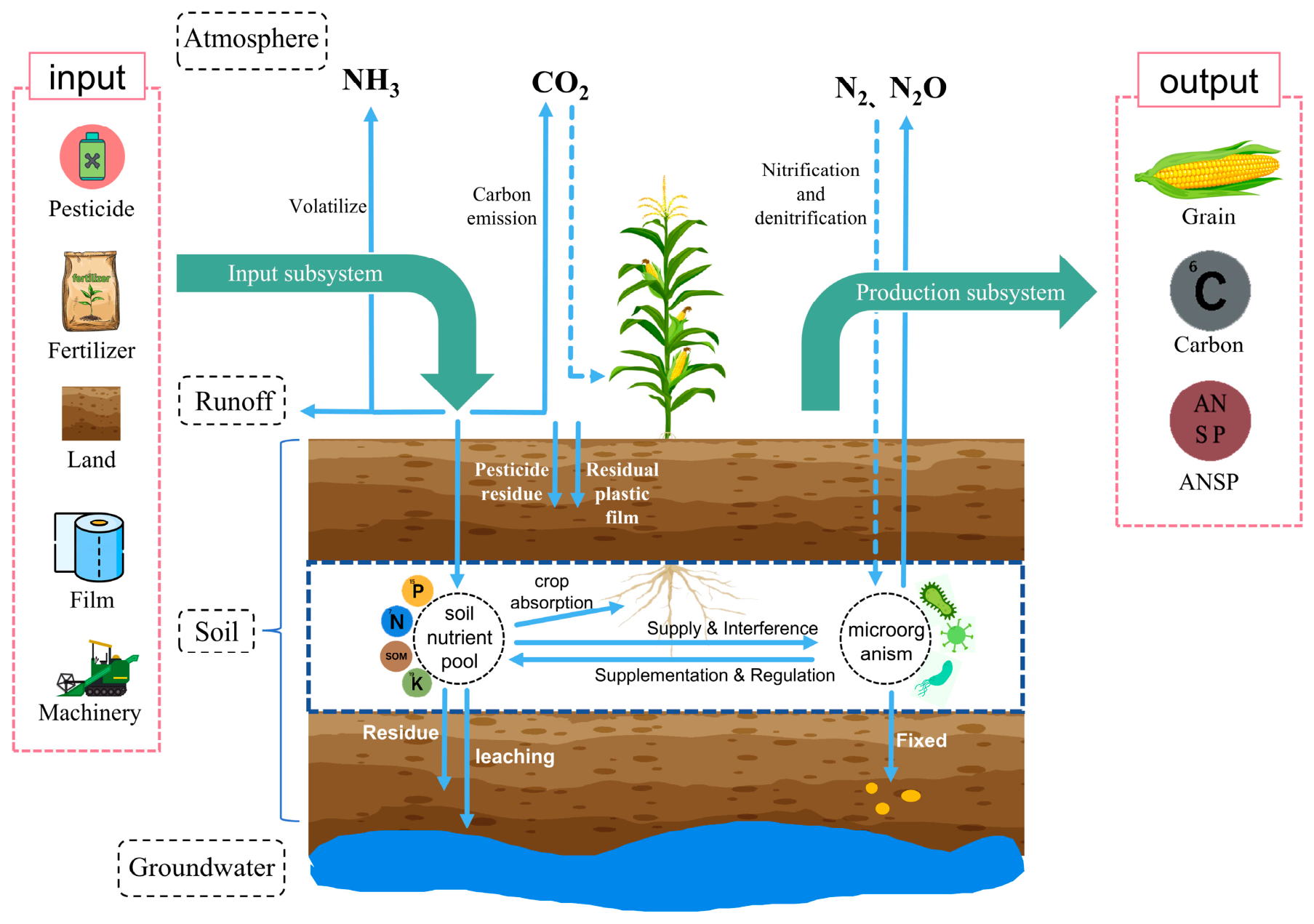
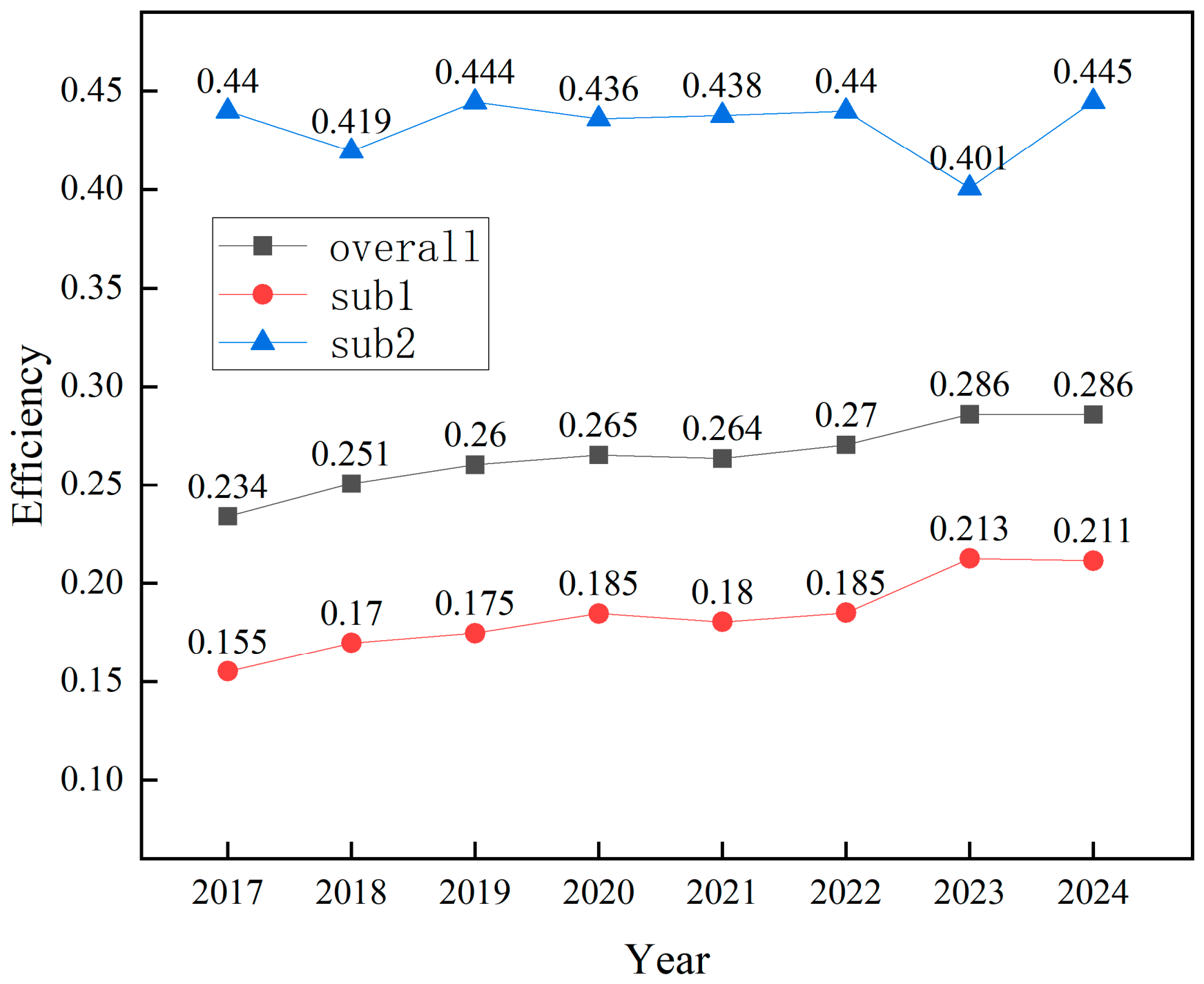
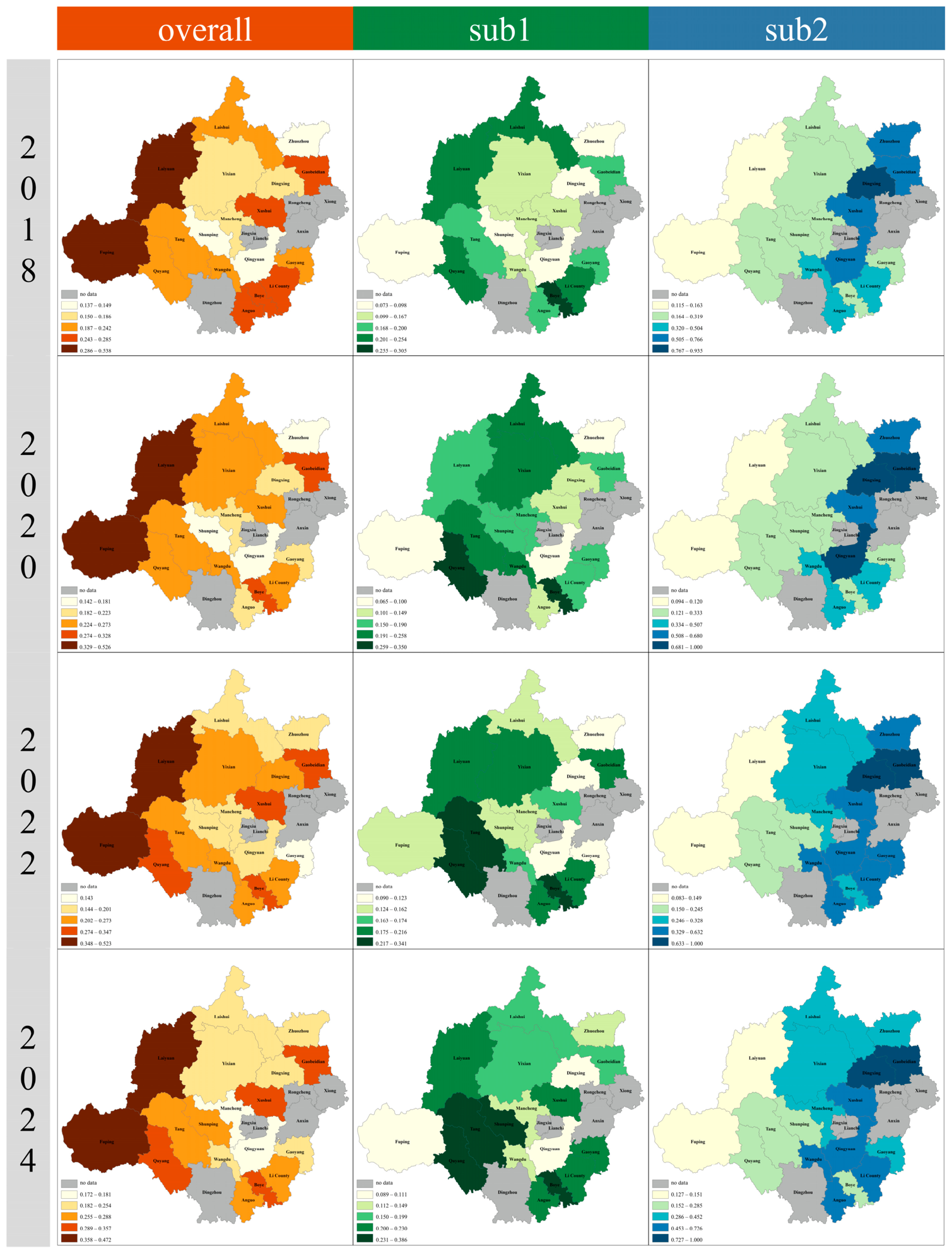
The decomposition of AGTFP into input and output subsystems revealed that the primary constraint on agricultural green productivity in Baoding was not crop production itself, but the efficiency of soil-mediated nutrient transformation within the agricultural production system. During the study period, both overall efficiency and input subsystem efficiency remained at relatively low levels, although they exhibited gradual improvements, whereas output subsystem efficiency was consistently higher and remained comparatively stable. These contrasting trends indicate that different ecological processes dominate different stages of agricultural production. Overall efficiency reflects the integrated performance of the agricultural production system by simultaneously considering external agricultural inputs, intermediate soil nutrient pools, and final agricultural outputs. In contrast, input subsystem efficiency characterizes the transformation of agricultural inputs into soil nutrient resources, whereas output subsystem efficiency represents the efficiency with which crops acquire, assimilate, and convert soil nutrients into biomass production.
Compared with previous studies, the temporal variation in AGTFP observed in this study was generally consistent with reported trends [
20], whereas the absolute efficiency values were noticeably lower. This difference is primarily attributable to the incorporation of intermediate soil nutrient transformation processes into the evaluation framework. Conventional AGTFP assessments generally assume a direct conversion relationship between agricultural inputs and outputs, thereby treating the agricultural production system as a “black box” [
45]. In reality, however, agricultural inputs must first undergo a series of physicochemical and biological transformations within the soil before becoming available for crop uptake. By introducing soil nutrients as intermediate products, the proposed “material input–soil nutrient transformation–crop production” framework explicitly represents these internal ecological processes and therefore provides a more realistic assessment of agricultural production efficiency. Consequently, the lower overall efficiency estimated in this study should not be interpreted as reduced agricultural performance, but rather as evidence that conventional input–output frameworks may overestimate production efficiency by neglecting soil ecological processes.
The relatively low input subsystem efficiency suggests that the conversion of external agricultural inputs into plant-available soil nutrients remains the principal bottleneck limiting AGTFP improvement. Soil functions not merely as a storage pool for nutrients but also as a dynamic regulator of nutrient retention, transformation, and release. Following fertilizer application, nutrients may be immobilized through adsorption, fixed by soil minerals, incorporated into soil organic matter, transformed by microorganisms, or lost through leaching, runoff, volatilization, and denitrification. Therefore, only a fraction of the applied nutrients ultimately becomes available for crop uptake. This finding indicates that improving fertilizer application alone is insufficient to enhance agricultural green productivity unless soil nutrient transformation efficiency is simultaneously improved.
Among the various soil properties, soil organic matter (SOM) plays a pivotal role in regulating nutrient cycling and maintaining soil fertility [
46]. Increasing SOM enhances soil aggregation, improves cation exchange capacity, strengthens soil water-holding capacity, and provides carbon substrates for microbial communities, thereby promoting nutrient retention and buffering nutrient losses. Moreover, soil microorganisms regulate key biochemical processes, including nitrogen mineralization, phosphorus solubilization, and potassium release, which directly determine the proportion of fertilizer nutrients transformed into plant-available forms [
47,
48]. Consequently, microbial nutrient transformation represents a critical linkage between agricultural inputs and crop production. The relatively low input subsystem efficiency observed in this study therefore likely reflects limited soil ecological functioning, including insufficient nutrient retention, suboptimal microbial activity, and reduced fertilizer use efficiency, rather than merely excessive agricultural inputs.
In contrast, output subsystem efficiency remained comparatively high throughout the study period, indicating that crop nutrient acquisition and utilization efficiency has reached a relatively stable level under the existing production conditions. Crop nutrient uptake is jointly controlled by soil nutrient availability, root system architecture, crop physiological characteristics, and genetic traits. Previous studies have demonstrated that hybrid maize contributes substantially to overcoming yield constraints [
49], while physiological characteristics [
50] and genetic regulation [
51] largely determine crop yield potential. Similarly, crop varieties exert significant influences on nitrogen and phosphorus use efficiency [
52,
53]. These biological constraints imply that, once nutrient supply exceeds crop demand, further increases in fertilizer inputs contribute little to improving crop nutrient uptake efficiency. Instead, excessive fertilizer application may reduce fertilizer use efficiency and increase environmental risks through nutrient accumulation and loss.
Previous studies have likewise shown that, under conditions of adequate soil nutrient availability [
54] and suitable soil moisture [
55], reducing excessive agricultural inputs while improving nutrient management can significantly enhance ecological efficiency. These findings suggest that sustainable improvements in AGTFP should focus on increasing the efficiency of nutrient cycling rather than maximizing nutrient inputs. Synchronizing fertilizer application with crop nutrient demand, enhancing nutrient retention within soils, and improving microbial nutrient transformation capacity are therefore more effective strategies for increasing agricultural productivity while minimizing environmental impacts [
56].
The marked decline in output subsystem efficiency observed in 2023 was most likely associated with the severe flooding event in Baoding, which affected approximately 79,000 ha of cropland according to the Hebei Rural Statistical Yearbook. Excessive soil moisture reduces oxygen availability within the root zone, suppresses microbial activity, alters nitrogen transformation pathways, and restricts root nutrient uptake, thereby weakening the conversion of soil nutrients into agricultural biomass [
57]. This observation is consistent with previous findings demonstrating that crop production efficiency is highly sensitive to extreme climatic disturbances [
58]. In contrast, soil nutrient pools generally exhibit greater resilience because soil organic matter and microbial communities provide buffering capacity against short-term environmental fluctuations. Consequently, improving soil health—including maintaining soil structure, increasing SOM accumulation, and promoting microbial activity—not only enhances fertilizer use efficiency but also strengthens ecosystem resilience under increasing climate variability [
59,
60].
Overall, the results demonstrate that the principal limitation to AGTFP in Baoding lies in the efficiency of soil-mediated nutrient transformation rather than in crop production capacity itself. From an ecological perspective, agricultural sustainability depends on maintaining the integrity of soil functions, including nutrient retention, nutrient cycling, and microbial regulation, which collectively determine fertilizer use efficiency, crop nutrient uptake, and ecosystem functioning. Therefore, future improvements in AGTFP should prioritize enhancing soil health through optimized nutrient management, organic matter accumulation, and practices that strengthen soil biological activity, thereby promoting a more efficient and resilient agricultural production system.
4.2. Comparison of Overall Efficiency and Subsystem Efficiencies
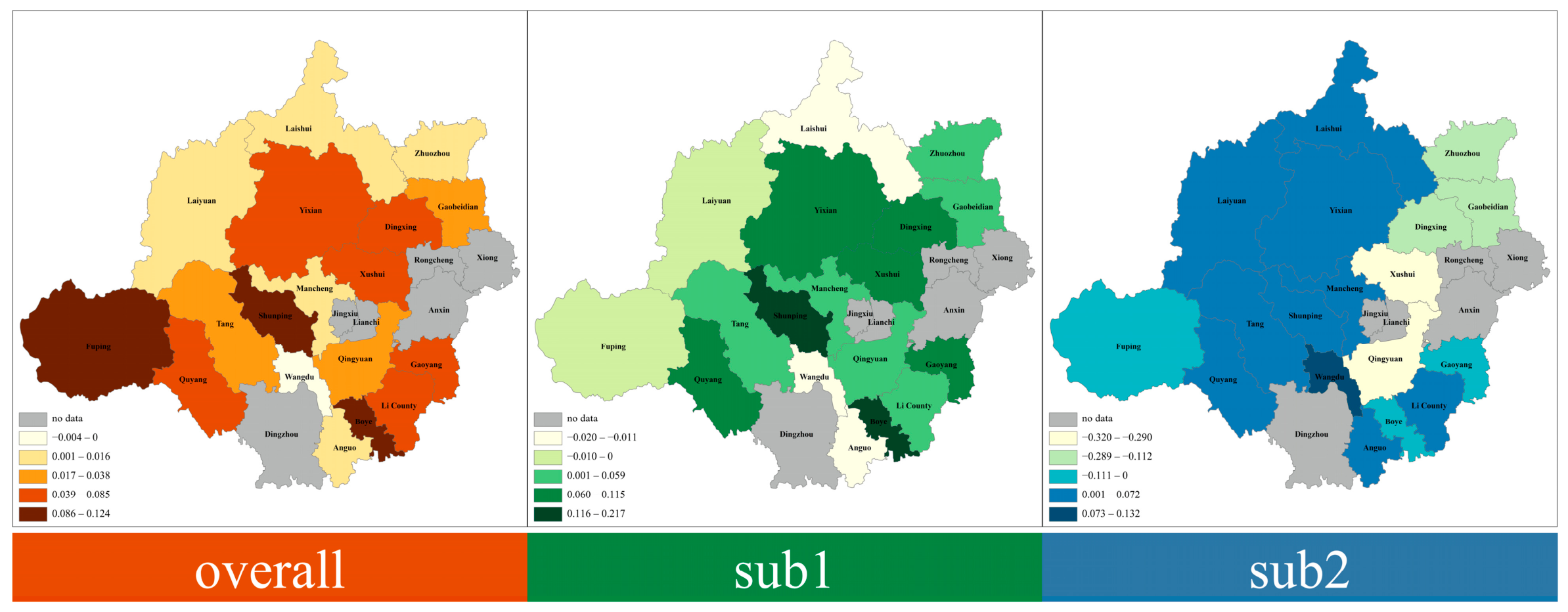
Although overall efficiency and subsystem efficiencies exhibited relatively stable spatial patterns during the study period, their contrasting geographical distributions indicate that different ecological processes govern different stages of agricultural production. Overall AGTFP displayed an evident “east-high, west-low” pattern, whereas output subsystem efficiency exhibited the opposite trend. In contrast, input subsystem efficiency showed no significant spatial clustering. These differences suggest that the mechanisms controlling soil nutrient transformation are not necessarily consistent with those regulating crop nutrient utilization, highlighting the importance of distinguishing intermediate ecological processes when evaluating agricultural green productivity.
The spatial pattern of overall AGTFP remained generally consistent with previous studies conducted in northern China [
20,
21,
61], indicating that agricultural green productivity is strongly constrained by long-term regional resource endowments. Agricultural production systems evolve under relatively stable combinations of soil properties, climatic conditions, topography, and management practices, resulting in persistent regional differences in production efficiency [
14]. Consequently, the limited temporal variation observed in this study suggests that short-term improvements in agricultural management alone are unlikely to fundamentally alter the spatial distribution of AGTFP. Instead, substantial improvements in green productivity require gradual enhancement of the underlying ecological functions that regulate nutrient cycling and resource utilization.
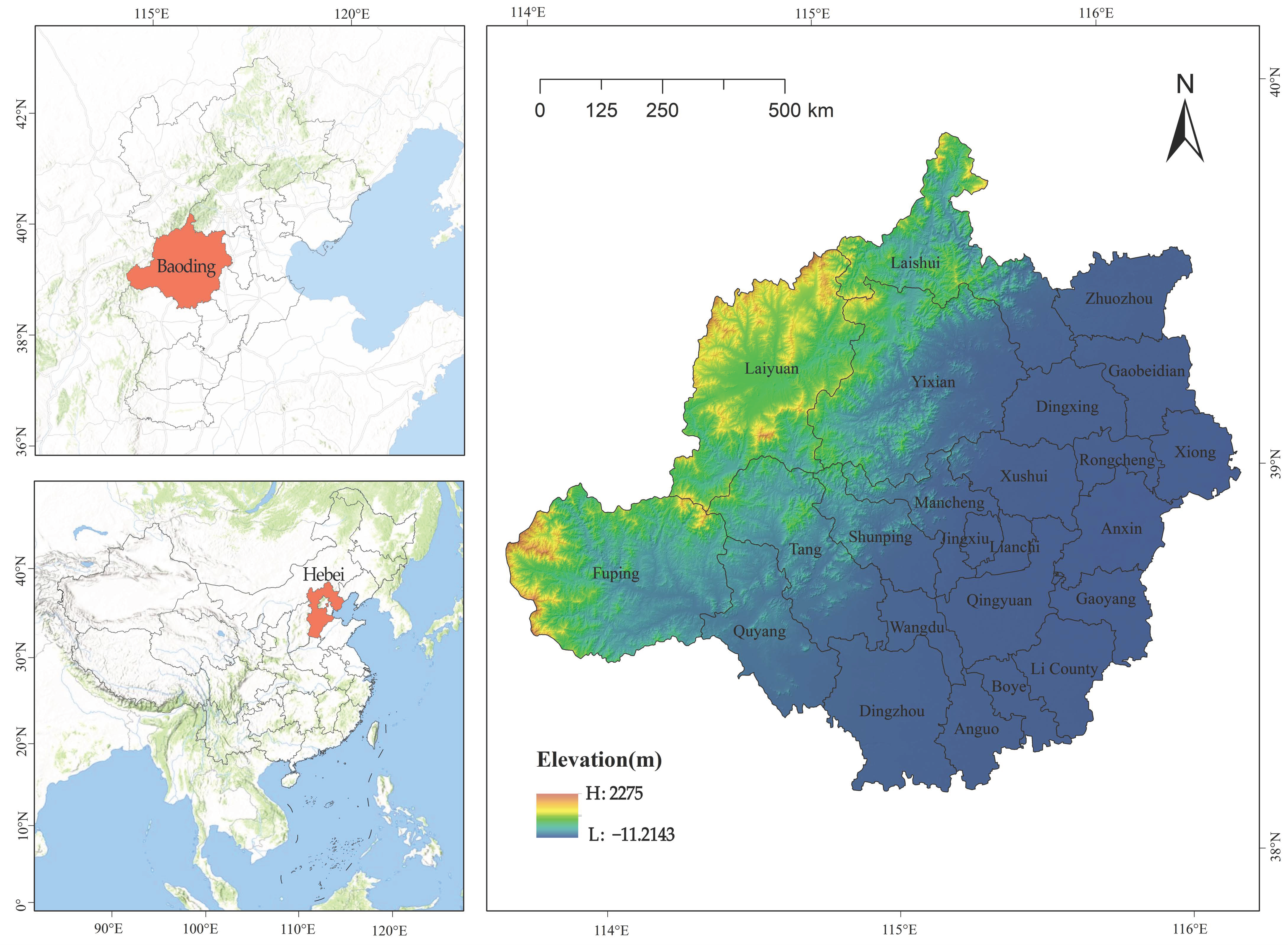
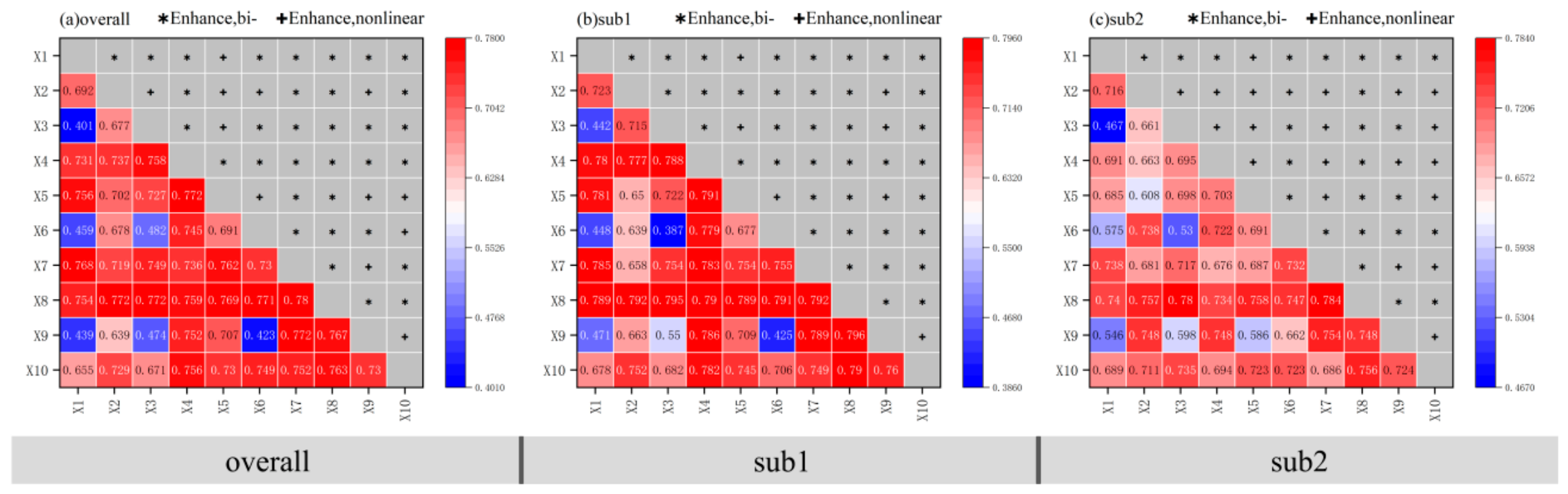
One notable finding is that output subsystem efficiency was more strongly influenced by topographic conditions than overall efficiency. According to the factor detection analysis, elevation contributed substantially to the spatial heterogeneity of crop nutrient utilization, whereas its influence on overall AGTFP was comparatively weak. This observation is consistent with previous studies reporting that topography generally exerts limited direct effects on AGTFP [
62]. However, topography indirectly regulates agricultural production by influencing soil moisture redistribution, erosion intensity, drainage conditions, and nutrient transport processes. In western Baoding, where elevations are generally higher, greater surface runoff and soil erosion may accelerate nutrient losses while simultaneously reducing soil waterlogging, thereby creating relatively favorable conditions for crop root development and nutrient acquisition. Conversely, lower-lying eastern areas generally possess higher soil moisture availability and stronger nutrient retention capacity, which may promote the accumulation of soil nutrient pools but does not necessarily translate into higher crop nutrient use efficiency. These contrasting responses help explain why overall AGTFP and output subsystem efficiency exhibit different spatial distributions.
The absence of significant spatial clustering in input subsystem efficiency further suggests that soil nutrient transformation processes are regulated primarily by local management practices rather than broad geographical gradients. Unlike natural environmental factors, agricultural inputs such as fertilizer application, irrigation management, and cultivation practices are relatively homogeneous across Baoding because of similar cropping systems and coordinated agricultural policies [
6,
22,
23,
43]. Consequently, differences in nutrient transformation efficiency are more likely to arise from variations in soil ecological functioning than from differences in management intensity alone. Soil organic matter content, microbial community composition, and nutrient buffering capacity can vary considerably even under similar fertilization regimes, leading to substantial differences in fertilizer use efficiency and nutrient retention at the field scale. This finding further supports the rationale for explicitly incorporating soil nutrient transformation into AGTFP assessment, as these ecological processes cannot be adequately represented using conventional input–output frameworks.
From the perspective of ecosystem functioning, the contrasting spatial distributions of subsystem efficiencies illustrate the decoupling between soil nutrient accumulation and crop nutrient utilization. High soil nutrient content does not necessarily indicate efficient agricultural production if nutrients remain unavailable for plant uptake or are vulnerable to environmental losses [
63]. Conversely, high crop nutrient uptake efficiency cannot compensate for inefficient nutrient transformation if the soil fails to supply sufficient plant-available nutrients. Therefore, agricultural productivity depends not only on nutrient inputs but also on the efficiency of ecological processes governing nutrient retention, microbial transformation, nutrient mineralization, and plant acquisition. These interacting processes collectively determine soil health and ultimately regulate the sustainability of agricultural ecosystems.
The relatively stable spatial patterns observed throughout the study period also suggest that improvements in AGTFP should not rely solely on increasing agricultural inputs or adjusting production intensity. Instead, management strategies should focus on enhancing the ecological resilience of agricultural soils. Practices such as increasing organic matter inputs, improving residue return, adopting conservation tillage, optimizing fertilization schedules, and promoting beneficial microbial activity can strengthen nutrient cycling and improve soil health, thereby increasing nutrient retention and fertilizer use efficiency over the long term [
64,
65]. Compared with conventional input-oriented management, these soil-centered approaches simultaneously enhance agricultural productivity and ecosystem functions while reducing nutrient losses and environmental risks.
Overall, the spatial heterogeneity identified in this study demonstrates that the ecological mechanisms governing soil nutrient transformation and crop nutrient utilization differ substantially across the agricultural production process. By separating these two processes within the NSBM framework, this study reveals spatial characteristics that are obscured in traditional AGTFP assessments and provides a more mechanistic understanding of the interactions among soil processes, crop production, and ecosystem functioning. These findings highlight that improving agricultural green productivity requires coordinated enhancement of both soil ecological functions and crop nutrient utilization, rather than simply increasing resource inputs or maximizing crop yields.
4.3. Enhancement Strategies
The findings of this study indicate that sustainable improvements in AGTFP should focus on enhancing the ecological efficiency of the agricultural production system rather than simply increasing agricultural inputs. By explicitly incorporating soil nutrient transformation into the evaluation framework, this study demonstrates that the primary constraints on AGTFP arise from two interconnected processes: the conversion of external agricultural inputs into plant-available soil nutrients and the subsequent uptake and utilization of these nutrients by crops.
Improving fertilizer use efficiency should therefore become a key management objective. Excessive fertilizer application often exceeds the nutrient retention capacity of soils, resulting in nutrient fixation, leaching, runoff, and gaseous losses, which reduce fertilizer use efficiency and increase environmental risks. Rather than increasing fertilizer inputs, nutrient management should emphasize synchronizing nutrient supply with crop demand through balanced fertilization and site-specific management.
Enhancing soil health is fundamental to improving the efficiency of nutrient transformation. Soil organic matter (SOM) improves soil structure, nutrient retention, and water-holding capacity while providing substrates for microbial communities. Soil microorganisms regulate nutrient cycling through processes such as nitrogen mineralization and phosphorus mobilization, thereby increasing the proportion of nutrients available for crop uptake. Consequently, practices that increase SOM and stimulate microbial activity can improve fertilizer use efficiency, strengthen nutrient cycling, and enhance ecosystem resilience.
At the crop production stage, improving nutrient uptake efficiency is equally important. Crop nutrient acquisition depends not only on soil nutrient availability but also on root architecture, physiological characteristics, and field management. Optimizing cropping systems, selecting nutrient-efficient cultivars, and improving irrigation and fertilization management can better synchronize soil nutrient supply with crop demand, thereby enhancing resource use efficiency.
Overall, this study highlights that soil functions as the ecological intermediary linking agricultural inputs with crop production. Improving soil health, nutrient retention, microbial nutrient transformation, and crop nutrient uptake simultaneously can enhance fertilizer use efficiency, strengthen ecosystem functioning, and ultimately promote sustainable improvements in AGTFP. These findings provide a mechanistic basis for developing integrated soil–crop management strategies that support both food production and ecological sustainability. In practice, agricultural management should prioritize precision fertilization, integrated nutrient management, and the incorporation of organic amendments to improve soil nutrient transformation efficiency. At the policy level, promoting soil health-oriented management practices and site-specific nutrient management can improve fertilizer use efficiency while reducing agricultural non-point source pollution, thereby supporting long-term agricultural sustainability.