1. Introduction
Lettuce (
Lactuca sativa L.) is the most popular and widely consumed leafy salad vegetable worldwide [
1]. It is a high-value economic crop, with a global market that continues to expand [
2]. In Argentina, lettuce is the third most consumed vegetable, playing a fundamental role in both regional economies and family-based horticulture [
3]. Beyond its economic importance, lettuce is highly regarded for its nutritional value, as it is an essential source of fiber; vitamins A, C, and E; and various bioactive compounds, such as polyphenols and tocopherols, which contribute to the prevention of chronic diseases [
1,
4].
Despite its relevance, lettuce production faces severe challenges from phytopathogenic fungi, which can drastically reduce yields and market value. Since the leaves are the edible portion, even minor foliar lesions or discoloration can render the entire head unmarketable [
5]. Fungal diseases are a high-impact factor on agricultural yields in general. In lettuce cultivation, the main fungal diseases affecting the crop are damping-off, caused by
Sclerotinia sclerotiorum and
Sclerotinia minor, primarily affecting autumn and spring crops; stem rot, caused by
Rhizoctonia solani; downy mildew, caused by
Bremia lactucae; and gray mold, caused by
Botrytis cinerea [
6,
7,
8,
9,
10,
11,
12,
13,
14,
15]. In addition to causing these pre-harvest diseases, which can result in the loss of a large proportion of affected plants, these pathogens also cause post-harvest diseases that reduce product quality, resulting in significant production losses.
R. solani can infect lettuce through direct penetration or wounded tissues, causing losses as high as 70% in undercover cultivation [
9]. Lettuce production worldwide is severely affected by this soilborne necrotrophic fungus, the causal agent of damping-off in nurseries, collar and root rot in young plants, and bottom rot—the most economically damaging disease affecting maturing lettuce heads. The broad distribution of
R. solani in horticultural soils and its long-term persistence in crop debris pose a continuous threat to agricultural yields, highlighting the urgent need for improved management strategies, as resistant cultivars are not currently available and chemical control remains limited [
16,
17]. Conventional management relies heavily on chemical fungicides, but their use is increasingly restricted due to high costs, environmental risks, human health concerns, and the emergence of fungicide-resistant strains [
5,
18].
Genetic transformation offers a powerful alternative to traditional breeding, which is often limited in lettuce by floral architecture and sexual incompatibility with some wild relatives [
19,
20]. Lettuce is considered a model species for plant biotechnology due to its high responsiveness to tissue culture and efficient shoot regeneration [
21,
22]. Despite the existence of numerous publications on lettuce transformation, no genetically modified (GM) lettuce has yet received commercial approval [
23].
Transgenesis has been effectively used to confer resistance to pathogens by overexpressing antifungal genes, such as antimicrobial peptides and pathogenesis-related (PR) proteins. Previously, we demonstrated that overexpressing the snakin-1 peptide from
Solanum chacoense in lettuce significantly enhanced tolerance to
R. solani and
S. sclerotiorum [
17]. Other strategies include the heterologous expression of oxalate decarboxylase to detoxify fungal virulence factors like oxalic acid, thereby enhancing resistance to
Sclerotinia species in lettuce [
24]. According to the International Service for the Acquisition of Agri-biotech Applications (ISAAA) GM Approval Database, approved crops with antifungal resistance traits are limited to potato and banana expressing R-genes [
23].
Among PR proteins, chitinases (PR-3, PR-4, PR-8, and PR-11) are particularly effective. These enzymes catalyze the hydrolysis of linkages in chitin, a structural component of fungal cell walls that is absent in plant cells [
25]. Chitinases reinforce inducible defense responses in plants and are located in tissue areas where they are most effective against invading pathogens, such as the extracellular space [
26]. The heterologous expression of chitinase genes has been shown to improve resistance against various pathogens in numerous crops, including wheat [
27], rice [
28], strawberry [
29], and cotton [
30]. In lettuce, a rice chitinase gene was expressed, resulting in enhanced tolerance to
S. sclerotiorum in T0 detached leaves [
31]. Specifically, the
ch5B gene from
Phaseolus vulgaris, used in the present work, encodes a class I chitinase that has been successfully used to reduce symptoms of
R. solani and
B. cinerea in transgenic tobacco, canola [
32], and strawberry [
29].
Most previous studies, such as the expression of rice chitinase in lettuce or ch5B in tobacco and strawberry, have primarily focused on the T0 generation or used detached leaf assays, leaving the long-term stability and whole-plant efficacy in subsequent generations largely unaddressed. Furthermore, there is a critical lack of information regarding the agronomic performance and “substantial equivalence” of these transgenic lines under actual field conditions. The potential for a growth–defense trade-off, where the constitutive expression of defense genes might penalize yield in the absence of pathogens, is an essential factor for commercial viability that has seldom been tested in GM lettuce.
To address these gaps, this work was designed to provide a comprehensive evaluation of transgenic lettuce lines overexpressing the ch5B gene under the control of the chrysanthemum rbcS1 promoter, chosen to ensure transgene stability across generations. The novelty of this study lies in its multi-tiered approach: we evaluated homozygous lines from the T2 to T5 generations through a progression of assays, including in vitro mycelial inhibition, seedling challenges, and greenhouse evaluations of adult plants against R. solani. Crucially, this study culminated in two seasons of field trials to assess agronomic performance and demonstrate substantial equivalence to non-transgenic counterparts, providing a foundation for the future commercial development of fungus-resistant lettuce.
2. Materials and Methods
2.1. Plant Materials
Lettuce (Lactuca sativa var. Grand Rapids) seeds were provided by the germplasm bank of Estación Experimental Agropecuaria INTA La Consulta (Ex-Ruta 40 km 96, La Consulta, San Carlos, Mendoza, Argentina). Grand Rapids is a loose-leaf type of lettuce that has no known resistance or tolerance to the fungal pathogens used here.
2.2. DNA Construct
The ch5B chitinase gene from Phaseolus vulgaris (GenBank accession S43926.1) was amplified by PCR from the pHGC39 vector (kindly provided by L. Hernández, Centro de Ingeniería Genética y Biotecnología, Havana, Cuba), using the primers 5′ ATGGGATCCCAGTGTCACTGAGAGGTGA 3′ and 5′ GAGATCTAGAAATGAAGAAGAATAGGATGATG 3′.
The PCR (50 μL) contained 30 ng of template DNA, 1 × reaction buffer, 2.5 mM MgCl2, 0.2 mM of each dNTP, 0.1 μM of each primer and 2.5 U of Taq DNA polymerase. Amplifications were performed in a Programmable Thermal Controller-100 Thermal Cycler (M. J. Research Inc., St. Bruno, Quebec, Canada). Following an initial denaturation step at 94 °C for 2 min, eight touchdown cycles were conducted (94 °C for 30 s, 58–51 °C for 60 s, decreasing the annealing temperature by 1 °C per cycle, and 72 °C for 90 s). Subsequently, 30 cycles were performed at 94 °C for 30 s, 50 °C for 60 s, and 72 °C for 60 s, followed by a final extension at 72 °C for 10 min.
The amplified fragment was cloned using a pCR8/GW/TOPO TA Cloning kit (Invitrogen, Waltham, MA, USA) according to the manufacturer’s instructions. The resulting entry clone was recombined into the pK7WGR Gateway destination vector using LR Clonase (Invitrogen, Waltham, MA, USA), generating the binary transformation vector, pKCh5BR.
The pK7WGR Gateway vector was derived from pK7WG2 [
33] by replacing the constitutive
CaMV35S promoter with the chrysanthemum
rbcS1 promoter [
34]. This modification was implemented because the
CaMV35S promoter has been associated with transgene instability in lettuce, resulting in transgene loss after three generations [
35]. The vector also contains a kanamycin resistance cassette composed of nopaline synthase
pnos promoter, neomycin phosphotransferase
nptII gene and nopaline synthase
tnos terminator.
2.3. Transformation Assays
All transgenic lines were obtained following Curtis et al. [
22], with modifications incorporated in our lab [
36] using the
R. radiobacter LBA4404 strain. Briefly the modifications were: (1) adding to the disinfection procedure a final passage in a PPM
TM solution (20 mL/L, Plant Cell Technology, Washington, DC, USA) with MgCl
2 (0.05 mg/mL) at 4 °C in darkness ON; (2) performing germination in MS1/2 medium with 48 h of semi-darkness, and then transferring them to light; (3) adding a new co-culture passage with the addition of acetosyringone (58.8 mg/L); (4) modifying the culture medium used in the first regeneration step (SIM medium) by adding trans-zeatin (2 mg/L); and (5) starting to use a medium supplemented with NAA (0.1 mg/L) to promote rooting. Selection of successive generations to achieve homozygosity was performed according to Darqui et al. [
37], using rooting on a kanamycin-containing medium as the selection criterion. In the T1 generation, plants displaying a 3:1 segregation ratio were selected. In the T2 generation, only progeny exhibiting 100% rooting on the selective medium were retained. Lettuce is predominantly self-pollinating, and although cross-pollination is extremely rare, the inflorescences were covered with tissue bags to prevent accidental crossing.
In vitro culture was performed in a growth chamber (Versatile environmental test chamber, Sanyo Electric Co, Moriguchi, Japan) with a 16/8 h light/dark cycle, 55% humidity and a temperature of 23 °C. Greenhouse conditions were a 16/8 h light/dark cycle and a temperature of 18–22 °C.
Six plants (1-1.7, 1-1.16, 3-2.2, 3-4, 4-2.4, 4-5.3) were isolated from three different calluses, and based on different results, some of the lines generated from these plants were chosen for further testing.
Transgene presence was evaluated by PCR in different generations with specific primers for the
ch5B gene (5′ ATGGGATCCCAGTGTCACTGAGAGGTGA 3′ and 5′ GAGGGCGCTGAGATCAGTAG 3′) and in T3 by a Southern blot assay with a probe for the
nptII gene (
Supplementary Figure S1). The expression levels of the
ch5B transgene were characterized in T2 plants by quantitative PCR (qPCR) using Elongation Factor 1a (
EF-1a) as a reference gene (
Supplementary Figure S2).
2.4. Fungal Strain
The Rhizoctonia solani AG-3 strain was provided by the Área de Bioinsumos Microbianos, IMyZA (Nicolás Repetto s/n, Hurlingham, Buenos Aires, Argentina). Mycelial discs (5 mm) were cut from the full-grown plate, transferred onto fresh PDA (potato dextrose agar, BD Difco, Franklin Lakes, NJ, USA) media plates every 30 days and cultured in an incubator (dh4000bII MiLab, Huanghua, China) at 25 °C.
2.5. Pathogen Infection Assays
Ten grams of ground tissue from 42-day-old plants (T2 ch5B plants and non-transgenic (NT) plants) were mixed with 20 mL of sodium phosphate buffer (pH 7), incubated at room temperature for 40 min and centrifuged at 12,000×
g. The supernatant was first poured through paper filters (type 0859, Schleicher & Schuell, Dassel, Germany) and then filtered with a 0.2 µm syringe filter (SLGV033R, Millipore, Burlington, MA, USA) in sterile conditions. The obtained extract was mixed with PDA (Potato Dextrose Agar) to prepare 5%
w/
v plates [
17,
38].
A 5 mm diameter disc of R. solani mycelium was placed in the center of each plate and cultured in an incubator at 25 °C. Three technical replicates (plates) of three biological replicates (plants) were evaluated. Mycelial growth was recorded for three days; each plate was photographed, and ImageJ software version 1.54g was used for area measurement.
The growth inhibition zone area was used as the response variable. Technical replicates were averaged within each biological replicate, and the resulting biological replicate means were used as the experimental unit. One unsupported NT observation represented by a single technical replicate was excluded before analysis. Line effects were evaluated using a linear model. When significant differences were detected, adjusted means were separated using the Di Rienzo, Guzmán and Casanoves (DGC) multiple comparison test [
39], which groups means into statistically homogeneous classes at the selected significance level. These groups are indicated by different letters in the bar plots.
After selection in MS1/2 with kanamycin, two-week-old seedlings from the T3 ch5B and NT lines were transferred to flasks with MS1/2 medium without kanamycin, placing one seedling per flask (n = 7–10). Subsequently, they were inoculated with two 5 mm discs of actively growing fungal culture situated on each side of the plant after 1 week. The analysis was performed 7 days postinoculation, evaluating the coloration and degree of wilting of the leaves. At the same time, uninoculated plants from each line were maintained to observe their growth in a pathogen-free medium.
The proportion of green leaves was used as the response variable. Proportions were arcsine square root-transformed before statistical analysis. Line effects were evaluated using a linear model fitted to the transformed values. Adjusted means were compared using the DGC multiple comparison test. For graphical representation, adjusted means and standard errors were back-transformed and shown on the original proportion scale.
Seeds were germinated in MS1/2 with kanamycin for two weeks, transferred to MS1/2 without kanamycin for an additional two weeks and then transferred to 350 mL pots. Twenty rosette-stage plants from each of the T3 ch5B 1-1.16 and 3-4 lines and the NT line were inoculated with R. solani on the adaxial surface of five healthy leaves with the same level of development using 4 mm diameter PDA discs covered with young fungal mycelium and fixed to the leaf using transparent adhesive tape.
The plants were randomly placed in plastic trays containing water, inside a nylon booth that maintained high ambient humidity to promote fungal growth.
After two weeks, successfully inoculated leaves were cut, and images were obtained using a Photosmart D110 scanner (HP, Palo Alto, CA, USA) and analyzed using ImageJ software version 1.54g.
Leaf damage area was measured for individual leaves of each line. To avoid pseudoreplication, leaf-level measurements were averaged within each plant, and plant means were used as the experimental unit. Line effects were analyzed using a one-way linear model, followed by mean separation with the DGC multiple comparison test [
39]. Descriptive statistics were calculated from plant-level means.
2.6. Phenotypic Characterization of Selected Lines
Seeds were weighed on a scale in 5 groups of 100 seeds, and the average weight was calculated to determine the weight of 100 seeds. Size was determined by placing twenty seeds on graph paper, taking photographs and measuring areas using ImageJ software version 1.54g.
Seeds were germinated in MS1/2 medium for 48 h (n = 50). The germination rate (number of germinated seeds/number of total seeds × 100) was calculated considering radicle emergence as germination.
Root length (mm) was measured after 8 days of in vitro culture in MS1/2 medium for seedlings germinated in single-well plates with a lid (Nunc™ OmniTray™, Thermo Fisher Scientific, Waltham, MA, USA), where part of the medium was removed to allow seedling growth, and plates were placed in a vertical position (n = 18). Fresh weight (mg) was determined after 15 days (n = 15).
Plants (n = 15) were germinated in 350 mL pots. After 42 days in the greenhouse, stem diameter was measured between leaves 3 and 4 using a Vernier caliper, the number of leaves was counted and the length and width of a leaf from each plant were measured using a ruler (leaf 6 or 7, which corresponds to the largest leaf of each plant).
After 49 days of cultivation in the greenhouse, some plants were cut to measure the fresh weight of the aerial part using a scale (n = 15).
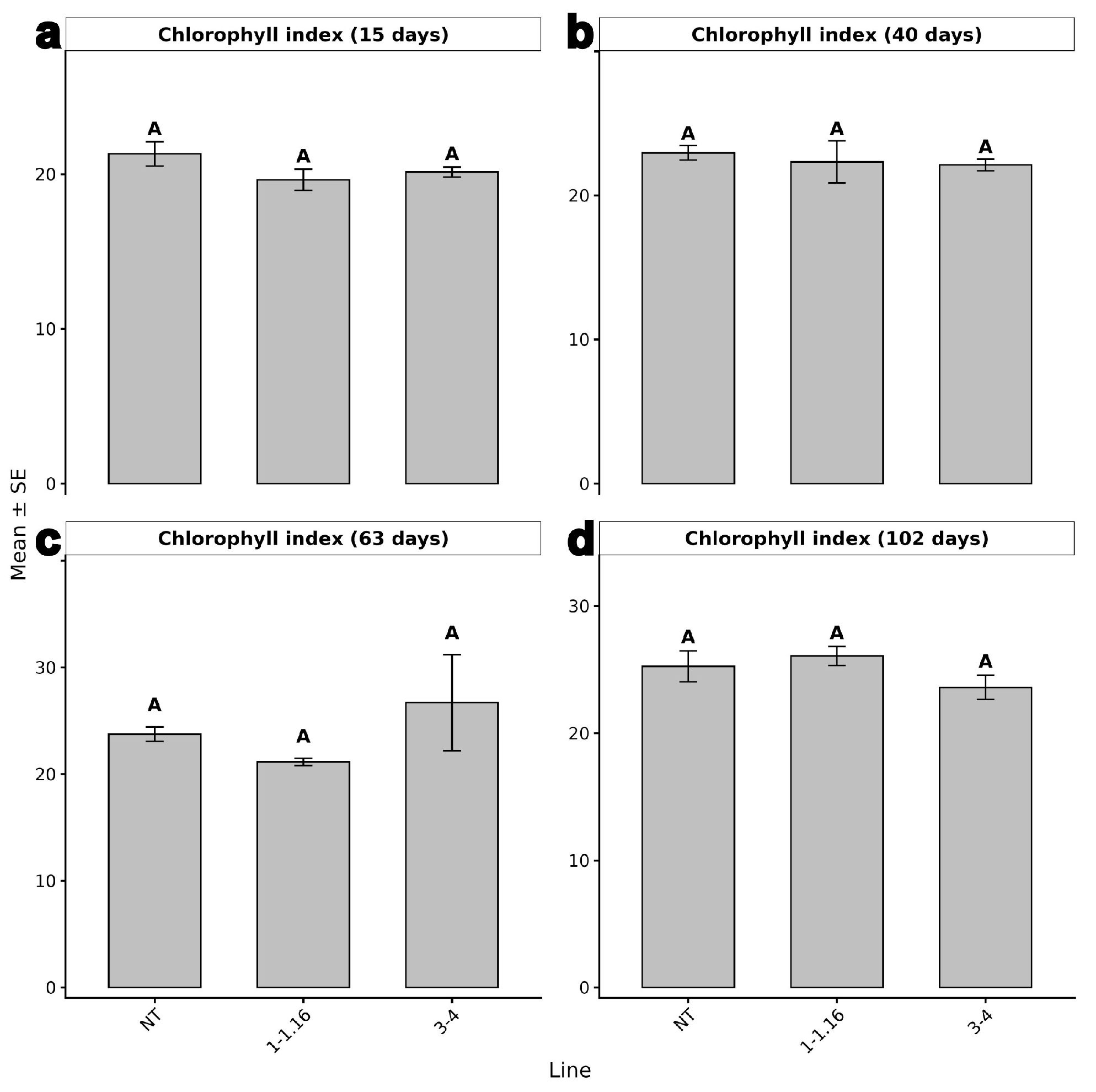
The chlorophyll index was measured with DUALEX ScientificTM (Force-A, Orsay Cedex, France) at 15, 40, 63 and 102 days (n = 7).
For each trait, line effects were evaluated using a one-way linear model with line as the explanatory factor. Estimated marginal means were obtained for each line, and pairwise comparisons were performed using Tukey’s test.
2.7. Field Trials
Field trials were performed during the summer (2024–2025) and winter (2025) seasons in a field near IABIMO, Buenos Aires, Argentina (
Supplementary Figure S3b). Biological containment of field trials, assay isolation, and disposal of transgenic materials were performed as established by the guidelines of the National Advisory Commission on Agrobiotechnology of Argentina (CONABIA, Argentina; EX-2023-113556335). The materials analyzed were the NT and ch5B 1-1.16 and 3-4 lines.
The materials were manually sown in multicell plastic trays to prevent accidental seed spillage and to control the number of plants sown, placing 2–3 seeds per cell. The trays were then placed in a growth chamber at 22 °C with a 16/8 h light/dark cycle (
Supplementary Figure S3a).
The percentage of emerged seedlings was calculated five days after sowing (DAS), considering true emerged seedlings when actual cotyledons were observed.
Seedlings were transplanted to the experimental field at 35 DAS. The material was transplanted onto raised beds following a randomized block design of 4, leaving only one seedling per planting site. Black plastic mulch film and a drip tape irrigation system were placed on each raised bed.
The height and width of the plants were measured with metal rulers at 98 DAS.
The plants were not allowed to reach the flowering stage as a containment measure for regulated trials. The plants were harvested by cutting the aerial part of the plant at 112 DAS. Fresh weight was measured using a scale, the number of leaves was counted, and damage from naturally occurring fungal infections was assessed (
Supplementary Figure S3c). Some of the plants were oven-dried at 55 °C for 3 days and used for dry weight determination.
Phenotypic traits were evaluated in two independent field trials. Plant height, leaf width, leaf number, fresh weight, and dry weight were measured in individual plants, and measurements were averaged at the plot level, with each plot corresponding to one line within one block and field trial. Plot-level means were used as the experimental unit. Field trials were analyzed separately. For each trait, line effects were tested using linear models, including block and line as fixed effects. Two-sided planned contrasts were used to compare each transgenic line with the non-transgenic control NT. Means and standard errors were calculated from plot-level values for graphical representation.
2.8. Statistical Analysis
Statistical analyses were performed using R (R Core Team, 2025) and InfoStat [
39]. Data processing, summary tables and graphical outputs were generated in R using the packages readr [
40], dplyr [
41], broom [
42], emmeans [
43], and ggplot2 [
44].
3. Results
3.1. Transformation Assays
Three independent transformed calluses (designated 1, 3, and 4) regenerated T0 plants, yielding 5, 40, and 14 plants, respectively. In the T1 generation, progeny exhibiting a 3:1 segregation ratio under kanamycin selection were selected. Due to space limitations, only eight T1 plants derived from each T0 plant were grown in the greenhouse. In the T2 generation, only lines exhibiting 100% rooting under kanamycin selection were retained. These results were confirmed by PCR analysis. Six homozygous lines were selected and designated 1-1.7, 1-1.16, 3-2.2, 3-4, 4-2.4, and 4-5.3, where the first number indicates the callus of origin and the second identifies the individual regenerated plant.
Southern blot analysis confirmed that plants regenerated from the same callus originated from a single transformation event. All selected lines exhibited a single-copy transgene insertion and identical hybridization patterns within each event (
Supplementary Figure S1).
3.2. R. solani Growth Inhibition Assays with Plant Extracts
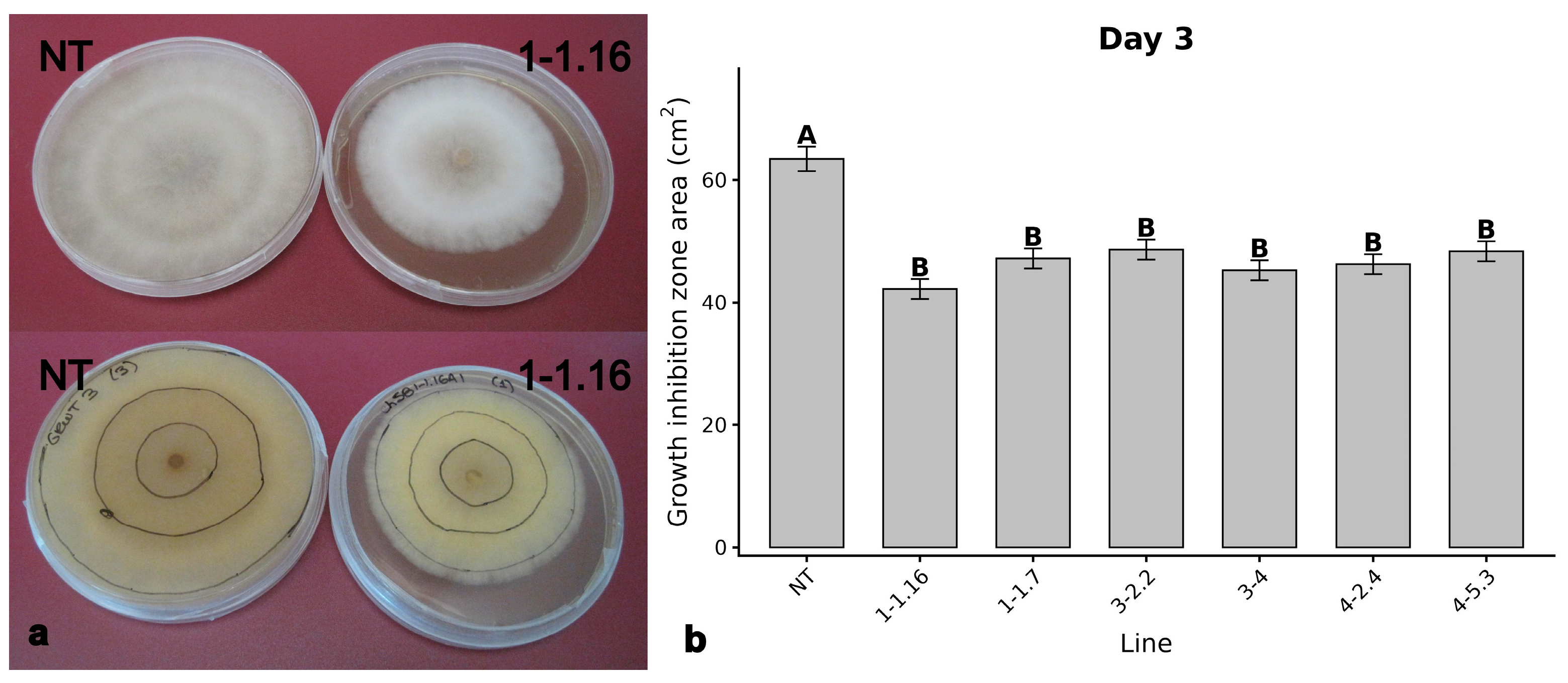
To evaluate whether plant extracts obtained from ch5B lines have a direct effect on the fungal pathogen, a growth inhibition assay of R. solani was performed on 5% plant extract PDA plates and compared with the NT line. For each line, extracts were prepared independently from three plants (biological replicates). Each extract was tested in three independent PDA plates (technical replicates).
Greater growth inhibition was observed in all ch5B lines compared to the NT line after 3 days, indicating an inhibitory effect on mycelial growth (
Figure 1).
3.3. In Vitro Inoculation Assays on Lettuce Seedlings with R. solani
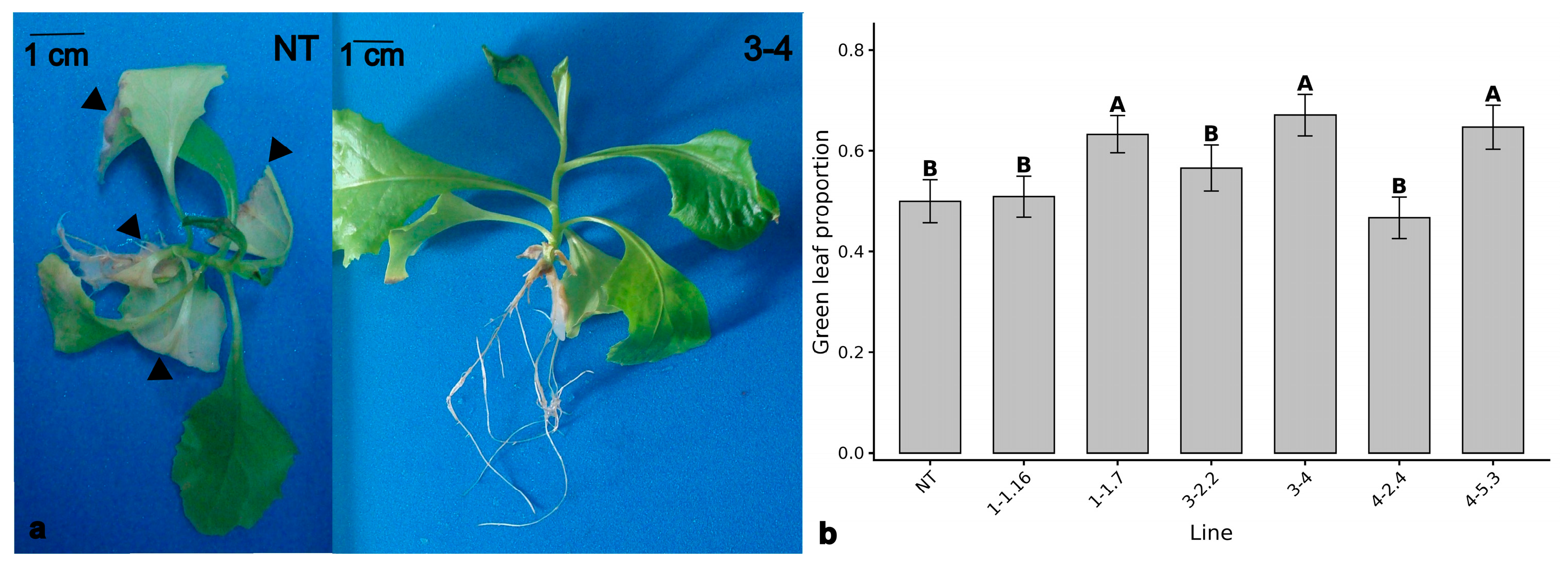
To evaluate seedling response to R. solani, two-week-old seedlings from the ch5B and NT lines were transferred to flasks, placing one seedling per flask, and inoculated with two 5 mm discs of actively growing fungal culture situated on each side. After a week, discoloration and the degree of leaf wilting on each seedling were evaluated.
Lines 1-1.7, 3-4 and 4-5.3 exhibited a higher proportion of green leaves than the NT line, indicating reduced damage caused by the fungal pathogen (
Figure 2).
3.4. Greenhouse Inoculation Trials on Adult Lettuce Plants with R. solani
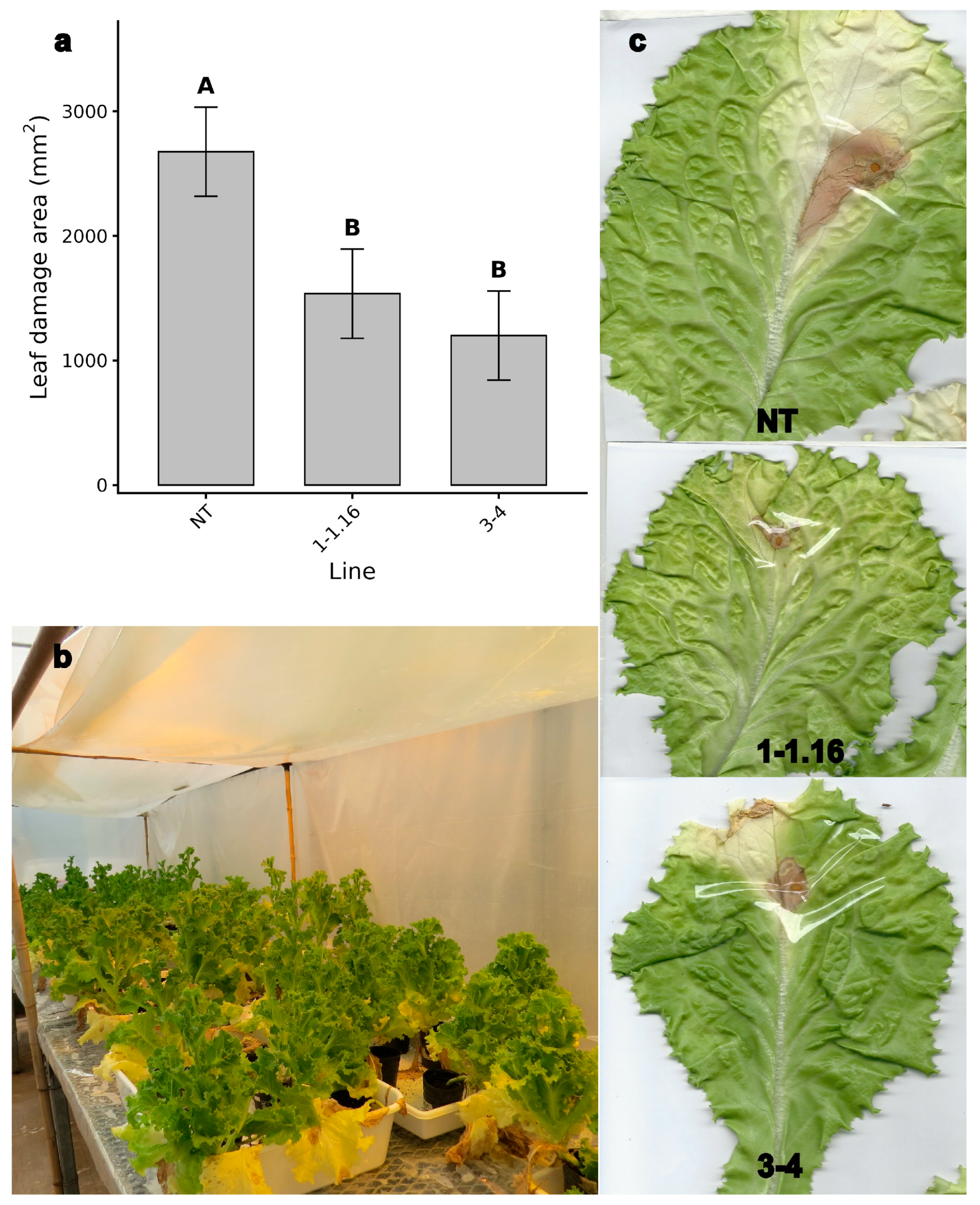
Due to limited space available in the greenhouse intended for working with fungal pathogens, two ch5B lines were selected for further analysis: ch5B 1-1.16 and 3-4.
Greenhouse inoculation trials were performed with
R. solani, placing a mycelial disc on the adaxial surface of five leaves of each plant. The area of the damage caused by the pathogen was measured for individual leaves of each line using ImageJ version 1.54g (
Figure 3).
The ch5B lines exhibited less damage than the NT line, indicating increased tolerance to the pathogen infection in the greenhouse.
3.5. Phenotypic Characterization of Selected Lines
One of the biosafety criteria established by international regulatory frameworks is that genetically modified organisms must demonstrate substantial equivalence with their conventional (non-transgenic or wild-type) counterparts, exhibiting only a few differences clearly determined by the introduced trait.
Phenotypic characteristics of the T4 ch5B 1-1.16 and 3-4 lines and the NT lines were evaluated to determine if they show any significant differences.
3.5.1. Characterization of Seeds and Seedlings
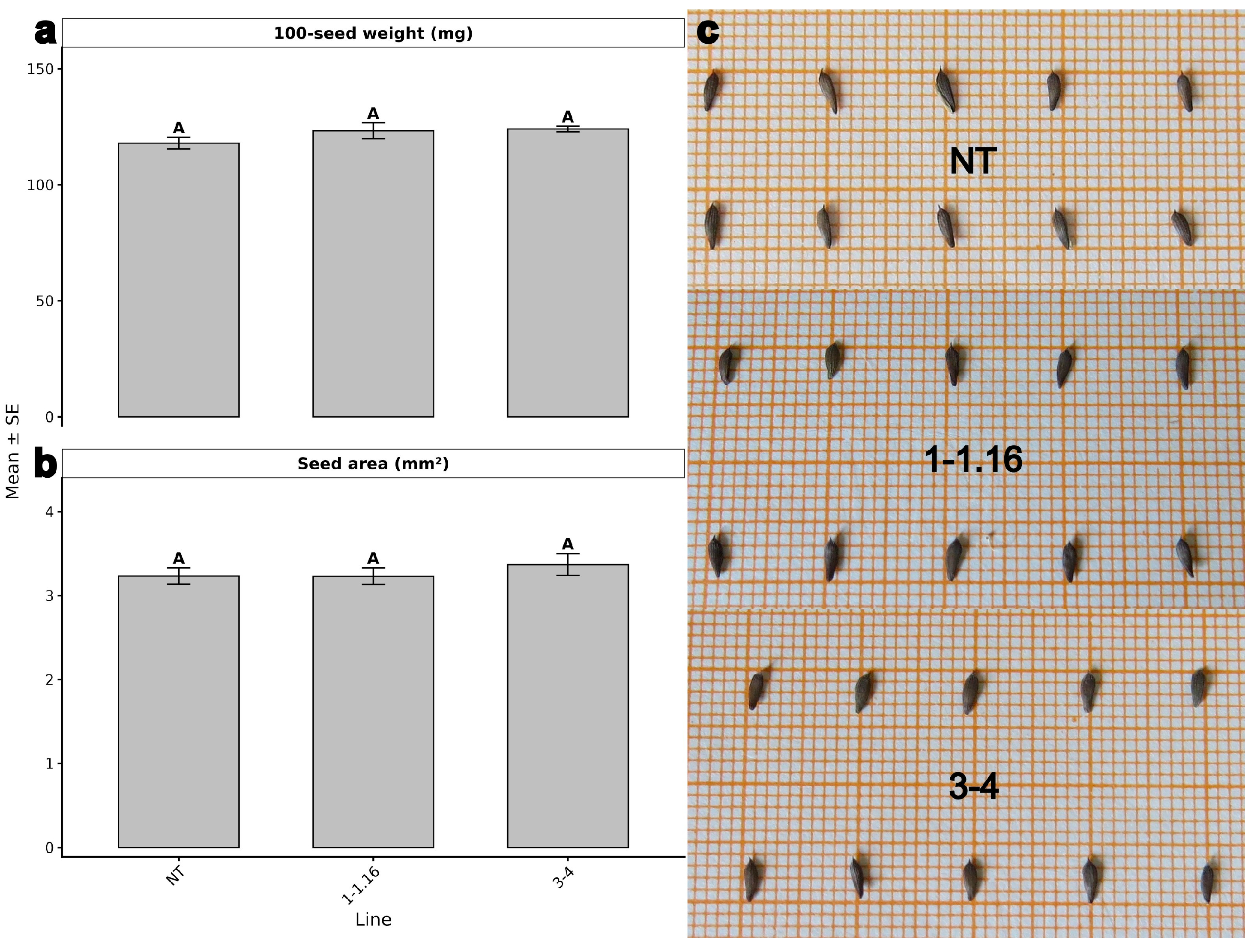
Seeds were weighed and measured using graph paper and ImageJ software version 1.54g (
Figure 4).
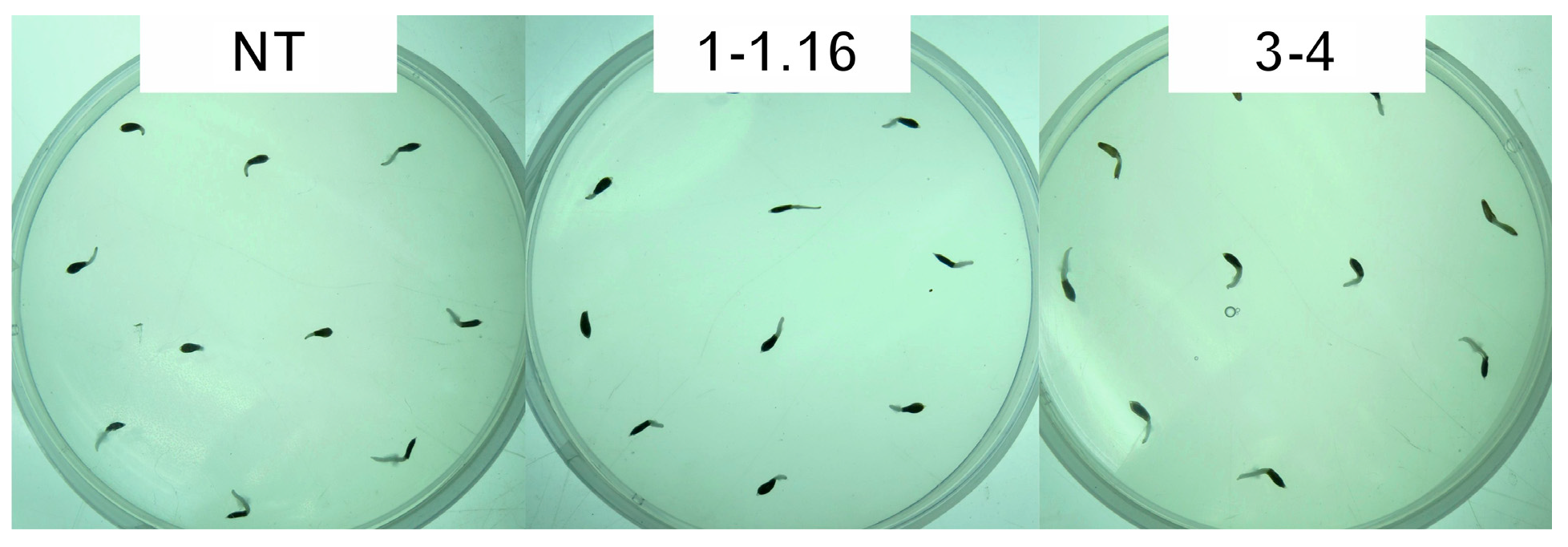
The germination rate was calculated after 48 h of in vitro culture, considering radicle emergence as germination (
Figure 5). The NT line achieved a germination rate of 100%, while the ch5B 1-1.16 and ch5B 3-4 lines showed germination rates of 88% and 98%, respectively.
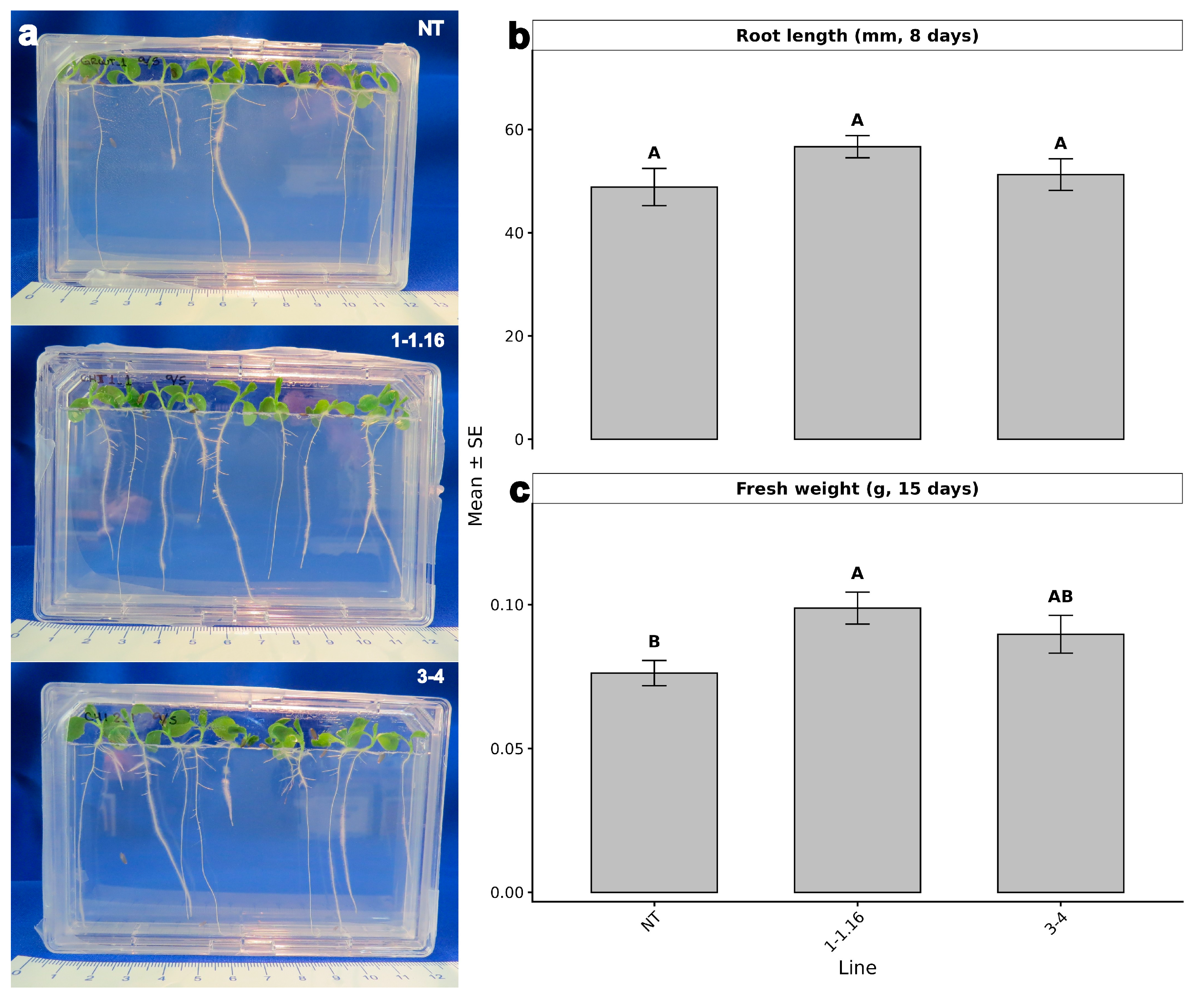
The root length of 8-day-old seedlings grown in vitro in rectangular single-well plates was measured using ImageJ version 1.54g (
Figure 6). No significant differences were found for this parameter. The fresh weight of the whole seedling was determined in 15-day-old seedlings (
Figure 6).
In these first stages, the ch5B 1-1.16 line presented a statistically significantly higher fresh weight than the NT line.
3.5.2. Characterization of Plants in the Greenhouse
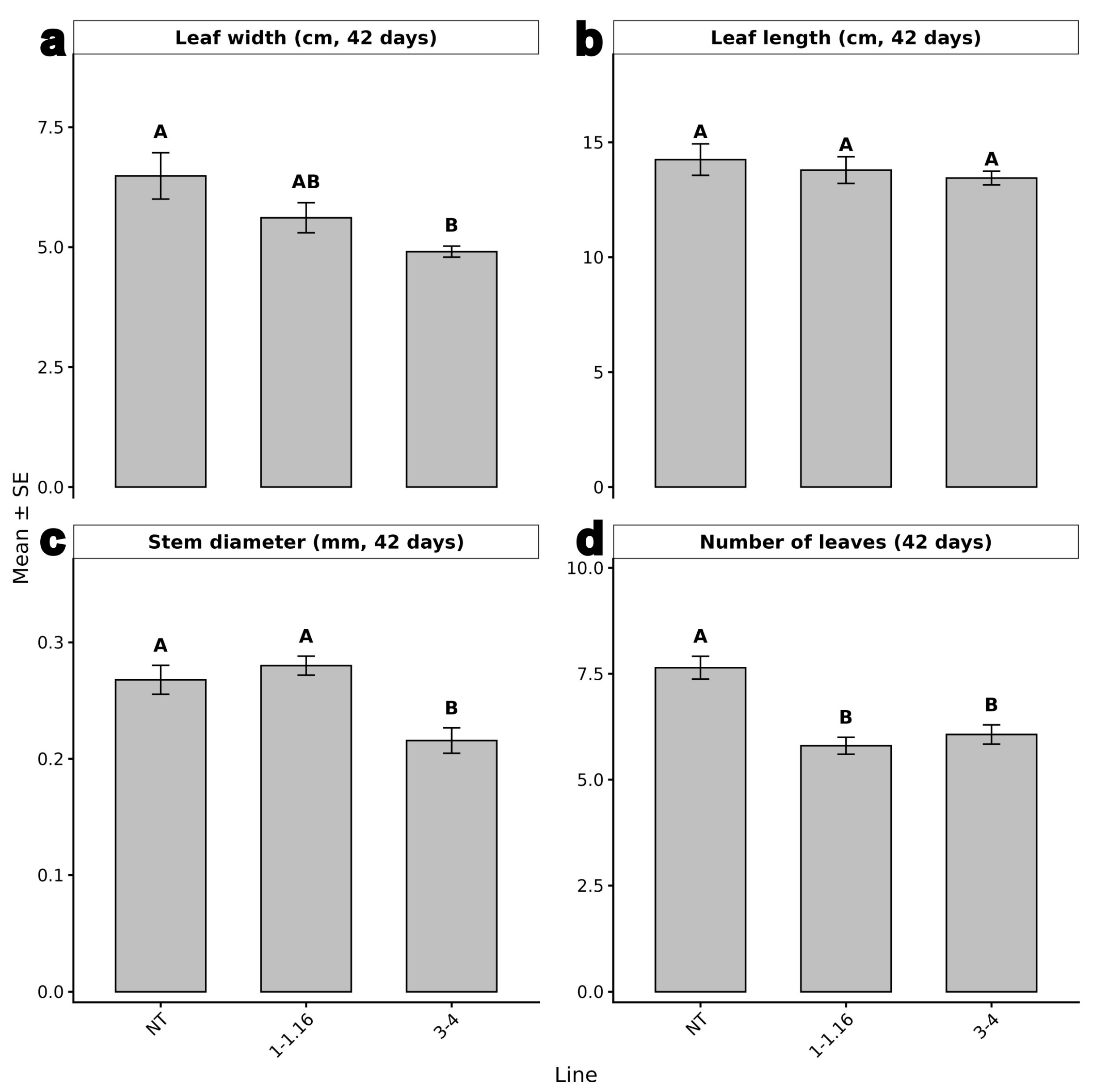
After 42 days of culture in the greenhouse, the number of leaves of each plant was counted, the width of the stem (between leaves 3 and 4) and the width and length of the largest leaf of each plant were measured and compared (
Figure 7).
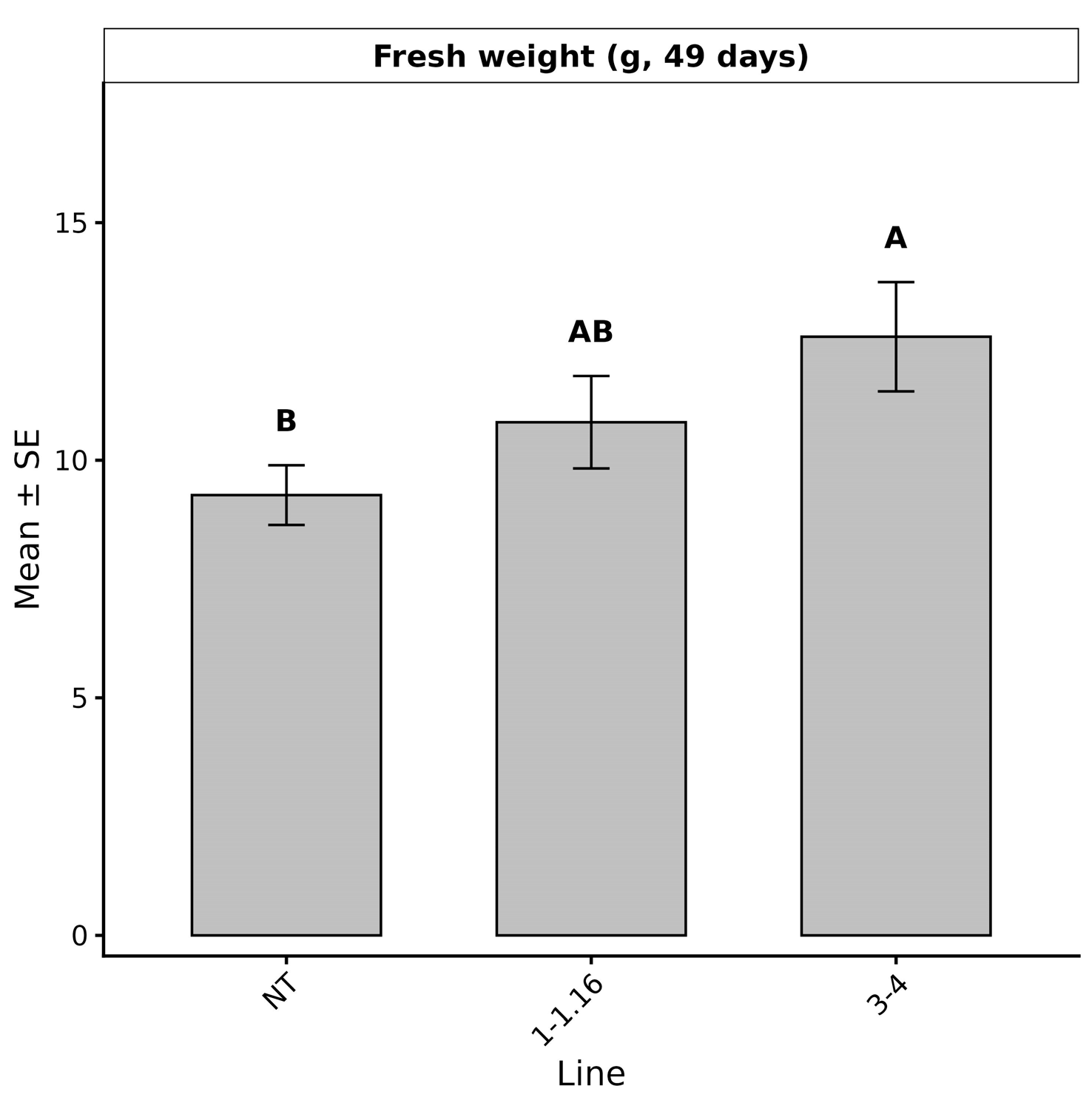
The ch5B 3-4 line presented narrower stems and leaves than the NT line. Both ch5B lines presented a lower number of leaves than the NT line; however, when fresh weight was evaluated after 49 days, the ch5B 1-1.16 line presented no difference, and the 3-4 line presented a higher fresh weight than the NT line (
Figure 8).
The ch5B 3-4 line presented narrower stems and leaves than the NT line. Both ch5B lines presented a lower number of leaves than the NT line.
However, when fresh weight was evaluated after 49 days, the ch5B 1-1.16 line presented no difference, and the 3-4 line presented a higher fresh weight than the NT line (
Figure 8).
The chlorophyll index showed no significant differences at different times (
Figure 9).
3.6. Field Trials
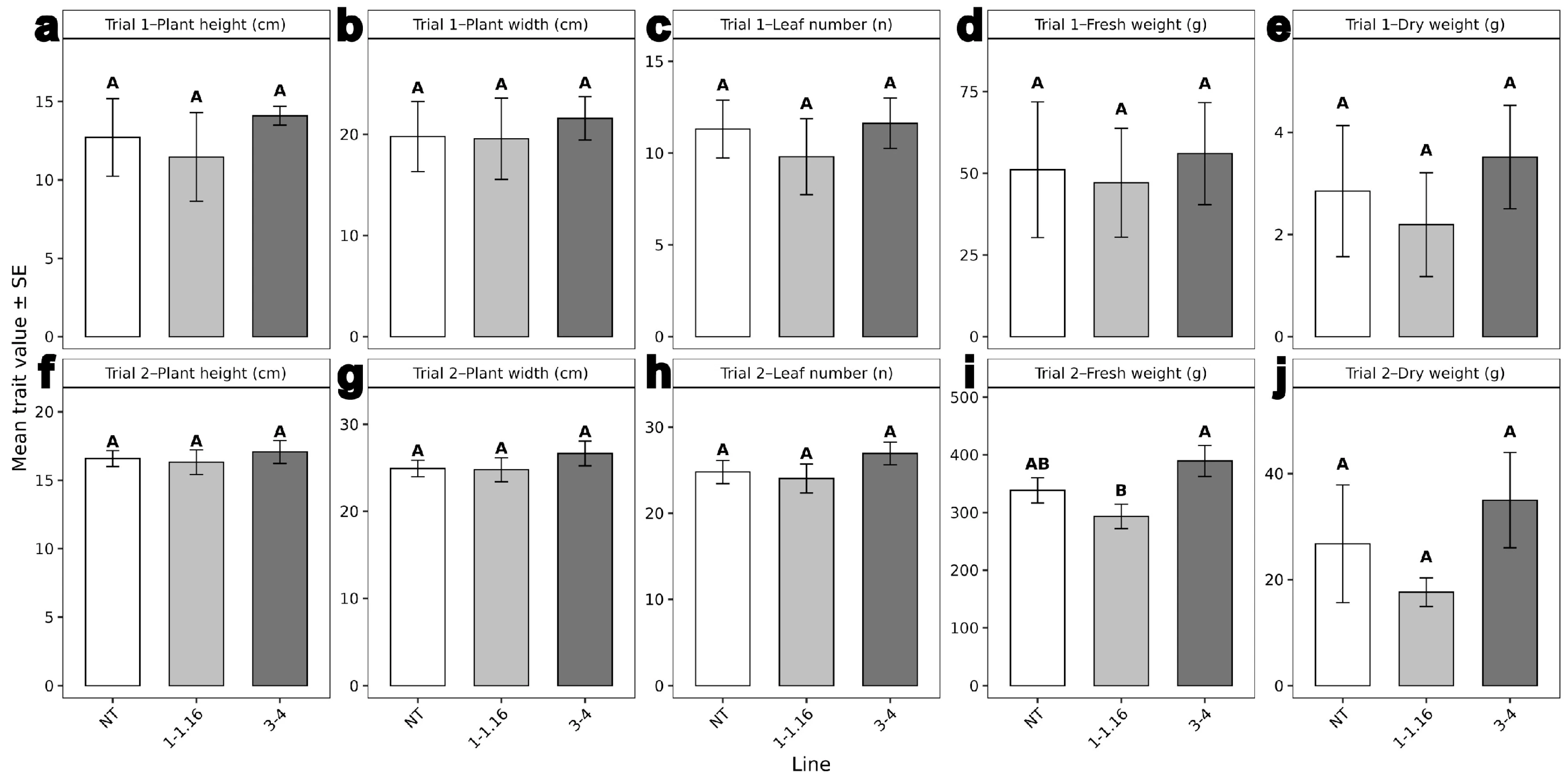
To further analyze the substantial equivalence of ch5B lines, field trials were conducted during the summer (trial 1) and winter (trial 2) seasons. Seeds were first manually sown in multicell plastic trays, and seedling emergence was recorded five days after sowing in Trial 2. The NT line showed 100% emergence, whereas the ch5B 1-1.16 and 3-4 lines reached emergence rates of 98.5% and 72.7%, respectively. Seedlings were transferred to the field following a randomized block design, and different parameters were measured (
Figure 10,
Supplementary Figure S3).
None of the measured parameters presented a significant difference when comparing the ch5B lines with the NT line. Differences observed between trials are due to the different seasons in which the trials were performed, as lettuce is a crop of temperate and cold climates.
There was no natural occurrence of infections in either of the trials; thus, it was not possible to evaluate resistance/tolerance to fungal pathogens.
4. Discussion
The development of lettuce lines expressing the bean chitinase
ch5B demonstrates that the heterologous PR protein expression remains a potent tool against the necrotrophic pathogen
R. solani. Our results agree with previous publications that were mentioned in the Introduction, in which the same
ch5B gene was incorporated into tobacco, canola [
32] and strawberry [
29]. However, in these works, tolerance to the pathogen was evaluated in the T0 generation, while our analyses were performed on the T2 generation, in the case of the inhibition assay with plant extracts (
Figure 1), and on the T3 generation for in vitro inoculation of seedlings (
Figure 2), showing the stability of the antifungal activity. Furthermore, we were able to demonstrate the response of T3 plants in the greenhouse, where the pathogen was attached to the leaves (
Figure 3), with transgenic plants presenting less damage than the NT line. A similar approach with other pathogens was carried out in lettuce expressing a rice chitinase gene, achieving tolerance to
S. sclerotiorum, and in potato expressing a barley chitinase gene, achieving tolerance to
Fusarium oxysporum [
45], although both assays were performed in detached leaves from the T0 generation [
31].
The significance of this study extends beyond the observed tolerance in controlled conditions, encompassing the successful demonstration of agronomic performance and substantial equivalence to non-transgenic counterparts under field conditions. Previous publications have assessed the cost of producing defense mechanisms in crop yields (i.e., growth–defense trade-off [
46,
47]); consequently, the constitutive expression of a transgene may cost a plant resources directed to growth in the absence of the pathogen.
Zeller et al. [
48] studied the costs of resistance to fungal pathogens in GM wheat in field trials, where GM lines performed worse than conventional lines, exhibiting lower yields. In the present work, the ch5B lines showed no differences from the NT line (
Figure 10).
Based on our experience, a case-by-case analysis is necessary from the beginning of transformation assays, as we observed that when using the gln2 glucanase gene from Nicotiana tabacum, incorporated into the same pK7WGR vector used in the present work, in vitro culture produced a reduced number of calluses and regenerated shoots, which failed to survive under in vitro conditions. These differences can only be attributed to the expressed gene (unpublished data).
The Organization for Economic Cooperation and Development (OECD) and the National Advisory Commission on Agrobiotechnology of Argentina (CONABIA) follow the principle of “substantial equivalence” for genetically modified food safety assessment. To the best of our knowledge, the present work is the first to evaluate chitinase-expressing GM lettuce in field conditions in two different seasons, where a comparative analysis between ch5B transgenic lines and a non-transgenic (NT) counterpart was performed. None of the transgenic lines exhibited significant differences in morphological or agronomic traits as compared to the NT line (
Figure 4a,
Figure 9 and
Figure 10). These results are similar to those obtained in wheat expressing the barley
chi26 chitinase gene, in which no differences were found between the GM lines and the NT counterpart in different generations [
27].
The results presented here show that there were no observable phenotypic differences between the transgenic and NT lines. However, there is a slight difference between the two transgenic lines, as the ch5B 3-4 line exhibited a higher fresh weight than the 1-1.16 line, indicating that, in this case, genetic background may play a role, as the different lines have different insertion sites.
The ch5B 3-4 line showed stable tolerance in controlled conditions across the studied generations and may therefore be selected for subsequent nutritional analyses. Additionally, further studies must be conducted in different climates and with other pathogens to assess this line. The environmental impact of this line, as well as its potential effects on non-target organisms, should also be evaluated.
It must be acknowledged that single-gene resistance is rarely sufficient to provide durable resistance in the field. The high selective pressure imposed by a single antifungal protein could eventually lead to the emergence of resistant fungal strains. Nevertheless, demonstrating that a high-expressing chitinase line can maintain agronomic substantial equivalence is a critical first step for molecular breeding. These validated transgenic lines can now serve as a foundation for gene stacking or pyramiding. Combining the cell-wall-degrading activity of
ch5B with the previously tested
snakin-1 antimicrobial peptide [
17], which targets the fungal membrane, could provide a more robust and multifaceted defense.




 ,
,