Article

Preliminary Study on Control Efficacy and Mechanism of Cyproconazole Against Southern Corn Rust

1
Plant Protection Institute, Hebei Academy of Agriculture and Forestry Sciences, National Collection of Plant-Associated Microbes (Hebei), IPM Innovation Center of Hebei Province, International Science and Technology Joint Research Center on IPM of Hebei Province, Baoding 071000, China
2
National Agro-Tech Extension and Service Center, Beijing 100125, China
*
Author to whom correspondence should be addressed.
Agronomy 2026, 16(13), 1238; https://doi.org/10.3390/agronomy16131238
Submission received: 13 May 2026 / Revised: 20 June 2026 / Accepted: 23 June 2026 / Published: 25 June 2026
(This article belongs to the Section Pest and Disease Management)

Abstract

This study clarified the field control efficacy, yield regulation effect and action mechanism of 40% cyproconazole suspension concentrate (SC) against southern corn rust caused by Puccinia polysora, aiming to provide scientific support for its registration, extension and field application. Indoor toxicity was assayed using urediniospore germination and germ tube elongation inhibition combined with seedling pot tests and field efficacy trials. Wheat germ agglutinin staining was applied to observe the pathogen infection process. Cyproconazole showed strong inhibition on spore germination and germ tube elongation, with EC50 values of 70.455 mg·L−1 and 21.686 mg·L−1. On corn seedlings, its protective and curative control efficacies reached 91.11% and 82.19%. At 45 days after application during ear maturity, the field protective and curative efficacies were 65.93–78.38% and 69.26–80.79%, respectively. Notably, the integrated control strategy with two applications achieved even higher efficacy, ranging from 73.33% to 86.80%, and a yield loss recovery rate of 54.09–54.51%, both of which were superior to those of the conventional fungicide pyraclostrobin·epoxiconazole SC. Using WGA fluorescence staining, fluorescence microscopy directly visualized that the fungicide suppressed infection by inhibiting spore germination, germ tube elongation and appressorium formation. In summary, 40% cyproconazole SC has prominent persistent control efficacy and a yield-improving effect with a definite action mechanism, which is worthy of accelerated registration and popularization for southern corn rust management.

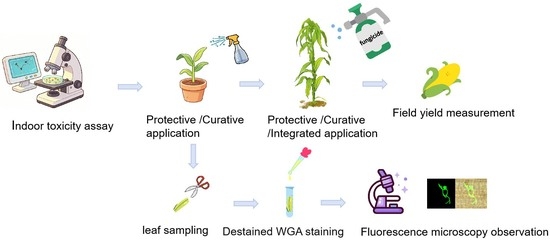
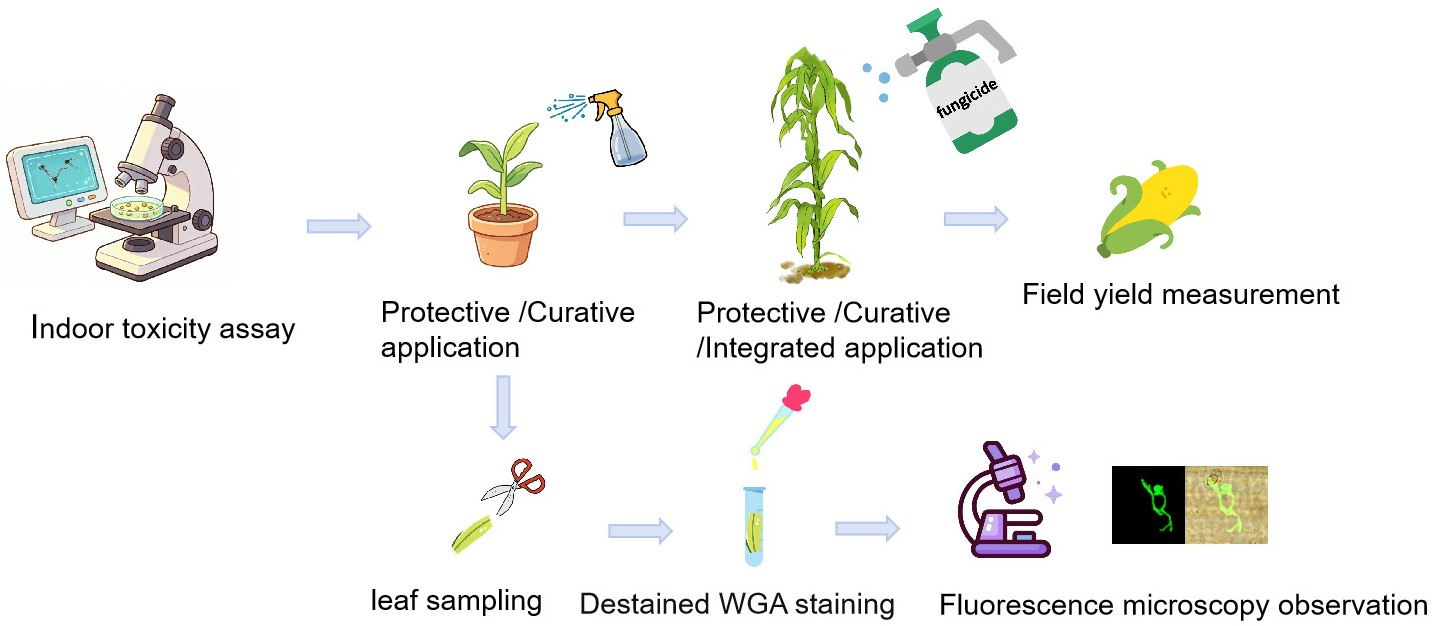
Graphical Abstract

1. Introduction

Southern corn rust caused by Puccinia polysora Underw. has intensified periodically worldwide [1,2,3]. In China, the affected area reached 5.239 million hectares, and the yield loss amounted to 756,000 tons in 2015, which were 4.5 and 8.8 times the average values from 2008 to 2014 [4]. Moderate to severe epidemics occurred in major summer maize-producing areas of the Huang-Huai-Hai region (HSMR) in 2021 and 2023, with affected areas of 5.7473 million hectares and 4.3213 million hectares, respectively. Yield losses exceeded 10% in lightly infected fields, over 30% in severely diseased fields, and total crop failure was observed in some plots [5,6]. The management of this disease currently relies mainly on resistant cultivars and chemical fungicides [7,8,9,10]. However, only a limited number of fungicides have been registered for the control of corn rust in China [11]. Therefore, screening for novel fungicides with high efficacy, low toxicity and long residual activity is of great practical significance for ensuring the safe production of maize.
Scholars at home and abroad have conducted extensive research on SCR and its chemical control [2,7,10,12], among which triazole and strobilurin fungicides are the main agents for controlling this disease [13]. Existing studies mainly focus on the curative effects after disease occurrence. Studies have confirmed that the application of epoxiconazole and pyraclostrobin at the early stage of disease can reduce disease severity by 63.04% and 57.21%, respectively [14]. Other studies have also proven that epoxiconazole and prothioconazole provide over 95% control against SCR at 14 days post-treatment [15]. Furthermore, the premixed formulation of benzovindiflupyr and pyraclostrobin achieves 83–88.58% control efficacy 15 days following the third spraying [16].
In contrast, research on protective fungicides for SCR remains relatively limited. Studies have shown that when difenoconazole and propiconazole were applied as protective measures at the bell stage, the maximum control efficacy reached only 29.91% at the time of inoculation during the tasseling stage, indicating unsatisfactory control performance [17]. Meanwhile, residual activity is a key factor limiting the efficacy of fungicides. The results from four consecutive years of field trials in Arkansas, USA, demonstrated that under two or three application regimes, the fungicidal control efficacy was essentially lost 42 days after the first application at the tasseling stage (corresponding to the physiological maturity stage, R6) [18]. This failed to provide sustained protection of maize until harvest, resulting in insufficient grain filling.
In addition, the long-term application of a single chemical fungicide tends to induce drug resistance in pathogens, further increasing the difficulty of SCR control [19]. From the perspective of the infection mechanism, the infection process of P. polysora includes five key stages: spore germination, germ tube formation, appressorium differentiation, cell invasion and hyphal expansion [20,21], each of which may serve as a potential target for fungicides to interfere with pathogen infection. The accurate dynamic observation of fungal infection structures relies on efficient staining techniques. Conventional trypan blue staining tends to damage tissues and suffers from poor sensitivity. By contrast, wheat germ agglutinin (WGA) fluorescence staining achieves high labeling efficiency, stable fluorescence and well-preserved sample microstructures. This approach has been widely applied in the research of multiple rust diseases, including wheat rust and soybean rust [22,23,24,25], and serves as a powerful technical tool to reveal how fungicides inhibit SCR pathogens.
Field investigations showed that cyproconazole has great potential for controlling SCR. As a triazole fungicide, it possesses high biological activity, a broad antifungal spectrum and favorable environmental compatibility [26]. Currently, cyproconazole is registered in China for the management of wheat rust, with field control efficacy consistently above 85% [27,28,29]. However, it has not been approved for use against SCR in maize production, which prevents its standardized and legal application in field practice. In addition, the residual activity, field performance and antifungal mechanism of cyproconazole against SCR remain poorly understood, greatly hindering its popularization and application.
Accordingly, the core hypothesis of this study is that cyproconazole can effectively inhibit the occurrence and development of SCR by suppressing the key infection processes of P. polysora, including spore germination, germ tube elongation and appressorium formation, to achieve stable and efficient field control. Combining indoor toxicity assays, seedling pot tests and field trials, this study systematically evaluated the control efficacy of cyproconazole against SCR and preliminarily explored its antifungal mechanism. The findings will provide a theoretical basis and data support for the label expansion, rational application and large-scale promotion of cyproconazole in SCR management.

2. Materials and Methods

2.1. Test Materials

The tested maize variety was Zhengdan 958 (Shouhe Seed Industry Co., Ltd., Weifang, Shandong, China). The tested strain was P. polysora Underw., which was preserved in vivo on maize leaves by the Maize Integrated Control Laboratory, Institute of Plant Protection, Hebei Academy of Agriculture and Forestry Sciences. For indoor toxicity assays, 95% cyproconazole technical material (Hubei Jiahui Xingcheng Biotechnology Co., Ltd., Wuhan, China) was used. For seedling and field experiments, 40% cyproconazole SC (Yancheng Limin Agrochemical Co., Ltd., Yancheng, China) and 35% pyraclostrobin–·epoxiconazole SC (Shandong Shibang Agrochemical Co., Ltd., Heze, China) were applied as tested fungicides.

2.2. Toxicity of Cyproconazole Against Puccinia polysora

An appropriate amount of acetone was used to dissolve the cyproconazole technical material in a clean bench, and the solution was then prepared into a stock solution of 1 × 10⁴ mg·L−1 with sterile water (containing 0.1% Tween-80). The stock solution was serially diluted into five different mass concentrations, and 5 mL of each concentration was pipetted into 45 mL of water agar medium cooled to 40~50 °C. After thorough mixing, the medium was poured into Petri dishes, with sterile water (containing 0.1% Tween-80) used as the blank control. Fresh urediniospores of P. polysora on living diseased leaves were collected onto sulfuric acid paper with a brush, then transferred into 5 mL sterile centrifuge tubes and diluted with sterile water (containing 0.01% Tween-20) to prepare a urediniospore suspension of 5 × 10³ spores/mL 150 μL. This suspension was spread on each drug-containing medium, followed by incubation at 25 °C for 24 h with three replicates set for each treatment. The number of germinated urediniospores of P. polysora was investigated, and the germ tube length was measured. A total of 200 spores were observed per Petri dish, and the spore germination rate (a spore was considered germinated when the germ tube length was greater than half of the spore length), spore germination inhibition rate and germ tube elongation inhibition rate were calculated. The calculation formulas were as follows: spore germination rate (%) = (number of germinated spores/number of investigated spores) × 100; germination inhibition rate (%) = (spore germination rate of control group − spore germination rate of treatment group)/spore germination rate of control group × 100; germ tube elongation inhibition rate (%) = (germ tube length of control group − germ tube length of treatment group)/germ tube length of control group × 100.

2.3. Evaluation of the Control Efficacy of Cyproconazole Against Southern Corn Rust

2.3.1. Evaluation of Seedling Stage Control Efficacy

The experiment was conducted in a growth chamber with a daytime temperature of 25 °C, nighttime temperature of 24 °C, relative humidity of 80%, and a photoperiod of 12 h light/12 h dark, consisting of two parts: (1) To evaluate the residual efficacy and protective activity of the fungicide, inoculation was performed at 1, 2, 3, 4, 5, 7 and 10 days after fungicide application. (2) To assess the curative activity, fungicide was applied when plants reached disease grade 1 at the early stage of infection; 35% pyraclostrobin–epoxiconazole SC, which is registered for the control of SCR in China, was used as the conventional fungicide control, and water served as the blank control. The application rates were 90 g a.i./ha for 40% cyproconazole SC and 130 g a.i./ha for 35% pyraclostrobin–epoxiconazole SC. All dosages were based on the manufacturer’s recommended rates. Maize seedlings at the three to five-leaf stage were used for inoculation with a spore suspension of 1 × 10⁵ spores/mL, with nine plants per treatment and three replications, and when disease development in the blank control was sufficient (approximately 10 days), disease severity was assessed on the third fully expanded leaf (the treated leaf) of each maize plant, with disease index and control efficacy calculated using the following formulas: ease = [Σ (number of plants in each disease grade × corresponding grade value)/(total number of assessed plants × highest disease grade)] × 100; control efficacy (%) = [(disease index of control − disease index of treatment)/disease index of control] × 100.

2.3.2. Evaluation of Field Control Efficacy

Field sowing was carried out in June 2025 at the Experimental Station of the Institute of Plant Protection, Hebei Academy of Agricultural and Forestry Sciences (Jingxiu District), and the Gucheng Experimental Base of China Meteorological Administration (Dingxing County), respectively. The planting density was set with a plant spacing of 25 cm and a row spacing of 60 cm, and each experimental plot covered an area of 20 m. The experiment was set up with three biological replicates and arranged in a randomized complete block design. Two rows of maize cultivar Zhengdan 958 were planted between adjacent plots as buffer rows. All field management measures were implemented in accordance with local conventional agricultural operation specifications.
Fungicide application was performed as follows: (1) protective control: inoculation was conducted 3 days after fungicide application; (2) curative control: fungicide was applied 7 days after inoculation when the disease developed to the early stage (disease grade 1); (3) integrated control (plus protective and curative treatments, i.e., two sprays): inoculation was conducted 3 days after fungicide application, with a second application 10 days after the first. The tested fungicides and application rates were the same as described in Section 2.3.1. All applications were sprayed uniformly in the evening using an electric backpack sprayer, with an inoculum concentration of 1 × 10⁵ spores/mL and three replications per treatment. Inoculation was carried out in the evening of late July (at the large bell stage) by uniformly spraying the spore suspension on both surfaces of maize leaves, followed by misting to maintain humidity and promote spore germination.
Disease incidence of SCR in each treatment was assessed plant by plant at 14 d, 21 d and 45 d (the ear maturity stage) after artificial inoculation, and the disease index and control efficacy were calculated accordingly; at harvest maturity, 20 consecutive ears from the middle of each plot were harvested, air-dried and measured for grain weight per ear and moisture content, with the yield loss recovery rate calculated using the following formula: yield loss recovery rate (%) = [(grain weight per ear of treated group − grain weight per ear of control group)/grain weight per ear of control group] × 100%.

2.3.3. Evaluation Criteria for Southern Corn Rust

The disease severity rating criteria were established based on the agricultural industry standard Technical Specification for the Identification of Resistance to Diseases and Insect Pests in Maize—Part 14: SCR (NY/T 1248.14-2021), with appropriate modifications. The original standard grading criteria are as follows: grade 1, leaves without lesions or only showing hypersensitive reactions of uredinia; grade 3, a small number of uredinia covering no more than 25% of the total leaf area; grade 5, moderate uredinia covering 26–50% of the leaf area; grade 7, a large number of uredinia covering 51–75% of the leaf area; grade 9, massive uredinia covering more than 76% of the leaf area with leaf withering. Considering the occurrence of symptom-free and extremely mild diseased plants in this experiment, the grading standard was revised and supplemented, and the final grading criteria were determined as follows: 0: no lesions and no hypersensitive reactions on leaves; 1: hypersensitive reactions or a small amount of uredinia on leaves, covering less than 5% of the leaf area; 3: a small number of uredinia on leaves, covering 5–25% of the leaf area; 5: moderate uredinia on leaves, covering 26–50% of the leaf area; 7: a large number of uredinia on leaves, covering 51–75% of the leaf area; 9: massive uredinia on leaves, covering more than 76% of the leaf area, accompanied by leaf withering.

2.4. Cyproconazole Effects on Infection Structures of Puccinia polysora

Maize seedlings at the three to five-leaf stage were inoculated with a spore suspension of 1 × 10⁵ spores/mL. Under the same climatic conditions as described in Section 2.3.2, 40% cyproconazole SC was applied 2 h after inoculation. A treatment with 35% pyraclostrobin–epoxiconazole SC served as the conventional fungicide control, and water treatment was used as the blank control. Each treatment included three inoculated seedlings with three replications. Samples were collected at 4, 6, 8, 12, 24, 36, 48, 72 and 96 h after inoculation. Leaf pieces of approximately 1 cm × 2 cm were cut 5 cm from the leaf tip at the same position on each plant, with three replications. The samples were then destained and stained using WGA staining [30] and stored in 50% glycerol. At each time point, a total of 180 spores were observed, and the infection status of P. polysora was recorded under a fluorescence microscope.

2.5. Determination of Phytotoxicity and Environmental Safety

Regular field visual inspections were performed from fungicide application until maize harvest throughout the experimental period. The growth of maize plants in each treatment was systematically checked to record phytotoxic symptoms such as leaf scorch, chlorosis, necrotic lesions and plant malformation.

2.6. Statistical Analysis

Data were compiled using Microsoft Excel 2013 (Microsoft Corporation, Redmond, WA, USA). One-way analysis of variance (ANOVA) and significance tests were performed with IBM SPSS Statistics 27.0 (IBM Corporation, Armonk, NY, USA), and figures were plotted using GraphPad Prism 9.5 (GraphPad Software, San Diego, CA, USA).

3. Results

3.1. Phytotoxicity and Environmental Safety of Tested Fungicides

Periodic field visual observations throughout the experimental period indicated that maize plants treated with all tested fungicides grew normally without visible phytotoxic symptoms such as leaf scorch, chlorosis, necrotic lesions or plant malformation; the tested fungicides exerted no adverse impacts on maize growth and development.

3.2. Effects of Cyproconazole on Urediniospore Germination and Germ Tube Elongation of Puccinia polysora

The indoor toxicity assays showed that cyproconazole inhibited both urediniospore germination and germ tube elongation of P. polysora, with an EC50 for spore germination of 70.455 mg·L−1 and an EC50 for germ tube elongation of 21.686 mg·L−1, which was 3.25 times lower than that for spore germination (Table 1).

3.3. Seedling Efficacy of Cyproconazole Against Southern Corn Rust

3.3.1. Duration of Efficacy and Protective Effect of Cyproconazole

Plants were artificially inoculated with the pathogen at staggered time intervals following fungicide spraying, and the persistent efficacy of cyproconazole was evaluated at 10 days post-inoculation. As summarized in Table 2, no disease lesions developed on maize plants inoculated 1–7 days after the application of two conventional fungicides (35% pyraclostrobin–epoxiconazole SC and 40% cyproconazole SC); sparse uredinia were only detected when inoculation was conducted 10 days after conventional fungicide treatment. In contrast, obvious infectious lesions emerged on crops receiving inoculation 10 days after sole 40% cyproconazole SC application, which suggested that the persistent efficacy of 40% cyproconazole SC marginally outperformed the tested conventional fungicides. As shown in Table 3, plants were inoculated with P. polysora 10 days after fungicide application, and the severity of SCR was assessed 10 days post-inoculation. The disease index in the 40% cyproconazole SC treatment was significantly reduced by 91.11% compared with the untreated control and by 59.97% compared with the conventional fungicide. Correspondingly, the control efficacy of 40% cyproconazole SC reached 91.11%, which was significantly higher than that of the conventional fungicide (77.78%).

3.3.2. Curative Activity of Cyproconazole

Fungicides were applied after the appearance of infection lesions, and the incidence of SCR was investigated 7 days later. Table 4 shows that the disease index of the 40% cyproconazole SC treatment was 16.05, which was reduced by 82.19% compared with the untreated control, showing an extremely significant difference, and reduced by 34.99% compared with the conventional fungicide, showing a significant difference. Its control efficacy was 82.19%, which was significantly higher than that of the conventional fungicide (72.60%).

3.4. Field Efficacy and Yield Preservation of Cyproconazole Against Southern Corn Rust

3.4.1. Field Efficacy and Yield Preservation of Protective Treatment with Cyproconazole Against Southern Corn Rust

Plants were inoculated 3 days after fungicide application, and the incidence of SCR was investigated at 14, 21 and 45 days after inoculation, with the results shown in Table 5. At the Jingxiu District experimental site, investigations at 14, 21 and 45 days after inoculation revealed that the disease indices of all test treatments were significantly lower than those of both the untreated control and the conventional fungicide control, with reductions of 73.33%, 87.04% and 78.40% compared with the control and 14.27%, 68.89% and 53.04% compared with the conventional fungicide, respectively. The control efficacy of 40% cyproconazole SC at the three survey stages was 73.34%, 87.03% and 78.38%, respectively, all significantly higher than that of the conventional fungicide, with relative increases of 6.46%, 49.20% and 45.15%. At the Dingxing County experimental site, the disease indices at 14 and 21 days after inoculation were significantly lower than those of control, with reductions of 75.81% and 86.22%, respectively, and slightly lower but not significantly different from the conventional fungicide, while the control efficacy at 14 and 21 days was 75.77% and 86.23%, respectively, showing no significant difference from the conventional fungicide. At 45 days, the control efficacy was 65.93%, significantly higher than that of the conventional fungicide, with a relative increase of 48.36%, indicating strong persistent efficacy. The yield loss recovery rates at the two experimental sites were 43.08% and 48.63%, respectively, both higher than those of the conventional fungicide.

3.4.2. Field Efficacy and Yield Preservation of Curative Treatment with Cyproconazole Against Southern Corn Rust

Fungicides were applied 7 days after inoculation, and the results are shown in Table 6. At the Jingxiu District experimental site, investigations at 14, 21 and 45 days after inoculation showed that the disease indices of all treatments were significantly lower than those of the untreated control, with reductions of 66.67%, 86.11% and 80.80%, respectively. Compared with the conventional fungicide, the disease index was higher at 14 days after inoculation but significantly lower at 21 and 45 days. Control efficacy at 14 d was significantly lower than that of the conventional fungicide, while control efficacy at 21 and 45 days reached 86.11% and 80.79%, respectively, which were significantly higher, with relative increases of 26.52% and 96.09%. At the Dingxing County experimental site, disease indices at 14, 21 and 45 days after inoculation were all significantly lower than control, with reductions of 40.85%, 63.77% and 69.26%, respectively; compared with the conventional fungicide, disease indices at 14 and 21 days were significantly higher, but at 45 days, it was significantly lower, at 60.67%. Control efficacy at 45 d was 69.26%, significantly higher than the conventional fungicide with a relative increase of 216.98%, showing strong persistent efficacy. Yield loss recovery rates at the two sites were 33.81% and 47.99%, which were 33.95% and 154.05% higher than those of the conventional fungicide, respectively.

3.4.3. Field Efficacy and Yield Preservation of Integrated Treatment with Cyproconazole Against Southern Corn Rust

Fungicides were applied once before and once after the occurrence of SCR, and the results are shown in Table 7. At the Jingxiu District experimental site, investigations at 14, 21 and 45 days after inoculation revealed that the disease indices of all test treatments were significantly lower than those of the untreated control and the conventional fungicide control; compared with control, the disease indices were reduced by 73.90%, 86.34% and 86.80%, respectively, and by 9.66%, 53.15% and 49.23% compared with the conventional fungicide, respectively. The control efficacy of 40% cyproconazole SC at the three survey stages was 73.89%, 86.34% and 86.80%, respectively, all significantly higher than that of the conventional fungicide, with relative increases of 3.91%, 21.91% and 17.28%. At the Dingxing County experimental site, investigations at 14, 21 and 45 days after inoculation showed that the disease indices of all treatments were significantly lower than those of the control and the conventional fungicide control; compared with the control, the disease indices were reduced by 75.81%, 86.73% and 73.33%, respectively, and by 38.39%, 49.02% and 25% compared with the conventional fungicide, respectively. The control efficacy of 40% cyproconazole SC at the three stages was 75.83%, 86.74% and 73.33%, respectively, all significantly higher than that of the conventional fungicide, with relative increases of 25.13%, 17.22% and 13.80%. The yield loss recovery rates at the two experimental sites were 54.09% and 54.51%, respectively, both significantly higher than those of the conventional fungicide, with increases of 88.07% and 38.67%.

3.5. Observation of Puccinia polysora Infection Structures Under Cyproconazole Treatment

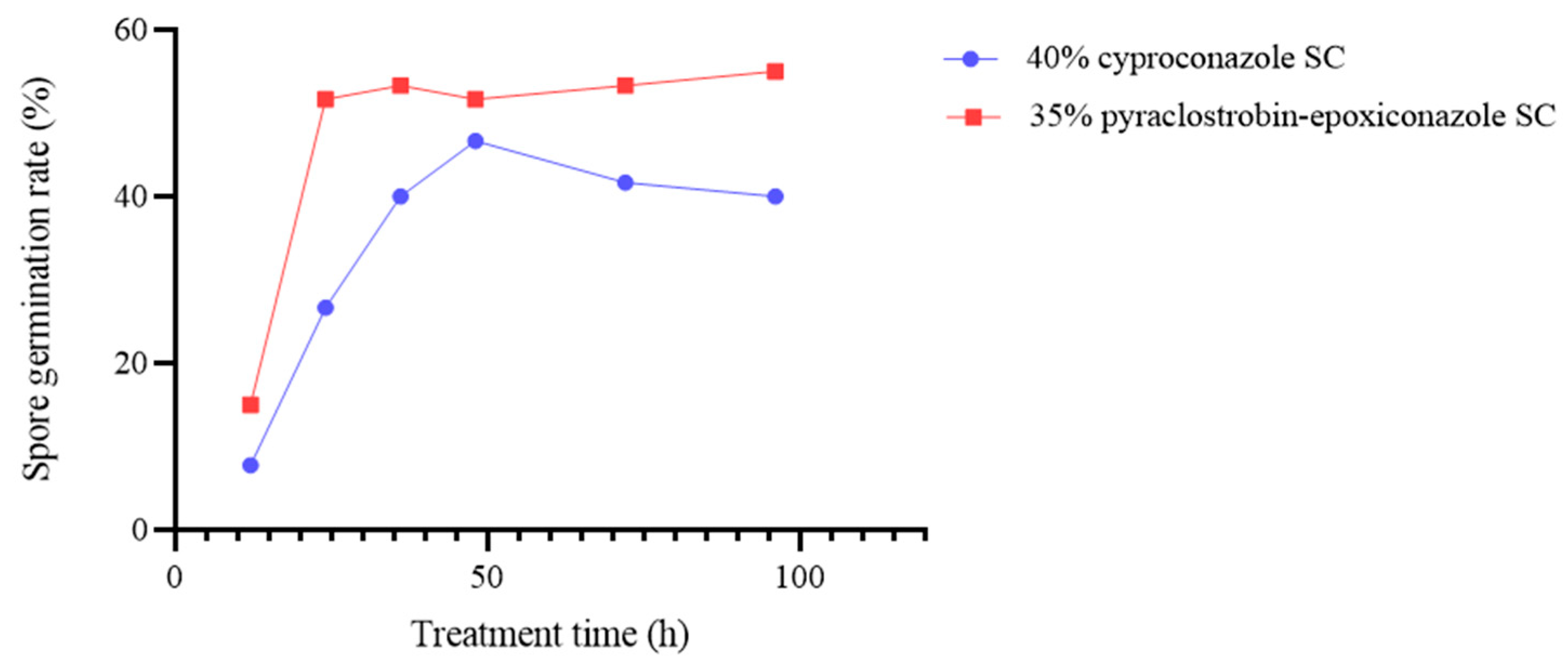
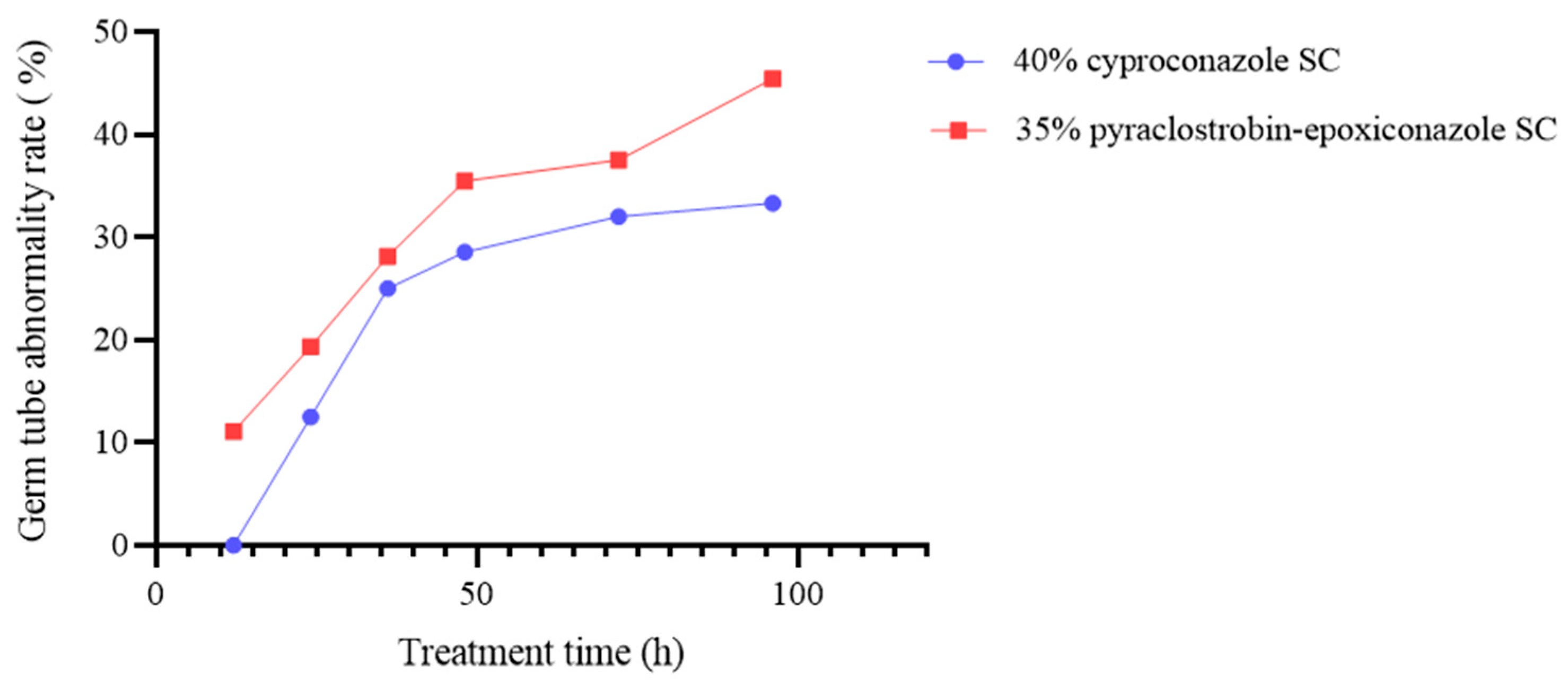
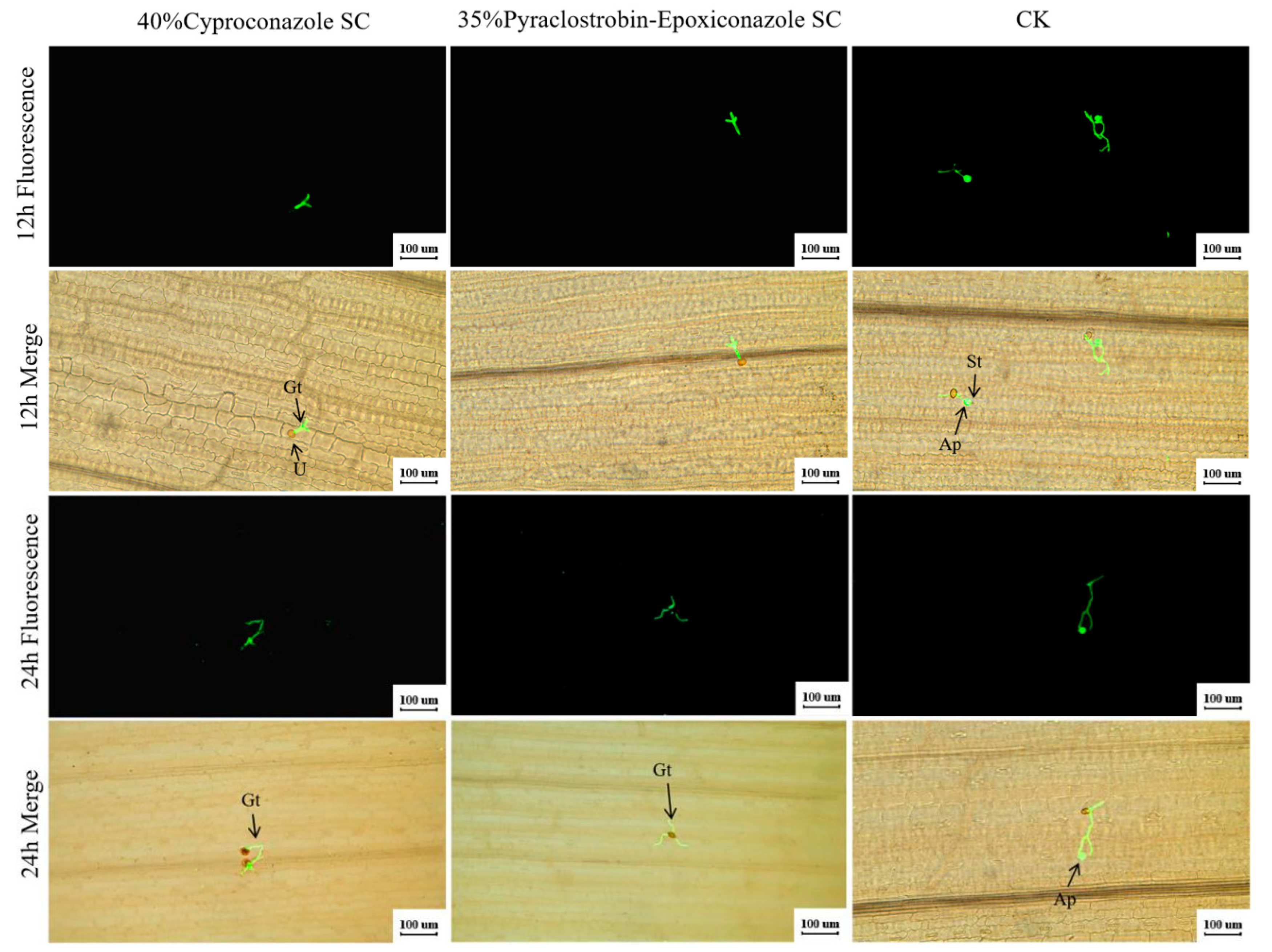
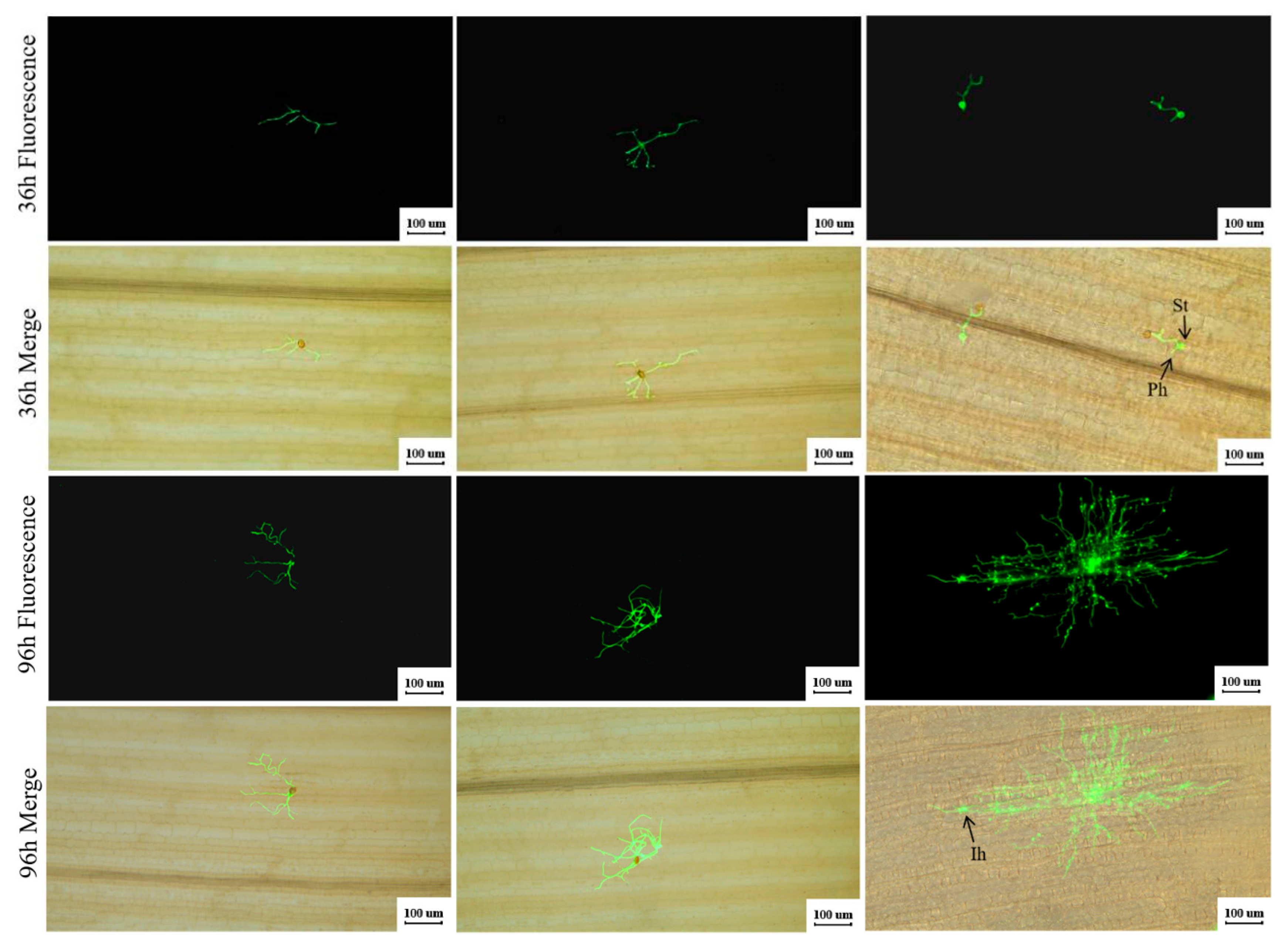
Fluorescence microscopy results showed that the spore germination rate and germ tube abnormality rate under the 40% cyproconazole SC treatment at all time points were lower than those under the conventional fungicide treatment, and the deformity in all treatments intensified over time (Figure 1 and Figure 2). Spores in the blank control germinated at 4 h after inoculation and those in the conventional fungicide treatment germinated at 8 h, whereas the 40% cyproconazole SC treatment significantly delayed spore germination, with only a few spores germinating at 12 h. As shown in Figure 3, at 12 h after inoculation, spores in both the 40% cyproconazole SC and conventional fungicide treatments had germinated and formed germ tubes, while germ tubes in the blank control had already grown toward stomata and formed appressoria. At 24 h after inoculation, spore germination in the 40% cyproconazole SC treatment was accompanied by germ tube deformity. At 36 h, germ tubes became slender and twisted, lost the ability for directional growth, and, occasionally, multiple germ tubes emerged from a single spore; similar phenomena were observed in the conventional fungicide treatment. At 96 h after inoculation, infectious hyphae in the blank control spread rapidly in the intercellular spaces (apoplast) of host cells, forming dense and massive hyphal clusters, whereas the 40% cyproconazole SC treatment showed more pronounced inhibition of germ tube elongation, with a germ tube abnormality rate of 33.33% (Figure 2). At 9 days after inoculation, prominent uredinia formed on leaf surfaces in the blank control, whereas leaves treated with either 40% cyproconazole SC or the conventional fungicide showed no disease symptoms or infectious lesions.

4. Discussion

4.1. Antifungal Activity and Field Efficacy Differences of Cyproconazole Against Puccinia polysora

Indoor virulence assays showed that cyproconazole exhibited a significantly weaker inhibitory effect on the urediospore germination of P. polysora (EC50 = 70.455 mg·L−1) compared to germ tube elongation (EC50 = 21.686 mg·L−1). The normal development of germ tubes is a prerequisite for the pathogen to infect hosts and establish parasitism. Low concentrations of the fungicide can inhibit germ tube elongation and block pathogen colonization during the critical infection period. Differences in application methods and complex field environments often lead to inconsistencies between in vitro virulence and field efficacy [31,32]. In this study, the fungicide showed limited in vitro antifungal activity, whereas it achieved satisfactory control efficacy when applied at the maize seedling stage and under field conditions. The mechanisms underlying such discrepancies have not been verified experimentally and remain speculative. We hypothesize that this phenomenon may be attributed to the antifungal activity of fungicide metabolites in plants, changes in the leaf surface microenvironment, or disruption of signal recognition in the pathogen. Further studies are required to clarify the specific causes.

4.2. Control Efficacy and Yield Preservation Effect of Cyproconazole Against Southern Corn Rust

Cyproconazole is a triazole fungicide with protective, curative and eradicative properties [33,34], as well as strong systemic translocation characteristics [35]. This study is the first to investigate the control efficacy of cyproconazole against SCR. It exhibited high control efficacy and a long duration of efficacy in both seedling and field trials, with control efficacy above 82% at the seedling stage. Its field control efficacy at the mature stage in corn remained at 65.93–86.80%, which was higher than the control efficacy of epoxiconazole (55.39%) and prothioconazole (60.27%) at 28 days after application, as reported by Wang Ziwei et al. [15].
This study verified that the yield recovery rate of 40% cyproconazole suspension concentrate (SC) against SCR ranged from 33.81% to 54.51%, and its overall efficacy was superior to conventional fungicides commonly used in field production. Foliar application of this fungicide at the large bell stage in maize could not only effectively control the occurrence of SCR but also achieve a remarkable yield increase. According to the previous literature, such a yield recovery rate falls within a high level. Numerous studies have demonstrated that large-scale outbreaks of SCR can cause maize yield losses of over 50%, and the rational application of chemical fungicides is a key measure to reduce yield losses and mitigate disease damage [2,36]. The trial conducted by Chhetri et al. revealed that chemical fungicides could reduce the disease index of SCR from 94.44% to 16.67%, presenting prominent effects on yield preservation and growth [37]. The yield recovery rate of 40% cyproconazole SC in this study is close to the theoretical upper limit of yield preservation via disease management, which fully indicates that this fungicide possesses excellent comprehensive performance in controlling SCR and increasing maize yield.
In general, applying fungicides twice achieved better disease control and yield protection than a single application. Relative to one preventive spray prior to disease occurrence, two applications of 40% cyproconazole SC raised the yield protection rate by 5.88–11.01%, generating an extra economic benefit of 1101.15-2061.90 CNY per hectare (maize yield: 8250 kg/ha; grain price: 2.27 CNY/kg). Considering the additional costs of pesticides, labor and UAV operation for the second spray, it is suggested that growers select appropriate application times based on field disease status and planting scale.

4.3. Action Mechanism of Cyproconazole Against Infection Structures of Puccinia polysora

In this study, WGA staining was used to investigate the inhibitory effect of cyproconazole on P. polysora. Fungicide was applied after simulated spore deposition, and samples were collected within 12 h for observation. Spores either failed to germinate or showed delayed germination, which was consistent with the findings of Wang Yigeng obtained within 12 h after one-day pre-inoculation treatment using trypan blue clearing staining [38]. On this basis, the sampling duration was extended in this present study, and further observations revealed an abnormal growth of the pathogen after 12 h, including persistent delayed germination, germ tube deformity and multiple germination events. This may be attributed to the inhibition of ergosterol biosynthesis in rust fungi by cyproconazole, which disrupts the structural and functional stability of cell membranes [33], resulting in reduced spore germination rate, abnormal germ tube development and other growth disorders. Meanwhile, cyproconazole hinders appressorium formation, causing the pathogen to lose its infectivity to the host, thereby achieving the effective control of SCR. Spores exposed to pyraclostrobin–epoxiconazole exhibited a higher malformation rate than those treated with cyproconazole. This compound fungicide contains two active ingredients: epoxiconazole, a triazole fungicide with the same action mechanism as cyproconazole, and pyraclostrobin, a methoxyacrylate (QoI) fungicide acting on mitochondrial respiratory complex III [39]. Pyraclostrobin disrupts the energy metabolism of P. polysora and lowers ATP synthesis. ATP is essential for spore germination, germ tube growth and cell differentiation; its deficiency inhibits germination and induces germ tube malformation. Therefore, the presence of pyraclostrobin in the mixture accounts for the higher malformation rate relative to cyproconazole alone.

4.4. Limitations of the Present Study

This study has several inherent limitations. To begin with, experiments were performed using just one isolate of P. polysora. Additionally, field evaluations were conducted at two locations in a single year, which restricts the extrapolation of the results. Moreover, we did not assess the risk of fungicide resistance in P. polysora against cyproconazole. Furthermore, the mechanism analysis relied solely on microscopic observation, and no molecular evidence including gene expression detection was obtained. Further investigations are required to address the above deficiencies in subsequent work.

5. Conclusions

This study confirmed the control efficacy, action mechanism and yield protection effect of 40% cyproconazole SC against P. polysora, broadening its antifungal spectrum. It is recommended to apply this fungicide at 90 g a.i./hm2 at the maize large bell stage, with a second application 10 days apart during severe disease outbreaks. Additional tests on pesticide residue, environmental behavior and resistance risk are necessary for formal registration, which will promote its rational application in maize fields.

Author Contributions

Conceptualization, H.M. and J.S.; Methodology, S.W. and N.G.; Validation, X.Z. and H.M.; Formal analysis, H.S. and N.G.; Investigation, S.W., H.M. and S.Z.; Resources, S.Z. and X.Z.; Data curation, S.W.; Writing—original draft, S.W.; Writing—review and editing, H.M. and H.S.; Supervision, X.Z. and N.G.; Project administration, S.W.; Funding acquisition, J.S. All authors have read and agreed to the published version of the manuscript.

Funding

This research was funded by the earmarked fund for China Agriculture Research System (Maize)CARS-02.

Data Availability Statement

The original contributions presented in this study are included in the article. Further inquiries can be directed to the corresponding author.

Conflicts of Interest

The authors declare no conflicts of interest.

References

  1. Wang, S.; Zhang, R.Y.; Shi, Z.; Zhao, Y.X.; Su, A.G.; Wang, Y.D.; Xing, J.F.; Ge, J.R.; Li, C.H.; Wang, X.; et al. Identification and Fine Mapping of RppM, a Southern Corn Rust Resistance Gene in Maize. Front. Plant Sci. 2020, 11, 1057. [Google Scholar] [CrossRef] [Scilit] [PubMed]
  2. Cao, Y.Y.; Cheng, Z.Q.; Ma, J.; Yang, W.B.; Liu, X.M.; Zhang, X.; Zhang, J.H.; Wu, X.L.; Duan, C.X. Advances in research on southern corn rust, a devasting fungal disease. Int. J. Mol. Sci. 2024, 25, 13644. [Google Scholar] [CrossRef] [Scilit] [PubMed]
  3. Sun, G.C.; Mural, R.V.; Turkus, J.D.; Schnable, J.C. Quantitative resistance loci to southern rust mapped in a temperate maize diversity panel. Phytopathology 2021, 112, 579–587. [Google Scholar]
  4. Sun, Q.Y.; Li, L.F.; Guo, F.; Zhang, K.Y.; Dong, J.Y.; Luo, Y.; Ma, Z.H. Southern corn rust caused by Puccinia polysora Underw: A review. Phytopathol. Res. 2021, 3, 25. [Google Scholar] [CrossRef] [Scilit]
  5. Liu, X.F.; Xu, J.Y.; Gu, Y.L.; Sun, Q.Y.; Yuan, W.Y.; Ma, Z.H. Occurrence of Puccinia polysora Causing Southern Corn Rust in the Northeast Huanghuaihai Region of China. Plant Dis. 2018, 102, 826. [Google Scholar] [CrossRef] [Scilit]
  6. Wang, X.T.; Xie, S.N.; Du, Y.T.; Ren, L.L.; Zhang, X.F.; Chen, W.; Gao, H.W.; Duan, C.X.; Hao, J.J. Resistance analysis and resistance gene detection of regional trial varieties to southern rust in summer maize area of Huang-Huai-Hai. J. Maize Sci. 2025, 33, 114–119. [Google Scholar]
  7. Gustavo, M.; Kaian, A.C.K.; Fernando, E.; Regis, T.V.; Silvio, D.F.; Vanessa, A.E.; Eloisa, M.; Willian, B.R.; Jonas, F.E. Effect of fungicide application times in the control management of leaf foliar diseases in maize. Afr. J. Agric. Res. 2015, 10, 3686–3695. [Google Scholar] [CrossRef] [Scilit]
  8. Wang, X.T.; Li, B.Y.; Xie, S.N.; Sun, J.; Ru, Y.Y.; Zhang, Y.; Wang, X.Y.; Wu, Z.Q.; Xu, H.L.; Hao, J.J. Resistance evaluation and resistance gene detection of main maize varieties against southern corn rust. Plant Prot. 2025, 51, 297–306+316. [Google Scholar]
  9. Sun, J.; Ru, Y.Y.; Xie, S.N.; Liu, J.N.; Xiao, H.; Li, B.Y.; Zhu, W.L.; Wang, X.T.; Shang, D.Y.; Guo, X.Q.; et al. Efficacy and economic benefit of different fungicides against southern corn rust. Plant Prot. 2025, 51, 342–350+377. [Google Scholar]
  10. Chang, J.Y.; Wei, S.Z.; Liu, Y.Y.; Zhao, Z.Q.; Shi, J. Harnessing genetic resistance in maize and integrated rust management strategies to combat southern corn rust. J. Fungi 2025, 11, 41. [Google Scholar] [CrossRef] [Scilit]
  11. China Pesticide Information Network. Available online: http://www.chinapesticide.org.cn/ (accessed on 22 June 2026).
  12. Wang, Y.F.; Gong, M.H.; Li, H.H.; Xu, Y.W.; Xiao, J.B.; Zhang, Y.Y.; Chang, J.X.; Yuan, H.X.; Li, H.L.; Shi, Y. Research progress on southern corn rust. J. Henan Agric. Univ. 2024, 58, 357–364. [Google Scholar]
  13. Sun, J.; Wang, X.T.; Xie, S.N.; Ren, L.L.; Liu, J.Z.; Zhu, W.L.; Huo, M.X.; Li, B.Y.; Zhang, Y.; Xu, Y.W.; et al. Analysis of control efficacy and economic benefits of fungicide application timing and frequency on southern corn rust. J. Maize Sci. 2025, 33, 144–151. [Google Scholar]
  14. Tian, Y.J.; Zhao, S.G.; Zhang, J.; Huang, L.H.; Wang, Q.Y.; Chen, H.D. Occurence dynamics and chemical control of southern rust on fresh corn. Plant Prot. 2016, 42, 177–180+196. [Google Scholar]
  15. Wang, Z.W.; Bao, L.; Wan, Q.; Chen, L.; Qi, Y.X. Control efficacy of different fungicides and application technologies on southern corn rust. Plant Prot. 2024, 50, 368–375. [Google Scholar]
  16. Wang, Y.G.; Shao, Y.F.; Zhao, X.Y.; Pei, Q.H.; Nan, N.; Zhang, F.W.; Jiang, X.Y.; Li, X.D. High-efficiency fungicide screening and field control efficacy of maize southern corn rust. Crop Prot. 2025, 187, 106997. [Google Scholar]
  17. Guo, N.; Ma, J.Y.; Zhang, H.J.; Shi, J.; Li, P.; Sun, H. Control efficacy of difenoconazole and propiconazole on leaf spots in summer corn growing region in Huanghuaihai. Plant Prot. 2017, 43, 213–217+232. [Google Scholar]
  18. Faske, T.R.; Emerson, M. Multiyear evaluation of fungicide efficacy and application timing for control of southern rust in hybrid corn in Arkansas. Plant Dis. 2021, 105, 1108–1114. [Google Scholar] [CrossRef] [Scilit] [PubMed]
  19. Liu, X.L.; Miao, J.Q.; Zhang, C. Fungicide resistance and the management strategies. Chin. J. Pestic. Sci. 2022, 24, 921–936. [Google Scholar]
  20. Jiang, K.; Duan, C.X.; Wu, X.F.; Yang, Z.H.; Wang, X.M. Histology and ultrastructure of maize lines infected by Puccinia polysora. J. Plant Prot. 2015, 42, 877–883. [Google Scholar]
  21. Yu, K.; Ma, Q.; Huang, F.Y.; Wang, X.M. Comparison of the histopathological characters of Puccinia polysora between resistant and susceptible maize inbreds. Plant Prot. 2011, 37, 76–79. [Google Scholar]
  22. Matsuoka, K.J.; Suzuki, Y.Y.; Koyama, T.; Matsushita, T.; Hatano, K. Fluorogenic glycopolymers available for determining the affinity of lectins by intermolecular FRET. Bioorg. Med. Chem. Lett. 2020, 30, 127024. [Google Scholar] [CrossRef] [Scilit] [PubMed]
  23. Montenegro, H.O.; Di Chenna, P.H.; Spagnuolo, C.C.; Laura, U.M. Multivalent assembly of a pyrene functionalized thio-N-acetylglucosamine: Synthesis, spectroscopic and WGA binding studies. Carbohydr. Res. 2019, 479, 6–12. [Google Scholar] [PubMed]
  24. Feng, L.J.; Zhang, L.Y.; Wang, X.D.; Zhai, T.; Gan, P.F.; Tang, C.L.; Kang, Z.S.; Wang, X.J. Functional analysis of protein kinase TaPiPK1 in wheat resistance response to stripe rust. Plant Prot. 2023, 49, 32–38+84. [Google Scholar]
  25. Qu, Y.H.; Yang, H.L.; Hao, Q.N.; Chen, S.L.; Deng, K.L.; Zhan, G.M.; Cao, D.; Chen, L.M.; Yuan, S.L.; Zhang, C.J.; et al. Effectiveness of different staining methods for microscopic observation during different infestations of soybean rust fungus. Chin. J. Oil Crop Sci. 2025, 47, 186–191. [Google Scholar]
  26. Ling, Y.; Zhou, Z.H.; Liu, R.J.; Qin, H.L.; Li, C.P.; Hu, W.J.; Deng, W.C.; Wu, Y.J.; Yi, T.Y. Biological activity and indoor control efficacy of three triazole fungicides against Diaporthe eres. Chin. J. Pestic. Sci. 2025, 27, 543–550. [Google Scholar]
  27. Gu, L.L.; Xu, D.X.; Wang, Y.Q. Brief review on the types of fungicides registered in China for wheat rust control. China Plant Prot. 2022, 42, 65–68+72. [Google Scholar]
  28. Wang, A.L.; Hou, S.Y.; Zhang, G.; Yao, Q. Control efficacy of 40% cyproconazole suspension concentrate against wheat stripe rust. Jiangsu Agric. Sci. 2010, 5, 176–177. [Google Scholar]
  29. Xu, J.K. Study on field efficacy trials of 40% cyproconazole suspension concentrate against wheat rust. Mod. Rural Sci. Technol. 2014, 12, 61–62. [Google Scholar]
  30. Wang, Y.F.; Huang, L.; Luo, W.; Jin, Y.R.; Gong, F.Y.; He, J.S.; Liu, D.C.; Zheng, Y.L.; Wu, B.H. Transcriptome analysis provides insights into the mechanisms underlying wheat cultivar Shumai126 responding to stripe rust. Gene 2020, 768, 145290. [Google Scholar] [PubMed]
  31. Zhao, H.T.; Chen, D.K.; Chen, X.L.; Ou, Z.T.; Huang, Q.C.; Zhang, L.; Li, G.G.; Liu, Y.X.; Ye, Y.F.; Fu, G. Pathogen identification and bactericide screening of Orah citrus canker. J. South. Agric. 2019, 50, 2703–2712. [Google Scholar]
  32. Gao, B.S.; Chen, T.; Wang, H.X. Isolation and identification of areca nut anthrax pathogens and screening of control agents. Mol. Plant Breed. 2023, 21, 7444–7449. [Google Scholar]
  33. Wang, R.; Li, J.; Xie, Y.; Liao, C.X. Analysis of cyproconazole 40% SC by HPLC. Agrochemicals 2022, 61, 189–191. [Google Scholar]
  34. Lhomme, L.; Brosillon, S.; Wolbert, D. Photocatalytic degradation of a triazole pesticide, cyproconazole, in water. J. Photochem. Photobiol. A 2006, 188, 34–42. [Google Scholar]
  35. Bi, Q.Y.; Zhao, J.J.; Zhang, S.Q.; Han, X.Y.; Wu, J.; Lu, F.; Wang, W.Q. Sensitivity of Septoria piricola Desm from pear in Hebei Province to different classes of fungicides and correlation coefficient with tebuconazole. Acta Phytopathol. Sin. 2021, 51, 248–257. [Google Scholar]
  36. Kiersten, A.W.; Damon, S.; Anna, F.; Daren, S.M.; Yuba, K.; Tom, A.; Carl, A.B.; Emmanuel, B.; Martin, C.; Travis, F.; et al. Meta-analysis of yield response of foliar fungicide-treated hybrid corn in the United States and Ontario, Canada. PLoS ONE 2019, 14, e0217510. [Google Scholar]
  37. Sanjog, C.; Srabani, D.; Rakesh, Y.; Bikash, S. Assessment of yield losses and management of Southern corn rust (Puccinia polysora) through the foliar application of chemical fungicides, botanicals extract and bio-agents. Arch. Phytopathol. Plant Prot. 2025, 58, 898–913. [Google Scholar]
  38. Wang, Y.G. Screening of High-Efficiency Fungicides Against Southern Corn Rust and Preliminary Study on Its Mechanism. Master’s Thesis, Shandong Agricultural University, Tai’an, China, 2025. [Google Scholar]
  39. Dominguez, A.N.; Jimenez, L.E.; Álvarez, R.M.S. Rapid detection of pyraclostrobin fungicide residues in lemon with surface-enhanced Raman spectroscopy. J. Food Meas. Charact. 2023, 17, 6350–6362. [Google Scholar] [CrossRef] [Scilit]
Figure 1. Spore germination rate of P. polysora under cyproconazole treatment.
Agronomy 16 01238 g001
Figure 2. Germ tube abnormality rate of P. polysora under cyproconazole treatment.
Agronomy 16 01238 g002
Figure 3. Observation of P. polysora infection structures under cyproconazole treatment. Upper panels are fluorescence images; lower panels are merged images (brightfield + fluorescence overlay). U, Uredospore; Gt, Germ tube; Ap, Appressorium; Ph, Penetration hypha; St, Stomates; Ih, Invasive hyphae; Bar = 100 µm.
Agronomy 16 01238 g003aAgronomy 16 01238 g003b
Table 1. Inhibitory effects of cyproconazole on urediniospore germination and germ tube elongation of P. polysora.
Growth StageVirulence Regression
Equation
Correlation
Coefficient
EC50 (mg·L−1)95% Confidence Limit
Spore Germinationy = −17.75 + 9.61x0.99670.45568.347–72.585
Germ Tube Elongationy = −2.69 + 2.02x0.99621.6860.2–37.312
Table 2. Persistent efficacy of cyproconazole.
FungicidesTime Interval of Application and Inoculation/Days
12345710
40% Cyproconazole SC
35% Pyraclostrobin–Epoxiconazole SC+
Control+++++++
Note: “−” indicates no uredinium formation; “+” indicates uredinium formation.
Table 3. Protective effect of cyproconazole against SCR.
FungicidesDisease IndexControl Efficacy (%)
40% Cyproconazole SC4.94 ± 1.24 c91.11 ± 2.22 a
35% Pyraclostrobin–Epoxiconazole SC12.34 ± 1.23 b77.78 ± 2.22 b
Control55.56 ± 2.14 a-
Note: Different lowercase letters indicate significant differences in the indexes under different treatments (p < 0.05).
Table 4. Curative effect of cyproconazole against SCR.
FungicidesDisease IndexControl Efficacy (%)
40% Cyproconazole SC16.05 ± 1.24 c82.19 ± 1.37 a
35% Pyraclostrobin–Epoxiconazole SC24.69 ± 3.27 b72.60 ± 3.62 b
Control90.12 ± 2.47 a-
Note: Different lowercase letters indicate significant differences in the indexes under different treatments (p < 0.05).
Table 5. Field efficacy and yield preservation of protective treatment with cyproconazole against SCR.
LocationFungicides14 Days After Inoculation21 Days After Inoculation45 Days After InoculationYield Loss Recovery Rate (%)
Disease IndexControl Efficacy (%)Disease IndexControl Efficacy (%)Disease IndexControl Efficacy (%)
Jingxiu40% Cyproconazole SC8.89 ± 0.55 c73.34 ± 1.67 a10.37 ± 0.37 c87.03 ± 0.47 a20.00 ± 1.92 c78.38 ± 2.15 a43.08 ± 9.38 a
35% Pyraclostrobin–Epoxiconazole SC10.37 ± 0.19 b68.89 ± 0.56 b33.33 ± 0.00 b58.33 ± 0.33 b42.59 ± 1.62 b54.00 ± 1.78 b26.35 ± 3.83 a
Control33.33 ± 0.00 a-80.00 ± 0.64 a-92.59 ± 0.37 a--
Dingxing40% Cyproconazole SC8.33 ± 0.32 b75.77 ± 1.25 a10.00 ± 0.32 b86.23 ± 0.35 a34.07 ± 0.74 c65.93 ± 0.74 a48.63 ± 6.04 a
35% Pyraclostrobin–Epoxiconazole SC9.08 ± 0.81 b73.60 ± 2.54 a10.19 ± 0.37 b85.97 ± 0.51 a55.56 ± 0.00 b44.44 ± 0.00 b41.05 ± 1.21 a
Control34.44 ± 0.64 a-72.59 ± 0.98 a-100.00 ± 0.00 a--
Note: Different lowercase letters indicate significant differences in the indexes under different treatments (p < 0.05).
Table 6. Field efficacy and yield preservation of curative treatment with cyproconazole against SCR.
LocationFungicides14 Days After Inoculation21 Days After Inoculation45 Days After InoculationYield Loss Recovery Rate (%)
Disease IndexControl Efficacy (%)Disease IndexControl Efficacy (%)Disease IndexControl Efficacy (%)
Jingxiu40% Cyproconazole SC11.11 ± 0.00 b66.67 ± 0.00 b11.11 ± 0.00 c86.11 ± 0.11 a17.78 ± 1.28 c80.79 ± 1.45 a33.81 ± 5.42 a
35% Pyraclostrobin–Epoxiconazole SC10.74 ± 0.18 c67.78 ± 0.55 a25.56 ± 0.64 b68.06 ± 0.71 b54.44 ± 0.64 b41.20 ± 0.73 b25.24 ± 2.21 a
Control33.33 ± 0.00 a-80.00 ± 0.64 a-92.59 ± 0.37 a--
Dingxing40% Cyproconazole SC20.37 ± 0.37 b40.86 ± 0.57 b26.30 ± 0.98 b63.73 ± 1.82 b30.74 ± 0.98 c69.26 ± 0.98 a47.99 ± 3.15 a
35% Pyraclostrobin–Epoxiconazole SC9.07 ± 0.37 c73.60 ± 1.50 a11.11 ± 0.00 c84.69 ± 0.20 a78.15 ± 0.37 b21.85 ± 0.37 b18.89 ± 4.95 b
Control34.44 ± 0.64 a-72.59 ± 0.98 a-100.00 ± 0.00 a--
Note: Different lowercase letters indicate significant differences in the indexes under different treatments (p < 0.05).
Table 7. Field efficacy and yield preservation of integrated treatment with cyproconazole against SCR.
LocationFungicides14 Days After Inoculation21 Days After Inoculation45 Days After InoculationYield Loss Recovery Rate (%)
Disease IndexControl Efficacy (%)Disease IndexControl Efficacy (%)Disease IndexControl Efficacy (%)
Jingxiu40% Cyproconazole SC8.70 ± 0.37 c73.89 ± 1.11 a10.93 ± 0.18 c86.34 ± 0.26 a12.22 ± 0.64 c86.80 ± 0.65 a54.09 ± 3.71 a
35% Pyraclostrobin–Epoxiconazole SC9.63 ± 0.19 b71.11 ± 0.56 b23.33 ± 1.28 b70.82 ± 1.74 b24.07 ± 1.38 b74.01 ± 1.34 b28.76 ± 0.60 b
Control33.33 ± 0.00 a-80.00 ± 0.64 a-92.59 ± 0.37 a--
Dingxing40% Cyproconazole SC8.33 ± 0.32 c75.83 ± 0.48 a9.63 ± 0.19 c86.74 ± 0.10 a26.67 ± 0.64 c73.33 ± 0.64 a54.51 ± 3.47 a
35% Pyraclostrobin–Epoxiconazole SC13.52 ± 1.13 b60.60 ± 4.02 b18.89 ± 1.28 b74.00 ± 1.55 b35.56 ± 1.93 b64.44 ± 1.93 b39.31 ± 2.06 b
Control34.44 ± 0.64 a-72.59 ± 0.98 a-100.00 ± 0.00 a--
Note: Different lowercase letters indicate significant differences in the indexes under different treatments (p < 0.05).
Disclaimer/Publisher’s Note: The statements, opinions and data contained in all publications are solely those of the individual author(s) and contributor(s) and not of MDPI and/or the editor(s). MDPI and/or the editor(s) disclaim responsibility for any injury to people or property resulting from any ideas, methods, instructions or products referred to in the content.