Next Article in Journal
Comparative Genomic Analysis of Mitochondrial Genomes from Two Lychee Cultivars
Previous Article in Journal
Pore Structure Reorganization and Effective Porosity Regulation in Grey Desert Soil Under Biogas Slurry Drip Irrigation
 
 
agronomy-logo
Article Menu

Article Menu

Article

Salt Stress in Melon: Efficacy of Seed Treatments for Stress Mitigation and Selection of Tolerant Cultivars


by
Emerson de Medeiros Sousa
1,
Salvador Barros Torres
2,
Clarisse Pereira Bendito
2,
Kleane Targino Oliveira Pereira
3,*,
Marciana Bizerra de Morais
4,
Daise Feitoza da Rocha
2,
Maria Valdiglezia de Mesquita Arruda
2,
Jéssica Christie Dantas de Oliveira Costa
2,
Roseane Rodrigues de Oliveira
2,
Giovanna Dias de Sousa
2,
Angie Alejandra Rodriguez Cruz
2,
Cynthia Cavalcanti de Albuquerque
4,
José Eduardo Santos Barboza da Silva
5,
João Pedro Gonçalves Bispo
6,
Charline Zaratin Alves
6,
Paulo Cássio Alves Linhares
7,
Alex Álvares da Silva
7 and
Francisco Vanies da Silva Sá
7
1
Rio Grande do Norte State Institute of Education, Science and Technology, IP Parelhas, Parelhas 59360-000, RN, Brazil
2
Department of Agronomic and Forestry Sciences, Federal Rural University of the Semi-Arid—UFERSA, Mossoró 59625-900, RN, Brazil
3
Rio Grande do Norte State Institute of Education, Science and Technology, Cmpus São Gonçalo do Amarante, São Gonçalo do Amarante 59360-000, RN, Brazil
4
Department of Biological Sciences, State University of Rio Grande do Norte, Mossoró 59610-210, RN, Brazil
5
Baiano Institute of Education, Science and Technology, IP Xique-Xique, Xique-Xique 47400-000, BA, Brazil
6
Department of Agricultural Sciences, Federal University of Mato Grosso do Sul, Chapadão do Sul 79560-000, MS, Brazil
7
Department of Agrarian and Exact Sciences, State University of Paraiba, Sítio Cajueiro, Catolé do Rocha 54888-000, PB, Brazil
*
Author to whom correspondence should be addressed.
Agronomy 2026, 16(13), 1228; https://doi.org/10.3390/agronomy16131228
Submission received: 7 May 2026 / Revised: 9 June 2026 / Accepted: 22 June 2026 / Published: 25 June 2026
(This article belongs to the Section Plant-Crop Biology and Biochemistry)

Abstract

As one of the most economically important cucurbit crops, melon (Cucumis melo L.) is extensively cultivated in semi-arid and tropical regions where high evaporative demand frequently intensifies salt accumulation. These conditions promote the evaporative concentration of salt, leading to salt accumulation in soil and irrigation water, which can impair crop development. Therefore, identifying approaches capable of maintaining seedling establishment under saline conditions is crucial for sustainable melon production. This study evaluated tolerance and antioxidant responses in different melon cultivars using seed treatments to mitigate salt stress effects. The experiment was conducted in two stages under a completely randomized design with four replicates of 50 seeds. In the first stage, a 3 × 5 factorial design tested three salinity levels (0, 60, and 120 mM NaCl) and five cultivars (‘Dali’, ‘Premier’, ‘Supreme’, ‘Imperial 45’, and ‘Asturia’), assessing morphological, physiological, and biochemical traits. In the second stage, two contrasting cultivars (‘Imperial 45’ (sensitive) and ‘Asturia’ (tolerant)) were exposed to salinity combined with stress attenuators, including hydropriming, gibberellic acid, ascorbic acid, salicylic acid, and hydrogen peroxide. Additional biochemical markers and antioxidant enzyme activities were analyzed. Results showed that gibberellic acid and ascorbic acid enhanced antioxidant activity and reduced oxidative damage, particularly in Imperial 45, whereas hydrogen peroxide was more effective in Asturia. Based on their physiological and biochemical responses during germination and early seedling development, Asturia and Imperial 45 were identified as tolerant and sensitive to salt stress, respectively. These findings indicate that the effectiveness of seed treatments depends on cultivar-specific physiological characteristics at the seedling stage.

1. Introduction

The reduction in crop productivity resulting from soil salinization has become a global concern, particularly in arid and semi-arid regions. These areas are typically characterized by low annual rainfall, high evaporation rates, and the use of brackish water for irrigation, factors that intensify the risk of this abiotic stress [1,2]. Excess salt in the root environment impairs water uptake, disturbs ionic homeostasis, and stimulates oxidative metabolism, resulting in the overproduction of reactive oxygen species (ROS) [3,4]. The combined effects of these disturbances impair seed germination and plant growth throughout the crop cycle [5].
Melon (Cucumis melo L.) is a cucurbit species of high nutritional and economic value, and is widely cultivated in warm climates, especially in tropical and subtropical regions worldwide [6,7]. This species is considered moderately sensitive to salinity, as intermediate salt levels can reduce germination, growth, and yield [8,9].
The ability of plants to withstand saline environments varies substantially among genotypes because tolerance depends on multiple genetically regulated adaptive responses [10]. This variability can be attributed to mechanisms such as osmotic adjustment, genotype-specific gene expression, regulatory patterns, and distinct morphological traits [11]. In cucurbit species, these strategies include modifications in root growth, accumulation of compatible osmolytes, and activation of antioxidant systems, which play a fundamental role in salinity tolerance mechanisms [12].
The improvement of techniques aimed at enhancing plant tolerance to excess soil salinity is therefore essential. Among the most widely investigated approaches, pre-germinative seed treatments with stress attenuators have proven effective in several agricultural species, promoting improvements in morphological, physiological, and biochemical traits [1,13].
Studies have shown that the application of substances such as ascorbic acid (ASC), gibberellic acid (GA), and salicylic acid (SA) increases plant tolerance under saline conditions [14,15,16]. Similarly, hydrogen peroxide has demonstrated potential effectiveness in enhancing germination capacity and seedling growth in melon [17]. Another promising alternative is seed pre-treatment through hydropriming, which has yielded satisfactory results in the germination and early development of cucurbit species, including melon and watermelon seedlings [18,19].
The increased tolerance to saline stress induced by stress attenuators results from the accumulation of osmoprotectants and the enhancement of antioxidant capacity in plants [20,21]. This system is crucial for cellular protection, as it maintains the balance of reactive oxygen species (ROS) and ensures normal plant development under saline stress conditions [22].
In this scenario, the hypothesis of this study is that seed treatment with stress attenuators mitigates the deleterious effects of salinity by stimulating the antioxidant system of the species, with the magnitude of this response being modulated by the level of salinity tolerance of each cultivar. Accordingly, the objective of this study was to evaluate the effects of stress attenuators on germination, early seedling development, osmotic adjustment, and antioxidant activity in melon cultivars under saline conditions.

2. Materials and Methods

The study was conducted at the Seed Analysis Laboratory (LAS) of the Department of Agronomic and Forest Sciences, Federal Rural University of the Semi-Arid Region (UFERSA), Mossoró, Rio Grande do Norte, Brazil.
The research was carried out in two stages. The first stage aimed to select two melon cultivars (one sensitive and one tolerant) and to define the salinity level to be used in the second stage. The second stage consisted of evaluating the effect of pre-germinative treatments on the enzymatic defense system of melon seedlings. The seeds used in the experiments were provided by the companies Sakata Seed Sudamerica and Isla Sementes, and were produced in 2022. Before the experiments, the seed lots were stored in a cold chamber under controlled conditions, preserving their physiological quality. All seed lots presented germination above 80% under standard conditions.

2.1. Stage I

A completely randomized design was adopted using a factorial arrangement with four replicates of 50 seeds. Treatments were established by combining three salinity levels (S0 = 0.0 mM; S1 = 60 mM; and S2 = 120 mM) with five melon cultivars (C1 = ‘Dali’; C2 = ‘Supreme’; C3 = ‘Imperial 45’; C4 = ‘Asturia’; and C5 = ‘Premier’).
For germination tests, seeds were distributed on moistened paper towel substrates arranged in roll form, with the volume of solution equivalent to twice the dry weight of the paper. The NaCl solutions were prepared at concentrations of 0.0, 60, and 120 mM using sodium chloride (NaCl) [23]. The experimental units were enclosed in transparent plastic bags to prevent moisture loss and incubated in a germination chamber (Eletrolab 121FC) at 25 °C under an 8 h photoperiod provided by two 20 W fluorescent lamps [24].
During the tests, the following variables were evaluated:
Germination (G): Determined by counting the number of normal seedlings on the eighth day after sowing, with results expressed as a percentage [24]. In treatments with severe saline stress (120 mM NaCl), in which normal seedlings were not formed in some cultivars, abnormal seedlings were evaluated to characterize the effects of salinity on seedling development.
Germination speed index (GSI): Daily counts of normal seedlings were performed, and the index was calculated according to Maguire [25].
Root length (RL) and shoot length (SL): At the end of the germination test, 10 seedlings per replicate were randomly selected for evaluation. For treatments in which normal seedlings were available, measurements were performed on normal seedlings according to the Rules for Seed Testing. Under severe saline stress (120 mM NaCl), when some cultivars produced no normal seedlings, the available abnormal seedlings were measured to characterize the effects of salinity on seedling growth and development.
Root dry mass (RDM) and shoot dry mass (SDM): Seedlings were separated into roots and shoots, dried in a forced-air oven at 65 °C, weighed on an analytical balance (0.0001 g precision), and results were expressed as mg seedling−1.
Seedling tissues not used for growth assessments were immediately cryopreserved in liquid nitrogen (−196 °C) and stored in an ultrafreezer (−80 °C) for subsequent preparation of crude extracts. Frozen samples were homogenized under liquid nitrogen and divided into triplicates of approximately 0.2 g. Each sample was placed in a hermetically sealed plastic tube and diluted in 3 mL of 80% ethanol. Samples were then heated in a water bath at 60 °C for 20 min and centrifuged (4 °C, 10,000 rpm) for 10 min. The supernatant was collected for determination of the following variables:
Total soluble sugars (TSSs) were quantified using the anthrone method [26], using glucose as the standard, with results expressed as μmol GLU g−1 fresh mass.
Total free amino acids (TFAAs) were estimated through the acidic ninhydrin method [27], based on a glycine standard curve, with results expressed as μmol GLY g−1 fresh mass.
Proline concentration (PRO) was assessed following the procedure proposed by Bates, Waldren, and Teare [28], with results expressed as μmol PRO g−1 fresh mass.
The classification of melon cultivars as salt-tolerant or salt-sensitive was based on a multivariate cluster analysis performed using all variables evaluated in Stage I, including germination, germination speed index, seedling growth, biomass accumulation, and biochemical traits. Cluster analysis was performed using Ward’s method and Euclidean distance as the measure of dissimilarity in PAST 4 software. The grouping pattern obtained under severe salinity (120 mM NaCl) was used to identify contrasting cultivars for Stage II. Cultivars showing greater maintenance of physiological and biochemical performance under saline conditions were classified as tolerant, whereas cultivars showing greater reductions in these traits were classified as sensitive.

2.2. Stage II

This stage was conducted using a completely randomized design in a 2 × 7 factorial arrangement, with four replicates of 50 seeds. The first factor consisted of the two cultivars (one sensitive and one tolerant) selected in the first experiment, and the second factor consisted of the combination of pre-treatments and salinity: T1 = 0 mM (control); T2 = 60 mM + untreated seeds (salinity); T3 = 60 mM + hydropriming (12 h); T4 = 60 mM + gibberellic acid (50 mg L−1); T5 = 60 mM + salicylic acid (50 mg L−1); T6 = 60 mM + ascorbic acid (50 mg L−1); and T7 = 60 mM + hydrogen peroxide (15 mM). The types of attenuators, concentrations, and exposure times were defined based on previous literature and preliminary tests.
In this stage, the same analyses performed in Stage I were conducted, with the addition of citrulline (CIT) quantification, antioxidant enzyme activity, and antioxidant metabolism assessments. For crude extract preparation, normal seedlings from each replicate were used.
For citrulline extraction, 0.5 g of fresh material was ground in 1.5 mL of 96% (v/v) ethanol. The extracts were transferred to flasks and heated to 100 °C until complete ethanol evaporation. The residues were resuspended in 1.5 mL of distilled water, shaken, and centrifuged (10 min, 5000 rpm, 24 °C). The supernatant was collected and stored at −20 °C. Citrulline quantification was adapted from the method proposed by Knipp and Vašák [29], and results were expressed as μmol CIT g−1 fresh mass.
Hydrogen peroxide and MDA contents were obtained by weighing approximately 0.2 g of plant material, which was fixed in liquid nitrogen and ground together with 2 mL of 0.1% (m/v) trichloroacetic acid (TCA) and 20% (m/m) polyvinylpolypyrrolidone (PVPP) for 1 min. After homogenization, the samples were centrifuged at 10,000 rpm for 5 min at 4 °C.
Antioxidant metabolism was characterized through the activities of superoxide dismutase (SOD), catalase (CAT), and ascorbate peroxidase (APX), measured from crude extract obtained after maceration of the plant material with the addition of liquid nitrogen and 20% (m/v) PVPP. Subsequently, approximately 0.5 g of the material was solubilized in 3 mL of potassium phosphate buffer (100 mM, pH 7.5), supplemented with 1 mM EDTA (ethylenediaminetetraacetic acid) and 3 mM DTT (dithiothreitol). Aliquots were transferred to tubes and centrifuged at 10,000 rpm for 10 min at 4 °C. The supernatant was collected under cold conditions (maintained in an ice bath) and stored in Eppendorf tubes at −35 °C until enzymatic assays were performed.
The following determinations were carried out:
Hydrogen peroxide (H2O2): Measured according to the method described by Alexieva et al. [30], based on potassium iodide. Absorbance was read at 390 nm, and results were expressed as μmol H2O2 g−1 fresh mass.
Lipid peroxidation: Determined according to Heath and Packer [31], with absorbance readings at 535 and 600 nm, and results expressed as μmol MDA g−1 fresh mass.
Superoxide dismutase (SOD) activity: Determined following the methodology proposed by Giannopolitis and Ries [32]. After light exposure, samples were analyzed at 560 nm. All assays were performed in triplicate, and results were expressed as U mg−1 protein.
Catalase (CAT) activity: Determined using the protocol adapted by Azevedo et al. [33] from the method described by Havir and McHale [34]. The reaction was monitored in a spectrophotometer at 240 nm and 25 °C, with absorbance recorded at time zero and after 60 s. Results were expressed as μmol min−1 mg−1 protein.
Ascorbate peroxidase (APX) activity: Determined according to the methodology proposed by Nakano and Asada [35], with adaptations. APX activity was assessed by measuring ascorbate oxidation at 290 nm in a spectrophotometer at 30 °C for 60 s. Results were expressed as μmol min−1 mg−1 protein.

2.3. Statistical Analysis

Data from Stage I (Tables S1–S9) were subjected to analysis of variance using the F test (p ≤ 0.05). Main effects and interactions were evaluated using the Scott–Knott mean grouping test (p ≤ 0.05). Cluster analysis was performed using Ward’s method, with Euclidean distance as the measure of dissimilarity, using PAST 4 software. Data from Stage II (Tables S10–S19) were also subjected to analysis of variance using the F test (p ≤ 0.05), and means were grouped by the Scott–Knott test at the 5% significance level. Biochemical assays were performed with four independent biological replicates. Readings were taken in analytical triplicates, and the averages were used for statistical analysis. Both stages were performed using SISVAR software (version 5.6) [36] for statistical analyses.

3. Results

3.1. Stage I

The response of the evaluated traits depended on the combination of melon cultivars and salinity level, as indicated by the interaction detected in the analysis of variance (Table 1).
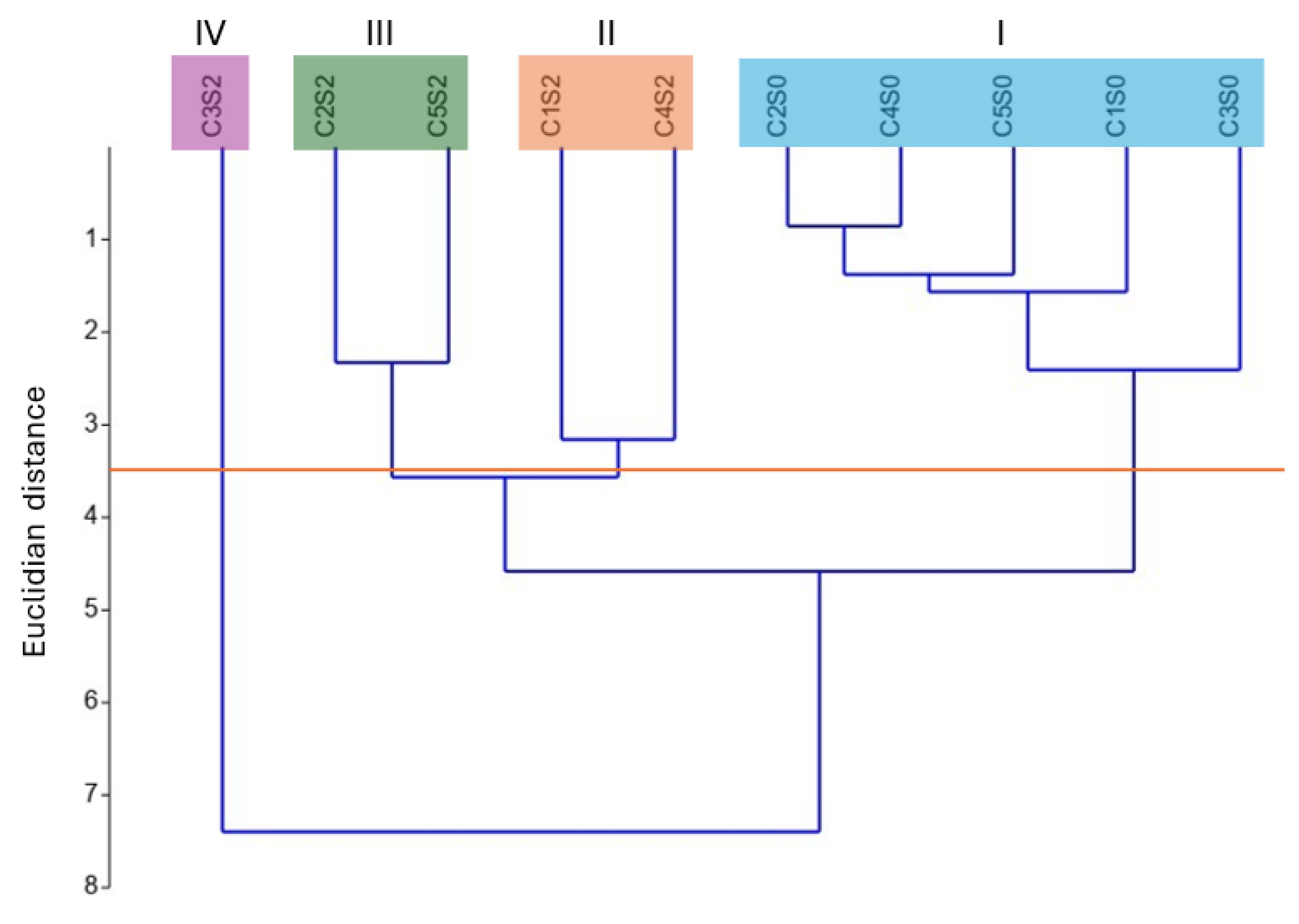
Among the evaluated cultivars, Imperial 45 exhibited the strongest reduction in germination as salinity increased. In contrast, the cultivar ‘Asturia’ exhibited greater resistance to salinity and was therefore classified as salinity-tolerant. This result is supported by the dissimilarity dendrogram (Figure 1).
Under the highest salinity level (120 mM NaCl), some cultivars did not produce normal seedlings, resulting in zero germination according to the criteria established by the Rules for Seed Testing. In these cases, seedling abnormalities were observed and evaluated as evidence of the severe effects of salt stress on seedling establishment and development.
Cluster analysis was performed using Euclidean distance as the measure of dissimilarity, with a cutoff value of 3.5 adopted for the formation of four groups derived from the combinations of cultivars (C) and salinity levels (S). Group I comprised the control cultivars (absence of stress, 0.0 mM), while Groups II, III, and IV included those under salinity stress (120 mM). Under stress conditions, Group II stood out with the highest germination capacity, where the cultivar ‘Asturia’ showed the best performance. In contrast, Group IV included the cultivar ‘Imperial 45’, which was classified as salinity-sensitive.
Cluster analysis was performed using Euclidean distance as the measure of dissimilarity and Ward’s method for group formation. The dendrogram (Figure 1) showed four distinct groups. Group I comprised the five cultivars evaluated under non-saline conditions (0 mM NaCl), indicating similar physiological and biochemical responses in the absence of stress. Groups II, III, and IV comprised cultivars evaluated under severe salinity (120 mM NaCl). Among these groups, Group II was characterized by greater maintenance of germination, growth, and biochemical performance under saline conditions, with ‘Asturia’ showing the best overall response. In contrast, Group IV included ‘Imperial 45’, which exhibited the greatest reductions in the evaluated traits and was therefore classified as the most salt-sensitive cultivar.
The salinity level selected to simulate saline stress was 60 mM, as it was sufficient to reduce germination and early seedling development while still allowing the production of adequate plant material for subsequent experiments.

3.2. Stage II

Analysis of variance indicated a highly significant interaction (p ≤ 0.01) between cultivars and salinity stress attenuators for root and shoot lengths, as well as root and shoot dry masses. In addition, germination, germination speed index, and superoxide dismutase activity showed significant main effects of cultivars and treatments. Hydrogen peroxide content showed no significant effect for any source of variation.
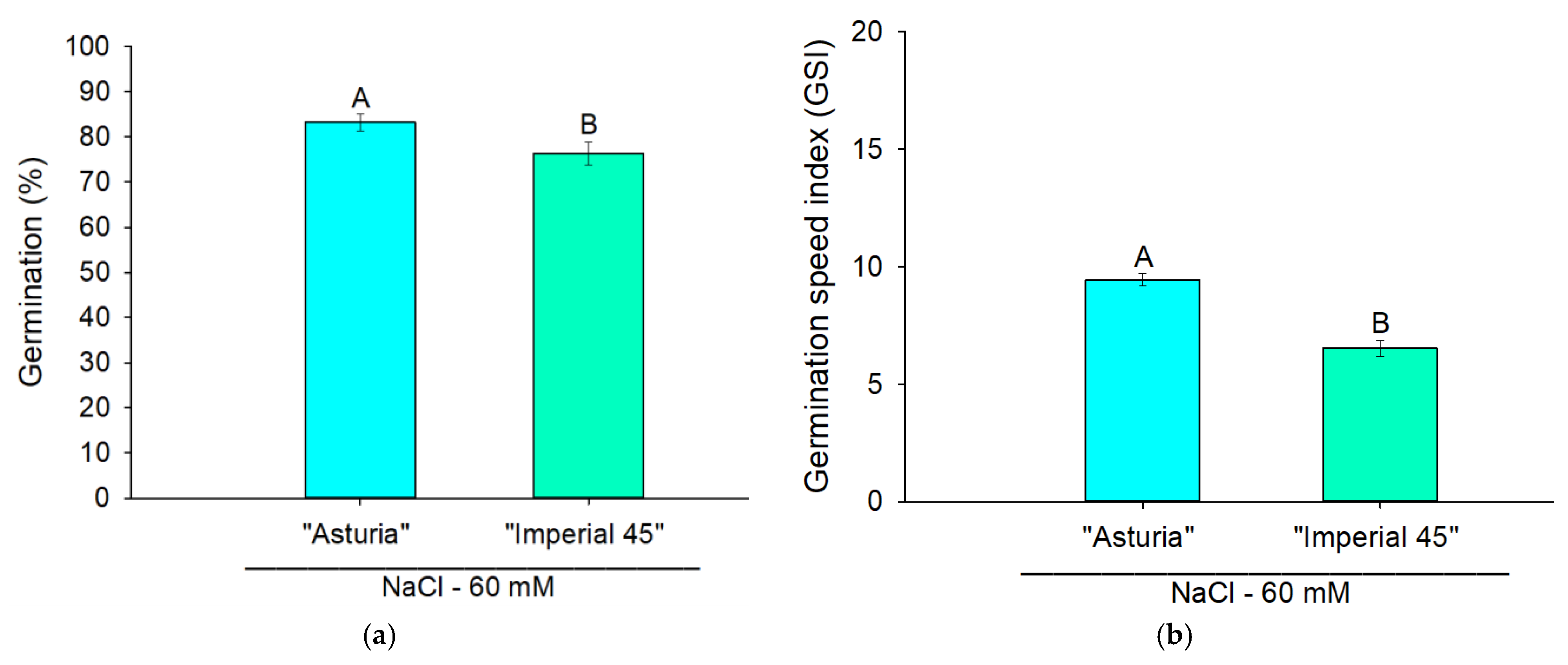
Germination (Figure 2a) and germination speed index (Figure 2b) differed between the cultivars ‘Asturia’ and ‘Imperial 45’ as a function of their salinity tolerance. Germination and germination speed index values for ‘Asturia’ were 8% and 31% higher, respectively, than those observed for ‘Imperial 45’.
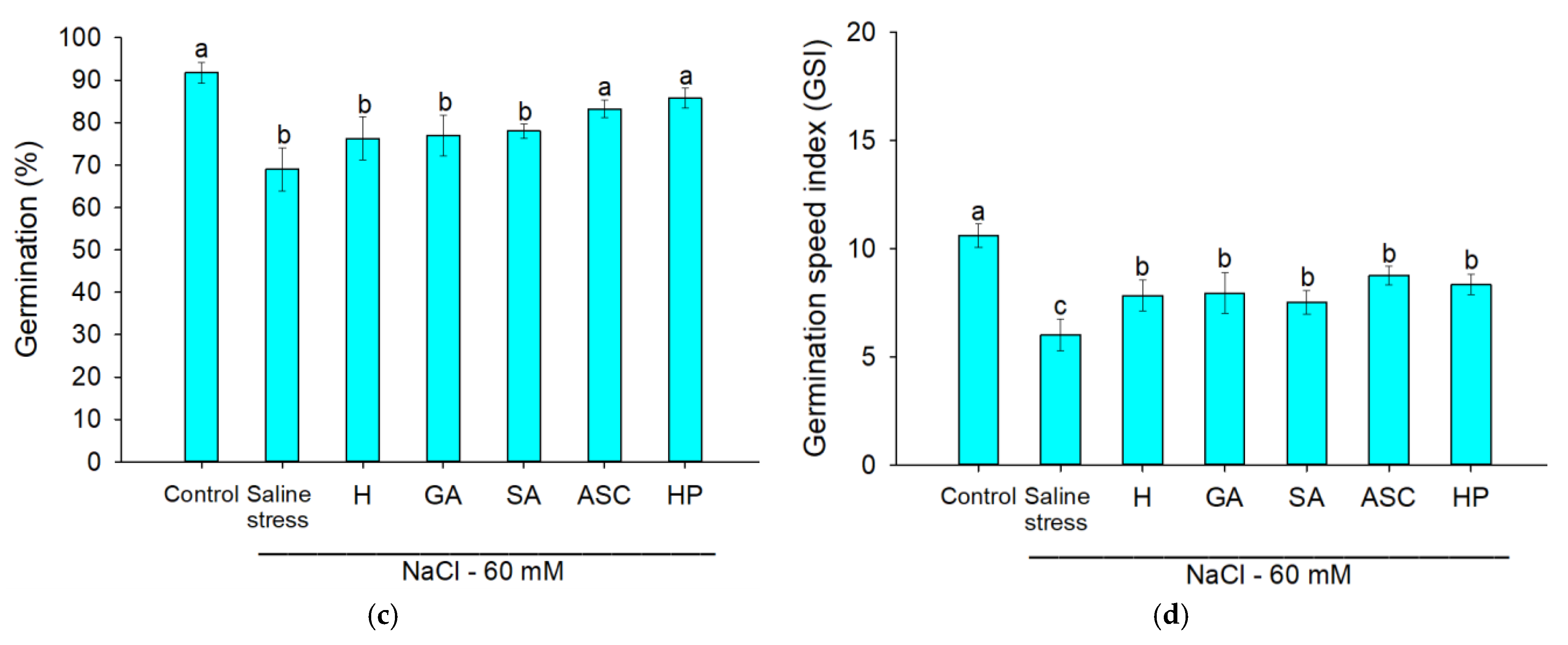
Regarding treatment responses, germination (Figure 2c) and germination speed index (Figure 2d) were negatively affected by salinity, with reductions of 25% and 43%, respectively, compared with the control. However, the use of ascorbic acid (ASC) and hydrogen peroxide (HP) resulted in germination values close to those of the control. All pre-germinative treatments improved the germination speed index relative to saline stress alone, although no significant differences were observed among treatments.
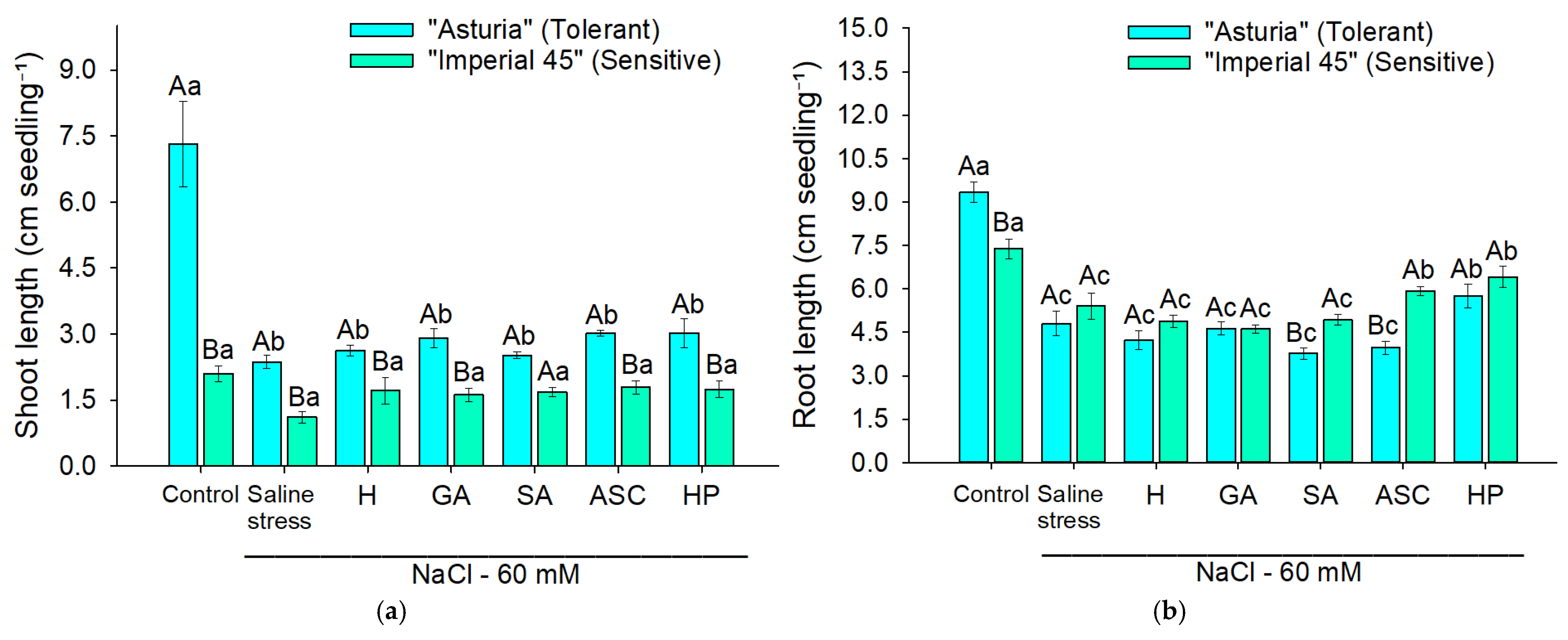
The 60 mM salinity level reduced seedling size in both cultivars. Reductions of 48% for ‘Asturia’ and 26% for ‘Imperial 45’ were observed for root length (Figure 3a). Shoot length was also adversely affected, with a 68% reduction in ‘Asturia’ (Figure 3b). However, hydrogen peroxide application increased root length by 19% in both the sensitive and tolerant cultivars compared with saline stress alone. Additionally, the use of ascorbic acid in ‘Imperial 45’ produced results like those observed for hydrogen peroxide.
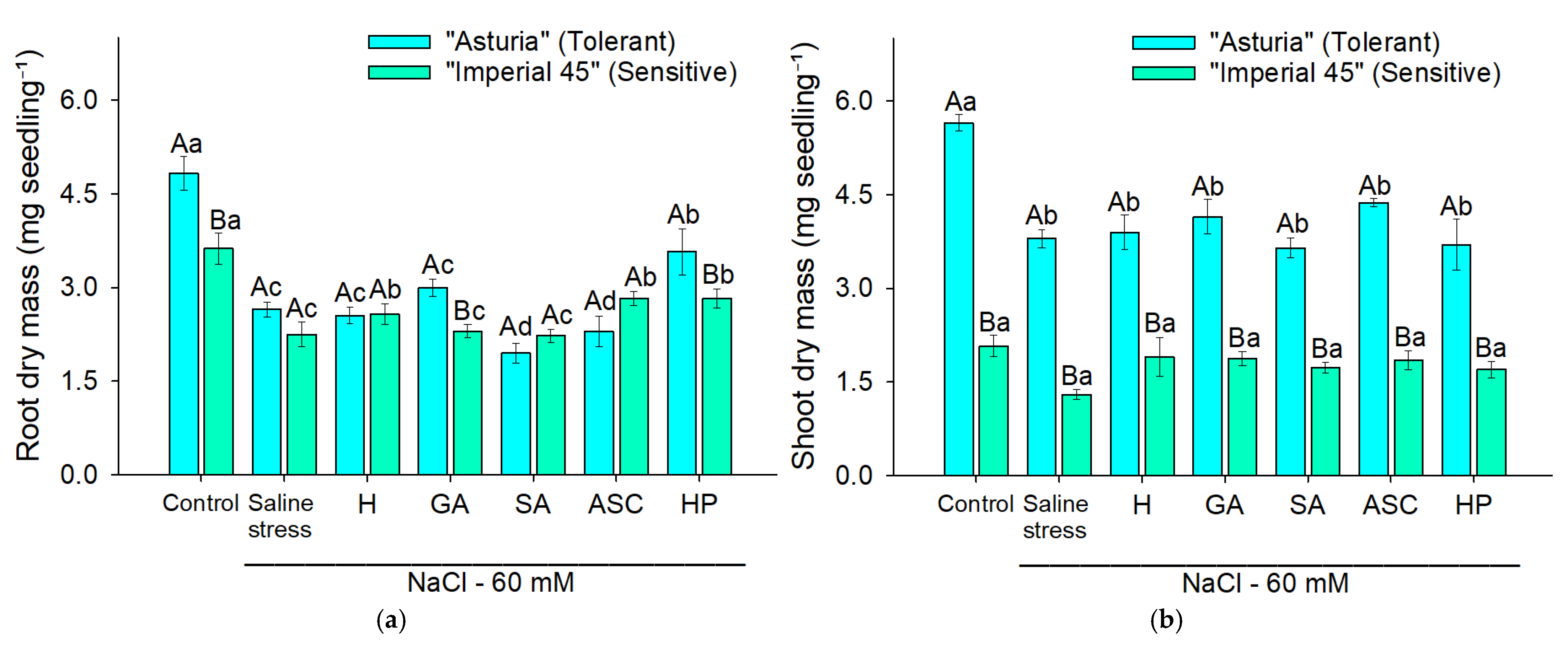
Root dry mass decreased by 45% and 37% for the cultivars ‘Asturia’ and ‘Imperial 45’, respectively, when subjected to saline stress (Figure 4a). Shoot growth was also reduced by 32% and 35% for ‘Asturia’ and ‘Imperial 45’, respectively (Figure 4b). However, in ‘Asturia’, root dry mass results indicated that hydrogen peroxide increased root development by 35% compared with saline stress alone. For ‘Imperial 45’, both ascorbic acid and hydrogen peroxide promoted gains of 26% in root dry mass.
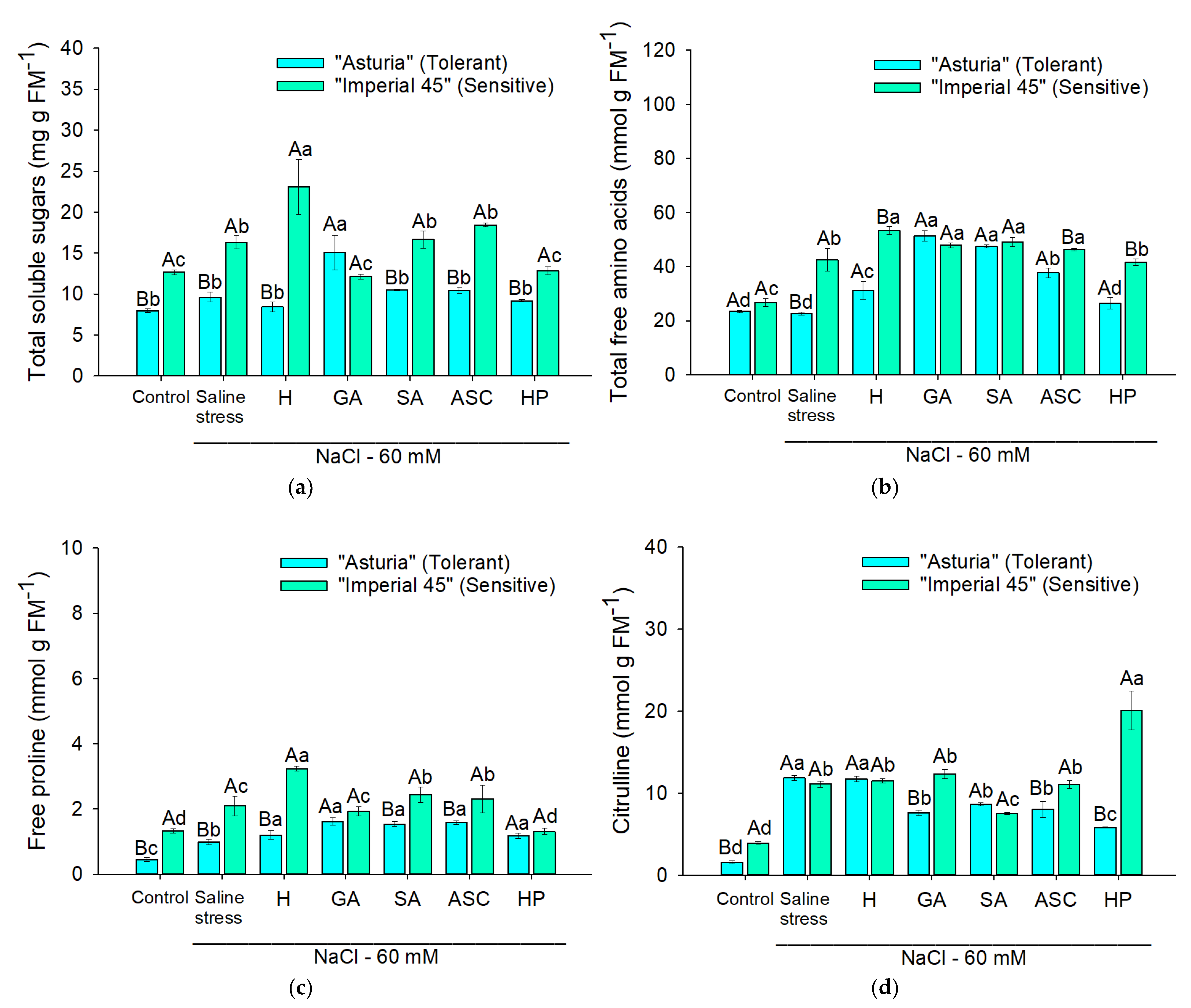
Salinity treatment increased total soluble sugar content by 29% in the sensitive cultivar compared with the control (Figure 5a). Hydropriming resulted in an 82% higher accumulation of soluble sugars compared with the non-stress treatment. Seed soaking of the cultivar ‘Asturia’ in GA led to a 57.9% increase in soluble sugar accumulation relative to untreated seeds subjected to saline stress (Figure 5a).
For total free amino acids (Figure 5b), saline stress promoted a 59.2% increase compared with the control in ‘Imperial 45’. Hydropriming and treatments with gibberellic, salicylic, and ascorbic acids increased total free amino acid content by approximately 100% compared with saline stress alone in the sensitive cultivar. In ‘Asturia’, treatments with gibberellic and salicylic acids resulted in higher amino acid accumulation, with increases of 28% and 24%, respectively (Figure 5b).
Proline levels were higher under saline stress than under control conditions, with increases of 120% and 57% for the cultivars ‘Asturia’ and ‘Imperial 45’, respectively (Figure 5c). Among the attenuators, hydropriming increased proline levels by 141% relative to saline stress alone in ‘Imperial 45’. Saline stress increased citrulline levels in the cultivars ‘Asturia’ and ‘Imperial 45’ by 650% and 185%, respectively (Figure 5d). Treatment with hydrogen peroxide resulted in greater citrulline retention (80%) compared with saline stress alone in ‘Imperial 45’.
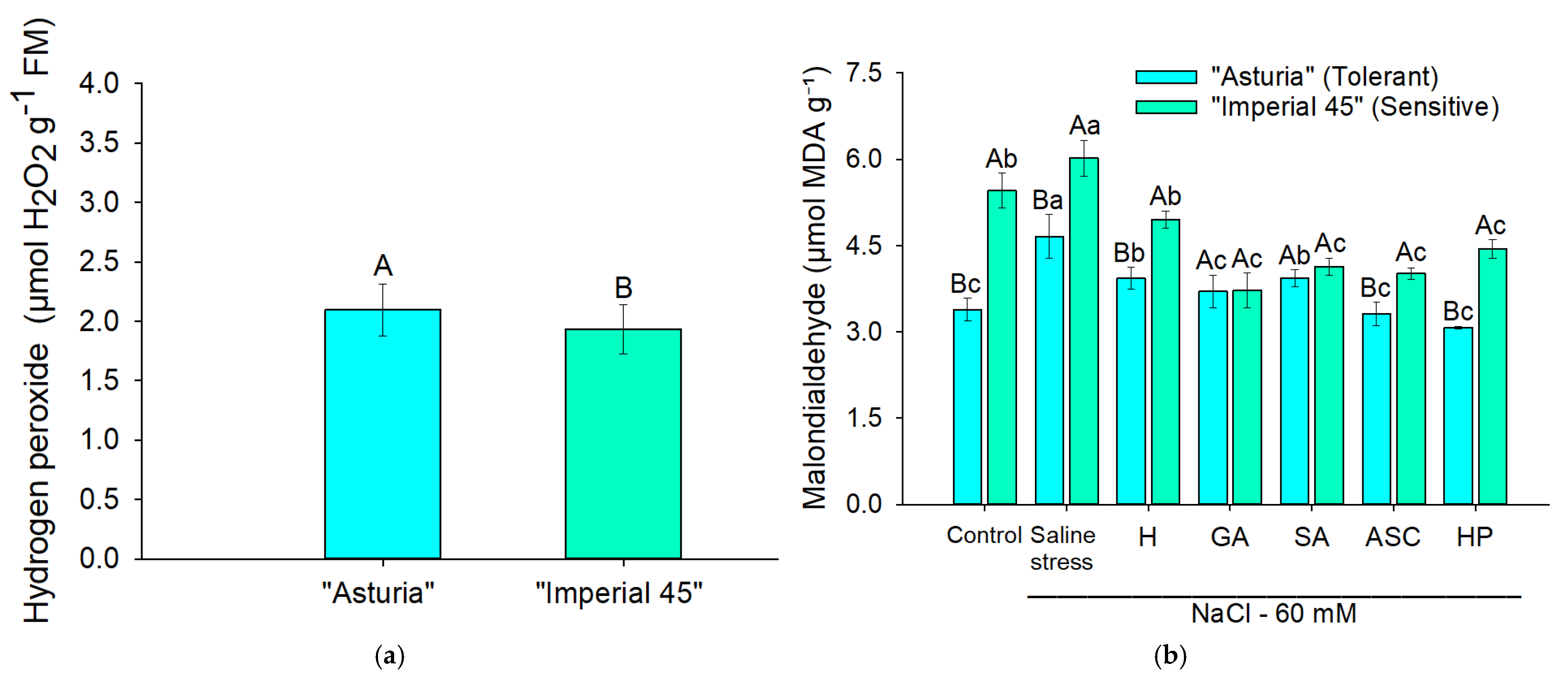
Results for hydrogen peroxide content (Figure 6a) indicated a higher accumulation in ‘Asturia’, with values 9% greater than those observed in ‘Imperial 45’. However, no significant effects of cultivars or pre-germinative treatments were detected in response to saline stress.
Saline stress resulted in increases of 37% and 10% in malondialdehyde levels compared with the control for ‘Asturia’ and ‘Imperial 45’, respectively (Figure 6b). Treatments with gibberellic, salicylic, and ascorbic acids, as well as with hydrogen peroxide, were effective in reducing malondialdehyde levels in ‘Imperial 45’, with reductions of 38%, 31%, 33%, and 26%, respectively, compared with saline stress alone. In ‘Asturia’, gibberellic acid, salicylic acid, and hydrogen peroxide promoted smaller reductions in this oxidative stress marker, corresponding to 21%, 29%, and 34%, respectively (Figure 6b).
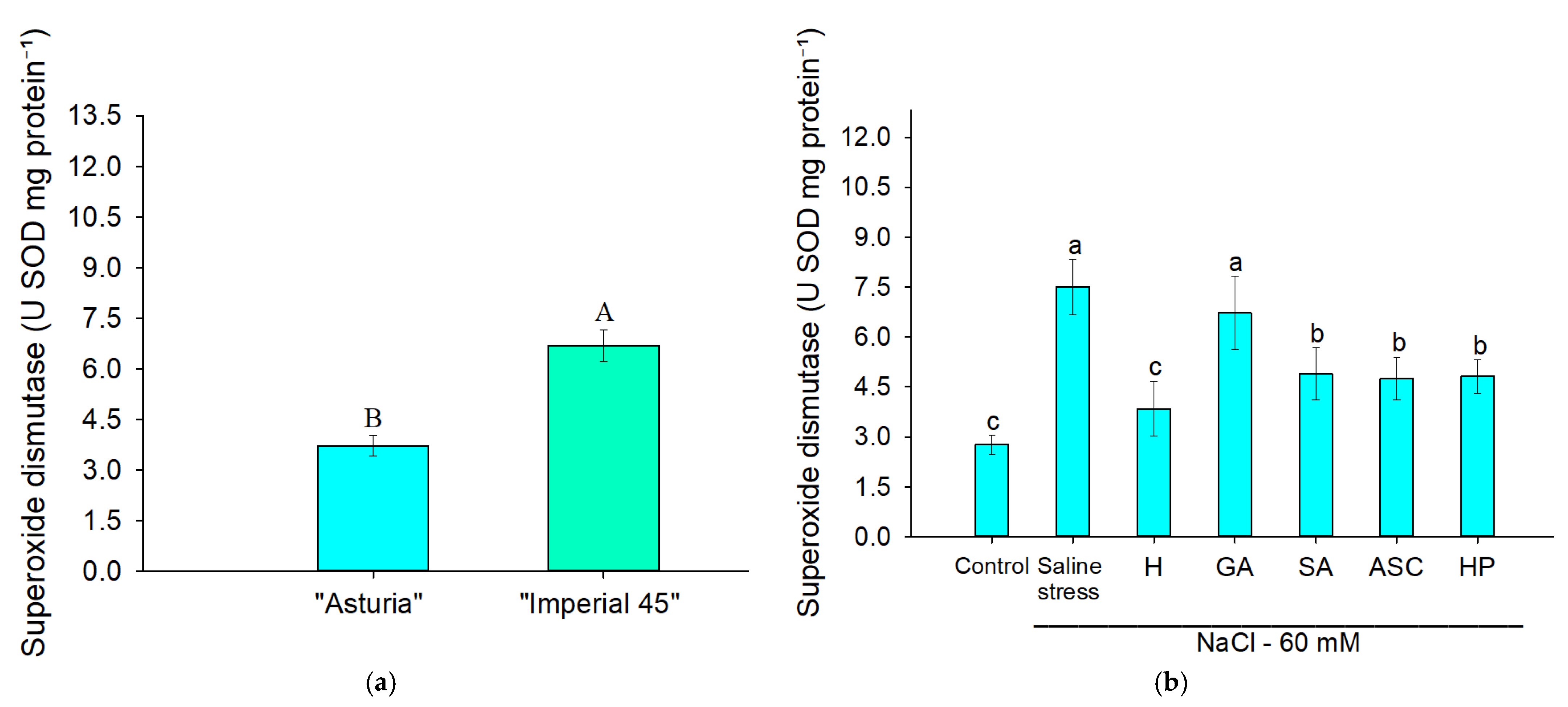
Superoxide dismutase activity was affected by both cultivars and treatments. The cultivar ‘Imperial 45’ exhibited 68% higher SOD activity than ‘Asturia’ (Figure 7a). Saline stress increased SOD activity by 171% relative to the control. Gibberellic acid increased SOD activity by 142% but did not differ from saline stress alone. Salicylic and ascorbic acids, as well as hydrogen peroxide, also increased SOD activity compared with the control, although their effects were lower than those observed under saline stress alone (Figure 7b).
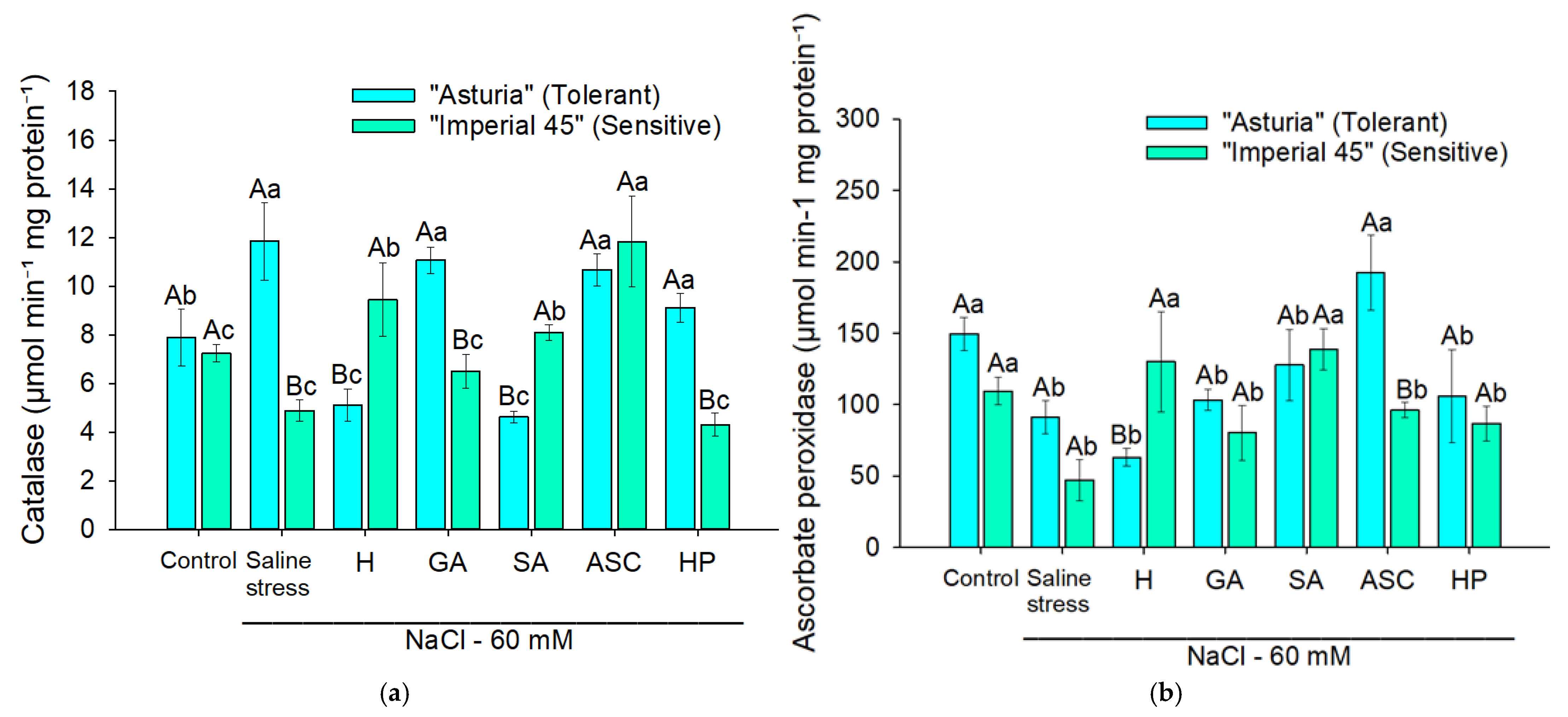
The activities of the antioxidant enzymes catalase and ascorbate peroxidase varied between melon cultivars under saline stress. In the cultivar classified as tolerant, catalase activity increased by 80%, whereas in the sensitive cultivar the increase was only 32% (Figure 8a). Treatments with gibberellic acid, ascorbic acid, and hydrogen peroxide maintained catalase activity at levels like those observed under saline stress alone. Although saline stress did not increase catalase activity in the sensitive cultivar, the attenuators gibberellic acid, ascorbic acid, and hydrogen peroxide produced the opposite effect, with ascorbic acid standing out as the most effective in enhancing enzyme activity.
The study revealed a significant reduction in ascorbate peroxidase activity under saline stress, with decreases of 39% and 57% in the cultivars ‘Asturia’ and ‘Imperial 45’, respectively (Figure 8b). Ascorbic acid was effective in restoring ascorbate peroxidase activity in ‘Asturia’, increasing it by 111% compared with saline stress, with no significant difference relative to the control. In the cultivar ‘Imperial 45’, hydropriming and salicylic acid maintained ascorbate peroxidase activity at levels like those of the control, even under stress conditions (Figure 8b).

4. Discussion

Plant acclimation to salinity involves coordinated physiological and biochemical adjustments that allow seedlings to maintain growth under osmotic and oxidative stress conditions [3,4,11,12]. In the present study, the cultivars exhibited contrasting responses to salinity, demonstrating that tolerance in melon is strongly genotype-dependent. The cultivar Asturia maintained higher germination and seedling development under saline conditions, whereas Imperial 45 showed marked reductions in germination and vigor, indicating greater sensitivity to salt stress.
The superior performance of Asturia under salinity suggests a more efficient regulation of stress-induced damage, particularly through antioxidant metabolism. In contrast, the sensitive cultivar ‘Imperial 45’ appeared to rely predominantly on osmotic adjustment mechanisms, characterized by greater accumulation of compatible solutes [21,22]. These distinct physiological strategies indicate that salt tolerance in melon seedlings depends not only on osmolyte accumulation, but also on the efficiency of antioxidant protection [11,12,22].
Germination is considered one of the developmental stages most affected by salinity because excess salt reduces water uptake and promotes ionic toxicity [3,4,37]. Under these conditions, the higher germination capacity observed in ‘Asturia’ indicates a greater ability to maintain cellular hydration and metabolic activity during seed imbibition. Similar responses have been associated with enhanced tolerance mechanisms in melon genotypes subjected to saline stress [4,9].
The reduction in seedling growth caused by salinity was observed in both cultivars, although the effects were more pronounced in Imperial 45. Salinity-induced inhibition of root and shoot development is commonly associated with osmotic restriction and excessive reactive oxygen species (ROS) production, which impair cell expansion and membrane stability [37,38]. However, the maintenance of higher root growth in Asturia under stress may have contributed to improved water uptake and greater physiological stability during early seedling establishment [11,12].
The accumulation of osmolytes such as soluble sugars and proline under severe salinity (120 mM NaCl) during Phase I indicates the activation of osmotic adjustment mechanisms in melon seedlings [11,21,39]. These compounds contribute to cellular osmotic balance, membrane stabilization, and protection against oxidative stress [39,40]. However, although some cultivars exhibited expressive osmolyte accumulation, this response alone was not sufficient to maintain normal seedling development under severe salinity. In ‘Imperial 45’, for example, the inability to produce normal seedlings at 120 mM suggests that osmotic adjustment mechanisms were insufficient to counteract the combined osmotic and ionic effects imposed by salt stress during Phase I of the study [40].
Among the attenuators evaluated, hydrogen peroxide and ascorbic acid were particularly effective in improving seedling growth under saline conditions. Hydrogen peroxide increased root development in both cultivars, especially under stress conditions. At low concentrations, H2O2 acts as a signaling molecule capable of activating defense pathways and stimulating antioxidant metabolism [41,42]. In the present study, this signaling effect was associated with improved root growth and reduced oxidative damage in melon seedlings, especially when compared with untreated stressed seeds [42,43].
Ascorbic acid is considered an essential antioxidant, and its external application is capable of minimizing the effects of salt stress by directly scavenging reactive oxygen species and enhancing the activity of the main enzymes involved in antioxidant metabolism [44]. As demonstrated in the present study for melon cultivars, the beneficial potential of ascorbic acid as a seed pre-treatment was also observed by Rafique et al. [45] in squash seedlings, resulting in satisfactory growth responses.
The sensitive cultivar Imperial 45 showed greater accumulation of soluble sugars, amino acids, proline, and citrulline under saline conditions in Stage II. This response suggests that this cultivar preferentially invested in osmotic adjustment as an attempt to maintain cellular turgor and reduce osmotic imbalance caused by salt stress. Compatible solutes play important roles in osmotic regulation, membrane stabilization, and ROS scavenging [45,46,47]. However, despite the greater accumulation of these osmoprotective compounds, Imperial 45 still exhibited lower germination and seedling growth, indicating that osmotic adjustment alone was insufficient to fully mitigate salt-induced damage [47].
The contrasting responses observed between Stage I and II suggest that osmotic adjustment in melon seedlings is strongly influenced by developmental stage and stress severity. During Stage I, compatible solute accumulation showed greater variability, likely because germination and early seedling establishment depend primarily on rapid water uptake and metabolic reactivation. Under these conditions, severe salinity impaired normal seedling formation, particularly in ‘Imperial 45’, limiting the effectiveness of osmotic adjustment mechanisms. In contrast, Stage II showed a more consistent accumulation of osmolytes in the sensitive cultivar, indicating that established seedlings were able to activate biochemical defense responses more effectively under prolonged saline stress [47,48].
In contrast, Asturia exhibited lower accumulation of compatible solutes but greater antioxidant regulation, particularly through catalase activity. This result suggests that the tolerant cultivar was more efficient in controlling oxidative stress, thereby reducing the need for excessive osmolyte accumulation. Catalase plays a central role in H2O2 detoxification and protection against oxidative damage [49,50], and its higher activity in Asturia may explain the lower lipid peroxidation and superior seedling performance observed under saline conditions.
Citrulline accumulation was also influenced by salinity and differed between cultivars. Citrulline is considered an important osmoprotective metabolite in cucurbits because of its high efficiency in scavenging hydroxyl radicals and protecting cellular structures [51,52]. The increased citrulline accumulation observed mainly in Imperial 45 reinforces the hypothesis that the sensitive cultivar activated compensatory osmotic responses to reduce stress damage.
Lipid peroxidation increased under saline stress, confirming the occurrence of oxidative damage caused by salt-induced ROS accumulation. However, gibberellic acid, ascorbic acid, salicylic acid, and hydrogen peroxide reduced malondialdehyde levels, especially in Imperial 45 [49,50]. These results demonstrate that stress attenuators were particularly important for the sensitive cultivar because they enhanced antioxidant protection and reduced membrane damage under salinity [53].
The activity of antioxidant enzymes also differed between cultivars and treatments. Superoxide dismutase activity increased under saline stress, especially in Imperial 45, indicating enhanced ROS production under stress conditions. However, the higher SOD activity observed in the sensitive cultivar should not be interpreted as evidence of greater stress tolerance. Instead, this response likely reflects a reactive upregulation triggered by excessive ROS accumulation under saline conditions. Since SOD converts superoxide radicals into H2O2, effective oxidative protection depends on the coordinated action of downstream enzymes such as catalase and ascorbate peroxidase [49,50,54]. In the present study, although Imperial 45 exhibited greater SOD activity, Asturia showed higher CAT activity and lower lipid peroxidation, suggesting more efficient ROS detoxification and better control of oxidative damage. These results indicate that salt tolerance in melon seedlings was more closely associated with the coordinated action of the antioxidant network than with the activity of individual enzymes. The lower CAT and APX responses observed in Imperial 45 were apparently insufficient to fully detoxify ROS, whereas Asturia maintained a more balanced antioxidant system, resulting in lower lipid peroxidation and better seedling performance under salinity.
Ascorbic acid and gibberellic acid promoted important changes in antioxidant metabolism, particularly in the sensitive cultivar. Ascorbic acid increased catalase and ascorbate peroxidase activities and contributed to improved root growth [55] and lower lipid peroxidation in Imperial 45. These findings indicate that exogenous ascorbic acid may enhance salt tolerance in melon seedlings by strengthening antioxidant defense mechanisms during early establishment [44,55].
Similarly, gibberellic acid promoted reductions in oxidative damage and stimulated antioxidant responses [56,57]. In the present study, the beneficial effects of gibberellic acid were more evident in the sensitive cultivar, suggesting that this attenuator may partially compensate for the lower intrinsic tolerance of Imperial 45.
The effectiveness of exogenous attenuators under saline stress depends on the physiological mechanisms activated in each genotype [46,53]. In the present study, ascorbic acid and gibberellic acid were particularly important in improving antioxidant responses in the sensitive cultivar Imperial 45, indicating that these compounds may partially compensate for its lower intrinsic tolerance to salinity.
The greater effectiveness of gibberellic acid, ascorbic acid, and hydrogen peroxide compared with salicylic acid and hydropriming may be related to the specific physiological limitations imposed by severe salinity in melon seedlings. Under high salt concentrations, the main constraints observed in the present study were associated with oxidative damage, reduced seedling growth, and impaired establishment of normal seedlings, particularly in the sensitive cultivar Imperial 45 [47,49]. In this context, ascorbic acid was more effective because it acted directly in ROS detoxification, membrane stabilization, and regeneration of antioxidant compounds, contributing to lower lipid peroxidation and improved antioxidant enzyme activity [44]. Gibberellic acid, in turn, may have enhanced stress tolerance by stimulating metabolic reactivation, reserve mobilization, and cell elongation, thereby partially compensating for the inhibitory effects of salinity on early seedling growth [56,57]. Hydrogen peroxide also promoted beneficial effects, especially in the tolerant cultivar Asturia, likely due to its signaling role in activating antioxidant defense pathways and improving root development under saline conditions [41,42,43].
In contrast, although salicylic acid and hydropriming promoted beneficial responses, their effects were comparatively less pronounced under severe saline stress. Hydropriming mainly improves seed hydration and germination synchronization but does not necessarily provide sufficient antioxidant protection under conditions of intense oxidative stress [48]. Similarly, the effects of salicylic acid are strongly dose- and genotype-dependent [58,59], and in the present study its action was less efficient in maintaining growth and reducing oxidative damage compared with gibberellic acid, ascorbic acid, and hydrogen peroxide. These results suggest that treatments capable of simultaneously enhancing antioxidant defense and maintaining metabolic growth processes are more effective in mitigating severe salt stress in melon seedlings [53].
In the present study, superoxide dismutase activity was enhanced by gibberellic acid, playing an important role in maintaining reactive oxygen species balance in melon seedlings. Certain phytohormones, particularly gibberellic acid, when applied exogenously, are able to mitigate the negative impacts of salt stress in several crop species by preserving membrane stability, regulating antioxidant enzyme activity, and modulating the availability of compatible solutes [56,57].
The use of gibberellic acid in seed treatment of the cultivar ‘Imperial 45’ proved effective in reducing lipid peroxidation, a result also reported for other cucurbit species. Studies of squash seeds [57] and watermelon seedlings [60] exposed to saline stress demonstrated that gibberellic acid enhances antioxidant defense by increasing the activity defense of enzymes such superoxide dismutase, catalase, and ascorbate peroxidase, resulting in lower oxidative damage and improved seedling growth.
The integrated action of multiple defense mechanisms, both enzymatic and non-enzymatic, is responsible for maintaining the balance of reactive oxygen species production in plants, and their effectiveness depends on several factors [38,49,50]. In this context, the greater salt tolerance observed in ‘Asturia’ may be associated mainly with more efficient enzymatic antioxidant regulation, whereas ‘Imperial 45’ relied predominantly on osmotic adjustment mechanisms that were insufficient to fully prevent salt-induced damage.
The present study provides evidence that the mitigation of salt stress in melon seedlings depends on cultivar-specific physiological strategies and on the type of stress attenuator applied [11,13]. Unlike previous studies in cucurbit species that mainly focus on germination performance or isolated priming effects [23,48], our results demonstrate that, in melon, the responses to hydropriming and chemical attenuators involve coordinated changes in osmotic adjustment and antioxidant metabolism [21,49,50].
The tolerant cultivar ‘Asturia’ exhibited greater efficiency in antioxidant regulation, particularly through catalase activity, whereas the sensitive cultivar ‘Imperial 45’ showed a stronger accumulation of compatible solutes, such as proline, soluble sugars, amino acids, and citrulline. In addition, gibberellic and ascorbic acids were particularly effective in reducing oxidative damage and modulating antioxidant enzyme activity in the sensitive cultivar under saline stress.
These findings expand the understanding of salt stress mitigation mechanisms in melon by demonstrating that the effectiveness of seed treatments is strongly dependent on the physiological profile of each cultivar and on the interaction between osmotic and antioxidant responses.

5. Conclusions

Germination and early seedling development of melons are negatively affected by salinity, with the cultivars Asturia and Imperial 45 exhibiting contrasting responses and being classified, respectively, as tolerant and sensitive to salt stress.
The tolerant cultivar Asturia showed greater efficiency in antioxidant regulation, particularly through catalase activity, whereas the sensitive cultivar Imperial 45 relied predominantly on osmotic adjustment mechanisms, characterized by greater accumulation of compatible solutes under saline conditions.
Hydrogen peroxide was the most effective attenuator for the tolerant cultivar Asturia, contributing to improved root development and reduced oxidative damage under saline stress. In contrast, ascorbic acid and gibberellic acid were more effective in the sensitive cultivar Imperial 45, promoting antioxidant enzyme activity and reducing lipid peroxidation.
The effectiveness of stress attenuators was dependent on the physiological profile of each cultivar, highlighting the importance of cultivar-specific strategies for improving salt stress tolerance in melon seedlings.

Supplementary Materials

The following supporting information can be downloaded at: https://www.mdpi.com/article/10.3390/agronomy16131228/s1, Table S1: Summary of the analysis of variance for germination (G) of Cucumis melo L. cultivars as a function of salinity levels; Table S2: Summary of the analysis of variance for germination speed index (GSI) of Cucumis melo L. cultivars as a function of salinity levels; Table S3: Summary of the analysis of variance for root length (RL) of Cucumis melo L. cultivars as a function of salinity levels; Table S4: Summary of the analysis of variance for shoot length (SL) of Cucumis melo L. cultivars as a function of salinity levels; Table S5: Summary of the analysis of variance for root dry mass (RDM) of Cucumis melo L. cultivars as a function of salinity levels. Table S6: Summary of the analysis of variance for shoot dry mass (SDM) of Cucumis melo L. cultivars as a function of salinity levels. Table S7: Summary of the analysis of variance for total soluble sugars (TSSs) of Cucumis melo L. cultivars as a function of salinity levels; Table S8: Summary of the analysis of variance for total free amino acids (TFAAs) of Cucumis melo L. cultivars as a function of salinity levels; Table S9: Summary of the analysis of variance for free proline (PRO) of Cucumis melo L. cultivars as a function of salinity levels; Table S10: Summary of the analysis of variance for germination (G) of Cucumis melo L. cultivars as a function of pre-treatments and saline stress; Table S11: Summary of the analysis of variance for germination speed index (GSI) of Cucumis melo L. cultivars as a function of pre-treatments and saline stress; Table S12: Summary of the analysis of variance for root length (RL) of Cucumis melo L. cultivars as a function of pre-treatments and saline stress; Table S13: Summary of the analysis of variance for shoot length (SL) of Cucumis melo L. cultivars as a function of pre-treatments and saline stress; Table S14: Summary of the analysis of variance for root dry mass (RDM) of Cucumis melo L. cultivars as a function of pre-treatments and saline stress; Table S15: Summary of the analysis of variance for shoot dry mass (SDM) of Cucumis melo L. cultivars as a function of pre-treatments and saline stress; Table S16: Summary of the analysis of variance for total soluble sugars (TSSs) of Cucumis melo L. cultivars as a function of pre-treatments and saline stress; Table S17. Summary of the analysis of variance for total free amino acids (TFAAs) of Cucumis melo L. cultivars as a function of pre-treatments and saline stress; Table S18: Summary of the analysis of variance for free proline (PRO) of Cucumis melo L. cultivars as a function of pre-treatments and saline stress; Table S19: Summary of the analysis of variance for free citrulline (CIT) of Cucumis melo L. cultivars as a function of pre-treatments and saline stress.

Author Contributions

Conceptualization, E.d.M.S., S.B.T., M.B.d.M., J.E.S.B.d.S., C.Z.A., P.C.A.L., K.T.O.P., A.Á.d.S. and F.V.d.S.S.; methodology, E.d.M.S., S.B.T., M.B.d.M., K.T.O.P., J.E.S.B.d.S., J.P.G.B., C.Z.A., P.C.A.L., A.Á.d.S., D.F.d.R., M.V.d.M.A., J.C.D.d.O.C., R.R.d.O., G.D.d.S., A.A.R.C. and F.V.d.S.S.; formal analysis, E.d.M.S., K.T.O.P., D.F.d.R., M.V.d.M.A., J.C.D.d.O.C., R.R.d.O., G.D.d.S. and A.A.R.C.; investigation, E.d.M.S., S.B.T., M.B.d.M., C.P.B., K.T.O.P., J.P.G.B., C.Z.A., P.C.A.L., J.E.S.B.d.S., A.Á.d.S., C.C.d.A. and F.V.d.S.S.; data curation, E.d.M.S., S.B.T. and M.B.d.M.; writing—original draft preparation, E.d.M.S., S.B.T., M.B.d.M., C.P.B., K.T.O.P., M.V.d.M.A., C.C.d.A., J.C.D.d.O.C., R.R.d.O., G.D.d.S. and A.A.R.C.; writing—review and editing, E.d.M.S., S.B.T., K.T.O.P. and C.Z.A.; supervision, S.B.T.; project administration, S.B.T.; funding acquisition, S.B.T. All authors have read and agreed to the published version of the manuscript.

Funding

This research was funded by the National Council for Scientific and Technological Development, https://www.gov.br/cnpq/pt-br (accessed on 21 June 2026), MCTIC/CNPq Call No. 28/2018—Universal, Process 427284/2018-0, Torres, S. B. and financed in part by the Coordenação de Aperfeiçoamento de Pessoal de Nível Superior—Brasil (CAPES), Finance Code 001 and Federal University of Mato Grosso do Sul (UFMS/MEC) in Brazil.

Data Availability Statement

The data presented in this study are openly available in Repositório UFERSA at https://repositorio.ufersa.edu.br/handle/prefix/14672 (accessed on 22 June 2026).

Acknowledgments

This study was conducted with support from the Federal University of Mato Grosso do Sul (UFMS/MEC) in Brazil.

Conflicts of Interest

The authors declare no conflicts of interest.

References

  1. Zhou, H.; Shi, H.; Yang, Y.; Feng, X.; Chen, X.; Xiao, F.; Lin, H.; Guo, Y. Insights into plant salt stress signaling and tolerance. J. Genet. Genom. 2024, 51, 16–34. [Google Scholar] [CrossRef] [PubMed]
  2. Funga, U.; Pinar, H.; Uzun, A. Assessment of the Response of Some Melon Genotypes (Cucumis melo L.) to Different Doses of Sodium Chloride (NaCl). Curr. Trends Nat. Sci. 2022, 11, 381–389. [Google Scholar] [CrossRef]
  3. Kavian, S.; Safarzadeh, S.; Yasrebi, J. Zinc Improves Growth and Antioxidant Enzyme Activity in Aloe Vera Plant under Salt Stress. S. Afr. J. Bot. 2022, 147, 1221–1229. [Google Scholar] [CrossRef]
  4. Yang, W.; Ling, Y.; Li, M.; Zhang, X.; Liu, B. Screening and Identification of Saline-Tolerant Germplasm in Melon. Agriculture 2023, 13, 2051. [Google Scholar] [CrossRef]
  5. Khan, M.O.; Irfan, M.; Muhammad, A.; Ullah, I.; Nawaz, S.; Khalil, M.K.; Ahmad, M. A Practical and Economical Strategy to Mitigate Salinity Stress through Seed Priming. Front. Environ. Sci. 2022, 10, 991977. [Google Scholar] [CrossRef]
  6. Kesh, H.; Kaushik, P. Advances in melon (Cucumis melo L.) breeding: An update. Sci. Hortic. 2021, 282, 110045. [Google Scholar] [CrossRef]
  7. Shahwar, D.; Khan, Z.; Park, Y. Molecular Marker-Assisted Mapping, Candidate Gene Identification, and Breeding in Melon (Cucumis melo L.): A Review. Int. J. Mol. Sci. 2023, 24, 15490. [Google Scholar] [CrossRef] [PubMed]
  8. Castañares, J.L.; Bouzo, C.A. Seed Priming Induces Biochemical Changes in Melon Plants and Increase Salt Tolerance. Rev. Investig. Agropecu. 2020, 46, 208–217. [Google Scholar]
  9. Liu, P.; Gao, C.; Gao, Y.; Wang, C.; Jiao, Z.; Xu, A.; Dong, Y.; Sun, J. Investigating Salt Tolerance in Melon During Germination and Early Seedling Stages. Horticulturae 2025, 11, 397. [Google Scholar] [CrossRef]
  10. Li, W.; Zhang, H.; Zeng, Y.; Xiang, L.; Lei, Z.; Huang, Q.; Li, T.; Shen, F.; Cheng, Q. A Salt Tolerance Evaluation Method for Sunflower (Helianthus annuus L.) at the Seed Germination Stage. Sci. Rep. 2020, 10, 10626. [Google Scholar] [CrossRef] [PubMed]
  11. Chen, C.; Yu, W.; Xu, X.; Wang, Y.; Wang, B.; Xu, S.; Lan, Q.; Wang, Y. Research Advancements in Salt Tolerance of Cucurbitaceae: From Salt Response to Molecular Mechanisms. Int. J. Mol. Sci. 2024, 25, 9051. [Google Scholar] [CrossRef] [PubMed]
  12. Ulas, F.; Ameen, H.H.H.H.; Ulas, A. Salt Stress and Its Implications in Vegetable Crops with Special Reference to the Cucurbitaceae Family. Ann. Arid Zone 2024, 63, 117–129. [Google Scholar] [CrossRef]
  13. Zulfiqar, F. Effect of Seed Priming on Horticultural Crops. Sci. Hortic. 2021, 286, 110197. [Google Scholar] [CrossRef]
  14. Maach, M.; Akodad, M.; Moumen, A.; Skalli, A.; Ait Hmeid, H.; Gueddari, H.; Baghour, M. Bio-Regulators: Silicon, Salicylic Acid, Ascorbic Acid Improve Salt Tolerance in Cucumber. Am. J. Biosci. 2021, 9, 210–216. [Google Scholar] [CrossRef]
  15. Guirra, K.S.; Torres, S.B.; da Silva, J.E.S.B.; Leite, M.d.S.; Nogueira Neto, F.A.; Guirra, B.S.; Rêgo, A.L.B.; Paiva, E.P. Pretreatment of Seeds with Plant Regulators Attenuates Salt Stress in Pumpkin: Effects on Germination and Initial Seedling Development. Rev. Ciênc. Agron. 2022, 53, e20217946. [Google Scholar] [CrossRef]
  16. Silva, J.M.; da Silva Júnior, G.B.; Bonifácio, A.; Dutra, A.F.; de Mello Prado, R.; de Alcântara Neto, F.; Zuffo, A.M.; Melo, R.S.; de Sousa Pereira, T.L.; de Sousa, R.S. Exogenous Salicylic Acid Alleviates Water Stress in Watermelon Plants. Ann. Appl. Biol. 2023, 182, 121–130. [Google Scholar] [CrossRef]
  17. Limão, M.A.R.; Rodrigues, M.H.B.S.; da Silva Santos, A.; da Silva Barbosa, L.; Lopes, K.P.; dos Santos Dias, D.C.F. Hydrogen Peroxide as a Mitigator of Salt Stress for Melon Seed Germination. Comun. Sci. 2022, 13, e3798. [Google Scholar] [CrossRef]
  18. Leite, M.d.S.; Torres, S.B.; Benedito, C.P.; Pereira, K.T.O.; Arruda, M.V.d.M.; de Oliveira, R.R.; de Sousa, G.D.; de Albuquerque, C.C.; de Morais, M.B.; Alves, C.Z.; et al. Tolerance and Antioxidant Activity of Watermelon Cultivars Pre-Treated with Stress Attenuators and Subjected to Water Deficit. Plants 2026, 15, 184. [Google Scholar] [CrossRef] [PubMed]
  19. Ermiş, S.; Öktem, G.; Gökdaş, Z.; Demir, İ. Effect of Hydro-Priming on Seed Germination and Early Seedling Growth in Three Cucurbit Rootstock Cultivars under Salt and Osmotic Stresses. J. Agric. Biotechnol. 2021, 2, 1–5. [Google Scholar]
  20. Alves, R.d.C.; Oliveira, K.R.; Lúcio, J.C.B.; Silva, J.d.S.; Carrega, W.C.; Queiroz, S.F.; Gratão, P.L. Exogenous Foliar Ascorbic Acid Applications Enhance Salt-Stress Tolerance in Peanut Plants through Increase in the Activity of Major Antioxidant Enzymes. S. Afr. J. Bot. 2022, 150, 759–767. [Google Scholar] [CrossRef]
  21. Kaur, G.; Sanwal, S.K.; Kumar, A.; Pundir, R.K.; Yadav, M.; Sehrawat, N. Role of Osmolytes Dynamics in Plant Metabolism to Cope with Salinity Induced Osmotic Stress. Discov. Agric. 2024, 2, 59. [Google Scholar] [CrossRef]
  22. Nadarajah, K.K. ROS Homeostasis in Abiotic Stress Tolerance in Plants. Int. J. Mol. Sci. 2020, 21, 5208. [Google Scholar] [CrossRef] [PubMed]
  23. Oliveira, C.E.d.S.; Steiner, F.; Zuffo, A.M.; Zoz, T.; Alves, C.Z.; de Aguiar, V.C.B. Seed Priming Improves the Germination and Growth Rate of Melon Seedlings under Saline Stress. Cienc. Rural 2019, 49, 7. [Google Scholar] [CrossRef]
  24. Brasil. Ministério da Agricultura Pecuária e Abastecimento (MAPA). Regras Para Análise de Sementes. Available online: https://www.gov.br/agricultura/pt-br/assuntos/insumos-agropecuarios/arquivos-publicacoes-insumos/2946_regras_analise__sementes.pdf (accessed on 20 November 2025).
  25. Maguire, J.D. Speed of Germination—Aid in Selection and Evaluation for Seedling Emergence and Vigor. Crop Sci. 1962, 2, 176–177. [Google Scholar] [CrossRef]
  26. Yemm, E.W.; Willis, A.J. The Estimation of Carbohydrates in Plant Extracts by Anthrone. Biochem. J. 1954, 57, 508–514. [Google Scholar] [CrossRef] [PubMed]
  27. Yemm, E.W.; Cocking, E.C.; Ricketts, R.E. The Determination of Amino-Acids with Ninhydrin. Analyst 1955, 80, 209. [Google Scholar] [CrossRef]
  28. Bates, L.S.; Waldren, R.P.; Teare, I.D. Rapid Determination of Free Proline for Water-Stress Studies. Plant Soil 1973, 39, 205–207. [Google Scholar] [CrossRef]
  29. Knipp, M.; Vašák, M. A Colorimetric 96-Well Microtiter Plate Assay for the Determination of Enzymatically Formed Citrulline. Anal. Biochem. 2000, 286, 257–264. [Google Scholar] [CrossRef] [PubMed]
  30. Alexieva, V.; Sergiev, I.; Mapelli, S.; Karanov, E. The Effect of Drought and Ultraviolet Radiation on Growth and Stress Markers in Pea and Wheat. Plant Cell Environ. 2001, 24, 1337–1344. [Google Scholar] [CrossRef]
  31. Heath, R.L.; Packer, L. Photoperoxidation in Isolated Chloroplasts. Arch. Biochem. Biophys. 1968, 125, 189–198. [Google Scholar] [CrossRef] [PubMed]
  32. Giannopolitis, C.N.; Ries, S.K. Superoxide Dismutases. Plant Physiol. 1977, 59, 309–314. [Google Scholar] [CrossRef] [PubMed]
  33. Azevedo, R.A.; Alas, R.M.; Smith, R.J.; Lea, P.J. Response of Antioxidant Enzymes to Transfer from Elevated Carbon Dioxide to Air and Ozone Fumigation, in the Leaves and Roots of Wild-type and a Catalase-deficient Mutant of Barley. Physiol. Plant. 1998, 104, 280–292. [Google Scholar] [CrossRef]
  34. Havir, E.A.; McHale, N.A. Biochemical and Developmental Characterization of Multiple Forms of Catalase in Tobacco Leaves. Plant Physiol. 1987, 84, 450–455. [Google Scholar] [CrossRef] [PubMed]
  35. Nakano, Y.; Asada, K. Hydrogen Peroxide Is Scavenged by Ascorbate-Specific Peroxidase in Spinach Chloroplasts. Plant Cell Physiol. 1981, 22, 867–880. [Google Scholar] [CrossRef]
  36. Ferreira, D.F. SISVAR: A Computer Analysis System to Fixed Effects Split Plot Type Designs. Braz. J. Biom. 2019, 37, 529–535. [Google Scholar] [CrossRef]
  37. Toscano, S.; Romano, D.; Ferrante, A. Molecular Responses of Vegetable, Ornamental Crops, and Model Plants to Salinity Stress. Int. J. Mol. Sci. 2023, 24, 3190. [Google Scholar] [CrossRef] [PubMed]
  38. Sachdev, S.; Ansari, S.A.; Ansari, M.I.; Fujita, M.; Hasanuzzaman, M. Abiotic Stress and Reactive Oxygen Species: Generation, Signaling, and Defense Mechanisms. Antioxidants 2021, 10, 277. [Google Scholar] [CrossRef] [PubMed]
  39. Khan, N.; Ali, S.; Zandi, P.; Mehmood, A.; Ullah, S.; Ikram, M.; Ismail; Shahid, M.A.; Babar, A. Role of Sugars, Amino Acids and Organic Acids in Improving Plant Abiotic Stress Tolerance. Pak. J. Bot. 2020, 52, 355–363. [Google Scholar] [CrossRef] [PubMed]
  40. Zhao, C.; Zhang, H.; Song, C.; Zhu, J.-K.; Shabala, S. Mechanisms of Plant Responses and Adaptation to Soil Salinity. Innovation 2020, 1, 100017. [Google Scholar] [CrossRef] [PubMed]
  41. Nazir, F.; Fariduddin, Q.; Khan, T.A. Hydrogen Peroxide as a Signalling Molecule in Plants and Its Crosstalk with Other Plant Growth Regulators under Heavy Metal Stress. Chemosphere 2020, 252, 126486. [Google Scholar] [CrossRef] [PubMed]
  42. Santos, A.S.; Almeida, J.F.; da Silva, M.S.; Nóbrega, J.S.; de Queiroga, T.B.; Pereira, J.A.R.; Linné, J.A.; Gomes, F.A.L. The Influence of H2O2 Application Methods on Melon Plants Submitted to Saline Stress. J. Agric. Sci. 2019, 11, 245. [Google Scholar] [CrossRef]
  43. Qureshi, M.K.; Gawroński, P.; Munir, S.; Jindal, S.; Kerchev, P. Hydrogen Peroxide-Induced Stress Acclimation in Plants. Cell. Mol. Life Sci. 2022, 79, 129. [Google Scholar] [CrossRef] [PubMed]
  44. Celi, G.E.A.; Gratão, P.L.; Lanza, M.G.D.B.; Reis, A.R. dos Physiological and Biochemical Roles of Ascorbic Acid on Mitigation of Abiotic Stresses in Plants. Plant Physiol. Biochem. 2023, 202, 107970. [Google Scholar] [CrossRef] [PubMed]
  45. Rafique, N.; Hammad Raza, S.; Qasim, M.; Iqbal, N. Pre-Sowing Application of Ascorbic Acid and Salicylic Acid to Seed of Pumpkin and Seedling Response to Salt. Pak. J. Bot. 2011, 43, 2677–2682. [Google Scholar]
  46. Alagoz, S.M.; Lajayer, B.A.; Ghorbanpour, M. Proline and Soluble Carbohydrates Biosynthesis and Their Roles in Plants under Abiotic Stresses. In Plant Stress Mitigators; Elsevier: Amsterdam, The Netherlands, 2023; pp. 169–185. [Google Scholar]
  47. Hao, S.; Wang, Y.; Yan, Y.; Liu, Y.; Wang, J.; Chen, S. A Review on Plant Responses to Salt Stress and Their Mechanisms of Salt Resistance. Horticulturae 2021, 7, 132. [Google Scholar] [CrossRef]
  48. Ibrahim, E.A. Seed Priming to Alleviate Salinity Stress in Germinating Seeds. J. Plant Physiol. 2016, 192, 38–46. [Google Scholar] [CrossRef] [PubMed]
  49. Hasanuzzaman, M.; Raihan, M.R.H.; Masud, A.A.C.; Rahman, K.; Nowroz, F.; Rahman, M.; Nahar, K.; Fujita, M. Regulation of Reactive Oxygen Species and Antioxidant Defense in Plants under Salinity. Int. J. Mol. Sci. 2021, 22, 9326. [Google Scholar] [CrossRef] [PubMed]
  50. Rajput, V.D.; Harish; Singh, R.K.; Verma, K.K.; Sharma, L.; Quiroz-Figueroa, F.R.; Meena, M.; Gour, V.S.; Minkina, T.; Sushkova, S.; et al. Recent Developments in Enzymatic Antioxidant Defence Mechanism in Plants with Special Reference to Abiotic Stress. Biology 2021, 10, 267. [Google Scholar] [CrossRef] [PubMed]
  51. Kusvuran, S.; Yildiz Dasgan, H.; Abak, K.; De Ron, M.; Douro Kpindou, O.K.; Hausman, J.-F.; He, Z. Citrulline Is an Important Biochemical Indicator in Tolerance to Saline and Drought Stresses in Melon. Sci. World J. 2013, 2013, 253414. [Google Scholar] [CrossRef] [PubMed]
  52. Farooq, U.; Ashraf, M.A.; Rasheed, R. Citrulline Enhances Salinity Tolerance via Photosynthesis, Redox Balance, Osmotic and Hormonal Regulation, and Nutrient Assimilation in Sunflower (Helianthus annuus L.). Physiol. Mol. Biol. Plants 2025, 31, 1027–1052. [Google Scholar] [CrossRef] [PubMed]
  53. Feng, D.; Gao, Q.; Liu, J.; Tang, J.; Hua, Z.; Sun, X. Categories of Exogenous Substances and Their Effect on Alleviation of Plant Salt Stress. Eur. J. Agron. 2023, 142, 126656. [Google Scholar] [CrossRef]
  54. Jing, Y.; Yang, J.; Xu, D.; Chen, Q.; Xin, K.; Chen, X.; Tang, J.; Chen, J.; Ma, Z. Insights recentes sobre os mecanismos moleculares da tolerância ao sal em melão (Cucumis melo L.). Plants 2025, 14, 3598. [Google Scholar] [CrossRef] [PubMed]
  55. Khadka, S.; Khanal, A.; Gairhe, B.; Thapa, V.R. Effect of Seed Priming by Ascorbic Acid on Seed Germination and Seedling Growth of Cowpea (Vigna unguiculata L. Walp). Glob. J. Agric. Allied Sci. 2025, 6, 18–21. [Google Scholar] [CrossRef]
  56. Shah, S.H.; Islam, S.; Mohammad, F.; Siddiqui, M.H. Gibberellic Acid: A Versatile Regulator of Plant Growth, Development and Stress Responses. J. Plant Growth Regul. 2023, 42, 7352–7373. [Google Scholar] [CrossRef]
  57. Al-harthi, M.M.; Bafeel, S.O.; El-Zohri, M. Gibberellic Acid and Jasmonic Acid Improve Salt Tolerance in Summer Squash by Modulating Some Physiological Parameters Symptomatic for Oxidative Stress and Mineral Nutrition. Plants 2021, 10, 2768. [Google Scholar] [CrossRef] [PubMed]
  58. Chen, S.; Zhao, C.B.; Ren, R.M.; Jiang, J.H. Salicylic Acid Had the Potential to Enhance Tolerance in Horticultural Crops against Abiotic Stress. Front. Plant Sci. 2023, 14, 1141918. [Google Scholar] [CrossRef]
  59. Ayyub, C.M.; Ali, M.; Shaheen, M.R.; Qadri, R.W.K.; Khan, I.; Jahangir, M.M.; Abbasi, K.Y.; Kamal, S.; Zain, M. Enhancing the Salt Tolerance Potential of Watermelon (Citrullus lanatus L.) by Exogenous Application of Salicylic Acid. Am. J. Plant Sci. 2015, 6, 3267–3271. [Google Scholar] [CrossRef]
  60. Leite, M.d.S.; Torres, S.B.; Benedito, C.P.; Pereira, K.T.O.; Arruda, M.V.d.M.; Costa, J.C.D.d.O.; Sousa, G.D.d.; Cruz, A.A.R.; Bispo, J.P.G.; Alves, C.Z.; et al. Salinity Tolerance and Antioxidant Response in Watermelon Seedlings Pre-Treated with Abiotic Stress Attenuators. Plants 2026, 15, 1227. [Google Scholar] [CrossRef] [PubMed]
Figure 1. Dissimilarity dendrogram of groups formed by the combination of salinity levels (S), S0 = 0 mM; S2 = 120 mM, and melon cultivars (C), C1 = ‘Dali’; C2 = ‘Supreme’; C3 = ‘Imperial 45’; C4 = ‘Asturia’; and C5 = ‘Premier’.
Agronomy 16 01228 g001
Figure 2. Germination (a,c) and germination speed index (GSI; (b,d)) of melon cultivars (Cucumis melo L.) in response to pre-treatments and saline stress. Control (0 mM); saline stress without attenuator (SS); saline stress + hydropriming (H); saline stress + gibberellic acid (GA); saline stress + salicylic acid (SA); saline stress + ascorbic acid (ASC); saline stress + hydrogen peroxide (HP). Means followed by the same uppercase letter (cultivars) and lowercase letter (treatments) do not differ according to the Scott–Knott test at the 5% probability level.
Agronomy 16 01228 g002aAgronomy 16 01228 g002b
Figure 3. Root length (a) and shoot length (b) of melon cultivars (Cucumis melo L.) in response to pre-treatments and saline stress. Control (0 mM); saline stress without attenuator (SS); saline stress + hydropriming (H); saline stress + gibberellic acid (GA); saline stress + salicylic acid (SA); saline stress + ascorbic acid (ASC); saline stress + hydrogen peroxide (HP). Means followed by the same uppercase letter (cultivars) and lowercase letter (treatments) do not differ according to the Scott–Knott test at the 5% probability level.
Agronomy 16 01228 g003
Figure 4. Root dry mass (a) and shoot dry mass (b) of melon cultivars (Cucumis melo L.) in response to pre-treatments and saline stress. Control (0 mM); saline stress without attenuator (SS); saline stress + hydropriming (H); saline stress + gibberellic acid (GA); saline stress + salicylic acid (SA); saline stress + ascorbic acid (ASC); saline stress + hydrogen peroxide (HP). Means followed by the same uppercase letter (cultivars) and lowercase letter (treatments) do not differ according to the Scott–Knott test at the 5% probability level.
Agronomy 16 01228 g004
Figure 5. Total soluble sugars (a), total free amino acids (b), free proline (c), and citrulline (d) of melon cultivars (Cucumis melo L.) in response to pre-treatments and saline stress. Control (0 mM); saline stress without attenuator (SS); saline stress + hydropriming (H); saline stress + gibberellic acid (GA); saline stress + salicylic acid (SA); saline stress + ascorbic acid (ASC); saline stress + hydrogen peroxide (HP). Data represent mean ± standard error, analyzed in triplicate per sample. Means followed by the same uppercase letter (cultivars) and lowercase letter (treatments) do not differ according to the Scott–Knott test at the 5% probability level.
Agronomy 16 01228 g005
Figure 6. Hydrogen peroxide (a) and lipid peroxidation expressed as malondialdehyde (MDA) content (b) of melon cultivars (Cucumis melo L.) in response to pre-treatments and saline stress. Control (0 mM); saline stress without attenuator (SS); saline stress + hydropriming (H); saline stress + gibberellic acid (GA); saline stress + salicylic acid (SA); saline stress + ascorbic acid (ASC); saline stress + hydrogen peroxide (HP). Data represent mean ± standard error, analyzed in triplicate per sample. Means followed by the same uppercase letter (cultivars) and lowercase letter (treatments) do not differ according to the Scott–Knott test at the 5% probability level.
Agronomy 16 01228 g006
Figure 7. Superoxide dismutase (SOD) activity (a,b) of melon cultivars (Cucumis melo L.) in response to pre-treatments and saline stress. Control (0 mM); saline stress without attenuator (SS); saline stress + hydropriming (H); saline stress + gibberellic acid (GA); saline stress + salicylic acid (SA); saline stress + ascorbic acid (ASC); saline stress + hydrogen peroxide (HP). Data represent mean ± standard error, analyzed in triplicate per sample. Means followed by the same uppercase letter (cultivars) and lowercase letter (treatments) do not differ according to the Scott–Knott test at the 5% probability level.
Agronomy 16 01228 g007
Figure 8. Catalase (CAT; (a)) and ascorbate peroxidase (APX; (b)) activities of melon cultivars (Cucumis melo L.) in response to pre-treatments and saline stress. Control (0 mM); saline stress without attenuator (SS); saline stress + hydropriming (H); saline stress + gibberellic acid (GA); saline stress + salicylic acid (SA); saline stress + ascorbic acid (ASC); saline stress + hydrogen peroxide (HP). Data represent mean ± standard error, analyzed in triplicate per sample. Means followed by the same uppercase letter (cultivars) and lowercase letter (treatments) do not differ according to the Scott–Knott test at the 5% probability level.
Agronomy 16 01228 g008
Table 1. Germination (G), germination speed index (GSI), root length (RL), shoot length (SL), root dry mass (RDM), shoot dry mass (SDM), total soluble sugars (TSSs), total free amino acids (TFAAs), and free proline (PRO) of melon cultivars (Cucumis melo L.) under saline stress.
 G (%)GSIRL (cm seedling−1)
0 mM60 mM120 mM0 mM60 mM120 mM0 mM60 mM120 mM
‘Dali’92 aA92 bA27 bB11.42 aA9.12 aB2.50 bC6.72 aB11.12 aA5.59 aC
‘Supreme’94 aA97 aA0 cB9.30 cA9.52 aA0.00 cB7.23 aA4.52 cB2.53 cC
‘Imperial 45’84 bA74 cB0 cC7.97 dA6.72 bB0.00 cC7.35 aB9.10 bA0.00 dC
‘Asturia’87 bA90 bA70 aB10.75 bA8.75 aB6.40 aC6.96 aB11.03 aA5.79 aC
‘Premier’94 aA93 bA0 cB11.67 aA9.15 aB0.00 cC7.90 aB9.85 bA3.61 bC
 SL (cm seedling−1)RDM (mg seedling−1)SDM (mg seedling−1)
0 mM60 mM120 mM0 mM60 mM120 mM0 mM60 mM120 mM
‘Dali’5.04 cA5.31 bA1.72 aB2.42 cB5.02 aA2.87 aB4.97 aB4.67 bB6.16 aA
‘Supreme’5.73 bA4.20 cB1.61 aC3.50 bA2.92 cA2.10 bB4.7 aB5.16 aB6.11 aA
‘Imperial 45’4.07 dA3.58 cA0.00 bB4.45 aA3.92 bA0.00 cB2.29 cA2.54 dA0.00 cB
‘Asturia’4.95 cA5.25 bA1.91 aB3.45 bB4.75 aA3.00 aB3.89 bC4.21 cB4.87 bA
‘Premier’6.82 aA6.37 aA1.79 aB3.25 bA3.77 bA2.35 bB4.11 bB4.04 cB4.59 bA
 TSSs (μmol GLU g−1 FM)TFAAs (µmol GLY g−1 FM−1)PRO (µmol PRO g−1 FM−1)
0 mM60 mM120 mM0 mM60 mM120 mM0 mM60 mM120 mM
‘Dali’5.55 bC13.08 aB20.24 aA9.60 aA1.25 aC4.81 aB83.83 aB76.20 bC124.97 aA
‘Supreme’5.84 bB12.28 aA11.89 cA9.33 aA1.37 aC3.47 bB80.99 aC89.35 aB98.81 bA
‘Imperial 45’11.25 aA11.56 aA0.00 eB7.35 bA1.50 aB0.00 dC66.31 bA56.24 cB0.00 eC
‘Asturia’5.54 bC9.57 bB16.23 bA7.78 bA2.15 aB2.46 cB69.54 bA61.47 cB75.37 cA
‘Premier’4.22 cC11.67 aA7.10 dB6.66 bA1.46 aB1.86 cB60.65 bA62.88 cA61.23 dA
Means followed by uppercase letters indicate differences among salinity levels within each cultivar, whereas lowercase letters indicate differences among cultivars within each salinity level, according to the Scott–Knott test at the 5% probability level.
Disclaimer/Publisher’s Note: The statements, opinions and data contained in all publications are solely those of the individual author(s) and contributor(s) and not of MDPI and/or the editor(s). MDPI and/or the editor(s) disclaim responsibility for any injury to people or property resulting from any ideas, methods, instructions or products referred to in the content.