Review

Risk Assessment and Sustainable Management of Cadmium in Paddy Fields of the Southwestern Karst Region


1
Sichuan Provincial Key Laboratory of Philosophy and Social Sciences for Monitoring and Evaluation of Rural Land Utilization, Chengdu Normal University, Chengdu 611130, China
2
Sichuan Provincial Engineering Research Center of Agricultural and Forestry Waste Resource Utilization, Chengdu Normal University, Chengdu 611130, China
3
Department of Environment Science and Engineering, College of Resources and Environment, Southwest University, Chongqing 400715, China
*
Authors to whom correspondence should be addressed.
Agronomy 2026, 16(12), 1149; https://doi.org/10.3390/agronomy16121149
Submission received: 17 April 2026 / Revised: 19 May 2026 / Accepted: 3 June 2026 / Published: 11 June 2026
(This article belongs to the Special Issue Advances in Soil Management and Ecological Restoration)

Abstract

The karst region of Southwest China represents a typical high geological background area characterized by extensive carbonate bedrock and secondary enrichment of heavy metals, particularly cadmium (Cd), in residual soils. Under natural carbonate-buffered conditions, Cd is largely immobilized through mineral associations and surface complexation, resulting in elevated total concentrations but low bioavailability. However, intensified anthropogenic pressures–including acid deposition, mining, excessive fertilization, and improper irrigation—have accelerated soil acidification in paddy fields. Acidification disrupts carbonate geochemical equilibria, weakens buffering capacity, and drives Cd speciation shifts toward more labile forms, thereby enhancing plant uptake and accumulation. These effects are especially pronounced in paddy fields and other systems subject to hydrological and redox fluctuations that further increase Cd mobility. To evaluate these coupled geogenic and anthropogenic controls, we conducted a structured literature synthesis (2016–2026) focusing on peer-reviewed studies of Cd dynamics in Southwestern China’s karst agroecosystems. We critically examine (i) the formation mechanisms and spatial heterogeneity of high-background Cd, (ii) acidification-driven speciation transformation and soil–crop transfer pathways, and (iii) in situ remediation and precision risk assessment strategies. By integrating geological inheritance, geochemical activation, and ecological risk perspectives, this review proposes a conceptual framework to support soil quality standard refinement and adaptive risk management in high-background karst regions.

1. Introduction

Carbonate rocks are estimated to outcrop across approximately 13–22 million km2 globally, representing about 9–15% of the Earth’s terrestrial surface [1]. These landscapes not only sustain distinctive karst carbon cycling processes but also underpin food production systems that support more than one billion people worldwide [2]. From a geochemical standpoint, agricultural soils in karst regions predominantly originate from the insoluble residues produced during the weathering of limestone and dolomite bedrock [3]. Under natural carbonate equilibrium conditions, bedrock dissolution generates substantial fluxes of alkaline earth cations—primarily Ca2+ and Mg2+—which typically account for ~80% of soil base saturation [4]. Together with residual calcite and dolomite preserved within the soil profile, these inputs establish a robust carbonate–bicarbonate buffering system. Consequently, native karst soils generally maintain an alkaline pH range of 7.0–8.5 and exhibit a high acid buffering capacity (ABC) against external acid perturbations [5,6]. However, over the past five decades, the combined influences of global climate change and intensifying anthropogenic pressures have driven an accelerated acidification of agricultural soils in karst regions [7], progressively shifting these systems away from their long-standing geological equilibrium. Regionally, measurable declines in surface soil pH have been documented across multiple carbonate agroecosystems. In Mediterranean carbonate agricultural zones, surface soil pH has decreased by approximately 0.3–0.5 units over recent decades [8]. In the Midwestern U.S. Corn Belt, sustained excessive irrigation has contributed to a gradual depletion of surface base saturation [9]. Similarly, across Asia—particularly in the karst-sensitive regions of Southwestern China and Southeast Asia—the transition toward high-intensity agricultural management has resulted in pronounced soil acidification [10]. Recent evidence further suggests that, under intensive agricultural regimes, proton (H+) input fluxes in karst soils frequently exceed the upper threshold of alkalinity supply generated by natural carbonate weathering [11]. This imbalance disrupts the intrinsic carbonate buffering system, thereby accelerating the breakdown of geochemical stability in karst agroecosystems.
Currently, the widespread and excessive application of ammonium-based nitrogen fertilizers (e.g., urea and ammonium sulfate) in intensive agricultural systems has markedly enhanced nitrification within soil profiles [12]. During nitrification, the oxidation of each mole of NH4+ generates two moles of H+, thereby substantially increasing the net acid input to the soil system [13]. In parallel, atmospheric acid deposition derived from fossil fuel combustion—primarily delivered as sulfate and nitrate fluxes—further contributes to soil acid loading [14]. When coupled with intense seasonal precipitation, these inputs accelerate the leaching of exchangeable base cations, particularly Ca2+ and Mg2+, from the soil profile. Such enhanced base cation depletion progressively diminishes the soil carbonate buffering pool, especially Ca2+ reserves, thereby weakening the integrity of the carbonate–bicarbonate buffering system [15,16,17]. As buffering capacity declines, soil geochemical control shifts from the high pH carbonate buffering domain toward Al–Fe mineral buffering phases [18]. This transition is typically accompanied by a sustained and, in many cases, irreversible decline in soil pH. For instance, Zhang et al. [19] reported that the average pH of Chinese cropland soils decreased by approximately 0.6–0.8 units over the past three decades, with values falling to 5.5—or even below 5.0—in certain regions. Southwestern China, which constitutes the core of the world’s largest contiguous karst landscape and includes Guizhou, Guangxi, Yunnan, and southern Sichuan provinces, is characterized by pronounced secondary geochemical enrichment associated with carbonate bedrock [20,21]. Consequently, soils in this region inherently exhibit elevated geogenic background concentrations of heavy metals, particularly Cd [22]. The superposition of high geological background levels and ongoing soil acidification has placed these secondary weathering-derived agricultural soils under unprecedented pressure, intensifying risks to food safety and complicating ecological remediation efforts.
In the face of the coupled environmental pressures of soil acidification and heavy metal contamination, conventional soil quality assessment frameworks—largely predicated on total metal concentrations—and single-mechanism remediation strategies are increasingly inadequate for achieving precise environmental governance [23]. These approaches often fail to capture the dynamic interactions among geological background, biogeochemical transformations, and biological uptake processes that collectively determine environmental risk. Accordingly, there is an urgent need to synthesize recent advances into a comprehensive framework that explicitly integrates geological origin, process-driven transformation, and ecological impact. Such an integrative perspective is essential for developing adaptive prevention and control strategies tailored to complex karst agroecosystems. This review critically evaluates the current understanding of Cd dynamics in the karst region of Southwestern China, with particular emphasis on its geogenic enrichment, environmental activation under acidification stress, and pathways toward sustainable management. Our analysis is organized around three interrelated dimensions: (i) geogenic formation mechanisms and spatial heterogeneity of high-background Cd; (ii) acidification-driven Cd forms transformation and soil–crop bioaccumulation pathways; and (iii) in situ green remediation strategies, precision risk assessment methodologies, and integrated sustainable regulatory frameworks. By bridging geochemical process understanding with ecological risk assessment, this review provides a comprehensive scientific foundation for targeted pollution control, refined risk governance, and the sustainable management of karst agroecosystems under intensifying anthropogenic pressure.

2. Methodology

A structured literature survey covering the period 2016–2026, with particular emphasis on studies published within the past decade, was conducted using Web of Science, PubMed, Scopus, and CNKI databases. The following Boolean search string was applied: (“Karst” OR “carbonate rock” OR “geological high-background”) AND (“cadmium” OR “Cd” OR “heavy metals”) AND (“soil acidification” OR “bioavailability” OR “speciation transformation”) AND (“paddy” OR “rice” OR “crop accumulation” OR “translocation”) AND (“Southwest China” OR “Guizhou” OR “Guangxi” OR “Yunnan”). Eligible studies were limited to peer-reviewed publications focusing on geogenic Cd in karst ecosystems of Southwestern China. Particular attention was given to investigations addressing core geochemical and biological mechanisms, including the “high-background–low uptake” paradox, acidification-induced speciation shifts, Fe-Mn plaque interactions, and HMA/NRAMP-mediated metal transport networks. Field-scale in situ remediation strategies—such as liming, biochar amendment, and the cultivation of low-accumulation crop varieties—were also incorporated into the analysis. Studies related to industrial or urban point-source pollution, purely qualitative assessments, and reports lacking complete datasets were excluded to ensure data comparability and analytical robustness. High-resolution datasets were extracted from the finalized literature matrix, including soil physicochemical parameters (e.g., total Cd, pH, cation exchange capacity (CEC), exchangeable Ca2+ and Mg2+, and amorphous Fe/Mn oxides) as well as plant bioaccumulation indices, including the bioconcentration factor (BCF) AND translocation factor (TF).

3. High Geochemical Background and Cd Enrichment Mechanisms in the Karst Region of Southwest China

3.1. Geological Characteristics and Elemental Background Levels

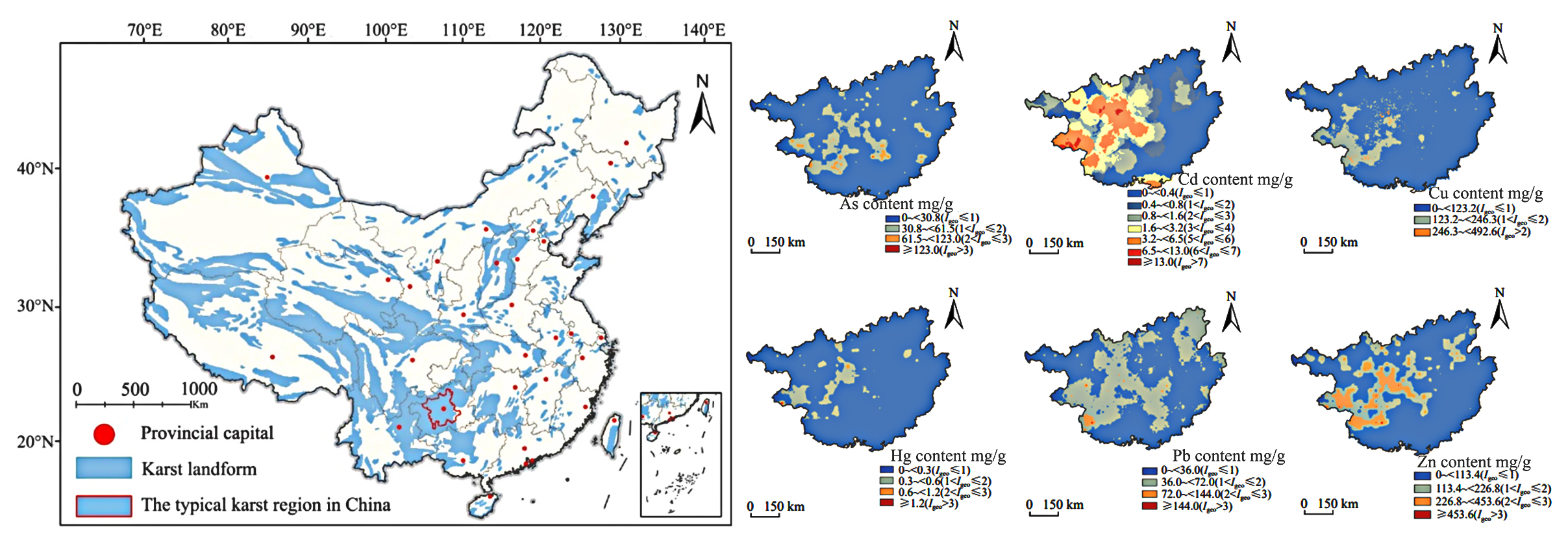
Southwest China (including Guizhou, Guangxi, Yunnan, and southern Sichuan) hosts one of the most extensive and well-developed karst landscapes globally, with carbonate rock outcrops exceeding 500,000 km2. Limestone- and dolomite-dominated lithologies form a widespread karst geomorphological system. Under long-term subtropical climatic conditions characterized by high temperatures and abundant precipitation, the region has undergone intense chemical weathering and leaching. Continuous dissolution of carbonate minerals results in the progressive removal of soluble components, while insoluble residues accumulate in situ. Regional geochemical surveys consistently demonstrate that background Cd concentrations in agricultural soils of the Southwest karst region are significantly higher than the national average. In certain areas, soil Cd levels exceed 1.5 mg/kg, accounting for more than 90% of high Cd soils nationwide (Figure 1) [24].
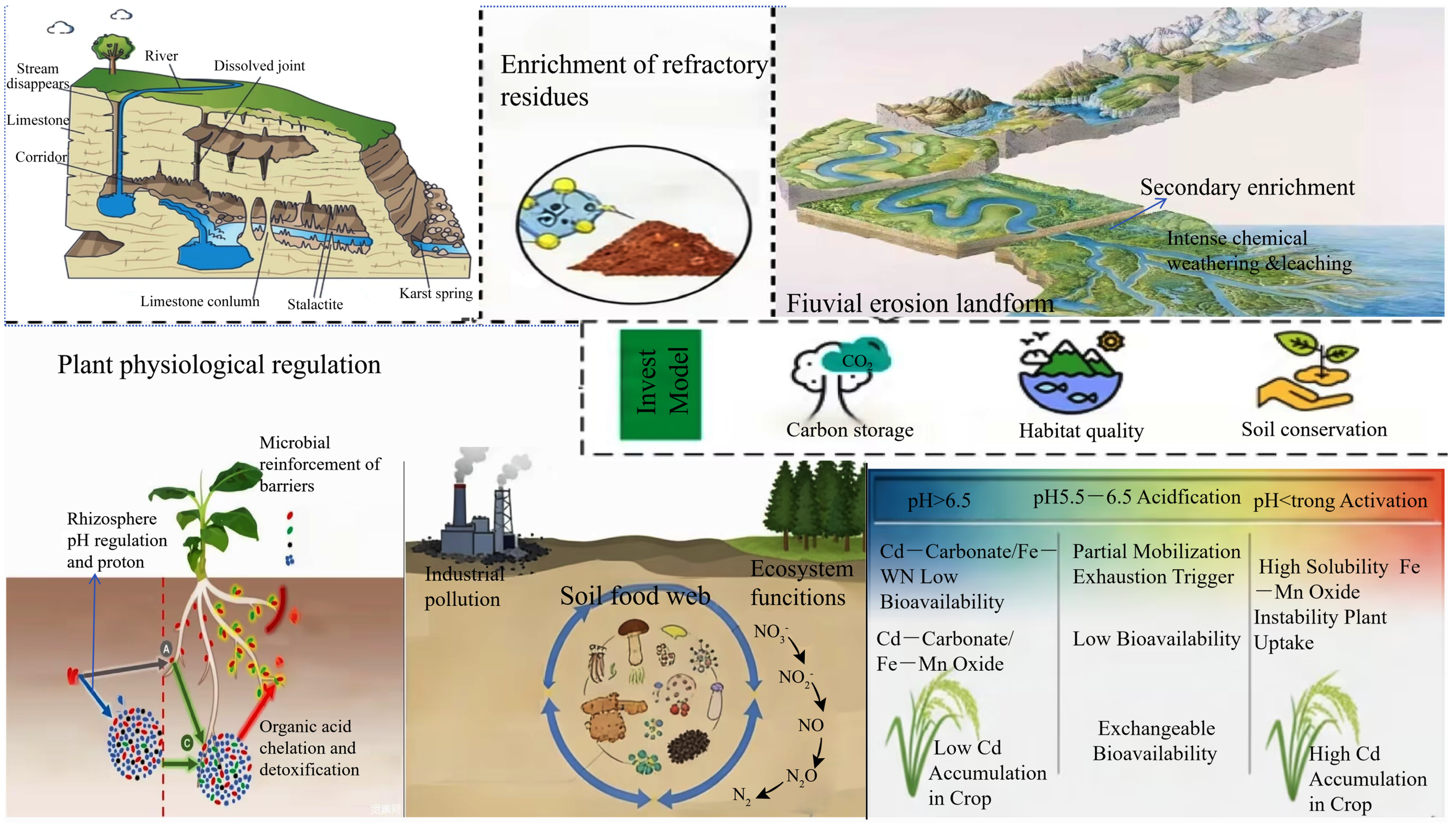
These findings indicate that Cd enrichment in this region is predominantly geogenic rather than solely attributable to anthropogenic contamination. Mechanistically, Xia et al. [27] reported that selective dissolution of calcite- and dolomite-rich bedrock during prolonged weathering releases Ca2+ and Mg2+ into the aqueous phase, whereas trace elements such as Cd—substituted within carbonate lattices or associated with accessory minerals—are retained in the residual fraction, producing a pronounced “residual enrichment effect”. Li et al. [4] further demonstrated that the extensive formation of Fe–Mn oxides during regolith development provides abundant adsorption and fixation sites for Cd, substantially enhancing its secondary accumulation in soils. Therefore, the elevated Cd background in Southwest karst regions results from a multistage coupled process involving carbonate dissolution, residual concentration, and subsequent adsorption by Fe–Mn oxides [28]. As shown in Figure 2, compared with industrially contaminated areas, geogenic Cd enrichment in karst systems exhibits distinct characteristics: (i) relatively high total concentrations but predominantly stable binding forms; (ii) strong spatial correspondence with carbonate lithology; (iii) pronounced spatial heterogeneity controlled by lithological variability and weathering intensity; and (iv) close coupling with regolith thickness and geomorphological evolution stages. These characteristics suggest that risk assessment based solely on total concentration thresholds may overestimate ecological and health risks in high-background karst regions, potentially leading to misinformed management decisions.

3.2. The “High Total Concentration–Low Uptake” Paradox

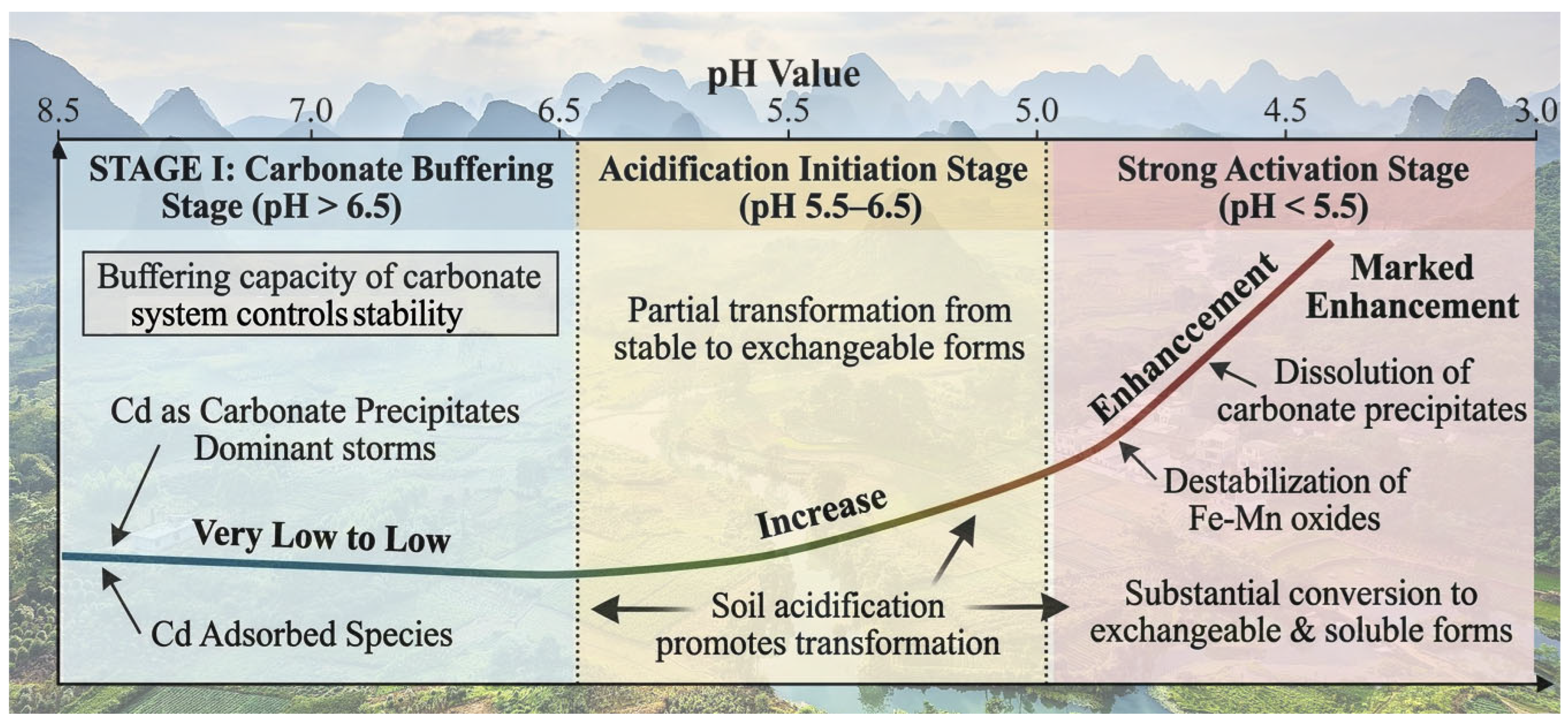
In high-background karst regions of Southwest China, although total soil Cd concentrations are generally elevated, Cd levels in agricultural products in certain areas have remained within safety thresholds for extended periods. This phenomenon has been described as the “high total concentration–low uptake” paradox. Wei et al. [29] proposed the Stage-Activated Contamination Model (SACM) to systematically elucidate the underlying geochemical mechanisms. According to the SACM framework, under natural high-background conditions, Cd predominantly exists in carbonate-bound or Fe–Mn oxide-associated fractions with relatively low bioavailability, and thus does not necessarily result in excessive crop accumulation. The model conceptualizes Cd activation as a three-stage process regulated by soil pH (Figure 3). In Stage I (carbonate buffering stage; pH > 6.5), Cd is stabilized mainly as carbonate precipitates or adsorbed species, controlled by the buffering capacity of the carbonate system. Cd bioavailability is typically reduced at higher pH levels, while Alicja Kicińska et al. [30] demonstrated that it remained comparatively high within the pH range of 6.58 to 7.41. Furthermore, the study established a consistent trend in metal bioavailability, decreasing in the order of Cd > Zn > Pb. In Stage II (acidification initiation stage; pH 5.5–6.5), progressive soil acidification promotes partial transformation of Cd from stable fractions to exchangeable forms, leading to increased bioavailability. In Stage III (strong activation stage; pH < 5.5), sustained acidification induces dissolution of carbonate precipitates and destabilization of Fe–Mn oxides, resulting in substantial conversion of Cd into exchangeable and soluble forms and markedly enhanced plant uptake. Li et al. [31] discovered that between 64% and 68% of Cd in paddy soils is adsorbed by Fe–Mn oxides under neutral pH conditions. However, this Cd becomes susceptible to release when soil conditions, such as pH or redox potential, undergo significant changes. This model highlights that Cd risk is not a static property but a dynamic process governed by soil acidification. The SACM framework explains why farmlands in certain high-background karst areas have not historically exhibited significant crop contamination under neutral to slightly alkaline conditions, yet may experience rapid risk amplification once soil acidification occurs. These findings underscore that soil pH should be considered a central controlling variable in risk assessment and management strategies in karst agroecosystems.
The mobility and bioavailability of Cd in soil are profoundly affected by its chemical speciation and prevailing environmental conditions. Beyond adsorption onto organic matter and mineral surfaces, interactions with inorganic anions such as Cl, NO3, and SO42− are pivotal in shaping its geochemical behavior. However, from an agricultural and environmental perspective, the transformations of sulfur ions are of greater practical significance. Rice paddies undergo alternating wet and dry cycles, making the interaction between S2− and Cd particularly significant in determining the behavior of the metal. During the flooding stage, sulfate-reducing bacteria drive the reduction in SO42− to S2−, which reacts with Cd2+ to form insoluble CdS precipitates [32]. This process effectively immobilizes Cd and significantly reduces its bioavailability. In contrast, during the drying stage, oxidation of CdS converts sulfur back to SO42−, causing the release of Cd2+ into the soil solution, thereby increasing its bioavailability and mobility. These redox-driven transformations of sulfur ions not only govern the speciation and mobility of Cd but also play a pivotal role in shaping its environmental risk within flooded agricultural systems.

3.3. Spatial Heterogeneity and Topography-Driven Mechanisms

The karst region of Southwest China is characterized by highly fragmented terrain, steep slopes, and complex geomorphological configurations within small watershed units, resulting in pronounced spatial heterogeneity of soil properties and heavy metal distributions. Gao et al. [33], in a watershed-scale investigation, demonstrated that slope position explained a greater proportion of heavy metal spatial variability than certain anthropogenic disturbance factors. Within hillslope systems, upper-slope positions are more susceptible to soil erosion, whereas fine particles enriched in heavy metals are preferentially transported downslope via surface runoff and subsequently deposited at foot-slope and low-lying areas. This erosion–transport–deposition continuum drives secondary enrichment processes and leads to substantial variability in Cd accumulation among different topographic units under the same geological background. Consequently, Cd risk may differ markedly between ridge tops, midslopes, and valley bottoms, even within a single lithological setting. Recent studies have incorporated machine learning approaches to improve risk identification in high-background regions. Li Cheng et al. [34] developed a random forest model integrating spatial predictors such as elevation, slope gradient, and lithological distribution, significantly enhancing the predictive accuracy of Cd migration risk. Their findings indicate that, in karst landscapes, topographic factors not only influence soil formation and weathering intensity but also regulate hydrological connectivity and erosion dynamics, thereby indirectly controlling heavy metal redistribution patterns. These results highlight that heavy metal risk in high-background karst systems exhibits a strong topographic control. Accordingly, spatial management strategies should be grounded in geomorphological zoning rather than relying solely on administrative boundaries, thereby enabling more precise and process-informed risk regulation.

3.4. Discriminating Geogenic Sources from Anthropogenic Inputs

Although Cd enrichment in the karst region of Southwest China is predominantly geogenic, recent decades have witnessed additional anthropogenic contributions arising from mining and smelting activities, tailings accumulation, agricultural inputs, and atmospheric deposition [35]. Accurate discrimination between natural background sources and anthropogenic inputs is therefore a prerequisite for developing scientifically sound remediation and management strategies. Stable isotope techniques have emerged as a powerful tool for source apportionment. Zhao et al. [36] successfully distinguished Cd derived from black shale weathering from that associated with mining and smelting activities based on characteristic Cd stable isotope fractionation signatures, revealing systematic differences in isotopic composition among sources. Liu et al. [37] further combined Cd stable isotope analysis with positive matrix factorization (PMF) modeling, improving source resolution and enabling quantitative differentiation between geogenic background and anthropogenic emissions. Synthesis of current evidence suggests that Cd sources in Southwest China can be conceptualized as a “triple-overlay” structure. First, the geologically high-background constitutes the dominant baseline, underpinning the elevated regional Cd inventory. Second, mining and metallurgical activities represent major anthropogenic contributors, particularly in areas surrounding ore deposits and tailings sites. Third, agricultural inputs and atmospheric deposition serve as secondary sources that can progressively amplify risk through long-term accumulation. This complex source architecture necessitates a differentiated management framework. In high-background areas, priority should be given to controlling bioavailability and mitigating acidification-driven activation processes. In regions with superimposed anthropogenic contamination, stricter source control and exposure interruption strategies are required. Reliance solely on total concentration thresholds may lead to regulatory misclassification; instead, risk governance should integrate source identification, speciation dynamics, and bioavailability considerations to achieve precise and science-based management.

4. Acidification-Driven Activation Mechanisms of Cd

In high geochemical background karst regions of Southwest China, the ecological risk of Cd is not determined solely by its total concentration but is strongly regulated by soil acidification processes. Acidification alters the physico-chemical environment of soils by modifying the surface charge characteristics of soil colloids, destabilizing mineral phases, and reshaping ionic competition equilibria. These changes collectively promote the transformation of Cd from relatively stable bound fractions to exchangeable and soluble forms, thereby amplifying its bioavailability. Specifically, declining pH increases protonation of variable-charge surfaces (e.g., Fe–Mn oxides and clay minerals), reduces negative surface charge density, and weakens Cd adsorption capacity. Concurrently, enhanced proton activity facilitates dissolution of carbonate minerals and partial destabilization of Fe–Mn oxides, releasing previously immobilized Cd into the soil solution. Increased competition from H+ and other cations (e.g., Ca2+, Mg2+, Al3+) further displaces Cd from sorption sites, accelerating its mobilization. These coupled geochemical processes shift Cd speciation toward more labile pools, increasing its transfer from solid phases to pore water and subsequently to plant roots. Therefore, soil acidification acts as a central regulatory mechanism linking geochemical background to ecological risk expression. Elucidating acidification-driven activation pathways is essential for understanding the dynamic evolution of heavy metal risk in high-background karst systems and for developing process-based mitigation strategies.

4.1. Current Status of Soil Acidification in Southwest Farmlands

Over recent decades, a pronounced trend of soil acidification has been documented in agricultural lands across southern China, with particularly severe declines observed in the karst regions of Southwest China. Long-term monitoring data indicate that the average pH of paddy soils in Southwest and South China has decreased by approximately 0.7 units over the past 30 years [19]. A nationwide meta-analysis conducted by Huang et al. [38] further confirmed a significant acidification trend in Chinese croplands, with the most pronounced changes occurring in subtropical southern regions. This persistent decline in soil pH provides favorable conditions for Cd activation in high-background areas. The drivers of acidification are multifactorial and cumulative [39]. First, acid deposition represents a major exogenous source of proton input; under the influence of industrial emissions and regional atmospheric transport, continuous sulfate and nitrate deposition contributes to progressive pH decline. Second, long-term and excessive application of ammonium-based fertilizers (e.g., urea and ammonium sulfate) releases H+ during nitrification, leading to gradual acid accumulation in soils. Third, accelerated mineralization of soil organic matter generates organic acids that further intensify topsoil acidification. In mining-affected areas, the discharge of acid mine drainage (AMD) may induce localized but severe acidification. Although carbonate bedrock in karst regions provides inherent buffering capacity, this buffering is finite. With sustained acid inputs, carbonate minerals are progressively depleted, accompanied by substantial leaching of Ca2+ and Mg2+. As the buffering system weakens or collapses, soil pH can decline rapidly [40]. Once critical thresholds are crossed, the stability of Cd-bearing phases can fundamentally shift, triggering enhanced mobilization and elevated ecological risk.

4.2. Mechanisms of pH-Regulated Cd Speciation Transformation

The adsorption, precipitation, and dissolution behavior of Cd in soils is highly dependent on pH conditions. In general, declining pH promotes the transformation of Cd from relatively stable fractions to more labile and bioavailable forms through multiple coupled mechanisms. First, under acidic conditions, H+ competes with Cd2+ for sorption sites on soil colloids, including clay minerals and soil organic matter. Increased protonation reduces negative surface charge density and weakens Cd adsorption capacity, resulting in a higher proportion of exchangeable Cd. Second, decreasing pH may induce partial dissolution or structural reorganization of Fe–Mn oxides, releasing previously adsorbed or coprecipitated Cd into the soil solution. Third, carbonate-bound Cd becomes unstable in acidic environments; dissolution of carbonate precipitates (e.g., CdCO3) reintroduces Cd into the aqueous phase, thereby enhancing its mobility. Wang et al. [41], in a study conducted under drainage-induced oxidation conditions in paddy soils, demonstrated that transformations of Fe-Mn oxides—rather than sulfide oxidation, as traditionally assumed—were the primary drivers of Cd release. This finding revises earlier sulfide-centered conceptual models and underscores the dominant role of Fe cycling in regulating Cd mobility. From a redox perspective, De Livera et al. [42] further showed that periodic fluctuations in soil redox potential (Eh) can trigger pulse-like Cd release events. Under alternate wetting and drying (AWD) irrigation regimes, repeated transitions between flooded (reducing) and drained (oxidizing) conditions induce cyclical transformations of Cd-bearing phases, thereby increasing the temporal variability and uncertainty of Cd migration [43]. Collectively, these findings indicate that pH and Eh function as coupled environmental controls governing Cd activation. Their interactive regulation determines both the magnitude and dynamics of Cd mobilization in karst agroecosystems.

4.3. The Dual Role of Fe–Mn Oxides

In high-background karst regions of Southwest China, Fe–Mn oxides function both as major sinks for Cd accumulation and as potential sources of Cd release, exhibiting a pronounced “dual role” in governing Cd dynamics. Under neutral to slightly alkaline conditions, Fe–Mn oxides generally carry net negative surface charges and exhibit strong sorption capacities. Through surface complexation and coprecipitation mechanisms, these mineral phases effectively immobilize Cd, thereby reducing its phytoavailability. Empirical evidence indicates that higher contents of amorphous iron oxides (Fe–OX) are associated with lower plant-available Cd fractions, underscoring the critical role of Fe components in suppressing Cd mobility and bioavailability [44]. However, when soils undergo acidification or drainage-induced oxidation, Fe–Mn oxides can experience structural reorganization, dissolution, or phase transformation. Such mineralogical changes can destabilize previously sorbed or coprecipitated Cd, releasing it back into the soil solution. In paddy systems characterized by frequent redox oscillations, the Fe cycle is tightly coupled with Cd migration dynamics. Alternating reducing and oxidizing conditions drive recurrent dissolution and reprecipitation of Fe phases, resulting in temporally variable Cd retention and release patterns. Therefore, Fe–Mn cycling represents not only a key mechanism for Cd enrichment in karst soils but also a central regulatory process controlling Cd risk evolution. Understanding this dual functionality is essential for predicting Cd mobility under changing environmental conditions and for designing process-based mitigation strategies in high-background agroecosystems.

4.4. Acidification Synergy: Mechanisms of Risk Amplification

The impact of soil acidification on Cd risk is not governed by a single pathway but rather by the cumulative amplification of multiple coupled processes. First, acidification weakens the competitive inhibition exerted by Ca2+ against Cd2+. In carbonate-dominated regions, relatively high-background Ca levels generally suppress Cd uptake by plant roots through competitive interactions at membrane transport sites and in the rhizosphere solution. However, when acidification induces Ca leaching, the relative activity of Cd in the soil solution increases, thereby elevating plant uptake risk. Wen et al. [45] demonstrated that, in high Ca soils, CaCl2-extractable Cd effectively predicts Cd bioavailability, highlighting the strong competitive relationship between Ca and Cd. Second, acidification alters the rhizosphere microenvironment, potentially modifying root exudate composition and microbial community structure, which in turn influence Cd speciation and mobility [46]. Changes in organic ligand production, microbial redox processes, and localized pH gradients may further enhance Cd solubilization and transport. Third, low-pH conditions may induce upregulation of membrane transport proteins associated with Cd uptake and translocation, thereby accelerating Cd movement from roots to aboveground tissues. Such physiological responses provide evidence for the amplification of bioavailable Cd transfer to edible plants of parts. Collectively, in high-background karst systems, acidification not only directly shifts Cd speciation toward more labile forms but also reinforces risk through ionic competition, rhizosphere modification, and plant physiological regulation. Once soil pH declines below critical thresholds, soils previously maintained in a “low-risk” state may rapidly transition into high-risk systems [47]. This nonlinear transformation underscores the central role of acidification control in regional heavy metal risk management and highlights the importance of maintaining pH stability in high geochemical background environments.

5. Cd Migration, Bioaccumulation, and Molecular Regulation in the Soil–Crop System

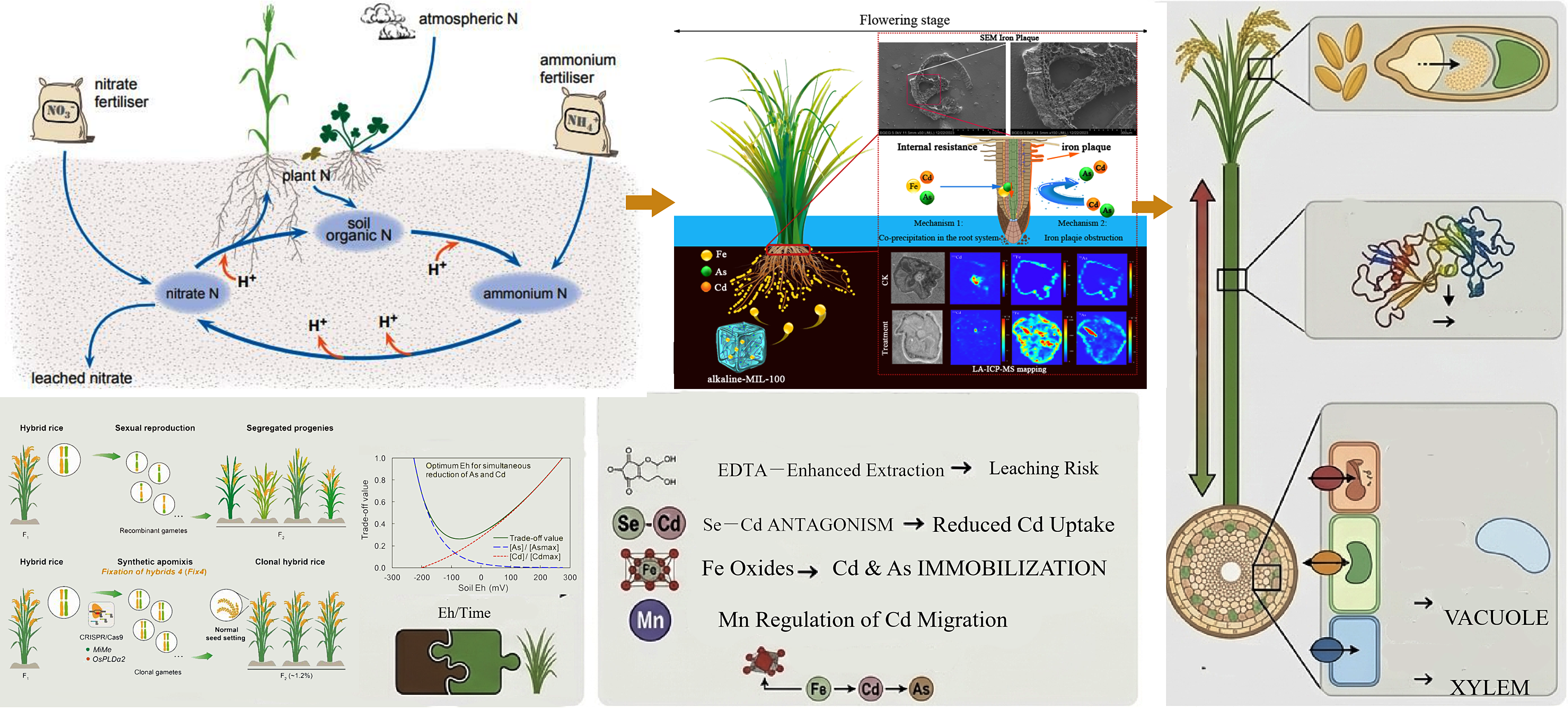
In high geochemical background karst regions of Southwest China, heavy metal risk does not terminate at the soil compartment but is ultimately manifested through transfer within the soil–crop system and subsequent entry into the food chain, thereby linking environmental exposure to human health risk [48]. Among various elements, Cd represents the most emblematic risk factor due to its high toxicity, strong mobility, and efficient root-to-shoot translocation capacity [49]. The migration of Cd within the “soil–plant–grain” continuum is characterized by distinct stage specificity, physiological regulation, and strong coupling with environmental conditions. The process generally involves (shown in Figure 4): (i) mobilization from soil solid phases into the rhizosphere solution, (ii) root uptake mediated by membrane transport systems, (iii) xylem loading and long-distance translocation to aerial tissues, and (iv) redistribution and accumulation in edible organs such as grains. Each stage is governed by both geochemical drivers (e.g., pH, redox potential, competing ions, Fe plaque formation) and plant physiological mechanisms, including transporter expression, chelation, sequestration, and compartmentalization. In karst agroecosystems, where high geological background intersects with acidification and redox fluctuations, Cd bioavailability may vary dynamically, thereby altering plant uptake efficiency. Moreover, genotypic differences among crop cultivars can lead to substantial variability in Cd accumulation patterns, reflecting differential regulation at the molecular and cellular levels. Understanding the coupled geochemical–biological mechanisms that control Cd transfer from soil to grain is therefore essential for risk prediction, crop breeding strategies, and the development of targeted agronomic interventions aimed at minimizing dietary exposure in high-background regions.

5.1. Cd Migration Pathways in the Soil–Rice System

In the karst region of Southwest China, rice represents the staple crop associated with the highest Cd exposure risk. Cd transport within the “soil–rhizosphere–root–xylem–shoot–panicle–grain” continuum exhibits pronounced stage-specific regulation [51]. Initially, Cd exists in the soil solution primarily as free Cd2+ or as inorganic/organic complexes, with its concentration governed by pH, Eh, and ionic competition. At the rhizosphere interface, Fe plaque—an iron oxide layer formed by oxidation and deposition of Fe2+ on root surfaces—plays a dual role in Cd regulation. Acting both as a sorptive sink and as a physical barrier, Fe plaque can immobilize Cd at the root surface and restrict its entry into root tissues, thereby serving as a critical checkpoint for Cd uptake. Once Cd crosses the rhizodermis, transmembrane transport is mediated by specific membrane transport proteins. Cd absorbed by the roots initially enter the root stele through either the symplastic or apoplastic pathway and are subsequently loaded into the xylem. During the filling stage, the Cd is directly transported and redistributed from the root system to the panicand developing grains [52]. Qiao et al. [53,54] demonstrated that the combined application of zero-valent iron and biochar enhanced Fe plaque formation on root surfaces, significantly reducing the co-uptake of Cd and As. These findings highlight the central role of rhizosphere Fe cycling as a regulatory nexus linking soil geochemical processes with plant uptake dynamics. Therefore, Cd migration in rice is not a simple diffusion-driven process but a highly integrated system governed by soil chemical speciation, rhizosphere interfacial reactions, and plant physiological regulation. Understanding these coupled mechanisms is essential for developing targeted mitigation strategies in high-background karst agroecosystems.

5.2. Regional Variability in Transfer Factors and Bio-Accumulation Coefficients

The accumulation capacity of Cd in crops is commonly quantified using the transfer factor (TF)—reflecting root-to-shoot or soil-to-plant transfer efficiency—and the bioconcentration factor (BCF)—representing the ratio of Cd concentration in plant tissues to that in soil. However, in high-background karst regions, these indices exhibit pronounced spatial variability. Tang et al. [55] demonstrated that Cd transfer factors are not determined solely by total soil Cd concentrations but are jointly regulated by multiple variables, including Fe–Mn oxide content, soil organic matter levels, and slope position. This finding underscores the critical role of mineral composition and topography in modulating Cd bioavailability. For example, higher Fe–Mn oxide contents may enhance Cd adsorption and reduce its mobility, whereas erosional redistribution along slope gradients can alter the spatial distribution of bioavailable Cd fractions. At the crop level, varietal differences exert a decisive influence on Cd accumulation. Based on species sensitivity distribution (SSD) modeling, differences in BCF among rice cultivars may vary by several fold under comparable soil conditions [56]. Arao and Ae [57,58] reported that indica rice generally accumulates higher Cd concentrations than japonica rice, highlighting substantial genotypic divergence in Cd uptake and translocation efficiency. These findings indicate that even under identical soil conditions, food safety risks may differ significantly depending on crop genotype. Therefore, regional soil environmental quality standards and agricultural management strategies should incorporate varietal selection as a core component. A coordinated “soil–cultivar” optimization framework may offer a more precise and sustainable approach to minimizing Cd exposure in high-background karst agroecosystems.

5.3. Molecular Transport Mechanisms and Genetic Regulation

Molecular studies have elucidated the genetic networks governing Cd transport and partitioning in plants. In rice, OsHMA2 and OsHMA3, members of the heavy metal ATPase (HMA) family, play central roles in Cd loading and sequestration [59]. OsHMA3 primarily mediates vacuolar sequestration of Cd in root cells, thereby restricting root-to-shoot translocation, whereas OsHMA2 facilitates Cd loading into the xylem for upward transport. The defensin-like protein CAL1 has been shown to chelate Cd in the cytosol and promote its extracellular secretion, enabling a distribution pattern characterized by “straw enrichment and grain safety” [60]. Luo et al. [61,62] reported that enhanced CAL1 expression can significantly reduce grain Cd concentrations without compromising yield, providing a molecular basis for integrating safe production with phytoremediation in high-background regions. In addition, OsNRAMP1 participates in the transmembrane transport of Cd and As. Uraguchi et al. [63] demonstrated that modulating OsHMA3 expression can reduce Cd translocation to grains, although potential trade-offs with stress tolerance must be carefully managed. These findings indicate that Cd regulation involves a coordinated multi-gene network requiring a balance between food safety and plant resilience. Soil acidification may further interact with molecular regulation. Beyond altering Cd speciation, increased Cd2+ activity under low-pH conditions can indirectly influence transporter gene expression. Evidence suggests that elevated Cd activity at lower pH can induce upregulation of NRAMP- and HMA-related genes, thereby enhancing Cd translocation to aerial tissues. This reveals a coupling mechanism between soil geochemical processes and plant physiological responses. Soil acidification can amplify Cd risk via a pathway of “speciation activation–gene response–transport enhancement,” linking environmental change with molecular regulation. Such coupling provides a theoretical framework for understanding abrupt risk escalation in high-background systems. Beyond rice, tea plantations and upland cropping systems in Southwest China also warrant attention. Ju et al. [62] observed that although background Cd and As levels were elevated in certain tea soils, most tea samples remained within safety limits, indicating element-specific and crop-specific selectivity in metal transfer. However, the exceedance rate of Cr in tea leaves reached 72.2%, highlighting differential elemental behavior within the same system. Tea soils are typically strongly acidic (pH 4.7–5.2), conditions that markedly enhance Cd and Al activity. Luo et al. [64] reported that long-term phosphorus fertilization may shift soil chemical equilibria and indirectly increase the bioavailability of certain metals [65]. In upland systems, Tian et al. [39] found that soybean Cd concentrations increased sharply once soil pH declined below a critical threshold, suggesting crop-specific acidification sensitivity windows. Identification of such pH thresholds is essential for safeguarding safe production. Mining-affected areas in Southwest China frequently exhibit multi-metal contamination involving Cd, Pb, Zn, and As [66,67]. Under co-contamination scenarios, competitive, synergistic, or antagonistic interactions among metals complicate risk assessment. Kamal et al. [68] noted that EDTA-enhanced phytoremediation can increase metal extraction efficiency but poses substantial leaching risks. Other studies show that Mn also participate in regulating the migration behavior of Cd [69], Se can antagonize Cd accumulation [70], and iron oxides can simultaneously immobilize Cd and As [53]. These findings underscore that single-element management strategies are often insufficient under multi-metal conditions, and integrated multi-element regulatory frameworks are required to achieve effective risk mitigation.

6. Health Risk Assessment and Regional Management Challenges

In mining-impacted and high-background regions, exceedances of heavy metals in agricultural products have been intermittently reported. Zhuang et al. (2009) found significantly elevated Cd and Pb concentrations in rice grains and leafy vegetables cultivated near mining areas, with target hazard quotient (THQ) values indicating considerable non-carcinogenic health risks [71,72]. These findings demonstrate that soil-derived metal accumulation in crops can translate directly into dietary exposure concerns. Ali et al. [73] further emphasized that multi-element contamination often generates synergistic chronic health risks. This phenomenon is particularly pronounced in karst environments, where the geological enrichment of multiple trace elements is highly prevalent. Composite exposure to Cd, Pb, As, and other metals may therefore amplify the overall toxicological burden beyond single-element risk estimates. Evidence from Sri Lanka has shown that long-term dietary exposure to Cd and As may be associated with chronic kidney disease of unknown etiology (CKDu) [74]. Although the geographical and environmental contexts differ, these observations provide an important cautionary reference for high-background regions in Southwest China. They highlight the necessity of addressing low-dose, long-term dietary exposure rather than focusing exclusively on acute exceedance events. Collectively, these studies underscore that in geochemically enriched regions, the critical pathway of concern is food chain transfer. Effective risk assessment frameworks must therefore integrate soil geochemistry, crop accumulation characteristics, dietary consumption patterns, and cumulative multi-element exposure to accurately characterize potential public health implications.

6.1. Risk Misclassification in Geologically High-Background Regions

In geogenic high-background areas, reliance solely on total soil concentrations for risk evaluation often leads to two types of bias. First, when total Cd are high bioavailability is low, unnecessary remediation measures may be implemented in theory. Second, if soil acidification or environmental change triggers Cd activation but monitoring remains focused on total concentrations, risk escalation may go undetected, leading to delayed intervention. Wei et al. [29,75] argued that bioavailability should serve as the core metric in risk assessment frameworks for high-background regions. This perspective shifts emphasis from static total inventories to dynamic and environmentally responsive fractions that more directly determine plant uptake and human exposure. Wen et al. [45] further recommended the application of the Diffusive Gradients in Thin Films (DGT) technique for evaluating Cd bioavailability in such settings. Because DGT measures the labile metal pool under conditions simulating plant uptake, it offers improved predictive capability compared to conventional chemical extraction methods. Collectively, these studies underscore the need to transition from a “total concentration-oriented” paradigm toward a “bioavailability-oriented” framework. Such a shift is particularly critical in karst high-background systems, where geogenic enrichment, acidification dynamics, and redox fluctuations interact to produce nonlinear risk responses. Integrating bioavailability metrics into regulatory standards and monitoring programs would enable more precise, process-based risk management and reduce the likelihood of both over-regulation and risk underestimation.

6.2. Spatial Prediction and Machine Learning Applications

With the advancement of big data analytics and spatial modeling techniques, machine learning has emerged as a powerful tool for regional heavy metal risk identification and prediction. Compared with traditional statistical approaches, machine learning algorithms can capture nonlinear relationships and complex interactions among environmental variables, making them particularly suitable for high-background karst systems characterized by strong heterogeneity. Gou et al. [70] applied a random forest model to predict Cd accumulation potential and identified Se content as an important inhibitory factor, highlighting the value of incorporating multi-element interactions into predictive frameworks. Li Cheng et al. [34] developed a spatial machine learning framework to estimate Cd mobility using the Risk Assessment Code (RAC), significantly improving identification accuracy compared with conventional interpolation methods. Meanwhile, Tang et al. [76] employed geostatistical techniques in a tungsten mining area to reveal pronounced spatial heterogeneity in contamination patterns, demonstrating the importance of spatial structure analysis in pollution assessment. As shown in Figure 4, these studies suggest that future risk management in high geochemical background regions should prioritize:
(i) Integration of multi-source spatial data, including geological background, soil properties, land use, topography, and crop distribution.
(ii) Improvement in model interpretability, ensuring that predictive outputs are mechanistically linked to geochemical and biological processes rather than functioning as “black boxes.”
(iii) Development of region-specific predictive models that explicitly incorporate geological genesis and karst environmental characteristics.
Only within an integrated framework that couples geological origin, environmental processes, and biological regulatory mechanisms can precise identification and science-based management of heavy metal risks in Southwest China’s high-background karst regions be achieved.

7. In Situ Remediation and Integrated Regulation Framework

Soil heavy metal issues in high geochemical background karst regions of Southwest China are characterized by high total concentrations, acidification sensitivity, speciation transformability, and strong spatial heterogeneity. Their origin is primarily geogenic, often compounded by anthropogenic disturbances such as fertilization, mining activities, and land-use change. Consequently, management strategies in these regions differ fundamentally from those applied to typical industrially contaminated sites, where “excavation–ex situ treatment” approaches are common. Instead, the emphasis here lies in risk regulation and safe utilization within the agricultural production system. In recent years, an integrated technical framework has gradually emerged, centered on the following components (Figure 5):
(i) Stabilization and passivation (immobilization technologies): Application of soil amendments such as lime, biochar, iron-based materials, clay minerals, and silicon fertilizers to reduce Cd bioavailability through adsorption, precipitation, complexation, or competitive inhibition. In karst systems, Fe-based materials are particularly effective due to their compatibility with natural Fe cycling processes.
(ii) Agronomic regulation: Optimization of water management (e.g., alternate wetting and drying adjustments), fertilizer structure (balanced N–P–K with Ca and Si supplementation), and pH regulation to maintain soil conditions above critical activation thresholds. Management practices aim to prevent Cd mobilization while sustaining crop productivity.
(iii) Cultivar screening and selection: Deployment of low Cd-accumulating crop varieties, especially rice cultivars with reduced grain Cd translocation capacity. Integration of genotype selection into regional planting systems represents a cost-effective and scalable risk mitigation strategy.
(iv) Molecular breeding and genetic regulation: Utilization of knowledge on transporter genes such as OsHMA3, OsHMA2, CAL1, and OsNRAMP1 to breed or engineer cultivars with enhanced root sequestration and limited grain accumulation. The goal is to achieve “production–remediation synergy” without yield penalties.
(v) Spatial identification and precision management: Application of geostatistics and machine learning models to delineate risk zones and implement site-specific management practices. Precision agriculture tools allow differentiated amendment application and cultivar allocation based on spatial risk profiles. Collectively, this multi-level system integrates geochemical stabilization, agronomic optimization, genetic control, and spatial intelligence. Rather than pursuing complete removal of geogenic metals—which is neither feasible nor necessary—it focuses on controlling bioavailability and exposure pathways. Such a strategy aligns with the principle of “risk-based management and safe utilization” and provides a scientifically grounded pathway for sustainable agricultural development in high-background karst regions.

7.1. Passivating Materials and Mineral Regulation Technologies

Soil acidification is the primary driver of Cd activation; therefore, pH adjustment is widely regarded as the most direct and relatively cost-effective control strategy. Application of lime can significantly increase soil pH, reduce labile Cd fractions, and markedly decrease Cd accumulation in rice grains [80]. The underlying mechanisms include: (i) enhanced adsorption of Cd by soil colloids under higher-pH conditions; (ii) increased Ca2+ concentrations that competitively inhibit Cd2+ uptake by plant roots; and (iii) promotion of Cd precipitation as carbonate minerals, thereby lowering its bioavailability. However, long-term or excessive lime application may generate unintended consequences, including disruption of soil aggregate structure, imbalance of micronutrients (e.g., Zn, Fe, Mn), and stratification effects where surface alkalization coexists with subsoil acidity. Future technological development should therefore prioritize slow-release composite amendments or multifunctional conditioners capable of achieving gradual, sustained, and balanced pH regulation. Beyond alkaline amendments, clay minerals and silicate materials have been widely applied in in situ farmland remediation due to their strong adsorption capacities. Field experiments in paddy soils have shown that application of sepiolite and palygorskite can significantly reduce Cd concentrations in rice grains [81]. These materials typically possess a high specific surface area, net negative surface charge, and substantial cation exchange capacity, enabling Cd immobilization via surface complexation and ion exchange mechanisms. Their advantages include relatively low cost, suitability for large-scale agricultural deployment, and minimal interference with routine farming practices. Nevertheless, the long-term stability of mineral-based amendments and the potential risk of Cd reactivation under progressive acidification require validation through long-term field trials. Given the central role of iron oxides in Cd immobilization in karst systems, Fe-cycle-based regulation technologies have become an emerging research focus. Qiao et al. [82] proposed a zero-valent iron–biochar combined amendment that enhances Fe plaque formation on root surfaces, significantly reducing Cd and As uptake. This strategy strengthens rhizosphere immobilization processes and enhances the physical barrier effect against Cd entry. However, Wang et al. [41] demonstrated that transformations of Fe–Mn oxides during drainage-induced oxidation can be a dominant driver of Cd release. Therefore, the application of Fe-based materials must be synergistically coordinated with water management strategies to avoid secondary release risks triggered by redox fluctuations. Overall, mineral-based passivation technologies in high-background karst regions should be designed within a dynamic geochemical framework that accounts for pH evolution, Fe–Mn cycling, and hydrological variability, thereby ensuring both short-term effectiveness and long-term stability.

7.2. Biochar and Modified Amendment Technologies

Biochar has become one of the most extensively studied materials in farmland remediation due to its porous structure and strong sorption capacity. Bian et al. [69,83], based on cross-regional and three-year field trials, demonstrated that biochar application can sustainably reduce Cd and Pb concentrations in rice grains. The principal mechanisms include: (i) increasing soil pH; (ii) providing abundant adsorption sites for metal immobilization; and (iii) enhancing soil organic matter content, thereby improving soil structure and chemical buffering capacity. Sewage sludge-derived biochar has been shown to reduce metal bioavailability while simultaneously increasing crop yield. However, high application rates can elevate greenhouse gas emissions, raising concerns regarding environmental trade-offs [84]. To enhance immobilization efficiency, various modified biochars have been developed in recent years. Sulfur–iron-modified biochar significantly decreases exchangeable Cd fractions and improves soil bacterial diversity [85]. Iron-modified biochar, when combined with alternate wetting and drying (AWD) irrigation, can simultaneously suppress Cd and As accumulation in rice grains [86]. These modified materials integrate adsorption, precipitation, and microbial regulation functions, offering clear advantages under multi-metal co-contamination scenarios. Nevertheless, modified biochars are generally more costly than conventional amendments, and issues related to material aging, structural transformation, and long-term stability require systematic evaluation through extended field studies. Water management is another key tool for regulating redox conditions in paddy soils. AWD irrigation has been recognized for reducing water consumption and limiting As accumulation in rice [87]. However, its effect on Cd is dualistic. Fluctuations in redox potential often lead to episodic releases of Cd [88], particularly through Fe–Mn oxide transformations. Therefore, implementation of AWD in karst regions should carefully consider iron oxide stability, soil pH status, and the initial speciation of Cd. Overall, water management is more suitable as a complementary regulation strategy rather than a standalone solution. Its optimal application lies in coordinated integration with mineral amendments, biochar-based stabilization, and cultivar selection within a comprehensive risk control framework.

7.3. Phytoremediation and the “Production–Remediation Synergy” Model

Conventional EDTA-enhanced phytoremediation can substantially increase metal extraction efficiency; however, it poses significant leaching risks and potential groundwater contamination, making it unsuitable for large-scale application in agricultural fields [89]. Recent research has therefore shifted toward the development of low-risk chelating agents, improved irrigation strategies, and mitigation measures that reduce groundwater pollution potential, aiming to balance remediation efficiency with ecological safety. Liu et al. [90] proposed an innovative intercropping framework that integrates phytoremediation with grain production, achieving compliance-level crop production within 19 months. In this system, hyperaccumulator species are cultivated alongside or in rotation with staple crops, allowing gradual removal of heavy metals while maintaining safe agricultural output. Metal extraction proceeds incrementally without suspending food production, thereby enhancing farmer acceptance and improving socioeconomic feasibility. This “production–remediation synergy” approach maintains continuous agricultural productivity rather than imposing fallow periods typical of conventional remediation. It enables the progressive reduction in bioavailable metal pools through biological uptake and stabilization processes while sustaining farmer income throughout the remediation phase. At the same time, it supports ecological sustainability by reducing reliance on intensive chemical amendments and lowering the risk of secondary pollution. Such a pathway reflects a pragmatic governance strategy tailored to high geochemical background regions in China. Instead of pursuing complete removal of geogenic metals—which is often impractical—the emphasis shifts toward gradual risk mitigation, safe land utilization, and adaptive management. In this sense, the model represents both technological innovation and institutional adaptation in addressing heavy metal challenges under complex environmental and socioeconomic conditions.

7.4. Low-Accumulation Cultivar Screening and Molecular Breeding

Genotypic variation is a key determinant of Cd accumulation in crops. The strategy of combining low Cd-accumulating cultivars with biochar application has emerged as one of the most economically feasible and sustainable management options in high-background regions [91]. Early work by Arao et al. [92] demonstrated substantial differences in Cd accumulation among rice cultivars under similar soil conditions. Building on this foundation, Song et al. [56] applied species sensitivity distribution (SSD) modeling to derive cultivar-specific safety thresholds, providing a quantitative basis for optimizing regional planting structures and improving risk management precision. Advances in molecular biology have opened new avenues for breeding low-accumulation varieties. The identification of the CAL1 gene provided a critical tool for achieving a desirable partitioning pattern characterized by “straw enrichment and grain safety” [60]. At the same time, research into the regulatory mechanisms of OsHMA, OsNRAMP, and related transporter genes has deepened understanding of how Cd loading, sequestration, and translocation to grains can be precisely controlled [59,61,93]. These findings support the development of cultivars with enhanced root vacuolar sequestration, restricted xylem loading, or improved intracellular compartmentalization, thereby minimizing Cd accumulation in edible tissues while maintaining normal physiological function. Despite these advances, molecular breeding in high-background regions faces substantial challenges. Efforts to reduce Cd accumulation must be carefully balanced with the need to maintain high yield potential and stress tolerance. Genetic improvements should not compromise resistance to drought, disease, or nutrient stress, particularly in karst agroecosystems characterized by shallow soils and fluctuating hydrological regimes. Public acceptance and regulatory oversight of molecular breeding technologies also require transparent communication and long-term safety validation. Furthermore, the durability and stability of low Cd traits must be confirmed through multi-site and multi-year field trials under diverse soil and climatic conditions. Overall, governance of heavy metal risk in Southwest China’s high-background karst regions should adopt a multi-level, integrated technological framework that promotes synergy among material stabilization, agronomic regulation, phytoremediation, and genetic improvement. Achieving a dynamic balance between geological constraints and agricultural production realities is essential for ensuring long-term risk controllability and sustainable regional agricultural development.

8. Theoretical Framework and Future Research Perspectives

8.1. Coupled Theoretical Framework of “Geological Background—Acidification Driver—Speciation Transformation—Bioaccumulation—Health Risk”

Based on the preceding research advances, heavy metal issues in farmland soils of Southwest China’s high-background karst regions do not represent a typical single-source external pollution problem. Rather, they reflect a composite environmental process shaped by the long-term superposition of geogenic enrichment and anthropogenic driving factors. The formation and evolution of risk exhibit clear stage-specific characteristics and systemic coupling effects, which can be conceptualized as a five-stage pathway: “geological background–acidification driver–speciation transformation–bioaccumulation–health risk.” The first stage is the geological high-background stage. Prolonged weathering of carbonate rocks leads to enrichment of elements such as Cd, Ni, and Zn in residual soils [94]. In this phase, Cd is predominantly associated with Fe–Mn oxides and carbonate-bound fractions, resulting in relatively low bioavailability. The system typically exhibits the fundamental characteristic of “high total concentration but low immediate risk,” representing the natural baseline condition of karst regions. The second stage is the acidification-driven stage. Anthropogenic activities—including long-term nitrogen fertilizer application, regional acid deposition, and acidic runoff from mining areas—continuously introduce H+ inputs [95]. This process accelerates Ca2+ leaching, weakens carbonate buffering capacity, and alters the structural stability of Fe–Mn oxides. This stage constitutes a critical turning point in system evolution, determining whether soils shift from a relatively stable state toward an activated and risk-prone condition. The third stage involves speciation transformation and activation. Under acidification and redox fluctuations, Cd transitions from carbonate-bound forms to exchangeable and soluble fractions. Dissolution or transformation of Fe–Mn oxides can release previously adsorbed Cd, while rhizosphere Eh fluctuations may induce pulse-like Cd mobilization events. This stage governs the rapid increase in Cd bioavailability and represents the core mechanism underlying risk amplification. The fourth stage is biological accumulation. As Cd bioavailability increases, root uptake intensifies, and membrane transporters such as HMA and NRAMP proteins mediate transmembrane transport and internal redistribution. Genotypic differences among cultivars lead to pronounced variability in grain Cd concentrations, reflecting the interaction between environmental exposure and genetic regulation.

8.2. Revision Directions for Environmental Standards in High-Background Regions

The current Soil Environmental Quality Standard for Agricultural Land (GB 15618-2018) primarily classifies risk levels based on total concentrations of heavy metals in soil. However, in geologically high-background regions, total metal concentrations are largely controlled by parent material and natural weathering processes and therefore can not accurately reflect actual bioavailability or food safety risk. Relying solely on total concentration indices may lead to regulatory misjudgment and inefficient management. Future revisions of the standard system should therefore incorporate regional differentiation and a process-oriented perspective [96]. Bioavailability indicators should be formally integrated into the assessment framework. Techniques such as Diffusive Gradients in Thin Films (DGT) and CaCl2 extraction provide more realistic estimations of the labile metal pool and plant-available fractions, thereby improving predictive accuracy for crop uptake and dietary exposure risk [97]. A regional background-based zoning management system should be established. In high-background areas, differentiated threshold values can be more appropriate than uniform national limits. Such zoning should be grounded in geological background surveys, soil type classification, and long-term monitoring data, enabling standards to better align with natural baseline conditions. Soil pH should be incorporated as a key regulatory parameter within the standard system. Given its central role in controlling Cd speciation and activation, pH can serve as both an early warning indicator and a management trigger. Defining critical pH thresholds for risk activation would allow for more proactive and preventive regulation. Furthermore, crop type and varietal differences should be considered in constructing a coupled “soil–crop” standard framework. Since genotypic variation significantly influences metal accumulation in edible tissues, risk assessment should integrate soil properties with crop-specific uptake characteristics rather than relying exclusively on soil indicators. As emphasized by Wei et al. [29], soils should not be simplistically categorized as “polluted” or “non-polluted” based solely on total metal concentrations. Instead, the future standard system should transition from static total-content control toward dynamic, risk-based management that integrates geological background, environmental processes, and biological responses. Such reform would provide a more scientifically robust foundation for heavy metal governance in high-background karst regions.

8.3. Technological Development and Policy Governance

With the rapid advancement of machine learning and spatial big data technologies, prediction of Cd mobility and risk classification management are becoming increasingly intelligent and data-driven. Recent studies have applied random forest models to estimate Cd migration potential and used geostatistical approaches to characterize spatial heterogeneity in contaminated areas. In the future, integration of remote sensing data, geological background information, soil properties, and farmland management datasets could support a closed-loop management framework featuring precise identification of high-risk zones, classified governance, and dynamic monitoring. Such an approach would substantially enhance early warning capacity and management efficiency in high-background karst regions. Molecular breeding offers a long-term solution for reducing Cd accumulation in crops. Marker-assisted selection combined with conventional breeding strategies can facilitate the development of new cultivars that simultaneously exhibit low Cd accumulation, high yield, and strong stress resistance. However, biosafety assessments, transparent public communication, and long-term field stability verification must proceed in parallel to ensure regulatory compliance and societal acceptance. Under the context of carbon neutrality goals, remediation technology selection must also account for environmental footprints. Although biochar demonstrates strong immobilization performance, its greenhouse gas emission potential, feedstock sustainability, and large-scale economic feasibility require comprehensive life-cycle assessment. Future remediation strategies should therefore seek synergy between heavy metal risk control and carbon mitigation objectives, avoiding trade-offs that undermine broader sustainability goals. Based on the proposed coupled theoretical framework and emerging technological trends, it is advisable to establish specialized management zoning systems in Southwest China’s high-background karst regions, implementing differentiated control measures. Long-term monitoring and regulation of farmland pH should be strengthened, with acidification control incorporated into formal agricultural technical guidelines. The combined application of low-accumulation cultivars and passivating amendments should be promoted to enhance safe land utilization. In mining-affected areas, strict land-use controls should prevent cultivation of staple food crops in high-risk zones. Moreover, a coordinated governance mechanism involving ecological environment, agriculture and rural affairs, and natural resources authorities should be established to facilitate cross-sectoral data sharing and joint supervision. Overall, effective management of heavy metals in Southwest China’s high-background karst regions requires a dynamic balance among geological constraints, agricultural productivity, and public health protection. By integrating a system-coupling theoretical framework with multi-scale technological strategies, it is possible to provide a robust scientific foundation for regional agricultural sustainability and long-term food safety assurance.

9. Conclusions

Farmland soil heavy metal issues in Southwest China’s high-background karst regions exhibit pronounced geogenic characteristics and strong acidification-driven amplification effects. Elevated background concentrations of elements such as Cd primarily originate from long-term weathering of carbonate rocks and secondary adsorption by Fe–Mn oxides, resulting in a general pattern of “high total concentration but low bioavailability”. However, under anthropogenic influences—including acid deposition, long-term nitrogen fertilizer application, and mining disturbances—progressive soil acidification weakens carbonate buffering capacity and alters Fe–Mn oxide stability. These processes promote the transformation of Cd from relatively stable fractions to more labile and bioavailable forms. As bioavailability increases, Cd enters the food chain through the soil–crop system, generating potential health risks. This review systematically synthesizes the mechanisms underlying high geochemical background formation, acidification-driven activation processes, soil–crop transfer dynamics, and in situ remediation and safe utilization technologies. The analysis highlights soil acidification as the critical regulatory node linking geological background conditions with food safety risk. The findings indicate that management strategies in high-background regions should not replicate conventional industrial site remediation models. Instead, governance must be tailored to the dual constraints of geological background and agricultural production systems, adopting differentiated and region-specific approaches. Future management should realize three key transformations: shifting from total concentration control toward bioavailability-oriented regulation; transitioning from single-technology interventions to integrated multi-technology systems; and evolving from static assessment toward dynamic prediction and early warning frameworks. By advancing these transitions, it will be possible to promote the coordinated and sustainable development of regional agriculture and ecological environments while safeguarding food security and public health.

Author Contributions

Methodology, H.C. and R.Z.; formal analysis, H.C. and Q.Z.; investigation, Q.L., X.L. and F.Y.; resources, T.H. and W.L.; writing—original draft preparation, H.C.; writing—review and editing, B.H. and S.W.; supervision, B.H. and S.W.; All authors have read and agreed to the published version of the manuscript.

Funding

This work was supported by the Chengdu Science and Technology Innovation Research and Development Project (2025-YF05-00596-SN); the Sichuan Provincial Natural Science Foundation Project (2026NSFSC1178) and the Open Project of Sichuan University Key Laboratory of Optimization and Application of Functional Molecular Structure (NO. GNFZ202507).

Data Availability Statement

The data presented in this study are available on request from the corresponding author. The data originate from our research group’s proprietary project and are subject to intellectual property protection; therefore, access to raw data requires explicit permission from the corresponding authors.

Acknowledgments

The authors acknowledge the use of the artificial intelligence tool Google Gemini 3.5 Flashsolely for English language editing and syntax checking. The authors reviewed and revised the output as necessary and take full responsibility for the content of this manuscript.

Conflicts of Interest

The authors declare no conflicts of interest.

References

  1. Chen, L.; Tan, L.; Zhao, M.; Sinha, A.; Wang, T.; Gao, Y. Karst carbon sink processes and effects: A review. Quat. Int. 2023, 652, 63–73. [Google Scholar] [CrossRef]
  2. Hu, W.; Gu, Z.; Xiong, K.; Lu, Y.; Li, Z.; Zhang, M.; You, L.; Ruan, H. A Review of Value Realization and Rural Revitalization of Eco-Products: Insights for Agroforestry Ecosystem in Karst Desertification Control. Land 2024, 13, 1888. [Google Scholar] [CrossRef]
  3. Zerga, B. Karst topography: Formation, processes, characteristics, landforms, degradation and restoration: A systematic review. Watershed Ecol. Environ. 2024, 6, 252–269. [Google Scholar] [CrossRef]
  4. Li, B.; Lin, K.; Liu, X.; Ma, X.; Li, X.; Wu, Z.; Li, C.; Yu, T.; Wu, T.; Yang, Z. Mechanism of cadmium (Cd) enrichment in the soil of karst areas with high geochemical background in Southwest China. Chem. Geol. 2025, 673, 122523. [Google Scholar] [CrossRef]
  5. Zheng, X.; Ren, W. Nutrient dynamics and controls in alkaline and acid soils of a subtropical karst region, Southwest China. Catena 2026, 269, 110097. [Google Scholar] [CrossRef]
  6. Ji, W.; Lu, Y.; Yang, M.; Wang, J.; Zhang, X.; Zhao, C.; Xia, B.; Wu, Y.; Ying, R. Geochemical Characteristics of Typical Karst Soil Profiles in Anhui Province, Southeastern China. Agronomy 2023, 13, 1067. [Google Scholar] [CrossRef]
  7. Li, J.; Xie, H.; Li, J.; Yang, G.; Xie, Y.; Wang, J.; Zhou, C.; Zou, S. Influences of anthropogenic acids on carbonate weathering and CO2 sink in an agricultural karst wetland (South China). Ecol. Indic. 2023, 150, 110192. [Google Scholar] [CrossRef]
  8. Abebaw, S.E.; Feleke, T.G. Systematic Review on the Impact of Climate Change on Soil Properties: Implications for Sustainable Land Management. Appl. Environ. Soil Sci. 2026, 2026, 9005763. [Google Scholar] [CrossRef]
  9. Thaler, E.A.; Larsen, I.J.; Yu, Q. The extent of soil loss across the US Corn Belt. Proc. Natl. Acad. Sci. USA 2021, 118, e1922375118. [Google Scholar] [CrossRef]
  10. Bai, Y.; Zhou, Y.; Feng, Q. Land use change and climatic-topographic factors drive spatial heterogeneity of soil pH in karst watersheds of Southwest China. Catena 2025, 261, 109540. [Google Scholar] [CrossRef]
  11. Zeng, J.; Yue, F.-J.; Li, S.-L.; Wang, Z.-J.; Wu, Q.; Qin, C.-Q.; Yan, Z.-L. Determining rainwater chemistry to reveal alkaline rain trend in Southwest China: Evidence from a frequent-rainy karst area with extensive agricultural production. Environ. Pollut. 2020, 266, 115166. [Google Scholar] [CrossRef]
  12. Swify, S.; Mažeika, R.; Baltrusaitis, J.; Drapanauskaitė, D.; Barčauskaitė, K. Review: Modified Urea Fertilizers and Their Effects on Improving Nitrogen Use Efficiency (NUE). Sustainability 2024, 16, 188. [Google Scholar] [CrossRef]
  13. Yang, L.; Zhu, G.; Ju, X.; Liu, R. How nitrification-related N2O is associated with soil ammonia oxidizers in two contrasting soils in China? Sci. Total Environ. 2021, 770, 143212. [Google Scholar] [CrossRef]
  14. Evans, C.D.; Chadwick, T.; Norris, D.; Rowe, E.C.; Heaton, T.H.; Brown, P.; Battarbee, R.W. Persistent surface water acidification in an organic soil-dominated upland region subject to high atmospheric deposition: The North York Moors, UK. Ecol. Indic. 2014, 37, 304–316. [Google Scholar] [CrossRef]
  15. Dong, Y.; Yang, J.-L.; Zhao, X.-R.; Yang, S.-H.; Mulder, J.; Dörsch, P.; Peng, X.-H.; Zhang, G.-L. Soil acidification and loss of base cations in a subtropical agricultural watershed. Sci. Total Environ. 2022, 827, 154338. [Google Scholar] [CrossRef]
  16. Wang, Z.; Jia, M.; Li, Z.; Liu, H.; Christie, P.; Wu, L. Acid buffering capacity of four contrasting metal-contaminated calcareous soil types: Changes in soil metals and relevance to phytoextraction. Chemosphere 2020, 256, 127045. [Google Scholar] [CrossRef] [PubMed]
  17. Yang, M.; Zhou, D.; Hang, H.; Chen, S.; Liu, H.; Su, J.; Lv, H.; Jia, H.; Zhao, G. Effects of Balancing Exchangeable Cations Ca, Mg, and K on the Growth of Tomato Seedlings (Solanum lycopersicum L.) Based on Increased Soil Cation Exchange Capacity. Agronomy 2024, 14, 629. [Google Scholar] [CrossRef]
  18. Luo, X.; Wu, C.; Xiang, C.; Gao, W.; Xia, Z.; Xiao, H.; Xue, S. Carbonate accelerates while humic acid inhibits ferrihydrite transformation in soil: Kinetics and mechanisms of As and Pb sequestration under fluctuating redox conditions. Soil Environ. Health 2026, 4, 100203. [Google Scholar] [CrossRef]
  19. Guo, J.H.; Liu, X.J.; Zhang, Y.; Shen, J.L.; Han, W.X.; Zhang, W.F.; Christie, P.; Goulding, K.W.T.; Vitousek, P.M.; Zhang, F.S. Significant Acidification in Major Chinese Croplands. Science 2010, 327, 1008–1010. [Google Scholar] [CrossRef] [PubMed]
  20. Zhang, S.; Xiong, K.; Qin, Y.; Min, X.; Xiao, J. Evolution and determinants of ecosystem services: Insights from South China karst. Ecol. Indic. 2021, 133, 108437. [Google Scholar] [CrossRef]
  21. Chen, J.; Yu, J.; Bai, X.; Zeng, Y.; Wang, J. Fragility of karst ecosystem and environment: Long-term evidence from lake sediments. Agric. Ecosyst. Environ. 2020, 294, 106862. [Google Scholar] [CrossRef]
  22. Wei, W.; Ling, S.; Wu, X.; Li, X. Geochemical accumulation and source tracing of heavy metals in arable soils from a black shale catchment, southwestern China. Sci. Total Environ. 2023, 857, 159467. [Google Scholar] [CrossRef] [PubMed]
  23. Wang, L.; Cai, H.; Wu, J.; Zhang, X.; Lu, Z.; Zhu, T.; Yu, C.; Fang, X.; Xiong, P.; Liu, K. Research on Soil Acidification and Heavy Metals: A Comparative Bibliometric Analysis Based on CNKI and Web of Science (2005–2025). Agriculture 2026, 16, 897. [Google Scholar] [CrossRef]
  24. Chen, H.; Teng, Y.; Lu, S.; Wang, Y.; Wang, J. Contamination features and health risk of soil heavy metals in China. Sci. Total Environ. 2015, 512–513, 143–153. [Google Scholar] [CrossRef]
  25. Wang, S.; Song, D.; Gao, M. The tight balance state and mechanism of disaster-resilient resources in karst small towns: A Chinese karst landform case study. Sci. Rep. 2025, 15, 758. [Google Scholar] [CrossRef]
  26. Jie, R.; Yang, Z.; Bolun, Z.; Xiaoli, Z.; Hong, H.; Chen, S.; Zhanbin, H. Distribution Characteristics and Enrichment Mechanisms of Heavy Metal Pollution in High Geochemical Background Areas. Res. Environ. Sci. 2024, 37, 2745–2756. [Google Scholar]
  27. Qin, J.; Huang, X.; Luo, W.; Zheng, G.; Wang, J.; Ouyang, X.; Huang, X. Formation mechanism of the geological high background of soil selenium during the weathering of Paleozoic carbonate rocks in the Karst area of Guangxi, southeastern China. Chem. Geol. 2026, 709, 123358. [Google Scholar] [CrossRef]
  28. Ji, W.; Luo, Z.; Huang, J.; Liu, X.; He, H.; Gong, Y.; Chen, M.; Wen, Y.; Ying, R. Geochemical Behaviors of Heavy Metal(loid)s in Soil Ferromanganese Nodules in Typical Karst Areas in Southwest China. Agronomy 2023, 13, 1602. [Google Scholar] [CrossRef]
  29. Wei, N.; Gu, X.; Wen, Y.; Guo, C.; Ji, J. Geochemical speciation and activation risks of Cd, Ni, and Zn in soils with naturally high background in karst regions of southwestern China. J. Hazard. Mater. 2025, 486, 137100. [Google Scholar] [CrossRef]
  30. Kicińska, A.; Pomykała, R.; Izquierdo-Diaz, M. Changes in soil pH and mobility of heavy metals in contaminated soils. Eur. J. Soil Sci. 2021, 73, e13203. [Google Scholar] [CrossRef]
  31. Li, S.; Fei, Y.; Wang, C.; Sun, J.; Liang, J.; Feng, Y.; Yang, B.; Wang, M.; Shi, H.; Chen, S. Fe oxides simultaneously improve stability of Cd and carbon in paddy soil: The underlying influence at aggregate level. J. Hazard. Mater. 2024, 477, 135392. [Google Scholar] [CrossRef]
  32. Ma, X.; Sharifan, H.; Dou, F.; Sun, W. Simultaneous reduction of arsenic (As) and cadmium (Cd) accumulation in rice by zinc oxide nanoparticles. Chem. Eng. J. 2020, 384, 123802. [Google Scholar] [CrossRef]
  33. Gao, Y.; Gu, B.; Mao, L.; Zhang, D.; Tao, H. Natural Factors on Heterogenetic Accumulations of PTEs in Sloping Farmland in a Typical Small Mountainous Watershed in Southwest China. Separations 2022, 9, 149. [Google Scholar] [CrossRef]
  34. Li, C.; Yang, Z.; Guan, D.-X.; Yu, T.; Jiang, Z.; Wu, X.; Yang, Y.; Luan, S.; Xu, H.; Huang, C.; et al. Spatial-machine learning framework for rapid identification of soil cadmium risk in high geochemical background areas. J. Hazard. Mater. 2025, 492, 138091. [Google Scholar] [CrossRef] [PubMed]
  35. He, X.; Yang, Q.; Meng, W.; He, X.; He, Y.; He, S.; Chen, Q.; Zhan, F.; He, J.; Bai, H. Differential Effects of Four Materials on Soil Properties and Phaseolus coccineus L. Growth in Contaminated Farmlands in Alpine Lead–Zinc Mining Areas, Southwest China. Agronomy 2025, 15, 2467. [Google Scholar] [CrossRef]
  36. Zhao, W.; Song, Y.; Li, W.; Guan, D.; Li, T.; Guo, C.; Wei, N.; Ji, J. Stable isotopic evidence of cadmium enrichment in soils of black shale distribution areas. Appl. Geochem. 2024, 175, 106185. [Google Scholar] [CrossRef]
  37. Liu, Z.; Sun, G.; Wu, X.; Yu, W.; Yao, H.; Lin, Y.; Fu, C.; Liu, J.; Feng, X. Analysis of cadmium sources in surface soil in typical karst regions: Anthropogenic input contribution and atmospheric transport impact. J. Hazard. Mater. 2026, 504, 141349. [Google Scholar] [CrossRef]
  38. Huang, Y.; Wang, L.; Wang, W.; Li, T.; He, Z.; Yang, X. Current status of agricultural soil pollution by heavy metals in China: A meta-analysis. Sci. Total Environ. 2019, 651, 3034–3042. [Google Scholar] [CrossRef]
  39. Tian, X.; Chai, G.; Zhu, L.; Zhou, J.; Xie, Q.; Zhu, K. Response of soybean Cd to soil Cd and pH and its associated health risk in a high geological background area in Guizhou Province, Southwest China. PLoS ONE 2024, 19, e0312301. [Google Scholar] [CrossRef]
  40. Tan, W.; Hui, G.; Wang, J.; Wang, Z.; Xu, C.; Liu, S.; Lv, G.; Wang, M. Differential Ecological Responses of Acidified Greenhouse Soils to Different Amendment Treatments. Agriculture 2026, 16, 1046. [Google Scholar] [CrossRef]
  41. Wang, J.; Wang, P.-M.; Gu, Y.; Kopittke, P.M.; Zhao, F.-J.; Wang, P. Iron–Manganese (Oxyhydro)oxides, Rather than Oxidation of Sulfides, Determine Mobilization of Cd during Soil Drainage in Paddy Soil Systems. Environ. Sci. Technol. 2019, 53, 2500–2508. [Google Scholar] [CrossRef]
  42. Evans, G.C.; Norton, S.A.; Fernandez, I.J.; Kahl, J.S.; Hanson, D. Changes in Concentrations of Major Elements and Trace Metals in Northeastern U.S.-Canadian Sub-Alpine Forest Floors. Water Air Soil Pollut. 2005, 163, 245–267. [Google Scholar] [CrossRef]
  43. Chen, Z.; Xia, B.; Yang, Y.; Hu, S.; Cheng, K.; Cheng, P.; Wang, S.; Chen, G.; Wang, Q.; Dong, H.; et al. Evaluating the influence of alternating flooding and drainage on antimony speciation and translocation in a soil-rice system. Sci. Total Environ. 2024, 957, 177721. [Google Scholar] [CrossRef]
  44. Yu, H.-Y.; Liu, C.; Zhu, J.; Li, F.; Deng, D.-M.; Wang, Q.; Liu, C. Cadmium availability in rice paddy fields from a mining area: The effects of soil properties highlighting iron fractions and pH value. Environ. Pollut. 2016, 209, 38–45. [Google Scholar] [CrossRef]
  45. Wen, Y.; Li, W.; Yang, Z.; Zhuo, X.; Guan, D.-X.; Song, Y.; Guo, C.; Ji, J. Evaluation of various approaches to predict cadmium bioavailability to rice grown in soils with high geochemical background in the karst region, Southwestern China. Environ. Pollut. 2020, 258, 113645. [Google Scholar] [CrossRef]
  46. Ruijie, L.; Jie, Y.; Chen, T.; Zhe, L.; Lianzhen, L.; Yudong, F.; Yang, C.; Yongming, L. Effects of Microplastics on Potassium, Calcium, and Cadmium Uptake and Root Exudate Release in Wheat. Chin. J. Inorg. Anal. Chem. 2025, 15, 907–916. [Google Scholar]
  47. Yang, Q.; Yang, Z.; Filippelli, G.M.; Ji, J.; Ji, W.; Liu, X.; Wang, L.; Yu, T.; Wu, T.; Zhuo, X.; et al. Distribution and secondary enrichment of heavy metal elements in karstic soils with high geochemical background in Guangxi, China. Chem. Geol. 2021, 567, 120081. [Google Scholar] [CrossRef]
  48. Yu, L.; Li, Y.; Chen, M.; Yang, L.; Tang, F.; Zhang, Y. Agroecosystem transformation and its driving factors in karst mountainous areas of Southwest China: The case of Puding County, Guizhou Province. Ecol. Inform. 2024, 80, 102529. [Google Scholar] [CrossRef]
  49. Haider, F.U.; Liqun, C.; Coulter, J.A.; Cheema, S.A.; Wu, J.; Zhang, R.; Wenjun, M.; Farooq, M. Cadmium toxicity in plants: Impacts and remediation strategies. Ecotoxicol. Environ. Saf. 2021, 211, 111887. [Google Scholar] [CrossRef]
  50. Warke, A.T.; Wakgari, T. A Review on the Impact of Soil Acidification on Plant Nutrient Availability, Crop Productivity, and Management Options in the Ethiopian Highlands. Agric. For. Fish. 2024, 13, 31–45. [Google Scholar] [CrossRef]
  51. Li, Z.; Liang, Y.; Hu, H.; Shaheen, S.M.; Zhong, H.; Tack, F.M.; Wu, M.; Li, Y.-F.; Gao, Y.; Rinklebe, J.; et al. Speciation, transportation, and pathways of cadmium in soil-rice systems: A review on the environmental implications and remediation approaches for food safety. Environ. Int. 2021, 156, 106749. [Google Scholar] [CrossRef]
  52. Li, X.; Liu, N.; Meng, W.; He, J.; Wu, P. Accumulation and Health Risk Assessment of Heavy Metal(loid)s in Soil-Crop Systems from Central Guizhou, Southwest China. Agriculture 2022, 12, 981. [Google Scholar] [CrossRef]
  53. Qiao, J.-T.; Liu, T.-X.; Wang, X.-Q.; Li, F.-B.; Lv, Y.-H.; Cui, J.-H.; Zeng, X.-D.; Yuan, Y.-Z.; Liu, C.-P. Simultaneous alleviation of cadmium and arsenic accumulation in rice by applying zero-valent iron and biochar to contaminated paddy soils. Chemosphere 2018, 195, 260–271. [Google Scholar] [CrossRef] [PubMed]
  54. He, H.; Wang, G.; Dai, Z.; Tang, Y.; Chen, D.; Li, H.; Lin, S. A High-temperature and High-pressure Sintered Calcite Ceramic Reference Material CAL-D for in Situ Trace Element Microanalysis of Calcite by LA-ICP-MS. At. Spectrosc. 2025, 46, 362–371. [Google Scholar]
  55. Tang, S.; Liu, X.; Peng, M.; Yang, Z.; Ma, H.; Guo, F.; Yang, K.; Liu, F.; Li, K. Influencing factors on transfer and bioaccumulation of soil cadmium and assessment of its environmental risk in a typical karst area, China. Chem. Ecol. 2021, 37, 369–383. [Google Scholar] [CrossRef]
  56. Song, W.E.; Chen, S.B.; Liu, J.F.; Chen, L.; Song, N.N.; Li, N.; Liu, B. Variation of Cd concentration in various rice cultivars and derivation of cadmium toxicity thresholds for paddy soil by species-sensitivity distribution. J. Integr. Agric. 2015, 14, 1845–1854. [Google Scholar] [CrossRef]
  57. Arao, T.; Ae, N. Genotypic variations in cadmium levels of rice grain. Soil Sci. Plant Nutr. 2003, 49, 473–479. [Google Scholar] [CrossRef]
  58. Wen, M.; Ma, Z.; Gingerich, D.B.; Zhao, X.; Zhao, D. Heavy metals in agricultural soil in China: A systematic review and meta-analysis. Eco-Environ. Health 2022, 1, 219–228. [Google Scholar] [CrossRef]
  59. Uraguchi, S.; Fujiwara, T. Cadmium transport and tolerance in rice: Perspectives for reducing grain cadmium accumulation. Rice 2012, 5, 5. [Google Scholar] [CrossRef]
  60. Luo, J.-S.; Huang, J.; Zeng, D.-L.; Peng, J.-S.; Zhang, G.-B.; Ma, H.-L.; Guan, Y.; Yi, H.-Y.; Fu, Y.-L.; Han, B.; et al. A defensin-like protein drives cadmium efflux and allocation in rice. Nat. Commun. 2018, 9, 645. [Google Scholar] [CrossRef]
  61. Tiwari, M.; Sharma, D.; Dwivedi, S.; Singh, M.; Tripathi, R.D.; Trivedi, P.K. Expression in Arabidopsis and cellular localization reveal involvement of rice NRAMP, OsNRAMP1, in arsenic transport and tolerance. Plant Cell Environ. 2014, 37, 140–152. [Google Scholar] [CrossRef] [PubMed]
  62. Ju, Y.; Luo, Z.; Bi, J.; Liu, C.; Liu, X. Transfer of heavy metals from soil to tea and the potential human health risk in a regional high geochemical background area in southwest China. Sci. Total Environ. 2024, 908, 168122. [Google Scholar] [CrossRef]
  63. Xia, X.; Ji, J.; Zhang, C.; Yang, Z.; Shi, H. Carbonate bedrock control of soil Cd background in Southwestern China: Its extent and influencing factors based on spatial analysis. Chemosphere 2022, 290, 133390. [Google Scholar] [CrossRef]
  64. Luo, Z.; Ju, Y.; Chen, L.; Yang, X.; Long, Y.; Liu, X. Fertility Assessment and Risk Management in Tea Plantations: Role of P-Promoted Metals’ Availability. Agriculture 2025, 15, 953. [Google Scholar] [CrossRef]
  65. Glaser, B.; Lehr, V.-I. Biochar effects on phosphorus availability in agricultural soils: A meta-analysis. Sci. Rep. 2019, 9, 9338. [Google Scholar] [CrossRef] [PubMed]
  66. Liu, B.; Tian, K.; Huang, B.; Zhang, X.; Bian, Z.; Mao, Z.; Yuan, X.; Fu, J.; Wu, L. Pollution Characteristics and Risk Assessment of Potential Toxic Elements in a Tin-polymetallic Mine Area Southwest China: Environmental Implications by Multi-Medium Analysis. Bull. Environ. Contam. Toxicol. 2021, 107, 1032–1042. [Google Scholar] [CrossRef]
  67. Yu, Z.; Li, X.; Wu, P.; Han, Z.; Zhu, J.; Chen, M.; Chen, Z. Effect of lead zinc mineralization area on heavy metals accumulation and geochemical fractions of agricultural soils in Southwest China. Sci. Rep. 2025, 15, 19196. [Google Scholar] [CrossRef]
  68. Kamal, M.A.; Perveen, K.; Khan, F.; Sayyed, R.Z.; Hock, O.G.; Bhatt, S.C.; Singh, J.; Qamar, M.O. Effect of different levels of EDTA on phytoextraction of heavy metal and growth of Brassica juncea L. Front. Microbiol. 2023, 14, 1228117. [Google Scholar]
  69. Bian, R.; Chen, D.; Liu, X.; Cui, L.; Li, L.; Pan, G.; Xie, D.; Zheng, J.; Zhang, X.; Zheng, J.; et al. Biochar soil amendment as a solution to prevent Cd-tainted rice from China: Results from a cross-site field experiment. Ecol. Eng. 2013, 58, 378–383. [Google Scholar] [CrossRef]
  70. Gou, Z.; Liu, C.; Qi, M.; Zhao, W.; Sun, Y.; Qu, Y.; Ma, J. Machine learning-based prediction of cadmium bioaccumulation capacity and associated analysis of driving factors in tobacco grown in Zunyi City, China. J. Hazard. Mater. 2024, 463, 132910. [Google Scholar] [CrossRef] [PubMed]
  71. Zhuang, P.; McBride, M.B.; Xia, H.; Li, N.; Li, Z. Health risk from heavy metals via consumption of food crops in the vicinity of Dabaoshan mine, South China. Sci. Total Environ. 2009, 407, 1551–1561. [Google Scholar] [CrossRef]
  72. Zhuang, P.; Zou, B.; Li, N.Y.; Li, Z.A. Heavy metal contamination in soils and food crops around Dabaoshan mine in Guangdong, China: Implication for human health. Env. Geochem. Health 2009, 31, 707–715. [Google Scholar] [CrossRef] [PubMed]
  73. Ali, W.; Mao, K.; Zhang, H.; Junaid, M.; Xu, N.; Rasool, A.; Feng, X.; Yang, Z. Comprehensive review of the basic chemical behaviours, sources, processes, and endpoints of trace element contamination in paddy soil-rice systems in rice-growing countries. J. Hazard. Mater. 2020, 397, 122720. [Google Scholar] [CrossRef]
  74. Ben Khadda, Z.; Lahmamsi, H.; El Karmoudi, Y.; Ezrari, S.; El Hanafi, L.; Houssaini, T.S. Chronic Kidney Disease of Unknown Etiology: A Global Health Threat in Rural Agricultural Communities—Prevalence, Suspected Causes, Mechanisms, and Prevention Strategies. Pathophysiology 2024, 31, 761–786. [Google Scholar] [CrossRef]
  75. Ashayeri, S.Y.; Keshavarzi, B.; Moore, F.; Ahmadi, A.; Hooda, P.S. Risk assessment, geochemical speciation, and source apportionment of heavy metals in sediments of an urban river draining into a coastal wetland. Mar. Pollut. Bull. 2023, 186, 114389. [Google Scholar] [CrossRef] [PubMed]
  76. Tang, S.; Yang, K.; Liu, F.; Yang, Z.; Chen, Y.; Yan, J.; Jiang, J.; Zhou, C. Spatial analysis and risk assessment of potentially toxic elements in agricultural soil downstream of the tungsten mining area in Dayu, China. Chem. Ecol. 2024, 40, 214–239. [Google Scholar] [CrossRef]
  77. Ahmed, N.; Deng, L.; Wang, C.; Shah, Z.-u.-H.; Deng, L.; Li, Y.; Li, J.; Chachar, S.; Chachar, Z.; Hayat, F.; et al. Advancements in Biochar Modification for Enhanced Phosphorus Utilization in Agriculture. Land 2024, 13, 644. [Google Scholar]
  78. Li, H.; Jiang, Q.; Li, R.; Zhang, B.; Zhang, J.; Zhang, Y. Passivation of lead and cerium in soil facilitated by biochar-supported phosphate-doped ferrihydrite: Mechanisms and microbial community evolution. J. Hazard. Mater. 2022, 436, 129090. [Google Scholar] [CrossRef]
  79. Barroso, G.M.; dos Santos, E.A.; Pires, F.R.; Galon, L.; Cabral, C.M.; dos Santos, J.B. Phytoremediation: A green and low-cost technology to remediate herbicides in the environment. Chemosphere 2023, 334, 138943. [Google Scholar] [CrossRef]
  80. Zhu, H.; Chen, C.; Xu, C.; Zhu, Q.; Huang, D. Effects of soil acidification and liming on the phytoavailability of cadmium in paddy soils of central subtropical China. Environ. Pollut. 2016, 219, 99–106. [Google Scholar] [CrossRef]
  81. Liang, X.; Han, J.; Xu, Y.; Sun, Y.; Wang, L.; Tan, X. In situ field-scale remediation of Cd polluted paddy soil using sepiolite and palygorskite. Geoderma 2014, 235–236, 9–18. [Google Scholar] [CrossRef]
  82. Wang, Q.-R.; Cui, Y.-S.; Liu, X.-M.; Dong, Y.-T.; Christie, P. Soil Contamination and Plant Uptake of Heavy Metals at Polluted Sites in China. J. Environ. Sci. Health Part A 2003, 38, 823–838. [Google Scholar] [CrossRef]
  83. Cui, L.; Pan, G.; Li, L.; Bian, R.; Liu, X.; Yan, J.; Quan, G.; Ding, C.; Chen, T.; Liu, Y.; et al. Hussain, Continuous immobilization of cadmium and lead in biochar amended contaminated paddy soil: A five-year field experiment. Ecol. Eng. 2016, 93, 1–8. [Google Scholar] [CrossRef]
  84. Khan, S.; Chao, C.; Waqas, M.; Arp, H.P.H.; Zhu, Y.-G. Sewage sludge biochar influence upon rice (Oryza sativa L) yield, metal bioaccumulation and greenhouse gas emissions from acidic paddy soil. Environ. Sci. Technol. 2013, 47, 8624–8632. [Google Scholar] [CrossRef]
  85. Wu, C.; Shi, L.; Xue, S.; Li, W.; Jiang, X.; Rajendran, M.; Qian, Z. Effect of sulfur-iron modified biochar on the available cadmium and bacterial community structure in contaminated soils. Sci. Total Environ. 2019, 647, 1158–1168. [Google Scholar] [CrossRef]
  86. Wen, E.; Yang, X.; Chen, H.; Shaheen, S.M.; Sarkar, B.; Xu, S.; Song, H.; Liang, Y.; Rinklebe, J.; Hou, D.; et al. Iron-modified biochar and water management regime-induced changes in plant growth, enzyme activities, and phytoavailability of arsenic, cadmium and lead in a paddy soil. J. Hazard. Mater. 2021, 407, 124344. [Google Scholar] [CrossRef] [PubMed]
  87. Suwanmaneepong, S.; Kultawanich, K.; Khurnpoon, L.; Sabaijai, P.E.; Cavite, H.J.; Llones, C.; Lepcha, N.; Kerdsriserm, C. Alternate Wetting and Drying as Water-Saving Technology: An Adoption Intention in the Perspective of Good Agricultural Practices (GAP) Suburban Rice Farmers in Thailand. Water 2023, 15, 402. [Google Scholar] [CrossRef]
  88. de Livera, J.; McLaughlin, M.J.; Hettiarachchi, G.M.; Kirby, J.K.; Beak, D.G. Cadmium solubility in paddy soils: Effects of soil oxidation, metal sulfides and competitive ions. Sci. Total. Environ. 2011, 409, 1489–1497. [Google Scholar] [CrossRef] [PubMed]
  89. Wu, L.; Luo, Y.; Xing, X.; Christie, P. EDTA-enhanced phytoremediation of heavy metal contaminated soil with Indian mustard and associated potential leaching risk. Agric. Ecosyst. Environ. 2004, 102, 307–318. [Google Scholar] [CrossRef]
  90. Liu, W.; Li, M.; Tamehe, L.S.; Tang, Y.; Shi, Y.; Huang, L. Ensuring food safety by combining phytoremediation and food crop cultivation: A case study in farmlands near a lead–zinc mine in Southwest China. Environ. Geochem. Health 2025, 47, 76. [Google Scholar] [CrossRef]
  91. Chen, D.; Guo, H.; Li, R.; Li, L.; Pan, G.; Chang, A.; Joseph, S. Low uptake affinity cultivars with biochar to tackle Cd-tainted rice—A field study over four rice seasons in Hunan, China. Sci. Total Environ. 2016, 541, 1489–1498. [Google Scholar] [CrossRef]
  92. Duan, G.; Shao, G.; Tang, Z.; Chen, H.; Wang, B.; Tang, Z.; Yang, Y.; Liu, Y.; Zhao, F.-J. Genotypic and Environmental Variations in Grain Cadmium and Arsenic Concentrations Among a Panel of High Yielding Rice Cultivars. Rice 2017, 10, 9. [Google Scholar] [CrossRef] [PubMed]
  93. Chen, G.; Du, R.; Wang, X. Genetic Regulation Mechanism of Cadmium Accumulation and Its Utilization in Rice Breeding. Int. J. Mol. Sci. 2023, 24, 1247. [Google Scholar] [CrossRef]
  94. Yang, C.; Xie, H.; Li, Z.; Wang, M.; Wang, Y. Study on the Weathering Process and Re-enrichment Mechanism of the Ediacaran Phosphorus Deposits in Central Guizhou, China. ACS Omega 2025, 10, 24432–24448. [Google Scholar] [CrossRef]
  95. Hao, T.; Zhu, Q.; Zeng, M.; Shen, J.; Shi, X.; Liu, X.; Zhang, F.; de Vries, W. Impacts of nitrogen fertilizer type and application rate on soil acidification rate under a wheat-maize double cropping system. J. Environ. Manag. 2020, 270, 110888. [Google Scholar] [CrossRef] [PubMed]
  96. Jiani, W.; Jie, Y.; Yuhui, Y.; Ranling, Z.; Lidan, L.; Rui, Z.; Weibin, M.; Hao, C. Risk Assessment of Cd and As in the Soil-Rice System of the Karst Region in the Eastern Sichuan Plain. Chin. J. Inorg. Anal. Chem. 2026, 16, 1–13. [Google Scholar]
  97. Chen, R.; Mu, X.; Liu, J.; Cheng, N.; Shi, R.; Hu, M.; Chen, Z.; Wang, H. Predictive and estimation model of Cd, Ni, and Zn bioaccumulations in maize based on diffusive gradients in thin films. Sci. Total Environ. 2023, 860, 160523. [Google Scholar] [CrossRef] [PubMed]
Figure 1. Distribution of karst regions in China and spatial patterns of soil heavy metal concentrations in Southwest China [25,26].
Agronomy 16 01149 g001
Figure 2. Characteristics of geogenic Cd enrichment in karst systems and implications for risk assessment.
Agronomy 16 01149 g002
Figure 3. Cd bioavailability dynamics under three acidification stages.
Agronomy 16 01149 g003
Figure 4. Migration and transformation processes of Cd in different rice tissues during paddy soil acidification [50].
Agronomy 16 01149 g004
Figure 5. Schematic illustration of heavy metal migration and transformation in the soil–water system and their impacts on safe crop production: integrated strategies including biochar amendment, immobilization mechanisms, water remediation, microbial restoration, phytoremediation, and SSD-based screening of low-Cd rice and maize cultivars and environmental threshold derivation [77,78,79].
Agronomy 16 01149 g005
Disclaimer/Publisher’s Note: The statements, opinions and data contained in all publications are solely those of the individual author(s) and contributor(s) and not of MDPI and/or the editor(s). MDPI and/or the editor(s) disclaim responsibility for any injury to people or property resulting from any ideas, methods, instructions or products referred to in the content.