Vegetation Restoration Significantly Improved Soil Aggregate Stability in the East Qinling Mountains

Abstract
1. Introduction
2. Materials and Methods
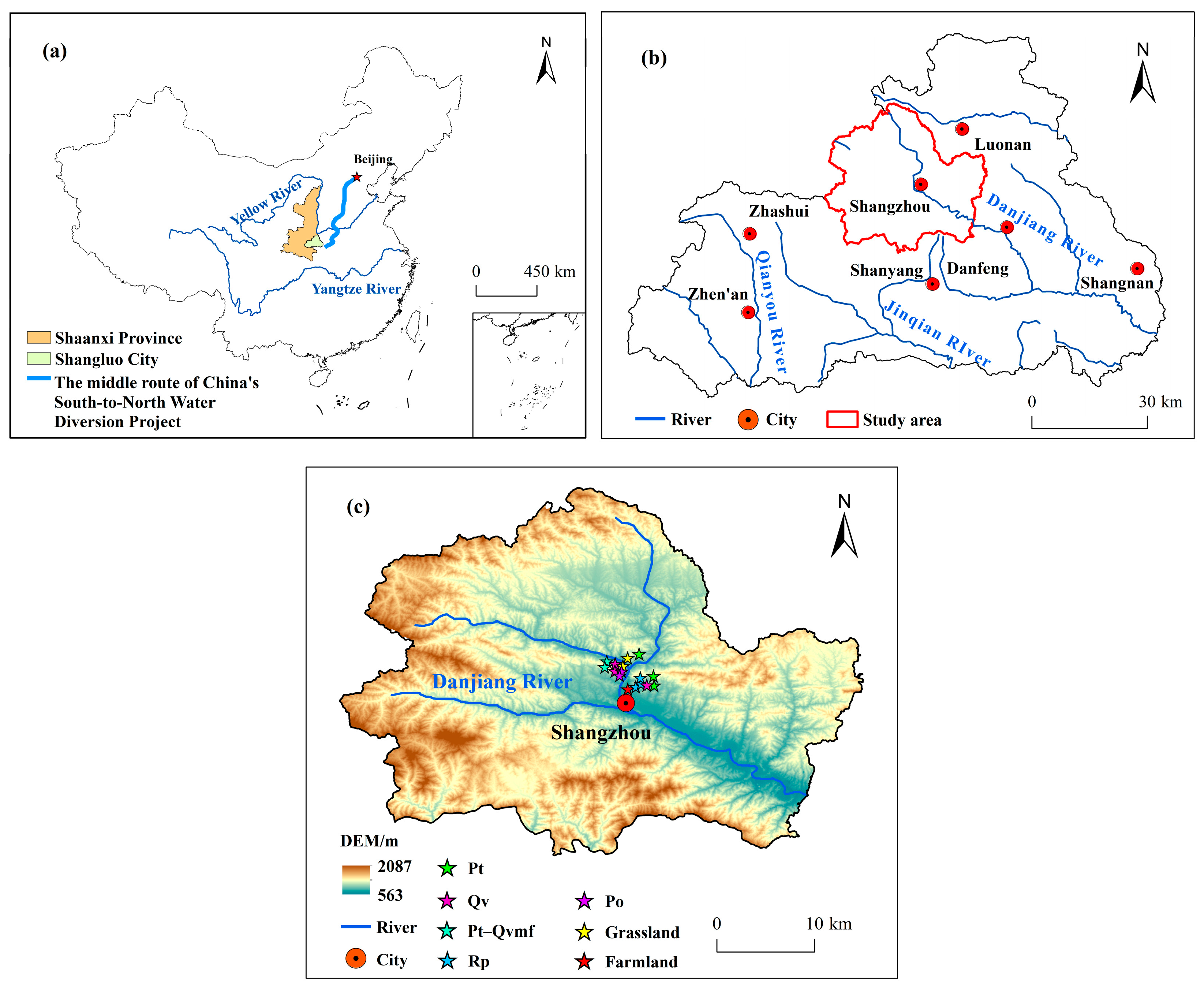
2.1. Study Area
2.2. Plot Setting and Vegetation Community Surveys
2.3. Methods
2.3.1. Determination of Vegetation Roots
2.3.2. Determination of Soil Particle Composition
2.3.3. Soil Sample Collection
2.3.4. Determination of Soil Aggregation Indicators
2.3.5. Calculation of the Stability Index of Soil Aggregates
The Mean Weight Diameter
The Fractal Dimension of Aggregates (D)
The Macroaggregate Content
The Percentage of Aggregate Disruption (PAD)
2.3.6. Determination of Soil Organic Matter
2.3.7. Data Processing and Analysis
3. Results
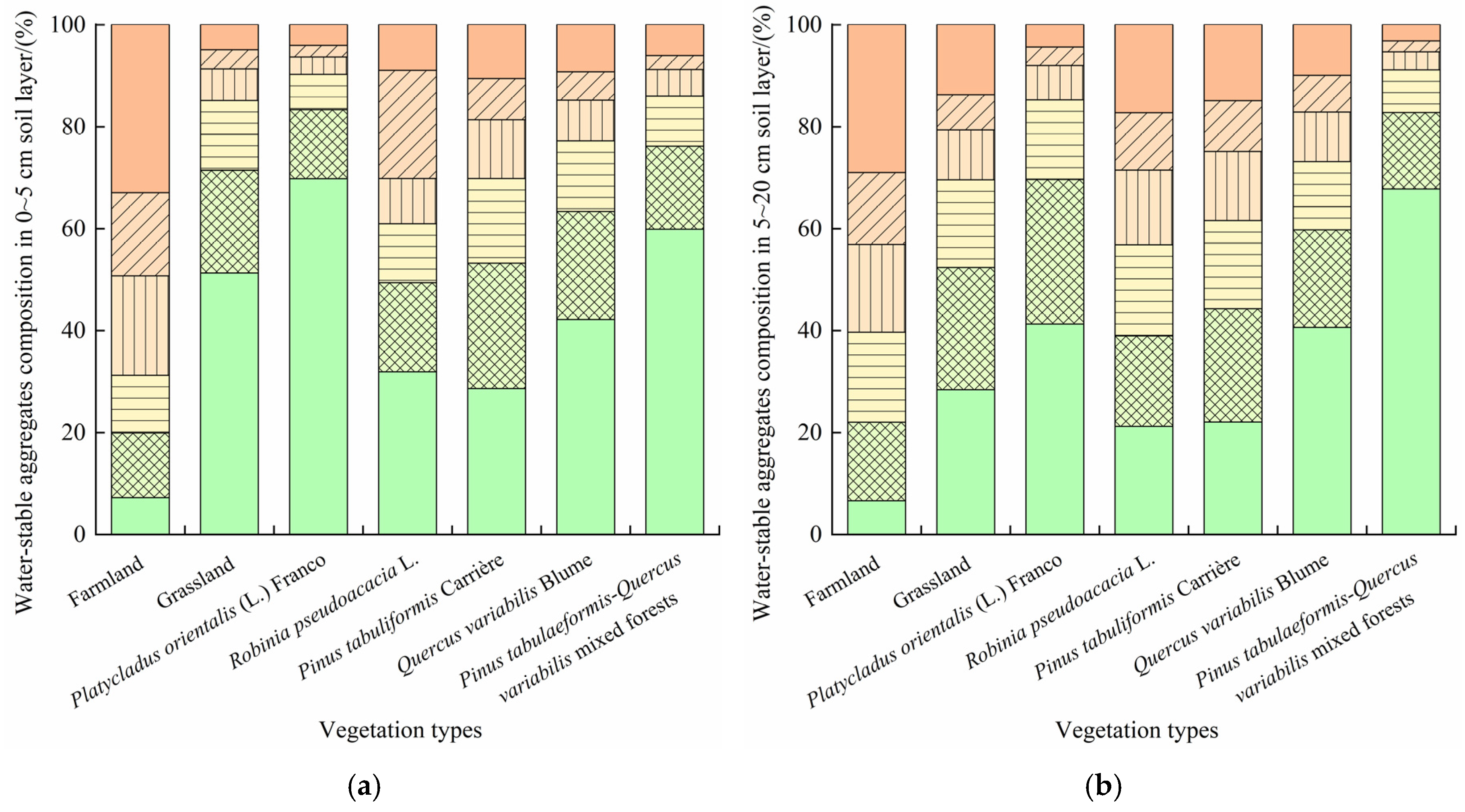
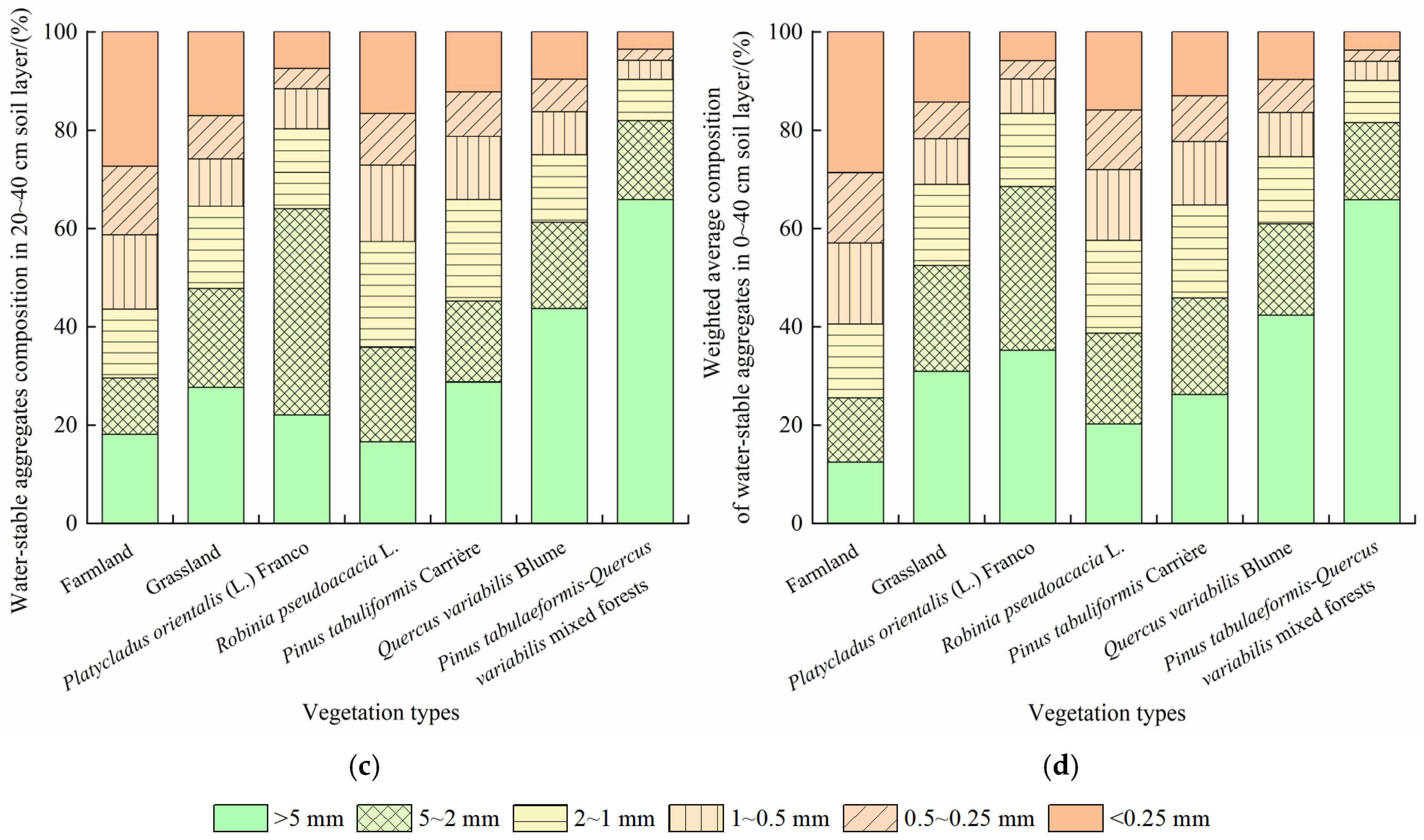
3.1. Distribution Characteristics of Soil Water Stability Aggregates of Different Vegetation Types
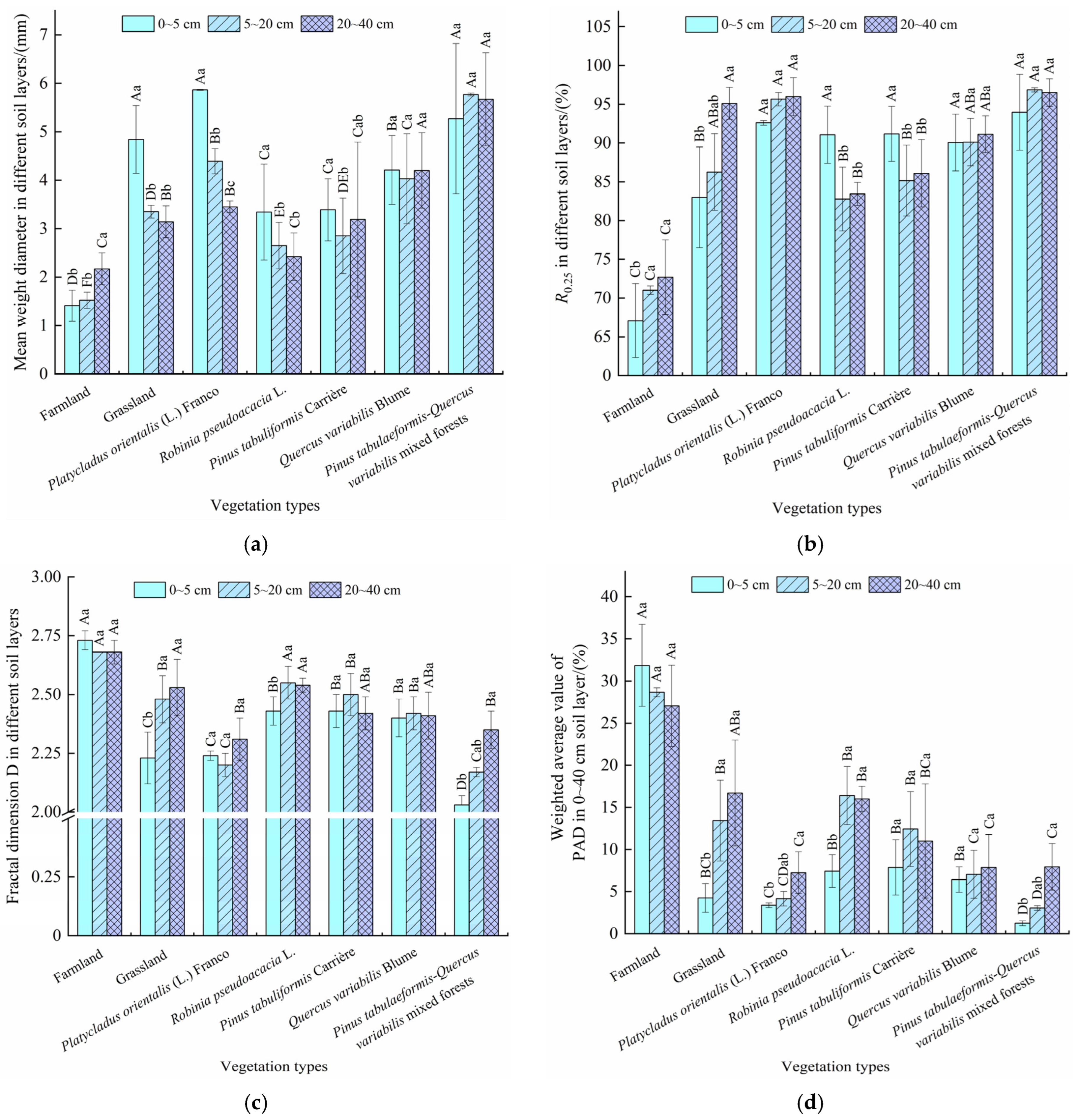
3.2. Stability Analysis of Soil Aggregates of Different Vegetation Types
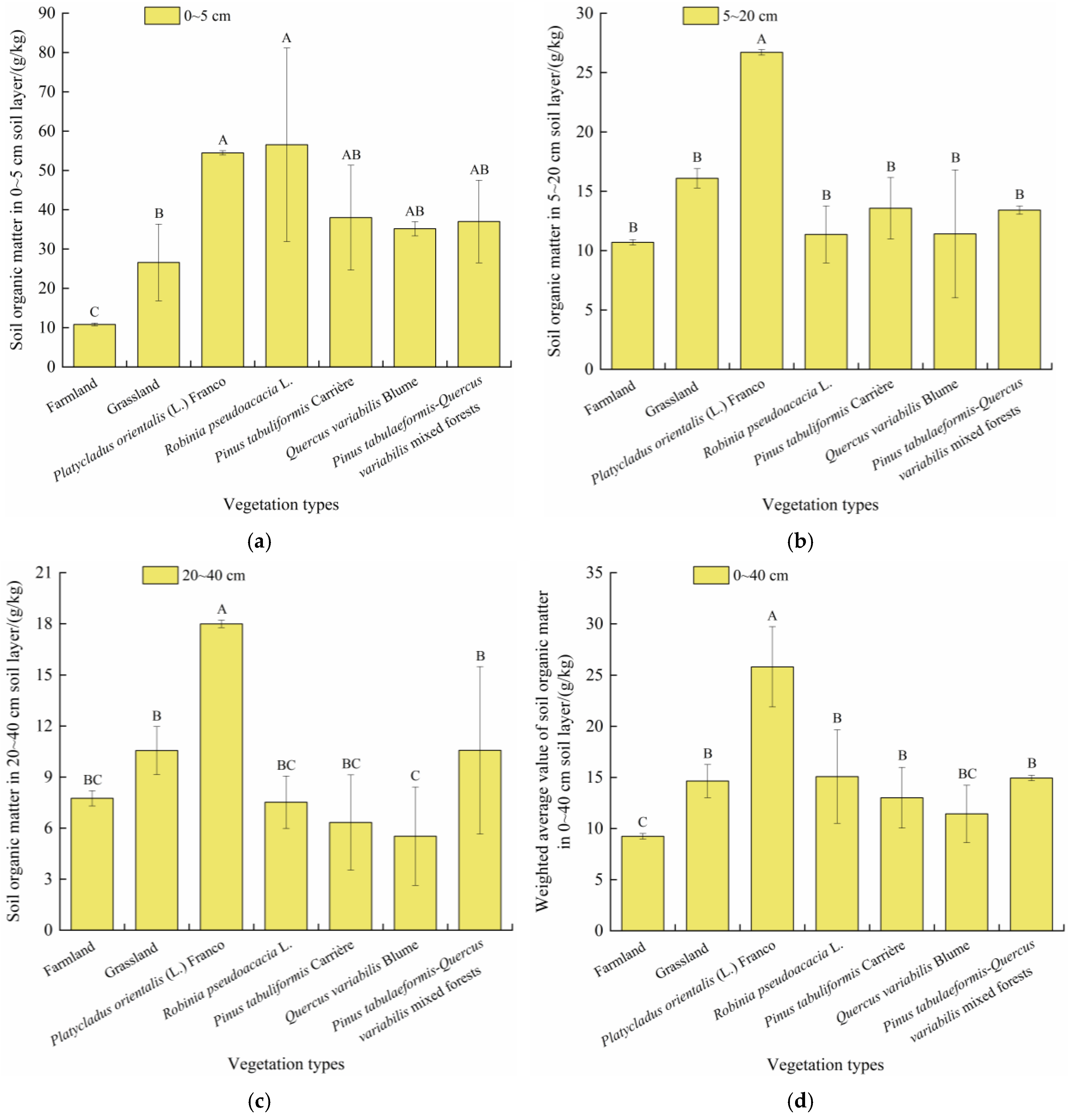
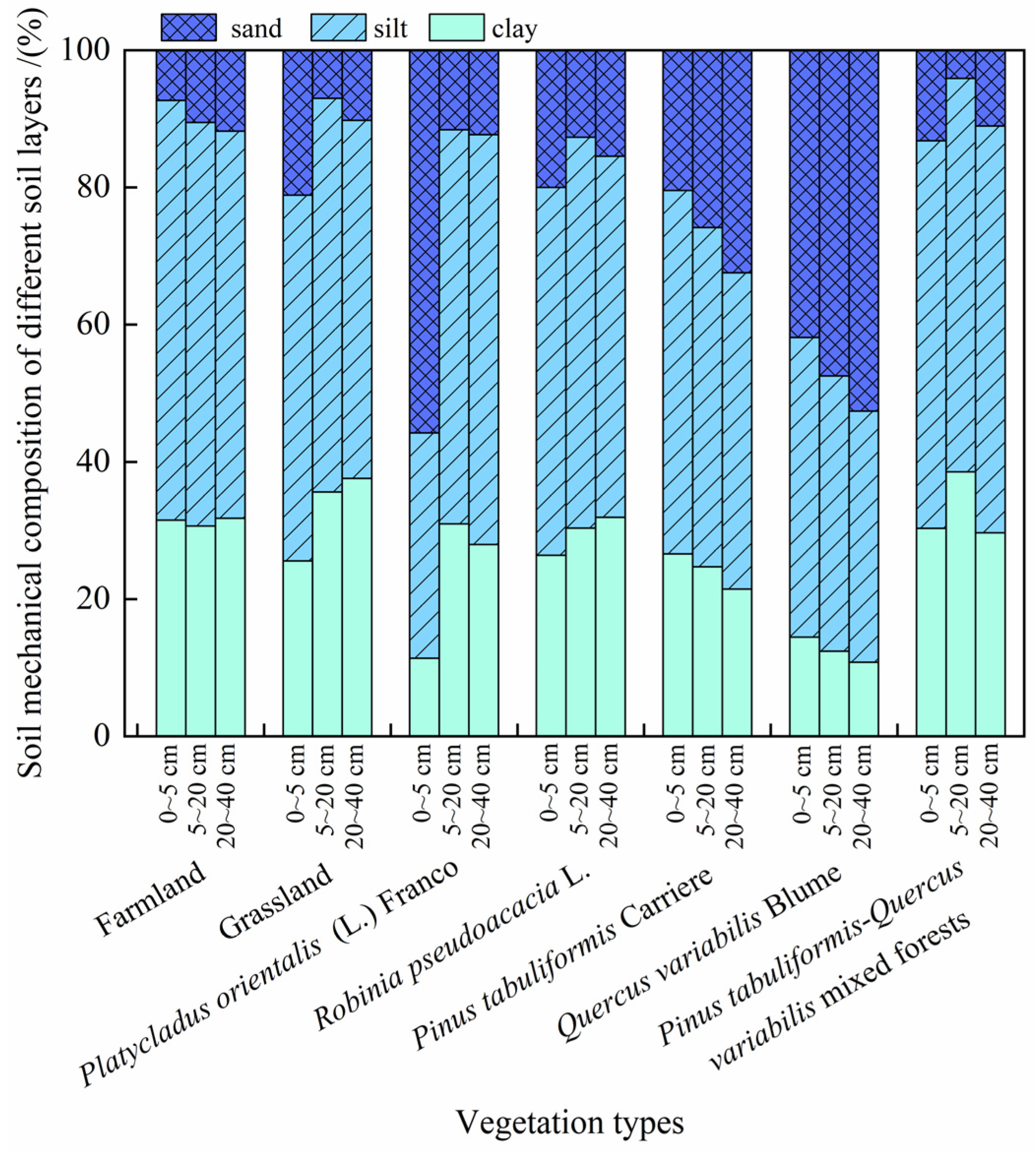
3.3. Analysis of Root Biomass, Soil Organic Matter Content, and Soil Particle Composition of Different Vegetation Types
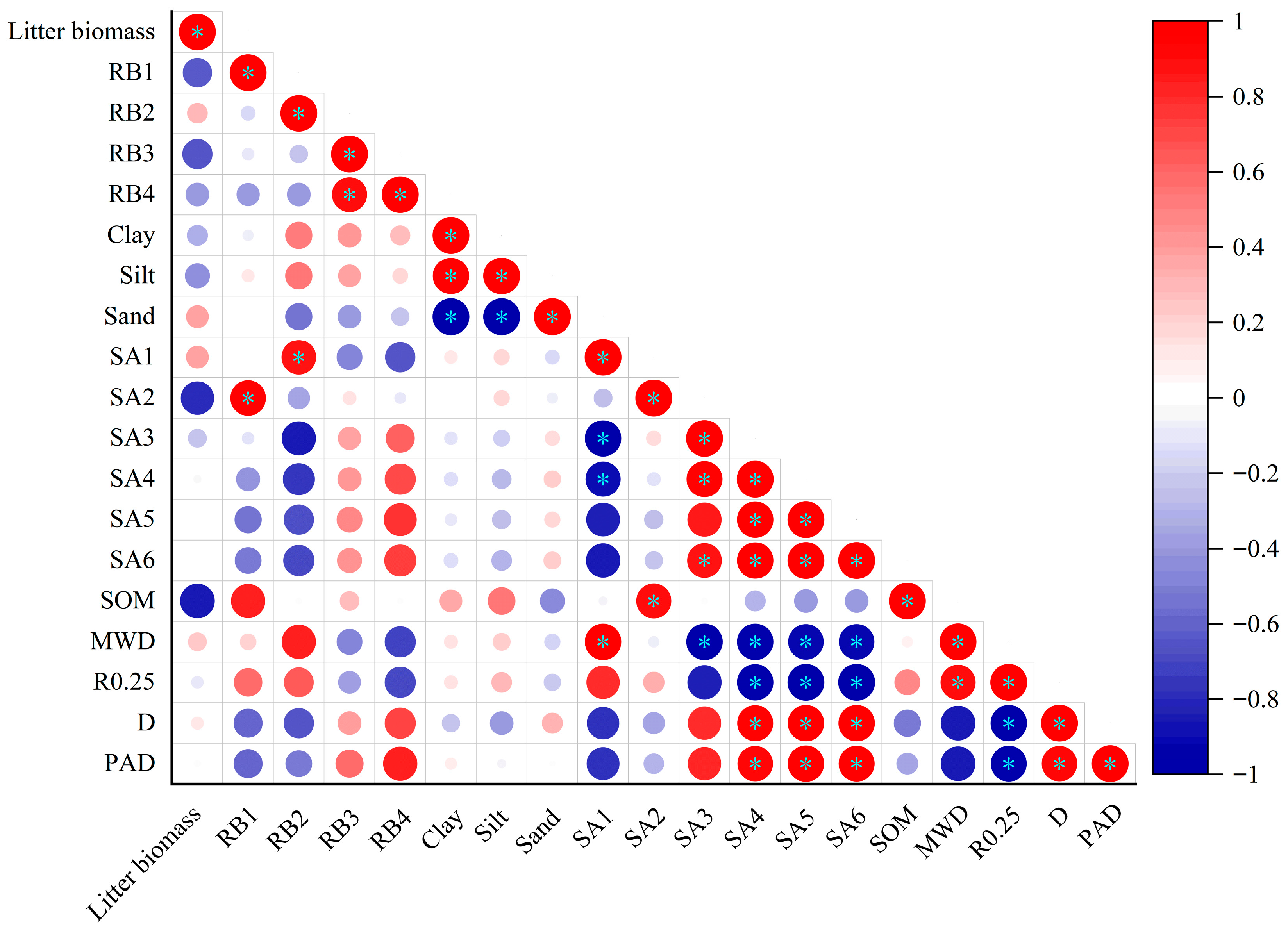
3.4. Relationship Between Soil Aggregate Stability and Organic Matter and Root Biomass in Different Vegetation Types
4. Discussion
4.1. Distribution Characteristics and Stability Evaluation of Soil Aggregates of Different Restored Vegetation Types
4.2. Change Characteristics of Root Biomass and Soil Organic Matter Content of Different Restored Vegetation Types
4.3. Analysis of Influencing Factors on Soil Aggregate Stability of Different Restored Vegetation Types
5. Conclusions
- (1)
- Vegetation restoration significantly enhances soil aggregate stability compared to farmland, with forest ecosystems exhibiting superior performance. Among the studied vegetation types, Pinus tabulaeformis-Quercus variabilis mixed forests demonstrated the highest proportion of macroaggregates (>0.25 mm) and the most stable soil structure across all soil depths (0–40 cm), highlighting the advantage of mixed-species systems over monoculture plantations in restoring soil structural integrity.
- (2)
- Depth-dependent patterns reveal that while surface soils (0–5 cm) show the most pronounced improvement in aggregate stability due to litter accumulation and dense fine-root networks, certain vegetation types—particularly mixed forests and Platycladus orientalis (L.) Franco—also exhibit significant capacity to enhance subsoil structure (20–40 cm). This underscores the importance of considering full-profile effects when evaluating restoration outcomes.
- (3)
- Vegetation restoration drives substantial changes in soil properties, increasing root biomass by 70–1375% and soil organic matter by 124–279% relative to farmland. Platycladus orientalis (L.) Franco and Robinia pseudoacacia L. are particularly effective in accumulating SOM, especially in surface layers. Notably, restoration also induces textural differentiation, reducing surface clay content and altering particle-size distribution with depth, which contributes to improved soil physical structure.
- (4)
- Mechanistic analysis suggests that aggregate stability is primarily governed by coarse root biomass (RB2, RB3) and SOM, which together explain 58% of the variance in MWD. Fine roots (RB1) play a comparatively limited role, while clay and silt particles provide foundational support by facilitating organo-mineral associations. These findings elucidate that organic inputs from aboveground litter and coarse belowground tissues, and their transformation into persistent SOM, are the key drivers of soil structural improvement under vegetation restoration.
Author Contributions
Funding
Data Availability Statement
Acknowledgments
Conflicts of Interest
References
- He, Y.H.; Zhang, Q.; Jiang, C.; Lan, Y.; Zhang, H.; Ye, S. Mixed planting improves soil aggregate stability and aggregate-associated C-N-P accumulation in subtropical China. Front. For. Glob. Chang. 2003, 6, 1141953. [Google Scholar] [CrossRef]
- Pan, Z.D.; Cai, X.M.; Bo, Y.M.; Guan, C.S.; Cai, L.Q.; Haider, F.U.; Li, X.C.; Yu, H.X. Response of soil organic carbon and soil aggregate stability to changes in land use patterns on the Loess Plateau. Sci. Rep. 2024, 14, 31775. [Google Scholar] [CrossRef] [PubMed]
- Cheng, Y.X.; Huo, A.D.; Liu, F.; Ahmed, A.; Abuarab, M.E.L.S.; Elbeltagi, A.; Kucher, D.E. Spatiotemporal variation of soil erosion in the northern foothills of the Qinling Mountains using the RUSLE model. Water 2024, 16, 2187. [Google Scholar] [CrossRef]
- Xu, X.M. Spatiotemporal trends and variations in rainfall erosivity in the east Qinling Mountains and the environmental impacts. Atmosphere 2024, 15, 1050. [Google Scholar] [CrossRef]
- Wang, F.H.; Zhou, L.Y.; Hu, H.; Wang, J.; Guo, Y.X.; Ren, C.J.; Bai, H.Y.; Sun, H.T.; Zhao, F.Z. Changes of soil aggregate carbon pool and temperature sensitivity in different vegetation zones of Taibai Mountain in Qinling Mountains. Acta Ecol. Sin. 2022, 42, 3300–3314. (In Chinese) [Google Scholar] [CrossRef]
- Ma, H.F.; Hu, H.; Li, Y.; Guo, Y.X.; Ren, C.J.; Zhao, F.Z. Stability of soil aggregates at different altitudes in Qinling Mountains and its coupling relationship with soil enzyme activities. Environ. Sci. 2021, 42, 4510–4519. (In Chinese) [Google Scholar] [CrossRef]
- Yu, P.J.; Liu, J.L.; Tang, H.Y.; Ci, E.; Tang, X.G.; Liu, S.W.; Ding, Z.; Ma, M.G. The increased soil aggregate stability and aggregate-associated carbon by farmland use change in a karst region of Southwest China. Catena 2023, 231, 107284. [Google Scholar] [CrossRef]
- Zhang, P.P.; Wang, Y.Q.; Xu, L.; Li, R.J.; Sun, H.; Zhou, J.X. Factors controlling spatial variation in soil aggregate stability in a semi-humid watershed. Soil Tillage Res. 2021, 214, 105187. [Google Scholar] [CrossRef]
- Zhong, Z.K.; Lu, S.J.; Ren, X.Q.; Wu, Z.X.; Xu, Q.M.; Ren, M.P.; Yang, C.J.; Han, G.H.; Hui, X. Organic carbon, nitrogen accumulation, and soil aggregate dynamics as affected by vegetation restoration patterns in the Loess Plateau of China. Catena 2021, 196, 104867. [Google Scholar] [CrossRef]
- Liu, Y.L.; Pang, J.L.; Huang, C.C.; Cha, X.C.; Zhou, Y.L.; Wang, Y.P. Study on the distribution characteristics and mechanism of soil aggregates in the source area of Hanjiang River and Jialing River. J. Soil Water Conserv. 2021, 35, 235–242. (In Chinese) [Google Scholar] [CrossRef]
- Li, Z.G.; Fan, Y.S.; Zhang, R.H.; Chen, P.; Jing, X.X.; Lyu, C.H.; Zhang, R.Q.; Li, Y.F.; Liu, Y. Synergistic impacts of landscape, soil, and environmental factors on the spatial distribution of soil aggregates stability in the Danjiangkou reservoir area. Catena 2024, 237, 107840. [Google Scholar] [CrossRef]
- Liang, Y.Y.; Fang, J.B.; Jia, W.J.; Wang, S.J.; Liu, H.Y.; Liu, W.C.; Zhang, Q.; Yang, G.H.; Han, X.H.; Ren, G.X. Changes in soil aggregate carbon components and responses to plant input during vegetation restoration in the Loess Plateau, China. Plants 2024, 13, 2455. [Google Scholar] [CrossRef] [PubMed]
- Qin, X.; Kong, W.B.; Peng, Z.; Guo, L.C.; Feng, X.Y.; Ge, N.N.; Qiu, L.P.; Shao, M.A.; Rong, G.H.; Wei, X.R. Temporal dynamics and environmental controls of carbon and nitrogen stabilization in soil aggregates during afforestation on the Loess Plateau. Soil Biol. Biochem. 2026, 212, 110020. [Google Scholar] [CrossRef]
- Hao, H.J.; Liang, Y.J.; Pian, D.; Zhang, Y.; Chen, Y.X.; Lai, H.T.; Yu, Z.C.; Sailike, A.H.J.; Wang, R.; Cao, L.; et al. Macroaggregate is crucial in soil carbon and nitrogen accumulation under different vegetation types in the Loess Plateau, China. Forest Ecol. Manag. 2024, 569, 122161. [Google Scholar] [CrossRef]
- Deng, C.H.; Bai, H.Y.; Gao, S.; Liu, R.J.; Ma, X.P.; Huang, X.Y.; Meng, Q. Spatial-temporal variation of the vegetation coverage in Qinling Mountains and its dual response to climate change and human activities. J. Nat. Resour. 2018, 33, 425–438. Available online: https://kns.cnki.net/kcms2/article/abstract?v=FCWB7knoBeQUp_wUutYY7YTG-vhZEqhxt2q1q0c6T5PZ1s5tvH0DPlZ_Q9TtogkDC8fiVdKHx3Gq6xYF3CJWdUpxTrr2k94AZuJd1gu_oT89vTk36EyxWHG60ZnoEeCBby075XBlky_S16udth3AGHwxFF0yGYO-GPef8FQKwbegykj6RFDALw==&uniplatform=NZKPT&language=CHS (accessed on 16 March 2026). (In Chinese)
- Zhang, W.R.; Xu, B.T. Forest Soil Positioning Research Methods; China Forestry Publishing Press: Beijing, China, 1986. [Google Scholar]
- Di Stefano, C.; Ferro, V.; Mirabile, S. Comparison between grain-size analyses using laser diffraction and sedimentation methods. Biosyst. Eng. 2010, 106, 205–215. [Google Scholar] [CrossRef]
- Yoder, R.E. Aggregate stability and assessment of soils and a study of the physical nature of erosion losses. J. Am. Soc. Agron. 1936, 28, 337–351. [Google Scholar] [CrossRef]
- Institute of Soil Science, Chinese Academy of Sciences. Analysis of Physical and Chemical Properties of Soil; Shanghai Science and Technology Press: Shanghai, China, 1978. [Google Scholar]
- Lin, Z.; Huang, Z.G.; Liao, D.L.; Huang, W.X.; Huang, J.; Deng, Y.S. Effects of soil organic matter components and iron aluminum oxides on aggregate stability during vegetation succession in granite red soil eroded areas. J. Mt. Sci. 2022, 19, 2634–2650. [Google Scholar] [CrossRef]
- Wang, C.G.; Miao, J.H.; Liu, C.G.; Ma, B.Z.; Li, X.Y.; Li, G.; Li, Z.B. The combined effect of taproot and fibrous Roots of herbaceous plants and shrubs on the distribution of soil water-stable aggregates. Forests 2024, 15, 1644. [Google Scholar] [CrossRef]
- Hudek, C.; Stanchi, S.; D’amico, M.E.; Freppaz, M. Quantifying the contribution of the root system of alpine vegetation in the soil aggregate stability of moraine. Int. Soil Water Conserv. Res. 2017, 5, 36–42. [Google Scholar] [CrossRef]
- Tian, Q.L.; Zhang, X.P.; Yi, H.; Li, Y.Y.; Xu, X.M.; He, J.; He, L. Plant diversity drives soil carbon sequestration: Evidence from 150 years of vegetation restoration in the temperate zone. Front. Plant Sci. 2023, 14, 1191704. [Google Scholar] [CrossRef]
- Long, F.F.; Li, Z.B.; Xu, G.C.; Li, P.; Cheng, Y.T. Distribution of organic carbon in different soil aggregate size in typical watershed of the Dan River. J. Soil Water Conserv. 2014, 28, 149–152+190. (In Chinese) [Google Scholar] [CrossRef]
- Zhu, G.Y.; Shangguan, Z.P.; Deng, L. Variations in soil aggregate stability due to land use changes from agricultural land on the Loess Plateau, China. Catena 2021, 200, 105181. [Google Scholar] [CrossRef]
- Wang, M.Q.; Xu, X.M.; Wang, H.J.; Xue, F.; Zou, Y.D.; Lyu, D.; He, J.; Tian, Q.L.; Yi, H.J.; He, L.; et al. Dynamic characterization of soil aggregates during secondary Forest vegetation succession in the Loess Plateau. J. Northwest A F Univ. 2023, 51, 107–117. (In Chinese) [Google Scholar] [CrossRef]
- Fan, X.X.; Pan, H.Y.; Ping, Y.; Jin, G.Z.; Song, F.Q. The underlying mechanism of soil aggregate stability by fungi and related multiple factor: A review. Eurasian Soil Sci. 2021, 55, 242–250. [Google Scholar] [CrossRef]
- Bronick, C.J.; Lal, R. Soil structure and management: A review. Geoderma 2005, 124, 3–22. [Google Scholar] [CrossRef]
- Chen, P.; Wang, L.; Li, Y.J.; Wan, W.J.; Zhang, R.Q.; Liu, Y.; Li, Z.G. Response of soil aggregate-associated fertility and microbial communities to afforestation in the degraded ecosystem of the Danjiangkou Reservoir, China. Plant Soil 2023, 501, 171–189. [Google Scholar] [CrossRef]
- Lehmann, A.; Zheng, W.; Rillig, M.C. Soil biota contributions to soil aggregation. Nat. Ecol. Evol. 2007, 1, 1828–1835. [Google Scholar]
- Wang, J.; Sha, Z.M.; Qin, Q.; Sun, L.J.; Sun, Y.F.; Yang, S.Y.; Xue, Y.; Cao, L.K. Soil aggregate-associated organic nitrogen pools, enzyme activities, and microbial community fertilized with food waste-derived organic fertilizer. Appl Soil Ecol 2024, 202, 105580. [Google Scholar]
- Li, J.Y.; Yuan, X.L.; Ge, L.; Li, Q.; Li, Z.G.; Wang, L.; Liu, Y. Rhizosphere effects promote soil aggregate stability and associated organic carbon sequestration in rocky areas of desertification. Agric. Ecosyst. Environ. 2020, 304, 107126. [Google Scholar] [CrossRef]
- Pohl, M.; Graf, F.; Buttler, A.; Rixen, C. The relationship between plant species richness and soil aggregate stability can depend on disturbance. Plant Soil 2012, 355, 87–102. [Google Scholar] [CrossRef]
- Singhal, V.K.; Ghosh, A.; Singh, A.K.; Singh, Y.; Biswas, S.S.; Ojha, D.; Bhattacharyya, R. How grasses stabilize soil organic carbon in aggregates of semi-arid ecologically restored land: Evidence from 13C natural abundance. Catena 2025, 249, 108627. [Google Scholar] [CrossRef]
- Xu, X.M.; Yan, S.S.; Peng, X.B. Carbon sequestration effects of the typical restored vegetation types in Eastern Qinling Mountains. J. Northwest A F Univ. 2025, 53, 92–101. (In Chinese) [Google Scholar] [CrossRef]
- Wang, X.X.; Shan, K.; Huang, P.; Ma, M.H.; Wu, S.J. Response of soil aggregate stability to plant diversity loss along an inundation stress gradient in a reservoir riparian zone. Catena 2023, 233, 107472. [Google Scholar] [CrossRef]
- Zang, Z.F.; Zhang, Y.; Deng, S.J.; Yang, K.; Tang, F.H.; Lv, Y.; Zhao, W. Depth-dependent effects of aggregate-associated organic, inorganic carbon, and stoichiometry on soil structural stability following farmland abandonment. Catena 2025, 252, 108864. [Google Scholar] [CrossRef]
- An, S.S.; Mentler, A.; Mayer, H.; Blum, W.E.H. Soil aggregation, aggregate stability, organic carbon and nitrogen in different soil aggregate fractions under forest and shrub vegetation on the Loess Plateau, China. Catena 2010, 81, 226–233. [Google Scholar] [CrossRef]
- Li, W.Q.; Shen, F.X.; Liu, Y.J.; Li, Z.W.; Jiang, J.F.; Li, Q.; Zheng, H.; Wang, X.; Wu, J. Soil depth determine the ecological stoichiometry of soil aggregates after returning ancient rice terraces to forest. Catena 2022, 219, 106624. [Google Scholar] [CrossRef]
- Zhong, W.; Shuai, Q.; Zeng, P.; Guo, Z.Q.; Hu, K.J.; Wang, X.J.; Zeng, F.J.; Zhu, J.X.; Feng, X.; Lin, S.J.; et al. Effect of ecologically restored vegetation roots on the stability of shallow aggregates in ionic rare earth tailings piles. Agronomy 2023, 13, 993. [Google Scholar] [CrossRef]
- Yang, Y.; Meng, Z.J.; Li, H.N.; Gao, Y.; Li, T.Y.; Qin, L. Soil porosity as a key factor of soil aggregate stability: Insights from restricted grazing. Front. Environ. Sci. 2025, 12, 1535193. [Google Scholar] [CrossRef]
- Addesso, R.; Araniti, F.; Bloise, A.; Mininni, A.N.; Dichio, B.; López-González, D.; Elshafie, H.S.; Ellerbrock, R.H.; Schnee, L.; Filser, J.; et al. Soil organic matter quality in an olive orchard differently managed for 21 years: Insights into its distribution through soil aggregates and depth. Agric. Ecosyst. Environ. 2025, 380, 109388. [Google Scholar] [CrossRef]
- Stewart, C.E.; Paustian, K.; Conant, R.T.; Plante, A.F.; Six, J. Soil carbon saturation: Evaluation and corroboration by long-term incubations. Soil Biol. Biochem. 2018, 40, 1741–1750. [Google Scholar] [CrossRef]
- Zhao, Y.Q.; Yang, W.F.; Liu, Y.R.; Zhang, X.M.; Li, Y.L.; Qi, G.H.; Huang, S.H.; Luan, H.A. Linking soil organic carbon characteristics, nutrient stoichiometry, and microbial community to eco-enzymatic stoichiometry within aggregates in different aged walnut plantations. Eur. J. Soil Biol. 2024, 121, 103627. [Google Scholar] [CrossRef]
- Qiao, L.L.; Li, Y.Z.; Song, Y.H.; Zhai, J.Y.; Wu, Y.; Chen, W.J.; Liu, G.B.; Xue, S. Effects of vegetation restoration on the distribution of nutrients, glomalin-related soil protein, and enzyme activity in soil aggregates on the Loess Plateau, China. Forests 2019, 10, 796. [Google Scholar] [CrossRef]
- Liu, S.T.; Lin, Z.; Duan, X.Q.; Deng, Y.S. Effects of soil microorganisms on aggregate stability during vegetation recovery in degraded granitic red soil areas. Appl. Soil Ecol. 2024, 204, 105734. [Google Scholar] [CrossRef]
- Chittamart, N.; Mentler, A.; Rechberger, M.V.; Gerzabek, M.H.; Zehetner, F. Aggregate stability and aggregate-associated organic matter along a soil chronosequence on the Galápagos Archipelago. J. Soil Sci. Plant Nut. 2024, 24, 6338–6348. [Google Scholar]
- Zhang, L.Y.; Chen, M.M.; Zong, Y.T.; Sun, Z.Q.; Li, Y.Y.; Ding, X.D.; Zhang, S.R. The response of soil organic carbon sequestration to organic materials addition in saline-alkali soil: From the perspective of soil aggregate structure and organic carbon component. Plant Soil 2025, 512, 1619–1638. [Google Scholar] [CrossRef]



| Stand Types and Sites | Forest Age | Slope Position | Slope (°) | Elevation (m) | Canopy Density (%) | Stand Density (hm−2) | Mean Height (m) | Mean DBH (cm) |
|---|---|---|---|---|---|---|---|---|
| Platycladus orientalis (L.) Franco (Two plots) | Middle-aged forest (21~40 ages) | Middle | 19~24° | 1023~1030 | 33~47 | 1740~2041 | 7.46~8.90 | 13.18~14.95 |
| Pinus tabuliformis Carrière (Three plots) | Middle-aged forest (21~30 ages) | Middle- upper | 35~39° | 882~884 | 82~87 | 740~1775 | 3.60~13.90 | 7.58~17.95 |
| Quercus variabilis Blume (Four plots) | Middle-aged forest (21~30 ages) | Middle- upper | 20~40° | 853~1019 | 33~80 | 714~2577 | 8.30~13.25 | 8.47~16.63 |
| Pinus tabulaeformis—Quercus variabilis mixed forests (Two plots) | Mature forest (51~60 ages) | Upper | 24~30° | 1138~1213 | 67~80 | 1198~1785 | 8.00~8.32 | 10.63~14.01 |
| Robinia pseudoacacia L. (Three plots) | Over mature forest (>30 ages) | Middle | 33~34° | 867~903 | 60~73 | 663~969 | 6.50~15.24 | 8.98~15.15 |
| Grassland (Two plots) | (3~10 ages) | Middle- lower | 8~15° | 1168 | — | — | — | — |
| Maize (Two plots) | — | Lower | 23° | 706 | — | — | — | — |
| Soil Layer/cm | Vegetation Type | ≤1 mm RB | 1~≤2 mm RB | 2~≤5 mm RB | 5~≤10 mm RB |
|---|---|---|---|---|---|
| 0~5 cm | Farmland | 86.18 | 72.72 | — | — |
| Abandoned grassland | 43.16 | 35.28 | 0.19 | — | |
| Platycladus orientalis (L.) Franco | 141.98 | 19.74 | 68.99 | 10.96 | |
| Robinia pseudoacacia L. | 33.96 | 22.65 | 36.06 | 91.65 | |
| Pinus tabuliformis Carrière | 83.88 | 22.64 | 21.04 | 102.49 | |
| Quercus variabilis Blume | 61.85 | 16.88 | 17.98 | 197.08 | |
| Pinus tabuliformis-Quercus variabilis mixed forests | 40.52 | 18.24 | 9.67 | 79.38 | |
| 5~20 cm | Farmland | 80.21 | 77.80 | — | — |
| Abandoned grassland | 24.74 | 15.75 | 3.56 | — | |
| Platycladus orientalis (L.) Franco | 111.17 | 23.14 | 12.39 | 72.62 | |
| Robinia pseudoacacia L. | 37.79 | 23.42 | 65.00 | 322.72 | |
| Pinus tabuliformis Carrière | 40.71 | 23.41 | 32.57 | 123.43 | |
| Quercus variabilis Blume | 60.40 | 31.58 | 24.67 | 34.78 | |
| Pinus tabuliformis-Quercus variabilis mixed forests | 47.08 | 32.46 | 26.02 | — | |
| 20~40 cm | Farmland | 85.71 | 34.09 | — | — |
| Abandoned grassland | 8.48 | 4.28 | 5.93 | — | |
| Platycladus orientalis (L.) Franco | 67.50 | 23.87 | 15.25 | 112.04 | |
| Robinia pseudoacacia L. | 34.01 | 19.11 | 41.68 | 473.41 | |
| Pinus tabuliformis Carrière | 28.28 | 24.18 | 19.32 | 33.79 | |
| Quercus variabilis Blume | 48.81 | 21.21 | 42.92 | 98.54 | |
| Pinus tabuliformis-Quercus variabilis mixed forests | 56.29 | 34.85 | 44.31 | 20.72 |
Disclaimer/Publisher’s Note: The statements, opinions and data contained in all publications are solely those of the individual author(s) and contributor(s) and not of MDPI and/or the editor(s). MDPI and/or the editor(s) disclaim responsibility for any injury to people or property resulting from any ideas, methods, instructions or products referred to in the content. |
© 2026 by the authors. Licensee MDPI, Basel, Switzerland. This article is an open access article distributed under the terms and conditions of the Creative Commons Attribution (CC BY) license.
Share and Cite
Xu, X.; Xiao, Y.; Huang, T.; Li, X.; Zhang, J.; Gan, M.; Xu, Y. Vegetation Restoration Significantly Improved Soil Aggregate Stability in the East Qinling Mountains. Agronomy 2026, 16, 657. https://doi.org/10.3390/agronomy16060657
Xu X, Xiao Y, Huang T, Li X, Zhang J, Gan M, Xu Y. Vegetation Restoration Significantly Improved Soil Aggregate Stability in the East Qinling Mountains. Agronomy. 2026; 16(6):657. https://doi.org/10.3390/agronomy16060657
Chicago/Turabian StyleXu, Xiaoming, Yutong Xiao, Tao Huang, Xiaogang Li, Jiarong Zhang, Mingxu Gan, and Yunpeng Xu. 2026. "Vegetation Restoration Significantly Improved Soil Aggregate Stability in the East Qinling Mountains" Agronomy 16, no. 6: 657. https://doi.org/10.3390/agronomy16060657
APA StyleXu, X., Xiao, Y., Huang, T., Li, X., Zhang, J., Gan, M., & Xu, Y. (2026). Vegetation Restoration Significantly Improved Soil Aggregate Stability in the East Qinling Mountains. Agronomy, 16(6), 657. https://doi.org/10.3390/agronomy16060657