Article

Effects of Different Nitrogen Fertilizer Management Modes on Maize Straw Decomposition and Soil Available Nutrients Under Shallow Buried Drip Irrigation


1
College of Agronomy, Inner Mongolia Agricultural University, Hohhot 010010, China
2
Inner Mongolia Autonomous Region Industrial Technology Engineering Center for Intelligent Water and Fertilizer Management Technology and Equipment for Crops, Hohhot 010018, China
3
Inner Mongolia Academy of Agricultural and Animal Husbandry Sciences, Hohhot 010031, China
4
Tongliao Agriculture and Animal Husbandry Bureau, Tongliao 028000, China
*
Authors to whom correspondence should be addressed.
These authors contributed equally to this work.
Agronomy 2026, 16(12), 1147; https://doi.org/10.3390/agronomy16121147
Submission received: 3 May 2026 / Revised: 1 June 2026 / Accepted: 6 June 2026 / Published: 11 June 2026
(This article belongs to the Section Soil and Plant Nutrition)

Abstract

Maize, as a major cereal crop in China, is vital for national food security, and appropriate nitrogen fertilization is essential for its growth and yield. Avoiding excessive nitrogen fertilizer application while maintaining productivity remains a critical challenge for sustainable agriculture. Although straw returning is widely adopted to reduce chemical fertilizer inputs, its effectiveness is often regionally constrained. In the West Liaohe Plain, low temperature and spring drought limit straw decomposition and nutrient release, making it difficult to reduce nitrogen fertilizer input and improve fertilizer use efficiency. Therefore, this study examined the effects of different nitrogen management modes on straw decomposition, nutrient release, mineral fertilizer substitution potential, soil available nutrients, and maize yield under shallow buried drip irrigation with integrated water and fertilizer management. A field experiment was conducted with five nitrogen (N) fertilizer management treatments: a conventional fertilization treatment (CK), in which 15% of total N was applied as starter fertilizer; two increased starter N treatments, in which 30% (30%N) and 45% (45%N) of total N were applied as starter fertilizer; and two organic substitution treatments, in which 30% (30%ON) and 45% (45%ON) of mineral N fertilizer were substituted with decomposed sheep manure based on equivalent total N input. Straw decomposition and nutrient release were measured using the nylon mesh bag method and fitted with an exponential decay model. The mineral fertilizer substitution potential was estimated based on straw nutrient release, while soil available nutrient dynamics in the 0–40 cm soil layer were analyzed, and the Mantel test and PCA were used to assess their relationships. Organic substitution promoted straw decomposition. The 30%ON treatment showed the highest rate at 70.91%, which was 19.2% higher than that of CK, and it exhibited a higher theoretical maximum decomposition rate (a), higher decomposition rate constant (k), and a shorter half-life. All treatments increased nutrient release and soil available nutrients, and organic substitution demonstrated stronger temporal persistence and more uniform vertical distribution among soil layers. The 30%ON treatment increased straw nutrient release by 4.8% to 18.2% and enhanced mineral fertilizer substitution potential. Although the 30%ON treatment did not increase yield in the first experimental year, it showed a significant yield advantage in the second year, which coincided with greater straw nutrient release and higher soil available nutrient levels under this treatment. Substituting 30% of mineral N fertilizer with organic fertilizer under shallow buried drip irrigation (300 kg N ha−1) optimized the C/N balance of the input system and facilitated straw decomposition and nutrient release. The continuous accumulation of soil available nutrients under this treatment, together with sustained straw nutrient release, was associated with a significant yield advantage in the second experimental year. Therefore, the 30%ON treatment may represent an appropriate management strategy for coordinating straw resource utilization, soil fertility maintenance, and stable maize production in the West Liaohe Plain.

1. Introduction

With the continuous increase in maize planting area and yield per unit area in China, the yield of the byproduct maize straw has also increased significantly. The total amount of straw resources in China exceeds one billion tons annually [1]. The Inner Mongolia Autonomous Region, as one of the major grain-producing areas in the country, produces over 44 million tons of straw per year [2]. Straw is rich in carbon, nitrogen, phosphorus, potassium, and other essential plant nutrients. After being returned to the field, it can partially substitute chemical fertilizers through slow mineralization and release [3]. At the same time, returning straw to the field can also improve soil structure and increase organic carbon and nutrient reserves, thereby enhancing soil productivity and crop yield [4]. Therefore, straw returning is considered one of the key measures to maintain cultivated land fertility and promote sustainable agricultural development, and it has been widely promoted in China.
However, straw decomposition is jointly regulated by multiple factors, including soil moisture, temperature, straw carbon-to-nitrogen (C/N) ratio, tillage practices, and fertilization management [5]. Soil moisture and temperature mainly affect microbial growth and enzyme activity [6], while the inherent C/N ratio of straw influences substrate degradability and nitrogen availability during decomposition [7]. Tillage practices can improve soil aeration and water distribution, thereby affecting the contact between straw and soil [8]. Fertilization management further regulates soil C/N balance through nitrogen and organic carbon inputs [9].
In the West Liaohe Plain of Inner Mongolia, spring conditions characterized by strong winds, drought, and low temperatures may suppress microbial activity and limit early-stage straw decomposition. To alleviate these limitations, deep straw incorporation has been widely adopted in local agricultural production [10]. Nevertheless, fresh straw input provides large amounts of carbon while simultaneously increasing microbial demand for available soil nitrogen because of its high C/N ratio. This process may intensify nitrogen competition between microorganisms and crops during the early stage of straw incorporation, which may adversely affect seedling growth [11]. Under this background, optimizing nitrogen fertilizer management, such as increasing starter nitrogen application or partially substituting mineral N fertilizer with organic fertilizer, has been considered an effective approach for regulating straw decomposition [12,13,14]. Previous studies have shown that appropriate nitrogen supply during the early growth stage can alleviate nitrogen competition, enhance soil microbial activity, accelerate straw degradation, and improve crop nitrogen use efficiency and yield [15,16,17,18,19]. In addition, organic materials can provide active carbon sources and exogenous microorganisms, which may stimulate microbial metabolism and promote the decomposition of recalcitrant straw components and nutrient release [20]. More importantly, under the goal of reducing mineral N fertilizer input, the combined application of organic and inorganic fertilizers together with straw returning may improve the synchronization between nutrient supply and crop demand through the regulation of soil microbial processes [21].
The effectiveness of these processes is highly dependent on soil water conditions. Integrated water and fertilizer management can simultaneously deliver water and nutrients to the plow layer, creating a favorable soil moisture and temperature environment for microbial activity and straw decomposition. In recent years, shallow buried drip irrigation has been widely adopted in the West Liaohe Plain as an efficient fertigation system. This water-saving and plastic-film-free technology can precisely regulate soil hydrothermal conditions and avoid residual plastic film pollution [22]. It has also been increasingly applied in semi-arid spring maize regions of Northeast China, drought-prone areas in Northwest China, and winter wheat–summer maize rotation systems in the North China Plain [23,24,25]. Although many studies have investigated straw returning and nitrogen management practices, most have focused on soil properties and yield responses under conventional rainfed conditions or on the long-term economic and environmental effects under traditional flood irrigation [26,27]. However, studies under shallow buried drip fertigation systems remain limited, particularly regarding how different proportions of mineral N fertilizer and organic fertilizers, under the same total nitrogen input, regulate straw decomposition, nutrient release, soil available nutrient dynamics, and maize yield. In particular, the stage-specific patterns of straw decomposition and nutrient release during maize growth, as well as their coupling relationships with soil nutrient supply, are still not fully understood.
Based on this, under the conditions of integrated water and fertilizer management with shallow buried drip irrigation and deep plowing of straw, this study set up five nitrogen fertilizer management modes: conventional mode (CK, 15%N as starter fertilizer), increased starter nitrogen fertilizer (30%N and 45%N), and substituting mineral N fertilizer with organic fertilizer (30%ON and 45%ON). By systematically analyzing the straw decomposition dynamics, stage-specific nutrient release characteristics, fertilizer substitution potential derived from straw nutrient release, and the responses of soil available nutrients and maize yield, this study aimed to identify suitable nitrogen management strategies under shallow buried drip irrigation. This will provide a theoretical basis and technical support for the efficient utilization of straw resources, the improvement of cultivated land quality, and the stable and increased yield of maize in the West Liaohe Plain.

2. Materials and Methods

2.1. Experimental Site, Climate Conditions, and Initial Soil Properties

The experiment was conducted from 2024 to 2025 in Liaohe Town, Economic Development Zone, Tongliao City, Inner Mongolia Autonomous Region (43°37′ N, 122°19′ E). The experimental soil was a typical local gray meadow soil. The initial chemical properties of the 0–20 cm soil layer before sowing are presented in Table 1. The previous crop was maize, and the field was managed under a continuous spring maize monoculture system with one harvest per year.
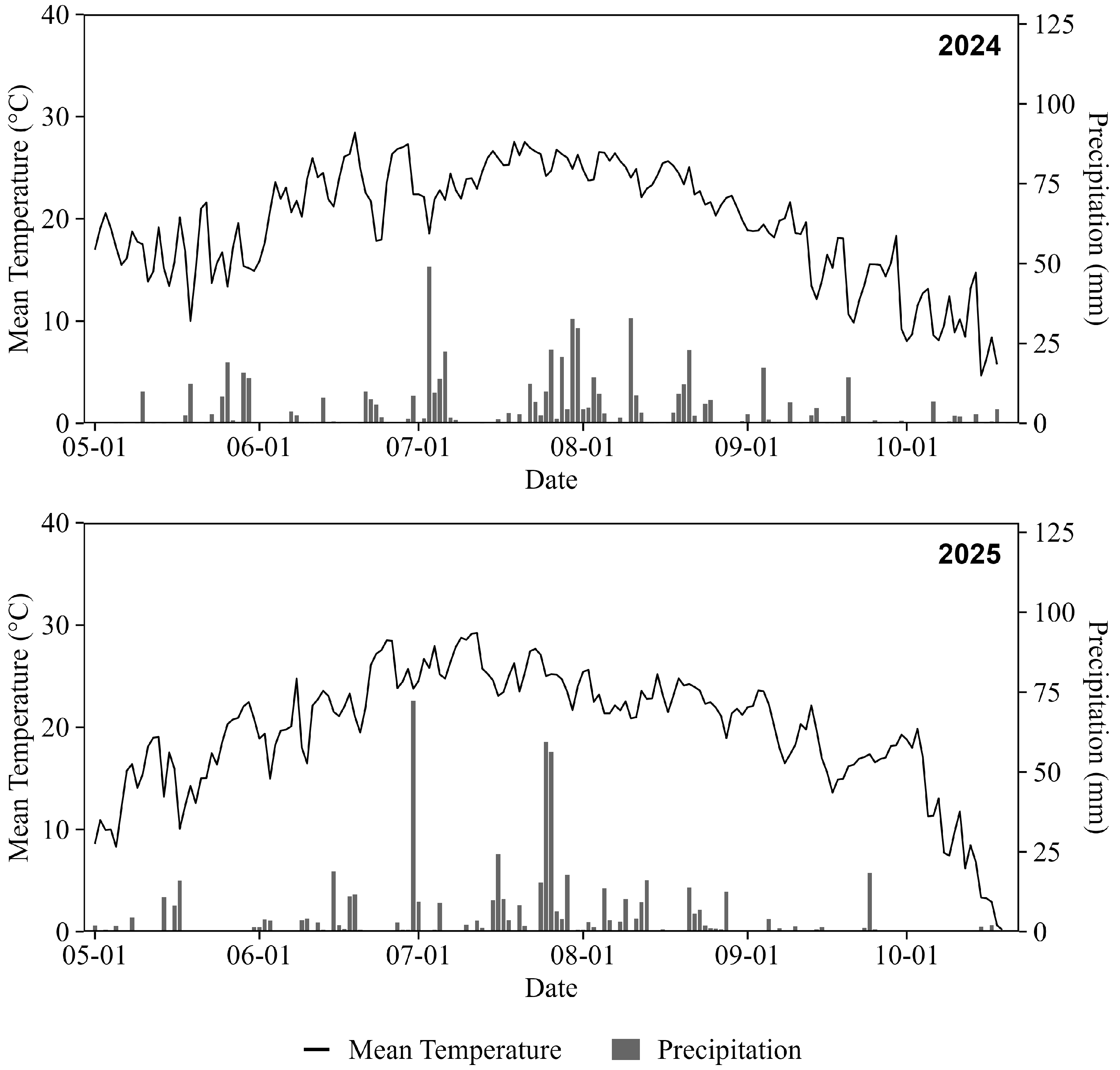
The monitoring data of rainfall and temperature during the maize growth period in the experimental field are shown in Figure 1. In the 2024 growth period, the monthly average temperature was 18.83 °C and the rainfall was 616.93 mm. In the 2025 growth period, the monthly average temperature was 18.93 °C and the rainfall was 579.65 mm.

2.2. Experimental Design

The experiment was established in May 2024 using a randomized block design with five N management treatments. The initial system C/N ratio for each treatment was calculated based on the total carbon and nitrogen inputs from returned straw, mineral N fertilizer, and sheep manure according to Equation (1), and the results are presented in Table 2.
Each treatment had three replicates, resulting in a total of 15 plots. The area of each plot was 86.4 m2. Spring maize cultivar Dika 159 was planted at a density of 90,000 plants ha−1 using a wide–narrow row spacing pattern (40 cm + 80 cm). Integrated water and fertilizer management with shallow buried drip irrigation was adopted throughout the experiment.
The total N application rate was maintained at 300 kg ha−1 (as pure N) for all treatments. For CK, 30%N, and 45%N, mineral N fertilizer was supplied as urea. The starter mineral N fertilizer was side-band applied at sowing using a planter at an approximate depth of 15 cm. The remaining mineral N fertilizer was applied as urea through shallow buried drip fertigation at the V6, V12, R1, and R3 stages in a ratio of 2:5:2:1.
For the organic substitution treatments (30%ON and 45%ON), decomposed sheep manure was used to replace 30% and 45% of total N input, respectively, on an equivalent-N basis. The remaining mineral N fertilizer was applied according to the same fertigation schedule as the corresponding starter N treatments.
The initial chemical characteristics of the returned maize straw before incorporation, and the decomposed sheep manure used in the organic substitution treatments, are presented in Table 3.
For all treatments, phosphorus fertilizer (superphosphate, P2O5 105 kg ha−1) and potassium fertilizer (potassium chloride, K2O 52.5 kg ha−1) were applied at the same time as basal fertilizer during sowing. A total of seven irrigations were applied throughout the maize growing season. One irrigation was provided immediately after sowing to ensure seedling emergence, and subsequent irrigations were applied at the V6, V9, V12, VT, R1, and R3 stages. The irrigation quota at the R3 stage was 240 cubic meters per hectare, and the remaining irrigations were 480 cubic meters per hectare each.
The same tillage and soil preparation procedures were applied to all treatments. Before spring sowing, maize straw from the previous season was chopped into 3–5 cm fragments and returned to the field at approximately 8334 kg ha−1. In the organic substitution treatments, sheep manure was manually broadcast according to the experimental design before tillage. Subsequently, all plots underwent identical deep-plowing operations (approximately 40 cm depth) using a hydraulic reversible plow, followed by rotary tillage and compaction. Field observations indicated that most straw residues and incorporated sheep manure were distributed at a depth of approximately 20 cm after tillage. Therefore, soil disturbance intensity, residue incorporation depth, and tillage operations were consistent among all treatments. Other field management practices were consistent with local conventional maize production.

2.3. Measurements and Analytical Methods

2.3.1. Straw Decomposition and Nutrient Release

For the determination of straw decomposition amount and nutrients, the nylon mesh bag method was used. Naturally air-dried maize straw was crushed to 3–5 cm and then dried to a constant weight. The initial chemical characteristics of the straw are presented in Table 3. Exactly 50.0 g of maize straw (calculated based on the actual field straw return rate and the mesh bag area) was weighed and placed into a nylon mesh bag with a pore size of 0.125 mm and a specification of 20 cm × 20 cm, and then sealed. After the deep plowing and soil preparation, trenches (25 cm wide and 20 cm deep) were opened along the rows of maize sowing in each plot. Field investigation after tillage showed that most returned straw fragments were concentrated at a depth of approximately 20 cm, despite the deep-plowing operation. Therefore, the nylon mesh bags were buried horizontally at this depth to simulate the actual distribution of returned straw under local deep-incorporation management conditions. The mesh bags were placed horizontally at the bottom of the trench at 20 cm intervals, and ten bags were buried in each plot before the soil was backfilled. Sampling was conducted at the jointing stage (V6), twelfth leaf stage (V12), silking stage (R1), milk stage (R3), and maturity stage (R6) of the maize. Two bags were collected from each plot at each sampling time. The roots and soil residues on the surface of the nylon mesh bags were removed and washed clean. They were dried at 65 °C to a constant weight to measure the dry weight of the straw, and then crushed and passed through a 1 mm sieve. The total carbon content of straw was determined using a multiN/C 3300 Total Organic Carbon Analyzer (Analytik Jena AG, Jena, Germany). After H2SO4 and H2O2 digestion, the total nitrogen content was determined using a K9860 Kjeldahl Analyzer (Hanon Instruments Co., Ltd., Jinan, China). The total phosphorus content was determined by the molybdenum–antimony colorimetric method using a UV-759 UV–Visible spectrophotometer (Youke Instrument Co., Ltd., Shanghai, China). The total potassium content was determined using a Model 410 Flame Photometer (Sherwood Scientific Ltd., Cambridge, UK) [28]. The straw nutrient release amount was calculated accordingly.

2.3.2. Soil Available Nutrients

Soil samples were taken synchronously before sowing and at the above five growth stages. A soil auger was used to collect soil samples from the 0 to 20 cm and 20 to 40 cm soil layers of each treatment. Three sampling points were randomly collected in each plot and mixed into one sample for testing. After removing animal and plant residues, 200 g was kept for natural air drying, ground, and passed through a 1 mm sieve. The alkali hydrolysis diffusion method was used to determine the alkali-hydrolyzable nitrogen content. Available phosphorus was extracted with 0.5 mol/L NaHCO3 and determined using the molybdenum–antimony colorimetric method with a UV-759 UV–Visible spectrophotometer (Youke Instrument Co., Ltd., Shanghai, China). Available potassium was determined using a Model 410 Flame Photometer (Sherwood Scientific Ltd., Cambridge, UK) [28].

2.3.3. Grain Yield

Yield determination: During harvest, the yield measurement area in each plot was 12 square meters. The effective ear number in the sample square was investigated, and 20 ears were sampled to investigate the grain number per ear. After artificial threshing, the thousand grain weight and grain moisture content were measured, and it was finally converted to the yield at 14% moisture content.

2.4. Data Calculation and Statistical Analysis

2.4.1. Data Calculation Formulas

The input system carbon-to-nitrogen ratio for each mode is calculated using Formula (1):
R C / N = W s × C s + W O × C O W s × N s + N f ,
where R C / N represents the input system carbon-to-nitrogen ratio, W s is the amount of straw returned per unit area (kg ha−1), C s and N s are the carbon content (%) and nitrogen content (%) of the returned straw, respectively, W O is the amount of organic fertilizer per unit area (kg ha−1), C O is the carbon content (%) of the organic fertilizer, and N f is the pure nitrogen amount (kg ha−1) in the exogenous nitrogen fertilizer (urea, sheep manure) inputted in the corresponding season.
The in situ decomposition process of maize straw is described using the exponential decay function, as shown in Formula (2) [29]:
R ( t ) = a e k t + b ;
T 1 / 2 = L n ( 2 ) k ,
where R ( t ) is the straw residue rate at time t , a represents the proportion of easily decomposable components (theoretical maximum decomposition rate), b is the proportion of recalcitrant substances (the part that is difficult to decompose), k is the straw decomposition rate constant, and T 1 / 2 is the time required for half (50%) of the easily decomposable component a to decompose, which is the decomposition half-life, calculated using Formula (3).
The straw residue rate is calculated using Formula (4), and the straw nutrient release amount in each stage and the cumulative release amount in the current season are calculated using Formulas (5) and (6), respectively:
R t = M t M 0 × 100 % ;
E i = M i 1 × C i 1 M i × C i ,
E c u m = i = 1 n E i = M 0 × C 0 M n × C n ,
where R t   is the straw residue rate (%) at time t , M 0 is the initial dry weight of the straw (g), and M t is the dry weight of the straw sampled at time t (g).
E is the release amount of straw nutrients (C, N, P, or K) during the i -th growth stage (kg ha−1), M i 1 and M i are the dry weights of residual straw per unit area at the previous and current sampling times (kg·hm−2), respectively, and C i 1 and C i are the corresponding nutrient contents (%).
E c u m is the cumulative nutrient release (kg ha−1), and M n and C n are the dry weight and nutrient content of the residual straw at the final sampling, respectively.
The mineral fertilizer substitution potential is calculated based on the cumulative nutrient release amount in the current season [30]:
S t r a w   p h o s p h o r u s   P   f e r t i l i z e r   s u b s t i t u t i o n   p o t e n t i a l = P   r e l e a s e × 71 / 31 ;
S t r a w   p o t a s s i u m   ( K )   f e r t i l i z e r   s u b s t i t u t i o n   p o t e n t i a l = K   r e l e a s e × 94 / 78 ,
where 71 / 31 is the coefficient for converting elemental phosphorus to P2O5, and 94 / 78 is the coefficient for converting elemental potassium to K2O.
It should be noted that the mineral fertilizer substitution potential evaluated in this study was estimated exclusively from the nutrient release of straw enclosed in the nylon mesh bags. Before nutrient determination, all straw samples were carefully cleaned to remove adhering soil particles, roots, and manure residues. Therefore, the estimated substitution potential reflected only straw-derived nutrient release and was not directly influenced by nutrient inputs from sheep manure.

2.4.2. Data Statistics and Mapping

Microsoft Excel LTSC MSO (Version 16.0.14334.20688, 64-bit) was used for preliminary data arrangement. IBM SPSS Statistics Version 26.0 was used for analysis of variance and the least significant difference (LSD) test (p < 0.05). Origin 2021 (Version 9.8.0.200) was used to draw dynamic curve charts and conventional statistical charts. The R Version 4.5.2 and its related packages were used for the Mantel test, principal component analysis (PCA), and the drawing of correlation network heatmaps. A two-way analysis of variance (ANOVA) was conducted with fertilization treatment and year as factors. Since the annual effect was not significant (p > 0.05) for all indicators except yield, the analysis of other parameters was based on the two-year mean values, whereas yield data were analyzed separately for each year.

3. Results

3.1. Effects of Different Nitrogen Fertilizer Management Modes on Straw Decomposition Process

3.1.1. Dynamic Exponential Decay Model Fitting of Straw Residue Rate

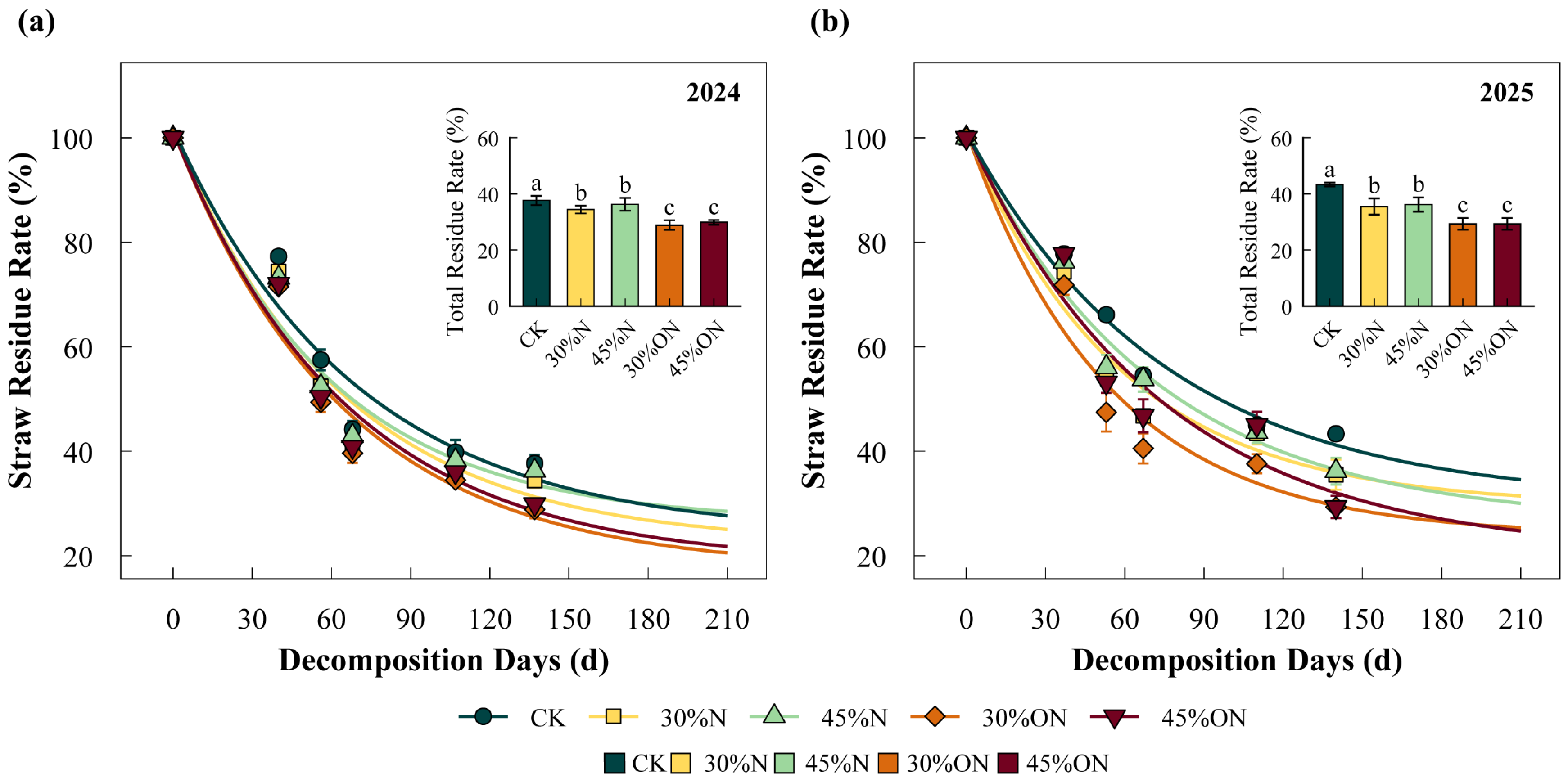
As shown in Figure 2, the dynamic changes in maize straw residue rate under various nitrogen fertilizer management modes exhibited distinct staged characteristics during the whole growth period in both 2024 and 2025. Across all treatments, the straw residue rates decreased rapidly during the early decomposition stage (0 to 60 days), and subsequently slowed down in the later stage (>60 days). Regarding the overall effects of nitrogen management treatments, all nitrogen management modes effectively accelerated straw decomposition compared to the unfertilized control (CK). One-way ANOVA conducted on the straw residue rates at the harvest stage revealed significant variations among the treatments (p < 0.05), with the organic substitution treatments exhibiting a superior promotion effect on straw decomposition compared to the pure chemical fertilizer modes.
Specifically, at the maize mature stage, the mineral N fertilizer treatments (30%N and 45%N) reduced the straw residue rates by 8.72% and 3.80% compared to CK, respectively. Notably, the 30%ON treatment exhibited the highest decomposition efficiency, which led to the maximum degree of decomposition and consequently resulted in the lowest current season straw residue rate at harvest. The two-year average residue rate of the 30%ON treatment was significantly lower than those of the 30%N, 45%N, and CK treatments by 16.76%, 19.68%, and 28.18%, respectively (p < 0.05), while it showed no significant difference compared to the 45%ON treatment.

3.1.2. Analysis of Straw Decomposition Kinetics Parameters

The straw residue dynamics were fitted through an exponential decay model. The results showed (Table 4) that the fitting degree of all treatments was high (R2 > 0.93). Nitrogen fertilizer management significantly changed the initial carbon-to-nitrogen ratio (C/N) of the system by adjusting the exogenous carbon and nitrogen inputs: mineral N fertilizer treatments (CK, 30%N, 45%N) reduced the initial C/N to between 12.28 and 23.34, while the organic fertilizer substitution treatments buffered the initial C/N to between 29.36 and 31.01 by introducing slow release organic carbon sources. Among all treatments, the 30%ON treatment had the best decomposition-promoting effect. Its decomposition rate constant (k) was significantly higher by 2.8% to 24.5% on average over two years compared to other treatments (30%N, 45%N, 45%ON, CK), the half-life T 1 / 2 was correspondingly shortened by 1.03 to 9.95 days, and the theoretical maximum decomposition percentage (a) increased by 1.3% to 12.5% (p < 0.05).

3.2. Characteristics of Straw Carbon, Nitrogen, Phosphorus, and Potassium Nutrient Release

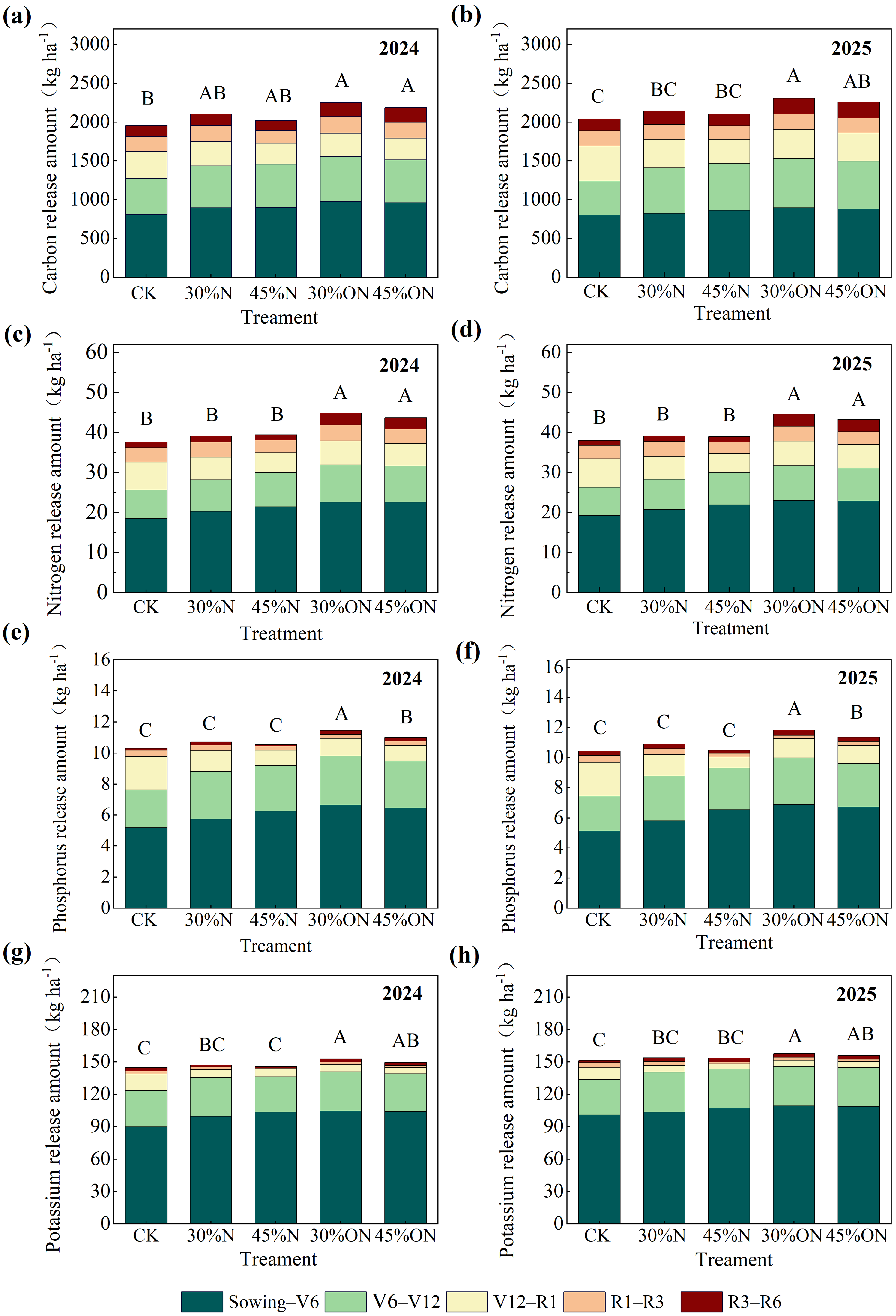
As shown in Figure 3, the study from 2024 to 2025 showed that the straw nutrient release rate followed the pattern of “K > P > C > N”, in which potassium was released the fastest (>95%), and the cumulative nutrient release amount showed the order of 30%ON > 45%ON > 30%N > 45%N > CK. The 30%ON treatment had the best release-promoting effect, and its C, N, P, and K release amounts were significantly increased by 4.8% to 18.1% and 3.1% to 14.1% compared to CK and 30%N, respectively (p < 0.05). The release dynamics showed a characteristic of being fast in the early stage (sowing to V12) and slowing down in the later stage. The nutrient release proportion in the early stage reached 65.8% to 93.4%, and the early release efficiency of 30%ON was significantly higher than that of other treatments (an increase of 0.9% to 31.4%). It is worth noting that the organic fertilizer substitution mode possessed significant long-term effectiveness. During the R3 to R6 stages, the C and N release amounts of 30%ON were significantly higher than those of CK and 30%N by 31.7% to 121.6% and 20.5% to 93.9%, respectively, effectively ensuring nutrient supply in the later growth stage.

3.3. Estimation of Straw Mineral Fertilizer Substitution Potential

The analysis of the potential of straw to substitute nitrogen, phosphorus, and potassium chemical fertilizers under different nitrogen fertilizer management modes is shown in Table 5. Under the straw returning level of 8334 kg ha−1, the theoretical substitution potentials for nitrogen, phosphorus (P2O5), and potassium (K2O) chemical fertilizers were 37.6 to 44.83, 23.59 to 27.07, and 174.46 to 190.08 kg ha−1, respectively. Among them, the 30%ON mode showed the most significant enhancement effect (p < 0.05). Its two-year average substitution potentials for nitrogen, phosphorus, and potassium fertilizers were significantly higher than CK by 6.87, 2.93, and 8.64 kg ha−1, respectively. From the perspective of time dynamics, straw nutrient substitution was mainly concentrated in the sowing to V12 stage. During this stage, the nitrogen, phosphorus, and potassium substitution amounts of 30%ON reached 31.85, 22.69, and 172.67 kg ha−1, respectively, significantly outperforming other treatments. Entering the R3 to R6 stages, this mode still substituted significantly more nitrogen fertilizer by 1.63 and 1.44 kg ha−1 compared to CK and 30%N, respectively. This fully reflects the outstanding advantage of 30%ON in ensuring the peak nutrient supply in the early stage, while taking into account the stable release of nitrogen in the later stage.

3.4. Dynamic Response of Soil Available Nutrients Under Straw Returning

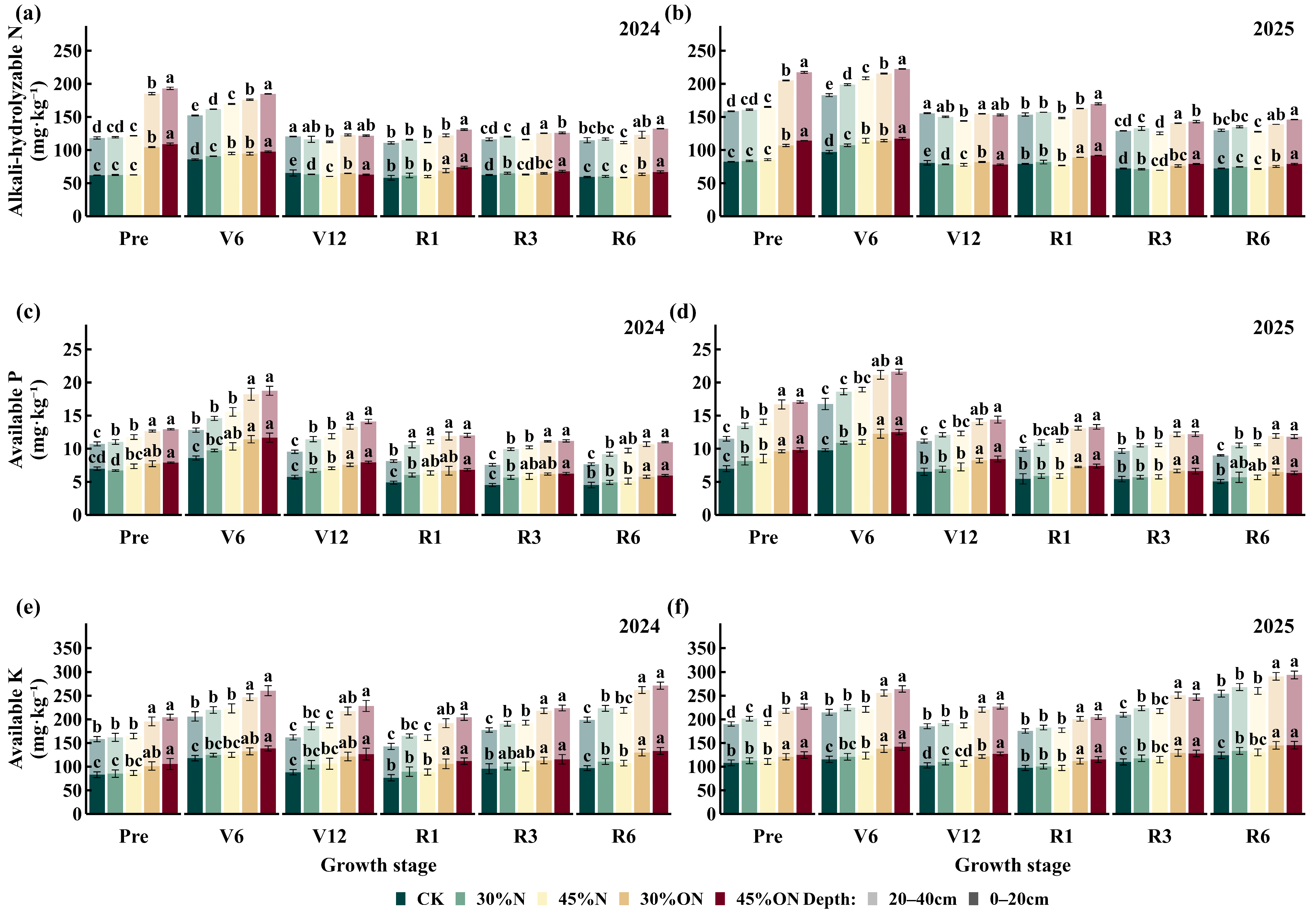
As shown in Figure 4, soil available nutrients exhibited clear temporal and spatial variation during maize growth from 2024 to 2025. Temporally, soil alkali-hydrolyzable nitrogen (AN) and available phosphorus (AP) reached their highest values at the V6 stage and then gradually declined and stabilized. Available potassium (AK) increased rapidly at the V6 stage, decreased during the middle growth period, and showed a rebound during the R3–R6 stages. Significant differences in soil nutrient contents were observed among nitrogen management treatments (p < 0.05). Overall, the organic substitution treatments (30%ON and 45%ON) were generally associated with higher AN, AP, and AK contents than the mineral N fertilizer treatments and CK. In the 0–20 cm soil layer, AN, AP, and AK contents under 30%ON and 45%ON were 6.7–11.4%, 29.1–31.6%, and 15.8–20.5% higher than those of CK, respectively. Soil available nutrient contents declined with increasing soil depth; however, nutrient levels in the 20–40 cm layer remained relatively higher under the organic substitution treatments than under the corresponding chemical fertilizer treatments with equivalent nitrogen inputs. At the R6 stage in 2025, AN, AP, and AK contents in the 20–40 cm soil layer under the organic substitution treatments were 5.1–19.4% higher than those under the mineral N fertilizer treatments. It should be noted that the higher AP and AK contents observed in the organic substitution treatments may reflect the combined influence of straw nutrient release and direct nutrient inputs from sheep manure.

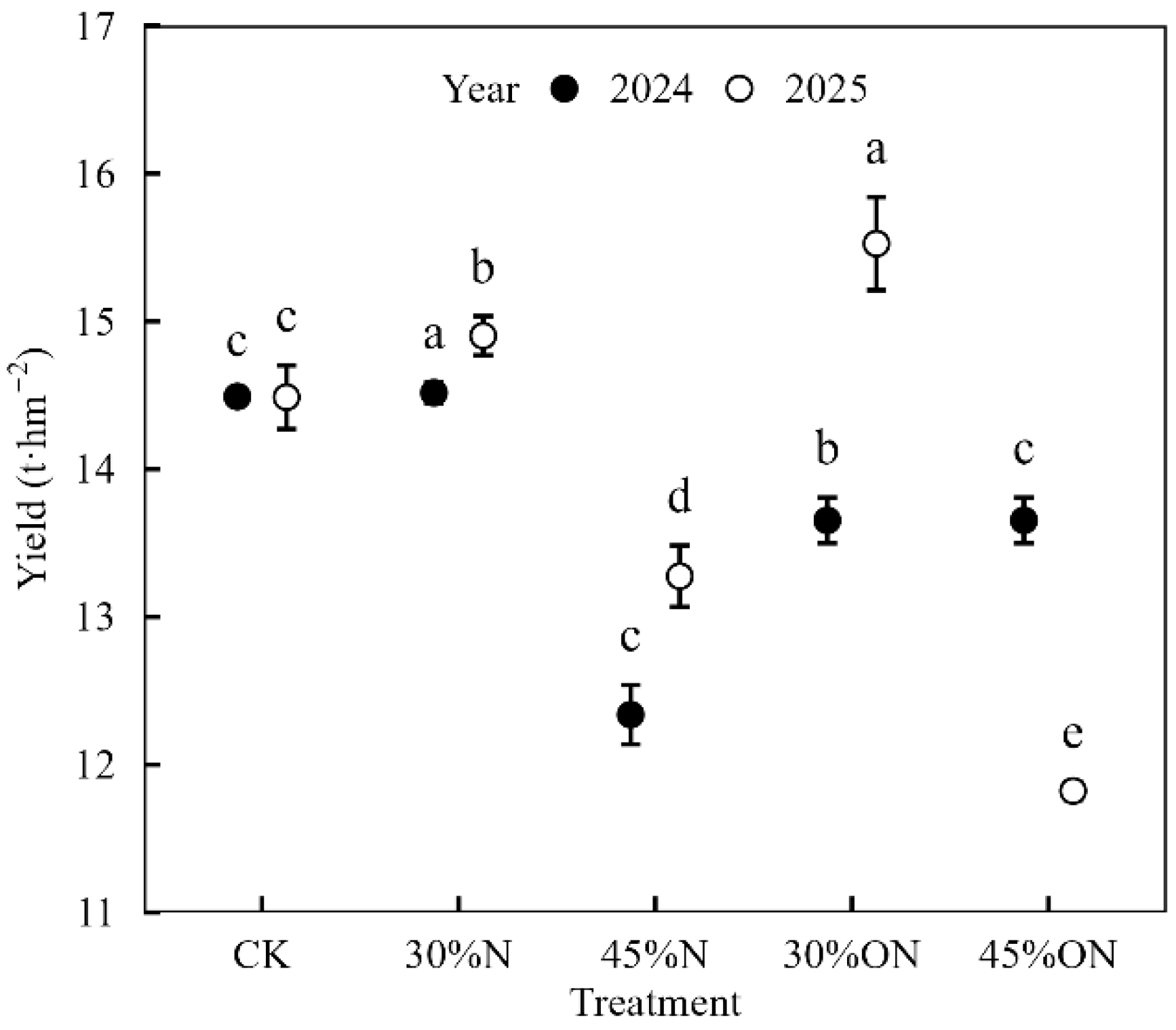
3.5. Yield

Different nitrogen fertilizer management modes had significant impacts on maize grain yield in 2024 and 2025 (p < 0.05, Figure 5). Two-way analysis of variance showed that treatment, year, and their interaction had significant effects on maize yield (p < 0.01). In 2024 (the first year of the experiment), the yield of 30%N was comparable to CK, while 45%N, 30%ON, and 45%ON significantly reduced the yield by 15.2%, 7.6%, and 13.8% compared to CK, respectively. By 2025, the yields of 30%N and 30%ON increased by 2.8% and 15.6%, respectively, compared to 2024; these yields were also significantly higher than that of the CK in the same year by 2.8% and 6.9%. However, treatments that increased the proportion of starter nitrogen fertilizer to 45% (45%N, 45%ON) still showed significant yield reductions of 8.3% and 18.6% compared to CK. This indicates that in the early stages of returning to the field, an excessively high proportion of organic substitution or starter fertilizer input easily leads to an imbalance in nutrient supply and demand. Overall, the 30%ON treatment achieved a leap from a significant yield reduction in the first year to a significant yield increase in the second year, reflecting the cumulative improvement effect of moderate organic and inorganic combined application on soil fertility under the background of continuous straw returning.

3.6. Correlation Analysis of Straw Nutrient Release with Soil Available Nutrients and Yield

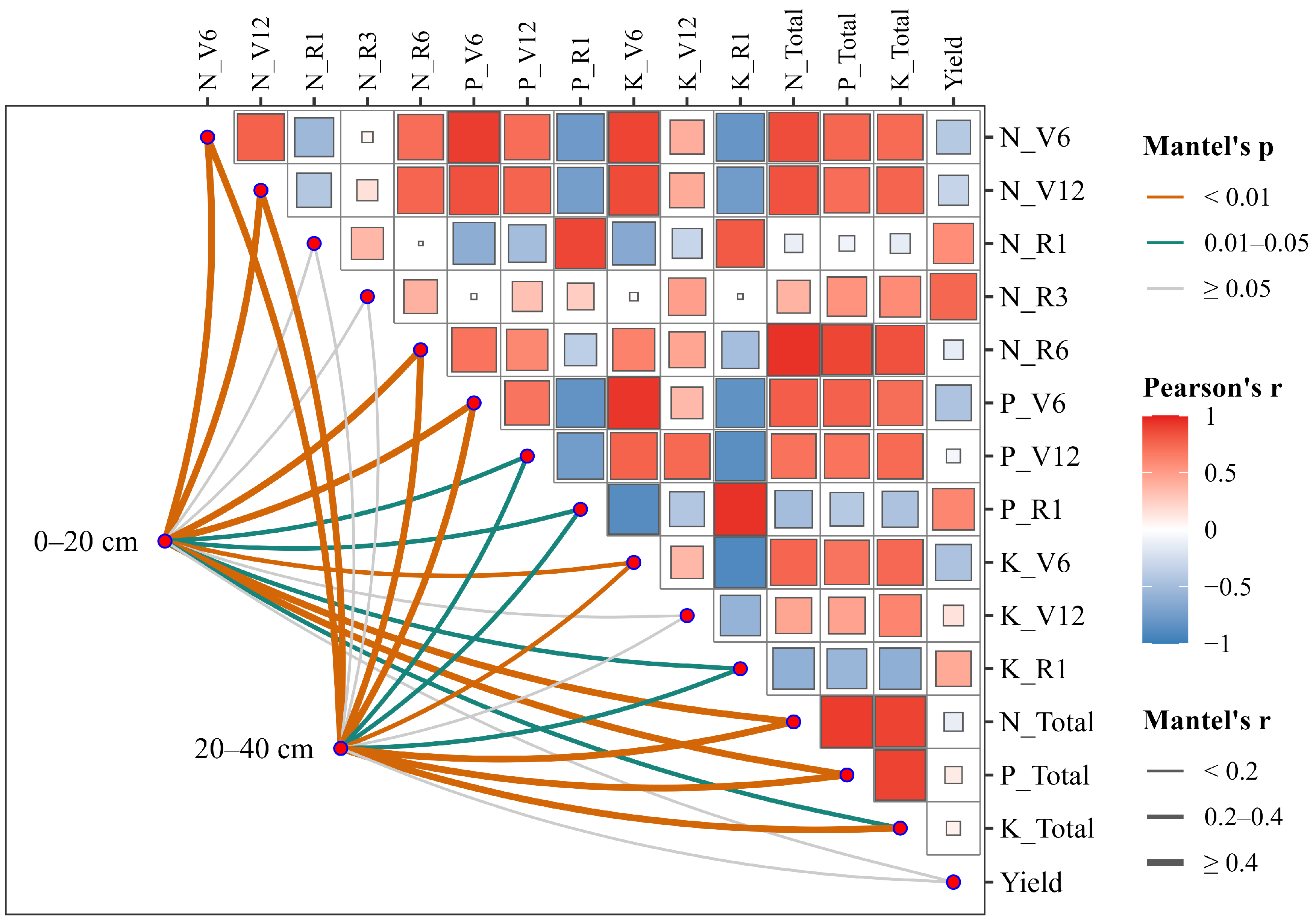
Pearson correlation analysis (Figure 6) showed that total straw nutrient release was significantly and positively correlated with nutrient release during the early growth stages (V6 and V12). Nitrogen exhibited the strongest correlations, with correlation coefficients of 0.91 and 0.77 between N_V6, N_V12, and N_Total, respectively, followed by phosphorus (0.81 and 0.71), whereas potassium showed relatively weaker correlations (0.68 and 0.58). These results indicate that nutrient release during the early decomposition stage was closely associated with cumulative nutrient release over the entire growing season. Mantel tests were conducted between straw nutrient release variables (N, P, and K release at different growth stages and cumulative release) and soil available nutrient variables (AN, AP, and AK) in the 0–20 cm and 20–40 cm soil layers. The results revealed significant associations between straw nutrient release and soil available nutrient dynamics in both soil layers (Figure 6). Overall, these associations were stronger in the 20–40 cm layer than in the 0–20 cm layer. In the surface soil, cumulative nitrogen release (N_Total) showed the strongest association with soil available nutrients (r = 0.635, p < 0.05). In the subsurface soil, the association between N_Total and soil available nutrients increased to r = 0.775 (p = 0.001), while cumulative phosphorus release (P_Total) also exhibited a strong association (r = 0.598, p = 0.001).
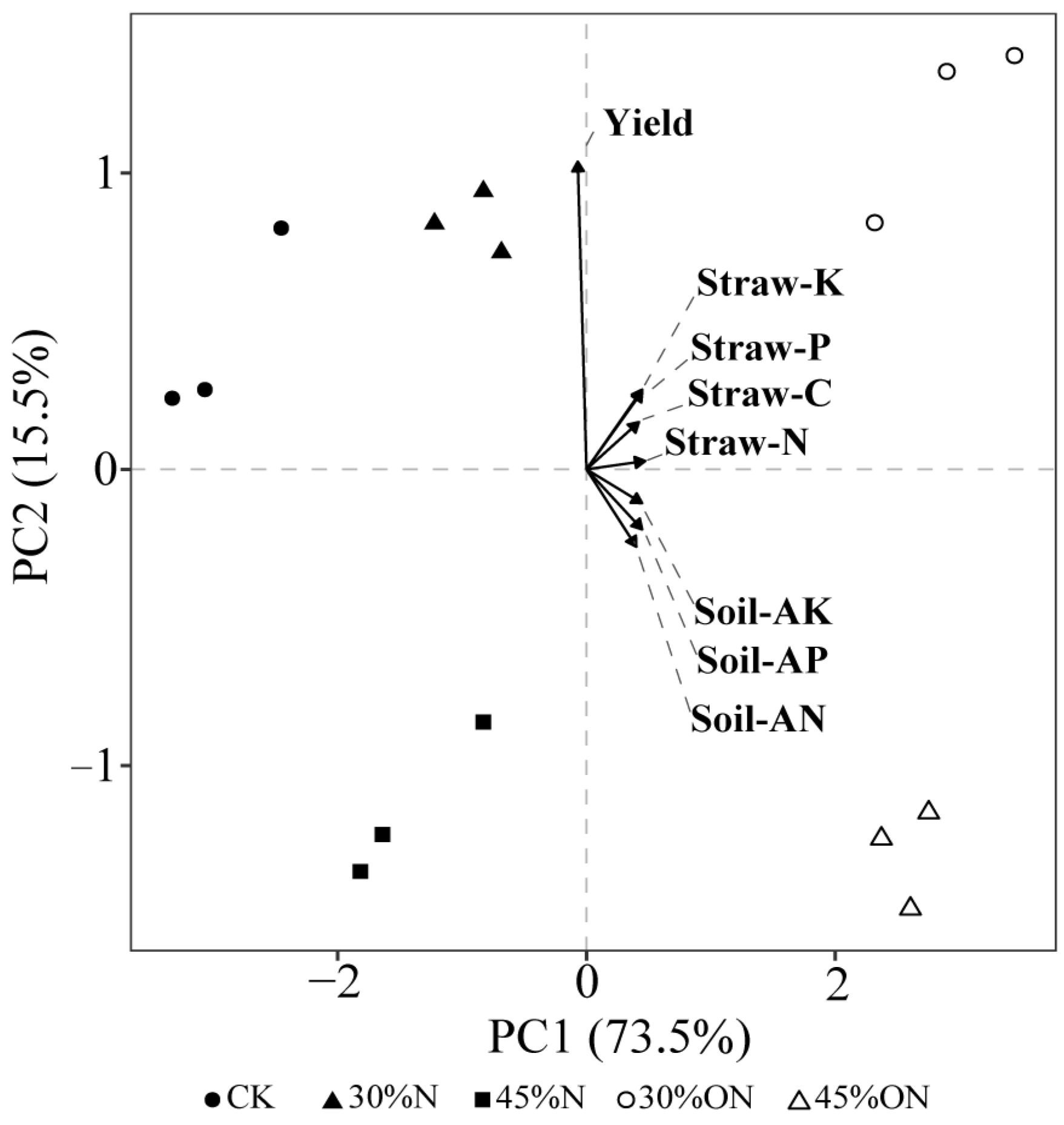
Principal component analysis (Figure 7) further illustrated the multivariate relationships among straw nutrient release, soil available nutrients, and maize yield. The first two principal components explained 89.02% of the total variation. Straw nutrient release indicators, soil available nutrient indicators, and yield vectors were distributed in similar directions with relatively small angles between them, indicating positive associations among these variables. Soil AN, AP, and AK were closely grouped in the positive direction of PC1, reflecting similar variation patterns among soil nutrient indicators. Nitrogen management treatments were clearly separated along the PC1 axis. CK was located in the negative direction of PC1 and was distant from most nutrient-related vectors, whereas the mineral N treatments (30%N and 45%N) occupied intermediate positions. The organic substitution treatments (30%ON and 45%ON) were distributed in the positive direction of PC1. Among them, 30%ON was positioned closest to the vectors representing straw nutrient release, soil available nutrients, and yield, indicating a stronger overall association among these variables under this treatment.

4. Discussion

4.1. Effects of Different Nitrogen Fertilizer Management Modes on the Decomposition Process of Returned Maize Straw Under Water and Fertilizer Integration

The cumulative weight loss rate of straw after returning to the field is an important indicator for measuring its decomposition degree [31]. This study shows that under all the different nitrogen fertilizer management modes, the maize straw decomposition process exhibited a typical characteristic of being rapid in the early stage, and then slowing down and stabilizing in the later stage. This observation is consistent with the findings of He et al. [32], who utilized the nylon net bag method to investigate corn straw decomposition under varying organic fertilizer substitution rates and reported a similar kinetic pattern. The main reason is that in the early stage of decomposition, the straw is rich in soluble organic matter such as polysaccharides and amino acids, which provide easily usable carbon sources for microbes, significantly stimulating their activity and accelerating decomposition. However, as decomposition progresses, recalcitrant components such as lignin and cellulose-lignin complexes gradually accumulate. Their complex structures limit microbial utilization efficiency, thereby leading to a decline in the decomposition rate [33].
Different nitrogen fertilizer management modes significantly affect straw decomposition efficiency by regulating exogenous carbon and nitrogen inputs. The results show that increasing the proportion of starter nitrogen fertilizer and substituting with organic fertilizer can both significantly promote straw decomposition under drip irrigation conditions. The straw residue rates of the 30%N and 30%ON treatments were reduced by 13.72% and 28.17% compared to the control, respectively. The fitting results of the exponential decay model (R2 > 0.93) indicated that nitrogen application significantly accelerated the straw decomposition process. By reducing the initial C/N of the system, the pure mineral N fertilizer treatment exhibited a higher decomposition rate in the early decomposition stage [33]. Conversely, by introducing a slow release carbon source and optimizing the C/N (the C/N for 30%ON was 31.01), the organic fertilizer substitution treatment provided a continuous substrate source for microbes, thereby significantly increasing the theoretical maximum decomposition rate. Its decomposition rate constant (k) and maximum decomposition rate (a) increased by 9.49% and 8.14% compared to conventional fertilization, respectively. This aligns with Li et al. [34], who emphasized that maintaining an appropriate substrate C/N ratio (20 to 30) is fundamental for stimulating microbial metabolic activity and enhancing residue turnover.
Furthermore, organic fertilizer amendments increase dissolved organic carbon (DOC) and introduce exogenous microbial communities. As reviewed by Angst et al. [35], microbial-derived compounds play a pivotal role in the molecular stabilization and transformation of soil organic matter; such organic inputs effectively prime the secretion of extracellular enzymes. Coupled with the insights from Coban et al. [36], who identified soil microbiota as “game-changers” in nutrient cycling and the restoration of soil functioning, our results suggest that the synergistic interaction between exogenous inputs and revitalized microbial communities triggers a “positive priming effect”, which further accelerates the degradation of recalcitrant straw fractions.

4.2. Effects of Different Nitrogen Fertilizer Management Modes on Straw Nutrient Release and Soil Staged Nutrients Under Water and Fertilizer Integration

The release sequence of straw nutrients is usually potassium > phosphorus > carbon > nitrogen [37], and the results of this study are consistent with this. Potassium exists in an ionic state and is highly soluble in water, releasing the fastest [38]. A high proportion of phosphorus exists in inorganic forms, releasing faster, while organic phosphorus releases slower [39]. Carbon release is dually controlled by the degradation of soluble components and structural carbon [40]. Nitrogen mostly exists in organically bound forms and needs to be released through microbial mineralization, making its overall release the slowest [41].
Different nitrogen fertilizer management modes significantly regulated straw nutrient release, with the cumulative release amount showing the pattern of 30%ON > 45%ON > 30%N > 45%N > CK. During the early growth stage (sowing to V12), all treatments significantly promoted nutrient release, with the 30%ON treatment showing the largest enhancement margin (4.84% to 18.15%). Several mechanisms may explain this observation: organic fertilizer provides an active carbon source that promotes microbial extracellular enzyme secretion [42], and inorganic nitrogen rapidly replenishes nitrogen and stimulates microbial activity. The two work synergistically to produce a “priming effect”, accelerating the mineralization and release of straw nutrients [43]. Additionally, nitrogen input promotes the release of phosphorus in the form of phosphate, and combined organic and inorganic application helps convert available phosphorus to slow release forms [39]. Potassium release is primarily controlled by the destruction of straw structure, so it is highly synchronous with the decomposition process [44].
Straw nutrient release was significantly associated with soil available nutrient dynamics. Soil alkali-hydrolyzable nitrogen (AN) and available phosphorus (AP) in the 0 to 40 cm soil layer peaked at the V6 stage and then rapidly declined and stabilized, showing a single peak change. This pattern coincided with rapid nutrient release from decomposing straw and high crop nutrient demand during the early growth stage. Available potassium (AK) rose at the V6 stage and rebounded in the later growth stages, which might be related to the reduced absorption demand of crops [45]. Moreover, straw decomposition products may improve soil physical and chemical properties by promoting soil aggregate formation, which is often associated with enhanced soil nutrient retention and nutrient supply capacity [46,47].
Among all treatments, 30%ON was associated with the highest AN, AP, and AK contents. This pattern may be related to the ability of organic amendments to increase phosphatase activity, promote organic phosphorus mineralization, and enhance soil nutrient retention capacity, as reported in previous studies [48]. Long-term studies have shown that the combined application of organic and inorganic fertilizers is often associated with higher soil available nutrient levels than sole mineral N fertilization [20]. From a temporal perspective, the 30%ON treatment was associated with greater straw nutrient release during the early decomposition stage and relatively higher soil available nutrient levels throughout the growing season. From a spatial perspective, improvements in soil nutrient status were observed in both the 0–20 cm and 20–40 cm soil layers. It should be noted that the higher AP and AK contents observed under the organic substitution treatments may reflect both enhanced nutrient release from decomposing straw and direct nutrient inputs from sheep manure [49]. Taken together, these results suggest that moderate organic substitution (30%ON) may contribute to maintaining soil nutrient supply and nutrient accumulation under full straw returning conditions.

4.3. Effects of Different Nitrogen Fertilizer Management Modes on Maize Yield Under Straw Returning and Suggestions for Optimizing Farmland Nutrient Management

Crop yield is a comprehensive reflection of soil productivity. This study shows that different nitrogen fertilizer management modes significantly affected maize yield and its interannual variation by regulating straw decomposition and nutrient release. The 30%ON treatment transitioned from a yield reduction in the first year to a significant yield increase in the following year (a 13.71% increase compared to 2024), and it was significantly higher than other treatments in 2025, demonstrating an obvious cumulative effect. Conversely, the 45%N and 45%ON treatments experienced yield reductions for two consecutive years. This indicates that excessively high nitrogen inputs or organic substitution ratios might cause an early growth imbalance and insufficient nutrient supply in later stages, thereby inhibiting yield formation [50].
Previous studies have shown that the amount of straw mulching and deep plowing must reach over 7500 kg ha−1 to maintain the soil nitrogen budget balance [51]. The full quantity straw returning in this study provided a solid material foundation for nutrient substitution. In terms of potassium, straw has huge potassium substitution potential. Returning it to the field can directly and substantially reduce the demand for chemical potassium fertilizer inputs [39]. However, the phosphorus substitution potential of straw is relatively limited. Therefore, in the straw returning system, it is still necessary to supplement an appropriate amount of chemical phosphorus fertilizer based on the soil’s phosphorus supply capacity. This prevents the crop from facing phosphorus stress during the middle and late growth stages or causing soil phosphorus pool depletion [52].
In summary, scientific fertilization management under straw returning should be developed according to regional ecological conditions. For spring maize production in the West Liaohe Plain, substituting 30% of mineral N fertilizer with organic fertilizer was associated with greater straw decomposition, higher nutrient release, increased soil available nutrient levels, and improved yield performance compared with the other tested treatments. These findings provide useful information for optimizing nitrogen management and improving straw resource utilization in this region.

5. Conclusions

This study evaluated the effects of increasing starter N application and partially substituting mineral N fertilizer with organic fertilizer under the same total N input on straw decomposition, nutrient release, soil available nutrient dynamics, and maize yield under shallow buried drip fertigation and full straw incorporation in the West Liaohe Plain. The results showed that both increasing the proportion of starter N and organic fertilizer substitution enhanced straw decomposition, nutrient release, and the mineral fertilizer substitution potential estimated from straw nutrient release compared with conventional N management. Among all treatments, 30%ON exhibited the highest straw decomposition rate, nutrient release, and fertilizer substitution potential, and was generally associated with higher soil available nutrient contents throughout the growing season and greater nutrient accumulation in the 20–40 cm soil layer. Although its yield advantage was not evident in the first experimental year, 30%ON significantly increased maize yield in the second year. Overall, substituting 30% of mineral N fertilizer with organic fertilizer represented the most balanced management strategy under the tested conditions, supporting efficient straw nutrient recycling, maintaining relatively high soil available nutrient levels, and sustaining favorable maize yield performance. These findings provide theoretical support for optimizing nitrogen management and improving the efficient utilization of straw resources in the West Liaohe Plain.

Supplementary Materials

The following supporting information can be downloaded at: https://www.mdpi.com/article/10.3390/agronomy16121147/s1. Table S1. Stage release amounts and statistical significance of straw carbon, nitrogen, phosphorus, and potassium under different nitrogen fertilizer management modes in 2024. Table S2. Stage release amounts and statistical significance of straw carbon, nitrogen, phosphorus, and potassium under different nitrogen fertilizer management modes in 2025.

Author Contributions

Conceptualization, Y.C., Z.W. (Zhigang Wang), L.B. and Z.C.; data curation, Y.W., H.L. and L.S.; formal analysis, Y.C., Z.W. (Zhigang Wang), L.B., H.L. and L.S.; funding acquisition, Z.W. (Zhigang Wang); investigation, Y.C., Z.W. (Zhigang Wang), R.G., T.C., S.C. and L.S.; methodology, Y.C., Z.W. (Zhigang Wang), Z.C., L.B., F.W., Y.W., Z.W. (Zhen Wang) and H.L.; project administration, Z.W. (Zhigang Wang), L.B. and L.S.; resources, Z.W. (Zhigang Wang); software, Y.C. and R.G.; supervision, Z.W. (Zhigang Wang), L.B., F.W. and L.S.; validation, Y.C., Z.W. (Zhigang Wang), F.W., Z.C., R.G. and H.L.; visualization, Y.C.; writing—original draft, Y.C. and L.B.; writing—review and editing, Y.C., Z.W. (Zhigang Wang), L.B., Z.C., R.G., T.C., S.C., F.W., Y.W., Z.W. (Zhen Wang), H.L. and L.S. All authors have read and agreed to the published version of the manuscript.

Funding

This research was funded by the National Natural Science Foundation of China (No. 32460534); the Natural Science Foundation of Inner Mongolia Autonomous Region (No. 2024JQ09 and No. 2024QN03008); the National Key Research and Development Program of China (No. 2022YFD1500902); the Science and Technology Plan Project of Inner Mongolia Autonomous Region (No. 2025YFDZ0067); the High-level Talent Introduction and Research Startup Project of Inner Mongolia Agricultural University (No. NDYB2022-10); and the Fundamental Research Funds for Universities Directly Under the Inner Mongolia Autonomous Region (No. BR251305).

Data Availability Statement

The data presented in this study are available upon request from the corresponding author.

Acknowledgments

During the preparation of this manuscript, the authors used ChatGPT (OpenAI) for English language editing and polishing. The authors have reviewed and edited the output and take full responsibility for the content of this publication.

Conflicts of Interest

The authors declare no conflicts of interest.

References

  1. National Bureau of Statistics of China. China Statistical Yearbook; China Statistics Press: Beijing, China, 2023. (In Chinese) [Google Scholar]
  2. Zhao, J.; Feng, Z.; Bao, H.; Qiao, Z.; Li, X. Analysis of the grain-saving capacity of main crop straws for feed in Inner Mongolia. Cereals Oils Feed Technol. 2024, 7, 122–125. (In Chinese) [Google Scholar]
  3. Shao, J.; Gao, C.; Afi Seglah, P.; Xie, J.; Zhao, L.; Bi, Y.; Wang, Y. Analysis of the available straw nutrient resources and substitution of chemical fertilizers with straw returned directly to the field in China. Agriculture 2023, 13, 1187. [Google Scholar] [CrossRef]
  4. Li, S.; Hu, M.; Shi, J.; Tian, X. Improving long-term crop productivity and soil quality through integrated straw-return and tillage strategies. Agron. J. 2022, 114, 1500–1511. [Google Scholar] [CrossRef]
  5. Xi, H.; Jia, M.; Kuzyakov, Y.; Peng, Z.; Zhang, Y.; Han, J.; Ali, G.; Mao, L.; Zhang, J.; Fan, T. Key decomposers of straw depending on tillage and fertilization. Agric. Ecosyst. Environ. 2023, 358, 108717. [Google Scholar] [CrossRef]
  6. Bian, H.; Li, C.; Zhu, J.; Xu, L.; Li, M.; Zheng, S.; He, N. Soil Moisture Affects the Rapid Response of Microbes to Labile Organic C Addition. Front. Ecol. Evol. 2022, 10, 857185. [Google Scholar] [CrossRef]
  7. Eagle, A.; Bird, J.; Horwath, W.; Linquist, B.; Brouder, S.; Hill, J.; Kessel, C. Rice Yield and Nitrogen Utilization Efficiency under Alternative Straw Management Practices. Agron. J. 2000, 92, 1096–1103. [Google Scholar] [CrossRef]
  8. Tian, P.; Wu, M.; Gao, M.; Sui, P.; Mei, N.; Qi, H.; Wu, Z. Tillage Combined with Straw Return Optimizes Soil Nutrients by Regulating Soil Microbial Properties in Northeast China. Plants 2026, 15, 1037. [Google Scholar] [CrossRef] [PubMed]
  9. Li, C.; Aluko, O.O.; Yuan, G.; Li, J.; Liu, H. The responses of soil organic carbon and total nitrogen to chemical nitrogen fertilizers reduction base on a meta-analysis. Sci. Rep. 2022, 12, 16326. [Google Scholar] [CrossRef]
  10. Li, B.; Yang, H.; Fan, X.; Ge, X.; Li, Y.; Zheng, W.; Wang, Y.; Zhang, R. Effects of straw incorporation and irrigation quota on photosynthetic capacity and grain yield of maize under shallow buried drip irrigation. J. Inn. Mong. Univ. Natl. (Nat. Sci. Ed.) 2023, 38, 56–61. (In Chinese) [Google Scholar] [CrossRef]
  11. Bossolani, J.W.; Leite, M.F.A.; Momesso, L.; ten Berge, H.; Bloem, J.; Kuramae, E.E. Nitrogen input on organic amendments alters the pattern of soil–microbe-plant co-dependence. Sci. Total Environ. 2023, 890, 164347. [Google Scholar] [CrossRef]
  12. Gao, F.; Li, B.; Ren, B.; Zhao, B.; Liu, P.; Zhang, J. Achieve simultaneous increase in straw resources efficiency and nitrogen efficiency under crop yield stabilization—A case study of NCP in China for up to 8 years. Field Crops Res. 2022, 278, 108431. [Google Scholar] [CrossRef]
  13. Guo, T.; Wang, M.; Chen, Y.; Yue, K.; Ma, L.; Huang, S.; Xu, X.; Song, X.; Su, S.; Zhang, Z. Nitrogen addition accelerated straw in-situ decomposition by promoting specific microbial taxa growth and straw decomposing enzyme activities. Front. Plant Sci. 2025, 16, 1703916. [Google Scholar] [CrossRef] [PubMed]
  14. Luo, G.; Li, L.; Friman, V.-P.; Guo, J.; Guo, S.; Shen, Q.; Ling, N. Organic amendments increase crop yields by improving microbe-mediated soil functioning of agroecosystems: A meta-analysis. Soil Biol. Biochem. 2018, 124, 105–115. [Google Scholar] [CrossRef]
  15. Ju, J.; Cai, Y.; Zuo, W.; Hai-Tao, Z.; Yang, H.; Mao, W.; Yu-Hua, S.; Ke, F. Effects of Nitrogen Management on Soil Nitrogen Content and Rice Grain Yield in Double Cropping Rice Production Area with Continuous Full Amount of Straw Returning. Commun. Soil Sci. Plant Anal. 2019, 50, 2655–2668. [Google Scholar] [CrossRef]
  16. Liu, B.; Xia, H.; Jiang, C.; Riaz, M.; Yang, L.; Chen, Y.; Fan, X.; Xia, X. 14 year applications of chemical fertilizers and crop straw effects on soil labile organic carbon fractions, enzyme activities and microbial community in rice-wheat rotation of middle China. Sci. Total Environ. 2022, 841, 156608. [Google Scholar] [CrossRef]
  17. Tian, Z.; Ge, Y.; Zhu, Q.; Yu, J.; Zhou, Q.; Cai, J.; Jiang, D.; Cao, W.; Dai, T. Soil nitrogen balance and nitrogen utilization of winter wheat affected by straw management and nitrogen application in the Yangtze river basin of China. Arch. Agron. Soil Sci. 2018, 65, 1–15. [Google Scholar] [CrossRef]
  18. Truong, T.H.H.; Marschner, P. Plant Growth and Nutrient Uptake in Soil Amended with Mixes of Organic Materials Differing in C/N Ratio and Decomposition Stage. J. Soil Sci. Plant Nutr. 2019, 19, 512–523. [Google Scholar] [CrossRef]
  19. Zhai, L.; Xu, P.; Zhang, Z.; Wei, B.; Jia, X.; Zhang, L. Improvements in Grain Yield and Nitrogen Use Efficiency of Summer Maize by Optimizing Tillage Practice and Nitrogen Application Rate. Agron. J. 2019, 111, 666–676. [Google Scholar] [CrossRef]
  20. Ji, B.; Hu, H.; Zhao, Y.; Mu, X.; Liu, K.; Li, C. Effects of deep tillage and straw returning on soil microorganism and enzyme activities. Sci. World J. 2014, 2014, 451493. [Google Scholar] [CrossRef] [PubMed]
  21. Zhao, K.; Huang, M.; Li, Y.; Wu, J.; Tian, W.; Li, J.; Hou, Y.; Wu, S.; Zhang, J.; Zhang, Z. Combined organic fertilizer and straw return enhanced summer maize productivity and optimized soil nitrate–N distribution in rainfed summer maize–winter wheat rotation on the Southeast Loess Plateau. J. Soil Sci. Plant Nutr. 2023, 23, 938–952. [Google Scholar] [CrossRef]
  22. Mei, Y.; Feng, Y.; Feng, T.; Wang, W.; Sun, B. Yield and benefit analysis of water-saving maize planting mode under shallow buried drip irrigation. Maize Sci. 2018, 26, 98–102. (In Chinese) [Google Scholar] [CrossRef]
  23. Geng, Y.; Cao, G.; Wang, L.; Wang, M.; Huang, J. Can drip irrigation under mulch be replaced with shallow-buried drip irrigation in spring maize production systems in semiarid areas of northern China? J. Sci. Food Agric. 2021, 101, 1926–1934. [Google Scholar] [CrossRef] [PubMed]
  24. Liu, Y.; Yin, G.; Wang, W.; Ma, N.; Li, H.; Gu, J.; Sun, S. Shallow buried drip irrigation with water regulation enhances maize yield, water productivity, and partial factor productivity of nitrogen fertilizer. Agric. Water Manag. 2026, 328, 110299. [Google Scholar] [CrossRef]
  25. Zhou, Y.; Bao, R.; Yan, H.; Zhang, C.; Zheng, H.; Wu, J.; Zhang, J.; Wang, G.; Tian, D.; Xue, R.; et al. Optimization of shallow buried drip irrigation and nitrogen management for spring maize in the sandy land of Northwest China. Field Crops Res. 2025, 333, 110056. [Google Scholar] [CrossRef]
  26. Liu, Z.; Yu, N.; Camberato, J.J.; Gao, J.; Liu, P.; Zhao, B.; Zhang, J. Crop production kept stable and sustainable with the decrease of nitrogen rate in North China Plain: An economic and environmental assessment over 8 years. Sci. Rep. 2019, 9, 19335. [Google Scholar] [CrossRef]
  27. Wang, X.; Jia, Z.; Liang, L.; Zhao, Y.; Yang, B.; Ding, R.; Wang, J.; Nie, J. Changes in soil characteristics and maize yield under straw returning system in dryland farming. Field Crops Res. 2018, 218, 11–17. [Google Scholar] [CrossRef]
  28. Bao, S. Soil Agrochemical Analysis; China Agriculture Press: Beijing, China, 2000. (In Chinese) [Google Scholar]
  29. Keuskamp, J.A.; Dingemans, B.J.J.; Lehtinen, T.; Sarneel, J.M.; Hefting, M.M. Tea Bag Index: A novel approach to collect uniform decomposition data across ecosystems. Methods Ecol. Evol. 2013, 4, 1070–1075. [Google Scholar] [CrossRef]
  30. Liu, X.; Yuan, J.; Liang, Y.; Liu, J.; Ren, J.; Gao, Q.; Feng, G.; Cai, H. Effects of Returning Methods on Maize Straw Decomposition Characteristics and Fertilizer Reduction Potential. J. Agric. Resour. Environ. 2025, 42, 404–411. [Google Scholar] [CrossRef]
  31. Cai, L.; Zhao, G.; Liu, J.; Gai, Z.; Du, J.; Guo, Z.; Zhang, J. Decomposition characteristics of different maize straw parts and influencing factors. Maize Sci. 2019, 27, 113–119. (In Chinese) [Google Scholar] [CrossRef]
  32. He, H.; Zhang, Y.; Wei, C.; Li, J. Characteristics of decomposition and nutrient release of corn straw under different organic fertilizer replacement rates. Appl. Ecol. Environ. Res. 2019, 17, 13455–13472. [Google Scholar] [CrossRef]
  33. Guo, T.; Zhang, Q.; Ai, C.; Liang, G.; He, P.; Zhou, W. Nitrogen enrichment regulates straw decomposition and its associated microbial community in a double-rice cropping system. Sci. Rep. 2018, 8, 1847. [Google Scholar] [CrossRef]
  34. Li, X.; Han, S.; Lei, Z.; Wu, J.; Shi, Z.; Sun, Z.; Li, M.; Wang, H.; Tang, S.; Cheng, W. Effects of nitrogen forms on decomposition and nutrient release of rapeseed straw. Chin. J. Eco-Agric. 2019, 27, 717–725. [Google Scholar] [CrossRef]
  35. Angst, G.; Mueller, K.E.; Nierop, K.G.; Simpson, M.J. Plant-or microbial-derived? A review on the molecular composition of stabilized soil organic matter. Soil Biol. Biochem. 2021, 156, 108189. [Google Scholar] [CrossRef]
  36. Coban, O.; De Deyn, G.B.; van der Ploeg, M. Soil microbiota as game-changers in restoration of degraded lands. Science 2022, 375, abe0725. [Google Scholar] [CrossRef] [PubMed]
  37. Sun, L.; Sun, Z.; Hu, J.; Yaa, O.-K.; Wu, J. Decomposition characteristics, nutrient release, and structural changes of maize straw in dryland farming under combined application of animal manure. Sustainability 2021, 13, 7609. [Google Scholar] [CrossRef]
  38. Dong, S.; Ma, Z.; Wang, L.; Yan, C.; Liu, L.; Gong, Z.; Cui, G. Decomposition and Nutrient Release Characteristics of Incorporated Soybean and Maize Straw in Northeast China. Ekoloji Derg. 2019, 28, 2119–2129. [Google Scholar] [CrossRef]
  39. Tang, X.; Zhou, Y.; Wu, R.; Wu, K.; Zhao, H.; Wang, W.; Zhang, Y.; Huang, R.; Wu, Y.; Li, B. Long-term straw returning enhances phosphorus uptake by Zea mays L. through mediating microbial biomass phosphorus turnover and root functional traits. Plants 2024, 13, 2389. [Google Scholar] [CrossRef]
  40. Fioretto, A.; Di Nardo, C.; Papa, S.; Fuggi, A. Lignin and cellulose degradation and nitrogen dynamics during decomposition of three leaf litter species in a Mediterranean ecosystem. Soil Biol. Biochem. 2005, 37, 1083–1091. [Google Scholar] [CrossRef]
  41. Yan, C.; Yan, S.-S.; Jia, T.-Y.; Dong, S.-K.; Ma, C.-M.; Gong, Z.-P. Decomposition characteristics of rice straw returned to the soil in northeast China. Nutr. Cycl. Agroecosyst. 2019, 114, 211–224. [Google Scholar] [CrossRef]
  42. Abay, P.; Gong, L.; Luo, Y.; Zhu, H.; Ding, Z. Soil extracellular enzyme stoichiometry reveals the nutrient limitations in soil microbial metabolism under different carbon input manipulations. Sci. Total Environ. 2024, 913, 169793. [Google Scholar] [CrossRef]
  43. Huang, S.; Gao, X.; Zeng, L.; Zhang, M.; Zhang, L.; Wang, S.; Zhao, Y.; Zhou, W.; Ai, C. Microbial role in enhancing transfer of straw-derived nitrogen to wheat under nitrogen fertilization. Soil Tillage Res. 2024, 239, 106037. [Google Scholar] [CrossRef]
  44. Zhang, Y.; Ju, S.; Wang, W.; Wu, F.; Pan, K. Effects of decomposed and undecomposed straw of three crops on clubroot disease of Chinese cabbage and soil nutrients. Sci. Rep. 2024, 14, 22990. [Google Scholar] [CrossRef]
  45. Demiss, M.; Beyene, S.; Kidanu, S. Biomass accumulation and potassium concentrations in tissue of Teff (Eragrostis tef Zucc. Trotter) at three growth stages in Vertisols and Nitisols of the Central Highlands of Ethiopia. Afr. J. Agric. Res. 2019, 14, 345–353. Available online: https://academicjournals.org/journal/AJAR/article-full-text/B2C30D260194 (accessed on 1 June 2026).
  46. Wang, Y.; Pang, J.; Zhang, M.; Tian, Z.; Wei, T.; Jia, Z.; Ren, X.; Zhang, P. Is adding biochar be better than crop straw for improving soil aggregates stability and organic carbon contents in film mulched fields in semiarid regions?–Evidence of 5-year field experiment. J. Environ. Manag. 2023, 338, 117711. [Google Scholar] [CrossRef]
  47. Zhu, C.; Zhong, W.; Han, C.; Deng, H.; Jiang, Y. Driving factors of soil organic carbon sequestration under straw returning across China’s uplands. J. Environ. Manag. 2023, 335, 117590. [Google Scholar] [CrossRef]
  48. Tian, S.; Pan, M.; Lv, X.; Cui, X.; Zhang, S.; Liu, X. Effects of combined application of organic and inorganic fertilizers on soil properties, wheat growth and nutrient uptake. Jiangsu Agric. Sci. 2023, 51, 102–107. (In Chinese) [Google Scholar] [CrossRef]
  49. Lu, W.; Hao, Z.; Ma, X.; Gao, J.; Fan, X.; Guo, J.; Li, J.; Lin, M.; Zhou, Y. Effects of Different Proportions of Organic Fertilizer Replacing Chemical Fertilizer on Soil Nutrients and Fertilizer Utilization in Gray Desert Soil. Agronomy 2024, 14, 228. [Google Scholar] [CrossRef]
  50. Wang, X.; Wang, X.; Sheng, H.; Wang, X.; Zhao, H.; Feng, K. Excessive Nitrogen Fertilizer Application Causes Rapid Degradation of Greenhouse Soil in China. Pol. J. Environ. Stud. 2022, 31, 1527–1534. [Google Scholar] [CrossRef]
  51. Yan, Y.; Song, Q.; Yan, C.; Liu, S.; Zhang, Y.; Tian, J.; Deng, Y.; Ma, C. Nitrogen accumulation and fertilizer substitution effect of maize under continuous straw returning. Acta Agron. Sin. 2022, 48, 962–974. (In Chinese) [Google Scholar] [CrossRef]
  52. Wang, K.; Ren, T.; Cong, R.; Lu, Z.; Li, X.; Lu, J. Reduction of chemical phosphate fertilizer application in a rice–rapeseed cropping system through continuous straw return. Field Crops Res. 2024, 312, 109399. [Google Scholar] [CrossRef]
Figure 1. Daily average temperature and rainfall during the maize growth period at the experimental site from 2024 to 2025.
Agronomy 16 01147 g001
Figure 2. Dynamic changes in maize straw residue rate under different nitrogen fertilizer management modes in 2024 (a) and 2025 (b). Points in the figure represent the mean values of three parallel replicates for each treatment at each sampling time; the curves are fitted based on the exponential decay model R ( t ) = a e k t + b . The inset bar plots show the straw residue rates of the five treatments at the harvest stage (137 d for 2024 and 140 d for 2025). Different lowercase letters in the inset indicate significant differences among treatments based on one-way ANOVA followed by Duncan’s post hoc test (p < 0.05).
Agronomy 16 01147 g002
Figure 3. Stage release amounts and cumulative release amounts of straw carbon (a,b), nitrogen (c,d), phosphorus (e,f), and potassium (g,h) under different nitrogen fertilizer management modes (2024 to 2025). Different uppercase letters marked on the top of the column clusters indicate significant differences in the total cumulative release amounts among treatments based on one-way ANOVA followed by Duncan’s post hoc test (p < 0.05). Detailed data for each decomposition stage are provided in the Supplementary Materials (Tables S1 and S2).
Agronomy 16 01147 g003
Figure 4. Changes in soil alkali-hydrolyzable nitrogen, available phosphorus, and available potassium contents in the 0–20 cm and 20–40 cm soil layers under different nitrogen management modes (2024–2025). (a) Soil alkali-hydrolyzable nitrogen content in 2024; (b) Soil alkali-hydrolyzable nitrogen content in 2025; (c) Soil available phosphorus content in 2024; (d) Soil available phosphorus content in 2025; (e) Soil available potassium content in 2024; (f) Soil available potassium content in 2025. Different lowercase letters indicate significant differences among treatments at p < 0.05.
Agronomy 16 01147 g004
Figure 5. Maize grain yield performance under different nitrogen fertilizer management modes from 2024 to 2025. Different lowercase letters indicate significant differences among different treatments within the same year at the p < 0.05 level.
Agronomy 16 01147 g005
Figure 6. Pearson correlation analysis among straw nutrient release indicators and Mantel test results describing the associations between straw nutrient release and soil available nutrient pools. The square blocks in the left heatmap indicate the Pearson correlation coefficients among straw nutrient (N, P, K) release indicators at different maize growth stages. The size of the squares represents the absolute value of the Pearson correlation coefficient among straw nutrient release indicators, with larger squares indicating stronger correlations. Pink circles represent the soil nutrient variable matrices for the 0–20 cm and 20–40 cm soil layers included in the Mantel analysis. The connecting lines on the right represent Mantel test results between straw nutrient release variables and soil available nutrient variables, including alkali-hydrolyzable nitrogen (AN), available phosphorus (AP), and available potassium (AK) in the 0–20 cm and 20–40 cm soil layers. Line thickness represents the Mantel’s r statistic, whereas grayscale intensity indicates the significance level (Mantel’s p). Data shown are the mean values from the two-year experiment (2024–2025).
Agronomy 16 01147 g006
Figure 7. Principal component analysis of straw nutrient release, soil available nutrient contents, maize yield, and related indicators. The scatter points in the figure represent different treatment replicates, and different shapes correspond to different nitrogen fertilizer management modes. The dashed line segments in the figure connect the variable labels to their corresponding arrow tips for clarity. Straw-C/N/P/K: total release of straw carbon, nitrogen, phosphorus, and potassium; Soil-AN: soil alkali-hydrolyzable nitrogen; Soil AP: soil available phosphorus; Soil-AK: soil available potassium; Yield: grain yield.
Agronomy 16 01147 g007
Table 1. Initial soil chemical properties of the 0–20 cm soil layer before sowing.
Basic Soil ProductivityOrganic/Total CTotal NC/N RatioAvailable NAvailable PAvailable KpH
(g·kg−1)(g·kg−1)(mg kg−1)(mg kg−1)(mg kg−1)
Soil (0–20 cm)9.250.6115.1661.956.9882.98.4
Table 2. Description of nitrogen management treatments.
TreatmentStarter Mineral N
(% of Total N)
Organic Substitution
(% of Total N)
Sheep Manure Rate (kg ha−1)
(Dry Weight)
Initial System C/N
CK150023.34
30%N300016.09
45%N450012.28
30%ON30306976.7431.01
45%ON454510,465.1229.36
Table 3. Initial chemical properties of returned maize straw, and sheep manure used in the experiment.
Basic Soil ProductivityOrganic/Total CTotal NC/N RatioTotal PTotal K
(g·kg−1)(g·kg−1)(g·kg−1)(g·kg−1)
Maize straw279.86.642.491.715.7
Sheep manure309.612.92411.619.22
Table 4. Maize straw decomposition kinetic parameters and initial input system carbon-to-nitrogen ratio under different nitrogen fertilizer management modes.
YearTreatmentC/Na (%)kT1/2 (d)R2
2024CK23.3477.07 bc0.0137 b50.46 a0.9348
30%N16.0978.48 abc0.0152 ab45.53 ab0.9429
45%N12.2874.05 c0.0165 a41.88 b0.9507
30%ON31.0183.34 a0.0150 ab46.16 ab0.9578
45%ON29.3682.2 ab0.0148 ab46.71 ab0.9598
2025CK23.3470.57 c0.0128 b54.03 ab0.9759
30%N16.0970.83 c0.0169 a41.13 ab0.958
45%N12.2874.28 bc0.0138 ab50.09 ab0.9693
30%ON31.0176.58 ab0.018 ab38.44 a0.9492
45%ON29.3680.68 a0.0132 ab52.38 b0.9323
The initial C/N ratio of the input system refers to the total carbon-to-nitrogen ratio of the basal chemical nitrogen fertilizer, organic fertilizer, and returned straw. Different lowercase letters after data in the same column indicate significant differences among treatments at the p < 0.05 level (Duncan’s test). The variable a represents the theoretical maximum decomposition percentage (%); k represents the decomposition rate constant; T 1 / 2 represents the time required for 50% straw decomposition (days); R2 represents the coefficient of determination of the fitted decomposition model.
Table 5. Potential of corn straw nitrogen release to substitute nitrogen fertilizer, P2O5, and K2O at various stages under different nitrogen fertilizer management modes.
Fertilizer Substitution Amount (kg·hm−2)TreatmentSowing–V6V6–V12V12–R1R1–R3R3–R6Total
NCK18.91 c7.05 d7.08 a3.45 bc1.34 c37.83 b
30%N20.55 b7.69 c5.7 b3.69 ab1.53 b39.16 b
45%N21.71 ab8.28 bc4.88 c3.02 d1.32 c39.2 b
30%ON22.81 a9.03 a6.03 c3.86 a2.97 a44.69 a
45%ON22.75 a8.66 ab5.76 c3.37 c2.96 a43.5 a
P2O5CK11.78 d5.49 c5.00 a1.02 a0.47 c23.76 d
30%N13.22 c6.92 ab3.16 b0.87 b0.58 b24.74 c
45%N14.64 b6.55 b1.96 e0.6 cd0.32 d24.07 cd
30%ON15.49 a7.2 a2.74 c0.54 d0.71 a26.67 a
45%ON15.06 ab6.83 ab2.49 d0.62 c0.6 b25.6 b
K2OCK114.88 c39.88 b16.06 a4.38 a3.31 b178.51 e
30%N122.36 b44.03 a8.1 b3.74 b3.28 b181.51 c
45%N126.78 a41.48 ab7.14 c1.92 e2.77 c180.09 d
30%ON128.85 a43.82 a7.44 bc3.27 c3.77 a187.16 a
45%ON128.16 a42.91 ab6.8 c2.42 d3.72 a184.01 b
Different lowercase letters marked among different treatments indicate significant differences in the straw mineral fertilizer substitution potential at the p < 0.05 level.
Disclaimer/Publisher’s Note: The statements, opinions and data contained in all publications are solely those of the individual author(s) and contributor(s) and not of MDPI and/or the editor(s). MDPI and/or the editor(s) disclaim responsibility for any injury to people or property resulting from any ideas, methods, instructions or products referred to in the content.