1. Introduction
Soil organic carbon (SOC) constitutes the largest terrestrial carbon reservoir, storing approximately 1500 Pg C in the top meter of the global soil profile, thereby exerting a disproportionate influence on the planetary carbon cycle, climate regulation, and agricultural sustainability [
1]. Even marginal shifts in SOC turnover can alter the net flux of carbon dioxide between soil and atmosphere, making an understanding of SOC dynamics a prerequisite for both climate-change mitigation and food security strategies [
2]. In agricultural landscapes, SOC content and quality are simultaneously shaped by crop management decisions regarding tillage regime, residue handling, fertilization, and cropping pattern, whose interactive effects propagate through soil biogeochemical networks in ways that remain incompletely characterized [
3]. Recent global meta-analyses have confirmed that nitrogen fertilization significantly promotes bulk SOC accumulation in croplands, with an average increase of 10.6%, yet the magnitude and direction of this effect depend critically on the initial SOC levels and the specific carbon fractions involved [
4,
5]. A landmark study utilizing the 180-year Broadbalk experiment at Rothamsted demonstrated that long-term nitrogen application increased mineral-associated organic carbon through enhanced microbial necromass accumulation efficiency, whereas phosphorus application alone disproportionately stimulated microbial respiration [
6]. These findings underscore that the mechanisms by which N fertilization governs SOC dynamics extend well beyond simple biomass-driven carbon inputs and involve intricate microbial and enzymatic mediators. Nitrogen (N) fertilization is one of the most potent management levers in modern agriculture, with global synthetic N consumption exceeding 110 Tg N yr
−1 and projections suggesting continued growth as intensification proceeds in developing regions [
7]. Beyond sustaining crop yields, exogenous N perturbs multiple soil processes that feed back on carbon cycling: N addition alters soil stoichiometric balance, modifying microbial community composition and enzyme expression toward enhanced acquisition of relatively scarcer elements [
8]; elevated inorganic N, particularly nitrate (NO
3−-N), can stimulate oxidative enzyme activity, accelerating decomposition of labile substrates while promoting condensation and stabilization of aromatic carbon compounds through abiotic Maillard-type reactions [
9]; and chronic high N inputs often depress soil pH, reorganize mineral surfaces, and shift fungal versus bacterial decomposition pathways, collectively modifying the chemical character of the SOC pool [
10,
11]. A recent comprehensive synthesis across ecosystems demonstrated that the influence of ecosystem type on SOC response to N addition remains understudied, with cropland responses frequently exceeding those in Forests and Grasslands [
12]; meanwhile, a 2025 global meta-analysis of 499 observations showed that short-term N addition significantly boosted particulate organic carbon (POC), whereas long-term addition led to notable reductions in mineral-associated organic carbon (MAOC), highlighting the temporal complexity of N–carbon interactions [
13].
Despite extensive research documenting effects of N fertilization on total SOC content, considerably less attention has been devoted to how N reshapes the molecular composition and chemical stability of SOC. Traditional studies have relied on bulk measurements of total organic carbon, permanganate-oxidizable carbon, or density fractionation, which obscure the functional group–level transformations underpinning SOC persistence [
14]. Fourier transform infrared (FTIR) spectroscopy offers a non-destructive, rapid, and information-rich alternative, capable of resolving organic functional groups such as aliphatic C–H, aromatic C=C, carbonyl C=O, and polysaccharide C–O within intact soil matrices [
15]. Changes in relative proportions of these groups serve as spectroscopic fingerprints of SOC quality: an increasing aromatic-to-aliphatic ratio signals a transition toward more chemically recalcitrant carbon pools [
16]. Yet FTIR-based assessments of SOC functional group responses to N gradients remain rare, and virtually none have been embedded within a mechanistic modelling framework tracing the cascade from fertilizer input through nitrogen transformation enzymes, microbial physiology, and labile carbon pools to ultimate changes in SOC molecular architecture. Recent work by Ma et al. (2025) demonstrated that enzyme activities, including laccase and cellobiohydrolase, were key mediators of SOC stabilization under organic fertilization in a subtropical maize rotation, and that structural equation modelling could effectively trace these enzymatic pathways; however, their study did not employ FTIR to characterize functional group changes, nor did it address intercropping systems [
17].
Intercropping the simultaneous cultivation of two or more crop species on the same field has attracted renewed interest as a pathway toward sustainable intensification. Cereal–legume intercropping, such as maize–soybean systems, is particularly valued because the legume partner contributes biologically fixed N, moderates external N requirements, and diversifies root exudate inputs, thereby influencing rhizosphere carbon and nitrogen cycling in ways that monocultures cannot replicate [
18,
19]. In subtropical China, maize–soybean intercropping has been promoted to alleviate soybean import dependency while maintaining grain output, yet fertilization strategies often follow monoculture guidelines and may not account for distinctive carbon–nitrogen interactions arising from interspecific root complementarity and differential litter quality [
20]. A recent long-term study on red soil in Yunnan showed that maize–soybean intercropping significantly elevated SOC, total N, and microbial biomass while enhancing enzyme activity and C:N:P stoichiometric stability, confirming the distinctive biogeochemical environment created by intercropping [
21]. Similarly, Liu et al. (2025) demonstrated that fungal-mediated N mineralization was enhanced in maize–soybean intercropping relative to monoculture, particularly under low-N conditions, further underscoring unique microbial dynamics in these systems [
22]. How graded N inputs interact with the inherent biogeochemical complexity of intercropping to reshape SOC molecular quality is essentially unknown. A further conceptual gap concerns the mechanistic chain connecting N input to SOC molecular transformation. Existing literature tends to examine the individual links of N effects on enzyme activity, enzyme effects on labile carbon, or labile carbon effects on SOC stocks without integrating them into a coherent causal architecture. Structural equation modelling (SEM) provides the analytical apparatus to test such multi-link hypotheses, quantifying direct and indirect effects simultaneously and distinguishing genuine drivers from confounded correlates [
23]. Coupling SEM with FTIR spectroscopy and comprehensive soil biochemical measurements can, in principle, reveal the entire mechanistic trajectory from fertilizer N to SOC functional group composition, a perspective that has not been attempted in intercropping agroecosystems.
Recent advances have demonstrated that microbial carbon use efficiency (CUE) is a pivotal integrative metric governing SOC storage globally, with CUE shown to be at least four times as important as carbon input, decomposition, or vertical transport in determining SOC spatial variation [
24]. A 2024 perspective in Nature Communications further emphasized that the link between CUE and SOC persistence relies on stabilization of microbial necromass within soil aggregates or its association with minerals, necessitating integration of microbial and stabilization processes in modelling approaches [
25]. These findings reinforce the need for mechanistic frameworks that couple microbial physiology with SOC molecular characterization. To address these knowledge gaps, the present study established a two-year field experiment (2024–2025) in a subtropical soybean–maize intercropping system on an Ultisol in Jiangxi Province, China, applying four N rates (0, 180, 270, and 360 kg N ha
−1). The objectives were: (i) to quantify responses of soil physicochemical properties, inorganic N pools, N-transformation enzyme activities, microbial biomass indices, and labile organic carbon fractions to the N gradient; (ii) to characterize N-induced shifts in SOC functional group composition using FTIR spectroscopy; (iii) to identify the most influential predictors of SOC chemical quality through Pearson correlation, random forest, and redundancy analyses; and (iv) to construct and test a structural equation model delineating the mechanistic pathway from N input through nitrate accumulation, enzymatic transformation, and labile carbon turnover to SOC functional group stabilization. We hypothesized that N addition would promote a nitrate-dominated transformation pathway that, by enhancing enzymatic conversion of organic substrates to dissolved organic carbon and subsequent condensation reactions, would shift SOC toward aromatic and carbonyl-enriched, chemically stable molecular configurations. This integrated spectroscopic–mechanistic approach is, to our knowledge, the first attempt to trace the full causal chain from fertilizer N to SOC molecular architecture in a cereal–legume intercropping system.
2. Materials and Methods
2.1. Experimental Site
The field experiment was conducted in Xiufeng Village, Mahuiling Town, Jiujiang City, Jiangxi Province, China (115°48′ E, 29°27′ N), located in the middle reaches of the Yangtze River. The region has a typical subtropical humid monsoon climate, characterized by distinct seasons, abundant sunshine, and an elevation of approximately 43 m. The mean annual temperature is 17.2 °C, with accumulated temperatures above 10 °C ranging from 5500 to 5800 °C (2000–2025). The site receives an average of 1891.5 h of sunshine and 1420.4 mm of annual precipitation, with a frost-free period of approximately 266 days. All these meteorological data were acquired from the nearest national weather station through the National Meteorological Science Data Center of China (
https://data.cma.cn/ accessed on 15 March 2026). The soil is classified as a typical red soil (Ultisol) according to the USDA Soil Taxonomy (Soil survey staff., 2015) [
26]. Prior to the experiment, the topsoil (0–20 cm) had a pH of 5.64 measured by 1:2.5 (
w/
v) soil–water suspension, soil organic matter of 13.21 g kg
−1, total nitrogen of 1.03 g kg
−1, available nitrogen of 112.4 mg kg
−1, available phosphorus of 10.48 mg kg
−1, and available potassium of 85.2 mg kg
−1.
2.2. Experimental Design and Field Operation
The experiment was arranged in a randomized complete block design with three replicates. Four nitrogen (N) application rates were established: 0, 180, 270, and 360 kg N ha
−1 (N0, N180, N270, and N360). A total of 12 plots were established, each measuring 4.5 m × 4 m (18 m
2) and consisting of three strips (1.5 m width each). A maize–soybean intercropping system with a 2:2 row ratio was adopted within each strip. The maize cultivar Zhengdan 958 [
27] and soybean cultivar Zhongdou 41 [
28] were used, with planting densities of approximately 60,000 and 150,000 plants ha
−1, respectively. Crops were sown in May and harvested in October. Nitrogen was applied as urea (46% N) in three splits (basal, jointing, and grain-filling stages) at a ratio of 2:3:5, with fertilizer distributed between maize and soybean strips at a ratio of 3:1. Phosphorus and potassium were applied once as basal fertilizers using calcium superphosphate and potassium chloride at rates of 168 kg P
2O
5 ha
−1 and 165 kg K
2O ha
−1, respectively.
2.3. Soil Sampling and SOC Measurement
Soil samples were collected annually at crop maturity (October). In each plot, four soil cores from the 0–20 cm soil layer were collected in a zigzag pattern and mixed thoroughly to form one composite sample. Visible plant residues, fine roots and gravel were removed before pretreatment. Each composite soil sample was divided into two subsamples. One subsample was air-dried indoors, ground and passed through a 2 mm sieve for the determination of soil physicochemical properties and organic carbon; partial subsamples were further ground and sieved to pass a 0.25 mm sieve for relevant index analysis. The other fresh soil subsample was transported under low-temperature conditions, sieved through a 2 mm sieve and stored at 4 °C for subsequent microbial property and enzyme activity assays. Microbial biomass was determined within 48 h, and soil enzyme activities were measured within one week. Samples were preserved at −20 °C if immediate determination was unavailable [
29].
Soil pH was determined using a 1:2.5 (
w/
v) soil–water suspension method according to Lu et al. (1996) [
30]. Soil organic carbon (SOC) was measured via the potassium dichromate oxidation method, and total nitrogen (TN) was assayed by the Kjeldahl digestion method; the soil C/N ratio was calculated based on the obtained data, following Lu et al. (1996) [
30]. Soil mineral nitrogen (NH
4+-N and NO
3−-N) was extracted with 2 mol L
−1 KCl solution and detected by a continuous-flow analyzer (SEAL Analytical, Ames, IA, USA) in accordance with Lu et al. (1996) [
30].
Soil labile organic carbon fractions were further separated and quantified. Particulate organic carbon (POC, particle size > 53 μm) and mineral-associated organic carbon (MOC, particle size <53 μm) were separated by the wet sieving method using a 53 μm stainless steel sieve after ultrasonic dispersion of soil samples, referring to the particle-size fractionation procedure described in Lu et al. (1996) [
30]. Dissolved organic carbon (DOC) was extracted with deionized water at a solid–liquid ratio of 1:5 (
w/
v) and determined by a total organic carbon analyzer (Elementar Analysensysteme GmbH, Langenselbold, Germany) following Lu et al. (1996) [
30].
2.4. Soil Enzyme Activities and Microbial Biomass
Soil enzyme activities involved in nitrogen transformation were determined using standard colorimetric protocols with a UV–Vis spectrophotometer (Thermo Fisher Scientific, Waltham, MA, USA). Urease activity was assayed by measuring ammonium nitrogen released after urea hydrolysis under buffered conditions at 37 °C for 24 h. Nitrate reductase activity was determined by quantifying nitrite production during anaerobic incubation with a nitrate-containing substrate at 25 °C for 24 h. Glutaminase activity was measured based on ammonium nitrogen liberated via glutamine hydrolysis at 37 °C for 1 h. All activities were expressed as unit activity per gram of dry soil (U g
−1) [
8].
Soil microbial biomass carbon (MBC) and microbial biomass nitrogen (MBN) were assayed using the chloroform fumigation–extraction method. Soil samples were extracted with 0.5 mol L
−1 K
2SO
4 solution, and the extracted organic carbon and total nitrogen contents were determined using a TOC/TN analyzer (same as metioned above). MBC and MBN were subsequently calculated with the standard conversion coefficients of kEC = 0.45 and kEN = 0.54, in accordance with the protocol presented in [
31]. Several microbial characteristic indices were further calculated to reflect soil nutrient transformation processes. The MBC/MBN ratio represented microbial community stoichiometric characteristics, and the microbial quotient (MQ, MBC/SOC) indicated the allocation of active microbial biomass in total soil organic carbon. Microbial carbon use efficiency (CUE) was calculated as the ratio of MBC to DOC, referring to the standardized analytical procedure in [
32].
2.5. Fourier Transform Infrared (FTIR) Analysis of Soil Organic Carbon Functional Groups
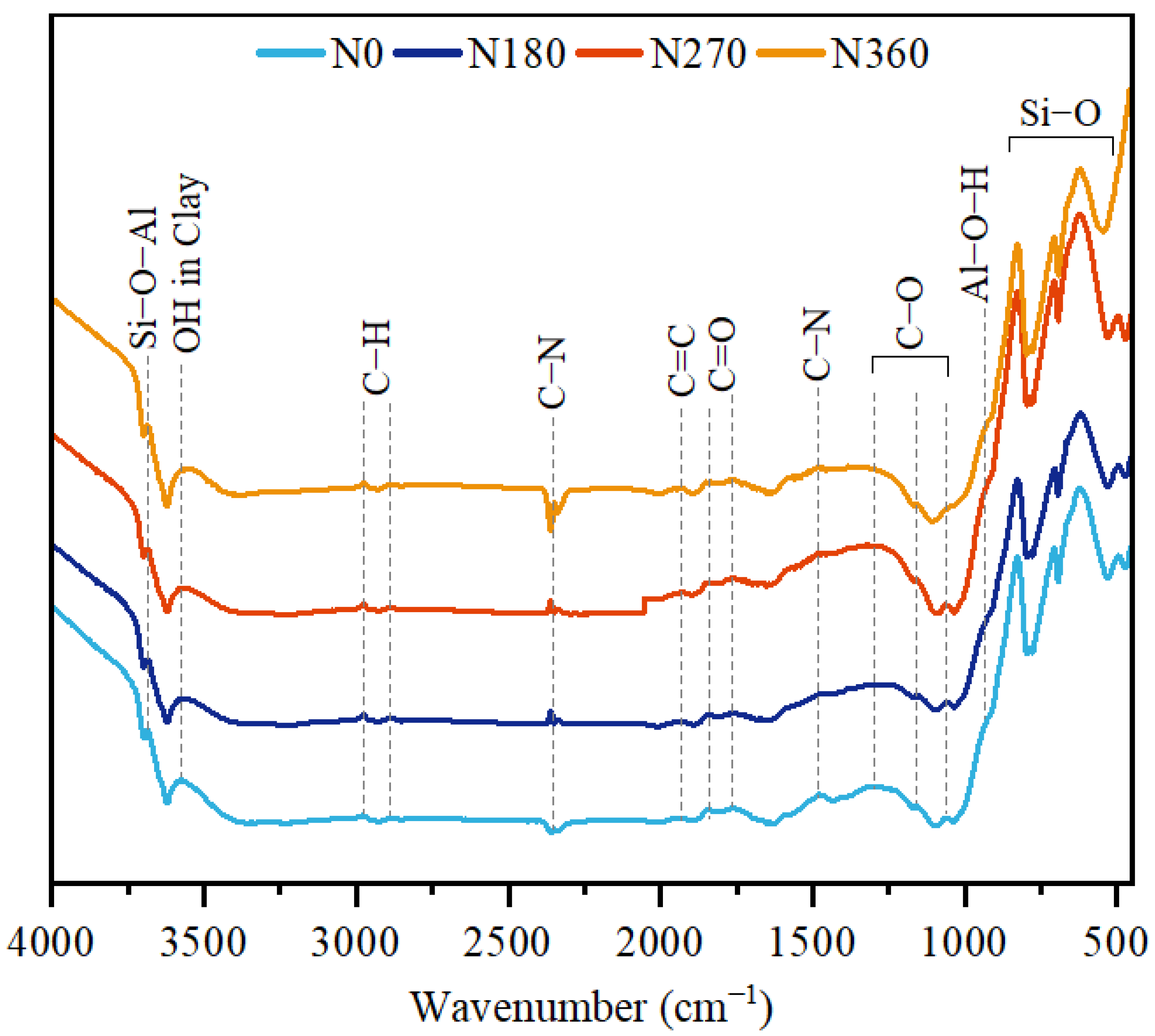
Soil organic carbon functional group compositions were determined via Fourier transform infrared (FTIR; Vertex 70, Bruker Optik GmbH, Ettlingen, Germany) spectroscopy. Prior to measurement, air-dried soil samples were fully ground and sieved through a 0.25 mm sieve. All spectral measurements were performed using a professional Fourier transform infrared spectrometer. Spectra were recorded in the wavenumber range of 400–4000 cm−1 at a spectral resolution of 4 cm−1, with 32 cumulative scans per sample to enhance the signal-to-noise ratio. Blank background spectra were collected in advance under identical experimental conditions for each test. All raw spectra were subjected to baseline correction and standard normalization for subsequent quantitative analysis.
The relative content of each organic carbon functional group was calculated as the percentage of the corresponding peak area relative to the total spectral area to facilitate comparative analysis across different treatments. The classification and attribution of soil organic functional groups were conducted according to the mature quantitative spectral analysis method [
15]. The typical characteristic absorption bands were defined as follows: O–H stretching vibration (3700–3400 cm
−1), aliphatic C–H stretching vibration (3000–2800 cm
−1), carbonyl C=O vibration (1700–1600 cm
−1), aromatic C=C and amide N–H vibration (1600–1500 cm
−1), and polysaccharide and alcohol C–O stretching vibration (1300–1000 cm
−1). The absorption range of 1100–450 cm
−1 corresponded to Si–O and Al–O mineral functional groups, which could effectively reflect the interaction between soil organic matter and mineral components (
Figure 1). Differences in the relative peak intensities of various functional groups among treatments were compared to clarify the transformation process and stabilization mechanism of soil organic carbon.
2.6. Statistical Analysis
All statistical analyses were conducted using R software (version 4.2.0, R Foundation for Statistical Computing, Vienna, Austria). Differences among treatments were assessed using one-way analysis of variance (ANOVA), followed by Tukey’s HSD test at p < 0.05. Pearson correlation analysis was performed to evaluate pairwise relationships among soil physicochemical properties, nitrogen transformation enzymes, microbial biomass indices, labile organic carbon fractions, and SOC functional groups. Correlation coefficients were visualized using heatmaps to identify key associations and potential collinearity among variables. To further identify the dominant drivers of SOC functional group composition, a random forest (RF) model was applied using the “randomForest” package in R. The model included soil nitrogen components, enzyme activities, microbial indices, and labile carbon fractions as predictor variables, and SOC functional group characteristics as response variables. Variable importance was assessed based on the percentage increase in mean squared error (%IncMSE), and the relative importance of each predictor was ranked accordingly. The RF results were used to screen key variables for subsequent multivariate and structural modelling. Redundancy analysis (RDA) was conducted using the “vegan” package to explore the relationships between environmental variables (soil properties, nitrogen components, enzyme activities, and microbial indices) and SOC functional group composition. The significance of the RDA model and explanatory variables was tested using Monte Carlo permutation tests (999 permutations). The RDA ordination was used to visualize the main gradients driving variations in SOC chemistry under different nitrogen addition treatments. Based on the results of Pearson correlation analysis, random forest modelling, and RDA, key variables were selected to construct a structural equation model (SEM) to elucidate the mechanistic pathways linking nitrogen addition to SOC stabilization. The SEM was developed using the “lavaan” package in R, incorporating nitrogen input, inorganic nitrogen (e.g., NO3−-N), nitrogen transformation enzymes (e.g., nitratase and glutaminase), microbial biomass indices (e.g., MBC/MBN), labile carbon fractions (e.g., DOC), and SOC functional groups (e.g., C=O, C=C, and C–O). Model fit was evaluated using multiple indices, including the chi-square statistic (χ2), comparative fit index (CFI), goodness-of-fit index (GFI), and root mean square error of approximation (RMSEA). The final SEM was refined based on both statistical significance (p < 0.05) and ecological plausibility, and was used to quantify direct and indirect effects of nitrogen addition on SOC functional group composition and stabilization pathways.
3. Results
3.1. Changes in Soil Physicochemical Properties and Inorganic Nitrogen
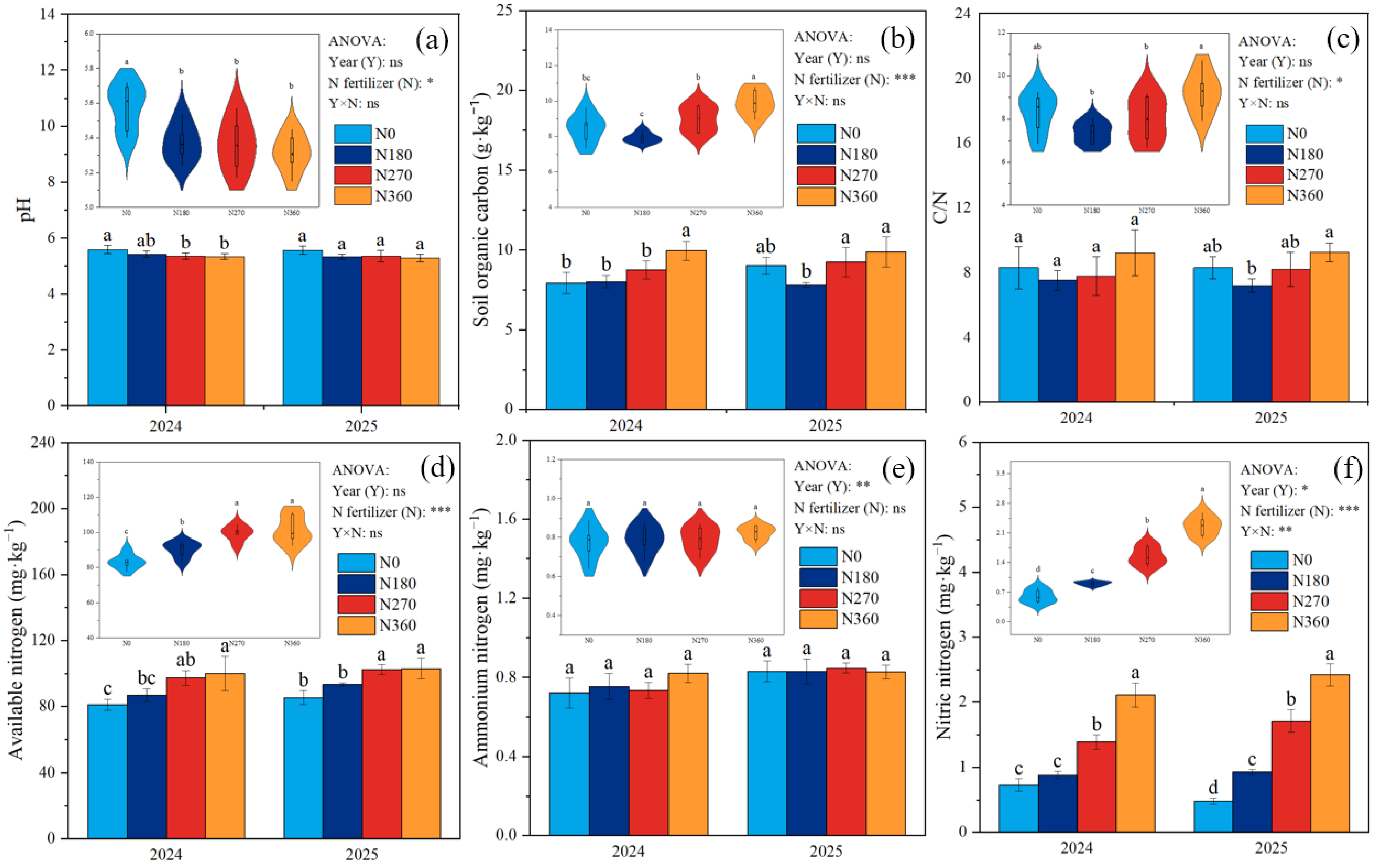
Nitrogen addition exerted significant effects on soil physicochemical properties across both experimental years (
Figure 2). Soil pH declined progressively with increasing N rate, falling from approximately 5.8 under N0 to approximately 5.2 under N360 (
p < 0.05), indicative of cumulative nitrification-driven acidification. Soil organic carbon (SOC) content responded positively to N input: relative to N0, the N270 and N360 treatments increased SOC by 1.05–10.2%, with statistically significant differences emerging at N270 and above (
p < 0.05). The soil carbon-to-nitrogen ratio (C/N) displayed a modest decline under higher N rates, reflecting the proportionally greater accumulation of total N relative to organic C, although inter-annual variability moderated the statistical significance of this trend.
Inorganic nitrogen dynamics diverged markedly between ammonium and nitrate pools. Available nitrogen (AN) increased substantially with N addition (p < 0.001), rising from approximately 80 mg kg−1 under N0 to approximately 160–180 mg kg−1 under N270 and N360. Ammonium nitrogen (NH4+-N) showed no statistically significant response to the N gradient in either year (p > 0.05), suggesting rapid nitrification of applied ammonium in this acidic, well-aerated subtropical soil. In sharp contrast, nitrate nitrogen (NO3−-N) exhibited the strongest and most consistent response among all measured variables, increasing from approximately 0.5–0.7 mg kg−1 under N0 to approximately 2.0–3.5 mg kg−1 under N360 (p < 0.001), with significant year × N interaction effects (p < 0.01). These results establish that the applied N was overwhelmingly channeled into the nitrate pool, identifying NO3−-N as the principal inorganic N species mediating downstream biogeochemical responses.
3.2. Responses of Nitrogen Transformation Enzyme Activities
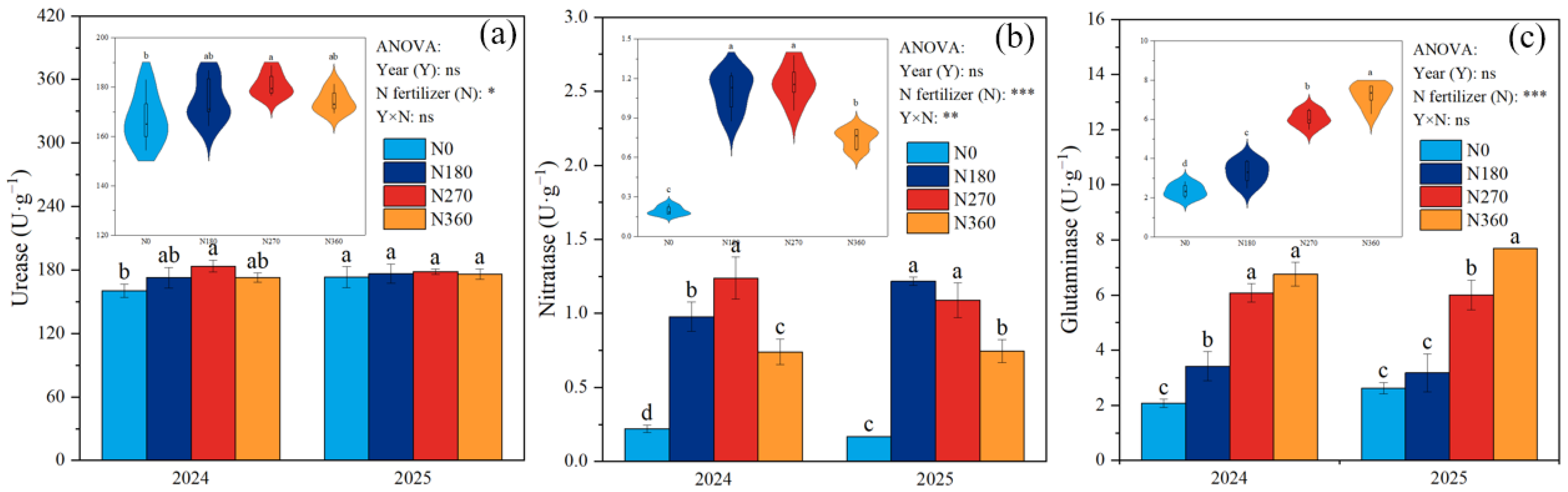
All three nitrogen-transformation enzymes assayed in this study responded positively to increasing N addition, although the magnitude and statistical robustness of the responses differed among enzymes (
Figure 3). Urease activity, which catalyzes the hydrolysis of urea to ammonium, exhibited a modest upward trend with N rate, rising from approximately 180 U g
−1 under N0 to approximately 280–310 U g
−1 under N270 and N360; however, the differences among treatments were only marginally significant (
p < 0.05 for N effect), consistent with substrate saturation of this initial hydrolytic step at moderate fertilizer inputs. Nitrate reductase (NR) activity displayed a far stronger and more differentiated response. Under N0, NR activity remained below 0.5 U g
−1, whereas N180, N270, and N360 elevated NR activity to approximately 1.0, 1.5, and 2.5 U g
−1, respectively, with all pairwise comparisons being statistically significant (
p < 0.001 for the N effect;
p < 0.01 for year × N interaction). This graduated, dose-dependent increase indicates that NR expression is tightly coupled to the expanding nitrate substrate pool and that the enzyme system was not saturated even at the highest N rate.
Glutaminase activity, reflecting the enzymatic deamination of glutamine and its contribution to organic N mineralization, showed a pattern comparable to that of NR. Activity rose from approximately 3 U g−1 under N0 to approximately 5, 8, and 10–12 U g−1 under N180, N270, and N360, respectively (p < 0.001), with clear separation among all four treatments. The parallel escalation of nitrate reductase and glutaminase activities suggests that N addition simultaneously accelerated both inorganic N cycling (nitrification–denitrification) and organic N mineralization, creating a reinforcing loop that amplified the overall pace of nitrogen transformation in the soil.
3.3. Changes in Microbial Biomass and Derived Indices
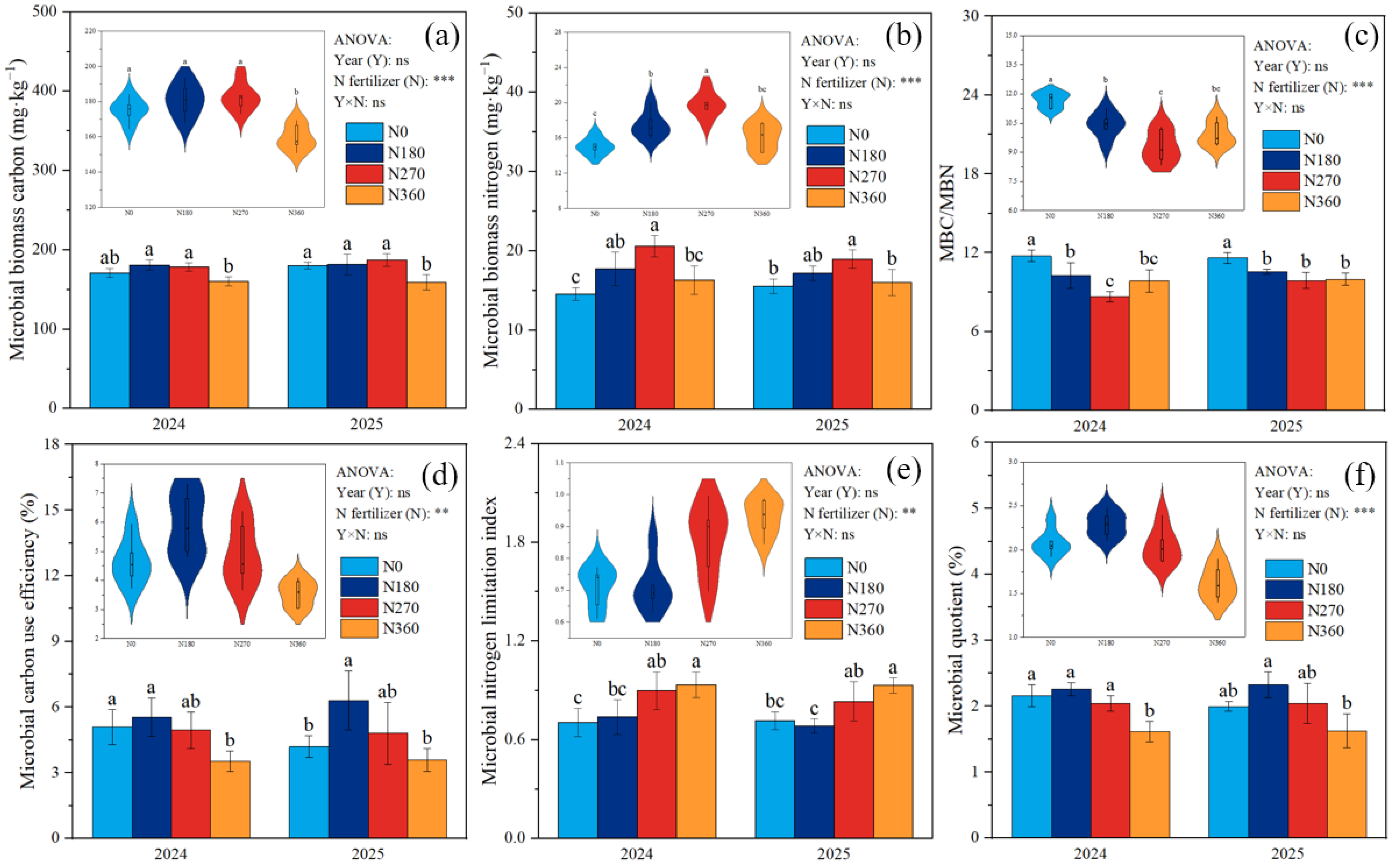
Microbial biomass responded to N addition in a nonlinear fashion, with intermediate rates producing the largest increases and the highest rate showing attenuation (
Figure 4). Microbial biomass carbon (MBC) increased significantly from approximately 130–150 mg kg
−1 under N0 to approximately 350–400 mg kg
−1 under N270 (
p < 0.001), but declined to approximately 200–250 mg kg
−1 under N360, indicating that excessive N input inhibited microbial growth, presumably through acidification stress or osmotic effects. Microbial biomass nitrogen (MBN) followed a broadly similar trajectory, peaking at N270 (approximately 25–30 mg kg
−1) and declining slightly at N360 (approximately 20–25 mg kg
−1).
The derived microbial indices offered deeper insight into shifts in microbial resource allocation. The MBC/MBN ratio decreased monotonically from approximately 15–16 under N0 to approximately 10–11 under N270 and N360 (p < 0.001), signaling a transition toward N-enriched microbial biomass and suggesting that the microbial community increasingly incorporated the exogenous N. Microbial carbon use efficiency (CUE), estimated from the ratio of MBC to dissolved organic carbon, declined from approximately 6% under N0 to approximately 3% under N360 (p < 0.01), implying that at high N rates, a greater proportion of assimilated carbon was respired rather than incorporated into biomass. The microbial nitrogen limitation index (MNLI) increased progressively with N addition, rising from approximately 15 to approximately 35 mg kg−1, confirming progressive alleviation of microbial N limitation. The microbial quotient (MQ), defined as MBC/SOC, declined at the highest N rate, suggesting that although total SOC accumulated, the fraction was maintained as living microbial biomass contracted, potentially reflecting a shift from biomass-mediated to abiotic stabilization pathways.
3.4. Responses of Labile Organic Carbon Fractions
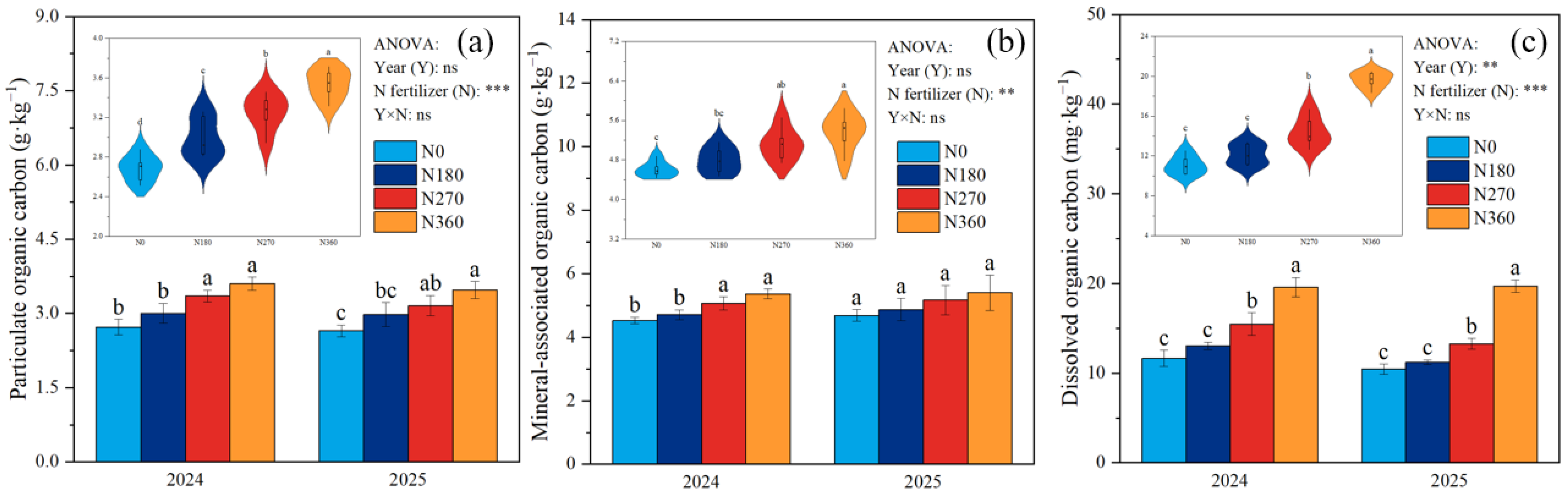
Among the three labile organic carbon fractions measured, dissolved organic carbon (DOC) exhibited by far the strongest and most consistent response to N addition (
Figure 5). DOC concentrations increased from approximately 8–10 mg kg
−1 under N0 to approximately 30–45 mg kg
−1 under N270 and N360 (
p < 0.001), representing a three- to four-fold increase. This pronounced DOC accumulation indicates that N addition either stimulated the enzymatic liberation of soluble carbon substrates from soil organic matter or inhibited their microbial consumption, or both.
Particulate organic carbon (POC) also increased with N addition, from approximately 3.0–3.5 g kg−1 under N0 to approximately 5.5–7.0 g kg−1 under N270 and N360 (p < 0.001), reflecting enhanced plant-derived inputs under higher N fertilization. Mineral-associated organic carbon (MOC) increased moderately, from approximately 5–6 g kg−1 under N0 to approximately 8–12 g kg−1 under N270 and N360 (p < 0.01), suggesting that a portion of the newly produced or mobilized organic carbon became adsorbed onto mineral surfaces and thus entered a more persistent stabilization pathway. Notably, the year effect was significant for DOC (p < 0.01), with 2025 values generally exceeding those of 2024, consistent with cumulative N effects on carbon mobilization.
3.5. Changes in SOC Functional Group Composition
FTIR spectroscopy revealed systematic N-induced shifts in the chemical composition of soil organic carbon (
Figure 1;
Table 1). Eight major absorption regions were resolved and quantified as relative percentages of the total spectral area. The Si–O region (attributed to silicate minerals) dominated all spectra, accounting for 75–79% of the total absorbance, but its relative contribution decreased modestly with N addition, likely reflecting the proportionally greater contribution of organic functional groups under fertilized treatments. Among the organic functional groups, the most striking changes occurred in the aromatic C=C (1600–1500 cm
−1) and carbonyl C=O (1700–1600 cm
−1) regions. The relative absorbance of C=C increased approximately nine-fold, from 0.08% under N0 to 0.77% under N360 on a two-year average basis (
p < 0.001), while C=O increased from 1.16% to 1.47% (
p < 0.001). Aliphatic C–H (3000–2800 cm
−1) increased from 1.30% under N0 to a peak of 2.20% under N270 before declining to 1.68% under N360, suggesting an initial enhancement and subsequent suppression of aliphatic carbon inputs at excessive N rates. The labile C–O group (1300–1000 cm
−1), associated with polysaccharides and alcohols, declined sharply from 6.19% under N0 to 3.44% under N360 (
p < 0.001), indicating preferential decomposition or transformation of labile polysaccharide-type carbon. The C–N band also increased with N addition, from 0.29% under N0 to 1.01% under N360 (
p < 0.05), reflecting the incorporation of exogenous N into organic structures.
The hydroxyl–silicate–aluminum (OH–Si–O–Al) region, representing organo–mineral interactions, increased from 10.10% under N0 to 12.70% under N360 (p < 0.05), suggesting enhanced mineral–organic matter associations under elevated N inputs. The C=C/C–H ratio, a proxy for the aromaticity of SOC, increased from 0.06 under N0 to 0.46 under N360 (p < 0.001), confirming a decisive shift from aliphatic- to aromatic-dominated carbon chemistry. Two-way ANOVA indicated a highly significant N effect on nearly all functional groups (p < 0.001), a significant year effect (p < 0.01) for some groups, but no significant year × N interaction, indicating consistent directional responses across years.
3.6. Relationships Among Soil Variables: Correlation and Random Forest Analyses
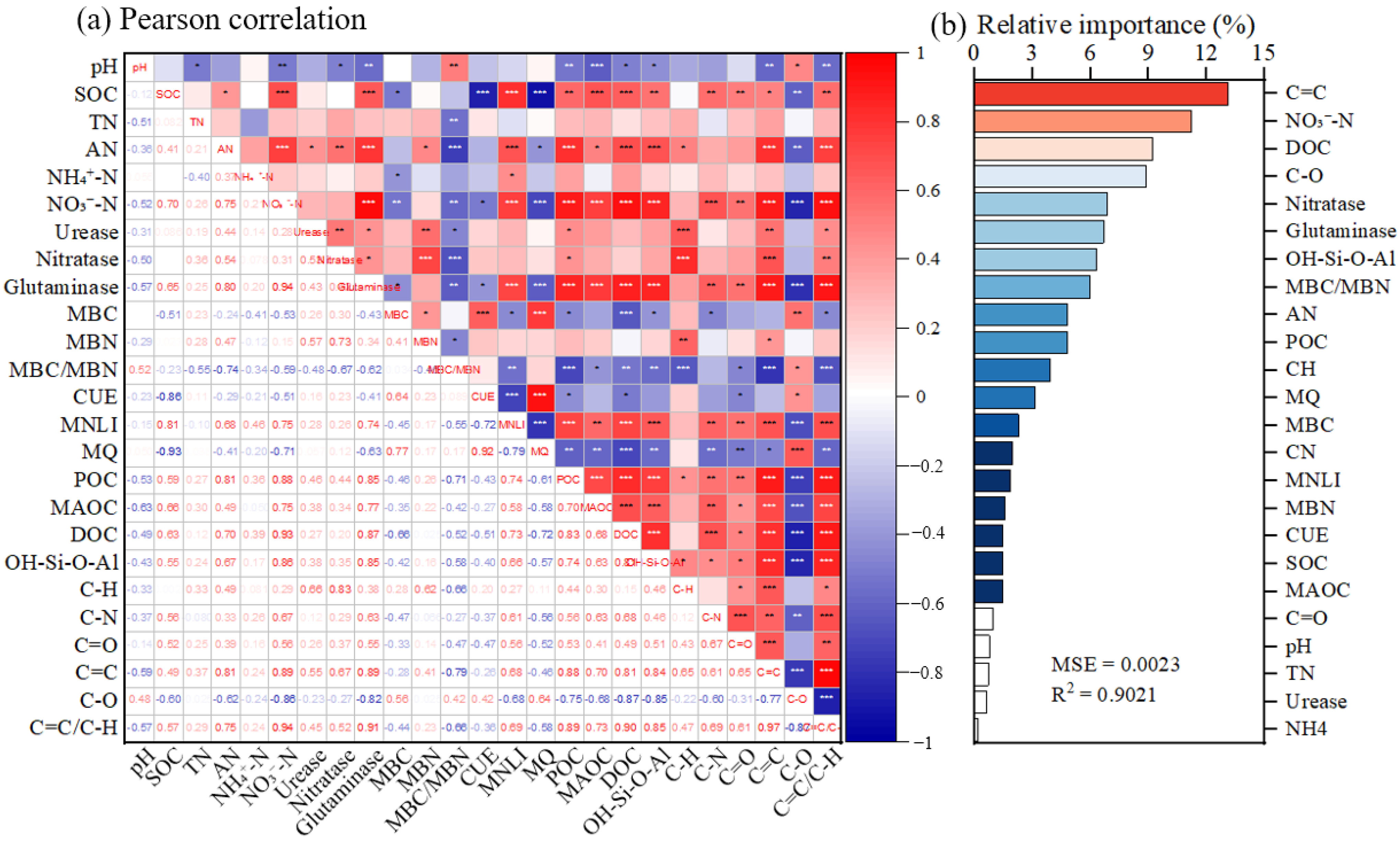
Pearson correlation analysis revealed a dense network of significant pairwise associations among soil properties, N-transformation enzymes, microbial indices, labile carbon fractions, and SOC functional groups (
Figure 6a). Among the strongest positive correlations, NO
3−-N was highly positively correlated with nitrate reductase (r = 0.75,
p < 0.001), glutaminase (r = 0.80,
p < 0.001), DOC (r = 0.70,
p < 0.001), and aromatic C=C (r = 0.81,
p < 0.001). DOC was in turn strongly associated with C=C (r = 0.83,
p < 0.001) and C=O (r = 0.53,
p < 0.01). The labile C–O group was negatively correlated with NO
3−-N (r = −0.82, P < 0.001) and DOC (r = −0.77,
p < 0.001), consistent with the degradation of polysaccharide-type carbon as N cycling intensified. The MBC/MBN ratio was negatively associated with most N-cycling and stable-carbon indicators, reinforcing the interpretation that microbial stoichiometric shifts accompanied SOC compositional changes. Soil pH showed negative correlations with NO
3−-N, enzyme activities, and aromatic functional groups, linking acidification to accelerated N–C coupling.
Random forest (RF) modelling quantified the relative importance of all measured variables in predicting the integrated SOC functional group profile (
Figure 6b). The model achieved high explanatory power (R
2 = 0.90, MSE = 0.0023). The five most important predictors, ranked by percentage increase in mean squared error (%IncMSE), were: C=C (approximately 14%), NO
3−-N (approximately 10%), DOC (approximately 8%), C–O (approximately 6%), and nitrate reductase (approximately 5%). These results converge with the correlation analysis in identifying the NO
3−-N–DOC–C=C axis as the central pathway linking N addition to SOC chemical transformation, and they highlight that aromatic carbon itself functions as both a product and a predictor within the self-reinforcing stabilization loop.
3.7. Multivariate and Structural Relationships
3.7.1. Redundancy Analysis (RDA)
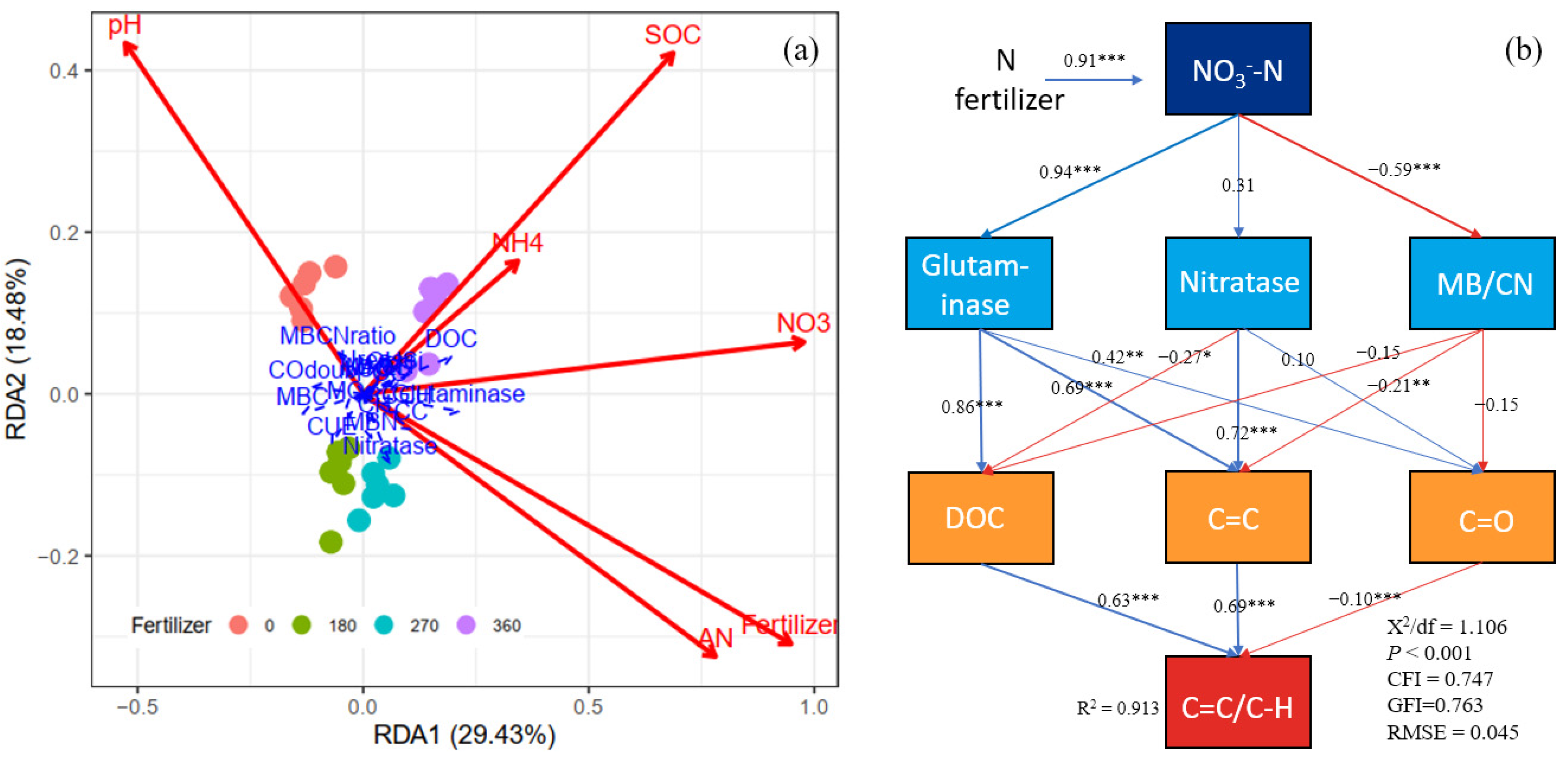
Redundancy analysis was conducted to visualize the multivariate relationships between environmental drivers and SOC functional group composition under different N treatments (
Figure 7a). The first two RDA axes accounted for 29.43% and 18.48% of the total variance, respectively, together explaining 47.91% of the variation in SOC functional group composition. Treatment-level samples separated clearly along RDA1, with N0 and N180 clustering in the negative quadrant and N270 and N360 projecting into the positive quadrant, demonstrating that the N gradient was the primary organizing factor for SOC chemical variation.
Among the explanatory variables, SOC, AN, and NO3−-N were the strongest contributors along RDA1, with vectors pointing toward the high-N treatments and closely aligned with C=C and C=O functional groups. Microbial indices (MBC, MBN, DOC) and enzyme activities (nitrate reductase, glutaminase) also projected in the same direction but at slightly different angles, suggesting partially independent contributions. Soil pH projected in the opposite direction, consistent with its negative association with N-cycling intensity. NH4+-N projected weakly along RDA2, confirming its minor role in driving SOC functional group variation. Monte Carlo permutation tests confirmed the overall significance of the RDA model (p < 0.001, 999 permutations), supporting the conclusion that nitrogen-driven changes in soil biochemical properties explain a substantial portion of the variation in SOC molecular composition.
3.7.2. Structural Equation Modelling (SEM)
A structural equation model was constructed to test the hypothesized causal chain from N input to SOC functional group stabilization, integrating the key variables identified by correlation, random forest, and RDA analyses (
Figure 7b). The model achieved acceptable fit statistics (χ
2/df = 1.106,
p < 0.001, CFI = 0.747, GFI = 0.763, RMSEA = 0.045), supporting its use for inference of causal pathways.
The SEM revealed a dominant sequential pathway originating from N fertilizer input: N fertilizer exerted a strong direct positive effect on NO3−-N (path coefficient = 0.91, p < 0.001). NO3−-N in turn positively influenced glutaminase activity (0.94, p < 0.001) and, to a lesser extent, nitrate reductase activity (0.31, p > 0.05). Glutaminase activity had a strong positive effect on DOC (0.86, p < 0.001), establishing the enzymatic conversion of organic N substrates as a critical gateway for labile carbon mobilization. DOC then exerted significant positive effects on aromatic C=C (0.69, p < 0.001) and the C=C/C–H aromaticity ratio (0.63, p < 0.001), while C=C itself positively influenced the C=C/C–H ratio (0.69, p < 0.001). Additionally, NO3−-N exerted a significant direct positive effect on DOC (0.42, p < 0.01), indicating that nitrate accumulation also promoted DOC availability independently of the enzymatic route.
The model also captured a secondary, stoichiometrically mediated pathway: NO3−-N negatively affected the MBC/MBN ratio (−0.59, p < 0.001), which in turn negatively influenced carbonyl C=O (−0.21, p < 0.01) and modestly affected C=C (−0.27, p < 0.05). This suggests that the N-induced reduction in microbial C/N stoichiometry also contributed to SOC compositional change, albeit less powerfully than the enzyme–DOC pathway. Nitrate reductase had a weak direct negative effect on C=C (−0.27, p < 0.05) and a non-significant effect on C=O (0.10, p > 0.05), suggesting a minor modulatory role. The overall model explained 91.3% (R2 = 0.913) of the variance in the C=C/C–H aromaticity ratio, confirming that the nitrogen–enzyme–DOC–aromaticity cascade constitutes the dominant mechanistic architecture governing SOC molecular stabilization under N addition in this intercropping system.
4. Discussion
The present study demonstrated that nitrogen addition in the soybean–maize intercropping system not only increased SOC accumulation but also fundamentally altered its molecular composition and stabilization pathway. The N0 treatment with sole P–K fertilization exhibited a slightly higher pH (5.80) than the initial soil (5.64), which was attributed to soybean rhizosphere alkalization and base cation inputs from phosphate fertilizer in the absence of nitrification-induced acidification [
33]. In contrast, increasing N addition intensified nitrification and proton release, gradually reducing soil pH to 5.20 under high N input (N360). The most notable response was the strong enrichment of NO
3−-N under increasing N input, whereas NH
4+-N remained relatively unchanged, indicating that applied N was rapidly transformed into nitrate in this warm, acidic, and well-aerated Ultisol. This nitrate-dominated pattern agrees with previous studies showing that nitrification is highly active in subtropical croplands and represents the primary route of inorganic N transformation [
34,
35]. Concurrently, soil pH progressively declined with increasing N addition, suggesting that continuous nitrification-induced proton release promoted soil acidification. Such acidification is important because it not only alters nutrient availability but also modifies mineral surface properties and organo–mineral interactions, thereby influencing SOC stabilization processes [
36]. In the present study, the increased OH–Si–O–Al absorbance under high-N treatments supports this interpretation and suggests enhanced interactions between organic matter and mineral components. The intercropping context may further strengthen these responses. Unlike monoculture systems, soybean–maize intercropping simultaneously receives fertilizer-derived inorganic N and biologically fixed N released from soybean roots and nodules. This dual N input pathway likely enlarges substrate availability for microbial transformation and accelerates internal N cycling [
19,
22]. Consequently, nitrate became the dominant inorganic N pool and acted as the major driver of subsequent microbial and carbon responses. The strong correlations between NO
3−-N and DOC, enzyme activities, and aromatic C groups, together with the SEM results, further confirmed that nitrate occupied a central position in regulating SOC transformation. Therefore, nitrate accumulation under intercropping appears not merely to reflect enhanced N availability but to represent a key mechanistic gateway linking external N input with internal carbon stabilization processes.
Nitrogen addition also markedly stimulated N-transformation enzymes, especially nitrate reductase and glutaminase, both of which exhibited clear dose-dependent increases. This result indicates that fertilizer N not only increased available substrates but also activated the enzymatic machinery responsible for internal N turnover. Among these enzymes, glutaminase appeared particularly important because it showed the strongest relationship with DOC production in the SEM analysis. Glutaminase catalysis organic N mineralization and releases low-molecular-weight carbon substrates, thereby providing an important source of soluble carbon for subsequent microbial processing and stabilization [
37]. The strong pathway linking glutaminase to DOC indicates that enhanced N transformation directly accelerated carbon mobilization. Compared with glutaminase, nitrate reductase exerted a weaker direct influence on SOC functional groups; however, its consistent increase along the N gradient suggests that inorganic N cycling was simultaneously intensified. The parallel enhancement of these enzymes implies that N addition accelerated both organic and inorganic N transformation pathways, increasing the turnover of N and associated carbon substrates. Similar observations have been reported in other fertilization studies where enhanced enzyme activity strengthened N–C coupling processes [
17]. However, compared with previous studies focusing mainly on oxidative enzymes, the present results identify glutaminase as a potentially important intermediary linking N transformation and carbon mobilization in intercropping systems. This expands the current understanding of N-driven SOC transformation by emphasizing the role of N-cycling enzymes rather than only decomposition-related enzymes.
Microbial biomass exhibited a nonlinear response to N addition, with maximum values occurring at N270 and declines appearing under N360. This pattern suggests that moderate N input alleviated nutrient limitation and promoted microbial growth, whereas excessive N created physiological constraints. Similar threshold responses have frequently been observed under long-term N addition, where excessive fertilization causes acidification, nutrient imbalance, and microbial stress [
38,
39]. In the present study, the decline in microbial biomass under N360 coincided with lower CUE and reduced MBC/MBN ratios, indicating that excessive N altered microbial resource allocation. The reduction in CUE is particularly important because it reflects lower efficiency of converting assimilated carbon into microbial biomass. Previous studies suggested that microbial CUE is a major determinant of SOC persistence because it regulates the balance between biomass production and respiration losses [
40,
41,
42]. In our study, decreasing CUE under high N input indicates that microorganisms allocated more carbon to maintenance respiration and stress tolerance rather than growth, thereby weakening microbial carbon retention. Meanwhile, the continuous decline in MBC/MBN suggests changes in microbial stoichiometry and community structure under elevated N availability. The negative path coefficient between MBC/MBN and stable carbon groups in the SEM further indicates that microbial shifts contributed, although less strongly, to SOC compositional changes.
Interestingly, despite reduced microbial activity under N360, SOC stabilization indicators continued to increase. This implies that excessive N gradually shifted SOC stabilization away from microbial pathways towards more abiotic processes. Similar conclusions were reported in long-term fertilization studies, where mineral protection compensated for reduced microbial contribution under high-N conditions [
6]. Therefore, although high N input promoted SOC chemical recalcitrance, it simultaneously weakened the biological sustainability of carbon sequestration. Among all measured carbon fractions, DOC exhibited the strongest response to N addition and emerged as the central intermediate connecting N cycling and SOC molecular transformation. DOC increased by approximately three- to four-fold across the N gradient and showed strong positive relationships with NO
3−-N, glutaminase activity, and aromatic functional groups. Random forest analysis further ranked DOC among the most influential predictors of SOC composition. These findings collectively indicate that DOC served as the principal carrier through which N-induced biochemical changes were translated into SOC transformation. DOC consists of reactive low-molecular-weight compounds, including amino acids, organic acids, and phenolics, which can participate in sorption, condensation, and polymerization processes [
43]. The positive SEM pathways from DOC to C=C and aromaticity ratios suggest that increased DOC availability promoted the formation of stable aromatic carbon structures. In acidic red soils rich in reactive Fe and Al minerals, DOC components are readily adsorbed onto mineral surfaces and subsequently stabilized through organo–mineral associations [
44,
45]. The simultaneous increase in OH–Si–O–Al groups under high-N treatments supports this mechanism and indicates enhanced mineral-mediated stabilization.
Moreover, the strong linkage between glutaminase and DOC suggests that N transformation accelerated the release of soluble carbon substrates from organic matter. Therefore, DOC functioned not only as a transient carbon pool but also as a mechanistic bridge connecting N turnover, enzyme activity, and SOC stabilization. This DOC-centered pathway differs from traditional views emphasizing only microbial necromass accumulation and highlights the importance of soluble carbon intermediates during N-induced SOC transformation. FTIR analysis further demonstrated that N addition substantially reshaped SOC molecular composition. The increase in aromatic C=C and carbonyl C=O groups, together with the decline in polysaccharide-derived C–O groups, indicates a clear transition from labile to chemically stable SOC forms. The sharp increase in the C=C/C–H ratio further confirms enhanced aromaticity and greater SOC recalcitrance. Similar spectral shifts have been widely interpreted as indicators of long-term SOC stabilization [
46,
47].
The observed transformation likely resulted from several interacting mechanisms. First, accelerated decomposition preferentially consumed labile C–O compounds, leaving relatively resistant aromatic residues. Second, DOC-derived intermediates may have undergone condensation and polymerization reactions, promoting de novo formation of aromatic structures. Third, strengthened organo–mineral interactions enhanced the physical protection of stable carbon compounds [
36]. These mechanisms together explain why N addition simultaneously reduced labile carbon characteristics while increasing SOC aromaticity. Notably, N270 appeared to provide the best balance between microbial activity and SOC stabilization. At this level, microbial biomass, DOC availability, and stable carbon formation all reached relatively high values. In contrast, N360 produced similar FTIR characteristics but with reduced microbial vitality and CUE. Therefore, moderate N input seems more beneficial for maintaining both biological functioning and long-term carbon sequestration potential.
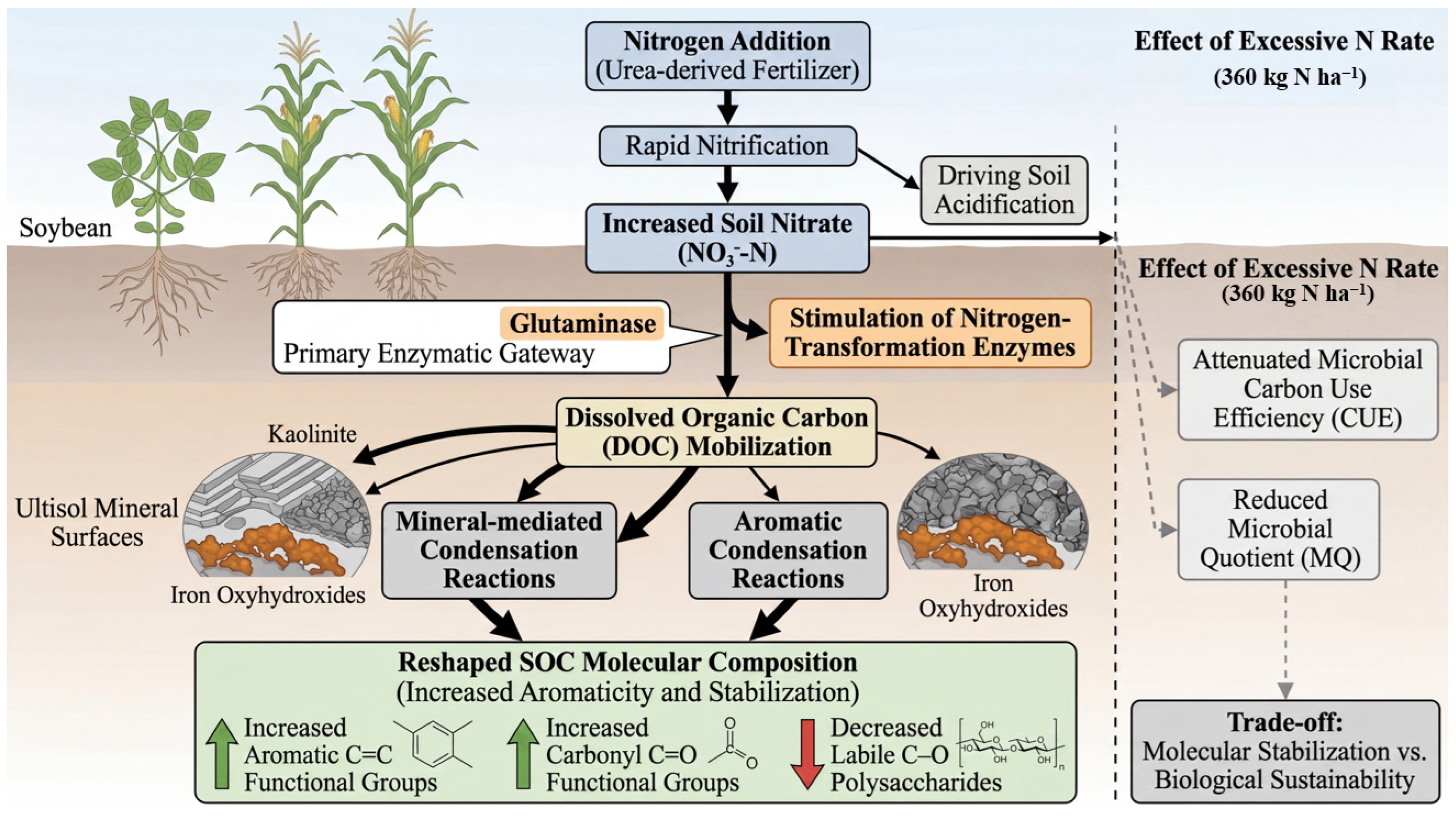
Overall, this study establishes a mechanistic framework linking N input, nitrate accumulation, enzymatic transformation, DOC mobilization, and SOC molecular stabilization in soybean–maize intercropping (
Figure 8). The combined evidence from correlation analysis, random forest modelling, RDA, and SEM consistently identified a dominant nitrate–enzyme–DOC pathway controlling SOC transformation. Specifically, fertilizer N increased NO
3−-N accumulation, stimulated glutaminase activity, promoted DOC production, and ultimately enhanced aromatic carbon formation. This mechanism differs from the conventional interpretation that N fertilization increases SOC mainly through greater biomass inputs [
4,
5,
13]. The findings therefore suggest that N management in intercropping systems should consider not only SOC quantity but also its molecular quality and stabilization pathway. Moderate N application (approximately 270 kg N ha
−1) achieved the best compromise between microbial activity, DOC dynamics, and SOC stability, whereas excessive N input weakened microbial functioning despite maintaining chemical recalcitrance. Consequently, optimizing N application is essential for simultaneously improving soil fertility, sustaining microbial processes, and enhancing long-term carbon sequestration in subtropical intercropping agroecosystems.




 ,
,