Article

Phosphorus Uptake, Plant Growth Promotion, and Yield Enhancement in Maize (Zea mays L.) and Peanut (Arachis hypogaea L.) by Native Phosphate-Solubilizing Bacteria


by
María Soledad Anzuay
,
Liliana Mercedes Ludueña
,
María Victoria Larrosa
,
Federico Daniel Morla
,
Cecilia Cerliani
,
Jorge Guillermo Angelini
and
Tania Taurian
*
Instituto de Investigaciones Agrobiotecnológicas (CONICET-UNRC), Río Cuarto 5800, Argentina
*
Author to whom correspondence should be addressed.
Agronomy 2026, 16(12), 1144; https://doi.org/10.3390/agronomy16121144
Submission received: 30 April 2026 / Revised: 26 May 2026 / Accepted: 9 June 2026 / Published: 11 June 2026

Abstract

Phosphorus (P) is an essential macronutrient that plays a critical role in plant growth, development, and productivity. However, limited soil phosphorus availability can reduce crop performance in maize (Zea mays L.) and peanut (Arachis hypogaea L.). Native phosphate-solubilizing bacteria (PSB) convert insoluble P forms into plant-accessible forms. The aim of this study was to select efficient plant growth promotion native PSB to be used as a biological input in the development of sustainable biotechnological biofertilizers. For this, the effects of the inoculation of PSB isolates on maize and peanut’s phosphorus uptake, growth, and yield were evaluated. The assays were developed both under controlled greenhouse conditions and in field trials. Inoculation with native PSB strains significantly enhanced the plant growth and increased the phosphorus content of maize and peanut by 38–58% and 49.6%, respectively. These effects became evident earlier in the peanut than in maize. In field trials, inoculation with Serratia sp. S119 without chemical fertilizer application significantly increased maize yield. In conclusion, native PSB strains significantly promote plant growth, enhance phosphorus acquisition, and improve crop yield. The use of Serratia sp. S119 as a phosphate biofertilizer represents a promising strategy to reduce chemical fertilizer inputs and to promote more sustainable agricultural systems.

1. Introduction

Phosphorus (P) is a key limiting factor in plant growth and crop yield, and thus constitutes an essential nutrient in the agricultural system [1]. This nutrient plays an important role in plant developmental processes, such as seed germination, seedling establishment, root, shoot, flower, and plant development, respiration, photosynthesis, and nitrogen fixation [2]. It is a structural component of basic molecules, such as nucleic acids, phospholipids, and ATP, and plays crucial regulatory roles in several physiological processes [3].
In most agricultural soils, the available P for plant uptake is only 0.1% of the total soil P [4], since the majority of soil P is constituted by insoluble compounds present as inorganic (Pi) and organic (Po) forms of phosphates. The former is represented by both primary (e.g., apatite, strengite, and variscite) and secondary P minerals (e.g., calcium, iron, and aluminum phosphates) [5]. The conversion of insoluble phosphorus compounds into soluble forms represents a key mechanism for P uptake by plants [6]. Plants employ a diverse array of strategies to enhance P uptake efficiency, including modifications of their root morphology, exudation of chemical compounds into the rhizosphere, and association with mycorrhiza [7]. These root exudates influence the composition and activity of rhizosphere microbial communities, thereby promoting beneficial interactions that enhance the P availability to plants [8].
The application of chemical phosphorus fertilizers is required in agriculture to enhance crop yield due to the low P availability and the fixed P forms in the soil [9]. Fertilizer supplies are finite, and much of the P in agricultural soils becomes unavailable due to reactions, such as soil adsorption, immobilization, or precipitation [10]. In fact, a considerable amount of the P applied to soil is subjected to erosion and runoff, transferring phosphorus from soil to water bodies, which causes algal blooms in lakes and rivers as well as the formation of dead zones [11]. The extended, intensive, and indiscriminate use of agrochemicals has adversely affected soil biodiversity, agricultural sustainability, and food safety, leading to long-term harmful effects on nutritional security and human and animal health [12]. From a sustainability perspective, microbial inoculants represent a key component of integrated nutrient management systems, enhancing nutrient use efficiency, sustaining crop productivity, and mitigating the environmental impacts associated with conventional fertilization practices [13].
Soil microbial communities are essential for element cycling and for regulating soil fertility, among other processes [14]. Within them, phosphate-solubilizing microorganisms (PSM) refer to the group of microbial communities that can solubilize insoluble P into soluble P for plant absorption [15]. PSM, including phosphate-solubilizing bacteria (PSB), makes P available depending on the chemical nature of the source. P is released from organic phosphorus compounds through enzymatic processes, while the release of organic acids is the main mechanism by which inorganic phosphate compounds are solubilized [16]. These acids chelate cations, such as Ca2+, Fe3+/Fe2+, and Al3+ bound to P, making it available with a subsequent decrease in pH [17]. Thus, organic acids are responsible for transforming insoluble forms of P into soluble forms, providing a form of P that can be easily assimilated by plants.
The formulation and field application of biological inoculants are of great importance in sustainable agriculture. Additional benefits associated with biofertilizers include extended shelf life and reduced negative impacts on the environment [18]. Cheng et al. [19] reported that PSB inoculation would be an appropriate alternative to chemical P fertilizer application in a sustainable agricultural system. Also, the employment of native strains is desirable due to its superior adaptability to the environment compared to non-native introduced strains. Previous studies have demonstrated that the native PSB Enterobacter sp. J49 and Serratia sp. 119 promoted growth on the maize and peanut plants in microcosm and in field assays [20,21,22,23].
Maize (Zea mays L.) production is one of the most important worldwide. This crop is the second-largest crop in the world, in terms of planted area, after wheat [24]. Argentina is the third-largest exporter worldwide, with more than 65% of its production dedicated to foreign trade [25]. The province of Córdoba has become the leading maize-producing province in Argentina, accounting for approximately 34% of the total national production [26]. In Argentina’s agricultural area, maize is the main crop used in rotation with peanut (Arachis hypogaea L.). The peanut is considered a crop of high nutritional and economic value worldwide [27]. Argentina is the third-largest peanut exporter globally and the leading supplier to the European market, with approximately 80% of its production area concentrated in the province of Córdoba [28].
In the geographical area in which maize and peanut crop production concentrates in Argentina, low P soil content has been reported. In this agricultural region, the soils present P levels below the critical threshold for maize and peanut cultivation [29]. Thus, considering the widespread P deficiency in the agricultural soils of Argentina, the use of native PSB represent a more economical and environmentally friendly alternative to chemical fertilizers for increasing soil P availability. Other studies have focused on evaluating the effect on plant growth and P acquisition on one PSB strain in association with a single agricultural crop. In this study, we aim to assess the effect of co-inoculation of native PSB with other plant growth promoting strains and the impact on plant growth and phosphorus acquisition at different phenological stages, both of which are key aspects for refining fertilization strategies in high-production regions. In addition, this study is also focused on the effect of inoculating Serratia sp. S119 with a half dose of chemical fertilizer to determine whether reduced fertilizer inputs can achieve yields comparable to those obtained with the full fertilizer dose. Thus, by addressing the phosphorus efficiency issue on maize and peanut crops used in rotation in low-phosphorus soils, the aims of this study were (i) to evaluate the effects of native PSB inoculation on maize and peanut plants, applied alone or in combination with other PGP bacteria, for growth and phosphorus uptake at different developmental stages, and (ii) to analyze the impact of the inoculation of native PSB on maize yield and nutrient content under field conditions in the presence or absence of chemical P fertilizers.

2. Materials and Methods

2.1. Bacterial Growth and Maintenance

Two native phosphate-solubilizing bacteria, Enterobacter sp. J49 and Serratia sp. S119 [22,30], isolated from the nodules of peanut plants cultivated in central and southern regions of Córdoba, Argentina (latitude, 32° to 34°; longitude, 63° to 65°), were employed in this study. Pseudomonas strain PMT1, used in a commercial inoculant formulation (‘RIZOFOS’®-RIZOBACTER), Bradyrhizobium sp. SEMIA 6144 (recommended as a peanut inoculant by the Instituto de Pesquisas Agronômicas, Brasil), and Azospirillum argentinense strain Az39 (recommended for maize and wheat inoculation in Argentina) [31] were used as reference strains. PMT1 (ex-P. fluorescens) is our internal designation code for the type strain 1008 of the recently validated species Pseudomonas pergaminensis [32]. The native strains and P. fluorescens PMT1 were grown in TY (tryptone yeast) medium [33] or LB (Luria Bertani) medium [34], while A. argentinense Az39 and Bradyrhizobium sp. SEMIA 6144 were grown in NFb (Nitrogen-Free Bromothymol Blue) [35] and YEMA (Yeast Extract Mannitol Agar) media [36], respectively.

2.2. Bacterial Inoculation on Maize and Peanut Plants in Microcosm Assays

2.2.1. Bacterial Coexistence in Plate Assays

Compatibility between strains was evaluated using plate coexistence assays according to the methodology previously described by Dey et al. [37], with some modifications. Fresh cultures of each strain were streaked on one of the two halves of plates containing LB or YEMA medium. The bacterial combinations tested were (1) Serratia sp. S119 + Bradyrhizobium sp. SEMIA 6144, (2) Enterobacter sp. J49 + Bradyrhizobium sp. SEMIA 6144, (3) Serratia sp. S119 + A. argentinense Az39, (4) Enterobacter sp. J49 + A. argentinense Az39, and (5) P. fluorescens PMT1 + A. argentinense. Simultaneous and spaced sowings were performed depending on the growth rate of the bacteria.

2.2.2. Greenhouse Microcosm Trials

Seeds of maize (DK 7210 hybrid, Bayer) or peanut (cv. Granoleico) were superficially disinfected according to Pereira et al. [38] and Taurian et al. [39], respectively. Then, one seed per pot was placed in plastic pots (15 cm diameter, 20 cm height) with unsterilized sieved soil. The soil used as a plant growth substrate came from the peanut cultivation area of Córdoba (organic matter: 2.4% (Walkley Black method), pH: 6.58 (Potentiometry 1:2.5), moisture: 7.1% (100–105 °C), N: 16.7 µg g−1 soil (phenolsulfonic acid), and P: 7.35 µg g−1 (Kurtz and Bray I method)). Single and mixed inoculation treatments were performed as follows: In the maize plants: (I) Serratia sp. S119; (II) Enterobacter sp. J49; (III) P. fluorescens PMT1; (IV) A. argentinense Az39; (V) Serratia sp. S119 + A. argentinense Az39; (VI) Enterobacter sp. J49 + A. argentinense Az39; and (VII) P. fluorescens PMT1 + A. argentinense Az39. In the peanut plants: (1) Serratia sp. S119; (2) Enterobacter sp. J49; (3) Bradyrhizobium sp. SEMIA 6144; (4) Serratia sp. S119 + Bradyrhizobium sp. SEMIA 6144; and (5) Enterobacter sp. J49 + Bradyrhizobium sp. SEMIA 6144. Uninoculated maize and peanut plants were used as controls.
For the preparation of the bacterial inoculum, bacteria were grown in an LB, NFb, or YEM liquid medium until the stationary phase (108 CFU mL−1). On the crown of the root of 7-day-old plants, 3 mL cultures of each bacterial culture were applied. In the case of mixed inocula, 1.5 mL of each bacterial culture were used and inoculated simultaneously.
Plastic pots were maintained under controlled environmental conditions (light intensity of 200 μR m−2 s−1 16 h day/8 h night cycle, at a constant temperature of 28 °C and a relative humidity of 50%) and watered regularly with tap water and Hoagland medium [40]. The maize and peanut plants were harvested at 21 and 45 days post-inoculation, respectively. The following parameters were determined in the plants: aerial and root length, shoot and root dry weight, and aerial and root P content. This nutrient was evaluated using the method described by M.L. Jackson [41], with modifications. Two independent microcosm assays were performed (n = 8–10).

2.3. Analysis of the Effect of Bacterial Inoculation on the P Supply and Growth of Maize and Peanut Plants in Different Phenological Stages

Plant Inoculation Assays

Seeds of maize (DK 7210 hybrid, Bayer) or peanut (cv. Granoleico) were superficially disinfected, as mentioned above, and 1 seed per pot was placed in plastic pots (15 cm diameter, 20 cm height) with unsterilized sieved soil. The soil came from the peanut cultivation area of Córdoba (organic matter: 1.25% (Walkley Black method), pH: 6.76 (Potentiometry 1:2.5), moisture: 4.2% (100–105 °C), N: 9.2 µg g−1 soil (phenolsulfonic acid), and P: 8.70 µg g−1 (Kurtz and Bray I method)). Single inoculations with Serratia sp. S119 or Enterobacter sp. J49 were performed in the maize and peanut plants. Uninoculated maize and peanut plants were used as controls. For the preparation of the bacterial inoculum, bacteria were grown in an LB liquid medium until the stationary phase (10−8 CFU mL−1). On the crown of the root of 7-day-old plants, 3 mL cultures of each bacterial culture were deposited. Plastic pots were maintained under controlled environmental conditions, as mentioned above, and watered regularly with tap water and Hoagland medium without phosphorus. The maize and peanut plants were harvested every 10 days until 60 days post-inoculation. In the different initial stages of both plants, the following growth parameters were measured: aerial and root length, shoot and root dry weight, and aerial and root P content. Two independent microcosm assays were performed (n = 8–10).

2.4. Field Trials and Study Site

To evaluate the performance of the inoculation of the native strain Serratia sp. S119 on the yield of the maize crop in the agricultural area of Córdoba Province (Argentina), two simultaneous field experiments were carried out during the growing season 2017–2018, and a third assay was performed during 2018–2019. The assays of the first growing season were conducted at the Experimental Field of the University of Río Cuarto (33°06′35″ S 64°18′07″ W) and at the experimental field of La Aguada (64°38′54.94″ W). During the growing season 2018–2019, the field assay was repeated at the field of La Aguada. Soil nitrogen (N), phosphorus (P), organic matter (OM) content, and pH were determined at the beginning of the three assays (Table S1—Supplementary Material). During the assay, along with the growth of the maize crop, precipitations were recorded (Figure S1—Supplementary Material) from the Agrometeorological Station, UNRC Experimental Field Station.

Planting Process and Treatments

Seeds of maize (DK 7210 hybrid, Bayer) were employed for field trials. For the sowing, a self-propelled pneumatic seed drill (Nova SIEMBRA) with a seeding rate of 6 seeds m−1 and a planting depth of 3 cm was used. The parcels consisted of 5 grooves of 40 m long separated by 0.52 m for maize plants. Four replicates for each treatment following a randomized block design were conducted. The following treatments were analyzed for the maize plants: (I) inoculated with Serratia sp. S119; (II) inoculated with Serratia sp. S119 grown on soil with half a dose of phosphorus and nitrogen fertilizer [diammonium phosphate (PO4H(NH4)2 100 kg ha−1]; (III) grown on soil fertilized with a full dose of fertilizer [diammonium phosphate fertilizer (PO4H(NH4)2 200 kg ha−1]; and (IV) without inoculation or fertilization. In fertilized treatments of the maize plants, the contribution of N was corrected through the application of UAN (liquid fertilizer containing urea and ammonium nitrate, 150 L ha−1) at the time of planting and at the phenological stage V6–7 (six- to seven-leaf stage), corresponding to BBCH 16–17 on the BBCH scale for maize development.
Agrochemicals and doses applied in these crops were those commonly used in fields of agricultural areas of Córdoba [23].
For the preparation of the bacterial inoculum, the strain Serratia sp. S119 was grown in a TY medium until the stationary phase (108 CFU mL−1) and stored at 4 °C until use. At the time of sowing, the bacterial inoculum was distributed in the furrow over the seeds in a dose of 1.5 L ha−1 diluted to obtain 50 L ha−1. At the time of harvest (145–155 days after sowing), the main numerical components and yield of the maize crop were evaluated: the weight of 100 grains and the number of grains per unit area. Also, the P and N content (mg g plant−1) of grains and aerial tissues were determined. The P content was determined as described previously, and the N content was evaluated using the method described by Nelson and Sommers [42], with modifications.

2.5. Statistical Analysis

Statistical analyses were performed using Infostat software 2020 [43]. Data obtained were subjected to one-way analysis of variance (ANOVA) and differences among treatments were detected by the LSD test (p < 0.05).

3. Results

3.1. Single Native PSB Inoculation Enhances Plant Growth and Phosphorus Uptake Compared to Co-Inoculation

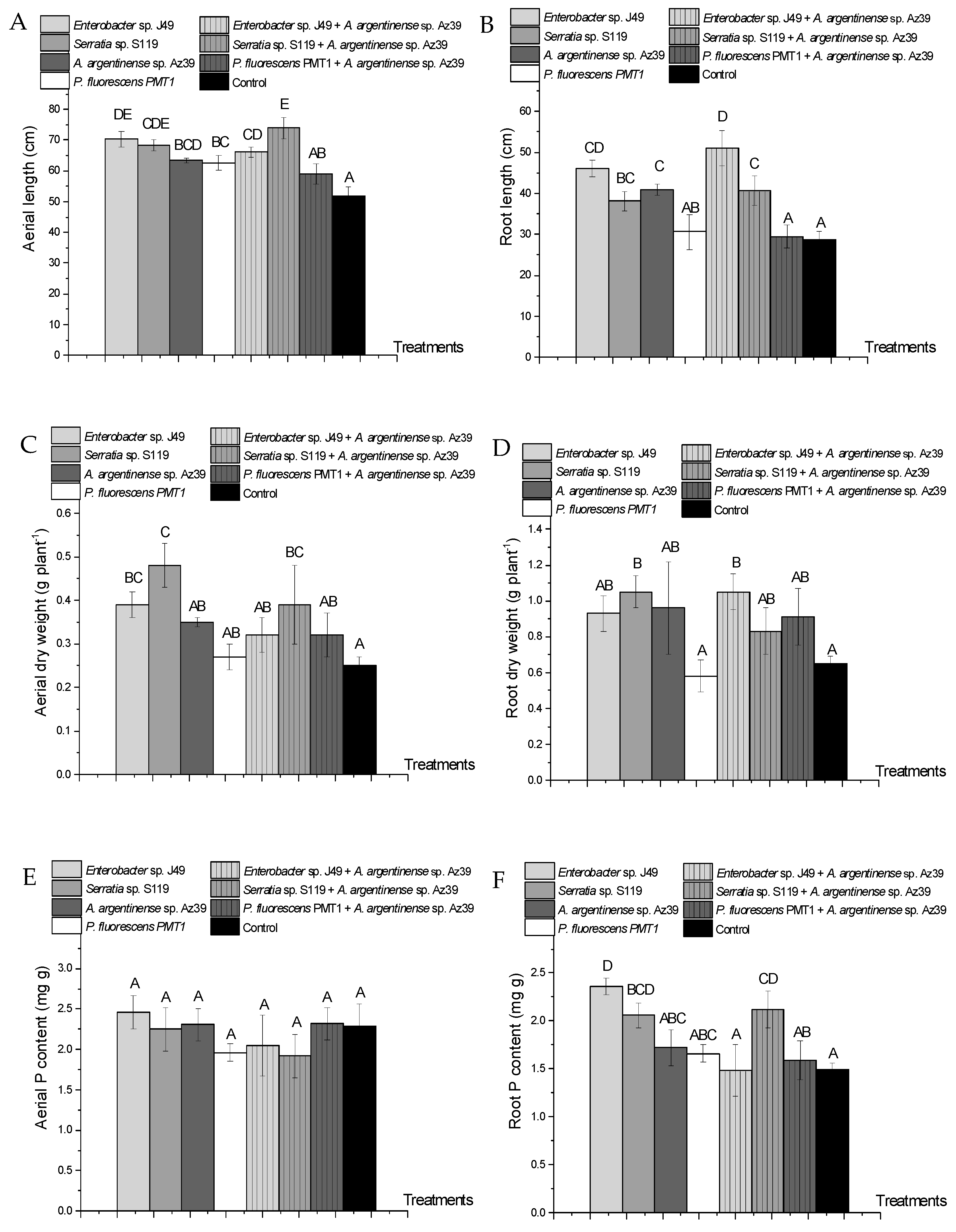
The coexistence assays of the proposed treatments indicated no negative effect within all the bacteria analyzed in LB, NFb, or YEMA medium so all were tested in plant assays. Single and co-inoculations significantly enhanced growth compared with the uninoculated control plants (Figure 1). Inoculation with native PSB strains (Enterobacter sp. J49 or Serratia sp. S119) produced more encouraging results than commercial strains, P. fluorescens PMT1 and A. argentinense Az39. Co-inoculation of the reference strains (P. fluorescens PMT1 + A. argentinense Az39) showed no effect on the evaluated plant growth parameters, whereas co-inoculation between native PSBs and A. argentinense Az39 led to significant increases in several parameters. Overall, single inoculation with Serratia sp. S119 was the most effective treatment, enhancing all maize growth parameters and root phosphorus content.
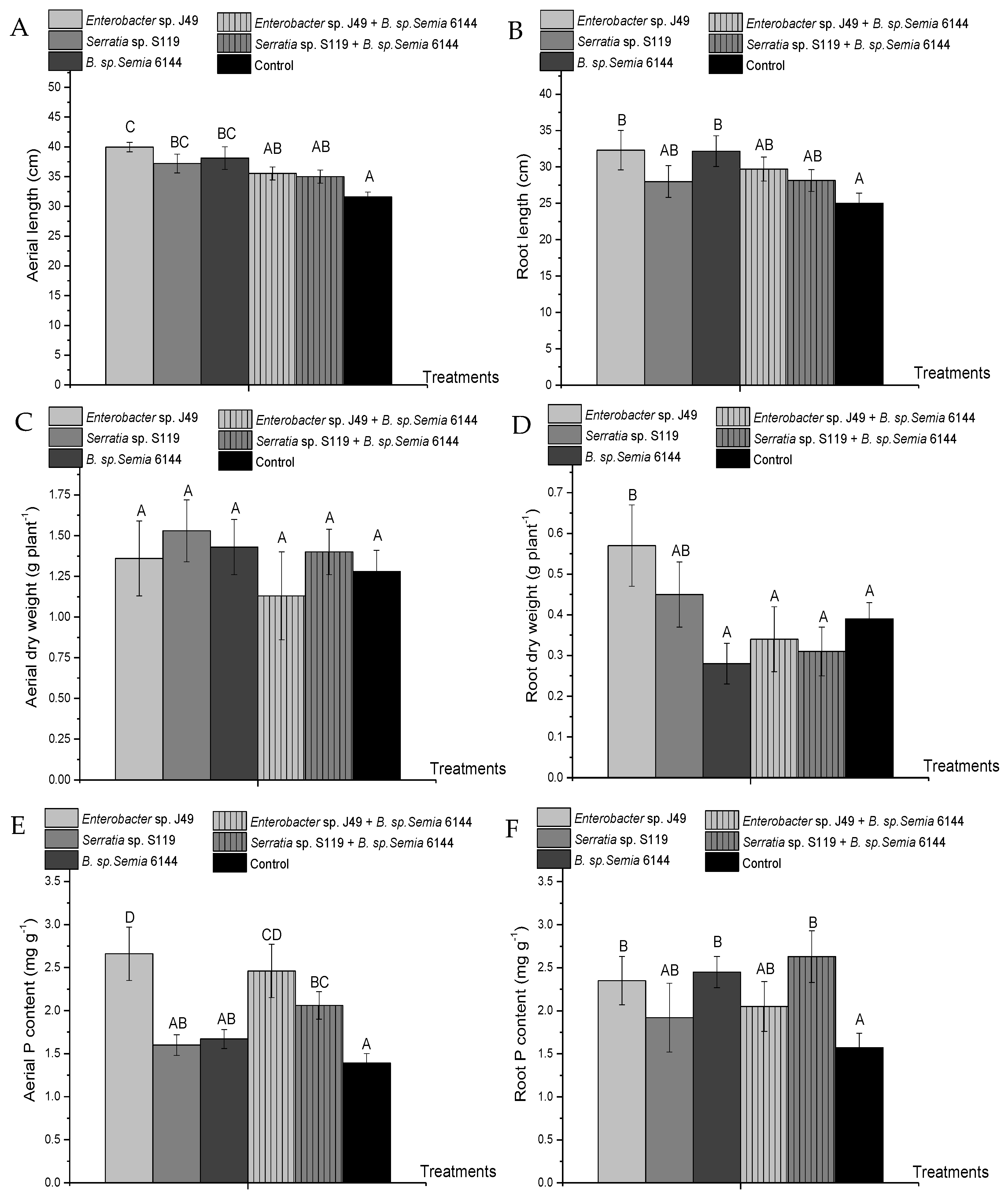
In the peanut assays, the application of single inoculations proved to be a more effective strategy than co-inoculation, yielding consistent improvements in the growth of the plants (Figure 2). The aerial length increased significantly in the plants inoculated with Enterobacter sp. J49, Serratia sp. S119 or B. sp. SEMIA 6144, whereas the root length was enhanced by inoculation of Enterobacter sp. J49 or B. sp. SEMIA 6144. In addition, only Enterobacter sp. J49 significantly increased the root dry weight of the peanut plants. On the other hand, the aerial P content was higher in the plants inoculated with only Enterobacter sp. J49, but also when this strain was co-inoculated with B. sp. SEMIA 6144 or in the co-inoculated treatment Serratia sp. S119 + B. sp. SEMIA 6144. The root P content of the plants showed an enhancement with treatments of Enterobacter sp. J49, B. sp. SEMIA 6144, and Serratia sp. S119 + B. sp. SEMIA 6144. In general, Enterobacter sp. J49 single inoculation produced the most consistent positive effects on the growth and P content of the peanut plants.

3.2. Native PSB Inoculation Enhances Phosphorus Acquisition Efficiency and Plant Growth in Maize and Peanut

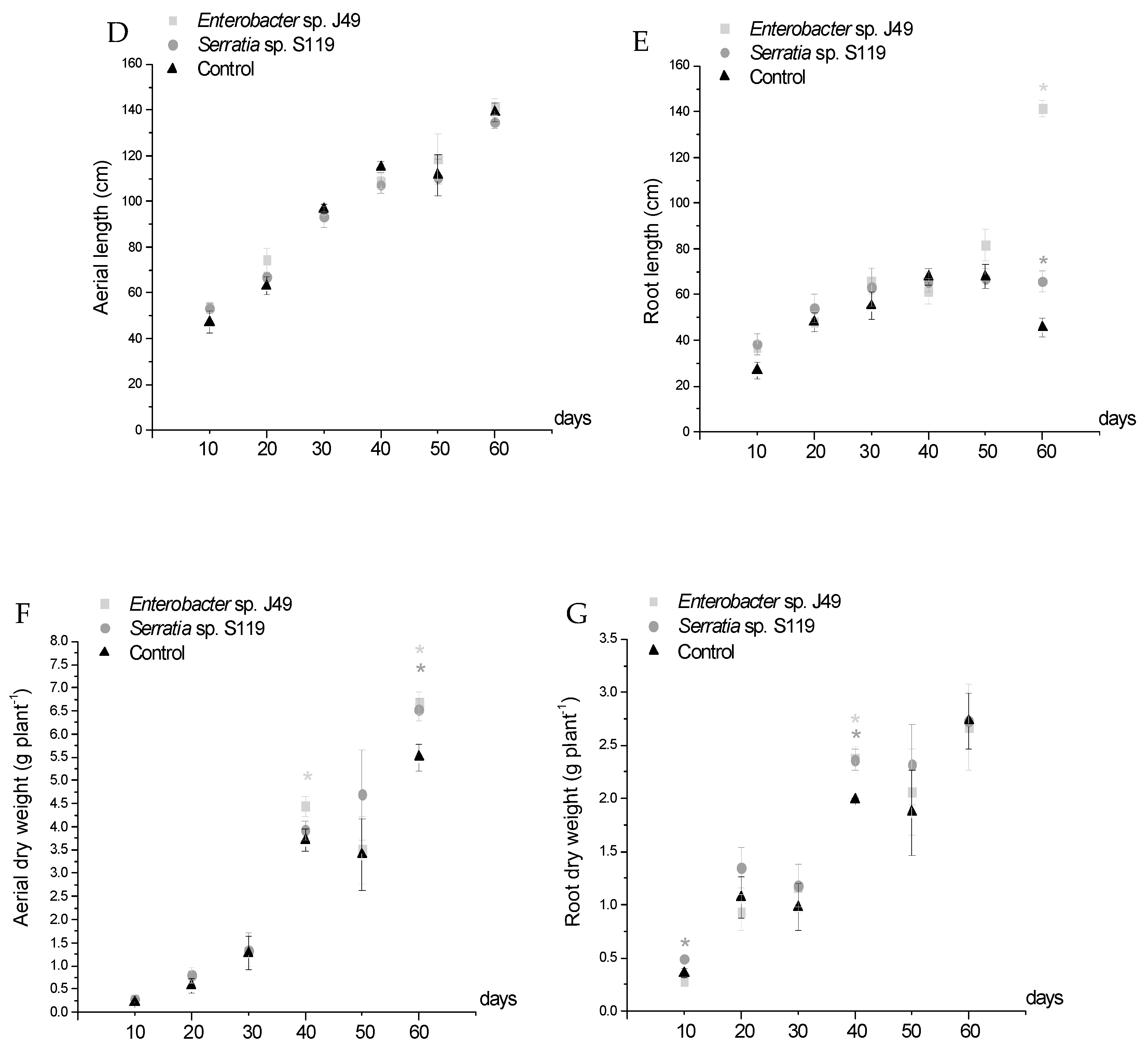
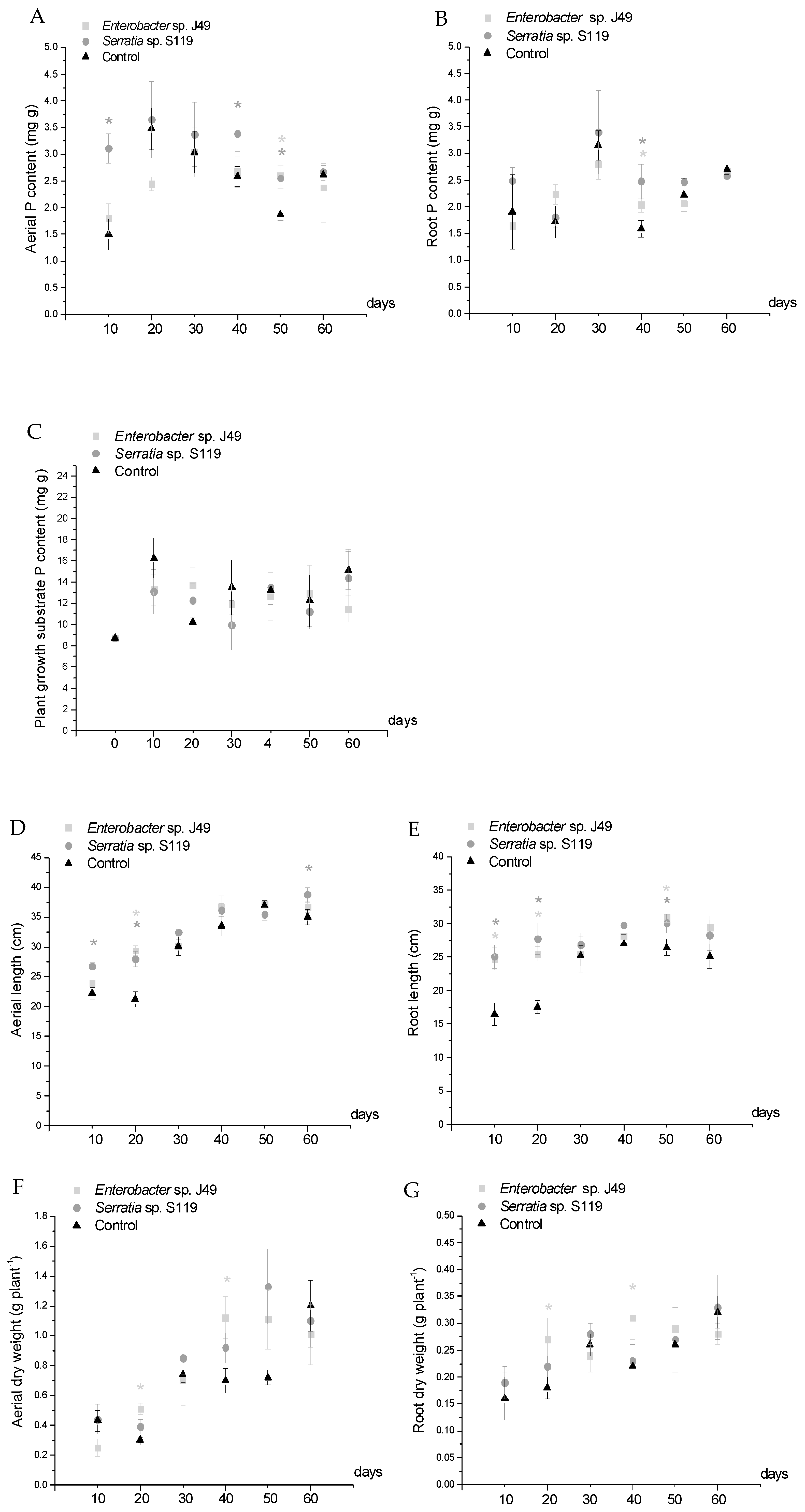
Phosphorus acquisition kinetics and growth parameters were evaluated in the maize and peanut plants inoculated individually with Serratia sp. S119 or Enterobacter sp. J49 at 10 day intervals up to 60 days post-inoculation. The P content of the maize plant tissues and soil did not show significant differences at any of the analyzed growth stages compared to the control plants (Figure 3). Inoculation on the maize plants with the native strains showed significant increases in several of the analyzed plant growth parameters, particularly from 40 days post-inoculation (Figure 3). Inoculation with Enterobacter sp. J49 or Serratia sp. S119 significantly increased the root length at 60 days post-inoculation compared with uninoculated plants. Moreover, the maize plants inoculated with the Enterobacter sp. J49 strain showed a significant increase in the shoot dry weight from 40 days post-inoculation, which persisted until 60 days post-inoculation. At this latter time point, plants inoculated with Serratia sp. S119 also showed significant differences compared with the control plants. Inoculation with Serratia sp. S119 significantly increased the root dry weight from 10 days post-inoculation, with significant differences detected at 40 days post-inoculation.
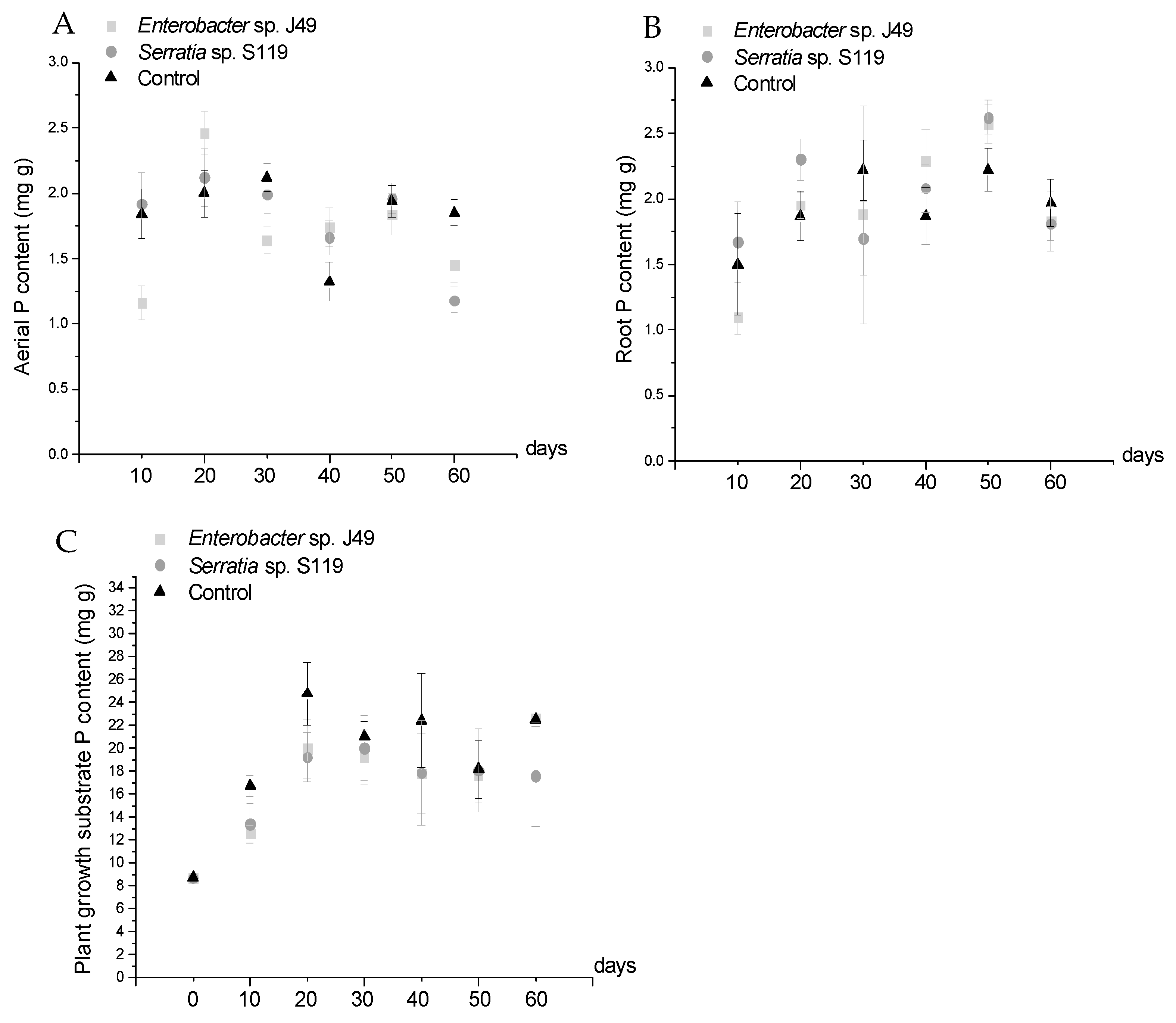
In the peanut plants, inoculation with Serratia sp. S119 significantly increased the aerial P content from 10 days post-inoculation, with effects persisting at 40 and 50 days (Figure 4). Enterobacter sp. J49 significantly increased the aerial P content at 50 days, and both strains increased the P content of roots at 40 days post-inoculation compared with the uninoculated control plants. By contrast, the uninoculated peanut plants showed the highest P content at 20 days in the aerial tissues and 30 days in the roots. The P content of the soil used as the plant growth substrate, as observed in the maize plants, did not present significant differences compared to the control. The evaluation of plant growth at each time point showed that inoculation with Serratia sp. S119 or Enterobacter sp. J49 significantly increased the aerial length of the peanut plants at 20 days post-inoculation (Figure 4). Furthermore, treatment with Serratia sp. S119 showed a significant increase in this parameter at 10 and 60 days post-inoculation. Peanut plants inoculated with either native PSBs showed significantly greater root length at 10, 20, and 50 days post-inoculation. In addition, Enterobacter sp. J49 significantly increased the aerial and root dry weight at 20 and 40 days post-inoculation. Overall, inoculation with the analyzed native PSB produced significant increases in all peanut growth parameters from the earliest stages analyzed (10–20 days post-inoculation), and inoculation with strain J49 being the treatment that showed the most promising results, which increased the aerial and root P content.

3.3. Inoculation of Native PSB Serratia sp. S119 Under Field Conditions Increases Maize Yield and P Content

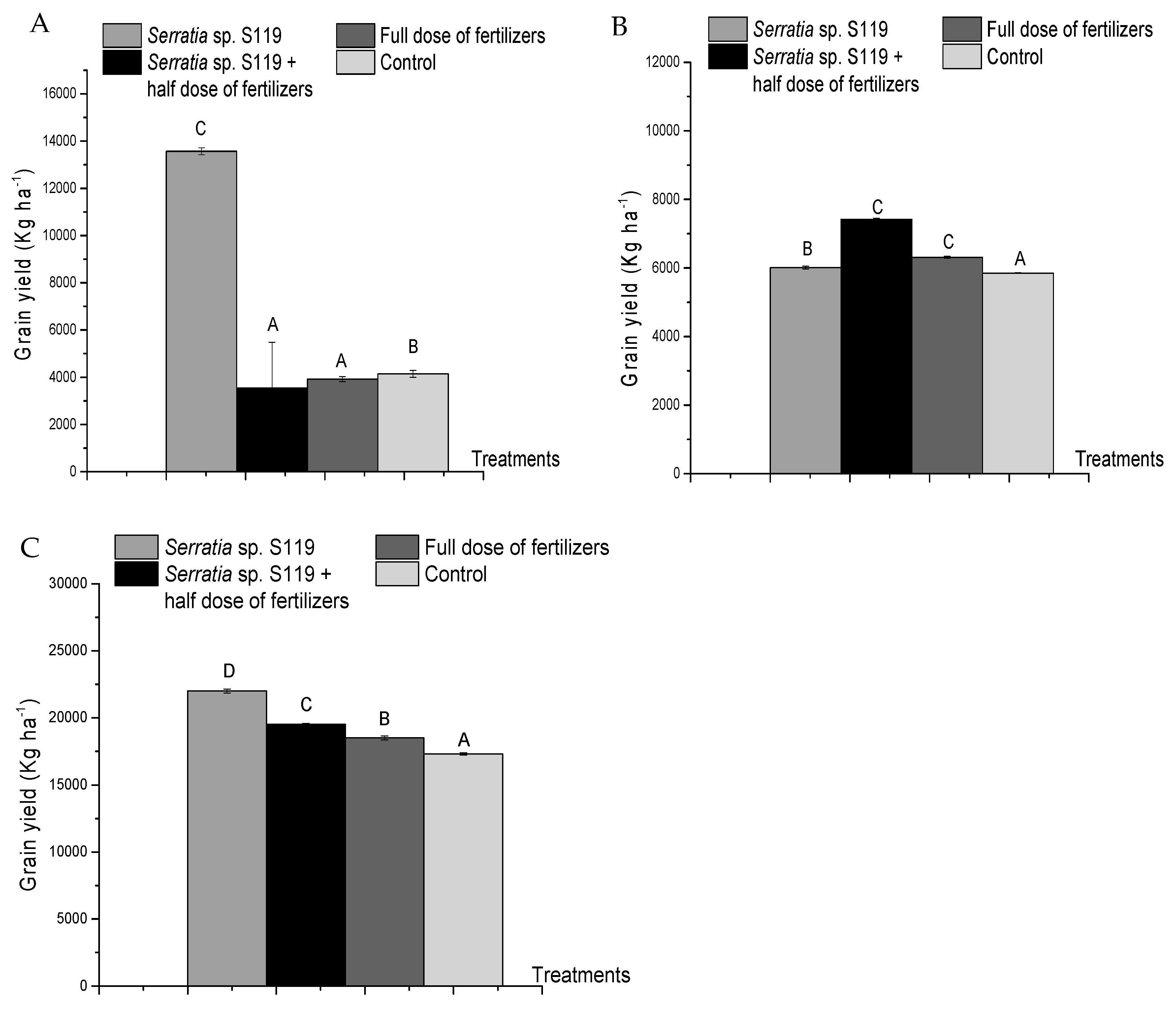
The effect of the inoculation of Serratia sp. S119 on maize under field conditions was evaluated, both in combination with chemical fertilizers and alone in three trials. The single inoculation of the maize plants with Serratia sp. S119 without chemical fertilizers was the only treatment that showed a significant increase compared to uninoculated plants during the 2017–2018 season in La Aguada experimental field (Figure 5A). The grain yield was 227% higher than the obtained yield in the control plants. In the same growing season, the results from the experimental field in Río Cuarto showed a significant increase in grain yield across all treatments (Figure 5B). Notably, bacterial inoculation without chemical fertilizers resulted in a 4% increase in the yield.
Regarding the P and N content in the grains and aerial tissues, the results obtained in the 2017–2018 growing season at La Aguada experimental field indicated that the maize plants inoculated with Serratia sp. S119 and combined with half the recommended fertilizer dose showed a significant increase in the N content in the aerial tissues (Table S2—Supplementary Material). Meanwhile, at the Río Cuarto experimental field, a significant increase in the grain P content was observed in the fertilized plants compared with the control plants.
In the 2018–2019 growing season, the results obtained showed significant enhancement in the yield parameters with all treatments analyzed with respect to the uninoculated control plants (Figure 5C). However, the maize plants inoculated only with Serratia sp. S119 produced the highest increase in the grain yield (25%) with respect to the control plants. The bacterial inoculated plants showed a higher yield than those supplied with half or full fertilizer doses. During this growing season, no significant increases in the P or N content were observed in the grains or aboveground tissues compared with the control plants (Table S2—Supplementary Material).

4. Discussion

Next to nitrogen, phosphorus is the second most important macronutrient required for plant growth. Nevertheless, this plant nutrient is a major limiting nutrient for plant productivity. While the concentration of total P in the soil is high, a low amount is available for plants in an inorganic orthophosphate form [4]. Many microorganisms in which PSB are included play an important role in increasing the phosphorus bioavailability in soil [44]. The use of PSB inoculants as eco-friendly biofertilizers has been increasingly adopted to reduce dependence on chemical fertilizers and to enhance phosphorus-use efficiency [7,45]. PSB play a crucial role in sustainable agriculture due to their capacity to transform insoluble phosphorus compounds into forms available for plant uptake, thereby improving phosphorus nutrition and crop productivity. This study evaluated the effects of single and co-inoculations of native PSB with commercial strains on maize and peanut plants grown in a P deficient environment in microcosm assays. Among the treatments analyzed, the inoculation of Enterobacter sp. J49 and Serratia sp. S119, individually or combined with reference strains, were the most effective in promoting plant growth and increasing the P content in maize and peanut. Within them, the inoculation with the native PSB strain showed the better results than commercial strains. Also, the positive effects observed after a single inoculation of these native bacterial strains on maize and peanut growth were greater than those obtained in co-inoculation with reference strains. Although the coexistence assays demonstrated a non-antagonistic effect between the bacteria assayed, it is likely that a biological niche competition may have occurred in the co-inoculation assays. Alternatively, the beneficial plant growth traits of the co-inoculated bacterial strains could have been expressed differently in the microcosm substrate used. These results are consistent with previous observations reported for these PSB strains [20,21,22], as well as with those reported by Jiang et al. [46]. These authors evaluated single inoculations with PSB (Bacillus megaterium, Enterobacter sp., Providencia rettgeri, and Ensifer adhaerens) and observed enhanced growth in peanut plants. On the other hand, Ríos-Ruiz et al. [47] reported that co-inoculation of PSB and rhizobia significantly improved the growth and agronomic performance of Leucaena leucocephala and Centrosema macrocarpum, including increases in chlorophyll content, plant height, and biomass accumulation. In agreement with these authors, Ribeiro et al. [48] found that co-inoculation between Azospirillum strains of PSB was more effective than a single inoculation in improving plant growth and nutrient uptake in maize. Considering that, in this study, a single inoculation of the selected PSB produced more beneficial effects on plant growth parameters with respect to co-inoculation treatment, this highlights the need for the careful selection of bacterial consortia, as interactions among strains may not always result in additive or synergistic effects.
In this study, the enhanced growth observed in maize and peanut plants inoculated with Serratia sp. S119 and Enterobacter sp. J49 may result from the combined effect of phosphate solubilization and other plant growth-promoting traits expressed by these native PSB. Besides their ability to solubilize phosphate, these strains exhibit additional plant growth-promoting traits, such as biological nitrogen fixation, phytohormone production, siderophore production, and ACC deaminase activity [20,21,22,23]. Thus, both native PSB strains dissolve insoluble phosphorus in soil by secreting gluconic acid and by alkaline and acid phosphatase activity, and simultaneously produce IAA to promote root growth. Additionally, Enterobacter sp. J49 produces siderophores and is able to fix nitrogen.
In addition to plant growth enhancement by PSB strains, another important parameter to analyze when inoculating PSB is the P uptake by plants. Phosphorus requirements are greater during initial stages of plant development, resulting in more pronounced deficiency symptoms compared with mature plants [2]. This study focuses on identifying the critical stage of phosphorus acquisition and characterizing P uptake kinetics in maize and peanut plants at 10 day intervals up to 60 days post-inoculation, covering different initial stages growth. Growth promotion in maize was observed at later stages, and no significant changes in the plant P content were detected. By contrast, in peanut plants, both enhanced growth and increased plant P accumulation were observed during early vegetative stages. This differential response highlights the species-specific nature of plant–microbe interactions. The soil P content used as the plant growth substrate were higher in pots containing either plant species than in the initial soil samples. This increase was consistently observed at the end of the experimental period across the treatments, suggesting a shift in the soil P availability during plant development. In addition to microbial activity, plants can release organic acids through their root exudates that contribute to phosphate solubilization [49]. Moreover, root exudate-derived compounds may stimulate phosphate-solubilizing bacteria and shape the soil microbiome composition under P-limited conditions [50]. These combined mechanisms could explain the higher soil P concentrations detected at the end of the experimental period.
In conclusion, the results from both microcosm assays indicate that Enterobacter sp. J49 and Serratia sp. S119 enhanced the growth of maize and peanut plants and increased the P accumulation in plant tissues, suggesting their ability to mobilize soluble P from insoluble P complexes. The positive effects of inoculation on plant growth may be attributed to increased P acquisition together with other plant growth-promoting traits associated with these native strains. Since nutrient acquisition occurs through the root system, the increases in root length and dry biomass observed in plants inoculated with native strains may represent an advantage for overall plant performance. Consistent with these responses, the higher P content detected in plant tissues suggests that bacterial inoculation may enhance P availability in the rhizosphere, thereby facilitating its uptake by the plants.
Based on the encouraging results observed for the maize plants inoculated with the native strain Serratia sp. S119 in microcosm assays, three field experiments were conducted over two consecutive growing seasons. These assays were directed to evaluate the performance of this native PSB strain at the field scale. In addition to this, these assays were also conducted to analyze if this strain, proposed as a potential P biofertilizer input, could replace or decrease the use of chemical fertilizer.
The results obtained demonstrated the promising potential of inoculation with the selected native bacteria strain under the different growing seasons and field conditions evaluated. It is important to highlight that, during the 2017–2018 growing season, yields were lower than expected due to the scarcity of precipitation in the agriculturally productive area of Argentina (“La Niña phenomenon”). During this growing season, Argentina experienced the most severe drought stress of the last 50 years, representing one of the major environmental constraints affecting the agricultural productivity in Córdoba Province [23]. Also, the P content of the soils used for field assays were contrasting showing the deficiency in La Aguada and the available levels in Rio Cuarto. Notably, the most pronounced effects of bacterial inoculation were recorded in soils with a low P content (La Aguada). These results are particularly relevant, as most agricultural soils exhibit deficiencies in this nutrient. In addition, a significant increase in the maize yield was observed when the native bacteria strain was applied in the absence of chemical fertilizers. This finding reinforces the potential of plant-beneficial bacteria as a more sustainable alternative to chemical inputs. Previous studies from our laboratory have demonstrated, through field assays, the plant growth-promoting effect of Enterobacter sp. J49 as an inoculant for peanut and maize, resulting in increased crop yields, which would permit the reduction of the doses of chemical fertilizers applied [23]. Similar results have been reported for other authors; Beltran-Medina et al. [51] observed that the inoculation of Rhizobium sp. B02 under reduced amounts of P fertilizer leads to shifts in the dynamics of soil P mobilization, increasing the labile P and allowing a 50% reduction in DAP application while maintaining crop development and grain yield. Likewise, the inoculation of PSB, such as Pseudomonas moraviensis, Bacillus safensis, and Falsibacillus pallidus, promoted wheat growth and increased crop productivity [52]. Similarly, the individual inoculation of the PSB Bacillus strain B116 significantly increased sorghum yield and phosphorus grain uptake under field conditions by 19% and 36%, respectively [53]. Comparable results were reported by Kaur and Reddy [54], showing that inoculation with phosphate-solubilizing microorganisms enhanced maize and wheat yields. More recently, Das Mohapatra et al. [55] reported that inoculation with PSB improved the growth and yield of groundnuts (Arachis hypogaea L.). In addition, Ateş et al. [56] reported that field inoculation with the PSB Serratia marcescens and Pseudomonas brenneri increased maize yield by up to 33%. In summary, these studies support the increasing evidence that plant growth-promoting bacteria, especially phosphate-solubilizing bacteria, enhance crop productivity by improving phosphorus acquisition and reducing fertilizer inputs. Thus, this technology contributes to stimulate environmentally sustainable and economically viable agricultural systems [57]. In addition to this, the use of Serratia sp. S119 as a phosphorus fertilizer has an added advantage, since it is native to the agricultural soils of Cordoba. Indeed, previous results have demonstrated that, within a native PSB bacterial collection, this strain was shown to solubilize insoluble P more efficiently compared to other species, such as Bacillus spp. [30]. This strain was originally isolated from peanut plants cultivated in an agricultural region of Córdoba province, where the field experiments were also performed, providing ecological relevance to its evaluation.

5. Conclusions

The results obtained from this study demonstrate that individual inoculation with native PSBs promotes maize and peanut growth and improves phosphorus use efficiency. They also confirm that inoculation with Serratia S119 can significantly increase maize yield without chemical fertilizer application. This approach represents a promising strategy to reduce reliance on chemical fertilizers and to advance sustainable agricultural systems.

Supplementary Materials

The following supporting information can be downloaded at https://www.mdpi.com/article/10.3390/agronomy16121144/s1, Figure S1. Rainfall (mm) recorded at the experimental fields of Río Cuarto (A) and La Aguada (B) during the 2017–2018 growing season, and at La Aguada experimental field (C) during the 2018–2019 growing season; Table S1. Nitrogen, phosphorus, organic matter content, and pH of soils at depth 0–20 cm from the agricultural fields of Río Cuarto and La Aguada during 2017–2018 and 2018–2019 growing seasons; Table S2. P and N content of aerial tissues and grains of maize plants inoculated with Serratia sp. S119, inoculated with Serratia sp. S119 grown on soils fertilized with half dose of chemical fertilizers, and plants grown on soils fertilized with full dose of fertilizer during 2017–2018 and 2018–2019 growing season at harvest.

Author Contributions

Conceptualization, T.T., J.G.A., and M.S.A.; methodology, M.S.A., L.M.L., M.V.L., F.D.M., and C.C.; formal analysis, M.S.A., M.V.L., F.D.M., C.C., and T.T.; investigation, M.S.A., M.V.L., C.C., J.G.A., and T.T.; writing—original draft preparation, M.S.A., L.M.L., J.G.A., and T.T.; writing—review and editing, M.S.A. and T.T.; funding acquisition, J.G.A. and T.T. All authors have read and agreed to the published version of the manuscript.

Funding

This research was supported by Secretaría de Ciencia y Técnica de la Universidad Nacional de Río Cuarto (SECYT-UNRC) C527-2 2020-2023, Consejo Nacional de Investigaciones Científicas y Técnicas (CONICET) 11220200102467CO KA1, and Agencia Nacional de Promoción Científica y Tecnológica (ANPCyT) PICT 2020-SERIEA 02940.

Data Availability Statement

The original contributions presented in this study are included in the article; further inquiries can be directed to the corresponding author.

Acknowledgments

M.S.A.: L.L., J.G.A., and T.T. are members of the research center of CONICET, Argentina, M.V.L. is a biologist, and F.D.M. and C.C. are agronomists. During the preparation of this manuscript, the authors used ChatGPT version GPT-5 to correct the spelling and grammar in the abstract and the results section. The authors have reviewed and edited the output and take full responsibility for the content of this publication.

Conflicts of Interest

The authors declare no conflicts of interest. The funders had no role in the design of the study; in the collection, analyses, or interpretation of the data; in the writing of the manuscript; or in the decision to publish the results.

References

  1. Janes-Bassett, V.; Blackwell, M.S.A.; Blair, G.; Davies, J.; Haygarth, P.M.; Mezeli, M.M.; Stewart, G. A meta-analysis of phosphatase activity in agricultural settings in response to phosphorus deficiency. Soil Biol. Biochem. 2022, 165, 108537. [Google Scholar] [CrossRef]
  2. Malhotra, H.; Vandana; Sharma, S.; Pandey, R. Phosphorus Nutrition: Plant Growth in Response to Deficiency and Excess. In Plant Nutrients and Abiotic Stress Tolerance; Hasanuzzaman, M., Fujita, M., Oku, H., Nahar, K., Hawrylak-Nowak, B., Eds.; Springer: Singapore, 2018. [Google Scholar] [CrossRef]
  3. Lambers, H.; Plaxton, W.C. Phosphorus: Back to the roots. In Annual Plant Reviews. Phosphorus Metabolism in Plants; Plaxton, W.C., Lambers, H., Eds.; Wiley: Hoboken, NJ, USA, 2015; Volume 48, pp. 1–22. [Google Scholar] [CrossRef]
  4. Maharajan, T.; Ceasar, S.A.; Krishna, T.P.A.; Ramakrishnan, M.; Duraipandiyan, V.; Naif Abdulla, A.D.; Ignacimuthu, S. Utilization of molecular markers for improving the phosphorus efficiency in crop plants. Plant Breed. 2018, 37, 10–26. [Google Scholar] [CrossRef]
  5. Arai, Y.; Sparks, D.L. Phosphate reaction dynamics in soils and soil components: A multiscale approach. Adv. Agron. 2007, 94, 135–179. [Google Scholar] [CrossRef]
  6. Yin, J.; Sui, Z.; Huang, J. Mobilization of soil inorganic phosphorus and stimulation of crop phosphorus uptake and growth induced by Ceriporia lacerata HG2011. Geoderma 2021, 383, 114690. [Google Scholar] [CrossRef]
  7. Bargaz, A.; Elhaissoufi, W.; Khourchi, S.; Benmrid, B.; Borden, K.A.; Rchiad, Z. Benefits of phosphate solubilizing bacteria on belowground crop performance for improved crop acquisition of phosphorus. Microbiol. Res. 2021, 252, 126842. [Google Scholar] [CrossRef] [PubMed]
  8. Khan, F.; Siddique, A.B.; Shabala, S.; Zhou, M.; Zhao, C. Phosphorus Plays Key Roles in Regulating Plants’ Physiological Responses to Abiotic Stresses. Plants 2023, 3, 2861. [Google Scholar] [CrossRef]
  9. Elgharably, A. Effects of rock phosphate added with farmyard manure or sugar juice residues on wheat growth and uptake of certain nutrients and heavy metals. J. Soils Sediments 2020, 20, 3931–3940. [Google Scholar] [CrossRef]
  10. Dixon, M.; Simonne, E.; Obreza, T.; Liu, G. Crop Response to Low Phosphorus Bioavailability with a Focus on Tomato. Agronomy 2020, 10, 617. [Google Scholar] [CrossRef]
  11. Rothwell, S.A.; Doody, D.G.; Johnston, C.; Forber, K.J.; Cencic, O.; Rechberger, H.; Withers, P.J.A. Phosphorus stocks and flows in an intensive livestock dominated food system. Resour. Conserv. Recycl. 2020, 163, 105065. [Google Scholar] [CrossRef]
  12. Meena, R.S.; Kumar, S.; Datta, R.; Lal, R.; Vijayakumar, V.; Brtnicky, M.; Sharma, M.P.; Yadav, G.S.; Jhariya, M.K.; Jangir, C.K.; et al. Impact of Agrochemicals on Soil Microbiota and Management: A Review. Land 2020, 9, 34. [Google Scholar] [CrossRef]
  13. Adesemoye, A.O.; Kloepper, J.W. Plant-microbes interactions in enhanced fertilizer-use efficiency. Appl. Microbiol. Biotechnol. 2009, 85, 1–12. [Google Scholar] [CrossRef] [PubMed]
  14. Widdig, M.; Heintz-Buschart, A.; Schleuss, P.-M.; Guhr, A.; Borer, E.T.; Seabloom, E.W.; Spohn, M. Effects of nitrogen and phosphorus addition on microbial community composition and element cycling in a grassland soil. Soil Biol. Biochem. 2020, 151, 108041. [Google Scholar] [CrossRef]
  15. Meena, R.S.; Meena, P.D.; Yadav, G.S.; Yadav, S.S. Phosphate Solubilizing Microorganisms, Principles and Application of Microphos Technology. J. Clean. Prod. 2017, 145, 157–158. [Google Scholar] [CrossRef]
  16. Rawat, P.; Das, S.; Shankhdhar, D.; Shankhdhar, S.C. Phosphate-Solubilizing Microorganisms: Mechanism and Their Role in Phosphate Solubilization and Uptake. J. Soil Sci. Plant Nutr. 2021, 21, 49–68. [Google Scholar] [CrossRef]
  17. Stevenson, F.J. Cycles of Soil: Carbon, Nitrogen, Phosphorus, Sulfur, Micronutrients; John Wiley and Sons: New York, NY, USA, 2005. [Google Scholar]
  18. Sahoo, R.K.; Ansari, M.W.; Pradhan, M.; Dangar, T.K.; Mohanty, S.; Tuteja, N. Phenotypic and molecular characterization of efficient native Azospirillum strains from rice fields for crop improvement. Protoplasma 2014, 251, 943–953. [Google Scholar] [CrossRef]
  19. Cheng, Y.; Narayanan, M.; Shi, X.; Chen, X.; Li, Z.; Ma, Y. Phosphate-solubilizing bacteria: Their agroecological function and optimistic application for enhancing agro-productivity. Sci. Total Environ. 2023, 901, 66468. [Google Scholar] [CrossRef] [PubMed]
  20. Anzuay, M.S.; Ludueña, L.M.; Angelini, J.G.; Fabra, A.; Taurian, T. Beneficial effects of native phosphate solubilizing bacteria on peanut (Arachis hypogaea L.) growth and phosphorus acquisition. Symbiosis 2015, 66, 89–97. [Google Scholar] [CrossRef]
  21. Anzuay, M.S.; Ruíz Ciancio, M.G.; Ludueña, L.M.; Angelini, J.G.; Barros, G.; Pastor, N.; Taurian, T. Growth promotion of peanut (Arachis hypogaea L.) and maize (Zea mays L.) plants by single and mixed cultures of efficient phosphate solubilizing bacteria that are tolerant to abiotic stress and pesticides. Microbiol. Res. 2017, 199, 98–109. [Google Scholar] [CrossRef] [PubMed]
  22. Taurian, T.; Anzuay, M.S.; Angelini, J.G.; Tonelli, M.A.; Ludueña, L.; Pena, D.; Ibañez, F.; Fabra, A. Phosphate-solubilizing peanut associated bacteria: Screening for plant growth-promoting activities. Plant Soil 2010, 329, 421–431. [Google Scholar] [CrossRef]
  23. Anzuay, M.S.; Prenollio, A.; Ludueña, L.M.; Morla, F.D.; Cerliani, C.; Lucero, C.; Angelini, J.G.; Taurian, T. Enterobacter sp. J49: A Native Plant Growth-Promoting Bacteria as Alternative to the Application of Chemical Fertilizers on Peanut and Maize Crops. Curr. Microbiol. 2023, 80, 85. [Google Scholar] [CrossRef]
  24. Andrade, F.; Otegui, M.E.; Cirilo, A.; Uhart, S. Ecofisiología y Manejo del Cultivo de Maíz; Asociación Maíz y Sorgo Argentino: Buenos Aires, Argentina, 2023; Available online: https://www.maizar.org.ar/documentos/cultivo%20de%20maiz_version%20digital.pdf (accessed on 8 June 2026).
  25. Contardi, M.; Terré, E. El Agro Argentino en el Mundo: Ranking Mundial de Exportaciones. Semanal de la Bolsa de Comercio de Rosario ISSN 2796-7824. 2024. Available online: https://www.bcr.com.ar/es/print/pdf/node/102776 (accessed on 8 June 2026).
  26. Córdoba Cereal Stock-Market Bag Institute. Cálculos Finales de Producción de Maíz en Córdoba—Campaña 2021/22. 2023. Available online: https://www.agrositio.com.ar/noticia/225897-calculos-finales-de-produccion-de-maiz-en-cordoba-campana-202122.html (accessed on 8 June 2026).
  27. Hammons, R.O.; Herman, D.; Stalker, H.T. Origin and Early History of the Peanut. In Peanuts: Genetics, Processing, and Utilization; Stalker, H.D., Wilson, R.F., Eds.; Elsevier Inc.: London, UK, 2016; pp. 1–26. [Google Scholar]
  28. Agricultural Simplified Information System. Informe Maní 2021–2022. 2023. Available online: https://www.argentina.gob.ar/sites/default/files/informe_sisa_mani_2021_2022.pdf (accessed on 8 June 2026).
  29. Sainz Rosas, H.; Eyherabide, M.; Larrea, G.; Martinez Cuesta, N.; Angelini, H.; Reussi Calvo, N.; Wyngaard, N. Relevamiento y Determinación de Propiedades Químicas en Suelos de Aptitud Agrícola de la Región Pampeana. Simposio Fertilidad. 2019. Available online: https://fertilizar.org.ar/wp-content/uploads/2021/02/SAINZ-ROZAS-Fertilidad-2019-acta.pdf (accessed on 8 June 2026).
  30. Anzuay, M.S.; Frola, O.; Angelini, J.G.; Ludueña, L.M.; Fabra, A.; Taurian, T. Genetic diversity of phosphate-solubilizing peanut (Arachis hypogaea L.) associated bacteria and mechanisms involved in this ability. Symbiosis 2013, 60, 143–154. [Google Scholar] [CrossRef]
  31. Dos Santos Ferreira, N.; Coniglio, A.; Puente, M.; Sant’Anna, F.H.; Maroniche, G.; García, J.; Molina, R.; Nievas, S.; Volpiano, C.G.; Ambrosini, A.; et al. Genome-based reclassification of Azospirillum brasilense Az39 as the type strain of Azospirillum argentinense sp. nov. Int. J. Syst. Evol. Microbiol. 2022, 72, 005475. [Google Scholar] [CrossRef]
  32. Díaz, M.; Bach, T.; González Anta, G.; Agaras, B.; Wibberg, D.; Noguera, F.; Canciani, W.; Valverde, C. Agronomic efficiency and genome mining analysis of the wheat-biostimulant rhizospheric bacterium Pseudomonas pergaminensis sp. nov. strain 1008T. Front Plant Sci. 2022, 13, 894985. [Google Scholar] [CrossRef]
  33. Beringer, J.E. R factor transfer in Rhizobium leguminosarum. Gen. Microbiol. 1974, 84, 188–198. [Google Scholar] [CrossRef]
  34. Miller, J.H. Experiments in Molecular Genetics; Cold Spring Harbor Laboratory: Cold Spring Harbory, NY, USA, 1972; p. 433. [Google Scholar]
  35. Döebereiner, J. Isolation and identification of aerobic nitrogen fixing bacteria from soil and plants. In Methods in Applied Soil Microbiology and Biochemistry; Alef, K., Nannipieri, P., Eds.; AcademicPress: London, UK, 1995; pp. 134–141. [Google Scholar]
  36. Vincent, J.M. A Manual for the Practical Study of Root Nodule Bacteria; Blackwell Scientific: Oxford, UK, 1970. [Google Scholar]
  37. Dey, R.; Pal, K.K.; Bhatt, D.M.; Chauhan, S.M. Growth promotion and yield enhancement of peanut (Arachis hypogaea L.) by application of plant growth promoting rhizobacteria. Microbiol. Res. 2004, 159, 371–394. [Google Scholar] [CrossRef]
  38. Pereira, P.; Ibáñez, F.; Rosenblueth, M.; Etcheverry, M.; Martínez-Romero, E. Analysis of the Bacterial Diversity Associated with the Roots of Maize (Zea mays L.) through Culture-Dependent and Culture-Independent Methods. Int. Sch. Res. Not. 2011, 2011, 938546. [Google Scholar] [CrossRef]
  39. Taurian, T.; Aguilar, O.M.; Fabra, A. Characterization of nodulating peanut rhizobia isolated from a native soil population in Córdoba, Argentina. Symbiosis 2002, 33, 59–72. [Google Scholar]
  40. Hoagland, D.; Arnon, D.I. Circular; California Agricultural Experiment Station: Davis, CA, USA, 1950; Volume 347. [Google Scholar]
  41. Jackson, M.L. Soil Chemical Analysis; Prentic Hall (India) Pvt. Ltd.: New Delhi, India, 1973. [Google Scholar]
  42. Nelson, D.W.; Sommers, L.E. Determination of total nitrogen in plant material. Agron. J. 1973, 65, 109–112. [Google Scholar] [CrossRef]
  43. Di Rienzo, J.A.; Casanoves, F.; Balzarini, M.G.; Gonzalez, L.; Tablada, M.; Robledo, C.W. InfoStat Versión, Grupo InfoStat, FCA, Universidad Nacional de Córdoba, Argentina. 2020. Available online: http://www.infostat.com.ar (accessed on 8 June 2026).
  44. Silva, L.I.; Pereira, M.C.; Carvalho, A.M.X.; Buttrós, V.H.; Pasqual, M.; Dória, J. Phosphorus-Solubilizing Microorganisms: A Key to Sustainable Agriculture. Agriculture 2023, 13, 462. [Google Scholar] [CrossRef]
  45. Aliyat, F.Z.; Maldani, M.; El Guilli, M.; Nassiri, L.; Ibijbijen, J. Isolation and characterization of phosphate solubilizing bacteria from phosphate solid sludge of the Moroccan phosphate mines. Open Agric. J. 2020, 14, 16–24. [Google Scholar] [CrossRef]
  46. Jiang, H.; Qi, P.; Wang, T.; Chi, X.; Wang, M.; Chen, M.; Chen, N.; Panet, L. Role of halotolerant phosphate-solubilising bacteria on growth promotion of peanut (Arachis hypogaea) under saline soil. Ann. Appl. Biol. 2018, 174, 20–30. [Google Scholar] [CrossRef]
  47. Ríos-Ruiz, W.F.; Castro-Tuanama, R.; Valdez-Nuñez, R.A.; Torres-Bernal, L.; Jave-Concepción, H.G.; Daza-Pérez, A.C.; Barrera-Lozano, M.; Archentti-Reátegui, F. Co-Inoculation of Phosphate-Solubilizing Bacteria and Rhizobia Increases Phosphorus Availability and Promotes the Development of Forage Legumes. Agronomy 2024, 14, 2493. [Google Scholar] [CrossRef]
  48. Ribeiro, V.P.; Gomes, E.A.; de Sousa, S.M.; de Paula Lana, U.G.; Coelho, A.M.; Marriel, I.E.; de Oliveira-Paiva, C.A. Co-inoculation with tropical strains of Azospirillum and Bacillus is more efficient than single inoculation for improving plant growth and nutrient uptake in maize. Arch. Microbiol. 2022, 204, 143. [Google Scholar] [CrossRef]
  49. Hinsinger, P. Bioavailability of soil inorganic P in the rhizosphere as affected by root-induced chemical changes: A review. Plant Soil 2001, 237, 173–195. [Google Scholar] [CrossRef]
  50. Pantigoso, H.A.; Manter, D.K.; Fonte, S.J.; Vivanco, J.M. Root exudate-derived compounds stimulate the phosphorus solubilizing ability of bacteria. Sci. Rep. 2023, 13, 4050. [Google Scholar] [CrossRef]
  51. Beltran-Medina, I.; Romero-Perdomo, F.; Molano-Chavez, L.; Gutiérrez, A.Y.; Silva, A.M.M.; Estrada-Bonilla, G. Inoculation of phosphate-solubilizing bacteria improves soil phosphorus mobilization and maize productivity. Nutr. Cycl. Agroecosyst. 2023, 126, 21–34. [Google Scholar] [CrossRef]
  52. Wang, Z.; Zhang, H.; Liu, L.; Li, S.; Xie, J.; Xue, X.; Jiang, Y. Screening of phosphate-solubilizing bacteria and their abilities of phosphorus solubilization and wheat growth promotion. BMC Microbiol. 2022, 22, 296. [Google Scholar] [CrossRef]
  53. Mattos, B.B.; Marriel, I.E.; Sousa, S.M.; Lana, U.G.P.; Schaffert, R.E.; Gomes, E.A.; Oliveira-Paiva, C.A. Sorghum genotypes response to inoculation with phosphate solubilizing bacteria. Rev. Bras. Milho Sorgo 2020, 19, e1177. [Google Scholar] [CrossRef]
  54. Gurdeep Kaur, M.; Reddy, S. Influence of P-solubilizing bacteria on crop yield and soil fertility at multilocational sites. Eur. J. Soil Biol. 2014, 61, 35–40. [Google Scholar] [CrossRef]
  55. Das Mohapatra, M.; Sahoo, R.K.; Tuteja, N. Phosphate solubilizing bacteria, Pseudomonas aeruginosa, improve the growth and yield of groundnut (Arachis hypogaea L.). Physiol. Mol. Biol. Plants 2024, 30, 1099–1111. [Google Scholar] [CrossRef]
  56. Ateş, Ç.; Yalçin, G.R.; Taşpinar, K.; Alveroğlu, V. Isolation and characterization of phosphate solubilizing bacteria and effect of growth and nutrient uptake of maize under pot and field conditions. Commun. Soil Sci. Plant Anal. 2022, 53, 2114–2124. [Google Scholar] [CrossRef]
  57. Velten, S.; Leventon, J.; Jager, N.; Newig, J. What Is Sustainable Agriculture? A Systematic Review. Sustainability 2015, 7, 7833–7865. [Google Scholar] [CrossRef]
Figure 1. Plant growth parameters and P content of maize plants inoculated with the different treatments analyzed at 21 days post-inoculation: aerial length (A), root length (B), aerial dry weight (C), root dry weight (D), aerial P content (E), root P content (F). Values are the mean ± S.E. The experiment was repeated two times with 8–10 replicates per treatment. Different letters indicate significant differences according to the ANOVA LSD Fisher test (p < 0.05).
Agronomy 16 01144 g001
Figure 2. Plant growth parameters and P content of peanut plants inoculated with the different treatments analyzed at 45 days post-inoculation: aerial length (A), root length (B), aerial dry weight (C), root dry weight (D), aerial P content (E), root P content (F). Values are the mean ± S.E. The experiment was repeated two times with 8–10 replicates per treatment. Different letters indicate significant differences according to the ANOVA LSD Fisher test (p < 0.05).
Agronomy 16 01144 g002
Figure 3. Plant growth parameters and P content of maize plants for different treatments, assessed every 10 days until 60 days post-inoculation: aerial P content (A), root P content (B), plant growth substrate P content (C), aerial length (D), root length (E), aerial dry weight (F), root dry weight (G). Values are the mean ± S.E. * indicates significant differences among treatments. The experiment was repeated two times with 8–10 replicates (n) per treatment. * indicates significant differences with respect to control according to the ANOVA LSD Fisher test (p < 0.05).
Agronomy 16 01144 g003aAgronomy 16 01144 g003b
Figure 4. Plant growth parameters and P content of peanut plants for different treatments, assessed every 10 days until 60 days post-inoculation: aerial P content (A), root P content (B), plant growth substrate P content (C), aerial length (D), root length (E), aerial dry weight (F), root dry weight (G). Values are the mean ± S.E. The experiment was repeated two times with 8–10 replicates (n) per treatment. * indicates significant differences with respect to control according to the ANOVA LSD Fisher test (p < 0.05).
Agronomy 16 01144 g004
Figure 5. Grain yield (kg ha −1) of the maize crop on plants inoculated with Serratia sp. S119 and inoculated with Serratia sp. S119 grown on soils fertilized with a half dose of chemical fertilizers and grown on soils fertilized with a full dose of fertilizer in the 2017–2018 and 2018–2019 growing seasons at the harvest. In the 2017–2018 growing season, the assays were employed in the agricultural fields of La Aguada (A) and Río Cuarto (B) and in the 2018–2019 growing season the assays were employed in La Aguada (C). Data are means ± S.E. of 4 replicates. Different letters indicate significant differences according to the ANOVA LSD Fisher test (p < 0.05).
Agronomy 16 01144 g005
Disclaimer/Publisher’s Note: The statements, opinions and data contained in all publications are solely those of the individual author(s) and contributor(s) and not of MDPI and/or the editor(s). MDPI and/or the editor(s) disclaim responsibility for any injury to people or property resulting from any ideas, methods, instructions or products referred to in the content.