Article

The Regulatory Effect of Integrated Agronomic Management on the Root and Shoot Growth Relationship of Shallow-Buried Drip Irrigation Maize in the West Liaohe Plain

1
College of Agronomy, Inner Mongolia Minzu University, Tongliao 028000, China
2
Key Laboratory of Crop Physiology and Ecology, Institute of Crop Sciences, Chinese Academy of Agricultural Sciences, Ministry of Agriculture and Rural Affairs, Beijing 100089, China
3
Tongliao Academy of Agriculture and Animal Husbandry Sciences, Tongliao 028015, China
*
Authors to whom correspondence should be addressed.
These authors contributed equally to this work.
Agronomy 2026, 16(11), 1099; https://doi.org/10.3390/agronomy16111099
Submission received: 13 April 2026 / Revised: 20 May 2026 / Accepted: 29 May 2026 / Published: 1 June 2026

Abstract

Water conservation and grain yield improvement are primary objectives for sustainable agricultural development in arid and semi-arid regions. Variety selection, planting density, and irrigation management represent crucial agronomic practices that regulate root–crown growth and grain yield in maize. A two-year field experiment was carried out from 2021 to 2022 in Tongliao, Inner Mongolia Autonomous Region, China. Two widely cultivated maize varieties, DK159 and ZD958, were used as test materials. Two planting densities were designed: 60,000 plants ha−1 (D1, local farmers’ conventional density) and 90,000 plants ha−1 (D2). Five irrigation levels were established: 450 mm (I5, local farmers’ practice, CK), 360 mm (I4), 270 mm (I3), 180 mm (I2), and 90 mm (I1). We investigated the interactive effects of variety, planting density, and irrigation amount on dry matter accumulation pre- and post-silking, root spatial distribution characteristics, and the coordination mechanism of root–shoot growth in maize under shallow-buried drip irrigation. The results indicated that grain yield under DK159 was 5.37–6.69% higher than that under ZD958, and the yield under D2 was 13.32–15.89% higher than that under D1. At the D1 density, no significant difference in grain yield was observed between I2 and I5, with yields ranging from 12.90 to 13.92 t ha−1. At the D2 density, grain yield under I3 was statistically similar to that under I5, ranging from 15.54 to 17.39 t ha−1. Compared with local farmers’ conventional planting density and full irrigation regime, increasing planting density and reducing irrigation amount altered the vertical root distribution of maize. The proportion of roots distributed in the 0–20 cm topsoil layer decreased, while appropriate water deficit markedly increased root proportion in the 40–60 cm subsoil layer. Increasing planting density and moderately reducing irrigation effectively promoted pre- and post-silking dry matter accumulation while maintaining a high harvest index (HI). At silking stage, the root–shoot ratio increased initially and then stabilized with increasing irrigation amount. At maturity, the root–shoot ratio gradually decreased and tended to be stable as irrigation increased. Therefore, the adoption of water-efficient maize varieties, combined with appropriately increased planting density and optimized irrigation regimes, can coordinate root–shoot relationships in the early growth period, facilitate early root establishment and late-stage nutrient accumulation, and thus improve maize yield. Under the conditions of shallow-buried drip irrigation in the supplementary irrigation area of the West Liaohe Plain, the adoption of water-saving maize varieties, appropriately increased planting density, and optimized irrigation regimes can coordinate the developmental relationship between root and above-ground growth, promote early root development and late-stage nutrient accumulation, and thereby simultaneously increase maize grain yield. These results provide practical theoretical and technical references for achieving high-yield and water-saving maize production under similar ecological conditions.

1. Introduction

Water scarcity is the primary constraint on agricultural production in arid and semi-arid regions, and water security constitutes the foundation of food security. Saving water while increasing grain yield is a crucial strategy for realizing green and sustainable agricultural development in irrigated areas. As the most widely produced cereal crop worldwide, the high and stable yield of maize is essential for global food security. With the continuous improvement of living standards, the demand for maize, as a dual-purpose grain and forage crop, has been steadily rising. Nevertheless, under the current constraints of limited water and land resources, satisfying the growing food demand can only be accomplished by increasing yield per unit area. Maize is a high-yielding crop with high water requirements, which creates a critical dilemma: reconciling water conservation with grain production has become an urgent issue to be addressed in arid and semi-arid regions.
Maize genotypes differ substantially in grain yield [1]. Previous studies have also demonstrated that selecting an appropriate maize hybrid and optimizing planting density can effectively improve grain yield [2,3]. Appropriately increasing planting density represents the most direct and effective measure to raise maize yield per unit area [4,5], although it may increase total crop water consumption [6]. Nevertheless, such practice reduces soil evaporation [3], and the magnitude of yield increase far exceeds the increment in water use. Accordingly, increasing planting density significantly improves both maize grain yield and achieves high water productivity [7].
As a critical agricultural practice, irrigation management plays a vital role in ensuring grain yield stability and growth, as well as food security, especially in water-scarce arid and semi-arid regions [8]. Drip irrigation can effectively reduce soil evaporation and deep percolation, improve water conservation, and significantly enhance water and fertilizer use efficiency [9]. Studies have shown that drip irrigation optimizes the root growth environment and promotes favorable root distribution in the soil profile [10]. It also affects the accumulation and translocation of above-ground dry matter in maize, thereby increasing grain yield [11]. In addition, appropriate irrigation amounts contribute to a more rational root distribution, which further improves water and nutrient uptake efficiency.
The root system, as the primary organ for maize to absorb water and nutrients, lays the foundation for sustaining plant growth and vital physiological functions. Its development and spatial distribution directly affect dry matter accumulation and grain yield formation. Balancing root and shoot growth are therefore crucial for achieving high maize yields [12]. The root system and above-ground stems and leaves promote each other mutually, forming an integrated functional system of the crop, which can actively adapt to and self-regulate in response to external environmental conditions [13]. When surface soil moisture is moderately regulated, roots tend to extend deeper into the soil profile, reducing their distribution in the topsoil while promoting growth in deeper soil layers. This not only facilitates root development but also enables full utilization of deep soil moisture [14].
The coordination between root growth and canopy development is critical for synergistically improving crop yield and the efficiency of water and fertilizer resource utilization. The root-to-shoot ratio increases with increasing planting density [15]. Under water stress conditions, this ratio rises as the stress intensity increases. While water deficits during the early growth stage of maize can be partially compensated for in later stages, alleviating losses in root growth, water shortages during the middle growth stage exert more severe and persistent impacts on roots, making recovery difficult even with subsequent irrigation [16]. Studies have shown that the primary root system of maize is mainly distributed in the 0–40 cm soil layer, with an increased distribution in deeper layers during the mid-to-late growth stages [17]. However, both excessive and insufficient irrigation have adverse effects on root growth and yield formation [18].
In addition, high planting densities intensify resource competition among plants, resulting in distinct root growth patterns compared to conventional densities. Specifically, high planting density generally restricts downward root growth under adequate irrigation; however, moderate reduction in irrigation under dense planting can induce roots to grow into deeper soil layers for water uptake, thereby promoting deep root distribution [19]. Significant differences in water use efficiency exist among different maize genotypes; water-efficient varieties can maximize the utilization of irrigation water to improve maize yield and promote coordinated root-crown growth [20]. Previous studies have mostly explored the separate effects of planting density or irrigation regime on maize root distribution, dry matter accumulation, and yield formation under conventional cultivation. Most of these studies focused only on single-factor regulation, lacking systematic analysis of the coupling effect between density and irrigation. Meanwhile, research on the root–shoot coordination mechanism and physiological trade-offs of typical maize varieties under shallow-buried drip irrigation in the West Liaohe Plain remains insufficient. Accordingly, this study systematically investigated the variations in root spatial distribution and dry matter allocation of maize in response to different varieties, planting density, and irrigation amount, and clarifies the physiological regulation pathway of root–shoot coordination and yield formation under local ecological conditions, so as to fill the research gaps in existing studies.
The West Liaohe Plain is an important agricultural and livestock production base in northern China. Maize production in this plain accounts for roughly 3.2% of the total output in China. Cattle inventory accounts for 4.9% of China’s total. It plays an irreplaceable role in safeguarding regional food security, optimizing the agricultural industrial structure, and promoting the integrated development of crop farming and animal husbandry across the West Liaohe River Basin. This region is faced with severe water shortage, and about 70% of local water resources are consumed by agricultural irrigation, leading to a prominent water supply–demand contradiction. Such water stress has severely limited maize yield improvement and the sustainable development of local agriculture. Accordingly, the objectives of this study were: (1) to explore the responses of root distribution and nutrient accumulation characteristics of different maize varieties to planting density and irrigation regimes under shallow-buried drip irrigation, and to clarify the response rules of maize dry matter partitioning and root–shoot ratio to plant density and irrigation amount; (2) to elucidate the regulatory mechanism of ETc on the relationship between root and above-ground growth of maize population, and reveal the physiological regulation pathway of root–shoot coordination and yield formation. This study aims to provide a theoretical basis for achieving high grain yield of densely planted maize under shallow-buried drip irrigation in the West Liaohe Plain.

2. Materials and Methods

2.1. Overview of the Test Site

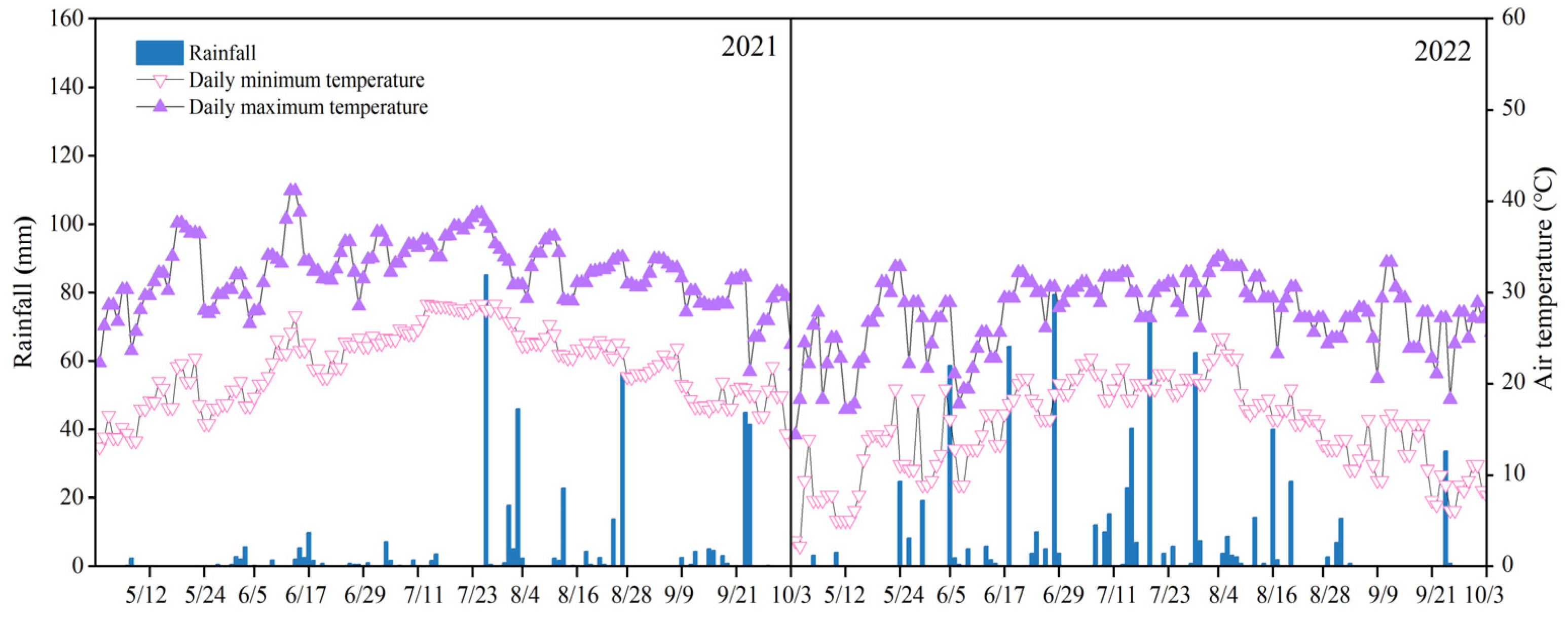
The field experiment was conducted during the 2021–2022 growing seasons in Qianjiadian Town, Horqin District, Tongliao City, Inner Mongolia Autonomous Region, China (43°43′ N, 122°26′ E; altitude: 174 m). The experimental site is characterized by an annual accumulated temperature (≥10 °C) of 3000–3300 °C·d, an annual sunshine duration of 2500–2800 h. The precipitation was 326.4 mm (2021) and 325.8 mm (2022) during the growth period of maize, which is slightly higher than the 40-year average precipitation of 319.6 mm in the same period at the experimental station. The soil at the experimental site is a calcareous chestnut soil with a loamy texture; in the 0–60 cm soil layer, the bulk density is 1.30 g/cm3, and the field capacity is 34.13%. The preceding crop planted in the experimental field was maize. The physical and chemical properties of the soil during the two experimental years are presented in Table 1, and the dynamic changes in temperature and precipitation throughout the experimental period are shown in Figure 1.

2.2. Experimental Design

The experiment employed a split-split plot design, with variety as the main plot, planting density as the secondary plot, and irrigation amount as the sub-secondary plot. The test varieties were DK159 (a water-efficient variety) and ZD958 (a conventional variety). Planting densities were set at 6.0 × 10⁴ plants ha−1 (D1, local farmer planting density) and 9.0 × 10⁴ plants ha−1; Five irrigation amounts were applied: 450 mm (I5, local farmer irrigation amount, CK), 360 mm (I4), 270 mm (I3), 180 mm (I2), and 90 mm (I1). Plot size was 72 m2 (6 m × 12 m), with three replicates.

2.3. Field Management

Seeding occurred on 3 May 2021, and 30 April 2022, while harvesting took place on 27 September 2021, and 1 October 2022, respectively. The experiment adopted a wide-narrow row planting pattern with a narrow row spacing of 40 cm and a wide row spacing of 80 cm (denoted as 40 + 80 cm). A shallow-buried drip irrigation system was used to achieve integrated water and fertilizer application. Drip tapes were laid in the center of the narrow rows, buried shallowly in trenches at a depth of 2–3 cm. The drip tapes used were embedded patch-type, with a dripper spacing of 30 cm, a designed operating pressure of 0.1 MPa, and a dripper flow rate of 2.8 L/h. Groundwater was used as the irrigation water source. Within 24 h after sowing, drip irrigation was applied with an irrigation amount of 45 mm to promote seed germination, which provided a relatively uniform soil moisture environment, thereby improving seedling emergence rate and uniformity. Maize seedlings were subjected to hardening training. Irrigation and fertilization were initiated 54 days after sowing, with a total of seven irrigation events conducted throughout the growing period. The total fertilizer application rate was as follows: 270 kg ha−1 of pure nitrogen (N), 120 kg ha−1 of pure phosphorus, and 150 kg ha−1 of pure potassium. Phosphorus and potassium fertilizers were applied as base fertilizers in a single application, along with 75 kg ha−1 of N. The remaining nitrogen fertilizer was split into six applications during the growing season. All weeds, pests, and diseases in the experimental field were effectively controlled to ensure normal crop growth.

2.4. Test Items and Methods

2.4.1. Soil Moisture Measurement

Soil moisture content was measured using two methods: the oven-drying method and a time-domain reflectometer (TDR, TRIME-T3, IMKO Micromodultechnik GmbH, Ettlingen, Germany). Specifically, the oven-drying method was employed to determine soil moisture content before sowing and after harvest, while the TDR was used to monitor soil moisture during the maize growing period. Soil moisture was measured at depths ranging from 0 to 60 cm, with 20 cm intervals between consecutive layers (total of 3 layers). Field capacity (FC) was determined using the core ring method. After sowing, three 100 cm long TRIME tubes were installed in each treatment plot, and soil moisture measurements were performed immediately after rainfall and one day before and after irrigation. Actual evapotranspiration (ETc, mm) during the maize growing season was calculated using the soil water balance equation [7], as follows:
ETc = I + P − Cr − Rf − Dp ± ∆S

2.4.2. Above-Ground Dry Matter and Root Dry Matter

Maize root dry matter was determined using the two-way sectioning method. At the silking and maturity stages, three plants were randomly sampled from each irrigation treatment, with three biological replicates set for each treatment. Specifically, three consecutive plants with equal plant spacing in the same row were selected for sampling. A rectangular sampling plot was excavated, with its width ranging from the midpoint of the first plant to the midpoint of the third plant, and its length covering half the row spacing for both wide and narrow rows. Roots were collected in three soil layers at 20 cm intervals, with a total sampling depth of 60 cm. After careful manual separation and cleaning of the roots, the roots were rinsed with clean water to remove impurities, and their fresh weight was measured. Subsequently, the roots were dried to a constant weight and weighed again to determine their dry matter. Meanwhile, the above-ground dry matter was measured by separating the plant into different organs (stems, leaves, sheaths, ears, etc.). Each organ was placed in a separate sample bag, blanched in an oven at 105 °C for 30 min, and then dried at a constant temperature of 85 °C until a constant weight was achieved. The dry weight of each component was measured, and the root-to-shoot ratio (R/S) was calculated accordingly.
R/S = Root dry weight/above-ground dry weight
Post-silking dry matter accumulation = Dry matter accumulation at maturity − Dry matter accumulation at the silking stage.

2.4.3. Yield Measurement

During the physiological maturity stage of maize, field measurements were conducted on the middle rows of each plot. All maize ears were harvested from each plot sample point. Fresh ear weight was measured, ear count was recorded, and 20 ears were selected as standard samples using the average ear weight method. Grains were threshed and weighed to calculate fresh ear grain yield. Grain moisture content was determined using a nationally certified and calibrated grain moisture tester (PM-8188A, Kett Electric Laboratory, Tokyo, Japan). Actual yield was calculated based on the national grain moisture standard of 14.0%.

2.5. Data Processing

Data were organized using Excel 2021. Multiple comparisons and significant differences analysis (least significant difference, LSD at p< 0.05 (or 0.01)) for yield, dry matter production, and root system among different treatments were conducted using DPS 18.10 software (Hangzhou Ruifeng Information Technology Co., Ltd., Hangzhou, China). Graphing software used was Origin 2022 (OriginLab Corporation, Northampton, MA, USA).

3. Results

3.1. Effects of Different Varieties, Planting Density, and Irrigation Amount on Maize Yield

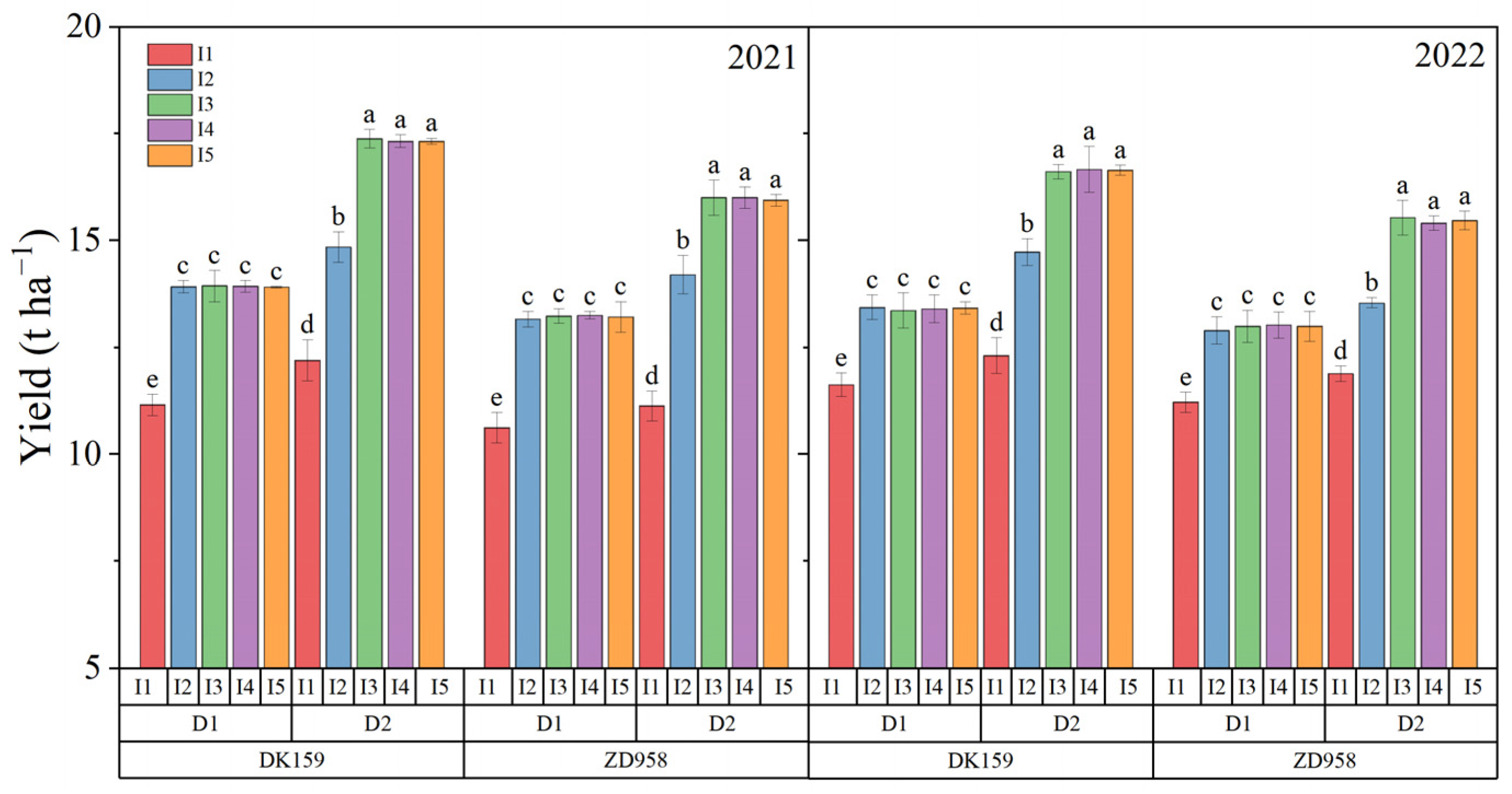
Year, variety, planting density, irrigation amount, and their interactions all exerted significant at p < 0.001 effects on maize yield (Table 2). Variety DK159 yielded 5.37% to 6.69% higher than ZD958 (Figure 2), while D2 yielded 15.47% to 16.93% higher than D1. DK159-D2 yielded 17.53–17.87% higher than DK159-D1, while ZD958-D2 yield 13.44–15.86% higher than ZD958-D1.
Irrigation amount exerted a significant effect on maize grain yield. With increasing irrigation amount, maize yield initially increased and then tended to stabilize. For both DK159 and ZD958 under planting density D1, grain yield in treatment I2 did not differ significantly from that in I3, I4, and I5, but was significantly higher than in I1 by 24.01–24.73% and 14.97–15.56%, respectively. Under the higher planting density D2, yield in treatment I3 showed no significant difference from I4 and I5, but was significantly higher than in I2 and I1 by 12.74–17.10% and 42.54–43.85% for DK159, and by 12.83–14.69% and 30.70–35.01% for ZD958, respectively. A moderate reduction in irrigation amount could maintain high and stable maize yield while achieving effective water conservation. DK159 showed a greater yield increase than ZD958, suggesting that ZD958 is more sensitive to water supply than DK159.

3.2. Changes in Material Accumulation and Harvest Index of Maize Pre- and Post-Silking

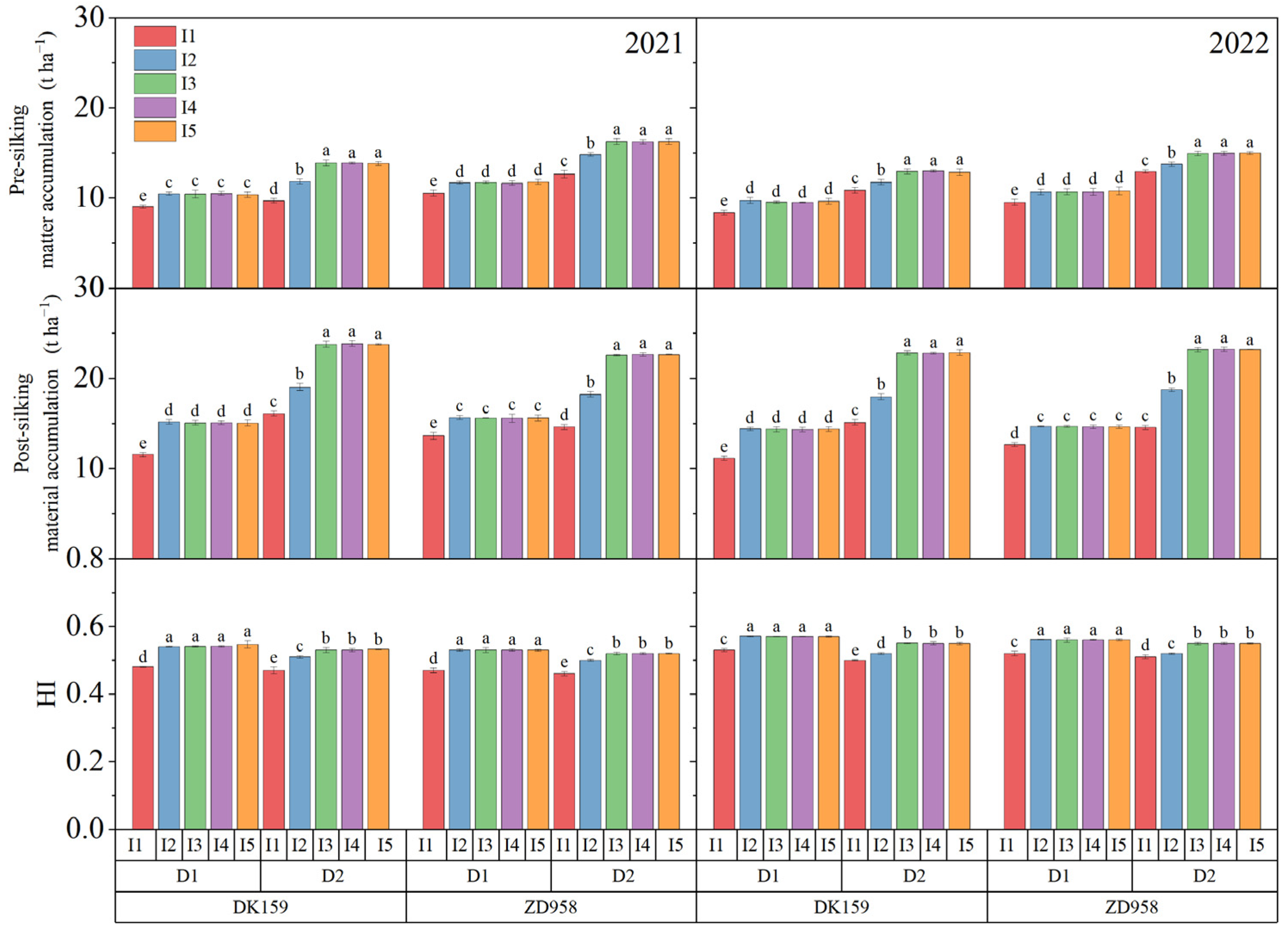
Over the two-year experimental period, ZD958 accumulated greater dry matter pre-silking than DK159, but exhibited lower post-silking dry matter accumulation. DK159 showed a 2.04–4.08% higher harvest index (HI) than ZD958 (Figure 3). Increased planting density promoted both pre- and post-silking dry matter accumulation in maize populations, with pre-silking dry matter increasing by 28.60–34.17% and post-silking dry matter increasing by 40.14–45.92%. Pre-silking dry matter accumulation, post-silking dry matter accumulation, and HI all increased initially with irrigation amount and then stabilized. At density D1, pre- and post-silking dry matter accumulation under the I2 treatment did not differ significantly from those under I3, I4, and I5, but was significantly higher than under I1 by 13.51–22.84%. At density D2, pre- and post-silking dry matter accumulation under I3 was statistically similar to that under I4 and I5, but was significantly higher than under I1 and I2 by 15.45–57.83% and 8.59–27.19%, respectively. The HI values of DK159 ranged from 0.54 to 0.56 under D1-I2 and from 0.53 to 0.54 under D2-I3. For ZD958, HI ranged from 0.53 to 0.55 under D1-I2 and from 0.52 to 0.55 under D2-I3. It should be noted that HI was significantly decreased in all I1 and partial I2 treatments, whereas no significant difference was observed among I3, I4 and I5 treatments. Increasing planting density combined with appropriate irrigation amount improved pre- and post-silking dry matter accumulation in maize while sustaining a high HI.

3.3. The Effects of Different Varieties, Planting Densities and Irrigation Amounts on the Spatial Distribution of Root Dry Weight and Root Aging Rate of Maize

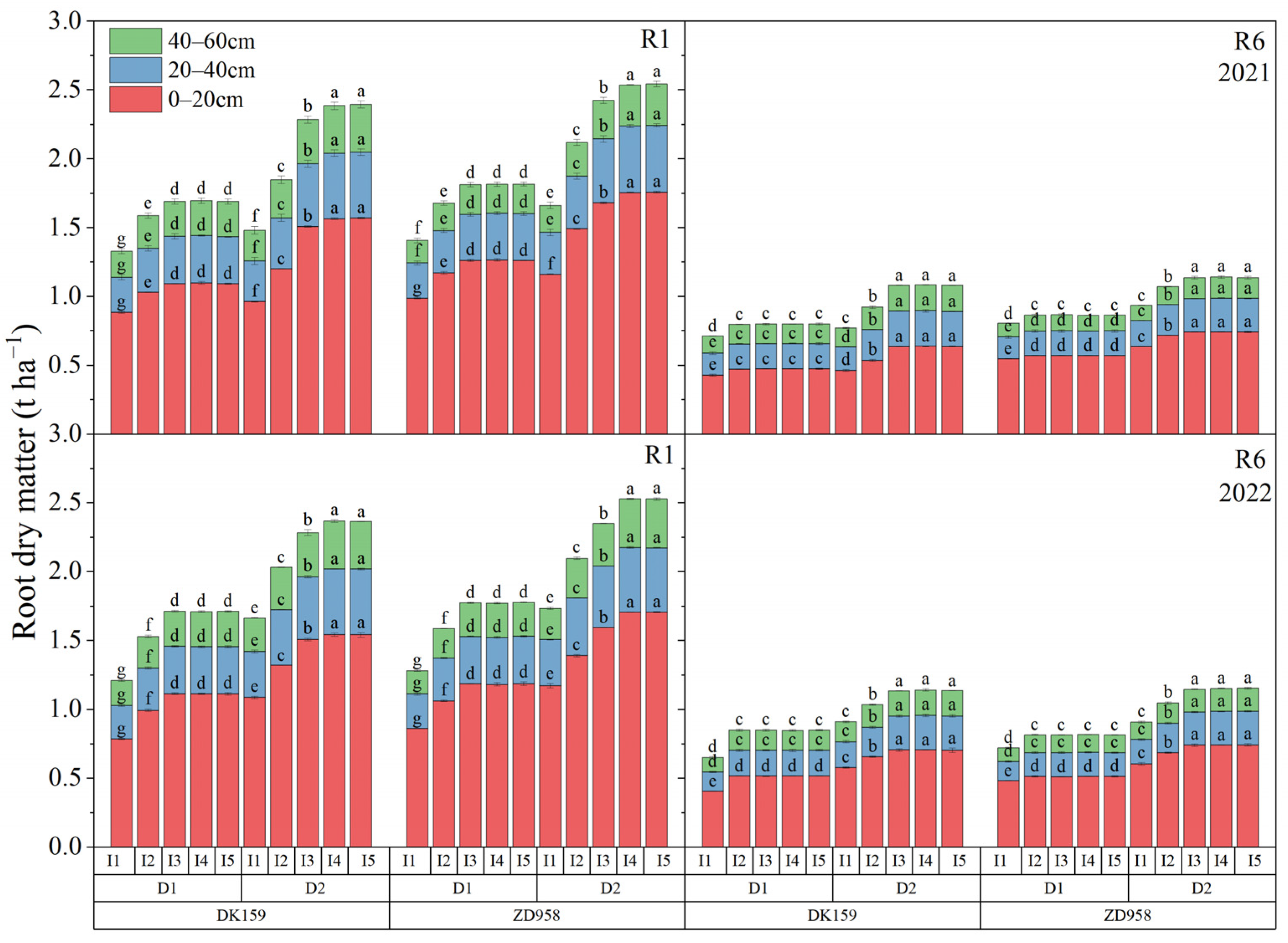
During the silking (R1) and maturity stages (R6), root distribution under different treatments gradually decreased with increasing soil depth (Figure 4). For the R1 stage, 66.82% of roots were concentrated in the 0–20 cm soil layer, 19.47% in the 20–40 cm layer, and 13.71% in the 40–60 cm layer across all varieties and irrigation treatments. During the R6 stage, 62.93% of roots were concentrated in the 0–20 cm soil layer, 21.63% in the 20–40 cm layer, and 15.44% in the 40–60 cm layer. During the R1 stage, ZD958 exhibited a 4.17–7.74% higher root dry weight in the 0–60 cm soil layer compared to DK159. However, DK159 demonstrated a 4.74–6.21% higher root dry weight in the 40–60 cm soil layer than ZD958. At the R6 stage, ZD958 exhibited a 4.28- 9.41% higher root dry weight in the 0–60 cm soil layer than DK159. However, DK159 showed a 12.33–12.55% higher root dry weight in the 40–60 cm soil layer than ZD958. DK159 demonstrated a slower rate of root decline than ZD958 at maturity. Under both varieties and irrigation regimes, root dry weight of D2 exceeded that of D1 by 31.05–36.22% at R1 stage and by 19.99–34.08% at R6 stage.
Root dry weight across soil layers initially increased with rising irrigation levels before stabilizing. During the R1 stage, under D1 density for both varieties, root dry weight in the I3 treatment showed no significant difference from I4 and I5 treatments, but was significantly higher than I1 and I2 treatments by 3.82–29.83% and 6.21–27.96%, respectively. At D2 density, I4 and I5 showed no significant difference, but were significantly higher than I1, I2, and I3 by 5.43–9.36%, 10.56–21.41%, and 25.49–37.01%, respectively. At stage R6, under density D1 for both varieties, treatment I2 showed no significant difference from treatments I3, I4, and I5, but was significantly higher than treatment I1 by 24.74% and 28.18%. At D2 density for both varieties, treatment I3 showed no significant difference from treatments I4 and I5 but was significantly higher than treatments I1 and I2 by 6.91–14.24% and 12.16–26.80%, respectively. During the R1 stage, vigorous root growth requires increased irrigation water to sustain development. By the R6 stage, roots gradually senesced, reducing water demand. Appropriately reducing irrigation promotes deeper maize root growth, expands root architecture, and enhances utilization of water in deeper soil layers.
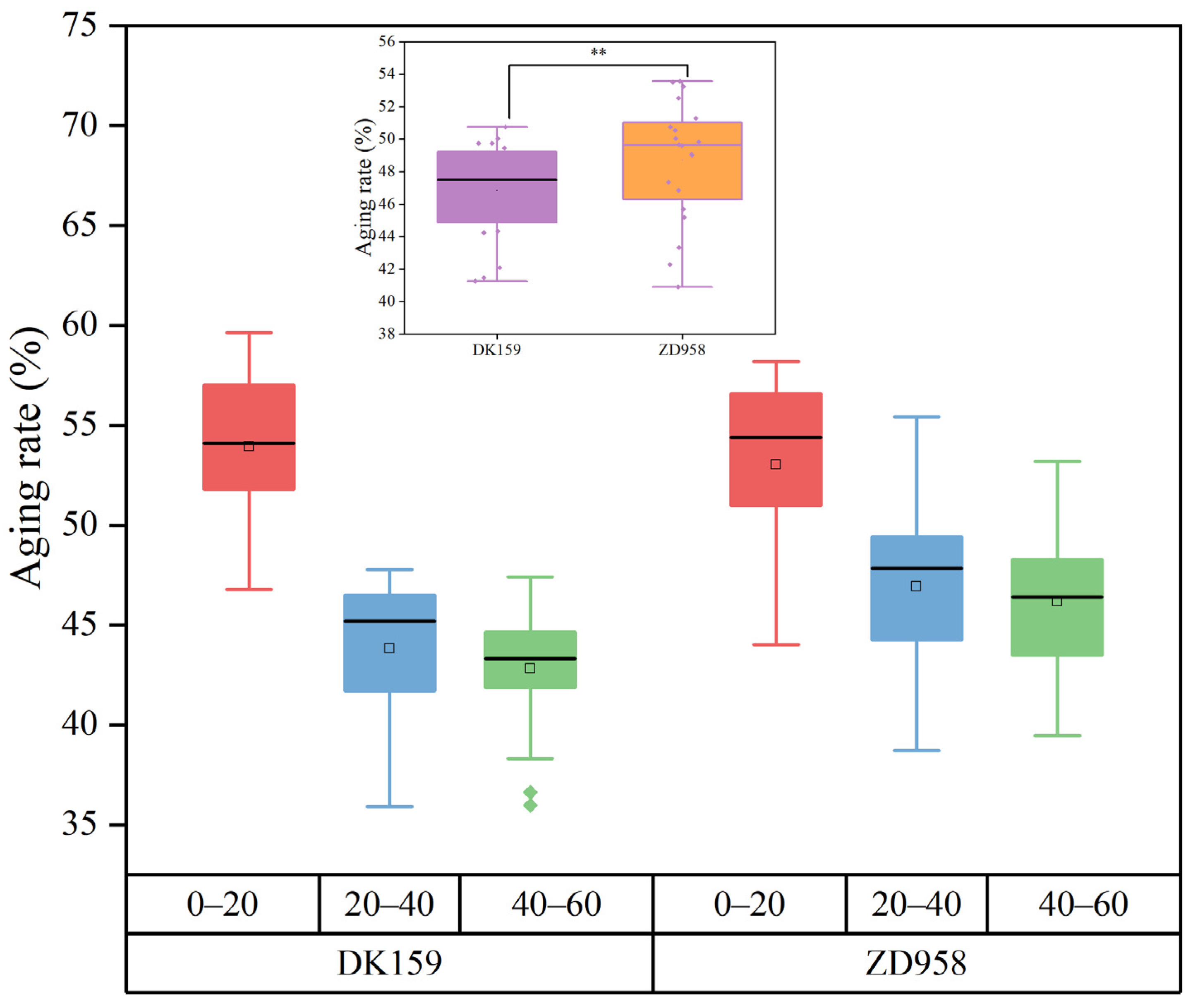
ZD958 exhibited a significantly higher root senescence rate than DK159 in the 0–60 cm soil layer during the R1 to R6 stage at 5.02% (Figure 5). In the 0–20 cm soil layer, DK159’s root senescence rate was 1.75% higher than ZD958’s, while the 20–40 cm root layer showed a 7.09% higher senescence rate for ZD958 than DK159. The root senescence rate of ZD958 in the 20–40 cm soil layer was 7.92% higher than that of DK159. The senescence rate of deep roots in DK159 was lower than that in ZD958, indicating that DK159 can mitigate premature senescence caused by water stress or nutrient deficiency through a more optimal spatial distribution of roots.

3.4. Effects of Planting Density and Irrigation Amount on Root-to-Shoot Ratio

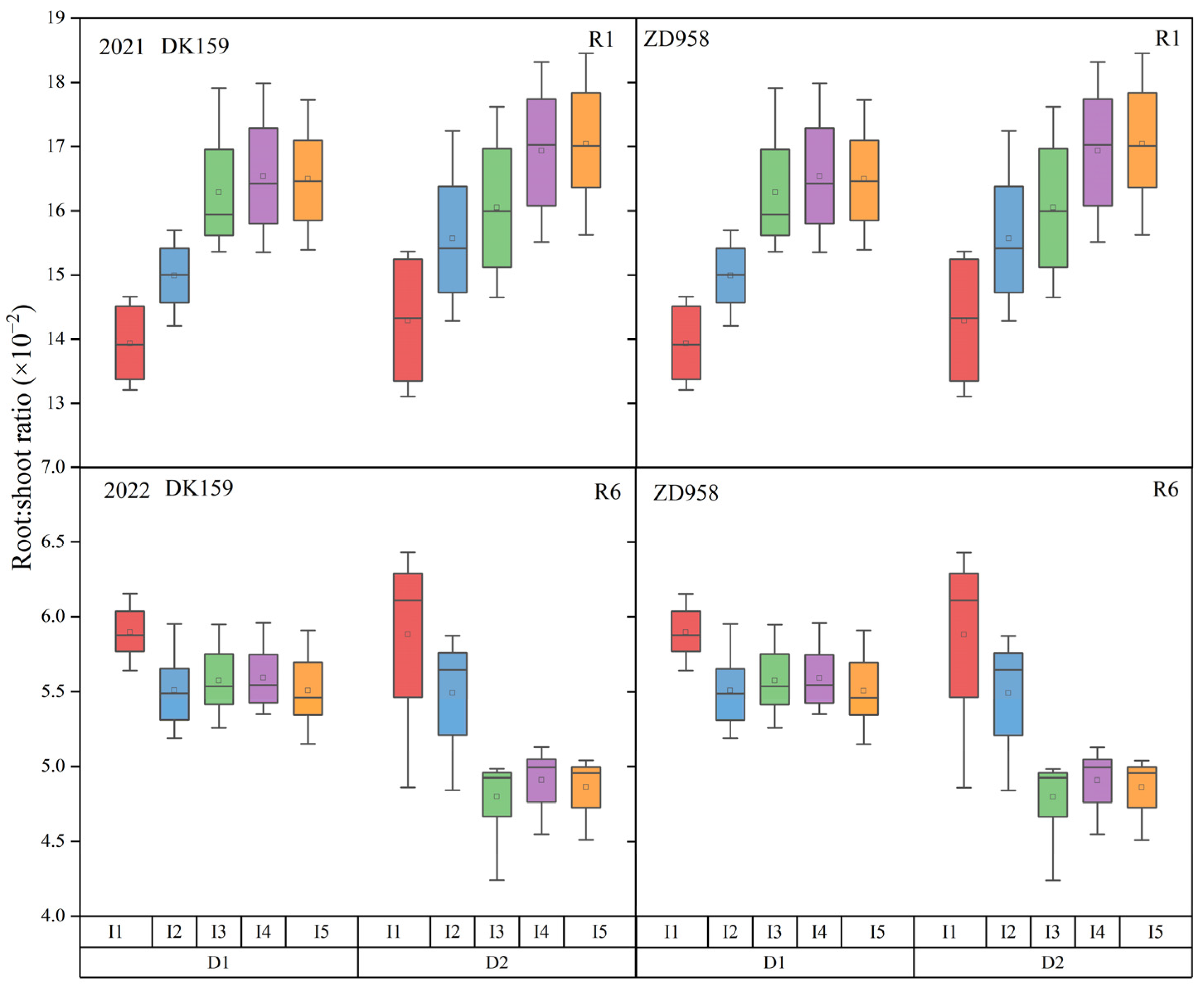
During the silking stage, the root-to-shoot ratio of DK159-D2 was 3.58–4.34% higher than that of D1 (Figure 6), while ZD958-D2 exhibited a root-to-shoot ratio 1.23–3.17% higher than D1. At maturity, the root-to-shoot ratio of DK159-D1 was 10.49–17.42% higher than that of D2, while ZD958-D1’s root-to-shoot ratio was 2.76–4.30% higher than D2’s. During the silking stage, both varieties exhibited a root-to-shoot ratio that initially increased with irrigation amount before stabilizing. This trend likely resulted from concurrent root and shoot growth during this phase, where root growth outpaced shoot growth. Higher irrigation promoted more vigorous root development, leading to a larger root-to-shoot ratio. However, the ratio did not continue to increase with further watering, indicating that root growth does not persistently expand with increased water supply. During the maturity stage, the root-to-shoot ratio gradually decreased with increasing irrigation and stabilized in the D1-I2 and D2-I3 treatments. This may be attributed to the continuous accumulation of above-ground dry matter during grain filling in the later growth stage, coupled with the gradual senescence of the root system, leading to a sustained reduction in the root-to-shoot ratio.

3.5. Relationship Between Crop Evapotranspiration and Above-Ground Dry Matter, Root Dry Matter Accumulation, and Root-Shoot Ratio

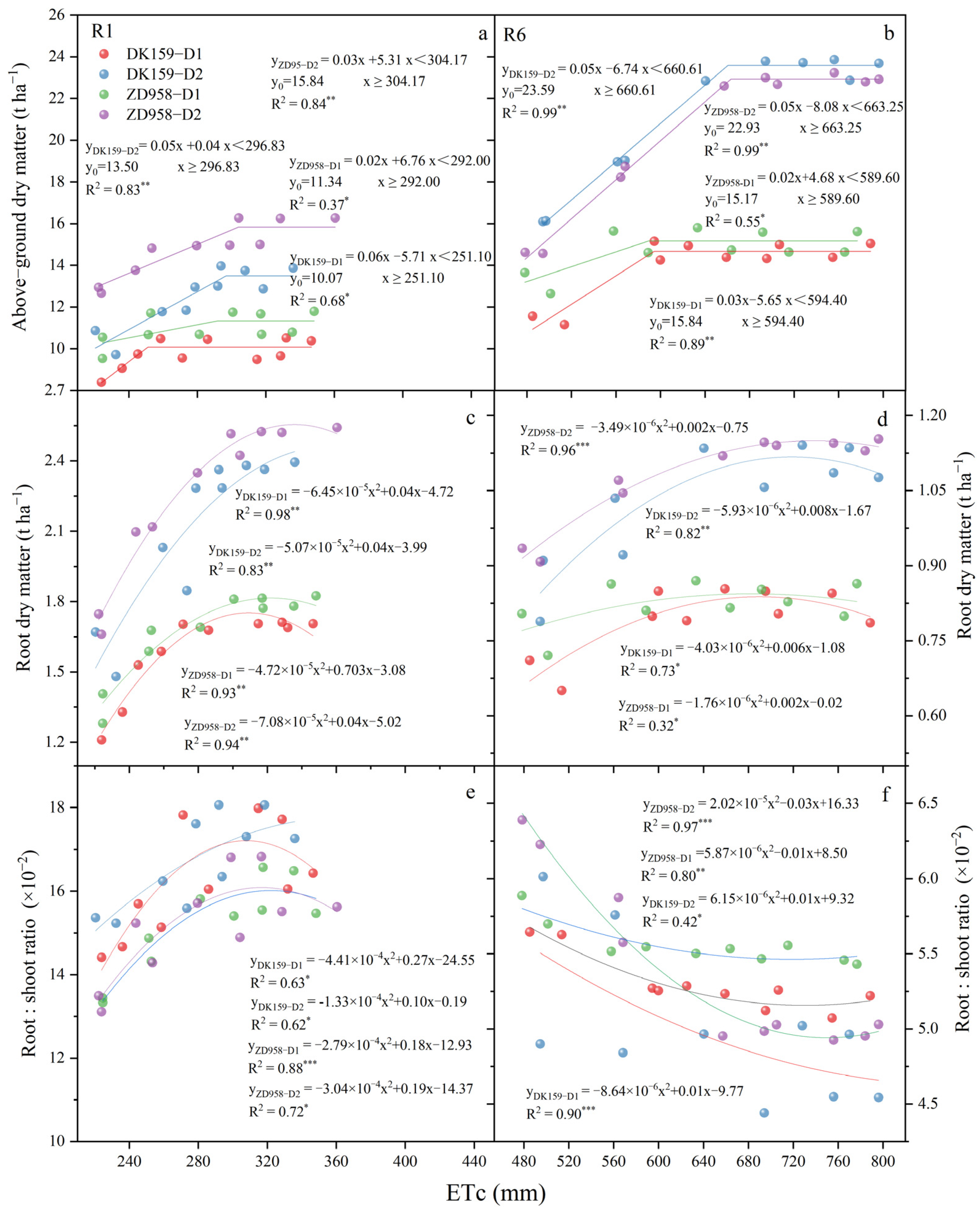
For different maize varieties and planting densities, above-ground dry matter accumulation exhibited a linear-plus-plateau trend with increasing crop evapotranspiration (ETc) across the R1 and R6 stages (Figure 7a,b). Analysis of the fitted relationships indicated that the ETc threshold required for DK159 to achieve stable dry matter accumulation was lower than that for ZD958. For example, at the R1 stage, DK159-D2 reached the plateau at 296.83 mm ETc, while ZD958-D2 stabilized at 304.17 mm ETc. At the R6 stage, ZD958-D1 plateaued at 594.40 mm ETc, compared with 663.25 mm ETc for DK159-D2.
The response of root dry matter accumulation to ETc at different stages across two varieties and two densities exhibited a quadratic relationship (Figure 7c,d). The ETc at which DK159 reached peak root dry weight was lower than that of ZD958. At the R1 stage, ZD958-D1 peaked at approximately 308 mm ETc, while DK159-D2 reached its maximum at around 330 mm ETc, indicating higher ETc sensitivity in DK159 roots. Conversely, ZD958 maintained more robust root development under lower ETc conditions, promoting above-ground growth. Therefore, moderately reducing irrigation amount to lower actual ETc can maintain higher root dry matter in ZD958, conserving water while providing an optimal soil moisture environment for root growth, thereby enhancing maize yield. Compared to above-ground dry matter accumulation, roots exhibit greater sensitivity to ETc, with more pronounced inter-varietal differences. This provides root-level evidence for maize variety selection and water management in arid regions.
The root: shoot ratio of both varieties at two densities exhibited a quadratic relationship with increasing ETc during the R1 stage (Figure 7e). Variety ZD958-D2 reached its maximum root-to-shoot ratio at approximately 305 mm ETc, while DK159-D2 reached its peak at around 335 mm ETc. This indicates that ZD958 achieves optimal root allocation under lower ETc conditions, enabling a rapid shift from root growth to above-ground dry matter accumulation to enhance photosynthetic capacity. This growth strategy confers root growth efficiency advantages under medium-to-low ETc conditions. In contrast, DK159 requires higher ETc and adapts to increased irrigation amounts to maintain coordinated root-to-shoot growth. At the R6 stage, the root-to-shoot ratio decreased with increasing ETc for both varieties (Figure 7f). ZD958-D2 exhibited a 50% reduction in root-to-shoot ratio as ETc increased from 480 to 800 mm, while DK159-D2 showed a 35% decrease over the same range. This indicates ZD958 prioritizes above-ground growth under high ETc conditions, and moderate irrigation reduction to lower ETc promotes more balanced root-to-shoot relationships. In contrast, DK159 exhibited a smaller reduction in root-to-shoot ratio during the later growth stage, requiring higher ETc levels to maintain balanced root-to-shoot growth. This ETc-driven dynamic equilibrium of the root-to-shoot ratio reveals maize’s ecological strategy for adapting to water availability fluctuations and provides theoretical support for water-fertilizer coupling regulation under dense planting and drip irrigation conditions.

3.6. Correlation Analysis of Maize Root System, Canopy, Their Proportions, and Yield Under Integrated Agronomic Management

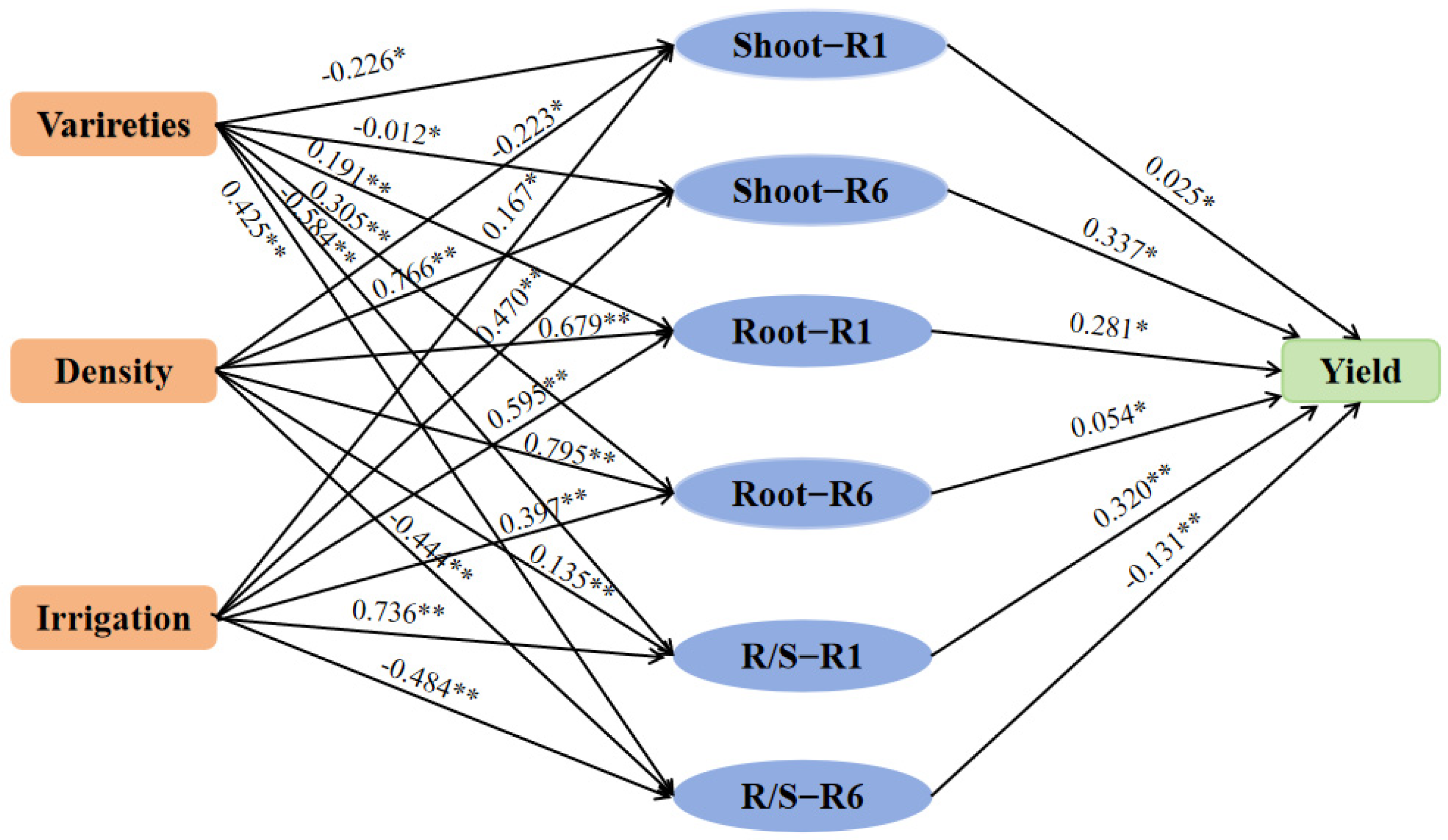
Variety, planting density, and irrigation amount indirectly regulate maize yield by influencing physiological traits during critical growth stages (Figure 8). The path diagram presents a structural equation model (SEM) with standardized path coefficients. The asterisks denote statistical significance: * indicates significance at p < 0.05, and ** indicates significance at p < 0.01. Meanwhile, acceptable model fitness was achieved with satisfactory RMSEA and R2 values for endogenous variables, validating the model rationality and underlying statistical assumptions. Planting density exerts significant positive direct effects on shoot dry weight at maturity (Shoot-R6) and root dry weight at silking (Root-R1) (0.766 **, 0.679 **), and indirectly enhances yield through the chained pathway “planting density → shoot dry weight at maturity → yield”. Planting density strongly promotes root growth during silking (0.679 **), but significantly reduces root-to-shoot ratio at maturity (−0.595 **), exhibiting dual effects of early promotion and late inhibition. Irrigation amount primarily increases yield indirectly by optimizing root-to-shoot ratio at silking (0.736 **) and shoot development at maturity (0.470 **). Root-to-shoot ratio during the silk emergence stage (0.320 **), root dry matter accumulation at silking (0.281 **), and above-ground dry matter accumulation at maturity (0.337 **) made the greatest direct contributions to yield. This indicates that coordinating root-to-shoot relationships in the early growth stage, promoting early root establishment, and facilitating late-stage material accumulation are the core pathways to achieving high yields.

4. Discussion

4.1. The Impact of Agronomic Management Practices on Maize Yield

Increasing planting density is an effective strategy for achieving high maize yields [21]. The results of this study indicate that increasing planting density can increase maize yield by 15.47–16.93% (Figure 2). The yield advantage of DK159 is closely linked to its inherent root ecological adaptation and physiological regulation characteristics. Relative to ZD958, DK159 distributed a larger proportion of root dry matter accumulation into the 40–60 cm soil layer, developing a deeper and more expanded root system architecture. This deep-rooted pattern allows DK159 to efficiently capture water and nutrients from subsoil layers, and such superiority becomes more pronounced under moderate water-deficit irrigation conditions. Sufficient water and nutrient availability at the late growth stage preserves leaf physiological stability, maintains satisfactory photosynthetic performance during grain filling, and delays the onset of leaf senescence [22]. The continuous supply of photosynthates facilitates grain filling and dry matter remobilization, which collectively enables DK159 to achieve a greater yield potential. This study found that the yield of variety DK159 was 5.37–6.65% higher than that of ZD958. The yield difference between the two varieties may be attributed to variations in their root structure, which affects water absorption capacity [23]. Specifically, DK159 is a dual-high-efficiency variety that can maintain stable yields under low-nitrogen and drought conditions, while also achieving high yields under adequate water and fertilizer supply, thus adapting to diverse resource conditions [24]. This indicates that varieties with strong root vitality and high photosynthetic efficiency have greater yield potential under water-saving and high-density planting conditions, which can provide a theoretical basis and variety support for water-saving, high-yield, and efficient maize production.

4.2. Effects of Agronomic Management Practices on Maize Root Distribution

In maize production, root growth can be regulated via manipulation of soil water regimes [25]. This study showed that root dry matter increased first and then decreased with the increase in actual evapotranspiration (ETc). Optimal water supply could modulate canopy evapotranspiration intensity and increase root dry weight by appropriately reducing ETc (Figure 7). This may be because excessive evapotranspiration aggravates plant water deficit, limits dry matter allocation and root development, and thus inhibits the accumulation of root dry matter [26]. High water content in the topsoil leads to excessive root concentration, increasing the risk of water and nutrient deficiency in deeper root zones [27,28]. This study indicated that soil moisture status in the 0–20 cm layer was superior to that in the 20–60 cm layer, and maize roots were predominantly distributed in the shallow 0–20 cm soil layer. The proportion of root distribution in this shallow layer increased significantly with the increase in irrigation amount (Figure 4). Therefore, modifying root distribution through appropriate water stress can effectively mitigate such issues [29,30]. This study indicates that variety DK159 exhibited greater root dry weight in the 40–60 cm soil layer than ZD958 during the R6 stage. This may stem from ZD958’s heightened sensitivity to water stress, where reduced irrigation during the later growth stages impedes root development. Additionally, increased planting density intensifies competition within the maize population, leading to faster depletion of deep roots. whereas DK159 efficiently utilizes soil water and exhibits strong drought tolerance. Reduced irrigation promotes deeper root growth in maize, increasing root density, depth, and water conductance to sustain water uptake [20]. Maize root growth and development are critical for water uptake and achieving high yields. Irrigation amount influences root growth and vertical distribution within the soil profile. Root weight increases with greater irrigation in the surface soil layer, while the opposite occurs in deeper layers. Water stress promotes downward root elongation [31]. This study found that maize root distribution decreased with increasing soil depth across all treatments. Within the 0–20 cm soil layer, root dry matter weight increased with higher irrigation amount. Conversely, in the 40–60 cm layer, root dry matter weight decreased with increased irrigation across all treatments. This may be attributed to root dry matter primarily concentrating in shallow soil layers under normal soil moisture conditions [17]. Excessive irrigation elevates soil surface moisture content, stimulating fine root growth in this layer. Conversely, reduced irrigation triggers root hydrophilicity, causing roots to penetrate deeper and shifting root growth downward [32]. In water-saving cultivation, optimizing maize root distribution through rational irrigation is common, though root growth responds differently to water supply at various growth stages [33]. This study found that root dry weight increased with irrigation amount during the silking stage, while root dry weight exhibited a linear plus plateau trend with increasing irrigation amount during the maturity stage. This may be attributed to the gradual decline in water demand as roots enter a state of senescence during the later growth stages of maize [34]. Under D1 conditions, the root proportion in the 0–20 cm soil layer for treatment I2 was 0.85–1.99% lower than that for treatment I5, while the root proportion in the 40–60 cm soil layer was 10.46–15.08% higher than that for treatment I5. Under D2 conditions, the root proportion in the 0–20 cm soil layer for treatment I3 was 2.08–2.26% lower than that for treatment I5, while in the 40–60 cm soil layer, the root proportion was 8.87–21.81% higher than in the I5 treatment. This indicates that moderate water and nutrient deficits in the surface soil increase the root proportion in deeper soil layers, facilitating the uptake and utilization of water and nutrients from deeper soil by roots [35], thereby enhancing maize yield.

4.3. Effects of Agronomic Management Practices on Root-Shoot Coordination in Maize

Root systems and canopy performance vary among maize varieties with different genotypes [36]. This study found that ZD958 had a higher root dry weight than DK159 in the 0–60 cm soil layer, but a lower root dry weight than DK159 in the 40–60 cm soil layer. ZD958 showed stronger water uptake capacity in the upper soil layer, with its roots predominantly concentrated in the surface soil, while DK159 had more roots distributed in the deeper soil layer, resulting in stronger drought resistance. The relationships between actual evapotranspiration (ETc) and above-ground dry matter accumulation, root dry matter accumulation, and root-to-shoot ratio (R/S) of the plant community (Figure 7) showed that the variety DK159 achieved the optimal coordination between roots and shoots under low ETc conditions, characterized by a higher root-to-shoot ratio and stronger dry matter accumulation capacity. In contrast, the variety ZD958 was more sensitive to ETc, requiring a higher irrigation volume to maintain normal growth. When the irrigation amount was reduced by 40–60%, there was no significant difference in yield compared to the full irrigation treatment, indicating that moderate water saving can be achieved without affecting yield. The root-to-shoot ratio was significantly positively correlated with yield, and the optimal root-to-shoot ratio for high yield was 0.5–0.6. Appropriate dense planting and optimized irrigation management can effectively improve the root-shoot coordination ability of maize, promote dry matter accumulation, and enhance yield. Path analysis further elucidated the regulatory mechanisms by which agronomic factors modulate maize yield via above- and below-ground morphological traits at key growth stages. Variety, planting density, and irrigation significantly affected shoot dry matter, root dry matter, and root-shoot ratio at both the R1 and R6 stages, and these traits ultimately governed grain yield formation. Shoot dry matter at the R6 stage (Shoot-R6, direct path coefficient = 0.337, p < 0.05) and root dry matter at the R1 stage (Root-R1, direct path coefficient = 0.281, p < 0.05) exerted prominent positive effects on grain yield. This highlights that vigorous above-ground growth during the grain-filling period and well-established root systems at silking are indispensable for high yield production. In contrast, root-shoot ratio at physiological maturity (R/S-R6, direct path coefficient = −0.131, p < 0.01) showed a significant negative direct effect on yield. Planting density and irrigation acted as critical regulators of these growth traits. Increased planting density markedly enhanced root dry matter accumulation at both growth stages (Root-R1: 0.679, p < 0.01; Root-R6: 0.795, p < 0.01), whereas irrigation mainly promoted shoot development and maintained a balanced root-shoot relationship. These results demonstrate that rational regulation of planting density and irrigation can coordinate above- and below-ground growth, reinforce beneficial pathways for yield improvement, and alleviate the adverse impacts caused by unbalanced dry matter allocation. providing a theoretical basis and technical support for the sustainable development of semi-arid regions similar to the West Liaohe Plain.
A limitation of this study is that it only focused on two maize varieties, which may limit the generalizability of the conclusions to other maize genotypes. Future research could expand to more varieties and explore the interaction between water-saving measures and different soil types to provide more comprehensive guidance for field production.

5. Conclusions

Compared with the control (CK), DK159 reduced irrigation water input by 40% (irrigation amount: 270 mm) and increased root dry matter in the 40–60 cm soil layer. The maximum grain yield of 17.35 t ha−1 was achieved with DK159 variety. In contrast, ZD958 showed higher sensitivity to water stress, with root dry weight exhibiting a quadratic relationship with ETc. Therefore, selecting water-efficient varieties, appropriately increasing planting density, and moderately reducing irrigation amount can promote deep root growth, balance the root-to-shoot allocation ratio, enhance the accumulation and distribution of above-ground dry matter, and ultimately improve grain yield.

Author Contributions

G.Z., K.W., R.X., B.M., H.Y., S.L. and Y.Z. conceived and designed the experiment; X.L., D.S. and L.Z. performed the experiments; X.L., D.S. and G.Z., analyzed the data; X.L. wrote the paper; G.Z. and Y.Z. revised the final draft manuscript. All authors have read and agreed to the published version of the manuscript.

Funding

This research was funded by grants from the National Natural Science Foundation of China (M2142005), the China Postdoctoral Science Foundation (2020M670547).

Data Availability Statement

The original contributions presented in this study are included in the article. Further inquiries can be directed to the corresponding authors.

Acknowledgments

The authors thank the reviewers for their valuable comments and suggestions.

Conflicts of Interest

The authors declare that there is no conflict of interest.

References

  1. Liu, Z.D.; Xiao, J.F.; Yu, J.C.; Nan, J.Q. Effects of varieties and planting density on plant traits and water consumption characteristics of spring maize. TCSAE 2012, 28, 125–131. [Google Scholar] [CrossRef]
  2. Li, R.F.; Zhang, G.Q.; Xie, R.Z.; Hou, P.; Ming, B.; Xue, J.; Wang, K.R.; Li, S.K. Dynamics of high-yielding maize genotypes under intensive management across multiple environments. Eur. J. Agron. 2025, 162, 127368. [Google Scholar] [CrossRef]
  3. Liu, Y.E.; Hou, P.; Huang, G.R.; Zhong, X.L.; Li, H.R.; Zhao, J.R.; Li, S.K.; Mei, X.R. Maize grain yield and water use efficiency in relation to climatic factors and plant population in northern China. J. Integr. Agric. 2020, 19, 2–14. [Google Scholar] [CrossRef]
  4. Gao, F.; Wang, L.; Zhao, R.; Wang, Y.X.; Ma, Y.K.; Yang, R.L.; Zhang, Q.; Wang, C.Y. Rational Combination of selenium application rate and planting density to improve selenium uptake, agronomic traits, and yield of dryland maize. Plants 2024, 13, 1327. [Google Scholar] [CrossRef]
  5. Feng, X.Y.; Ma, D.L.; Lei, T.N.; Hu, S.P.; Yu, X.F.; Gao, J.L. Subsoil tillage improved the maize stalk lodging resistance under high planting density. Front. Plant Sci. 2024, 15, 1396182. [Google Scholar] [CrossRef]
  6. Yang, L.; Cao, H.; Fu, Y.Y.; Gao, Y.; Liu, Z.D. The effects of irrigation amount and method on soil CO2 emission and yield of summer maize. J. Irrig. Drain. 2023, 42, 31–39, 73. [Google Scholar] [CrossRef]
  7. Zhang, G.Q.; Ming, B.; Shen, D.P.; Xie, R.Z.; Hou, P.; Xue, J.; Wang, K.R.; Li, S.K. Optimizing Grain Yield and Water Use Efficiency Based on the Relationship between Leaf Area Index and Evapotranspiration. Agriculture 2021, 11, 313. [Google Scholar] [CrossRef]
  8. Hokam, M.E.; El-Hendawy, E.S.; Schmidhalter, U. Drip Irrigation Frequency: The Effects and Their Interaction with Nitrogen Fertilization on Maize Growth and Nitrogen Use Efficiency under Arid Conditions. J. Agron. Crop Sci. 2011, 197, 186–201. [Google Scholar] [CrossRef]
  9. Shen, D.P.; Zhou, L.L.; Wang, K.R.; Ming, B.; Xie, R.Z.; Xue, J.; Fang, L.; Zhang, T.T.; Wang, Z.; Yu, J.H.; et al. Optimizing nitrogen application frequency to enhance the post-flowering matter accumulation, yield and water/nitrogen use efficiency of densely planted and drip-irrigated maize. J. Sci. Food Agric. 2025, 105, 7073–7084. [Google Scholar] [CrossRef] [PubMed]
  10. Thorup-Kristensen, K.; Dresboll, D.B.; Kristensen, H.L. Crop yield, root growth, and nutrient dynamics in a conventional and three organic cropping systems with different levels of external inputs and N recycling through fertility building crops. Eur. J. Agron. 2012, 37, 66–82. [Google Scholar] [CrossRef]
  11. Wang, F.; Xie, R.Z.; Ming, B.; Wang, K.R.; Hou, P.; Chen, J.L.; Liu, G.Z.; Zhang, G.Q.; Xue, J.; Li, S.K. Dry matter accumulation after siling and kernel weight are the key factors for increasing maize yield and water use efficiency. Agric. Water Manag. 2021, 254, 106938. [Google Scholar] [CrossRef]
  12. Sun, Y.J.; Ma, J.; Sun, Y.Y.; Xu, H.; Yang, Z.Y.; Liu, S.J.; Jia, X.W.; Zheng, H.Z. The effects of different water and nitrogen managements on yield and nitrogen use efficiency in hybrid rice of China. Field Crops Res. 2012, 127, 85–98. [Google Scholar] [CrossRef]
  13. Hébert, Y.; Guingo, E.; Loudet, O. The response of root/shoot partitioning and root morphology to light reduction in maize genotypes. Crop Sci. 2001, 41, 363–371. [Google Scholar] [CrossRef]
  14. Jing, B.; Shi, W.; Chen, T.; Zhai, Z.M.; Somg, J.W. Optimizing root distribution and water use efficiency in maize/soybean intercropping under different irrigation levels: The role of underground interactions. Soil. Tillage Res. 2025, 249, 106490. [Google Scholar] [CrossRef]
  15. Shao, H.; Xia, T.T.; Wu, D.L.; Chen, F.J.; Mi, G.H. Root growth and root system architecture of field-grown maize in response to high planting density. Plant Soil. 2018, 430, 395–411. [Google Scholar] [CrossRef]
  16. Manpreet, S.; Sukhbir, S.; Sanjit, D.; Glen, R. Root distribution, soil water depletion, and water productivity of sweet corn under deficit irrigation and biochar application. Agric. Water Manag. 2023, 279, 108–192. [Google Scholar] [CrossRef]
  17. Wang, J.; Fan, J.; Wang, H.; Wang, X.; Xing, Y.; Gao, Y.; Hao, M. Dual-mulching under no-tillage promotes maize root growth and improves yield by optimizing soil hydrothermal conditions in semi-arid regions. Agric. Water Manag. 2025, 312, 109428. [Google Scholar] [CrossRef]
  18. Qi, D.L.; Hu, T.T. Effects of Nitrogen Application Rates and Irrigation Regimes on Root Growth and Nitrogen-Use Efficiency of Maize under Alternate Partial Root-Zone Irrigation. J. Soil. Sci. Plant Nutr. 2022, 22, 2793–2804. [Google Scholar] [CrossRef]
  19. Peng, S.H.; Ma, T.; Ma, T.; Chen, K.W.; Dai, Y.; Ding, J.H.; He, P.R.; Yu, S.E. Effects of Salt Tolerance Training on Multidimensional Root Distribution and Root-Shoot Characteristics of Summer Maize under Brackish Water Irrigation. Plants 2023, 12, 3329. [Google Scholar] [CrossRef]
  20. Wu, L.H.; Quan, H.; Wu, L.N.; Zhang, X.; Ding, D.Y.; Feng, H.; Siddique; Kadambot, H.M.; Liu, D.L.; Wang, B. Plastic mulching enhances maize yield and water productivity by improving root characteristics, green leaf area, and photosynthesis for different cultivars in dryland regions. Agric. Water Manag. 2024, 305, 109105. [Google Scholar] [CrossRef]
  21. Hou, W.F.; Khan, M.R.; Zhang, J.L.; Lu, J.W.; Ren, T.; Cong, R.H.; Li, X.K. Nitrogen rate and plant density interaction enhances radiation interception, yield and nitrogen use efficiency of mechanically transplanted rice. Agric. Ecosyst. Environ. 2019, 269, 183–192. [Google Scholar] [CrossRef]
  22. Hu, C.H.; SHi, W.J.; Li, L.; Sha, Y.; Qian, C.R.; Qi, H.; Mi, G.H. Screening for nitrogen-efficient maize cultivars used in northeast China and analysis of yield components. J. Maize Sci. 2020, 28, 67–76. [Google Scholar] [CrossRef]
  23. Shen, F.Y.; Fei, L.J.; Peng, Y.L.; Gao, Y.L. Temperature-driven regulatory mechanism of dry matter accumulation and yield optimization in summer maize under mulched water–nitrogen coupling. J. Agric. Food Res. 2025, 24, 102442. [Google Scholar] [CrossRef]
  24. Yang, N.; Zhang, M.M.; Jia, H.M.; Zhao, X.R.; Farooq, M.; Dang, P.F.; Qin, X.L. Response of maize to supplemental irrigation and other agronomic practices in different regions of China: A meta-analysis. Agric. Water Manag. 2026, 325, 110159. [Google Scholar] [CrossRef]
  25. Alok, R.; Ragini, S.; Ashwani, L.S.S.; Kumar, S.A. Shaping the Root System Architecture in Plants for Adaptation to Drought Stress. Physiol. Plant. 2022, 174, 13651. [Google Scholar] [CrossRef]
  26. Vennam, R.R.; Ramamoorthy, P.; Poudel, S.; Reddy, K.R.; Henry, W.B.; Bheemanahalli, R. Developing functional relationships between soil moisture content and maize early-season physiology, growth, and development. Plants 2023, 12, 2471. [Google Scholar] [CrossRef]
  27. Jiang, W.; Wang, Z.; Chen, B. Interactive effects of planting patterns combined with integrated nutrient management on maize production, water-nitrogen productivity and soil organic carbon fractions. BMC Plant Biol. 2025, 25, 545. [Google Scholar] [CrossRef] [PubMed]
  28. Hamid, S.A.; Reza, A.S.; Mojgan, Z. Modeling winter barley root distribution in flat and raised bed planting systems subject to full, deficit and rainfed irrigation. Rhizosphere 2020, 16, 100257. [Google Scholar] [CrossRef]
  29. Chen, J.Z.; Wu, Z.L.; Zhao, T.M.; Yang, H.Y.; Long, Q.; He, Y.B. Rotation crop root performance and its effect on soil hydraulic properties in a clayey Utisol. Soil. Tillage Res. 2021, 213, 105136. [Google Scholar] [CrossRef]
  30. Gao, J.; Lei, M.; Yang, L.J.; Wang, P.; Tang, H.B.; Hang, S.B. Reduced row spacing improved yield by optimizing root distribution in maize. Eur. J. Agron. 2021, 127, 126291. [Google Scholar] [CrossRef]
  31. Xu, B.S.; Jia, S.H.; Luo, T.F.; Jin, J.X. Effect of different drip irrigation schedule under mulch on root distribution of maize. Res. Soil. Water Conserv. 2014, 21, 272–276, 284. [Google Scholar] [CrossRef]
  32. Xue, L.H.; Duan, J.J.; Wang, Z.M.; Guo, Z.W.; Lu, L.Q. Effects of different irrigation regimes on spatial-temporal distribution of roots, soil water use and yield in winter wheat. Acta Ecol. Sin. 2010, 30, 5296–5305. [Google Scholar] [CrossRef]
  33. Zhang, S.B.; Bai, J.X.; Zhang, G.X.; Xia, Z.Q.; Wu, M.K.; Lu, H.D. Negative effects of soil warming, and adaptive cultivation strategies of maize: A review. Sci. Total Environ. 2023, 862, 160738. [Google Scholar] [CrossRef] [PubMed]
  34. Zhang, Y.Q.; Yang, H.S.; Zhang, R.F.; Li, C.F.; Ti, J.Y.; Ge, X.L.; Yang, J.H. Effects of water and nitrogen application on root attenuation characteristics and yield of spring maize under shallow buried drip irrigation. Acta Agron. Sin. 2023, 49, 3074–3089. [Google Scholar] [CrossRef]
  35. Azam, G.; Wickramarachchi, K.; Scanlan, C.; Chen, Y.L. Deep and continuous root development in ameliorated soil improves water and nutrient uptakes and wheat yield in water-limited conditions. Plant Soil. 2024, 512, 1–16. [Google Scholar] [CrossRef]
  36. Guo, X.X.; Yang, Y.S.; Liu, H.F.; Liu, G.Z.; Liu, W.M.; Wang, Y.H.; Zhao, R.L.; Ming, B.; Xie, R.Z.; Wang, K.R.; et al. Effects of solar radiation on root and shoot growth of maize and the quantitative relationship between them. Crop Sci. 2020, 61, 1–12. [Google Scholar] [CrossRef]
Figure 1. Air temperature and rainfall during the growth period of 2021–2022.
Agronomy 16 01099 g001
Figure 2. Changes in maize yield under different varieties, planting densities and irrigation amounts. Note: Different small letters are significantly different at p < 0.001.
Agronomy 16 01099 g002
Figure 3. Changes in material accumulation and harvest index of maize pre- and post-silking. Note: Different small letters are significantly different at p < 0.05.
Agronomy 16 01099 g003
Figure 4. Root distribution in different soil layers under different irrigation amounts. Note: Different small letters are significantly different at p < 0.05.
Agronomy 16 01099 g004
Figure 5. Changes in root aging rates of different varieties and soil layers. Note: Box limits represent the 25th and 75th percentiles, the central line indicates the median, and whiskers extend to the minimum and maximum observed values. Error bars denote the standard error of the mean (SE, n = 3). **, significant at p < 0.01.
Agronomy 16 01099 g005
Figure 6. The relationship between irrigation amount and root-shoot ratio. Note: Box limits represent the 25th and 75th percentiles, the central line indicates the median, and whiskers extend to the minimum and maximum observed values. Error bars denote the standard error of the mean (SE, n = 3).
Agronomy 16 01099 g006
Figure 7. Relationship between ETc and above-ground dry matter, root dry matter, and root: shoot ratio. ETc: Actual evapotranspiration. Note: (a) Relationship between ETc and Above-ground dry matter at the silking stage. (b) Relationship between ETc and Above-ground dry matter at maturity. (c) Relationship between ETc and Root dry matter at the silking stage. (d) Relationship between ETc and Root dry matter at maturity. (e) Relationship between ETc and root–shoot ratio at the silking stage. (f) Relationship between ETc and root–shoot ratio at maturity. * indicates significance at the p < 0.05 level; ** indicates significance at the p < 0.01 level; *** indicates significance at the p < 0.001 level.
Agronomy 16 01099 g007
Figure 8. Pathway analysis of comprehensive agronomic management on the root system, canopy structure and their proportions, as well as yield of maize, Shoot-R1 represents the accumulation of above-ground dry matter during the silking stage, while Shoot-R6 represents the accumulation of above-ground dry matter during the mature stage. Root-R1 represents the accumulation of root dry matter during the silking stage, and Root-R6 represents the accumulation of root dry matter during the mature stage. R/S-R1 represents the root-to-shoot ratio during the silking stage, and R/S-R6 represents the root-to-shoot ratio during the mature stage. The values on the arrows represent standardized path coefficients. The sign of each coefficient indicates the direction of the effect: a positive value indicates a positive effect, while a negative value indicates a negative effect. The asterisks denote statistical significance: * indicates significance at the p < 0.05 level; ** indicates significance at the p < 0.01 level.
Agronomy 16 01099 g008
Table 1. The 0–60 cm soil physicochemical properties in 2021 and 2022.
YearOrganic Matter (g/kg)Available N (mg/kg)Available P (mg/kg)Available K (mg/kg)pH
202123.7485.316.97194.67.4
202223.9588.416.95192.57.5
Table 2. Interaction effects of year, variety, density and irrigation amount on yield.
Source of
Variation
p < 0.001Source of Variationp < 0.001Source of
Variation
p < 0.001
Year (Y)***Y × D***Y × V × D***
Variety (V)***Y × I***Y × V × I***
Density (D)***V × D***Y × D × I***
Irrigation (I)***V × I***V × D × I***
Y × V***D × I***Y × V × D × I***
Notes: *** represent significance at p < 0.001.
Disclaimer/Publisher’s Note: The statements, opinions and data contained in all publications are solely those of the individual author(s) and contributor(s) and not of MDPI and/or the editor(s). MDPI and/or the editor(s) disclaim responsibility for any injury to people or property resulting from any ideas, methods, instructions or products referred to in the content.