


Abstract
The rice stem borer (RSB), Chilo suppressalis, is one of the most destructive rice pests in China and chlorantraniliprole has been extensively used for its control over the past decade. However, the continuous and intensive application of chlorantraniliprole has accelerated the development of resistant RSB populations in field, thereby threatening sustainable rice production. In this study, a field resistant strain of RSB exhibited a 181.76-fold resistance level to chlorantraniliprole compared to a susceptible strain. To explore the potential involvement of ATP-binding cassette (ABC) transporters in chlorantraniliprole resistance, four candidate ABC transporter genes (CsABCC1, CsABCC3, CsABCA3 and CsABCD2) were analyzed in resistant and susceptible strains. Compared to the susceptible strain, the expressional levels of CsABCC1 and CsABCC3 were significantly upregulated by 1.58- and 1.38-fold, respectively, whereas of CsABCA3 and CsABCD2 showed non-significant differences in the resistant strain. RNA interference assays demonstrated that naked dsRNA induced only limited gene silencing, while chitosan-mediated dsRNA delivery significantly improved RNAi efficiency. Following feeding with chitosan-coated dsCsABCC1 and dsCsABCC3, the expression levels of both genes were reduced by 44.63% and 38.49%, respectively, relative to the control and the larval mortality increased following chlorantraniliprole treatment to 63.33% and 56.67%, respectively. In addition, silencing CsABCC1 caused a greater reduction in larval weight after insecticide treatment. These findings indicated that CsABCC1 and CsABCC3 are involved in chlorantraniliprole detoxification and may contribute to resistance. Overall, this study provides evidence for the functional involvement of ABC transporters in chlorantraniliprole resistance and highlights chitosan-mediated RNAi as a promising complementary approach for resistance management within integrated pest management programs.
1. Introduction
Rice stem borer (RSB), Chilo suppressalis (Walker, 1863) (Lepidoptera: Crambidae), is one of the most destructive rice pests widely distributed throughout the rice-growing regions of China. Its infestation causes substantial yield losses and is estimated to result in annual economic losses of approximately CNY 7.7 billion [1]. At present, integrated pest management (IPM) strategies, including agricultural practices, biological control, and chemical insecticides, are commonly employed for RSB management. Nevertheless, chemical insecticides remain widely used in rice production because of their rapid and reliable efficacy, particularly during severe RSB outbreaks. However, the continuous and intensive use of insecticides has led the RSB populations developing high-resistant level and raised growing concerns regarding excessive pesticide use in rice agroecosystems. Among the insecticides used for RSB control, chlorantraniliprole (Rynaxypyr), an anthranilic diamide insecticide developed by DuPont (E.I. du Pont de Nemours & Company, Wilmington, DE, USA), has been extensively applied against lepidopteran pests [2]. However, several pest species have developed high-resistant levels to it. For example, a field population of the beet armyworm Spodoptera exigua (Hübner, 1808) (Lepidoptera: Noctuidae) from Jiaxing (Zhejiang, China) exhibited a 2477.3-fold resistance to chlorantraniliprole [3]. By 2020, the field populations of RSB collected from several regions of China, including Xiangshan and Yuyao (Zhejiang), Nancheng and Duchang (Jiangxi), had developed high resistant levels with resistance ratios (RR) values between 1076.8–2087.5 folds [4].
Chlorantraniliprole primarily acts on insect ryanodine receptors, causing abnormal calcium release from intracellular calcium stores, which leads to muscle contraction disorders, feeding cessation, paralysis, and, ultimately, insect death [2]. Although target-site insensitivity has been widely recognized as an important mechanism of chlorantraniliprole resistance, increasing evidences suggest that enhanced transport processes by ABC transporters and detoxification also contribute to reduced its insecticidal activity to insect [5,6,7]. ABC transporters contribute to insecticide resistance by facilitating the transport and excretion of insecticides from the cells [8]. Previous transcriptomic analyses revealed that several ABC transporter genes (CsABCA5, CsABCA3, CsABCC1, CsABCC3 and CsABCD2) were significantly overexpressed in chlorantraniliprole-resistant RSB strains, suggesting their potential involvement in resistance development [9].
ABC transporters constitute an ancient and highly conserved family of transmembrane proteins and are widely distributed across prokaryotic and eukaryotic organisms [10,11,12]. Structurally, ABC transporter proteins typically contain two major domains: the hydrophobic transmembrane domain (TMD), which forms substrate translocation pathways, and the hydrophilic nucleotide-binding domain (NBD), which binds and hydrolyzes ATP to provide energy for substrate transport. Based on the sequence similarity of NBDs, ABC transporters are classified into eight subfamilies, i.e., ABCA to ABCH [13,14]. These transporters use the energy generated from ATP hydrolysis to transport various substrates, including xenobiotics and insecticides, against concentration gradients across biological membranes [15,16,17]. Owing to their important roles in xenobiotic transport, ABC transporters have attracted considerable attention as candidate resistance-related proteins in recent years [8,18].
RNA interference (RNAi) has been widely used as an effective approach for the functional validation of resistance-related genes in insects [19,20]. However, RNAi efficiency in lepidopteran insects is often limited by dsRNA degradation, poor cellular uptake, and instability in the gut environment. In recent years, nanoparticle-mediated dsRNA delivery systems have been reported to improve dsRNA stability, protect dsRNA from nuclease degradation, and enhance gene silencing efficiency in several lepidopteran species, including Spodoptera frugiperda (J. E. Smith, 1797) (Lepidoptera: Noctuidae) and Tuta absoluta (Meyrick, 1917) (Lepidoptera: Gelechiidae) [21,22,23].
Based on previous transcriptome analysis [9] and expression validation between resistant and susceptible strains, four candidate ABC transporter genes (CsABCA3, CsABCC1, CsABCC3 and CsABCD2) were selected for further investigation due to failed to isolate the CsABCA5. Among them, CsABCC1 and CsABCC3 were significantly upregulated in the resistant strain and therefore, selected for subsequent RNAi experiments. In addition, the effects of nanomaterial-mediated dsRNA delivery on RNAi efficiency were evaluated. Overall, this study contributes to a better understanding of ABC transporter-mediated chlorantraniliprole resistance in RSB and provides a potential molecular basis for the development of more effective resistance management strategies in rice production systems.
2. Materials and Methods
2.1. Insect, Chemicals, and Insecticides
The laboratory strain of rice stem borer (RSB-LAB) was originally collected from Ruichang County (Jiangxi, China) and has been continuously reared without exposure to insecticides under laboratory conditions. The colony was provided by Professor Guanghua Luo (Jiangsu Academy of Agricultural Sciences, Nanjing, Jiangsu, China) [24,25]. A chlorantraniliprole-resistant RSB (RSB-ZJ) strain was collected from field (Zhijiang, Hubei, China) in 2024. Larvae were reared on an artificial diet as previously described methods [24,26]. The insects were maintained at 28 ± 1 °C, 70–80% relative humidity (RH) and a 16 h:8 h (light:dark) photoperiod. Adults were provided with 10% (v/v) honey water solution as nutritional supplement, and fresh rice seedlings were provided for oviposition.
Chlorantraniliprole (technical grade 96%) was obtained from FMC Corporation (Shanghai, China). N,N-dimethylformamide (DMF) was purchased from Guanghua Sci-Tech Co., Ltd. (Guangzhou, Guangdong, China), and Triton X-100 was acquired from Solarbio (Beijing Solarbio Sci-Tech Co., Ltd., Beijing, China).
2.2. Detection of Resistance Level
The insecticidal activity of chlorantraniliprole against the RSB-ZJ and RSB-LAB strains was determined using diet-incorporation bioassays according to the previously reported method [27]. The LC50 values and resistance ratios (RR) were used to estimate the resistance level of RSB to chlorantraniliprole. In brief, chlorantraniliprole was initially dissolved in 0.1% (v/v) DMF and then serially diluted with distilled water containing 0.1% (v/v) Triton X-100 to prepare a series of test concentrations. Fourth-instar larvae were starved for 2 h before being transferred to 24-well plates, and each well contained a piece of artificial diet (5 × 5 × 3 mm). Each treatment consisted of three replicates, with 30 larvae per concentration. Control diets contained 0.1% DMF, water, and 0.1% Triton X-100. Mortality was recorded after 72 h, and larvae showing no response upon gentle stimulation with a brush were considered as dead.
The data were analyzed using log-dose probit analysis to determine the median lethal concentration (LC50) required to kill 50% of the tested strain and to calculate the corresponding 95% confidence limit (CL) [28].
2.3. Isolation of ABC Transporter Genes
Total RNA was extracted from the midguts of fourth-instar larvae using TRIzol reagent (Invitrogen, Carlsbad, CA, USA). First-strand complementary DNAs (cDNAs) were synthesized using a Prime Script RT Reagent Kit with gDNA Eraser (TaKaRa, Kusatsu, Japan) following the manufacturer’s instructions. To obtain the open reading frames (ORFs) of targeted genes, specific primers (Table S1) were designed using Primer Premier 5 software (Premier Biosoft, Santa Clara, CA, USA) based on the transcriptomic data of RSB (which are available in the Sequence Read Archive (SRA)database, under accession number SRX15045699) and the database of NCBI (https://www.ncbi.nlm.nih.gov/). The analyzed fragments included a 5211 bp fragment of CsABCA3 (GenBank accession number QCO93599.1), a 4074 bp fragment of CsABCC1 (GenBank accession number QCO93573.1), a 3999 bp fragment of CsABCC3 (GenBank accession number QCO93574.1), and a 2349 bp fragment of CsABCD2. PCR amplification was performed using 2 × Rapid Taq Master Mix (Vazyme Biotech Co., Ltd., Nanjing, Jiangsu, China) with specific primers. The PCR products were subcloned into the Blunt3 vector (TransGen Biotech Co., Ltd., Beijing, China) and sequenced by Tsingke Biotech Co., Ltd. (Wuhan, Hubei, China).
Protein-coding sequences were identified using the ORF finder tool (https://www.ncbi.nlm.nih.gov/orffinder/) (accessed on 21 October 2025). Phylogenetic trees were reconstructed using MEGA X software (Version 10.1.7) (MEGA Software, State College, PA, USA) with the neighbor-joining method with 1000 bootstrap replicates. Amino acid sequences used for phylogenetic analysis were obtained from NCBI, and the corresponding accession numbers were labeled on the trees. The theoretical isoelectric points (pIs) and molecular weights (Mws) of each protein were calculated using the Expasy bio-informatics resource portal (Version 3.0) (https://web.expasy.org/compute_pi/) (accessed on 21 October 2025). The conserved domains in the deduced amino acid sequences of the four ABC transporter genes were identified using SMART (version 10) (Heidelberg, Baden-Württemberg State, Germany).
2.4. Semi-Quantitative Expression Profiling
To evaluate stage-specific expression patterns of the four ABC transporter genes across different developmental stages, larvae (1st, 2nd, 3rd, 4th, 5th, and 6th instars) were collected, immediately frozen in liquid nitrogen, and stored at −80 °C until total RNA extraction. Total RNA extraction and cDNA synthesis were performed as mentioned above.
Specific primers for semi-quantitative PCR analysis were designed using Primer Premier 5 software (Table S1). Semi-quantitative PCR was performed in a 15 µL reaction mixture containing 7.5 µL of 2 × Rapid Taq Master Mix, 0.6 µL of each primer (10 μM), 1 µL of cDNA template, and 5.3 µL of sterile H2O. The optimal cycle number for semi-quantitative PCR was optimized before expression analysis. The PCR cycling conditions consisted of an initial denaturation at 95 °C for 3 min, followed by 32 cycles of 95 °C for 15 s, 60 °C for 15 s, and 72 °C for 4 s, with a final extension at 72 °C for 5 min. Following amplification, 10 µL of each PCR product was analyzed by agarose gel electrophoresis. Band intensity was quantified using ImageJ software 1.52a (NIH, Montgomery County, MD, USA). Expression levels were normalized to the housekeeping gene Elongation factor 1-α (EF 1-α) from the same samples. For stage-specific expression analysis, the lowest expression level was used as the calibrator, and the relative expression levels of the target genes were calculated accordingly.
2.5. dsRNA Synthesis
The double-stranded RNA (dsRNA) expressed by Escherichia coli HT115 (DE3) competent cells lacking RNase III was used for RNAi in RSB larvae. The bacterial expression system, which has been demonstrated as efficient for dsRNA production [29], was used for dsRNA synthesis in this study. Briefly, the pET-2P vector, containing dual T7 promoters and terminators, was used for dsRNA expression. Sequence fragments of the target genes (CsABCC1, 604 bp; CsABCC3, 508 bp) were amplified using the 2 × Taq PCR Master Mix kit. The dsRNA fragments were inserted into the pET-2P plasmid at the KpnI and NotI restriction sites. The resulting dsRNA expression vectors were transformed into HT115 (DE3) cells (WeiDi Biological Technology Co., Ltd., Shanghai, China). Bacterially expressed dsRNAs were extracted using the mixture (phenol: chloroform: isoamyl alcohol, 25:24:1, pH = 8.0) and subsequently treated with 0.4 U/μL of DNase and 0.2 μg/μL of RNase A [30]. The quality and quantity of dsRNA were evaluated by gel electrophoresis and spectrophotometry.
2.6. RNAi Efficacy of Naked and Chitosan-Coated dsRNA
Chitosan–dsRNA complexes were prepared following the previously described protocol [22]. Briefly, 1 mg of chitosan was dissolved in 100 μL of 0.1 M sodium acetate solution. The resulting chitosan solution (10 μg/μL) was diluted two-fold with nuclease-free water to obtain a final concentration of 5 μg/μL. Subsequently, 100 μL of chitosan solution (5 μg/μL) was mixed with 50 μL of dsRNA (150 μg) that had been dissolved in 50 μL of 100 mM sodium sulfate solution. After incubation at 55 °C for 1 min, the mixture was immediately vortexed at 2000 rpm for 30 s to generate chitosan-coated dsRNA.
For feeding assays, the artificial diet was cut into rectangular pellets of equal size (5 mm × 5 mm × 3 mm, ~0.2 g). Each pellet was coated with naked dsRNA or chitosan-coated dsRNA solution containing 15 μg (750 ng/μL) of dsRNA and then provided to two 2nd-instar RSB larvae. dsGFP and chitosan-coated dsGFP were used as controls. Each treatment included three replicates, with 10 larvae per replicate. The diet pellet was replaced daily. Total RNA was extracted from whole larvae after 6 days of dsRNA feeding. For each treatment, three larvae were randomly selected from each replicate and pooled as one sample for total RNA extraction. Transcript levels of four ABC transporter genes were evaluated using semi-quantitative PCR with specific primers (Table S1).
2.7. Effects of RNAi on Insecticidal Activity of Chlorantraniliprole to RSB
Based on the RNAi efficacy results of naked and chitosan-coated dsRNA, chitosan-coated dsRNA were selected for subsequent bioassays. Forty second-instar larvae were fed with an artificial diet containing the target chitosan-coated dsRNA, with chitosan-coated dsGFP used as the control, for six days. Subsequently, 30 surviving larvae were divided into three replicates and exposed to an artificial diet containing the LC30 concentration of chlorantraniliprole (10.87 mg/kg 95% CL: 6.74–15.67 mg/kg) to evaluate the effects of RNAi on insecticidal activity of chlorantraniliprole. Mortality was recorded after 3 days of chlorantraniliprole exposure [31].
2.8. Body Weight Measurement
Larval body weight was measured before the bioassay with chlorantraniliprole and after 3 days of exposure to the chlorantraniliprole -treated diet. Before the bioassay, each treatment consisted of three biological replicates, with 10 larvae per replicate. After the bioassay, only surviving larvae from each replicate were collected for measuring the body weight; therefore, the number of larvae per replicate varied depending on mortality. Weight change was calculated as the ratio of post-treatment weight to pre-treatment weight, and the average value per larva was used for statistical analysis.
2.9. Statistical Analysis
Statistical analyses were performed using SPSS v. 19.0 (IBM Corporation, New York, NY, USA). The RR was calculated by dividing the LC50 value of the RSB-ZJ strain by the baseline LC50 value of the RSB-LAB strain. RNAi efficiency were analyzed by one-way analysis of variance (ANOVA) followed by Duncan’s multiple range test. Comparisons of gene expression levels, mortality, and body weight data were analyzed using independent-samples t-tests. Results are presented as the means ± SEM (standard error of the mean). Statistical significance was set at p < 0.05 and highly significant differences were considered at p < 0.01.
3. Results
3.1. Resistance of the RSB-ZJ Strain
The LC50 values of chlorantraniliprole to the RSB-LAB strain and RSB-ZJ were 0.14 mg/kg and 25.99 mg/kg, respectively. Compared to the RSB-LAB strain, the RSB-ZJ strain exhibited a 181.76-fold resistance level to chlorantraniliprole (Table 1).
Table 1.
Insecticidal activity of chlorantraniliprole to the 4th-instar larvae of RSB after 3 days.
3.2. Gene Cloning and Sequence Analysis
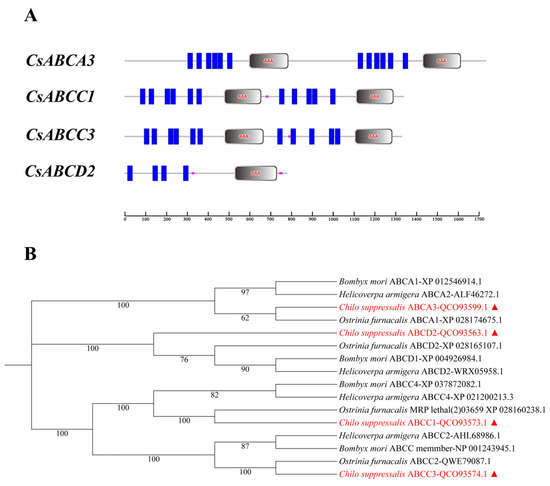
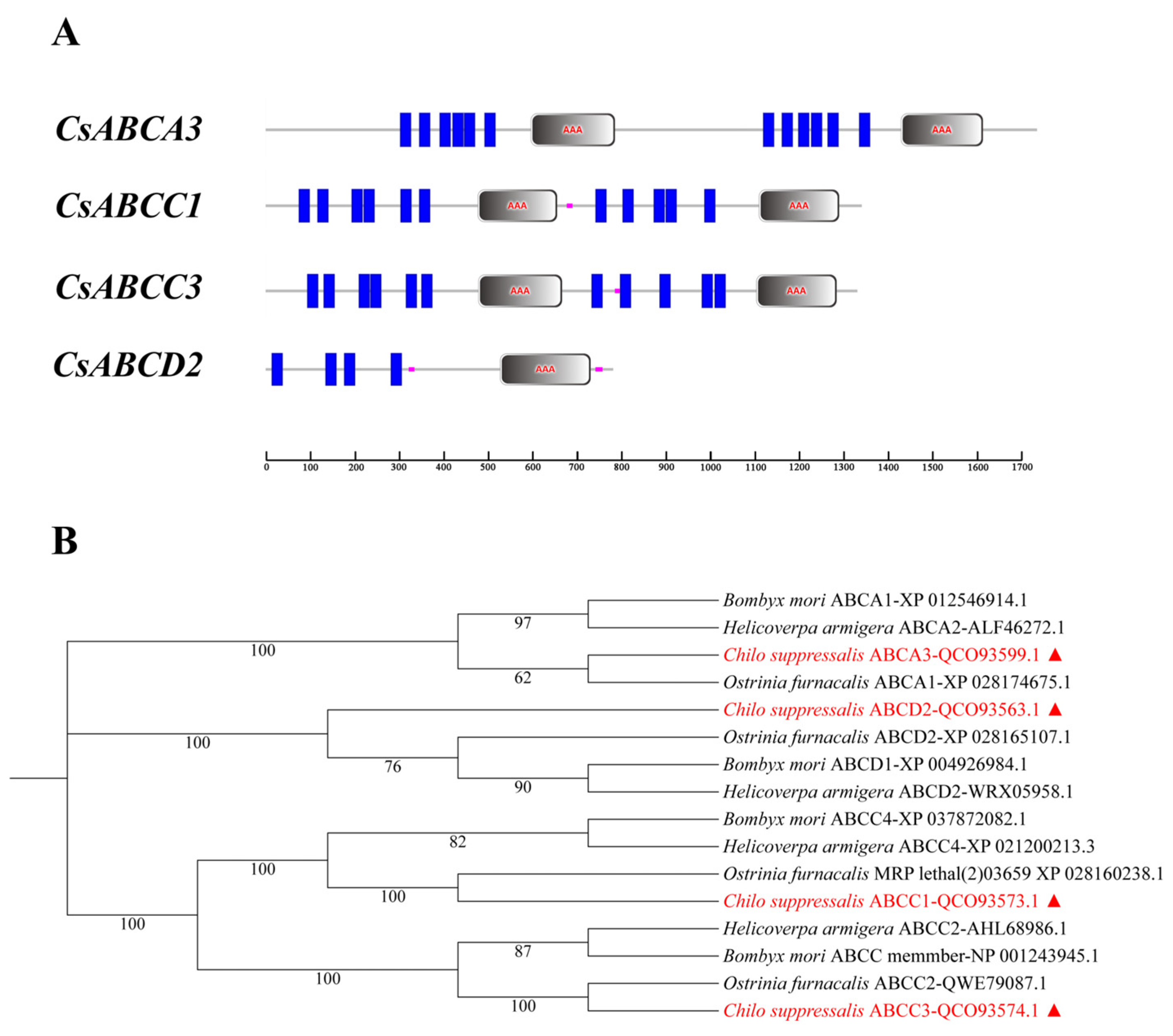
Based on the PCR amplification, the ORFs of CsABCA3, CsABCC1, CsABCC3 and CsABCD2 were successfully cloned from fourth-instar larvae. These genes encoded proteins containing 1736, 1356, 1331, and 782 amino acids, respectively. The predicted molecular weights (Mws) and isoelectric points were 195.8 kDa (pI 5.8), 149.1 kDa (pI 7.5), 149.1 kDa (pI 7.0) and 86.0 kDa (pI 8.8). Among them, CsABCA3, CsABCC1 and CsABCC3 were identified as full transporters, each containing two NBDs and two TMDs. By contrast, CsABCD2 was identified as a half transporter consisting of a forward NBD-TMD arrangement (Figure 1A).
Figure 1.
Phylogenetic analysis, genomic structure of four ABC transporters. (A) Conserved domain analysis of four ABC transporters. The black annular regions with AAA represent NBDs. AAA represents ATPases associated with a variety of cellular activities. The blue box regions represent transmembrane domains. The purple box regions represent low-complexity regions. (B) Phylogenetic analysis of ABC transporters from lepidopteran insects. The tree was generated by MEGA X software (Version 10.1.7) using the neighbor-joining method with 1000 bootstrap replicates. Red letters indicate the candidate genes selected in this study, and red triangles indicate the corresponding proteins of RSB.
Phylogenetic analysis was performed to investigate the evolutionary relationships of the four ABC transporters among different Lepidoptera species. The phylogenetic tree showed that CsABCA3, CsABCC1, CsABCC3 and CsABCD2 were closely related to their corresponding homologs in Ostrinia furnacalis (Guenée, 1854) (Lepidoptera: Crambidae) (Figure 1B).
3.3. Stage-Specific Patterns of CsABCA3, CsABCC1, CsABCC3 and CsABCD2
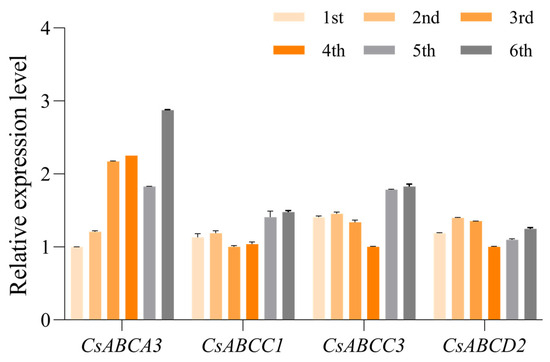
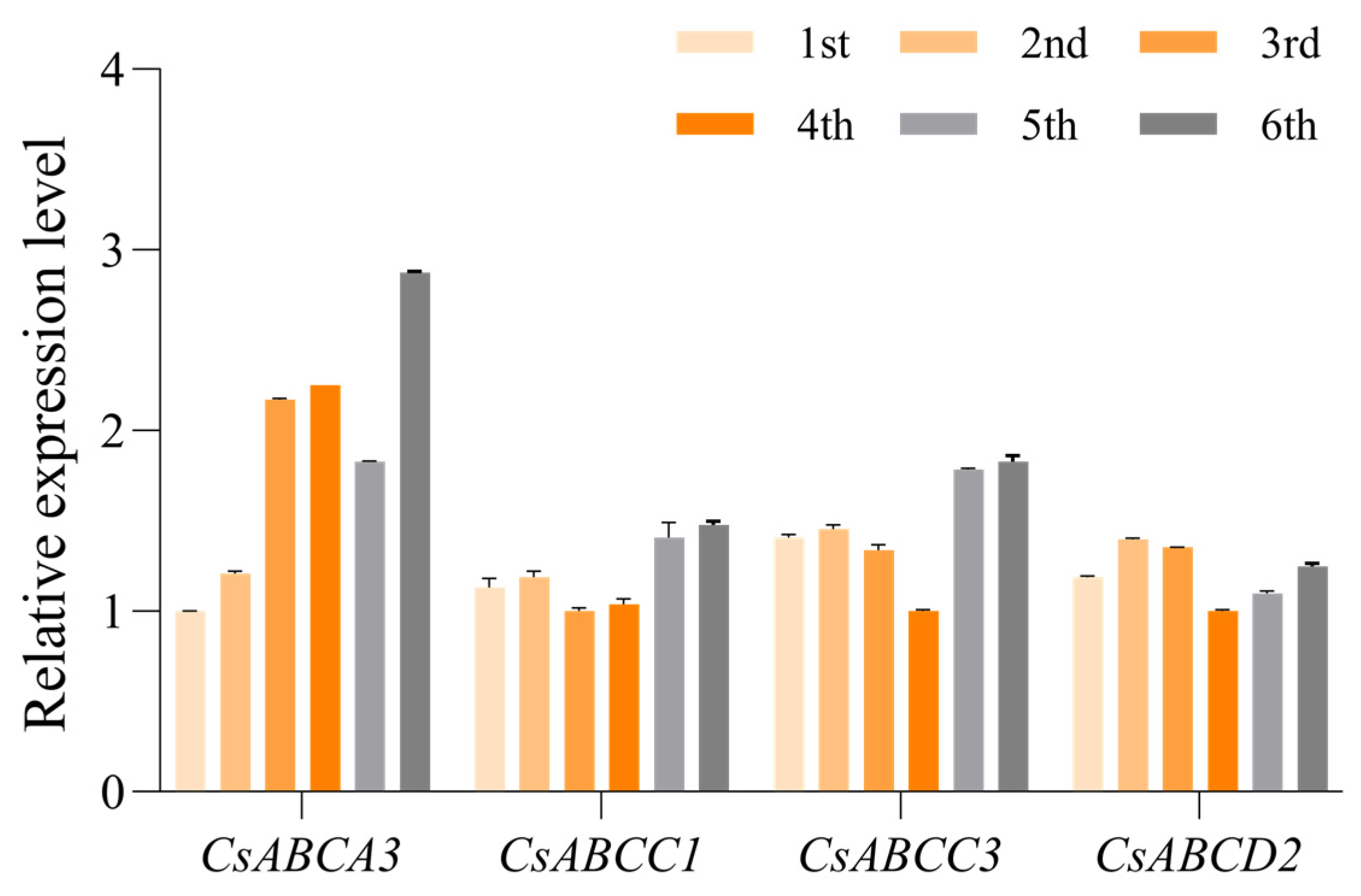
The developmental expression profiles of the four CsABC transporter genes were examined across the whole larval stages (first to sixth instars) of RSB.
CsABCA3 showed significantly elevated expression in sixth-instar larvae, whereas the lowest transcript levels were detected in first- and second-instar larvae. CsABCC1 exhibited increased expression in fifth- and sixth-instar larvae, while the lowest transcript levels were observed in third- and fourth-instar larvae. CsABCC3 exhibited the highest expression in sixth-instar larvae, with the lowest transcript level detected in fourth-instar larvae. CsABCD2 transcript levels peaked in second- and third-instar larvae and were lowest in fourth-instar larvae (Figure 2).
Figure 2.
Stage-specific patterns of four ABC transporter genes. Data are shown as means ± SEM.
3.4. Comparison of the Expression of Four CsABCs Between RSB-LAB and RSB-ZJ Strains
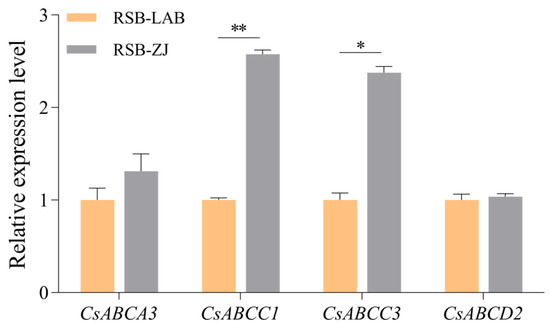
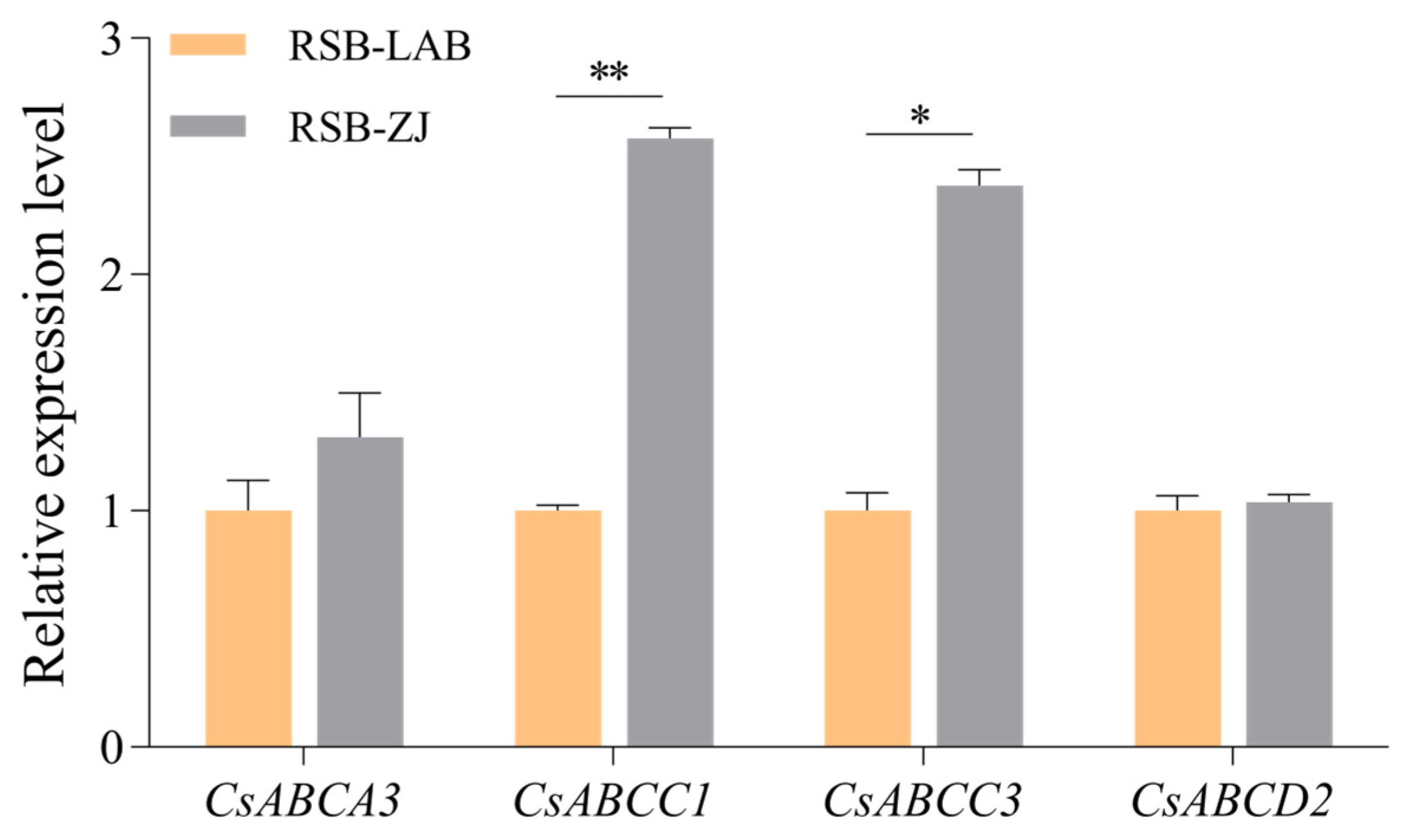
To identify the ABC transporter genes associated with chlorantraniliprole resistance in the RSB-ZJ strain, the expression levels of four candidate ABC transporter genes were analyzed. The expression levels of CsABCC1 and CsABCC3 in the RSB-ZJ strain were 1.58- and 1.38-fold higher compared to those in the RSB-LAB strain (Figure 3). However, non-significant difference was observed in the expression levels of CsABCA3 and CsABCD2 between the RSB-ZJ and RSB-LAB strains (Figures S1–S3).
Figure 3.
Relative expression levels of four ABC transporter genes in RSB-ZJ and RSB-LAB strains. Results are shown as means ± SEM, and asterisks indicate the significant differences between the groups (*: p < 0.05; **: p < 0.01).
3.5. Effects of RNAi CsABCC1 and CsABCC3 on Insecticide Activity of Chlorantraniliprole
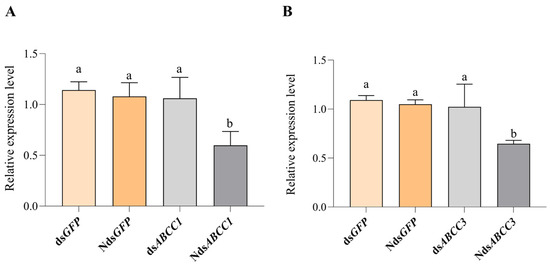
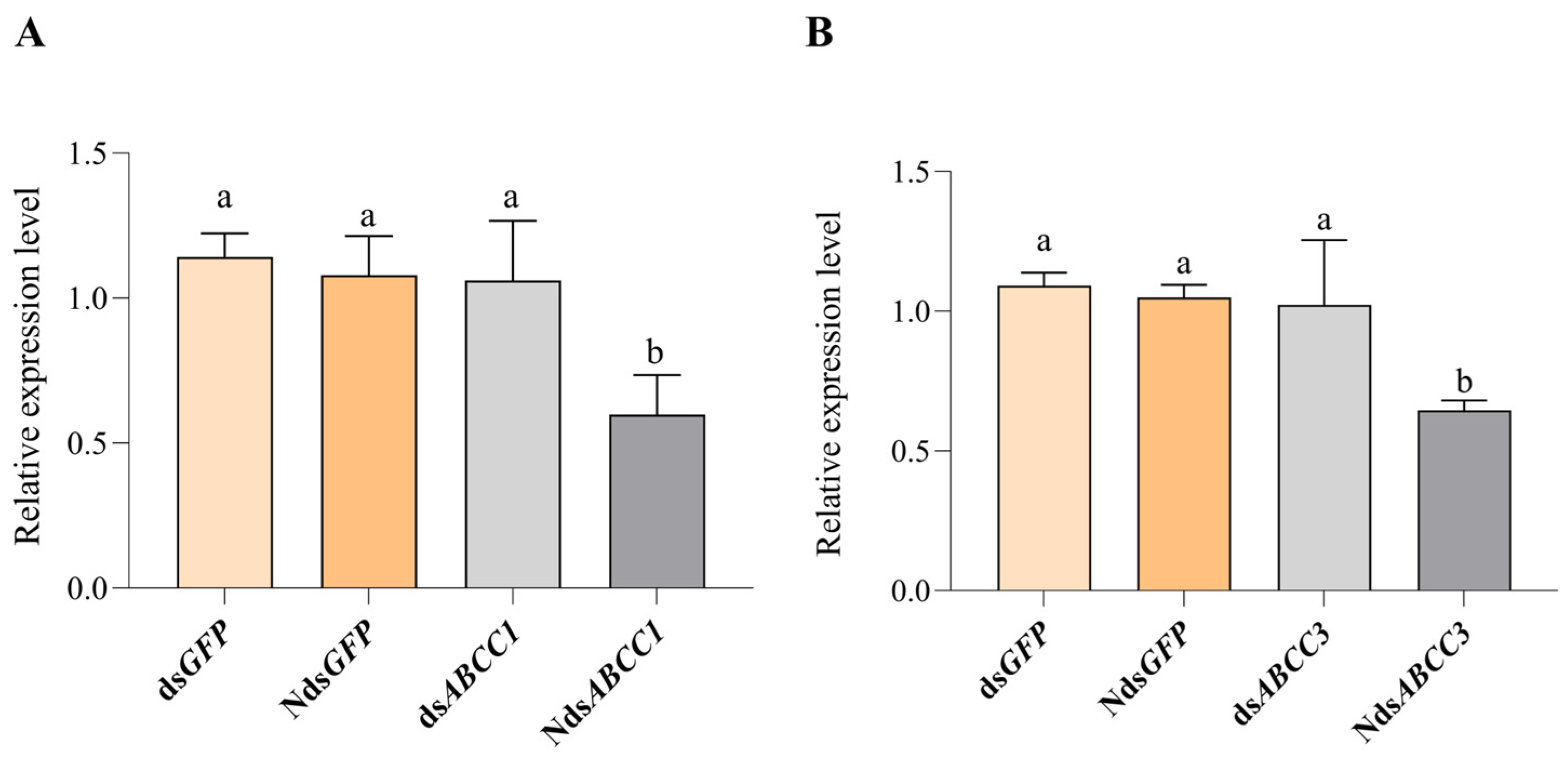
After RSB larvae were treated with naked dsRNA or chitosan-coated dsRNA (Figures S4 and S5), the transcript levels of CsABCC1 and CsABCC3 were examined on the sixth day. In the naked dsRNA treatment, the expression levels of CsABCC1 and CsABCC3 were reduced by 7.14% and 6.28%, respectively. However, these reductions were not significantly different from those in the control group treated with dsGFP (Figure 4A,B and Figure S6A,C).
Figure 4.
RNAi assay of CsABCC1 and CsABCC3 on RSB. (A) Transcript levels of CsABCC1 in RSB larvae by oral administration of dsRNA/chitosan-coated dsRNA. (B) Transcript levels of CsABCC3 in RSB larvae by oral administration of dsRNA/chitosan-coated dsRNA. Results are shown as means ± SEM. Different lowercase letters indicate significant differences among treatments based on one-way ANOVA followed by multiple comparison analysis at p < 0.05.
By contrast, chitosan-coated dsRNA treatment significantly induced greater reductions in the expression levels of CsABCC1 and CsABCC3, decreasing them by 44.63% and 38.49%, respectively, compared to the naked dsRNA and control groups (p < 0.05) (Figure 4A,B and Figure S6B,D).
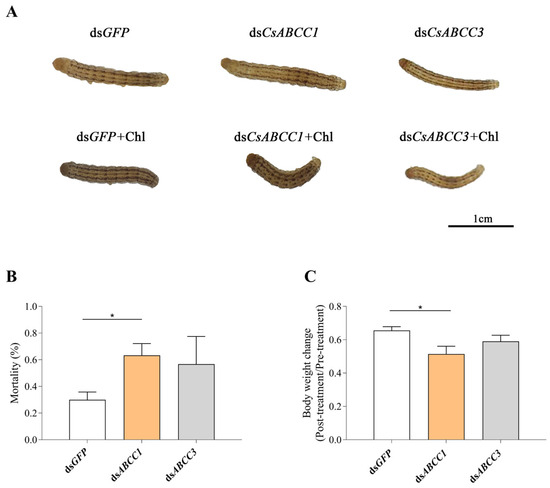
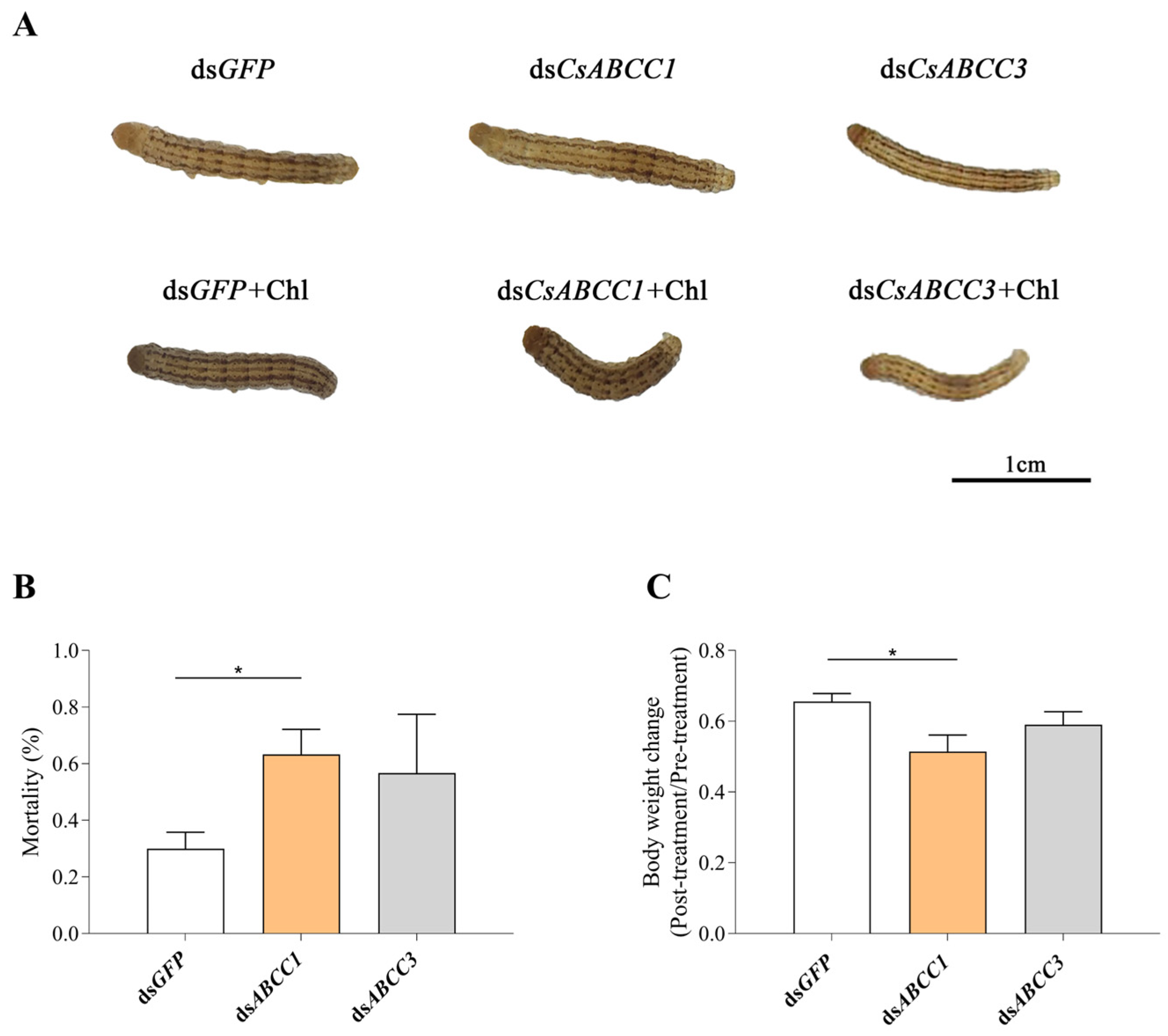
When larvae treated with dsCsABCC1 or dsCsABCC3 were subsequently exposed to the LC30 of chlorantraniliprole, the mortality increased to 63.33% and 56.67%, respectively, compared to the control groups fed with dsGFP (Figure 5A,B). These findings demonstrated that silencing CsABCC1 or CsABCC3 significantly enhanced the susceptibility of RSB larvae to chlorantraniliprole.
Figure 5.
Effects of RNAi on chlorantraniliprole to RSB. (A) Phenotype, (B) Mortality and (C) Body weight change (post-treatment/pre-treatment) of RSB after dsRNA and chlorantraniliprole treatment. Mortality of dsRNA-treated RSB larvae after 3 days of LC30 chlorantraniliprole exposure. Results are shown as means ± SEM, and significance is shown by asterisk (p < 0.05).
Larval body weight was recorded before and after 3 days of chlorantraniliprole exposure, and body weight change was used to evaluate the effects of RNAi on larval growth performance under chlorantraniliprole stress. In the dsABCC1-treated group, the body weight of larvae decreasing to 51.44% compared to 65.59% in the corresponding GFP control after chlorantraniliprole exposure (Figure 5C), which indicates that the silence of CsABCC1 enhanced the insecticidal effects of chlorantraniliprole exposure on larvae. By contrast, the dsABCC3-treated group showed non-significant difference in body weight change (59.01%) compared to the corresponding control, which suggests that CsABCC3 may play a relatively weaker role in the response of larvae to chlorantraniliprole exposure. These results suggest that CsABCC1 and CsABCC3 are involved not only in insecticidal activity of chlorantraniliprole but also in larval growth performance under chlorantraniliprole stress.
4. Discussion
The resistant (RSB-ZJ) strain used in this study exhibited a 181.8-fold resistance to chlorantraniliprole compared to the susceptible (RSB-LAB) strain, which indicates a high level of resistance in field populations. Among the four ABC transporter genes analyzed, CsABCC1 and CsABCC3 were significantly upregulated in the RSB-ZJ strain, which suggests that both ABC transporters may be associated with chlorantraniliprole resistance in RSB. Similar expression patterns of ABCC transporters have also been reported in Leucinodes orbonalis Guenée, 1854 (Lepidoptera: Crambidae) [32,33,34,35]. In addition, both CsABCC1 and CsABCC3 contained conserved domains, including TMD and NBD, which are characteristic structural features of ABC transporters involved in ATP-dependent substrate transport [11,17]. Previous studies on insect ABC transporters have suggested that these conserved domains may participate in substrate recognition and xenobiotic transport, including insecticides and other hydrophobic compounds [8]. Together, the upregulated expression of CsABCC1 and CsABCC3 genes in the resistant strain and the increased susceptibility following RNAi treatment suggest that CsABCC1 and CsABCC3 may contribute to chlorantraniliprole detoxification and resistance in RSB.
Increasing evidences indicate that ABC transporters are involved in chlorantraniliprole resistance in lepidopteran pests. For example, the survival rates of Plutella xylostella (Linnaeus, 1758) (Lepidoptera: Plutellidae) were significantly reduced under chlorantraniliprole treatment following injection of dsRNA targeting ABCG6, ABCG9, or ABCG14 [36]. Similarly, knockout of a P-glycoprotein gene in S. exigua also increased susceptibility to abamectin and emamectin benzoate, further supporting the involvement of ABC transporters in insecticide tolerance in lepidopteran insects [37]. Consistent with these findings, the silencing of CsABCC1 or CsABCC3 in the present study significantly increased the susceptibility of RSB larvae to chlorantraniliprole, providing functional support for the role of both ABC transporter genes in chlorantraniliprole resistance.
The silencing of CsABCC1 resulted in a stronger increase in larval susceptibility to chlorantraniliprole than the silencing of CsABCC3, which suggests that two ABC transporters may contribute differently to insecticidal effects of chlorantraniliprole in RSB. In addition, the silencing of CsABCC1 caused a greater reduction in larval body weight after chlorantraniliprole exposure, whereas the effect of CsABCC3 on larval body weight was relatively limited. This difference may reflect a functional divergence among ABC transporters. Moreover, functional redundancy within the ABC transporter family may partially compensate for the suppression of CsABCC3. Redundancy among ABCC transporters has also been reported in other lepidopteran insects, where either ABCC2 or ABCC3 alone was sufficient to maintain susceptibility to Bt toxin Cry1Ac in Helicoverpa armigera (Hübner, 1808) (Lepidoptera: Noctuidae) [38]. Similar functional differences among ABC transporters have been observed in other insects, where specific transporters showed stronger associations with xenobiotic detoxification and insecticide resistance [7,39].
Although RNAi has been widely used for the functional analysis of resistance-related genes in insects, its application in lepidopteran insects is often limited by low dsRNA stability, degradation in the gut, and inefficient cellular uptake. In the present study, chitosan-mediated dsRNA delivery significantly improved the silencing efficiency of CsABCC1 and CsABCC3 compared to naked dsRNA, which indicates that nanoparticle-mediated delivery can enhance RNAi efficiency in RSB. Similar results have been reported in other lepidopteran insects such as T. absoluta, S. exigua and O. furnacalis, where nanoparticle-based dsRNA delivery systems improved gene silencing efficiency [21,40,41]. However, before RNAi-based approaches can be widely applied, the potential ecological risks and non-target effects should also be systematically evaluated. Previous studies have highlighted the importance of assessing the effects of dsRNA–pesticide complexes on beneficial insects and natural enemies, e.g., Propylea japonica (Thunberg, 1780) (Coleoptera: Coccinellidae) [19].
The present study indicates that nanoparticle-assisted RNAi may provide a complementary approach for chlorantraniliprole resistance management in RSB within IPM programs as shown in other reports [42,43]. Such approaches may help reduce excessive reliance on chemical insecticides and decrease the usage of insecticide in rice production. Even though, nanoparticle-mediated dsRNA delivery systems could improve the stability of dsRNA under environmental conditions and enhance RNAi efficiency [22,44,45]. further studies are needed to evaluate the environmental safety, stability, non-target effects, and field performance of RNAi-based pest management strategies under realistic agricultural conditions before field application of dsRNA [46,47,48].
5. Conclusions
Our results demonstrate that the chlorantraniliprole-resistant (RSB-ZJ) strain exhibited a 181.76-fold resistance compared to the susceptible (RSB-LAB) strain, indicating a high level of field-evolved resistance. Among the four candidate ABC transporter genes examined, CsABCC1 and CsABCC3 were significantly overexpressed in the resistant strain and were, therefore, selected for functional validation through RNAi. Silencing of these genes increased larval susceptibility to chlorantraniliprole, supporting their involvement in chlorantraniliprole detoxification. In addition, chitosan-mediated dsRNA delivery significantly enhanced RNAi efficiency compared to naked dsRNA, which suggests that nanoparticle-assisted RNAi may serve as a useful complementary approach for resistance management within IPM programs for RSB.
Supplementary Materials
The following supporting information can be downloaded at: https://www.mdpi.com/article/10.3390/agronomy16111080/s1, Figure S1: Expression validation gel for CsABCC1; Figure S2: Expression validation gel for CsABCA3 and CsABCC3; Figure S3: Expression validation gel for CsABCD2; Figure S4: Electrophoresis detection of dsRNA expressed by HT115 cells. Figure S5: Electrophoretic detection of chitosan effectively coating dsRNA. Figure S6: RNAi knockdown verification; Table S1: Primers used in the present study.
Author Contributions
Conceptualization, project administration and funding acquisition, C.Z.; validation, Q.P. and X.M.; formal analysis, investigation and data curation, Q.P., X.M. and Y.Z.; writing—original draft preparation, Q.P.; writing—review and editing, Q.P., X.M., Y.Z., A.H., M.C. and C.Z.; visualization, A.H., X.M. and Y.Z.; supervision, M.C. and C.Z. All authors have read and agreed to the published version of the manuscript.
Funding
This work was supported by the National Key R&D Program of China [grant number 2022YFD1700200], the Jiangsu Agricultural Science and Technology Independent Innovation Fund Project [grant number CX(24)3010], and the Postgraduate Research Practice Innovation Program of Jiangsu Province [grant number KYCX25_0984].
Data Availability Statement
The original contributions presented in this study are included in the article. Further inquiries can be directed to the corresponding author.
Acknowledgments
We thank the anonymous reviewers for their valuable comments to improve previous versions of the manuscript.
Conflicts of Interest
The authors declare no conflicts of interest.
References
- Sheng, C.F.; Wang, H.T.; Sheng, S.Y.; Gao, L.D.; Xuan, W.J. Pest status and loss assessment of crop damage caused by the rice borers, Chilo suppressalis and Tryporyza incertulas in China. Entomol. Knowledg 2003, 40, 289–294. [Google Scholar]
- Lahm, G.P.; Selby, T.P.; Freudenberger, J.H.; Stevenson, T.M.; Myers, B.J.; Seburyamo, G.; Smith, B.K.; Flexner, L.; Clark, C.E.; Cordova, D. Insecticidal anthranilic diamides: A new class of potent ryanodine receptor activators. Bioorg. Med. Chem. Lett. 2005, 15, 4898–4906. [Google Scholar] [CrossRef] [Scilit]
- Huang, J.M.; Zhao, Y.X.; Sun, H.; Ni, H.; Liu, C.; Wang, X.; Gao, C.F.; Wu, S.F. Monitoring and mechanisms of insecticide resistance in Spodoptera exigua (Lepidoptera: Noctuidae), with special reference to diamides. Pestic. Biochem. Physiol. 2021, 174, 104831. [Google Scholar] [CrossRef] [Scilit]
- Huang, J.M.; Sun, H.; He, L.F.; Liu, C.; Ge, W.C.; Ni, H.; Gao, C.F.; Wu, S.F. Double ryanodine receptor mutations confer higher diamide resistance in rice stem borer, Chilo suppressalis. Pest. Manag. Sci. 2021, 77, 4971–4979. [Google Scholar] [CrossRef] [Scilit]
- Wang, S.; Huang, J.M.; Guo, F.R.; Liu, C.; Xie, Y.; Qiao, S.T.; Chen, Y.X.; Wu, S.F.; Bass, C.; Gao, C.F. Flavin-dependent monooxgenase confers resistance to chlorantraniliprole and spinetoram in the rice stem borer Chilo suppressalis Walker (Lepidoptera: Crambidae). J. Agric. Food Chem. 2024, 72, 26943–26956. [Google Scholar] [CrossRef] [Scilit]
- Wang, S.; Liu, C.; Qiao, S.T.; Guo, F.R.; Xie, Y.; Sun, H.; Liu, Y.; Zhao, S.Q.; Zhou, L.Q.; He, L.F.; et al. The evolution and mechanisms of multiple-insecticide resistance in rice stem borer, Chilo suppressalis Walker (Lepidoptera: Crambidae). J. Agric. Food Chem. 2024, 72, 26475–26490. [Google Scholar] [CrossRef] [Scilit]
- Guan, D.; Yang, X.; Jiang, H.; Zhang, N.; Wu, Z.; Jiang, C.; Shen, Q.; Qian, K.; Wang, J.; Meng, X. Identification and validation of ATP-binding cassette transporters involved in the detoxification of abamectin in rice stem borer, Chilo suppressalis. J. Agric. Food Chem. 2022, 70, 4611–4619. [Google Scholar] [CrossRef] [Scilit]
- Chen, J.; Duan, Y.; Zhou, Y.; Yang, Q. Squeeze pumping of lipids and insecticides by ABCH transporter. Cell 2025, 188, 944–957.e919. [Google Scholar] [CrossRef] [Scilit]
- Zhao, J. Studies on Metabolic Resistance Mechanisms of Chilo suppressalis (Walker) to Chlorantraniliprole. Doctoral Dissertation, Nanjing Agriculture University, Nanjing, China, 2018. [Google Scholar]
- Glavinas, H.; Krajcsi, P.; Cserepes, J.; Sarkadi, B. The role of ABC transporters in drug resistance, metabolism and toxicity. Curr. Drug Deliv. 2004, 1, 27–42. [Google Scholar] [CrossRef] [Scilit]
- Higgins, C.F. ABC transporters: From microorganisms to man. Annu. Rev. Cell Biol. 1992, 8, 67–113. [Google Scholar] [CrossRef]
- Shukla, S.; Wu, C.P.; Ambudkar, S.V. Development of inhibitors of ATP-binding cassette drug transporters: Present status and challenges. Expert Opin. Drug Met. 2008, 4, 205–223. [Google Scholar] [CrossRef] [Scilit]
- Dean, M.; Annilo, T. Evolution of the ATP-binding cassette (ABC) transporter superfamily in vertebrates. Annu. Rev. Genom. Hum. Genet. 2005, 6, 123–142. [Google Scholar] [CrossRef] [Scilit]
- Lage, H. ABC-transporters: Implications on drug resistance from microorganisms to human cancers. Int. J. Antimicrob. Agents 2003, 22, 188–199. [Google Scholar] [CrossRef] [Scilit]
- Borths, E.L.; Locher, K.P.; Lee, A.T.; Rees, D.C. The structure of Escherichia coli BtuF and binding to its cognate ATP binding cassette transporter. Proc. Natl. Acad. Sci. USA 2002, 99, 16642–16647. [Google Scholar] [CrossRef] [Scilit]
- Kathawala, R.J.; Gupta, P.; Ashby, C.R., Jr.; Chen, Z.S. The modulation of ABC transporter-mediated multidrug resistance in cancer: A review of the past decade. Drug. Resist. Updat. 2015, 18, 1–17. [Google Scholar] [CrossRef] [Scilit]
- Locher, K.P. Structure and mechanism of ABC transporters. Curr. Opin. Struct. Biol. 2004, 14, 426–431. [Google Scholar] [CrossRef] [Scilit]
- Ju, D.; Hu, C.; Lv, Y.; Li, Y.; Gao, P.; Yang, X. Establishing a fluorescence-based technique for ABC transporters functional analysis in metabolism of insecticides in a Lepidopteron. Environ. Technol. Innov. 2024, 35, 103719. [Google Scholar] [CrossRef] [Scilit]
- Zhang, J.; Ye, C.; Wang, Z.G.; Ding, B.Y.; Smagghe, G.; Zhang, Y.J.; Niu, J.Z.; Wang, J.J. DsRNAs spray enhanced the virulence of entomopathogenic fungi Beauveria bassiana in aphid control. J. Pest Sci. 2023, 96, 241–251. [Google Scholar] [CrossRef] [Scilit]
- Wang, W.; Ghafar, M.A.; Lu, L.; Haq, I.U.; Cui, L.; Yuan, H.; Wang, L. Nanoscale metal-organic frameworks for the co-delivery of cycloxaprid and pooled siRNAs to enhance control efficacy in Diaphorina citri. J. Agric. Food Chem. 2025, 73, 3353–3362. [Google Scholar] [CrossRef] [Scilit]
- Wang, X.; Ji, S.; Bi, S.; Tang, Y.; Zhang, G.; Yan, S.; Wan, F.; Lv, Z.; Liu, W. A promising approach to an environmentally friendly pest management solution: Nanocarrier-delivered dsRNA towards controlling the destructive invasive pest Tuta absoluta. Environ. Sci. Nano 2023, 10, 1003–1015. [Google Scholar] [CrossRef] [Scilit]
- Wang, K.; Peng, Y.; Chen, J.; Peng, Y.; Wang, X.; Shen, Z.; Han, Z. Comparison of efficacy of RNAi mediated by various nanoparticles in the rice striped stem borer (Chilo suppressalis). Pestic. Biochem. Physiol. 2020, 165, 104467. [Google Scholar] [CrossRef] [Scilit]
- Gurusamy, D.; Mogilicherla, K.; Palli, S.R. Chitosan nanoparticles help double-stranded RNA escape from endosomes and improve RNA interference in the fall armyworm, Spodoptera frugiperda. Arch. Insect Biochem. Physiol. 2020, 104, e21677. [Google Scholar] [CrossRef] [Scilit]
- Mao, X.; Zhang, Y.; Pu, Q.; Hasnain, A.; Liu, X.; Luo, G.; Zhao, C. Functional analysis of vesicular glutamate transporter in Chilo suppressalis: Implications for glutamate transport and pest management. Insect Biochem. Mol. Biol. 2025, 183, 104376. [Google Scholar] [CrossRef] [Scilit]
- Li, Y.; Wang, Y.; Qian, C.; Tang, T.; Shen, N.; Wu, W.; Wang, J.; Han, Z.; Zhao, C. Lethal and sublethal effects of fluxametamide on rice-boring pest, rice stem borer Chilo suppressalis. Agronomy 2022, 12, 2429. [Google Scholar] [CrossRef] [Scilit]
- Zhang, K.; Zhan, E.; Chang, X.; Fouad, E.A.; Zhao, C. Resistance realized heritability and fitness cost of cyproflanilide in rice stem borer, Chilo suppressalis (Lepidoptera: Pyralidae). Agronomy 2024, 14, 2249. [Google Scholar] [CrossRef] [Scilit]
- Huang, L.; Lu, M.; Han, G.; Du, Y.; Wang, J. Sublethal effects of chlorantraniliprole on development, reproduction and vitellogenin gene (CsVg) expression in the rice stem borer, Chilo suppressalis. Pest. Manag. Sci. 2016, 72, 2280–2286. [Google Scholar] [CrossRef] [Scilit]
- Miller, A.L.; Tindall, K.; Leonard, B.R. Bioassays for monitoring insecticide resistance. J. Vis. Exp. 2010, 46, e2129. [Google Scholar]
- Yang, J.; Han, Z.-J. Efficiency of different methods for dsRNA delivery in cotton bollworm (Helicoverpa armigera). J. Integr. Agric. 2014, 13, 115–123. [Google Scholar] [CrossRef] [Scilit]
- Solis, C.F.; Santi-Rocca, J.; Perdomo, D.; Weber, C.; Guillén, N. Use of bacterially expressed dsRNA to downregulate Entamoeba histolytica gene expression. PLoS ONE 2009, 4, e8424. [Google Scholar] [CrossRef] [Scilit]
- Dai, W.; Zhu, B.; Tuinen, M.V.; Zhu, T.; Shang, D.; Almeida, P.; Liang, P.; Ullah, H.; Ban, L. Genome-wide scans and transcriptomic analyses characterize selective changes as a result of chlorantraniliprole resistance in Plutella xylostella. Int. J. Mol. Sci. 2022, 23, 12245. [Google Scholar] [CrossRef] [Scilit]
- Xu, H.Q.; Ma, M.; Ma, Y.P.; Zhang, S.Y.; Li, W.J.; Wei, D.; Wang, J.J. Identification and expression characterization of ATP-binding cassette (ABC) transporter genes in melon fly. Insects 2021, 12, 270. [Google Scholar] [CrossRef] [Scilit] [PubMed]
- Yu, H.Z.; Xu, J.P.; Wang, X.Y.; Ma, Y.; Yu, D.; Fei, D.Q.; Zhang, S.Z.; Wang, W.L. Identification of four ATP-binding cassette transporter genes in Cnaphalocrocis medinalis and their expression in response to insecticide treatment. J. Insect Sci. 2017, 17, 44–51. [Google Scholar] [CrossRef] [Scilit]
- Sun, H.; Buchon, N.; Scott, J.G. Mdr65 decreases toxicity of multiple insecticides in Drosophila melanogaster. Insect Biochem. Mol. Biol. 2017, 89, 11–16. [Google Scholar] [CrossRef] [Scilit]
- Singamshetty, S.; Selvapandian, U.; Selvamani, S.B.; Talya Chandrashekara, S.; Pathak, J.; Agarwal, A.; Thiruvengadam, V.; Ramasamy, G.G.; Sushil, S.N.; Kamanur, M.; et al. Transcriptome mining and expression analysis of ABC transporter genes in a monophagous herbivore, Leucinodes orbonalis (Crambidae: Lepidoptera). Comp. Biochem. Physiol. Part D Genom. Proteomics. 2024, 52, 101316. [Google Scholar] [CrossRef] [Scilit]
- Shan, J.; Sun, X.; Li, R.; Zhu, B.; Liang, P.; Gao, X. Identification of ABCG transporter genes associated with chlorantraniliprole resistance in Plutella xylostella (L.). Pest. Manag. Sci. 2021, 77, 3491–3499. [Google Scholar] [CrossRef] [Scilit]
- Zuo, Y.Y.; Huang, J.L.; Wang, J.; Feng, Y.; Han, T.T.; Wu, Y.D.; Yang, Y.H. Knockout of a P-glycoprotein gene increases susceptibility to abamectin and emamectin benzoate in Spodoptera exigua. Insect Mol. Biol. 2018, 27, 36–45. [Google Scholar] [CrossRef] [Scilit]
- Wang, J.; Ma, H.; Zhao, S.; Huang, J.; Yang, Y.; Tabashnik, B.E.; Wu, Y. Functional redundancy of two ABC transporter proteins in mediating toxicity of Bacillus thuringiensis to cotton bollworm. PLoS Pathog. 2020, 16, e1008427. [Google Scholar] [CrossRef] [Scilit]
- Wu, C.; Chakrabarty, S.; Jin, M.; Liu, K.; Xiao, Y. Insect ATP-binding cassette (ABC) transporters: Roles in xenobiotic detoxification and Bt insecticidal activity. Int. J. Mol. Sci. 2019, 20, 2829. [Google Scholar] [CrossRef] [Scilit]
- Christiaens, O.; Tardajos, M.G.; Martinez Reyna, Z.L.; Dash, M.; Dubruel, P.; Smagghe, G. Increased RNAi efficacy in Spodoptera exigua via the formulation of dsRNA with guanylated polymers. Front. Physiol. 2018, 9, 316. [Google Scholar] [CrossRef] [Scilit]
- He, B.; Chu, Y.; Yin, M.; Müllen, K.; An, C.; Shen, J. Fluorescent nanoparticle delivered dsRNA toward genetic control of insect pests. Adv. Mater. 2013, 25, 4580–4584. [Google Scholar] [CrossRef] [Scilit] [PubMed]
- Willow, J.; Taning, C.N.T.; Cook, S.M.; Sulg, S.; Silva, A.I.; Smagghe, G.; Veromann, E. RNAi targets in agricultural pest insects: Advancements, knowledge gaps, and IPM. Front. Agron. 2021, 3, 794312. [Google Scholar] [CrossRef] [Scilit]
- Joga, M.R.; Zotti, M.J.; Smagghe, G.; Christiaens, O. RNAi efficiency, systemic properties, and novel delivery methods for pest insect control: What we know so far. Front. Physiol. 2016, 7, 232461. [Google Scholar] [CrossRef] [Scilit] [PubMed]
- Zhang, H. Study on Factors Influencing Biosafety and Efficiency of Insecticidal dsRNA in Field Application and the Mechanism for Long Lasting Validity. Doctoral Dissertation, Nanjing Agricultural University, Nanjing, China, 2022. [Google Scholar]
- Arjunan, N.; Thiruvengadam, V.; Sushil, S.N. Nanoparticle-mediated dsRNA delivery for precision insect pest control: A comprehensive review. Mol. Biol. Rep. 2024, 51, 355. [Google Scholar] [CrossRef] [Scilit]
- Castellanos, N.L.; Smagghe, G.; Taning, C.N.T.; Oliveira, E.E.; Christiaens, O. Risk assessment of RNAi-based pesticides to non-target organisms: Evaluating the effects of sequence similarity in the parasitoid wasp Telenomus podisi. Sci. Total Environ. 2022, 832, 154746. [Google Scholar] [CrossRef] [Scilit] [PubMed]
- Vatanparast, M.; Merkel, L.; Amari, K. Exogenous application of dsRNA in plant protection: Efficiency, safety concerns and risk assessment. Int. J. Mol. Sci. 2024, 25, 6530. [Google Scholar] [CrossRef] [Scilit]
- Rodrigues, T.; Sridharan, K.; Manley, B.; Cunningham, D.; Narva, K. Development of dsRNA as a sustainable bioinsecticide: From laboratory tofield. In Crop Protection Products for Sustainable Agriculture, 5th ed.; Rauzan, B.M., Lorsbach, B.A., Eds.; American Chemical Society: Washington, DC, USA, 2021; Volume 1390, pp. 65–82. [Google Scholar]

Disclaimer/Publisher’s Note: The statements, opinions and data contained in all publications are solely those of the individual author(s) and contributor(s) and not of MDPI and/or the editor(s). MDPI and/or the editor(s) disclaim responsibility for any injury to people or property resulting from any ideas, methods, instructions or products referred to in the content. |
© 2026 by the authors. Licensee MDPI, Basel, Switzerland. This article is an open access article distributed under the terms and conditions of the Creative Commons Attribution (CC BY) license.