1. Introduction
Maize (
Zea mays L.) is one of the most widely cultivated cereal crops worldwide and plays a strategic role in global food security, feed supply, and agro-industrial production systems. Despite its high yield potential, maize productivity is strongly constrained by environmental stresses, particularly drought and heat episodes occurring during flowering and grain filling [
1,
2]. Elevated temperatures and water deficits during these critical phenological stages impair pollination, reduce kernel set, and shorten the grain-filling period, ultimately leading to substantial yield penalties [
3,
4]. Recent syntheses further indicate that climate-induced stress is expected to intensify in major maize-growing regions, increasing interannual yield variability and production risks [
5,
6].
In Southeastern Europe, maize-based production systems are particularly vulnerable to climatic instability, including prolonged droughts, irregular precipitation, and heat waves [
7,
8]. Romanian case studies have reported significant yield reductions under drought conditions [
9] and emphasized the need for adaptive and resilience-oriented agricultural strategies [
10]. However, yield variability is not determined by climate alone. Hybrid adaptability, agronomic practices, and soil management intensity interact with environmental factors and significantly influence productivity outcomes [
11,
12]. Therefore, sustainable maize production in this region requires integrated solutions that combine genetic improvement with optimized technological practices.
Among agronomic practices, soil tillage systems are a central component of management that influences soil physical properties, water dynamics, nutrient availability, and weed pressure. Conventional tillage, based on moldboard plowing, has long been the dominant practice in Romania and other Central and Eastern European countries. Nevertheless, increasing concerns regarding soil structure degradation, accelerated organic matter mineralization, and rising fuel and labor costs have stimulated interest in conservation-oriented systems [
13,
14]. Reduced tillage and no-tillage systems have been shown to modify soil bulk density, aggregation, and infiltration [
15,
16], and to affect nitrogen dynamics and nutrient-use efficiency [
17]. Similar variability in yield response under contrasting tillage systems has been observed across different pedoclimatic regions of Central and Eastern Europe, further emphasizing the need for site-specific assessments under both rainfed and irrigated conditions.
However, the effects of conservation tillage on maize yield remain inconsistent across environments. While some studies report improvements in soil moisture conservation and enhanced yield stability under drought-prone conditions, others report neutral or even negative yield responses associated with increased soil compaction, delayed spring soil warming, or higher weed pressure under no-tillage systems. These contrasting findings indicate that the agronomic performance of conservation tillage is strongly context-dependent and influenced by soil type, climatic variability, irrigation regime, and hybrid adaptability. Consequently, extrapolating results across regions without site-specific validation may lead to unreliable agronomic recommendations.
In this framework, comparing conventional tillage with minimum tillage and no-tillage systems is particularly relevant for regions with increasing climatic variability and irrigated maize production. Conventional tillage remains the dominant regional practice and serves as a technological benchmark, whereas reduced- and no-tillage systems are increasingly promoted in conservation agriculture for their potential to improve soil moisture retention, reduce operational costs, and enhance structural stability [
18,
19,
20]. Evaluating these systems under irrigated cambic chernozem conditions provides context-specific evidence needed to refine agronomic recommendations in Southeastern Romania.
Water management further complicates this interaction. Efficient irrigation scheduling and water-use optimization are critical for sustaining maize productivity under climate pressure [
21,
22]. Modeling and simulation approaches highlight substantial differences in water-use efficiency under contrasting irrigation regimes [
23,
24]. Field studies indicate that drip irrigation and fertigation may enhance biomass accumulation and grain yield [
25,
26], whereas sprinkler irrigation performance can vary depending on canopy development and droplet distribution dynamics [
27,
28]. Under semi-arid conditions, optimizing irrigation alone is insufficient if not aligned with appropriate soil management strategies [
29,
30]. Consequently, the interaction between tillage intensity and irrigation regime deserves particular attention.
Hybrid selection adds another layer of complexity. Modern maize hybrids differ considerably in phenology, density tolerance, and resilience to thermal and hydric stress [
31,
32]. Their performance depends on genotype × environment × management interactions, which include sowing date [
33], fertilization regimes [
34], and soil disturbance intensity. Although advances in breeding have improved stress tolerance, the response of contemporary hybrids to contrasting tillage systems under irrigated field-scale conditions remains insufficiently documented in Southeastern Europe [
35].
In addition to productivity, tillage systems influence weed and pest dynamics. Reduced and no-tillage systems may modify weed species composition and density [
36,
37], while pest pressure, including
Diabrotica virgifera virgifera and
Helicoverpa armigera, is evolving under changing agroecosystem conditions [
38,
39]. Therefore, evaluating tillage systems solely from a yield perspective may overlook broader agronomic implications.
Recent Romanian studies have examined the transition from conventional to minimum tillage technologies in maize and other spring crops [
40,
41], reporting improvements in mechanization efficiency, operational performance, and economic sustainability under a conservation-oriented management system. However, most available evidence is derived from small-plot experimental setups or short-term trials. Large-scale field evaluations conducted under commercial farming conditions, over multiple consecutive growing seasons, and specifically on irrigated cambic chernozem soils remain scarce in Southeastern Romania. Furthermore, factorial analyses integrating both tillage intensity and hybrid response are limited, particularly under sprinkler irrigation systems. This gap restricts the development of region-specific recommendations grounded in long-term agronomic performance.
Given the increasing climatic instability and the need for sustainable intensification, a context-specific, long-term evaluation of soil tillage strategies in irrigated maize production is required. Understanding how tillage intensity interacts with hybrid performance and weed dynamics under large-scale field conditions is essential for developing resilient and economically viable maize production systems in chernozem soils exposed to recurrent thermal and hydric stress.
The objective of this study was to assess the effects of three soil tillage systems: conventional tillage, minimum tillage, and no-tillage, on grain yield, yield components, and weed dynamics of three maize hybrids cultivated under irrigated conditions over a three-year period. Additionally, the study aimed to analyze the interaction between tillage intensity and hybrid response to identify agronomic strategies that maintain consistent maize productivity across years and contrasting soil management conditions under the pedoclimatic conditions of Southeastern Romania. The novelty of this study lies in the comprehensive evaluation of three recently introduced maize hybrids across all three tillage systems, an approach that remains underexplored under the specific conditions of Southeastern Romania. Given that these hybrids have only recently been adopted in this agricultural region, their performance and adaptability to different soil management systems are not yet well documented. Therefore, this study provides valuable insights into hybrid–tillage interactions and helps fill an important knowledge gap in the optimization of maize production systems in this area.
2. Materials and Methods
2.1. Experimental Site and Pedoclimatic Characterization
The study was conducted during the 2023–2025 growing seasons in Gălbinași, Buzău (45°05′32.88″ N; 26°57′10.99″ E), at an altitude of 74 m above sea level. The experimental field is located on a fluvial-plain terrace with a slight slope (2–3°) and SSE exposure. From a bioclimatic perspective, the area belongs to the forest-steppe transition zone and is characterized by a pronounced continental climate, with frequent summer heat and drought.
According to the Romanian Soil Taxonomy System (SRTS, 2012+), the soil is classified as a cambic chernozem–endocalcaric (CZ cb), which corresponds approximately to a Calcic Chernozem in the WRB/FAO international soil classification system, developed on loessoid loams with underlying medium- to fine-grained alluvial clays.
The soil profile exhibits a well-developed mollic horizon (Am, 0–38 cm) with medium loam texture, granular structure, and high humus content (3.38%), followed by transitional AB and Bv horizons without carbonate accumulation down to 86 cm depth. Carbonate accumulation occurs in the BCk and Cca horizons (CaCO3 content ranging from 5.45% to 10.73%), where soil reaction becomes alkaline (pH 8.40–8.51). In the arable layer, soil reaction is slightly acidic to neutral (pH 6.42–6.70), with moderate available phosphorus (4.46 mg kg−1) and good potassium supply (173 mg kg−1). Physical and chemical analyses were performed at the O.S.P.A. Buzău certified laboratory.
The groundwater table is located at depths greater than 10 m, is permanent, and has low mineralization. Natural drainage is considered moderate to good. Pisum sativum L. was the preceding crop for all treatments, and 30 t ha−1 of semi-fermented poultry manure had been previously applied.
2.2. Experimental Design and Studied Factors
The field experiment was organized as a randomized complete block design with three replications under large-scale commercial farming conditions, ensuring realistic agronomic management and minimizing small-plot experimental bias. The experiment followed a two-factor factorial arrangement, with soil tillage system and maize hybrid considered as fixed experimental factors. Factor A consisted of three soil tillage systems: conventional tillage (CT), involving autumn moldboard plowing at 25 cm followed by spring disking at 10 cm; minimum tillage (MT), consisting of chisel plowing at 20 cm and shallow disking at 10 cm; and no-tillage (NT), based on direct drilling without prior soil disturbance. Factor B—biological material: P1441 (LumiGEN™|Optimum
® AQUAmax
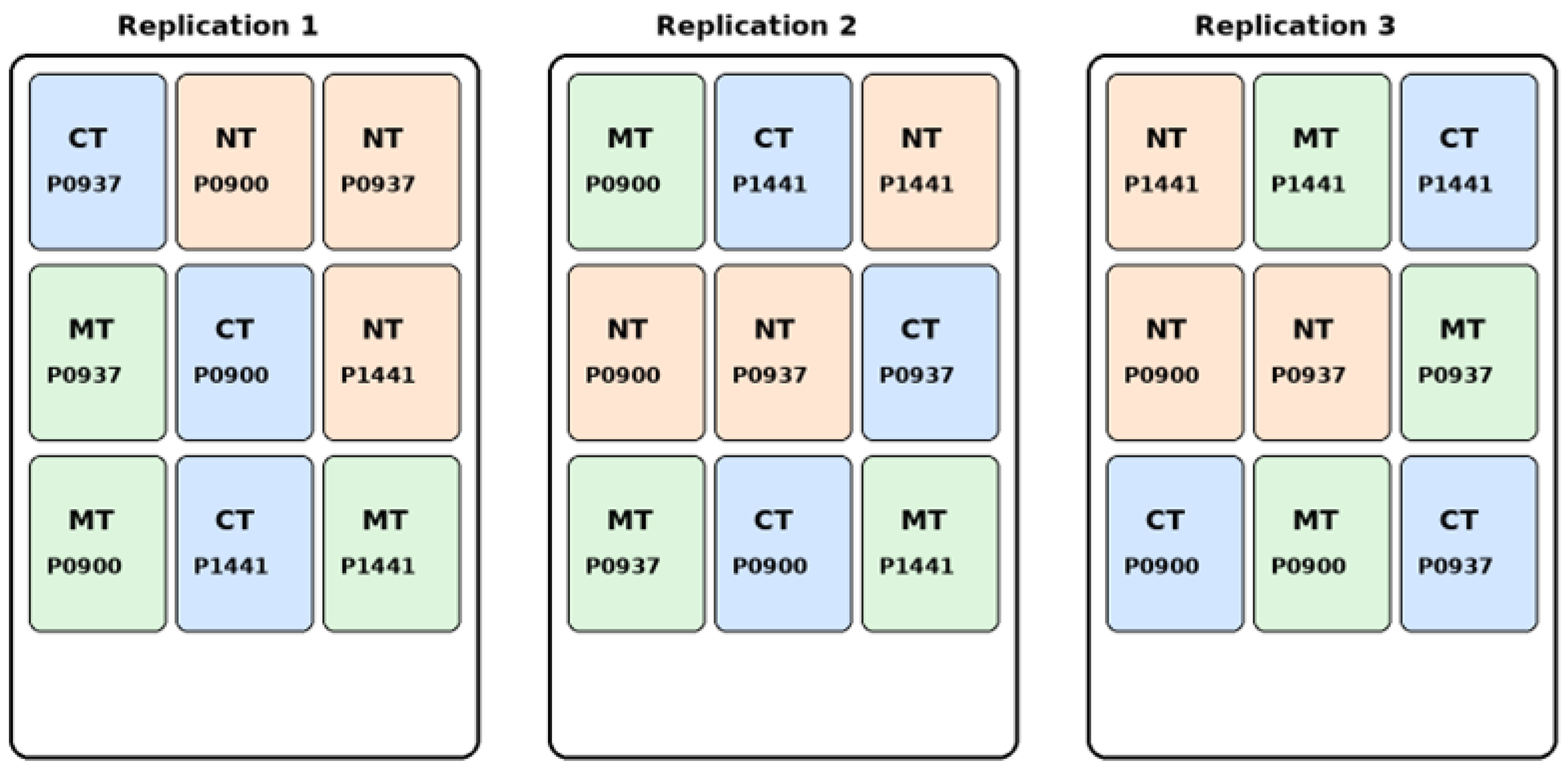
®; FAO 560), P0937 (LumiGEN™; FAO 540), and P0900 (LumiGEN™; FAO 460) from PIONEER (Corteva Agriscience™, Bucharest, Romania). Each hybrid × tillage combination occupied 1 ha within each replication. Thus, nine experimental variants (
Figure 1) were evaluated annually (3 × 3), resulting in 27 ha per year and a total experimental area of 81 ha over the three-year period. Treatments were randomly allocated within each block to minimize spatial variability and systematic bias. Plot uniformity was previously assessed based on soil characterization data to minimize edaphic variability within experimental blocks.
Within each year, every tillage × hybrid combination was established once per replication under the corresponding soil management system. For the evaluation of yield components and productivity traits (kernel weight per ear, kernel number per ear, thousand-kernel weight, and grain yield), ten repeated observations were collected within each experimental plot from representative sampling points located in the central area of the plot in order to reduce border effects and local spatial variability. These repeated measurements are presented as R1–R10 and were used exclusively to illustrate within-plot variability and the consistency of the measured traits across sampling points. The R1–R10 observations do not represent independent experimental replications and were not treated as independent factors in the inferential statistical analyses. The statistical models were based on the randomized complete block design structure with tillage system and hybrid considered fixed factors, and block included as a random effect.
2.3. Crop Management Practices
The preceding crop was pea (
Pisum sativum L.), a legume species known for enriching soil nitrogen through biological nitrogen fixation, thereby improving soil fertility, as highlighted in recent studies [
42]. Sowing was performed annually between 11 and 15 April, except in 2025, when a late-spring frost (−10 °C recorded on 11 April) delayed planting until 17 April. The sowing density was 76,000 viable seeds ha
−1, with 70 cm row spacing and a sowing depth of 6 cm. Basal fertilization consisted of 350 kg ha
−1 of a complex mineral fertilizer (NPK 15-15-15 + 8% SO
3 + Zn). In the CT and MT systems, the fertilizer was incorporated during seedbed preparation, while in the NT system, it was applied simultaneously with sowing. Top fertilization was performed via foliar application of a liquid fertilizer containing 19% total nitrogen (ureic form), 5% water-soluble magnesium oxide (MgO), and 10% water-soluble sulfur trioxide (SO
3), at a rate of 60 L ha
−1, applied after six fully expanded leaves.
Post-emergence weed control was carried out at BBCH stages 14–16 (4–6 leaf stage) using a single application of a tank mixture consisting of two commercial herbicide formulations: mesotrione 75 g L−1 + nicosulfuron 30 g L−1, and mesotrione 100 g L−1 + nicosulfuron 40 g L−1. Each product was applied at 1 L ha−1, resulting in a combined application in a single post-emergence treatment. The spray volume was 400 L ha−1. The predominant weed flora included both annual and perennial monocotyledonous and dicotyledonous species such as Hibiscus trionum, Convolvulus arvensis, Digitaria sanguinalis, Portulaca oleracea, Solanum nigrum, Xanthium strumarium, Atriplex patula, Cirsium arvense, and Amaranthus retroflexus. Weed density assessments were performed before post-emergence herbicide application using fixed sampling quadrats of 1 m2 randomly positioned within each experimental plot. Evaluations were conducted at BBCH stages 14–16 (4–6-leaf stage of maize development), immediately prior to the application of the herbicide treatment, to characterize the initial weed pressure associated with each tillage system under comparable crop development conditions. Recording weed density before chemical control interventions allowed the assessment of naturally established weed populations and minimized the influence of herbicide efficacy on the interpretation of weed–crop interactions. The assessments included the predominant annual and perennial monocotyledonous and dicotyledonous weed species present within the experimental area and reflected the weed emergence dynamics specific to each soil management system. This approach enabled a more accurate evaluation of the relationship between tillage intensity, weed pressure, and maize productivity under irrigated field conditions.
At sowing, a granular insecticide containing lambda-cyhalothrin 4 g kg−1 was applied for soil pest control. Disease management consisted of a single foliar treatment at the 6–8-leaf stage with pyraclostrobin at 200 g L−1. No mechanical weed control operations were performed during the growing season.
Due to the high temperatures and precipitation deficit characteristic of the growing season in the study area, the crop was irrigated using a pivot sprinkler system [
27]. The irrigation regime was managed adaptively throughout each growing season to maintain favorable conditions for the vegetative growth and reproductive development of maize plants under the specific pedoclimatic conditions of Southeastern Romania. Irrigation scheduling was adjusted based on the dynamics of meteorological conditions during the vegetation period, rainfall distribution, crop phenological stage, and the appearance of visible water-stress symptoms at the plant level. Particular attention was given to critical stages in yield formation, especially tasseling, silking, and the onset of grain filling, when water deficits may significantly affect pollination, fertilization, kernel formation, and biomass accumulation. Under the high summer temperatures and irregular rainfall distribution recorded during the experimental period, the split application of irrigation was intended to reduce the effects of thermal and hydric stress on the crop and to maintain more uniform crop development across experimental variants. Approximately seven irrigation events were applied during each growing season, each supplying around 600 m
3 ha
−1, resulting in a total seasonal irrigation amount of approximately 4200 m
3 ha
−1 (equivalent to 420 mm). The seasonal irrigation rate was maintained relatively constant across years to ensure comparable experimental conditions and reduce the influence of climatic variability on hybrid and tillage system responses.
2.4. Measurements and Statistical Analysis
Harvesting was carried out mechanically when the grain moisture was below 13%. The following parameters were recorded for each experimental combination: grain yield (kg ha−1), thousand kernel weight (g), number of kernels per ear, kernel weight per ear, and weed density (plants m−2). For yield component analysis, representative samples were collected from the central area of each plot to avoid border effects. Kernel weight per ear and thousand kernel weight were determined using an analytical balance with a precision of 0.01 g, based on randomly collected grain samples from each experimental plot. Statistical analyses were performed using R version 4.6.0 (R Core Team, Vienna, Austria).
Data were analyzed using a two-way ANOVA appropriate for a 3 × 3 factorial arrangement within a randomized complete block design. The model included tillage system and hybrid as fixed factors, and block as a random factor. When significant effects were detected, mean separation was performed using Tukey’s Honest Significant Difference (HSD) test at p ≤ 0.05. Prior to analysis, the assumptions of normality and homogeneity of variance were verified using the Shapiro–Wilk and Levene’s tests, respectively. Since the data did not meet parametric assumptions (p < 0.01), Spearman’s rank correlation coefficient (ρ) was used for the correlation analysis.
To better understand how the factors correlate with maize productivity, we used linear mixed models as the primary inferential framework. We selected it because it accounts simultaneously for the hierarchical structure of the experimental design, the repeated observations collected across years, and the combined effects of categorical predictors (hybrid, year, and tillage system) and continuous covariates (plant density and total weed density). We included replication as a random effect to control for unexplained variability associated with the experimental layout. To complement the ANOVA analysis, for each factor separately, the mixed models estimate the independent contribution of each predictor after adjusting for all other variables included in the model.
Furthermore, regression analysis was performed as a complementary approach to further examine the significant interactions identified by the linear mixed-effects models. Linear mixed-effects models were used to evaluate the combined effects of year, tillage system, maize hybrid, plant density, and weed density on yield components and grain yield while accounting for the hierarchical experimental structure and replication effects. In parallel, regression analyses were conducted for each tillage system to quantify the direction and magnitude of the relationship between weed density and maize productivity parameters.
To ensure consistency between the graphical representations, we generated all the figures in
Section 3.5 using fitted values from ordinary least squares regression models that included tillage system, total weed density, and the tillage × weed density interaction.
3. Results
3.1. Climatic Conditions During the Experimental Period
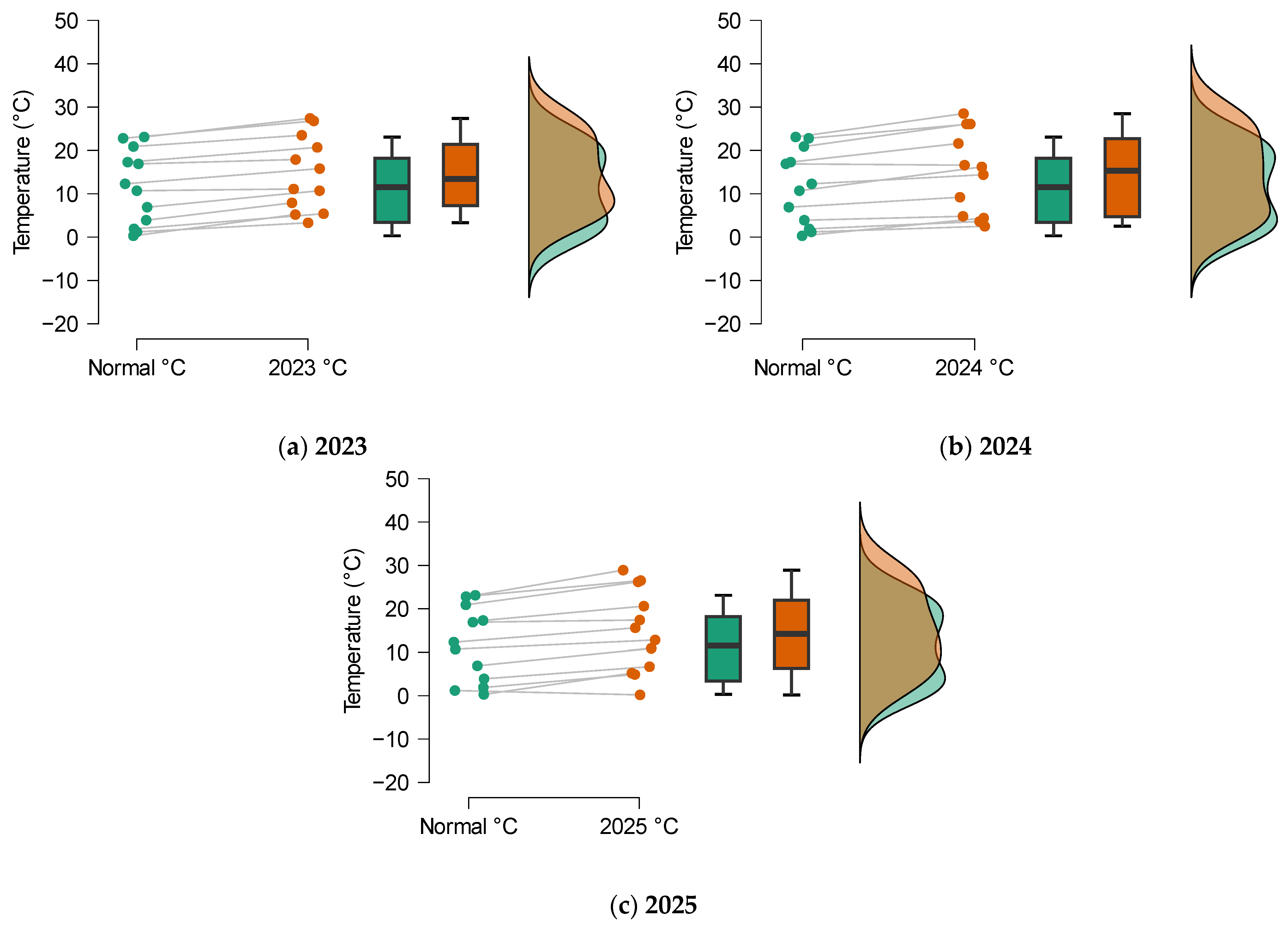
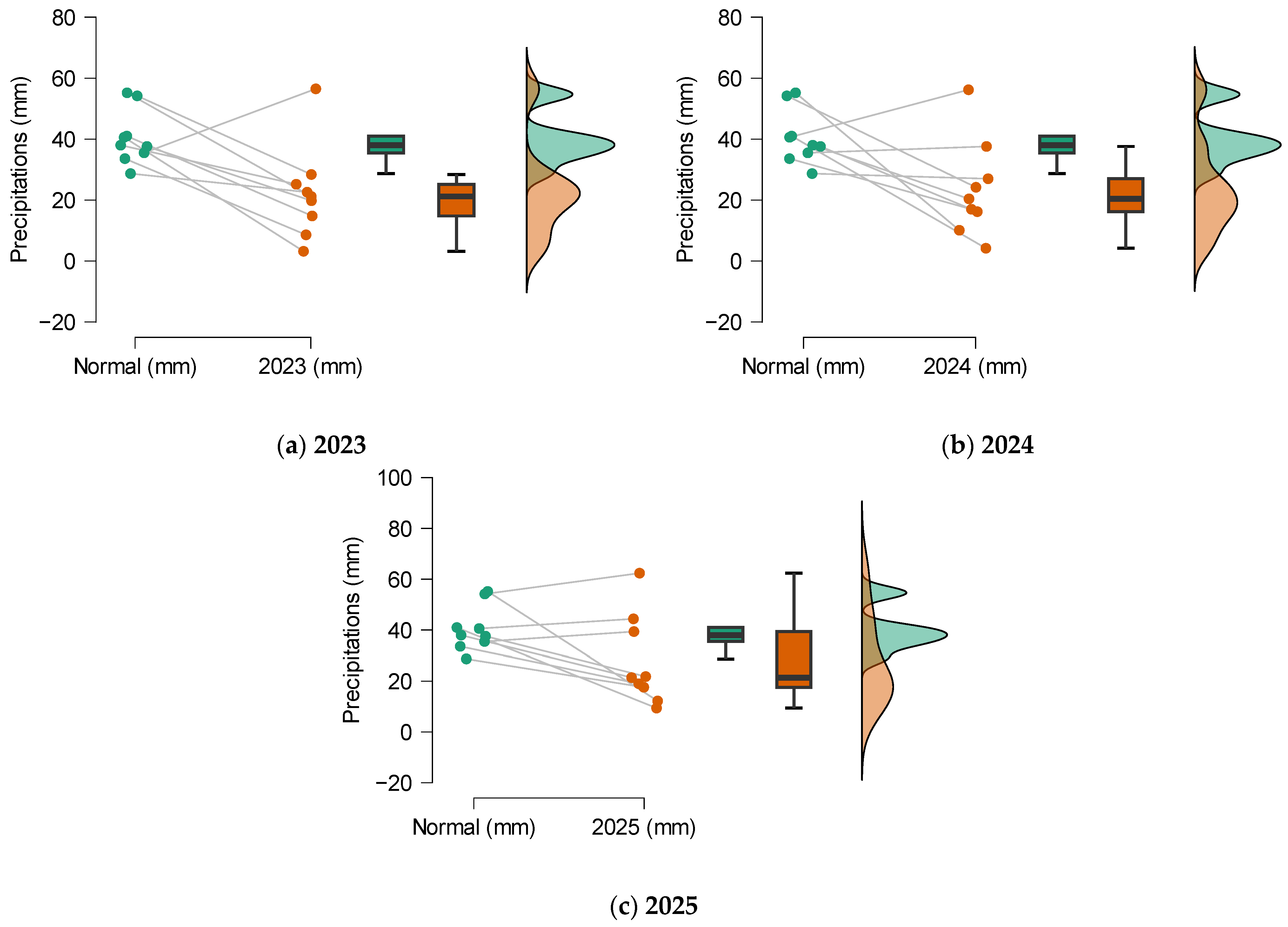
Air temperature differed significantly from the reference conditions in all experimental years. Paired samples t-tests indicated highly significant deviations (p < 0.01) for all years. The largest deviation was recorded in 2023 (t = −8.00; Cohen’s d = −2.31), followed by 2025 (t = −5.62; d = −1.62) and 2024 (t = −5.35; d = −1.54). We found a consistent shift in temperature patterns across all three experimental seasons.
Effect sizes were large in all cases, with substantial departure from normal temperature conditions throughout the study period. There are higher temperatures across all experimental years than in the reference, with the most pronounced deviation in 2023 (
Figure 2a–c).
The experimental period was characterized by consistently higher temperatures than the long-term average. We found a stable deviation from the climatic baseline instead of isolated cases. Long-term climatic normal conditions were represented by the multiannual averages for the 1991–2020 reference period, obtained from the regional meteorological station. Monthly air temperature distributions were analyzed for all 12 calendar months to characterize the general thermal regime of each experimental year relative to the climatic baseline (
Figure 2). In contrast, precipitation analyses focused primarily on the active maize growing season (March–November), yielding 9 monthly data points per year (
Figure 3). This approach was adopted because the experiment was conducted under irrigated conditions, where precipitation variability outside the vegetation period had a reduced direct influence on crop development and productivity. Under these conditions, thermal stress and rainfall distribution during the crop growth period represented the most agronomically relevant climatic factors affecting maize performance.
Precipitation differed significantly from the long-term normal conditions in all experimental years. Paired-samples
t-tests indicated statistically significant differences, although their magnitude varied across years. The highest deviation was recorded in 2023 (t = 3.10,
p = 0.01; Cohen’s d = 1.03), with differences from normal precipitation conditions. In 2024, precipitation also differed significantly (t = 2.59,
p = 0.03; d = 0.86), while in 2025 the difference remained significant but with a lower effect size (t = 2.30,
p = 0.05; d = 0.77). A progressive decrease in effect size was observed from 2023 to 2025, reflecting a gradual reduction in the magnitude of deviation from the long-term average. Despite this decline, precipitation levels remained consistently below normal throughout the experimental period. There are variations in monthly precipitation distribution across years compared to the reference conditions (
Figure 3a–c), with the most pronounced differences observed in 2023.
Differences were particularly evident during the main growing season, when precipitation values were higher than the long-term average, whereas in the following years the distribution remained more heterogeneous and closer to the reference pattern. We highlight the contrasting precipitation patterns that characterize the experimental period.
3.2. Grain Yield and Yield Components
Grain yield and its main components displayed limited variability across tillage systems (
Table 1). Kernel weight, kernel number, and thousand-kernel weight remained comparable among treatments, with no clear differences between conventional, minimum, and no-tillage systems. Similarly, grain yield showed minimal variation across treatments. In contrast, weed density increased progressively from conventional to no-tillage, whereas plant density decreased slightly.
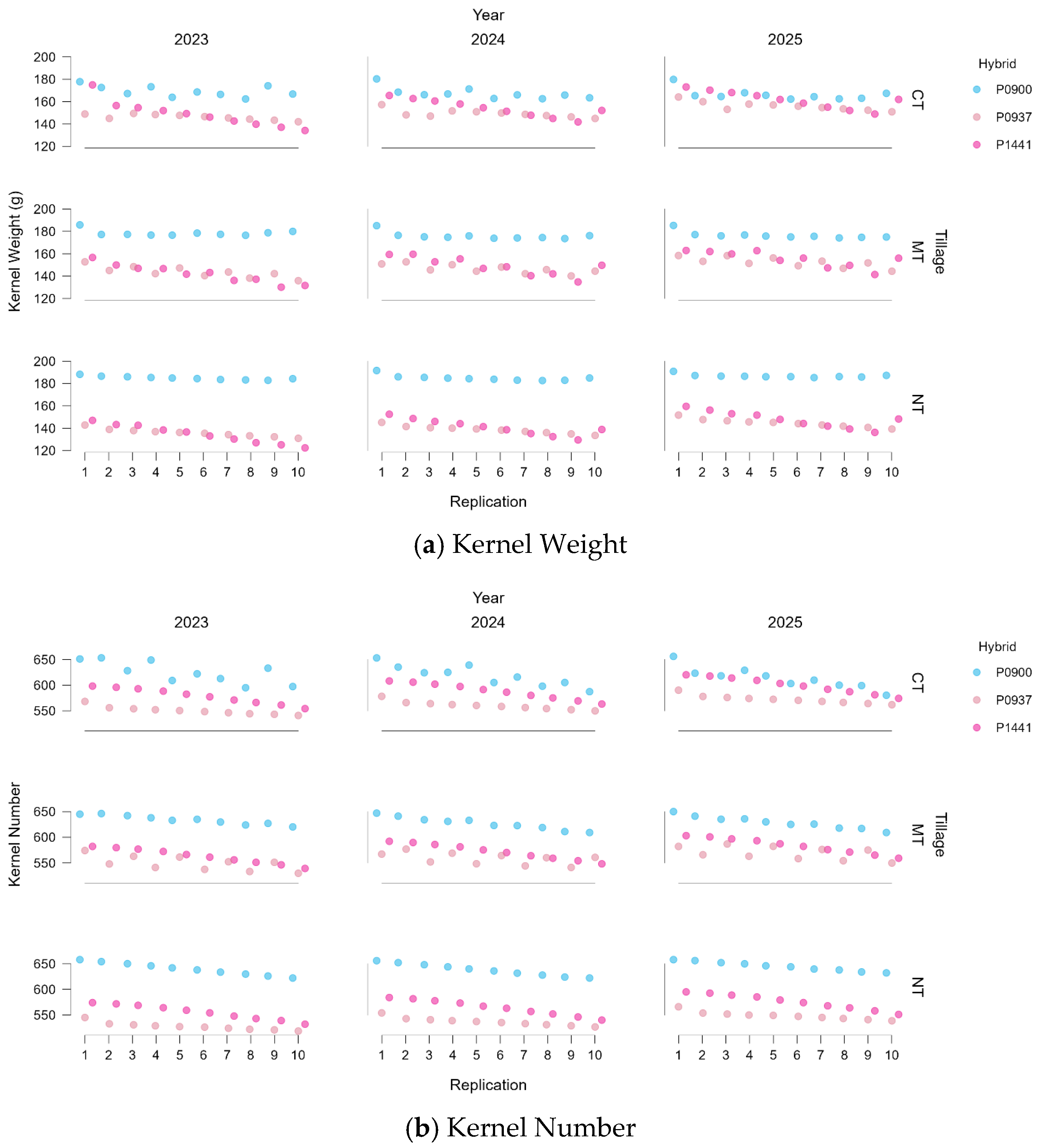
Hybrid effects were markedly stronger than those associated with tillage. P0900 consistently recorded the highest values for all yield components, including kernel weight, kernel number, and thousand-kernel weight, and achieved the greatest grain yield. In contrast, P0937 and P1441 showed lower and comparable performance across these parameters. The lower weed density observed in association with hybrid P0900 may partially reflect differences in crop competitive ability rather than a direct causal effect of suppression. Although weed suppression mechanisms were not specifically evaluated in the present study, differences among hybrids in canopy architecture, early vegetative vigor, leaf area development, shading capacity, and resource use efficiency may influence the intensity of crop–weed competition under field conditions. Hybrids characterized by more rapid canopy closure and greater biomass accumulation during the early growth stages may reduce light availability at the soil surface and limit weed development. However, the observed association between hybrid performance and weed density should be interpreted cautiously, as the present experiment was not specifically designed to isolate the physiological or morphological mechanisms underlying crop-mediated weed suppression. Nevertheless, the results suggest that hybrid selection may contribute not only to productivity potential but also to the competitive balance between maize and weeds under different tillage systems. The separation between hybrids remained consistent across all productivity indicators. Over the years, all major parameters showed an upward trend. Grain yield and its components, including kernel weight, kernel number, and thousand-kernel weight, gradually improved from 2023 to 2025. Weed density followed a similar upward pattern over time. Variability differed among tillage systems, with no-tillage showing greater dispersion in kernel weight and kernel number compared to conventional and minimum tillage. The distribution of kernel weight across replications (R1–R10) remained highly uniform within each combination of year, tillage system, and hybrid (
Figure 4a). For P0900, kernel weight values were consistently higher, generally clustered around 170–185 g, with little variation between replications. We observed lower values in P0937 and P1441, ranging from 135 to 155 g, with a slightly wider spread under NT. Across replications, we observed no directional trend or clustering, and we assume the kernel weight is stable from R1 to R10. Variability was higher under NT, where dispersion was greater, and there were no systematic differences across replications.
The kernel number shows the same stability across replications (
Figure 4b). P0900 has exhibited the highest values, ranging from 620 to 650 kernels, with minimal variation across R1–R10. P1441 showed intermediate values, and P0937 had the lowest kernel number, ranging from 540 to 580. The distribution remained homogeneous across replications, with no visible trends or shifts. We observed a slightly greater dispersion under NT, but replication effects remained negligible.
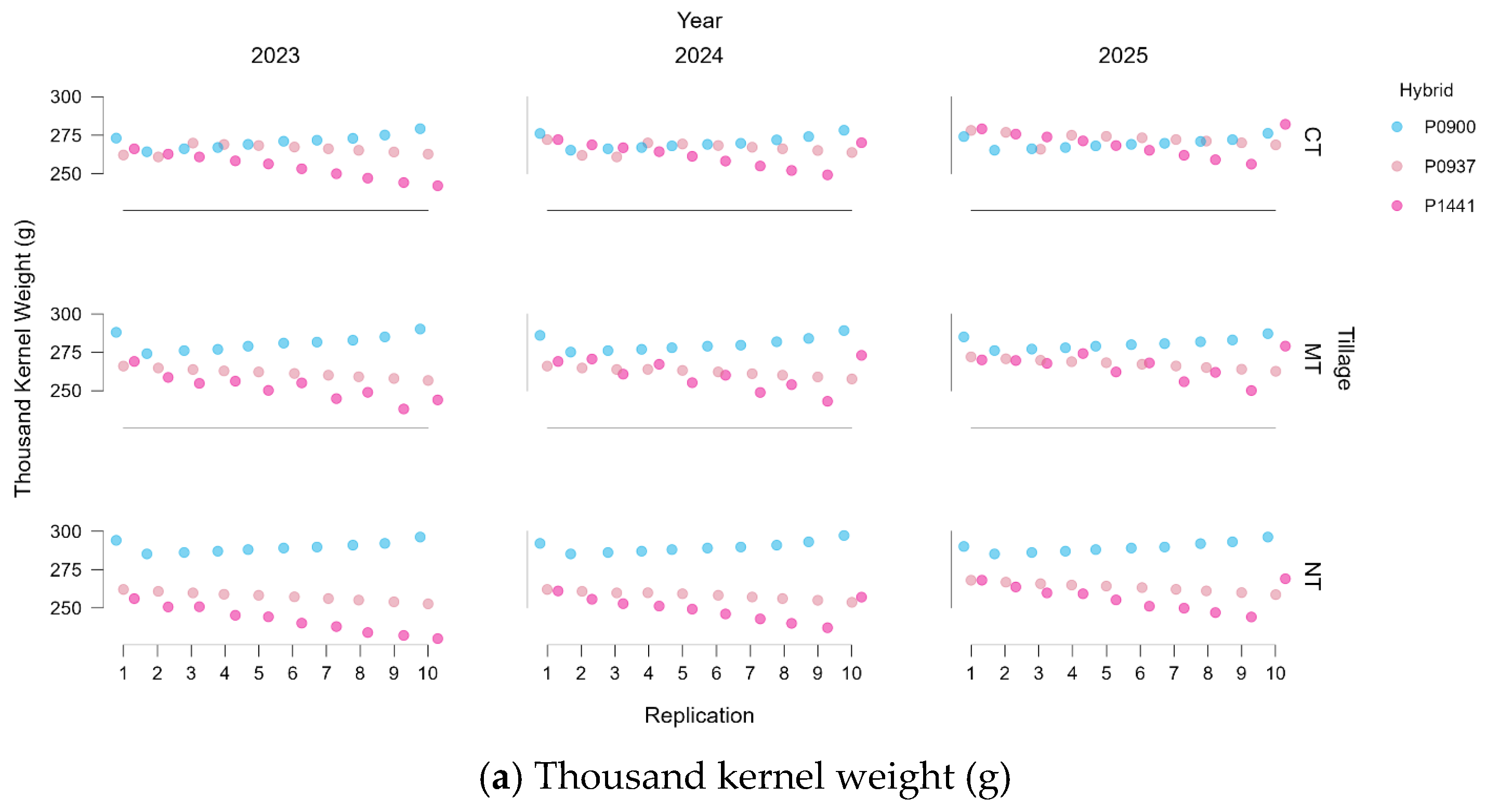
The thousand-kernel weight shows uniform distributions across replications, with P0900 values concentrated between 270 and 290 g (
Figure 5a). P0937 and P1441 exhibited lower values and greater spread under reduced-tillage systems. Across R1–R10, the data points remained evenly distributed, with no clustering or systematic variation. As observed for the other components, NT showed slightly higher variability but did not alter the overall consistency across replications.
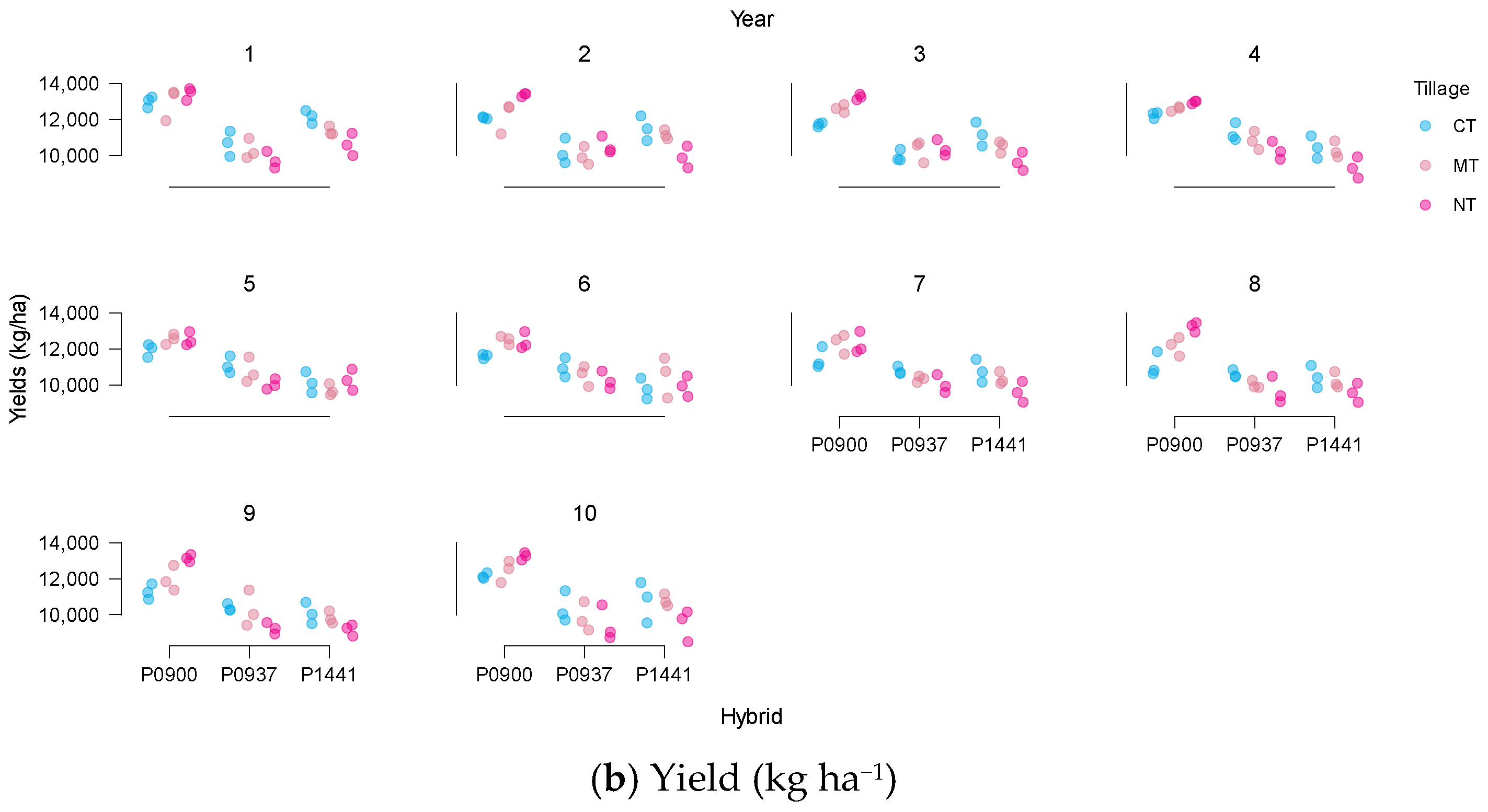
Grain yield shows a clear, stable pattern across replications (
Figure 5b). P0900 consistently achieved the highest yields, ranging from 12,000 to 13,500 kg ha
−1 across all replications. P0937 and P1441 showed lower yields, ranging from 9500 to 11,500 kg ha
−1, with moderate and uniform dispersion. Across R1–R10, no systematic variation among replicate observations was identified. Although slightly greater variability was observed under no-tillage conditions, the overall distribution patterns and central tendency remained relatively stable across replications and experimental years.
We observed that, overall, kernel weight, kernel number, thousand-kernel weight, and grain yield are highly consistent across replications. There is no evidence of trends or clustering across the replications, and variability is primarily driven by hybrid and, to a lesser extent, by tillage and year, rather than by replication structure.
3.3. Yield Components, Weed Dynamics, and Climatic Factors Correlations
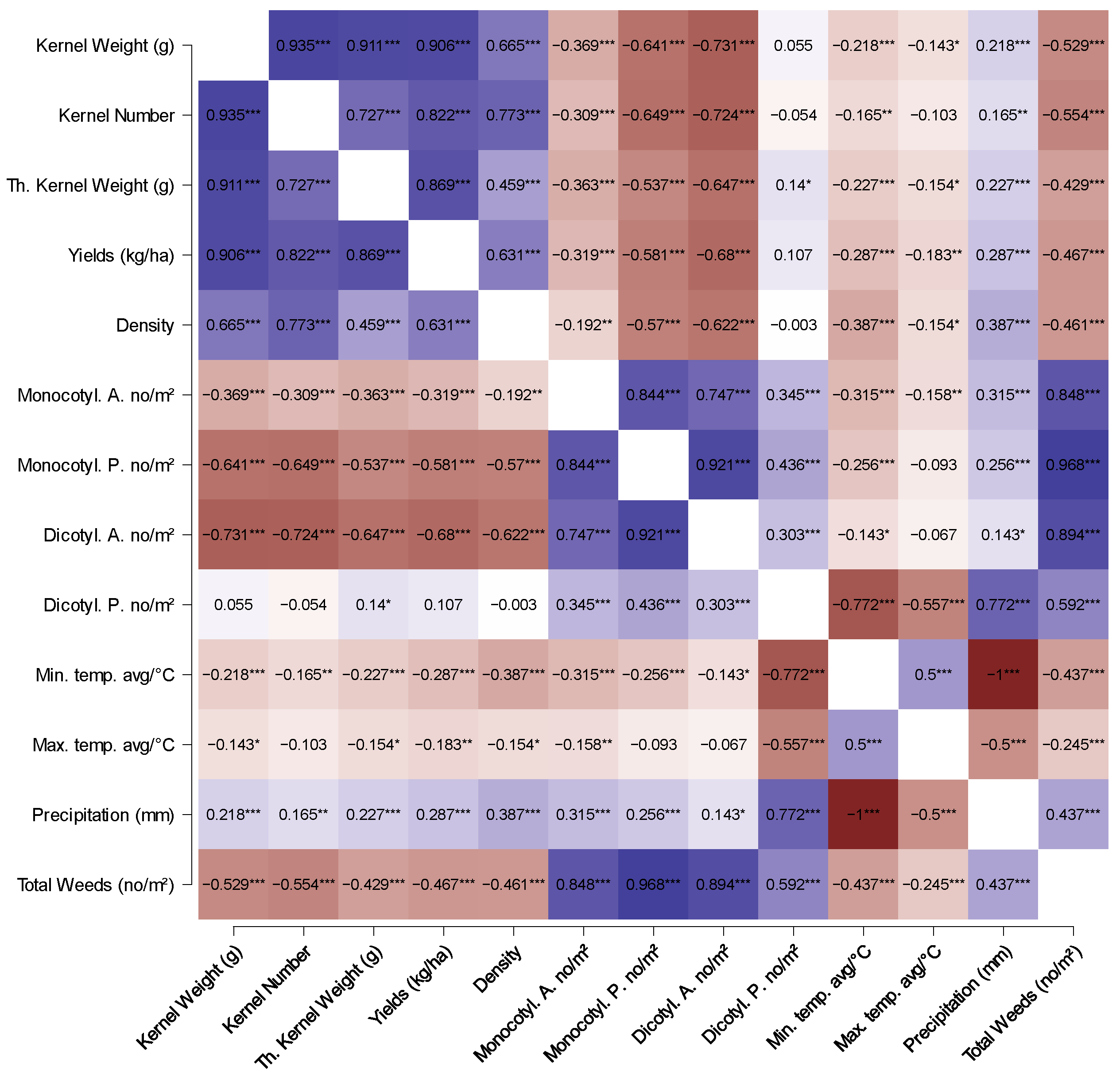
We analyzed the variables using Spearman correlation analysis and observed strong relationships among yield components and associated variables (
Figure 6). Kernel weight was strongly positively correlated with kernel number (ρ = 0.93), thousand kernel weight (ρ = 0.91), and grain yield (ρ = 0.91) (
p < 0.001). Grain yield was also strongly correlated with thousand kernel weight (ρ = 0.87) and kernel number (ρ = 0.82). Plant density showed positive correlations with all major production parameters, including kernel weight (ρ = 0.66), kernel number (ρ = 0.77), thousand kernel weight (ρ = 0.46), and grain yield (ρ = 0.63) (
p < 0.001). In contrast, weed density was negatively correlated with all yield components. Total weeds were negatively associated with kernel weight (ρ = −0.53), kernel number (ρ = −0.55), thousand kernel weight (ρ = −0.43), and grain yield (ρ = −0.47).
Stronger negative correlations were observed for specific weed groups, in particular, annual dicotyledonous weeds were strongly and negatively correlated with kernel weight, ρ = −0.73. Climatic variables also showed significant associations. Precipitation was positively correlated with kernel weight (ρ = 0.22), thousand kernel weight (ρ = 0.23), kernel number (ρ = 0.17), and grain yield (ρ = 0.29), while weed density was positively correlated with precipitation (ρ = 0.44) and negatively correlated with temperature indicators, particularly minimum temperature (ρ = −0.44).
3.4. Mixed-Model Analysis of Yield Components and Grain Yield
Table 2 summarizes the results of the linear mixed models for kernel weight per ear, kernel number per ear, thousand-kernel weight, and grain yield. Across all productivity parameters, hybrid background and weed pressure emerged as the most consistent determinants of maize performance, while significant interactions between tillage system and weed density indicated that the response to weed pressure depended on soil management intensity.
For kernel weight per ear, significant effects were identified for hybrid (F = 7.34,
p < 0.01), year (F = 7.58,
p < 0.01), tillage system (F = 33.37,
p < 0.01), and total weed density (F = 5.73,
p < 0.01). Fixed-effect estimates further indicated a negative association with total weed density (β = −0.37 ± 0.15) and increasing plant density (β = −18.72 ± 5.25). In addition, the significant interaction between tillage system and total weed density indicated that the relationship between weed pressure and kernel weight varied across soil management systems, with reduced-tillage conditions showing greater sensitivity to increasing weed density. Although
Table 1 shows very similar mean kernel weight values for CT (157.55 g), MT (157.69 g), and NT (155.43 g), and Tukey’s HSD did not identify significant pairwise differences among these means, the linear mixed model found a significant overall contribution of tillage system after simultaneously accounting for hybrid, year, plant density, total weed density, and their interactions.
For kernel number per ear, significant effects were identified for hybrid (F = 27.56, p < 0.01), year (F = 7.58, p < 0.01), tillage system (F = 13.99, p < 0.01), and total weed density (F = 25.74, p < 0.01). Significant interactions were also observed between tillage system and total weed density (F = 35.55, p < 0.01), as well as between hybrid and total weed density (F = 10.99, p < 0.01), indicating that the relationship between weed pressure and kernel number varied according to both soil management system and hybrid background. Fixed-effect estimates indicated a negative association between increasing plant density and kernel number per ear (β = −0.15) and specific hybrid contrasts (β = −69.73 ± 9.66), reflecting reductions in kernel number under particular experimental combinations.
For thousand-kernel weight, significant effects were observed for hybrid (F = 359.66, p < 0.01), year (F = 16.61, p < 0.01), tillage system (F = 37.46, p < 0.01), plant density (F = 1037.43, p < 0.01), and total weed density (F = 41.08, p < 0.01). Fixed-effect estimates indicated negative coefficients associated with plant density (β = –0.06) and tillage contrasts (β = –37.33 ± 4.42). In addition, the interaction between tillage system and total weed density was significant (F = 34.56, p < 0.01), whereas the interaction between hybrid and total weed density was not significant (F = 0.98, p = 0.38).
Grain yield was significantly affected by hybrid (F = 103.58,
p < 0.01), year (F = 26.68,
p < 0.01), tillage system (F = 16.14,
p < 0.01), plant density (F = 389.53,
p < 0.01), and total weed density (F = 34.59,
p < 0.01). Similar to the kernel weight, although the mean grain-yield values reported in
Table 1 were relatively similar among tillage systems, the mixed model identified a significant overall contribution of tillage after accounting simultaneously for hybrid, year, plant density, and weed pressure.
3.5. Regression Analysis of Yield Components and Grain Yield in Relation to Weed Density and Tillage System
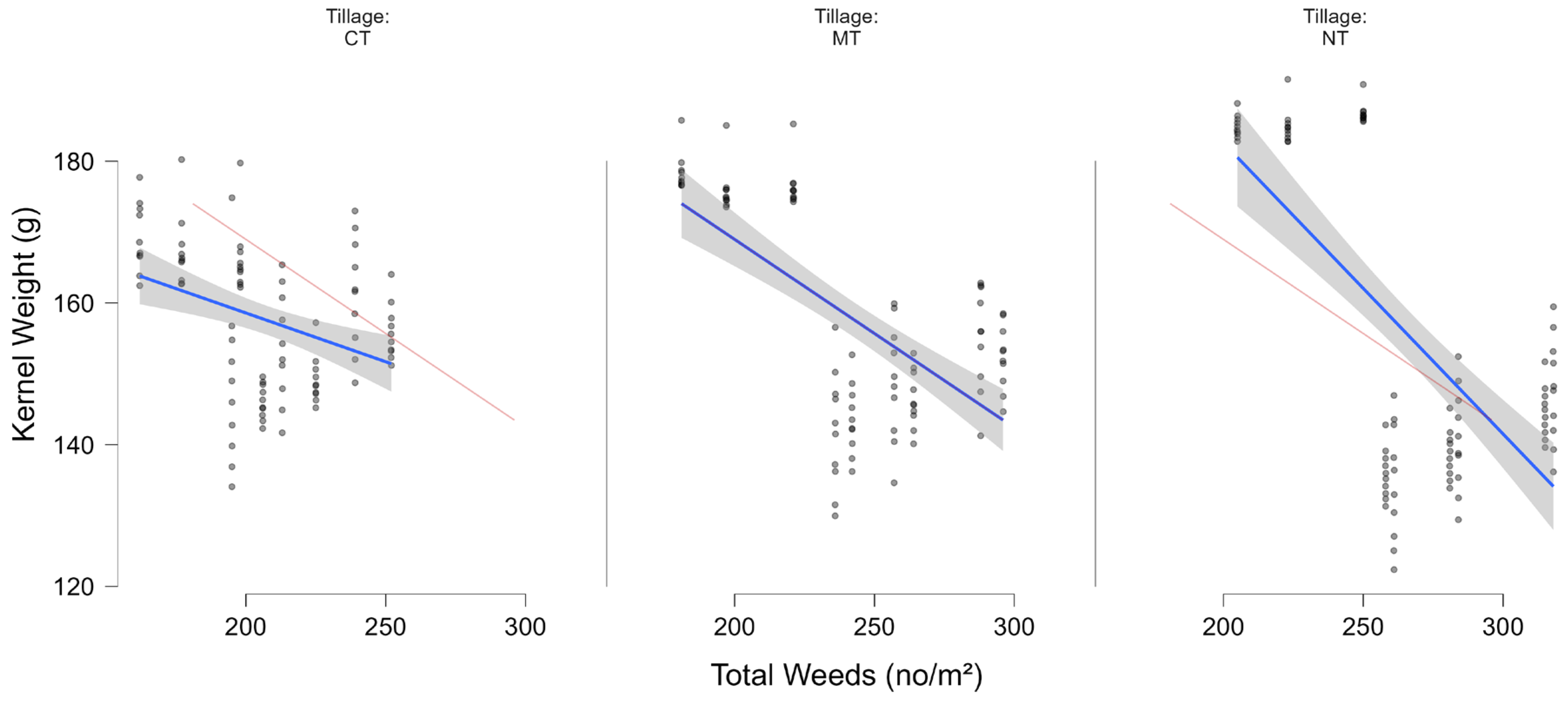
The regression model for kernel weight was statistically significant (F = 34.47,
p < 0.01) and explained a substantial proportion of the variability (R
2 = 0.40). Total weed density had a significant negative effect on kernel weight (b = −0.14,
p < 0.01), indicating a consistent reduction in grain weight with increasing weed pressure. Tillage system showed positive baseline effects for both minimum tillage (MT) (b = 35.96,
p = 0.01) and no-tillage (NT) (b = 78.66,
p < 0.01), with higher kernel weight values at low weed densities compared to conventional tillage. The interaction between total weed density and tillage system was negative and significant, particularly under NT (b = −0.27,
p < 0.01). Kernel weight declines with increasing weed density across all tillage systems, with a steeper decrease under MT and NT than under CT (
Figure 7).
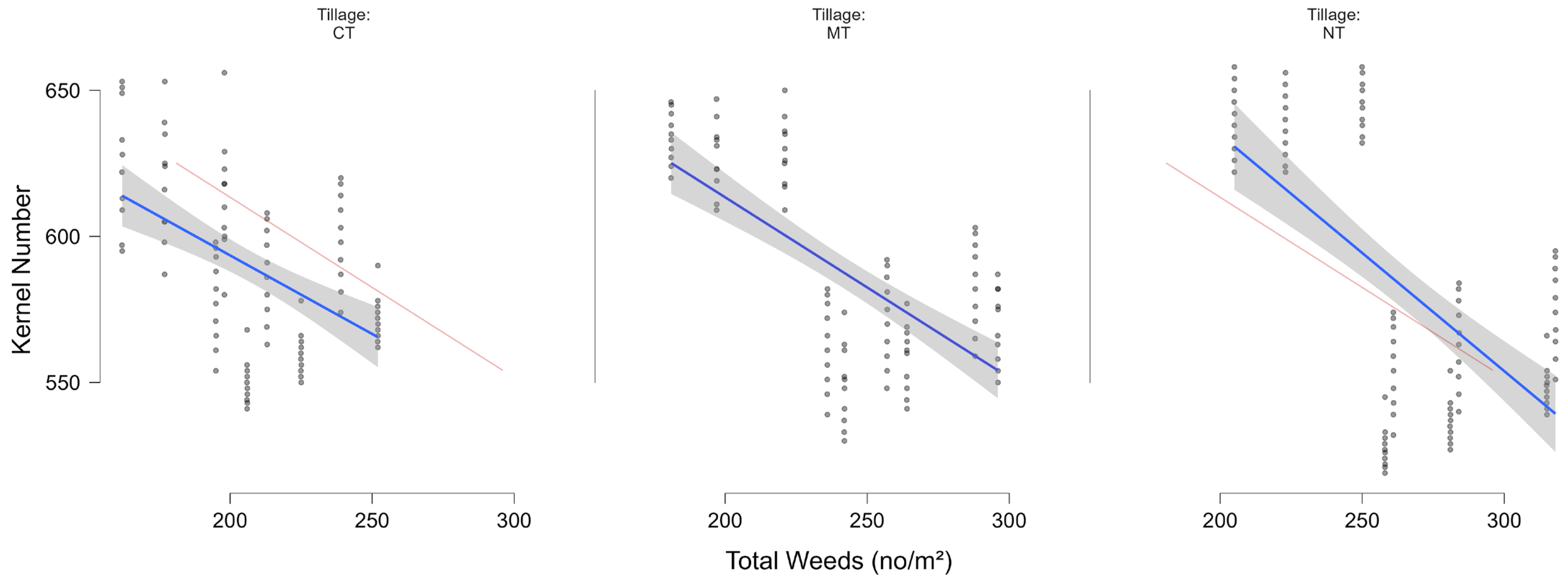
The regression model for kernel number was statistically significant (F = 33.29,
p < 0.01) and explained 39% of the variance (R
2 = 0.39; adjusted R
2 = 0.38). Total weed density had a significant negative effect on kernel number (b = −0.54,
p < 0.01), where kernel number declined as weeds increased (
Figure 8). The interaction between total weeds and tillage system is negative, and did not reach the conventional threshold for statistical significance in this regression model, with MT * total weeds showing b = −0.08,
p = 0.58, and NT * total weeds showing b = −0.27,
p = 0.06. Therefore, we confirm, through regression analysis, a negative association between weed density and kernel number, and although the interaction shows a decline under no-tillage, these differences did not reach statistical significance in the regression model. The results are significant only when we account for all factors, as shown in
Section 3.4.
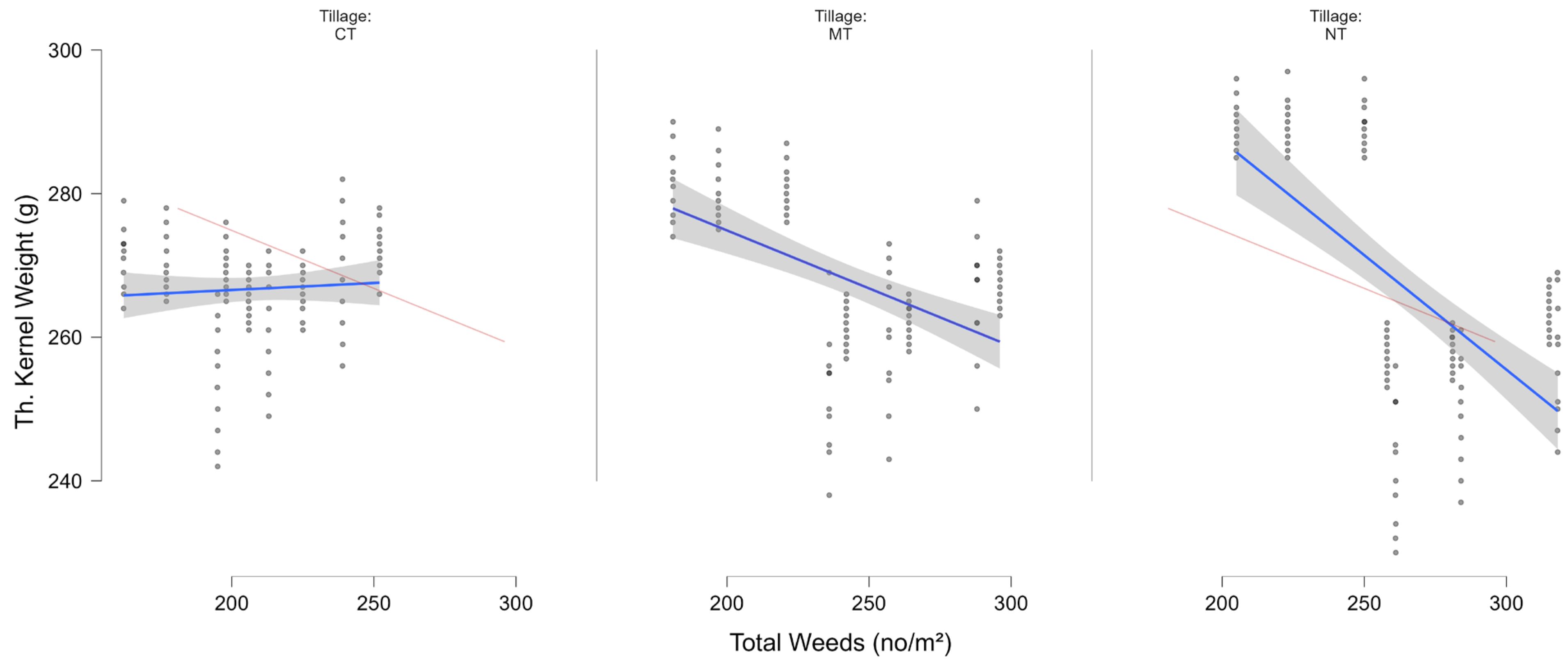
For thousand-kernel weight (
Figure 9), we found that the regression model is significant (F = 24.38,
p < 0.01, R
2 = 0.32; adjusted R
2 = 0.30). Total weeds did not show a significant main effect (b = 0.02,
p = 0.65). However, the tillage system showed significant differences, with both MT (b = 44.50,
p < 0.01) and NT (b = 88.47,
p < 0.01) predicting higher values than CT at lower weed quantities. More importantly, the interaction between tillage system and total weed density was negative and statistically significant for both MT (b = −0.18,
p < 0.01) and NT (b = −0.34,
p < 0.01). We confirm that the thousand-kernel weight became more sensitive to increasing weed density under reduced tillage systems, especially under no-tillage. We also found this in the linear mixed-model results reported in
Section 3.4, where the tillage system × total weed density interaction was significant (F = 34.56,
p < 0.01), even though the main effect of total weed density was not significant. Therefore, we note that weed density did not exert a uniform effect on thousand-kernel weight, as evidenced by tillage responses.
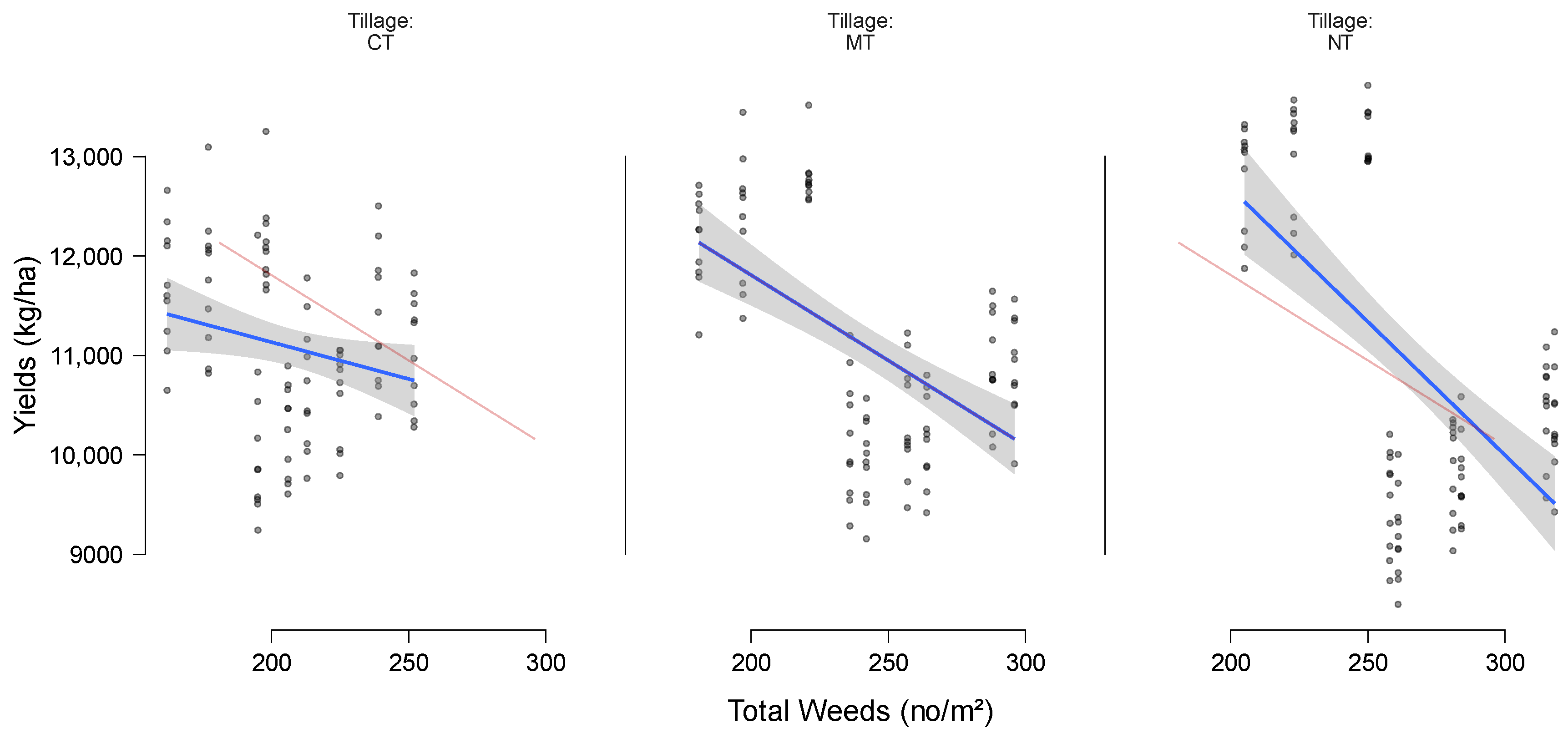
The regression model for grain yield was statistically significant (F = 22.44,
p < 0.01, R
2 = 0.30). Total weed density showed a negative but non-significant main effect (
p = 0.07); its influence on yield was not uniform when considered independently. Tillage system exhibited significant baseline differences, with both minimum tillage (MT) (b = 2625.64,
p = 0.02) and no-tillage (NT) (b = 5431.02,
p < 0.01) associated with higher yield values under low weed density conditions There is a decline in yield with increasing weed density across all tillage systems (
Figure 10). The interaction between total weed density and tillage system revealed a differentiated response because while the interaction with MT approached significance (
p = 0.06), the interaction with NT was negative and significant (b = –19.42,
p < 0.01).
4. Discussion
The strong influence of hybrid on yield components and grain yield observed in this study highlights the dominant role of genetic background in maize productivity under irrigated conditions. According to [
43], hybrid selection represents one of the most important drivers of yield optimization, particularly under high-input systems. The consistent superiority of P0900 across all productivity indicators suggests a higher capacity for assimilate accumulation and grain filling, indicating enhanced physiological efficiency under favorable water conditions. Similar results were reported by [
44,
45], who showed that hybrid-specific traits strongly regulate yield formation and response to environmental and management factors. These findings confirm that, even under relatively stable agronomic conditions, hybrid selection remains a key determinant of productivity variability.
Plant density consistently had a negative effect on kernel weight, kernel number, thousand-kernel weight, and grain yield, indicating a clear trade-off between plant population and individual plant performance. As demonstrated by [
46,
47], increasing plant density intensifies intraspecific competition for light, water, and nutrients, thereby limiting the availability of assimilates for grain development. In the present study, the stronger reduction in kernel number suggests that reproductive processes are particularly sensitive to crowding stress, while decreases in kernel weight and thousand-kernel weight reflect limitations during the grain-filling stage. Similar responses have been reported under both irrigated and stress conditions [
48,
49], confirming that plant density is a key regulator of yield components and overall productivity.
The effect of tillage system on yield components and grain yield was significant but not consistently expressed across all parameters, indicating a context-dependent response rather than a uniform agronomic advantage. According to [
50,
51], soil tillage influences soil physical properties such as bulk density, porosity, and water infiltration, which in turn affect crop development. However, these changes do not always translate directly into yield differences. In the present study, conventional tillage, minimum tillage, and no-tillage systems showed relatively similar productivity levels, which is consistent with findings reported by [
13,
52]. These studies indicate that reduced-tillage systems can improve soil conservation and operational efficiency without necessarily increasing yield.
The absence of a consistent yield advantage under reduced tillage conditions may be partly attributable to the mitigating influence of irrigation on crop water stress, thereby reducing the relative importance of soil moisture conservation typically associated with conservation tillage systems. Under irrigated conditions, differences in soil water availability among tillage systems may become less pronounced, potentially limiting the expression of yield responses commonly reported under rainfed environments. Therefore, the observed responses should be interpreted with caution and in the specific context of irrigated maize production in Southeastern Romania. As reported by [
53,
54], adequate water supply can reduce the impact of soil structural differences on crop performance, thereby minimizing yield gaps between tillage systems. In addition, climatic variability and seasonal conditions may exert a stronger influence on yield than tillage intensity under irrigated systems [
8,
55]. At the same time, previous studies have shown that conservation tillage may lead to increased soil compaction, delayed soil warming, or altered nutrient dynamics, potentially offsetting its benefits under certain conditions [
15,
16,
56,
57]. These findings support the idea that tillage effects are highly dependent on local pedoclimatic conditions and management practices rather than representing a universally superior strategy.
Weed density showed a consistent negative association with all yield components and grain yield, confirming its role as a major limiting factor in maize productivity. According to [
35,
36], weed competition reduces assimilate availability and interferes with crop growth, ultimately leading to lower yield potential. In the present study, reductions in kernel number, kernel weight, and thousand-kernel weight indicate that weed pressure affects both reproductive processes and grain filling. Several mechanisms may explain the steeper decline in maize productivity observed under no-tillage conditions as weed density increased. Reduced soil disturbance associated with no-tillage systems favors the accumulation of weed seeds near the soil surface and may progressively alter weed community structure over time. Under such conditions, perennial and highly competitive species, including
Convolvulus arvensis and
Cirsium arvense, may become more persistent due to the absence of mechanical disruption normally provided by conventional tillage operations. In addition, reduced burial of weed seeds may increase the emergence potential of several annual species, contributing to higher overall weed pressure. Another possible explanation concerns differences in herbicide performance on residue-covered soil surfaces. In no-tillage systems, crop residues left at the soil surface may partially intercept herbicide spray droplets, reduce spray penetration, and lead to a less uniform distribution of active substances at the soil surface. These processes may influence weed control efficiency, particularly under post-emergence applications and heterogeneous weed emergence conditions. Although the same weed management program was applied across all experimental variants in the present study, differences in residue cover and weed emergence dynamics among tillage systems may have contributed to the stronger negative response observed under no-tillage. In addition, under irrigated conditions, the reduction in crop water limitation may increase the relative importance of weed competition for nutrients, light, and spatial resources. Consequently, the agronomic benefits commonly associated with no-tillage systems, such as reduced soil disturbance and improved moisture conservation, may become partially offset when weed pressure is not sufficiently controlled. These findings suggest that conservation-oriented tillage systems require tailored weed management strategies to maintain stable maize productivity under irrigated conditions.
The stronger effect of weeds on kernel number suggests that competition is particularly critical during early reproductive stages. Similar observations were reported by [
44], who showed that stress during flowering and early grain development leads to irreversible reductions in kernel number. In addition, weed pressure appears to act cumulatively across growth stages, influencing both the establishment of yield potential and its final expression.
Environmental conditions may further amplify these effects. The positive association between precipitation and weed density observed in this study suggests that increased water availability promotes weed emergence and growth. Similar interactions between climatic variability, crop performance, and weed dynamics have been reported in maize systems [
8,
58,
59]. These results highlight the need to integrate weed management strategies with environmental conditions in order to maintain stable productivity.
The interaction between tillage system and weed density indicated that the relationship between weed pressure and maize productivity varied according to soil management intensity. In agreement with previous studies [
60,
61], reduced tillage systems, particularly no-tillage, are frequently associated with greater weed seed accumulation near the soil surface and reduced disruption of weed emergence cycles. In the present study, higher weed density values observed under reduced tillage systems were associated with a steeper decline in yield components and grain yield. However, weed density was evaluated as an observed field variable rather than as an experimentally manipulated factor; therefore, the detected relationships should not be interpreted as direct evidence of causality. Instead, the results highlight significant associations between weed pressure, tillage intensity, and maize productivity under irrigated field conditions.
Previous research has also shown that conservation tillage systems can modify weed communities and increase weed pressure if management is not properly adapted [
14,
37]. At the same time, changes in soil physical properties and nutrient distribution under reduced tillage may influence both crop and weed growth, creating competitive imbalances [
16,
24,
62]. These processes become particularly relevant under irrigated systems, where water availability reduces crop stress and increases the relative importance of weed competition.
The steeper decline observed under no-tillage suggests that the benefits of reduced soil disturbance, such as improved soil structure and moisture conservation, may be partially offset by increased weed pressure when control strategies are not sufficiently adapted. Similar conclusions were reported by [
63], who emphasized that management practices must be adjusted to maximize the benefits of conservation agriculture systems.
Taken together, the results indicate that maize productivity under irrigated conditions is primarily driven by hybrid selection and plant density, whereas the effects of tillage depend more on environmental and management conditions. As highlighted in [
7,
8,
64], crop performance is governed by complex interactions among genotype, management practices, and environmental factors.
The variability observed among tillage systems and the increased sensitivity of reduced tillage to weed pressure suggest that conservation practices require careful adaptation to local conditions and integrated management strategies. Under irrigated systems, where water limitations are reduced, weed competition may become the dominant factor influencing yield stability. These findings provide valuable insights for optimizing maize production systems in chernozem soils and support the development of site-specific strategies to improve both productivity and resilience under changing climatic conditions.
This study provides robust field-scale evidence that reduced-soil-tillage systems, including minimum tillage and no-tillage, can sustain high maize yields under irrigated cambic chernozem conditions in Southeastern Romania. Despite the higher weed pressure observed under reduced tillage, grain yield remained largely comparable to conventional systems, confirming that irrigation and hybrid performance can buffer the effects of soil disturbance intensity.
According to recent studies on conservation agriculture, the agronomic performance of reduced tillage systems depends strongly on their integration with appropriate management practices, particularly weed control [
60,
61]. In agreement with these findings, the present results demonstrate that yield reductions under reduced tillage are not intrinsic to the system itself, but are primarily mediated by weed dynamics. From a regional perspective, these findings are particularly relevant to southern Romania, where increasing climatic variability and frequent droughts require adaptive, resource-efficient production systems. Under such conditions, conservation-oriented tillage systems represent a viable alternative to conventional practices, contributing to yield stability and improved soil conservation when properly managed.
To our knowledge, this study represents one of the few large-scale, multi-year evaluations of tillage–hybrid interactions conducted under irrigated conditions in Southeastern Europe. The results provide new insights into the performance of recently adopted maize hybrids under contrasting soil management systems and highlight the importance of integrating tillage practices with plant-density optimization and weed-management strategies. The findings support the transition toward conservation agriculture systems in irrigated environments, demonstrating that reduced tillage can maintain high productivity levels while improving sustainability, provided that site-specific management strategies are implemented.




 ,
,