Stop and Smell the Grasses: Evolution of Scent Producing Genus Cymbopogon
 , , and
Abstract
1. Introduction
2. Materials and Methods
2.1. Plant Material, Sequencing and Construction of the De Novo Reference Transcriptome
2.2. Identification of Homologous nr-Transcripts Between Lemongrass and Citronella
2.3. Differential Expressions, Functional Annotation and Gene Ontology (GO) Analysis
2.4. Comparative Reads Mapping Between Cymbopogon and Related Grasses
2.5. Chloroplast Genome Phylogeny of Cymbopogon and Related Species
2.6. Phylogeny of Metabolic Genes in Cymbopogon and Related Species
2.7. KEGG Orthology Annotation and Metabolism Overview
2.8. Integration of Transcriptome and Metabolome Data of Secondary Metabolism
3. Results
3.1. Plant Material, Sequencing and Construction of the De Novo Reference Transcriptome
3.2. Identification of Homologous nr-Transcripts Between Lemongrass and Citronella
3.3. Differential Expressions, Functional Annotation and GO Analysis
3.4. Comparative Reads Mapping Between Cymbopogon and Related Grasses
3.5. Chloroplast Genome Phylogeny of Cymbopogon and Related Species
Correlation Between Sort Index, Genetic Distances and Divergence Time
3.6. Phylogeny of Metabolic Genes in Cymbopogon and Related Species
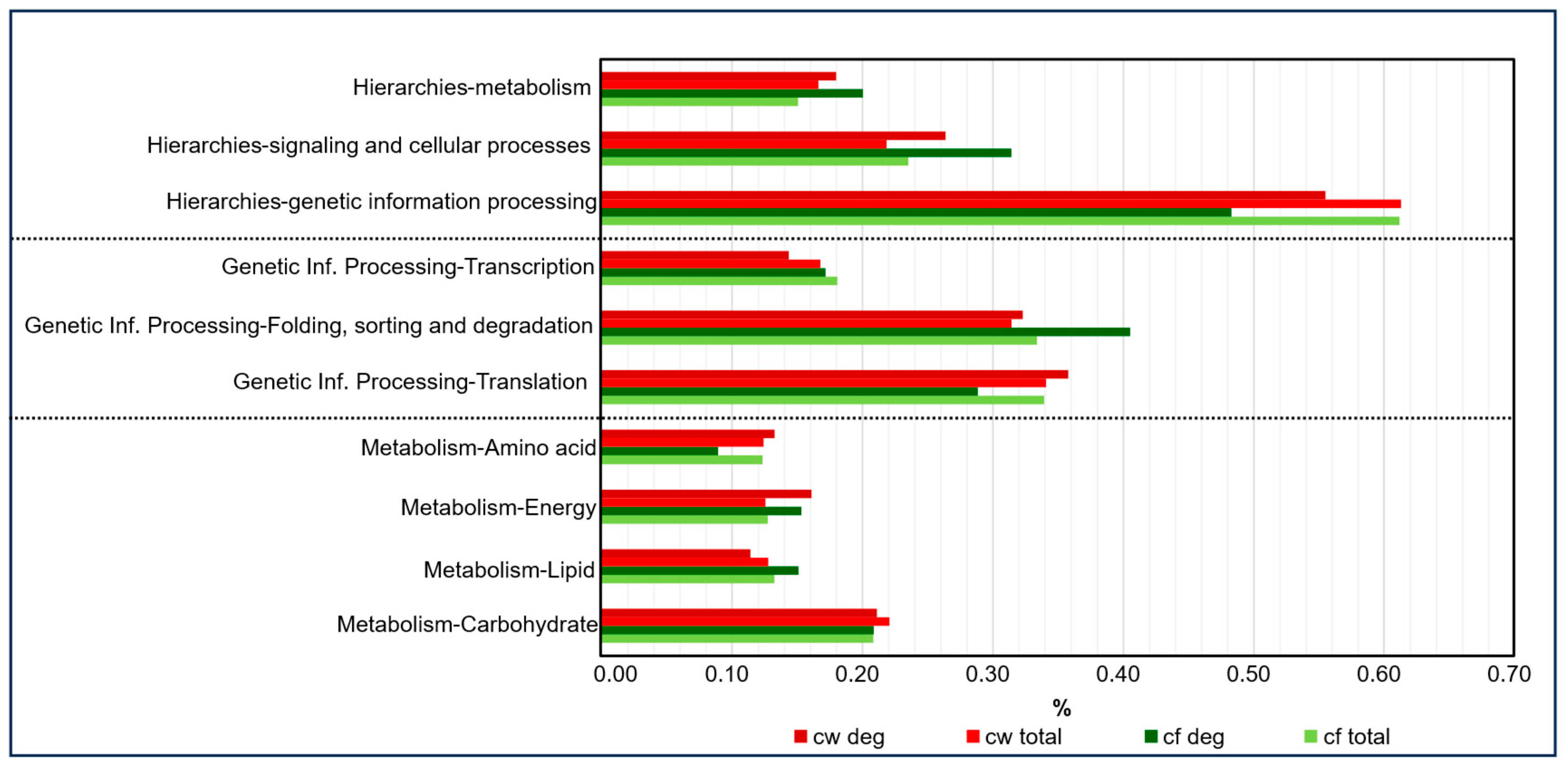
3.7. KEGG Orthology Annotation and Metabolism Overview
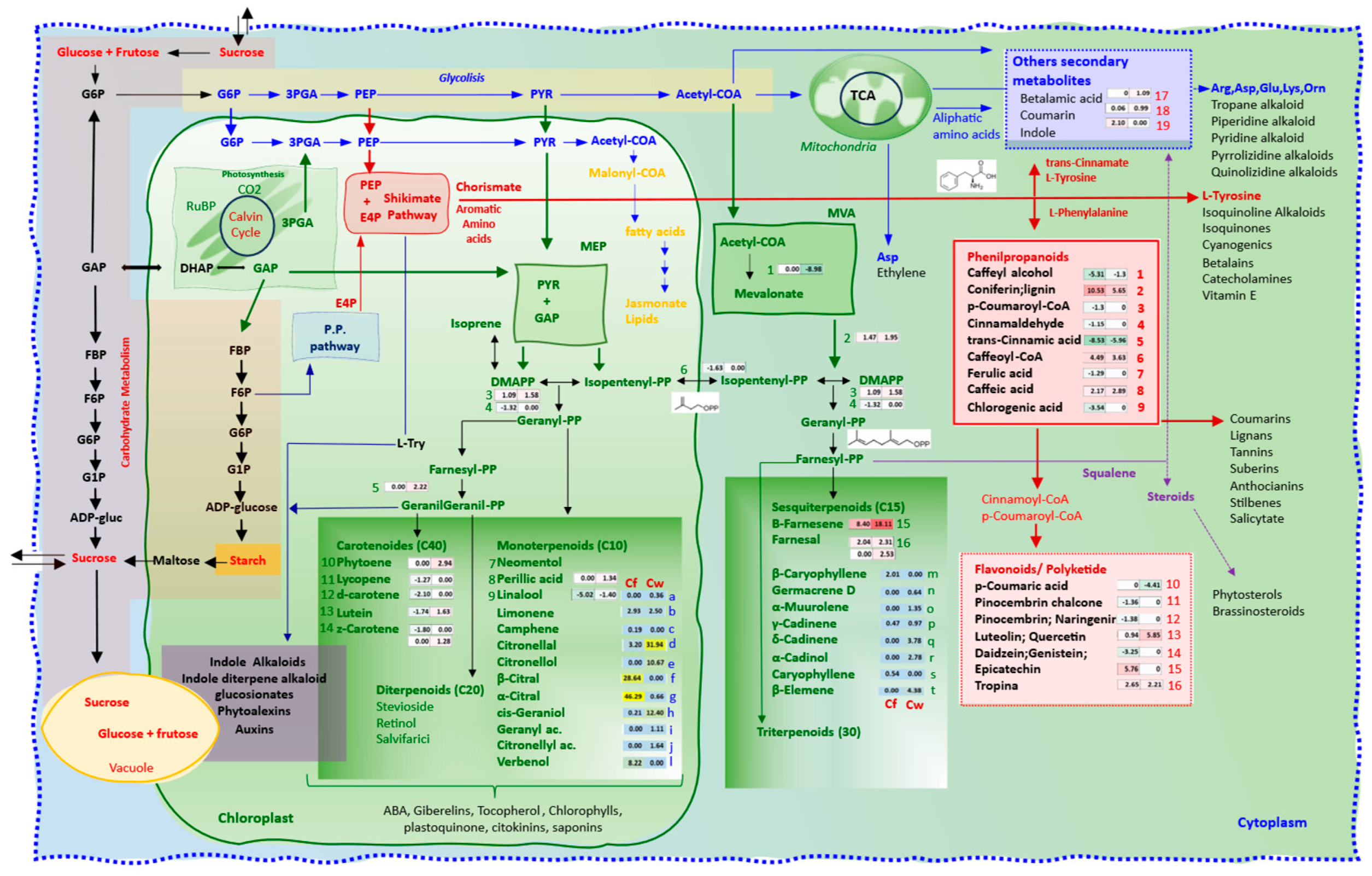
3.8. Integration of Transcriptome and Metabolome Data of Secondary Metabolism
3.8.1. Terpenoid Metabolism (MEP Pathway—Chloroplast)
3.8.2. Carotenoid Biosynthesis
3.8.3. MVA Pathway—Sesquiterpenoids and Triterpenoids (Cytoplasm)
3.8.4. Phenylpropanoids (Shikimate Pathway)
3.8.5. Flavonoids (Phenolic Branch)
3.8.6. Other Secondary Metabolites
4. Discussion
4.1. Transcriptome Assembly and Data Quality
4.2. Homologous Transcripts Between Lemongrass and Citronella
4.3. Differential Expressions, Functional Annotation and Gene Ontology Analysis
4.4. Comparative Reads Mapping Between Cymbopogon and Related Grasses
4.5. Chloroplast Genome Phylogeny of Cymbopogon and Related Species
4.6. Phylogeny of Metabolic Genes in Cymbopogon and Related Species
4.7. KEGG Orthology Annotation and Metabolism Overview
4.8. Integration of Transcriptome and Metabolome Data of Secondary Metabolism
5. Conclusions
Supplementary Materials
Author Contributions
Funding
Data Availability Statement
Acknowledgments
Conflicts of Interest
References
- Welker, C.A.D.; McKain, M.R.; Estep, M.C.; Pasquet, R.S.; Chipabika, G.; Pallangyo, B.; Kellogg, E.A. Phylogenomics Enables Biogeographic Analysis and a New Subtribal Classification of Andropogoneae (Poaceae—Panicoideae). J. Syst. Evol. 2020, 58, 1003–1030. [Google Scholar] [CrossRef]
- Gallaher, T.J.; Peterson, P.M.; Soreng, R.J.; Zuloaga, F.O.; Li, D.Z.; Clark, L.G.; Tyrrell, C.D.; Welker, C.A.D.; Kellogg, E.A.; Teisher, J.K. Grasses through Space and Time: An Overview of the Biogeographical and Macroevolutionary History of Poaceae. J. Syst. Evol. 2022, 60, 522–569. [Google Scholar] [CrossRef]
- Huang, W.; Zhang, L.; Columbus, J.T.; Hu, Y.; Zhao, Y.; Tang, L.; Guo, Z.; Chen, W.; McKain, M.; Bartlett, M.; et al. A Well-Supported Nuclear Phylogeny of Poaceae and Implications for the Evolution of C4 Photosynthesis. Mol. Plant 2022, 15, 755–777. [Google Scholar] [CrossRef] [PubMed]
- Estep, M.C.; McKain, M.R.; Diaz, D.V.; Zhong, J.; Hodge, J.G.; Hodkinson, T.R.; Layton, D.J.; Malcomber, S.T.; Pasquet, R.; Kellogg, E.A. Allopolyploidy, Diversification, and the Miocene Grassland Expansion. Proc. Natl. Acad. Sci. USA 2014, 111, 15149–15154. [Google Scholar] [CrossRef]
- Bertea, C.; Maffei, M.E. The Genus Cymbopogon: Botany, Including Anatomy, Physiology, Biochemistry and Molecular Biology. In Essential Oil-Bearing Grasses: The Genus Cymbopogon; CRC Press: Boca Raton, FL, USA, 2009; pp. 1–24. [Google Scholar]
- Mwithiga, G.; Maina, S.; Muturi, P.; Gitari, J. Lemongrass (Cymbopogon flexuosus) Agronomic Traits, Oil Yield and Oil Quality under Different Agro-Ecological Zones. J. Agric. Food Res. 2022, 10, 100422. [Google Scholar] [CrossRef]
- Jagadeeshan, V.; Murthy, A.; Saraswathi, T. A Report on the Genome Size and Ploidy Status of Wild Genotypes of Cymbopogon Species. Int. J. Bot. Stud. 2019, 6, 1–5. [Google Scholar]
- Soenarko, S. The Genus Cymbopogon Sprengel (Gramineae). Reinwardtia 1977, 9, 225–375. [Google Scholar]
- Lavania, U.C. Karyomorphological Observations in Cymbopogon Sprengel. Cytologia 1988, 53, 517–524. [Google Scholar] [CrossRef]
- Ganjewala, D. Cymbopogon Essential Oils: Chemical Compositions and Bioactivities. Int. J. Essent. Oil Ther. 2009, 3, 56–65. [Google Scholar]
- Tibenda, J.J.; Yi, Q.; Wang, X.; Zhao, Q. Review of Phytomedicine, Phytochemistry, Ethnopharmacology, Toxicology, and Pharmacological Activities of Cymbopogon Genus. Front. Pharmacol. 2022, 13, 997918. [Google Scholar]
- Ekka, A.; Tirkey, A.; Kujur, V.K.; Ameen, G. Review on: Genetic Insights into Lemongrass (Cymbopogon flexuosus Steud): Traditional Uses to Modern Applications. Int. J. Adv. Biochem. Res. 2024, 8, 915–928. [Google Scholar] [CrossRef]
- Pathania, D.; Sharma, M.; Thakur, P.; Chaudhary, V.; Kaushik, A.; Furukawa, H.; Khosla, A. Exploring Phytochemical Composition, Photocatalytic, Antibacterial, and Antifungal Efficacies of Au NPs Supported by Cymbopogon Flexuosus Essential Oil. Sci. Rep. 2022, 12, 14249. [Google Scholar] [CrossRef]
- Verma, R.S.; Verma, S.K.; Tandon, S.; Padalia, R.C.; Darokar, M.P. Chemical Composition and Antimicrobial Activity of Java Citronella (Cymbopogon winterianus Jowitt Ex Bor) Essential Oil Extracted by Different Methods. J. Essent. Oil Res. 2020, 32, 449–455. [Google Scholar] [CrossRef]
- Avoseh, O.; Oyedeji, O.; Rungqu, P.; Nkeh-Chungag, B.; Oyedeji, A. Cymbopogon Species; Ethnopharmacology, Phytochemistry and the Pharmacological Importance. Molecules 2015, 20, 7438–7453. [Google Scholar] [CrossRef]
- Devi, K.; Mishra, S.K.; Sahu, J.; Panda, D.; Modi, M.K.; Sen, P. Genome Wide Transcriptome Profiling Reveals Differential Gene Expression in Secondary Metabolite Pathway of Cymbopogon Winterianus. Sci. Rep. 2016, 6, 21026. [Google Scholar] [CrossRef]
- Mieso, B.; Befa, A. Physical Characteristics of the Essential Oil Extracted from Released and Improved Lemongrass Varieties, Palmarosa and Citronella Grass. Agric. Food Sci. Res. 2020, 7, 65–68. [Google Scholar] [CrossRef]
- Prochnow, D.; Dos Santos, R.S.; Barros, L.M.; Schmidt, D.; Heinzmann, B.M.; da Luz, V.K.; Costa de Oliveira, A.; Pegoraro, C.; da Maia, L.C. Chemical Profile of Essential Oil in Four Cymbopogon Species Grown in Southern Brazil. Genet. Mol. Res. 2023, 22, 1–10. [Google Scholar] [CrossRef]
- Kopylova, E.; Noé, L.; Touzet, H. SortMeRNA: Fast and Accurate Filtering of Ribosomal RNAs in Metatranscriptomic Data. Bioinformatics 2012, 28, 3211–3217. [Google Scholar] [CrossRef] [PubMed]
- Milech, C.; do Amaral, M.N.; Auler, P.A.; Lucho, S.R.; Kleinowski, A.M.; da Maia, L.C.; Bianchi, V.J.; Braga, E.J.B. Betalain Accumulation and de Novo Transcriptome Sequencing Reveal the Potential to Increase Bioactive Compounds in Alternanthera Sessilis Elicited by Methyl Jasmonate. Acta Physiol. Plant. 2023, 45, 15. [Google Scholar] [CrossRef]
- Bolger, A.M.; Lohse, M.; Usadel, B. Trimmomatic: A Flexible Trimmer for Illumina Sequence Data. Bioinformatics 2014, 30, 2114–2120. [Google Scholar] [CrossRef]
- Grabherr, M.G.; Haas, B.J.; Yassour, M.; Levin, J.Z.; Thompson, D.A.; Amit, I.; Adiconis, X.; Fan, L.; Raychowdhury, R.; Zeng, Q.; et al. Full-Length Transcriptome Assembly from RNA-Seq Data without a Reference Genome. Nat. Biotechnol. 2011, 29, 644–652. [Google Scholar] [CrossRef]
- Sudheesh, S.; Sawbridge, T.I.; Cogan, N.O.I.; Kennedy, P.; Forster, J.W.; Kaur, S. De Novo Assembly and Characterisation of the Field Pea Transcriptome Using RNA-Seq. BMC Genom. 2015, 16, 611. [Google Scholar] [CrossRef]
- Huang, X.; Madan, A. CAP3: A DNA Sequence Assembly Program. Genome Res. 1999, 9, 868–877. [Google Scholar] [CrossRef] [PubMed]
- Pertea, M.; Kim, D.; Pertea, G.M.; Leek, J.T.; Salzberg, S.L. Transcript-Level Expression Analysis of RNA-Seq Experiments with HISAT, StringTie and Ballgown. Nat. Protoc. 2016, 11, 1650–1667. [Google Scholar] [CrossRef]
- Li, H.; Handsaker, B.; Wysoker, A.; Fennell, T.; Ruan, J.; Homer, N.; Marth, G.; Abecasis, G.; Durbin, R. The Sequence Alignment/Map Format and SAMtools. Bioinformatics 2009, 25, 2078–2079. [Google Scholar] [CrossRef] [PubMed]
- Anders, S.; McCarthy, D.J.; Chen, Y.; Okoniewski, M.; Smyth, G.K.; Huber, W.; Robinson, M.D. Count-Based Differential Expression Analysis of RNA Sequencing Data Using R and Bioconductor. Nat. Protoc. 2013, 8, 1765–1786. [Google Scholar] [CrossRef] [PubMed]
- Mortazavi, M.; Ren, Y.; Saini, S.; Antaki, D.; Pierre, C.L.S.; Williams, A.; Sohni, A.; Wilkinson, M.F.; Gymrek, M.; Sebat, J.; et al. SNPs, Short Tandem Repeats, and Structural Variants Are Responsible for Differential Gene Expression across C57BL/6 and C57BL/10 Substrains. Cell Genom. 2022, 2, 100102. [Google Scholar] [CrossRef]
- Robinson, M.D.; McCarthy, D.J.; Smyth, G.K. EdgeR: A Bioconductor Package for Differential Expression Analysis of Digital Gene Expression Data. Bioinformatics 2009, 26, 139–140. [Google Scholar] [CrossRef] [PubMed]
- R Core Team. R: A Language and Environment for Statistical Computing; R Foundation for Statistical Computing: Vienna, Austria, 2023; Available online: https://www.r-project.org/ (accessed on 22 September 2024).
- Altschul, S.F.; Gish, W.; Miller, W.; Myers, E.W.; Lipman, D.J. Basic Local Alignment Search Tool. J. Mol. Biol. 1990, 215, 403–410. [Google Scholar] [CrossRef]
- Tempel, S.; Bedo, J.; Talla, E. From a Large-Scale Genomic Analysis of Insertion Sequences to Insights into Their Regulatory Roles in Prokaryotes. BMC Genom. 2022, 23, 451. [Google Scholar] [CrossRef]
- Wickham, H. ggplot2: Elegant Graphics for Data Analysis; Springer: New York, NY, USA, 2009; Volume 35. [Google Scholar]
- Goodstein, D.M.; Shu, S.; Howson, R.; Neupane, R.; Hayes, R.D.; Fazo, J.; Mitros, T.; Dirks, W.; Hellsten, U.; Putnam, N.; et al. Phytozome: A Comparative Platform for Green Plant Genomics. Nucleic Acids Res. 2012, 40, D1178–D1186. [Google Scholar] [CrossRef]
- The UniProt Consortium. UniProt: A Worldwide Hub of Protein Knowledge. Nucleic Acids Res. 2019, 47, D506–D515. [Google Scholar] [CrossRef]
- Kawahara, Y.; de la Bastide, M.; Hamilton, J.P.; Kanamori, H.; Mccombie, W.R.; Ouyang, S.; Schwartz, D.C.; Tanaka, T.; Wu, J.; Zhou, S.; et al. Improvement of the Oryza Sativa Nipponbare Reference Genome Using next Generation Sequence and Optical Map Data. Rice 2013, 6, 4. [Google Scholar] [CrossRef]
- Miao, J.; Feng, Q.; Li, Y.; Zhao, Q.; Zhou, C.; Lu, H.; Fan, D.; Yan, J.; Lu, Y.; Tian, Q.; et al. Chromosome-Scale Assembly and Analysis of Biomass Crop Miscanthus Lutarioriparius Genome. Nat. Commun. 2021, 12, 2458. [Google Scholar] [CrossRef] [PubMed]
- De Silva, N.P.; Lee, C.; Battlay, P.; Fournier-Level, A.; Moore, J.L.; Hodgins, K.A. Genome Assembly of an Australian Native Grass Species Reveals a Recent Whole-Genome Duplication and Biased Gene Retention of Genes Involved in Stress Response. Gigascience 2023, 12, giad034. [Google Scholar] [CrossRef]
- Studer, A.J.; Schnable, J.C.; Weissmann, S.; Kolbe, A.R.; McKain, M.R.; Shao, Y.; Cousins, A.B.; Kellogg, E.A.; Brutnell, T.P. The Draft Genome of the C3 Panicoid Grass Species Dichanthelium Oligosanthes. Genome Biol. 2016, 17, 223. [Google Scholar] [CrossRef] [PubMed]
- Abrouk, M.; Ahmed, H.I.; Cubry, P.; Šimoníková, D.; Cauet, S.; Pailles, Y.; Bettgenhaeuser, J.; Gapa, L.; Scarcelli, N.; Couderc, M.; et al. Fonio Millet Genome Unlocks African Orphan Crop Diversity for Agriculture in a Changing Climate. Nat. Commun. 2020, 11, 4488. [Google Scholar] [CrossRef] [PubMed]
- Buchfink, B.; Xie, C.; Huson, D.H. Fast and Sensitive Protein Alignment Using DIAMOND. Nat. Methods 2014, 12, 59–60. [Google Scholar] [CrossRef] [PubMed]
- Ashburner, M.; Ball, C.A.; Blake, J.A.; Botstein, D.; Butler, H.; Cherry, J.M.; Davis, A.P.; Dolinski, K.; Dwight, S.S.; Eppig, J.T.; et al. The Gene Ontology Consortium. Gene Ontology: Tool for the Unification of Biology. Nat. Genet. 2011, 25, 25–29. [Google Scholar] [CrossRef]
- Chen, C.; Chen, H.; Zhang, Y.; Thomas, H.R.; Frank, M.H.; He, Y.; Xia, R. TBtools: An Integrative Toolkit Developed for Interactive Analyses of Big Biological Data. Mol. Plant 2020, 13, 1194–1202. [Google Scholar] [CrossRef] [PubMed]
- Katoh, K.; Standley, D.M. MAFFT Multiple Sequence Alignment Software Version 7: Improvements in Performance and Usability. Mol. Biol. Evol. 2013, 30, 772–780. [Google Scholar] [CrossRef] [PubMed]
- Stamatakis, A. RAxML Version 8: A Tool for Phylogenetic Analysis and Post-Analysis of Large Phylogenies. Bioinformatics 2014, 30, 1312–1313. [Google Scholar] [CrossRef]
- Guo, X.; Fang, D.; Sahu, S.K.; Yang, S.; Guang, X.; Folk, R.; Smith, S.A.; Chanderbali, A.S.; Chen, S.; Liu, M.; et al. Chloranthus Genome Provides Insights into the Early Diversification of Angiosperms. Nat. Commun. 2021, 12, 6930. [Google Scholar] [CrossRef]
- Darriba, D.; Posada, D.; Kozlov, A.M.; Stamatakis, A.; Morel, B.; Flouri, T. ModelTest-NG: A New and Scalable Tool for the Selection of DNA and Protein Evolutionary Models. Mol. Biol. Evol. 2020, 37, 291–294. [Google Scholar] [CrossRef]
- Tamura, K.; Battistuzzi, F.U.; Billing-Ross, P.; Murillo, O.; Filipski, A.; Kumar, S. Estimating Divergence Times in Large Molecular Phylogenies. Proc. Natl. Acad. Sci. USA 2012, 109, 19333–19338. [Google Scholar] [CrossRef]
- Tamura, K.; Stecher, G.; Kumar, S. MEGA11: Molecular Evolutionary Genetics Analysis Version 11. Mol. Biol. Evol. 2021, 38, 3022–3027. [Google Scholar] [CrossRef]
- Pi, H.W.; Chiang, Y.R.; Li, W.H. Mapping Geological Events and Nitrogen Fixation Evolution Onto the Timetree of the Evolution of Nitrogen-Fixation Genes. Mol. Biol. Evol. 2024, 41, msae023. [Google Scholar] [CrossRef] [PubMed]
- Kanehisa, M.; Furumichi, M.; Sato, Y.; Matsuura, Y.; Ishiguro-Watanabe, M. KEGG: Biological Systems Database as a Model of the Real World. Nucleic Acids Res. 2025, 53, D672–D677. [Google Scholar] [CrossRef]
- Kanehisa, M.; Sato, Y. KEGG Mapper for Inferring Cellular Functions from Protein Sequences. Protein Sci. 2020, 29, 28–35. [Google Scholar] [CrossRef] [PubMed]
- Kanehisa, M.; Sato, Y.; Morishima, K. BlastKOALA and GhostKOALA: KEGG Tools for Functional Characterization of Genome and Metagenome Sequences. J. Mol. Biol. 2016, 428, 726–731. [Google Scholar] [CrossRef]
- Wang, J.; Su, B.; Jiang, H.; Cui, N.; Yu, Z.; Yang, Y.; Sun, Y. Traditional Uses, Phytochemistry and Pharmacological Activities of the Genus Cinnamomum (Lauraceae): A Review. Fitoterapia 2020, 146, 104675. [Google Scholar] [CrossRef]
- Amil-Ruiz, F.; Herruzo-Ruiz, A.M.; Fuentes-Almagro, C.; Baena-Angulo, C.; Jiménez-Pastor, J.M.; Blasco, J.; Alhama, J.; Michán, C. Constructing a de Novo Transcriptome and a Reference Proteome for the Bivalve Scrobicularia Plana: Comparative Analysis of Different Assembly Strategies and Proteomic Analysis. Genomics 2021, 113, 1543–1553. [Google Scholar] [CrossRef]
- Meena, S.; Kumar, S.R.; Rao, D.K.V.; Dwivedi, V.; Shilpashree, H.B.; Rastogi, S.; Shasany, A.K.; Nagegowda, D.A. De Novo Sequencing and Analysis of Lemongrass Transcriptome Provide First Insights into the Essential Oil Biosynthesis of Aromatic Grasses. Front. Plant Sci. 2016, 7, 1129. [Google Scholar] [CrossRef]
- Bhat, S.; Sharma, A.; Sharma, P.; Singh, K.; Kundan, M.; Fayaz, M.; Wajid, M.A.; Gairola, S.; Misra, P. Development and Analysis of de Novo Transcriptome Assemblies of Multiple Genotypes of Cymbopogon Spp. Reveal Candidate Genes Involved in the Biosynthesis of Aromatic Monoterpenes. Int. J. Biol. Macromol. 2023, 253, 127508. [Google Scholar] [CrossRef] [PubMed]
- Mansouri, M.; Mohammadi, F. Transcriptome Analysis to Identify Key Genes Involved in Terpenoid and Rosmarinic Acid Biosynthesis in Lemon Balm (Melissa officinalis). Gene 2021, 773, 145417. [Google Scholar] [CrossRef]
- Prochetto, S.; Studer, A.J.; Reinheimer, R. De Novo Transcriptome Assemblies of C3 and C4 Non-Model Grass Species Reveal Key Differences in Leaf Development. BMC Genom. 2023, 24, 64. [Google Scholar] [CrossRef] [PubMed]
- Lamarre, S.; Frasse, P.; Zouine, M.; Labourdette, D.; Sainderichin, E.; Hu, G.; Le Berre-Anton, V.; Bouzayen, M.; Maza, E. Optimization of an RNA-Seq Differential Gene Expression Analysis Depending on Biological Replicate Number and Library Size. Front. Plant Sci. 2018, 9, 108. [Google Scholar] [CrossRef]
- Tariq, M.A.; Kim, H.J.; Jejelowo, O.; Pourmand, N. Whole-Transcriptome RNAseq Analysis from Minute Amount of Total RNA. Nucleic Acids Res. 2011, 39, e120. [Google Scholar] [CrossRef]
- Schurch, N.J.; Schofield, P.; Gierliński, M.; Cole, C.; Sherstnev, A.; Singh, V.; Wrobel, N.; Gharbi, K.; Simpson, G.G.; Owen-Hughes, T.; et al. Erratum: How Many Biological Replicates Are Needed in an RNA-Seq Experiment and Which Differential Expression Tool Should You Use? RNA 2016, 22, 1641. [Google Scholar] [CrossRef] [PubMed][Green Version]
- Husin, N.A. Identification of Novel Transcripts and Exons by RNA-Seq of Transcriptome in Durio zibethinus Murr. bioRxiv 2022. [Google Scholar] [CrossRef]
- Sangphukieo, A.; Laomettachit, T.; Ruengjitchatchawalya, M. Photosynthetic Protein Classification Using Genome Neighborhood-Based Machine Learning Feature. Sci. Rep. 2020, 10, 7108. [Google Scholar] [CrossRef]
- Treiber, M.L.; Taft, D.H.; Korf, I.; Mills, D.A.; Lemay, D.G. Pre- and Post-Sequencing Recommendations for Functional Annotation of Human Fecal Metagenomes. BMC Bioinform. 2020, 21, 74. [Google Scholar] [CrossRef]
- Ferreira De Carvalho, J.; Poulain, J.; Da Silva, C.; Wincker, P.; Michon-Coudouel, S.; Dheilly, A.; Naquin, D.; Boutte, J.; Salmon, A.; Ainouche, M. Transcriptome de Novo Assembly from Next-Generation Sequencing and Comparative Analyses in the Hexaploid Salt Marsh Species Spartina Maritima and Spartina Alterniflora (Poaceae). Heredity 2013, 110, 181–193. [Google Scholar] [CrossRef]
- Braich, S.; Sudheesh, S.; Forster, J.W.; Kaur, S. Characterisation of Faba Bean (Vicia faba L.) Transcriptome Using RNA-Seq: Sequencing, de Novo Assembly, Annotation, and Expression Analysis. Agronomy 2017, 7, 53. [Google Scholar] [CrossRef]
- Kaur, G.; Arya, S.K.; Singh, B.; Singh, S.; Sushmita; Saxena, G.; Verma, P.C.; Ganjewala, D. Comparative Transcriptional Analysis of Metabolic Pathways and Mechanisms Regulating Essential Oil Biosynthesis in Four Elite Cymbopogon spp. Int. J. Biol. Macromol. 2023, 229, 943–951. [Google Scholar] [CrossRef]
- Roy, N.S.; Kim, J.-A.; Choi, A.-Y.; Ban, Y.-W.; Park, N.-I.; Park, K.-C.; Yang, H.; Choi, I.-Y.; Kim, S. RNA-Seq De Novo Assembly and Differential Transcriptome Analysis of Korean Medicinal Herb Cirsium Japonicum Var. Spinossimum. Genom. Inform. 2018, 16, e34. [Google Scholar] [CrossRef]
- Mishra, A.; Gupta, P.; Lal, R.K.; Dhawan, S.S. Assessing and Integrating the Transcriptome Analysis with Plant Development, Trichomes, and Secondary Metabolites Yield Potential in Mentha ArvensisL. Plant Physiol. Biochem. 2021, 162, 517–530. [Google Scholar] [CrossRef]
- Kaur, G.; Arya, S.K.; Singh, B.; Singh, S.; Dhar, Y.V.; Verma, P.C.; Ganjewala, D. Transcriptome Analysis of the Palmarosa Cymbopogon Martinii Inflorescence with Emphasis on Genes Involved in Essential Oil Biosynthesis. Ind. Crops Prod. 2019, 140, 111602. [Google Scholar] [CrossRef]
- Conesa, A.; Madrigal, P.; Tarazona, S.; Gomez-Cabrero, D.; Cervera, A.; McPherson, A.; Szcześniak, M.W.; Gaffney, D.J.; Elo, L.L.; Zhang, X.; et al. A Survey of Best Practices for RNA-Seq Data Analysis. Genome Biol. 2016, 17, 13. [Google Scholar] [CrossRef] [PubMed]
- Toledo-Silva, G.; Cardoso-Silva, C.B.; Jank, L.; Souza, A.P. De Novo Transcriptome Assembly for the Tropical Grass Panicum Maximum Jacq. PLoS ONE 2013, 8, e70781. [Google Scholar] [CrossRef] [PubMed]
- Ni, Y.; Guo, N.; Zhao, Q.; Guo, Y. Identification of Candidate Genes Involved in Wax Deposition in Poa Pratensis by RNA-Seq. BMC Genom. 2016, 17, 314. [Google Scholar] [CrossRef] [PubMed]
- Yue, H.; Wang, L.; Liu, H.; Yue, W.; Du, X.; Song, W.; Nie, X. De Novo Assembly and Characterization of the Transcriptome of Broomcorn Millet (Panicum miliaceum L.) for Gene Discovery and Marker Development. Front. Plant Sci. 2016, 7, 1083. [Google Scholar] [CrossRef]
- Herbert, D.B.; Gross, T.; Rupp, O.; Becker, A. Transcriptome Analysis Reveals Major Transcriptional Changes during Regrowth after Mowing of Red Clover (Trifolium pratense). BMC Plant Biol. 2021, 21, 95. [Google Scholar] [CrossRef]
- Xu, J.; Li, Y.; Ma, X.; Ding, J.; Wang, K.; Wang, S.; Tian, Y.; Zhang, H.; Zhu, X.G. Whole Transcriptome Analysis Using Next-Generation Sequencing of Model Species Setaria Viridis to Support C4 Photosynthesis Research. Plant Mol. Biol. 2013, 83, 77–87. [Google Scholar] [CrossRef]
- Li, J.; Wang, L.; Zhan, Q.; Liu, Y.; Yang, X. Transcriptome Characterization and Functional Marker Development in Sorghum Sudanense. PLoS ONE 2016, 11, e0154947. [Google Scholar] [CrossRef] [PubMed][Green Version]
- Zhang, T.; Huang, L.; Wang, Y.; Wang, W.; Zhao, X.; Zhang, S.; Zhang, J.; Hu, F.; Fu, B.; Li, Z. Differential Transcriptome Profiling of Chilling Stress Response between Shoots and Rhizomes of Oryza Longistaminata Using RNA Sequencing. PLoS ONE 2017, 12, e0188625. [Google Scholar] [CrossRef]
- Xu, Y.C.; Zhang, J.; Zhang, D.Y.; Nan, Y.H.; Ge, S.; Guo, Y.L. Identification of Long Noncoding Natural Antisense Transcripts (LncNATs) Correlated with Drought Stress Response in Wild Rice (Oryza nivara). BMC Genom. 2021, 22, 424. [Google Scholar] [CrossRef]
- Pang, H.; Chen, Q.; Li, Y.; Wang, Z.; Wu, L.; Yang, Q.; Zheng, X. Comparative Analysis of the Transcriptomes of Two Rice Subspecies during Domestication. Sci. Rep. 2021, 11, 3660. [Google Scholar] [CrossRef] [PubMed]
- Lloyd Evans, D.; Joshi, S.V.; Wang, J. Whole Chloroplast Genome and Gene Locus Phylogenies Reveal the Taxonomic Placement and Relationship of Tripidium (Panicoideae: andropogoneae) to Sugarcane. BMC Evol. Biol. 2019, 19, 33. [Google Scholar] [CrossRef] [PubMed]
- Cordobés, F.M.; Robbiati, F.O.; Anton, A.M.; Scrivanti, L.R. Phylogeny, Evolution and Ecological Speciation Analyses of Imperata (Poaceae: andropogoneae) in the Neotropics. Syst. Biodivers. 2021, 19, 526–543. [Google Scholar] [CrossRef]
- Bianconi, M.E.; Hackel, J.; Vorontsova, M.S.; Alberti, A.; Arthan, W.; Burke, S.V.; Duvall, M.R.; Kellogg, E.A.; Lavergne, S.; McKain, M.R.; et al. Continued Adaptation of C4 Photosynthesis after an Initial Burst of Changes in the Andropogoneae Grasses. Syst. Biol. 2020, 69, 445–461. [Google Scholar] [CrossRef] [PubMed]
- Larson, D.A.; Itgen, M.W.; Denton, R.D.; Hahn, M.W. Reconsidering Cytonuclear Discordance in the Genomic Age. Evolution 2026, 80, 1–14. [Google Scholar] [CrossRef] [PubMed]
- Wang, W.; Li, H.; Chen, Z. Analysis of Plastid and Nuclear DNA Data in Plant Phylogenetics—Evaluation and Improvement. Sci. China Life Sci. 2014, 57, 280–286. [Google Scholar] [CrossRef]
- Emiliani, G.; Fondi, M.; Fani, R.; Gribaldo, S. A Horizontal Gene Transfer at the Origin of Phenylpropanoid Metabolism: A Key Adaptation of Plants to Land. Biol. Direct 2009, 4, 7. [Google Scholar] [CrossRef] [PubMed]
- Zhang, C.; Guo, H.; Li, Z.; Yue, S. Evolution of Phenylalanine Ammonia-Lyase Protein Family from Algae to Angiosperm. Funct. Integr. Genom. 2025, 25, 40. [Google Scholar] [CrossRef]
- Song, S.; Jin, R.; Chen, Y.; He, S.; Li, K.; Tang, Q.; Wang, Q.; Wang, L.; Kong, M.; Dudareva, N.; et al. The Functional Evolution of Architecturally Different Plant Geranyl Diphosphate Synthases from Geranylgeranyl Diphosphate Synthase. Plant Cell 2023, 35, 2293–2315. [Google Scholar] [CrossRef]
- Liu, X.; Chen, W.; Li, L.; Mu, D.; Wilson, I.W.; Huang, X.; Xiang, Y.; Zhu, L.; Pan, L.; Qiu, D.; et al. Identification and Functional Characterization of a Geraniol Synthase UrGES from Uncaria rhynchophylla. Plants 2025, 14, 2273. [Google Scholar] [CrossRef]
- Ali, M.; Hussain, R.M.; Rehman, N.U.; She, G.; Li, P.; Wan, X.; Guo, L.; Zhao, J.; Nishimura, M. De Novo Transcriptome Sequencing and Metabolite Profiling Analyses Reveal the Complex Metabolic Genes Involved in the Terpenoid Biosynthesis in Blue Anise Sage (Salvia guaranitica L.). DNA Res. 2018, 25, 597–617. [Google Scholar] [CrossRef]
- Rastogi, S.; Meena, S.; Bhattacharya, A.; Ghosh, S.; Shukla, R.K.; Sangwan, N.S.; Lal, R.K.; Gupta, M.M.; Lavania, U.C.; Gupta, V.; et al. De Novo Sequencing and Comparative Analysis of Holy and Sweet Basil Transcriptomes. BMC Genom. 2014, 15, 588. [Google Scholar] [CrossRef]
- Bai, Y.; Wang, S.; Zhong, H.; Yang, Q.; Zhang, F.; Zhuang, Z.; Yuan, J.; Nie, X.; Wang, S. Integrative Analyses Reveal Transcriptome-Proteome Correlation in Biological Pathways and Secondary Metabolism Clusters in A. Flavus in Response to Temperature. Sci. Rep. 2015, 5, 14582. [Google Scholar] [CrossRef]
- Ye, Z.; Yu, J.; Yan, W.; Zhang, J.; Yang, D.; Yao, G.; Liu, Z.; Wu, Y.; Hou, X. Integrative ITRAQ-Based Proteomic and Transcriptomic Analysis Reveals the Accumulation Patterns of Key Metabolites Associated with Oil Quality during Seed Ripening of Camellia Oleifera. Hortic. Res. 2021, 8, 157. [Google Scholar] [CrossRef]
- Mani, V.; Park, S.; Kim, J.A.; Lee, S.I.; Lee, K. Metabolic Perturbation and Synthetic Biology Strategies for Plant Terpenoid Production—An Updated Overview. Plants 2021, 10, 2179. [Google Scholar] [CrossRef]
- Ahmad, N.; Qamar, M.; Yuan, Y.; Nazir, Y.; Wilairatana, P.; Mubarak, M.S. Dietary Polyphenols: Extraction, Identification, Bioavailability, and Role for Prevention and Treatment of Colorectal and Prostate Cancers. Molecules 2022, 27, 2831. [Google Scholar] [CrossRef]
- Elshafie, H.S.; Camele, I.; Mohamed, A.A. A Comprehensive Review on the Biological, Agricultural and Pharmaceutical Properties of Secondary Metabolites Based-Plant Origin. Int. J. Mol. Sci. 2023, 24, 3266. [Google Scholar] [CrossRef]
- Fukushima, Y.; Taguchi, C.; Kishimoto, Y.; Kondo, K. Japanese Carotenoid Database with α- and β-Carotene, β-Cryptoxanthin, Lutein, Zeaxanthin, Lycopene, and Fucoxanthin and Intake in Adult Women. Int. J. Vitam. Nutr. Res. 2023, 93, 42–53. [Google Scholar] [CrossRef] [PubMed]
- Tufail, T.; Bader Ul Ain, H.; Noreen, S.; Ikram, A.; Arshad, M.T.; Abdullahi, M.A. Nutritional Benefits of Lycopene and Beta-Carotene: A Comprehensive Overview. Food Sci. Nutr. 2024, 12, 8715–8741. [Google Scholar] [CrossRef] [PubMed]
- Mitra, S.; Rauf, A.; Tareq, A.M.; Jahan, S.; Bin Emran, T.; Shahriar, T.G.; Dhama, K.; Alhumaydhi, F.A.; Aljohani, A.S.M.; Rebezov, M.; et al. Potential Health Benefits of Carotenoid Lutein: An Updated Review. Food Chem. Toxicol. 2021, 154, 112328. [Google Scholar] [CrossRef]
- Simsek, M.; Whitney, K. Examination of Primary and Secondary Metabolites Associated with a Plant-Based Diet and Their Impact on Human Health. Foods 2024, 13, 1020. [Google Scholar] [CrossRef] [PubMed]
- Rolim, T.d.S.; Sampaio, A.L.F.; Mazzei, J.L.; Moreira, D.L.; Siani, A.C. Synthesis, Bioproduction and Bioactivity of Perillic Acid—A Review. Molecules 2025, 30, 528. [Google Scholar] [CrossRef]
- Biva, I.J.; Ndi, C.P.; Semple, S.J.; Griesser, H.J. Antibacterial Performance of Terpenoids from the Australian Plant Eremophila Lucida. Antibiotics 2019, 8, 63. [Google Scholar] [CrossRef]
- Liu, Q.; Bi, H.; Wang, K.; Zhang, Y.; Chen, B.; Zhang, H.; Wang, M.; Fang, Y. Revealing the Mechanisms of Enhanced β-Farnesene Production in Yarrowia Lipolytica through Metabolomics Analysis. Int. J. Mol. Sci. 2023, 24, 17366. [Google Scholar] [CrossRef]
- Tiwari, R.; Shukla, A.K. Plant Metabolites and Their Role in Health Benefits: A Brief Review. Adv. Pharm. J. 2020, 5, 47–53. [Google Scholar] [CrossRef]
- Embuscado, M.E. Spices and Herbs: Natural Sources of Antioxidants—A Mini Review. J. Funct. Foods 2015, 18, 811–819. [Google Scholar] [CrossRef]
- Broda, M. Natural Compounds for Wood Protection against Fungi—A Review. Molecules 2020, 25, 3538. [Google Scholar] [CrossRef]
- Zullkiflee, N.; Taha, H.; Usman, A. Propolis: Its Role and Efficacy in Human Health and Diseases. Molecules 2022, 27, 6120. [Google Scholar] [CrossRef] [PubMed]
- Pei, K.; Ou, J.; Huang, J.; Ou, S. P-Coumaric Acid and Its Conjugates: Dietary Sources, Pharmacokinetic Properties and Biological Activities. J. Sci. Food Agric. 2016, 96, 2952–2962. [Google Scholar] [CrossRef]
- Chen, C.; Xu, L.; Xia, W.; Qi, C.; Liu, J.; Hua, B.; Zhang, Z.; Qi, X.; Miao, M. Metabolomics and Transcription Profiling of Pumpkin Fruit Reveals Enhanced Bioactive Flavonoids and Coumarins in Giant Pumpkin (Cucurbita maxima). J. Agric. Food Chem. 2023, 71, 10459–10469. [Google Scholar] [CrossRef]
- Zou, Y.; Teng, Y.; Li, J.; Yan, Y. Recent Advances in the Biosynthesis of Coumarin and Its Derivatives. Green Chem. Eng. 2024, 5, 150–154. [Google Scholar] [CrossRef]
- Shi, M.-F.; Ma, X.-N.; Zou, F.-S.; Feng, W.; Xu, Q. In Silico and In Vitro Analysis of Coniferin Mediates Apoptosis by Intervening the PTGS2/Apoptosis Pathway to Alleviate Rheumatoid Arthritis. Curr. Pharm. Des. 2025, 31, 1619–1632. [Google Scholar] [CrossRef]
- Hämäläinen, M.; Nieminen, R.; Vuorela, P.; Heinonen, M.; Moilanen, E. Anti-Inflammatory Effects of Flavonoids: Genistein, Kaempferol, Quercetin, and Daidzein Inhibit STAT-1 and NF-kappaB Activations, Whereas Flavone, Isorhamnetin, Naringenin, and Pelargonidin Inhibit Only NF-B Activation along with Their Inhibitory Effect on INOS Expression and NO Production in Activated Macrophages. Mediat. Inflamm. 2007, 2007, 45673. [Google Scholar] [CrossRef]
- Zahid, S.; Malik, A.; Waqar, S.; Zahid, F.; Tariq, N.; Khawaja, A.I.; Safir, W.; Gulzar, F.; Iqbal, J.; Ali, Q. Countenance and Implication of Β-Sitosterol, Β-Amyrin and Epiafzelechin in Nickel Exposed Rat: In-Silico and in-Vivo Approach. Sci. Rep. 2023, 13, 21351. [Google Scholar] [CrossRef] [PubMed]
- Alam, M.; Abbas, K.; Iram, F.; Raza, M.T.; Mustafa, M.; Zehra, Z. Molecular Docking and Dynamics Studies of Withania Somnifera Derived Compounds as GABA-A Receptor Modulators for Insomnia. Chronobiol. Med. 2024, 6, 77–86. [Google Scholar] [CrossRef]



| Species | Total * | Trinity | Trinity | Trinity | CAP3 | CAP3 | |
|---|---|---|---|---|---|---|---|
| Filtered Reads | Total of Transcripts | N50 (bp) Transcripts | Average (bp) Transcripts | Total nr-Transcripts | Average (bp) nr-Transcripts | Back Mapped | |
| C. flexuosus | 15.13 | 25,836 | 691 | 526 | 25,576 | 528 | 24,841 |
| C. winterianus | 18.95 | 42,968 | 858 | 592 | 42,250 | 597 | 32,418 |
| Species | SubFamily | Tribe | C. flexuosus | C. winterianus | % | % |
|---|---|---|---|---|---|---|
| Total nr-transcripts-mapped | 24,841 | 32,418 | ||||
| Total homology | 18,286 | 22,458 | 0.736 | 0.692 | ||
| Andropogon gerardii | Panicoideae | Andropogoneae | 5044 | 6405 | 27.58 | 28.52 |
| Saccharum sp. | Panicoideae | Andropogoneae | 3482 | 4471 | 19.04 | 19.91 |
| Bothriochloa decipiens | Panicoideae | Andropogoneae | 2223 | 2594 | 12.16 | 11.55 |
| Orghum bicolor | Panicoideae | Andropogoneae | 1921 | 2317 | 10.51 | 10.32 |
| Miscanthus lutarioriparius | Panicoideae | Andropogoneae | 1834 | 2238 | 10.03 | 9.97 |
| Miscanthus sinensis | Panicoideae | Andropogoneae | 1452 | 1835 | 7.94 | 8.17 |
| Zea sp. | Panicoideae | Andropogoneae | 950 | 964 | 5.20 | 4.29 |
| Panicum sp. | Panicoideae | Paniceae | 518 | 607 | 2.83 | 2.70 |
| Setaria sp. | Panicoideae | Paniceae | 230 | 208 | 1.26 | 0.93 |
| Digitaria exilis | Panicoideae | Paniceae | 107 | 106 | 0.59 | 0.47 |
| Oryza sp. | Oryzoideae | Oryzeae | 78 | 100 | 0.43 | 0.45 |
| Dichanthelium oligosanthes | Panicoideae | Paniceae | 60 | 64 | 0.33 | 0.28 |
| Eleusine coracana | Chloridoideae | Cynodonteae | 47 | 46 | 0.26 | 0.20 |
| Triticum sp. | Pooideae | Triticeae | 30 | 56 | 0.16 | 0.25 |
| Aegilops tauschii | Pooideae | Triticeae | 30 | 26 | 0.16 | 0.12 |
| Hordeum vulgare | Pooideae | Triticeae | 26 | 27 | 0.14 | 0.12 |
| Brachypodium sp. | Pooideae | Brachypodieae | 23 | 30 | 0.13 | 0.13 |
| Others | 231 | 437 | 1.26 | 1.95 |
| Transcripts Mapped | % Reads Mapped | Gene Depth | |||||||||||||
|---|---|---|---|---|---|---|---|---|---|---|---|---|---|---|---|
| Specie | Ploidy | n. Transcripts | Cf | % | Cw | % | avg | % | Cf | Cw | avg | Cf | Cw | avg | Index * |
| Cf | di | 25.6 | 24.3 | 0.95 | 22.1 | 0.87 | 23.2 | 0.91 | 0.78 | 0.68 | 0.73 | 224.5 | 216.2 | 220.4 | 3.72 |
| Cw | di | 42.3 | 22.2 | 0.52 | 31.6 | 0.75 | 26.9 | 0.64 | 0.73 | 0.74 | 0.74 | 232.8 | 164.1 | 198.5 | 3.92 |
| S. bicolor | di | 29.6 | 19.1 | 0.65 | 19.6 | 0.66 | 19.4 | 0.65 | 0.71 | 0.69 | 0.70 | 259.8 | 246.8 | 253.3 | 3.42 |
| Z. mays | di | 39.0 | 23.6 | 0.60 | 24.3 | 0.62 | 24.0 | 0.61 | 0.68 | 0.67 | 0.68 | 203.4 | 194.6 | 199.0 | 3.23 |
| S. viridis | di | 25.2 | 20.1 | 0.80 | 20.4 | 0.81 | 20.3 | 0.80 | 0.58 | 0.59 | 0.58 | 203.8 | 201.4 | 202.6 | 2.40 |
| S. italica | di | 34.3 | 22.5 | 0.66 | 23.2 | 0.68 | 22.8 | 0.67 | 0.56 | 0.58 | 0.57 | 176.5 | 174.9 | 175.7 | 2.29 |
| P. halli | di | 32.5 | 20.5 | 0.63 | 21.1 | 0.65 | 20.8 | 0.64 | 0.54 | 0.55 | 0.55 | 185.2 | 184.8 | 185.0 | 2.11 |
| D. oligosanthes | di | 26.5 | 18.4 | 0.69 | 19.0 | 0.72 | 18.7 | 0.71 | 0.50 | 0.51 | 0.50 | 189.5 | 188.8 | 189.2 | 1.78 |
| O. sativa | di | 41.8 | 25.2 | 0.60 | 26.2 | 0.63 | 25.7 | 0.61 | 0.41 | 0.43 | 0.42 | 115.4 | 116.2 | 115.8 | 1.26 |
| B. distachyon | di | 25.8 | 18.4 | 0.71 | 19.0 | 0.73 | 18.7 | 0.72 | 0.36 | 0.38 | 0.37 | 139.2 | 141.8 | 140.5 | 0.98 |
| H. vulgare | di | 39.7 | 20.6 | 0.52 | 21.7 | 0.54 | 21.1 | 0.53 | 0.32 | 0.35 | 0.34 | 110.3 | 112.8 | 111.6 | 0.79 |
| A. gerardi | hexa | 29.2 | 19.2 | 0.66 | 19.7 | 0.68 | 19.4 | 0.67 | 0.75 | 0.72 | 0.73 | 274.1 | 257.9 | 266.0 | 3.80 |
| S. officinarum | deca | 27.9 | 18.4 | 0.66 | 18.8 | 0.67 | 18.6 | 0.67 | 0.62 | 0.63 | 0.62 | 236.3 | 234.1 | 235.2 | 2.73 |
| M. sinensis | tetra | 30.9 | 19.0 | 0.61 | 19.5 | 0.63 | 19.3 | 0.62 | 0.60 | 0.61 | 0.61 | 224.0 | 220.5 | 222.2 | 2.60 |
| M. lutarioriparius | tetra | 32.4 | 18.9 | 0.58 | 19.4 | 0.60 | 19.1 | 0.59 | 0.59 | 0.61 | 0.60 | 221.6 | 219.7 | 220.7 | 2.53 |
| P. virgatum | tetra | 39.8 | 24.6 | 0.62 | 25.2 | 0.63 | 24.9 | 0.62 | 0.60 | 0.60 | 0.60 | 170.7 | 166.4 | 168.5 | 2.50 |
| B. decipiens | tetra | 28.0 | 19.6 | 0.70 | 20.3 | 0.73 | 20.0 | 0.71 | 0.53 | 0.55 | 0.54 | 191.7 | 190.3 | 191.0 | 2.07 |
| D. exilis | tetra | 30.0 | 20.3 | 0.68 | 21.2 | 0.71 | 20.7 | 0.69 | 0.48 | 0.49 | 0.48 | 165.3 | 162.0 | 163.7 | 1.64 |
| E. coracana | tetra | 24.3 | 20.0 | 0.82 | 20.5 | 0.84 | 20.2 | 0.83 | 0.45 | 0.47 | 0.46 | 160.2 | 162.4 | 161.3 | 1.51 |
| T. aestivum | hexa | 43.7 | 22.5 | 0.52 | 23.9 | 0.55 | 23.2 | 0.53 | 0.31 | 0.32 | 0.32 | 97.2 | 94.5 | 95.8 | 0.70 |
| A. thaliana | di | 27.6 | 21.0 | 0.76 | 21.8 | 0.79 | 21.4 | 0.78 | 0.21 | 0.21 | 0.21 | 69.0 | 68.9 | 69.0 | 0.31 |
| ID | Compounds | Cf (%) | Cw (%) | Cf (%) * | Cw (%) * | Related Functions ** |
|---|---|---|---|---|---|---|
| a | Linalool | 0.00 | 0.36 | 2.4 | 1.5 | 1, 2, 12 |
| b | Limonene | 2.93 | 2.50 | 2.4–3.7 | 3.21 | 3, 4, 6 |
| c | Camphene | 0.19 | 0.00 | 0.04 | 3, 5, 11 | |
| d | Citronellal | 3.20 | 31.94 | 0.4–8 | 27.4–36.2 | 1, 2, 3, 4, 6, 12 |
| e | Citronellol | 0.00 | 10.67 | 0.4–4.6 | 7.3–15.9 | 2, 3, 4, 8, 12 |
| f | Neral (β-Citral) | 28.64 | 0.00 | 30–35 | 1.32 | 1, 2, 3, 4, 5, 10, 12 |
| g | Geranial (α-Citral) | 46.29 | 0.66 | 40–50 | 0.87 | 1, 2, 3, 4, 5, 12 |
| h | Nerol | 0.21 | 12.40 | 0.55–1.22 | 7.7 | 1, 3, 4, 5, 6, 12 |
| i | Geranyl acetate | 0.00 | 1.11 | 2–5 | 1.1 | 2, 4, 5 |
| j | Citronellyl acetate | 0.00 | 1.64 | 1.2–3.6 | 0.7 | 4, 6, 12 |
| l | cis-Verbenol | 8.22 | 0.00 | 2.4–15 | 2, 6, 12 | |
| Total | 86.74 | 58.43 | ||||
| m | β-Caryophyllene | 2.01 | 0.00 | 0.0155 | 2, 5, 7, 11 | |
| s | Caryophyllene oxide | 0.54 | 0.00 | 0.004 | 0.1 | 4 |
| n | Germacrene D | 0.00 | 0.64 | 0.11 | 0.4 | 6, 9, 12 |
| o | Hermacrene A | 0.00 | 1.35 | 0.2 | - | 1, 2, 4, 6, 9 |
| q | δ-Cadinene | 0.00 | 3.78 | 0.1 | 0.1–2.4 | 6, 12 |
| p | γ-Cadinene | 0.47 | 0.97 | 1 | 0.3 | 2, 7 |
| r | α-Cadinol | 0.00 | 2.78 | 8.5 | 4.7 | 1, 2, 5, 7, |
| t | β-Elemene | 0.00 | 4.38 | 1 | 3.8 | 1, 2, 5, 7, 12 |
| Total | 3.01 | 13.90 | ||||
| Total 2 | 89.75 | 72.33 |
Disclaimer/Publisher’s Note: The statements, opinions and data contained in all publications are solely those of the individual author(s) and contributor(s) and not of MDPI and/or the editor(s). MDPI and/or the editor(s) disclaim responsibility for any injury to people or property resulting from any ideas, methods, instructions or products referred to in the content. |
© 2026 by the authors. Licensee MDPI, Basel, Switzerland. This article is an open access article distributed under the terms and conditions of the Creative Commons Attribution (CC BY) license.
Share and Cite
Maia, L.C.d.; Oliveira, A.C.d.; Pegoraro, C.; Benitez, L.C.; Rombaldi, C.V.; Arge, L.W.P.; das Chagas, G.B.; Braga, E.J.B. Stop and Smell the Grasses: Evolution of Scent Producing Genus Cymbopogon. Agronomy 2026, 16, 999. https://doi.org/10.3390/agronomy16100999
Maia LCd, Oliveira ACd, Pegoraro C, Benitez LC, Rombaldi CV, Arge LWP, das Chagas GB, Braga EJB. Stop and Smell the Grasses: Evolution of Scent Producing Genus Cymbopogon. Agronomy. 2026; 16(10):999. https://doi.org/10.3390/agronomy16100999
Chicago/Turabian StyleMaia, Luciano Carlos da, Antonio Costa de Oliveira, Camila Pegoraro, Leticia Carvalho Benitez, Cesar Valmor Rombaldi, Luis Willian Pacheco Arge, Gabriel Brandão das Chagas, and Eugenia Jacira Bolacel Braga. 2026. "Stop and Smell the Grasses: Evolution of Scent Producing Genus Cymbopogon" Agronomy 16, no. 10: 999. https://doi.org/10.3390/agronomy16100999
APA StyleMaia, L. C. d., Oliveira, A. C. d., Pegoraro, C., Benitez, L. C., Rombaldi, C. V., Arge, L. W. P., das Chagas, G. B., & Braga, E. J. B. (2026). Stop and Smell the Grasses: Evolution of Scent Producing Genus Cymbopogon. Agronomy, 16(10), 999. https://doi.org/10.3390/agronomy16100999