Article

Impact of Organic Digestate on Soil and Crop Nitrogen During Critical Periods of Winter Oilseed Rape Growth


by
Witold Szczepaniak
1,
Remigiusz Łukowiak
1,* and
Hanna Klikocka
2
1
Department of Agricultural Chemistry and Environmental Biogeochemistry, Poznan University of Life Sciences, Wojska Polskiego 28, 60-637 Poznan, Poland
2
Department of Economics and Agribusiness, Faculty of Agrobioengineering, University of Life Sciences in Lublin, Akademicka 15, 20-950 Lublin, Poland
*
Author to whom correspondence should be addressed.
Agronomy 2026, 16(10), 959; https://doi.org/10.3390/agronomy16100959 (registering DOI)
Submission received: 23 October 2025 / Revised: 16 April 2026 / Accepted: 8 May 2026 / Published: 12 May 2026

Abstract

We hypothesized that the application of digestate (D) to winter oilseed rapeseed would have the same effect on seed production as nitrogen fertilizer (Nf). It impacts yield by altering the mass of readily available N in the vegetative and reproductive periods of plant growth. This allows for a good yield forecast. This hypothesis was assessed in field experiments with rapeseed carried out in 2015/2016, 2016/2017, and 2017/2018. The experiment included three N fertilization systems (FSs): AN, based on ammonium nitrate (AN); D, with digestate-based N; DAN, using 2/3 of digestate + 1/3 of AN—and five Nf doses: 0, 80, 120, 160, and 240 kg N ha−1. The net seed yield increase due to N application was 1.44 t ha−1 in the AN system, 1.53 t ha−1 in D, and 1.77 t ha−1 in DAN. The optimal N rates were 160, 250, and 224 kg N ha−1. The N economy of winter oilseed rapeseed was assessed in two periods: vegetative—before anthesis (from the rosette stage to the beginning of anthesis, BBCH 30–BBCH 60) and reproductive (from the beginning of anthesis to full maturity, BBCH 60–BBCH 89). The mass of available N at the beginning of anthesis increased by 54.3% (151 kg N ha−1 to 233 N ha−1) and doubled (151 kg N ha−1 to 302 kg N ha−1) compared to its value at the rosette stage, taking into account the mass of N in the rapeseed canopy and its total mass in the soil/rapeseed continuum. No differences in NUE were found for the tested N carriers. The net increase in N available resources resulting from the application of N fertilizer was 55.1, 104.9, 102.8, and 93.0 kg N ha−1 for respective plots fertilized with 60, 120, 180, and 240 kg N ha−1. Three N indices were measured at the beginning of rapeseed anthesis—N in crop biomass (NAF, r = 0.87 ***), N balance (Nb60, r = 0.87 ***), and N released from soil resources (Ngain60, r = 0.79 ***)—and showed potential for seed yield (SEY) prediction. The linear dependence of SEY on these indicators indicates that the potential of the rapeseed canopy to effectively accumulate N during the vegetative growth was too low. This limitation was fully confirmed by analogous N management indicators, but developed for rapeseed during the seed-filling period. The key indicator of SEY at harvest was the N mass in rapeseed biomass (NAH, r = 0.95 ***). N from digestate acted as a slow-release fertilizer, giving it an advantage over ammonium nitrate. In summary, digestate is an optimal N carrier under conditions of average rapeseed yield.

1. Introduction

In agronomic practice, the amount of N in applied liquid organic fertilizer, such as cattle slurry, is determined based on its N content [1,2]. This procedure is also commonly used for digestate [3,4]. The N mass in digestate varies significantly depending on the feedstock used in the biogas plant, and can range from 2 to 8 kg t−1 of FW of raw digestate [5]. The fertilizing value of organic N carriers is assessed using the nitrogen fertilizer replacement value (NFRV) index. This is calculated by comparing the N efficiency of the tested fertilizer to the quantitative effect of the same amount of mineral N fertilizer [6,7].
Studies have shown that nitrogen-use efficiency (NUE) varies widely in digestate, from several dozen to over 100 percent [4,8]. Two fundamental questions arise in this regard:
(1)
What happens to N introduced into the soil when the NFRV is less than 1.0?
(2)
Does digestate introduced into the soil induce N and accelerate its release from natural soil resources when the NFRV is above 1.0?
The first question is difficult to answer because N in digestate is a mixture of ammonia, ammonium N, and organic N forms [9]. Therefore, four scenarios of digestate N transformation in soil can be discussed [10,11,12]:
(1)
Loss of ammonia into the atmosphere;
(2)
Fixation by soil microorganisms (biological immobilization);
(3)
Nitrification to nitrate, which is either the final stage (uptake by plants) or only an intermediate step;
(4)
Loss of gaseous N compounds due to ammonium nitrate denitrification.
The volatilization of NH3 directly from the applied digestate is beyond doubt. The pH of the digestate is approximately seven. Top-dressing with this type of fertilizer on the soil, a common practice, creates conditions for the direct release of ammonia into the atmosphere [13]. The most effective way to protect the N resources in the digestate is to immediately mix the fertilizer with the soil [5,14]. Ammonium (N-NH4) is taken up by the plant or transformed into nitrates. This process occurs even at low but above-freezing soil temperatures [7,14]. Inorganic N from digestate participates in two contradictory biological processes: its immobilization by microorganisms and its nitrification to nitrate [14,15,16]. A sudden increase in the microbial population following the addition of digestate can cause temporary oxygen deficiency. Thus, nitrates become a substrate for denitrifiers, leading to the appearance of gaseous N oxides in the soil. The resulting losses are estimated to reach up to several kg of N year−1 [6,17,18].
There are many proven examples of the effective use of digestate in crop production [19]. For example, it has demonstrated very good production results in maize, regardless of the application method [20,21,22]. For this crop, digestate is applied before sowing and mixed directly into the soil, as is standard practice with other crops. For winter crops, i.e., crops sown in autumn that must survive the winter, the pre-sowing use of digestate is rarely practiced [23]. Instead, the standard practice is to top-dress these crops during their full growth. This is typically performed at the beginning of the growing season, which begins in late winter in the northern hemisphere. However, field experiments have confirmed that the effectiveness of digestate N is significantly lower than that of standard mineral N fertilizers when applied at this time [13,22]. An alternative is to use digestate in autumn, just before winter dormancy. When applied at this time, digestate N achieved the same yield as fertilizer N applied in winter before rapeseed re-growth in spring. Furthermore, the two-stage application of N, i.e., 2/3 in the digestate in the fall and 1/3 in the mineral fertilizer, produced a higher yield than either form applied separately [24]. In this article, we build on these previous results and investigate the effectiveness of N from digestate.
The yield of seed crops depends on the mass of available N in the soil during two parts of the growing season. The first critical period for yield formation, i.e., vegetative, occurs before anthesis, extending from the rosette stage to the beginning of anthesis [-]. The driven component formed at this time is measured by the number of seeds/grains per unit of soil area. This is widely documented for wheat [25], and the same principles apply to rapeseed [26,27]. The second period of yield formation in seed plants—i.e., the reproductive period—concerns the rate of seed/grain growth and their final weight, expressed as thousand seed/grain weight (TS/GW). This period of yield formation is known as the Seed-Filling Period (SFP), and extends from the beginning of anthesis to full maturity [28].
N fertilizer is primarily used to improve yield and, in particular, the development of its components during the growing season [29,30,31,32]. In winter oilseed rape, the critical period for yield component formation falls between the rosette stage and full anthesis. The most critical stage is the inflorescence formation phase. N deficiency during this period leads to a reduced number of fertile flowers [33,34]. As studies on the dynamics of N accumulation by rapeseed have shown, the form of N in the mineral fertilizer significantly influences the maximum values. When ammonium nitrate was used, maximum N uptake occurred during the stem elongation phase. However, when calcium ammonium nitrate was used, the maximum N accumulation peak was delayed by 12 days and occurred just before inflorescence development. Higher seed yields, resulting from better formation of yield components, were obtained in the second treatment [35,36]. In this crop, the seed-filling period should not be underestimated, especially for high-yielding rapeseed [28]. For these reasons, recognizing the yield-forming effect of N from digestate is important for agricultural practice.
Winter rapeseed is a staple crop grown for vegetable oil and meets all the requirements for inclusion in the circular economy (CE) model. The essence of this economic model, whether applied to farms or countries, is economic growth without increased use of nonrenewable resources, while simultaneously reducing (or even eliminating) waste in the production process [37]. Using digestate as a N carrier in rapeseed production can only strengthen this strategy, both economically and environmentally. The scientific problem posed in this study is as follows: Is it possible to completely replace mineral N fertilizers with N from digestate? It is assumed that the N content of digestate, as well as that of other nutrients, is not burdened by production or emission costs. Such enormous costs are incurred by N mineral fertilizers, which require methane for production [38,39].
The impact of using digestate as the main N carrier on winter rapeseed is insufficiently understood. Therefore, understanding the N economy in rapeseed’s vegetative and reproductive periods is crucial for developing an efficient fertilization system based on this particular N carrier. Using the current knowledge on the yield-enhancing effect of N from mineral fertilizers, a research hypothesis was formulated and investigated in a three-year field experiment. It was hypothesized that N from digestate has the same effect on the N economy of winter rapeseed during critical stages of yield formation as N from mineral fertilizer, specifically ammonium nitrate. The main aim of this research was to assess the effect of fertilization systems, including digestate as an N carrier, on the mass of available N in the plant and in the soil during two critical periods: before vegetative and after winter oilseed rape flowering. (reproductive). The secondary objective was to calculate and evaluate the N economy and N efficiency indices during the critical growth periods of winter rapeseed.

2. Materials and Methods

2.1. Experimental Site—Basic Soil Properties

We conducted three series of field tests with winter oilseed rape (WOSR, Brassica napus L.). The field studies covered three growing seasons: 2015/2016, 2016/2017, and 2017/2018. They were carried out in Baniewice (53°05′ N; 14°36′ E), Poland. The soil at the study site had a loamy sand texture throughout the entire soil profile [40,41]. This soil type is defined as Albic Luvisol (Table S1).
Haplic Luvisol soil, classified in the agronomic category of light soil, meets the requirements for rapeseed cultivation, provided that the soil pH is neutral and the base cation exchange complex (BCEC) saturation is at least 70% [32,42]. Both conditions were met, especially in the second and third growing seasons. The soil pH was neutral, and the BCEC was above 90%, and the aluminum content was low (Table S1, [43]). The topsoil’s available potassium (K) content was high in each year of the study. Phosphorus (P) content was high in the first two growing seasons and average in the third. Magnesium (Mg) content, however, was high only in the first season and average in the remaining seasons. The only nutrient that was low or very low (2016/2017) was calcium (Table S2). Nutrient content was usually lower in the subsoil, except for Mg, which was equal to or higher than in the topsoil (Table S3). The content of micronutrients in the topsoil, except for copper (Cu), was in the low class in the first two seasons, and in the medium class in the third season (Table S2). In the subsoil, there was a decline in nutrient content to the low class, except for iron (Fe) and Cu (Table S3).
The climate of the region where the field studies were conducted is transitional between Atlantic and Continental. The weather exhibits significant variability both within a calendar year and from year to year, as confirmed by field studies (Table S4). Average air temperatures in each growing season were above the long-term average, including during the spring. In 2017/2018, with the start of vegetation after winter dormancy in February, plant growth was significantly deteriorated. The main cause was a significant drop in air temperature. The amount of rainfall from January to July was 332 mm in 2016, 622 mm in 2017 (including 237 mm in July), and only 281 mm in 2017/2018. The total amount of precipitation in May and June, which is a critical period for pod and seed formation [33,34], was 91.3 mm, 162.7 mm, and 46.7 mm in the 2016, 2017, and 2018 seasons, respectively.

2.2. Setup of the Field Experiment

The field experiment was conducted using a two-factor approach. The experiment was designed as a randomized block design. Experimental variants were randomly assigned separately within each block. The number of observations for a given studied trait was 180 (3 fertilization regimes (FS) × 5 nitrogen rates (ND) × 3 years (Y) × 4 replicates). The N fertilization system (FS) was the first factor. Three N fertilization variants (FS) were established: (i) mineral, based on ammonium nitrate, 34-0-0 (AN); (ii) organic, with digestate as the N carrier (D); and (iii) mixed, consisting of 2/3 digestate and 1/3 AN (DAN). N fertilization doses were as follows: 0 (absolute N control), 60, 120, 180, and 240 kg ha−1. It was assumed that the N fertilizing value from digestate (NFRV) was the same as that from ammonium nitrate. The N dose of the digestate was calculated based on the total N amount (N-NH4 + Norg) in the digestate. Raw digestate was obtained directly from an agricultural biogas plant operating on maize silage. The chemical composition of the digestate is summarized in Table S5.
In each year of the study, rapeseed was fertilized with digestate in November, when the plants had entered dormancy. Ammonium nitrate was applied in early March. The nutrient content of the digestate, on average, was as follows: DM—72; Nt—7.2; N-NH4—3.7; P2O5—2.85; K2O—5.45; Ca—0.32; Mg—1.13; and S—1.99 kg m−3. Winter barley preceded rapeseed in the crop rotation. The rapeseed variety Impression Cl has high yield potential on medium-fertility soils. The mass of seeds sown was 3.0 kg ha−1 (40–45 plants per m2). Rapeseed was sown each year in the last week of August. The area of a single experimental plot was 30 m2. Plants for seed yield determination were harvested in the last week of July. Plants were harvested at physiological maturity, when seed moisture reached 8% dry matter. The harvested area was 12 m2.

2.3. Basic Set of Chemical Analysis

Soil samples for the analysis of basic soil characteristics were collected after winter barley (a forecrop of winter oilseed rape) harvest from three soil depths, 0–0.3, 0.3–0.6, and 0.6–0.9 m. The soil characteristics are described in detail in Tables S1 and S3, including methods and criteria of soil fertility evaluation [43,44,45,46,47]. Soil pH and EC (electric conductivity) were measured using a 1 M KCl extraction solution (soil/solution ratio of 1:2.5; m/v) (a detailed description is in Supplement Text SA) [48,49]. The contents of plant-available nutrients, such as P, K, Mg, and Ca, were analyzed using the Mehlich 3 method [44] (a detailed description is in Supplement Text SA). The P concentration was measured colorimetrically using the molybdenum blue procedure. The K concentration was measured using flame photometry, and the Mg and Ca concentrations were measured using flame AAS.
Soil samples for measuring mineral N (Nmin) content were collected from three soil depths, 0–0.3, 0.3–0.6, and 0.6–0.9 m, in three consecutive stages of rapeseed growth: BBCH 30 (rosette), BBCH 60 (when 10% of flowers are present on the main stem), and BBCH 89/90 (full seed maturity). NH4-N and NO3-N were directly measured in freshly collected soil samples within 24 h of sampling [50,51]. The Nmin mass was calculated using indices related to soil textural class and soil bulk density [52]. The total mass of Nmin in the entire soil profile was recalculated into kg ha−1.
Rapeseed samples used to determine the dry mass, the content of N in plant biomass, and consequently the N mass were collected from an area of 1.0 m2. The plants intended for chemical analysis were cut at the same stages of rapeseed growth in which the soil samples were collected. Plant samples were collected from the same sowing rows (three parallel rows) within a particular experimental block. The N content in the rapeseed biomass was measured by means of the standard macro-Kjeldahl procedure [53].

2.4. Calculated Nitrogen Indices

Nitrogen management indices were developed for the periods before and after anthesis in winter rapeseed, using the methodology presented by Łukowiak and Grzebisz [32].
A. Period from BBCH 30 to BBCH 60:
  • Nin30 = NAR + Nmin30, kg N ha−1;
  • Nb60 = Nin30 − NAF, kg N ha−1;
  • Ngain60 = Nmin60 − Nb, kg N ha−1;
  • N60T = NAF + Nmin60, kg N ha−1;
  • NE60 = (NAF/Nin30) × 100%;
  • NE60T = (N60T/Nin30) × 100%.
B. Period from BBCH 60 to BBCH 89:
  • Nb89 = N60T − NAH, kg N ha−1;
  • Ngain/loss89 = Nmin89 − Nb89, kg N ha−1;
  • N89T = NAH + Nmin89, kg N ha−1;
  • NE89 = (NAH/N60T) × 100%;
  • NE89T = (NAH/N89T) × 100%.
where
Nmin30, 60, 89—amount of mineral N (N-NH4 + N-NO3) in the soil (0–90 cm) in three subsequent growth stages of winter oilseed rape growth, BBCH 30, BBCH 60, BBCH 89;
NAR, NAF, NAH—amount of plant N in three subsequent growth stages of winter oilseed rape growth, BBCH 30, BBCH 60, BBCH 89;
Ninput30—amount of available N in the soil/rapeseed system at BBCH 30;
Nb60, 89—nitrogen balance in the periods BBCH 30–BBCH60 and BBCH 60–BBCH 89;
Ngain60, 89—N gain/loss in the soil/rapeseed system in the periods BBCH 30–BBCH60 and BBCH 60–BBCH 89;
N60T, N89T—the gross amount of N in the soil/crop system at BBCH 60 and 89;
NE60, 89—net N efficiency in the periods: BBCH 30–BBCH60 and BBCH 60–BBCH 89;
NE60Y, NE89T—net N efficiency in the periods: BBCH 30–BBCH60 and BBCH 60–BBCH 89.

2.5. Statistical Analyses

The yield-forming weights of the validated experimental factors (year, nitrogen fertilization system, and nitrogen rate), as well as the interactions among them, were determined using a two-way analysis of variance (ANOVA). The number of observations for a given trait was 180 (3 fertilization regimes (FS) × 5 nitrogen doses (ND) × 3 years (Y) × 4 replicates). Differences between averages were assessed using the HSD test, according to the Tukey procedure, with a significance level set at 0.05. Statistical analysis was carried out using STATISTICA 13® (StatSoft, Inc., Tulsa, OK, USA, 2013). The coefficient of variation (CV) was estimated for each variable obtained and assigned to classes developed by Wilding and Drees [54]. Within these ranges, CV values < 15%, 15% < CV < 35%, and >35% indicate low, moderate, and high variability of the assessed variable, respectively. In the third phase of the diagnostic procedure, stepwise regression was applied to determine the best set of variables for the studied rapeseed traits. In this method, irrelevant variables are eliminated step by step. The statistical worth of the regression model was assessed using the F value and significance level of the best set of independent variables [55].

3. Results

3.1. Seed Yield of Rapeseed

Rapeseed yield showed a significant response to the experimental factors, with significant variation in subsequent years (Table 1). This trait, along with an analysis of yield structure components, is discussed in the article by Łukowiak et al. [24]. Average annual rapeseed yields were significantly determined by weather conditions during a given growing season. In the 1st and 2nd years of the study, they reached 3.2 t ha−1, whereas in the 3rd year they amounted to only 2.0 t ha−1. Maximum seed yields (SEYmax) showed a significant response to N doses, demonstrating differences in the effects of the fertilization systems (FS). SEYmax increased in the following order: ammonium nitrate (AN, 3.05 t ha−1) < digestate (D, 3.3 t ha−1) < mixed N system (DAN, 3.6 t ha−1). The optimal N rates for the obtained SEYmax were 160, 184, and 188 kg N ha−1, respectively.
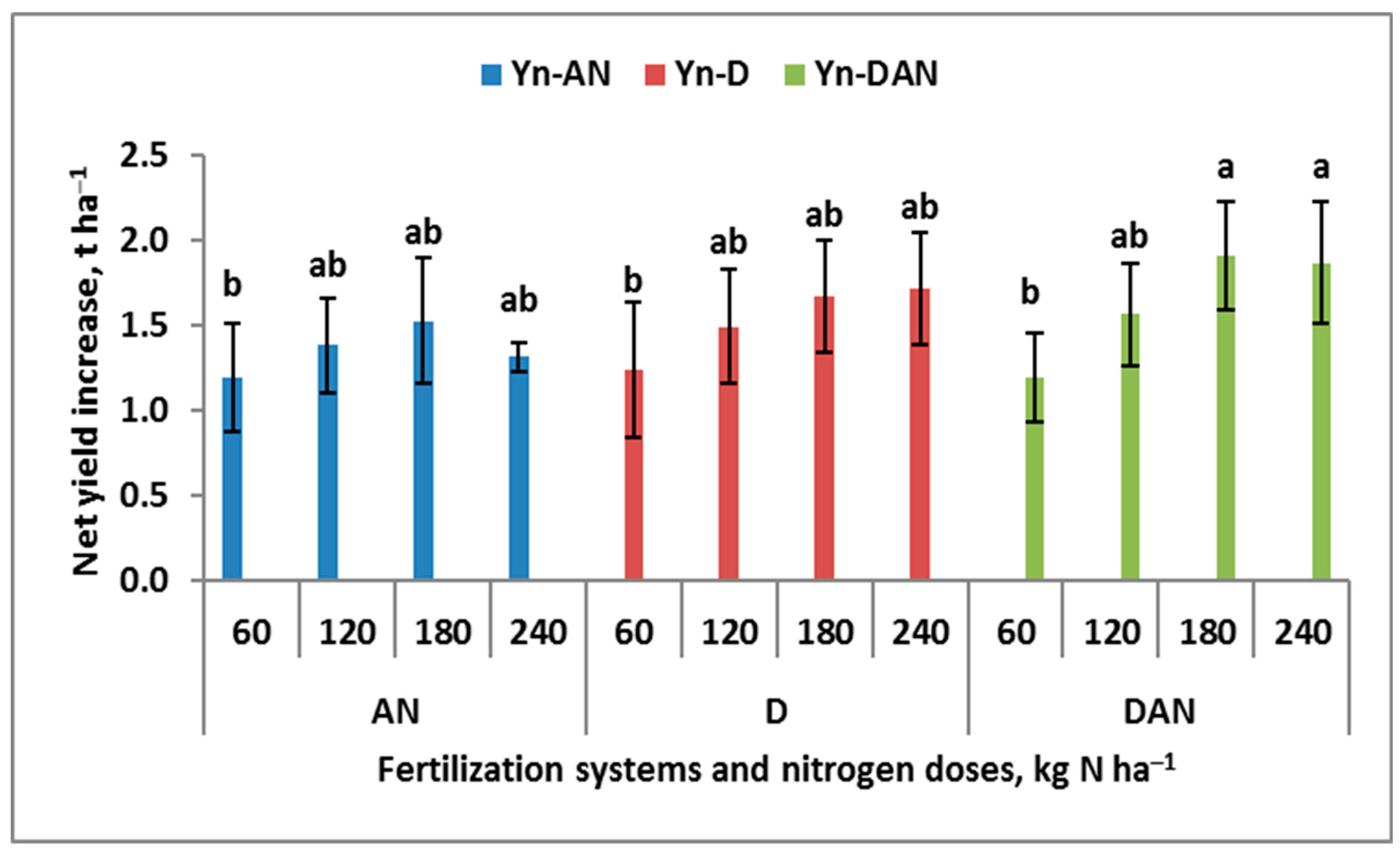
The net seed yield (Yn), which determines the actual effect of fertilizers, demonstrated the specific impact of the tested N carriers (Table 1). On average, regardless of FS and year, the net yield increased until N doses reached 180 kg ha−1, then stabilized (Figure 1). Starting at a dose of 120 kg N ha−1, the advantage of FSs with digestate over the AN variant—i.e., with only mineral fertilizer—was evident. The advantage of DAN over AN was most evident in the plots with the highest N doses. The trends in net yield increase (Yn) in relation to N doses depended on the type of N carrier in a given FS. The following regression models were obtained:
AN: Y n = 0.000028 N 2 + 0.009 N + 0.72 ,   n = 4 ,   R 2 = 0.92 , 0.05 ;
D: Y n = 0.0027 N + 1.32 ,   n = 4 ,   R 2 = 0.92 ,   p 0.01 ;
DAN: Y n = 0.000029 R e + 0.013 N + 0.52 ,   n = 4 ,   R 2 = 0.98 ,   p 0.01 .
The cardinal values for the models, which were measured only for FSs with digestate, are as follows:
Ynmax: 1.443 and 1.770 t seeds ha−1, for AN and DAN, respectively.
Nop: 160.6 and 224.1 kg N ha−1, for AN and DAN, respectively.

3.2. Preanthesis–Vegetative Phases of Winter Oilseed Rape Growth

Four directly measured N characteristics were used to calculate six N economy/management indices for rapeseed in the period from the rosette stage (BBCH 30) to the onset of anthesis (BBCH 60) (Table 1). The N input data measure the amount of N in the crop biomass at the rosette stage (NAR) and the amount of inorganic N (Nmin) in the 0–90 cm soil layer. The sum of these two N components determined the value of the aggregate index, which was N input 30 (Nin30). NAR values showed significant variability at this stage of plant growth in response to the studied factors and the year factor. The impact of the N application system (FS) and N doses (N) on NAR was significant, regardless of the year-to-year variability. The highest NAR mass was recorded for the fertilizer N variant (AN system). Moreover, in this system alone, NAR significantly responded to N doses and followed the quadratic regression model:
N A R A N = 0.0012 N 2 + 0.257 N + 39.33   f o r   n = 5 ,   R 2 = 0.98   a n d   p 0.01   A
The maximum NAR of 53 kg N ha−1, at an optimal N dose (Nop), reached 107 kg N ha−1. No significant differences were observed for this N trait in either digestate-fertilized treatment in response to progressive N. Furthermore, we observed no significant impact of this trait on Nmin30 (Table S6). The amount of Nmin at the BBCH 30 stage (Nmin30) responded significantly to all studied factors, but N dose was the dominant factor. Its significantly lower value was recorded in the first growing season. The FS × N interaction on Nmin30 was quite pronounced, increasing linearly with increasing N doses. The size of this N trait, assessed from the slopes of the regression models, increased in the following order: AN > DAN > D (Table S7, Equation (S1)). Ninput30 showed a linear response pattern to the mineral N variants (Table S7, Equation (S2)). In the treatment with digestate only (D variant), the N amount in the soil/crop system changed consistently with the quadratic regression model in response to increasing N doses. The maximum N value was 173.6 kg N ha−1, which was significantly lower compared to the maximum for both N variants with mineral N fertilizer.
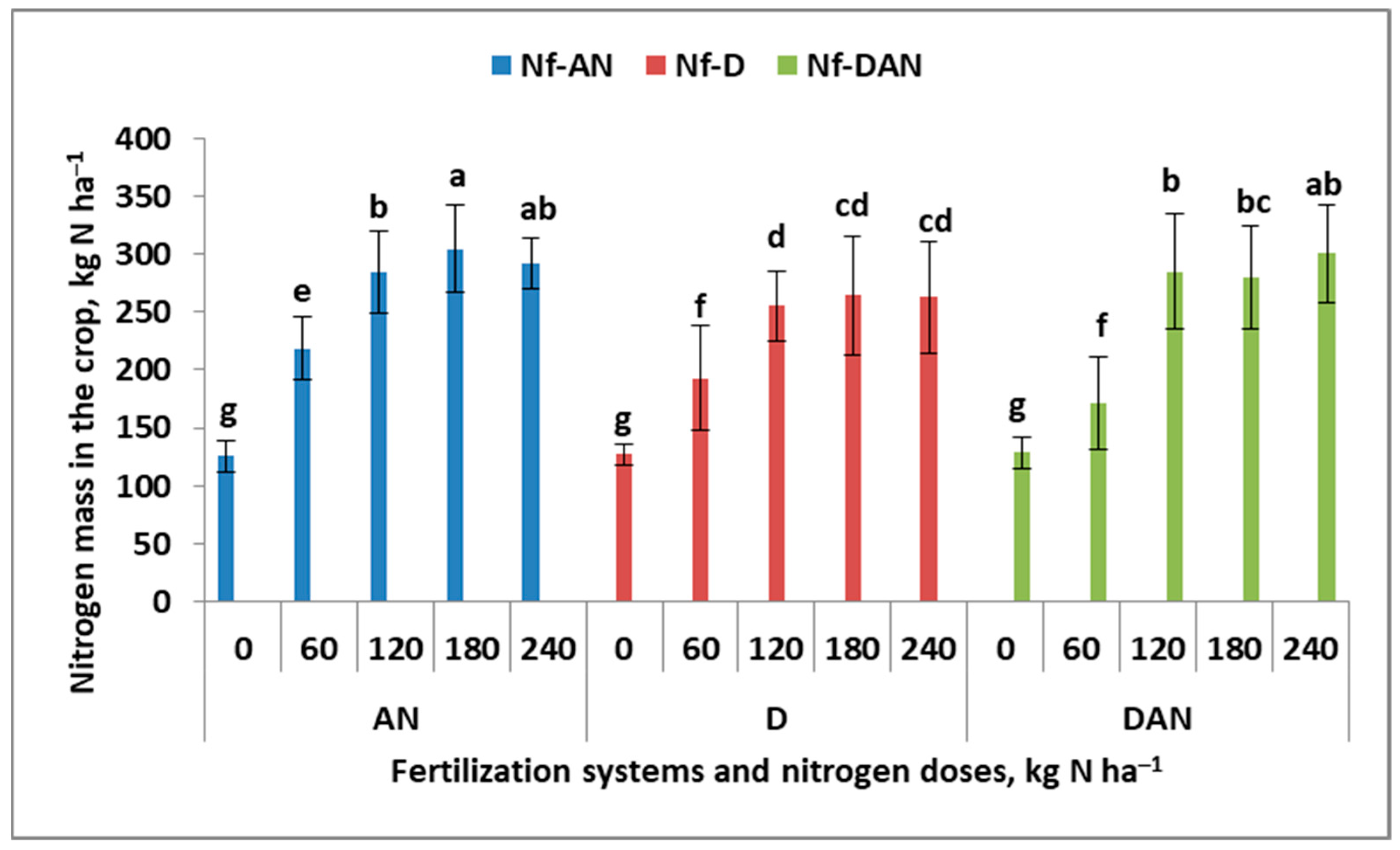
The amount of N in the rapeseed biomass at the onset of anthesis (NAF, Nf) depended on the interaction of experimental factors. It showed high variability in consecutive years (CV ≈ 35%). NAF showed a significant correlation with basic N traits at BBCH 30, but the strongest correlation was with Ninput30 (Table S6). The main reason for the observed variability was the extremely low NAF during the dry 2018 (Table 1). This N trait increased gradually with increasing N doses up to 120 kg N ha−1, and then remained at a similar level (Figure 2). Moreover, in the plots with the highest N doses, plants fertilized only with digestate showed a lower N mass. The detailed analysis of N accumulation trends as a function of N doses revealed the dominance of the quadratic regression model (Table S7, Equation (S3)). The cardinal indicators of the developed models are as follows:
(1)
NAFmaz: AN (306.4) ≥ DAN (301.6) > D (270 kg N ha−1);
(2)
Nop for NAF maximum: DAN (238.5) > D (199.2) > AN (189.0 kg N ha−1).
The mass of inorganic N in the soil at BBCH 60 (Nmin60) significantly depended on experimental factors and year (Table 1). The CV value fell within the high class of variability, which resulted from the high inter-seasonal variability of the Nmin content. This N characteristic was the highest in the 3rd growing season and twice as low in the 2nd growing season, with these seasons producing the lowest and the highest seed yields, respectively. Despite the dominating year effect, Nmin patterns were significantly driven by N applied doses. Yearly means followed the quadratic regression model for the AN treatment, reaching a maximum value of 92.8 kg N ha−1 for the Nop of 188.5 kg N ha−1. For the digestate and mixed variant (DAN), the trend was linear (Table S7, Equation (S4)). Nmin60 was positively correlated with Nmin30 but negatively correlated with NAR, and did not correlate with NAF (Table S6). This suggests two possible scenarios: either the available N content in the soil was optimal for plant growth, or the plant’s potential to take up N from the soil was too low.
Two aggregate indices describing N management from BBCH 30 to BBCH 60 were calculated based on Nin30 and NAF (Table 1). Both responded significantly to the interaction of experimental factors and year. The first one, N balance (Nb), was negative and showed a very high CV value (≈65%). The main cause of its high variability was the year factor; there was an almost four-fold difference in Nb between 2017 and 2018. The effect of FSs on this N trait was significant but weak, with the lowest value observed for the full digestate variant. Nb, averaged over years, followed the quadratic regression model. The key indicators of the Nb models were as follows (Table S7, Equation (S5)):
(1)
Nb60min: DAN (−115.1) ≥ AN (−113.9) > D (−102.3 kg N ha−1);
(2)
Nop for Nbmax: DAN (171.6) > D (170.5) > AN (149.1 kg N ha−1).
The Nb index was linearly, strongly, and negatively correlated with NAF (Table S6). This type of relationship essentially indicates that an increase in the absolute value of Nb actually led to an increase in the real value of NAF, as shown in the equation below:
N A F   =   1.37 N b   +   120.4   f o r   n   =   36 ,   R 2 =   0.78 ,   p     0.001
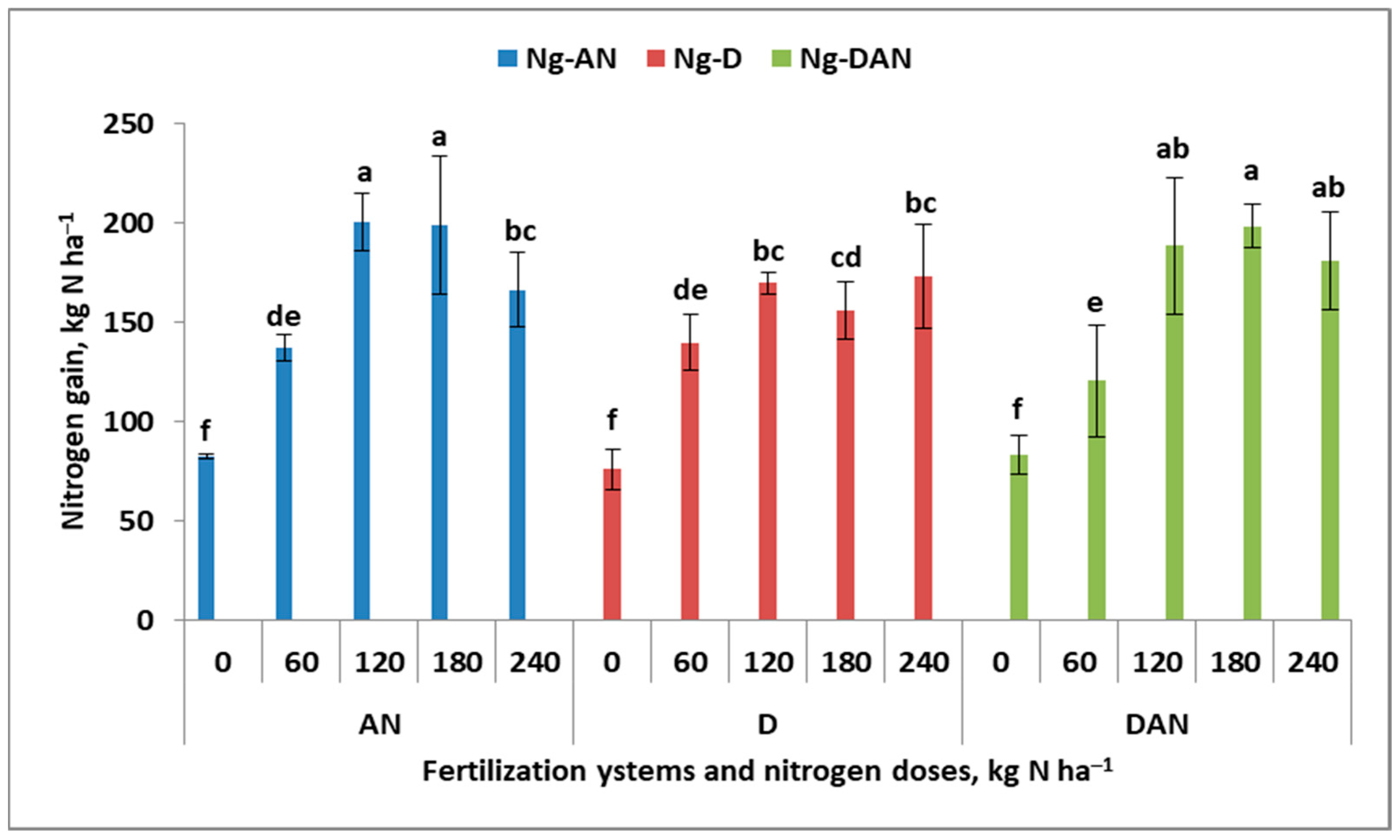
The aggregate Ngain60 index, based on Nmin60 and Nb, had a CV twice as low as Nb. Its variability was mainly affected by N doses and was slightly modified by FS (Figure 3). The differences between FSs were greatest for plots treated with 120 and 180 kg N ha−1. This N characteristic followed the quadratic regression model, but the key indices of the developed equations were significantly different (Table S7, Equation (S6)):
(1)
Ngain60max: AN (197.7) ≥ DAN (189.8) > D (174.1 kg N ha−1);
(2)
Nop for Ngain60: DAN (238.5) > D (185.5) > AN (158.9 kg N ha−1).
The order of FSs for both of these indices is reversed, but DAN occupies a fixed, intermediate position. Typically, the Ngain index is negatively correlated with Nb. Under the actual conditions of this field experiment, it was strongly negative (r = −0.86 ***) (Table S6). On the other hand, it was strongly and positively correlated with NAF (R2 = 0.81 ***), as shown below:
N A F   =   1.468 N g a i n 60   +   10.75   f o r   n   =   36 ,   R 2 = 0.81 ,   p 0.001
Positive correlations, but at a much lower level, were observed between Ngain60 and N characteristics determined at the BBCH 30 stage (Table S6).
The direct effect of the N carriers on the net gain of the N mass in the soil before rapeseed flowering (Ngain60n) was determined by subtracting the value for a given N plot from that of the absolute N control. Ngain60n showed two specific responses to the interaction of FS and N dose. First, mean values for this trait in the 60 kg N ha−1 plot were approximately ½ those in the 120 and 180 kg N ha−1 plots. A significant decrease of 10 kg N ha−1 was noted for the 240 kg N ha−1 plot. Second, in both plots with the highest Ngain60n values, variant D showed significantly lower values (Figure S1).
The total amount of available N in the soil/rapeseed system at the beginning of flowering was significantly dependent on all studied factors. However, the N dose had the greatest effect (Table 1). CV values fell into the moderate variability class. N60T values showed an extremely high (r > 0.90 ***) positive relationship with Nin30, NAF, and Ngain60. A slightly weaker correlation was noted for Nmin30 (r = 0.84 ***). However, no significant association with Nmin60 was found (Table S6). Consequently, the course of N60T in response to the experimental factors was very similar to NAF and Ngain (Figure S2).
Two N efficiency indices were calculated. The first, NE60, was based on the effect of Nin30 on NAF, as the basic component of N economy in WOSR from BBCH 30 to BBCH 60 (Table 1). Its values depended on N doses and the year factor. The effect of FSs, averaged over the others, was insignificant. NE60 values, regardless of the subsequent growing seasons, were significantly above 100% (>1.00), reaching an average of 153.5% with a CV of 20.4%. NE60 was positively correlated with Ngain60 and, as a logical consequence, negatively with Nb60 (Table S6). The latter correlation was much stronger (+70 **; vs. −0.92 ***).
The second efficiency index, NE60T, takes into account the gross amount of N (N60T) in the soil/rapeseed system in response to Nin30. Its average value was 202%, showing significant dependence on N doses and the year factor. The impact of FSs was revealed only in interaction with other factors. The course of both indices against N doses followed the quadratic regression model, reaching maximum values exceeding 200% for NE60T on the plot fertilized with between 60 and 180 kg N ha−1. The highest differences between the studied FSs were noted in the 240 kg N ha−1 plot. NE60T showed a significant, positive correlation with NE60. It should be emphasized that N60T showed a positive correlation with Ngain60, and a negative correlation with Nb. Both relationships were at the same level of significance (Table S6).

3.3. Reproductive Growth—Seed-Filling Period

The N economic characteristics of the WOSR during the seed-filling period (SFP) are based on two directly measurable N traits, such as the amount of N in the rapeseed biomass at harvest (NAH) and the amount of soil mineral N (Nmin89; Table 2). The N60T value was used as the basis for calculating N economy and efficiency indices (Table 1).
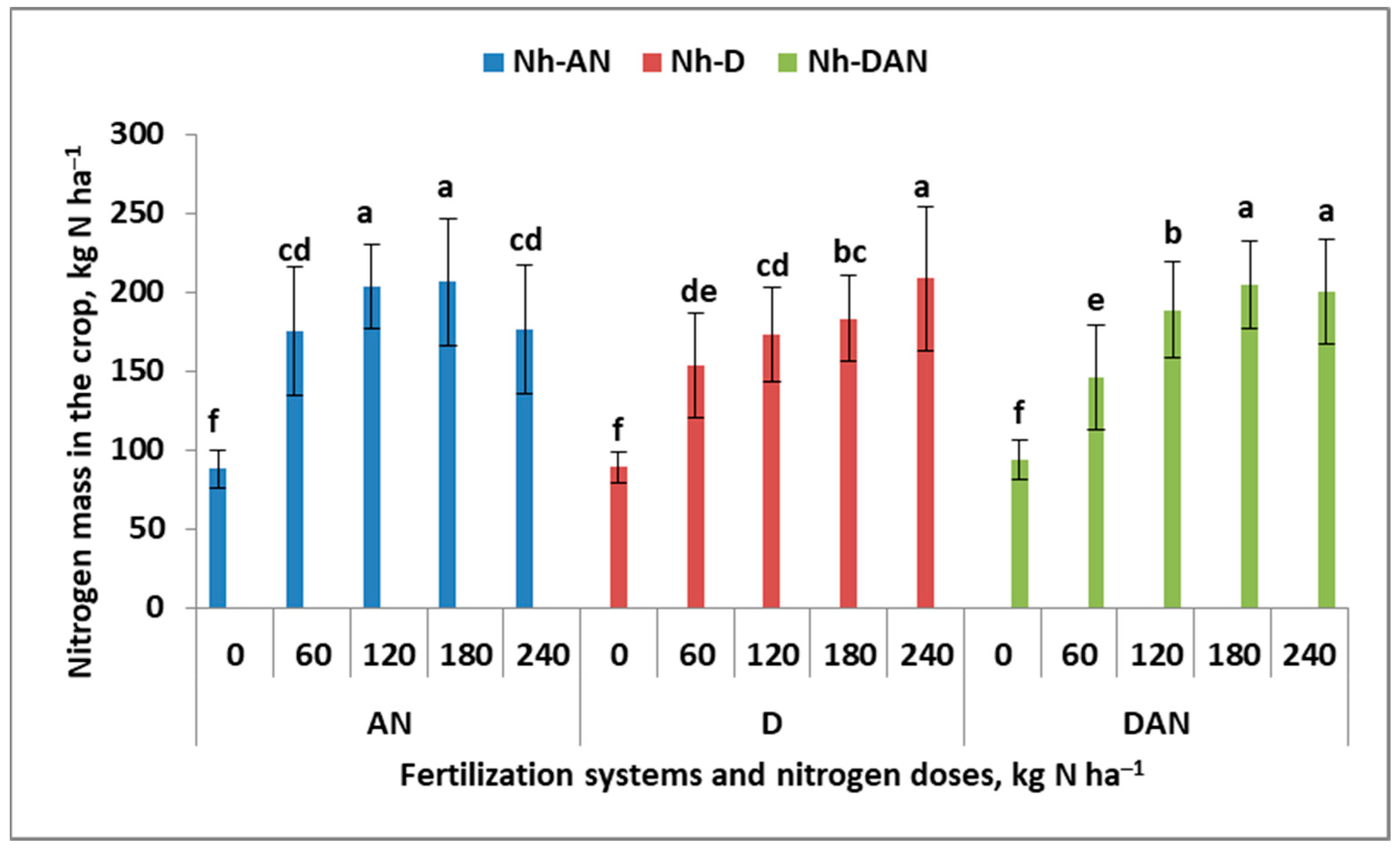
The basic measurable N characteristic, NAH, was significantly affected by the experimental and year factors (Table 2). However, the dominant factor was weather. In the 3rd growing season, the total mass of N accumulated in the rapeseed canopy was only 60% of that recorded in the first two growing seasons. Therefore, the CV value slightly exceeded 35%, placing it in the high-variability class. The response of NAH to N doses, averaged over the other factors, increased until 120 kg N ha−1 and then reached stabilization (Figure 4). The differences between FSs were very stable for N doses from 120 to 180 kg N ha−1. Within this range, the FS order was as follows: AN > DAN > D. However, for the highest N rate (240 kg N ha−1), this order changed to D ≥ DAN > AN. The observed patterns resulted from different trends in N accumulation by the rapeseed canopy in relation to N doses. In the FS variants with mineral N fertilizer, NAH trends followed a quadratic function model. However, in the variant with digestate, this relationship was linear:
(1)
AN: N A H = 0.0052 N 2 + 1.586 N + 91.3   f o r   n = 5 , R 2 = 0.99 , p 0.001 ;
(2)
D: N A H = 0.449 + 107.8   f o r   n = 5 , R 2 = 0.89 , p 0.01 ;
(3)
DAN: N A H = 0.0028 N 2 + 1.12 N + 92.3   f o r   n = 5 , R 2 = 0.99 , p 0.001 .
The cardinal values of NAHmax and Nop were 214.6 and 152.5 kg N ha−1 for the AN variant. In the DAN variant, however, these cardinals were 205.9 and 200.5 kg N ha−1, respectively. In the AN variant, the N dose was almost 50 kg N ha−1 lower, but resulted in the same N mass in rapeseed. In the digestate variant, NAH increased to 240 kg N ha−1. It should be emphasized that NAH correlated significantly and strongly with N60T (Table S8).
Nmin89, the second N trait directly measurable during the seed-filling period, also significantly depended on all the studied factors, but the dominant factor was year (Table 2). In the 3rd growing season, the amount of Nmin in the soil was more than twice as high as in the two previous seasons. As a result, the CV value approached 60%. Despite this, Nmin89, regardless of FS, increased in accordance with the applied N doses (Table S7, Equation (S7)). Its growth rate, based on the regression model slopes, was AN > DAN > D.
The set of developed N management indicators includes N balance (Nb89), N gain (Ngain89), and total available soil and plant N at harvest (N89T, Table 2). Nb89 values were positive, demonstrating a significant response to experimental factors. However, they were highly variable in consequent seasons. The Nb response to N dose was linear for the FS variants with mineral N fertilizer. However, for digestate, it followed a quadratic regression model:
N b 89 = 0.0022 N 2 + 0.75 N + 80.9   f o r   n = 5 ,   R 2 = 0.88 ,   p 0.05
The Nbmax reached 145 N ha−1 with a Nop of 170.7 kg N ha−1. In addition, Nb showed a strong correlation with N60T (Table S8). Furthermore, Nb showed a negative relationship with Ngain/losses89. The strength of this correlation was stronger than with Nmin89 (Figure S3). Although NAH showed no significant association with Nb, its correlation with Ngain was negative and weak (Table S8).
The year factor was crucial for the inter-seasonal variability of Ngain89, which was high on average (CV ≈ 58%). The highest value of this indicator was recorded in the 2nd growing season, and was twice that of other seasons. The response of Ngain89 to N rates was linear for the FS variants with mineral N fertilizer, and was much more reliable for AN than for DAN. However, for digestate, it showed consistency with the quadratic regression model:
g a i n 89 = 0.0023 N 2 0.675 N 28.73   f o r   n = 5 ,   R 2 = 0.98 ,   p 0.05
A minimum value of Ngain89 of −78.3 N ha−1 was noted for Nop of 145.8 kg N ha−1. The difference between variant D and the others deepened, beginning with the 120 kg N ha−1 plot. The gross N mass in the soil/rapeseed system (N89T) responded significantly to the studied factors. However, the greatest impact was exerted by N doses (Figure S4). The interaction of FS and N rates showed a distinct linear course for D and DAN, with a quadratic relationship for AN (Table S7, Equation (S8)). This equation shows that the maximum N89T of 309 kg N ha−1 was related to a Nop of 186 kg N ha−1. This value was similar to the highest in the D and DAN variants.
The effectiveness of N present in the soil/rapeseed continuum during SFP was measured using NAH and N89T, and was related to the initial amount of N in the system recorded in the phase BBCH 60 (N60T). The first indicator, NE89, was significantly dependent on all the studied factors and their interactions (Table 2). However, the decisive factor was the weather. Despite this, CV values fell within the medium-variability class. The effect of FSs was significant, but the differences were within a narrow range of approximately three percentage points. The effect of N doses was significant but weakly differentiated. The highest NE89 value, approximately 62%, was noted for the 60 kg N ha−1 plot. The NE89 was positively correlated only with NAH, but negatively with Nb89 and Nmin89. No significant correlation was found for N60T, Ngain89, and N89T (Table S8).
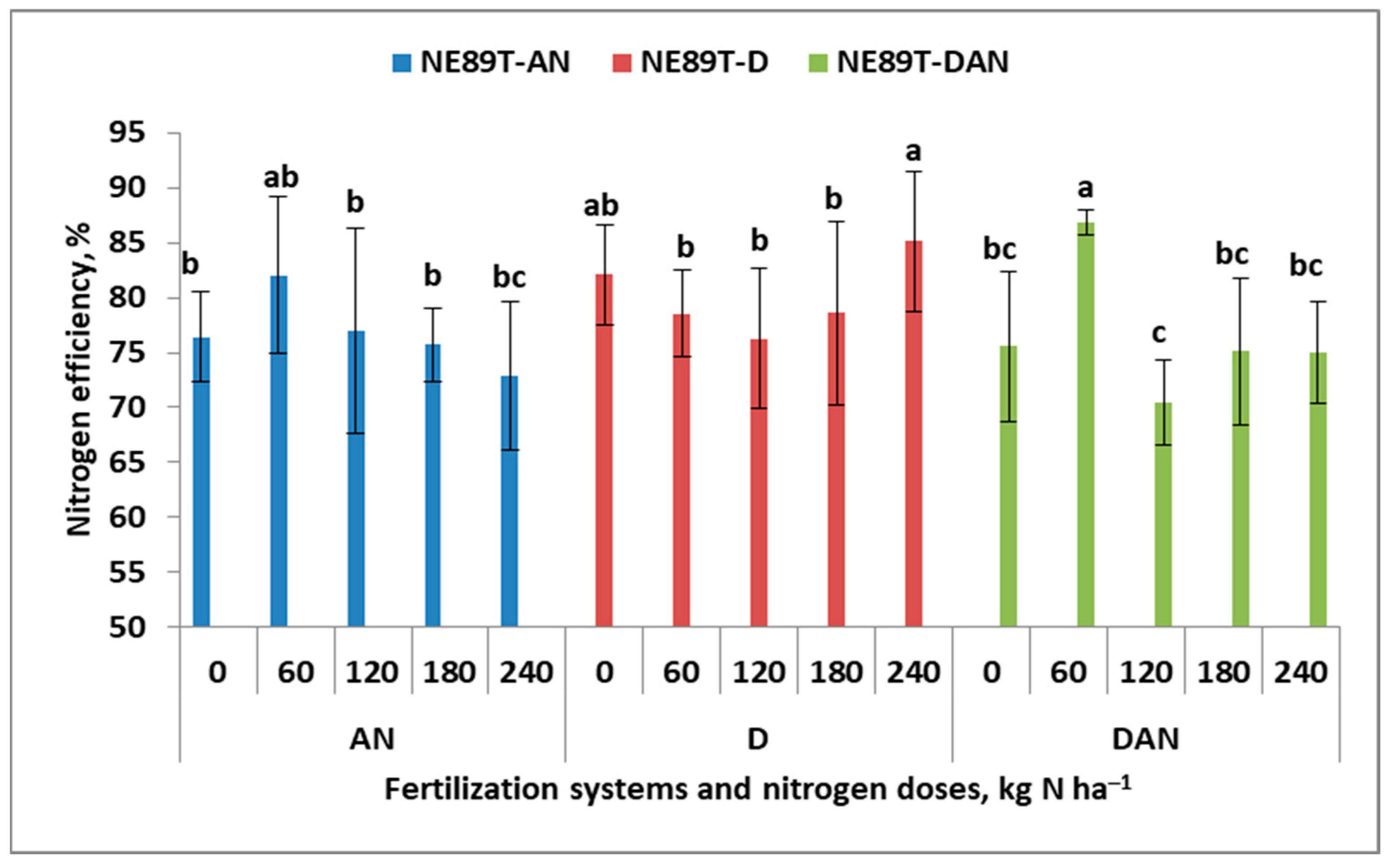
The second N efficiency indicator, NE89T, significantly depended on the studied factors (Table 1). Its variability, as indicated by CV, was low (<15%). The main reason for its variability was the year factor. The lowest NE89T was recorded in the 2nd growing season, and the highest in the 1st. The difference among the FS variants was small (3.2–3.5 percentage points). The trend in NE89T in response to increasing N doses was specific to the FS variants (Figure 5). The highest value for the treatments with mineral N fertilizer was found for the 60 kg N ha−1 plot. From this combination onwards, a decrease was observed for both treatments. However, for the treatment with digestate only (D), the trend in NE89T was consistent with the quadratic function model. According to the model obtained, N efficiency decreased from 82.4% in the N control plot (0 kg N ha−1) to 76.7% for the N rate of 107.5 kg N ha−1, then increasing to 85% for a N dose of 240 kg N ha−1. NE89T correlated significantly and positively with Ngain89, and negatively with Nb89 (Table S8).

4. Discussion

4.1. Nitrogen Economy During the Critical Periods of Yield Formation

The measurable N characteristics, and the related N management indices, were significantly related to seed yield in both vegetative and reproductive periods of WOSR growth (Tables S6 and S8). Detailed characteristics of yield components are discussed in the article by Łukowiak et al. [24]. The average seed yield, amounting to 2.81 ± 0.94 t ha−1, ranged widely from 1.23 to 4.20 t ha−1. Such high variability indicates a strong response of seed yield to the factors studied. The analysis showed the following:
(1)
The decisive influence of weather conditions during the study growing seasons (the year factor);
(2)
The significant and strong impact of increasing nitrogen doses;
(3)
No difference in the value of nitrogen fertilizer replacement (NFRV) for the tested N carriers.
An increase in net seed yield was noted at each N dose. Symptomatic for each N dose, starting from 120 kg N ha−1, was an increase in yield in all FSs that increased in the following order: AN ≤ D ≤ DAN. Significant differences between FSs occurred only in the combinations with the highest N doses, i.e., with 240 kg N ha−1 (Figure 1). A significant decrease in Yn was found there. However, in the digestate fertilization system, Yn increased progressively with the applied N dose. On this basis, can we conclude that N from digestate controlled seed yield with increasing N rates? The yield increase for digestate fertilized plants compared to the effect of mineral N was 23% higher, but at the same time, it was 11.5% lower than the mixed (DAN) variant. Therefore, it is reasonable to conclude that digestate meets the criteria for slow-release fertilizer.
Seed yield showed a significant correlation with nine of the ten analyzed N traits in the vegetative, pre-flowering period of rapeseed growth (Table S6). Interestingly, no significant correlation was found with Nmin at the onset of rapeseed anthesis. Furthermore, Nmin resources did not limit N accumulation in rapeseed biomass at the onset of anthesis (NAF). Logically, the Nmin at this stage of rapeseed growth cannot be considered a limiting factor for seed yield. This discrepancy is the first indication of a disturbance in the N economy of rapeseed during its pre-flowering, vegetative growth period. It is well recognized that N resources in the winter oilseed rape canopy during this period significantly affect the formation of yield components and, consequently, determine yield [35,36,56,57].
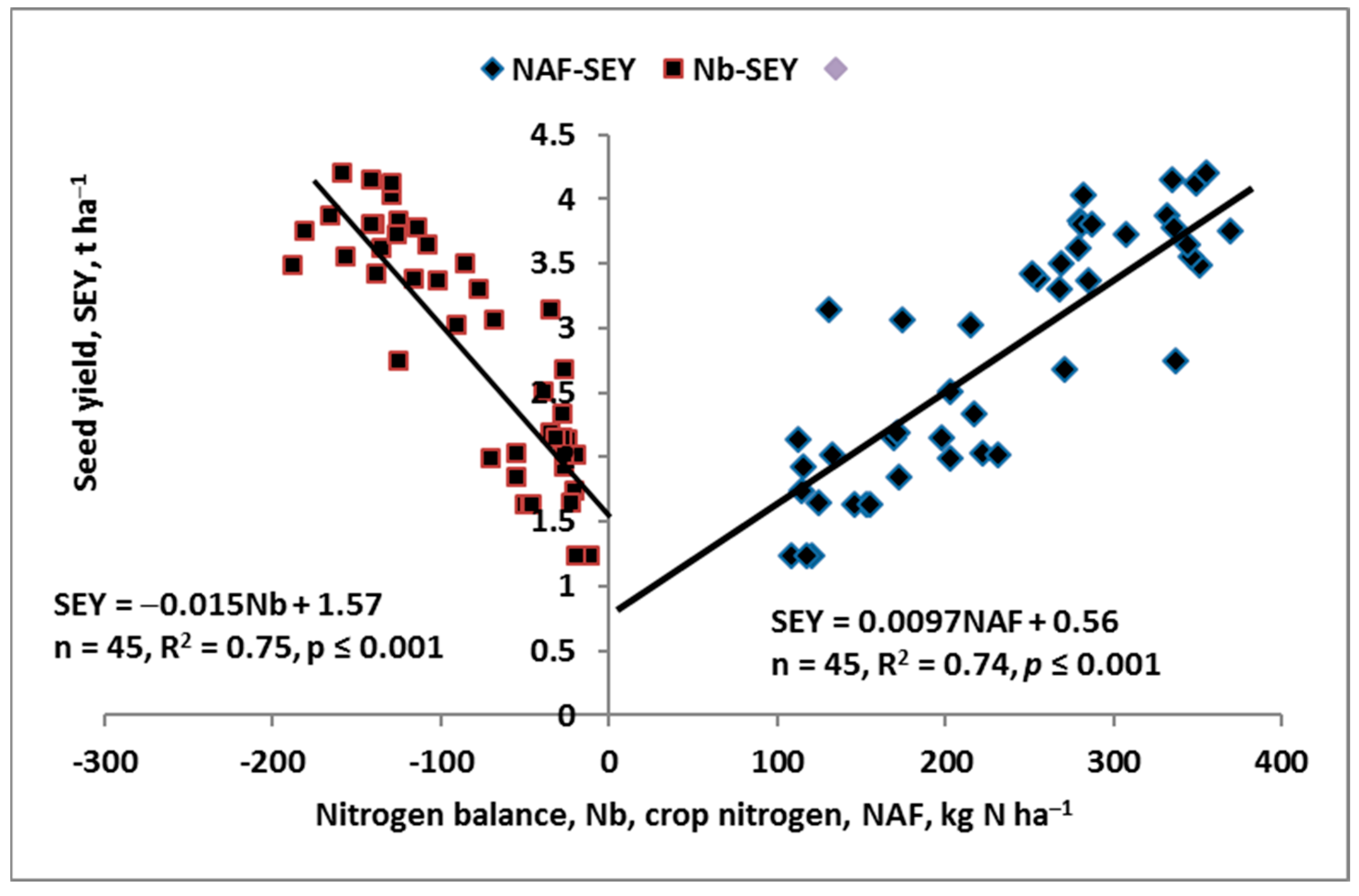
Three traits of N economy in the vegetative period of WOSR growth—NAF, Nb, and Ngain—were strongly correlated with each other, making it possible to explain the observed phenomenon. Moreover, each of them strongly affected yield (Table S6). The observed linear trends between NAF and Nb and seed yield confirm the limited ability of plants to absorb mineral N in the soil/rapeseed system before flowering. This deficiency occurred despite available Nmin resources in the soil (Figure 6).
In the case of seed plants with high yield potential, such as wheat, the Nmin content in the soil at the onset of anthesis is a decisive factor for the growth of its reproductive organs [58,59]. Therefore, it can be concluded that the capacity of rapeseed plants in the case study was insufficient to effectively take up N from the soil in the vegetative, preflowering growth period. The experiment discussed is a classic example of a disturbance in the sink/resource relationship, resulting in a partial yield loss [60,61]. In this case, “sink” refers to the amount of N in the plant, and “resource” to the mass of Nmin in the soil rooted by the plant. The potential of rapeseed plants to absorb N from the soil results from the dynamics of plant biomass growth from the rosette stage to the onset of anthesis [35,36]. In this experiment, plant mass limited yield in the rosette stage. In the anthesis stage, the limiting factor was the leaf mass [24].
The presence of unexploited N resources in the preanthesis period of winter oilseed rape growth is also indicated by the relationship between the N balance (Nb) and the amount of N in crop biomass (NAF), which was statistically insignificant but positive. The negative values of N balance clearly indicate the increase in the content of the available N pool during this period. Its positive impact on seed yield indicates the crucial role played by N resources released from the soil in the formation of yield components. The available N resources during the vegetative, preflowering growth period of rapeseed growth, identified as Ngain, were large, regardless of weather conditions in a particular growing season. Such high Nb and Ngain values indirectly indicate high mineralization dynamics of the soil N [62]. The lowest Ngain60 was recorded in the 3rd growing season. A significant decrease in the mineral N mass released from the soil resulted from the drought that occurred during the vegetative part of the rapeseed growing season. Such phenomena are common in winter oilseed rape and, as a rule, negatively impact yield [63,64]. Ngain60 values, similarly to NAF, were significantly and positively dependent on N resources at the rosette stage (Table S6). Moreover, Ngain60 values were consistent with N rates, regardless of the N carrier. The net mass of recovered inorganic N during this period was significantly higher in the ammonium nitrate variant. This suggests that N from mineral fertilizers was more labile than that from digestate [65,66]. The significant impact of Nmin content in BBCH 30 on NAF, and the even stronger impact of Nin30, indicates that the N status of rapeseed in the rosette stage is an important, but not crucial, factor for the formation of seed yield [27,67].
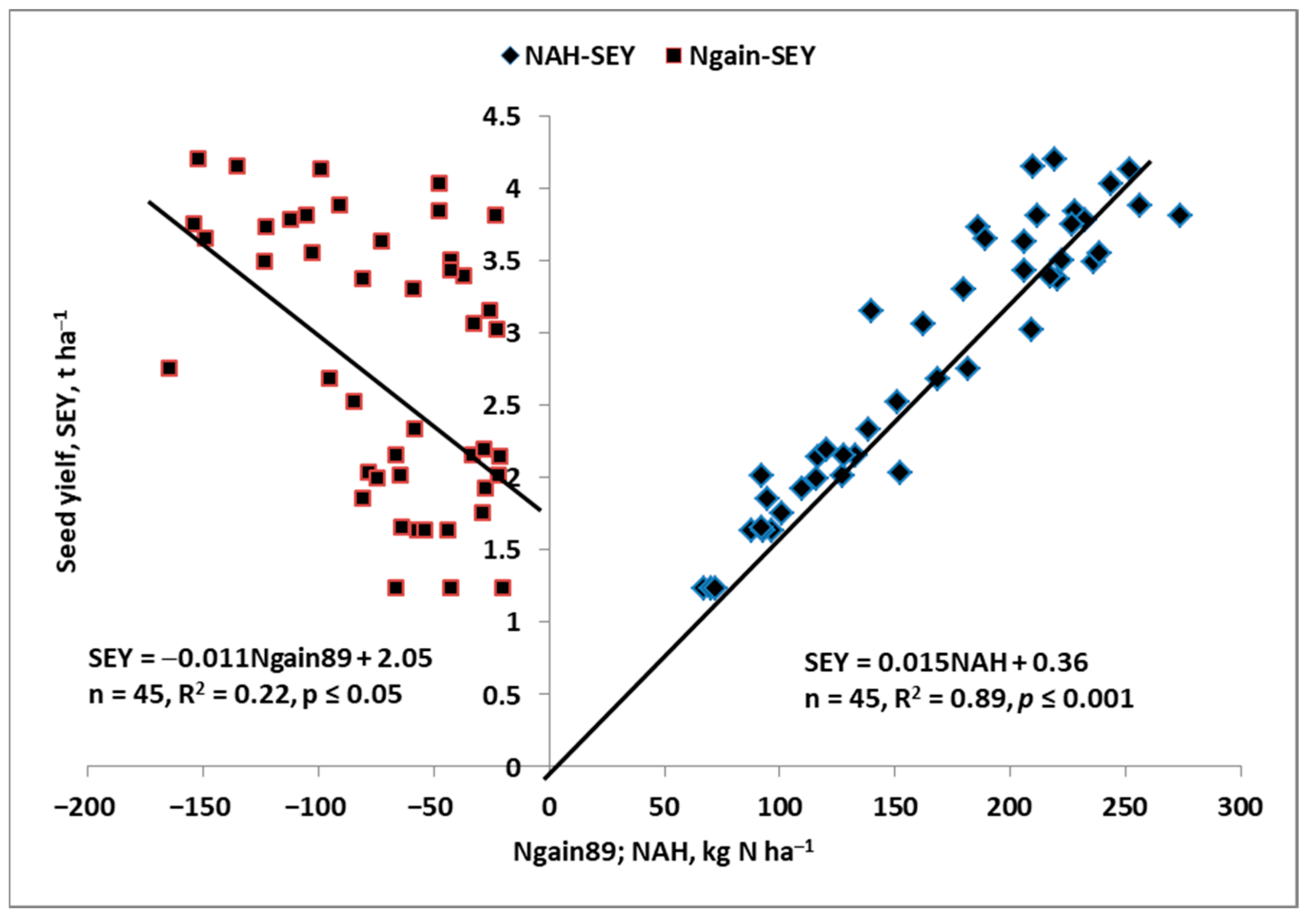
The key role of N mass as a factor determining seed yield in rapeseed was confirmed at full maturity. N mass accumulated by plants at BBCH 89 (NAH) explained 89% of the variability in seed yield (Figure 7). Furthermore, this N trait was strongly induced by the gross N mass in the soil/rapeseed system at the onset of anthesis (N60T, R2 = 0.64). Again, no significant relationships were found between NAH and Nmin and Nb, and a negative relationship was noted for Ngain. The lack of these relationships and the strong correlation of NAH with N60T confirm the relatively moderate yield potential of oilseed rape in the discussed case. The dependence of NAH on Nmin resources after rapeseed anthesis was only observed in the case of high seed yields [28,68,69]. The observed relationships support the view that N absorption capacity of the crop is a more important factor than its resources for determining yield [70,71].

4.2. Nitrogen-Use Efficiency—A Realistic Evaluation

The classic, standard approach to nitrogen-use efficiency (NUE) in crops primarily focuses on fertilizer N doses [29,31,72]. This type of procedure is mechanistic in nature and does not explain the complexity of the N economy of the actual crop during the growing season. In the original concept by Moll et al. [73], N supply also takes into account soil N resources. In reality, they are not quantified and are a so-called black N box. Given this approach, a reliable assessment of N efficiency from digestate in oilseed rape requires insight into N resources released from the soil during the growing season. The foundations for implementing this NUE concept are presented using winter wheat as an example in the article by Grzebisz and Potarzycki [58].
NE60 was calculated using the gross N mass in the soil/rapeseed system at the rosette stage (Nin30). As has been shown, measurement of the nutritional status of the plant at this stage is the first step in yield prediction [27,74,75]. The first developed NUE index is based on N allocation in the plant biomass at the onset of anthesis (NE60). The average value of the index was 153.3%. Quantitatively (system average), the net N mass accumulated in the rapeseed biomass at the onset of anthesis compared to N resources in the soil at the rosette stage increased by ≈82 kg N ha−1. However, the environmental factors were decisive determinants of this process. In the 2nd growing season, the NUE index value was 171.5%, while in the dry 3rd season, it was almost 50.0 percentage points lower (123.8%). The effect of the N carrier (Fertilization Systems) on NUE was found to be insignificant.
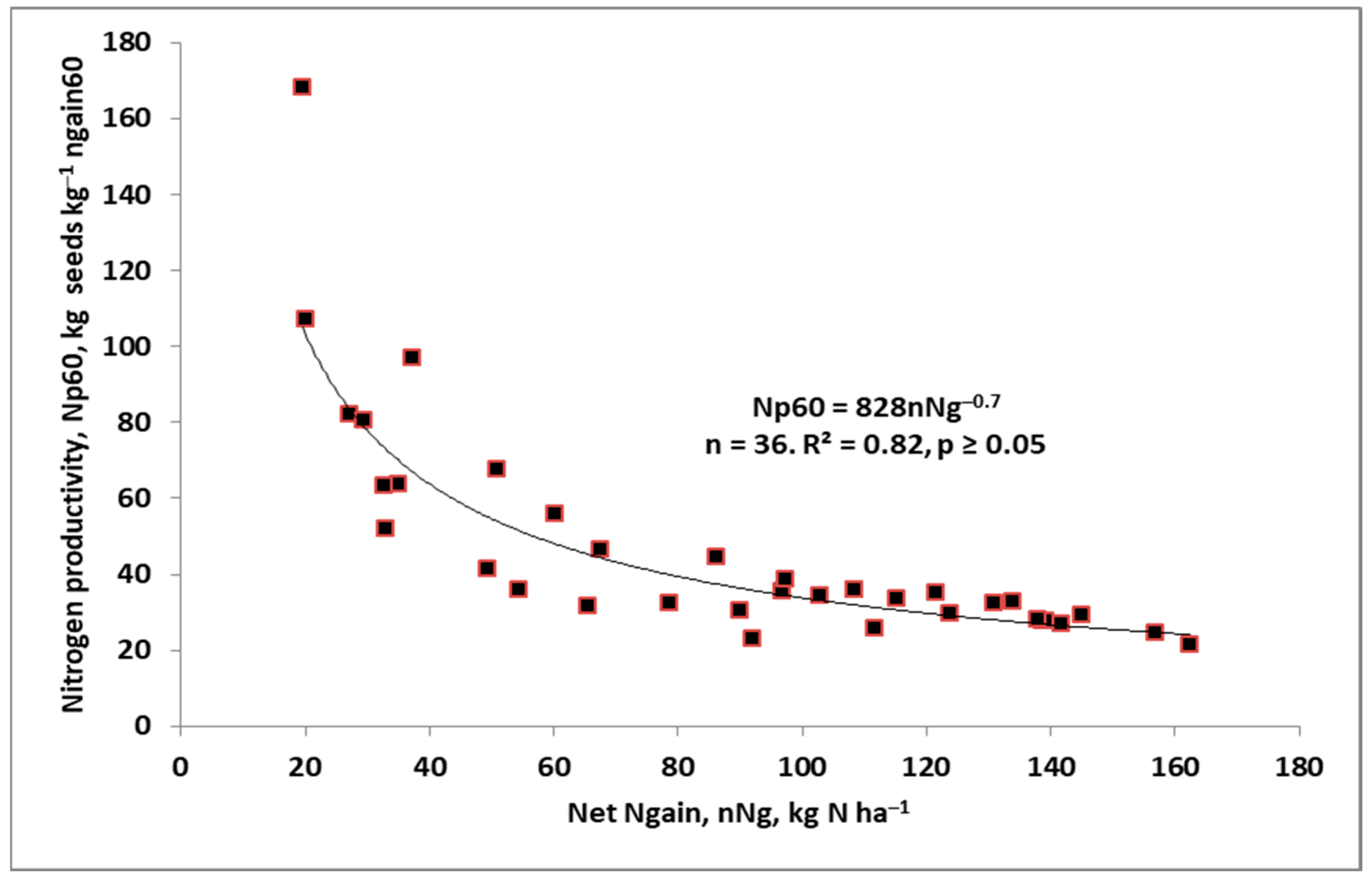
The second NUE index, NE60T, is based on the total amount of available N in the soil/rapeseed system at the beginning of winter oilseed rape flowering. The effect of N carrier on this index was also negligible. The average NE60T was 202%, meaning that the total mass of available N was significantly higher at the onset of anthesis compared to the rosette stage (302.1 vs. 150.9 kg N ha−1). The doubling of N mass during the approximately four-week period indicates extremely high dynamics of available N release from soil resources. The assumption that the doubling of available N resources is solely the result of organic N mineralization was partially confirmed by the increase in N in the N control plot. During the discussed period of the growing season, the net N mass increase was 82% (178.1 vs. 97.1 kg N ha−1). These values are significantly higher than those reported for rapeseed by Sieling et al. [76]. The relative net increase in N resources resulting from application of fertilizers was 125%, 145%, 101%, and 79% for plots fertilized with 60, 120, 180, and 240 kg N ha−1, respectively. Thus, under conditions of readily available N introduced into the soil, its immobilization was short-lived. Except for the variant with 240 kg N ha−1, all the mass of the fresh N introduced into the soil, regardless of the N form, was recovered at the beginning of winter oilseed rape flowering. The productivity of net N released (fertilized variants) from soil resources was the highest in combinations fertilized with 120, and especially 180 kg N ha−1. The nature of this relationship is best described by a power function, and not a linear one (Figure 8).
Although NUE indices for the period preceding rapeseed anthesis showed a positive correlation with yield, only the NE89 index was significant at harvest. The strength of the relationship, although positive, was much lower than NE60. In addition, the correlation between NE89 and Nb was moderate and negative, while that with Nmin was moderate and positive. The relationship with Ngain89 was not significant. These relationships are clear indicators of disruption in the N economy in rapeseed during the seed-filling period. The observed condition resulted from a yield potential of the plants that was too low to adsorb available N present in the soil/rapeseed system at the onset of anthesis [77,78,79].

5. Conclusions

The hypothesis formulated for this research project was clearly confirmed. Nitrogen from digestate significantly affected the nitrogen economy in the studied soil/winter rapeseed system. It was fully documented that the critical stages of yield component formation in winter oilseed rape occur from the rosette stage to the onset of anthesis. Critical diagnostic indicators and predictors of seed yield in this particular period include the N mass in winter oilseed rape canopy (NAF), the N balance (Nb), and the mass of N released from soil resources (Ngain60). Both yield indicators, i.e., total seed yield and net seed yield increase, depended on the increment in net available N mass. However, the type of N carrier, including digestate, was not a decisive factor differentiating N management during this period. NUE indices for fertilizer N and digestate N were at the same level. Net yield increase showed a varied response to increasing nitrogen rates, depending on the fertilization system.
The state of N management indicators indicates not only a high rate of mineralization processes but also a short-term effect of N immobilization following its introduction into the soil. The occurrence of this phenomenon can be described as secondary short-term recycling of the originally introduced N. It was symptomatic that the N resources available to plants from the rosette stage to the beginning of rapeseed flowering were lowest in the system fertilized solely with pure digestate. Moreover, in this fertilization system, net yield increased with the N dose. However, N released from ammonium nitrate ceased to have a positive effect on yield after exceeding 90 kg N ha−1. The net yield increase was significantly higher in the N management system based on digestate. This difference can be used as the criterion for defining digestate as a slow-release fertilizer. Plants treated with ammonium nitrate did not show a correlation between yield formation and available N resources at overly high N fertilizer doses.
In the final summary, it can be stated that digestate is an optimal N carrier under conditions of moderate yield of winter oilseed rape. The results and conclusions indicate that further research is needed to clarify the effects of N from digestate. Determining the impact of digestate on the availability of nutrients that condition N activity is crucial. This research area should focus on processes during the critical period of winter oilseed rape yield formation, from the rosette stage to the onset of flowering.

Supplementary Materials

The following supporting information can be downloaded at: https://www.mdpi.com/article/10.3390/agronomy16100959/s1. Figure S1: The net nitrogen gain from the rosette stage to the beginning of flowering in response to nitrogen doses on the background of three Fertilization Systems (FSs); Figure S2: Total nitrogen mass in the soil/winter oilseed rape system in the period from the rosette to the beginning of flowering in response to nitrogen rates on the background of three Fertilization Systems (FSs); Figure S3: Dependence of the mass of mineral N and N losses during seed-filling period on nitrogen rates; Figure S4: Total nitrogen mass in the soil/winter oilseed rape system in the seed-filling period on the background of three Fertilization Systems (FSs). Table S1: Basic characteristics of the topsoil physical and chemical properties in subsequent growing seasons; Table S2: The content of available nutrients in the topsoil in consecutive growing seasons1, mg kg−1 soil; Table S3: The content of available nutrients in soil layers in subsequent years of study 1, mg kg−1 soil; Table S4: Key climatic data for the winter oilseed rape growing season in relation to the long-term means; Table S5: Chemical composition of digestate used as fertilizer; Table S6: Correlation matrix of nitrogen characteristics: N economy indicators, and N efficiency indices of winter oilseed rape during vegetative growth, yield; Table S7: Trends in studied soil and crop characteristics response to nitrogen doses on the background of fertilization system; Table S8: Correlation matrix of nitrogen characteristics: N economy indicators, N efficiency indices of winter oilseed rape during seed-filling period, yield. Text SA: Methods of chemical analysis; Text SB: Description of rapeseed cultivar under field test.

Author Contributions

Conceptualization, W.S. and R.Ł.; methodology, W.S. and R.Ł.; software, R.Ł.; validation, W.S.; formal analysis, R.Ł., W.S., and H.K.; resources, R.Ł.; data curation, H.K.; writing—original draft preparation, R.Ł. and H.K.; writing—review and editing, W.S.; visualization, H.K.; supervision, W.S.; project administration, H.K. All authors have read and agreed to the published version of the manuscript.

Funding

The publication was financed by the Polish Minister of Science and Higher Education as part of the Strategy of the Poznan University of Life Sciences for 2024–2026, aimed at improving scientific research and development in priority research areas.

Data Availability Statement

The original contributions presented in the study are included in the Supplementary Materials. Further inquiries can be directed to the corresponding author.

Conflicts of Interest

The authors declare no conflicts of interest.

Abbreviations

ANAmmonium nitrate
CVCoefficient of variation
DDigestate
FSFertilization system
ANAmmonium nitrogen-based FS
DDigestate-based FS
DANMixed (1/3AN + 2/3D) FS
NNitrogen
NfNitrogen fertilizer
NAH, NhNitrogen amount in crop biomass at harvest
NAF, NfNitrogen amount in crop biomass at anthesis
NARNitrogen amount in crop biomass at rosette
NbNitrogen balance
NE Nitrogen efficiency
NFRVNitrogen fertilizer replacement value
NgainN released from soil resources
NminInorganic soil nitrogen
NUENitrogen-use efficiency
SEYYield of seeds
SFPSeed-filling period
TTotal
WOSRWinter oilseed rape

References

  1. Martínez-Suller, L.; Azzellini, A.; Provolo, G. Analysis of livestock slurries from farms across Northern Italy: Relationship between indicators and nutrient content. Biosyst. Eng. 2008, 99, 540–552. [Google Scholar] [CrossRef]
  2. Przygocka-Cyana, K.; Zawieja-Roszak, A. Sulfur added to cattle slurry as a means to improve the nitrogen economy of maize during the grain filling period. J. Elem. 2024, 29, 433–451. [Google Scholar] [CrossRef]
  3. Makadi, M.; Tomocsik, A.; Orosz, V. Digestate: A new nutrient source—A review. In Biogas; Kumar, S., Ed.; InTech: London, UK, 2012; pp. 295–312. [Google Scholar]
  4. Doyeni, M.O.; Stulpinaite, U.; Baksinskaite, A.; Supronienie, S.; Tilvikiene, V. The effectiveness of digestate use for fertilization in an agricultural cropping system. Plants 2021, 10, 1734. [Google Scholar] [CrossRef]
  5. Smit, M.F.; Vonk, W.J.; Hijbeek, R. A variable residue: Meta-analysis on the nitrogen fertilizer replacement value of anaerobic digestate. Eur. J. Agron. 2026, 172, 127845. [Google Scholar] [CrossRef]
  6. Sieling, K.; Herrmann, A.; Wienforth, B.; Taube, F.; Ohl, S.; Hartung, E.; Kage, H. Biogas cropping systems: Short term response of yield performance and N use efficiency to biogas residue application. Eur. J. Agron. 2013, 47, 44–55. [Google Scholar] [CrossRef]
  7. Zillo, M.; Pigoli, A.; Rizzi, B.; Goglio, A.; Tambone, F.; Giordano, A.; Maretto, L.; Squartini, A.; Stevanato, P.; Meers, E.; et al. Nitrogen dynamics in soil fertilized with digestate and mineral fertilizers: A full field approach. Sci. Tot. Environ. 2023, 868, 161500. [Google Scholar] [CrossRef] [PubMed]
  8. Westerik, D.; Hoffland, E.; Hijbeek, R. Nitrogen fertilizer replacement value of organic amendments: Determination and prediction. Nutr. Cyckl. Agroecosystems 2024, 129, 445–458. [Google Scholar] [CrossRef]
  9. Alburquerque, J.A.; De la Fuente, C.; Ferre-Costa, A.; Carrasco, L.; Cegarra, J.; Abad, M.; Bernal, M.P. Assessment of the fertiliser potential of digestates from farm and agro-industrial residues. Biomass Bioenergy 2012, 40, 181–189. [Google Scholar] [CrossRef]
  10. Möller, K. Effects of anaerobic digestion on soil carbon and nitrogen turnover, N emissions, and soil biological activity, A review. Agron. Sustain. Dev. 2015, 35, 1021–1041. [Google Scholar] [CrossRef]
  11. Verdi, L.; Kuikman, P.J.; Orlandinimi, S.; Mancini, M.; Napoli, M.; Dalla Marta, A. Does the use of digestate to replace mineral fertilizers have less emissions of N2O and NH3? Agric. For. Meteo. 2019, 260–270, 112–118. [Google Scholar] [CrossRef]
  12. Nyang’au, J.O.; Sorensen, P.; Moller, H.B. Nitrogen availability in digestates from full-scale biogas plants following soil application as affected by operation parameters and input feedstocks. Bioresour. Technol. Rep. 2023, 24, 101675. [Google Scholar] [CrossRef]
  13. Pedersen, J.; Hafner, S.D. Ammonia emissions after field application of anaerobically digested animal slurry: Literature review and perspectives. Agric. Ecosys. Environ. 2023, 307, 108697. [Google Scholar] [CrossRef]
  14. Grzebisz, W.; Niewiadomska, A.; Przygocka-Cyna, K. Nitrogen Hotspots on the farm—A practice oriented approach. Agronomy 2022, 12, 1305. [Google Scholar] [CrossRef]
  15. Van Midden, C.; Harris, J.; Shaw, L.; Sizmur, T.; Pawlett, M. The impact of anaerobic digestate on soil life: A review. Appl. Soil Ecol. 2023, 191, 105066. [Google Scholar] [CrossRef]
  16. Siebielec, S.; Siebielec, G.; Woźniak, M. Potential of by means of digestate to regenerate and stimulate its biological life. Pol. J. Agron. 2023, 52, 157–170. [Google Scholar]
  17. Dmuchowski, W.; Baczewska-Dąbrowska, A.H.; Gworek, B. Impact of agriculture on N2O emissions: A review. J. Elem. 2023, 28, 917–935. [Google Scholar]
  18. Efosa, N.; Krause, H.-M.; Hüppi, R.; Krauss, M.; Vaucher, N.; Zourek, F.; Mayer, J.; Six, J.; Bünemann, E. Emissions of nitrous oxide and methane after field application of liquid fertilizers and biochar. Agric. Ecosys. Environ. 2023, 356, 108642. [Google Scholar] [CrossRef]
  19. Ries, J.; Chen, Z.; Park, Y. Potential applications of food-waste-based anaerobic digestate for sustainable crop production practice. Sustainability 2023, 15, 8520. [Google Scholar] [CrossRef]
  20. Przygocka-Cyna, K.; Grzebisz, W. Biogas digestate—Benefits and risks for soil fertility and crop quality—An evaluation of grain maize response. Open Chem. 2018, 16, 258–271. [Google Scholar] [CrossRef]
  21. Przygocka-Cyna, K.; Grzebisz, W. The multifactorial effect of digestate on the availability of soil elements and grain yield and its mineral profile—The case of maize. Agronomy 2020, 10, 275. [Google Scholar] [CrossRef]
  22. Piccoli, L.; Grillo, F.; Longo, M.; Furlanetto, I.; Ragazzi, F.; Obber, S.; Bonato, T.; Meneghetti, F.; Ferlito, J.; Saccardo, L.; et al. A farm-scale sustainability assessment of the anaerobic digestate application methods. Eur. J. Agron. 2023, 146, 126811. [Google Scholar] [CrossRef]
  23. Simon, T.; Kunzova, E.; Friedlova, M. The effect of digestate, cattle slurry and mineral fertilization on the winter wheat yield and quality parameters. Plant Soil Environ. 2016, 61, 522–527. [Google Scholar] [CrossRef]
  24. Łukowiak, R.; Szczepaniak, W.; Młodecki, D. Impact of digestate-derived nitrogen on nutrient content dynamics in winter oilseed rape before anthesis. Agronomy 2025, 15, 1241. [Google Scholar] [CrossRef]
  25. Slafer, G.A.; Garcia, G.A.; Serrago, R.A.; Miralles, D.J. Physiological drivers of responses of grains per m2 to environmental and genetic factors in wheat. Field Crops Res. 2022, 285, 108593. [Google Scholar] [CrossRef]
  26. Schulte auf’m Erley, G.; Behrens, T.; Ulas, A.; Wiesler, F.; Horst, W.J. Agronomic traits contributing to nitrogen efficiency of winter oilseed rape cultivars. Field Crops Res. 2011, 124, 114–123. [Google Scholar] [CrossRef]
  27. Szczepaniak, W.; Grzebisz, W.; Potarzycki, J.; Łukowiak, R.; Przygocka-Cyna, K. Nutritional status of winter oilseed rape in cardinal stages of growth as yield indicator. Plant Soil Environ. 2015, 61, 291–296. [Google Scholar] [CrossRef]
  28. Grzebisz, W.; Szczepaniak, W.; Grześ, S. Sources of nutrients for high-yielding winter oilseed rape (Brassica napus L.) during post-anthesis growth. Agronomy 2020, 10, 626. [Google Scholar] [CrossRef]
  29. Sassenrath, G.F.; Schneider, J.M.; Gaj, R.; Grzebisz, W.; Halloran, J.M. Nitrogen balance as an indicator of environmental impact: Toward sustainable agriculture production. Renew. Agric. Food Sys. 2013, 28, 276–289. [Google Scholar] [CrossRef]
  30. Rutkowska, A. productivity of winter oilseed rape depending on its nitrogen and water use efficiency. Pol. J. Agron. 2019, 39, 10–15. [Google Scholar]
  31. Sikorska, A.; Gugała, M.; Zarzecka, K.; Mystkowska, I.; Findura, P.; Pristavka, M. Quality of winter rapeseeds (Brassica napus L.) depending on the genetic factor and on soil and foliar applications on mineral and organic substances. J. Elem. 2023, 28, 1175–1190. [Google Scholar]
  32. Łukowiak, R.; Grzebisz, W. Effect of site specific nitrogen management on seed nitrogen—A driving factor of winter oilseed rape (Brassica napus L.) yield. Agronomy 2020, 10, 1364. [Google Scholar] [CrossRef]
  33. Wang, X.; Mathieu, A.; Cournede, P.H.; Allirand, J.M.; Jullien, A.; de Reffye, P.; Zhang, B.G. Variability and regulation of the number of ovules, seeds, and pods according to assimilate availability in winter oilseed rape (Brassica napus L.). Field Crops Res. 2011, 122, 60–69. [Google Scholar] [CrossRef]
  34. Weymann, W.; Bottcher, U.; Sieling, K.; Kage, H. Effects of weather conditions during different growth phases on yield formation of winter oilseed rape. Field Crop. Res. 2015, 173, 41–48. [Google Scholar] [CrossRef]
  35. Barłóg, P.; Grzebisz, W. Effect of timing and nitrogen fertilizer application on winter oilseed rape (Brassica napus L.). I. Growth dynamics and seed yield. J. Agron. Crop Sci. 2004, 190, 305–313. [Google Scholar] [CrossRef]
  36. Barłóg, P.; Grzebisz, W. Effect of timing and nitrogen fertilizer application on winter oilseed rape (Brassica napus L.). II. Nitrogen uptake dynamics and fertilizer efficiency. J. Agron. Crop Sci. 2004, 190, 314–323. [Google Scholar] [CrossRef]
  37. Leśkiewicz, K. Food production in a circular economy—Selected legal aspects. Stud. Jurid. Lubliniensia 2017, 26, 503–518, (In Polish with English summary). [Google Scholar] [CrossRef][Green Version]
  38. Stewart, B.A. Benefits and unintended consequences of synthetic nitrogen fertilizers. In Soil Nitrogen Uses and Environmental Impacts, 1st ed.; Lal, R., Stewart, B.A., Eds.; CRC Press: Boca Raton, FL, USA, 2018; 20p. [Google Scholar]
  39. Timonen, K.; Sinkko, T.; Luostarinen, S.; Tampio, E.; Joensuu, K. LCA of Anaerobic Digestion: Emission Allocation for Energy and Digestate. J. Clean. Prod. 2019, 235, 1567–1579. [Google Scholar] [CrossRef]
  40. ISO 11277; Soil Quality–Determination of Particle Size Distribution in Mineral Soil Material. Method by Sieving and Sedimentation. ISO: Geneva, Switzerland, 2009.
  41. PTGleb. Particle size distribution and textural classes of soils and mineral materials–classification of Polish Society of Soil Sciences. Soil Sci. Ann. 2008, 60, 5–16. (In Polish) [Google Scholar]
  42. Sumner, M.E.; Miller, W.P. Cation exchange capacity and exchange coefficients. In Methods of Soil Analysis. Part 3—CHEMICAL Methods; Sparks, D.L., Page, A.L., Helmke, P.A., Loeppert, R.H., Soltanpour, P.N., Tabatabai, M.A., Johnston, C.T., Sumner, M.E., Bartels, J.M., Bigham, J.M., Eds.; Soil Science Society of America: Madison, WI, USA, 1996; pp. 1201–1229. [Google Scholar]
  43. Shuman, L.M.; Duncan, R.R. Soil exchangeable cations and aluminum measured by ammonium chloride, potassium chloride, and ammonium acetate. Commun. Soil Sci. Plant Anal. 1990, 21, 1217–1228. [Google Scholar] [CrossRef]
  44. Mehlich, A. Mehlich 3 soil test extractant: A modification of Mehlich 2 extractant. Commun. Soil Sci. Plant Anal. 1984, 15, 1409–1416. [Google Scholar] [CrossRef]
  45. Kęsik, K. Application of the Mehlich 3 method in the fertilizer advisory system. Stud. I Rap. IUNG-PIB 2016, 48, 95–104. (In Polish) [Google Scholar]
  46. Trávník, K.; Zbíral, J.; Němec, P. Agrochemical Soil Testing—Mehlich III; Central Institute for Supervising and Testing in Agriculture: Brno, Czech, 1999. (In Czech) [Google Scholar]
  47. Zbíral, J. Determination of plant-available micronutrients by the Mehlich 3 soil extractant—A proposal of critical values. Plant Soil Environ. 2016, 62, 527–531. [Google Scholar] [CrossRef]
  48. PN-EN 27888:1999; Water Quality–Determination of Electrical Conductivity. Polski Komitet Normalizacyjny: Warsaw, Poland, 1999.
  49. PN-EN ISO 10523:2012; Water Quality–Soil pH Determination. Polski Komitet Normalizacyjny: Warsaw, Poland, 2012.
  50. Houba, V.J.G.; Temminghoff, E.J.M.; Gaikhorst, G.A.; van Vark, W. Soil analysis procedures using 0.01 M calcium chloride as extraction reagents. Commun. Soil Sci. Plant 2000, 31, 1299–1396. [Google Scholar] [CrossRef]
  51. PN-EN ISO 13395:2001; Water Quality—Determination of Nitrate and Nitrate Nitrogen and Their Sum by Flow Analysis (CFA and FIA) with spectrophotometric detection. Polski Komitet Normalizacyjny: Warsaw, Poland, 2001.
  52. Fotyma, E.; Fotyma, M.; Pietruch, C. The content of mineral N in arable soils in Poland. Fertil. Fertil. 2004, 3, 11–54. [Google Scholar]
  53. PN-EN ISO 20483:2014-02; Cereal Grains and Pulses—Determination of Nitrogen Content and Conversion to Crude Protein—Kjeldahl Method. PKN: Warsaw, Poland, 2014; 24p.
  54. Wilding, L.P.; Dress, L.R. Spatial variability and pedology. In Pedogenesis and Soil Taxonomy; Wilding, L.P., Smeck, N., Hall, G.F., Eds.; Elsevier: Wageningen, The Netherlands, 1983; pp. 83–116. [Google Scholar]
  55. Smith, G. Step away from stepwise. J. Big Data 2018, 5, 32. [Google Scholar] [CrossRef]
  56. Barraclough, P.B. Root growth, macro-nutrient uptake dynamics and soil fertility requirements of a high-yielding winter oilseed rape crop. Plant Soil 1989, 119, 59–70. [Google Scholar] [CrossRef]
  57. Malagoli, M.; Laine, P.; Rossato, L.; Ourry, A. Dynamics of nitrogen uptake and mobilization in field-grown winter oilseed rape (Brassica napus L.) from stem extension to harvest. I. Global N flows between vegetative and reproductive tissues in relations to leaf fall and their residual N. Ann. Bot. 2005, 95, 853–861. [Google Scholar] [CrossRef] [PubMed]
  58. Grzebisz, W.; Potarzycki, J. A realistic approach to calculating the nitrogen use efficiency index in cereals with winter wheat (Triticum aestivum L.) as an example. Agronomy 2025, 15, 161. [Google Scholar] [CrossRef]
  59. Abid, M.; Shao, Y.; Liu, S.; Wang, F.; Gao, J.; Jiang, D.; Tian, Z.; Dai, T. Pre-drought priming sustains grain development under post-anthesis drought stress by regulating the growth hormones in winter wheat (Triticum aestivum L.). Planta 2017, 246, 509–524. [Google Scholar] [CrossRef] [PubMed]
  60. Smith, M.R.; Rao, I.M.; Merchant, A. Source-sink relationships in crop plants and their influence on yield development and nutritional quality. Front. Plant Sci. 2018, 9, 1889. [Google Scholar] [CrossRef]
  61. Luo, X.; Ma, C.Z.; Yue, Y.; Hu, K.N.; Li, Y.Y.; Duan, Z.Q. Unravelling the complex trait of harvest index in rapeseed (Brassica napus L.) with association mapping. BMC Genom. 2015, 16, 379. [Google Scholar] [CrossRef]
  62. Pullens, J.W.M.; Sharif, B.; Trnka, M.; Balek, J.; Semenov, M.A.; Olesen, J.E. Risk factor for European winter oilseed rape production under climate change. Agric. For. Meteor. 2019, 272–273, 30–39. [Google Scholar] [CrossRef]
  63. Martinez, J.M.; Galantani, J.A.; Duval, M.W. Contribution of nitrogen mineralization indices, labile organic matter and soil properties in predicting nitrogen mineralization. J. Soil Plant Nutr. 2018, 18, 73–89. [Google Scholar] [CrossRef]
  64. Hemat, M.; Ding, X.; Sui, Q.; Dong, B.; Bai, Z.; Fan, J. Effects of Irrigation Lower Limit and Nitrogen Rate on Productivity, Resource Use Efficiency, and Economic Benefits of Winter Rapeseed in Semi-Arid Conditions. Agronomy 2026, 16, 302. [Google Scholar] [CrossRef]
  65. Recous, S.; Machet, J.-M. Short-term immobilisation and the crop uptake of fertilizer nitrogen applied to winter wheat: Effect of date application in spring. Plant Soil 1999, 206, 137–149. [Google Scholar] [CrossRef]
  66. Sharifi, M.; Baker, S.; Hojabri, L.; Hajiaghaeri-Kamrani, M. Short-term nitrogen dynamics in a soil amended with anaerobic digestate. Can. J. Soil Sci. 2019, 99, 173–181. [Google Scholar] [CrossRef]
  67. Stepaniuk, M.; Głowacka, A. Yield of Winter Oilseed Rape (Brassica napus L. var. napus) in a Short-Term Monoculture and the Macronutrient Accumulation in Relation to the Dose and Method of Sulphur Application. Agronomy 2022, 12, 68. [Google Scholar] [CrossRef]
  68. Bouchet, A.S.; Laperche, A.; Bissuel, C.; Snowdon, R.; Nesi, N.; Stahl, A. Nitrogen use efficiency in rapeseed. A review. Agron. Sustain. Dev. 2016, 36, 38. [Google Scholar] [CrossRef]
  69. Yahbi, M.; Nabloussi, A.; Maataoui, A.; El Alami, N.; Boutagayout, A.; Daoui, K. Effects of nitrogen rates on yield, yield components, and other related attributes of different rapeseed (Brassica napus L.) varieties. OCL 2022, 29, 8. [Google Scholar] [CrossRef]
  70. Körner, C. Paradigm shift in plant growth control. Curr. Opin. Plant Biol. 2015, 25, 107–114. [Google Scholar] [CrossRef]
  71. Zhu, L.; Sun, H.; Liu, L.; Zhang, K.; Zhang, Y.; Li, A.; Bai, Z.; Wang, G.; Liu, X.; Dong, H. Optimizing crop yields while minimizing environmental impact through deep placement of nitrogen fertilizer. J. Integr. Agric. 2024, 24, 36–60. [Google Scholar] [CrossRef]
  72. Zhao, D.; Cao, Z.; Chen, L.; Zhang, G.; Zhu, Y.; Han, J. Optimising the effect of nitrogen on winter oilseed rape grain yield in China: A metaanalysis. Eur. J. Agron. 2023, 144, 126755. [Google Scholar] [CrossRef]
  73. Moll, R.H.; Kamprath, E.J.; Jackson, W.A. Analysis and interpretation of factors which contribute to efficiency of nitrogen utilization. Agron. J. 1982, 74, 562–564. [Google Scholar] [CrossRef]
  74. Grzebisz, W.; Przygocka-Cyna, K.; Szczepaniak, W.; Zawieja, A. Impact of winter oilseed rape nutritional status during vegetative growth and yield. Plant Soil Environ. 2019, 65, 490–496. [Google Scholar] [CrossRef]
  75. Yao, B.; Ata-Ul-Karim, S.T.; Li, Y.; Ye, T.; Zhu, Y.; Cao, W.; Cao, Q.; Tang, L. Plant nitrogen status at phenological stages can well estimate wheat yield and its components. Field Crops Res. 2023, 297, 108950. [Google Scholar] [CrossRef]
  76. Sieling, K.; Günther-Borstel, O.; Teebeken, T.; Hanus, H. Soil mineral N and N net mineralization during autumn and winter under oilseed rape—Winter wheat—Winter barley rotation in different cropping systems. J. Agric. Sci. 1999, 132, 127–137. [Google Scholar] [CrossRef]
  77. Grzebisz, W.; Łukowiak, R.; Sassenrath, G. Virtual nitrogen as a tool for assessment of nitrogen at the field scale. Field Crops Res. 2018, 218, 182–184. [Google Scholar] [CrossRef]
  78. Szczepaniak, W. A mineral profile of oilseed rape in critical stages of growth—Nitrogen. J. Elem. 2014, 19, 759–778. [Google Scholar] [CrossRef]
  79. Pacifico, F.; Ronchetti, G.; Dentener, F.; van der Velde, M.; van den Berg, M.; Lugato, E. Quantifying the impact of an abrupt reduction in mineral nitrogen fertilization on crop yield in the European Union. Sci. Total Environ. 2024, 954, 176692. [Google Scholar] [CrossRef]
Figure 1. Actual net gain in seed yield of winter oilseed rape (Yn) in response to increasing nitrogen doses and against a backdrop of three fertilization systems (FSs). Columns with the same letter indicate no significant influence of experimental factors by means of Tukey’s test; the vertical bar in the column indicates the standard error of the mean for the year factor. Legend: AN—ammonium nitrate; D—organic/digestate N; DAN—mixed 2/3 of digestate N, 1/3 of ammonium nitrate.
Agronomy 16 00959 g001
Figure 2. Nitrogen mass in winter oilseed rape canopy at the onset of anthesis (Nf) in response to nitrogen doses and against a backdrop of three fertilization systems (FSs). Columns with the same letter designation indicate no significant influence of experimental factors by means of Tukey’s test; the vertical bar in the column indicates the standard error of the mean for the year factor. Legend: AN—ammonium nitrate; D—organic/digestate N; DAN—mixed 2/3 of digestate N, 1/3 of ammonium nitrate.
Agronomy 16 00959 g002
Figure 3. Nitrogen gain in the soil/winter oilseed rape system in the vegetative, pre-flowering growth period in response to nitrogen doses and against a backdrop of three fertilizing systems (FSs). Columns with the same letter designation indicate no significant influence of experimental factors by means of Tukey’s test; the vertical bar in the column indicates the standard error of the mean for the year factor. Legend: AN—ammonium nitrate; D—organic/digestate N; DAN—mixed 2/3 of digestate N, 1/3 of ammonium nitrate.
Agronomy 16 00959 g003
Figure 4. Nitrogen mass in biomass of winter oilseed rape at full maturity in response to nitrogen doses and against a backdrop of three fertilizing systems (FSs). Columns with the same letter designation indicate no significant influence of experimental factors by means of Tukey’s test; the vertical bar in the column indicates the standard error of the mean for the year factor. Legend: AN—ammonium nitrate; D—organic/digestate N; DAN—mixed 2/3 of digestate N, 1/3 of ammonium nitrate.
Agronomy 16 00959 g004
Figure 5. Efficiency of total nitrogen in the soil/winter oilseed rape system during the seed-filling period in response to nitrogen doses and against a backdrop of three fertilizing systems (FSs). Columns with the same letter designation indicate no significant influence of experimental factors by means of Tukey’s test; the vertical bar in the column indicates the standard error of the mean for the year factor. Legend: AN—ammonium nitrate; D—organic/digestate N; DAN—mixed 2/3 of digestate N, 1/3 of ammonium nitrate.
Agronomy 16 00959 g005
Figure 6. Seed yield of winter oilseed rape as a function of nitrogen balance and nitrogen mass in the crop at the onset of anthesis. Legend: SEY—yield of seeds; Nb—nitrogen balance at BBCH 60; NAF—nitrogen mass in the crop at the onset of anthesis.
Agronomy 16 00959 g006
Figure 7. Seed yield of winter oilseed rape as a function of nitrogen balance and nitrogen mass in the crop at full maturity. Legend: SEY—yield of seeds; Nb—nitrogen balance at BBCH 89; NAH—nitrogen mass in the crop at harvest.
Agronomy 16 00959 g007
Figure 8. Effect of net release of available N before winter oilseed rape flowering on canopy growth and productivity.
Agronomy 16 00959 g008
Table 1. Primary nitrogen characteristics, N economy indicators, and N efficiency indices of winter oilseed rape before flowering.
FactorLevel
of Factor
SEYSEYnNARNmin30Nin30NAFNbNmin60Ngain60Ngain60nN60TNE60NE60T
t ha−1kg N ha−1%
Year/season2015/20163.2 a1.6 b38.9 b100.0 b138.9 c233.2 b−94.3 b60.9 b155.2 b101.9 b294.2 b165.2 b211.1 a
(Y)2016/20173.3 a2.0 a53.7 a115.1 a168.8 a287.5 a−118.7 c49.2 c167.9 a114.3 a336.7 a171.5 a200.8 b
2017/20182.0 b0.9 c33.2 c111.8 a145.0 b177.4 c−32.4 a98.0 a130.4 c50.6 c275.4 c123.8 c194.2 b
F-value, p315 ***286 ***83.8 ***21.9 ***80.2 ***609 ***116 ***788 ***83.3 ***136 ***176 ***264 ***18.0 ***
FertilizationAN2.7 b1.4 a45.1 a117.1 a162.2 a245.0 a−82.8 ab74.0 a156.8 a93.9 a319.0 a151.7199.0
systemD2.8 b1.5 b40.3 b102.0 c142.3 b220.2 c−77.9 c64.9 c142.7 b80.2 b285.0 c153.0202.0
(FS)DAN3.0 a1.6 a40.4 b107.8 b148.2 b233.0 b−84.7 a69.3 b154.0 a92.8 a302.3 b155.9205.1
F-value, p13.3 ***12.7 ***5.6 **20.1 ***33.4 ***30.8 ***3.2 *25.3 ***12.7 ***6.8 **51.1 ***1.8ns2.3 ns
Nitrogen 01.6 d37.3 b60.5 e97.8 e127.0 c−29.2 a51.1 d80.3 d178.1 d130.1 c183.0 b
doses602.8 c1.1 b44.2 a76.8 d121.0 d194.2 b−73.2 b59.0 c132.2 c55.1 b253.2 c159.9 a212.5 a
(ND)1203.1 b1.5 ab46.6 a119.2 c165.7 c274.7 a−109.0 d77.1 b186.1 a104.9 a351.8 b166.2 a214.0 a
1803.3 a1.7 a41.5 ab134.4 b175.9 b282.8 a−106.9 d74.3 b184.1 a102.8 a360.0 ab162.7 a208.4 a
2403.2 ab1.6 a40.0 ab154.0 a194.1 a284.8 a−90.7 c82.5 a173.2 b93.0 a367.3 a148.7 b192.2 b
F-value, p169 ***14.4 ***50.8 ***321 ***309 ***590 ***68.2 ***133 ***281 ***47.9 ***743 ***50.7 ***27.6 ***
p for the relations between the studied factors
Y × FSnsnsnsns******nsns***************
Y × N******************************
FS × Nnsns******************************
Y × FS × N*****ns******************************
Indicators of descriptive statistics
Mean2.81.541.9109.0150.9232.7−81.869.4151.289.0302.1153.5202.0
Standard deviation0.90.511.7410.744.383.553.627.951.143.686.831.325.6
Coefficient of variation,%33.338.327.938.229.435.965.540.233.849.128.720.412.7
***, **, and * indicate significance at p < 0.001, <0.01, and <0.05, respectively; ns—not significant; a, b, c, d, e letters of significant differences: a—the highest, e—the lowest. Columns with the same letter designation indicate no significant influence of experimental factors by means of Tukey’s test. Legend: SEY—seed yield; SEYn—net yield increase; 30, 60—stages of rapeseed growth according to the BBCH scale; N—nitrogen; NAR, NAF—mass of N in rapeseed biomass at the rosette stage and the onset of anthesis; Nmin—the soil content of mineral N; Nb—N balance; Ngain—N content increase/loss in soil/rapeseed system; Ngain60n—net N increase in the soil/rapeseed system; T—total N mass in the soil/rapeseed system; NE—nitrogen-use efficiency.
Table 2. Indicators of nitrogen economy in winter oilseed rape canopy after flowering.
FactorLevel of FactorNAHNb89Nmin89Ngain89N89TNE89NE89T
kg N ha−1%
Year/season2015/2016193.4 b100.4 c48.6 b−51.8 a242.0 a66.7 a83.3 a
(Y)2016/2017190.1 c146.5 b47.0 c−99.5 c237.2 b56.6 b71.2 c
2017/2018114.9 a160.5 a102.1 a−58.4 b217.0 c41.5 c79.0 b
F-value. p444 ***255 ***1035 ***169 ***33.9 ***545 ***108 ***
FertilizationAN170.1 a147.8 a72.6 a−75.3 b242.7 a53.4 b76.8 b
systemD161.6 b123.4 c64.3 b−59.1 a226.0 b56.2 a80.1 a
(FS)DAN166.7 ab136.2 b60.8 c−75.4 b227.5 b55.2 a76.6 b
F-value. p4.1 *34.5 ***38.2 ***22.3 ***16.4 ***6.8 **11.4 ***
Nitrogen 090.3 c88.9 c48.9 c−40.0 a139.2 d51.3 c78.0 b
doses60158.4 b94.8 c49.9 c−44.9 a208.3 c61.8 a82.5 a
(ND)120188.6 a161.5 b70.5 b−91.0 b259.2 b53.5 bc74.6 c
180198.2 a161.8 b73.9 b−87.9 b272.1 a54.8 b76.5 bc
240195.2 a172.1 a86.3 a−85.8 b281.5 a53.1 bc77.7 b
F-value. p276 ***252 ***165 ***96.5 ***404 ***33.6 ***14.9 ***
p for the relations between the studied factors
Y × FS****ns************
Y × N*********************
FS × N*********************
Y × FS × N********************
Indicators of descriptive statistics
Mean166.2135.865.9−69.9232.154.977.8
Standard deviation59.951.932.640.761.212.48.9
Coefficient of variation.%36.138.249.458.226.422.711.4
***, **, * significant at p < 0.001, <0.01, <0.05, respectively; ns—nonsignificant; a. b. c. d letters of significant differences: a—the highest. d—the lowest. a columns with the same letter designation indicate no significant influence of experimental factors by means of Tukey’s test. Legend: AN—ammonium nitrate; D—organic/digestate N; DAN—mixed 2/3 of digestate N, 1/3 of ammonium nitrate; 89—maturity stage of rapeseed; NAH—N mass in rapeseed biomass at harvest; Nmin—the content of soil mineral N; Nb—N balance; Ngain—N content increase/loss in the soil/rapeseed system during seed-filling period; NT—gross mass of N in the soil/rapeseed system at harvest.
Disclaimer/Publisher’s Note: The statements, opinions and data contained in all publications are solely those of the individual author(s) and contributor(s) and not of MDPI and/or the editor(s). MDPI and/or the editor(s) disclaim responsibility for any injury to people or property resulting from any ideas, methods, instructions or products referred to in the content.