Article

Silicon Dioxide Nanoparticles Mitigate PEG-Induced Drought Stress in Carya cathayensis by Improving Physiological Characteristics and Ultrastructure


National Key Laboratory for Development and Utilization of Forest Food Resources, Zhejiang A&F University, Hangzhou 311300, China
*
Authors to whom correspondence should be addressed.
These authors contributed equally to this work.
Agronomy 2026, 16(10), 956; https://doi.org/10.3390/agronomy16100956 (registering DOI)
Submission received: 22 April 2026 / Revised: 2 May 2026 / Accepted: 6 May 2026 / Published: 12 May 2026
(This article belongs to the Section Plant-Crop Biology and Biochemistry)

Abstract

Drought frequently threatens the yield and quality of Carya cathayensis Sarg. cultivated in mountainous regions. To search for effective drought-resistant regulators is of great significance for alleviating short-term seasonal drought in C. cathayensis during dry seasons, thereby stabilizing its yield and quality. Silicon dioxide nanoparticles (SiO2 NPs) mitigate abiotic stress in plants. To give insight into the regulatory role of SiO2 NPs in mitigating drought stress, polyethylene glycol 6000 (PEG-6000) was used to simulate varying degrees of drought conditions, and the growth phenotype, photosynthetic physiological characteristics, antioxidant defense system, and cellular ultrastructure of C. cathayensis leaves were analyzed to evaluate the impacts of foliar-applied exogenous SiO2 NPs. The results indicated that, compared with severe drought, 200 mg/L SiO2 NP application to plants under severe drought treatment significantly increased superoxide dismutase and peroxidase activities and chlorophyll and nitrogen contents, while malondialdehyde levels decreased. Furthermore, SiO2 NP application notably enhanced the net photosynthetic rate, stomatal conductance, and electron transport efficiency. This effectively alleviated both stomatal and non-stomatal limitations, thereby mitigating drought-induced photosynthetic inhibition. Additionally, Transmission electron microscopy revealed that SiO2 NPs effectively preserved the structural integrity of chloroplasts, mitochondria, and nuclei, reducing drought-induced ultrastructural damage. In conclusion, exogenous SiO2 NPs enhance drought tolerance in C. cathayensis by synergistically modulating photosynthesis, antioxidant defense, and cellular structural stability.

1. Introduction

Carya cathayensis Sarg. (Chinese hickory), a characteristic commercial nut tree species in southern China, is highly valued for the rich nutritional, pharmacological, and cosmetic properties of its fruits [1]. Primarily cultivated in mountainous regions with limited irrigation facilities, this species frequently suffers from drought stress during its growing season, a situation exacerbated by the increasing frequency of extreme weather events in recent years. This water deficit severely compromises both the yield and quality of hickory products, and can even trigger premature senescence and tree mortality. Among all abiotic stresses, drought is the leading cause of crop losses and has emerged as a severe challenge for global agricultural production [2]. Water deficit inevitably induces the excessive accumulation of reactive oxygen species (ROS), which initiates lipid peroxidation and consequently inflicts severe damage on cellular membranes [3]. This oxidative cascade not only disrupts membrane integrity but also accelerates chlorophyll degradation [4] and forces stomatal closure, significantly impairing photosynthetic efficiency [5]. Ultimately, these physiological disruptions manifest as leaf wilting, altered leaf area [6], and compromised root systems [7], leading to substantial declines in both fruit quality and overall yield. Plants have evolved intrinsic defense mechanisms to cope with water scarcity. For instance, they can mitigate osmotic stress by activating antioxidant enzyme systems—such as upregulating superoxide dismutase (SOD) and peroxidase (POD) activities [8,9], and by accumulating osmoregulatory substances like proline (PRO) [10], total protein (TP) [11], and soluble sugars (SS) [12] to enhance cellular water retention. However, under prolonged or severe drought conditions, these endogenous responses are often insufficient to counteract the deleterious effects [13]. Therefore, identifying effective exogenous interventions to bolster drought resilience is of critical importance for sustaining crop growth and productivity in arid and drought-prone regions.
In recent years, the application of exogenous regulatory substances has emerged as a vital strategy for improving crop yield and quality under environmental stress. For instance, foliar spraying of salicylic acid (SA) mitigates membrane damage in rice under salinity and drought conditions by elevating SOD and POD activities alongside increasing proline (PRO) accumulation [14]. Similarly, methyl jasmonate (MeJA) activates the intrinsic defense systems of plants during drought, modulating the expression of defense-related genes and stimulating the synthesis of specific stress-responsive proteins [15]. Silicon (Si), functioning as a beneficial nutrient for plant growth, is well documented for its capacity to bolster plant tolerance against diverse biotic and abiotic stresses [16]. Silicon dioxide nanoparticles (SiO2 NPs) not only inherit the beneficial attributes of Si but also exhibit unique physicochemical characteristics—such as a massive specific surface area, excellent biocompatibility, and superior adsorption capacity—which endow them with significant potential in agricultural applications [17]. Accumulating evidence has demonstrated that SiO2 NPs regulate a multitude of plant developmental processes, including seed germination [18] and seedling growth [19]. Furthermore, SiO2 NPs actively participate in plant responses to myriad biotic and abiotic stresses. For example, both foliar and root applications of SiO2 NPs can promote SA accumulation and upregulate SA-responsive genes in rice, thereby conferring enhanced resistance to the rice blast fungus [20]. Additionally, treatment with low concentrations of SiO2 NPs significantly alters the morpho-physiological and antioxidant profiles of barley, yielding superior drought-mitigating effects compared to conventional silicates [21]. Under salinity stress, foliar application of nano-silicon has also been shown to increase the levels of photosynthetic pigments, soluble sugars, and total phenolics in mango seedlings, effectively alleviating salt-induced damage [22]. Although the efficacy of SiO2 NPs in mitigating drought stress has been validated in several species, such as Ehretia Macrophylla [23], Strawberry [24], and Olive [25], this broad efficacy is fundamentally rooted in their ability to efficiently penetrate the leaf epidermis via stomatal and cuticular pathways, ensuring high bioavailability in plant tissues [26,27]. However, their specific application and underlying mechanisms regarding drought resistance in Carya cathayensis remain entirely unexplored. To address this knowledge gap, the present study utilized C. cathayensis seedlings as the experimental model to investigate the impacts of foliar-applied SiO2 NPs on photosynthetic efficiency, antioxidant defense systems, and cellular ultrastructure under PEG-simulated drought stress. Ultimately, this research aims to elucidate the physiological and cytological bases through which SiO2 NPs alleviate drought stress in Chinese hickory.

2. Materials and Methods

2.1. Experimental Materials

All experimental procedures were carried out between 2023 and 2025 in the greenhouse of the Discipline of Silviculture and Zhejiang A&F University (30°15′24″ N, 119°43′42″ E). The geographical region hosting the experiment experiences a characteristic subtropical monsoon climate. Healthy Carya cathayensis seedlings utilized in this study were sourced from the Panmugang Practical Teaching Base of Zhejiang A&F University. Shanghai Macklin Biochemical Co., Ltd. (Shanghai, China) supplied the Silicon dioxide nanoparticles (SiO2 NPs) used throughout this study. The nanoparticles possessed an average particle size of 30 ± 5 nm and a purity exceeding 99.5%. Polyethylene glycol 6000 (Sinopharm Chemical Reagent Co., Ltd., Shanghai, China).

2.2. Experimental Methods

The experiment utilized 1.5-year-old C. cathayensis seedlings grown in nursery bags using a soil culture method. Prior to the imposition of stress treatments, all seedlings were acclimated for 14 days, during which they were irrigated with a half-strength (1/2) Hoagland nutrient solution. A completely randomized design was employed, consisting of four experimental groups with 9 seedlings per group and three biological replicates per treatment. These four specific treatment groups included: a control group (CK) irrigated with 1/2 Hoagland nutrient solution without polyethylene glycol 6000 (PEG-6000); a mild drought group (LD) irrigated with 1/2 Hoagland nutrient solution containing 10% (w/v, 100 g/L) PEG-6000; a severe drought group (SD) irrigated with a 20% (w/v, 200 g/L) PEG-6000 solution; and a mitigation treatment group (SD+ SiO2 NPs) subjected to severe drought (20% PEG-6000) coupled with a foliar spray of 200 mg/L SiO2 NPs. The specific dosage of exogenous SiO2 NPs (200 mg/L) employed in this study was determined through a preliminary screening trial. All treatments were administered once daily at 18:00 for three consecutive days. Each seedling was precisely irrigated with 600 mL of the nutrient solution (with or without PEG-6000) to ensure complete saturation of the substrate. For the foliar treatments, 40 mL of the SiO2 NP solution was evenly applied to the target seedlings using a fine-mist sprayer. The remaining groups (CK, LD, and SD) were sprayed with an equal volume (40 mL) of distilled water. Foliar spraying was performed immediately following the daily irrigation. To document macroscopic phenotypic responses, the leaves of the seedlings across all groups were photographed at 0, 24, 48, and 72 h following the initiation of the treatments. On the day following the completion of the treatments, photosynthetic parameters were first measured, followed immediately by leaf harvesting for the subsequent determination of antioxidant system parameters.

2.3. Observation of Leaf Ultrastructure

After 72 h of PEG treatment, intact young leaves were excised for ultrastructural observation. The leaf surfaces were gently washed with distilled water, patted dry using absorbent paper, and immediately placed in ziplock bags on ice. For ultrastructural preparation, Leaves were randomly sampled from each experimental condition and diced into small segments of approximately 1 × 1 × 2 mm3 using a small sterile surgical scalpel blade (No. 11). These segments were rapidly submerged in a 4 °C pre-cooled 2.5% (v/v) glutaraldehyde solution (Wuhan Servicebio Technology Co., Ltd., Wuhan, China). Following a 2 h vacuum infiltration period in the dark to facilitate optimal fixative penetration, the specimens underwent overnight fixation at 4 °C. After discarding the primary fixative, the specimens underwent three successive washes using phosphate buffer (0.1 M, pH 7.0). Post-fixation was subsequently performed using a 1% osmium tetroxide solution for 2 h, followed by three additional washes with the same PB. Subsequently, the specimens underwent dehydration using ascending concentrations of ethanol (30%, 50%, 70%, and 80%) and a subsequent acetone series (90%, 95%, and 100%). Following dehydration, the samples underwent standard infiltration, embedding, ultrathin sectioning, and staining procedures [28]. Finally, the cellular ultrastructure was visualized and documented using a transmission electron microscope (JEM-1230, JEOL Ltd., Tokyo, Japan).

2.4. Measurement of Plant Growth Parameters

2.4.1. Chlorophyll and Nitrogen Contents

The chlorophyll and nitrogen levels were determined using a plant nutrition analyzer (TYS-4N, Top Cloud-Agri Technology Co., Ltd., Hangzhou, China). For each treatment group, completely unfolded mature leaves situated in the mid-to-upper section of each seedling (specifically, the 3rd or 4th leaf from the shoot apex) were randomly selected. Data were recorded by carefully positioning the sensor on the leaf blade while deliberately avoiding the midrib region.

2.4.2. Photosynthetic Gas Exchange and Chlorophyll Fluorescence Parameters

Following the completion of the treatments, completely unfolded mature leaves from the mid-to-upper canopy of each treatment group (specifically, the 3rd to 4th leaf descending from the shoot apex) were randomly selected for measurement on the clear, sunny day. The measurements were conducted meticulously to avoid the midrib region, a portable advanced photosynthesis system (LI-6800, LI-COR Biosciences, Lincoln, NE, USA) was utilized to determine Net photosynthetic rate (Pn), Intercellular CO2 concentration (Ci), Stomatal conductance (Gs) and Transpiration rate (Tr) of the C. cathayensis leaves. Subsequently, following the dark adaptation, the same device was employed to measure Electron transport rate (ETR), Photochemical quenching coefficient (qP), Actual photochemical efficiency of PSII (ΦPSII), and the non-photochemical quenching coefficient (qN).

2.4.3. Antioxidant Enzyme Activities and Osmoregulatory Substances Contents

All commercial assay kits utilized for the biochemical analyses in this study were purchased from Nanjing Jiancheng Bioengineering Institute (Nanjing, China). Specifically, the MDA content was determined using an MDA assay kit (Cat. No. A003-1-2). For the quantification of osmotic adjustment substances, TP and PRO contents were measured utilizing a TP assay kit (Coomassie brilliant blue method, Cat. No. A045-2-2) and a PRO colorimetric assay kit (Cat. No. A107-1-1), respectively. Furthermore, the enzymatic activities of key antioxidants, namely SOD and POD, were evaluated using a T-SOD assay kit (hydroxylamine method, Cat. No. A001-1) and a POD assay kit (Cat. No. A084-3-1). All experimental procedures and spectrophotometric measurements were executed in strict adherence to the guidelines supplied with the respective kits.

2.5. Data Analysis

The primary datasets processing and preliminary calculations for physiological and biochemical parameters were performed using Microsoft Excel (Microsoft Office 2021). The data underwent a one-way analysis of variance (ANOVA). Following this, Duncan’s multiple range test evaluated significant differences among treatment means at a significant level of p < 0.05. IBM SPSS Statistics software (version 27.0) was used to conduct all statistical analyses. Finally, data visualization and figure assembly were carried out using GraphPad Prism 10, Adobe Photoshop 2025, and Microsoft PowerPoint (Microsoft Office 2021).

3. Results

3.1. Effects of Exogenous SiO2 NPs on the Growth Phenotype in C. cathayensis Seedlings Under Drought Stress

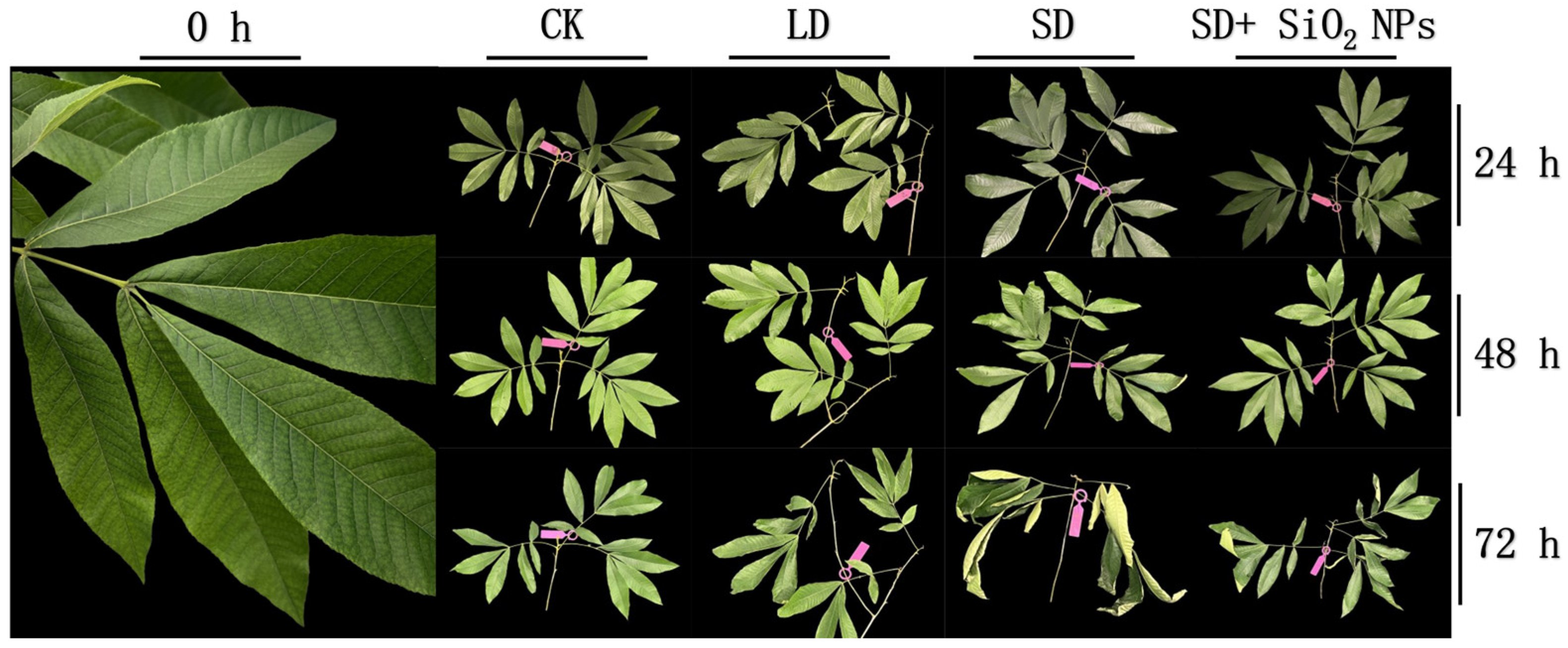
After 48 h of severe drought (SD) stress, the leaf margins of C. cathayensis seedlings began to exhibit visible signs of water loss and wilting; by 72 h, these wilting symptoms, driven by osmotic stress, became notably more pronounced. Under mild drought (LD) conditions, marginal leaf wilting did not emerge until 72 h of treatment. Notably, for seedlings subjected to severe drought but foliar-sprayed with 200 mg/L SiO2 NPs (SD+ SiO2 NPs), the leaves displayed virtually no osmotic-induced wilting at 48 h, with initial stress symptoms only beginning to appear at 72 h. However, compared with the untreated SD, the drought-induced wilting symptoms were substantially alleviated (Figure 1).

3.2. Effects of Exogenous SiO2 NPs on Chlorophyll and Nitrogen Contents in C. cathayensis Leaves Under Drought Stress

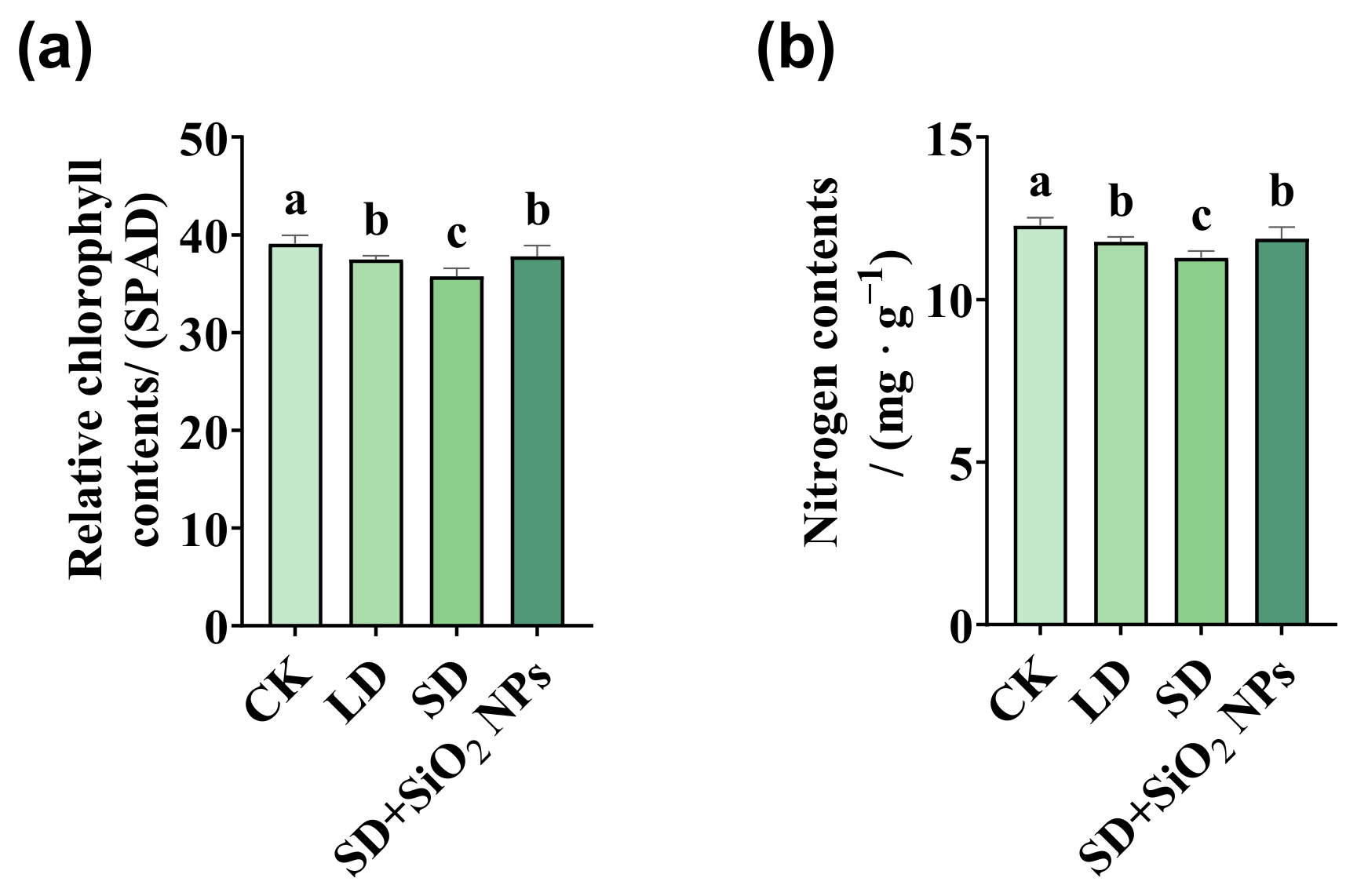
As drought stress intensified, specifically after 72 h of PEG treatment, both the LD and SD exhibited a significant decline in relative chlorophyll and nitrogen contents when contrasted with the control check (CK) (p < 0.05). This indicates that water deficit severely suppressed the accumulation of chlorophyll and nitrogen in C. cathayensis leaves. However, the SD+ SiO2 NP group diverged significantly from the SD treatments (p < 0.05). Although the chlorophyll and nitrogen levels in the SD+ SiO2 NP-treated seedlings remained slightly lower than those in the CK (decreasing by 3.38% and 3.22%, respectively), they exhibited significant increases of 5.58% and 5.29%, respectively, when compared directly with the untreated SD (Figure 2). These findings demonstrate that exogenous SiO2 NPs effectively mitigated the drought-induced physiological damage and preserved the accumulation of chlorophyll and nitrogen.

3.3. Effects of Exogenous SiO2 NPs on Photosynthetic Gas Exchange in C. cathayensis Leaves Under Drought Stress

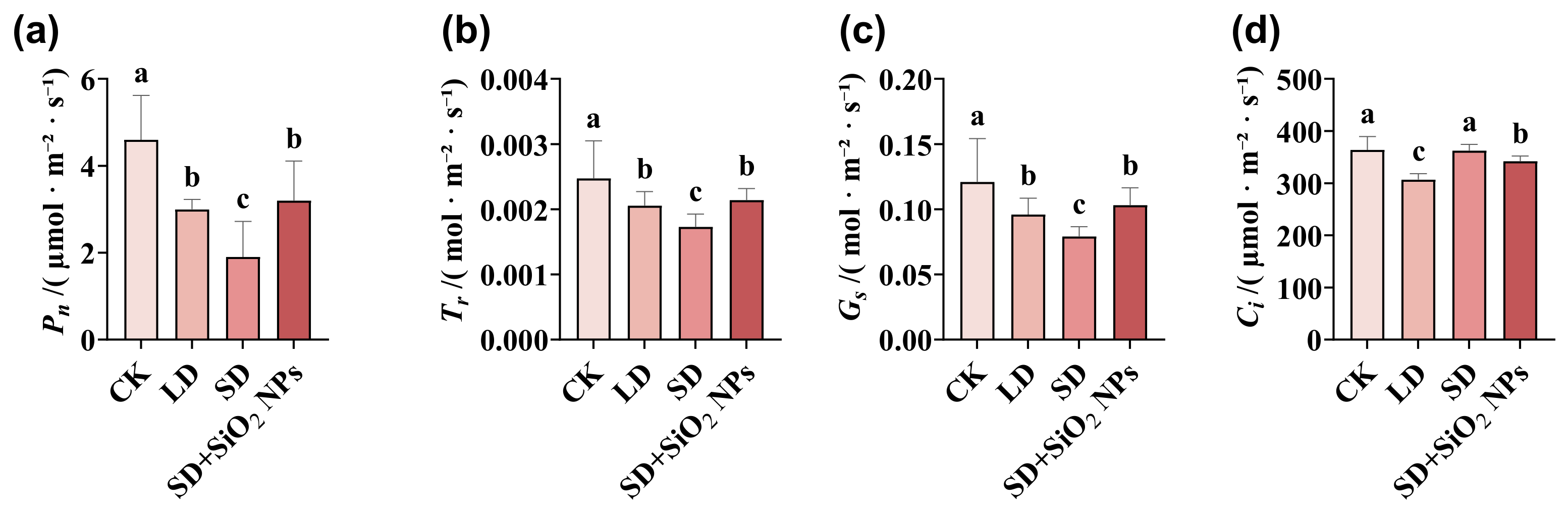
Drought stress profoundly impacted the photosynthetic gas exchange parameters of C. cathayensis. Compared with the CK, the transpiration rate (Tr), net photosynthetic rate (Pn), and stomatal conductance (Gs) in both the LD and SD decreased significantly (p < 0.05), whereas the intercellular CO2 concentration (Ci) initially declined and subsequently increased. This pattern indicates that under mild drought, the reduction in photosynthesis was primarily driven by partial stomatal closure limiting the CO2 supply (stomatal limitation). Conversely, under severe drought, despite a further drop in Gs, Ci actually increased, implying that the photosynthetic apparatus itself was damaged, thus reducing the CO2 utilization capacity (transitioning to non-stomatal limitation) [29,30]. Notably, the SD+ SiO2 NP group diverged significantly from the SD treatments (p < 0.05). Although Tr, Pn, and Gs in the SD+ SiO2 NP-treated leaves remained lower than those in the CK (decreasing by 13.50%, 30.41%, and 14.68%, respectively), they exhibited substantial increases of 23.54%, 68.29%, and 30.18%, respectively, when compared directly with the untreated SD. Furthermore, Ci was reduced by 5.92% and 5.53% relative to the CK and SD, respectively (Figure 3). These results demonstrate that exogenous SiO2 NPs effectively mitigated the physiological damage induced by severe drought and partially repaired both stomatal and non-stomatal limitations. Consequently, the leaf gas exchange levels were improved, facilitating the recovery of the photosynthetic physiological state of C. cathayensis from severe impairment toward mild stress and normal conditions.

3.4. Effects of Exogenous SiO2 NPs on Chlorophyll Fluorescence Parameters in C. cathayensis Leaves Under Drought Stress

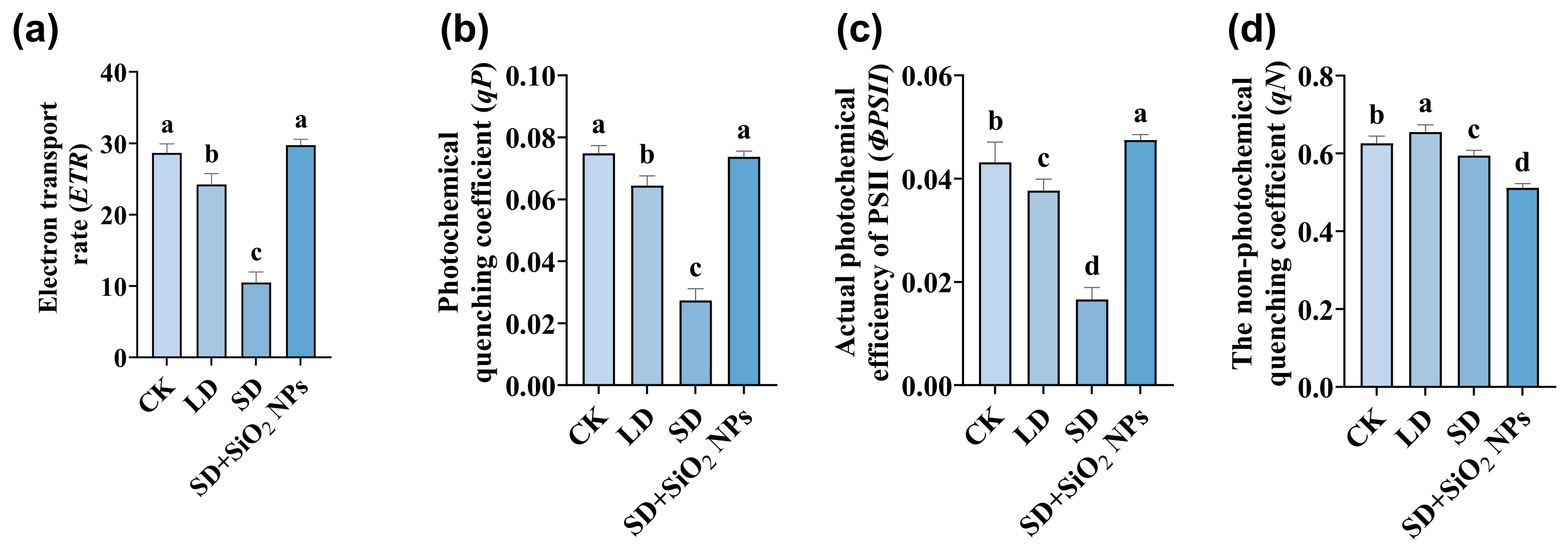
Drought stress profoundly affects both the photosynthetic capacity and the working efficiency of the photosystem in plant leaves [31]. Compared with the CK, the electron transport rate (ETR), photochemical quenching coefficient (qP), and the actual photochemical efficiency of PSII (ΦPSII) in both the LD and SD decreased significantly (p < 0.05). The non-photochemical quenching coefficient (qN) increased under LD but declined significantly under SD relative to the CK (p < 0.05). These alterations indicate that as drought stress intensified, the photochemical activity of PSII in C. cathayensis was markedly inhibited, leading to reduced electron transport efficiency and blocked photochemical processes. Under mild drought, the plants initiated an active photoprotective mechanism by increasing thermal dissipation (reflected by elevated qN) to shield the photosystem. However, under severe drought, this photoprotective mechanism likely collapsed, resulting in damage to the photosynthetic reaction centers, which explains the subsequent decline in qN. The SD+ SiO2 NP treatment not only improved ETR, qP, and ΦPSII compared with the SD but even surpassed the performance observed under mild drought conditions. Specifically, relative to the SD and LD, the ETR, qP, and ΦPSII in the SiO2 NP-treated group increased by 183.17%, 169.50%, 185.66% and 22.71%, 14.40%, 25.89%, respectively. Furthermore, qN decreased by 13.93% compared with the SD (Figure 4). These results indicate that the mitigation of the damage to the photosynthetic system of C. cathayensis caused by severe drought was effectively exerted by exogenous SiO2 NPs. This treatment not only partially repairs the photosynthetic electron transport chain and PSII reaction centers but also provides a regulatory enhancement that exceeds the recovery seen under mild stress, serving a pivotal function in stress alleviation and physiological synergy.

3.5. Effects of Exogenous SiO2 NPs on Antioxidant Enzyme Activities and Osmoregulatory Substances Contents in C. cathayensis Leaves Under Drought Stress

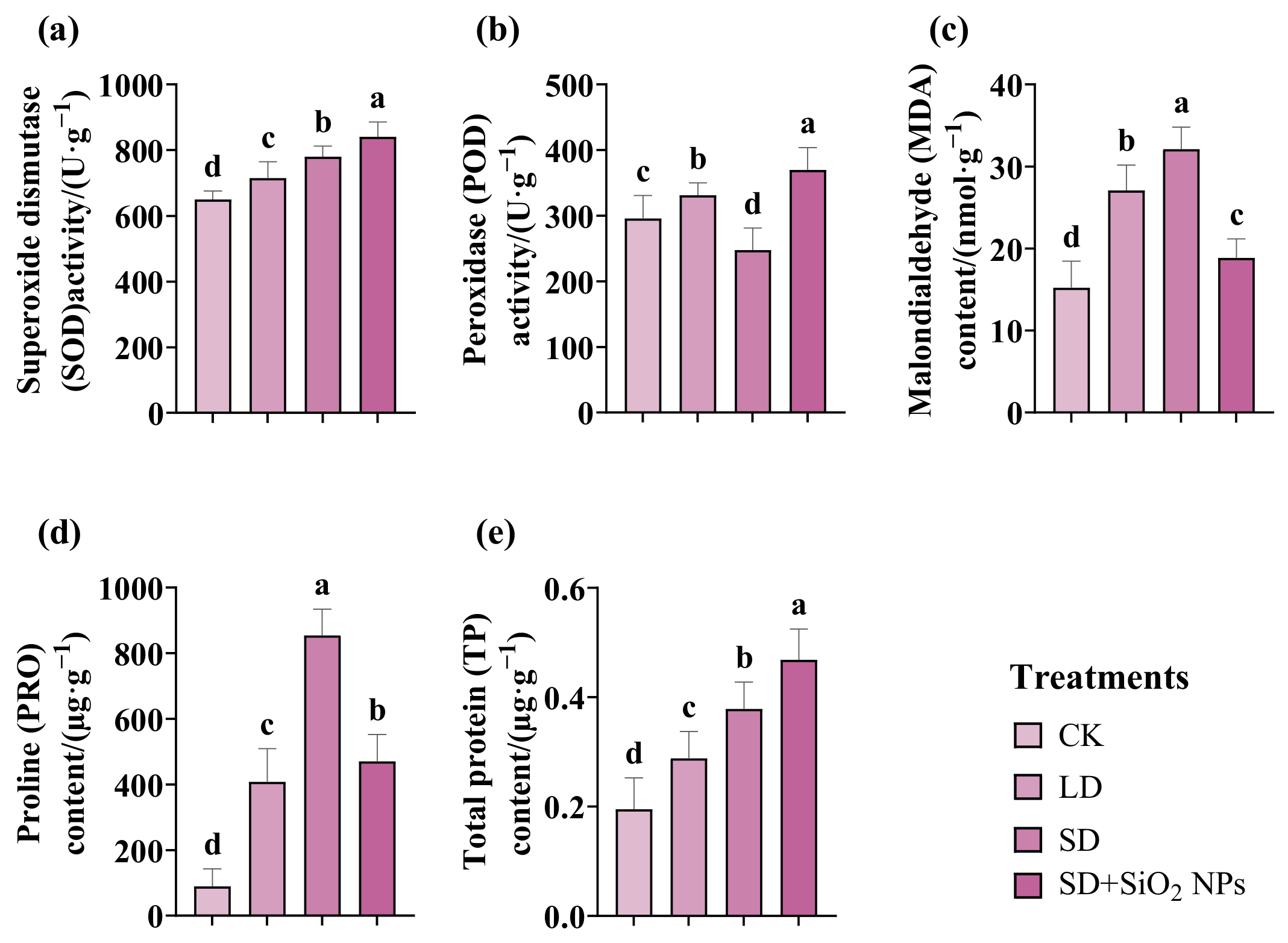
SOD, POD, MDA, TP, and PRO are critical physiological indicators reflecting the severity of drought stress in plants [32]. Under both LD and SD, SOD activity, along with the contents of MDA, TP, and PRO, rose significantly relative to the CK (p < 0.05). Furthermore, these increases were more pronounced within the SD compared to the LD. Interestingly, the application of SiO2 NPs under severe drought largely suppressed the PEG-induced excessive accumulation of MDA and PRO, while exerting a positive stimulatory effect on SOD activity and TP content. Conversely, POD activity plummeted to its lowest level in the untreated SD. However, POD activity in both the LD and SD+ SiO2 NP groups stayed above the levels recorded for the CK, implying that the addition of SiO2 NPs significantly restored POD function under severe stress. the SD+ SiO2 NP group diverged significantly from the SD treatments (p < 0.05). Relative to the untreated SD, the SD+ SiO2 NP treatment significantly boosted SOD activity, POD activity, and TP content by 7.66%, 49.37%, and 23.72%, respectively. Concurrently, the PRO content was reduced by 44.91% relative to the SD. Furthermore, the MDA content in the SiO2 NP-treated group decreased dramatically by 30.34% and 41.24% when compared with the LD and SD, respectively (Figure 5). These comprehensive results demonstrate that exogenous SiO2 NPs effectively alleviate drought-induced oxidative damage and membrane injury in C. cathayensis. This protective mechanism is achieved by significantly enhancing enzymatic antioxidant capacity while synergistically promoting the synthesis and inhibiting the degradation of stress-related proteins.

3.6. Effects of Exogenous SiO2 NPs on the Ultrastructure in C. cathayensis Leaves Under Drought Stress

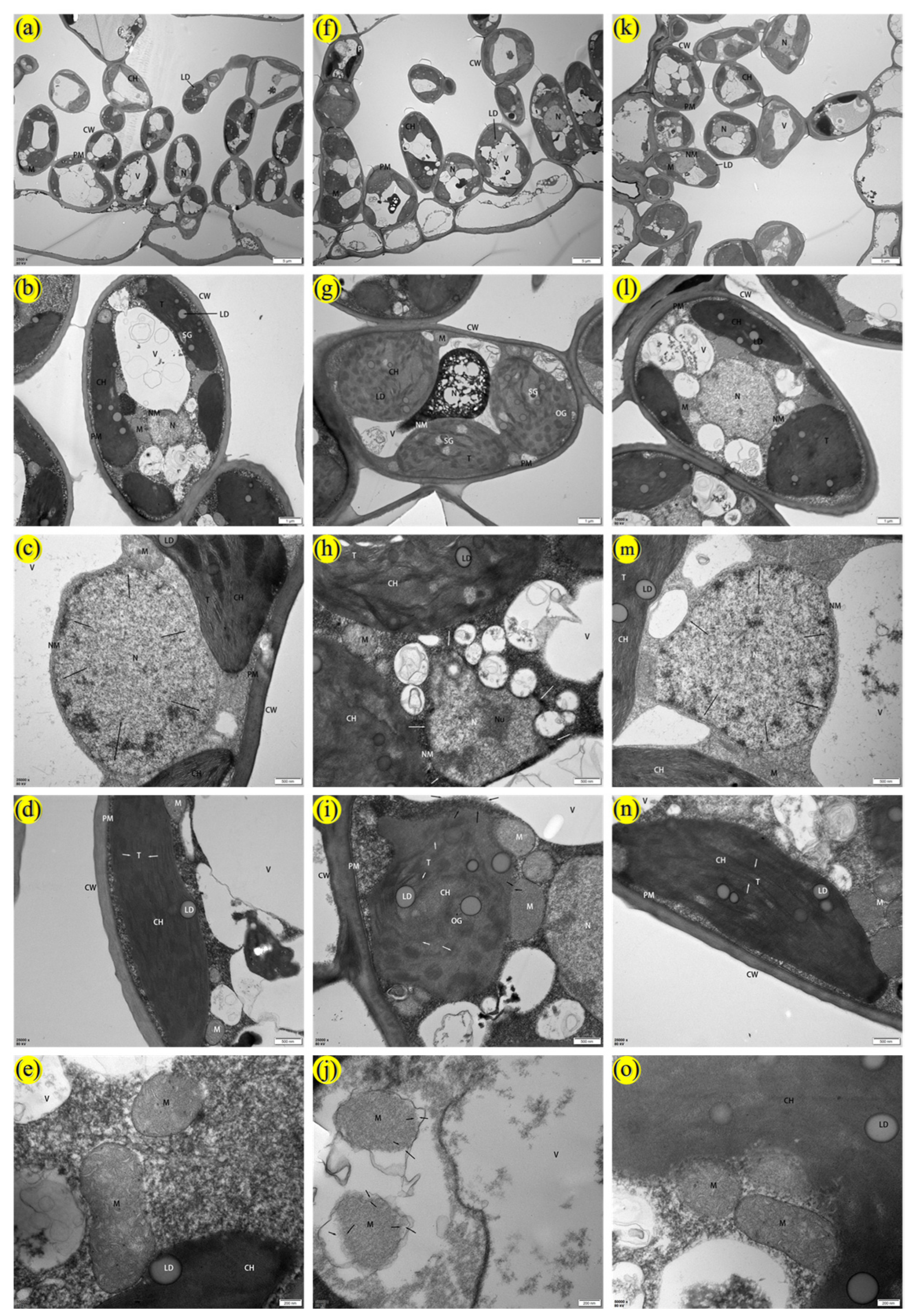
Transmission electron microscopy (TEM) was applied to observe the protective effects of SiO2 NP on the cellular ultrastructure of C. cathayensis palisade mesophyll cells. In the control group, the palisade mesophyll cells exhibited intact morphology. The cell walls and large central vacuoles were clearly visible, organelles were structurally sound, and starch granules were present (Figure 6a,b). Under SD treatment, the cells underwent profound deformation. The central large vacuole disappeared, osmiophilic granules emerged, and the structural integrity of the organelles was severely compromised (Figure 6f,g). Furthermore, the number of deformed and irregularly arranged palisade cells in the SD treatment increased significantly relative to the CK and SD+ SiO2 NP treatment. However, the SD+ SiO2 NP treatment effectively maintained cellular structural integrity, characterized by the formation of multiple small vacuoles rather than a completely collapsed vacuolar system (Figure 6k,l). The nuclei in the CK mesophyll cells were spherical (boundary indicated by black arrows in Figure 6c) with a clear, intact double nuclear envelope and heterochromatin densely distributed along the inner nuclear margin. Under SD stress, the nuclei became markedly deformed. The nuclear envelope darkened, blurred, and eventually ruptured (indicated by white arrows in Figure 6h). Additionally, the nucleolus disintegrated, nucleoplasm distribution became uneven, and the electron density increased. Conversely, the nuclei in the SD+ SiO2 NP-treated cells retained a nearly spherical shape (black arrows in Figure 6m) with a distinct, intact double membrane, and the heterochromatin was more uniformly distributed along the nuclear envelope. The chloroplasts displayed a typical flattened, spindle-like shape with distinct margins, closely appressed to the cell wall in the CK. Their thylakoid systems were well developed and tightly packed, containing starch granules and very few plastoglobuli (Figure 6d). SD treatment induced severe chloroplast swelling, resulting in a rounded shape with blurred margins (black arrows in Figure 6i). Many chloroplasts detached from the cell wall, their thylakoids became loosely arranged with enlarged interspaces (white arrows in Figure 6i), and the plastoglobuli became markedly swollen and increased in number. Remarkably, the application of SiO2 NPs significantly mitigated this damage. Chloroplasts in the SD+ SiO2 NP group largely recovered their normal spindle or oval shapes and remained appressed to the cell wall. The thylakoid system was well preserved with tightly packed stroma lamellae and smaller plastoglobuli (Figure 6n). Mitochondria in the CK were predominantly ellipsoidal (some appeared spherical, likely due to the two-dimensional nature of the ultrathin sectioning) and were located adjacent to chloroplasts. They possessed intact double membranes and clearly visible internal tubular cristae. Under SD treatment, the mitochondria deformed and ruptured. Vesicular structures formed around them, indicating degraded membrane structures and possible mitophagy (black arrows in Figure 6j), accompanied by a chaotic distribution of internal cristae. In contrast, mitochondria in the SD+ SiO2 NP group resembled those of the CK—maintaining their ellipsoidal shape, clear and intact double membranes (albeit slightly darkened), and highly ordered tubular cristae (Figure 6o) [33].

4. Discussion

Drought has progressively emerged as a severe global environmental crisis, representing one of the principal abiotic stresses that limit plant growth and constrain yield formation [34]. Particularly against the backdrop of global climate warming, its detrimental impacts on woody economic crops, and plants in general, have become increasingly pronounced. Carya cathayensis, a highly valued woody economic crop cultivated primarily in mountainous regions with limited irrigation infrastructure, is exceptionally vulnerable to seasonal droughts. This susceptibility not only leads to severe declines in nut yield and quality but also poses a critical threat to the overall survival of the trees. Therefore, the development and application of effective exogenous drought regulators during periods of seasonal water deficit serve as a crucial agronomic intervention to bolster drought resistance and mitigate agricultural losses. Silicon dioxide nanoparticles (SiO2 NPs) have been extensively documented as highly effective regulators of plant stress tolerance [17]. To explore whether SiO2 NPs can also function in regulating the drought tolerance of C. cathayensis, we simulated drought stress in its seedlings using PEG-6000 and performed relevant drought treatment experiments. The application of PEG-6000 to induce osmotic stress is a universally accepted drought simulation model for woody plants, including well-established models like poplar (Populus spp.) [35] and apple (Malus spp.) [36], validating its suitability for C. cathayensis. In our experiment, PEG treatment caused typical leaf symptoms including leaf wilting, chlorosis, and marginal necrosis, which closely resembled the morphological injuries caused by natural drought and further verified the effectiveness of PEG-mediated drought simulation. Foliar application of SiO2 NPs substantially alleviated these stress-induced phenotypic symptoms, demonstrating that SiO2 NPs play an important role in improving the osmotic stress tolerance of C. cathayensis seedlings.
At the physiological level, the maintenance of the photosynthetic structural basis is a critical determinant of plant drought resilience. Drought stress is commonly associated with a sharp increase in the levels of reactive oxygen species (ROS), which compromises chloroplast membrane integrity and suppresses chlorophyll biosynthesis, while concurrently resulting in substantial decrements in leaf nitrogen content. Our findings provide evidence that the foliar-supplied SiO2 NPs effectively reversed drought-induced chlorophyll degradation and nitrogen depletion in C. cathayensis. Specifically, SiO2 NPs significantly elevated chlorophyll levels under water deficit. Our data align with the results reported by Daler et al. [37] in grapevine saplings, who proposed that SiO2 NPs may function as cofactors for enzymes involved in chloroplast biosynthetic pathways. Our findings corroborate the hypothesis that silicon serves a protective role for chloroplast ultrastructure and facilitates the biosynthesis of photosynthetic pigments. Furthermore, the significant restoration of suppressed nitrogen levels by SiO2 NPs may be ascribed to their dual role in optimizing cellular osmotic balance and upregulating the activities of key nitrogen-assimilating enzymes, specifically nitrate reductase (NR) and glutamine synthetase (GS). This synergistic regulation ultimately ensures the maintenance of an elevated leaf nitrogen status even under adverse drought conditions [38].
While maintaining the photosynthetic structural basis, SiO2 NPs further facilitate the carbon assimilation process. Under mild drought, the synchronized decline in Pn, Tr, Gs, and Ci indicates that C. cathayensis initially closes its stomata to minimize water loss. However, this response simultaneously restricts CO2 uptake, thereby weakening carbon assimilation [39]. In contrast, under severe drought, Ci increased significantly despite a further reduction in Gs. This shift signifies a transition to non-stomatal limitation, characterized by severe impairment of carbon assimilation and energy metabolism, including both ATP synthesis and the electron transport chain [30,40]. Notably, the exogenous application of SiO2 NPs significantly ameliorated these gas exchange impairments. Compared with the untreated SD, SiO2 NP treatment markedly increased Pn, Tr, and Gs, while reducing Ci. This indicates that SiO2 NPs effectively alleviate stomatal limitations while concurrently maintaining the structural stability of the photosynthetic apparatus and its electron transport chain. The improvement in stomatal factors may be attributed to enhanced osmotic regulation in guard cells. As reported by Chen et al. [41], silicon can mediate the transport and accumulation of potassium ions (K+), thereby maintaining the turgor pressure required for stomatal opening. Furthermore, nanomaterials have been shown to upregulate the expression of aquaporin (PIPs) genes, increasing root hydraulic conductivity and improving leaf water status, which provides the hydraulic basis for stomatal reopening [42]. Moreover, the recovery of Pn alongside the decline in Ci implies a restoration of mesophyll carboxylation efficiency. This observation aligns with the results of Zahedi et al. [24], who confirmed that SiO2 NPs significantly enhances Rubisco activity, directly promoting Calvin cycle efficiency and lifting the drought-imposed constraints on carbon assimilation.
However, the efficient operation of carbon assimilation heavily relies on a continuous and stable energy supply generated during the light-dependent reactions. Drought stress frequently disrupts this energy flow by damaging the thylakoid membrane structure, destroying photosystem II (PSII) reaction centers, and blocking the photosynthetic electron transport chain [43]. In our study, marked fluctuations in chlorophyll fluorescence parameters under drought stress (e.g., ΦPSII, ETR, qP, and qN) indicate a profound decline in the operational efficiency of the photosystem. Notably, the application of SiO2 NPs largely restored these fluorescence parameters. This robust recovery indicates that SiO2 NPs promote the partitioning of absorbed light energy toward photochemical reactions while effectively preserving the stability and architectural integrity of PSII reaction centers. Consequently, this intervention secures the functionality of the electron transport chain and potentially enhances overall electron transport efficiency. In wheat, SiO2 NPs can stabilize the lipid bilayer of thylakoid membranes and shield photosynthetic membrane protein complexes—particularly the oxygen-evolving complex (OEC)—from ROS-induced oxidative damage. This structural protection ensures the highly efficient transfer of electrons between PSII and PSI, thereby maintaining the connectivity of the photosynthetic electron transport chain [44].
Beyond stabilizing the photosynthetic apparatus, SiO2 NPs also exert a positive regulatory effect on drought tolerance via antioxidant defense and osmotic adjustment pathways. The application of silicon under drought conditions in rapeseed and tall fescue has been shown not only to synergistically upregulate the antioxidant defense system but also to act as a signaling molecule. It directly induces the high-level expression of antioxidant enzyme genes, including SOD and POD, thereby efficiently scavenging reactive oxygen species (ROS) and enhancing overall plant drought tolerance [45,46]. Consistent with these findings, under PEG-induced drought stress in C. cathayensis seedlings, SiO2 NP treatment similarly yielded significant elevations in the activities of ROS-scavenging enzymes (SOD and POD). Although catalase (CAT) activity was also evaluated, it exhibited no significant variations under SiO2 NP treatment, suggesting that the antioxidant benefits in this species are predominantly mediated through the SOD and POD cascade. Concurrently, it drastically reduced the accumulation of malondialdehyde, a key byproduct generated during the peroxidation of membrane lipids, and increased total leaf protein content. Interestingly, in stark contrast to the significant increases in antioxidant enzyme activities and TP content, the application of exogenous SiO2 NPs led to a marked decline in leaf proline content under drought stress. This may be because silicon substantially ameliorates cellular water status, thereby obviating the need for the plant to maintain high concentrations of proline for osmotic adjustment, which inherently conserves metabolic costs [47]. On the other hand, silicon treatment may also accelerate proline degradation while inhibiting its biosynthesis, redirecting the liberated nitrogen resources toward the synthesis of functional proteins [48]. In the present study, the concurrent increases in TP content and SOD/POD activities are highly likely fueled by the carbon skeletons and nitrogen sources mobilized from the proline metabolic pool. This strongly suggests that SiO2 NPs orchestrate a crucial metabolic paradigm shift in C. cathayensis—transitioning from a mode of “passive proline accumulation for osmotic regulation” to one of “active functional protein synthesis to repair drought-induced damage”—thereby facilitating the rapid restoration of physiological functions.
The aforementioned physiological and biochemical responses were robustly corroborated at the subcellular ultrastructural level. TEM observations revealed that severe drought induced profound damage within mesophyll cells. This injury was characterized by vacuolar collapse, chloroplast swelling and deformation, disorganization of the thylakoid network, and the rupture of mitochondrial and nuclear envelopes, accompanied by the prominent deposition of osmiophilic granules. These structural alterations are closely intrinsically linked to the severe inhibition of photosynthesis and respiration [49,50], representing the classic cytological hallmarks of drought-induced cellular trauma. Crucially, the exogenous application of SiO2 NPs significantly ameliorated this damage and maintained the overarching integrity of the cellular ultrastructure. Specifically, in the SiO2 NP-treated cells, chloroplast thylakoids remained densely packed, mitochondrial double membranes were distinct and well preserved, and nuclear morphology was kept structurally intact. Furthermore, multiple small vacuoles were formed to dynamically assist in cellular osmotic adjustment. Collectively, these findings provide compelling evidence that SiO2 NPs enhance the drought resilience of C. cathayensis at the cellular structural level by actively stabilizing biomembranes and safeguarding organelle integrity [26,51].

5. Conclusions

In conclusion, the exogenous application of SiO2 NPs effectively alleviates drought-induced photosynthetic inhibition in C. cathayensis by increasing photosynthetic pigment contents, improving leaf gas exchange, and restoring the photochemical activity of photosystem II. Furthermore, SiO2 NPs reestablish metabolic homeostasis by significantly boosting antioxidant enzyme activities and mitigating membrane lipid peroxidation, while simultaneously safeguarding the structural integrity of mesophyll cells and vital organelles, such as chloroplasts and mitochondria. This multi-pathway synergistic mechanism underscores the unique efficacy of SiO2 NPs in enhancing plant stress resilience. Our findings provide robust experimental evidence elucidating the physiological mechanisms by which SiO2 nanomaterials mitigate drought stress in woody economic crops. Moreover, this study establishes a solid theoretical foundation for the deployment of SiO2 NPs in the drought-resilient cultivation of C. cathayensis and broader forestry practices, holding profound practical significance. Although our results demonstrate the significant efficacy of SiO2 NPs in mitigating drought stress, it is important to note that the current study was conducted on 1.5-year-old seedlings. Therefore, further experiments on mature fruit trees are warranted to fully validate the reliability of these conclusions. Moving forward, future research should prioritize unraveling the molecular-level signaling networks mediated by SiO2 NPs. Additionally, long-term field trials and comprehensive ecological safety assessments are imperative to fully validate their feasibility, efficacy, and environmental security in practical agricultural production.

Author Contributions

Z.W., L.C. and Y.W. planned and designed the research. Y.W., Z.P., M.L., J.C. and Q.W. performed experiments and analyzed data, etc. Y.W., Z.W. and L.C. wrote the manuscript. All authors have read and agreed to the published version of the manuscript.

Funding

This work is supported by National Natural Science Foundation of China (Grant No. 32371918) and National Training Program of Innovation and Entrepreneurship for Undergraduates (Grant No. 202410341018).

Data Availability Statement

The data that support the findings of this study are available from the corresponding author upon reasonable request.

Conflicts of Interest

The authors declare no conflicts of interest.

References

  1. Hu, R.; Ding, J.; Wang, H.; Zhou, T.; Xue, Q. A Comprehensive Review of Lin’an Hickory (Carya cathayensis) Research. South China Agric. 2024, 18, 22–25,47. [Google Scholar] [CrossRef]
  2. Xiao, G.; Zhang, Q.; Wang, J. Impact of Global Climate Change on Agro-Ecosystem: A Review. Ying Yong Sheng Tai Xue Bao J. Appl. Ecol. 2007, 18, 1877–1885. [Google Scholar] [CrossRef]
  3. Shemi, R.; Wang, R.; Gheith, E.-S.M.S.; Hussain, H.A.; Hussain, S.; Irfan, M.; Cholidah, L.; Zhang, K.; Zhang, S.; Wang, L. Effects of Salicylic Acid, Zinc and Glycine Betaine on Morpho-Physiological Growth and Yield of Maize under Drought Stress. Sci. Rep. 2021, 11, 3195. [Google Scholar] [CrossRef]
  4. Zhang, H.; Lu, X.; Jin, Z.; Li, Y.; Wang, R.; Li, Z.; Liu, L. Effects of Drought on Physiological Characteristics of Seedlings of Four Species Grown on Rare Earth Mill Tailings at High Temperatures. Acta Ecol. Sin. 2019, 39, 2426–2434. [Google Scholar] [CrossRef]
  5. Santos, V.A.H.F.D.; Ferreira, M.J.; Rodrigues, J.V.F.C.; Garcia, M.N.; Ceron, J.V.B.; Nelson, B.W.; Saleska, S.R. Causes of Reduced Leaf-Level Photosynthesis during Strong El Niño Drought in a Central Amazon Forest. Glob. Change Biol. 2018, 24, 4266–4279. [Google Scholar] [CrossRef]
  6. Bhusal, N.; Lee, M.; Reum Han, A.; Han, A.; Kim, H.S. Responses to Drought Stress in Prunus sargentii and Larix kaempferi Seedlings Using Morphological and Physiological Parameters. For. Ecol. Manag. 2020, 465, 118099. [Google Scholar] [CrossRef]
  7. Xiao, S.; Liu, L.; Zhang, Y.; Sun, H.; Zhang, K.; Bai, Z.; Dong, H.; Li, C. Fine Root and Root Hair Morphology of Cotton under Drought Stress Revealed with RhizoPot. J. Agron. Crop Sci. 2020, 206, 679–693. [Google Scholar] [CrossRef]
  8. Zheng, M.; Guo, Y.; Wang, L. Effect of Drought Stress on Root Morphology and Physiological Characteristics of Malus micromalus Cv. “Ruby”. J. Agric. Sci. Technol. 2022, 22, 24–30. [Google Scholar] [CrossRef]
  9. Xu, Y.; Chen, Y.; Chen, Y.; Chen, L.; Peng, J. Effects of Drought Stress on Physiological and Biochemical Indexes of the Leaves and Roots of Camellia oleifera. Hunan For. Sci. Technol. 2016, 43, 7–11. [Google Scholar] [CrossRef]
  10. Patmi, Y.S.; Pitoyo, A.; Solichatun; Sutarno. Effect of Drought Stress on Morphological, Anatomical, and Physiological Characteristics of Cempo Ireng Cultivar Mutant Rice (Oryza sativa L.) Strain 51 Irradiated by Gamma-Ray. J. Phys. Conf. Ser. 2020, 1436, 012015. [Google Scholar] [CrossRef]
  11. Maksup, S.; Roytrakul, S.; Supaibulwatana, K. Physiological and Comparative Proteomic Analyses of Thai Jasmine Rice and Two Check Cultivars in Response to Drought Stress. J. Plant Interact. 2014, 9, 43–55. [Google Scholar] [CrossRef]
  12. Khoyerdi, F.F.; Shamshiri, M.H.; Estaji, A. Changes in Some Physiological and Osmotic Parameters of Several Pistachio Genotypes under Drought Stress. Sci. Hortic. 2016, 198, 44–51. [Google Scholar] [CrossRef]
  13. Yang, X.; Lu, M.; Wang, Y.; Wang, Y.; Liu, Z.; Chen, S. Response Mechanism of Plants to Drought Stress. Horticulturae 2021, 7, 50. [Google Scholar] [CrossRef]
  14. Shan, L.; Xu, Y.; Wu, D.; Hu, J.; Yu, T.; Dang, C.; Fang, Y.; Zhang, X.; Tian, Q.; Xue, D. Effects of Salicylic Acid on Growth, Physiology, and Gene Expression in Rice Seedlings under Salt and Drought Stress. Plant Stress 2024, 11, 100413. [Google Scholar] [CrossRef]
  15. Wang, H.; Kou, X.; Wu, C.; Fan, G.; Li, T. Methyl Jasmonate Induces the Resistance of Postharvest Blueberry to Gray Mold Caused by Botrytis Cinerea. J. Sci. Food Agric. 2020, 100, 4272–4281. [Google Scholar] [CrossRef]
  16. Wang, M.; Wang, R.; Mur, L.A.J.; Ruan, J.; Shen, Q.; Guo, S. Functions of Silicon in Plant Drought Stress Responses. Hortic. Res. 2021, 8, 254. [Google Scholar] [CrossRef]
  17. Deng, H.; Mo, X.; Zhu, X.; Zhang, M.; Chen, J.; Yang, S. Research Progress on the Effects of Nano-Silicon Materials on Plant Growth and Environmental Response. J. Zhejiang Agric. Sci. 2024, 65, 1496–1501. [Google Scholar] [CrossRef]
  18. Lu, X.; Sun, D.; Zhang, X.; Hu, H.; Kong, L.; Rookes, J.E.; Xie, J.; Cahill, D.M. Stimulation of Photosynthesis and Enhancement of Growth and Yield in Arabidopsis Thaliana Treated with Amine-Functionalized Mesoporous Silica Nanoparticles. Plant Physiol. Biochem. 2020, 156, 566–577. [Google Scholar] [CrossRef]
  19. Mei, W.; Fu, R.; Liu, L.; Zhou, W.; Sun, G. Effects of Silicon Dioxide Nanoparticles on the Growth of Cucumber Seedlings. J. Change Veg. 2022, 6, 7–9. [Google Scholar] [CrossRef]
  20. Zohra, E.; Ikram, M.; Omar, A.A.; Hussain, M.; Satti, S.H.; Raja, N.I.; Mashwani, Z.-U.-R.; Ehsan, M. Potential Applications of Biogenic Selenium Nanoparticles in Alleviating Biotic and Abiotic Stresses in Plants: A Comprehensive Insight on the Mechanistic Approach and Future Perspectives. Green Process. Synth. 2021, 10, 456–475. [Google Scholar] [CrossRef]
  21. Ghorbanpour, M.; Mohammadi, H.; Kariman, K. Nanosilicon-Based Recovery of Barley (Hordeum vulgare) Plants Subjected to Drought Stress. Environ. Sci. Nano 2020, 7, 443–461. [Google Scholar] [CrossRef]
  22. El-Dengawy, E.F.A.; EL-Abbasy, U.K.; El-Gobba, M.H. Influence of Nano-Silicon Treatment on Growth Behavior of ‘Sukkary’ and ‘Gahrawy’ Mango Root-Stocks Under Salinity Stress. J. Plant Prod. 2021, 12, 49–61. [Google Scholar] [CrossRef]
  23. Chen, M.; Jiao, S.; Xie, L.; Geng, X.; Qi, S.; Fan, J.; Cheng, S.; Shi, J.; Cao, X. Integrated Physiological, Transcriptomic, and Metabolomic Analyses of Drought Stress Alleviation in Ehretia Macrophylla Wall. Seedlings by SiO2 NPs (Silica Nanoparticles). Front. Plant Sci. 2024, 15, 1260140. [Google Scholar] [CrossRef]
  24. Zahedi, S.M.; Moharrami, F.; Sarikhani, S.; Padervand, M. Selenium and Silica Nanostructure-Based Recovery of Strawberry Plants Subjected to Drought Stress. Sci. Rep. 2020, 10, 17672. [Google Scholar] [CrossRef]
  25. Hassan, I.F.; Ajaj, R.; Gaballah, M.S.; Ogbaga, C.C.; Kalaji, H.M.; Hatterman-Valenti, H.M.; Alam-Eldein, S.M. Foliar Application of Nano-Silicon Improves the Physiological and Biochemical Characteristics of ‘Kalamata’ Olive Subjected to Deficit Irrigation in a Semi-Arid Climate. Plants 2022, 11, 1561. [Google Scholar] [CrossRef]
  26. Mukarram, M.; Petrik, P.; Mushtaq, Z.; Khan, M.M.A.; Gulfishan, M.; Lux, A. Silicon Nanoparticles in Higher Plants: Uptake, Action, Stress Tolerance, and Crosstalk with Phytohormones, Antioxidants, and Other Signalling Molecules. Environ. Pollut. 2022, 310, 119855. [Google Scholar] [CrossRef] [PubMed]
  27. Rastogi, A.; Tripathi, D.K.; Yadav, S.; Chauhan, D.K.; Živčák, M.; Ghorbanpour, M.; El-Sheery, N.I.; Brestic, M. Application of Silicon Nanoparticles in Agriculture. 3 Biotech 2019, 9, 90. [Google Scholar] [CrossRef]
  28. Xie, L.; Song, X.; Liao, Z.; Wu, B.; Yang, J.; Zhang, H.; Hong, J. Endoplasmic Reticulum Remodeling Induced by Wheat Yellow Mosaic Virus Infection Studied by Transmission Electron Microscopy. Micron 2019, 120, 80–90. [Google Scholar] [CrossRef] [PubMed]
  29. Drake, J.E.; Power, S.A.; Duursma, R.A.; Medlyn, B.E.; Aspinwall, M.J.; Choat, B.; Creek, D.; Eamus, D.; Maier, C.; Pfautsch, S.; et al. Stomatal and Non-Stomatal Limitations of Photosynthesis for Four Tree Species under Drought: A Comparison of Model Formulations. Agric. For. Meteorol. 2017, 247, 454–466. [Google Scholar] [CrossRef]
  30. Kim, D.; Guadagno, C.R.; Mackay, D.S.; Ewers, B.E. Drought Impacts on Stomatal and Non-Stomatal Photosynthetic Regulation Varies across Species. In Proceedings of the AGU Fall Meeting 2023, San Francisco, CA, USA, 11–15 December 2023; Volume 2023, p. B32B-06. [Google Scholar]
  31. Kang, Z.; Cai, H.; Guo, G.; Zeng, H.; Wang, W.; Tu, X. Physiological Response of Macadamia (Macadamia integrifolia) Seedlings to Drought Stress. Horticulturae 2025, 11, 347. [Google Scholar] [CrossRef]
  32. Xiong, S.; Wang, Y.; Chen, Y.; Gao, M.; Zhao, Y.; Wu, L. Effects of Drought Stress and Rehydration on Physiological and Biochemical Properties of Four Oak Species in China. Plants 2022, 11, 679. [Google Scholar] [CrossRef]
  33. Ryu, K.W.; Fung, T.S.; Baker, D.C.; Saoi, M.; Park, J.; Febres-Aldana, C.A.; Aly, R.G.; Cui, R.; Sharma, A.; Fu, Y.; et al. Cellular ATP Demand Creates Metabolically Distinct Subpopulations of Mitochondria. Nature 2024, 635, 746–754. [Google Scholar] [CrossRef]
  34. Shahroudi, E.; Zarinkamar, F.; Rezayian, M. Putrescin Modulates Metabolic and Physiological Characteristics of Thymus daenensis under Drought Stress. Sci. Hortic. 2023, 321, 112268. [Google Scholar] [CrossRef]
  35. Meng, S.; Zhang, C.; Su, L.; Li, Y.; Zhao, Z. Nitrogen Uptake and Metabolism of Populus simonii in Response to PEG-Induced Drought Stress. Environ. Exp. Bot. 2016, 123, 78–87. [Google Scholar] [CrossRef]
  36. Liu, L.; Ma, H.; Zhang, D.; Zhang, X.; Lu, X. Exogenous Abscisic Acid Alleviated the PEG-Induced Drought Stress of Malus Sieversii by Regulating the Metabolic Pathway of Starch and Sucrose. Horticulturae 2026, 12, 399. [Google Scholar] [CrossRef]
  37. Daler, S.; Kaya, O.; Canturk, S.; Korkmaz, N.; Kılıç, T.; Karadağ, A.; Hatterman-Valenti, H. Silicon Nanoparticles (SiO2 NPs) Boost Drought Tolerance in Grapevines by Enhancing Some Morphological, Physiological, and Biochemical Traits. Plant Mol. Biol. Rep. 2025, 43, 1057–1075. [Google Scholar] [CrossRef]
  38. Wei, J.; Liu, L.; Wei, Z.; Qin, Q.; Bai, Q.; Zhao, C.; Zhang, S.; Wang, H. Silicon Nano-Fertilizer-Enhanced Soybean Resilience and Yield Under Drought Stress. Plants 2025, 14, 751. [Google Scholar] [CrossRef] [PubMed]
  39. Fu, Y.; Li, P.; Liang, Y.; Si, Z.; Ma, S.; Gao, Y. Effects of Exogenous Melatonin on Wheat Quality under Drought Stress and Rehydration. Plant Growth Regul. 2024, 103, 471–490. [Google Scholar] [CrossRef]
  40. Michalak, A.; Małas, K.; Dąbrowska, K.; Półrolniczak, K.; Bronowska, L.; Misiewicz, A.; Maj, A.; Stabrowska, M.; Wnuk, I.; Kabała, K. Molecular Mechanisms and Experimental Strategies for Understanding Plant Drought Response. Plants 2026, 15, 149. [Google Scholar] [CrossRef]
  41. Chen, D.; Cao, B.; Wang, S.; Liu, P.; Deng, X.; Yin, L.; Zhang, S. Silicon Moderated the K Deficiency by Improving the Plant-Water Status in Sorghum. Sci. Rep. 2016, 6, 22882. [Google Scholar] [CrossRef] [PubMed]
  42. Liu, P.; Yin, L.; Deng, X.; Wang, S.; Tanaka, K.; Zhang, S. Aquaporin-Mediated Increase in Root Hydraulic Conductance Is Involved in Silicon-Induced Improved Root Water Uptake under Osmotic Stress in Sorghum bicolor L. J. Exp. Bot. 2014, 65, 4747–4756. [Google Scholar] [CrossRef]
  43. Shin, Y.K.; Bhandari, S.R.; Jo, J.S.; Song, J.W.; Lee, J.G. Effect of Drought Stress on Chlorophyll Fluorescence Parameters, Phytochemical Contents, and Antioxidant Activities in Lettuce Seedlings. Horticulturae 2021, 7, 238. [Google Scholar] [CrossRef]
  44. Kalal, P.R.; Tomar, R.S.; Jajoo, A. SiO2 Nanopriming Protects PS I and PSII Complexes in Wheat under Drought Stress. Plant Nano Biol. 2022, 2, 100019. [Google Scholar] [CrossRef]
  45. Hasanuzzaman, M.; Nahar, K.; Anee, T.I.; Khan, M.I.R.; Fujita, M. Silicon-Mediated Regulation of Antioxidant Defense and Glyoxalase Systems Confers Drought Stress Tolerance in Brassica napus L. S. Afr. J. Bot. 2018, 115, 50–57. [Google Scholar] [CrossRef]
  46. Li, M.; Hu, S.; Bai, X.; Ren, J.; Tian, K.; Zhang, H.; Zhang, Z.; Nguyen, V. Comparative Study on the Effects of Silicon Nanoparticles and Cellulose Nanocrystals on Drought Tolerance in Tall Fescue (Festuca arundinacea Schreb.). Plants 2025, 14, 1461. [Google Scholar] [CrossRef] [PubMed]
  47. Pei, Z.F.; Ming, D.F.; Liu, D.; Wan, G.L.; Geng, X.X.; Gong, H.J.; Zhou, W.J. Silicon Improves the Tolerance to Water-Deficit Stress Induced by Polyethylene Glycol in Wheat (Triticum aestivum L.) Seedlings. J. Plant Growth Regul. 2010, 29, 106–115. [Google Scholar] [CrossRef]
  48. Koentjoro, Y.; Sukendah; Purwanto, E.; Purnomo, D. The Role of Silicon on Content of Proline, Protein and Abscisic Acid on Soybean under Drought Stress. IOP Conf. Ser. Earth Environ. Sci. 2021, 637, 012086. [Google Scholar] [CrossRef]
  49. Chen, J.; Zhong, Y.; Qi, X. LncRNA TCONS_00021861 Is Functionally Associated with Drought Tolerance in Rice (Oryza sativa L.) via Competing Endogenous RNA Regulation. BMC Plant Biol. 2021, 21, 410. [Google Scholar] [CrossRef]
  50. Xing, Z.; Li, L.; Guo, J.; Zhang, X.; Li, X. Effects of Drought Stress on Photosynthetic Characteristics Andultrastructure of Mesophyll Cells of Mengyuan Cerasus Humilis. Agric. Res. Arid. Areas 2019, 37, 37–42. [Google Scholar] [CrossRef]
  51. Huang, Q.; Ayyaz, A.; Farooq, M.A.; Zhang, K.; Chen, W.; Hannan, F.; Sun, Y.; Shahzad, K.; Ali, B.; Zhou, W. Silicon Dioxide Nanoparticles Enhance Plant Growth, Photosynthetic Performance, and Antioxidants Defence Machinery through Suppressing Chromium Uptake in Brassica napus L. Environ. Pollut. 2024, 342, 123013. [Google Scholar] [CrossRef]
Figure 1. Effects of Exogenous SiO2 NPs on the growth phenotype of C. cathayensis Seedlings under drought stress and normal conditions (CK).
Agronomy 16 00956 g001
Figure 2. Effects of PEG-simulated drought severities (LD, and SD) and SiO2 NP application under SD treatment (SD+ SiO2 NPs) on Chlorophyll and Nitrogen contents of C. cathayensis Leaves after 72 h compared to CK. (a) The relative chlorophyll contents; (b) Nitrogen contents. Significant differences among treatments are represented by distinct lowercase letters (Mean ± SD, p < 0.05).
Agronomy 16 00956 g002
Figure 3. Effects of PEG-simulated drought severities (LD, and SD) and SiO2 NP application under SD treatment (SD+ SiO2 NPs) on Photosynthetic Gas Exchange of C. cathayensis Leaves after 72 h compared to CK. (a) Net photosynthetic rate (Pn); (b) Transpiration rate (Tr); (c) Stomatal conductance (Gs); (d) Intercellular CO2 concentration (Ci). Significant differences among treatments are represented by distinct lowercase letters (Mean ± SD, p < 0.05).
Agronomy 16 00956 g003
Figure 4. Effects of PEG-simulated drought severities (LD, and SD) and SiO2 NP application under SD treatment (SD+ SiO2 NPs) on Chlorophyll Fluorescence Parameters of C. cathayensis Leaves after 72 h compared to CK. (a) Electron transport rate (ETR); (b) Photochemical quenching coefficient (qP); (c) Actual photochemical efficiency of PSII (ΦPSII); (d) The non-photochemical quenching coefficient (qN). Significant differences among treatments are represented by distinct lowercase letters (Mean ± SD, p < 0.05).
Agronomy 16 00956 g004
Figure 5. Effects of PEG-simulated drought severities (LD, and SD) and SiO2 NP application under SD treatment (SD+ SiO2 NPs) on Antioxidant Enzyme Activities and Osmoregulatory Substances Contents of C. cathayensis Leaves after 72 h compared to CK. (a) Superoxide dismutase (SOD) activity; (b) Peroxidase (POD) activity; (c) Malondialdehyde (MDA) content; (d) Proline (PRO) content; (e) Total protein (TP) content. Significant differences among treatments are represented by distinct lowercase letters (Mean ± SD, p < 0.05).
Agronomy 16 00956 g005
Figure 6. Effects of PEG-simulated drought severities (SD) and SiO2 NP application under SD treatment (SD+ SiO2 NPs) on the Ultrastructure of C. cathayensis Leaves after 72 h compared to CK. (ae) C. cathayensis under normal conditions (CK); (a,b) Mesophyll cell; (c) Nucleus; (d) Chloroplasts; (e) Mitochondria; (fj) C. cathayensis under severe drought treatment (SD); (f,g) Mesophyll cell; (h) Nucleus; (i) Chloroplasts; (j) Mitochondria; (ko) C. cathayensis treated with foliar SiO2 NPs under severe drought (SD+ SiO2 NPs). (k,l) Mesophyll cell; (m) Nucleus; (n) Chloroplasts; (o) Mitochondria. Abbreviations: CH, chloroplast; PM, plasma membrane; V, vacuole; CW, cell wall; M, mitochondrion; T, thylakoid; SG, starch granule; LD, lipid droplet; OG, osmiophilic granule; N, nucleus; NM, nuclear envelope; Nu, nucleolus.
Agronomy 16 00956 g006
Disclaimer/Publisher’s Note: The statements, opinions and data contained in all publications are solely those of the individual author(s) and contributor(s) and not of MDPI and/or the editor(s). MDPI and/or the editor(s) disclaim responsibility for any injury to people or property resulting from any ideas, methods, instructions or products referred to in the content.