Article

Characterization and Genetic Analysis of Traits in Autotetraploid Progeny of a Gossypium herbaceum L.

College of Agriculture, Shanxi Agricultural University, Jinzhong 030801, China
*
Author to whom correspondence should be addressed.
Agronomy 2026, 16(10), 955; https://doi.org/10.3390/agronomy16100955 (registering DOI)
Submission received: 12 April 2026 / Revised: 5 May 2026 / Accepted: 9 May 2026 / Published: 11 May 2026
(This article belongs to the Section Crop Breeding and Genetics)

Abstract

Polyploidization is a key pathway for species formation and genetic innovation; approximately 70% of angiosperms have undergone at least one whole-genome duplication event during their evolutionary history. To determine the genetic and phenotypic stability of artificially induced autotetraploids across generations, this study utilized a colchicine-induced autotetraploid of Gossypium herbaceum as experimental material and conducted systematic comparative analyses of morphological, cytological, and molecular marker characteristics in the S3 and S4 generations. The results showed that, compared with the 2×, seed weight in the S3 generation increased by 59.4% (to 89.22 mg), and in the S4 generation increased by 65.0% (to 92.40 mg), while there was no significant difference in fiber length. The leaf area of tetraploids decreased significantly during the flower-bell stage. Observation of pollen mother cell meiosis revealed that the proportions of normal tetrads in the S3 and S4 generations were 73.80% and 81.80%, respectively, and the proportions of normal pollen grains were 79.60% and 80.60%, respectively. Cytological stability was markedly improved in the S4 generation. A total of 34 alleles were amplified by SSR molecular marker analysis, of which 23 (67.60%) were polymorphic. The primers NBRI_G1015 and NAU1164 exhibited the highest polymorphism rates, at 87.50% and 83.30%, respectively. The average genetic diversity index (He) was 0.1411, indicating a highly inbred genetic background. The banding patterns of S3 and S4 are highly consistent, with strong signal intensity; not only do they amplify bands consistent with those of diploids, but they also exhibit specific new bands and band deletions. In summary, this autotetraploid material exhibits stable morphological advantages and genetic uniformity. As generations progress, its meiotic behavior and genetic structure tend to stabilize. The S4 generation exhibits greater cytological stability and genetic uniformity than the S3 generation, making it a highly promising new germplasm resource for cotton polyploid breeding.

1. Introduction

Polyploidization is one of the fundamental driving forces behind plant speciation, genetic diversity, and evolutionary innovation. Extensive research indicates that approximately 70% of angiosperms have undergone at least one whole-genome duplication (WGD) event during their evolutionary history, highlighting the widespread role of polyploidy in shaping plant diversity [1,2]. The economic and biological significance of polyploidy is particularly pronounced in crops. For example, polyploid sugarcane (Saccharum spp.) accounts for approximately 80% of global edible sugar production. In comparison, hexaploid wheat (Triticum aestivum L.) accounts for nearly 30% of global caloric intake, with its grains rich in protein, carbohydrates, and minerals [3]. Polyploid plants often exhibit enhanced growth, enlarged cells and organs, increased photosynthetic capacity, and improved stress tolerance; consequently, they are widely utilized in crop germplasm innovation and genetic improvement [4,5,6,7]. The technique for inducing polyploidy in diploid cotton using colchicine is now well-established, with an optimized treatment protocol involving 0.2–0.4% colchicine for 16–24 h [8,9]. Several studies have successfully generated tetraploid germplasm resources using G. herbaceum as one of the parental lines. Arslanova et al. [10] synthesized a hybrid between G. herbaceum and G. nelsonii, which exhibited strong insect resistance and excellent fiber length. Khidirov et al. [11] conducted genomic and cytogenetic analyses of synthetic hybrids between G. herbaceum (A1) and G. mustelinum (AD4), documenting genomic and cytogenetic changes at different ploidy levels. Studies on the artificial allopolyploid of G. herbaceum and G. raimondii have shown that the resulting hybrid possesses the desirable traits of both parents and exhibits advantages in fiber color, stress tolerance, and photosynthesis [12].
The genus Gossypium is a group within the order Malvales that holds significant economic and evolutionary biological importance [13,14,15]. Because it yields high quantities of natural textile fibers, seed oil, and nutrient-rich seed storage proteins, it is often referred to as “white gold” [16]. As a result, over the course of thousands of years, cotton has become the world’s most important source of fiber, seed oil, and protein powder. Current research indicates that the genus Gossypium comprises approximately 52 species, including 45 diploid species (2n = 2x = 26) and 7 tetraploid species (2n = 4x = 52), which exhibit high differentiation and diversity in morphology, genomic structure, ecological adaptation, and geographic distribution [17,18,19]. G. herbaceum is a diploid cotton species (genome A1) with a genome size of approximately 1.56 Gb [20]. This variety exhibits high resistance to drought, cotton leafroll virus, and sap-feeding insects such as leafhoppers, whiteflies, thrips, and aphids [21]. The vast majority of research on artificially induced cotton polyploidy has focused on allopolyploids, with little research on autopolyploids. Newly formed homologous polyploids possess four sets of homologous chromosomes, which pose significant challenges during meiosis. This often leads to the formation of multivalents, irregular chromosome segregation, and the production of aneuploid gametes, resulting in reduced fertility [22,23,24], although previous studies (such as those on the autopolyploid Physalis ixocarpa) have shown that meiotic stability can be gradually improved through natural selection over successive generations [25].
Our laboratory has previously succeeded in generating G. herbaceum autotetraploid materials capable of forming normal bolls through colchicine-induced chromosome doubling [26]. In addition, systematic phenotypic characterization and genetic analysis were conducted on the S1 and S2 generations. At the same time, gene expression differences among materials of different ploidy levels were revealed at the transcriptomic level, providing a molecular basis for understanding phenotypic changes in G. herbaceum allopolyploids [27,28].
This study used cotton diploids and their autotetraploid of the S3 and S4 generations as experimental materials. A systematic characterization of the new autotetraploid germplasm at the morphological, cytogenetic, and molecular levels to determine its genetic stability and ploidy characteristics was conducted. Particular emphasis was placed on analyzing changes in fertility in artificially induced autotetraploid as the generations progressed. The aim was to provide new insights into the breeding of cotton polyploids and to develop new G. herbaceum autotetraploid germplasm with stable fertility and excellent overall traits for use in future genetic research.

2. Materials and Methods

2.1. Materials

The plant materials used in this study were diploid Hongxing cotton (G. herbaceum, A1A1, 2n = 2x = 26) and its artificially induced autotetraploid inbred lines of the S3 and S4 generations. The Hongxing cotton seeds used in this study were obtained from the Sanya Wild Cotton Breeding Garden at the National Germplasm Resource Bank. This variety is a single genotype. The autotetraploids were obtained through colchicine induction and produced the S3 and S4 generations through successive self-pollination. The materials were grown in pots in the greenhouse at the Crop Research Station of Shanxi Agricultural University. Twenty diploid parental plants were grown, and 10 were selected for analysis. A total of 25 S3-generation plants were grown, and 10 were selected. A total of 25 S4-generation plants were grown, and 10 were selected.

2.2. Methods

2.2.1. Seedling Cultivation

Place the seeds in warm water at 60 °C. Wrap the seeds in gauze so they are completely submerged, and soak them for 24 h. Transfer them to a constant-temperature incubator to encourage germination. Once the seedlings have developed lateral roots, transfer them to nutrient pots for cultivation. When the roots reach 3~5 cm in length, transplant them into flower pots. Use a potting mix consisting of a blend of potting soil and vermiculite.

2.2.2. Morphological Characterization

To systematically characterize the morphological traits of autotetraploid plants, this study assessed key traits of their nutritional and reproductive organs. All measurements were taken during the plants’ peak growth period (from flowering to bud formation), with 10 plants selected as representative individuals. Morphological characteristics of the 2×, S3, and S4 plants were assessed and photographed. Plant height was measured using a digital caliper and a ruler. During the peak flowering period, on the morning of the day when the flowers were fully open (7:00–8:00 a.m.), the morphological characteristics of fully opened flowers were observed. During the peak flowering and pod-setting periods, fully expanded mature leaves were selected, and the LI-3000A (LI-COR Biosciences, Lincoln, NE, USA) portable leaf area analyzer was used to measure leaf size and leaf area. On a clear morning (9:00–11:00), the net photosynthetic rate (Pn) was measured using the LI-6400 Photosynthesis Measurement System (LI-COR Biosciences, Lincoln, NE, USA). For each plant, leaves at the same position on the third leaf from the top of the main stem were selected; three stable readings were recorded for each leaf, and the average was calculated. Once the cotton bolls were fully mature and had split open, seeds were harvested from individual plants. From each plant, 10 mature, healthy seeds were randomly selected, and the weight of each seed was measured using an electronic balance to calculate the average seed weight per plant. The fiber was measured in accordance with the national standard of the People’s Republic of China, GB/T 19617-2007 “Test Method for Cotton Fiber Length—Hand-measured staple length.” [29]. All of the above measurements were performed three times per plant.

2.2.3. Cytological Identification

Determination of the Number of Guard Cells and Chloroplasts
To determine the number of guard cells and chloroplasts, select fresh leaves in good condition from the vicinity of the apical trifoliate node, rinse them thoroughly, cut out a 1 cm × 1 cm section around the midrib, and place it in Carnoy’s fixative (anhydrous ethanol: chloroform: glacial acetic acid = 5:3:2) to decolorize for at least 24 h. Rinse the decolorized leaf sections 5–6 times with distilled water. Place the leaf sections with the lower epidermis facing upward, cut 2 mm × 2 mm sections, and mount them on slides. Add a drop of 1% I2–KI solution for staining for 2 min, then cover with a coverslip. Observe and photograph the specimens using an Olympus BX60 (Olympus Corporation, Tokyo, Japan) microscope equipped with an automatic camera. Count stomatal density at 10× and 40× magnifications, with 10 fields of view used as replicates. Measure stomata length and chloroplast count at 10 × 100 magnification, with 30 stomata used as replicates.
Meiotic Behavior of Pollen Mother Cells and Pollen Grain Statistics
During the flowering period of diploid and tetraploid plants, collect fresh flower buds (or flowers that have opened that day) approximately 2–5 mm in length. Use forceps to remove the bracts, sepals, and petals, and then place 5–7 anthers on a clean microscope slide. Add 2 drops of modified Cabot Magenta Dye Solution, gently crush the anthers with the tip of a dissecting needle to expel the pollen mother cells, and then use forceps to remove any visible impurities. Under a 10 × 40 microscope, select 500 pollen mother cells for observation of meiosis, and count the number of multiple bodies and pollen grains.

2.2.4. Identification of SSR Molecular Markers

Extract genomic DNA from G. herbaceum leaves using a modified CTAB method. Weigh approximately 0.1 g of young leaves, grind them into a fine powder using liquid nitrogen, and immediately add to 2× CTAB extraction buffer (containing β-mercaptoethanol) preheated to 65 °C. Mix thoroughly and incubate in a 65 °C water bath for 1.5–2 h, inverting the mixture several times during this period. After cooling, extract with a mixture of phenol: chloroform: isopropanol (25:24:1) and collect the supernatant. Repeat the extraction twice with a mixture of chloroform: isopropanol (24:1). Take the supernatant, add 0.6 times the volume of isopropanol, mix well, and allow to precipitate at −20 °C for ≥30 min. Centrifuge and discard the supernatant; wash the precipitate twice with anhydrous ethanol and twice with 70% ethanol, respectively. Air-dry in a laminar flow hood for approximately 50 min, add 30 μL of sterile water, dissolve overnight at 4 °C, and measure the concentration the following day. Assess DNA quality and concentration using 0.8% agarose gel electrophoresis and an ultra-micro nucleic acid and protein analyzer.
Ten pairs of SSR primers were used. The SSR primer sequences were obtained from http://www.cottonmarker.org/cgi-bin/cmd_search_marker.cgi (accessed on 8 May 2026) and synthesized by Shengong Biotechnology Co., Ltd. (Beijing, China) The primer sequences are shown in Table S1. The PCR reaction mixture is 10 μL: 5 μL 2× Taq PCR Master Mix (with dye), 1 μL forward primer, 1 μL reverse primer, 1 μL template DNA (50 ng/μL), and 2 μL ddH2O. The PCR amplification protocol was as follows: 5 min pre-denaturation at 94 °C; 60 s denaturation at 94 °C, 60 s annealing (adjustable within the range of 52–58 °C based on the primer Tm value), 90 s extension at 72 °C, for 35 cycles; 10 min extension at 72 °C; and store at 4 °C. SSR markers were then separated using an 8% non-denaturing polyacrylamide gel (8% PAGE).

2.2.5. Polyacrylamide Gel Electrophoresis

Following the PCR amplification procedure described by Bradley [30]. A 50 bp DNA ladder was used as the molecular weight marker. Electrophoresis was performed at a constant voltage of 200 V for 1 h and 40 min. After electrophoresis, the gel was visualized using silver staining. The results were photographed under a gel viewing light and recorded for subsequent genotyping. The electrophoresis profiles of the SSR amplification products were analyzed manually. Polymorphic band analysis was performed using the “0/1” scoring system: clear, reproducible bands at amplified loci were scored as “1,” while absent or weak bands at the same locus were scored as “0”. A “0” and “1” matrix was constructed.

2.3. Data Analysis

Statistical analysis and graphing were performed using Origin 2025, GraphPad Prism version 10.1.2, and Excel. Shannon’s diversity index (I) and Nei’s genetic diversity index (He) were calculated using the population genetic diversity analysis software Popgene 32 to assess the level of genetic diversity in the samples. Using the NTSys-2.10e software, a phylogenetic tree was constructed using the Unweighted Pair Group Method with Arithmetic Means (UPGMA), and the Mantel test was employed to analyze the correlation among genetic similarity matrices.

3. Results

3.1. Results of Morphological Identification

3.1.1. Observation of Morphological Traits in the Progeny of G. herbaceum Diploids and Autotetraploid

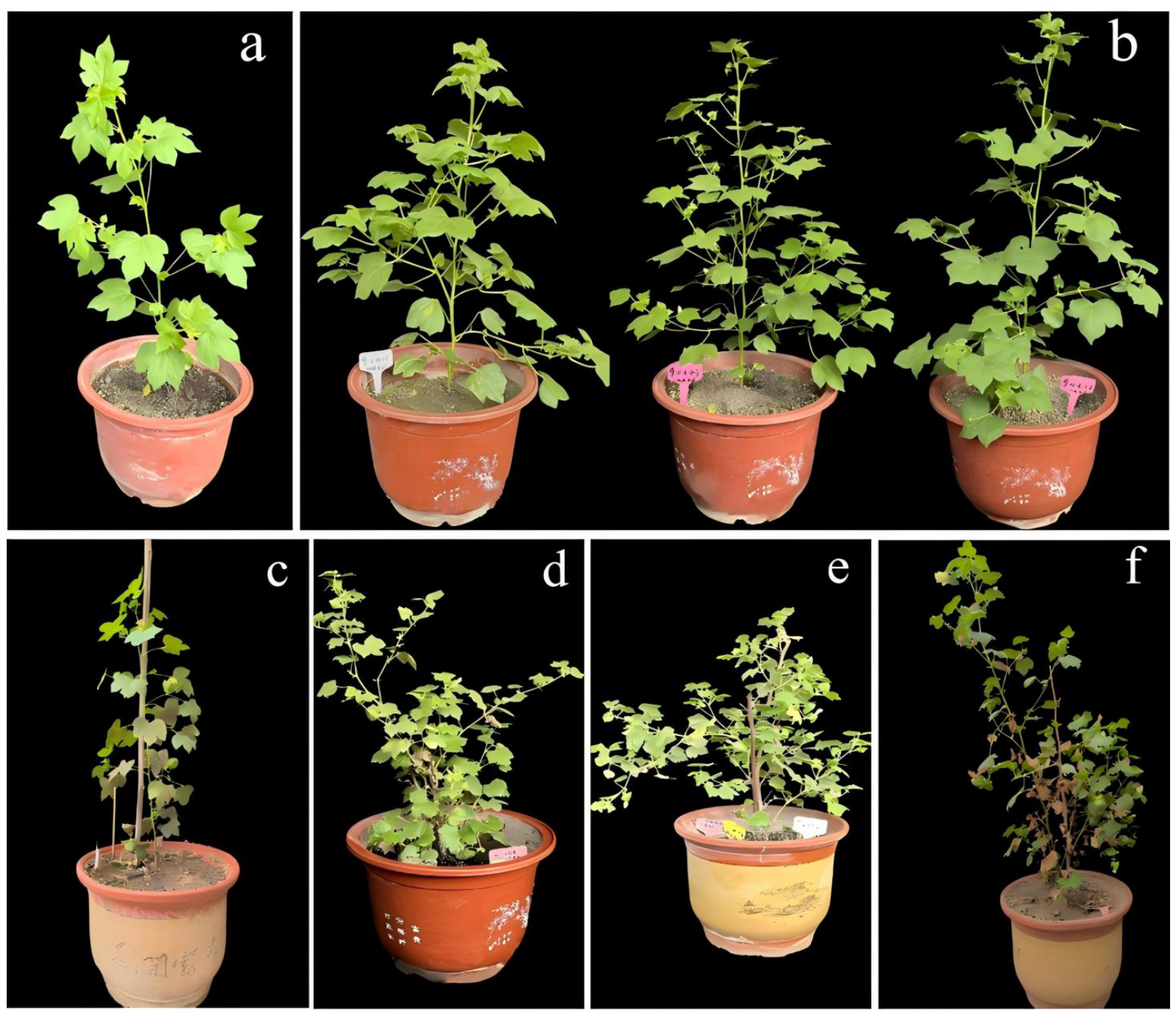
A comparison of the traits of diploid and autotetraploid offspring plants is shown below (Table S2). As shown in Figure 1, both diploid and tetraploid G. herbaceum plants exhibit an erect growth habit. The diploid plants have a cylindrical growth habit, while the tetraploid S3 and S4 generations both have a tower-shaped growth habit. The plant height of the tetraploid generations is approximately 85–107 mm, which is significantly taller than that of the diploids (72–86 mm). The plants have a compact growth habit, shorter internodes, and sturdier stems, with the S4 generation being slightly taller than the S3 generation. The stems of diploid G. herbaceum are green and moderately stiff. The stems of tetraploid S3 and S4 are both dark green and exhibit increased stiffness and lignification. The number of pigment glands increases from a small number in diploids to a moderate number in tetraploids. Greenhouse observations indicate that after reaching a peak during the flowering stage (when the first flower opens on 50% of the plants), the leaf area of the main stem and fruit branches of cotton plants show a significant trend of reduction during the flowering-to-boll-forming stage (from flowering to boll opening), manifested as a decrease in leaf length and width, with some basal leaves turning yellow and falling off. This phenomenon is widespread across cotton materials of different ploidy levels but is more pronounced in autotetraploid and their progeny. Statistical analysis indicates that there are significant differences (p < 0.05) between tetraploids and diploids in traits such as plant height and leaf area (Table 1).
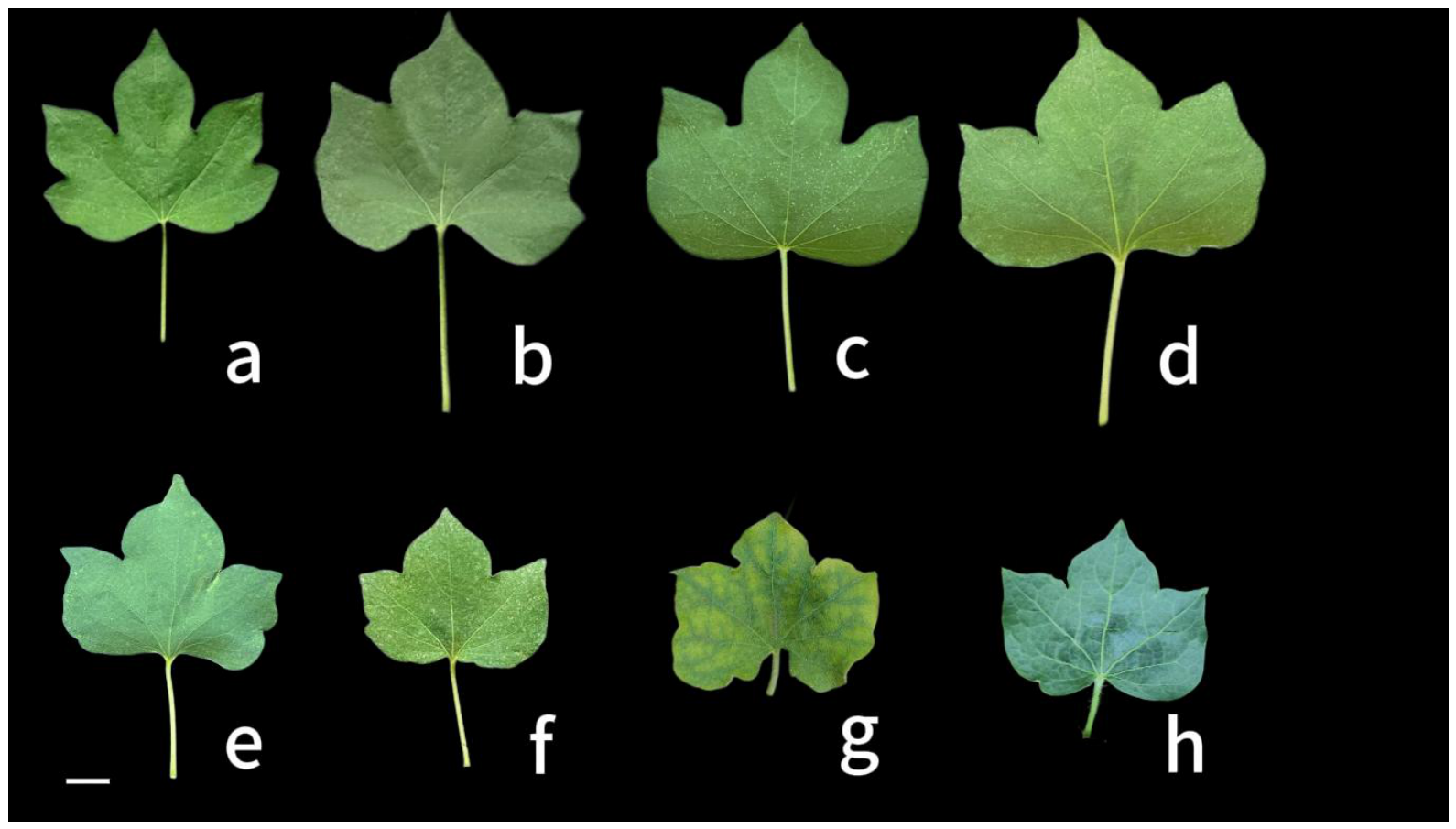
Compared with diploids, morphological variations in autotetraploid leaves are particularly pronounced (Figure 2). Diploid leaves are thinner, with a vibrant green color, deep serration along the margins, nectaries, no basal spots, and sparse pubescence. Tetraploid leaves are deep green, larger, thicker, and distinctly wrinkled, with shallower notches along the margins, nectaries, no basal spots, and more trichomes. From the flowering stage to the boll-forming stage, the leaves of tetraploid cotton exhibited significant and consistent adaptive changes in size and morphology. Leaf samples from the flowering stage (Figure 2b–d) generally exhibited larger leaf areas and more spread-out leaf shapes, whereas leaf samples from the flower-bud stage (e.g., Figure 2e–h) showed significantly reduced leaf areas, relatively compact leaf shapes, and a deeper green color. As shown in Table S2, there is a significant difference in chlorophyll content between diploid and tetraploid S4-generation plants and a highly significant difference compared to the chlorophyll content of S3-generation plants during the flower bud stage. Compared with 2×, since the S3 generation consists of biennial plants and vegetative growth has transitioned to reproductive growth, their leaves have become smaller. While the difference in leaf shape index is not significant, chlorophyll content shows a highly significant difference, and the net photosynthetic rate (Pn) shows significant differences. At the same time, it was observed that the Pn and chlorophyll content of the S4 generation of the G. herbaceum autotetraploid were significantly higher than those of the diploid.

3.1.2. Comparison of Floral Organ Morphological Characteristics

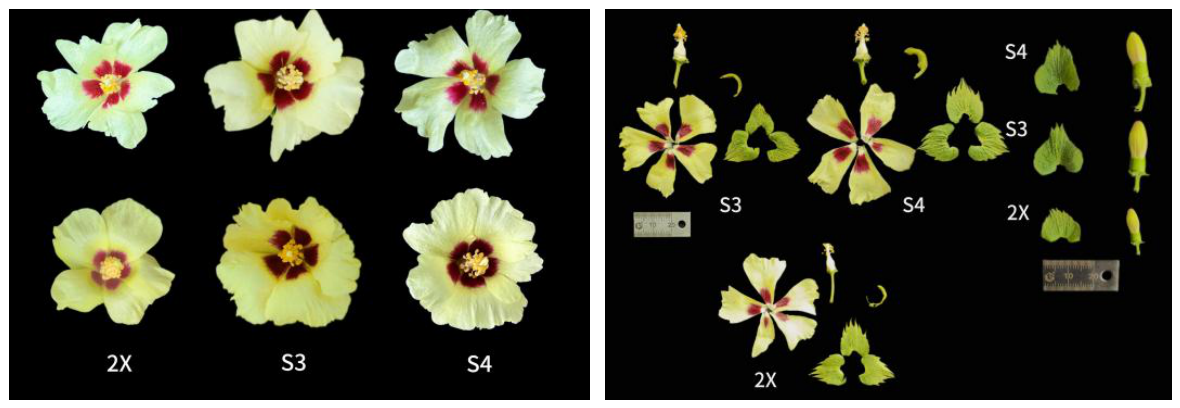
Both the length and width of the petals increased significantly with increasing ploidy (Table S3). The increase in petal width was particularly pronounced in tetraploids, which was approximately twice that of diploids; the petal shape changed from the elongated form of diploids to a flatter, narrower, and longer form in tetraploids (Figure 3). The diploid bracts have 7–9 teeth, with a stigma length of 3–4 mm; the S3 bracts have 6–12 teeth, with a stigma length of 5–6 mm; and the S4 bracts have 9–12 teeth, with a stigma length of 4–7 mm. Regarding the shape of the petal margins, the diploid flowers are serrated, while those of the tetraploid flowers in both generations are serrated but relatively smoother. The color of the flower spots deepens from dark red to purplish red, and the anther color changes from yellow to deep yellow. Compared with the diploid, which releases pollen entirely, the tetraploid releases pollen mostly in all generations. The number of anthers in the S4 generation increased slightly compared with the S3 generation, but some anthers still failed to dehisce and release pollen normally.

3.1.3. Comparison of Seed and Fiber Morphology

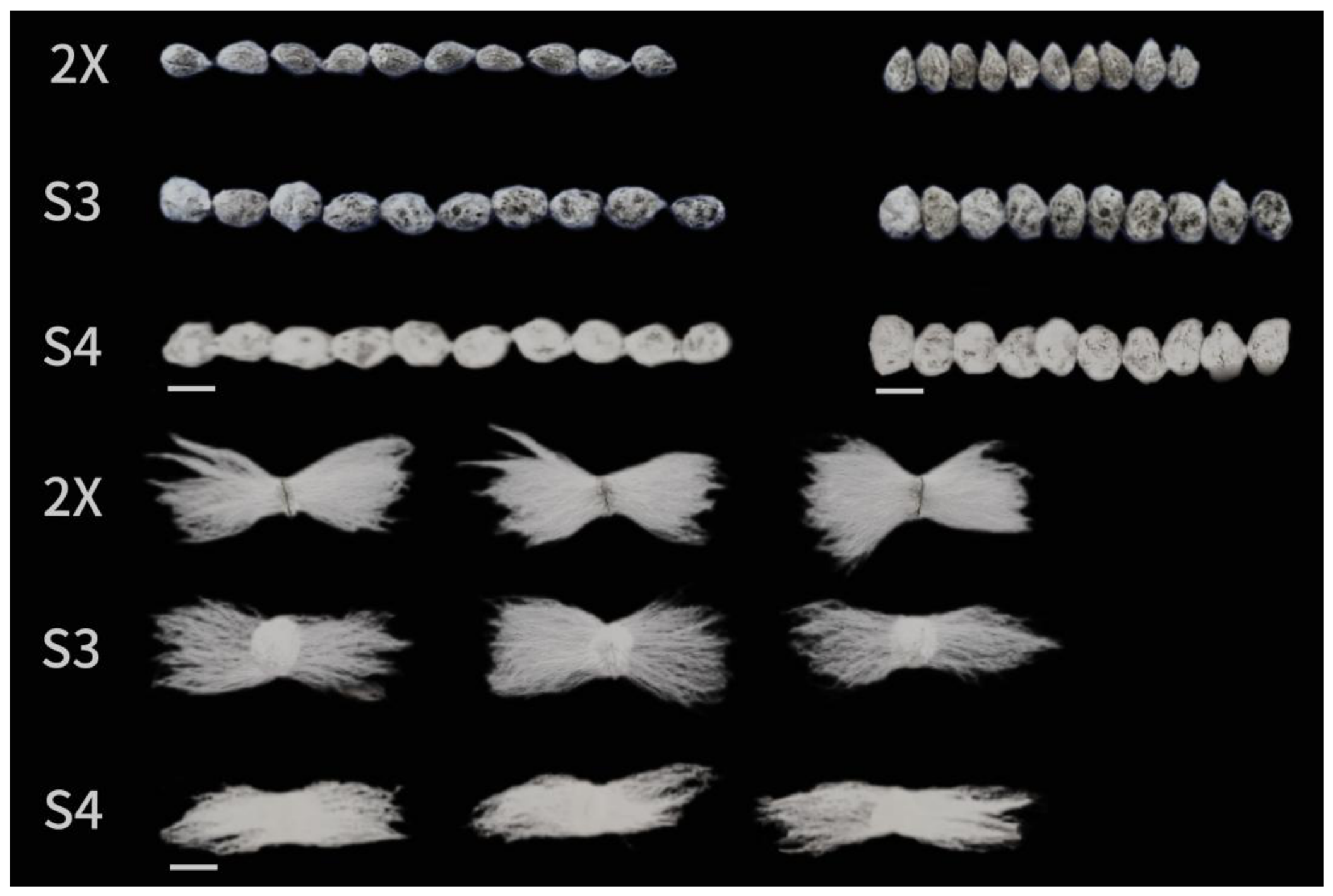
As shown in Table S4, there are significant differences in seed traits among G. herbaceum with different ploidy levels. The seed weights of the tetraploid S3 and S4 generations were 89.22 mg and 92.4 mg, respectively, indicating a significant increase in seed volume and weight, while there were no significant differences in fiber morphology. Compared with the diploid, the fibers of the tetraploid cotton appear sparser, though both are white (Figure 4). No significant differences were observed in seed morphology or fiber morphology between the S3 and S4 generations. These morphological traits indicate that this autopolyploid material tends toward genetic stability.

3.2. Cytological Findings

3.2.1. Observation and Identification of Leaf Stomatal Characteristics

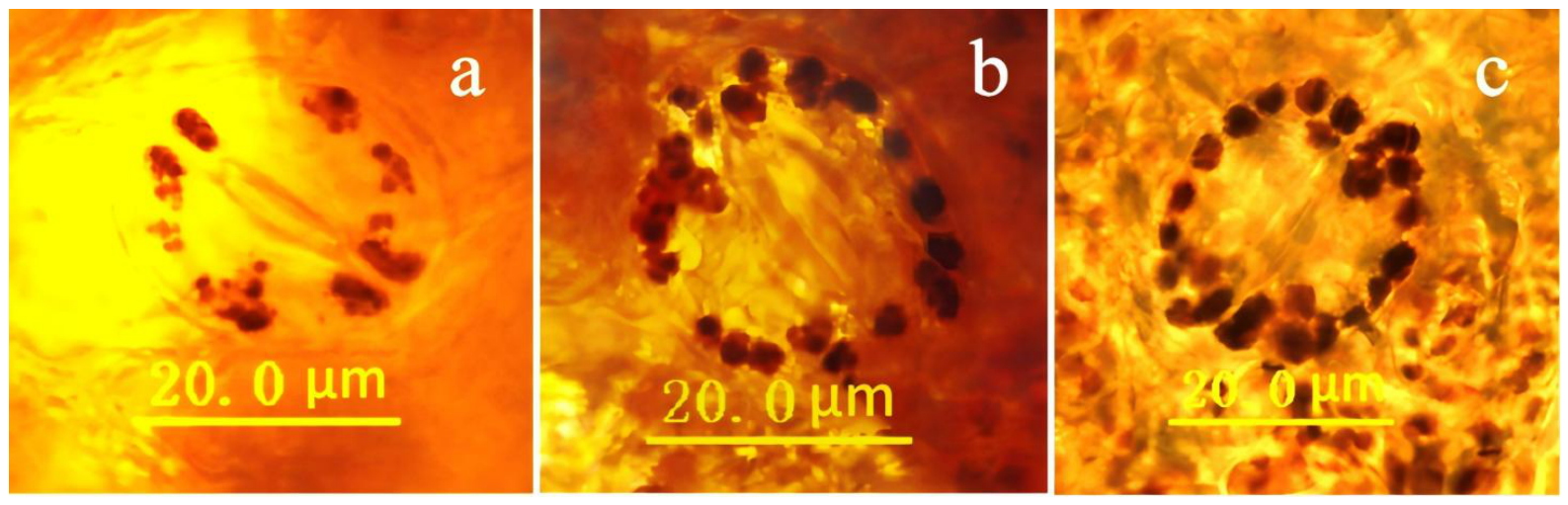
Through observation and measurement of stomatal characteristics in leaves of materials with different ploidy levels, this study found a close correlation between stomatal characteristics and ploidy level, providing important cytological evidence for polyploid identification (Figure 5). The results indicate that the stomatal length of diploids was 23.87 μm, while that of the G. herbaceum autotetraploid progeny (S3 and S4) was 32.57 μm and 35.6 μm, respectively, showing a significant increase in stomatal length in the tetraploid progeny (Table S5). Compared with 2×, the number of chloroplasts in the S3 generation increased significantly, with the S4 generation showing a highly significant difference, while stomatal density exhibited a significant downward trend. Compared with the S4 generation, the S3 generation exhibited significant differences in stomatal density and stomatal length and extremely significant differences in chloroplast number.

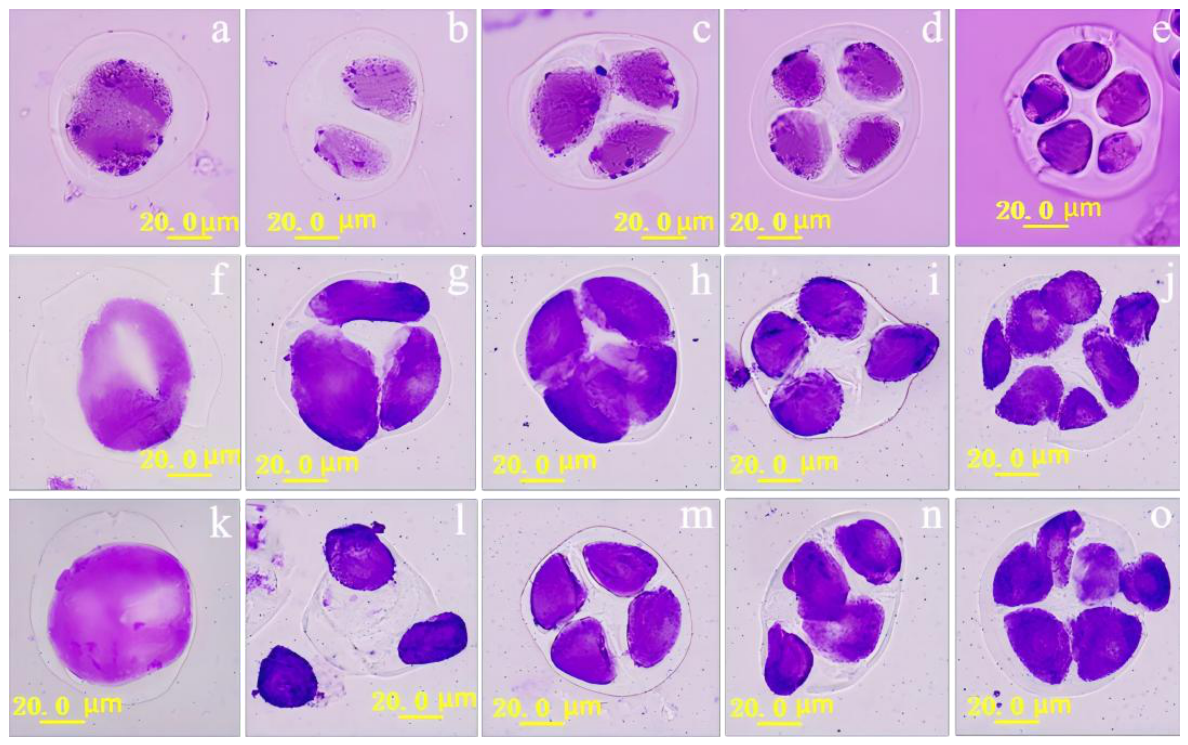
3.2.2. Observation and Measurement of Pollen Mother Cell Meiosis

Using 2×, tetraploid S3, and S4 pollen mother cells as materials, microscopic observation indicated (Figure 6) that 2× pollen mother cells exhibited normal meiosis, with normal tetrads being the predominant form. Among the 500 pollen mother cells analyzed (Table S6), 472 were normal tetrads, accounting for 94.4% of the total. Of these, there were 2 monads and 2 dyads, each accounting for 0.4%, 16 triads, accounting for 3.2%, 3 abnormal tetrads, accounting for 0.6%, and 5 polyads, accounting for 1%. A total of 500 cells were observed in the S3 generation, with 369 normal tetrads (73.8%), representing a 20.6% decrease compared to the diploid stage. Among these, there were 11 monads (2.2%), 3 dyads (0.6%), 32 triads (6.4%), 8 abnormal tetraploids (1.6%), and 77 polyploids (15.4%). It is worth noting that the proportion of polyploids was as high as 15.4%, a significant increase compared to the diploid group (1.0%). In the S4 generation, 500 cells were also examined: 409 were normal tetrads (81.8%), 5 were monads (1.0%), 2 were dyads (0.4%), 21 were triads (4.2%), 6 were abnormal tetrads (1.2%), and 57 were polyads (11.4%). From the S3 to the S4 generation, the proportion of normal tetrads increased from 73.8% to 81.8%, the proportion of polyads decreased from 15.4% to 11.4%, and the proportions of other abnormal types also showed a downward trend.

3.2.3. Pollen Count Results

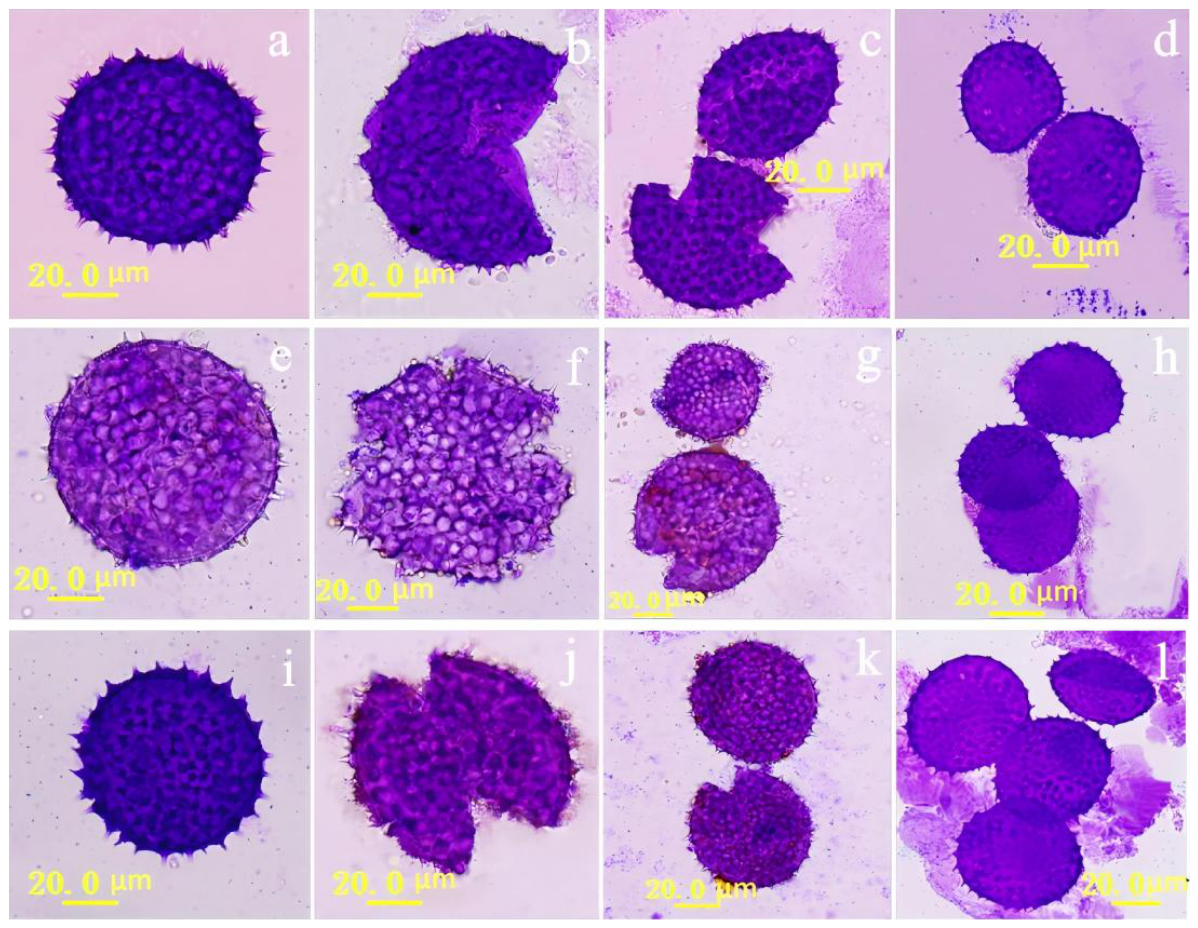
Staining was performed on mature pollen grains from 2×, S3, and S4 G. herbaceum during the flowering stage to assess pollen viability (Figure 7). The results are shown in Table S7. In terms of pollen morphology and fertility, the 2× sample contained 487 normal pollen grains and 13 abnormal pollen grains, with normal pollen accounting for 97.4% of the total. Pollen development was normal, and fertility was good. In the autotetraploid S3 generation, there were 398 normal pollen grains and 102 abnormal pollen grains, with the proportion of normal pollen dropping to 79.6%, a decrease of 17.8% compared to the diploid generation. In the S4 generation, there were 403 normal pollen grains and 97 abnormal pollen grains, with a normal pollen proportion of 80.6%, showing a significant difference from the S3 generation. The diameter of pollen grains in the S4 generation was slightly larger than that of the S3 generation.

3.3. SSR Molecular Identification Results

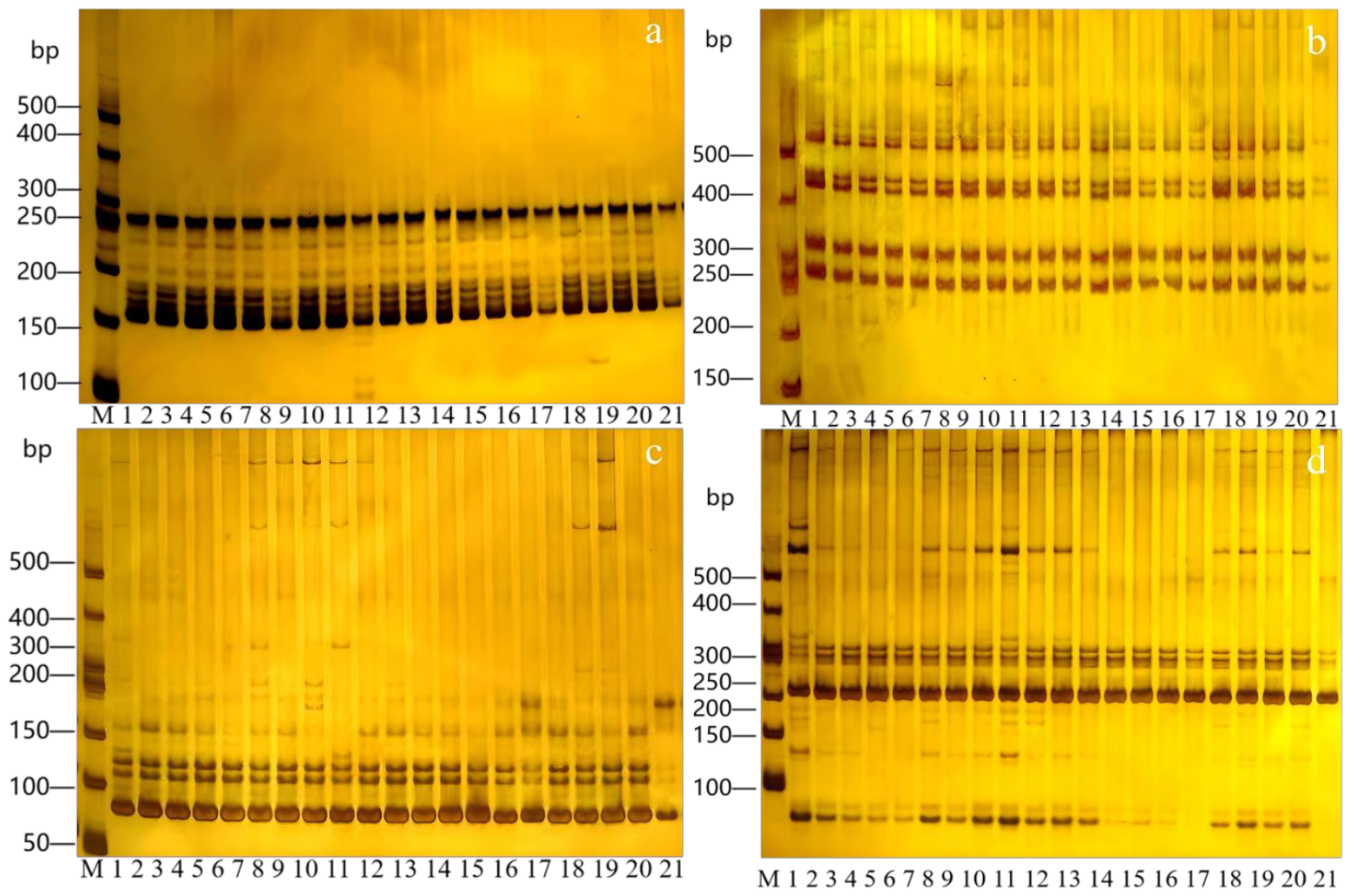
To analyze the genetic stability of the autotetraploid at the molecular level, this study used SSR molecular markers to identify diploid, autotetraploid S3, and S4 generation plants. The electrophoresis results (Figure 8) show that, at the SSR marker loci used, the banding patterns of the S3 and S4 generations for primers BNL4108, BNL4053, and NBRI_G1015 were highly consistent. The vast majority of individuals exhibited clear single or double main bands at specific size ranges (approximately 100–300 bp), and band sizes were largely consistent across individuals of different generations, with only a few instances of band loss or the appearance of new variant bands. Analysis using primers BNL4108, BNL4053, NAU1052, and NBRI_G1015 revealed that, compared with tetraploids, diploid bands were narrower and fainter, exhibiting weaker signal intensity.
The SSR amplification results show that the six pairs of primers amplified a total of 34 alleles, including 23 polymorphic loci (Table 2). The primers NBRI_G1015 and BNL4053 amplified the highest number of alleles, with eight and seven, respectively. Primers BNL4108 and NAU1052 amplified the fewest alleles, with four each. Primers NBRI_G1015 and NAU1164 had the highest polymorphism rates at 87.5% and 83.3%, respectively. Primer NAU1052 had the lowest polymorphism rate at 25%. The number of observed alleles (Na) for each primer ranged from 1.25 to 1.88, with an average of 1.53. The number of effective alleles (Ne) ranged from 1.04 to 1.34, with an average of 1.22. The Nei’s genetic diversity index (H) ranged from 0.035 to 0.21. The Shannon information index (I) ranged from 0.07 to 0.32. The polymorphism information content (PIC) for each primer ranged from 0.03 to 0.21.

3.4. Analysis of Genetic Diversity

Using the Dice coefficient of genetic similarity, we calculated the genetic similarity between the 2×, S3, and S4 generations of G. herbaceum and constructed a UPGMA phylogenetic tree (Figure S1). The Mantel test revealed a correlation coefficient of 0.94 between the original similarity matrix and the co-expression matrix derived from the dendrogram (t = 4.82, p = 1.00), indicating that the clustering results provide an excellent representation of the genetic relationships among the samples. In the dendrogram, individuals S3 and S4 are intermingled and do not form generation-specific clusters, while the diploid individuals form a separate branch, clearly distinct from all tetraploid offspring.

3.5. Correlation of Phenotypic Traits in G. herbaceum Autotetraploid

A Pearson correlation analysis was conducted on 22 phenotypic traits of 2×, S3, and S4 generations of the G. herbaceum autotetraploid (Figure S2). The results indicate significant correlations among the major traits. Photosynthetic indices (chlorophyll content and pn) showed a very strong positive correlation with fiber yield indices. The correlation coefficients were 0.97 between chlorophyll content and fiber length, 0.92 between net photosynthetic rate and fiber length, 0.81 between net photosynthetic rate and seed volume, and 0.81 between stomatal length and chloroplasts. These findings indicate that enhanced photosynthetic capacity directly promotes fiber elongation and seed development. This indicates that enhanced photosynthetic capacity directly promotes fiber elongation and seed development. Meiotic behavior is closely related to fertility. Normal tetrads and normal pollen grains showed a very strong negative correlation with abnormal tetrads, polyploids, and abnormal pollen grains (r = −0.99~−1), which is consistent with biological logic: the more normal pollen there is, the fewer abnormal pollen grains there will inevitably be. The proportion of normal tetrads showed a very strong positive correlation (0.94) with the proportion of normal pollen grains, indicating that the normal progression of meiosis is a prerequisite for normal pollen development. Furthermore, pollen grain diameter also showed a very strong positive correlation (0.97) with the proportion of normal pollen grains, further confirming that the full development of pollen grains is a crucial prerequisite for their fertility.
Fiber length was moderately positively correlated with seed size. The larger the seed was, the longer the fiber was, which provided a phenotypic selection basis for cotton fiber variety breeding.

4. Discussion

4.1. The Physiological Mechanism Underlying the Reduction in Leaf Area During the Flowering and Bell Stage

As a crop with an indeterminate growth habit, cotton undergoes a period of concurrent vegetative and reproductive growth lasting 50–60 days. Previous studies have shown that after topping, the hormonal balance within the plant shifts in a direction that is less favorable for vegetative growth; nutrients are rapidly transported from the leaves to the reproductive organs, resulting in a situation where the supply–demand balance during the flower-boll stage—when water and nutrient requirements are highest—can only be maintained at a basic equilibrium [31]. Concurrently, the flowering and boll-forming stage marks the peak period of nitrogen demand in cotton, as boll development requires substantial amounts of nitrogen for the synthesis of seed storage proteins. Furthermore, this stage coincides with the high-temperature season, during which plant transpiration is vigorous and water demand for boll development is at its peak, leading to competition for water between leaves and bolls [32]. This study, through an investigation of stomatal traits, demonstrates that tetraploid cotton has a lower stomatal density than diploids, but individual stomata are larger. Under water stress conditions, this may result in higher transpiration risks and greater difficulty in water regulation, which is likely one of the reasons why leaf reduction is more pronounced in polyploid materials during the flower-boll stage. Recent studies have also shown that GhEPFL1-1 in cotton regulates stomatal density by directly binding to GhER1 and recruiting the co-receptor GhSERK17 to form a complex; silencing this module can increase stomatal density by 40–60% [33]. Zhan et al. revealed that the GhWL1-GhH1-GhGA2OX1 module is a key pathway regulating leaf development, providing important theoretical support for elucidating the genetic regulatory networks underlying leaf morphological diversity and the mechanisms by which hormones regulate leaf development [34].

4.2. The Stability of Polyploidy and Dynamic Changes in Its Meiosis Behavior

Polyploidization triggered by whole-genome duplication (WGD) has shaped the long-term evolutionary history of eukaryotic genomes across the biological world [35,36,37]. Regarding the molecular mechanisms underlying the stabilization of meiosis in polyploids, genomic and epigenomic studies of the Arabidopsis suecica (AATT) indicate that DNA methylation changes occurring in allopolyploids may influence gene expression and phenotypic variation, involving genes related to flowering, self-incompatibility, and meiosis and mitosis [38]. Cheng et al. [39] point out that polyploid crops, owing to the buffering effect of their chromosome structure sets and their rich genetic diversity, exhibit advantages in key agronomic traits such as stress tolerance, yield potential, and environmental adaptability. The significant improvements in traits such as plant height, leaf area, and photosynthetic efficiency observed in the S3 and S4 generations of the G. herbaceum autotetraploid in this study are a direct manifestation of this “polyploid advantage” at the phenotypic level. However, early generations of artificially created autopolyploids often exhibit meiotic disorders and unstable fertility. Gonzalo et al. [40] investigated the mechanisms underlying meiosis stability in sand-adapted Arabidopsis by comparing cytological and molecular analyses of diploids, NEO-4X, EST-4X, and their F1 hybrids (HYB-4X). Yang et al. [41] found that meiosis in potato tetraploids is highly unstable, frequently resulting in aneuploid gametes. Research by Cai et al. [42] revealed that the synaptonemal complex plays a crucial role in meiosis in polyploid plants by inhibiting the pairing and recombination of multiple partially homologous chromosomes, thereby promoting meiotic stability. In this study, 11.4% of S4-generation plants were still polyads, which is consistent with Beasley’s earlier observations on artificial cotton polyploids [43]. Autotetraploids often exhibit reduced fertility due to the formation of polyads, indicating that a longer generation interval is required for the meiosis of autotetraploids to become normal and stable.

4.3. Genetic Stability Revealed by SSR Markers

In recent years, despite the rapid advancement of high-throughput SNP technologies, SSR markers—as important tools in the field of molecular biology—have continued to be reported in cotton research. Their applications have expanded from traditional genetic diversity analysis and map construction to core areas such as genome-wide association studies and molecular-based breeding [44,45,46]. As demonstrated in the study by Li et al. [47], current molecular marker technologies have entered a phase of “platform synergy,” forming a complementary workflow characterized by “broad-spectrum discovery upstream and precise validation downstream.” In this study, diploid Hong Xing cotton and its autotetraploids (S3, S4) exhibited differences in the SSR profile, including band loss, signal amplification, and the appearance of new bands. These changes are primarily attributed to dynamic genomic restructuring during the polyploidization process. First, since each SSR locus in tetraploids contains four allelic copies, the dosage effect results in stronger band signals than in diploids. Second, chromosome breaks or repair errors can lead to the loss of specific alleles, while unequal crossing-over or transposon activation generates new bands that do not exist in diploids. In addition, sequence variations in the primer-binding regions may result in “invalid alleles,” manifesting as missing bands or weakened signals. Notably, SSR marker results indicate that generations S3 through S4 maintain a high degree of genetic consistency at the genomic level, with an average information content of only 0.14, which is classified as a low level of polymorphism. Although this value is not high, it precisely reflects a key characteristic of the material: after multiple generations of self-pollination, this autotetraploid has essentially reached genetic homozygosity, with no large-scale recombination or mutation occurring at the SSR loci. It is worth noting that, as reported by Sahu et al. [48] in their association analysis of rice insect resistance, the key lies not in the number of markers, but in whether they can consistently associate with the target trait. Qin et al. [49] identified stable, associated markers through multi-environment validation, providing targets for cotton molecular breeding and emphasizing that the value of these markers lies in their stability and reproducibility. This study also identified primers with stable amplification patterns, and SSR markers confirmed that the G. herbaceum autotetraploid exhibited high genetic stability from the S3 to S4 generations, laying the foundation for subsequent trait stabilization, germplasm evaluation, and molecular-assisted selection. However, as the cost of NGS technology decreases and cotton SNP chips continue to improve, it will be necessary to conduct a genome-wide, high-resolution analysis of the generational stability of the G. herbaceum autotetraploid using targeted capture sequencing methods such as GBTS or high-throughput SNP chips.

5. Conclusions

The G. herbaceum autotetraploid (S4 generation) developed in this study possesses a genetically pure background, exhibits regular meiosis, and has a seed weight 65% higher than that of the diploid, while maintaining the same fiber length. It represents an excellent germplasm resource that combines high-yield potential with superior fiber quality. This material can be directly used for hybridization with tetraploid cultivated cotton (such as upland cotton) to introduce favorable traits from the A genome, such as drought and disease resistance, into modern cotton varieties. Next, we plan to use GBTS (Genome-wide Binding-site Targeted Sequencing) technology to conduct high-resolution genome-wide variation analysis of the S4 generation, map yield-related QTLs induced by polyploidization, and conduct multi-environment field trials to evaluate its agronomic performance.

Supplementary Materials

The following supporting information can be downloaded at https://www.mdpi.com/article/10.3390/agronomy16100955/s1; Figure S1: correlation analysis of parameters; Figure S2; correlation analysis of phenotypic traits in G. herbaceum autotetraploid; Table S1: SSR primer sequence information; Table S2: statistical analysis of leaf morphology across generations of diploid and autotetraploid G. herbaceum; Table S3: statistical analysis of floral phenotypes across generations of diploid and autotetraploid G. herbaceum; Table S4: statistical analysis of seed and fiber morphology across generations of diploid and autotetraploid G. herbaceum; Table S5: stomatal character statistics of leaves among different ploidy G. herbaceum; Table S6: number and proportion of polysomes at the end of the second meiosis division in G. herbaceum with different ploidy levels; Table S7: pollen grain statistics of G. herbaceum with different ploidy levels.

Author Contributions

Conceptualization, L.F. and Y.W.; methodology, L.F. and L.W.; software, J.L. and X.L.; validation, L.F., L.W. and J.L.; formal analysis, E.R. and X.L.; investigation, L.W. and X.L.; resources, Y.W. and E.R.; writing—original draft preparation, L.F. and L.W.; writing—review and editing, Y.W., L.F., L.W., J.L. and X.L.; supervision, Y.W. and E.R.; funding acquisition, Y.W. All authors have read and agreed to the published version of the manuscript.

Funding

This research was funded by grants from the Key R & D Program Projects of Shanxi Province (202302140601004).

Data Availability Statement

The original contributions presented in this study are included in the article/Supplementary Material. Further inquiries can be directed to the corresponding author.

Acknowledgments

Thank you to Yuxiang Wu for their guidance throughout my entire thesis.

Conflicts of Interest

The authors declare no conflicts of interest.

Abbreviations

The following abbreviations are used in this manuscript:
WGDWhole-genome duplication
PnThe net photosynthetic rate
SPADRelative chlorophyll content
NaNumber of observed alleles
NeNumber of effective alleles
HNei’s genetic diversity index
IShannon’s information index
PICPolymorphism information content
PPBPercentage of polymorphic bands
GBTSGenome-wide Binding-site Targeted Sequencing

References

  1. Soltis, P.S.; Soltis, D.E. The Role of Hybridization in Plant Speciation. Annu. Rev. Plant Biol. 2009, 60, 561–588. [Google Scholar] [CrossRef]
  2. Van de Peer, Y.; Mizrachi, E.; Marchal, K. The evolutionary significance of polyploidy. Nat. Rev. Genet. 2017, 18, 411–424. [Google Scholar] [CrossRef]
  3. Aslam, T.; Zhang, T.; Lian, T.; Zhai, J.; Jia, J.; Wang, H.; Lyu, R.; Liu, B. Production, characterization, and potential utility of a newly synthesized allohexaploid wheat Triticum kiharae. Crop J. 2025, 13, 681–693. [Google Scholar] [CrossRef]
  4. Liu, Y.; Huang, X.; Gao, X.; Zhang, X.; Huang, H.; Li, W.; Zhang, Y. Tetraploidization Altered Phenotypic Traits and Metabolite Profile of Java Ginseng (Talinum paniculatum (Jacq.) Gaertn.). Plants 2025, 14, 480. [Google Scholar] [CrossRef] [PubMed]
  5. Niazian, M.; Nalousi, A.M. Artificial polyploidy induction for improvement of ornamental and medicinal plants. Plant Cell Tissue Organ Cult. 2020, 142, 447–469. [Google Scholar] [CrossRef]
  6. Li, M.; Xu, G.; Xia, X.; Wang, M.; Yin, X.; Zhang, B.; Zhang, X.; Cui, Y. Deciphering the physiological and molecular mechanisms for copper tolerance in autotetraploid Arabidopsis. Plant Cell Rep. 2017, 36, 1585–1597. [Google Scholar] [CrossRef] [PubMed]
  7. Wen, Y.; Liu, H.; Meng, H.; Qiao, L.; Zhang, G.; Cheng, Z. In vitro Induction and Phenotypic Variations of Autotetraploid Garlic (Allium sativum L.) With Dwarfism. Front. Plant Sci. 2022, 13, 917910. [Google Scholar] [CrossRef]
  8. Maru, B.; Parihar, A.; Kulshrestha, K.; Vaja, M. Induction of polyploidy through colchicine in cotton (Gossypium herbaceum) and its conformity by cytology and flow cytometry analyses. J. Genet. 2021, 100, 52. [Google Scholar] [CrossRef]
  9. Mehetre, S.S.; Aher, A.R.; Gawande, V.L.; Patil, V.R.; Mokate, A.S. Induced polyploidy in Gossypium: A tool to overcome interspecific incompatibility of cultivated tetraploid and diploid cottons. Curr. Sci. 2003, 84, 1510–1512. [Google Scholar]
  10. Arslanova, S.K.; Ernazarova, Z.A.; Ernazarova, D.K.; Turaev, O.S.; Safiullina, A.K.; Toshpulatov, A.K.; Kholova, M.D.; Azimova, L.A.; Rafiyeva, F.U.; Gapparov, B.M.; et al. Development and Characterization of Synthetic Allotetraploids Between Diploid Species Gossypium herbaceum and Gossypium nelsonii for Cotton Genetic Improvement. Plants 2025, 14, 1620. [Google Scholar] [CrossRef]
  11. Khidirov, M.T.; Ernazarova, D.K.; Rafieva, F.U.; Ernazarova, Z.A.; Toshpulatov, A.K.; Umarov, R.F.; Kholova, M.D.; Oripova, B.B.; Kudratova, M.K.; Gapparov, B.M.; et al. Genomic and Cytogenetic Analysis of Synthetic Polyploids between Diploid and Tetraploid Cotton (Gossypium) Species. Plants 2023, 12, 4184. [Google Scholar] [CrossRef] [PubMed]
  12. Chen, T.; Li, Y.; Rong, E.; Wu, Y. Character identification and floral organ transcriptome analysis on artificial allotetraploids of Gossypium hirsutum L. Acta Agron. Sin. 2025, 50, 325–339. [Google Scholar] [CrossRef]
  13. Wendel, J.F.; Grover, C.E. Taxonomy and evolution of the cotton genus, Gossypium. In Cotton; American Society of Agronomy, Inc.: Madison, WI, USA, 2015; Volume 57, pp. 25–44. [Google Scholar] [CrossRef]
  14. Fryxell, P.A. A Classification of Gossypium L. (Malvaceae). Taxon 1969, 18, 585–591. [Google Scholar] [CrossRef]
  15. Hu, Y.; Chen, J.; Fang, L.; Zhang, Z.; Ma, W.; Niu, Y.; Ju, L.; Deng, J.; Zhao, T.; Lian, J. Gossypium barbadense and Gossypium hirsutum genomes provide insights into the origin and evolution of allotetraploid cotton. Nat. Genet. 2019, 51, 739–748. [Google Scholar] [CrossRef]
  16. Aminu, I.M.; Ahmad, Z.; Faruk, K.K.; Abdullahi, M.I.; Pan, J.; Li, Y.; Chen, W.; Yao, J.; Fang, S.; Zhu, S.; et al. Bridging the Divide: Integrating Cottonseed Oil Content with Agronomic Trait Improvement in Upland Cotton (Gossypium hirsutum)—A Review. Plants 2026, 15, 750. [Google Scholar] [CrossRef]
  17. Fryxell, P.A. The Natural History of the Cotton Tribe; Texas A&M University Press: College Station, TX, USA, 1979. [Google Scholar]
  18. Wendel, J.F.; Cronn, R.C. Polyploidy and the evolutionary history of cotton. Adv. Agron. 2003, 78, 139–186. [Google Scholar] [CrossRef]
  19. Wendel, J.F. New World tetraploid cottons contain Old World cytoplasm. Proc. Natl. Acad. Sci. USA 1989, 86, 4132–4136. [Google Scholar] [CrossRef]
  20. Ramaraj, T.; Grover, C.E.; Mendoza, A.C.; Arick, M.A.; Jareczek, J.J.; Leach, A.G.; Peterson, D.G.; Wendel, J.F.; Udall, J.A. The Gossypium herbaceum L. Wagad genome as a resource for understanding cotton domestication. G3-Genes Genomes Genet. 2023, 13, jkac308. [Google Scholar] [CrossRef]
  21. Jena, S.N.; Srivastava, A.; Rai, K.M.; Ranjan, A.; Singh, S.K.; Nisar, T.; Srivastava, M.; Bag, S.K.; Mantri, S.; Asif, M.H.; et al. Development and characterization of genomic and expressed SSRs for levant cotton (Gossypium herbaceum L.). Theor. Appl. Genet. 2012, 124, 565–576. [Google Scholar] [CrossRef]
  22. Mason, A.S.; Wendel, J.F. Homoeologous Exchanges, Segmental Allopolyploidy, and Polyploid Genome Evolution. Front. Genet. 2020, 11, 1014. [Google Scholar] [CrossRef]
  23. Soares, N.R.; Mollinari, M.; Oliveira, G.K.; Pereira, G.S.; Vieira, M.L.C. Meiosis in polyploids and implications for genetic mapping: A review. Genes 2021, 12, 1517. [Google Scholar] [CrossRef]
  24. Cifuentes, M.; Grandont, L.; Moore, G.; Chèvre, A.M.; Jenczewski, E. Genetic regulation of meiosis in polyploid species: New insights into an old question. New Phytol. 2010, 186, 29–36. [Google Scholar] [CrossRef] [PubMed]
  25. Ji, R.D.L.; Reyes-Valdes, M.H.; Mendoza-Rodriguez, D.V.; Ramirez-Godina, F.; Robledo-Torres, V.; Gomez-Martinez, M.; Hernandez-Guzman, G. Meiotic analysis of four cross-pollinated generations in a synthetic autotetraploid population of husk tomato (Physalis ixocarpa). Phyton-Int. J. Exp. Bot. 2015, 84, 101. [Google Scholar] [CrossRef]
  26. Li, Y.; Sheng, Z.; Rong, E.; Zhen, Y.; Wu, Y. Autotetraploid induction and identification of G. herbaceum. J. Shanxi Agric. Univ. (Nat. Sci. Ed.) 2019, 39, 40–44. [Google Scholar] [CrossRef]
  27. Yang, Y. Character Identification and Transcriptome Analysis on Autopolyploid Progenies of Gossypium herbaceum. Master’s Thesis, Shanxi Agricultural University, Jinzhong, China, 2022. [Google Scholar] [CrossRef]
  28. Yang, Y.; Li, Y.; Sheng, Z.; Chen, T.; Rong, E.; Wu, Y. Differential expressed analysis by transcriptome sequencing in leaves of different ploidy Gossypium herbaceum. Acta Agron. Sin. 2022, 48, 2733–2748. [Google Scholar] [CrossRef]
  29. GB/T 19617-2007; Test Method for Length of Cotton—Hand-Measured Staple Length. Standards Press of China: Beijing, China, 2007.
  30. Bradley, R.D.; Hillis, D.M. Recombinant DNA sequences generated by PCR amplification. Mol. Biol. Evol. 1997, 14, 592–593. [Google Scholar] [CrossRef]
  31. Dong, H.; Yang, G.; Li, Y.; Tian, L.; Dai, J.; Kong, X. Key Technologies for Light and Simplified Cultivation of Cotton and Their Eco-physiological Mechanisms. Acta Agron. Sin. 2017, 43, 631–639. Available online: https://link.cnki.net/urlid/11.1809.S.20170307.1841.006 (accessed on 8 May 2026). [CrossRef]
  32. Sawan, Z.M.; Hanna, L.I.; McCuistion, W.L.; Foote, R.J. Egyptian cotton (Gossypium barbadense) flower and boll production as affected by climatic factors and soil moisture status. Theor. Appl. Climatol. 2010, 99, 217–227. [Google Scholar] [CrossRef]
  33. He, S.; Sun, H.; Chen, Q.; Yang, Y.; Zhou, Z.; Chang, S.; Lu, S.; Liang, Z.; Yang, J.; Fei, X. Comprehensive identification of cotton EPF/EPFL receptors and functional characterization of the GhEPFL1-1-GhER1 module in drought tolerance. BMC Plant Biol. 2025, 25, 901. [Google Scholar] [CrossRef] [PubMed]
  34. Zhan, J.; Zhang, X.; Wang, Y.; Zhao, H.; Chu, Y.; Wang, P.; Chen, Y.; Wei, X.; Qin, W.; Liu, M. The GhWL1-GhH1-GhGA2OX1 Transcriptional Module Regulates Cotton Leaf Morphology. Adv. Sci. 2025, 12, 2410783. [Google Scholar] [CrossRef] [PubMed]
  35. MacKintosh, C.; Ferrier, D.E.K. Recent advances in understanding the roles of whole genome duplications in evolution. F1000Research 2017, 6, 1623. [Google Scholar] [CrossRef] [PubMed]
  36. Clark, J.W.; Donoghue, P.C.J. Whole-Genome Duplication and Plant Macroevolution. Trends Plant Sci. 2018, 23, 933–945. [Google Scholar] [CrossRef] [PubMed]
  37. Qiao, X.; Li, Q.; Yin, H.; Qi, K.; Li, L.; Wang, R.; Zhang, S.; Paterson, A.H. Gene duplication and evolution in recurring polyploidization-diploidization cycles in plants. Genome Biol. 2019, 20, 38. [Google Scholar] [CrossRef] [PubMed]
  38. Jiang, X.; Song, Q.; Ye, W.; Chen, Z.J. Concerted genomic and epigenomic changes accompany stabilization of Arabidopsis allopolyploids. Nat. Ecol. Evol. 2021, 5, 1382–1393. [Google Scholar] [CrossRef] [PubMed]
  39. Cheng, L.; Bao, Z.; Kong, Q.; Lassois, L.; Stein, N.; Huang, S.; Zhou, Q. Genome analyses and breeding of polyploid crops. Nat. Plants 2025, 11, 1714–1728. [Google Scholar] [CrossRef] [PubMed]
  40. Gonzalo, A.; Nayak, A.; Bomblies, K. Improved synapsis dynamics accompany meiotic stability in Arabidopsis arenosa autotetraploids. Proc. Natl. Acad. Sci. USA 2025, 122, e2420115122. [Google Scholar] [CrossRef] [PubMed]
  41. Yang, L.; Bai, Y.; Chao, G.; Zhao, K.; Xu, J.; Sun, M.; Zhang, H.; Niu, Y.; Li, K.; Xiong, Z.; et al. Human selection maintains karyotype integrity of highly unstable genomic cultivated autotetraploid potato (Solanum tuberosum). Sci. Adv. 2025, 11, eaea5207. [Google Scholar] [CrossRef] [PubMed]
  42. Cai, B.; Tiscareno-Andrade, M.; Luo, Y.; Lefranc, S.; Cao, F.; Chambon, A.; Yuan, X.; Peuch, M.; Zhang, Y.; Hurel, A.; et al. Identification of the cytoplasmic motor–LINC complex involved in rapid chromosome movements during meiotic prophase in Arabidopsis thaliana. Nat. Plants 2025, 11, 1608–1627. [Google Scholar] [CrossRef] [PubMed]
  43. Beasley, J.O. Meiotic Chromosome Behavior in Species, Species Hybrids, Haploids, and Induced Polyploids of Gossypium. Genetics 1942, 27, 25–54. [Google Scholar] [CrossRef] [PubMed]
  44. Hinze, L.L.; Udall, J.A.; Yu, J.Z.; Frelichowski, J.E.J. The National Plant Germplasm System cotton collection: A review of germplasm resources, phenotypic characterization, and genomic variation. Theor. Appl. Genet. 2025, 138, 220. [Google Scholar] [CrossRef] [PubMed]
  45. Siddho, I.A.; Zhang, Z.; Han, P.; Ding, S.; Xu, L.; Abudukeyoumu, A.; Ayyaz, M.; Li, Z.; Lin, H.; Wu, Y. Genome-wide association mapping of seed shape-related traits in cotton using SSR markers. J. Cotton Res. 2025, 8, 29. [Google Scholar] [CrossRef]
  46. Mishra, A.; Singh, P.K.; Bhandawat, A.; Sharma, V.; Sharma, V.; Singh, P.; Roy, J.; Sharma, H. Chapter 8—Analysis of SSR and SNP Markers. In Bioinformatics; Singh, D.B., Pathak, R.K., Eds.; Academic Press: Cambridge, MA, USA, 2022; pp. 131–144. [Google Scholar] [CrossRef]
  47. Li, X.; Hu, Z.; Yu, W.; Xie, H.; Wang, X.; Huang, P.; Zhang, X.; Yang, J.; Li, Y.; Zhao, W.; et al. Advances and challenges in plant molecular marker technologies and their applications in the artificial intelligence empowered era. Front. Plant Sci. 2026, 16, 1757949. [Google Scholar] [CrossRef] [PubMed]
  48. Sahu, N.; Gadratagi, B.G.; Rath, L.K.; Chandrappa, A.; Sah, R.P.; Mandal, L.; Govindharaj, G.P.P.; Patil, N.B.; Adak, T.; Mahendiran, A.; et al. Marker-trait association analysis for gall midge (Orseolia oryzae) resistance in a diverse rice population. Ann. Appl. Biol. 2023, 182, 361–370. [Google Scholar] [CrossRef]
  49. Qin, H.; Chen, M.; Yi, X.; Bie, S.; Zhang, C.; Zhang, Y.; Lan, J.; Meng, Y.; Yuan, Y.; Jiao, C. Identification of Associated SSR Markers for Yield Component and Fiber Quality Traits Based on Frame Map and Upland Cotton Collections. PLoS ONE 2015, 10, e0118073. [Google Scholar] [CrossRef] [PubMed]
Figure 1. Comparative morphology of diploid and autotetraploid G. herbaceum at different growth stages((a,b): vegetative growth stage; (cf): reproductive growth stage). 2×: (a,c); S3 generation: (d,e); S4 generation: (b,f).
Agronomy 16 00955 g001
Figure 2. Comparative analysis of leaf morphology at different developmental stages in diploid and autotetraploid G. herbaceum ((a,b): flowering stage; (cf): boll formation stage; scale bar: 10 mm). 2×: (a); S3 generation: (e,h); S4 generation: (bd,f,g).
Agronomy 16 00955 g002
Figure 3. Comparative analysis of floral morphology across generations of diploid and autotetraploid G. herbaceum (scale bar: 20 mm). The left image shows a comparison of flower morphology, while the right image shows an anatomical diagram of flower parts.
Agronomy 16 00955 g003
Figure 4. Seed and fiber morphology of various generations of diploid and autotetraploid G. herbaceum (scale bar: 10 mm).
Agronomy 16 00955 g004
Figure 5. Leaf stomatal comparison among different ploidy G. herbaceum (scale bar: 20 μm). (a) 2×; (b) S3 generation; (c) S4 generation.
Agronomy 16 00955 g005
Figure 6. Meiosis in pollen mother cells of diploid and autotetraploid G. herbaceum (scale bar: 20 μm). (ae) are 2×. (a) monad; (b) dyad; (c) triad; (d) normal tetrad; (e) polyad. (fj) are S3 generation. (f) monad; (g) triad; (hi) normal tetrad; (j) polyad. (ko) S4 generation. (k) monad; (l) triad; (m) normal tetrad; (n) abnormal tetrad; (o) polyad.
Agronomy 16 00955 g006
Figure 7. Pollen grain morphology in different generations of diploid and autotetraploid G. herbaceum (scale bar: 20 um). (ad) are 2×. (a) normal pollen grains; (b) cracked pollen grains; (c) irregular pollen grains; (d) two dysplastic pollen grains; (eh) S3 generation. (e) normal pollen grains; (f) cracked pollen grains; (g) irregular pollen grains; (h) three dysplastic pollen grains; (il) S4 generation. (i) normal pollen grains; (j) cracked pollen grains; (k) irregular pollen grains; (l) four dysplastic pollen grains.
Agronomy 16 00955 g007
Figure 8. Amplification results of SSR primers in diploid and tetraploid S3 and S4 of G. herbaceum (M: mark; S3 generation: 1–10; S4 generation: 11–20; diploid: 21). (a) BNL4108; (b) BNL4053; (c) NBRI_G1015; (d) NAU1052.
Agronomy 16 00955 g008
Table 1. Statistical analysis of leaf physiological and morphological characteristics across generations of diploids and autotetraploid G. herbaceum.
PloidyPlant Height/cmChlorophyll ContentNet Photosynthetic Rate/umol CO2·m−2·s−1Leaf Area/mm2Leaf Index
83.67 ± 5.51 bB35.79 ± 3.60 bB10.67 ± 1.76 cB3475 ± 88.30 bB0.69 ± 0.02 bAB
S398.00 ± 4.58 aAB36.75 ± 0.92 bAB14.44 ± 1.06 bB1385.38 ± 23.30 cC0.68 ± 0.01 bB
S4102.00 ± 3.61 aA41.16 ± 0.99 aA21.95 ± 2.27 aA5098.81 ± 32.59 aA0.72 ± 0.00 aA
Note: Different lowercase letters indicate significant differences (p < 0.05) in the same trait among different ploidy levels of G. herbaceum and across generations. Different uppercase letters indicate extremely significant differences (p < 0.01) in the same trait among different ploidy levels of G. herbaceum and across generations.
Table 2. Six results of SSR primer amplification.
PrimerAllelesPolymorphic AllelesPPI/%PICNaNeHI
BNL41084375.000.161.501.230.160.25
NAU11646583.300.211.671.340.210.31
NBRI_G10158787.500.201.881.310.200.32
BNL40537342.900.051.291.050.050.08
NAU20265480.000.211.601.330.210.31
NAU10524125.000.031.251.040.030.07
Total3423393.70-----
Mean5.673.8365.620.141.531.220.140.22
Note: PIC: polymorphism information content; Na: number of observed alleles; Ne: number of effective alleles; H: Nei’s genetic diversity index; I: Shannon’s information index.
Disclaimer/Publisher’s Note: The statements, opinions and data contained in all publications are solely those of the individual author(s) and contributor(s) and not of MDPI and/or the editor(s). MDPI and/or the editor(s) disclaim responsibility for any injury to people or property resulting from any ideas, methods, instructions or products referred to in the content.