Review

Mating Disruption as a Pest Management Strategy: Expanding Applications in Stored Product Protection

Department of Agronomy, Biotechnical Faculty, University of Ljubljana, Jamnikarjeva 101, SI-1000 Ljubljana, Slovenia
*
Author to whom correspondence should be addressed.
Agronomy 2026, 16(1), 39; https://doi.org/10.3390/agronomy16010039
Submission received: 26 November 2025 / Revised: 17 December 2025 / Accepted: 22 December 2025 / Published: 23 December 2025
(This article belongs to the Special Issue Sustainable Agriculture: Plant Protection and Crop Production)

Abstract

Mating disruption (MD) is an environmentally friendly pest management approach that uses synthetic pheromones to interfere with insect mate location and reproduction. This review summarizes current progress in the application of MD for stored-product pests, with emphasis on Lepidoptera (Plodia interpunctella Hübner and Ephestia kuehniella Zeller (Pyralidae)) and Coleoptera (Sitophilus spp. (Curculionidae)). For moth pests, numerous studies have demonstrated substantial suppression of mating and population growth under both laboratory and field conditions, particularly when MD is integrated with sanitation, monitoring and other IPM measures. Conversely, MD applications against beetles have been less successful due to their aggregation-based communication and lower volatility of their pheromones. Advances in pheromone formulation technology, including polymer dispensers, microencapsulated sprays and aerosol emitters, have improved pheromone stability and controlled release, although achieving uniform coverage in large and aerated storage environments remains challenging. The integration of MD with biological control, temperature management and reduced fumigant use offers promising directions for sustainable pest suppression. Continued development of smart-release devices, long-term field validation and integration with automated monitoring systems will further enhance the feasibility and cost-effectiveness of MD. Overall, MD represents a key behavioral component in reducing pesticide reliance and promoting sustainable management of stored-product pests.

1. Introduction

Stored-product insect pests pose a persistent and economically significant threat to food security worldwide, causing qualitative and quantitative losses during the storage, processing and distribution of cereals and derived products [1]. Postharvest losses attributed to insect infestation have been documented to range from 10 to 20% on an annual basis, depending on storage conditions and pest pressure [2,3]. The reliance on conventional insecticides and fumigants (e.g., phosphine) has led to challenges including insect resistance, residues in food products, and environmental and occupational threats [3,4]. Consequently, the search for sustainable, residue-free and species-specific pest management alternatives has intensified over the last few decades. Among the available alternatives, mating disruption (MD) using pheromones represents one of the most promising tools for integrated pest management (IPM) in stored-product protection [5,6,7,8]. The principle of MD is to interfere with the ability of males to locate females by saturating the environment with synthetic pheromones, thereby interfering with mating location and reducing successful copulation rates [9]. The approach of MD is species-specific, non-toxic and compatible with other IPM strategies, making it especially suitable for sensitive food environments where chemical residues are unacceptable [10,11,12,13,14].
The most extensive research and commercial applications of MD in stored products have focused on pyralid moths (Lepidoptera: Pyralidae) [15], particularly the Indian meal moth (Plodia interpunctella Hübner) and the Mediterranean flour moth (Ephestia kuehniella Zeller) (both Lepidoptera: Pyralidae). These species are among the most damaging pests of stored and processed grain products worldwide [16,17,18]. Their well-characterized pheromone communication systems and high dispersal capacity make them an ideal target for pheromone-based disruption. Extensive research has evaluated the efficiency of pheromone-based MD under both laboratory and commercial conditions, showing variable success depending on factors such as population density, pheromone release rate, facility structure and environmental conditions [19,20,21]. In recent years, significant technological advancements, such as the use of aerosol dispensers, microencapsulated formulations and automated ‘auto-confusion’ systems, have markedly improved pheromone delivery and operational feasibility of MD in large facilities [12,22].
In contrast, applications of MD in Coleoptera, including weevils (Sitophilus spp.), are still in the experimental stage. Beetle pests, such as the granary weevil (Sitophilus granarius L.) and maize weevil (Sitophilus zeamais L.) (both Coleoptera: Curculionidae), rely on different types of semiochemicals (have less volatile nature) and typically exhibit shorter communication ranges and less mobility than moths [23,24,25]. These biological and behavioral differences make the development of effective MD systems for Coleoptera more complex. However, studies on pheromone chemistry, behavioral responses and semiochemical-based attract-and-kill methods indicate a growing potential for such approaches in the future IPM programs [26].
This review aims to synthesize current knowledge on the use of MD for controlling major stored-product pests, with a particular focus on Lepidoptera (e.g., P. interpunctella, E. kuehniella) and emerging prospects for Coleoptera (e.g., Sitophilus spp.). The emphasis is placed on understanding the underlying mechanisms, practical applications in storage environments and integration of MD within broader IPM frameworks. By summarizing progress and identifying existing limitations, this article seeks to highlight research priorities and technological innovations to optimize pheromone-mediated management of stored-product insects in the coming decade.

2. Biology and Ecology of Target Species

2.1. Lepidoptera—Plodia Interpunctella

The Indian meal moth is one of the most widespread pests of stored products worldwide, with infestations being recorded on a wide range of products, including grains, flour, nuts, dried fruits, chocolate and pet food [26,27,28]. The species life cycle comprises four developmental stages: eggs, larvae, pupae and adult moth. In optimal conditions (28–30 °C and 65–75% relative humidity), the full cycle takes 26–50 days, with four to six overlapping generations per year [16,20,29,30]. It is estimated that females typically lay between 100 and 400 eggs over a period of 4–10 days [16,31].
The eggs take 3–5 days to hatch, after which the larvae pass through 5–7 instars during 2–3 weeks of feeding [32]. During this time, they produce silk webs that bind food particles and promote contamination [33]. Pupation occurs in silken cocoons on surfaces or crevices near the food source, with a duration of 5–10 days [34]. The adult lifespan is approximately 1–2 weeks, with activity peaking at dusk, when mating occurs [35,36,37].
The species is highly fecund, polyphagous and capable of rapid population increase under favorable storage conditions. Its pheromone system is dominated by (Z,E)-9,12-tetradecadienyl acetate (Z9,E12-14:Ac), with minor components modulating male attraction. These pheromones are the most abundant in the species, and their role in regulating male attraction is well-documented [26,31]. These pheromones form the basis of monitoring and MD strategies employed in food storage facilities [20,38]. Delayed mating has been shown to lead to a substantial decline in fecundity and egg viability in P. interpunctella, indicating that the disruption of mating timing and partner localization can directly suppress population growth [39]. Given its short population time, strong pheromone-mediated communication and adaptability to diverse environments, P. interpunctella is considered a model species for pheromone-based control in stored-product IPM [26,40].

2.2. Lepidoptera—Ephestia Kuehniella (Also Anagasta Kuehniella)

The Mediterranean flour moth is another major pest in flour mills, bakeries and cereal-processing facilities [27]. Its life cycle is comparable to that of P. interpunctella, differing only in terms of its slightly prolonged development time, which is completed within 40–60 days at temperatures of 25–28 °C [20]. Females lay 100–200 eggs, which hatch within 4–8 days. The larvae feed extensively within flour, creating clusters with their silk [31].
Pupation occurs within flour dust, with a duration of 7–14 days, depending on the temperature. Adults demonstrate reduced flight capability and exhibit crepuscular activity patterns [33]. The primary pheromone component has been identified as (Z,E)-9,12-tetradecadienyl acetate. However, the release rate and blend ratios of this component differ from those of P. interpunctella, which partially explains the species-specificity of male attraction [20,31].
Mating behavior in E. kuehniella is typically more localized than in P. interpunctella, due to reduced dispersal and flight capacity of adults. As a consequence, males respond primarily to pheromone signals over shorter distances, which alters the biologically relevant spatial scale at which pheromone plumes are perceived and followed in confined environments. In contrast, the higher mobility of P. interpunctella allows males to orient toward pheromone sources over larger spatial ranges [16,19,30]. These interspecific differences do not modify the physical formation of pheromone plumes but influence how plume structure and dispenser spacing translate into effective mate-finding or disruption [9,41]. A comprehensive understanding of these behavioral and ecological differences is therefore essential for adapting MD formulations and dispenser densities to specific storage facilities [27,38].

2.3. Coleoptera—Sitophilus spp.

The Sitophilus genus comprises several economically significant weevil pests of stored cereals. The granary weevil (S. granarius), rice weevil (S. oryzae) and maize weevil (S. zeamais) are all known to attack whole grains, yet they differ in terms of their ecology and physiology [25,26]. Females bore small holes into kernels and deposit a single egg into a grain, sealing the bore with a gelatinous matter [2]. Complete larval and pupae development processes take place within the grain kernel, which makes the detection of infestations challenging [34].
The duration of the developmental process from egg to adult is 25–35 days at 27 °C, with this period extending to 3 months at cooler temperatures [41] (Figure 1). The lifespan of adult weevils is several months, and females have the capacity to lay up to 300 eggs during their lifetime [42]. It is evident that there are behavioral differences that are noteworthy. S. granarius is not able to fly and therefore is primarily found in temperate, enclosed stores, while S. oryzae and S. zeamais can fly and spread between facilities [33,43].
In contrast to the behavior exhibited by moth pests, Sitophilus spp. have been observed to rely on aggregation pheromones as opposed to long-range female-produced pheromones. The primary component, sitophilure (4S,5R)-5-hydroxy-4-methyl-3-heptanone, has been demonstrated to facilitate aggregation and mating [23,24]. These pheromones play a crucial role in population clustering and can be exploited for monitoring and disruption of host-finding or mating behavior [26]. However, due to their limited volatility and shorter-range communication, mating disruption in Coleoptera remains less effective than in Lepidoptera [25,31].
It is evident that environmental and structural factors, such as grain moisture and temperature, significantly influence Sitophilus distribution patterns [37,41]. Understanding these ecological parameters is necessary in order to optimize the deployment of pheromones and to integrate MD into the IPM systems.

2.4. Implications for MD

Knowledge of species-specific biology, behavior and chemical communication is a key factor in the success of MD programs. The strong pheromone-mediated mate location in P. interpunctella and E. kuehniella makes them ideal candidates for MD. However, the short-range, contact-based communication of Sitophilus spp. requires alternative or complementary strategies, such as attract-and-kill or mass trapping [26,38,44]. The integration of these biological insights is necessary to ensure more targeted, efficient and sustainable pest suppression in food storage in distribution systems.

3. Principles and Mechanisms of Mating Disruption

Mating disruption is a semiochemical-based pest management strategy that interferes with the pheromone communication system of insects, preventing successful mate location and copulation [45]. By releasing synthetic pheromones into the environment, MD aims to confuse or desensitize males, ultimately reducing the number of fertilized females and suppressing population growth [5,46]. While MD has been widely developed for field lepidopteran pests, its use in stored-product environments has gained increasing attention in recent decades due to its non-toxic, residue-free and species-specific nature [6,7,13].

3.1. Mechanisms of Action

The efficacy of MD is influenced by several mechanisms that often operate simultaneously. These mechanisms depend on factors such as pheromone concentration, spatial structure and air movement within the treated facilities [7,9,46]. In the context of storage facilities, the interaction between these factors creates a complex odor environment where pheromone plumes overlap, disperse and persist over extended durations, thereby influencing male orientation and behavioral responses [9,19,47].

3.1.1. Competitive Attraction and False Trail Following

At high pheromone concentrations, males become unable to distinguish natural female plumes from synthetic sources. They waste energy by following false trails or repeatedly approaching dispensers, which reduces their successful encounters with females [19,48,49]. This mechanism is particularly relevant for P. interpunctella and E. kuehniella, which rely on long-distance orientation to pheromone plumes in the still air typical of storage environments [17,20]. In practice, aerosol puffers or combination with kairomones can enhance the confusing effect [12].

3.1.2. Pheromone Masking and Camouflage

The continuous release of synthetic pheromones has been demonstrated to result in the homogenization of the odor environment, thereby effectively masking or camouflaging natural female signals emitted by females [46]. In such conditions, males are unable to detect a clear concentration gradient necessary for upwind orientation [47]. Masking is considered as the predominant mechanism in enclosed storage facilities, where restricted airflow allows rapid pheromone saturation [7,50]. Microencapsulated formulations and continuous aerosol systems facilitate uniform distribution and prolonged activity in industrial mills and storage facilities [12,51].

3.1.3. Desensitization and Habituation

Prolonged exposure to elevated pheromone concentrations has been demonstrated to desensitize male antennae or central nervous processing centers [10,12,36,52,53]. Desensitization has been shown to result in reduced responsiveness, even after the pheromone was removed [53]. This physiological adaptation has been shown to extend the duration of disruption effects between applications [47].

3.1.4. Delay in Mating

It has been demonstrated that partial interference with mating, which results in delayed copulation, can lead to a substantial decline in reproductive success. This is due to the fact that fecundity and egg viability decline with female age in both P. interpunctella and E. kuehniella [29,54,55]. Such delays have the potential to increase the impact of population suppression effects over multiple generations, particularly in species with elevated rates of reproduction [16].

3.2. Pheromone Release Systems and Formulations

Efficient MD implementation relies on controlled and sustained pheromone release over time. A range of formulation technologies has been developed to deliver pheromones at the optimum rate while ensuring stability and minimizing labor requirements [9,12,56].

3.2.1. Passive Dispensers

Early MD systems used rubber septa, polyethylene vials or laminated dispensers impregnated with pheromone that diffuses gradually through the polymer matrix [7,48]. These devices are characterized by their low cost and simplicity of use, though they require manual placement and periodic replacement (Figure 2). The performance of these systems has been shown to be contingent upon temperature and airflow conditions within the facility [19,20,57].

3.2.2. Microencapsulated Formulations

In the process of microencapsulation, pheromone molecules are embedded within polymeric microcapsules, which release volatile compounds slowly over time. This method allows uniform application over large areas and better adherence to surfaces, which is particularly advantageous in flour mills and warehouses [7,56,57]. The application of microencapsulated pheromones can be achieved through the utilization of a spray, thereby establishing a semi-permanent reservoir that emits pheromone for a period of several weeks [26,58,59].

3.2.3. Aerosol Emitters

Contemporary aerosol dispensers (e.g., puffers or spray cans) periodically release predetermined pheromone rates into the air, thereby ensuring temporal regulation and uniform emission rates. These systems have proven highly effective in large-scale MD programs for field moths [12] and are increasingly being evaluated in storage facilities [38]. Key advantages include programmable emission timing, reduced maintenance requirements and lower risk of pheromone decomposition [9,47].

3.2.4. Polymer-Based Matrices and Controlled-Release Systems

Recent advancements in the field include the development of polymer matrices and nanocarrier systems, which have been shown to facilitate long-term, temperature-stable release [13,48]. These materials possess the capacity for molding into a variety of shapes or coatings, while sustaining pheromone emission for extended periods, often for several months [7]. Polymer-based formulations are particularly promising for confined indoor storage environments where long-lasting, low-volume release is ideal [12,26].
In all systems, the objective is to ensure that pheromone concentrations remain above the behavioral threshold required to disrupt mate-finding without causing rapid adaptation or over-application. The optimal system selection is dependent on facility dimensions, pest density, airflow characteristics and pheromone volatility [20,26].

4. Mating Disruption in Stored-Product Moths (Lepidoptera)

Mating disruption has been the subject of the most extensive research and implementation, particularly in the context of pyralid moths infesting stored and processed products, such as the Indian meal moth and the Mediterranean flour moth. A substantial amount of laboratory, semi-field and industry-based research has demonstrated that pheromone-based MD can reduce male catches, delay mating and under favorable conditions suppress population growth. However, it should be noted that results are context-dependent and influenced by formulation, dispenser strategy and facility characteristics [7,17,19,60].

4.1. Review of Laboratory and Field Studies for P. interpunctella and E. kuehniella

4.1.1. Laboratory Studies

Controlled experiments have clarified behavioral responses and key parameters for MD. In many lepidopteran species, including P. interpunctella, mate-finding communication relies on a species-specific pheromone blend composed of a major component and one or more minor components that modulate male attraction, orientation and specificity [16,31]. Effective MD, therefore, requires releasing pheromones in ratios that approximate the natural female-emitted blend rather than a single compound alone [9,19,58]. Ryne et al. [19] evaluated the impact of pheromone blend composition and emission rates on P. interpunctella, demonstrating that disruption efficacy is strongly influenced by emission rate and local population density. Laboratory studies have shown that prolonged exposure to high concentrations of pheromones can result in a reduction in male responsiveness. Furthermore, even partial interference with mating that results in delayed copulation has been demonstrated to reduce reproductive output, as fecundity and egg viability decline with increasing female age in several stored-product moth species [29,35,54]. From an applied perspective, such sublethal effects are highly relevant for MD, as complete prevention of mating is not required to achieve population suppression. Behavioral studies of unmated females and male flight capacity have further provided baseline parameters for optimizing release rates, dispenser placement and spatial deployment strategies under confined storage conditions [53,61].

4.1.2. Small-Scale and Semi-Field Trials

A reduction in trap catches has been demonstrated in small-plot and semi-field trials conducted in storage rooms and environments. Under MD conditions, reduced trap captures primarily reflect decreased male responsiveness to pheromone-baited traps and are commonly used as indicators of behavioral interference rather than direct measures of population density [3,50]. Prolonged exposure to elevated pheromone concentrations can lead to sensory adaptation or desensitization in males, resulting in reduced behavioral responsiveness to pheromone sources, including pheromone-baited traps. Importantly, this reduced responsiveness does not imply increased mating success; rather, it reflects impaired orientation and signal processing under MD conditions, which can contribute to delayed or unsuccessful mate location [9,10,46,53]. In small-scale trials with P. interpunctella, Burks et al. [62] and Burks and Kuenen [63] reported significant reductions in male captures and changes in trap catch dynamics following the deployment of MD dispensers or the use of different lure loads were employed. Similarly, semi-field studies in flour mills demonstrated that long-term application of MD altered spatial and temporal capture patterns of E. kuehniella, indicating sustained interference with mate-finding behavior under operational conditions [17,64].

4.1.3. Large-Scale and Commercial Deployments

Extensive trials conducted across various countries and commercial facilities have provided various results that offer valuable insights. Trematerra et al. [60] reported large-scale MD trials for Ephestia spp. and P. interpunctella in the Czech Republic, Greece and Italy, with variable success depending on facility layout and application protocol. Athanassiou et al. [65] demonstrated that prolonged MD in a storage facility resulted in alterations to the spatio-temporal distribution of E. kuehniella, leading to a reduction in areas of high infestation but not necessarily achieving complete elimination of low-level infestations. Auto-confusion and aerosol approaches have been tested in several studies. Trematerra et al. [20] and Hasan et al. [66] evaluated auto-confusion systems and reported promising reductions in male catches and mating activity in structures containing raw and processed grain products. Recent studies of the retail environment and trials of microencapsulated liquid pheromones [22,67] provide further evidence that the applicability of the system extends beyond the strictly agricultural warehouse context.

4.2. Examples of Commercial Formulations and Performance in Storage Environments

The efficacy of MD in stored-product moths depends on the capacity to sustain effective pheromone concentrations in the treated air over extended periods. The development of several controlled-release technologies has been driven by the objective of achieving consistent, biologically relevant rates of delivery of semiochemicals, while minimizing labor and reapplication costs [9,12].
Early MD approaches in storage facilities relied on passive dispensers, such as rubber septa or polymeric capsules, which release pheromones through a process of diffusion. These simple devices provided reliable emission but required frequent replacement due to relatively short field longevity, typically lasting only a few weeks under warm and humid conditions common in food storage sites [7]. Subsequent advances in formulation chemistry have led to the development of microencapsulated pheromones, which can be applied as sprays on walls, ceilings or packaging materials. The encapsulated structure protects pheromones from oxidation and volatilization, allowing slow and continuous emission for several weeks and providing flexible coverage of complex indoor spaces [26,56].
The performance of these formulations under storage conditions is discussed below. Concurrently, polymer-based and matrix technologies, including polyethylene tubing, wax formulations and laminated films, offer prolonged release, frequently for several months, making them suitable for confined or low-airflow environments where slow diffusion ensures continuous background pheromone presence [20,48].
The selection of an appropriate release system is imposed by three factors: physical characteristics of the treated facility (e.g., size, airflow and temperature); the biology of the target species; and the duration of protection required. The integration of these technologies with enhanced spatial deployment and digital monitoring has made MD increasingly adaptable to the complex indoor conditions typical of food processing and storage environments [44,47].

4.3. Factors Affecting the Efficacy of MD

The efficacy of MD programs in stored-product moths is highly context-dependent, influenced by a range of environmental, physical and biological factors. Among these, the size and structural complexity of storage spaces play an important role. In large warehouses, flour mills and silos systems, pheromone plumes can disperse unevenly, creating gradients in concentration that reduce male confusion and allow residual mating activity [34,37]. Effective spatial distribution of dispensers or aerosol emitters is therefore essential to ensure homogeneous pheromone coverage. Recent studies have demonstrated that computational airflow studies and field monitoring can provide significant insights into the impact of ventilation rates, air movement patterns and the presence of machinery on pheromone dispersion. These findings, particularly those derived from multi-room facilities, have highlighted the potential for substantial alterations in pheromone dispersion patterns [41,47].
It is evident that temperature and humidity have a significant impact on the dynamics of pheromone release and insect behavior. Elevated temperatures generally increase pheromone volatilization, shortening dispenser longevity but enhancing short-term attraction. Conversely, low temperatures reduce pheromone emission and moth activity, sometimes resulting in suboptimal disruption levels during cooler storage seasons [20,30]. Relative humidity can also affect the stability of pheromones, particularly in microencapsulated or polymer-based systems, where moisture absorption may alter diffusion rates [7,12].
The presence and accessibility of food sources have been demonstrated to critically modulate MD performance. The presence of abundant food sources or the presence of pests’ residues can act as a stimulus for both males and females, counteracting disruption by stimulating localized mating near the food patches [30,34]. Consequently, the principles of cleanliness and proper sanitation are considered to be base components of MD-based pest management programs [68]. High population densities have been shown to sustain mating despite the occurrence of pheromone interference. This necessitates the combination of MD with complementary tactics such as biological control or targeted insecticide use [26,44].
Finally, behavioral and physical variability among species influences sensitivity to pheromone concentrations and the mechanisms underlying disruption. P. interpunctella and E. kuehniella, while closely related, differ in flight activity, responsiveness to synthetic pheromone blends and capacity for orientation in confined spaces. This affects the optimal deployment strategy for each species [20,47]. Understanding these differences is important for improving MD programs that are robust under the variable microclimatic and structural conditions typical of storage and processing facilities [3,37,41].

4.4. Synergistic Use of MD with Other Tactics

The integration of MD with complementary pest management strategies can substantially improve control efficacy in storage environments. Since MD primarily targets the reproductive behavior of adults, it does not directly affect immature stages developing within stored products. Therefore, combining MD with alternative approaches, including biological control, sanitation, temperature management and selective insecticides, is recommended as a more comprehensive and sustainable solution [3,7,26].
One of the most effective integrations involves the use of parasitoids. For instance, Habrobracon hebetor (Hymenoptera: Braconidae) has been successfully combined with MD to manage P. interpunctella infestations in processing facilities, leading to additive or even synergistic reductions in population density [44]. Parasitoids have been observed to attack larvae that have successfully escaped MD interference, while the disruption reduces the emergence of new generations, resulting in long-term suppression. Furthermore, MD can also be aligned with attract-and-kill or mass trapping strategies to target residual male populations that remain responsive to pheromones. This combination enhances the overall suppression effect, particularly in environments with high pest densities or where complete pheromone coverage is difficult to maintain [19,69]. In addition, delayed mating induced by MD can amplify the impact of insecticides or biological agents by weakening population growth potential [29,55]. Moreover, improvements in sanitation and facility maintenance have been shown to play a crucial role in MD effectiveness. Removing infested residues, sealing cracks and improving air circulation reduce background pheromone interference and ensure more uniform pheromone distribution [37,38]. When combined correctly, these practices create an environment that is less appropriate to pest reproduction and more responsive to pheromone-based interference [26,44,70].
Overall, the success of MD in stored-product pest management is maximized when deployed within an IPM framework that considers the full biological and environmental context. The combined use of behavioral, biological and physical control methods increases both the effectiveness and sustainability of the approach, reducing the need for chemical fumigants and contributing to safer food production systems [3,26].

5. Mating Disruption and Aggregation Interference in Stored-Product Beetles (Coleoptera)

5.1. Pheromone Communication System in Beetles

In contrast to the majority of Lepidoptera pests, many stored-product beetles—particularly Sitophilus spp., Tribolium castaneum and Lasioderma serricorne—primarily rely on aggregation pheromones rather than female-produced pheromones [23,39,42]. These pheromones attract both males and females to a shared food source, thereby facilitating mating, feeding and colonization of new resources. Aggregation pheromones thus play a dual ecological role, mediating both reproduction and resource exploitation. In contrast to the female-produced pheromones of moths, which are often highly volatile and species-specific, beetle pheromones tend to be less volatile and more generalist, often functioning in interaction with food-derived volatiles [7]. This mixed signaling complicates the application of conventional MD methods, which rely on interference with long-range behavioral attraction. Understanding the behavioral ecology of aggregation pheromone use—its release rates, seasonal periodicity and synergism with kairomones—is essential for the rational design of disruption systems. Such aggregation behavior, as illustrated in Figure 1, highlights the fundamental differences between aggregation-mediated communication in Coleoptera and female-produced pheromone-mediated communication in Lepidoptera, and underscores the challenges of applying classical mating disruption concepts to stored-product beetles [3,6,7,26].

5.2. Attempts to Disrupt Mating or Aggregation

Efforts to interfere with aggregation or mating behavior in stored-product beetles have primarily focused on elevation of background pheromone concentrations to confuse or inhibit attraction to natural sources [35,71]. Laboratory and semi-field trials demonstrated that artificially increasing pheromone levels in the environment can reduce aggregation and oviposition rates. However, it is still challenging to transfer this to large-scale environments [19]. The main challenges are of a behavioral and environmental nature. Beetles typically exhibit lower mobility than moths, spend more time hidden within stored products, and respond to pheromones in combination with host volatiles or species-specific signals [23,24,72]. The response of males and females to aggregation pheromones complicates selective interference, since both genders are attracted. Consequently, attempts to saturate the environment with synthetic pheromones often result in only partial behavioral suppression rather than full MD. Emerging concepts, such as the creation of ‘false aggregation sites’ or the use of vibrational or visual stimuli, offer novel experimental approaches that could complement chemical interference [73].

5.3. Factors Influencing the Efficacy of MD

The effectiveness of MD and aggregation interference in beetles is influenced by a combination of physiological, behavioral and environmental parameters. Aggregation pheromones of Sitophilus spp. and Tribolium spp. are typically less volatile than female-produced pheromones of Lepidoptera, meaning higher or more sustained release rates are required to achieve sufficient background saturation [71]. Environmental factors such as airflow, temperature gradients, humidity and the structural complexity of storage facilities further affect pheromone dispersion and perception [7,19,37,41]. Additionally, physical properties of stored products, such as particle size, porosity and moisture content, can affect pheromone adsorption and diffusion. Dust accumulation and poor sanitation can generate background pheromone noise, which reduces the signal-to-noise ratio and decreases behavioral responsiveness. From a biological perspective, mixed attraction of males and females, overlapping generations and food-associated aggregation further decrease the efficacy of pheromone-based disruption [23,24]. These challenges indicate that future MD systems for beetles must combine behavioral and physical control principles that are adapted to storage environments.

5.4. Integration with Kairomones

The combination of aggregation pheromones with food-based volatiles (kairomones) has emerged as a promising strategy to enhance behavioral interference or trapping efficiency [42,74]. Studies on Sitophilus and Tribolium species demonstrate that pheromone-kairomone blends can result in a significant increase in attraction compared to pheromones alone. This is due to the ability of blends to mimic the complex odor profile of infested grain [42,75,76,77,78]. Such blends may be exploited either to enhance attract-and-kill systems or to generate false aggregation stimuli that divert beetles from susceptible products [76,78]. This integrated approach aligns with principles of IPM, a strategy that combines pheromone-based interventions with sanitation, targeted insecticide applications or environmental parameters such as temperature or humidity, to achieve sustained population suppression [3,26,44,69]. Advances in controlled release formulations, including microencapsulation and nanomaterials, could further enhance the stability and precision of pheromone-kairomone application in complex storage systems [79,80,81].

6. Comparative Effectiveness and Limitations of MD in Storage Environments

6.1. Technical and Environmental Challenges

The efficacy of MD in storage facilities is influenced by numerous interacting factors, including air circulation, facility design, pest density and spatial storage structure [37,41]. In contrast to more structured environments, such as orchards or open-field environments, storage and processing facilities are complex, semi-enclosed spaces with irregular airflow, temperature gradients and numerous suitable habitats for pests. These conditions have been shown to cause pheromone plumes to become unevenly distributed, often reducing the probability of male-female interactions even in pheromone-saturated conditions [20,38].
Insect behavior further complicates the efficiency of MD. High-density populations or overlapping generations, typical in poorly cleaned facilities, can maintain sufficient mating activity despite pheromone interference [26]. Furthermore, the absorption of residual pheromones on dust or packaging surfaces can create background interference, thereby disrupting the establishment of controlled pheromone concentrations [27]. These factors highlight the importance of structural sanitation, optimal placement of dispensers and the integration of MD with additional management strategies [20,26,27].

6.2. Maintaining Optimal Pheromone Concentrations over Time

Efficient MD requires maintaining pheromone concentrations high enough to disrupt male orientation, yet low enough to avoid repellence or desensitization [40,47]. In practice, achieving this balance in large or open storage facilities is difficult. It has been demonstrated that temperature and relative humidity have a significant impact on pheromone volatility and diffusion, particularly for microencapsulated and polymer-based formulations [34]. Over time, natural degradation of active compounds, coupled with air exchange or product movement, can lead to reductions in pheromone uniformity [7,12,50].
These limitations are partly addressed by using aerosol devices or polymer matrices that ensure continuous release over weeks and months [20]. However, the cost and logistical requirements of maintaining such systems in large-scale facilities often limit adoption compared to more conventional approaches such as trapping or targeted insecticide treatments [7,12,26].

6.3. Laboratory Versus Field Performance

Laboratory studies of MD in stored-product moths commonly report more than 90% suppression of mating success under controlled air and population conditions [35]. However, field and semi-commercial studies rarely achieve comparable results, typically reducing trap captures or mating by 50–85% [20,38,44]. These differences can be attributed to environmental variability, insect immigration from untreated areas and the challenge of maintaining homogeneous pheromone concentrations within storage facilities [3,7,50]. Table 1 summarizes reported MD efficacies for stored-product moths under laboratory and field conditions.

6.4. Economic and Practical Considerations

The economic feasibility is another key determinant for MD adoption. While pheromone-based systems are considered environmentally safe and residue-free, their implementation requires repeated dispenser maintenance and regular monitoring [2]. For small-scale storage operators, these costs can exceed the benefits unless infestation pressure is high or alternative methods are restricted [26]. Automatic dispensers, such as those used for aerosols or programmable dispensers, have been shown to reduce labor costs but increase material costs. Integration with alternative methods, such as parasitoid release (H. hebetor against P. interpunctella), insect growth regulators or controlled atmosphere, has been proven to be a more sustainable strategy [34,44]. It is evident that the cost-effectiveness of MD improves when used as a part of an IPM framework rather than as a standalone tool.

6.5. Differences in Pheromone-Based Disruption Between Coleoptera and Lepidoptera

Although MD has demonstrated high efficacy against stored-product moths, its application to beetle pests remains considerably more limited. As discussed earlier, pheromone communication in Coleoptera relies predominantly on aggregation rather than on females’ pheromones, attracting both males and females. Such attraction and lower volatility of these compounds make it difficult to achieve the same level of plume saturation and behavioral confusion observed in Lepidoptera [23,26,41]. Environmental and behavioral constraints, such as restricted mobility within grain bulks, strong dependence on kairomones and limited air diffusion, further reduce the potential for effective disruption. Consequently, recent research has focused on the combination of pheromones with kairomones or the implementation of attract-and-kill strategies, which have the capacity to suppress populations and enhance monitoring sensitivity [25,42]. However, these approaches are not yet direct analogs to the well-established MD systems used against moth pests, highlighting the need for continued improvement and adaptation to the specific ecology of stored-product beetles [23,26,41].

7. Integration of MD into IPM

7.1. Complementarity of MD Within IPM

The efficacy of MD is enhanced when implemented as a part of an IPM strategy, as opposed to its implementation as a standalone measure. Semiochemical-based tools provide a behavioral level of control that suppresses reproduction but does not eliminate existing populations [3,7]. By combining MD with monitoring, sanitation, physical measures and biological control, the overall system can achieve more durable and sustainable suppression of stored-product pests [12,26,44]. This approach is particularly relevant in facilities where regulatory or commercial pressures demand reduced use of broad-spectrum insecticides and fumigants [26,27].

7.2. Role of Pheromone-Based Monitoring Within IPM Programs

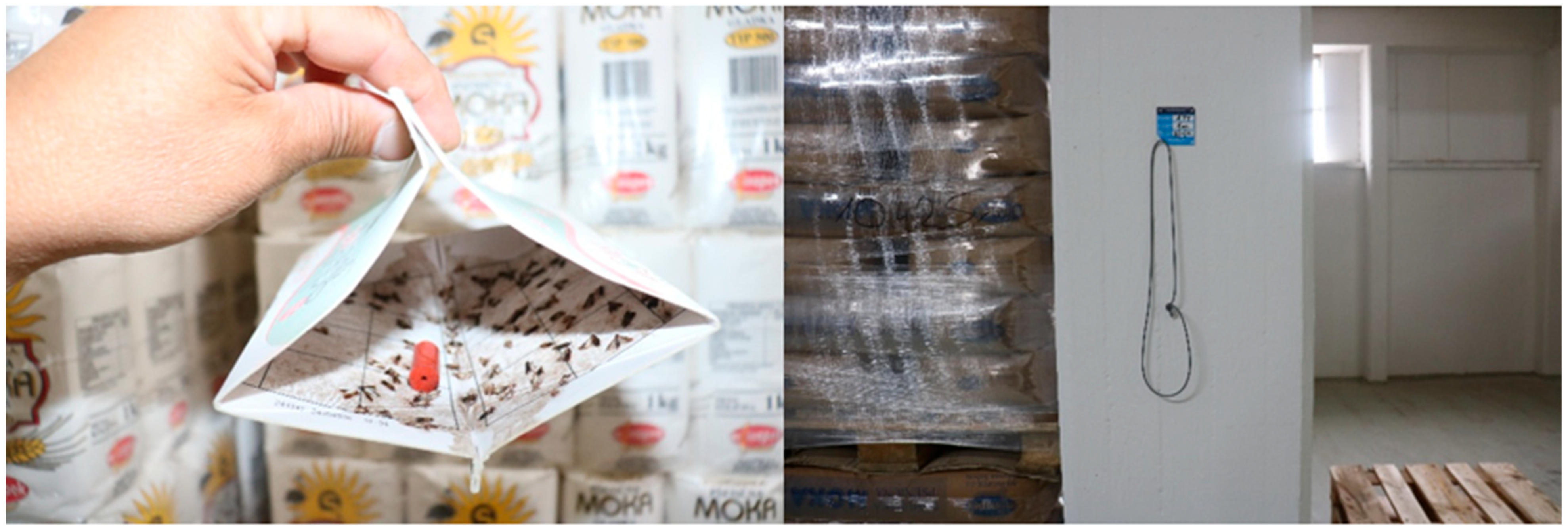
Pheromone-based monitoring is a key component of IPM programs and plays an essential role in supporting the effective implementation of MD [3,6]. Pheromone-baited traps are used primarily for monitoring purposes rather than for direct population suppression and provide information on male responsiveness, spatial activity patterns and temporal population trends under MD conditions (Figure 2) [21,50,63]. Traps are commonly deployed to establish baseline population levels prior to MD implementation and to evaluate treatment performance following dispenser deployment [7,21,50]. Under MD conditions, reductions in trap catches primarily reflect behavioral interference and reduced male orientation to pheromone sources, rather than direct measures of population density [3,50,63,64]. Nonetheless, such monitoring data are widely used to assess MD performance and to guide management decisions [3,21,50].
Pheromone-based monitoring also supports early detection and rapid response strategies, enabling MD to be implemented at low pest densities, a condition under which this approach is most effective [26,38]. Action thresholds derived from trap captures can further inform adjustments to dispenser placement, emission rates and reapplication schedules to maintain effective pheromone coverage within storage and processing facilities [3,21].

7.3. Synergies with Sanitation, Structural Improvements and Environmental Control

Effective MD depends not only on pheromone release technology but also on the quality of the treated environment. Facilities sanitation, including the removal of infested residues, sealing of cracks and reduction in dust, has been demonstrated to minimize background pheromone interference and reduce the number of pest habitats [26,34,44]. Structural modifications that stabilize airflow and temperature within storage areas help maintain consistent pheromone distribution, while controlling relative humidity can enhance the stability of pheromone formulations [12,82]. These measures increase the precision and persistence of disruption effects, particularly in large, structurally complex facilities [21].

7.4. Integration with Physical and Biological Control Methods

MD can be synergistically combined with physical treatments, such as temperature modification or controlled atmosphere conditions, which directly reduce pest survival while MD limits reproduction and recolonization [65,70]. The utilization of biological control agents, such as parasitoids, has demonstrated particular efficacy as a complementary measure. Parasitoid wasps (e.g., Trichogramma spp. and H. hebetor) have been shown to be highly effective in targeting the eggs and larvae of moth pests, thereby effectively filling the functional gap left by MD, which primarily disrupts adult mating [18,44]. This multi-tactic approach has been shown to reduce the possibility of pest reappearance and can sustain minimal population levels without the need for chemical treatment [26,82].

7.5. Contribution of MD to Reduced Chemical Dependency in IPM

Beyond specific integration tactics, MD contributes to broader IPM objectives by reducing reliance on chemical insecticides and fumigants in stored-product protection systems. Conventional fumigation methods, such as fosfin or controlled atmosphere treatments, are increasingly constrained by regulatory restrictions and the development of resistance in several stored-product pest species [2,26]. When incorporated into IPM programs, MD can extend intervals between chemical treatments, support resistance management strategies and occupational safety. In some storage facilities, the combination of MD with reduced-dose fumigants or targeted chemical interventions has been shown to maintain pest populations below economic thresholds while decreasing the frequency of chemical applications [3].
An overview of how MD integrates with other IPM components and contributes to reduced chemical dependency is summarized in Table 2 [3,26]. Together, these approaches demonstrate that MD functions not only as a behavioral control tactic but also as a key enabling tool for transitioning stored-product pest management toward more sustainable, low-input systems [7,26,70].

8. Future Research and Perspectives

Future research on MD in stored-product protection should focus on enhancing delivery systems, evaluating the efficacy of the MD method under commercial conditions, examining the potential for MD to be applied to additional pest taxa and integrating emerging monitoring technologies [26,70].

8.1. Improved Pheromone Delivery Systems

The performance of MD depends on maintaining stable pheromone concentrations over extended periods. Advances in microencapsulation, biodegradable polymers and smart release devices offer the potential for more stable and sustained pheromone emission, even in large or structurally complex facilities [12,74,83,84]. Nanomaterials and programmable release devices may allow precise control of release rates, improving efficiency while reducing labor requirements [12,48].

8.2. Long-Term Validation and Performance Optimization

Laboratory studies have demonstrated high efficacy of MD; however, its performance often declines under operational storage conditions due to variable airflow, pest distribution and environmental variability. The lack of correlation between laboratory efficacy and field performance highlights the necessity for large-scale, long-term field trials in commercial storage and processing environments to optimize dispenser density, placement and reapplication intervals [21,26,60,85]. Integration of modeling approaches with spatial monitoring has the potential to enhance prediction of pheromone plume dynamics and optimize dispenser deployment strategies [9,12,64].

8.3. Expanding MD to Other Pest-Taxa

The expansion of MD beyond Lepidoptera represents an important area of research in the field of stored-product pest management. While current applications are well established for Pyralid moths, extending behavioral interference strategies to Coleoptera and other pest taxa, such as Dermestidae and Tenebrionidae, remains largely unexplored. Advances in understanding the chemical ecology of Sitophilus spp. and other beetles—particularly their aggregation and host-finding behaviors—could enable innovative approaches that combine pheromones with kairomones, repellents or attract-and-kill systems [23,25,26,41,42]. Such integrated semiochemical tactics have the potential not only to suppress reproduction but also to reduce infestation spread within complex storage systems [41].

8.4. Integration with Automated Sensing and Digital Monitoring

The integration of pheromone-based control with automated sensing and digital monitoring technologies represents a promising direction for the future of stored-product pest management. Traps joined with optical sensors or camera systems have been shown to provide continuous recording of pest captures, thereby offering real-time feedback on MD performance and population trends [27]. The integration of these monitoring systems with data analytics and remote-controlled release devices could enable adaptive management frameworks that automatically adjust pheromone emission in response to pest pressure or environmental conditions, thereby maximizing efficacy while minimizing costs and chemical inputs [14,21,53,70]. Advancement of such technologies will require strong collaboration between entomologists and chemical and material engineers to bridge the gap between experimental success and the development of practical, commercial solutions for the sustainable protection of stored products [61,65].

9. Conclusions

MD is a promising, environmentally friendly approach for the management of stored-product pests, particularly moths (Lepidoptera) such as P. interpunctella and E. kuehniella. The success of this approach relies on species-specific knowledge of pheromone communication, reproductive behavior and ecological factors, enabling targeted interference with mating and population growth. Laboratory and field studies consistently demonstrate high efficacy under controlled conditions, while further research in storage facilities is influenced by environmental variables, dispenser type, spatial deployment and sanitation practices.
In contrast, the application of MD to stored-product beetles (Coleoptera) remains limited due to differences in pheromone chemistry, male and female attraction, and more complex feeding behaviors. Recent strategies that combine aggregation pheromones with kairomones or attract-and-kill systems show potential but require further development. Integration of MD into broader IPM programs enhances its effectiveness, particularly when combined with monitoring, sanitation, biological control and physical treatments. This multidisciplinary approach facilitates more sustainable suppression of pest populations, reduces reliance on broad-spectrum insecticides and fumigants, and aligns with regulatory and commercial pressures for safer storage practices.
Future research should focus on improved pheromone delivery systems, long-term validation under commercial conditions, expansion to other pest taxa and integration with automated monitoring and data-driven adaptive management. Overall, MD is a valuable tool in modern IPM, offering targeted, species-specific control while minimizing chemical inputs and promoting sustainable stored-product protection.

Author Contributions

Conceptualization, S.A.Z. and S.T.; methodology, S.A.Z. and S.T.; software, S.A.Z.; validation, S.A.Z., T.B. and S.T.; formal analysis, S.A.Z.; investigation, S.A.Z.; resources, S.T.; data curation, S.A.Z.; writing—original draft preparation, S.A.Z.; writing—review and editing, S.A.Z. and S.T.; visualization, S.A.Z., T.B. and S.T.; supervision, S.T.; project administration, S.T.; funding acquisition, S.T. All authors have read and agreed to the published version of the manuscript.

Funding

This review paper was written as a part of the V4-2414 research project, which received financial support from the Slovenian Research and Innovation Agency (ARIS) and the Ministry of Agriculture, Forestry, and Food of the Republic of Slovenia (MKGP).

Data Availability Statement

No new data were created or analyzed in this study.

Acknowledgments

During the preparation of this manuscript no Generative Artificial Intelligence (GenAI) tools were used.

Conflicts of Interest

The authors declare no conflicts of interest. The funders had no role in the design of the study; in the collection, analyses, or interpretation of data; in the writing of the manuscript; or in the decision to publish the results.

References

  1. Cox, P.D. Potential for using semiochemicals to protect stored products from insect infestation. J. Stored Prod. Res. 2004, 40, 1–25. [Google Scholar] [CrossRef]
  2. Upadhyay, R.K.; Ahmad, S. Management strategies for control of stored grain insect pests in farmer stores and public warehouses. World J. Agric. Sci. 2011, 7, 527–549. [Google Scholar]
  3. Morrison, W.R., III; Scully, E.D.; Campbell, J.F. Towards developing areawide semiochemical-mediated, behaviorally based integrated pest management programs for stored product insects. Pest Manag. Sci. 2021, 77, 2667–2682. [Google Scholar] [CrossRef]
  4. Athanassiou, C.G.; Rumbos, C.I.; Sakka, M.; Sotiroudas, V. Insecticidal efficacy of phosphine fumigation at low pressure against major stored-product insect species in a commercial dried fig processing facility. Crop Prot. 2016, 90, 177–185. [Google Scholar] [CrossRef]
  5. Rotschild, G.H.L. Mating disruption in lepidopterous pests: Current status and future prospects. In Management of Insect Pests with Semiochemicals; Mitchell, E.R., Ed.; Plenum Press: New York, NY, USA, 1981; pp. 207–228. [Google Scholar]
  6. Phillips, T.W. Semiochemicals of stored-product insects: Research and applications. J. Stored Prod. Res. 1997, 33, 17–30. [Google Scholar] [CrossRef]
  7. Trematerra, P. Advances in the use of pheromones for stored-product protection. J. Pest Sci. 2012, 85, 285–299. [Google Scholar] [CrossRef]
  8. Savoldelli, S.; Jucker, C.; Lupi, D.; Malabusini, S.; Peri, E.; Guarino, S. Pheromone-mediated mating disruption of the European grain moth Nemapogon granellus in ham factories. J. Stored Prod. Res. 2023, 102, 102117. [Google Scholar] [CrossRef]
  9. Miller, J.R.; Gut, L.J. Mating disruption for the 21st century: Matching technology with mechanism. Environ. Entomol. 2015, 44, 427–453. [Google Scholar] [CrossRef]
  10. Savoldelli, S.; Trematerra, P. Mass-trapping, mating-disruption and attracticide methods for managing stored-product insects: Success stories and research needs. Stewart Postharvest Rev. 2011, 7, 1–8. [Google Scholar] [CrossRef]
  11. Lance, D.R.; Leonard, D.S.; Mastro, V.C.; Walters, M.L. Mating disruption as a suppression tactic in programs targeting regulated lepidopteran pests in the US. J. Chem. Ecol. 2016, 42, 590–605. [Google Scholar] [CrossRef] [PubMed]
  12. Benelli, G.; Lucchi, A.; Thomson, D.; Ioratti, C. Sex pheromone aerosol devices for mating disruption: Challenges for a brighter future. Insects 2019, 10, 308. [Google Scholar] [CrossRef]
  13. Saba, Z.; Kumar, U.S.; Deepak, Y.; Babu, D.Y.; Sadguru, P. Mating disruption in insect pests by sex pheromones: A profound integrated pest management technique. Int. J. Zool. Investig. 2022, 8, 689–700. [Google Scholar] [CrossRef]
  14. Mevada, R.; Sisodiya, D.B.; Parmar, R.G.; Prajapati, D.R. Mating disruption: An ecological step towards sustainable pest management. J. Eco-Friendly Agric. 2023, 18, 144–150. [Google Scholar] [CrossRef]
  15. Wijayaratne, L.K.W.; Burks, C.S. Persistence of mating suppression of the Indian meal moth Plodia interpunctella in the presence and absence of commercial mating disruption dispensers. Insects 2020, 11, 701. [Google Scholar] [CrossRef]
  16. Mohandass, S.; Arthur, F.H.; Zhu, K.Y.; Throne, J.E. Biology and management of Plodia interpunctella in stored products. J. Stored Prod. Res. 2007, 43, 302–311. [Google Scholar] [CrossRef]
  17. Sieminska, E.; Ryne, C.; Löfstedt, C.; Anderbrant, O. Long-term pheromone-mediated mating disruption of the Mediterranean flour moth, Ephestia kuehniella, in a flour mill. Entomol. Exp. Appl. 2009, 131, 294–299. [Google Scholar] [CrossRef]
  18. Trematerra, P. Efficacy of pheromones for managing the Mediterranean flour moth, Ephestia kuehniella Zeller, in food and feed processing facilities. In Proceedings of the 12th International Working Conference on Stored Product Protection, Berlin, Germany, 7–11 October 2018; pp. 7–11. [Google Scholar] [CrossRef]
  19. Ryne, C.; Svensson, G.P.; Löfstedt, C. Mating disruption of Plodia interpunctella in small-scale plots: Effects of pheromone blend, emission rates and population density. J. Chem. Ecol. 2001, 27, 2109–2124. [Google Scholar] [CrossRef] [PubMed]
  20. Trematerra, P.; Athanassiou, C.G.; Sciarretta, A.; Kavallieratos, N.G.; Buchelos, C.T. Efficacy of the auto-confusion system for mating disruption of Ephestia kuehniella and Plodia interpunctella. J. Stored Prod. Res. 2013, 55, 90–98. [Google Scholar] [CrossRef]
  21. Hasan, M.M.; Athanassiou, C.G.; Hossain, M.A. Estimating long-term spatial distribution of Plodia interpunctella in various food facilities in Bangladesh through pheromone-baited traps. Sci. Rep. 2022, 12, 15986. [Google Scholar] [CrossRef]
  22. Lindenmayer, J.C.; Campbell, J.F.; Miller, J.F.; Gerken, A.R. Evaluation of microencapsulated liquid pheromone for the control of Indian meal moth (Plodia interpunctella) in a retail environment. J. Stored Prod. Res. 2025, 110, 102479. [Google Scholar] [CrossRef]
  23. Guedes, N.M.P.; Guedes, R.N.C.; Campbell, J.F.; Throne, J.E. Mating behaviour and reproductive output in insecticide-resistant and -susceptible strains of the maize weevil (Sitophilus zeamais). Ann. Appl. Biol. 2017, 170, 415–424. [Google Scholar] [CrossRef]
  24. Vélez, M.; Botina, L.L.; Turchen, L.M.; Barbosa, W.F.; Guedes, R.N.C. Spinosad- and deltamethrin-induced impact on mating and reproductive output of the maize weevil Sitophilus zeamais. J. Econ. Entomol. 2018, 111, 950–958. [Google Scholar] [CrossRef]
  25. Diab, M.K.; Abu-Elsaoud, A.M.; Ghareeb, E.M.; Salama, M.G. Sustainable approaches for managing Sitophilus granarius in stored grains. J. Stored Prod. Res. 2025, 113, 102681. [Google Scholar] [CrossRef]
  26. Phillips, T.W.; Throne, J.E. Biorational approaches to managing stored-product insects. Annu. Rev. Entomol. 2010, 55, 375–397. [Google Scholar] [CrossRef]
  27. Stejskal, V.; Aulicky, R.; Kucerova, Z. Pest control strategies and damage potential of seed-infesting pests in Czech stores: A review. Plant Prot. Sci. 2014, 50, 165–173. [Google Scholar] [CrossRef]
  28. Nikolaou, P.; Marciniak, P.; Adamski, Z.; Ntalli, N. Controlling stored-product pests with plant secondary metabolites: A review. Agriculture 2021, 11, 879. [Google Scholar] [CrossRef]
  29. Huang, F.; Subramanyam, B. Effects of delayed mating on reproductive performance of Plodia interpunctella (Hübner) (Lepidoptera: Pyralidae). J. Stored Prod. Res. 2003, 39, 53–63. [Google Scholar] [CrossRef]
  30. Nansen, C.; Phillips, T.W.; Parajulee, M.N.; Franqui, R.A. Comparison of direct and indirect sampling procedures for Plodia interpunctella in a maize storage facility. J. Stored Prod. Res. 2004, 40, 151–168. [Google Scholar] [CrossRef]
  31. Plarre, R. Pheromones and other semiochemicals of stored product insects: A historical review, current application, and perspective needs. In 100 Years Research in Plant Protection: Important Areas of Research in Stored Product Protection; Reichmuth, C., Ed.; Biologische Bundesanstalt für Land- und Forstwirtschaft: Berlin, Germany, 1998; pp. 13–83. [Google Scholar]
  32. Vukajlović, F.N.; Predojević, D.Z.; Miljković, K.O.; Tanasković, S.T.; Gvozdenac, S.M.; Perišić, V.M.; Grbović, F.J. Life history of Plodia interpunctella on dried fruits and nuts: Effects of macronutrients and secondary metabolites on immature stages. J. Stored Prod. Res. 2019, 83, 243–253. [Google Scholar] [CrossRef]
  33. Dowdy, A.K.; McGaughey, W.H. Seasonal activity of stored-product insects in and around farm-stored wheat. J. Econ. Entomol. 1994, 87, 1351–1358. [Google Scholar] [CrossRef]
  34. Arthur, F.H.; Campbell, J.F.; Toews, M.D. Distribution, abundance, and seasonal patterns of stored-product beetles in a commercial food storage facility. J. Stored Prod. Res. 2014, 56, 21–32. [Google Scholar] [CrossRef]
  35. Fadamiro, H.Y.; Baker, T.C. Pheromone puffs suppress mating by Plodia interpunctella and Sitotroga cerealella in an infested corn store. Entomol. Exp. Appl. 2002, 102, 239–251. [Google Scholar] [CrossRef]
  36. Olsson, P.O.C.; Anderbrant, O.; Löfstedt, C. Flight and oviposition behavior of Ephestia cautella and Plodia interpunctella in response to odors of different chocolate products. J. Insect Behav. 2005, 18, 363–380. [Google Scholar] [CrossRef]
  37. Gerken, A.R.; Campbell, J.F. Spatial and temporal variation in stored-product insect pest distributions and implications for pest management in processing and storage facilities. Ann. Entomol. Soc. Am. 2022, 115, 239–252. [Google Scholar] [CrossRef]
  38. Morrison, W.R.; Agrafioti, P.; Domingue, M.J.; Scheff, D.S.; Lampiri, E.; Gourgouta, M.; Baliota, G.V.; Sakka, M.; Myers, S.W.; Athanassiou, C.G. Comparison of different traps and attractants in three food processing facilities in Greece on the capture of stored product insects. J. Econ. Entomol. 2023, 116, 1432–1446. [Google Scholar] [CrossRef]
  39. Amoah, B.A.; Mahroof, R.M.; Gerken, A.R.; Campbell, J.F. Effect of delayed mating on longevity and reproductive performance of Lasioderma serricorne (Coleoptera: Anobiidae). J. Econ. Entomol. 2019, 112, 475–484. [Google Scholar] [CrossRef]
  40. Welter, S.C.; Pickel, C.; Millar, J.; Cave, F.; Van Steenwyk, R.; Dunley, J.E. Pheromone mating disruption offers management options for key pests. Calif. Agric. 2005, 59, 16–22. [Google Scholar] [CrossRef]
  41. Athanassiou, C.G.; Buchelos, C.T. Grain properties and insect distribution trends in silos of wheat. J. Stored Prod. Res. 2020, 88, 101632. [Google Scholar] [CrossRef]
  42. Quintero, H.; Quintero Cortes, J.; Plata-Rueda, A.; Martínez, L.C. Azadirachtin-mediated responses in the maize weevil, Sitophilus zeamais (Coleoptera: Curculionidae). Insects 2025, 16, 294. [Google Scholar] [CrossRef] [PubMed]
  43. Kučerova, Z.; Aulicky, R.; Stejskal, V. Outdoor occurrence of stored-product pests (Coleoptera) in the vicinity of a grain store. Plant Prot. Sci. 2005, 41, 86–89. [Google Scholar] [CrossRef]
  44. Trematerra, P.; Oliviero, A.; Savoldelli, S.; Schöller, M. Controlling infestation of a chocolate factory by Plodia interpunctella by combining mating disruption and the parasitoid Habrobracon hebetor. Insect Sci. 2016, 24, 503–510. [Google Scholar] [CrossRef] [PubMed]
  45. Shani, A.; Clearwater, J. Evasion of mating disruption in Ephestia cautella (Walker) by increased pheromone production relative to that of undisrupted populations. J. Stored Prod. Res. 2001, 37, 237–252. [Google Scholar] [CrossRef] [PubMed]
  46. Cardé, R.T. Mating disruption with pheromones for control of moth pests in area-wide management programmes. In Area-Wide Integrated Pest Management; Hendrichs, J., Pereira, R., Vreysen, M.J.B., Eds.; CRC Press: Boca Raton, FL, USA, 2021; pp. 779–794. [Google Scholar]
  47. Stelinski, L.J.; Gut, L.J.; Miller, J.R. An attempt to increase efficacy of moth mating disruption by co-releasing pheromones and kairomones and to understand possible underlying mechanisms of this technique. Environ. Entomol. 2013, 42, 158–166. [Google Scholar] [CrossRef]
  48. Baker, T.C.; Mafra-Neto, A.; Dittl, T.; Rice, M.E. A novel controlled-release device for disrupting sex pheromone communications in moths. IOBC WPRS Bull. 1997, 20, 141–149. [Google Scholar]
  49. Yamanaka, T. Mating disruption or mass trapping? Numerical simulation analysis of a control strategy for lepidopteran pests. Popul. Ecol. 2007, 49, 75–86. [Google Scholar] [CrossRef]
  50. Burks, C.S.; Brandl, D.G.; Kuenen, L.P.S.; Reyes, C.C.; Fisher, J.M. Pheromone traps for monitoring Plodia interpunctella (Hübner) (Lepidoptera: Pyralidae) in the presence of mating disruption. In Proceedings of the 10th International Working Conference on Stored Product Protection, Estoril, Portugal, 27 June–2 July 2010; Julius-Kühn-Archiv: Quedlinburg, Germany, 2010; Volume 425, pp. 79–84. [Google Scholar] [CrossRef]
  51. Knight, A.L.; Larson, T.L.; Ketner, K.; Hilton, R.; Hawkins, L. Field evaluations of concentrated spray applications of microencapsulated sex pheromone for codling moth (Lepidoptera: Tortricidae). Environ. Entomol. 2008, 37, 980–989. [Google Scholar] [CrossRef]
  52. Huggett, N.J.; Storm, C.G.; Smith, M.J. Behavioural effects of pheromone-based control system EXosexTM SPTab on male Indianmeal moth, Plodia interpunctella. In Proceedings of the 10th International Working Conference on Stored Product Protection, Estoril, Portugal, 27 June–2 July 2010; Julius-Kühn-Archiv: Quedlinburg, Germany, 2010; Volume 425, pp. 119–124. [Google Scholar] [CrossRef]
  53. Gerken, A.R.; Dryer, D.; Abts, S.R.; Campbell, J.F. Behavioral Response of Unmated Female Plodia interpunctella Hübner (Lepidoptera: Pyralidae) to Synthetic Sex Pheromone Lure. Environ. Entomol. 2022, 51, 1200–1209. [Google Scholar] [CrossRef]
  54. Mori, B.A.; Evenden, M.L. When mating disruption does not disrupt mating: Fitness consequences of delayed mating in moths. Entomol. Exp. Appl. 2012, 146, 50–65. [Google Scholar] [CrossRef]
  55. Akinneye, J.O.; Oyeniyi, E.A.; Manuwa, O.A. Delayed mating: A non-chemical control strategy for the management of Plodia interpunctella infesting stored products in Nigeria. Trends Appl. Sci. Res. 2020, 15, 74–80. [Google Scholar]
  56. Prevett, P.F.; Benton, F.P.; Hall, D.R.; Hodges, R.J.; dos Santos Serodio, R. Suppression of mating in Ephestia cautella (Walker) (Lepidoptera: Phycitidae) using microencapsulated formula-tions of synthetic sex pheromone. J. Stored Prod. Res. 1989, 25, 147–154. [Google Scholar] [CrossRef]
  57. Trematerra, P.; Spina, G. Mating-Disruption Trials for Control of Mediterranean Flour Moth, Ephestia kuehniella Zeller (Lepidoptera: Pyra-lidae), in Traditional Flour Mills. J. Food Prot. 2013, 76, 456–461. [Google Scholar] [CrossRef]
  58. Witzgall, P.; Kirsch, P.; Cork, A. Sex pheromones and their impact on pest management. J. Chem. Ecol. 2010, 36, 80–100. [Google Scholar] [CrossRef]
  59. Prakash, A.; Nandagopal, V.; Prasad, T.V.; Rao, J.; Korada, R.R. Pheromones for the management of insect pests of stored products: A review. J. Appl. Zool. Res. 2015, 26, 11–36. [Google Scholar]
  60. Trematerra, P.; Athanassiou, C.; Stejskal, V.; Sciarretta, A.; Kavallieratos, N.; Palyvos, N. Large-scale mating disruption of Ephestia spp. and Plodia interpunctella in Czech Republic, Greece and Italy. J. Appl. Entomol. 2011, 135, 749–762. [Google Scholar] [CrossRef]
  61. Abshire, J.; Harman, R.; Bruce, A.; Gillette, S.; Maille, J.M.; Ranabhat, S.; Scully, E.D.; Zhu, K.Y.; Gerken, A.R.; Morrison, W.R. Flight capacity and behavior of Ephestia kuehniella in response to kairomonal and pheromonal stimuli. Environ. Entomol. 2024, 53, 567–576. [Google Scholar] [CrossRef] [PubMed]
  62. Burks, C.S.; McLaughlin, J.R.; Miller, J.R.; Brandl, D.G. Mating disruption for control of Plodia interpunctella (Hübner) (Lepidoptera: Pyralidae) in dried beans. J. Stored Prod. Res. 2011, 47, 216–221. [Google Scholar] [CrossRef]
  63. Burks, C.S.; Kuenen, L.P.S. Effect of mating disruption and lure load on the number of Plodia interpunctella (Hübner) (Lepidoptera: Pyralidae) males captured in pheromone traps. J. Stored Prod. Res. 2012, 49, 189–195. [Google Scholar] [CrossRef]
  64. Ryne, C.; Svensson, G.P.; Anderbrant, O.; Löfstedt, C. Evaluation of long-term mating disruption of Ephestia kuehniella and Plodia interpunctella (Lepidoptera: Pyralidae) in indoor storage facilities by pheromone traps and monitoring of relative aerial concentrations of pheromone. J. Econ. Entomol. 2007, 100, 1017–1025. [Google Scholar] [CrossRef] [PubMed]
  65. Athanassiou, C.G.; Kavallieratos, N.G.; Sciaretta, A.; Trematerra, P. Mating disruption of Ephestia kuehniella (Zeller) (Lepidoptera: Pyralidae) in a storage facility: Spatio-temporal distribution changed after long-term application. J. Stored Prod. Res. 2016, 67, 1–12. [Google Scholar] [CrossRef]
  66. Hasan, M.M.; Mahroof, R.M.; Aikins, M.J.; Athanassiou, C.G.; Phillips, T.W. Pheromone-based auto-confusion for mating disruption of Plodia interpunctella (Lepidoptera: Pyralidae) in structures with raw and processed grain products. J. Stored Prod. Res. 2023, 104, 102201. [Google Scholar] [CrossRef]
  67. Campbell, J.F.; Miller, J.; Petersen, J.; Lingren, B. Evaluation of mating disruption for suppression of Plodia interpunctella populations in retail stores. Insects 2025, 16, 691. [Google Scholar] [CrossRef] [PubMed]
  68. Sutherland, J.; Athanassiou, C.; Stejskal, V.; Trematerra, P. Potential of using synthetic sex pheromone for mating disruption of stored product Pyralidae. IOBC/WPRS Bull. 2011, 69, 67–78. [Google Scholar]
  69. Campos, M.; Phillips, T.W. Attract-and-kill and other pheromone-based methods to suppress populations of the Indianmeal moth (Lepidoptera: Pyralidae). J. Econ. Entomol. 2014, 107, 473–480. [Google Scholar] [CrossRef]
  70. Athanassiou, C.G.; Agrafioti, P. Utilizing mating disruption in stored product protection: Shifting from the past to the future. J. Plant Dis. Prot. 2025, 132, 59. [Google Scholar] [CrossRef]
  71. Mahroof, R.M.; Phillips, T.W. Mating disruption of Lasioderma serricorne (Coleoptera: Anobiidae) in stored product habitats using the synthetic pheromone serricornin. J. Appl. Entomol. 2013, 138, 378–386. [Google Scholar] [CrossRef]
  72. Campbell, J.F.; Hagstrum, D.W. Patch exploitation by Tribolium castaneum: Movement patterns, distribution, and oviposition. J. Stored Prod. Res. 2002, 38, 55–68. [Google Scholar] [CrossRef]
  73. Doud, C.W.; Phillips, T.W. Responses of red flour beetle adults, Tribolium castaneum (Coleoptera: Tenebrionidae), and other stored product beetles to different pheromone trap designs. Insects 2020, 11, 733. [Google Scholar] [CrossRef]
  74. Jian, F. Influences of stored product insect movements on integrated pest management decisions. Insects 2019, 10, 100. [Google Scholar] [CrossRef]
  75. Gerken, A.R.; Scully, E.D.; Campbell, J.F. Red flour beetle (Coleoptera: Tenebrionidae) response to volatile cues varies with strain and behavioral assay. Environ. Entomol. 2018, 47, 1252–1265. [Google Scholar] [CrossRef] [PubMed]
  76. Gries, R.; Khaskin, G.; Cepeda, P.; Gries, G.; Britton, R.; Borden, J.H. Attractive host kairomones for the cigarette beetle, Lasioderma serricorne (Coleoptera: Anobiidae). J. Stored Prod. Res. 2022, 99, 102029. [Google Scholar] [CrossRef]
  77. Gutierrez, M.A.M.; Cunha, A.L.; dos Santos, C.G.; Dos Santos, J.K.B.; Dos Santos, E.; Elias, J.J.; Santos, A.B.; Da Rocha, J.R.; Dos Santos, L.C.; Oliveira, D.J.A.; et al. Review on stored grain insect pheromones. Int. J. Agron. Agric. Res. 2023, 23, 28–59. [Google Scholar]
  78. Senevirathne, W.M.S.S.; Premathilaka, P.A.P.I.; Egodawatta, W.C.P.; Morrison, W.R., III; Wijayaratne, L.K.W. Monitoring of Tribolium castaneum (Coleoptera: Tenebrionidae) adults following exposure to abamectin by traps with 4,8-dimethyldecanal and commercial kairomone. J. Stored Prod. Res. 2025, 114, 102742. [Google Scholar] [CrossRef]
  79. Bhagat, D.; Samanta, S.K.; Bhattacharya, S. Efficient management of fruit pests by pheromone nanogels. Sci. Rep. 2013, 3, 1294. [Google Scholar] [CrossRef] [PubMed]
  80. Jasrotia, P.; Nagpal, M.; Mishra, C.N.; Sharma, A.K.; Kumar, S.; Kamble, U.; Bhardwaj, A.K.; Kashyap, P.L.; Kumar, S.; Singh, G.P. Nanomaterials for postharvest management of insect pests: Current state and future perspectives. Front. Nanotechnol. 2022, 3, 811056. [Google Scholar] [CrossRef]
  81. Tao, R.; You, C.; Qu, Q.; Zhang, X.; Deng, Y.; Ma, W.; Huang, C. Recent advances in the design of controlled- and sustained-release micro-nanocarriers of pesticide. Environ. Sci. Nano 2023, 10, 351–371. [Google Scholar] [CrossRef]
  82. Anukiruthika, T.; Jayas, D.S. Chemical cues in grain storage: A review on semiochemical types, pest behavior, and control strategies. J. Stored Prod. Res. 2025, 113, 102674. [Google Scholar] [CrossRef]
  83. Hagstrum, D.W.; Athanassiou, C.G. Improving stored product insect pest management: From theory to practice. Insects 2019, 10, 332. [Google Scholar] [CrossRef] [PubMed]
  84. Anukiruthika, T.; Jian, F.; Jayas, D.S. Movement and behavioral response of stored product insects under stored grain environments—A review. J. Stored Prod. Res. 2021, 90, 101752. [Google Scholar] [CrossRef]
  85. Altunç, Y.E.; Sakka, M.K.; Gourgouta, M.; Morrison, W.R.; Güncan, A.; Athanassiou, C.G. Exploring efficacy of pyrethroid-incorporated nets for the control of stored product moth species: Immediate and delayed effects on Ephestia kuehniella and Plodia interpunctella (Lepidoptera: Pyralidae). J. Econ. Entomol. 2024, 115, 2159–2167. [Google Scholar] [CrossRef]
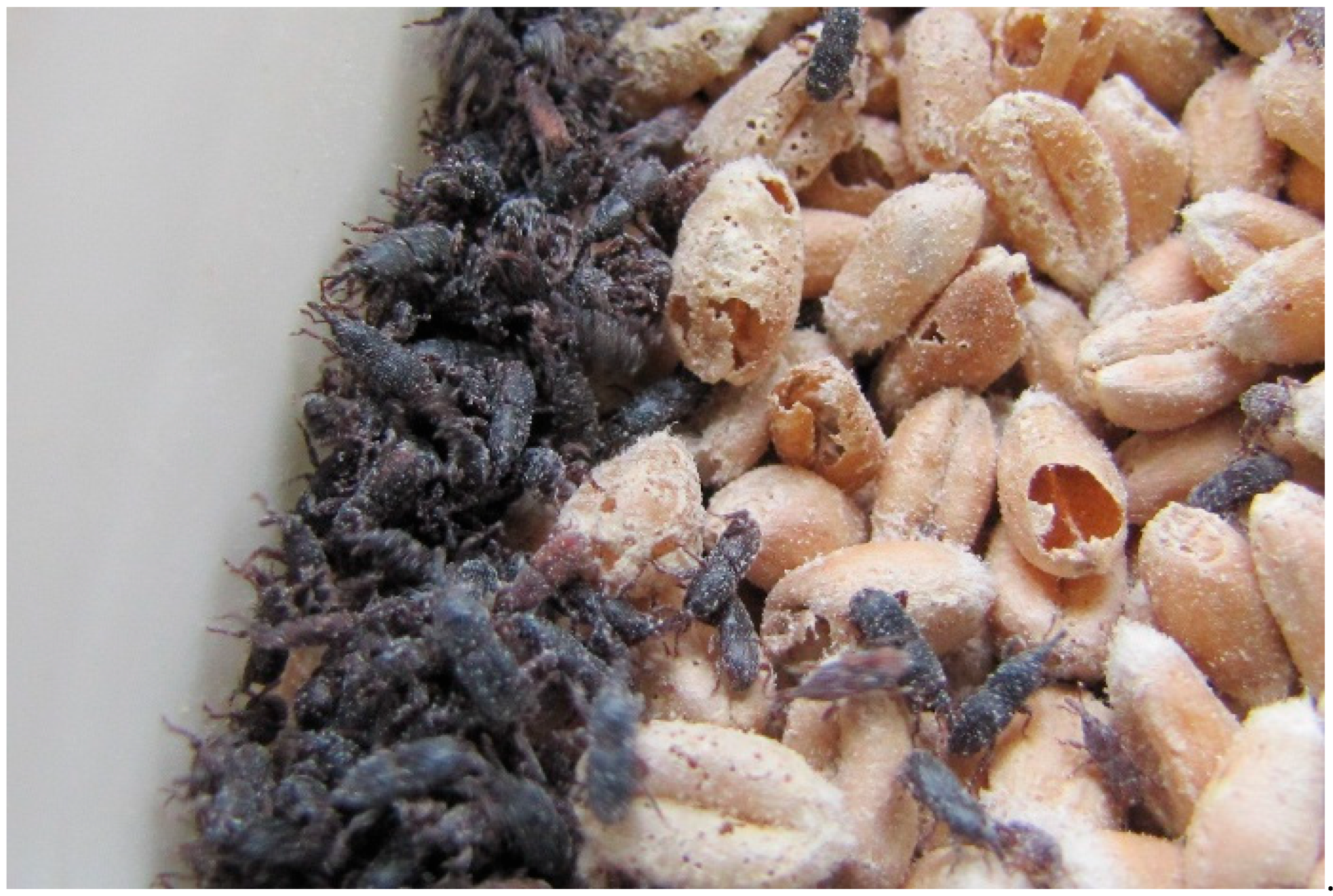
Figure 1. Damage caused by Sitophilus spp. in stored wheat grains. Heavily infested kernels show characteristic exit holes, while the dark area on the left represents a dense aggregation of adult weevils associated with severe infestation (photo: S. Trdan).
Agronomy 16 00039 g001
Figure 2. Pheromone-based tools used in stored-product moth management. A pheromone-baited trap for monitoring Plodia interpunctella and Ephestia kuehniella males (left) and a pheromone-based MD dispenser (MD string) used for atmospheric pheromone release (right). Traps are used exclusively for monitoring purposes and not for population suppression. All products were photographed in a flour warehouse of the Mlinopek company in Murska Sobota (Slovenia) (photo: S. Trdan; products by Gea Milano, Milano, Italy).
Agronomy 16 00039 g002
Table 1. Reported Effectiveness of MD Against Major Stored-Product Moths.
Target SpeciesStudy SitePheromone FormulationMeasured OutcomeEfficacy (%) *References
P. interpunctella, S. cerealellaLaboratory Controlled pheromone puff systemReduction in mating95–100[35]
P. interpunctella, E. kuehniellaFood storage facilities (auto-confusion system) Aerosol dispenser (continuous release) Trap catch reduction 60–80[20]
P. interpunctellaChocolate factoryMD + parasitoid Habrobracon hebetorInfestation reduction 70–90 [44]
Stored-product Lepidoptera (different species) Processing facilities Multiple dispenser and attractant types Trap catch reduction50–75 [38]
Various moth pests Field trials Hand-applied dispensers Mating suppression 80–95 [40]
Grapholita molesta (model species) Comparative laboratory-field study Combined pheromone + kairomone Reduction in mating 85–95 [47]
* Efficacy values are based on the percentage reduction in mating success or trap capture as reported by individual authors.
Table 2. Integration of MD with other IPM strategies in stored-product pest management.
Integration StrategyMechanism or Contribution Expected Benefits *References
Pheromone monitoring and trappingEstablishes population thresholds, tracks MD performanceOptimized timing and placement of MD; early detection [21,50]
Sanitation and structural (facilities) improvementsRemoval of residues and sealing of cracks; improved airflowReduces pest habitats and pheromone background interference; enhances pheromone distribution [12,44]
Temperature or controlled atmosphere treatments Physical suppression of pest populations through heat or low oxygen Reduces residual populations and synergizes with MD by limiting recolonization [2,4]
Biological control (parasitoids) Parasitism of eggs or larvae complementing adult MD Synergistic suppression: long-term pest regulation [26,44]
Reduced chemical or fumigant use Replacement or alternation with semiochemical-based measures Resistance management, environmental safety, regulatory compliance [3,27]
* The data presented in the table has been collated from the references listed in the last column of the table.
Disclaimer/Publisher’s Note: The statements, opinions and data contained in all publications are solely those of the individual author(s) and contributor(s) and not of MDPI and/or the editor(s). MDPI and/or the editor(s) disclaim responsibility for any injury to people or property resulting from any ideas, methods, instructions or products referred to in the content.