Article

Impact of Tire Wear Particle (TWP)-Derived Dissolved Organic Matter (DOM) on Soil Properties and Heavy Metal Mobility


1
Institute of Agricultural Resources and Environment, Guangdong Academy of Agricultural Sciences, Guangzhou 510640, China
2
Pro (Guangzhou) Environmental Protection Technology Co., Ltd., Guangzhou 510700, China
3
Institute of Nanfan & Seed Industry, Guangdong Academy of Sciences, Guangzhou 510316, China
4
Key Laboratory of Agricultural Green and Low Carbon, Ministry of Agriculture and Rural Affairs, Beijing 100193, China
5
School of Materials and Chemical Engineering, Hunan Urban University, Yiyang 413000, China
6
School of Tropical Agriculture and Forestry, Hainan University, Haikou 570228, China
*
Author to whom correspondence should be addressed.
Agronomy 2026, 16(1), 38; https://doi.org/10.3390/agronomy16010038
Submission received: 20 November 2025 / Revised: 11 December 2025 / Accepted: 18 December 2025 / Published: 22 December 2025
(This article belongs to the Special Issue Agricultural Pollution: Toxicology and Remediation Strategies)

Abstract

This study investigates the impact of tire wear particles (TWPs) and their dissolved organic matter (DOM) on soil DOM dynamics and heavy metal behavior. Through short-term incubation experiments under simulated natural conditions with TWPs of varying particle sizes, we analyzed ecological changes in soil. Using three-dimensional excitation–emission matrix (3D-EEM) spectroscopy coupled with parallel factor analysis, we monitored the photochemical properties and compositional evolution of soil dissolved organic matter. Results demonstrate that TWP amendment substantially alters soil DOM molecular characteristics, inducing a sharp decrease in protein-, carbohydrate-, and lipid-like components, the degradation of low-aromaticity unstable dissolved organic matter, and an overall increase in aromaticity. Furthermore, TWP input directly modified soil properties, triggering the transformation of soil aggregates: the proportion of large aggregates significantly decreased while that of small aggregates increased, thereby reducing overall aggregate stability. The bioaccessibility of heavy metals (HMs) (Cd, Cu, and Zn) extracted by CaCl2 increased, primarily due to the release of endogenous metals from TWPs, compounded by the disruption of soil aggregates. In contrast, Pb tended to transform into more stable fractions under TWP stress, reducing its bioaccessibility. Further correlation analysis indicated that TWPs indirectly affected HM (Cd, Cu, and Zn) fractionation by influencing the soil dissolved organic matter properties and soil properties. This study provides a new perspective for elucidating the interplay between dissolved organic matter and HMs in urban soils, as mediated by tire wear particles (TWPs).

1. Introduction

Tire wear particles (TWPs) constitute a significant source of microplastics and black carbon in road runoff and atmospheric deposition. Migrating into surrounding soils, they represent an emerging soil pollutant [1]. TWPs are not only physical contaminants themselves but also act as “composite pollution sources” composed of multiple additives (e.g., fillers, vulcanizing agents, antioxidants, and heavy metals (HMs)) [1,2]. During environmental aging, these additives are continuously released. With accelerating urbanization, tire wear particles have become widely distributed in roadside soil environments as a significant non-exhaust emission pollutant [3,4]. They constitute not only a component of microplastic pollution but also a composite pollution source rich in HMs and organic additives, posing a potential threat to soil ecosystems [3,5].
During this process, tire wear particle-derived dissolved organic matter (TWP-DOM) emerges as one of the most reactive chemical components released into the environment [6,7]. TWP-DOM represents a distinct category of anthropogenic DOM, whose composition, structure, and functional groups may differ significantly from natural DOM, potentially exhibiting unique chemical reactivity and environmental behavior [4]. It serves as a key “carrier” and “driver” for interactions between TWPs and soil components as well as other pollutants. Crucially, tire wear particles continuously release dissolved organic matter during environmental aging. As a key “carrier” and “driver” for material and energy exchange between particles and their surroundings, this anthropogenic DOM may alter soil microenvironments, thereby influencing the migration and transformation behavior of coexisting soil pollutants (such as HMs).
TWP-DOM can alter the surface properties of soil aggregates through adsorption, coating, and other mechanisms, influencing their hydrophobicity/hydrophilicity and stability [8]. As an exogenous carbon input, it may modify soil microbial community structure and activity, thereby affecting the biogeochemical cycling of key elements such as carbon and nitrogen [9,10,11]. TWP-DOM typically contains acidic functional groups, and its input may subtly adjust soil pH—a key factor controlling heavy metal speciation and bioaccessibility. TWP-DOM exerts both direct and indirect effects on heavy metal bioaccessibility [12,13]. Functional groups in TWP-DOM, such as carboxyl and phenolic hydroxyl groups, can form strong chelating reactions with soil heavy metal ions (e.g., Pb, Zn, Cu, and Cd), creating soluble DOM–metal complexes that may enhance heavy metal solubility and mobility [9]. TWP-DOM itself competes with heavy metal ions for adsorption sites on soil particles (e.g., iron–aluminum oxides and clay minerals), thereby desorbing previously immobilized HMs [14,15]. When adsorbed onto soil particles, TWP-DOM may form new organic coatings that alter soil adsorption capacity and affinity for HMs, potentially leading to immobilization or mobilization [14]. TWP-DOM may regulate heavy metal availability in soil through dual mechanisms: on the one hand, their abundant active functional groups can directly chelate heavy metal ions, forming soluble complexes that enhance metal mobility; on the other hand, TWP-DOM acts as a competitive adsorbent, occupying available sites on soil particles and promoting the release of previously immobilized HMs [14,15,16,17]. Furthermore, the potential effects of TWP-DOM on soil aggregate structure, microbial activity, and pH introduce complex indirect effects on heavy metal availability [16,17].
Currently, most studies primarily focus on the ecotoxicity of TWPs themselves or the plastic particles within them [5,7,10]. Concerns regarding HMs in TWPs have predominantly focused on their total content, while research on their speciation transformation and bioaccessibility mediated by TWP-DOM remains limited. The dynamic processes and underlying mechanisms by which tire wear particles-derived dissolved organic matter (TWP-DOM) modulates key soil properties to mediate the bioaccessibility of both itself and soil-bound HMs remain unclear.
However, research on the effects of TWPs on the composition and structure of soil dissolved organic matter (DOM) remains limited, hindering a comprehensive assessment of potential changes in soil heavy metal stability caused by microplastic pollution. Based on this, this study aims to reveal the core mediating mechanism of TWP-DOM in the “tire wear particle–soil environment–HM” interaction. The aims are as follows: (1) extract and characterize the chemical and spectroscopic properties of TWP-DOM; (2) investigate the effects of TWP-DOM on key soil physicochemical properties (e.g., pH, aggregate stability, and organic matter composition); (3) elucidate the influence of TWP-DOM on the transformation of heavy metal speciation.

2. Materials and Methods

2.1. Samples and Characterization

TWPs with different size ranges—large (LP, 0.85–4.75 mm), medium (MP, 0.15–0.85 mm), and fine (FP, <0.15 mm)—were obtained from Dujiangyan Huayi Rubber Co., Ltd., (Dujiangyan, China). Prior to use, the TWPs were washed 2–3 times with deionized water and then air-dried. The background concentrations of HMs in the TWPs are listed below: Cu 479, Zn 13188, Cd 1.16, and Pb 27.04 mg/kg.
Multiple instruments analyzed TWP properties: scanning electron microscopy (SEM, Hitachi SU8100, Tokyo, Japan) and energy dispersive spectroscopy (EDS, AZtec LiveOne Xplore 30, Oxford, UK) examined surface morphology and elemental distribution; Fourier Transform Infrared Spectroscopy (ATR-FTIR, INVENIO, Bruker, Germany) detected abundant functional groups; contact angle measurement (Dingsheng JY-82C, Chengde Dingsheng Testing Equipment Inspection Co., Ltd., Chengde, China) determined contact angles; specific surface area and porosity measurement (Quantachrome Autosorb NOVA 2200e, Quantachrome, FL, USA) assessed specific surface area and porosity; zeta potential analyzer (Malvern Zetasizer Nano ZS90, Westborough, MA, USA) was used for preliminary analysis of TWP zeta potential (ultrapure water: 18 MΩ/cm at 25 °C).
Soil samples were collected in August 2024 from farmland near road surfaces and classified as red soil. After returning the collected topsoil samples (0–20 cm) to the laboratory, stones, plant and animal remains, plastics, and other debris were removed from the soil. It should be noted that no microplastics were observed in the soil samples. The prepared soil samples were ground, sieved through a 2 mm mesh and thoroughly mixed, and randomly selected portions were analyzed for physicochemical properties. Table 1 shown the basic physicochemical properties of the test soils.

2.2. Experimental Design

2.2.1. Extraction and Characterization of TWP-DOM

This study utilized 1000-milliliter glass reagent bottles, each containing 800 mL of ultrapure water and 2 g of TWPs with varying particle sizes. Samples were continuously agitated at 115 rpm and 25 ± 1 °C for 30 days. After shaking, the solution was filtered through a 0.4 μm cellulose acetate membrane to obtain DOM solution samples, with 10 mL collected per sampling. DOM characteristics were analyzed using a total organic carbon analyzer, fluorescence spectrometer, and UV–visible absorption spectrometer. Dissolved organic carbon (DOC) solution concentration was determined using a total organic carbon analyzer (TOC-L CPH, Shimadzu, Kyoto, Japan).

2.2.2. TWP Intervention in Soil

The soil was air-dried at room temperature and passed through a 2 mm sieve to remove stones and plant debris. Following methodologies established in prior research, tire wear particles (TWPs) of three size classes—large (LP, 0.85–4.75 mm), medium (MP, 0.15–0.85 mm), and fine (FP, <0.15 mm)—were incorporated into the soil at dosages of 0.1% and 1% (w/w). The experimental design consisted of seven treatments in a completely randomized layout: an unamended control (CK) and six TWP-amended treatments (LP0.1, LP1, MP0.1, MP1, FP0.1, and FP1). For each replicate, 500 g of soil was weighed into a 1000 mL beaker, mixed with the designated type and quantity of TWPs, and then sealed with porous plastic wrap. The beakers were incubated at 25 ± 1 °C for 60 days, with soil moisture maintained at ~70% field capacity through periodic rehydration with deionized water. Post-incubation, soils were sampled for subsequent analysis.

2.2.3. Analysis of Soil Properties and Spectral Characteristics

Soil pH was measured using a pH meter (Leizhi, pH meter, Shanghai, China). Soil samples were mixed with deionized water at a 1:2.5 solid-to-liquid ratio before analysis. Determination of DOC in soil: Take soil cultured for 2 months, mix at a soil/ultrapure water mass–volume ratio of 1:10, and shake at 180 r/min for 2 h. Filter the solution through a 0.45 μm membrane before analysis. DOC content was measured using an organic carbon analyzer (TOC-VWP, Shimadzu, Kyoto, Japan). Soil alkaline hydrolyzable nitrogen (NO3-N) was determined using the alkaline hydrolysis diffusion method. The procedure involved converting soil NO3-N to NH4+ with 1 mol/L NaOH, collecting it in H3BO3 solution, and titrating with standard 0.01 mol/L HCl for quantification. Spectral characteristics of soil dissolved organic matter were measured using a fluorometer (F-7000, Hitachi High-Tech Corporation, Tokyo, Japan) combined with the fluorescence region integration method. The scanning frequency and interval were 1200 nm/min and 5 nm, respectively, following the procedure described by Huang et al. [18]. An excitation–emission matrix (EEM) was constructed by measuring fluorescence intensity within the excitation–emission wavelength range of 200–600 nm. All spectra were corrected using MilliQ water blanks. Ultraviolet–visible (UV–Vis) absorbance spectra of DOM samples were measured using a UV–Vis spectrophotometer (UV-2600, Shimadzu, Kyoto, Japan) over the wavelength range of 200–700 nm. The scanning interval and scanning speed were set to 1 nm and 300 nm/min, respectively. Additionally, spectral data were analyzed using a fluorescence spectrometer (F-7000, Shimadzu, Kyoto, Japan) combined with parallel factor analysis, as detailed in Supplementary Material Text S1. The calculation methods for fluorescence indices and UV–Vis indices are described in Supplementary Material Text S2.

2.2.4. Analysis of HM Speciation and Bioaccessibility in Soil

To investigate the effects of tire wear particles on soil HMs, such as Cd, Pb, Cu, and Zn, HMs were extracted using a graded extraction approach. An improved European Community Bureau of Reference (BCR) method was employed for sequential extraction of Cd, Pb, Cu, and Zn forms in soil [19]. Heavy metal forms were categorized into acid-soluble, reducible, oxidizable, and residue states; detailed procedures are provided in Supplementary Material Text S3. Additionally, the available state content of soil HMs was determined using a 0.01 M CaCl2 leaching method. Cd, Pb, and Zn in all extracts were measured using an inductively coupled plasma mass spectrometer (ICP-MS, 7500, Agilent, Santa Clara, CA, USA). Following the method described in HJ 786-2016 “Solid Waste—Determination of Lead, Zinc, and Cadmium—Flame Atomic Absorption Spectrophotometry,” TWPs (0.50 g) were accurately weighed into a 50 mL crucible. The sample was carbonized over low heat until smoke-free, then placed into a preheated (550 ± 25 °C) tube furnace for 10 h. After removal and settling, mixed acid was added (volume ratio of HCl:HNO3:HClO4 = 5:5:3; the specific acid densities used were 1.19 g/mL, 1.42 g/mL, 1.68 g/mL). The liquid was heated on an electric hotplate at 120–180 °C. The process was repeated until the liquid became clear and transparent. Then, 1 mL of 0.1 mol/L nitric acid solution was added. After cooling, the entire volume was transferred to a 25 mL volumetric flask, diluted to volume with deionized water, mixed thoroughly, and set aside for later use.

2.3. Statistical Analysis

The DOM Fluor Toolbox in MATLAB R2012b (MathWorks, Natick, MA, USA) was employed to perform parallel factor analysis on EEM spectra, following the procedure described by Stedmon and Bro [20]. All figures were generated using Origin 2018. Single-factor analysis of variance (ANOVA) was performed using SPSS 20 software. Statistical significance was assessed using ANOVA, with p < 0.05 considered statistically significant.

3. Results and Discussion

3.1. Physical and Chemical Properties of TWPs

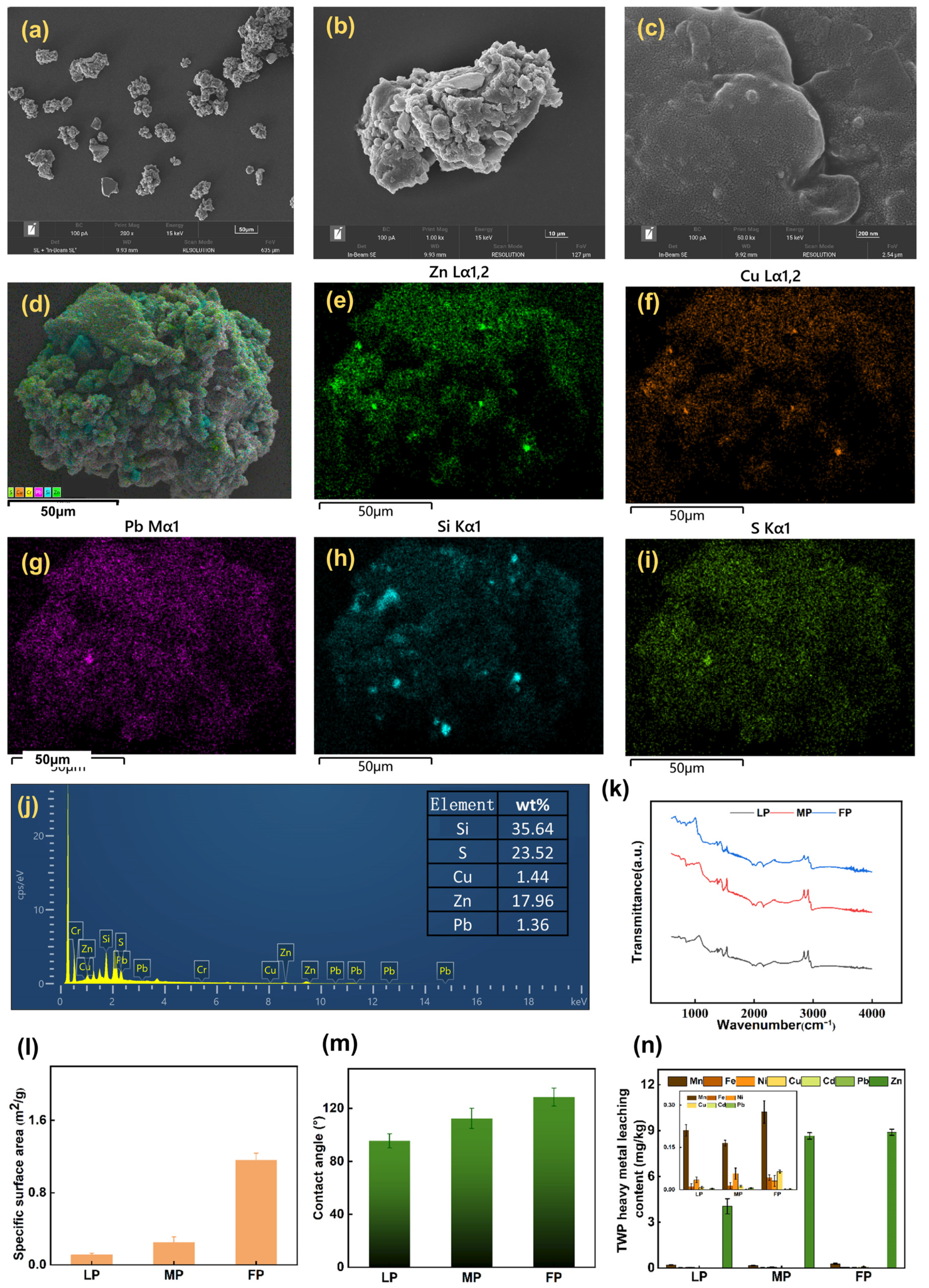
Previous studies have demonstrated that the composition of tire wear particles is highly complex, consisting of multiple distinct substances (Table S1). After tire wear, particles of varying diameters (sizes) are formed, exhibiting a high specific surface area and strong hydrophobicity. These properties enable TWPs to adsorb HMs and organic pollutants in the environment to varying degrees. Such characteristics may cause TWPs to release pollutants into the environment and act as carriers for contaminants, posing environmental hazards [14]. Scanning electron microscopy (SEM) was employed to characterize the surface morphology of fine-sized TWPs. As depicted in Figure 1, compared to relatively uniform and smooth surfaces, most TWPs exhibit irregular shapes such as spherical or elongated forms, along with traces resulting from fractures. The particle size distribution predominantly ranges from 1 to 200 μm, consistent with previous studies [21]. Nanoscale particle clusters are also present on their surfaces, potentially providing adsorption sites for pollutants (Figure S1). X-ray energy dispersive spectroscopy (XEDS) analysis of microareas on fine TWPs identified elemental composition and concentrations. The partial elemental composition of the TWP surface is shown in Figure 1. Analysis reveals the following elements and their respective percentages on the TWP surface: Zn 17.96%, Cu 1.44%, Pb 1.36%, S 23.52%, and Si 35.64%. Characteristic peaks of TWPs (O-H, C-H, and C = O) were identified via ATR-FTIR spectroscopy (Figure 1), with these peak positions validated in prior studies [1]. As shown in Figure 1, TWPs exhibit absorption peaks at 1105, 1427, and 1605 cm−1. The peak at 1105 cm−1 is assigned to C—O stretching vibration and the peak at 1427 cm−1 corresponds to C—H stretching vibration, while the peak at 1605 cm−1 originates from the stretching vibration of the carbonyl group (C = O). The absorption peak at 3440 cm−1 in TWPs is attributed to the stretching vibration of the O-H bond. Additionally, the specific surface area (SBET) of TWPs with different particle sizes ranges from 0.11 to 1.16 m2/g, and they exhibit hydrophobic properties (contact angle > 90°). Environmental migration of TWPs may induce aging through physical, chemical, and biological interactions, affecting the release of endogenous HMs. As shown in Figure 1n, Zn is the primary endogenous heavy metal released from TWPs of different particle sizes, with concentrations ranging from 4.05 to 8.88 mg/kg, followed by Mn, Ni, Fe, and other metallic substances.

3.2. TWP and Soil Spectral Properties

Previous studies indicate that TWP-DOM is one of the most reactive chemical components released into the environment. Its composition, structure, and functional groups may differ significantly from those of natural DOM, potentially exhibiting unique chemical activity and environmental behavior [13]. This study analyzes the spectral characteristics of TWPs and soil using fluorescence spectroscopy. Figure S2 presents the UV–Vis spectra of DOM derived from TWPs. The spectral curves of TWP-DOM across different particle sizes exhibit exponential decreases with increasing wavelength, a characteristic feature of DOM absorption in the UV–Vis region. Notably, no distinct absorption peaks were detected beyond 400 nm, indicating relatively weak DOM absorption in this wavelength range. The SUVA254 values for TWP-DOM at different particle sizes were 0.0192, 0.0376, and 0.0508, respectively. This indicates that TWP-DOM exhibits a low degree of humification and contains fewer aromatic compounds. The E2/E3 ratio reflects the molecular weight of DOM. As shown in Figure S2, the E2/E3 ratios of TWP-DOM at different particle sizes range from 25.67 to 30.8, indicating that TWP-DOM possesses a relatively high molecular weight. Analysis of TWP-DOM fluorescence data through parallel factor analysis yielded three fluorescent components, consistent with previous findings on TWP-derived DOM by Liu et al. [13]. The C1, C2, and C3 fluorescent components represent humic acid-like, fulvic acid-like (UV fulvic acid-like), and protein-like (tryptophan-like) fractions, respectively [22]. Comparative results of microplastics’ effects on DOM properties, as recently reported, are summarized in Table S2. As exogenous carbon sources, different microplastics can increase DOC content in sediments. However, due to the complexity of DOM structure, its changes are jointly influenced by both microplastics and cultivation conditions [13].
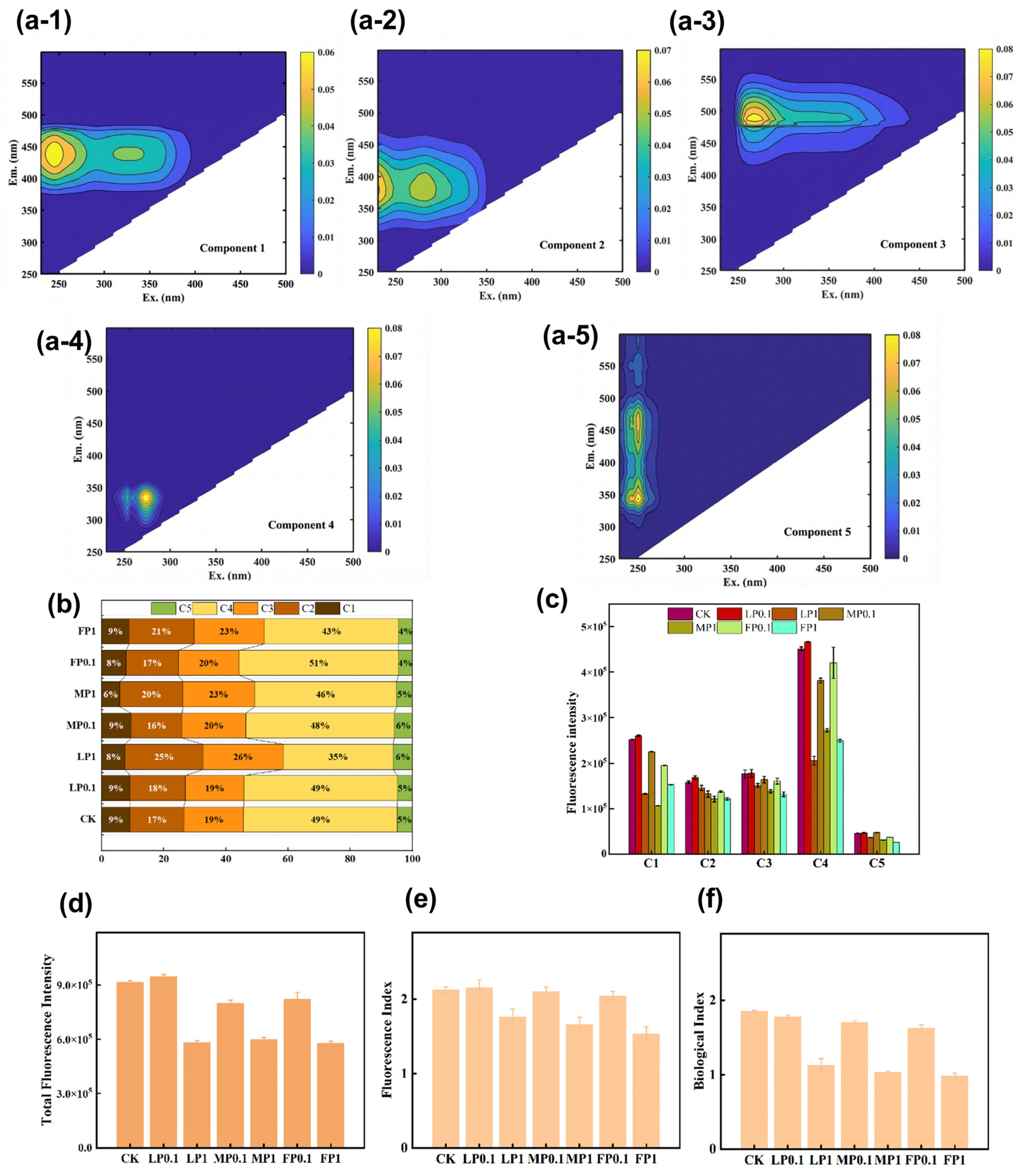
The effects of TWPs on the composition of soil-derived DOM after soil input were determined using three-dimensional fluorescence spectroscopy. Through parallel factor analysis, the three-dimensional fluorescence spectra of soil-derived DOM were classified into five components (Figure 2). Based on the types of fluorescence components, the spectra were divided into five regions corresponding to C1~C5. In the studied soil organic matter, C1 (furanoic acid), C2 (aromatic protein-like substances), C3 (furic acid-like substances), C4 (soluble microbial products, protein-like) and C5 (L-tryptophan, protein-like) exhibited high proportions [18], with C4 dominating at 32.99–47.34%. Exposure to 1% TWPs significantly altered the proportions of DOM components, notably reducing the share of C4 (soluble microbial products). This shift may result from TWPs modifying soil physical properties like porosity or promoting the release and migration of plastic additives. Further analysis using the fluorescence index (FI) revealed that FI > 1.9 in the untreated control, indicating that without TWPs, soil organic matter primarily originated from soil microorganisms [23]. Following 1% TWP exposure, FI significantly decreased to 1.45, representing a 25.94% reduction. Exogenous inputs and microbial activity became mixed sources of DOM, indicating that TWPs reduce soil DOM degradability by suppressing microbial activity in the soil environment. In this study, the biological index (BIX) exhibited a decreasing trend after TWP exposure, indicating diminished microbial activity in the soil. This correlates with TWP exposure reducing the proportion and bioaccessibility of protein-like components within DOM. Overall, exposure to 1% TWPs significantly reduced DOM degradability and bioaccessibility, which will inevitably impact soil environmental quality and heavy metal migration and transformation.

3.3. Soil Properties

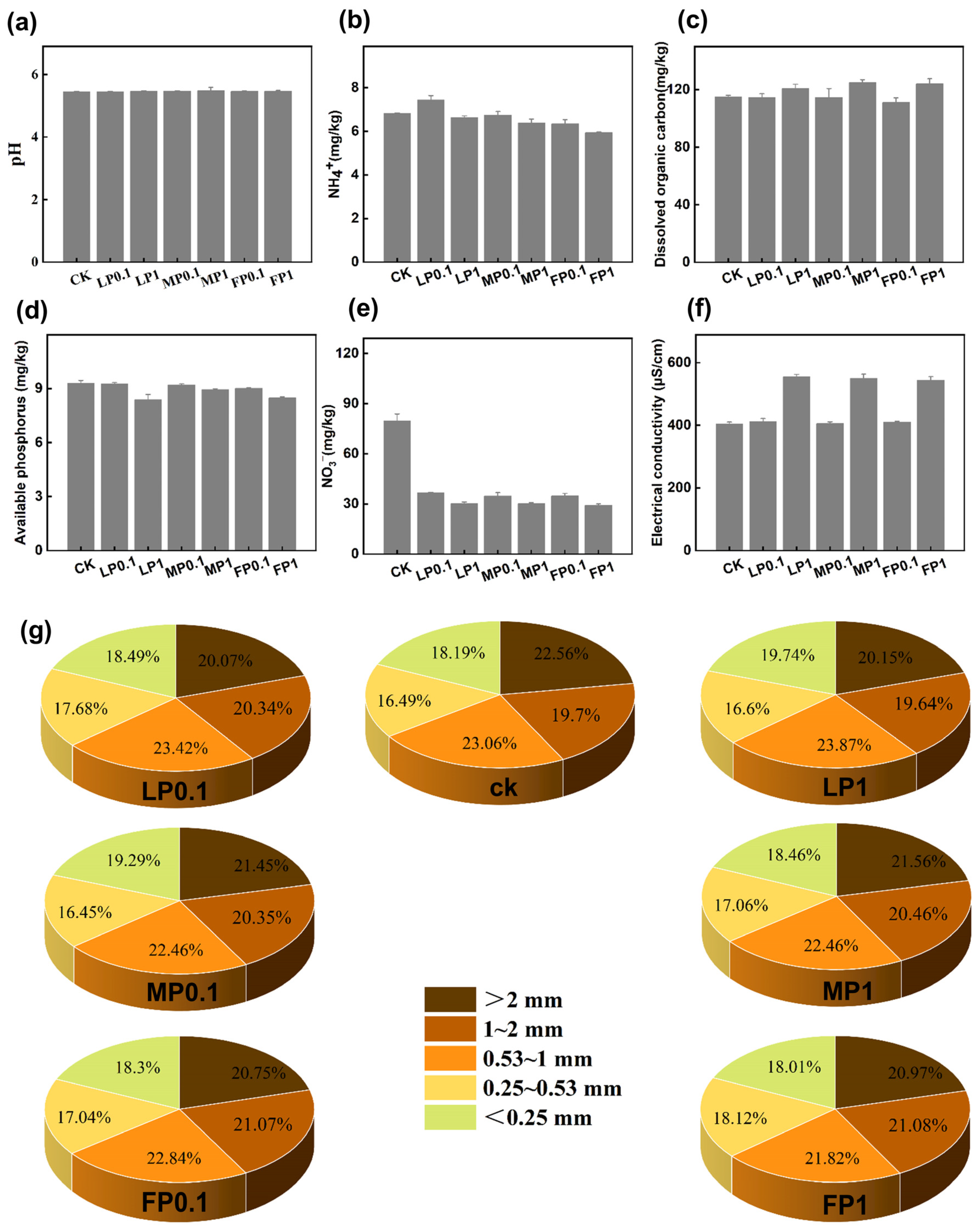
As shown in Figure 3, after TWPs were applied to the soil, the soil pH remained between 5.44 and 5.56, indicating that the addition of TWPs had a minor effect on soil pH. This observation is consistent with previous studies [24]. However, slight pH variations were observed in the TWP treatments with different particle sizes, which may stem from two competing regulatory mechanisms. On one hand, the release of endogenous zinc and its compounds from TWPs undergoes hydrolysis under soil moisture, releasing Zn2+ and OH. This process causes localized pH increases in the contact areas between TWPs and soil particles [25]. Additionally, oxygen-containing functional groups (e.g., carboxyl groups) on the carbon black surface of TWPs and other additives can adsorb or immobilize H+, thereby reducing the concentration of free acids in the soil and exerting a buffering effect on pH [26]. The soil DOC content in the control group without TWP addition was 115.0 mg/kg (Figure 3). Following TWP addition, soil DOC content showed an upward trend with increasing additive dosage. Specifically, at 0.1% and 1% additive dosages, DOC content ranged from 111.33 to 114.67 mg/kg and 120.67–125.0 mg/kg, respectively. However, a significant increase in DOC content was observed only in the 1% TWP size treatment. This finding aligns with Li et al.’s research, suggesting that microplastics may enhance DOC release by disrupting the soil aggregate structure and promoting the mineralization of encapsulated organic carbon [27]. Additionally, DOC content exhibited a decreasing trend with decreasing TWP size, with average DOC contents under different TWP size treatments being 120.67, 125, and 124 mg/kg, respectively. However, no significant differences were observed among treatments with the same dosage but different particle sizes, indicating that TWP size itself has a weak direct effect on the decomposition of soil organic carbon components, consistent with the conclusions of previous studies [13,24]. Under different treatments, soil NH4+-N content (5.93–7.44 mg/kg) was significantly lower than NO3-N content (29.06–79.58 mg/kg) (Figure 3). TWP addition significantly inhibited soil NO3-N content. The control group exhibited NO3-N levels of 79.58 mg/kg, which decreased to 34.74–36.65 mg/kg and 29.06–30.16 mg/kg after adding 0.1% and 1% TWPs of different particle sizes, respectively. This result aligns with findings by Zhang et al. [28]. Previous studies confirmed that sulfides and HMs (e.g., Zn) inherent in TWPs may exert direct toxicity on nitrifying bacteria, inhibiting the ammonium oxidation process and thereby reducing NO3-N production [29,30]. Second, organic carbon released during TWP decomposition may stimulate heterotrophic microbial proliferation, competing with nitrifying bacteria for nitrogen sources and ecological niches, thereby indirectly inhibiting nitrification [30].
The inhibition of soil nitrification simultaneously prevents the effective conversion of NH4+-N, which theoretically should lead to its accumulation. However, NH4+-N did not accumulate significantly in this study, possibly because metal cations released from TWPs (e.g., Zn2+) competed with NH4+ for adsorption sites on soil colloids, increasing the risk of leaching loss of NH4+-N [29]. Soil electrical conductivity (EC), a key indicator reflecting soil salinity and ionic activity, exhibited a decreasing trend after TWP application. This may result from the carbon black component in TWPs selectively adsorbing soluble ions like Na+ and Ca2+ or from the silicate components increasing the soil cation exchange capacity, thereby reducing ion concentrations in the soil solution [23,25]. However, with the addition of 1% TWPs, the release of their own soluble components—particularly zinc salts and other additives—becomes the dominant process. The introduction of these ions substantially elevates the soil solution’s ionic strength, which in turn governs the observed increase in electrical conductivity. Regarding available phosphorus (AP), TWPs exhibited dual effects. At low doses, they likely promoted the release or transformation of soil-bound phosphorus by altering microbial activity or soil physicochemical properties. However, at high doses, TWPs themselves contain extremely low AP, potentially causing a “dilution effect” on soil AP content, ultimately leading to reduced AP levels. TWPs significantly influenced soil aggregate composition (Figure 3).
This study observed that TWP input reduced the proportion of large aggregates >250 μm while increasing the proportion of microaggregates < 53 μm. This phenomenon aligns with findings from Boots et al. and Zhao et al. [30,31]. The underlying mechanism suggests that TWPs, as exogenous physical foreign matter, may disrupt natural soil particle bonding processes and weaken cohesive forces within aggregates, thereby inhibiting macroparticle formation and facilitating the fragmentation of existing aggregates into microparticles. Furthermore, as particles markedly differing from natural soil minerals in composition, density, and shape (Figure 1), the abundant presence of TWPs “dilutes” inherent soil binding agents like clay particles and organic matter. TWPs themselves are difficult for native soil binding agents to effectively integrate, instead becoming defect points or weak planes within the soil structure. Consequently, under external stresses like freeze–thaw cycles or mechanical compaction, fractures are more likely to initiate at the interfaces between TWPs and soil particles, leading to the disintegration of large aggregates [32]. More critically, tire rubber exhibits strong hydrophobicity (Figure 1). When TWPs enter the soil, their surfaces disrupt the continuity of the water film between soil particles. Consequently, TWPs directly inhibit the formation of microaggregates. Simultaneously, they induce repellent water behavior in the soil, hindering uniform water infiltration. Instead, water rapidly flows through large pores in a preferential flow pattern, exacerbating uneven swelling and disintegration of aggregates during wetting.

3.4. Bioaccessibility and Speciation of HMs in Soil

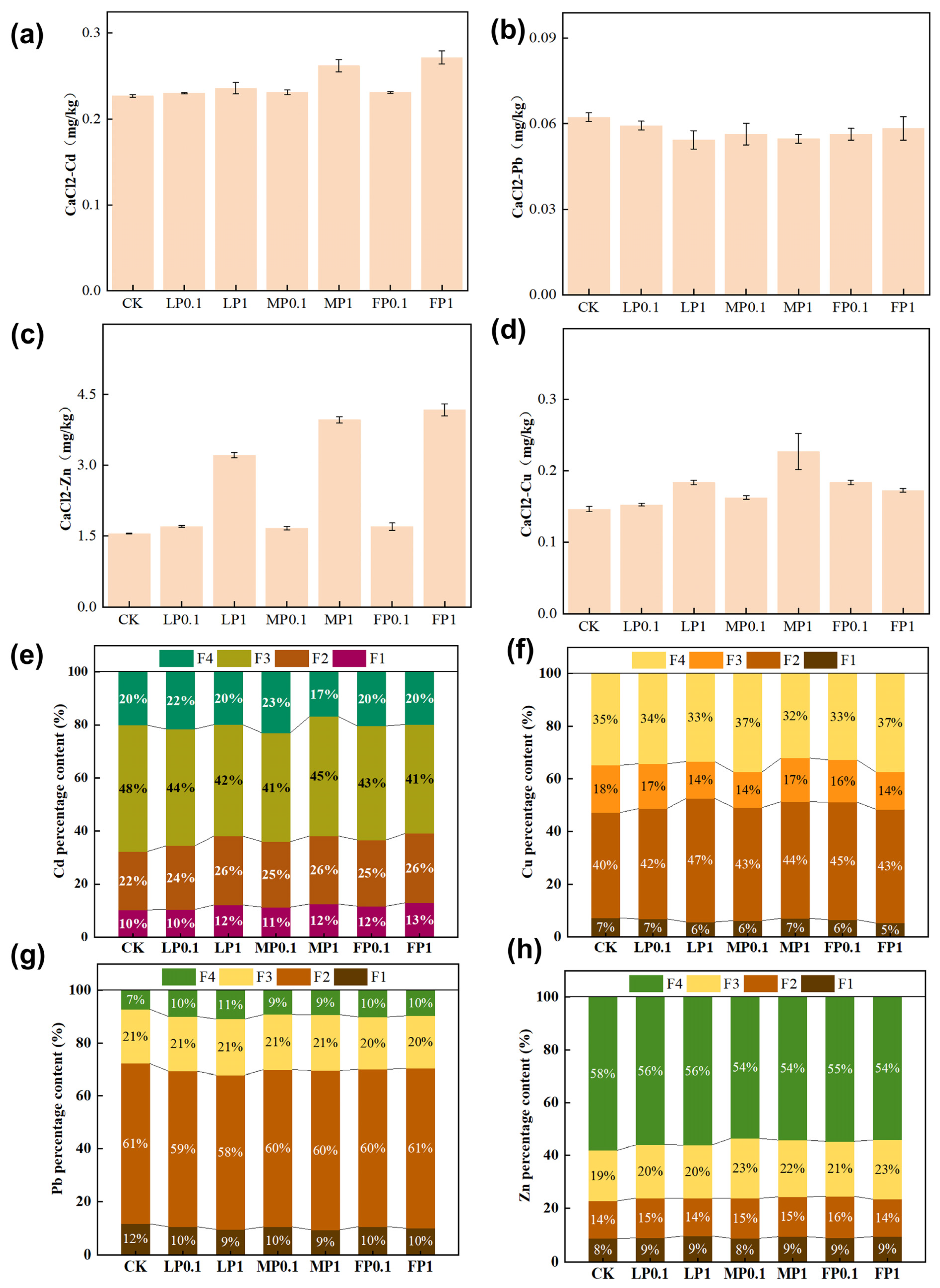
The environmental risk of HMs in soil is not only related to their total amount but also closely linked to their bioaccessibility. Multiple studies have confirmed that TWPs at different concentrations (0.1–1%) alter soil properties and microenvironments through physical dilution, adsorption, and desorption processes, thereby influencing the mobility and bioaccessibility of HMs [7,13]. As shown in Figure 4, compared to controls, TWP input significantly increases the bioaccessibility of Cu, Cd, and Zn in soil. This occurs because HMs loaded as additives within microplastic TWPs may undergo oxidation due to soil physicochemical or microbial processes upon TWP introduction. The high endogenous heavy metal content within TWPs, particularly Zn and Cu, is rapidly released into the soil, thereby enhancing HM bioaccessibility [33]. However, TWPs of different particle sizes reduced the bioaccessibility of Pb in soil, which is related to the large specific surface area and abundant surface functional groups of TWPs. TWPs strongly adsorb free Pb2+ ions in soil pore water, which rapidly reduces Pb concentrations in soil solutions and lowers its bioaccessibility. Consequently, the impact of heavy metal-enriched microplastic inputs on soil heavy metal bioaccessibility varies across soil types, necessitating attention to potential environmental risks arising from the release of endogenous HMs from microplastics.
Further application of the BCR sequential extraction method enabled stepwise fractionation of soil HMs into exchangeable, reducible, oxidizable, and residual forms, with the proportion of each form shown in Figure 4. Figure 4 indicates that TWP addition partially reduced the proportion of oxidizable Cu and Cd in soil while increasing the proportion of reducible HMs. Specifically, the oxidizable fractions of these two HMs decreased by 2.67–6.63% and 1–3.87%, respectively, while the proportions of the reducible forms increased by 2–7% and 2–4.17%, respectively. However, the mechanisms by which TWPs influence these two HM forms appear distinct. Although both HM forms exhibited trends of increased reducible forms and decreased oxidizable forms, Cu showed a decrease in exchangeable form and an increase in residual form, whereas Cd exhibited the opposite trend. This suggests TWPs may stabilize Cu in soil while activating Cd. For Pb, TWPs of different particle sizes reduced exchangeable and reducible Pb by 1.08–2.29% and 0.08–2.21%, respectively, indicating TWPs may enhance soil particle adsorption capacity for Pb. In stark contrast to other metals, increased TWPs significantly elevated the exchangeable state of Zn, likely due to the high endogenous Zn content and release from TWPs. This indicates that introducing Zn-rich TWPs into acidic soils poses a higher potential environmental risk.

3.5. Mechanisms of Interaction Between TWPs and TWP-DOM with HMs

In this study, TWP inputs significantly altered both soil properties and the relative abundances of various DOM components, indicating effects beyond mere particle size. Correlation analysis revealed negative relationships between soil DOC content and EC with all DOM components, as well as with BIX and FI. This likely stems from the high DOC content derived from TWPs themselves. Changes in soil NH4+-N and NO3-N showed positive correlations with all DOM components, as well as BIX and FI, clearly demonstrating that TWP inputs significantly impact soil N cycling. Previous studies confirmed that higher doses of tire particles delay soil nitrogen turnover processes, reducing soil NO3-N content by suppressing bacterial nitrification. Furthermore, soil available phosphorus (AP) showed a pronounced positive correlation with all DOM fractions [34]. For fine soil aggregates (0.53–1 mm), a positive correlation was observed with the C2 fraction of soil DOM. TWP input reduced the proportion of large aggregates (>250 μm). Li et al. [24] observed a highly significant positive correlation between soil pore volume and the contact angle of TWPs. This variation relates to TWPs’ surface functional groups and oxidation state, collectively influencing their interaction mechanisms with soil moisture. During this process, TWPs promote thorough contact between the liquid phase and soil particles, affecting their deposition behavior within the soil and interactions with the liquid phase [35].
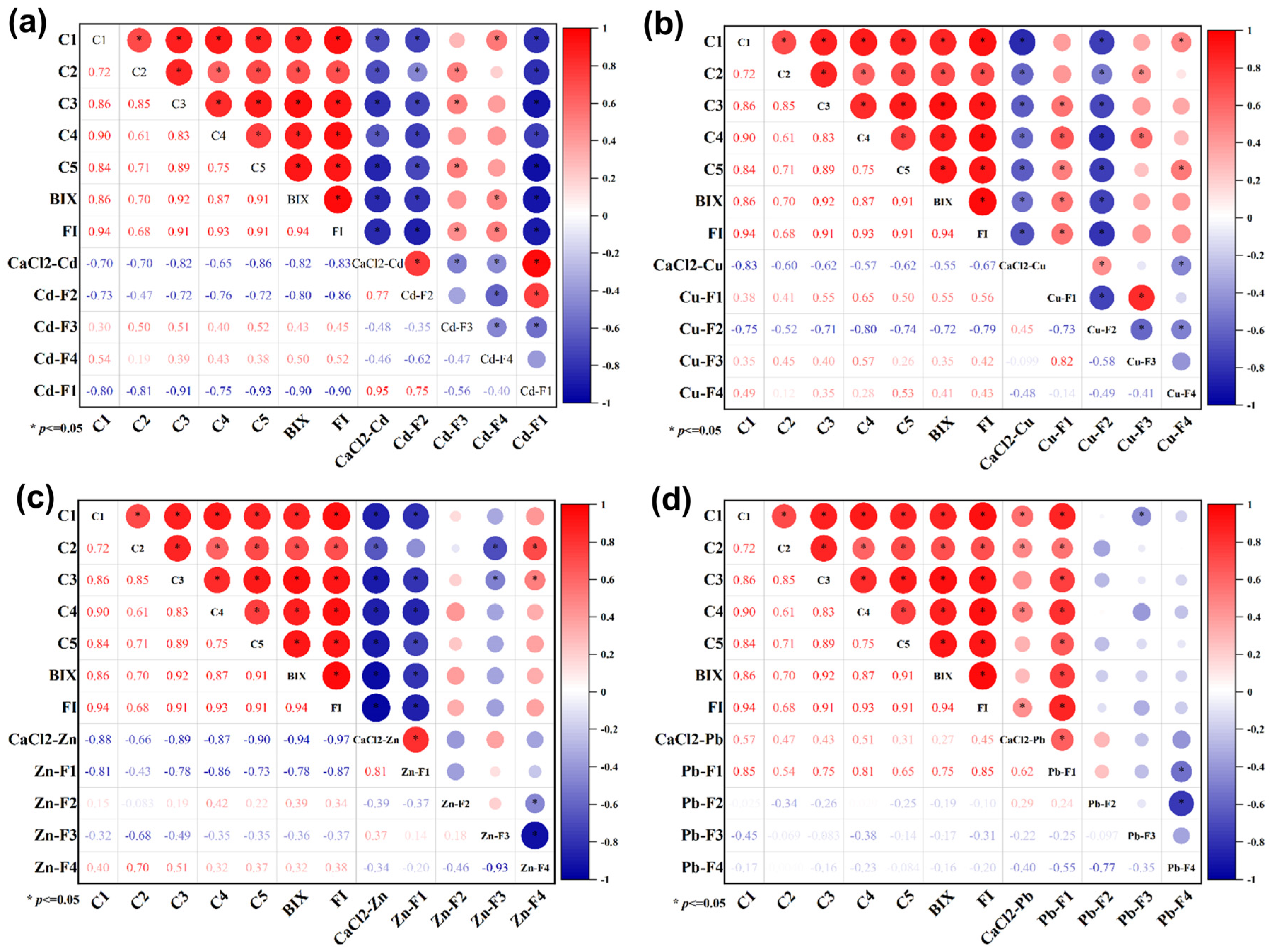
Further analysis of the correlation between soil DOM and soil properties and heavy metals reveals that the concentrations of CaCl2-Cd, CaCl2-Zn, and CaCl2-Cu in soil exhibit negative correlations with soil DOM components C1, C2, C3, C4, and C5 and various fluorescence indices (Figure 5a–c). Conversely, CaCl2-Pb shows positive correlations with these components and fluorescence indices (Figure 5d). The speciation of HMs in soil is also influenced by the fluorescence components and characteristics of soil DOM, indicating that HMs are affected by soil DOM throughout the entire soil incubation process. Additionally, soil CaCl2-HM concentrations were influenced by soil properties and aggregate sizes. CaCl2-Cd, CaCl2-Zn, and CaCl2-Cu concentrations positively correlated with soil DOC, EC, and 1–2 mm soil aggregate content, whereas CaCl2-Pb showed the opposite trend (Figure S3). The differential outcomes among HMs relate to heavy metal types and the impact of TWP input on soil properties and endogenous material release. In summary: (1) TWPs alter HM stability in soil through direct adsorption of HMs; (2) TWPs indirectly modify HM distribution by releasing additives and adsorbing other ions, thereby changing soil properties such as DOC (content of various organic fractions) and EC; (3) TWP inputs into soil form colloidal substances on its surface, promote the distribution of small and large aggregates, and alter the adsorption sites of soil particles, thereby modifying the CaCl2-HM content in soil.
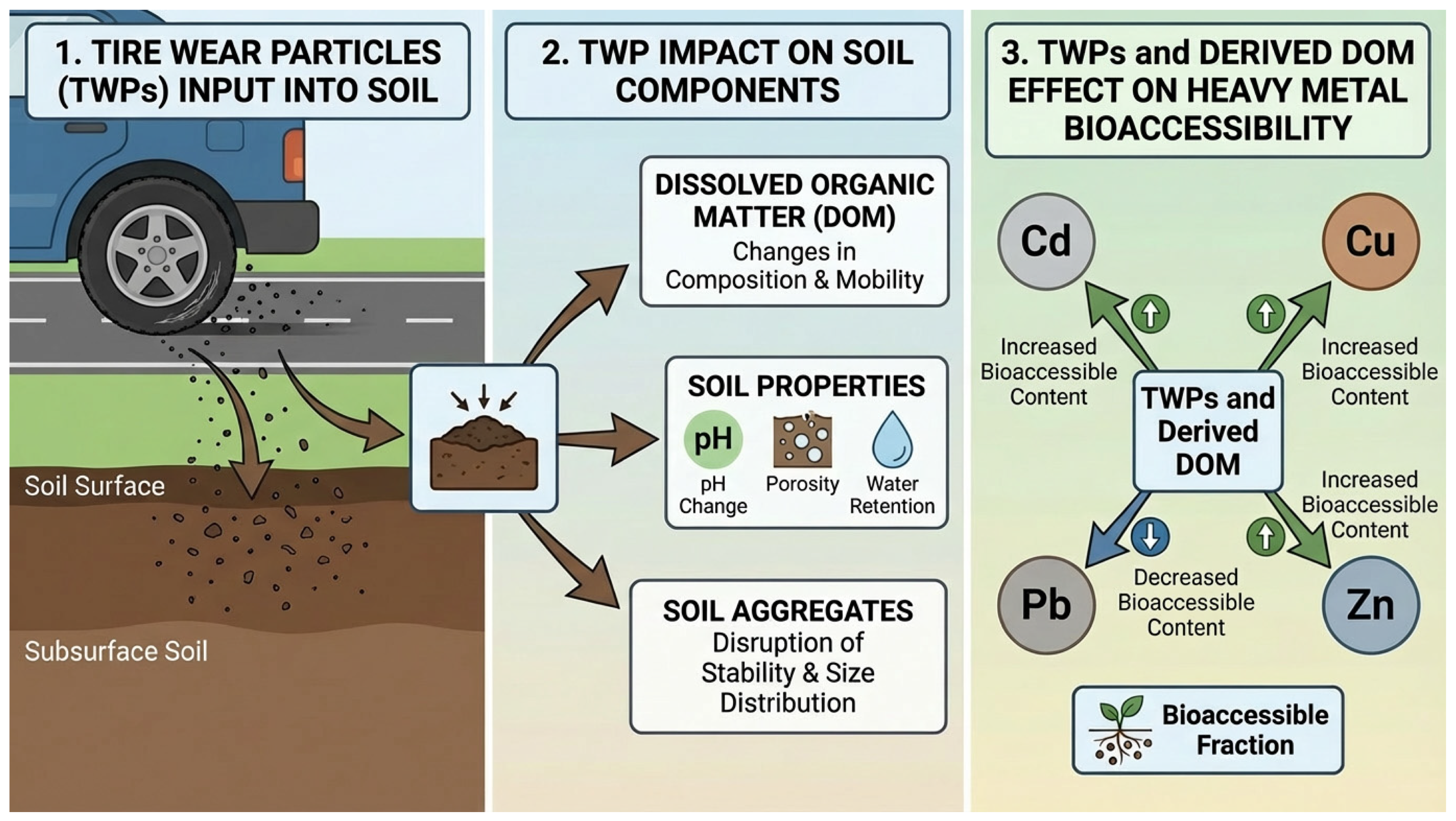
Therefore, we hypothesize the interaction mechanism between TWP inputs and soil/heavy metals illustrated in Figure 6. Furthermore, it is particularly noteworthy that tire wear particles possess the capacity to concentrate pollutants. A potential environmental risk lies in these materials potentially acting as carriers for pollutants, thereby altering the migration and dispersion of soil contaminants within the environment. Once released into the environment, TWPs undergo changes in their particle properties and adsorption characteristics due to aging processes and interactions with natural organic matter. The adsorption of pollutants onto TWPs and subsequent desorption behavior may alter the migration and dispersion of both pollutants and TWPs in the environment, thereby giving rise to various environmental risks.

4. Conclusions

This study systematically investigated the effects of tire wear particles (TWPs) on soil physicochemical properties, spectroscopic characteristics of dissolved organic matter (DOM), and the bioaccessibility of heavy metals (e.g., Zn, Cd, and Pb). Through laboratory-scale simulation experiments and multiple analytical techniques, this work provides a crucial theoretical and data-driven foundation for assessing the environmental behavior and ecological risks of TWPs in soil. The addition of TWPs of different sizes substantially altered the spectral properties of soil DOM, electrical conductivity (EC), and soil aggregate distribution, while soil pH remained largely stable. Furthermore, TWP amendment significantly influenced DOM composition, increasing the relative abundance of humic-like and aromatic components. The findings indicate that TWPs effectively increased the bioaccessibility of Cd, Zn, and Cu (as extracted by CaCl2) but decreased that of Pb. This is primarily attributed to the release of endogenous heavy metals from TWPs and their impact on the adsorption capacity of soil particles. The results suggest that TWPs may stabilize Cu and Pb in soil while activating Cd. The bioaccessibility of HMs was co-regulated by multiple mechanisms: (i) chelation of heavy metals by soluble organic matter released from TWPs; (ii) TWP-induced changes in the strong adsorption and immobilization of heavy metals by soil particles; and (iii) alterations in soil aggregate structure that collectively affect heavy metal speciation. In summary, TWPs exhibit a dual role as both a “source” and a “sink” for heavy metals; however, the DOM derived from them appears to predominantly enhance their bioaccessibility.

Supplementary Materials

The following supporting information can be downloaded at https://www.mdpi.com/article/10.3390/agronomy16010038/s1. Text S1. The methods of fluorescence spectrometer and parallel factor analysis. Text S2. Descriptions and calculations of UV–Vis indices and fluorescence indices. Text S3. The detailed procedure for the determination of four forms of HMs. Table S1. Chemical Composition of TWPs. Table S2. Comparison of the effect of MPs-DOM properties between the results of this work and others reported in the literature. Figure S1. Surface nanoparticle cluster structure of fine TWPs. Figure S2. Spectral Characteristics of TWPs-DOM. Figure S3. Correlation Analysis of Soil DOM Fluorescence Components and Related Indicators with Soil Properties and Heavy Metals. References [36,37,38,39,40,41,42] are cited in Supplementary Materials.

Author Contributions

S.J.: Writing—review and editing, Writing—original draft, Software, Investigation, and Conceptualization. H.X.: Data curation and Software. X.X. (Xue Xiao): Data curation and Methodology. X.H.: Methodology and Formal analysis. Q.X.: Data curation and Writing—original draft. J.W.: Methodology and Software. X.X. (Xinsheng Xiao): Formal analysis and Writing—original draft. H.C.: Writing—review and editing, Project administration, Supervision, and Methodology. C.L.: Funding support and review and Writing—review and editing. All authors have read and agreed to the published version of the manuscript.

Funding

This study was supported by the Innovation project of the Technology Platform of the Institute of Agricultural Resources and Environment, GDAAS (NO. ZHS2023-04), and the Key Laboratory of Agricultural Green and Low Carbon, Ministry of Agriculture and Rural Affairs.

Data Availability Statement

The original contributions presented in this study are included in the article and Supplementary Materials. Further inquiries can be directed to the corresponding author.

Conflicts of Interest

Author Xue Xiao was employed by the company Pro (Guangzhou) Environmental Protection Technology Co., Ltd. The remaining authors declare that the research was conducted in the absence of any commercial or financial relationships that could be construed as a potential conflict of interest.

Abbreviations

TWPsTire wear particles
DOMDissolved organic matter
DOCDissolved organic carbon
TWP-DOMTire wear particle-derived dissolved organic matter
3D-EEMThree-dimensional excitation–emission matrix
HMsHeavy metals
BCREuropean Community Bureau of Reference
CaCl2-CdCaCl2 extraction of Cd
CaCl2-CuCaCl2 extraction of Cu
CaCl2-ZnCaCl2 extraction of Zn
CaCl2-PbCaCl2 extraction of Pb
CaCl2-HMsCaCl2 extraction of heavy metals
LPLarge (0.85–4.75 mm) tire wear particle
MPMedium (0.15–0.85 mm) tire wear particle
FPFine (<0.15 mm) tire wear particle
CKSoil without TWPS treatment
LP0.1, LP1, MP0.1, MP1, FP0.1, FP1Treatment with different tire wear particle additive doses, where the numbers 0.1 and 1 denote the tire wear particle additive doses (0.1%, 1% w/w).
CECCation exchange capacity
ECElectrical conductivity
SOMSoil organic matter
SEMScanning electron microscopy
EDSEnergy dispersive spectroscopy
ANOVAAnalysis of variance
C1, C2, C3, C4, C5Component 1, Component 2, Component 3, Component 4, and Component 5 of dissolved organic matter in soil
FIFluorescence intensity
BIXBiological index
SUVA254Ultraviolet absorbance of DOM at a wavelength of 254 nm
E2/E3The ratio of the absorbance at 254 nm (A254) to the absorbance at 365 nm (A365)
APAvailable phosphorus in soil
F1Exchangeable state heavy metal
F2Reducible state heavy metal
F3Oxidizable state heavy metal
F4Residue state heavy metal

References

  1. Ding, J.; Lv, M.; Zhu, D.; Leifheit, E.F.; Chen, Q.L.; Wang, Y.Q.; Chen, L.X.; Rillig, M.C.; Zhu, Y.G. Tire wear particles: An emerging threat to soil health. Crit. Rev. Environ. Sci. Technol. 2023, 53, 2. [Google Scholar] [CrossRef]
  2. Rødland, E.S.; Heier, L.S.; Lind, O.C.; Meland, S. High levels of tire wear particles in soils along low traffic roads. Sci. Total Environ. 2023, 903, 166470. [Google Scholar] [CrossRef] [PubMed]
  3. Zhou, H.H.; Wang, X.; Sun, H.; Li, H.; Wu, Z.; Li, Y.F.; Yao, X.H.; Zhou, J.J.; Jiang, L.J.; Wang, Y.; et al. Soil heterogeneity influences the biotoxicity of photoaged tire wear particles in Eisenia fetida: A comparative assessment. J. Hazard. Mater. 2025, 496, 139474. [Google Scholar] [CrossRef] [PubMed]
  4. Wagner, S.; Hüffer, T.; Klöckner, P.; Wehrhahn, M.; Hofmann, T.; Reemtsma, T. Tire wear particles in the aquatic environment—A review on generation, analysis, occurrence, fate and effects. Water. Res. 2018, 139, 83–100. [Google Scholar] [CrossRef]
  5. Tunali, M.; Nowack, B. Towards including soil ecotoxicity of microplastics and tire wear particles into life cycle assessment. Ecotoxicol. Environ. Saf. 2025, 303, 118856. [Google Scholar] [CrossRef]
  6. Li, K.; Li, W.Y.; Chen, Z.L.; Ye, Z.D. Accelerated transformation of 6PPD to 6PPD-Q in tire wear particles driven by roadway manganese oxides and dry-wet cycles: Interfacial catalysis coupled with climatic stressors. Water Res. 2026, 288, 124741. [Google Scholar] [CrossRef]
  7. Liu, X.G.; Fang, L.P.; Gardea-Torresdey, J.L.; Zhou, X.X.; Yan, B. Microplastic-derived dissolved organic matter: Generation, characterization, and environmental behaviors. Sci. Total Environ. 2024, 948, 174811. [Google Scholar]
  8. Song, W.J.; Lin, L.; Oh, S.; Grossart, H.P.; Yang, Y.Y. Tire wear particles in aquatic environments: From biota to ecosystem impacts. J. Environ. Manag. 2025, 388, 126059. [Google Scholar] [CrossRef]
  9. Zhao, T.T.; Xu, Y.Q.; Bi, M.H.; Li, H.Y.; Li, G.L.; Rillig, M.C. Soil properties explain the variability in tire wear particle effects in soil based on a laboratory test with 59 soils. Environ. Pollut. 2025, 375, 126271. [Google Scholar] [CrossRef]
  10. Feng, Z.W.; Zhu, N.Y.; Wu, H.Z.; Li, M.; Chen, J.; Yuan, X.Y.; Li, J.Z.; Wang, Y.M. Microplastic coupled with soil dissolved organic matter mediated changes in the soil chemical and microbial characteristics. Chemosphere 2024, 359, 142361. [Google Scholar] [CrossRef]
  11. Zou, Y.F.; Zhang, Y.; Feng, H.; Liu, X.R.; Guo, J.Y.; Zou, H.; Chen, C.; Huang, S. Occurrence, fate, and ecological impacts of microplastics in soil: A comparative analysis of conventional, biodegradable microplastics, and tire wear particles. Environ. Pollut. 2025, 386, 127151. [Google Scholar] [CrossRef] [PubMed]
  12. Chen, W.S.; Cui, X.R.; Li, J.H.; Zhang, Z.Y.; Tao, S.; Zhu, D.Q. Mechanisms Governing the Oxidation of Leachate Organic Matter from Tire Wear Particles Coupled with Reductive Dissolution of Manganese (Hydr)oxides. ACS EST Water 2025, 5, 5661–5671. [Google Scholar]
  13. Liu, S.; Huang, J.H.; He, W.J.; Shi, L.X.; Zhang, W.; Li, E.J.; Hu, J.Y.; Zhang, C.Y.; Pang, H.L. Insights into effects of drying–wetting cycles on dissolved organic matter and Cd bioavailability in riparian sediments amended with microplastics. Environ. Res. 2025, 271, 121087. [Google Scholar] [CrossRef] [PubMed]
  14. Huang, D.F.; Ding, L.; Qiu, X.R.; Zhang, B.; Liang, X.J.; Guo, X.T.; Dong, H.R. Molecular-Scale Insights into the Surface Structural Transformation and Light-Driven Production of Reactive Oxygen Species of Goethite Induced by Microplastic-Derived Dissolved Organic Matter. Environ. Sci. Technol. 2025, 59, 17349–17360. [Google Scholar] [PubMed]
  15. Ma, Z.P.; Cheng, H.F. Insights into the Photochemical Mechanism of Goethite: Roles of Different Types of Surface Hydroxyl Groups in Reactive Oxygen Species Generation and Fe(III) Reduction. Environ. Sci. Technol. 2024, 58, 14812–14822. [Google Scholar] [CrossRef]
  16. Kundel, D.; Bigalke, M.; Stehle, B.; Hammer, M.; Nitzsche, K.N.; Fliessbach, A. Driving soils to change: Tyre wear particles modulate microbial-mediated soil functions and performance of vegetable crops. Appl. Soil Ecol. 2025, 214, 106340. [Google Scholar] [CrossRef]
  17. Lv, M.; Meng, F.Y.; Man, M.S.; Lu, S.; Ren, S.Y.; Yang, X.Y.; Wang, Q.N.; Chen, L.X.; Ding, J. Aging increases the particulate- and leachate-induced toxicity of tire wear particles to microalgae. Water Res. 2024, 256, 121653. [Google Scholar] [CrossRef]
  18. Huang, M.; Zhou, M.; Li, Z.; Ding, X.; Wen, J.; Jin, C.; Wang, L.; Xiao, L.; Chen, J. How do drying-wetting cycles influence availability of heavy metals in sediment? A perspective from DOM molecular composition. Water Res. 2022, 220, 118671. [Google Scholar] [CrossRef]
  19. Liu, S.; Huang, J.; He, W.; Shi, L.; Zhang, W.; Li, E.; Hu, J.; Zhang, C.; Pang, H. Effects of microplastics on microbial community structure and wheatgrass traits in Pb-contaminated riparian sediments under flood-drainage-planting conditions. J. Hazard. Mater. 2024, 470, 134283. [Google Scholar]
  20. Stedmon, C.A.; Bro, R. Characterizing dissolved organic matter fluorescence with parallel factor analysis: A tutorial. Limnol. Oceanogr. Methods 2008, 6, 572–579. [Google Scholar] [CrossRef]
  21. Sun, W.; Wang, B.; Ouyang, W.; Liu, Z.; Zhang, H. Tire wear particles in aquatic environments: A systematic review of sources, detection, distribution, and toxicological impacts. Ecotoxicol. Environ. Saf. 2025, 305, 119236. [Google Scholar] [CrossRef]
  22. Jiang, J.R.; Cai, W.X.; Chen, Z.F.; Liao, X.L.; Cai, Z.W. Prediction of acute toxicity for Chlorella vulgaris caused by tire wear particle-derived compounds using quantitative structure-activity relationship models. Water Res. 2024, 256, 121643. [Google Scholar] [CrossRef] [PubMed]
  23. Yu, H.; Fan, P.; Hou, J.; Dang, Q.; Cui, D.; Xi, B.; Tan, W. Inhibitory Effect of Microplastics on Soil Extracellular Enzymatic Activities by Changing Soil Properties and Direct Adsorption: An Investigation at the Aggregate-fraction Level. Environ. Pollut. 2020, 267, 115544. [Google Scholar] [CrossRef] [PubMed]
  24. Li, K.; Ye, Z.; Chen, Z.; Li, W. Effects of Tire Wear Particles on Soil Fertility and Physicochemical Properties: The Role of Typical Aging Patterns in the Environment. Acta Pedol. Sin. 2025. [Google Scholar] [CrossRef]
  25. Smolders, E.; Degryse, F. Fate and Effect of Zinc from Tire Debris in Soil. Environ. Sci. Technol. 2002, 36, 3706–3710. [Google Scholar] [CrossRef]
  26. Zeb, A.; Liu, W.; Ali, N.; Shi, R.; Zhao, Y.; Wang, J.; Wang, Q.; Khan, S.; Baig, A.M.; Liu, J.; et al. Impact of Pristine and Aged Tire Wear Particles on Ipomoea aquatica and Rhizospheric Microbial Communities: Insights from a Long-Term Exposure Study. Environ. Sci. Technol. 2024, 58, 21143–21154. [Google Scholar] [CrossRef]
  27. Zhu, Y.; Kim, S.W.; Li, H.; Rillig, M.C. Delivery Rate Alters the Effects of Tire Wear Particles on Soil Microbial Activities. Environ. Sci. Eur. 2024, 36, 97. [Google Scholar] [CrossRef]
  28. Zhang, W.; Wang, W.; Yao, Z.; Zhang, T.; Jiao, H.; Wang, H. Leaching-driven transformations of tire wear particles (twps): Uncovering the neglected environmental implications. J. Hazard. Mater. 2025, 494, 138529. [Google Scholar] [CrossRef]
  29. Li, Y.; Tang, Y.; Qiang, W.; Xiao, W.; Lian, X.; Yuan, S.; Yuan, Y.; Wang, Q.; Liu, Z.; Chen, Y. Effect of Tire Wear Particle Accumulation on Nitrogen Removal and Greenhouse Gases Abatement in Bioretention Systems: Soil Characteristics, Microbial Community, and Functional Genes. Environ. Res. 2024, 251, 118574. [Google Scholar] [CrossRef]
  30. Boots, B.; Russell, C.W.; Green, D.S. Effects of microplastics in soil ecosystems: Above and below ground. Environ. Sci. Technol. 2019, 53, 11496–11506. [Google Scholar] [CrossRef]
  31. Zhao, Z.Y.; Wang, P.Y.; Wang, Y.B.; Zhou, R.; Koskei, K.; Munyasya, A.N.; Liu, S.T.; Wang, W.; Su, Y.Z.; Xiong, Y.C. Fate of plastic film residues in agro-ecosystem and its effects on aggregate-associated soil carbon and nitrogen stocks. J. Hazard. Mater. 2021, 416, 125954. [Google Scholar] [CrossRef] [PubMed]
  32. Zhou, J.; Zhang, Z.; Xiong, J.; Shi, W.; Liang, L.; Zhang, F.; Zhang, F. Nitrogen Removal Performance of Bioretention Cells under Polyethylene (PE) Microplastic Stress. Environ. Pollut. 2023, 338, 122655. [Google Scholar] [CrossRef] [PubMed]
  33. Chen, Y.; Liu, J.; Zhang, Y.X.; Li, J.Y.; Li, G.J. Effect of Environmental Aging on the Release of Endogenous Heavy Metals from Tire Wear Particles. J. Tianjin Univ. Sci. Technol. 2022, 37, 12–17+70. [Google Scholar] [CrossRef]
  34. Zhang, X.; Li, Y.; Ouyang, D.; Lei, J.; Tan, Q.; Xie, L.; Li, Z.; Liu, T.; Xiao, Y.; Farooq, T.H.; et al. Systematical review of interactions between microplastics and microorganisms in the soil environment. J. Hazard. Mater. 2021, 418, 126288. [Google Scholar] [CrossRef]
  35. Li, X.D.; Wang, R.Y.; Dai, W.; Luan, Y.N. Aging microplastics and coupling of “microplastic-electric fields” can affect soil water-stable aggregates’ stability. J. Hazard. Mater. 2024, 469, 134048. [Google Scholar] [CrossRef]
  36. Li, W.; Wang, Z.; Li, W.; Li, Z. Impacts of microplastics addition on sediment environmental properties, enzymatic activities and bacterial diversity. Chemosphere 2022, 307, 135836. [Google Scholar] [CrossRef]
  37. Liu, H.; Yang, X.; Liu, G.; Liang, C.; Xue, S.; Chen, H.; Ritsema, C.J.; Geissen, V. Response of soil dissolved organic matter to microplastic addition in Chinese loess soil. Chemosphere 2017, 185, 907–917. [Google Scholar] [CrossRef]
  38. Zhang, W.; Liu, X.; Liu, L.; Lu, H.; Wang, L.; Tang, J. Effects of microplastics on greenhouse gas emissions and microbial communities in sediment of freshwater systems. J. Hazard. Mater. 2022, 435, 129030. [Google Scholar] [CrossRef]
  39. Sun, Y.; Li, X.; Li, X.; Wang, J. Deciphering the Fingerprint of Dissolved Organic Matter in the Soil Amended with Biodegradable and Conventional Microplastics Based on Optical and Molecular Signatures. Environ. Sci. Technol. 2022, 56, 15746−15759. [Google Scholar] [CrossRef]
  40. Xu, Z.; Bai, X.; Li, Y.; Weng, Y.; Li, F. New insights into the decrease in Cd2+ bioavailability in sediments by microplastics: Role of geochemical properties. J. Hazard. Mater. 2023, 442, 130103. [Google Scholar] [CrossRef]
  41. Chen, M.; Zhao, X.; Wu, D.; Peng, L.; Fan, C.; Zhang, W.; Li, Q.; Ge, C. Addition of biodegradable microplastics alters the quantity and chemodiversity of dissolved organic matter in latosol. Sci. Total Environ. 2022, 816, 151960. [Google Scholar] [CrossRef] [PubMed]
  42. Chen, M.; Liu, S.; Bi, M.; Yang, X.; Deng, R.; Chen, Y. Aging behavior of microplastics affected DOM in riparian sediments: From the characteristics to bioavailability. J. Hazard. Mater. 2022, 431, 128522. [Google Scholar] [CrossRef] [PubMed]
Figure 1. Physical and chemical properties of TWPs ((ac) detailed SEM images of TWPs; (di) major elemental composition; (j) elemental percentage distribution; (k) Fourier transform infrared spectrum of TWPs; (l) specific surface area; (m) contact angle; (n) water-soluble endogenous heavy metal content in TWPs).
Agronomy 16 00038 g001
Figure 2. Spectral characteristics of TWPs and soil. (a-1a-5) mean C1–C5; (b) percentage of fluorescence intensity for each component of C1 to C5; (c) fluorescence intensity; (d) total fluorescence intensity; (e) fluorescence index (FI); (f) biological index (BIX).
Agronomy 16 00038 g002
Figure 3. Effects of TWP intervention on soil properties; (a) pH, (b) NH4+-N, (c) dissolved organic carbon (DOC), (d) available phosphorus (AP), (e) NO3-N, (f) electrical conductivity (EC), (g) soil particle size distribution.
Agronomy 16 00038 g003
Figure 4. Effects of TWPs and TWP-mediated soil heavy metal bioaccessibility and speciation ((a) CaCl2-Cd; (b) CaCl2-Pb; (c) CaCl2-Zn; (d) CaCl2-Cu; (e) Cd fractionation; (f) Cu fractionation; (g) Pb fractionation; (h) Zn fractionation; F1 means exchangeable state; F2 means reducible state; F3 means oxidizable state; F4 means residue state).
Agronomy 16 00038 g004
Figure 5. Correlation analysis of soil DOM fluorescence components and related indicators with heavy metals ((a) Cd; (b) Cu; (c) Zn; (d) Pb). CaCl2-Cd, CaCl2-Cu, CaCl2-Zn, and CaCl2-Pb mean CaCl2-extracted heavy metal (Cd, Cu, Zn, and Pb) content.
Agronomy 16 00038 g005
Figure 6. Pathways and mechanisms by which tire wear particles and TWP-DOM alter soil structure and influence heavy metal mobility and bioaccessibility.
Agronomy 16 00038 g006
Table 1. Soil physicochemical properties.
pHCEC
(cmol/kg)
EC
(us/cm)
SOM
(g/kg)
Cd
(mg/kg)
Pb
(mg/kg)
Cu
(mg/kg)
Zn
(mg/kg)
Mechanical Component (%)
5.34 ± 0.0418.45 ± 1.05119.88 ± 0.3610.56 ± 0.051.38 ± 0.0284 ± 2.0133 ± 4.2238 ± 7.1ClaySiltSand
24.5658.4616.98
Note: CEC means cation exchange capacity; EC means electrical conductivity; SOM means soil organic matter.
Disclaimer/Publisher’s Note: The statements, opinions and data contained in all publications are solely those of the individual author(s) and contributor(s) and not of MDPI and/or the editor(s). MDPI and/or the editor(s) disclaim responsibility for any injury to people or property resulting from any ideas, methods, instructions or products referred to in the content.