Next Article in Journal
Construction of a CFD Simulation and Prediction Model for Pesticide Droplet Drift in Agricultural UAV Spraying
Previous Article in Journal
Distant Hybridization of Kazakh Wheat Varieties with Wild Aegilops Species: Cytogenetic Compatibility, Fertilization Dynamics, and Breeding Implications
Previous Article in Special Issue
Inhibitory Effects and Underlying Mechanisms of a Selenium Compound Agent Against the Pathogenic Fungus Sclerotinia sclerotiorum Causing Sclerotinia Stem Rot in Brassica napus
error_outline You can access the new MDPI.com website here. Explore and share your feedback with us.
 
 
Article

Biological Control of Endophytic Bacillus subtilis and Stenotrophomonas rhizophila Against Pyrenophora teres f. teres in Barley


1
Department of Agricultural Botany, Faculty of Agriculture, Tanta University, Tanta 31527, Egypt
2
Applied College, Muhayil Aseer, King Khalid University, Abha 62587, Saudi Arabia
3
Seed Pathology Department, Plant Pathology Research Institute, Agricultural Research Center, Giza 12619, Egypt
4
Barley Disease Research Department, Plant Pathology Research Institute, Agricultural Research Center, Giza 12619, Egypt
5
Department of Agricultural Botany, Faculty of Agriculture, Minufiya University, Shibin El-Kom 32511, Egypt
6
Wheat Disease Research Department, Plant Pathology Research Institute, Agricultural Research Center, Giza 12619, Egypt
*
Authors to whom correspondence should be addressed.
Agronomy 2026, 16(1), 130; https://doi.org/10.3390/agronomy16010130
Submission received: 21 November 2025 / Revised: 22 December 2025 / Accepted: 2 January 2026 / Published: 5 January 2026
(This article belongs to the Special Issue Environmentally Friendly Ways to Control Plant Disease)

Abstract

Net form net blotch disease, caused by Pyrenophora teres f. teres (Ptt), is one of the most destructive barley diseases, resulting in severe yield and grain quality losses worldwide. The increasing prevalence of fungicide-resistant Ptt strains, driven by the pathogen’s high genetic variability, highlights the urgent need for sustainable and eco-friendly disease management strategies. The present study provides novel insights into the use of native seed-borne endophytic bacteria naturally associated with barley as biological control agents against Ptt. Two endophytic bacterial strains isolated from healthy barley seeds were identified based on 16S rRNA gene sequencing as Bacillus subtilis PX491551 and Stenotrophomonas rhizophila PX494419. Their biocontrol potential against Ptt was evaluated through in vitro, greenhouse, and field experiments. In the dual-culture assay, B. subtilis and S. rhizophila inhibited the mycelial growth of Pyrenophora teres f. teres by 64.34% and 50.14%, respectively. Under greenhouse conditions, B. subtilis and S. rhizophila significantly reduced disease severity at the seedling stage, with scores of 2.00 and 4.00, respectively, compared to 9.33 in the untreated control. Beyond disease suppression, both endophytic bacteria markedly enhanced the host’s defense system. S. rhizophila induced the highest accumulation of total soluble phenolics, while B. subtilis significantly increased flavonoid content and boosted higher activities of superoxide dismutase and phenylalanine ammonia-lyase. In contrast, S. rhizophila showed the strongest induction of ascorbate peroxidase activity. Notably, field application of both bacteria consistently reduced net blotch severity over two consecutive growing seasons (2023–2024 and 2024–2025) and considerably improved chlorophyll content, 1000-grain weight, and grain yield. Overall, this study demonstrates that native seed-derived endophytic bacteria not only suppress barley net blotch but also enhance host antioxidant and defense responses, highlighting their potential as effective and sustainable biological control agents for barley disease management.

1. Introduction

Barley (Hordeum vulgare L.) is considered one of the major cereal crops worldwide, cultivated on approximately 46.25 million hectares and producing about 145.76 million tons in 2023, according to FAOSTAT [1]. In Egypt, barley is grown on 22,000 hectares, yielding around 90,000 tons in the same year [1]. Barley is a nutritionally rich cereal containing substantial amounts of carbohydrates, proteins, and β-glucan along with essential lipids, vitamins, and minerals. In addition, barley grains contain several bioactive compounds that contribute to their antioxidant potential and health-promoting properties [2].
Despite its economic and nutritional importance, barley is highly susceptible to a wide range of fungal diseases. Among these, net blotch is considered one of the most destructive diseases, capable of causing yield losses of up to 40% and severely deteriorating grain quality [3]. Under epidemic conditions, losses may reach 100% [4]. Net blotch is widely distributed across all major barley-growing regions worldwide [5]. The causal agent of the disease was first described as Helminthosporium teres (Sacc.) and later reclassified as Pyrenophora teres Drechs (anamorph Drechslera teres (Sacc.) [6].
Among the forms of this pathogen, Pyrenophora teres f. teres, commonly referred to as the net form, is the most widespread and aggressive, particularly under humid conditions [7,8]. Infection by Ptt results in elongated, dark-brown necrotic lesions that follow leaf veins and form a characteristic net-like pattern on barley leaves [9]. These symptoms are mainly attributed to phytotoxic secondary metabolites produced by the pathogen [10], including pyrenolides and three peptide alkaloids, namely aspergilomarasmine A and its derivatives [11]. In Egypt, Ptt predominates and is responsible for most net blotch outbreaks in barley fields [7,8].
Net blotch infection not only reduces grain yield but also adversely affects kernel weight, grain quality, and malting performance, leading to substantial economic losses [12]. Conventional management strategies rely mainly on chemical fungicides and the use of resistant cultivars. However, these approaches are often ineffective due to the high genetic variability and adaptive potential of Ptt strains [13]. Moreover, excessive fungicide application raises environmental and human health concerns and accelerates the development of fungicide-resistant strains [13], underscoring the need for sustainable alternative control strategies.
In recent years, increasing attention has been directed toward biological control as an environmentally friendly approach for managing cereal diseases. Among biological control agents, endophytic bacteria have emerged as promising candidates because of their ability to colonize internal plant tissues without causing disease symptoms [14], while simultaneously suppressing pathogens and promoting plant growth [15]. These bacteria contribute to plant protection through multiple mechanisms, including the production of antifungal metabolites, siderophores, lytic enzymes, phytohormones, and the induction of host defense responses [16,17].
The use of endophytic bacteria offers a sustainable strategy to mitigate net blotch disease and enhance barley resilience [18]. Several endophytic bacterial genera have been investigated for their biocontrol potential, among which Bacillus subtilis and Stenotrophomonas rhizophila are well recognized [19,20]. B. subtilis has been reported to exhibit strong antagonistic activity against a wide range of phytopathogenic fungi, including species of Alternaria, Cochliobolus, Curvularia, Fusarium, Neodeightonia, Phomopsis, and Saccharicola [19]. Similarly, S. rhizophila has demonstrated broad-spectrum antifungal activity against pathogens such as Fusarium spp., Alternaria alternata, Botrytis cinerea [20,21], Pythium ultimum [22], Leptosphaeria maculans, and L. biglobosa [23].
Despite the extensive research on B. subtilis and S. rhizophila as biological control agents [20,24], most previous studies have focused on soil- or rhizosphere-associated isolates and primarily evaluated antifungal activity in vitro or greenhouse conditions. In contrast, seed-borne endophytic bacteria naturally associated with barley plants have received limited attention, particularly regarding their role in suppressing Pyrenophora teres f. teres. Moreover, the relationship between disease suppression and the activation of host antioxidant and defense-related biochemical pathways under both controlled and field conditions remains poorly understood.
Therefore, the present study aimed to isolate and identify native seed-borne endophytic bacterial strains from barley seeds and to evaluate their biocontrol potential against Pyrenophora teres f. teres. Specifically, Bacillus subtilis PX491551 and Stenotrophomonas rhizophila PX494419 were assessed for their antagonistic activity under in vitro, greenhouse, and field conditions. In addition, the study investigated the link between disease suppression and host physiological and biochemical responses, with particular emphasis on antioxidant and defense-related enzyme activities. This integrated approach provides new insights into the potential of seed-derived endophytic bacteria as sustainable biological control agents for managing barley net blotch disease.

2. Materials and Methods

2.1. Seed Samples as a Potential Carrier of Pyrenophora teres f. teres

Seeds of fifteen barley cultivars (Giza series, 123, 124, 125, 126, 129, 130, 131, 132, 133, 134, 135, 136, 137, 138, and 2000) were collected from barley plants showing typical net blotch symptoms in experimental fields located in Kafr El-Sheikh Governorate (31.1129° N, 30.9496° E), Egypt.

2.2. Isolation of the Pathogen from Barley Seeds and Evaluation of Seed-Borne Infection Frequency

To isolate the causal agent of net blotch disease, 100 seeds from each cultivar were surface-sterilized with 3% sodium hypochlorite for 1 min, followed by 70% ethanol for 30 s, and rinsed three times with sterilized distilled water. Subsequently, the sterilized seeds were placed on potato dextrose agar (PDA) medium supplemented with streptomycin sulfate (0.16 g/L) and incubated in the dark at 22 ± 2 °C for 10 days [3,25]. Emerging fungal colonies exhibiting the typical Ptt morphology were recorded, and infection frequency (%) was calculated as:
F r e q u e n c y   o f   i n f e c t i o n % = N u m b e r   o f   I n f e c t e d   s e e d s T o t a l   o f   t e s t e d   s e e d s × 100
All obtained isolates were purified, confirmed as Ptt, maintained on PDA, and stored at 4 °C for subsequent experiments [9,26].

2.3. Pathogenicity Assessment of Pyrenophora teres f. teres Isolates on Barley Cultivars

Four Pyrenophora teres f. teres isolates obtained from barley seeds were cultured on PDA at 22 ± 2 °C for 7–10 days under near-UV light to induce sporulation [27]. Conidial suspensions were prepared in 0.2% (v/v) Tween 20, filtered through a double layer of cheesecloth, and adjusted to a 2 × 10⁴ spores mL−1. Healthy seeds of fifteen barley cultivars mentioned above were obtained from the Barley Disease Department, Sakha Agricultural Station, ARC, Egypt. Seeds were planted in sterilized soil in 10-cm-diameter pots (five seedlings per pot) following a completely randomized design with six biological replicates per treatment. Ten days after sowing, seedlings were spray-inoculated with the Pyrenophora teres f. teres spore suspension using a handheld sprayer until runoff (approximately 10 mL per plant). Inoculated plants were covered with polyethylene bags for 24 h to maintain high humidity above 95%. Disease severity was assessed 10 days post-inoculation (dpi) using the 1–10 scale of Tekauz (1985) [28] to evaluate the virulence of isolates and the susceptibility of cultivars. Based on this screening, isolate 1, which consistently caused the highest disease severity, was selected for further experiments.

2.4. Isolation of Endophytic Bacteria

Healthy barley seeds from asymptomatic plants were surface-sterilized. The sterilization procedure involved triple rinsing with autoclaved distilled water under aseptic conditions, followed by immersion in sodium hypochlorite (5%) for 5 min, rinsing with autoclaved distilled water, immersion in ethanol (95%) for 5 min, drainage, and three additional rinses with sterilized distilled water [29]. The effectiveness of surface sterilization was confirmed by plating the final rinse water on nutrient agar (NA) and observing no microbial growth. Surface-sterilized seeds were aseptically crushed in 50 mM Na2HPO4 buffer (pH 7.0), and the homogenate was serially diluted and streaked onto NA. Plates were incubated at 30 °C for 1–7 days [29]. Four morphologically distinct bacterial isolates were obtained, from which two representative isolates exhibiting the strongest antagonistic activity against Ptt were selected for further identification and characterization.

2.5. Molecular Identification of Endophytic Bacteria

The two isolates exhibiting the strongest antifungal activity against Ptt were selected for molecular identification. Genomic DNA was extracted from three-day-old cultures using the Quick-DNA™ Fungal/Bacterial Miniprep Kit following the manufacturer’s protocol. The purified DNA served as a template for PCR amplification of the 16S rRNA region. PCR products were visualized on agarose gels, and fragments of the expected size were selected for sequencing, which was performed by Aoke Dingsheng Biotechnology Co. (Beijing, China). The obtained sequences were assembled and compared against the GenBank database using the online BLASTn tool (NCBI; https://blast.ncbi.nlm.nih.gov/Blast.cgi, accessed on 1 January 2026) to identify the closest matches and confirm the identity of each isolate. Phylogenetic relationships were then inferred using MEGA 11 software (version 11.0.13) with the neighbor-joining method and 1000 bootstrap replicates [30].

2.6. Experimental Design, Treatments, and Replication

All experiments (in vitro, greenhouse, and field) were conducted using a completely randomized design. The evaluated treatments included two selected endophytic bacterial isolates, Bacillus subtilis and Stenotrophomonas rhizophila (applied at a concentration of 108 CFU mL−1), a pathogen-inoculated control (Pyrenophora teres f. teres only), and a fungicide-treated control (Montoro 30% (difenoconazole 15% + propiconazole 15% applied at 50 cm3 L−1). For each treatment, six biological replicates were used in the in vitro and greenhouse experiments, while the field experiments included three replicates per treatment. The in vitro and greenhouse experiments were conducted twice under identical conditions, and field trials were performed over two consecutive growing seasons (2023–2024 and 2024–2025).

2.7. In Vitro Antifungal Activity of Endophytic Bacteria against Pyrenophora teres f. teres

The antifungal activity of endophytic bacterial isolates obtained from healthy barley seeds was evaluated in vitro against Ptt using a dual-culture assay, following the methods described by [31], with minor modifications. Four bacterial isolates were initially screened, and the two most effective isolates, B. subtilis PX491551 and S. rhizophila PX494419, were selected for further experiments. Each bacterial isolate was streaked on PDA plates at a distance of approximately 1 cm from the plate margin. A 5-mm mycelial plug of Pyrenophora teres f. teres was placed on the opposite side of the plate. Plates inoculated with the fungal plug alone served as the control. A chemical fungicide treatment was included for comparison using Montoro 30% applied at the recommended rate. Plates were incubated at 22 ± 2 °C in the dark until full growth was observed in the control. Antagonistic activity was determined by measuring the inhibition of fungal mycelial growth relative to the control.

2.8. Evaluation of Endophytic Bacteria Against Net Blotch Disease at the Seedling Stage

Based on pathogenicity test results, the most aggressive Pyrenophora teres f. teres isolate (isolate 1) and the barley cultivar Giza 2000 were selected for the greenhouse experiments conducted at the Barley Disease Department, Sakha Agricultural Station, ARC, Egypt. Seeds were sown in 10-cm diameter pots filled with sterilized soil, and five uniform seedlings were maintained per pot. Ten days after sowing, seedlings were spray-inoculated with a spore suspension of Ptt isolate 1 and covered with polyethylene bags for 24 h to maintain high humidity [32]. B. subtilis and S. rhizophila were applied as cell suspensions adjusted to approximately 108 CFU mL−1, 24 h after pathogen inoculation, to evaluate their curative potential while allowing initial pathogen establishment. Control plants received sterile distilled water containing 0.2% Tween 20, and a fungicide treatment (Montoro 30%) was included for comparison. Seedlings were maintained under greenhouse conditions, and disease severity was assessed 10 days post-treatment using the 0–10 scale described by Tekauz [28]. The experiment was conducted according to the experimental design described above.

2.8.1. Sample Collection and Biochemical Analysis

Leaf samples were collected at 72 h post-treatment (hpt) to evaluate the biochemical defense responses of infected barley seedlings. Analyses included the determination of total soluble phenolics and total soluble flavonoids, as well as the activities of antioxidant enzymes, superoxide dismutase (SOD) and ascorbate peroxidase (APX), and defense-related enzymes, including polyphenol oxidase (PPO) and phenylalanine ammonia-lyase (PAL).

2.8.2. Determination of Total Soluble Phenolic and Flavonoid Contents

Total soluble phenolics were quantified using a modified Folin-Ciocalteu method [33]. Fresh barley leaves (100 mg) were extracted with 20 mL of 80% methanol for 24 h in the dark. A 0.2 mL aliquot of the extract was mixed with 1 mL of 10% Folin-Ciocalteu reagent. After 3 min, 0.8 mL of 7.5% sodium carbonate was added. Following 30 min incubation at room temperature in the dark, absorbance was measured at 765 nm. Phenolic content was expressed as mg gallic acid equivalents per g fresh weight (mg GAE g−1 FW). Moreover, the total soluble flavonoid was determined using the aluminum chloride colorimetric method [34]. One milliliter of extract was mixed with 1 mL of 2% aluminum chloride in methanol, incubated for 15 min at room temperature, and the absorbance was measured at 430 nm. Flavonoid content was expressed as mg Rutin equivalents per g fresh weight (mg RE g−1 FW).

2.8.3. Superoxide Dismutase Activity

Fresh barley leaves (500 mg) were ground in 5 mL of 50 mM potassium phosphate buffer (pH 7.8) containing 0.1 mM EDTA using a chilled mortar and pestle. The homogenate was centrifuged at 12,000 rpm for 20 min at 4 °C, and the supernatant was collected as the enzyme extract. SOD activity was determined by measuring its ability to inhibit the photochemical reduction of nitro blue tetrazolium (NBT). The reaction mixture (3 mL) contained 50 mM phosphate buffer (pH 7.8), 0.1 mM EDTA, 13 mM L-methionine, 75 µM NBT, 2 µM riboflavin, and an appropriate volume of enzyme extract. The mixture was illuminated under fluorescent light (30 W) for 6 min, then the absorbance was recorded at 540 nm. One unit of SOD activity was defined as the amount of enzyme required to cause 50% inhibition of NBT photoreduction. Results were expressed as AU g−1 FW min−1 [35].

2.8.4. Ascorbate Peroxidase Activity

APX was extracted in 100 mM potassium phosphate buffer (pH 6.4) containing 1 mM EDTA and 1 mM ascorbic acid to stabilize the enzyme. Enzyme activity was assayed by monitoring the decline in absorbance at 290 nm due to ascorbate oxidation in the presence of H2O2. Results were expressed as micromoles of ascorbate oxidized per minute per gram of fresh weight (µmol ascorbate min−1 g−1 FW) [36].

2.8.5. Polyphenol Oxidase Activity

PPO was extracted from 500 mg of fresh barley leaves homogenized in 3 mL of 50 mM Tris buffer (pH 7.8) containing 7.5% PVP and 1 mM EDTA [37]. The homogenate was centrifuged at 12,000 rpm for 20 min at 4 °C, and the supernatant was used for the assay. PPO activity was measured using 0.01 M catechol in 0.1 M phosphate buffer (pH 6.0), monitoring the change in absorbance at 495 nm every 30 s for 3 min, following Malik and Singh (1980) [38].

2.8.6. Phenylalanine Ammonia-Lyase

PAL enzyme was extracted from 500 mg of fresh barley leaf tissue homogenized in 5 mL of 100 mM borate buffer (pH 8.8) containing 4% (w/v) PVP, 1 mM EDTA, and 50 mM β-mercaptoethanol. After centrifugation, 0.5 mL of the supernatant was incubated with L-phenylalanine prepared in borate buffer at 37 °C for 1 h. The reaction was terminated by the addition of HCl, and absorbance was measured at 290 nm. PAL activity was expressed as Δ0.01 A290 mg−1 protein h−1 [39].

2.9. Field Experiments

2.9.1. Experiment Design and Treatments

Field experiments were conducted during the 2023–2024 and 2024–2025 growing seasons at the Barley Disease Department, Sakha Agricultural Research Station, Agricultural Research Center (ARC), Egypt, using the highly susceptible barley cultivar Giza 2000. The experiment was arranged in a randomized complete design with three biological replicates. Each plot measured 3 × 3.5 m (10.5 m2) and comprised six rows per treatment. Standard agronomic practices were applied according to regional recommendations. Plants were naturally infected under field conditions, and treatments were applied at the onset of the first visible disease symptoms. Treatments included a water control (distilled water + 0.2% Tween 20), the fungicide Montoro 30% (0.50 cm3 L−1), and two endophytic bacterial isolates, B. subtilis and S. rhizophila, each applied as a cell suspension adjusted to approximately 108 CFU mL−1.

2.9.2. Disease and Agronomic Assessments

Disease severity was visually assessed as the percentage of leaf area affected (%LAA) on the flag, flag-1, and flag-2 leaves at both the ear emergence-flowering and grain filling stages [40]. Chlorophyll content of the flag leaves was measured at the booting stage using a SPAD-502 chlorophyll meter (Konica Minolta Sensing Inc., Tokyo, Japan). At harvest, yield-related traits were recorded, including 1000-grain weight (g) and grain yield per hectare (t ha−1).

2.10. Statistical Analysis

The in vitro and greenhouse experiments were conducted twice, with six biological replicates per treatment within each experimental run. Each biological replicate represented an independent experimental unit. Although the experiments were repeated to verify the reproducibility of the results, only data from the first complete experiment were subjected to statistical analysis to avoid pseudo-replication. The second experiment was used solely to confirm the consistency of the observed trends. Field experiments were conducted over two growing seasons (2023–2024 and 2024–2025), and data from each season were analyzed separately to account for seasonal variability. Analysis of variance (ANOVA) was performed using JMP statistical software (Version 14). Treatment means were compared using Tukey’s honestly significant difference (HSD) test at p < 0.05. Results are expressed as mean ± standard deviation (SD).

3. Results

3.1. Frequency Distribution of Pyrenophora teres f. teres Isolates Among Barley Cultivars

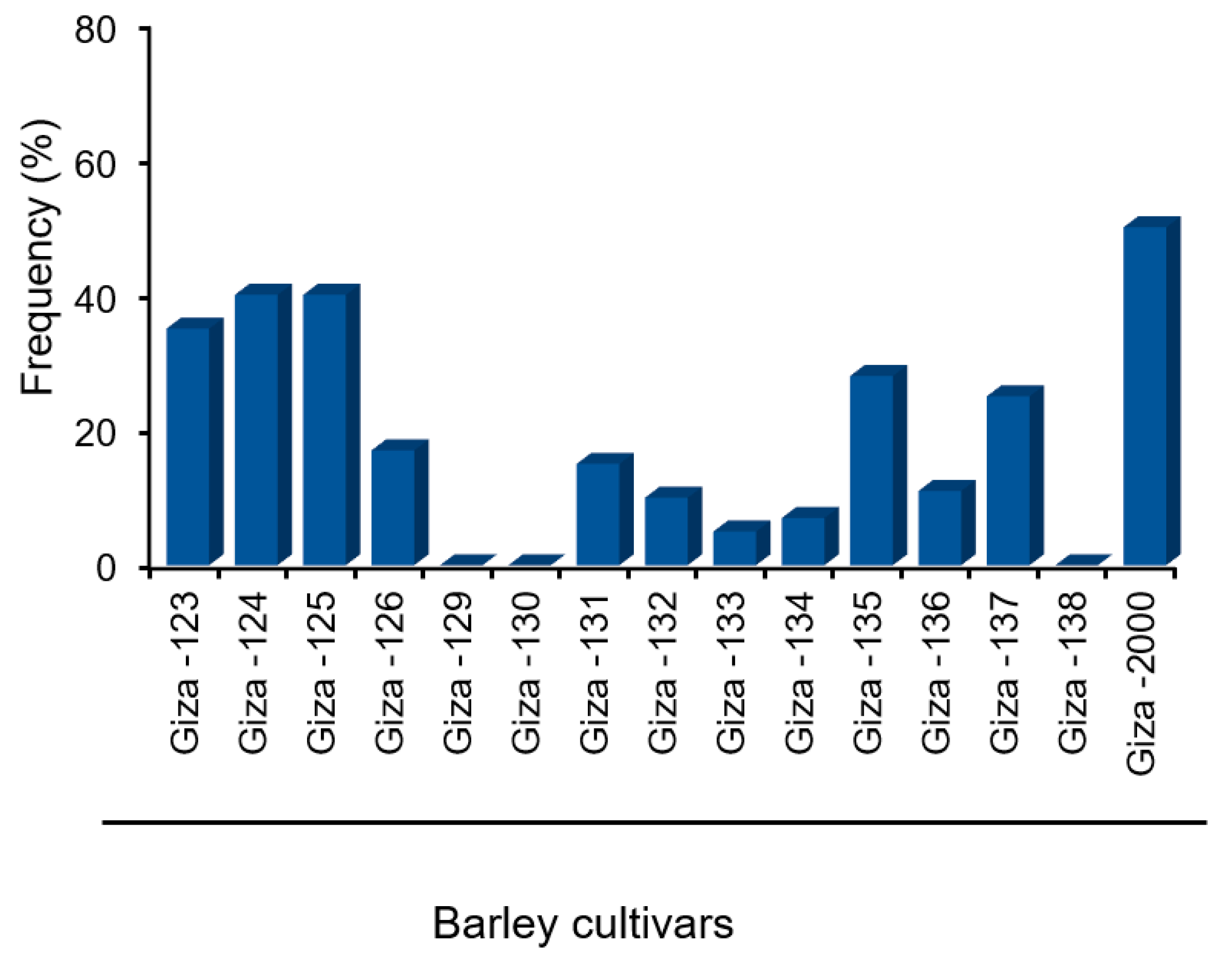
The frequency distribution of Ptt isolates varied among the evaluated barley cultivars (Figure 1). The highest proportion of isolates was recovered from cultivar Giza-2000 (50%), followed by Giza-124 and Giza-125 (40% each), and Giza-123 (35%). In contrast, low frequencies were detected in cultivars Giza-133 and Giza-134 (5% and 7%, respectively), while no Ptt isolates were recovered from cultivars Giza-129, Giza-130, and Giza-138.

3.2. Pathogenicity of Pyrenophora teres f. teres Isolates on Barley Cultivars

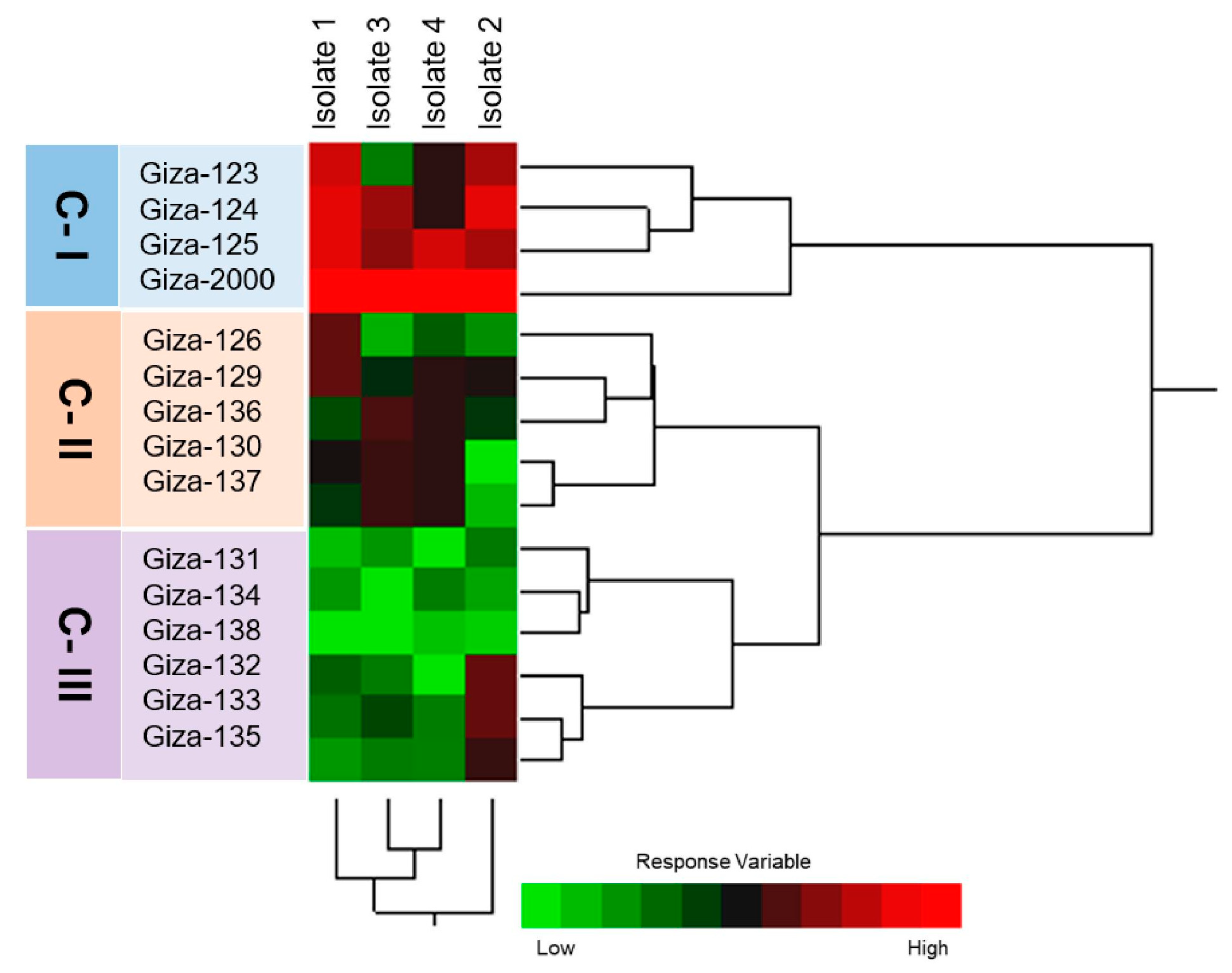
Hierarchical clustering analysis classified the 15 barley cultivars into three distinct groups based on their responses to Ptt isolates (Figure 2). Cluster I included cultivars Giza-123, 124, 125, and 2000, which exhibited the highest disease response levels, as indicated by red coloration in the heatmap. Cluster II comprised cultivars Giza-126, 129, 136, 130, and 137, showing intermediate responses. Cluster III included cultivars Giza-131, 132, 133, 134, 135, and 138, which were associated with lower response values. Overall, the clustering analysis revealed clear variation in cultivar susceptibility to Ptt isolates, with Cluster I representing the most susceptible group, Cluster III the least susceptible group, and Cluster II exhibiting moderate responses.

3.3. Characterization and Identification of Endophytic Bacterial Isolates

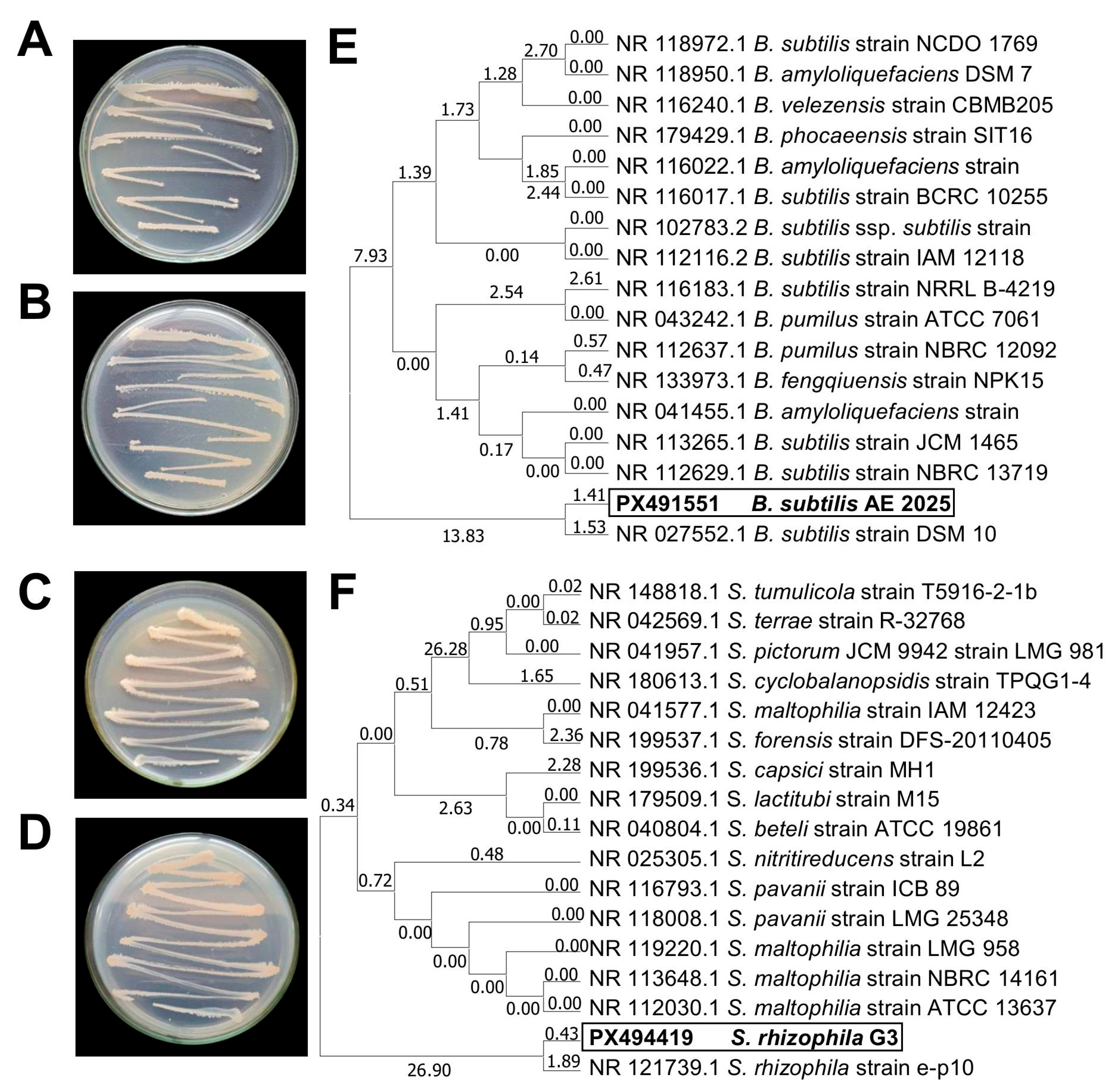
Two endophytic bacterial isolates were obtained from asymptomatic barley seeds and characterized in this study. The first isolate formed creamy-white, circular, and slightly raised colonies after 3 days of incubation at 28 ± 2 °C (Figure 3A,B). In contrast, the second isolate produced smooth, circular, and slightly convex colonies under the same conditions (Figure 3C,D). Molecular identification was performed based on 16S rRNA gene sequencing. BLASTn analysis revealed that the first isolate exhibited 99.41% similarity to Bacillus subtilis strain DSM 10 (GenBank Accession No. NR 027552.1), while the second isolate shared 98.52% similarity with Stenotrophomonas rhizophila strain e-p10 (GenBank Accession No. NR 121739.1). Phylogenetic trees were constructed using the neighbor-joining method with 1000 bootstrap replications, confirming the taxonomic placement of both isolates within their respective genera (Figure 3E,F). The obtained sequences were deposited in the NCBI database under the accession numbers PX491551 (B. subtilis AE 2025) and PX494419 (S. rhizophila G3).

3.4. In Vitro Antifungal Activity of the Endophytic Bacteria Against Pyrenophora teres f. teres

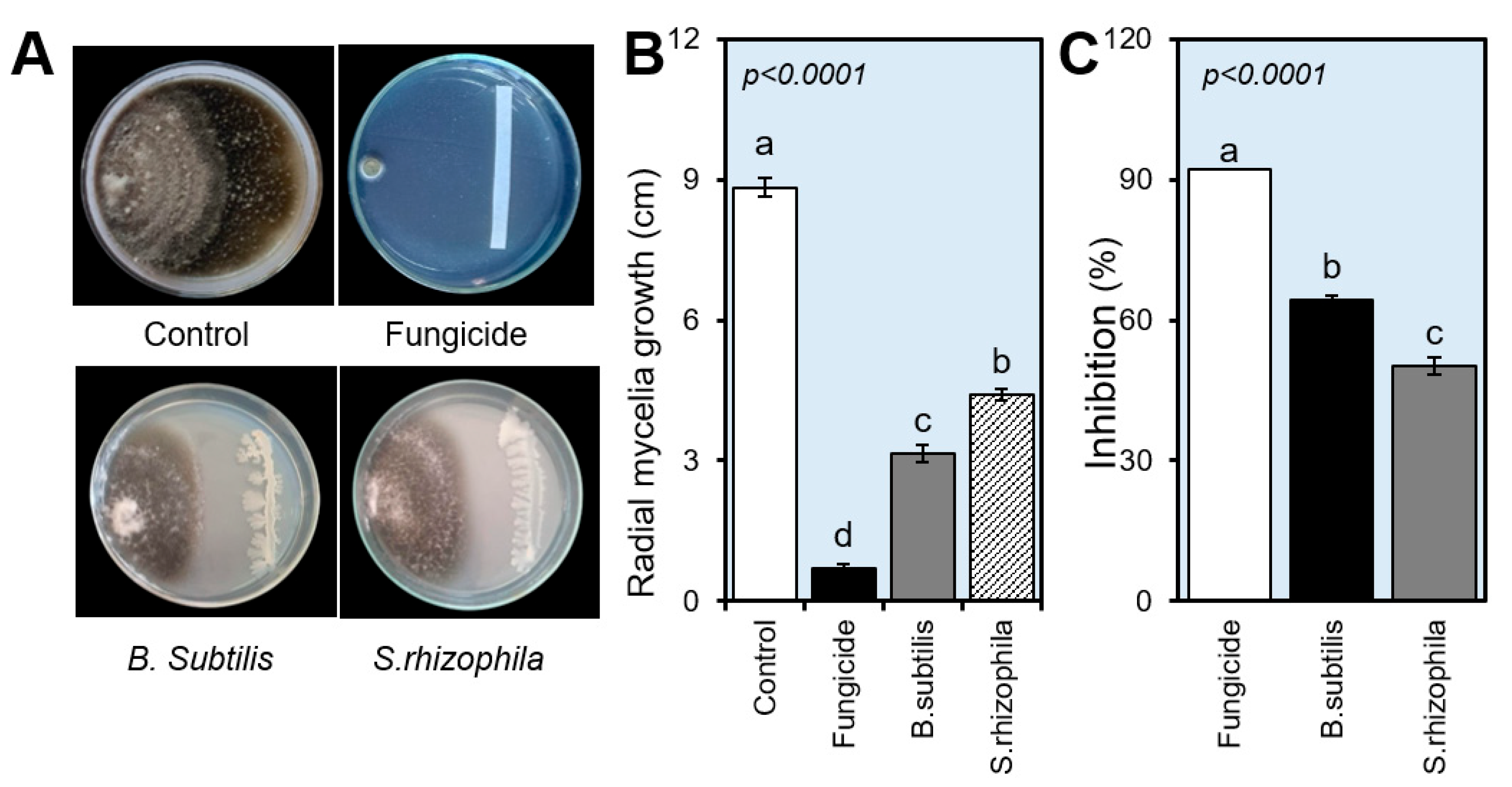
Both B. subtilis and S. rhizophila significantly reduced the radial growth of Pyrenophora teres f. teres compared with the untreated control (Figure 4A). The chemical fungicide Montoro resulted in the highest level of growth suppression, limiting fungal radial growth to 0.70 ± 0.09 cm. Treatment with B. subtilis reduced the radial growth of Pyrenophora teres f. teres to 3.15 ± 0.18 cm, whereas S. rhizophila limited growth to 4.40 ± 0.13 cm (Figure 4B). These reductions corresponded to inhibition percentages of 64.34 ± 1.83% and 50.14 ± 2.45% for B. subtilis and S. rhizophila, respectively (Figure 4C).

3.5. Effect of B. subtilis and S. rhizophila on Net Blotch Development at the Seedling Stage

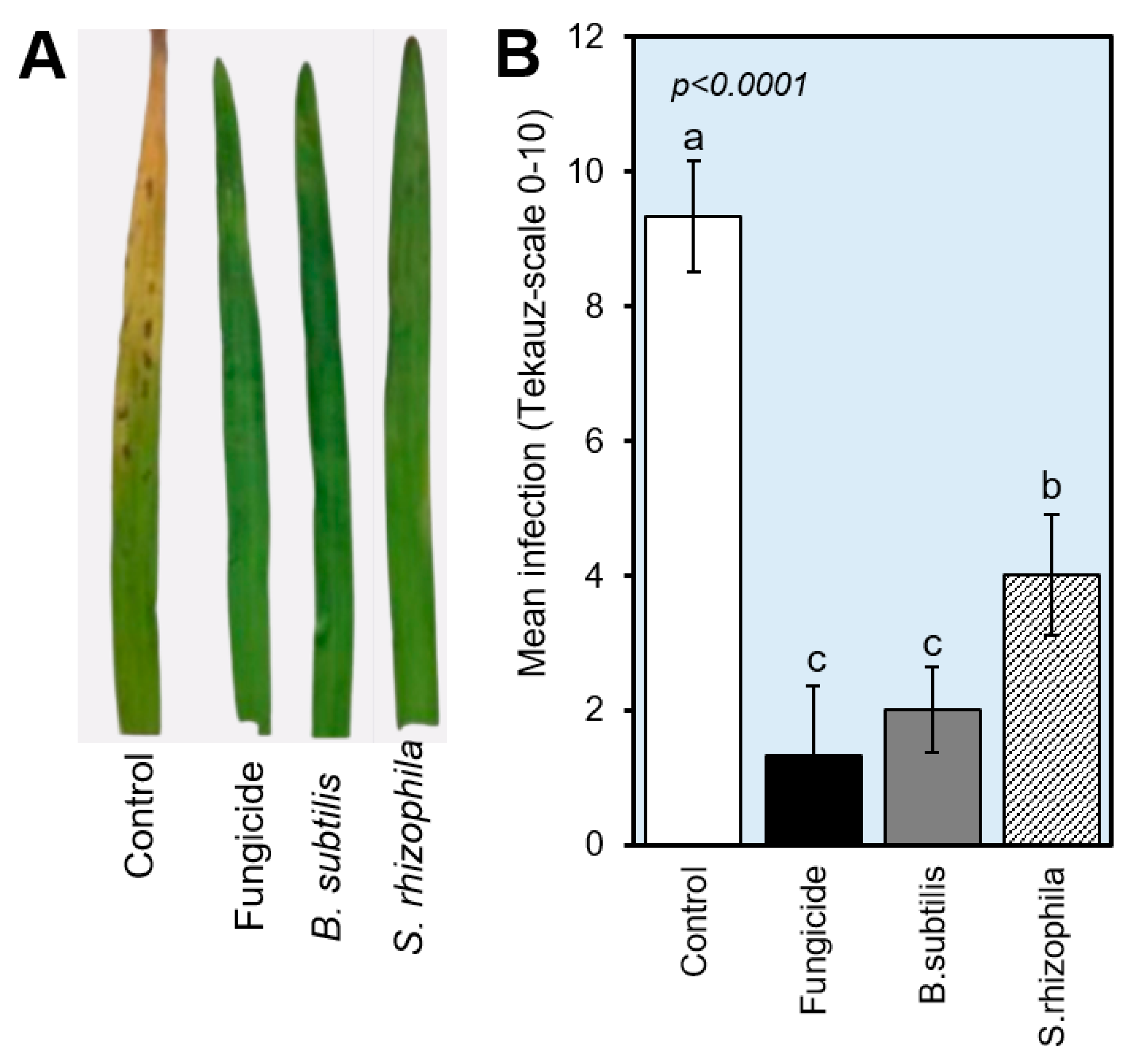
Foliar application of B. subtilis and S. rhizophila at 24 h after pathogen inoculation significantly reduced the development of net blotch disease on barley seedlings under greenhouse conditions. Visual assessment indicated that all treatments reduced symptom expression compared with the untreated control (Figure 5A). Quantitative analysis based on the infection response index at 10 days post-treatment revealed significant differences among treatments (Tukey’s HSD test, p < 0.05) (Figure 5B). Disease severity was reduced to 1.33 ± 1.03 by the fungicide treatment and to 2.00 ± 0.63 by B. subtilis, whereas S. rhizophila lowered disease severity to 4.00 ± 0.89.

3.6. Effect of B. subtilis and S. rhizophila on Non-Enzymatic Antioxidant Compounds in Infected Barley Seedlings

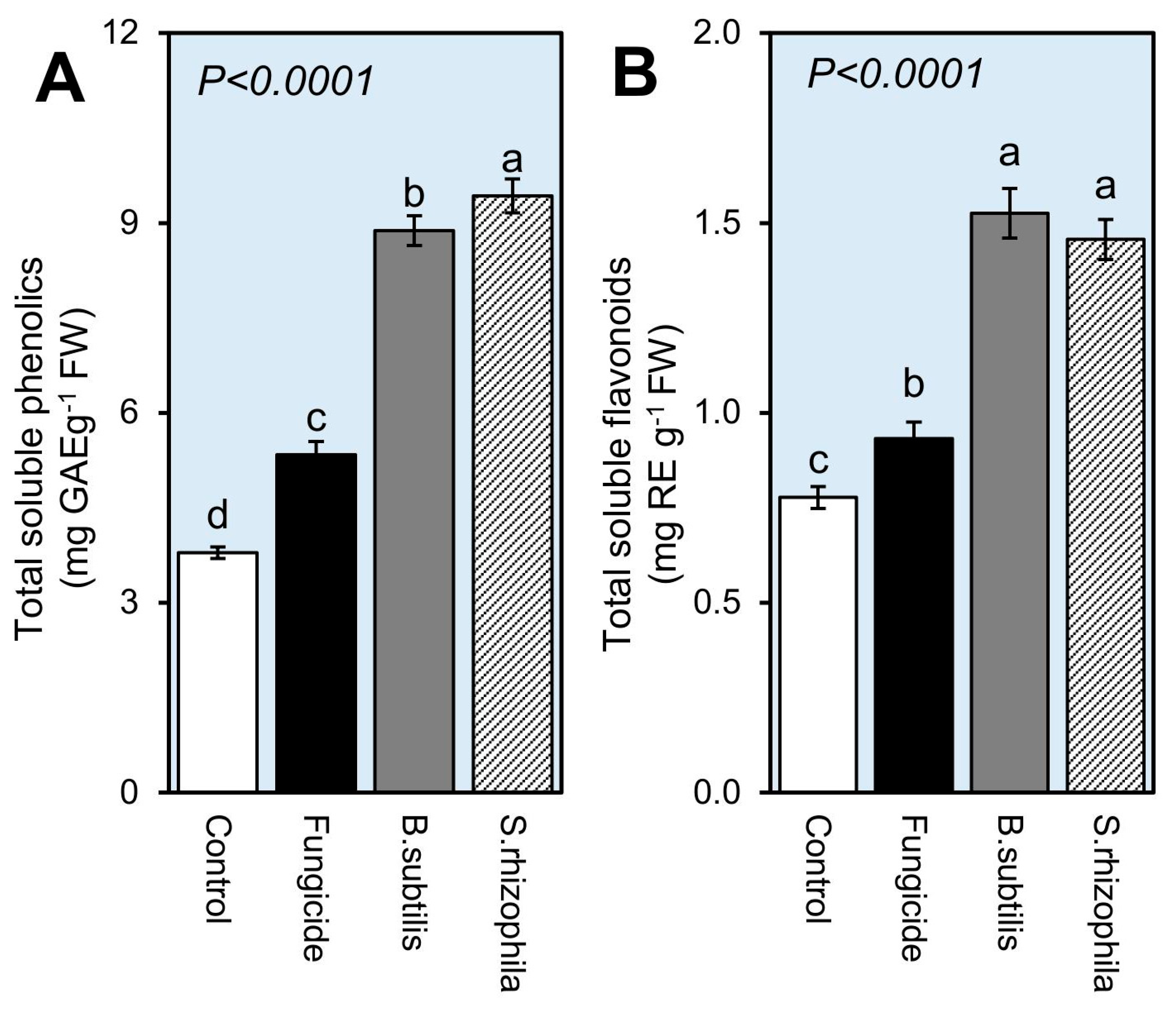
Both B. subtilis and S. rhizophila treatments markedly enhanced the accumulation of total soluble phenolics in Pyrenophora teres f. teres-infected barley plants at 72 hpt. The phenolic content reached 8.88 ± 0.23 and 9.42 ± 0.26 mg GAE g−1 FW for B. subtilis and S. rhizophila, respectively, compared with 3.79 ± 0.09 mg GAE g−1 FW in the non-treated and 5.33 ± 0.21 mg GAE g−1 FW in the fungicide-treated controls (Figure 6A). Likewise, the total soluble flavonoid content increased to 1.52 ± 0.06 and 1.45 ± 0.05 mg RE g−1 FW for B. subtilis and S. rhizophila, respectively, relative to 0.77 ± 0.02 mg RE g−1 FW in the non-treated and 0.93 ± 0.04 mg RE g−1 FW in the fungicide-treated controls (Figure 6B).

3.7. Effect of B. subtilis and S. rhizophila on Antioxidant and Defense-Related Enzyme Activities in Infected Barley Seedlings

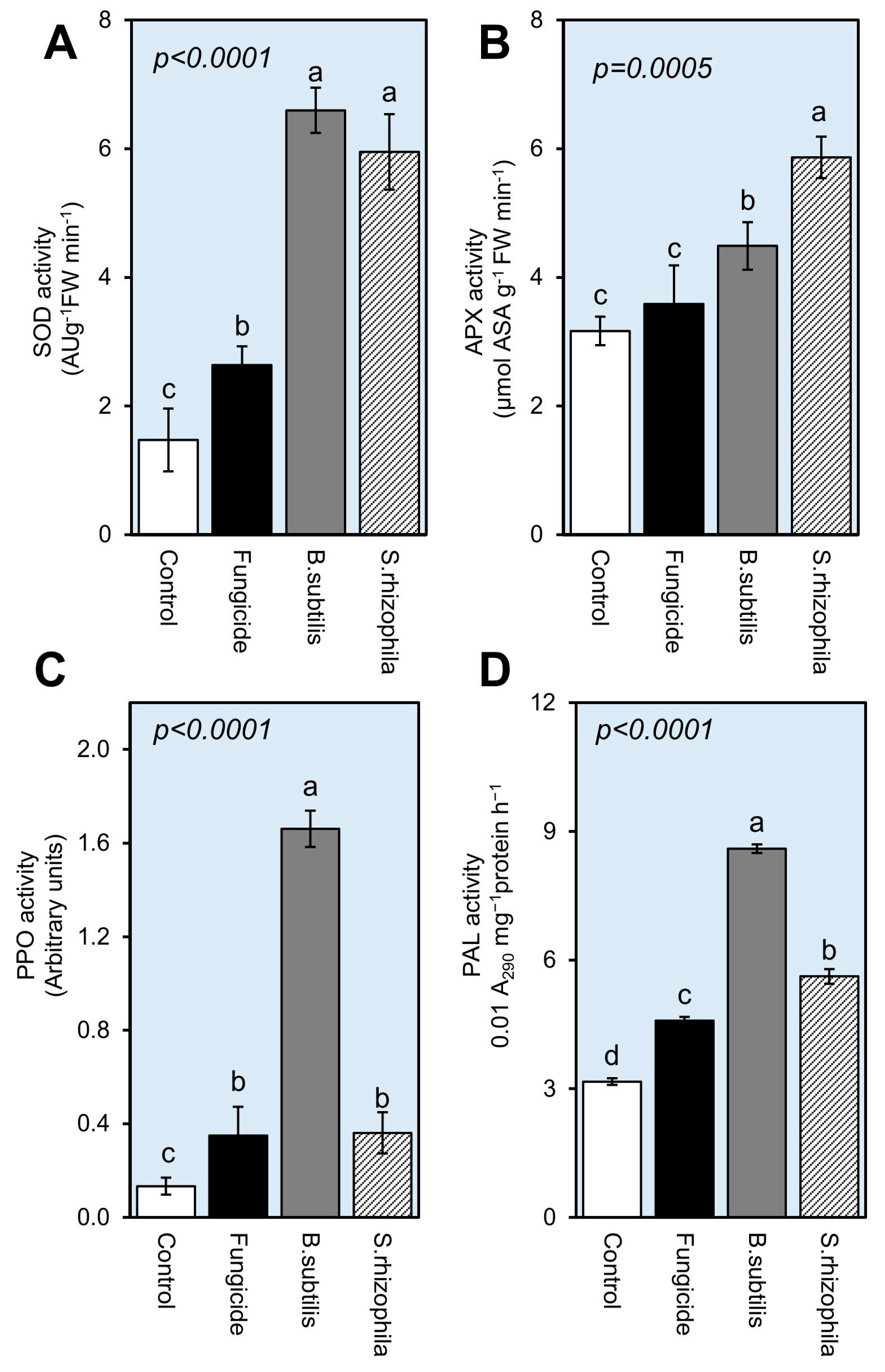
Similarly, the enzymatic profile of Ptt-infected barley seedlings was strongly influenced by the endophytic bacterial treatments. Both treatments significantly increased the activities of the antioxidant enzymes, including superoxide dismutase (SOD) and ascorbate peroxidase (APX), as well as the defense-related enzymes polyphenol oxidase (PPO) and phenylalanine ammonia-lyase (PAL), compared with the non-treated and fungicide-treated controls. The highest SOD activity was observed in B. subtilis (6.60 ± 0.35 AU g−1FW min−1), while S. rhizophila exhibited the highest APX activity (5.87 ± 0.32 μmol ASA g−1 FW min−1) (Figure 7A,B). PPO activity was markedly elevated in B. subtilis (1.66 ± 0.07 Arbitrary units) relative to the control (0.13 ± 0.04 Arbitrary units; Figure 7C). Similarly, PAL activity peaked in B. subtilis (8.60 ± 0.10; 0.01 A290 mg−1 protein h−1), followed by S. rhizophila (5.62 ± 0.17; 0.01 A290 mg−1 protein h−1), whereas the control exhibited the lowest activity (3.17 ± 0.07; 0.01 A290 mg−1 protein h−1) (Figure 7D). A summary of the effects of B. subtilis and S. rhizophila on non-enzymatic (total phenolics and flavonoids) and enzymatic (SOD, APX, PPO, and PAL) parameters in barley leaves is presented in Table 1.

3.8. Effect of B. subtilis and S. rhizophila on Net Blotch Development on Adult Barley Plants

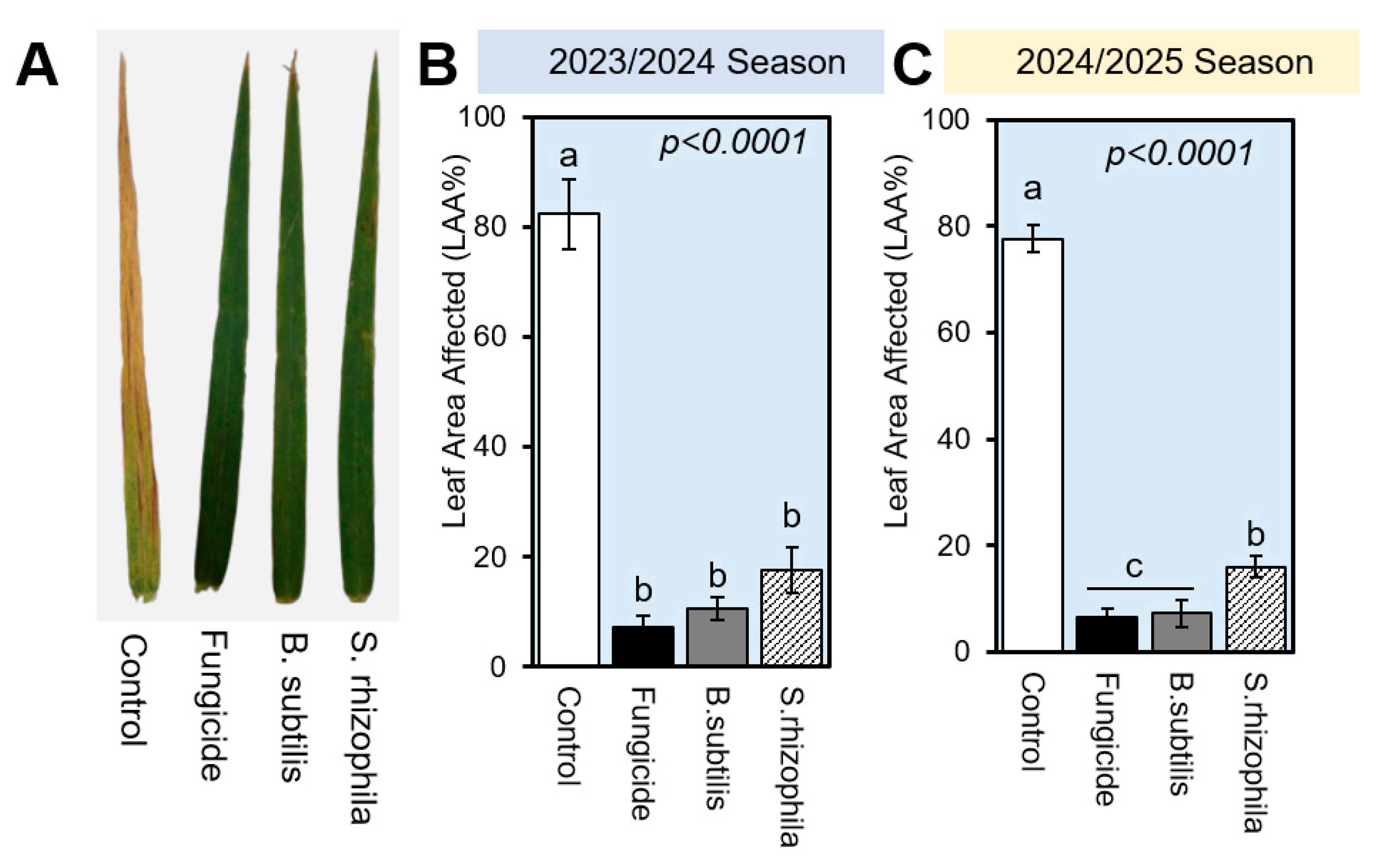
Under field conditions at the adult stage, all treatments significantly reduced the leaf area affected (LAA%) compared with the untreated control (Figure 8). In the first season (2023–2024), LAA was significantly reduced by the fungicide, and both bacterial isolates (B. subtilis and S. rhizophila), with no significant differences between these treatments (Figure 8B). In the second season (2024–2025), the fungicide and B. subtilis resulted in the lowest LAA values (6.67 ± 1.53% and 7.33 ± 2.52%, respectively), whereas S. rhizophila showed a higher LAA (16.00 ± 2.00%), which was significantly different from the other two treatments (Figure 8C). Overall, both bacterial isolates significantly reduced disease severity compared with the untreated control in both seasons.

3.9. Effect of B. subtilis and S. rhizophila on Chlorophyll Content and the Grain Yield of Barley Plants Affected by Net Blotch Under Field Conditions

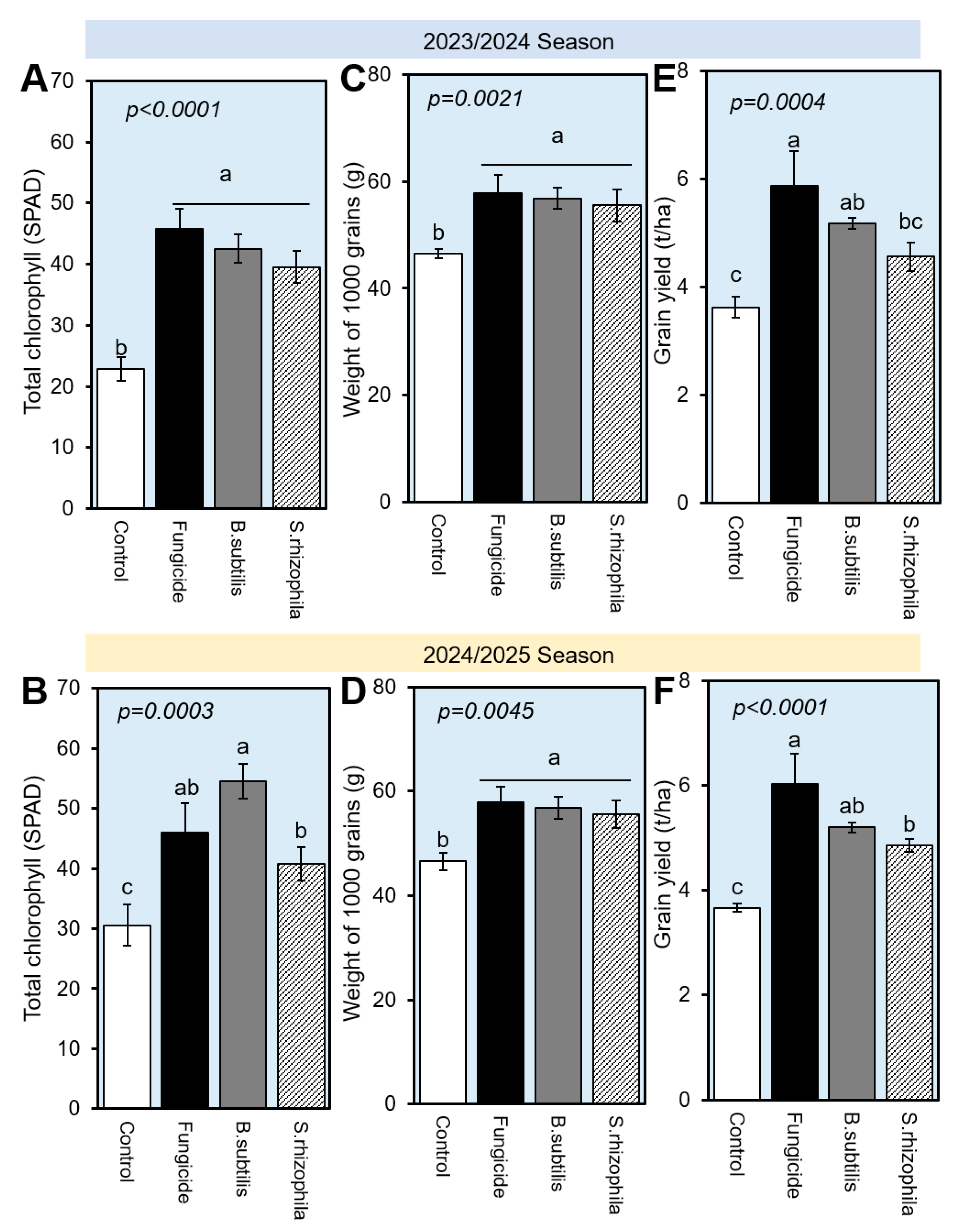
Treatment with both bacterial isolates, B. subtilis and S. rhizophila, increased chlorophyll content in net blotch-infected barley plants under field conditions during two growing seasons (Figure 9A,B). In the first season (2023–2024), no significant differences were detected between the bacterial isolates and the chemical fungicide (Figure 9A). In the second season (2024–2025), B. subtilis treatment resulted in the highest chlorophyll content, followed by the fungicide and S. rhizophila (Figure 9B). A similar trend was observed for 1000-grain weight, with both bacterial isolates and the fungicide significantly outperforming the untreated control; differences between the treatments themselves were not statistically significant across seasons (Figure 9C,D). Regarding grain yield (t ha–1), in the first season, the fungicide and B. subtilis produced the highest grain yields, with no significant difference between them, followed by S. rhizophila (Figure 9E). In the second season, both bacterial treatments showed comparable grain yields, whereas the fungicide remained superior (Figure 9F).

4. Discussion

Net blotch disease, caused by Pyrenophora teres f. teres, is a destructive stubble- and seed-borne foliar disease of barley worldwide [40,41]. In this study, four Ptt isolates were obtained from barley seeds of different cultivars, confirming the role of seed transmission in disease initiation [42]. Traditionally, chemical fungicides have been used to control net blotch [43]. However, repeated applications pose environmental hazards and promote the development of fungicide-resistant pathogen strains [13], highlighting the need for effective and eco-friendly management strategies. Biological control represents a promising alternative for managing barley net blotch while maintaining crop productivity and grain quality [44].
Here, two seed-borne endophytic bacteria, B. subtilis PX491551 and S. rhizophila PX494419, were evaluated under in vitro, greenhouse, and field conditions. Although both species have been previously reported as biocontrol agents, this study focuses on seed-borne strains naturally associated with barley, which may favor host adaptation and internal colonization. This work establishes a link between net blotch suppression and the activation of antioxidant defense mechanisms and protective enzymes in barley under field conditions across two consecutive growing seasons, thereby extending earlier findings that were previously limited to laboratory or greenhouse experiments.
In vitro assays showed that both isolates inhibited the mycelial growth of Ptt, which may be mediated via multiple mechanisms, including the production of antifungal metabolites, hydrolytic enzymes, siderophores, and other bioactive compounds [16,17]. Although the specific bioactive metabolites were not directly characterized in the current study, the observed antifungal effects suggest their involvement, consistent with previous reports [19,45]. Future research should identify and quantify these metabolites to clarify their exact role in net blotch suppression. Bacillus species are known to produce structurally diverse secondary metabolites with broad-spectrum antimicrobial activity, including peptide antibiotics such as mycobacillins, iturins, and surfactins [19,45]. Moreover, Bacillus species can produce a range of hydrolytic enzymes, including chitinases [42] and other cell wall-degrading enzymes, as well as antifungal proteins [46]. Similarly, S. rhizophila exhibits antagonistic activity against various phytopathogenic fungi through multiple mechanisms, including hydrolytic enzymes and the production of siderophore [20,21,47,48]. Although the precise contributions of these mechanisms in the present strains remain to be elucidated, they likely act synergistically to suppress Pyrenophora teres f. teres.
Furthermore, in this study, foliar application of the endophytic bacteria reduced the development of net blotch on barley at both the seedling and adult stages. The sustained reduction in net blotch severity suggests that the applied endophytic bacteria were able to persist within plant tissues and maintain their biological activity [48,49]. Although bacterial colonization was not directly quantified in the present study, previous studies indicate that endophytic bacteria can establish and maintain stable populations over extended periods [18]. This prolonged colonization likely contributed to the consistent biocontrol performance observed under greenhouse and field conditions. Moreover, this reduction in net blotch severity may be linked to activation of the plant’s antioxidant-defense system, which comprises both enzymatic and non-enzymatic components [50].
Plants possess a complex defense network: the enzymatic antioxidant mechanism constitutes the first line of defense against reactive oxygen species (ROS) generated during pathogen attack, while non-enzymatic antioxidants (such as phenolics and flavonoids) serve as a secondary line of defense, helping to scavenge free radicals and reinforce structural barriers [51,52,53]. The results revealed that SOD, APX, PPO, and PAL activity significantly increased after 72 h of treatment with B. subtilis and S. rhizophila. SOD catalyzes the conversion of superoxide radicals into hydrogen peroxide and oxygen, thus reducing oxidative damage [54]. APX uses ascorbate to convert hydrogen peroxide into water, and is known to play a key role in protecting plant cells from oxidative stress, supporting plant growth and development [55].
Additionally, PPO and PAL play pivotal roles in plant defense responses. PPO catalyzes the oxidation of phenolic compounds into quinones, which are more toxic to invading pathogens and contribute to the reinforcement of cell walls [56]. Although PPO is not a primary ROS-scavenging enzyme, its activity is closely linked to the phenolic metabolism that enhances structural and chemical barriers against infection. Similarly, PAL is a key enzyme in the phenylpropanoid pathway, initiating the biosynthesis of numerous defense-related secondary metabolites, including lignin, tannins, phytoalexins, salicylic acid, and total phenolics that strengthen plant resistance to pathogen invasion [57].
A marked increase in the activities of PPO and PAL was detected in barley plants treated with B. subtilis and S. rhizophila, suggesting the activation of phenolic metabolism and cell wall-associated defenses following bacterial inoculation. These results are in line with earlier reports showing that B. subtilis enhanced PPO and PAL activities and total phenolic content in tomato plants challenged with Alternaria solani [58], and that S. rhizophila promoted similar antioxidant and defense-related enzyme activities under fungal or abiotic stress conditions [59]. The elevated PAL and PPO activities observed here may therefore reflect a coordinated response between enzymatic and non-enzymatic antioxidant systems, contributing to the suppression of Ptt and the reduction of net blotch severity in barley plants [60].
In addition to enzymatic defenses, plants rely on a complementary non-enzymatic antioxidant system that includes phenolic and flavonoid compounds, which act as potent scavengers of reactive oxygen species and contribute to structural defense [61]. These compounds not only neutralize oxidative damage but also serve as precursors for the synthesis of lignin and other antimicrobial metabolites [62]. In the current study, the foliar application of B. subtilis and S. rhizophila significantly enhanced the accumulation of total soluble phenolics and flavonoids in barley tissues. This increase may indicate the stimulation of secondary metabolism associated with induced systemic resistance. The enhancement of both enzymatic (SOD, APX, PPO, PAL) and non-enzymatic antioxidants in our study suggests that these endophytic bacteria can prime barley plants for stronger and faster defense responses against Pyrenophora teres f. teres infection.
The treatments with B. subtilis and S. rhizophila in this study not only reduced the disease severity of net blotch in barley but also significantly increased leaf chlorophyll content and grain yield (thousand-grain weight and yield t/ha) compared to the untreated control. The observed rise in chlorophyll may reflect a healthier photosynthetic system preserved by reduced pathogen damage and improved nutrient acquisition following bacterial inoculation. Indeed, studies have shown that B. subtilis inoculation enhances chlorophyll concentration and photosynthetic activity in crops under stress conditions [63,64]. In addition to disease suppression, these bacterial endophytes may directly promote plant growth by solubilizing nutrients such as phosphate [65], producing phytohormones (e.g., IAA, gibberellins), and improving nutrient uptake efficiency.
Different species of Stenotrophomonas are recognized as effective plant growth-promoting rhizobacteria (PGPR) due to their various beneficial characteristics, including the production of siderophores, the phosphates solubilization, and the synthesis of phytohormones and spermidine. Together, these mechanisms enhance plant vigor [66,67]. Therefore, the combined effects of reduced fungal damage and enhanced physiological functioning likely explain the improved yield parameters observed in our barley plants. The present study demonstrated that the tested bacterial treatments were effective across two consecutive growing seasons, indicating their potential practical applicability under variable environmental conditions [68]. The treatments consistently reduced disease severity, suggesting suitability for integration into larger-scale disease management programs. The application rates used are within ranges commonly reported for bacterial biocontrol agents, supporting their field feasibility and practicality compared to conventional fungicide programs. While chemical fungicides provided rapid disease suppression, the bacterial treatments achieved comparable disease reduction over time, offering a sustainable alternative with reduced risks of environmental contamination and resistance development. Nevertheless, the large-scale application of microbial agents requires careful consideration of formulation-related challenges, including maintaining cell viability, ensuring shelf stability, and achieving uniform field distribution. These factors should be addressed in future development to fully exploit the scalability potential of the bacterial biocontrol approach. Ultimately, these findings suggest that endophytic B. subtilis and S. rhizophila may contribute to barley tolerance through two complementary modes of action: suppression of pathogen development and enhancement of plant physiological performance, which together could support improved plant productivity under pathogen stress [63,64].

5. Conclusions

This study demonstrates that the endophytic bacteria B. subtilis PX491551 and S. rhizophila PX494419 effectively suppressed the growth of Pyrenophora teres f. teres in vitro and significantly reduced net blotch development in barley at both seedling and adult stages. This protection was closely associated with enhanced activity of plant enzymatic antioxidant defenses, including SOD, APX, PPO, and PAL, as well as increased accumulation of non-enzymatic antioxidants such as phenolics and flavonoids. In addition, these treatments improved chlorophyll content and yield-related traits, indicating improved plant health under pathogen stress. From a broader perspective, the use of endophytic bacteria represents a promising approach for sustainable barley production by reducing dependence on chemical fungicides and minimizing environmental impact. However, challenges remain, including the need to validate the consistency of these effects under diverse field conditions and to optimize formulation, application timing, and delivery methods. Future research should also focus on elucidating the molecular and physiological mechanisms underlying plant–microbe–pathogen interactions. Overall, integrating B. subtilis and S. rhizophila into integrated disease management programs could support environmentally friendly strategies for long-term and sustainable barley productivity.

Author Contributions

Conceptualization: A.A.E. and G.E.O.; data curation: A.E.-N., S.M.E. and A.A.; formal analysis: A.E.-N., A.H.M. and A.A.E.; funding acquisition: Y.S.A.M. and A.H.M.; investigation: A.A.E., A.E.-N., G.E.O., A.H.M. and S.M.E.; methodology: A.E.-N., A.A., G.E.O. and S.M.E.; resources: G.E.O., Y.S.A.M., A.H.M., A.E.-N., A.A.E., A.A. and S.M.E.; software: Y.S.A.M., A.E.-N. and A.A.E.; validation: A.E.-N., A.A., A.H.M. and S.M.E.; visualization: A.A.E.; writing—original draft: G.E.O. and A.A.E.; writing—review and editing: S.M.E., Y.S.A.M., A.H.M., A.A., A.E.-N. and A.A.E. All authors have read and agreed to the published version of the manuscript.

Funding

The authors gratefully acknowledge the Deanship of Research and Graduate Studies at King Khalid University for supporting this work through the Large Research Project, grant number RGP2/295/46.

Data Availability Statement

All study data are detailed in the article; further inquiries can be directed to the corresponding author.

Acknowledgments

The authors sincerely thank the Deanship of Research and Graduate Studies at King Khalid University for funding this work through the Large Research Project (Grant No. RGP2/295/46).

Conflicts of Interest

The authors declare that they have no conflicts of interest.

References

  1. FAOSTAT. Agriculture Organization of the United Nations FAO Statistical Database; Food and Agriculture Organization of the United Nations: Rome, Italy, 2023. [Google Scholar]
  2. Raj, R.; Shams, R.; Pandey, V.K.; Dash, K.K.; Singh, P.; Bashir, O. Barley Phytochemicals and Health Promoting Benefits: A Comprehensive Review. J. Agric. Food Res. 2023, 14, 100677. [Google Scholar] [CrossRef]
  3. Backes, A.; Guerriero, G.; Ait Barka, E.; Jacquard, C. Pyrenophora teres: Taxonomy, Morphology, Interaction with Barley, and Mode of Control. Front. Plant Sci. 2021, 12, 614951. [Google Scholar] [CrossRef]
  4. Clare, S.J.; Wyatt, N.A.; Brueggeman, R.S.; Friesen, T.L. Research Advances in the Pyrenophora teres—Barley Interaction. Mol. Plant Pathol. 2020, 21, 272–288. [Google Scholar] [CrossRef]
  5. Taliadoros, D.; Feurtey, A.; Wyatt, N.; Barrès, B.; Gladieux, P.; Friesen, T.L.; Stukenbrock, E.H. Emergence and Spread of The Barley Net Blotch Pathogen Coincided with Crop Domestication and Cultivation History. PLoS Genet. 2024, 20, e1010884. [Google Scholar] [CrossRef]
  6. Shoemaker, R.A. Nomenclature of Drechslera and Bipolaris, Grass Parasites Segregated from ‘Helminthosporium’. Can. J. Bot. 1959, 37, 879–887. [Google Scholar] [CrossRef]
  7. Sayed, M.A.; Abou-Zaid, M.A.; Ali, M.B. Mapping QTL And Epistatic Effects for Powdery Mildew, Leaf Rust and Net Blotch Resistance in Barley. Egypt. J. Plant Breed. 2019, 23, 289–307. [Google Scholar]
  8. Mohdly, B.R.; Ahmed Safhi, F.; Abou-zeid, M.A.; Abdel-fattah, A.A.; Almoshadak, A.S.; Almanzalawi, E.A.; Alqahtani, T.M.; Abd el Moneim, D.; Elessawy, R.A.M. Understanding The Influence of Applying Plant Extracts and Microorganism Culture Filtrates against Barley Leaf Rust Disease. Not. Bot. Horti Agrobot. Cluj-Napoca 2024, 52, 13450. [Google Scholar] [CrossRef]
  9. Liu, Z.; Ellwood, S.R.; Oliver, R.P.; Friesen, T.L. Pyrenophora teres: Profile of an Increasingly Damaging Barley Pathogen. Mol. Plant Pathol. 2011, 12, 1–19. [Google Scholar] [CrossRef]
  10. Weiergang, I.; Lyngs JØrgensen, H.J.; MØller, I.M.; Friis, P.; Smedegaard-petersen, V. Correlation Between Sensitivity of Barley to Pyrenophora teres Toxins and Susceptibility to the Fungus. Physiol. Mol. Plant Pathol. 2002, 60, 121–129. [Google Scholar] [CrossRef]
  11. Muria-Gonzalez, M.J.; Zulak, K.G.; Allegaert, E.; Oliver, R.P.; Ellwood, S.R. Profile of the In vitro Secretome of the Barley Net Blotch Fungus, Pyrenophora teres f. teres. Physiol. Mol. Plant Pathol. 2020, 109, 101451. [Google Scholar] [CrossRef]
  12. Galano, T.; Fininsa, C.; Bultosa, G. Effects of Net Blotch (Pyrenophora teres) on Malt Barley Yield and Grain Quality at Holeta. Central Ethiopia. East Afr. J. Sci. 2008, 2, 150–158. [Google Scholar] [CrossRef]
  13. Pütsepp, R.; Mäe, A.; Põllumaa, L.; Andresen, L.; Kiiker, R. Fungicide Sensitivity Profile of Pyrenophora teres f. teres in Field Population. J. Fungi 2024, 10, 260. [Google Scholar] [CrossRef]
  14. Falade, A.O.; Adewole, K.E.; Ekundayo, T.C. Aptitude of Endophytic Microbes for Production of Novel Biocontrol agents and Industrial Enzymes Towards Agro-Industrial Sustainability. Beni-Suef Univ. J. Basic. Appl. Sci. 2021, 10, 61. [Google Scholar] [CrossRef]
  15. Osman, H.E.M.; Nehela, Y.; Elzaawely, A.A.; El-Morsy, M.H.; El-Nagar, A. Two Bacterial Bioagents Boost Onion Response to Stromatinia cepivora and Promote Growth and Yield via Enhancing the Antioxidant Defense System and Auxin Production. Horticulturae 2023, 9, 780. [Google Scholar] [CrossRef]
  16. Morales-Cedeño, L.R.; Orozco-Mosqueda, M.D.C.; Loeza-Lara, P.D.; Parra-Cota, F.I.; de los Santos-Villalobos, S.; Santoyo, G. Plant Growth-Promoting Bacterial Endophytes as Biocontrol Agents of Pre- and Post-Harvest Diseases: Fundamentals, Methods of Application and Future Perspectives. Microbiol. Res. 2021, 242, 126612. [Google Scholar] [CrossRef]
  17. Oukala, N.; Aissat, K.; Pastor, V. Bacterial Endophytes: The Hidden Actor in Plant Immune Responses against Biotic Stress. Plants 2021, 10, 1012. [Google Scholar] [CrossRef]
  18. Ali, M.A.; Ahmed, T.; Ibrahim, E.; Rizwan, M.; Chong, K.P.; Yong, J.W.H. A Review On Mechanisms and Prospects of Endophytic Bacteria in Biocontrol of Plant Pathogenic Fungi and Their Plant Growth-Promoting Activities. Heliyon 2024, 10, e31573. [Google Scholar] [CrossRef]
  19. Hazarika, D.J.; Goswami, G.; Gautom, T.; Parveen, A.; Das, P.; Barooah, M.; Boro, R.C. Lipopeptide Mediated Biocontrol Activity of Endophytic Bacillus Subtilis against Fungal Phytopathogens. BMC Microbiol. 2019, 19, 71. [Google Scholar] [CrossRef]
  20. Wang, L.; Xi, N.; Lang, D.; Zhou, L.; Zhang, Y.; Zhang, X. Potential Biocontrol and Plant Growth Promotion of an Endophytic Bacteria Isolated from Glycyrrhiza Uralensis Seeds. Egypt. J. Biol. Pest Control 2022, 32, 55. [Google Scholar] [CrossRef]
  21. Raio, A.; Brilli, F.; Neri, L.; Baraldi, R.; Orlando, F.; Pugliesi, C.; Chen, X.; Baccelli, I. Stenotrophomonas rhizophila Ep2. 2 Inhibits Growth of Botrytis Cinerea Through the Emission of Volatile Organic Compounds, Restricts Leaf Infection and Primes Defense Genes. Front. Plant Sci. 2023, 14, 1235669. [Google Scholar] [CrossRef]
  22. Lara-Capistran, L.; Zulueta-Rodriguez, R.; Castellanos-Cervantes, T.; Reyes-Perez, J.J.; Preciado-Rangel, P.; Hernandez-Montiel, L.G. Efficiency of Marine Bacteria and Yeasts on the Biocontrol Activity of Pythium ultimum in Ancho-Type Pepper Seedlings. Agronomy 2020, 10, 408. [Google Scholar] [CrossRef]
  23. Schmidt, C.S.; Mrnka, L.; Lovecká, P.; Frantik, T.; Fenclová, M.; Demnerová, K.; Vosátka, M. Bacterial and Fungal Endophyte Communities in Healthy and Diseased Oilseed Rape and Their Potential for Biocontrol of Sclerotinia and Phoma Disease. Sci. Rep. 2021, 11, 3810. [Google Scholar] [CrossRef]
  24. Gharsallah, H.; Cheffi, M.; Mallek, R.; Massoudi, A.; Omri, N.; Triki, M.A.; Oztop, M.; ZARAI, Z. Antifungal Potential of Bacillus strains: Implications for Biocontrol Strategies in Food Safety and Sustainable Agriculture. Front. Microbiol. 2025, 16, 1615252. [Google Scholar] [CrossRef]
  25. Sanglard, L.; Cuellar, S.M.; Ghavamabad, R.H.; Lawrence, J.; D’Souza, N.; Gonzalez, J.M.; Naim, F.; Gifford, C. Isolation of Pyrenophora teres f. teres from Infected Barley Leaves and Re-Inoculation of Barley Leaves in a Glasshouse; Springer: Berlin/Heidelberg, Germany, 2025. [Google Scholar] [CrossRef]
  26. Lightfoot, D.J.; Able, A.J. Growth of Pyrenophora teres in Planta During Barley Net Blotch Disease. Australas. Plant Pathol. 2010, 39, 499. [Google Scholar] [CrossRef]
  27. Khan, M.R.; Brien, E.O.; Carney, B.F.; Doohan, F.M. A Fluorescent Pseudomonad Shows Potential for the Control of Net Blotch Disease of Barley. Biol. Control 2010, 54, 41–45. [Google Scholar] [CrossRef]
  28. Tekauz, A. A Numerical Scale to Classify Reactions of Barley to Pyrenophora teres. Can. J. Plant Pathol. 1985, 7, 181–183. [Google Scholar] [CrossRef]
  29. Zhang, Z.; Liu, T.; Zhang, X.; Xie, J.; Wang, Y.; Yan, R.; Jiang, Y.; Zhu, D. Cultivable Endophytic Bacteria in Seeds of Dongxiang Wild Rice and Their Role in Plant-Growth Promotion. Diversity 2021, 13, 665. [Google Scholar] [CrossRef]
  30. Tamura, K.; Stecher, G.; Kumar, S. MEGA11: Molecular Evolutionary Genetics Analysis Version 11. Mol. Biol. Evol. 2021, 38, 3022–3027. [Google Scholar] [CrossRef]
  31. Khan, M.R.; Doohan, F.M. Bacterium-Mediated Control of Fusarium Head Blight Disease of Wheat and Barley and Associated Mycotoxin Contamination of Grain. Biol. Control. 2009, 48, 42–47. [Google Scholar] [CrossRef]
  32. Rehman, S.; Al-Jaboobi, M.; Verma, R.P.S.; Sanchez Garcia, M.; Visioni, A. Genome-Wide Association Mapping of Net form Net Blotch Resistance in Barley at Seedling and Adult Plant Stages. Front. Agron. 2025, 7, 1525588. [Google Scholar] [CrossRef]
  33. Kähkönen, M.P.; Hopia, A.I.; Vuorela, H.J.; Rauha, J.P.; Pihlaja, K.; Kujala, T.S.; Heinonen, M. Antioxidant Activity of Plant Extracts Containing Phenolic Compounds. J. Agric. Food Chem. 1999, 47, 3954–3962. [Google Scholar] [CrossRef]
  34. Djeridane, A.; Yousfi, M.; Nadjemi, B.; Boutassouna, D.; Stocker, P.; Vidal, N. Antioxidant Activity of Some Algerian Medicinal Plants Extracts Containing Phenolic Compounds. Food Chem. 2006, 97, 654–660. [Google Scholar] [CrossRef]
  35. Silva, E.N.; Silveira, J.A.G.; Aragão, R.M.; Vieira, C.F.; Carvalho, F.E.L. Photosynthesis Impairment and Oxidative Stress in Jatropha Curcas Exposed to Drought Are Partially Dependent on Decreased Catalase Activity. Acta Physiol. Plant. 2019, 41, 4. [Google Scholar] [CrossRef]
  36. Nakano, Y.; Asada, K. Hydrogen Peroxide Is Scavenged by Ascorbate-Specific Peroxidase in Spinach Chloroplasts. Plant Cell Physiol. 1981, 22, 867–880. [Google Scholar] [CrossRef]
  37. El-Nagar, A.; Mazrou, Y.S.A.; El-Fawy, M.M.; Abou-Shlell, M.K.; Seleim, M.A.A.; Makhlouf, A.H.; Hegazy, M.G.A. New Trichoderma Strains Suppress Blue Mold in Oranges by Damaging the Cell Membrane of Penicillium italicum and Enhancing Both Enzymatic and Non-Enzymatic Defense Mechanisms in Orange Fruits. Horticulturae 2024, 10, 1076. [Google Scholar] [CrossRef]
  38. Malik, C.P.; Singh, M.B. Plant Enzymology and Histo-Enzymology; Kalyani Publishers: New Delhi, India, 1980. [Google Scholar]
  39. Assis, J.S.; Maldonado, R.; Muñoz, T.; Escribano, M.I.; Merodio, C. Effect of High Carbon Dioxide Concentration on PAL Activity and Phenolic Contents in Ripening Cherimoya Fruit. Plant Cell Physiol. 2001, 23, 33–39. [Google Scholar] [CrossRef]
  40. McLean, M.S.; Hollaway, G.J. Control of Net Form of Net Blotch in Barley from Seed- and Foliar-Applied Fungicides. Crop Pasture Sci. 2019, 70, 55. [Google Scholar] [CrossRef]
  41. Xue, L.; Xu, Z.; Liu, J.; Chen, H.; White, J.F.; Malik, K.; Li, C. Differences in the Characteristics and Pathogenicity of Pyrenophora Species Associated with Seeds of Italian Ryegrass. Plant Dis. 2023, 107, 758–770. [Google Scholar] [CrossRef]
  42. Khaledi, N.; Zare, L.; Hassani, F.; Osroosh, S. Comparison of Diagnostic Methods, Virulence and Aggressiveness Analysis of Pyrenophora spp. in Pre-Basic Seeds in the Barley Fields. Trop. Plant Pathol. 2024, 49, 304–316. [Google Scholar] [CrossRef]
  43. Matzen, N.; Weigand, S.; Bataille, C.; Kildea, S.; Havis, N.; O’ Driscoll, A.; Waite, K.; Jalli, M.; Rodemann, B.; Jørgensen, L. EuroBarley: Control of Leaf Diseases in Barley across Europe. J. Plant Dis. Prot. 2024, 131, 1239–1244. [Google Scholar] [CrossRef]
  44. Dutilloy, E.; Oni, F.E.; Esmaeel, Q.; Clément, C.; Barka, E.A. Plant Beneficial Bacteria as Bioprotectants against Wheat and Barley Diseases. J. Fungi 2022, 8, 632. [Google Scholar] [CrossRef]
  45. Markelova, N.; Chumak, A. Antimicrobial Activity of Bacillus Cyclic Lipopeptides and Their Role in the Host Adaptive Response to Changes in Environmental Conditions. Int. J. Mol. Sci. 2025, 26, 336. [Google Scholar] [CrossRef]
  46. Liu, B.; Huang, L.; Buchenauer, H.; Kang, Z. Isolation and Partial Characterization of an Antifungal Protein from the Endophytic Bacillus subtilis Strain EDR4. Pestic. Biochem. Physiol. 2010, 98, 305–311. [Google Scholar] [CrossRef]
  47. Berg, G.; Egamberdieva, D.; Lugtenberg, B.; Hagemann, M. Symbiotic Plant—Microbe Interactions: Stress Protection, Plant Growth Promotion, and Biocontrol by Stenotrophomonas. In Symbioses and Stress; Springer: Berlin/Heidelberg, Germany, 2010; pp. 445–460. [Google Scholar]
  48. Santoyo, G.; Moreno-hagelsieb, G.; Orozco-mosqueda, C.; Glick, B.R. Plant Growth-Promoting Bacterial Endophytes. Microbiol. Res. 2016, 183, 92–99. [Google Scholar] [CrossRef]
  49. Afzal, I.; Shinwari, Z.K.; Sikandar, S.; Shahzad, S. Plant Beneficial Endophytic Bacteria: Mechanisms, Diversity, Host Range and Genetic Determinants. Microbiol. Res. 2019, 221, 36–49. [Google Scholar] [CrossRef] [PubMed]
  50. Sharma, P.; Jha, A.B.; Dubey, R.S.; Pessarakli, M. Reactive Oxygen Species, Oxidative Damage, and Antioxidative Defense Mechanism in Plants under Stressful Conditions. J. Bot. 2012, 2012, 217037. [Google Scholar] [CrossRef]
  51. Sarvajeet Singh Gill, N.T. Reactive Oxygen Species and Antioxidant Machinery in Abiotic Stress Tolerance in Crop Plants Related Papers. Plant Physiol. Biochem. 2010, 48, 909–930. [Google Scholar] [CrossRef]
  52. Racchi, M.L. Antioxidant Defenses in Plants with Attention to Prunus and Citrus spp. Antioxidants 2013, 2, 340–369. [Google Scholar] [CrossRef] [PubMed]
  53. Dumanović, J.; Nepovimova, E.; Natić, M.; Kuča, K.; Jaćević, V. The Significance of Reactive Oxygen Species and Antioxidant Defense System in Plants: A Concise Overview. Front. Plant Sci. 2021, 11, 552969. [Google Scholar] [CrossRef]
  54. Pisoschi, A.M.; Pop, A. The Role of Antioxidants in the Chemistry of Oxidative Stress: A Review. Eur. J. Med. Chem. 2015, 97, 55–74. [Google Scholar] [CrossRef]
  55. Li, S. Novel Insight into Functions of Ascorbate Peroxidase in Higher Plants: More than a Simple Antioxidant Enzyme. Redox Biol. 2023, 64, 102789. [Google Scholar] [CrossRef]
  56. Zhu, H.; Zhao, L.; Zhang, X.; Foku, J.M.; Li, J.; Hu, W.; Zhang, H. Efficacy of Yarrowia Lipolytica in the Biocontrol of Green Mold and Blue Mold in Citrus Reticulata and the Mechanisms Involved. Biol. Control 2019, 139, 104096. [Google Scholar] [CrossRef]
  57. Papoutsis, K.; Vuong, Q.V.; Tesoriero, L.; Pristijono, P.; Stathopoulos, C.E.; Gkountina, S.; Lidbetter, F.; Bowyer, M.C.; Scarlett, C.J.; Golding, J.B. Microwave Irradiation Enhances the in Vitro Antifungal Activity of Citrus by-Product Aqueous Extracts against Alternaria Alternata. Int. J. Food Sci. Technol. 2018, 53, 1510–1517. [Google Scholar] [CrossRef]
  58. Awan, Z.A.; Shoaib, A. Combating Early Blight Infection by Employing Bacillus subtilis in Combination with Plant Fertilizers. Curr. Plant Biol. 2019, 20, 100125. [Google Scholar] [CrossRef]
  59. Rivas-Garcia, T.; Murillo-Amador, B.; Preciado-Rangel, P.; Ávila-Quezada, G.D.; Hernandez-Montiel, L.G.; Reyes-Pérez, J.J.; Chiquito-Contreras, R.G.; Lara-Capistran, L. Debaryomyces Hansenii, Stenotrophomonas rhizophila, and Ulvan as Biocontrol Agents of Fruit Rot Disease in Muskmelon (Cucumis melo L.). Plants 2022, 11, 184. [Google Scholar] [CrossRef] [PubMed]
  60. Matłok, N.; Piechowiak, T.; Kapusta, I.; Królikowski, K.; Balawejder, M. Induction of Biosynthesis Antioxidant Molecules in Young Barley Plants by Trioxygen. Molecules 2022, 27, 7195. [Google Scholar] [CrossRef] [PubMed]
  61. Rudenko, N.N.; Vetoshkina, D.V.; Marenkova, T.V.; Borisova-Mubarakshina, M.M. Antioxidants of Non-Enzymatic Nature: Their Function in Higher Plant Cells and the Ways of Boosting Their Biosynthesis. Antioxidants 2023, 12, 2014. [Google Scholar] [CrossRef]
  62. Ahmad, P.; Jaleel, C.A.; Salem, M.A.; Nabi, G.; Sharma, S. Roles of Enzymatic and Nonenzymatic Antioxidants in Plants during Abiotic Stress. Crit. Rev. Biotechnol. 2010, 30, 161–175. [Google Scholar] [CrossRef]
  63. Maslennikova, D.; Koryakov, I.; Yuldashev, R.; Avtushenko, I.; Yakupova, A.; Lastochkina, O. Endophytic Plant Growth-Promoting Bacterium Bacillus subtilis Reduces the Toxic Effect of Cadmium on Wheat Plants. Microorganisms 2023, 11, 1653. [Google Scholar] [CrossRef]
  64. Siddika, A.; Rashid, A.A.; Khan, S.N.; Khatun, A.; Karim, M.M.; Prasad, P.V.V.; Hasanuzzaman, M. Harnessing Plant Growth-Promoting Rhizobacteria, Bacillus subtilis and B. aryabhattai to Combat Salt Stress in Rice: A Study on the Regulation of Antioxidant Defense, Ion Homeostasis, and Photosynthetic Parameters. Front. Plant Sci. 2024, 15, 1419764. [Google Scholar] [CrossRef]
  65. Pérez-Pérez, R.; Oudot, M.; Hernández, I.; Nápoles, M.C.; Pérez-Martinez, S.; Sosa-Del Castillo, D.; Postal, G.; de las Lajas, M. Isolation and Characterization of Stenotrophomonas asociated to maize (Zea mays L.) rhizosphere. Cultiv. Trop. 2020, 41, e03. [Google Scholar]
  66. Ulrich, K.; Kube, M.; Becker, R.; Schneck, V.; Ulrich, A. Genomic Analysis of the Endophytic Stenotrophomonas Strain 169 Reveals Features Related to Plant-Growth Promotion and Stress Tolerance. Front. Microbiol. 2021, 12, 687463. [Google Scholar] [CrossRef]
  67. Parnell, J.J.; Berka, R.; Young, H.A.; Sturino, J.M.; Kang, Y.; Barnhart, D.M.; DiLeo, M. V From the Lab to the Farm: An Industrial Perspective of Plant Beneficial Microorganisms. Front. Plant Sci. 2016, 7, 1110. [Google Scholar] [CrossRef] [PubMed]
  68. El-Sheikh, E.-S.A.-M.; Shahein, N.M.M. The Beneficial Microorganisms For Sustainable Plant Disease Management: A Systematic Review. Microb. Bioact. 2025, 8, 10412. [Google Scholar]
Figure 1. Frequency distribution (%) of Pyrenophora teres f. teres isolates obtained from different barley cultivars (Giza series, 123, 124, 125, 126, 129, 130, 131, 132, 133, 134, 135, 136, 137, 138, and 2000). Columns represent the relative proportion of isolates associated with each cultivar.
Agronomy 16 00130 g001
Figure 2. Heatmap with hierarchical clustering analysis of the response patterns of 15 barley cultivars (Giza-123 to Giza-2000) to the studied variables. Cultivars were grouped into three main clusters: C-I (Giza-123, 124, 125, 2000). C-II (Giza-126, 129, 136, 130, 137), and C-III (Giza-131, 134, 138, 132, 133, 135). The clustering highlights distinct differences in cultivar responses, with C-I generally associated with higher response values (red), C-III with lower values (green), and C-II showing intermediate responses.
Agronomy 16 00130 g002
Figure 3. Morphological and molecular characterization of endophytic bacterial strains Bacillus subtilis PX491551 and Stenotrophomonas rhizophila PX494419. (AD) Colony morphology of B. subtilis (A,B) and S. rhizophila (C,D) on nutrient agar after three days of incubation at 28 ± 2 °C, shown in top and bottom views. (E,F) Phylogenetic tree of B. subtilis and S. rhizophila, respectively, based on 16S rRNA gene sequence, constructed using the Maximum Likelihood method (Tamura-Nei model) with 17 reference strains from GenBank, illustrating the genetic relationships of B. subtilis and S. rhizophila. The tested strains are highlighted in bold/boxed.
Agronomy 16 00130 g003
Figure 4. In vitro antifungal activity of B. subtilis and S. rhizophila against Pyrenophora teres f. teres. (A) Dual culture assay. (B) Radial mycelial growth (cm). (C) Mycelial growth inhibition (%). Control: plates without treatment; Fungicide: Montoro 30%, at the recommended dose (0.50 cm3 L−1). Bars show (mean ± SD, n = 6), and different letters indicate significant differences (Tukey’s HSD, p < 0.05).
Agronomy 16 00130 g004
Figure 5. Mean infection response of barley seedlings to Pyrenophora teres f. teres. (A) Visual symptoms of net blotch on barley seedlings at 10 days post-treatment. (B) Effect of different treatments (Control (untreated), Fungicide: Montoro 30%, at the recommended dose (0.50 cm3 L–1), B. subtilis (108 CFU/mL), and S. rhizophila (108 CFU/mL) on the infection response at the seedling stage at 10 days post-treatment. Bars represent (mean ± SD, n = 6), and different letters indicate significant differences according to Tukey’s HSD test (p < 0.05).
Agronomy 16 00130 g005
Figure 6. Effect of the tested treatment (Control (untreated), Fungicide: Montoro 30%, at the recommended dose (0.50 cm3 L−1), B. subtilis (108 CFU/mL), and S. rhizophila (108 CFU/mL) on non-enzymatic antioxidants in infected barley seedlings at 72 h post- treatment. (A) total soluble phenolics (mg GAE g−1 FW). (B) total soluble flavonoids (mg RE g−1 FW). Bars show (mean ± SD, n = 6), and different letters indicate significant differences (Tukey’s HSD, p < 0.05).
Agronomy 16 00130 g006
Figure 7. Effect of the tested treatment (Control (untreated), Fungicide: Montoro 30%, at the recommended dose (0.50 cm3 L−1), B. subtilis (108 CFU/mL), and S. rhizophila (108 CFU/mL) on antioxidant and defense-related enzyme activities in Pyrenophora teres f. teres-infected barley seedlings at 72 hours post- treatment. (A) superoxide dismutase (SOD; AU g−1 FW min−1). (B) ascorbate peroxidase (APX; µmol ASA g−1 FW min−1). (C) polyphenol oxidase (PPO; Arbitrary units). and (D) phenylalanine ammonia-lyase (PAL; 0.01 A290 mg−1 protein h−1). Data represent mean values ± standard deviation (mean ± SD, n = 6). Bars labeled with different letters indicate significant differences among treatments, as determined by Tukey’s HSD test at p < 0.05.
Agronomy 16 00130 g007
Figure 8. Net blotch symptoms and disease severity on adult barley plants under field conditions during the 2023–2024 and 2024–2025 growing seasons. (A) Representative leaves showing symptoms of Pyrenophora teres f. teres infection under different treatments (Control (untreated), Fungicide: Montoro 30%, at the recommended dose (0.50 cm3 L–1), B. subtilis (108 CFU/mL), and S. rhizophila (108 CFU/mL). (B,C) Percentage of leaf area affected (LAA%) in response to the different treatments during the 2023–2024 and 2024–2025 growing seasons, respectively. Bars show (mean ± SD, n = 3), and different letters indicate significant differences (Tukey’s HSD, p < 0.05).
Agronomy 16 00130 g008
Figure 9. Effect of the tested treatment (Control (untreated), Fungicide: Montoro 30%, at the recommended dose (0.50 cm3 L–1), B. subtilis (108 CFU/mL), and S. rhizophila (108 CFU/mL) on key agronomic parameters over two growing seasons (2023–2024 and 2024–2025). (A,B) Chlorophyll content measured using a SPAD-502 chlorophyll meter. (C,D) 1000-grain weight (g). (E,F) grain yield per hectare (t ha–1). Values represent (means ± SD, n = 3). Bars with different letters indicate statistically significant differences among treatments, as determined by Tukey’s HSD test (p < 0.05).
Agronomy 16 00130 g009
Table 1. Effect of B. subtilis and S. rhizophila on non-enzymatic and enzymatic antioxidant parameters in Pyrenophora teres f. teres infected barley seedlings.
TreatmentTPTFSODAPXPPOPAL
Control3.79 ± 0.09 d0.77 ± 0.02 c1.47± 0.48 c3.17 ± 0.22 c0.13 ± 0.04 c3.17 ± 0.07 d
Fungicide5.33 ± 0.21 c0.93 ± 0.04 b2.64 ± 0.29 b3.58 ± 0.60 c0.35 ±0.12 b4.95 ±0.08 c
B. subtilis8.88 ± 0.23 b1.52 ± 0.06 a 6.60 ± 0.35 a4.49 ± 0.36 b1.66 ± 0.07 a 8.60 ± 0.10 a
S. rhizophila9.42 ± 0.26 a1.45 ± 0.05 a5.95 ± 0.58 a5.87 ± 0.32 a 0.36 ± 0.09 b5.62 ± 0.17 b
P values<0.0001<0.0001<0.0001= 0.0005<0.00010.0001
Values represent (mean ± SD, n = 6). Different letters within each column indicate significant differences according to Tukey’s HSD test (p < 0.05). TP: Total soluble phenolics (mg GAE g−1 FW); TF: Total soluble flavonoids (mg RE g−1 FW); SOD: Superoxide dismutase (AU g−1 FW min−1); APX: Ascorbate peroxidase (µmol ASA g−1 FW min−1); PPO: Polyphenol oxidase (Arbitrary units); PAL: Phenylalanine ammonia-lyase (0.01 A290 mg−1 protein h−1).
Disclaimer/Publisher’s Note: The statements, opinions and data contained in all publications are solely those of the individual author(s) and contributor(s) and not of MDPI and/or the editor(s). MDPI and/or the editor(s) disclaim responsibility for any injury to people or property resulting from any ideas, methods, instructions or products referred to in the content.