Systematic Review

Cover Crops Enhance Soil Organic Carbon and Soil Quality for Sustainable Crop Yield: A Systematic Review


by
Monsuru A. Salisu
1,
Peter A. Y. Ampim
1,*,
Yusuf Opeyemi Oyebamiji
2,
Anatu Borewah Anita Kotochi
1 and
Matilda M. Imoro
1
1
College of Agriculture, Food, and Natural Resources Research (CAFNR Research), Prairie View A&M University, Prairie View, TX 77446, USA
2
Aiken Center, College of Agriculture and Life Sciences, University of Vermont, 81 Carrigan Drive, Burlington, VT 05405, USA
*
Author to whom correspondence should be addressed.
Agronomy 2025, 15(12), 2865; https://doi.org/10.3390/agronomy15122865
Submission received: 21 October 2025 / Revised: 3 December 2025 / Accepted: 8 December 2025 / Published: 13 December 2025
(This article belongs to the Section Soil and Plant Nutrition)

Abstract

Cover cropping serves as a promising technique with great potential to enhance soil organic carbon (SOC), boost crop productivity, and improve soil quality. The implementation of cover crops as a sustainable agricultural practice has gained popularity worldwide. To further evaluate the role of cover cropping, this systematic review examines empirical evidence from 38 peer-reviewed studies published between 2015 and 2025 to assess the impact of cover cropping on these key outcomes. Studies were selected based on strict inclusion criteria requiring original field data or validated modeling results that evaluated all three outcomes, following Preferred Reporting Items for Systematic Reviews and Meta-Analyses (PRISMA) guidelines. Data on cropping system, duration, type of cover crop, and outcome metrics were extracted. More than 80% of the literature reported benefits. Multi-species cover crop mixtures that were managed long-term enhanced SOC by 5–30%, with 87% and 55% of studies demonstrating enhanced soil quality and yield, respectively. However, some studies recorded yield reductions in drought-prone regions or when cover crops were terminated at inappropriate times. In some studies, improvements in microbial function and nutrient cycling were observed while several United States (U.S.) studies focused more on physical and biological indicators under dryland conditions. Although outcomes vary by context, cover crops are widely recognized as a viable strategy for climate-smart agriculture and sustainable soil management. To optimize benefits, there is a need for region-specific incentives, targeted agricultural policies, and standardized agronomic guidelines. Cover crops represent a key strategy for climate change mitigation and sustainable soil management. This review reveals that species diversity and long-term adoption are crucial for achieving reliable results. With the integrative focus of this review on the tripartite relationship between SOC, crop yield, and soil quality, as well as its comparative lens on global versus U.S. practices, it is novel because it offers crucial insights for evidence-based policy development and region-specific cover cropping strategies.

1. Introduction

The realization of food chains for feeding the world’s expanding population which is predicted to reach 10 billion people by 2050 presents difficulties for global agri-food systems [1]. At the same time, a sustainable strategy is necessary to ensure sustainable agriculture by reducing external inputs, such as fossil fuels, and minimizing the overuse of synthetic pesticides and fertilizers. Furthermore, sustainable practices must be adopted to address environmental issues, such as greenhouse gas emissions (GHGs), nutrient loss through leaching and runoff, and the release of other pollutants into the environment [2]. Consequently, balancing adequate food production to feed the increasing population and the sustainable use of natural resources in production agriculture is necessary [1]. The EU’s Green Deal and Common Agriculture Policy are two examples of European policies that progressively acknowledge the significance of sustainable agriculture production [3].
According to the Soil Science Society of America [4], cover crops are “close-growing crops that provide soil protection, seeding protection, and soil improvement between periods of normal crop production.” Using the remaining soil nutrients, cover crops are grown during the bare fallow period between two consecutive main cash crops. Their growth is stopped either before or after the next main crop is sown, to avoid competition between the cover crop and main crop [1]. According to [5,6], cover crops can increase soil cover during the bare period. Their biomass supports photosynthetic processes, root exudation, and microbial biomass, thereby increasing biodiversity at the agro-ecosystem level. Additionally, cover crop biomass helps to add litter to the soil, which raises the soil’s C and N contents, which may then be used by the following crops. Growing cover crops enhances the physical characteristics of the soil (e.g., soil structural stability, water retention capacity, infiltration rate) compared to bare soil.
A key determinant of soil fertility, climate mitigation, and long-term agricultural viability is soil organic carbon (SOC). SOC levels can be considerably raised by cover crops because they provide organic residues, enhance soil aggregation, and promote biological activity. According to recent research [7,8,9], adding cover crops raises topsoil SOC by 7–17% while increasing active fractions such as particulate organic carbon even more. Grass cover crops typically absorb excess nutrients before they leach from the soil profile while legume crops add nitrogen (N) to the soil [10]. N additions lower the amount of nitrogen required by the following cash crop. These also indicate that cover crops through carbon sequestration and N absorption can indirectly improve soil and water quality. For example, glucosinolates released by the decomposing residues of brassica cover crops help control parasitic nematodes [1].
The use of gramineous cover crops like ryegrass, oats, and barley, as well as legume cover crops like clover and alfalfa, in crop rotations have been shown in numerous studies to increase cash crop yields [11,12]. Cover crops (CCs) have a variety of context-dependent effects on crop productivity. In certain situations, especially when legume or a combination of cover crops is utilized, or when cover cropping is carried out over several seasons, systematic evaluations show that cover crops can raise grain yields by 9–12% [13,14]. However, due to competition for resources (water, nutrients) or improper timing of cover crop termination, short-term or poorly managed systems may have neutral or negative production effects [15].
Unlike monoculture crop production systems, grass cover crops alone can enhance the soil nutrient profile [16]. A variety of soil quality enhancements, including soil structure, water retention, nitrogen cycling, and erosion resistance, are facilitated by cover crops. Increased microbial biomass, less nutrient loss, and improved soil aggregation are the causes of these beneficial changes. Enhancements to the physical and chemical characteristics of soil immediately promote ecosystem resilience and are consistent with accepted sustainable agricultural principles [17].
Even though proper cover crop management is required to significantly increase soil carbon stocks and mitigate climate change, particularly in semi-arid Mediterranean environments, by reducing greenhouse gas emissions, all these benefits point to cover crops as a sustainable practice capable of supporting several agro-ecological services [18,19]. The use of CCs in cutting-edge agricultural systems creates new avenues for sustainable farming methods. Researchers and farmers are increasingly recognizing the importance of cover crops as a conservation agriculture (CA) technique when it comes to no-tillage management [20].
Although CCs are becoming more popular in the US, they still only make up less than 5% of total cropland. In line with areas where soil and climate promote success, uptake is concentrated in the Midwest, South, and East of US [21]. Studies conducted in the United States support worldwide trends and demonstrate the potential for higher SOC, better soil health, and ecosystem services. These studies also emphasize the enduring difficulties such yield trade-offs, management complexity, and financial obstacles. Additionally, the adoption of cover crops has increased in the United States, especially because of USDA and NRCS-supported programs [21,22]. But little is known about how findings from around the world relate to or diverge from observations in the United States. As a result, to produce practical suggestions suited to local circumstances, a contextualized review that incorporates comparative insights from U.S. cropping systems is crucial.
The effects of cover crops on SOC, crop yield, and soil quality exhibit notable variability between regions, cropping systems, and management strategies, despite growing acceptability and a substantial body of research [23]. Despite extensive research on the individual effects of cover crops, few studies have simultaneously examined their integrated influence on soil organic carbon (SOC), soil quality, and crop productivity within a single framework. This systematic review addresses that gap by synthesizing global evidence on how cover cropping contributes to sustainable soil management and climate-smart agriculture. The objective of this study is to synthesize the body of research on the effects of cover crops on soil organic carbon (SOC), crop productivity, and soil quality, given the growing interest in and significance of regenerative methods in agriculture. It also attempts to identify important trends, trade-offs, and knowledge gaps and discusses how these insights may be applied to agricultural systems in the United States.
This systematic review is guided by the following research questions:
  • What is the impact of cover cropping on soil organic carbon globally and in the U.S.?
  • How does cover cropping influence crop yield in different cropping systems?
  • In what ways does cover cropping affect overall soil quality indicators?
  • What regional differences exist between the U.S. and other global systems?
  • What cover crop species or management practices are most effective?

2. Materials and Methods

To integrate contemporary empirical findings (2015–2025) on the effects of cover crops on soil organic carbon (SOC), crop yield, and soil quality, a systematic literature analysis was carried out. In addition to offering insights into the efficacy of cover crops in U.S cropping systems, the review sought to document worldwide research trends. The methodical approach was created to find, assess, compile, and synthesize peer-reviewed research that investigated the effects of various cover crop species and management techniques on soil health and agricultural outputs. To ensure dependable results, the systematic literature review adhered to the PRISMA Statement methods and procedures [24,25].

2.1. Database

Choosing an appropriate database was the initial step in the literature search procedure, and Scopus was selected. It was chosen for this thorough literature assessment because Scopus is a trustworthy platform for indexing academic and scientific articles. It is acknowledged as having the biggest and most comprehensive collection of scholarly, peer-reviewed literature. According to studies, Scopus is favored in bibliometric and research evaluation tasks because it supports strong interdisciplinary synthesis and analysis by capturing a broad picture of research conducted both within and between disciplines [26,27]. Although more pertinent literature was found through additional Google Scholar searches, the study’s overall utility is constrained by its rigorous methodological framework and exclusion of certain scholarly and scientific sources.

2.2. Eligibility and Exclusion Criteria

To make sure that only studies that were directly related to the goals and questions of the research were taken into consideration, particular inclusion and exclusion criteria were created with an emphasis on examining the triple effect of cover crops on soil organic carbon (SOC), crop yield, and soil quality. Only empirical research using original data from field experiments or verified simulation models was included in this review. These kinds of studies were chosen because they offer solid, quantifiable information about how well cover cropping techniques work in actual agricultural systems.
Studies had to examine how cover crops affected the three main outcomes: soil organic carbon, crop output, and soil quality indicators to be eligible for inclusion. Understanding not only the distinct impacts of cover crops but also how these three factors interact to affect long-term agricultural sustainability requires a tripartite approach. A thorough evaluation of the interconnected impacts of cover crops could not be supported by studies that only reported on one or two of these outcomes. The review only covered papers published between January 2015 and June 2025. The ten-year duration was chosen to ensure that the discussions in this paper represent current developments in cover crop research, such as changes in criteria for species selection, frameworks for evaluating soil health, and climate change-aware sustainable cropping practices. To further reduce the possibility of misunderstandings and language-based bias throughout the data extraction and synthesis process, only English-language publications were included.
Studies from all around the world covering a variety of cropping systems, agroecological zones, and farming techniques were included in the review. To offer region-specific insights pertinent to U.S. agriculture and to enable comparison with worldwide practices, special attention was paid to research carried out in the United States. Studies with unclear methodologies, insufficient data for analysis, and inaccessible full texts were excluded. Additionally, publications that are not empirical, such as reviews, meta-analyses, theoretical discussions, and editorial commentary, were not considered.

2.3. Search Strategy

To guarantee extensive coverage of pertinent literature, thorough and methodical search was carried out on the chosen academic databases. A combination of pilot searches, keyword brainstorming, and Boolean logic refinement was used to create the search terms. The final search strings contained term combinations like (“cover cropping” OR “cover crops” OR “green manure”) AND (“soil organic carbon” OR “SOC” OR “carbon sequestration”) AND (“crop yield” OR “productivity”) AND (“soil quality” OR “soil health”). Searches were completed in July 2025, and all identified records were exported to Microsoft Excel as a CSV file for screening.

2.4. Study Selection Process

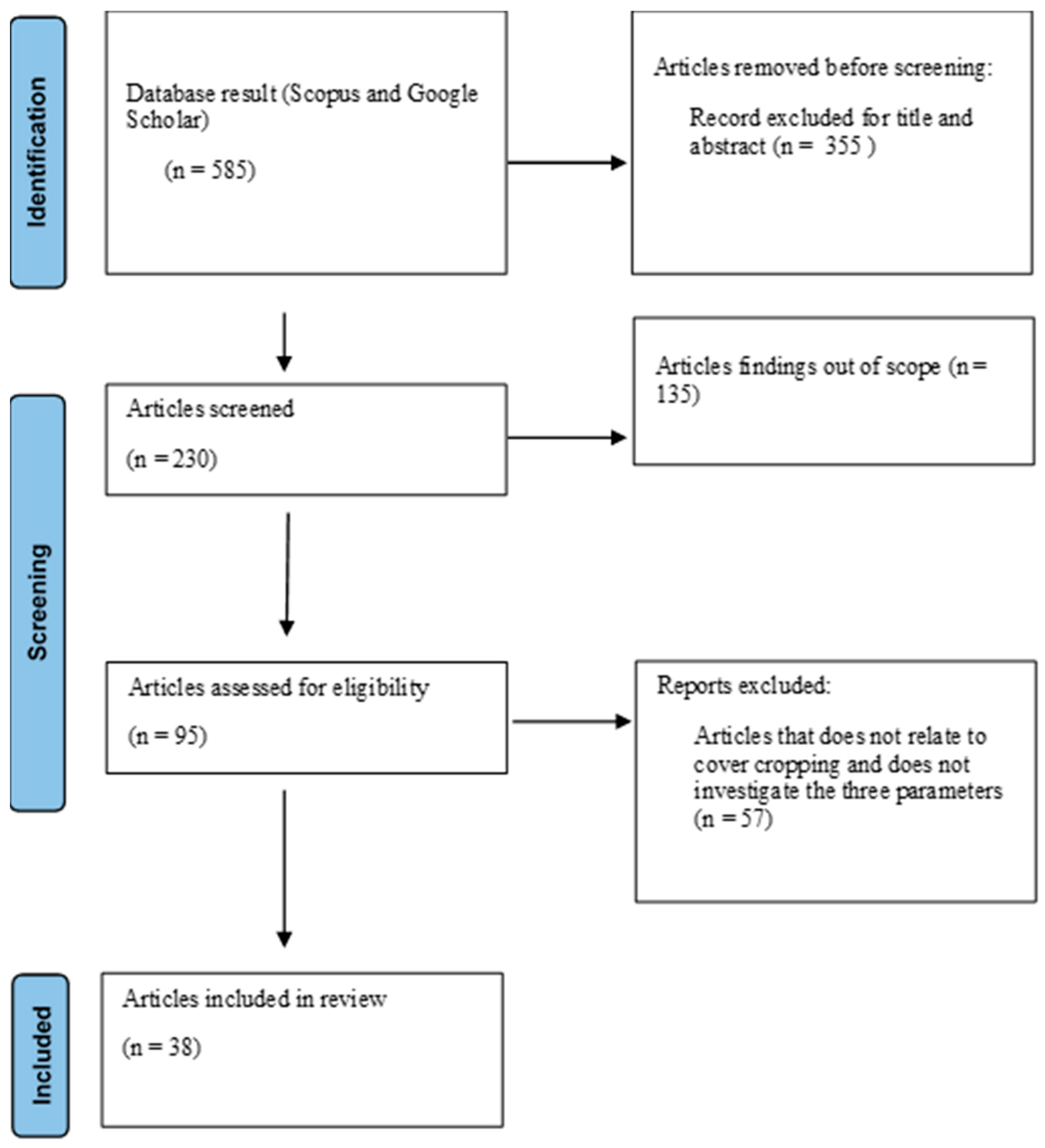
Using the predetermined search terms and inclusion criteria, the initial search of the Scopus database yielded a total of 585 papers. In addition, a manual Google Scholar search was conducted to make sure that no potentially pertinent articles-particularly those not included in conventional indexing systems-were overlooked. To make sure that only publications that fit the review’s goals and scope were included, the studies were chosen using a systematic three-stage screening process. The first step was screening the titles and abstracts of all 585 publications to exclude studies that did not address cover cropping strategies or those that focused on other subjects (such as forestry, grazing systems, or non-agricultural land use). Research that blatantly failed to address at least one of the three primary outcome variables, including soil organic carbon, crop production, or soil quality, was at this point disqualified from consideration. Consequently, 230 articles were retained for additional screening.
The remaining articles’ complete texts were thoroughly examined in the second stage, considering the eligibility requirements listed in Section 3.3. At this step, the study’s design, stated results, and methodological clarity were all carefully evaluated. Only studies that offered empirical information on the effects of cover crops on the three main focal areas, which are SOC, yield, and soil quality, in the framework of field testing or reliable modeling techniques were kept. Confirming geographic location (whether the study was carried out in the United States or elsewhere), the kind of cover crops utilized, and the cropping system’s characteristics were also made easier by full-text screening. Ninety-five (95) articles were selected for additional screening at this stage.
An independent reviewer verified inclusion and conducted a critical quality assessment as part of the third and final step. This procedure reduced any potential bias introduced during the earlier screening steps and guaranteed the methodological rigor and relevance of the studies chosen. Reviewers debated any disagreements or ambiguities about a study’s eligibility until they came to an agreement. Only studies that met all inclusion criteria and showed a thorough examination of the tripartite effects of cover cropping on soil organic carbon (SOC), crop production, and soil quality were included in the final review and data extraction phase at the conclusion of this three-stage procedure. The PRISMA flow diagram (Figure 1) illustrates that 38 papers in all were ultimately included in this study.

2.5. Data Extraction

A structured data extraction procedure was used for each eligible study that was part of this review to gather pertinent data that was in line with the study’s goals. The following traits were taken out: Cover crop species, cropping system, length of cover cropping (e.g., legume, grass, or mixture), author(s), year of publication, country or region of study, cropping system, length of cover cropping, and study design (e.g., field experiment, long-term trial, or simulation model). Understanding the agronomic and geographic environments in which the experiments were carried out required knowledge of these specifics. Core outcome variables, such as the impact on crop output, the change in SOC, and the soil quality indicator, were also collected.

3. Results

3.1. Overview and Yearly Publication of Studies Included

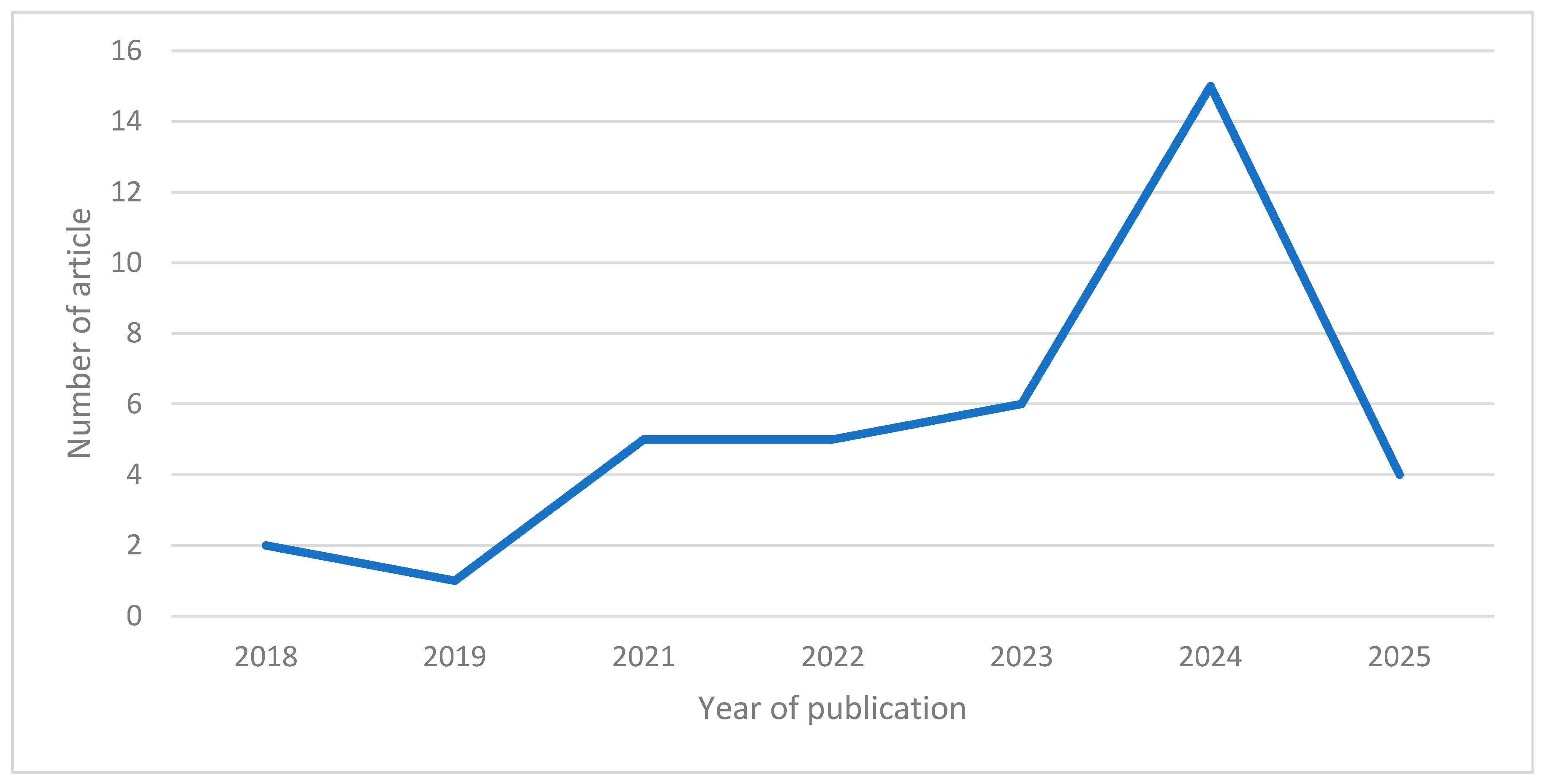
This review covers 38 studies from 2018 to 2025, with a notable surge in publications in recent years. As shown in Figure 2, eight studies were published in 2021 and earlier, while four were published in 2025, fifteen in 2024, six in 2023, and five in 2022. Global interest in climate-smart practices and sustainable agriculture is reflected in this trend. The increase in research between 2023 and 2025 points to heightened awareness of soil degradation, the need for carbon sequestration techniques, and climate policy initiatives. The comprehensive details of the studies included are shown in Table 1.

3.2. Geographic Distribution of Articles

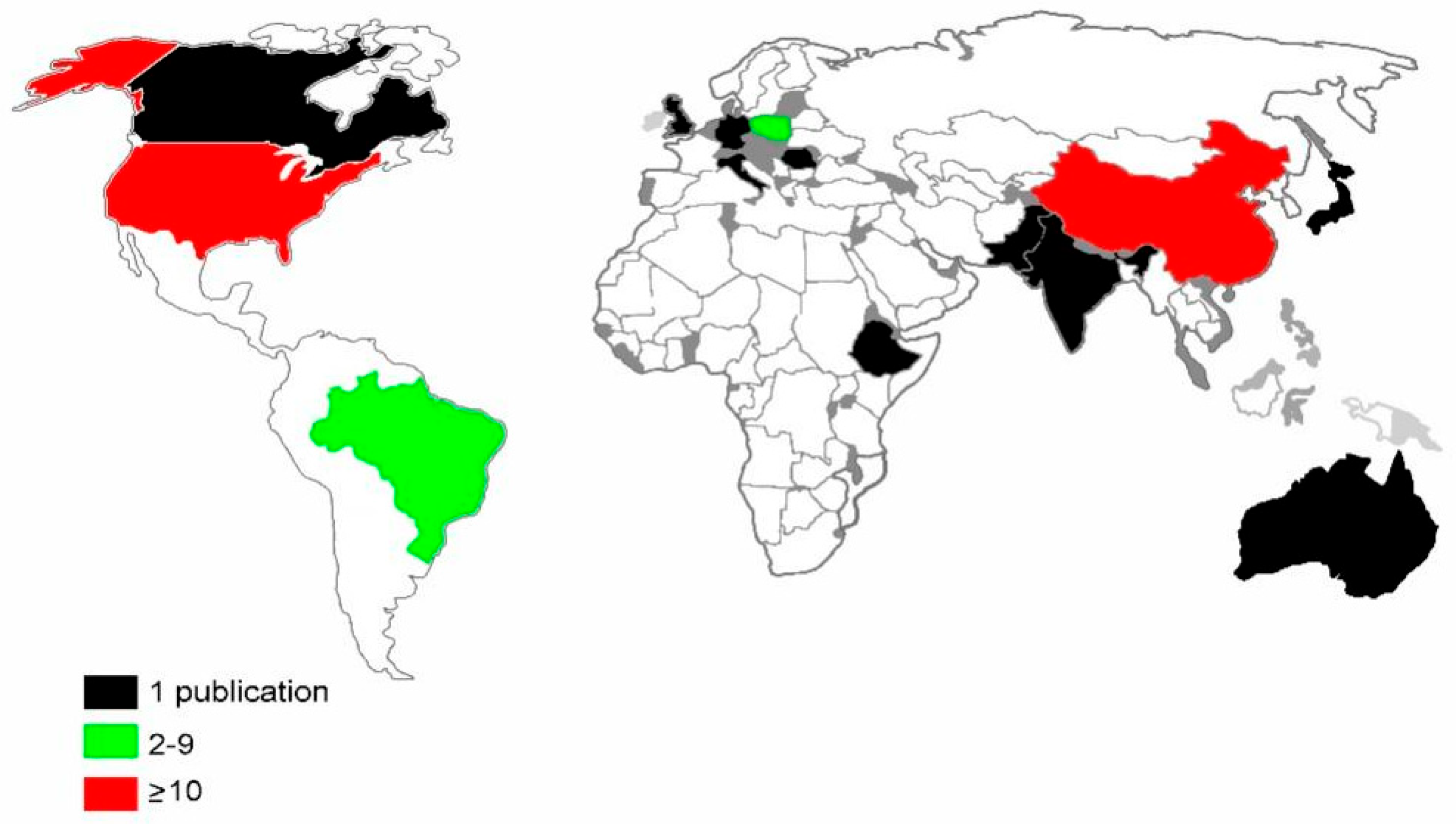
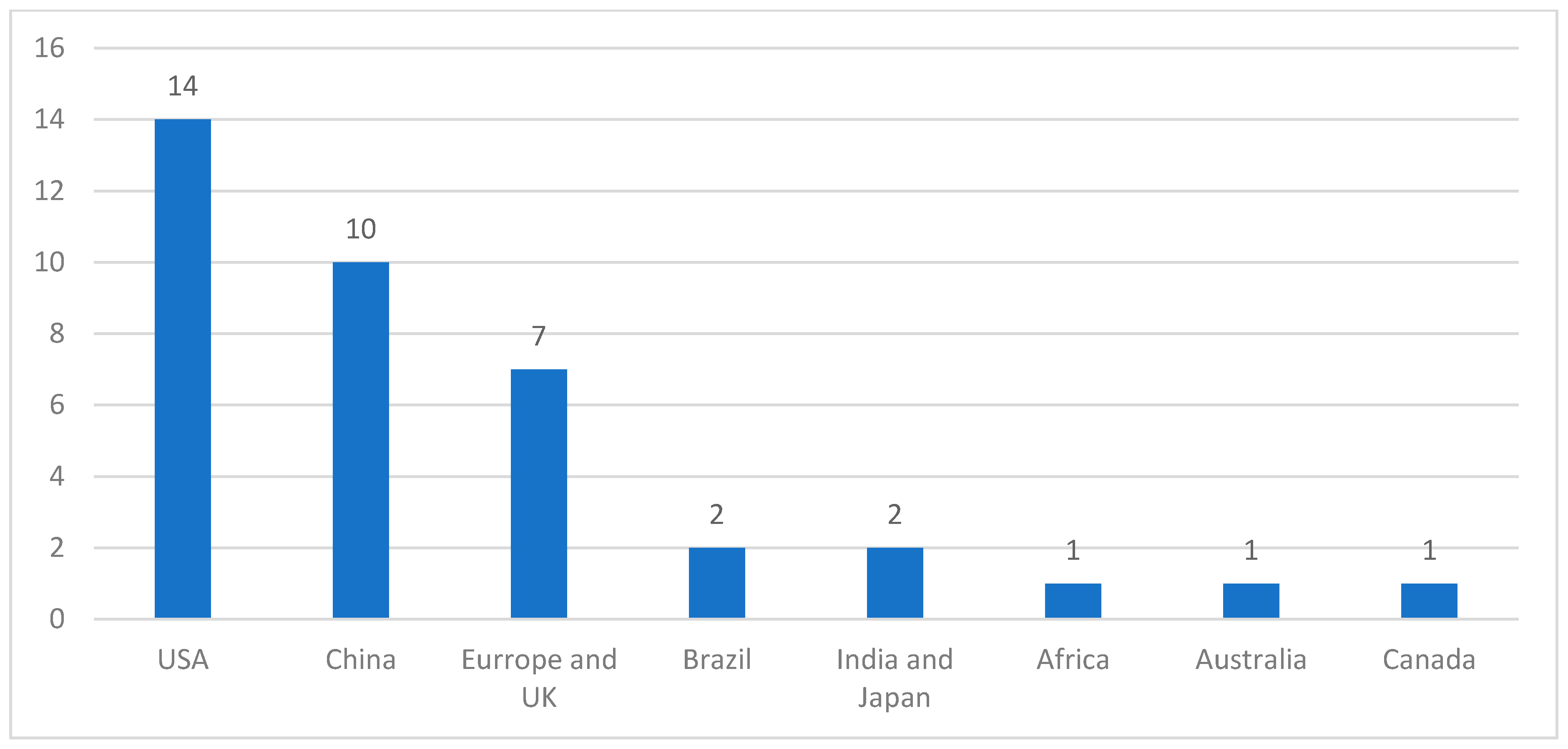
The United States was the most represented nation among the 38 reviewed articles, contributing 14 studies, or roughly 36% of the total (Figure 3 and Figure 4). This dominance demonstrates how much money the U.S has spent on agricultural sustainability research, especially in areas like the Great Plains, the Midwest, and semi-arid zones where problems with input dependency, water scarcity, and soil degradation persist. With 10 articles (26%), China contributed the second-highest number of studies, which were primarily concentrated in intensively managed rice-based systems and demonstrated a strong emphasis on green manuring, microbial dynamics, and nutrient cycling. European countries, including Germany, Poland, Romania, Denmark, Italy, and the UK, collectively contributed 7 studies (18%). Other countries included in the review, Brazil (2 studies), India and Japan (1 study each), Australia (1), Ethiopia (1), and Canada (1), provided valuable case-specific insights but were underrepresented in terms of volume.

3.3. Duration of Trials

A fair representation of study durations is included in the review. Although SOC gains were small or not significant in some cases, short-term trials frequently recorded prompt changes in soil physical or microbial characteristics. Stronger proof of SOC accumulation, better soil structure, and improved nutrient cycling were found in long-term trials (e.g., 10–30+ years) (Table 2). Additionally, they demonstrated how cover crops continue to have an impact even after rotation cycles. Understanding how soil quality changes with continued management was aided by medium-term studies. The findings are more credible and robust across temporal scales because of the variety of durations.

3.4. Cover Crop Types

The ability of leguminous cover crops to fix nitrogen, which increases crop yield and lowers fertilizer requirements, led to their widespread use. For high biomass production, erosion control, and carbon input, grasses like cereal rye and oats were employed. The main reasons for including brassicas were their capacity to scavenge nutrients and establish deep roots. However, by utilizing complementary advantages like nutrient fixation, soil structure enhancement, pest suppression, and resilience to changing climates, multi-species mixtures became the most researched and suggested method. This is consistent with the diversity for system stability agroecological principle. The cover crop classifications are shown in Table 3.

3.5. Primary Cropping System

Because of their widespread use and vast cultivated area, cereal rotations took center stage in the study. With cover crops, these systems demonstrated moderate yield responses and steady improvements in SOC. Combining residues and cover crops resulted in significant microbial improvements and SOC enhancement in rice systems, particularly in China and Brazil. Despite the brief study periods, vegetable systems, especially organic ones, reported improvements in crop quality, nutrient availability, and soil structure. In semi-arid areas of the United States, livestock-forage rotations were especially beneficial for increasing SOC and water-use efficiency. Despite their potential to provide year-round soil cover and ecosystem support, the paucity of research on perennial systems points to a research gap. Table 4 shows the major cropping systems implemented in the reviewed studies.

3.6. Impact of Cover Crops on Soil Organic Carbon

The use of cover crops was found to increase SOC levels in majority of the 38 studies reviewed. More than 80% of the 38 studies showed quantifiable increases in SOC; some of these studies, especially those with integrated or long-term management systems, showed gains of up to 20% to 30% over the baseline. The improvements in microbial activity and decreased erosion or leaching observed in the studies reviewed were attributed to increases in SOC following increased organic matter input from aboveground residues and root biomass. Some studies, however, found non-significant or even negative SOC trends, particularly in short-term trials or in cases where crop residues were eliminated or where cover crops were not properly managed.
Some of the most reliable SOC gains were observed in cereal-based systems (maize, wheat, sorghum, barley), especially where multi-species mixtures or grasses (such as cereal rye or oats) were employed. Shiferaw et al [41] modeled a 5.8–7.7% increase over 30 years in a Nebraska corn system with cereal rye, while Singh et al. [43] reported SOC increases of 7–22% in the top 80 cm in a semi-arid corn–sorghum system. Additionally, rice systems also showed significant increases in SOC, particularly when residue incorporation was combined with legumes like Chinese milk vetch. When using cover crops and straw together, Xie et al. [45] reported SOC stock increasesof1.78–2.37 Mg C/ha. Paddy soils’ anaerobic environment might improve carbon stabilization. SOC gains were significant in organic or high-input vegetable rotations. A high-tunnel brassica system recorded distinct increases in SOC stock along with enhanced aggregation and microbial abundance [53], while [39] reported notable SOC gains with buckwheat and phacelia.
In general, legumes increased SOC, especially in systems where nitrogen was a constraint. For instance, in barley fields with bitter lupin, ref. [37] in Ethiopia noted an increase in SOC from 1.82% to 3.52%. However, if biomass inputs were low or decomposition was quick, SOC gains were small in some legume-dominant systems. However, because of slow decomposition, grass systems produced a lot of biomass and increased SOC. For instance, ref. [40] found that applying hairy vetch + straw treatments to a wheat–maize rotation significantly improved SOC. In a similar vein, ref. [56] found that cereal rye increased the surface layer’s SOC by 19–30%. Mixtures of legumes, grasses, and brassicas were frequently linked to the highest SOC gains. Extended root zones, ongoing carbon inputs, and functional diversity were all encouraged by these systems. According to [48,49], mixtures consistently outperformed single-species methods in improving SOC, water retention, and microbial indicators.
SOC changes were more noticeable in long-term studies (≥10 years), according to the findings of this systematic review. For instance, ref. [47] used modeling techniques to predict a 21% SOC gain in Australian systems over 36 years, while ref. [35] noted 6–8% increases in SOC over a decade. Furthermore, the top 0–20 cm saw the most of SOC. However, systems with conservation tillage or deep-rooted species also reported deeper increases (up to 80 cm) (e.g., [43]).

3.7. Impact on Crop Yield

Although varied, cover crops generally had a positive effect on crop yield across the 38 studies used for this review; about 55% (n = 21) reported a discernible increase in yield while 34% (n = 13) found no significant effect. Conversely, a smaller percentage (n = 4), about 11%, reported a decrease in yield. The type of main crop, the biomass and species of cover crops used, the management techniques used, particularly the completion timing of the study, and the handling of residues all had an impact on these yield responses.
Significant improvement in crop yield was observed or reported in cereal-based systems. For example, ref. [31] found that adding Chinese milk vetch with residue management increased rice yield by 7.03% to 12.40%. In a similar vein, ref. [42] found that combining a soybean cover crop with nitrogen fertilization (N60) increased wheat yield by 98.7%. According to [40], applying hairy vetch and straw together increased maize yield by 19.8% and wheat yield by 15.4%. [37] reported that bitter lupin increased yield by 64.4% in a semi-arid barley system. On the other hand, despite noted improvements in soil characteristics, some cereal systems, like those described by [33,41], did not exhibit statistically significant differences in crop yield. Responses to yield varied between systems of oilseeds and legumes. According to [29], using millet and ruzigrass as cover crops enhanced yields in soybean–maize rotations. Except in cases where legume cover crops were added, ref. [35] found notable yield increases in wheat and oilseed rape but not in maize or barley. There were no discernible impacts on soybean yields in other studies, including [32,58]. Interestingly, ref. [49] found that late termination of pea and vetch cover crops in a cotton system reduced yield due to competition for soil moisture.
Cover crops typically increase yield in vegetable systems. According to [39], employing phacelia and buckwheat cover crops increased leek yield by 17–18% and parsley yield by 41–55%. In a high-tunnel organic system, ref. [53] also noted favorable impacts on turnip and swede biomass yield. But in one of the two years they looked at, ref. [51] discovered lower tomato yields, suggesting possible interannual variability.

3.8. Effects of Cover Crops on Soil Quality

According to many of the studies in this review, cover crops improved a number of soil quality factors. The 38 studies evaluated a broad range of physical, chemical, and biological indicators; improvements in at least one important soil quality parameter were found in about 87% of the studies. These indicators included, among others, bulk density, aggregate stability, microbial biomass, enzyme activity, soil pH, nutrient availability, and water retention. The type of cover crop, cropping system, biomass production, and management techniques all affected how much of an improvement there was.
Studies employing cover crops consistently reported reductions in bulk density (BD). Ref. [37] found that in a barley system containing bitter lupin, BD decreased from 1.37 to 1.29 Mg/m3. Refs. [33,58] also reported decreases in BD in a variety of species and sites. In wheat systems with soybean cover cropping, ref. [42] found that BD decreased by 13.2%.
Common results included improved soil structure and aggregate stability. In a silage sorghum–corn rotation with a variety of cover crops, ref. [36] discovered that soils with higher mean weight diameter (MWD) and geometric mean diameter (GMD) are less prone to wind erosion and are more cohesive. Increased macro-aggregate formation and wet aggregate stability were noted in organic vegetable systems by [39,53].
Better soil water retention was reported in several studies. Under multi-species cover crops, ref. [33] observed improved thermal conductivity and increased moisture content. In semi-arid forage systems, ref. [43] also noted increases in total labile nitrogen and water-filled pore space.
Cover crops improved the availability of important macronutrients and improved nutrient cycling. Ref. [31] found that leguminous cover crops increased total nitrogen and NO3-N. Increases in available potassium, phosphorus, and nitrogen were noted by [40] in wheat–maize rotations. Under CC treatment, ref. [37] observed notable increases in pH, phosphorus, and total nitrogen. Increases in soil organic matter (9–15%) and total nitrogen (13–29%) were observed by [58].
In systems where cover crops assisted in counteracting acidity, improvements in soil pH were noted. Legume-based cover crops were found to raise pH levels by [37,46]. According to [30], conservative management in orchard systems results in better pH and stronger correlations between SOC and nutrient levels.
Cover crops increased microbial diversity and activity, according to numerous studies. Increases in microbial biomass and the quantity of advantageous groups like Bacillus species and Arbuscular mycorrhizal fungi (AMF) were documented by [28,33]. More microbial biomass and less carbon limitation were noted in subsoils by [38]. Improved microbial indices in SOC-rich soil aggregates were reported by [36]. Also, ref. [48] found that cover crops enhanced enzyme activity and microbial respiration. Cover crops improved the enzymatic markers of soil function. Increases in β-glucosidase and other enzymes essential for the carbon and nitrogen cycles were observed in studies [28,39]. Different species had distinct effects on the patterns of enzyme expression, according to [51]. Ref. [48] discovered that under grass-legume cover crops, there were notable increases in urease activity (+41%) and β-glucosidase (+259%).
Numerous studies have made use of composite soil quality or health indices, such as SQI and SHI. According to refs. [29,31], cover crops raised SHI values, which were positively connected with resilience and yield stability. Using Sesbania green manuring, ref. [54] reported decreased degradation and an improved soil quality index in delicate hilly ecosystems. Additional advantages were noted in certain studies in the form of better infiltration and decreased runoff. Ref. [37], for instance, found that barley plots planted with bitter lupin experienced a 38.3% decrease in soil loss and a 9.6% reduction in runoff. However, in maize-based systems, refs. [44,50] observed decreased nitrate leaching and enhanced hydrological function.

3.9. USA vs. Global Report

3.9.1. Nature of Studies

The use of modeling tools such as Decision Support System for Agrotechnology Transfer (DSSAT), Denitrification Decomposition (DNDC), and Agricultural Production Systems Simulator (APSIM) in conjunction with field trials was common in U.S. studies, demonstrating a close integration of long-term experimental and simulation-based methodologies. Semi-arid and irrigated systems, including dryland cotton, corn-soybean rotations, and forage-based cropping systems, were frequently the subject of these studies. Global studies, especially those from China, Brazil, and Europe, on the other hand, focused on intensively managed systems, such as organic vegetable systems, orchards, and rice-wheat rotations. With fewer modeling applications, field experimentation was the predominant methodology worldwide.

3.9.2. Cropping Systems and Cover Crop Types

In studies conducted in the United States, cotton, maize, soybeans, wheat, and sorghum dominated cropping systems, which were frequently controlled using limited irrigation or no-till techniques. Among the cover crop types were brassicas, multi-species mixtures, and grasses (such as winter wheat and cereal rye). Global studies, on the other hand, included a wider variety of systems, such as oilseed rape rotations (Germany), fruit orchards (Romania), organic vegetable rotations (Poland, Italy), and paddy rice (China, India, Brazil). Commonly utilized as green manures were leguminous species like Sesbania, lupin, cowpea, milk vetch, and vetch.

3.9.3. Effects on Soil Organic Carbon (SOC)

Although the extent and magnitude of the changes vary, both U.S. and international studies found that cover cropping increased SOC. Improvements were mostly seen in the top 0–20 cm of soil, and SOC increase in the US ranged from 5.8% to 22%. These increases were most noticeable in long-term trials or modeling simulations and were frequently linked to cereal rye and grass-based cover crops [41,43]. For international studies, SOC gains were more noticeable in systems that included legumes and organic residues. This was particularly the case for studies conducted in China. Refs. [31,40], for instance, reported SOC increases of up to 20–30% when milk vetch and hairy vetch were combined with straw incorporation. Both bulk soil and aggregate-associated carbon pools saw improvements.

3.9.4. Effects on Crop Yield

In the United States, cover crops often showed minimal or no short-term impact on crop yield. The effects varied depending on cover crop biomass and termination timing, with some studies reporting neutral or mixed outcomes [33,49]. Optimized mixtures, like rye-clover combinations, occasionally showed increased yield [56]. Yield gains were more prevalent and frequently significant in international studies, especially in rice, wheat, and vegetable systems. For example, ref. [37] found that using bitter lupin cover crops increased barley yield by 64.4%, and ref. [42] found that using soybean cover crops under N60 fertilization increased wheat yield by 98.7%. Significant yield increase in leek and parsley under buckwheat and phacelia covers was also reported by [39].

3.9.5. Effects on Soil Quality

Both in the United States and around the world, improvements in soil quality were noted, although they took different forms. Studies conducted in the United States mostly documented improvements in biological and physical soil indicators, including increased microbial biomass, better aggregate stability, and decreased bulk density [33,55]. Improvements in nutrient availability, however, were less frequently noted. Global research, on the other hand, revealed wider improvements in soil parameters related to chemistry, biology, and structure. For instance, notable increases in soil pH, enzyme activity, available nitrogen, phosphorus, potassium, and soil health indices were observed by several researchers outside the United States [38,48,54]. Cover cropping was also consistently associated with increased enzyme activities, including urease, phosphatase, and β-glucosidase. Table 5 shows summary of comparative findings between USA and global studies.

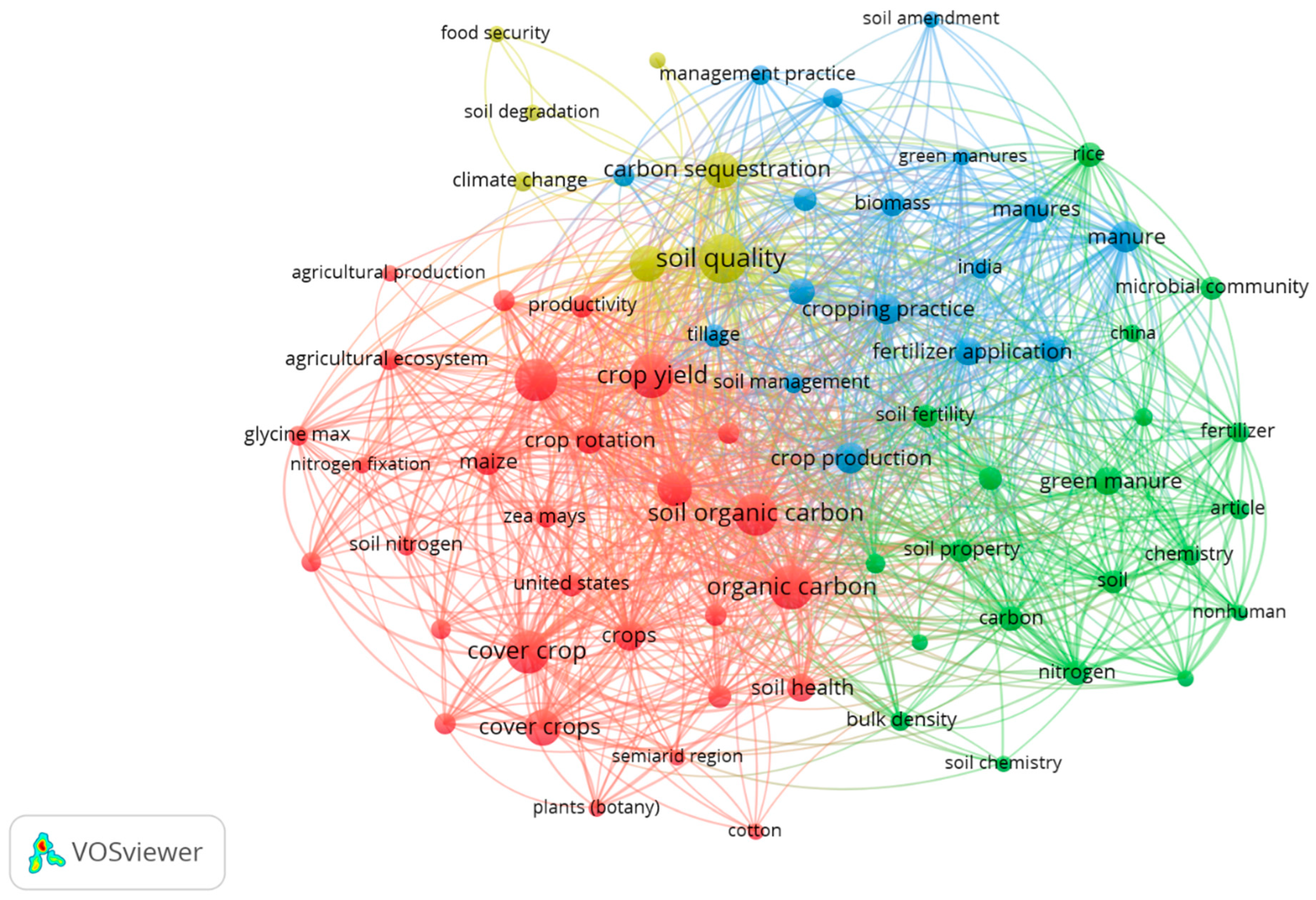
3.10. Keyword Analysis

The keyword co-occurrence network visualization revealed thematic clusters, each represented by a different color grouping, as shown in Figure 5. These clusters closely correspond with the findings and scope of the current systematic review. The three main, interrelated themes in international cover cropping research, including soil organic carbon, crop yield, and soil quality, are supported by keyword analysis. The network’s preponderance of terms like “soil organic carbon,” “cover crops(s),” and “crop yield” attests to their importance and attraction of extensive cross-disciplinary research. Furthermore, the co-occurrence of phrases like “soil quality,” “carbon sequestration,” and “climate change” emphasizes the growing significance of cover crops in relation to the intensification of sustainable and climate resilience crop production research activities.
Four major thematic clusters are revealed by the keyword network visualization, underscoring the diverse functions of cover cropping. The red cluster depicts agronomic productivity, which connects crop rotation, nitrogen fixation, and cover crops. The green cluster represents microbial and soil health, specifically carbon dynamics and nutrient cycling. The yellow cluster on the other hand links crops to more general sustainability objectives like soil quality, carbon sequestration, and climate change, while the blue cluster illustrates management techniques and inputs like biomass and manure. These clusters highlight the combined advantages of cover crops for environmental resilience, soil health, and productivity, and are highly consistent with the results of the current study.

4. Discussion

To evaluate the impact of cover crops on soil organic carbon (SOC), crop yield, and soil quality across various cropping systems and geographic locations, this systematic literature review compiled results from 38 peer-reviewed studies. The review’s main finding is that cover crops consistently improve SOC. SOC increases in the top 0–20 cm of soil was reported in over 80% of the studies included and ranged between 5% and 30%. Furthermore, several studies have also demonstrated that cover crops operate through multiple interconnected mechanisms to enhance SOC accumulation and persistence, with outcomes shaped by plant functional types and soil conditions.
Remarkably, long-term studies like refs. [47,55] showed that cover cropping increases SOC after many years of planting. These results are in excellent agreement with earlier meta-analyses. Ref. [66] reported an average global increase of 15.5%, while ref. [67] estimated an average SOC increase of 0.32 Mg C ha−1 yr−1 from cover cropping. In a similar vein, ref. [68] discovered that maize-based cover crop systems increased SOC by 7.3%. These gains operate through distinct mechanisms. For example, cover crops increase SOC through plant functional type dependent pathways. Grasses with low litter quality mostly contribute to particulate organic matter, which is rich in plant-derived carbon but decomposes quickly. Legumes, with higher litter quality and nitrogen content, promote microbial-derived carbon accumulation in more stable mineral-associated organic matter. Multi-species cover crop mixtures combine these effects, enhancing both short- and long-term SOC stabilization more effectively than monocultures [69,70].
Furthermore, legume cover crops achieved consistently higher SOC gains per unit time than grass monocultures, averaging 12–18% cumulative increases over 5–10 years. This enhanced accumulation reflects the biochemistry of legume residues, their characteristically low C:N ratios (15–25) create conditions favoring copiotrophic (fast-growing) microbial communities over oligotrophic (slow-growing) stress-tolerant populations [71]. The decomposition of legume litter occurs rapidly during the initial 0–28 day phase, with decay rates reaching k = 0.0742 ± 0.002 days−1 approximately 40% faster than grass residues (k = 0.0530 days−1) [72]. This rapid early decomposition is mechanistically driven by the enrichment of wood-decomposing fungi and lignin-degrading bacteria within legume litter microhabitats, which comprise 0.003% of microbial communities in legume substrates versus only negligible presence in grass systems [72]. The key to understanding legume-driven SOC persistence, however, lies in the fate of microbial-derived products rather than the plant residues themselves. As copiotrophic bacteria and fungi consume legume-derived labile sugars and amino acids, they excrete polysaccharides including β-glucans, mannans, and arabinogalactans that coordinate with polyvalent cations (Ca2+, Fe3+, Al3+) to form organo-mineral complexes [73].
Grass cover crops generated more modest but highly stable SOC gains averaging 8–14% over 5–10 years. This apparently lowers SOC responsiveness and masks an alternative, equally important stabilization mechanism, the persistence of inherently recalcitrant carbon compounds through protection within anaerobic microsites. Grass residues, particularly cereals such as rye and oat, contain substantially higher lignin content (8–12% dry matter) and higher C:N ratios (40–80) compared to legume [74]. Lignin is protected by a complex three-dimensional polymer network of non-phenolic phenylpropanoid units linked by ether and C–C bonds, rendering it recalcitrant to enzymatic degradation [75].
Multi-species cover crop mixtures demonstrated the highest SOC gains, averaging 15–30% cumulative increases over 10+ years—23% higher than monocultures managed under equivalent conditions. This superior performance reflects functional complementarity across cover crop taxa. Legumes provide labile N-rich residues that activate rapid mineral-associated organic matter (MAOM) formation through copiotrophic microbial pathways while grasses contribute biomass volume and recalcitrant compounds that establish anaerobic microsites On the other hand brassicas (e.g., turnip, radish) contribute deep root systems reaching 40–80 cm that fragment soil architecture and create macropore networks [72]. Ref. [71] documented that legume–grass mixtures increased the relative abundance of copiotrophic decomposers more substantially than legume or grass monocultures, while simultaneously maintaining oligotrophic populations supported by grass-derived recalcitrant substrates.
A principal mechanistic advance in understanding cover crop benefits involves decoupling microbial diversity from microbial function. Legume cover crop residues increased fast-growing, copiotrophic bacteria and fungi with high metabolic activity and diverse hydrolytic enzymes. In contrast, grass residues and fallow soils favored slow-growing, oligotrophic communities such as nitrifiers, Streptomyces, and stress-tolerant fungi (Mortierella, some Aspergillus spp.), which persist under low-carbon conditions [71].
Cover crops enhance physical protection of organic matter through multiple soil structure pathways involving both biotic and abiotic mediators of aggregate formation. Root activity during cover crop establishment serves as the primary driver of increased aggregate stability, with the magnitude of stabilization dependent on root morphology and functional traits. During cover crop growth, root-derived physical forces directly increase soil macroporosity and mesoporosity. Following cover crop termination, decaying roots leave continuous pore networks that enhance water infiltration and aeration [76,77]. Additionally, soil microorganisms stimulated by cover crop-derived organic inputs produce binding agents bacterial and fungal exopolysaccharides, and metabolic byproducts that physically cement soil particles into stable macroaggregates [76]. According to [77], cover crop-enhanced soil structure and organic matter content jointly improve soil hydraulic properties through both physical and biological mechanisms. Water-stable aggregate formation increased soil macroporosity, enabling saturated hydraulic conductivity improvements.
Arbuscular mycorrhizal (AMF) colonization of cover crop roots represents a quantitatively dominant mechanism in aggregate stabilization. Wilson et al. [78] demonstrated a surprisingly tight correlation between AMF abundance and soil aggregation using long-term (6–17 year) field experiments. It was found in this study that fungicide applications that suppressed AMF reduced water-stable macroaggregate stocks by 30–40%, while management practices that enhanced AMF increased macroaggregate abundance by similar magnitudes [78].
Regional variations in research focus and results are also highlighted by this review. With a greater focus on physical and microbial soil indicators, studies conducted in the United States mostly concentrated on dryland systems, modeling scenarios, and conservation tillage contexts. Due to water constraints and an emphasis on system resilience, yield impacts were frequently neutral. On the other hand, research from Asia, Africa, and Europe more often documented favorable yield effects, especially in systems of rice, wheat, and vegetables that used green manures or legumes and included residues. Stronger improvements in microbial activity, nutrient cycling, and multifunctional soil health indices were shown in these investigations.

5. Conclusions

To assess the impact of cover crops on soil organic carbon (SOC), crop yield, and soil quality in global agricultural systems with a focus on United States cropping systems, this systematic literature review synthesized data from 38 peer-reviewed studies carried out between 2015 and 2025. The collective evidence demonstrates that the continuous and diversified use of cover crops particularly multi-species mixtures and long-term management significantly enhances SOC accumulation and soil quality indicators, including microbial biomass, enzyme activity, and soil structural stability. These biological and physical improvements contribute to greater ecosystem resilience and, in many cases, to stable or increased crop yields. The central finding of this review is that diversified and sustained cover cropping represents one of the most effective field-scale strategies for improving soil health and sequestering carbon. This practice not only supports regenerative and climate-smart agriculture but also offers a pathway to integrate soil carbon enhancement into public policy frameworks, such as carbon credit schemes, agri-environmental incentives, and region-specific conservation programs. Encouraging continuous cover cropping through regional agricultural policies, extension services, and farmer training could accelerate the transition toward more resilient and sustainable production systems worldwide.

5.1. Policy and Practice Implications

The inclusion of cover crops in climate mitigation policies, such as national greenhouse gas inventories and carbon credit programs, is supported by the compelling evidence of SOC accumulation. Through voluntary carbon markets or the FAO’s Carbon Sequestration Guidelines, governments can incorporate cover crops into carbon farming programs. Training and technical assistance for managing cover crops should be given top priority by agricultural extension services, particularly regarding biomass handling, species selection, and termination timing. To maximize benefits and prevent yield trade-offs, these factors are essential. Programs like the United States NRCS EQIP and CSP programs should be expanded and modified by policymakers to focus on cover crop systems unique to a given region. Incentives should support multi-species mixtures that demonstrate better results and take into consideration regional constraints (such as labor and aridity). Wider adoption would be promoted if SOC and soil quality indicators were included as key metrics in sustainability certification programs (such as USDA Organic and Rainforest Alliance). One verifiable method of practicing environmental stewardship could be the use of cover crops.

5.2. Limitations of Studies and Recommendations for Future Research

Despite the thorough search strategy employed, this review only included English-language publications, which may have left out excellent regional studies from non-English-speaking nations. Another notable limitation is that most of the studies included in this paper originate from temperate regions of North America, Europe, and East Asia, with relatively few from tropical and semi-arid environments. This geographic bias may limit the generalizability of the findings to smallholder and low-input systems typical of the Global South. Furthermore, as this review adopted a qualitative synthesis rather than a quantitative meta-analysis, it could not statistically evaluate the magnitude of effects across studies. Direct comparisons are difficult because the studies included varied in terms of duration, crop types, cover crop species, and environmental conditions. Synthesis was made more difficult by variations in measurement units and indicators (such as SOC reporting depth and enzyme metrics).
Studies published in non-English languages, particularly those from areas with significant agricultural research outputs (such as Latin America, Francophone Africa, and Southeast Asia), should be included in future systematic reviews. Enzyme activity, microbial indices, soil quality indicators, and SOC (e.g., depth of sampling, units of reporting) should all be measured using standardized methodologies across studies. More robust cross-study synthesis and improved comparability would result from the adoption of international protocols or guidelines (like International Standard Organisation (ISO) or Food and Agriculture Organization (FAO) soil manuals).

Author Contributions

Conceptualization and original draft preparation, M.A.S.; Supervision, proofreading, grammar checks and funding acquisition, P.A.Y.A.; Data generation from databases and analysis, Y.O.O.; Formatting and editing, A.B.A.K.; proofreading and reference check, M.M.I. All authors have read and agreed to the published version of the manuscript.

Funding

The APC was funded by USDA-NIFA Evans-Allen Funding to the College of Agriculture, Food, and Natural Resources Research (CAFNR Research) at Prairie View A&M University.

Data Availability Statement

The original contributions presented in the study are included in the article. Further inquiries can be directed to the corresponding author.

Acknowledgments

During the preparation of this manuscript/study, the authors used Perplexity, (Perplexity AI Inc., San Francisco, CA, USA), QuillBot (Learneo Inc., Redwood City, CA, USA), Grammarly Version 14.1259.0, and VOSviewer version 1.6.16 for the purposes of generating content, paraphrasing, grammar checking, and the visualization of keywords, respectively. The authors have reviewed and edited the output and take full responsibility for the content of this publication.

Conflicts of Interest

The authors declare no conflicts of interest.

References

  1. Quintarelli, V.; Radicetti, E.; Allevato, E.; Stazi, S.R.; Haider, G.; Abideen, Z.; Mancinelli, R. Cover crops for sustainable cropping systems: A review. Agriculture 2022, 12, 2076. [Google Scholar] [CrossRef]
  2. Smith, L.G.; Lampkin, N.H. Greener farming: Managing carbon and nitrogen cycles to reduce greenhouse gas emissions from agriculture. In Managing Global Warming; Academic Press: Cambridge, MA, USA, 2019; pp. 553–577. [Google Scholar]
  3. European Commission (EC). From Farm to Fork: Our Food, Our Health, Our Planet, Our Future; European Commission (EC): Brussels, Belgium, 2021. [Google Scholar]
  4. Soil Science Glossary Terms Committee; Soil Science Society of America. SSSA Glossary of Soil Science Terms 2008; Google Books; ASA-CSSA-SSSA: Madison, WI, USA, 2008. [Google Scholar]
  5. Sokol, N.W.; Kuebbing, S.E.; Karlsen-Ayala, E.; Bradford, M.A. Evidence for the primacy of living root inputs, not root or shoot litter, in forming soil organic carbon. New Phytol. 2019, 221, 233–246. [Google Scholar] [CrossRef]
  6. Somenahally, A.; DuPont, J.I.; Brady, J.; McLawrence, J.; Northup, B.; Gowda, P. Microbial communities in soil profile are more responsive to legacy effects of wheat-cover crop rotations than tillage systems. Soil Biol. Biochem. 2018, 123, 126–135. [Google Scholar] [CrossRef]
  7. Peng, Y.; Rieke, E.L.; Chahal, I.; Norris, C.E.; Janovicek, K.; Mitchell, J.P.; Van Eerd, L.L. Maximizing soil organic carbon stocks under cover cropping: Insights from long-term agricultural experiments in North America. Agric. Ecosyst. Environ. 2018, 356, 108599. [Google Scholar] [CrossRef]
  8. Zhang, H.; Ghahramani, A.; Ali, A.; Erbacher, A. Cover cropping impacts on soil water and carbon in dryland cropping system. PLoS ONE 2023, 18, e0286748. [Google Scholar] [CrossRef] [PubMed]
  9. Jiménez-González, M.A.; López-Romano, H.; Carral, P.; Álvarez-González, A.M.; Herranz-Luque, J.E.; Sastre-Rodríguez, B.E.; Marques, M.J. Ten-Year impact of cover crops on soil organic matter quantity and quality in semi-arid vineyards. Land 2023, 12, 2143. [Google Scholar] [CrossRef]
  10. Hanrahan, B.R.; King, K.W.; Duncan, E.W.; Shedekar, V.S. Cover crops differentially influenced nitrogen and phosphorus loss in tile drainage and surface runoff from agricultural fields in Ohio, USA. J. Environ. Manag. 2021, 293, 112910. [Google Scholar] [CrossRef]
  11. Jensen, J.L.; Thomsen, I.K.; Eriksen, J.; Christensen, B.T. Spring barley grown for decades with straw incorporation and cover crops: Effects on crop yields and N uptake. Field Crops Res. 2021, 270, 108228. [Google Scholar] [CrossRef]
  12. Marcillo, G.S.; Miguez, F.E. Corn yield response to winter cover crops: An updated meta-analysis. J. Soil Water Conserv. 2017, 72, 226–239. [Google Scholar] [CrossRef]
  13. Ma, J.; Wang, T.; Liu, X.; Wang, L.; Zhang, X.; Wang, W.; Kong, F.; Huang, X.; Wang, Z.; Wang, Y.; et al. Meta-analysis of yield effects and influencing factors of cover crops on main grain crops in China. Sci. Agric. Sin. 2023, 56, 1871–1880. [Google Scholar]
  14. Peng, Y.; Wang, L.; Jacinthe, P.A.; Ren, W. Global synthesis of cover crop impacts on main crop yield. Field Crops Res. 2024, 310, 109343. [Google Scholar] [CrossRef]
  15. Bolinder, M.A.; Crotty, F.; Elsen, A.; Frac, M.; Kismányoky, T.; Lipiec, J.; Kätterer, T. The effect of crop residues, cover crops, manures and nitrogen fertilization on soil organic carbon changes in agroecosystems: A synthesis of reviews. Mitig. Adapt. Strateg. Glob. Change 2020, 25, 929–952. [Google Scholar] [CrossRef]
  16. Zhang, W.P.; Liu, G.C.; Sun, J.H.; Fornara, D.; Zhang, L.Z.; Zhang, F.F.; Li, L. Temporal dynamics of nutrient uptake by neighbouring plant species: Evidence from intercropping. Funct. Ecol. 2017, 31, 469–479. [Google Scholar] [CrossRef]
  17. Sharma, V.; Irmak, S.; Padhi, J. Effects of cover crops on soil quality: Part I. Soil chemical properties—Organic carbon, total nitrogen, pH, electrical conductivity, organic matter content, nitrate-nitrogen, and phosphorus. J. Soil Water Conserv. 2018, 73, 637–651. [Google Scholar] [CrossRef]
  18. Lazcano, C.; Gonzalez-Maldonado, N.; Yao, E.H.; Wong, C.T.; Merrilees, J.J.; Falcone, M.; Decock, C. Sheep grazing as a strategy to manage cover crops in Mediterranean vineyards: Short-term effects on soil C, N and greenhouse gas (N2O, CH4, CO2) emissions. Agric. Ecosyst. Environ. 2022, 327, 107825. [Google Scholar] [CrossRef]
  19. Fiorini, A.; Maris, S.C.; Abalos, D.; Amaducci, S.; Tabaglio, V. Combining no-till with rye (Secale cereale L.) cover crop mitigates nitrous oxide emissions without decreasing yield. Soil Tillage Res. 2020, 196, 104442. [Google Scholar] [CrossRef]
  20. Jacobs, A.A.; Evans, R.S.; Allison, J.K.; Garner, E.R.; Kingery, W.L.; McCulley, R.L. Cover crops and no-tillage reduce crop production costs and soil loss, compensating for lack of short-term soil quality improvement in a maize and soybean production system. Soil Tillage Res. 2022, 218, 105310. [Google Scholar] [CrossRef]
  21. USDA. 2022 Census of Agriculture: Cover Crop Use Continues to Be Most Common in Eastern United States. 2022. Available online: https://www.ers.usda.gov/data-products/charts-of-note/chart-detail?chartId=108950 (accessed on 21 July 2025).
  22. Deines, J.M.; Guan, K.; Lopez, B.; Zhou, Q.; White, C.S.; Wang, S.; Lobell, D.B. Recent cover crop adoption is associated with small maize and soybean yield losses in the United States. Glob. Change Biol. 2023, 29, 794–807. [Google Scholar] [CrossRef]
  23. Hao, X.; Abou Najm, M.; Steenwerth, K.L.; Nocco, M.A.; Basset, C.; Daccache, A. Are there universal soil responses to cover cropping? A systematic review. Sci. Total Environ. 2023, 861, 160600. [Google Scholar] [CrossRef]
  24. Page, M.J.; McKenzie, J.E.; Bossuyt, P.M.; Boutron, I.; Hoffmann, T.C.; Mulrow, C.D.; Moher, D. The PRISMA 2020 statement: An updated guideline for reporting systematic reviews. Int. J. Surg. 2021, 88, 105906. [Google Scholar] [CrossRef]
  25. Lawal, M.A.; Oseni, A.A.; Qadir, R.L.Q. Climate Financing and Low-Carbon Transition: A Systematic Review of the Role of International Development Banks. Elicit J. Econ. Manag. Stud. 2025, 1, 29–61. [Google Scholar]
  26. Pranckutė, R. Web of Science (WoS) and Scopus: The titans of bibliographic information in today’s academic world. Publications 2021, 9, 12. [Google Scholar] [CrossRef]
  27. Ahmed, K.O.; Adekunle, S.M.; Olalekan, E.I.; Yusuff, O.; Ajao, T.O.; Adeoba, M.; Rafiu, A.O. A Systematic Review of Inclusive Economic Growth Through A Sustainable Model for Climate Action Among Member States of the United Nations. Elicit J. Econ. Manag. Stud. 2025, 1, 62–87. [Google Scholar]
  28. Sun, Q.; Zheng, Y.; Sun, X.; Wu, L.; Wu, Z.; Zhang, J.; Zhang, J. Adaptive evaluation for a green manure-peanut rotation system: Impacts on peanut yield, soil organic carbon dynamics, and soil microbial communities. Plant Soil 2025, 510, 887–906. [Google Scholar] [CrossRef]
  29. Souza, V.S.; Canisares, L.P.; Schiebelbein, B.E.; de Castro Santos, D.; Menillo, R.B.; Junior, C.R.P.; Cherubin, M.R. Cover crops enhance soil health, crop yield and resilience of tropical agroecosystem. Field Crops Res. 2025, 322, 109755. [Google Scholar] [CrossRef]
  30. Rusu, M.; Filip, M.; Cara, I.G.; Țopa, D.; Jităreanu, G. Soil nutrient dynamics and farming sustainability under different plum orchard management practices in the pedoclimatical conditions of Moldavian Plateau. Agriculture 2025, 15, 509. [Google Scholar] [CrossRef]
  31. Nie, J.; Xie, Q.; Zhou, Y.; He, F.; Yousaf, M.; Zhu, B.; Liu, Z. Long-term legume green manure residue incorporation is more beneficial to improving bacterial richness, soil quality, and rice yield than mowing under double-rice cropping system in Dongting Lake Plain, China. Front. Plant Sci. 2025, 16, 1603434. [Google Scholar] [CrossRef] [PubMed]
  32. Hunag, Q.; Gong, Y.; Li, P.; Dewi, R.K.; Komatsuzaki, M. The Effects of Tillage Systems and Cover Crops on Soil Quality and Soybean Yield. Agriculture 2024, 14, 2119. [Google Scholar] [CrossRef]
  33. Haruna, S.I. Effects of cover crop on selected abiotic and biotic soil health indicators. Environ. Chall. 2024, 17, 101045. [Google Scholar] [CrossRef]
  34. Martins, J.T.; Bloch, N.F.; Enggrob, K.L.; Liang, Z.; Harbo, L.S.; Rasmussen, J.; Peixoto, L. Cover crop mixtures enhance belowground carbon input and suppression of spontaneous flora under Danish conditions. Geoderma Reg. 2024, 39, e00879. [Google Scholar] [CrossRef]
  35. Attia, A.; Marohn, C.; Shawon, A.R.; de Kock, A.; Strassemeyer, J.; Feike, T. Do rotations with cover crops increase yield and soil organic carbon?—A modeling study in southwest Germany. Agric. Ecosyst. Environ. 2024, 375, 109167. [Google Scholar] [CrossRef]
  36. Acharya, P.; Ghimire, R.; Idowu, O.J.; Shukla, M.K. Cover cropping enhanced soil aggregation and associated carbon and nitrogen storage in semi-arid silage cropping systems. Catena 2024, 245, 108264. [Google Scholar] [CrossRef]
  37. Demissie, S.; Meshesha, D.T.; Adgo, E.; Haregeweyn, N.; Tsunekawa, A.; Ebabu, K.; Tiruneh, G.A. Cover crops improve soil condition and barley yield in a subtropical highland agroecosystem. Nutr. Cycl. Agroecosyst. 2024, 129, 257–275. [Google Scholar] [CrossRef]
  38. Ding, K.; Chen, L.; Zhang, Y.; Ge, S.; Zhang, Y.; Lu, M.; Zhang, J. Long-term cover crops boost multi-nutrient cycling and subsurface soil carbon sequestration by alleviating microbial carbon limitation in a subtropical forest. Catena 2024, 244, 108252. [Google Scholar] [CrossRef]
  39. Lalewicz, P.; Domagała-Świątkiewicz, I.; Siwek, P. Phacelia and Buckwheat Cover Crops’ Effects on Soil Quality in Organic Vegetable Production in a High Tunnel System. Agronomy 2024, 14, 1614. [Google Scholar] [CrossRef]
  40. Zhao, N.; Wang, X.; Ma, J.; Li, X.; Cao, J.; Zhou, J.; Cao, W. Co-incorporating green manure and crop straw increases crop productivity and improves soil quality with low greenhouse-gas emissions in a crop rotation. Crop J. 2024, 12, 1233–1241. [Google Scholar] [CrossRef]
  41. Shiferaw, A.; Birru, G.; Tadesse, T.; Schmer, M.R.; Awada, T.; Jin, V.L.; Sohoulande, C. Optimizing Cover Crop Management in Eastern Nebraska: Insights from Crop Simulation Modeling. Agronomy 2024, 14, 1561. [Google Scholar] [CrossRef]
  42. Yang, C.; Zhang, S.; Tan, G.; Zhu, S.; Wang, J. Effects of cover crops and nitrogen fertilization on soil physical properties, carbon and nitrogen fractions, and winter wheat yield in the Chinese loess plateau: A 4-year field experiment. Field Crops Res. 2024, 312, 109400. [Google Scholar] [CrossRef]
  43. Singh, A.; Ghimire, R.; Acharya, P. Soil profile carbon sequestration and nutrient responses varied with cover crops in irrigated forage rotations. Soil Tillage Res. 2024, 238, 106020. [Google Scholar] [CrossRef]
  44. Zang, X.; Ren, J.; Liu, J.; Cao, T.; Chi, J.; Zhu, X.; Yang, D. Is non-legume green manure rotation or straw biochar more effective in promoting peanut production? Appl. Soil Ecol. 2024, 196, 105317. [Google Scholar] [CrossRef]
  45. Xie, X.; Liao, Y.; Lu, Y.; Zhang, J.; Li, P.; Tang, Y.; Nie, J. Study on the effects of reducing nitrogen fertilizer: Stabilizing yield and carbon sequestration by synergistic utilization of chinese milk vetch and rice straw in double-cropping rice area. Agronomy 2024, 14, 675. [Google Scholar] [CrossRef]
  46. Li, P.; Jia, L.; Chen, Q.; Zhang, H.; Deng, J.; Lu, J.; Jiao, J. Adaptive evaluation for agricultural sustainability of different fertilizer management options for a green manure-maize rotation system: Impacts on crop yield, soil biochemical properties and organic carbon fractions. Sci. Total Environ. 2024, 908, 168170. [Google Scholar] [CrossRef] [PubMed]
  47. He, Q.; Li Liu, D.; Wang, B.; Cowie, A.; Simmons, A.; Waters, C.; Yu, Q. Modelling interactions between cowpea cover crops and residue retention in Australian dryland cropping systems under climate change. Agric. Ecosyst. Environ. 2023, 353, 108536. [Google Scholar] [CrossRef]
  48. Carlos, F.S.; de Sousa, R.O.; Nunes, R.; de Campos Carmona, F.; Cereza, T.; Weinert, C.; de Oliveira Camargo, F.A. Long-term cover crops and no-tillage in Entisol increase enzyme activity and carbon stock and enable the system fertilization in southern Brazil. Geoderma Reg. 2023, 34, e00700. [Google Scholar] [CrossRef]
  49. Singh, J.; Ale, S.; DeLaune, P.B.; Barnes, E.M. Simulated effects of cover crops with no-tillage on soil and crop productivity in rainfed semi-arid cotton production systems. Soil Tillage Res. 2023, 230, 105709. [Google Scholar] [CrossRef]
  50. Birru, G.; Shiferaw, A.; Tadesse, T.; Schmer, M.R.; Jin, V.L.; Wardlow, B.; Kahrel, T. Simulated impacts of winter rye cover crop on continuous corn yield and soil parameters. Agron. J. 2023, 115, 1114–1130. [Google Scholar] [CrossRef]
  51. Testani, E.; Ciaccia, C.; Diacono, M.; Fornasier, F.; Ferrarini, A.; Montemurro, F.; Canali, S. Agroecological practices improve soil biological properties in an organic vegetable system. Nutr. Cycl. Agroecosyst. 2023, 125, 471–486. [Google Scholar] [CrossRef]
  52. Hux, B.A.; DeLaune, P.B.; Schirmarcher, M.T.; Gentry, T.J.; Mubvumba, P. Winter cover crop impact on soil health in Texas Rolling Plains dryland cotton. Agrosyst. Geosci. Environ. 2023, 6, e20352. [Google Scholar] [CrossRef]
  53. Domagała-Świątkiewicz, I.; Siwek, P.; Lalewicz, P. Short-term effects of brassica cover crops on soil quality indicators in organic production in high tunnels. Acta Sci. Pol. Hortorum Cultus 2023, 22, 115–132. [Google Scholar] [CrossRef]
  54. Ansari, M.A.; Babu, S.; Choudhary, J.; Ravisankar, N.; Panwar, A.S. Soil quality restoration and yield stabilization in acidic soils of northeastern Himalayas: Five years impact of green manuring and crop residue management. Front. Environ. Sci. 2022, 10, 940349. [Google Scholar] [CrossRef]
  55. Acharya, P.; Ghimire, R.; Cho, Y.; Thapa, V.R.; Sainju, U.M. Soil profile carbon, nitrogen, and crop yields affected by cover crops in semiarid regions. Nutr. Cycl. Agroecosyst. 2022, 122, 191–203. [Google Scholar] [CrossRef]
  56. Decker, H.L.; Gamble, A.V.; Balkcom, K.S.; Johnson, A.M.; Hull, N.R. Cover crop monocultures and mixtures affect soil health indicators and crop yield in the southeast United States. Soil Sci. Soc. Am. J. 2022, 86, 1312–1326. [Google Scholar] [CrossRef]
  57. Himanshu, S.K.; Ale, S.; DeLaune, P.B.; Singh, J.; Mauget, S.A.; Barnes, E.M. Assessing the effects of a winter wheat cover crop on soil water use, cotton yield, and soil organic carbon in no-till cotton production systems. J. ASABE 2022, 65, 1163–1177. [Google Scholar] [CrossRef]
  58. Pinnamaneni, S.R.; Mubvumba, P.; Anapalli, S.S.; Reddy, K.N. Cereal rye (Secale cereale L.) cover crop improves soil physico-chemical properties with no influence on soybean (Glycine max L.) root growth parameters. Front. Soil Sci. 2022, 2, 970380. [Google Scholar] [CrossRef]
  59. Simon, L.M.; Obour, A.K.; Holman, J.D.; Johnson, S.K.; Roozeboom, K.L. Forage productivity and soil properties in dual-purpose cover crop systems. Agron. J. 2021, 113, 5569–5583. [Google Scholar] [CrossRef]
  60. Holland, J.; Brown, J.L.; MacKenzie, K.; Neilson, R.; Piras, S.; McKenzie, B.M. Over winter cover crops provide yield benefits for spring barley and maintain soil health in northern Europe. Eur. J. Agron. 2021, 130, 126363. [Google Scholar] [CrossRef]
  61. Thapa, V.R.; Ghimire, R.; Marsalis, M.A. Cover crops for resilience of a limited-irrigation winter wheat–sorghum–fallow rotation: Soil carbon, nitrogen, and sorghum yield responses. Agronomy 2021, 11, 762. [Google Scholar] [CrossRef]
  62. Li, J.; Wang, S.; Shi, Y.; Zhang, L.; Wu, Z. Do fallow season cover crops increase N2O or CH4 emission from paddy soils in the mono-rice cropping system? Agronomy 2021, 11, 199. [Google Scholar] [CrossRef]
  63. Li, T.; Gao, J.; Bai, L.; Wang, Y.; Huang, J.; Kumar, M.; Zeng, X. Influence of green manure and rice straw management on soil organic carbon, enzyme activities, and rice yield in red paddy soil. Soil Tillage Res. 2019, 195, 104428. [Google Scholar] [CrossRef]
  64. Sharma, P.; Singh, A.; Kahlon, C.S.; Brar, A.S.; Grover, K.K.; Dia, M.; Steiner, R.L. The role of cover crops towards sustainable soil health and agriculture—A review paper. Am. J. Plant Sci. 2018, 9, 1935–1951. [Google Scholar] [CrossRef]
  65. Chahal, I.; Van Eerd, L.L. Evaluation of commercial soil health tests using a medium-term cover crop experiment in a humid, temperate climate. Plant Soil 2018, 427, 351–367. [Google Scholar] [CrossRef]
  66. Jian, J.; Du, X.; Reiter, M.S.; Stewart, R.D. A meta-analysis of global cropland soil carbon changes due to cover cropping. Soil Biol. Biochem. 2020, 143, 107735. [Google Scholar] [CrossRef]
  67. Poeplau, C.; Don, A. Carbon sequestration in agricultural soils via cultivation of cover crops–A meta-analysis. Agric. Ecosyst. Environ. 2015, 200, 33–41. [Google Scholar] [CrossRef]
  68. Joshi, D.R.; Sieverding, H.L.; Xu, H.; Kwon, H.; Wang, M.; Clay, S.A.; Clay, D.E. A global meta-analysis of cover crop response on soil carbon storage within a corn production system. Agron. J. 2023, 115, 1543–1556. [Google Scholar] [CrossRef]
  69. Zhang, Z.; Kaye, J.P.; Bradley, B.A.; Amsili, J.P.; Suseela, V. Cover crop functional types differentially alter the content and composition of soil organic carbon in particulate and mineral-associated fractions. Glob. Change Biol. 2022, 28, 5831–5848. [Google Scholar] [CrossRef] [PubMed]
  70. Shabtai, I.A.; Hafner, B.D.; Schweizer, S.A.; Höschen, C.; Possinger, A.; Lehmann, J.; Bauerle, T. Root exudates simultaneously form and disrupt soil organo-mineral associations. Commun. Earth Environ. 2024, 5, 699. [Google Scholar] [CrossRef]
  71. Kim, N.; Zabaloy, M.C.; Riggins, C.W.; Rodríguez-Zas, S.; Villamil, M.B. Microbial shifts following five years of cover cropping and tillage practices in fertile agroecosystems. Microorganisms 2020, 8, 1773. [Google Scholar] [CrossRef]
  72. Li, G.; Leng, K.; Qin, W.; Chen, X.; Lin, Y.; Liu, M.; Wu, M.; Fan, J.; Wang, X.; Jiang, Y.; et al. Litter quality regulates cover crop litter decay alongside altered microbial facets. Appl. Soil Ecol. 2024, 204, 105761. [Google Scholar] [CrossRef]
  73. Xu, Z.; Tsang, D.C. Mineral-mediated stability of organic carbon in soil and relevant interaction mechanisms. Eco-Environ. Health 2024, 3, 59–76. [Google Scholar]
  74. Velásquez, A.V.; Martins, C.M.; Pacheco, P.; Fukushima, R.S. Comparative study of some analytical methods to quantify lignin concentration in tropical grasses. Asian-Australas. J. Anim. Sci. 2018, 32, 1686. [Google Scholar] [CrossRef]
  75. Balk, M.; Sofia, P.; Neffe, A.T.; Tirelli, N. Lignin, the lignification process, and advanced, lignin-based materials. Int. J. Mol. Sci. 2023, 24, 11668. [Google Scholar] [CrossRef] [PubMed]
  76. Gentsch, N.; Riechers, F.L.; Boy, J.; Schweneker, D.; Feuerstein, U.; Heuermann, D.; Guggenberger, G. Cover crops improve soil structure and change organic carbon distribution in macroaggregate fractions. Soil 2024, 10, 139–150. [Google Scholar] [CrossRef]
  77. Haruna, S.I.; Mosley, C.; Downs, K.M.; O’Brien, K.; Carter, J.G. Effects of cover crop and tillage management practices on in situ and ex situ water infiltration parameters. Arch. Agron. Soil Sci. 2024, 70, 1–17. [Google Scholar] [CrossRef]
  78. Wilson, G.W.; Rice, C.W.; Rillig, M.C.; Springer, A.; Hartnett, D.C. Soil aggregation and carbon sequestration are tightly correlated with the abundance of arbuscular mycorrhizal fungi: Results from long-term field experiments. Ecol. Lett. 2009, 12, 452–461. [Google Scholar] [CrossRef] [PubMed]
Figure 1. PRISMA flow diagram illustrating the study selection process.
Agronomy 15 02865 g001
Figure 2. Yearly distribution trend of publications included in this review.
Agronomy 15 02865 g002
Figure 3. A global distribution map illustrating the geographic coverage of the studies included.
Agronomy 15 02865 g003
Figure 4. Geographic distribution of the articles reviewed.
Agronomy 15 02865 g004
Figure 5. Network visualization of keywords.
Agronomy 15 02865 g005
Table 1. Summary of cropping systems, cover crop types, study duration, and relevant results extracted from the 38 articles reviewed.
ReferenceCountry/RegionCrop Type/SystemCover Crop TypeDuration of Trial
(Years)
SOC ResultYield ResultSoil Quality ImpactStudy Type and or Design
[28]China (Asia)Peanut/mono-croppingBroadleaf (O. violaceus—green manure)6↓ SOC (long term), −23.9% Kc+41.0% (average increase)↑ pH, ↑ NO3-N, ↑ enzyme activities, ↑ bacterial diversity, ↓ fungal richness, suppression of pathogens (Fusarium), ↑ beneficial microbes (Bacillus)Field
trial
[29]Brazil (South America)Soybean-maize rotationGrasses such as ruzigrass (Urochloa) and millet (Pennisetum glaucum)5↑ SOC explained 20% of the yield↑ Yield; ↑ resilience↑soil health indicator, ↑ β-glucosidase, ↑ aggregate stability, ↓ bulk density, ↑ nutrient retentionField trial
[30]Romania (Europe)Plum Orchard/mono-cropping (Prunus domestica L.)Mixed spontaneous species (e.g., Trifolium pratense, Vicia cracca, Poa pratensis)2SOC stable; ↑ nutrient cyclingNot significant↑ P (+6%), ↓ K (−30%), ↑ SOC–nutrient correlation, improved soil healthField trial
[31]China (Asia)Double rice systemLegume (Chinese milk vetch)12+8.21% in vetch rotation with residue incorporation +4.03% in vetch rotation with residue mowing ↑ (p < 0.05)+7.03% to +12.40% annual yield ↑ (p < 0.05)↑ SOC, total Nitrogen, NO3-N, ↑ bacterial diversity (ACE, Chao1), improved soil quality index, altered microbial composition (Proteobacteria, Nitrospirae ↓ in vetch rotation with residue mowing)Field trial
[32]JapanSoybeanHairy vetch (HV), Rye (RY)2Increase SOC by 12.2%No sig. difference between treatments↑ soil total nitrogen in soil (3.3–3.6% ↑);Field trial
[33]USA (Tennessee)—Murfreesboro and Estill SpringsMultiple cropsCrimson clover, oats, hairy vetch, winter wheat, winter peas, flax, triticale, cereal rye, barley3↑ SOC (numerically greater under cover crops but not statistically significant)No significant effect↓ Bulk density, ↑ water content and total nitrogen, ↑ microbial biomass & diversity (AMF, bacteria, fungi); improved soil thermal propertiesField trial (Randomized design, 2 treatments × 3 reps)
[34]Denmark (Europe)Rotational system with barley, pea, faba beanMixed (chicory, plantain, ryegrass) vs. pure stand (Ryegrass)2↑ Net C input: 30 g C/m2 (mixed) vs. 25 g C/m2 (pure) in 0–25 cm depthNo significant effect↑ C via phyllo- & rhizodeposition; ↓ Spontaneous flora biomass & diversity (−57% biomass); ↑ rooting and resource use in mixed cover cropsField experiment
[35]Germany (Europe)4-year crop rotation (Wheat, oilseed rape, barley, maize)Legume & non-legume CCs10+6–8% ↑ SOC rate vs. no-cover crops; legume CCs had stronger effect↑ Wheat and oilseed rape yields with CCs; No yield gain in maize/barley except with legumes↑ Soil organic N (+12%), ↑ N mineralization, ↓ N leaching with non-legume CCsModel-based + field data
[36]USA (New Mexico)Silage sorghum–corn rotationGrass + brassica + legume mixes (berseem clover, winter pea, annual ryegrass, winter triticale, turnip, and radish)4SOC increased by 13–17% in soil aggregates; WSA-associated SOC increased 31–37% (0–0.1 m) and 12–16% (0.1–0.2 m) with cover cropsNot reported↑ Aggregate stability (MWD, GMD), ↑ N and SOC in micro-aggregate fractions, especially in surface layersField experiment
[37]Ethiopia (Africa)BarleyLegumes (Vetch, sweet lupin, bitter lupin)2↑ SOC up to 3.52% (vs. 1.82% control), significant in 2nd year+64.4% ↑ yield (bitter lupin), avg. 2.21 t/ha vs. control↓ Bulk density (1.29 vs. 1.37 Mg/m3), ↓ runoff (−9.6%), ↓ soil loss (−38.3%), ↑ total N, ↑ Pav, ↑ pH in CC plotsField plot experiment (RCBD)
[38]China (Asia)Carya cathayensis plantationLegume (Astragalus sinicus), non-legume (Brassica rapa), mixture15↑ Soil C storage in both soil layers, especially in mixtures↑ in yield particularly under legume↑ Soil health index, ↑ microbial biomass, ↑ nutrient cycling, ↑ enzyme activities, ↓ microbial C-limitation in subsurface soilRandomized field trial
[39]Poland (Europe)Organic vegetable crop rotation (Leek–Parsley)Broadleaf (Phacelia, buckwheat)2 years↑ SOC in both treatments; ↑ significantly with buckwheat↑ Leek yield by 17–18% (Phacelia); ↑ Parsley yield by 55% (Phacelia) & 41% (Buckwheat)↓ Bulk density, ↑ wet aggregate stability, ↑ macro-aggregates, ↑ microbial abundance/diversity, ↑ pHField trial
[40]China (Henan)Wheat–maize rotationGreen manure (hairy vetch) + Straw10↑ SOC significantly under green manure + straw treatment↑ Maize yield by 19.8%, wheat by 15.4% vs. control↑ Soil microbial biomass, ↓ bulk density, ↑ available N, P, K, ↓ GHG emissions (CH4, N2O)Field experimentation
[41]USA (Nebraska)Corn (maize)Grass (Cereal rye)30 years (simulated)+5.8% to +7.7% ↑ (modeled)No significant change↑ SOC with delayed termination; ↑ biomass & N uptake; ↓ bulk densityModeling study (DSSAT)
[42]China (Loess) Plateau)Summer CC—winter wheatLegume (soybean), grass (Sudan grass), mixture (Soy + Sudan)4↑ SOC fractions (bulk & aggregates); highest with 120 kg/ha N; improved macro-aggregate C/N↑ Wheat yield by 98.7% with 60 kg/ha N Soybean vs. 0 kg/ha N Control↓ Bulk density (13.2% soil bulk), ↑ total phosphorus (6.5%), ↑ SWC, ↑ CWC, ↑ MWD; improved in topsoil (0–20 cm), especially with soybean cover crop and N interactionField experiment
[43]USA (Semi-arid region)Corn–sorghum (Forage rotation)Mixed (GBL: grass–brassica–legume; GB; GL; NCC)4+7–22% ↑ SOC at 0–80 cm; 1.5–2.3 Mg C ha−1 yr−1 sequestrationNot explicitly examined↑ Labile C & N, ↑ P & K (0–10 cm), ↑ potentially mineralizable carbon (PMC) (up to 85.5%), ↑ TLN (up to 35%)Field trial
[44]China (Asia)Peanut-based systemNon-legume green manure (ryegrass) & straw biochar4↑ SOC across all layers; rye grass > biochar in early years (p < 0.05)Ryegrass: +57.32%, biochar: +38.58% (vs. control, p < 0.05)↓ bulk density, ↑ macroaggregates, ↑ microbial diversity, ↑ AOC, ↑ mean diameterField trial
[45]China (Asia)Legume (Chinese milk vetch) + residue (rice straw)Double rice cropping3↑ 16.05–19.98% SOC conc., +1.78 to 2.37 Mg C/ha SOC stock (p < 0.05)↑ 9.82% (60% N fertilizer) and ↑ 5.84% (100 N fertilizer) vs. chemical fertilizer only (F)↓ Bulk density, ↑ Soil Carbon Management Index, ↑ Labile Organic CField experimentation
[46]China (Asia)Winter smooth vetch–summer maizeLegume (Smooth vetch)3↑ SOC & labile fractions+34–53% ↑ (p < 0.05)↑ Moisture, ↑ TN & TP, ↑ enzyme activity, ↓ bulk density, ↓ pHField experimentation
[47]AustraliaMultiple (6 rotations incl. cereals & field pea)legume (cowpea)36 years (1985–2020) + projected+21% ↑ SOC stock↑ cereal yield, ↓ field pea yield (long-term trend; gross margin ↑ in wetter areas)↓ soil moisture (22%) at sowing, ↓ N leaching (71%), ↑ N uptake (cereals)Modeling study (APSIM using 27 GCMs)
[48]Brazil (south America)Irrigated rice (Lowland)Annual ryegrass, Oat, Ornithophus micranthus, Lotus corniculatus20+ (long-term)↑ SOC and N stocks+9% ↑ rice productivity↑ Basal respiration (+31%), ↑ β-glucosidase (+259%), ↑ urease activity (+41% vs. fallow), ↑ microbial activityField experimentation
[49]USA (Semi-arid region)CottonLegumes (pea, clover, vetch), cereal (wheat), multi-species mixture10↑ SOC: Highest with vetch & pea > Mixture > wheat > CloverNo significant yield difference when cover crops terminated 6 weeks before planting; Late termination result in yield loss↑ Soil organic C & N; highlights water-use tradeoffsSimulation (DNDC model)
[50]USA (Nebraska—Eastern & Central)CornGrass (cereal rye)30 (simulated)No significant differenceNo significant difference in corn yield↓ Nitrate leaching (−48%, −24%), ↓ subsurface drainage (−44%)Modeling (DSSAT simulation)
[51]Italy (Europe)Organic tomato systemWinter cereal/legume mix (ASC)2↑ SOC predicted enzyme activity patterns (no specific % reported)↓ 67% in 2016 vs. control; no difference in 2017↑ Enzyme activity (+159% nonanoate-esterase in ASC–RC); no change in microbial biomass; ↑ soil mineral N by 200% (legume-dominated)Field experimentation
[52]USA (Texas—Rolling Plains)Dryland cottonLegumes (Austrian winter pea), grasses (wheat), mixed species1Austrian winter pea: +24% SOC vs. no tillage without cover cropNot explicitly examined↑ Soil N (+28%), ↑ microbial indicatorsField experiment/soil sampling study
[53]Poland (Europe)Organic high-tunnel vegetable systemBrassicas (Turnip & Swede)3↑ SOC stock (significant)Biomass: Turnip 4.11 t/ha, Swede 2.85 t/ha↓ Bulk density, ↑ Wet aggregate stability, ↑ microbial abundance, ↑ available N retention, ↑ soil aggregationField experimentation
[54]India (Asia)Maize + groundnut—Pea (MGP)Legume (Sesbania)5↑ SOC stock (p < 0.05)+19% yield ↑ with green manure, +11% with residue retention↑ Nutrient availability (macro & micro), ↑ enzyme activity (acid/alkaline phosphatase, etc.), ↑ SQI, ↓ soil degradationField experimentation
[55]USA (Semiarid, irrigated)Winter wheat–sorghum–fallowPea, oat, canola, mixtures (2–6 species)5No significant changeSorghum yield 33–97% ↑ in fallow and oat vs. other CCs↓ Inorganic N and SON in CC plots vs. fallow; water-filled pore space evaluatedField experimentation
[56]USA (Alabama—Tennessee Research and Extension Centers-TREC & Wiregrass Research and Extension CentersWREC)Cotton–legume rotation (Cotton–peanut/soy)Monocultures and mixtures of cereal rye, crimson clover, and forage radish4↑ 19–30% SOC in top 5 cm (TVREC only)↑ ~25% yield with rye/clover mixes in 2020 at TVREC; no significant at WREC; some mixes > clover-only; clover = fallow↑ POXC and ↓ soil strength (14–22%) at TVREC; no effect on aggregation; limited or no improvements at WRECField experimentation
[57]USA (Texas Rolling Plains)Cotton (Irrigated & dryland)Grass (winter wheat)10+7.6–8.5% ↑ (modeled)Improved crop water productivity; minimal yield penalty↑ SOC, ↓ soil water (replenished by spring)Modeling + Field data
[58]USA (Mississippi Delta)Soybean systemGrass (winter rye)3+7–12.5% ↑ (p < 0.05)No significant change↑ soil organic matter (9–15%), soil total nitrogen (13–29%), water stable aggregates (26–68%), saturated hydraulic conductivity (5–9%); ↓ bulk density (8%), ↓ soil penetration resistance (14–18%)Field trials
[59]USA (Central Great Plains)Winter wheat–grain sorghum–fallow (No-till)Oat/Triticale mix5↑ SOC in 2019 for standing & hayed CCs vs. fallow; ↓ in 2020 with hayed CCs3546 kg/ha forage mass (avg., standing); 73% removed (hayed), 26% (grazed)↑ Mean weight diameter with standing & grazed CCs; hayed improved in 1 yr; bulk density unaffectedField trial
[60]UK (Scotland) (Europe)Spring barley (following overwinter CC)Brassica mix (overwinter)3No significant change↑ Grain yield & N concentration; ↓ Profitability (no subsidy)↓ Surface shear strength; No effect on nematodes, earthworms, or SOCField trial
[61]USA (Semi-arid region—New Mexico)Wheat–sorghum–fallow (limited irrigation)Pea, oat, canola, pea + oat (POM), pea + canola (PCM), pea + oat + canola (POCM), Six-species mix (SSM), fallow2No significant difference among treatments; but SOC was 20% higher in 2020 vs. 2019Sorghum yield ↑ 25–40% with oat vs. PCM and canola in 2019; ↑ 33–97% with oat and fallow vs. others in 2020↑ Soil N, PMC, PMN varied by treatment; oat improved SOC and N content in semi-arid conditionField trial
[62]China (Asia)Mono-riceChinese milk vetch, ryegrass1+0.8–2.1% ↑+6.9–14.5% ↑↑ total nitrogen, ↑ SOC, ↑ CH4 & N2O emissions with residue returnField trial
[63]China (Asia)Rice (Paddy system)Chinese milk vetch + rice straw4SOC ↑ by 11.1–23.0% across treatments (p < 0.05 for most)Yield ↑ by 8.5–24.1% compared to fallow without cover crop↑ Hydrolase activity; ↓ phenol oxidase; improved biochemical properties; substrate use efficiency varied by treatmentField trial
[64]USA (Nebraska)Maize–soy rotationMixed cover crops (winter pea, common vetch, hairy vetch, cereal rye, oats, nitro radish, and rapeseed3↑ SOC by 8–10% in the top 0–5 cm layerNot directly measured↑ SOM (28% vs. bare soil), ↓ NO3-N & P during growth, ↓ electrical conductivity by 7.3–74%, ↑ total N (up to 21%) in topsoilField trial
[65]Canada (North America)Winter wheat (with/without residue)Oat, cereal rye, oilseed radish, oilseed radish +rye mix8+8.4% to +9.3% ↑ (vs. no-CC)+7.9% to +22% ↑ (varied yearly)↑ SOC, ↑ C mineralization (Cmin2d), variable test sensitivitySplit-plot, randomized complete block design
↓ Decrease, ↑ increase, SOC = soil organic carbon, AMF = Arbuscular Mycorrhizal Fungi, C = Carbon, N = Nitrogen, CC = cover crop, MWD = mean weight diameter, GMD = geometric mean diameter, P = Phosphorus, K = Potassium, GHG = greenhouse gas, SWC = soil water content, CWC = crop water consumption, PMC = potentially mineralizable carbon, TLN = total leaf number, AOC = assimilable organic carbon, TN = total nitrogen, TP = total phosphorus, SQI = soil quality index, SON = soil organic nitrogen, POCX = permanganate-oxidizable carbon, SOM = soil organic matter. Kc =Crop coefficient.
Table 2. Study durations of the studies reviewed.
Duration of TrialsNumber of Articles
Short term (1–3 years)15
Medium term (4–9 years)13
Long term (≥10 years)10
Table 3. Cover crops classification and frequency of occurrence in the articles.
TypesFrequencyExamples
Legumes18Vetch, Pea, Clover, Cowpea, Lupin
Grasses14Cereal rye, Winter wheat, Oats, Millet
Brassicas6Mustard, Radish, Turnip, Canola
Mixtures21Legume-Grass, Grass-Brassica-Legume (GBL), Complex 2–6 species
Many of the studies reviewed used multiple cover crop types, so the totals presented in the table exceed 38.
Table 4. Classification of the cropping systems employed in the studies reviewed.
System TypeFrequency
Cereal-based rotations16
Vegetable systems (organic)5
Rice systems (mono or double)6
Fruit/perennial orchards1
Forage/livestock rotations5
Others/mixed6
Table 5. Summary of comparative findings.
VariableUnited StatesGlobal Studies
Study Share14 of 38 (37%)24 of 38 (63%)
Cropping SystemsCotton, maize, soybean, sorghumRice, vegetables, orchards, wheat
Cover Crop TypesGrasses, multi-species mixturesLegumes, green manures, mixtures
SOC ImpactModerate increase (5–22%)Moderate to high increase (8–30%)
Yield ImpactOften neutral; occasional increase or decreaseMostly positive, especially in rice and vegetables
Soil QualityImproved microbial diversity and moistureImproved nutrients, enzymes, structure, and SHI
Disclaimer/Publisher’s Note: The statements, opinions and data contained in all publications are solely those of the individual author(s) and contributor(s) and not of MDPI and/or the editor(s). MDPI and/or the editor(s) disclaim responsibility for any injury to people or property resulting from any ideas, methods, instructions or products referred to in the content.