Article

Scenario Analysis of Heavy Metal Ecological Risk in Cropland Soils from Livestock and Poultry Manure Application: A Case Study of Hunan Province, China

1
School of Environment, Liaoning University, Shenyang 110036, China
2
Technical Centre for Soil, Agriculture and Rural Ecology and Environment, Ministry of Ecology and Environment, Beijing 100012, China
3
School of Environmental Science and Engineering, Shaanxi University of Science and Technology, Xi’an 710021, China
*
Authors to whom correspondence should be addressed.
Agronomy 2025, 15(12), 2841; https://doi.org/10.3390/agronomy15122841
Submission received: 3 November 2025 / Revised: 6 December 2025 / Accepted: 10 December 2025 / Published: 11 December 2025
(This article belongs to the Special Issue Risk Assessment of Heavy Metal Pollution in Farmland Soil)

Abstract

Heavy metals in livestock and poultry manure cause significant contamination; however, there is currently a lack of scenario analysis research on soil pollution risks under the influence of manure application. This study integrated multiple methods, including multi-source data fusion, heavy metal emission accounting, and ecological risk assessment, to investigate regional soil heavy metal pollution risks under baseline and improved scenarios of manure application, using Hunan Province, China, as a case study. The results indicate that pig manure (49.5%) and cattle manure (47.6%) are the primary sources of heavy metal emissions from livestock and poultry manure. The heavy metal loads on cropland (g/ha) were as follows: Cd (0.51), Hg (0.027), As (0.87), Pb (4.69), Cr (5.38), Cu (93.10), Zn (131.05), and Ni (5.07). Among the eight heavy metals, Cd poses the most prominent soil pollution risk. Under the baseline scenario (100% manure application), the study area exhibited an overall moderate ecological hazard level after 37 years of continuous application, with 71.93% of the cropland classified as Risk Level II and 7.04% as Risk Level III. After 184 years, a strong ecological hazard level was reached, with 54.93% of the cropland classified as Risk Level III and 19.64% as Risk Level IV. Under improved scenarios (75%, 50%, and 25% manure application), the overall moderate ecological hazard level was reached after 49, 74, and 147 years of continuous application, respectively. This study provides a theoretical and methodological basis for regional soil heavy metal pollution control and source analysis.

1. Introduction

With the rapid economic development and population growth in China, the livestock and poultry breeding industry has continued to expand, generating substantial amounts of animal excreta [1]. Annual livestock manure production in China has reached 3.8 billion tons, making it a significant agricultural pollution source [2,3]. Associated environmental risks have become increasingly prominent and garnered widespread attention [4]. Livestock and poultry manure is widely used as a soil amendment and organic fertilizer for land application because it is rich in organic matter and nutrients, such as nitrogen, phosphorus, and potassium [5]. This practice offers cost-effective and environmentally friendly benefits, including maintaining soil fertility, restoring soil ecological functions, and enhancing agricultural productivity [6,7]. However, studies indicate that manure contains heavy metals such as cadmium and arsenic, and its long-term application can lead to excessive accumulation of these elements in soils [8]. Crucially, the decomposition and transformation of organic matter after application fundamentally alter soil physicochemical and biological properties. Key processes such as humiliation lead to the formation of stable humic substances, which can strongly bind heavy metals through complexation, thereby reducing their immediate bioavailability [9,10,11].
Heavy metals, as persistent, bioaccumulative, and highly toxic pollutants, pose a serious threat to human health through their accumulation in agricultural soils, which reduces microbial diversity, impairs soil functions, and compromises groundwater quality. More critically, these metals are absorbed by crops and enter the food chain, ultimately endangering human health [12]. Studies confirm that in areas with long-term use of manure or severe industrial pollution, rice contains excessive cadmium levels, while leafy vegetables show lead contamination [13]. Even prolonged exposure to low concentrations of these heavy metals poses serious health risks. For instance, cadmium accumulation can cause kidney dysfunction and osteoporosis, while lead exposure damages children’s neurological development. Heavy metals in livestock and poultry manure primarily originate from feed additives [14]. Data show that approximately 100,000 to 150,000 tons of heavy metals are added to livestock and poultry feed annually in China [15]. Of these, 30–90% are excreted via animal manure due to limited animal absorption and ultimately enter farmland through fertilization [16,17]. Research indicates that livestock and poultry manure contributes 55%, 69%, and 51% of the total inputs of cadmium, copper, and zinc, respectively, into China’s croplands [18]. Therefore, systematic assessment of heavy metal accumulation under long-term manure application is crucial for controlling and remediating agricultural soil pollution.
Most existing studies have revealed the concentration characteristics and spatial distribution patterns of heavy metals in different types of livestock and poultry manure [19,20]. For instance, Xu et al. [21] systematically analyzed heavy metals in the “manure–soil–feed” chain by integrating national databases, studies in the literature, and monitoring data. Their findings indicated significant spatial variability in heavy metal concentrations in cattle manure, with exceedances being substantially higher in southern regions than in northern China. Mu et al. [22] comprehensively analyzed the concentration characteristics of heavy metals in livestock and poultry manure across China and regional differences. Their results showed a skewed distribution of heavy metal concentrations, with Shandong Province having the highest average levels of cadmium and arsenic in manure. Other researchers have estimated the emissions of heavy metals from manure and their inputs into soils at national and regional scales [23,24,25] and conducted preliminary assessments of current static risks using methods such as the index of geoaccumulation and the potential ecological risk index [26,27,28]. For instance, Wu et al. [29] analyzed the spatial distribution patterns of pollutants in livestock and poultry waste in Anhui Province to assess potential agricultural pollution risks. Meanwhile, Xiong et al. [30] investigated copper concentrations in fecal matter and feed from Beijing and Fuxin, evaluating the risk of soil copper contamination when these materials are used in agriculture. However, these studies are largely limited to one-time evaluations of historical or current conditions, overlooking the temporal dimension and cumulative processes of heavy metal accumulation in soils. Few studies offer forward-looking risk assessments with early warning capabilities [31,32], and none have systematically incorporated application duration and manure return rates into dynamic risk projections. This gap makes it difficult to develop long-term prevention and control strategies for heavy metal pollution in agricultural soils. To address this gap, our study not only estimates current heavy metal emissions and soil loads but also innovatively introduces scenarios with varying manure application durations and return rates. We predict the accumulation trends of heavy metals under different application rates and dynamically assess the evolution of ecological risks over time.
Based on the above background, we hypothesize that long-term application of livestock and poultry manure in Hunan Province has led to significant accumulation of certain heavy metals in croplands, and that under current application practices, the potential ecological risk will transition from low to moderate or even high levels within a foreseeable timeframe. This study uses Hunan Province, China, as the research area to systematically analyze the emission characteristics of heavy metals from different types of livestock and poultry manure and the corresponding soil pollution risks. Based on data regarding the breeding quantity of various livestock and poultry and the heavy metal concentrations in their manure in Hunan Province, we estimated the emissions of manure and associated heavy metals. Furthermore, incorporating manure application rates and cropland area, we assessed the loads of eight heavy metals—cadmium (Cd), mercury (Hg), arsenic (As), lead (Pb), chromium (Cr), copper (Cu), zinc (Zn), and nickel (Ni)—on cropland following manure application. The key methodological novelty of our study lies in its dynamic and forward-looking approach. We develop a scenario-based dynamic accumulation model that explicitly incorporates the temporal dimension by application duration scenarios and management practices by manure return rate scenarios. This allows us not only to quantify current soil metal loads but also to project future accumulation trends and the evolving trajectory of ecological risks. The findings of this study aim to provide a comprehensive understanding of manure pollution, assess ecological risks, and offer a basis for preventing and controlling regional farmland soil environmental pollution.

2. Materials and Methods

2.1. Study Area

Hunan Province, an important grain-producing area and a major livestock husbandry province in China, is also a region with relatively serious soil heavy metal pollution. Benefiting from a mild climate and abundant precipitation, Hunan boasts rich yields of feed crops and low livestock breeding costs. There are 80 million pig units with a breeding density of 371.4 pig units/km2 [33], further exacerbating manure discharge and pollution load. Livestock and poultry manure are extensively applied in many areas of the province, making it a primary source of heavy metals in croplands. In 2022, the cultivated land area of the whole province was approximately 3.6542 million hectares, where heavy metal pollution was particularly serious. The average contents of elements such as cadmium and mercury were 0.85 mg/kg and 0.25 mg/kg, respectively [34], which are significantly higher than the background values of the soil environment. Given the widespread practice of manure application and the prominence of pollution issues in Hunan, this province serves as a highly representative and demonstrative case study for Central China and even for similar agricultural regions across the country (Figure 1).

2.2. Data Source

The types of livestock bred in Hunan Province mainly include pigs, cattle, sheep, and poultry. The data used in this paper mainly include the breeding quantity of livestock and poultry in 2017, the content of heavy metals in livestock and poultry manure, and the area of cropland. Data on livestock and poultry breeding numbers and fecal heavy metal content (Table 1) were compiled from reference [22], which systematically integrated published research reports and survey data from China and rigorously screened and standardized the data to ensure comparability across different sources. The provided heavy metal content values are arithmetic averages that meet data quality requirements.
Data on the spatial distribution of cropland and administrative boundaries (provincial, municipal, and county-level boundaries) in Hunan Province were obtained from the Resource and Environmental Science Data Platform (http://www.resdc.cn). The dataset includes the administrative planning areas of 14 cities and 122 counties in Hunan Province. Using Landsat remote sensing images as the main information source, China’s land use was divided into 6 types, including arable land and forest land, through manual visual interpretation with a spatial resolution of 100 m.

2.3. Calculation Approach

2.3.1. Amount of Emissions from Livestock and Poultry Manure

The breeding cycles and manure excretion coefficients of the four abovementioned types of livestock and poultry were determined (Table 2) by reviewing the literature [35]. Using the breeding quantity of livestock and poultry as the base, the manure excretion coefficient method was applied to calculate the amount of emissions from livestock and poultry manure. The formula is as follows:
M   =   N   ×   K   ×   D
M represents the amount of emissions from livestock and poultry manure; N denotes the breeding quantity of livestock and poultry; K indicates the manure excretion coefficient; and D represents breeding cycles.

2.3.2. Amount of Heavy Metals Emitted from Manure

Based on the amount of emissions and moisture content of livestock and poultry manure, as well as its heavy metal content, the concentration of heavy metals in different types of livestock and poultry manure was calculated. The formula is as follows:
H   =   M   ×   ( 1 W )   ×   C   ×   10 6
H is the amount of heavy metals emitted from manure; W denotes the moisture content of manure; and C represents the content of heavy metals, such as Cd, in manure.

2.3.3. Cropland Load After Manure Return to Field

When livestock and poultry manure is returned to farmland, it transfers heavy metals into the soil, causing heavy metal pollution in cultivated land. Based on the amount of heavy metals emitted from livestock and poultry manure and the area of cropland, we calculate the heavy metal load on cropland after livestock and poultry manure is returned to farmland. The formula is as follows:
H m   =   H   ×   P S
Hm represents the cropland load when manure is returned to field; H is the total amount of heavy metals in manure; S indicates the area of cropland; and P is the application rate of livestock and poultry manure to farmland. Studies indicate that the manure return-to-field rate in Hunan Province ranges from 64.94% to 68.43% [36]. Based on the proportion of land types (forests, orchards, rice paddies, and vegetable fields) where manure is ultimately disposed, the estimated application rate of livestock manure in farmland is 20%. Detailed survey data from various counties in Hunan Province show that 20% to 30% of livestock manure ultimately ends up on farmland, confirming the applicability of this return-to-field rate in the province.

2.3.4. Potential Ecological Risk Index

Based on the bio-toxicity coefficient and soil background values of heavy metals, the single potential ecological risk of heavy metals can be calculated, respectively [37,38]. We use these values to evaluate the degree of heavy metal pollution in soil and its potential ecological hazards and to analyze the accumulation and risk assessment of heavy metals in cropland soil after livestock and poultry manure is returned to farmland. The formula is as follows:
I r i = T i × C i + C i ,   B C i ,   B
I r i is the single potential ecological risk of heavy metals; T i and C i ,   B are the biological toxicity coefficient and the soil background values corresponding to Cd, Hg, As, Pb, Cr, Cu, Zn, and Ni, which are shown in Table 3; and C i = H m 2.25   ×   10 6 is the heavy metal content in cropland after manure was returned to the field, where 2.25 × 10⁶ kg/ha is the mass of topsoil per unit area of cropland.
R I = i = 1 n I r i
RI represents multiple potential ecological risk index of heavy metal. The potential ecological risk classification is shown in Table 4.

2.3.5. Scenario Analysis

We investigated the potential ecological risk of heavy metal pollution in farmland soils under baseline and classified improvement scenarios of livestock and poultry manure application in Hunan Province and predicted the risk evolution trends under long-term future scenarios. We aimed to assess the environmental impact of the agricultural utilization of livestock and poultry manure in Hunan Province on soil heavy metal pollution. The model employed in this scenario analysis for predicting long-term ecological risks adopts the “complete accumulation” assumption commonly used in long-term risk trend screening and assessment [32]. This model assumes that heavy metals (represented by cadmium, Cd) from livestock and poultry manure applied to farmland year after year remain entirely retained and accumulate in the soil (Formula (6)), without accounting for their removal processes through crop absorption, leaching, or runoff erosion. This conservative assumption aims to evaluate the upper limit of potential risks under the worst-case scenario.
The baseline scenario (100% application) assumed a “business-as-usual” model, representing the continuation of current manure management practices. It was assumed that all manure produced within the region was directly applied or applied after simple composting, without any additional mitigation or alternative recycling measures. This scenario served as the baseline reference for evaluating the effectiveness of other improved measures. The improved scenarios (75%, 50%, and 25% application) simulated varying degrees of manure recycling by reducing the application rate to 75%, 50%, and 25%, respectively, through policy interventions or technological advancements, which correspond to realistic and tiered manure management strategies. 75% scenario could be achieved through moderately enhanced measures, such as promoting more efficient composting to reduce volume losses or diverting a small portion of manure to non-agricultural uses like bioenergy production. 50% scenario represents a significant strengthening of management, potentially achievable through the large-scale adoption of alternative disposal or recycling technologies and stricter regulations on manure application in environmentally sensitive areas. 25% scenario constitutes a stringent control measure, envisioning a major structural shift where a large proportion of manure is diverted from direct land application to advanced treatment or resource recovery pathways. These tiered scenarios are designed to inform policymakers of the potential risk mitigation effects achievable at different levels of intervention intensity. Based on these scenarios, the temporal changes in the potential ecological risk index for eight heavy metals, including Cd and Hg, were calculated.
We constructed a modeling framework incorporating long-term, baseline, and improved scenarios. The cumulative Cd content in soil resulting from long-term manure application under the four aforementioned application scenarios (100%, 75%, 50%, and 25%) was used as the core driver variable, which was input into the model for simulation to predict the ecological risk under different manure resource management strategies. The Cd content in soil after n years of continuous manure application was calculated as follows:
C C d n = C C d ,   B + n × H m 2.25   ×   10 6
C C d ,   B is the background value of Cd in soil; n is the number of years of continuous manure return to farmland; and Hm refers to the cropland load of Cd under four scenarios of manure return to farmland (100%, 75%, 50%, and 25%).
The potential ecological risk index of Cd after continuous application of livestock and poultry manure to farmland for n years is calculated as follows:
E r C d ( n ) = T C d × C C d n C C d ,   B
T C d is the biological toxicity coefficient of Cd, which is 30. The risk levels are classified as follows: Grade I risk ( E r C d < 40), Grade II risk (40 ≤ E r C d < 80), Grade III risk (80 ≤ E r C d < 160), Grade IV risk (160 ≤ E r C d < 320), and Grade V risk ( E r C d ≥ 320).

2.3.6. Uncertainty Analysis

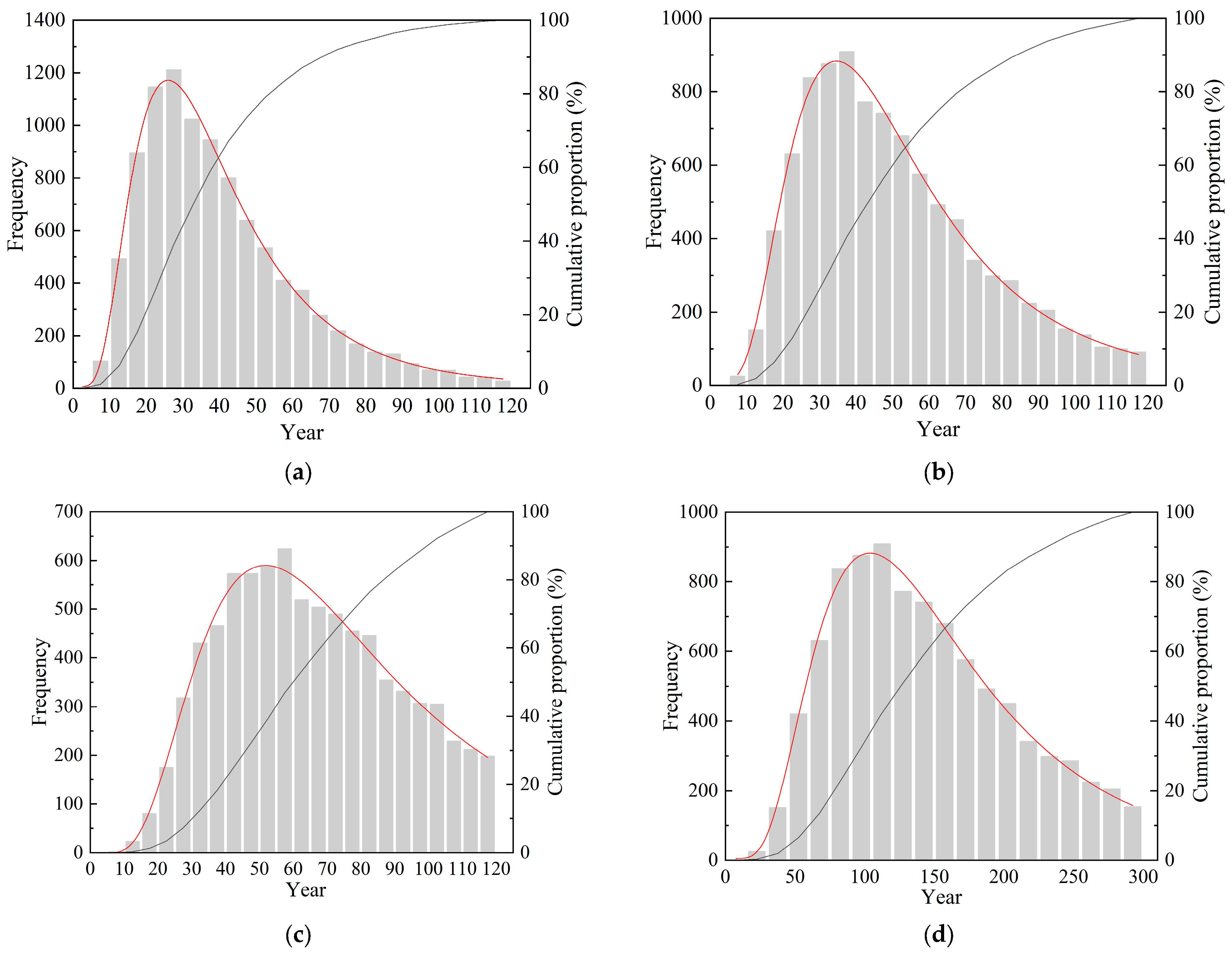
This study employs Monte Carlo simulation for uncertainty analysis, which incorporates probability distributions of fixed parameters—such as heavy metal emissions and cultivated soil area—into the potential ecological risk assessment model. By converting deterministic sampling into random sampling and conducting multiple iterative simulations, it effectively reduces the probability of the assessment results deviating from actual conditions during risk evaluation. Based on Oracle Crystal Ball 11.1.2.4 software, the model uses Cd accumulation as sample data, assumes the probability distribution conforming to the sample data, and employs the cumulative year reaching the medium standard of the potential risk index as the predicted indicator value. After incorporating the sample data into simulation calculations, 10,000 random samples are drawn based on the probability distributions corresponding to each parameter. These samples are then reassigned to the respective input variables. The potential ecological risk index model calculates the results for each sampled instance, yielding outcomes for cumulative years under conditions of uncertainty.

3. Results

3.1. Emissions of Livestock and Poultry Manure and Heavy Metals

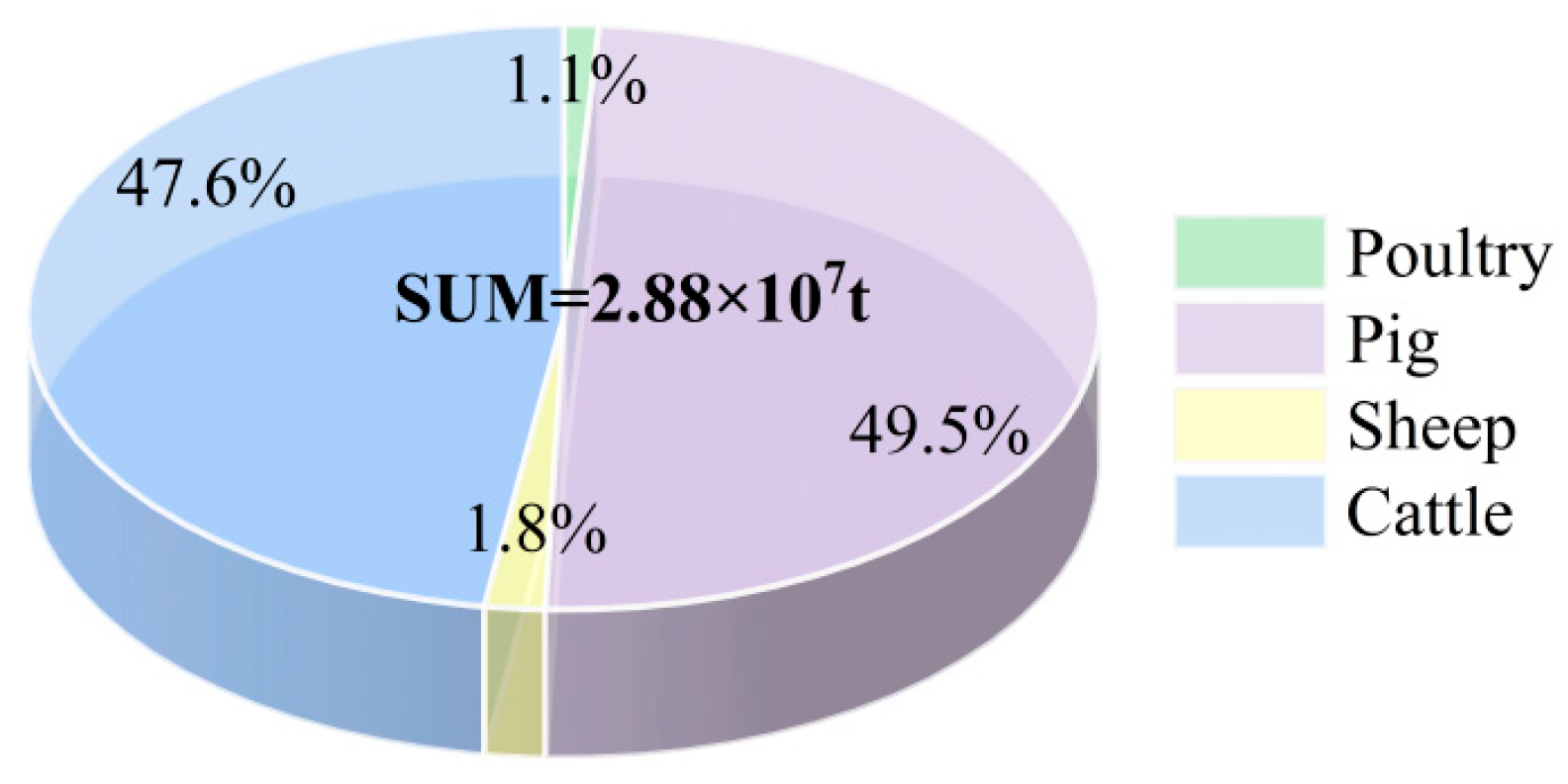
The total emissions from four types of livestock and poultry manure (pig, cattle, sheep, and poultry) in Hunan Province in 2017 is 2.88 × 10⁷ tons (Figure 2). Pig and cattle manure account for the largest share of emissions, reaching 1.43 × 10⁷ tons and 1.37 × 10⁷ tons, respectively, which make up 49.5% and 47.6% of the total emissions. In contrast, the emissions of sheep manure and poultry manure are significantly lower at 5.23 × 10⁵ tons and 3.06 × 10⁵ tons, respectively, accounting for only 1.8% and 1.1% of the total emissions.
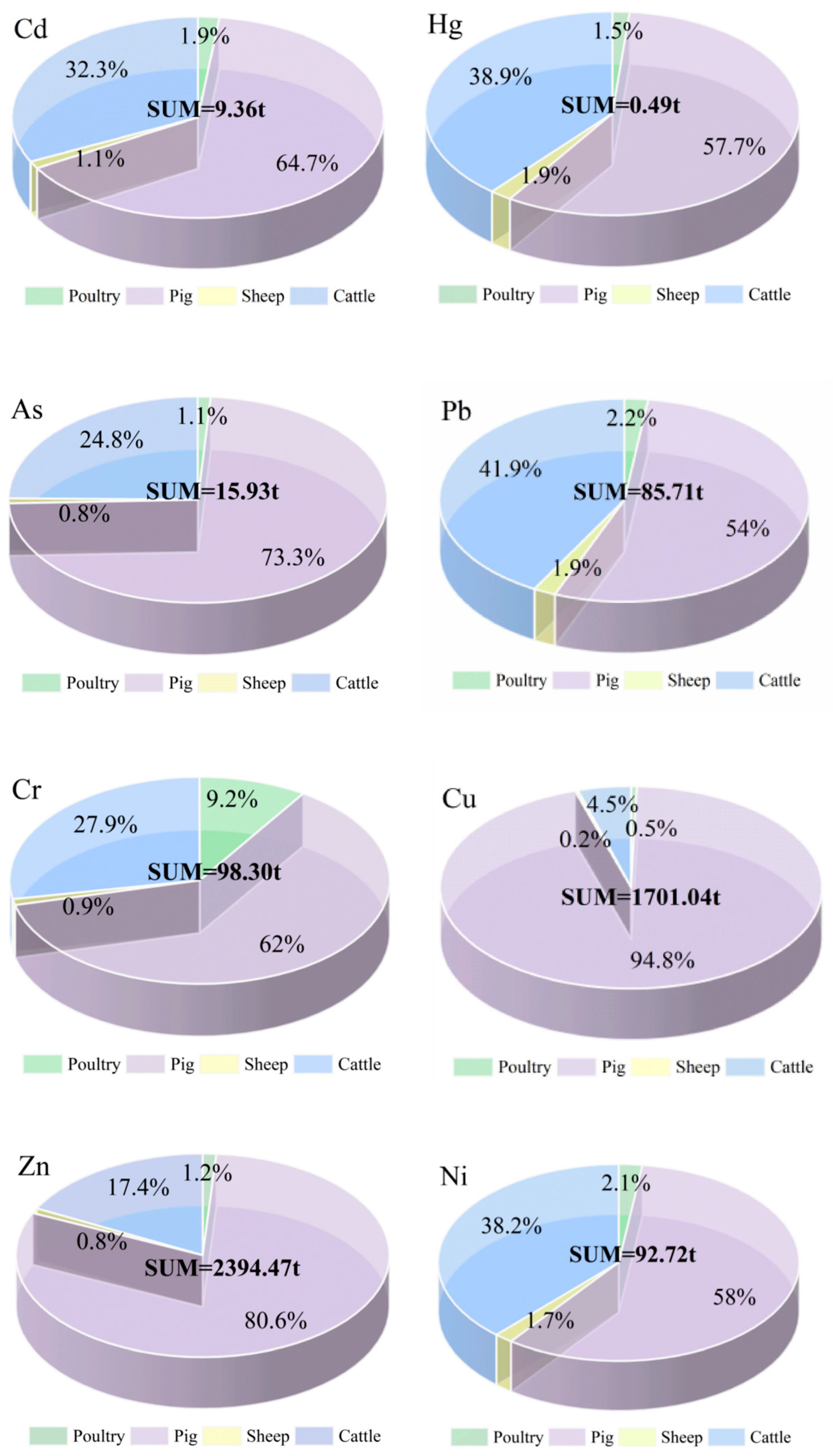
As shown in Figure 3, the order of emissions of eight heavy metals in livestock and poultry manure in Hunan Province in 2017 is Zn (2394.47 t) > Cu (1701.04 t) > Cr (98.30 t) > Ni (92.72 t) > Pb (85.71 t) > As (15.93 t) > Cd (9.36 t) > Hg (0.49 t). Due to differences in the volume of emissions from different types of livestock and poultry manure and its content of heavy metals, there are significant variations in the emissions of various heavy metals from poultry, pig, sheep, and cattle. Among them, pig manure contributes the most to the emission of heavy metals, such as Cd, accounting for 64.7% of the total Cd emissions, and as high as 94.8% and 80.6% of the total Cu and Zn emissions, respectively. Cattle manure ranks second only to pig manure, making up 32.3% of the total Cd emissions and 41.9%, 38.9%, and 38.2% of the total Pb, Hg, and Ni emissions, respectively. The data indicates that the contribution of the four types of livestock and poultry manure to the emission of eight heavy metals follows the order of pig manure > cattle manure > sheep manure > poultry manure. Compared with cattle, sheep, and poultry manure, pig manure is the main source contributing to heavy metal emissions.

3.2. Cropland Load of Heavy Metals Following Livestock and Poultry Manure Application

After livestock and poultry manure is applied to farmland in proportion, the Cd load on cropland is 0.5123 g/(ha·yr). Among all heavy metals, Zn (81.0180 g/(ha·yr)) and Cu (5.5555 g/(ha·yr)) have the highest cumulative loads, while Hg (0.0270 g/(ha·yr)) and As (0.8751 g/(ha·yr)) have relatively lower loads (Table 5).
Pig manure contributes more than 54% of the total amount of elements, such as Cu, Zn, Cd, Cr, Pb, and As, and its cropland load is significantly higher than that of other types of manure. Cattle manure ranks second in contribution, particularly standing out in terms of Hg, Ni, and Pb loads, accounting for more than 38% of the total. In contrast, the loads of poultry manure and sheep manure are the lowest, with their contributions to each element accounting for less than 10% and 2% of the total, respectively. Regarding the Hg load on cropland, sheep manure contributes more than poultry manure, while the opposite is true for the other elements.
The high Cu, Zn, Cd, and Cr loads in pig manure pose potential risks to the cropland soil environment, and the input of Hg, Ni, and Pb from cattle manure also has a non-negligible impact. Therefore, when applying livestock and poultry manure to farmland, the high Cu and Zn loads in pig manure and the contributions of Hg, Ni, and Pb from cattle manure should be the key focuses for regional heavy metal risk management and control in farmland.
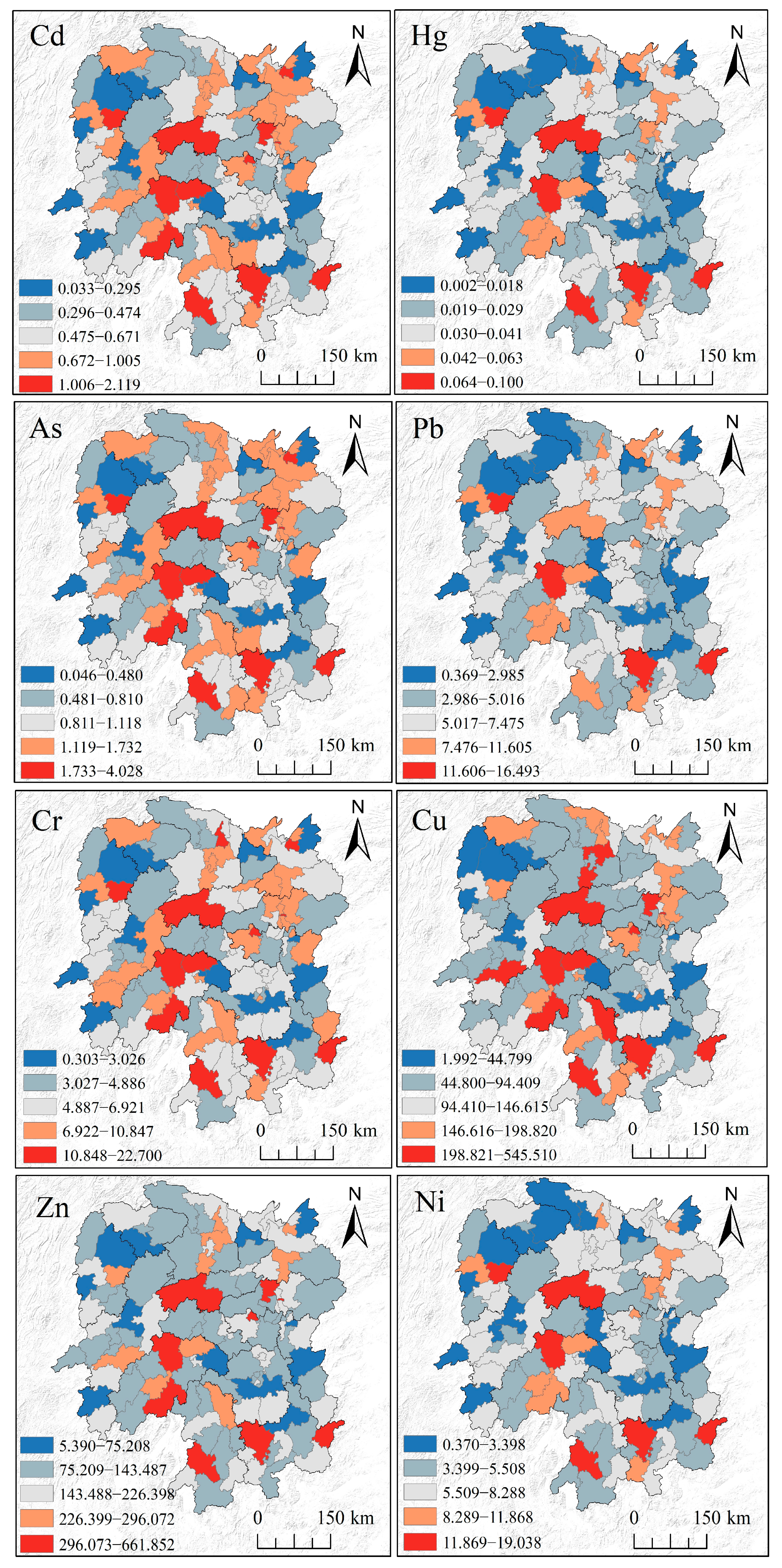
The ranges of cultivated land loads for Cd, Hg, As, Pb, Cr, Cu, Zn, and Ni across various counties in Hunan Province are 0.033–2.119 g/(ha·yr), 0.002–0.100 g/(ha·yr), 0.046–4.028 g/(ha·yr), 0.369–16.492 g/(ha·yr), 0.303–22.700 g/(ha·yr), 1.992–545.510 g/(ha·yr), 5.390–661.852 g/(ha·yr), and 0.370–19.038 g/(ha·yr), respectively. These loads exhibit significant spatial heterogeneity and characteristics of regional high loads (Figure 4). Counties such as Yanfeng District of Hengyang City, Shifeng District of Zhuzhou City, and Lengshuijiang City of Loudi City are typical areas with the highest loads of all eight heavy metals, including Cd. Secondly, counties with relatively high cropland loads of Cd, As, and Cr are concentrated in Yueyang City and Changsha City. In contrast, some counties in Yongzhou City and Chenzhou City of Hunan Province mostly have moderate cropland loads of heavy metals like Cd, while areas under the jurisdiction of Changde City, Xiangxi Tujia and Miao Autonomous Prefecture, and Huaihua City mostly show relatively low loads.

3.3. Scenario Analysis of Heavy Metal Pollution Risks in Cropland Soil

When all manure is applied to farmland, the single potential ecological risk indices of the eight heavy metals in Hunan Province are in the order: Hg (40.0213) > Cd (30.2790) > As (10.0013) > Cu (5.0390) > Pb (5.0018) = Ni (5.0018) > Cr (2.0003) > Zn (1.0032). The potential ecological risk index of heavy metals is closely related to the cropland load and the heavy metal biological toxicity coefficient. For example, although the cropland load of Hg is lower than that of other heavy metals, its strong biological toxicity leads to a relatively high ecological risk index, placing it at a moderate ecological risk level. The other heavy metals all belong to the slight ecological risk level. However, the ecological risk index of Cd is second only to that of Hg, and moderate harm is likely to occur when its cropland load is relatively high, which also requires focused attention.
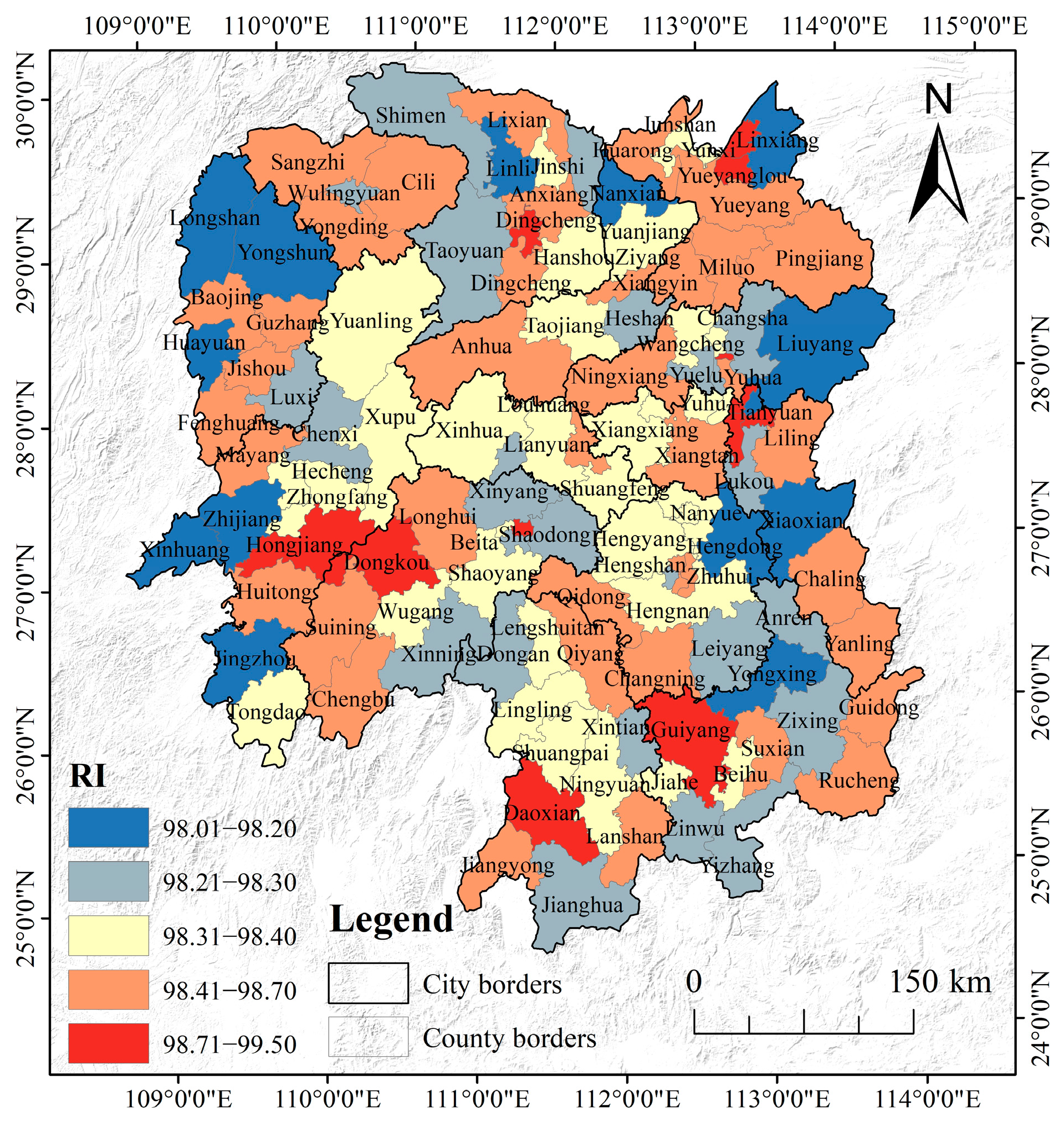
The multiple potential ecological risk index (RI) of heavy metals in Hunan Province is 98.34. The RI of most counties fall within the range of 98.02–99.46, all of which are less than 150, indicating a slight ecological risk level (Figure 5). 59.83% of the counties have RI higher than the provincial average, while 40.16% of the counties have RI lower than the provincial average. In addition, Daoxian County of Yongzhou City has the highest RI, which is 1.01 times the provincial average. This is followed by Yunxi District of Yueyang City and Wuling District of Changde City, with RI of 98.98 and 98.95, respectively. In contrast, Huayuan County has the lowest RI, which is 0.997 times the provincial average. Other counties with relatively low RI are concentrated in the eastern and western parts of Hunan Province, and are distributed in cities on the provincial border.
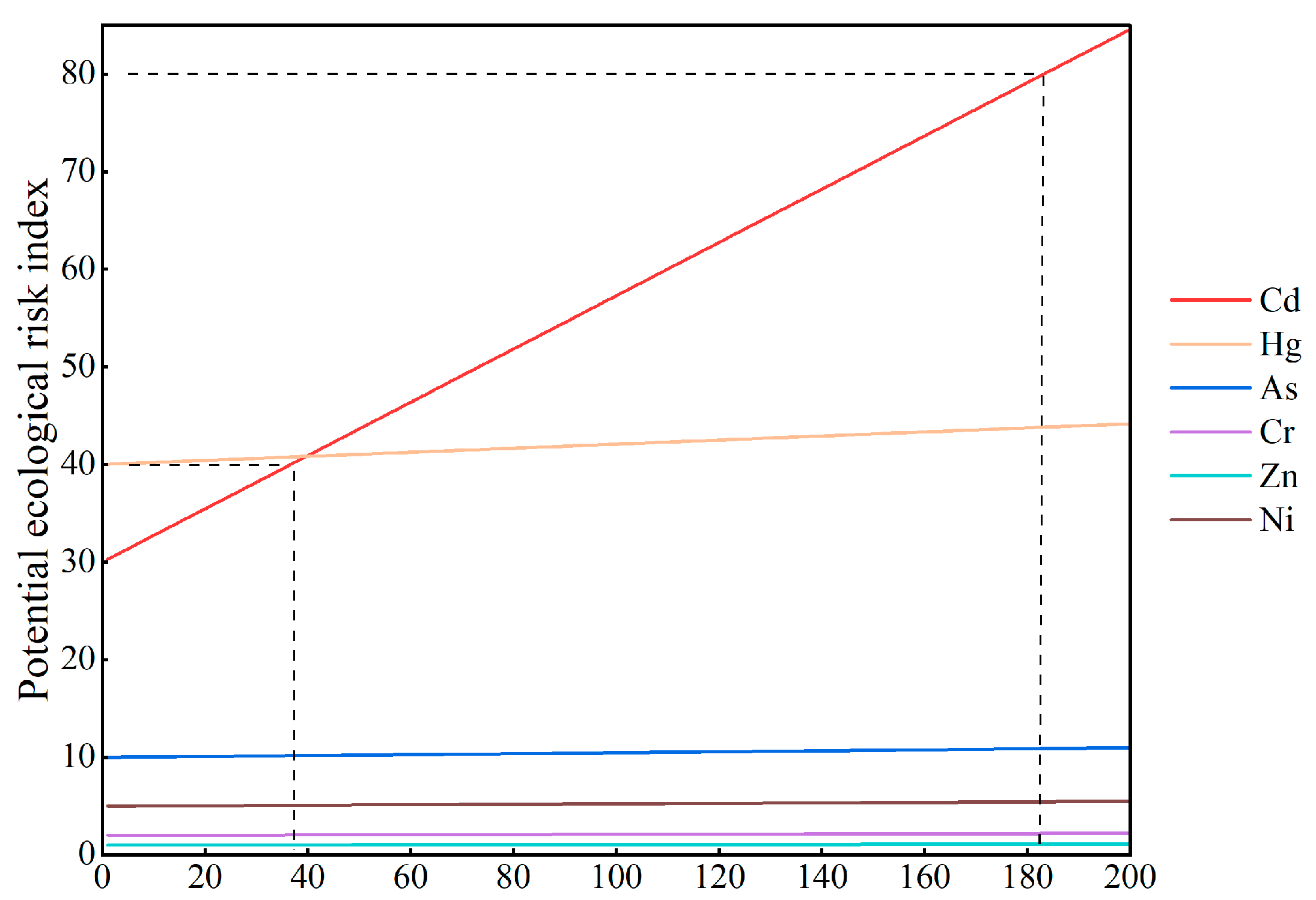
To understand the hidden risks of heavy metal pollution in cropland under the scenario of long-term livestock and poultry manure application to farmland, this study conducted simulations by setting scenarios with different periods, and systematically analyzed the accumulation trends and long-term potential ecological risks of heavy metals in soil. The scenario simulation results show that with the increase in the number of consecutive years of manure application, the single potential ecological risk index of each heavy metal shows a continuous upward trend, but there are significant differences in their risk levels and accumulation characteristics (Figure 6).
Cd has extremely high accumulation potential and ecological threat in long-term application, causing Grade II and Grade III risks to cropland soil after 37 years and 184 years of application, respectively. In the initial manure application scenario, Cd causes slight potential ecological risk to cropland soil. The medium-term scenario simulation shows that after 37 consecutive years of manure application, the ecological risk reaches a moderate level. In the long-term scenario, it further rises to a high potential ecological risk level, which occurs when the cumulative duration of manure application reaches 184 years. The risk index of Hg had already exceeded 40 in the early scenario, entering the category of moderate risk, and will continue to approach the strong risk level in the long-term scenario. This reflects that its high toxicity effect is significantly amplified under years of application. The risk indices of As, Pb, Cr, Cu, Zn, and Ni remained below 40 in all simulated scenarios, belonging to the slight potential ecological risk level. This indicates that their overall risks are controllable under the current manure application mode.
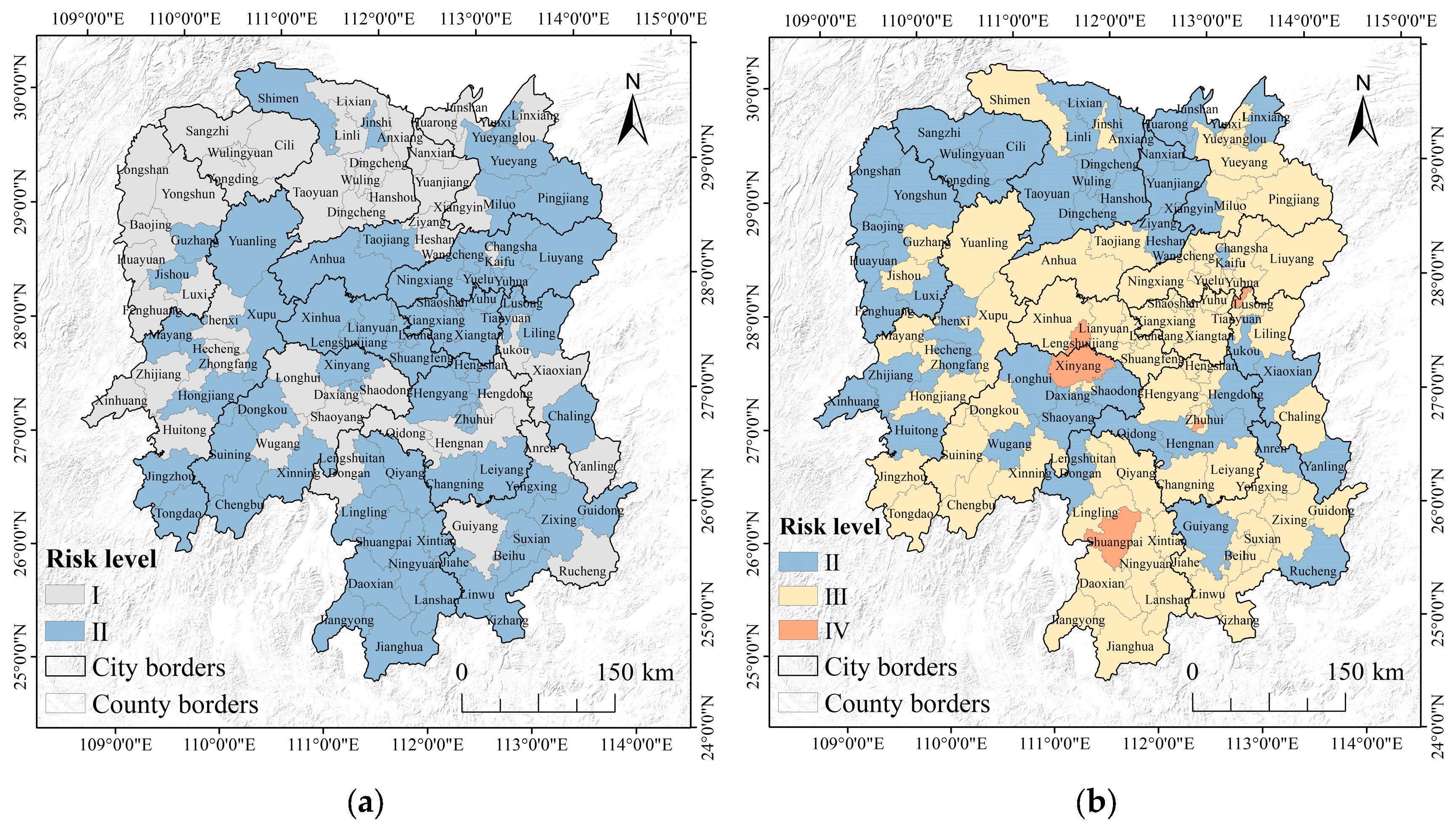
Among the pollutants in livestock and poultry manure in Hunan Province, Cd is the main contributing factor. When Cd pollution in cropland soil of Hunan Province reaches a moderate risk level, the scenario prediction results indicate that the potential ecological risk level of Cd in various counties is predominantly Grade II (Figure 7a). This area covers most regions extensively, accounting for 61.48% of all counties, mainly concentrated in most counties of Changsha City, Loudi City, Xiangtan City in central Hunan, and Shaoyang City, Yongzhou City, Chenzhou City in southern Hunan. The Cd accumulation in these regions poses a relatively high potential risk to the ecosystem, making them moderate ecological hazard areas. The remaining districts and counties all show Grade I risk, mainly distributed in northwestern Hunan, causing slight potential ecological risk to cropland soil.
In the long-term scenario of continuous application of livestock and poultry manure to farmland, Cd pollution in cropland soil of Hunan Province will reach a high-risk level. At this point, most of its counties will show Grade III risk, and the application of livestock and poultry manure to fields will pose significant potential ecological risk to cropland soil (Figure 7b). With the continuous accumulation of Cd in soil after the application of livestock and poultry manure to farmland, the risk level in central and southern regions such as Changsha-Loudi-Xiangtan and Shaoyang-Yongzhou-Chenzhou has risen from Grade II to Grade III, accounting for 57.4% of all counties. Meanwhile, five counties including Yanfeng District of Hengyang City have crossed to Grade IV, belonging to high-risk areas. At this time, only Furong District of Changsha City remains at Grade I risk.
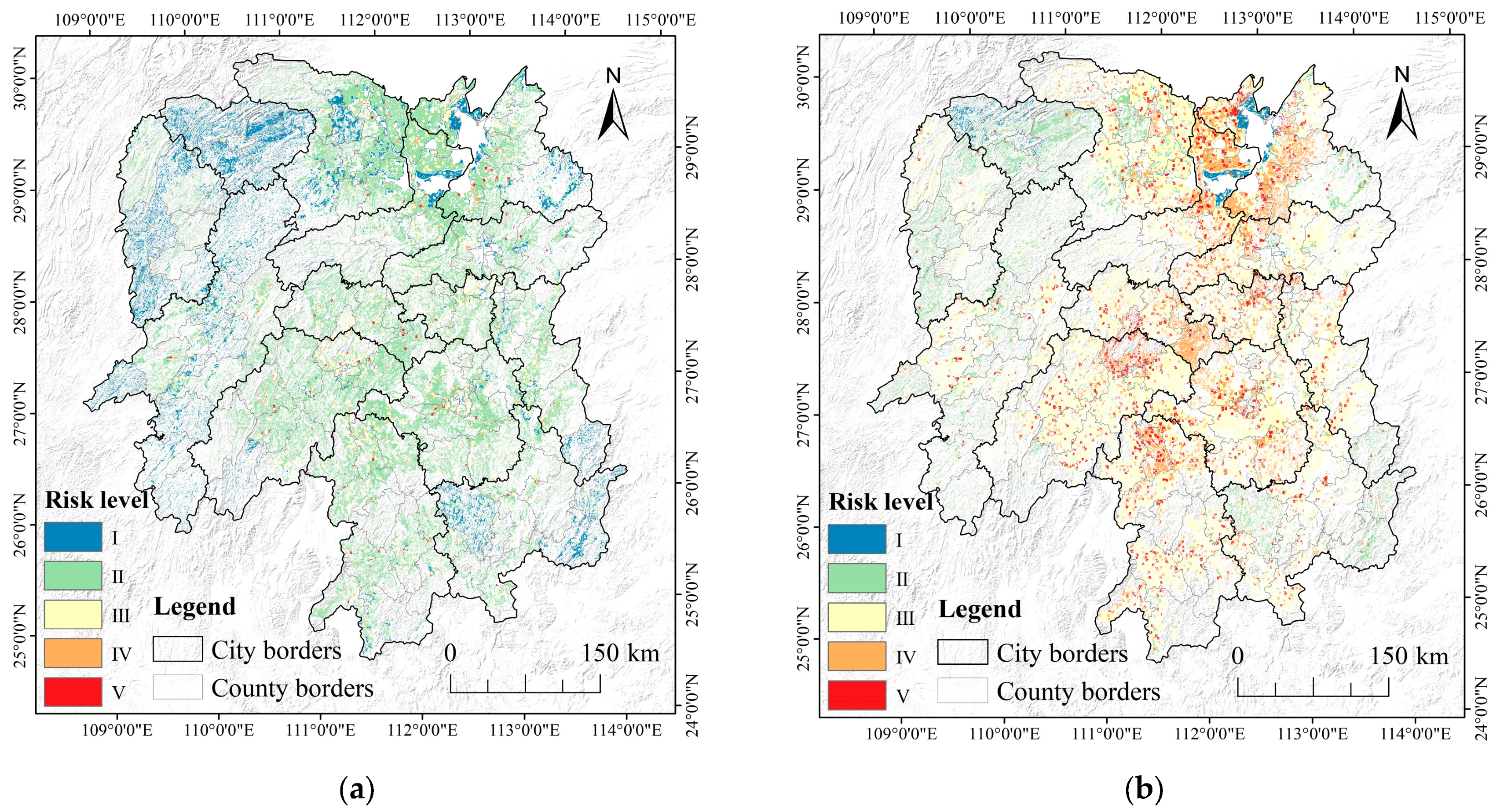
To gain a more detailed understanding of the spatial pattern of potential ecological risks of Cd in each cropland plot after livestock and poultry manure is applied to farmland, a further analysis was conducted on the risk of Cd to cropland soil when each plot in Hunan Province receives manure application from nearby sources (Figure 8). In the scenario of 37 years of manure application, the cropland with Grade II risk accounts for the largest proportion at 72.93%, mainly distributed in central and eastern Hunan. The next largest proportion is cropland with Grade I risk, accounting for 17.86%, concentrated in western Hunan and the southeast corner. Additionally, the proportions of cropland with Grade III, IV, and V risks are 7.04%, 1.55%, and 0.61%, respectively. In the scenario of 184 years of manure application, the cropland with Grade III risk accounts for the largest proportion at 54.93%, followed by areas with Grade IV and II risks, accounting for 19.64% and 16.23%, respectively. Areas with Grade I risk are the smallest, accounting for 1.89%. At this point, the cropland in Yiyang City and Changsha City in northern Hunan, as well as the central region, is at an extremely high risk level, indicating that Cd will cause severe potential ecological risk to cropland soil.
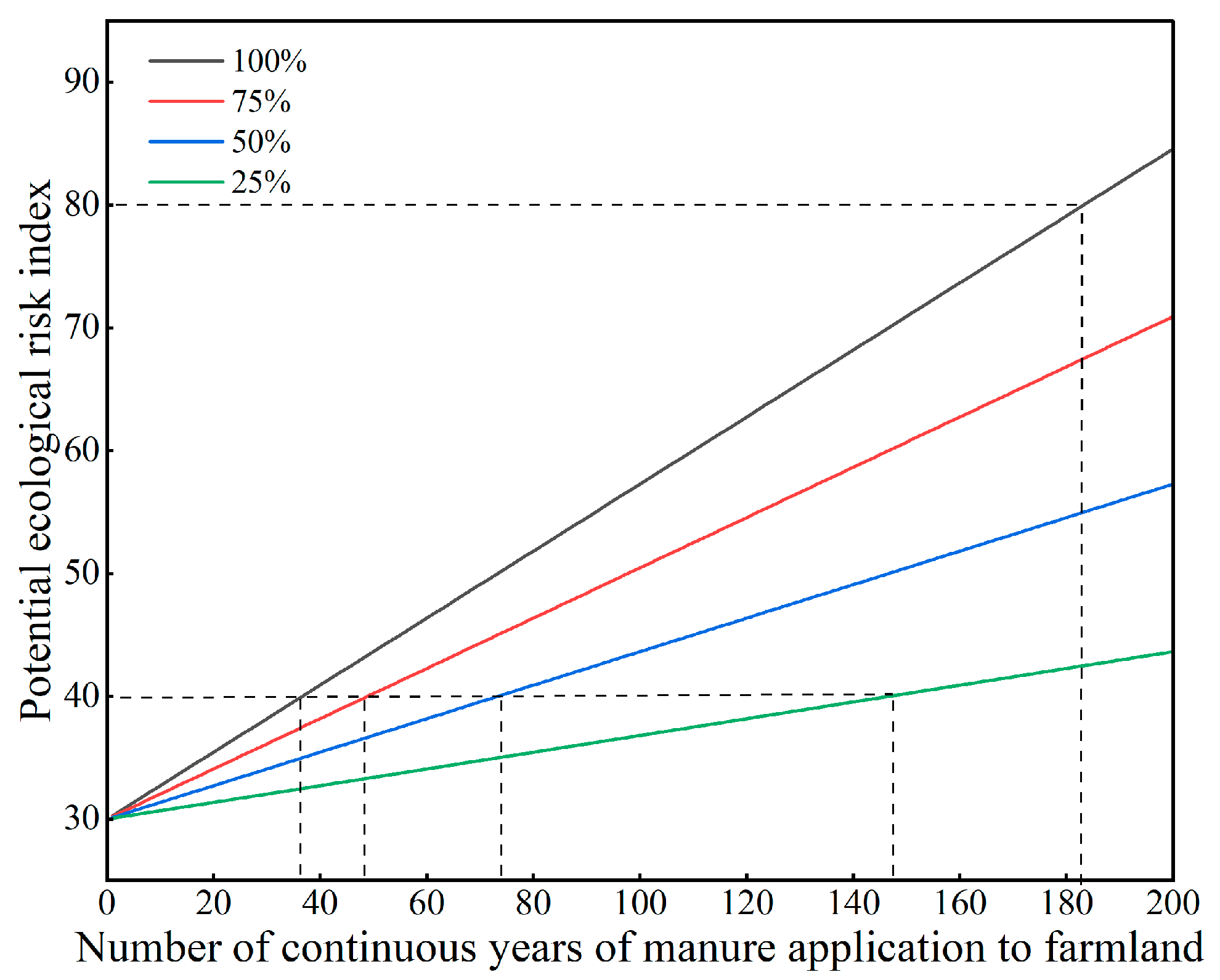
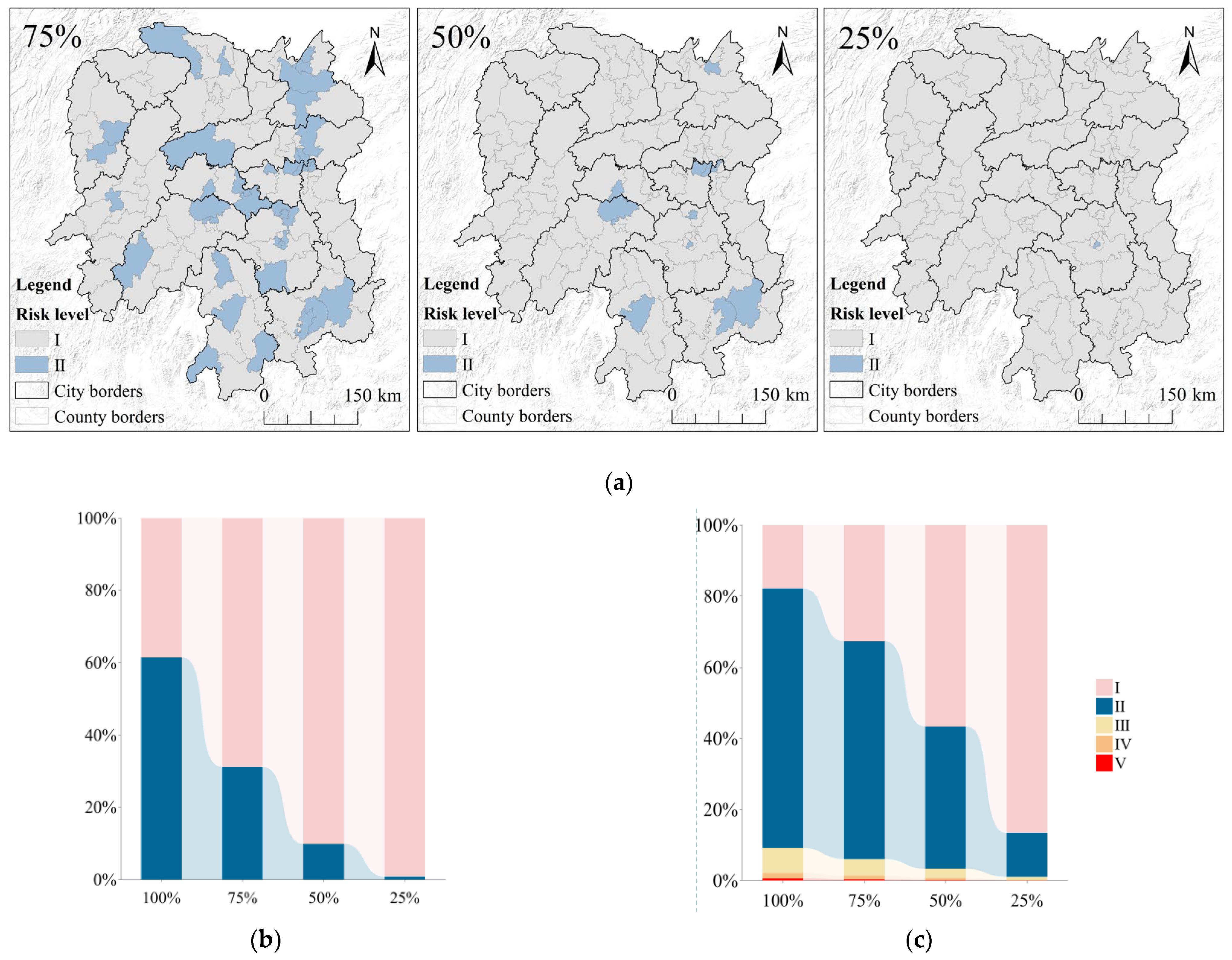
In the improved scenarios with different manure application proportions (75%, 50%, 25%), the lower the proportion, the slower the Cd risk index in soil rises, and the longer it takes for cropland to reach moderate potential ecological risk (Figure 9). With the increase in the number of consecutive years of manure input, the potential ecological risk index of Cd shows a gradual upward trend, but there are significant differences in the time required to reach various risk levels under different improved scenarios. Under the improved scenario with a 75% application proportion, the risk of Cd to cropland soil reaches the moderate ecological risk level after 49 years; under the improved scenario with a 50% application proportion, the risk of Cd also enters the moderate ecological risk range after 74 years; while in the improved scenario with a 25% application proportion, after 147 years, Cd from manure application shows moderate potential ecological risk to heavy metal pollution in cropland soil in the study area.
The prediction results of the improved scenarios indicate that with the reduction in the proportion of manure application to farmland, the moderate and high-risk areas of heavy metal pollution in cropland soil have significantly shrunk (Figure 10a). Under the improved scenarios with 75%, 50%, and 25% manure application proportions, the number of counties with Grade II risk after 37 consecutive years of manure input has decreased from 75 to 38, 12, and 1, respectively.
Compared with the baseline scenario of 100% application where most counties in Hunan Province are dominated by Grade II risk, under the improved scenario of 75% application, most counties are Grade I risk areas, accounting for 68.85% (Figure 10b). Under the improved scenario of 25% application, only Yanfeng District of Hengyang City is a Grade II risk area, while all others are low-risk areas. Among the cropland plots with nearby manure application, under the improved scenario of 75% application, the proportion of cropland with Grade II risk has decreased from 72.93% of the total in the baseline scenario of 100% application to 61.32% (Figure 10c). Under the improved scenario of 50% application, the cropland risk is dominated by Grade I, accounting for 56.61% of the risk areas; the Grade II risk areas have further decreased to 40.01%. Under the improved scenario of 25% application, the proportion of cropland with Grade I risk is as high as 86.52%.
Figure 11 exhibits the probability distribution characteristics of the years when soil Cd in the region reaches a moderate ecological risk, under livestock manure application rates of 100%, 75%, 50%, and 25%, respectively. For the 100% application rate (Figure 11a), the frequency distribution near the 37th year shows high aggregation; this distribution feature indicates that the conclusion of this study—“the moderate ecological risk is reached in the 37th year under the 100% manure application scenario”—has relatively low uncertainty. By comparing the distribution characteristics of 100% application rate, 75% application rate, 50% application rate, and 25% application rate, it can be observed that: as the livestock manure application rate decreases, the distribution span of the years when soil Cd reaches a moderate ecological risk gradually widens, and the data dispersion degree continues to increase. This implies that the uncertainty of the predicted years for reaching this risk level shows a gradual upward trend.

4. Discussion

4.1. Risk of Heavy Metal Pollution in Cropland Soil from Livestock and Poultry Manure Application to Farmland

In the process of livestock and poultry breeding, heavy metals such as Cu and Zn are often added to animal feed as growth promoters [39]. Among the eight heavy metals mentioned, the concentrations of Cu and Zn are particularly prominent, ranging from 44.5 to 1310.6 mg/kg and from 230.2 to 14,679.8 mg/kg, respectively [2], with emissions of 1701.04 tons and 2394.47 tons. There is a medium to high content of heavy metals in livestock and poultry manure in Hunan Province, and this finding is also observed internationally. Due to the high intensification of the breeding industry, the loads of Cu and Zn borne per unit area of cropland are significantly high. The results of this study regarding the highest emissions of Cu and Zn and their cropland loads are consistent with the research conclusions of Mu et al. andLi et al. [22,34] at the national scale.
Although heavy metals in farmland soil come from diverse sources and input pathways, in concentrated livestock and poultry breeding areas, the application of manure as organic fertilizer to farmland has become one of the main pathways for heavy metal input [40]. Studies have shown that in China, manure significantly contributes to heavy metal input into cropland, with the input proportions of Cd, Cu, and Zn reaching 55%, 69%, and 51%, respectively [41]. Livestock and poultry manure is rich in nutrients and organic matter, which helps improve soil physical and chemical properties by supplementing nutrient elements needed by crops; so, it is widely used as organic fertilizer [42]. However, direct or improper application of manure can introduce heavy metals, antibiotics, pathogens, etc., into the environment, posing a threat to ecological security [43]. Trace heavy metals and antibiotics contained in manure have a positive effect on plant growth within an appropriate range, but once they exceed the safety threshold, they may be toxic to soil organisms and crops. These pollutants not only directly affect plant growth but may also be transmitted through the food chain, threatening the health of grazing animals and humans [44]. With the development of large-scale and regionally centralized animal husbandry, the increasing disconnection between livestock production and farmland in many parts of the world has led to excessive application of manure in local areas [45,46,47,48], which caused excessive accumulation of heavy metals in soil. Therefore, realizing scientific application of manure through policy guidance is crucial in livestock and poultry manure management [49]. At the same time, controlling the amount of heavy metal additives in feed from the source is also an effective way to reduce soil heavy metal pollution [50].
Against the backdrop of ongoing agricultural production activities in China, scenario predictions of long-term application of manure to farmland in Hunan Province show that the potential ecological risk coefficient of Cd is significantly higher than that of other heavy metals, exhibiting high potential ecological risk. This result is consistent with the research by Zhao et al. [15], which found that continuous application of livestock and poultry manure leads to an increase in soil Cd content, reflecting its characteristic of being easily accumulated in soil. In addition, Cd pollution in Hunan’s soil is the most prominent, followed by As and Hg. Moreover, due to Cd’s strong mobility and bioavailability in soil, the pressure it poses to the environment is particularly significant [51]. Based on the results of environmental risk assessment, Cd is the metal that requires primary attention in the study area and should be prioritized as a monitoring target for pollution source control. Mineral feed additives are among the main sources of Cd pollution in feed. Therefore, we propose management recommendations for implementing source reduction and feed control. It is necessary to promote environmentally friendly feed with low heavy metal content to reduce heavy metal emissions into the environment through livestock and poultry manure from the source, and strictly regulate and control the addition standards and levels of heavy metals, especially Cd, in feed.
Furthermore, while Cd poses the most prominent ecological risk in this study, Cu and Zn also warrant attention due to their substantial total emissions and strong soil accumulation capacity, which may lead to long-term environmental impacts. Research has shown that prolonged heavy application of livestock manure can cause significant Cu and Zn accumulation in soil [52,53], particularly in farmland surrounding intensive livestock farming areas. Although these elements are essential trace metals for organisms, excessive accumulation can adversely affect soil microbial community structure, enzyme activity, and crop growth. Moreover, they may transmit through food chains, posing potential threats to ecosystems and human health. Therefore, alongside prioritizing Cd management, Cu and Zn should be incorporated into long-term monitoring and risk assessment systems, implementing integrated multi-metal control strategies.

4.2. Implications of Long-Term Risk Scenario Predictions

Heavy metal loads and ecological risks in cropland in Hunan Province show obvious spatial differentiation characteristics, with the northeastern part centered on the Changsha–Zhuzhou–Xiangtan region being a concentrated area of high risks. This region has a high breeding density and a large multiple cropping index, leading to a large amount of manure application. In addition, the soil in some areas is acidic, which may further increase the activity and bioavailability of heavy metals and exacerbate ecological risks [54]. In contrast, northwest regions such as Zhangjiajie, which are mainly dominated by forestry and ecological tourism, have a smaller breeding scale and thus have generally lower load and risk levels.
By comparing the ecological risks of Cd under the baseline scenario (100% application to farmland) and the improved scenarios (75%, 50%, 25% application to farmland), it is found that reducing the proportion of application to farmland can effectively delay the accumulation rate of Cd in the soil and postpone the rise in its risk level. From a spatial perspective, with the decrease in the proportion of application to farmland, the area of high-risk areas has significantly shrunk, indicating that reasonable regulation of the proportion of application to fields can effectively inhibit the spread of regional heavy metal ecological risks. At the same time, composting and anaerobic digestion are considered effective treatment methods to deal with manure pollution [27,55,56]: composting can reduce the volume of manure through mineralization and generate fertile organic substances; anaerobic digestion can recover manure while producing renewable energy such as biogas. Therefore, it is recommended to treat livestock and poultry manure as a resource for recycling, and realize “quality improvement and quantity reduction” through composting, anaerobic digestion and other methods, which not only promotes harmless application to farmland, but also promotes the recycling of energy and fertilizers.
Based on the above conclusions, it is recommended to implement a precise governance strategy by region and category. Strengthen monitoring in the high-load and high-risk areas in the northeast (such as some counties in Xiangtan and Changsha), give priority to restricting the proportion of application to farmland, and strictly control the amount and frequency of manure application; in the low-risk areas in the northwest, promote the green circular agricultural model of combining breeding and planting. At the same time, build supporting regional centralized manure treatment centers, promote organic fertilizer production and biogas projects, and realize the resource utilization and risk-controllable utilization of livestock and poultry manure.

4.3. Limitations and Future Research

A key limitation of this study lies in the complete accumulation assumption underlying the long-term prediction model. This study mainly explores the input risk of heavy metals to cropland soil from the perspective of livestock and poultry manure application to farmland. It does not systematically consider the comprehensive impact of other input factors (such as atmospheric deposition, sewage irrigation, etc.) and output factors (crop removal, infiltration output, etc.) on soil heavy metal accumulation, which may result in actual ecological risks being overestimated. The breeding population data, heavy metal concentrations in manure, and manure excretion coefficients were primarily derived from the literature. These values are often averages or representative figures, which may not capture spatial heterogeneity within the province. The use of uniform provincial background values introduces a limitation to the county-level precision of the risk assessment. In future studies, it is necessary to adopt localized background data, integrate multiple heavy metal input and output pathways, and construct a dynamic mass balance model of the whole pathway to provide more accurate risk prediction.

5. Conclusions

This study systematically evaluated the risk of heavy metal pollution in cropland soil caused by the application of livestock and poultry manure to fields in Hunan Province under different scenarios. The results show that pig and cattle manure are the main sources of heavy metal emissions from manure, accounting for 49.5% and 47.6% of the total emissions, respectively. The cropland loads (g/ha) of the eight heavy metals are as follows: Cd (0.51), Hg (0.027), As (0.87), Pb (4.69), Cr (5.38), Cu (93.10), Zn (131.05), and Ni (5.07). Among them, Zn and Cu have the highest emissions. Although Cd and Hg have relatively low emissions, they pose significant ecological risks due to their high toxicity. The multiple potential ecological risk index (RI) of heavy metals in the province is 98.21, indicating a slight ecological hazard level. However, the spatial distribution shows heterogeneous characteristics with high loads in the northeast and low loads in the northwest.
The scenario analysis results indicate that the risk of Cd pollution in soil is particularly prominent. Under the baseline scenario (100% application to farmland), after 37 consecutive years of input, the overall study area presents moderate ecological hazards, with 71.93% of cropland classified as Grade II risk and 7.04% as Grade III risk. After 184 years, it reaches a strong ecological hazard level, with 54.93% of cropland classified as Grade III risk and 19.64% as Grade IV risk. Under the improved scenarios (75%, 50%, and 25% application to farmland), the overall study area presents moderate ecological hazards after 49, 74, and 147 consecutive years of input, respectively. Compared with the 100% application scenario, after 37 consecutive years of manure input under the 75%, 50%, and 25% application scenarios, the number of counties with Grade II Cd risk decreases from 75 to 38, 12, and 1, respectively, and the area of cropland with Grade II risk decreases from 72.93% of the total area to 61.32%, 40.01%, and 12.44%, respectively.
Therefore, it is necessary to focus on controlling the addition and use of Cd in feed and strictly regulate the proportion of manure application to farmland, especially in high-risk areas, to ensure the ecological security of cropland and the sustainable development of agriculture.

Author Contributions

Conceptualization, X.L. and L.Y.; methodology, Z.S. and H.S.; software, J.Q.; validation, X.L., L.Y. and X.Z.; formal analysis, J.Z.; investigation, Z.S. and H.S.; resources, J.Q.; data curation, J.X.; writing—original draft preparation, X.L. and L.Y.; writing—review and editing, Z.S. and H.S.; visualization, J.Q.; supervision, Z.S.; project administration, J.X.; funding acquisition, H.S. All authors have read and agreed to the published version of the manuscript.

Funding

This work was financially supported by the National Key Technology R&D Program of China (2022YFC3704805) and the National Natural Science Foundation of China (42377259).

Data Availability Statement

The data presented in this study are available on request from the corresponding author due to the large size of the datasets and the presence of sensitive information, which make public archiving impractical.

Conflicts of Interest

The authors declare that they have no conflicts of interest.

References

  1. Li, F.; Cheng, S.; Yu, H.; Yang, D. Waste from livestock and poultry breeding and its potential assessment of biogas energy in rural China. J. Clean. Prod. 2016, 126, 451–460. [Google Scholar] [CrossRef]
  2. Chen, K.; Li, J.; Lin, L.; Qin, W.; Gao, Y.; Hu, E.; Jiang, J. Occurrence, fate and control strategies of heavy metals and antibiotics in livestock manure compost land application: A review. Sci. Total Environ. 2024, 957, 177381. [Google Scholar] [CrossRef] [PubMed]
  3. Liu, C.; Li, G.; Qin, X.; Xu, Y.; Wang, J.; Wu, G.; Feng, H.; Ye, J.; Zhu, C.; Li, X.; et al. Profiles of antibiotic- and heavy metal-related resistance genes in animal manure revealed using a metagenomic analysis. Ecotoxicol. Environ. Saf. 2022, 239, 113655. [Google Scholar] [CrossRef] [PubMed]
  4. Li, J.; Yang, W.; Liu, L.; Liu, X.; Qiu, F.; Ma, X. Development and environmental impacts of China’s livestock and poultry breeding. J. Clean. Prod. 2022, 371, 133586. [Google Scholar] [CrossRef]
  5. Wang, M.; Liu, R.; Lu, X.; Zhu, Z.; Wang, H.; Jiang, L.; Liu, J.; Wu, Z. Heavy Metal Contamination and Ecological Risk Assessment of Swine Manure Irrigated Vegetable Soils in Jiangxi Province, China. Bull. Environ. Contam. Toxicol. 2018, 100, 634–640. [Google Scholar] [CrossRef]
  6. Wan, Y.; Huang, Q.; Wang, Q.; Yu, Y.; Su, D.; Qiao, Y.; Li, H. Accumulation and bioavailability of heavy metals in an acid soil and their uptake by paddy rice under continuous application of chicken and swine manure. J. Hazard. Mater. 2020, 384, 121293. [Google Scholar] [CrossRef]
  7. Shen, C.; He, M.; Zhang, J.; Liu, J.; Wang, Y. Response of soil antibiotic resistance genes and bacterial communities to fresh cattle manure and organic fertilizer application. J. Environ. Manag. 2024, 349, 119453. [Google Scholar] [CrossRef]
  8. Chen, Y.; Ouyang, Y.; Pan, W.; Wang, Y.; Li, Y. Effects of Organic Manure on Wheat Yield and Accumulation of Heavy Metals in a Soil—Wheat System. Agronomy 2024, 14, 2143. [Google Scholar] [CrossRef]
  9. Chen, D.; Ye, X.; Jiang, Y.; Xiao, W.; Zhang, Q.; Zhao, S.; Shao, S.; Gao, N.; Huang, M.; Hu, J. Continuously applying compost for three years alleviated soil acidity and heavy metal bioavailability in a soil-asparagus lettuce system. Front. Plant Sci. 2022, 13, 972789. [Google Scholar] [CrossRef]
  10. Kwiatkowska-Malina, J. Functions of organic matter in polluted soils: The effect of organic amendments on phytoavailability of heavy metals. Appl. Soil Ecol. 2018, 123, 542–545. [Google Scholar] [CrossRef]
  11. Zheng, W.; Yang, Z.; Huang, L.; Chen, Y. Roles of organic matter transformation in the bioavailability of Cu and Zn during sepiolite-amended pig manure composting. J. Environ. Manag. 2022, 314, 115046. [Google Scholar] [CrossRef]
  12. Mai, X.; Tang, J.; Tang, J.; Zhu, X.; Yang, Z.; Liu, X.; Zhuang, X.; Feng, G.; Tang, L. Research progress on the environmental risk assessment and remediation technologies of heavy metal pollution in agricultural soil. J. Environ. Sci. 2025, 149, 1–20. [Google Scholar] [CrossRef] [PubMed]
  13. Xiang, M.; Li, Y.; Yang, J.; Lei, K.; Li, Y.; Li, F.; Zheng, D.; Fang, X.; Cao, Y. Heavy metal contamination risk assessment and correlation analysis of heavy metal contents in soil and crops. Environ. Pollut. 2021, 278, 116911. [Google Scholar] [CrossRef] [PubMed]
  14. Fei, X.; Lou, Z.; Xiao, R.; Lv, X.; Christakos, G. Contamination and Health Risk Assessment of Heavy Metal Pollution in Soils Developed from Different Soil Parent Materials. Expo. Health 2022, 15, 395–408. [Google Scholar] [CrossRef]
  15. Zhao, W.; Deng, J.; Chi, S.; Wang, W.; Xu, L.; Huang, Q.; Zhang, Y.; Yu, X.; Xu, J.; Chen, Y.; et al. Sustainability assessment of topsoil ecology in Chongqing, China based on the application of livestock and poultry manure. J. Clean. Prod. 2022, 358, 131969. [Google Scholar] [CrossRef]
  16. Gaballah, M.S.; Guo, J.; Sun, H.; Aboagye, D.; Sobhi, M.; Muhmood, A.; Dong, R. A review targeting veterinary antibiotics removal from livestock manure management systems and future outlook. Bioresour. Technol. 2021, 333, 125069. [Google Scholar] [CrossRef]
  17. Cha, J.; Carlson, K.H. Biodegradation of veterinary antibiotics in lagoon waters. Process Saf. Environ. Prot. 2019, 127, 306–313. [Google Scholar] [CrossRef]
  18. Zhen, H.; Jia, L.; Huang, C.; Qiao, Y.; Li, J.; Li, H.; Chen, Q.; Wan, Y. Long-term effects of intensive application of manure on heavy metal pollution risk in protected-field vegetable production. Environ. Pollut. 2020, 263, 114552. [Google Scholar] [CrossRef]
  19. Peng, S.; Zhang, H.; Song, D.; Chen, H.; Lin, X.; Wang, Y.; Ji, L. Distribution of antibiotic, heavy metals and antibiotic resistance genes in livestock and poultry feces from different scale of farms in Ningxia, China. J. Hazard. Mater. 2022, 440, 129719. [Google Scholar] [CrossRef]
  20. Wang, X.; Zhang, X.; Li, N.; Yang, Z.; Li, B.; Zhang, X.; Li, H. Prioritized regional management for antibiotics and heavy metals in animal manure across China. J. Hazard. Mater. 2024, 461, 132706. [Google Scholar] [CrossRef]
  21. Xu, Y.; Li, J.; Zhang, X.; Wang, L.; Xu, X.; Xu, L.; Gong, H.; Xie, H.; Li, F. Data integration analysis: Heavy metal pollution in China’s large-scale cattle rearing and reduction potential in manure utilization. J. Clean. Prod. 2019, 232, 308–317. [Google Scholar] [CrossRef]
  22. Mu, H.; Zhang, Z.; Li, Y.; Qiao, Y.; Chen, Q.; Xiong, J.; Guo, L.; Jiang, R.; Li, H. Heavy metal contents in animal manure in China and the related soil accumulation risks. Environ. Sci. 2020, 41, 986–996. [Google Scholar] [CrossRef]
  23. Liu, W.R.; Zeng, D.; She, L.; Su, W.X.; He, D.C.; Wu, G.Y.; Ma, X.R.; Jiang, S.; Jiang, C.H.; Ying, G.G. Comparisons of pollution characteristics, emission situations, and mass loads for heavy metals in the manures of different livestock and poultry in China. Sci. Total Environ. 2020, 734, 139023. [Google Scholar] [CrossRef] [PubMed]
  24. Shi, T.; Ma, J.; Wu, F.; Ju, T.; Gong, Y.; Zhang, Y.; Wu, X.; Hou, H.; Zhao, L.; Shi, H. Mass balance-based inventory of heavy metals inputs to and outputs from agricultural soils in Zhejiang Province, China. Sci. Total Environ. 2019, 649, 1269–1280. [Google Scholar] [CrossRef]
  25. Li, Y.; Yan, B.; Yan, J.; Shi, W. Estimation of Carrying Capacity of Livestock and Poultry Based on RS and GIS: A Case in Minhou County, Fuzhou City. Pol. J. Environ. Stud. 2020, 30, 227–234. [Google Scholar] [CrossRef]
  26. Qaswar, M.; Yiren, L.; Jing, H.; Kaillou, L.; Mudasir, M.; Zhenzhen, L.; Hongqian, H.; Xianjin, L.; Jianhua, J.; Ahmed, W.; et al. Soil nutrients and heavy metal availability under long-term combined application of swine manure and synthetic fertilizers in acidic paddy soil. J. Soils Sediments 2020, 20, 2093–2106. [Google Scholar] [CrossRef]
  27. Zhang, X.; Gong, Z.; Allinson, G.; Xiao, M.; Li, X.; Jia, C.; Ni, Z. Environmental risks caused by livestock and poultry farms to the soils: Comparison of swine, chicken, and cattle farms. J. Environ. Manag. 2022, 317, 115320. [Google Scholar] [CrossRef]
  28. Li, J.; Xu, Y.; Wang, L.; Li, F. Heavy metal occurrence and risk assessment in dairy feeds and manures from the typical intensive dairy farms in China. Environ. Sci. Pollut. Res. 2019, 26, 6348–6358. [Google Scholar] [CrossRef]
  29. Wu, S.; Tang, M.; Wang, Y.; Ma, Z.; Ma, Y. Analysis of the Spatial Distribution Characteristics of Livestock and Poultry Farming Pollution and Assessment of the Environmental Pollution Load in Anhui Province. Sustainability 2022, 14, 4165. [Google Scholar] [CrossRef]
  30. Xiong, X.; Yanxia, L.; Wei, L.; Chunye, L.; Wei, H.; Ming, Y. Copper content in animal manures and potential risk of soil copper pollution with animal manure use in agriculture. Resour. Conserv. Recycl. 2021, 54, 985–990. [Google Scholar] [CrossRef]
  31. Wang, Y.; Pan, F.; Chang, J.; Wu, R.; Tibamba, M.; Lu, X.; Zhang, X. Effect and Risk Assessment of Animal Manure Pollution on Huaihe River Basin, China. Chin. Geogr. Sci. 2021, 31, 751–764. [Google Scholar] [CrossRef]
  32. Guo, B.; Ren, P.; Wang, L.; Li, S.; Luo, C.; Zhao, Y.; Zhao, H.; Sun, J.; Ji, P. Material flow analysis of heavy metals in large-scale cattle farms and ecological risk assessment of cattle manure application to fields. J. Environ. Manag. 2024, 364, 121452. [Google Scholar] [CrossRef]
  33. Zhang, W.; Li, B.; Liu, J.; Gu, W.; Li, Y.; Liao, K.; Zhu, Q. High-resolution livestock spatial distribution mapping in China based on big data and applications in ammonia emission inventories. J. Clean. Prod. 2025, 520, 146097. [Google Scholar] [CrossRef]
  34. Li, X.; Zhao, Z.; Yuan, Y.; Wang, X.; Li, X. Heavy metal accumulation and its spatial distribution in agricultural soils: Evidence from Hunan province, China. RSC Adv. 2018, 8, 10665–10672. [Google Scholar] [CrossRef] [PubMed]
  35. Peng, H.; Chen, Y.; Weng, L.; Ma, J.; Ma, Y.; Li, Y.; Islam, M.S. Comparisons of heavy metal input inventory in agricultural soils in North and South China: A review. Sci. Total Environ. 2019, 660, 776–786. [Google Scholar] [CrossRef]
  36. Liu, X.; Wang, X.; Li, S. Livestock and poultry faeces nitrogen loading rate and its potential return to farmland in China. Environ. Sci. 2018, 39, 5723–5739. [Google Scholar] [CrossRef]
  37. Li, D.; Zhang, X.; Zhang, H.; Fan, Q.; Guo, B.; Li, J. A global meta-analysis reveals effects of heavy metals on soil microorganisms. J. Hazard. Mater. 2025, 491, 138018. [Google Scholar] [CrossRef]
  38. Liu, X.; Chen, S.; Yan, X.; Liang, T.; Yang, X.; El-Naggar, A.; Liu, J.; Chen, H. Evaluation of potential ecological risks in potential toxic elements contaminated agricultural soils: Correlations between soil contamination and polymetallic mining activity. J. Environ. Manag. 2021, 300, 113679. [Google Scholar] [CrossRef]
  39. Hashemi, M. Heavy metal concentrations in bovine tissues (muscle, liver and kidney) and their relationship with heavy metal contents in consumed feed. Ecotoxicol. Environ. Saf. 2018, 154, 263–267. [Google Scholar] [CrossRef]
  40. Wang, F.; Peng, L.; Zhou, X.; Zeng, Q.; Luo, S. Typical sources of Cd to paddy fields in different contaminated areas and their impacts on Cd accumulation in topsoil and rice in Changzhutan, China. Environ. Res. 2021, 193, 110523. [Google Scholar] [CrossRef]
  41. Luo, L.; Ma, Y.; Zhang, S.; Wei, D.; Zhu, Y.G. An inventory of trace element inputs to agricultural soils in China. J. Environ. Manag. 2009, 90, 2524–2530. [Google Scholar] [CrossRef]
  42. Michaud, A.M.; Cambier, P.; Sappin-Didier, V.; Deltreil, V.; Mercier, V.; Rampon, J.N.; Houot, S. Mass balance and long-term soil accumulation of trace elements in arable crop systems amended with urban composts or cattle manure during 17 years. Environ. Sci. Pollut. Res. 2019, 27, 5367–5386. [Google Scholar] [CrossRef] [PubMed]
  43. Kuppusamy, S.; Kakarla, D.; Venkateswarlu, K.; Megharaj, M.; Yoon, Y.E.; Lee, Y.B. Veterinary antibiotics (VAs) contamination as a global agro-ecological issue: A critical view. Agric. Ecosyst. Environ. 2018, 257, 47–59. [Google Scholar] [CrossRef]
  44. Leclerc, A.; Laurent, A. Framework for estimating toxic releases from the application of manure on agricultural soil: National release inventories for heavy metals in 2000–2014. Sci. Total Environ. 2017, 590–591, 452–460. [Google Scholar] [CrossRef] [PubMed]
  45. Jin, S.; Zhang, B.; Wu, B.; Han, D.; Hu, Y.; Ren, C.; Zhang, C.; Wei, X.; Wu, Y.; Mol, A.P.J.; et al. Decoupling livestock and crop production at the household level in China. Nat. Sustain. 2020, 4, 48–55. [Google Scholar] [CrossRef]
  46. Wang, Y.; Wang, J.; Wang, X.; Li, Q. Does policy cognition affect livestock farmers’ investment in manure recycling facilities? Evidence from China. Sci. Total Environ. 2021, 795, 148836. [Google Scholar] [CrossRef]
  47. Zhang, C.; Liu, S.; Wu, S.; Jin, S.; Reis, S.; Liu, H.; Gu, B. Rebuilding the linkage between livestock and cropland to mitigate agricultural pollution in China. Resour. Conserv. Recycl. 2019, 144, 65–73. [Google Scholar] [CrossRef]
  48. Porter, S.A.; James, D.E. Using a Spatially Explicit Approach to Assess the Contribution of Livestock Manure to Minnesota’s Agricultural Nitrogen Budget. Agronomy 2020, 10, 480. [Google Scholar] [CrossRef]
  49. Mueller, N.; Lassaletta, L. Nitrogen challenges in global livestock systems. Nat. Food 2020, 1, 400–401. [Google Scholar] [CrossRef]
  50. Huong, L.T.T.; Takahashi, Y.; Nomura, H.; Son, C.T.; Kusudo, T.; Yabe, M. Manure management and pollution levels of contract and non-contract livestock farming in Vietnam. Sci. Total Environ. 2020, 710, 136200. [Google Scholar] [CrossRef]
  51. Yi, K.; Fan, W.; Chen, J.; Jiang, S.; Huang, S.; Peng, L.; Zeng, Q.; Luo, S. Annual input and output fluxes of heavy metals to paddy fields in four types of contaminated areas in Hunan Province, China. Sci. Total Environ. 2018, 634, 67–76. [Google Scholar] [CrossRef] [PubMed]
  52. Duan, B.; Feng, Q. Comparison of the Potential Ecological and Human Health Risks of Heavy Metals from Sewage Sludge and Livestock Manure for Agricultural Use. Toxics 2021, 9, 145. [Google Scholar] [CrossRef] [PubMed]
  53. Liu, Q.; Sun, X.; Hu, A.; Zhang, Y.; Cao, Z. Characteristics of Toxic Metal Accumulation in Farmland in Relation to Long-Term Chicken Manure Application: A Case Study in the Yangtze River Delta Region, China. Bull. Environ. Contam. Toxicol. 2014, 92, 279–284. [Google Scholar] [CrossRef] [PubMed]
  54. Pan, S.F.; Ji, X.H.; Liu, X.L.; Xie, Y.H.; Xiao, S.Y.; Tian, F.X.; Xue, T.; Liu, S.H. Influence of landform, soil properties, soil Cd pollution and rainfall on the spatial variation of Cd in rice: Contribution and pathway models based on big data. Sci. Total Environ. 2024, 912, 168687. [Google Scholar] [CrossRef]
  55. Wu, S.; Tursenjan, D.; Sun, Y. Impact of compost methods on humification and heavy metal passivation during chicken manure composting. J. Environ. Manag. 2023, 325, 116573. [Google Scholar] [CrossRef]
  56. Liu, Y.; Ukita, M.; Imai, T.; Higuchi, T. Recycling mineral nutrients to farmland via compost application. Water Sci. Technol. 2006, 53, 111–118. [Google Scholar] [CrossRef]
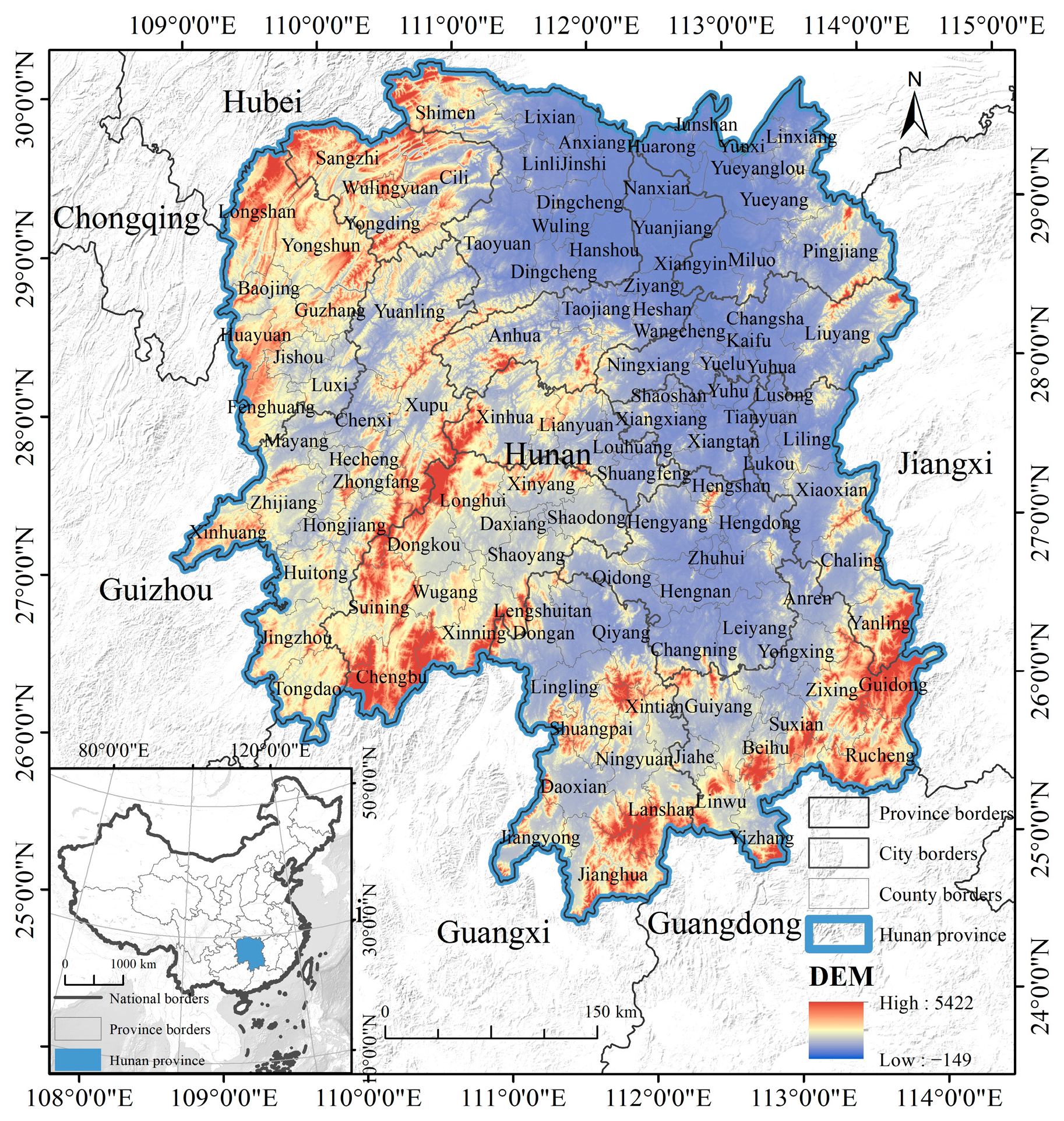
Figure 1. The geographical study map of Hunan Province.
Agronomy 15 02841 g001
Figure 2. Proportion of manure emissions from four types of livestock and poultry in Hunan Province in 2017.
Agronomy 15 02841 g002
Figure 3. Proportion of heavy metal emissions from livestock and poultry manure in Hunan Province in 2017.
Agronomy 15 02841 g003
Figure 4. Distribution of cropland load of heavy metals in various districts and counties of Hunan Province.
Agronomy 15 02841 g004
Figure 5. Distribution of multiple potential ecological risk index (RI) of Heavy Metals in Various counties of Hunan Province.
Agronomy 15 02841 g005
Figure 6. Cumulative trend of single potential ecological risk index of heavy metals in Hunan Province with the continuous years of manure application to farmland.
Agronomy 15 02841 g006
Figure 7. Distribution of Cd risk levels in cropland soil of various counties after 37 and 184 continuous years of livestock and poultry manure application to farmland. (a) Cd risk level distribution in Hunan Province when it is at Grade II risk after 37 Years; (b) Cd risk level distribution in Hunan Province when it is at Grade III risk after 184 Years.
Agronomy 15 02841 g007
Figure 8. Distribution of Cd risk levels in soil of each cropland plot after 37 and 184 continuous years of livestock and poultry manure application to farmland. (a) Cd risk level distribution in Hunan Province when it is at Grade II risk after 37 Years; (b) Cd risk level distribution in Hunan Province when it is at Grade III risk after 184 Years.
Agronomy 15 02841 g008
Figure 9. Cumulative trend of Cd risk index with the continuous years of manure application under improved scenarios (75%, 50%, and 25% manure application proportions to farmland).
Agronomy 15 02841 g009
Figure 10. Distribution of potential ecological risk levels of Cd in various counties and plots after 37 continuous years of application under improved scenarios. (a) Distribution of Cd risk levels in cropland of various counties after 37 continuous years under improved scenarios with 75%, 50%, and 25% manure application proportions; (b) Proportion of the number of counties in each risk level; (c) Proportion of cropland plots in each risk level.
Agronomy 15 02841 g010
Figure 11. Uncertainty analysis of the year of manure returning to field when the potential ecological risk index of Cd reaches medium risk under different return to field scenarios. (a) The baseline scenario with a 100% application rate; (b) The improved scenario of 75% application; (c) The improved scenario of 50% application; (d) The improved scenario of 25% application. The red line shows the frequency distribution based on Monte Carlo simulation results, reflecting the simulated occurrence frequency of events in each year. The gray curve represents the cumulative frequency distribution of the corresponding simulation results, illustrating the cumulative trend of event occurrence rates over the years.
Agronomy 15 02841 g011
Table 1. The contents of heavy metals in livestock and poultry manure (mg/kg·DW 1).
CdHgAsPbCrCuZnNi
Poultry1.90.081.8919.498.391.6309.521.4
Pig1.70.083.2813.017.1452.4541.815.1
Sheep0.70.060.7810.65.828.7123.49.9
Cattle1.10.071.4413.110.027.8151.712.9
1 DW: dry weight. It is noted that the concentration of heavy metals is calculated based on dry samples with moisture removed.
Table 2. The breeding cycles and manure excretion coefficients.
D (Day)K (kg/Head·d)
Poultry550.13
Pig1993.34
Sheep3652.16
Cattle36525.33
Table 3. The biological toxicity coefficient and the soil background values of heavy metals.
CdHgAsPbCrCuZnNi
Ci,B/(mg/kg)0.1260.11615.729.771.427.394.431.9
Ti30401052515
Table 4. The potential ecological risk classification.
IIIIIIIVV
I r i I r i < 4040 ≤ I r i < 8080 ≤ I r i < 160160 ≤ I r i < 320320 ≤ I r i
RIRI < 150150 ≤ RI < 300300 ≤ RI < 600600 ≤ RI < 12001200 ≤ RI
Risk levelLowModerateHighVery high
Table 5. Cropland load (g·ha−1·yr−1) of heavy metals following livestock and poultry manure application in Hunan Province.
CdHgAsPbCrCuZnNi
Poultry0.0095 0.0004 0.0095 0.0974 0.4937 0.4601 1.5545 0.1075
Pig0.3315 0.0156 0.6396 2.5350 3.3345 88.2182 105.6513 2.9445
Sheep0.0060 0.0005 0.0067 0.0910 0.0498 0.2463 1.0590 0.0850
Cattle0.1652 0.0105 0.2163 1.9679 1.5022 4.1761 22.7884 1.9378
Livestock and poultry0.5123 0.0270 0.8721 4.6913 5.3802 93.1007 131.0532 5.0748
Disclaimer/Publisher’s Note: The statements, opinions and data contained in all publications are solely those of the individual author(s) and contributor(s) and not of MDPI and/or the editor(s). MDPI and/or the editor(s) disclaim responsibility for any injury to people or property resulting from any ideas, methods, instructions or products referred to in the content.