Lycium barbarum Residue Enhances Fermentation Quality and Antioxidant Activity of Alfalfa Silage



Abstract
1. Introduction
2. Materials and Methods
2.1. Description of Materials
2.2. Experimental Design
2.3. Silage Preparation
2.4. Sampling and Chemical Analyses
2.5. Statistical Analyses
3. Results
3.1. Characteristics of Fresh Materials
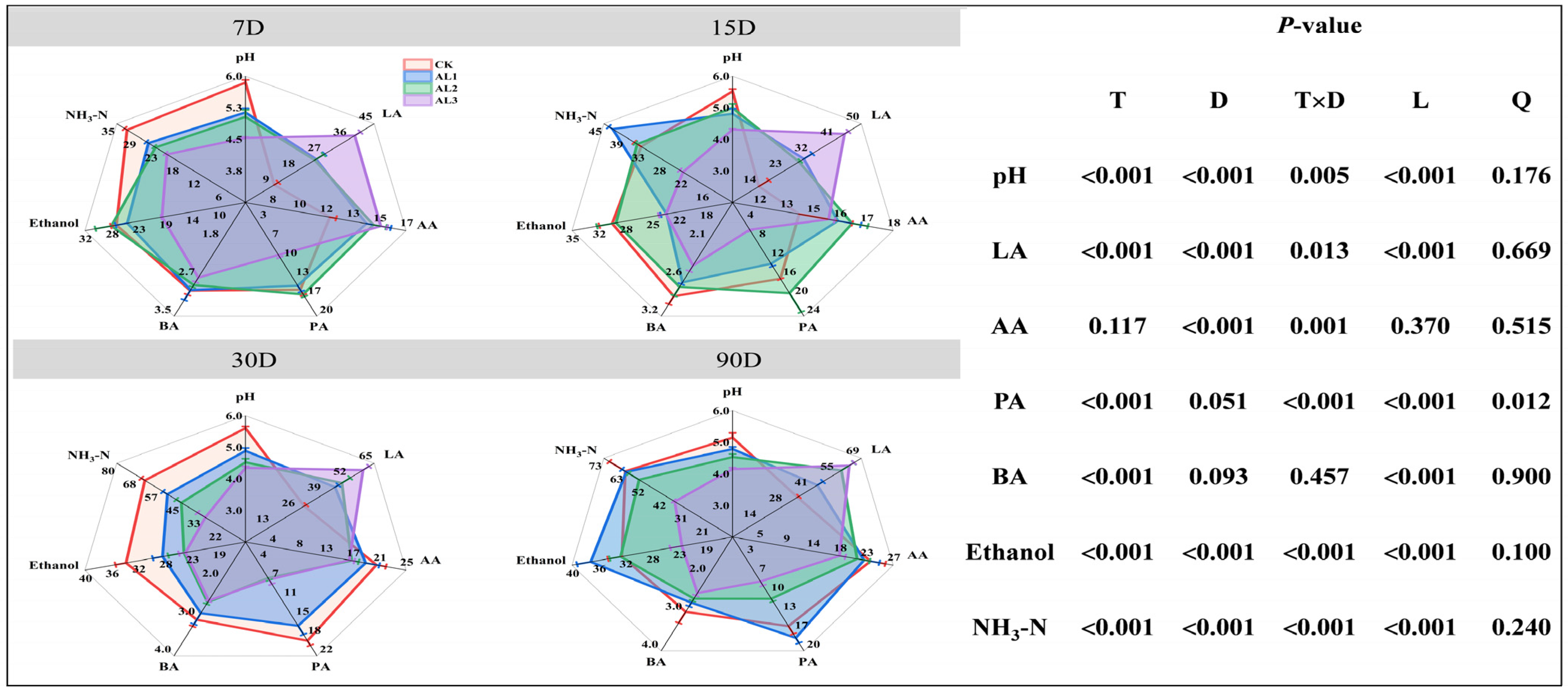
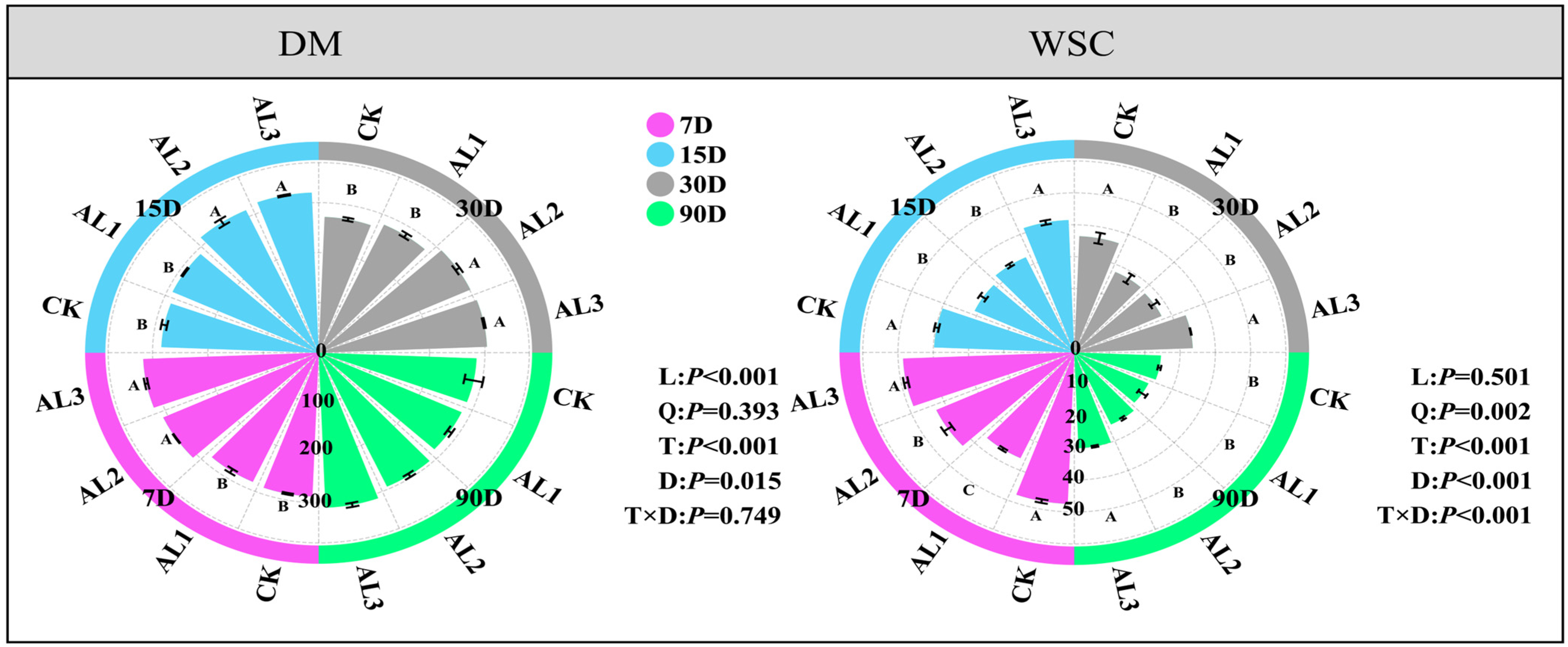
3.2. Effects of LBR Inclusion on the Fermentation Characteristics and Chemical Compositions of Alfalfa Silage
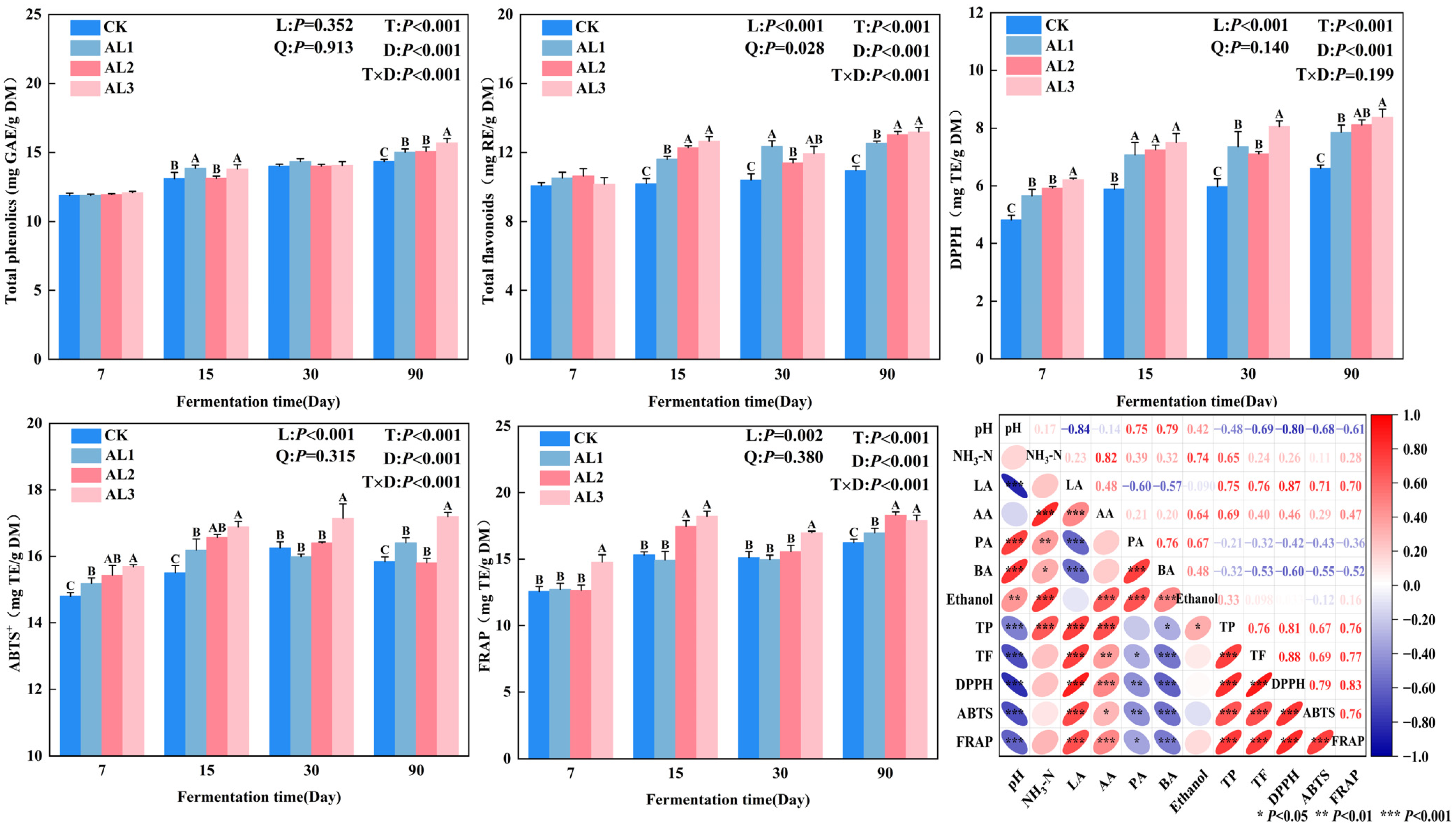
3.3. Effects of LBR Inclusion on the Antioxidant Activities of Alfalfa Silage
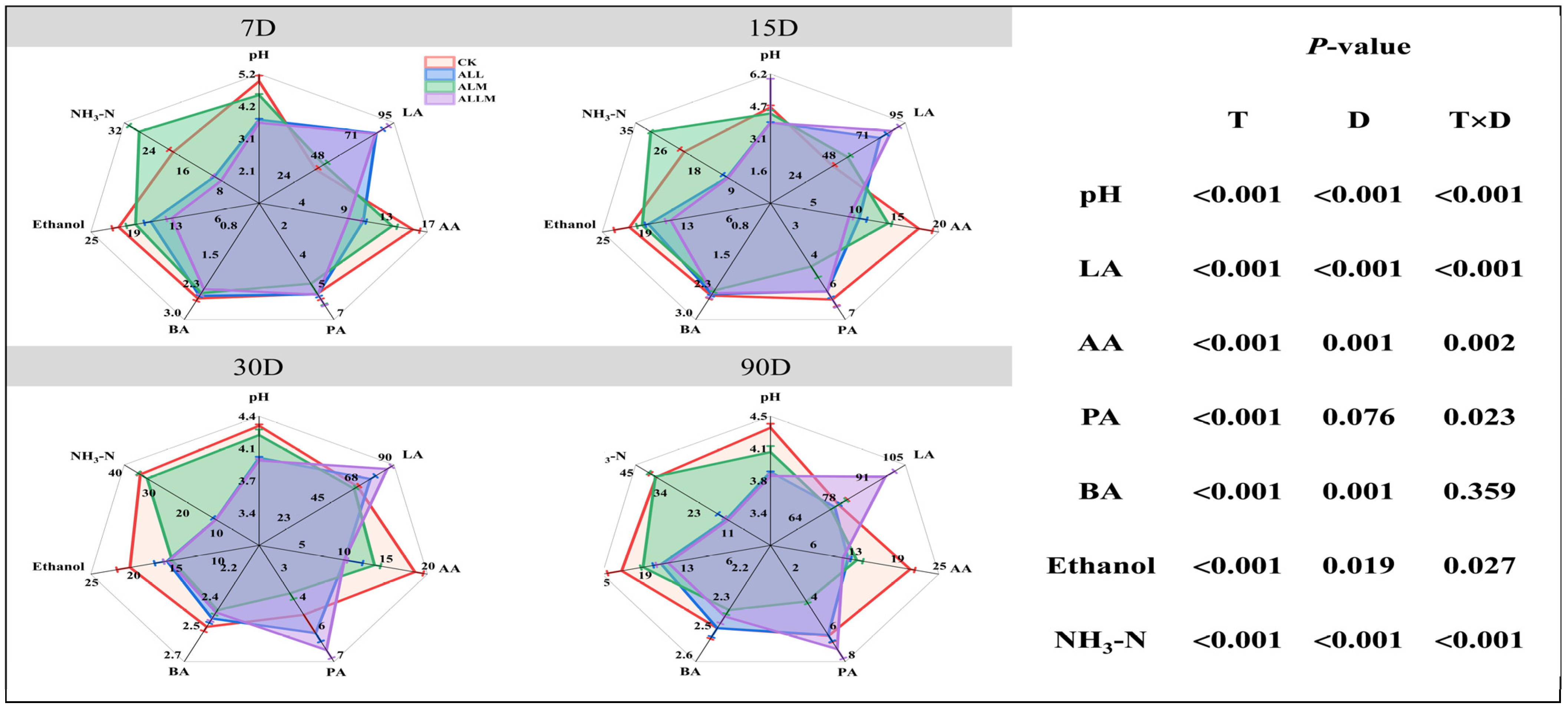
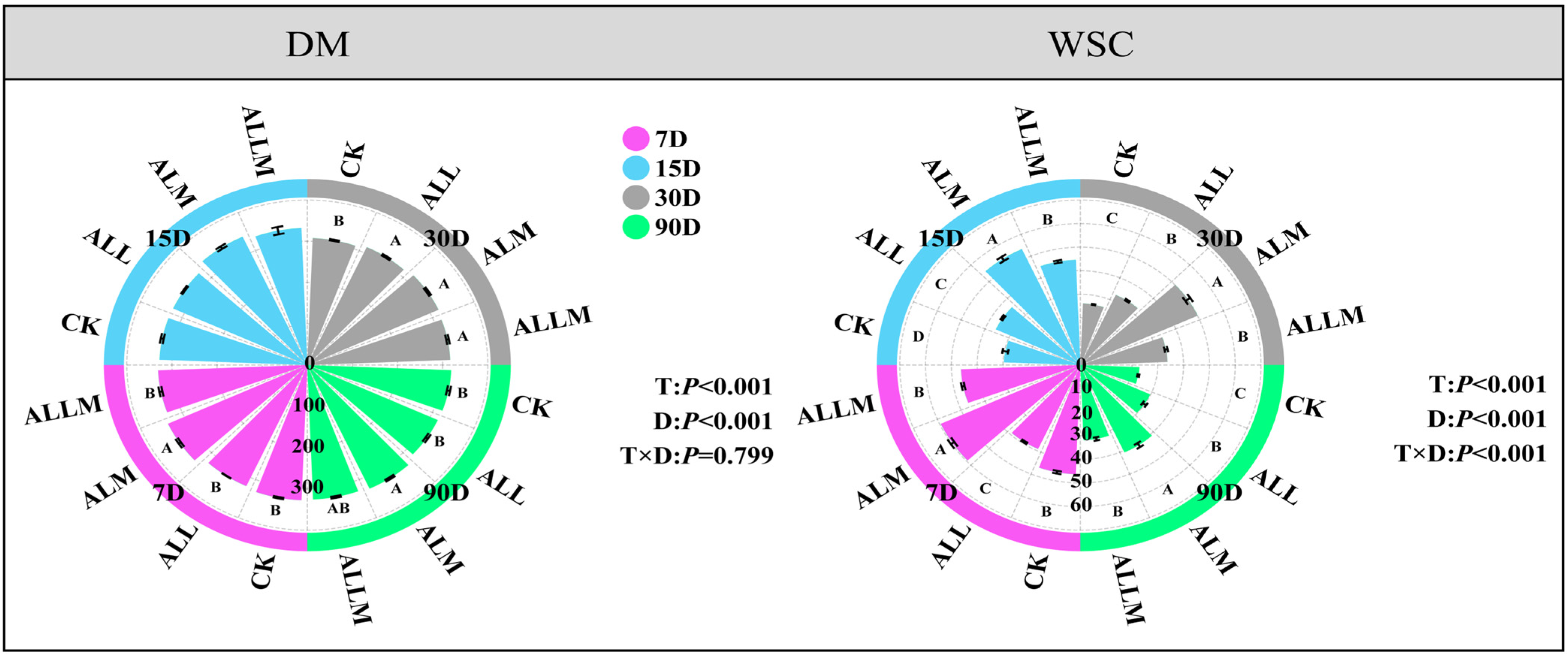
3.4. Effects of Additives on the Fermentation Quality of LBR–Alfalfa Silage
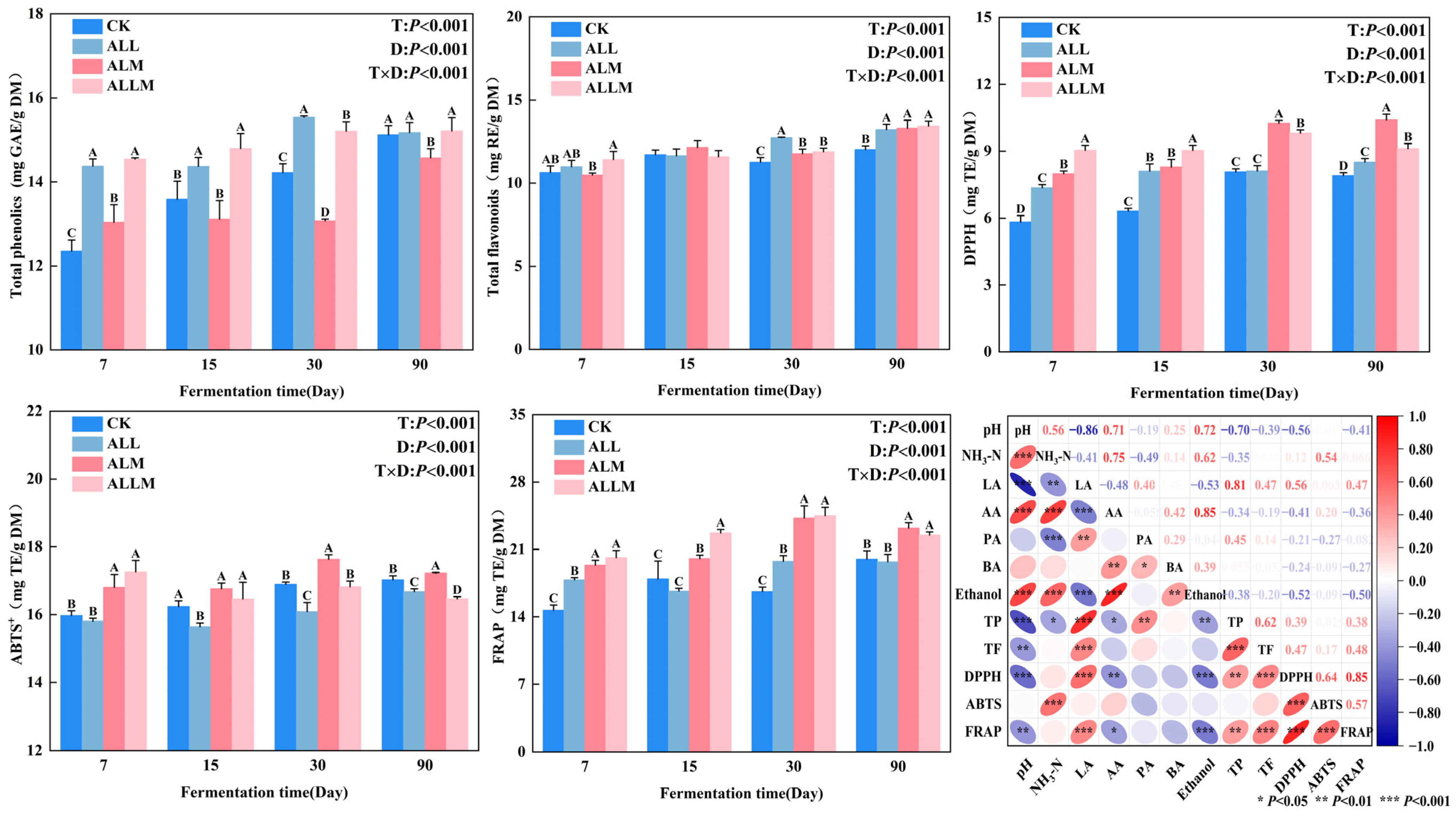
3.5. Effects of Additives on the Antioxidant Activities of LBR–Alfalfa Silage
4. Discussion
4.1. Effects of LBR Inclusion on the Fermentation Characteristics and Chemical Compositions of Alfalfa Silage
4.2. Effects of LBR Inclusion on the Antioxidant Activities of Alfalfa Silage
4.3. Effects of Additives on the Fermentation Quality of LBR–Alfalfa Silage
4.4. Effects of Additives on the Antioxidant Activity of LBR–Alfalfa Silage
5. Conclusions
Author Contributions
Funding
Data Availability Statement
Conflicts of Interest
References
- Ntawubizi, M.; Mukamuhirwa, M.L. A reflexion on the oxidative stress and animal welfare: A review. Trop. Anim. Health Prod. 2024, 56, 396. [Google Scholar] [CrossRef]
- Zhang, Y.X.; Usman, S.; Li, Q.; Li, F.H.; Zhang, X.; Nussio, L.G.; Guo, X.S. Effects of antioxidant-rich Lactiplantibacillus plantarum inoculated alfalfa silage on rumen fermentation, antioxidant and immunity status, and mammary gland gene expression in dairy goats. J. Anim. Sci. Biotechnol. 2024, 15, 9. [Google Scholar] [CrossRef]
- Zhang, Y.J.; Guo, Y.S.; Luo, Y.L.; Du, M.; Yin, X.; Xu, X.C.; Zhang, G.J. Integrated metabolomics and transcriptome revealed the effect of fermented Lycium barbarum residue promoting ovis aries immunity. Front. Immunol. 2022, 13, 889436. [Google Scholar] [CrossRef] [PubMed]
- Zhang, Y.J.; Chang, X.; Wang, B.; Wei, D.W.; Zhong, R.Z.; Guo, Y.S.; Du, M.; Zhang, G.J. Supplementation of Lycium barbarum residue increases the growth rate of Tan sheep by enhancing their feed intake and regulating their rumen microbiome and metabolome. J. Integr. Agric. 2024, 23, 3129–3144. [Google Scholar] [CrossRef]
- Gao, Y.J.; Wei, Y.F.; Wang, Y.Q.; Gao, F.; Chen, Z.G. Lycium barbarum: A traditional Chinese herb and a promising anti-aging agent. Aging Dis. 2017, 8, 778–791. [Google Scholar] [CrossRef] [PubMed]
- Mahfuz, S.; Shang, Q.H.; Piao, X.S. Phenolic compounds as natural feed additives in poultry and swine diets: A review. J. Anim. Sci. Biotechnol. 2021, 12, 48. [Google Scholar] [CrossRef]
- Zhou, F.; Jiang, X.Y.; Wang, T.; Zhang, B.L.; Zhao, H.F. Lycium barbarum polysaccharide (LBP): A novel prebiotics candidate for Bifidobacterium and Lactobacillus. Front. Microbiol. 2018, 9, 1034. [Google Scholar] [CrossRef]
- Kung, L.M.; Shaver, R.D.; Grant, R.J.; Schmidt, R.J. Silage review: Interpretation of chemical, microbial, and organoleptic components of silages. J. Dairy. Sci. 2018, 101, 4020–4033. [Google Scholar] [CrossRef]
- Borreani, G.; Tabacco, E.; Schmidt, R.J.; Holmes, B.J.; Muck, R.E. Silage review: Factors affecting dry matter and quality losses in silages. J. Dairy. Sci. 2018, 101, 3952–3979. [Google Scholar] [CrossRef]
- Pobednov, Y.A.; Kosolapov, V.M. Biology of alfalfa silage making (review). Sel’skokhozyaistvennaya Biologiya. 2018, 53, 258–269. [Google Scholar] [CrossRef]
- Muck, R.E.; Nadeau, E.M.G.; McAllister, T.A.; Contreras-Govea, F.E.; Santos, M.C.; Kung, L. Silage review: Recent advances and future uses of silage additives. J. Dairy. Sci. 2018, 101, 3980–4000. [Google Scholar] [CrossRef]
- Liu, S.; He, Y.X.; He, W.W.; Song, X.X.; Peng, Y.J.; Hu, X.Y.; Bian, S.G.; Li, Y.H.; Nie, S.P.; Yin, J.Y.; et al. Exploring the biogenic transformation mechanism of polyphenols by Lactobacillus plantarum NCU137 fermentation and its enhancement of antioxidant properties in wolfberry juice. J. Agric. Food Chem. 2024, 72, 12752–12761. [Google Scholar] [CrossRef] [PubMed]
- Feng, T.; Wang, J. Oxidative stress tolerance and antioxidant capacity of lactic acid bacteria as probiotic: A systematic review. Gut Microbes 2020, 12, 1801994. [Google Scholar] [CrossRef]
- Zong, C.; Wang, L.X.; Zhao, J.; Dong, Z.H.; Li, J.F.; Yuan, X.J.; Xu, C.T.; Shao, T. Construction and metabolomics of silage-derived lactic acid bacteria-based consortia. J. Appl. Microbiol. 2025, 136, lxaf178. [Google Scholar] [CrossRef]
- Broderick, G.A.; Kang, J.H. Automated simultaneous determination of ammonia and total amino acids in ruminal fluid and in vitro media. J. Dairy. Sci. 1980, 63, 64–75. [Google Scholar] [CrossRef]
- Dong, Z.H.; Shao, T.; Li, J.F.; Yang, L.L.; Yuan, X.J. Effect of alfalfa microbiota on fermentation quality and bacterial community succession in fresh or sterile Napier grass silages. J. Dairy. Sci. 2020, 103, 4288–4301. [Google Scholar] [CrossRef]
- Zhao, J.; Yin, X.J.; Dong, Z.H.; Wang, S.R.; Li, J.F.; Dong, D.; Shao, T. Using γ-ray irradiation and epiphytic microbiota inoculation to separate the effects of chemical and microbial factors on fermentation quality and bacterial community of ensiled Pennisetum giganteum. J. Appl. Microbiol. 2022, 132, 1675–1686. [Google Scholar] [CrossRef] [PubMed]
- Zhao, J.; Dong, Z.H.; Li, J.F.; Chen, L.; Bai, Y.F.; Jia, Y.S.; Shao, T. Ensiling as pretreatment of rice straw: The effect of hemicellulase and Lactobacillus plantarum on hemicellulose degradation and cellulose conversion. Bioresour. Technol. 2018, 266, 158–165. [Google Scholar] [CrossRef] [PubMed]
- Vansoest, P.J.; Robertson, J.B.; Lewis, B.A. Methods for dietary fiber, neutral detergent fiber, and nonstarch polysaccharides in relation to animal nutrition. J. Dairy. Sci. 1991, 74, 3583–3597. [Google Scholar] [CrossRef]
- Zhao, J.; Yin, X.J.; Li, J.F.; Wang, S.R.; Dong, Z.H.; Shao, T. Effects of developmental stage and store time on the microbial community and fermentation quality of sweet sorghum silage. Ital. J. Anim. Sci. 2022, 21, 1543–1557. [Google Scholar] [CrossRef]
- Aloo, S.O.; Ofosu, F.K.; Oh, D.H. Effect of Germination on Alfalfa and Buckwheat: Phytochemical profiling by UHPLC-ESI-QTOF-MS/MS, bioactive compounds, and in-vitro studies of their diabetes and obesity-related functions. Antioxidants 2021, 10, 1613. [Google Scholar] [CrossRef]
- Mu, L.; Cao, X.; Wang, Y.T.; Wang, Q.L.; Zhang, Z.F. Inclusion of Lonicerae flos improved anaerobic fermentation and antioxidant activity of mixed silage (agro-residue and alfalfa). Anim. Feed. Sci. Technol. 2024, 315, 116007. [Google Scholar] [CrossRef]
- He, L.W.; Zhou, W.; Wang, C.; Yang, F.Y.; Chen, X.Y.; Zhang, Q. Effect of cellulase and Lactobacillus casei on ensiling characteristics, chemical composition, antioxidant activity, and digestibility of mulberry leaf silage. J. Dairy. Sci. 2019, 102, 9919–9931. [Google Scholar] [CrossRef]
- Makoni, N.F.; Broderick, G.A.; Muck, R.E. Effect of modified atmospheres on proteolysis and fermentation of ensiled alfalfa. J. Dairy. Sci. 1997, 80, 912–920. [Google Scholar] [CrossRef]
- Owens, V.N.; Albrecht, K.A.; Muck, R.E.; Duke, S.H. Protein degradation and fermentation characteristics of red clover and alfalfa silage harvested with varying levels of total nonstructural carbohydrates. Crop Sci. 1999, 39, 1873–1880. [Google Scholar] [CrossRef]
- Kalinowska, M.; Golebiewska, E.; Zawadzka, M.; Choinska, R.; Koronkiewicz, K.; Piasecka-Józwiak, K.; Bujak, M. Sustainable extraction of bioactive compound from apple pomace through lactic acid bacteria (LAB) fermentation. Sci. Rep. 2023, 13, 19310. [Google Scholar] [CrossRef] [PubMed]
- Zhang, X.; Zhang, H.X.; Wang, D.C.; Zhang, Y.Q. From waste to value: Multi-omics reveal pomegranate peel addition improves corn silage antioxidant activity and reduces methane and nitrogen losses. Bioresour. Technol. 2025, 429, 132544. [Google Scholar] [CrossRef]
- McDonald, P.; Edwards, R.A.; Greenhalgh, J.F.D.; Morgan, C.A. Animal Nutrition, 6th ed.; Pearson Education Limited: Harlow, UK, 2002. [Google Scholar]
- Zhang, Q.; Guo, X.; Zheng, M.Y.; Chen, D.K.; Chen, X.Y. Altering microbial communities: A possible way of lactic acid bacteria inoculants changing smell of silage. Anim. Feed. Sci. Technol. 2021, 279, 114998. [Google Scholar] [CrossRef]
- Tan, X.H.; Sun, Z.Z.; Ye, C.X. Dietary Lycium barbarum extract administration improved growth, meat quality and lipid metabolism in hybrid grouper (Epinephelus lanceolatus ♂ × E. fuscoguttatus ♀) fed high lipid diets. Aquaculture 2019, 504, 190–198. [Google Scholar] [CrossRef]
- Daglia, M. Polyphenols as antimicrobial agents. Curr. Opin. Biotechnol. 2012, 23, 174–181. [Google Scholar] [CrossRef]
- Lei, Z.L.; Chen, X.Q.; Cao, F.L.; Guo, Q.R.; Wang, J.H. Phytochemicals and bioactivities of Goji (Lycium barbarum L. and Lycium chinense Mill.) leaves and their potential applications in the food industry: A review. Int. J. Food Sci. Technol. 2022, 57, 1451–1461. [Google Scholar] [CrossRef]
- Huang, D.J.; Ou, B.X.; Prior, R.L. The chemistry behind antioxidant capacity assays. J. Agric. Food Chem. 2005, 53, 1841–1856. [Google Scholar] [CrossRef]
- Zhang, Y.J.; Liao, J.L.; Pan, Y.X.; Zhang, Q.; Lu, Q.; Chen, X.D.; Ke, W.C.; Zhang, G.J. Recycling of Lycium barbarum by-products and bioactive substance application in silage-Insight into antioxidant activity and the regulation mechanism of anaerobic fermentation. BMC Microbiol. 2025, 25, 431. [Google Scholar] [CrossRef] [PubMed]
- Abbasi-Parizad, P.; De Nisi, P.; Sciarria, T.P.; Scarafoni, A.; Squillace, P.; Adani, F.; Scaglia, B. Polyphenol bioactivity evolution during the spontaneous fermentation of vegetal by-products. Food Chem. 2022, 374, 131791. [Google Scholar] [CrossRef]
- Dey, T.B.; Chakraborty, S.; Jain, K.K.; Sharma, A.; Kuhad, R.C. Antioxidant phenolics and their microbial production by submerged and solid state fermentation process: A review. Trends Food Sci. Technol. 2016, 53, 60–74. [Google Scholar] [CrossRef]
- Alu’datt, M.H.; Rababah, T.; Ereifej, K.; Brewer, S.; Alli, I. Phenolic-protein interactions in oilseed protein isolates. Food Res. Int. 2013, 52, 178–184. [Google Scholar] [CrossRef]
- Bhanja, T.; Rout, S.; Banerjee, R.; Bhattacharyya, B.C. Studies on the performance of a new bioreactor for improving antioxidant potential of rice. LWT-Food Sci. Technol. 2008, 41, 1459–1465. [Google Scholar] [CrossRef]
- Tang, W.P.; Li, W.; Yang, Y.Z.; Lin, X.; Wang, L.; Li, C.F.; Yang, R.L. Phenolic Compounds Profile and Antioxidant Capacity of Pitahaya Fruit Peel from Two Red-Skinned Species (Hylocereus polyrhizus and Hylocereus undatus). Foods 2021, 10, 1183. [Google Scholar] [CrossRef]
- Kim, S.M.; Lim, S.T. Enhanced antioxidant activity of rice bran extract by carbohydrase treatment. J. Cereal Sci. 2016, 68, 116–121. [Google Scholar] [CrossRef]
- Liu, F.R.; Chen, Z.X.; Shao, J.J.; Wang, C.X.; Zhan, C. Effect of fermentation on the peptide content, phenolics and antioxidant activity of defatted wheat germ. Food Biosci. 2017, 20, 141–148. [Google Scholar] [CrossRef]
- Kim, J.S.; Lee, Y.H.; Kim, Y.I.; Ahmadi, F.; Oh, Y.K.; Park, J.M.; Kwak, W.S. Effect of microbial inoculant or molasses on fermentative quality and aerobic stability of sawdust-based spent mushroom substrate. Bioresour. Technol. 2016, 216, 188–195. [Google Scholar] [CrossRef] [PubMed]
- Ni, K.K.; Wang, F.F.; Zhu, B.G.; Yang, J.X.; Zhou, G.A.; Pan, Y.; Tao, Y.; Zhong, J. Effects of lactic acid bacteria and molasses additives on the microbial community and fermentation quality of soybean silage. Bioresour. Technol. 2017, 238, 706–715. [Google Scholar] [CrossRef]
- Omedi, J.O.; Huang, W.N.; Zheng, J.X. Effect of sourdough lactic acid bacteria fermentation on phenolic acid release and antifungal activity in pitaya fruit substrate. LWT-Food Sci. Technol. 2019, 111, 309–317. [Google Scholar] [CrossRef]
- Smith, L.H. Theoretical Carbohydrates Requirement for Alfalfa Silage Production. Agron. J. 1962, 54, 291–293. [Google Scholar] [CrossRef]
- Kachouri, F.; Hamdi, M. Enhancement of polyphenols in olive oil by contact with fermented olive mill wastewater by Lactobacillus plantarum. Process Biochem. 2004, 39, 841–845. [Google Scholar] [CrossRef]
- Muklada, H.; Davidovich-Rikanati, R.; Awabdeh, S.; Weinberg, Z.G.; Hen, Y.; Deutch, T.; Klein, J.D.; Voet, H.; Lewinsohn, E.; Landau, S.Y. Ensiling willow (Salix acmophylla) fodder modifies the contents of plant specialized metabolites, but not nutritional attributes. Anim. Feed. Sci. Technol. 2021, 278, 115019. [Google Scholar] [CrossRef]
- Qi, J.; Huang, H.; Wang, J.; Liu, N.; Chen, X.F.; Jiang, T.; Xu, H.D.; Lei, H.J. Insights into the improvement of bioactive phytochemicals, antioxidant activities and flavor profiles in Chinese wolfberry juice by select lactic acid bacteria. Food Biosci. 2021, 43, 101264. [Google Scholar] [CrossRef]
- Dong, X.B.; Qi, J.; Xu, K.; Li, B.; Xu, H.D.; Tian, X.J.; Lei, H.J. Effect of lactic acid fermentation and in vitro digestion on the bioactive compounds in Chinese wolfberry (Lycium barbarum) pulp. Food Biosci. 2023, 53, 102558. [Google Scholar] [CrossRef]
- Landete, J.M.; Curiel, J.A.; Rodríguez, H.; de las Rivas, B.; Muñoz, R. Aryl glycosidases from Lactobacillus plantarum increase antioxidant activity of phenolic compounds. J. Funct. Foods 2014, 7, 322–329. [Google Scholar] [CrossRef]
- Filannino, P.; Bai, Y.P.; Di Cagno, R.; Gobbetti, M.; Gänzle, M.G. Metabolism of phenolic compounds by Lactobacillus spp. during fermentation of cherry juice and broccoli puree. Food Microbiol. 2015, 46, 272–279. [Google Scholar] [CrossRef]
- Di, H.M.; Zhang, Y.; Ma, J.; Wei, J.; Wang, Y.T.; Li, Z.Q.; Cui, C.X.; Fang, P.C.; Ma, W.; Li, H.X.; et al. Sucrose treatment delays senescence and maintains the postharvest quality of baby mustard (Brassica juncea var. gemmifera). Food Chem. X 2022, 14, 100272. [Google Scholar] [CrossRef] [PubMed]




| Items | Experiment 1 | Experiment 2 | |
|---|---|---|---|
| Alfalfa | LBR | Mixture Raw Matter | |
| pH | 6.11 ± 0.04 A | 4.04 ± 0.02 B | 5.76 ± 0.05 |
| DM (g/kg FW) | 323.50 ± 13.21 B | 415.83 ± 2.19 A | 350.65 ± 12.23 |
| NDF (g/kg DM) | 339.58 ± 23.65 | 348.89 ± 9.11 | 329.05 ± 2.80 |
| ADF (g/kg DM) | 244.53 ± 10.95 | 249.60 ± 2.67 | 236.74 ± 8.89 |
| CP (g/kg DM) | 235.94 ± 4.66 A | 171.81 ± 2.90 B | 217.85 ± 2.32 |
| WSC (g/kg DM) | 49.45 ± 1.28 B | 114.19 ± 8.04 A | 68.22 ± 2.05 |
| BC (mEq/kg DM) | 259.51 ± 17.14 A | 112.27 ± 6.08 B | 228.21 ± 4.54 |
| LAB (lg CFU/g FW) | 5.97 ± 0.12 B | 6.40 ± 0.07 A | 5.96 ± 0.05 |
| Aerobic bacteria (log10 CFU/g FW) | 7.82 ± 0.06 | 7.85 ± 0.04 | 7.65 ± 0.05 |
| Yeasts and molds (log10 CFU/g FW) | 6.43 ± 0.08 B | 7.99 ± 0.02 A | 6.74 ± 0.06 |
| Enterobacteria (log10 CFU/g FW) | 6.28 ± 0.08 | 6.53 ± 0.08 | 6.28 ± 0.05 |
| TP (mg GAE/g DM) | 10.36 ± 0.02 B | 12.43 ± 0.45 A | 10.48 ± 0.06 |
| TF (mg RE/g DM) | 10.70 ± 0.20 B | 15.06 ± 0.30 A | 10.94 ± 0.33 |
| DPPH (mg TE/g DM) | 5.36 ± 0.28 B | 10.79 ± 0.51 A | 6.55 ± 0.50 |
| ABTS (mg TE/g DM) | 13.98 ± 0.48 | 14.70 ± 0.08 | 13.85 ± 0.23 |
| FRAP (mg TE/g DM) | 8.77 ± 0.33 | 9.18 ± 0.47 | 8.52 ± 0.19 |
Disclaimer/Publisher’s Note: The statements, opinions and data contained in all publications are solely those of the individual author(s) and contributor(s) and not of MDPI and/or the editor(s). MDPI and/or the editor(s) disclaim responsibility for any injury to people or property resulting from any ideas, methods, instructions or products referred to in the content. |
© 2025 by the authors. Licensee MDPI, Basel, Switzerland. This article is an open access article distributed under the terms and conditions of the Creative Commons Attribution (CC BY) license (https://creativecommons.org/licenses/by/4.0/).
Share and Cite
Cheng, Y.; Shao, T.; Chen, H.; Zhao, J.; Li, J.; Dong, Z. Lycium barbarum Residue Enhances Fermentation Quality and Antioxidant Activity of Alfalfa Silage. Agronomy 2025, 15, 2839. https://doi.org/10.3390/agronomy15122839
Cheng Y, Shao T, Chen H, Zhao J, Li J, Dong Z. Lycium barbarum Residue Enhances Fermentation Quality and Antioxidant Activity of Alfalfa Silage. Agronomy. 2025; 15(12):2839. https://doi.org/10.3390/agronomy15122839
Chicago/Turabian StyleCheng, Yuanzhen, Tao Shao, Haobo Chen, Jie Zhao, Junfeng Li, and Zhihao Dong. 2025. "Lycium barbarum Residue Enhances Fermentation Quality and Antioxidant Activity of Alfalfa Silage" Agronomy 15, no. 12: 2839. https://doi.org/10.3390/agronomy15122839
APA StyleCheng, Y., Shao, T., Chen, H., Zhao, J., Li, J., & Dong, Z. (2025). Lycium barbarum Residue Enhances Fermentation Quality and Antioxidant Activity of Alfalfa Silage. Agronomy, 15(12), 2839. https://doi.org/10.3390/agronomy15122839