Parameter Uncertainty in Water–Salt Balance Modeling of Arid Irrigation Districts

 ,
, 
Abstract
1. Introduction
2. Materials and Methods
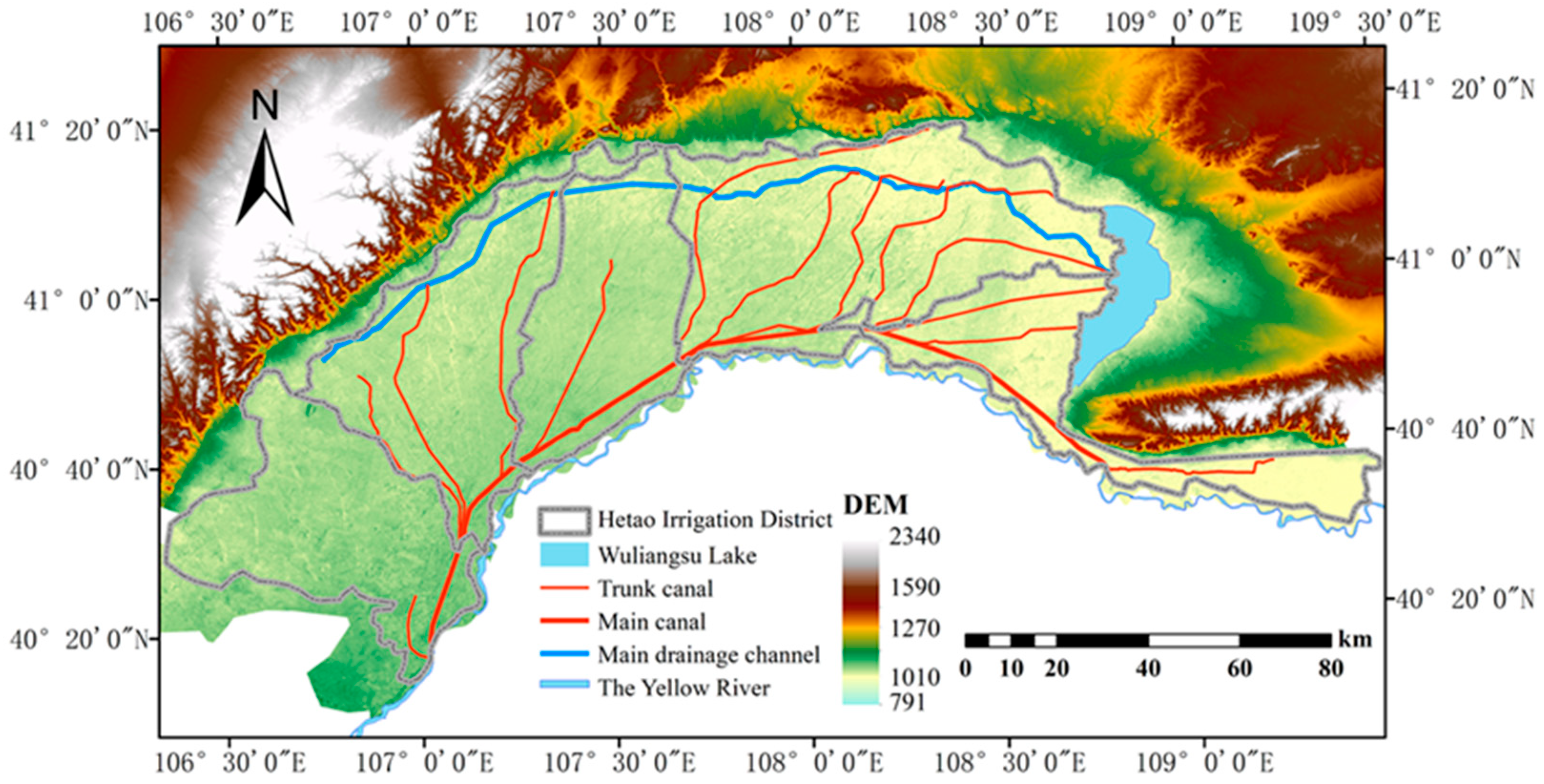
2.1. Study Area
2.1.1. Study Area Description
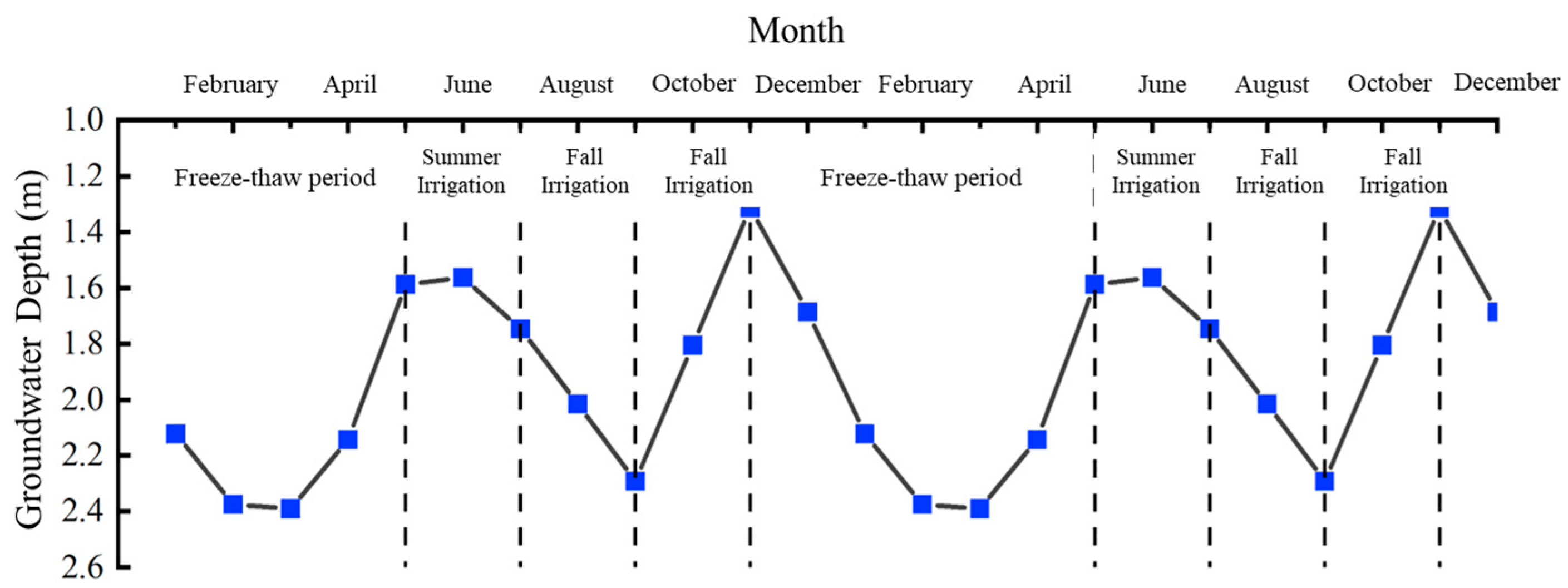
2.1.2. Hydrogeological Conditions
2.2. Farmland-Non-Farmland Water–Salt Balance Model Construction
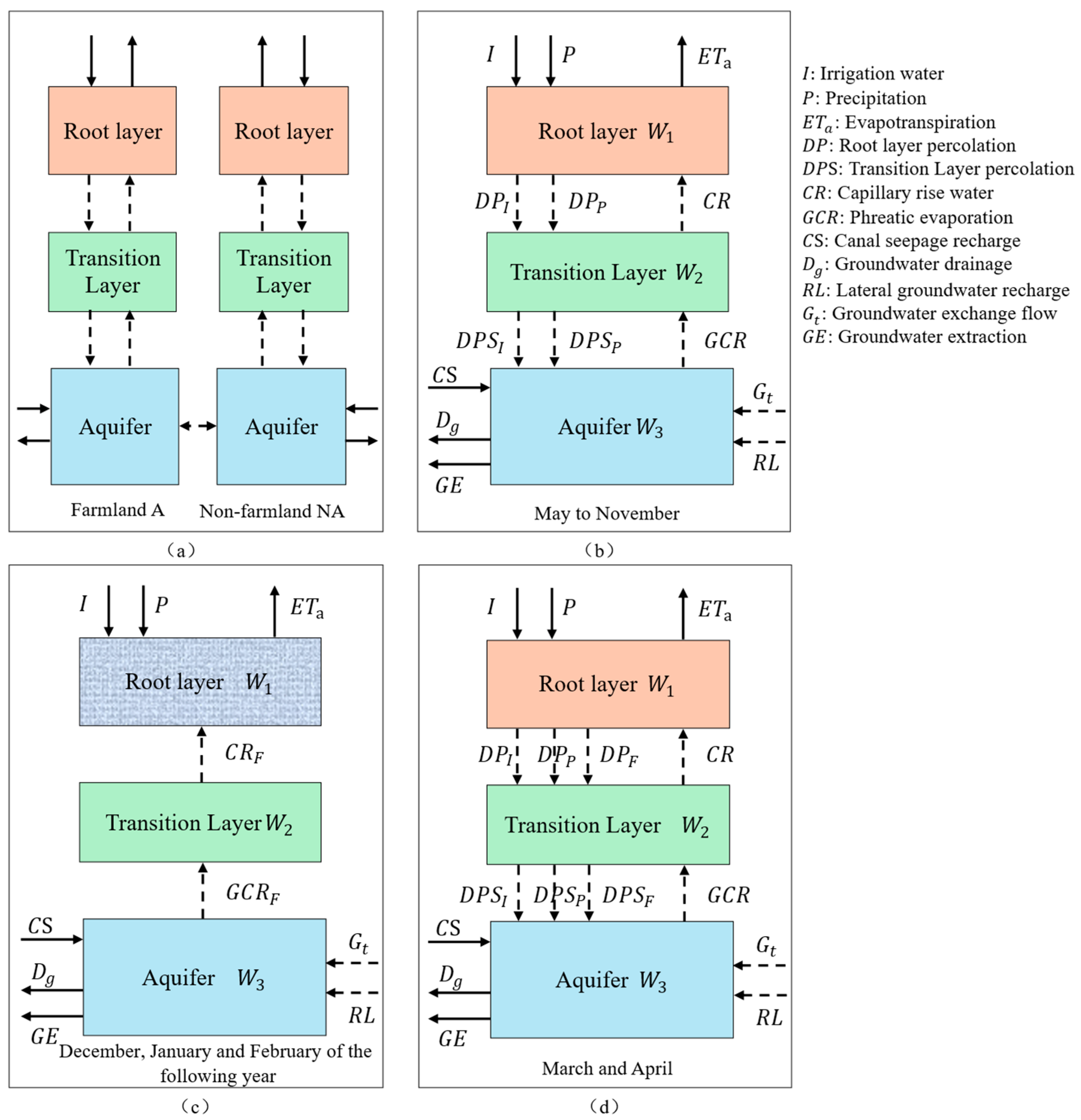
2.2.1. Farmland-Non-Farmland Water Balance Model
- Water Balance Equations for Each Zone
- 2.
- Calculation of Water Fluxes
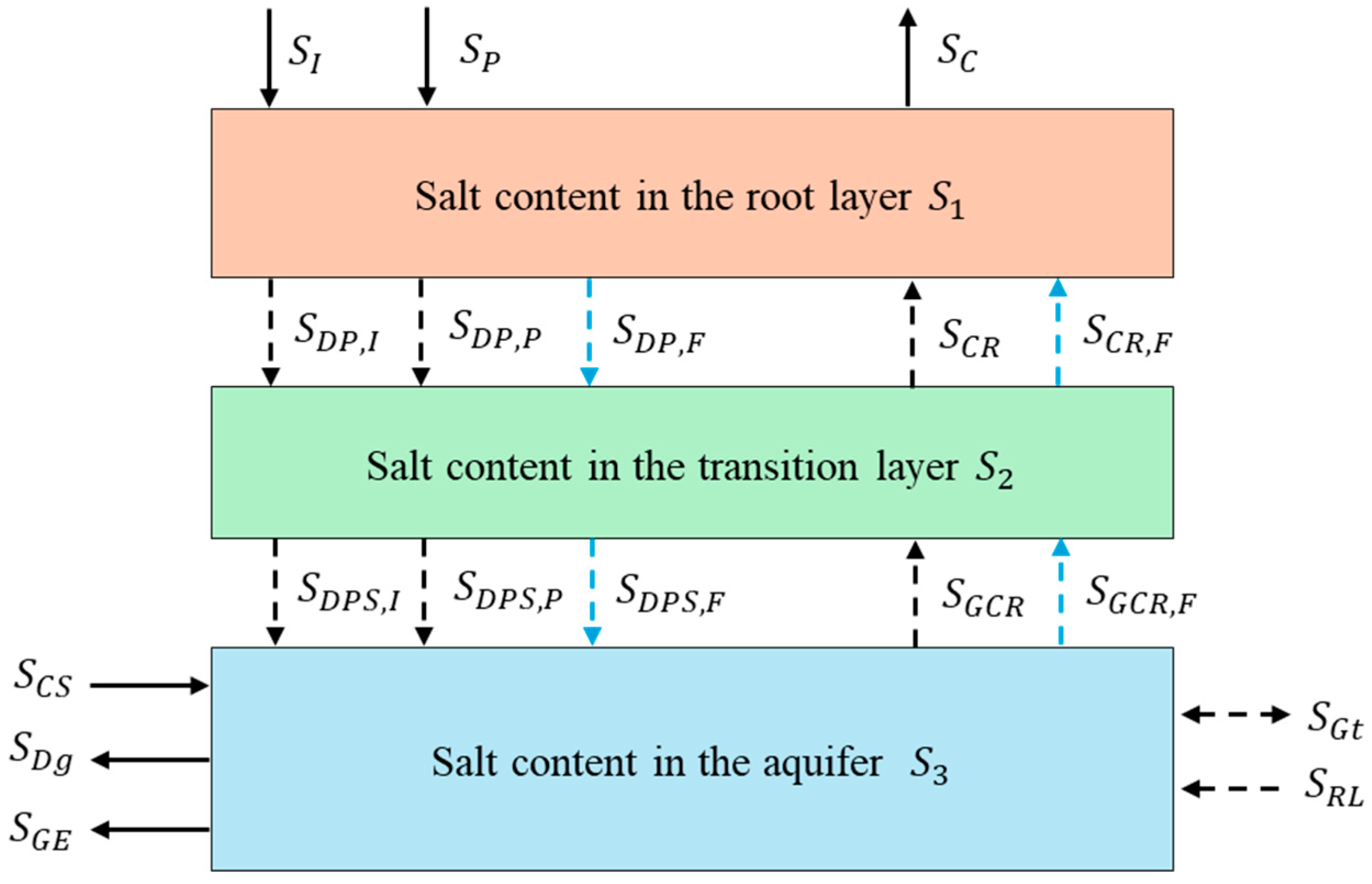
2.2.2. Farmland and Non-Farmland Salt Balance Model
- Salt Balance Equation
- 2.
- Calculation of Salt Concentration for Each Water Flux
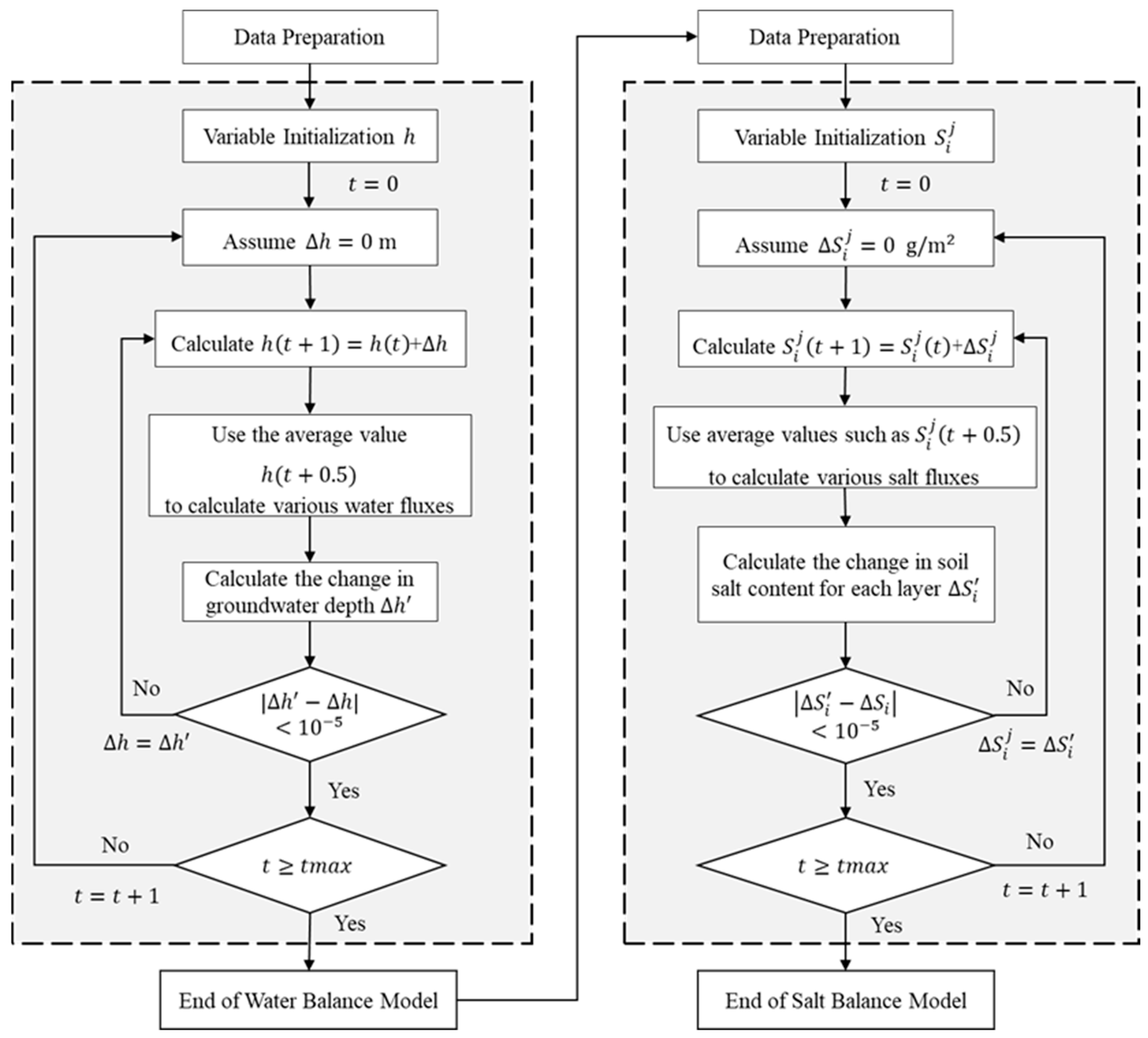
2.3. Model Calculation Process and Validation Metrics
2.4. Random Sampling and Kernel Density Estimation
- In the parameter calibration process of the groundwater balance model, the optimization method based on random sampling and KDE can not only clarify the probability distribution of parameters but also effectively improve the accuracy and reliability of parameter estimation. The specific calibration steps of this method are as follows: Determination of Parameter Value Ranges. First, determine the approximate value range of each key parameter based on existing research and practical experience. For example, the value ranges of parameters such as the irrigation infiltration recharge coefficient, precipitation infiltration recharge coefficient, and canal system water use efficiency coefficient are initially defined through literature and field surveys.
- Generation of Random Parameter Sets. Within the value range of each parameter, use random sampling methods to generate a series of random values, forming a large number of different parameter combinations. These parameter sets cover the possible parameter value ranges, providing diverse inputs for subsequent model simulations. Random sampling methods use uniform distribution and Latin Hypercube Sampling to ensure sufficient coverage of the parameter space.
- Simulation and Model Performance Evaluation. Simulate the groundwater balance model for each parameter set and calculate the coefficient of determination (R2) between the model output and the measured data. The R2 value reflects the goodness of fit between the model simulation results and the observed data. A higher R2 value indicates that the model’s description of the simulation is more accurate.
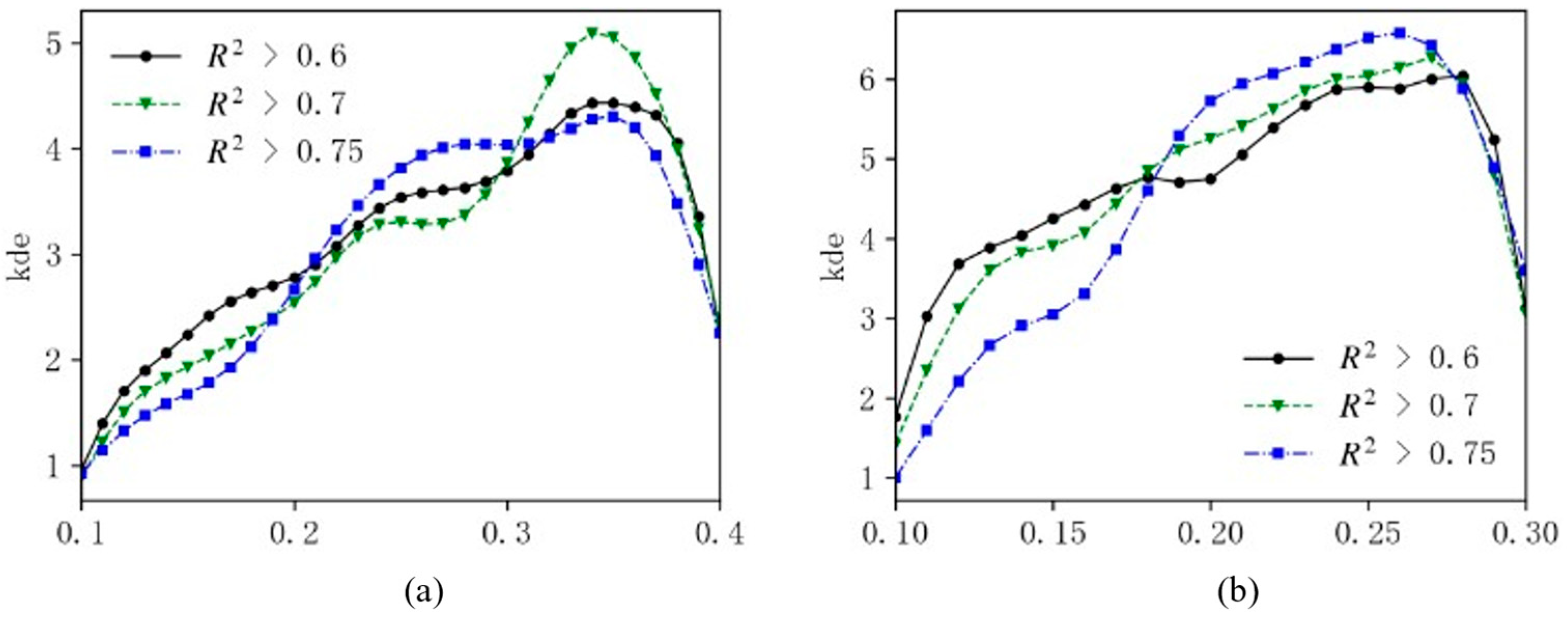
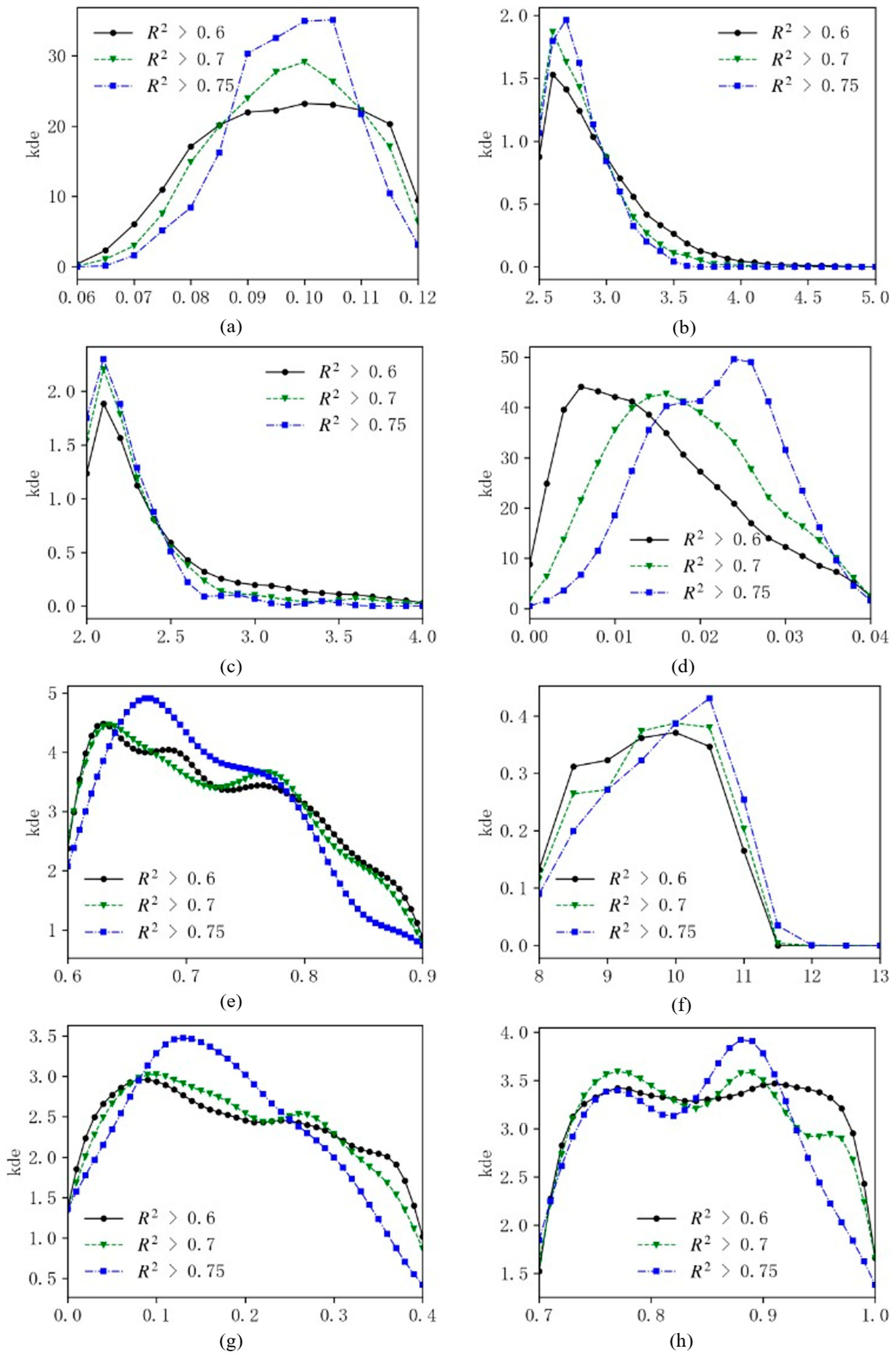
- KDE Analysis. Selecting the parameter set with the highest R2 is not necessarily the optimal strategy. Although such a set may demonstrate excellent goodness-of-fit, its scarcity might only represent a specific or “overfitted” scenario, lacking general significance. This would lead to unstable KDE analysis results based on these few parameter sets, and the recommended parameter ranges could be excessively narrow, resulting in poor fault tolerance in practical applications. Therefore, we adopted a balanced strategy that considers both goodness-of-fit and the number of parameter sets. We selected three progressively stricter thresholds—R2 > 0.6, R2 > 0.70, and R2 > 0.75—as screening criteria [42]. Through the KDE curve, the optimal value interval for each parameter can be visually identified, i.e., the peak region of the density curve. Based on the KDE analysis results, determine the optimal value range for each parameter. These ranges are based not only on the model’s goodness of fit but also consider the physical rationality of the parameters. The final determined parameter value ranges can serve as recommended parameters for the model and be used for subsequent water–salt balance analysis and prediction.
3. Results
3.1. Data Sources
3.2. Water Balance Model Calibration and Validation Results
3.3. Calibration and Verification Results of the Salinity Balance Model
4. Discussion
5. Conclusions
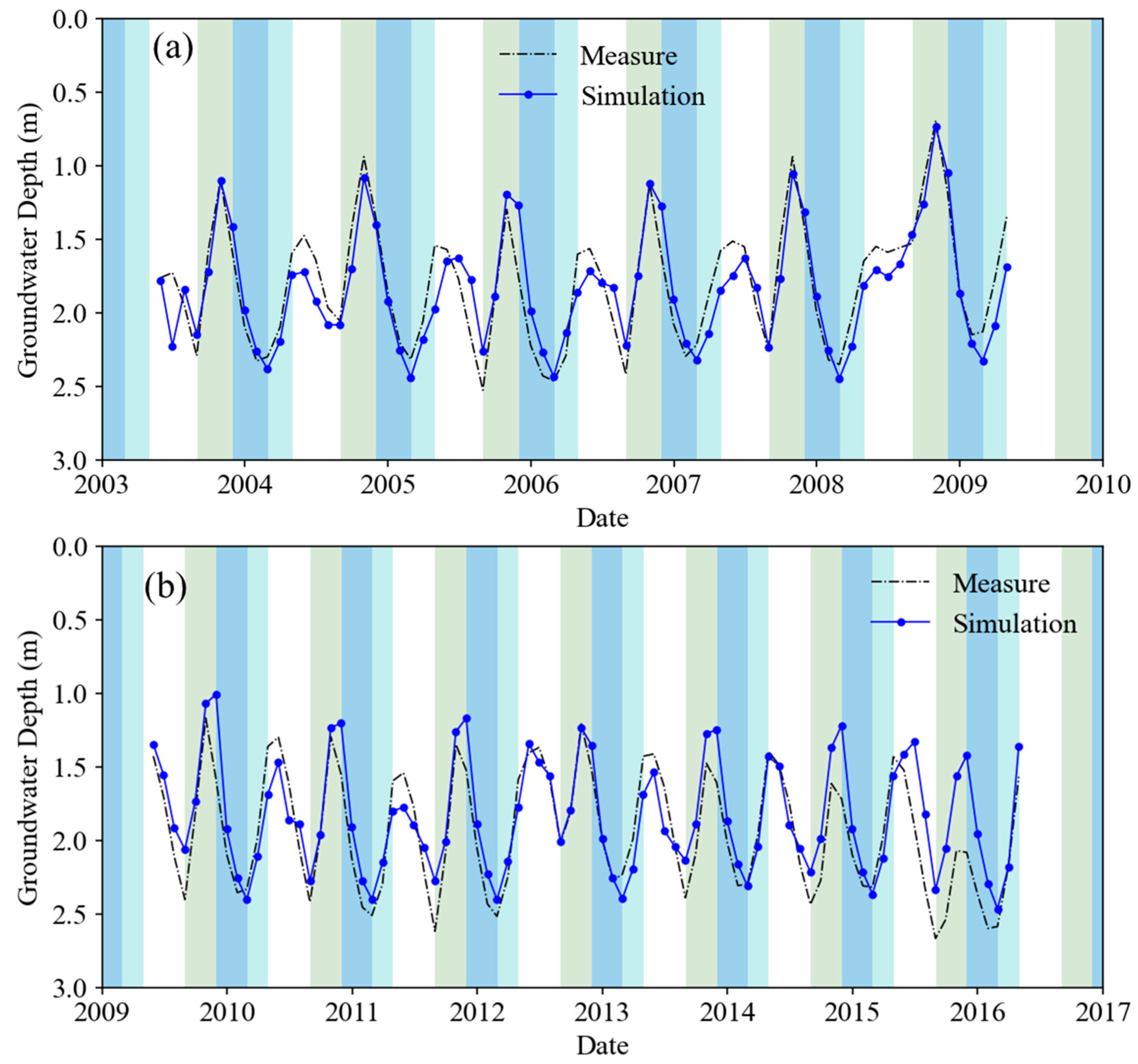
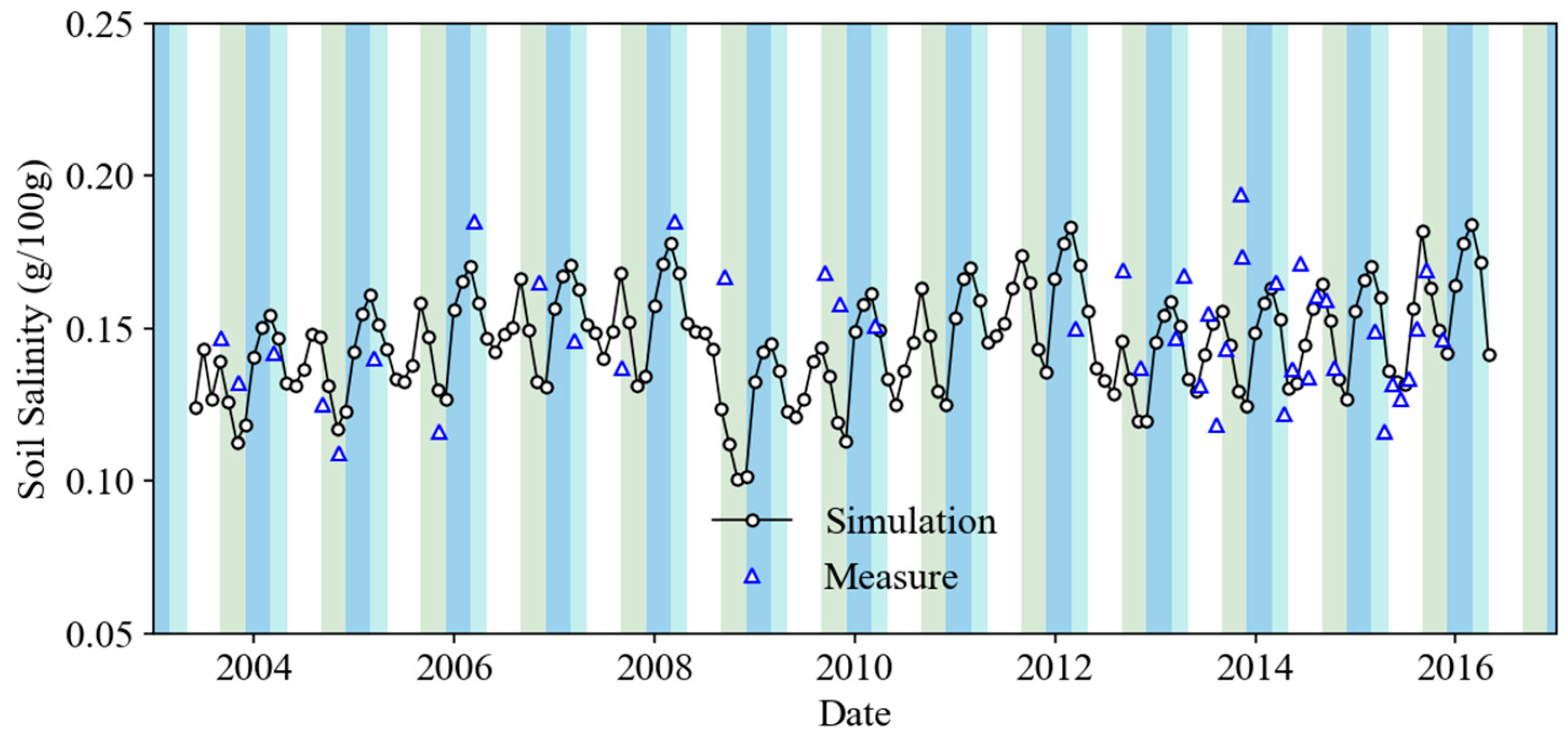
- This study successfully developed a farmland-non-farmland water–salt balance model applicable to HID. By conceptually dividing the system into farmland/non-farmland areas and root zone/transition layer/aquifer layers, the model effectively represents regional water–salt transport processes, with particular consideration given to the impact of freeze–thaw cycles. Validation results demonstrate that the model satisfactorily simulates both the dynamic variations in groundwater depth and the overall trends in soil salinity.
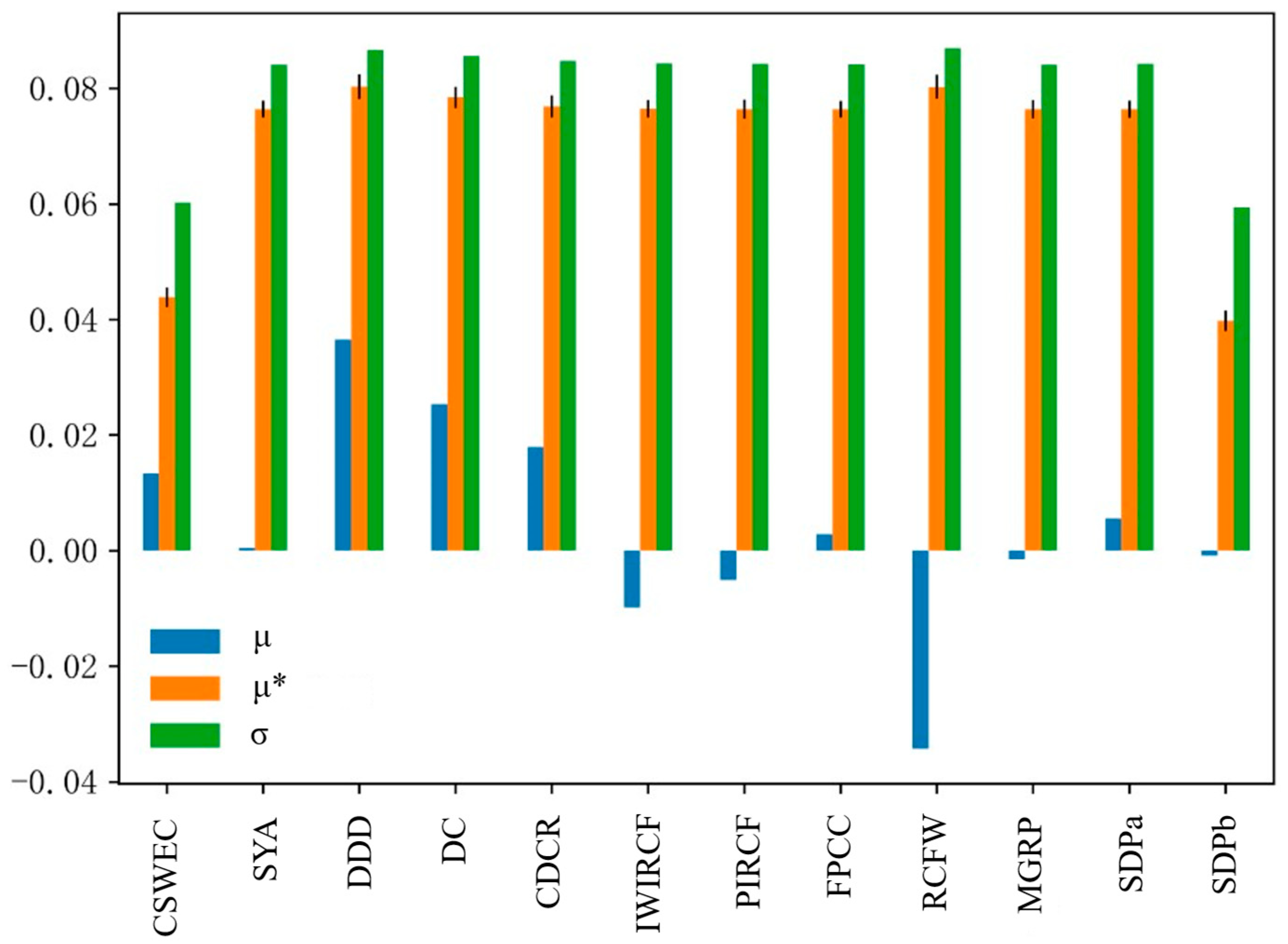
- To address parameter uncertainty, this study proposes a parameter calibration strategy that integrates random sampling and KDE. The method begins by randomly generating a large number of parameter combinations. Parameter sets demonstrating higher goodness of fit (R2 > 0.6, 0.7, or 0.75) are selected, and KDE is applied to analyze their probability distributions. This approach identifies optimal parameter ranges rather than single optimal values (e.g., irrigation infiltration recharge coefficient: 0.32–0.36; precipitation infiltration recharge coefficient: 0.23–0.27), thereby enhancing the statistical reliability of the parameters and mitigating overfitting. By evaluating parameter sets across multiple fitting thresholds, the strategy avoids the overfitting risks associated with relying solely on the highest R2 values, improves model generalizability, and offers a practical and robust methodology for parameter estimation. Furthermore, global sensitivity analysis using the Morris method reveals that drainage ditch depth and recharge coefficient of frozen water are the most influential parameters, exhibiting the strongest positive and negative effects on groundwater depth variation, respectively. Other highly sensitive parameters include the canal system water efficiency coefficient, drainage coefficient, and critical capillary rise depth. The generally low σ values indicate weak interactions among parameters, suggesting that the model structure is relatively independent and that parameter effects are largely additive. The sensitivity analysis results not only validate the rationality of the parameter calibration strategy but also provide important insights for irrigation district management.
Author Contributions
Funding
Data Availability Statement
Acknowledgments
Conflicts of Interest
Abbreviations
| HID | Hetao Irrigation District |
| KDE | Kernel Density Estimation |
| SA | Sensitivity analysis |
| ECe | Electrical conductivity of the saturation extract |
References
- Akhtar, A.; Shahbaz, K.; Nisar, H.; Hanjra, M.A.; Akbar, S. Characterizing soil salinity in irrigated agriculture using a remote sensing approach. Phys. Chem. Earth 2010, 55, 43–52. [Google Scholar] [CrossRef]
- Yang, C.; Lv, D.; Jiang, S.; Lin, H.; Sun, J.; Li, K.; Sun, J. Soil salinity regulation of soil microbial carbon metabolic function in the Yellow River Delta, China. Sci. Total Environ. 2021, 790, 148258. [Google Scholar] [CrossRef] [PubMed]
- Cao, Z.; Zhu, T.; Cai, X.; Wang, J.; Zhao, Y.; Zhao, X. Hydroeconomic optimization of integrated water and salinity management in an arid agricultural region. J. Water Resour. Plan. Manag. 2024, 150, 04024044. [Google Scholar] [CrossRef]
- Yuan, C.; Pan, Y.; Jing, S. Simulation soil water–salt dynamic and groundwater depth of spring maize based on SWAP model in salinized irrigation district. Comput. Electron. Agric. 2025, 231, 109992. [Google Scholar] [CrossRef]
- Zhu, T.; Ringler, C.; Rosegrant, M.W. Viewing agricultural water management through a systems analysis lens. Water Resour. Res. 2019, 55, 1778–1791. [Google Scholar] [CrossRef]
- Lv, T.; Liu, Y.; Bian, M.; Zhang, X.; Chen, C.; Wang, M. Spatial distribution and temporal evolution of soil salinization in the oasis irrigated area. Agronomy 2025, 15, 2413. [Google Scholar] [CrossRef]
- Li, X.; Zhang, C.; Huo, Z. Optimizing irrigation and drainage by considering agricultural hydrological process in arid farmland with shallow groundwater. J. Hydrol. 2020, 585, 124785. [Google Scholar] [CrossRef]
- Yuan, C. Simulation soil water–salt dynamics in saline wasteland of Yongji Irrigation Area in Hetao Irrigation District of China. Water Supply 2021, 21, 2681–2690. [Google Scholar] [CrossRef]
- Wang, P.; Wang, W.; Rong, Y.; Zhang, C.; Wang, C.; Wang, X.; Huo, Z. A novel conceptual model coupling crop growth and soil water-heat-salt processes in arid area. J. Hydrol. 2025, 647, 132284. [Google Scholar] [CrossRef]
- Weng, Y.L.; Gong, P.; Zhu, Z.L. A spectral index for estimating soil salinity in the Yellow River delta region of China using EO-1 hyperion data. Pedosphere 2010, 20, 378–388. [Google Scholar] [CrossRef]
- Wang, Q.; Li, S.; Fei, L.; Wu, M.; Zheng, R.; Zhang, L.; Zhang, X.; Bai, X.; Li, J.; Zhang, H. Study on farmland drainage scheme in semi-arid area taking into account the environmental impact of farmland-ditch wetland system. Soil Tillage Res. 2025, 250, 106497. [Google Scholar] [CrossRef]
- Zhu, W.; Yang, J.; Yao, R.; Wang, X.; Xie, W.; Li, P. Nitrate leaching and NH3 volatilization during soil reclamation in the Yellow River Delta, China. Environ. Pollut. 2021, 286, 117330. [Google Scholar] [CrossRef] [PubMed]
- Xu, X.; Jiang, Y.; Liu, M.; Huang, Q.; Huang, G. Modeling and assessing agro-hydrological processes and irrigation water saving in the middle Heihe River basin. Agric. Water Manag. 2019, 211, 152–164. [Google Scholar] [CrossRef]
- Jiang, Y.; Xu, X.; Huang, Q.; Huang, Q.; Huang, G. Assessment of irrigation performance and water productivity in irrigated areas of the middle Heihe River basin using a distributed agro-hydrological model. Agric. Water Manag. 2015, 147, 67–81. [Google Scholar] [CrossRef]
- Xu, X.; Sun, C.; Neng, F.; Fu, J.; Huang, G. AHC: An integrated numerical model for simulating agroecosystem processes—Model description and application. Ecol. Model. 2018, 390, 23–39. [Google Scholar] [CrossRef]
- Pereira, L.S.; Gonçalves, J.M.; Dong, B.; Mao, Z.; Fang, S. Assessing basin irrigation and scheduling strategies for saving irrigation water and controlling salinity in the upper Yellow River Basin, China. Agric. Water Manag. 2007, 93, 109–122. [Google Scholar] [CrossRef]
- Liu, Y.; Zeng, W.; Ao, C.; Chen, M.; Lei, G.; Wu, J.; Huang, J.; Gaiser, T.; Srivastava, A.K. Strategy of subsurface pipe drainage system to alleviate soil salinization based on the DRAINMOD model. Irrig. Drain. 2022, 71, 120–136. [Google Scholar] [CrossRef]
- Inam, A.; Adamowski, J.; Prasher, S.; Albano, R. Parameter estimation and uncertainty analysis of the Spatial Agro Hydro Salinity Model (SAHYSMOD) in the semi-arid climate of Rechna Doab, Pakistan. Environ. Model. Softw. 2017, 94, 186–211. [Google Scholar] [CrossRef]
- Li, G.; Zhang, C.; Huo, Z. Reconciling crop production and ecological conservation under uncertainty: A fuzzy credibility-based multi-objective simulation-optimization model. Sci. Total Environ. 2023, 873, 162340. [Google Scholar] [CrossRef]
- Liu, Z.; Chen, H.; Huo, Z.; Wang, F.; Shock, C.C. Analysis of the contribution of groundwater to evapotranspiration in an arid irrigation district with shallow water table. Agric. Water Manag. 2016, 171, 131–141. [Google Scholar] [CrossRef]
- Ren, D.; Xu, X.; Huang, Q.; Huo, Z.; Xiong, Y.; Huang, G. Analyzing the role of shallow groundwater systems in the water use of different land-use types in arid irrigated regions. Water 2018, 10, 634. [Google Scholar] [CrossRef]
- Lei, G.; Zeng, W.; Yu, J.; Huang, J. A comparison of physical-based and machine learning modeling for soil salt dynamics in crop fields. Agric. Water Manag. 2023, 277, 108115. [Google Scholar] [CrossRef]
- Wang, C.; Wu, J.; Zeng, W.; Zhu, Y.; Huang, J. Five-year experimental study on effectiveness and sustainability of a dry drainage system for controlling soil salinity. Water 2019, 11, 111. [Google Scholar] [CrossRef]
- Schaap, G.M.; Leij, J.F.; van Genuchten, T.M. ROSETTA: A computer program for estimating soil hydraulic parameters with hierarchical pedotransfer functions. J. Hydrol. 2001, 251, 163–176. [Google Scholar] [CrossRef]
- Zhang, Y.; Li, X.; Simunek, J.; Shi, H.; Chen, N.; Hu, Q. Quantifying water and salt movement in a soil-plant system of a corn field using HYDRUS (2D/3D) and the stable isotope method. Agric. Water Manag. 2023, 288, 108492. [Google Scholar] [CrossRef]
- Zhang, W.; Zhou, H.; Li, H.; Wang, Y.; Cui, Z.; Wang, F.; Shi, H. Soil water and salt dynamics under various irrigation and drainage methods in the Hetao irrigation district: A SahysMod-based analysis. Agric. Res. Arid Areas 2025, 3, 245–259. [Google Scholar] [CrossRef]
- Feng, Z.; Miao, Q.; Shi, H.; Gonçalves, J.M.; Li, X.; Feng, W.; Yan, J.; Yu, D.; Yan, Y. AquaCrop model-based sensitivity analysis of soil salinity dynamics and productivity under climate change in sandy-layered farmland. Agric. Water Manag. 2025, 307, 109244. [Google Scholar] [CrossRef]
- Pianosi, F.; Sarrazin, F.; Wagener, T. A Matlab toolbox for Global Sensitivity Analysis. Environ. Model. Softw. 2015, 70, 80–85. [Google Scholar] [CrossRef]
- Shi, X.; Liang, H.; Zhou, F.; Hu, K. Sensitivity analysis and parameter estimation for soil-rice system model. Trans. Chin. Soc. Agric. Mach. 2020, 51, 252–262. [Google Scholar] [CrossRef]
- Vanuytrecht, E.; Raes, D.; Willems, P. Global sensitivity analysis of yield output from the water productivity model. Environ. Model. Softw. 2014, 51, 323–332. [Google Scholar] [CrossRef]
- Xiong, L.; Jiang, Y.; Li, X.; Ren, D.; Huang, G. Long-term regional groundwater responses and their ecological impacts under agricultural water saving in an arid irrigation district, upper Yellow River basin. Agric. Water Manag. 2023, 288, 108493. [Google Scholar] [CrossRef]
- Zan, Z.; Yue, W.; Zhao, H.; Cao, C.; Wu, F.; Lin, P.; Wu, J. Analysis of the scale effect and temporal stability of groundwater in a large irrigation district in northwest China. Agronomy 2023, 13, 2172. [Google Scholar] [CrossRef]
- Chang, X.; Wang, S.; Gao, Z.; Chen, H.; Guan, X. Simulation of water and salt dynamics under different water-saving degrees using the SAHYSMOD model. Water 2021, 13, 1939. [Google Scholar] [CrossRef]
- Huang, Y.; Ma, Y.; Zhang, S.; Li, Z.; Huang, Y. Optimum allocation of salt discharge areas in land consolidation for irrigation districts by SahysMod. Agric. Water Manag. 2021, 256, 107060. [Google Scholar] [CrossRef]
- Sun, G.; Zhu, Y.; Gao, Z.; Yang, J.; Qu, Z.; Mao, W.; Wu, J. Spatiotemporal Patterns and Key Driving Factors of Soil Salinity in Dry and Wet Years in an Arid Agricultural Area with Shallow Groundwater Table. Agriculture 2022, 12, 1243. [Google Scholar] [CrossRef]
- Zha, Y.; Yang, J.; Shi, L.; Song, X. Simulating one-dimensional unsaturated flow in heterogeneous soils with water content-based Richards equation. Vadose Zone J. 2013, 12, 1–13. [Google Scholar] [CrossRef]
- Sun, G.; Zhu, Y.; Ye, M.; Yang, J.; Qu, Z.; Mao, W.; Wu, J. Development and application of long-term root zone salt balance model for predicting soil salinity in arid shallow water table area. Agric. Water Manag. 2019, 213, 486–498. [Google Scholar] [CrossRef]
- Oosterbaan, R.J. SALTMOD Description of Principles, User Manual, and Examples of Application; Wageningen Environmental Research: Wageningen, The Netherlands, 2001. [Google Scholar]
- Lei, Z.; Shang, S.; Yang, S. Simulation on phreatic evaporation during soil freezing. J. Hydraul. Eng. 1999, 6, 8–12. [Google Scholar]
- Duong, T. Bandwidth selectors for multivariate kernel density estimation. Bull. Aust. Math. Soc. 2005, 71, 351–352. [Google Scholar] [CrossRef]
- DeGroot, M.H.; Schervish, M.J. Probability and Statistics; Pearson: London, UK, 2011. [Google Scholar]
- Li, J.; Song, S.; Guo, T.; Wang, X. Prediction of agricultural water consumption based on fractional grey model. Trans. Chin. Soc. Agric. Eng. 2020, 36, 82–89. [Google Scholar] [CrossRef]
- Peng, S. 1-km Monthly Potential Evapotranspiration Dataset for China (1901–2024); National Tibetan Plateau/Third Pole Environment Data Center: Beijing, China, 2022. [Google Scholar] [CrossRef]
- Yang, W.; Hao, P.; Zhu, Y.; Liu, J.; Yu, J.; Yang, J. Groundwater dynamics forecast under conjunctive use of groundwater and surface water in seasonal freezing and thawing area. Trans. Chin. Soc. Agric. Eng. 2017, 33, 137–145. [Google Scholar] [CrossRef]
- Mao, W.; Yang, J.; Zhu, Y.; Ye, M.; Wu, J. Loosely coupled SaltMod for simulating groundwater and salt dynamics under well-canal conjunctive irrigation in semi-arid areas. Agric. Water Manag. 2017, 192, 209–220. [Google Scholar] [CrossRef]
- Xu, X.; Huang, G.; Qu, Z.; Pereira, L.S. Assessing the groundwater dynamics and impacts of water saving in the Hetao Irrigation District, Yellow River basin. Agric. Water Manag. 2010, 98, 301–313. [Google Scholar] [CrossRef]
- Saltelli, A.; Annoni, P. How to avoid a perfunctory sensitivity analysis. Environ. Model. Softw. 2010, 25, 1508–1517. [Google Scholar] [CrossRef]
- Liu, S.; She, D.; Zhang, L.; Ding, K.; Guo, M.; Chen, S. Global sensitivity analysis of hydrological model parameters based on morris and sobol methods. Resour. Environ. Yangtze Basin 2019, 28, 1296–1303. [Google Scholar]
- Li, D.; Ju, Q.; Jiang, P.; Huang, P.; Xu, X.; Wang, Q.; Hao, Z.; Zhang, Y. Sensitivity analysis of hydrological model parameters based on improved Morris method with the double-Latin hypercube sampling. Hydrol. Res. 2023, 54, 220–232. [Google Scholar] [CrossRef]
- Mu, D.; Xu, X.; Xiao, X.; Ramos, T.B.; Sun, C.; Li, X.; Xun, Y.; Huang, G. A mechanistic, distributed model for coupled simulation of soil water-plant, groundwater and surface flow system in arid/semi-arid agricultural watersheds (SurfMOD)-Model description and evaluation. J. Hydrol. 2025, 662, 133890. [Google Scholar] [CrossRef]
- Wang, Y.; Wan, H.; Shang, S. A monthly distributed water and salt balance model in irrigated and non-irrigated lands of arid irrigation district with shallow groundwater table. J. Hydrol. 2023, 616, 128811. [Google Scholar] [CrossRef]
- Kuang, X.; Jiao, J.J.; Shan, J.; Yang, Z. A modification to the van Genuchten model for improved prediction of relative hydraulic conductivity of unsaturated soils. Eur. J. Soil Sci. 2021, 72, 1354–1372. [Google Scholar] [CrossRef]
- Teng, J.; Yan, H.; Liang, S.; Zhang, S.; Sheng, D. Generalising the Kozeny-Carman equation to frozen soils. J. Hydrol. 2021, 594, 125885. [Google Scholar] [CrossRef]
- Liu, S.; Huang, Q.; Zhang, W.; Ren, D.; Huang, G. Improving soil hydrological simulation under freeze-thaw conditions by considering soil deformation and its impact on soil hydrothermal properties. J. Hydrol. 2023, 619, 129336. [Google Scholar] [CrossRef]
- Liu, S.; Huang, D.; Fu, L.; Wu, S.; Xu, Y.; Chen, Y.; Zhao, Q. Point-to-interval prediction method for key soil property contents utilizing multi-source spectral data. Agronomy 2024, 14, 2678. [Google Scholar] [CrossRef]
- Von Krannichfeldt, L.; Wang, Y.; Zufferey, T.; Hug, G. Online ensemble approach for probabilistic wind power forecasting. IEEE Trans. Sustain. Energy 2022, 13, 1221–1233. [Google Scholar] [CrossRef]
- Morris, M.D. Factorial sampling plans for preliminary computational. Technometrics 1991, 33, 161–174. [Google Scholar] [CrossRef]
- Rohde, M.M.; Stella, J.C.; Singer, M.B.; Roberts, D.A.; Caylor, K.K.; Albano, C.M. Establishing ecological thresholds and targets for groundwater management. Nat. Water 2024, 2, 312–323. [Google Scholar] [CrossRef]
- Yuan, C.; Feng, S.; Wang, J.; Huo, Z.; Ji, Q. Effect of irrigation water mineralization on soil salinity based on SALTMOD model. J. Irrig. Drain. 2012, 31, 11–16. [Google Scholar]



| Model Phase | Groundwater Depth RMSE/m | Groundwater Depth R2 |
|---|---|---|
| Calibration | 0.19 | 0.79 |
| Validation | 0.24 | 0.65 |
| Parameter Name | Value | Reference Range |
|---|---|---|
| Specific Yield of the Aquifer | 0.10 | 0.09–0.11 |
| Critical Depth for Capillary Rise | 2.70 | 2.58–2.75 |
| Drainage Ditch Depth | 2.1 | 2.05–2.20 |
| Drainage Coefficient | 0.023 | 0.021–0.027 |
| Canal Seepage Groundwater Recharge Coefficient | 0.33 | 0.30–0.37 |
| Canal System Water Efficiency Coefficient | 0.67 | 0.63–0.70 |
| Freezing Period Conversion Coefficient | 10.0 | 9.8–10.4 |
| Recharge Coefficient of Frozen Water | 0.90 | - |
| March Groundwater Recharge Proportion | 0.40 | - |
| Surface Drainage Parameter a | 0.13 | 0.10–0.16 |
| Surface Drainage Parameter b | 0.88 | 0.86–0.90 |
| Irrigation Water Infiltration Recharge Coefficient-Farmland | 0.34 | 0.32–0.36 |
| Irrigation Water Infiltration Recharge-Non-Farmland | 0.34 | 0.32–0.36 |
| Precipitation Infiltration Recharge Coefficient-Farmland | 0.25 | 0.23–0.27 |
| Precipitation Infiltration Recharge Coefficient-Non-Farmland | 0.25 | 0.23–0.27 |
Disclaimer/Publisher’s Note: The statements, opinions and data contained in all publications are solely those of the individual author(s) and contributor(s) and not of MDPI and/or the editor(s). MDPI and/or the editor(s) disclaim responsibility for any injury to people or property resulting from any ideas, methods, instructions or products referred to in the content. |
© 2025 by the authors. Licensee MDPI, Basel, Switzerland. This article is an open access article distributed under the terms and conditions of the Creative Commons Attribution (CC BY) license (https://creativecommons.org/licenses/by/4.0/).
Share and Cite
Zan, Z.; Ru, Z.; Cao, C.; Wang, K.; Chen, G.; Zhao, H.; Hu, X.; Su, L.; Yue, W. Parameter Uncertainty in Water–Salt Balance Modeling of Arid Irrigation Districts. Agronomy 2025, 15, 2814. https://doi.org/10.3390/agronomy15122814
Zan Z, Ru Z, Cao C, Wang K, Chen G, Zhao H, Hu X, Su L, Yue W. Parameter Uncertainty in Water–Salt Balance Modeling of Arid Irrigation Districts. Agronomy. 2025; 15(12):2814. https://doi.org/10.3390/agronomy15122814
Chicago/Turabian StyleZan, Ziyi, Zhiming Ru, Changming Cao, Kun Wang, Guangyu Chen, Hangzheng Zhao, Xinli Hu, Lingming Su, and Weifeng Yue. 2025. "Parameter Uncertainty in Water–Salt Balance Modeling of Arid Irrigation Districts" Agronomy 15, no. 12: 2814. https://doi.org/10.3390/agronomy15122814
APA StyleZan, Z., Ru, Z., Cao, C., Wang, K., Chen, G., Zhao, H., Hu, X., Su, L., & Yue, W. (2025). Parameter Uncertainty in Water–Salt Balance Modeling of Arid Irrigation Districts. Agronomy, 15(12), 2814. https://doi.org/10.3390/agronomy15122814