Article

Responses of Hydrangea macrophylla In Vitro Plantlets to Different Light Intensities

1
State Key Laboratory of Vegetable Biobreeding, Institute of Vegetables and Flowers, Chinese Academy of Agricultural Sciences, Beijing 100081, China
2
Key Laboratory of Biology and Genetic Improvement of Flower Crops (North China), Ministry of Agriculture and Rural Affairs, Beijing 100081, China
*
Author to whom correspondence should be addressed.
Agronomy 2025, 15(12), 2782; https://doi.org/10.3390/agronomy15122782
Submission received: 6 November 2025 / Revised: 29 November 2025 / Accepted: 30 November 2025 / Published: 2 December 2025
(This article belongs to the Special Issue Application of In Vitro Culture for Horticultural Crops)

Abstract

Light intensity strongly influences the morphological development and photoprotective responses of in vitro plantlets, yet the optimal conditions for hydrangea remain undefined. This study investigated the effects of five light intensity gradients (TrA: 80–120 lux, TrB: 380–480 lux, TrC: 1500–1800 lux, TrD: 3800–4000 lux, TrE: 6000–6400 lux) on Hydrangea macrophylla ‘Qingtian’ plantlets. Plantlets exhibited optimal growth at TrB, showing maximal biomass, leaf expansion, chlorophyll content, and root activity, accompanied by low antioxidant enzyme activities and soluble sugar levels. Nutrient accumulation was greater under low light than under high light conditions. Transcriptome analysis of treatments (TrB and TrE) with marked phenotypic differences revealed 7119 differentially expressed genes (DEGs). Of these, 4582 genes were up-regulated and 2537 were down-regulated. The up-regulated genes were significantly enriched in pathways related to cell walls, the microtubule cytoskeleton, and developmental processes, which are involved in the plant growth and development process, such as photosynthesis, nutrient ion transport and regulation, as well as plant hormone responses and transport; whereas the down-regulated genes were significantly enriched in pathways related to carbohydrate metabolism, oxidoreductase activity, and glutathione metabolism, suggesting that high light stress impairs growth by disrupting carbon and antioxidant processes. These results demonstrated that 380–480 lux is the optimal light intensity for ‘Qingtian’ Hydrangea macrophylla in vitro plantlets. This study provides a foundation for optimizing culture conditions and offers new insights into the molecular regulation of light-responsive genes.

1. Introduction

Hydrangea macrophylla (Thunb.) Ser. (H. macrophylla) is a perennial deciduous shrub of the genus Hydrangea in the family Hydrangeaceae, native to Japan and China [1]. Due to its unique flower type and diverse color, hydrangeas are widely used as cut flowers, potted plants, and garden ornamental plants [2].
H. macrophylla is an asexually reproducing plant, and cutting propagation is its primary method of reproduction [3]. However, cutting plantlets are prone to the infections of virus and phytoplasma with successive cutting generations, eventually resulting in plantlets degeneration [4,5,6]. Additionally, the production and market demand of hydrangeas are severely restricted by their low reproductive efficiency, long growth cycle, significant seasonal influence, and poor adaptability to the environment. Plant in vitro is an efficient regeneration system that offers a way to overcome these limitations and produce virus-free plants.
For in vitro plantlets, environmental factors can be artificially controlled, alleviating the effects of seasonal restrictions and environmental stress on plant growth. However, plants of different species have very specific requirements for in vitro environment, including factors such as temperature, humidity, and light [7]. Light is a key environmental factor affecting almost every aspect of plant life, exerting complex effects on plant growth and physiology [8]. It primarily regulates plant life processes through photoperiod, light intensity, and light quality [9]. Among these, light intensity serves as the direct driver of photosynthesis, determining net photosynthetic rates and influencing biomass accumulation [10]. Light quality and photoperiod regulate plant growth and development by activating specific light receptors and serving as key indicators of seasonal changes [11,12,13]. During plant growth, under conditions of excessive light intensity, plants perceive stress and undergo photooxidation, leading to the production and accumulation of reactive oxygen species (ROS), resulting in damage to the photooxidative system [14,15,16]. Plants have evolved multiple defense mechanisms to mitigate the damage caused by ROS. One of these mechanisms is the use of enzymatic antioxidant systems, which includes superoxide dismutase (SOD), catalase (CAT), and peroxidase (POD) [17]. In addition, the diversity of plant secondary metabolites is a key component that enables plants to interact with their environment and adapt to both biotic and abiotic stress conditions [18]. Some macromolecules, such as flavonoids, alkaloids, and terpenoids, also provide light protection and enhance antioxidant defense [19,20,21]. Plants have also evolved corresponding mechanisms under low light conditions, such as increased specific leaf area and enhanced plant height [22]. Light serves not only as an indispensable energy source and signaling factor for plants, but also significantly influences the accumulation of plant nutrients. A high degree of correlation was observed between photosynthetic activity and mineral element content [23]. The increase in light intensity increased potassium (K) accumulation but decreased iron (Fe), boron (B), and copper (Cu) in spinach leaves [24]. In addition, it was also reported that low light intensity led to the accumulations of phosphorus (P), potassium (K), iron (Fe), manganese (Mn), and zinc (Zn) in plant leaves [25]. These findings demonstrate species-specific responses of nutrient element uptake to light intensity. However, the optimal light intensity for the in vitro plantlets of H. macrophylla, and the associated physiological, biochemical, and molecular mechanism responses to light stress, including antioxidant defense, secondary metabolism, nutrient homeostasis, and gene regulation, remain unclear.
The objective of this study was to investigate the effects of light intensity on the growth and development of H. macrophylla ‘Qingtian’ in vitro plantlets. Based on this, the optimal light intensity for hydrangea in vitro plantlets was defined and the molecular basis of light responses was elucidated, which provides valuable insights for both practical cultivation and future genetic improvement in other ornamental crops.

2. Materials and Methods

2.1. Plant Materials

The experimental material for this study comprised ‘Qingtian’ H. macrophylla in vitro plantlets provided by the Institute of Vegetables and Flowers, Chinese Academy of Agricultural Sciences. Each plantlet was approximately 1.0 cm in height with three pairs of leaves. The plantlets were cultivated on the Murashige and Skoog (MS) medium [26] supplemented with 3% sucrose (w/v), 0.5% agar (w/v), 0.05 mg/L 1-naphthaleneacetic acid (NAA), and adjusted to a pH of 5.8. The cultures were cultivated at 25 ± 1 °C, with a 16-h photoperiod under light intensities of 80–120 lux (TrA), 380–480 lux (TrB), 1500–1800 lux (TrC), 3800–4000 lux (TrD), or 6000–6400 lux (TrE) provided by pure white LED lights. Light intensity was measured using HIOKI FT3424 illuminance meter (FT3424, HIOKI, Nagano, Japan). Every treatment was replicated three times with an individual replicate made up of 35 to 40 plants.
After 40 days of cultivation, the growth parameters (fresh weight, leaf area, and plant height) and physiological indicators (chlorophyll content, peroxidase activity, soluble sugar content, soluble protein content, and nutrient element content) were measured. On this basis, transcriptome sequencing analysis was conducted. The integration of physiological and biochemical data with transcriptome data was used for the systematic analysis of the molecular mechanism by which different light intensities regulate the morphological development of the ‘Qingtian’ H. macrophylla in vitro plantlets.

2.2. Measurements of Growth Parameters

The plant growth parameters, including plant height (cm), leaf area (cm2), and plant fresh mass (g), were measured after the 40-day light treatment period. Plant height was measured using a vernier caliper. Leaf area (LA) per plant was determined using a portable scanning planimeter (CI-202, CID Inc., Camas, WA, USA), which employs a barcode sensor to trace the leaf surface and encode its length. Fresh mass (FM) was measured using an electronic balance (ZG-TP203, Hangzhou Songjing Co., Ltd., Hangzhou, China) with an accuracy of 0.001 g.

2.3. Determination of Chlorophyll (Chl) and Carotenoid (Car) Content

The concentrations of Chl and Car in leaves were determined using commercial kits (G0613W, Suzhou Grace Bio-technology Co., Ltd., Suzhou, China). The leaves of whole plant were used. The midribs were removed, and the leaf tissues were placed in a mortar and homogenized with 95% ethanol in the dark. The resulting homogenate was transferred into a centrifuge tube containing 10 mL of 95% ethanol and then incubated in the dark for over 3 h until the leaf tissue was completely decolorized. The absorbance of the extract was then measured at 665 nm, 649 nm, and 470 nm using a UV–visible spectrophotometer (Thermo Evolution 201, Waltham, MA, USA). The contents of carotenoids, chlorophyll a, and chlorophyll b were calculated following an established method [27].

2.4. Determination of Antioxidant Enzyme Activity (SOD, POD, CAT)

Fresh tissue (1 g) was homogenized in 10 mL of 0.1 mol/L Phosphate-Buffered Saline (PBS) extraction buffer on ice. The homogenate was centrifuged at 12,000× g for 10 min at 4 °C, and the resulting supernatant was collected and stored at 4 °C for enzyme activity assays. The activities of SOD, CAT, and POD were determined using commercial kits (G0101F, G0105F, G0107F, Suzhou Grace Bio-technology Co., Ltd., Suzhou, China) and a UV–visible spectrophotometer (Thermo Evolution 201, Waltham, MA, USA), in accordance with the manufacturers’ instructions.

2.5. Determination of Soluble Sugar and Soluble Protein Content

The content of soluble sugar and soluble protein in the hydrangea plantlets were determined using reagent kits from Suzhou Grace Bio-technology Co., Ltd. Soluble sugars were analyzed in accordance with the G0501W kit instructions. A total of 0.1 g of tissue was weighed into centrifuge tubes and homogenized with 0.8 mL of 80% ethanol. The volume was then adjusted to 1.5 milliliters using 80% ethanol. After sealing with parafilm, the samples were placed in a 50 °C water bath for 20 min and then centrifuged at 12,000 rpm for 10 min at room temperature. After centrifugation, the supernatant was taken for colorimetric determination at 620 nm.
Soluble proteins were determined according to the G0418F kit instructions. The tissue sample was homogenized on ice using 1 mL of extraction buffer. Then, it was centrifuged at 12,000 rpm for 10 min at 4 °C. The resulting supernatant was thoroughly mixed with the enzyme reagent and incubated at 60 °C for 30 min. The absorbance of the final mixture was then measured at 562 nm.

2.6. Nutrient Content Measurement

Nutrient content was determined following sample digestion. A total of 0.1–0.4 g of dried whole plant samples was placed into a PTFE beaker and immersed in 5 mL of nitric acid (≥99.8%) overnight. The samples were then placed into a constant temperature drying oven and sequentially heated at 80 °C for 2 h, 120 °C for 2 h, and finally 160 °C for 4 h. After digestion, the tank was left to cool naturally to room temperature. The residual nitric acid was evaporated by gentle heating, and the resulting digest was transferred to a 25 mL volumetric flask. The inner tank and cap were rinsed three times with a small amount of 1% nitric acid solution. The rinses were combined in the volumetric flask, diluted to the mark with 1% nitric acid, and thoroughly mixed to determine the nutrient content. Nutrient content was analyzed by inductively coupled plasma mass spectrometry (ICP-MS) according to the methods for multielement determination (National Food Safety Standards, GB 5009.268–2016, China) [28].

2.7. RNA Extraction and Sequencing

Total RNA was extracted using a RNeasy kit (Qiagen, Hilden, Germany) following the manufacturer’s protocol. RNA integrity was assessed on a Bioanalyzer 2100 (Agilent, Santa Clara, CA, USA) and the quality of the RNA was checked through RNase-free agarose gel electrophoresis. After total RNA was extracted, eukaryotic mRNA was enriched with oligo (dT) beads. Then, the enriched mRNA was fragmented into short pieces using divalent cations under elevated temperature and reverse-transcribed into cDNA by using the NEB Next Ultra RNA Library Prep Kit for Illumina (NEB #7530, New England Biolabs, Ipswich, MA, USA). The obtained double-stranded cDNA was purified with AMPure XP magnetic beads, followed by PCR amplification, and the library quality was evaluated on the Qseq 1000 (5067-1504, Agilent Technologies, Santa Clara, CA, USA) instrument. The resulting cDNA library was sequenced using an Illumina NovaSeq 6000 manufactured by Gene Denovo Biotechnology Co. (Guangzhou, China).

2.8. Reads Mapping and Differential Gene Expression (DEG) Analysis

Clean reads obtained after quality control were aligned to the reference genome using HISAT2 (version 2.2.1) [29] to achieve rapid and accurate mapping, and the genomic localization of the reads was determined. Samples with alignment rates ≥ 70% were selected for downstream analyses to ensure data accuracy and reliability [30]. Gene expression levels in each sample were calculated using the fragments per kilobase of exon per million mapped fragments (FPKM) method [31], and normalization was performed with edgeR (version 4.0.2). Differential expression analysis was performed using DESeq2, with DEGs identified based on the thresholds of (p-value < 0.05 and |log2 (fold change)| ≥ 1). The identified DEGs were further subjected to Gene Ontology (GO) and Kyoto Encyclopedia of Genes and Genomes (KEGG) enrichment analyses to explore their functional classifications and involved pathways.

2.9. Quantitative Real-Time PCR (qRT-PCR)

To validate the RNA sequencing (RNA-Seq) results, DEGs were selected for qRT-PCR analysis. Reverse transcription of RNA to cDNA was performed using the HiScript III RT SuperMix for qRT-PCR (+gDNA wiper) (Vazyme Biotech Co., Ltd., Nanjing, China) following the manufacturer’s protocol. The specific Primer pairs of qRT-PCR were designed by Premier 5.0 software (Premier Biosoft International, Palo Alto, CA, USA) [32]. The elongation factor 1-β (Ef1-β) was selected as the internal reference gene for normalization [33]. qRT-PCR detection was performed using Taq Pro Universal SYBR qRT-PCR Master Mix (Vazyme Biotech Co., Ltd., Nanjing, China) in a 20 µL reaction system containing 0.4 µL of each primer (10 µmol L−1), 5.0 µL of cDNA template, 4.2 µL of nuclease-free water, and 10 µL of 2× Taq Pro Universal SYBR qRT-PCR Master Mix. Amplification was carried out on the CFX96 Real-Time System (Bio-Rad, Hercules, CA, USA) under the following conditions: 95 °C for 30 s, followed by 40 cycles of 95 °C for 10 s and 60 °C for 30 s. The relative gene expression levels were calculated using the 2−∆∆CT method [34].

2.10. Statistical Analysis

Data processing and graphing were conducted using Microsoft Excel (version 2019) and GraphPad Prism (version 8.0.2), respectively. Data are presented as means ± standard deviation (SD) (n = 3 biological replicates). SPSS (version 23.0) was used for data analysis and one-way ANOVA and Duncan’s multiple range test (p < 0.05) were performed. The primers used in the study are all listed in Table S1.

3. Results

3.1. Morphological Characteristics

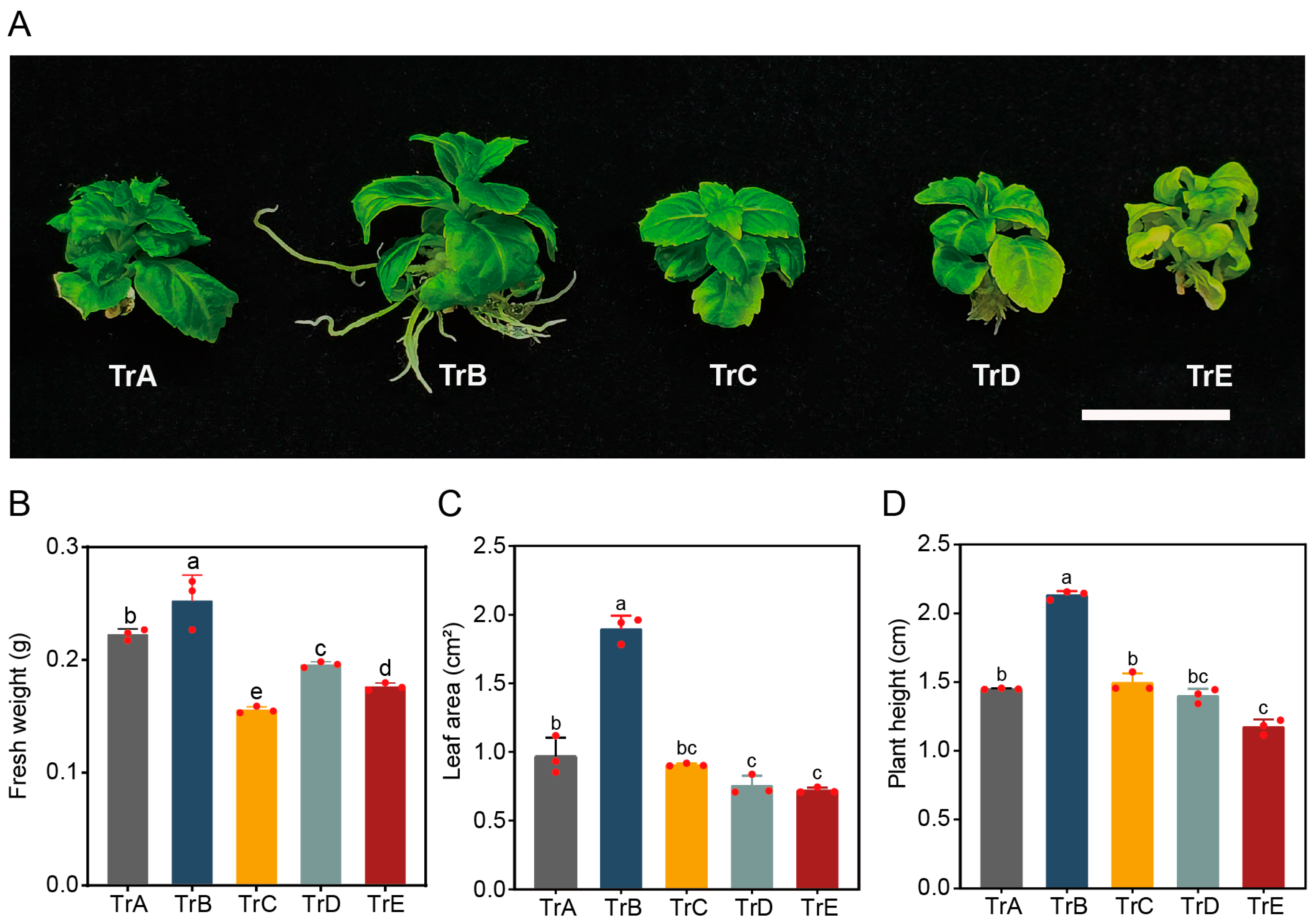
Plantlets exhibited superior growth performance under the TrB treatment, showing greater leaf expansion, increased leaf area, higher plant height, and enhanced root system development compared to other treatments (Figure 1A). Conversely, elevated light intensity treatments (TrC-TrE) induced photoinhibitory responses in the plantlets, characterized by progressive leaf chlorosis, reduction in leaf area, and significant suppression of root growth (Figure 1A). Plant physiological responses were evaluated by quantifying key growth parameters. Consistent with the phenotypic results, the highest fresh mass, leaf area, and plant height were recorded under the TrB treatment compared to the other treatments, followed by those in TrA (Figure 1B–D). In contrast, the leaf area, plant height, and fresh mass in TrE were significantly lower than those in TrA and TrB (Figure 1B–D). It was shown that TrB (380–480 lux) treatment was optimal for the growth and development of in vitro plantlets from H. macrophylla ‘Qingtian’.

3.2. Leaf Pigment Contents

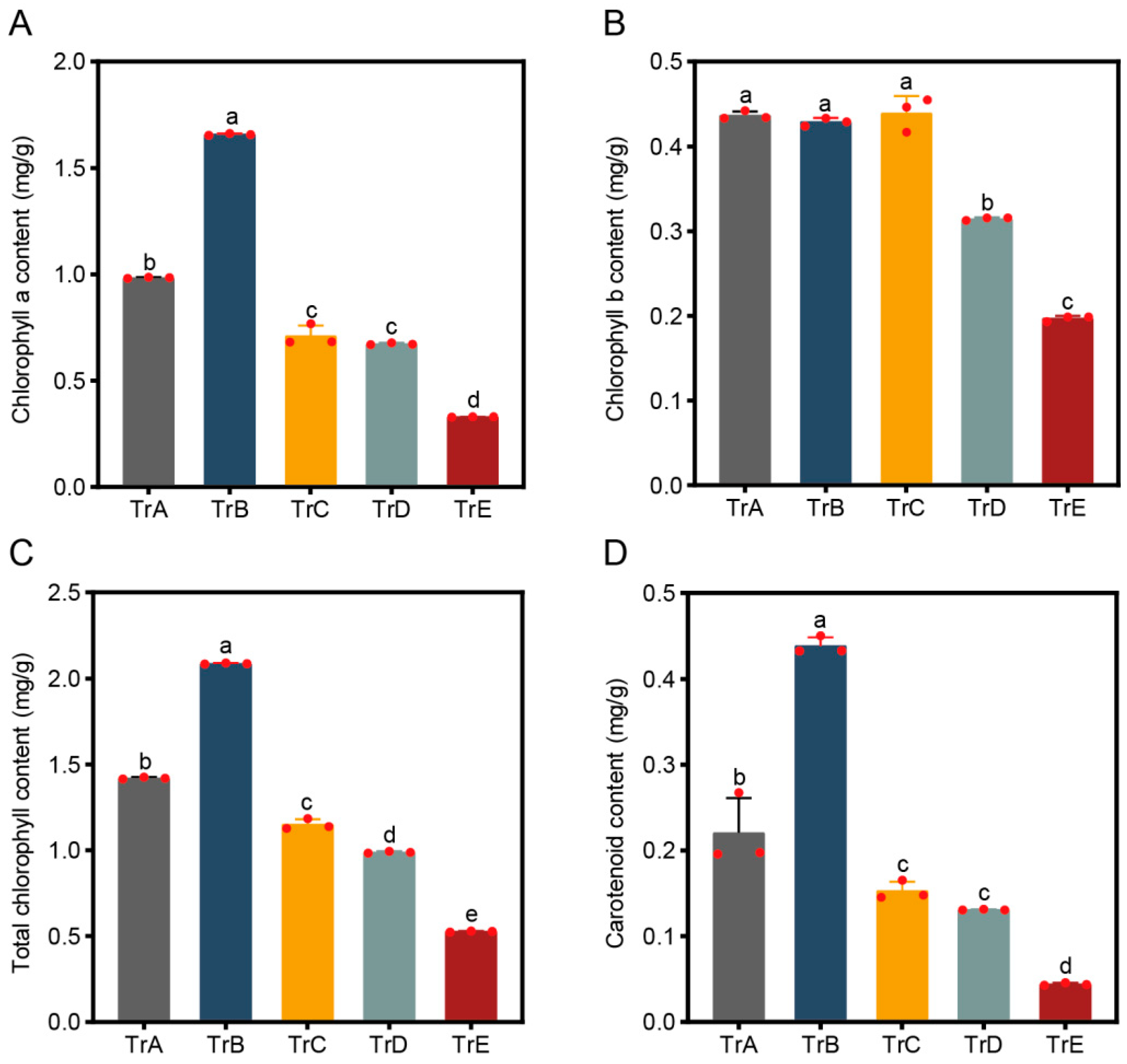
The contents of Chl a, Chl t, and Car showed similar changing trends among the five light intensity treatments, with the highest values in TrB and the lowest in TrE (Figure 2A,C,D). The content of Chl b exhibited no significant difference among the TrA, TrB, and TrC, but was significantly higher than that of TrD and TrE (Figure 2B). It was concluded that the light intensity of 380–480 lux (TrB) was optimal for accumulation of photosynthetic pigments in the leaves of in vitro plantlets.

3.3. Antioxidant Enzyme Activities, Soluble Sugar, and Soluble Protein Contents

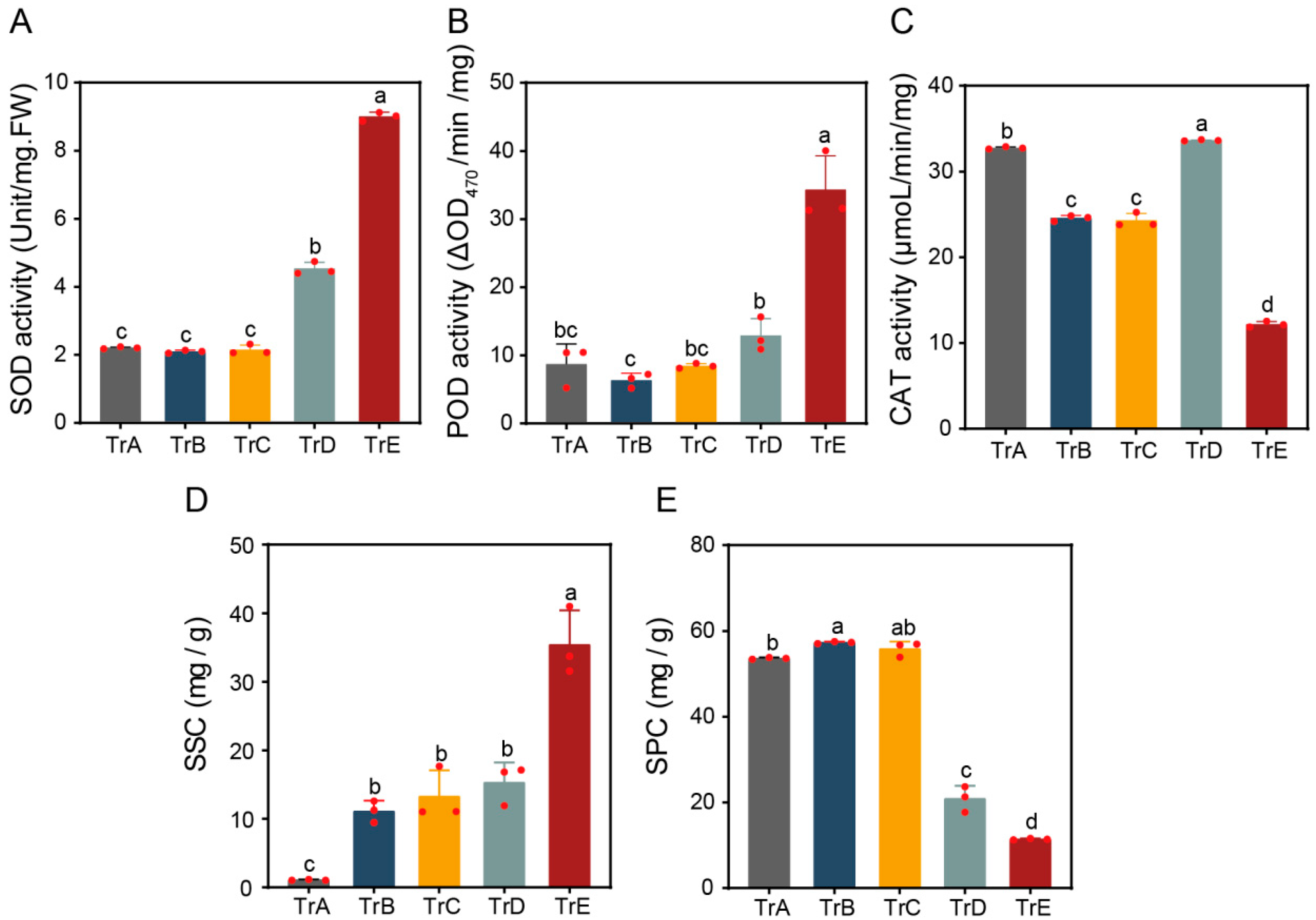
The minimum levels of SOD and POD activity were demonstrated under TrB illumination conditions, and peak activity was reached under TrE (Figure 3A,B). On the other hand, CAT activity initially decreased, then increased and decreased again from TrA to TrE, with lower values in TrE and higher in the other four treatments (Figure 3C).
Similarly, light intensity had a significant impact on the contents of SSC and SPC (Figure 3D,E). The SSC content increased from TrA to TrE, with the lowest values in TrA, the highest in TrE, and no significant difference among the TrB, TrC, and TrD (Figure 3D). In contrast, the SPC content in TrA, TrB, and TrC was significantly higher than that in TrD and TrE (Figure 3E).
The results indicated that the plantlets under the TrE were severely subjected to strong light stress, while TrA, TrB, and TrC were suitable for the growth and development of plantlets.

3.4. Nutrient Element Contents

The contents of nutrient elements in H. macrophylla plantlets showed significant differences under different light intensities. Among the measured nutrients, macronutrient P and middle elements Ca, along with micronutrients Cu, Fe, and Co, exhibited peak concentrations in TrB (Table 1). The remaining elements N, K, Mg, S, Zn, B, Mn, and Mo demonstrated the highest levels in TrA. It suggested that low light was more conducive to nutrient accumulation in H. macrophylla plantlets.

3.5. Transcriptome Data Analysis

Morphological, physiological, and nutrient uptake evaluations revealed pronounced distinctions between the low light intensity group (TrA and TrB) and the high light intensity group (TrC, TrD, and TrE). To characterize light-mediated growth responses in H. macrophylla ‘Qingtian’ in vitro plantlets, analysis of RNA-seq from TrB and TrE was performed. A total of 129.19 million clean reads were obtained from six cDNA libraries, which were constructed from three biological replicates of two treatments and sequenced on an Illumina NovaSeq 6000 platform. The GC content of the samples was above 44.69%, and the Q30 score was ≥95.21% (Table 2), which indicated that the quality of the sequencing data was sufficient to continue with the following analysis. Alignment of the clean reads to the H. macrophylla ‘Aogashima’ reference genome [35] resulted in the mapping of 39,216 unigenes, with an alignment rate of approximately 88.81–89.15% (Table 2). Comprehensive annotation of all unigenes was achieved through alignment against the KEGG, NR, Swiss-Prot, GO, COG, eggNOG, and PFAM databases.

3.6. Analysis of Differentially Expressed Genes

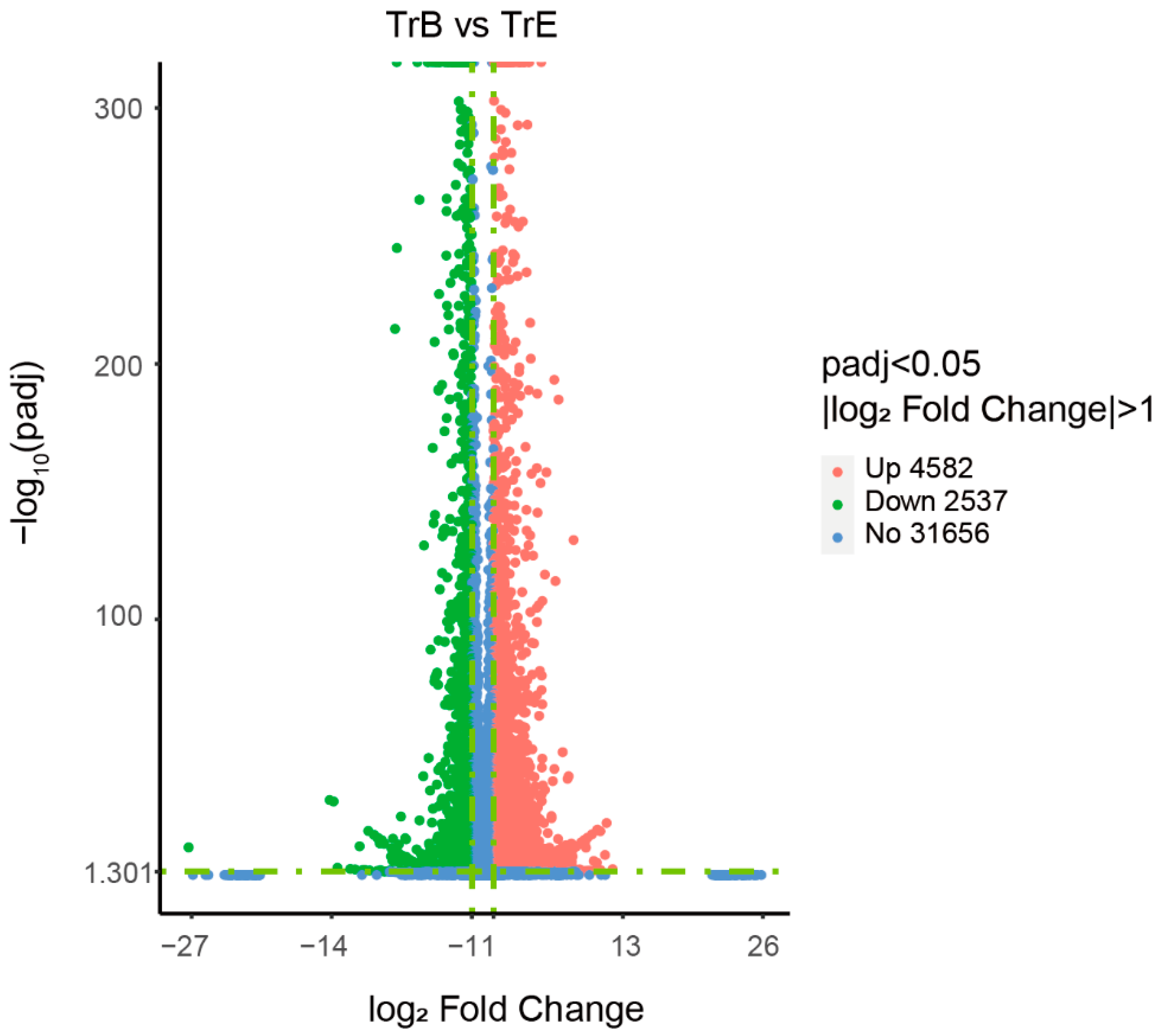
To explore the related genes responsive to different light intensities in H. macrophylla plantlets, the differentially expressed genes (DEGs) in the two sets of transcriptome data were screened with the criteria of padj < 0.05 and |Log2 (Fold Change)| > 1. The differential expression results between two groups were displayed by a volcano diagram (Figure 4). A total of 7119 DEGs were identified between TrB and TrE, of which, 4582 DEGs were up-regulated and 2537 DEGs were down-regulated in TrB compared to TrE.

3.7. GO Analysis and KEGG Analysis of DEGs

To investigate the functions of DEGs in H. macrophylla plantlets under varying light intensities, GO and KEGG analysis were performed.
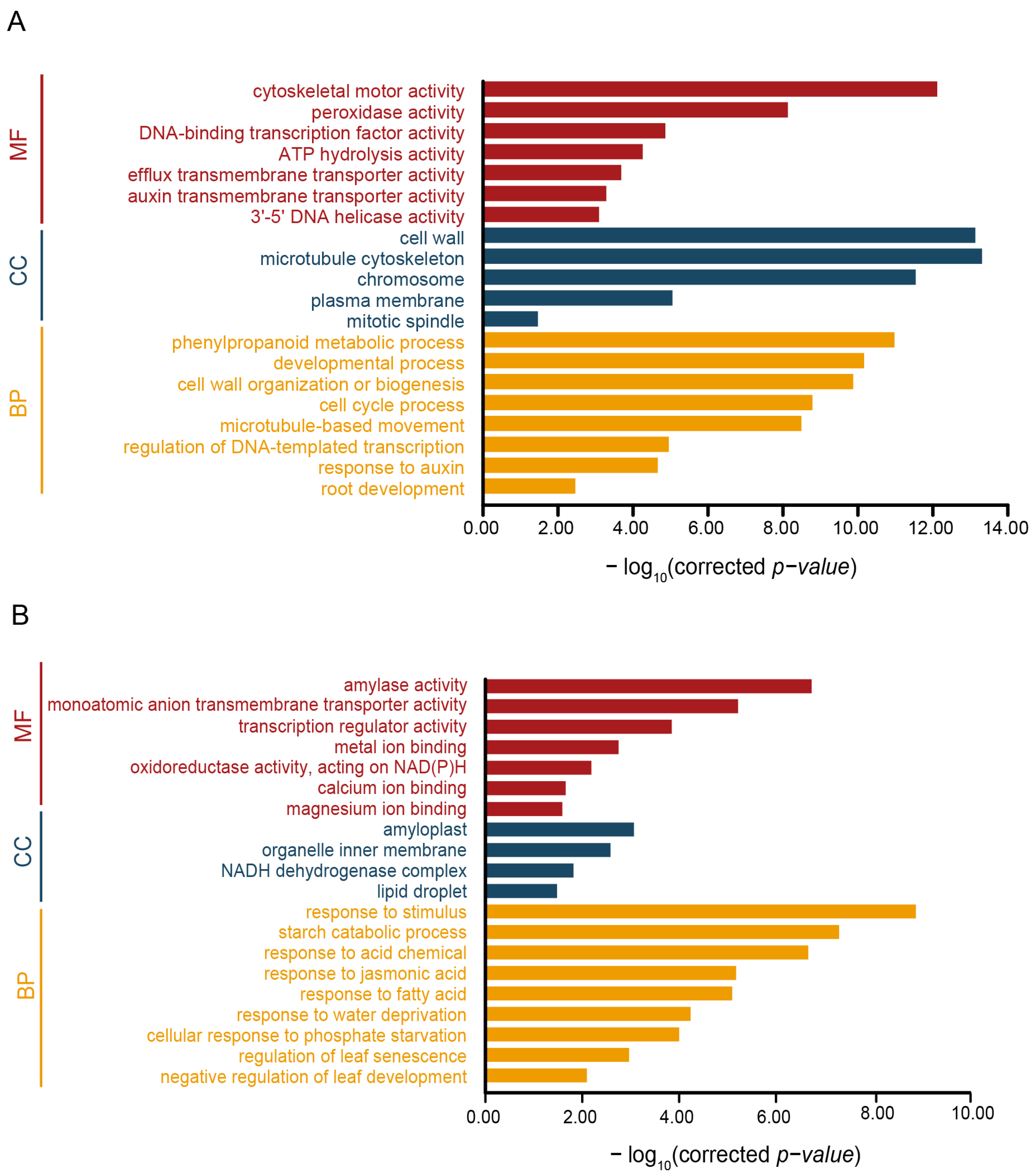
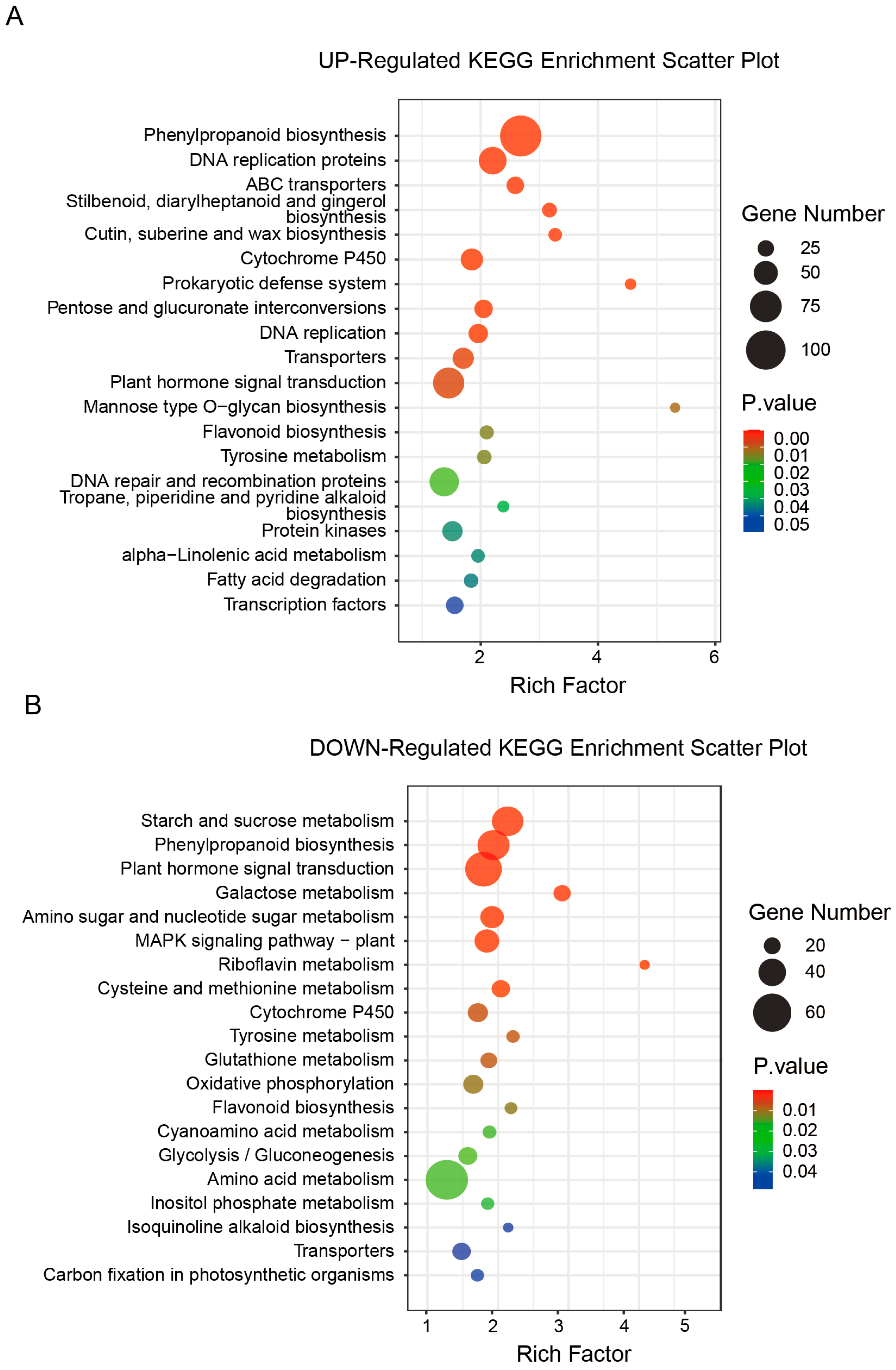
According to GO analysis, 3285 DEGs were annotated (2095 up-regulated DEGs and 1190 down-regulated DEGs) and classified into three categories: biological process, cellular component, and molecular function. The significantly enriched up-regulated DEGs were mainly involved in auxin transmembrane transporter activity, developmental process, or root development (Figure 5A), while the significantly enriched down-regulated DEGs were conducted in relation to amylase activity, monovalent anion transmembrane transporter activity, oxidoreductase activity, response to stimulation, response to fatty acids, regulation of leaf senescence and negative regulation of leaf development (Figure 5B). In total, 1542 of 7119 DEGs (973 up-regulated DEGs and 569 down-regulated DEGs) were significantly enriched in the KEGG pathway. The up-regulated DEGs were involved in secondary metabolite biosynthesis (phenylpropanoid biosynthesis, Stilbenoid, diarylheptanoid and gingerol biosynthesis, and cutin, suberin, and wax biosynthesis pathways, etc.), genetic information processing (DNA replication proteins), and membrane transport systems (ABC and other transporters) (Figure 6A). Conversely, down-regulated DEGs were predominantly mapped to sugar metabolism (starch and sucrose metabolism, amino sugar, and nucleotide sugar metabolism, galactose metabolism), signal transduction (plant hormone signal transduction, MAPK signaling pathway-plant), and amino acid and sulfur-containing compound metabolism (cysteine and methionine metabolism, tyrosine metabolism, glutathione metabolism), etc. (Figure 6B).

3.8. Genetic Expression Related to Physiology of DEGs

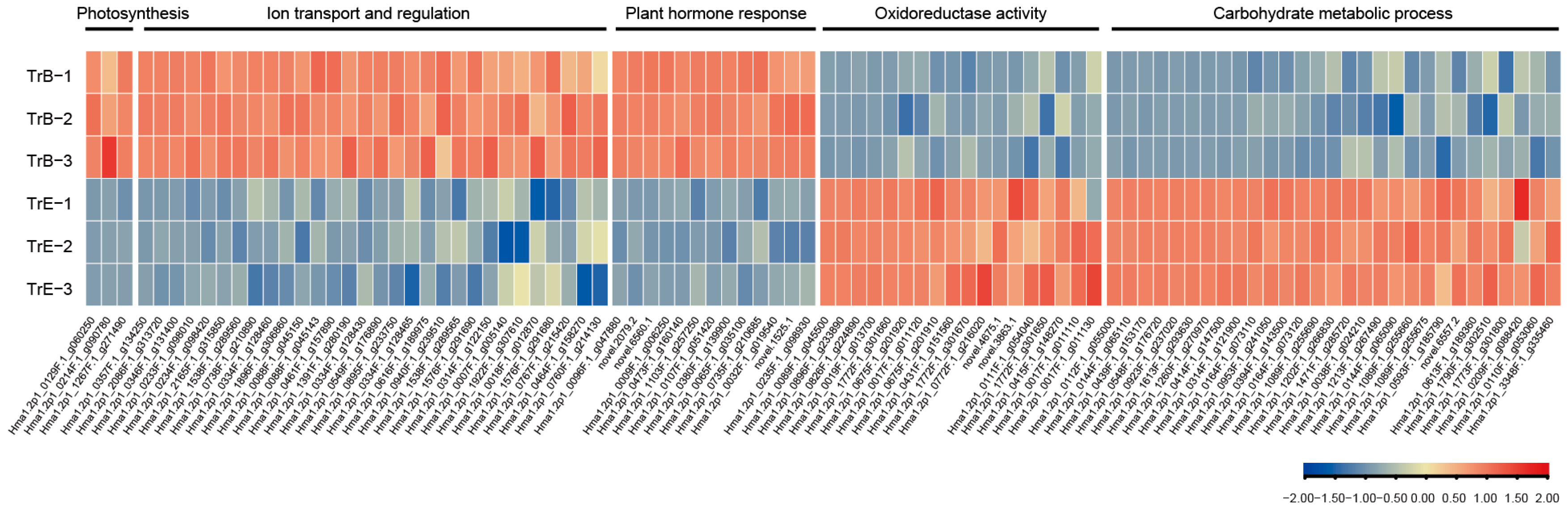
These DEGs were primarily enriched in five major biological processes: photosynthesis, ion transport and regulation, plant hormone response, oxidoreductase activity, and carbohydrate metabolic process. Notably, the three biological processes of photosynthesis, ion transport and regulation, and plant hormone response were significantly enhanced under low light intensity treatment (TrB) (Figure 7, Table S2). Within the ion transport and regulation category, DEGs encoding potassium transporters, phosphate transporter, sulfate transporters, calmodulins, iron transporters, zinc transporters, boron transporters, copper-transporting ATPases, and magnesium transporters were detected. The plant hormone response was primarily mediated by DEGs involved in auxin transport and gibberellin regulatory proteins. In contrast, oxidoreductase activity and carbohydrate metabolic processes were significantly enriched under high light intensity treatment (TrE) (Figure 7, Table S2). The oxidoreductase-related DEGs were largely associated with the ROS scavenging system and peroxidase families, while those linked to carbohydrate metabolic process mainly included starch metabolic enzymes and other polysaccharide metabolic enzymes. Collectively, these results are in strong agreement with the physiological data obtained above.

3.9. Verification of Gene Expression Levels in a qRT-PCR Assay

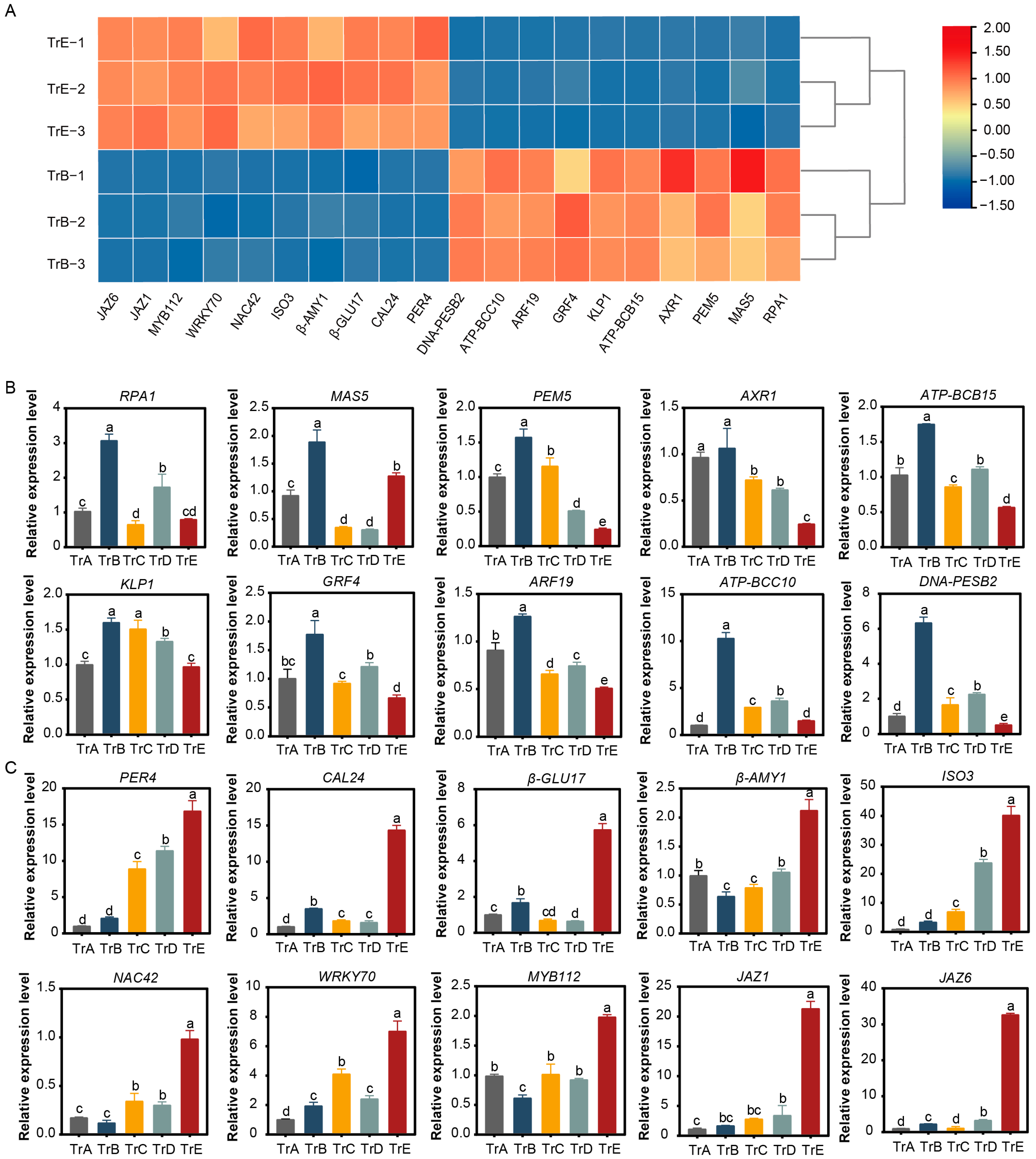
To verify the accuracy of the transcriptome data, 20 candidate genes were selected and designed primers for fluorescence quantification experiments (Figure 8B,C, Table S3). Among them, 11 genes (RPA1, MAS5, PEM5, KLP1, DNA-PESB2, ATP-BCB15, ATP-BCC10, GRF4, WRKY70, NAC42, and CAL24) were related to growth and development, one oxidoreductase-related gene (Per4), three osmotic regulatory metabolism genes (β-GLU17, β-AMY1, and ISO3), and five genes (AXR1, ARF19, MYB112, JAZ1, JAZ6) were related to plant hormone responses. The results show that the expression patterns obtained by qRT-PCR were highly consistent with those from RNA-seq, confirming the reliability of the sequencing results (Figure 8A–C).

4. Discussion

Light serves as the primary energy source for photosynthetic organisms, thus light source, light intensity, and photoperiod represent critical environmental factors influencing plant growth and development. Light source and intensity are key cultivation conditions in plant in vitro [36]. During the in vitro regeneration process of the Gerbera jamesonii cv. ‘Shy Pink’, red LED affected the height and length of the plant shoots, while blue LED affected the leaf area [37]. In our lab, the effect of seven different light sources on in vitro plantlets of H. macrophylla were investigated and we found that a pure white LED light was optimal for plantlets growth. In date palm shoot explants, a low intensity (500 lux) significantly increased the incidence of early root emergence [38]. In this study, the growth of in vitro plantlets in H. macrophylla was the best under the light intensity of 380–480 lux (TrB), whereas plantlets exposed to high light intensity of 6000–6400 lux (TrE) exhibited stunted growth, leaf curling, and yellowing, indicating that extremes of light can hinder plant development (Figure 1A).
Chlorophyll and carotenoids, the primary components of leaf pigmentation, are significantly influenced by light intensity [39]. Chlorophyll, a central pigment in photosynthesis, reflects photosynthetic capacity, and its accumulation is generally enhanced under low-to-moderate light but suppressed under excessive irradiance due to photoinhibition [40,41,42]. Carotenoids, beyond their light-harvesting function, contribute to photoprotection by quenching singlet oxygen generated during stress [43]. In the in vitro plantlets of soybeans and Plectranthus amboinicus, low light intensity promotes the accumulation of chlorophyll and carotenoids [44,45]. Similar results were obtained in this study, Chl a, Chl b, Chl t, and Car levels were all highest under the low light intensity of 380–480 lux (TrB) in H. macrophylla (Figure 2).
ROS homeostasis emerged as a key determinant of light stress responses. While chloroplasts inherently produce ROS during photosynthesis, their accumulation under stress can damage cellular proteins and membranes if not efficiently scavenged [46]. Plants counteract this through antioxidant enzymes such as SOD, POD, and CAT, which buffer oxidative stress [47,48]. In lettuce under high light stress (800 µmol/m2 s), the activities of SOD, CAT, and POD exhibited a rapid increase that culminated in a peak [49]. In the present study, a similar pattern was observed in contents of SOD and POD, which reached their peaks under the high light intensity of 6000–6400 lux (TrE) (Figure 3A,B), a condition that caused light stress to the plantlets (Figure 1). On the other hand, the content of CAT was higher under the lower light intensities, which was consistent with the corresponding trends observed in the plantlets of Gleditsia sinensis [46]. Osmotic adjustment provided an additional protective mechanism: soluble sugars and proteins stabilized cellular structures, regulated turgor pressure, and mitigated oxidative damage [50,51,52]. Under high light intensity (TrE), the SSC in H. macrophylla plantlets rapidly increased to a peak, while the decrease in SPC may result from the activation of autophagic degradation pathways and a concurrent inhibition of protein synthesis [53].
Light intensity not only influences physiological metabolic changes but also directly affects nutrient acquisition by regulating photosynthetic carbon allocation, root exudation, and transporter gene expression [25]. In H. macrophylla plantlets, the concentrations of most nutrient elements were higher under 80–480 lux than under 3800–6400 lux, a trend consistent with earlier observations in tomato and in cereal crops where micronutrient concentrations increased as light intensity decreased [54,55]. This indicates that that low light intensity promoted nutrient uptake in the H. macrophylla plantlets.
Transcriptome analysis can be used to reveal the molecular mechanisms that control the fundamental life processes of plants. Plants modulate gene expression in response to varying light conditions [56]. Varying light intensities altered glutathione levels and the cellular redox state in wheat [57]. In Arabidopsis thaliana, strong light-induced superoxide anion (O2·−) promoted the cleavage of β-carotene, generating metabolites that accelerated leaf senescence [58,59]. In addition to the genetic factors involved in the light response of plants, complex multilevel reactions in the plant response are exhibited through transcriptome analysis [60]. In rice, the expression of peroxidase-9 reduces ROS accumulation, thereby strengthening resistance to both exogenous and endogenous stresses [61]. In Arabidopsis, exposure to light stress rapidly activates JA signaling and up-regulates starch degradation genes, including β-Amylase 5 and α-Glucosidase-like 3, highlighting the central role of carbon metabolism in stress adaptation [62,63]. In this study, exposure of H. macrophylla plantlets to varying light intensities triggered extensive transcriptional reprogramming. Genes associated with chlorophyll synthesis, nutrient ion transport and regulation, and hormone response were highly expressed under low light conditions. In contrast, high light conditions significantly induced the expression of genes involved in ROS scavenging and carbohydrate partitioning, including peroxygenase 4, superoxide dismutase 2, and β-Amylase 1. Furthermore, the phenylpropanoid biosynthesis pathway was broadly up-regulated among the differentially expressed genes. This pathway is responsible for the synthesis of lignin, flavonoids, and lignans, which play crucial roles in plant development and stress responses [64].
In this study, it was concluded that the light intensity of 380–480 lux is optimal for the growth and development of in vitro plantlets. This condition promoted expression of genes related to photosynthesis, nutrient ion transport, and growth hormone response in plants, which enhanced accumulated of leaf pigments, nutrient elements, and fresh mass. These findings provide a theoretical basis for applying precise light regulation in hydrangea in vitro, while also laying the groundwork for future efforts to identify key light-responsive genes and to unravel the molecular mechanisms that integrate light signaling with stress resilience.

5. Conclusions

In this study, in vitro plantlets in H. macrophylla were utilized as plant materials to systematically examine the effects of varying light intensities on growth physiology and gene expression patterns. The results revealed that under light intensities of 380–480 lux, the plants exhibited maximal biomass accumulation and chlorophyll content, alongside minimal antioxidant enzyme activity and levels of osmotic adjustment substances. Transcriptome analysis revealed a total of 7119 DEGs under light conditions of 380–480 lux and 6000–6400 lux. The up-regulated DEGs were found to be enriched in pathways associated with growth and development, while the down-regulated DEGs were predominantly enriched in pathways related to light response and stress adaptation. These results collectively support that 380–480 lux promotes growth-related metabolic processes while simultaneously inhibiting stress responses. This study provides a set of technical standards for light management of hydrangea in vitro plantlets, which can enhance production efficiency, offering a reference basis for optimizing the production conditions of in vitro plantlets.

Supplementary Materials

The following supporting information can be downloaded at: https://www.mdpi.com/article/10.3390/agronomy15122782/s1, Table S1: Primers used in the study. Table S2: Functional annotation of DEGs. Table S3: 20 candidate gene names.

Author Contributions

Z.H. performed the experiments, analyzed the data, and wrote the manuscript; Y.W. revised the manuscript and analyzed data; C.L. planted the plant materials and provided phenotypes pictures; Y.F. performed gene expression and analyzed data; S.Y. designed the experiment, analyzed data, and revised the manuscript. All authors have read and agreed to the published version of the manuscript.

Funding

This research was funded by the Technology Innovation Program of the National Key Research and Development Program of China (2023YFD1200105) and the Agricultural Science and Technology Innovation Program of the Chinese Academy of Agricultural Sciences (CAAS-ASTIP-2021-IVF; IVF-JCKJ202517).

Data Availability Statement

The data that support the findings of this study have been deposited into the NCBI Sequence Read Archive (SRA) of National Center for Biotechnology Information (https://submit.ncbi.nlm.nih.gov/subs/sra/, accessed on 4 November 2025) with accession number SUB15744702.

Acknowledgments

This research was supported by Key Laboratory of Biology and Genetic Improvement of Flower Crops (North China), Ministry of Agriculture and Rural Affairs the Agricultural Science. During the preparation of this manuscript, the authors utilized generative AI tools of the Deepseek (https://www.deepseek.com/) to assist with language editing, improve grammatical accuracy, and enhance the clarity and readability of Section 1 and Section 2. The AI was not used for data analysis, interpretation, or drawing scientific conclusions. The authors take full responsibility for the content of the manuscript.

Conflicts of Interest

The authors declare no competing interests.

References

  1. Murzabulatova, F.K.; Shigapov, Z.K.; Polyakova, N.V. Early Ontogeny of Introduced Hydrangea Species. Russ. J. Dev. Biol. 2021, 52, 112–119. [Google Scholar] [CrossRef]
  2. Peng, J.; Dong, X.; Xue, C.; Liu, Z.; Cao, F. Exploring the Molecular Mechanism of Blue Flower Color Formation in Hydrangea macrophylla cv. “Forever Summer”. Front. Plant Sci. 2021, 12, 585665. [Google Scholar] [CrossRef]
  3. Sebastian, T.K.; Heuser, C.W. In vitro propagation of Hydrangea quercifolia Bartr. Sci. Hortic. 1987, 31, 303–309. [Google Scholar] [CrossRef]
  4. Rout, G.R.; Das, P. Recent trends in the biotechnology of Chrysanthemum: A critical review. Sci. Hortic. 1997, 69, 239–257. [Google Scholar] [CrossRef]
  5. Bailey, D.A.; Hammer, P.A. Possible Nonpathogenic Origin of Hydrangea. Distortion. HortScience 1990, 25, 808. [Google Scholar] [CrossRef]
  6. Hearon, S.; Lawson, R.; Smith, F.; McKenzie, J.; Rosen, J. Morphology of filamentous forms of a mycoplasmalike organism associated with hydrangea virescence. Phytopathology 1976, 66, 608. [Google Scholar] [CrossRef]
  7. Malabadi, R.B.; Chalannavar, R.K.; Kolkar, K.P. Plant cell totipotency: Plant tissue culture applications-An updated review. World J. Adv. Eng. Technol. Sci. 2025, 16, 112–135. [Google Scholar] [CrossRef]
  8. He, C.; Zeng, Y.; Fu, Y.; Wu, J.; Liang, Q. Light quality affects the proliferation of in vitro cultured plantlets of Camellia oleifera Huajin. PeerJ 2020, 8, e10016. [Google Scholar] [CrossRef] [PubMed]
  9. Yue, C.; Wang, Z.; Yang, P. Review: The effect of light on the key pigment compounds of photosensitive etiolated tea plant. Bot. Stud. 2021, 62, 21. [Google Scholar] [CrossRef]
  10. Zhou, J.; Li, P.P.; Wang, J.Z.; Fu, W. Growth, Photosynthesis, and Nutrient Uptake at Different Light Intensities and Temperatures in Lettuce. Am. Soc. Hortic. Sci. 2019, 54, 1925–1933. [Google Scholar] [CrossRef]
  11. Kang, J.H.; KrishnaKumar, S.; Atulba, S.L.S.; Jeong, B.R.; Hwang, S.J. Light intensity and photoperiod influence the growth and development of hydroponically grown leaf lettuce in a closed-type plant factory system. Hortic. Environ. Biotechnol. 2013, 54, 501–509. [Google Scholar] [CrossRef]
  12. Tribhuvan, K.U.; Sinha, S.; Mustafa, N.; Kaur, S.; Singh, B.K. Molecular insight into the photoperiod sensitivity in crop plants. Gene Rep. 2025, 39, 102190. [Google Scholar] [CrossRef]
  13. Díaz-Rueda, P.; Cantos-Barragán, M.; Colmenero-Flores, J.M. Growth Quality and Development of Olive Plants Cultured In-Vitro under Different Illumination Regimes. Plants 2021, 10, 2214. [Google Scholar] [CrossRef]
  14. Zhang, M.; Ming, Y.; Wang, H.-B.; Jin, H.-L. Strategies for adaptation to high light in plants. aBIOTECH 2024, 5, 381–393. [Google Scholar] [CrossRef]
  15. Lee, K.P.; Kim, C. Photosynthetic ROS and retrograde signaling pathways. New Phytol. 2024, 244, 1183–1198. [Google Scholar] [CrossRef]
  16. Zhang, F.; Zeng, Y.; Guo, X.; Wang, J.; Zhou, Y.; Shang, B.; Zhang, X. The GhNAC091-GhZAT12 module regulates cotton acclimation to excess light via ROS scavenging. New Crops 2025, 100085. [Google Scholar] [CrossRef]
  17. Rao, M.J.; Duan, M.; Zhou, C.; Jiao, J.; Cheng, P.; Yang, L.; Wei, W.; Shen, Q.; Ji, P.; Yang, Y. Antioxidant defense system in plants: Reactive oxygen species production, signaling, and scavenging during abiotic stress-induced oxidative damage. Horticulturae 2025, 11, 477. [Google Scholar] [CrossRef]
  18. Khan, A.; Kanwal, F.; Ullah, S.; Fahad, M.; Tariq, L.; Altaf, M.T.; Riaz, A.; Zhang, G. Plant Secondary Metabolites—Central Regulators Against Abiotic and Biotic Stresses. Metabolites 2025, 15, 276. [Google Scholar] [CrossRef] [PubMed]
  19. Jaakola, L.; Hohtola, A. Effect of latitude on flavonoid biosynthesis in plants. Plant Cell Environ. 2010, 33, 1239–1247. [Google Scholar] [CrossRef]
  20. Yang, L.; Wen, K.-S.; Ruan, X.; Zhao, Y.-X.; Wei, F.; Wang, Q. Response of Plant Secondary Metabolites to Environmental Factors. Molecules 2018, 23, 762. [Google Scholar] [CrossRef]
  21. Upadhyay, A.; Lambat, A.; Lambat, P.; Borthakur, M. Secondary Metabolite Production In Plants: In Response To Biotic And Abiotic Stress Factors. J. Adv. Zool. 2024, 45. [Google Scholar] [CrossRef]
  22. Fan, X.-X.; Xu, Z.-G.; Liu, X.-Y.; Tang, C.-M.; Wang, L.-W.; Han, X.-L. Effects of light intensity on the growth and leaf development of young tomato plants grown under a combination of red and blue light. Sci. Hortic. 2013, 153, 50–55. [Google Scholar] [CrossRef]
  23. Amoozgar, A.; Mohammadi, A.; Sabzalian, M.R. Impact of light-emitting diode irradiation on photosynthesis, phytochemical composition and mineral element content of lettuce cv. Grizzly. Photosynthetica 2017, 55, 85–95. [Google Scholar] [CrossRef]
  24. Martínez-Moreno, A.; Frutos-Tortosa, A.; Diaz-Mula, H.; Mestre, T.C.; Martínez, V. Effect of the Intensity and Spectral Quality of LED Light on Growth and Quality of Spinach Indoors. Horticulturae 2024, 10, 411. [Google Scholar] [CrossRef]
  25. Samuolienė, G.; Pukalskas, A.; Gudžinskaitė, I.; Viršilė, A. The Harnessing of Controlled Environment Agriculture Technologies for Phytochemical and Mineral Element Enrichment in Mesembryanthemum crystallinum. Horticulturae 2025, 11, 229. [Google Scholar] [CrossRef]
  26. Murashige, T.; Skoog, F. A revised medium for rapid growth and bio assays with tobacco tissue cultures. Physiol. Plant. 1962, 15, 473–497. [Google Scholar] [CrossRef]
  27. Yang, S.; Zhang, Z.; Chen, W.; Liang, C.; Li, X.; Liu, Z.; Cui, Q.; Ma, Y.; Zou, X. Fine-mapping and transcriptome analysis of the photosensitive leaf-yellowing gene CaLY1 in pepper (Capsicum annuum L.). Hortic. Plant J. 2023, 9, 122–132. [Google Scholar] [CrossRef]
  28. GB 5009.268-2016; National Food Safety Standard Determination of Multi-Elements in Foods. National Health Commission of the People’s Republic of China. China Food and Drug Administration: Beijing, China, 2016.
  29. Kim, D.; Paggi, J.M.; Park, C.; Bennett, C.; Salzberg, S.L. Graph-based genome alignment and genotyping with HISAT2 and HISAT-genotype. Nat. Biotechnol. 2019, 37, 907–915. [Google Scholar] [CrossRef] [PubMed]
  30. Kandpal, M.; Mukherjee, C.; Rami, B. Automated Navigation of the lncRNA Transcriptome: A comprehensive SnakeMake based computational Pipeline for robust Identification of lncRNAs and their putative targets. bioRxiv 2024. [Google Scholar] [CrossRef]
  31. Mortazavi, A.; Williams, B.A.; McCue, K.; Schaeffer, L.; Wold, B. Mapping and quantifying mammalian transcriptomes by RNA-Seq. Nat. Methods 2008, 5, 621–628. [Google Scholar] [CrossRef] [PubMed]
  32. Ma, K.S.; Li, F.; Liang, P.Z.; Chen, X.W.; Liu, Y.; Gao, X.W. Identification and Validation of Reference Genes for the Normalization of Gene Expression Data in qRT-PCR Analysis in Aphis gossypii (Hemiptera: Aphididae). J. Insect Sci. 2016, 16, 17. [Google Scholar] [CrossRef]
  33. Zhang, G.; Yuan, S.; Qi, H.; Chu, Z.; Liu, C. Identification of reliable reference genes for the expression of Hydrangea macrophylla ‘Bailmer’and ‘Duro’sepal color. Horticulturae 2022, 8, 835. [Google Scholar] [CrossRef]
  34. Livak, K.J.; Schmittgen, T.D. Analysis of relative gene expression data using real-time quantitative PCR and the 2(-Delta Delta C(T)) Method. Methods 2001, 25, 402–408. [Google Scholar] [CrossRef]
  35. Nashima, K.; Shirasawa, K.; Ghelfi, A.; Hirakawa, H.; Isobe, S.; Suyama, T.; Wada, T.; Kurokura, T.; Uemachi, T.; Azuma, M. Genome sequence of Hydrangea macrophylla and its application in analysis of the double flower phenotype. DNA Res. 2021, 28, dsaa026. [Google Scholar] [CrossRef]
  36. Chen, Y.-M.; Huang, J.-Z.; Hou, T.-W.; Pan, I.C. Effects of light intensity and plant growth regulators on callus proliferation and shoot regeneration in the ornamental succulent Haworthia. Bot. Stud. 2019, 60, 10. [Google Scholar] [CrossRef]
  37. Lim, M.-J.; Murthy, H.N.; Song, H.-Y.; Lee, S.-Y.; Park, S.-Y. Influence of White, Red, Blue, and Combination of LED Lights on In Vitro Multiplication of Shoots, Rooting, and Acclimatization of Gerbera jamesonii cv. ‘Shy Pink’ Plants. Agronomy 2023, 13, 2216. [Google Scholar] [CrossRef]
  38. Meziani, R.; Jaiti, F.; Mazri, M.A.; Anjarne, M.; Chitt, M.A.; El Fadile, J.; Alem, C. Effects of plant growth regulators and light intensity on the micropropagation of date palm (Phoenix dactylifera L.) cv. Mejhoul. J. Crop Sci. Biotechnol. 2015, 18, 325–331. [Google Scholar] [CrossRef]
  39. Melis, A.; Harvey, G.W. Regulation of photosystem stoichiometry, chlorophyll a and chlorophyll b content and relation to chloroplast ultrastructure. Biochim. Biophys. Acta (BBA) Bioenerg. 1981, 637, 138–145. [Google Scholar] [CrossRef]
  40. Shafiq, I.; Hussain, S.; Raza, M.A.; Iqbal, N.; Asghar, M.A.; Raza, A.; Fan, Y.-F.; Mumtaz, M.; Shoaib, M.; Ansar, M.; et al. Crop photosynthetic response to light quality and light intensity. J. Integr. Agric. 2021, 20, 4–23. [Google Scholar] [CrossRef]
  41. Yang, W.; Lin, Y.; Xue, Y.; Mao, M.; Zhou, X.; Hu, H.; Liu, J.; Feng, L.; Zhang, H.; Luo, J.; et al. Light Intensity Affects the Coloration and Structure of Chimeric Leaves of Ananas comosus var. bracteatus. Phyton 2022, 91, 333–348. [Google Scholar] [CrossRef]
  42. Ma, Z.; Li, S.; Zhang, M.; Jiang, S.; Xiao, Y. Light Intensity Affects Growth, Photosynthetic Capability, and Total Flavonoid Accumulation of Anoectochilus Plants. HortScience 2010, 45, 863–867. [Google Scholar] [CrossRef]
  43. Havaux, M.; Tardy, F.; Lemoine, Y. Photosynthetic light-harvesting function of carotenoids in higher-plant leaves exposed to high light irradiances. Planta 1998, 205, 242–250. [Google Scholar] [CrossRef]
  44. Hemphill, J.K.; Venketeswaran, S. Chlorophyll and Carotenoid Accumulation in Three Chlorophyllous Callus Phenotypes of Glycine Max. Am. J. Bot. 1978, 65, 1055–1063. [Google Scholar] [CrossRef]
  45. Silva, S.T.; Bertolucci, S.K.V.; da Cunha, S.H.B.; Lazzarini, L.E.S.; Tavares, M.C.; Pinto, J.E.B.P. Effect of light and natural ventilation systems on the growth parameters and carvacrol content in the in vitro cultures of Plectranthus amboinicus (Lour.) Spreng. Plant Cell Tissue Organ Cult. (PCTOC) 2017, 129, 501–510. [Google Scholar] [CrossRef]
  46. Liu, B.S.; Meng, C.; Wang, X.R.; Luo, J.; Zhao, Y. Effects of Light Intensity on Morphological Structure and Physiological Characteristics of Gleditsia sinensis Seedlings. Russ. J. Plant Physiol. 2023, 69, 164. [Google Scholar] [CrossRef]
  47. Foyer, C.H. Reactive oxygen species, oxidative signaling and the regulation of photosynthesis. Environ. Exp. Bot. 2018, 154, 134–142. [Google Scholar] [CrossRef]
  48. Shafi, M.; Bakht, J.; Hassan, M.J.; Raziuddin, M.; Zhang, G. Effect of cadmium and salinity stresses on growth and antioxidant enzyme activities of wheat (Triticum aestivum L.). Bull. Env. Contam. Toxicol. 2009, 82, 772–776. [Google Scholar] [CrossRef]
  49. Fu, W.; Li, P.; Wu, Y.; Tang, J. Effects of different light intensities on anti-oxidative enzyme activity, quality and biomass in lettuce. Hortic. Sci. 2012, 39, 129–134. [Google Scholar] [CrossRef]
  50. Ozturk, M.; Turkyilmaz Unal, B.; García-Caparrós, P.; Khursheed, A.; Gul, A.; Hasanuzzaman, M. Osmoregulation and its actions during the drought stress in plants. Physiol. Plant 2021, 172, 1321–1335. [Google Scholar] [CrossRef]
  51. Wang, H.; Wu, F.; Li, M.; Zhu, X.; Shi, C.; Ding, G. Morphological and Physiological Responses of Pinus massoniana Seedlings to Different Light Gradients. Forests 2021, 12, 523. [Google Scholar] [CrossRef]
  52. Hui, R.; Zhao, R.; Song, G.; Li, Y.; Zhao, Y.; Wang, Y. Effects of enhanced ultraviolet-B radiation, water deficit, and their combination on UV-absorbing compounds and osmotic adjustment substances in two different moss species. Environ. Sci. Pollut. Res. Int. 2018, 25, 14953–14963. [Google Scholar] [CrossRef]
  53. Li, L.; Duncan, O.; Ganguly, D.R.; Lee, C.P.; Crisp, P.A.; Wijerathna-Yapa, A.; Salih, K.; Trösch, J.; Pogson, B.J.; Millar, A.H. Enzymes degraded under high light maintain proteostasis by transcriptional regulation in Arabidopsis. Proc. Natl. Acad. Sci. USA 2022, 119, e2121362119. [Google Scholar] [CrossRef]
  54. Baligar, V.C.; Fageria, N.K.; Paiva, A.Q.; Silveira, A.; Pomella, A.W.V.; Machado, R.C.R. Light Intensity Effects on Growth and Micronutrient Uptake by Tropical Legume Cover Crops. J. Plant Nutr. 2006, 29, 1959–1974. [Google Scholar] [CrossRef]
  55. Almansa, E.; Espín, A.; Chica, R.M.; Lao, M. Nutritional Response of Seedling Tomato Plants under Different Lighting Treatments. J. Plant Nutr. 2016, 40, 467–475. [Google Scholar] [CrossRef]
  56. Wu, M.; Li, Z.; Wang, J. Transcriptional analyses reveal the molecular mechanism governing shade tolerance in the invasive plant Solidago canadensis. Ecol. Evol. 2020, 10, 4391–4406. [Google Scholar] [CrossRef]
  57. Toldi, D.; Gyugos, M.; Darkó, É.; Szalai, G.; Gulyás, Z.; Gierczik, K.; Székely, A.; Boldizsár, Á.; Galiba, G.; Müller, M.; et al. Light intensity and spectrum affect metabolism of glutathione and amino acids at transcriptional level. PLoS ONE 2019, 14, e0227271. [Google Scholar] [CrossRef] [PubMed]
  58. Ramel, F.; Birtic, S.; Ginies, C.; Soubigou-Taconnat, L.; Triantaphylidès, C.; Havaux, M. Carotenoid oxidation products are stress signals that mediate gene responses to singlet oxygen in plants. Proc. Natl. Acad. Sci. USA 2012, 109, 5535–5540. [Google Scholar] [CrossRef] [PubMed]
  59. Sakuraba, Y. Light-Mediated Regulation of Leaf Senescence. Int. J. Mol. Sci. 2021, 22, 3291. [Google Scholar] [CrossRef] [PubMed]
  60. Bobrovskikh, A.V.; Zubairova, U.S.; Bondar, E.I.; Lavrekha, V.V.; Doroshkov, A.V. Transcriptomic Data Meta-Analysis Sheds Light on High Light Response in Arabidopsis thaliana L. Int. J. Mol. Sci. 2022, 23, 4455. [Google Scholar] [CrossRef]
  61. Tran, A.D.; Cho, K.; Vu, M.A.; Kim, J.I.; Nguyen, H.T.T.; Han, O. Rice Peroxygenase-9 Negatively Regulates Production of Reactive Oxygen Species and Increases Cellular Resistance to Abiotic Stress. Int. J. Mol. Sci. 2025, 26, 6918. [Google Scholar] [CrossRef]
  62. Balfagón, D.; Sengupta, S.; Gómez-Cadenas, A.; Fritschi, F.B.; Azad, R.K.; Mittler, R.; Zandalinas, S.I. Jasmonic Acid Is Required for Plant Acclimation to a Combination of High Light and Heat Stress. Plant Physiol. 2019, 181, 1668–1682. [Google Scholar] [CrossRef] [PubMed]
  63. Bumee, S.; Ingkasuwan, P.; Kalapanulak, S.; Meechai, A.; Cheevadhanarak, S.; Saithong, T. Transcriptional Regulatory Network of Arabidopsis Starch Metabolism under Extensive Light Condition: A Potential Model of Transcription-modulated Starch Metabolism in Roots of Starchy Crops. Procedia Comput. Sci. 2013, 23, 113–121. [Google Scholar] [CrossRef]
  64. Dong, N.Q.; Lin, H.X. Contribution of phenylpropanoid metabolism to plant development and plant-environment interactions. J. Integr. Plant Biol. 2021, 63, 180–209. [Google Scholar] [CrossRef] [PubMed]
Figure 1. Effects of different light intensities on the growth performance of ‘Qingtian’ H. macrophylla in vitro plantlets. (A) Phenotypic characteristics of in vitro plantlets under light intensity of 80–120 lux (TrA), 380–480 lux (TrB), 1500–1800 lux (TrC), 3800–4000 lux (TrD), 6000–6400 lux (TrE). Scale bars, 2 cm. (BD) Growth parameters including fresh biomass (B), leaf area expansion (C), and shoot elongation (D) in response to differential light intensity regimes. Different lowercase letters indicate significant differences among five treatments for each cultivar at p < 0.05 according to Duncan’s multiple range test. Values are the means ± SD of three independent biological replicates (n = 3).
Agronomy 15 02782 g001
Figure 2. The influence of light intensity influence on pigment biosynthesis in H. macrophylla plantlets. (A) Chlorophyll a (Chl a) content. (B) Chlorophyll b (Chl b) content. (C) Total chlorophyll (Chl t) content. (D) Carotenoid (Car) content. Different lowercase letters indicate significant differences among five treatments for each cultivar at p < 0.05 according to Duncan’s multiple range test. Values are the means ± SD of three independent biological replicates (n = 3).
Agronomy 15 02782 g002
Figure 3. Effects of different light intensities on the physiological and biochemical indicators of the H. macrophylla plantlets. (A) Superoxide dismutase (SOD) activity. (B) Peroxidase (POD) activity. (C) Catalase (CAT) activity. (D) Soluble sugar concentration (SSC). (E) Soluble protein concentration (SPC). Different lowercase letters indicate significant differences among five treatments for each cultivar at p < 0.05 according to Duncan’s multiple range test. Values are the means ± SD of three independent biological replicates (n = 3).
Agronomy 15 02782 g003
Figure 4. Volcano plot of DEGs between TrB and TrE treatments. Red and green points represent up- and down-regulated genes, respectively. Blue points represent no difference genes.
Agronomy 15 02782 g004
Figure 5. GO enrichment analysis of (A) up-regulated and (B) down-regulated DEGs between TrB and TrE treatments. BP, biological process; CC, cellular component; MF, molecular function.
Agronomy 15 02782 g005
Figure 6. KEGG pathway enrichment analysis of the annotated DEGs. (A) Up-regulated KEGG enrichment scatter plot. (B) Down-regulated KEGG enrichment scatter plot. The Y-axis indicates the KEGG pathway, while the X-axis presents the rich factor. The dot size indicates the number of DEGs of the pathway, and the dot color indicates the p-value.
Agronomy 15 02782 g006
Figure 7. Expression profiles of the DEGs. Significantly enriched gene categories include photosynthesis; ion transport and regulation; plant hormone response; oxidoreductase activity; and carbohydrate metabolic process. A color scale representing log2 (FPKM) values is displayed to the right of the cluster (blue, low expression; red, high expression).
Agronomy 15 02782 g007
Figure 8. The qRT-PCR validation of expression levels of 20 DEGs identified by RNA sequencing. (A) Expression patterns of twenty key light-responsive DEGs under TrB and TrE treatments. (B) Relative expression levels of up-regulated DEGs. (C) Relative expression levels of down-regulated DEGs. The Y-axis indicates the relative expression level determined by qRT-PCR, while the X-axis indicates the treatment groups of light intensity. Different lowercase letters indicate significant differences among five treatments for each cultivar at p < 0.05 according to Duncan’s multiple range test.
Agronomy 15 02782 g008
Table 1. Influence of different light intensities on nutrient element absorption in H. macrophylla.
Nutrient ElementTreatment
TrATrBTrCTrDTrE
N (g/kg)51.63 ± 0.13 a42.38 ± 0.11 c47.09 ± 0.33 b39.90 ± 0.17 d39.58 ± 0.18 d
P (g/kg)5.02 ± 0.14 b5.37 ± 0.19 a4.28 ± 0.08 c3.87 ± 0.07 d3.65 ± 0.05 e
K (g/kg)98.87 ± 0.73 a84.15 ± 0.47 b75.33 ± 2.69 c70.65 ± 1.70 d76.58 ± 0.48 c
Ca (g/kg)2.45 ± 0.05 b2.57 ± 0.06 a2.52 ± 0.02 ab1.75 ± 0.01 d2.24 ± 0.09 c
Mg (g/kg)3.40 ± 0.03 a3.12 ± 0.10 b2.80 ± 0.02 c2.32 ± 0.05 d2.75 ± 0.10 c
S (g/kg)5.20 ± 0.07 a4.90 ± 0.07 b2.59 ± 0.06 d3.13 ± 0.08 c2.65 ± 0.07 d
Cu (mg/kg)18.32 ± 0.31 b21.41 ± 0.60 a20.79 ± 0.27 a13.24 ± 0.40 d16.56 ± 0.49 c
Fe (mg/kg)419.86 ± 10.67 b437.27 ± 4.89 a395.68 ± 4.50 c289.32 ± 8.79 e320.69 ± 5.76 d
Zn (mg/kg)329.99 ± 8.03 a254.27 ± 2.42 b209.75 ± 6.85 c139.22 ± 5.06 e153.28 ± 1.92 d
B (mg/kg)78.51 ± 2.36 a63.17 ± 1.36 b49.58 ± 0.95 c49.43 ± 1.61 c51.53 ± 0.76 c
Mn (mg/kg)256.27 ± 5.10 a212.11 ± 3.66 b171.14 ± 3.58 c169.56 ± 3.38 c165.51 ± 4.65 c
Mo (mg/kg)6.88 ± 0.22 a5.27 ± 0.08 c5.54 ± 0.09 b5.05 ± 0.10 c4.25 ± 0.11 d
Co (mg/kg)238.78 ± 5.38 c327.82 ± 5.83 a263.26 ± 5.93 b183.48 ± 3.90 e228.61 ± 3.91 d
Note. N: nitrogen. P: phosphorus. K: potassium. Ca: calcium. Mg: magnesium. S: sulfur. Cu: copper. Fe: iron. Zn: zinc. B: boron. Mn: manganese. Mo: molybdenum. Co: cobalt. In the row, different lowercase letters indicate significant differences among five treatments for each cultivar at p < 0.05 according to Duncan’s multiple range test.
Table 2. Statistics of sequencing data quality.
TreatmentsClean Reads (M)Clean Bases (G)Total Map (M)Unique Map (M)Q20Q30GC
TrB-121.396.438.07 (89.0%)34.24 (80.04%)98.6895.7544.72
TrB-222.886.840.73 (89.0%)36.64 (80.06%)98.6095.4644.69
TrB-319.735.935.14 (89.04%)31.56 (79.97%)98.6995.7844.80
TrE-121.246.337.73 (88.88%)34.09 (80.29%)98.5195.2144.90
TrE-222.916.940.84 (89.15%)36.85 (80.44%)98.7095.7844.87
TrE-321.046.337.37 (88.81%)33.71 (80.12%)98.5895.4144.97
Note. Q20: percentage of bases with a Phred quality score greater than 20. Q30: percentage of bases with a Phred quality score greater than 30. GC: content proportion of guanidine (G) and cytosine (C) nucleotides in nucleotides sequences. M: million. G: gigabase.
Disclaimer/Publisher’s Note: The statements, opinions and data contained in all publications are solely those of the individual author(s) and contributor(s) and not of MDPI and/or the editor(s). MDPI and/or the editor(s) disclaim responsibility for any injury to people or property resulting from any ideas, methods, instructions or products referred to in the content.