Article

Comparative Multi-Omics Insights into Flowering-Associated Sucrose Accumulation in Contrasting Sugarcane Cultivars


1
Sugarcane Research Institute, Guangxi Academy of Agricultural Sciences, Nanning 530000, China
2
Guangxi Key Laboratory of Sugarcane Genetic Improvement, Nanning 530000, China
3
College of Life Science, Guangxi University, Nanning 530003, China
4
Si Sa Ket Horticulture Research Centre, Horticultural Research Institute, Department of Agriculture, Ministry of Agriculture and Cooperatives, Sisaket 33000, Thailand
5
College of Life Science and Technology, Hexi University, Zhangye 734000, China
*
Authors to whom correspondence should be addressed.
These authors contributed equally to this work.
Agronomy 2025, 15(12), 2747; https://doi.org/10.3390/agronomy15122747
Submission received: 28 October 2025 / Revised: 24 November 2025 / Accepted: 25 November 2025 / Published: 28 November 2025
(This article belongs to the Section Plant-Crop Biology and Biochemistry)

Abstract

Flowering often perturbs carbon allocation in sugarcane, yet its transcriptomic–metabolomic basis remains unclear. We profiled two contrasting cultivars, Gui Tang 16-3285 (sugar increases during flowering) and Gui Tang 44 (sugar decreases), sampling apical tissues at five stages (Non-spikelet-bearing stage (NSB), Early booting stage (ESB), Late booting stage (LSB), Tasseling stage (TS), and Flowering stage (FS)). RNA-seq and untargeted LC–MS revealed a strong stage/genotype structure (PCA) with high reproducibility. Pairwise contrasts (FS vs. earlier stages) and time series clustering (Mfuzz) showed extensive, stage-resolved reprogramming with small cross-cultivar overlaps. GO/KEGG indicated that GT16 is enriched for central carbon processes and glucose response, whereas GT44 favors cell-wall remodeling (xylan/xyloglucan), amino/nucleotide sugar, and phenylpropanoid pathways. Integrated analysis identified opposing temporal features across omics layers: in GT16, late-rising metabolites—including sedoheptulose—were consistent with enhanced pentose phosphate/Calvin coupling that regenerates fructose-6-phosphate for sucrose biosynthesis; in GT44, early activation of wall and secondary sinks, together with trehalose/(trehalose-6-phosphate) T6P signatures, paralleled declining soluble sugars. Across cultivars we resolved 11 and 18 genes in reciprocal opposite-trend sets (most with clear temporal order) and eight vs. five metabolites with mirrored dynamics, nominating actionable biomarkers (e.g., sedoheptulose/S7P) and regulatory nodes. These results provide a mechanistic framework linking flowering stage to carbon partitioning and suggest practical levers—timing growth moderation/ripeners, prioritizing sucrose phosphate synthase/Sucrose Phosphate Phosphatase, tempering wall flux, to sustain sucrose during reproductive development and inform breeding for high-sugar, flowering-resilient ideotypes.

1. Introduction

Sugarcane (Saccharum spp.) is one of the most important sugar-producing crops worldwide, contributing over 70% of global sugar supply [1]. The accumulation of sucrose in culm parenchyma cells is the primary determinant of sugar yield and industrial value [2,3]. Because sucrose storage directly impacts both agricultural productivity and economic return, understanding the regulatory networks underlying sucrose accumulation is of critical significance for both basic science and applied breeding.
Flowering represents a critical developmental transition in sugarcane but is often considered undesirable for sugar production [4,5]. The transition from vegetative to reproductive growth generally results in a diversion of assimilates from stalk storage tissues to reproductive organs [6,7]. Consequently, flowering is usually associated with reduced sucrose accumulation, and delaying or suppressing flowering has long been a breeding objective [7]. However, recent evidence suggests that this relationship is more complex than previously thought. In some cultivars, sucrose concentration declines after flowering [8,9], whereas in others, sucrose levels paradoxically increase during flowering. These contrasting patterns indicate the existence of cultivar-specific regulatory mechanisms linking flowering with sucrose metabolism.
Sucrose accumulation in sugarcane is regulated by the balance between biosynthesis, degradation, transport, and storage. Key enzymes such as sucrose phosphate synthase (SPS), sucrose synthase (SuSy), and invertases (cell-wall invertase (CWI) and vacuolar invertase (VIN) play central roles [1,10]. SPS is critical for sucrose biosynthesis, SuSy functions in both synthesis and cleavage depending on sink demands, and invertases hydrolyze sucrose into glucose and fructose, thereby regulating sink strength [11,12]. The activities of SPS and invertases have been shown to directly determine sucrose content in internodal tissues [12,13]. Beyond enzymatic control, sucrose transporters—including SUTs and SWEETs—mediate long-distance phloem transport and cellular unloading [14,15]. Multiple transcription factor families, such as bZIP, MYB, NAC, WRKY, and MADS-box, further modulate sucrose-related genes and flowering pathways [16,17]. Hormonal signals including gibberellins (GA), abscisic acid (ABA), and ethylene also regulate sucrose accumulation, with GA enhancing sink activity and ethylene promoting sucrose enrichment during ripening [18,19,20]. Collectively, these results emphasize the importance of source–sink dynamics and their interaction with hormonal and transcriptional regulation in shaping sucrose accumulation.
High-throughput sequencing has provided insights into these regulatory processes. Comparative transcriptomic studies between high- and low-sugar cultivars revealed differential expression of SPS, SuSy, and transporter genes, consistent with observed sucrose content variation [20,21]. Tissue-specific analyses showed distinct expression profiles in leaves, culms, and roots, reflecting the coordination between source activity and sink capacity [22,23]. Transcriptome profiling under inductive and non-inductive photoperiods revealed crosstalk between flowering signals and carbohydrate metabolism [9]. Similarly, functional characterization of sugar transporter genes such as SUTs and SWEET13c confirmed their roles in sucrose partitioning [24]. Studies of photoperiod perception and FT (FLOWERING LOCUS T)/TFL1 (TERMINAL FLOWER 1) family genes further demonstrate that flowering induction pathways directly intersect with carbohydrate allocation in sugarcane [25,26].
Metabolomics has also advanced our understanding of sucrose regulation. Developmental profiling of culm tissues showed dynamic changes in sugars, amino acids, and organic acids during maturation [27,28]. Comparative analyses of high- and low-sugar varieties identified metabolite signatures associated with enhanced sucrose storage [29]. Integrative transcriptome–metabolome approaches have begun to reveal coordinated regulation of carbon, nitrogen, and secondary metabolism [29], and recent studies demonstrated that multi-omics is a powerful strategy to dissect complex agronomic traits in sugarcane [30]. However, these multi-omics studies remain relatively limited, and previous transcriptomic and metabolomic analyses of sugarcane development have mainly focused on single cultivars or general developmental stages without explicitly comparing contrasting cultivar responses to flowering [31,32]; consequently, flowering-associated sucrose accumulation differences across cultivars, as well as the key regulatory pathways and candidate genes that mediate this divergence, remain poorly understood.
To address this gap, we compared two contrasting sugarcane cultivars: one showing increased sucrose accumulation following flowering and the other showing decreased sucrose accumulation under the same developmental transition. By integrating transcriptomic (RNA-seq) and metabolomic profiling across key developmental stages, we systematically examined changes in gene expression and metabolite abundance in relation to sucrose accumulation during the flowering process, and identified cultivar-specific regulatory networks, metabolic pathways, and candidate genes that may underlie the divergent patterns of sugar accumulation. The findings from this work provide new insight into the interplay between reproductive development and carbohydrate metabolism in sugarcane and highlight potential molecular targets for breeding programs aiming to optimize flowering behavior and sucrose accumulation. Ultimately, unraveling the mechanisms behind flowering-associated sugar regulation could facilitate the development of sugarcane cultivars with improved sugar yield, better adaptation to diverse environments, and enhanced value for the sugar industry.

2. Materials and Methods

2.1. Plant Materials and Experimental Design

Two sugarcane (Saccharum officinarum L.) cultivars with contrasting sucrose accumulation patterns during flowering were selected: Cultivar GT16 (Gui Tang 16-3285) exhibited increased sucrose accumulation after flowering, whereas Cultivar GT44 (Gui Tang 44) displayed a decline in sucrose content. Plants were cultivated at the Experimental Station of Sugarcane Research Institute, Guangxi Academy of Agricultural Sciences, Nanning, Guangxi, China, under standard agronomic practices during the 2024 growing season. Setts of the two cultivars were planted in a randomized complete block design with single 7 m rows spaced 1.2 m apart and 23 plants per row, corresponding to a planting density of approximately 2.7 × 10⁴ plants ha−1, following local production practice. A compound N–P2O5–K2O (8–6–6) fertilizer was applied at 750 kg ha−1 as a basal dressing at planting, followed by 75 kg N ha−1 as urea at the tillering stage. The crop was grown mainly under rainfed conditions typical of the subtropical monsoon climate in Guangxi, with supplementary furrow irrigation applied only during prolonged dry periods to avoid visible water stress, and all other agronomic practices followed standard local management. The field experiments complied with local regulations on agricultural research, and all sugarcane cultivars and plant materials used in this study were provided by the Sugarcane Research Institute, Guangxi Academy of Agricultural Sciences, and used with appropriate institutional permission.
Flowering stages were identified according to visible panicle emergence under natural photoperiod conditions. Apical young tissues (shoot apex region containing the developing inflorescence and surrounding young leaf sheaths, and do not include fully expanded leaf blades or mature culm internodes) of sugarcane were collected on the same day at five distinct developmental stages: Non-spikelet-bearing stage (NSB), Early booting stage (ESB), Late booting stage (LSB), Tasseling stage (TS), and Flowering stage (FS) (developed spike (inflorescence)), All samples were immediately frozen in liquid nitrogen and stored at −80 °C until further use.

2.2. Sugar Content Measurement

Sugar content was determined from fresh culm tissues (~2 g FW) by ethanol extraction followed by high-performance liquid chromatography (HPLC) equipped with a refractive index detector. Samples were extracted twice with 80% (v/v) ethanol at 80 °C, centrifuged (12,000× g, 15 min, 4 °C), and the combined supernatants were filtered (0.22 µm). Soluble sugars, including sucrose, glucose, and fructose, were identified by comparison with authentic standards and quantified using external calibration curves (R2 > 0.999). Sugar content was expressed as g·100 g−1 fresh weight (% FW). Notably, Sugar content for Figure 1A was measured from the same three field plots used as biological replicates for RNA-seq and metabolomics sampling at each developmental stage, allowing direct comparison between sugar traits and molecular profiles.

2.3. RNA Sequencing and Transcriptomic Analysis

Total RNA was isolated using TRIzol reagent (Invitrogen, Carlsbad, CA, USA) following the manufacturer’s protocol. RNA integrity was verified by agarose gel electrophoresis and an Agilent 2100 Bioanalyzer (Agilent Technologies, Santa Clara, CA, USA), and only samples with RNA integrity number (RIN) ≥ 7.0 were used [33,34].
cDNA libraries were prepared using the NEBNext Ultra RNA Library Prep Kit (NEB, Ipswich, MA, USA) and sequenced on an Illumina NovaSeq 6000 platform (paired-end 150 bp). At least 20 million clean reads were generated per sample. Raw reads were quality-checked using FastQC (v0.11.9) and trimmed with Trimmomatic (v0.39). Clean reads were aligned to the Saccharum spontaneum reference genome using HISAT2 (v2.2.1), and transcript assembly/quantification was performed with StringTie (v2.2.1). Differentially expressed genes (DEGs) were identified using DESeq2 (v1.30.1) with thresholds of |log2FC| ≥ 1 and false discovery rate (FDR) < 0.05. Gene Ontology (GO) and Kyoto Encyclopedia of Genes and Genomes (KEGG) enrichment analyses were conducted using clusterProfiler (v4.0.5), All statistical analyses were performed in R (v4.1.2).

2.4. Metabolite Extraction and Metabolomic Profiling

Metabolite profiling was conducted using a widely targeted metabolomics approach. Frozen culm samples (~100 mg) were extracted with 70% methanol overnight at 4 °C, followed by centrifugation at 12,000× g for 10 min. Supernatants were analyzed using ultra-performance liquid chromatography coupled with tandem mass spectrometry (UPLC-MS/MS) on a Q Exactive™ HF Orbitrap (Thermo Fisher Scientific, Waltham, MA, USA). Raw data were processed with Compound Discoverer 3.1 for peak alignment, detection, and quantification. Metabolites were annotated by matching mass spectra against KEGG, HMDB, and in-house databases. Principal component analysis (PCA) and partial least squares discriminant analysis (PLS-DA) were performed using SIMCA 16.0 (Umetrics, Umeå, Sweden). Differentially accumulated metabolites (DAMs) were identified with thresholds of variable importance in projection (VIP) ≥ 1 and p < 0.05 (Student’s t-test).

2.5. Time Series Trend Analysis

To capture dynamic gene expression changes across developmental stages, DEGs and DMs were subjected to soft clustering analysis using the Mfuzz R package (v2.60.0). FPKM values were log2-transformed and standardized before clustering. The optimal number of clusters was determined by the minimum centroid distance (Dmin). Genes were assigned to clusters based on membership values, with ≥0.5 considered significant.

2.6. Integrated Transcriptome–Metabolome Analysis

Transcriptomic and metabolomic data from matched biological replicates and developmental stages were integrated to explore coordinated regulation of sugar accumulation. Differentially expressed genes (DEGs; |log2FC| ≥ 1, FDR < 0.05) and differentially accumulated metabolites (DAMs; VIP ≥ 1, p < 0.05) were identified. Mfuzz clustering was applied to DEGs to characterize stage-specific expression trends, and the resulting clusters were correlated with dynamic metabolite profiles. Pairwise Pearson and Spearman correlations were calculated between DEGs, DAMs, and sugar content (% FW), with significant associations defined as |r| ≥ 0.7 and FDR < 0.05. Multivariate integration was performed using sparse partial least squares (sPLS) and DIABLO in the mixOmics R package (v6.18.1), and joint KEGG pathway enrichment was carried out to identify coordinated pathways.

3. Results

3.1. Sugar Content Dynamics and Transcriptome Sample Quality During Sugarcane Flowering

To investigate the effect of flowering on sugar accumulation, we first monitored sugar content (Figure 1A) and morphological changes (Figure 1B) in two sugarcane cultivars across five developmental stages (NSB, ESB, LSB, TS, and FS). With 3 biological replicates per cultivar and stage corresponding to three independent field plots that also provided the sugar measurements shown in Figure 1A. The two cultivars displayed contrasting sugar accumulation patterns: GT16-3285 (GT16) showed a progressive increase in sugar content after flowering, whereas GT44 exhibited a decline (Figure 1A). Morphological observations confirmed clear developmental transitions from booting to panicle emergence and flowering (Figure 1B). To investigate the impact of flowering on sugar accumulation, transcriptome sequencing was performed on the apical young tissues of two sugarcane cultivars collected on the same day at five developmental stages. Principal component analysis (PCA) (Figure 1C) and correlation analysis (Figure 1D) demonstrated clear separation of samples by developmental stage and cultivar, while also showing high reproducibility among biological replicates, confirming the reliability of the transcriptome data for subsequent analyses. The number of differentially expressed genes (DEGs) decreased progressively as flowering advanced in both cultivars (Figure 1E). Notably, at the early flowering stages, GT44 exhibited substantially more DEGs than GT16, suggesting that extensive biological processes were still actively occurring in GT44 at this stage. This transcriptional activity may underlie the observed decline in sugar content in GT44 as flowering progressed (Figure 1E). In GT16, compared with the NSB, the FS exhibited 6900 upregulated genes and 7302 downregulated genes, which is less than GT44 with 23,714 upregulated genes and 27,109 downregulated genes. In addition, in GT44, the number of genes significantly upregulated at FS compared with TS was markedly higher than that in GT16. This indicates that during flowering, more biological processes were actively occurring in GT44 compared with GT16.

3.2. Comparative Functional Enrichment and Expression Dynamics of DEGs in GT16 and GT44 During Flowering

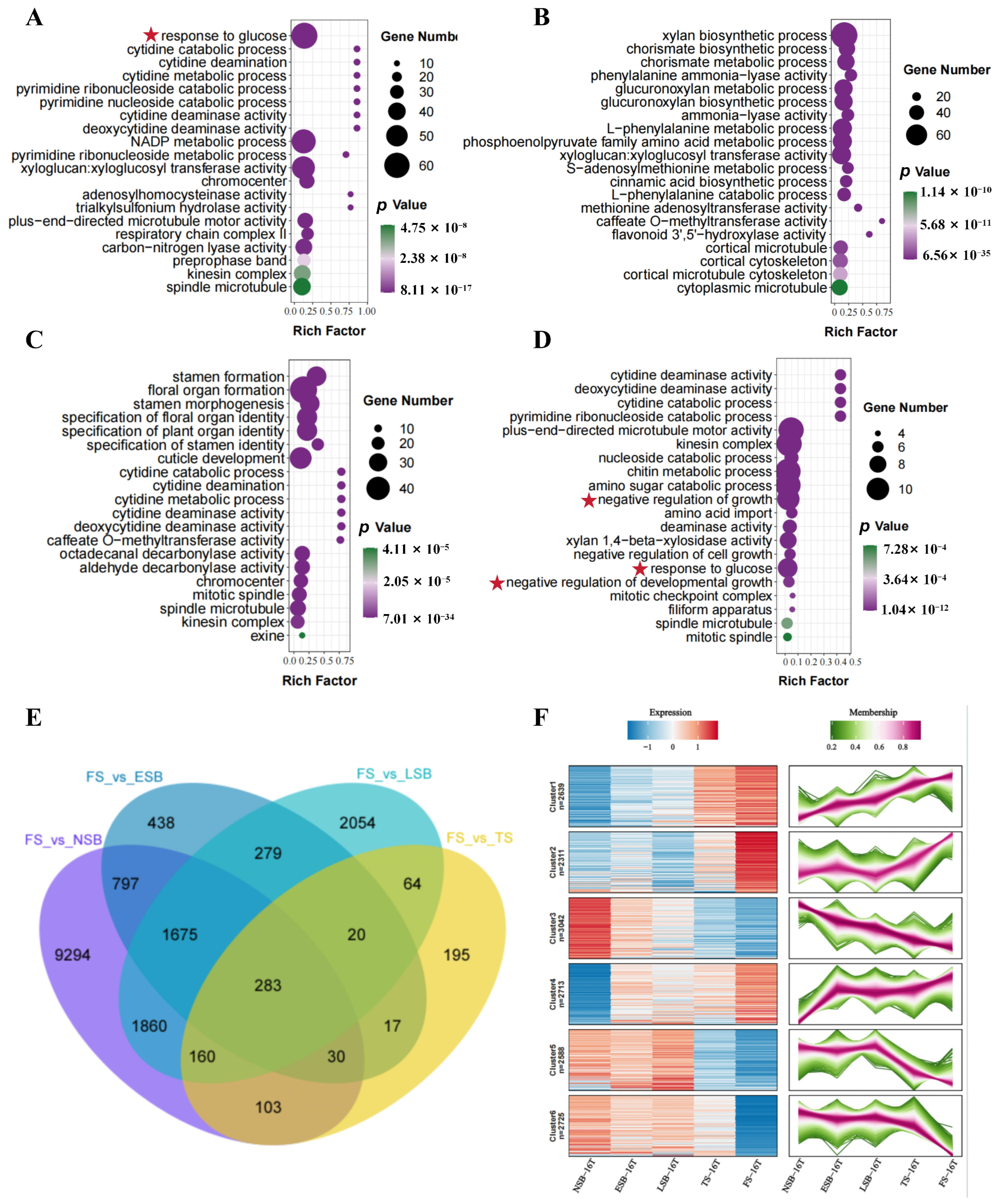
To further explore the biological processes underlying transcriptional reprogramming during flowering, Gene Ontology (GO) enrichment analysis was performed for DEGs identified in pairwise comparisons between the flowering stage (FS) and earlier stages. As for GT16, in the FS vs. NSB comparison, DEGs were significantly enriched in processes related to glucose response, NADP metabolic process, and xyloglucan: xyloglucosyl transferase activity (Figure 2A). In FS vs. ESB, enrichment was observed for pathways involved in secondary metabolism, including xylan, chorismate, and phenylpropanoid biosynthesis (Figure 2B). The FS vs. LSB comparison highlighted DEGs associated with floral organ formation, cuticle development, and cytidine metabolism (Figure 2C). In contrast, DEGs in FS vs. TS were enriched in functions such as response to glucose, amino sugar catabolic process, and negative regulation of developmental growth (Figure 2D). KEGG classification of the FS-versus-early-stage DEGs is overwhelmingly dominated by the Metabolism category, with the highest contributions from carbon metabolism, glycolysis/gluconeogenesis, the tricarboxylic aci (TCA) cycle, carbon fixation (Calvin cycle), and the pentose-phosphate pathway (PPP), alongside amino-acid and lipid metabolic routes. Smaller fractions map to cellular processes and information processing (e.g., ABC transporters, plant-hormone signaling, endocytosis), indicating auxiliary regulatory adjustments secondary to the central-carbon reprogramming observed in GT16 (Figure S1). A Venn diagram revealed that 283 DEGs were shared among all four comparisons, while each contrast also contained a substantial number of stage-specific DEGs (Figure 2E). To investigate their dynamic expression behavior, Mfuzz clustering grouped DEGs into six distinct temporal clusters (Figure 2F, Table S2). These clusters captured diverse expression trajectories, Cluster 1 (2639 genes) contained genes with continuously increasing expression as flowering progressed, whereas Cluster 3 (3042 genes) included genes with progressively decreasing expression across stages. Cluster 5 (2588 genes) and 6 (2725 genes) represented genes that were highly expressed at early stages (NSB and ESB) but downregulated thereafter, while Cluster 4 (2713 genes) showed genes sharply upregulated at early stages.
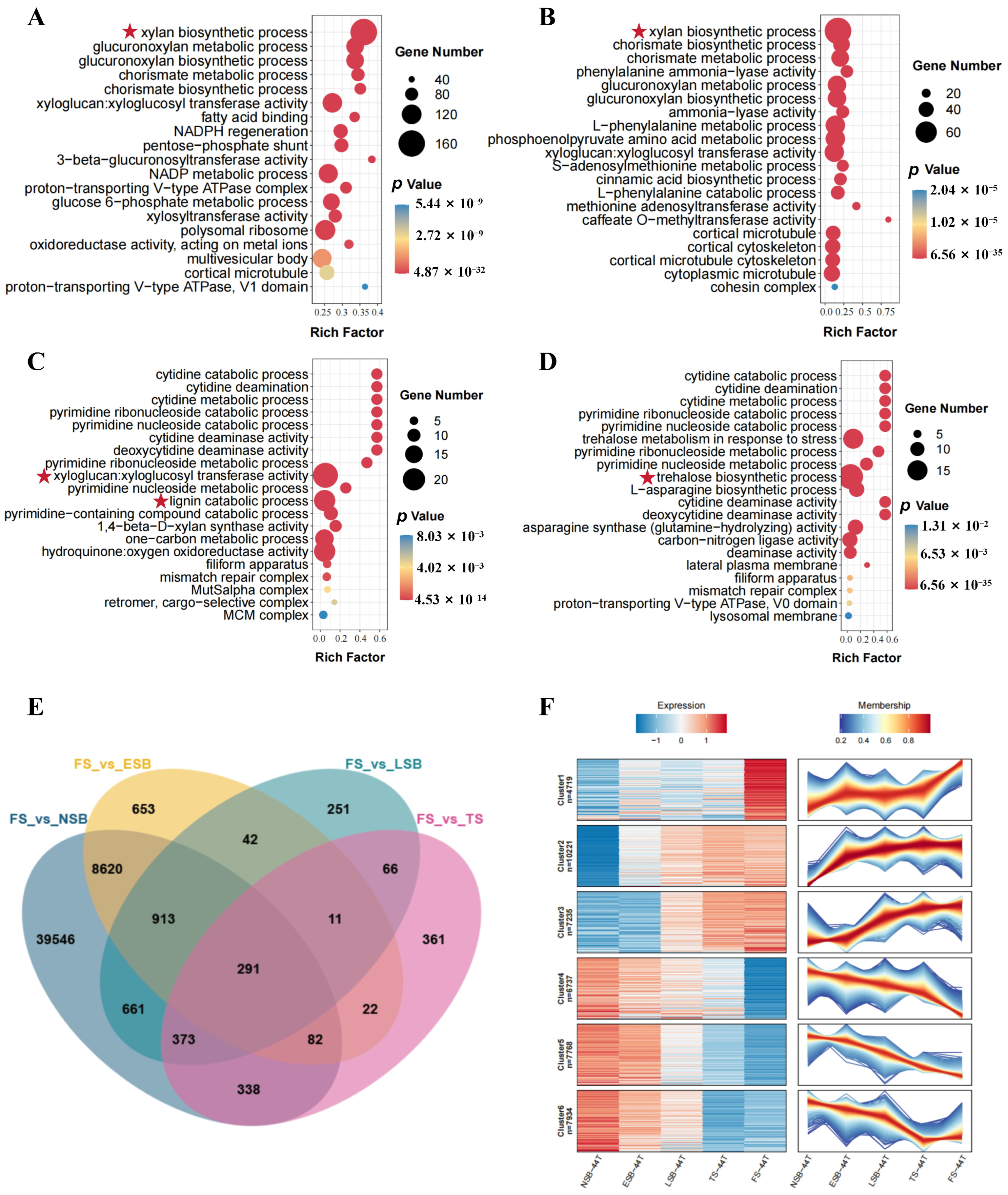
In GT44, In the FS vs. NSB comparison, DEGs were significantly enriched in pathways related to carbohydrate metabolism and energy processes, such as xylan and glucuronoxylan biosynthetic processes, xyloglucan:xyloglucosyl transferase activity, NADPH regeneration, and the pentose–phosphate shunt (Figure 3A). In FS vs. ESB, enrichment was observed for secondary metabolism, including xylan biosynthesis, chorismate metabolism, phenylalanine ammonia-lyase activity, and methionine adenosyltransferase activity (Figure 3B). The FS vs. LSB comparison highlighted DEGs involved in cytidine catabolism, nucleoside metabolic processes, and xyloglucan modification (Figure 3C). In FS vs. TS, enriched terms included trehalose biosynthetic process, asparagine synthase activity, and carbon–nitrogen ligase activity, this may reflect that carbon flux is directed more toward signaling and developmental processes rather than sucrose accumulation. (Figure 3D). KEGG classification of the FS–early-stage joint differential set (DEGs + DAMs) is dominated by Metabolism (Figure S2). Notably in the FS vs. NSB panel, a conspicuous fraction falls into Genetic information processing, including DNA replication, RNA transport/spliceosome, protein processing in endoplasmic reticulum, and ubiquitin-mediated proteolysis—indicating extensive early remodeling of transcription, translation, and proteostasis that accompanies the metabolic shift toward structural/secondary sinks. A Venn diagram revealed that 291 DEGs were shared among all four comparisons, (Figure 3E, Table S3). Mfuzz clustering divided GT44 DEGs into six expression clusters (Figure 3F). Cluster 3 (7235 genes) included genes that were progressively upregulated as flowering advanced, while Cluster 4 and 5 contained genes that continuously decreased. Cluster 2 (10,221 genes) represented early-induced genes, and Cluster 1 (4719 genes) captured genes that were strongly activated at the heading and flowering stages. Clusters 6 showed highly expressed in the early stages.

3.3. Comparative Analysis of Co-Expressed and Differentially Regulated Genes Between GT16 and GT44 During Flowering

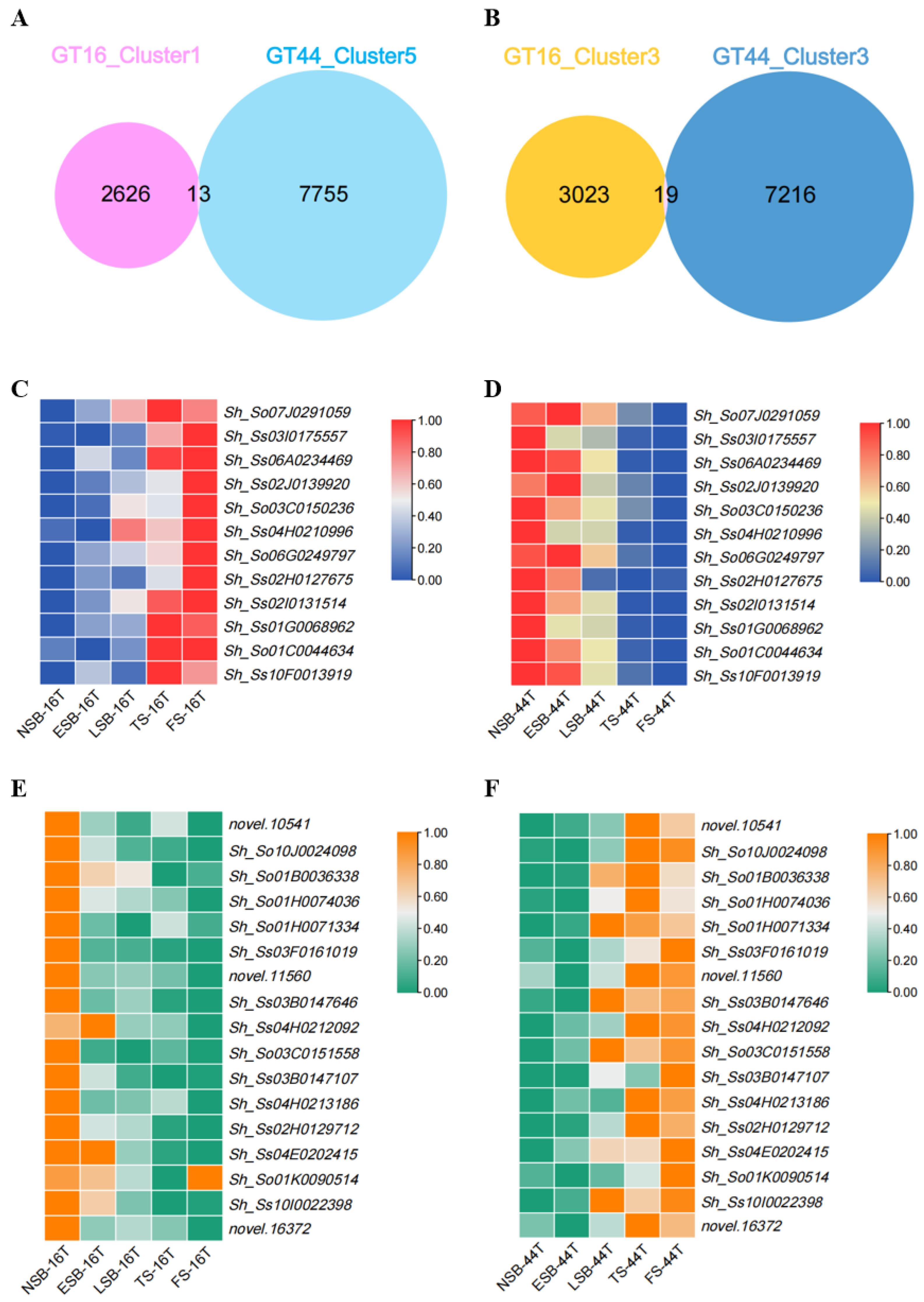
Using time series (Mfuzz) analysis to identify genes associated with sugar accumulation during flowering, we compared two opposing temporal patterns: genes whose expression increased steadily across stages in GT16 but decreased in GT44, and genes that decreased in GT16 but increased in GT44. We identified 13 and 19 genes in these two categories (Figure 4A,B), respectively, of which 11 and 18 showed clear stage-dependent trajectories (Figure 4C–F, Table 1). The GT16-up/GT44-down set is enriched for central carbon and mitochondrial functions—e.g., succinate dehydrogenase (complex II/TCA), branched-chain aminotransferase BCAT1 (anaplerotic input to the TCA cycle), acyl-CoA reductase, and mitochondrial processing peptidase—together with RNA/protein-turnover factors (RRM-domain protein, serine protease). Their gradual increase in GT16 but decline in GT44 is consistent with enhanced respiratory capacity and carbon mobilization that can support sucrose build-up in GT16, whereas these processes weaken in GT44. In contrast, the GT16-down/GT44-up set contains stress- and growth-regulatory components—including glutathione S-transferase (ROS detoxification), calcyclin-binding protein CacyBP (Ca2+/S100 signaling), aspartyl proteases (protein remodeling), a TBC-domain (Rab-GAP) protein (vesicle/traffic control), and a predicted spermine/spermidine synthase (polyamine pathway)—along with multiple nucleotide-metabolism enzymes (e.g., cytidine/py rimidine catabolism, deoxyribodipyrimidine repair). Their activation in GT44 but decline in GT16 indicates a shift in resources toward defense/signaling, protein and nucleotide metabolism in GT44, plausibly diverting carbon away from soluble sugar accumulation, while GT16 prioritizes energy metabolism and carbon assimilation.

3.4. Metabolomic Dynamics in GT16 and GT44 During Flowering

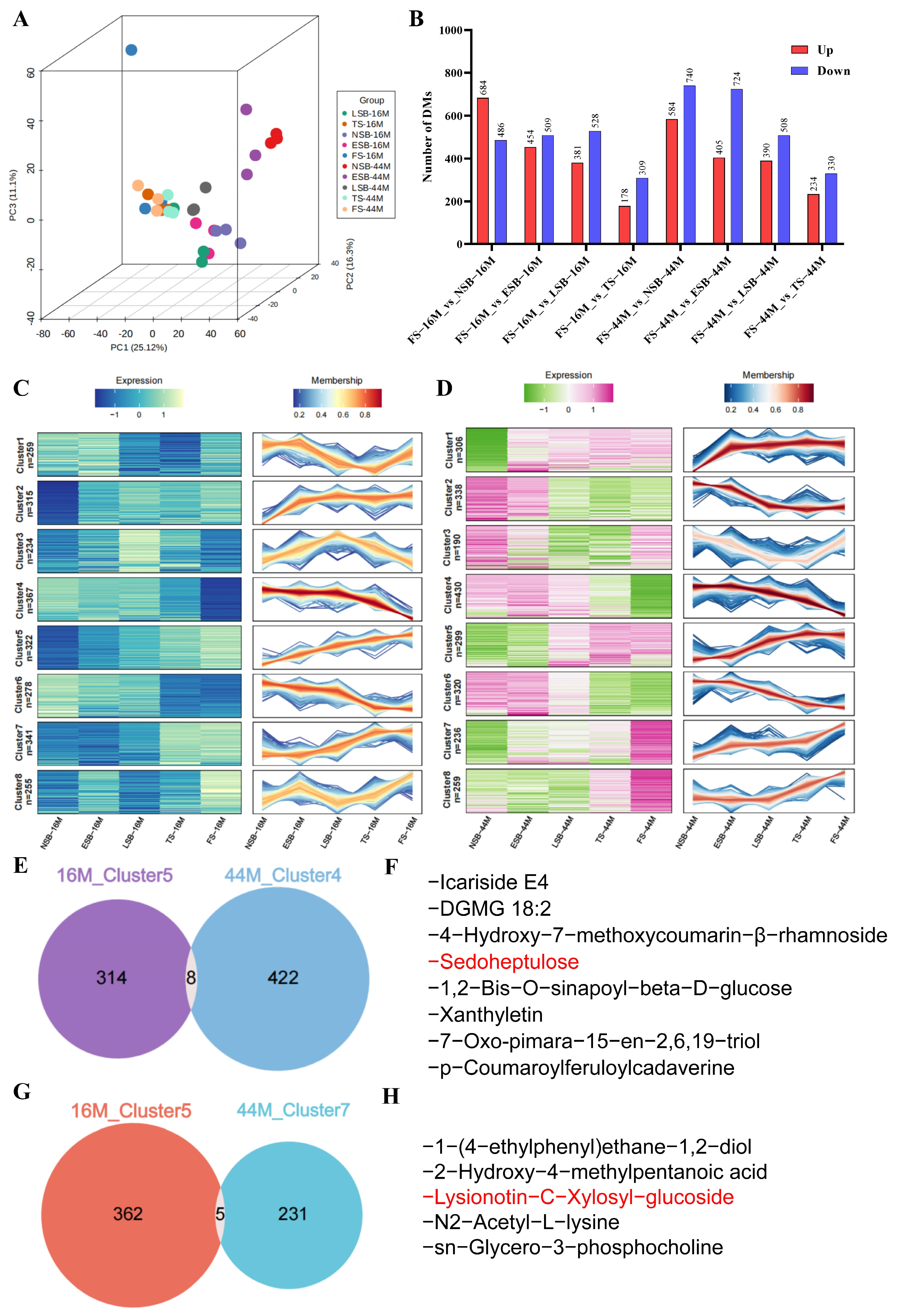
To investigate metabolite differences along the flowering progression in GT16 and GT44, we performed untargeted metabolomic profiling on samples collected at five time points for each cultivar. Principal component analysis showed tight clustering of biological replicates, indicating high data quality and suitability for subsequent analyses (Figure 5A). Pairwise contrasts against the flowering stage yielded the largest numbers of differentially accumulated metabolites (DAMs), particularly for FS versus NSB and FS versus LSB, with substantial fractions of both increases and decreases, consistent with extensive metabolic remodeling late in flowering (Figure 5B, Table S4). Time series clustering (Mfuzz) distilled eight recurrent temporal trajectories per cultivar (Tables S5 and S6). In GT16, Cluster 5 (322 DMs) contains metabolites that increase continuously toward FS, whereas Cluster 4 (367 DMs) comprises metabolites that decrease progressively as flowering advances. Several non-monotonic trends were also evident: Cluster 3 (234 DMs) displays a mid-stage (ESB/LSB) elevation followed by decline, and Cluster 2 (315 DMs) is early-high with attenuation thereafter. Clusters 1 (259 DMs) and 8 (255 DMs) capture biphasic/phase-specific trajectories with transient peaks at early or late stages (Figure 5C). In GT44, two decreasing patterns were prominent—Cluster 4 (430 DMs) and Cluster 6 (320 DMs)—showing a near-monotonic decline from NSB to FS. Early-activation profiles were captured by Cluster 1 (306 DMs) and Cluster 5 (299 DMs), which rose sharply at ESB and attenuated thereafter. Cluster 3 (190 DMs) exhibited a mid-stage (LSB/TS) peak. while late-activation sets, Cluster 7 (236 DMs), and Cluster 8 (259 DMs) increased toward TS/FS.
Similarly, to identify metabolites with divergent temporal patterns between the two cultivars, we compared DAMs that increased continuously across flowering in GT16 (16M_Cluster 5) but decreased continuously in GT44 (44M_Cluster 4). Eight metabolites followed this trajectory: Icariside E4, DGMG 18:2, 4-hydroxy-7-methoxycoumarin-β-rhamnoside, sedoheptulose, 1,2-bis-O-sinapoyl-β-D-glucose, xanthyletin, 7-oxo-pimara-15-en-2,6,19-triol, and p-coumaroylferuloylcadaverine. In addition, five metabolites showed the opposite trend—decreasing across flowering in GT16 (16M_Cluster 4) but increasing in GT44 (44M_Cluster 7)—namely: 1-(4-ethylphenyl)ethane-1,2-diol; 2-hydroxy-4-methylpentanoic acid; lysionotin-C-xylosyl-glucoside; N2-acetyl-L-lysine; and sn-glycero-3-phosphocholine.

3.5. Integrated Transcriptome–Metabolome Analysis Reveals Cultivar-Specific Carbon Partitioning During Flowering

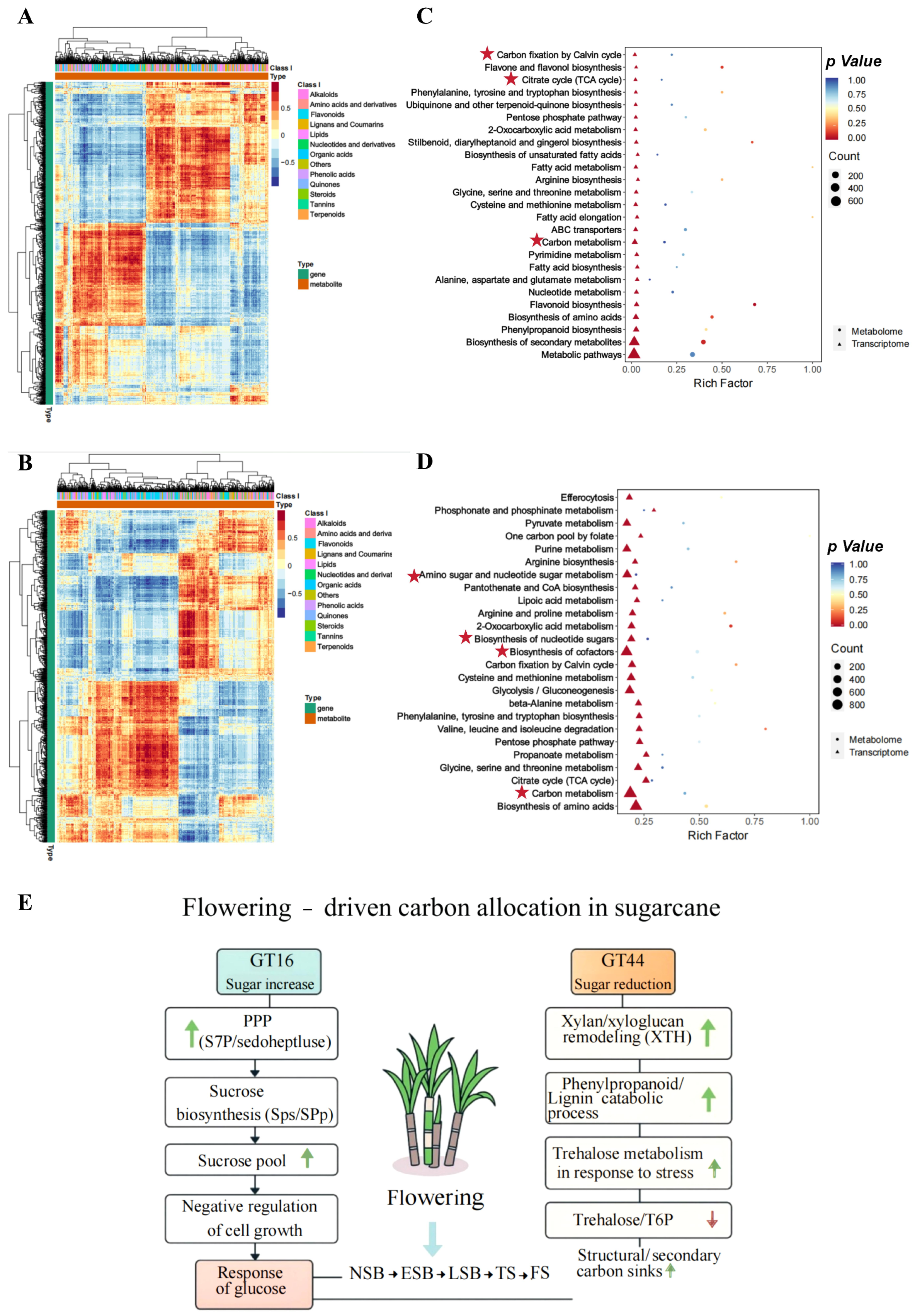
We integrated the time-resolved DEGs and DAMs measured from the same samples and aligned stages to identify cross-omics signals linked to sugar phenotypes. Joint clustering of scaled gene expression and metabolite abundance produced coherent co-variation blocks that differed sharply between cultivars. Since the two cultivars already showed a clear divergence in sugar content at the onset of flowering, we prioritized the integrated analysis for the earliest contrast (FS vs. ESB). In GT16, differential signals (metabolites and genes) were predominantly enriched in the Alkaloids, Amino acids and derivatives, and Lipids categories (Figure 6A). By contrast, in GT44, differences were mainly concentrated in Flavonoids and Organic acids (Figure 6B). KEGG analysis indicated that, in GT16, differentially expressed genes and differentially accumulated metabolites were mainly enriched in Metabolic pathways, Biosynthesis of secondary metabolites, and Plant hormone signal transduction. In GT44, they were predominantly enriched in Carbon metabolism, Biosynthesis of amino acids, and Biosynthesis of cofactors (Figures S3–S8).
Based on the above analyses, we propose two mechanistic models that account for the divergent sugar accumulation observed in the two sugarcane cultivars (Figure 6E). In GT16 (sugar increasing), the blocks most strongly associated with the sugar accumulation contained (i) transcriptomic programs enriched for response to glucose and negative regulation of cell growth, and (ii) metabolites showing late activation. Pathway aggregation of the joint features highlighted carbon fixation/central carbon metabolism (Calvin cycle, 2-oxocarboxylic-acid metabolism) and the pentose-phosphate network, consistent with channeling pentoses back to fructose-6-phosphate to fuel sucrose biosynthesis. Concordantly, the metabolite sedoheptulose (a PPP hub feeding F6P) rose progressively in GT16. Genes from the GT16-up/GT44-down set—such as succinate dehydrogenase (complex II), branched-chain aminotransferase (BCAT1), acyl-CoA reductase, and mitochondrial processing peptidase—co-varied with late-rising metabolite clusters and with measured sugar content, indicating enhanced respiratory capacity and carbon mobilization that support soluble sugar accumulation. By contrast, in GT44 (sugar decreasing), joint enrichment shifted toward amino sugar/nucleotide sugar metabolism, carbon metabolism with TCA involvement, and, prominently, cell wall remodeling pathways (xylan biosynthesis) together with lignin catabolic processes. Mfuzz trends showed that many GT44 metabolites were early-activated and then attenuated, while a smaller subset peaked at TS/FS—patterns consistent with an early diversion of carbon to structural and secondary sinks followed by waning metabolic activity as flowering proceeds. The transcriptomic counterpart was a stronger induction of stress/turnover and signaling modules (e.g., glutathione S-transferase, CacyBP, aspartyl proteases, TBC-domain/Rab-GAP, and polyamine synthase), suggesting resource allocation to defense and remodeling rather than storage. Together, the integrated omics support a mechanistic model in which GT16 progressively channels carbon into soluble pools to sustain sucrose accumulation, whereas GT44 reallocates carbon toward cell wall/phenylpropanoid and membrane pathways, providing a coherent explanation for their opposite sugar trajectories during flowering.

4. Discussion

Our time series omics show that once reproductive development initiates, GT16 and GT44 diverge early and remain on opposite sugar trajectories (increase vs. decrease). This aligns with the view that flowering reshapes source–sink relations and carbon allocation in sugarcane, and that genetic background determines whether assimilates are routed to storage (sucrose) or to competing sinks (growth, structure, secondary metabolism) [1,2,3,4,19]. The strong stage effects seen here are consistent with prior metabolome and transcriptome studies along culm development and floral induction [6,14,18,19,20].

4.1. Cultivar-Specific Carbon Partitioning During Flowering Underlies Opposite Sugar Trajectories

In GT16, late-stage rises in key metabolite clusters—most notably sedoheptulose—together with enrichment of central-carbon terms point to a strengthened coupling between the pentose-phosphate pathway and the Calvin–Benson cycle, a linkage that regenerates fructose-6-phosphate (F6P) for sucrose biosynthesis while supplying NADPH for reductive metabolism and redox buffering [34]. Mechanistically, the non-oxidative PPP interconverts pentoses and trioses via transketolase/transaldolase to yield sedoheptulose-7-phosphate (S7P) and ultimately F6P, whereas the oxidative branch is a major cellular NADPH source—both functions are canonical and directly support sucrose formation [34]. Consistent with this, sedoheptulose-1,7-bisphosphatase (SBPase) has been shown to exert appreciable control over photosynthetic carbon flow and carbohydrate output: SBPase overexpression increases photosynthesis, growth and yield across environments and genotypes [35,36,37]. Our GT16 trend therefore aligns with established PPP/Calvin biochemistry and with classic sugarcane control analyses showing that sucrose gain in culm tissues depends on the balance of soluble acid invertase versus sucrose-phosphate synthase (SPS) activities and on central-carbon supply, as captured by kinetic models of sucrose accumulation [2,38].
In GT44, we observe an early activation followed by attenuation of DEGs/DAMs, with enrichments in xyloglucan/xylan remodeling and phenylpropanoid/flavonoid biosynthesis that are well known to act as structural/secondary carbon sinks competing for hexose skeletons. Mechanistically, XTH/XET-mediated xyloglucan remodeling increases wall turnover and carbon commitment to hemicellulose, while phenylpropanoid–lignin biosynthesis is a high-flux sink for soluble sugars and their precursors—both processes consistent with diverting carbon away from sucrose storage [39,40]. The concurrent enrichment of nucleotide/amino sugar metabolism aligns with this interpretation, as UDP-sugars (e.g., UDP-xylose, UDP-glucuronic acid, UDP-GlcNAc) supply wall polysaccharides and glycosylation reactions typical of building or remodeling structural biomass. We also detect trehalose/T6P (trehalose-6-phosphate) signatures; T6P functions as a sucrose-status signal that inhibits SnRK1 and reprograms carbon use toward growth and biosynthesis rather than storage, offering a plausible regulatory route by which GT44 re-prioritizes carbon allocation during flowering [41]. Collectively, these biases are congruent with GT44′s declining sugar content and echo reports that floral transition in sugarcane entails broad transcriptomic reprogramming of metabolism and development [9,26,42]. Although transporters were not dominant among our hits, cultivar differences in the SUT gene family and the activity of SWEET transporters (e.g., SWEET13c) are known to shape phloem loading/unloading and sink strength in cane, and thus can reinforce cultivar-specific fates in carbon partitioning [43]. Because our samples were collected from inflorescence (apical) tissues rather than culm parenchyma, we did not observe significant differential expression of canonical sugar-transport genes in the inflorescence datasets, likely reflecting tissue-specific expression.

4.2. Practical Measures During Flowering to Raise Sugar

Our results suggest two complementary levers to improve sucrose retention during flowering. First, on the supply side, GT16′s late-stage rise in sedoheptulose and central-carbon signatures indicates tighter PPP–Calvin–sucrose coupling, which regenerates F6P and provides NADPH; management or genetic strategies that bias flux toward SPS/SPP (relative to acid invertase) and strengthen Calvin-cycle regeneration (e.g., SBPase logic) should favor a GT16-like storage state [44]. Second, on the sink side, GT44′s enrichment for xyloglucan/xylan remodeling and phenylpropanoid/lignin pathways points to strong structural/secondary sinks that compete with soluble sugars; tempering these fluxes around booting/heading is predicted to mitigate sugar loss [45]. In practice, timed ripeners that curb growth and enhance sink strength—such as ethylene/ethephon or GA3 under appropriate regimes—have increased sucrose in cane and align with shifting allocation toward storage at the flowering transition [18,46]. Transport capacity can reinforce outcomes: cultivar differences in SUT and SWEET (e.g., SWEET13c) modulate loading/unloading and sink strength, helping lock in storage-biased partitioning [47].

4.3. Limitations and Comparison with Existing Studies

Our study has three main limitations that shape interpretation and point to next steps. (i) Tissue specificity. We profiled the inflorescence apex, which captures regulatory reprogramming at flowering but underrepresents storage processes that dominate in the culm parenchyma; consequently, canonical sugar-transport and storage genes (e.g., SUT/SWEET, SPS/SuSy/invertases) were not strongly differential in our datasets, whereas culm-focused studies consistently associate these modules with sucrose gain [44,48,49]. (ii) Experimental breadth. We analyzed two cultivars under one environment with five developmental snapshots; this delivers clean contrasts for flowering but lacks the genetic and environmental breadth of panel-scale or multi-site studies that have linked transcriptome variation to sucrose synthesis/accumulation [50]. (iii) Measurement scope. Our inferences rely on steady-state pools from untargeted LC–MS; several metabolites are putatively identified, in line with MSI reporting levels [51], and we did not assay enzyme activities or carbon fluxes (^13C tracing) that would confirm directionality. Network-level inference (e.g., WGCNA) could also complement the time series clustering we used.

5. Conclusions

By tracking transcripts and metabolites across five flowering stages in two contrasting sugarcane cultivars, we show that reproductive development drives cultivar-specific carbon partitioning which explains opposite sugar phenotypes: GT16 increases sugar by tightening PPP–Calvin coupling (indexed by a late-stage rise in sedoheptulose) and biasing flux toward sucrose biosynthesis, whereas GT44 diverts carbon to cell wall/phenylpropanoid and nucleotide/amino sugar routes with signatures of T6P-mediated signaling, consistent with declining soluble sugars. Small but informative sets of opposite-trend DEGs/DAMs anchor this model and yield actionable biomarkers (e.g., sedoheptulose/S7P) and levers for practice: prioritizing SPS/SPP over invertase, moderating wall/phenylpropanoid demand around booting/heading, tuning SUT/SWEET transport capacity, and aligning flowering management/ripeners with storage-favored windows. Although our apical inflorescence sampling and two-cultivar scope constrain generality, the integrative framework connects developmental timing to carbon allocation and provides concrete decision points for breeding and management—selecting or engineering genotypes that sustain PPP–Calvin support, temper structural sinks during flowering, and thus retain sucrose under reproductive development.

Supplementary Materials

The following supporting information can be downloaded at: https://www.mdpi.com/article/10.3390/agronomy15122747/s1, Figure S1: KEGG enrichment of differentially expressed genes (DEGs) for FS–earlier stage contrasts in GT16. Figure S2: KEGG enrichment of differentially expressed genes (DEGs) for FS–earlier stage contrasts in GT44. Figure S3: KEGG enrichment of DEGs and DMs in GT16 (FS) vs. GT16 (NSB). Figure S4: KEGG enrichment of DEGs and DMs in GT16 (FS) vs. GT16 (LSB). Figure S5: KEGG enrichment of DEGs and DMs in GT16 (FS) vs. GT16 (TS). Figure S6: KEGG enrichment of DEGs and DMs in GT44 (FS) vs. GT44 (NSB). Figure S7: KEGG enrichment of DEGs and DMs in GT44 (FS) vs. GT44 (LSB). Figure S8: KEGG enrichment of DEGs and DMs in GT44 (FS) vs. GT44 (TS). Table S1: All DEGs in summary. Table S2: Mfuzz Analysis of DEGs in GT16. Table S3: Mfuzz Analysis of DEGs in GT44. Table S4: DMs in Summary. Table S5: Mfuzz Analysis of DMs in GT16. Table S6: Mfuzz Analysis of DMs in GT44.

Author Contributions

M.L.: Supervision, Methodology, Conceptualization, Data curation, Writing—original draft Funding acquisition, Writing—review and editing. W.F.: Formal analysis, Data curation, Writing—original draft. J.Y., H.Y., J.L., L.Q., S.S., D.L., T.L., H.Z. (Huiwen Zhou), S.T., H.Z. (Hui Zhou) and Y.Z.: Formal analysis, Data curation. S.H.: Supervision, Writing—review and editing. All authors have read and agreed to the published version of the manuscript.

Funding

This research was funded by the Guangxi Scientific Research and Technology Development Plan (GuikeAA24206005, GuikeAA24206005-1), the earmarked fund for CARS-17, and the National Natural Science Foundation of China (32260536, 32001484). The APC was funded by the Guangxi Scientific Research and Technology Development Plan and the National Natural Science Foundation of China.

Data Availability Statement

The datasets supporting the results of this article are included within the article and its additional files. The raw RNA-seq and metabolomic datasets generated in this study are available from the corresponding author upon reasonable request.

Conflicts of Interest

The authors declare no conflict of interest.

References

  1. Mehdi, F.; Galani, S.; Wickramasinghe, K.P.; Zhao, P.; Lu, X.; Lin, X.; Xu, C.; Liu, H.; Li, X.; Liu, X. Current perspectives on the regulatory mechanisms of sucrose accumulation in sugarcane. Heliyon 2024, 10, e27277. [Google Scholar] [CrossRef]
  2. Rohwer, J.M.; Botha, F.C. Analysis of sucrose accumulation in the sugar cane culm on the basis of in vitro kinetic data. Biochem. J. 2001, 358 Pt 2, 437–445. [Google Scholar] [CrossRef]
  3. Uys, L.; Botha, F.C.; Hofmeyr, J.-H.S.; Rohwer, J.M. Kinetic model of sucrose accumulation in maturing sugarcane culm tissue. Phytochemistry 2007, 68, 2375–2392. [Google Scholar] [CrossRef] [PubMed]
  4. Pavani, G.; Malhotra, P.K.; Verma, S.K. Flowering in sugarcane-insights from the grasses. 3 Biotech 2023, 13, 154. [Google Scholar] [CrossRef]
  5. Dinesh Babu, K.S.; Janakiraman, V.; Palaniswamy, H.; Kasirajan, L.; Gomathi, R.; Ramkumar, T.R. A short review on sugarcane: Its domestication, molecular manipulations and future perspectives. Genet. Resour. Crop Evol. 2022, 69, 2623–2643. [Google Scholar] [CrossRef]
  6. Endres, L.; da Cruz, S.J.S.; Vilela, R.D.; dos Santos, J.M.; Barbosa, G.V.D.S.; Silva, J.A.C. Foliar Applications of Calcium Reduce and Delay Sugarcane Flowering. BioEnergy Res. 2016, 9, 98–108. [Google Scholar] [CrossRef]
  7. Berding, N.; Hurney, A.P. Flowering and lodging, physiological-based traits affecting cane and sugar yield: What do we know of their control mechanisms and how do we manage them? Field Crops Res. 2005, 92, 261–275. [Google Scholar] [CrossRef]
  8. Mehdi, F.; Liu, X.; Riaz, Z.; Javed, U.; Aman, A.; Galani, S. Expression of sucrose metabolizing enzymes in different sugarcane varieties under progressive heat stress. Front. Plant Sci. 2023, 14, 1269521. [Google Scholar] [CrossRef]
  9. Manechini, J.R.V.; Santos, P.H.d.S.; Romanel, E.; Brito, M.D.S.; Scarpari, M.S.; Jackson, S.; Pinto, L.R.; Vicentini, R. Transcriptomic Analysis of Changes in Gene Expression During Flowering Induction in Sugarcane Under Controlled Photoperiodic Conditions. Front. Plant Sci. 2021, 12, 635784. [Google Scholar] [CrossRef] [PubMed]
  10. Mehdi, F.; Cao, Z.; Zhang, S.; Gan, Y.; Cai, W.; Peng, L.; Wu, Y.; Wang, W.; Yang, B. Factors affecting the production of sugarcane yield and sucrose accumulation: Suggested potential biological solutions. Front. Plant Sci. 2024, 15, 1374228. [Google Scholar]
  11. Stein, O.; Granot, D. An Overview of Sucrose Synthases in Plants. Front. Plant Sci. 2019, 10, 95. [Google Scholar] [CrossRef] [PubMed]
  12. Verma, I.; Roopendra, K.; Sharma, A.; Chandra, A.; Kamal, A. Expression analysis of genes associated with sucrose accumulation and its effect on source-sink relationship in high sucrose accumulating early maturing sugarcane variety. Physiol. Mol. Biol. Plants 2019, 25, 207–220. [Google Scholar] [CrossRef] [PubMed]
  13. Verma, A.K.; Upadhyay, S.K.; Verma, P.C.; Solomon, S.; Singh, S.B. Functional analysis of sucrose phosphate synthase (SPS) and sucrose synthase (SS) in sugarcane (Saccharum) cultivars. Plant Biol. 2011, 13, 325–332. [Google Scholar] [CrossRef] [PubMed]
  14. Eom, J.S.; Chen, L.Q.; Sosso, D.; Julius, B.T.; Lin, I.W.; Qu, X.Q.; Braun, D.M.; Frommer, W.B. SWEETs, transporters for intracellular and intercellular sugar translocation. Curr. Opin. Plant Biol. 2015, 25, 53–62. [Google Scholar] [CrossRef]
  15. Braun, D.M.; Wang, L.; Ruan, Y.L. Understanding and manipulating sucrose phloem loading, unloading, metabolism, and signalling to enhance crop yield and food security. J. Exp. Bot. 2014, 65, 1713–1735. [Google Scholar] [CrossRef] [PubMed]
  16. Wang, M.; Li, A.-M.; Liao, F.; Qin, C.-X.; Chen, Z.-L.; Zhou, L.; Li, Y.-R.; Li, X.-F.; Lakshmanan, P.; Huang, D.-L. Control of sucrose accumulation in sugarcane (Saccharum spp. hybrids) involves miRNA-mediated regulation of genes and transcription factors associated with sugar metabolism. GCB Bioenergy 2022, 14, 173–191. [Google Scholar] [CrossRef]
  17. Wang, M.; Zang, L.; Jiao, F.; Perez-Garcia, M.-D.; Ogé, L.; Hamama, L.; Le Gourrierec, J.; Sakr, S.; Chen, J. Sugar Signaling and Post-transcriptional Regulation in Plants: An Overlooked or an Emerging Topic? Front. Plant Sci. 2020, 11, 578096. [Google Scholar] [CrossRef]
  18. Chen, Z.; Qin, C.; Wang, M.; Liao, F.; Liao, Q.; Liu, X.; Li, Y.; Lakshmanan, P.; Long, M.; Huang, D. Ethylene-mediated improvement in sucrose accumulation in ripening sugarcane involves increased sink strength. BMC Plant Biol. 2019, 19, 285. [Google Scholar] [CrossRef]
  19. Chen, T.; Li, G.; Islam, M.R.; Fu, W.; Feng, B.; Tao, L.; Fu, G. Abscisic acid synergizes with sucrose to enhance grain yield and quality of rice by improving the source-sink relationship. BMC Plant Biol. 2019, 19, 525. [Google Scholar] [CrossRef]
  20. Khan, Q.; Qin, Y.; Guo, D.-J.; Chen, J.-Y.; Zeng, X.-P.; Mahmood, A.; Yang, L.-T.; Liang, Q.; Song, X.-P.; Xing, Y.-X.; et al. Sucrose metabolism analysis in a high sucrose sugarcane mutant clone at a mature stage in contrast to low sucrose parental clone through the transcriptomic approach. Chem. Biol. Technol. Agric. 2023, 10, 39. [Google Scholar] [CrossRef]
  21. He, Y.; Chen, R.; Yang, Y.; Liang, G.; Zhang, H.; Deng, X.; Xi, R. Sugar Metabolism and Transcriptome Analysis Reveal Key Sugar Transporters during Camellia oleifera Fruit Development. Int. J. Mol. Sci. 2022, 23, 822. [Google Scholar] [CrossRef]
  22. Thirugnanasambandam, P.P.; Mason, P.J.; Hoang, N.V.; Furtado, A.; Botha, F.C.; Henry, R.J. Analysis of the diversity and tissue specificity of sucrose synthase genes in the long read transcriptome of sugarcane. BMC Plant Biol. 2019, 19, 160. [Google Scholar] [CrossRef]
  23. Mason, P.J.; Hoang, N.V.; Botha, F.C.; Furtado, A.; Marquardt, A.; Henry, R.J. Comparison of the root, leaf and internode transcriptomes in sugarcane (Saccharum spp. hybrids). Curr. Res. Biotechnol. 2022, 4, 167–178. [Google Scholar] [CrossRef]
  24. Hua, X.; Shen, Q.; Li, Y.; Zhou, D.; Zhang, Z.; Akbar, S.; Wang, Z.; Zhang, J. Functional characterization and analysis of transcriptional regulation of sugar transporter SWEET13c in sugarcane Saccharum spontaneum. BMC Plant Biol. 2022, 22, 363. [Google Scholar] [CrossRef] [PubMed]
  25. Glassop, D.; Rae, A.L. Expression of sugarcane genes associated with perception of photoperiod and floral induction reveals cycling over a 24-hour period. Funct. Plant Biol. 2019, 46, 314–327. [Google Scholar] [CrossRef]
  26. Venail, J.; da Silva Santos, P.H.; Manechini, J.R.; Alves, L.C.; Scarpari, M.; Falcão, T.; Romanel, E.; Brito, M.; Vicentini, R.; Pinto, L.; et al. Analysis of the PEBP gene family and identification of a novel FLOWERING LOCUS T orthologue in sugarcane. J. Exp. Bot. 2022, 73, 2035–2049. [Google Scholar] [CrossRef] [PubMed]
  27. Ferreira, D.A.; Martins, M.C.M.; Cheavegatti-Gianotto, A.; Carneiro, M.S.; Amadeu, R.R.; Aricetti, J.A.; Wolf, L.D.; Hoffmann, H.P.; de Abreu, L.G.F.; Caldana, C. Metabolite Profiles of Sugarcane Culm Reveal the Relationship Among Metabolism and Axillary Bud Outgrowth in Genetically Related Sugarcane Commercial Cultivars. Front. Plant Sci. 2018, 9, 857. [Google Scholar] [CrossRef]
  28. Wijma, M.; Lembke, C.G.; Diniz, A.L.; Santini, L.; Zambotti-Villela, L.; Colepicolo, P.; Carneiro, M.S.; Souza, G.M. Planting Season Impacts Sugarcane Stem Development, Secondary Metabolite Levels, and Natural Antisense Transcription. Cells 2021, 10, 3451. [Google Scholar] [CrossRef] [PubMed]
  29. Yuan, Z.; Dong, F.; Pang, Z.; Fallah, N.; Zhou, Y.; Li, Z.; Hu, C. Integrated Metabolomics and Transcriptome Analyses Unveil Pathways Involved in Sugar Content and Rind Color of Two Sugarcane Varieties. Front. Plant Sci. 2022, 13, 921536. [Google Scholar] [CrossRef]
  30. Luo, H.; Bai, X.; Wu, Z.; Ren, S.; Xie, H.; Yuan, Z.; Zhang, J.; Tian, D.; Song, S. SugarcaneOmics: An integrative multi-omics platform for sugarcane research. Plant Commun. 2025, 6, 101489. [Google Scholar] [CrossRef]
  31. Perlo, V.; Margarido, G.R.A.; Botha, F.C.; Furtado, A.; Hodgson-Kratky, K.; Correr, F.H.; Henry, R.J. Transcriptome changes in the developing sugarcane culm associated with high yield and early-season high sugar content. Theor. Appl. Genet. 2022, 135, 1619–1636. [Google Scholar] [CrossRef]
  32. Perlo, V.; Furtado, A.; Botha, F.C.; Margarido, G.R.A.; Hodgson-Kratky, K.; Choudhary, H.; Gladden, J.; Simmons, B.; Henry, R.J. Transcriptome and metabolome integration in sugarcane through culm development. Food Energy Secur. 2022, 11, e421. [Google Scholar] [CrossRef]
  33. Schroeder, A.; Mueller, O.; Stocker, S.; Salowsky, R.; Leiber, M.; Gassmann, M.; Lightfoot, S.; Menzel, W.; Granzow, M.; Ragg, T. The RIN: An RNA integrity number for assigning integrity values to RNA measurements. BMC Mol. Biol. 2006, 7, 3. [Google Scholar] [CrossRef]
  34. Kruger, N.J.; von Schaewen, A. The oxidative pentose phosphate pathway: Structure and organisation. Curr. Opin. Plant Biol. 2003, 6, 236–246. [Google Scholar] [CrossRef]
  35. Lefebvre, S.; Lawson, T.; Zakhleniuk, O.V.; Lloyd, J.C.; Raines, C.A.; Fryer, M. Increased sedoheptulose-1,7-bisphosphatase activity in transgenic tobacco plants stimulates photosynthesis and growth from an early stage in development. Plant Physiol. 2005, 138, 451–460. [Google Scholar] [CrossRef]
  36. Rosenthal, D.M.; Locke, A.M.; Khozaei, M.; Raines, C.A.; Long, S.P.; Ort, D.R. Over-expressing the C3 photosynthesis cycle enzyme Sedoheptulose-1-7 Bisphosphatase improves photosynthetic carbon gain and yield under fully open air CO2 fumigation (FACE). BMC Plant Biol. 2011, 11, 123. [Google Scholar] [CrossRef]
  37. Ding, F.; Wang, M.; Zhang, S.; Ai, X. Changes in SBPase activity influence photosynthetic capacity, growth, and tolerance to chilling stress in transgenic tomato plants. Sci. Rep. 2016, 6, 32741. [Google Scholar] [CrossRef]
  38. Zhu, Y.J.; Komor, E.; Moore, P.H. Sucrose Accumulation in the Sugarcane Stem Is Regulated by the Difference between the Activities of Soluble Acid Invertase and Sucrose Phosphate Synthase. Plant Physiol. 1997, 115, 609–616. [Google Scholar] [CrossRef] [PubMed]
  39. Cosgrove, D.J. Growth of the plant cell wall. Nat. Rev. Mol. Cell Biol. 2005, 6, 850–861. [Google Scholar] [CrossRef] [PubMed]
  40. Vanholme, R.; De Meester, B.; Ralph, J.; Boerjan, W. Lignin biosynthesis and its integration into metabolism. Curr. Opin. Biotechnol. 2019, 56, 230–239. [Google Scholar] [CrossRef] [PubMed]
  41. Lunn, J.E.; Delorge, I.; Figueroa, C.M.; van Dijck, P.; Stitt, M. Trehalose metabolism in plants. Plant J. 2014, 79, 544–567. [Google Scholar] [CrossRef]
  42. Coelho, C.P.; Minow, M.A.A.; Chalfun-Júnior, A.; Colasanti, J. Putative sugarcane FT/TFL1 genes delay flowering time and alter reproductive architecture in Arabidopsis. Front. Plant Sci. 2014, 5, 221. [Google Scholar] [CrossRef]
  43. Rae, A.L.; Grof, C.P.L.; Casu, R.E.; Bonnett, G.D. Sucrose accumulation in the sugarcane stem: Pathways and control points for transport and compartmentation. Field Crops Res. 2005, 92, 159–168. [Google Scholar] [CrossRef]
  44. Glassop, D.; Roessner, U.; Bacic, A.; Bonnett, G.D. Changes in the sugarcane metabolome with stem development. Are they related to sucrose accumulation? Plant Cell Physiol. 2007, 48, 573–584. [Google Scholar] [CrossRef] [PubMed]
  45. Vanholme, R.; Demedts, B.; Morreel, K.; Ralph, J.; Boerjan, W. Lignin Biosynthesis and Structure. Plant Physiol. 2010, 153, 895–905. [Google Scholar] [CrossRef] [PubMed]
  46. Chandra, A.; Roopendra, K.; Verma, I. Transcriptome analysis of the effect of GA3 in sugarcane culm. 3 Biotech 2019, 9, 376. [Google Scholar] [CrossRef]
  47. Zhang, Q.; Hu, W.; Zhu, F.; Wang, L.; Yu, Q.; Ming, R.; Zhang, J. Structure, phylogeny, allelic haplotypes and expression of sucrose transporter gene families in Saccharum. BMC Genom. 2016, 17, 88. [Google Scholar] [CrossRef]
  48. Papini-Terzi, F.S.; Rocha, F.R.; Vêncio, R.Z.N.; Felix, J.M.; Branco, D.S.; Waclawovsky, A.J.; Del Bem, L.E.V.; Lembke, C.G.; Costa, M.D.L.; Nishiyama, M.Y.; et al. Sugarcane genes associated with sucrose content. BMC Genom. 2009, 10, 120. [Google Scholar] [CrossRef]
  49. Zhang, J.; Zhang, X.; Tang, H.; Zhang, Q.; Hua, X.; Ma, X.; Zhu, F.; Jones, T.; Zhu, X.; Bowers, J.; et al. Allele-defined genome of the autopolyploid sugarcane Saccharum spontaneum L. Nat. Genet. 2018, 50, 1565–1573. [Google Scholar]
  50. Khan, Q.; Chen, J.-Y.; Zeng, X.-P.; Qin, Y.; Guo, D.-J.; Mahmood, A.; Yang, L.-T.; Liang, Q.; Song, X.-P.; Xing, Y.-X.; et al. Transcriptomic exploration of a high sucrose mutant in comparison with the low sucrose mother genotype in sugarcane during sugar accumulating stage. GCB Bioenergy 2021, 13, 1448–1465. [Google Scholar] [CrossRef]
  51. Sumner, L.W.; Amberg, A.; Barrett, D.; Beale, M.H.; Beger, R.; Daykin, C.A.; Fan, T.W.; Fiehn, O.; Goodacre, R.; Griffin, J.L.; et al. Proposed minimum reporting standards for chemical analysis Chemical Analysis Working Group (CAWG) Metabolomics Standards Initiative (MSI). Metabolomics 2007, 3, 211–221. [Google Scholar] [CrossRef] [PubMed]
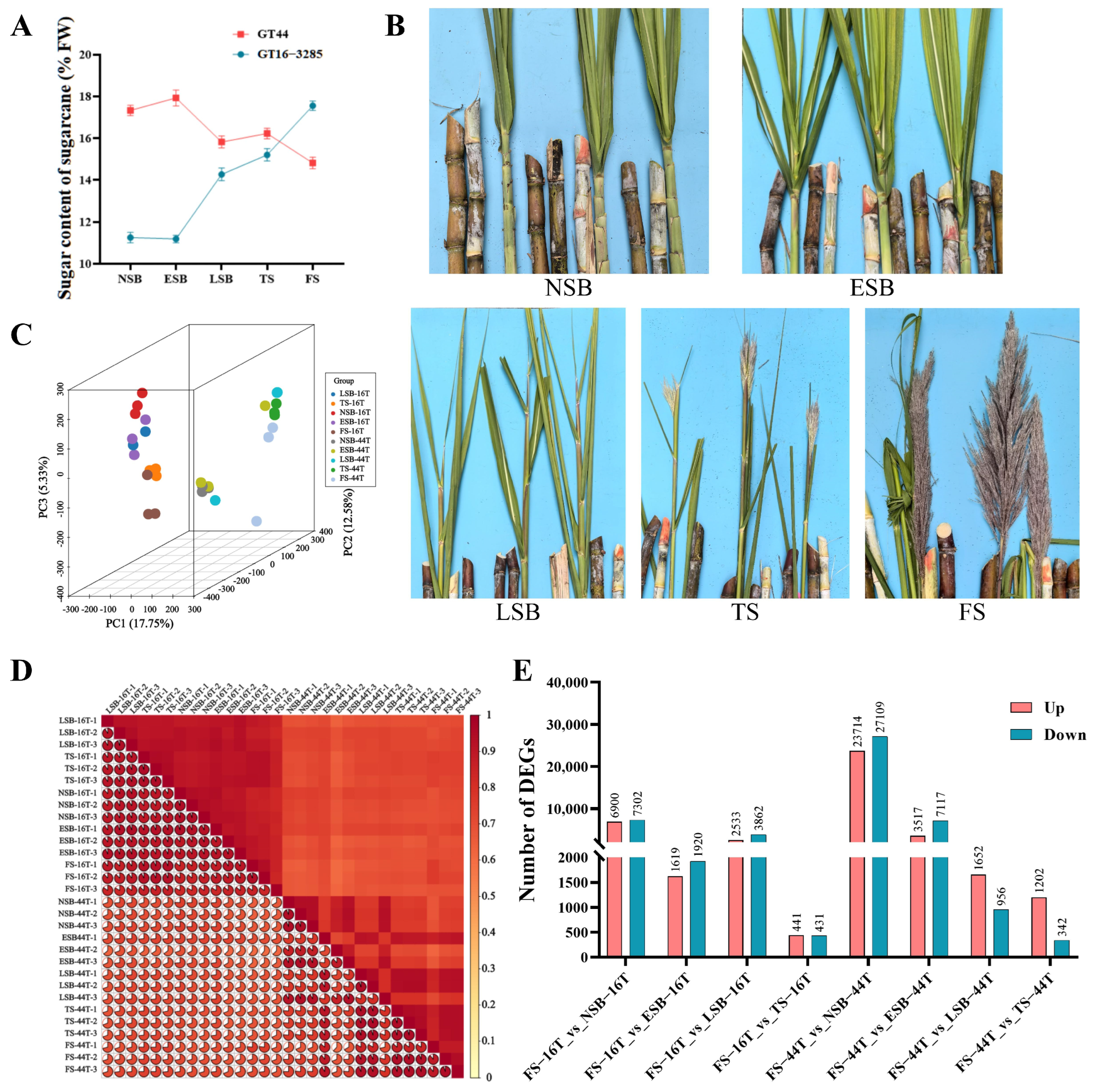
Figure 1. Sugar dynamics, Flowering progression, and global transcriptome quality in two sugarcane cultivars. (A) Sugar content across five flowering stages for GT16 and GT44. (mean ± SE, n = 3 biological replicates per stage), FW (Fresh weight). (B) Morphological series of apical/inflorescence tissues collected on the same day at five stages—NSB, ESB, LSB, TS, and FS—for GT16 and GT44. (C) 3D PCA of RNA-seq libraries. (D) Sample-to-sample Pearson correlation matrix (upper: heatmap; lower: dot plot) (E) Numbers of differentially expressed genes (DEGs; FDR < 0.05, |log2FC| ≥ 1) in pairwise contrasts of FS vs. NSB/ESB/LSB/TS for each cultivar, partitioned into up- and down-regulated sets.
Agronomy 15 02747 g001
Figure 2. GO enrichments, shared DEGs, and temporal expression patterns associated with the flowering transition in GT16. (AD) Gene Ontology (GO) enrichment of DEGs (FDR < 0.05; |log2FC| ≥ 1) between the flowering stage (FS) and earlier stages in GT16: (A) FS vs. NSB (non-spike), (B) FS vs. ESB (early spike-boot), (C) FS vs. LSB (late spike-boot), and (D) FS vs. TS (tasseling). (E) Venn diagram of DEGs from the four contrasts in (AD). (F) Time series clustering of DEGs across NSB→ESB→LSB→TS→FS using Mfuzz (left, z-scored expression heatmaps; right, cluster centroid traces with membership). Abbreviations: NSB, non-spike; ESB, early spike-boot; LSB, late spike-boot; TS, tasseling; FS, flowering stage; DEG, differentially expressed gene; GO, Gene Ontology.
Agronomy 15 02747 g002
Figure 3. GO enrichments, shared DEGs, and temporal expression patterns associated with the flowering transition in GT44. (AD) Gene Ontology (GO) enrichment of differentially expressed genes (DEGs, FDR < 0.05; |log2FC| ≥ 1) between the flowering stage (FS) and earlier stages in GT44: (A) FS vs. NSB, (B) FS vs. ESB, (C) FS vs. LSB, (D) FS vs. TS. (E) Venn diagram of DEGs from the four contrasts in (AD), showing a shared core set (center overlap) together with large stage-specific gene cohorts for each comparison. (F) Mfuzz time series clustering of DEGs across NSB→ESB→LSB→TS→FS (left, z-scored expression heatmaps; right, cluster centroid traces with membership).
Agronomy 15 02747 g003
Figure 4. Opposite temporal expression between cultivars identifies shared candidate genes across flowering. (A) Venn diagram between GT16-Cluster1 and GT44-Cluster5. (B) Venn diagram, between GT16-Cluster4 and GT44-Cluster3. (C,D) Stage-resolved expression of the genes overlapping in panel A shown separately for GT16 (C) and GT44 (D). (E,F) Stage-resolved expression of the genes overlapping in panel B, displayed for GT16 (E) and GT44 (F).
Agronomy 15 02747 g004
Figure 5. Time-resolved metabolomics reveals cultivar-specific dynamics and opposite-trend metabolites during flowering. (A) Three-dimensional PCA of untargeted LC–MS profiles from apical/inflorescence tissues of GT16 and GT44 sampled at five stages (NSB, ESB, LSB, TS, FS). (B) Numbers of differentially accumulated metabolites (DMs) in FS-vs-earlier comparisons for each cultivar (Up/Down counts shown above bars; FDR < 0.05). (C,D) Mfuzz time series clustering of metabolites across NSB→ESB→LSB→TS→FS in GT16 (C) and GT44 (D). Left, z-scored abundance heatmaps; right, cluster centroid traces with membership. GT16 shows late-rising clusters consistent with enhanced storage metabolism, whereas GT44 displays early activation followed by attenuation. (E) Venn diagram between GT16-Cluster5 and GT44-Cluster4; 8 metabolites show reciprocal trends. (F) The eight GT16/GT44 metabolites, including Sedoheptulose (highlighted). (G) Venn diagram between GT16-Cluster4 and GT44-Cluster7; 5 metabolites overlap. (H) The five GT16/GT44 metabolites, including Lysionotin-C-Xylosyl-glucoside (highlighted).
Agronomy 15 02747 g005
Figure 6. Integrated transcriptome–metabolome signals and pathway enrichment explain opposite carbon allocation during flowering in sugarcane. (A,B) Cross-omics correlation heatmaps for GT16 (A) and GT44 (B) in Early booting stage. (C,D) KEGG over-representation of jointly changed features (DEGs/DAMs; FDR < 0.05) in GT16 (C) and GT44 (D) in Early booting stage. (E) Working model of flowering-driven carbon allocation (NSB→ESB→LSB→TS→FS) in GT16 and GT44.
Agronomy 15 02747 g006
Table 1. Genes exhibiting opposite expression trends in GT16 and GT44.
Gene IDGene AnnotationNSB-16TESB-16TLSB-16TTS-16TFS-16TNSB-44TESB-44TLSB-44TTS-44TFS-44T
Sh_So07J0291059--2.613.755.516.93615.4316.9212.346.33.9
Sh_Ss03I0175557--0.980.961.161.862.270.820.370.290.050.02
Sh_Ss06A0234469FOG: RRM domain1.281.831.492.542.591.121.030.610.080.06
Sh_Ss02J0139920Serine protease0.560.70.921.051.6110.8412.946.423.782.15
Sh_So03C0150236--2.422.633.853.665.117.816.325.093.652.67
Sh_Ss04H0210996Fumarylacetoacetase8.567.6916.7114.5118.871.70.740.740.080.04
Sh_So06G0249797Predicted Yippee-type zinc-binding protein2.84.585.616.779.780.90.980.620.180.09
Sh_Ss02H0127675Acyl-CoA reductase0.230.560.40.921.773.733.0210.760.87
Sh_Ss02I0131514Succinate dehydrogenase2.813.634.966.456.882.071.440.950.050.03
Sh_Ss01G0068962Mitochondrial processing peptidase4.566.096.310.8810.166.443.072.760.210.06
Sh_So01C0044634Branched chain aminotransferase BCAT13.522.693.898.898.9164.663.110.590.34
Sh_Ss10F0013919--4.528.185.3714.7712.0512.5411.566.832.911.91
novel.10541--4.161.540.682.020.380.190.731.816.54.34
Sh_So10J0024098--7.193.942.382.151.691.511.432.234.344.15
Sh_So01B0036338--1.110.770.680.190.290.110.130.810.63
Sh_So01H0074036--13.398.727.97.034.876.51613.4320.7514.11
Sh_So01H0071334Conserved protein, contains TBC domain3.291.380.921.921.150.110.231.951.691.36
Sh_Ss03F0161019--3.491.451.391.221.141.681.342.242.733.89
novel.11560--9.014.314.494.012.674.762.35.369.748.92
Sh_Ss03B0147646Glutathione S-transferase36.598.4712.492.951.843.963.2114.5811.5312.64
Sh_Ss04H0212092--7.919.544.784.662.780.170.440.621.591.45
Sh_So03C0151558Calcyclin-binding protein CacyBP5.041.61.281.871.293.964.848.246.977.81
Sh_Ss03B0147107Aspartyl protease0.910.460.20.130.140.430.440.90.671.38
Sh_Ss04H0213186Aspartyl protease13.586.036.357.724.166.2787.3814.6113.43
Sh_Ss02H0129712Predicted spermine/spermidine synthase6.433.473.081.381.210.420.481.12.241.84
Sh_Ss04E0202415--13.9513.997.24.744.352.113.044.394.355.83
Sh_So01K0090514Deoxyribodipyrimidine5.164.282.480.45.932.030.582.465.4611.66
Sh_Ss10I0022398--4.042.861.480.710.770.290.360.980.740.95
novel.16372--4.4322.291.921.071.941.172.464.543.63
Disclaimer/Publisher’s Note: The statements, opinions and data contained in all publications are solely those of the individual author(s) and contributor(s) and not of MDPI and/or the editor(s). MDPI and/or the editor(s) disclaim responsibility for any injury to people or property resulting from any ideas, methods, instructions or products referred to in the content.