1. Introduction
Over the past three decades, global agriculture has shown a steady trend of increasing cattle and small ruminant populations, accompanied by a growing demand for high-quality bulky forages [
1,
2]. However, extreme climatic events—primarily droughts, heat waves, and irregular precipitation patterns—destabilize the productivity of pastures and hayfields [
3]. According to the latest FAO report, the average annual demand for high-protein feed for ruminants is increasing by 1.8% per year, and by 2035 the global deficit of crude protein may exceed 35 million tons of dry matter [
4]. The Sixth Assessment Report of the Intergovernmental Panel on Climate Change projects a further decline in the productivity of grassland ecosystems by 7–17% by 2050, if adaptive measures are not widely implemented [
5].
Kazakhstan ranks among the top five countries worldwide in terms of the largest areas of natural pastures and hayfields. At the same time, the share of cultivated forage lands remains limited: as of 2023, only 3.10 million ha (13.2%) out of 23.37 million ha of arable land were allocated to forage crops [
6]. In Akmola Region, which belongs to the sharply continental climatic zone, perennial grasses occupy only 352 thousand ha (6.5% of arable land), despite the steady increase in cattle and horse populations [
7].
According to the Bureau of National Statistics of the Republic of Kazakhstan), variations in the hydrothermal coefficient (HTC) account for up to 70% of the annual yield fluctuations of perennial grasses. In years with an HTC below 0.8 (e.g., 2021 and 2023), the yield of dry matter did not exceed 1.0–1.2 t/ha, which corresponds to only 20–30% of the biological potential of forage grass species. Under more favorable conditions in 2024 (HTC = 1.5), the yield of legume–grass stands reached 2.5 t/ha, which corresponds to about 60% of their potential productivity and is 2.3 times higher than in drought years [
6,
8].
Given the increasing requirements for the resilience of forage production under climatic fluctuations, the optimization of technological solutions is becoming an important direction of adaptation. These include the selection of resilient species and cultivars of perennial grasses, adjustment of their proportions within forage mixtures, application of growth-stimulating agents, and modification of cutting schedules in accordance with the weather conditions of a given growing season. Such an adaptive strategy contributes to stabilizing productivity and maintaining the quality composition of green biomass under climatic stress conditions characteristic of Northern Kazakhstan.
Among the most promising approaches within adaptive agriculture is the use of legume–grass mixtures, which combine the advantages of both plant groups: the ability of legumes to fix atmospheric nitrogen through symbiotic bacteria and the high drought tolerance of grasses. Such mixed sowings enable plants to better adapt to stress factors, contribute to improving the structure of phytomass, and ensure a more stable forage base under changing weather conditions [
9].
The results of a three-year field experiment in Saskatchewan (Canada) demonstrated that a binary mixture of alfalfa and sainfoin (
Onobrychis arenaria) significantly outperformed monocultures in terms of yield: dry matter increased by 16–38%, while crude protein output rose by 0.8–1.2 t/ha [
10]. Additional data obtained under the steppe conditions of Mongolia confirm the advantages of mixed sowings: the highest winter hardiness was demonstrated by a mixture dominated by alfalfa (60%) and smooth brome (40%), where the overwintering coefficient reached 0.92, while in pure alfalfa it did not exceed 0.81 [
11]. Under the conditions of the Mediterranean region, Di Miceli et al. [
12] reported a land equivalent ratio (LER) of 1.47, indicating a substantial increase in efficiency due to mixed sowings. This indicator means that intercropping provides 47% higher productivity from the same area compared to monocultures. These findings confirm that mixed legume–grass sowings allow for a more efficient use of agroecological resources, enhancing resilience to climatic stresses and ensuring yield stability—an aspect particularly relevant for zones of risk-prone agriculture such as Northern Kazakhstan.
Another important element of the cultivation technology is the application of growth stimulants, which contain amino acids, humic and fulvic acids, seaweed extracts, as well as micro- and macroelements. They are increasingly regarded as an effective means of mitigating abiotic stress in plants [
13,
14].
According to the study by Radkowski et al. [
15], foliar application of the amino acid preparation AGRO-SORB Folium (1–3 L/ha) improved the functional status of Kentucky bluegrass (
Poa pratensis) and perennial ryegrass (
Lolium perenne), while reducing infection by the fungal pathogens
Microdochium nivale and
Drechslera siccans by 16–20%. This confirms the effectiveness of amino acid-based biostimulants in enhancing plant tolerance to both abiotic and biotic stresses. Luz et al. [
16] demonstrated that humic and fulvic acids derived from meat industry waste compost, when applied at a rate of 1 L/ha, increased the yield of marandu grass (
Urochloa brizantha cv. Marandu) by 26% and enhanced the photosynthetic activity of plants. Kovár et al. [
17] demonstrated under laboratory conditions that an extract of brown algae increased the germination of reed fescue (
Festuca arundinacea) by 17–30%.
Thus, under the conditions of a changing climate, unstable water regime, and the need to enhance the resilience of forage production, the relevance of adjusting specific technological elements in the cultivation of perennial grasses is increasing. In particular, there is a need for scientific justification of the optimal species composition and component ratios in forage mixtures, as well as the selection of growth regulators that improve seed germination and stimulate plant growth and development. The present study is aimed at identifying the most effective combinations of perennial grasses (alfalfa, smooth brome, sainfoin), their optimal proportions within mixtures, and their response to pre-sowing and foliar applications of various growth regulators.
The aim of the present study is to determine the effects of component composition, pre-sowing and foliar applications of growth regulators on the growth, development, and productivity of perennial grasses and their mixtures under the climatic conditions of Northern Kazakhstan.
The working hypothesis is that in combined sowings of perennial grasses, the presence of two or more species exerts mutually beneficial effects on the components, while the application of biostimulants that activate metabolism, provide anti-stress protection, and enhance nutrient uptake will increase stress tolerance and ensure the formation of highly productive forage stands.
The scientific novelty of this study is that it establishes the influence of component composition, the proportional ratios of perennial grasses within mixtures, and the use of growth regulators on the productivity and nutritive value of forage stands under the conditions of Northern Kazakhstan. The findings provide a basis for optimizing the composition of hayfield mixtures, taking into account agro-climatic factors.
This article presents the results of a two-year field experiment, including phenological observations, biometric data, plant survival and overwintering, photosynthetic activity, yields, and chemical composition of green biomass, supported by statistical analysis.
2. Materials and Methods
2.1. Research Site
The field experiment was established in 2023–2024 in the steppe zone of Akmola Region (52° N, 69° E), located in the northern part of central Kazakhstan. The region borders Kostanay, North Kazakhstan, Pavlodar, and Karaganda regions. The soil is classified as ordinary medium-loamy chernozem (WRB classification—Haplic Chernozem (loamic)) with the following characteristics: humus 5.4%, pH 8.2, nitrate nitrogen 4.3 mg/kg, available phosphorus 13 mg/kg, and exchangeable potassium 584 mg/kg. The climate is sharply continental, with a long cold winter, short dry summer, and rapid spring warming. The mean annual precipitation is approximately 330 mm. Temperatures range from −40 °C to +44 °C. The relief is predominantly flat with undulating forms, occasionally featuring slightly rolling areas and gentle elevations shaped by glacial–moraine processes [
18,
19].
2.2. Experimental Design
The main objects of the study were perennial grasses: alfalfa (Medicago sativa L.), smooth brome (Bromus inermis Leyss.), and sainfoin (Onobrychis arenaria), cultivated in both pure and mixed sowings. The field experiments were conducted under the conditions of Northern Kazakhstan on experimental plots during 2023–2024, in accordance with the methodological guidelines of the All-Russian Williams Fodder Research Institute (Novosyolov, ed.) and recommendations for experiments with plant growth regulators.
The experiment followed a three-factor design (3 × 8 × 5), comprising 40 treatments in four replications (The experimental design is presented in the
Supplementary Materials.).
Factor A—botanical composition: (i) monocultures of alfalfa (Medicago sativa) and smooth brome (Bromus inermis); (ii) binary mixture of alfalfa + smooth brome; (iii) ternary mixture of alfalfa + smooth brome + sainfoin (Onobrychis arenaria).
Factor B—component ratios (based on pure seeds): 100:0, 0:100, 60:40, 50:50, 40:60, 50:30:20, 40:40:20, 30:40:20.
Factor C—growth regulators: control, AminoMax (AMX), Black Jak (BJ), MillerStart (MS), Lider-S (LS).
The experimental design was in complete block with systematic placement of treatments and four replications. In total, 40 treatments (monocultures and mixtures of perennial grasses) were tested. The size of each plot was 3.5 × 20 m (70 m2).
2.3. Agronomic Practices
In spring, prior to sowing, disk harrowing was carried out using a disk cultivator (working width 6 m) to a depth of 10–12 cm, followed by rolling with a ring-spur roller (6 m), which ensured leveling and loosening of the seedbed. Sowing of perennial grasses was performed in the first 10 days of May (7 May 2023 and 8 May 2024) at a depth of 3 cm using a pneumatic seed drill HORSCH Pronto 8 NT (HORSCH Maschinen GmbH, Schwandorf, Germany). The standard row spacing was 15 cm, and a row seeding method was applied.
Seeding rates were adjusted according to laboratory germination results and averaged: alfalfa—13 kg/ha, smooth brome—25–27 kg/ha, sainfoin—80–112 kg/ha in monoculture.
Neither mineral nor organic fertilizers were applied in order to assess the pure effect of the component composition of forage mixtures and the growth regulators used.
2.4. Seed Treatment and Foliar Applications
Four organic-mineral biostimulants officially registered or permitted for use in the Republic of Kazakhstan were tested in the experiment. These products represent different groups of active substances—amino acids, humic/fulvic acids, and seaweed extracts—which allowed for assessing their combined effects on the growth and development of perennial grasses.
AminoMax (EcoSave LLP, Stepnogorsk, Kazakhstan)—an amino acid concentrate containing 7.3% total nitrogen, ≥20% free L-amino acids, and ≥5% microelements. Mechanism of action: Amino acids are quickly integrated into protein and enzymatic metabolism, accelerating the synthesis of stress proteins and antioxidant enzymes (SOD, CAT, POD), increasing drought and cold resistance. Improves nutrient absorption, photosynthesis, and energy metabolism, and indirectly stimulates the synthesis of phytohormones [
20].
Black Jak (SOFBEY SARL, Mendrisio, Switzerland; distributor—Eridon LLP, Kokshetau, Kazakhstan)—a suspension of leonardite humus containing 19–21% humic acids and 3–5% fulvic acids. Mechanism of action: humic and fulvic acids activate respiration and metabolism, stimulate cell division and root development, increase nutrient absorption and water-holding capacity of the soil, enhance antioxidant protection, bind free radicals and heavy metals, and stabilize cell membranes, increasing the stress resistance of perennial grasses [
21,
22].
Miller Start (Miller Chemical & Fertilizer LLC, Hanover, PA, USA; distributor—Eridon LLP)—a biostimulant based on brown seaweed Ascophyllum nodosum extract (99.4838%) supplemented with brassinolide (0.0032%), gibberellic acid, 1H-indole-3-butyric acid, and zinc. Mechanism of action: Activates hormonal pathways (brasinosteroid, auxin, gibberellin), stimulates cell division and elongation, and promotes shoot and root growth. Enhances the expression of antioxidant defense genes (SOD, CAT, POD), increasing photosynthetic activity and stress resistance in perennial grasses [
23].
Lider-S (BashInCom JSC, Ufa, Russia)—a liquid humate with high concentrations of humic acids (≈55%), fulvic acids (≈7%), and carboxylic acids (≈2%), supplemented with 9% nitrogen (N) and 5% phosphorus (P
2O
5). Mechanism of action: Humic and fulvic acids enhance chlorophyll synthesis, enzymatic activity, and nutrient absorption; nitrogen and phosphorus support energy and structural metabolism. The product activates antioxidant enzymes (SOD, CAT, POD), improves photosynthetic activity and root formation, promoting grass recovery from stress and increasing grass productivity [
24].
Plant growth regulators (PGRs) were applied as a pre-sowing seed treatment and as foliar sprays during the growing season.
For seed treatment, an aqueous working solution was prepared by diluting each product in water at a volume of 10 L per ton of seeds. The seeds were uniformly sprayed with the solution and mixed until complete absorption. The application rates for the products were as follows: Miller Start—1.5 L/t, AminoMax—1 L/t, Lider-S—1 L/t, and Black Jak—0.5 L/t.
To ensure uniform application of the working solution throughout the growing season, four foliar sprayings were carried out using a Forte OP-8 hand-held pneumatic sprayer (8 L tank, manufactured in Ningbo, China) on 70 m2 (0.007 ha) experimental plots. The working solution was prepared at a rate of 100 L per hectare, which corresponded to approximately 0.7 L of solution per plot. The amount of each growth regulator was calculated based on the hectare rate and diluted with water to a total volume of 0.7 L.
Consumption rates per plot: Miller Start—1.0 L/ha → 0.007 L (7 mL) of the product + 0.693 L of water; AminoMax—2.0 L/ha → 0.014 L (14 mL) of the product + 0.686 L of water; Lider-S: 1.0 L/ha → 0.007 L (7 mL) of product + 0.693 l of water; Black Jak: 0.5 L/ha → 0.0035 L (3.5 mL) of product + 0.696 L of water. All sprays were conducted under calm weather conditions at moderate temperatures (16–22 °C).
The application schedule for foliar treatments was as follows:
First application (3–5 leaf stage): Miller Start (1 L/ha) and Lider-S (1 L/ha).
Second application (branching/tillering stage): AminoMax (2 L/ha) and Black Jak (0.5 L/ha).
Third and fourth applications after spring regrowth: all four products were applied at their respective rates (AminoMax—2 L/ha, Miller Start—1 L/ha, Lider-S—1 L/ha, Black Jak—0.5 L/ha).
Different doses and application times of biostimulants were determined based on the concentration of active substances, their physiological mechanisms of action, and manufacturer recommendations adapted to the growing conditions of perennial grasses in Northern Kazakhstan. The timing of applications was defined according to the physiological action of each product and the growth stages of highest plant sensitivity. Miller Start and Lider-S were applied at the early growth stage (3–5 leaves) to stimulate root formation and initial shoot development. AminoMax and Black Jak were applied at the tillering stage to enhance protein and enzymatic metabolism and improve nutrient uptake. Repeated applications after spring regrowth and after the first cut helped restore the photosynthetic apparatus, promote shoot regeneration, and increase stress tolerance.
2.5. Measurement Parameters
Laboratory germination was determined according to GOST 12038-84 “Seeds of agricultural crops. Methods for determining germination” [
25]. One hundred visually healthy seeds were sampled in four replications. Seeds were placed in Petri dishes on moistened filter paper and kept in a thermostat at +22 °C for seven days. Germination energy was recorded on the 3rd day, and laboratory germination on the 7th day. The calculation was performed using the following formula:
A similar method was used in an international publication on yellow sweet clover (
Melilotus officinalis L.), where laboratory germination was determined ‘in Petri dishes, in six replications of 100 seeds each’ [
26].
Field germination was determined after seedling emergence by counting the number of germinated plants within the designated plot area. The calculation was based on the ratio of the number of emerged plants to the number of seeds sown. The result was expressed as a percentage according to the formula:
Phenological observations were carried out throughout the entire growing season. The key developmental stages of perennial grasses were recorded: seedling emergence, regrowth, tillering (for grasses)/branching (for legumes), stem elongation (for grasses), budding/heading, flowering, and the end of vegetation.
Plant survival in autumn was recorded by visually counting the number of plants within a permanent 1 m2 plot in each treatment. Overwintering was determined in spring on the same plot by counting the number of plants that had survived the winter. The percentage of overwintering was calculated as the ratio of the number of plants that survived the winter to the number of plants recorded in autumn. In the treatments with forage mixtures, the counts were carried out separately for each botanical component.
Plant height was measured at the budding/heading stage in the first year of sowing and before cutting in the second year of growth, using 10 plants selected along the diagonal of each plot. In the mixtures, measurements were taken separately for each component.
Leafiness was determined by separately weighing the leaves and stems collected from plants within a 1 m
2 area at the budding/heading stage. The index was calculated using the formula:
Depending on the proportion of leaves in the total biomass, leafiness was classified as follows: very low—up to 30%, low—41–45%, medium—46–48%, good—49–50%, and high—51% and above.
Measurement of green and dry biomass. On each plot, the aboveground biomass was cut from four 1 m2 areas (in the center of the plot) and weighed on the day of cutting. Green biomass yield was calculated as the average across sampling areas (g/m2) and converted to t/ha (1 g/m2 = 0.01 t/ha). To determine dry matter, 300–500 g were sampled from each area, combined into a composite sample per plot, and dried in a drying oven at 60–65 °C to constant weight; after cooling, the samples were weighed. The dry matter coefficient (K) was determined as the ratio of the sample mass after drying to constant weight to its mass before drying. The dry matter yield was calculated by multiplying the green mass yield (t/ha) by K.
For forage mixtures, the harvested material of all components was combined, mixed, and dried as a single composite sample. In the first year of growth, no commercial cutting of perennial grasses was carried out; only sampling cuts were performed at the budding and early flowering stages (in grasses—at the heading/early flowering stage).
The chemical composition of plant samples was determined in the accredited laboratory of AgroComplexExpert LLP (Zhaksı village) according to the previously described methodology [
27]. Calculations of feed metabolizable energy, photosynthetic potential, net photosynthetic productivity, maximum photosynthetic area, and leaf area were performed according to [
28] (
Section 2.5).
2.6. Statistical Data Analysis
The normality of data distribution was tested using the Kolmogorov–Smirnov test. After confirming normal distribution, a multifactorial analysis of variance (three-way ANOVA) was applied to assess the effects of Crop (species), Proportion (mixture ratio), and Treatment (growth regulator), as well as their interactions. In cases of statistically significant differences, Fisher’s LSD (Least Significant Difference) post hoc test was used to identify reliable differences between mean values (p ≤ 0.05). Post hoc comparisons were conducted within each Crop × Proportion combination (i.e., among growth regulator treatments within each species and mixture ratio), not across all treatments globally. Principal component analysis (PCA) was used to describe the structure of photosynthetic parameters. Statistical processing was performed using Statistica 10 software (StatSoft Inc., 2007) Tulsa, OK, USA (StatSoft Inc., 2007).
2.7. Use of Generative AI Tools
During the preparation of this manuscript, ChatGPT (OpenAI, version GPT-5, 2025) was used solely for graphical visualization purposes. The tool assisted in improving the visual design of figures, including the refinement of graph layouts, captions, and element arrangements. All resulting figures and captions were manually verified, corrected, and finalized by the authors.
2.8. Weather Conditions
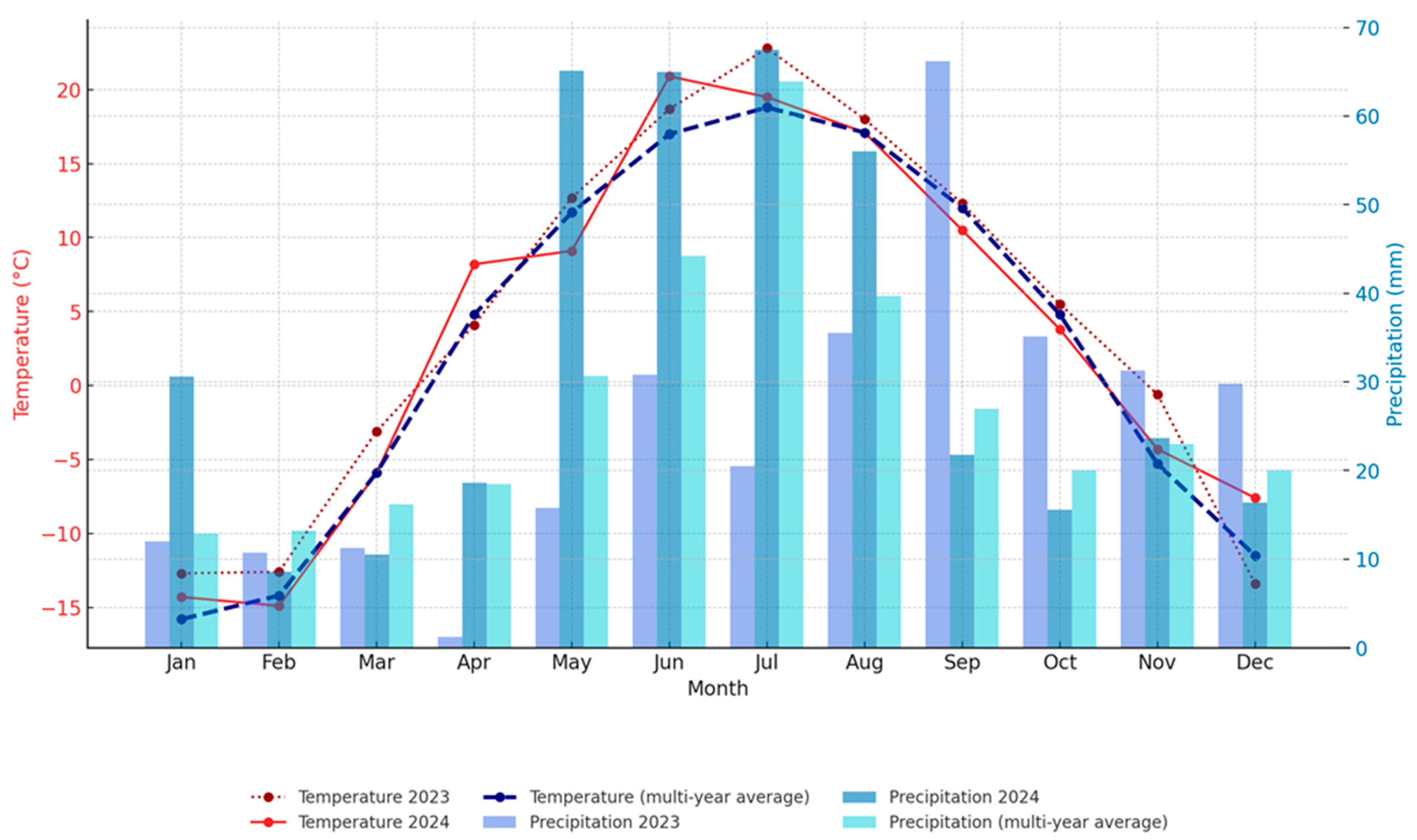
The climate of the study area is sharply continental, characterized by a long cold winter, a rapid transition to positive temperatures in spring, and a short dry summer. According to the meteorological station of Shagalaly village, located in close proximity to the experimental field, the mean annual precipitation is 332 mm, of which 268 mm falls during the growing season (
Figure 1). The frost-free period lasts for about 108 days. The sum of positive temperatures above 10 °C reaches 2100–2200 °C, while the sum of negative temperatures amounts to 1600–1700 °C. The average soil freezing depth is 184 cm, while the snow cover height ranges from 33 to 35 cm. The prevailing winds are southern and southwesterly.
The winter of 2022/23 was cold with stable snow cover, whereas the winter of 2023/24 was milder, with short-term thaws. Against this background, the observation years showed a clear contrast in moisture availability (
Figure 1). In 2023, the weather was characterized by warm and dry conditions: from May to September, precipitation amounted to 168.8 mm (below normal) with elevated temperatures (average for May–September 16.9 °C; July was particularly hot, +5.7 °C above the norm). The precipitation deficit was concentrated in May–July and was partially offset by a wet September. The Selyaninov hydrothermal coefficient confirmed the aridity of the season: K ≈ 0.76 (May 0.45; June 0.57; July 0.30; August 0.65; September 0.94). In contrast, 2024 was characterized by stable moisture supply with temperatures close to the long-term average (mean for May–September 15.4 °C). Total precipitation for May–September reached 275.4 mm (above normal) due to heavy rainfall in May and mid-summer. The corresponding HTC values indicate good moisture availability: K ≈ 1.60 (May 3.40; June 1.07; July 1.10; August 1.05; September 0.94). Taken together, 2023 was marked by pronounced moisture limitations during the first half of the growing season, whereas 2024 provided a favorable water regime for most of the season (see
Figure 1).
3. Results
In 2023 (the first year of growth) and 2024 (the second year of growth), data were obtained on field germination, plant survival/overwintering, plant height, leafiness, phenological intervals, yield, chemical composition, and photosynthetic activity indicators.
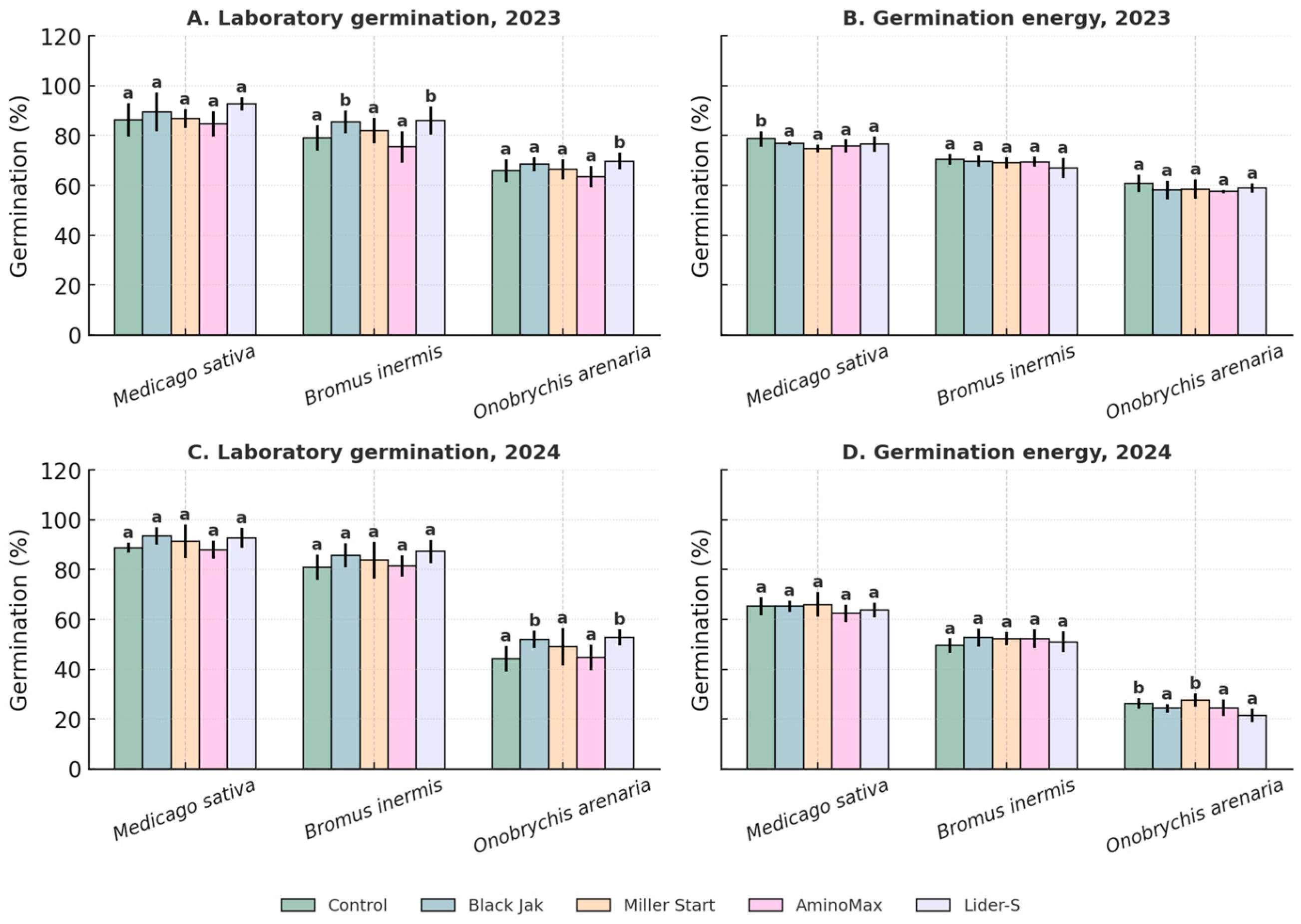
Laboratory germination and germination energy of seeds (
Medicago sativa,
Bromus inermis,
Onobrychis arenaria) for 2023–2024 are shown in
Figure 2 (means; ANOVA + LSD, α = 0.05). In
M. sativa, germination ranged from 86.4% to 92.8%: Black Jak, Miller Start, and Lider-S were significantly higher than the control (87.5%), while AminoMax showed 86.4%; germination energy ranged from 69.5% to 71.6%, with no significant differences. In
B. inermis, germination ranged from 78.5% to 85.6%: Black Jak and Miller Start were higher than the control (80.0%), Lider-S was close to the control, and AminoMax showed 78.5%; germination energy ranged from 59.5% to 61.8%, with no significant differences. In
O. arenaria, germination ranged from 54.1% to 61.2% and germination energy from 40.6% to 43.4%; no statistically significant effects of treatments were detected for either parameter.
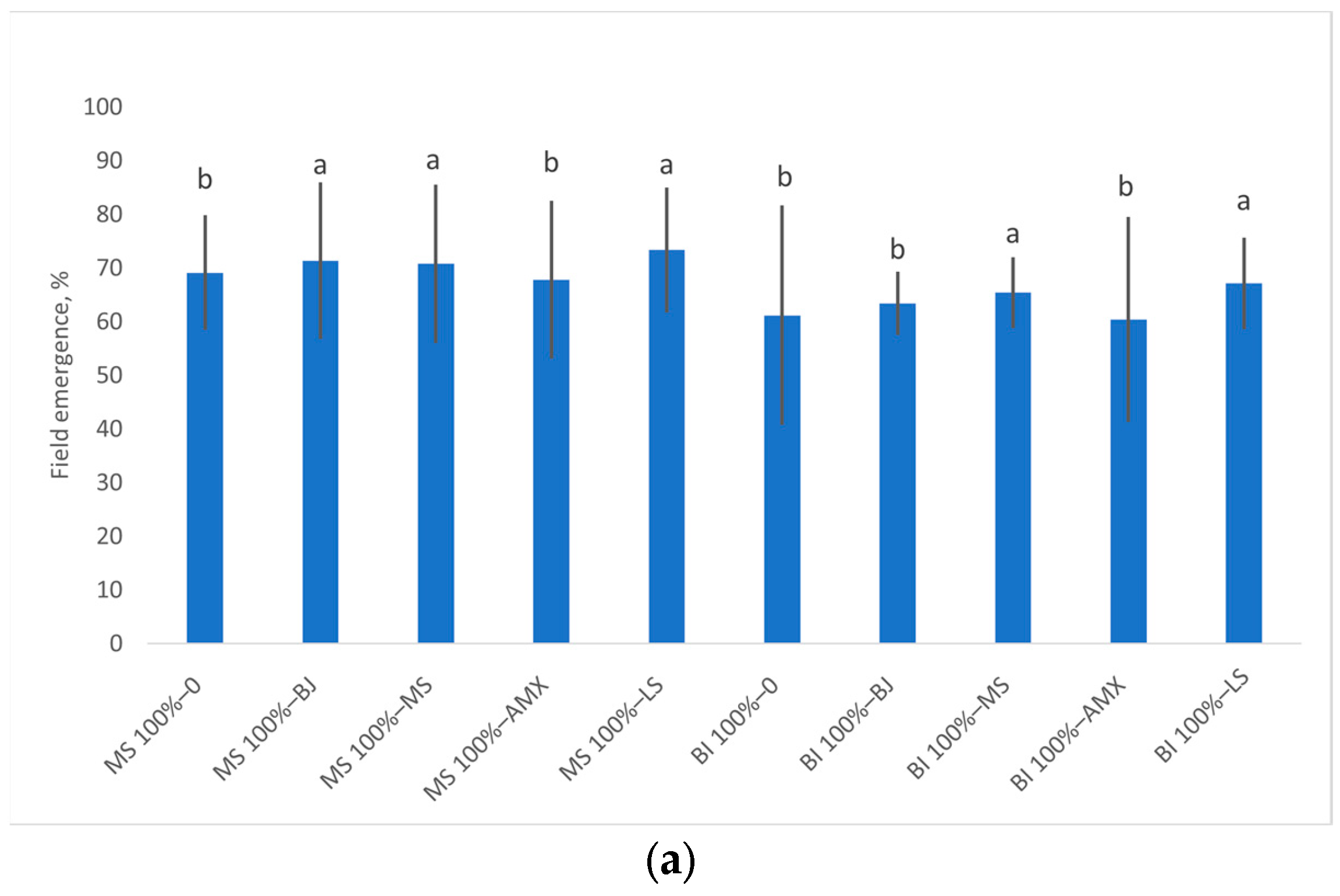
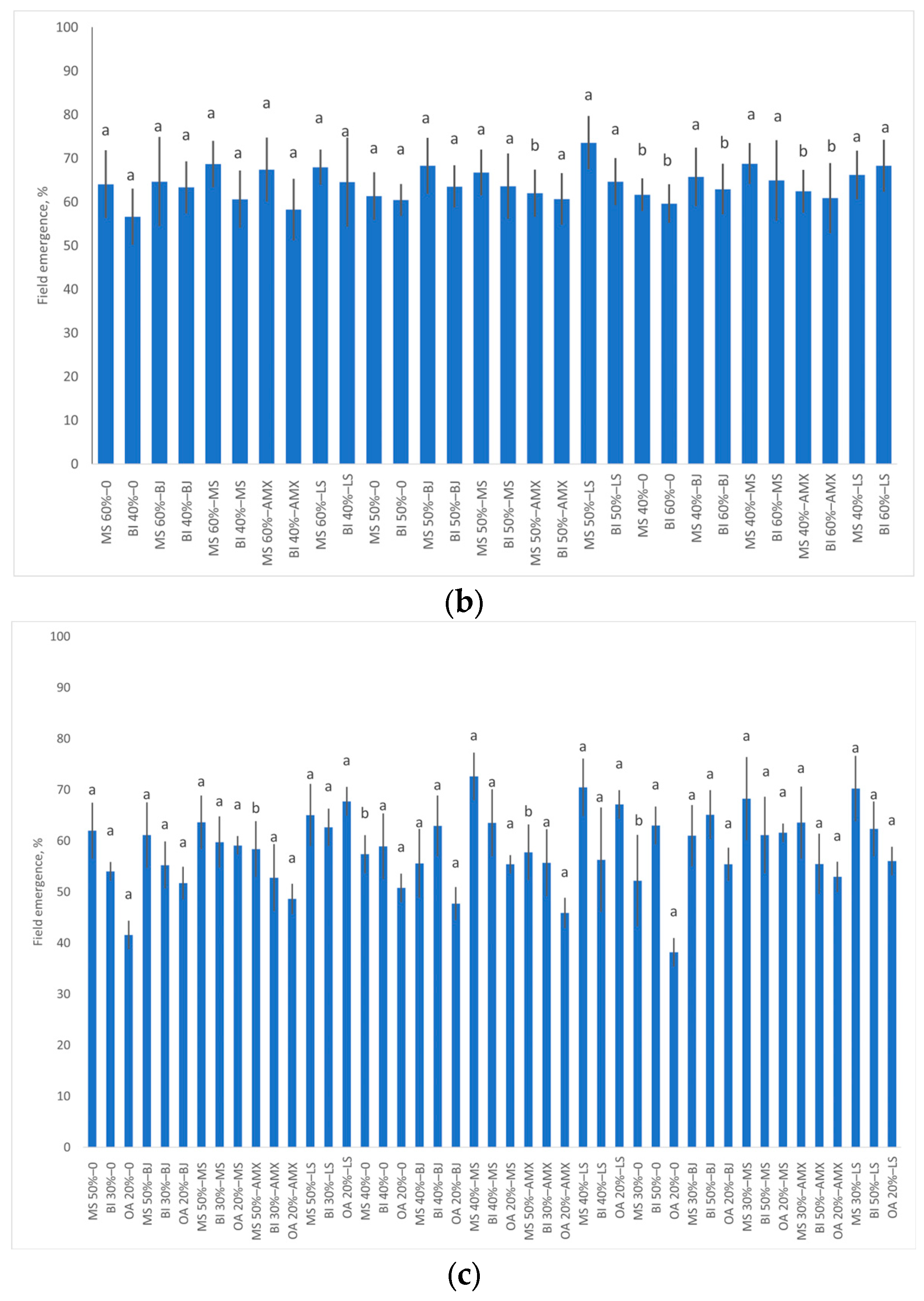
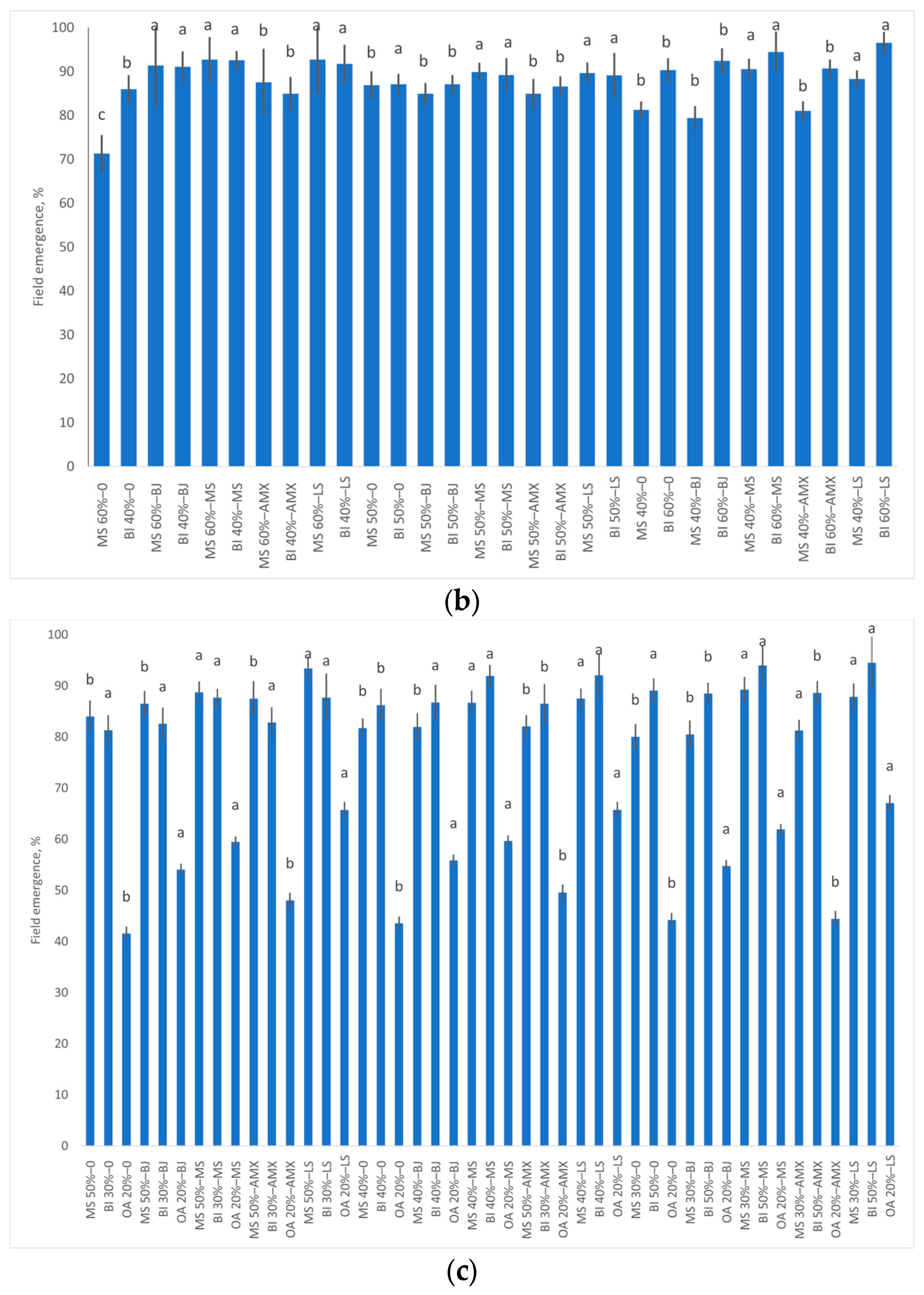
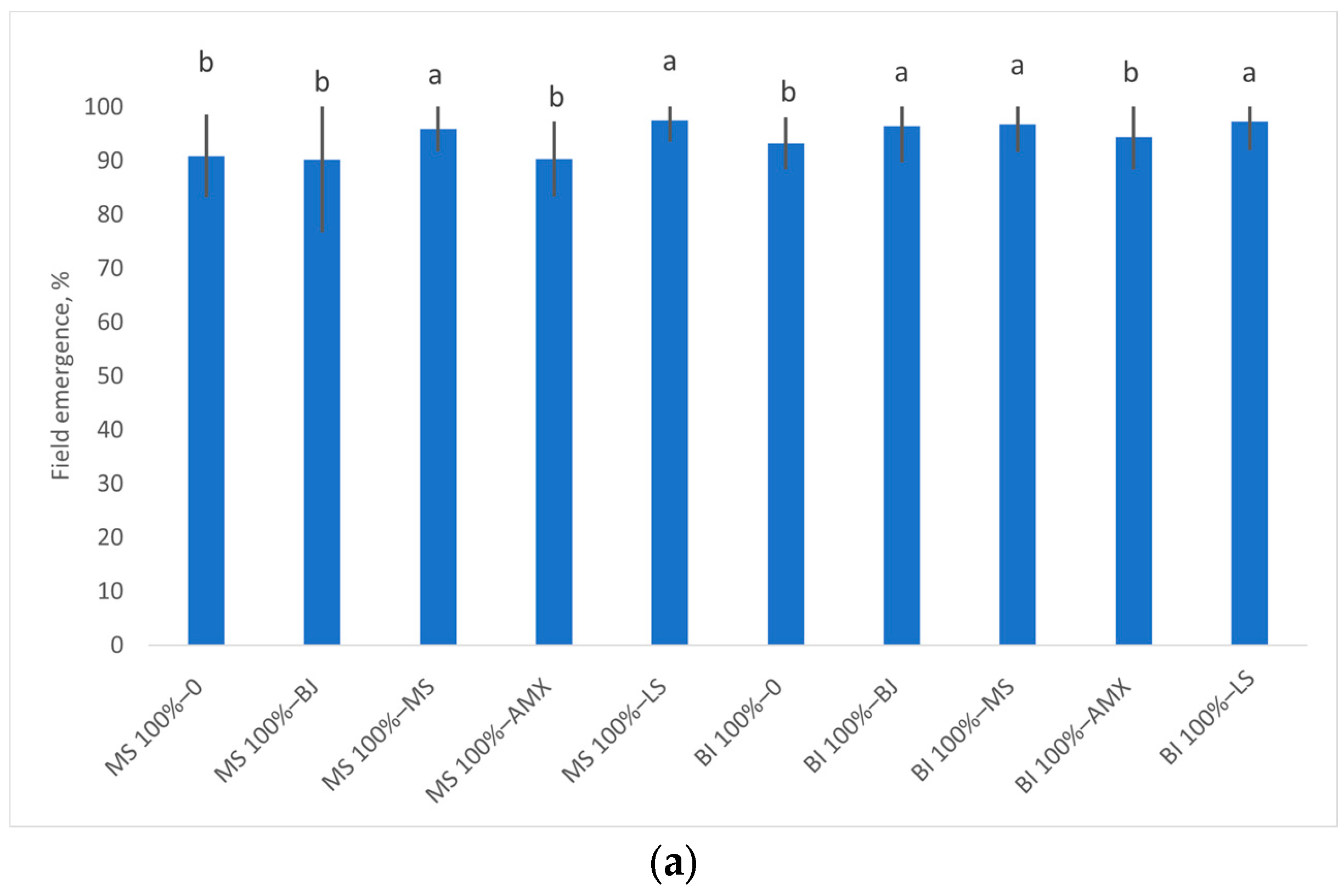
Field germination (means; ANOVA + LSD, α = 0.05) is presented in
Figure 3 and
Figure 4. In monocultures in 2023, the values were as follows:
Medicago sativa—68–73% (control 69%),
Bromus inermis—60–67% (control 61%); the best values were observed with Lider-S, while lower values were recorded with AminoMax. In 2024, the germination of monocultures increased:
M. sativa—90–98% (control ~93%),
B. inermis—93–97% (control ~95%); the highest groups were more frequently formed under Lider-S and Miller Start treatments. In the MS + BI mixtures (60:40; 50:50; 40:60) in 2023, the following ranges (%) were obtained: MS 64–69/BI 57–65; MS 62–74/BI 60–65; MS 62–66/BI 61–68. In 2024: MS 84–87/BI 88–91; MS 83–86/BI 88–92; MS 82–86/BI 90–93. In the three-component mixtures MS + BI + OA in 2023, the values were as follows: MS 56–73, BI 53–64, OA 38–68; in 2024 they were as follows: MS ~84–88, BI ~85–91, OA ~45–67. The lowest values for OA were observed in the 30:50:20 control, whereas the highest values were recorded under Lider-S in the 50:30:20 mixture.
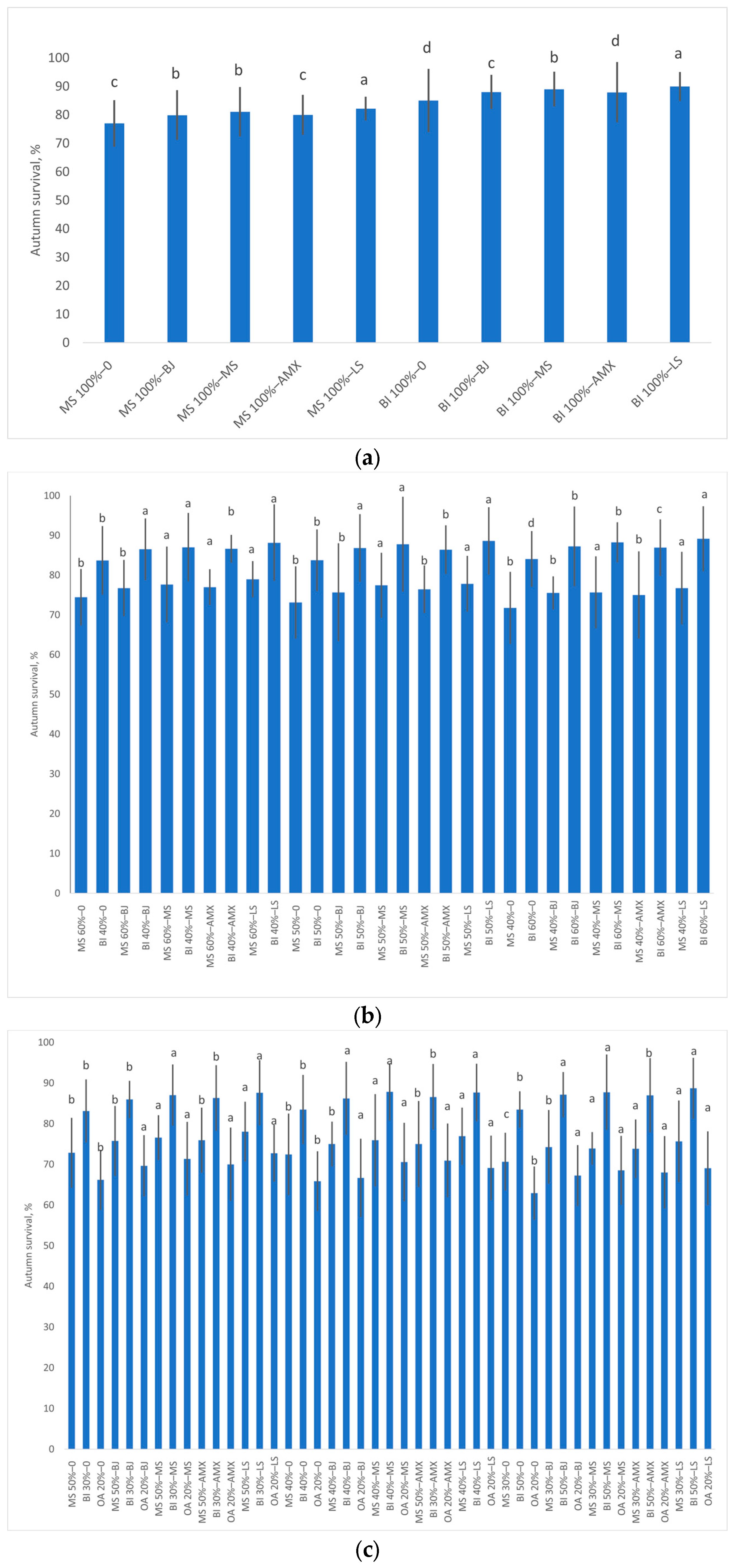
Autumn survival reflects the stability of the established forage stand (
Figure 5). In monocultures, the following values were observed:
Medicago sativa—77–82% (control 77%, maximum under Lider-S),
Bromus inermis—85–90% (control 85%, maximum under Lider-S). In the MS + BI mixtures at ratios of 60:40, 50:50, and 40:60, the values were as follows: MS 74–79% and BI 84–88%; MS 73–78% and BI 84–89%; MS 72–77% and BI 84–89%, respectively. In the three-component MS + BI + OA mixtures, the values ranged as follows: MS 71–78%, BI 83–89%, and OA 63–73%. The lowest values for OA were observed in the 30:50:20 control, while the highest were recorded under Lider-S in the 50:30:20 mixture. The treatments formed statistically distinct groups (ANOVA + LSD, α = 0.05); the highest values were more frequently associated with Lider-S and Miller Start treatments.
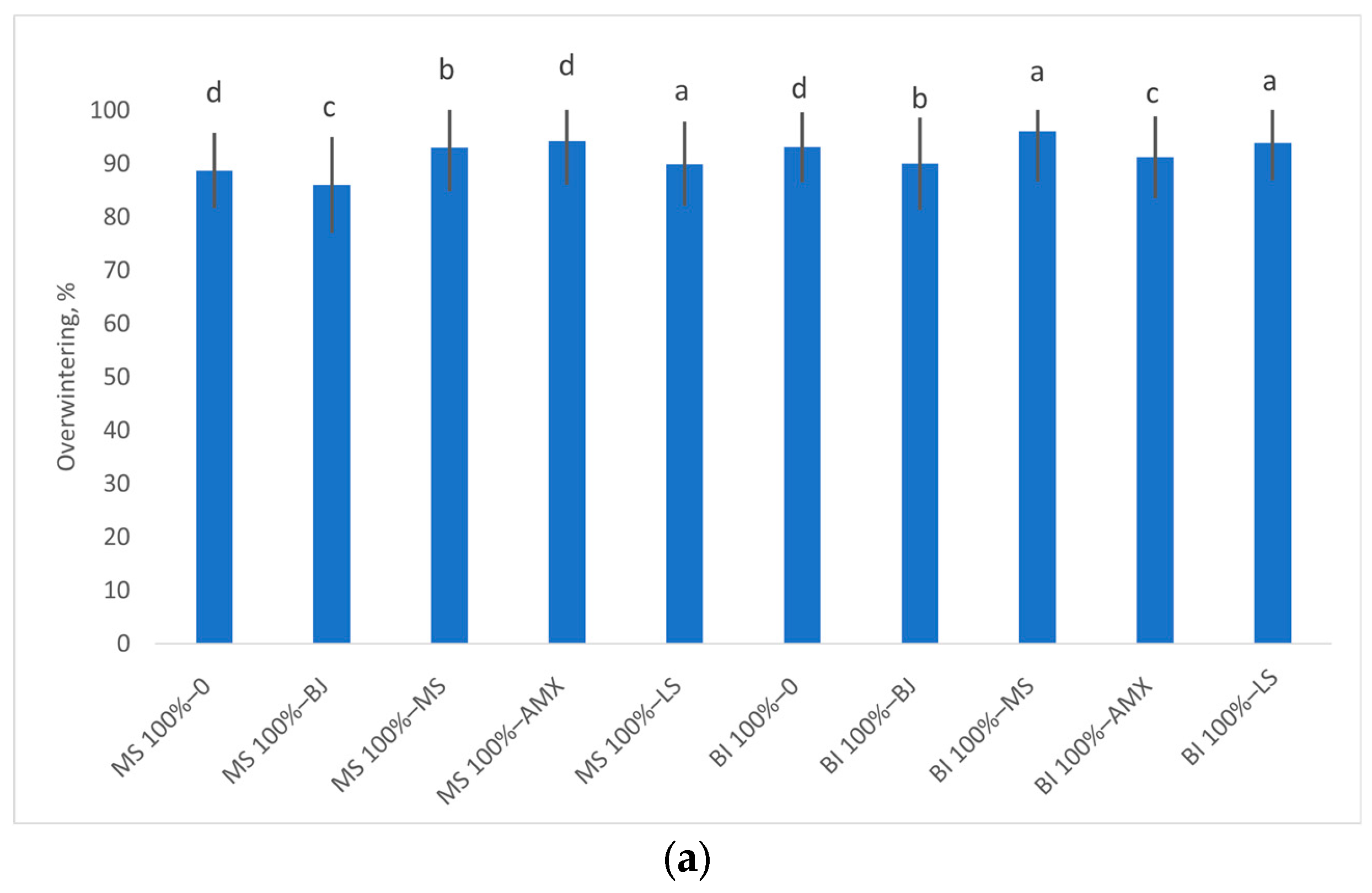
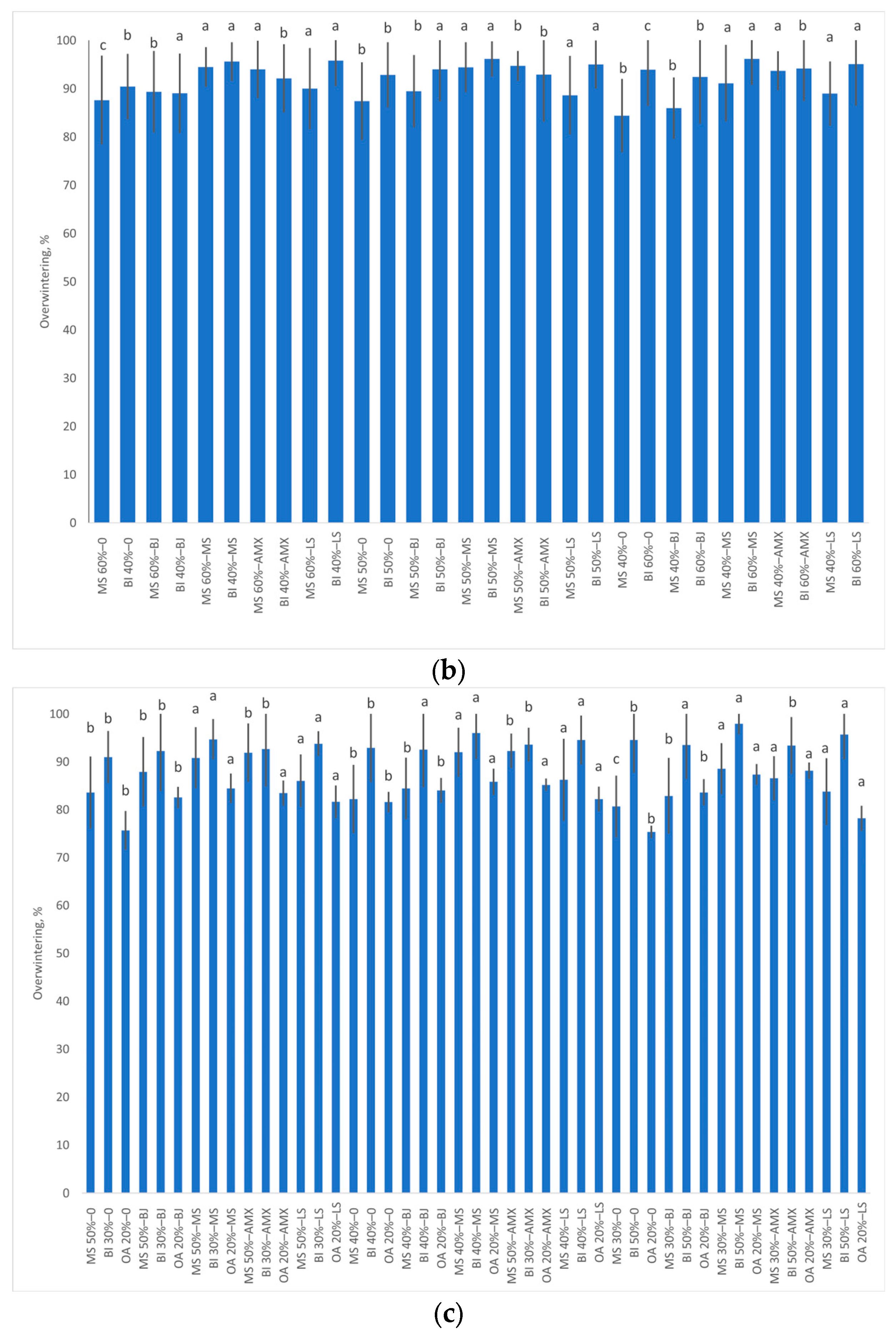
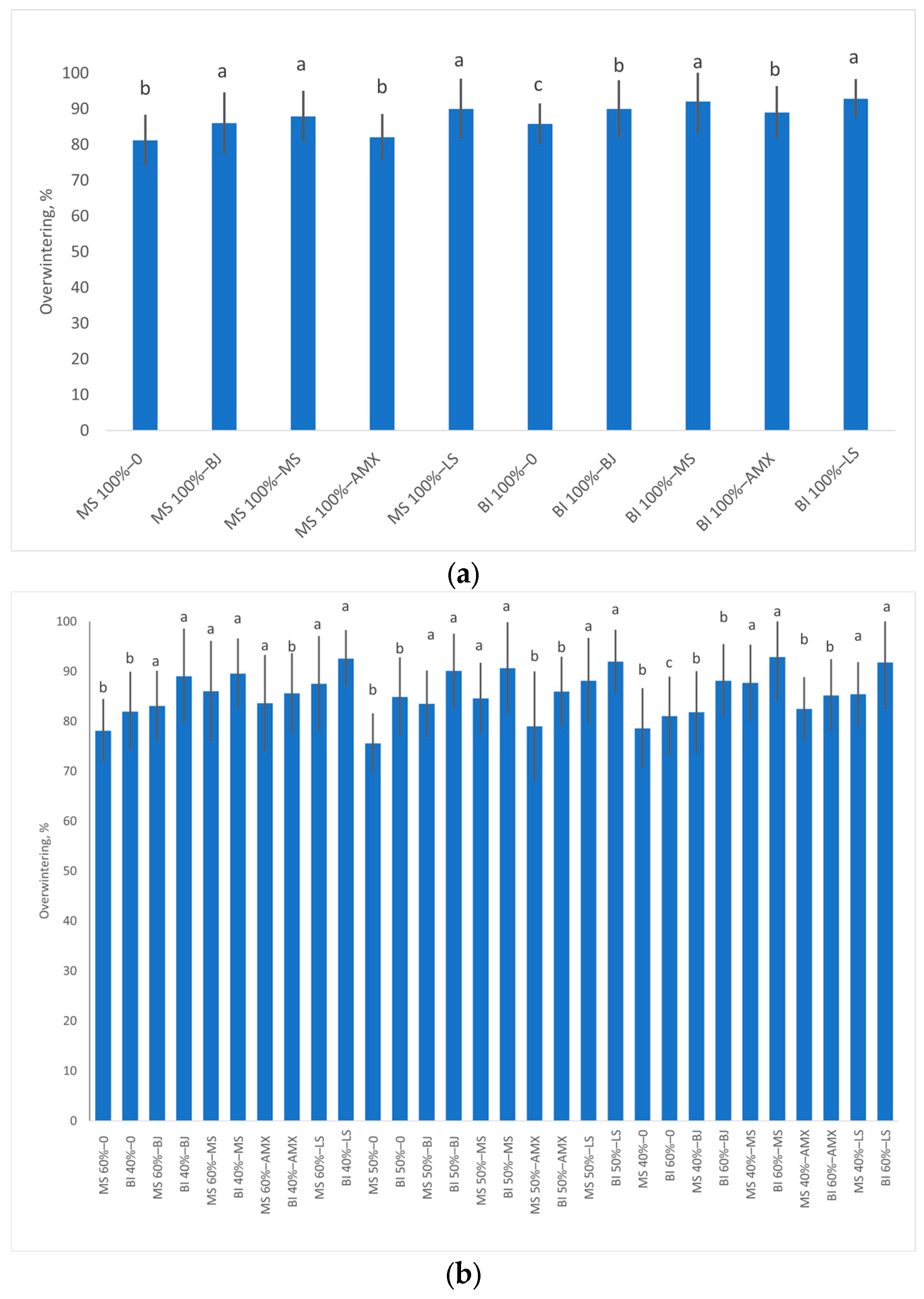
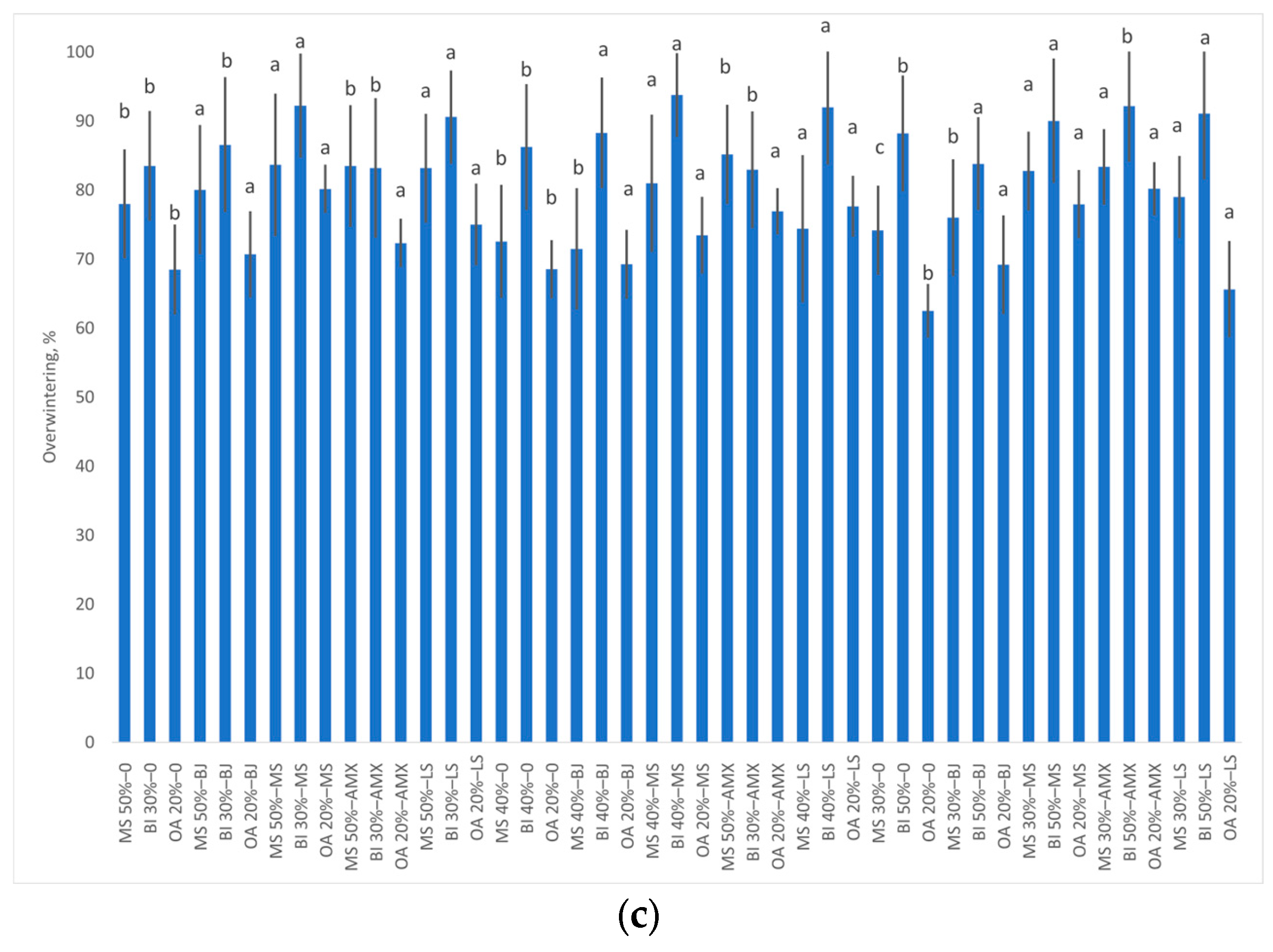
Overwintering in 2024 (
Figure 6) was characterized by high values: in monocultures,
Medicago sativa—81–90% (control 81%, maximum under Lider-S),
Bromus inermis—86–93% (control 86%, maximum under Lider-S). In the two-component MS + BI mixtures, at the 60:40 ratio, MS ranged from 78 to 88% and BI from 82 to 93%; at 50:50—MS 76–88% and BI 85–92%; and at 40:60—MS 79–88% and BI 81–93%. In the three-component MS + BI + OA mixtures, the ranges were as follows: at 50:30:20—MS 78–84%, BI 83–92%, OA 68–80%; at 40:40:20—MS 71–85%, BI 83–94%, OA 69–78%; and at 30:50:20—MS 74–83%, BI 84–92%, OA 63–80% (the lowest OA values were recorded in the 30:50:20 control). The treatments formed statistically distinct groups (ANOVA + LSD, α = 0.05), with the highest values most frequently observed under Miller Start and Lider-S.
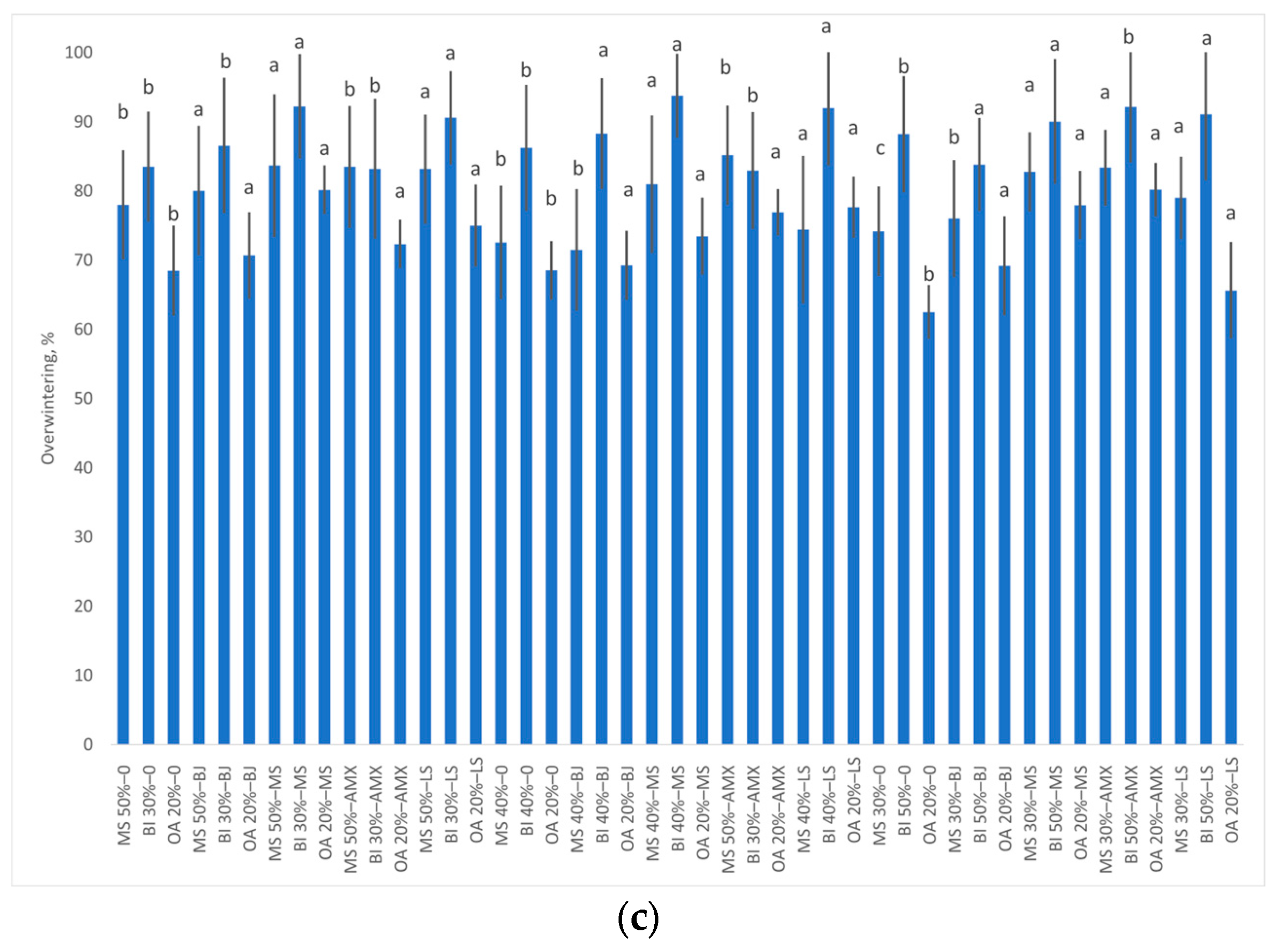
During the 2024 growing season, survival from spring to autumn remained high (
Figure 7): in monocultures,
Medicago sativa—87–92%,
Bromus inermis—90–94%. In the MS + BI mixtures, the values were as follows: at 60:40—MS 86–91% and BI 83–93%; at 50:50—MS 83–90% and BI 85–92%; at 40:60—MS 82–91% and BI 87–92%. In the three-component MS + BI + OA mixtures, the overall ranges were MS 80–91%, BI 82–94%, and OA 75–85%, with OA values consistently lower than those of MS and BI. The highest survival levels were more frequently observed in treatments with Miller Start and, in some cases, with AminoMax, whereas the control variants were located at the lower margin of the specified ranges.
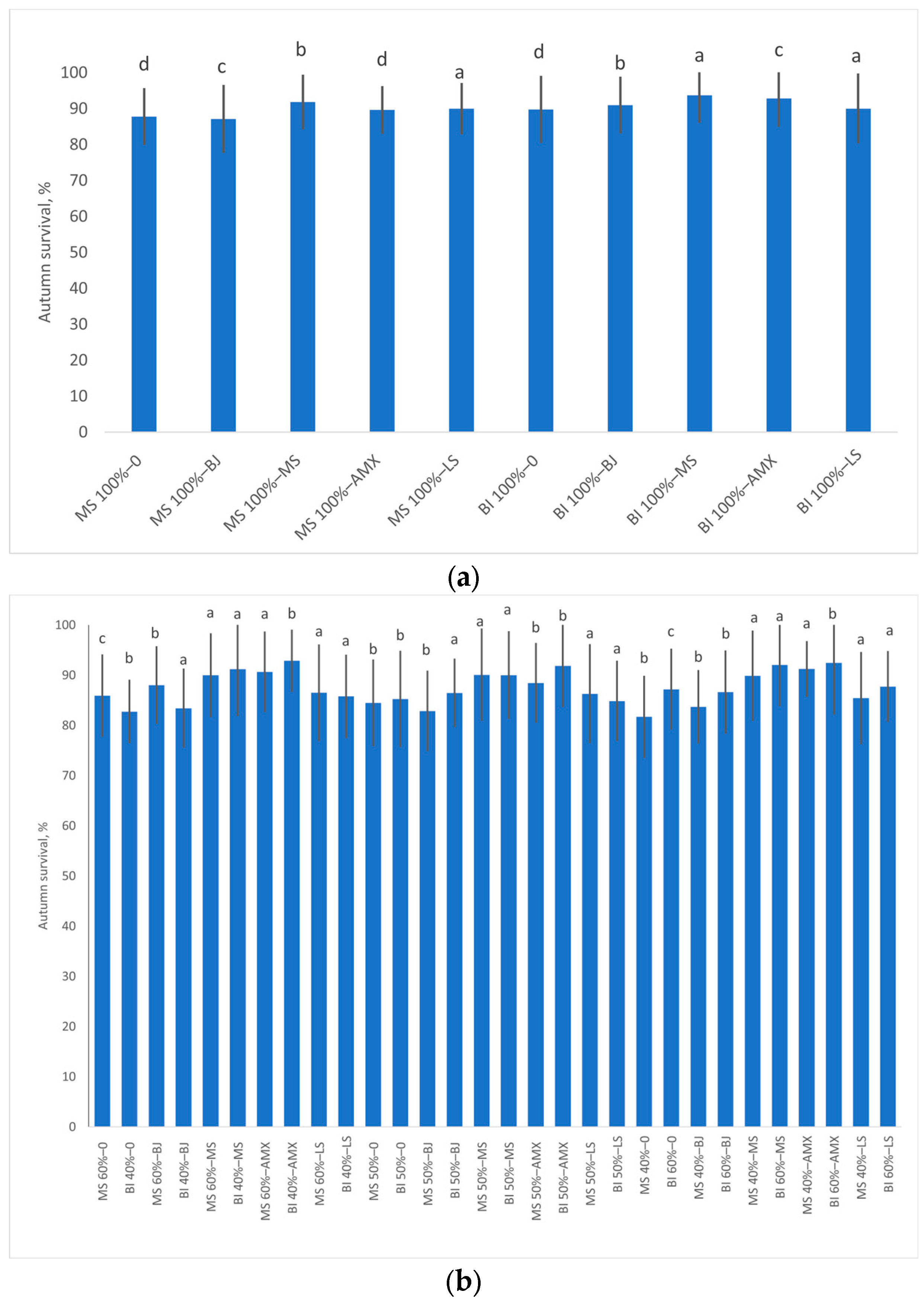
Overwintering in 2025 confirmed the trends of stand resilience (
Figure 8): in monocultures,
Medicago sativa—86–94%,
Bromus inermis—90–96%. In the two-component MS + BI mixtures, MS showed 83–95% (60:40—88–95%, 50:50—83–95%, 40:60—84–94%), while BI ranged from 89 to 96% (89–96%, 92–96%, and 92–96%, respectively). In the three-component MS + BI + OA mixtures, the values were MS 81–92%, BI 84–98%, and OA 75–88%, with OA consistently lower than MS and BI. The highest levels were more frequently recorded under Miller Start and Lider-S treatments; differences among variants were confirmed by LSD at α = 0.05.
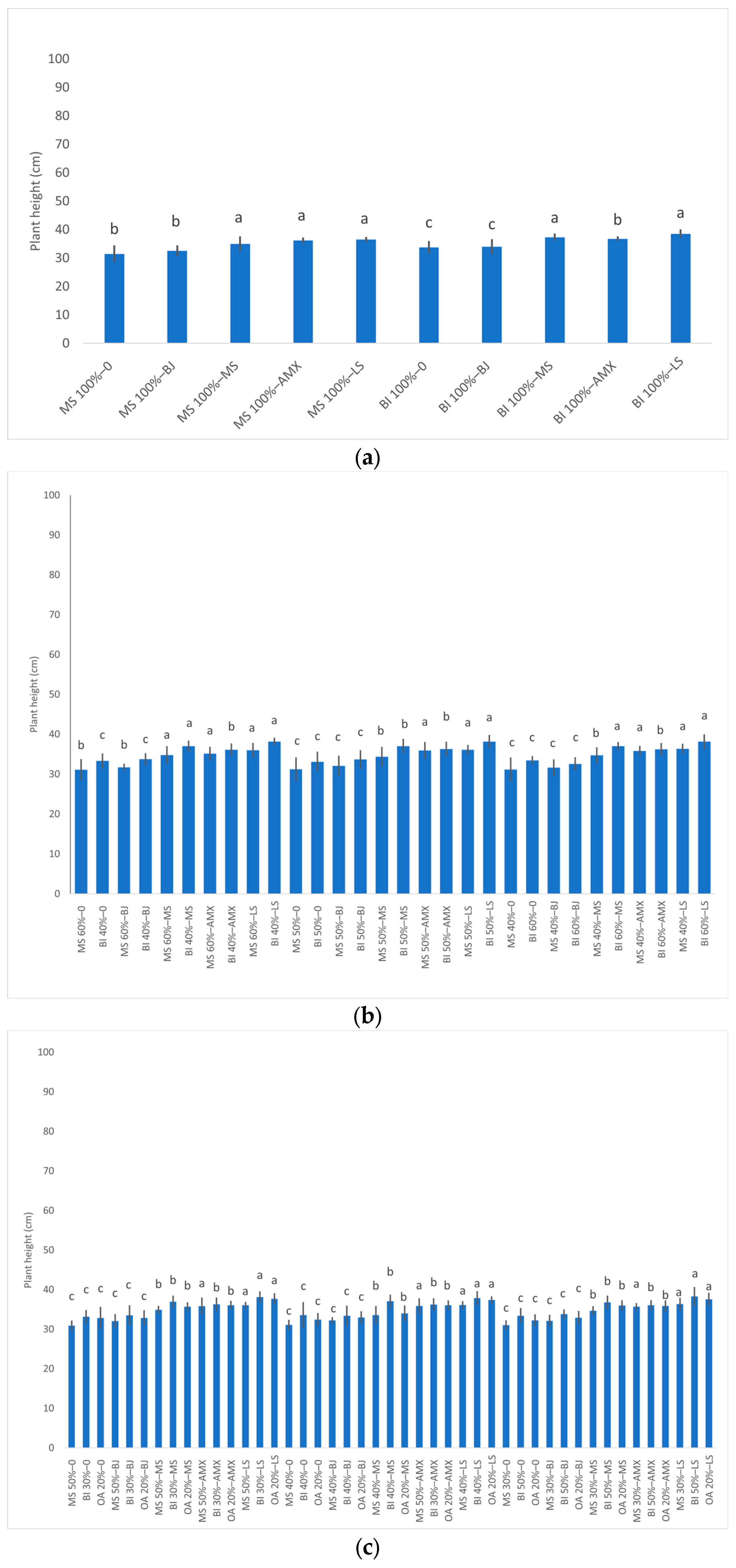
Morphological traits corresponded to the phenological profile and interannual variability. In 2023, plant height ranged from 31 to 37 cm in
Medicago sativa, 33–39 cm in
Bromus inermis, and approximately 32–38 cm in
Onobrychis arenaria (in mixtures) (
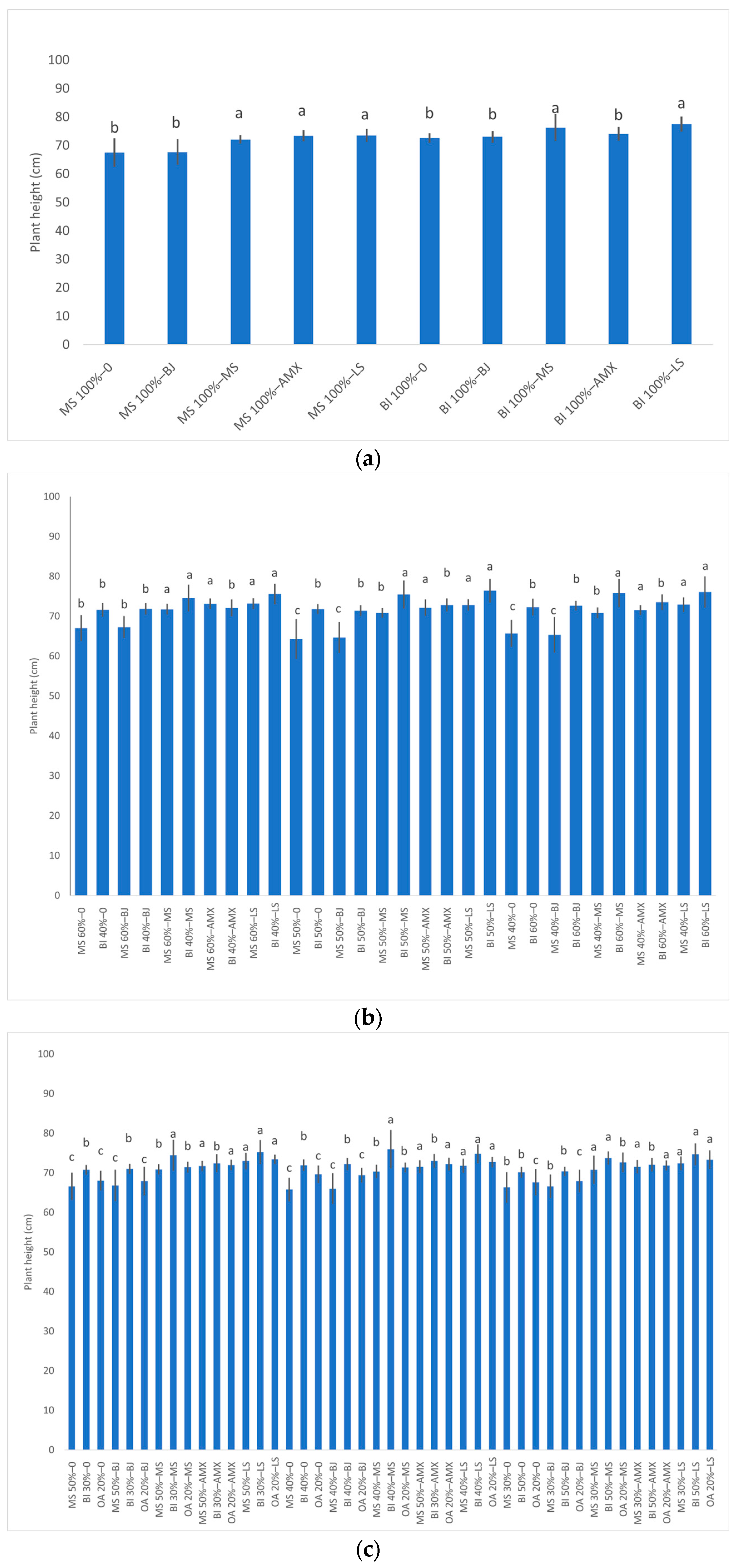
Figure 9). In the two-component MS + BI mixtures at ratios of 60:40, 50:50, and 40:60, plant height was 31–36 cm for the MS component and 34–39 cm for the BI component. In the three-component MS + BI + OA mixtures at ratios of 50:30:20, 40:40:20, and 30:50:20, the component values corresponded to the species-specific ranges for the year: MS—31–36 cm, BI—34–39 cm, OA—32–38 cm. In 2024, plant height was within the following ranges:
M. sativa 66–74 cm,
B. inermis 71–78 cm, and
O. arenaria ≈65–76 cm. In the MS + BI mixtures, component height was MS—66–73 cm and BI—71–78 cm, while in the MS + BI + OA mixtures the values were MS—66–73 cm, BI—71–78 cm, and OA—65–76 cm (
Figure 10).
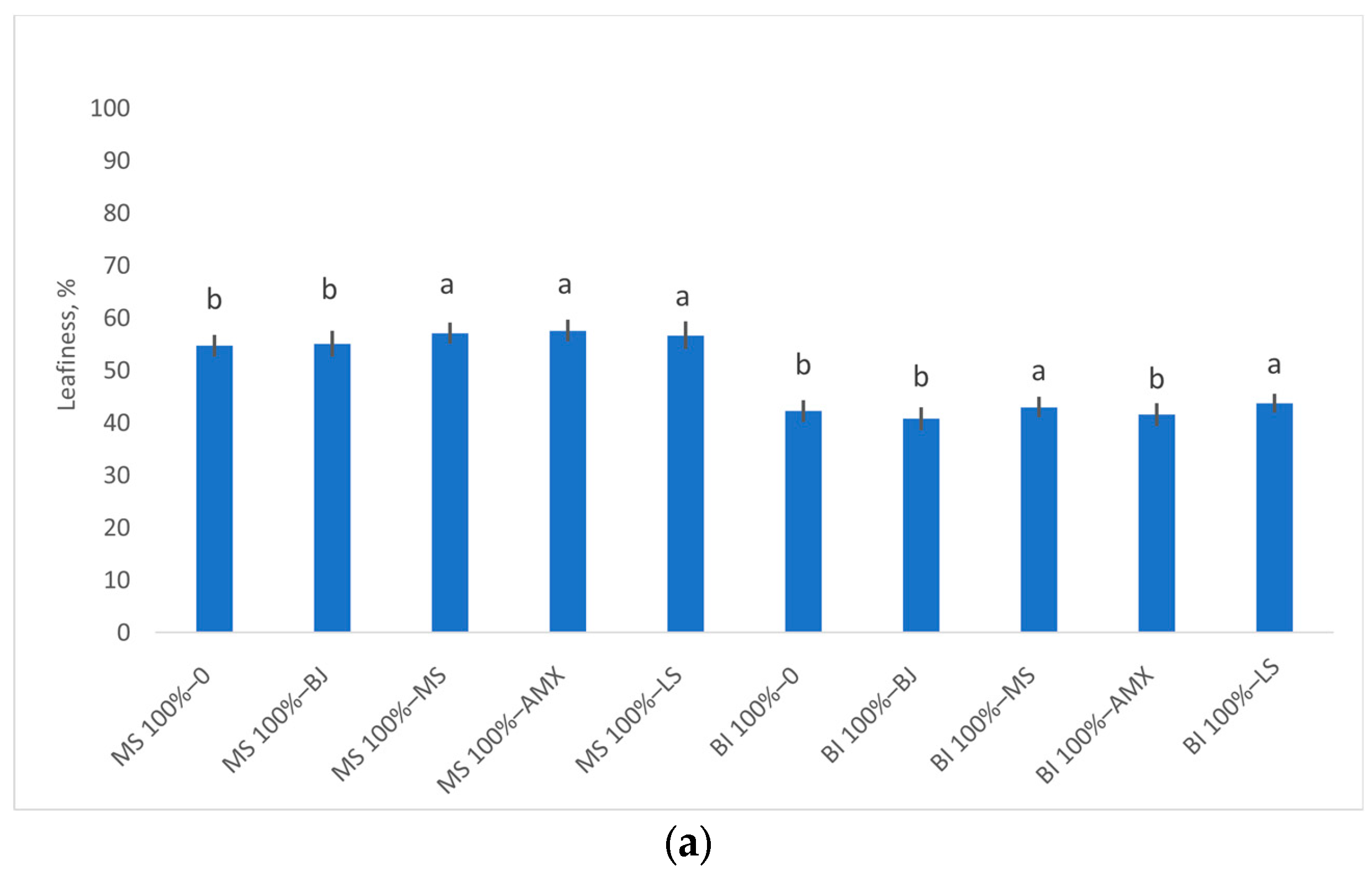
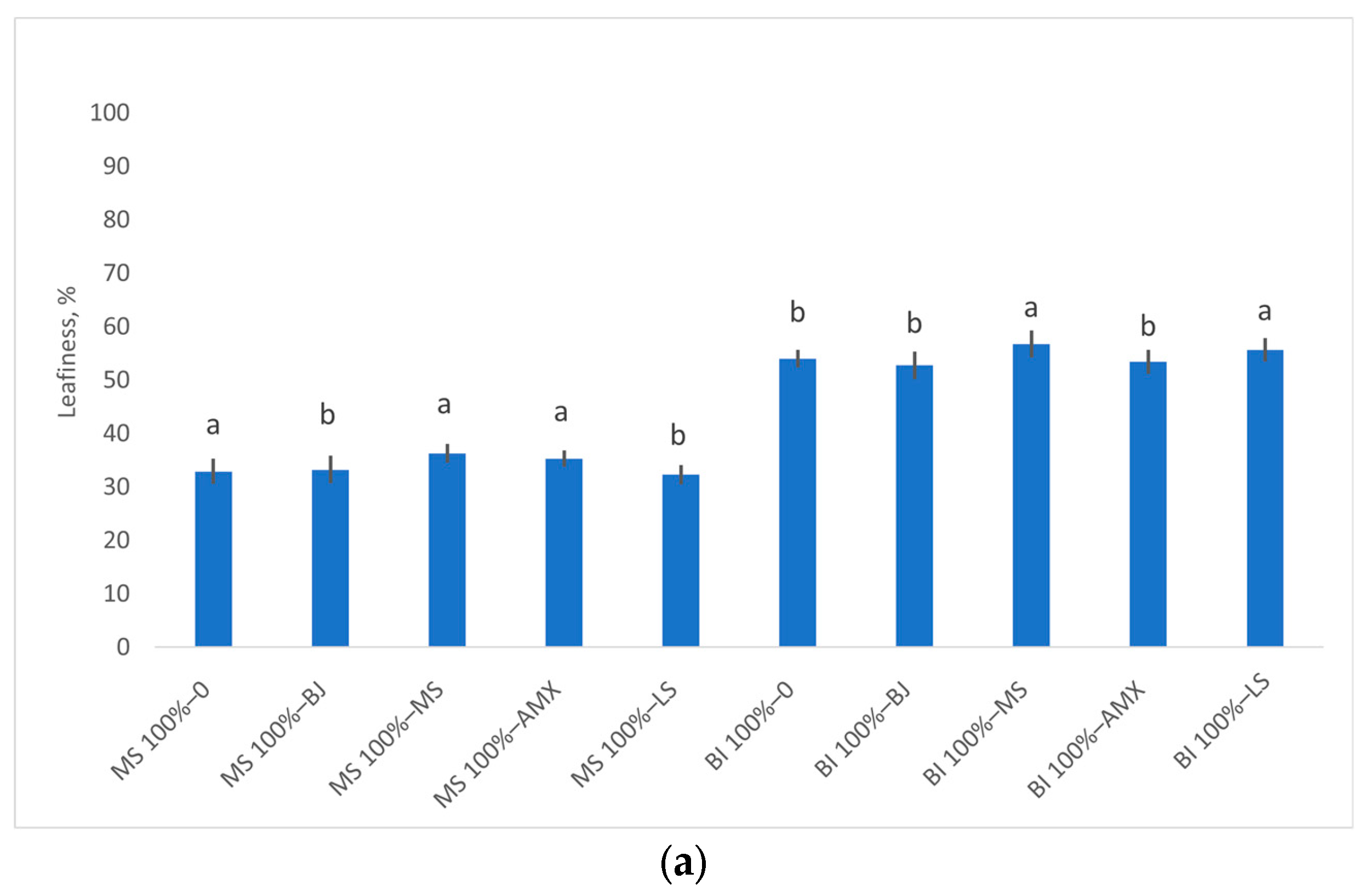
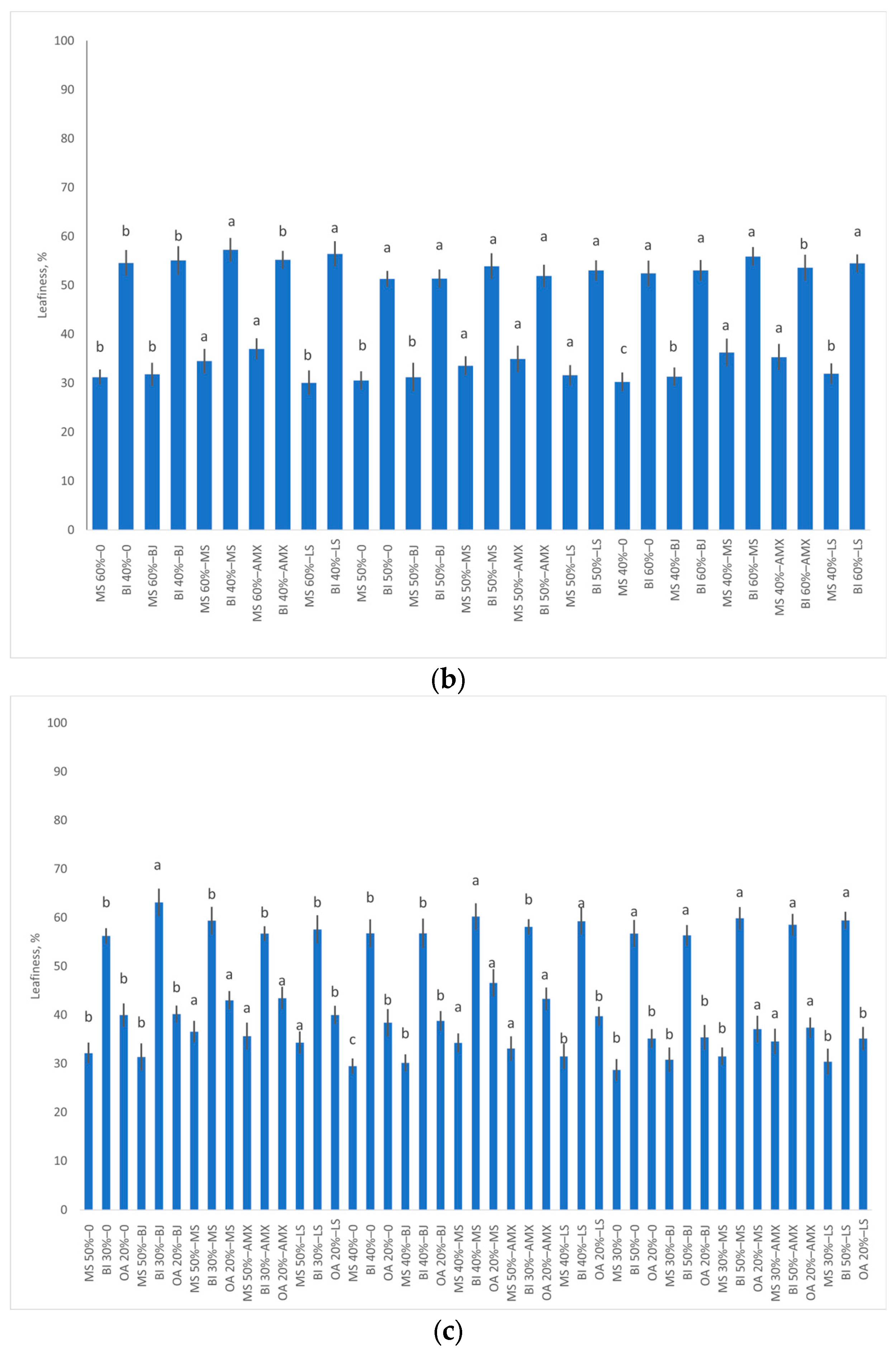
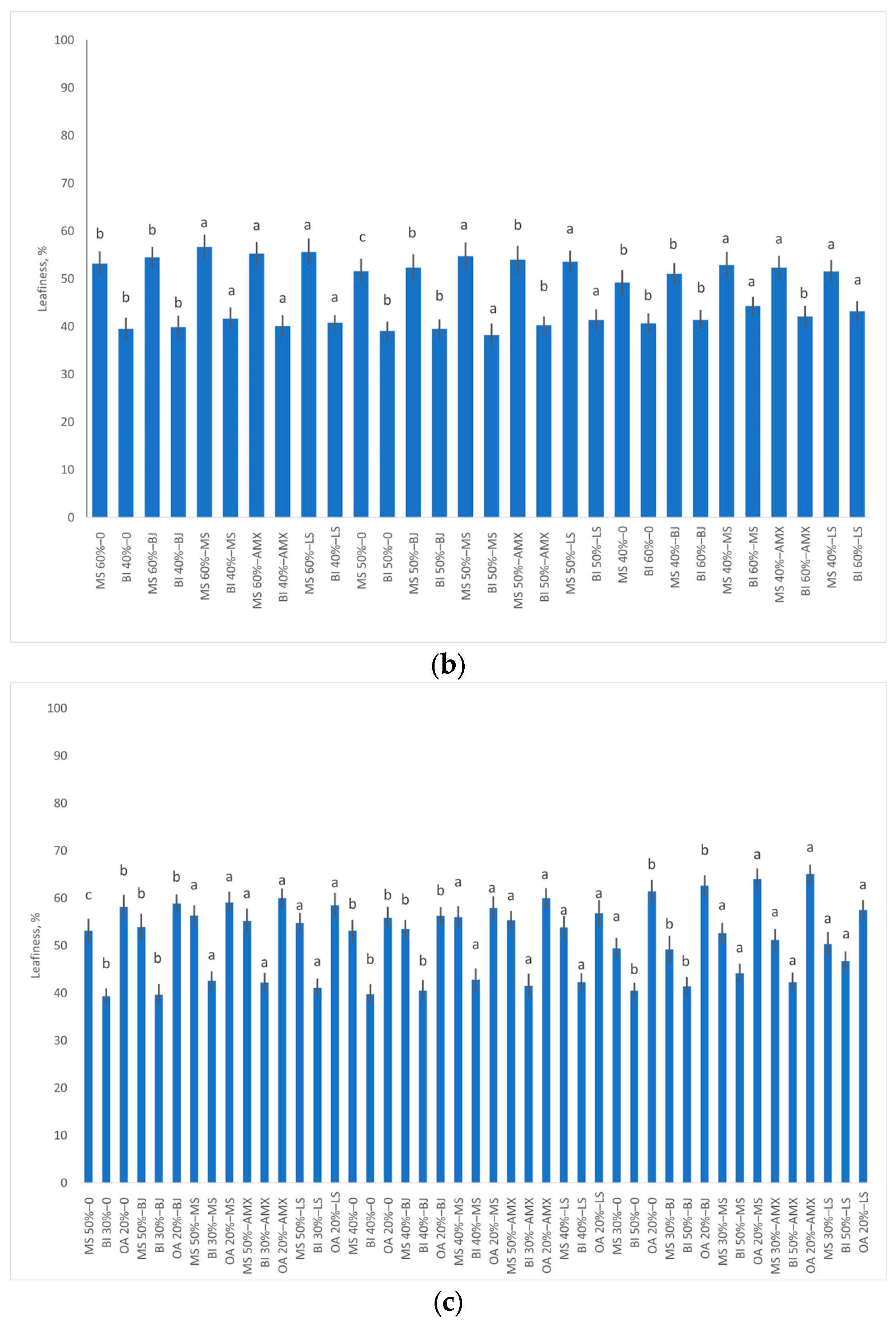
Leafiness (leaf fraction, %) by species and mixtures in 2023–2024 maintained stable species-specific ranges (
Figure 11 and
Figure 12). In 2023, monocultures showed the following values:
Medicago sativa 54.7–57.6%,
Bromus inermis 40.8–43.8%. In MS + BI mixtures at 60:40—MS 53.2–56.7% and BI 39.5–41.7%; at 50:50—MS 51.6–54.7% and BI 38.2–41.4%; at 40:60—MS 49.2–52.9% and BI 40.7–44.3%. In three-component MS + BI + OA mixtures at 50:30:20—MS 53.1–56.3%, BI 39.3–42.6%, OA 58.2–60.0%; at 40:40:20—MS 53.1–56.0%, BI 39.8–42.8%, OA 55.9–60.0%; and at 30:50:20—MS 49.2–52.6%, BI 40.5–46.7%, OA 57.5–65.1%. In 2024, monocultures showed the following values:
M. sativa 32.3–36.2%,
B. inermis 52.7–56.7%. In MS + BI mixtures at 60:40—MS 30.1–37.0% and BI 54.5–57.2%; at 50:50—MS 30.5–34.9% and BI 51.3–53.9%; at 40:60—MS 30.2–36.2% and BI 52.4–55.9%. In MS + BI + OA mixtures at 50:30:20—MS 31.3–36.5%, BI 56.2–63.1%, OA 39.9–43.4%; at 40:40:20—MS 29.4–34.2%, BI 56.7–60.2%, OA 38.4–46.6%; and at 30:50:20—MS 28.7–34.5%, BI 56.3–59.8%, OA 35.1–37.4%.
Regarding growth regulators, in 2023, MS showed maximum values in mixtures under Miller Start (and under AminoMax in monoculture), BI reached maxima under Lider-S in monoculture and more frequently under Miller Start in mixtures (exceptions: 50:50 and 30:50:20—Lider-S), while OA peaked under AminoMax. In 2024, BI achieved the highest values under Miller Start across almost all ratios (exception: 50:30:20—Black Jak), MS showed maxima under Miller Start in monoculture and under AminoMax in 60:40 and 50:50 mixtures (as well as AminoMax in 30:50:20, Miller Start in 40:40:20 and 50:30:20), while OA reached peaks under AminoMax (50:30:20 and 30:50:20) and Miller Start (40:40:20). For all variants, the graphs (
Figure 11 and
Figure 12) show statistically distinguishable groups (LSD, α = 0.05).
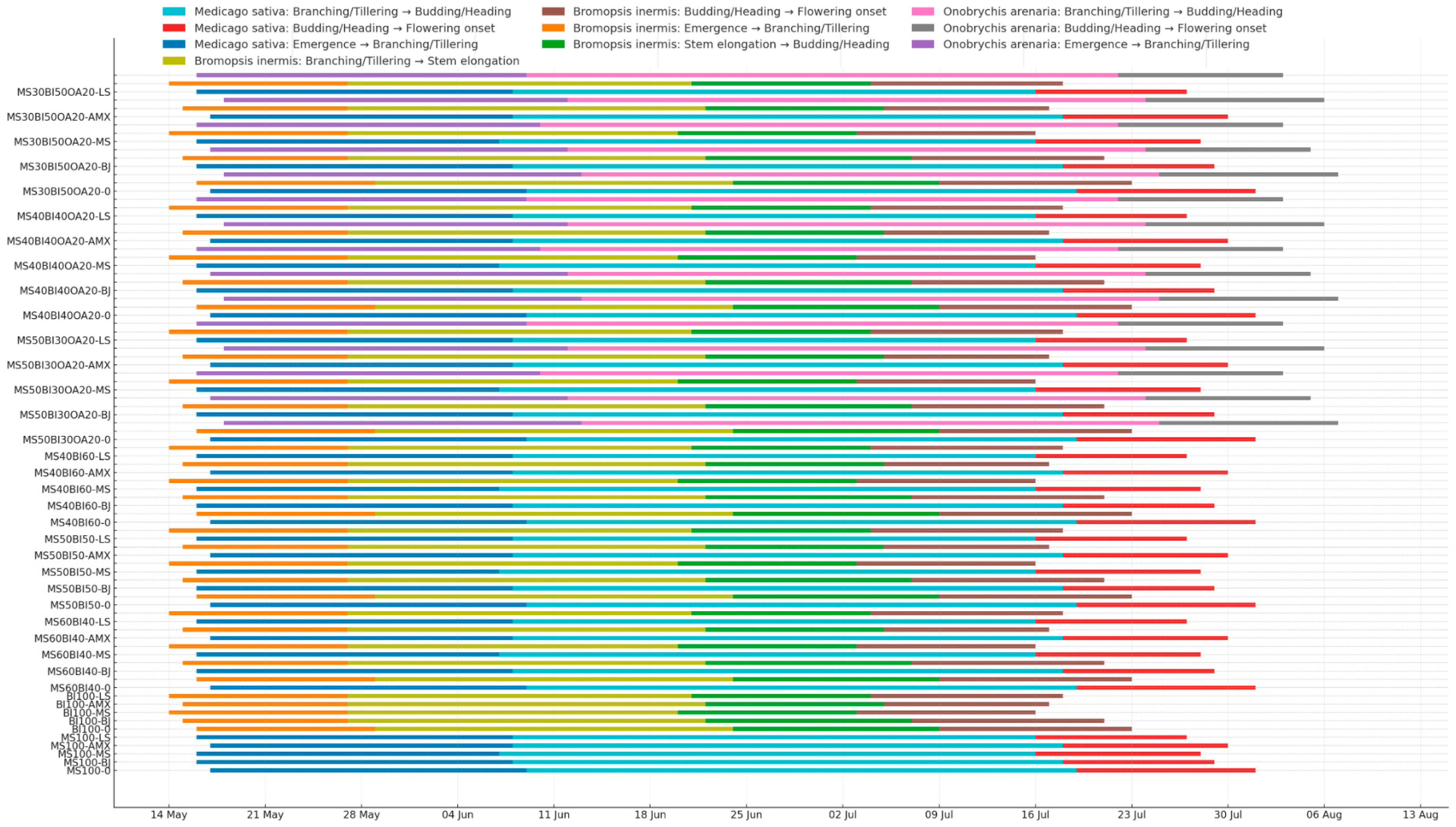
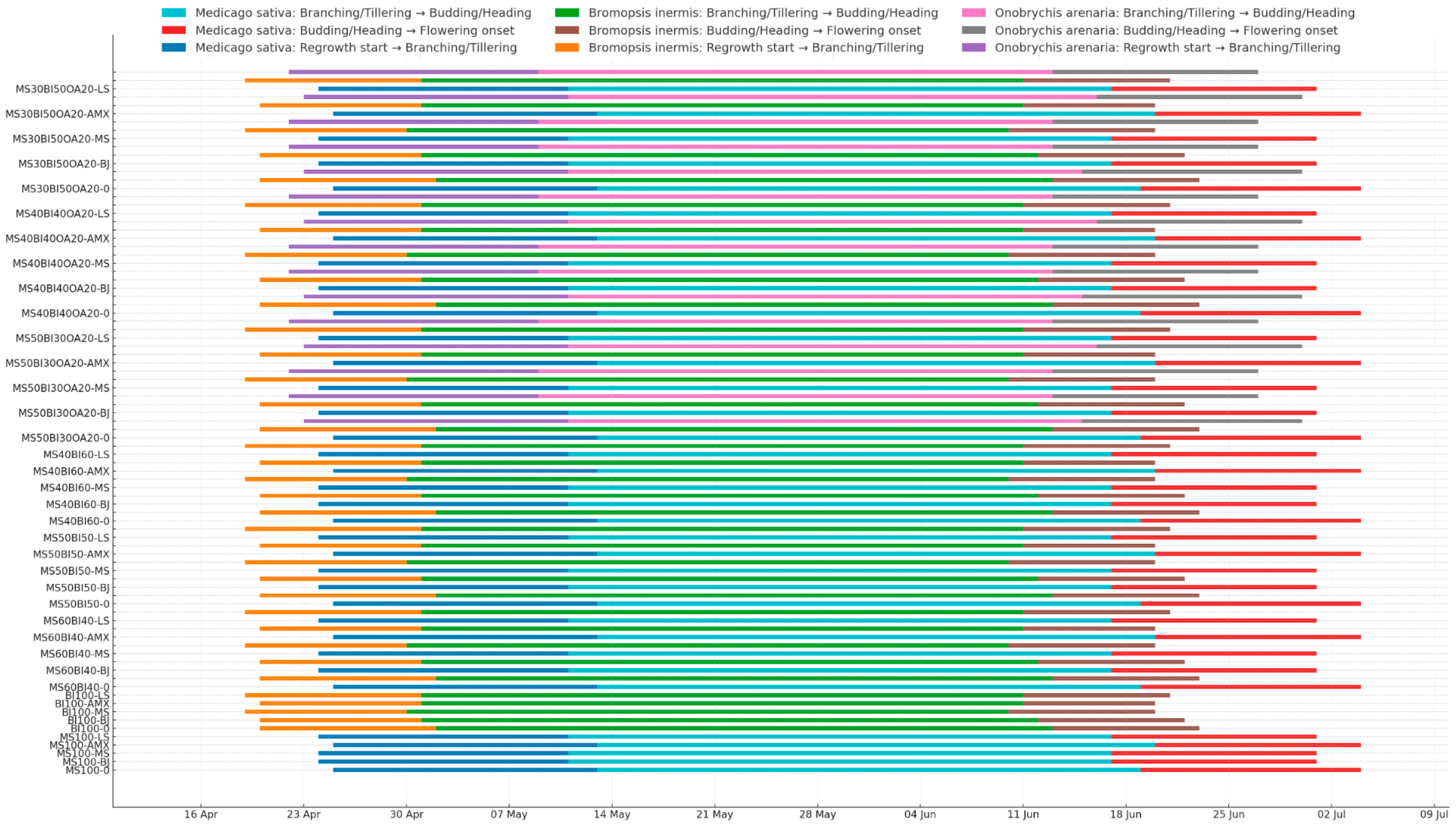
Phenological intervals were assessed as the number of days between phases, with the distributions shown in the diagrams (
Figure 13 and
Figure 14).
In 2023, the phenological intervals were as follows: ‘sowing → emergence’ 11–15 days (Medicago sativa 12–14, Bromus inermis 11–13, Onobrychis arenaria 13–15); ‘emergence → branching/tillering’ was species-specific (MS 23–26, BI 12–13, OA 24–26 days); the transition ‘branching/tillering → stem elongation’ was observed only in BI (24–26 days); ‘branching/tillering → budding/heading’—MS 38–41, BI 13–15, OA 42–43 days; ‘budding/heading → beginning of flowering’—MS 11–13, BI 12–14, OA 12–13 days.
In 2024 (the second year, regrowth), the phenological intervals were as follows: for MS—regrowth → branching 17–18 days, branching → budding 37–38 days, budding → beginning of flowering 14–15 days; for BI—11–12, 41–42, and 9–10 days, respectively; for OA—17–18, 35–36, and 14–15 days. In the MS + BI and MS + BI + OA mixtures, the values of each component remained within their species-specific ranges in 2024.
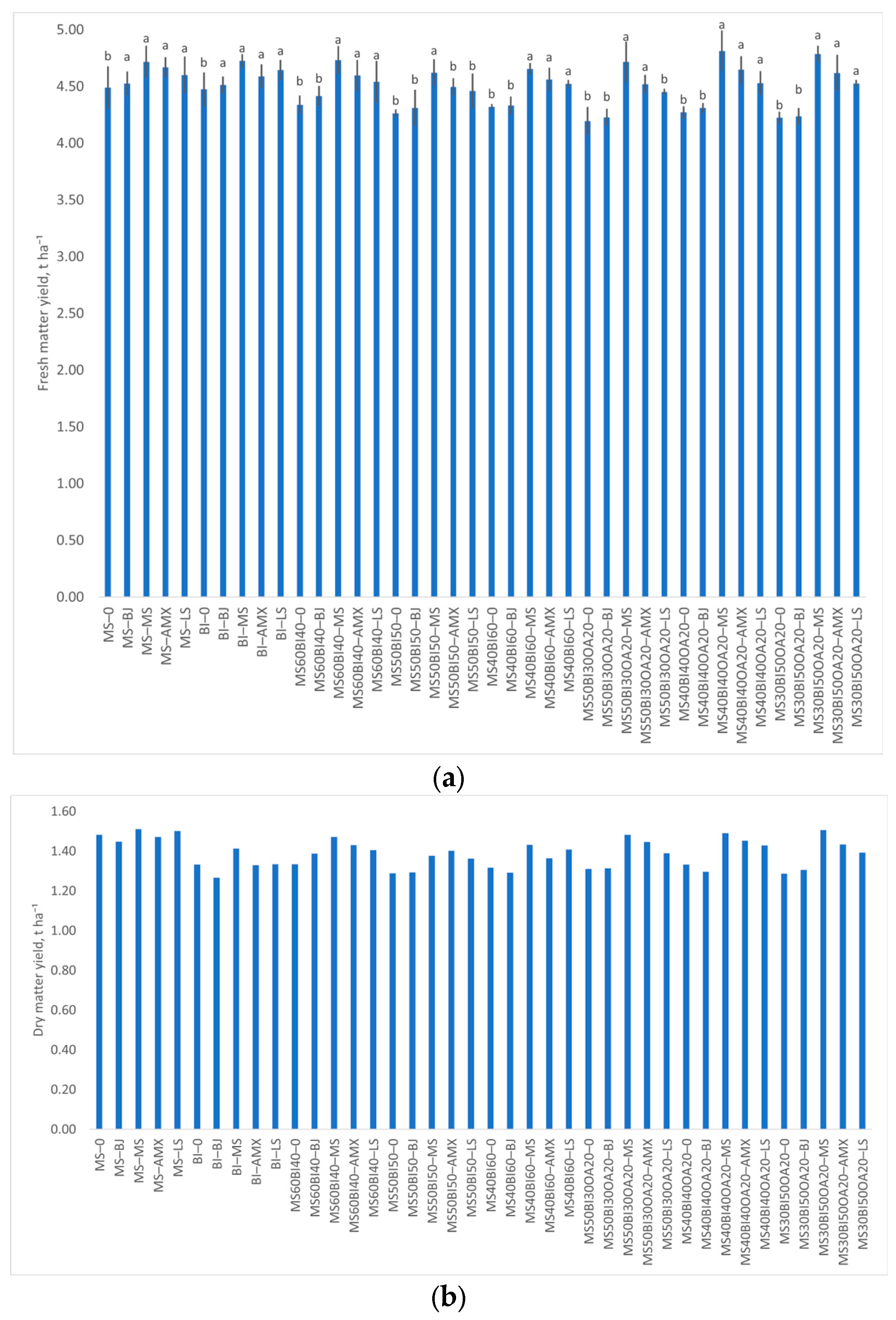
In 2023, the yield of fresh matter (FM) and dry matter (DM) varied within the ranges FM = 4.19–4.81 t/ha and DM = 1.27–1.51 t/ha. In monocultures,
Medicago sativa yielded 4.49–4.72 t/ha (FM) and 1.45–1.51 t/ha (DM), while
Bromus inermis produced 4.47–4.72 t/ha and 1.27–1.41 t/ha, respectively. In the two-component mixtures, the following were detected: MS60:BI40—4.34–4.73 t/ha and 1.33–1.47 t/ha; MS50:BI50—4.26–4.62 t/ha and 1.29–1.40 t/ha; MS40:BI60—4.32–4.65 t/ha and 1.29–1.43 t/ha. In the three-component mixtures, the following were detected: MS50:BI30:OA20—4.19–4.72 t/ha and 1.31–1.48 t/ha; MS40:BI40:OA20—4.27–4.81 t/ha and 1.30–1.49 t/ha; MS30:BI50:OA20—4.22–4.79 t/ha and 1.29–1.51 t/ha (
Figure 15). Seasonal maxima: FM—MS40:BI40:OA20 (4.81 t/ha); DM—MS30:BI50:OA20 (1.51 t/ha).
Regarding growth regulators in 2023, the best effect was observed under Miller Start (≈+9–10% compared to the control for FM and DM); it achieved the seasonal peaks: FM 4.81 t/ha (MS:BI:OA 40:40:20) and DM 1.51 t/ha (MS100; MS:BI:OA 30:50:20). AminoMax ranked second (≈+6% for FM/DM; locally the best DM in MS:BI 50:50). Lider-S provided a stable moderate increase (≈+5% for FM/DM). Black Jak showed the minimal effect (≈+0.9% for FM; no increase for DM). Differences among treatments are indicated by letter indices (ANOVA + Fisher’s LSD, α = 0.05).
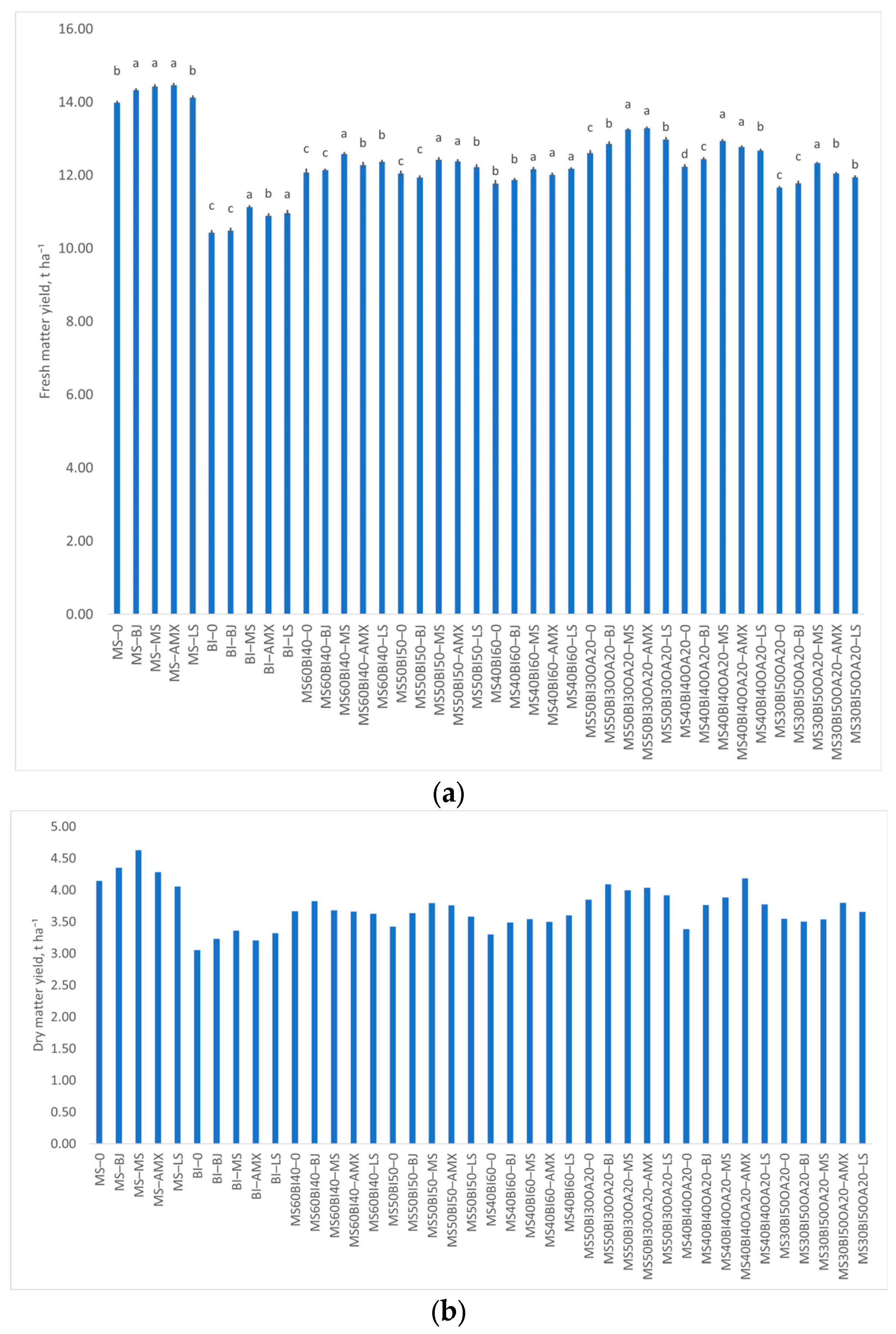
In 2024, the yield of fresh matter (FM) and dry matter (DM) ranged from FM = 10.43–14.46 t/ha and DM = 3.05–4.63 t/ha. In monocultures, 100%
Medicago sativa produced 13.99–14.46 t/ha (FM) and 4.06–4.63 t/ha (DM), while 100%
Bromus inermis yielded 10.43–11.13 t/ha and 3.05–3.36 t/ha. In the two-component mixtures: MS60:BI40—12.08–12.58 t/ha and 3.62–3.82 t/ha; MS50:BI50—11.93–12.42 t/ha and 3.43–3.80 t/ha; MS40:BI60—11.77–12.17 t/ha and 3.30–3.60 t/ha. In the three-component mixtures: MS50:BI30:OA20—12.61–13.29 t/ha and 3.85–4.09 t/ha; MS40:BI40:OA20—12.24–12.94 t/ha and 3.39–4.19 t/ha; MS30:BI50:OA20—11.67–12.33 t/ha and 3.50–3.80 t/ha (
Figure 16). The seasonal maxima were recorded in 100%
M. sativa: FM—14.46 t/ha, DM—
M. sativa 4.63 t/ha.
Among growth regulators, the best effects were observed under Miller Start and AminoMax, with average increases of +4.6% and +3.4% over the control for FM, and about +7–8% for DM; these treatments also achieved the seasonal peaks (MS100–AMX: 14.46 t/ha FM; MS100–Miller Start: 4.63 t/ha DM). Black Jak provided moderate improvement (≈+1% FM; +5% DM), with local maxima for DM (MS60:BI40; MS:BI:OA 50:30:20), while Lider-S produced stable but weaker effects (≈+2.8% FM; +4.4% DM), standing out in MS:BI 40:60.
Within each species and sowing composition, the differences among growth regulator treatments fell within the specified ranges and are indicated by letter indices in the figures (ANOVA + LSD, α = 0.05); the ranking of variants remained consistent between FM and DM (
Figure 15 and
Figure 16).
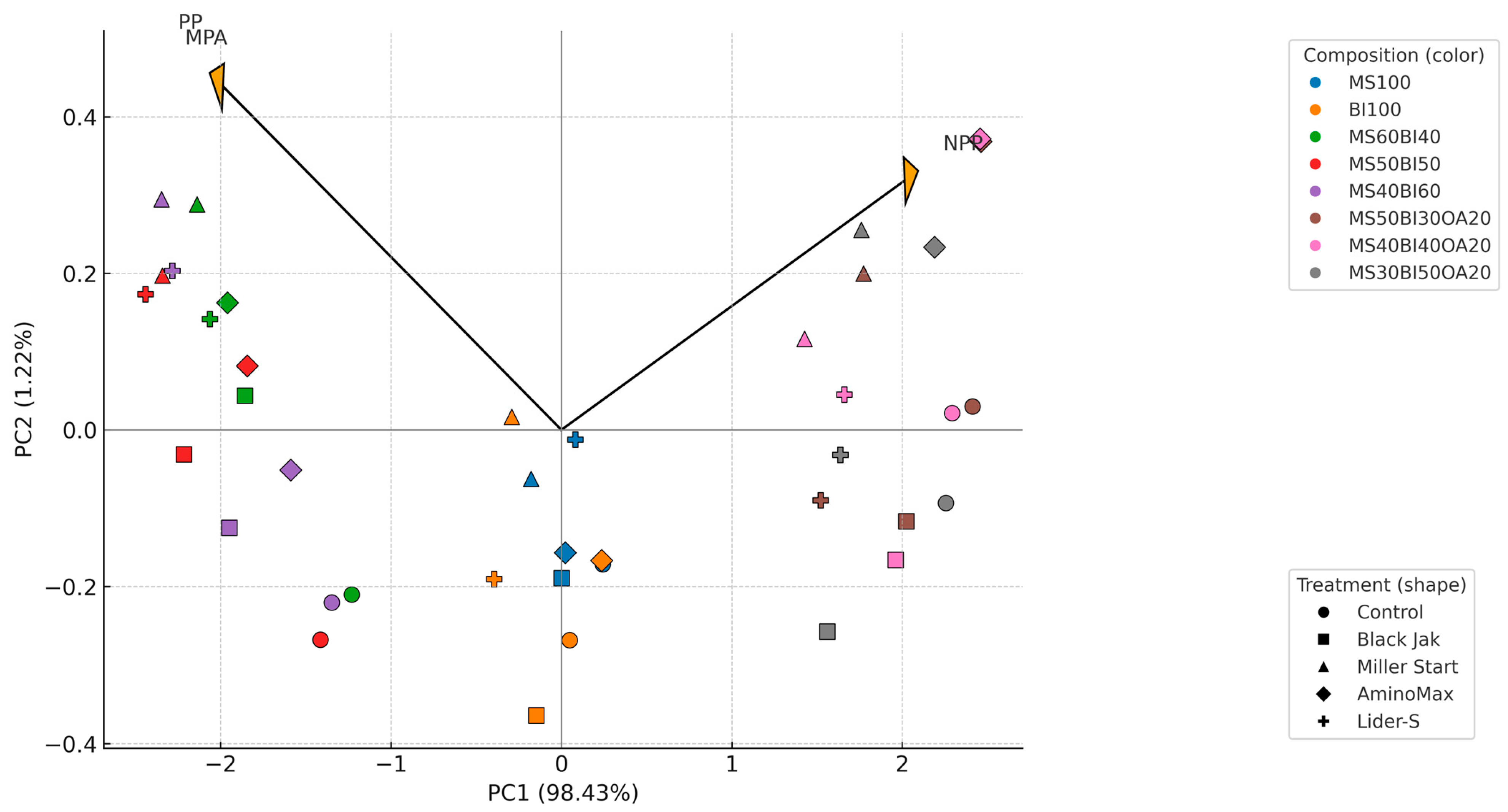
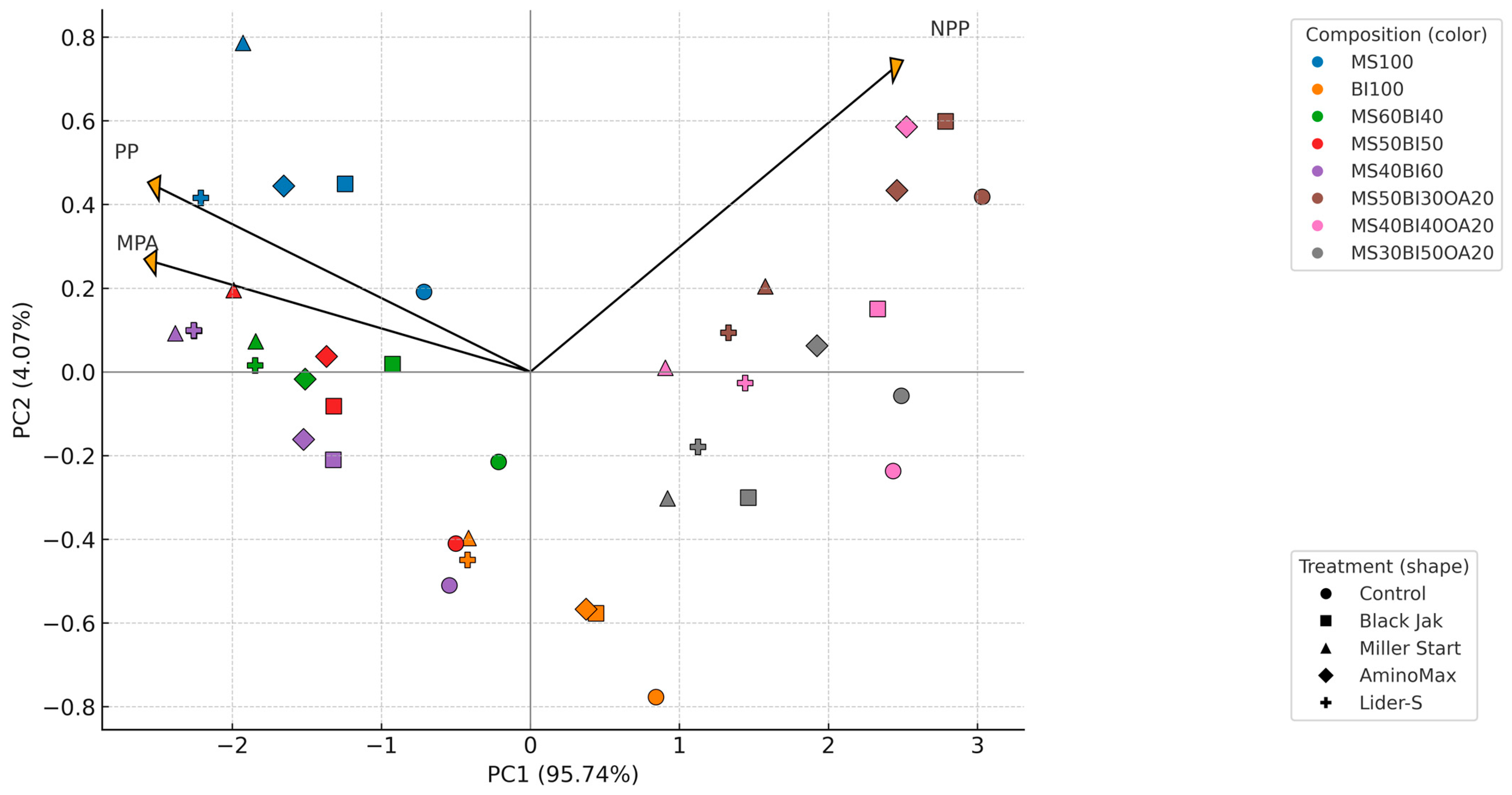
Photosynthetic activity parameters related to yield formation were studied, including maximum photosynthetic area (MPA, thousand m
2·ha
−1), photosynthetic potential (PP, thousand m
2·day·ha
−1), and net photosynthetic productivity (NPP, g·m
−2·day
−1); the ranges obtained across species, mixtures, and treatments are shown in
Figure 17 and
Figure 18.
The following values were recorded in monocultures: Medicago sativa—MPA 20.1–22.3 (2023) and 27.6–33.3 (2024), PP 1571–1673 (2023) and 1931–2267 (2024), NPP 0.90–0.95 (2023) and 1.79–2.15 (2024); Bromusinermis—MPA 22.1–25.0 (2023) and 21.6–27.1 (2024), PP 1417–1589 (2023) and 1380–1684 (2024), NPP 0.84–0.94 (2023) and 1.97–2.21 (2024). In the MS + BI mixtures, the ranges were as follows: at 60:40—MPA 26.4–31.4 (2023) and 25.7–32.2 (2024), PP 1873–2167 and 1723–2091, NPP 0.66–0.71 and 1.73–2.13; at 50:50—26.9–32.0 and 26.2–33.4, 1911–2237 and 1756–2190, 0.60–0.68 and 1.64–1.95; at 40:60—26.8–32.2 and 26.1–34.0, 1901–2220 and 1751–2209, 0.62–0.69 and 1.60–1.89. In the three-component mixtures MS + BI + OA, the following ranges were recorded: at 50:30:20—MPA 13.5–16.5 (2023) and 16.6–21.6 (2024), PP 1000–1203 and 1117–1422, NPP 1.15–1.39 and 2.76–3.45; at 40:40:20—13.9–17.4 and 17.1–22.9, 1030–1262 and 1148–1496, 1.18–1.39 and 2.59–3.36; at 30:50:20—13.7–16.6 and 17.3–22.1, 1021–1198 and 1163–1447, 1.12–1.32 and 2.45–3.05.
Across the treatments with growth regulators, the highest values of maximum photosynthetic area (MPA per hectare) were most frequently observed under Miller Start (both in mono- and bicomponent stands, as well as in the 40:40:20 mixture). For photosynthetic potential (PP), the leading effects were associated with Miller Start and Lider-S (including in monocultures and MS + BI mixtures). Regarding net photosynthetic productivity (NPP), the advantage was more often recorded with AminoMax in 2023, whereas in 2024 the highest values were generally associated with Black Jak (including in the 50:30:20 mixture).
Based on the combined analysis of MPA, PP, and NPP, PCA revealed a clear ordering of variants according to the composition of the stands: in 2023, the variance explained was PC1 = 98.43% and PC2 = 1.22%, and in 2024, PC1 = 95.74% and PC2 = 4.07%. Within each composition, the treatment variants formed compact subgroups.
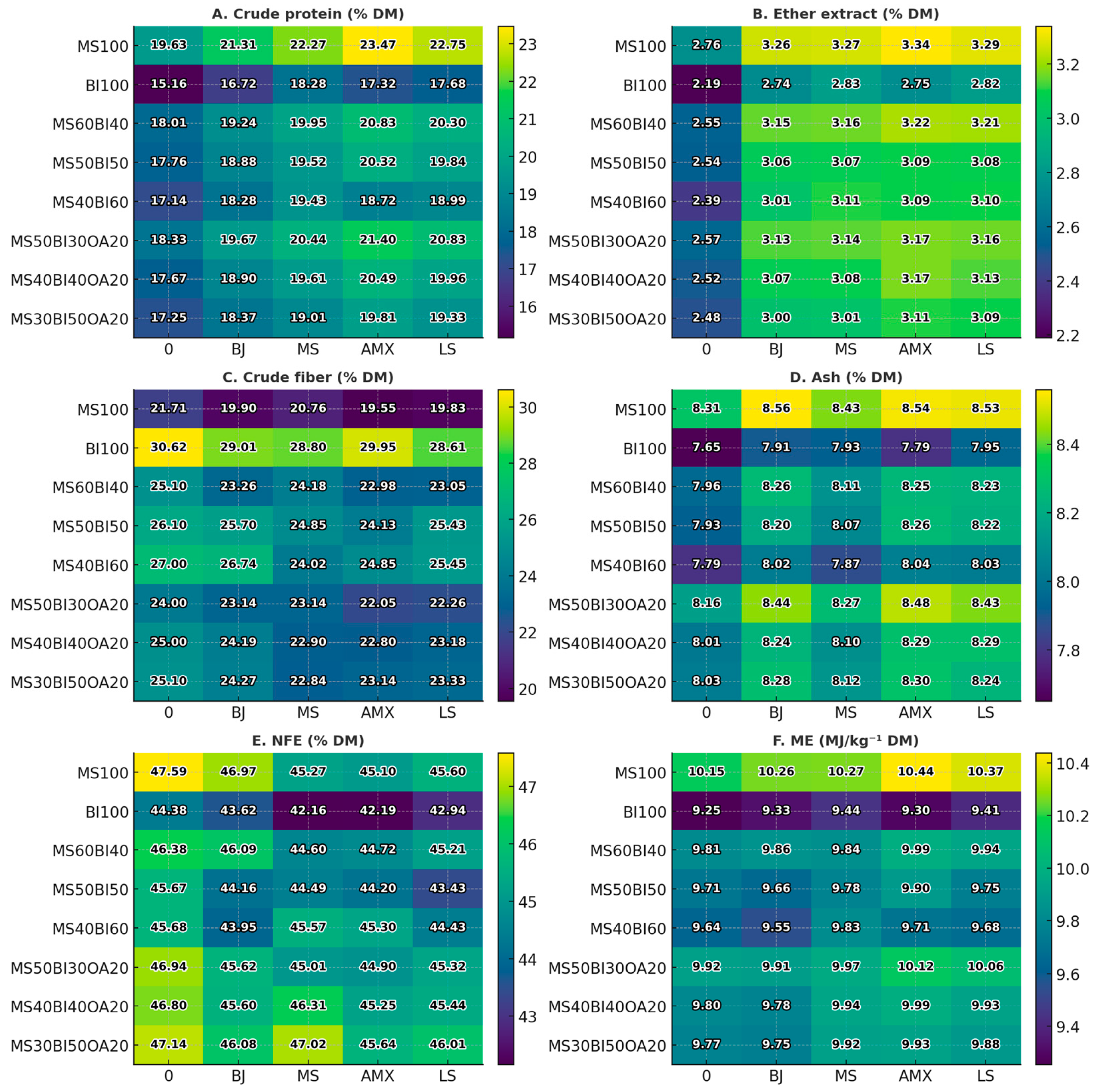
The chemical composition indicators of perennial grasses and their mixtures demonstrated pronounced interspecific differences and a clear response to treatments (
Figure 19). Hereafter, the indicators are presented in the following order: crude protein (CP, % of dry matter)/crude fiber (% of dry matter)/metabolizable energy (ME, MJ·kg
−1 of dry matter).
The following values were recorded in the control variants: monocultures—Medicago sativa (MS) 19.63/21.71/10.15 (CP/CF/ME), Bromus inermis (BI) 15.16/30.62/9.25; in MS + BI mixtures at 60:40—18.01/25.10/9.81, at 50:50—17.76/26.10/9.71, at 40:60—17.14/27.00/9.64; in three-component MS + BI + OA mixtures at 50:30:20—18.33/24.00/9.92, at 40:40:20—17.67/25.00/9.80, at 30:50:20—17.25/25.10/9.77. For growth regulators in 2023, relative to the control of the same mixture: in Medicago sativa, the maxima were recorded under AminoMax (23.47/19.55/10.44), followed by Miller Start (22.27/20.76/10.27), Lider-S (22.75/19.83/10.37), and Black Jak (21.31/19.90/10.26); in Bromus inermis, the highest increase in crude protein was observed under Miller Start (18.28/28.80/9.44) and Lider-S (17.68/28.61/9.41); in MS + BI mixtures, the increments in CP and ME were most pronounced under AminoMax: at 60:40—20.83/22.98/9.99, at 50:50—20.32/24.13/9.90; at 40:60, the greatest reduction in fiber content was found under Miller Start—24.02 at CP 19.43; in the three-component MS + BI + OA mixtures, peaks were also observed under AminoMax: at 50:30:20—21.40/22.05/10.12, at 40:40:20—20.49/22.80/9.99, at 30:50:20—19.81/23.14/9.93.
Panels A–F: CP, EE, CF, Ash, NFE (% DM), and ME (MJ·kg−1 DM). Rows represent the forage mixture variants; columns represent the treatments: (0), BJ, MS, AMX, LS.




 ,
,