Article

A Spreading-Stem-Growth Mutation in Lolium perenne: A New Genetic Resource for Turf Phenotypes

by
Izolda Pašakinskienė
1,2,3
1
Botanical Garden, Vilnius University, Kairėnų 43, 10239 Vilnius, Lithuania
2
Life Sciences Center, Vilnius University, Saulėtekio 7, 10221 Vilnius, Lithuania
3
Previous Institution: Institute of Agriculture, Lithuanian Research Centre for Agriculture and Forestry, Instituto al. 1, 58344 Akademija, Lithuania
Agronomy 2025, 15(11), 2541; https://doi.org/10.3390/agronomy15112541
Submission received: 15 October 2025 / Revised: 28 October 2025 / Accepted: 29 October 2025 / Published: 31 October 2025

Abstract

In Lolium perenne, a novel growth habit mutant, named VIROIZ, was recovered following colchicine treatment, and it was confirmed to maintain the diploid chromosome number (2n = 2x = 14). The mutation affected the stem morphology by inducing prolific axillary shoot formation at nodal zones, resulting in a spreading growth habit that can extend to ~70 cm in width. Inheritance analysis based on single-plant evaluations in crosses with wild-type plants (F1, n = 285; F2, n = 380) and in selfed progeny (S1, n = 255) consistently showed ~40% expression of the spreading phenotype, deviating from classical Mendelian ratios and indicating complex genetic control. Phenotypic selection further distinguished divergent classes: positively selected lines (C1+) averaged 3.90 axillary tillers per stem, whereas negatively selected lines (C1) averaged only 0.22. Partial sequencing of 11 candidate genes implicated in shoot architecture, covering 40–90% of full-length DNA, did not provide a conclusive explanation for the altered stem growth. Notably, a single point mutation was observed in CRT3 (an endoplasmic reticulum chaperone that interacts with brassinosteroid signaling) highlighting it as a primary target for future studies. Cytological analysis of meiosis in F1 hybrids between VIROIZ and wild-type plants revealed irregular chromosome pairing with persistent univalents (2–4 per cell), supporting the presence of structural chromosomal rearrangements that may disrupt gene organization and function in VIROIZ. The non-Mendelian segregation of the spreading phenotype, together with the observed meiotic irregularities, suggests that the mutation affects regulatory genes responsive to hormonal signals controlling axillary meristem initiation. The mutant represents a valuable resource for turf-type L. perenne breeding and for studying hormonal regulation of shoot morphogenesis in Poaceae.

1. Introduction

Perennial ryegrass (Lolium perenne L.) is widely cultivated in temperate regions for both forage and turf due to its rapid growth, high nutritive value, good digestibility, and reliable seed production, making it one of the most prevalent species in temperate grasslands worldwide [1,2,3,4,5,6,7]. In turf applications, it is commonly included in mixtures for golf courses, sports fields, and lawns, where traits such as tiller density, ground coverage, and persistence are emphasized over herbage yield [8,9]. Therefore, an intensive tillering habit that promotes dense, uniform turf is highly desirable in turf breeding.
Shoot development in perennial ryegrass has been described by Terrell [10] and Langer [11]. Each tiller consists of nodes bearing leaves and axillary meristems, most of which remain suppressed due to apical dominance, giving the species its typical bunch-type habit. Under specific conditions, however, axillary meristems can become active, producing secondary shoots, also referred to as stolons. Such creeping growth is rare in L. perenne, though sporadic occurrences have been reported in pastures [12,13,14]. More recently, distinct spreading forms have been described, including a patented stoloniferous subspecies L. perenne subsp. stoloniferum [15] and creeping cultivars used in turfgrass mixtures [9,16].
Shoot architecture is strongly regulated by hormonal networks. Auxins, cytokinins, and strigolactones interact to control apical dominance and the suppression of axillary meristems, thereby shaping shoot architecture [17,18,19,20]. Branching mutants have been reported in model and crop species, including Arabidopsis thaliana [21], pea [22], rice and wheat (review in [23]). However, to date, no naturally occurring or induced mutants affecting branching or tillering have been described in perennial ryegrass, despite its agronomic importance.
Here, we describe a novel spreading-growth mutant of L. perenne, designated VIROIZ, discovered among diploid plants treated with colchicine during an attempt to induce chromosome doubling [24]. While L. perenne is naturally diploid (2n = 2x = 14), colchicine is routinely used to generate tetraploids (2n = 4x = 28) for breeding [1]. In addition to inducing polyploidy, colchicine can cause heritable mutations affecting traits such as tillering, vegetative growth, and flowering [25]. VIROIZ was initially studied in the European GRASP project, which screened candidate genes in a set of 20 L. perenne genotypes [26]. This study identified variation in LpBRI1, a brassinosteroid receptor kinase gene, that suggested potential links to altered shoot morphology. More broadly, the brassinosteroid (BR) signaling pathway is well known for its central role in regulating shoot architecture, overall plant growth, and development [27,28].
To further investigate the genetic basis of VIROIZ’s unusual growth habit, we focused on eleven candidate genes with roles in hormone signalling and proteasome-mediated protein turnover. These include auxin- and brassinosteroid-related genes (IAA1, BRI1), strigolactone pathway regulators (D27, CCD8, MAX2), the brassinosteroid-associated chaperone CRT3, proteasome- and ubiquitin-related genes (UBC4, UBC10, RHF2A, RPT2A), and the protein kinase CIPK9.
Specifically, in this study, we (i) characterized the morphology of the mutant VIROIZ and the inheritance of the spreading growth type, (ii) assessed candidate genes (partial sequencing) and examined chromosome meiotic behavior aiming to explore potential changes linked to stem growth alteration in VIROIZ and (iii) evaluated VIROIZ potential as a genetic resource for turfgrass improvement and as a model for stem branching regulation.

2. Materials and Methods

2.1. Colchicine Treatment and VIROIZ Mutant Discovery

Seeds of diploid L. perenne representing a synthetic population were obtained from N. Lemežienė (Breeding Department, Lithuanian Institute of Agriculture). Embryos were excised from surface-sterilized seeds treated with a 0.3% (w/v) aqueous colchicine solution for 4 h and established in vitro on Murashige and Skoog (MS) medium [29] following the procedure described by [30]. A distinct mutant phenotype was identified among approximately 150 colchicine treated plants, each clonally propagated in duplicate. In field evaluations, the mutant exhibited unique characteristics, including wide and bushy growth, as well as modifications in the inflorescence, reduced spikelet number and fasciation.

2.2. Plant Material and Field Evaluation of F1, F2, and S1 Generations

To study the inheritance of the spreading-growth phenotype, five pairwise crosses were made between mutant and normal plants derived from the initial seed sample used for colchicine treatment. A total of 285 F1 plants were grown at 50 × 50 cm spacing and evaluated for growth phenotype in the experimental field of the Lithuanian Institute of Agriculture (Figure S1). The F2 generation was obtained through free crossing within five groups of F1 plants, and 380 F2 plants were evaluated under the same field conditions. The S1 generations, S1-a and 1-b, were obtained by controlled self-pollination of cloned VIROIZ plants in two independent cycles, producing 113 and 142 plants, respectively. All trials were conducted under identical field conditions to ensure comparability. The soil at the experimental site was classified as Endocalcari–Epihypogleyic Cambisols (CMg-p-w-can) with pH 7.2, 159 mg kg−1 P2O5, 170 mg kg−1 K2O, and 1.67% humus.
When the plants reached flowering, they were screened visually and classified into three categories based on their growth habit: mutant-type plants corresponding to VIROIZ, wild-type (WT) plants and intermediate-type plants that did not fully correspond to either phenotype. Intermediate plants did not attain the width of VIROIZ but were more widely spread than WT and displayed inflorescence abnormalities resembling those observed in VIROIZ. All assessments were performed by a single observer (I. Pašakinskienė) to ensure scoring consistency.

2.3. Divergent Selection for Axillary Tiller in the Greenhouse Pot Experiment

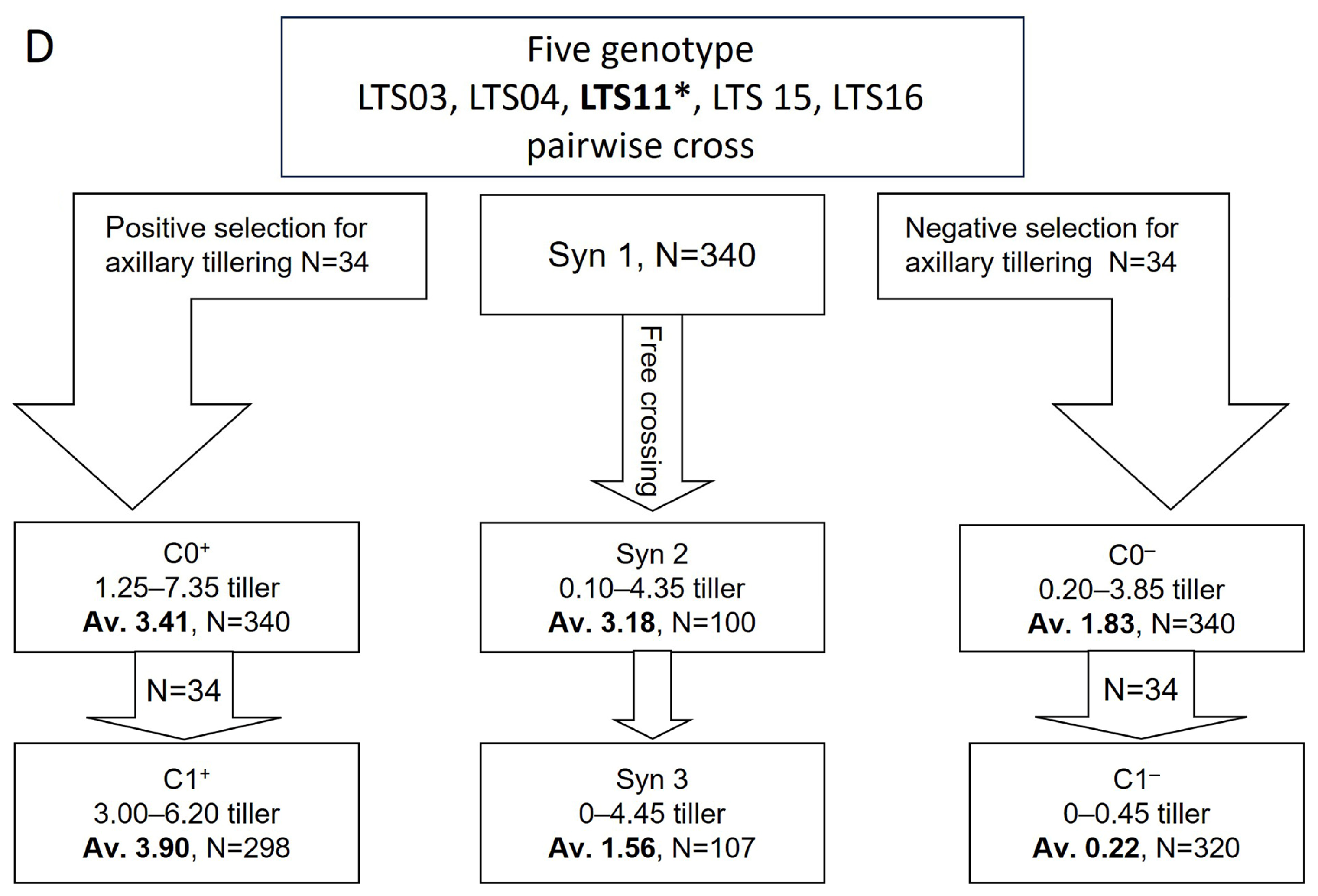
Five L. perenne genotypes (LTS03, LTS04, LTS11, LTS15, and LTS16) [31] were intercrossed in all possible pairwise combinations, including reciprocals, to form a synthetic C0 population. Among them, LTS15 and LTS16 are ecotypes, LTS03 and LTS04 are parent genotypes of the VrA mapping population [32], and LTS11 is a mutant exhibiting enhanced axillary tillering [24]. Equal quantities of seed from each cross were sown individually in pots to establish 340 C0 plants, which were evaluated for axillary tiller development by counting the mean number of axillary tillers per 20 primary tillers at the beginning of flowering. The 10% of plants with the highest and lowest mean axillary tiller numbers per stem in the plant (34 plants in each group) were selected to form subpopulations C0S+ and C0S, respectively. These plants were intercrossed by open pollination in isolated greenhouses to produce C1+ and C1 populations (Figure S1). To synchronize flowering, all plants were vernalized for 100 days at 6 °C under an 8 h photoperiod.

2.4. Candidate Gene Amplification, Sequencing, and Analysis

Candidate gene screening was performed at the Molecular Laboratory of the Botanical Garden, Vilnius University. Genomic DNA was extracted from fresh leaf tissue using the GeneJET Genomic DNA Purification Kit (Thermo Fisher Scientific, Vilnius, Lithuania) according to the manufacturer’s instructions. Gene fragments of IAA1 (Indole-3-Acetic Acid inducible 1), BRI1 (Brassinosteroid-Insensitive 1), D27 (DWARF27), CCD8 (Carotenoid Cleavage Dioxygenase 8), MAX2 (More Axillary Growth 2), CRT3 (Calreticulin 3), UBC4 (Ubiquitin-Conjugating Enzyme 4), UBC10 (Ubiquitin-Conjugating Enzyme 10), RHF2A (RING-H2 Finger Protein 2A), RPT2A (Regulatory Particle Triple-A ATPase 2A), and CIPK (CBL-Interacting Protein Kinase) were amplified using original primers. The primers were designed with Primer3Plus (https://www.primer3plus.com) using L. perenne reference sequences from https://www.ncbi.nlm.nih.gov/nuccore/NC_067250.1/ (accessed on 14 October 2022). Primers for gene construction were designed to generate amplicons of approximately 800 bp, dividing the gene into smaller overlapping fragments. Each adjacent fragment contained overlapping end regions to enable assembly. Primer melting temperatures (Tm) calculated using the Thermo Fisher Scientific “Tm Calculator.” The primers were synthesized by METABION (Planegg, Germany).
PCR reactions (20 µL) contained 30 ng genomic DNA, 2.5 µM of each primer, 2.0 µM dNTP mix and 5 U/μL DreamTaq DNA Polymerase (Thermo Fisher Scientific, Vilnius, Lithuania), and 10x Polymerase buffer. The thermal cycling profile was: 95 °C for 2 s, followed by 35 cycles of 95 °C for 30 s, annealing temperature for 30 s, 72 °C for 60 s/kb. The reaction was terminated with extension at 72 °C for 5 min.
PCR products were visualized on agarose gels, excised and purified using the GeneJET Gel Extraction Kit (Thermo Fisher Scientific, Vilnius, Lithuania). The purified amplicons were sequenced in both directions by BaseClear B.V. (Leiden, The Netherlands) using the Sanger method. The high-quality sequences were assembled into contigs, aligned, and analyzed in AliView [33]. The sequence specificity was verified by BLAST (version BLAST+ 2.13.0) alignment against L. perenne reference genes. The reading frames and start codons were confirmed relative to reference sequences.
RNA was isolated from leaves using the GeneJET Plant RNA Purification Kit (Thermo Fisher Scientific, Vilnius, Lithuania) according to the manufacturer’s instructions. cDNA synthesis was performed using the Maxima First Strand cDNA Synthesis Kit for RT-qPCR (Thermo Fisher Scientific, Vilnius, Lithuania) according to the manufacturer’s instructions, with the incubation at 50 °C extended to 30 min.

2.5. Chromosome Pairing Analysis in Meiosis

For the analysis of chromosome pairing during meiosis, samples from VIROIZ and F1 hybrids were collected at the young inflorescence stage and examined for the presence of meiotic metaphase I (MI). Samples were collected from 3 clonally propagated VIROIZ plants and from 10 F1 hybrids at random. The young inflorescences were fixed in Carnoy’s solution (ethanol:acetic acid, 3:1 v/v) and stored in 70% ethanol. Anthers were squashed in 1% acetocarmine, gently heated, and covered with a coverslip to spread meiocytes. The cells at Metaphase I were examined under a light microscope (1000× magnification), and the number of univalents, rod or ring bivalents, and multivalents was recorded in at least 50 cells.

2.6. Statistical Analysis

Phenotypic category frequencies were compared using chi-square tests. Sequence alignment statistics and variant calling were performed with AliView [33].

3. Results

3.1. VIROIZ Morphotype

Among the C0 plants of Lolium perenne regenerated from isolated embryos treated with 0.3% aqueous colchicine, a unique mutant exhibiting an unusual growth habit was identified. Cytological analysis confirmed that the plant retained the diploid chromosome number (2n = 2x = 14). Morphologically, the mutant displayed a creeping, spreading growth pattern resulting from prolific axillary shoot formation, with additional shoots produced at each nodal zone (Figure 1A,B). The mutation also altered inflorescence morphology, leading to a reduced number of spikelets and the occurrence of fasciation symptoms (Figure 1C,D). This spreading growth mutant conferred vigorous growth, producing dense, prostrate, bushy plants up to ~70 cm in diameter—approximately twice the size of typical perennial ryegrass under field conditions (Figure 1E,F). To our knowledge, this is the first report of such a mutation in L. perenne. The mutant has been named VIROIZ.

3.2. The Inheritance of the Spreading Growth Habit Evaluated in Field and Pot Experiments

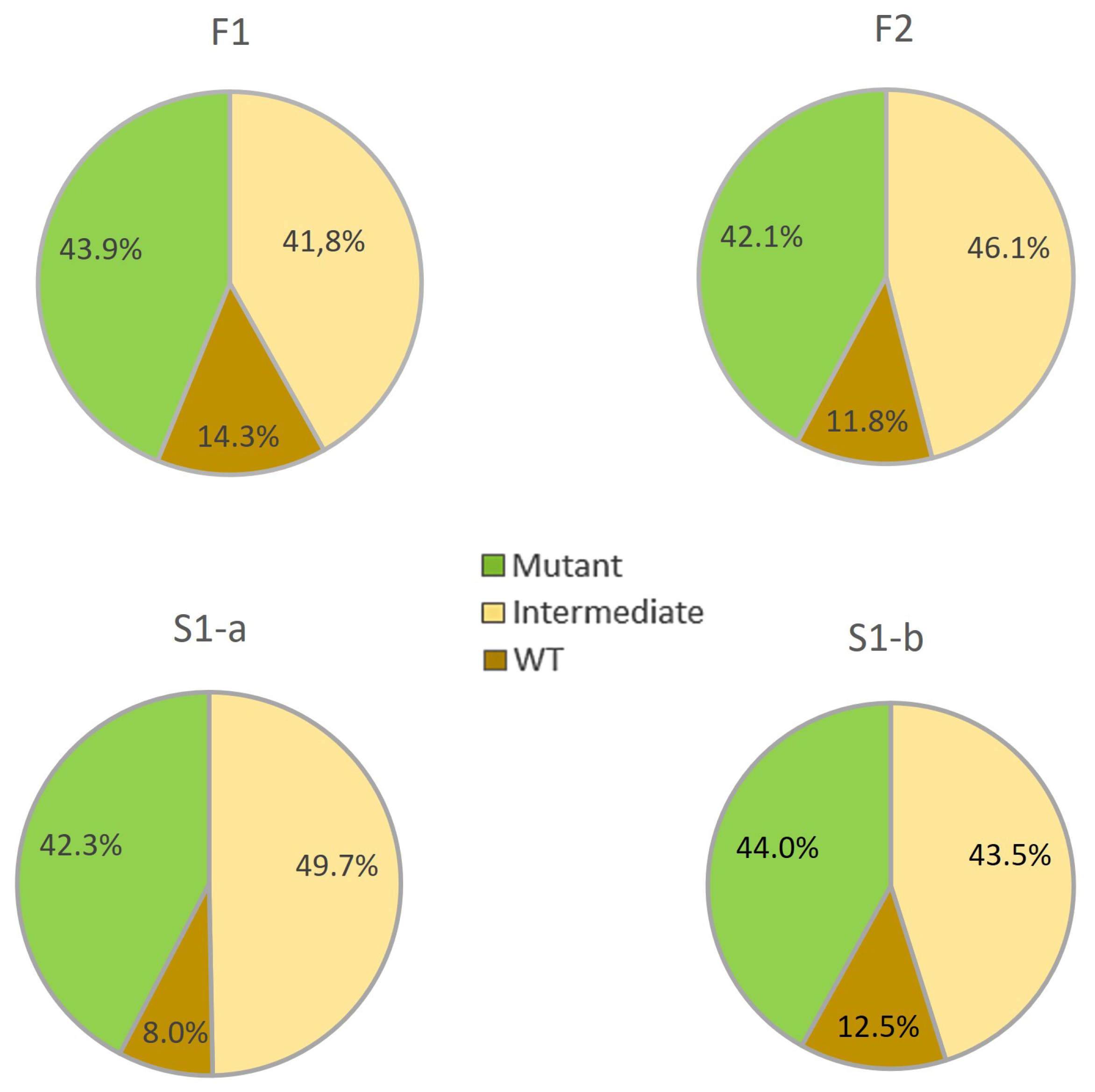
The mutant was fertile and stable, and has been maintained through vegetative clonal propagation for several decades. To investigate the inheritance of the spreading growth habit, five pairwise crosses were made between the mutant and normal plants to produce F1. In addition, F2 populations were obtained from free-pollination of these five F1 groups. S1 of VIROIZ was also generated and evaluated in two separate experiments. Across all evaluations carried out in the field, the inheritance pattern of the spreading growth habit was similar: strictly mutant plants comprised 42–44% of each population, whereas plants with the wild-type habit comprised 8–14% (Figure 2). A considerable proportion of plants displayed intermediate phenotypes, ranging from 42–50%. Therefore, the deviation from the classical Mendelian 1:2:1 ratio for codominant trait segregation was evident, as confirmed by the χ2 test (p < 0.0001; Table S1).
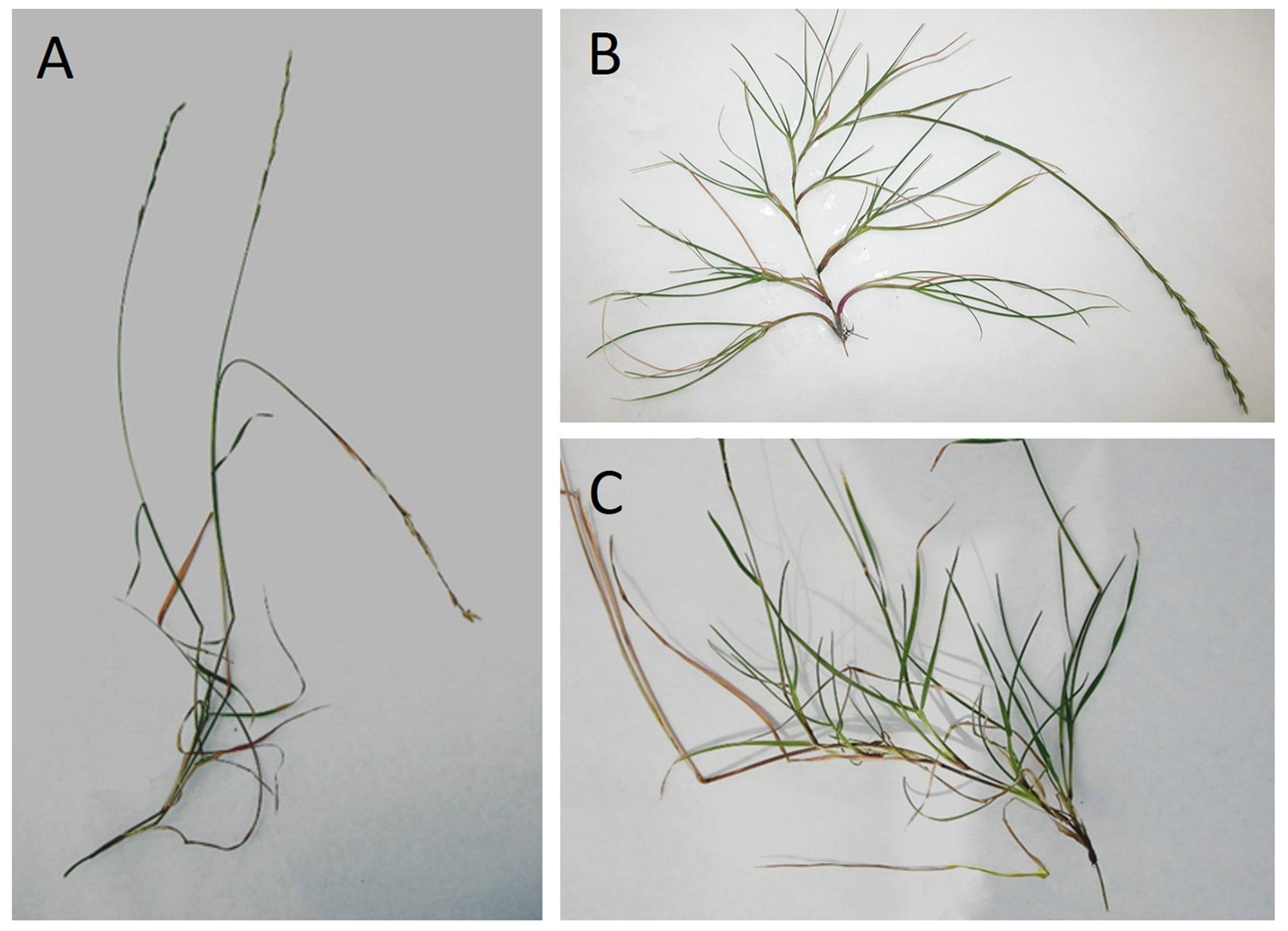
Additionally, in a pot experiment, the evaluation of the VIROIZ branching stem phenotype for axillary tiller development in two rounds of selection (positive and negative) was carried out, which revealed a clear pattern of trait divergence (Figure 3A–C). A selection at 10% intensity (34 of 340 genotypes) resulted in selected subpopulations C0+ and C0 with an average number of 3.41 and 1.83 axillary tillers per stem in the plant, respectively (Figure 3D). The second round of selection was performed with the same intensity as during the first cycle (10%, 34 selected genotypes), and it resulted in two subpopulations, C1+ and C1. The average number of axillary tillers per stem in the plant was 3.90 and 0.22 in C1+ and C1, respectively (Figure 3D). Thus, the selection differential was higher for negative selection (D = −1.76) than for positive selection (D = 1.44).

3.3. Mutation Analysis of Candidate Genes Implicated in Shoot Morphogenesis

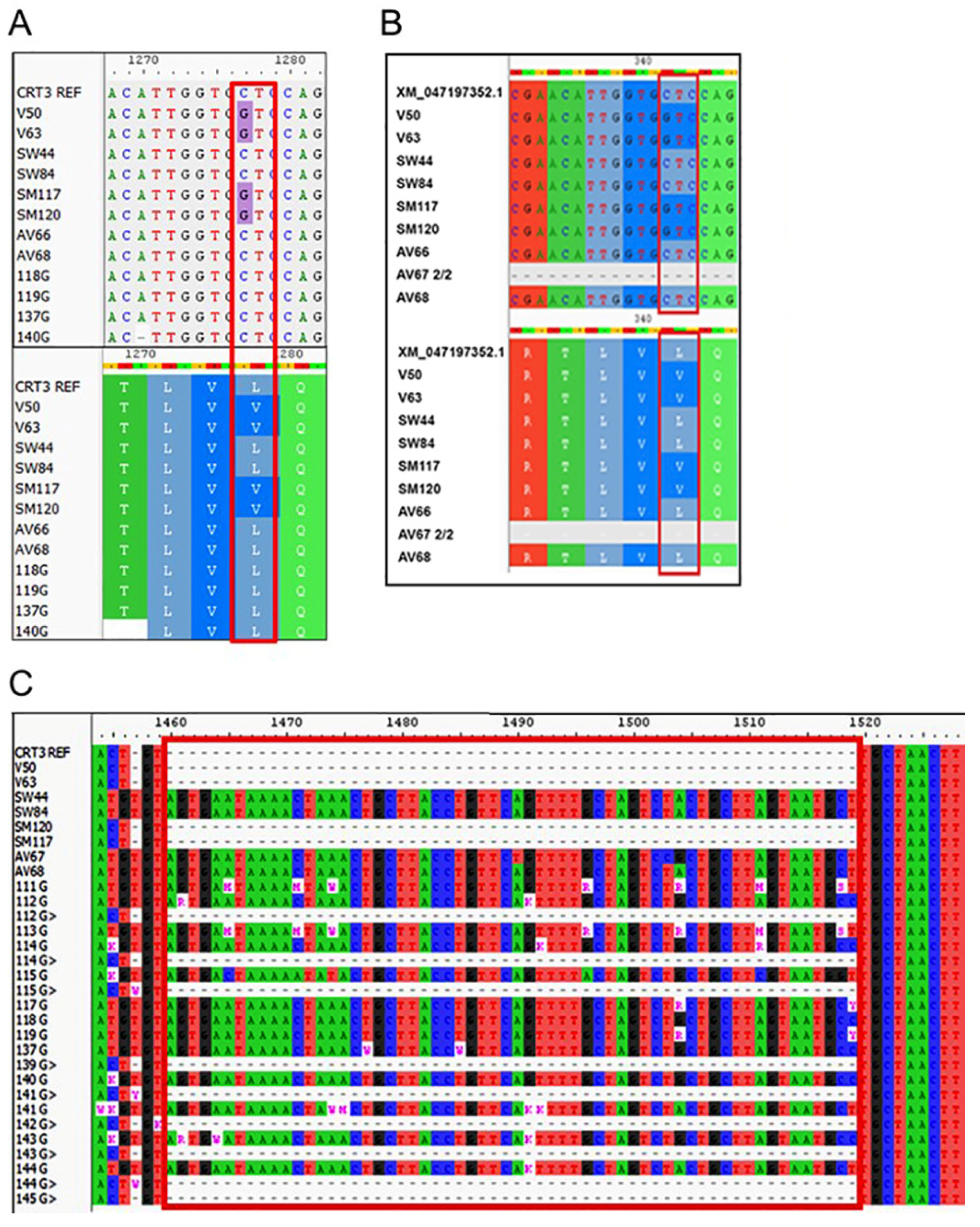
Partial sequencing of 11 candidate genes associated with shoot architecture was carried out, covering 40–90% of their full-length DNA coverage, aiming to explore the genetic basis of the altered stem-growth habit in VIRIOZ. The candidate genes were selected on the basis of their known roles in stem morphogenesis and the broad regulatory functions of the proteins they encode. These genes fall into the following functional groups: (i) classical hormone pathway regulators (IAA1, BRI1); (ii) strigolactone-related genes controlling shoot branching (D27, CCD8, MAX2); (iii) the CRT3 gene encoding an ER chaperone interacting with BR signaling; (iv) proteasome- and ubiquitin-related genes (UBC4, UBC10, RHF2A, RPT2A); and (v) the protein kinase CIPK9, implicated in signaling pathways that influence shoot patterning. Three genes, D27, UBC4, and CIPK9, were sequenced to 80–90% of their full-length genomic DNA, four others, IAA1I, BRI1, CRT3, MAX2, between 50–70%, and the rest at ~40% of their length (Table 1). DNA sequences of these candidate genes from the VIROIZ mutant were aligned with those of wild-type (WT) plants (N = 6–17 individuals) and analysed using bioinformatic methods. Two mutant phenotype plants (SM117 and SM120) and two WT phenotype individuals (SW44 and SW84) from S1 selfing progeny were also included in the analysis (Figure S2). Partial sequencing of these genes did not provide a conclusive explanation for the altered stem-growth habit (Table 1). However, the most notable variation was detected in the CRT3 gene: a point mutation c.1277C>G in exon 3 (corresponding to c.342C>G in cDNA from RNA transcript), leading to an amino acid substitution (p.L427V) (Table 1, Figure 4A,B). This mutation consistently distinguished the VIROIZ mutant and its mutant phenotype progeny in S1 from the WT group. Several indels were recorded in CRT3 and D27 of VIROIZ, though they were not unique to VIROIZ (Table 1, Figure 4C). Additional sequence alignments for the loci of the D27, CCD8, MAX2, UBC4, RHF2A, and CIPK9 genes are shown in Figure S3. From the partial sequencing data of these genes, no unique variants were found in VIROIZ compared with WT.

3.4. Chromosome Pairing Irregularities in Meiosis

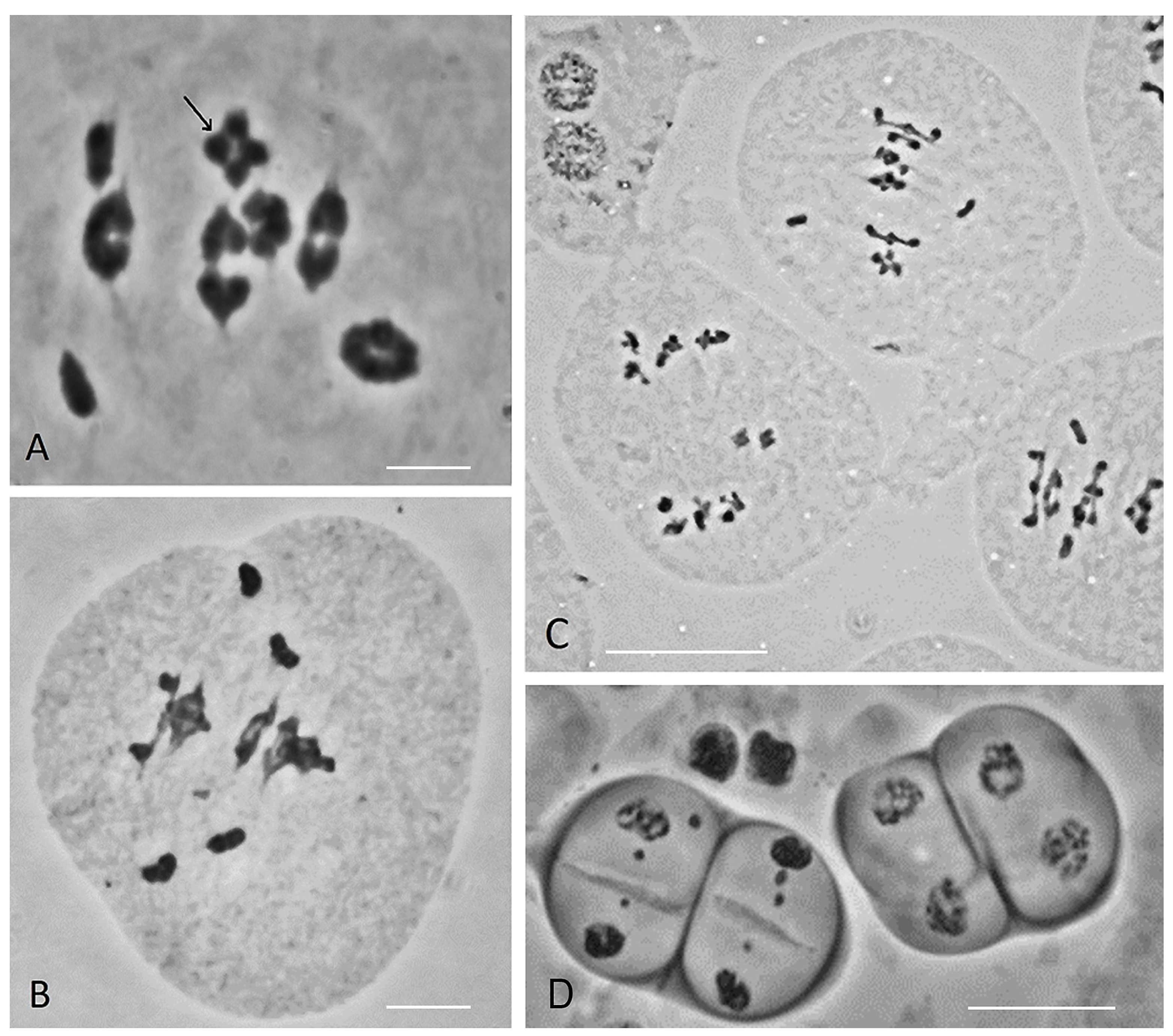
Meiosis was examined in the mutant and in F1 hybrids obtained from crosses between the mutant and plants with the WT phenotype. In the mutant, meiosis proceeded regularly, with the formation of seven bivalents at metaphase I. In the F1 hybrids, however, the chromosome pairing pattern in metaphase I was different. Two univalents (occasionally four) were consistently present, along with one of the bivalents appearing as a smaller, cross-shaped configuration distinct from the remaining five regular bivalents (Figure 5A–C). In tetrads, the presence of one or two micronuclei—likely originating from the univalents at earlier stages—was also observed (Figure 5D). These meiotic irregularities are indicative of chromosome translocations in VIROIZ and may contribute to its abnormal growth phenotype.
In summary, the VIROIZ mutant of L. perenne exhibits a unique spreading-growth habit characterized by prolific axillary shoot formation and prostrate and bushy growth. Field and pot evaluations confirmed the trait to be heritable, with populations consistently segregating into mutant, wild-type, and intermediate phenotypes, and the selection for axillary tiller number produced a clear divergence between selected positive and negative subpopulations. The partial sequencing of 11 candidate genes involved in hormone signaling, strigolactone-mediated branching, and proteasome function, all of which affect shoot patterning, revealed a notable point mutation in the CRT3 gene c.1277C>G (p.L427V) (c.342C>G confirmed in cDNA from RNA transcript). This mutation was specific to the mutant and its mutant phenotype progeny and might have contributed to the enhanced branching and spreading stem phenotype. The cytological analysis indicated a largely normal meiosis in VIROIZ, but F1 hybrids displayed univalents and micronuclei, suggesting underlying chromosome translocations present. Together, these results highlight VIROIZ as a stable, heritable, and genetically distinct source of altered shoot architecture in perennial ryegrass.

4. Discussion

The VIROIZ mutant of Lolium perenne represents a novel and valuable genetic resource for exploring shoot architecture and turfgrass improvement. Morphologically, VIROIZ exhibits a distinctive spreading growth habit, characterized by prolific axillary shoot formation, prostrate and bushy growth. This growth habit results in dense plants nearly twice the size of the typical perennial ryegrass under field conditions, emphasizing the potential agronomic and aesthetic value of the mutation in turf applications. Reports of spreading or stoloniferous growth in L. perenne are rare, limited mainly to a patented L. perenne subsp. stoloniferum [15] and a few turf-type cultivars [9,16]. To our knowledge, VIROIZ represents the first well-documented, heritable mutation conferring a spreading growth habit in L. perenne, establishing it as a valuable breeding resource and model for dissecting the genetic regulation of shoot branching in perennial grasses.
The consistent expression of the VIROIZ spreading growth habit across F1, F2, and S1 populations confirms its heritability and phenotypic stability. The segregation patterns suggest the involvement of one or more major loci, potentially modulated by additional factors. The presence of intermediate phenotypes is consistent with the quantitative and multifactorial nature of shoot branching, which is governed by hormonal signaling [18,23,34,35,36]. Furthermore, the observed responsiveness of VIROIZ to artificial selection, with distinct divergent subpopulations, C1+ and C1, emerging after only two selection cycles, underscores the plasticity of tiller number and suggests that this mutation could be exploited to fine-tune plant architecture in breeding programs, optimizing traits such as ground coverage and sward density for turf applications.
The partial sequencing of 11 candidate genes associated with shoot architecture did not provide a conclusive explanation for the altered phenotype. However, a nonsynonymous substitution was identified in exon 3 of the CRT3 gene and confirmed in the transcript (c.342C>G; p.L427V), which was unique to the VIROIZ mutant and its mutant phenotype progeny. CRT3 encodes an endoplasmic reticulum (ER) chaperone that interacts with brassinosteroid (BR) signaling components, ensuring proper folding and maturation of BR receptors [37]. Since BRs regulate cell elongation, organogenesis, and meristem activity, the impaired CRT3 function could reduce BR receptor maturation and alter crosstalk with strigolactone, cytokinin, and auxin pathways, thereby releasing axillary buds from apical dominance [27,28,38,39,40]. In both Arabidopsis and rice, CRT3 is co-expressed with genes involved in pathogen response and signal transduction [37,41]. Tissue-specific CRT expression, as seen in Solanum lycopersicum, suggests additional regulatory roles during development [42]. Beyond its functions in calcium storage and protein folding, CRT has been associated with the structure of plasmodesmata [43]. By facilitating the cell-to-cell transport of signaling molecules, including hormones, plasmodesmata may link CRTs to developmental regulatory pathways. While the CRT3 mutation represents a promising candidate contributing to the VIROIZ phenotype, functional validation is required to confirm its causality. Nonetheless, other gene loci or structural variants cannot be ruled out, given the limitations of our partial sequencing data; therefore, future QTL mapping and genome-wide analyses will be needed to identify additional loci contributing to this trait.
In this study, we also examined canonical regulators of shoot branching. Among these, strigolactones are well-established repressors of axillary bud outgrowth across several plant species, acting in concert with auxin and BR signaling. Strigolactone synthesis and signaling mutants exhibit increased branching across multiple species—including Arabidopsis, pea, rice, petunia, and tomato [22,44,45,46]—and notably, the VIROIZ phenotype closely resembles the “branching stem” mutants observed in these model plants. In addition, many phytohormone signaling pathways rely on ubiquitin–proteasome–mediated degradation of repressors or inducers. Several of our selected candidate genes fall into these functional categories. However, partial sequencing of strigolactone-related genes (D27, CCD8, MAX2) and ubiquitin/proteasome-related genes (UBC4, UBC10, RHF2A, RPT2A) revealed no variants specific to VIROIZ. Future studies should therefore extend to full-length gene sequencing, transcriptomic profiling, and functional assays, since regulatory changes or post-translational modifications could also underlie the phenotype.
The cytological analysis has confirmed that VIROIZ maintains the diploid chromosome number (2n = 2x = 14) and undergoes normal meiosis. In contrast, F1 hybrids between VIROIZ and wild-type plants exhibited meiotic irregularities, such as univalents, cross-shaped bivalents, and micronuclei, indicative of structural rearrangements, possibly translocations. The data supporting gross chromosomal rearrangements triggered by mutagenesis come from other species, for example, Populus [47]. The absence of abnormalities in the mutant, but their appearance in hybrids suggests heterozygosity for such rearrangements or compensatory mechanisms that stabilize meiosis in the mutant background. Structural changes of this kind can generate position effects on gene expression, raising the possibility that the VIROIZ phenotype reflects an interaction between chromosomal rearrangements and point mutation(s) such as that in CRT3. Whole-genome sequencing and functional assays will be critical to test this hypothesis.

5. Conclusions

The VIROIZ mutant represents the first documented heritable mutation conferring such a growth habit in Lolium perenne, making it suitable for breeding programs aimed at customizing canopy architecture for lawns and sports fields. From an applied perspective, the spreading, bushy growth of VIROIZ offers a substantial potential for turfgrass improvement, enhancing ground coverage and sward density. At the same time, potential trade-offs, such as effects on seed production and long-term persistence, should be evaluated in long-term field trials. In this study, molecular and cytological analyses implicate both a candidate point mutation in CRT3 and possible chromosomal rearrangements affecting the altered phenotype; however, given the limitations of our partial sequencing data, other candidate genes cannot be ruled out in future studies. Together, these findings establish VIROIZ as both a practical breeding resource and a model for investigating the genetic control of shoot architecture in perennial grasses. Due to its perennial nature and stable growth habit, this mutant can be reliably maintained and shared for research and breeding purposes.

Supplementary Materials

The following supporting information can be downloaded at: https://www.mdpi.com/article/10.3390/agronomy15112541/s1, Figure S1: Field and Greenhouse Evaluations; Figure S2: Mutant type (SM120, SM117) and WT (SW84, SW44) plants from selfing; Figure S3: Gene loci alignment views in VIROIZ and WT; Table S1: Chi-square test for deviation from Mendelian ratio.

Funding

This study was partly funded by the EU Framework V project GRASP (QLRT-2001-0086).

Data Availability Statement

The original contributions presented in this study are included in the article/Supplementary Material. Further inquiries can be directed to the corresponding author.

Acknowledgments

The author gratefully acknowledges Gintaras Brazauskas for his contribution to the divergent selection experiment and Virginija Kvedienė for her technical assistance in plant evaluations. Appreciation is also extended to Domantas Palavenis and Vismantas Tučas for their contribution to gene screening.

Conflicts of Interest

The author declares no conflicts of interest.

References

  1. Wilkins, P.W. Breeding Perennial Ryegrass for Agriculture. Euphytica 1991, 52, 201–214. [Google Scholar] [CrossRef]
  2. Balfourier, F.; Charmet, G.; Ravel, C. Genetic Differentiation within and between Natural Populations of Perennial and Annual Ryegrass (Lolium perenne and L. rigidum). Heredity 1998, 81, 100–110. [Google Scholar] [CrossRef]
  3. Wilkins, P.W.; Humphreys, M.O. Progress in Breeding Perennial Forage Grasses for Temperate Agriculture. J. Agric. Sci. 2003, 140, 129–150. [Google Scholar] [CrossRef]
  4. Cui, Y.; Wang, J.; Wang, X.; Jiang, Y. Phenotypic and Genotypic Diversity for Drought Tolerance among and within Perennial Ryegrass Accessions. HortScience 2015, 50, 1148–1154. [Google Scholar] [CrossRef]
  5. Grinberg, N.F.; Lovatt, A.; Hegarty, M.; Lovatt, A.; Skøt, K.P.; Kelly, R.; Blackmore, T.; Thorogood, D.; King, R.D.; Armstead, I.; et al. Implementation of Genomic Prediction in Lolium perenne (L.) Breeding Populations. Front. Plant Sci. 2016, 7, 133. [Google Scholar] [CrossRef]
  6. Jaškūnė, K.; Aleliūnas, A.; Statkevičiūtė, G.; Kemešytė, V.; Studer, B.; Yates, S. Genome-Wide Association Study to Identify Candidate Loci for Biomass Formation under Water Deficit in Perennial Ryegrass. Front. Plant Sci. 2020, 11, 570204. [Google Scholar] [CrossRef] [PubMed]
  7. Toporan, S.; Samfira, I. Review on the Genetic and Biochemical Characterization of Lolium perenne Species. Res. J. Agric. Sci. 2021, 53, 169–175. [Google Scholar]
  8. Sampoux, J.P.; Baudouin, P.; Bayle, B.; Beguier, V.; Bourdon, P.; Chosson, J.F.; de Bruijn, K.; Deneufbourg, F.; Galbrun, C.; Ghesquière, M.; et al. Breeding Perennial Ryegrass (Lolium perenne L.) for Turf Usage: An Assessment of Genetic Improvements in Cultivars Released in Europe, 1974–2004. Grass Forage Sci. 2012, 68, 33–48. [Google Scholar] [CrossRef]
  9. Pornaro, C.; Menegon, A.; Macolino, S. Stolon Development in Four Turf-Type Perennial Ryegrass Cultivars. Agron. J. 2018, 110, 2159–2164. [Google Scholar] [CrossRef]
  10. Terrell, E.E. A Taxonomic Revision of the Genus Lolium, Technical Bulletin; United States Department of Agriculture, Economic Research Service: Washington, DC, USA, 1968; No. 171644.
  11. Langer, R.H.M. How Grasses Grow; Edward Arnold Publishers Limited: London, UK, 1979. [Google Scholar]
  12. Kydd, D.D. The Effect of Intensive Sheep Stocking over a Five-Year Period on the Development and Production of the Sward. J. Br. Grassl. Soc. 1966, 21, 284–288. [Google Scholar] [CrossRef]
  13. Hayes, P. Stoloniferous Perennial Ryegrass (Lolium perenne) in Northern Ireland Paddocks. Rec. Agric. Res. Minist. Agric. N. Irel. 1971, 19, 63–64. [Google Scholar]
  14. Harris, W.; Pandey, K.K.; Gray, Y.S.; Couchman, P.K. Observations on the Spread of Perennial Ryegrass by Stolons in a Lawn. N. Z. J. Agric. Res. 1979, 22, 61–68. [Google Scholar] [CrossRef][Green Version]
  15. Wipff, J.K.; Singh, D. Lolium perenne subsp. Stoloniferum; Perennial Ryegrass with Determinate Stolons. U.S. Plant Patent No. US8927804B2, 6 January 2015. [Google Scholar][Green Version]
  16. Masin, R.; Macolino, S. Seedling Emergence and Establishment of Annual Bluegrass (Poa annua) in Turfgrasses of Traditional and Creeping Perennial Ryegrass Cultivars. Weed Technol. 2016, 30, 238–245. [Google Scholar] [CrossRef]
  17. Dun, E.A.; Brewer, P.B.; Beveridge, C.A. Strigolactones: Discovery of the Elusive Shoot Branching Hormone. Trends Plant Sci. 2009, 14, 364–372. [Google Scholar] [CrossRef] [PubMed]
  18. Domagalska, M.A.; Leyser, O. Signal Integration in the Control of Shoot Branching. Nat. Rev. Mol. Cell Biol. 2011, 12, 211–221. Available online: https://www.nature.com/articles/nrm3088 (accessed on 15 October 2025). [CrossRef]
  19. Dun, E.A.; de Saint Germain, A.; Rameau, C.; Beveridge, C.A. Dynamics of Strigolactone Function and Shoot Branching Responses in Pisum sativum. Mol. Plant 2013, 6, 128–141. [Google Scholar] [CrossRef] [PubMed]
  20. Dun, E.A.; Brewer, P.B.; Gillam, E.M.J.; Beveridge, C.A. Strigolactones and Shoot Branching: What Is the Real Hormone and How Does It Work? Plant Cell Physiol. 2023, 64, 967–983. [Google Scholar] [CrossRef]
  21. Ongaro, V.; Leyser, O. Hormonal Control of Shoot Branching. J. Exp. Bot. 2008, 59, 67–74. [Google Scholar] [CrossRef]
  22. Beveridge, C.A.; Dun, E.A.; Rameau, C. Pea Has Its Tendrils in Branching Discoveries Spanning a Century from Auxin to Strigolactones. Plant Physiol. 2009, 151, 985–990. [Google Scholar] [CrossRef]
  23. Zhang, N.; Liu, Y.; Gui, S.; Wang, Y. Regulation of Tillering and Panicle Branching in Rice and Wheat. J. Genet. Genom. 2025, 52, 869–886. [Google Scholar] [CrossRef]
  24. Pašakinskienė, I. Creeping Stem and Barren Inflorescence: A New Mutation in Lolium perenne “VIROIZ”. In Recent Advances in Genetics and Breeding of the Grasses; Institute of Plant Genetics: Poznan, Poland, 2005; pp. 209–213. [Google Scholar]
  25. Francis, A.; Jones, R.N. Heritable Nature of Colchicine-Induced Variation in Diploid Lolium perenne. Heredity 1989, 62, 407–410. [Google Scholar] [CrossRef]
  26. Brazauskas, G.; Pašakinskienė, I.; Asp, T.; Lübberstedt, T. Nucleotide Diversity and Linkage Disequilibrium in Five Lolium perenne Genes with Putative Role in Shoot Morphology. Plant Sci. 2010, 179, 194–201. [Google Scholar] [CrossRef]
  27. Clouse, S.D. Brassinosteroid Signal Transduction: From Receptor Kinase Activation to Transcriptional Networks Regulating Plant Development. Plant Cell 2011, 23, 1219–1230. [Google Scholar] [CrossRef] [PubMed]
  28. Tong, H.; Chu, C. Functional Specificities of Brassinosteroid and Potential Utilization for Crop Improvement. Trends Plant Sci. 2018, 23, 1016–1028. [Google Scholar] [CrossRef] [PubMed]
  29. Murashige, T.; Skoog, F. A Revised Medium for Rapid Growth and Bioassays with Tobacco Tissue Cultures. Physiol. Plant. 1962, 15, 473–497. [Google Scholar] [CrossRef]
  30. Pašakinskienė, I. Culture of Embryos and Shoot Tips for Chromosome Doubling in Lolium perenne and Sterile Hybrids between Lolium and Festuca. Plant Breed. 2000, 119, 185–187. [Google Scholar] [CrossRef]
  31. Posselt, U.K.; Barre, P.; Brazauskas, G.; Turner, L.B. Comparative Analysis of Genetic Similarity between Perennial Ryegrass Genotypes Investigated with AFLPs, SSRs, RAPDs, and ISSRs. Czech J. Genet. Plant Breed. 2006, 42, 87–94. [Google Scholar] [CrossRef]
  32. Jensen, L.B.; Andersen, J.R.; Frei, U.; Xing, Y.; Taylor, C.; Holm, P.B.; Lübberstedt, T. QTL Mapping of Vernalization Response in Perennial Ryegrass (Lolium perenne L.) Reveals Co-Location with an Orthologue of Wheat VRN1. Theor. Appl. Genet. 2005, 110, 527–536. [Google Scholar] [CrossRef]
  33. Larsson, A. AliView: A Fast and Lightweight Alignment Viewer and Editor for Large Datasets. Bioinformatics 2014, 30, 3276–3278. [Google Scholar] [CrossRef]
  34. Wang, Y.; Wang, J.; Shi, B.; Yu, T.; Qi, J.; Meyerowitz, E.M.; Jiao, Y. The Stem Cell Niche in Leaf Axils Is Established by Auxin and Cytokinin in Arabidopsis. Plant Cell 2018, 26, 2055–2067. [Google Scholar] [CrossRef]
  35. Tavares, H.; Readshaw, A.; Kania, U.; de Jong, M.; Pasam, R.K.; McCulloch, H.; Ward, S.; Shenhav, L.; Forsyth, E.; Leyser, O. Artificial Selection Reveals Complex Genetic Architecture of Shoot Branching and Its Response to Nitrate Supply in Arabidopsis. PLoS Genet. 2023, 19, e1010863. [Google Scholar] [CrossRef] [PubMed]
  36. Yuan, Y.; Khourchi, S.; Li, S.; Du, Y.; Delaplace, P. Unlocking the Multifaceted Mechanisms of Bud Outgrowth: Advances in Understanding Shoot Branching. Plants 2023, 12, 3628. [Google Scholar] [CrossRef] [PubMed]
  37. Jin, H.; Hong, Z.; Su, W.; Li, J. A Plant-Specific Calreticulin Is a Key Retention Factor for a Defective Brassinosteroid Receptor in the Endoplasmic Reticulum. Proc. Natl. Acad. Sci. USA 2009, 106, 13612–13617. [Google Scholar] [CrossRef] [PubMed]
  38. Li, Z.; He, Y. Roles of Brassinosteroids in Plant Reproduction. Int. J. Mol. Sci. 2020, 21, 872. [Google Scholar] [CrossRef]
  39. Mao, J.; Li, J. Regulation of Three Key Kinases of Brassinosteroid Signaling Pathway. Int. J. Mol. Sci. 2020, 21, 4340. [Google Scholar] [CrossRef]
  40. Xia, X.; Dong, H.; Yin, Y.; Song, X.; Gu, X.; Sang, K.; Zhou, J.; Shi, K.; Zhou, Y.; Foyer, C.H.; et al. Brassinosteroid Signaling Integrates Multiple Pathways to Release Apical Dominance in Tomato. Proc. Natl. Acad. Sci. USA 2021, 118, e2004384118. [Google Scholar] [CrossRef]
  41. Thelin, L.; Mutwil, M.; Sommarin, M.; Persson, S. Diverging Functions among Calreticulin Isoforms in Higher Plants. Plant Signal. Behav. 2011, 6, 905–910. [Google Scholar] [CrossRef]
  42. Muhammad, T.; Yang, T.; Wang, B.; Yang, H.; Tuerdiyusufu, D.; Wang, J.; Yu, Q. Comprehensive Genomic Characterization and Expression Analysis of Calreticulin Gene Family in Tomato. Front. Plant Sci. 2024, 15, 1397765. [Google Scholar] [CrossRef]
  43. Baluška, F.; Šamaj, J.; Napier, R.; Volkmann, D. Maize Calreticulin Localizes Preferentially to Plasmodesmata in Root Apex. Plant J. 1999, 19, 481–488. [Google Scholar] [CrossRef]
  44. Leyser, O. The Control of Shoot Branching: An Example of Plant Information Processing. Plant Cell Environ. 2009, 32, 694–703. [Google Scholar] [CrossRef]
  45. Beveridge, C.A.; Kyozuka, J. New Genes in Strigolactone-Related Shoot Branching Pathway. Curr. Opin. Plant Biol. 2010, 13, 34–39. [Google Scholar] [CrossRef]
  46. Wu, F.; Gao, Y.; Yang, W.; Sui, N.; Zhu, J. Biological Functions of Strigolactones and Their Crosstalk with Other Phytohormones. Front. Plant Sci. 2022, 13, 821563. [Google Scholar] [CrossRef]
  47. Guo, W.; Comai, L.; Henry, I.M. Chromoanagenesis from Radiation-Induced Genome Damage in Populus. PLoS Genet. 2021, 17, e1009735. [Google Scholar] [CrossRef]
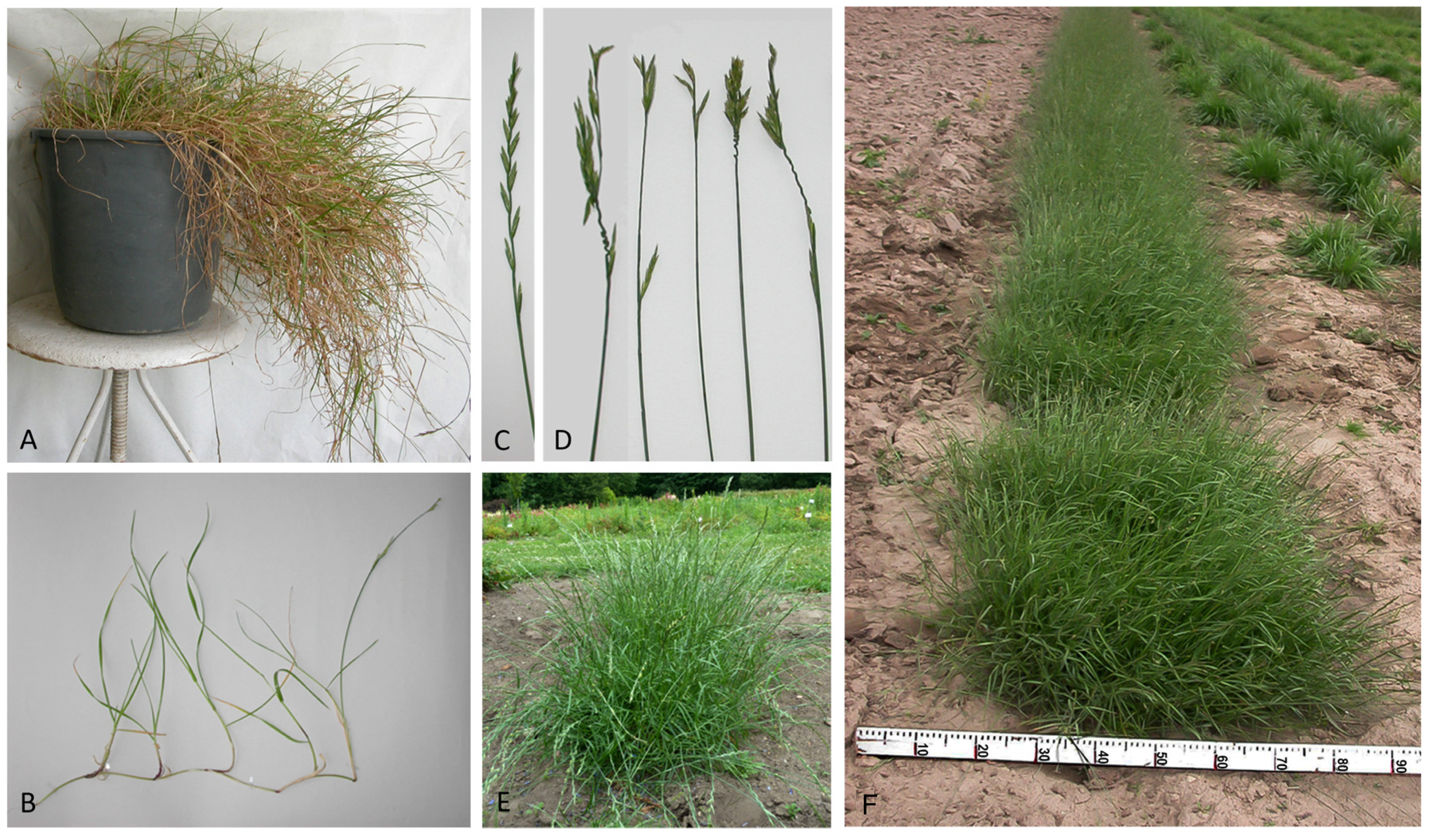
Figure 1. Phenotypic characteristics of the VIROIZ mutant of L. perenne. (A) Pot-grown mutant plant showing creeping stems; (B) single VIROIZ stem bearing four axillary shoots; (C) normal wild-type (WT) inflorescence; (D) variation in inflorescence morphology of VIROIZ plant showing reduced spikelet number and fasciation symptoms; (E) typical WT L. perenne plant; (F) clonally propagated VIROIZ plants grown in the field exhibiting a prostrate and bushy growth habit.
Agronomy 15 02541 g001
Figure 2. Distribution of the phenotypic spreading growth trait across generations. Mutant, wild-type (WT), and intermediate phenotypes were evaluated in single-plant field assessments: F1 (n = 285), F2 (n = 380), S1_a (n = 113), and S1_b (n = 142). Proportions of the mutant, WT, and intermediate plants have been consistent across generations. Chi-square test (χ2 = 4.31, df = 6, p = 0.635).
Agronomy 15 02541 g002
Figure 3. Patterns of divergent selection for the branching shoot trait resulting from axillary shoot development. (A) Typical wild-type (WT) shoot with no axillary tillers; (B,C) branching-type shoots with more than five axillary tillers; (D) schematic representation of divergent selection showing the change in the average number of axillary tillers per stem in the plant after two rounds of positive and negative selection. In both C+ and C groups, the distribution of tiller numbers changed significantly from generation C0 to C1 (Chi-square test, p-value < 0.0001). Genotypes: LTS03 and LTS04 [30]; LTS11*—VIROZ; LTS 15 and LTS16 [29]. Av.—mean value for the group; N—number of plants.
Agronomy 15 02541 g003aAgronomy 15 02541 g003b
Figure 4. Comparison of CRT3 sequences in L. perenne mutant and wild-type individuals. (A,B) Exon 3 and (C) intron 3 alignments. Red rectangles indicate sequence variants: in (A), the VIROIZ-specific substitution c.1277C>G (p.L427V); in (B) CRT3 cDNA from RNA transcript confirms a unique variant in VIROIZ and mutant-type SM117 and SM120—c.342C>G, resulting in p.L427V (corresponding to c.1277C>G in (A); in (C), a 60 bp 1378_1440 indel is present across different genotypes. CRT3 REF—L. perenne reference sequence. Note: V50, V63—VIROIZ mutant; SW44, SW84—WT type plants from VIROIZ self-pollination; SM117, SM120—mutant type from self-pollination. For comparison, WT genotypes from L. perenne ‘Veja’ (AV66, AV68, 115G, 117G, etc.) are included.
Agronomy 15 02541 g004
Figure 5. Meiotic metaphase I and tetrad stages in VIROIZ × WT F1 hybrids. (AC) Chromosome pairing patterns at metaphase I, showing a characteristic small cross-shaped bivalent (arrow in (A) together with two or four univalents not involved in pairing; (D) tetrads exhibiting micronuclei likely originating from univalents present at earlier stages. Scale bars: (A)—10 µm, (B)—20 µm, and (C,D)—40 µm.
Agronomy 15 02541 g005
Table 1. Summary of candidate gene (partial sequence) screening for potential involvement in VIROIZ shoot morphology changes.
GeneProtein FunctionFull-Length Genomic DNA, bpGene Coverage in VIROIZ,
bp (%)
Indel Allelic VariantsSNP Allelic Variants
DescriptionStatus in
VIROIZ
No.Unique
in VIROIZ
IAA1Auxin-inducible transcriptional repressor25521821 (71.4)--7N*
BRI1Receptor in brassinosteroids signaling38371931 (50.3)--6N
CRT3ER chaperon for folding of BR receptors43962584 (58.8)1378_1440 indel, in3Homozygote
62 bp (−/−) deletion
7 c.1277C>G (p.L427V)
D27Strigolactone biosynthesis23742138 (90.0)g.463_467, in2;
g.878_884, in3
Homozygote
5 bp insertion (+/+);
Homozygote
7 bp deletion (−/−)
5N
CCD837521572 (41.9)g.3054_3072 indel, in3Homozygote
for 19 bp deletion
(−/−)
8N
MAX2F-box protein in strigolactone signaling46842840 (60.6)--1N
UBC4Ubiquitin-conjugating enzyme (E2)26702274 (85.2)---N
UBC10Ubiquitin-conjugating enzyme (E2)31741361 (42.9)--2N
RHF2ARING-E3 ubiquitin ligase34081457 (42.8)---N
RPT2AA 26S proteasome subunit31041328 (42.8)--1N
CIPK9Protein kinase in signaling42983905 (90.7)---N
Notes: N*—not unique; †—for these gene alignment views are shown in Figure S3.
Disclaimer/Publisher’s Note: The statements, opinions and data contained in all publications are solely those of the individual author(s) and contributor(s) and not of MDPI and/or the editor(s). MDPI and/or the editor(s) disclaim responsibility for any injury to people or property resulting from any ideas, methods, instructions or products referred to in the content.