Article

Exogenous Application of Lanthanum Chloride to Rice at Booting Stage Can Increase Chlorophyll Content, Modulate Chlorophyll Fluorescence and Promote Grain Yield Under Deficit Irrigation

1
College of Agronomy, Hunan Agricultural University, Changsha 410128, China
2
Modern College of Agriculture and Forestry Engineering, Ganzhou Polytechnic, Ganzhou 341008, China
3
Shanghai Jinshan District Agricultural Technology Promotion Center, Shanghai 201599, China
*
Author to whom correspondence should be addressed.
These authors contributed equally to this work.
Agronomy 2025, 15(1), 32; https://doi.org/10.3390/agronomy15010032

Submission received: 27 November 2024 / Revised: 23 December 2024 / Accepted: 23 December 2024 / Published: 26 December 2024

Abstract

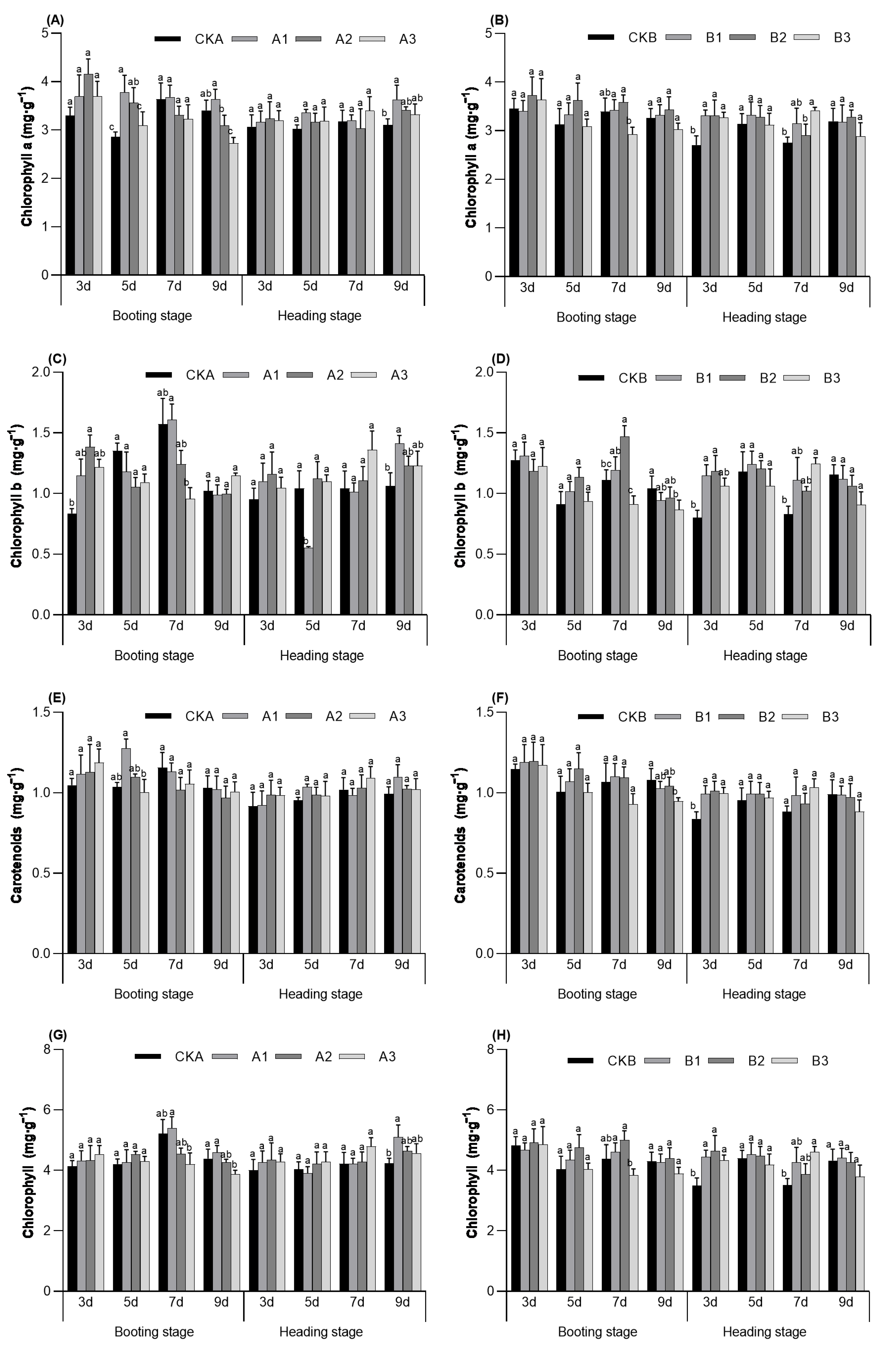
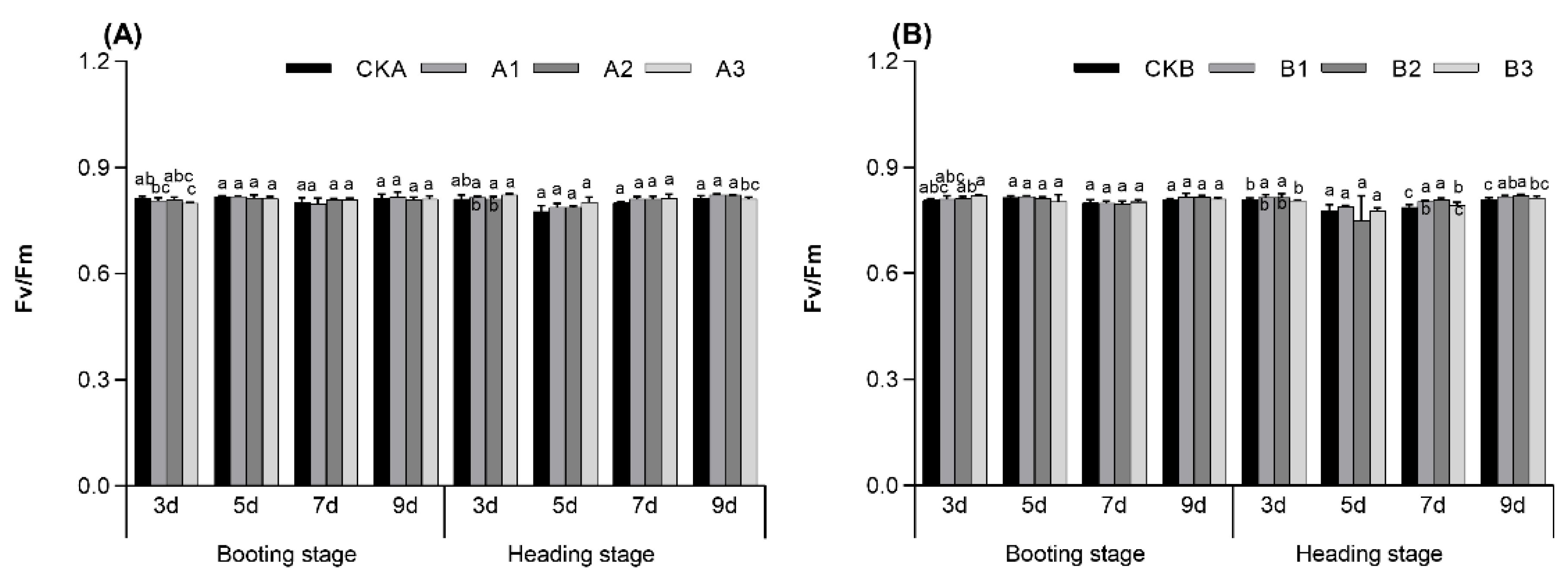
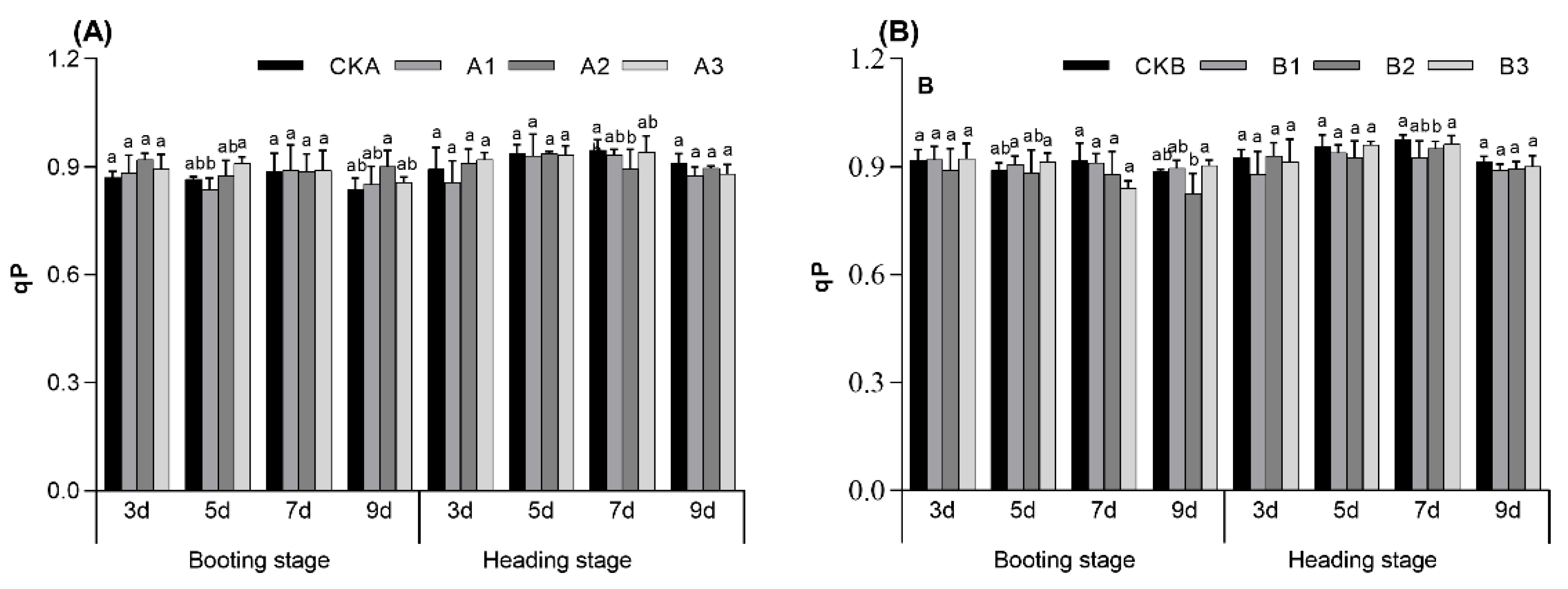
To sustain agricultural productivity and safeguard global food security, and confront the escalating challenges posed by climate change and water scarcity, it is essential to enhance the growth and productivity of rice under water stress. This study investigated the effects of lanthanum chloride on the chlorophyll fluorescence characteristics and grain yield of rice under different irrigation modes. The rice cultivar H You 518 was selected and sprayed 20, 100, or 200 mg·L−1 lanthanum chloride at the booting and heading stages under deficit irrigation (where no rewatering was applied after the initiation of stress, allowing the water layer to evaporate naturally under high temperatures) or conventional irrigation (with daily rewatering to maintain a consistent water level). The results showed that the application of low concentrations lanthanum chloride promoted the chlorophyll content, whereas high concentrations decreased the chlorophyll content, under deficit irrigation, the effect of lanthanum chloride on the green fluorescence parameters of rice leaves at the booting stage was greater than that at the heading stage, and the booting stage was more sensitive to water deficit. The application of 100 mg·L−1 lanthanum chloride reduced the initial fluorescence (F0) and the non-photochemical quenching coefficient (qN); promoted the activity of leaf photosynthetic system II (PSII); and maximized the photochemical quantum yield (Fv/Fm), photochemical quenching coefficient (qP), and PSII relative electron transfer efficiency (ETR). Under deficit irrigation, this treatment significantly enhanced grain yield by increasing the thousand-grain weight, spikelet filling rate, and number of grains per panicle. These results suggest that spraying 100 mg·L−1 lanthanum chloride at the booting stage under deficit irrigation can effectively increase the chlorophyll content, thereby increasing the light energy conversion efficiency of the PS II reaction center, ultimately resulting in increased spikelet filling rate and grain yields.
Keywords: lanthanum effects; drought stress; leaf green fluorescence parameters; sustainability lanthanum effects; drought stress; leaf green fluorescence parameters; sustainability