Article

Water Uptake Characteristics of Stipa bungeana Trin: Affected by Subsidence in the Coal Mining Areas of Northwest China


1
State Key Laboratory of Water Resource Protection and Utilization in Coal Mining, CHN Energy Shendong Coal Group Co., Ltd., Beijing 100011, China
2
National Institute of Clean-and-Low-Carbon Energy, Beijing 102211, China
3
Key Laboratory of Agricultural Soil and Water Engineering in Arid and Semiarid Areas, Ministry of Education, Northwest A&F University, Xianyang 712100, China
4
School of Water and Environment, Chang’an University, Xi’an 710054, China
5
Department of Irrigation and Water Management, Bangladesh Agricultural University, Mymensingh 2202, Bangladesh
*
Authors to whom correspondence should be addressed.
Agronomy 2024, 14(3), 424; https://doi.org/10.3390/agronomy14030424

Submission received: 1 February 2024 / Revised: 19 February 2024 / Accepted: 21 February 2024 / Published: 22 February 2024
(This article belongs to the Section Agricultural Biosystem and Biological Engineering)

Abstract

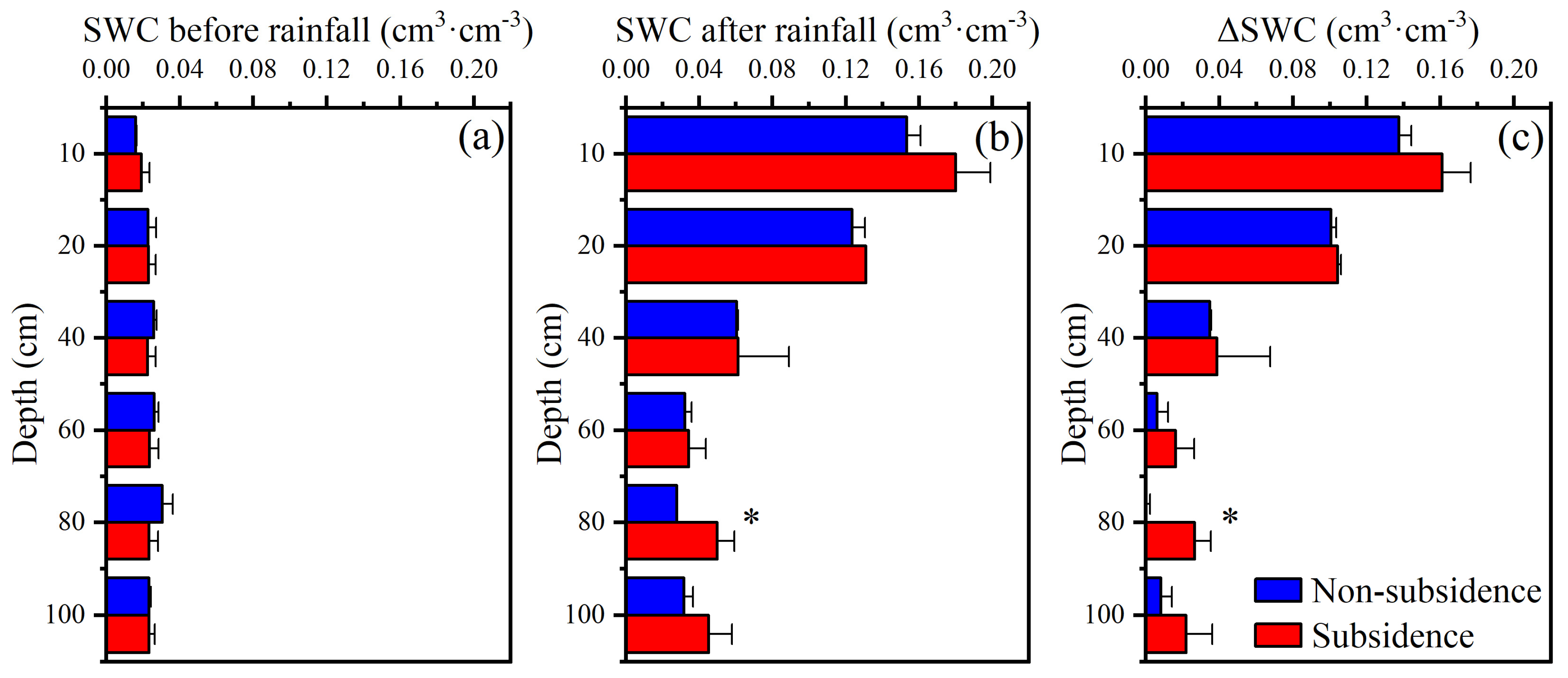
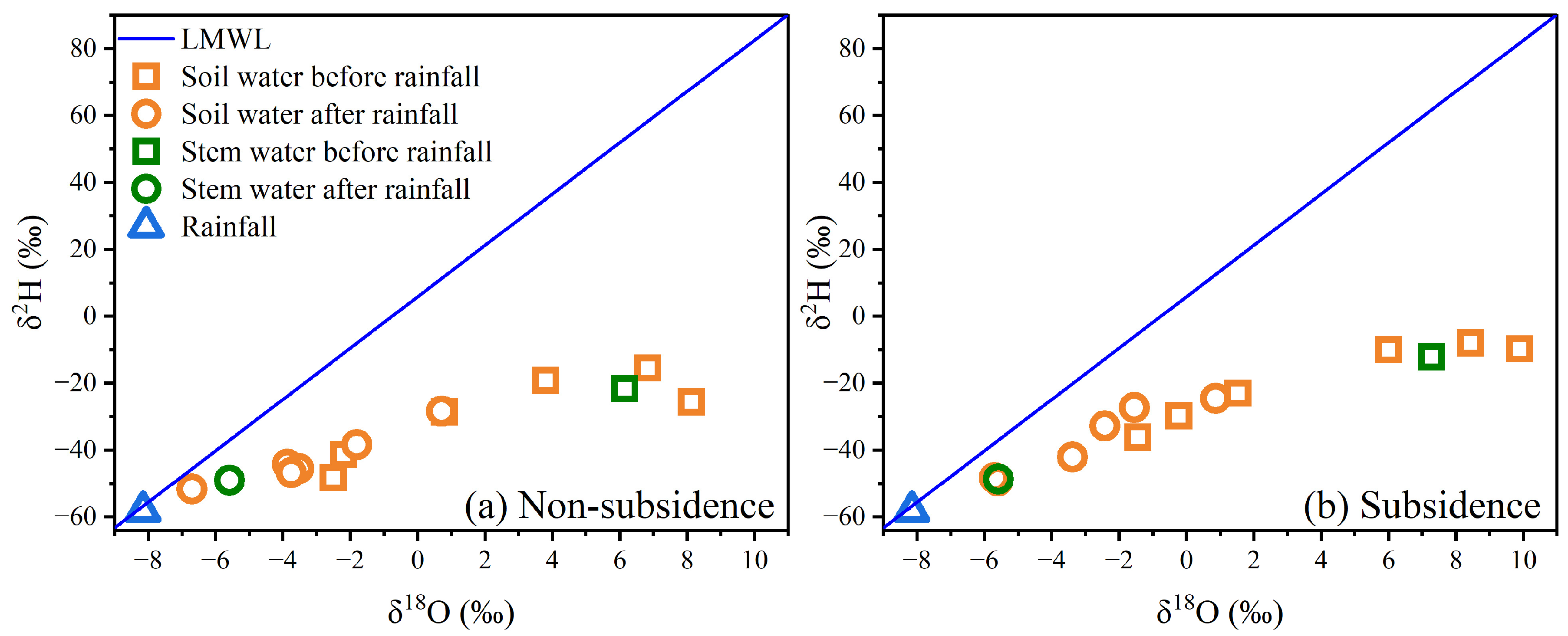
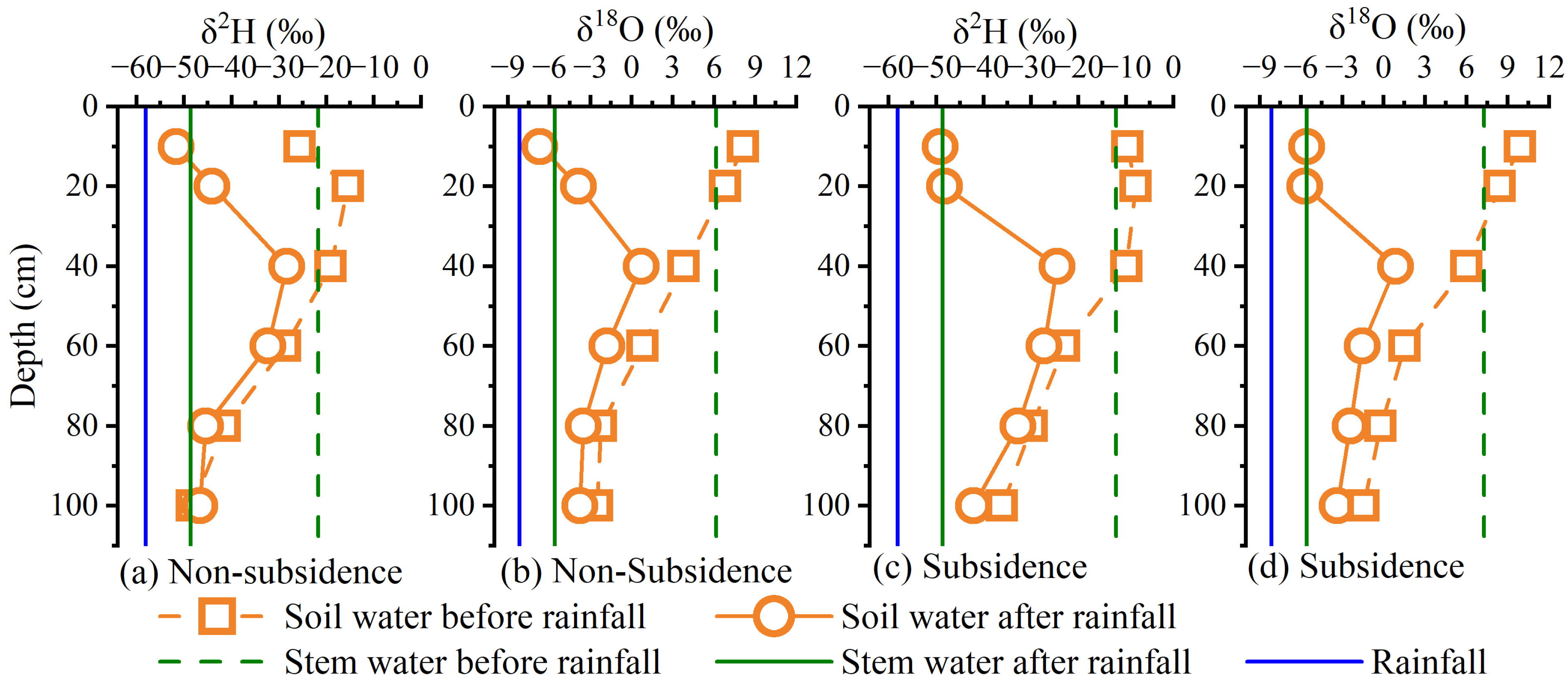
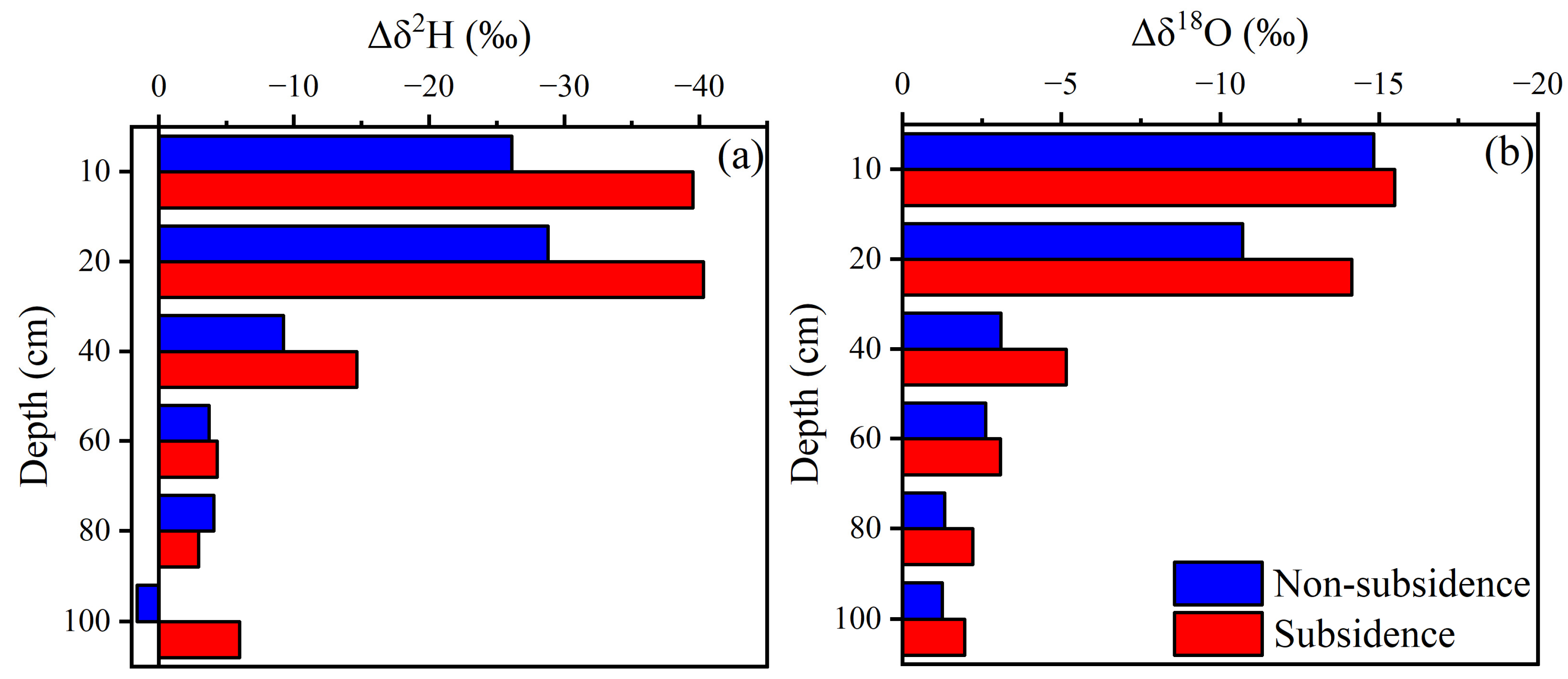
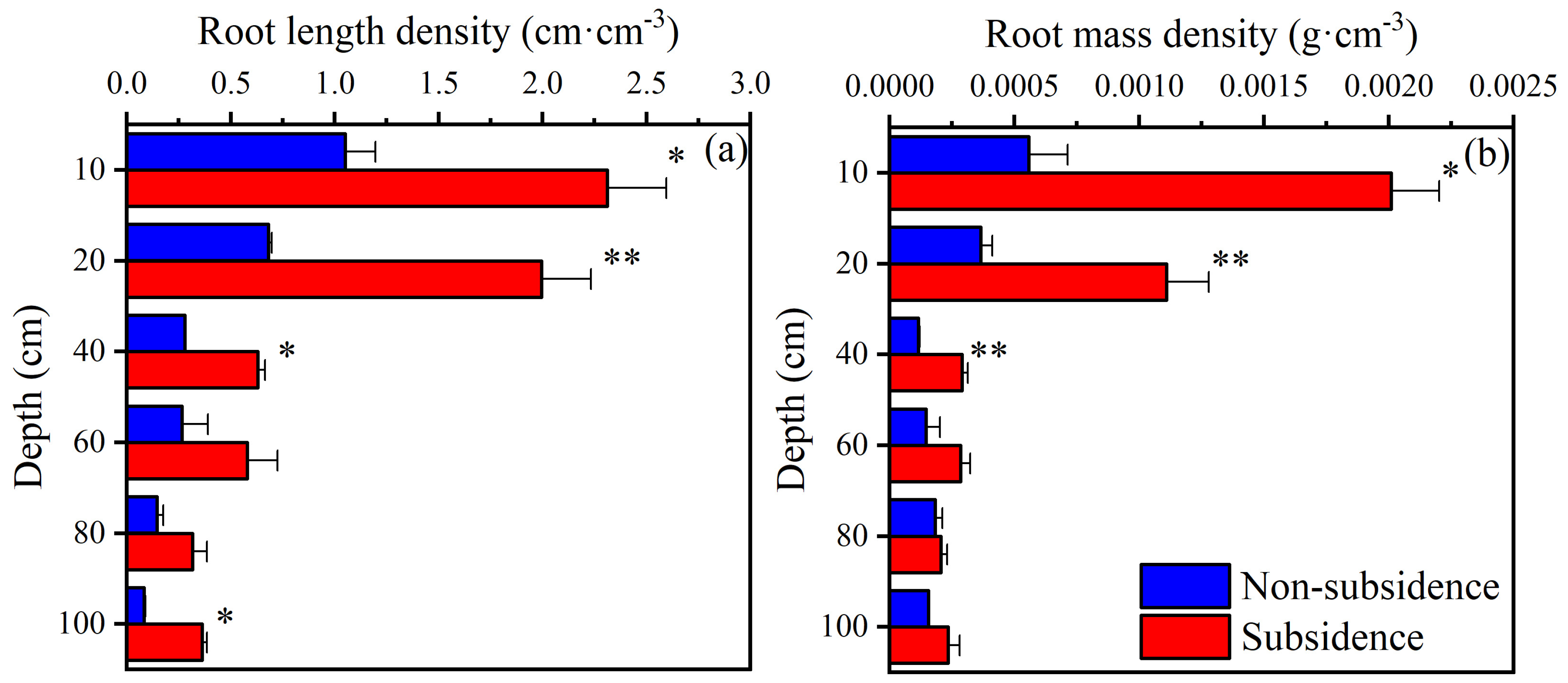
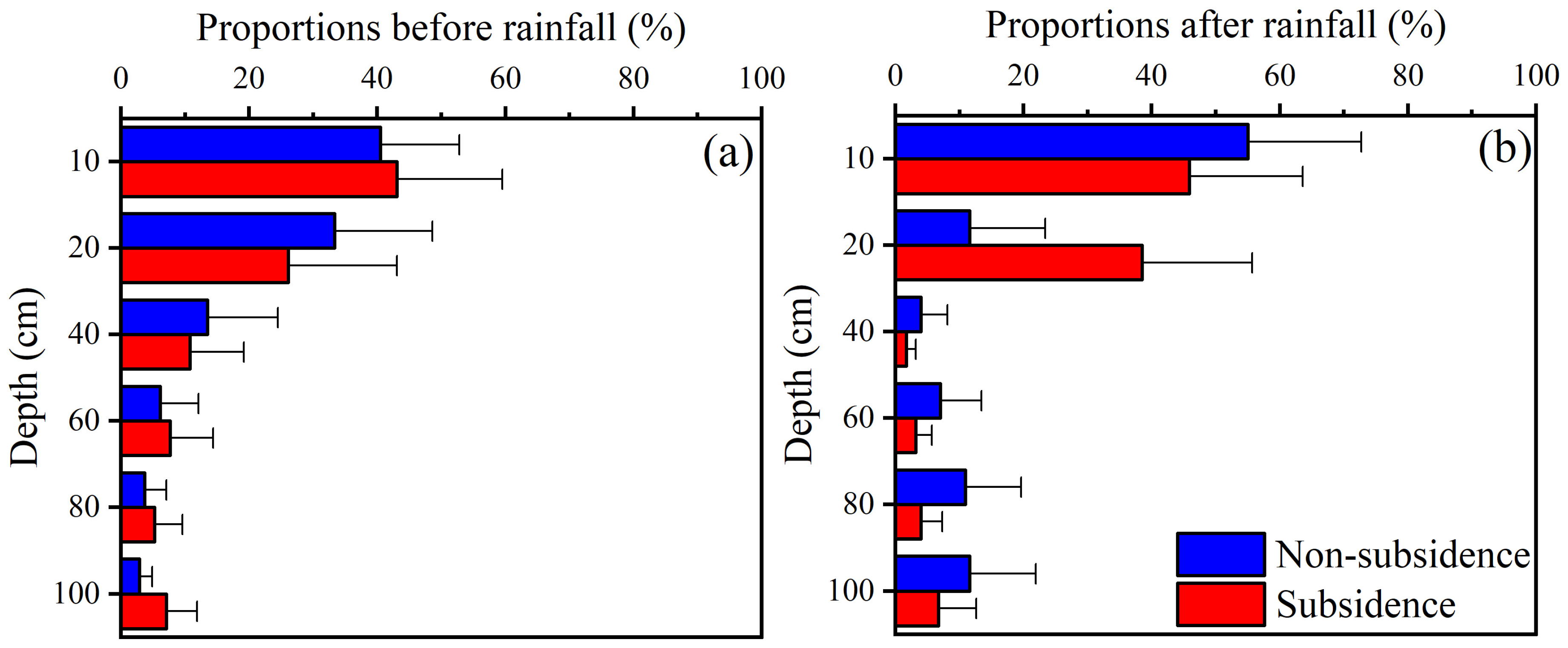
Revealing the water use pattern of plants influenced by coal-mining-caused land subsidence is crucial to understand plant–water interactions and guide ecological restoration. However, available information on herbaceous plants, the dominant species in most arid and semi-arid regions with abundant coal resources, remains inadequate. We investigated the water use patterns of Stipa bungeana Trin. by measuring soil water content, root distribution, and stable isotopes of hydrogen (δ2H) and oxygen (δ18O) of soil water and plant stem water both before and after a rainfall event. The results revealed that prior to rainfall, both areas exhibited a low soil water content with no discernible difference in soil drought. However, the soil waters δ2H and δ18O were found to be more enriched at varying depths within the subsidence area, indicating a heightened level of soil evaporation. Both soil water content and soil water isotopic composition responded sensitively to rainfall, with rainfall primarily replenishing the shallow layer (0–20 cm), thereby reflecting an infiltration mode dominated by piston flow. More water seeped into deeper soil layers in the subsidence area compared to the non-subsidence area, with more preferential flow. Before rainfall, the sources of plant water uptake were consistent both at shallow and deep soil layers, implying that the proportion of water uptake gradually decreased with increasing depth. After rainfall, the sources of plant water uptake differed slightly between the two soil layers. The plants in non-subsidence and subsidence areas dominantly extracted soil water at depths greater than 10 cm and 20 cm, respectively. The root system in the subsidence area was more developed than that in the non-subsidence area. Plant water uptake was primarily influenced by the spatial distribution of roots, as well as the post-rainfall water distribution, regardless of whether they were in the subsidence area or not. Although land subsidence affected soil water transport, the water uptake pattern of Stipa bungeana Trin. was similar before and after rainfall, indicating the adaptive growth of plants through their roots in the subsidence area. The high adaptability of herbs such as Stipa bungeana Trin. makes them a viable option for vegetation restoration in subsidence areas. This study has significant implications for evaluating plant–water relationships in subsidence areas due to coal mining, thereby providing a fundamental basis and valuable reference for ecological restoration and management strategies within such affected regions.
Keywords: plant water use; stable isotope; coal mining; subsidence; Northwest China plant water use; stable isotope; coal mining; subsidence; Northwest China