Article

Industrial-Scale Composting of Rice Straw and Sewage Sludge

by
Isabel Rodríguez-Carretero
*,
Rodolfo Canet
,
Ana Quiñones
and
Ana Pérez-Piqueres
Centro para el Desarrollo de la Agricultura Sostenible, Instituto Valenciano de Investigaciones Agrarias, 46113 Moncada, Spain
*
Author to whom correspondence should be addressed.
Agronomy 2023, 13(9), 2295; https://doi.org/10.3390/agronomy13092295

Submission received: 28 June 2023 / Revised: 11 August 2023 / Accepted: 29 August 2023 / Published: 30 August 2023

Abstract

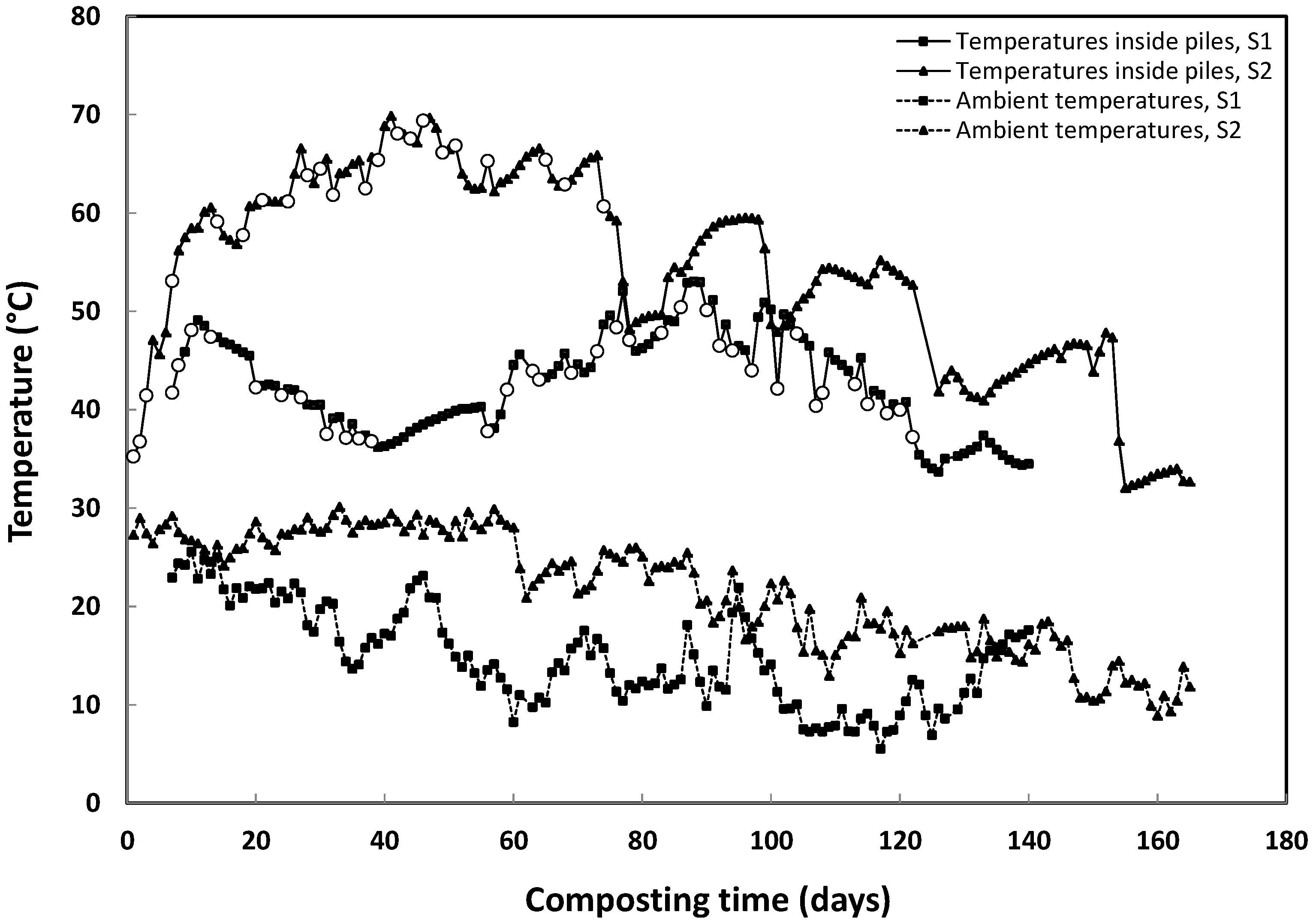
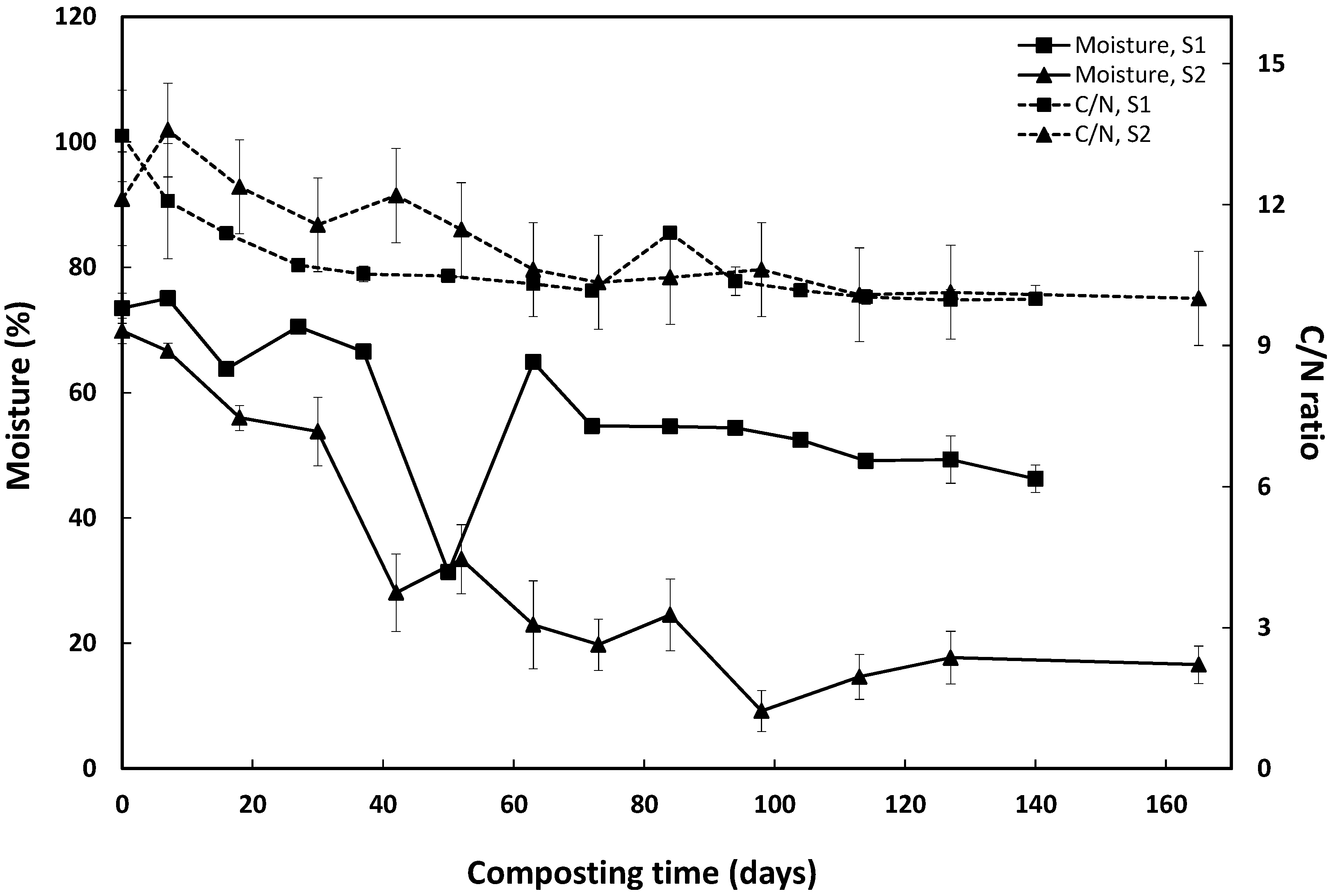
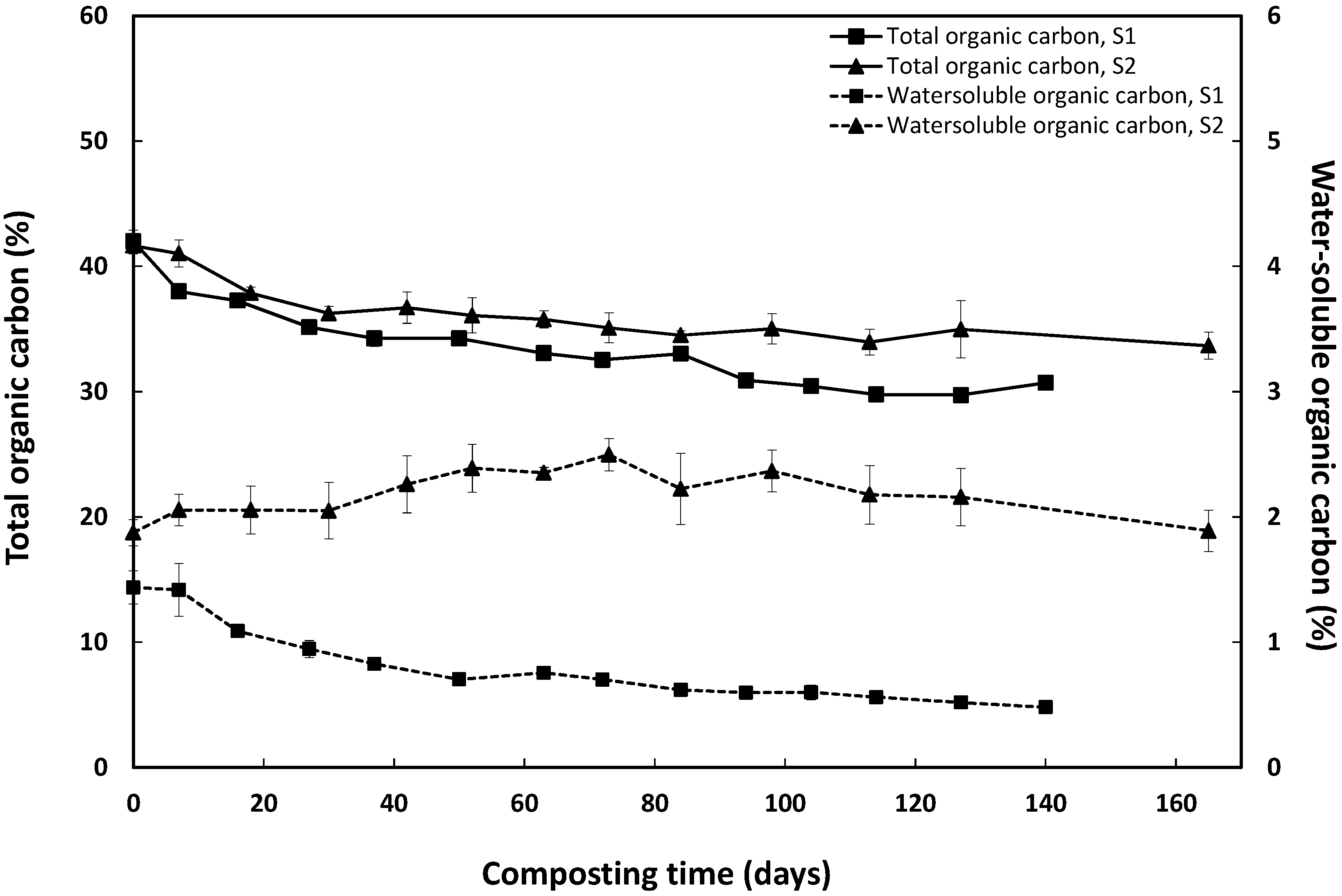
Composting is an interesting option to recycle big quantities of organic waste because it helps to mitigate different environmental problems. Complementary characteristics of rice straw (RS) and sewage sludge (SS) create a suitable mixture to be used in a composting process. This work studies industrial-scale RS and SS composting to assess both its viability and optimization. Windrow composting was conducted during two seasons. The complete characterisation (moisture, pH, electrical conductivity, total, oxidisable and water-soluble organic carbon, humic substances, organic and mineral nitrogen, macronutrients, micronutrients, heavy metals) of starting materials, samples taken periodically and final composts were carried out. During the first season, an RS:SS ratio of 1:8 (w:w fresh weight) was used, which led to a process with adequate temperatures for biodegradation, but not for ensuring materials’ sanitation. During the second season, the RS:SS ratio was increased (1:6) to enhance the energy process and, thus, temperatures. Although this increase took place, degradation slowed down as oxidisable organic carbon and water-soluble organic carbon indicated. During both seasons, final composts presented adequate pH, high N-richness, and interesting macro- and micronutrient values. Notwithstanding, they also presented certain salinity and high ammonium contents, which must be considered for their field application. The obtained composts have interesting agronomic characteristics, which suggest their potential as an alternative to conventional fertilisers.
Keywords: organic waste management; organic fertiliser; circular economy; sustainability organic waste management; organic fertiliser; circular economy; sustainability