Article

Anthropogenic Contribution and Migration of Soil Heavy Metals in the Vicinity of Typical Highways


1
State Key Laboratory of Soil and Sustainable Agriculture, Institute of Soil Science, Chinese Academy of Sciences, 71 East Beijing Road, Nanjing 210008, China
2
University of Chinese Academy of Sciences, Beijing 100049, China
3
College of Environment and Planning, Henan University, Kaifeng 475004, China
4
Key Laboratory of Watershed Geographic Sciences, Nanjing Institute of Geography and Limnology, Chinese Academy of Sciences, Nanjing 210008, China
*
Author to whom correspondence should be addressed.
Agronomy 2023, 13(2), 303; https://doi.org/10.3390/agronomy13020303

Submission received: 9 December 2022 / Revised: 2 January 2023 / Accepted: 16 January 2023 / Published: 19 January 2023
(This article belongs to the Special Issue Soil Sustainability in the Anthropocene)

Abstract

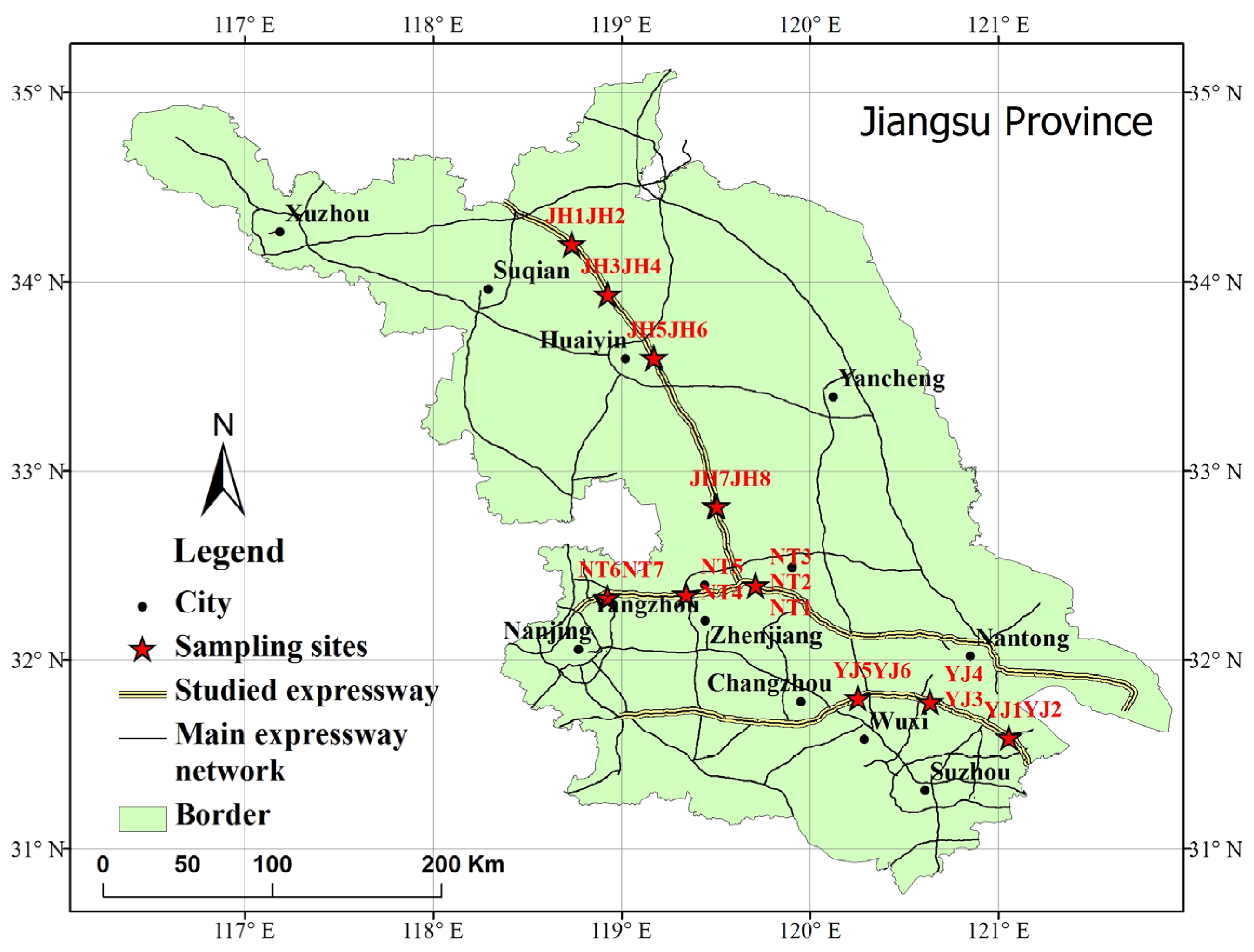
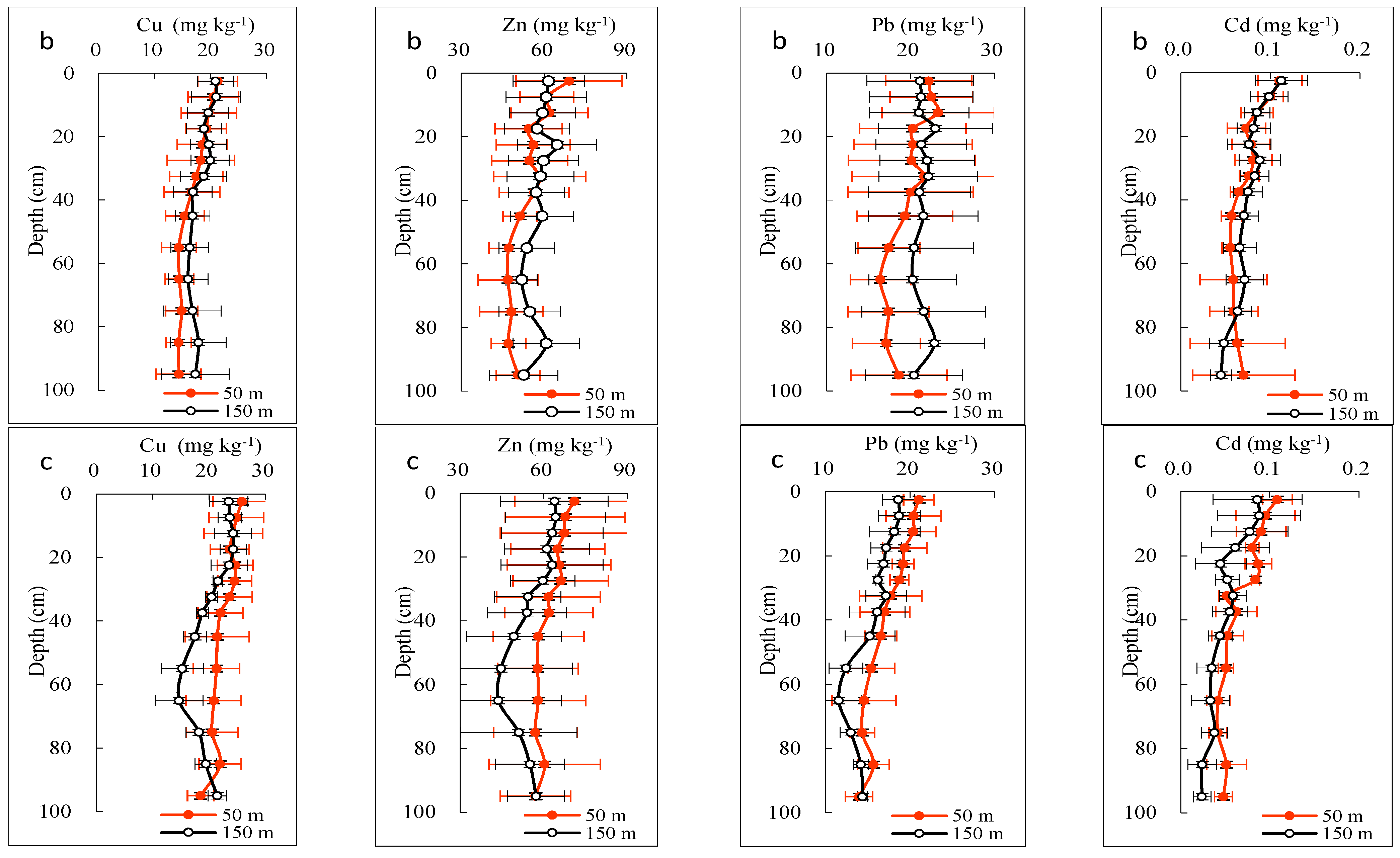
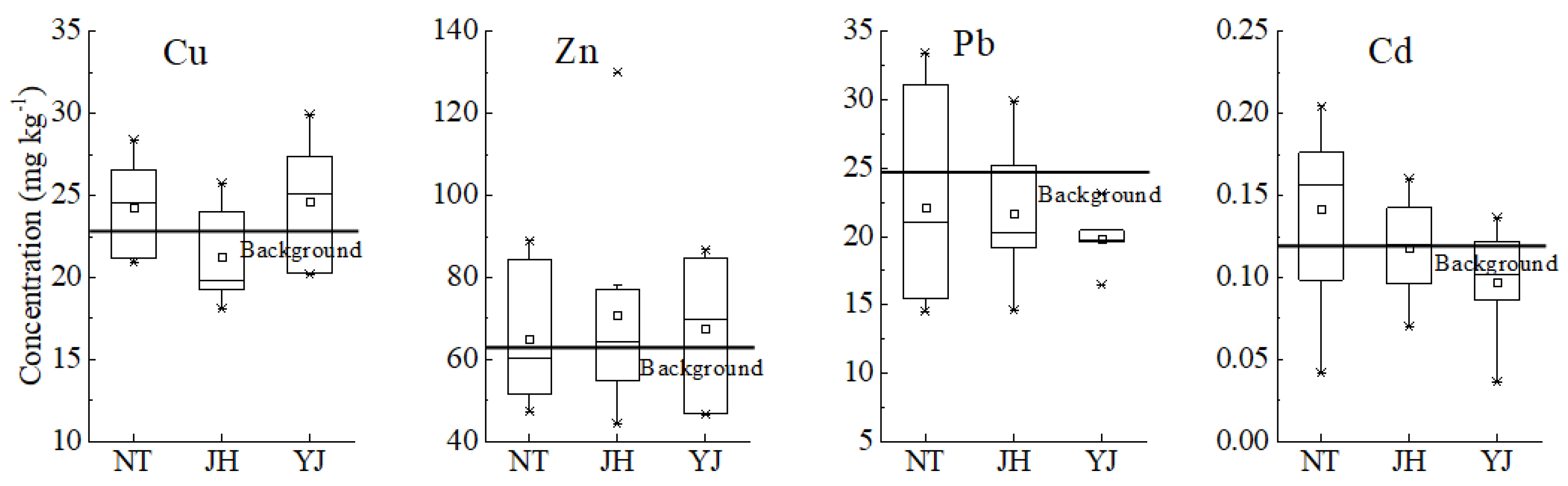
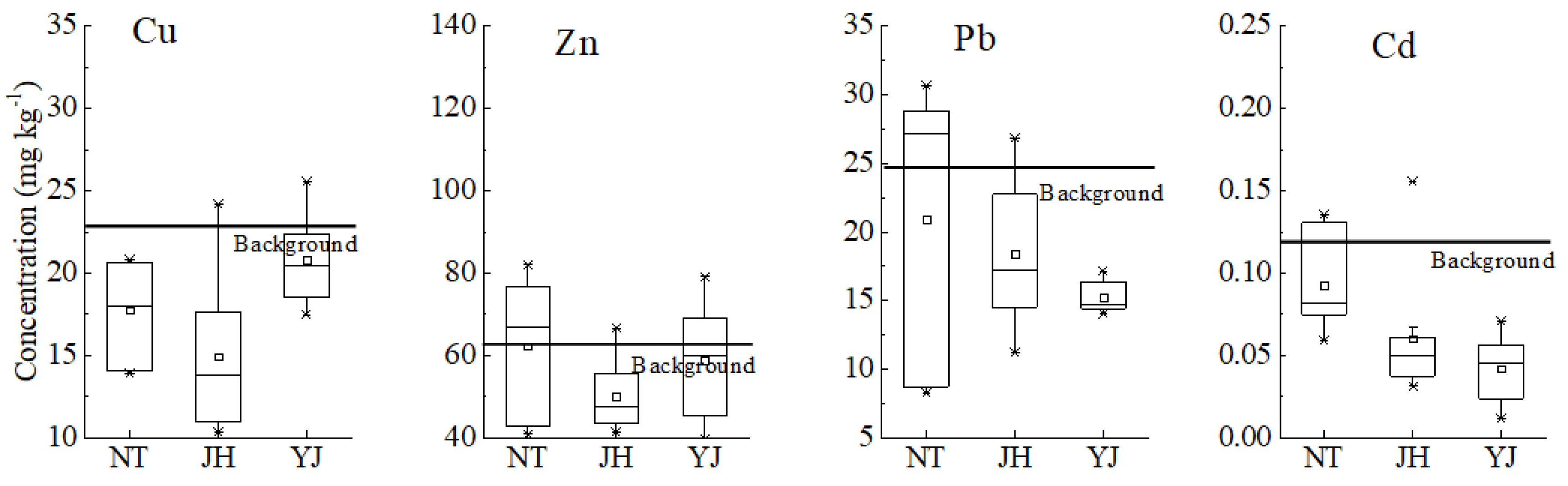
To reveal the secondary anthropogenic contribution and accumulation rate of heavy metals in highway-side soils, we studied soil heavy metals on three representative highways in Southeast China, with different traffic intensities, service years, land use patterns and distances from roads, with high-resolution sampling of soil profiles. Concentrations of soil Cu, Zn, Pb and Cd were measured. The comparison of concentrations in surface soils with original values and their vertical distributions shows that soils within 150 m of the highway side are contaminated by heavy metals, with surface accumulation and possible movement down the profiles. The transferring depth of heavy metals was 10–30 cm. The contribution ratios of heavy metals were 1.0–30.5% in the surface at 30 cm, with the sequence of Cd >> Cu > Zn > Pb. The accumulation rates were 1.27–2.03 kg Cu ha−1 y−1, 2.44–5.27 kg Zn ha−1 y−1, 0.71–1.40 kg Pb ha−1 y−1 and 0.010–0.018 kg Cd ha−1 y−1 in soils within 50 m range. Furthermore, the accumulation of these metals varied with the traffic intensity, service years and land use patterns. Soils under forest have less heavy metal accumulation, which suggests a protective forest to set beside highways at a distance of at least 50 m to prevent soils from being contaminated.
Keywords: accumulation rate; anthropogenic contribution; element migration; heavy metals; highway-side soil; protective forest accumulation rate; anthropogenic contribution; element migration; heavy metals; highway-side soil; protective forest