Article

Effect of Soil Moisture Deficit on Aerobic Rice in Temperate Australia

Centre for Regional and Rural Futures (CeRRF), Deakin University, Griffith, NSW 2680, Australia
*
Author to whom correspondence should be addressed.
Agronomy 2023, 13(1), 168; https://doi.org/10.3390/agronomy13010168

Submission received: 21 November 2022 / Revised: 29 December 2022 / Accepted: 31 December 2022 / Published: 4 January 2023
(This article belongs to the Special Issue Water Saving in Irrigated Agriculture)

Abstract

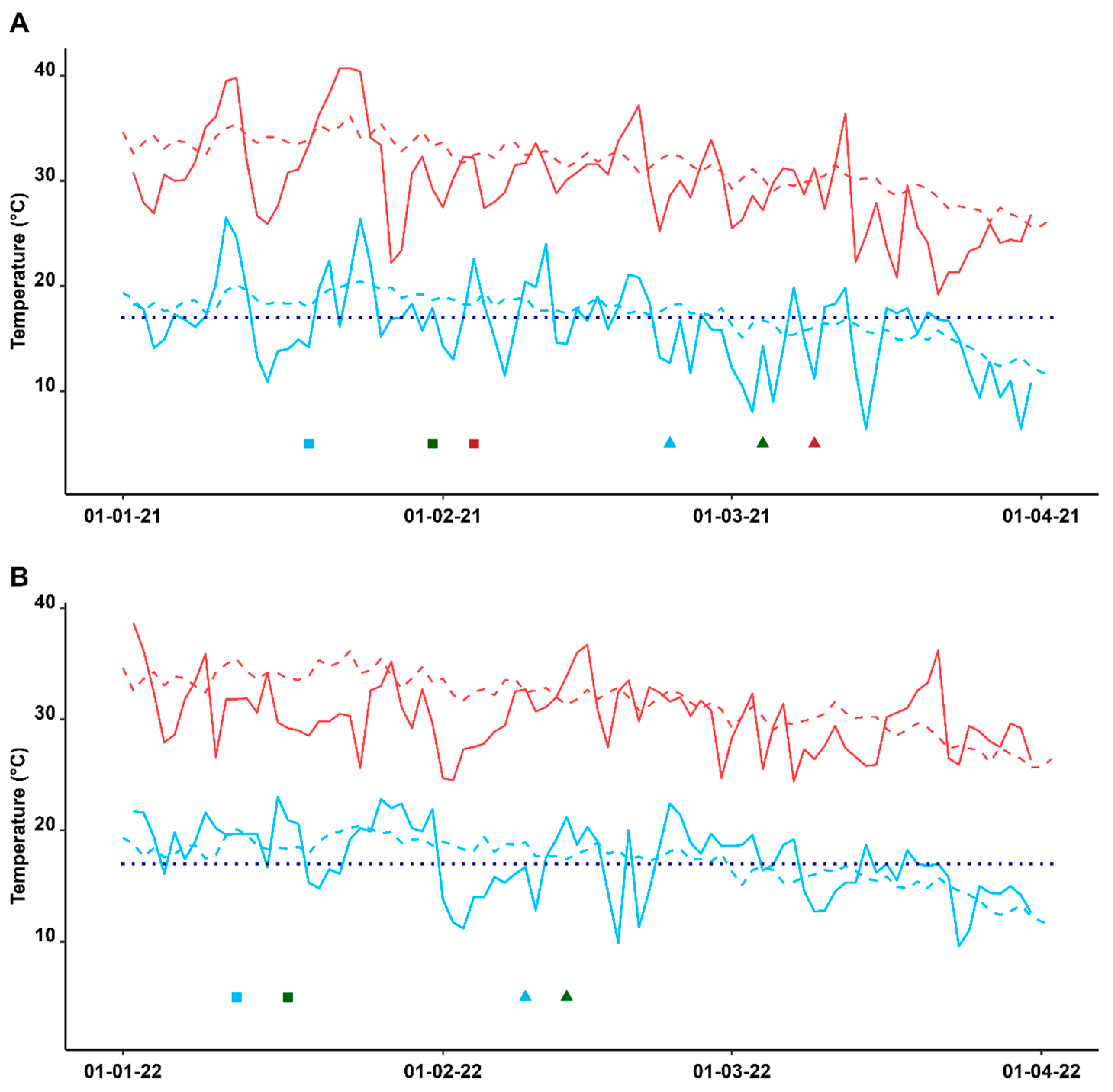
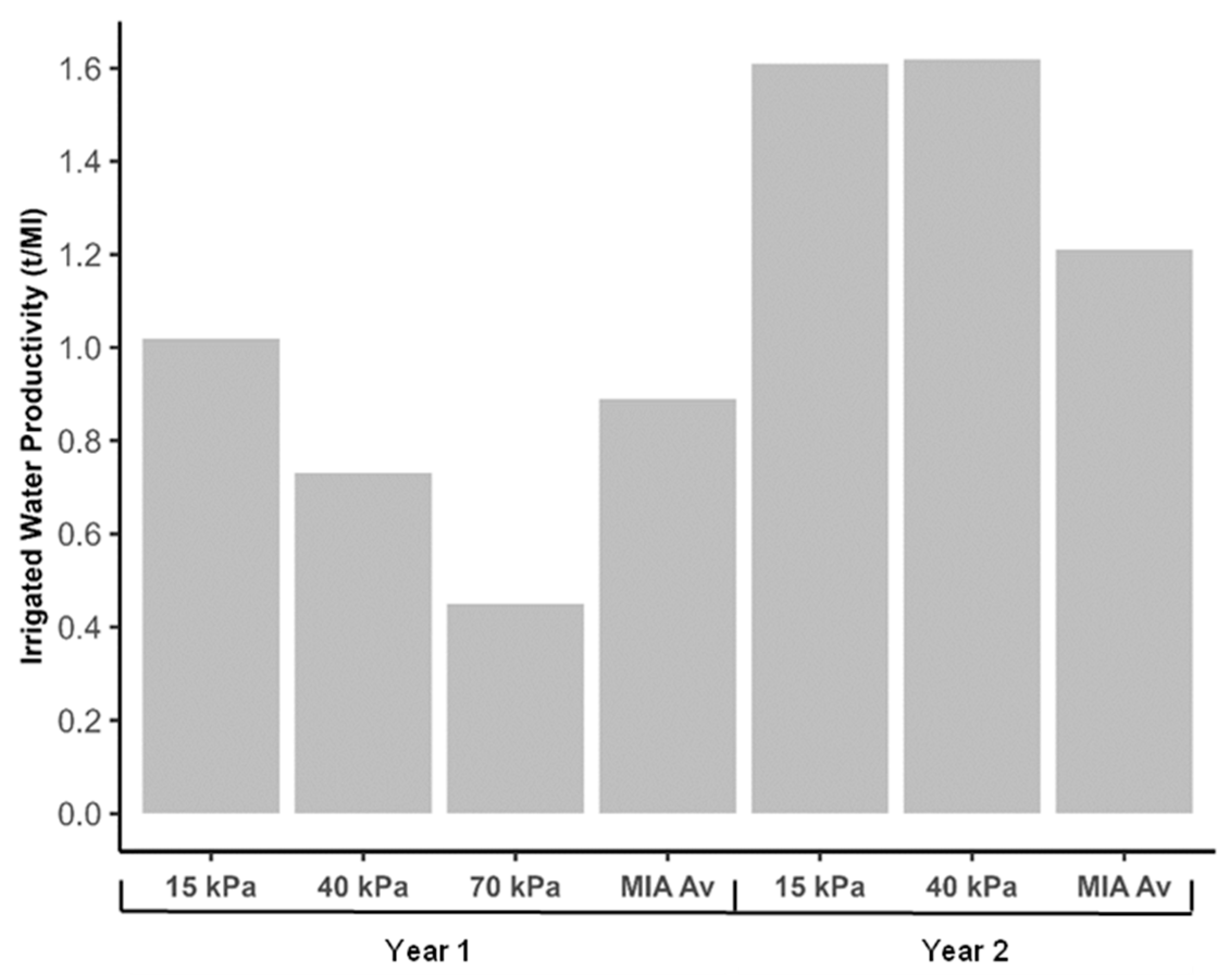
Declining water availability is pressing rice growers to adopt water-saving irrigation practices such as aerobic rice to maintain profitability per megalitre (ML) of water input. Irrigators require well-defined irrigation thresholds to initiate irrigation to maximise water productivity. Such thresholds do not exist for temperate rice regions. Adopting a strategy that has been reported to succeed in non-temperate environments may fail in temperate climates, and therefore, needs investigation. This study aimed to investigate, in a temperate Australian environment, the effect of increasing soil moisture deficit during the rice vegetative period on crop physiological development, grain yield and water productivity. The study was conducted in a commercial farm using a randomised complete block design in the 2020/21 and 2021/22 growing seasons. Automated gravity surface irrigation technologies were adopted to enable high-frequency irrigation. Extending soil moisture deficit beyond 15 kPa was found to significantly delay panicle initiation by at least 13–14 days, exposing rice to cold temperatures in Year 1 during the cold-sensitive early pollen microspore period. This reduced yield by up to 55% (4.5 t/ha) compared to the 15 kPa treatment that was not impacted by cold sterility. In the absence of cold sterility, irrigated water productivity and total water productivity ranged between 1.02 and 1.61 t/ML, and 0.84 and 0.93 t/ML, respectively. The highest yields (8.1 and 7.5 t/ha) were achieved irrigating at a soil tension of 15 kPa in growing seasons 2020/21 and 2021/22. This research demonstrates that sound water productivity can be achieved with aerobic rice cultivation in temperate climates, providing cold temperatures during early pollen microspore are avoided. The quantification of the delay in crop development caused by increasing soil moisture deficit provides rice farmers greater confidence in determining the irrigation strategy and timing of pre-emergent irrigation in regions at risk of cold sterility. However, due to the high labour demand associated with aerobic rice, the adoption of aerobic rice at a commercial scale in this Australian environment is unlikely without adopting automated irrigation technology.
Keywords: water saving irrigation; water productivity; oryza sativa; automated irrigation; deficit irrigation; soil tension; rice irrigation water saving irrigation; water productivity; oryza sativa; automated irrigation; deficit irrigation; soil tension; rice irrigation