Article

The Sustainability of Irrigation Strategies in Traditional Olive Orchards
by
Juan Carlos Molina-Moral
1,
Alfonso Moriana-Elvira
2 and
Francisco José Pérez-Latorre
1,*
1
Department of Mechanical and Mining Engineering, Fluid Mechanics Area, Campus Cientifico-Tecnológico Linares, Universidad de Jaén, Avda. Universidad, s/n, 23700 Linares, Spain
2
Department of Agronomy, Universidad de Sevilla, Crta. de Utrera, km. 1, 41013 Sevilla, Spain
*
Author to whom correspondence should be addressed.
Agronomy 2022, 12(1), 64; https://doi.org/10.3390/agronomy12010064

Submission received: 8 November 2021 / Revised: 16 December 2021 / Accepted: 21 December 2021 / Published: 28 December 2021
(This article belongs to the Special Issue Selected Papers from 38th National Irrigation Congress)

Abstract

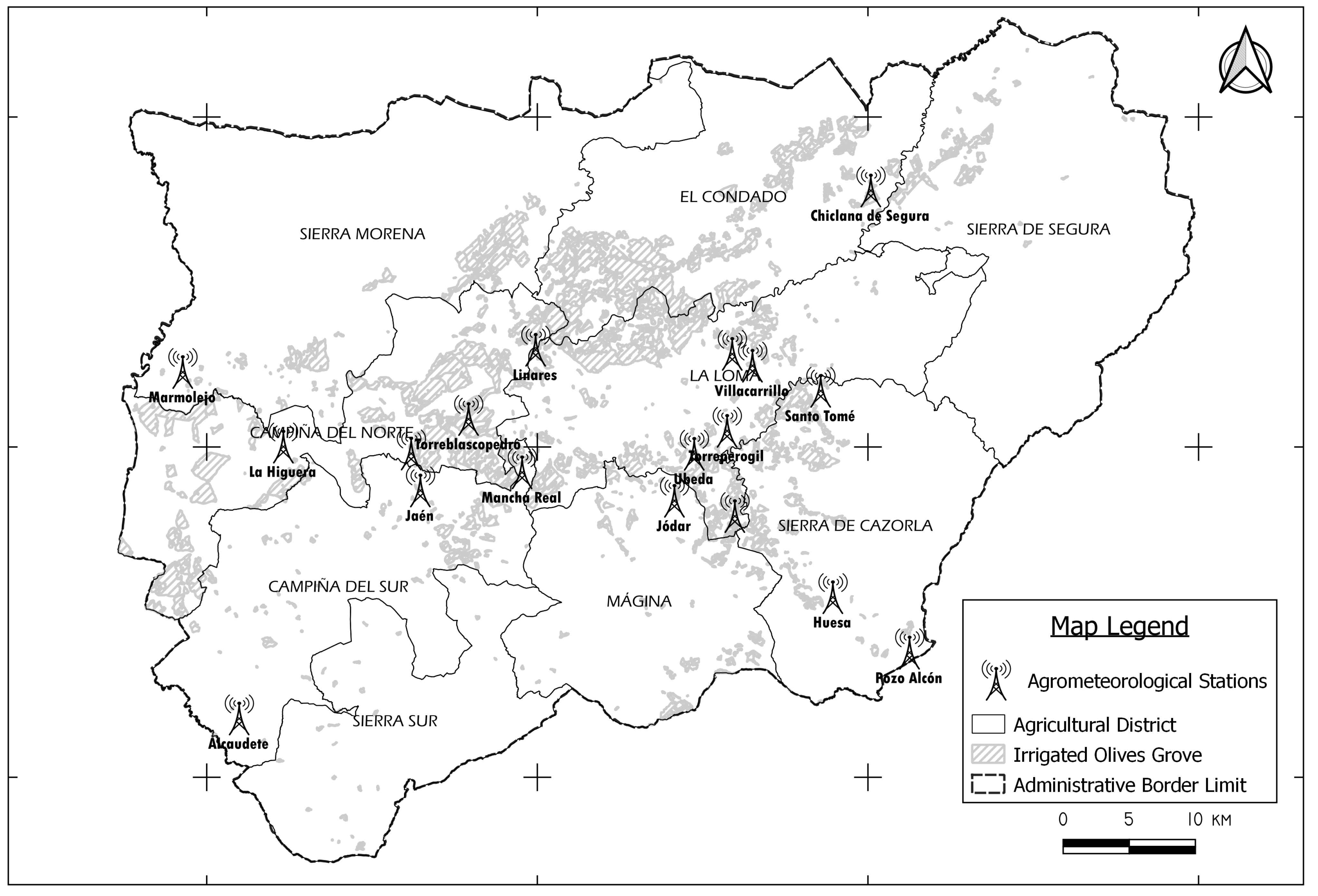
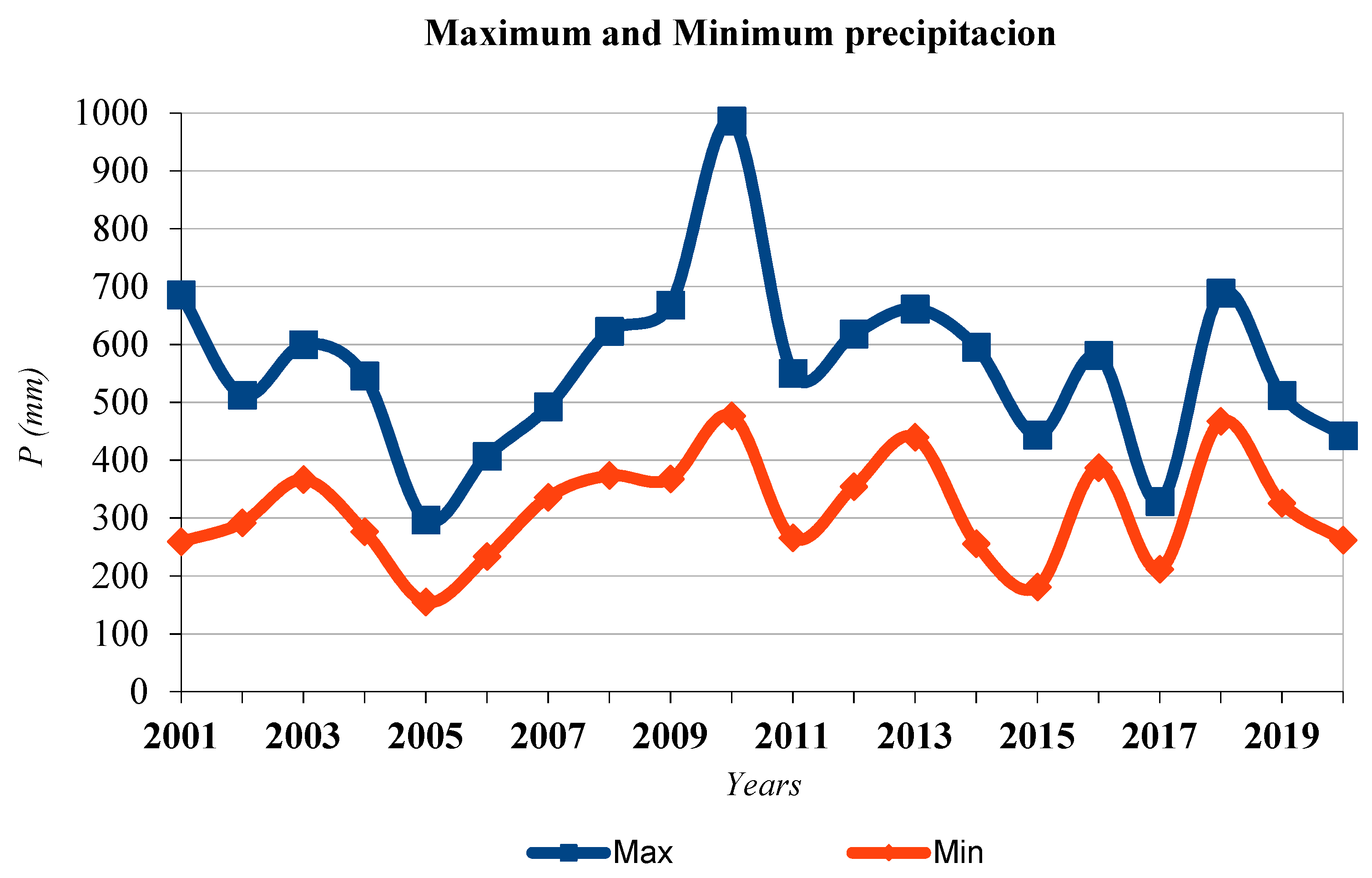
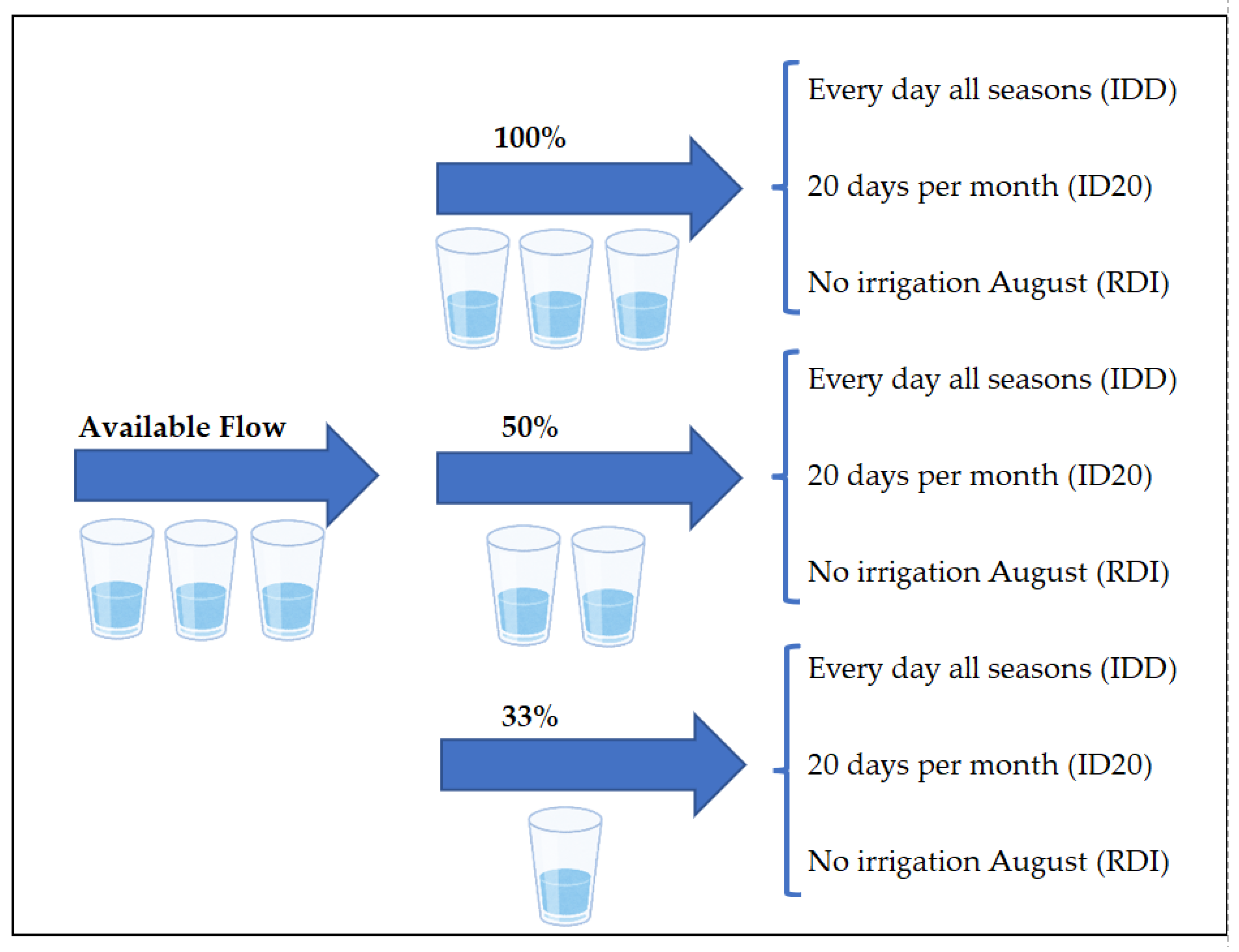
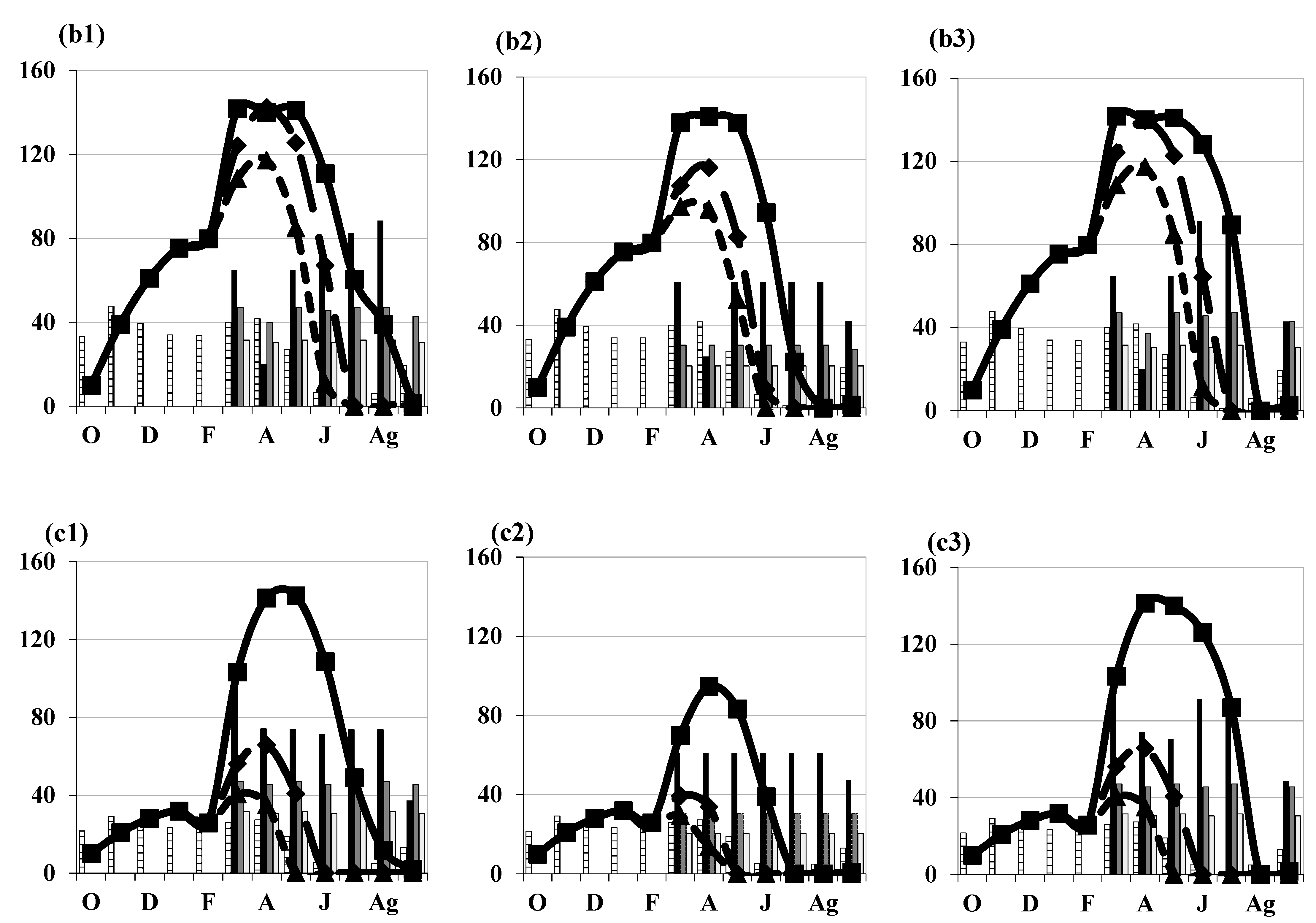
Olive trees are one of the few alternative crops available for farmers in arid environments. In many of these regions, surface irrigation is increasing. The aim of this study was to estimate the pattern of water soil reserves through the season considering different climatic scenarios, limitations in irrigation scheduling, and irrigation systems. Modeling was performed with the most common type of soil, and a tree density of 10 × 10 m was used. Three different climatic scenarios were estimated using eighteen agroclimatic stations along the zone (Jaén, Spain). In these climatic scenarios, different irrigation strategies were considered. First, the percentages of maximum flow available (100%, 50%, and 33%) were used. In each of these flows, the days available for irrigation were considered: daily irrigation (IDD), 20 days per month (ID20), and no irrigation, during August (RDI). The results suggest that a 33% flow strategy, the most common in the surveyed area, would produce the greatest water-stress period in the most sensitive phenological stage. However, 100%, in all scenarios, and 50% (only IDD and RDI) would obtain the best water status. According to the estimated water applied, 50% was the most advisable strategy. However, in a minimum rainfall scenario, water needs could be excessive.
Keywords: climatic change; pit hardening; water stress; water availability climatic change; pit hardening; water stress; water availability