Article

Nutrient Accumulation and Distribution Assessment in Response to Potassium Application under Maize–Soybean Intercropping System

1
College of Agronomy, Sichuan Agricultural University, Chengdu 611130, China
2
College of Management, Sichuan Agricultural University, Chengdu 611130, China
3
Department of Agronomy, Sindh Agriculture University, Tandojam 70060, Pakistan
*
Author to whom correspondence should be addressed.
These authors contributed equally to this work.
Agronomy 2020, 10(5), 725; https://doi.org/10.3390/agronomy10050725

Submission received: 22 March 2020 / Revised: 24 April 2020 / Accepted: 29 April 2020 / Published: 19 May 2020
(This article belongs to the Section Innovative Cropping Systems)

Abstract

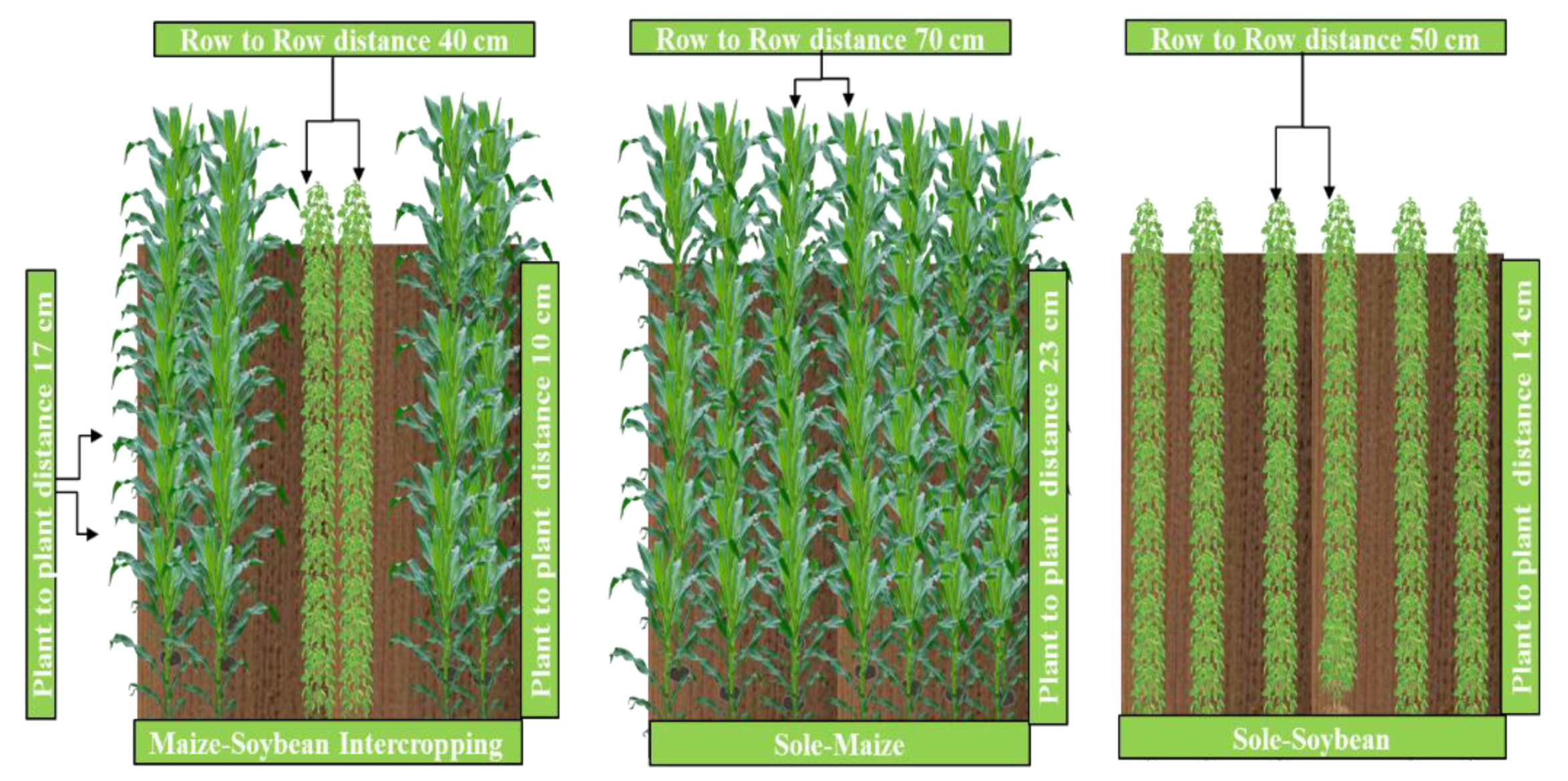
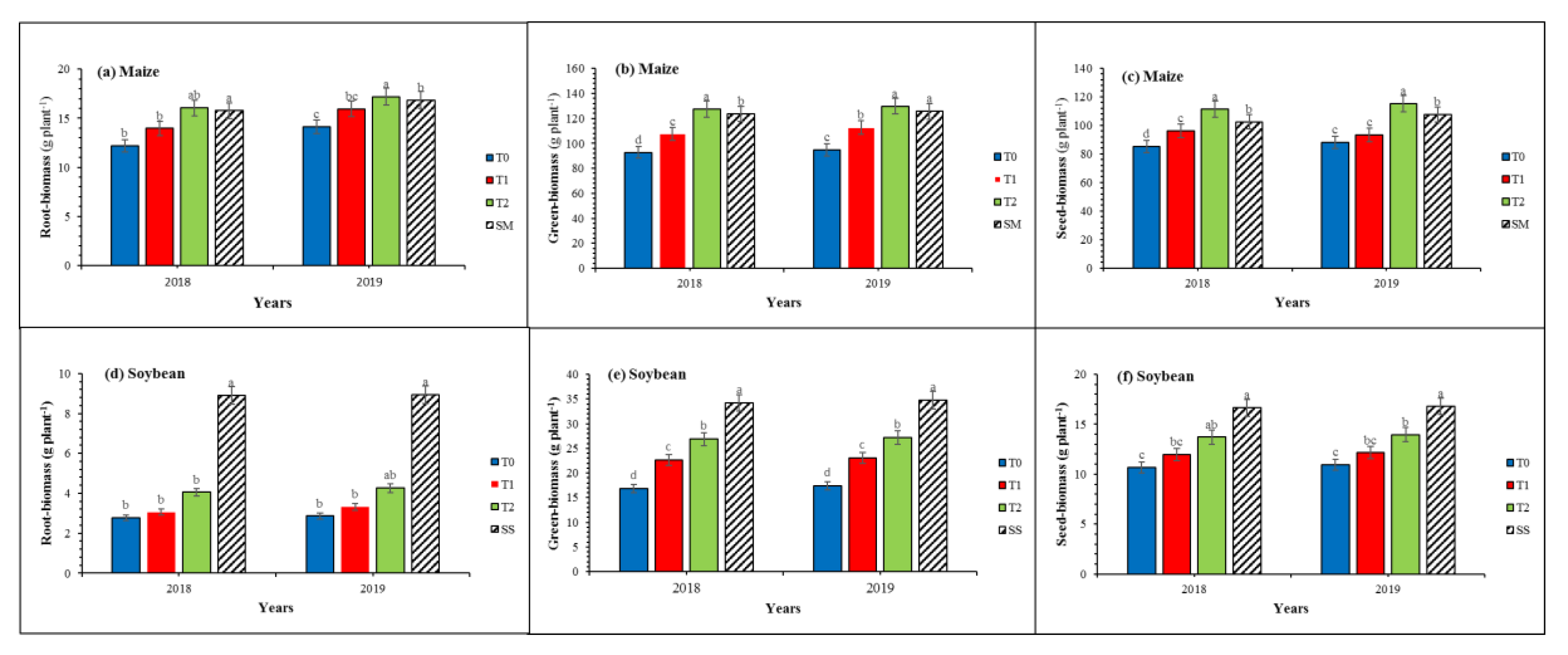
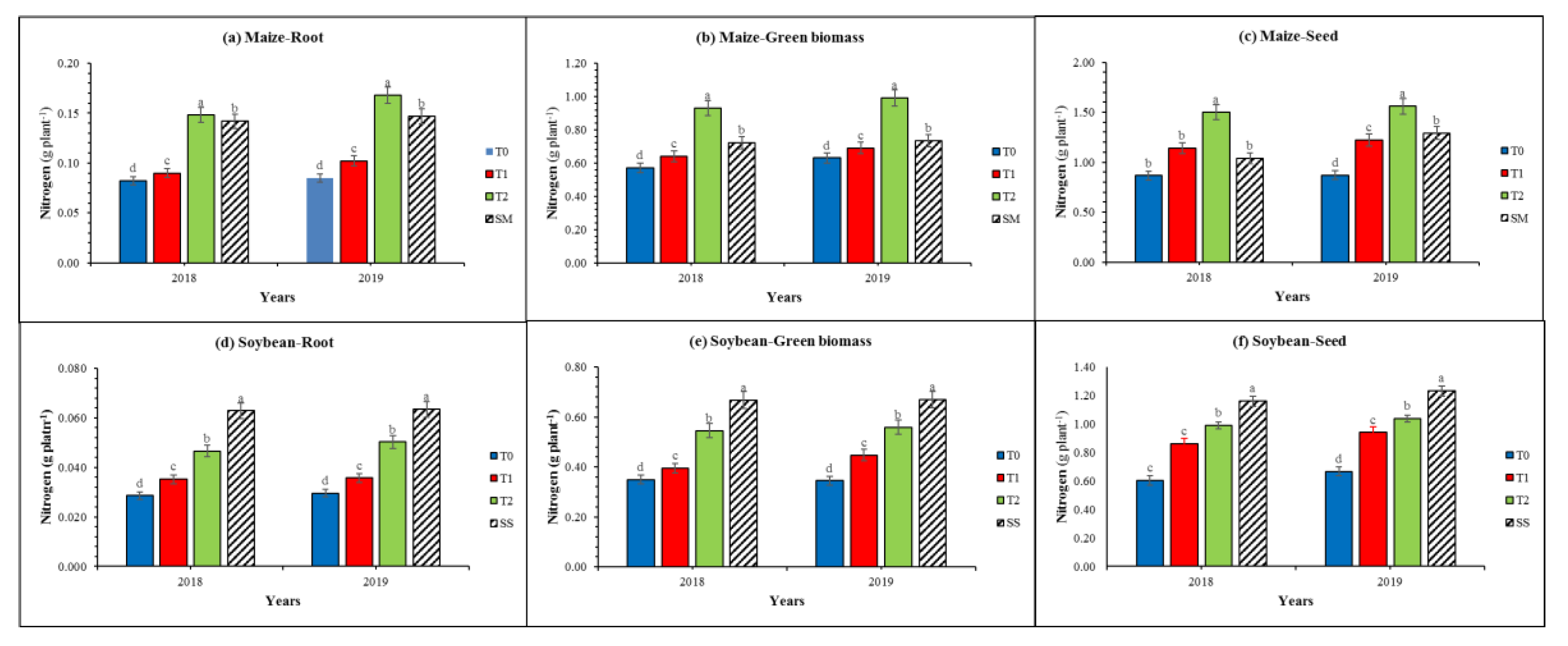
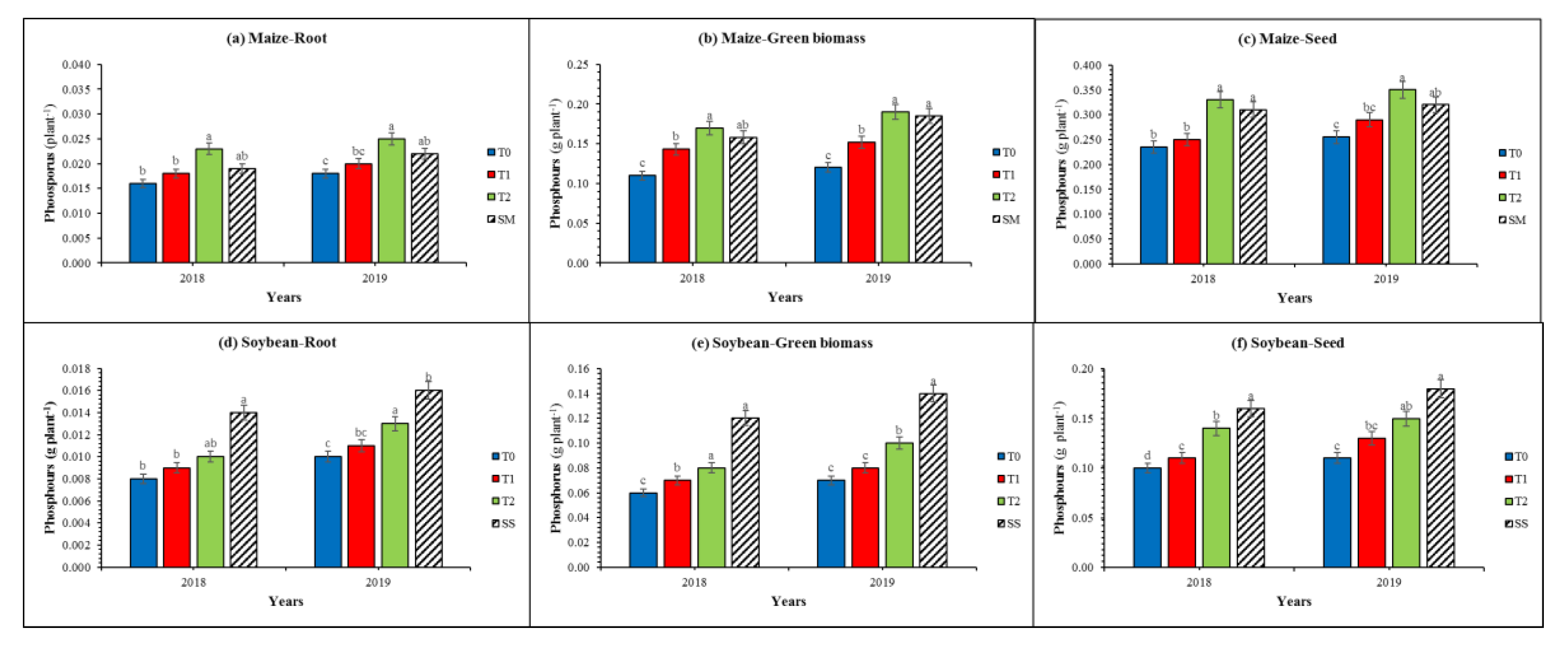
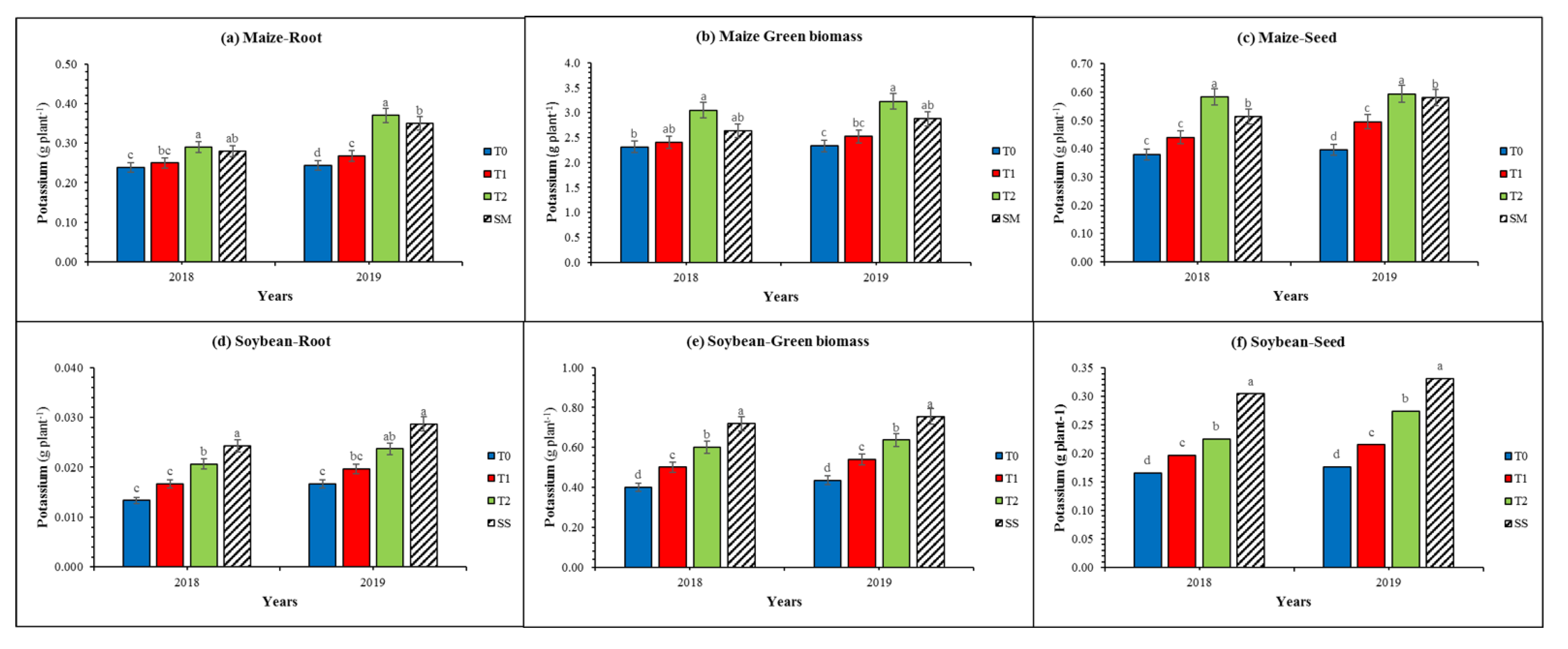
Intercropping is an intensive agricultural cropping system widely practiced for enhanced yield and nutrient acquisition advantages. A two-year maize–soybean intercropping (MSI) field study was performed in 2018 and 2019 to assess the effects of potassium (K) fertilizer application on biomass accumulation and distribution of essential nutrients in the various plant parts (root, green biomass and seed) of maize–soybean intercropping (MSI). Three different treatments of K fertilizer applications (T0: no potassium application; T1: maize 40, soybeans 30 and T2: maize 80, soybeans 60 kg ha−1) were designed with 2 rows of maize by wide, narrow row planting in row arrangements of 160 cm + 40 cm. Soybeans were grown in 2 wide rows at a width of 40 cm and a row spacing of 60 cm between the rows of maize and soybeans, while the sole maize (SM) and sole soybean (SS) were grown with 70-cm and 50-cm row spacing, respectively. The results of the two-year study confirmed that, as compared to T0, T2 significantly increased nitrogen, phosphate and potassium (NPK) accumulation in all maize parts by 27%, 16% and 20% grain, 23%, 22% and 14% green biomass and 30%, 17% and 15% root, respectively. In soybean treatments, T2 significantly increased NPK accumulation by 23%, 22% and 24% grain, 16%, 15% and 12% green biomass and 18%, 19% and 20% root, respectively. The increased accumulation of nutrients under T2 raised the overall biomass and its distribution to root, green biomass and grain in maize and soybeans by 11% and 18% and 16% and 19%, 20% and 12%, respectively, compared to T0. On average, after two years of experiments, the T2 intercropped maize and the soybeans showed 103% and 64% of the sole yield and attained the maximum LER of 1.66 and 1.68, respectively. Our results reveal that managing optimum K level application (80:60 kg ha−1) can accelerate biomass accumulation and distribution of other essential nutrients in the plant parts of intercropped maize and soybeans. Therefore, it is immensely important to concern potassium application levels in developing a sustainable maize–soybean intercropping systems for achieving higher productivity and land equivalent ratio (LER).
Keywords: green biomass; China; dry matter; nitrogen; potassium accumulation; land equivalent ratio green biomass; China; dry matter; nitrogen; potassium accumulation; land equivalent ratio