Article

Pearl Millet Forage Water Use Efficiency


1
Department of Plants, Soils and Climate, Utah State University, Logan, UT 84322, USA
2
Department of Agricultural Sciences, West Texas A&M University, Canyon, TX 79016, USA
3
Department of Plant and Environmental Sciences, New Mexico State University, Tucumcari, NM 88401, USA
*
Authors to whom correspondence should be addressed.
Agronomy 2020, 10(11), 1672; https://doi.org/10.3390/agronomy10111672

Submission received: 9 October 2020 / Revised: 26 October 2020 / Accepted: 27 October 2020 / Published: 29 October 2020
(This article belongs to the Special Issue Agricultural Water Conservation: Tools, Strategies, and Practices)

Abstract

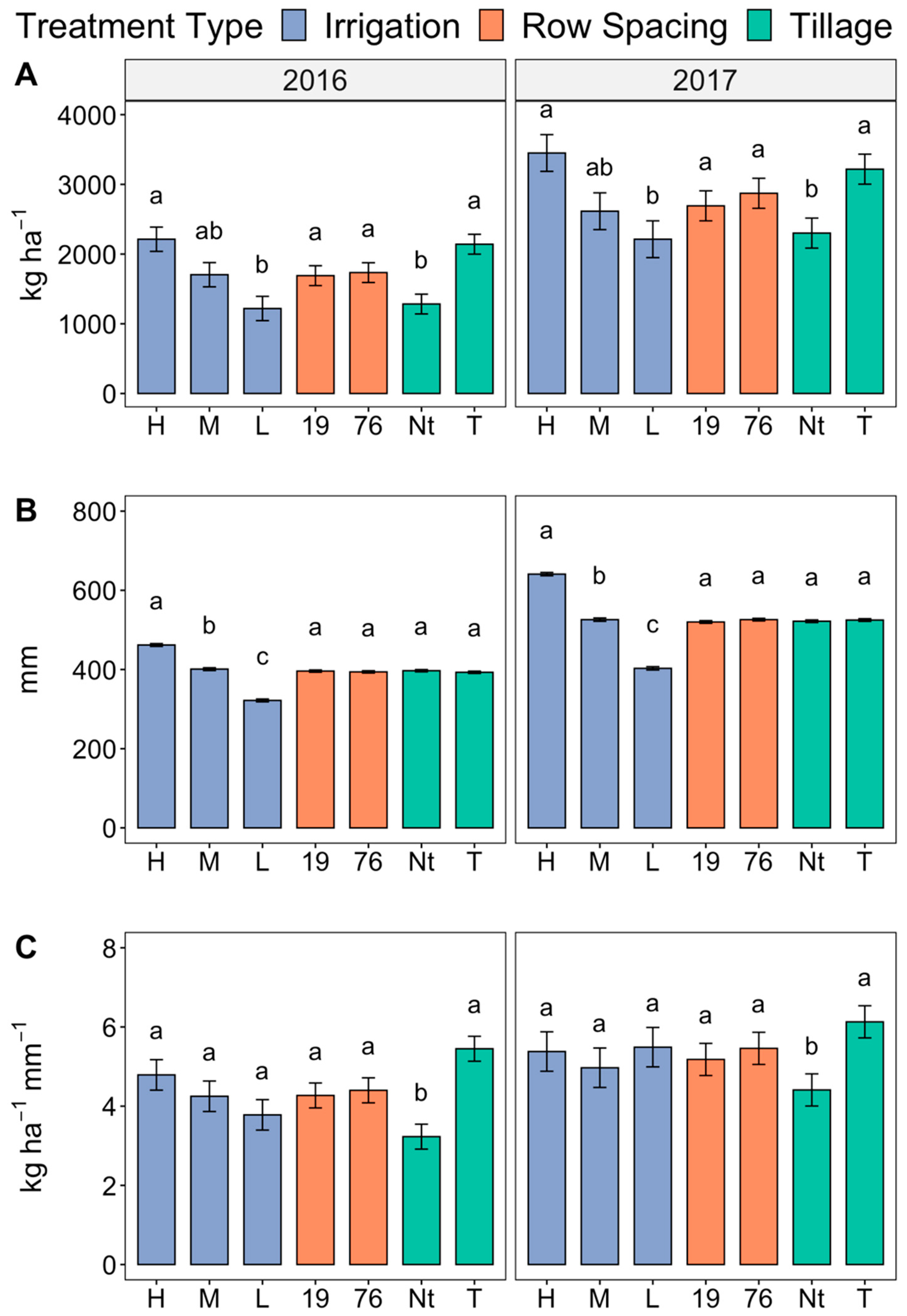
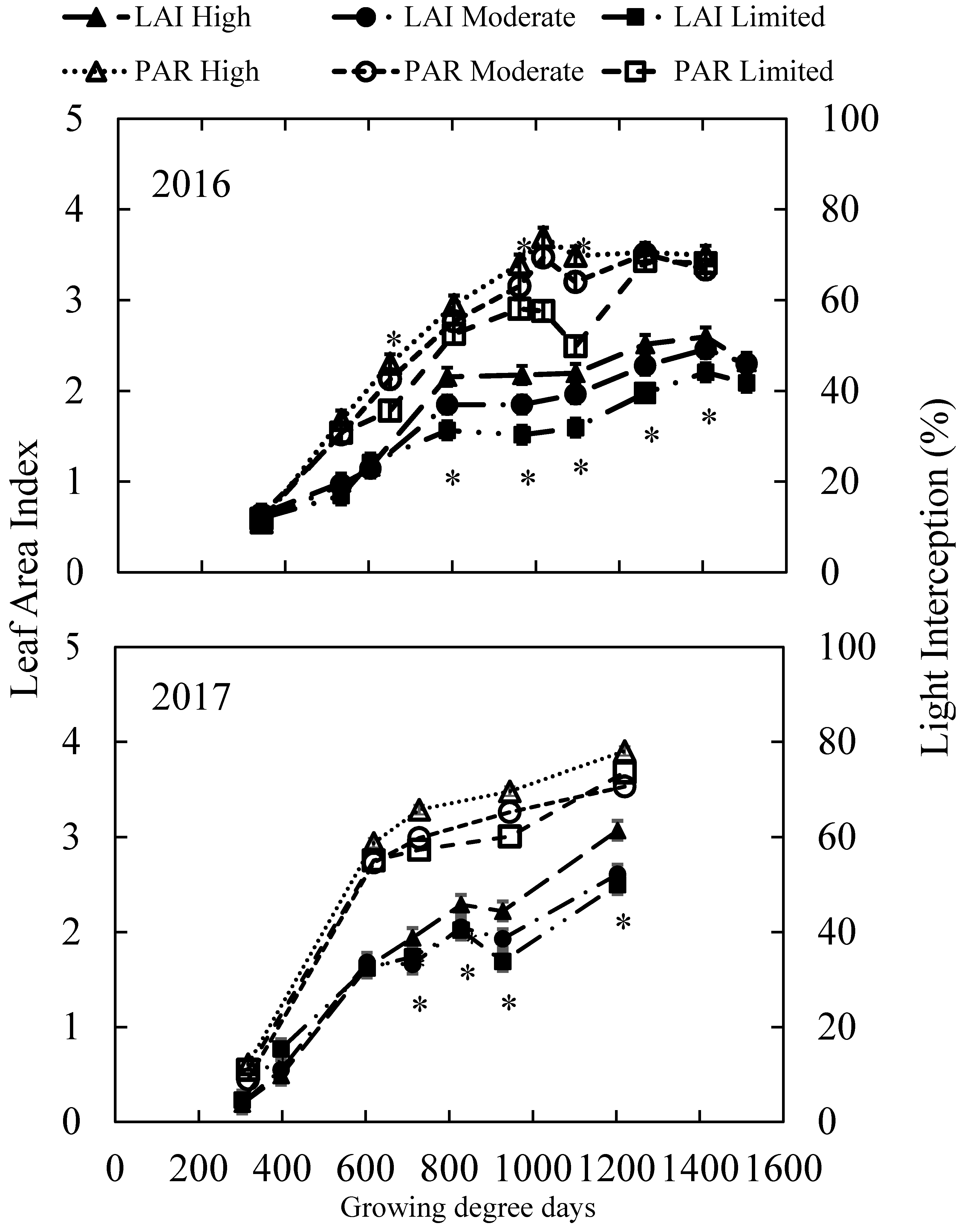
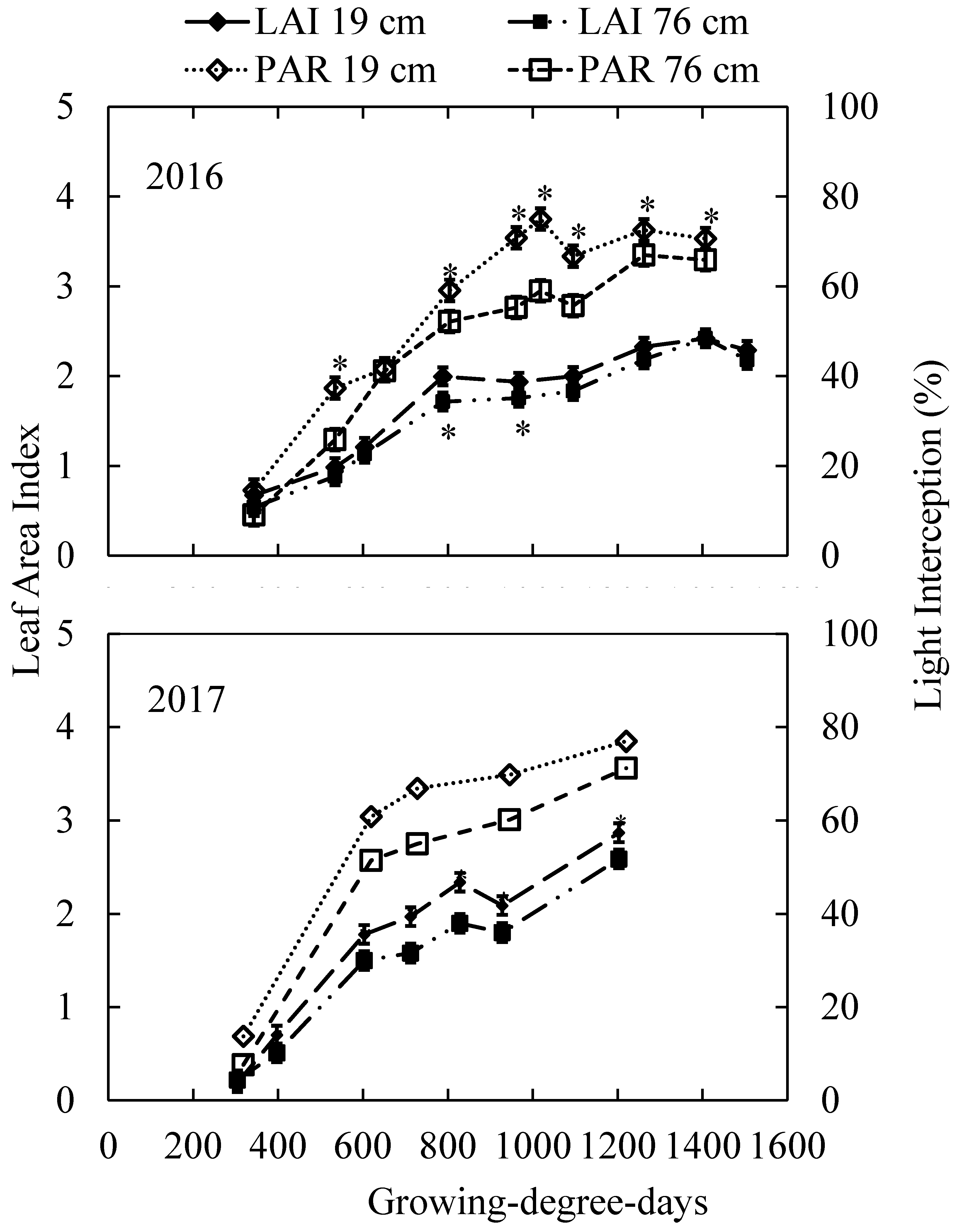
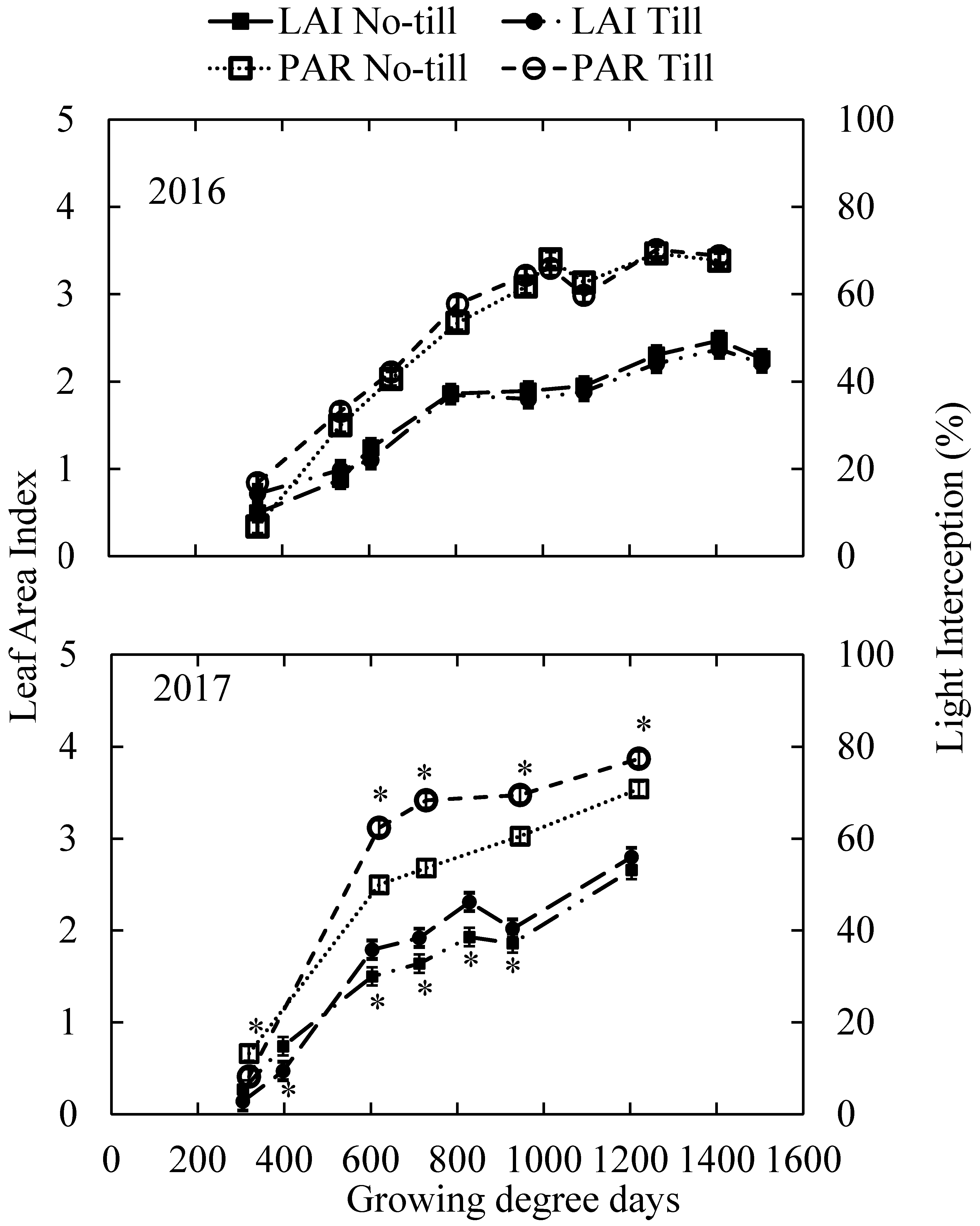
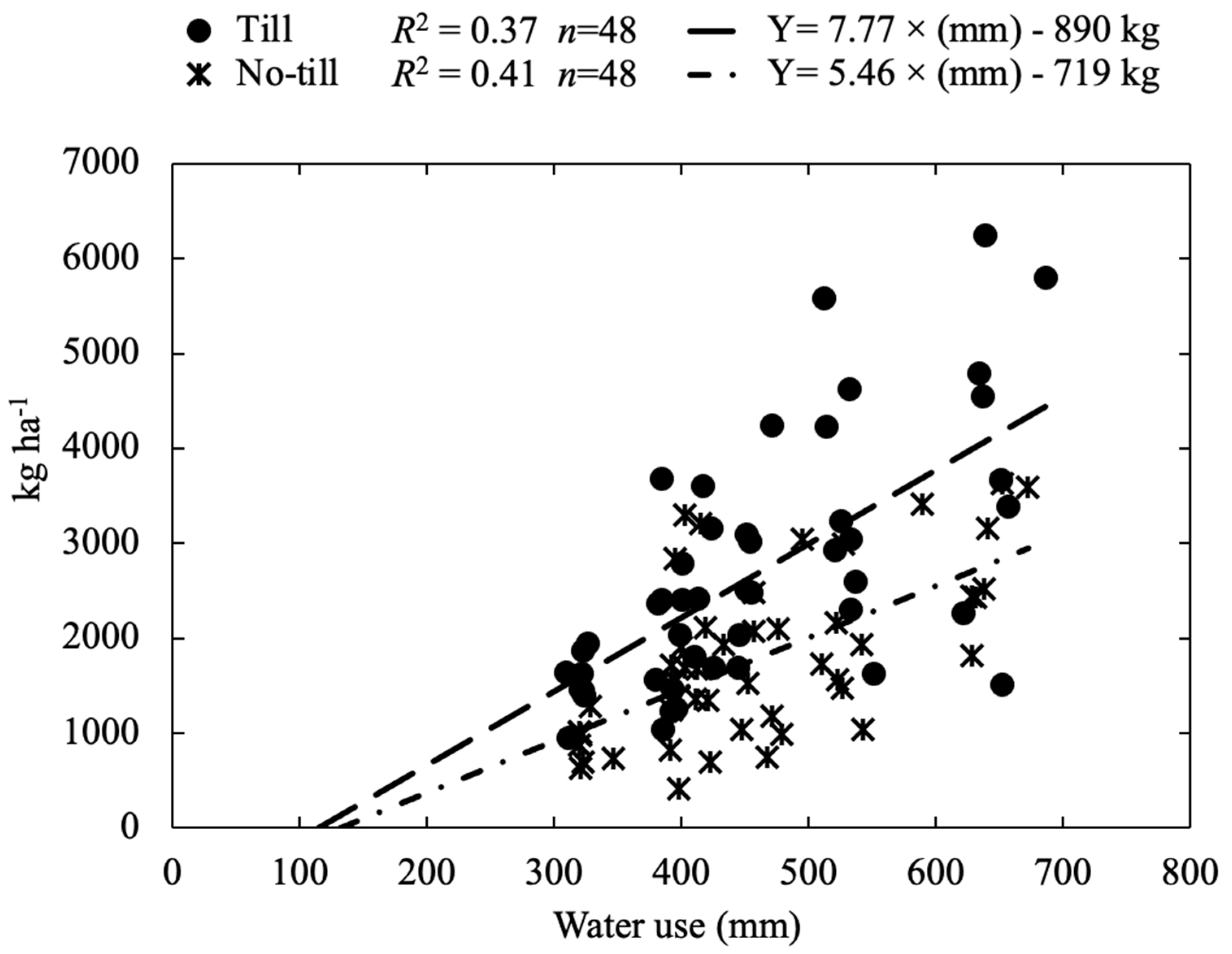
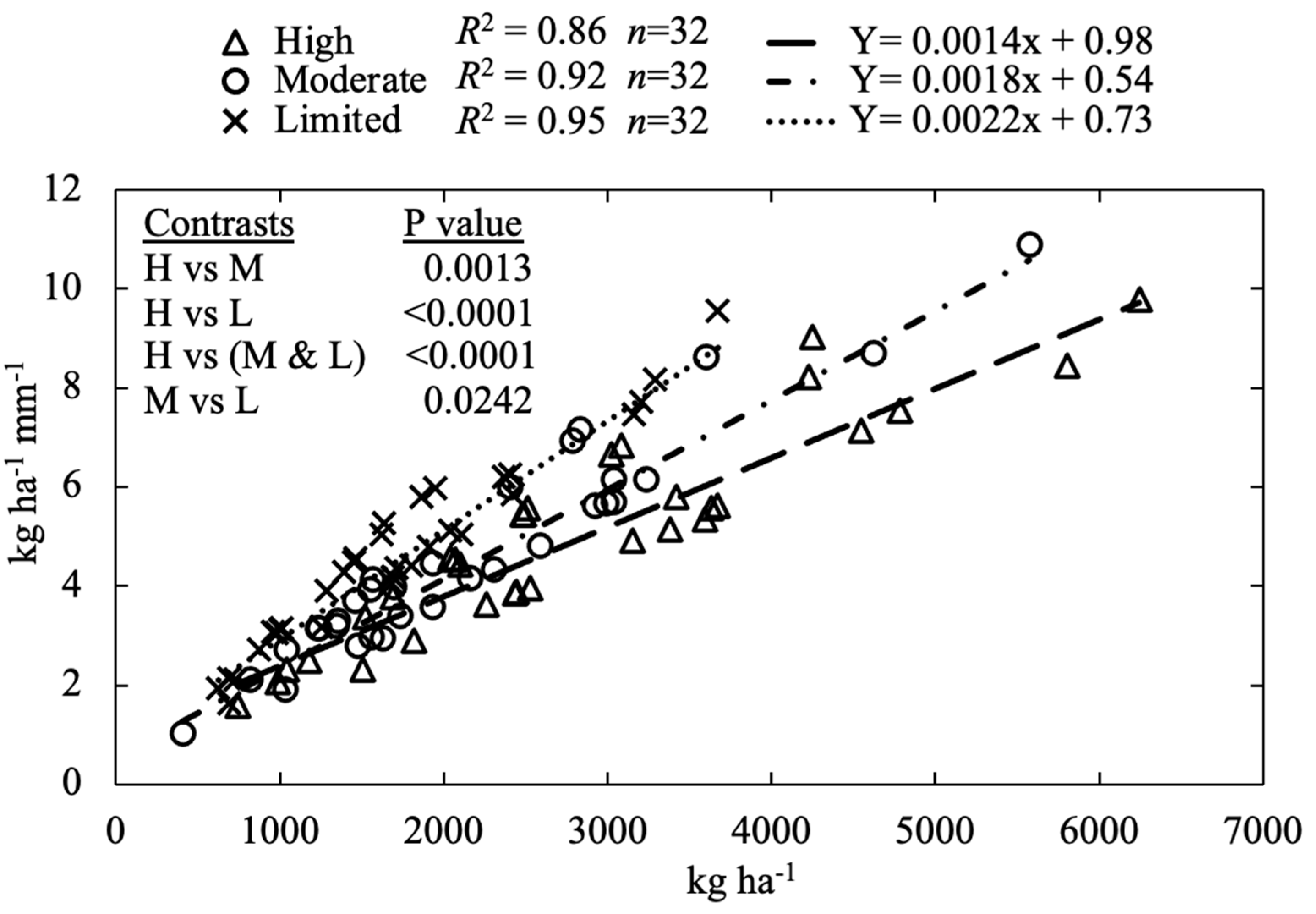
Pearl millet (Pennisitum glaucum L.) is a warm season C4 grass well adapted to semiarid climates where concerns over scarce and depleting water resources continually prompt the search for water efficient crop management to improve water use efficiency (WUE). A two-year study was conducted in the Southern Great Plains, USA, semi-arid region, to determine optimum levels of irrigation, row spacing, and tillage to maximize WUE and maintain forage production in pearl millet. Pearl millet was planted in a strip-split-plot factorial design at two row widths, 76 and 19 cm, in tilled and no-till soil under three irrigation levels (high, moderate, and limited). The results were consistent between production years. Both WUE and forage yield were impacted by tillage; however, irrigation level had the greatest effect on forage production. Row spacing had no effect on either WUE or forage yield. The pearl millet water use-yield production function was y = 6.68 × x (mm) − 837 kg ha−1; however, a low coefficient of determination (r2 = 0.31) suggests that factors other than water use (WU), such as a low leaf area index (LAI), had greater influence on dry matter (DM) production. Highest WUE (6.13 Mg ha−1 mm−1) was achieved in tilled soil due to greater LAI and DM production than in no-till.
Keywords: optimum water use; forage optimum water use; forage