Alkali-Activated Polymers for Grouting: A Review of Mechanisms, Performance, and Engineering Applications
Abstract
1. Introduction
2. Reaction Mechanisms
| (1) | |
 | (2) |
 | (3) |
 | (4) |

3. The Performance of Alkali-Activated Polymers
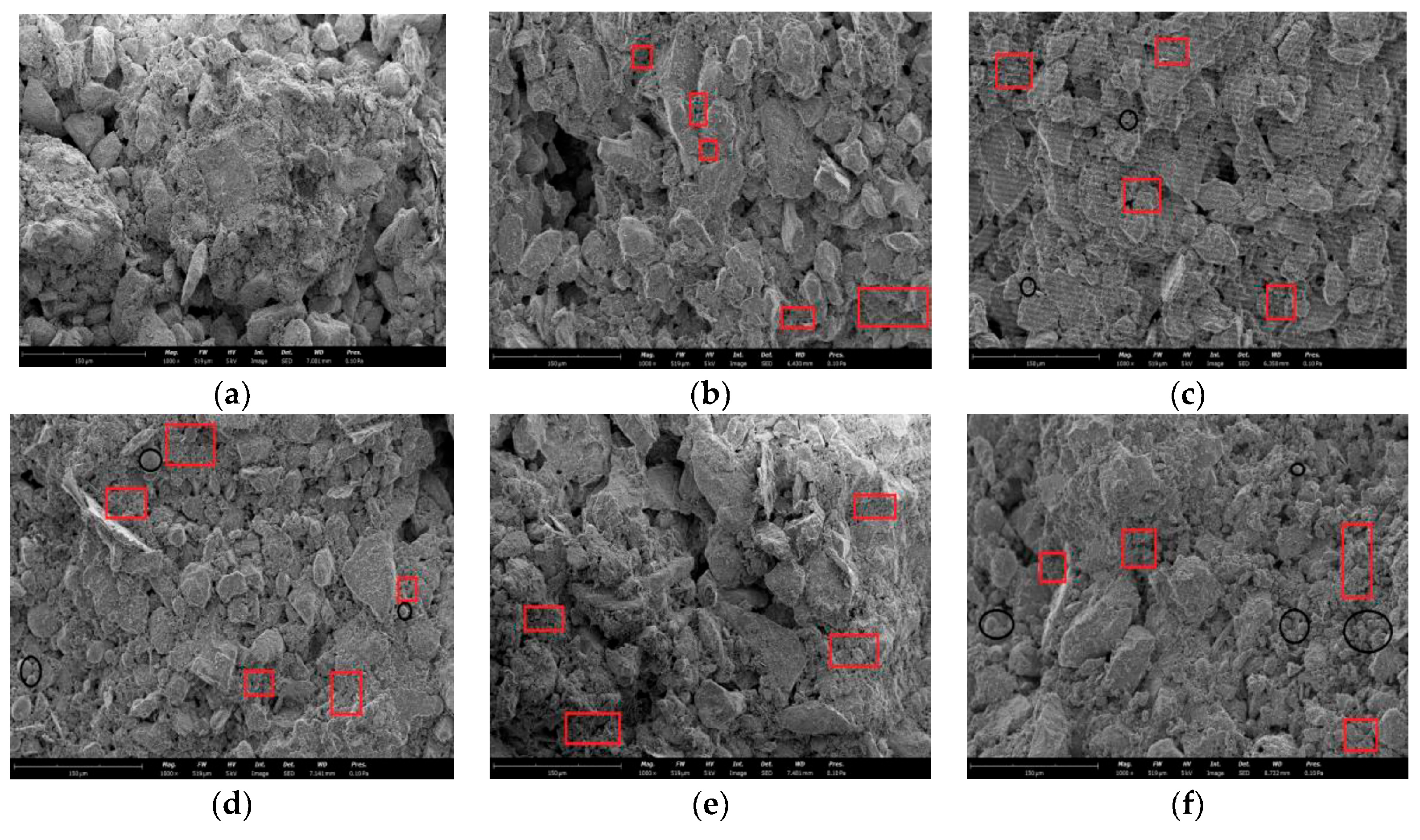
3.1. Compressive Strength
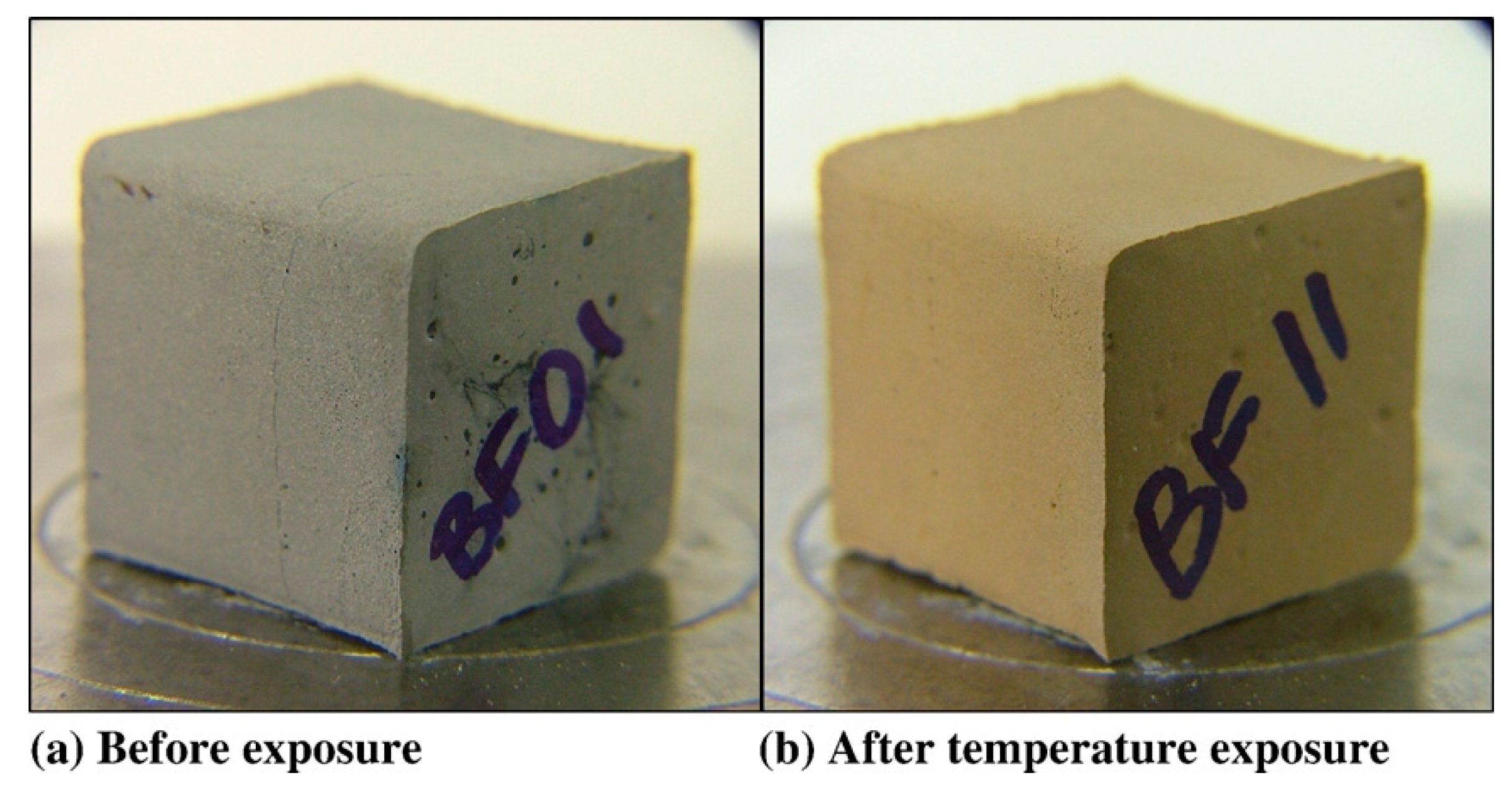
3.2. Heat-Resistant Quality
3.3. Anti-Freeze and Anti-Thawing Performance and Anti-Chemical Erosion Performance
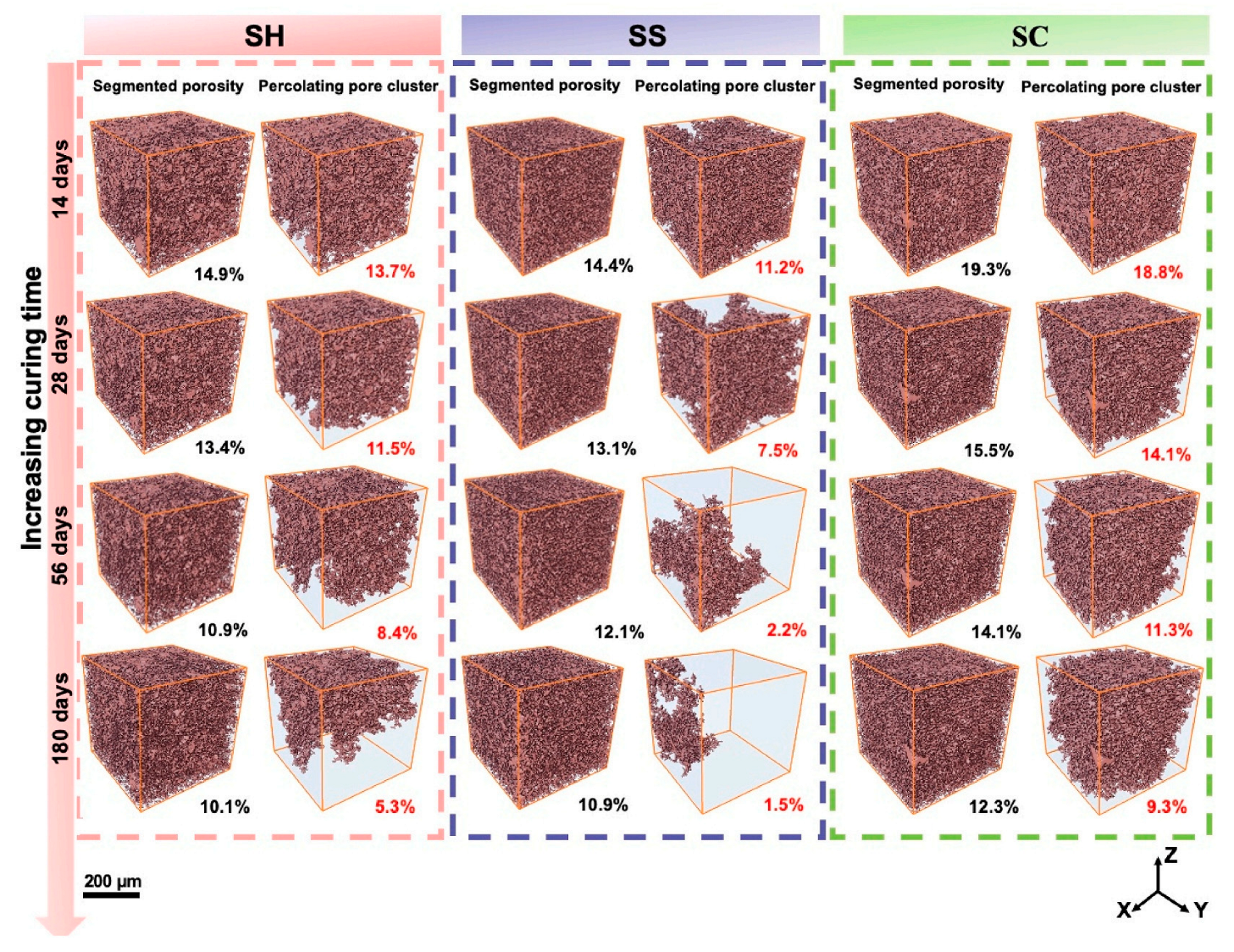
3.4. Anti-Penetrability Performance
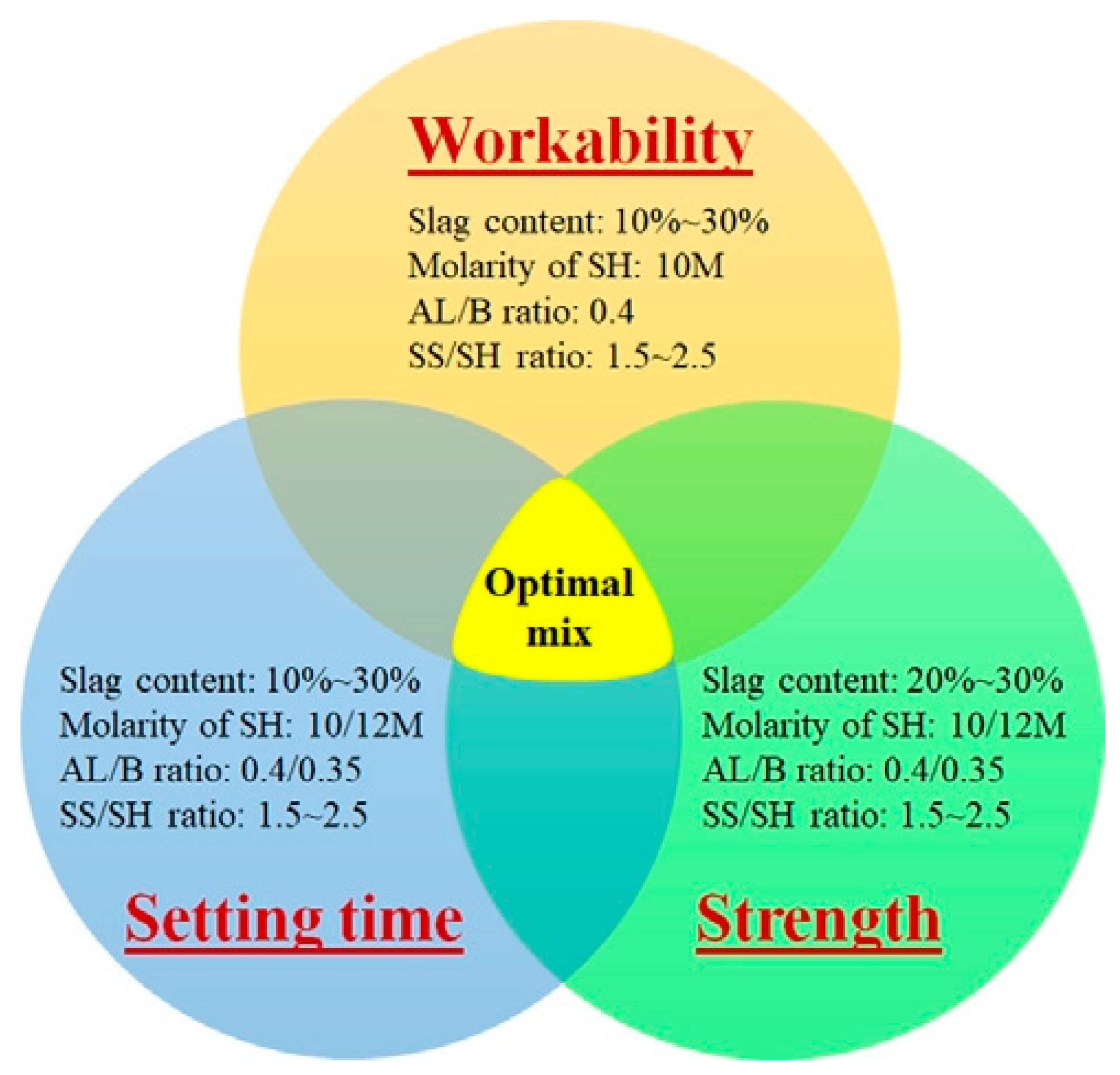
3.5. Setting Time
3.6. Contractility
3.7. Effect of Raw Material Types on AAP Properties
4. Application in the Grouting Process
4.1. Grouting Reinforcement Application
4.2. Grouting Water-Blocking Application
5. Conclusions
- (1)
- The alkali activation process comprises three sequential stages: dissolution of raw materials under alkaline conditions, depolymerization into monomeric species, and polycondensation forming hardened inorganic gel matrices.
- (2)
- Material properties (precursor type, particle size) and process parameters (activator type, silica modulus, alkali equivalent, water demand, curing conditions) collectively govern strength development, workability, and setting behavior.
- (3)
- By leveraging superior properties—including rapid setting, early strength gain, high-temperature stability, freeze–thaw resistance, acid/salt corrosion resistance, and low permeability—these materials are extensively applied in ground stabilization and hydraulic sealing projects while reducing CO2 emissions by 60–80% compared to ordinary Portland cement, offering a viable low-carbon pathway for large-scale infrastructure development. Collectively, AAPs represent a sustainable alternative for infrastructure resilience in challenging environments.
6. Future Perspective
- (1)
- Performance variability stemming from divergent raw material sources necessitates source-specific formulations. Significant fluctuations in mechanical properties and workability hinder reliable implementation, particularly for geographically diverse precursors.
- (2)
- Despite exceptional properties—including rapid hardening, early strength, corrosion resistance, impermeability, and thermal stability—pronounced shrinkage induces microcracking risks, critically constraining advancement.
- (3)
- Systematic understanding of long-term durability mechanisms under complex environmental stressors (wet–dry cycles, freeze–thaw exposure, chemical erosion, prolonged permeation) remains limited. Future work must prioritize accelerated aging studies and microstructural evolution modeling.
- (4)
- While research on geopolymer cementitious materials progresses rapidly, achieving systematic engineering implementation requires synergistic collaboration across civil engineering, materials science, and environmental engineering disciplines to bridge theoretical advances with field applications.
Author Contributions
Funding
Institutional Review Board Statement
Data Availability Statement
Conflicts of Interest
Abbreviations
| AAP | alkali-activated polymers |
| FA-AAP | Fly-ash-based alkali-activated polymers |
| XRD | X-ray diffraction |
| SEM | Scanning Electron Microscope |
| BSE | backscattered electron |
| TGA | thermogravimetric analysis |
| AAS | alkali-activated slag |
| SS/SH | sodium silicate-to-sodium hydroxide mass ratio |
| AL/B | alkali liquid-to-binder ratio |
| AASC | alkali-activated slag cement |
| OPC | ordinary Portland cement |
| FA | fly ash |
| GGBS | ground granulated blast furnace slag |
| SF | silica fume |
| LSR | liquid-to-solid ratio |
| MAAS | alkali activator solution modulus |
| AAM | alkali-activated materials |
References
- Carreño-Gallardo, C.; Tejeda-Ochoa, A.; Perez-Ordonez, O.I.; Ledezma-Sillas, J.E.; Lardizabal-Gutierrez, D.; Prieto-Gomez, C.; Valenzuela-Grado, J.A.; Robles Hernandez, F.C.; Herrera-Ramirez, J.M. In the CO2 emission remediation by means of alternative geopolymers as substitutes for cements. J. Environ. Chem. Eng. 2018, 6, 4878–4884. [Google Scholar] [CrossRef]
- Singh, N.B. Fly Ash-Based Geopolymer Binder: A Future Construction Material. Minerals 2018, 8, 299. [Google Scholar] [CrossRef]
- Farhan, N.A.; Sheikh, M.N.; Hadi, M.N.S. Investigation of engineering properties of normal and high strength fly ash based geopolymer and alkali-activated slag concrete compared to ordinary Portland cement concrete. Constr. Build. Mater. 2019, 196, 26–42. [Google Scholar] [CrossRef]
- Zhang, W.; Wang, Y.; Song, M.; Shen, Z. Industrial structure upgrading, technological innovation and comprehensive utilisation of solid waste. Technol. Anal. Strateg. Manag. 2024, 36, 3637–3652. [Google Scholar] [CrossRef]
- Huang, C.; Zhang, J.-H.; Zhang, A.-S.; Li, J.; Wang, X.-Y. Permanent deformation and prediction model of construction and demolition waste under repeated loading. J. Cent. South Univ. 2022, 29, 1363–1375. [Google Scholar] [CrossRef]
- Fares, G.; Alsaif, A.; Alhozaimy, A. Hybridization and cost-performance analysis of waste tire steel fibers into high-volume powdered scoria rocks-based ultra-high performance concrete. J. Build. Eng. 2023, 72, 106568. [Google Scholar] [CrossRef]
- Siles-Castellano, A.B.; López-González, J.A.; Jurado, M.M.; Estrella-González, M.J.; Suárez-Estrella, F.; López, M.J. Compost Quality and Sanitation on Industrial Scale Composting of Municipal Solid Waste and Sewage Sludge. Appl. Sci. 2021, 11, 7525. [Google Scholar] [CrossRef]
- de Cassia Silva Bacha, D.; Santos, S.; de Alcantara Mendes, R.; da Silva Rocha, C.C.; Corrêa, J.A.; Cruz, J.C.R.; Abrunhosa, F.A.; Oliva, P.A.C. Evaluation of the contamination of the soil and water of an open dump in the Amazon Region, Brazil. Environ. Earth Sci. 2021, 80, 113. [Google Scholar] [CrossRef]
- Janas, M.; Zawadzka, A. Assessment of the Monitoring of an Industrial Waste Landfill. Ecol. Chem. Eng. S 2018, 25, 659–669. [Google Scholar] [CrossRef]
- Solid Waste and Chemicals Management Technology Center; Ministry of Ecology and Environment of the People’s Republic of China. National Solid Waste Pollution Prevention and Control Information Release Situation Research Report (2024); Solid Waste and Chemicals Management Technology Center, Ministry of Ecology and Environment of the People’s Republic of China: Beijing, China, 2025.
- Jiang, B.; Wu, M.; Wu, S.; Zheng, A.; He, S. A Review on Development of Industrial Solid Waste in Tunnel Grouting Materials: Feasibility, Performance, and Prospects. Materials 2023, 16, 6848. [Google Scholar] [CrossRef]
- Pacheco-Torgal, F.; Castro-Gomes, J.; Jalali, S. Alkali-activated binders: A review: Part 1. Historical background, terminology, reaction mechanisms and hydration products. Constr. Build. Mater. 2008, 22, 1305–1314. [Google Scholar] [CrossRef]
- Li, Z.; Nedeljković, M.; Chen, B.; Ye, G. Mitigating the autogenous shrinkage of alkali-activated slag by metakaolin. Cem. Concr. Res. 2019, 122, 30–41. [Google Scholar] [CrossRef]
- Xiang, J.; He, Y.; Liu, L.; Zheng, H.; Cui, X. Exothermic behavior and drying shrinkage of alkali-activated slag concrete by low temperature-preparation method. Constr. Build. Mater. 2020, 262, 120056. [Google Scholar] [CrossRef]
- Assi, L.N.; Carter, K.; Deaver, E.; Ziehl, P. Review of availability of source materials for geopolymer/sustainable concrete. J. Clean. Prod. 2020, 263, 121477. [Google Scholar] [CrossRef]
- Mohseni, E.; Kazemi, M.J.; Koushkbaghi, M.; Zehtab, B.; Behforouz, B. Evaluation of mechanical and durability properties of fiber-reinforced lightweight geopolymer composites based on rice husk ash and nano-alumina. Constr. Build. Mater. 2019, 209, 532–540. [Google Scholar] [CrossRef]
- Zhuang, X.Y.; Chen, L.; Komarneni, S.; Zhou, C.H.; Tong, D.S.; Yang, H.M.; Yu, W.H.; Wang, H. Fly ash-based geopolymer: Clean production, properties and applications. J. Clean. Prod. 2016, 125, 253–267. [Google Scholar] [CrossRef]
- Rihawi, B.; Maras, M.M.; Ekinci, E.; Kutlusoy, E. Development of novel fiber-reinforced eco-friendly concrete: Application in geopolymer concrete pipes infrastructure systems. Clean Technol. Environ. Policy 2025, 27, 5165–5182. [Google Scholar] [CrossRef]
- Nguyen, T.; Selvaraj, S.; Chan, T.-M.; Mottram, J. Influence of combined imperfections on lateral-torsional buckling behaviour of pultruded FRP beams. Compos. Struct. 2023, 304, 116385. [Google Scholar] [CrossRef]
- Sofi, M.; van Deventer, J.S.J.; Mendis, P.A.; Lukey, G.C. Engineering properties of inorganic polymer concretes (IPCs). Cem. Concr. Res. 2007, 37, 251–257. [Google Scholar] [CrossRef]
- Rashad, A.M.; Zeedan, S.R.; Hassan, A.A. Influence of the activator concentration of sodium silicate on the thermal properties of alkali-activated slag pastes. Constr. Build. Mater. 2016, 102, 811–820. [Google Scholar] [CrossRef]
- Bakharev, T. Durability of geopolymer materials in sodium and magnesium sulfate solutions. Cem. Concr. Res. 2005, 35, 1233–1246. [Google Scholar] [CrossRef]
- Bakharev, T. Resistance of geopolymer materials to acid attack. Cem. Concr. Res. 2005, 35, 658–670. [Google Scholar] [CrossRef]
- Davidovits, J. Geopolymer chemistry and properties. In Proceedings of the 1st International Conference on Geopolymer, Compiegne, France, 1–3 June 1988; pp. 25–48. [Google Scholar]
- Van Deventer, J.; Provis, J.; Duxson, P.; Lukey, G. Reaction mechanisms in the geopolymeric conversion of inorganic waste to useful products. J. Hazard. Mater. 2007, 139, 506–513. [Google Scholar] [CrossRef]
- Barbosa, V.F.F.; MacKenzie, K.J.D.; Thaumaturgo, C. Synthesis and characterisation of materials based on inorganic polymers of alumina and silica: Sodium polysialate polymers. Int. J. Inorg. Mater. 2000, 2, 309–317. [Google Scholar] [CrossRef]
- Zhang, M.; Zhao, M.; Zhang, G.; Nowak, P.; Coen, A.; Tao, M. Calcium-free geopolymer as a stabilizer for sulfate-rich soils. Appl. Clay Sci. 2015, 108, 199–207. [Google Scholar] [CrossRef]
- Fu, Y.W.; Cai, L.C.; Wu, Y.G. Freeze-thaw cycle test and damage mechanics models of alkali-activated slag concrete. Constr. Build. Mater. 2011, 25, 3144–3148. [Google Scholar] [CrossRef]
- Shi, C.J. Strength, pore structure and permeability of alkali-activated slag mortars. Cem. Concr. Res. 1996, 26, 1789–1799. [Google Scholar] [CrossRef]
- Wang, Z.; Li, H.; Duan, S.; Feng, Z.; Zhang, Y.; Zhang, J. Investigation and Utilization of Alkali-Activated Grouting Materials Incorporating Engineering Waste Soil and Fly Ash/Slag. Appl. Sci. 2024, 14, 4915. [Google Scholar] [CrossRef]
- Xu, H.; Bai, Q.; Xie, G.L. Effect of Steel Slag and Ground Slag on the Properties of Cement-Based Greener Grouting Material in Sandy Strata. Buildings 2025, 15, 4138. [Google Scholar] [CrossRef]
- Fernández-Jiménez, A.; Palomo, A.; Criado, M. Microstructure development of alkali-activated fly ash cement: A descriptive model. Cem. Concr. Res. 2005, 35, 1204–1209. [Google Scholar] [CrossRef]
- Rios, S.; Cristelo, N.; Viana da Fonseca, A.; Ferreira, C. Structural Performance of Alkali-Activated Soil Ash versus Soil Cement. J. Mater. Civ. Eng. 2016, 28, 04015125. [Google Scholar] [CrossRef]
- Odeh, N.A.; Al-Rkaby, A.H.J. Strength, Durability, and Microstructures characterization of sustainable geopolymer improved clayey soil. Case Stud. Constr. Mater. 2022, 16, e00988. [Google Scholar] [CrossRef]
- Hamza, A.J.; Al-Qutaifi, S. Strength enhancement of fly ash-based geopolymer stabilised soft soil. J. Eng. Sci. Technol. 2025, 20, 1813–1826. [Google Scholar]
- Tan, Q.W.; Yang, Q.L.; Ye, C.S.; Wang, D.W.; Xie, N. Utilization of red mud in high-performance grouting material for semi-flexible pavement. J. Clean. Prod. 2024, 454, 142240. [Google Scholar] [CrossRef]
- Hemalatha, T.; Ramaswamy, A. A review on fly ash characteristics—Towards promoting high volume utilization in developing sustainable concrete. J. Clean. Prod. 2017, 147, 546–559. [Google Scholar] [CrossRef]
- Lee, W.K.W.; van Deventer, J.S.J. Structural reorganisation of class F fly ash in alkaline silicate solutions. Colloids Surf. A Physicochem. Eng. Asp. 2002, 211, 49–66. [Google Scholar] [CrossRef]
- Yan, C.; Ding, Q.J.; Xu, J.P.; Wang, H.X. Research on Durability Performance of Novel Double Solution Grouting Material with Metakaolin. Adv. Mater. Res. 2011, 250, 722–727. [Google Scholar] [CrossRef]
- Palomo, A.; Grutzeck, M.; Blanco, M. Alkali-activated fly ashes: A cement for the future. Cem. Concr. Res. 1999, 29, 1323–1329. [Google Scholar] [CrossRef]
- Duxson, P.; Provis, J.L.; Lukey, G.C.; Mallicoat, S.W.; Kriven, W.M.; van Deventer, J.S.J. Understanding the relationship between geopolymer composition, microstructure and mechanical properties. Colloids Surf. A-Physicochem. Eng. Asp. 2005, 269, 47–58. [Google Scholar] [CrossRef]
- Zheng, W.; Zhu, J. Application Foundation of Alkali-Activated Slag Cementitious Material in Structural Engineering, 1st ed.; Harbin Institute of Technology Press: Harbin, China, 2015; p. 425. [Google Scholar]
- Wang, S.-D.; Scrivener, K.L. Hydration products of alkali activated slag cement. Cem. Concr. Res. 1995, 25, 561–571. [Google Scholar] [CrossRef]
- Davidovits, J. Geopolymers and Geopolymeric Materials. J. Therm. Anal. 1989, 35, 429–441. [Google Scholar] [CrossRef]
- Aydin, S.; Baradan, B. Effect of activator type and content on properties of alkali-activated slag mortars. Compos. Part B-Eng. 2014, 57, 166–172. [Google Scholar] [CrossRef]
- Ilia, D. The Workability of Alkali-Activated Slag Cementitious Material. Master’s Thesis, Harbin Institute of Technology, Harbin, China, 2015. [Google Scholar]
- Glukhovsky, V. Soil Silicates. Their Properties, Technology and Manufacturing and Fields of Application. Doctoral Thesis, Civil Engineering Institute, Kiev, Ukraine, 1965. [Google Scholar]
- Duxson, P.; Fernández-Jiménez, A.; Provis, J.L.; Lukey, G.C.; Palomo, A.; van Deventer, J.S.J. Geopolymer technology: The current state of the art. J. Mater. Sci. 2007, 42, 2917–2933. [Google Scholar] [CrossRef]
- Yao, X.; Zhang, Z.; Zhu, H.; Chen, Y. Geopolymerization process of alkali–metakaolinite characterized by isothermal calorimetry. Thermochim. Acta 2009, 493, 49–54. [Google Scholar] [CrossRef]
- Nazari, A.; Bagheri, A.; Riahi, S. Properties of geopolymer with seeded fly ash and rice husk bark ash. Mater. Sci. Eng. A 2011, 528, 7395–7401. [Google Scholar] [CrossRef]
- Komljenović, M.; Baščarević, Z.; Bradić, V. Mechanical and microstructural properties of alkali-activated fly ash geopolymers. J. Hazard. Mater. 2010, 181, 35–42. [Google Scholar] [CrossRef]
- Dassekpo, J.-B.M.; Zha, X.; Zhan, J. Compressive strength performance of geopolymer paste derived from Completely Decomposed Granite (CDG) and partial fly ash replacement. Constr. Build. Mater. 2017, 138, 195–203. [Google Scholar] [CrossRef]
- Lahoti, M.; Narang, P.; Tan, K.H.; Yang, E.-H. Mix design factors and strength prediction of metakaolin-based geopolymer. Ceram. Int. 2017, 43, 11433–11441. [Google Scholar] [CrossRef]
- Sudagar, A.; Andrejkovičová, S.; Patinha, C.; Velosa, A.; McAdam, A.; da Silva, E.F.; Rocha, F. A novel study on the influence of cork waste residue on metakaolin-zeolite based geopolymers. Appl. Clay Sci. 2018, 152, 196–210. [Google Scholar] [CrossRef]
- Belmokhtar, N.; Ammari, M.; Brigui, J.; Ben Allal, L. Comparison of the microstructure and the compressive strength of two geopolymers derived from Metakaolin and an industrial sludge. Constr. Build. Mater. 2017, 146, 621–629. [Google Scholar] [CrossRef]
- Hu, W.; Nie, Q.; Huang, B.; Shu, X.; He, Q. Mechanical and microstructural characterization of geopolymers derived from red mud and fly ashes. J. Clean. Prod. 2018, 186, 799–806. [Google Scholar] [CrossRef]
- Kaur, K.; Singh, J.; Kaur, M. Compressive strength of rice husk ash based geopolymer: The effect of alkaline activator. Constr. Build. Mater. 2018, 169, 188–192. [Google Scholar] [CrossRef]
- Nuaklong, P.; Sata, V.; Chindaprasirt, P. Properties of metakaolin-high calcium fly ash geopolymer concrete containing recycled aggregate from crushed concrete specimens. Constr. Build. Mater. 2018, 161, 365–373. [Google Scholar] [CrossRef]
- Subaer; van Riessen, A. Thermo-mechanical and microstructural characterisation of sodium-poly(sialate-siloxo) (Na-PSS) geopolymers. J. Mater. Sci. 2007, 42, 3117–3123. [Google Scholar] [CrossRef]
- Kong, D.L.Y.; Sanjayan, J.G.; Sagoe-Crentsil, K. Comparative performance of geopolymers made with metakaolin and fly ash after exposure to elevated temperatures. Cem. Concr. Res. 2007, 37, 1583–1589. [Google Scholar] [CrossRef]
- Pan, Z.; Tao, Z.; Cao, Y.F.; Wuhrer, R.; Murphy, T. Compressive strength and microstructure of alkali-activated fly ash/slag binders at high temperature. Cem. Concr. Compos. 2018, 86, 9–18. [Google Scholar] [CrossRef]
- Sun, P.; Wu, H.-C. Chemical and freeze–thaw resistance of fly ash-based inorganic mortars. Fuel 2013, 111, 740–745. [Google Scholar] [CrossRef]
- Zhao, R.; Yuan, Y.; Cheng, Z.; Wen, T.; Li, J.; Li, F.; Ma, Z.J. Freeze-thaw resistance of Class F fly ash-based geopolymer concrete. Constr. Build. Mater. 2019, 222, 474–483. [Google Scholar] [CrossRef]
- Nguyen, K.; Lee, Y.; Lee, J.; Ahn, N. Acid Resistance and Curing Properties for Green Fly Ash-geopolymer Concrete. J. Asian Archit. Build. Eng. 2013, 12, 317–322. [Google Scholar] [CrossRef]
- Palomo, A.; Macias, A.; Blanco, M.T.; Puertas, F. Physical, chemical and mechanical characterization of geopolymers. In Proceedings of the 9th International Congress on the Chemistry of Cement, New Delhi, India; National Council for Cement and Building Materials: Haryana, India, 1992. [Google Scholar]
- Owsiak, Z.; Szczykutowicz, K. Influence of the acidic environment on the properties of metahalloysite geopolymer composites. Struct. Environ. 2025, 17, 55–62. [Google Scholar] [CrossRef]
- Jiang, Z.-L.; Pan, Y.-J.; Lu, J.-F.; Wang, Y.-C. Pore structure characterization of cement paste by different experimental methods and its influence on permeability evaluation. Cem. Concr. Res. 2022, 159, 106892. [Google Scholar] [CrossRef]
- Beaudoin, J.J.; Feldman, R.F.; Tumidajski, P.J. Pore structure of hardened portland cement pastes and its influence on properties. Adv. Cem. Based Mater. 1994, 1, 224–236. [Google Scholar] [CrossRef]
- Beaudoin, J.; Odler, I. 5—Hydration, Setting and Hardening of Portland Cement. In Lea’s Chemistry of Cement and Concrete, 5th ed.; Hewlett, P.C., Liska, M., Eds.; Butterworth-Heinemann: Portsmouth, NH, USA, 2019; pp. 157–250. [Google Scholar]
- Yuan, Q.; Liu, Z.; Zheng, K.; Ma, C. Chapter 2—Inorganic cementing materials. In Civil Engineering Materials; Yuan, Q., Liu, Z., Zheng, K., Ma, C., Eds.; Elsevier: Amsterdam, The Netherlands, 2021; pp. 17–57. [Google Scholar]
- Jennings, H.M.; Bullard, J.W.; Thomas, J.J.; Andrade, J.E.; Chen, J.J.; Scherer, G.W. Characterization and Modeling of Pores and Surfaces in Cement Paste: Correlations to Processing and Properties. J. Adv. Concr. Technol. 2008, 6, 5–29. [Google Scholar] [CrossRef]
- Dong, H.; Gao, P.; Ye, G. Characterization and comparison of capillary pore structures of digital cement pastes. Mater. Struct. 2017, 50, 154. [Google Scholar] [CrossRef]
- Hu, N.J.; Hüsken, G.; Gluth, G.J.G.; Kühne, H.C. The Influence of Activator Composition on the Strength, Shrinkage and Chloride Migration Resistance of Alkali-Activated Slag Mortars. Key Eng. Mater. 2018, 761, 61–64. [Google Scholar] [CrossRef]
- Su, Z.; Yue, Z.; Paul, P.P.; Liu, X.; Marsh, A.T.M.; Unluer, C.; Provis, J.L.; Burnett, T.L.; Bernal, S.A.; Withers, P.J. 4D imaging of microstructural evolution in alkali-activated slag cement pastes: Linking pore-network topology to performance. Cem. Concr. Compos. 2026, 166, 106382. [Google Scholar] [CrossRef]
- Sun, X.W.; Niu, W.Y.; Wang, L.L. Experimental Investigations on Alkali-Activated Slag Cementitious Material. Appl. Mech. Mater. 2014, 672–674, 1823–1827. [Google Scholar] [CrossRef]
- Fang, G.; Ho, W.K.; Tu, W.; Zhang, M. Workability and mechanical properties of alkali-activated fly ash-slag concrete cured at ambient temperature. Constr. Build. Mater. 2018, 172, 476–487. [Google Scholar] [CrossRef]
- Rafeet, A.; Vinai, R.; Soutsos, M.; Sha, W. Effects of slag substitution on physical and mechanical properties of fly ash-based alkali activated binders (AABs). Cem. Concr. Res. 2019, 122, 118–135. [Google Scholar] [CrossRef]
- Neto, A.A.M.; Cincotto, M.A.; Repette, W. Drying and autogenous shrinkage of pastes and mortars with activated slag cement. Cem. Concr. Res. 2008, 38, 565–574. [Google Scholar] [CrossRef]
- Collins, F.; Sanjayan, J.G. Effect of pore size distribution on drying shrinking of alkali-activated slag concrete. Cem. Concr. Res. 2000, 30, 1401–1406. [Google Scholar] [CrossRef]
- Ye, H.; Cartwright, C.; Rajabipour, F.; Radlińska, A. Understanding the drying shrinkage performance of alkali-activated slag mortars. Cem. Concr. Compos. 2017, 76, 13–24. [Google Scholar] [CrossRef]
- Sukmak, P.; De Silva, P.; Horpibulsuk, S.; Chindaprasirt, P. Sulfate resistance of clay-portland cement and clay high-calcium fly ash geopolymer. J. Mater. Civ. Eng. 2015, 27, 04014158. [Google Scholar] [CrossRef]
- Teerawattanasuk, C.; Voottipruex, P. Comparison between cement and fly ash geopolymer for stabilized marginal lateritic soil as road material. Int. J. Pavement Eng. 2019, 20, 1264–1274. [Google Scholar] [CrossRef]
- Yaghoubi, M.; Arulrajah, A.; Disfani, M.M.; Horpibulsuk, S.; Bo, M.W.; Darmawan, S. Effects of industrial by-product based geopolymers on the strength development of a soft soil. Soils Found. 2018, 58, 716–728. [Google Scholar] [CrossRef]
- Zhang, M.; Guo, H.; El-Korchi, T.; Zhang, G.P.; Tao, M.J. Experimental feasibility study of geopolymer as the next-generation soil stabilizer. Constr. Build. Mater. 2013, 47, 1468–1478. [Google Scholar] [CrossRef]
- Liu, Z.; Cai, C.S.; Liu, F.; Fan, F. Feasibility Study of Loess Stabilization with Fly Ash–Based Geopolymer. J. Mater. Civ. Eng. 2016, 28, 04016003. [Google Scholar] [CrossRef]
- Li, H.; Tang, X.; Zhang, X.; Li, M. Mechanical Properties and Microscopic Study of Steel Slag–Fly Ash-Solidified Loess under Alkaline Conditions. Appl. Sci. 2023, 13, 8737. [Google Scholar] [CrossRef]
- Tonini de Araújo, M.; Tonatto Ferrazzo, S.; Mansur Chaves, H.; Gravina da Rocha, C.; Cesar Consoli, N. Mechanical behavior, mineralogy, and microstructure of alkali-activated wastes-based binder for a clayey soil stabilization. Constr. Build. Mater. 2023, 362, 129757. [Google Scholar] [CrossRef]
- Liu, C.; Li, W.; Pang, J.; Liu, Z.; Mei, G.; Bezuijen, A.; Cachim, P. Engineering properties and applicability of a novel alkali-activated industrial waste-based backfilling grouts in shield tunnels. J. Sustain. Cem.-Based Mater. 2025, 14, 1601–1625. [Google Scholar] [CrossRef]
- Wang, L.; Fu, H.; Gao, Q.; Luo, J.; Tang, J.; Song, J.; Li, Y.; Yu, G. Engineering Performance and Mechanism of Alkali-Activated Ground Granulated Blast Furnace Slag–Zeolite Powder Grouting Materials. Appl. Sci. 2025, 15, 3345. [Google Scholar] [CrossRef]
- He, C.; Xu, Z.; Wang, J.; Li, P.; Xia, Y.; Zhang, C.; Chen, Z.; He, W. Performance Optimization and Field Validation of Post-Grouting Geopolymer Materials for Pile Foundations: Microstructural Insights and Environmental Durability. Buildings 2025, 15, 1121. [Google Scholar] [CrossRef]
- Permeh, S.; Lau, K. Review of Electrochemical Testing to Assess Corrosion of Post-Tensioned Tendons with Segregated Grout. Constr. Mater. 2022, 2, 70–84. [Google Scholar] [CrossRef]
- Bentz, D.P.; Garboczi, E.J. Modelling the leaching of calcium hydroxide from cement paste: Effects on pore space percolation and diffusivity. Mater. Struct. 1992, 25, 523–533. [Google Scholar] [CrossRef]
- Borçato, A.G.; Thiesen, M.; Medeiros-Junior, R.A. Mechanical properties of metakaolin-based geopolymers modified with different contents of quarry dust waste. Constr. Build. Mater. 2023, 400, 132854. [Google Scholar] [CrossRef]
- Li, S.; Zhang, J.; Li, Z.; Gao, Y.; Qi, Y.; Li, H.; Zhang, Q. Investigation and practical application of a new cementitious anti-washout grouting material. Constr. Build. Mater. 2019, 224, 66–77. [Google Scholar] [CrossRef]
- Song, W.L.; Zhu, Z.D.; Pu, S.Y.; Wan, Y.; Huo, W.W.; Peng, Y.Y. Preparation and engineering properties of alkali-activated filling grouts for shield tunnel. Constr. Build. Mater. 2022, 314, 125620. [Google Scholar] [CrossRef]
- Cheng, W.-C.; Song, Z.-P.; Tian, W.; Wang, Z.-F. Shield tunnel uplift and deformation characterisation: A case study from Zhengzhou metro. Tunn. Undergr. Space Technol. 2018, 79, 83–95. [Google Scholar] [CrossRef]
- Kazemian, S.; Prasad, A.; Huat, B.B.K.; Ghiasi, V.; Ghareh, S. Effects of Cement-Sodium Silicate System Grout on Tropical Organic Soils. Arab. J. Sci. Eng. 2012, 37, 2137–2148. [Google Scholar] [CrossRef]
- Yu, Z.; Yang, L.; Zhou, S.; Gong, Q.; Zhu, H. Durability of cement-sodium silicate grouts with a high water to binder ratio in marine environments. Constr. Build. Mater. 2018, 189, 550–559. [Google Scholar] [CrossRef]
- Zhang, W.; Li, S.; Wei, J.; Zhang, Q.; Liu, R.; Zhang, X.; Yin, H. Grouting rock fractures with cement and sodium silicate grout. Carbonates Evaporites 2018, 33, 211–222. [Google Scholar] [CrossRef]
- Lin, R.; Yang, L.; Pan, G.; Sun, Z.; Li, J. Properties of composite cement-sodium silicate grout mixed with sulphoaluminate cement and slag powder in flowing water. Constr. Build. Mater. 2021, 308, 125040. [Google Scholar] [CrossRef]
- Wu, T.; Yang, X.; Xu, J. Mix proportion optimization of cement flyash-water glass grouting material based on response surface method. AIP Adv. 2025, 15, 125301. [Google Scholar] [CrossRef]
- Song, W.; Zhu, Z.; Pu, S.; Wan, Y.; Huo, W.; Song, S.; Zhang, J.; Yao, K.; Hu, L. Synthesis and characterization of eco-friendly alkali-activated industrial solid waste-based two-component backfilling grouts for shield tunnelling. J. Clean. Prod. 2020, 266, 121974. [Google Scholar] [CrossRef]



| Reference | Precursor Materials | Alkali Activator | Aggregate/Admixture | Maintenance Temperature/°C | Compressive Strength/MPa |
|---|---|---|---|---|---|
| [52] | Weathered Granite + Fly Ash | Na2SiO3 + NaOH | 60 | 4.62~18.42 (7 d) | |
| [53] | Metakaolin | Na2SiO3 | 25~30 | 3.58~78.96 (7 d) | |
| [54] | Metakaolin + Zeolite | Na2SiO3 + NaOH | Softwood waste residue | 50 (24 h)+ room temperature | 7.41 + 15.84 (28 d) |
| [55] | Industrial Sludge | Na2SiO3 + NaOH | room temperature | 34.70~49.40 (7 d) | |
| [56] | Red Mud + Fly Ash | Na2SiO3 + NaOH | room temperature | 18.20~43.10 (28 d) | |
| [57] | Rice Husk Ash | NaOH | Sand | 80 (24 h)+ room temperature | 28.56~39.95 (28 d) |
| [58] | Metakaolin + High-Calcium Fly Ash | Na2SiO3 + NaOH | Recycled coarse aggregate, river sand | 60 (2 d) + 22~25 | 32.90~47.20 (7 d) |
| Raw Material | Primary Performance Advantage | Typical Effect |
|---|---|---|
| Slag | Compressive strength, setting time | Rapid early strength gain; however, pronounced autogenous and drying shrinkage |
| Fly ash | Thermal resistance, impermeability | Superior performance at elevated temperatures (up to 800 °C); low shrinkage |
| Metakaolin | Compressive strength, chemical resistance | High mechanical strength; excellent acid and sulfate corrosion resistance |
| Slag + fly ash | Balanced comprehensive performance | Tunable setting time and strength through slag/fly ash ratio adjustment |
| Slag + metakaolin | Shrinkage mitigation | Metakaolin addition effectively reduces autogenous shrinkage of slag-based systems |
Disclaimer/Publisher’s Note: The statements, opinions and data contained in all publications are solely those of the individual author(s) and contributor(s) and not of MDPI and/or the editor(s). MDPI and/or the editor(s) disclaim responsibility for any injury to people or property resulting from any ideas, methods, instructions or products referred to in the content. |
© 2026 by the authors. Licensee MDPI, Basel, Switzerland. This article is an open access article distributed under the terms and conditions of the Creative Commons Attribution (CC BY) license.
Share and Cite
Liu, B.; Xu, M. Alkali-Activated Polymers for Grouting: A Review of Mechanisms, Performance, and Engineering Applications. Polymers 2026, 18, 650. https://doi.org/10.3390/polym18050650
Liu B, Xu M. Alkali-Activated Polymers for Grouting: A Review of Mechanisms, Performance, and Engineering Applications. Polymers. 2026; 18(5):650. https://doi.org/10.3390/polym18050650
Chicago/Turabian StyleLiu, Beining, and Mengtang Xu. 2026. "Alkali-Activated Polymers for Grouting: A Review of Mechanisms, Performance, and Engineering Applications" Polymers 18, no. 5: 650. https://doi.org/10.3390/polym18050650
APA StyleLiu, B., & Xu, M. (2026). Alkali-Activated Polymers for Grouting: A Review of Mechanisms, Performance, and Engineering Applications. Polymers, 18(5), 650. https://doi.org/10.3390/polym18050650